EP2332090B1 - Verfahren und vorrichtung zur codeverschleierung - Google Patents
Verfahren und vorrichtung zur codeverschleierung Download PDFInfo
- Publication number
- EP2332090B1 EP2332090B1 EP09807930A EP09807930A EP2332090B1 EP 2332090 B1 EP2332090 B1 EP 2332090B1 EP 09807930 A EP09807930 A EP 09807930A EP 09807930 A EP09807930 A EP 09807930A EP 2332090 B1 EP2332090 B1 EP 2332090B1
- Authority
- EP
- European Patent Office
- Prior art keywords
- basic block
- parameter
- computer code
- function
- instruction
- Prior art date
- Legal status (The legal status is an assumption and is not a legal conclusion. Google has not performed a legal analysis and makes no representation as to the accuracy of the status listed.)
- Not-in-force
Links
Images

Classifications
-
- G—PHYSICS
- G06—COMPUTING OR CALCULATING; COUNTING
- G06F—ELECTRIC DIGITAL DATA PROCESSING
- G06F21/00—Security arrangements for protecting computers, components thereof, programs or data against unauthorised activity
- G06F21/10—Protecting distributed programs or content, e.g. vending or licensing of copyrighted material ; Digital rights management [DRM]
- G06F21/12—Protecting executable software
- G06F21/14—Protecting executable software against software analysis or reverse engineering, e.g. by obfuscation
Definitions
- the present invention relates generally to software, and in particular to obfuscated software.
- the first technique is the insertion of junk code bytes inserted in places that are unreachable during normal run-time execution.
- the second technique uses a branch function to modify regular procedure calls. Somewhat simplified, the branch function determines the target in dependence on the value of a function, such as the hash value over the location of the call instruction. At run-time, this location may be easily determined from the top of the stack.
- the branch function also modifies the return address by an offset, which makes it possible to fill the intervening space with junk code.
- Linn and Debray's branch function essentially is a procedure that the address after the call instruction that is passed on top of the stack as input parameter. Then, the branch function is independent of dynamic input, it may be simulated, as its output depends on the single input parameter and some static lookup tables present in the binary's initialised data segment. The offset may thus be calculated, which enables the disassembler to skip the junk code and to continue from the next valid instruction.
- Jakubowski and Jacob present a code obfuscation method that, among other things, uses branch functions to decide what instruction to jump to.
- a difference with regard to Linn and Debray is that Jakubowski and Jacob's method uses functions that take dynamic input, which makes it very difficult, if not impossible, to disassemble the code statically.
- the present invention provides an improvement upon the method of Linn and Debray that at the same time is an alternative to the other prior art methods. As code obfuscation becomes more effective if a plurality of methods may be used, advantageously combined, the skilled person will appreciate that there is a need for such an alternative solution.
- the invention is directed to a method of obfuscating compiled computer code comprising computer code instructions organised in a plurality of basic blocks.
- a jump instruction in a first basic block is replaced with a function call with at least one parameter, wherein the function call, when executed, determines the address of the next function to execute in dependence on the parameter.
- An instruction that allocates a value to the parameter is inserting into the compiled computer code, the value of the parameter being such that the address determined by the function call corresponds to the destination address of the replaced jump instruction.
- the allocation instruction is inserted into the computer code in a second basic block that is different from the first basic block and intended to be executed before the first basic block.
- the jump function is an unconditional jump function.
- the second basic block is chosen in an execution path between a preceding third basic block that comprises a conditional jump instruction and the first basic block. It is advantageous that information in a control flow graph for the compiled computer code is used to choose the second basic block.
- the invention is directed to a device for obfuscating compiled computer code comprising computer code instructions organised in a plurality of basic blocks.
- the device comprises a replacement unit adapted to replace a jump instruction in a first basic block with a function call with at least one parameter, wherein the executed function call determines the address of the next function to execute depending on the parameter; an insertion unit adapted to insert into the compiled computer code an instruction that allocates a value to the parameter, the value being such that the address determined by the function call corresponds to the destination address of the replaced jump instruction; and a finding unit adapted to find a second basic, different from the first basic block and intended to be executed before the first basic block, for the insertion unit to insert the allocation instruction into.
- the replacement unit is adapted to replace an unconditional jump function.
- the finding unit is adapted to find the second basic block in an execution path between a preceding third basic block that comprises a conditional jump instruction and the first basic block. It is advantageous that the finding unit is adapted to use information in a control flow graph for the compiled computer code to find the second basic block.
- the replacement unit, the insertion unit, and the finding unit are implemented in at least one processor.
- the represented blocks are purely functional entities, which do not necessarily correspond to physically separate entities. These functional entities may be implemented as hardware, software, or a combination of software and hardware; furthermore, they may be implemented in one or more integrated circuits.
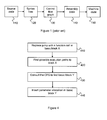
- Figure 1 illustrates the prior art process of compiling software. Some basic knowledge of this procedure will aid the comprehension of the description hereinafter. Compilation translates source code 110 to machine code 150 via a number of intermediate steps during which a syntax tree 120, a control flow graph 130 and assembly code 140 are generated.
- a main idea of the present invention is to use branch function calls that are more secure than those used by Linn and Debray. As already discussed, their branch functions may be simulated quite easily. While Jakubowski and Jacob secure the branch functions by making them dynamic, they may still be calculated. The present solution secures the branch functions in a different manner, as will be described in detail hereinafter.
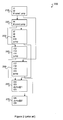
- the program code 200 is divided into a number of basic blocks 210-270 following a control flow graph.
- a basic block may be said to be a set of instructions that will be executed sequentially; as such it ends with a jump function to another basic block.
- basic block 210 comprises three instructions: I1, 12, and a conditional jump, "If cond jump". All three instructions are executed and, depending on the conditional jump, the execution then continues with instruction I4 in basic block 220 or instruction I17 in basic block 250.
- There are three possible execution paths through the illustrated code section (the numbers refer to the basic blocks):
- Basic blocks 260 and 270 each comprises jump function (Jump@1 and Jump@2) and a partial code instruction: i25 and i28 (indicated by minuscule i:s). While it is possible to use one or more entire instructions (in addition to or instead of partial code instructions), it is advantageous to use partial instructions as they will trick a disassembler into misinterpreting at least part of the following 'real' instruction as a function parameter.
- These two jump functions may be implemented according to either the solution of Linn and Debray - i.e. depending on an address on the stack - or the solution of Jakubowski and Jacob - i.e. a complex function whose value is determined at run-time and is difficult to reverse engineer.
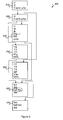
- Figure 3 illustrates obfuscation according to a preferred embodiment of the invention.
- the program code 300 is identical to the program code 200 of Figure 2 .
- a salient point of the present invention is the use of a control flow graph to secure the calculation of parameter a. This is done by inserting an instruction that allocates a certain value to parameter a in a basic block that is different from the basic block comprising the function call.
- the parameter value could have been allocated for both execution paths in basic block 320 that is common to the two execution paths, but distinct from execution path C'.
- the parameter value may also be allocated in a basic block common to more than one execution path; for example, execution paths A' and B' may allocate the parameter value in common basic block 320 (that is not part of execution path C').
- the parameter may be allocated a value more than once before the function call; for example, a first allocation may give a first value to the parameter and the second allocation may modify the value, for instance by increasing it by one.
- the allocation may depend on a plurality of factors and may comprise a function such as a hash function.
- control flow graph usually is not provided with the binary comprising the machine code.
- it will also be appreciated that it is difficult to generate a control flow graph from the machine code as it is difficult to obtain the addresses of the jumps since these are not present in the static code, but calculated during execution.
- FIG 4 illustrates a method of code obfuscation according to a preferred embodiment of the invention.
- a jump is replaced by a function call in basic block X, e.g. basic block 360 in Figure 3 .
- the control flow graph (CFG) is used to backtrack from block X to find at least part of the possible execution paths leading to the block.
- execution path A' 310-320-340-360
- execution path B' 310-320-330-360
- a basic block Y is chosen in at least one (possibly a plurality or all) of the found execution paths.
- Basic block Y is preferably unique to the execution path, but it is also possible that it is shared by a plurality of execution paths. In case there is a plurality of candidates for basic block Y within an execution path, it is preferred to use one far from basic block X.
- candidates for basic block Y for the two execution paths are: A': 310-320-340 and B': 310-320-330. If it is desired that basic block Y be unique to the execution path, then this leaves only basic block 340 for A' and basic block 330 for B'.
- step 440 a parameter allocation is inserted in basic block Y.
- FIG. 5 illustrates a device for code obfuscation according to a preferred embodiment of the present invention.
- the device 500 comprises at least one processor (herein "processor") 510, memory space 520, at least one communication unit (I/O) 530 for communication with other devices, and a user interface (UI) 540 for user interaction.
- processor herein "processor”
- I/O communication unit
- UI user interface
- the device 500 comprises a unit 550 for replacing jumps with function calls (corresponds roughly to step 410), a unit 560 for finding execution paths (corresponds roughly to step 420), a unit 570 for finding candidate basic blocks (corresponds roughly to step 430), and a unit for inserting parameter allocation (corresponds roughly to step 440).
- the device 500 preferably also comprises (not shown) units for taking source code and generating a syntax tree 120, a CFG 130, assembly code 140 and machine code 150.
- Figure 5 also illustrates a computer program support 590, such as a CD-ROM or any other suitable support for storing computer code, that stores compiled computer code obfuscated using the method according to the preferred embodiment of the present invention.
- a computer program support 590 such as a CD-ROM or any other suitable support for storing computer code, that stores compiled computer code obfuscated using the method according to the preferred embodiment of the present invention.
- the present invention enables code obfuscation that is resistant to at least static disassembly.
Landscapes
- Engineering & Computer Science (AREA)
- Software Systems (AREA)
- Theoretical Computer Science (AREA)
- Multimedia (AREA)
- Technology Law (AREA)
- Computer Hardware Design (AREA)
- Computer Security & Cryptography (AREA)
- Physics & Mathematics (AREA)
- General Engineering & Computer Science (AREA)
- General Physics & Mathematics (AREA)
- Stored Programmes (AREA)
- Devices For Executing Special Programs (AREA)
Claims (9)
- Verfahren zum Verschleiern vorn kompiliertem Computercode (300), der Computercodeanweisungen umfasst, die in mehreren Grundblöcken (310-370) organisiert sind, wobei das Verfahren die folgenden Schritte umfasst:- Ersetzen (410) einer Sprunganweisung in einem ersten Grundblock (360; 370) durch einen Funktionsaufruf mit mindestens einem Parameter, wobei der Funktionsaufruf, wenn er ausgeführt wird, die Adresse der nächsten auszuführenden Funktion in Abhängigkeit vorn dem Parameter bestimmt;- Einfügen (440) einer Abweisung, die dem Parameter einen Wert zuweist, in den kompilierten Computercode (300), wobei der Wert derart ist, dass die durch den Funktionsaufruf bestimmte Adresse der Zieladresse der ersetzten Sprunganweisung entspricht;dadurch gekennzeichnet, dass die Zuweisungsanweisung in einen zweiten Grundblock (320-350), der sich vorn dem ersten Grundblock (360; 370) unterscheidet und der vor dem ersten Grundblock ausgeführt werden soll, in dem Computercode eingefügt wird.
- Verfahren nach Anspruch 1, bei dem die Sprungfunktion eine unbedingte Sprungfunktion ist.
- Verfahren nach Anspruch 1, das ferner den Schritt des Wählens (430) des zweiten Grundblocks (320-350) in einem Ausführungsweg zwischen einem vorhergehenden dritten Grundblock (310-340), der eine bedingte Sprunganweisung umfasst, und dem ersten Grundblock (360; 370) umfasst.
- Verfahren nach Anspruch 3, bei dem Informationen in einem Steuerungsablaufplan für den kompilierten Computercode zum Wählen des zweiten Grundblocks (320-350) verwendet werden.
- Vorrichtung (500) zum Verschleiern von kompiliertem Computercode (300), der Computercodeanweisungen umfasst, die in mehreren Grundblöcken (310-370) organisiert sind, wobei die Vorrichtung (500) umfasst:- eine Ersetzungseinheit (550), die zum Ersetzen einer Sprunganweisung in einem ersten Grundblock (360; 370) durch einen Funktionsaufruf mit mindestens einem Parameter ausgelegt ist, wobei der Funktionsaufruf, wenn er ausgeführt wird, die Adresse der nächsten auszuführenden Funktion in Abhängigkeit von dem Parameter bestimmt;eine Einfügeeinheit (580), die zum Einfügen einer Anweisung, die dem Parameter einen Wert zuweist, in den kompilierten Computercode (300) ausgelegt ist, wobei der Wert derart ist, dass die durch den Funktionsaufruf bestimmte Adresse der Zieladresse der ersetzten Sprunganweisung entspricht;
wobei die Vorrichtung dadurch gekennzeichnet ist, dass sie ferner eine Ermittlungseinheit (570) umfasst, die zum Ermitteln eines zweiten Grundblocks (320-350), der sich von dem ersten Grundblock (360; 370) unterscheidet und der vor dem ersten Grundblock ausgeführt werden soll, ausgelegt ist, damit die Einfügeeinheit (580) die Zuweisungsanweisung darin einfügt. - Vorrichtung nach Anspruch 5, bei der die Ersetzungseinheit (550) zum Ersetzen einer unbedingten Sprungfunktion ausgelegt ist.
- Vorrichtung nach Anspruch 5, bei der die Ermittlungseinheit (570) zum Ermitteln des zweiten Grundblocks (320-350) in einem Ausführungsweg zwischen einem vorhergehenden dritten Grundblock (310-340), der eine bedingte Sprunganweisung umfasst, und dem ersten Grundblock (360; 370) ausgelegt ist.
- Vorrichtung nach Anspruch 7, bei der die Ermittlungseinheit (570) zum Verwenden von Informationen in einem Steuerungsablaufplan für den kompilierten Computercode zum Ermitteln des zweiten Grundblocks (320-350) ausgelegt ist.
- Vorrichtung nach Anspruch 5, bei der die Ersetzungseinheit (550), die Einfügeeinheit (580) und die Ermittlungseinheit (570) in mindestens einem Prozessor (510) implementiert sind.
Priority Applications (1)
| Application Number | Priority Date | Filing Date | Title |
|---|---|---|---|
| EP09807930A EP2332090B1 (de) | 2008-08-21 | 2009-08-17 | Verfahren und vorrichtung zur codeverschleierung |
Applications Claiming Priority (4)
| Application Number | Priority Date | Filing Date | Title |
|---|---|---|---|
| EP08305495 | 2008-08-21 | ||
| EP08305736A EP2159732A1 (de) | 2008-08-21 | 2008-10-27 | Verfahren und Vorrichtung zur Codeverschleierung |
| PCT/EP2009/060596 WO2010020603A1 (en) | 2008-08-21 | 2009-08-17 | Method and device for code obfuscation |
| EP09807930A EP2332090B1 (de) | 2008-08-21 | 2009-08-17 | Verfahren und vorrichtung zur codeverschleierung |
Publications (2)
| Publication Number | Publication Date |
|---|---|
| EP2332090A1 EP2332090A1 (de) | 2011-06-15 |
| EP2332090B1 true EP2332090B1 (de) | 2012-03-21 |
Family
ID=40636885
Family Applications (2)
| Application Number | Title | Priority Date | Filing Date |
|---|---|---|---|
| EP08305736A Withdrawn EP2159732A1 (de) | 2008-08-21 | 2008-10-27 | Verfahren und Vorrichtung zur Codeverschleierung |
| EP09807930A Not-in-force EP2332090B1 (de) | 2008-08-21 | 2009-08-17 | Verfahren und vorrichtung zur codeverschleierung |
Family Applications Before (1)
| Application Number | Title | Priority Date | Filing Date |
|---|---|---|---|
| EP08305736A Withdrawn EP2159732A1 (de) | 2008-08-21 | 2008-10-27 | Verfahren und Vorrichtung zur Codeverschleierung |
Country Status (7)
| Country | Link |
|---|---|
| US (1) | US8762966B2 (de) |
| EP (2) | EP2159732A1 (de) |
| JP (1) | JP5421370B2 (de) |
| CN (1) | CN102132289B (de) |
| AT (1) | ATE550729T1 (de) |
| BR (1) | BRPI0916457A2 (de) |
| WO (1) | WO2010020603A1 (de) |
Families Citing this family (31)
| Publication number | Priority date | Publication date | Assignee | Title |
|---|---|---|---|---|
| GB0907413D0 (en) | 2009-04-29 | 2009-06-10 | Equateq Ltd | Novel methods |
| EP2290547B1 (de) * | 2009-08-26 | 2012-12-19 | Nxp B.V. | Verfahren zur Codeverschleierung |
| US8751823B2 (en) | 2011-08-01 | 2014-06-10 | Apple Inc. | System and method for branch function based obfuscation |
| US20120264705A1 (en) * | 2012-01-26 | 2012-10-18 | Dignity Sciences Limited | Antimicrobial compositions comprising 15-hetre and methods of use thereof |
| US8756435B2 (en) | 2012-03-02 | 2014-06-17 | Apple Inc. | Obfuscation of control flow of software |
| EP2831790B1 (de) * | 2012-03-30 | 2020-09-23 | Irdeto B.V. | Gesicherte ausführung einer webanwendung |
| US9116712B2 (en) * | 2013-02-28 | 2015-08-25 | Microsoft Technology Licensing, Llc | Compile based obfuscation |
| US10599820B2 (en) | 2014-04-23 | 2020-03-24 | Nxp B.V. | Control flow flattening for code obfuscation where the next block calculation needs run-time information |
| EP3012764A1 (de) * | 2014-10-24 | 2016-04-27 | Thomson Licensing | Steuerflussdiagrammglättungsvorrichtung und -verfahren |
| EP3057021A1 (de) * | 2015-02-16 | 2016-08-17 | Thomson Licensing | CFG-glättungsvorrichtung und -verfahren für die Verschleierung über interprozeduralen Daten |
| US20160328539A1 (en) * | 2015-05-05 | 2016-11-10 | Nxp B.V. | Obscuring Software Code With Split Variables |
| US10068070B2 (en) * | 2015-05-05 | 2018-09-04 | Nxp B.V. | White-box elliptic curve point multiplication |
| CN105630491A (zh) * | 2015-12-18 | 2016-06-01 | Tcl集团股份有限公司 | 程序的功能变更方法及装置 |
| CN106650340B (zh) * | 2016-11-16 | 2019-12-06 | 中国人民解放军国防科学技术大学 | 一种采用动态细粒度代码隐藏与混淆技术的二进制软件保护方法 |
| CN108334756B (zh) * | 2017-01-20 | 2020-05-12 | 武汉斗鱼网络科技有限公司 | 一种对递归下降式分析器反编译的干扰方法及装置 |
| CN109032572B (zh) * | 2017-06-08 | 2023-03-31 | 阿里巴巴集团控股有限公司 | 一种基于字节码的java程序方法内联的方法 |
| CN108446535B (zh) * | 2018-02-12 | 2021-11-12 | 北京梆梆安全科技有限公司 | 基于代码执行顺序的源代码加固方法及装置 |
| CN111428209B (zh) * | 2019-01-10 | 2023-09-19 | 腾讯科技(深圳)有限公司 | 一种应用程序的混淆方法、装置及存储介质 |
| CN110147238B (zh) * | 2019-05-29 | 2022-11-11 | 中国人民解放军战略支援部队信息工程大学 | 一种程序编译方法、装置及系统 |
| CN110378083B (zh) * | 2019-06-12 | 2021-03-12 | 北京奇艺世纪科技有限公司 | 一种布尔值的混淆方法和装置及计算机可读存储介质 |
| CN110457046B (zh) * | 2019-08-22 | 2023-05-12 | 广州小鹏汽车科技有限公司 | 混合指令集程序的反汇编方法、装置、存储介质及终端 |
| CN111339503B (zh) * | 2020-02-25 | 2023-01-03 | Oppo广东移动通信有限公司 | 控制流混淆方法及相关产品 |
| CN111475168B (zh) * | 2020-04-14 | 2023-05-05 | 中国人民解放军战略支援部队信息工程大学 | 一种代码编译方法及装置 |
| CN111638884B (zh) * | 2020-05-19 | 2021-07-23 | 贝壳找房(北京)科技有限公司 | 一种插件化工程编译的方法、系统、装置和存储介质 |
| CN112905242B (zh) * | 2021-03-23 | 2022-12-06 | 浙江大华技术股份有限公司 | 分支路径跳转方法、装置、存储介质及电子装置 |
| CN113254068B (zh) * | 2021-07-14 | 2021-10-22 | 苏州浪潮智能科技有限公司 | 一种控制流平坦化自动检测方法、装置 |
| CN114357389B (zh) * | 2021-12-31 | 2024-04-16 | 北京大学 | 一种基于llvm的指令加花混淆方法及装置 |
| CN116956288A (zh) * | 2023-07-17 | 2023-10-27 | 中国电信股份有限公司技术创新中心 | 一种软件风险识别方法、装置及电子设备 |
| CN118484801B (zh) * | 2024-04-18 | 2025-02-14 | 中金金融认证中心有限公司 | 花指令去除方法及装置 |
| CN119781736B (zh) * | 2024-11-27 | 2025-12-12 | 深圳市白日梦网络科技有限公司 | 反外挂代码绑定方法、设备及程序产品 |
| CN119783065B (zh) * | 2025-03-07 | 2025-10-31 | 北京历正科技有限责任公司 | 基于llvm中的混淆pass的分析方法和系统 |
Family Cites Families (6)
| Publication number | Priority date | Publication date | Assignee | Title |
|---|---|---|---|---|
| JP4234825B2 (ja) * | 1998-10-02 | 2009-03-04 | 株式会社ハイパーテック | 情報処理装置 |
| JP2003337629A (ja) * | 2002-05-18 | 2003-11-28 | Mitsuko Miyaji | プログラム難読化方法及び装置 |
| CN1230744C (zh) | 2002-08-16 | 2005-12-07 | 华为技术有限公司 | 一种嵌入式系统软件补丁的实现和控制方法 |
| US7584364B2 (en) | 2005-05-09 | 2009-09-01 | Microsoft Corporation | Overlapped code obfuscation |
| JP2007304726A (ja) * | 2006-05-09 | 2007-11-22 | Fuji Xerox Co Ltd | プログラム難読化装置、難読化方法及び難読化プログラム |
| US20080148061A1 (en) * | 2006-12-19 | 2008-06-19 | Hongxia Jin | Method for effective tamper resistance |
-
2008
- 2008-10-27 EP EP08305736A patent/EP2159732A1/de not_active Withdrawn
-
2009
- 2009-08-17 EP EP09807930A patent/EP2332090B1/de not_active Not-in-force
- 2009-08-17 WO PCT/EP2009/060596 patent/WO2010020603A1/en not_active Ceased
- 2009-08-17 US US12/737,730 patent/US8762966B2/en not_active Expired - Fee Related
- 2009-08-17 JP JP2011523406A patent/JP5421370B2/ja not_active Expired - Fee Related
- 2009-08-17 CN CN200980132311.0A patent/CN102132289B/zh not_active Expired - Fee Related
- 2009-08-17 BR BRPI0916457A patent/BRPI0916457A2/pt not_active IP Right Cessation
- 2009-08-17 AT AT09807930T patent/ATE550729T1/de active
Also Published As
| Publication number | Publication date |
|---|---|
| CN102132289B (zh) | 2014-06-18 |
| EP2332090A1 (de) | 2011-06-15 |
| JP5421370B2 (ja) | 2014-02-19 |
| ATE550729T1 (de) | 2012-04-15 |
| CN102132289A (zh) | 2011-07-20 |
| US20110138351A1 (en) | 2011-06-09 |
| JP2012512443A (ja) | 2012-05-31 |
| US8762966B2 (en) | 2014-06-24 |
| EP2159732A1 (de) | 2010-03-03 |
| WO2010020603A1 (en) | 2010-02-25 |
| BRPI0916457A2 (pt) | 2016-02-16 |
Similar Documents
| Publication | Publication Date | Title |
|---|---|---|
| US8762966B2 (en) | Method and device for code obfuscation | |
| EP2828745B1 (de) | Aktualisierung von softwarekomponenten | |
| US9146715B1 (en) | Suppression of table of contents save actions | |
| CN108345773B (zh) | 基于虚拟机的代码保护方法及装置、电子设备、存储介质 | |
| US10318271B2 (en) | Updating software components in a program | |
| KR101234591B1 (ko) | Jni를 이용한 안드로이드 난독화 방법 | |
| CN101697131A (zh) | 一种可重定位文件动态加载的方法及装置 | |
| JP2011227897A (ja) | 自己修正計算機コードのチェックサム検証のための方法、装置およびコンピュータ・プログラム担体 | |
| CN105975816A (zh) | 移动终端下基于虚拟技术的代码保护方法及系统 | |
| CN108121565B (zh) | 生成指令集编码的方法、装置和系统 | |
| EP2937803B1 (de) | Steuerflussglättung zur codeverschleierung, wo die nächste blockberechnung laufzeitinformationen benötigt | |
| US8479177B2 (en) | Attribute based method redirection | |
| JP2011170836A (ja) | 情報処理装置及びプログラム、情報処理方法、記録媒体 | |
| CN110674474B (zh) | 一种应用程序的运行控制方法及装置 | |
| CN106295327A (zh) | 可执行文件的加固方法和装置 | |
| CN108733990B (zh) | 一种基于区块链的文件保护方法及终端设备 | |
| CN108701184B (zh) | 用于硬件控制流施行的控制流传递的基于包的验证的方法和设备 | |
| US20200293650A1 (en) | System and method for software diversification | |
| WO2019149630A1 (en) | Method for protecting an executable code | |
| Fellmuth et al. | Securing real-time cyber-physical systems using WCET-aware artificial diversity | |
| EP2913774A1 (de) | Laufzeit kontinuerliche Address Space Layout Randomisierung von einem abgeflachten Kontrollflussgraphen | |
| CN105095698A (zh) | 基于最近执行的程序代码的程序代码模糊处理 | |
| JP6295914B2 (ja) | プログラマブルコントローラシステム、その支援装置、プログラマブルコントローラ | |
| CN109460640A (zh) | 一种Java程序保护方法、装置、设备及可读存储介质 | |
| Balachandran et al. | Return oriented obfuscation |
Legal Events
| Date | Code | Title | Description |
|---|---|---|---|
| PUAI | Public reference made under article 153(3) epc to a published international application that has entered the european phase |
Free format text: ORIGINAL CODE: 0009012 |
|
| 17P | Request for examination filed |
Effective date: 20110207 |
|
| AK | Designated contracting states |
Kind code of ref document: A1 Designated state(s): AT BE BG CH CY CZ DE DK EE ES FI FR GB GR HR HU IE IS IT LI LT LU LV MC MK MT NL NO PL PT RO SE SI SK SM TR |
|
| AX | Request for extension of the european patent |
Extension state: AL BA RS |
|
| GRAP | Despatch of communication of intention to grant a patent |
Free format text: ORIGINAL CODE: EPIDOSNIGR1 |
|
| DAX | Request for extension of the european patent (deleted) | ||
| GRAS | Grant fee paid |
Free format text: ORIGINAL CODE: EPIDOSNIGR3 |
|
| GRAA | (expected) grant |
Free format text: ORIGINAL CODE: 0009210 |
|
| RIN1 | Information on inventor provided before grant (corrected) |
Inventor name: MONSIFROT, ANTOINE Inventor name: LAHOUDERE, FABIEN |
|
| AK | Designated contracting states |
Kind code of ref document: B1 Designated state(s): AT BE BG CH CY CZ DE DK EE ES FI FR GB GR HR HU IE IS IT LI LT LU LV MC MK MT NL NO PL PT RO SE SI SK SM TR |
|
| REG | Reference to a national code |
Ref country code: GB Ref legal event code: FG4D |
|
| REG | Reference to a national code |
Ref country code: CH Ref legal event code: EP |
|
| REG | Reference to a national code |
Ref country code: IE Ref legal event code: FG4D |
|
| REG | Reference to a national code |
Ref country code: AT Ref legal event code: REF Ref document number: 550729 Country of ref document: AT Kind code of ref document: T Effective date: 20120415 |
|
| REG | Reference to a national code |
Ref country code: DE Ref legal event code: R096 Ref document number: 602009006056 Country of ref document: DE Effective date: 20120516 |
|
| REG | Reference to a national code |
Ref country code: NL Ref legal event code: VDEP Effective date: 20120321 |
|
| PG25 | Lapsed in a contracting state [announced via postgrant information from national office to epo] |
Ref country code: NO Free format text: LAPSE BECAUSE OF FAILURE TO SUBMIT A TRANSLATION OF THE DESCRIPTION OR TO PAY THE FEE WITHIN THE PRESCRIBED TIME-LIMIT Effective date: 20120621 Ref country code: LT Free format text: LAPSE BECAUSE OF FAILURE TO SUBMIT A TRANSLATION OF THE DESCRIPTION OR TO PAY THE FEE WITHIN THE PRESCRIBED TIME-LIMIT Effective date: 20120321 Ref country code: HR Free format text: LAPSE BECAUSE OF FAILURE TO SUBMIT A TRANSLATION OF THE DESCRIPTION OR TO PAY THE FEE WITHIN THE PRESCRIBED TIME-LIMIT Effective date: 20120321 |
|
| LTIE | Lt: invalidation of european patent or patent extension |
Effective date: 20120321 |
|
| PG25 | Lapsed in a contracting state [announced via postgrant information from national office to epo] |
Ref country code: LV Free format text: LAPSE BECAUSE OF FAILURE TO SUBMIT A TRANSLATION OF THE DESCRIPTION OR TO PAY THE FEE WITHIN THE PRESCRIBED TIME-LIMIT Effective date: 20120321 Ref country code: FI Free format text: LAPSE BECAUSE OF FAILURE TO SUBMIT A TRANSLATION OF THE DESCRIPTION OR TO PAY THE FEE WITHIN THE PRESCRIBED TIME-LIMIT Effective date: 20120321 Ref country code: GR Free format text: LAPSE BECAUSE OF FAILURE TO SUBMIT A TRANSLATION OF THE DESCRIPTION OR TO PAY THE FEE WITHIN THE PRESCRIBED TIME-LIMIT Effective date: 20120622 |
|
| REG | Reference to a national code |
Ref country code: AT Ref legal event code: MK05 Ref document number: 550729 Country of ref document: AT Kind code of ref document: T Effective date: 20120321 |
|
| PG25 | Lapsed in a contracting state [announced via postgrant information from national office to epo] |
Ref country code: CY Free format text: LAPSE BECAUSE OF FAILURE TO SUBMIT A TRANSLATION OF THE DESCRIPTION OR TO PAY THE FEE WITHIN THE PRESCRIBED TIME-LIMIT Effective date: 20120321 |
|
| PG25 | Lapsed in a contracting state [announced via postgrant information from national office to epo] |
Ref country code: EE Free format text: LAPSE BECAUSE OF FAILURE TO SUBMIT A TRANSLATION OF THE DESCRIPTION OR TO PAY THE FEE WITHIN THE PRESCRIBED TIME-LIMIT Effective date: 20120321 Ref country code: BE Free format text: LAPSE BECAUSE OF FAILURE TO SUBMIT A TRANSLATION OF THE DESCRIPTION OR TO PAY THE FEE WITHIN THE PRESCRIBED TIME-LIMIT Effective date: 20120321 Ref country code: SE Free format text: LAPSE BECAUSE OF FAILURE TO SUBMIT A TRANSLATION OF THE DESCRIPTION OR TO PAY THE FEE WITHIN THE PRESCRIBED TIME-LIMIT Effective date: 20120321 Ref country code: PL Free format text: LAPSE BECAUSE OF FAILURE TO SUBMIT A TRANSLATION OF THE DESCRIPTION OR TO PAY THE FEE WITHIN THE PRESCRIBED TIME-LIMIT Effective date: 20120321 Ref country code: CZ Free format text: LAPSE BECAUSE OF FAILURE TO SUBMIT A TRANSLATION OF THE DESCRIPTION OR TO PAY THE FEE WITHIN THE PRESCRIBED TIME-LIMIT Effective date: 20120321 Ref country code: RO Free format text: LAPSE BECAUSE OF FAILURE TO SUBMIT A TRANSLATION OF THE DESCRIPTION OR TO PAY THE FEE WITHIN THE PRESCRIBED TIME-LIMIT Effective date: 20120321 Ref country code: SI Free format text: LAPSE BECAUSE OF FAILURE TO SUBMIT A TRANSLATION OF THE DESCRIPTION OR TO PAY THE FEE WITHIN THE PRESCRIBED TIME-LIMIT Effective date: 20120321 Ref country code: IS Free format text: LAPSE BECAUSE OF FAILURE TO SUBMIT A TRANSLATION OF THE DESCRIPTION OR TO PAY THE FEE WITHIN THE PRESCRIBED TIME-LIMIT Effective date: 20120721 |
|
| PG25 | Lapsed in a contracting state [announced via postgrant information from national office to epo] |
Ref country code: SK Free format text: LAPSE BECAUSE OF FAILURE TO SUBMIT A TRANSLATION OF THE DESCRIPTION OR TO PAY THE FEE WITHIN THE PRESCRIBED TIME-LIMIT Effective date: 20120321 Ref country code: PT Free format text: LAPSE BECAUSE OF FAILURE TO SUBMIT A TRANSLATION OF THE DESCRIPTION OR TO PAY THE FEE WITHIN THE PRESCRIBED TIME-LIMIT Effective date: 20120723 |
|
| PLBE | No opposition filed within time limit |
Free format text: ORIGINAL CODE: 0009261 |
|
| STAA | Information on the status of an ep patent application or granted ep patent |
Free format text: STATUS: NO OPPOSITION FILED WITHIN TIME LIMIT |
|
| PG25 | Lapsed in a contracting state [announced via postgrant information from national office to epo] |
Ref country code: AT Free format text: LAPSE BECAUSE OF FAILURE TO SUBMIT A TRANSLATION OF THE DESCRIPTION OR TO PAY THE FEE WITHIN THE PRESCRIBED TIME-LIMIT Effective date: 20120321 Ref country code: DK Free format text: LAPSE BECAUSE OF FAILURE TO SUBMIT A TRANSLATION OF THE DESCRIPTION OR TO PAY THE FEE WITHIN THE PRESCRIBED TIME-LIMIT Effective date: 20120321 Ref country code: NL Free format text: LAPSE BECAUSE OF FAILURE TO SUBMIT A TRANSLATION OF THE DESCRIPTION OR TO PAY THE FEE WITHIN THE PRESCRIBED TIME-LIMIT Effective date: 20120321 |
|
| 26N | No opposition filed |
Effective date: 20130102 |
|
| PG25 | Lapsed in a contracting state [announced via postgrant information from national office to epo] |
Ref country code: IT Free format text: LAPSE BECAUSE OF FAILURE TO SUBMIT A TRANSLATION OF THE DESCRIPTION OR TO PAY THE FEE WITHIN THE PRESCRIBED TIME-LIMIT Effective date: 20120321 |
|
| PG25 | Lapsed in a contracting state [announced via postgrant information from national office to epo] |
Ref country code: MC Free format text: LAPSE BECAUSE OF NON-PAYMENT OF DUE FEES Effective date: 20120831 |
|
| REG | Reference to a national code |
Ref country code: DE Ref legal event code: R097 Ref document number: 602009006056 Country of ref document: DE Effective date: 20130102 |
|
| PG25 | Lapsed in a contracting state [announced via postgrant information from national office to epo] |
Ref country code: ES Free format text: LAPSE BECAUSE OF FAILURE TO SUBMIT A TRANSLATION OF THE DESCRIPTION OR TO PAY THE FEE WITHIN THE PRESCRIBED TIME-LIMIT Effective date: 20120702 |
|
| REG | Reference to a national code |
Ref country code: IE Ref legal event code: MM4A |
|
| PG25 | Lapsed in a contracting state [announced via postgrant information from national office to epo] |
Ref country code: BG Free format text: LAPSE BECAUSE OF FAILURE TO SUBMIT A TRANSLATION OF THE DESCRIPTION OR TO PAY THE FEE WITHIN THE PRESCRIBED TIME-LIMIT Effective date: 20120621 Ref country code: IE Free format text: LAPSE BECAUSE OF NON-PAYMENT OF DUE FEES Effective date: 20120817 |
|
| PG25 | Lapsed in a contracting state [announced via postgrant information from national office to epo] |
Ref country code: MT Free format text: LAPSE BECAUSE OF FAILURE TO SUBMIT A TRANSLATION OF THE DESCRIPTION OR TO PAY THE FEE WITHIN THE PRESCRIBED TIME-LIMIT Effective date: 20120321 |
|
| REG | Reference to a national code |
Ref country code: CH Ref legal event code: PL |
|
| PG25 | Lapsed in a contracting state [announced via postgrant information from national office to epo] |
Ref country code: TR Free format text: LAPSE BECAUSE OF FAILURE TO SUBMIT A TRANSLATION OF THE DESCRIPTION OR TO PAY THE FEE WITHIN THE PRESCRIBED TIME-LIMIT Effective date: 20120321 Ref country code: CH Free format text: LAPSE BECAUSE OF NON-PAYMENT OF DUE FEES Effective date: 20130831 Ref country code: LI Free format text: LAPSE BECAUSE OF NON-PAYMENT OF DUE FEES Effective date: 20130831 |
|
| PG25 | Lapsed in a contracting state [announced via postgrant information from national office to epo] |
Ref country code: LU Free format text: LAPSE BECAUSE OF NON-PAYMENT OF DUE FEES Effective date: 20120817 Ref country code: SM Free format text: LAPSE BECAUSE OF FAILURE TO SUBMIT A TRANSLATION OF THE DESCRIPTION OR TO PAY THE FEE WITHIN THE PRESCRIBED TIME-LIMIT Effective date: 20120321 |
|
| PG25 | Lapsed in a contracting state [announced via postgrant information from national office to epo] |
Ref country code: HU Free format text: LAPSE BECAUSE OF FAILURE TO SUBMIT A TRANSLATION OF THE DESCRIPTION OR TO PAY THE FEE WITHIN THE PRESCRIBED TIME-LIMIT Effective date: 20090817 |
|
| PG25 | Lapsed in a contracting state [announced via postgrant information from national office to epo] |
Ref country code: MK Free format text: LAPSE BECAUSE OF FAILURE TO SUBMIT A TRANSLATION OF THE DESCRIPTION OR TO PAY THE FEE WITHIN THE PRESCRIBED TIME-LIMIT Effective date: 20120321 |
|
| REG | Reference to a national code |
Ref country code: FR Ref legal event code: PLFP Year of fee payment: 8 |
|
| REG | Reference to a national code |
Ref country code: DE Ref legal event code: R082 Ref document number: 602009006056 Country of ref document: DE Representative=s name: HOFSTETTER, SCHURACK & PARTNER PATENT- UND REC, DE |
|
| REG | Reference to a national code |
Ref country code: FR Ref legal event code: PLFP Year of fee payment: 9 |
|
| REG | Reference to a national code |
Ref country code: FR Ref legal event code: PLFP Year of fee payment: 10 |
|
| PGFP | Annual fee paid to national office [announced via postgrant information from national office to epo] |
Ref country code: DE Payment date: 20180829 Year of fee payment: 10 Ref country code: FR Payment date: 20180828 Year of fee payment: 10 Ref country code: GB Payment date: 20180629 Year of fee payment: 10 |
|
| REG | Reference to a national code |
Ref country code: DE Ref legal event code: R119 Ref document number: 602009006056 Country of ref document: DE |
|
| GBPC | Gb: european patent ceased through non-payment of renewal fee |
Effective date: 20190817 |
|
| PG25 | Lapsed in a contracting state [announced via postgrant information from national office to epo] |
Ref country code: FR Free format text: LAPSE BECAUSE OF NON-PAYMENT OF DUE FEES Effective date: 20190831 Ref country code: DE Free format text: LAPSE BECAUSE OF NON-PAYMENT OF DUE FEES Effective date: 20200303 |
|
| PG25 | Lapsed in a contracting state [announced via postgrant information from national office to epo] |
Ref country code: GB Free format text: LAPSE BECAUSE OF NON-PAYMENT OF DUE FEES Effective date: 20190817 |