EP2327664A1 - Method of physicochemical treatment for waste water of orimulsion oil - Google Patents
Method of physicochemical treatment for waste water of orimulsion oil Download PDFInfo
- Publication number
- EP2327664A1 EP2327664A1 EP09817264A EP09817264A EP2327664A1 EP 2327664 A1 EP2327664 A1 EP 2327664A1 EP 09817264 A EP09817264 A EP 09817264A EP 09817264 A EP09817264 A EP 09817264A EP 2327664 A1 EP2327664 A1 EP 2327664A1
- Authority
- EP
- European Patent Office
- Prior art keywords
- oil
- wastewater
- orimulsion
- extractive equipment
- extracting solvent
- Prior art date
- Legal status (The legal status is an assumption and is not a legal conclusion. Google has not performed a legal analysis and makes no representation as to the accuracy of the status listed.)
- Granted
Links
Images
Classifications
-
- B—PERFORMING OPERATIONS; TRANSPORTING
- B01—PHYSICAL OR CHEMICAL PROCESSES OR APPARATUS IN GENERAL
- B01D—SEPARATION
- B01D11/00—Solvent extraction
- B01D11/04—Solvent extraction of solutions which are liquid
- B01D11/0492—Applications, solvents used
-
- C—CHEMISTRY; METALLURGY
- C02—TREATMENT OF WATER, WASTE WATER, SEWAGE, OR SLUDGE
- C02F—TREATMENT OF WATER, WASTE WATER, SEWAGE, OR SLUDGE
- C02F1/00—Treatment of water, waste water, or sewage
- C02F1/26—Treatment of water, waste water, or sewage by extraction
-
- C—CHEMISTRY; METALLURGY
- C02—TREATMENT OF WATER, WASTE WATER, SEWAGE, OR SLUDGE
- C02F—TREATMENT OF WATER, WASTE WATER, SEWAGE, OR SLUDGE
- C02F2101/00—Nature of the contaminant
- C02F2101/30—Organic compounds
- C02F2101/32—Hydrocarbons, e.g. oil
-
- C—CHEMISTRY; METALLURGY
- C02—TREATMENT OF WATER, WASTE WATER, SEWAGE, OR SLUDGE
- C02F—TREATMENT OF WATER, WASTE WATER, SEWAGE, OR SLUDGE
- C02F2101/00—Nature of the contaminant
- C02F2101/30—Organic compounds
- C02F2101/32—Hydrocarbons, e.g. oil
- C02F2101/325—Emulsions
Definitions
- the present invention relates to the field of wastewater treatment, and in particular to a method for physicochemical treatment of wastewater containing orimulsion oil.
- Orimulsion oil is an emulsion of naphthenic-base heavy crude oil obtained in Orinoco River in Venezuela, emulsifier and water.
- steam is firstly injected in to the well to allow the thermodilution of the bitumen which is then sucked out of the ground, the heavy crude oil is processed to remove the steam and then transported to the orimulsion plant for demineralization processing, and after a series of dynamic and static grinding and mixing, surfactants are added to obtain a dilute emulsion, called as Orimulsion Oil.
- the orimulsion oil is convenient for transportation and used in normal temperature, and it meets the requirement of fuel oil transportation and atomization. Therefore, the orimulsion oil is widely used in many power plants.
- orimulsion oil During the using of orimulsion oil, wastewater containing orimulsion oil will be generated.
- This kind of wastewater is an oil-in-water and non-Newtonian liquid that has a density close to water and in which water is in continuous phase and oil is in dispersed phase.
- the oil drop is covered by the surfactant to form a hydrophilic film thereon.
- the orimulsion oil can be dissolved with any proportion of water, and the obtained solution is quite stable. If the wastewater containing orimulsion oil is directly discharged, it will result in the environment pollution. Therefore, it should be processed up to standard before discharging.
- the method for treating wastewater containing orimulsion oil mainly includes treatment methods such as air flotation and chemical dosing method, method of filtering with macromolecule super filter, and biochemical method.
- these treatment methods have the following defects:
- the extracting solvent is pre-placed in the extractive equipment and may be deemed as a liquid floating filter.
- the wastewater containing orimulsion oil is entered into the bottom of an extractive equipment intermittently and is raised spirally in the extractive equipment, the wastewater is then mixed with extracting solvent adequately such that the wastewater is separated into two layers in which the orimulsion oil is in the extraction phase.
- the extraction phase is above the water phase.
- the water phase may be discharged from the bottom of the extractive equipment.
- the whole physicochemical treatment is simple and easy in operation and convenient for management.
- the orimulsion oil is in the extraction phase, and can be burned directly or be further recycled to save the costs.
- the extracting solvent is kerosene or diesel oil.
- the orimulsion oil can be better dissolved in kerosene or diesel oil, and the efficiency in removal of oil is relatively high. It can be used as auxiliary fuel for power plant directly to avoid the generation of secondary pollutants such as oil sludge and scum, and therefore the costs for the treatment of the extraction phase is saved.
- the volume ratio of the extracting solvent to the wastewater of orimulsion oil is in a range of 1 2 to 1 3. This is good for adequate mixing of the extracting solvent and the wastewater, for improving the efficiency of extraction and for discharging the water phase.
- the extracting solvent and the wastewater are naturally mixed with each other for 5 to 10 minutes according to density.
- the wastewater of orimulsion oil is passed through two-stage extractive equipments in series so as to ensure good quality of oil removal.
- the water phase may be discharged from the bottom of the extractive equipment in an automatic drainage manner with a liquid level meter or in a siphoning manner that a free water outlet is lower than the dividing line between the water phase and the extraction phase.
- the present invention has the following advantages: 1. as the extracting solvent, kerosene or diesel oil can dissolve the orimulsion oil effectively to form an extraction phase separated from the wastewater, and the removal ratio of orimulsion oil is 95%. 2. for the extraction phase is the mixture of kerosene or diesel oil and orimulsion oil, it can be recycled to be used as auxiliary fuel for power plant directly to avoid the generation of secondary pollutants such as oil sludge and scum, and to save energy and reduce emission. 3. the present invention is simple and easy for operation, and convenient for management.
- a normal oil-water separator 2 After the wastewater in a regulating pond 1 is entered into a normal oil-water separator 2, the normal mineral oil and the wastewater are separated from each other. Under the gravity effect, the normal mineral oil flows into an oil collector 3 via elevation setting, while the wastewater is entered into the extractive equipment 4 intermittently from its bottom. Kerosene as the extracting solvent is added into the extractive equipment 4, and the volume ratio of the extracting solvent to the wastewater containing orimulsion oil is 1:2. The wastewater is raised spirally in the extractive equipment 4 and mixed with the kerosene adequately for 10 minutes.
- the orimulsion oil is extracted from the wastewater into the kerosene to form an extraction phase which is separated from the water phase. For the difference in density, the water phase is below the extraction phase.
- the water phase is discharged from the drainpipe 5 on the bottom of the extractive equipment after the orimulsion oil is taken out.
- two oil-water separators 2, two extractive equipments 4 are both arranged in parallel to process wastewater in large amounts.
- an additional extractive equipment can be provided in series in addition to the extractive equipment 4, so as to enable the wastewater treatment to be up to standard.
- the total oil removal ratio is 97%, which reaches the grade II discharge standard of the second period of time as prescribed in Integrated Wastewater Discharge Standard GB 8978 1996 in China.
- the water phase 7 after extraction is located at the bottom of the equipment and the extraction phase 6 is located at the top of the equipment, with a blurry dividing line 8 between these two phases.
- the water phase is discharged from the bottom of the extractive equipment 4 in siphoning manner, that is, the drainpipe 5 is formed in U shape with a free water outlet lower than the dividing line 8 between the water phase and the extraction phase.
- the water may be discharged automatically by using a liquid level meter.
- the difference between this embodiment and the embodiment 1 lies in that: diesel oil as the extracting solvent is added into the extractive equipment 4, and the volume ratio of the diesel oil to the wastewater of orimulsion oil is 1:3; the wastewater in the regulating pond 1 is entered into the extractive equipment 4 from its bottom, and raised spirally in the extractive equipment 4 and mixed with the diesel oil adequately for 5 minutes.
- the orimulsion oil is extracted from the wastewater into the diesel oil to form an extraction phase which is separated from the water phase.
- the water phase is discharged from the drainpipe at the bottom of the extractive equipment.
- the total oil removal ratio is 96.4%, which reaches the grade II discharge standard of the second period of time as prescribed in Integrated Wastewater Discharge Standard GB 8978 1996 in China, that is to say, the concentration of orimulsion oil discharged is lower than 10ppm.
- kerosene and diesel oil can be used as the extracting solvent in the treatment of the wastewater containing orimulsion oil.
- the extracting solvent the kerosene and diesel oil can be obtained easily and are relatively cheap, and only a little amount of them is required, and furthermore they are safe and stable for use, and are innocuous and non-corrosive and can be recycled to be used as fuel.
Landscapes
- Chemical & Material Sciences (AREA)
- Chemical Kinetics & Catalysis (AREA)
- Life Sciences & Earth Sciences (AREA)
- Hydrology & Water Resources (AREA)
- Engineering & Computer Science (AREA)
- Environmental & Geological Engineering (AREA)
- Water Supply & Treatment (AREA)
- Organic Chemistry (AREA)
- Production Of Liquid Hydrocarbon Mixture For Refining Petroleum (AREA)
- Physical Water Treatments (AREA)
- Liquid Carbonaceous Fuels (AREA)
Abstract
Description
- The present invention relates to the field of wastewater treatment, and in particular to a method for physicochemical treatment of wastewater containing orimulsion oil.
- Orimulsion oil is an emulsion of naphthenic-base heavy crude oil obtained in Orinoco River in Venezuela, emulsifier and water. During Orinoco bitumen exploitation, steam is firstly injected in to the well to allow the thermodilution of the bitumen which is then sucked out of the ground, the heavy crude oil is processed to remove the steam and then transported to the orimulsion plant for demineralization processing, and after a series of dynamic and static grinding and mixing, surfactants are added to obtain a dilute emulsion, called as Orimulsion Oil. The orimulsion oil is convenient for transportation and used in normal temperature, and it meets the requirement of fuel oil transportation and atomization. Therefore, the orimulsion oil is widely used in many power plants. During the using of orimulsion oil, wastewater containing orimulsion oil will be generated. This kind of wastewater is an oil-in-water and non-Newtonian liquid that has a density close to water and in which water is in continuous phase and oil is in dispersed phase. The oil drop is covered by the surfactant to form a hydrophilic film thereon. The orimulsion oil can be dissolved with any proportion of water, and the obtained solution is quite stable. If the wastewater containing orimulsion oil is directly discharged, it will result in the environment pollution. Therefore, it should be processed up to standard before discharging.
- In the prior art, the method for treating wastewater containing orimulsion oil mainly includes treatment methods such as air flotation and chemical dosing method, method of filtering with macromolecule super filter, and biochemical method. However, these treatment methods have the following defects:
- 1. In the air flotation and chemical dosing method, the amount of chemical substance is difficult to be controlled, and the scum generated is also difficult to be removed. Furthermore, the treatment operation is relatively complicated, the workload for maintenance is heavy, and the costs are relatively high.
- 2. In the method of filtering with macromolecule super filter, the filtering ability of the macromolecule material is reduced quickly till the adsorption is in saturation and completely ineffective when the wastewater contains a relatively high amount of oil. Another defect of using the macromolecule material is that the investment is high and the ordinary operation is expensive.
- 3. In the biochemical treatment method, the wastewater containing orimulsion oil is dissoluble and low biodegradable. This method can not reach the designed amount of treatment, and is easily affected by the water quality. The self-consumption of activated sludge caused by the insufficient BOD makes the sewage sludge dispersed such that the concentration of sludge is difficult to be maintained constantly.
- Accordingly, it is desirable to develop a method for the treatment of wastewater containing orimulsion oil that is economical and convenient for operation management and good for environment protection.
- It is an object of the present invention to provide a method for physicochemical treatment of wastewater containing orimulsion oil, which is simple in operation and convenient for operation management.
- To achieve the above object, the technical solution of the present invention is as follows:
- A method for physicochemical treatment of wastewater containing orimulsion oil comprises the following steps:
- wastewater containing orimulsion oil is entered into the bottom of an extractive equipment intermittently and is raised spirally in the extractive equipment;
- the wastewater is then mixed with extracting solvent adequately that is pre-placed in the extractive equipment;
- the mixture is separated naturally such that orimulsion oil is kept in the extracting solvent forming an extraction phase above a water phase; and
- the water phase is discharged from the bottom of the extractive equipment.
- The extracting solvent is pre-placed in the extractive equipment and may be deemed as a liquid floating filter. When the wastewater containing orimulsion oil is entered into the bottom of an extractive equipment intermittently and is raised spirally in the extractive equipment, the wastewater is then mixed with extracting solvent adequately such that the wastewater is separated into two layers in which the orimulsion oil is in the extraction phase. For the difference in density, the extraction phase is above the water phase. After meeting the requirement, the water phase may be discharged from the bottom of the extractive equipment. The whole physicochemical treatment is simple and easy in operation and convenient for management. The orimulsion oil is in the extraction phase, and can be burned directly or be further recycled to save the costs.
- Preferably, before the wastewater of orimulsion oil is entered into the extractive equipment, normal floating impurities are removed from the wastewater containing orimulsion oil, so as to improve the separation result of extraction.
- Preferably, the extracting solvent is kerosene or diesel oil. The orimulsion oil can be better dissolved in kerosene or diesel oil, and the efficiency in removal of oil is relatively high. It can be used as auxiliary fuel for power plant directly to avoid the generation of secondary pollutants such as oil sludge and scum, and therefore the costs for the treatment of the extraction phase is saved.
- Preferably, the volume ratio of the extracting solvent to the wastewater of orimulsion oil is in a range of 1 2 to 1 3. This is good for adequate mixing of the extracting solvent and the wastewater, for improving the efficiency of extraction and for discharging the water phase.
- Preferably, in the extractive equipment, the extracting solvent and the wastewater are naturally mixed with each other for 5 to 10 minutes according to density.
- When the content of the orimulsion oil in the wastewater is higher than 5000ppm, the wastewater of orimulsion oil is passed through two-stage extractive equipments in series so as to ensure good quality of oil removal.
- The water phase may be discharged from the bottom of the extractive equipment in an automatic drainage manner with a liquid level meter or in a siphoning manner that a free water outlet is lower than the dividing line between the water phase and the extraction phase.
- The present invention has the following advantages: 1. as the extracting solvent, kerosene or diesel oil can dissolve the orimulsion oil effectively to form an extraction phase separated from the wastewater, and the removal ratio of orimulsion oil is 95%. 2. for the extraction phase is the mixture of kerosene or diesel oil and orimulsion oil, it can be recycled to be used as auxiliary fuel for power plant directly to avoid the generation of secondary pollutants such as oil sludge and scum, and to save energy and reduce emission. 3. the present invention is simple and easy for operation, and convenient for management.
-
-
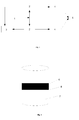
Fig. 1 is a flowchart of an embodiment of the present invention; -
Fig. 2 is a schematic view showing the extracting phase and the water phase in the extractive equipment. - Many aspects of the present invention will be described in detail in the following embodiments accompanying with the drawings.
- Referring to
Fig. 1 , after the wastewater in a regulatingpond 1 is entered into a normal oil-water separator 2, the normal mineral oil and the wastewater are separated from each other. Under the gravity effect, the normal mineral oil flows into anoil collector 3 via elevation setting, while the wastewater is entered into theextractive equipment 4 intermittently from its bottom. Kerosene as the extracting solvent is added into theextractive equipment 4, and the volume ratio of the extracting solvent to the wastewater containing orimulsion oil is 1:2. The wastewater is raised spirally in theextractive equipment 4 and mixed with the kerosene adequately for 10 minutes. After the interphase mass transfer between the kerosene and the wastewater containing orimulsion oil, the orimulsion oil is extracted from the wastewater into the kerosene to form an extraction phase which is separated from the water phase. For the difference in density, the water phase is below the extraction phase. The water phase is discharged from thedrainpipe 5 on the bottom of the extractive equipment after the orimulsion oil is taken out. In this embodiment, two oil-water separators 2, twoextractive equipments 4 are both arranged in parallel to process wastewater in large amounts. When the content of orimulsion oil is higher than 5000ppm, if a single stage extraction is insufficient, then an additional extractive equipment can be provided in series in addition to theextractive equipment 4, so as to enable the wastewater treatment to be up to standard. In this embodiment, the total oil removal ratio is 97%, which reaches the grade II discharge standard of the second period of time as prescribed in Integrated Wastewater Discharge Standard GB 8978 1996 in China. - As show in
Fig. 2 , in theextractive equipment 4, thewater phase 7 after extraction is located at the bottom of the equipment and theextraction phase 6 is located at the top of the equipment, with ablurry dividing line 8 between these two phases. The water phase is discharged from the bottom of theextractive equipment 4 in siphoning manner, that is, thedrainpipe 5 is formed in U shape with a free water outlet lower than thedividing line 8 between the water phase and the extraction phase. Alternatively, the water may be discharged automatically by using a liquid level meter. - The difference between this embodiment and the
embodiment 1 lies in that: diesel oil as the extracting solvent is added into theextractive equipment 4, and the volume ratio of the diesel oil to the wastewater of orimulsion oil is 1:3; the wastewater in the regulatingpond 1 is entered into theextractive equipment 4 from its bottom, and raised spirally in theextractive equipment 4 and mixed with the diesel oil adequately for 5 minutes. After the interphase mass transfer between the diesel oil and the wastewater containing orimulsion oil, the orimulsion oil is extracted from the wastewater into the diesel oil to form an extraction phase which is separated from the water phase. The water phase is discharged from the drainpipe at the bottom of the extractive equipment. The total oil removal ratio is 96.4%, which reaches the grade II discharge standard of the second period of time as prescribed in Integrated Wastewater Discharge Standard GB 8978 1996 in China, that is to say, the concentration of orimulsion oil discharged is lower than 10ppm. - It has been proved by tests and practices that kerosene and diesel oil can be used as the extracting solvent in the treatment of the wastewater containing orimulsion oil. As the extracting solvent, the kerosene and diesel oil can be obtained easily and are relatively cheap, and only a little amount of them is required, and furthermore they are safe and stable for use, and are innocuous and non-corrosive and can be recycled to be used as fuel.
Claims (7)
- A method for physicochemical treatment of wastewater containing orimulsion oil, characterized by comprising the following steps:wastewater containing orimulsion oil is entered into the bottom of an extractive equipment intermittently and is raised spirally in the extractive equipment;the wastewater is then mixed with extracting solvent adequately that is pre-placed in the extractive equipment;the mixture is separated naturally such that orimulsion oil is kept in the extracting solvent forming an extraction phase above a water phase; andthe water phase is discharged from the bottom of the extractive equipment.
- The method of claim 1, characterized in that before the wastewater of orimulsion oil is entered into the extractive equipment, normal floating impurities are removed from the wastewater containing orimulsion oil.
- The method of claim 1 or 2, characterized in that the extracting solvent is kerosene or diesel oil.
- The method of claim 1 or 2, characterized in that the volume ratio of the extracting solvent to the wastewater containing orimulsion oil is in a range of 1 : 2 to 1 : 3.
- The method of claim 1 or 2, characterized in that in the extractive equipment, the wastewater is naturally mixed with extracting solvent for 5 to 10 minutes according to density.
- The method of claim 1 or 2, characterized in that when the content of the orimulsion oil in the wastewater is higher than 5000ppm, the wastewater containing orimulsion oil is passed through two-stage extractive equipments in series.
- The method of claim 1 or 2, characterized in that the water phase is discharged from the bottom of the extractive equipment in an automatic drainage manner by using a liquid level meter or in a siphoning manner that a free water outlet is lower than the dividing line between the water phase and the extraction phase.
Applications Claiming Priority (2)
| Application Number | Priority Date | Filing Date | Title |
|---|---|---|---|
| CN 200810198874 CN101684011B (en) | 2008-09-27 | 2008-09-27 | Physical and chemical treatment method of Orimusion sewage |
| PCT/CN2009/074238 WO2010037350A1 (en) | 2008-09-27 | 2009-09-25 | Method of physicochemical treatment for waste water of orimulsion oil |
Publications (3)
| Publication Number | Publication Date |
|---|---|
| EP2327664A1 true EP2327664A1 (en) | 2011-06-01 |
| EP2327664A4 EP2327664A4 (en) | 2012-06-06 |
| EP2327664B1 EP2327664B1 (en) | 2013-05-29 |
Family
ID=42047436
Family Applications (1)
| Application Number | Title | Priority Date | Filing Date |
|---|---|---|---|
| EP09817264.6A Active EP2327664B1 (en) | 2008-09-27 | 2009-09-25 | Method of physicochemical treatment for waste water of orimulsion oil |
Country Status (3)
| Country | Link |
|---|---|
| EP (1) | EP2327664B1 (en) |
| CN (1) | CN101684011B (en) |
| WO (1) | WO2010037350A1 (en) |
Families Citing this family (2)
| Publication number | Priority date | Publication date | Assignee | Title |
|---|---|---|---|---|
| CN103871536B (en) * | 2014-03-27 | 2016-05-04 | 中国能源建设集团广东省电力设计研究院有限公司 | The potential radioactivity oil-contained waste water treatment system of nuclear power plant |
| CN103922499B (en) * | 2014-04-29 | 2015-11-18 | 华东理工大学 | A kind of heavy metal ions in wastewater eddy flow strengthening extraction method and device thereof |
Family Cites Families (10)
| Publication number | Priority date | Publication date | Assignee | Title |
|---|---|---|---|---|
| US2383363A (en) * | 1943-02-27 | 1945-08-21 | United Gas Improvement Co | Chemical process |
| US4761222A (en) * | 1985-12-20 | 1988-08-02 | Phillips Petroleum Company | Method for separating normally liquid organic compounds |
| CA2040173A1 (en) * | 1990-04-23 | 1991-10-24 | Stephen C. Paspek | Process for separating extractable organic material from compositions comprising oil-in-water emulsions comprising said extractable organic material and solids |
| GB2264951A (en) * | 1992-03-11 | 1993-09-15 | Allott Environmental Processes | Breaking a bitumen-water emulsion |
| CN1031800C (en) * | 1993-09-24 | 1996-05-15 | 中国石油化工总公司 | Method for separating petroleum heavy oil |
| JP4322327B2 (en) * | 1998-04-14 | 2009-08-26 | 月島環境エンジニアリング株式会社 | Separation method of target components |
| CN1125869C (en) * | 2000-07-11 | 2003-10-29 | 符知民 | Method of compounding fuel oil with Aoli oil |
| CN1197794C (en) * | 2002-10-10 | 2005-04-20 | 中国石油化工股份有限公司 | Oil-containing sludge treating method |
| CN100486665C (en) * | 2007-04-23 | 2009-05-13 | 辽河石油勘探局 | Oil soil treatment technique for tank cleaning |
| CN101186350A (en) * | 2007-12-18 | 2008-05-28 | 程海鹰 | Oil field extracted water deoiling process by using supercritical liquid extraction technique |
-
2008
- 2008-09-27 CN CN 200810198874 patent/CN101684011B/en not_active Expired - Fee Related
-
2009
- 2009-09-25 WO PCT/CN2009/074238 patent/WO2010037350A1/en not_active Ceased
- 2009-09-25 EP EP09817264.6A patent/EP2327664B1/en active Active
Also Published As
| Publication number | Publication date |
|---|---|
| CN101684011A (en) | 2010-03-31 |
| WO2010037350A1 (en) | 2010-04-08 |
| EP2327664A4 (en) | 2012-06-06 |
| EP2327664B1 (en) | 2013-05-29 |
| CN101684011B (en) | 2013-02-06 |
Similar Documents
| Publication | Publication Date | Title |
|---|---|---|
| CN202594928U (en) | Ultrasonic solid-liquid separation skid | |
| CN106630514B (en) | Treatment system for oily sludge, separation equipment and treatment method thereof | |
| CN101139142A (en) | Oily sewage processing method | |
| CN108314290A (en) | A kind of processing method of oily sludge | |
| CN109095740A (en) | Oily sludge method for innocent treatment | |
| CN106007209A (en) | Oil removing pretreatment technology for petroleum oil refining wastewater | |
| CN103739175A (en) | Method for processing oil sludge | |
| CN104086026B (en) | A kind of oil-gas field fracturing waste liquor effective, harmless processing means and processing method | |
| CN202343009U (en) | Kitchen oil and water separation device | |
| CN105062551B (en) | Demulsifying agent for treating sand-containing crude oil | |
| CN104556624A (en) | Oil sludge demulsifier and oil sludge advanced treatment process | |
| RU2698667C1 (en) | Method for processing oil-containing sludge and technological complex for its implementation | |
| EP2327664B1 (en) | Method of physicochemical treatment for waste water of orimulsion oil | |
| CN109609251B (en) | Recovery treatment agent for zero discharge of rolling waste liquid and treatment method | |
| KR20120065858A (en) | Oil seperating apparatus of food waste sludge | |
| CN105110514B (en) | A kind of method and device for handling air compressor machine emulsifiable oil waste water | |
| CN104556625B (en) | A kind of greasy filth emulsion splitter and oil soil treatment technique | |
| CN102718285B (en) | Oily sewage physical demulsification method for oil field | |
| CN211445299U (en) | Integrated sewage treatment pry | |
| CN103771621A (en) | De-oiling treatment method for sewage of oil refinery | |
| CN201386031Y (en) | Sewage oil slick isolation device | |
| CN108217837A (en) | The multiple treating system and its processing method of a kind of high oil-containing wastewater | |
| CN101823828B (en) | Sludge agitator tank | |
| CN201686601U (en) | Sludge stirring pot | |
| CN208345922U (en) | Three sections of high efficiency composition processing systems of oily wastewater |
Legal Events
| Date | Code | Title | Description |
|---|---|---|---|
| PUAI | Public reference made under article 153(3) epc to a published international application that has entered the european phase |
Free format text: ORIGINAL CODE: 0009012 |
|
| 17P | Request for examination filed |
Effective date: 20100824 |
|
| AK | Designated contracting states |
Kind code of ref document: A1 Designated state(s): AT BE BG CH CY CZ DE DK EE ES FI FR GB GR HR HU IE IS IT LI LT LU LV MC MK MT NL NO PL PT RO SE SI SK SM TR |
|
| AX | Request for extension of the european patent |
Extension state: AL BA RS |
|
| DAX | Request for extension of the european patent (deleted) | ||
| RIC1 | Information provided on ipc code assigned before grant |
Ipc: B01D 11/04 20060101ALI20120329BHEP Ipc: C02F 1/26 20060101AFI20120329BHEP |
|
| A4 | Supplementary search report drawn up and despatched |
Effective date: 20120509 |
|
| RIC1 | Information provided on ipc code assigned before grant |
Ipc: B01D 11/04 20060101ALI20120503BHEP Ipc: C02F 1/26 20060101AFI20120503BHEP |
|
| GRAP | Despatch of communication of intention to grant a patent |
Free format text: ORIGINAL CODE: EPIDOSNIGR1 |
|
| GRAS | Grant fee paid |
Free format text: ORIGINAL CODE: EPIDOSNIGR3 |
|
| GRAA | (expected) grant |
Free format text: ORIGINAL CODE: 0009210 |
|
| AK | Designated contracting states |
Kind code of ref document: B1 Designated state(s): AT BE BG CH CY CZ DE DK EE ES FI FR GB GR HR HU IE IS IT LI LT LU LV MC MK MT NL NO PL PT RO SE SI SK SM TR |
|
| REG | Reference to a national code |
Ref country code: GB Ref legal event code: FG4D |
|
| REG | Reference to a national code |
Ref country code: CH Ref legal event code: EP |
|
| REG | Reference to a national code |
Ref country code: AT Ref legal event code: REF Ref document number: 614291 Country of ref document: AT Kind code of ref document: T Effective date: 20130615 |
|
| REG | Reference to a national code |
Ref country code: IE Ref legal event code: FG4D |
|
| REG | Reference to a national code |
Ref country code: DE Ref legal event code: R096 Ref document number: 602009016131 Country of ref document: DE Effective date: 20130801 |
|
| REG | Reference to a national code |
Ref country code: AT Ref legal event code: MK05 Ref document number: 614291 Country of ref document: AT Kind code of ref document: T Effective date: 20130529 |
|
| REG | Reference to a national code |
Ref country code: LT Ref legal event code: MG4D |
|
| PG25 | Lapsed in a contracting state [announced via postgrant information from national office to epo] |
Ref country code: GR Free format text: LAPSE BECAUSE OF FAILURE TO SUBMIT A TRANSLATION OF THE DESCRIPTION OR TO PAY THE FEE WITHIN THE PRESCRIBED TIME-LIMIT Effective date: 20130830 Ref country code: IS Free format text: LAPSE BECAUSE OF FAILURE TO SUBMIT A TRANSLATION OF THE DESCRIPTION OR TO PAY THE FEE WITHIN THE PRESCRIBED TIME-LIMIT Effective date: 20130929 Ref country code: PT Free format text: LAPSE BECAUSE OF FAILURE TO SUBMIT A TRANSLATION OF THE DESCRIPTION OR TO PAY THE FEE WITHIN THE PRESCRIBED TIME-LIMIT Effective date: 20130930 Ref country code: AT Free format text: LAPSE BECAUSE OF FAILURE TO SUBMIT A TRANSLATION OF THE DESCRIPTION OR TO PAY THE FEE WITHIN THE PRESCRIBED TIME-LIMIT Effective date: 20130529 Ref country code: SI Free format text: LAPSE BECAUSE OF FAILURE TO SUBMIT A TRANSLATION OF THE DESCRIPTION OR TO PAY THE FEE WITHIN THE PRESCRIBED TIME-LIMIT Effective date: 20130529 Ref country code: SE Free format text: LAPSE BECAUSE OF FAILURE TO SUBMIT A TRANSLATION OF THE DESCRIPTION OR TO PAY THE FEE WITHIN THE PRESCRIBED TIME-LIMIT Effective date: 20130529 Ref country code: NO Free format text: LAPSE BECAUSE OF FAILURE TO SUBMIT A TRANSLATION OF THE DESCRIPTION OR TO PAY THE FEE WITHIN THE PRESCRIBED TIME-LIMIT Effective date: 20130829 Ref country code: LT Free format text: LAPSE BECAUSE OF FAILURE TO SUBMIT A TRANSLATION OF THE DESCRIPTION OR TO PAY THE FEE WITHIN THE PRESCRIBED TIME-LIMIT Effective date: 20130529 Ref country code: FI Free format text: LAPSE BECAUSE OF FAILURE TO SUBMIT A TRANSLATION OF THE DESCRIPTION OR TO PAY THE FEE WITHIN THE PRESCRIBED TIME-LIMIT Effective date: 20130529 Ref country code: ES Free format text: LAPSE BECAUSE OF FAILURE TO SUBMIT A TRANSLATION OF THE DESCRIPTION OR TO PAY THE FEE WITHIN THE PRESCRIBED TIME-LIMIT Effective date: 20130909 |
|
| REG | Reference to a national code |
Ref country code: NL Ref legal event code: VDEP Effective date: 20130529 |
|
| PG25 | Lapsed in a contracting state [announced via postgrant information from national office to epo] |
Ref country code: PL Free format text: LAPSE BECAUSE OF FAILURE TO SUBMIT A TRANSLATION OF THE DESCRIPTION OR TO PAY THE FEE WITHIN THE PRESCRIBED TIME-LIMIT Effective date: 20130529 Ref country code: HR Free format text: LAPSE BECAUSE OF FAILURE TO SUBMIT A TRANSLATION OF THE DESCRIPTION OR TO PAY THE FEE WITHIN THE PRESCRIBED TIME-LIMIT Effective date: 20130529 Ref country code: BG Free format text: LAPSE BECAUSE OF FAILURE TO SUBMIT A TRANSLATION OF THE DESCRIPTION OR TO PAY THE FEE WITHIN THE PRESCRIBED TIME-LIMIT Effective date: 20130829 |
|
| PG25 | Lapsed in a contracting state [announced via postgrant information from national office to epo] |
Ref country code: LV Free format text: LAPSE BECAUSE OF FAILURE TO SUBMIT A TRANSLATION OF THE DESCRIPTION OR TO PAY THE FEE WITHIN THE PRESCRIBED TIME-LIMIT Effective date: 20130529 |
|
| PG25 | Lapsed in a contracting state [announced via postgrant information from national office to epo] |
Ref country code: SK Free format text: LAPSE BECAUSE OF FAILURE TO SUBMIT A TRANSLATION OF THE DESCRIPTION OR TO PAY THE FEE WITHIN THE PRESCRIBED TIME-LIMIT Effective date: 20130529 Ref country code: EE Free format text: LAPSE BECAUSE OF FAILURE TO SUBMIT A TRANSLATION OF THE DESCRIPTION OR TO PAY THE FEE WITHIN THE PRESCRIBED TIME-LIMIT Effective date: 20130529 Ref country code: CZ Free format text: LAPSE BECAUSE OF FAILURE TO SUBMIT A TRANSLATION OF THE DESCRIPTION OR TO PAY THE FEE WITHIN THE PRESCRIBED TIME-LIMIT Effective date: 20130529 Ref country code: BE Free format text: LAPSE BECAUSE OF FAILURE TO SUBMIT A TRANSLATION OF THE DESCRIPTION OR TO PAY THE FEE WITHIN THE PRESCRIBED TIME-LIMIT Effective date: 20130529 Ref country code: DK Free format text: LAPSE BECAUSE OF FAILURE TO SUBMIT A TRANSLATION OF THE DESCRIPTION OR TO PAY THE FEE WITHIN THE PRESCRIBED TIME-LIMIT Effective date: 20130529 |
|
| PG25 | Lapsed in a contracting state [announced via postgrant information from national office to epo] |
Ref country code: IT Free format text: LAPSE BECAUSE OF FAILURE TO SUBMIT A TRANSLATION OF THE DESCRIPTION OR TO PAY THE FEE WITHIN THE PRESCRIBED TIME-LIMIT Effective date: 20130529 Ref country code: NL Free format text: LAPSE BECAUSE OF FAILURE TO SUBMIT A TRANSLATION OF THE DESCRIPTION OR TO PAY THE FEE WITHIN THE PRESCRIBED TIME-LIMIT Effective date: 20130529 Ref country code: RO Free format text: LAPSE BECAUSE OF FAILURE TO SUBMIT A TRANSLATION OF THE DESCRIPTION OR TO PAY THE FEE WITHIN THE PRESCRIBED TIME-LIMIT Effective date: 20130529 |
|
| PLBE | No opposition filed within time limit |
Free format text: ORIGINAL CODE: 0009261 |
|
| STAA | Information on the status of an ep patent application or granted ep patent |
Free format text: STATUS: NO OPPOSITION FILED WITHIN TIME LIMIT |
|
| PG25 | Lapsed in a contracting state [announced via postgrant information from national office to epo] |
Ref country code: MC Free format text: LAPSE BECAUSE OF FAILURE TO SUBMIT A TRANSLATION OF THE DESCRIPTION OR TO PAY THE FEE WITHIN THE PRESCRIBED TIME-LIMIT Effective date: 20130529 |
|
| REG | Reference to a national code |
Ref country code: CH Ref legal event code: PL |
|
| 26N | No opposition filed |
Effective date: 20140303 |
|
| REG | Reference to a national code |
Ref country code: DE Ref legal event code: R097 Ref document number: 602009016131 Country of ref document: DE Effective date: 20140303 |
|
| REG | Reference to a national code |
Ref country code: DE Ref legal event code: R119 Ref document number: 602009016131 Country of ref document: DE Effective date: 20140401 |
|
| REG | Reference to a national code |
Ref country code: IE Ref legal event code: MM4A |
|
| PG25 | Lapsed in a contracting state [announced via postgrant information from national office to epo] |
Ref country code: IE Free format text: LAPSE BECAUSE OF NON-PAYMENT OF DUE FEES Effective date: 20130925 Ref country code: CH Free format text: LAPSE BECAUSE OF NON-PAYMENT OF DUE FEES Effective date: 20130930 Ref country code: LI Free format text: LAPSE BECAUSE OF NON-PAYMENT OF DUE FEES Effective date: 20130930 |
|
| PG25 | Lapsed in a contracting state [announced via postgrant information from national office to epo] |
Ref country code: DE Free format text: LAPSE BECAUSE OF NON-PAYMENT OF DUE FEES Effective date: 20140401 |
|
| PG25 | Lapsed in a contracting state [announced via postgrant information from national office to epo] |
Ref country code: SM Free format text: LAPSE BECAUSE OF FAILURE TO SUBMIT A TRANSLATION OF THE DESCRIPTION OR TO PAY THE FEE WITHIN THE PRESCRIBED TIME-LIMIT Effective date: 20130529 |
|
| PG25 | Lapsed in a contracting state [announced via postgrant information from national office to epo] |
Ref country code: MT Free format text: LAPSE BECAUSE OF FAILURE TO SUBMIT A TRANSLATION OF THE DESCRIPTION OR TO PAY THE FEE WITHIN THE PRESCRIBED TIME-LIMIT Effective date: 20130529 Ref country code: CY Free format text: LAPSE BECAUSE OF FAILURE TO SUBMIT A TRANSLATION OF THE DESCRIPTION OR TO PAY THE FEE WITHIN THE PRESCRIBED TIME-LIMIT Effective date: 20130529 Ref country code: TR Free format text: LAPSE BECAUSE OF FAILURE TO SUBMIT A TRANSLATION OF THE DESCRIPTION OR TO PAY THE FEE WITHIN THE PRESCRIBED TIME-LIMIT Effective date: 20130529 |
|
| PG25 | Lapsed in a contracting state [announced via postgrant information from national office to epo] |
Ref country code: LU Free format text: LAPSE BECAUSE OF NON-PAYMENT OF DUE FEES Effective date: 20130925 Ref country code: HU Free format text: LAPSE BECAUSE OF FAILURE TO SUBMIT A TRANSLATION OF THE DESCRIPTION OR TO PAY THE FEE WITHIN THE PRESCRIBED TIME-LIMIT; INVALID AB INITIO Effective date: 20090925 Ref country code: MK Free format text: LAPSE BECAUSE OF FAILURE TO SUBMIT A TRANSLATION OF THE DESCRIPTION OR TO PAY THE FEE WITHIN THE PRESCRIBED TIME-LIMIT Effective date: 20130529 |
|
| REG | Reference to a national code |
Ref country code: FR Ref legal event code: PLFP Year of fee payment: 7 |
|
| REG | Reference to a national code |
Ref country code: FR Ref legal event code: CD Owner name: GUANGDONG ELECTRIC POWER DESIGN INSTITUTE CO.,, CN Effective date: 20151012 |
|
| REG | Reference to a national code |
Ref country code: FR Ref legal event code: PLFP Year of fee payment: 8 |
|
| REG | Reference to a national code |
Ref country code: FR Ref legal event code: PLFP Year of fee payment: 9 |
|
| REG | Reference to a national code |
Ref country code: FR Ref legal event code: PLFP Year of fee payment: 10 |
|
| PGFP | Annual fee paid to national office [announced via postgrant information from national office to epo] |
Ref country code: GB Payment date: 20250918 Year of fee payment: 17 |
|
| PGFP | Annual fee paid to national office [announced via postgrant information from national office to epo] |
Ref country code: FR Payment date: 20250922 Year of fee payment: 17 |