EP2322105A1 - Surgical forceps capable of adjusting sealing pressure based on vessel size - Google Patents
Surgical forceps capable of adjusting sealing pressure based on vessel size Download PDFInfo
- Publication number
- EP2322105A1 EP2322105A1 EP10191320A EP10191320A EP2322105A1 EP 2322105 A1 EP2322105 A1 EP 2322105A1 EP 10191320 A EP10191320 A EP 10191320A EP 10191320 A EP10191320 A EP 10191320A EP 2322105 A1 EP2322105 A1 EP 2322105A1
- Authority
- EP
- European Patent Office
- Prior art keywords
- jaw members
- tissue
- seal
- seal pressure
- output
- Prior art date
- Legal status (The legal status is an assumption and is not a legal conclusion. Google has not performed a legal analysis and makes no representation as to the accuracy of the status listed.)
- Granted
Links
Images



Classifications
-
- A—HUMAN NECESSITIES
- A61—MEDICAL OR VETERINARY SCIENCE; HYGIENE
- A61B—DIAGNOSIS; SURGERY; IDENTIFICATION
- A61B18/00—Surgical instruments, devices or methods for transferring non-mechanical forms of energy to or from the body
- A61B18/04—Surgical instruments, devices or methods for transferring non-mechanical forms of energy to or from the body by heating
- A61B18/12—Surgical instruments, devices or methods for transferring non-mechanical forms of energy to or from the body by heating by passing a current through the tissue to be heated, e.g. high-frequency current
- A61B18/14—Probes or electrodes therefor
- A61B18/1442—Probes having pivoting end effectors, e.g. forceps
- A61B18/1445—Probes having pivoting end effectors, e.g. forceps at the distal end of a shaft, e.g. forceps or scissors at the end of a rigid rod
-
- A—HUMAN NECESSITIES
- A61—MEDICAL OR VETERINARY SCIENCE; HYGIENE
- A61B—DIAGNOSIS; SURGERY; IDENTIFICATION
- A61B17/00—Surgical instruments, devices or methods
- A61B17/28—Surgical forceps
- A61B17/2812—Surgical forceps with a single pivotal connection
-
- A—HUMAN NECESSITIES
- A61—MEDICAL OR VETERINARY SCIENCE; HYGIENE
- A61B—DIAGNOSIS; SURGERY; IDENTIFICATION
- A61B5/00—Measuring for diagnostic purposes; Identification of persons
- A61B5/05—Detecting, measuring or recording for diagnosis by means of electric currents or magnetic fields; Measuring using microwaves or radio waves
- A61B5/053—Measuring electrical impedance or conductance of a portion of the body
- A61B5/0538—Measuring electrical impedance or conductance of a portion of the body invasively, e.g. using a catheter
-
- A—HUMAN NECESSITIES
- A61—MEDICAL OR VETERINARY SCIENCE; HYGIENE
- A61B—DIAGNOSIS; SURGERY; IDENTIFICATION
- A61B5/00—Measuring for diagnostic purposes; Identification of persons
- A61B5/103—Measuring devices for testing the shape, pattern, colour, size or movement of the body or parts thereof, for diagnostic purposes
- A61B5/107—Measuring physical dimensions, e.g. size of the entire body or parts thereof
- A61B5/1076—Measuring physical dimensions, e.g. size of the entire body or parts thereof for measuring dimensions inside body cavities, e.g. using catheters
-
- A—HUMAN NECESSITIES
- A61—MEDICAL OR VETERINARY SCIENCE; HYGIENE
- A61B—DIAGNOSIS; SURGERY; IDENTIFICATION
- A61B5/00—Measuring for diagnostic purposes; Identification of persons
- A61B5/48—Other medical applications
- A61B5/4869—Determining body composition
-
- A—HUMAN NECESSITIES
- A61—MEDICAL OR VETERINARY SCIENCE; HYGIENE
- A61B—DIAGNOSIS; SURGERY; IDENTIFICATION
- A61B90/00—Instruments, implements or accessories specially adapted for surgery or diagnosis and not covered by any of the groups A61B1/00 - A61B50/00, e.g. for luxation treatment or for protecting wound edges
- A61B90/06—Measuring instruments not otherwise provided for
-
- A—HUMAN NECESSITIES
- A61—MEDICAL OR VETERINARY SCIENCE; HYGIENE
- A61B—DIAGNOSIS; SURGERY; IDENTIFICATION
- A61B17/00—Surgical instruments, devices or methods
- A61B17/28—Surgical forceps
- A61B17/2812—Surgical forceps with a single pivotal connection
- A61B17/2816—Pivots
-
- A—HUMAN NECESSITIES
- A61—MEDICAL OR VETERINARY SCIENCE; HYGIENE
- A61B—DIAGNOSIS; SURGERY; IDENTIFICATION
- A61B17/00—Surgical instruments, devices or methods
- A61B17/28—Surgical forceps
- A61B17/2812—Surgical forceps with a single pivotal connection
- A61B17/282—Jaws
-
- A—HUMAN NECESSITIES
- A61—MEDICAL OR VETERINARY SCIENCE; HYGIENE
- A61B—DIAGNOSIS; SURGERY; IDENTIFICATION
- A61B18/00—Surgical instruments, devices or methods for transferring non-mechanical forms of energy to or from the body
- A61B18/04—Surgical instruments, devices or methods for transferring non-mechanical forms of energy to or from the body by heating
- A61B18/12—Surgical instruments, devices or methods for transferring non-mechanical forms of energy to or from the body by heating by passing a current through the tissue to be heated, e.g. high-frequency current
- A61B18/14—Probes or electrodes therefor
-
- A—HUMAN NECESSITIES
- A61—MEDICAL OR VETERINARY SCIENCE; HYGIENE
- A61B—DIAGNOSIS; SURGERY; IDENTIFICATION
- A61B18/00—Surgical instruments, devices or methods for transferring non-mechanical forms of energy to or from the body
- A61B18/04—Surgical instruments, devices or methods for transferring non-mechanical forms of energy to or from the body by heating
- A61B18/12—Surgical instruments, devices or methods for transferring non-mechanical forms of energy to or from the body by heating by passing a current through the tissue to be heated, e.g. high-frequency current
- A61B18/14—Probes or electrodes therefor
- A61B18/1442—Probes having pivoting end effectors, e.g. forceps
-
- A—HUMAN NECESSITIES
- A61—MEDICAL OR VETERINARY SCIENCE; HYGIENE
- A61B—DIAGNOSIS; SURGERY; IDENTIFICATION
- A61B18/00—Surgical instruments, devices or methods for transferring non-mechanical forms of energy to or from the body
- A61B2018/00053—Mechanical features of the instrument of device
-
- A—HUMAN NECESSITIES
- A61—MEDICAL OR VETERINARY SCIENCE; HYGIENE
- A61B—DIAGNOSIS; SURGERY; IDENTIFICATION
- A61B18/00—Surgical instruments, devices or methods for transferring non-mechanical forms of energy to or from the body
- A61B2018/00571—Surgical instruments, devices or methods for transferring non-mechanical forms of energy to or from the body for achieving a particular surgical effect
- A61B2018/0063—Sealing
-
- A—HUMAN NECESSITIES
- A61—MEDICAL OR VETERINARY SCIENCE; HYGIENE
- A61B—DIAGNOSIS; SURGERY; IDENTIFICATION
- A61B90/00—Instruments, implements or accessories specially adapted for surgery or diagnosis and not covered by any of the groups A61B1/00 - A61B50/00, e.g. for luxation treatment or for protecting wound edges
- A61B90/06—Measuring instruments not otherwise provided for
- A61B2090/064—Measuring instruments not otherwise provided for for measuring force, pressure or mechanical tension
-
- A—HUMAN NECESSITIES
- A61—MEDICAL OR VETERINARY SCIENCE; HYGIENE
- A61B—DIAGNOSIS; SURGERY; IDENTIFICATION
- A61B90/00—Instruments, implements or accessories specially adapted for surgery or diagnosis and not covered by any of the groups A61B1/00 - A61B50/00, e.g. for luxation treatment or for protecting wound edges
- A61B90/06—Measuring instruments not otherwise provided for
- A61B2090/064—Measuring instruments not otherwise provided for for measuring force, pressure or mechanical tension
- A61B2090/065—Measuring instruments not otherwise provided for for measuring force, pressure or mechanical tension for measuring contact or contact pressure
-
- A—HUMAN NECESSITIES
- A61—MEDICAL OR VETERINARY SCIENCE; HYGIENE
- A61B—DIAGNOSIS; SURGERY; IDENTIFICATION
- A61B5/00—Measuring for diagnostic purposes; Identification of persons
- A61B5/05—Detecting, measuring or recording for diagnosis by means of electric currents or magnetic fields; Measuring using microwaves or radio waves
Definitions
- the present disclosure relates to a surgical forceps, and more particularly, to a surgical forceps and method for determining and applying a minimum seal pressure to tissue based upon tissue diameter and/or composition.
- NOTES Natural Orifice Translumenal Endoscopic Surgery
- seal pressures or seal pressure ranges, required to effectively seal vessels of particular diameters is also important. Accurate application of pressure is important to oppose the walls of the vessel, to reduce the tissue impedance to a low enough value that allows enough electrosurgical energy through the tissue, to overcome the forces of expansion during tissue heating, and to contribute to the end tissue thickness which is an indication of a good seal. If the pressure is not great enough, the vessel may not properly or effectively seal and if the pressure is too great, the seal may shred or tear. It has been found that the amount of force required to produce an effective seal is at least partly dependent on the size and composition of the tissue to be sealed. Therefore, in order to help ensure an adequate seal, it would be advantageous to initially determine the size and/or composition of the tissue to be sealed and then apply the appropriate seal pressure.
- Seal pressure refers to the force imparted to tissue disposed, for example, between opposing jaw members of a surgical forceps.
- Burst pressure is the pressure required to open, or burst, a previously sealed vessel by forcing a fluid through the sealed vessel.
- the study was designed using a central composite response surface, a well known Design of Experiments (DoE) variation.
- DoE contained two factors: seal pressure and vessel size. The range of values tested for seal pressure was 40 psi to 120 psi, while the vessel diameters ranged from 2 mm to 6 mm.
- porcine renal arteries were removed and dissected and the diameter of the vessel was measured.
- the vessel was then placed on a research tool used for electrothermal bipolar vessel sealing.
- the pressure between the jaw members was set on the research tool to correspond with the appropriate seal pressure dictated by the DoE.
- a vessel seal was produced by applying bipolar energy to the seal plates using a ForceTriad TM generator manufactured by Valleylab (now Covidien Energy-based Devices) of Boulder, Colorado. Once the seal was made, the vessel was held in place while water was pumped through the vessel for burst testing.
- a pressure calibrator was used to determine the maximum pressure the vessel could withstand prior to bursting.
- the burst pressures for all of the vessel sizes and pressure combinations were input into a statistical software package for further analysis.
- An Analysis of Variation (ANOVA) evaluation revealed that both vessel size and seal pressure were significant factors in determining the burst pressure (quality) of the resultant seal.
- a surgical forceps includes a housing and one or more shafts attached to the housing.
- An end effector assembly is disposed at a distal end of the shaft(s).
- the end effector assembly includes first and second jaw members disposed in opposing relation relative to one another. One or both of the jaw members is moveable from an open position to a closed position for grasping tissue.
- the jaw members include one or more sensing components that determine an output of cross-sectional diameter and/or composition of tissue disposed between the jaw members.
- a processing component is configured to receive the output from the sensing components and determine a seal pressure for adequately sealing tissue based upon the output.
- a regulating component in communication with the processing component, is configured to regulate the movement of the jaw members such that upon movement from the open to the closed position, the determined seal pressure is applied to tissue disposed between the jaw members.
- the sensing component includes a pair of electrodes disposed through each of the jaw members.
- the electrodes are configured to pass an electrical signal through tissue disposed between the jaw members.
- the electrodes can thereby measure one or more electrical characteristics of tissue and determine the cross-sectional diameter and/or the composition of tissue.
- the electrodes are configured to measure the impedance through tissue.
- the processing component includes an electrical circuit configured to receive the output from the sensing component and determine a seal pressure corresponding to that output.
- a generator in communication with the processing component is provided.
- the generator is configured to store user-input data and use that data to, in conjunction with the processing component, determine a seal pressure corresponding to the output from the sensing component.
- the regulating component includes a mechanically-driven system, an electrically-driven system and/or an electro-mechanically-driven system to regulate the seal pressure between the jaw members.
- the seal pressure determined by the processing component is a minimum seal pressure required to adequately seal tissue according to the output.
- the seal pressure determined by the processing component is a range of seal pressures for adequately sealing tissue according to the output.
- a method of sealing tissue is also provided in accordance with the present disclosure.
- the method includes providing a surgical forceps having first and second jaw members disposed in opposing relation relative to one another. One or both of the jaw members are moveable from an open position to a closed position for grasping tissue.
- the method also includes the steps of determining a cross-sectional diameter and/or a composition of tissue disposed between the jaw members, determining a seal pressure for adequately sealing tissue according to the cross-sectional diameter and/or composition, and regulating the movement of the jaw members.
- the movement of the jaw members is regulated such that upon movement from the open to the closed position, the seal pressure is applied to tissue disposed the jaw members.
- the determined seal pressure is a minimum seal pressure required to adequately seal tissue.
- the determined seal pressure is a range of seal pressures for adequately sealing tissue.
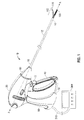
- Fig. 1 is a top, perspective view of a surgical forceps including a housing, a handle assembly, a shaft, and an end effector assembly, for use with the present disclosure;
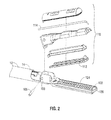
- Fig. 2 is a enlarged, side, perspective view of the end effector assembly of Fig. 1 , wherein the top jaw is shown with parts separated;
- Fig. 3 is a side, perspective view of the housing of the forceps of Fig. 1 , with a half of the housing removed;
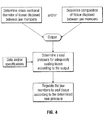
- Fig. 4 is flow chart illustrating a method of sealing tissue in accordance with the present disclosure
- Fig. 5 is a contour plot of mean burst pressure as a result of seal pressure and vessel size with 0.083 inch wide seal plates;
- Fig. 6 is a contour plot of the mean burst pressure as a result of seal pressure and vessel size with 0.029 inch wide seal plates.
- an endoscopic forceps 10 that includes a housing 20, a handle assembly 30, a rotating assembly 80, a trigger assembly 70 and an end effector assembly 100.
- Forceps 10 further includes a shaft 12 having a distal end 14 configured to mechanically engage end effector assembly 100 and a proximal end 16 that mechanically engages housing 20.
- Forceps 10 also includes electrosurgical cable 310 that connects forceps 10 to a generator 300. Cable 310 has sufficient length to extend through shaft 12 in order to provide electrical energy to at least one of jaw members 110 and 120 of end effector assembly 100.
- rotating assembly 80 is integrally associated with housing 20 and is rotatable approximately 180 degrees in either direction about a longitudinal axis "A.”
- the housing 20 includes two halves that house the internal working components of the forceps 10.
- Handle assembly 30 includes a moveable handle 40 and a fixed handle 50.
- Fixed handle 50 is integrally associated with housing 20 and handle 40 is moveable relative to fixed handle 50 in the direction of arrow "B.”
- end effector assembly 100 is configured for mechanical attachment at the distal end 14 of shaft 12 of forceps 10.
- End effector assembly 100 includes a pair of opposing jaw members 110 and 120.
- Handle 40 of forceps 10 (see Fig. 1 ) ultimately connects to a drive assembly (not shown) which, together, mechanically cooperate to impart movement of the jaw members 110 and 120 from a first, open position wherein the jaw members 110 and 120 are disposed in spaced relation relative to one another, to a second, clamping or closed position wherein the jaw members 110 and 120 cooperate to grasp tissue therebetween.
- jaw members 110 and 120 are pivotably connected about pivot 103 via pivot pin 105.
- Jaw members 110 and 120 include electrically conductive sealing plates 112 and 122 that are dimensioned to securely engage tissue when clamped therebetween.
- Each of the jaw members 110 and 120 also include a sensing component, or electrode pair 114 and 124, respectively, disposed therethrough.
- the electrode pairs 114 and 124 cooperate to measure the impedance across tissue disposed between the jaw members 110 and 120.
- Electrode pair 114 of jaw member 110 may be configured to transmit a low-voltage alternating-current through tissue disposed between the jaw members 110 and 120, while electrode pair 124 of jaw member 120 may be configured to receive the resulting voltage after it has passed through tissue.
- this configuration may be reversed, e.g., where the transmitting electrodes are disposed through jaw member 120 and where the receiving electrodes are disposed through jaw member 110.
- the impedance across the tissue can be measured and used to determine the cross-sectional diameter of the tissue.
- the impedance across the tissue measured by the pairs of electrodes 114 and 124 can be used to determine the resistivity of the tissue. Since different components of tissue, e.g., muscle cells, fat cells and fluid, have different resistivities, determining the overall resistivity of the tissue can help determine the relative composition of the tissue.
- a second pair of electrodes (not shown) or sensors may be disposed through each of the jaw members 110 and 120 such that the first set of electrode pairs 114 and 124 may be configured to measure the cross-sectional diameter of the tissue while the second set of electrode pairs is configured to measure the resistivity of the tissue.
- any other suitable impedance sensing component may be provided in cooperation with jaw members 110 and 120 to measure the cross-sectional diameter and/or to determine the composition of tissue disposed between jaw members 110 and 120.
- the sensing component could include sensors disposed along the sealing plates 112 and 122 of jaw members 110 and 120, respectively, for sensing the gap distance between the respective sealing plates 112 and 122. By determining the gap distance between the sealing plates 112 and 122 at different positions along the plates, the size of the vessel grasped therebetween can be estimated.
- the sensing component may be configured to measure any electrical or physical characteristic of tissue that may be used to determine a diameter of tissue or tissue composition. Accordingly, any sensor that may be used to measure an electrical or physical characteristic of tissue may be provided for use with end effector assembly 100 of forceps 10. Suitable sensors include, but are not limited to, impedance sensors, proximity sensors, optical sensors, ultrasonic sensors, chemical sensors, and the like.
- housing 20 of forceps 10 is shown having a half of housing 20 removed.
- a processing component 21, disposed within housing 20, is configured to receive an output, e.g., a cross-sectional diameter and/or a composition of tissue from the sensing component 114.
- One or more leads 33, 37 are disposed through the housing 20 and shaft 10 to the jaw members 110 and 120 to provide feedback to the processing component 21.
- the processing component 21 converts the output into a seal pressure according to specific the characteristics, e.g., the cross-sectional diameter and/or the composition, of the tissue to be sealed. It is envisioned that the processing component 21 may determine the minimum seal pressure required to adequately seal the tissue disposed between the jaw members 110 and 120. Alternatively, the processing component 21 may be configured to determine a seal pressure range for sealing tissue disposed between the jaw member 110 and 120.
- the processing component 21 includes electrical circuitry 22 configured to convert the output into a seal pressure, or seal pressure range, for adequately sealing tissue disposed between the jaw members 110 and 120.
- Electrical circuitry 22 may be configured to convert the output to a seal pressure according to specific parameters and/or data.
- electrical circuitry 22 may communicate with an external source, e.g. generator 300, for determining the seal pressure corresponding to the tissue cross-sectional diameter and/or composition.
- a computer chip (not shown) may be provided for storing data and communicating with the electrical circuitry 22 in order to determine the appropriate seal pressure, or seal pressure range, based upon the output from the sensing component 114.
- Specific data sets e.g., the set of minimum seal pressures required for adequate sealing of vessels having varying cross-sectional diameters, may be used to convert the output cross-sectional diameter into a seal pressure.
- Algorithms can also be used to determine the seal pressure based upon the specific output. Exemplary data, determined by a study of seal pressure as a function of vessel size, for configuring the processing component 21, will be discussed in detail below.
- a regulating component 23 is shown in communication with the processing component 21 via lead 39.
- Regulating component 23 regulates movement of the jaw members 110 and 120 such that the determined seal pressure, or seal pressure range, is imparted to tissue disposed therebetween.
- Regulating component 23 may be an electromechanical component or a mechanical component, e.g., a system of gears 23, configured to define a specific range of motion of moveable handle 40 with respect to fixed handle 50.
- regulating component 23 would operate to limit the displacement of tabs 42a and 42b about pivot 43, thereby limiting the movement of moveable handle 40 with respect to fixed handle 50. Accordingly, a user would be prevented from squeezing handle 40 beyond a certain point.
- regulating component 23 would operate to prevent handle 40 from moving past position "C.” However, if the determined seal pressure were larger, regulating component 23 would operate to allow handle 40 to be moveable to position "D.”
- the movement of handle 40 to specific positions, e.g., position "C” or position "D,” corresponds to a specific seal pressure imparted to tissue, since handle 40 and drive assembly (not shown) cooperate to impart movement of the jaw members 110 and 120 from the open to the closed position.
- defining a specific range of motion of handle 40 allows the determined seal pressure (corresponding to the fully squeezed position, e.g., position "C” or position “D") to be applied to tissue disposed between jaw members 110 and 120. Accordingly, a user need not selectively squeeze handle 40 to approximate the proper seal pressure, but may squeeze handle 40 through its allowed range of motion (as defined by regulating component 23), thereby imparting the proper seal pressure to tissue disposed between jaw member 110 and 120.
- regulating component 23 may be electro-mechanically operated but may be configured to function in a similar manner.
- any suitable regulating component capable of regulating movement of the jaw members 110 and 120 according to a determined seal pressure or seal pressure range may be used in accordance with the present disclosure.
- a method of sealing tissue is shown for use with forceps 10.
- a cross-sectional diameter and/or composition of tissue disposed through jaw members 110 and 120 of a forceps 10 is determined as an output.
- the output is then used to determine a seal pressure required for adequately sealing tissue according to pre-determined data and/or specifications.
- the determined seal pressure is then used to regulate the movement of the jaw members 110 and 120 such that the determined seal pressure is applied to tissue between jaw member 110 and 120 to thereby effectively seal tissue disposed therebetween.
- exemplary data may be input into the processing component 21 to determine the appropriate seal pressure corresponding to the specific tissue cross-sectional diameter and/or composition.
- vessels having diameters ranging from 2 mm to 6 mm were sealed by applying seal pressures ranging from 40 psi to 120 psi.
- the exemplary data represented in Fig. 1 corresponds to seal plate 112 and 122 (see Fig. 2 ) widths of 0.083 inches.
- Fig. 5 shows the contour plot of the mean burst pressure as a result of seal pressure and vessel size with 0.083 inch wide seal plates 112 and 122. The points on the plot represent the probability of a burst pressure greater than 360 mmHg according to the specific vessel size and seal pressure tested.
- this data may be used in conjunction with processing component 21 of forceps 10 having seal plates 112 and 122 of 0.083 inch widths, to determine the proper seal pressure to apply to a vessel having a given cross-sectional diameter.
- end effector assembly 100 of forceps 10 may be positioned such that a vessel is disposed between jaw members 110 and 120.
- the sensing component 114 may then determine that the cross-sectional diameter of the vessel is, for example, 6 mm. This output, e.g., a 6 mm cross-sectional diameter, would then be communicated to the processing component 21.
- the processing component 21 would determine that a minimum seal pressure of 120 psi would be required to effectively seal the 6 mm vessel disposed between the jaw members 110 and 120. Accordingly, the regulating component 23 would regulate the movement of the jaw members 110 and 120 such that when handle 40 is squeezed, thereby closing jaw members 110 and 120, a seal pressure of 120 psi is applied to seal the vessel disposed between jaw members 110 and 120. Thus, the user can be confident that the tissue seal created has approximately a 95% probability of a burst pressure greater than 360 mmHg. As can be appreciated, the input data can be adjusted to achieve a higher, or lower, seal quality probability.
- Table 2 shows the results of the above-mentioned study, wherein the seal plate 112 and 122 widths are 0.029 inches.
- the minimum seal pressures in Table 2 were determined as the seal pressure required to produce a seal having a 95% probability of a burst pressure greater than 360 mmHg.
- Fig. 6 shows the contour plot of the mean burst pressure as a result of seal pressure and vessel size with 0.029 inch wide seal plates 112 and 122.
- this data may be used in conjunction with processing component 21 of forceps 10 having seal plates 112 and 122 of 0.029 inch widths, to determine the proper seal pressure to apply to a vessel having a given cross-sectional diameter.
- the minimum seal pressures required to adequately seal vessels having a given diameter shown in Table 1 and Table 2, above, may be input into the processing component 21.
- regulating component 23 ensures that the minimum seal pressure is applied to tissue, thereby helping to ensure an effective seal.
- Regulating component 23 also helps prevent tissue damage as a result of too much pressure being applied by preventing excess pressure from being applied to the tissue.
- the contour plots of Figs. 5 and 6 may be used to define a seal pressure range according to the vessel cross-sectional diameter determined by the sensing components 114 and 124.
- Determining a minimum seal pressure is also useful in the design and manufacturing of forceps, such as forceps 10. Knowing the minimum amount of pressure needed to seal a vessel having a particular diameter provides a designer with a specific seal pressure the device must be able to achieve. For example, if a given forceps 10 is to be designed for use with vessels ranging from 2 mm to 6 mm, the designer must create a forceps having a seal pressure capable of reaching the minimum seal pressure required for a 6 mm vessel. However, the designer need not create a forceps capable of achieving a higher seal pressure. Knowing the actual force required for a given vessel size allows the designer to avoid unnecessary constraints while designing the forceps. This is especially useful when designing forceps for use in laparoscopic and/or NOTES procedures, since it is difficult to achieve high seal pressures with relatively small jaw members.
Landscapes
- Health & Medical Sciences (AREA)
- Life Sciences & Earth Sciences (AREA)
- Surgery (AREA)
- Engineering & Computer Science (AREA)
- Public Health (AREA)
- Animal Behavior & Ethology (AREA)
- Veterinary Medicine (AREA)
- General Health & Medical Sciences (AREA)
- Biomedical Technology (AREA)
- Heart & Thoracic Surgery (AREA)
- Medical Informatics (AREA)
- Molecular Biology (AREA)
- Physics & Mathematics (AREA)
- Pathology (AREA)
- Nuclear Medicine, Radiotherapy & Molecular Imaging (AREA)
- Biophysics (AREA)
- Oral & Maxillofacial Surgery (AREA)
- Dentistry (AREA)
- Radiology & Medical Imaging (AREA)
- Ophthalmology & Optometry (AREA)
- Plasma & Fusion (AREA)
- Otolaryngology (AREA)
- Surgical Instruments (AREA)
Abstract
Description
- The present disclosure relates to a surgical forceps, and more particularly, to a surgical forceps and method for determining and applying a minimum seal pressure to tissue based upon tissue diameter and/or composition.
- As an alternative to open forceps for use with open surgical procedures, modern surgeons use endoscopic or laparoscopic instruments for remotely accessing organs through smaller, puncture-like incisions. More recently, Natural Orifice Translumenal Endoscopic Surgery (NOTES) procedures have been developed, for example, to access the abdominal cavity via the mouth, for scar-less surgery. Much like laparoscopy, NOTES is beneficial to patients in that it reduces healing time. However, while these minimally invasive surgical procedures are advantageous in many respects, the reduced access area presents new problems for surgical instrument design. For example, achieving a high seal pressure with a surgical forceps becomes increasingly more difficult as the size of the jaw members decreases. Accordingly, determining a minimum seal pressure needed to effectively seal tissue having a given diameter would be helpful in designing surgical instrument for use in laparoscopic or NOTES procedures.
- Further, the proper seal pressures, or seal pressure ranges, required to effectively seal vessels of particular diameters is also important. Accurate application of pressure is important to oppose the walls of the vessel, to reduce the tissue impedance to a low enough value that allows enough electrosurgical energy through the tissue, to overcome the forces of expansion during tissue heating, and to contribute to the end tissue thickness which is an indication of a good seal. If the pressure is not great enough, the vessel may not properly or effectively seal and if the pressure is too great, the seal may shred or tear. It has been found that the amount of force required to produce an effective seal is at least partly dependent on the size and composition of the tissue to be sealed. Therefore, in order to help ensure an adequate seal, it would be advantageous to initially determine the size and/or composition of the tissue to be sealed and then apply the appropriate seal pressure.
- Accordingly, a study was conducted to determine how seal pressure and blood vessel size influence the quality of the seal produced, measured through burst pressure. Seal pressure refers to the force imparted to tissue disposed, for example, between opposing jaw members of a surgical forceps. Burst pressure is the pressure required to open, or burst, a previously sealed vessel by forcing a fluid through the sealed vessel. The study was designed using a central composite response surface, a well known Design of Experiments (DoE) variation. The DoE contained two factors: seal pressure and vessel size. The range of values tested for seal pressure was 40 psi to 120 psi, while the vessel diameters ranged from 2 mm to 6 mm.
- In testing, porcine renal arteries were removed and dissected and the diameter of the vessel was measured. The vessel was then placed on a research tool used for electrothermal bipolar vessel sealing. The pressure between the jaw members was set on the research tool to correspond with the appropriate seal pressure dictated by the DoE. A vessel seal was produced by applying bipolar energy to the seal plates using a ForceTriad™ generator manufactured by Valleylab (now Covidien Energy-based Devices) of Boulder, Colorado. Once the seal was made, the vessel was held in place while water was pumped through the vessel for burst testing. A pressure calibrator was used to determine the maximum pressure the vessel could withstand prior to bursting. The burst pressures for all of the vessel sizes and pressure combinations were input into a statistical software package for further analysis. An Analysis of Variation (ANOVA) evaluation revealed that both vessel size and seal pressure were significant factors in determining the burst pressure (quality) of the resultant seal.
- In accordance with the present disclosure, a surgical forceps is provided. The forceps includes a housing and one or more shafts attached to the housing. An end effector assembly is disposed at a distal end of the shaft(s). The end effector assembly includes first and second jaw members disposed in opposing relation relative to one another. One or both of the jaw members is moveable from an open position to a closed position for grasping tissue. The jaw members include one or more sensing components that determine an output of cross-sectional diameter and/or composition of tissue disposed between the jaw members. A processing component is configured to receive the output from the sensing components and determine a seal pressure for adequately sealing tissue based upon the output. A regulating component, in communication with the processing component, is configured to regulate the movement of the jaw members such that upon movement from the open to the closed position, the determined seal pressure is applied to tissue disposed between the jaw members.
- In one embodiment, the sensing component includes a pair of electrodes disposed through each of the jaw members. The electrodes are configured to pass an electrical signal through tissue disposed between the jaw members. The electrodes can thereby measure one or more electrical characteristics of tissue and determine the cross-sectional diameter and/or the composition of tissue. In one embodiment, the electrodes are configured to measure the impedance through tissue.
- In another embodiment, the processing component includes an electrical circuit configured to receive the output from the sensing component and determine a seal pressure corresponding to that output.
- In yet another embodiment, a generator, in communication with the processing component is provided. The generator is configured to store user-input data and use that data to, in conjunction with the processing component, determine a seal pressure corresponding to the output from the sensing component.
- In still yet another embodiment, the regulating component includes a mechanically-driven system, an electrically-driven system and/or an electro-mechanically-driven system to regulate the seal pressure between the jaw members.
- In yet another embodiment, the seal pressure determined by the processing component is a minimum seal pressure required to adequately seal tissue according to the output.
- In another embodiment, the seal pressure determined by the processing component is a range of seal pressures for adequately sealing tissue according to the output.
- A method of sealing tissue is also provided in accordance with the present disclosure. The method includes providing a surgical forceps having first and second jaw members disposed in opposing relation relative to one another. One or both of the jaw members are moveable from an open position to a closed position for grasping tissue. The method also includes the steps of determining a cross-sectional diameter and/or a composition of tissue disposed between the jaw members, determining a seal pressure for adequately sealing tissue according to the cross-sectional diameter and/or composition, and regulating the movement of the jaw members. The movement of the jaw members is regulated such that upon movement from the open to the closed position, the seal pressure is applied to tissue disposed the jaw members.
- In another embodiment, the determined seal pressure is a minimum seal pressure required to adequately seal tissue.
- In yet another embodiment, the determined seal pressure is a range of seal pressures for adequately sealing tissue.
- Various embodiments of the subject instrument are described herein with reference to the drawings wherein:
-
Fig. 1 is a top, perspective view of a surgical forceps including a housing, a handle assembly, a shaft, and an end effector assembly, for use with the present disclosure; -
Fig. 2 is a enlarged, side, perspective view of the end effector assembly ofFig. 1 , wherein the top jaw is shown with parts separated; -
Fig. 3 is a side, perspective view of the housing of the forceps ofFig. 1 , with a half of the housing removed; -
Fig. 4 is flow chart illustrating a method of sealing tissue in accordance with the present disclosure; -
Fig. 5 is a contour plot of mean burst pressure as a result of seal pressure and vessel size with 0.083 inch wide seal plates; and -
Fig. 6 is a contour plot of the mean burst pressure as a result of seal pressure and vessel size with 0.029 inch wide seal plates. - Turning now to
Fig. 1 , anendoscopic forceps 10 is shown that includes ahousing 20, ahandle assembly 30, arotating assembly 80, atrigger assembly 70 and anend effector assembly 100.Forceps 10 further includes ashaft 12 having adistal end 14 configured to mechanically engageend effector assembly 100 and aproximal end 16 that mechanically engageshousing 20.Forceps 10 also includeselectrosurgical cable 310 that connectsforceps 10 to agenerator 300.Cable 310 has sufficient length to extend throughshaft 12 in order to provide electrical energy to at least one ofjaw members end effector assembly 100. - With continued reference to
Fig. 1 , rotatingassembly 80 is integrally associated withhousing 20 and is rotatable approximately 180 degrees in either direction about a longitudinal axis "A." Thehousing 20 includes two halves that house the internal working components of theforceps 10. Handleassembly 30 includes amoveable handle 40 and a fixedhandle 50. Fixedhandle 50 is integrally associated withhousing 20 and handle 40 is moveable relative to fixedhandle 50 in the direction of arrow "B." - Referring now to
Fig. 2 ,end effector assembly 100 is configured for mechanical attachment at thedistal end 14 ofshaft 12 offorceps 10.End effector assembly 100 includes a pair of opposingjaw members Fig. 1 ) ultimately connects to a drive assembly (not shown) which, together, mechanically cooperate to impart movement of thejaw members jaw members jaw members - With continued reference to
Fig 2 , opposingjaw members pivot 103 viapivot pin 105.Jaw members conductive sealing plates jaw members electrode pair jaw members Electrode pair 114 ofjaw member 110, for example, may be configured to transmit a low-voltage alternating-current through tissue disposed between thejaw members electrode pair 124 ofjaw member 120 may be configured to receive the resulting voltage after it has passed through tissue. It is also envisioned that this configuration may be reversed, e.g., where the transmitting electrodes are disposed throughjaw member 120 and where the receiving electrodes are disposed throughjaw member 110. In either configuration, the impedance across the tissue can be measured and used to determine the cross-sectional diameter of the tissue. Alternatively, the impedance across the tissue measured by the pairs ofelectrodes jaw members - It is also envisioned that any other suitable impedance sensing component may be provided in cooperation with
jaw members jaw members plates jaw members respective sealing plates plates - Ultimately, the sensing component may be configured to measure any electrical or physical characteristic of tissue that may be used to determine a diameter of tissue or tissue composition. Accordingly, any sensor that may be used to measure an electrical or physical characteristic of tissue may be provided for use with
end effector assembly 100 offorceps 10. Suitable sensors include, but are not limited to, impedance sensors, proximity sensors, optical sensors, ultrasonic sensors, chemical sensors, and the like. - Referring now to
Fig. 3 ,housing 20 offorceps 10 is shown having a half ofhousing 20 removed. A processing component 21, disposed withinhousing 20, is configured to receive an output, e.g., a cross-sectional diameter and/or a composition of tissue from thesensing component 114. One or more leads 33, 37 are disposed through thehousing 20 andshaft 10 to thejaw members jaw members jaw member - The processing component 21 includes
electrical circuitry 22 configured to convert the output into a seal pressure, or seal pressure range, for adequately sealing tissue disposed between thejaw members Electrical circuitry 22 may be configured to convert the output to a seal pressure according to specific parameters and/or data. Alternatively,electrical circuitry 22 may communicate with an external source,e.g. generator 300, for determining the seal pressure corresponding to the tissue cross-sectional diameter and/or composition. Further, a computer chip (not shown) may be provided for storing data and communicating with theelectrical circuitry 22 in order to determine the appropriate seal pressure, or seal pressure range, based upon the output from thesensing component 114. Specific data sets, e.g., the set of minimum seal pressures required for adequate sealing of vessels having varying cross-sectional diameters, may be used to convert the output cross-sectional diameter into a seal pressure. Algorithms can also be used to determine the seal pressure based upon the specific output. Exemplary data, determined by a study of seal pressure as a function of vessel size, for configuring the processing component 21, will be discussed in detail below. - With continued reference to
Fig. 3 , a regulatingcomponent 23 is shown in communication with the processing component 21 vialead 39. Regulatingcomponent 23 regulates movement of thejaw members component 23 may be an electromechanical component or a mechanical component, e.g., a system ofgears 23, configured to define a specific range of motion ofmoveable handle 40 with respect to fixedhandle 50. In such an embodiment, regulatingcomponent 23 would operate to limit the displacement oftabs 42a and 42b aboutpivot 43, thereby limiting the movement ofmoveable handle 40 with respect to fixedhandle 50. Accordingly, a user would be prevented from squeezinghandle 40 beyond a certain point. For example, if the determined seal pressure required to seal tissue disposed betweenjaw members component 23 would operate to prevent handle 40 from moving past position "C." However, if the determined seal pressure were larger, regulatingcomponent 23 would operate to allowhandle 40 to be moveable to position "D." The movement ofhandle 40 to specific positions, e.g., position "C" or position "D," corresponds to a specific seal pressure imparted to tissue, sincehandle 40 and drive assembly (not shown) cooperate to impart movement of thejaw members handle 40 allows the determined seal pressure (corresponding to the fully squeezed position, e.g., position "C" or position "D") to be applied to tissue disposed betweenjaw members handle 40 to approximate the proper seal pressure, but may squeeze handle 40 through its allowed range of motion (as defined by regulating component 23), thereby imparting the proper seal pressure to tissue disposed betweenjaw member - As can be appreciated, the specific range of motion of
handle 40 is determined by the seal pressure communicated to the regulatingcomponent 23 by the processing component 21. Alternatively, regulatingcomponent 23 may be electro-mechanically operated but may be configured to function in a similar manner. Further, any suitable regulating component capable of regulating movement of thejaw members - With reference now to
Fig. 4 , a method of sealing tissue is shown for use withforceps 10. First, a cross-sectional diameter and/or composition of tissue disposed throughjaw members forceps 10 is determined as an output. The output is then used to determine a seal pressure required for adequately sealing tissue according to pre-determined data and/or specifications. The determined seal pressure is then used to regulate the movement of thejaw members jaw member - As mentioned above, specific data may be input into the processing component 21 to determine the appropriate seal pressure corresponding to the specific tissue cross-sectional diameter and/or composition. In the study discussed above, vessels having diameters ranging from 2 mm to 6 mm were sealed by applying seal pressures ranging from 40 psi to 120 psi. Table 1, below, shows the results of the above-mentioned study, wherein the seal pressures indicated refer to the minimum seal pressure required to affect an adequate seal. The exemplary data represented in
Fig. 1 corresponds to sealplate 112 and 122 (seeFig. 2 ) widths of 0.083 inches.VESSEL DIAMETER (mm) MINIMUM SEAL PRESSURE (psi) 2 41 3 30 4 37 5 60 6 103 - The minimum seal pressure was determined as the seal pressure required to produce a seal having a 95% probability of a burst pressure greater than 360 mmHg. However, depending on the vessel or tissue to be sealed, a greater (or smaller) burst pressure may be desired to ensure proper sealing. As such, the data would need to be altered accordingly.
Fig. 5 shows the contour plot of the mean burst pressure as a result of seal pressure and vessel size with 0.083 inchwide seal plates - As mentioned above, this data may be used in conjunction with processing component 21 of
forceps 10 havingseal plates end effector assembly 100 offorceps 10 may be positioned such that a vessel is disposed betweenjaw members sensing component 114 may then determine that the cross-sectional diameter of the vessel is, for example, 6 mm. This output, e.g., a 6 mm cross-sectional diameter, would then be communicated to the processing component 21. If the processing component 21 was configured with the data from Table 1, above, the processing component 21 would determine that a minimum seal pressure of 120 psi would be required to effectively seal the 6 mm vessel disposed between thejaw members component 23 would regulate the movement of thejaw members jaw members jaw members - Table 2, below, shows the results of the above-mentioned study, wherein the
seal plate VESSEL DIAMETER (mm) MINIMUM SEAL PRESSURE (psi) 2 <23 3 33 4 54 5 92 Fig. 6 , corresponding to the data of Table 2, shows the contour plot of the mean burst pressure as a result of seal pressure and vessel size with 0.029 inchwide seal plates forceps 10 havingseal plates - As described above, the minimum seal pressures required to adequately seal vessels having a given diameter shown in Table 1 and Table 2, above, may be input into the processing component 21. Thus, in operation, as
jaw member forceps 10 are moved to the closed position with tissue grasped therebetween, regulatingcomponent 23 ensures that the minimum seal pressure is applied to tissue, thereby helping to ensure an effective seal. Regulatingcomponent 23 also helps prevent tissue damage as a result of too much pressure being applied by preventing excess pressure from being applied to the tissue. Further, the contour plots ofFigs. 5 and6 may be used to define a seal pressure range according to the vessel cross-sectional diameter determined by thesensing components - Determining a minimum seal pressure is also useful in the design and manufacturing of forceps, such as
forceps 10. Knowing the minimum amount of pressure needed to seal a vessel having a particular diameter provides a designer with a specific seal pressure the device must be able to achieve. For example, if a givenforceps 10 is to be designed for use with vessels ranging from 2 mm to 6 mm, the designer must create a forceps having a seal pressure capable of reaching the minimum seal pressure required for a 6 mm vessel. However, the designer need not create a forceps capable of achieving a higher seal pressure. Knowing the actual force required for a given vessel size allows the designer to avoid unnecessary constraints while designing the forceps. This is especially useful when designing forceps for use in laparoscopic and/or NOTES procedures, since it is difficult to achieve high seal pressures with relatively small jaw members. - From the foregoing and with reference to the various figure drawings, those skilled in the art will appreciate that certain modifications can also be made to the present disclosure without departing from the scope of the same. While several embodiments of the disclosure have been shown in the drawings, it is not intended that the disclosure be limited thereto, as it is intended that the disclosure be as broad in scope as the art will allow and that the specification be read likewise. Therefore, the above description should not be construed as limiting, but merely as exemplifications of particular embodiments. Those skilled in the art will envision other modifications within the scope and spirit of the claims appended hereto.
Claims (8)
- A surgical forceps, the forceps comprising:a housing having at least one shaft attached thereto, the shaft having an end effector assembly disposed at a distal end thereof, the end effector assembly including first and second jaw members disposed in opposing relation relative to one another, at least one of the jaw members moveable from an open position to a closed position for grasping tissue therebetween, the jaw members including at least one sensing component that determines an output of at least one of cross-sectional diameter and composition of tissue disposed therebetween;a processing component configured to receive the output from the sensing component and determine a seal pressure for adequately sealing tissue disposed between the jaw members based upon the output; anda regulating component in communication with the processing component, the regulating component configured to regulate movement of the jaw members such that when the jaw members are moved from the open to the closed position, the determined seal pressure is applied to tissue disposed therebetween.
- The surgical forceps according to claim 1, wherein the sensing component includes a pair of electrodes disposed through each of the jaw members, the electrodes configured to pass an electrical signal through tissue disposed therebetween to measure an electrical characteristic therethrough, thereby determining at least one of the cross-sectional diameter and the composition of tissue disposed therebetween.
- The surgical forceps according to claim 2, wherein the electrical characteristic is impedance.
- The surgical forceps according to claim 1, 2 or 3, wherein the processing component comprises electrical circuitry configured to receive the output and determine a seal pressure corresponding to the output.
- The surgical forceps according to claim 4, wherein the processing component is in communication with a generator configured to store user-input data, the user-input data used to determine a seal pressure corresponding to the output from the sensing component.
- The surgical forceps according to any one of the preceding claims, wherein the regulating component includes at least one of a mechanically-driven system, an electrically-driven system and an electro-mechanically-driven system to regulate the seal pressure between the jaw members.
- The surgical forceps according to any one of the preceding claims, wherein the seal pressure determined by the processing component is a minimum seal pressure required to adequately seal tissue according to the output.
- The surgical forceps according to any one of the preceding claims, wherein the seal pressure determined by the processing component includes a range of seal pressures for adequately sealing tissue according to the output.
Applications Claiming Priority (1)
| Application Number | Priority Date | Filing Date | Title |
|---|---|---|---|
| US12/619,100 US9060798B2 (en) | 2009-11-16 | 2009-11-16 | Surgical forceps capable of adjusting sealing pressure based on vessel size |
Publications (2)
| Publication Number | Publication Date |
|---|---|
| EP2322105A1 true EP2322105A1 (en) | 2011-05-18 |
| EP2322105B1 EP2322105B1 (en) | 2017-08-02 |
Family
ID=43530272
Family Applications (1)
| Application Number | Title | Priority Date | Filing Date |
|---|---|---|---|
| EP10191320.0A Active EP2322105B1 (en) | 2009-11-16 | 2010-11-16 | Surgical forceps capable of adjusting sealing pressure based on vessel size |
Country Status (5)
| Country | Link |
|---|---|
| US (4) | US9060798B2 (en) |
| EP (1) | EP2322105B1 (en) |
| JP (1) | JP5759146B2 (en) |
| AU (1) | AU2010241459B2 (en) |
| CA (1) | CA2721205A1 (en) |
Families Citing this family (93)
| Publication number | Priority date | Publication date | Assignee | Title |
|---|---|---|---|---|
| JPH0725284Y2 (en) | 1990-03-29 | 1995-06-07 | マックス株式会社 | Driver guide device for sealed binding machine |
| JPH0725283Y2 (en) | 1990-03-29 | 1995-06-07 | マックス株式会社 | Driver guide device for sealed binding machine |
| US7364577B2 (en) | 2002-02-11 | 2008-04-29 | Sherwood Services Ag | Vessel sealing system |
| AU2001249933B2 (en) | 2001-04-06 | 2006-06-08 | Covidien Ag | Vessel sealer and divider with non-conductive stop members |
| US7931649B2 (en) | 2002-10-04 | 2011-04-26 | Tyco Healthcare Group Lp | Vessel sealing instrument with electrical cutting mechanism |
| US9848938B2 (en) | 2003-11-13 | 2017-12-26 | Covidien Ag | Compressible jaw configuration with bipolar RF output electrodes for soft tissue fusion |
| US7367976B2 (en) | 2003-11-17 | 2008-05-06 | Sherwood Services Ag | Bipolar forceps having monopolar extension |
| US7131970B2 (en) | 2003-11-19 | 2006-11-07 | Sherwood Services Ag | Open vessel sealing instrument with cutting mechanism |
| US7909823B2 (en) | 2005-01-14 | 2011-03-22 | Covidien Ag | Open vessel sealing instrument |
| US7628791B2 (en) | 2005-08-19 | 2009-12-08 | Covidien Ag | Single action tissue sealer |
| US7922953B2 (en) | 2005-09-30 | 2011-04-12 | Covidien Ag | Method for manufacturing an end effector assembly |
| CA2561034C (en) | 2005-09-30 | 2014-12-09 | Sherwood Services Ag | Flexible endoscopic catheter with an end effector for coagulating and transfecting tissue |
| US7722607B2 (en) | 2005-09-30 | 2010-05-25 | Covidien Ag | In-line vessel sealer and divider |
| US8475453B2 (en) | 2006-10-06 | 2013-07-02 | Covidien Lp | Endoscopic vessel sealer and divider having a flexible articulating shaft |
| US8142473B2 (en) | 2008-10-03 | 2012-03-27 | Tyco Healthcare Group Lp | Method of transferring rotational motion in an articulating surgical instrument |
| US8016827B2 (en) | 2008-10-09 | 2011-09-13 | Tyco Healthcare Group Lp | Apparatus, system, and method for performing an electrosurgical procedure |
| US8114122B2 (en) | 2009-01-13 | 2012-02-14 | Tyco Healthcare Group Lp | Apparatus, system, and method for performing an electrosurgical procedure |
| US8187273B2 (en) | 2009-05-07 | 2012-05-29 | Tyco Healthcare Group Lp | Apparatus, system, and method for performing an electrosurgical procedure |
| US8246618B2 (en) | 2009-07-08 | 2012-08-21 | Tyco Healthcare Group Lp | Electrosurgical jaws with offset knife |
| US8439911B2 (en) * | 2009-09-09 | 2013-05-14 | Coviden Lp | Compact jaw including through bore pivot pin |
| US8133254B2 (en) | 2009-09-18 | 2012-03-13 | Tyco Healthcare Group Lp | In vivo attachable and detachable end effector assembly and laparoscopic surgical instrument and methods therefor |
| US8112871B2 (en) | 2009-09-28 | 2012-02-14 | Tyco Healthcare Group Lp | Method for manufacturing electrosurgical seal plates |
| US9060798B2 (en) * | 2009-11-16 | 2015-06-23 | Covidien Lp | Surgical forceps capable of adjusting sealing pressure based on vessel size |
| US8480671B2 (en) | 2010-01-22 | 2013-07-09 | Covidien Lp | Compact jaw including split pivot pin |
| US8597295B2 (en) | 2010-04-12 | 2013-12-03 | Covidien Lp | Surgical instrument with non-contact electrical coupling |
| US8439913B2 (en) | 2010-04-29 | 2013-05-14 | Covidien Lp | Pressure sensing sealing plate |
| US10265118B2 (en) | 2010-05-04 | 2019-04-23 | Covidien Lp | Pinion blade drive mechanism for a laparoscopic vessel dissector |
| US11278345B2 (en) | 2010-05-25 | 2022-03-22 | Covidien Lp | Accurate jaw closure force in a catheter based instrument |
| US8672939B2 (en) | 2010-06-01 | 2014-03-18 | Covidien Lp | Surgical device for performing an electrosurgical procedure |
| US8430877B2 (en) | 2010-06-02 | 2013-04-30 | Covidien Lp | Apparatus for performing an electrosurgical procedure |
| US8491624B2 (en) | 2010-06-02 | 2013-07-23 | Covidien Lp | Apparatus for performing an electrosurgical procedure |
| US8585736B2 (en) | 2010-06-02 | 2013-11-19 | Covidien Lp | Apparatus for performing an electrosurgical procedure |
| US8540749B2 (en) | 2010-06-02 | 2013-09-24 | Covidien Lp | Apparatus for performing an electrosurgical procedure |
| US8469992B2 (en) | 2010-06-02 | 2013-06-25 | Covidien Lp | Apparatus for performing an electrosurgical procedure |
| US8409247B2 (en) | 2010-06-02 | 2013-04-02 | Covidien Lp | Apparatus for performing an electrosurgical procedure |
| US8469991B2 (en) | 2010-06-02 | 2013-06-25 | Covidien Lp | Apparatus for performing an electrosurgical procedure |
| US8491625B2 (en) | 2010-06-02 | 2013-07-23 | Covidien Lp | Apparatus for performing an electrosurgical procedure |
| US8409246B2 (en) | 2010-06-02 | 2013-04-02 | Covidien Lp | Apparatus for performing an electrosurgical procedure |
| US9028495B2 (en) | 2010-06-23 | 2015-05-12 | Covidien Lp | Surgical instrument with a separable coaxial joint |
| US8647343B2 (en) | 2010-06-23 | 2014-02-11 | Covidien Lp | Surgical forceps for sealing and dividing tissue |
| US8795269B2 (en) | 2010-07-26 | 2014-08-05 | Covidien Lp | Rotary tissue sealer and divider |
| US8814864B2 (en) | 2010-08-23 | 2014-08-26 | Covidien Lp | Method of manufacturing tissue sealing electrodes |
| US9005200B2 (en) | 2010-09-30 | 2015-04-14 | Covidien Lp | Vessel sealing instrument |
| US9017372B2 (en) | 2010-10-01 | 2015-04-28 | Covidien Lp | Blade deployment mechanisms for surgical forceps |
| US9655672B2 (en) | 2010-10-04 | 2017-05-23 | Covidien Lp | Vessel sealing instrument |
| US8932293B2 (en) | 2010-11-17 | 2015-01-13 | Covidien Lp | Method and apparatus for vascular tissue sealing with reduced energy consumption |
| US9113940B2 (en) | 2011-01-14 | 2015-08-25 | Covidien Lp | Trigger lockout and kickback mechanism for surgical instruments |
| US8945175B2 (en) | 2011-01-14 | 2015-02-03 | Covidien Lp | Latch mechanism for surgical instruments |
| US8900232B2 (en) | 2011-05-06 | 2014-12-02 | Covidien Lp | Bifurcated shaft for surgical instrument |
| USD680220S1 (en) | 2012-01-12 | 2013-04-16 | Coviden IP | Slider handle for laparoscopic device |
| US9192421B2 (en) | 2012-07-24 | 2015-11-24 | Covidien Lp | Blade lockout mechanism for surgical forceps |
| US9993287B2 (en) | 2013-03-13 | 2018-06-12 | Covidien Lp | System configured to provide controlled depth of hemostasis |
| US9724168B2 (en) | 2014-04-22 | 2017-08-08 | Bio-Medical Engineering (HK) Limited | Robotic devices and systems for performing single incision procedures and natural orifice translumenal endoscopic surgical procedures, and methods of configuring robotic devices and systems |
| US9855108B2 (en) | 2014-04-22 | 2018-01-02 | Bio-Medical Engineering (HK) Limited | Robotic devices and systems for performing single incision procedures and natural orifice translumenal endoscopic surgical procedures, and methods of configuring robotic devices and systems |
| US11801099B2 (en) | 2014-04-22 | 2023-10-31 | Bio-Medical Engineering (HK) Limited | Robotic devices and systems for performing single incision procedures and natural orifice translumenal endoscopic surgical procedures, and methods of configuring robotic devices and systems |
| US9895200B2 (en) | 2014-04-22 | 2018-02-20 | Bio-Medical Engineering (HK) Limited | Robotic devices and systems for performing single incision procedures and natural orifice translumenal endoscopic surgical procedures, and methods of configuring robotic devices and systems |
| US9737372B2 (en) | 2014-04-22 | 2017-08-22 | Bio-Medical Engineering (HK) Limited | Robotic devices and systems for performing single incision procedures and natural orifice translumenal endoscopic surgical procedures, and methods of configuring robotic devices and systems |
| US11154368B2 (en) | 2014-04-22 | 2021-10-26 | Bio-Medical Engineering (HK) Limited | Port assembly for use with robotic devices and systems to perform single incision procedures and natural orifice translumenal endoscopic surgical procedures |
| US10045812B2 (en) | 2014-08-11 | 2018-08-14 | Covidien Lp | Surgical instruments and methods for performing tonsillectomy and adenoidectomy procedures |
| US20160038224A1 (en) | 2014-08-11 | 2016-02-11 | Covidien Lp | Surgical instruments and methods for performing tonsillectomy and adenoidectomy procedures |
| US12465324B2 (en) | 2015-02-12 | 2025-11-11 | Foundry Innovation & Research 1, Ltd. | Patient fluid management systems and methods employing integrated fluid status sensing |
| EP3256043B1 (en) | 2015-02-12 | 2020-03-18 | Foundry Innovation & Research 1, Ltd. | Implantable devices for heart failure monitoring |
| US11039813B2 (en) | 2015-08-03 | 2021-06-22 | Foundry Innovation & Research 1, Ltd. | Devices and methods for measurement of Vena Cava dimensions, pressure and oxygen saturation |
| ITUB20153157A1 (en) * | 2015-08-18 | 2017-02-18 | Univ Degli Studi Roma La Sapienza | Surgical forceps to recognize anatomical tissues. |
| US10213250B2 (en) | 2015-11-05 | 2019-02-26 | Covidien Lp | Deployment and safety mechanisms for surgical instruments |
| US10426543B2 (en) | 2016-01-23 | 2019-10-01 | Covidien Lp | Knife trigger for vessel sealer |
| EP3417820A4 (en) | 2016-02-15 | 2019-12-11 | Olympus Corporation | Energy surgery device |
| EP3417819A4 (en) * | 2016-02-15 | 2020-01-15 | Olympus Corporation | Energy surgery device |
| WO2017187528A1 (en) * | 2016-04-26 | 2017-11-02 | オリンパス株式会社 | Energy treatment tool, treatment system, and control device |
| WO2017187530A1 (en) | 2016-04-26 | 2017-11-02 | オリンパス株式会社 | Energy treatment tool, treatment system, and control device |
| US11076908B2 (en) | 2016-06-02 | 2021-08-03 | Gyrus Acmi, Inc. | Two-stage electrosurgical device for vessel sealing |
| US11464561B2 (en) | 2016-06-02 | 2022-10-11 | Gyrus Acmi, Inc. | Two-stage electrosurgical device for vessel sealing |
| US10682154B2 (en) | 2016-08-02 | 2020-06-16 | Covidien Lp | Cutting mechanisms for surgical end effector assemblies, instruments, and systems |
| EP3496606A1 (en) | 2016-08-11 | 2019-06-19 | Foundry Innovation & Research 1, Ltd. | Systems and methods for patient fluid management |
| US11701018B2 (en) | 2016-08-11 | 2023-07-18 | Foundry Innovation & Research 1, Ltd. | Wireless resonant circuit and variable inductance vascular monitoring implants and anchoring structures therefore |
| US11206992B2 (en) | 2016-08-11 | 2021-12-28 | Foundry Innovation & Research 1, Ltd. | Wireless resonant circuit and variable inductance vascular monitoring implants and anchoring structures therefore |
| EP3463082B1 (en) | 2016-11-29 | 2020-07-29 | Foundry Innovation & Research 1, Ltd. | Wireless resonant circuit and variable inductance vascular implants for monitoring patient vasculature system |
| WO2018220146A1 (en) | 2017-05-31 | 2018-12-06 | Foundry Innovation & Research 1, Ltd. | Implantable sensors for vascular monitoring |
| US11944495B2 (en) | 2017-05-31 | 2024-04-02 | Foundry Innovation & Research 1, Ltd. | Implantable ultrasonic vascular sensor |
| US11065049B2 (en) | 2017-11-10 | 2021-07-20 | Gyrus Acmi, Inc. | Electrosurgical device with asymmetric seal compression |
| US12672848B2 (en) | 2018-02-02 | 2026-07-07 | Foundry Innovation & Research 1, Ltd. | Dialysis catheters with integrated fluid status sensing and related systems and methods |
| CN111757712B (en) * | 2018-02-21 | 2024-06-18 | 直观外科手术操作公司 | Systems and methods for automated clamp adjustment during energy delivery |
| GB2574634B (en) * | 2018-06-13 | 2023-05-31 | Gyrus Medical Ltd | Bipolar electrosurgical instruments |
| US11324544B2 (en) | 2018-07-25 | 2022-05-10 | Gyrus Acmi, Inc. | Medical instrument |
| CN118648968B (en) | 2019-05-09 | 2026-06-19 | 捷锐士阿希迈公司(以奥林巴斯美国外科技术名义) | Surgical generator and method |
| US12053231B2 (en) * | 2019-10-02 | 2024-08-06 | Covidien Lp | Systems and methods for controlling delivery of electrosurgical energy |
| US11806038B2 (en) | 2019-10-11 | 2023-11-07 | Covidien Lp | Surgical instrument and method facilitating testing jaw force of the surgical instrument |
| WO2021154389A1 (en) | 2020-01-29 | 2021-08-05 | Covidien Lp | System and methods for identifying vessels within tissue |
| US12426941B2 (en) | 2020-03-20 | 2025-09-30 | Covidien Lp | Surgical instruments and systems configured to detect, analyze, and/or distinguish smoke and steam during a surgical procedure |
| US12156691B2 (en) | 2020-04-22 | 2024-12-03 | Covidien Lp | Surgical system and methods for treating tissue |
| CN114424951B (en) * | 2020-10-29 | 2025-07-22 | 苏州英途康医疗科技有限公司 | Surgical instrument, control method thereof, instrument processing device, and computer-readable storage medium |
| CN114052841B (en) * | 2021-11-24 | 2024-01-23 | 重庆迈科唯医疗科技有限公司 | Ultrasonic knife control method, ultrasonic knife control system, medium and electronic terminal |
| US12465233B2 (en) | 2022-07-29 | 2025-11-11 | Foundry Innovation & Research 1, Ltd. | Multistranded conductors adapted to dynamic in vivo environments |
Citations (1)
| Publication number | Priority date | Publication date | Assignee | Title |
|---|---|---|---|---|
| EP1810628A1 (en) * | 2006-01-24 | 2007-07-25 | Sherwood Services AG | System and method for tissue sealing |
Family Cites Families (80)
| Publication number | Priority date | Publication date | Assignee | Title |
|---|---|---|---|---|
| SU401367A1 (en) | 1971-10-05 | 1973-10-12 | Тернопольский государственный медицинский институт | BIAKTIVNYE ELECTRO SURGICAL INSTRUMENT |
| DE2415263A1 (en) | 1974-03-29 | 1975-10-02 | Aesculap Werke Ag | Surgical H.F. coagulation probe has electrode tongs - with exposed ends of insulated conductors forming tong-jaws |
| DE2514501A1 (en) | 1975-04-03 | 1976-10-21 | Karl Storz | Bipolar coagulation instrument for endoscopes - has two high frequency electrodes looped over central insulating piece |
| JPS55106B1 (en) | 1975-04-03 | 1980-01-05 | ||
| FR2315286A2 (en) | 1975-06-26 | 1977-01-21 | Lamidey Marcel | H.F. blood coagulating dissecting forceps - with adjustable stops to vary clamping space and circuit making contacts |
| DE3490633C2 (en) | 1984-01-30 | 1988-06-23 | Cahr Kovskij Ni Skij I Obscej | Bipolar electrosurgical instrument |
| DE3423356C2 (en) | 1984-06-25 | 1986-06-26 | Berchtold Medizin-Elektronik GmbH & Co, 7200 Tuttlingen | Electrosurgical high frequency cutting instrument |
| US4657016A (en) | 1984-08-20 | 1987-04-14 | Garito Jon C | Electrosurgical handpiece for blades, needles and forceps |
| DE8712328U1 (en) | 1987-09-11 | 1988-02-18 | Jakoubek, Franz, 7201 Emmingen-Liptingen | Endoscopy forceps |
| US4799264A (en) | 1987-09-28 | 1989-01-17 | Plummer Jan P | Speaker system |
| JP2806511B2 (en) | 1990-07-31 | 1998-09-30 | 松下電工株式会社 | Manufacturing method of sintered alloy |
| US5190541A (en) | 1990-10-17 | 1993-03-02 | Boston Scientific Corporation | Surgical instrument and method |
| JP2951418B2 (en) | 1991-02-08 | 1999-09-20 | トキコ株式会社 | Sample liquid component analyzer |
| US5807393A (en) * | 1992-12-22 | 1998-09-15 | Ethicon Endo-Surgery, Inc. | Surgical tissue treating device with locking mechanism |
| DE4303882C2 (en) | 1993-02-10 | 1995-02-09 | Kernforschungsz Karlsruhe | Combination instrument for separation and coagulation for minimally invasive surgery |
| GB9309142D0 (en) | 1993-05-04 | 1993-06-16 | Gyrus Medical Ltd | Laparoscopic instrument |
| US5791231A (en) * | 1993-05-17 | 1998-08-11 | Endorobotics Corporation | Surgical robotic system and hydraulic actuator therefor |
| US5693051A (en) * | 1993-07-22 | 1997-12-02 | Ethicon Endo-Surgery, Inc. | Electrosurgical hemostatic device with adaptive electrodes |
| GB9322240D0 (en) * | 1993-10-28 | 1993-12-15 | Microsurgical Equipment Ltd | Improvements in and relating to needle holder jaws |
| GB9322464D0 (en) | 1993-11-01 | 1993-12-22 | Gyrus Medical Ltd | Electrosurgical apparatus |
| DE4403252A1 (en) | 1994-02-03 | 1995-08-10 | Michael Hauser | Instrument shaft for min. invasive surgery |
| US5454827A (en) * | 1994-05-24 | 1995-10-03 | Aust; Gilbert M. | Surgical instrument |
| GB9413070D0 (en) | 1994-06-29 | 1994-08-17 | Gyrus Medical Ltd | Electrosurgical apparatus |
| GB9425781D0 (en) | 1994-12-21 | 1995-02-22 | Gyrus Medical Ltd | Electrosurgical instrument |
| DE19515914C1 (en) | 1995-05-02 | 1996-07-25 | Aesculap Ag | Tong or scissor-shaped surgical instrument |
| US6293942B1 (en) | 1995-06-23 | 2001-09-25 | Gyrus Medical Limited | Electrosurgical generator method |
| US5776130A (en) | 1995-09-19 | 1998-07-07 | Valleylab, Inc. | Vascular tissue sealing pressure control |
| US7141049B2 (en) * | 1999-03-09 | 2006-11-28 | Thermage, Inc. | Handpiece for treatment of tissue |
| DE19608716C1 (en) | 1996-03-06 | 1997-04-17 | Aesculap Ag | Bipolar surgical holding instrument |
| DE29616210U1 (en) | 1996-09-18 | 1996-11-14 | Olympus Winter & Ibe Gmbh, 22045 Hamburg | Handle for surgical instruments |
| US5923475A (en) | 1996-11-27 | 1999-07-13 | Eastman Kodak Company | Laser printer using a fly's eye integrator |
| US5891142A (en) | 1996-12-06 | 1999-04-06 | Eggers & Associates, Inc. | Electrosurgical forceps |
| USH2037H1 (en) | 1997-05-14 | 2002-07-02 | David C. Yates | Electrosurgical hemostatic device including an anvil |
| US6096037A (en) * | 1997-07-29 | 2000-08-01 | Medtronic, Inc. | Tissue sealing electrosurgery device and methods of sealing tissue |
| US6083223A (en) * | 1997-08-28 | 2000-07-04 | Baker; James A. | Methods and apparatus for welding blood vessels |
| DE19738457B4 (en) | 1997-09-03 | 2009-01-02 | Celon Ag Medical Instruments | Method and device for in vivo deep coagulation of biological tissue volumes while sparing the tissue surface with high frequency alternating current |
| US6050996A (en) | 1997-11-12 | 2000-04-18 | Sherwood Services Ag | Bipolar electrosurgical instrument with replaceable electrodes |
| DE19751108A1 (en) | 1997-11-18 | 1999-05-20 | Beger Frank Michael Dipl Desig | Electrosurgical operation tool, especially for diathermy |
| EP0923907A1 (en) | 1997-12-19 | 1999-06-23 | Gyrus Medical Limited | An electrosurgical instrument |
| US6113598A (en) | 1998-02-17 | 2000-09-05 | Baker; James A. | Radiofrequency medical instrument and methods for vessel welding |
| DE19858512C1 (en) | 1998-12-18 | 2000-05-25 | Storz Karl Gmbh & Co Kg | Bipolar medical instrument for minimally invasive surgery for endoscopic operations; has mutually insulated leads passing through tubular shaft to conductor elements on linked jaw parts |
| US6083150A (en) * | 1999-03-12 | 2000-07-04 | C. R. Bard, Inc. | Endoscopic multiple sample biopsy forceps |
| GB9911956D0 (en) | 1999-05-21 | 1999-07-21 | Gyrus Medical Ltd | Electrosurgery system and method |
| GB9911954D0 (en) | 1999-05-21 | 1999-07-21 | Gyrus Medical Ltd | Electrosurgery system and instrument |
| GB9912625D0 (en) | 1999-05-28 | 1999-07-28 | Gyrus Medical Ltd | An electrosurgical generator and system |
| GB9912627D0 (en) | 1999-05-28 | 1999-07-28 | Gyrus Medical Ltd | An electrosurgical instrument |
| GB9913652D0 (en) | 1999-06-11 | 1999-08-11 | Gyrus Medical Ltd | An electrosurgical generator |
| DE10003020C2 (en) | 2000-01-25 | 2001-12-06 | Aesculap Ag & Co Kg | Bipolar barrel instrument |
| EP1263341B1 (en) * | 2000-03-06 | 2008-06-11 | Salient Surgical Technologies, Inc. | Fluid delivery system and controller for electrosurgical devices |
| US20020107514A1 (en) | 2000-04-27 | 2002-08-08 | Hooven Michael D. | Transmural ablation device with parallel jaws |
| DE10027727C1 (en) | 2000-06-03 | 2001-12-06 | Aesculap Ag & Co Kg | Scissors-shaped or forceps-shaped surgical instrument |
| US6830174B2 (en) * | 2000-08-30 | 2004-12-14 | Cerebral Vascular Applications, Inc. | Medical instrument |
| DE10045375C2 (en) | 2000-09-14 | 2002-10-24 | Aesculap Ag & Co Kg | Medical instrument |
| WO2002080783A1 (en) * | 2001-04-06 | 2002-10-17 | Sherwood Services Ag | Vessel sealer and divider |
| US20030018332A1 (en) * | 2001-06-20 | 2003-01-23 | Schmaltz Dale Francis | Bipolar electrosurgical instrument with replaceable electrodes |
| US6755338B2 (en) * | 2001-08-29 | 2004-06-29 | Cerebral Vascular Applications, Inc. | Medical instrument |
| US6929644B2 (en) | 2001-10-22 | 2005-08-16 | Surgrx Inc. | Electrosurgical jaw structure for controlled energy delivery |
| US6926716B2 (en) | 2001-11-09 | 2005-08-09 | Surgrx Inc. | Electrosurgical instrument |
| US7025763B2 (en) * | 2002-03-26 | 2006-04-11 | Olympus Corporation | Medical apparatus |
| US6755824B2 (en) * | 2002-04-15 | 2004-06-29 | Uab Research Foundation | Platelet inhibitor eluting ablation catheter |
| US7001408B2 (en) * | 2002-09-20 | 2006-02-21 | Ethicon Endo-Surgery,Inc. | Surgical device with expandable member |
| CA2525785C (en) * | 2003-05-15 | 2013-03-12 | Sherwood Services Ag | Tissue sealer with non-conductive variable stop members and method of sealing tissue |
| US7150749B2 (en) | 2003-06-13 | 2006-12-19 | Sherwood Services Ag | Vessel sealer and divider having elongated knife stroke and safety cutting mechanism |
| DE102004026179B4 (en) | 2004-05-14 | 2009-01-22 | Erbe Elektromedizin Gmbh | Electrosurgical instrument |
| EP1757242B1 (en) * | 2004-06-15 | 2013-06-05 | Olympus Corporation | Ultrasonic tool |
| US7195631B2 (en) | 2004-09-09 | 2007-03-27 | Sherwood Services Ag | Forceps with spring loaded end effector assembly |
| JP2006163321A (en) * | 2004-12-10 | 2006-06-22 | Fuji Photo Film Co Ltd | Light beam deflector |
| US20090204114A1 (en) * | 2005-03-31 | 2009-08-13 | Covidien Ag | Electrosurgical Forceps with Slow Closure Sealing Plates and Method of Sealing Tissue |
| US7972328B2 (en) * | 2006-01-24 | 2011-07-05 | Covidien Ag | System and method for tissue sealing |
| WO2007087362A2 (en) * | 2006-01-25 | 2007-08-02 | Dtherapeutics | Devices, systems and methods for determining sizes of vessels |
| US7776037B2 (en) * | 2006-07-07 | 2010-08-17 | Covidien Ag | System and method for controlling electrode gap during tissue sealing |
| US8034049B2 (en) | 2006-08-08 | 2011-10-11 | Covidien Ag | System and method for measuring initial tissue impedance |
| US7900805B2 (en) * | 2007-01-10 | 2011-03-08 | Ethicon Endo-Surgery, Inc. | Surgical instrument with enhanced battery performance |
| US8893946B2 (en) * | 2007-03-28 | 2014-11-25 | Ethicon Endo-Surgery, Inc. | Laparoscopic tissue thickness and clamp load measuring devices |
| US8157145B2 (en) * | 2007-05-31 | 2012-04-17 | Ethicon Endo-Surgery, Inc. | Pneumatically powered surgical cutting and fastening instrument with electrical feedback |
| US8758342B2 (en) * | 2007-11-28 | 2014-06-24 | Covidien Ag | Cordless power-assisted medical cauterization and cutting device |
| US8328802B2 (en) * | 2008-03-19 | 2012-12-11 | Covidien Ag | Cordless medical cauterization and cutting device |
| EP2359762B1 (en) * | 2008-03-31 | 2013-03-06 | Applied Medical Resources Corporation | Electrosurgical system selectively configurable for cutting or coagulation |
| WO2009140359A2 (en) * | 2008-05-13 | 2009-11-19 | Medtronic, Inc. | Tissue lesion evaluation |
| US9060798B2 (en) * | 2009-11-16 | 2015-06-23 | Covidien Lp | Surgical forceps capable of adjusting sealing pressure based on vessel size |
-
2009
- 2009-11-16 US US12/619,100 patent/US9060798B2/en active Active
-
2010
- 2010-11-15 CA CA2721205A patent/CA2721205A1/en not_active Abandoned
- 2010-11-16 JP JP2010256356A patent/JP5759146B2/en not_active Expired - Fee Related
- 2010-11-16 EP EP10191320.0A patent/EP2322105B1/en active Active
- 2010-11-16 AU AU2010241459A patent/AU2010241459B2/en not_active Ceased
-
2015
- 2015-06-23 US US14/747,135 patent/US10335226B2/en active Active
-
2019
- 2019-06-04 US US16/430,474 patent/US11389229B2/en active Active
-
2022
- 2022-06-17 US US17/843,298 patent/US20220313350A1/en not_active Abandoned
Patent Citations (1)
| Publication number | Priority date | Publication date | Assignee | Title |
|---|---|---|---|---|
| EP1810628A1 (en) * | 2006-01-24 | 2007-07-25 | Sherwood Services AG | System and method for tissue sealing |
Also Published As
| Publication number | Publication date |
|---|---|
| US20150282875A1 (en) | 2015-10-08 |
| US10335226B2 (en) | 2019-07-02 |
| US20110118736A1 (en) | 2011-05-19 |
| EP2322105B1 (en) | 2017-08-02 |
| US20220313350A1 (en) | 2022-10-06 |
| JP5759146B2 (en) | 2015-08-05 |
| US9060798B2 (en) | 2015-06-23 |
| CA2721205A1 (en) | 2011-05-16 |
| AU2010241459B2 (en) | 2013-09-12 |
| JP2011104376A (en) | 2011-06-02 |
| AU2010241459A1 (en) | 2011-06-02 |
| US11389229B2 (en) | 2022-07-19 |
| US20190282296A1 (en) | 2019-09-19 |
Similar Documents
| Publication | Publication Date | Title |
|---|---|---|
| US20220313350A1 (en) | Surgical systems and methods for adjusting sealing parameters based on sensed tissue characteristics | |
| AU2013245548A1 (en) | Surgical forceps capable of adjusting sealing pressure based on vessel size | |
| US9839467B2 (en) | Surgical forceps capable of adjusting seal plate width based on vessel size | |
| US10085794B2 (en) | Apparatus, system and method for performing an electrosurgical procedure | |
| US11712289B2 (en) | Vessel-sealing device including force-balance interface and electrosurgical system including same | |
| US8469957B2 (en) | Apparatus, system, and method for performing an electrosurgical procedure | |
| JP2019084380A (en) | Low power tissue sealing device and method | |
| EP2215986B1 (en) | Method of contouring the shaft of an electrosurgical instrument | |
| US12544122B2 (en) | Bipolar forceps with vessel seal testing | |
| US20260013930A1 (en) | System and user interface for displaying actual operating parameters and ideal operating parameters | |
| US20230046473A1 (en) | End effector drive mechanisms for surgical instruments such as for use in robotic surgical systems | |
| US20170340381A1 (en) | Surgical instrument incorporating a circuit board and methods of manufacturing the same | |
| US20230047289A1 (en) | End effector drive mechanisms for surgical instruments such as for use in robotic surgical systems |
Legal Events
| Date | Code | Title | Description |
|---|---|---|---|
| PUAI | Public reference made under article 153(3) epc to a published international application that has entered the european phase |
Free format text: ORIGINAL CODE: 0009012 |
|
| AK | Designated contracting states |
Kind code of ref document: A1 Designated state(s): AL AT BE BG CH CY CZ DE DK EE ES FI FR GB GR HR HU IE IS IT LI LT LU LV MC MK MT NL NO PL PT RO RS SE SI SK SM TR |
|
| AX | Request for extension of the european patent |
Extension state: BA ME |
|
| 17P | Request for examination filed |
Effective date: 20111114 |
|
| RAP1 | Party data changed (applicant data changed or rights of an application transferred) |
Owner name: COVIDIEN LP |
|
| 17Q | First examination report despatched |
Effective date: 20160609 |
|
| REG | Reference to a national code |
Ref country code: DE Ref legal event code: R079 Ref document number: 602010044021 Country of ref document: DE Free format text: PREVIOUS MAIN CLASS: A61B0017280000 Ipc: A61B0018140000 |
|
| RIC1 | Information provided on ipc code assigned before grant |
Ipc: A61B 90/00 20160101ALN20170105BHEP Ipc: A61B 18/14 20060101AFI20170105BHEP Ipc: A61B 5/05 20060101ALI20170105BHEP Ipc: A61B 17/28 20060101ALI20170105BHEP |
|
| GRAP | Despatch of communication of intention to grant a patent |
Free format text: ORIGINAL CODE: EPIDOSNIGR1 |
|
| RIC1 | Information provided on ipc code assigned before grant |
Ipc: A61B 90/00 20160101ALN20170203BHEP Ipc: A61B 18/14 20060101AFI20170203BHEP Ipc: A61B 17/28 20060101ALI20170203BHEP Ipc: A61B 5/05 20060101ALI20170203BHEP |
|
| INTG | Intention to grant announced |
Effective date: 20170220 |
|
| RIN1 | Information on inventor provided before grant (corrected) |
Inventor name: DUNNE, J. BRUCE Inventor name: HARPER, JENNIFER S. |
|
| GRAS | Grant fee paid |
Free format text: ORIGINAL CODE: EPIDOSNIGR3 |
|
| GRAA | (expected) grant |
Free format text: ORIGINAL CODE: 0009210 |
|
| AK | Designated contracting states |
Kind code of ref document: B1 Designated state(s): AL AT BE BG CH CY CZ DE DK EE ES FI FR GB GR HR HU IE IS IT LI LT LU LV MC MK MT NL NO PL PT RO RS SE SI SK SM TR |
|
| REG | Reference to a national code |
Ref country code: GB Ref legal event code: FG4D |
|
| REG | Reference to a national code |
Ref country code: CH Ref legal event code: EP Ref country code: AT Ref legal event code: REF Ref document number: 913590 Country of ref document: AT Kind code of ref document: T Effective date: 20170815 |
|
| REG | Reference to a national code |
Ref country code: IE Ref legal event code: FG4D |
|
| REG | Reference to a national code |
Ref country code: DE Ref legal event code: R096 Ref document number: 602010044021 Country of ref document: DE |
|
| REG | Reference to a national code |
Ref country code: FR Ref legal event code: PLFP Year of fee payment: 8 |
|
| REG | Reference to a national code |
Ref country code: NL Ref legal event code: MP Effective date: 20170802 |
|
| REG | Reference to a national code |
Ref country code: AT Ref legal event code: MK05 Ref document number: 913590 Country of ref document: AT Kind code of ref document: T Effective date: 20170802 |
|
| REG | Reference to a national code |
Ref country code: LT Ref legal event code: MG4D |
|
| PG25 | Lapsed in a contracting state [announced via postgrant information from national office to epo] |
Ref country code: FI Free format text: LAPSE BECAUSE OF FAILURE TO SUBMIT A TRANSLATION OF THE DESCRIPTION OR TO PAY THE FEE WITHIN THE PRESCRIBED TIME-LIMIT Effective date: 20170802 Ref country code: NL Free format text: LAPSE BECAUSE OF FAILURE TO SUBMIT A TRANSLATION OF THE DESCRIPTION OR TO PAY THE FEE WITHIN THE PRESCRIBED TIME-LIMIT Effective date: 20170802 Ref country code: SE Free format text: LAPSE BECAUSE OF FAILURE TO SUBMIT A TRANSLATION OF THE DESCRIPTION OR TO PAY THE FEE WITHIN THE PRESCRIBED TIME-LIMIT Effective date: 20170802 Ref country code: AT Free format text: LAPSE BECAUSE OF FAILURE TO SUBMIT A TRANSLATION OF THE DESCRIPTION OR TO PAY THE FEE WITHIN THE PRESCRIBED TIME-LIMIT Effective date: 20170802 Ref country code: NO Free format text: LAPSE BECAUSE OF FAILURE TO SUBMIT A TRANSLATION OF THE DESCRIPTION OR TO PAY THE FEE WITHIN THE PRESCRIBED TIME-LIMIT Effective date: 20171102 Ref country code: HR Free format text: LAPSE BECAUSE OF FAILURE TO SUBMIT A TRANSLATION OF THE DESCRIPTION OR TO PAY THE FEE WITHIN THE PRESCRIBED TIME-LIMIT Effective date: 20170802 Ref country code: LT Free format text: LAPSE BECAUSE OF FAILURE TO SUBMIT A TRANSLATION OF THE DESCRIPTION OR TO PAY THE FEE WITHIN THE PRESCRIBED TIME-LIMIT Effective date: 20170802 |
|
| PG25 | Lapsed in a contracting state [announced via postgrant information from national office to epo] |
Ref country code: LV Free format text: LAPSE BECAUSE OF FAILURE TO SUBMIT A TRANSLATION OF THE DESCRIPTION OR TO PAY THE FEE WITHIN THE PRESCRIBED TIME-LIMIT Effective date: 20170802 Ref country code: GR Free format text: LAPSE BECAUSE OF FAILURE TO SUBMIT A TRANSLATION OF THE DESCRIPTION OR TO PAY THE FEE WITHIN THE PRESCRIBED TIME-LIMIT Effective date: 20171103 Ref country code: ES Free format text: LAPSE BECAUSE OF FAILURE TO SUBMIT A TRANSLATION OF THE DESCRIPTION OR TO PAY THE FEE WITHIN THE PRESCRIBED TIME-LIMIT Effective date: 20170802 Ref country code: RS Free format text: LAPSE BECAUSE OF FAILURE TO SUBMIT A TRANSLATION OF THE DESCRIPTION OR TO PAY THE FEE WITHIN THE PRESCRIBED TIME-LIMIT Effective date: 20170802 Ref country code: BG Free format text: LAPSE BECAUSE OF FAILURE TO SUBMIT A TRANSLATION OF THE DESCRIPTION OR TO PAY THE FEE WITHIN THE PRESCRIBED TIME-LIMIT Effective date: 20171102 Ref country code: PL Free format text: LAPSE BECAUSE OF FAILURE TO SUBMIT A TRANSLATION OF THE DESCRIPTION OR TO PAY THE FEE WITHIN THE PRESCRIBED TIME-LIMIT Effective date: 20170802 Ref country code: IS Free format text: LAPSE BECAUSE OF FAILURE TO SUBMIT A TRANSLATION OF THE DESCRIPTION OR TO PAY THE FEE WITHIN THE PRESCRIBED TIME-LIMIT Effective date: 20171202 |
|
| PG25 | Lapsed in a contracting state [announced via postgrant information from national office to epo] |
Ref country code: CZ Free format text: LAPSE BECAUSE OF FAILURE TO SUBMIT A TRANSLATION OF THE DESCRIPTION OR TO PAY THE FEE WITHIN THE PRESCRIBED TIME-LIMIT Effective date: 20170802 Ref country code: RO Free format text: LAPSE BECAUSE OF FAILURE TO SUBMIT A TRANSLATION OF THE DESCRIPTION OR TO PAY THE FEE WITHIN THE PRESCRIBED TIME-LIMIT Effective date: 20170802 Ref country code: DK Free format text: LAPSE BECAUSE OF FAILURE TO SUBMIT A TRANSLATION OF THE DESCRIPTION OR TO PAY THE FEE WITHIN THE PRESCRIBED TIME-LIMIT Effective date: 20170802 |
|
| REG | Reference to a national code |
Ref country code: DE Ref legal event code: R097 Ref document number: 602010044021 Country of ref document: DE |
|
| PG25 | Lapsed in a contracting state [announced via postgrant information from national office to epo] |
Ref country code: EE Free format text: LAPSE BECAUSE OF FAILURE TO SUBMIT A TRANSLATION OF THE DESCRIPTION OR TO PAY THE FEE WITHIN THE PRESCRIBED TIME-LIMIT Effective date: 20170802 Ref country code: SM Free format text: LAPSE BECAUSE OF FAILURE TO SUBMIT A TRANSLATION OF THE DESCRIPTION OR TO PAY THE FEE WITHIN THE PRESCRIBED TIME-LIMIT Effective date: 20170802 Ref country code: IT Free format text: LAPSE BECAUSE OF FAILURE TO SUBMIT A TRANSLATION OF THE DESCRIPTION OR TO PAY THE FEE WITHIN THE PRESCRIBED TIME-LIMIT Effective date: 20170802 Ref country code: SK Free format text: LAPSE BECAUSE OF FAILURE TO SUBMIT A TRANSLATION OF THE DESCRIPTION OR TO PAY THE FEE WITHIN THE PRESCRIBED TIME-LIMIT Effective date: 20170802 |
|
| PLBE | No opposition filed within time limit |
Free format text: ORIGINAL CODE: 0009261 |
|
| STAA | Information on the status of an ep patent application or granted ep patent |
Free format text: STATUS: NO OPPOSITION FILED WITHIN TIME LIMIT |
|
| PG25 | Lapsed in a contracting state [announced via postgrant information from national office to epo] |
Ref country code: MC Free format text: LAPSE BECAUSE OF FAILURE TO SUBMIT A TRANSLATION OF THE DESCRIPTION OR TO PAY THE FEE WITHIN THE PRESCRIBED TIME-LIMIT Effective date: 20170802 |
|
| 26N | No opposition filed |
Effective date: 20180503 |
|
| GBPC | Gb: european patent ceased through non-payment of renewal fee |
Effective date: 20171116 |
|
| PG25 | Lapsed in a contracting state [announced via postgrant information from national office to epo] |
Ref country code: LI Free format text: LAPSE BECAUSE OF NON-PAYMENT OF DUE FEES Effective date: 20171130 Ref country code: CH Free format text: LAPSE BECAUSE OF NON-PAYMENT OF DUE FEES Effective date: 20171130 |
|
| PG25 | Lapsed in a contracting state [announced via postgrant information from national office to epo] |
Ref country code: LU Free format text: LAPSE BECAUSE OF NON-PAYMENT OF DUE FEES Effective date: 20171116 Ref country code: SI Free format text: LAPSE BECAUSE OF FAILURE TO SUBMIT A TRANSLATION OF THE DESCRIPTION OR TO PAY THE FEE WITHIN THE PRESCRIBED TIME-LIMIT Effective date: 20170802 |
|
| REG | Reference to a national code |
Ref country code: BE Ref legal event code: MM Effective date: 20171130 |
|
| REG | Reference to a national code |
Ref country code: IE Ref legal event code: MM4A |
|
| PG25 | Lapsed in a contracting state [announced via postgrant information from national office to epo] |
Ref country code: MT Free format text: LAPSE BECAUSE OF NON-PAYMENT OF DUE FEES Effective date: 20171116 |
|
| REG | Reference to a national code |
Ref country code: FR Ref legal event code: PLFP Year of fee payment: 9 |
|
| PG25 | Lapsed in a contracting state [announced via postgrant information from national office to epo] |
Ref country code: IE Free format text: LAPSE BECAUSE OF NON-PAYMENT OF DUE FEES Effective date: 20171116 |
|
| PG25 | Lapsed in a contracting state [announced via postgrant information from national office to epo] |
Ref country code: GB Free format text: LAPSE BECAUSE OF NON-PAYMENT OF DUE FEES Effective date: 20171116 Ref country code: BE Free format text: LAPSE BECAUSE OF NON-PAYMENT OF DUE FEES Effective date: 20171130 |
|
| PG25 | Lapsed in a contracting state [announced via postgrant information from national office to epo] |
Ref country code: HU Free format text: LAPSE BECAUSE OF FAILURE TO SUBMIT A TRANSLATION OF THE DESCRIPTION OR TO PAY THE FEE WITHIN THE PRESCRIBED TIME-LIMIT; INVALID AB INITIO Effective date: 20101116 |
|
| PG25 | Lapsed in a contracting state [announced via postgrant information from national office to epo] |
Ref country code: CY Free format text: LAPSE BECAUSE OF NON-PAYMENT OF DUE FEES Effective date: 20170802 |
|
| PG25 | Lapsed in a contracting state [announced via postgrant information from national office to epo] |
Ref country code: MK Free format text: LAPSE BECAUSE OF FAILURE TO SUBMIT A TRANSLATION OF THE DESCRIPTION OR TO PAY THE FEE WITHIN THE PRESCRIBED TIME-LIMIT Effective date: 20170802 |
|
| PG25 | Lapsed in a contracting state [announced via postgrant information from national office to epo] |
Ref country code: TR Free format text: LAPSE BECAUSE OF FAILURE TO SUBMIT A TRANSLATION OF THE DESCRIPTION OR TO PAY THE FEE WITHIN THE PRESCRIBED TIME-LIMIT Effective date: 20170802 |
|
| PG25 | Lapsed in a contracting state [announced via postgrant information from national office to epo] |
Ref country code: PT Free format text: LAPSE BECAUSE OF FAILURE TO SUBMIT A TRANSLATION OF THE DESCRIPTION OR TO PAY THE FEE WITHIN THE PRESCRIBED TIME-LIMIT Effective date: 20170802 |
|
| PG25 | Lapsed in a contracting state [announced via postgrant information from national office to epo] |
Ref country code: AL Free format text: LAPSE BECAUSE OF FAILURE TO SUBMIT A TRANSLATION OF THE DESCRIPTION OR TO PAY THE FEE WITHIN THE PRESCRIBED TIME-LIMIT Effective date: 20170802 |
|
| PGFP | Annual fee paid to national office [announced via postgrant information from national office to epo] |
Ref country code: DE Payment date: 20251022 Year of fee payment: 16 |
|
| PGFP | Annual fee paid to national office [announced via postgrant information from national office to epo] |
Ref country code: FR Payment date: 20251023 Year of fee payment: 16 |