EP2312484A1 - Systems and methods for configuration of mobile computing devices - Google Patents
Systems and methods for configuration of mobile computing devices Download PDFInfo
- Publication number
- EP2312484A1 EP2312484A1 EP11154011A EP11154011A EP2312484A1 EP 2312484 A1 EP2312484 A1 EP 2312484A1 EP 11154011 A EP11154011 A EP 11154011A EP 11154011 A EP11154011 A EP 11154011A EP 2312484 A1 EP2312484 A1 EP 2312484A1
- Authority
- EP
- European Patent Office
- Prior art keywords
- mobile computing
- computing device
- storage medium
- data storage
- user
- Prior art date
- Legal status (The legal status is an assumption and is not a legal conclusion. Google has not performed a legal analysis and makes no representation as to the accuracy of the status listed.)
- Withdrawn
Links
Images



Classifications
-
- G—PHYSICS
- G06—COMPUTING OR CALCULATING; COUNTING
- G06F—ELECTRIC DIGITAL DATA PROCESSING
- G06F21/00—Security arrangements for protecting computers, components thereof, programs or data against unauthorised activity
- G06F21/50—Monitoring users, programs or devices to maintain the integrity of platforms, e.g. of processors, firmware or operating systems
- G06F21/57—Certifying or maintaining trusted computer platforms, e.g. secure boots or power-downs, version controls, system software checks, secure updates or assessing vulnerabilities
- G06F21/575—Secure boot
-
- G—PHYSICS
- G06—COMPUTING OR CALCULATING; COUNTING
- G06F—ELECTRIC DIGITAL DATA PROCESSING
- G06F21/00—Security arrangements for protecting computers, components thereof, programs or data against unauthorised activity
- G06F21/50—Monitoring users, programs or devices to maintain the integrity of platforms, e.g. of processors, firmware or operating systems
- G06F21/51—Monitoring users, programs or devices to maintain the integrity of platforms, e.g. of processors, firmware or operating systems at application loading time, e.g. accepting, rejecting, starting or inhibiting executable software based on integrity or source reliability
-
- G—PHYSICS
- G06—COMPUTING OR CALCULATING; COUNTING
- G06F—ELECTRIC DIGITAL DATA PROCESSING
- G06F2221/00—Indexing scheme relating to security arrangements for protecting computers, components thereof, programs or data against unauthorised activity
- G06F2221/21—Indexing scheme relating to G06F21/00 and subgroups addressing additional information or applications relating to security arrangements for protecting computers, components thereof, programs or data against unauthorised activity
- G06F2221/2153—Using hardware token as a secondary aspect
Definitions
- Mobile computing devices such as, for example, personal digital assistants (PDAs), wireless laptops, mobile phones, and wearable computers often utilize mobile computing operating systems that have various disadvantages.
- PDAs personal digital assistants
- Such operating systems typically use volatile memory as a persistent storage mechanism. Such a mechanism may result in the loss of state of a mobile device when device power is lost (i.e., the batteries weaken or lose their charge and the device reverts to its factory settings).
- mobile computing operating systems typically lack authentication and encryption functions, and thus such functions have to be programmed at the application layer.
- mobile computing operating systems typically lack sophistication and thus customization and configuration of mobile devices must be performed often through provisioning and re-provisioning of the devices.
- Programmed authentication and encryption functions and customized programming are often expensive to implement and, when mobile devices lose power, such functions and programming may be lost.
- the present invention is directed to a system including a handheld mobile computing device and an external storage medium in communication with the mobile computing device, the storage medium having stored thereon preconfigured user information and security information.
- the present invention is directed to a system.
- the system includes a mobile device that includes a device wipe module, an installation module, a device security verification module, a core runtime agent, a message verification module, and a card integrity verification module.
- the system also includes a computer in communication with the mobile device.
- the computer includes a configuration generator, a profile generator, and a writing module for storing preconfigured user information and security information onto an external storage medium of the mobile device.
- the present invention is directed to a method of facilitating operation of a mobile device that is in communication with a server.
- the method includes loading on the mobile device, from an external storage medium, a profile having preconfigured user information and security information.
- the method also includes connecting to a wireless network and performing an action when directed by the server.
- the present invention is directed to a method of pre-configuring user information and security information for a mobile device.
- the method includes requesting a usemame from a user of the mobile device, generating the user information and security information for the user, and storing the user information and security information on an external storage medium for use with the mobile device.
- the present invention is directed to an apparatus.
- the apparatus includes means for loading on a mobile device, from an external storage medium, a profile having preconfigured user information and security information, means for connecting to a wireless network, and means for performing an action when directed by a server.
- the present invention is directed to a computer readable medium having stored thereon instructions which, when executed by a processor, cause the processor to:
- Fig. 1 illustrates an embodiment of a mobile computing system
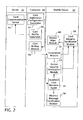
- Fig. 2 illustrates an embodiment of various software modules resident on the system of Fig. 1 ;
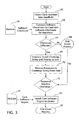
- Fig. 3 illustrates an embodiment of a process for installing software on a mobile computing device
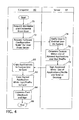
- Fig. 4 illustrates an embodiment of a process for configuring a storage medium with software to be loaded on a mobile computing device
- Fig. 5 illustrates an embodiment of a process for nominal operation of software loaded on a mobile computing device
- Fig. 6 illustrates an embodiment of security procedures utilized by software loaded on a mobile computing device.
- mobile computing device includes any type of mobile device such as, for example, personal digital assistants (PDAs), wireless laptops, mobile phones, wearable computers, etc. Such devices may employ any type of mobile computing operating system such as, for example, the Palm OS® operating system, the Windows Mobile@ operating system, the Blackberry® operating system, Linux-based operating systems, the Symbian® operating system, etc.
- PDAs personal digital assistants
- a "handheld mobile computing device” is any type of mobile computing device that is portable and are held in the hand or are designed to be operated while being held in the hand.
- Fig. 1 illustrates an embodiment of a mobile computing system 10.
- the system 10 includes a mobile computing device 12 that may be in communication with an external storage medium 14.
- the medium 14 may be any type of medium such as, for example, a compact flash data storage device that attaches to the mobile computing device 12.
- the medium 14 has stored thereon security and configuration information 16 that includes, for example, client certificates 18, an encryption key 20, and a user profile 22 that are used to enable the mobile computing device 12 to communicate with various components of the system 10.
- the security and configuration information is preconfigured or pre-deployed by an enterprise. Such pre-configuration may be performed by, for example, a help desk in the enterprise or any appropriate third party.
- the client certificate 18 and the encryption key 20 are examples of cryptographic information that may be stored on the medium 14 that allow the mobile computing device 12 to authenticate itself and secure network conversation.
- the user profile 22 may contain information that uniquely identifies the mobile computing device 12 and addressing information, such as servers/ports identification, which the mobile computing device 12 uses to connect to various components of the system 10.
- the mobile computing device 12 is in communication with an internal security information management (SIM) system 24 and an external SIM system 26.
- SIM security information management
- a private access point network (APN) 28 uses, for example, leased lines and IP addressing to provide a simulated private wireless network.
- the private APN 28 is in communication with an internal security proxy server 30, which is in communication with a mobile middleware server 32.
- the mobile middleware server 32 may facilitate, for example, enterprise architecture integration.
- a public APN 34 is in communication with, via a network 36 (e.g., the Internet) to a DMZ security proxy server 38, which is in communication with the mobile middleware server 32.
- the public APN 34 allows a user of the mobile computing device 12 to use a standard carrier APN when custom access credentials are presented by the mobile computing device 12.
- a user computer 40 may be in communication with the network 36 and may provide, for example, a desktop platform for which a user of the mobile computing device 12 may access various components of the system 10.
- the computer 40 may be, for example, a desktop or laptop personal computer.
- Fig. 2 illustrates an embodiment of various software modules resident on the system 10 of Fig. 1 .
- a card customization server module 42 is resident on the mobile middleware server 32.
- the server module 42 may be invoked by a card application configuration generator module 44 and a card profile generator module 46 that are resident on the computer 40.
- the card application configuration generator module 44 assists a user of the mobile computing device 12 in configuring the medium 14 and the card profile generator module 46 assists a user of the device 12 in generating the user profile 22.
- the modules 44 and 46 may invoke a card writing module 48 that invokes an installation module 50 resident on the mobile computing device 12 to store the application configuration and the user profile 22 on the medium 14.
- the installation module 50 may invoke a device security verification module 52, which in various embodiments uses a certificate-based cryptographic challenge and response system.
- a device security verification module 52 which in various embodiments uses a certificate-based cryptographic challenge and response system.
- the user of the mobile computing device 12 is presented with a challenge string.
- the user contacts a member of, for example, a help desk and receives a response to the challenge string, which must then be entered by the user.
- the installation module 50 may also invoke a handheld core runtime agent 54, which manages the runtime aspects of the device 12.
- the handheld core runtime agent 54 may invoke the device security verification module 52 and a wireless message verification module 56, which verifies the messages that are transmitted to and from the mobile computing device 12.
- the device security verification module 52 may invoke a card integrity verification module 58 that verifies the integrity of the medium 14.
- the card integrity verification module 58 may also be invoked by the installation module 50.
- the card integrity verification module 58 may invoke a device wipe module 60.
- the device wipe module 60 detects certain conditions, it may wipe out the settings (i.e., return the settings to factory settings) of the mobile computing device 12. Such conditions may be, for example, when the device 12 is absent from the network for a predetermined period of time, when the medium 14 is absent from the device 12 for a predetermined period of time, etc.
- the device wipe module 60 may also be invoked by the handheld core runtime agent 54.
- Fig. 3 illustrates an embodiment of a process for installing software on the mobile computing device 12.
- the process starts at step 60, where the mobile computing device 12 detects that the medium 14 is inserted into the device 12. Insertion of the medium 14 triggers the installation process.
- the software checksum of, for example, the core engine of the software on the medium 14 is compared with the checksum on the device 12. Such a step may be performed to ensure that the software engine on the device 12 is different from that on the medium 14. If at step 64 the checksum is determined to be the same, the process ends at 66.
- step 64 If at step 64 the checksum is determined to be different, an install challenge string is generated and displayed to the user of the device 12.
- a response to the challenge string is received from the user and, at step 72, it is determined whether the response matches the challenge. If the response did not match the challenge, the process ends at 66. If the response matched the challenge, the process advances to step 74, where the core software engine is installed on the device 12. In various embodiments, only core files are copied-to the device 12, and profile information 22 and security information 18, 20 continue to reside on the medium 14.
- Fig. 4 illustrates an embodiment of a process for configuring the storage medium 14 with software to be loaded on the mobile computing device 12.
- the process begins at step 70, where the computer 40 requests the user name and credentials from the user of the device 12.
- the computer 40 requests the software configuration (i.e., the software build) from the server 32.
- the server 32 verifies that the requesting user is an entitled user and at step 76 the server 32 generates a customer list of allowed applications and the user profile 22 for the user of the device 12.
- the server 32 "signs" (i.e., approves) the list of applications and the profile and transmits them to the computer 40.
- the computer 40 copies applications in the list to the medium 14 and at step 82 the computer 32 copies signed application list and profile to the medium 14.
- the computer 40 generates a checksum and at 86 the process ends.
- Fig. 5 illustrates an embodiment of a process for nominal operation of software loaded on the mobile computing device 12.
- the profile 22 from the medium 14 is loaded so that the mobile computing device 12 can determine the identity of the user that is using the device 12 and the network and connectivity preferences of that user.
- the checksum of the profile 22 is verified to ensure that the profile 22 has not been modified since it was received from the server 32 during configuration.
- a security check is performed and at step 96 a connection is made to a cellular data service using the method described in the profile 22.
- the mobile computing device 12 is connected to the network using the certificate 18.
- the user is authenticated with a password loaded from, for example, the key store of the device 12.
- the process checks for updates for all approved applications, which may be "pushed" from the server 32.
- the process checks for required actions sent by the server 32 and verifies that the actions have been "signed" by the server 32. The process continues to execute steps 94 through 104 during the operation of the mobile computing device 12.
- Fig. 6 illustrates an embodiment of security procedures utilized by software loaded on the mobile computing device 12.
- the process determines whether the medium 14 is inserted into the device 12. If the medium 14 is not inserted into the device 12, the process advances to step 108, where the process determines whether the user of the device 12 is currently logged in. If the user is logged in, the process advances to step 110, where a hash checksum of the medium 14 is generated.
- the process determines whether the checksum generated at step 110 matches a checksum on the device 12. If the checksums match the process advances to step 114, where the device 12 goes inactive (i.e., "sleeps") for a predetermined time interval and then advances to start 116.
- the process determines at step 118 whether a maximum predetermined time has elapsed since the medium 14 has not been in the device 12. If the time has elapsed, the process advances to step 120, where the state of the device 12 is returned to its factory settings (i.e., the device 12 is "wiped"). If the time has not elapsed, the process advances to step 122, where the device 12 remains dormant (i.e., sleeps) for a predetermined interval before returning to start the process at 116.
- step 124 it is determined whether the time since the last connection of the device 12 has exceeded a maximum predetermined time. If the time has been exceeded, the device 12 is wiped at step 120. If the time has not been exceeded, the process advances to step 122 to wait for a predetermined time before advancing to start 116. If the checksums do not match as determined at step 112, the process advances to step 120 where the device 12 is wiped.
- a computer-readable medium is defined herein as understood by those skilled in the art. It can be appreciated, for example, that method steps described herein may be performed, in certain embodiments, using instructions stored on a computer-readable medium or media that direct a computer system to perform the method steps.
- a computer-readable medium can include, for example and without limitation, memory devices such as diskettes, compact discs of both read-only and writeable varieties, digital versatile discs (DVD), optical disk drives, and hard disk drives.
- a computer-readable medium can also include memory storage that can be physical, virtual, permanent, temporary, semi-permanent and/or semi-temporary.
- a computer-readable medium can further include one or more data signals transmitted on one or more carrier waves.
- a "computer” or “computer system” may be, for example and without limitation, either alone or in combination, a personal computer (PC), server-based computer, main frame, microcomputer, minicomputer, laptop, personal data assistant (PDA), cellular phone, pager, processor, including wireless and/or wireline varieties thereof, and/or any other computerized device capable of configuration for processing data for either standalone application or over a networked medium or media.
- Computers and computer systems disclosed herein can include memory for storing certain software applications used in obtaining, processing, storing and/or communicating data. It can be appreciated that such memory can be internal or external, remote or local, with respect to its operatively associated computer or computer system.
- the memory can also include any means for storing software, including a hard disk, an optical disk, floppy disk, ROM (read only memory), RAM (random access memory), PROM (programmable ROM), EEPROM (extended erasable PROM), and other suitable computer-readable media.
- ROM read only memory
- RAM random access memory
- PROM programmable ROM
- EEPROM extended erasable PROM
- a system including a handheld mobile computing device and an external storage medium in communication with the mobile computing device, the storage medium having stored thereon preconfigured user information and security information.
- a system comprising:
- Subject-matter 2 The system of subject-matter 1, wherein the external storage medium is one of a persistent storage device and a compact flash storage medium.
- Subject-matter 3 The system of subject-matter 1, wherein the preconfigured user information is preconfigured by a member of a help desk organization of an enterprise to which a user of the handheld mobile computing device is a part of.
- Subject-matter 4 The system of subject-matter 1, wherein the security information includes cryptographic information.
- Subject-matter 5 The system of subject-matter l, wherein the user information includes addressing information and device information relating to the mobile computing device.
- Subject-matter 6 The system of subject-matter 1, wherein the mobile computing device is configured to return to at least one factory setting when the external storage medium is out of communication with the mobile communication device for a predetermined period of time.
- Subject-matter 7 The system of subject-matter 1, wherein the mobile computing device is configured to return to at least one factory setting when the mobile computing device is out of communication with a wireless network for a predetermined period of time.
- a system comprising:
- Subject-matter 9 The system of subject-matter 8, further comprising a server in communication with the computer, the server configured to provide customization operations for the preconfigured user information and security information.
- Subject-matter 10 A method of facilitating operation of a mobile device that is in communication with a server, the method comprising:
- Subject-matter 11 The method of subject-matter 10, further comprising verifying a checksum of the profile.
- Subject-matter 12 The method of subject-matter 10, further comprising performing a security check on the mobile device.
- Subject-matter 13 The method of subject-matter 10, further comprising authenticating a user of the mobile device via a password.
- Subject-matter 14 The method of subject-matter 10, further comprising restoring the mobile device to a known state when the external storage device has been out of communication with the mobile device for a predetermined period of time.
- Subject-matter 15 The method of subject-matter 10, further comprising restoring the mobile device to a known state when an integrity check of the external storage medium fails.
- Subject-matter 16 The method of subject-matter 10, further comprising restoring the mobile device to a known state when the mobile device has not been in communication with the wireless network for a predetermined period of time.
- Subject-matter 17 A method of pre-configuring user information and security information for a mobile device, the method comprising:
- Subject-matter 18 The method of subject-matter 17, further comprising verifying that the user is entitled to access a mobile network with which the mobile device is in communication.
- Subject-matter 19 An apparatus, comprising:
- Subject-matter 20 A computer readable medium having stored thereon instructions which, when executed by a processor, cause the processor to:
Landscapes
- Engineering & Computer Science (AREA)
- Computer Security & Cryptography (AREA)
- Software Systems (AREA)
- Theoretical Computer Science (AREA)
- Computer Hardware Design (AREA)
- General Engineering & Computer Science (AREA)
- Physics & Mathematics (AREA)
- General Physics & Mathematics (AREA)
- Mobile Radio Communication Systems (AREA)
- Storage Device Security (AREA)
- Telephone Function (AREA)
Applications Claiming Priority (2)
| Application Number | Priority Date | Filing Date | Title |
|---|---|---|---|
| US11/317,719 US7689205B2 (en) | 2005-12-23 | 2005-12-23 | Systems and methods for configuration of mobile computing devices |
| EP06123381.3A EP1811416B1 (en) | 2005-12-23 | 2006-11-02 | Systems and methods for configuration of mobile computing devices |
Related Parent Applications (2)
| Application Number | Title | Priority Date | Filing Date |
|---|---|---|---|
| EP06123381.3 Division | 2006-11-02 | ||
| EP06123381.3A Division-Into EP1811416B1 (en) | 2005-12-23 | 2006-11-02 | Systems and methods for configuration of mobile computing devices |
Publications (1)
| Publication Number | Publication Date |
|---|---|
| EP2312484A1 true EP2312484A1 (en) | 2011-04-20 |
Family
ID=37908032
Family Applications (2)
| Application Number | Title | Priority Date | Filing Date |
|---|---|---|---|
| EP11154011A Withdrawn EP2312484A1 (en) | 2005-12-23 | 2006-11-02 | Systems and methods for configuration of mobile computing devices |
| EP06123381.3A Active EP1811416B1 (en) | 2005-12-23 | 2006-11-02 | Systems and methods for configuration of mobile computing devices |
Family Applications After (1)
| Application Number | Title | Priority Date | Filing Date |
|---|---|---|---|
| EP06123381.3A Active EP1811416B1 (en) | 2005-12-23 | 2006-11-02 | Systems and methods for configuration of mobile computing devices |
Country Status (4)
| Country | Link |
|---|---|
| US (2) | US7689205B2 (enExample) |
| EP (2) | EP2312484A1 (enExample) |
| JP (1) | JP5687814B2 (enExample) |
| HU (1) | HUE035103T2 (enExample) |
Families Citing this family (11)
| Publication number | Priority date | Publication date | Assignee | Title |
|---|---|---|---|---|
| WO2007043659A1 (ja) * | 2005-10-13 | 2007-04-19 | Ntt Docomo, Inc. | 携帯端末、アクセス制御管理装置及びアクセス制御管理方法 |
| US7689205B2 (en) * | 2005-12-23 | 2010-03-30 | Morgan Stanley | Systems and methods for configuration of mobile computing devices |
| US8892859B1 (en) * | 2009-01-05 | 2014-11-18 | Marvell Israel (M.I.S.L) Ltd. | Hardware based detection of factory reset request |
| US20100179980A1 (en) * | 2009-01-14 | 2010-07-15 | Movidilo S.L. | Cache system for mobile communications devices |
| KR20110055888A (ko) * | 2009-11-20 | 2011-05-26 | 삼성전자주식회사 | 복제 단말기 검출 방법과 이를 이용한 이동통신 단말기 및 이동통신 시스템 |
| US20120171992A1 (en) | 2010-12-30 | 2012-07-05 | Sk C&C | System and method for secure containment of sensitive financial information stored in a mobile communication terminal |
| US8538845B2 (en) | 2011-06-03 | 2013-09-17 | Mozido, Llc | Monetary transaction system |
| US10438196B2 (en) | 2011-11-21 | 2019-10-08 | Mozido, Inc. | Using a mobile wallet infrastructure to support multiple mobile wallet providers |
| US8978027B2 (en) | 2012-11-08 | 2015-03-10 | Nvidia Corporation | Method of disseminating updated drivers to mobile computing devices and a dissemination system therefor |
| US8849708B2 (en) * | 2012-12-14 | 2014-09-30 | Amazon Technologies, Inc. | Device customization during order fulfillment utilizing an embedded electronic tag |
| US9253617B2 (en) * | 2013-09-30 | 2016-02-02 | Google Inc. | Methods and systems for carrier activation using information from an existing profile |
Citations (4)
| Publication number | Priority date | Publication date | Assignee | Title |
|---|---|---|---|---|
| US5418837A (en) * | 1993-07-30 | 1995-05-23 | Ericsson-Ge Mobile Communications Inc. | Method and apparatus for upgrading cellular mobile telephones |
| WO2000049505A1 (en) * | 1999-02-18 | 2000-08-24 | Colin Hendrick | System for automatic connection to a network |
| US6138009A (en) * | 1997-06-17 | 2000-10-24 | Telefonaktiebolaget Lm Ericsson | System and method for customizing wireless communication units |
| EP1811416A2 (en) | 2005-12-23 | 2007-07-25 | Morgan Stanley | Systems and methods for configuration of mobile computing devices |
Family Cites Families (39)
| Publication number | Priority date | Publication date | Assignee | Title |
|---|---|---|---|---|
| SE468068C (sv) | 1991-09-30 | 1994-04-11 | Comvik Gsm Ab | Förfarande för personifiering av ett aktivt kort, för användning i ett mobiltelefonsystem |
| US5444764A (en) * | 1993-07-01 | 1995-08-22 | Motorola, Inc. | Method of providing a subscription lock to a radiotelephone system |
| FR2711866B1 (fr) * | 1993-10-26 | 1996-05-24 | Alcatel Mobile Comm France | Installation de radio-téléphone numérique à terminaux mobiles. |
| US5371794A (en) * | 1993-11-02 | 1994-12-06 | Sun Microsystems, Inc. | Method and apparatus for privacy and authentication in wireless networks |
| US5864297A (en) * | 1994-12-16 | 1999-01-26 | Chrysler Corporation | Reprogrammable remote keyless entry system |
| DE19529998C2 (de) | 1995-08-16 | 1999-08-05 | Geesthacht Gkss Forschung | Verfahren zur Dekontaminierung von Schluff, Schadstoffe und Wasser enthaltenden Suspensionen |
| JP3492865B2 (ja) * | 1996-10-16 | 2004-02-03 | 株式会社東芝 | 移動計算機装置及びパケット暗号化認証方法 |
| GB2326309B (en) * | 1997-06-09 | 2002-04-10 | Nokia Mobile Phones Ltd | A telephone |
| DK0990356T3 (da) * | 1997-06-16 | 2002-04-29 | Swisscom Mobile Ag | Mobiludstyr, chipkort og kommunikationsfremgangsmåde |
| JP2000151798A (ja) * | 1998-11-05 | 2000-05-30 | Sharp Corp | ダイヤル/データロック機能付き携帯電話 |
| US6778828B1 (en) * | 1999-04-12 | 2004-08-17 | Lucent Technologies Inc. | Personal mobility registration system for registration of a user's identity in a telecommunications terminal |
| US7117369B1 (en) | 1999-05-03 | 2006-10-03 | Microsoft Corporation | Portable smart card secured memory system for porting user profiles and documents |
| US6484022B1 (en) * | 1999-09-07 | 2002-11-19 | Ericsson Inc. | Wireless communications device having externally controlled transmission of identity |
| JP3621612B2 (ja) * | 1999-09-09 | 2005-02-16 | 株式会社日立国際電気 | 携帯電話機 |
| FR2803974A1 (fr) * | 2000-01-14 | 2001-07-20 | Canon Europa Nv | Procedes de souscription entre une station mobile et une station de base dans un reseau de telecommunications, et systemes les mettant en oeuvre |
| JP4675547B2 (ja) * | 2000-07-07 | 2011-04-27 | アルカテル−ルーセント | セキュリティモジュール |
| US7313825B2 (en) * | 2000-11-13 | 2007-12-25 | Digital Doors, Inc. | Data security system and method for portable device |
| US7734285B2 (en) * | 2001-04-03 | 2010-06-08 | Qualcomm Incorporated | Method and apparatus for network initiated uninstallation of application program over wireless network |
| US20030088781A1 (en) | 2001-11-06 | 2003-05-08 | Shamrao Andrew Divaker | Systems and methods for ensuring security and convenience |
| US20030097350A1 (en) | 2001-11-06 | 2003-05-22 | Shamrao Andrew Divaker | Handheld computer systems and methods |
| JP2003289307A (ja) * | 2002-03-27 | 2003-10-10 | Sony Corp | 機器間通信システム及び機器間通信方法、電子機器及び電子機器の制御方法、機器グループ設定装置及び方法、並びにコンピュータ・プログラム |
| US7363363B2 (en) | 2002-05-17 | 2008-04-22 | Xds, Inc. | System and method for provisioning universal stateless digital and computing services |
| GB0212318D0 (en) | 2002-05-28 | 2002-07-10 | Symbian Ltd | Tamper evident removable media storing executable code |
| US7363540B2 (en) * | 2002-10-22 | 2008-04-22 | Microsoft Corporation | Transaction-safe FAT file system improvements |
| US20040177270A1 (en) | 2003-02-21 | 2004-09-09 | Little Herbert A. | System and method of multiple-level control of electronic devices |
| US7181196B2 (en) * | 2003-05-15 | 2007-02-20 | Lucent Technologies Inc. | Performing authentication in a communications system |
| US20050091346A1 (en) * | 2003-10-23 | 2005-04-28 | Brijesh Krishnaswami | Settings management infrastructure |
| US20050136884A1 (en) * | 2003-12-17 | 2005-06-23 | Nokia Corporation | Data transport to mobile devices using a radio broadcast data channel |
| US7406334B2 (en) * | 2004-01-26 | 2008-07-29 | Sbc Knowledge Ventures, L.P. | Systems and methods for securing personal or private content stored in the internal memory of a mobile terminal |
| US7299037B2 (en) * | 2004-03-19 | 2007-11-20 | Nokia Corporation | Remote control over mobile communication terminals |
| US7796975B2 (en) * | 2004-11-23 | 2010-09-14 | Sony Ericsson Mobile Communications Ab | Method of transferring data files to and from a portable wireless communication device |
| JP2006191384A (ja) * | 2005-01-06 | 2006-07-20 | Ntt Docomo Inc | 移動機及びコンテンツ送信方法 |
| US20080014990A1 (en) * | 2005-07-25 | 2008-01-17 | Pixtel Media Technology (P) Ltd. | Method of locating a mobile communication system for providing anti theft and data protection during successive boot-up procedure |
| EP1798943A1 (en) * | 2005-12-13 | 2007-06-20 | Axalto SA | SIM messaging client |
| US7603435B2 (en) * | 2006-11-15 | 2009-10-13 | Palm, Inc. | Over-the-air device kill pill and lock |
| US8135798B2 (en) * | 2006-11-15 | 2012-03-13 | Hewlett-Packard Development Company, L.P. | Over-the-air device services and management |
| US20090150970A1 (en) * | 2007-12-05 | 2009-06-11 | Sybase, Inc. | Data Fading to Secure Data on Mobile Client Devices |
| US8666367B2 (en) * | 2009-05-01 | 2014-03-04 | Apple Inc. | Remotely locating and commanding a mobile device |
| US20100311402A1 (en) * | 2009-06-08 | 2010-12-09 | Prasanna Srinivasan | Method and apparatus for performing soft switch of virtual sim service contracts |
-
2005
- 2005-12-23 US US11/317,719 patent/US7689205B2/en active Active
-
2006
- 2006-11-02 HU HUE06123381A patent/HUE035103T2/en unknown
- 2006-11-02 EP EP11154011A patent/EP2312484A1/en not_active Withdrawn
- 2006-11-02 EP EP06123381.3A patent/EP1811416B1/en active Active
- 2006-12-19 JP JP2006340755A patent/JP5687814B2/ja active Active
-
2010
- 2010-03-26 US US12/748,018 patent/US7966001B2/en not_active Expired - Lifetime
Patent Citations (4)
| Publication number | Priority date | Publication date | Assignee | Title |
|---|---|---|---|---|
| US5418837A (en) * | 1993-07-30 | 1995-05-23 | Ericsson-Ge Mobile Communications Inc. | Method and apparatus for upgrading cellular mobile telephones |
| US6138009A (en) * | 1997-06-17 | 2000-10-24 | Telefonaktiebolaget Lm Ericsson | System and method for customizing wireless communication units |
| WO2000049505A1 (en) * | 1999-02-18 | 2000-08-24 | Colin Hendrick | System for automatic connection to a network |
| EP1811416A2 (en) | 2005-12-23 | 2007-07-25 | Morgan Stanley | Systems and methods for configuration of mobile computing devices |
Non-Patent Citations (1)
| Title |
|---|
| YUH-REN TSAI ET AL: "SIM-based subscriber authentication for wireless local area networks", PROCEEDINGS 37TH. ANNUAL 2003 INTERNATIONAL CARNAHAN CONFERENCE ON SECURITY TECHNOLOGY. (ICCST). TAIPEI, TAIWAN, OCT. 14 - 16, 2003; [IEEE INTERNATIONAL CARNAHAN CONFERENCE ON SECURITY TECHNOLOGY], NEW YORK, NY : IEEE, US, vol. CONF. 37, 14 October 2003 (2003-10-14), pages 468 - 473, XP010705894, ISBN: 978-0-7803-7882-7 * |
Also Published As
| Publication number | Publication date |
|---|---|
| EP1811416B1 (en) | 2017-04-19 |
| JP2007172617A (ja) | 2007-07-05 |
| US20070162731A1 (en) | 2007-07-12 |
| US7966001B2 (en) | 2011-06-21 |
| JP5687814B2 (ja) | 2015-03-25 |
| US20100178899A1 (en) | 2010-07-15 |
| EP1811416A2 (en) | 2007-07-25 |
| EP1811416A3 (en) | 2008-08-27 |
| HUE035103T2 (en) | 2018-05-02 |
| US7689205B2 (en) | 2010-03-30 |
Similar Documents
| Publication | Publication Date | Title |
|---|---|---|
| US7966001B2 (en) | Systems and methods for configuration of mobile computing devices | |
| CN100593166C (zh) | 便携式计算环境 | |
| US8296567B2 (en) | System and method for exchanging key generation parameters for secure communications | |
| EP2550769B1 (en) | System and method for remote maintenance of multiple clients in an electronic network using virtual machines | |
| CN105827600B (zh) | 登录客户端的方法及装置 | |
| US20190342284A1 (en) | Secure gateway onboarding via mobile devices for internet of things device management | |
| US9344896B2 (en) | Method and system for delivering a command to a mobile device | |
| US20140282815A1 (en) | Policy-based secure web boot | |
| EP2527975A1 (en) | Set-up of a thin client computer | |
| KR20120027495A (ko) | 이동 디바이스 상에 다단계 가상 sim 프로비져닝 및 설정을 수행하기 위한 방법 및 시스템 | |
| JP2002132728A (ja) | ワンタイムパスワード認証システム | |
| WO2010119427A2 (en) | Method and system for deployment of software applications to mobile computing devices | |
| CN112805702B (zh) | 仿冒app识别方法及装置 | |
| HK1100584A (en) | Systems and methods for configuration of mobile computing devices | |
| HK1100584B (en) | Systems and methods for configuration of mobile computing devices | |
| CA2710075C (en) | System and method for exchanging key generation parameters for secure communications | |
| JP5037309B2 (ja) | 情報処理装置及びログオン方法 | |
| US11316701B1 (en) | Decentralized system for generation and deployment of digital certificates | |
| CN101297301A (zh) | 用于保持和保护敏感的用户有关的信息的方法和系统 | |
| JP2006041824A (ja) | データ送受信システム及びデータ送受信用プログラム |
Legal Events
| Date | Code | Title | Description |
|---|---|---|---|
| PUAI | Public reference made under article 153(3) epc to a published international application that has entered the european phase |
Free format text: ORIGINAL CODE: 0009012 |
|
| AC | Divisional application: reference to earlier application |
Ref document number: 1811416 Country of ref document: EP Kind code of ref document: P |
|
| AK | Designated contracting states |
Kind code of ref document: A1 Designated state(s): AT BE BG CH CY CZ DE DK EE ES FI FR GB GR HU IE IS IT LI LT LU LV MC NL PL PT RO SE SI SK TR |
|
| AX | Request for extension of the european patent |
Extension state: AL BA HR MK RS |
|
| 17P | Request for examination filed |
Effective date: 20111020 |
|
| 17Q | First examination report despatched |
Effective date: 20160530 |
|
| STAA | Information on the status of an ep patent application or granted ep patent |
Free format text: STATUS: THE APPLICATION IS DEEMED TO BE WITHDRAWN |
|
| 18D | Application deemed to be withdrawn |
Effective date: 20161210 |