EP2310950B1 - Secure resource name resolution using a cache - Google Patents
Secure resource name resolution using a cache Download PDFInfo
- Publication number
- EP2310950B1 EP2310950B1 EP09805342.4A EP09805342A EP2310950B1 EP 2310950 B1 EP2310950 B1 EP 2310950B1 EP 09805342 A EP09805342 A EP 09805342A EP 2310950 B1 EP2310950 B1 EP 2310950B1
- Authority
- EP
- European Patent Office
- Prior art keywords
- identifier
- resolution
- parameters
- resolution parameters
- network
- Prior art date
- Legal status (The legal status is an assumption and is not a legal conclusion. Google has not performed a legal analysis and makes no representation as to the accuracy of the status listed.)
- Active
Links
Images






Classifications
-
- H—ELECTRICITY
- H04—ELECTRIC COMMUNICATION TECHNIQUE
- H04L—TRANSMISSION OF DIGITAL INFORMATION, e.g. TELEGRAPHIC COMMUNICATION
- H04L45/00—Routing or path finding of packets in data switching networks
- H04L45/74—Address processing for routing
- H04L45/742—Route cache; Operation thereof
-
- H—ELECTRICITY
- H04—ELECTRIC COMMUNICATION TECHNIQUE
- H04L—TRANSMISSION OF DIGITAL INFORMATION, e.g. TELEGRAPHIC COMMUNICATION
- H04L63/00—Network architectures or network communication protocols for network security
- H04L63/08—Network architectures or network communication protocols for network security for authentication of entities
- H04L63/0823—Network architectures or network communication protocols for network security for authentication of entities using certificates
-
- H—ELECTRICITY
- H04—ELECTRIC COMMUNICATION TECHNIQUE
- H04L—TRANSMISSION OF DIGITAL INFORMATION, e.g. TELEGRAPHIC COMMUNICATION
- H04L61/00—Network arrangements, protocols or services for addressing or naming
- H04L61/45—Network directories; Name-to-address mapping
- H04L61/4505—Network directories; Name-to-address mapping using standardised directories; using standardised directory access protocols
- H04L61/4511—Network directories; Name-to-address mapping using standardised directories; using standardised directory access protocols using domain name system [DNS]
-
- H—ELECTRICITY
- H04—ELECTRIC COMMUNICATION TECHNIQUE
- H04L—TRANSMISSION OF DIGITAL INFORMATION, e.g. TELEGRAPHIC COMMUNICATION
- H04L61/00—Network arrangements, protocols or services for addressing or naming
- H04L61/58—Caching of addresses or names
-
- H—ELECTRICITY
- H04—ELECTRIC COMMUNICATION TECHNIQUE
- H04L—TRANSMISSION OF DIGITAL INFORMATION, e.g. TELEGRAPHIC COMMUNICATION
- H04L63/00—Network architectures or network communication protocols for network security
- H04L63/04—Network architectures or network communication protocols for network security for providing a confidential data exchange among entities communicating through data packet networks
- H04L63/0428—Network architectures or network communication protocols for network security for providing a confidential data exchange among entities communicating through data packet networks wherein the data content is protected, e.g. by encrypting or encapsulating the payload
-
- H—ELECTRICITY
- H04—ELECTRIC COMMUNICATION TECHNIQUE
- H04L—TRANSMISSION OF DIGITAL INFORMATION, e.g. TELEGRAPHIC COMMUNICATION
- H04L63/00—Network architectures or network communication protocols for network security
- H04L63/16—Implementing security features at a particular protocol layer
- H04L63/164—Implementing security features at a particular protocol layer at the network layer
Definitions
- This invention relates to name resolution technologies.
- resources may include hosts attached to the network, such as client and server computing devices, as well as networking resources such as routers, gateways, firewalls, and others.
- resources may be identified by one or more identifying numbers, such as a Medium Access Control (MAC) address or Internet Protocol (IP) address.
- MAC Medium Access Control
- IP Internet Protocol
- MAC Medium Access Control
- IP Internet Protocol
- MAC Medium Access Control
- IP Internet Protocol
- Resources may also, therefore, be additionally or alternatively identified by textual identifiers that are more easily remembered by users. Technologies which implement textual identifiers for identifying resources include NetBIOS, Local Link Multicast Name Resolution (LLMNR), and the Domain Name System (DNS).
- LLMNR Local Link Multicast Name Resolution
- DNS Domain Name System
- US 7, 296 155 B1 discloses a process and a system providing internet protocol security without secure domain resolution.
- the present invention provides at least one computer-readable storage medium according to claim 1, an apparatus according to claim 9 and a method according to claim 10, respectively.
- a method comprising accepting as input a first identifier for a network resource, consulting a collection of sets of resolution parameters to determine a set of applicable resolution parameters that apply to the first identifier, and obtaining a second identifier for the network resource using the set of applicable resolution parameters.
- the method further comprises storing in a cache the second identifier and at least one identifier for the set of applicable resolution parameters used in obtaining the second identifier.
- a computing device might have connected to each network by a dedicated network interface, and that network interface would have been configured by the user and/or by devices on each network for interaction with those networks, including configuring the interface to support name resolution technologies implemented by the networks.
- a Dynamic Host Configuration Protocol (DHCP) server on the network may have provided to the computing device an IP address, an identifier for a gateway, and an identifier for a DNS server, among other configuration parameters. Any communication through that interface that used a textual identifier, then, would be resolved through the DNS server.
- DHCP Dynamic Host Configuration Protocol
- a computing device wanted to connect to a different network or use a different name resolution technology, then a separate interface would have to be configured. For example, a second wired interface could be used, or a wireless interface could be used.
- overlay networks are becoming more common. These overlay networks are configured to co-exist with existing networks on the same hardware, and are logical overlays on top of existing hardware networks. Each of the network devices connected to the overlay network are also connected to one or more existing hardware networks, such as existing local area networks and/or existing wide area networks. Such overlay networks may be implemented in any of various ways, for example, using Microsoft Direct Access. The overlay network may therefore be considered a restricted subgroup of one or more other networks.
- a computing device connecting to a given hardware network therefore, could be connecting simultaneously to multiple networks via a single interface, including the underlying network and one or more overlay networks.
- Conventional name resolution technologies would not be able to support such networks, as the type of name resolution protocol or the network resources with which a computing device should communicate for name resolution (e.g., which DNS servers) may be different for the overlay network(s) in comparison to the name resolution technology of the underlying network.
- DNS servers name resolution technology
- some networks may keep private some information on how to access some resources on that network-for example, the location/identification of a certain secured server or other network resource-to keep that information from being given to potential attackers, a specific server or other resource may be the only possible source of the desired result of a name resolution query.
- the resolution parameters may comprise any suitable information on how to carry out a name resolution process. Further, the specific parameters used may depend on the type of network for which name resolution is sought. For example, for a network on which DNSSEC is used as a name resolution technology, the parameters may include security parameters such as to which domains the resolution parameters apply, whether to confirm that the server validated a response, whether encryption should be used in communicating with the server, what type of encryption should be used, what certifying authority or authorities should be trusted to sign results, and which DNS server(s) should be queried for results.
- security parameters such as to which domains the resolution parameters apply, whether to confirm that the server validated a response, whether encryption should be used in communicating with the server, what type of encryption should be used, what certifying authority or authorities should be trusted to sign results, and which DNS server(s) should be queried for results.
- resolution parameters such as to which networks/domains the resolution parameters apply, which DNS server(s) should be queried for results, whether encryption should be used, what type of encryption should be used, what certifying authorities should be trusted to sign results, and what proxy server(s) should be used when communicating with an overlay network may be implemented. Any suitable resolution parameters may be used depending on the networks and name resolution techniques with which they may be implemented.
- a software application executing on a computing device may accept from a user input of a textual identifier of a desired network resource to which the software application would like to establish a connection.
- the software application may be a web browser
- the textual identifier may be a domain name of a web site
- the network resource may be a web server hosting the web site.
- the textual identifier for the network resource will therefore be passed to a name resolution module adapted to perform a name resolution process to obtain the numeric identifier, which the name resolution module may then return to the software application.
- the resolution module may review a collection of sets of resolution parameters to determine which, if any, of the sets of resolution parameters apply to the name resolution process to be performed. This collection may be stored in any suitable manner, including in a computer storage medium, such as a memory, in any suitable format.
- the resolution module may retrieve some or all of the collection from memory and perform a comparison process of any kind, including, for example, comparing an input identifier to a parameter of some or all of the sets indicating to which network resources a particular set of resolution parameters applies.
- Each set of resolution parameters in the collection may apply to one or more network resources, and may govern the manner in which a name resolution process determines identifiers for the network resources to which they apply.
- These resolution parameters may contain any suitable parameters that may affect how the name resolution process is carried out, including any of the exemplary parameters discussed above.
- each set of name resolution parameters may specify a particular resolution resource with which the resolution module should communicate to determine the numeric identifier, such as a particular DNS server.
- the review of the collection by the resolution module may be done in any suitable manner.
- the review may comprise comparing the textual identifier to an identifier for each of the sets of resolution parameters to determine whether there is a match between the identifiers.
- the identifier for a set of resolution parameters may be a DNS suffix, such as "*.corp.contoso.com” such that any textual identifier that matches the latter portion of the identifier is one to which those resolution parameters apply.
- the input textual identifier is "webserver.corp.contoso.com”
- that set would be a set of parameters associated with that identifier, and could be considered a set of applicable resolution parameters.
- a name resolution process may be carried out in accordance with the applicable resolution parameters. For example, if the parameters specify a particular resolution resource such as a DNS server, then a connection will be established to that resolution resource; if the parameters specify a level of encryption to be used, communications with a name resolution resource will use that level of encryption.
- a particular resolution resource such as a DNS server
- a resolution request is issued to the resolution resource over the connection, the resolution request including the textual identifier and requesting the corresponding numeric identifier.
- the resolution resource may perform any suitable process, including any of various processes that are known in the art, for determining the corresponding numeric identifier, such as by consulting information it maintains locally, or by forwarding the request to another resolution resource according to the applicable resolution parameters.
- the resolution resource may perform any suitable validation process on the numeric identifier.
- the resolution resource may, during the validation process, determine whether the result was signed using a certificate issued by any of the one or more particular certificate authorities. If so, the resolution resource may provide the numeric identifier to the resolution module on the computing device as a result of the resolution request. The resolution module may then confirm that the result was generated in accordance with the applicable resolution parameters, and present the result to the software application for use in establishing a connection to the desired network resource. If, on the other hand, the result was not signed using a designated certificate, the result may be discarded or provided to the resolution module with an indicator that it was not signed in accordance with the resolution parameters.
- a name resolution process can be parameterized with the resolution parameters to ensure that the resolution process is secure and that results can be trusted. For example, while in conventional name resolution technologies a computing device had to trust that a result from a particular result was legitimate, resolution parameters from the collection allow a resolution module within a computing device to query a specific, trusted resolution resource to obtain an identifier (numeric or textual) for a desired network resource with a high confidence that a response is legitimate. Further, the resolution module can be more certain that the designated resolution resource will have the corresponding identifier that the module is seeking.
- a resolution process may be made more secure, by specifying, for example, whether encryption should be used, what type of encryption should be used, and how the encryption should be validated.
- the collection may enable the resolution module on the computing device to execute fewer functions and be less burdensome on the computing device, as some functions may be pushed onto network resources, such as resolution resources, that the collection indicates are adapted to handle.
- some validation processes may be performed on a resolution resource in the network, such as a DNS server. The resolution module, having the collection, will know to contact the particular resolution resource that is capable ofperforming the DNSSEC tasks.
- a resolution module may be able to perform different name resolution processes for different input identifiers, such as contacting a particular resolution resource for a textual identifier for a network resource in an overlay network, or using a secure communication channel for exchanging identifiers related to particular secure network resources.
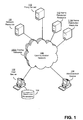
- FIG. 1 shows a computer system comprising a communication network 100 to which a user device, computing device 102, may connect.
- Communication network 100 may be any suitable wired and/or wireless network, including a portion of a larger wired and/or wireless network, such as a home network, a subnet of an enterprise network, the Internet, and/or others.
- Computing device 102 is shown as a desktop personal computer, but may be any suitable computing device such as a laptop personal computer, a PDA, a smart phone, a server, a rack-mounted computer, a networking device such as a router or switch, or other computing device.
- Computing device 102 is coupled to a data store 104 storing a collection of sets of resolution parameters.
- the data store 104 may be encoded on any suitable computer storage medium or media, and may store information in any suitable format.
- resolution parameters that can be used to govern a name resolution process for determining a second identifier corresponding to an input first identifier, such as determining a numeric identifier for a network resource corresponding to an input textual identifier.
- the resolution parameters may comprise any suitable information that may be used during a name resolution process.
- the computing device 102 may be adapted to execute one or more functional modules implementing such a name resolution process in which the resolution parameters are used to form a connection to network resources connected to the communication network 100.
- the collection of sets of resolution parameters stored in data store 104 may be provisioned in any of various ways, including being input by a user local to computing device 102 using any suitable user interface and/or by being provisioned remotely by an administrator using a computing device 106.
- an administrator may specify the resolution parameters at the computing device 106 and push them down to computing device 102 through any suitable network management technique.
- the communication network 100 comprises a Microsoft Windows network available from the Microsoft Corporation of Redmond, Washington
- the administrator may use a domain controller to push the resolution parameters out using a Group Policy through the Active Directory protocol. It should be appreciated, however, that this is merely an example of a network management technique that may be implemented, and that any suitable technique may be used according to the resources available on the network.
- the computing device 102 may use the collection of sets of resolution parameters to perform a name resolution process for determining an identifier (numeric or textual) for a network resource such as network resource 108, which may be any computing device accessible via a network, such as a server of any kind. To do so, the computing device 102, upon accepting an input of a first identifier for the network resource 108, may consult the collection of sets of resolution parameters stored in data store 104 to determine a set of applicable resolution parameters, and then perform a name resolution process governed by the set of applicable resolution parameters. During the name resolution process, a resolution module executing on the computing device 102 may communicate with a name resolution resource 110 to determine one or more identifiers for the network resource 108.
- Any suitable name resolution process may be executed in accordance with the principles described herein, including any of the exemplary name resolution processes described below. Such a process may include an exchange of information in any suitable manner with any suitable networking device as a resolution resource 110. While resolution resource 110 is illustrated in FIG. 1 as a server, it should be appreciated that any suitable computing device may be used as a resolution resource, including multi-purpose devices such as personal computers and single-purpose devices such as hardware name resolution devices.
- the communication network 100 may not be a single network, but may be a hardware network having one or more overlay network(s) 100A instantiated on it.
- the overlay network(s) 100A may be instantiated entirely on the hardware implementing communication network 100, or may operate on hardware that used in communication network 100.
- the overlay network(s) 100A may share networking hardware with the communication network 100, such as routers and switches, but there may be some network resources, such as client and server computing devices, which are connected via hardware to communication network 100 but are not accessible to devices which are not members of the overlay network(s) 100A.
- computing device 102 may have to communicate with particular resolution resources having information on the network resources available on the overlay network(s) 100A, because only these particular resolution resources have knowledge of the network resources available on the overlay network(s) 100A.
- the collection of sets of resolution parameters may specify one or more particular resolution resources 110A with which the computing device 102 can communicate during a name resolution process to obtain identifiers for network resources such as network resource 108. Some or all of the sets of resolution parameters in the collection may have identifiers that match network resources of the overlay network(s) 100A.
- the applicable resolution parameters may indicate that identifiers for the desired network resource may be retrieved from the particular resolution resource 110A.
- the name resolution process executed by the computing device 102 therefore, when parameterized with the set of applicable resolution parameters, may communicate with the specific resolution resource 110A to retrieve identifiers for the desired network resource 108. It should be appreciated that this review and name resolution process may be carried out in any suitable manner, including by any of the exemplary techniques described below.
- the applicable resolution parameters may also specify that communications to the network resource 108 should be done via a proxy server 112.
- the resolution module may additionally or alternatively return an identifier, such as a numeric or textual identifier, for the proxy server 112.
- a set of resolution parameters may include any information that may be used in carrying out a name resolution process.
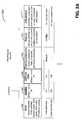
- FIGs. 2A and 2B illustrate exemplary data structures storing collections of sets of resolution parameters that may be used in some implementations in accordance with the principles described herein with two exemplary networking technologies. Additionally, while FIGs. 2A and 2B show two different collections comprising parameters relating to two different technologies, it should be appreciated that in some implementations these technologies may be implemented in the same set of resolution parameters. Further, a collection may be implemented as any suitable data structure, and may, in some implementations, comprise other data structures each storing information relating to one or more sets of resolution parameters. These data structures may be stored in computer-readable storage media associated with a client computing device that may request name resolution. It should be appreciated that the data structures shown in FIGs. 2A and 2B and the parameters they store are merely illustrative of the types of data structures and parameters that may be used, as any type or types of networking technologies may be used.
- FIG. 2A shows a first data structure storing a collection 200A of resolution parameters, with two exemplary sets of resolution parameters in the collection.
- the collection of resolution parameters may be organized as a table comprising a plurality of fields and rows, each field specifying a type of resolution parameter and each row specifying a set of resolution parameters, though other implementations are possible as any suitable format may be used.
- the illustrative resolution parameters shown in collection 200A include parameters relating to a DNS resolution process, such as whether to use a DNSSEC protocol and whether or how to implement other DNS security parameters.
- DNS is merely exemplary of the types of name resolution technologies and protocols with which the principles described herein may operate, as any suitable name resolution protocol may be used.
- the first illustrative resolution parameter shown in FIG. 2A is the "Name" parameter 202.
- This parameter 202 indicates to which identifiers a set of resolution parameters apply, and thus to which network resource(s) the set of resolution parameters may apply.
- the name parameter 202 may be used by a resolution module to determine which set(s) of resolution parameters in a collection apply to a given resolution process for an input identifier.
- the name parameter 202 may store any identifier for a network resource, including any numeric or textual identifier.
- a numeric identifier may be an identifier for a specific network resource, such as IP address "1.2.3.4", or may be an identifier for a range of network resources, such as IP address subnet "157.0.0.0/8".
- a textual identifier that may be used for the name parameter may be an identifier for a specific network resource, such as fully qualified domain name (FQDN) like "itweb.contoso.com.”, or may be an identifier for a range of network resources, such as a DNS suffix like “*.contoso.com” or a DNS prefix like "itweb.*”.
- FQDN fully qualified domain name
- the next resolution parameter shown in FIG. 2A is the DNSSEC parameter 204. More specifically, the exemplary "DNSSEC" parameter stores a binary value (on or off) indicating that DNSSEC validation is required in a resolution process for network resources matching the name parameter.
- a resolution resource may perform a resolution process in accordance with the DNSSEC protocol, and may ensure that any result is validated in accordance with the resolution parameters.
- a resolution module executing the resolution process may also ensure that any result of a DNS query has been validated according to DNSSEC standards, and may indicate in a transmitted DNS request that DNSSEC validation has been requested, for example by setting a "DNSSEC OK" (DO) flag in a header of the request.
- DO DNS-OK
- the next parameters relate to the security of DNS exchanges between computing devices, for example between a DNS client and DNS server or any other set of devices.
- the first parameter, "DNS over IPsec" parameter 206 may store a binary (on/off or true/false) value indicating whether to implement IPsec on communication channels for a name resolution process. For example, if the IPsec parameter is set to true, then a resolution module may perform encryption and/or authentication processes when establishing a connection to a name resolution resource. If "DNS over IPsec" for a set of resolution parameters is set to on/true, then the resolution module may examine other parameters of the set to determine settings for the IPsec protocol.
- IPsec Encryption Level may store any value that specifies whether encryption should be used, and/or what type of encryption should be used.
- the "IPsec Encryption Level” parameter 208 may store a None/Low/Medium/High value indicating particular types of encryption, for example, where "Low” may indicate a Triple Data Encryption Standard (3DES) or an Advanced Encryption Standard (AES) encryption of any size and "High” may indicate an AES encryption of 192 or 256 bits.
- the IPsec encryption level may store a reference to a particular encryption standard, such as AES(256).
- IPsec CA 210 may store an identifier for one or more certificate authorities that are trusted to issue authentication certificates for resolution resources.
- the resolution module may confirm that a resolution result is authenticated with an authentication certificate issued by one of the trusted CAs to a trusted resolution resource.
- DNSSEC Extended Key Usage
- the response from the DNS server is checked to determine whether the Extended Key Usage (EKU) signature in the response comes from one of the trusted CAs and thus that the DNS server that produced the result is authorized, by the resolution parameters, to perform DNSSEC validation on behalf of the computing device.
- EKU Extended Key Usage
- the last parameter shown in FIG. 2A may store a listing of one or more DNS server(s) with which a resolution module should communicate during a resolution process.
- DNS server(s) may store any suitable identifier(s) for one or more DNS server(s) that may be used to establish a connection to the DNS server(s), including any suitable numeric and/or textual identifier(s).
- FIG. 2A shows two illustrative data structures storing sets of resolution parameters that may form the collection 200A, each set comprising illustrative values that may be stored as the parameters of the collection. It should be appreciated that these sets are examples of the types of sets that may be used, and that any values may be used as parameters and that any number of sets of parameters may be used.
- FIG. 2B shows a second exemplary data structure storing a collection 200B of resolution parameters.
- the collection 200B is organized as a table having a plurality of fields identifying parameters and a plurality of rows identifying sets of resolution parameters, but it should be appreciated that any format may be used.
- the resolution parameters include those that may be used in connection with a Microsoft Direct Access functionality for an overlay network. It should be appreciated, however, that Direct Access is merely exemplary of the type of networking technologies and protocols with which the principles described herein may operate, as any suitable networking technology, including any suitable overlay networking technology, may be used.
- the first parameter shown in FIG. 2B is the "Name" parameter 220. Similar to the Name parameter 202 of collection 200A, this parameter identifies the network resource(s) to which a set of resolution parameters may apply, and may be used by a resolution module to determine which set(s) of resolution parameters in a collection apply to a given resolution process for an input identifier.
- the name parameter 220 may store any identifier for a network resource, including any numeric or textual identifier, including any of the exemplary parameters described above in connection with collection 200A.
- the next parameters in FIG. 2B relate to Direct Access technologies.
- the "Zone-Specific DNS server(s)" parameter 222 may store any suitable identifier(s) for one or more DNS servers that may be queried as part of a name resolution process for network resources available on an overlay network.
- some network resources may not be available for general access by all computing devices on the hardware network on which the overlay network exists, and this restriction may be partially enforced by not distributing widely the identifiers for the network resources.
- a resolution module may contact one or a small set of resolution resources.
- the resolution module may contact a DNS server specified in the "Zone-Specific DNS Server(s)" parameter 222 to obtain a corresponding identifier for the network resource.
- This parameter 224 is the next parameter shown. This parameter 224 may be used by the resolution module to indicate to a software application that the software application is contacting a network resource on an overlay network, and to configure the software application to use a proxy server to perform its connections, or to use an identified proxy server to perform its connections. For example, if the software application desires a connection to a particular network resource and the set of applicable resolution parameters indicates to the resolution module that a proxy server should be used, then the resolution module may indicate to the software application that it should connect to the network resource via the proxy server.
- the proxy server parameter 224 of the collection 200B may store any acceptable value, including a numeric and/or textual identifier for a resource, a null value or other indicator that no proxy server is required, or a value indicating that the default proxy server settings should be used by the software application.
- the next parameter, "Remote DNS over IPsec" 226 is used to indicate whether connections to network resources on the overlay network should be secured in accordance with the IPsec protocol, such as with encryption and/or authentication.
- the "DNS over IPsec” parameter 206 of collection 200A the "DNS over IPsec” parameter 226 of collection 200B may take a binary value, such as on/off or true/false, indicating whether to use IPsec.
- the "Remote DNS Encryption Level” 228 may store any suitable value indicating whether and what types of encryption should be used in securing the connection to a resolution resource
- "IPsec CA" 230 may store any suitable identifier for one or more certificate authorities that are trusted to issue authentication certificates for resolution resources.
- FIG. 2B also shows two illustrative data structures storing sets of resolution parameters that may form the collection 200B, each set comprising illustrative values that may be stored in the parameters of the collection. It should be appreciated that these sets are examples of the types of sets that may be used, and that any values may be used as parameters and that any number of sets of parameters may be used.
- a set of resolution parameters may include parameters directed to both of these technologies and/or to any other type(s) of networking technology.
- the set of resolution parameters may instruct a resolution module to use DNSSEC and other DNS security to perform name resolution for the overlay network.
- additional resolution parameters may be included in a collection of resolution parameters, but which are not a part of any particular set of resolution parameters.
- These global parameters may also be used to govern a resolution process, but may indicate when or whether to use any of the sets of resolution parameters, may indicate how to handle failures in name resolution, or may be resolution parameters which apply to all sets.
- NLA Network Location Awareness
- the collection may include a global setting indicating whether to forego review of all or a portion of the table based in the type or identity of the network to which the device is connected.
- an "NLA Bypass" parameter may indicate to the resolution module that it should forego reviewing all sets directed to overlay networks, or may indicate that it should forego reviewing all sets of resolution parameters for a particular overlay network.
- a global parameter may indicate how to issue a resolution request if outside of a particular network. For example, if the computing device is outside of a particular hardware network, then a "Query Behavior" parameter may indicate that the resolution module should query for particular types of identifiers, such as IPv6 numeric identifiers prior to IPv4 numeric identifiers, or only IPv6 numeric identifiers. Another global parameter may relate to how to react if the name resolution process fails, in that a second identifier is not located in accordance with the set of applicable resolution parameters. This "Fallback Behavior" parameter may indicate that the resolution module should attempt to use alternative name resolution technologies, or may indicate that no fallback is allowed. For example, the parameter may indicate that, if a DNS process fails, a LLMNR or NetBIOS process should be attempted.
- FIG. 3 shows a process 300 by which name resolution may be carried out. It should be appreciated, however, that the process 300 is merely exemplary of the types of techniques that may be implemented, as any suitable technique may be used.
- Process 300 begins in block 302, in which a first identifier for a network resource is received by a functional module of a computing device.
- the first identifier may be received by and from any suitable sources, including from a user via a suitable user interface, including by a user interface of a software application.
- the first identifier may be any suitable identifier for a network resource, including any suitable textual identifier in accordance with a name resolution protocol, such as a domain name of the DNS protocol.
- the first identifier may then be passed to a name resolution module to determine a second identifier for the network resource. This may be done for any reason.
- the software application may determine that it requires as the second identifier a numeric identifier for the network resource to establish a connection to the network resource.
- This use case is merely exemplary, however, as the principles described herein are compatible with name resolution processes executed with any suitable motivation.
- the resolution module determines whether the collection has any set of resolution parameters which apply to the identifier for which name resolution is sought. This can be done in any suitable manner. For example, the resolution module may retrieve from a data store a collection of sets of resolution parameters, and compare the first identifier to the collection to determine which, if any, of the sets of resolution parameters apply to the first identifier. This comparison may be done in any manner, such as by comparing the first identifier to the "name" parameter described above in FIGs. 2A and 2B .
- the resolution module may then determine that one or more of the sets of resolution parameters apply to a name resolution process to be executed by the module, and may either use the set of applicable resolution parameters to govern the process or determine a set of applicable resolution parameters by merging multiple sets of resolution parameters in any suitable manner.
- the determining of a set of applicable resolution parameters of block 306 may be carried out in any suitable manner. The exact manner in which it is carried out may depend on the format of the collection, and on the resolution parameters chosen to be included in the collection.
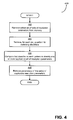
- FIG. 4 shows one example of a determination process, but it should be appreciated that the process 400 is merely illustrative of the acts that may be performed as part of block 306 of process 300, and that other processes are possible.
- Process 400 begins in block 402, at which the resolution module accesses a collection of sets of resolution parameters from a data store.
- This data store may be local to the computing device on which the resolution module is executing, as in the example of FIG. 1 , or it may be available to it via any suitable communication medium or media such as a computer communication network.
- the resolution module may retrieve, for each set of resolution parameters in the collection, a pattern for matching identifiers that indicates to which identifiers for network resources each set applies.
- the pattern may be any suitable indicator of network resources, including the name parameter described above in connection with FIGs. 2A and 2B or any other numeric or textual indicator.
- the first identifier is compared to each pattern to determine whether the set of resolution parameters that corresponds to a pattern applies to the first identifier. For example, if the first identifier is "webserver.corp.contoso.com” and a pattern is "*.corp.contoso.com” (where * is a wildcard character), then it may be determined in block 406 that that set of resolution parameters applies to the first identifier.
- the parameters of the set(s) are retrieved to be used to govern a name resolution process.
- the parameters of the set(s) are retrieved to be used to govern a name resolution process.
- any suitable process may be used to determine the set of applicable resolution parameters from the multiple sets of resolution parameters.
- the parameters may be merged to determine a set of applicable resolution parameters that has the highest level of security, or the lowest level of security, or any other suitable standard.
- the resolution module may select the set that has a pattern that matches most closely.
- the set of resolution parameters for "corp.ms.com” may be selected because it is more specific.
- the resolution module may perform a name resolution process parameterized with the set of applicable resolution parameters.
- the resolution module may then obtain, as the output of the resolution process, a second identifier for the network resource.
- a second identifier for the network resource.
- the resolution module may then return the second identifier to the functional module that passed the first identifier to it in block 302, and the process ends.
- FIG. 5 shows an exemplary process 500 by which a name resolution process, parameterized with a set of applicable resolution parameters, may be performed. It should be appreciated, however, that the process 500 is merely illustrative of the types of name resolution processes that may be implemented, as any suitable process may be implemented in accordance with any suitable name resolution technologies and protocols. It should also be appreciated that while process 500 is described in terms of certain resolution parameters, these parameters are also only exemplary, as any suitable parameters may be used in accordance with the principles described herein.
- the process 500 of FIG. 5 begins in block 502, wherein the resolution module establishes a connection to a name resolution resource identified by the set of applicable resolution parameters, such as by a "DNS server(s)" parameter.
- a name resolution resource may be a network resource such as a DNS server.
- the connection to the resolution resource may be secured.
- the security of the connection may depend on other parameters, such as an "Encryption Level” parameter identifying a type of encryption to use and/or an "IPsec CA” parameter identifying one or more certificate authorities that can issue certificates authenticating an identity of the resolution resource.
- Encryption Level identifying a type of encryption to use
- IPsec CA IP Security CA
- the resolution module may communicate a name resolution request over the channel.
- the resolution request may include any suitable data for performing a name resolution, including the first identifier and any parameters indicating a process that the resolution resource may need to follow.
- the resolution request may indicate, in accordance with a parameter of the set of applicable resolution parameters, that DNSSEC has been enabled for the resolution request and that the resolution resource should perform a validation process on the second identifier in accordance with DNSSEC prior to returning the second identifier.
- the resolution request may include one or more indicators for one or more certificate authorities that the set of resolution parameters indicates are trusted for returning trusted results, and the resolution resource may confirm that one of these is used.
- any suitable technique may be carried out by the resolution resource to obtain a second identifier for a network resource, in accordance with the particular name resolution technologies selected and indicated by resolution parameters. For example, if the resolution resource is a DNS server, then the resolution resource may examine its local cache of identifiers to determine whether it "knows" of a second identifier corresponding to the first identifier received in the resolution request. If a second identifier is not in its cache, then it may pass the resolution request along to another DNS server, which may then carry out the same process. This will continue until the original resolution resource receives a response including a second identifier.
- the resolution resource may examine its local cache of identifiers to determine whether it "knows" of a second identifier corresponding to the first identifier received in the resolution request. If a second identifier is not in its cache, then it may pass the resolution request along to another DNS server, which may then carry out the same process. This will continue until the original resolution resource receives a response including a second identifier.
- DNSSEC is indicated by the set of applicable resolution parameters to be "on,” then when the resolution resource obtains a result-either from its own cache or from another DNS server-then the resolution resource may examine the result to determine if it has been "signed" by a trustworthy source that can vouch for the legitimacy of the result. If the result is determined to be valid, then it may be returned to the resolution module that issued the resolution request.
- the resolution module receives the response from the resolution resource over the secured channel and, in block 510, confirms that the second identifier was validated by the resolution resource and was signed by a trusted certificate authority.
- the resolution module determines whether the identifier was validated in accordance with the set of applicable resolution parameters. If the second identifier was validated, then in block 514 the second identifier is returned the functional module that originally issued the request by providing the first identifier (as in block 302 of FIG. 3 ) and the process ends. If, on the other hand, the response was not validated in accordance with the set of applicable resolution parameters, then in block 516 the resolution module disposes of the result and returns to the functional module an error message indicating that no result was found, and the process ends.
- a resolution module may also maintain a local cache of identifiers for network resources.
- the resolution module upon receiving a response to a resolution request containing a second identifier, may store in a cache the first identifier, the second identifier, and the resolution parameters used to obtain the second identifier. Then, when the resolution module receives a new request for a second identifier, the resolution module may examine the cache to determine if it already has stored the second identifier, and if so, may return the second identifier from the cache without issuing a resolution request to a resolution resource.
- FIG. 6 shows an exemplary process 600 for performing such a resolution process using a cache. It should be appreciated, however, that the process 600 is merely illustrative, and any suitable technique may be implemented in accordance with the principles described herein.
- the process 600 begins in block 602, wherein the resolution module receives a first identifier and determines a set of applicable resolution parameters. This may be done in any suitable manner, including by any of the exemplary techniques described above.
- the resolution module may examine a cache to determine whether the first identifier is listed in the cache. If, based on a decision in block 606, the first identifier is not in the cache, then in block 608 the name resolution process continues as discussed above.
- the second identifier is obtained by the name resolution process, then information describing the act of obtaining may be stored in the cache in block 610. This information may comprise any of various types of data and instructions on the obtaining process. For example, the information may comprise the first identifier, the second identifier, and/or the set of applicable resolution parameters used in the act of obtaining.
- the set of resolution parameters stored in the cache along with the first identifier is retrieved and compared to the set of applicable resolution parameters retrieved in block 602.
- This comparison may be done to ensure that any second identifier returned from the cache is an identifier that was obtained in accordance with the set of applicable resolution parameters.
- the comparison of block 612 may determine that the parameters are equal, or that the parameters used to obtain the identifier stored in the cache are at least as secure as the parameters retrieved in block 602.
- the comparison of block 612 may determine that the source of the second identifier in the cache-the resolution resource from which the second identifier was obtained-is the same as the source required by the set of applicable resolution parameters.
- the cache may instead store a time the second identifier was retrieved, and the resolution module may compare that to a last time the resolution parameters were edited to determine if the resolution parameters are the same at the time of execution as they were at the time the identifier in the cache was retrieved. Any suitable comparison process may be carried out in block 612.
- a name resolution process is carried out as described above, in accordance with the set of applicable resolution parameters, to ensure that any identifier obtained is obtained appropriately. If, however, in block 614 it is determined that the parameters match, then in block 616 the second identifier is returned from the cache to the functional module that provided the first identifier, and the process 600 ends.
- Described above are several different techniques for determining a second identifier based on a first identifier input to a resolution module by a functional module. It should be appreciated, however, that each of these techniques is merely illustrative of the types of techniques that may be implemented in accordance with the principles described herein. Any type or types of methods may be implemented to carry out a name resolution process to determine identifiers for network resources based on name resolution technologies, whether implemented as a hardware network or an overlay network, or based on resolution parameters that have been provisioned for a resolution module.
- the resolution parameters that are provisioned for a resolution module may be provisioned in any suitable manner.
- the resolution parameters may be entered locally by a user of a computer device and stored in a data store associated with the computing device.
- the resolution parameters may be provided over a network when the computing device connects to the network.
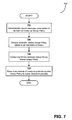
- FIG. 7 shows an example of one such latter process for providing resolution parameters to a computing device via a network. It should be appreciated, however, that the process 700 of FIG. 7 is merely illustrative, and others are possible. Further, it should be appreciated that while the example of FIG. 7 is described in terms of a Microsoft Windows computer network, other networks are possible in which computing devices are configured by the network at the time they connect to the network.
- the process 700 begins in block 702, wherein an administrator inputs a collection of resolution parameters into a domain controller of the network.
- This collection of resolution parameters may be input in any suitable manner, including as a part of a Microsoft Active Directory Group Policy for the network.
- the Group Policy may apply to any portion of the network, including to a group of computing devices connected to the network and/or to a group of users of the network.
- the domain controller receives the resolution parameters and stores it as a Group Policy, then transmits the Group Policy to all members of the group.
- This transmission of block 704 may be carried out after a set time period, such as every 15 minutes, or when members of the group (either computers or users) join or sign onto the network.
- a computing device executing a resolution module as described herein receives the Group Policy in any suitable manner and stores it in a data store associated with the computing device. Then, in block 708, when executing a name resolution process, the resolution module applies the collection of resolution modules to the name resolution process in any suitable manner, including any of the exemplary techniques described above.
- Any suitable user interface may be used to input resolution parameters.
- a text-based command line tool may be used to input resolution parameters.
- a graphical user interface may be used to input resolution parameters.
- FIG. 8 shows an example of one such graphical user interface that may be used in accordance with some of the principles described herein. It should be appreciated, however, that some implementations may use alternative user interfaces, as embodiments of the invention are not limited to using any particular input technique for resolution parameters.
- the graphical user interface 800 comprises a number of controls that may be used to input resolution parameters.
- a text block 802 may be used to input a name for a network resource, including a pattern to be used to match names of network resources, as in the "name" parameter described above in connection with FIGs. 2A and 2B .
- the graphical user interface may also comprise a text block 804 to input information relating to a certificate authority that may be used for an IPsec security process and/or for signing identifiers in accordance with secure name resolution technologies like DNSSEC.
- a series of controls 806 related to DNS Security may also be implemented, with controls indicating parameters such as whether to require DNSSEC validation, whether to use IPsec, and what type of encryption to use if IPsec is to be used.
- Another series of controls 808 may also be implemented for use with overlay networks such as Direct Access, accepting parameters such as identifiers for acceptable resolution resources such as DNS servers, an identifier for a proxy server to use, whether to use IPsec, and what type of encryption to user if IPsec is to be implemented.
- the graphical user interface 800 also comprises buttons 810 for creating and updating a set of resolution parameters including the parameters input in each of the controls 802-808. Other, global resolution parameters may also be input to the graphical interface via a frame 812. Once a set of resolution parameters has been created, it may be displayed in a frame 814 at the bottom of the graphical user interface 800, which has a plurality of columns aligning to types of parameters that may be input using the interface 800.
- the set of parameters may be stored in any suitable data structure in any suitable format.
- the data structure may be stored in a data structure storing a collection of sets of resolution parameters, such as the collections 200A and 200B of FIGs. 2A and 2B .
- These data structures may be encoded on any suitable computer storage medium. Accordingly, when a user inputs parameters using the graphical user interface 800, the graphical user interface 800 may initiate a recording process to record the input parameters onto a computer-readable medium in any suitable manner.
- the techniques may be implemented as computer-executable instructions encoded on one or more computer-readable storage media such as magnetic media (e.g., a hard disk drive), a Compact Disk (CD), a Digital Versatile Disk (DVD), a persistent or non-persistent solid-state memory (e.g., Flash memory, Magnetic RAM, etc.), or any other suitable storage media.
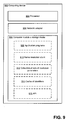
- the computer storage media may be implemented as computer-readable storage media 906 of FIG. 9 (i.e., as a portion of a computing device 900) or as a separate computer storage medium.
- a "computer-readable medium,” including “computer-readable storage medium,” refers to tangible storage media having at least one physical structure that may be altered in some way during a process of recording data thereon. For example, a magnetization state of a portion of a physical structure of a computer-readable medium may be altered during a recording process.
- These functional modules may, in some implementations, be adapted to interact with other, unrelated functional modules and/or processes, such as functional modules implementing a software program application or implementing an operating system for a computing device, or, in other implementations, the modules may be adapted to interact with other functional modules which, together with the modules, form an overall system such as an operating system such as the Microsoft Windows operating system, available from the Microsoft Corporation of Redmond, Washington (i.e., the functional modules may be implemented as a portion of or outside of an operating system). It should also be appreciated that, in some implementations, some functional modules may be implemented separately from others, or some functional modules may not be implemented.
- the techniques may be embodied as computer-executable instructions that may be executed on any suitable computing device(s) operating in any suitable computer system, including the exemplary computer system of FIG. 1 .
- any suitable computing device(s) operating in any suitable computer system including the exemplary computer system of FIG. 1 .
- techniques operating according to some or all of the principles discussed herein may operate on a single multi-purpose programmable digital computer apparatus, a coordinated system of two or more multi-purpose computer apparatuses sharing processing power and jointly carrying out the techniques described herein, a single computer apparatus or coordinated system of computer apparatuses (co-located or geographically distributed) dedicated to executing the techniques described herein, one or more application-specifics integrated circuits (ASICs) for carrying out the techniques described herein, one or more Field-Programmable Gate Arrays (FPGAs) for carrying out the techniques described herein, or any other suitable system.
- ASICs application-specifics integrated circuits
- FPGAs Field-Programmable Gate Arrays
- FIG. 9 illustrates one exemplary implementation of a computing device in the form of a computing device 900 that may be used in a system implementing the techniques described herein, although others are possible. Further, it should be appreciated that FIG. 9 is intended neither to be a depiction of necessary components for a computing device to operate in accordance with the principles described herein, nor a comprehensive depiction.
- Computing device 900 may comprise a processor 902, a network adapter 904, and computer-readable storage media 906.
- Computing device 900 may be, for example, a desktop or laptop personal computer, a workstation, a server, a mainframe, a smart phone, or any other suitable computing device.
- Network adapter 904 may be any suitable hardware and/or software to enable the computing device 900 to communicate with any other suitable computing device over any suitable computing network.
- the computing network may be any suitable wired and/or wireless communication medium or media for exchanging data between two or more computers, including the Internet.
- network adapter 904 may be implemented as two or more separate network adapters, offering connectivity via two or more types of network interfaces (e.g., a wired network adapter such as an Ethernet adapter and a wireless network adapter such as an IEEE 802.11 g adapter).
- Computer-readable storage media 906 may be any suitable tangible storage medium adapted to store data to be processed and/or instructions to be executed by processor 902.
- Processor 902 enables processing of data and execution of instructions.
- the data and instructions may be stored on the computer-readable storage media 906 and may, for example, enable communication between components of the computing device 900.
- the data and instructions stored on computer-readable storage media 906 may comprise computer-executable instructions implementing techniques which operate according to the principles described herein.
- computer-readable storage media 906 stores computer-executable instructions implementing various modules and storing various information as described above.
- Computer-readable storage media 906 stores data and instructions relating to one or more application programs 908 that may execute on the computing device. These application programs may include those that may accept a first identifier for a network resource and seek to obtain a second identifier for the network resource.
- the computer-readable storage media 906 also includes a name resolution module 910 for determining a second identifier for a network resource based on a first identifier according to any suitable technique, including any of the exemplary techniques described above.
- Computer-readable storage media 906 also comprises a collection 912 of sets of resolution parameters. As discussed above, this collection may be organized and formatted in any suitable manner, and the resolution parameters may include any suitable parameters for governing execution of a name resolution process of the name resolution module 910. In one implementation, for example, the collection 912 may be implemented on the computer-readable storage media 906 as a part of a Registry of a Microsoft Windows operating system. Computer-readable storage media 906 may additionally comprise a cache 914 of identifiers that have been retrieved by the name resolution module 910.
- the cache may be organized in any suitable manner and may contain any suitable type or types of information, including sets of first and second identifiers for network resources, sets of resolution parameters used to obtain identifiers, times that identifiers were obtained, and/or any other type or types of information.
- computer-readable storage media 906 may comprise a set of Application Programming Interface (API) functions to affect the collection of sets of resolution parameters and to determine the contents of the collection.
- API Application Programming Interface
- the API may implement a GetProxyInfo function to determine a proxy that may be used for contacting a particular network resource, taking as input an identifier for the network resource.
- the GetProxyInfo function may use the input identifier for the resource to locate a set or sets of resolution parameters in the collection that apply to the network resource, then may return an identifier for a proxy server if any of the sets of resolution parameters indicate that a proxy server is to be used.
- FIG. 10 shows one exemplary arrangement of modules that may be implemented in accordance with some of the principles described herein.
- the name resolution module 1004 may also use a variety of connection technologies 1010, including a connection module 1012 to open a connection to a resolution resource, and authentication and/or encryption modules 1014 and 1016 to perform any security processes that may be dictated by the resolution parameters in the collection.
- the invention may be embodied as a method, of which an example has been provided.
- the acts performed as part of the method may be ordered in any suitable way. Accordingly, embodiments may be constructed in which acts are performed in an order different than illustrated, which may include performing some acts simultaneously, even though shown as sequential acts in illustrative embodiments.
Landscapes
- Engineering & Computer Science (AREA)
- Computer Networks & Wireless Communication (AREA)
- Signal Processing (AREA)
- Computer Security & Cryptography (AREA)
- Computer Hardware Design (AREA)
- Computing Systems (AREA)
- General Engineering & Computer Science (AREA)
- Data Exchanges In Wide-Area Networks (AREA)
- Small-Scale Networks (AREA)
- Computer And Data Communications (AREA)
Applications Claiming Priority (2)
| Application Number | Priority Date | Filing Date | Title |
|---|---|---|---|
| US12/189,065 US8429715B2 (en) | 2008-08-08 | 2008-08-08 | Secure resource name resolution using a cache |
| PCT/US2009/051133 WO2010017023A2 (en) | 2008-08-08 | 2009-07-20 | Secure resource name resolution using a cache |
Publications (3)
| Publication Number | Publication Date |
|---|---|
| EP2310950A2 EP2310950A2 (en) | 2011-04-20 |
| EP2310950A4 EP2310950A4 (en) | 2013-03-13 |
| EP2310950B1 true EP2310950B1 (en) | 2014-08-20 |
Family
ID=41652985
Family Applications (1)
| Application Number | Title | Priority Date | Filing Date |
|---|---|---|---|
| EP09805342.4A Active EP2310950B1 (en) | 2008-08-08 | 2009-07-20 | Secure resource name resolution using a cache |
Country Status (6)
| Country | Link |
|---|---|
| US (2) | US8429715B2 (enExample) |
| EP (1) | EP2310950B1 (enExample) |
| JP (1) | JP5480264B2 (enExample) |
| CN (1) | CN102112980B (enExample) |
| TW (1) | TWI475863B (enExample) |
| WO (1) | WO2010017023A2 (enExample) |
Families Citing this family (47)
| Publication number | Priority date | Publication date | Assignee | Title |
|---|---|---|---|---|
| US7991910B2 (en) | 2008-11-17 | 2011-08-02 | Amazon Technologies, Inc. | Updating routing information based on client location |
| US7962597B2 (en) | 2008-03-31 | 2011-06-14 | Amazon Technologies, Inc. | Request routing based on class |
| US7917616B2 (en) | 2008-08-08 | 2011-03-29 | Microsoft Corporation | Secure resource name resolution |
| US8429715B2 (en) | 2008-08-08 | 2013-04-23 | Microsoft Corporation | Secure resource name resolution using a cache |
| US8340578B2 (en) | 2009-10-05 | 2012-12-25 | Apple Inc. | Methods and apparatus for enhanced coexistence algorithms in wireless systems |
| US8693569B2 (en) | 2009-10-19 | 2014-04-08 | Apple Inc. | Methods and apparatus for dynamic wireless device coexistence |
| JP5345577B2 (ja) * | 2010-02-23 | 2013-11-20 | 日本電信電話株式会社 | 名前解決装置、名前解決方法および名前解決プログラム |
| US8347100B1 (en) * | 2010-07-14 | 2013-01-01 | F5 Networks, Inc. | Methods for DNSSEC proxying and deployment amelioration and systems thereof |
| US8533361B1 (en) * | 2010-09-16 | 2013-09-10 | Google Inc. | Content selectable trusted DNS resolvers |
| US9003035B1 (en) | 2010-09-28 | 2015-04-07 | Amazon Technologies, Inc. | Point of presence management in request routing |
| US9075894B2 (en) * | 2010-11-01 | 2015-07-07 | Blue Coat Systems, Inc. | System and method for identifying web objects unworthy of being cached |
| US9106699B2 (en) * | 2010-11-04 | 2015-08-11 | F5 Networks, Inc. | Methods for handling requests between different resource record types and systems thereof |
| CN103314566B (zh) | 2010-11-05 | 2017-05-03 | 思杰系统有限公司 | 用于管理域名系统安全(dnssec)的系统和方法 |
| US8599709B2 (en) | 2011-02-10 | 2013-12-03 | Apple Inc. | Methods and apparatus for wireless coexistence based on transceiver chain emphasis |
| US10467042B1 (en) | 2011-04-27 | 2019-11-05 | Amazon Technologies, Inc. | Optimized deployment based upon customer locality |
| US9130917B2 (en) * | 2011-05-02 | 2015-09-08 | Verisign, Inc. | DNSSEC signing server |
| US8671157B2 (en) * | 2011-08-25 | 2014-03-11 | Blue Coat Systems, Inc. | System and method for optimizing name-resolution overhead in a caching network intermediary device |
| US8995929B2 (en) | 2011-12-06 | 2015-03-31 | Apple Inc. | Methods and apparatus for wireless optimization based on platform configuration and use cases |
| US9843554B2 (en) | 2012-02-15 | 2017-12-12 | F5 Networks, Inc. | Methods for dynamic DNS implementation and systems thereof |
| US9609017B1 (en) | 2012-02-20 | 2017-03-28 | F5 Networks, Inc. | Methods for preventing a distributed denial service attack and devices thereof |
| GB201209987D0 (en) * | 2012-06-06 | 2012-07-18 | Microsoft Corp | Address system |
| US8995553B2 (en) | 2012-06-08 | 2015-03-31 | Apple Inc. | Methods and apparatus for mitigating interference in aggressive form factor designs |
| US9154551B1 (en) | 2012-06-11 | 2015-10-06 | Amazon Technologies, Inc. | Processing DNS queries to identify pre-processing information |
| US9246874B2 (en) * | 2012-06-29 | 2016-01-26 | Verizon Patent And Licensing Inc. | Virtual domain name system |
| US9282116B1 (en) | 2012-09-27 | 2016-03-08 | F5 Networks, Inc. | System and method for preventing DOS attacks utilizing invalid transaction statistics |
| CN103559230B (zh) * | 2013-10-22 | 2017-06-30 | 南车株洲电力机车有限公司 | 一种工程车记录信息的处理方法 |
| US11838851B1 (en) | 2014-07-15 | 2023-12-05 | F5, Inc. | Methods for managing L7 traffic classification and devices thereof |
| US10182013B1 (en) | 2014-12-01 | 2019-01-15 | F5 Networks, Inc. | Methods for managing progressive image delivery and devices thereof |
| US10097448B1 (en) | 2014-12-18 | 2018-10-09 | Amazon Technologies, Inc. | Routing mode and point-of-presence selection service |
| US11895138B1 (en) | 2015-02-02 | 2024-02-06 | F5, Inc. | Methods for improving web scanner accuracy and devices thereof |
| US20160241509A1 (en) * | 2015-02-15 | 2016-08-18 | Microsoft Technology Licensing, Llc | Method and System for Integrating On-Premise and Cloud Domain Name Systems |
| US10616177B2 (en) | 2015-03-31 | 2020-04-07 | Willie L. Donaldson | Secure dynamic address resolution and communication system, method, and device |
| WO2016160977A1 (en) * | 2015-03-31 | 2016-10-06 | Donaldson Willie L | Secure dynamic address resolution and communication system, method, and device |
| US10110552B2 (en) | 2015-03-31 | 2018-10-23 | Willie L. Donaldson | Secure dynamic address resolution and communication system, method, and device |
| US9832141B1 (en) | 2015-05-13 | 2017-11-28 | Amazon Technologies, Inc. | Routing based request correlation |
| US10797888B1 (en) | 2016-01-20 | 2020-10-06 | F5 Networks, Inc. | Methods for secured SCEP enrollment for client devices and devices thereof |
| WO2017156231A1 (en) * | 2016-03-09 | 2017-09-14 | Dynamic Network Services, Inc. | Methods and apparatus for intelligent domain name system forwarding |
| US10075551B1 (en) | 2016-06-06 | 2018-09-11 | Amazon Technologies, Inc. | Request management for hierarchical cache |
| US10110694B1 (en) | 2016-06-29 | 2018-10-23 | Amazon Technologies, Inc. | Adaptive transfer rate for retrieving content from a server |
| US10616250B2 (en) * | 2016-10-05 | 2020-04-07 | Amazon Technologies, Inc. | Network addresses with encoded DNS-level information |
| US10831549B1 (en) | 2016-12-27 | 2020-11-10 | Amazon Technologies, Inc. | Multi-region request-driven code execution system |
| US10367825B2 (en) * | 2016-12-28 | 2019-07-30 | Verisign, Inc. | Method and system for parallel validation of domain name system security extension records |
| US10938884B1 (en) | 2017-01-30 | 2021-03-02 | Amazon Technologies, Inc. | Origin server cloaking using virtual private cloud network environments |
| JP7200612B2 (ja) * | 2018-11-12 | 2023-01-10 | 富士フイルムビジネスイノベーション株式会社 | 情報処理装置、及び情報処理プログラム |
| US11394718B2 (en) | 2019-06-10 | 2022-07-19 | Microsoft Technology Licensing, Llc | Resolving decentralized identifiers using multiple resolvers |
| FR3096202A1 (fr) * | 2019-06-20 | 2020-11-20 | Orange | Procédé et dispositif d’obtention d’une adresse IP |
| CN119363826B (zh) * | 2024-09-29 | 2025-10-28 | 中国联合网络通信集团有限公司 | 一种标识解析方法、电子设备、存储介质及程序产品 |
Family Cites Families (58)
| Publication number | Priority date | Publication date | Assignee | Title |
|---|---|---|---|---|
| JP3484779B2 (ja) * | 1994-10-12 | 2004-01-06 | 富士ゼロックス株式会社 | 名前サービス方式及び名前サービス方法 |
| US5878212A (en) | 1995-07-31 | 1999-03-02 | At&T Corp. | System for updating mapping or virtual host names to layer-3 address when multimedia server changes its usage state to busy or not busy |
| US5983270A (en) * | 1997-03-11 | 1999-11-09 | Sequel Technology Corporation | Method and apparatus for managing internetwork and intranetwork activity |
| US6205489B1 (en) * | 1999-01-05 | 2001-03-20 | Whowhere, Inc. | Method for providing an internet protocol address with a domain name server |
| US6760746B1 (en) * | 1999-09-01 | 2004-07-06 | Eric Schneider | Method, product, and apparatus for processing a data request |
| US6560634B1 (en) * | 1997-08-15 | 2003-05-06 | Verisign, Inc. | Method of determining unavailability of an internet domain name |
| WO1999023571A1 (en) | 1997-11-03 | 1999-05-14 | Inca Technology, Inc. | Automatically configuring network-name-services |
| US7522931B2 (en) * | 1998-06-05 | 2009-04-21 | Netnumber, Inc. | Method and apparatus for accessing a network computer to establish a push-to-talk session |
| US6253321B1 (en) * | 1998-06-19 | 2001-06-26 | Ssh Communications Security Ltd. | Method and arrangement for implementing IPSEC policy management using filter code |
| US7188180B2 (en) * | 1998-10-30 | 2007-03-06 | Vimetx, Inc. | Method for establishing secure communication link between computers of virtual private network |
| US6502135B1 (en) * | 1998-10-30 | 2002-12-31 | Science Applications International Corporation | Agile network protocol for secure communications with assured system availability |
| EP1157524B1 (en) * | 1999-03-03 | 2007-12-19 | Ultradns, Inc. | Scalable and efficient domain name resolution |
| US6338082B1 (en) * | 1999-03-22 | 2002-01-08 | Eric Schneider | Method, product, and apparatus for requesting a network resource |
| US7031297B1 (en) * | 2000-06-15 | 2006-04-18 | Avaya Communication Israel Ltd. | Policy enforcement switching |
| US7426566B2 (en) * | 2001-01-17 | 2008-09-16 | International Business Machines Corporation | Methods, systems and computer program products for security processing inbound communications in a cluster computing environment |
| US7209479B2 (en) * | 2001-01-18 | 2007-04-24 | Science Application International Corp. | Third party VPN certification |
| US20020178238A1 (en) * | 2001-05-23 | 2002-11-28 | Thomas Fletcher | Caching address information in a communications system |
| US7296155B1 (en) * | 2001-06-08 | 2007-11-13 | Cisco Technology, Inc. | Process and system providing internet protocol security without secure domain resolution |
| US7099957B2 (en) * | 2001-08-23 | 2006-08-29 | The Directtv Group, Inc. | Domain name system resolution |
| US7313815B2 (en) * | 2001-08-30 | 2007-12-25 | Cisco Technology, Inc. | Protecting against spoofed DNS messages |
| US7194553B2 (en) * | 2001-10-16 | 2007-03-20 | Microsoft Corporation | Resolving virtual network names |
| US6961783B1 (en) * | 2001-12-21 | 2005-11-01 | Networks Associates Technology, Inc. | DNS server access control system and method |
| US8533282B2 (en) * | 2002-02-25 | 2013-09-10 | Broadcom Corporation | System, method and computer program product for selectively caching domain name system information on a network gateway |
| JP2003289340A (ja) * | 2002-03-27 | 2003-10-10 | Toshiba Corp | 識別子問い合わせ方法、通信端末及びネットワークシステム |
| JP3791464B2 (ja) * | 2002-06-07 | 2006-06-28 | ソニー株式会社 | アクセス権限管理システム、中継サーバ、および方法、並びにコンピュータ・プログラム |
| US7552237B2 (en) * | 2002-10-17 | 2009-06-23 | International Business Machines Corporation | Network address cache apparatus and method |
| US7734745B2 (en) * | 2002-10-24 | 2010-06-08 | International Business Machines Corporation | Method and apparatus for maintaining internet domain name data |
| US20040255137A1 (en) * | 2003-01-09 | 2004-12-16 | Shuqian Ying | Defending the name space |
| US7562384B1 (en) * | 2003-03-07 | 2009-07-14 | Cisco Technology, Inc. | Method and apparatus for providing a secure name resolution service for network devices |
| US7373500B2 (en) * | 2003-04-15 | 2008-05-13 | Sun Microsystems, Inc. | Secure network processing |
| US7299491B2 (en) * | 2003-04-30 | 2007-11-20 | Microsoft Corporation | Authenticated domain name resolution |
| US7533184B2 (en) | 2003-06-13 | 2009-05-12 | Microsoft Corporation | Peer-to-peer name resolution wire protocol and message format data structure for use therein |
| TW200527870A (en) * | 2004-01-14 | 2005-08-16 | Nec Corp | Encrypted communication method, encrypted communication system, node device and program |
| US7895648B1 (en) * | 2004-03-01 | 2011-02-22 | Cisco Technology, Inc. | Reliably continuing a secure connection when the address of a machine at one end of the connection changes |
| US7317918B2 (en) * | 2004-07-19 | 2008-01-08 | Motorola, Inc. | Method for domain name service (DNS) in a wireless ad hoc network |
| US7502923B2 (en) * | 2004-09-16 | 2009-03-10 | Nokia Corporation | Systems and methods for secured domain name system use based on pre-existing trust |
| US7499998B2 (en) * | 2004-12-01 | 2009-03-03 | Cisco Technology, Inc. | Arrangement in a server for providing dynamic domain name system services for each received request |
| US7784092B2 (en) * | 2005-03-25 | 2010-08-24 | AT&T Intellectual I, L.P. | System and method of locating identity providers in a data network |
| US20060236124A1 (en) * | 2005-04-19 | 2006-10-19 | International Business Machines Corporation | Method and apparatus for determining whether to encrypt outbound traffic |
| US7792994B1 (en) * | 2005-06-15 | 2010-09-07 | Symantec Corporation | Correlating network DNS data to filter content |
| US7594031B2 (en) * | 2005-09-15 | 2009-09-22 | Microsoft Corporation | Network address selection |
| US7437755B2 (en) * | 2005-10-26 | 2008-10-14 | Cisco Technology, Inc. | Unified network and physical premises access control server |
| US7356767B2 (en) * | 2005-10-27 | 2008-04-08 | International Business Machines Corporation | Extensible resource resolution framework |
| US7941517B2 (en) * | 2005-12-27 | 2011-05-10 | France Telecom | Server and method for managing DNSSEC requests |
| US8935416B2 (en) * | 2006-04-21 | 2015-01-13 | Fortinet, Inc. | Method, apparatus, signals and medium for enforcing compliance with a policy on a client computer |
| EP1855446B1 (en) | 2006-05-11 | 2008-10-22 | Alcatel Lucent | Processing of a DNS service request |
| US9154472B2 (en) * | 2006-07-12 | 2015-10-06 | Intuit Inc. | Method and apparatus for improving security during web-browsing |
| EP1919155A1 (en) * | 2006-10-31 | 2008-05-07 | Alcatel Lucent | Resolution of flexible address schemes for IMS services |
| FR2908540A1 (fr) * | 2006-11-15 | 2008-05-16 | France Telecom | Deploiement de bases dnssec |
| JP4535075B2 (ja) * | 2007-03-12 | 2010-09-01 | ブラザー工業株式会社 | ネットワーク装置、およびネットワーク装置用のプログラム |
| CN100502367C (zh) | 2007-04-04 | 2009-06-17 | 华为技术有限公司 | 保存域名系统记录的方法、装置 |
| US7734792B2 (en) * | 2007-07-25 | 2010-06-08 | Novell, Inc. | Secure tunnel domain name management |
| US8935748B2 (en) * | 2007-10-31 | 2015-01-13 | Microsoft Corporation | Secure DNS query |
| US8918865B2 (en) * | 2008-01-22 | 2014-12-23 | Wontok, Inc. | System and method for protecting data accessed through a network connection |
| US7970004B2 (en) | 2008-02-01 | 2011-06-28 | Nokia Corporation | Method and system for providing multicast contention resolution |
| US8266672B2 (en) * | 2008-03-21 | 2012-09-11 | Sophos Plc | Method and system for network identification via DNS |
| US8429715B2 (en) | 2008-08-08 | 2013-04-23 | Microsoft Corporation | Secure resource name resolution using a cache |
| US7917616B2 (en) | 2008-08-08 | 2011-03-29 | Microsoft Corporation | Secure resource name resolution |
-
2008
- 2008-08-08 US US12/189,065 patent/US8429715B2/en active Active
-
2009
- 2009-07-20 CN CN200980130982.3A patent/CN102112980B/zh active Active
- 2009-07-20 JP JP2011522099A patent/JP5480264B2/ja not_active Expired - Fee Related
- 2009-07-20 EP EP09805342.4A patent/EP2310950B1/en active Active
- 2009-07-20 WO PCT/US2009/051133 patent/WO2010017023A2/en not_active Ceased
- 2009-08-06 TW TW098126574A patent/TWI475863B/zh not_active IP Right Cessation
-
2013
- 2013-03-14 US US13/804,253 patent/US9813337B2/en active Active
Also Published As
| Publication number | Publication date |
|---|---|
| JP2011530867A (ja) | 2011-12-22 |
| US20100034381A1 (en) | 2010-02-11 |
| JP5480264B2 (ja) | 2014-04-23 |
| WO2010017023A3 (en) | 2010-04-01 |
| US9813337B2 (en) | 2017-11-07 |
| US8429715B2 (en) | 2013-04-23 |
| US20130198316A1 (en) | 2013-08-01 |
| CN102112980B (zh) | 2017-09-15 |
| EP2310950A4 (en) | 2013-03-13 |
| CN102112980A (zh) | 2011-06-29 |
| TWI475863B (zh) | 2015-03-01 |
| TW201012155A (en) | 2010-03-16 |
| EP2310950A2 (en) | 2011-04-20 |
| WO2010017023A2 (en) | 2010-02-11 |
Similar Documents
| Publication | Publication Date | Title |
|---|---|---|
| US9813337B2 (en) | Secure resource name resolution using a cache | |
| EP2310951B1 (en) | Method and apparatus for secure resource name resolution | |
| US8910270B2 (en) | Remote access to private network resources from outside the network | |
| US9973590B2 (en) | User identity differentiated DNS resolution | |
| WO2016202397A1 (en) | Dns based pki system | |
| Ferreira et al. | Recognizing entities across protocols with unified UUID discovery and asymmetric keys | |
| US12010090B2 (en) | Management of domain name services across multiple device and software configurations | |
| CN114006724B (zh) | 一种加密dns解析器发现及认证的方法与系统 | |
| US20160105407A1 (en) | Information processing apparatus, terminal, information processing system, and information processing method | |
| KR20050069892A (ko) | 네트워크 어플라이언스 상의 다중 관리 서버들의 통합세션 제어 방법 및 시스템 | |
| Winter et al. | Dynamic Peer Discovery for RADIUS/TLS and RADIUS/DTLS Based on the Network Access Identifier (NAI) | |
| HK1159282B (en) | Secure resource name resolution | |
| Breggeman et al. | A Comparison of Authentication Protocols for Unified Client Applications | |
| JP2003283570A (ja) | 通信ネットワークシステムおよびデータ通信方法 | |
| Boyce | Linux networking cookbook | |
| Winter et al. | RFC 7585: Dynamic Peer Discovery for RADIUS/TLS and RADIUS/DTLS Based on the Network Access Identifier (NAI) |
Legal Events
| Date | Code | Title | Description |
|---|---|---|---|
| PUAI | Public reference made under article 153(3) epc to a published international application that has entered the european phase |
Free format text: ORIGINAL CODE: 0009012 |
|
| 17P | Request for examination filed |
Effective date: 20101207 |
|
| AK | Designated contracting states |
Kind code of ref document: A2 Designated state(s): AT BE BG CH CY CZ DE DK EE ES FI FR GB GR HR HU IE IS IT LI LT LU LV MC MK MT NL NO PL PT RO SE SI SK SM TR |
|
| AX | Request for extension of the european patent |
Extension state: AL BA RS |
|
| DAX | Request for extension of the european patent (deleted) | ||
| A4 | Supplementary search report drawn up and despatched |
Effective date: 20130207 |
|
| RIC1 | Information provided on ipc code assigned before grant |
Ipc: H04L 29/06 20060101AFI20130201BHEP Ipc: H04L 29/12 20060101ALI20130201BHEP |
|
| REG | Reference to a national code |
Ref country code: DE Ref legal event code: R079 Ref document number: 602009026190 Country of ref document: DE Free format text: PREVIOUS MAIN CLASS: G06F0015160000 Ipc: H04L0029060000 |
|
| GRAP | Despatch of communication of intention to grant a patent |
Free format text: ORIGINAL CODE: EPIDOSNIGR1 |
|
| RIC1 | Information provided on ipc code assigned before grant |
Ipc: H04L 29/06 20060101AFI20140103BHEP Ipc: H04L 29/12 20060101ALI20140103BHEP Ipc: H04L 12/747 20130101ALI20140103BHEP |
|
| INTG | Intention to grant announced |
Effective date: 20140128 |
|
| GRAS | Grant fee paid |
Free format text: ORIGINAL CODE: EPIDOSNIGR3 |
|
| GRAA | (expected) grant |
Free format text: ORIGINAL CODE: 0009210 |
|
| AK | Designated contracting states |
Kind code of ref document: B1 Designated state(s): AT BE BG CH CY CZ DE DK EE ES FI FR GB GR HR HU IE IS IT LI LT LU LV MC MK MT NL NO PL PT RO SE SI SK SM TR |
|
| REG | Reference to a national code |
Ref country code: GB Ref legal event code: FG4D |
|
| REG | Reference to a national code |
Ref country code: CH Ref legal event code: EP |
|
| REG | Reference to a national code |
Ref country code: AT Ref legal event code: REF Ref document number: 683966 Country of ref document: AT Kind code of ref document: T Effective date: 20140915 |
|
| REG | Reference to a national code |
Ref country code: IE Ref legal event code: FG4D |
|
| REG | Reference to a national code |
Ref country code: DE Ref legal event code: R096 Ref document number: 602009026190 Country of ref document: DE Effective date: 20141002 |
|
| REG | Reference to a national code |
Ref country code: AT Ref legal event code: MK05 Ref document number: 683966 Country of ref document: AT Kind code of ref document: T Effective date: 20140820 |
|
| REG | Reference to a national code |
Ref country code: NL Ref legal event code: VDEP Effective date: 20140820 |
|
| REG | Reference to a national code |
Ref country code: LT Ref legal event code: MG4D |
|
| PG25 | Lapsed in a contracting state [announced via postgrant information from national office to epo] |
Ref country code: SE Free format text: LAPSE BECAUSE OF FAILURE TO SUBMIT A TRANSLATION OF THE DESCRIPTION OR TO PAY THE FEE WITHIN THE PRESCRIBED TIME-LIMIT Effective date: 20140820 Ref country code: NO Free format text: LAPSE BECAUSE OF FAILURE TO SUBMIT A TRANSLATION OF THE DESCRIPTION OR TO PAY THE FEE WITHIN THE PRESCRIBED TIME-LIMIT Effective date: 20141120 Ref country code: GR Free format text: LAPSE BECAUSE OF FAILURE TO SUBMIT A TRANSLATION OF THE DESCRIPTION OR TO PAY THE FEE WITHIN THE PRESCRIBED TIME-LIMIT Effective date: 20141121 Ref country code: FI Free format text: LAPSE BECAUSE OF FAILURE TO SUBMIT A TRANSLATION OF THE DESCRIPTION OR TO PAY THE FEE WITHIN THE PRESCRIBED TIME-LIMIT Effective date: 20140820 Ref country code: LT Free format text: LAPSE BECAUSE OF FAILURE TO SUBMIT A TRANSLATION OF THE DESCRIPTION OR TO PAY THE FEE WITHIN THE PRESCRIBED TIME-LIMIT Effective date: 20140820 Ref country code: ES Free format text: LAPSE BECAUSE OF FAILURE TO SUBMIT A TRANSLATION OF THE DESCRIPTION OR TO PAY THE FEE WITHIN THE PRESCRIBED TIME-LIMIT Effective date: 20140820 Ref country code: BG Free format text: LAPSE BECAUSE OF FAILURE TO SUBMIT A TRANSLATION OF THE DESCRIPTION OR TO PAY THE FEE WITHIN THE PRESCRIBED TIME-LIMIT Effective date: 20141120 Ref country code: PT Free format text: LAPSE BECAUSE OF FAILURE TO SUBMIT A TRANSLATION OF THE DESCRIPTION OR TO PAY THE FEE WITHIN THE PRESCRIBED TIME-LIMIT Effective date: 20141222 |
|
| PG25 | Lapsed in a contracting state [announced via postgrant information from national office to epo] |
Ref country code: LV Free format text: LAPSE BECAUSE OF FAILURE TO SUBMIT A TRANSLATION OF THE DESCRIPTION OR TO PAY THE FEE WITHIN THE PRESCRIBED TIME-LIMIT Effective date: 20140820 Ref country code: HR Free format text: LAPSE BECAUSE OF FAILURE TO SUBMIT A TRANSLATION OF THE DESCRIPTION OR TO PAY THE FEE WITHIN THE PRESCRIBED TIME-LIMIT Effective date: 20140820 Ref country code: AT Free format text: LAPSE BECAUSE OF FAILURE TO SUBMIT A TRANSLATION OF THE DESCRIPTION OR TO PAY THE FEE WITHIN THE PRESCRIBED TIME-LIMIT Effective date: 20140820 Ref country code: IS Free format text: LAPSE BECAUSE OF FAILURE TO SUBMIT A TRANSLATION OF THE DESCRIPTION OR TO PAY THE FEE WITHIN THE PRESCRIBED TIME-LIMIT Effective date: 20141220 |
|
| RAP2 | Party data changed (patent owner data changed or rights of a patent transferred) |
Owner name: MICROSOFT TECHNOLOGY LICENSING, LLC |
|
| PG25 | Lapsed in a contracting state [announced via postgrant information from national office to epo] |
Ref country code: NL Free format text: LAPSE BECAUSE OF FAILURE TO SUBMIT A TRANSLATION OF THE DESCRIPTION OR TO PAY THE FEE WITHIN THE PRESCRIBED TIME-LIMIT Effective date: 20140820 |
|
| REG | Reference to a national code |
Ref country code: GB Ref legal event code: 732E Free format text: REGISTERED BETWEEN 20150312 AND 20150318 |
|
| PG25 | Lapsed in a contracting state [announced via postgrant information from national office to epo] |
Ref country code: CZ Free format text: LAPSE BECAUSE OF FAILURE TO SUBMIT A TRANSLATION OF THE DESCRIPTION OR TO PAY THE FEE WITHIN THE PRESCRIBED TIME-LIMIT Effective date: 20140820 Ref country code: SK Free format text: LAPSE BECAUSE OF FAILURE TO SUBMIT A TRANSLATION OF THE DESCRIPTION OR TO PAY THE FEE WITHIN THE PRESCRIBED TIME-LIMIT Effective date: 20140820 Ref country code: EE Free format text: LAPSE BECAUSE OF FAILURE TO SUBMIT A TRANSLATION OF THE DESCRIPTION OR TO PAY THE FEE WITHIN THE PRESCRIBED TIME-LIMIT Effective date: 20140820 Ref country code: DK Free format text: LAPSE BECAUSE OF FAILURE TO SUBMIT A TRANSLATION OF THE DESCRIPTION OR TO PAY THE FEE WITHIN THE PRESCRIBED TIME-LIMIT Effective date: 20140820 Ref country code: IT Free format text: LAPSE BECAUSE OF FAILURE TO SUBMIT A TRANSLATION OF THE DESCRIPTION OR TO PAY THE FEE WITHIN THE PRESCRIBED TIME-LIMIT Effective date: 20140820 Ref country code: RO Free format text: LAPSE BECAUSE OF FAILURE TO SUBMIT A TRANSLATION OF THE DESCRIPTION OR TO PAY THE FEE WITHIN THE PRESCRIBED TIME-LIMIT Effective date: 20140820 |
|
| REG | Reference to a national code |
Ref country code: DE Ref legal event code: R082 Ref document number: 602009026190 Country of ref document: DE Representative=s name: BOEHMERT & BOEHMERT ANWALTSPARTNERSCHAFT MBB -, DE |
|
| REG | Reference to a national code |
Ref country code: DE Ref legal event code: R097 Ref document number: 602009026190 Country of ref document: DE |
|
| PG25 | Lapsed in a contracting state [announced via postgrant information from national office to epo] |
Ref country code: PL Free format text: LAPSE BECAUSE OF FAILURE TO SUBMIT A TRANSLATION OF THE DESCRIPTION OR TO PAY THE FEE WITHIN THE PRESCRIBED TIME-LIMIT Effective date: 20140820 |
|
| REG | Reference to a national code |
Ref country code: DE Ref legal event code: R081 Ref document number: 602009026190 Country of ref document: DE Owner name: MICROSOFT TECHNOLOGY LICENSING, LLC, REDMOND, US Free format text: FORMER OWNER: MICROSOFT CORP., REDMOND, WASH., US Effective date: 20150430 Ref country code: DE Ref legal event code: R082 Ref document number: 602009026190 Country of ref document: DE Representative=s name: BOEHMERT & BOEHMERT ANWALTSPARTNERSCHAFT MBB -, DE Effective date: 20150430 |
|
| PLBE | No opposition filed within time limit |
Free format text: ORIGINAL CODE: 0009261 |
|
| STAA | Information on the status of an ep patent application or granted ep patent |
Free format text: STATUS: NO OPPOSITION FILED WITHIN TIME LIMIT |
|
| 26N | No opposition filed |
Effective date: 20150521 |
|
| PG25 | Lapsed in a contracting state [announced via postgrant information from national office to epo] |
Ref country code: SI Free format text: LAPSE BECAUSE OF FAILURE TO SUBMIT A TRANSLATION OF THE DESCRIPTION OR TO PAY THE FEE WITHIN THE PRESCRIBED TIME-LIMIT Effective date: 20140820 |
|
| PG25 | Lapsed in a contracting state [announced via postgrant information from national office to epo] |
Ref country code: MC Free format text: LAPSE BECAUSE OF FAILURE TO SUBMIT A TRANSLATION OF THE DESCRIPTION OR TO PAY THE FEE WITHIN THE PRESCRIBED TIME-LIMIT Effective date: 20140820 |
|
| REG | Reference to a national code |
Ref country code: CH Ref legal event code: PL |
|
| PG25 | Lapsed in a contracting state [announced via postgrant information from national office to epo] |
Ref country code: LU Free format text: LAPSE BECAUSE OF FAILURE TO SUBMIT A TRANSLATION OF THE DESCRIPTION OR TO PAY THE FEE WITHIN THE PRESCRIBED TIME-LIMIT Effective date: 20150720 |
|
| REG | Reference to a national code |
Ref country code: IE Ref legal event code: MM4A |
|
| PG25 | Lapsed in a contracting state [announced via postgrant information from national office to epo] |
Ref country code: LI Free format text: LAPSE BECAUSE OF NON-PAYMENT OF DUE FEES Effective date: 20150731 Ref country code: CH Free format text: LAPSE BECAUSE OF NON-PAYMENT OF DUE FEES Effective date: 20150731 |
|
| REG | Reference to a national code |
Ref country code: FR Ref legal event code: PLFP Year of fee payment: 8 |
|
| PG25 | Lapsed in a contracting state [announced via postgrant information from national office to epo] |
Ref country code: IE Free format text: LAPSE BECAUSE OF NON-PAYMENT OF DUE FEES Effective date: 20150720 Ref country code: BE Free format text: LAPSE BECAUSE OF FAILURE TO SUBMIT A TRANSLATION OF THE DESCRIPTION OR TO PAY THE FEE WITHIN THE PRESCRIBED TIME-LIMIT Effective date: 20140820 |
|
| PG25 | Lapsed in a contracting state [announced via postgrant information from national office to epo] |
Ref country code: MT Free format text: LAPSE BECAUSE OF FAILURE TO SUBMIT A TRANSLATION OF THE DESCRIPTION OR TO PAY THE FEE WITHIN THE PRESCRIBED TIME-LIMIT Effective date: 20140820 |
|
| PG25 | Lapsed in a contracting state [announced via postgrant information from national office to epo] |
Ref country code: HU Free format text: LAPSE BECAUSE OF FAILURE TO SUBMIT A TRANSLATION OF THE DESCRIPTION OR TO PAY THE FEE WITHIN THE PRESCRIBED TIME-LIMIT; INVALID AB INITIO Effective date: 20090720 Ref country code: SM Free format text: LAPSE BECAUSE OF FAILURE TO SUBMIT A TRANSLATION OF THE DESCRIPTION OR TO PAY THE FEE WITHIN THE PRESCRIBED TIME-LIMIT Effective date: 20140820 |
|
| REG | Reference to a national code |
Ref country code: FR Ref legal event code: PLFP Year of fee payment: 9 |
|
| PG25 | Lapsed in a contracting state [announced via postgrant information from national office to epo] |
Ref country code: CY Free format text: LAPSE BECAUSE OF FAILURE TO SUBMIT A TRANSLATION OF THE DESCRIPTION OR TO PAY THE FEE WITHIN THE PRESCRIBED TIME-LIMIT Effective date: 20140820 |
|
| PG25 | Lapsed in a contracting state [announced via postgrant information from national office to epo] |
Ref country code: TR Free format text: LAPSE BECAUSE OF FAILURE TO SUBMIT A TRANSLATION OF THE DESCRIPTION OR TO PAY THE FEE WITHIN THE PRESCRIBED TIME-LIMIT Effective date: 20140820 |
|
| REG | Reference to a national code |
Ref country code: FR Ref legal event code: PLFP Year of fee payment: 10 |
|
| PG25 | Lapsed in a contracting state [announced via postgrant information from national office to epo] |
Ref country code: MK Free format text: LAPSE BECAUSE OF FAILURE TO SUBMIT A TRANSLATION OF THE DESCRIPTION OR TO PAY THE FEE WITHIN THE PRESCRIBED TIME-LIMIT Effective date: 20140820 |
|
| REG | Reference to a national code |
Ref country code: DE Ref legal event code: R082 Ref document number: 602009026190 Country of ref document: DE Representative=s name: GRUENECKER PATENT- UND RECHTSANWAELTE PARTG MB, DE |
|
| REG | Reference to a national code |
Ref country code: DE Ref legal event code: R079 Ref document number: 602009026190 Country of ref document: DE Free format text: PREVIOUS MAIN CLASS: H04L0029060000 Ipc: H04L0065000000 |
|
| P01 | Opt-out of the competence of the unified patent court (upc) registered |
Effective date: 20230505 |
|
| PGFP | Annual fee paid to national office [announced via postgrant information from national office to epo] |
Ref country code: FR Payment date: 20240619 Year of fee payment: 16 |
|
| PGFP | Annual fee paid to national office [announced via postgrant information from national office to epo] |
Ref country code: DE Payment date: 20250620 Year of fee payment: 17 |
|
| PG25 | Lapsed in a contracting state [announced via postgrant information from national office to epo] |
Ref country code: FR Free format text: LAPSE BECAUSE OF NON-PAYMENT OF DUE FEES Effective date: 20250731 |
|
| PGFP | Annual fee paid to national office [announced via postgrant information from national office to epo] |
Ref country code: GB Payment date: 20260618 Year of fee payment: 18 |