EP2308584B1 - Prüfverfahren für Trocknungsmittel - Google Patents
Prüfverfahren für Trocknungsmittel Download PDFInfo
- Publication number
- EP2308584B1 EP2308584B1 EP20100168695 EP10168695A EP2308584B1 EP 2308584 B1 EP2308584 B1 EP 2308584B1 EP 20100168695 EP20100168695 EP 20100168695 EP 10168695 A EP10168695 A EP 10168695A EP 2308584 B1 EP2308584 B1 EP 2308584B1
- Authority
- EP
- European Patent Office
- Prior art keywords
- sample
- drying agent
- desiccant
- anyone
- gas
- Prior art date
- Legal status (The legal status is an assumption and is not a legal conclusion. Google has not performed a legal analysis and makes no representation as to the accuracy of the status listed.)
- Not-in-force
Links
- 239000002274 desiccant Substances 0.000 title claims description 96
- 238000012360 testing method Methods 0.000 title claims description 37
- 238000000034 method Methods 0.000 claims description 68
- 238000001035 drying Methods 0.000 claims description 16
- 230000008929 regeneration Effects 0.000 claims description 11
- 238000011069 regeneration method Methods 0.000 claims description 11
- 239000000523 sample Substances 0.000 description 48
- 239000007789 gas Substances 0.000 description 25
- 238000011068 loading method Methods 0.000 description 23
- 239000003570 air Substances 0.000 description 22
- 238000001179 sorption measurement Methods 0.000 description 12
- XLYOFNOQVPJJNP-UHFFFAOYSA-N water Substances O XLYOFNOQVPJJNP-UHFFFAOYSA-N 0.000 description 9
- 238000012423 maintenance Methods 0.000 description 6
- 238000010586 diagram Methods 0.000 description 4
- 241000702449 African cassava mosaic virus Species 0.000 description 3
- 230000032683 aging Effects 0.000 description 3
- 238000011109 contamination Methods 0.000 description 3
- 238000011156 evaluation Methods 0.000 description 3
- 238000010521 absorption reaction Methods 0.000 description 2
- 230000007423 decrease Effects 0.000 description 2
- 238000010438 heat treatment Methods 0.000 description 2
- 238000005259 measurement Methods 0.000 description 2
- 230000003449 preventive effect Effects 0.000 description 2
- 238000005070 sampling Methods 0.000 description 2
- 229920006395 saturated elastomer Polymers 0.000 description 2
- 238000005299 abrasion Methods 0.000 description 1
- PNEYBMLMFCGWSK-UHFFFAOYSA-N aluminium oxide Inorganic materials [O-2].[O-2].[O-2].[Al+3].[Al+3] PNEYBMLMFCGWSK-UHFFFAOYSA-N 0.000 description 1
- 239000012080 ambient air Substances 0.000 description 1
- 230000015556 catabolic process Effects 0.000 description 1
- 238000003889 chemical engineering Methods 0.000 description 1
- 238000002485 combustion reaction Methods 0.000 description 1
- 239000000356 contaminant Substances 0.000 description 1
- 230000001276 controlling effect Effects 0.000 description 1
- 239000000498 cooling water Substances 0.000 description 1
- 238000005336 cracking Methods 0.000 description 1
- 238000006731 degradation reaction Methods 0.000 description 1
- 230000001419 dependent effect Effects 0.000 description 1
- 238000013461 design Methods 0.000 description 1
- 238000003795 desorption Methods 0.000 description 1
- 230000006866 deterioration Effects 0.000 description 1
- 238000011161 development Methods 0.000 description 1
- 230000018109 developmental process Effects 0.000 description 1
- HNPSIPDUKPIQMN-UHFFFAOYSA-N dioxosilane;oxo(oxoalumanyloxy)alumane Chemical compound O=[Si]=O.O=[Al]O[Al]=O HNPSIPDUKPIQMN-UHFFFAOYSA-N 0.000 description 1
- 239000000428 dust Substances 0.000 description 1
- 238000005516 engineering process Methods 0.000 description 1
- 230000007613 environmental effect Effects 0.000 description 1
- 239000003344 environmental pollutant Substances 0.000 description 1
- 238000001914 filtration Methods 0.000 description 1
- 150000002430 hydrocarbons Chemical class 0.000 description 1
- 239000012535 impurity Substances 0.000 description 1
- 238000007689 inspection Methods 0.000 description 1
- 239000007788 liquid Substances 0.000 description 1
- 230000007257 malfunction Effects 0.000 description 1
- 239000000203 mixture Substances 0.000 description 1
- 239000002808 molecular sieve Substances 0.000 description 1
- 238000012544 monitoring process Methods 0.000 description 1
- 238000013021 overheating Methods 0.000 description 1
- 239000002245 particle Substances 0.000 description 1
- 231100000719 pollutant Toxicity 0.000 description 1
- 238000006116 polymerization reaction Methods 0.000 description 1
- 238000002360 preparation method Methods 0.000 description 1
- 230000001105 regulatory effect Effects 0.000 description 1
- URGAHOPLAPQHLN-UHFFFAOYSA-N sodium aluminosilicate Chemical compound [Na+].[Al+3].[O-][Si]([O-])=O.[O-][Si]([O-])=O URGAHOPLAPQHLN-UHFFFAOYSA-N 0.000 description 1
- 239000007787 solid Substances 0.000 description 1
- 238000001228 spectrum Methods 0.000 description 1
- 239000000126 substance Substances 0.000 description 1
- 239000000725 suspension Substances 0.000 description 1
Images


Classifications
-
- B—PERFORMING OPERATIONS; TRANSPORTING
- B01—PHYSICAL OR CHEMICAL PROCESSES OR APPARATUS IN GENERAL
- B01D—SEPARATION
- B01D53/00—Separation of gases or vapours; Recovering vapours of volatile solvents from gases; Chemical or biological purification of waste gases, e.g. engine exhaust gases, smoke, fumes, flue gases, aerosols
- B01D53/26—Drying gases or vapours
- B01D53/261—Drying gases or vapours by adsorption
-
- G—PHYSICS
- G01—MEASURING; TESTING
- G01N—INVESTIGATING OR ANALYSING MATERIALS BY DETERMINING THEIR CHEMICAL OR PHYSICAL PROPERTIES
- G01N15/00—Investigating characteristics of particles; Investigating permeability, pore-volume or surface-area of porous materials
- G01N15/08—Investigating permeability, pore-volume, or surface area of porous materials
-
- G—PHYSICS
- G01—MEASURING; TESTING
- G01N—INVESTIGATING OR ANALYSING MATERIALS BY DETERMINING THEIR CHEMICAL OR PHYSICAL PROPERTIES
- G01N15/00—Investigating characteristics of particles; Investigating permeability, pore-volume or surface-area of porous materials
- G01N15/08—Investigating permeability, pore-volume, or surface area of porous materials
- G01N15/088—Investigating volume, surface area, size or distribution of pores; Porosimetry
Definitions
- the invention relates to a method for evaluating a desiccant, a method for operating a drying device with a desiccant, in particular for a compressed air system, wherein a time for replacement of the desiccant is determined based on a performance of the desiccant, and a test apparatus for performing a test process on a Sample of a desiccant.
- the adsorption dryer has two containers, which are filled with desiccant and is passed through the alternating gas to be dried. If the capacity of the desiccant in one of the containers in the intended extent is exhausted, is switched to the second container and the desiccant in the first container is regenerated.
- An alternative design for low power can consist of only one container, which is then regenerated during breaks. The regeneration of the exhausted desiccant is carried out for example by a partial flow of the dried gas from the active container. Alternatively, ambient air is used, which is heated and passed through the desiccant, supported by heaters in the containers.
- the desiccant typically in grain form of two to five millimeters in diameter, eg, alumina or molecular sieve, undergoes natural aging. Friction wear and contamination loading that can not be removed by regeneration also reduces the performance of the desiccant.
- Compressed air for example, consists of a mixture of different gases and impurities.
- exhaust gases from combustion processes such as CO2, CO, NOx, S02 or even solid particles, for example dust.
- a safer alternative is the preventive replacement of the desiccant.
- the service life of the desiccant is defined by operating hours or is based on a degree of desiccant abrasion. However, this does not take into account either the individual degree of utilization or the pollution of the system with pollutants. As a result, the risk of malfunction is usually not recognized in time.
- the exchange dates are not demand-oriented, but after a fixed interval, it is always the entire desiccant exchanged, creating maximum costs.
- the so-called Q-test is known, which is based on the fact that the adsorption of water is an exothermic process in which heat is released. The more active the desiccant acts, the more heat is generated. In the Q-Test, the desiccant is moistened and the temperature increase is measured.
- the test conditions for example the environmental influences, are variable and difficult to reproduce. Naturally, the test always takes place under atmospheric pressure. In addition, the moisture load is only made with liquid water - a test for low pressure dew points required with low relative humidity does not take place. The Q-test can therefore at best indicate a tendency for the quantitative properties of the desiccant.
- An object of the invention is to provide a method that allows a reliable assessment of the service life of a desiccant, especially under the conditions of the particular use.
- the sample is flowed through by the gas of relative humidity and absorbs its moisture content. Before the next loading step, the sample is regenerated.
- a desiccant sample taken during the routine maintenance of the device is subjected to a defined moisture spectrum in stages after complete regeneration.
- relevant process data of the test process are inventively determined, so for example measured, read or recorded, so that conclusions can advantageously be drawn on the performance, in particular on the remaining life of the desiccant.
- the loading steps are carried out under constant operating conditions, wherein the operating conditions are particularly preferably selected according to the use condition of the desiccant. It is advantageous that the test process can be carried out in the laboratory without being influenced by disturbing ambient conditions.
- the loading steps are advantageously carried out under real operating conditions, that is, in particular under a certain constant operating pressure, uniform compressed air temperature and constant flow rate of the gas. It is particularly advantageous possible to simulate specific operating conditions of a particular drying device. This makes it possible to make reliable statements for both the quantitative and the make qualitative condition of the desiccant. This combination achieves an advantageously high process reliability of a drying device and makes it possible to determine the economically most sensible point in time for the replacement of the desiccant.
- the sample is loaded in each loading step until saturation occurs.
- the relative humidity of the gas is increased uniformly with each loading step, wherein the relative humidity of the gas in one of the loading steps is particularly preferably 100 percent.
- between two and ten loading steps are carried out, more preferably five loading steps, in particular at relative humidity of the gas of 20 percent, 40 percent, 60 percent, 80 percent and 100 percent.
- a plurality of samples of the desiccant are subjected to the testing process, the samples being taken from different areas of the desiccant in a drying apparatus.
- a special sampling device is used, which allows the recording of the required amount of analysis in any amount of desiccant in a drying device.
- the ability of the desiccant to adsorb moisture is reduced most rapidly where the loading of moisture is greatest, usually at the entrance of the gas, such as compressed air, into the desiccant. Towards an exit port, the process of losing the ability to adsorb moisture is slower.
- the area of the outlet nozzle of the drying device in turn is crucial for the quality of the exiting gas.
- This area is subject to natural aging;
- the number of regeneration cycles and the quality and temperature level of the desorption air have a decisive influence on the speed of the aging process. Regardless of whether it is the result of a deterioration in the quantitative or the qualitative properties of the desiccant, as the adsorption performance decreases, the desired degree of drying is no longer achieved over the complete adsorption cycle.
- a sample of the desiccant is subjected to the testing process before the desiccant is used for the first time for drying, wherein the process data of this test process serve as reference data.
- this test can be done with any unused sample from the same batch of desiccant.
- test apparatus for carrying out the method described above.
- the test apparatus has a sample container for the sample, which can be traversed by a gas, wherein a device for controlling the pressure, temperature, flow rate and relative humidity of the gas is provided and wherein measuring devices for determining relevant for a performance of the desiccant process data of the Inspection process are provided.
- Another object of the invention is a method for operating a drying device with a desiccant, in particular for a compressed air system, wherein a time for an exchange of the desiccant is determined based on a performance of the desiccant, wherein the performance of the desiccant is determined by the method described above.
- An advantage of the method is that the replacement of the desiccant is based on demand.
- FIG. 1 is shown in a diagram, the exhaustion of a desiccant.
- Percent wear stock is plotted on axis 101 as a measure of the desiccant's performance over the useful life on axis 100, resulting in the degradation curve 1.
- the distance 6 to 100 percent at the beginning of the use at time t 0 denotes the current state deviation of the desiccant.
- the time of a necessary change of the desiccant can be done by measuring the residual moisture in the dried compressed gas, for example by a pressure dew point measurement. If the pressure dew point is too high, a breakthrough occurs at the time of damage t s , an interruption of service is necessary and a downtime occurs. 5.
- the time-consuming repair after failure is shown by curve 4. Better is a preventive maintenance of the desiccant, so timely preparation and implementation of the Change according to curve 2, so that you can perform this in a break time of the plant, eg on the weekend.
- a sampling of the drying agent and input in water is also widespread. The sample absorbs water and develops heat in the exothermic process. The measured temperature gives an indication of the condition of the desiccant. This method is relatively inaccurate.
- the desiccant could be active for much longer, but may also break shortly after positive measurement.
- the method according to the invention tests the drying agent in a practice-oriented manner by driving a sample with a realistic sample gas, under pressure and with steam. This allows a state-oriented replacement of the desiccant according to curve 3.
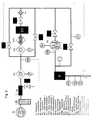
- FIG. 2 an embodiment of a test device according to the invention is shown in a schematic diagram, which is also suitable for illustrating the method according to the invention.
- a desiccant sample in the sample container P is loaded in various steps under always the same operating conditions, in particular pressure, temperature and volume flow, with relative humidities of 20 percent, 40 percent, 60 percent, 80 percent, 100 percent, preferably to saturation. Before each loading step, the sample is regenerated. The process data is recorded and can be compared graphically and mathematically with other data.
- the data obtained are comparable only if the conditions are the same when carrying out the test process.
- the temperature, the flow rate and the pressure are set constant.
- a temperature in the flow direction behind a compressor K is measured by means of a sensor TT04. If the temperature of the sample gas deviates from the value intended for the test process, the control valve RV 1 is activated via a controller. There is via the control valve RV 1 an increase or decrease of cooling water to the aftercooler NK.
- the test device operates, for example, with an operating pressure of 6 bar.
- the warm compressed air coming from the compressor K is additionally loaded via the humidifier LB in the season, in which saturation of the compressed air by steam from the environment is not possible.
- With a throttle valve DV1 the volume flow and the pressure are kept constant.
- the testing process includes, for example, twelve steps where the odd-numbered steps are each regeneration steps and even-numbered steps are adsorption or loading steps.
- step 1 the sample is initially regenerated.
- the volume flow is passed via a second cyclone separator ZK2 with steam trap A2 into an adsorption dryer DPAC and from there into a storage container SB.
- Solenoid valves ACMV and MV2 are open.
- a check valve RV prevents backflow of air into the storage tank SB.
- a heater H the air is heated until a temperature transmitter TT02 reaches a preset value. If the value is reached, the heater H is turned off until the temperature falls below the set temperature, then the heater H is turned on again. Overheating is prevented by the transmitter TT02 and a temperature thermostat TSH.
- the heated air flow now passes into the sample container P where the desiccant is exposed to the heat and dried.
- a temperature transmitter TT03 With a temperature transmitter TT03 an outlet temperature is determined. Once a preset value is exceeded, the heating is stopped and the sample is cooled, which is similar to the heating sequence, with the heater H of course being shut off. The sample is cooled until the air temperature at the temperature transmitter TT03 is equal to the air temperature at the temperature transmitter TT04.
- step 2 a loading or adsorption takes place with 20 percent relative humidity.
- the base air used here is the plug from the second cyclone separator ZK2 to the solenoid valve ACMV.
- the air has a dew point of about -50 ° C and a relative humidity of 0.1 to 0.3 percent.
- humid air is mixed in via a control valve RV2 until the desired 20 percent have been reached at a sensor H1 for the relative humidity. This control loop keeps the relative humidity constant.
- the now mixed air is passed through a solenoid valve MV1 closed during adsorption valve MV2 in the sample container P.
- a TT05 temperature sensor measures the actual inlet temperature and, in conjunction with the inlet humidity and the volume flow, serves the water load of the desiccant to calculate.
- the temperature TT03 and the relative humidity with a sensor H2 are also measured behind the sample. This calculates the amount of water that the desiccant could not hold. As soon as the value of the relative humidity measured by the sensor H2 is equal to the value of the relative humidity at the sensor H1, the sample is saturated and the loading step is ended.
- step 1 This is followed by another regeneration step, as described above for step 1.
- step 2 This relates to the steps 3, 5, 7 and 9.
- the loading steps 4, 6 and 8 in turn correspond to step 2, being set as a value for the relative humidity 40, 60 and 80 percent.
- Loading step 10 differs slightly. Since the control humidity is 100 percent, the solenoid valve ACMV is closed and the solenoid valve ZMV is open. Also, the control valve RV2 is closed. Otherwise, the further sequence is the same as the previous loading steps.
- step 11 the sample is regenerated again, which essentially serves to drive the system again free of moisture in order to be ready for the next sample. After completing step 11, the system is depressurised and shuts down.
- a software is installed, via which the data flow is regulated. For example, after starting the software, an operator enters whether the sample is a new sample (batch number of desiccant) or a sample in use (equipment serial number or container serial number). Furthermore, the desiccant type is entered. Additional information can be entered in a comment field, for example from which tank zone the sample was taken or a customer name or supplier of the desiccant.
- the software preferably assigns a unique sample number automatically. Via a cubicle, after all information has been entered, the system is started. Now, the software receives, preferably in an interval of 10 seconds, one record each of the system. For example, a data set contains the respective value of the temperature sensors TT02, TT03, TT04 and TT05, the sensors for the relative humidity H1 and H2, as well as a flowmeter or flowmeter FL.
- step 11 After receiving the record, this is entered, for example, in an SQL database.
- the tester When the tester has completed the last step (step 11), it will send a signal to the software before shutting down to terminate it as well.
- a graphical evaluation of the data sets of a loading step with an old low-performance desiccant (curve 7) and a new high-efficiency desiccant (curve 8) is shown in FIG. 3 exemplified.
- a wear limit 9 denotes a time before which the saturation of the sample may not be reached.
- an exchange of desiccant is necessary.
Landscapes
- Chemical & Material Sciences (AREA)
- Analytical Chemistry (AREA)
- General Physics & Mathematics (AREA)
- Immunology (AREA)
- Life Sciences & Earth Sciences (AREA)
- Physics & Mathematics (AREA)
- Biochemistry (AREA)
- General Health & Medical Sciences (AREA)
- Dispersion Chemistry (AREA)
- Health & Medical Sciences (AREA)
- Pathology (AREA)
- Engineering & Computer Science (AREA)
- General Chemical & Material Sciences (AREA)
- Oil, Petroleum & Natural Gas (AREA)
- Chemical Kinetics & Catalysis (AREA)
- Testing Resistance To Weather, Investigating Materials By Mechanical Methods (AREA)
- Drying Of Gases (AREA)
Description
- Die Erfindung betrifft ein Verfahren zur Bewertung eines Trockenmittels, ein Verfahren zum Betrieb einer Trocknungsvorrichtung mit einem Trockenmittel, insbesondere für eine Druckluftanlage, wobei ein Zeitpunkt für einen Austausch des Trockenmittels anhand einer Leistungsfähigkeit des Trockenmittels bestimmt wird, sowie eine Prüfvorrichtung zur Durchführung eines Prüfprozesses an einer Probe eines Trockenmittels.
- Zur Trocknung von Druckluft und Druckgasen sind Adsorptionstrockner bekannt, beispielsweise aus der Druckschrift
DE 10 2006 022 293 A1 . Der Adsorptionstrockner weist zwei Behälter auf, die mit Trockenmittel gefüllt sind und durch die abwechselnd das zu trocknende Gas geführt wird. Ist die Aufnahmefähigkeit des Trockenmittels in einem der Behälter im vorgesehenen Maß erschöpft, wird auf den zweiten Behälter umgeschaltet und das Trockenmittel im ersten Behälter wird regeneriert. Ein alternativer Aufbau für kleine Leistungen kann aus nur einem Behälter bestehen, der dann in Pausenzeiten regeneriert wird. Die Regeneration des erschöpften Trockenmittels erfolgt beispielsweise durch einen Teilstrom des getrockneten Gases aus dem aktiven Behälter. Alternativ wird Umgebungsluft genutzt, die aufgeheizt und durch das Trocknungsmittel geleitet wird, unterstützt durch Heizvorrichtungen in den Behältern. - Das Trocknungsmittel, typischerweise in Kornform mit zwei bis fünf Millimetern Durchmesser, z.B. Aluminiumoxid oder Molekularsieb, unterliegt einer natürlichen Alterung. Verschleiß durch Reibung und Beladung mit Verunreinigungen, die nicht durch die Regeneration entfernt werden können, mindern zusätzlich die Leistungsfähigkeit des Trockenmittels. Druckluft, beispielsweise, besteht aus einem Gemisch verschiedener Gase und Verunreinigungen. Neben Wasser finden sich häufig Kontaminationen durch Kohlenwasserstoffverbindungen, Abgase aus Verbrennungsprozessen, etwa CO2, CO, NOx, S02 oder auch Feststoffpartikel, zum Beispiel Staub. Diejenigen Stoffe, die sich nicht durch Filtration entfernen lassen, lagern sich an den ungesättigten Grenzflächen des Trockenmittels an und verringern dadurch dessen Aufnahmefähigkeit für Wasserdampf. Die Ablagerungen lösen sich zum Teil nicht bei der Regeneration. Bei der Desorption mit höheren Temperaturen können diese Verunreinigungen sogar zur Crackung oder zu einer Polymerisation organischer Moleküle führen. Die dauerhaft verbleibenden Rückstände beeinflussen maßgeblich die Aufnahmekapazität und die Leistungsfähigkeit des Trockenmittels - seine Standzeit verkürzt sich deutlich. Dies erfordert einen Wechsel des Adsorptionsbettes nach einer gewissen Zeit, wobei die Bestimmung des geeigneten Zeitpunkts für den Wechsel problematisch ist.
- Es besteht zum Beispiel die Möglichkeit der Überwachung der Druckluftanlage mit einem Taupunktmessgerät. Nach einem Feuchtedurchbruch am Austritt des Adsorptionsbetts beginnt bereits der unerwünschte Feuchteeintrag in das Druckluftnetz. Ein Taupunktmessgerät registriert diesen Störfall und gibt eine entsprechende Meldung aus. Die Behebung des Schadens erfordert zusätzlich zu dem Austausch des verbrauchten Trockenmittels eine ungeplante, meist längere Stillstandszeit der Anlage und damit erhebliche Zusatzkosten.
- Eine sicherere Alternative stellt der präventive Austausch des Trockenmittels dar. Dabei wird die Standzeit des Trockenmittels nach Betriebsstunden definiert oder orientiert sich an einem Grad des Trockenmittelabriebs. Dadurch werden allerdings weder der individuelle Auslastungsgrad noch die Belastung der Anlage mit Schadstoffen berücksichtigt. Dadurch wird die Gefahr von Funktionsstörungen meist nicht rechtzeitig erkannt. Zudem erfolgen die Austauschtermine nicht bedarfsorientiert, sondern nach einem fest vorgegebenen Intervall, es wird stets das gesamte Trockenmittel getauscht, wodurch maximale Kosten entstehen.
- Des Weiteren ist der sogenannte Q-Test bekannt, der auf dem Umstand basiert, dass die Adsorption von Wasser einen exothermen Prozess darstellt, bei dem Wärme freigesetzt wird. Je aktiver das Trockenmittel agiert, desto mehr Wärme entsteht. Beim Q-Test wird das Trockenmittel befeuchtet und die Temperaturerhöhung gemessen. Die Testbedingungen, zum Beispiel die Umgebungseinflüsse, sind variabel und nur schwer reproduzierbar. Die Prüfung erfolgt naturgemäß stets unter atmosphärischem Druck. Zudem wird die Feuchtebelastung lediglich mit flüssigem Wasser vorgenommen - eine für tiefe Drucktaupunkte erforderliche Prüfung mit niedrigen relativen Feuchten findet nicht statt. Der Q-Test kann daher bestenfalls eine Tendenz für die quantitativen Eigenschaften des Trockenmittels anzeigen.
- Ein gravimetrisches verfahren zur Bewertung der quantitativen Eigenschaften eines Trockenmittels ist in determination of Kinetics and Equilibria for Adsorption of Water on single Zeolite Particles by a Magnetic Suspension Balance" (W. Kwapinski, E. Tsotsas; Chemical Engineering and Technology; Bd. 27, Nr. 6, 1 Juni 2004) offenbart.
- Eine Aufgabe der Erfindung besteht darin, ein Verfahren anzugeben, dass eine zuverlässige Bewertung der Standzeit eines Trockenmittels, insbesondere unter den Bedingungen des jeweiligen Einsatzes, erlaubt.
- Die Aufgabe wird durch die Gegenstände der unabhängigen Ansprüche gelöst. In den Unteransprüchen sind jeweils be- vorzugte Ausführungsformen und vorteilhafte Weiterbildungen angegeben.
- Das erfindungsgemäße Verfahren ist zur Bewertung eines Trockenmittels vorgesehen, wobei die Bewertung insbesondere auf einer Feststellung einer Leistungsfähigkeit des Trockenmittels beruht, also beispielsweise seiner Fähigkeit, Feuchtigkeit aufzunehmen, eines Grades der Verunreinigung des Trockenmittels und einer Abschätzung der voraussichtlichen Standzeit des Trockenmittels bis zu seinem Austausch. Dazu wird erfindungsgemäß mindestens eine Probe des Trockenmittels einem Prüfprozess unterzogen, bei welchem
- die Probe in mehreren aufeinander folgenden Beladungsschritten durch ein Gas mit einer relativen Feuchte beladen wird,
- die relative Feuchte des Gases bei jedem Beladungsschritt verändert wird,
- vor jedem Beladungsschritt eine Regeneration der Probe durchgeführt wird.
- Zur Beladung wird die Probe von dem Gas relativer Feuchte durchströmt und nimmt dabei dessen Feuchtegehalt auf. Vor dem folgenden Beladungsschritt wird die Probe regeneriert. In einer komplexen Prüfanlage wird vorzugsweise eine während der turnusmäßigen Gerätewartung entnommene Trockenmittelprobe nach vollständiger Regeneration stufenweise mit einem festgelegten Feuchtespektrum beaufschlagt. Für die Leistungsfähigkeit des Trockenmittels relevante Prozessdaten des Prüfprozesses werden erfindungsgemäß ermittelt, also beispielsweise gemessen, abgelesen oder aufgezeichnet, so dass daraus vorteilhaft Rückschlüsse auf die Leistungsfähigkeit, insbesondere auf die verbleibende Standzeit des Trockenmittels gezogen werden können.
- Bevorzugt erfolgen die Beladungsschritte unter gleichbleibenden Betriebsbedingungen, wobei die Betriebsbedingungen besonders bevorzugt entsprechend den Einsatzbedingung des Trockenmittels gewählt werden. Vorteilhaft ist, dass der Prüfprozess im Labor ohne Beeinflussung durch störende Umgebungsbedingungen durchgeführt werden kann. Die Beladungsschritte erfolgen vorteilhaft unter realen Betriebsbedingungen, das heißt, insbesondere unter einem bestimmten konstanten Betriebsdruck, gleichmäßiger Drucklufttemperatur und konstantem Volumenstrom des Gases. Es ist besonders vorteilhaft möglich, spezifische Betriebsbedingungen einer bestimmten Trocknungsvorrichtung zu simulieren. Dadurch wird es möglich, verlässliche Aussagen sowohl zum quantitativen wie zum qualitativen Zustand des Trockenmittels zu machen. Durch diese Kombination wird eine vorteilhaft hohe Prozesssicherheit einer Trocknungsvorrichtung erreicht und die Ermittlung des wirtschaftlich sinnvollsten Zeitpunkts für den Austausch des Trockenmittels ermöglicht. Durch eine exakte Lebensdauer-Prognose nach dem erfindungsgemäßen Verfahren wird es möglich, den Trockenmittelaustausch mit einer routinemäßigen künftigen Wartung der Trocknungsanlage abzustimmen. Der Wechsel kann dann vorteilhaft genau zu dem Wartungstermin erfolgen, der vor dem errechneten Zeitpunkt eines nötigen Trockenmittelersatzes liegt.
- Gemäß einer bevorzugten Ausführungsform wird die Probe in jedem Beladungsschritt bis zum Eintritt einer Sättigung beladen. Weiterhin bevorzugt wird die relative Feuchte des Gases mit jedem Beladungsschritt gleichmäßig gesteigert, wobei die relative Feuchte des Gases bei einem der Beladungsschritte besonders bevorzugt 100 Prozent beträgt. Bevorzugt werden zwischen zwei und zehn Beladungsschritte durchgeführt, besonders bevorzugt fünf Beladungsschritte, insbesondere bei relativen Feuchten des Gases von 20 Prozent, 40 Prozent, 60 Prozent, 80 Prozent und 100 Prozent.
- Gemäß einer weiteren bevorzugten Ausführungsform werden mehrere Proben des Trockenmittels dem Prüfprozess unterzogen, wobei die Proben verschiedenen Bereichen des Trockenmittels in einer Trocknungsvorrichtung entnommen werden. Dabei kommt bevorzugt eine spezielle Probeentnahmevorrichtung zum Einsatz, die die Aufnahme der benötigten Analysemenge in jeder beliebigen Höhe des Trockenmittels in einer Trocknungsvorrichtung erlaubt. Die Fähigkeit des Trockenmittels, Feuchtigkeit zu adsorbieren, reduziert sich dort am schnellsten, wo die Beladung mit Feuchtigkeit am größten ist, in der Regel am Eintritt des Gases, beispielsweise Druckluft, in das Trockenmittel. In Richtung eines Austrittsstutzens verläuft der Prozess des Verlustes der Fähigkeit, Feuchtigkeit zu adsorbieren, langsamer. Der Bereich des Austrittsstutzens der Trocknungsvorrichtung wiederum ist entscheidend für die Qualität des austretenden Gases. Dieser Bereich unterliegt einer natürlichen Alterung; maßgeblichen Einfluss auf die Geschwindigkeit des Alterungsprozesses haben die Anzahl der Regenerationszyklen sowie Qualität und Temperaturniveau der Desorptionsluft. Unabhängig davon, ob es sich um die Folge einer Verschlechterung der quantitativen oder der qualitativen Eigenschaften des Trockenmittels handelt, wird bei nachlassender Adsorptionsleistung der gewünschte Trocknungsgrad nicht mehr über den kompletten Adsorptionszyklus erzielt. Durch Aufnahme des Trocknungsmittels an den quantitativ und qualitativ bedeutsamen Punkten der Trocknungsvorrichtung kann diesen Risiken vorteilhaft gezielt entgegengewirkt werden.
- Gemäß einer weiteren bevorzugten Ausführungsform werden dem Trockenmittel in zeitlichem Abstand Proben entnommen, welche dem Prüfprozess unterzogen werden, wobei besonders bevorzugt die für die Leistungsfähigkeit des Trockenmittels relevanten Prozessdaten zumindest teilweise aufgezeichnet und mit Prozessdaten vorhergehender Prüfprozesse an Proben des Trockenmittels verglichen werden. Die regelmäßige Durchführung der Bewertung des Trockenmittels stellt vorteilhaft keine zusätzliche Kosten- oder Zeitbelastung dar, wenn die Proben routinemäßig bei den allgemeinen Wartungsarbeiten im Rahmen eines bestehenden Serviceplans entnommen werden. Bevorzugt wird die Probe dem Trockenmittel einer Trocknungsvorrichtung für Druckluft entnommen. Die für die Leistungsfähigkeit des Trockenmittels relevanten Prozessdaten umfassen bevorzugt mindestens einen der Parameter
- Feuchtigkeitsmenge, welche die Probe passiert hat,
- relative Feuchte des Gases nach dem Durchströmen der Probe,
- Temperatur des Gases nach dem Durchströmen der Probe und
- Zeit bis zum Erreichen eines bestimmten Beladungsgrads der Probe, insbesondere bis zur Sättigung der Probe.
- Weiterhin bevorzugt wird eine Probe des Trockenmittels dem Prüfprozess unterzogen, bevor das Trockenmittel erstmals zur Trocknung eingesetzt wird, wobei die Prozessdaten dieses Prüfprozesses als Referenzdaten dienen. Der Fachmann erkennt, dass diese Prüfung ebenso mit einer beliebigen unbenutzten Probe aus derselben Charge eines Trockenmittels erfolgen kann.
- Ein weiterer Gegenstand der Erfindung ist eine Prüfvorrichtung zur Durchführung des zuvor beschriebenen Verfahrens. Vorzugsweise weist die Prüfvorrichtung einen Probenbehälter für die Probe auf, welcher von einem Gas durchströmbar ist, wobei eine Vorrichtung zur Regelung von Druck, Temperatur, Volumenstrom und relativer Feuchte des Gases vorgesehen ist und wobei Messvorrichtungen zur Bestimmung von für eine Leistungsfähigkeit des Trockenmittels relevanten Prozessdaten des Prüfprozesses vorgesehen sind.
- Ein weiterer Gegenstand der Erfindung ist ein Verfahren zum Betrieb einer Trocknungsvorrichtung mit einem Trockenmittel, insbesondere für eine Druckluftanlage, wobei ein Zeitpunkt für ei- nen Austausch des Trockenmittels anhand einer Leistungsfähigkeit des Trockenmittels bestimmt wird, wobei die Leistungsfähigkeit des Trockenmittels durch das zuvor beschriebene Verfahren ermittelt wird. Ein Vorteil des Verfahrens besteht darin, dass der Austausch des Trockenmittels am Bedarf orientiert erfolgt.
- Nachfolgend wird die Erfindung anhand von Zeichnungen näher erläutert, wobei diese die erfindungsgemäßen Verfahren ebenso illustrieren, wie die erfindungsgemäße Vorrichtung. Die Ausführungen sind beispielhaft und schränken den allgemeinen Erfindungsgedanken nicht ein.
-
-
Figur 1 eine Darstellung der Erschöpfung eines Trockenmittels anhand eines Diagramms; -
Figur 2 ein Ausführungsbeispiel für den Aufbau eines Prüfprozesses gemäß dem erfindungsgemäßen Verfahren bzw. der erfindungsgemäßen Vorrichtung in einem schematischen Schaltbild; -
Figur 3 einen beispielhaften, aufgezeichneten Datensatz von Prozessdaten eines Prüfprozesses gemäßFigur 2 ; - In der
Figur 1 ist in einem Diagramm die Erschöpfung eines Trockenmittels dargestellt. Der Abnutzungsvorrat in Prozent ist auf der Achse 101 als Maß der Leistungsfähigkeit des Trockenmittels über der Nutzungsdauer auf der Achse 100 abgetragen, wodurch sich die Abbaukurve 1 ergibt. Der Abstand 6 zu 100 Prozent zu Beginn der Nutzung im Zeitpunkt t0 bezeichnet die aktuelle Zustandsabweichung des Trockenmittels. - Der Zeitpunkt eines notwendigen Wechsels des Trockenmittels kann durch eine Messung der Restfeuchte in dem getrockneten Druckgas, z.B. durch eine Drucktaupunktmessung erfolgen. Ist der Drucktaupunkt zu hoch, kommt es zu einen Durchbruch zum Schadenszeitpunkt ts, es ist eine Betriebsunterbrechung notwendig und es kommt zu einer Ausfallzeit 5. Die zeitaufwändige Instandsetzung nach Ausfall ist mit der Kurve 4 dargestellt. Besser ist eine präventive Wartung des Trocknungsmittels, also rechtzeitige Vorbereitung und Durchführung des Wechsels gemäß Kurve 2, sodass man diesen in einer Pausenzeit der Anlage durchführen kann, z.B. am Wochenende. Verbreitet ist auch eine Probennahme des Trocknungsmittels und Eingabe in Wasser. Dabei nimmt die Probe Wasser auf und entwickelt Wärme in dem exothermen Prozess. Die gemessene Temperatur gibt ein Indiz auf den Zustand des Trockenmittels. Diese Methode ist relativ ungenau. Das Trocknungsmittel könnte sehr viel länger noch aktiv sein, vielleicht aber auch kurz nach positiver Messung einbrechen.
- Das erfindungsgemäße Verfahren testet das Trocknungsmittel praxisorientiert durch Befahren einer Probe mit einem realitätsnahen Probegas, unter Druck und mit Wasserdampfbeladung. Dadurch wird ein zustandsorientierter Austausch des Trockenmittels gemäß Kurve 3 ermöglicht.
- In der
Figur 2 ist ein Ausführungsbeispiel einer erfindungsgemäßen Prüfvorrichtung in einem schematischen Schaltbild dargestellt, das ebenso zur Illustration des erfindungsgemäßen Verfahrens geeignet ist. Eine Trockenmittelprobe in dem Probenbehälter P wird in verschiedenen Schritten, unter immer gleichen Betriebsbedingungen, insbesondere Druck, Temperatur und Volumenstrom, mit relativen Feuchten von 20 Prozent, 40 Prozent, 60 Prozent, 80 Prozent, 100 Prozent, vorzugsweise bis zur Sättigung beladen. Vor jedem Beladungsschritt erfolgt eine Regeneration der Probe. Die Prozessdaten werden aufgezeichnet und können mit anderen Daten grafisch und mathematisch verglichen werden. - Die gewonnen Daten sind nur vergleichbar wenn die Bedingungen bei der Durchführung des Prüfprozesses gleich sind. Um das zu gewährleisten wird die Temperatur, der Volumenstrom und der Druck konstant eingestellt. Eine Temperatur in Strömungsrichtung hinter einem Kompressor K wird mittels eines Sensors TT04 gemessen. Weicht die Temperatur des Probegases von der für den Prüfprozess vorgesehenen Wert ab, wird das Regelventil RV 1 über eine Steuerung aktiviert. Es erfolgt über das Regelventil RV 1 eine Mehr- oder Minderzufuhr von Kühlwasser zum Nachkühler NK.
- Die Prüfvorrichtung arbeitet beispielsweise mit einem Betriebsdruck von 6 bar. Die vom Kompressor K kommende warme Druckluft wird über den Luftbefeuchter LB in der Jahreszeit, in der keine Sättigung der Druckluft durch Wasserdampf aus der Umgebung möglich ist, zusätzlich beladen. Hinter dem Nachkühler NK und einem ersten Zyklonabscheider ZK1 mit Kondensatabscheider A1 hat die Luft 100 Prozent relative Feuchte bei der einge- stellten Temperatur. Mit einem Drosselventil DV1 wird der Volumenstrom und der Druck konstant gehalten.
- Der Prüfprozess umfasst beispielsweise zwölf Schritte, wobei die ungeradzahligen Schritte jeweils Regenerationsschritte sind und geradzahlige Schritte Adsorptions- oder Beladungsschritte.
- In Schritt 1 erfolgt zunächst eine Regeneration der Probe. Um die Probe zu regenerieren wird der Volumenstrom über einen zweiten Zyklonabscheider ZK2 mit Kondensatableiter A2 in einen Adsorptionstrockner DPAC geleitet und von dort weiter in einen Speicherbehälter SB. Magnetventile ACMV und MV2 sind geöffnet. Ein Rückschlagventil RV verhindert ein Rückströmen von Luft in den Speicherbehälter SB. In einer Heizung H wird die Luft solange erwärmt bis an einem Temperaturtransmitter TT02 ein voreingestellte Wert erreicht wird. Ist der Wert erreicht, wird die Heizung H abgeschaltet bis die Temperatur unter die eingestellte Temperatur fällt, dann wird die Heizung H wieder eingeschaltet. Eine Überhitzung wird durch den Transmitter TT02 und ein Temperaturthermostat TSH verhindert. Der erhitzte Luftstrom gelangt nun in den Probenbehälter P wo das Trockenmittel der Wärme ausgesetzt und so getrocknet wird. Mit einem Temperaturtransmitter TT03 wird eine Austrittstemperatur ermittelt. Sobald ein voreingestellter Wert überschritten wird, wird das Heizen beendet und es folgt ein Kühlen der Probe, was von der Abfolge mit dem Heizen vergleichbar ist, wobei natürlich die Heizung H abgeschaltet bleibt. Die Probe wird solange gekühlt, bis die Lufttemperatur an dem Temperaturtransmitter TT03 gleich der Lufttemperatur an dem Temperaturtransmitter TT04 ist.
- In Schritt 2 erfolgt eine Beladung bzw. Adsorption mit 20 Prozent relativer Feuchte. Als Basisluft dient hier die Stecke von dem zweiten Zyklonabscheider ZK2 bis zu dem Magnetventil ACMV. Hier hat die Luft einen Taupunkt von ca.-50° C und eine relative Feuchte von 0,1 bis 0,3 Prozent. Um die Regelfeuchte zu erreichen, wird über ein Regelventil RV2 solange feuchte Luft beigemischt, bis an einem Sensor H1 für die relative Feuchte die gewünschten 20 Prozent erreicht sind. Über diesen Regelkreis wird die relative Feuchte konstant gehalten. Die nun gemischte Luft wird über ein Magnetventil MV1 bei während der Adsorption geschlossenem Ventil MV2 in den Probenbehälter P geleitet. Ein Temperatursensor TT05 misst die tatsächliche Eintrittstemperatur und dient dazu, in Verbindung mit der Eintrittsfeuchte und dem Volumenstrom, die Wasserbeladung des Trockenmittels zu berechnen. Hinter der Probe werden ebenfalls die Temperatur TT03 und die relative Feuchte mit einem Sensor H2 gemessen. Hiermit wird die Wassermenge berechnet die das Trockenmittel nicht aufhalten konnte. Sobald der vom Sensor H2 gemessene Wert der relativen Feuchte gleich dem Wert der relativen Feuchte am Sensor H1 ist, ist die Probe gesättigt und der Beladungsschritt wird beendet.
- Es folgt wieder ein Regenerationsschritt, wie oben zu Schritt 1 beschrieben. Das betrifft die Schritte 3, 5, 7 und 9. Die Beladungsschritte 4, 6 und 8 entsprechen ihrerseits Schritt 2, wobei als Wert für die relative Feuchte 40, 60 bzw. 80 Prozent eingestellt werden. Beladungsschritt 10 unterscheidet sich davon geringfügig. Da als Regelfeuchte 100 Prozent vorgesehen sind, ist das Magnetventil ACMV geschlossen und das Magnetventil ZMV geöffnet. Auch das Regelventil RV2 ist geschlossen. Ansonsten ist die weitere Abfolge gleich den vorangegangenen Beladungsschritten.
- In einem Schritt 11 wird die Probe noch einmal regeneriert, was im Wesentlichen dazu dient, die Anlage wieder frei von Feuchtigkeit zu fahren um für die nächste Probe bereit zu sein. Nach Beenden des Schritts 11 wird die Anlage druckfrei gesetzt und schaltet sich ab.
- Auf einem an der Anlage angeschlossenen Computer (nicht dargestellt) ist eine Software installiert, über die der Datenfluss geregelt wird. Nach dem Start der Software trägt beispielsweise ein Bediener ein, ob es sich bei der Probe um eine Neuprobe (Chargennummer des Trockenmittels) oder um eine in Nutzung befindliche Probe (Anlagenseriennummer oder Behälterseriennummer) handelt. Weiterhin wird der Trockenmitteltyp eingetragen. In einem Kommentarfeld können noch zusätzliche Informationen eingetragen werden, wie zu Beispiel aus welche Behälterzone die Probe genommen wurde oder ein Kundenname oder Lieferant des Trockenmittels. Die Software vergibt vorzugsweise automatisch eine einmalige Probennummer. Über ein Schaltfeld wird, nachdem alle Informationen eingetragen wurden, die Anlage gestartet. Nun empfängt die Software, vorzugsweise in einem Intervall von 10 Sekunden, jeweils einen Datensatz von der Anlage. Ein Datensatz enthält beispielsweise den jeweiligen Wert der Temperatursensoren TT02, TT03, TT04 und TT05, der Sensoren für die relative Feuchte H1 und H2, sowie eines Durchflussmengenmessers oder Flowmeters FL.
- Nach Empfang des Datensatzes wird dieser beispielsweise in eine SQL-Datenbank eingetragen. Hat die Prüfvorrichtung den letzten Schritt (Schritt 11) abgeschlossen, sendet diese, bevor sie sich abschaltet, ein Signal an die Software, um diese ebenfalls zu beenden.
- Eine graphische Auswertung der Datensätze eines Beladungsschritts mit einem alten Trockenmittel von geringer Leistungsfähigkeit (Kurve 7) und einem neuen Trockenmittel mit hoher Leistungsfähigkeit (Kurve 8) ist in der
Figur 3 beispielhaft dargestellt. Eine Verschleißgrenze 9 bezeichnet einen Zeitpunkt, vor dem die Sättigung der Probe nicht erreicht werden darf. Zuvor ist ein Austausch des Trockenmittels nötig. Durch einen Vergleich der aufgezeichneten Daten zuvor durchgeführter Prüfprozesse mit Proben eines Trockenmittels, lässt sich dessen Erschöpfung durch eine Veränderung der aufgezeichneten Kurve nachvollziehen und so abschätzen, wann das Trockenmittel bereits vor der Verschleißgrenze gesättigt sein wird. Der Austausch ist dementsprechend für die nächste, vor dem Zeitpunkt liegende Wartung zu planen.
Claims (13)
- Verfahren zur Bewertung eines Trockenmittels,
wobei mindestens eine Probe des Trockenmittels einem Prüfprozess unterzogen wird, bei welchem- die Probe in mehreren aufeinander folgenden Beladungsschritten durch ein Gas mit einer relativen Feuchte beladen wird,- die relative Feuchte des Gases bei jedem Beladungsschritt verändert wird,- vor jedem Beladungsschritt eine Regeneration der Probe durchgeführt wird,wobei für eine Leistungsfähigkeit des Trockenmittels relevante Prozessdaten des Prüfprozesses ermittelt werden. - Verfahren nach Anspruch 1,
dadurch gekennzeichnet,
dass die Beladungsschritte und die anschließende Regeneration unter gleichbleibenden Betriebsbedingungen erfolgen. - Verfahren nach Anspruch 2,
dadurch gekennzeichnet,
dass die Betriebsbedingungen entsprechend den Einsatzbedingung des Trockenmittels gewählt werden. - Verfahren nach einem der vorhergehenden Ansprüche,
dadurch gekennzeichnet,
dass die Probe in jedem Beladungsschritt bis zum Eintritt einer Sättigung beladen wird. - Verfahren nach einem der vorhergehenden Ansprüche,
dadurch gekennzeichnet,
dass die relative Feuchte des Gases mit jedem Beladungsschritt gleichmäßig gesteigert wird. - Verfahren nach einem der vorhergehenden Ansprüche,
dadurch gekennzeichnet,
dass die relative Feuchte des Gases bei einem der Beladungsschritte 100 Prozent beträgt. - Verfahren nach einem der vorhergehenden Ansprüche,
dadurch gekennzeichnet,
dass zwischen zwei und zehn Beladungsschritte durchgeführt werden. - Verfahren nach einem der vorhergehenden Ansprüche,
dadurch gekennzeichnet,
dass mehrere Proben des Trockenmittels dem Prüfprozess unterzogen werden, wobei die Proben verschiedenen Bereichen des Trockenmittels in einer Trocknungsvorrichtung entnommen werden. - Verfahren nach einem der vorhergehenden Ansprüche,
dadurch gekennzeichnet,
dass dem Trockenmittel in zeitlichem Abstand Proben entnommen werden, welche dem Prüfprozess unterzogen werden. - Verfahren nach einem der vorhergehenden Ansprüche,
dadurch gekennzeichnet,
dass die für die Leistungsfähigkeit des Trockenmittels relevanten Prozessdaten zumindest teilweise aufgezeichnet und mit Prozessdaten vorhergehender Prüfprozesse an Proben des Trockenmittels verglichen werden. - Verfahren nach einem der vorhergehenden Ansprüche,
dadurch gekennzeichnet,
dass die für die Leistungsfähigkeit des Trockenmittels relevanten Prozessdaten mindestens einen der Parameter- Feuchtigkeitsmenge, welche die Probe passiert hat,- relative Feuchte des Gases nach dem Durchströmen der Probe,- Temperatur des Gases nach dem Durchströmen der Probe und- Zeit bis zum Erreichen eines bestimmten Beladungsgrads der Probe, insbesondere bis zur Sättigung der Probe,umfassen. - Verfahren nach einem der vorhergehenden Ansprüche,
dadurch gekennzeichnet,
dass eine Probe des Trockenmittels dem Prüfprozess unterzogen wird, bevor das Trockenmittel zur Trocknung eingesetzt wird, wobei die Prozessdaten dieses Prüfprozesses als Referenzdaten dienen. - Verfahren nach einem der vorhergehenden Ansprüche,
dadurch gekennzeichnet,
dass die Probe dem Trockenmittel einer Trocknungsvorrichtung für Druckluft entnommen wird.
Applications Claiming Priority (1)
| Application Number | Priority Date | Filing Date | Title |
|---|---|---|---|
| DE200910044993 DE102009044993A1 (de) | 2009-09-24 | 2009-09-24 | Prüfverfahren für Trocknungsmittel |
Publications (2)
| Publication Number | Publication Date |
|---|---|
| EP2308584A1 EP2308584A1 (de) | 2011-04-13 |
| EP2308584B1 true EP2308584B1 (de) | 2013-09-11 |
Family
ID=43216290
Family Applications (1)
| Application Number | Title | Priority Date | Filing Date |
|---|---|---|---|
| EP20100168695 Not-in-force EP2308584B1 (de) | 2009-09-24 | 2010-07-07 | Prüfverfahren für Trocknungsmittel |
Country Status (2)
| Country | Link |
|---|---|
| EP (1) | EP2308584B1 (de) |
| DE (1) | DE102009044993A1 (de) |
Families Citing this family (2)
| Publication number | Priority date | Publication date | Assignee | Title |
|---|---|---|---|---|
| CN102879524B (zh) * | 2012-09-11 | 2015-08-19 | 同济大学 | 一种在线监测列车压缩空气湿度的装置 |
| CN115950665B (zh) * | 2023-03-10 | 2023-05-30 | 合肥通用机械研究院有限公司 | 一种用于干燥器的综合试验台及综合测试方法 |
Family Cites Families (5)
| Publication number | Priority date | Publication date | Assignee | Title |
|---|---|---|---|---|
| DE3445699A1 (de) * | 1984-12-14 | 1986-06-19 | Knorr-Bremse AG, 8000 München | Lufttrocknungseinrichtung fuer druckluftanlagen |
| DE202005020648U1 (de) * | 2004-06-08 | 2006-05-11 | E.On Ruhrgas Ag | Erdgas-Tankstelle mit einer Trocknungseinrichtung |
| DE102006019865C5 (de) * | 2006-04-28 | 2012-05-03 | Haldex Brake Products Gmbh | Kartusche, Druckluftaufbereitungsanlage und Verfahren zum Betrieb einer Druckluftaufbereitungsanlage |
| DE102006022293B4 (de) | 2006-05-11 | 2011-02-03 | Beko Systems Gmbh | Trocknung von Druckluft unter Nutzung der Verdichterwärme mit geschlossenem Regenerationskreislauf |
| JP5085423B2 (ja) * | 2008-05-14 | 2012-11-28 | 日野自動車株式会社 | エアドライヤの乾燥剤点検構造 |
-
2009
- 2009-09-24 DE DE200910044993 patent/DE102009044993A1/de not_active Ceased
-
2010
- 2010-07-07 EP EP20100168695 patent/EP2308584B1/de not_active Not-in-force
Also Published As
| Publication number | Publication date |
|---|---|
| EP2308584A1 (de) | 2011-04-13 |
| DE102009044993A1 (de) | 2011-04-07 |
Similar Documents
| Publication | Publication Date | Title |
|---|---|---|
| DE112010005878B4 (de) | Verfahren zur Prüfung der Hygroskopizität von Tabaken | |
| EP2373991A2 (de) | Messgerät und verfahren zum erfassen des gehaltes von öl, kohlenwasserstoffen und oxidierbaren gasen in luft oder druckluft | |
| DE112008000761T5 (de) | Abgasemissions-Steuervorrichtung für einen Verbrennungsmotor und Leistungs-Diagnoseverfahren für ein NOx-Adsorptionsmittel | |
| CN202281732U (zh) | 一种催化剂磨损指数测定装置 | |
| DE69412136T2 (de) | Verfahren und vorrichtung zur schnellen kontinuierlichen analyse eines gasgemisches | |
| EP2308584A1 (de) | Prüfverfahren für Trocknungsmittel | |
| AT412424B (de) | Vorrichtung und verfahren zur analyse von abgaskomponenten | |
| Sjostrom et al. | Assessing sorbents for mercury control in coal-combustion flue gas | |
| DE102012010241B4 (de) | Verfahren zur Bestimmung des Rückhaltevermögens von Kraftstoffdampffiltern und Messanordnung | |
| EP2233922A1 (de) | Verfahren zur Online-Überwachung der in Isolierflüssigkeiten von Hochspannungsanlagen gelösten atmosphärischen Gase und Vorrichtung zur Durchführung des Verfahrens | |
| DE2850766A1 (de) | Verfahren zum nachweis von korrosionsbildung in dampfturbinenanlagen und einrichtung zur durchfuehrung des verfahrens | |
| DE10316332A1 (de) | Verfahren und Vorrichtung zur Dichtheitsprüfung | |
| WO2004113689A2 (de) | Vorrichtung und verfahren zur automatischen überwachung des gebrauchszustandes eines schmierstoffes einer maschine oder eines maschinenteils | |
| EP2977579B1 (de) | Verbrennungskraftmaschine | |
| AT511622B1 (de) | Verfahren und vorrichtung zum reinigen von filtern und katalysatoren | |
| DE19856870C2 (de) | Verfahren und Vorrichtung zur Probeentnahme und zur rechnergestützten Analyse des Anteils unverbrannter Bestandteile von feinkörnigen Verbrennungsrückständen | |
| DE102007025691A1 (de) | Verfahren zur Prüfung der Dichtigkeit eines Luftfederbalges | |
| EP3069779A1 (de) | Verfahren zur adsorptiven Entfernung einer Komponente aus einem Gasgemisch | |
| EP3527653B1 (de) | Expositionsanlage und verfahren zum kontinuierlichen begasen wenigstens einer zellkultur | |
| CN1195107A (zh) | 煤气分析仪器净化预处理装置 | |
| DE102005031552B4 (de) | Verfahren zur Betriebsprüfung einer Messeinrichtung | |
| DD239947A1 (de) | Verfahren und anordnung zum betreiben und steuern von adsorptionsprozessen | |
| CN115639318B (zh) | 一种co2在线监测设备的实时自动校准系统与方法 | |
| DE102024131366A1 (de) | Mobiles Gasanalyse-System | |
| DE102008056674A1 (de) | Verfahren und Vorrichtung zum Überwachen der Verbrennung eines Kraftwerks auf der Grundlage einer realen Konzentrationsverteilung eines Stoffes |
Legal Events
| Date | Code | Title | Description |
|---|---|---|---|
| PUAI | Public reference made under article 153(3) epc to a published international application that has entered the european phase |
Free format text: ORIGINAL CODE: 0009012 |
|
| AK | Designated contracting states |
Kind code of ref document: A1 Designated state(s): AL AT BE BG CH CY CZ DE DK EE ES FI FR GB GR HR HU IE IS IT LI LT LU LV MC MK MT NL NO PL PT RO SE SI SK SM TR |
|
| AX | Request for extension of the european patent |
Extension state: BA ME RS |
|
| 17P | Request for examination filed |
Effective date: 20110901 |
|
| 17Q | First examination report despatched |
Effective date: 20120615 |
|
| GRAP | Despatch of communication of intention to grant a patent |
Free format text: ORIGINAL CODE: EPIDOSNIGR1 |
|
| GRAS | Grant fee paid |
Free format text: ORIGINAL CODE: EPIDOSNIGR3 |
|
| GRAA | (expected) grant |
Free format text: ORIGINAL CODE: 0009210 |
|
| AK | Designated contracting states |
Kind code of ref document: B1 Designated state(s): AL AT BE BG CH CY CZ DE DK EE ES FI FR GB GR HR HU IE IS IT LI LT LU LV MC MK MT NL NO PL PT RO SE SI SK SM TR |
|
| REG | Reference to a national code |
Ref country code: GB Ref legal event code: FG4D Free format text: NOT ENGLISH |
|
| REG | Reference to a national code |
Ref country code: CH Ref legal event code: EP |
|
| REG | Reference to a national code |
Ref country code: AT Ref legal event code: REF Ref document number: 631296 Country of ref document: AT Kind code of ref document: T Effective date: 20130915 |
|
| REG | Reference to a national code |
Ref country code: IE Ref legal event code: FG4D Free format text: LANGUAGE OF EP DOCUMENT: GERMAN |
|
| REG | Reference to a national code |
Ref country code: DE Ref legal event code: R096 Ref document number: 502010004686 Country of ref document: DE Effective date: 20131107 |
|
| PG25 | Lapsed in a contracting state [announced via postgrant information from national office to epo] |
Ref country code: SE Free format text: LAPSE BECAUSE OF FAILURE TO SUBMIT A TRANSLATION OF THE DESCRIPTION OR TO PAY THE FEE WITHIN THE PRESCRIBED TIME-LIMIT Effective date: 20130911 Ref country code: HR Free format text: LAPSE BECAUSE OF FAILURE TO SUBMIT A TRANSLATION OF THE DESCRIPTION OR TO PAY THE FEE WITHIN THE PRESCRIBED TIME-LIMIT Effective date: 20130911 Ref country code: CY Free format text: LAPSE BECAUSE OF FAILURE TO SUBMIT A TRANSLATION OF THE DESCRIPTION OR TO PAY THE FEE WITHIN THE PRESCRIBED TIME-LIMIT Effective date: 20130717 Ref country code: NO Free format text: LAPSE BECAUSE OF FAILURE TO SUBMIT A TRANSLATION OF THE DESCRIPTION OR TO PAY THE FEE WITHIN THE PRESCRIBED TIME-LIMIT Effective date: 20131211 Ref country code: LT Free format text: LAPSE BECAUSE OF FAILURE TO SUBMIT A TRANSLATION OF THE DESCRIPTION OR TO PAY THE FEE WITHIN THE PRESCRIBED TIME-LIMIT Effective date: 20130911 |
|
| REG | Reference to a national code |
Ref country code: NL Ref legal event code: VDEP Effective date: 20130911 |
|
| REG | Reference to a national code |
Ref country code: LT Ref legal event code: MG4D |
|
| PG25 | Lapsed in a contracting state [announced via postgrant information from national office to epo] |
Ref country code: GR Free format text: LAPSE BECAUSE OF FAILURE TO SUBMIT A TRANSLATION OF THE DESCRIPTION OR TO PAY THE FEE WITHIN THE PRESCRIBED TIME-LIMIT Effective date: 20131212 Ref country code: LV Free format text: LAPSE BECAUSE OF FAILURE TO SUBMIT A TRANSLATION OF THE DESCRIPTION OR TO PAY THE FEE WITHIN THE PRESCRIBED TIME-LIMIT Effective date: 20130911 Ref country code: FI Free format text: LAPSE BECAUSE OF FAILURE TO SUBMIT A TRANSLATION OF THE DESCRIPTION OR TO PAY THE FEE WITHIN THE PRESCRIBED TIME-LIMIT Effective date: 20130911 Ref country code: SI Free format text: LAPSE BECAUSE OF FAILURE TO SUBMIT A TRANSLATION OF THE DESCRIPTION OR TO PAY THE FEE WITHIN THE PRESCRIBED TIME-LIMIT Effective date: 20130911 |
|
| PG25 | Lapsed in a contracting state [announced via postgrant information from national office to epo] |
Ref country code: CY Free format text: LAPSE BECAUSE OF FAILURE TO SUBMIT A TRANSLATION OF THE DESCRIPTION OR TO PAY THE FEE WITHIN THE PRESCRIBED TIME-LIMIT Effective date: 20130911 |
|
| PG25 | Lapsed in a contracting state [announced via postgrant information from national office to epo] |
Ref country code: SK Free format text: LAPSE BECAUSE OF FAILURE TO SUBMIT A TRANSLATION OF THE DESCRIPTION OR TO PAY THE FEE WITHIN THE PRESCRIBED TIME-LIMIT Effective date: 20130911 Ref country code: IS Free format text: LAPSE BECAUSE OF FAILURE TO SUBMIT A TRANSLATION OF THE DESCRIPTION OR TO PAY THE FEE WITHIN THE PRESCRIBED TIME-LIMIT Effective date: 20140111 Ref country code: CZ Free format text: LAPSE BECAUSE OF FAILURE TO SUBMIT A TRANSLATION OF THE DESCRIPTION OR TO PAY THE FEE WITHIN THE PRESCRIBED TIME-LIMIT Effective date: 20130911 Ref country code: EE Free format text: LAPSE BECAUSE OF FAILURE TO SUBMIT A TRANSLATION OF THE DESCRIPTION OR TO PAY THE FEE WITHIN THE PRESCRIBED TIME-LIMIT Effective date: 20130911 Ref country code: RO Free format text: LAPSE BECAUSE OF FAILURE TO SUBMIT A TRANSLATION OF THE DESCRIPTION OR TO PAY THE FEE WITHIN THE PRESCRIBED TIME-LIMIT Effective date: 20130911 Ref country code: NL Free format text: LAPSE BECAUSE OF FAILURE TO SUBMIT A TRANSLATION OF THE DESCRIPTION OR TO PAY THE FEE WITHIN THE PRESCRIBED TIME-LIMIT Effective date: 20130911 |
|
| PG25 | Lapsed in a contracting state [announced via postgrant information from national office to epo] |
Ref country code: ES Free format text: LAPSE BECAUSE OF FAILURE TO SUBMIT A TRANSLATION OF THE DESCRIPTION OR TO PAY THE FEE WITHIN THE PRESCRIBED TIME-LIMIT Effective date: 20130911 Ref country code: PL Free format text: LAPSE BECAUSE OF FAILURE TO SUBMIT A TRANSLATION OF THE DESCRIPTION OR TO PAY THE FEE WITHIN THE PRESCRIBED TIME-LIMIT Effective date: 20130911 |
|
| REG | Reference to a national code |
Ref country code: DE Ref legal event code: R097 Ref document number: 502010004686 Country of ref document: DE |
|
| PG25 | Lapsed in a contracting state [announced via postgrant information from national office to epo] |
Ref country code: PT Free format text: LAPSE BECAUSE OF FAILURE TO SUBMIT A TRANSLATION OF THE DESCRIPTION OR TO PAY THE FEE WITHIN THE PRESCRIBED TIME-LIMIT Effective date: 20140113 |
|
| PLBE | No opposition filed within time limit |
Free format text: ORIGINAL CODE: 0009261 |
|
| STAA | Information on the status of an ep patent application or granted ep patent |
Free format text: STATUS: NO OPPOSITION FILED WITHIN TIME LIMIT |
|
| 26N | No opposition filed |
Effective date: 20140612 |
|
| REG | Reference to a national code |
Ref country code: DE Ref legal event code: R097 Ref document number: 502010004686 Country of ref document: DE Effective date: 20140612 |
|
| PG25 | Lapsed in a contracting state [announced via postgrant information from national office to epo] |
Ref country code: DK Free format text: LAPSE BECAUSE OF FAILURE TO SUBMIT A TRANSLATION OF THE DESCRIPTION OR TO PAY THE FEE WITHIN THE PRESCRIBED TIME-LIMIT Effective date: 20130911 |
|
| PG25 | Lapsed in a contracting state [announced via postgrant information from national office to epo] |
Ref country code: LU Free format text: LAPSE BECAUSE OF FAILURE TO SUBMIT A TRANSLATION OF THE DESCRIPTION OR TO PAY THE FEE WITHIN THE PRESCRIBED TIME-LIMIT Effective date: 20140707 |
|
| REG | Reference to a national code |
Ref country code: CH Ref legal event code: PL |
|
| REG | Reference to a national code |
Ref country code: IE Ref legal event code: MM4A |
|
| REG | Reference to a national code |
Ref country code: FR Ref legal event code: ST Effective date: 20150331 |
|
| PG25 | Lapsed in a contracting state [announced via postgrant information from national office to epo] |
Ref country code: LI Free format text: LAPSE BECAUSE OF NON-PAYMENT OF DUE FEES Effective date: 20140731 Ref country code: CH Free format text: LAPSE BECAUSE OF NON-PAYMENT OF DUE FEES Effective date: 20140731 |
|
| PG25 | Lapsed in a contracting state [announced via postgrant information from national office to epo] |
Ref country code: FR Free format text: LAPSE BECAUSE OF NON-PAYMENT OF DUE FEES Effective date: 20140731 |
|
| PG25 | Lapsed in a contracting state [announced via postgrant information from national office to epo] |
Ref country code: IE Free format text: LAPSE BECAUSE OF NON-PAYMENT OF DUE FEES Effective date: 20140707 |
|
| PG25 | Lapsed in a contracting state [announced via postgrant information from national office to epo] |
Ref country code: SM Free format text: LAPSE BECAUSE OF FAILURE TO SUBMIT A TRANSLATION OF THE DESCRIPTION OR TO PAY THE FEE WITHIN THE PRESCRIBED TIME-LIMIT Effective date: 20130911 Ref country code: MC Free format text: LAPSE BECAUSE OF FAILURE TO SUBMIT A TRANSLATION OF THE DESCRIPTION OR TO PAY THE FEE WITHIN THE PRESCRIBED TIME-LIMIT Effective date: 20130911 |
|
| PG25 | Lapsed in a contracting state [announced via postgrant information from national office to epo] |
Ref country code: BG Free format text: LAPSE BECAUSE OF FAILURE TO SUBMIT A TRANSLATION OF THE DESCRIPTION OR TO PAY THE FEE WITHIN THE PRESCRIBED TIME-LIMIT Effective date: 20130911 Ref country code: MT Free format text: LAPSE BECAUSE OF FAILURE TO SUBMIT A TRANSLATION OF THE DESCRIPTION OR TO PAY THE FEE WITHIN THE PRESCRIBED TIME-LIMIT Effective date: 20130911 |
|
| PG25 | Lapsed in a contracting state [announced via postgrant information from national office to epo] |
Ref country code: BE Free format text: LAPSE BECAUSE OF FAILURE TO SUBMIT A TRANSLATION OF THE DESCRIPTION OR TO PAY THE FEE WITHIN THE PRESCRIBED TIME-LIMIT Effective date: 20140731 Ref country code: HU Free format text: LAPSE BECAUSE OF FAILURE TO SUBMIT A TRANSLATION OF THE DESCRIPTION OR TO PAY THE FEE WITHIN THE PRESCRIBED TIME-LIMIT; INVALID AB INITIO Effective date: 20100707 Ref country code: TR Free format text: LAPSE BECAUSE OF FAILURE TO SUBMIT A TRANSLATION OF THE DESCRIPTION OR TO PAY THE FEE WITHIN THE PRESCRIBED TIME-LIMIT Effective date: 20130911 |
|
| REG | Reference to a national code |
Ref country code: AT Ref legal event code: MM01 Ref document number: 631296 Country of ref document: AT Kind code of ref document: T Effective date: 20150707 |
|
| PGFP | Annual fee paid to national office [announced via postgrant information from national office to epo] |
Ref country code: IT Payment date: 20160721 Year of fee payment: 7 Ref country code: DE Payment date: 20160721 Year of fee payment: 7 Ref country code: GB Payment date: 20160722 Year of fee payment: 7 |
|
| PG25 | Lapsed in a contracting state [announced via postgrant information from national office to epo] |
Ref country code: AT Free format text: LAPSE BECAUSE OF NON-PAYMENT OF DUE FEES Effective date: 20150707 |
|
| REG | Reference to a national code |
Ref country code: DE Ref legal event code: R119 Ref document number: 502010004686 Country of ref document: DE |
|
| GBPC | Gb: european patent ceased through non-payment of renewal fee |
Effective date: 20170707 |
|
| PG25 | Lapsed in a contracting state [announced via postgrant information from national office to epo] |
Ref country code: GB Free format text: LAPSE BECAUSE OF NON-PAYMENT OF DUE FEES Effective date: 20170707 Ref country code: DE Free format text: LAPSE BECAUSE OF NON-PAYMENT OF DUE FEES Effective date: 20180201 |
|
| PG25 | Lapsed in a contracting state [announced via postgrant information from national office to epo] |
Ref country code: MK Free format text: LAPSE BECAUSE OF FAILURE TO SUBMIT A TRANSLATION OF THE DESCRIPTION OR TO PAY THE FEE WITHIN THE PRESCRIBED TIME-LIMIT Effective date: 20130911 |
|
| PG25 | Lapsed in a contracting state [announced via postgrant information from national office to epo] |
Ref country code: IT Free format text: LAPSE BECAUSE OF NON-PAYMENT OF DUE FEES Effective date: 20170707 |
|
| PG25 | Lapsed in a contracting state [announced via postgrant information from national office to epo] |
Ref country code: AL Free format text: LAPSE BECAUSE OF FAILURE TO SUBMIT A TRANSLATION OF THE DESCRIPTION OR TO PAY THE FEE WITHIN THE PRESCRIBED TIME-LIMIT Effective date: 20130911 |