EP2300339B1 - Virtualizing objects within queries - Google Patents
Virtualizing objects within queries Download PDFInfo
- Publication number
- EP2300339B1 EP2300339B1 EP09763164.2A EP09763164A EP2300339B1 EP 2300339 B1 EP2300339 B1 EP 2300339B1 EP 09763164 A EP09763164 A EP 09763164A EP 2300339 B1 EP2300339 B1 EP 2300339B1
- Authority
- EP
- European Patent Office
- Prior art keywords
- data
- property
- query
- act
- data provider
- Prior art date
- Legal status (The legal status is an assumption and is not a legal conclusion. Google has not performed a legal analysis and makes no representation as to the accuracy of the status listed.)
- Active
Links
Images
Classifications
-
- G—PHYSICS
- G06—COMPUTING OR CALCULATING; COUNTING
- G06F—ELECTRIC DIGITAL DATA PROCESSING
- G06F16/00—Information retrieval; Database structures therefor; File system structures therefor
- G06F16/10—File systems; File servers
- G06F16/18—File system types
- G06F16/188—Virtual file systems
-
- G—PHYSICS
- G06—COMPUTING OR CALCULATING; COUNTING
- G06F—ELECTRIC DIGITAL DATA PROCESSING
- G06F16/00—Information retrieval; Database structures therefor; File system structures therefor
- G06F16/20—Information retrieval; Database structures therefor; File system structures therefor of structured data, e.g. relational data
- G06F16/28—Databases characterised by their database models, e.g. relational or object models
- G06F16/289—Object oriented databases
-
- G—PHYSICS
- G06—COMPUTING OR CALCULATING; COUNTING
- G06F—ELECTRIC DIGITAL DATA PROCESSING
- G06F16/00—Information retrieval; Database structures therefor; File system structures therefor
- G06F16/30—Information retrieval; Database structures therefor; File system structures therefor of unstructured textual data
- G06F16/38—Retrieval characterised by using metadata, e.g. metadata not derived from the content or metadata generated manually
- G06F16/381—Retrieval characterised by using metadata, e.g. metadata not derived from the content or metadata generated manually using identifiers, e.g. barcodes, RFIDs
Definitions
- Computer systems and related technology affect many aspects of society. Indeed, the computer system's ability to process information has transformed the way we live and work. Computer systems now commonly perform a host of tasks (e.g., word processing, scheduling, accounting, etc.) that prior to the advent of the computer system were performed manually. More recently, computer systems have been coupled to one another and to other electronic devices to form both wired and wireless computer networks over which the computer systems and other electronic devices can transfer electronic data. Accordingly, the performance of many computing tasks are distributed across a number of different computer systems and/or a number of different computing environments.
- tasks e.g., word processing, scheduling, accounting, etc.
- computing tasks typically include software (e.g., an application or operating system) performing operations on, such as, for example, creating, modifying, deleting, etc., data to obtain a desired result.
- software e.g., an application or operating system
- the software must have access to appropriate data.
- a user to make edits to a word processing document, a user must locate the word processing document (e.g., within a file system) and enter commands into to the word processor to instruct the word processor to open the word processing document.
- searching module e.g., file finder
- the searching module can search the file system for files that include characteristics identified in the search terms and return the location of any identified files to the user.
- searching module processes the query (identifying any matches), and to the searching module returns results (any identified matches).
- data creation statements can be used to create views on data in a database. Queries can be issued against views (or other objects) on (or even the entire) database to retrieve desired subsets of data.
- data creation statements and queries can be relatively complex. Further, a series of data creation statements and queries can be used in combination with one another to access data more granularly, resulting in additional complexities.
- a database may contain an address object containing a business address for a number of customers.
- Each address object may contain street, city, state, and zip code fields.
- a desired operation e.g., determining number of customers per zip code
- a query can be issued to obtain a value form the zip code field of each address object.
- US 6 728 726 B1 discloses a method for prefetching and caching persistent objects.
- the system creates a structure context used to identify a set containing a first object and other related objects.
- the objects have attributes, where each attribute is identified by a name.
- the system Upon a fetch of an attribute in the first object, the system also fetches related data.
- the related data includes other attributes in the object, and attributes in the other objects of the set having the same name as the attribute fetched for the first object.
- a query evaluator receives a data construction statement (e.g., an object query fragment).
- the data construction statement includes an indication of the type of object that the data construction statement represents the construction of and one or more property identifiers. Each property identifier identifies a property of the object.
- the data construction statement also includes one or more corresponding mappings. Each corresponding mapping maps a property identifier to a query expression. The query expression indicates how to compute the value for the property of the object identified by the property identifier.
- the query evaluator creates a data provider in response to receiving the data construction statement.
- the data provider virtualizes data access so that properties of the object described by the data construction statement can be accessed without having to evaluate the entire data construction statement or fully construct the entire object.
- a query evaluator responds to a query.
- the query evaluator receives a property value access query.
- the property value access query queries for a property value of a property identified in a previously received data construction statement.
- the query evaluator identifies a data provider created from the previously received data construction statement based on data contained in the property value access query.
- the data provider virtualizes data access so that properties of an object described by the data construction statement can be accessed without having to evaluate the entire data construction statement or fully construct the entire object.
- the query evaluator places the identified data provider in a known location associated with the query evaluator (e.g., a stack used by the query evaluator).
- the query evaluator creates a data consumer for the property value access query.
- the data consumer accesses the identified data provider from the known location.
- the data consumer requests the property value of the identified property from the data provider.
- the data consumer receives the property value of the identified property from the data provider.
- the data consumer places the received property value in the known location for further processing.
- a query evaluator receives a data construction statement (e.g., an object query fragment).
- the data construction statement includes an indication of the type of object that the data construction statement represents the construction of and one or more property identifiers. Each property identifier identifies a property of the object.
- the data construction statement also includes one or more corresponding mappings. Each corresponding mapping maps a property identifier to a query expression. The query expression indicating how to compute the value for the property of the object identified by the property identifier.
- the query evaluator creates a data provider in response to receiving the data construction statement.
- the data provider virtualizes data access so that properties of the object described by the data construction statement can be accessed without having to evaluate the entire data construction statement or fully construct the entire object.
- the data provider includes a reference to the data construction statement.
- the reference transitively includes references back to the type, property identifiers, and corresponding mappings of the data construction statement.
- a query evaluator responds to a query.
- the query evaluator receives a property value access query.
- the property value access query queries for a property value of a property identified in a previously received data construction statement.
- the query evaluator identifies a data provider created from the previously received data construction statement based on data contained in the property value access query.
- the data provider virtualizes data access so that properties of an object described by the data construction statement can be accessed without having to evaluate the entire data construction statement or fully construct the entire object.
- the query evaluator places the identified data provider in a known location associated with the query evaluator (e.g., a stack used by the query evaluator).
- the query evaluator creates a data consumer for the property value access query.
- the data consumer accesses the identified data provider from the known location.
- the data consumer requests the property value of the identified property from the data provider.
- the data consumer receives the property value of the identified property from the data provider.
- the data consumer places the received property value in the known location for further processing.
- Embodiments of the present invention may comprise or utilize a special purpose or general-purpose computer including computer hardware, as discussed in greater detail below.
- Embodiments within the scope of the present invention also include physical and other computer-readable media for carrying or storing computer-executable instructions and/or data structures.
- Such computer-readable media can be any available media that can be accessed by a general purpose or special purpose computer system.
- Computer-readable media that store computer-executable instructions are physical storage media.
- Computer-readable media that carry computer-executable instructions are transmission media.
- embodiments of the invention can comprise at least two distinctly different kinds of computer-readable media: physical storage media and transmission media.
- Physical storage media includes RAM, ROM, EEPROM, CD-ROM or other optical disk storage, magnetic disk storage or other magnetic storage devices, or any other medium which can be used to store desired program code means in the form of computer-executable instructions or data structures and which can be accessed by a general purpose or special purpose computer.
- a "network” is defined as one or more data links that enable the transport of electronic data between computer systems and/or modules and/or other electronic devices.
- a network or another communications connection can include a network and/or data links which can be used to carry or desired program code means in the form of computer-executable instructions or data structures and which can be accessed by a general purpose or special purpose computer. Combinations of the above should also be included within the scope of computer-readable media.
- program code means in the form of computer-executable instructions or data structures can be transferred automatically from transmission media to physical storage media (or vice versa).
- program code means in the form of computer-executable instructions or data structures received over a network or data link can be buffered in RAM within a network interface module (e.g., a "NIC"), and then eventually transferred to computer system RAM and/or to less volatile physical storage media at a computer system.
- a network interface module e.g., a "NIC”
- NIC network interface module
- physical storage media can be included in computer system components that also (or even primarily) utilize transmission media.
- Computer-executable instructions comprise, for example, instructions and data which cause a general purpose computer, special purpose computer, or special purpose processing device to perform a certain function or group of functions.
- the computer executable instructions may be, for example, binaries, intermediate format instructions such as assembly language, or even source code.
- the invention may be practiced in network computing environments with many types of computer system configurations, including, personal computers, desktop computers, laptop computers, message processors, hand-held devices, multi-processor systems, microprocessor-based or programmable consumer electronics, network PCs, minicomputers, mainframe computers, mobile telephones, PDAs, pagers, routers, switches, and the like.
- the invention may also be practiced in distributed system environments where local and remote computer systems, which are linked (either by hardwired data links, wireless data links, or by a combination of hardwired and wireless data links) through a network, both perform tasks.
- program modules may be located in both local and remote memory storage devices.
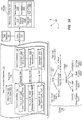
- Figure 1A illustrates an example computer architecture 100 that facilitates creating an object that virtualizes data access.
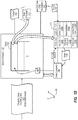
- Figure 1B illustrates computer architecture 100 including further components that facilitate responding to a query.
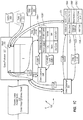
- Figure 1C illustrates computer architecture 100 including further components that facilitate responding to a query.
- computer architecture 100 includes query evaluator 101, data repository 102, and cache 103.
- computer architecture 100 can also include on or more data consumers, such as, for example, data consumers 106 ( Figure 1B ), 107 ( Figure 1C ) and 108 ( Figure 1C ) and one or more data providers, such as, for example, data provider 171 ( Figures 1A and 1B ) and data provider 173B ( Figure 1C ).
- Each of the depicted components can be connected to one another over (or be part of) a network, such as, for example, a Local Area Network ("LAN”), a Wide Area Network (“WAN”), and even the Internet. Accordingly, each of the depicted components as well as any other connected components, can create message related data and exchange message related data (e.g., Internet Protocol (“IP”) datagrams and other higher layer protocols that utilize IP datagrams, such as, Transmission Control Protocol (“TCP”), Hypertext Transfer Protocol (“HTTP”), Simple Mail Transfer Protocol (“SMTP”), etc.) over the network.
- IP Internet Protocol
- TCP Transmission Control Protocol
- HTTP Hypertext Transfer Protocol
- SMTP Simple Mail Transfer Protocol
- Embodiments of the invention also generally implement a protocol that includes request / response pairs of messages.
- the request is sent from a data consumer to a data provider and then a response is returned from the data provider to the data consumer.
- the request contains an identifier for the property to be accessed and possible other information for the maintenance of secondary protocols between the consumer and provider.
- the response contains the value of the property that was accessed (which may be another virtualized representation of a data object / protocol provider) and other information for the maintenance of secondary protocols between the provider and consumer.
- query evaluator 101 is generally configured to execute a set of instructions that have been compiled from an expression.
- Query evaluator can maintain a set of internal state that may be read and updated by each instruction as it is executed.
- an instruction reads results of previous instructions from the current state of query evaluator 101 and writes results back to the current state of query evaluator 101 so that they are available to further instructions.
- query evaluator 101 Whenever the query evaluator 101 encounters an object creation instruction (e.g., new Order() ⁇ ... ⁇ ), it creates a data provider and populates the data provider with information about the type of the object that the data provider is virtualizing (e.g. a list of property identifiers). The data provider is then placed in the current state of the evaluator, making it available for use by further instructions.
- object creation instruction e.g., new Order() ⁇ ... ⁇
- it creates a data provider and populates the data provider with information about the type of the object that the data provider is virtualizing (e.g. a list of property identifiers). The data provider is then placed in the current state of the evaluator, making it available for use by further instructions.
- a property access instruction e.g. order.ItemCount
- query evaluator 101 is generally configured to receive data construction statements and create data providers from the data construction statements.
- data construction statements represent objects defined in accordance with syntax trees.
- data construction statement 151 represents order object 161 defined in accordance with syntax tree 157.
- a syntax tree also sometimes referred to as an abstract syntax tree ("AST") is a directed tree where each interior node represents a construct and the children of that node represent meaningful components of the construct.
- AST abstract syntax tree
- the child of ShippingAddress property 163B is an Address construct. Street property 163B1, City property 163B2, State property 163B3, and ZipCode property 163B4 represent meaningful components of the Address construct child of ShippingAddress property 163B.
- Syntax tree 157 can represent a query fragment similar to:
- query evaluator 101 can receive data construction statement 151 and create data provider 171 from data construction statement 151.
- Data provider 171 virtualizes data access for object 161.
- Virtualizing data access facilitates providing access to properties of object 161 without having to entirely evaluate data construction statement 151 (i.e., obtain actual data values for each property in syntax tree 157).
- Virtualizing data access also includes providing access to properties of object 161 without having to fully construct object 161.
- Data repository 102 represents a database or other data storage location that stores data. Data construction statements can be configured to add data to, provide views on data from, or otherwise modify data stored in data repository 101.
- Each data provider contains information about the type of the object it represents. Part of this information is a list of all of the identifiers of the properties contained on the object (e.g. ItemCount).
- Each data provider also contains an association map between each property identifier in the list and the query expression that will be used to compute the value of the property for that virtualized instance (e.g. items.Count()).
- a data provider can also maintain further association maps for the property identifiers (such as a cache of results for each property).
- the data provider When a request message is received at a data provider, the data provider extracts the property identifier from the message and looks up the corresponding query expression in its association map. The data provider can also retrieve any information from its other association maps for the property (e.g. a previously-cached value for the property). The data provider can also use any additional information contained in the request message (e.g. a time-to-live specification for the cached value).
- a data provider can then invoke query evaluator 101 to process the query expression for the property, possibly passing along any secondary information from its internal maps and/or the request message.
- the result of query evaluation (including any secondary information) is used to update the association maps within the data provider (e.g. caching the result of the query).
- the result of the query (and any secondary information) is packaged up into a response message.
- the response message is then sent to the client that initiated the request against the data provider.
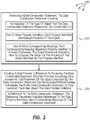
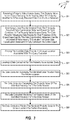
- Figure 2 illustrates a flow chart of an example method 200 for creating an object that virtualizes data access. Method 200 will be described with respect to the components and data of computer architecture 100 depicted in Figure 1A .
- Method 200 includes an act of receiving a data construction statement (act 201).
- query evaluator 101 can receive data construction statement 151.
- Data construction statement 151 can be received from some other networked computer system in computer architecture 100 (not shown). Alternately, data construction statement 151 can be received as the result of query evaluator 101 evaluating a query expression.
- the data construction statement includes an indication of the type of object that the data construction statement represents the construction of.
- data construction statement 151 includes object type 152 indicating that data construction statement 151 represents construction of an order object 161.
- Data construction statement 151 can define a view on data in data repository 102.
- the data construction statement also includes one or more property identifiers.
- data constructions statement 151 includes property identifiers 153.
- Each property identifier identifying a property of the object.
- property ID 153A identifies ItemCount property 163A
- property ID 153B identifies ShippingAddress property 163B
- property ID 153C identifies TotalCost property 163C.
- the data construction statement also includes one or more corresponding mappings.
- data construction statement 151 includes mappings 154.
- Each corresponding mapping maps a property identifier to a query expression.
- mapping 154A maps property ID 153A to query expression 156A
- mapping 154B maps property ID 153B to query expression 156B
- mapping 154C maps property ID 153C to query expression 156C.
- Each query expression indicates how to compute the value for the property of the object identified by the property identifier.
- query expression 156A indicates how to compute the value for ItemCount property 163A
- query expression 156B indicates how to compute the value for ShippingAddress property 163B
- query expression 156C indicates how to compute the value for TotalCost property 163C.
- Method 200 includes an act of creating a data provider in response to receiving the data construction statement (act 202).
- query evaluator 101 can create data provider 171 in response to receiving data construction statement 151.
- Data provider 171 virtualizing data access so that properties of order object 161 (described by the data construction statement 151) can be accessed without having to entirely evaluate data construction statement 151 or fully construct order object 161.
- data provider 171 instead of query evaluator 101 evaluating all the properties of ShippingAddress property 163B, data provider 171 instead indicates how values for those properties (e.g., 163B1, 163B2, 163B3, and 163B4) can be evaluated in the event they are subsequently requested (e.g., evaluating a further data construction statement "new Address()" in response to a subsequent property value access query). Further, data provider 171 represents partial construction of order object 161. Accordingly, resources are conserved by minimizing potentially unnecessary access to data repository 102 and minimizing potentially unnecessary allocation of memory to store portions of object 161. Minimizing data access and memory allocation also facilitates more efficient query processing.
- a data provider (e.g., an initially created data provider for a top level object) includes a reference to the data construction statement.
- data provider 171 includes reference 151R to data construction statement 151.
- the reference transitively includes references to the type, property identifiers, and corresponding mappings of the data construction statement.
- reference 151R transitively includes references to object type 152 property identifiers 153, and mappings 154.
- Figure 1B illustrates computer architecture 100 including further components that facilitate responding to a query.
- query evaluator 101 is also configured to response to queries, such as, for example, property value access queries.
- queries such as, for example, property value access queries.
- query evaluator 101 can identify an appropriate data provider to respond to the property value access query.
- Query evaluator 101 can place the identified data provider on stack 104.
- Query evaluator 101 can create a data consumer to interact with the identified data provider.
- the data consumer can access the identified data provider from stack 104 and send a property identifier to the identified data provider.
- the data provider can evaluate the query expression corresponding to the property identifier and return the result to the data consumer.
- the data consumer can place the result on stack 104. Evaluation of a query expression can include referring to database 102 to access actual data values.
- a previously created data provider is accessed from cache 103.
- Figure 3 illustrates a flow chart of an example method 300 for responding to a query. Method 300 will be descried with respect to the components and data of computer architecture 100 depicted in Figure 1B .
- Method 300 includes an act of receiving a property value access query, the property value access query querying for a property value of a property identified in a previously received data construction statement (act 301).
- query evaluator 101 can receive property value access query 121.
- Property value access query 121 is a query for a property value of ItemCount property 163A from data construction statement 151.
- Query evaluator 101 can parse property value access query 121 to determine that the "order" portion of property value access query 121 identifies order object 161 and the "ItemCount" portion of property value access query 121 identifies ItemCount property 163A.
- query evaluator 101 can also determine that the property ID 153A corresponds to the property being queried.
- Method 300 includes an act of identifying a data provider created from the previously received data construction statement based on data contained in the property value access query (act 302). For example, query evaluator 101 can identify data provider 171 (created from data construction statement 151) based the term "order" included in property value access query 121.
- the accessed data provider virtualizes data access so that properties of an object described by the data construction statement can be accessed without having to evaluate the entire data construction statement or fully construct the entire object. For example, as previously described data provider 171 virtualizes data access to the properties of order object 161.
- Method 300 includes an act of placing the identified data provider in a known location associated with the query evaluator (act 303). For example, query evaluator 101 can place data provider 171 on stack 104.
- a protocol consumer is evaluated (e.g. by query evaluator 101) each time a query expression that describes an access of a property value is evaluated, such as, for example, order.ItemCount.
- a protocol consumer is given (e.g., by the query evaluator 101) the identifier of the property that it is to access from a data provider and the instance of the data provider that it is to communicate with.
- the data consumer constructs a request message containing the property identifier and possibly any additional out-of-band information available from the query evaluator (e.g., TTL of cached values).
- the consumer then sends the request to the provider and waits for a response.
- the consumer pulls out the result value of the property and returns it to query evaluator 101, query evaluator 101 can then place the result value on stack 104 for consumption by further queries.
- the data consumer also updates any additional state / out-of-band information of query evaluator 101 based on the additional information contained within the response message.
- method 300 includes an act of creating a data consumer for the property value access query (act 304).
- query evaluator 101 can create data consumer 106.
- a created data consumer can be passed the property identifier corresponding to the property for which a property value is being queried.
- query evaluator 101 can pass property ID 153A to data consumer 106 (or can construct data consumer 106 to include property ID 153A).
- Method 300 includes an act of the data consumer accessing the identified data provider from the known location (act 305). For example, data consumer 106 can access data provider 171 from stack 104. Method 300 includes an act of the data consumer requesting the property value of the identified property from the data provider (act 306). For example, data consumer 106 can submit property ID 153A to data provider 171 to request a property value for ItemCount property 163A.
- Data provider 171 can match property ID 153A to query expression 156A.
- Query evaluator 101 can then evaluate query expression 156A to create a value for ItemCount property 163A.
- query evaluator 101 can refer to data repository 102 and access data 197 to calculate value 108 (e.g., the total number of items in an order).
- Value 108 e.g., the total number of items in an order.
- Data provider 171 can return value 108 to data consumer 106.
- Method 300 includes an act of the data consumer receiving the property value of the identified property from the data provider (act 307).
- data consumer 106 can receive value 108 from data provider 171.
- Method 300 includes an act of the data consumer placing the received property value in the known location for further processing (act 308).
- data consumer 106 can place value 108 on stack 104 (e.g., replacing data provider 171). Accordingly, a property value for ItemCount property 163A can be obtained without full creation of object 161 and without having to evaluate actual values for properties 163C, 162B1, 162B2, 162B3, and 162B4.
- Figure 1C illustrates computer architecture 300 and includes further components that facilitate responding to a query.
- query evaluator 101 is also configured to create further data providers from further data construction statements that are evaluated during the processing of a received property value access query.
- a property ID can map to a query expression that is a further data construction statement.
- data provider 171 property ID 153B is mapped to query expression 156B, which is a data construction statement "new Address()" for creating an address object.
- Evaluation of the further data construction statement can result in creation of a further data provider.
- evaluation of query expression 156B can result in creation of data provider 173B.
- query evaluator can receive property value access query 121.
- Property value access query 121 is a query for a property value of Street property 163B 1 from data construction statement 151.
- Query evaluator 101 can parse property value access query 121 to determine that the "order" portion of property value access query 121 identifies order object 161, the "ShippingAddress" portion of property value access query 121 identifies Shipping Address property 163B, and the "Street portion of property value access query 121 identifies Street property 163B1.
- query evaluator 101 can also determine that a property ID 153B1 corresponds to the property being queried.
- Query evaluator 101 can identify data provider 171 (created from data construction statement 151) based the term "order.ShippingAddress.Street" included in property value access query 121. Query evaluator 101 can place data provider 171 on stack 104.
- Query evaluator 101 can create data consumer 107 and provide it with property ID 153B. From property 153B, data consumer 107 is able to request a value for ShippingAddress property 163B. To do this, data consumer 107 can access data provider 171 from stack 104. Data consumer 107 can then submit property ID 153B to data provider 171 to request a property value for ShippingAddress property 163B.
- Data provider 171 can match property ID 153B to query expression 156B.
- Query evaluator 101 can then evaluate query expression 156B.
- Evaluation of query expression 156B results in creation of data provider 173B.
- Data provider 173B virtualizes data access to the object representing the Address object 162 that is the value of ShippingAddress property 163B, similar to how Data provider 151 virtualizes data access to order object 161.
- Data provider 171 can return data provider 173B to data consumer 107.
- Data consumer 107 can receive data provider 173B and place data provider 173B on stack 104 (e.g., replacing data provider 171).
- Query evaluator 101 can create data consumer 108 and passed property ID 153B1. From property 153B1, data consumer 108 is able to request a value for street property 163B1. Data consumer 108 can then access data provider 173B from stack 104. Data consumer 108 can submit property ID 153B1 to data provider 173B to request a property value for Street property 163B1.
- Data provider 173B can match property ID 153B1 to query expression 156B1. Query evaluator 101 can then evaluate query expression 156B1. Query expression 156B1 evaluates to the literal data value "123 ABC Lane”. Data provider 173B returns literal data value "123 ABC Lane” to data consumer 108. Data consumer 108 can receive literal data value "123 ABC Lane” and place literal data value "123 ABC Lane”on stack 104 (e.g., replacing data provider 173B).
- out-of-band data is transmitted through composed queries.
- the out-of-band data can be used to establish and maintain internal protocols among queries.
- time-to-live (“TTL”) values can be used to determine how long a data provider is to be cached.
- TTL time-to-live
- a data consumer can include a TTL value, for example, 250ms, in a request to indicate to a data provider how long it is to be remain cached.
- embodiments of the invention virtualize data access for use with queries.
- Virtualization can be implemented within any portion of a syntax tree.
- data can be virtualized for a property of an object that is itself another object.
- Data virtualization facilitates lazy evaluation of query expressions. That is, actual property values for properties within a data construction statement are virtualized until a query specifically requests the actual property values. Further, and as previously described, data virtualization also conserves resources and results in more efficient query evaluations.
Landscapes
- Engineering & Computer Science (AREA)
- Databases & Information Systems (AREA)
- Theoretical Computer Science (AREA)
- Data Mining & Analysis (AREA)
- Physics & Mathematics (AREA)
- General Engineering & Computer Science (AREA)
- General Physics & Mathematics (AREA)
- Library & Information Science (AREA)
- Information Retrieval, Db Structures And Fs Structures Therefor (AREA)
Applications Claiming Priority (2)
| Application Number | Priority Date | Filing Date | Title |
|---|---|---|---|
| US12/136,616 US7917547B2 (en) | 2008-06-10 | 2008-06-10 | Virtualizing objects within queries |
| PCT/US2009/044258 WO2009151873A1 (en) | 2008-06-10 | 2009-05-15 | Virtualizing objects within queries |
Publications (3)
| Publication Number | Publication Date |
|---|---|
| EP2300339A1 EP2300339A1 (en) | 2011-03-30 |
| EP2300339A4 EP2300339A4 (en) | 2016-03-16 |
| EP2300339B1 true EP2300339B1 (en) | 2020-08-26 |
Family
ID=41401207
Family Applications (1)
| Application Number | Title | Priority Date | Filing Date |
|---|---|---|---|
| EP09763164.2A Active EP2300339B1 (en) | 2008-06-10 | 2009-05-15 | Virtualizing objects within queries |
Country Status (6)
| Country | Link |
|---|---|
| US (1) | US7917547B2 (OSRAM) |
| EP (1) | EP2300339B1 (OSRAM) |
| JP (1) | JP5426667B2 (OSRAM) |
| KR (1) | KR101608101B1 (OSRAM) |
| CN (1) | CN102057377B (OSRAM) |
| WO (1) | WO2009151873A1 (OSRAM) |
Families Citing this family (10)
| Publication number | Priority date | Publication date | Assignee | Title |
|---|---|---|---|---|
| US8805875B1 (en) | 2008-10-04 | 2014-08-12 | Reflex Systems Llc | Systems and methods for information retrieval |
| US9081873B1 (en) * | 2009-10-05 | 2015-07-14 | Stratacloud, Inc. | Method and system for information retrieval in response to a query |
| CN103038766B (zh) * | 2010-07-02 | 2014-07-23 | 柳濑隆敏 | 逻辑运算系统 |
| US8756209B2 (en) | 2012-01-04 | 2014-06-17 | International Business Machines Corporation | Computing resource allocation based on query response analysis in a networked computing environment |
| US9720702B2 (en) * | 2014-09-04 | 2017-08-01 | Home Box Office, Inc. | Object-oriented programming system and library |
| US10305985B1 (en) * | 2014-12-29 | 2019-05-28 | EMC IP Holding Company LLC | Defining new properties using expressions in API calls |
| US20160335371A1 (en) * | 2015-05-15 | 2016-11-17 | General Electric Company | System and method for querying graphs distributed over multiple machines |
| US10853370B2 (en) * | 2015-06-26 | 2020-12-01 | Intel Corporation | Devices and/or methods to provide a query response based on ephemeral data |
| CN105740305A (zh) * | 2015-11-16 | 2016-07-06 | 天津南大通用数据技术股份有限公司 | 集群数据库的数据加载方法及装置 |
| CN115982197A (zh) * | 2022-12-27 | 2023-04-18 | 北京人大金仓信息技术股份有限公司 | 数据查询方法、装置、设备、介质和计算机程序产品 |
Family Cites Families (56)
| Publication number | Priority date | Publication date | Assignee | Title |
|---|---|---|---|---|
| JPS6054217B2 (ja) * | 1978-07-17 | 1985-11-29 | 三菱重工業株式会社 | コンベア装置 |
| US5590325A (en) | 1991-06-11 | 1996-12-31 | Logical Information Machines, Inc. | System for forming queries to a commodities trading database using analog indicators |
| US5694559A (en) | 1995-03-07 | 1997-12-02 | Microsoft Corporation | On-line help method and system utilizing free text query |
| CA2168287C (en) | 1995-03-31 | 2000-05-23 | Guy M. Lohman | Method for detecting and optimizing relational queries with encoding/decoding tables |
| US5999192A (en) | 1996-04-30 | 1999-12-07 | Lucent Technologies Inc. | Interactive data exploration apparatus and methods |
| US6032144A (en) | 1996-05-29 | 2000-02-29 | Lucent Technologies Inc. | Optimization of queries using relational algebraic theta-semijoin operator |
| US5978789A (en) | 1997-05-07 | 1999-11-02 | Lucent Technologies Inc. | Efficient hypothetical query evaluation in a database system |
| US6092062A (en) | 1997-06-30 | 2000-07-18 | International Business Machines Corporation | Relational database query optimization to perform query evaluation plan, pruning based on the partition properties |
| US6618718B1 (en) | 1997-10-14 | 2003-09-09 | International Business Machines Corporation | Apparatus and method for dynamically generating query explain data |
| US6134545A (en) | 1997-11-13 | 2000-10-17 | Electronics Data Systems Corporation | Method and system for processing a query |
| US6009422A (en) | 1997-11-26 | 1999-12-28 | International Business Machines Corporation | System and method for query translation/semantic translation using generalized query language |
| US6341281B1 (en) | 1998-04-14 | 2002-01-22 | Sybase, Inc. | Database system with methods for optimizing performance of correlated subqueries by reusing invariant results of operator tree |
| US6438741B1 (en) | 1998-09-28 | 2002-08-20 | Compaq Computer Corporation | System and method for eliminating compile time explosion in a top down rule based system using selective sampling |
| US6285997B1 (en) | 1998-11-16 | 2001-09-04 | International Business Machines Corporation | Query optimization with deferred update and autonomous sources |
| US6360214B1 (en) | 1998-12-16 | 2002-03-19 | Microsoft Corporation | Automatic database statistics creation |
| US6728726B1 (en) * | 1999-03-05 | 2004-04-27 | Microsoft Corporation | Prefetching and caching persistent objects |
| US6205441B1 (en) | 1999-03-31 | 2001-03-20 | Compaq Computer Corporation | System and method for reducing compile time in a top down rule based system using rule heuristics based upon the predicted resulting data flow |
| US6393415B1 (en) | 1999-03-31 | 2002-05-21 | Verizon Laboratories Inc. | Adaptive partitioning techniques in performing query requests and request routing |
| US20020123984A1 (en) | 1999-08-23 | 2002-09-05 | Naveen Prakash | Dynamic query of server applications |
| US6810429B1 (en) * | 2000-02-03 | 2004-10-26 | Mitsubishi Electric Research Laboratories, Inc. | Enterprise integration system |
| US6678672B1 (en) | 2000-05-31 | 2004-01-13 | Ncr Corporation | Efficient exception handling during access plan execution in an on-line analytic processing system |
| US7873649B2 (en) | 2000-09-07 | 2011-01-18 | Oracle International Corporation | Method and mechanism for identifying transaction on a row of data |
| US6557011B1 (en) | 2000-10-31 | 2003-04-29 | International Business Machines Corporation | Methods for analyzing dynamic program behavior using user-defined classifications of an execution trace |
| US6804677B2 (en) * | 2001-02-26 | 2004-10-12 | Ori Software Development Ltd. | Encoding semi-structured data for efficient search and browsing |
| US20050015381A1 (en) | 2001-09-04 | 2005-01-20 | Clifford Paul Ian | Database management system |
| US7149732B2 (en) | 2001-10-12 | 2006-12-12 | Microsoft Corporation | Clustering web queries |
| US7369984B2 (en) | 2002-02-01 | 2008-05-06 | John Fairweather | Platform-independent real-time interface translation by token mapping without modification of application code |
| US6843360B2 (en) * | 2002-03-27 | 2005-01-18 | Douglas Machine, Inc. | Retractable transfer device metering apparatus and methods |
| US7055142B2 (en) | 2002-05-10 | 2006-05-30 | Microsoft Corporation | Permutation nuances of the integration of processes and queries as processes at queues |
| US7082433B2 (en) * | 2002-07-20 | 2006-07-25 | Microsoft Corporation | Translation of object queries involving inheritence |
| CA2424881A1 (en) * | 2003-04-08 | 2004-10-08 | Ctc Canada Inc. | Convertible compact cigarette making machine |
| US7895191B2 (en) | 2003-04-09 | 2011-02-22 | International Business Machines Corporation | Improving performance of database queries |
| CA2429909A1 (en) | 2003-05-27 | 2004-11-27 | Cognos Incorporated | Transformation of tabular and cross-tabulated queries based upon e/r schema into multi-dimensional expression queries |
| US8447775B2 (en) | 2003-06-13 | 2013-05-21 | Microsoft Corporation | Database query user interface to assist in efficient and accurate query construction |
| US7146352B2 (en) | 2003-06-23 | 2006-12-05 | Microsoft Corporation | Query optimizer system and method |
| US7437666B2 (en) * | 2003-10-22 | 2008-10-14 | Intel Corporation | Expression grouping and evaluation |
| US6941316B2 (en) * | 2003-10-23 | 2005-09-06 | Microsoft Corporation | System and method for object persistence in a database store |
| US7383246B2 (en) | 2003-10-31 | 2008-06-03 | International Business Machines Corporation | System, method, and computer program product for progressive query processing |
| US7146378B2 (en) | 2003-11-10 | 2006-12-05 | Bellsouth Intellectual Property Corporation | Methods, systems and computer program products for segmented presentation of service order status information |
| US7657516B2 (en) | 2003-12-01 | 2010-02-02 | Siebel Systems, Inc. | Conversion of a relational database query to a query of a multidimensional data source by modeling the multidimensional data source |
| US7185024B2 (en) | 2003-12-22 | 2007-02-27 | International Business Machines Corporation | Method, computer program product, and system of optimized data translation from relational data storage to hierarchical structure |
| US7120864B2 (en) | 2004-01-27 | 2006-10-10 | International Business Machines Corporation | Eliminating superfluous namespace declarations and undeclaring default namespaces in XML serialization processing |
| US7472341B2 (en) * | 2004-11-08 | 2008-12-30 | International Business Machines Corporation | Multi-user, multi-timed collaborative annotation |
| US7415487B2 (en) | 2004-12-17 | 2008-08-19 | Amazon Technologies, Inc. | Apparatus and method for data warehousing |
| US7349896B2 (en) | 2004-12-29 | 2008-03-25 | Aol Llc | Query routing |
| US7882100B2 (en) | 2005-01-24 | 2011-02-01 | Sybase, Inc. | Database system with methodology for generating bushy nested loop join trees |
| US8126870B2 (en) | 2005-03-28 | 2012-02-28 | Sybase, Inc. | System and methodology for parallel query optimization using semantic-based partitioning |
| US20060224556A1 (en) | 2005-03-29 | 2006-10-05 | Bea Systems, Inc. | SQL interface for services |
| US20060248078A1 (en) | 2005-04-15 | 2006-11-02 | William Gross | Search engine with suggestion tool and method of using same |
| US8799857B2 (en) | 2005-04-29 | 2014-08-05 | Microsoft Corporation | XML application framework |
| JP2007041930A (ja) | 2005-08-04 | 2007-02-15 | Toshiba Corp | コンテンツ管理システム |
| US7730079B2 (en) * | 2005-08-30 | 2010-06-01 | Microsoft Corporation | Query comprehensions |
| US20070050348A1 (en) | 2005-08-30 | 2007-03-01 | Microsoft Corporation | Programmatic query assistance |
| WO2007061430A1 (en) | 2005-11-22 | 2007-05-31 | Bea Systems, Inc. | System and method for translating sql queries into xml query language |
| US7685131B2 (en) * | 2006-02-28 | 2010-03-23 | International Business Machines Corporation | Web services database cluster architecture |
| JP4071816B1 (ja) * | 2007-03-22 | 2008-04-02 | 透 降矢 | 合成関係演算を利用したマルチオペレーション・プロセッシングを用いたデータベースのクエリー処理システム |
-
2008
- 2008-06-10 US US12/136,616 patent/US7917547B2/en not_active Expired - Fee Related
-
2009
- 2009-05-15 EP EP09763164.2A patent/EP2300339B1/en active Active
- 2009-05-15 JP JP2011513534A patent/JP5426667B2/ja not_active Expired - Fee Related
- 2009-05-15 KR KR1020107027380A patent/KR101608101B1/ko active Active
- 2009-05-15 CN CN2009801222393A patent/CN102057377B/zh active Active
- 2009-05-15 WO PCT/US2009/044258 patent/WO2009151873A1/en not_active Ceased
Non-Patent Citations (1)
| Title |
|---|
| None * |
Also Published As
| Publication number | Publication date |
|---|---|
| JP2011524052A (ja) | 2011-08-25 |
| CN102057377B (zh) | 2013-03-27 |
| WO2009151873A9 (en) | 2010-03-11 |
| JP5426667B2 (ja) | 2014-02-26 |
| EP2300339A1 (en) | 2011-03-30 |
| CN102057377A (zh) | 2011-05-11 |
| KR20110030444A (ko) | 2011-03-23 |
| US7917547B2 (en) | 2011-03-29 |
| WO2009151873A1 (en) | 2009-12-17 |
| US20090307192A1 (en) | 2009-12-10 |
| EP2300339A4 (en) | 2016-03-16 |
| KR101608101B1 (ko) | 2016-03-31 |
Similar Documents
| Publication | Publication Date | Title |
|---|---|---|
| EP2300339B1 (en) | Virtualizing objects within queries | |
| JP6850907B2 (ja) | テンポラル−リレーショナルデータベースを有するリレーショナルデータベース管理システムにおけるクエリプランの生成および実行 | |
| US6996566B1 (en) | Method and system for an object model with embedded metadata and mapping information | |
| US20210224330A1 (en) | System for accessing a relational database using semantic queries | |
| US8577837B2 (en) | Method and system for generic extraction of business object data | |
| US8589594B2 (en) | Programmatic management of software resources in a content framework environment | |
| US9256697B2 (en) | Bidirectional mapping between applications and network content | |
| US8275775B2 (en) | Providing web services from business intelligence queries | |
| US20030055624A1 (en) | Dynamic, real-time integration of software resources through services of a content framework | |
| US20110173220A1 (en) | Generating web services from business intelligence queries | |
| Scheidgen et al. | Automated and transparent model fragmentation for persisting large models | |
| US12026509B2 (en) | Dynamic review of software updates after pull requests | |
| US20130166563A1 (en) | Integration of Text Analysis and Search Functionality | |
| WO2012054860A1 (en) | Accessing relational databases as resource description framework databases | |
| Alchin | Pro Django | |
| US11222017B2 (en) | Storage system query mechanism and techniques | |
| US8056091B2 (en) | Systems and methods for using application services | |
| CN113542390A (zh) | 一种采用内存数据模型的物联网设备管理方法及系统 | |
| US9373093B2 (en) | Gateway service manager for business object applications | |
| Daniel et al. | Advanced prefetching and caching of models with PrefetchML | |
| Jang et al. | Efficient agent communication in multi-agent systems | |
| EP3864520B1 (en) | Systems and methods for specifying olap cube at query time | |
| US7668929B1 (en) | Abstracting links to electronic resources in a network environment | |
| US20060265387A1 (en) | Method and apparatus for loading artifacts | |
| US7921104B2 (en) | Invoking actions on data via LDAP requests |
Legal Events
| Date | Code | Title | Description |
|---|---|---|---|
| PUAI | Public reference made under article 153(3) epc to a published international application that has entered the european phase |
Free format text: ORIGINAL CODE: 0009012 |
|
| 17P | Request for examination filed |
Effective date: 20110110 |
|
| AK | Designated contracting states |
Kind code of ref document: A1 Designated state(s): AT BE BG CH CY CZ DE DK EE ES FI FR GB GR HR HU IE IS IT LI LT LU LV MC MK MT NL NO PL PT RO SE SI SK TR |
|
| AX | Request for extension of the european patent |
Extension state: AL BA RS |
|
| DAX | Request for extension of the european patent (deleted) | ||
| RAP1 | Party data changed (applicant data changed or rights of an application transferred) |
Owner name: MICROSOFT TECHNOLOGY LICENSING, LLC |
|
| RA4 | Supplementary search report drawn up and despatched (corrected) |
Effective date: 20160216 |
|
| RIC1 | Information provided on ipc code assigned before grant |
Ipc: B65G 47/08 20060101AFI20160210BHEP |
|
| STAA | Information on the status of an ep patent application or granted ep patent |
Free format text: STATUS: EXAMINATION IS IN PROGRESS |
|
| 17Q | First examination report despatched |
Effective date: 20181214 |
|
| REG | Reference to a national code |
Ref country code: DE Ref legal event code: R079 Ref document number: 602009062667 Country of ref document: DE Free format text: PREVIOUS MAIN CLASS: B65G0047080000 Ipc: G06F0016280000 |
|
| GRAP | Despatch of communication of intention to grant a patent |
Free format text: ORIGINAL CODE: EPIDOSNIGR1 |
|
| STAA | Information on the status of an ep patent application or granted ep patent |
Free format text: STATUS: GRANT OF PATENT IS INTENDED |
|
| RIC1 | Information provided on ipc code assigned before grant |
Ipc: G06F 16/28 20190101AFI20200318BHEP |
|
| INTG | Intention to grant announced |
Effective date: 20200401 |
|
| GRAS | Grant fee paid |
Free format text: ORIGINAL CODE: EPIDOSNIGR3 |
|
| GRAA | (expected) grant |
Free format text: ORIGINAL CODE: 0009210 |
|
| STAA | Information on the status of an ep patent application or granted ep patent |
Free format text: STATUS: THE PATENT HAS BEEN GRANTED |
|
| AK | Designated contracting states |
Kind code of ref document: B1 Designated state(s): AT BE BG CH CY CZ DE DK EE ES FI FR GB GR HR HU IE IS IT LI LT LU LV MC MK MT NL NO PL PT RO SE SI SK TR |
|
| REG | Reference to a national code |
Ref country code: GB Ref legal event code: FG4D |
|
| REG | Reference to a national code |
Ref country code: CH Ref legal event code: EP |
|
| REG | Reference to a national code |
Ref country code: DE Ref legal event code: R096 Ref document number: 602009062667 Country of ref document: DE |
|
| REG | Reference to a national code |
Ref country code: AT Ref legal event code: REF Ref document number: 1307033 Country of ref document: AT Kind code of ref document: T Effective date: 20200915 |
|
| REG | Reference to a national code |
Ref country code: IE Ref legal event code: FG4D |
|
| REG | Reference to a national code |
Ref country code: LT Ref legal event code: MG4D |
|
| PG25 | Lapsed in a contracting state [announced via postgrant information from national office to epo] |
Ref country code: PT Free format text: LAPSE BECAUSE OF FAILURE TO SUBMIT A TRANSLATION OF THE DESCRIPTION OR TO PAY THE FEE WITHIN THE PRESCRIBED TIME-LIMIT Effective date: 20201228 Ref country code: BG Free format text: LAPSE BECAUSE OF FAILURE TO SUBMIT A TRANSLATION OF THE DESCRIPTION OR TO PAY THE FEE WITHIN THE PRESCRIBED TIME-LIMIT Effective date: 20201126 Ref country code: HR Free format text: LAPSE BECAUSE OF FAILURE TO SUBMIT A TRANSLATION OF THE DESCRIPTION OR TO PAY THE FEE WITHIN THE PRESCRIBED TIME-LIMIT Effective date: 20200826 Ref country code: LT Free format text: LAPSE BECAUSE OF FAILURE TO SUBMIT A TRANSLATION OF THE DESCRIPTION OR TO PAY THE FEE WITHIN THE PRESCRIBED TIME-LIMIT Effective date: 20200826 Ref country code: FI Free format text: LAPSE BECAUSE OF FAILURE TO SUBMIT A TRANSLATION OF THE DESCRIPTION OR TO PAY THE FEE WITHIN THE PRESCRIBED TIME-LIMIT Effective date: 20200826 Ref country code: SE Free format text: LAPSE BECAUSE OF FAILURE TO SUBMIT A TRANSLATION OF THE DESCRIPTION OR TO PAY THE FEE WITHIN THE PRESCRIBED TIME-LIMIT Effective date: 20200826 Ref country code: GR Free format text: LAPSE BECAUSE OF FAILURE TO SUBMIT A TRANSLATION OF THE DESCRIPTION OR TO PAY THE FEE WITHIN THE PRESCRIBED TIME-LIMIT Effective date: 20201127 Ref country code: NO Free format text: LAPSE BECAUSE OF FAILURE TO SUBMIT A TRANSLATION OF THE DESCRIPTION OR TO PAY THE FEE WITHIN THE PRESCRIBED TIME-LIMIT Effective date: 20201126 |
|
| REG | Reference to a national code |
Ref country code: NL Ref legal event code: MP Effective date: 20200826 |
|
| REG | Reference to a national code |
Ref country code: AT Ref legal event code: MK05 Ref document number: 1307033 Country of ref document: AT Kind code of ref document: T Effective date: 20200826 |
|
| PG25 | Lapsed in a contracting state [announced via postgrant information from national office to epo] |
Ref country code: NL Free format text: LAPSE BECAUSE OF FAILURE TO SUBMIT A TRANSLATION OF THE DESCRIPTION OR TO PAY THE FEE WITHIN THE PRESCRIBED TIME-LIMIT Effective date: 20200826 Ref country code: LV Free format text: LAPSE BECAUSE OF FAILURE TO SUBMIT A TRANSLATION OF THE DESCRIPTION OR TO PAY THE FEE WITHIN THE PRESCRIBED TIME-LIMIT Effective date: 20200826 Ref country code: PL Free format text: LAPSE BECAUSE OF FAILURE TO SUBMIT A TRANSLATION OF THE DESCRIPTION OR TO PAY THE FEE WITHIN THE PRESCRIBED TIME-LIMIT Effective date: 20200826 Ref country code: IS Free format text: LAPSE BECAUSE OF FAILURE TO SUBMIT A TRANSLATION OF THE DESCRIPTION OR TO PAY THE FEE WITHIN THE PRESCRIBED TIME-LIMIT Effective date: 20201226 |
|
| PG25 | Lapsed in a contracting state [announced via postgrant information from national office to epo] |
Ref country code: RO Free format text: LAPSE BECAUSE OF FAILURE TO SUBMIT A TRANSLATION OF THE DESCRIPTION OR TO PAY THE FEE WITHIN THE PRESCRIBED TIME-LIMIT Effective date: 20200826 Ref country code: EE Free format text: LAPSE BECAUSE OF FAILURE TO SUBMIT A TRANSLATION OF THE DESCRIPTION OR TO PAY THE FEE WITHIN THE PRESCRIBED TIME-LIMIT Effective date: 20200826 Ref country code: CZ Free format text: LAPSE BECAUSE OF FAILURE TO SUBMIT A TRANSLATION OF THE DESCRIPTION OR TO PAY THE FEE WITHIN THE PRESCRIBED TIME-LIMIT Effective date: 20200826 Ref country code: DK Free format text: LAPSE BECAUSE OF FAILURE TO SUBMIT A TRANSLATION OF THE DESCRIPTION OR TO PAY THE FEE WITHIN THE PRESCRIBED TIME-LIMIT Effective date: 20200826 |
|
| REG | Reference to a national code |
Ref country code: DE Ref legal event code: R097 Ref document number: 602009062667 Country of ref document: DE |
|
| PG25 | Lapsed in a contracting state [announced via postgrant information from national office to epo] |
Ref country code: AT Free format text: LAPSE BECAUSE OF FAILURE TO SUBMIT A TRANSLATION OF THE DESCRIPTION OR TO PAY THE FEE WITHIN THE PRESCRIBED TIME-LIMIT Effective date: 20200826 Ref country code: ES Free format text: LAPSE BECAUSE OF FAILURE TO SUBMIT A TRANSLATION OF THE DESCRIPTION OR TO PAY THE FEE WITHIN THE PRESCRIBED TIME-LIMIT Effective date: 20200826 |
|
| PG25 | Lapsed in a contracting state [announced via postgrant information from national office to epo] |
Ref country code: SK Free format text: LAPSE BECAUSE OF FAILURE TO SUBMIT A TRANSLATION OF THE DESCRIPTION OR TO PAY THE FEE WITHIN THE PRESCRIBED TIME-LIMIT Effective date: 20200826 |
|
| PLBE | No opposition filed within time limit |
Free format text: ORIGINAL CODE: 0009261 |
|
| STAA | Information on the status of an ep patent application or granted ep patent |
Free format text: STATUS: NO OPPOSITION FILED WITHIN TIME LIMIT |
|
| PG25 | Lapsed in a contracting state [announced via postgrant information from national office to epo] |
Ref country code: IT Free format text: LAPSE BECAUSE OF FAILURE TO SUBMIT A TRANSLATION OF THE DESCRIPTION OR TO PAY THE FEE WITHIN THE PRESCRIBED TIME-LIMIT Effective date: 20200826 |
|
| 26N | No opposition filed |
Effective date: 20210527 |
|
| PG25 | Lapsed in a contracting state [announced via postgrant information from national office to epo] |
Ref country code: SI Free format text: LAPSE BECAUSE OF FAILURE TO SUBMIT A TRANSLATION OF THE DESCRIPTION OR TO PAY THE FEE WITHIN THE PRESCRIBED TIME-LIMIT Effective date: 20200826 |
|
| REG | Reference to a national code |
Ref country code: CH Ref legal event code: PL |
|
| PG25 | Lapsed in a contracting state [announced via postgrant information from national office to epo] |
Ref country code: LI Free format text: LAPSE BECAUSE OF NON-PAYMENT OF DUE FEES Effective date: 20210531 Ref country code: LU Free format text: LAPSE BECAUSE OF NON-PAYMENT OF DUE FEES Effective date: 20210515 Ref country code: MC Free format text: LAPSE BECAUSE OF FAILURE TO SUBMIT A TRANSLATION OF THE DESCRIPTION OR TO PAY THE FEE WITHIN THE PRESCRIBED TIME-LIMIT Effective date: 20200826 Ref country code: CH Free format text: LAPSE BECAUSE OF NON-PAYMENT OF DUE FEES Effective date: 20210531 |
|
| REG | Reference to a national code |
Ref country code: BE Ref legal event code: MM Effective date: 20210531 |
|
| PG25 | Lapsed in a contracting state [announced via postgrant information from national office to epo] |
Ref country code: IE Free format text: LAPSE BECAUSE OF NON-PAYMENT OF DUE FEES Effective date: 20210515 |
|
| PG25 | Lapsed in a contracting state [announced via postgrant information from national office to epo] |
Ref country code: BE Free format text: LAPSE BECAUSE OF NON-PAYMENT OF DUE FEES Effective date: 20210531 |
|
| PG25 | Lapsed in a contracting state [announced via postgrant information from national office to epo] |
Ref country code: HU Free format text: LAPSE BECAUSE OF FAILURE TO SUBMIT A TRANSLATION OF THE DESCRIPTION OR TO PAY THE FEE WITHIN THE PRESCRIBED TIME-LIMIT; INVALID AB INITIO Effective date: 20090515 Ref country code: CY Free format text: LAPSE BECAUSE OF FAILURE TO SUBMIT A TRANSLATION OF THE DESCRIPTION OR TO PAY THE FEE WITHIN THE PRESCRIBED TIME-LIMIT Effective date: 20200826 |
|
| P01 | Opt-out of the competence of the unified patent court (upc) registered |
Effective date: 20230505 |
|
| PG25 | Lapsed in a contracting state [announced via postgrant information from national office to epo] |
Ref country code: MK Free format text: LAPSE BECAUSE OF FAILURE TO SUBMIT A TRANSLATION OF THE DESCRIPTION OR TO PAY THE FEE WITHIN THE PRESCRIBED TIME-LIMIT Effective date: 20200826 |
|
| PGFP | Annual fee paid to national office [announced via postgrant information from national office to epo] |
Ref country code: GB Payment date: 20240419 Year of fee payment: 16 |
|
| PGFP | Annual fee paid to national office [announced via postgrant information from national office to epo] |
Ref country code: DE Payment date: 20240418 Year of fee payment: 16 |
|
| PGFP | Annual fee paid to national office [announced via postgrant information from national office to epo] |
Ref country code: FR Payment date: 20240418 Year of fee payment: 16 |
|
| PG25 | Lapsed in a contracting state [announced via postgrant information from national office to epo] |
Ref country code: MT Free format text: LAPSE BECAUSE OF FAILURE TO SUBMIT A TRANSLATION OF THE DESCRIPTION OR TO PAY THE FEE WITHIN THE PRESCRIBED TIME-LIMIT Effective date: 20200826 |
|
| PG25 | Lapsed in a contracting state [announced via postgrant information from national office to epo] |
Ref country code: TR Free format text: LAPSE BECAUSE OF FAILURE TO SUBMIT A TRANSLATION OF THE DESCRIPTION OR TO PAY THE FEE WITHIN THE PRESCRIBED TIME-LIMIT Effective date: 20200826 |