EP2298757A2 - Urea compounds active as vanilloid receptor antagonist for the treatment of pain - Google Patents
Urea compounds active as vanilloid receptor antagonist for the treatment of pain Download PDFInfo
- Publication number
- EP2298757A2 EP2298757A2 EP10179466A EP10179466A EP2298757A2 EP 2298757 A2 EP2298757 A2 EP 2298757A2 EP 10179466 A EP10179466 A EP 10179466A EP 10179466 A EP10179466 A EP 10179466A EP 2298757 A2 EP2298757 A2 EP 2298757A2
- Authority
- EP
- European Patent Office
- Prior art keywords
- urea
- pyrrolidin
- methylphenyl
- fluorophenyl
- bromophenyl
- Prior art date
- Legal status (The legal status is an assumption and is not a legal conclusion. Google has not performed a legal analysis and makes no representation as to the accuracy of the status listed.)
- Withdrawn
Links
- 0 CC(C)(CC(C1)C1C1)*CCCC1(C)NC(NC)OC Chemical compound CC(C)(CC(C1)C1C1)*CCCC1(C)NC(NC)OC 0.000 description 2
- CVXMKBKFWKKIKV-UHFFFAOYSA-N Cc1cccc2c1cc(C)nc2C Chemical compound Cc1cccc2c1cc(C)nc2C CVXMKBKFWKKIKV-UHFFFAOYSA-N 0.000 description 2
- IXKBAENFDWJMNC-UHFFFAOYSA-N Cc(cc1)c(ccnc2)c2c1F Chemical compound Cc(cc1)c(ccnc2)c2c1F IXKBAENFDWJMNC-UHFFFAOYSA-N 0.000 description 1
- DEMKNLXJQNYAFY-UHFFFAOYSA-N Cc(nc1)ccc1Cl Chemical compound Cc(nc1)ccc1Cl DEMKNLXJQNYAFY-UHFFFAOYSA-N 0.000 description 1
- YSEXLGDAQOLSJU-UHFFFAOYSA-N Cc1cccc2c1cc(C)nc2 Chemical compound Cc1cccc2c1cc(C)nc2 YSEXLGDAQOLSJU-UHFFFAOYSA-N 0.000 description 1
- YOBUQOYYKCZRQU-UHFFFAOYSA-N Cc1cccc2c1ccnc2C Chemical compound Cc1cccc2c1ccnc2C YOBUQOYYKCZRQU-UHFFFAOYSA-N 0.000 description 1
- ZBCOTWQYKCHKQK-UHFFFAOYSA-N Cc1ncc(C(F)(F)F)cc1 Chemical compound Cc1ncc(C(F)(F)F)cc1 ZBCOTWQYKCHKQK-UHFFFAOYSA-N 0.000 description 1
- KKYZYDNAJDHTKC-OAHLLOKOSA-N O=C(N[C@H](CC1)CN1c1ncc(C(F)(F)F)cc1)Nc1c(ccnc2)c2ccc1 Chemical compound O=C(N[C@H](CC1)CN1c1ncc(C(F)(F)F)cc1)Nc1c(ccnc2)c2ccc1 KKYZYDNAJDHTKC-OAHLLOKOSA-N 0.000 description 1
Classifications
-
- C—CHEMISTRY; METALLURGY
- C07—ORGANIC CHEMISTRY
- C07D—HETEROCYCLIC COMPOUNDS
- C07D401/00—Heterocyclic compounds containing two or more hetero rings, having nitrogen atoms as the only ring hetero atoms, at least one ring being a six-membered ring with only one nitrogen atom
- C07D401/02—Heterocyclic compounds containing two or more hetero rings, having nitrogen atoms as the only ring hetero atoms, at least one ring being a six-membered ring with only one nitrogen atom containing two hetero rings
- C07D401/04—Heterocyclic compounds containing two or more hetero rings, having nitrogen atoms as the only ring hetero atoms, at least one ring being a six-membered ring with only one nitrogen atom containing two hetero rings directly linked by a ring-member-to-ring-member bond
-
- A—HUMAN NECESSITIES
- A61—MEDICAL OR VETERINARY SCIENCE; HYGIENE
- A61P—SPECIFIC THERAPEUTIC ACTIVITY OF CHEMICAL COMPOUNDS OR MEDICINAL PREPARATIONS
- A61P1/00—Drugs for disorders of the alimentary tract or the digestive system
-
- A—HUMAN NECESSITIES
- A61—MEDICAL OR VETERINARY SCIENCE; HYGIENE
- A61P—SPECIFIC THERAPEUTIC ACTIVITY OF CHEMICAL COMPOUNDS OR MEDICINAL PREPARATIONS
- A61P1/00—Drugs for disorders of the alimentary tract or the digestive system
- A61P1/04—Drugs for disorders of the alimentary tract or the digestive system for ulcers, gastritis or reflux esophagitis, e.g. antacids, inhibitors of acid secretion, mucosal protectants
-
- A—HUMAN NECESSITIES
- A61—MEDICAL OR VETERINARY SCIENCE; HYGIENE
- A61P—SPECIFIC THERAPEUTIC ACTIVITY OF CHEMICAL COMPOUNDS OR MEDICINAL PREPARATIONS
- A61P1/00—Drugs for disorders of the alimentary tract or the digestive system
- A61P1/08—Drugs for disorders of the alimentary tract or the digestive system for nausea, cinetosis or vertigo; Antiemetics
-
- A—HUMAN NECESSITIES
- A61—MEDICAL OR VETERINARY SCIENCE; HYGIENE
- A61P—SPECIFIC THERAPEUTIC ACTIVITY OF CHEMICAL COMPOUNDS OR MEDICINAL PREPARATIONS
- A61P11/00—Drugs for disorders of the respiratory system
-
- A—HUMAN NECESSITIES
- A61—MEDICAL OR VETERINARY SCIENCE; HYGIENE
- A61P—SPECIFIC THERAPEUTIC ACTIVITY OF CHEMICAL COMPOUNDS OR MEDICINAL PREPARATIONS
- A61P11/00—Drugs for disorders of the respiratory system
- A61P11/06—Antiasthmatics
-
- A—HUMAN NECESSITIES
- A61—MEDICAL OR VETERINARY SCIENCE; HYGIENE
- A61P—SPECIFIC THERAPEUTIC ACTIVITY OF CHEMICAL COMPOUNDS OR MEDICINAL PREPARATIONS
- A61P11/00—Drugs for disorders of the respiratory system
- A61P11/08—Bronchodilators
-
- A—HUMAN NECESSITIES
- A61—MEDICAL OR VETERINARY SCIENCE; HYGIENE
- A61P—SPECIFIC THERAPEUTIC ACTIVITY OF CHEMICAL COMPOUNDS OR MEDICINAL PREPARATIONS
- A61P13/00—Drugs for disorders of the urinary system
- A61P13/10—Drugs for disorders of the urinary system of the bladder
-
- A—HUMAN NECESSITIES
- A61—MEDICAL OR VETERINARY SCIENCE; HYGIENE
- A61P—SPECIFIC THERAPEUTIC ACTIVITY OF CHEMICAL COMPOUNDS OR MEDICINAL PREPARATIONS
- A61P17/00—Drugs for dermatological disorders
- A61P17/02—Drugs for dermatological disorders for treating wounds, ulcers, burns, scars, keloids, or the like
-
- A—HUMAN NECESSITIES
- A61—MEDICAL OR VETERINARY SCIENCE; HYGIENE
- A61P—SPECIFIC THERAPEUTIC ACTIVITY OF CHEMICAL COMPOUNDS OR MEDICINAL PREPARATIONS
- A61P17/00—Drugs for dermatological disorders
- A61P17/04—Antipruritics
-
- A—HUMAN NECESSITIES
- A61—MEDICAL OR VETERINARY SCIENCE; HYGIENE
- A61P—SPECIFIC THERAPEUTIC ACTIVITY OF CHEMICAL COMPOUNDS OR MEDICINAL PREPARATIONS
- A61P17/00—Drugs for dermatological disorders
- A61P17/06—Antipsoriatics
-
- A—HUMAN NECESSITIES
- A61—MEDICAL OR VETERINARY SCIENCE; HYGIENE
- A61P—SPECIFIC THERAPEUTIC ACTIVITY OF CHEMICAL COMPOUNDS OR MEDICINAL PREPARATIONS
- A61P25/00—Drugs for disorders of the nervous system
-
- A—HUMAN NECESSITIES
- A61—MEDICAL OR VETERINARY SCIENCE; HYGIENE
- A61P—SPECIFIC THERAPEUTIC ACTIVITY OF CHEMICAL COMPOUNDS OR MEDICINAL PREPARATIONS
- A61P25/00—Drugs for disorders of the nervous system
- A61P25/04—Centrally acting analgesics, e.g. opioids
-
- A—HUMAN NECESSITIES
- A61—MEDICAL OR VETERINARY SCIENCE; HYGIENE
- A61P—SPECIFIC THERAPEUTIC ACTIVITY OF CHEMICAL COMPOUNDS OR MEDICINAL PREPARATIONS
- A61P25/00—Drugs for disorders of the nervous system
- A61P25/06—Antimigraine agents
-
- A—HUMAN NECESSITIES
- A61—MEDICAL OR VETERINARY SCIENCE; HYGIENE
- A61P—SPECIFIC THERAPEUTIC ACTIVITY OF CHEMICAL COMPOUNDS OR MEDICINAL PREPARATIONS
- A61P25/00—Drugs for disorders of the nervous system
- A61P25/08—Antiepileptics; Anticonvulsants
-
- A—HUMAN NECESSITIES
- A61—MEDICAL OR VETERINARY SCIENCE; HYGIENE
- A61P—SPECIFIC THERAPEUTIC ACTIVITY OF CHEMICAL COMPOUNDS OR MEDICINAL PREPARATIONS
- A61P25/00—Drugs for disorders of the nervous system
- A61P25/28—Drugs for disorders of the nervous system for treating neurodegenerative disorders of the central nervous system, e.g. nootropic agents, cognition enhancers, drugs for treating Alzheimer's disease or other forms of dementia
-
- A—HUMAN NECESSITIES
- A61—MEDICAL OR VETERINARY SCIENCE; HYGIENE
- A61P—SPECIFIC THERAPEUTIC ACTIVITY OF CHEMICAL COMPOUNDS OR MEDICINAL PREPARATIONS
- A61P29/00—Non-central analgesic, antipyretic or antiinflammatory agents, e.g. antirheumatic agents; Non-steroidal antiinflammatory drugs [NSAID]
-
- A—HUMAN NECESSITIES
- A61—MEDICAL OR VETERINARY SCIENCE; HYGIENE
- A61P—SPECIFIC THERAPEUTIC ACTIVITY OF CHEMICAL COMPOUNDS OR MEDICINAL PREPARATIONS
- A61P43/00—Drugs for specific purposes, not provided for in groups A61P1/00-A61P41/00
-
- A—HUMAN NECESSITIES
- A61—MEDICAL OR VETERINARY SCIENCE; HYGIENE
- A61P—SPECIFIC THERAPEUTIC ACTIVITY OF CHEMICAL COMPOUNDS OR MEDICINAL PREPARATIONS
- A61P7/00—Drugs for disorders of the blood or the extracellular fluid
- A61P7/12—Antidiuretics, e.g. drugs for diabetes insipidus
-
- A—HUMAN NECESSITIES
- A61—MEDICAL OR VETERINARY SCIENCE; HYGIENE
- A61P—SPECIFIC THERAPEUTIC ACTIVITY OF CHEMICAL COMPOUNDS OR MEDICINAL PREPARATIONS
- A61P9/00—Drugs for disorders of the cardiovascular system
-
- A—HUMAN NECESSITIES
- A61—MEDICAL OR VETERINARY SCIENCE; HYGIENE
- A61P—SPECIFIC THERAPEUTIC ACTIVITY OF CHEMICAL COMPOUNDS OR MEDICINAL PREPARATIONS
- A61P9/00—Drugs for disorders of the cardiovascular system
- A61P9/10—Drugs for disorders of the cardiovascular system for treating ischaemic or atherosclerotic diseases, e.g. antianginal drugs, coronary vasodilators, drugs for myocardial infarction, retinopathy, cerebrovascula insufficiency, renal arteriosclerosis
-
- C—CHEMISTRY; METALLURGY
- C07—ORGANIC CHEMISTRY
- C07D—HETEROCYCLIC COMPOUNDS
- C07D401/00—Heterocyclic compounds containing two or more hetero rings, having nitrogen atoms as the only ring hetero atoms, at least one ring being a six-membered ring with only one nitrogen atom
- C07D401/02—Heterocyclic compounds containing two or more hetero rings, having nitrogen atoms as the only ring hetero atoms, at least one ring being a six-membered ring with only one nitrogen atom containing two hetero rings
- C07D401/12—Heterocyclic compounds containing two or more hetero rings, having nitrogen atoms as the only ring hetero atoms, at least one ring being a six-membered ring with only one nitrogen atom containing two hetero rings linked by a chain containing hetero atoms as chain links
-
- C—CHEMISTRY; METALLURGY
- C07—ORGANIC CHEMISTRY
- C07D—HETEROCYCLIC COMPOUNDS
- C07D401/00—Heterocyclic compounds containing two or more hetero rings, having nitrogen atoms as the only ring hetero atoms, at least one ring being a six-membered ring with only one nitrogen atom
- C07D401/14—Heterocyclic compounds containing two or more hetero rings, having nitrogen atoms as the only ring hetero atoms, at least one ring being a six-membered ring with only one nitrogen atom containing three or more hetero rings
Definitions
- This invention relates to novel compounds, especially urea derivatives, having pharmacological activity, processes for their preparation, to compositions containing them and to their use in medicine, especially in the treatment of various disorders.
- Vanilloids are a class of natural and synthetic compounds that are characterised by the presence of a vanillyl (4-hydroxy 3-methoxybenzyl) group or a functionally equivalent group. Vanilloid Receptor (VR-1), whose function is modulated by such compounds, has been widely studied and is extensively reviewed by Szallasi and Blumberg (The American Society for Pharmacology and Experimental Therapeutics, 1999, Vol. 51, No. 2 .).
- Vanilloid compounds of different structures are known in the art, for example those disclosed in European Patent Application Numbers, EP 0 347 000 and EP 0 401 903 , UK Patent Application Number GB 2226313 and International Patent Application, Publication Number WO 92/09285 .
- Particularly notable examples of vanilloid compounds or vanilloid receptor modulators are capsaicin or trans 8-methyl-N-vanillyl-6-nonenamide which is isolated from the pepper plant, capsazepine ( Tetrahedron, 53, 1997, 4791 ) and olvanil or - N-(4-hydroxy-3-methoxybenzyl)oleamide ( J. Med. Chem., 36, 1993, 2595 ).
- US Patent Numbers, US 3,424,760 and US 3,424,761 both describe a series of 3-Ureidopyrrolidines that are said to exhibit analgesic, central nervous system, and pyschopharmacologic activities. These patents specifically disclose the compounds 1-(1-phenyl-3-pyrrolidinyl)-3-phenyl urea and 1-(1-phenyl-3-pyrrolidinyl)-3-(4-methoxyphenyl)urea respectively.
- Co-pending International Patent Application Number PCT/EP02/04802 discloses a series of urea derivatives and their use in the treatment of diseases associated with the activity of the vanilloid receptor.
- P and P' are independently selected from phenyl and heteroaryl.
- P is phenyl, quinolinyl or isoquinolinyl. More suitably P is phenyl, 5-quinolinyl, 7-quinolinyl or 5-isoquinolinyl. Preferably, P is phenyl or 5-isoquinolinyl.
- P' is phenyl.
- P' is pyridyl.
- R 1 is halo, -CF 3 or alkyl.
- R 1 is fluoro, chloro, bromo, -CF 3 , methyl or tert -butyl.
- p is 1 or 2.
- p is 1.
- n 1
- n is 0 or 1.
- n is 0.
- R 2 is halo, alkyl, alkoxy, -CN or -CF 3 .
- R 2 is fluoro, chloro, bromo, methyl, OMe or CF 3 .
- q is 1 or 2.
- q is 1.
- x is 1, 2 or 3.
- R 2 particularly preferred examples of R 2 are 3,4-difluoro, 3-fluoro-4-methyl, 3-methyl-4-fluoro, 3-chloro-5-trifluoromethyl, 3-cyano-5-trifluoromethyl and 3-cyano-6-trifluoromethyl.
- r and s have values such that they define a 4 - 7 membered ring.
- r and s have values such that they define a 5 or 6 membered ring.
- r and s have values such that they define a 5 membered ring.
- R 1 is halo, hydroxy, alkyl, alkoxy, -CF 3 , -NO 2 , -CN, -OCF 3 , amino or mono- or dialkylamino.
- R 1 is halo, -CF 3 or alkyl. More preferably, R 1 is bromo, chloro, fluoro, -CF 3 , methyl or tert -butyl;
- R 1 is halo, hydroxy, alkyl, alkoxy, -CF 3 , -NO 2 , -CN, -OCF 3 , amino or mono- or dialkylamino.
- R 2 is halo, alkyl, alkoxy, -CN, or - CF 3 .
- R 2 is bromo, chloro, fluoro, methyl, -OMe or -CF 3 ;
- p and q are independently 0, 1 or 2;
- r and s are independently 1 or 2.
- x is 1, 2 or 3.
- Compounds of formula (IB) of particular interest according to the present invention are Example numbers 1-23, 28, 29, 34-39, 44-50 and 55-76 (presented in Table 1 below) or pharmaceutically acceptable salts or solvates thereof.
- P is phenyl, quinolinyl or isoquinolinyl.
- R 1 is alkyl.
- R 1 is methyl.
- R 2 is halo or alkyl.
- R 2 is fluoro or methyl.
- p and q are independently 0, 1 or 2.
- r and s are independently 1 or 2.
- Compounds of formula (IC) of particular interest according to the present invention are Example numbers 24-27, 30-33, 40-43 and 51-54 (illustrated in Table 1 below) or pharmaceutically acceptable salts or solvates thereof.
- Certain of the carbon atoms of formula (I) are chiral carbon atoms, such as the carbon atom marked with an "*", and therefore compounds of formula (I) may exist as stereoisomers.
- the invention extends to all optical isomers such as stereoisomeric forms of the compounds of formula (I) including enantiomers and mixtures thereof, such as racemates.
- the different stereoisomeric forms may be separated or resolved one from the other by conventional methods or any given isomer may be obtained by conventional stereospecific or asymmetric syntheses.
- Preferred compounds of formula (I) have the C* carbon in the R-configuration.
- the compounds of formula (I) can form salts, especially pharmaceutically acceptable salts.
- Suitable pharmaceutically acceptable salts are those use conventionally in the art and include those described in J. Pharm. Sci., 1977, 66, 1-19 , such as acid addition salts.
- Suitable pharmaceutically acceptable salts include acid addition salts.
- Suitable pharmaceutically acceptable acid addition salts include salts with inorganic acids such, for example, as hydrochloric acid, hydrobromic acid, orthophosphoric acid or sulphuric acid, or with organic acids such, for example as methanesulphonic acid, toluenesulphonic acid, acetic acid, propionic acid, lactic acid, citric acid, fumaric acid, malic acid, succinic acid, salicylic acid, maleic acid, glycerophosphoric acid or acetylsalicylic acid.
- inorganic acids such, for example, as hydrochloric acid, hydrobromic acid, orthophosphoric acid or sulphuric acid
- organic acids such, for example as methanesulphonic acid, toluenesulphonic acid, acetic acid, propionic acid, lactic acid, citric acid, fumaric acid, malic acid, succinic acid, salicylic acid, maleic acid, glycerophosphoric acid or acetylsalicylic
- salts and/or solvates of the compounds of the formula (I) which are not pharmaceutically acceptable may be useful as intermediates in the preparation of pharmaceutically acceptable salts and/or solvates of compounds of formula (I) or the compounds of the formula (I) themselves, and as such form another aspect of the present invention.
- the compounds of formula (I) may be prepared in crystalline or non-crystalline form, and if crystalline, may be optionally hydrated or solvated.
- This invention includes in its scope stoichiometric hydrates as well as compounds containing variable amounts of water.
- Suitable solvates include pharmaceutically acceptable solvates, such as hydrates.
- Solvates include stoichiometric solvates and non-stoichiometric solvates.
- alkyl refers to a straight or branched chain saturated aliphatic hydrocarbon radical containing 1 to 12 carbon atoms, suitably 1 to 6 carbon atoms.
- alkyl groups in particular include methyl ("Me”), ethyl (“Et”), n-propyl (“Pr n “), iso -propyl (“Pr i “), n-butyl ("Bu n “), sec- butyl (“Bu S “), tert -butyl (“Bu t “), pentyl and hexyl.
- alkyl groups may be substituted by one or more groups selected from halo (such as fluoro, chloro, bromo), -CN, -CF 3 , -OH, -OCF 3 , C 2-6 alkenyl, C 3-6 alkynyl, C 1-6 alkoxy, aryl and di-C 1-6 alkylamino.
- halo such as fluoro, chloro, bromo
- alkoxy refers to an alkyl ether radical, wherein the term “alkyl” is defined above.
- alkoxy groups in particular include methoxy, ethoxy, n-propoxy, iso -propoxy, n-butoxy, iso -butoxy, sec- butoxy and tert -butoxy.
- alkoxy groups may be substituted by one or more groups selected from halo (such as fluoro, chloro, bromo), -CN, -CF 3 , -OH, -OCF 3 , C 1-6 alkyl, C 2-6 alkenyl, C 3-6 alkynyl, aryl and di-C 1-6 alkylamino.
- halo such as fluoro, chloro, bromo
- aryl as a group or part of a group refers to a carbocyclic aromatic radical ("Ar”).
- Ar carbocyclic aromatic radical
- aryl groups are 5-6 membered monocyclic groups or 8-10 membered fused bicyclic groups, especially phenyl (“Ph”), biphenyl and naphthyl, particularly naphthyl and phenyl.
- heteroaryl as a group or part of a group refers to a stable 5- 7-membered monocyclic or 7- to 10-membered bicyclic heterocyclic aromatic ring which consists of carbon atoms and from 1 to 4, suitably from 1 to 2, heteroatoms independently selected from the group consisting of N, O and S. It is preferred that the total number of S and O atoms in the aromatic heterocycle is not more than 1.
- heteroaryl groups include, but are not limited to, acridinyl, azocinyl, benzimidazolyl, benzofuranyl, benzothiofuranyl, benzothiophenyl, benzoxazolyl, benzthiazolyl, benztriazolyl, benztetrazolyl, benzisoxazolyl, benzisothiazolyl, benzimidazolyl, carbazolyl, carbolinyl, chromanyl, chromenyl, cinnolinyl, decahydroquinolinyl, 2H, 6H-1,5,2-dithiazinyl, dihydrobenzofuranyl, furanyl, furazanyl, imidazolyl, 1H-indazolyl, indolinyl, indolyl, isobenzofuranyl, isochromanyl, isoindazolyl, isoindolyl, isoquinolinyl, is
- halo is used herein to describe, unless otherwise stated, a group selected from fluorine ("fluoro"), chlorine (“chloro”), bromine (“bromo”) or iodine ("iodo").
- naphthyl is used herein to denote, unless otherwise stated, both naphth-1-yl and naphth-2-yl groups.
- the present invention also provides a process for the preparation of a compound of formula (I) or a pharmaceutically acceptable salt thereof, which process comprises coupling a compound of formula (II): in which R 1 , P and p are as defined in formula (I) with a compound of formula (III): in which P', R 2 , n, q, r and s are as defined in formula (I) and A and B contain appropriate functional groups which are capable of reacting together to form the urea moiety; and thereafter, as necessary, carrying out one or more of the following reactions:
- Suitable examples of appropriate A and B groups include:
- reaction is carried out in an inert solvent such as dichloromethane or acetonitrile.
- the urea forming agent can be carbonyl diimidazole or phosgene or triphosgene, and carried out in an inert organic solvent such as diethyl ether, tetrahydrofuran or dichloromethane at ambient or elevated temperature in the presence of a base such as triethylamine or pyridine.
- an inert organic solvent such as diethyl ether, tetrahydrofuran or dichloromethane
- Standard protection and deprotection techniques such as those described in Greene T.W. 'Protective groups in organic synthesis', New York, Wiley (1981 ), can be used.
- primary amines can be protected as phthalimide, benzyl, benzyloxycarbonyl or trityl derivatives.
- Carboxylic acid groups can be protected as esters.
- Aldehyde or ketone groups can be protected as acetals, ketals, thioacetals or thioketals. Deprotection of such groups is achieved using conventional procedures well known in the art.
- a compound of formula (III) may be prepared by reaction of a compound of formula (IV): wherein, P' is as defined in relation to formula (I) and R 2' is R 2 as defined above or a protected form thereof, L 1 is a leaving group and q is as defined above, with a compound of formula (V): wherein B' is B as defined above or a protected form thereof and n, r and s are as defined above.
- L 1 is a halogen, such as chlorine.
- the compound of formula (V) is in an activated form, for example an ionic form.
- activated forms are prepared using conventional coupling reaction methodology, as for example by reacting compounds (IV) and (V) in the presence of an alkali carbonate, such as potassium carbonate, in an aprotic solvent such as dimethylformamide using reaction conditions appropriate to the particular methodology chosen, for example at an elevated temperature, such as 100°C.
- compositions may be prepared conventionally by reaction with the appropriate acid or acid derivative.
- Vanilloid receptor antagonist V1
- V1 Vanilloid receptor antagonist
- neuropathic pain neuropathic pain
- postoperative pain postrheumatoid arthritic pain
- osteoarthritic pain back pain
- visceral pain cancer pain, algesia, neuralgia, dental pain, headache, migraine, neuropathies, carpal tunnel syndrome, diabetic neuropathy, HIV-related neuropathy, post-herpetic neuralgia, fibromyalgia, neuritis, sciatica, nerve injury, ischaemia, neurodegeneration, stroke, post stroke pain, multiple sclerosis, respiratory diseases, asthma, cough, COPD, broncho constriction, inflammatory disorders, oesophagitis, heart burn, Barrett's metaplasia, dysphagia, gastroeosophageal relux disorder (GERD), stomach and duodenal
- the invention also provides a compound of formula (I) or a pharmaceutically acceptable salt or solvate thereof, for use as an active therapeutic substance, in particular in the treatment and/or prophylaxis of the Disorders of the Invention.
- the invention provides a compound of formula (I) or a pharmaceutically acceptable salt or solvate thereof for use in the treatment or prophylaxis of pain.
- the invention further provides a method for the treatment or prophylaxis of disorders in which antagonism of the Vanilloid (VR1) receptor is beneficial, in particular the Disorders of the Invention, in mammals including humans, which comprises administering to a mammal in need thereof a therapeutically effective amount of a compound of formula (I) or a pharmaceutically acceptable salt or solvate thereof.
- a method for the treatment or prophylaxis of disorders in which antagonism of the Vanilloid (VR1) receptor is beneficial in particular the Disorders of the Invention, in mammals including humans, which comprises administering to a mammal in need thereof a therapeutically effective amount of a compound of formula (I) or a pharmaceutically acceptable salt or solvate thereof.
- the invention provides for the use of a compound of formula (I) or a pharmaceutically acceptable salt or solvate thereof in the manufacture of a medicament for the treatment or prophylaxis of disorders in which an antagonist of the Vanilloid (VR1) receptor is beneficial, particularly the Disorders of the Invention.
- a compound of formula (I) or a pharmaceutically acceptable salt or solvate thereof in the manufacture of a medicament for the treatment or prophylaxis of disorders in which an antagonist of the Vanilloid (VR1) receptor is beneficial, particularly the Disorders of the Invention.
- the present invention also provides a pharmaceutical composition, which comprises a compound of formula (I) or a pharmaceutically acceptable salt or solvate thereof and a pharmaceutically acceptable carrier or excipient therefor.
- a pharmaceutical composition of the invention which may be prepared by admixture, suitably at ambient temperature and atmospheric pressure, is usually adapted for oral, parenteral, rectal administration or intravesical adminstration to the bladder and, as such, may be in the form of tablets, capsules, oral liquid preparations, powders, granules, lozenges, reconstitutable powders, injectable or infusable solutions, suspensions or suppositories. Orally administrable compositions are generally preferred.
- Tablets and capsules for oral administration may be in unit dose form, and may contain conventional excipients, such as binding agents, fillers, tabletting lubricants, disintegrants and acceptable wetting agents.
- the tablets may be coated according to methods well known in normal pharmaceutical practice.
- Oral liquid preparations may be in the form of, for example, aqueous or oily suspension, solutions, emulsions, syrups or elixirs, or may be in the form of a dry product for reconstitution with water or other suitable vehicle before use.
- Such liquid preparations may contain conventional additives such as suspending agents, emulsifying agents, non-aqueous vehicles (which may include edible oils), preservatives, and, if desired, conventional flavourings or colourants.
- fluid unit dosage forms are prepared utilising a compound of the invention or pharmaceutically acceptable salt thereof and a sterile vehicle.
- the compound depending on the vehicle and concentration used, can be either suspended or dissolved in the vehicle.
- the compound can be dissolved for injection and filter sterilised before filling into a suitable vial or ampoule and sealing.
- adjuvants such as a local anaesthetic, preservatives and buffering agents are dissolved in the vehicle.
- the composition can be frozen after filling into the vial and the water removed under vacuum.
- Parenteral suspensions are prepared in substantially the same manner, except that the compound is suspended in the vehicle instead of being dissolved, and sterilization cannot be accomplished by filtration.
- the compound can be sterilised by exposure to ethylene oxide before suspension in a sterile vehicle.
- a surfactant or wetting agent is included in the composition to facilitate uniform distribution of the compound.
- composition may contain from 0.1% to 99% by weight, preferably from 10 to 60% by weight, of the active material, depending on the method of administration.
- suitable unit doses may be 0.05 to 1000 mg, more suitably 0.05 to 20, 20 to 250, or 0.1 to 500.0 mg, for example 0.2 to 5 and 0.1 to 250 mg; and such unit doses may be administered more than once a day, for example two or three a day, so that the total daily dosage is in the range of about 0.5 to 1000 mg; and such therapy may extend for a number of weeks or months.
- 1,3-Dimethylisoquinoline [( Chem. Lett., 1983, p.791 ), 2.39g, 15.20mM], in concentrated sulfuric acid, (15ml), was cooled to ⁇ 4°C.
- the reaction mixture was poured into ice water and the solution basified with sodium hydroxide and extracted with DCM. The extract was washed with brine, dried and concentrated to a yellow solid. Purification by silica gel chromatography afforded the title compound as a yellow crystalline solid.
- E3A and E3B The two enantiomers (E3A and E3B) were separated by HPLC using Chiralpak AD column (250x19mm id), and eluting with n-hexane:ethanol (80:20 v/v) at a flow rate of 1ml/min with UV detection at 215nm.
- Examples presented in Table 1 were prepared in accordance with the procedures described herein and similar to those of E1 to E3.
- the compounds of the invention are vanilloid receptor (VR1) antagonists and hence have useful pharmaceutical properties.
- Vanilloid receptor (VR1) antagonist activity can be confirmed and demonstrated for any particular compound by use of conventional methods, for example those disclosed in standard reference texts such as D. Le Bars, M. Gozarin and S. W. Cadden, Pharmacological Reviews, 2001, 53(4), 597-652 ] or such other texts mentioned herein.
- the screen used for the compounds of this invention was based upon a FLIPR based calcium assay, similar to that described by Smart et al. (British Journal of Pharmacology, 2000, 129, 227-230 ).
- Transfected astrocytoma 1321 N1 cells, stably expressing human VR1 were seeded into FLIPR plates at 25,000cells/well (96-well plate) and cultured overnight.
- the cells were subsequently loaded in medium containing 4 ⁇ M Fluo-3 AM (Molecular Probes) for 2 hours, at room temperature, in the dark. The plates were then washed 4 times with Tyrode containing 1.5mM calcium, without probenecid. The cells were pre-incubated with compound or buffer control at room temperature for 30 minutes. Capsaicin (Sigma) was then added to the cells. Compounds having antagonist activity against the human VR1 were identified by detecting differences in fluorescence when measured after capsaicin addition, compared with no compound buffer controls. Thus, for example, in the buffer control capsaicin addition results in an increase in intracellular calcium concentration resulting in fluorescence. A compound having antagonist activity blocks the capsaicin binding to the receptor, there is no signalling and therefore no increase in intracellular calcium levels and consequently lower fluorescence. pKb values are generated from the IC 50 values using the Cheng-Prusoff equation.
- FCA 100 ⁇ l of 1 mg/ml FCA was injected intraplantar into the left paw of 4 groups of 8 male Dunkin Hartley guinea-pigs (batch: 6282434, average weight 340g). 24 hours later compounds were administered orally at 0 (vehicle), 3, 10 30mg/kg with vehicle as 1 %methylcellulose and dosing volume being 2ml/kg and dosing straight into the stomach. The methylcellulose was added gradually to the compound into the pestle and mortar and ground together.
- Behavioural readouts of mechanical hyperalgesia were obtained before FCA administration (na ⁇ ve reading), after FCA but before drug administration (predose reading) and 1 hour after drug administration.
- the readout used was paw pressure (Randall-Sellito) and the end point was paw withdrawal.
- the paw pressure equipment also had one silver disc placed on the point to increase the markings by a factor of 2.
Landscapes
- Health & Medical Sciences (AREA)
- Chemical & Material Sciences (AREA)
- Organic Chemistry (AREA)
- Engineering & Computer Science (AREA)
- Bioinformatics & Cheminformatics (AREA)
- Chemical Kinetics & Catalysis (AREA)
- Veterinary Medicine (AREA)
- General Chemical & Material Sciences (AREA)
- Medicinal Chemistry (AREA)
- Nuclear Medicine, Radiotherapy & Molecular Imaging (AREA)
- Public Health (AREA)
- Pharmacology & Pharmacy (AREA)
- Life Sciences & Earth Sciences (AREA)
- Animal Behavior & Ethology (AREA)
- General Health & Medical Sciences (AREA)
- Biomedical Technology (AREA)
- Neurology (AREA)
- Neurosurgery (AREA)
- Pain & Pain Management (AREA)
- Pulmonology (AREA)
- Dermatology (AREA)
- Hospice & Palliative Care (AREA)
- Urology & Nephrology (AREA)
- Diabetes (AREA)
- Cardiology (AREA)
- Heart & Thoracic Surgery (AREA)
- Vascular Medicine (AREA)
- Psychiatry (AREA)
- Rheumatology (AREA)
- Otolaryngology (AREA)
- Hematology (AREA)
- Pharmaceuticals Containing Other Organic And Inorganic Compounds (AREA)
- Acyclic And Carbocyclic Compounds In Medicinal Compositions (AREA)
- Plural Heterocyclic Compounds (AREA)
- Organic Low-Molecular-Weight Compounds And Preparation Thereof (AREA)
- Hydrogenated Pyridines (AREA)
Abstract
Description
- This invention relates to novel compounds, especially urea derivatives, having pharmacological activity, processes for their preparation, to compositions containing them and to their use in medicine, especially in the treatment of various disorders.
- Vanilloids are a class of natural and synthetic compounds that are characterised by the presence of a vanillyl (4-hydroxy 3-methoxybenzyl) group or a functionally equivalent group. Vanilloid Receptor (VR-1), whose function is modulated by such compounds, has been widely studied and is extensively reviewed by Szallasi and Blumberg (The American Society for Pharmacology and Experimental Therapeutics, 1999, Vol. 51, No. 2.).
- A wide variety of Vanilloid compounds of different structures are known in the art, for example those disclosed in European Patent Application Numbers,
EP 0 347 000 andEP 0 401 903 , UK Patent Application NumberGB 2226313 WO 92/09285 -
US Patent Numbers, US 3,424,760 andUS 3,424,761 both describe a series of 3-Ureidopyrrolidines that are said to exhibit analgesic, central nervous system, and pyschopharmacologic activities. These patents specifically disclose the compounds 1-(1-phenyl-3-pyrrolidinyl)-3-phenyl urea and 1-(1-phenyl-3-pyrrolidinyl)-3-(4-methoxyphenyl)urea respectively. - International Patent Applications, Publication Numbers
WO 02/08221 WO 02/16317 WO 02/16318 WO 02/16319 - Co-pending International Patent Application Number
PCT/EP02/04802 discloses a series of urea derivatives and their use in the treatment of diseases associated with the activity of the vanilloid receptor. - According to a first aspect of the present invention, there is provided a compound of formula (I),

- P and P' are independently selected from aryl and heteroaryl;
- R1 and R2 are independently selected from -H, halo, alkyl, alkoxy, cycloalkyl, aralkyl, aralkoxy, cycloalkylalkyl, cycloalkylalkoxy, -CN, -NO2, -OH, -OCF3, -CF3, -NR4R5, -S(O)mR6, -S(O)2NR4R5, -OS(O)2R6, -OS(O)2CF3, -O(CH2)xNR4R5, -C(O)CF3, -C(O)alkyl, -C(O)cycloalkyl, -C(O)aralkyl, -C(O)Ar, -C(O)(CH2)xOR6, - C(O)(CH2)xNR4R5, -C(O)alkoxy, -C(O)NR4R5, -(CH2)xC(O)alkoxy, - (CH2)xOC(O)R6, -(CH2)xOR6, -(CH2)xR4R5, -(CH2)xC(O)NR4R5, - (CH2)xN(R4)C(O)R6, -(CH2)xS(O)2NR4R5, -(CH2)xN(R4)S(O)2R6, -ZAr, - (CH2)xS(O)2R6, -(OCH2)xS(O)2R6, -N(R4)S(O)2R6, -N(R4)C(O)R6, - (CH2)xN(R4)S(O)2R6, -(CH2)xN(R4)C(O)R6 or-(CH2)xC(O)alkyl;
- R4 and R5 may be the same or different and represent H or alkyl or R4 and R5 together with the atoms to which they are attached form a C3-6azacycloalkane, C3-6(2-oxo)azacycloalkane ring or C5-8 polymethylene chain optionally interrupted by heteroatoms such as O or -NR7.
- Z is O, S or NR7;
- R6 is alkyl or aryl;
- R7 is hydrogen, alkyl or aryl;
- m is 1 or 2;
- n is 0, 1, 2 or 3;
- p and q are independently 0, 1, 2, 3 or 4;
- r is 1, 2 or 3;
- s is 0, 1 or 2; and
- x is 0, 1, 2, 3, 4, 5 or 6;
- with the proviso that said compound of formula (I) is not a compound selected from:
- 1-(1-phenyl-3-pyrrolidinyl)-3-phenyl urea;
- 1-(1-phenyl-3-pyrrolidinyl)-3-(4-methoxyphenyl)urea;
- N-(4-Fluorophenyl)-N'-[(R)-1-((3-methylphenyl)pyrrolidin-2-ylmethyl)]urea;
- N-(2-Bromophenyl)-N'-[((R)-1-(3-methylphenyl)pyrrolidin-3-yl)]urea;
- N-(2-Bromophenyl)-N'-[((R)-1-(3-methylphenyl)pyrrolidin-2-ylmethyl)]urea;
- N-(4-Fluorophenyl)-N'-[((S)-1-(3-methylphenyl)pyrrolidin-2-ylmethyl)]urea;
- N-(2-Bromophenyl)-N'-[((S)-1-(3-methylphenyl)pyrrolidin-2-ylmethyl)]urea;
- N-(4-Fluorophenyl)-N'-[((S)-1-(3-methylphenyl)pyrrolidin-3-yl)]urea;
- N-(2-Bromophenyl)-N'-[((S)-1-(3-methylphenyl)pyrrolidin-3-yl)]urea;
- N-(4-Fluorophenyl)-N'-[((R)-1-(3-methylphenyl)pyrrolidin-3-yl)]urea;
- N-(4-Fluorophenyl)-N'-[((R)-1-(3-fluorophenyl)]pyrrolidin-3-yl)]urea;
- N-(2-Bromophenyl)-N'-[((R)-1-(3-fluorophenyl)pyrrolidin-3-yl)]urea;
- N-(1-Naphthyl)-N'-[((R)-1-(3-methylphenyl)pyrrolidin-3-yl)]urea;
- N-(2,3-Dichlorophenyl)-N'-[((R)-1-(3-methylphenyl)pyrrolidin-3-yl)]urea;
- N-(2-Bromophenyl)-N'-[((S)-1-(3-fluorophenyl)pyrrolidin-3-yl)]urea;
- N-(2-Bromophenyl)-N'-[((R)-1-(4-fluoro-3-methylphenyl)pyrrolidin-3-yl)]urea;
- N-(2-Bromophenyl)-N'-[((R)-1-(3,4-difluorophenyl)pyrrolidin-3-yl)]urea;
- N-(2-Bromophenyl)-N'-[((R)-1-(3-fluoro-4-methylphenyl)pyrrolidin-3-yl)]urea;
- N-(3-Chloro-2-methylphenyl)-N'-[((R)-1-(3-methylphenyl)pyrrolidin-3-yl)]urea;
- N-(2,3-Dichlorophenyl)-N'-[((R)-1-(3-methylphenyl)pyrrolidin-3-yl)]urea;
- N-(2,5-Dichlorophenyl)-N'-[((R)-1-(3-methylphenyl)pyrrolidin-3-yl)]urea;
- N-(2,3-Dichlorophenyl)-N'-[((R)-1-(3-fluorophenyl)pyrrolidin-3-yl)]urea;
- N-(2,5-Dichlorophenyl)-N'-[((R)-1-(3-fluorophenyl)pyrrolidin-3-yl)]urea;
- N-(3-Chloro-2-methylphenyl)-N'-[((R)-1-(3-fluorophenyl)pyrrolidin-3-yl)]urea;
- N-(3-Chloro-2-methylphenyl)-N'-[((R)-1-(3,4-difluorophenyl)pyrrolidin-3-yl)]urea;
- N-(2,3-Dichlorophenyl)-N'-[((R)-1-(3,4-difluorophenyl)pyrrolidin-3-yl)]urea;
- N-(2,5-Dichlorophenyl)-N'-[((R)-1-(3,4-difluorophenyl)pyrrolidin-3-yl)]urea;
- N-(3-Chloro-2-methylphenyl)-N'-[((R)-1-(3-fluoro-4-methylphenyl)pyrrolidin-3-yl)]urea; and
- N-(2,3-Dichlorophenyl)-N'-[((R)-1-(3-fluoro-4-methylphenyl)pyrrolidin-3-yl)]urea.
- Suitably, P and P' are independently selected from phenyl and heteroaryl.
- In a preferred aspect of the present invention there is provided a subset of compounds of formula (I), of formula (IA),

- P is phenyl, naphthyl, quinolinyl or isoquinolinyl;
- P' is phenyl or pyridyl;
- R1 and R2 are independently selected from -H, halo, alkyl, alkoxy, cycloalkyl, aralkyl, aralkoxy, cycloalkylalkyl, cycloalkylalkoxy, -CN, -CO2, -OH, -OCF3, -CF3, -NR4R5, -S(O)mR6, -S(O)2NR4R5, -OS(O)2R6, -OS(O)2CF3, -O(CH2)xNR4R5, -C(O)CF3, -C(O)alkyl, -C(O)cycloalkyl, -C(O)aralkyl, -C(O)Ar, -C(O)(CH2)xOR6, - C(O)(CH2)xNR4R5, -C(O)alkoxy, -C(O)NR4R5, -(CH2)xC(O)alkoxy, - (CH2)xOC(O)R6, -(CH2)xOR6, -(CH2)xR4R5, -(CH2)xC(O)NR4R5, - (CH2)xN(R4)C(O)R6, -(CH2)xS(O)2NR4R5, -(CH2)xN(R4)S(O)2R6, -ZAr, - (CH2)xS(O)2R6, -(OCH2)xS(O)2R6, -N(R4)S(O)2R6, -N(R4)C(O)R6, - (CH2)xN(R4)S(O)2R6, -(CH2)xN(R4)C(O)R6 or-(CH2)xC(O)alkyl;
- R4 and R5 may be the same or different and represent H or alkyl or R4 and R5 together with the atoms to which they are attached form a C3-6azacydoalkane, C3-6(2-oxo)azacycloalkane ring or C5-8 polymethylene chain optionally interrupted by heteroatoms such as O or -NR7.
- Z is O, S or NR7;
- R6 is alkyl or aryl;
- R7 is hydrogen, alkyl or aryl;
- m is 1 or 2;
- n is 0, 1, 2 or 3;
- p and q are independently 0, 1, 2, 3 or 4;
- r is 1, 2 or 3;
- s is 0, 1 or 2; and
- x is 0, 1, 2, 3, 4, 5 or 6;
- with the proviso that said compound of formula (IA) is not a compound selected from:
- 1-(1-phenyl-3-pyrrolidinyl)-3-phenyl urea;
- 1-(1-phenyl-3-pyrrolidinyl)-3-(4-methoxyphenyl)urea;
- N-(4-Fluorophenyl)-N'-[(R)-1-((3-methylphenyl)pyrrolidin-2-ylmethyl)]urea;
- N-(2-Bromophenyl)-N'-[((R)-1-(3-methylphenyl)pyrrolidin-3-yl)]urea;
- N-(2-Bromophenyl)-N'-[((R)-1-(3-methylphenyl)pyrrolidin-2-ylmethyl)]urea;
- N-(4-Fluorophenyl)-N'-[((S)-1-(3-methylphenyl)pyrrolidin-2-ylmethyl)]urea;
- N-(2-Bromophenyl)-N'-[((S)-1-(3-methylphenyl)pyrrolidin-2-ylmethyl)]urea;
- N-(4-Fluorophenyl)-N'-[((S)-1-(3-methylphenyl)pyrrolidin-3-yl)]urea;
- N-(2-Bromophenyl)-N'-[((S)-1-(3-methylphenyl)pyrrolidin-3-yl)]urea;*
- N-(4-Fluorophenyl)-N'-[((R)-1-(3-methylphenyl)pyrrolidin-3-yl)]urea;
- N-(4-Fluorophenyl)-N'-[((R)-1-(3-fluorophenyl)]pyrrolidin-3-yl)]urea;
- N-(2-Bromophenyl)-N'-[((R)-1-(3-fluorophenyl)pyrrolidin-3-yl)]urea;
- N-(1-Naphthyl)-N'-[((R)-1-(3-methylphenyl)pyrrolidin-3-yl)]urea;
- N-(2,3-Dichlorophenyl)-N'-[((R)-1-(3-methylphenyl)pyrrolidin-3-yl)]urea;
- N-(2-Bromophenyl)-N'-[((S)-1-(3-fluorophenyl)pyrrolidin-3-yl)]urea;
- N-(2-Bromophenyl)-N'-[((R)-1-(4-fluoro-3-methylphenyl)pyrrolidin-3-yl)]urea;
- N-(2-Bromophenyl)-N'-[((R)-1-(3,4-difluorophenyl)pyrrolidin-3-yl)]urea;
- N-(2-Bromophenyl)-N'-[((R)-1-(3-fluoro-4-methylphenyl)pyrrolidin-3-yl)]urea;
- N-(3-Chloro-2-methylphenyl)-N'-[((R)-1-(3-methylphenyl)pyrrolidin-3-yl)]urea;
- N-(2,3-Dichlorophenyl)-N'-[((R)-1-(3-methylphenyl)pyrrolidin-3-yl)]urea;
- N-(2,5-Dichlorophenyl)-N'-[((R)-1-(3-methylphenyl)pyrrolidin-3-yl)]urea;
- N-(2,3-Dichlorophenyl)-N'-[((R)-1-(3-fluorophenyl)pyrrolidin-3-yl)]urea;
- N-(2,5-Dichlorophenyl)-N'-[((R)-1-(3-fluorophenyl)pyrrolidin-3-yl)]urea;
- N-(3-Chloro-2-methylphenyl)-N'-[((R)-1-(3-fluorophenyl)pyrrolidin-3-yl)]urea;
- N-(3-Chloro-2-methylphenyl)-N'-[((R)-1-(3,4-difluorophenyl)pyrrolidin-3-yl)]urea;
- N-(2,3-Dichlorophenyl)-N'-[((R)-1-(3,4-difluorophenyl)pyrrolidin-3-yl)]urea;
- N-(2,5-Dichlorophenyl)-N'-[((R)-1-(3,4-difluorophenyl)pyrrolidin-3-yl)]urea;
- N-(3-Chloro-2-methylphenyl)-N'-[((R)-1-(3-fluoro-4-methylphenyl)pyrrolidin-3-yl)]urea; and
- N-(2,3-Dichlorophenyl)-N'-[((R)-1-(3-fluoro-4-methylphenyl)pyrrolidin-3-yl)]urea.
- Suitably, P is phenyl, quinolinyl or isoquinolinyl. More suitably P is phenyl, 5-quinolinyl, 7-quinolinyl or 5-isoquinolinyl. Preferably, P is phenyl or 5-isoquinolinyl.
- Suitably, P' is phenyl. Suitably, P' is pyridyl.
- Suitably, R1 is halo, -CF3 or alkyl. Preferably, R1 is fluoro, chloro, bromo, -CF3, methyl or tert-butyl.
- When p is 2 or 3 the groups R1 may be the same or different.
- Suitably, p is 1 or 2. Preferably, p is 1.
- Suitably, m is 1.
- Suitably, n is 0 or 1. Preferably, n is 0.
- Suitably, R2 is halo, alkyl, alkoxy, -CN or -CF3. Preferably, R2 is fluoro, chloro, bromo, methyl, OMe or CF3.
- Suitably, q is 1 or 2. Preferably, q is 1.
- Suitably, x is 1, 2 or 3.
- When q is 2 or 3 the groups R2 may be the same or different.
- When q is 2, particularly preferred examples of R2 are 3,4-difluoro, 3-fluoro-4-methyl, 3-methyl-4-fluoro, 3-chloro-5-trifluoromethyl, 3-cyano-5-trifluoromethyl and 3-cyano-6-trifluoromethyl.
- Suitably, r and s have values such that they define a 4 - 7 membered ring. Preferably, r and s have values such that they define a 5 or 6 membered ring. Most preferably r and s have values such that they define a 5 membered ring.
- According to a further preferred aspect of the present invention, there is provided a subset of compounds of formula (I), of formula (IB),

- P is phenyl, naphthyl, quinolinyl or isoquinolinyl;
- R1 and R2 are independently selected from -H, halo, alkyl, alkoxy, cycloalkyl, aralkyl, aralkoxy, cycloalkylalkyl, cycloalkylalkoxy, -CN, -NO2, -OH, -OCF3, -CF3, -NR4R5, -S(O)mR6, -S(O)2NR4R5, -OS(O)2R6, -OS(O)2CF3, -O(CH2)xNR4R5, -C(O)CF3, -C(O)alkyl, -C(O)cycloalkyl, -C(O)aralkyl, -C(O)Ar, -C(O)(CH2)xOR6, - C(O)(CH2)xNR4R5, -C(O)alkoxy, -C(O)NR4R5, -(CH2)xC(O)alkoxy, - (CH2)xOC(O)R6, -(CH2)xOR6, -(CH2)xR4R5, -(CH2)xC(O)NR4R5, - (CH2)xN(R4)C(O)R6, -(CH 2)xS(O)2NR4R5, -(CH2)xN(R4)S(O)2R6, -ZAr, - (CH2)xS(O)2R6, -(OCH2)xS(O)2R6 -N(R4)S(O)2R6, -N(R4)C(O)R6, - (CH2)xN(R4)S(O)2R6, -(CH2)xN(R4)C(O)R6 or -(CH2)xC(O)alkyl;
- R4 and R5 may be the same or different and represent H or alkyl or R4 and R5 together with the atoms to which they are attached form a C3-6azacycloalkane, C3-6(2-oxo)azacycloalkane ring or C5-8 polymethylene chain optionally interrupted by heteroatoms such as O or -NR7.
- Z is O, S or NR7;
- R6 is alkyl or aryl;
- R7 is hydrogen, alkyl or aryl;
- m is 1 or 2;
- n is 0, 1, 2 or 3;
- p and q are independently 0, 1, 2, 3 or 4;
- r is 1, 2 or 3;
- s is 0, 1 or 2; and
- xis0, 1, 2, 3, 4, 5 or 6.
- Suitably, R1 is halo, hydroxy, alkyl, alkoxy, -CF3, -NO2, -CN, -OCF3, amino or mono- or dialkylamino. Preferably, R1 is halo, -CF3 or alkyl. More preferably, R1 is bromo, chloro, fluoro, -CF3, methyl or tert-butyl;
- Suitably, R1 is halo, hydroxy, alkyl, alkoxy, -CF3, -NO2, -CN, -OCF3, amino or mono- or dialkylamino. Preferably, R2 is halo, alkyl, alkoxy, -CN, or - CF3. Preferably, R2 is bromo, chloro, fluoro, methyl, -OMe or -CF3;
- Suitably, p and q are independently 0, 1 or 2; and
- Suitably, r and s are independently 1 or 2.
- Suitably, x is 1, 2 or 3.
- Compounds of formula (IB) of particular interest according to the present invention are Example numbers 1-23, 28, 29, 34-39, 44-50 and 55-76 (presented in Table 1 below) or pharmaceutically acceptable salts or solvates thereof.
- According to a further aspect of the present invention, there is provided a subset of compounds of formula (I), of formula (IC),

- P is phenyl, naphthyl, quinolinyl or isoquinolinyl;
- R1 and R2 are independently selected from halo, hydroxy, alkyl, alkoxy, -CF3, - NO2, -CN, -OCF3, amino or mono- or dialkylamino
- n is 0, 1, 2 or 3;
- p and q are independently 0, 1, 2, 3 or 4;
- r is 1, 2 or 3; and
- s is 0, 1 or 2;
- with the proviso that said compound of formula (I) is not a compound selected from:
- 1-(1-phenyl-3-pyrrolidinyl)-3-phenyl urea;
- 1-(1-phenyl-3-pyrrolidinyl)-3-(4-methoxyphenyl)urea;
- N-(4-Fluorophenyl)-N'-[(R)-1-((3-methylphenyl)pyrrolidin-2-ylmethyl)]urea;
- N-(2-Bromophenyl)-N'-[((R)-1-(3-methylphenyl)pyrrolidin-3-yl)]urea;
- N-(2-Bromophenyl)-N'-[((R)-1-(3-methylphenyl)pyrrolidin-2-ylmethyl)]urea;
- N-(4-Fluorophenyl)-N'-[((S)-1-(3-methylphenyl)pyrrolidin-2-ylmethyl)]urea;
- N-(2-Bromophenyl)-N'-[((S)-1-(3-methylphenyl)pyrrolidin-2-ylmethyl)]urea;
- N-(4-Fluorophenyl)-N'-[((S)-1-(3-methylphenyl)pyrrolidin-3-yl)]urea;
- N-(2-Bromophenyl)-N'-[((S)-1-(3-methylphenyl)pyrrolidin-3-yl)]urea;
- N-(4-Fluorophenyl)-N'-[((R)-1-(3-methylphenyl)pyrrolidin-3-yl)]urea;
- N-(4-Fluorophenyl)-N'-[((R)-1-(3-fluorophenyl)]pyrrolidin-3-yl)]urea;
- N-(2-Bromophenyl)-N'-[((R)-1-(3-fluorophenyl)pyrrolidin-3-yl)]urea;
- N-(1-Naphthyl)-N'-[((R)-1-(3-methylphenyl)pyrrolidin-3-yl)]urea;
- N-(2,3-Dichlorophenyl)-N'-[((R)-1-(3-methylphenyl)pyrrolidin-3-yl)]urea;
- N-(2-Bromophenyl)-N'-[((S)-1-(3-fluorophenyl)pyrrolidin-3-yl)]urea;
- N-(2-Bromophenyl)-N'-[((R)-1-(4-fluoro-3-methylphenyl)pyrrolidin-3-yl)]urea;
- N-(2-Bromophenyl)-N'-[((R)-1-(3,4-difluorophenyl)pyrrolidin-3-yl)]urea;
- N-(2-Bromophenyl)-N'-[((R)-1-(3-fluoro-4-methylphenyl)pyrrolidin-3-yl)]urea;
- N-(3-Chloro-2-methylphenyl)-N'-[((R)-1-(3-methylphenyl)pyrrolidin-3-yl)]urea;
- N-(2,3-Dichlorophenyl)-N'-[((R)-1-(3-methylphenyl)pyrrolidin-3-yl)]urea;
- N-(2,5-Dichlorophenyl)-N'-[((R)-1-(3-methylphenyl)pyrrolidin-3-yl)]urea;
- N-(2,3-Dichlorophenyl)-N'-[((R)-1-(3-fluorophenyl)pyrrolidin-3-yl)]urea;
- N-(2,5-Dichlorophenyl)-N'-[((R)-1-(3-fluorophenyl)pyrrolidin-3-yl)]urea;
- N-(3-Chloro-2-methylphenyl)-N'-[((R)-1-(3-fluorophenyl)pyrrolidin-3-yl)]urea;
- N-(3-Chloro-2-methylphenyl)-N'-[((R)-1-(3,4-difluorophenyl)pyrrolidin-3-yl)]urea;
- N-(2,3-Dichlorophenyl)-N'-[((R)-1-(3,4-difluorophenyl)pyrrolidin-3-yl)]urea;
- N-(2,5-Dichlorophenyl)-N'-[((R)-1-(3,4-difluorophenyl)pyrrolidin-3-yl)]urea;
- N-(3-Chloro-2-methylphenyl)-N'-[((R)-1-(3-fluoro-4-methylphenyl)pyrrolidin-3-yl)]urea; and
- N-(2,3-Dichlorophenyl)-N'-[((R)-1-(3-fluoro-4-methylphenyl)pyrrolidin-3-yl)]urea.
- Suitably, P is phenyl, quinolinyl or isoquinolinyl.
- Suitably, R1 is alkyl. Preferably R1 is methyl.
- Suitably, R2 is halo or alkyl. Suitably, R2 is fluoro or methyl.
- Suitably, p and q are independently 0, 1 or 2.
- Suitably, r and s are independently 1 or 2.
- Compounds of formula (IC) of particular interest according to the present invention are Example numbers 24-27, 30-33, 40-43 and 51-54 (illustrated in Table 1 below) or pharmaceutically acceptable salts or solvates thereof.
- Certain of the carbon atoms of formula (I) are chiral carbon atoms, such as the carbon atom marked with an "*", and therefore compounds of formula (I) may exist as stereoisomers. The invention extends to all optical isomers such as stereoisomeric forms of the compounds of formula (I) including enantiomers and mixtures thereof, such as racemates. The different stereoisomeric forms may be separated or resolved one from the other by conventional methods or any given isomer may be obtained by conventional stereospecific or asymmetric syntheses.
- Preferred compounds of formula (I) have the C* carbon in the R-configuration.
- Certain of the compounds herein can exist in various tautomeric forms and it is to be understood that the invention encompasses all such tautomeric forms.
- As indicated above, the compounds of formula (I) can form salts, especially pharmaceutically acceptable salts. Suitable pharmaceutically acceptable salts are those use conventionally in the art and include those described in J. Pharm. Sci., 1977, 66, 1-19, such as acid addition salts.
- Suitable pharmaceutically acceptable salts include acid addition salts.
- Suitable pharmaceutically acceptable acid addition salts include salts with inorganic acids such, for example, as hydrochloric acid, hydrobromic acid, orthophosphoric acid or sulphuric acid, or with organic acids such, for example as methanesulphonic acid, toluenesulphonic acid, acetic acid, propionic acid, lactic acid, citric acid, fumaric acid, malic acid, succinic acid, salicylic acid, maleic acid, glycerophosphoric acid or acetylsalicylic acid.
- The salts and/or solvates of the compounds of the formula (I) which are not pharmaceutically acceptable may be useful as intermediates in the preparation of pharmaceutically acceptable salts and/or solvates of compounds of formula (I) or the compounds of the formula (I) themselves, and as such form another aspect of the present invention.
- The compounds of formula (I) may be prepared in crystalline or non-crystalline form, and if crystalline, may be optionally hydrated or solvated. This invention includes in its scope stoichiometric hydrates as well as compounds containing variable amounts of water.
- Suitable solvates include pharmaceutically acceptable solvates, such as hydrates.
- Solvates include stoichiometric solvates and non-stoichiometric solvates.
- As used herein the term "alkyl" as a group or part of a group refers to a straight or branched chain saturated aliphatic hydrocarbon radical containing 1 to 12 carbon atoms, suitably 1 to 6 carbon atoms. Such alkyl groups in particular include methyl ("Me"), ethyl ("Et"), n-propyl ("Prn"), iso-propyl ("Pri"), n-butyl ("Bun"), sec-butyl ("BuS"), tert-butyl ("But"), pentyl and hexyl. Where appropriate, such alkyl groups may be substituted by one or more groups selected from halo (such as fluoro, chloro, bromo), -CN, -CF3, -OH, -OCF3, C2-6 alkenyl, C3-6 alkynyl, C1-6 alkoxy, aryl and di-C1-6 alkylamino.
- As used herein, the term "alkoxy" as a group or part of a group refers to an alkyl ether radical, wherein the term "alkyl" is defined above. Such alkoxy groups in particular include methoxy, ethoxy, n-propoxy, iso-propoxy, n-butoxy, iso-butoxy, sec-butoxy and tert-butoxy. Where appropriate, such alkoxy groups may be substituted by one or more groups selected from halo (such as fluoro, chloro, bromo), -CN, -CF3, -OH, -OCF3, C1-6 alkyl, C2-6 alkenyl, C3-6 alkynyl, aryl and di-C1-6 alkylamino.
- As used herein, the term "aryl" as a group or part of a group refers to a carbocyclic aromatic radical ("Ar"). Suitably such aryl groups are 5-6 membered monocyclic groups or 8-10 membered fused bicyclic groups, especially phenyl ("Ph"), biphenyl and naphthyl, particularly naphthyl and phenyl.
- As used herein, the term "heteroaryl" as a group or part of a group refers to a stable 5- 7-membered monocyclic or 7- to 10-membered bicyclic heterocyclic aromatic ring which consists of carbon atoms and from 1 to 4, suitably from 1 to 2, heteroatoms independently selected from the group consisting of N, O and S. It is preferred that the total number of S and O atoms in the aromatic heterocycle is not more than 1. Examples of suitable heteroaryl groups include, but are not limited to, acridinyl, azocinyl, benzimidazolyl, benzofuranyl, benzothiofuranyl, benzothiophenyl, benzoxazolyl, benzthiazolyl, benztriazolyl, benztetrazolyl, benzisoxazolyl, benzisothiazolyl, benzimidazolyl, carbazolyl, carbolinyl, chromanyl, chromenyl, cinnolinyl, decahydroquinolinyl, 2H, 6H-1,5,2-dithiazinyl, dihydrobenzofuranyl, furanyl, furazanyl, imidazolyl, 1H-indazolyl, indolinyl, indolyl, isobenzofuranyl, isochromanyl, isoindazolyl, isoindolyl, isoquinolinyl, isothiazolyl, isoxazolyl, naphthyridinyl, oxadiazolyl, 1,2,3-oxadiazolyl, 1,2,4-oxadiazolyl, 1,2,5-oxadiazolyl, 1,3,4-oxadiazolyl, oxazolyl, pyrimidinyl, phthalazinyl, pteridinyl, purinyl, pyrazinyl, pyrazolyl, pyridooxazolyl, pyridoimidazolyl, pyridothiazolyl, pyridyl, pyrrolyl, quinazolinyl, quinolinyl, quinoxalinyl, tetrahydroisoquinolinyl, tetrahydroquinolinyl, 6H-1,2,5-thiadiazinyl, 1,2,3-thiadiazolyl, 1,2,4-thiadiazolyl, 1,2,5-thiadiazolyl, 1,3,4-thiadiazolyl, thiazolyl, thienyl, thienothiazolyl, thienooxazolyl, thienoimidazolyl, triazinyl, 1,2,3-triazolyl, 1,2,4-triazolyl, 1,2,5-triazolyl, 1,3,4-triazolyl and xanthenyl.
- The term "halo" is used herein to describe, unless otherwise stated, a group selected from fluorine ("fluoro"), chlorine ("chloro"), bromine ("bromo") or iodine ("iodo").
- The term "naphthyl" is used herein to denote, unless otherwise stated, both naphth-1-yl and naphth-2-yl groups.
- The present invention also provides a process for the preparation of a compound of formula (I) or a pharmaceutically acceptable salt thereof, which process comprises coupling a compound of formula (II):


and thereafter, as necessary, carrying out one or more of the following reactions: - (i) converting one compound of formula (I) into another compound of formula (I);
- (ii) removing any protecting group;
- (iii) preparing a salt or a solvate of the compound so formed.
- Suitable examples of appropriate A and B groups include:
- (a) A is -N=C=O and B is NH2; or A is NH2 and B is N=C=O or
- (b) A is NH2 and B is NH2 together with an appropriate urea forming agent.
- In process (a) the reaction is carried out in an inert solvent such as dichloromethane or acetonitrile.
- In process (b) the urea forming agent can be carbonyl diimidazole or phosgene or triphosgene, and carried out in an inert organic solvent such as diethyl ether, tetrahydrofuran or dichloromethane at ambient or elevated temperature in the presence of a base such as triethylamine or pyridine.
- An alternative method of synthesis of the unsymmetrical urea compounds of formula (I) is from a diaryl carbonate, via the corresponding carbamate. Such a methodology is described by Freer et al. (Synthetic Communications, 26(2), 331 - 349, 1996). It would be appreciated by those skilled in the art that such a methodology could be readily adapted for preparation of the compounds of formula (I).
- It will be appreciated by those skilled in the art that it may be necessary to protect certain reactive substituents during some of the above-mentioned procedures. Standard protection and deprotection techniques, such as those described in Greene T.W. 'Protective groups in organic synthesis', New York, Wiley (1981), can be used. For example, primary amines can be protected as phthalimide, benzyl, benzyloxycarbonyl or trityl derivatives. Carboxylic acid groups can be protected as esters. Aldehyde or ketone groups can be protected as acetals, ketals, thioacetals or thioketals. Deprotection of such groups is achieved using conventional procedures well known in the art.
- A compound of formula (III) may be prepared by reaction of a compound of formula (IV):


- Suitably L1 is a halogen, such as chlorine.
- Suitably, the compound of formula (V) is in an activated form, for example an ionic form. Such activated forms are prepared using conventional coupling reaction methodology, as for example by reacting compounds (IV) and (V) in the presence of an alkali carbonate, such as potassium carbonate, in an aprotic solvent such as dimethylformamide using reaction conditions appropriate to the particular methodology chosen, for example at an elevated temperature, such as 100°C.
- Compounds of formulae (IV) and (V) are commercially available, or are prepared by known procedures, such as those disclosed in: Heterocycles, 1984, 22(1), 117and J. Chem. Soc., Perkin 1, 1988, 4, .921 for compounds of formula (IV) and J. Med. Chem., 1992, 35(10), 1764 for compounds of formula (V), or by methods analogous to these disclosed methods.
- Pharmaceutically acceptable salts may be prepared conventionally by reaction with the appropriate acid or acid derivative.
- Compounds of formula (I) and their pharmaceutically acceptable salts have Vanilloid receptor antagonist (VR1) activity and are believed to be of potential use for the treatment or prophylaxis of certain disorders, or treatment of the pain associated with them, such as: pain, chronic pain, neuropathic pain, postoperative pain, postrheumatoid arthritic pain, osteoarthritic pain, back pain, visceral pain, cancer pain, algesia, neuralgia, dental pain, headache, migraine, neuropathies, carpal tunnel syndrome, diabetic neuropathy, HIV-related neuropathy, post-herpetic neuralgia, fibromyalgia, neuritis, sciatica, nerve injury, ischaemia, neurodegeneration, stroke, post stroke pain, multiple sclerosis, respiratory diseases, asthma, cough, COPD, broncho constriction, inflammatory disorders, oesophagitis, heart burn, Barrett's metaplasia, dysphagia, gastroeosophageal relux disorder (GERD), stomach and duodenal ulcers, functional dyspepsia, irritable bowel syndrome, inflammatory bowel disease, colitis, Crohn's disease, pelvic hypersensitivity, pelvic pain, menstrual pain, renal colic, urinary incontinence, cystitis, burns, itch, psoriasis, pruritis, emesis (hereinafter referred to as the "Disorders of the Invention").
- Accordingly, the invention also provides a compound of formula (I) or a pharmaceutically acceptable salt or solvate thereof, for use as an active therapeutic substance, in particular in the treatment and/or prophylaxis of the Disorders of the Invention.
- In particular, the invention provides a compound of formula (I) or a pharmaceutically acceptable salt or solvate thereof for use in the treatment or prophylaxis of pain.
- The invention further provides a method for the treatment or prophylaxis of disorders in which antagonism of the Vanilloid (VR1) receptor is beneficial, in particular the Disorders of the Invention, in mammals including humans, which comprises administering to a mammal in need thereof a therapeutically effective amount of a compound of formula (I) or a pharmaceutically acceptable salt or solvate thereof.
- The invention provides for the use of a compound of formula (I) or a pharmaceutically acceptable salt or solvate thereof in the manufacture of a medicament for the treatment or prophylaxis of disorders in which an antagonist of the Vanilloid (VR1) receptor is beneficial, particularly the Disorders of the Invention.
- In order to use the compounds of the invention in therapy, they will normally be formulated into a pharmaceutical composition in accordance with standard pharmaceutical practice. Thus, the present invention also provides a pharmaceutical composition, which comprises a compound of formula (I) or a pharmaceutically acceptable salt or solvate thereof and a pharmaceutically acceptable carrier or excipient therefor.
- A pharmaceutical composition of the invention, which may be prepared by admixture, suitably at ambient temperature and atmospheric pressure, is usually adapted for oral, parenteral, rectal administration or intravesical adminstration to the bladder and, as such, may be in the form of tablets, capsules, oral liquid preparations, powders, granules, lozenges, reconstitutable powders, injectable or infusable solutions, suspensions or suppositories. Orally administrable compositions are generally preferred.
- Tablets and capsules for oral administration may be in unit dose form, and may contain conventional excipients, such as binding agents, fillers, tabletting lubricants, disintegrants and acceptable wetting agents. The tablets may be coated according to methods well known in normal pharmaceutical practice.
- Oral liquid preparations may be in the form of, for example, aqueous or oily suspension, solutions, emulsions, syrups or elixirs, or may be in the form of a dry product for reconstitution with water or other suitable vehicle before use. Such liquid preparations may contain conventional additives such as suspending agents, emulsifying agents, non-aqueous vehicles (which may include edible oils), preservatives, and, if desired, conventional flavourings or colourants.
- For parenteral administration, fluid unit dosage forms are prepared utilising a compound of the invention or pharmaceutically acceptable salt thereof and a sterile vehicle. The compound, depending on the vehicle and concentration used, can be either suspended or dissolved in the vehicle. In preparing solutions, the compound can be dissolved for injection and filter sterilised before filling into a suitable vial or ampoule and sealing. Advantageously, adjuvants such as a local anaesthetic, preservatives and buffering agents are dissolved in the vehicle. To enhance the stability, the composition can be frozen after filling into the vial and the water removed under vacuum. Parenteral suspensions are prepared in substantially the same manner, except that the compound is suspended in the vehicle instead of being dissolved, and sterilization cannot be accomplished by filtration. The compound can be sterilised by exposure to ethylene oxide before suspension in a sterile vehicle. Advantageously, a surfactant or wetting agent is included in the composition to facilitate uniform distribution of the compound.
- The composition may contain from 0.1% to 99% by weight, preferably from 10 to 60% by weight, of the active material, depending on the method of administration.
- The dose of the compound used in the treatment of the aforementioned disorders will vary in the usual way with the seriousness of the disorders, the weight of the sufferer, and other similar factors. For systemic administration, dosage levels from 0.01 mg to 100mg per kilogramme of body weight are useful in the treatment of pain. However, as a general guide suitable unit doses may be 0.05 to 1000 mg, more suitably 0.05 to 20, 20 to 250, or 0.1 to 500.0 mg, for example 0.2 to 5 and 0.1 to 250 mg; and such unit doses may be administered more than once a day, for example two or three a day, so that the total daily dosage is in the range of about 0.5 to 1000 mg; and such therapy may extend for a number of weeks or months.
- No unacceptable toxicological effects are indicated with compounds of the invention when administered in accordance with the invention.
- All publications, including but not limited to patents and patent applications, cited in this specification are herein incorporated by reference as if each individual publication were specifically and individually indicated to be incorporated by reference herein as though fully set forth.
- The following Descriptions and Examples illustrate the preparation of the compounds of the invention.
-
- BINAP - 2,2'-bis(diphenylphosphino)-1,1'-binaphthyl
- HPLC - High Perfomance Liquid Chromatography
- MgSO4 - Magnesium sulfate
- TFA - Trifluoroacetic acid
- DCM - dichloromethane
- To a solution of 2-chloro-5-trifluoromethylpyridine (7.3g, 0.04mol) and 3R-(+)-3-(tert-butyloxycarbonylamino)pyrrolidine (7.5g, 0.04mol) in dry dimethylformamide (100ml) was added powdered potassium carbonate (6.6g, 0.05mol) and the reaction heated at 100°C for 7h and cooled. Solvent was removed under reduced pressure and the residue partitioned between ethyl acetate and water. The organic phase was separated, dried (MgSO4) and filtered. Removal of solvent under reduced pressure gave a solid. Chromatography on silica gel eluting with ethyl acetate and DCM (gradient elution, 20% maximum) afforded the title compound as a white solid.
- A solution of D1 (11.5g, 0.04mol) in DCM (80ml) was cooled (ice-bath) and trifluoroacetic acid (excess, 50ml) was added. Reaction was warmed to ambient temperature, stirred for 3h and partitioned between ethyl acetate and aqueous sodium hydroxide. The organic phase was separated, dried (MgSO4) and filtered. Removal of solvent under reduced pressure afforded the crude product as a yellow oil. Bulb to bulb distillation under reduced pressure initially afforded the title compound as an oil which crystallised on standing.
- 1,3-Dimethylisoquinoline [(Chem. Lett., 1983, p.791), 2.39g, 15.20mM], in concentrated sulfuric acid, (15ml), was cooled to <4°C. A solution of potassium nitrate, (1.69g, 16.72mM), in concentrated sulfuric acid was added dropwise, maintaining the temperature below 4°C. After complete addition the solution was stirred at this temperature for a further 2h then warmed to room temperature for 1 h. The reaction mixture was poured into ice water and the solution basified with sodium hydroxide and extracted with DCM. The extract was washed with brine, dried and concentrated to a yellow solid. Purification by silica gel chromatography afforded the title compound as a yellow crystalline solid.
- A solution of D3 (2.01g, 9.94mM) and 10% palladium on charcoal (1 g) in methanol was hydrogenated at atmospheric pressure for 1 h. The catalyst was filtered off and the filtrate concentrated under reduced pressure to afford the title compound as an off white solid.
- A solution of 3-methylisoquinoline (5.4g, 0.038mol) in concentrated sulfuric acid (30ml) was cautiously added to a solution of potassium nitrate (4.25g, 1.1eq) in concentrated sulfuric acid (23ml) whilst maintaining the temperature below 4°C (ice bath). Stirring was continued for 2h and then temperature raised to ambient. Reaction was further stirred for 3h and then poured into ice-water slurry (500ml). Neutralisation using solid potassium carbonate affored a yellow solid which was filtered and washed with water. The crude product was dissolved in ethanol (200ml), filtered and concentrated under reduced pressure to afford the title compound as a yellow solid.
- The title compound was prepared from D5 using the procedure outlined for Description 4.
- A solution of α-methylbenzylamine (8.37g, 0.07mol) and bromoacetaldehyde dimethylacetal (11.67g, 0.07mol) in acetonitrile (150ml) containing potassium carbonate (12.39g, 0.09mol) was heated at reflux for 2d and cooled. The solid was filtered off and the filtrate was concentrated under reduced pressure to leave an oil. Chromatography on silica gel eluting with ethyl acetate afforded the title compound as an oil.
- To cooled chlorosulfonic acid (16ml, -10°C) was cautiously added D7 (5g, 0.024mol) over a period of 2h. Reaction was allowed to warm to ambient temperature and stirring continued for 3d. The reaction was then poured into ice-water slurry (500ml), basified using solid potassium carbonate followed by extraction using DCM. Organic phase was separated, dried over MgSO4, filtered and concentrated under reduced pressure to leave an oil. Chromatography on silica gel eluting with ethyl acetate afforded the title compound as yellow oil.
- A solution D8 (1g, 7mmol) in sulfuric acid (2.5ml) was cooled (<4°C) and concentrated nitric acid (1ml) added over 10min. Reaction was stirred for 30min and then heated at 60°C for 2h. After cooling the reaction mixture was poured into ice water slurry (100ml) and basified using solid potassium carbonate followed by extraction using DCM. Organic phase was separated, dried over MgSO4, filtered and concentrated under reduced pressure to afford the title compound as a white solid.
- The title compound was prepared from (D9) using the procedure outlined for Description 4.
- A suspension of BINAP 1.25g, 2mmol), palladium acetate (0.3g, 1.3mmol) cesium carbonate (6.6g, 0.02mol), 3-bromotoluene (4.6g, 0.027mol) and (3R)-(+)-3-(tert-butyloxycarbonylamino)pyrrolidine (2.5g, 0.013mo1) in 1,4-dioxane (anhydrous, 50ml) was heated at reflux under an argon atmosphere for 18h. After cooling, solvent was removed under reduced pressure and residue partitioned between DCM and water. Organic phase was separated, dried over MgSO4, filtered and concentrated under reduced pressure to leave an oil. Chromatography on silica gel eluting with ethyl acetate and hexane (gradient elution, maxium 4%) afforded the title compound as an off-white solid.
- A solution of D11 (2.07g, 7.5mmol) in TFA (1.2ml) and DCM (20ml) was stirred at ambient temperature for 18h. Solvent was removed under reduced pressure and the residue partitoned between DCM and aqueous sodium hydrogen carbonate. Organic phase was separated, dried over MgSO4, filtered and concentrated under reduced pressure to afford the title compound as an oil.
- The title compound was prepared from (3R)-(+)-3-(tert-butyloxycarbonylamino)pyrrolidine and 1-bromo-3-fluorobenzene using the procedure outlined in Description 11.
- The title compound was prepared from D13 using the procedure outlined for Description 12.
- The title compound was prepared from (3R)-(+)-3-(tert-butoxycarbonylamino)pyrrolidine and 4-bromo-1,2-difluorobenzene using the procedure outlined for Description 11.
- The title compound was prepared from D15 using the procedure outlined for Description 12.
- The title compound was prepared from (3R)-(+)-3-(tert-butoxycarbonylamino)pyrrolidine and 4-bromo-2-fluorotoluene using the procedure outlined for Description 11.
- The title compound was prepared from D17 using the procedure outlined for Description 12.
- 2-Fluorobenzaldehyde (7.45g), was added to aminoacetaldehyde diethylacetal (9.16g) and the reaction heated to 100°C for 3h. After cooling, the mixture was transferred to a separating funnel and partitoned between diethyl ether and water. The ether layer was separated, dried over magnesium sulfate, filtered and concentrated under reduced pressure to leave an oil. Distillation at 0.6-0.8mm collecting the fraction boiling at 102-106°C afforded the title compound as a colourless oil.
- A solution of phosphorus pentoxide, (18g), in concentrated sulfuric acid, (5 ml), was heated to 160°C was treated cautiously with a solution of D19 (11.5g) concentrated sulfuric acid, (75ml) over a period of 5 mins. After heating for 25 mins the reaction was cooled and poured into ice-water slurry (1l). Basification with solid sodium hydroxide to pH 10 was followed by extraction with ethyl acetate. The organic phase was dried over magnesium sulfate, filtered and concentrated under reduced pressure to afford the crude product. Chromatography on silica gel eluting with ethyl acetate and hexane (gradient, max 10%) afforded the product as a pale yellow crystalline solid.
- D20, (0.278g), in concentrated sulfuric acid, (2ml), was cooled to 0°C. Potassium nitrate, (0.21g), was added portionwise whilst maintaining the temperature below 0°C. After complete addition the solution was stirred at 0°C for a further 1.5h and then stirred at ambient temperature for 24h. The reaction mixture was poured into ice-water slurry, basified with sodium hydroxide and extracted with ethyl acetate. The ethyl acetate solution was dried over magnesium sulfate, filtered and concentrated under reduced pressure to leave the crude product. Purification by silica gel chromatography eluting with ethyl acetate afforded the title compound as a yellow crystalline solid.
- D21, (0.283g), in ethanol (2ml), was treated with concentrated hydrochloric acid, (2ml). Reaction mixture cooled in an ice bath and a solution of tin (II) chloride dihydrate, (1.45g), in ethanol, (2ml), was added portionwise over 10 mins. After a further 20mins the reaction mixture was basified with sodium hydroxide and extracted with DCM. The DCM solution was dried over magnesium sulfate, filtered and concentrated under reduced pressure to leave the crude product. Chromatography on silica gel eluting with ethyl acetate gave the title compound as a cream solid.
- To a solution of 1-benzyl-4-aminopiperidine (30g, 0.16mol) in DCM (200ml) was added dropwise a solution of di-tert-butyl dicarbonate (1.1 eq., 37.9g) in DCM (100ml) over a period of 2h. Reaction was stirred at ambient temperature for 18h and then solvent was removed under reduced pressure to afford the title compound as a white solid.
- A solution of D23 (10g, 3.4mmol) in methanol (150ml) was hydrogenated at 50psi in a Parr hydrogenator using 10% Palladium on carbon catalyst (800mg) for 18h. Catalyst was filtered off and the filtrate concentrated under reduced pressure to afford the title compound as a white solid.
- The title compound was prepared from D24 and 2-chloro-5-trifluoromethylpyridine using the procedure outlined for Description 1.
- The title compound was prepared from D25 using the procedure outlined for Description 2.
- To a suspension of 1-(tert-butoxycarbonyl)-3-piperidine carboxylic acid (1g, 4.4mmol) in toluene (10ml) and triethylamine (0.68ml) was added diphenylphosphoryl azide (1.1 eq.,1.33g). Reaction was heated at reflux for 1 h and cooled. 5-Aminoisoquinoline (629mg, 4.4mmol) was added and reaction stirred at ambient temperature for 56h. Solvent was removed under reduced pressure and the residue chromatographed on silica gel eluting with hexane/ethyl acetate (gradient elution, maximum 50%) to affored the title compound as a foam.
- The title compound was prepared from D27 using the procedure outlined for Description 2.
- The title compound was prepared from 2-chloro-3-trifluoromethylpyridine and 3R-(+)-3-(tert-butyloxycarbonylamino)pyrrolidine using the procedure outlined for Description 1.
- The title compound was prepared from D29 using the procedure outlined for Description 2.
- The title compound was prepared from 2-chloro-4-trifluoromethylpyridine and 3R-(+)-3-(tert-butyloxycarbonylamino)pyrrolidine using the procedure outlined for Description 1.
- The title compound was prepared from D31 using the procedure outlined for Description 2.
- The title compound was prepared from 2-chloro-6-trifluoromethylpyridine and 3R-(+)-3-(tert-butyloxycarbonylamino)pyrrolidine using the procedure outlined for Description 1.
- The title compound was prepared from D33 using the procedure outlined for Description 2.
- The title compound was prepared from 2,3-dichloropyridine and 3R-(+)-3-(tert-butyloxycarbonylamino)pyrrolidine using the procedure outlined for Description 1.
- The title compound was prepared from D35 using the procedure outlined for Description 2.
- The title compound was prepared from 2,5-dichloropyridine and 3R-(+)-3-(tert-butyloxycarbonylamino)pyrrolidine using the procedure outlined for Description 1.
- The title compound was prepared from D37 using the procedure outlined for Description 2
- The title compound was prepared from 2-chloro-5-bromopyridine and 3R-(+)-3-(tert-butyloxycarbonylamino)pyrrolidine using the procedure outlined for Description 1.
- The title compound was prepared from D39 using the procedure outlined for Description 2.
- The title compound was prepared from 2-chloro-6-methylpyridine and 3R-(+)-3-(tert-butyloxycarbonylamino)pyrrolidine using the procedure outlined for Description 1.
- The title compound was prepared from D41 using the procedure outlined for Description 2
- The title compound was prepared from D24 and 2-chloro-3-trifluoromethylpyridine using the procedure outlined for Description 1.
- The title compound was prepared from D43 using the procedure outlined for Description 2.
- The title compound was prepared from D24 and 2-chloro-6-trifluoromethylpyridine using the procedure outlined for Description 1.
- The title compound was prepared from D45 using the procedure outlined for Description 2.
- The title compound was prepared from D24 and 2-chloro-4-trifluoromethylpyridine using the procedure outlined for Description 1.
- The title compound was prepared from D47 using the procedure outlined for Description 2.
- The title compound was prepared from D24 and 2,3-dichloro-5-trifluoromethylpyridine using the procedure outlined for Description 1.
- The title compound was prepared from D49 using the procedure outlined for Description 2.
- The following amines were prepared using methods to those described above.
- (R)-1-(3-Methylpyridin-2-yl)-pyrrolidin-3-ylamine (D51).
- (R)-1-(4-Methylpyridin-2-yl)-pyrrolidin-3-ylamine (D52).
- (R)-1-(5-Methylpyridin-2-yl)-pyrrolidin-3-ylamine (D53).
- (R)-1-(6-Methoxypyridin-2-yl)-pyrrolidin-3-ylamine (D54).
- 1-(3-Cyano-5-trifluoromethylpyridin-2-yl)-piperidin-4-ylamine (D55).
- (3R)-(+)-3-(tert-butyloxycarbonylamino)pyrrolidine, 5-aminoisoquinoline, 1-aminoisoquinoline, 5-aminoquinoline and 7-aminoquinoline are available commercially from TCI (Japan), Aldrich Chemical Company and Specs and BioSpecs B.V. respectively. Di-tert-butyl tricarbonate was prepared according to the procedure outlined in the literature (Org. Synth., 1978,57, p.45). 2-methyl-7-aminoquinoline was prepared according to the procedure outlined in the literature (J Med. Chem., 1977, 20(11), p.1528).
-

- A solution of 2-bromophenyl isocyanate (Aldrich Chemical Company) (27.4ml, 0.222mol) in dry diethyl ether (65ml) was added dropwise over 0.5h to an efficiently stirred solution of D2 (51.4g, 0.222mol) in dry diethyl ether (0.8L) under argon at ambient temperature. After stirring for 18h, a white precipitate was filtered off and washed with dry diethyl ether (2 x 150ml). The solid was crushed to a fine powder and then re-stirred with diethyl ether (470ml) for 4h at ambient temperature. The insoluble product was filtered off, washed with diethyl ether (100ml) and dried at 50°C/vacuum/24h to afford title compound as a white solid.
1H NMR (d6-DMSO, 400MHz) δ 1.94-1.98 (1 H, m), 2.19-2.28 (1 H, m), 3.31-3.41 (1 H, m), 3.56 (2H, br, s), 3.67-3.71 (1 H, m), 4.34-4.36 (1 H, m), 6.62 (1 H, d, J 9.0Hz), 6.89 (1 H, t, J 7.8Hz), 7.28 (1 H, t, J 8.5Hz), 7.47 (1 H, d, J 6.7Hz), 7.55 (1 H, dd, J 8.0, 1.4Hz), 7.76-7.79 (2H, m), 8.12 (1 H, dd, J 8.3, 1.4Hz), 8.41 (1 H, s). MH+ 429, 431. -
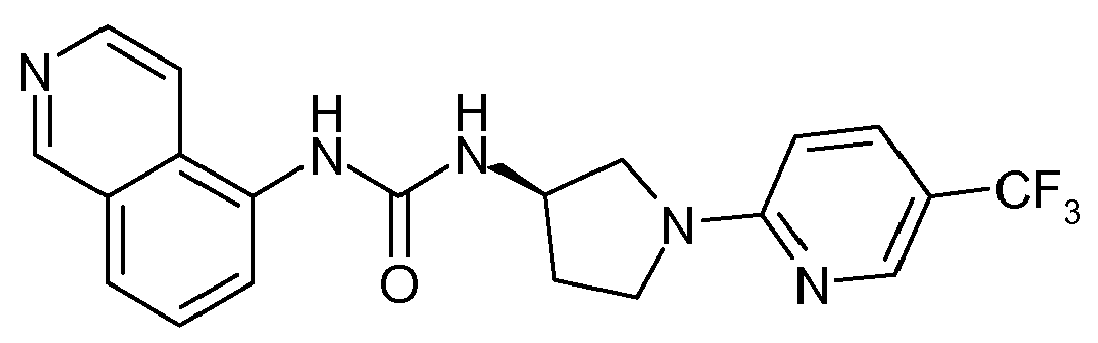
- To a solution of di-tert-butyl tricarbonate, (0.681g, 2.595mmol), in dry DCM (1 ml) was added a solution of D2, (0.5g, 2.162mmol) in in dry DCM (1 ml) in one portion. After the initial effervescence, the solution was stirred at room temperature for 0.3h. A solution of 5-aminoisoquinoline, (0.312g, 2.162mmol) in dry DCM (1ml) was added. The reaction mixture was stirred at room temperature overnight. The resultant precipitate was removed by centrifugation, and the solid washed with ether and dried to give the title compound as a white solid.
1H NMR (d6-DMSO, 250MHz) δ 9.26 (1 H, s), 8.57 (1 H, s), 8.52 (1 H, d), 8.41 (1 H,s), 8.31 (1 H,d), 7.88 (1 H, d), 7.78 (1 H,dd), 7.70 (1 H, d), 7.60 (1 H, t), 6.99 (1 H, d), 6.64 (1 H, d), 4.41 (1 H, m), 3.73 (1 H, dd), 3.59 (2H, m), 3.42 (1 H, m), 2.28 (1 H, m) and 2.02 (1 H, m). MH+ 402 -

- D28 (0.2g, 0.74mmol), 2-chloro-5-trifluoromethylpyridine (3eq., 0.4g) in dimethylformamide (10ml) and finely powdered potassium carbonate (3eq. 0.31 g) were heated at 90°C for 18h and cooled. Solvent was removed under reduced pressure and the residue partitoned between ethyl acetate and water. The organic phase was separated, dried (MgSO4) and filtered. Removal of solvent under reduced pressure afforded the crude product. This was chromatographed on silica gel eluting with ethyl acetate to give the title compound as an off-white solid which was converted into a hydrochloride salt. MH+ (free base) 416.
The two enantiomers (E3A and E3B) were separated by HPLC using Chiralpak AD column (250x19mm id), and eluting with n-hexane:ethanol (80:20 v/v) at a flow rate of 1ml/min with UV detection at 215nm.
Examples presented in Table 1 were prepared in accordance with the procedures described herein and similar to those of E1 to E3.Table 1 
Ex 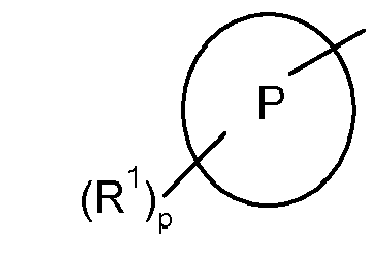
S'Chem s r 
MH+ 4 
R 1 1 
429, 431 5 
R 1 1 
429, 431 6 
R 1 1 
429, 431 7 
R 1 1 
396, 398 8 
R 1 1 
396, 398 9 
R 1 1 
440, 442 10 
R 1 1 
477 11 
R 1 1 
385, 387 12 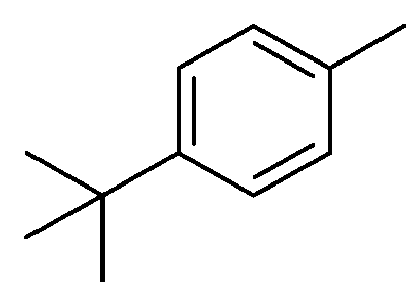
R 1 1 
407 13 
R 1 1 
373, 375 14 
R 1 1 
353 15 
R 1 1 
369 16 
R 1 1 
384, 386 17 
R 1 1 
452, 454 18 
R 1 1 
452, 454 19 
R 1 1 
420, 422 20 
R 1 1 
402 21 
R 1 1 
402 22 
R 1 1 
402 23 
R 1 1 
368, 370 24 
R 1 1 
347 25 
R 1 1 
351 26 
R 1 1 
365 27 
R 1 1 
369 28 
R 1 1 
416 29 
R 1 1 
380, 382 30 
R 1 1 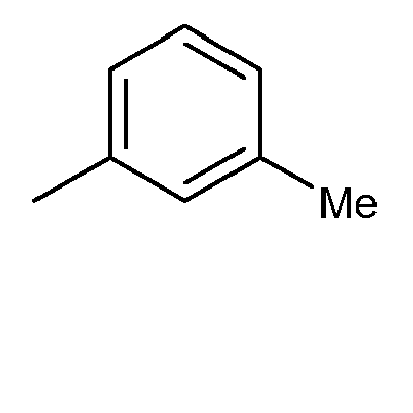
361 31 
R 1 1 
365 32 
R 1 1 
383 33 
R 1 1 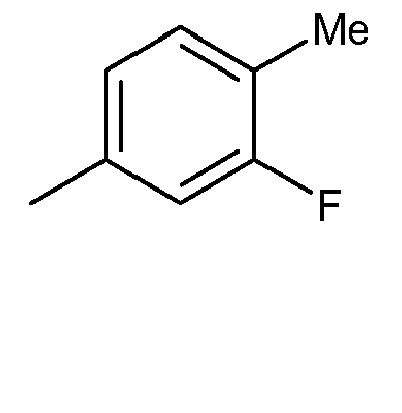
379 34 
R 1 1 
416 35 
R 1 1 
416 36 
R 1 1 
416 37 
R 1 1 
416 38 
R 1 1 
381, 383 39 
R 1 1 
380, 382 40 
R 1 1 
361 41 
R 1 1 
365 42 
R 1 1 
382 43 
R 1 1 
379 44 
R 1 1 
362 45 
R 1 1 
362 46 
R 1 1 
362 47 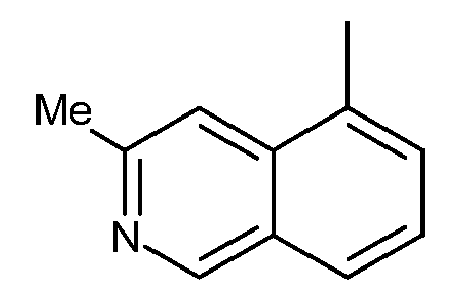
R 1 1 
362 48 
R 1 1 
378 49 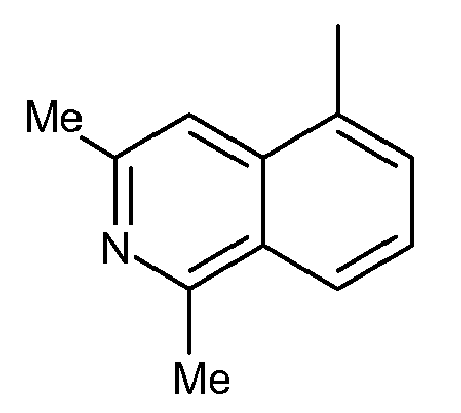
R 1 1 
430 50 
R 1 1 
396, 398 51 
R 1 1 
375 52 
R 1 1 
379 53 
R 1 1 
397 54 
R 1 1 
393 55 
R 1 1 
395, 397 56 
R 1 1 
430 57 
R 1 1 
430 58 
R 1 1 
430 59 
R 1 1 
420 60 
1 2 
416 61 
1 2 
416 62 
- 2 1 
416 63 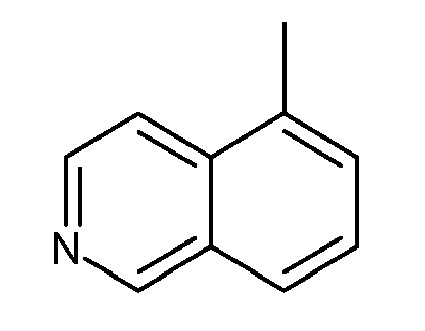
- 2 1 
416 64 
- 2 1 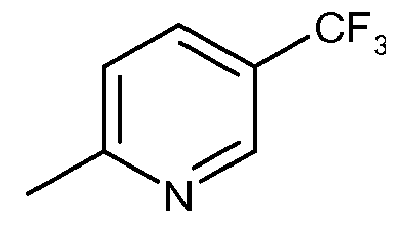
416 65 
- 2 1 
416 66 
- 2 1 
416 67 
- 2 1 
416 68 
- 2 1 
416 69 
- 2 1 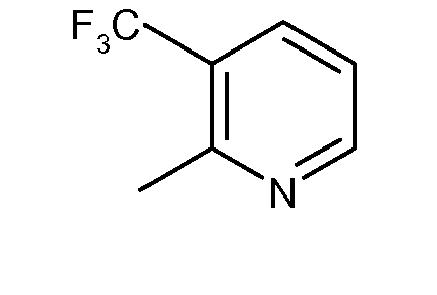
430 70 
- 2 1 
463, 465 71 
- 2 1 
430 72 
- 2 1 
455 74 
- 2 1 
430 75 
- 2 1 
430 76 
S 1 1 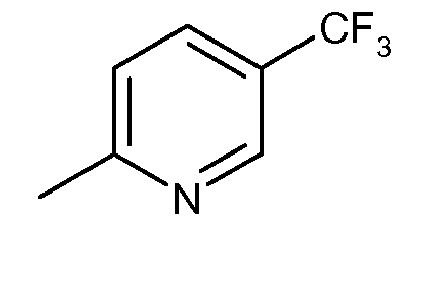
429, 431 77 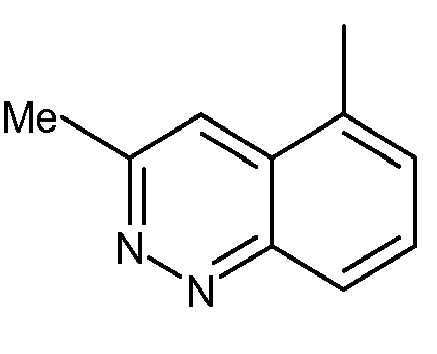
R 1 1 
417 S'Chem = stereochemistry - As referenced above, the compounds of the invention are vanilloid receptor (VR1) antagonists and hence have useful pharmaceutical properties. Vanilloid receptor (VR1) antagonist activity can be confirmed and demonstrated for any particular compound by use of conventional methods, for example those disclosed in standard reference texts such as D. Le Bars, M. Gozarin and S. W. Cadden, Pharmacological Reviews, 2001, 53(4), 597-652] or such other texts mentioned herein.
- The screen used for the compounds of this invention was based upon a FLIPR based calcium assay, similar to that described by Smart et al. (British Journal of Pharmacology, 2000, 129, 227-230). Transfected astrocytoma 1321 N1 cells, stably expressing human VR1, were seeded into FLIPR plates at 25,000cells/well (96-well plate) and cultured overnight.
- The cells were subsequently loaded in medium containing 4µM Fluo-3 AM (Molecular Probes) for 2 hours, at room temperature, in the dark. The plates were then washed 4 times with Tyrode containing 1.5mM calcium, without probenecid.The cells were pre-incubated with compound or buffer control at room temperature for 30 minutes. Capsaicin (Sigma) was then added to the cells. Compounds having antagonist activity against the human VR1 were identified by detecting differences in fluorescence when measured after capsaicin addition, compared with no compound buffer controls. Thus, for example, in the buffer control capsaicin addition results in an increase in intracellular calcium concentration resulting in fluorescence. A compound having antagonist activity blocks the capsaicin binding to the receptor, there is no signalling and therefore no increase in intracellular calcium levels and consequently lower fluorescence. pKb values are generated from the IC50 values using the Cheng-Prusoff equation.
- All compounds tested by the above methodology had pKb > 6, preferred compounds having a pKb > 7.0.
- 100µl of 1 mg/ml FCA was injected intraplantar into the left paw of 4 groups of 8 male Dunkin Hartley guinea-pigs (batch: 6282434, average weight 340g). 24 hours later compounds were administered orally at 0 (vehicle), 3, 10 30mg/kg with vehicle as 1 %methylcellulose and dosing volume being 2ml/kg and dosing straight into the stomach. The methylcellulose was added gradually to the compound into the pestle and mortar and ground together.
- Behavioural readouts of mechanical hyperalgesia were obtained before FCA administration (naïve reading), after FCA but before drug administration (predose reading) and 1 hour after drug administration. The readout used was paw pressure (Randall-Sellito) and the end point was paw withdrawal. The paw pressure equipment also had one silver disc placed on the point to increase the markings by a factor of 2.
- Compounds having a pKb > 7.0 in vitro, according to model (a) above, were tested in this model and shown to be active.
Claims (14)
- A compound of formula (I),
 P and P' are independently selected from aryl and heteroaryl;R1 and R2 are independently selected from -H, halo, alkyl, alkoxy, cycloalkyl, aralkyl, aralkoxy, cycloalkylalkyl, cycloalkylalkoxy, -CN, -NO2, -OH, -OCF3, -CFg, -NR4R5, -S(O)mR6, -S(O)2NR4R5, -OS(O)2R6, -OS(O)2CF3, -O(CH2)xNR4R5, -C(O)CF3, -C(O)alkyl, -C(O)cycloalkyl, -C(O)aralkyl, -C(O)Ar, -C(O)(CH2)xOR6, - C(O)(CH2)xNR4R5, -C(O)alkoxy, -C(O)NR4R5, -(CH2)xC(O)alkoxy, - (CH2)xOC(O)R6, -(CH2)xOR6, -(CH2)xR4R5, -(CH2)xC(O)NR4R5,-(CH2)xN(R4)C(O)R6, -(CH2)xS(O)2NR4R5, -(CH2)xN(R4)S(O)2R6, -ZAr, - (CH2)xS(O)2R6, -(OCH2)xS(O)2R6, -N(R4)S(O)2R6, -N(R4)C(O)R6, - (CH2)xN(R4)S(O)2R6, -(CH2)xN(R4)C(O)R6 or -(CH2)xC(O)alkyl;R4 and R5 may be the same or different and represent H or alkyl or R4 and R5 together with the atoms to which they are attached form a C3-6azacycloalkane,C3-6(2-oxo)azacycloalkane ring or C5-8 polymethylene chain optionally interrupted by heteroatoms such as O or -NR7.Z is O, S or NR7;R6 is alkyl or aryl;R7 is hydrogen, alkyl or aryl;m is 1 or 2;n is 0, 1, 2 or 3;p and q are independently 0, 1, 2, 3 or 4;r is 1, 2 or 3;s is 0, 1 or 2; andx is 0, 1, 2, 3, 4, 5 or 6;with the proviso that said compound of formula (I) is not a compound selected from:1-(1-phenyl-3-pyrrolidinyl)-3-phenyl urea;1-(1-phenyl-3-pyrrolidinyl)-3-(4-methoxyphenyl)urea;N-(4-Fluorophenyl)-N'-[(R)-1-((3-methylphenyl)pyrrolidin-2-ylmethyl)]urea;N-(2-Bromophenyl)-N'-[((R)-1-(3-methylphenyl)pyrrolidin-3-yl)]urea;N-(2-Bromophenyl)-N'-[((R)-1-(3-methylphenyl)pyrrolidin-2-ylmethyl)]urea;N-(4-Fluorophenyl)-N'-[((S)-1-(3-methylphenyl)pyrrolidin-2-ylmethyl)]urea;N-(2-Bromophenyl)-N'-[((S)-1-(3-methylphenyl)pyrrolidin-2-ylmethyl)]urea;N-(4-Fluorophenyl)-N'-[((S)-1-(3-methylphenyl)pyrrolidin-3-yl)]urea;N-(2-Bromophenyl)-N'-[((S)-1-(3-methylphenyl)pyrrolidin-3-yl)]urea;N-(4-Fluorophenyl)-N'-[((R)-1-(3-methylphenyl)pyrrolidin-3-yl)]urea;N-(4-Fluorophenyl)-N'-[((R)-1-(3-fluorophenyl)]pyrrolidin-3-yl)]urea;N-(2-Bromophenyl)-N'-[((R)-1-(3-fluorophenyl)pyrrolidin-3-yl)]urea;N-(1-Naphthyl)-N'-[((R)-1-(3-methylphenyl)pyrrolidin-3-yl)]urea;N-(2,3-Dichlorophenyl)-N'-[((R)-1-(3-methylphenyl)pyrrolidin-3-yl)]urea;N-(2-Bromophenyl)-N'-[((S)-1-(3-fluorophenyl)pyrrolidin-3-yl)]urea;N-(2-Bromophenyl)-N'-[((R)-1-(4-fluoro-3-methylphenyl)pyrrolidin-3-yl)]urea;N-(2-Bromophenyl)-N'-[((R)-1-(3,4-difluorophenyl)pyrrolidin-3-yl)]urea;N-(2-Bromophenyl)-N'-[((R)-1-(3-fluoro-4-methylphenyl)pyrrolidin-3-yl)]urea;N-(3-Chloro-2-methylphenyl)-N'-[((R)-1-(3-methylphenyl)pyrrolidin-3-yl)]urea;N-(2,3-Dichlorophenyl)-N'-[((R)-1-(3-methylphenyl)pyrrolidin-3-yl)]urea;N-(2,5-Dichlorophenyl)-N'-[((R)-1-(3-methylphenyl)pyrrolidin-3-yl)]urea;N-(2,3-Dichlorophenyl)-N'-[((R)-1-(3-fluorophenyl)pyrrolidin-3-yl)]urea;N-(2,5-Dichlorophenyl)-N'-[((R)-1-(3-fluorophenyl)pyrrolidin-3-yl)]urea;N-(3-Chloro-2-methylphenyl)-N'-[((R)-1-(3-fluorophenyl)pyrrolidin-3-yl)]urea;N-(3-Chloro-2-methylphenyl)-N'-[((R)-1-(3,4-difluorophenyl)pyrrolidin-3-yl)]urea;N-(2,3-Dichlorophenyl)-N'-[((R)-1-(3,4-difluorophenyl)pyrrolidin-3-yl)]urea;N-(2,5-Dichlorophenyl)-N'-[((R)-1-(3,4-difluorophenyl)pyrrolidin-3-yl)]urea;N-(3-Chloro-2-methylphenyl)-N'-[((R)-1-(3-fluoro-4-methylphenyl)pyrrolidin-3-yl)]urea; andN-(2,3-Dichlorophenyl)-N'-[((R)-1-(3-fluoro-4-methylphenyl)pyrrolidin-3-yl)]urea.
 - A compound of formula (I), as claimed in claim 1, or formula (IA),
 P is phenyl, naphthyl, quinolinyl or isoquinolinyl;P' is phenyl or pyridyl;R1 and R2 are independently selected from -H, halo, alkyl, alkoxy, cycloalkyl, aralkyl, aralkoxy, cycloalkylalkyl, cycloalkylalkoxy, -CN, -NO2, -OH, -OCF3, -CF3, -NR4R5, -S(O)mR6, -S(O)2NR4R5, -OS(O)2R6, -OS(O)2CF3, -O(CH2)XNR4R5, -C(O)CF3, -C(O)alkyl, -C(O)cycloalkyl, -C(O)aralkyl, -C(O)Ar, -C(O)(CH2)xOR6, - C(O)(CH2)xNR4R5, -C(O)alkoxy, -C(O)NR4R5, -(CH2)xC(O)alkoxy, - (CH2)xOC(O)R6 , -(CH2)xOR6, -(CH2)xR4R5, -(CH2)xC(O)NR4R5, - (CH2)xN(R4)C(O)R6, -(CH2)xS(O)2NR4R5, -(CH2)xN(R4)S(O)2R6, -ZAr, - (CH2)xS(O)2R6, -(OCH2)xS(O)2R6, -N(R4)S(O)2R6, -N(R4)C(O)R6, - (CH2)xN(R4)S(O)2R6, -(CH2)xN(R4)C(O)R6 or-(CH2)xC(O)alkyl;R4 and R5 may be the same or different and represent H or alkyl or R4 and R5 together with the atoms to which they are attached form a C3-6azacydoalkane,C3-6(2-oxo)azacycloalkane ring or C5-8 polymethylene chain optionally interrupted by heteroatoms such as O or -NR7.Z is O, S or NR7;R6 is alkyl or aryl;R7 is hydrogen, alkyl or aryl;m is 1 or 2;n is 0, 1, 2 or 3;p and q are independently 0, 1, 2, 3 or 4;r is 1, 2 or 3;s is 0, 1 or 2; andx is 0,1, 2, 3, 4, 5 or 6;with the proviso that the compound of formula (I) is not a compound selected from:1-(1-phenyl-3-pyrrolidinyl)-3-phenyl urea;1-(1-phenyl-3-pyrrolidinyl)-3-(4-methoxyphenyl)urea;N-(4-Fluorophenyl)-N'-[(R)-1-((3-methylphenyl)pyrrolidin-2-ylmethyl)]urea;N-(2-Bromophenyl)-N'-[((R)-1-(3-methylphenyl)pyrrolidin-3-yl)]urea;N-(2-Bromophenyl)-N'-[((R)-1-(3-methylphenyl)pyrrolidin-2-ylmethyl)]urea;N-(4-Fluorophenyl)-N'-[((S)-1-(3-methylphenyl)pyrrolidin-2-ylmethyl)]urea;N-(2-Bromophenyl)-N'-[((S)-1-(3-methylphenyl)pyrrolidin-2-ylmethyl)]urea;N-(4-Fluorophenyl)-N'-[((S)-1-(3-methylphenyl)pyrrolidin-3-yl)]urea;N-(2-Bromophenyl)-N'-[((S)-1-(3-methylphenyl)pyrrolidin-3-yl)]urea;N-(4-Fluorophenyl)-N'-[((R)-1-(3-methylphenyl)pyrrolidin-3-yl)]urea;N-(4-Fluorophenyl)-N'-[((R)-1-(3-fluorophenyl)]pyrrolidin-3-yl)]urea;N-(2-Bromophenyl)-N'-[((R)-1-(3-fluorophenyl)pyrrolidin-3-yl)]urea;N-(1-Naphthyl)-N'-[((R)-1-(3-methylphenyl)pyrrolidin-3-yl)]urea;N-(2,3-Dichlorophenyl)-N'-[((R)-1-(3-methylphenyl)pyrrolidin-3-yl)]urea;N-(2-Bromophenyl)-N'-[((S)-1-(3-fluorophenyl)pyrrolidin-3-yl)]urea;N-(2-Bromophenyl)-N'-[((R)-1-(4-fluoro-3-methylphenyl)pyrrolidin-3-yl)]urea;N-(2-Bromophenyl)-N'-[((R)-1-(3,4-difluorophenyl)pyrrolidin-3-yl)]urea;N-(2-Bromophenyl)-N'-[((R)-1-(3-fluoro-4-methylphenyl)pyrrolidin-3-yl)]urea;N-(3-Chloro-2-methylphenyl)-N'-[((R)-1-(3-methylphenyl)pyrrolidin-3-yl)]urea;N-(2,3-Dichlorophenyl)-N'-[((R)-1-(3-methylphenyl)pyrrolidin-3-yl)]urea;N-(2,5-Dichlorophenyl)-N'-[((R)-1-(3-methylphenyl)pyrrolidin-3-yl)]urea;N-(2,3-Dichlorophenyl)-N'-[((R)-1-(3-fluorophenyl)pyrrolidin-3-yl)]urea;N-(2,5-Dichlorophenyl)-N'-[((R)-1-(3-fluorophenyl)pyrrolidin-3-yl)]urea;N-(3-Chloro-2-methylphenyl)-N'-[((R)-1-(3-fluorophenyl)pyrrolidin-3-yl)]urea;N-(3-Chloro-2-methylphenyl)-N'-[((R)-1-(3,4-difluorophenyl)pyrrolidin-3-yl)]urea;N-(2,3-Dichlorophenyl)-N'-[((R)-1-(3,4-difluorophenyl)pyrrolidin-3-yl)]urea;N-(2,5-Dichlorophenyl)-N'-[((R)-1-(3,4-difluorophenyl)pyrrolidin-3-yl)]urea;N-(3-Chloro-2-methylphenyl)-N'-[((R)-1-(3-fluoro-4-methylphenyl)pyrrolidin-3-yl)]urea; andN-(2,3-Dichlorophenyl)-N'-[((R)-1-(3-fluoro-4-methylphenyl)pyrrolidin-3-yl)]urea.
 - A compound of formula (I), as claimed in claim 1, of formula (IB),
or a pharmaceutically acceptable salt thereof, or a solvate thereof, wherein:P is phenyl, naphthyl, quinolinyl or isoquinolinyl;R1 and R2 are independently selected from -H, halo, alkyl, alkoxy, cycloalkyl, aralkyl, aralkoxy, cycloalkylalkyl, cycloalkylalkoxy, -CN, -NO2, -OH, -OCF3, -CF -NR4R5, -S(O)mR6, -S(O)2NR4R5, -OS(O)2R6, -OS(O)2CF3, -O(CH2)xNR4R5, -C(O)CF3, -C(O)alkyl, -C(O)cycloalkyl, -C(O)aralkyl, -C(O)Ar, -C(O)(CH2)xOR6,-C(O)(CH2)xNR4R5, -C(O)alkoxy, -C(O)NR4R5, -(CH2)xC(O)alkoxy, - (CH2)xOC(O)R6, -(CH2)xOR6, -(CH2)xR4R5, -(CH2)xC(O)NR4R5, - (CH2)xN(R4)C(O)R6, -(CH2)xS(O)2NR4R5, -(CH2)xN(R4)S(O)2R6, -ZAr, - (CH2)xS(O)2R6, -(OCH2)xS(O)2R6, -N(R4)S(O)2R6, -N(R4)C(O)R6, - (CH2)xN(R4)S(O)2R6, -(CH2)xN(R4)C(O)R6 or -(CH2)xC(O)alkyl;R4 and R5 may be the same or different and represent H or alkyl or R4 and R5 together with the atoms to which they are attached form a C3-6azacycloalkane,C3-6(2-oxo)azacycloalkane ring or C5-8 polymethylene chain optionally interrupted by heteroatoms such as O or -NR7.Z is O, S or NR7;R6 is alkyl or aryl;R7 is hydrogen, alkyl or aryl;m is 1 or 2;n is 0, 1, 2 or 3;p and q are independently 0, 1, 2, 3 or 4;r is 1, 2 or 3;s is 0, 1 or 2; andx is 0, 1, 2, 3, 4, 5 or 6; - A compound of formula (IB) as claimed in claim 3, wherein:R1 and R2 are independently selected from halo, hydroxy, alkyl, alkoxy, -CF3, - NO2, -CN, -OCF3, amino or mono- or dialkylamino;p and q are independently 0, 1 or 2; andr and s are independently 1 or 2.
- A compound of formula (I), as claimed in claim 1, of formula (IC),
 P is phenyl, naphthyl, quinolinyl or isoquinolinyl;R1 and R2 are independently selected from halo, hydroxy, alkyl, alkoxy, -CF3, - NO2, -CN, -OCF3, amino or mono- or dialkylaminon is 0, 1, 2 or 3;p and q are independently 0, 1, 2, 3 or 4;r is 1, 2 or 3; ands is 0, 1 or 2;with the proviso that said compound of formula (IB) is not a compound selected from:1-(1-phenyl-3-pyrrolidinyl)-3-phenyl urea;1-(1-phenyl-3-pyrrolidinyl)-3-(4-methoxyphenyl)urea;N-(4-Fluorophenyl)-N'-[(R)-1-((3-methylphenyl)pyrrolidin-2-ylmethyl)]urea;N-(2-Bromophenyl)-N'-[((R)-1-(3-methylphenyl)pyrrolidin-3-yl)]urea;N-(2-Bromophenyl)-N'-[((R)-1-(3-methylphenyl)pyrrolidin-2-ylmethyl)]urea;N-(4-Fluorophenyl)-N'-[((S)-1-(3-methylphenyl)pyrrolidin-2-ylmethyl)]urea;N-(2-Bromophenyl)-N'-[((S)-1-(3-methylphenyl)pyrrolidin-2-ylmethyl)]urea;N-(4-Fluorophenyl)-N'-[((S)-1-(3-methylphenyl)pyrrolidin-3-yl)]urea;N-(2-Bromophenyl)-N'-[((S)-1-(3-methylphenyl)pyrrolidin-3-yl)]urea;N-(4-Fluorophenyl)-N'-[((R)-1-(3-methylphenyl)pyrrolidin-3-yl)]urea;N-(4-Fluorophenyl)-N'-[((R)-1-(3-fluorophenyl)]pyrrolidin-3-yl)]urea;N-(2-Bromophenyl)-N'-[((R)-1-(3-fluorophenyl)pyrrolidin-3-yl)]urea;N-(1-Naphthyl)-N'-[((R)-1-(3-methylphenyl)pyrrolidin-3-yl)]urea;N-(2,3-Dichlorophenyl)-N'-[((R)-1-(3-methylphenyl)pyrrolidin-3-yl)]urea;N-(2-Bromophenyl)-N'-[((S)-1-(3-fluorophenyl)pyrrolidin-3-yl)]urea;N-(2-Bromophenyl)-N'-[((R)-1-(4-fluoro-3-methylphenyl)pyrrolidin-3-yl)]urea;N-(2-Bromophenyl)-N'-[((R)-1-(3,4-difluorophenyl)pyrrolidin-3-yl)]urea;N-(2-Bromophenyl)-N'-[((R)-1-(3-fluoro-4-methylphenyl)pyrrolidin-3-yl)]urea;N-(3-Chloro-2-methylphenyl)-N'-[((R)-1-(3-methylphenyl)pyrrolidin-3-yl)]urea;N-(2,3-Dichlorophenyl)-N'-[((R)-1-(3-methylphenyl)pyrrolidin-3-yl)]urea;N-(2,5-Dichlorophenyl)-N'-[((R)-1-(3-methylphenyl)pyrrolidin-3-yl)]urea;N-(2,3-Dichlorophenyl)-N'-[((R)-1-(3-fluorophenyl)pyrrolidin-3-yl)]urea;N-(2,5-Dichlorophenyl)-N'-[((R)-1-(3-fluorophenyl)pyrrolidin-3-yl)]urea;N-(3-Chloro-2-methylphenyl)-N'-[((R)-1-(3-fluorophenyl)pyrrolidin-3-yl)]urea;N-(3-Chloro-2-methylphenyl)-N'-[((R)-1-(3,4-difluorophenyl)pyrrolidin-3-yl)]urea;N-(2,3-Dichlorophenyl)-N'-[((R)-1-(3,4-difluorophenyl)pyrrolidin-3-yl)]urea;N-(2,5-Dichlorophenyl)-N'-[((R)-1-(3,4-difluorophenyl)pyrrolidin-3-yl)]urea;N-(3-Chloro-2-methylphenyl)-N'-[((R)-1-(3-fluoro-4-methylphenyl)pyrrolidin-3-yl)]urea; andN-(2,3-Dichlorophenyl)-N'-[((R)-1-(3-fluoro-4-methylphenyl)pyrrolidin-3-yl)]urea.
 - A process for the preparation of a compound of formula (I) or a pharmaceutically acceptable salt thereof, as claimed in claim 1, which process comprises coupling a compound of formula (II):
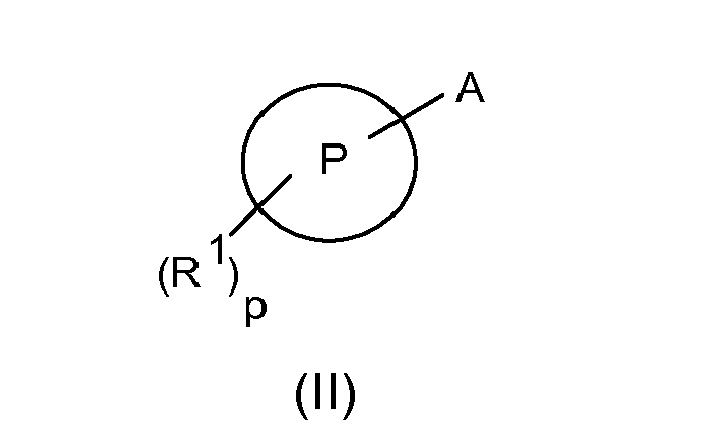

and thereafter, as necessary, carrying out one or more of the following reactions:(i) converting one compound of formula (I) into another compound of formula (I);(ii) removing any protecting group;(iii) preparing a salt or a solvate of the compound so formed. - A compound of formula (I) or a pharmaceutically acceptable salt or solvate thereof, as claimed in claim 1, for use as an active therapeutic substance.
- A compound of formula (I) or a pharmaceutically acceptable salt or solvate thereof, as claimed in claim 1, for use in the treatment and/or prophylaxis of the Disorders of the Invention.
- A compound of formula (I) or a pharmaceutically acceptable salt or solvate thereof, as claimed in claim 1, for use in the treatment and/or prophylaxis of pain.
- A method for the treatment and/or prophylaxis of disorders in which antagonism of the Vanilloid (VR1) receptor is beneficial, in mammals including humans, which comprises administering to a mammal in need thereof a therapeutically effective amount of a compound of formula (I) or a pharmaceutically acceptable salt or solvate thereof.
- A method according to claim 11, wherein said disorders are the Disorders of the Invention.
- The use of a compound of formula (I) or a pharmaceutically acceptable salt or solvate thereof in the manufacture of a medicament for the treatment or prophylaxis of disorders in which antagonism of the Vanilloid (VR1) receptor is beneficial.
- A use according to claim 13 wherein said disorders are the Disorders of the Invention.
- A pharmaceutical composition, which comprises a compound of formula (I) or a pharmaceutically acceptable salt or solvate thereof, as claimed in claim 1, and a pharmaceutically acceptable carrier or excipient therefor.
Applications Claiming Priority (6)
| Application Number | Priority Date | Filing Date | Title |
|---|---|---|---|
| GB0122156A GB0122156D0 (en) | 2001-09-13 | 2001-09-13 | Novel compounds |
| GB0130505A GB0130505D0 (en) | 2001-12-20 | 2001-12-20 | Novel compounds |
| GB0130547A GB0130547D0 (en) | 2001-12-20 | 2001-12-20 | Novel compounds |
| GB0130503A GB0130503D0 (en) | 2001-12-20 | 2001-12-20 | Novel compounds |
| EP02765023A EP1425277B8 (en) | 2001-09-13 | 2002-09-13 | Urea-compounds active as vanilloid receptor antagonists for the treatment of pain |
| EP08172882A EP2036902A3 (en) | 2001-09-13 | 2002-09-13 | Urea compounds active as vanilloid receptor antagonist for the treatment of pain |
Related Parent Applications (3)
| Application Number | Title | Priority Date | Filing Date |
|---|---|---|---|
| EP08172882 Previously-Filed-Application | 2002-09-13 | ||
| EP02765023.3 Division | 2002-09-13 | ||
| EP08172882.6 Division | 2008-12-24 |
Publications (2)
| Publication Number | Publication Date |
|---|---|
| EP2298757A2 true EP2298757A2 (en) | 2011-03-23 |
| EP2298757A3 EP2298757A3 (en) | 2011-12-28 |
Family
ID=27447989
Family Applications (3)
| Application Number | Title | Priority Date | Filing Date |
|---|---|---|---|
| EP10179466A Withdrawn EP2298757A3 (en) | 2001-09-13 | 2002-09-13 | Urea compounds active as vanilloid receptor antagonist for the treatment of pain |
| EP08172882A Withdrawn EP2036902A3 (en) | 2001-09-13 | 2002-09-13 | Urea compounds active as vanilloid receptor antagonist for the treatment of pain |
| EP02765023A Expired - Lifetime EP1425277B8 (en) | 2001-09-13 | 2002-09-13 | Urea-compounds active as vanilloid receptor antagonists for the treatment of pain |
Family Applications After (2)
| Application Number | Title | Priority Date | Filing Date |
|---|---|---|---|
| EP08172882A Withdrawn EP2036902A3 (en) | 2001-09-13 | 2002-09-13 | Urea compounds active as vanilloid receptor antagonist for the treatment of pain |
| EP02765023A Expired - Lifetime EP1425277B8 (en) | 2001-09-13 | 2002-09-13 | Urea-compounds active as vanilloid receptor antagonists for the treatment of pain |
Country Status (31)
| Country | Link |
|---|---|
| US (1) | US8063078B2 (en) |
| EP (3) | EP2298757A3 (en) |
| JP (2) | JP4463552B2 (en) |
| KR (3) | KR20100082390A (en) |
| CN (1) | CN1247568C (en) |
| AP (1) | AP1818A (en) |
| AR (1) | AR038786A1 (en) |
| AT (1) | ATE420083T1 (en) |
| AU (1) | AU2002329397B2 (en) |
| BR (1) | BR0212468A (en) |
| CA (1) | CA2458632C (en) |
| CY (1) | CY1109449T1 (en) |
| DE (1) | DE60230773D1 (en) |
| DK (1) | DK1425277T3 (en) |
| EA (1) | EA007731B1 (en) |
| ES (1) | ES2316607T3 (en) |
| HU (1) | HUP0401923A3 (en) |
| IL (2) | IL160755A0 (en) |
| MA (1) | MA26216A1 (en) |
| MX (1) | MXPA04002379A (en) |
| MY (1) | MY138086A (en) |
| NO (3) | NO327009B1 (en) |
| NZ (1) | NZ531137A (en) |
| OA (1) | OA12659A (en) |
| PE (1) | PE20030417A1 (en) |
| PL (1) | PL213639B1 (en) |
| PT (1) | PT1425277E (en) |
| SI (1) | SI1425277T1 (en) |
| TW (1) | TWI283665B (en) |
| UY (1) | UY27446A1 (en) |
| WO (1) | WO2003022809A2 (en) |
Families Citing this family (50)
| Publication number | Priority date | Publication date | Assignee | Title |
|---|---|---|---|---|
| MY138086A (en) * | 2001-09-13 | 2009-04-30 | Smithkline Beecham Plc | Novel urea derivative as vanilloid receptor-1 antagonist |
| DK1472225T3 (en) | 2002-02-01 | 2010-08-09 | Euro Celtique Sa | 2-Piperazine pyridines useful for the treatment of pain |
| CA2476936A1 (en) * | 2002-02-20 | 2003-08-28 | Chih-Hung Lee | Fused azabicyclic compounds that inhibit vanilloid receptor subtype 1 (vr1) receptor |
| US7074805B2 (en) | 2002-02-20 | 2006-07-11 | Abbott Laboratories | Fused azabicyclic compounds that inhibit vanilloid receptor subtype 1 (VR1) receptor |
| US6974818B2 (en) | 2002-03-01 | 2005-12-13 | Euro-Celtique S.A. | 1,2,5-thiadiazol-3-YL-piperazine therapeutic agents useful for treating pain |
| ES2300613T3 (en) | 2002-06-28 | 2008-06-16 | Euro-Celtique S.A. | THERAPEUTIC DERIVATIVES OF PIPERACINA USEFUL TO TREAT THE PAIN. |
| US7262194B2 (en) | 2002-07-26 | 2007-08-28 | Euro-Celtique S.A. | Therapeutic agents useful for treating pain |
| GB0221157D0 (en) * | 2002-09-12 | 2002-10-23 | Glaxo Group Ltd | Novel treatment |
| AU2003270199A1 (en) * | 2002-09-13 | 2004-04-30 | Glaxo Group Limited | Urea compounds active as vanilloid receptor antagonists for the treatment of pain |
| US7157462B2 (en) | 2002-09-24 | 2007-01-02 | Euro-Celtique S.A. | Therapeutic agents useful for treating pain |
| WO2004052846A1 (en) | 2002-12-06 | 2004-06-24 | Bayer Healthcare Ag | Tetrahydro-naphthalene derivatives |
| GB0229808D0 (en) * | 2002-12-20 | 2003-01-29 | Glaxo Group Ltd | Novel compositions |
| US6933311B2 (en) * | 2003-02-11 | 2005-08-23 | Abbott Laboratories | Fused azabicyclic compounds that inhibit vanilloid receptor subtype 1 (VR1) receptor |
| ES2330107T3 (en) | 2003-03-06 | 2009-12-04 | Glaxo Group Limited | UREA HETEROCICLIC DERIVATIVES FOR THE TREATMENT OF PAIN. |
| WO2004078744A2 (en) * | 2003-03-07 | 2004-09-16 | Glaxo Group Limited | Urea derivatives and their use as vanilloid receptor antagonists in the treatment of pain |
| GB0305426D0 (en) * | 2003-03-08 | 2003-04-16 | Glaxo Group Ltd | Novel compounds |
| SE0301446D0 (en) | 2003-05-16 | 2003-05-16 | Astrazeneca Ab | New Compounds |
| ATE556067T1 (en) | 2003-05-20 | 2012-05-15 | Ajinomoto Kk | MODULATORS OF THE VANILLOID RECEPTOR |
| EP1493438A1 (en) * | 2003-07-03 | 2005-01-05 | Bayer HealthCare AG | Vanilloid receptor (VR) inhibitors for treatment of Human Immunodeficiency Virus (HIV)-mediated pain states |
| GB0319150D0 (en) | 2003-08-14 | 2003-09-17 | Glaxo Group Ltd | Novel compounds |
| GB0319151D0 (en) * | 2003-08-14 | 2003-09-17 | Glaxo Group Ltd | Novel compounds |
| WO2005040119A1 (en) * | 2003-10-01 | 2005-05-06 | Bayer Healthcare Ag | Tetrahydro-naphthalene and urea derivatives |
| EP1679296A4 (en) | 2003-10-14 | 2007-12-26 | Ajinomoto Kk | Ether derivative |
| JP2007509846A (en) * | 2003-10-15 | 2007-04-19 | バイエル・ヘルスケア・アクチェンゲゼルシャフト | Tetrahydro-naphthalene and urea derivatives |
| EP1685112B1 (en) | 2003-11-08 | 2011-07-20 | Bayer Schering Pharma Aktiengesellschaft | Tetrahydro-quinolinylurea derivatives as vr1 antagonists |
| WO2005095327A1 (en) | 2004-03-31 | 2005-10-13 | Ajinomoto Co., Inc. | Aniline derivatives |
| WO2006002361A2 (en) | 2004-06-24 | 2006-01-05 | Incyte Corporation | 2-methylpropanamides and their use as pharmaceuticals |
| JP2008508190A (en) | 2004-07-19 | 2008-03-21 | ノボ ノルディスク アクティーゼルスカブ | Inhibition of capsaicin receptor activity in the treatment of obesity or obesity-related diseases and disorders |
| KR20060087386A (en) | 2005-01-28 | 2006-08-02 | 주식회사 대웅제약 | Novel benzoimidazole derivatives and pharmaceutical compositions containing them |
| WO2006098554A1 (en) * | 2005-03-16 | 2006-09-21 | Amorepacific Corporation | Novel compounds, isomer thereof or pharmaceutically acceptable salts thereof as vanilloid receptor antagonist; and a pharmaceutical composition containing the same |
| WO2007046867A2 (en) * | 2005-05-19 | 2007-04-26 | Xenon Pharmaceuticals Inc. | Piperidine derivatives and their uses as therapeutic agents |
| UY30048A1 (en) | 2005-12-23 | 2007-07-31 | Astrazeneca Ab | SUBSTITUTED DERIVATIVES OF THE N, 2- (1H-BENZIMIDAZOL-1-IL) ACETAMIDE, PHARMACEUTICAL COMPOSITIONS CONTAINING THEM, PREPARATION PROCESSES AND APPLICATIONS |
| EP1889830A1 (en) * | 2006-07-10 | 2008-02-20 | Pharmeste S.r.l. | Biarylcarboxyarylamides as vanilloid-1 receptor modulators |
| EP1882687A1 (en) * | 2006-07-27 | 2008-01-30 | Amorepacific Corporation | Heterocyclic compounds useful as vanilloid receptor antagonists and pharmaceutical compositions containing the same |
| PL2054411T3 (en) * | 2006-07-27 | 2015-02-27 | Amorepacific Corp | Novel compounds, isomer thereof, or pharmaceutically acceptable salts thereof as vanilloid receptor antagonist; and pharmaceutical compositions containing the same |
| TWI433839B (en) | 2006-08-11 | 2014-04-11 | Neomed Inst | Novel benzimidazole derivatives 290 |
| TW200824687A (en) | 2006-08-25 | 2008-06-16 | Abbott Lab | Compounds that inhibit TRPV1 and uses thereof |
| US8030504B2 (en) | 2006-12-20 | 2011-10-04 | Abbott Laboratories | Antagonists of the TRPV1 receptor and uses thereof |
| MX2010010262A (en) | 2008-03-20 | 2010-12-06 | Abbott Lab | Methods for making central nervous system agents that are trpv1 antagonists. |
| EP2264031B1 (en) | 2008-04-18 | 2015-04-15 | Daewoong Pharmaceutical Co., Ltd. | A novel benzoxazine benzimidazole derivative, a pharmaceutical composition comprising the same, and a use thereof |
| US8367835B2 (en) | 2008-05-07 | 2013-02-05 | Dainippon Sumitomo Pharma Co., Ltd. | Cyclic amine-1-carboxylic acid ester derivative and pharmaceutical composition containing the same |
| WO2010026128A1 (en) * | 2008-09-02 | 2010-03-11 | Glaxo Group Limited | N-(3-methyl-5-isoquinolinyl)-n'-((3r)-1-[5-(trifluoromethyl)-2-pyridinyl]-3-pyrrolidinyl) urea for the treatment of rhinitis |
| JP2012501315A (en) * | 2008-09-02 | 2012-01-19 | グラクソ グループ リミテッド | TRPVL antagonist SB-705498 for treating rhinitis |
| JP2013028536A (en) * | 2009-11-11 | 2013-02-07 | Dainippon Sumitomo Pharma Co Ltd | Cyclic amine-1-carboxylic acid ester derivative and pharmaceutical composition containing the same |
| WO2012045729A1 (en) | 2010-10-05 | 2012-04-12 | Glaxo Group Limited | Imidazo [1, 2 -a] pyridine and pyrazolo [1, 5 -a] pyridine derivatives as trpv1 antagonists |
| KR101293384B1 (en) | 2010-10-13 | 2013-08-05 | 주식회사 대웅제약 | Novel pyridyl benzoxazine derivatives, pharmaceutical composition comprising the same, and use thereof |
| WO2012072512A1 (en) | 2010-11-29 | 2012-06-07 | Glaxo Group Limited | N-cyclobutyl-imidazopyridine or -pyrazolopyridine carboxamides as trpv1 antagonists |
| GB201101517D0 (en) * | 2011-01-28 | 2011-03-16 | Proximagen Ltd | Receptor antagonists |
| EP2697221A1 (en) | 2011-04-11 | 2014-02-19 | Glaxo Group Limited | N- cyclobutyl - imidazopyridine - methylamine as trpv1 antagonists |
| DE102022104759A1 (en) | 2022-02-28 | 2023-08-31 | SCi Kontor GmbH | Co-crystal screening method, in particular for the production of co-crystals |
Family Cites Families (27)
| Publication number | Priority date | Publication date | Assignee | Title |
|---|---|---|---|---|
| US3424760A (en) * | 1966-03-07 | 1969-01-28 | Robins Co Inc A H | 3-ureidopyrrolidines |
| US3424761A (en) | 1966-03-07 | 1969-01-28 | Robins Co Inc A H | 3-ureidopyrrolidines |
| GB1460389A (en) * | 1974-07-25 | 1977-01-06 | Pfizer Ltd | 4-substituted quinazoline cardiac stimulants |
| DE68918991T2 (en) | 1988-06-17 | 1995-04-27 | Procter & Gamble | Use of vanillin derivatives in the manufacture of a medicament for the treatment of herpes simplex infection. |
| HU206082B (en) | 1988-12-23 | 1992-08-28 | Sandoz Ag | Process for producing capsaicin derivatives and pharmaceutical compositions comprising such compounds |
| CA2017383A1 (en) | 1989-06-08 | 1990-12-08 | Raymond R. Martodam | Use of vanilloids for the treatment of respiratory diseases or disorders |
| WO1992009285A1 (en) | 1990-11-27 | 1992-06-11 | The Procter & Gamble Company | Combinations of vanilloid compounds and phosphonate antiviral compounds for treatment of herpes infections |
| US5149704A (en) | 1991-05-03 | 1992-09-22 | Abbott Laboratories | Platelet activating antagonists |
| CA2197364A1 (en) * | 1996-02-15 | 1997-08-16 | Toshikazu Suzuki | Phenol compound and process for preparing the same |
| AU8270898A (en) * | 1997-06-26 | 1999-01-19 | Eli Lilly And Company | Antithrombotic agents |
| IL133623A0 (en) * | 1997-06-26 | 2001-04-30 | Lilly Co Eli | Antithrombotic agents |
| JP2000080085A (en) | 1997-09-01 | 2000-03-21 | Kyorin Pharmaceut Co Ltd | 6,7-Asymmetric disubstituted quinoxaline carboxylic acid derivatives, addition salts thereof and methods for producing them |
| WO2000050387A1 (en) | 1999-02-22 | 2000-08-31 | Pacific Corporation | Vanilloid analogues containing resiniferatoxin pharmacophores as potent vanilloid receptor agonists and analgesics, compositions and uses thereof |
| HUP0202248A3 (en) | 1999-03-12 | 2006-06-28 | Boehringer Ingelheim Pharma | Compounds useful as anti-inflammatory agents |
| US6608227B1 (en) * | 1999-10-15 | 2003-08-19 | Bristol-Myers Squibb Pharma | Benzylcycloalkyl amines as modulators of chemokine receptor activity |
| WO2002008221A2 (en) | 2000-07-20 | 2002-01-31 | Neurogen Corporation | Capsaicin receptor ligands |
| WO2002016318A1 (en) | 2000-08-21 | 2002-02-28 | Pacific Corporation | Novel thiourea derivatives and the pharmaceutical compositions containing the same |
| WO2002016317A1 (en) | 2000-08-21 | 2002-02-28 | Pacific Corporation | Novel thiocarbamic acid derivatives and the pharmaceutical compositions containing the same |
| DE60120421T2 (en) | 2000-08-21 | 2006-12-28 | Pacific Corp. | NEW (THIO) UREA CONNECTIONS AND MEDICINAL COMPOSITIONS CONTAINING THEM |
| JP2002080073A (en) | 2000-09-07 | 2002-03-19 | Kyokuto Kobunshi Kk | Automatic hole-making bag for microwave oven |
| JP2002088073A (en) * | 2000-09-08 | 2002-03-27 | Yamanouchi Pharmaceut Co Ltd | Anti-androgenic agent |
| GB0110901D0 (en) | 2001-05-02 | 2001-06-27 | Smithkline Beecham Plc | Novel Compounds |
| MY138086A (en) * | 2001-09-13 | 2009-04-30 | Smithkline Beecham Plc | Novel urea derivative as vanilloid receptor-1 antagonist |
| AU2003247772A1 (en) * | 2002-06-27 | 2004-01-19 | Schering Aktiengesellschaft | Substituted quinoline ccr5 receptor antagonists |
| AU2003270199A1 (en) * | 2002-09-13 | 2004-04-30 | Glaxo Group Limited | Urea compounds active as vanilloid receptor antagonists for the treatment of pain |
| GB0229808D0 (en) | 2002-12-20 | 2003-01-29 | Glaxo Group Ltd | Novel compositions |
| CA2563494A1 (en) | 2004-04-20 | 2005-11-03 | Bayer Healthcare Ag | Urea derivatives as antagonists of the vanilloid receptor (vr1) |
-
2002
- 2002-09-11 MY MYPI20023391A patent/MY138086A/en unknown
- 2002-09-11 PE PE2002000895A patent/PE20030417A1/en not_active Application Discontinuation
- 2002-09-11 TW TW091120671A patent/TWI283665B/en not_active IP Right Cessation
- 2002-09-12 UY UY27446A patent/UY27446A1/en not_active Application Discontinuation
- 2002-09-12 AR ARP020103454A patent/AR038786A1/en active IP Right Grant
- 2002-09-13 IL IL16075502A patent/IL160755A0/en unknown
- 2002-09-13 DE DE60230773T patent/DE60230773D1/en not_active Expired - Lifetime
- 2002-09-13 AU AU2002329397A patent/AU2002329397B2/en not_active Ceased
- 2002-09-13 PL PL369026A patent/PL213639B1/en not_active IP Right Cessation
- 2002-09-13 JP JP2003526885A patent/JP4463552B2/en not_active Expired - Fee Related
- 2002-09-13 EP EP10179466A patent/EP2298757A3/en not_active Withdrawn
- 2002-09-13 OA OA1200400070A patent/OA12659A/en unknown
- 2002-09-13 KR KR1020107014626A patent/KR20100082390A/en not_active Ceased
- 2002-09-13 HU HU0401923A patent/HUP0401923A3/en unknown
- 2002-09-13 AT AT02765023T patent/ATE420083T1/en active
- 2002-09-13 EP EP08172882A patent/EP2036902A3/en not_active Withdrawn
- 2002-09-13 MX MXPA04002379A patent/MXPA04002379A/en active IP Right Grant
- 2002-09-13 CA CA2458632A patent/CA2458632C/en not_active Expired - Fee Related
- 2002-09-13 KR KR1020097003812A patent/KR100955967B1/en not_active Expired - Fee Related
- 2002-09-13 BR BR0212468-8A patent/BR0212468A/en not_active IP Right Cessation
- 2002-09-13 CN CNB028177177A patent/CN1247568C/en not_active Expired - Fee Related
- 2002-09-13 DK DK02765023T patent/DK1425277T3/en active
- 2002-09-13 EP EP02765023A patent/EP1425277B8/en not_active Expired - Lifetime
- 2002-09-13 NZ NZ531137A patent/NZ531137A/en not_active IP Right Cessation
- 2002-09-13 SI SI200230792T patent/SI1425277T1/en unknown
- 2002-09-13 US US10/489,277 patent/US8063078B2/en not_active Expired - Fee Related
- 2002-09-13 PT PT02765023T patent/PT1425277E/en unknown
- 2002-09-13 KR KR1020047003680A patent/KR101063679B1/en not_active Expired - Fee Related
- 2002-09-13 AP APAP/P/2004/002982A patent/AP1818A/en active
- 2002-09-13 ES ES02765023T patent/ES2316607T3/en not_active Expired - Lifetime
- 2002-09-13 EA EA200400432A patent/EA007731B1/en not_active IP Right Cessation
- 2002-09-13 WO PCT/GB2002/004206 patent/WO2003022809A2/en not_active Ceased
-
2004
- 2004-03-04 IL IL160755A patent/IL160755A/en not_active IP Right Cessation
- 2004-03-10 NO NO20041003A patent/NO327009B1/en not_active IP Right Cessation
- 2004-03-12 MA MA27573A patent/MA26216A1/en unknown
-
2008
- 2008-12-04 NO NO20085077A patent/NO20085077L/en not_active Application Discontinuation
- 2008-12-04 NO NO20085078A patent/NO20085078L/en unknown
-
2009
- 2009-03-19 CY CY20091100306T patent/CY1109449T1/en unknown
- 2009-12-08 JP JP2009278584A patent/JP2010100632A/en active Pending
Also Published As
Similar Documents
| Publication | Publication Date | Title |
|---|---|---|
| CA2458632C (en) | Urea-compounds active as vanilloid receptor antagonists for the treatment of pain | |
| AU2002329397A1 (en) | Urea-compounds active as Vanilloid receptor antagonists for the treatment of pain | |
| EP1480954B1 (en) | Vanilloid receptor modulators | |
| EP1606289B1 (en) | Carboxamide derivatives | |
| EP1778676B1 (en) | Hydantoin derivatives for the treatment of inflammatory disorders | |
| WO2004024710A1 (en) | Urea compounds active as vanilloid receptor antagonists for the treatment of pain | |
| WO2005016922A1 (en) | Carbazole-2-carboxamide derivatives having vanilloid receptor antagonist activity | |
| US7514562B2 (en) | Urea derivatives and their use as vanilloid receptor antagonists in the treatment of pain | |
| EP1603899B1 (en) | Heterocyclic urea derivatives for the treatment of pain | |
| CA2747961C (en) | Piperidine derivatives as nk3 receptor antagonists | |
| US7528150B2 (en) | Urea derivatives having vanilloid receptor antagonist activity | |
| HK1128291A (en) | Urea-compounds active as vanilloid receptor antagonists for the treatment of pain | |
| ZA200401186B (en) | Urea-compounds active as vanilloid receptor antagonists for the treatment of pain. | |
| UA76490C2 (en) | N-(2-bromophenyl)-n'-[((r)-1-(5-trifluoromethyl-2-pyridyl)pyrrolidine-3-yl)] urea, a method for preparing thereof, a pharmaceutical composition, a method for treatment and/or prophylaxis of disorders related to activity of vanyloid receptor, and use of compound in medecine | |
| HK1124238A (en) | Novel 1h-indole-pyridinecarboxamide derivatives and 1h-indole-piperidinecarboxamide and their use as hydroxylase tyrosine inducers |
Legal Events
| Date | Code | Title | Description |
|---|---|---|---|
| PUAI | Public reference made under article 153(3) epc to a published international application that has entered the european phase |
Free format text: ORIGINAL CODE: 0009012 |
|
| 17P | Request for examination filed |
Effective date: 20100924 |
|
| AC | Divisional application: reference to earlier application |
Ref document number: 1425277 Country of ref document: EP Kind code of ref document: P Ref document number: 2036902 Country of ref document: EP Kind code of ref document: P |
|
| AK | Designated contracting states |
Kind code of ref document: A2 Designated state(s): AT BE BG CH CY CZ DE DK EE ES FI FR GB GR IE IT LI LU MC NL PT SE SK TR |
|
| AX | Request for extension of the european patent |
Extension state: LT LV RO SI |
|
| PUAL | Search report despatched |
Free format text: ORIGINAL CODE: 0009013 |
|
| AK | Designated contracting states |
Kind code of ref document: A3 Designated state(s): AT BE BG CH CY CZ DE DK EE ES FI FR GB GR IE IT LI LU MC NL PT SE SK TR |
|
| AX | Request for extension of the european patent |
Extension state: LT LV RO SI |
|
| RIC1 | Information provided on ipc code assigned before grant |
Ipc: A61P 9/10 20060101ALI20111118BHEP Ipc: A61P 25/00 20060101ALI20111118BHEP Ipc: A61K 31/4725 20060101ALI20111118BHEP Ipc: A61K 31/4709 20060101ALI20111118BHEP Ipc: A61K 31/4025 20060101ALI20111118BHEP Ipc: C07D 401/12 20060101ALI20111118BHEP Ipc: C07D 401/14 20060101ALI20111118BHEP Ipc: C07D 401/04 20060101AFI20111118BHEP |
|
| RTI1 | Title (correction) |
Free format text: UREA COMPOUNDS ACTIVE AS VANILLOID RECEPTOR ANTAGONIST FOR THE TREATMENT OF PAIN |
|
| STAA | Information on the status of an ep patent application or granted ep patent |
Free format text: STATUS: THE APPLICATION IS DEEMED TO BE WITHDRAWN |
|
| 18D | Application deemed to be withdrawn |
Effective date: 20120403 |