EP2298755A1 - Method of producing bicyclo[3.1.0]hexane derivative using enzyme - Google Patents
Method of producing bicyclo[3.1.0]hexane derivative using enzyme Download PDFInfo
- Publication number
- EP2298755A1 EP2298755A1 EP09750546A EP09750546A EP2298755A1 EP 2298755 A1 EP2298755 A1 EP 2298755A1 EP 09750546 A EP09750546 A EP 09750546A EP 09750546 A EP09750546 A EP 09750546A EP 2298755 A1 EP2298755 A1 EP 2298755A1
- Authority
- EP
- European Patent Office
- Prior art keywords
- formula
- group
- groups
- compound represented
- alkyl group
- Prior art date
- Legal status (The legal status is an assumption and is not a legal conclusion. Google has not performed a legal analysis and makes no representation as to the accuracy of the status listed.)
- Withdrawn
Links
- 0 *[C@@]([C@@](C1)O)([C@]2(*)[C@@]1O)[C@]2(N)O Chemical compound *[C@@]([C@@](C1)O)([C@]2(*)[C@@]1O)[C@]2(N)O 0.000 description 5
Classifications
-
- C—CHEMISTRY; METALLURGY
- C12—BIOCHEMISTRY; BEER; SPIRITS; WINE; VINEGAR; MICROBIOLOGY; ENZYMOLOGY; MUTATION OR GENETIC ENGINEERING
- C12P—FERMENTATION OR ENZYME-USING PROCESSES TO SYNTHESISE A DESIRED CHEMICAL COMPOUND OR COMPOSITION OR TO SEPARATE OPTICAL ISOMERS FROM A RACEMIC MIXTURE
- C12P7/00—Preparation of oxygen-containing organic compounds
- C12P7/62—Carboxylic acid esters
-
- A—HUMAN NECESSITIES
- A61—MEDICAL OR VETERINARY SCIENCE; HYGIENE
- A61P—SPECIFIC THERAPEUTIC ACTIVITY OF CHEMICAL COMPOUNDS OR MEDICINAL PREPARATIONS
- A61P43/00—Drugs for specific purposes, not provided for in groups A61P1/00-A61P41/00
-
- C—CHEMISTRY; METALLURGY
- C07—ORGANIC CHEMISTRY
- C07C—ACYCLIC OR CARBOCYCLIC COMPOUNDS
- C07C67/00—Preparation of carboxylic acid esters
- C07C67/30—Preparation of carboxylic acid esters by modifying the acid moiety of the ester, such modification not being an introduction of an ester group
- C07C67/31—Preparation of carboxylic acid esters by modifying the acid moiety of the ester, such modification not being an introduction of an ester group by introduction of functional groups containing oxygen only in singly bound form
-
- C—CHEMISTRY; METALLURGY
- C07—ORGANIC CHEMISTRY
- C07C—ACYCLIC OR CARBOCYCLIC COMPOUNDS
- C07C67/00—Preparation of carboxylic acid esters
- C07C67/30—Preparation of carboxylic acid esters by modifying the acid moiety of the ester, such modification not being an introduction of an ester group
- C07C67/313—Preparation of carboxylic acid esters by modifying the acid moiety of the ester, such modification not being an introduction of an ester group by introduction of doubly bound oxygen containing functional groups, e.g. carboxyl groups
-
- C—CHEMISTRY; METALLURGY
- C07—ORGANIC CHEMISTRY
- C07C—ACYCLIC OR CARBOCYCLIC COMPOUNDS
- C07C67/00—Preparation of carboxylic acid esters
- C07C67/30—Preparation of carboxylic acid esters by modifying the acid moiety of the ester, such modification not being an introduction of an ester group
- C07C67/317—Preparation of carboxylic acid esters by modifying the acid moiety of the ester, such modification not being an introduction of an ester group by splitting-off hydrogen or functional groups; by hydrogenolysis of functional groups
- C07C67/32—Decarboxylation
-
- C—CHEMISTRY; METALLURGY
- C07—ORGANIC CHEMISTRY
- C07C—ACYCLIC OR CARBOCYCLIC COMPOUNDS
- C07C67/00—Preparation of carboxylic acid esters
- C07C67/30—Preparation of carboxylic acid esters by modifying the acid moiety of the ester, such modification not being an introduction of an ester group
- C07C67/317—Preparation of carboxylic acid esters by modifying the acid moiety of the ester, such modification not being an introduction of an ester group by splitting-off hydrogen or functional groups; by hydrogenolysis of functional groups
- C07C67/327—Preparation of carboxylic acid esters by modifying the acid moiety of the ester, such modification not being an introduction of an ester group by splitting-off hydrogen or functional groups; by hydrogenolysis of functional groups by elimination of functional groups containing oxygen only in singly bound form
-
- C—CHEMISTRY; METALLURGY
- C07—ORGANIC CHEMISTRY
- C07C—ACYCLIC OR CARBOCYCLIC COMPOUNDS
- C07C67/00—Preparation of carboxylic acid esters
- C07C67/30—Preparation of carboxylic acid esters by modifying the acid moiety of the ester, such modification not being an introduction of an ester group
- C07C67/333—Preparation of carboxylic acid esters by modifying the acid moiety of the ester, such modification not being an introduction of an ester group by isomerisation; by change of size of the carbon skeleton
- C07C67/343—Preparation of carboxylic acid esters by modifying the acid moiety of the ester, such modification not being an introduction of an ester group by isomerisation; by change of size of the carbon skeleton by increase in the number of carbon atoms
-
- C—CHEMISTRY; METALLURGY
- C07—ORGANIC CHEMISTRY
- C07D—HETEROCYCLIC COMPOUNDS
- C07D317/00—Heterocyclic compounds containing five-membered rings having two oxygen atoms as the only ring hetero atoms
- C07D317/08—Heterocyclic compounds containing five-membered rings having two oxygen atoms as the only ring hetero atoms having the hetero atoms in positions 1 and 3
- C07D317/72—Heterocyclic compounds containing five-membered rings having two oxygen atoms as the only ring hetero atoms having the hetero atoms in positions 1 and 3 spiro-condensed with carbocyclic rings
-
- C—CHEMISTRY; METALLURGY
- C07—ORGANIC CHEMISTRY
- C07C—ACYCLIC OR CARBOCYCLIC COMPOUNDS
- C07C2602/00—Systems containing two condensed rings
- C07C2602/02—Systems containing two condensed rings the rings having only two atoms in common
- C07C2602/14—All rings being cycloaliphatic
- C07C2602/18—All rings being cycloaliphatic the ring system containing six carbon atoms
Definitions
- the present invention relates to a method for producing a bicyclo[3.1.0]hexane derivative, which is a metabotropic glutamate receptor modulator useful as a pharmaceutical. Furthermore, the present invention relates to a novel intermediate compound produced in the above production process.
- An excitatory amino acid such as glutamic acid modulates various physiological processes such as long term potentiation (learning and memory), synaptic plasticity development, motor control, respiration, cardiovascular modulation, and perception in the central nervous system (CNS) of a mammal.
- Glutamic acid acts via at least two different classes of receptor.
- One of the classes is an ionotropic glutamate (iGlu) receptor, which functions as a ligand-gated ion channel.
- the second class is a G protein- or second messenger-binding 'metabotropic' glutamate (mGluR) receptor. It appears that receptors of either class mediate normal synaptic transmission in accordance with an excitatory pathway. It also appears that they are involved in modification of synaptic binding from the development stage throughout the lifetime (ref. Non-Patent Documents 1 and 2).
- mGluR modulators are recognized as mGluR modulators.
- mGluR modulators are useful for the prevention or treatment of nervous system diseases such as schizophrenia, anxiety disorder, depression, bipolar disorder, epilepsy, drug dependence disease, cognitive disorder, Alzheimer's disease, Huntington's chorea, Parkinson's disease, dyskinesia accompanied by muscle rigidity, cerebral ischemia, encephalopathy, or head injury.
- nervous system diseases such as schizophrenia, anxiety disorder, depression, bipolar disorder, epilepsy, drug dependence disease, cognitive disorder, Alzheimer's disease, Huntington's chorea, Parkinson's disease, dyskinesia accompanied by muscle rigidity, cerebral ischemia, encephalopathy, or head injury.
- mGluR agonists a 2-amino-6-fluorobicyclo[3.1.0]hexane derivative represented by Formula (IA) below and a pharmaceutically acceptable salt thereof have been disclosed (ref. Patent Document 1).
- R 11 and R 12 are independently selected from the group consisting of
- Patent Document 1 there are reports on methods for preparing mGluR modulators and intermediates therefor at a laboratory scale (ref. Patent Document 2 and Non-Patent Document 3).
- Patent Document 3 discloses a production method that can cope with production of an mGluR modulator and an intermediate therefor on a larger scale.
- Patent Document 3 and Non-Patent Document 4 have the problem that a fluorination reaction in the first step requires ultralow temperature conditions (-65°C or less), which are not suitable for mass production, and an expensive fluorinating agent such as N -fluorobenzenesulfonimide. Furthermore, in this production method, an optically active trans hydroxy ester is used as a starting material, the synthesis thereof requires an expensive reagent, and it is not easy to control the large heat of reaction, which are disadvantages for mass production.
- R 1 is
- R 1 is as defined in Formula (I)
- R 4 is hydrogen, a C 1-6 alkyl group, a C 3-8 cycloalkyl group, or a - (CH 2 ) n -phenyl group (the C 1-6 alkyl group, C 3-8 cycloalkyl group, or - (CH 2 ) n -phenyl group being unsubstituted or substituted with one or more halogens, hydroxy groups, C 1-6 alkyl groups, or C 1-6 alkoxy groups), and n is 0, 1, or 2),
- R 5 is hydrogen or Si- (R 6 ) (R 7 ) (R 8 ), R 6 , R 7 and R 8 are identical or different and are each a C 1-6 alkyl group or a phenyl group)
- R 1 , R 2 , and R 3 in Formula (VI) are as defined in Formula (I) and R 4 is as defined in Formula (III)), and (D) converting the compound represented by Formula (VI) into the compound represented by Formula (I).
- a production method that includes converting a compound represented by Formula (II) into the compound represented by Formula (III).
- R 1 is
- R 9 and R 10 are identical or different and are each
- a production method that includes reacting a compound represented by Formula (VIII) with a compound represented by Formula (IX) so as to convert them into a mixture formed from the compound represented by Formula (Xa) and the compound represented by Formula (Xb) .
- R 4 and R 4a are identical or different and are each hydrogen, a C 1-6 alkyl group, a C 3-8 cycloalkyl group, or a - (CH 2 ) n -phenyl group (the C 1-6 alkyl group, C 3-8 cycloalkyl group, or - (CH 2 ) n -phenyl group being unsubstituted or substituted with one or more halogens, hydroxy groups, C 1-6 alkyl groups, or C 1-6 alkoxy groups.)
- Compounds represented by Formulae (I), (II), (III), (IV), (VI), (VII), (Xa), (Xb), (XIa), (XIb), (XIIa), and (XIIb) and salts thereof are intermediates prepared in the synthesis of bicyclo[3.1.0]hexane derivative mGluR modulators represented by Formula (IA) and salts thereof.
- a compound represented by Formula (IA) and a salt thereof may be produced by a literature method from a compound represented by Formula (I) or a compound represented by Formula (VII) and a salt thereof (ref. Patent Document 3 and Non-Patent Documents 2 and 3) .
- a compound of Formula (VIII) which is a starting material, may be an optically active substance or a racemic modification, and an optically inactive intermediate mesodiol (a compound of Formula (II)) can be produced from this starting material.
- the 'C 1-6 alkyl group' denotes a straight-chain or branched alkyl group having 1 to 6 carbon atoms, and examples thereof include methyl, ethyl, n- propyl, isopropyl, n- butyl, isobutyl, sec-butyl, tert -butyl, n- pentyl, isopentyl, neopentyl, and n- hexyl groups.
- the C 3-8 cycloalkyl group' denotes a cyclic alkyl group having 3 to 8 carbon atoms, and examples thereof include cyclopropyl, cyclobutyl, cyclopentyl, cyclohexyl, cycloheptyl, and cyclooctyl groups.
- the 'C 1-6 alkoxy group' denotes a straight-chain or branched alkoxy group having 1 to 6 carbon atoms, and examples thereof include methoxy, ethoxy, n- propoxy, isopropoxy, n- butoxy, isobutoxy, sec-butoxy, tert -butoxy, n- pentyloxy, isopentyloxy, neopentyloxy, and n- hexyloxy groups.
- the 'halogen' is fluorine, chlorine, and bromine.
- the 'aryl group' denotes an aromatic hydrocarbon substituent and may be monocyclic or polycyclic (preferably monocyclic to tricyclic), and the rings in the polycycle may or may not be fused. Examples thereof include phenyl, naphthyl, and biphenyl groups.
- the 'heteroaryl group' denotes an aromatic ring having at least one heteroatom (nitrogen, oxygen, or sulfur) in the ring skeleton.
- the heteroaryl group may be monocyclic or polycyclic (preferably monocyclic to tricyclic), and the rings in the polycycle may or may not be fused. Examples thereof include groups such as pyrrole, pyrazole, imidazole, pyridine, pyrazine, pyrimidine, furan, pyran, oxazole, isooxazole, purine, benzimidazole, quinoline, isoquinoline, and indole.
- the substituent may be bonded to a carbon atom forming the ring of the heteroaryl group or may be bonded to a nitrogen atom forming the ring, and has a valence that enables substitution.
- the substituent is preferably bonded to a carbon atom forming the ring.
- the 'bonding to each other and, together with the adjacent nitrogen atom, forming a 4- to 7-membered saturated heterocycle' denotes groups such as azetidinyl, pyrrolidinyl, piperidinyl, and azepanyl.
- the 'microorganism-derived enzyme' denotes for example an enzyme derived from a microorganism such as a fungus or a bacterium, and may be obtained from an extract in which such a microorganism is ground or a culture supernatant of such a microorganism.
- a lipase, an acylase, and the like there can be cited a lipase, an acylase, and the like; it is not limited to one type, and a plurality of enzymes may be present simultaneously.
- the fungus include the Candida genus, the Aspergillus genus, the Thermomyces genus, the Penicillium genus, the Geotrichum genus, the Galactomyces genus, and the Humicola genus.
- the bacterium include the Burkholderia genus.
- a 'support' is not particularly limited as long as it is a support that can immobilize an enzyme; examples thereof include Celite (trade name), which is a diatomaceous earth calcined together with sodium carbonate, and Toyonite (trade name), which is a porous ceramic-based support obtained by hydrothermally processing a kaolin mineral under hydrochloric acid-acidified conditions, then granulating, and calcining it. It is possible to easily modify the surface of Toyonite particles with various organic functional groups.
- the 'salt' includes, for example, a salt with an inorganic acid such as sulfuric acid, hydrochloric acid, hydrobromic acid, phosphoric acid, or nitric acid, a salt with an organic acid such as acetic acid, oxalic acid, lactic acid, tartaric acid, fumaric acid, maleic acid, citric acid, benzenesulfonic acid, methanesulfonic acid, p-toluenesulfonic acid, benzoic acid, camphorsulfonic acid, ethanesulfonic acid, glucoheptonic acid, gluconic acid, glutamic acid, glycolic acid, malic acid, malonic acid, mandelic acid, galactaric acid, or naphthalene-2-sulfonic acid, a salt with one or more types of metal ions such as lithium ion, sodium ion, potassium ion, calcium ion, magnesium ion, zinc ion, or aluminum ion
- 'Enantiomerically pure' denotes that a target enantiomer is present in at least 50% e.e. (enantiomeric excess) relative to an untargeted enantiomer, preferably at least 80% e.e., and yet more preferably at least 90% e.e.
- a bicyclo[3.1.0]hexane derivative mGluR modulator represented by Formula (IA) and a salt thereof may be produced from a compound represented by Formula (I) by a method known in the art.
- WO05/47215 describes a method for synthesizing a compound represented by Formula (IA) using a compound represented by Formula (I).
- a preferred embodiment of the method for producing a compound represented by Formula (I) in the present invention is use of a compound of Formula (II) as a starting material. It is preferable that R 1 be a methoxy group, an ethoxy group, or a benzyloxy group. It is more preferable that R 1 be a methoxy group or an ethoxy group, and it is yet more preferable that R 1 be a methoxy group.
- R 2 and R 3 are selected from the group consisting of a methyl group and a phenyl group. Furthermore, it is preferable that R 2 and R 3 be the same substituents, and it is more preferable that R 2 and R 3 be phenyl groups.
- R 4 is a methyl group.
- the R 5 s are hydrogen and a trimethylsilyl group.
- a bicyclo[3.1.0]hexane derivative mGluR modulator represented by Formula (IA) and a salt thereof may be produced from a compound of Formula (VII) above by a method known in the art.
- a method known in the art for example, Nakazato et al., J. Med. Chem., 43, 4893-4909 (2000 ) describes a method for synthesizing a compound represented by Formula (IA) using a compound represented by Formula (VII).
- a preferred embodiment of the method for producing a compound represented by Formula (VII) in the present invention employs a compound represented by Formula (II) as a starting material. It is preferable that R 1 be a methoxy group, an ethoxy group, or a benzyloxy group, it is more preferable that R 1 be a methoxy group or an ethoxy group, and it is yet more preferable that R 1 be a methoxy group.
- the R 4 group is a methyl group.
- Bicyclo[3.1.0]hexane derivatives represented by Formula (I) and Formula (VII) may be produced from a [3.1.0]hexane derivative represented by Formula (III) and a salt thereof using the above-mentioned method.
- a preferred embodiment of the method for producing a compound represented by Formula (III) in the present invention employs a compound represented by Formula (II) as a starting material. It is preferable that R 1 be a methoxy group, an ethoxy group, or a benzyloxy group, it is more preferable that R 1 be a methoxy group or an ethoxy group, and it is yet more preferable that R 1 be a methoxy group.
- R 4 is a methyl group, an methyl group, a propyl group, a butyl group, a heptyl group, a monochloromethyl group, or a phenyl group. It is yet more preferable that R 4 be a methyl group.
- a preferred embodiment of the method for producing a compound represented by Formula (II) in the present invention employs compounds represented by Formula (VIII) and Formula (IX) as starting materials. It is preferable that R 1 be a methoxy group, an ethoxy group, or a benzyloxy group, it is more preferable that R 1 be a methoxy group or an ethoxy group, and it is yet more preferable that R 1 be a methoxy group. It is preferable that R 9 and R 10 be methoxy groups, ethoxy groups, or benzyloxy groups. It is preferable that R 9 and R 10 be the same substituents, and it is more preferable that R 9 and R 10 be methoxy groups.
- R 1 , R 9 , and R 10 are as defined above.
- the compound represented by Formula (VIII) may be an optically active substance or an optically inactive substance.
- the compound represented by Formula (VIII) may be synthesized by oxidizing cyclopentadiene using, for example, a peracid such as peracetic acid ( J. Am. Chem. Soc., 82, 4328 (1960 ), Org. Synth., 42, 50 (1962 )., Org. Lett., 7, 4573 (2005 )).
- an optically active substance of the compound represented by Formula (VIII) may be synthesized by asymmetric oxidation of cyclopentadiene in the presence of, for example, a metal catalyst ( Synlett, 827 (1995 ), Tetrahedron Letters, 37, 7131 (1996 ), JP-A-09-052887 ).
- a mixture of a compound represented by Formula (Xa) and a compound represented by Formula (Xb) is obtained.
- the base used in the reaction include an alkali metal alkoxide such as sodium methoxide, sodium ethoxide, or potassium tert -butoxide, an alkali metal hydride such as sodium hydride or potassium hydride, an alkali metal hydroxide such as sodium hydroxide or potassium hydroxide, an organic amine such as 1,8-diazabicyclo[5.4.0]-7-undecene, and a metal amide such as lithium diisopropylamide or lithium hexamethyldisilazide; it is preferable to use an alkali metal alkoxide, it is more preferable to use an alkali metal methoxide or an alkali metal ethoxide, and it is yet more preferable to use sodium
- the amount of base used is not particularly limited as long as it is an amount that does not inhibit the reaction and does not cause a side reaction, but it may usually be used in the range of 0.5 to 5 molar equivalents relative to the compound represented by Formula (VIII), preferably in the range of 1 to 3 molar equivalents, and more preferably in the range of 1 to 2 molar equivalents.
- the amount of compound represented by Formula (IX) used is not particularly limited as long as it is an amount that does not inhibit the reaction and does not cause a side reaction, but it may usually be used in the range of 0.5 to 5 molar equivalents relative to the compound represented by Formula (VIII), preferably in the range of 1 to 3 molar equivalents, and more preferably in the range of 1 to 2.5 molar equivalents.
- a solvent used in the reaction is not particularly limited as long as it is stable under relevant reaction conditions and does not inhibit a target reaction, but since the yield of the mixture of a compound represented by Formula (Xa) and a compound represented by Formula (Xb), which are products, depends on the type of solvent, it is preferable to use an alcohol, and more preferably methanol, as a solvent.
- the amount of reaction solvent used is usually 1 to 100 times by mass relative to the compound represented by Formula (VIII), and preferably in the range of 5 to 30 times by mass.
- the reaction temperature may be usually from -80°C to the boiling point of the solvent used, is preferably in the range of - 20°C to 60°C, and is more preferably in the range of 20°C to 40°C.
- a solvent used in the reaction is not particularly limited as long as it is stable under relevant reaction conditions and does not inhibit the target reaction. Since the yield of the mixture of a compound represented by Formula (XIa) and a compound represented by Formula (XIb), which are products, depends on the type of solvent, it is preferable to use a mixture of water and a polar organic solvent, more preferably water and dimethyl sulfoxide, and yet more preferably water and dimethyl sulfoxide at a ratio in the range of 0:5 to 1:5.
- the amount of reaction solvent used may be usually 1 to 100 times by mass relative to the mixture of a compound represented by Formula (Xa) and a compound represented by Formula (Xb), is preferably in the range of 1 to 20 times by mass, and is more preferably in the range of 1 to 10 times by mass.
- the reaction temperature may usually be from 80°C to 200°C, but is preferably in the range of 90°C to 160°C, and more preferably in the range of 100°C to 130°C. When the reaction temperature exceeds the boiling point of the solvent used, the reaction may be carried out in a pressure-resistant container such as an autoclave.
- the present reaction is accelerated by addition of the additive;
- the additive that can be used include a salt, preferably an alkali metal halide salt such as lithium chloride, sodium chloride, potassium chloride, lithium bromide, sodium bromide, potassium bromide, lithium iodide, sodium iodide, or potassium iodide, an alkali metal cyanide salt such as sodium cyanide, a quaternary ammonium salt such as tetra- n- butylammonium chloride, tetra-n-butylammonium bromide, or tetra- n -butylammonium iodide, an organic amine salt such as triethylamine hydrochloride, or a mixture thereof.
- an alkali metal halide salt such as lithium chloride, sodium chloride, potassium chloride, lithium bromide, sodium bromide, potassium bromide, lithium iodide, sodium iodide, or potassium io
- an alkali metal halide salt such as sodium chloride and an acid such as acetic acid in combination.
- the amount of additive used is not particularly limited as long as it is an amount that does not inhibit the reaction and does not cause a side reaction, but it is usually in the range of 0.5 to 5 molar equivalents relative to the mixture of a compound represented by Formulae (Xa) and a compound represented by Formula (Xb), preferably in the range of 1 to 4 molar equivalents, and more preferably in the range of 1 to 3 molar equivalents.
- the present reaction proceeds by adding an oxidizing agent such as tert -butyl hydroperoxide in the presence of a catalyst such as vanadyl acetylacetonate (VO(acac) 2 ).
- a solvent used in the reaction is not particularly limited as long as it is stable under relevant reaction conditions and does not inhibit the target reaction. Since the yield of the mixture of a compound represented by Formula (XIIa) and a compound represented by Formula (XIIb), which are products, depends on the type of solvent, it is preferable to use an aromatic hydrocarbon or a halogenated hydrocarbon, more preferably chlorobenzene or toluene, and yet more preferably chlorobenzene.
- the amount of reaction solvent used may be 3 to 100 times by mass relative to the mixture of a compound represented by Formula (XIa) and a compound represented by Formula (XIb), is preferably 3 to 20 times by mass, and is more preferably 5 to 10 times by mass.
- the reaction temperature may usually be 0°C to 100°C, but is preferably in the range of 30°C to 80°C, and more preferably 50°C to 60°C.
- the amount of oxidizing agent used is not particularly limited as long as it is an amount that does not inhibit the reaction and does not cause a side reaction, but it may usually be used at 1 to 3 molar equivalents relative to the mixture of a compound represented by Formula (XIa) and a compound represented by Formula (XIb), and is preferably in the range of 1 to 2 molar equivalents.
- the amount of catalyst used is not particularly limited as long as it is an amount that does not inhibit the reaction and does not cause a side reaction, but it may usually be used at 0.01 to 1 molar equivalents relative to the mixture of a compound represented by Formula (XIa) and a compound represented by Formula (XIb), and is preferably in the range of 0.2 to 0.5 molar equivalents.
- epoxidation of the mixture of a compound represented by Formula (XIa) and a compound represented by Formula (XIb) may also be carried out by reacting with a halogenating agent such as N- bromosuccinimide or N- iodosuccinimide in an appropriate solvent (for example, a mixture of dimethyl sulfoxide and water) to convert them into halohydrin derivatives, and then treating with a base such as 1,8-diazabicyclo[5.4.0]-7-undecene.
- a halogenating agent such as N- bromosuccinimide or N- iodosuccinimide
- an appropriate solvent for example, a mixture of dimethyl sulfoxide and water
- a compound represented by Formula (II) is obtained.
- This reaction proceeds by adding a base in the presence of a Lewis acid.
- the mixture of a compound represented by Formula (XIIa) and a compound represented by Formula (XIIb) is treated with a Lewis acid, and a base is then added.
- the compound represented by Formula (II) is obtained as the desired stereoisomer.
- Lewis acid examples include R 3 Al, R 2 AlX, RAlX 2 , Al (OR) 3 , Ti (OR) 4 , RTi (OR) 3 , R 2 Ti (OR) 2 , a BF 3 ether complex, Et 2 Zn, and Sc(OTf) 3 ; it is preferably Et 3 Al, Al (OiPr) 3 , Ti (OiPr) 4 , a BF 3 ether complex, Et 2 Zn, and Sc (OTf) 3 , more preferably Et 3 Al, Et 2 AlCl, and Et 2 Zn, and yet more preferably Et 3 Al.
- X is a halogen or an inorganic radical
- the Rs are independently hydrocarbon groups.
- the amount of Lewis acid used is not particularly limited as long as it is an amount that does not inhibit the reaction and does not cause a side reaction, but it may usually be used in the range of 1 to 5 molar equivalents relative to the mixture of a compound represented by Formula (XIIa) and a compound represented by Formula (XIIb), preferably in the range of 1.5 to 3 molar equivalents, and more preferably in the range of 2 to 2.5 molar equivalents.
- the base examples include lithium hexamethyldisilazide and lithium diisopropylamide, and it is preferably lithium hexamethyldisilazide.
- the amount of base used is not particularly limited as long as it is an amount that does not inhibit the reaction and does not cause a side reaction, but it may usually be used in the range of 1 to 5 molar equivalents relative to the mixture of a compound represented by Formula (XIIa) and a compound represented by Formula (XIIb), preferably in the range of 1.5 to 3 molar equivalents, and more preferably in the range of 2 to 2.5 molar equivalents.
- a solvent used in the reaction is not particularly limited as long as it is stable under relevant reaction conditions and does not inhibit the target reaction. Since the yield of a compound represented by Formula (II), which is a product, depends on the type of solvent, it is preferable to use an ether-based solvent such as THF. With regard to the amount of reaction solvent used, it may be used at 1 to 100 times by mass relative to the mixture of a compounds represented by Formula (XIIa) and a compound represented by Formula (XIIb), is preferably in the range of 3 to 20 times by mass, and is more preferably in the range of 5 to 10 times by mass.
- the reaction temperature may usually be -80°C to 0°C, and is preferably -60°C to-40°C.
- the reaction time is usually 0.5 hours to 6 hours, and is preferably 1 to 3 hours.
- the hydroxy group of the mixture of a compound represented by Formula (XIIa) and a compound represented by Formula (XIIb) may be protected by a tert -butyldimethylsilyl group and the like and then subjected to a cyclopropanation reaction. By building a cyclopropane ring and then removing the protecting group, a compound represented by Formula (II) is obtained.
- R 1 , R 2 , R 3 , R 4 , R 5 , R 11 , and R 12 are as defined above.
- the present reaction gives a desired stereoisomer in the presence of an appropriate enzyme.
- a compound represented by Formula (II) by reacting a compound represented by Formula (II) with an acyl group donor in the presence of an enzyme, a compound represented by Formula (III) is obtained.
- the enzyme a microorganism-produced enzyme having stereoselective acylation capability is used.
- a compound represented by Formula (II) and an acyl group donor in an organic solvent and the like By reacting a compound represented by Formula (II) and an acyl group donor in an organic solvent and the like in the presence of this enzyme, stereoselective acylation can be carried out.
- stereoselective acylation can be carried out.
- immobilizing the enzyme on a support it may also be used in the reaction as an immobilized enzyme.
- a support having an enzyme immobilized thereon is added to the above mixture and stirred, or a column is charged with a support having an enzyme immobilized thereon, and the above mixture is passed through the column, thus carrying out a stereoselective acylation reaction.
- the reaction temperature may usually be -20°C to 60°C.
- the organic solvent and the like used are not particularly limited as long as it is stable under relevant reaction conditions and does not inhibit the target reaction.
- an organic solvent such as toluene, isopropyl ether, tetrahydrofuran, n- hexane, n -heptane, acetone, or chloroform or an ionic liquid such as 1-butyl-3-methylimidazolium hexafluorophosphate or 1-butyl-3-methylianidazolium tetrafluoroborate ( Org. Lett., 2, 4189 (2000 )).
- an organic solvent such as toluene, isopropyl ether, tetrahydrofuran, n- hexane, n -heptane, acetone, or chloroform or an ionic liquid such as 1-butyl-3-methylimidazolium hexafluorophosphate or 1-butyl-3-methylianidazolium tetrafluoroborate ( Org. Lett., 2, 4189 (2000 )).
- acyl group donor examples include vinyl acetate, isopropenyl acetate, vinyl propionate, isopropenyl propionate, vinyl butanoate, isopropenyl butyrate, vinyl caproate, isopropenyl caproate, vinyl caprate, isopropenyl caprate, vinyl caprylate, isopropenyl caprylate, vinyl chloroacetate, isopropenyl chloroacetate, vinyl pivalate, and isopropenyl pivalate, and it is preferably vinyl acetate.
- the microorganism as an enzyme source is preferably a fungus or a bacterium. It is more preferably at least one type of fungus or bacterium selected from the group consisting of the Candida genus, the Aspergillus genus, the Thermomyces genus, the Penicillium genus, the Humicola genus, the Geotrichum genus, the Galactomyces genus, and the Burkholderia genus, and it is yet more preferably at least one type of fungus or bacterium selected from the group consisting of Candida antarctica, Aspergillus niger, Aspergillus melleus, Thermomyces langinosus, Penicillium camemberti, Humicola sp., Geotrichum candidum, Geotrichum eriense, Geotrichum fermentans, Galactomyces geotrichum, and Burkholderia cepacia.
- the microorganism-derived enzyme is preferably a lipase or an acylase, and more preferably Candida antarctica-derived lipase A.
- the microorganism-derived enzyme may be purified from an extract in which a microorganism is ground or a culture supernatant in accordance with a standard method. It is not always necessary to purify the microorganism-derived enzyme as a single product, and it may also be used as a crude enzyme.
- the enzyme may be used on its own or a plurality of types thereof may be used as a mixture. It is also possible to obtain a commercial product.
- Examples of commercial Candida antarctica-derived lipase A products include NOVOZYM CALAL (trade name, available from Novozymes Japan Ltd.), NOVOZYM 735 (trade name, available from Novozymes Japan Ltd.), CHIRAZYME L-5 lyo (trade name, available from Roche Diagnostics K.K.), and Lipase A CLEA (trade name, available from Sigma-Aldrich Japan).
- Examples of commercial Candida antarctica--derived lipase B products include NOVOZYM 435 (trade name, available from Novozymes Japan Ltd.).
- Lipase AS "Amano” (trade name, available from Amano Enzyme Inc. [Aspergillus niger-derived lipase]), Lipozym TL 100L IM (trade name, available from Novozymes Japan Ltd. [Thermomyces langinosus-derived immobilized lipase]), Lipozym TL 100 (trade name, available from Novozymes Japan Ltd. [Thermomyces langinosus-derived lipase]), CHIRAZYME L8 Lyo (trade name, available from Roche Diagnostics K.K.
- acylases include Acylase 15000 "Amano” (trade name, available from Amano Enzyme Inc. [Aspergillus melleus-derived acylase]).
- the microorganism-derived enzyme may also be immobilized on a support and used as an immobilized enzyme.
- the support used for immobilization of the enzyme include Celite or a Toyonite (Toyonite 200, Toyonite 200P, Toyonite 200M, Toyonite 200A (available from Toyo Denka Kogyo Co., Ltd.)).
- an enzyme immobilized by applying a cultured cell supernatant obtained by culturing a specific microorganism to the above support may be used as an enzyme having lipase activity.
- the specific microorganism Geotrichum candidum, Geotrichum eriense, Geotrichum fermentans, Galactomyces geotrichum, and the like are preferable.
- a compound represented by Formula (IV) is obtained.
- the catalyst include RuCl 3 and 2,2,6,6-tetramethylpiperidine 1-oxyl (TEMPO).
- the amount of catalyst used is not particularly limited as long as it is an amount that does not inhibit the reaction and does not cause a side reaction, but it may usually be used in the range of 0.001 to 1 molar equivalents relative to the compound represented by Formula (III), and preferably in the range of 0.01 to 0.1 molar equivalents.
- oxidizing agent examples include sodium hypochlorite.
- the amount of oxidizing agent used is not particularly limited as long as it is an amount that does not inhibit the reaction and does not cause a side reaction, but it may usually be used in the range of 1 to 3 molar equivalents relative to the compound represented by Formula (III), and preferably in the range of 1 to 1.5 molar equivalents.
- a solvent used in the reaction is not particularly limited as long as it is stable under relevant reaction conditions and does not inhibit the target reaction. Since the yield of a compound represented by Formula (IV), which is a product, depends on the type of solvent, it is preferably dichloromethane, chloroform, chlorobenzene, acetonitrile, and the like, and more preferably dichloromethane.
- the amount of reaction solvent used may be 1 to 100 times by mass relative to the compound represented by Formula (III), and is preferably in the range of 3 to 10 times by mass.
- the reaction temperature may usually be -20°C to 50°C, preferably -20°C to 20°C, and more preferably -10°C to 0°C.
- the reaction time is usually 0.5 hours to 6 hours, and preferably 1 to 3 hours.
- oxidation reaction of the hydroxy group of a compound represented by Formula (III) may be carried out by a method (for example, Swern oxidation and the like) well known to a person skilled in the art, and a compound represented by Formula (IV) is obtained.
- the acid catalyst examples include trifluoromethanesulfonic acid and trimethylsilyl trifluoromethanesulfonate.
- the amount of acid catalyst used is not particularly limited as long as it is an amount that does not inhibit the reaction and does not cause a side reaction, but it may usually be used in the range of 0.01 to 1 molar equivalents relative to the compound represented by Formula (IV), preferably in the range of 0.05 to 0.5 molar equivalents, and more preferably in the range of 0.1 to 0.3 molar equivalents.
- a solvent used in the reaction is not particularly limited as long as it is stable under relevant reaction conditions and does not inhibit the target reaction. Since the yield of a compound represented by Formula (VI), which is a product, depends on the type of solvent, it is preferable to use dichloromethane, toluene, and the like. With regard to the above solvents, one type may be used on its own or two or more types may be used as a mixture. Furthermore, depending on the circumstances, it may also be used as a dehydrated solvent by the use of an appropriate dehydrating agent or desiccant.
- the amount of reaction solvent used may be 1 to 100 times by mass relative to a compound represented by Formula (IV), and is preferably in the range of 5 to 20 times by mass.
- the reaction temperature may usually be -20°C to 50°C, preferably -10°C to 30°C, and more preferably -10°C to 0°C.
- Examples of compounds represented by Formula (V) include (1S,2S)-1,2-diphenylethane-1,2-diol, (4S,5S)-2,2,7,7-tetramethyl-4,5-diphenyl-3,6-dioxa-2,7-disilaoctane, (2S, 3S)-butane-2,3-diol, and (4S, 5S) -2, 2, 4, 5, 7, 7-hexaznethyl-3, 6-dioxa-2, 7-disilaoctane.
- the amount of compound represented by Formula (V) used is not particularly limited as long as it is an amount that does not inhibit the reaction and does not cause a side reaction, but it may usually be in the range of 1 to 3 molar equivalents relative to the compound represented by Formula (IV), and preferably in the range of 1 to 2 molar equivalents.
- the base examples include an alkali metal carbonate such as sodium hydrogen carbonate, sodium carbonate, potassium hydrogen carbonate, or potassium carbonate, an alkali metal alkoxide such as sodium methoxide, sodium ethoxide, or potassium tert -butoxide, an alkali metal hydride such as sodium hydride or potassium hydride, an alkali metal hydroxide such as sodium hydroxide or potassium hydroxide, and an organic amine such as triethylamine or 1,8-diazabicyclo[5.4.0]-7-undecene; it is preferably an alkali metal carbonate such as sodium hydrogen carbonate, sodium carbonate, potassium hydrogen carbonate, or potassium carbonate, and more preferably sodium hydrogen carbonate.
- an alkali metal carbonate such as sodium hydrogen carbonate, sodium carbonate, potassium hydrogen carbonate, or potassium carbonate
- an alkali metal alkoxide such as sodium methoxide, sodium ethoxide, or potassium tert -butoxide
- the amount of base used is not particularly limited as long as it is an amount that does not inhibit the reaction and does not cause a side reaction, but it may usually be used in the range of 0.1 to 3 molar equivalents relative to the compound represented by Formula (VI), and preferably in the range of 0.5 to 1.5 molar equivalents.
- a solvent used in the reaction is not particularly limited as long as it is stable under relevant reaction conditions and does not inhibit the target reaction. Since the yield of a compound represented by Formula (VI), which is a product, depends on the type of solvent, it is preferably an alcohol such as methanol, ethanol, or 2-propanol, and more preferably methanol. With regard to the above solvents, one type may be used on its own or two or more types may be used as a mixture. The amount of reaction solvent used may be used at 1 to 100 times by mass relative to the compound represented by Formula (IV), and is preferably in the range of 5 to 20 times by mass.
- the reaction temperature may usually be 0°C to 100°C; it is preferably 30°C to 60°C, and more preferably 40°C to 50°C.
- the reaction time is usually 0.5 hours to 10 hours, and preferably 1 hour to 3 hours.
- a bicyclo[3.1.0]hexane derivative mGluR modulator represented by Formula (IA) and a salt thereof may be produced from a compound of Formula (I) by a method known in the art.
- WO05/47215 and Yasuda et al., J. Org. Chem., 70, 8027 (2005 ) describe methods for synthesizing a compound represented by Formula (IA) using a compound represented by Formula (I).
- R 1 , R 4 , R 11 , and R 12 are as defined above.
- a method for producing a compound represented by Formula (IV) from a compound represented by Formula (II) is as described above.
- Examples of the base include an organic amine such as triethylamine or 1,8-diazabicyclo[5.4.0]-7-undecene.
- the amount of base used is not particularly limited as long as it is an amount that does not inhibit the reaction and does not cause a side reaction, but it may usually be used in the range of 0.5 to 3 molar equivalents relative to the compound represented by Formula (IV), and preferably in the range of 0.8 to 1.2 molar equivalents.
- Examples of the acid include trifluoromethanesulfonic acid and silica gel.
- the amount of acid used is not particularly limited as long as it is an amount that does not inhibit the reaction and does not cause a side reaction, but it may usually be used in the range of 0.1 to 3 molar equivalents relative to the compound represented by Formula (IV) .
- a solvent used in the reaction is not particularly limited as long as it is stable under relevant reaction conditions and does not inhibit the target reaction. It is preferable to use dichloromethane or methanol.
- a bicyclo[3.1.0]hexane derivative mGluR modulator represented by Formula (IA) and a salt thereof may be produced from the compound of Formula (VII) above by a method known in the art .
- a method known in the art for example, Nakazato et al., J. Med. Chem., 43, 4893-4909 (2000 ) describes a method for synthesizing a compound represented by Formula (IA) using a compound represented by Formula (VII).
- R 1 , R 4 , and R 4a are as defined above.
- the present reaction gives a desired stereoisomer in the presence of an appropriate enzyme.
- a compound represented by Formula (XIII) as an acryl group donor with an acyl group acceptor in the presence of an enzyme, only one of the two acyl groups of the compound represented by Formula (XIII) is selectively cleaved, and a compound represented by Formula (III) is obtained.
- the enzyme a microorganism-produced enzyme having stereoselective ester exchange reactivity is used. Furthermore, by immobilizing the enzyme on a support, it may also be used in the reaction as an immobilized enzyme.
- a support having an enzyme immobilized thereon is added to the above liquid mixture and stirred, or a column is charged with a support having an enzyme immobilized thereon and the above liquid mixture is passed through the column, thus carrying out a stereoselective ester exchange reaction.
- the reaction temperature is usually -20°C to 60°C.
- the organic solvent and the like used in the reaction are not particularly limited as long as they are stable under relevant reaction conditions and do not inhibit the target reaction. From the viewpoint of the yield and optical purity of the compound represented by Formula (III), it is preferable to use an organic solvent such as toluene, isopropyl ether, tetrahydrofuran, n-hexane, n-heptane, acetone, or chloroform or an ionic liquid such as 1-butyl-3-methylimidazolium hexafluorophosphate or 1-butyl-3-methylimidazolium tetrafluoroborate ( Org. Lett., 2, 4189 (2000 )). It is yet more preferable to use isopropyl ether.
- an organic solvent such as toluene, isopropyl ether, tetrahydrofuran, n-hexane, n-heptane, acetone, or chloroform or an ionic liquid such as 1-but
- acyl group acceptor examples include methanol, ethanol, n-propanol, benzyl alcohol, cyclopentanol, 2-propanol (isopropanol), and 2-butanol, and it is preferably cyclopentanol, 2-propanol (isopropanol), or 2-Butanol.
- the most desirable compound for the enzymatic reaction is cyclopentanol.
- the microorganism as an enzyme source is preferably a fungus or a bacterium. It is more preferably at least one type of fungus or bacterium selected from the group consisting of the Candida genus, the Aspergillus genus, the Alcaligenes genus, the Pseudomonas genus, the Dipodascus genus, the Penicillium genus, and the Burkholderia genus, and yet more preferably at least one type of fungus or bacterium selected from the group consisting of Candida rugosa, Aspergillus nigger, Pseudomonas stutzeri, Pseudomonas fluorescens, Pseudomonas sp., Penicillium roqueforti, Dipodascus australiensis, Alcaligenes sp., and Burkholderia cepacia.
- the microorganism-derived enzyme is preferably a lipase or an esterase, and more preferably an Alcaligenes sp.-, Burkholderia cepacia-, Pseudomonas fluorescens-, or Candida rugosa-derived lipase.
- the microorganism-derived enzyme may be purified from an extract in which a microorganism is ground or a culture supernatant in accordance with a standard method. It is not always necessary to purify the microorganism-derived enzyme as a single product, and a crude enzyme may also be used.
- the enzyme may be used on its own or a plurality of types may be used as a mixture. It is also possible to obtain a commercial product.
- Alcaligenes sp.-derived lipase products include Lipase QLM (trade name, available from Meito Sangyo Co., Ltd.).
- Burkholderia cepacia-derived lipase products include Lipase PS "Amano" SD (trade name, available from Amano Enzyme Inc.).
- Pseudomonas fluorescens-derived lipase products include Lipase AK “Amano" 20 (trade name, available from Amano Enzyme Inc.).
- Examples of Candida rugosa-derived lipase products include Lipase AY “Amano" 30G (trade name, available from Amano Enzyme Inc.).
- lipases examples include Lipase R "amino" (trade name, available from Amano Enzyme Zinc. [Penicillium roqueforti-derived lipase]), Lipase TL (trade name, available from Meito Sangyo Co., Ltd. [Pseudomonas stutzeri-derived lipase]), and Lipase AS "amino" (trade name, available from Amano Enzyme Inc.
- esterases examples include CHE "Amano" 2 (sample name, available from Amano Enzyme Inc. [Pseudomonas sp.-derived esterase]).
- the microorganism-derived enzyme may also be immobilized on a support and used as an immobilized enzyme.
- the support used for immobilization of the enzyme include Celite and a Toyonite (Toyonite 200, Toyonite 200P, Toyonite 200M, Toyonite 200A (available from Toyo Denka Kogyo Co., Ltd.)).
- an enzyme immobilized by applying to the above support a cultured cell supernatant obtained by culturing a Dipodascus australiensis NBRC 10805 microorganism strain may also be used as an enzyme having ester exchange capability.
- the starting materials and reagents may be either commercial products, ones known from the literature, or ones prepared in accordance with a method described in literature related to analogous compounds.
- Reaction and purification of a product obtained as a result of the reaction are in accordance with methods known to a person skilled in the art. Examples of purification methods include crystallization, distillation, and normal phase or reversed phase chromatography.
- Examples 1 to 4, 18, and 19 show the method of Scheme 1.
- Examples 5 to 9 and 12 to 17 show the method of Scheme 2.
- Examples 10 and 11 show the method of Scheme 3.
- the concentrated residue was purified by flash silica gel column chromatography (eluent: toluene/ethyl acetate), thus giving 7.21 g of a mixture of the compound of Formula 10a and the compound of Formula 10b as a yellow oily material.
- 0.1176 g (0.444 mmol) of vanadyl acetylacetonate (VO(acac) 2 ) was added to a chlorobenzene (18.37 g) solution of 3.644 g (20.92 mmol) of a mixture of the compound of Formula 11a and the compound of Formula 11b at room temperature.
- the mixture was heated to 60°C, and 5.445 g (42.29 mmol) of a 70% toluene solution of tert-butyl hydroperoxide (tBuOOH) was added thereto over 10 minutes while keeping the internal temperature between 55°C and 60°C.
- the mixture was stirred at 55°C for 4 hours and then allowed to cool to room temperature.
- a THF (dehydrated, 20 mL) solution of 2.334 g (12.27 mmol) of a mixture of the compound of Formula 12a and the compound of Formula 12b was cooled to -50°C, and 29.0 mL (27.26 mmol) of a 0.94 mol/L triethylaluminum hexane solution was added thereto over 30 minutes while keeping the internal temperature between -60°C and - 50°C.
- a 50 mL Sumilon tube (Sumitomo Bakelite Co., Ltd.) was charged with 12.0 mL of NOVOZYM 735, 6.0 g of Toyonite 200M, and 30 mL of a 100 mM potassium phosphate buffer (pH 7) and shaken (100 rpm) at room temperature (25°C) for 18 hours. After shaking was completed, the mixture was filtered using Kiriyama filter paper No. 5B and then dried under reduced pressure at room temperature for 4 days, thus giving an immobilized enzyme. A 6 mL volume column (Bond Elut Reservoir with frit: purchased from GL Sciences Inc.) was charged with 2.0 g of the immobilized enzyme thus obtained.
- a dichloromethane (dehydrated, 5 mL) solution of 1.10 g (4.74 mmol) of the compound of Formula 3 was cooled to -10°C, 15.1 mg (0.097 mmol) of 2,2,6,6-tetramethylpiperidine 1-oxyl (TEMPO), 109.2 mg (1.30 mmol) of sodium hydrogen carbonate, and 2.2 mL of water were added in sequence, and 4.230 g (5.68 mmol) of a 10% sodium hypochlorite aqueous solution was then added while keeping the internal temperature between -10°C and 0°C. After stirring at - 10°C to 0°C for 1 hour, the mixture was separated.
- TEMPO 2,2,6,6-tetramethylpiperidine 1-oxyl
- the aqueous layer was re-extracted with 10 mL of toluene, and the dichloromethane layer and the toluene layer were each washed with 1 mL of water. After the organic layers were combined and concentrated under reduced pressure, 10 mL of toluene was added, and the mixture was again concentrated under reduced pressure, thus giving 972 mg of a pale yellow oily material. By precipitating from toluene, 512.5 mg of the compound of Formula 4 was obtained as colorless crystals.
- IR (KBr) : 3102, 2995, 1756, 1738, 1441, 1397, 1373, 1348, 1326, 1305, 1260, 1219, 1173, 1108, 1084, 1037, 1024, 1012, 983, 954, 907, 870, 829, 782, 738, 651, 640, 626, 474, 461 cm -1 .
- TMSOTf trimethylsilyl trifluoromethanesulfonate
- IR (KBr): 3456, 3068, 2964, 2916, 1737, 1606, 1497, 1456, 1442, 1359, 1330, 1258, 1238, 1197, 1133, 1102, 1053, 1024, 986, 936, 916, 870, 822, 791, 765, 755, 700, 683, 648, 608, 531, 466 cm -1 .
- a dichloromethane (dehydrated, 5 mL) solution of 1.003 g (4.32 mmol) of the compound of Formula 3 was cooled to -10°C, 14.5 mg (0.093 mmol) of 2,2,6,6-tetramethylpiperidine 1-oxyl (TEMPO), 99.2 mg (1.18 mmol) of sodium hydrogen carbonate, and 2 mL of water were added in sequence, and 3.854 g (5.18 mmol) of a 10% sodium hypochlorite aqueous solution was then added while keeping the internal temperature between -10°C to 0°C. The mixture was stirred at -10°C to 0°C for 1 hour and then separated.
- TEMPO 2,2,6,6-tetramethylpiperidine 1-oxyl
- IR (KBr) 3568, 3065, 3030, 2957, 2888, 1737, 1607, 1497, 1446, 1379, 1324, 1306, 1230, 1145, 1111, 1055, 1026, 1012, 987, 913, 868, 824, 760, 699, 678, 647, 600, 540, 478 cm -1 .
- a dichloromethane (dehydrated, 5 mL) solution of 983 mg (4.23 mmol) of crystals of the compound of Formula 3 was cooled to -10°C, 13.7 mg (0.089 mmol) of 2,2,6,6-tetramethylpiperidine 1-oxyl (TEMPO), 101.6 mg (1.21 mmol) of sodium hydrogen carbonate, and 2 mL of water were added in sequence, and 3.844 g (5.16 mmol) of a 10% sodium hypochlorite aqueous solution was then added while keeping the internal temperature between -10°C and 0°C. After stirring at -10°C to 0°C for 1 hour, the mixture was separated.
- TEMPO 2,2,6,6-tetramethylpiperidine 1-oxyl
- Examples 12 to 19 below show the results of examining reaction conditions in order to obtain the compound of Formula 3 by asymmetrically acetylating the compound of Formula 2 using various microorganism-derived enzymes.
- the filtrates were mixed with 1 g of Toyonite 200M in 50 mL volume Sumilon tubes, and shaking at 120 rpm was carried out at room temperature (25°C) for 17 hours 40 minutes. After shaking, they were filtered using Kiriyama filter paper No. 5B and further dried under reduced pressure at room temperature for 5 days, thus giving the respective immobilized enzymes.
- Lipase PS Amano SD was an enzyme that formed the compound of Formula 3' in Example 12, but in the present enzymatic reaction, in which the enzyme was immobilized, formation of the compound of Formula 3 was detected.
- pig pancreas-derived lipases type II even when the enzyme was immobilized, no acetylation reaction was confirmed.
- immobilized enzymes 8 types.
- 20 mg was placed in a 10 mL volume test tube, 1.0 mL of vinyl acetate, 0.1 mL of acetone, and 20 mg of crystals of the compound of Formula 2 were added, and a reaction was carried out by stirring using a stirrer (600 rpm) at 23°C for 21 hours.
- the immobilized enzyme was removed by filtration using an Ekicrodisc 25CR (Pall Corporation, diameter 25 mm), and the solution was dried under reduced pressure, dissolved in 1 mL of methanol, and then subjected to HPLC analysis.
- the amount formed and the optical purity of the target product are shown in Table 7.
- the amount formed and the optical purity of the target product are shown in Table 7.
- no compound of Formula 3 and no compound of Formula 3' were detected.
- the compound of Formula 3 was detected in both cases.
- a 50 mL Sumilon tube (Sumitomo Bakelite Co., Ltd.) was charged with 12.0 mL of NOVOZYM 735, 6.0 g of Toyonite 200M, and 30 mL of a 100 mM potassium phosphate buffer (pH 7), and shaking (100 rpm) was carried out at room temperature (25°C) for 18 hours. After shaking was completed, the mixture was filtered using Kiriyama filter paper No. 5B and dried under reduced pressure at room temperature for 4 days, thus giving an immobilized enzyme. A 6 mL volume column (Bond Elut Reservoir with frit: purchased from GL Sciences Inc.) was charged with 4.0 g of the immobilized enzyme thus obtained.
- strains of filamentous fungus or yeast were subjected to aeration agitation culture in a 200 mL Erlenmeyer flask containing 40 mL of a medium formed from defatted rice bran 3%, corn steep liquor 3%, soybean oil 1%, and ammonium sulfate 0.2% (pH 6) at 18°C to 78°C for 3 days.
- each microorganism culture fluid was individually transferred to a centrifuge tube, and the culture fluid was centrifuged into cells and cell supernatant by a centrifuge (8000 rpm, 12 to 15 minutes).
- 0.1 volume of a 1 M potassium phosphate pH 7 buffer and 0.5 g of Toyonite 200M support were added to each microorganism cell supernatant thus obtained (in a centrifuge tube such as a Sumilon tube) and shaken at 25°C overnight (maximum 20 hours).
- Each immobilized enzyme was filtered and dried under reduced pressure for a few minutes on the filter, placed in a vacuum desiccator (with dry silica gel), and dried overnight (maximum 20 hours). Each of the immobilized enzymes that had completed drying was used in the enzymatic reaction below.
- Geotrichum candidum JCM6261 14.55 mg 76.55% e.e. Geotrichum candidum JCM6262 13.87 mg 75.91% e.e. Geotrichum candidum JCM6263 11.19 mg 71.83% e.e. Geotrichum candidum JCM6264 11.73 mg 74.27% e.e. Geotrichum candidum JCM6261 18.12 mg 77.98% e.e. Geotrichum candidum NBRC4602 17.40 mg 77.68% e.e. Geotrichum candidum JCM6266 15.24 mg 76.98% e.e. Geotrichum candidum JCM5222 15.43 mg 74.68% e.e. Geotrichum candidum JCM6259 12.36 mg 74.68% e.e.
- a 500 mL volume capped plastic bottle was charged with 100 mL of NOVOZYM CALAL, (trade name: obtained from Novozymes Japan, Ltd.), 100 g of Toyonite 200M, and 200 mL of a 100 mM potassium phosphate buffer (pH 7), and shaking (160 rpm) was carried out at room temperature (25°C) for 18 hours. After shaking was completed, the mixture was filtered using Kiriyama filter paper No. 5B and dried under reduced pressure at room temperature for 4 days, thus giving an immobilized enzyme. A 6 mL volume column (Bond Elut Reservoir with frit: purchased from GL Sciences Inc.) was charged with 4.0 g of the immobilized enzyme thus obtained.
- NOVOZYM CALAL trade name: obtained from Novozymes Japan, Ltd.
- TLC method TLC plate; silica gel Si60 (Art 1.5715, Merck & Co., Inc.)) Developing solvent; n -hexane/ethyl acetate 10/1 Coloration; anisaldehyde/conc.
- Lipase QLM Lipase PS "amino" SD, Lipase AK “Amano” 20, Lipase R “amino”, Lipase AY “Amino” 30G, and Lipase TL, commercial products were immobilized on Toyonite 200M or Toyonite 200P by the same method as in Example 14 and used.
- a Dipodascus australiensis NBRC10805 microorganism culture fluid supernatant-derived enzyme it was immobilized on Toyonite 200M by the method described in Example 18 and used.
- Lipase PS "Amano" SD Burkholderia cepacia None 0.41 mg >99% e.e. Lipase R "amino" Penicillium roqueforti Toyonite 200M 0.38 mg >99% e.e. CHE "Amano" 2 Pseudomonas sp. None 0.30 mg >99% e.e. NBRC10805/200M (prepared in the present invention) Dipodascus australiensis NBRC10805 Toyonite 200M 0.12 mg >99% e.e. Lipase AY "Amano" 30G Candida rugosa Toyonite 200M 6.46 mg 88.56% e.e.
- Lipase OF/Toyonite 200P Isopropyl ether/cyclopentanol 0 mg Lipase QLM/Toyonite 200M Toluene/2-Propanol 2.91 mg 7.46% e.e. Lipase QLM/Toyonite 200M Isopropyl ether/2-Propanol 2.13 mg 61.63% e.e. Lipase QLM/Toyonite 200M Toluene/2-Butanal 0.58 mg 47.85% e.e. Lipase QLM/Toyonite 200M Isopropyl ether/2-Butanol 3.39 mg 51.69% e.e.
- Dicyclopentadiene was placed in a recovery flask and immersed in an oil bath set at 185°C to 190°C. A component distilling at 39°C to 41°C was collected (trapped in a dry ice-acetone bath), thus giving cyclopentadiene as a colorless oily material. 55.75 g (0.526 mol) of sodium carbonate was added to a dichloromethane (170 mL) solution of 19.041 g (0.288 mol) of the cyclopentadiene thus obtained, and cooling to -15°C was carried out. 28.10 g (0.144 mol) of peroxyacetic acid (content 38.9%) was added thereto while keeping the internal temperature between -15°C and -10°C.
- a THF (270 mL) solution of the compound of Formula 13a thus obtained was cooled to -50°C, and 210 mL (197.40 mmol) of a 0.94 mol/L triethylaluminum hexane solution was added thereto over 30 minutes while keeping the internal temperature between -55°C and - 50°C.
- 143 mL (228.80 mmol) of a 1.6 mol/L lithium hexamethyldisilazide (LiHMDS) hexane solution was added thereto over 10 minutes while keeping the internal temperature between -50°C and -40°C.
- reaction mixture After stirring at - 50°C for 2 hours the reaction mixture was added over 20 minutes to 265.08 g of a 25% citric acid aqueous solution cooled at 5°C. 270 mL of ethyl acetate was added to the reaction mixture, which was stirred and then separated.
- a recovery flask was charged with 84.37 g (638.2 mmol) of dicyclopentadiene and immersed in an oil bath set at 185°C to 190°C. A component distilling at 39°C to 41°C was collected (trapped by a dry ice-acetone bath), thus giving 73.2 g of cyclopentadiene as a colorless oily material. 176.0 g (1.66 mol) of sodium carbonate was placed in a dichloromethane (732 mL) solution of 73.2 g (1.107 mol) of the cyclopentadiene thus obtained, and the mixture was immersed in an ice bath.
- the diacetyl compound of Formula 13 is formed as a by-product in some cases.
- the amount of by-product produced can be regulated by controlling the speed at which a solution of the compound of Formula 2 is fed to a column-packed immobilized enzyme. For example, in Example 19, the yield of formation of the diacetyl compound was 3.8% (4.35 g). In this example, examination was carried out for the purpose of isolating the by-product.
- an immobilized enzyme was prepared using NOVOZYM 735 and Toyonite 200M by the same method as in Example 17, and a 6 mL volume column (Bond Elut Reservoir with frit: purchased from GL Sciences Inc.) was charged with 4.0 g of the immobilized enzyme thus obtained. Subsequently, 18.28 g of crystals of the compound of Formula 2 was dissolved in 804 mL of vinyl acetate/acetone (10:1), and the solution was fed to the column charged with the above immobilized enzyme via a silicone tube using a peristaltic pump (Atto Corporation). The feed rate was 129 mL/hr.
- the discharged liquid was analyzed by the TLC method and the HPLC method, and from the results 19.02 g (yield 86.56%) of the compound of Formula 3 was obtained at an optical purity of 96.01% e.e. and 2.81 g (yield 10.9%) of the diacetyl compound of Formula 13 was obtained.
- the compound of Formula 3 and the diacetyl compound of Formula 13 could be separated by concentrating under reduced pressure the liquid discharged from the enzymatic reaction and then purifying the concentrated residue by flash silica gel column chromatography (eluent: n-hexane/ethyl acetate). After the diacetyl compound of Formula 13 was dissolved in ethyl acetate, it was recrystallized, thus giving it as a colorless solid.
- the production method of the present invention can be applied in order to mass produce a bicycle[3.1.0]hexane derivative, which is useful as a metabotropic glutamate receptor modulator.
Landscapes
- Chemical & Material Sciences (AREA)
- Organic Chemistry (AREA)
- Engineering & Computer Science (AREA)
- Life Sciences & Earth Sciences (AREA)
- Wood Science & Technology (AREA)
- Zoology (AREA)
- Health & Medical Sciences (AREA)
- Bioinformatics & Cheminformatics (AREA)
- General Health & Medical Sciences (AREA)
- Chemical Kinetics & Catalysis (AREA)
- General Chemical & Material Sciences (AREA)
- Microbiology (AREA)
- Biochemistry (AREA)
- General Engineering & Computer Science (AREA)
- Biotechnology (AREA)
- Genetics & Genomics (AREA)
- Pharmacology & Pharmacy (AREA)
- Nuclear Medicine, Radiotherapy & Molecular Imaging (AREA)
- Medicinal Chemistry (AREA)
- Animal Behavior & Ethology (AREA)
- Public Health (AREA)
- Veterinary Medicine (AREA)
- Organic Low-Molecular-Weight Compounds And Preparation Thereof (AREA)
- Preparation Of Compounds By Using Micro-Organisms (AREA)
- Heterocyclic Compounds That Contain Two Or More Ring Oxygen Atoms (AREA)
- Pharmaceuticals Containing Other Organic And Inorganic Compounds (AREA)
Abstract
Description
- The present invention relates to a method for producing a bicyclo[3.1.0]hexane derivative, which is a metabotropic glutamate receptor modulator useful as a pharmaceutical. Furthermore, the present invention relates to a novel intermediate compound produced in the above production process.
- An excitatory amino acid such as glutamic acid modulates various physiological processes such as long term potentiation (learning and memory), synaptic plasticity development, motor control, respiration, cardiovascular modulation, and perception in the central nervous system (CNS) of a mammal.
- Glutamic acid acts via at least two different classes of receptor. One of the classes is an ionotropic glutamate (iGlu) receptor, which functions as a ligand-gated ion channel. The second class is a G protein- or second messenger-binding 'metabotropic' glutamate (mGluR) receptor. It appears that receptors of either class mediate normal synaptic transmission in accordance with an excitatory pathway. It also appears that they are involved in modification of synaptic binding from the development stage throughout the lifetime (ref. Non-Patent Documents 1 and 2).
- Various bicyclo[3.1.0]hexane derivative compounds are recognized as mGluR modulators. mGluR modulators are useful for the prevention or treatment of nervous system diseases such as schizophrenia, anxiety disorder, depression, bipolar disorder, epilepsy, drug dependence disease, cognitive disorder, Alzheimer's disease, Huntington's chorea, Parkinson's disease, dyskinesia accompanied by muscle rigidity, cerebral ischemia, encephalopathy, or head injury.
For example, as mGluR agonists, a 2-amino-6-fluorobicyclo[3.1.0]hexane derivative represented by Formula (IA) below and a pharmaceutically acceptable salt thereof have been disclosed (ref. Patent Document 1). -

- In the formula, R11 and R12 are independently selected from the group consisting of
- (1) hydrogen;
- (2) a C1-10 alkyl group;
- (3) a C3-8 cycloalkyl group; and
- (4) a C3-8 cycloalkyl-C1-15 alkyl group. Patent Document 1 above states that the compound of the invention may be a racemic modification or an enantiomer.
- Other than Patent Document 1 above, there are reports on methods for preparing mGluR modulators and intermediates therefor at a laboratory scale (ref. Patent Document 2 and Non-Patent Document 3).
- Furthermore, there are also reports on a production method that can cope with production of an mGluR modulator and an intermediate therefor on a larger scale (ref. Patent Document 3 and Non-Patent Document 4).
-
- [Patent Document 1]
U.S. Pat. No. 6,333,428 - [Patent Document 2]
U.S. Pat. No. 6, 825, 375 - [Patent Document 3]
WO05/47215 -
- [Non-Patent Document 1] Schoepp, Bockaert, and Sladeczek, Trends in Pharmacol. Sci., 11, 508 (1990).
- [Non-Patent Document 2] McDonald and Johnston, Brain Research Reviews, 15, 41 (1990).
- [Non-Patent Document 3] Nakazato et al., J. Med. Chem., 43, 4893 (2000).
- [Non-Patent Document 4] Yasuda et al., J. Org. Chem., 70, 8027 (2005).
- The production methods disclosed in Patent Document 3 and Non-Patent Document 4 have the problem that a fluorination reaction in the first step requires ultralow temperature conditions (-65°C or less), which are not suitable for mass production, and an expensive fluorinating agent such as N-fluorobenzenesulfonimide. Furthermore, in this production method, an optically active trans hydroxy ester is used as a starting material, the synthesis thereof requires an expensive reagent, and it is not easy to control the large heat of reaction, which are disadvantages for mass production.
- Since the mGluR modulators disclosed in Patent Document 1 are useful as therapeutic drugs, with regard to a method for producing these compounds, there is a need for development of a method that enables easy scaling up, can use a reagent that is cost-effective and safe, and can thereby be put into practice for mass production.
- As a result of an intensive investigation by the inventors of the present application, a novel method and a novel intermediate compound have been found for producing a more practical enantiomerically pure bicyclo[3.1.0]hexane derivative by using a starting material that already contains a fluorine atom to thus avoid a fluorination reaction and by carrying out an asymmetric acylation reaction using an enzyme to thus avoid use of an optically active trans hydroxy ester.
- That is, according to the present invention, there is provided a method for producing a bicyclo[3.1.0]hexane derivative represented by Formula (I) and a salt thereof
-

- (1) -OH,
- (2) -O-Ra, or
- (3) -NRbRc,
- (A) converting a compound represented by Formula (II) into a compound represented by Formula (III)
-

-


R4 is hydrogen, a C1-6 alkyl group, a C3-8 cycloalkyl group, or a - (CH2) n-phenyl group (the C1-6 alkyl group, C3-8 cycloalkyl group, or - (CH2)n-phenyl group being unsubstituted or substituted with one or more halogens, hydroxy groups, C1-6 alkyl groups, or C1-6 alkoxy groups), and
n is 0, 1, or 2), - (B) converting the compound represented by Formula (III) into a compound represented by Formula (IV)
-

- (C) reacting the compound represented by Formula (IV) with a compound represented by Formula (V) to obtain a compound represented by Formula (VI)
-


R5 is hydrogen or Si- (R6) (R7) (R8),
R6, R7 and R8 are identical or different and are each a C1-6 alkyl group or a phenyl group) -

- Furthermore, according to the present invention, there is provided a production method that includes converting a compound represented by Formula (II) into the compound represented by Formula (III).
- Moreover, according to the present invention, there is provided a method for producing a compound represented by Formula (VII) and a salt thereof
-

- (1) -OH,
- (2) -O-Ra, or
- (3) -NRbRc,
- (A) converting a compound represented by Formula (II) into a compound represented by Formula (III),
- (B) converting the compound represented by Formula (III) into a compound represented by Formula (IV), and
- (C) converting the compound represented by Formula (IV) into the compound represented by Formula (VII).
- Furthermore, according to the present invention, there is provided a method for producing a compound represented by Formula (II) and a salt thereof, the method including
- (A) reacting a compound represented by Formula (VIII) with a compound represented by Formula (IX) to obtain a mixture formed from a compound represented by Formula (Xa) and a compound represented by Formula (Xb)
-

-

- (1) -OH,
- (2) -O-Ra, or
- (3) -NRbRc,
-

-

- (B) converting a mixture formed from the compound represented by Formula (Xa) and the compound represented by Formula (Xb) into a mixture formed from a compound represented by Formula (XIa) and a compound represented by Formula (XIb)
-

-
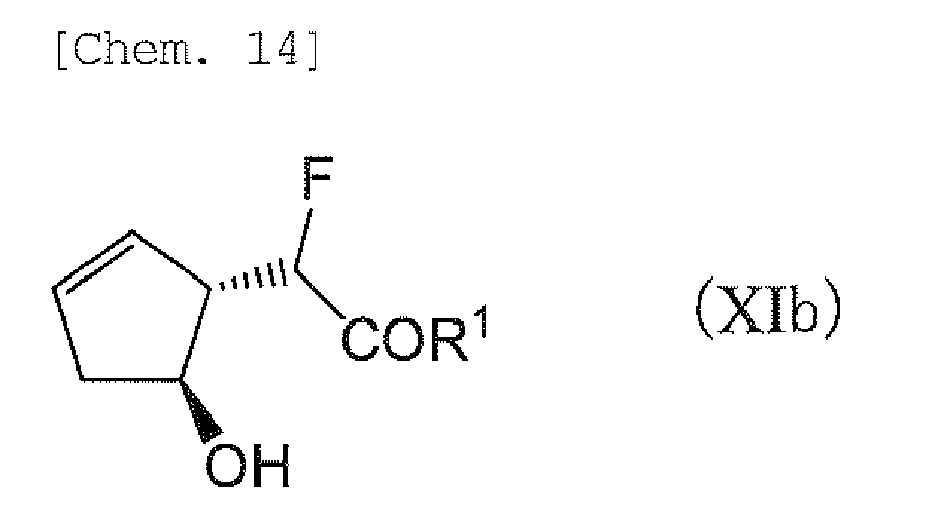
- (C) converting a mixture formed from the compound represented by Formula (XIa) and the compound represented by Formula (XIb) into a mixture formed from a compound represented by Formula (XIIa) and a compound represented by Formula (XIIb)
-

-

- (D) converting a mixture formed from the compound represented by Formula (XIIa) and the compound represented by Formula (XIIb) into the compound represented by Formula (II).
- Moreover, according to the present invention, there is provided a production method that includes reacting a compound represented by Formula (VIII) with a compound represented by Formula (IX) so as to convert them into a mixture formed from the compound represented by Formula (Xa) and the compound represented by Formula (Xb) .
- Furthermore, according to the present invention, there are provided compounds represented by Formulae (II), (III), (IV), and (VI) and salts thereof.
- Moreover, according to the present invention, there is provided a method for producing a compound represented by Formula (III) and a salt thereof, the method including
-

-
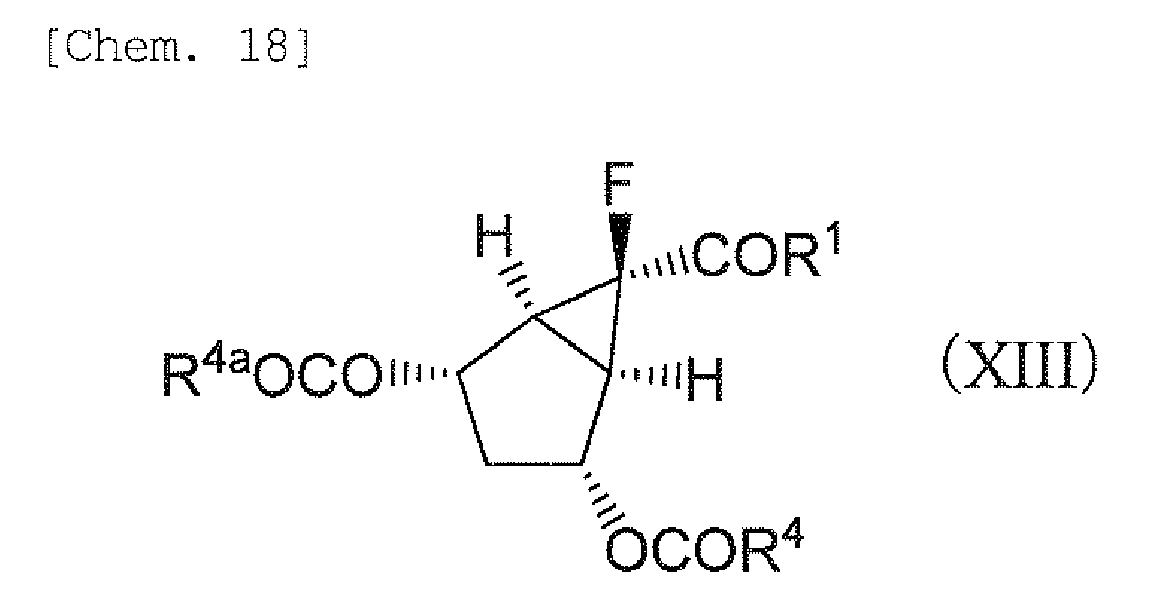
- Compounds represented by Formulae (I), (II), (III), (IV), (VI), (VII), (Xa), (Xb), (XIa), (XIb), (XIIa), and (XIIb) and salts thereof are intermediates prepared in the synthesis of bicyclo[3.1.0]hexane derivative mGluR modulators represented by Formula (IA) and salts thereof. A compound represented by Formula (IA) and a salt thereof may be produced by a literature method from a compound represented by Formula (I) or a compound represented by Formula (VII) and a salt thereof (ref. Patent Document 3 and Non-Patent Documents 2 and 3) .
- In accordance with use of the production method of the present invention, it becomes possible to produce a bicyclo [3.1.0] hexane derivative mGluR modulator without using an expensive optically active trans hydroxy ester as a starting material. That is, a compound of Formula (VIII), which is a starting material, may be an optically active substance or a racemic modification, and an optically inactive intermediate mesodiol (a compound of Formula (II)) can be produced from this starting material. It has been found that, by an asymmetric acylation method employing an enzymic meso trick method utilizing a specific microorganism-derived enzyme, a compound of Formula (III) can be produced from the compound of Formula (II) above, and asymmetric synthesis in a stage closer to a final product becomes possible.
Moreover, since it is possible to use a fluorine atom-containing starting material (compound of Formula IX) in the production method of the present application, it becomes possible to produce a bicyclo [3.1.0] hexane derivative mGluR modulator without going through a fluorination reaction, in which an ultralow temperature reaction is required. - The 'C1-6 alkyl group' denotes a straight-chain or branched alkyl group having 1 to 6 carbon atoms, and examples thereof include methyl, ethyl, n-propyl, isopropyl, n-butyl, isobutyl, sec-butyl, tert-butyl, n-pentyl, isopentyl, neopentyl, and n-hexyl groups.
- The C3-8 cycloalkyl group' denotes a cyclic alkyl group having 3 to 8 carbon atoms, and examples thereof include cyclopropyl, cyclobutyl, cyclopentyl, cyclohexyl, cycloheptyl, and cyclooctyl groups.
- The 'C1-6 alkoxy group' denotes a straight-chain or branched alkoxy group having 1 to 6 carbon atoms, and examples thereof include methoxy, ethoxy, n-propoxy, isopropoxy, n-butoxy, isobutoxy, sec-butoxy, tert-butoxy, n-pentyloxy, isopentyloxy, neopentyloxy, and n-hexyloxy groups.
- The 'halogen' is fluorine, chlorine, and bromine.
- The 'aryl group' denotes an aromatic hydrocarbon substituent and may be monocyclic or polycyclic (preferably monocyclic to tricyclic), and the rings in the polycycle may or may not be fused. Examples thereof include phenyl, naphthyl, and biphenyl groups.
- The 'heteroaryl group' denotes an aromatic ring having at least one heteroatom (nitrogen, oxygen, or sulfur) in the ring skeleton. The heteroaryl group may be monocyclic or polycyclic (preferably monocyclic to tricyclic), and the rings in the polycycle may or may not be fused. Examples thereof include groups such as pyrrole, pyrazole, imidazole, pyridine, pyrazine, pyrimidine, furan, pyran, oxazole, isooxazole, purine, benzimidazole, quinoline, isoquinoline, and indole. When the heteroaryl group defined here is substituted, the substituent may be bonded to a carbon atom forming the ring of the heteroaryl group or may be bonded to a nitrogen atom forming the ring, and has a valence that enables substitution. The substituent is preferably bonded to a carbon atom forming the ring.
- The 'bonding to each other and, together with the adjacent nitrogen atom, forming a 4- to 7-membered saturated heterocycle' denotes groups such as azetidinyl, pyrrolidinyl, piperidinyl, and azepanyl.
- The 'microorganism-derived enzyme' denotes for example an enzyme derived from a microorganism such as a fungus or a bacterium, and may be obtained from an extract in which such a microorganism is ground or a culture supernatant of such a microorganism. As the enzyme, there can be cited a lipase, an acylase, and the like; it is not limited to one type, and a plurality of enzymes may be present simultaneously. Examples of the fungus include the Candida genus, the Aspergillus genus, the Thermomyces genus, the Penicillium genus, the Geotrichum genus, the Galactomyces genus, and the Humicola genus. Examples of the bacterium include the Burkholderia genus.
- A 'support' is not particularly limited as long as it is a support that can immobilize an enzyme; examples thereof include Celite (trade name), which is a diatomaceous earth calcined together with sodium carbonate, and Toyonite (trade name), which is a porous ceramic-based support obtained by hydrothermally processing a kaolin mineral under hydrochloric acid-acidified conditions, then granulating, and calcining it. It is possible to easily modify the surface of Toyonite particles with various organic functional groups. By changing the type of organic functional group (methacryloyloxy group, phenylamino group, amino group, and the like) of a coupling agent used for modification of the surface of Toyonite, various types of enzyme may be more selectively immobilized. By immobilizing an enzyme on a simple substance such as Celite or Toyonite, the stability, reaction activity, and the like of the enzyme are increased.
- The 'salt' includes, for example, a salt with an inorganic acid such as sulfuric acid, hydrochloric acid, hydrobromic acid, phosphoric acid, or nitric acid, a salt with an organic acid such as acetic acid, oxalic acid, lactic acid, tartaric acid, fumaric acid, maleic acid, citric acid, benzenesulfonic acid, methanesulfonic acid, p-toluenesulfonic acid, benzoic acid, camphorsulfonic acid, ethanesulfonic acid, glucoheptonic acid, gluconic acid, glutamic acid, glycolic acid, malic acid, malonic acid, mandelic acid, galactaric acid, or naphthalene-2-sulfonic acid, a salt with one or more types of metal ions such as lithium ion, sodium ion, potassium ion, calcium ion, magnesium ion, zinc ion, or aluminum ion, and a salt with an amine such as ammonia, arginine, lysine, piperazine, choline, diethylamine, 4-phenylcyclohexylamine, 2-aminoethanol, or benzathine.
- 'Enantiomerically pure' denotes that a target enantiomer is present in at least 50% e.e. (enantiomeric excess) relative to an untargeted enantiomer, preferably at least 80% e.e., and yet more preferably at least 90% e.e.
- A bicyclo[3.1.0]hexane derivative mGluR modulator represented by Formula (IA) and a salt thereof may be produced from a compound represented by Formula (I) by a method known in the art. For example,
WO05/47215 - A preferred embodiment of the method for producing a compound represented by Formula (I) in the present invention is use of a compound of Formula (II) as a starting material. It is preferable that R1 be a methoxy group, an ethoxy group, or a benzyloxy group. It is more preferable that R1 be a methoxy group or an ethoxy group, and it is yet more preferable that R1 be a methoxy group.
- In a preferred embodiment of the method for producing a compound represented by Formula (I) in the present invention, R2 and R3 are selected from the group consisting of a methyl group and a phenyl group. Furthermore, it is preferable that R2 and R3 be the same substituents, and it is more preferable that R2 and R3 be phenyl groups.
- In a preferred embodiment of the method for producing a compound represented by Formula (I) in the present invention, R4 is a methyl group.
- In a preferred embodiment of the method for producing a compound represented by Formula (I) in the present invention, the R5s are hydrogen and a trimethylsilyl group.
- A bicyclo[3.1.0]hexane derivative mGluR modulator represented by Formula (IA) and a salt thereof may be produced from a compound of Formula (VII) above by a method known in the art. For example, Nakazato et al., J. Med. Chem., 43, 4893-4909 (2000) describes a method for synthesizing a compound represented by Formula (IA) using a compound represented by Formula (VII).
- A preferred embodiment of the method for producing a compound represented by Formula (VII) in the present invention employs a compound represented by Formula (II) as a starting material. It is preferable that R1 be a methoxy group, an ethoxy group, or a benzyloxy group, it is more preferable that R1 be a methoxy group or an ethoxy group, and it is yet more preferable that R1 be a methoxy group.
- In a preferred embodiment of the method for producing a compound represented by Formula (VII) in the present invention, the R4 group is a methyl group.
- Bicyclo[3.1.0]hexane derivatives represented by Formula (I) and Formula (VII) may be produced from a [3.1.0]hexane derivative represented by Formula (III) and a salt thereof using the above-mentioned method.
- A preferred embodiment of the method for producing a compound represented by Formula (III) in the present invention employs a compound represented by Formula (II) as a starting material. It is preferable that R1 be a methoxy group, an ethoxy group, or a benzyloxy group, it is more preferable that R1 be a methoxy group or an ethoxy group, and it is yet more preferable that R1 be a methoxy group.
- In a preferred embodiment of the method for producing a compound represented by Formula (III) in the present invention, R4 is a methyl group, an methyl group, a propyl group, a butyl group, a heptyl group, a monochloromethyl group, or a phenyl group. It is yet more preferable that R4 be a methyl group.
- A preferred embodiment of the method for producing a compound represented by Formula (II) in the present invention employs compounds represented by Formula (VIII) and Formula (IX) as starting materials. It is preferable that R1 be a methoxy group, an ethoxy group, or a benzyloxy group, it is more preferable that R1 be a methoxy group or an ethoxy group, and it is yet more preferable that R1 be a methoxy group. It is preferable that R9 and R10 be methoxy groups, ethoxy groups, or benzyloxy groups. It is preferable that R9 and R10 be the same substituents, and it is more preferable that R9 and R10 be methoxy groups.
- One embodiment of the production method of the present invention is shown in Scheme 1 and Scheme 2 below.
- (Scheme 1)
-

- In the formulae, R1, R9, and R10 are as defined above.
- The compound represented by Formula (VIII) may be an optically active substance or an optically inactive substance. The compound represented by Formula (VIII) may be synthesized by oxidizing cyclopentadiene using, for example, a peracid such as peracetic acid (J. Am. Chem. Soc., 82, 4328 (1960), Org. Synth., 42, 50 (1962)., Org. Lett., 7, 4573 (2005)). Furthermore, an optically active substance of the compound represented by Formula (VIII) may be synthesized by asymmetric oxidation of cyclopentadiene in the presence of, for example, a metal catalyst (Synlett, 827 (1995), Tetrahedron Letters, 37, 7131 (1996),
JP-A-09-052887 - By reacting a compound represented by Formula (VIII) and a compound represented by Formula (IX) in the presence of a base, a mixture of a compound represented by Formula (Xa) and a compound represented by Formula (Xb) is obtained.
Examples of the base used in the reaction include an alkali metal alkoxide such as sodium methoxide, sodium ethoxide, or potassium tert-butoxide, an alkali metal hydride such as sodium hydride or potassium hydride, an alkali metal hydroxide such as sodium hydroxide or potassium hydroxide, an organic amine such as 1,8-diazabicyclo[5.4.0]-7-undecene, and a metal amide such as lithium diisopropylamide or lithium hexamethyldisilazide; it is preferable to use an alkali metal alkoxide, it is more preferable to use an alkali metal methoxide or an alkali metal ethoxide, and it is yet more preferable to use sodium methoxide.
The amount of base used is not particularly limited as long as it is an amount that does not inhibit the reaction and does not cause a side reaction, but it may usually be used in the range of 0.5 to 5 molar equivalents relative to the compound represented by Formula (VIII), preferably in the range of 1 to 3 molar equivalents, and more preferably in the range of 1 to 2 molar equivalents. - The amount of compound represented by Formula (IX) used is not particularly limited as long as it is an amount that does not inhibit the reaction and does not cause a side reaction, but it may usually be used in the range of 0.5 to 5 molar equivalents relative to the compound represented by Formula (VIII), preferably in the range of 1 to 3 molar equivalents, and more preferably in the range of 1 to 2.5 molar equivalents.
- A solvent used in the reaction is not particularly limited as long as it is stable under relevant reaction conditions and does not inhibit a target reaction, but since the yield of the mixture of a compound represented by Formula (Xa) and a compound represented by Formula (Xb), which are products, depends on the type of solvent, it is preferable to use an alcohol, and more preferably methanol, as a solvent.
The amount of reaction solvent used is usually 1 to 100 times by mass relative to the compound represented by Formula (VIII), and preferably in the range of 5 to 30 times by mass.
The reaction temperature may be usually from -80°C to the boiling point of the solvent used, is preferably in the range of - 20°C to 60°C, and is more preferably in the range of 20°C to 40°C. - Subsequently, by heating the mixture of a compound represented by Formula (Xa) and a compound represented by Formula (Xb) in the presence of an additive, a mixture of a compound represented by Formula (XIa) and a compound represented by Formula (XIb) is obtained.
- A solvent used in the reaction is not particularly limited as long as it is stable under relevant reaction conditions and does not inhibit the target reaction. Since the yield of the mixture of a compound represented by Formula (XIa) and a compound represented by Formula (XIb), which are products, depends on the type of solvent, it is preferable to use a mixture of water and a polar organic solvent, more preferably water and dimethyl sulfoxide, and yet more preferably water and dimethyl sulfoxide at a ratio in the range of 0:5 to 1:5.
The amount of reaction solvent used may be usually 1 to 100 times by mass relative to the mixture of a compound represented by Formula (Xa) and a compound represented by Formula (Xb), is preferably in the range of 1 to 20 times by mass, and is more preferably in the range of 1 to 10 times by mass.
The reaction temperature may usually be from 80°C to 200°C, but is preferably in the range of 90°C to 160°C, and more preferably in the range of 100°C to 130°C.
When the reaction temperature exceeds the boiling point of the solvent used, the reaction may be carried out in a pressure-resistant container such as an autoclave. - Furthermore, the present reaction is accelerated by addition of the additive; examples of the additive that can be used include a salt, preferably an alkali metal halide salt such as lithium chloride, sodium chloride, potassium chloride, lithium bromide, sodium bromide, potassium bromide, lithium iodide, sodium iodide, or potassium iodide, an alkali metal cyanide salt such as sodium cyanide, a quaternary ammonium salt such as tetra-n-butylammonium chloride, tetra-n-butylammonium bromide, or tetra-n-butylammonium iodide, an organic amine salt such as triethylamine hydrochloride, or a mixture thereof. It is also possible to use an alkali metal halide salt such as sodium chloride and an acid such as acetic acid in combination.
The amount of additive used is not particularly limited as long as it is an amount that does not inhibit the reaction and does not cause a side reaction, but it is usually in the range of 0.5 to 5 molar equivalents relative to the mixture of a compound represented by Formulae (Xa) and a compound represented by Formula (Xb), preferably in the range of 1 to 4 molar equivalents, and more preferably in the range of 1 to 3 molar equivalents. - Subsequently, the mixture of a compound represented by Formula (XIa) and a compound represented by Formula (XIb) is oxidized in the presence of an additive, thus giving a mixture of a compound represented by Formula (XIIa) and a compound represented by Formula (XIIb)
- The present reaction proceeds by adding an oxidizing agent such as tert-butyl hydroperoxide in the presence of a catalyst such as vanadyl acetylacetonate (VO(acac)2).
A solvent used in the reaction is not particularly limited as long as it is stable under relevant reaction conditions and does not inhibit the target reaction. Since the yield of the mixture of a compound represented by Formula (XIIa) and a compound represented by Formula (XIIb), which are products, depends on the type of solvent, it is preferable to use an aromatic hydrocarbon or a halogenated hydrocarbon, more preferably chlorobenzene or toluene, and yet more preferably chlorobenzene.
The amount of reaction solvent used may be 3 to 100 times by mass relative to the mixture of a compound represented by Formula (XIa) and a compound represented by Formula (XIb), is preferably 3 to 20 times by mass, and is more preferably 5 to 10 times by mass.
The reaction temperature may usually be 0°C to 100°C, but is preferably in the range of 30°C to 80°C, and more preferably 50°C to 60°C. - The amount of oxidizing agent used is not particularly limited as long as it is an amount that does not inhibit the reaction and does not cause a side reaction, but it may usually be used at 1 to 3 molar equivalents relative to the mixture of a compound represented by Formula (XIa) and a compound represented by Formula (XIb), and is preferably in the range of 1 to 2 molar equivalents.
The amount of catalyst used is not particularly limited as long as it is an amount that does not inhibit the reaction and does not cause a side reaction, but it may usually be used at 0.01 to 1 molar equivalents relative to the mixture of a compound represented by Formula (XIa) and a compound represented by Formula (XIb), and is preferably in the range of 0.2 to 0.5 molar equivalents. - Furthermore, epoxidation of the mixture of a compound represented by Formula (XIa) and a compound represented by Formula (XIb) may also be carried out by reacting with a halogenating agent such as N-bromosuccinimide or N-iodosuccinimide in an appropriate solvent (for example, a mixture of dimethyl sulfoxide and water) to convert them into halohydrin derivatives, and then treating with a base such as 1,8-diazabicyclo[5.4.0]-7-undecene.
- Subsequently, by subjecting the mixture of a compound represented by Formula (XIIa) and a compound represented by Formula (XIIb) to an intramolecular cyclopropanation accompanied by epoxide ring opening, a compound represented by Formula (II) is obtained.
This reaction proceeds by adding a base in the presence of a Lewis acid.
In a preferred embodiment, first, the mixture of a compound represented by Formula (XIIa) and a compound represented by Formula (XIIb) is treated with a Lewis acid, and a base is then added. The compound represented by Formula (II) is obtained as the desired stereoisomer. - Examples of the Lewis acid include R3Al, R2AlX, RAlX2, Al (OR)3, Ti (OR) 4, RTi (OR)3, R2Ti (OR)2, a BF3 ether complex, Et2Zn, and Sc(OTf)3; it is preferably Et3Al, Al (OiPr) 3, Ti (OiPr)4, a BF3 ether complex, Et2Zn, and Sc (OTf) 3, more preferably Et3Al, Et2AlCl, and Et2Zn, and yet more preferably Et3Al. Here, X is a halogen or an inorganic radical, and the Rs are independently hydrocarbon groups.
The amount of Lewis acid used is not particularly limited as long as it is an amount that does not inhibit the reaction and does not cause a side reaction, but it may usually be used in the range of 1 to 5 molar equivalents relative to the mixture of a compound represented by Formula (XIIa) and a compound represented by Formula (XIIb), preferably in the range of 1.5 to 3 molar equivalents, and more preferably in the range of 2 to 2.5 molar equivalents. - Examples of the base include lithium hexamethyldisilazide and lithium diisopropylamide, and it is preferably lithium hexamethyldisilazide.
The amount of base used is not particularly limited as long as it is an amount that does not inhibit the reaction and does not cause a side reaction, but it may usually be used in the range of 1 to 5 molar equivalents relative to the mixture of a compound represented by Formula (XIIa) and a compound represented by Formula (XIIb), preferably in the range of 1.5 to 3 molar equivalents, and more preferably in the range of 2 to 2.5 molar equivalents. - A solvent used in the reaction is not particularly limited as long as it is stable under relevant reaction conditions and does not inhibit the target reaction. Since the yield of a compound represented by Formula (II), which is a product, depends on the type of solvent, it is preferable to use an ether-based solvent such as THF.
With regard to the amount of reaction solvent used, it may be used at 1 to 100 times by mass relative to the mixture of a compounds represented by Formula (XIIa) and a compound represented by Formula (XIIb), is preferably in the range of 3 to 20 times by mass, and is more preferably in the range of 5 to 10 times by mass.
The reaction temperature may usually be -80°C to 0°C, and is preferably -60°C to-40°C.
The reaction time is usually 0.5 hours to 6 hours, and is preferably 1 to 3 hours. - Furthermore, the hydroxy group of the mixture of a compound represented by Formula (XIIa) and a compound represented by Formula (XIIb) may be protected by a tert-butyldimethylsilyl group and the like and then subjected to a cyclopropanation reaction. By building a cyclopropane ring and then removing the protecting group, a compound represented by Formula (II) is obtained.
-


- In the formulae, R1, R2, R3, R4, R5, R11, and R12 are as defined above.
- By protecting only one of the two hydroxy groups of a compound represented by Formula (II), a compound represented by Formula (III) is obtained.
- The present reaction gives a desired stereoisomer in the presence of an appropriate enzyme.
In a preferred embodiment of the present reaction, by reacting a compound represented by Formula (II) with an acyl group donor in the presence of an enzyme, a compound represented by Formula (III) is obtained. - As the enzyme, a microorganism-produced enzyme having stereoselective acylation capability is used. By reacting a compound represented by Formula (II) and an acyl group donor in an organic solvent and the like in the presence of this enzyme, stereoselective acylation can be carried out. Furthermore, by immobilizing the enzyme on a support, it may also be used in the reaction as an immobilized enzyme. In this case, after a compound represented by Formula (II) is mixed with an acyl group donor in an organic solvent and the like, a support having an enzyme immobilized thereon is added to the above mixture and stirred, or a column is charged with a support having an enzyme immobilized thereon, and the above mixture is passed through the column, thus carrying out a stereoselective acylation reaction. The reaction temperature may usually be -20°C to 60°C. The organic solvent and the like used are not particularly limited as long as it is stable under relevant reaction conditions and does not inhibit the target reaction. Since the yield and optical purity of a compound represented by Formula (III), which is a product, depend on the type of solvent, it is preferable to use an organic solvent such as toluene, isopropyl ether, tetrahydrofuran, n-hexane, n-heptane, acetone, or chloroform or an ionic liquid such as 1-butyl-3-methylimidazolium hexafluorophosphate or 1-butyl-3-methylianidazolium tetrafluoroborate (Org. Lett., 2, 4189 (2000)).
- Examples of the acyl group donor include vinyl acetate, isopropenyl acetate, vinyl propionate, isopropenyl propionate, vinyl butanoate, isopropenyl butyrate, vinyl caproate, isopropenyl caproate, vinyl caprate, isopropenyl caprate, vinyl caprylate, isopropenyl caprylate, vinyl chloroacetate, isopropenyl chloroacetate, vinyl pivalate, and isopropenyl pivalate, and it is preferably vinyl acetate.
- The microorganism as an enzyme source is preferably a fungus or a bacterium. It is more preferably at least one type of fungus or bacterium selected from the group consisting of the Candida genus, the Aspergillus genus, the Thermomyces genus, the Penicillium genus, the Humicola genus, the Geotrichum genus, the Galactomyces genus, and the Burkholderia genus, and it is yet more preferably at least one type of fungus or bacterium selected from the group consisting of Candida antarctica, Aspergillus niger, Aspergillus melleus, Thermomyces langinosus, Penicillium camemberti, Humicola sp., Geotrichum candidum, Geotrichum eriense, Geotrichum fermentans, Galactomyces geotrichum, and Burkholderia cepacia.
- The microorganism-derived enzyme is preferably a lipase or an acylase, and more preferably Candida antarctica-derived lipase A. The microorganism-derived enzyme may be purified from an extract in which a microorganism is ground or a culture supernatant in accordance with a standard method. It is not always necessary to purify the microorganism-derived enzyme as a single product, and it may also be used as a crude enzyme. The enzyme may be used on its own or a plurality of types thereof may be used as a mixture. It is also possible to obtain a commercial product.
Examples of commercial Candida antarctica-derived lipase A products include NOVOZYM CALAL (trade name, available from Novozymes Japan Ltd.), NOVOZYM 735 (trade name, available from Novozymes Japan Ltd.), CHIRAZYME L-5 lyo (trade name, available from Roche Diagnostics K.K.), and Lipase A CLEA (trade name, available from Sigma-Aldrich Japan).
Examples of commercial Candida antarctica--derived lipase B products include NOVOZYM 435 (trade name, available from Novozymes Japan Ltd.). - Examples of the other lipases include Lipase AS "Amano" (trade name, available from Amano Enzyme Inc. [Aspergillus niger-derived lipase]), Lipozym TL 100L IM (trade name, available from Novozymes Japan Ltd. [Thermomyces langinosus-derived immobilized lipase]), Lipozym TL 100 (trade name, available from Novozymes Japan Ltd. [Thermomyces langinosus-derived lipase]), CHIRAZYME L8 Lyo (trade name, available from Roche Diagnostics K.K. [Humicola sp.-derived lipase]), Lipase G "Amano" (trade name, available from Amano Enzyme Inc. [Penicillium camemberti-derived lipase]), and Lipase PS "Amano" SD (trade name, available from Amano Enzyme Inc. [Burkholderia cepacia-derived lipase]).
Examples of acylases include Acylase 15000 "Amano" (trade name, available from Amano Enzyme Inc. [Aspergillus melleus-derived acylase]). - The microorganism-derived enzyme may also be immobilized on a support and used as an immobilized enzyme. Examples of the support used for immobilization of the enzyme include Celite or a Toyonite (Toyonite 200, Toyonite 200P, Toyonite 200M, Toyonite 200A (available from Toyo Denka Kogyo Co., Ltd.)). Other than an immobilized enzyme obtained by immobilizing the above-mentioned commercial lipase, an enzyme immobilized by applying a cultured cell supernatant obtained by culturing a specific microorganism to the above support may be used as an enzyme having lipase activity. As the specific microorganism, Geotrichum candidum, Geotrichum eriense, Geotrichum fermentans, Galactomyces geotrichum, and the like are preferable.
- Subsequently, by oxidizing the hydroxy group of a compound represented by Formula (III), a compound represented by Formula (IV) is obtained.
- In a preferred embodiment of the present reaction, by reacting a compound represented by Formula (III) with an oxidizing agent in the presence of a catalyst, a compound represented by Formula (IV) is obtained.
Examples of the catalyst include RuCl3 and 2,2,6,6-tetramethylpiperidine 1-oxyl (TEMPO).
The amount of catalyst used is not particularly limited as long as it is an amount that does not inhibit the reaction and does not cause a side reaction, but it may usually be used in the range of 0.001 to 1 molar equivalents relative to the compound represented by Formula (III), and preferably in the range of 0.01 to 0.1 molar equivalents. - Examples of the oxidizing agent include sodium hypochlorite.
The amount of oxidizing agent used is not particularly limited as long as it is an amount that does not inhibit the reaction and does not cause a side reaction, but it may usually be used in the range of 1 to 3 molar equivalents relative to the compound represented by Formula (III), and preferably in the range of 1 to 1.5 molar equivalents.
A solvent used in the reaction is not particularly limited as long as it is stable under relevant reaction conditions and does not inhibit the target reaction. Since the yield of a compound represented by Formula (IV), which is a product, depends on the type of solvent, it is preferably dichloromethane, chloroform, chlorobenzene, acetonitrile, and the like, and more preferably dichloromethane. - With regard to the above solvent, one type may be used on its own or two or more types may be used as a mixture.
The amount of reaction solvent used may be 1 to 100 times by mass relative to the compound represented by Formula (III), and is preferably in the range of 3 to 10 times by mass.
The reaction temperature may usually be -20°C to 50°C, preferably -20°C to 20°C, and more preferably -10°C to 0°C.
The reaction time is usually 0.5 hours to 6 hours, and preferably 1 to 3 hours.
Furthermore, the oxidation reaction of the hydroxy group of a compound represented by Formula (III) may be carried out by a method (for example, Swern oxidation and the like) well known to a person skilled in the art, and a compound represented by Formula (IV) is obtained. - Subsequently, by reacting a compound represented by Formula (IV) with a compound represented by Formula (V) in the presence of an acid catalyst, a compound represented by Formula (VI) is obtained.
- Examples of the acid catalyst include trifluoromethanesulfonic acid and trimethylsilyl trifluoromethanesulfonate.
The amount of acid catalyst used is not particularly limited as long as it is an amount that does not inhibit the reaction and does not cause a side reaction, but it may usually be used in the range of 0.01 to 1 molar equivalents relative to the compound represented by Formula (IV), preferably in the range of 0.05 to 0.5 molar equivalents, and more preferably in the range of 0.1 to 0.3 molar equivalents. - A solvent used in the reaction is not particularly limited as long as it is stable under relevant reaction conditions and does not inhibit the target reaction. Since the yield of a compound represented by Formula (VI), which is a product, depends on the type of solvent, it is preferable to use dichloromethane, toluene, and the like.
With regard to the above solvents, one type may be used on its own or two or more types may be used as a mixture.
Furthermore, depending on the circumstances, it may also be used as a dehydrated solvent by the use of an appropriate dehydrating agent or desiccant.
The amount of reaction solvent used may be 1 to 100 times by mass relative to a compound represented by Formula (IV), and is preferably in the range of 5 to 20 times by mass.
The reaction temperature may usually be -20°C to 50°C, preferably -10°C to 30°C, and more preferably -10°C to 0°C. - Examples of compounds represented by Formula (V) include (1S,2S)-1,2-diphenylethane-1,2-diol, (4S,5S)-2,2,7,7-tetramethyl-4,5-diphenyl-3,6-dioxa-2,7-disilaoctane, (2S, 3S)-butane-2,3-diol, and (4S, 5S) -2, 2, 4, 5, 7, 7-hexaznethyl-3, 6-dioxa-2, 7-disilaoctane.
The amount of compound represented by Formula (V) used is not particularly limited as long as it is an amount that does not inhibit the reaction and does not cause a side reaction, but it may usually be in the range of 1 to 3 molar equivalents relative to the compound represented by Formula (IV), and preferably in the range of 1 to 2 molar equivalents. - Subsequently, by removing the protecting group of the hydroxy group of the compound represented by Formula (VI) in the presence of a base, a compound represented by Formula (I) is obtained.
- Examples of the base include an alkali metal carbonate such as sodium hydrogen carbonate, sodium carbonate, potassium hydrogen carbonate, or potassium carbonate, an alkali metal alkoxide such as sodium methoxide, sodium ethoxide, or potassium tert-butoxide, an alkali metal hydride such as sodium hydride or potassium hydride, an alkali metal hydroxide such as sodium hydroxide or potassium hydroxide, and an organic amine such as triethylamine or 1,8-diazabicyclo[5.4.0]-7-undecene; it is preferably an alkali metal carbonate such as sodium hydrogen carbonate, sodium carbonate, potassium hydrogen carbonate, or potassium carbonate, and more preferably sodium hydrogen carbonate.
The amount of base used is not particularly limited as long as it is an amount that does not inhibit the reaction and does not cause a side reaction, but it may usually be used in the range of 0.1 to 3 molar equivalents relative to the compound represented by Formula (VI), and preferably in the range of 0.5 to 1.5 molar equivalents. - A solvent used in the reaction is not particularly limited as long as it is stable under relevant reaction conditions and does not inhibit the target reaction. Since the yield of a compound represented by Formula (VI), which is a product, depends on the type of solvent, it is preferably an alcohol such as methanol, ethanol, or 2-propanol, and more preferably methanol.
With regard to the above solvents, one type may be used on its own or two or more types may be used as a mixture.
The amount of reaction solvent used may be used at 1 to 100 times by mass relative to the compound represented by Formula (IV), and is preferably in the range of 5 to 20 times by mass. - The reaction temperature may usually be 0°C to 100°C; it is preferably 30°C to 60°C, and more preferably 40°C to 50°C.
The reaction time is usually 0.5 hours to 10 hours, and preferably 1 hour to 3 hours. - A bicyclo[3.1.0]hexane derivative mGluR modulator represented by Formula (IA) and a salt thereof may be produced from a compound of Formula (I) by a method known in the art. For example,
WO05/47215 - Another embodiment of the production method of the present invention is shown in Scheme 3 below.
-

- In the formulae, R1, R4, R11, and R12 are as defined above. A method for producing a compound represented by Formula (IV) from a compound represented by Formula (II) is as described above.
- By making a base or an acid act on a compound represented by Formula (IV), a compound represented by Formula (VII) is obtained.
- Examples of the base include an organic amine such as triethylamine or 1,8-diazabicyclo[5.4.0]-7-undecene.
The amount of base used is not particularly limited as long as it is an amount that does not inhibit the reaction and does not cause a side reaction, but it may usually be used in the range of 0.5 to 3 molar equivalents relative to the compound represented by Formula (IV), and preferably in the range of 0.8 to 1.2 molar equivalents. - Examples of the acid include trifluoromethanesulfonic acid and silica gel.
The amount of acid used is not particularly limited as long as it is an amount that does not inhibit the reaction and does not cause a side reaction, but it may usually be used in the range of 0.1 to 3 molar equivalents relative to the compound represented by Formula (IV) . - A solvent used in the reaction is not particularly limited as long as it is stable under relevant reaction conditions and does not inhibit the target reaction. It is preferable to use dichloromethane or methanol.
- A bicyclo[3.1.0]hexane derivative mGluR modulator represented by Formula (IA) and a salt thereof may be produced from the compound of Formula (VII) above by a method known in the art . For example, Nakazato et al., J. Med. Chem., 43, 4893-4909 (2000) describes a method for synthesizing a compound represented by Formula (IA) using a compound represented by Formula (VII).
- Another embodiment of the production method of the present invention is shown in Scheme 4 below.
-

- The present reaction gives a desired stereoisomer in the presence of an appropriate enzyme.
In a preferred embodiment of the present reaction, by reacting a compound represented by Formula (XIII) as an acryl group donor with an acyl group acceptor in the presence of an enzyme, only one of the two acyl groups of the compound represented by Formula (XIII) is selectively cleaved, and a compound represented by Formula (III) is obtained. - As the enzyme, a microorganism-produced enzyme having stereoselective ester exchange reactivity is used. Furthermore, by immobilizing the enzyme on a support, it may also be used in the reaction as an immobilized enzyme. In this case, after a compound represented by Formula (XIII) is mixed with an acyl group acceptor in an organic solvent and the like, a support having an enzyme immobilized thereon is added to the above liquid mixture and stirred, or a column is charged with a support having an enzyme immobilized thereon and the above liquid mixture is passed through the column, thus carrying out a stereoselective ester exchange reaction. The reaction temperature is usually -20°C to 60°C. The organic solvent and the like used in the reaction are not particularly limited as long as they are stable under relevant reaction conditions and do not inhibit the target reaction. From the viewpoint of the yield and optical purity of the compound represented by Formula (III), it is preferable to use an organic solvent such as toluene, isopropyl ether, tetrahydrofuran, n-hexane, n-heptane, acetone, or chloroform or an ionic liquid such as 1-butyl-3-methylimidazolium hexafluorophosphate or 1-butyl-3-methylimidazolium tetrafluoroborate (Org. Lett., 2, 4189 (2000)). It is yet more preferable to use isopropyl ether.
- Examples of the acyl group acceptor include methanol, ethanol, n-propanol, benzyl alcohol, cyclopentanol, 2-propanol (isopropanol), and 2-butanol, and it is preferably cyclopentanol, 2-propanol (isopropanol), or 2-Butanol. The most desirable compound for the enzymatic reaction is cyclopentanol.
- The microorganism as an enzyme source is preferably a fungus or a bacterium. It is more preferably at least one type of fungus or bacterium selected from the group consisting of the Candida genus, the Aspergillus genus, the Alcaligenes genus, the Pseudomonas genus, the Dipodascus genus, the Penicillium genus, and the Burkholderia genus, and yet more preferably at least one type of fungus or bacterium selected from the group consisting of Candida rugosa, Aspergillus nigger, Pseudomonas stutzeri, Pseudomonas fluorescens, Pseudomonas sp., Penicillium roqueforti, Dipodascus australiensis, Alcaligenes sp., and Burkholderia cepacia.
- The microorganism-derived enzyme is preferably a lipase or an esterase, and more preferably an Alcaligenes sp.-, Burkholderia cepacia-, Pseudomonas fluorescens-, or Candida rugosa-derived lipase. The microorganism-derived enzyme may be purified from an extract in which a microorganism is ground or a culture supernatant in accordance with a standard method. It is not always necessary to purify the microorganism-derived enzyme as a single product, and a crude enzyme may also be used. The enzyme may be used on its own or a plurality of types may be used as a mixture. It is also possible to obtain a commercial product.
Examples of Alcaligenes sp.-derived lipase products include Lipase QLM (trade name, available from Meito Sangyo Co., Ltd.). Examples of Burkholderia cepacia-derived lipase products include Lipase PS "Amano" SD (trade name, available from Amano Enzyme Inc.). Examples of Pseudomonas fluorescens-derived lipase products include Lipase AK "Amano" 20 (trade name, available from Amano Enzyme Inc.). Examples of Candida rugosa-derived lipase products include Lipase AY "Amano" 30G (trade name, available from Amano Enzyme Inc.). - Examples of other lipases include Lipase R "amino" (trade name, available from Amano Enzyme Zinc. [Penicillium roqueforti-derived lipase]), Lipase TL (trade name, available from Meito Sangyo Co., Ltd. [Pseudomonas stutzeri-derived lipase]), and Lipase AS "amino" (trade name, available from Amano Enzyme Inc.
- Examples of esterases include CHE "Amano" 2 (sample name, available from Amano Enzyme Inc. [Pseudomonas sp.-derived esterase]).
- The microorganism-derived enzyme may also be immobilized on a support and used as an immobilized enzyme. Examples of the support used for immobilization of the enzyme include Celite and a Toyonite (Toyonite 200, Toyonite 200P, Toyonite 200M, Toyonite 200A (available from Toyo Denka Kogyo Co., Ltd.)). Other than an immobilized enzyme obtained by immobilizing the above-mentioned commercial lipases, an enzyme immobilized by applying to the above support a cultured cell supernatant obtained by culturing a Dipodascus australiensis NBRC 10805 microorganism strain may also be used as an enzyme having ester exchange capability.
- Here, the starting materials and reagents may be either commercial products, ones known from the literature, or ones prepared in accordance with a method described in literature related to analogous compounds. Reaction and purification of a product obtained as a result of the reaction are in accordance with methods known to a person skilled in the art. Examples of purification methods include crystallization, distillation, and normal phase or reversed phase chromatography.
- More specific examples are illustrated below, but the disclosure of the present invention is not limited thereto. Examples 1 to 4, 18, and 19 show the method of Scheme 1. Examples 5 to 9 and 12 to 17 show the method of Scheme 2. Examples 10 and 11 show the method of Scheme 3.
-

- 23.81 g (110.2 mmol) of a 25 w/w% methanol solution of sodium methoxide was added to a methanol (90.4 mL) solution of 18.19 g (121.2 mmol) of dimethyl fluoropropanedioate (9) over 3 minutes while keeping the internal temperature between 25°C and 38°C. After stirring the solution thus obtained for 15 minutes, 4.52 g (55.1 mmol) of 6-oxabicyclo[3.1.0]hex-2-ene (8) was added thereto over 2 minutes while keeping the internal temperature between 25°C and 38°C. After stirring at room temperature for 1 hour, 45 mL of a saturated ammonium chloride aqueous solution was added over 10 minutes while keeping the internal temperature between 26°C and 35°C. The reaction mixture was concentrated under reduced pressure, most of the methanol was removed by evaporation, and 108 g of a brown solution containing solids was obtained. After extraction with 136 mL of ethyl acetate was carried out twice, washing with 45 mL of water was carried out. After the organic layer was concentrated under reduced pressure, 100 mL of toluene was added, and concentration under reduced pressure was carried out again. The concentrated residue was purified by flash silica gel column chromatography (eluent: toluene/ethyl acetate), thus giving 7.21 g of a mixture of the compound of Formula 10a and the compound of Formula 10b as a yellow oily material.
- 1H NMR (500 MHz, DMSO-d6): δ 2.13-2.17 (m, 1H), 2.56 (dddd, J = 2.2, 4.3, 7.1, 17.2 Hz, 1H), 3.32-3.40 (m, 1H), 3.77 (s, 3H), 3.79 (s, 3H), 4.20 (m, 1H), 5.04 (d, J = 6.1 Hz, 1H), 5.47 (ddd, J = 2.1, 4.3, 6.1 Hz, 1H), 5.85 (ddd, J = 2.2, 4.4, 6.1 Hz, 1H). 13C NMR (125 MHz, DMSO-d6): δ 41.93, 53.39 (d, J = 19.5 Hz), 58.70 (d, J = 20.8 Hz), 70.43 (d, J = 2.6 Hz), 93.55, 95.14, 125.59, 133.32, 165.42 (d, J = 15.6 Hz), 165.62 (d, J = 14.3 Hz). 19F NMR (470 MHz, DMSO-d6) : δ -172.43, -172.36. HRMS (ES) m/z: [M+Na]+ calcd for C10H13O5FNa; 255.0645, found 255.0635. IR (neat) 3528, 3408, 2960, 1755, 1438, 1284, 1253, 1173, 1111, 1068, 1031, 936, 838, 787, 722, 663, 415 cm-1.
-

- 172.51 g of dimethyl sulfoxide and 25.92 g of water were added to 17.27 g (74.50 mmol) of a mixture of the compound of Formula 10a and the compound of Formula 10b. 9.65 g (227.65 mmol) of lithium chloride was added to this solution, and the mixture was heated and stirred at 130°C for 2 hours. After allowing it to cool, the reaction mixture was extracted with 500 mL of ethyl acetate three times, and the organic layer was then concentrated under reduced pressure, thus giving a concentrated residue. This concentrated residue was purified by flash column silica gel chromatography (eluent: n-hexane/ethyl acetate = 1:1), thus giving 3.674 g of a mixture of the compound of Formula 11a and the compound of Formula 11b as a yellow oily material.
- 1H NMR (500 MHz, DMSO-d6): δ 2.11-2.17 (m, 1.6H), 2.53-2.50 (m, 1.6H), 2.87-2.96 (m, 1.6H), 3.71 (s, 1.8H), 3.73 (s, 3H), 4.23-4.28 (m, 1.6H), 4.93 (d, J = 5.0 Hz, 0.6H), 5.07 (d, J = 5.4 Hz, 1H), 5.11 (dd, J = 4.2, 48.3 Hz, 0.6H), 5.17 (dd, J = 3.8, 48.5 Hz, 1H), 5.42-5.45 (m, 1H), 5.55-5.58 (m, 0.6H), 5.78-5.80 (m, 1.6H). 13C NMR (125 MHz, DMSO-d6) : δ 41.29, 41.83, 51.95, 52.13, 56.80 (d, J = 20.8 Hz), 57.06 (d, J = 19.5 Hz), 70.49 (d, J = 5.2 Hz), 71.90 (d, J = 2.6 Hz), 88.36 (d, J = 184.3 Hz), 88.48 (d, J = 184.3 Hz), 125.93 (d, J = 5.2 Hz), 127.28 (d, J = 3.9 Hz), 131.76, 132.13, 169.05 (d, J = 24.7 Hz), 169.21 (d, J = 24.7 Hz). 19F NMR (470 MHz, DMSO-d6): δ -197.87 (dd, J = 29.2, 47.5 Hz), -194.53 (dd, J = 25.7, 47.8 Hz). HRMS (ES) m/z: [M+Na]+ calcd for C8H11O3FNa; 197.0590, found 197.0578. IR (neat) 3410, 3060, 2956, 2851, 1747, 1440, 1357, 1288, 1228, 1127, 1097, 1067, 1048, 1025, 952, 856, 724, 584, 450 cm-1.
- 70.06 g of dimethyl sulfoxide and 45.64 g (33.16 mol) of triethylamine hydrochloride were added to 70.02 g (0.3015 mmol) of a mixture of the compound of Formula 10a and the compound of Formula 10b, and the mixture was heated and stirred at 110°C to 120°C for 5 hours. After allowing it to cool, 350.9 g of water was added thereto, and the reaction mixture was extracted with 350 g of methyl isobutyl ketone twice. The organic layer was concentrated under reduced pressure, thus giving 65.40 g of a yellowish brown oily material containing 46.78 g (value quantitatively determined by gas chromatograph) of a mixture of the compound of Formula 11a and the compound of Formula 11b.
- 1 mL of dimethyl sulfoxide, 0.073 g (1.25 mmol) of sodium chloride, and 0.061 g (1.00 mmol) of acetic acid were added to 0.232 g (1.00 mmol) of a mixture of the compound of Formula 10a and the compound of Formula 10b, and the mixture was heated and stirred at 110°C to 120°C for 5 hours. After allowing it to cool, analysis was carried out using a high-performance liquid chromatograph, and it was found that 0.146 g (value quantitatively determined by high-performance liquid chromatograph) of a mixture of the compound of Formula 11a and the compound of Formula 11b was obtained.
-

- 0.1176 g (0.444 mmol) of vanadyl acetylacetonate (VO(acac)2) was added to a chlorobenzene (18.37 g) solution of 3.644 g (20.92 mmol) of a mixture of the compound of Formula 11a and the compound of Formula 11b at room temperature. The mixture was heated to 60°C, and 5.445 g (42.29 mmol) of a 70% toluene solution of tert-butyl hydroperoxide (tBuOOH) was added thereto over 10 minutes while keeping the internal temperature between 55°C and 60°C. The mixture was stirred at 55°C for 4 hours and then allowed to cool to room temperature. After 22 g of a 20% sodium thiosulfate aqueous solution was added and stirring was carried out for 30 minutes, extraction was carried out with 50 mL of ethyl acetate four times. The organic layers were combined and concentrated under reduced pressure, thus giving a concentrated residue. This concentrated residue was purified by flash silica gel column chromatography (eluent: n-hexane/ethyl acetate = 2:1 to 1:1), thus giving 2.402 g of a mixture of the compound of Formula 12a and the compound of Formula 12b as a yellow oily material.
- 1H NMR (500 MHz, DMSO-d6): δ 1.76 (s, 0.6H), 1.79 (s, 1H), 1.99 (dt, J = 7.6, 1.5 Hz, 1H), 2.02 (dt, J = 7.6, 1.5 Hz, 0.6H), 2.42-2.44 (m, 0.6H), 2.48-2.51 (m, 1H), 3.38 (d, J = 2.5 Hz, 1H), 3.55-3.56 (m, 1.6H), 3.59 (m, 0.6H), 3.75 (s, 1.8H), 3.77 (s, 3H), 4.08 (t, J = 6.9 Hz, 0.6H), 4.18 (t, J = 6.9 Hz, 1H), 4.41 (d, J = 6.5 Hz, 0.6H), 4.49 (d, J = 6.1 Hz, 1H), 5.32 (dd, J= 4.0, 47.0 Hz, 1H), 5.35 (dd, J = 3.0, 48.0 Hz, 0.6H). 13C NMR (125 MHz, DMSO-d6) : δ 37.37, 37.88, 51.87 (d, J = 19.5 Hz), 51.93 (d, J = 18.2 Hz), 52.34, 52.42, 56.83 (d, J = 7.8 Hz), 57.73, 57.84, 58.20 (d, J = 2.6 Hz), 70.85 (d, J = 5.2 Hz), 72.65 (d, J = 2.6 Hz), 125.93 (d, J = 181.7 Hz), 127.28 (d, J = 183.0 Hz), 168.63 (d, J = 23.4 Hz), 168.71 (d, J = 24.7 Hz). 19F NMR (470 MHz, DMSO-d6) : δ -198.56 (dd, J = 32.9, 47.5 Hz), -198.20 (dd, J = 32.9, 48.0 Hz). HRMS (ES) m/z: [M+Na]+ calcd for C8H11O4FNa; 213.0539, found 213.0530. IR (neat) 3506, 3032, 2959, 1758, 1639, 1440, 1408, 1364, 1288, 1226, 1098, 1077, 1012, 965, 917, 838, 802, 732, 668, 564, 444 cm-1.
-

- A THF (dehydrated, 20 mL) solution of 2.334 g (12.27 mmol) of a mixture of the compound of Formula 12a and the compound of Formula 12b was cooled to -50°C, and 29.0 mL (27.26 mmol) of a 0.94 mol/L triethylaluminum hexane solution was added thereto over 30 minutes while keeping the internal temperature between -60°C and - 50°C. After stirring at -50°C for 30 minutes, 23.6 mL (23.60 mmol) of a 1 mol/L lithium hexamethyldisilazide (LiHMDS) hexane solution was added thereto over 45 minutes while keeping the internal temperature between -50°C and -40°C. After stirring at -50°C for 2 hours, the reaction mixture was added over 30 minutes to 44.3 g of a 25% citric acid aqueous solution cooled to 5°C. This reaction mixture was extracted with 50 mL of ethyl acetate four times and concentrated under reduced pressure. The concentrated residue was purified by flash silica gel column chromatography (eluent: ethyl acetate), thus giving a yellow oily material. This oily material was precipitated from a mixed liquid of 3.0 g of ethyl acetate and 0.5 g of water, thus giving 1.027 g of the compound of Formula 2 as colorless crystals.
- mp 73.9-76.5°C, 1H NMR (500 MHz, DMSO-d6) : 5 1.64 (dd, J = 4.4, 15.3 Hz, 1H), 1.96 (m, 1H), 2.17 (s, 2H), 3.72 (br s, 3H), 4.18 (d, J = 5.0 Hz, 2H), 4.93 (br s, 2H). 13C NMR (125 MHz, DMSO-d6): δ 38.03 (d, J = 11.7 Hz), 45.76 (d, J = 7.8 Hz), 52.64, 71.53, 77.52, 79.42, 168.78 (d, J = 26.0 Hz). 19F NMR (470 MHz, DMSO-d6): 5 -216.827. HRMS (ES) m/z: [M+Na]+ calcd for C8H11O4FNa; 213.0539, found 213.0537. IR (KBr) 3549, 3413, 3295, 3246, 2964, 2922, 1732, 1616, 1467, 1442, 1381, 1336, 1285, 1265, 1235, 1198, 1181, 1130, 1078, 1041, 994, 947, 890, 805, 777, 733, 646, 566, 537, 480 cm-1.
-

- A 50 mL Sumilon tube (Sumitomo Bakelite Co., Ltd.) was charged with 12.0 mL of NOVOZYM 735, 6.0 g of Toyonite 200M, and 30 mL of a 100 mM potassium phosphate buffer (pH 7) and shaken (100 rpm) at room temperature (25°C) for 18 hours. After shaking was completed, the mixture was filtered using Kiriyama filter paper No. 5B and then dried under reduced pressure at room temperature for 4 days, thus giving an immobilized enzyme. A 6 mL volume column (Bond Elut Reservoir with frit: purchased from GL Sciences Inc.) was charged with 2.0 g of the immobilized enzyme thus obtained.
A solution in which 3.1 g of crystals of the compound of Formula 2 was dissolved in 136.5 mL of vinyl acetate/acetone (10:1) was fed to the column charged with the above immobilized enzyme via a silicone tube using a peristaltic pump (Atto Corporation). The feed rate was 20 mL/hr.
After feeding was completed, the eluate was analyzed by a TLC method and an HPLC method, and it was found that 2.95 g (yield 79.05%) of the compound of Formula 3 was obtained at an optical purity of 99.99% e.e. The eluate was concentrated under reduced pressure and the concentrated residue was then purified by flash silica gel column chromatography (eluent: n-hexane/ethyl acetate), thus giving the compound of Formula 3 as a colorless oily material. - 1H NMR (500 MHz, CDCl3): δ 1.96 (dd, J= 4.6, 16.1 Hz, 1H), 2.11 (s, 3H), 2.28 (ddd, J = 6.1, 13.4, 16.4 Hz, 1H), 2.37 (br s, 1H), 2.41 (d, J = 6.9 Hz, 1H), 2.44 (d, J = 6.5 Hz, 1H), 3.82 (s, 3H), 4.45 (d, J = 5.7 Hz, 1H), 5.29 (d, J = 6.1 Hz, 1H). 13C NMR (125 MHz, CDCl3): δ 21.17, 34.96 (d, J = 10.4 Hz), 37.93 (d, J = 11.7 Hz), 42.44 (d, J = 9.1 Hz), 52.91, 72.90, 75.49, 79.33, 168.55 (d, J = 25.9 Hz), 170.28. 19F NMR (470 MHz, CDCl3): δ -217.73. HRMS (ES) m/z: [M+Na]+ calcd for C10H13O5FNa; 255.0645, found 255.0628. IR (neat): 3451, 2960, 1738, 1442, 1373, 1318, 1232, 1115, 1074, 1045, 1016, 993, 950, 867, 800, 788, 736, 654, 629, 608, 573, 473 cm-1.
-

- A dichloromethane (dehydrated, 5 mL) solution of 1.10 g (4.74 mmol) of the compound of Formula 3 was cooled to -10°C, 15.1 mg (0.097 mmol) of 2,2,6,6-tetramethylpiperidine 1-oxyl (TEMPO), 109.2 mg (1.30 mmol) of sodium hydrogen carbonate, and 2.2 mL of water were added in sequence, and 4.230 g (5.68 mmol) of a 10% sodium hypochlorite aqueous solution was then added while keeping the internal temperature between -10°C and 0°C. After stirring at - 10°C to 0°C for 1 hour, the mixture was separated. The aqueous layer was re-extracted with 10 mL of toluene, and the dichloromethane layer and the toluene layer were each washed with 1 mL of water. After the organic layers were combined and concentrated under reduced pressure, 10 mL of toluene was added, and the mixture was again concentrated under reduced pressure, thus giving 972 mg of a pale yellow oily material. By precipitating from toluene, 512.5 mg of the compound of Formula 4 was obtained as colorless crystals.
- mp: 88.4-88. 9°C, 1H NMR (500 MHz, CDCl3) : δ 2.12 (s, 3H), 2.37 (dd, J = 3.8, 19.5 Hz, 1H), 2.66 (dt, J = 19.5, 5.9 Hz, 1H), 2.73 (d, J = 6.1 Hz, 1H), 2.93 (dd, J = 1.5, 6.1 Hz, 1H), 3.86 (s, 3H), 5.50 (d, J = 6.1 Hz, 1H). 13C NMR (125 MHz, CDCl3) : δ 20.86, 38.18 (d, J = 10.4 Hz), 38.99 (d, J = 14.3 Hz), 43.48 (d, J = 3.9 Hz), 53.41, 69.09 (d, J = 2.5 Hz), 79.26, 166.42 (d, J = 25.9 Hz), 170.02, 204.35. 19F NMR (470 MHz, CDCl3) : δ -210.68. MS m/z 230.0 [M]+. IR (KBr) : 3102, 2995, 1756, 1738, 1441, 1397, 1373, 1348, 1326, 1305, 1260, 1219, 1173, 1108, 1084, 1037, 1024, 1012, 983, 954, 907, 870, 829, 782, 738, 651, 640, 626, 474, 461 cm-1.
-

- A dichloromethane (dehydrated, 19 mL) solution of 5.00 g (23.34 mmol) of (1S,2S)-1,2-diphenylethane-1,2-diol was heated to 30°C, 1.5 mg (0.006 mmol) of iodine and 4.54 g (28.13 mmol) of 1,1,1-trimethyl-N-(trimethylsilyl)silanamine (HMDS) were added thereto in sequence, and stirring was then carried out at 35°C for 1 hour. After allowing it to cool to room temperature, the mixture was concentrated under reduced pressure. 25 mL of toluene was added to the concentrated residue, and the mixture was again concentrated under reduced pressure. After this was repeated twice, 5 mL of toluene was added thereto, thus giving 13.66 g of a toluene solution of (4S,5S)-2,2,7,7-tetramethyl-4,5-diphenyl-3,6-dioxa-2,7-disilaoctane (5) (Solution 1).
1.283 g (1.97 mmol) of Solution 1 was added to a dichloromethane (dehydrated, 3 mL) solution of 401 mg (1.74 mmol) of crystals of the compound of Formula 4, this solution was cooled to -10°C, and a dichloromethane (dehydrated, 1 mL) solution of 35.7 mg (0.161 mmol) of trimethylsilyl trifluoromethanesulfonate (TMSOTf) was added thereto. After stirring was carried out at - 10°C for 3.5 hours, 1.238 g (1.89 mmol) of Solution 1 above was added. After stirring was carried out at -10°C for a further 3 hours, a dichloromethane (dehydrated, 1 mL) solution of 39.6 mg (0.178 mmol) of trimethylsilyl trifluoromethanesulfonate (TMSOTf) was added. After stirring was carried out at -10°C overnight, 0.03 mL (0.371 mmol) of pyridine was added, and stirring was carried out at 0°C for 20 minutes. 1 mL of a 5% sodium hydrogen carbonate aqueous solution was added, and the mixture was stirred at 0°C for 20 minutes and then separated. The aqueous layer was re-extracted with 2 mL of dichloromethane twice, and the organic layers were combined and washed with 1 mL of water. After concentrating under reduced pressure, the concentrated residue was purified by flash silica gel column chromatography (eluent: n-hexane/ethyl acetate), and precipitation was then carried out from methanol, thus giving 326.4 mg of the compound of Formula 6 as colorless crystals. - mp: 123.5-123.7°C, 1H NMR (500 MHz, CDCl3) : δ 2.11 (s, 3H), 2.46 (dd, J = 4.3, 15.2 Hz, 1H), 2.47 (d, J = 6.9 Hz, 1H), 2.56 (d, J = 6.9 Hz, 1H), 2.60 (dt, J = 15.9, 6.3 Hz, 1H), 3.86 (s, 3H), 4.79 (d, J = 8.2 Hz, 1H), 4.88 (d, J = 8.2 Hz, 1H), 5.38 (d, J = 6.3 Hz, 1H), 7.19-7.21 (m, 2H), 7.26-7.31 (m, 5H), 7.33-7.35 (m, 3H). 13C NMR (125 MHz, CDCl3) : δ 21.20, 34.85 (d, J = 11.3 Hz), 37.26 (d, J = 12.6 Hz), 43.95 (d, J = 7.4 Hz), 53.05, 72.91, 78.80, 85.67, 86.19, 117-52, 126.22, 126.83, 128.32, 128.47, 128.54, 128.60, 136.08, 136.82, 168.51 (d, J = 24.9 Hz), 170.56. 19F NMR (470 MHz, CDCl3) : δ -216.72. MS m/z: 449.1 [M+Na]+. IR (KBr): 3456, 3068, 2964, 2916, 1737, 1606, 1497, 1456, 1442, 1359, 1330, 1258, 1238, 1197, 1133, 1102, 1053, 1024, 986, 936, 916, 870, 822, 791, 765, 755, 700, 683, 648, 608, 531, 466 cm-1.
-


- A dichloromethane (dehydrated, 5 mL) solution of 1.003 g (4.32 mmol) of the compound of Formula 3 was cooled to -10°C, 14.5 mg (0.093 mmol) of 2,2,6,6-tetramethylpiperidine 1-oxyl (TEMPO), 99.2 mg (1.18 mmol) of sodium hydrogen carbonate, and 2 mL of water were added in sequence, and 3.854 g (5.18 mmol) of a 10% sodium hypochlorite aqueous solution was then added while keeping the internal temperature between -10°C to 0°C. The mixture was stirred at -10°C to 0°C for 1 hour and then separated. The organic layer was washed with 1 mL of water, then dried with sodium sulfate, and concentrated under reduced pressure, and 1.05 g of the compound of Formula 4 was obtained as a yellow oily material. 1.111 g (5.19 mmol) of (1S,2S)-1,2-diphenylethane-1,2-diol was added to a dichloromethane (18 mL) solution of the compound of Formula 4 thus obtained, this solution was cooled to -5°C, and a dichloromethane (dehydrated, 2 mL) solution of 131.8 mg (0.88 mmol) of trifluoromethanesulfonic acid was then added. After stirring at - 5°C for 2 hours and at room temperature for 20 hours, 0.1 mL (1.24 mmol) of pyridine was added, and stirring was carried out at 0°C for 20 minutes. 1.6 mL of a 5% sodium hydrogen carbonate aqueous solution was added thereto, and the mixture was stirred at 0°C for 20 minutes and then separated. The aqueous layer was extracted with 5 mL of dichloromethane twice, and the organic layers were combined and washed with 2 mL of water. The organic layer was dried with sodium sulfate and then concentrated under reduced pressure, and the concentrated residue was purified by flash silica gel column chromatography (eluent: n-hexane/ethyl acetate), thus giving 1.388 g of the compound of Formula 6 in amorphous form. By precipitating from methanol, 947 mg of colorless crystals were obtained.
- 1H NMR (300 MHz, CDCl3) : δ 2.12 (s, 3H), 2.43-2.49 (m, 2H), 2.56-2.65 (m, 2H), 3.87 (s, 3H), 4.80 (d, J = 8.2 Hz, 1H), 4.89 (d, J = 8.2 Hz, 1H), 5.39 (d, J = 6.1 Hz, 1H), 7.18-7.39 (m, 10H). MS m/z: 449.2 [M+Na]+.
-

- Methanol (dehydrated, 2 mL) was added to 201.3 mg (0.472 mmol) of crystals of the compound of Formula 6, and the mixture was heated to 50°C to thus dissolve the crystals. 40.4 mg (0.481 mmol) of sodium hydrogen carbonate was added to this solution, after stirring was carried out at 45°C to 50°C for 1.5 hours 19.9 mg (0.237 mmol) of sodium hydrogen carbonate was further added, and stirring was carried out for a further 2 hours. The reaction mixture was concentrated under reduced pressure, most of the methanol was removed by evaporation, 4 mL of toluene was added to a solid thus obtained and the mixture was heated to 50°C, 1 mL of water was added, and the mixture was stirred and separated. The aqueous layer was re-extracted with 4 mL of toluene, and the organic layers were combined and concentrated under reduced pressure, thus giving 194.7 mg of a white solid. By precipitation from a heptane/ethyl acetate (3/2) mixed solvent, 101.3 mg of the compound of Formula 1 was obtained as colorless crystals.
- mp: 120.3-120.7°C, 1H NMR (500 MHz, CDCl3) : δ 2.35 (dd, J = 4.0, 15.5 Hz, 1H), 2.38 (d, J = 6.9 Hz, 1H), 2.48 (d, J = 6.9 Hz, 1H), 2.51 (dt, J = 15.3, 5.7 Hz, 1H), 2.61 (d, J = 9.6 Hz, 1H), 3.86 (s, 3H), 4.48 (dd, J = 5.4, 9.6 Hz, 1H), 4.80 (d, J = 8.4 Hz, 1H), 4.82 (d, J = 8.4 Hz, 1H), 7.18 (dd, J = 3.1, 6.5 Hz, 2H), 7.26 (dd, J = 2.9, 6.7 Hz, 2H), 7.29-7.31 (m, 3H), 7.34-7.36 (m, 3H). 13C NMR (125 MHz, CDCl3) : δ 36.76 (d, J = 13.0 Hz), 37.56 (d, J = 11.7 Hz), 45.89 (d, J = 7.8 Hz), 52.99, 70.90, 79.67, 85.96, 86.09, 117.71, 126.29, 126.85, 128.35, 128.44, 128.59, 128.68, 135.79, 136.45, 168.82 (d, J = 25.9 Hz). 19F NMR (470 MHz, CDCl3) : δ -216.52. MS m/z: 407.2 [M+Na]+. IR (KBr) : 3568, 3065, 3030, 2957, 2888, 1737, 1607, 1497, 1446, 1379, 1324, 1306, 1230, 1145, 1111, 1055, 1026, 1012, 987, 913, 868, 824, 760, 699, 678, 647, 600, 540, 478 cm-1.
-

- An acetonitrile (0.5 mL) solution of 106.2 mg (0.457 mmol) of the compound of Formula 3 was cooled to -5°C, 1.9 mg (0.012 mmol) of 2,2,6,6-tetramethylpiperidine 1-oxyl (TEMPO), 11.5 mg (0.137 mmol) of sodium hydrogen carbonate, and 0.2 mL of water were added in sequence, and 0.4 mL (0.537 mmol) of a 10% sodium hypochlorite aqueous solution was then added while keeping the internal temperature between -10°C and 0°C. After stirring at -10°C to 0°C for 4 hours, 0.1 mL of a 10% sodium thiosulfate aqueous solution was added, and the mixture was stirred and separated. The aqueous layer was re-extracted with 5 mL of toluene three times, and the organic layers were combined and concentrated under reduced pressure. The concentrated residue was purified by flash silica gel column chromatography (eluent: n-hexane/ethyl acetate), thus giving 38.6 mg of the compound of Formula 7 as a colorless oily material.
- 1H NMR (300 MHz, CDCl3): δ 2.79 (m, 1H), 3. 23 (dd, J = 3.0, 5. 7 Hz, 1H), 3.86 (s, 3H), 6.07 (dd, J = 0.6, 5.6 Hz, 1H), 7.42 (m, 1H). MS m/z 170.0 [M]+.
-

- A dichloromethane (dehydrated, 5 mL) solution of 983 mg (4.23 mmol) of crystals of the compound of Formula 3 was cooled to -10°C, 13.7 mg (0.089 mmol) of 2,2,6,6-tetramethylpiperidine 1-oxyl (TEMPO), 101.6 mg (1.21 mmol) of sodium hydrogen carbonate, and 2 mL of water were added in sequence, and 3.844 g (5.16 mmol) of a 10% sodium hypochlorite aqueous solution was then added while keeping the internal temperature between -10°C and 0°C. After stirring at -10°C to 0°C for 1 hour, the mixture was separated. The organic layer was washed with 1 mL of water, then dried with sodium sulfate and concentrated under reduced pressure, and 1.0824 g of the compound of Formula 4 was obtained as a yellow oily material. 0.63 mL (4.07 mmol) of 1,8-diazabicyclo[5.4.0]-7-undecene was added to a dichloromethane (18 mL) solution of the compound of Formula 4 thus obtained, stirring was carried out at room temperature for 1 hour, 4.2 mL of 1N hydrochloric acid was then added, and the mixture was stirred and separated. After the aqueous layer was re-extracted with 5 mL of dichloromethane, the organic layer was washed with 5 mL of saturated brine. The organic layer was dried with sodium sulfate and then concentrated under reduced pressure, and the concentrated residue was purified by flash silica gel column chromatography (eluent: n-hexane/ethyl acetate), thus giving 567 mg of the compound of Formula 7 as a colorless oily material.
- 1H NMR (500 MHz, CDCl3): δ 2.78-2.79 (m, 1H), 3.24 (dd, J = 3.0, 6.0 Hz, 1H), 3.85 (s, 3H), 6.06 (d, J = 5.5 Hz, 1H), 7.43 (dd, J = 2.8, 5.8 Hz, 1H). 13C NMR (125 MHz, COCl3): δ 34.00 (d, J = 14.3 Hz), 34.42 (d, J = 13.0 Hz), 53.15, 89.77 (d, J= 259.2 Hz), 133.26, 152.34 (d, J = 2.6 Hz), 166.03 (d, J = 26.0 Hz), 198.54. 19F NMR (470 MHz, CDCl3): δ -214.93. MS m/z: 169.0 [M-H]-
- Examples 12 to 19 below show the results of examining reaction conditions in order to obtain the compound of Formula 3 by asymmetrically acetylating the compound of Formula 2 using various microorganism-derived enzymes.
-


- The state of the starting material compound of Formula 2 and formation of the target compound of Formula 3 and its enantiomer, the compound of Formula 3', were confirmed by the TLC method and the HPLC method below.
(TLC method: TLC plate; silica gel Si60 (Art 1.5715, Merck & Co., Inc.))
Developing solvent; n-hexane/ethyl acetate = 10/1
Coloration; anisaldehyde/conc. sulfuric acid/acetic acid = 1/2/100 Rf value; compound of Formula 2 = 0.20, compounds of Formula 3 and Formula 3' = 0.40
(HPLC method: column CHIRALCEL OJ-RH
4.6 mm ID × 150 mm L (Daicel Chemical Industries, Ltd.)) Mobile phase; methanol/0.1% phosphoric acid aqueous solution = 38/62
Flow rate; 0.8 mL/min
Temperature; 35°C
Detection; UV 195 nm
Retention time;
compound of Formula 2: 3.8 min
compound of Formula 3: 10.3 min
compound of Formula 3': 9.0 min - 50 mg of an enzyme to be tested was placed in a 10 mL stoppered test tube, 2.7 mL of vinyl acetate, 0.3 mL of acetone, and 20 mg of the compound of Formula 2 were added thereto, and stirring was carried out using a stirrer at 25°C for 18 to 48 hours (600 rpm). After the reaction was completed, enzyme residue was removed by filtration using an Ekicrodisc 25CR (Pall Corporation, diameter 25 mm), the solution was dried under reduced pressure and then dissolved in 1 mL of methanol, and part thereof was then sampled and subjected to TLC analysis and HPLC analysis. The 41 types of enzymes shown in Table 1, Table 2, and Table 3 were screened.
- From the results of TLC analysis, in reactions using the enzymes shown in Table 1 and Table 2, spots that had an Rf value on TLC coinciding with the Rf value (0.40) of an authentic racemic sample (compound of Formula 3 and compound of Formula 3') and exhibited the same color (brown) were detected. Among enzymes for which the detection of an acetylated form was prominent in the TLC analysis, those for which the target product compound of Formula 3 was confirmed by HPLC analysis are shown in Table 1 with the amount of target product formed and the optical purity. Furthermore, among enzymes for which the detection of an acetylated form was prominent in the TLC analysis, those for which the optical isomer compound of Formula 3', which is different from the target product, was confirmed by HPLC analysis are shown in Table 2 with the amount thereof formed and the optical purity.
In the present Examples, enzymes for which formation of neither the compound of Formula 3 nor the compound of Formula 3' was detected are shown in Table 3. -
[Table 1] Enzyme name (trade name) Derived from Amount of 3 formed (mg) % e.e. of 3 Lipase A CLEA Candida antarctica Lipase A 17.82 94.06 Novozym 735 Candida antarctica Lipase A 14.25 96.34 Lipozym TL 100L IM Thermomyces langinosus 2.93 39.87 Novozym 435 Candida antarctica Lipase B 0.17 99.99 -
[Table 2] Enzyme name (trade name) Derived from Amount of 3' formed (mg) % e.e. of 3' Lipase C.cylindracea Candida cylindracea 13.57 66.04 Lipase AYS "amino" Candida rugosa 4.54 36.99 Lipase AK "amino" 20 Pseudomonas fluorescens 3.15 34.41 Lipase AY "Amano" 30G Candida rugosa 1.84 48.06 Sumizyme CT-L Thermomyces langinosus 1.64 99.99 Lipase R Penicillium roqueforti 0.67 99.99 Lipase AS "Amano" Aspergillus niger 0.57 57.18 Lipase A "Amano" 6 Aspergillus niger 0.52 49.00 Lipase PS "Amano" SD Burkholderia cepacia 0.51 25.50 CHE "Amano" 2 Pseudomonas sp. 0.43 48.02 Sumizyme NSL3000 Aspergillus niger 0.39 99.99 Pectinase G "Amano" Aspergillus pulverulentus 0.32 99.99 Nuclease "Amano" G Penicillium citrinum 0.13 99.99 -
[Table 3] Enzyme name (trade name) Derived from Acylase 15000 Aspergillus melleus Protease P "Amano" Aspergillus malleus Lipase M "Amano" 10 Mucor javanicus Deamizyme Aspergillus malleus Lipase II Porcine Pancreas Lipozyme IM20 Rhizomucor miehei Lactase F Aspergillus oryzae Lipase F-AP-15 Rhizopus oryzae Papain W-40 Carica papaya Lipase G Penicillium camemberti Protease M "Amano" Aspergillus oryzae Protease N "Amano" G Bacillus subtilis Newlase F3G Rhizopus niveus Protease S "Amano" G Bacillus stearothermophilus Sumizyme PLE Aspergillus niger Catalase Nagase Micrococcus lysodeikticus Amylase AD "Amano" Bacillus subtilis Sumizyme PGO Penicillium chrysogenum Novozym CALBL Candida antarctica Bromelain F Ananas comosus M Proleather FG Bacillus sp. Sumityme MMR Rhizomucor miehei Lipozym TL 100 Thermomyces langinosus Subtilicin A Bacillus subtilis - 50 mL volume Sumilon tubes (Sumitomo Bakelite Co., Ltd.) were charged with 1 g of Toyonite 200, Toyonite 200P, Toyonite 200M, and Toyonite 200A, to these were added 18 mL of a 100 mM potassium phosphate buffer (pH 7) and 2 mL of NOVOZYME 735, and shaking at 120 rpm was carried out at 10 °C for 15 hours. After shaking was completed, filtering was carried out using a Kiriyama funnel (No. 6 filter paper used), washing/filtering was carried out with 10 mL of a 100 mM potassium phosphate buffer (pH 7), air drying was carried out for 10 minutes, and further drying was carried out in a vacuum desiccator at room temperature for 4 hours, thus giving four types of immobilized enzymes, that is, NOVOZYM 735/Toyonite 200, NOVOZYM 735/Toyonite 200P, NOVOZYM 735/Toyonite 200M, and NOVOZYM 735/Toyonite 200A.
- For each of the four types of immobilized enzymes 10 mg was placed in a 10 mL stoppered test tube, to this were added 1 mL of vinyl acetate, 0.2 mL of acetone, and 50 mg of crystals of 2, and a reaction was carried out by stirring (570 rpm) using a stirrer at 37°C for 20 hours. After the reaction was completed, the immobilized enzyme was removed by filtration using an Ekicrodisc 25CR (Pall Corporation, diameter 25 mm), and the solution was dried under reduced pressure, dissolved in 1 mL of methanol, and then subjected to HPLC analysis. The amount of the target product compound of Formula 3 formed and its optical purity are shown in Table 4.
-
[Table 4] Enzyme name (trade name)/support Amount of 3 formed (mg) % e.e. of 3 NOVOZYM 735/Toyonite 200 26.96 99.99 NOVOZYM 735/Toyonite 200P 46.49 89.52 NOVOZYM 735/Toyonite 200M 35.04 99.99 NOVOZYM 735/Toyonite 200A 28.38 99.99 - 1 to 10 g of 10 types of enzymes (Lipase AS "Amano", Acylase 1500 "Amano", Lipase PS Amano SD, Lipase G "Amano" 50, Lipase AYS "Amano", Lipase R "Amano", Lipase AY "Amano" 30G, Lipase AK "Amano" 20 (obtained from Amano Enzyme Inc.), pig pancreas-derived lipase type II (obtained from Sigma-Aldrich Japan), and Chirazyme L8 lyo (obtained from Roche Diagnostics K.K.)) were suspended in 30 mL of a 100 mM potassium phosphate buffer (pH 7) and filtered using Kiriyama filter paper No. 5B, the filtrates were mixed with 1 g of Toyonite 200M in 50 mL volume Sumilon tubes, and shaking at 120 rpm was carried out at room temperature (25°C) for 17 hours 40 minutes. After shaking, they were filtered using Kiriyama filter paper No. 5B and further dried under reduced pressure at room temperature for 5 days, thus giving the respective immobilized enzymes.
- For each of the 10 types of immobilized enzymes 20 mg was placed in a 10 mL stoppered test tube, to this were added 1.0 mL of vinyl acetate, 0.1 mL of acetone, and 20 mg of crystals of the compound of Formula 2, and a reaction was carried out by stirring using a stirrer (600 rpm) at 23°C for 21 hours. After the reaction was completed, the immobilized enzyme was removed by filtration using an Ekicrodisc 25CR (Pall Corporation, diameter 25 mm), and the solution was dried under reduced pressure, dissolved in 1 mL of methanol, and then subjected to HPLC analysis. For those in which the target product compound of Formula 3 was confirmed, the amount formed and the optical purity of the target product are shown in Table 5. For those in which the compound of Formula 3', which is a different enantiomer from the target product, was confirmed, the amount formed and the optical purity thereof are shown in Table 6. Lipase PS Amano SD was an enzyme that formed the compound of Formula 3' in Example 12, but in the present enzymatic reaction, in which the enzyme was immobilized, formation of the compound of Formula 3 was detected. For pig pancreas-derived lipases type II, even when the enzyme was immobilized, no acetylation reaction was confirmed.
It is found in stable 5 that, among enzymes for which an acetylation reaction could not be detected in Example 12 and enzymes which formed the compound of Formula 3', which is a different enantiomer, there are enzymes that prominently form the target product compound of Formula 3 by immobilizing the enzyme. -
[Table 5] Enzyme name (trade name) Derived from Amount of 3 formed (mg) % e.e. of 3 Lipase G "Amano" 50 Penicillium camemberti 5.86 86.95 Acylase 1500 "Amano" Aspergillus melleus 2.44 59.76 Lipase AS "Amano" Aspergillus niger 5.01 55.15 Chirazyme L8 lyo Humicola sp. 4.18 27.33 Lipase PS "Amano" SD Burkholderia cepacia 6.74 18.66 -
[Table 6] Enzyme name (trade name) Derived from Amount of 3' formed (mg) e.e. of 3' Lipase AK "Amano" 20 Pseudomonas fluorescens 3.15 34.41 Lipase AYS "Amano" Candida rugosa 4.54 36.99 Lipase AY "Amano" 30G Candida rugosa 1.84 48.06 Lipase R "Amano" Penicillium roqueforti 0.67 99.99 - 2 mL of a liquid enzyme (LIPOZYME TL100, NOVOZYM CALBL, NOVOZYM 735 (obtained from Novozymes Japan Ltd.)) or 1 g of a powdered enzyme (Lipase AS "Amano" (obtained from Amano Enzyme Inc.)) was mixed with or dissolved in 10 mL of a 100 mM potassium phosphate buffer (pH 7) in a Sumilon tube, 1 g of Toyonite 200M or Toyonite 200P was added thereto, and shaking at 120 rpm was carried out at 10°C for 22 hours. After shaking, the mixtures were filtered using Kiriyama filter paper No. 5B and then dried under reduced pressure at room temperature for 5 days, thus giving immobilized enzymes (8 types).
For each of the 8 types of immobilized enzymes 20 mg was placed in a 10 mL volume test tube, 1.0 mL of vinyl acetate, 0.1 mL of acetone, and 20 mg of crystals of the compound of Formula 2 were added, and a reaction was carried out by stirring using a stirrer (600 rpm) at 23°C for 21 hours. After the reaction was completed, the immobilized enzyme was removed by filtration using an Ekicrodisc 25CR (Pall Corporation, diameter 25 mm), and the solution was dried under reduced pressure, dissolved in 1 mL of methanol, and then subjected to HPLC analysis. For those in which the target product compound of Formula 3 was confirmed, the amount formed and the optical purity of the target product are shown in Table 7. In enzymatic reactions by immobilize enzymes other than the combinations shown in Table 7, no compound of Formula 3 and no compound of Formula 3' were detected.
In enzymatic reactions by the NOVOZYM 735 immobilized enzyme, the compound of Formula 3 was detected in both cases. -
[Table 7] Enzyme name (trade name) Derived from Support for immobilization Amount of 3 formed (mg) % e.e. of 3 Novozym 735 Candida antartica Toyonite 200P 13.4 97.3 Novozym 735 Lipase A Candida antartica Toyonite 200M 4.3 99.99 Lipase AS "Amano" Lipase A Aspergillus niger Toyonite 200M 3.24 71.09 Lipozym TL 100L IM Thermomyces langinosus Toyonite 200M 3.1 34.12 - 12.5 mg of Chirazyme L-5 lyo (obtained from Roche Diagnostics K.K.), which is a freeze-dried Candida antarctica Lipase A enzyme, 1.2 mL of a vinyl acetate/acetone (9:1) solution, and 54.55 mg of crystals of the compound of Formula 2 were placed in a 10 mL capped sample tube, and a reaction was carried out by stirring at 570 rpm using a stirrer at 37°C for 22 hours. After the reaction was completed, the solids content was removed by filtration using an Ekicrodisc 25CR (Pall Corporation, diameter 25 mm), and the solution was dried under reduced pressure, dissolved in 1 mL of methanol, and then subjected to HPLC analysis. From the results, it was found that 47.78 mg of the compound of Formula 3 with an optical purity of 99.99% e.e. was obtained.
- A 50 mL Sumilon tube (Sumitomo Bakelite Co., Ltd.) was charged with 12.0 mL of NOVOZYM 735, 6.0 g of Toyonite 200M, and 30 mL of a 100 mM potassium phosphate buffer (pH 7), and shaking (100 rpm) was carried out at room temperature (25°C) for 18 hours. After shaking was completed, the mixture was filtered using Kiriyama filter paper No. 5B and dried under reduced pressure at room temperature for 4 days, thus giving an immobilized enzyme. A 6 mL volume column (Bond Elut Reservoir with frit: purchased from GL Sciences Inc.) was charged with 4.0 g of the immobilized enzyme thus obtained.
- A solution in which 10.09 g of crystals of the compound of Formula 2 was dissolved in 443 mL of vinyl acetate/acetone (10:1) was fed to the column charged with the above immobilized enzyme via a silicone tube using a peristaltic pump (Atto Corporation). The feed rate was 119 mL/hr. After feeding was completed, the eluate was analyzed by the TALC method and the HPLC method, and it was found that 10.71 g of the compound of Formula 3 (yield 88.34%) was obtained at an optical purity 97.58% e.e.
- After the feeding above was completed, the immobilized enzyme-packed column was regenerated by drying under reduced pressure, and then stored at room temperature. A solution in which 8.89 g of crystals of the compound 2 was dissolved in 356.5 mL of vinyl acetate/acetone (10:1) was fed to the column charged with the above stored immobilized enzyme via a silicone tube using a peristaltic pump (Atto Corporation). The feed rate was 101 mL/hr.
After feeding was completed, the eluate was analyzed by the TLC method and the HPLC method, and it was found that 9.61 g of the compound of Formula 3 (yield 89.90%) was obtained at an optical purity of 98.54% e.e. The above results suggest that an immobilized enzyme obtained by immobilizing Candida antarctica-derived Lipase A on Toyonite 200M can be used repeatedly after regeneration. - 111 strains of filamentous fungus or yeast (strains derived from a total of 11 genera, that is, Mucor, Rhizopus, Candida, Dipodascus, Galactomyces, Geotrichum, Kluyveromyces, Endomyces, Zygosaccharomyces, Pichia, and Sporobolomyces) were subjected to aeration agitation culture in a 200 mL Erlenmeyer flask containing 40 mL of a medium formed from defatted rice bran 3%, corn steep liquor 3%, soybean oil 1%, and ammonium sulfate 0.2% (pH 6) at 18°C to 78°C for 3 days. After culturing was completed, each microorganism culture fluid was individually transferred to a centrifuge tube, and the culture fluid was centrifuged into cells and cell supernatant by a centrifuge (8000 rpm, 12 to 15 minutes). 0.1 volume of a 1 M potassium phosphate pH 7 buffer and 0.5 g of Toyonite 200M support were added to each microorganism cell supernatant thus obtained (in a centrifuge tube such as a Sumilon tube) and shaken at 25°C overnight (maximum 20 hours). After shaking was completed, the mixture was allowed to stand for 5 minutes; after the Toyonite 200M support settled down on the bottom of the centrifuge tube, an upper layer solution was removed by decantation, 15 mL of a 0.1 M potassium phosphate pH 7 to pH 7.5 buffer was added, and resuspension by stirring was carried out. This was repeated a total of two times, and the suspension was filtered under reduced pressure using a Kiriyama funnel (trade name) equipped with Kiriyama filter paper No. 5B (trade name)), thus giving each of the microorganism culture fluid supernatant-derived immobilized enzymes on the filter papers. Each immobilized enzyme was filtered and dried under reduced pressure for a few minutes on the filter, placed in a vacuum desiccator (with dry silica gel), and dried overnight (maximum 20 hours). Each of the immobilized enzymes that had completed drying was used in the enzymatic reaction below.
- For each of the 111 types of immobilized enzymes obtained by the above-mentioned procedure 20 mg was placed in a 3.5 mL volume screw-topped sample tube, 1.0 mL of vinyl acetate, 0.1 mL of acetone, and 20 mg of crystals of the compound of Formula 2 were added thereto, and a reaction was carried out by stirring using a stirrer (600 rpm) at 25°C for 21 hours. After the reaction was completed, the immobilized enzyme was removed by filtration using an Ekicrodisc 25CR, and the solution was dried under reduced pressure, dissolved in 1 mL of methanol, and then subjected to analysis by the HPLC method described above.
Among the strains (111 strains) classified into the above-mentioned 11 genera, when Geotrichum genus and Galactomyces genus strain-derived enzymes were used, the target reaction proceeded remarkably. Those for which a considerable amount of the target product compound of Formula 3 was confirmed are shown in Table 8 with strain, amount of target product formed, and optical purity. -
[Table 8] Microorganism for preparation of immobilized enzyme Amount of 3 formed (mg) Optical purity of 3 Geotrichum eriense NBRC10584 8.49 mg 70.67% e.e. Geotrichum candidum NBRC5767 11.26 mg 75.90% e.e. Geotrichum candidum NBRC6454 8.32 mg 77.39% e.e. Geotrichum candidum NBRC4597 12.19 mg 75.41% e.e. Geotrichum candidum NBRC4599 13.85 mg 76.60% e.e. Geotrichum fermentans JCM2468 11.87 mg 76.22% e.e. Geotrichum candidum NBRC5368 14.42 mg 76.98% e.e. Geotrichum candidum JCM6261 14.55 mg 76.55% e.e. Geotrichum candidum JCM6262 13.87 mg 75.91% e.e. Geotrichum candidum JCM6263 11.19 mg 71.83% e.e. Geotrichum candidum JCM6264 11.73 mg 74.27% e.e. Geotrichum candidum JCM6261 18.12 mg 77.98% e.e. Geotrichum candidum NBRC4602 17.40 mg 77.68% e.e. Geotrichum candidum JCM6266 15.24 mg 76.98% e.e. Geotrichum candidum JCM5222 15.43 mg 74.68% e.e. Geotrichum candidum JCM6259 12.36 mg 74.68% e.e. Geotrichum candidum JCM1747 12.36 mg 76.28% e.e. Geotrichum candidum NBRC4601 14.09 mg 76.17% e.e. Geotrichum candidum NBRC5959 12.81 mg 74.74% e.e. Galactomyces geotrichum JCM1945 10.65 mg 73.23% e.e. - A 500 mL volume capped plastic bottle was charged with 100 mL of NOVOZYM CALAL, (trade name: obtained from Novozymes Japan, Ltd.), 100 g of Toyonite 200M, and 200 mL of a 100 mM potassium phosphate buffer (pH 7), and shaking (160 rpm) was carried out at room temperature (25°C) for 18 hours. After shaking was completed, the mixture was filtered using Kiriyama filter paper No. 5B and dried under reduced pressure at room temperature for 4 days, thus giving an immobilized enzyme. A 6 mL volume column (Bond Elut Reservoir with frit: purchased from GL Sciences Inc.) was charged with 4.0 g of the immobilized enzyme thus obtained.
Subsequently, a solution in which 81.00 g of crystals of the compound of Formula 2 was dissolved in 2,700 mL of a solution containing 20% of acetone in vinyl acetate was prepared. The solution containing 81.0 g of Formula 2 thus obtained was fed to the column charged with the above immobilized enzymes using a silicone tube and a peristaltic pump (Atto Corporation). The feed rate was a maximum of 102 mL/hr.
After feeding was completed, the eluate was analyzed by the TLC method and the HPLC method, and it was found that 86.73 g of the compound of Formula 3 (yield 89.1%) was obtained at an optical purity of 97.14% e.e. to 98.06% e.e.
That is, it could be confirmed that at least 86.73 g of the compound of Formula 3 was obtained at an optical purity of 97.14% e.e. to 98.06% e.e. from 81.00 g of the compound of Formula 2 using 4.0 g of an immobilized enzyme. -

After the reaction was completed, the reaction mixture was filtered using an Ekicrodisc 25CR so as to remove the immobilized, enzyme and then purified by flash silica gel column chromatography (eluent: n-hexane/ethyl acetate), thus giving 15.5 mg of a compound of Formula 3-1 as a colorless solid (optical purity 76.65% e.e.). 1H NMR (500 MHz, CDCl3): δ 0.90 (t, J = 6.5 Hz, 3H), 1.33 (m, 2H), 1.64 (m, J = 7.0, 8.0 Hz, 2H), 1.94 (ddd, J = 4.5, 16.0 Hz 1H), 2.28 (ddd, J = 5.5, 6.0, 13.0 Hz, 1H), 2.34 (dt, J = 7.5 Hz, 2H), 2.42 (s, 1H), 3.82 (s, 3H), 4.43 (dt, J = 6.5 Hz, 1H), 5.31 (dt, J = 6.0 Hz, 1H). 13C NMR (125 MHz, CDCl3): δ 13.86, 22.26, 24.56, 31.22, 34.38, 35.04 (d, J = 11.7 Hz), 37.97 (d, J = 10.3 Hz), 42.53 (d, J=9.1Hz), 52.97, 73.17, 75.33, 168.49, 168.69, 173.0. MS (Shimadzu LCMS-210EV ESI/APCI Dual positive) m/z: [M+Na]+ 311.1 - In addition, the state of the starting material compound of Formula 2 and formation of the target compound of Formula 3-1 and its enantiomer, a compound of Formula 3-1', were confirmed by the TLC method and the HPLC method below.
(TLC method: TLC plate; silica gel Si60 (Art 1.5715, Merck & Co., Inc.))
Developing solvent; n-hexane/ethyl acetate 10/1
Coloration; anisaldehyde/conc. sulfuric acid/acetic acid = 1/2/100
Rf value; compound of Formula 2 = 0.20, compounds of Formula 3-1 and 3-1'= 0.67
(HPLC method: column CHIRALCEL OJ-RH
4.6 mm ID × 150 mm L (Daicel Chemical Industries, Ltd.)) Mobile phase; (methanol:acetonitrile = 1:1)/0.1% phosphoric acid aqueous solution = 52/48
Flow rate; 0.8 mL/min
Temperature; 35°C
Detection; UV 195 nm
Retention time;
compound of Formula 3-1: 7.3 min
compound of Formula 3-1': 8.3 min -


After the reaction was completed, the reaction mixture was filtered using an Ekicrodisc 25CR so as to remove the immobilized enzyme and then purified by flash silica gel column chromatography (eluent: n-hexane/ethyl acetate), thus giving 18.0 mg of a compound of Formula 3-2 as a colorless solid (optical purity 99.99% e.e.). 1H NMR (500 MHz, CDCl3): δ 2.13 (ddd, J = 4.5, 16.5 Hz, 1H), 2.40 (ddd, J = 3.0, 7.0, 1.0.0 Hz, 1H), 2.47 (dd, J = 6.5 Hz, 1H), 2.59 (dd, J = 6.5 Hz 1H), 3.82 (s, 3H), 4.51 (dt, J = 6.0 Hz, 1H), 5.53 (dt, J = 5.5 Hz 1H), 7.46 (t, J = 8.0 Hz, 2H), 7.59 (t, J = 8.0 Hz, 1H), 8.04 (d, J = 8.5 Hz, 1H), 8.05 (d, J = 8.0 Hz, 1H). 13C NMR (125 MHz, CDCl3): δ 35.11 (d, J = 10.3 Hz), 38.08 (d, J = 11.7 Hz), 42.73 (d, J = 9.1 Hz), 52.99, 73.19, 76.25, 128.49, 129.65, 133.35, 165.80, 168.46, 168.67. MS (Shimadzu LCMS-210EV ESI/APCI Dual positive) m/z: [M+Na]+ 317.0, [α]D 24 = -11.0 deg - In addition, the state of the starting material compound of Formula 2 and formation of the target compound of Formula 3-2 were confirmed by the TLC method and the HPLC method below.
(TLC method: TLC plate; silica gel Si60 (Art 1.5715, Merck & Co., Inc.))
Developing solvent; -n-hexane/ethyl acetate = 10/1
Coloration; anisaldehyde/conc. sulfuric acid/acetic acid = 1/2/100 Rf value; compound of Formula 2 = 0.20, compound of Formula 3-2 = 0.58
(HPLC method: column CHIRALCEL OJ-RH
4.6 mm ID × 150 mmL (Daicel Chemical Industries, Ltd.)) Mobile phase; (methanol:acetonitrile = 1:1)/0.1% phosphoric acid aqueous solution = 52/48
Flow rate; 0.8 mL/min
Temperature; 35°C
Detection; UV 195 nm
Retention time;
compound of Formula 3-2: 8.1 min -


After the reaction was completed, the reaction mixture was filtered using an Ekicrodisc 25CR so as to remove the immobilized enzyme and then purified by flash silica gel column chromatography (eluent: n-hexane/ethyl acetate), thus giving 8.6 mg of a compound of Formula 3-3 as a colorless solid (optical purity 99.99% e.e.). 1H NMR (500 MHz, CDCl3): δ 1.22 (s, 9H), 1.91 (ddd, J = 4.5, 16.0 Hz, 1H), 2.29 (ddd, J = 5.5, 13.0 Hz, 1H), 2.41 (dd, J = 6.5 Hz 1H), 2.41 (dd, J = 6.0 Hz, 1H), 3. 82 (s, 3H), 4. 45 (dt, J = 5.0, 17.5 Hz, 1H), 5.28 (dt, J = 6.0 Hz 1H). 13C NMR (125 MHz, CDCl3): δ 27.06, 34.90 (d, J = 11. 3 Hz), 37.94 (d, J = 11.2 Hz), 38.65, 42.53 (d, J = 8.8 Hz), 53.00, 73.22, 75.48, 168.54, 177.55. MS (Shimadzu LCMS-210EV ESI/APCI Dual positive) m/z: [M+Na]+ 297.1, [α]D 25 = +6.0 deg - In addition, the state of the starting material compound of Formula 2 and formation of the target compound of Formula 3-3 were confirmed by the TLC method and the HPLC method below.
(TLC method: TLC plate; silica gel Si60 (Art 1.5715, Merck & Co., Inc.))
Developing solvent; n-hexane/ethyl acetate = 10/1
Coloration; anisaldehyde/conc. sulfuric acid/acetic acid = 1/2/100 Rf value; compound of Formula 2 = 0.20, compound of Formula 3-3 = 0.69
(HPLC method: column CHIRALCEL OJ-RH
4.6 mm ID × 150 mm L (Daicel Chemical Industries, Ltd.)) Mobile phase; (methanol:acetonitrile = 1:1)/0.1% phosphoric acid aqueous solution. = 52/48
Flow rate; 0.8 mL/min
Temperature; 35°C
Detection; UV 195 nm
Retention time;
compound of Formula 3-3: 5.0 min -

After the reaction was completed, the reaction mixture was filtered using an Ekicrodisc 25CR so as to remove the immobilized enzyme and then purified by flash silica gel column chromatography (eluent: n-hexane/ethyl acetate), thus giving 201.2 mg of a compound of Formula 3-4 as a colorless solid (optical purity 99.99% e.e.).
1H NMR (500 MHz, CDCl3): δ 2.00 (ddd, J = 4.5, 16.5 Hz, 1H), 2.31 (ddd, J = 6.0, 13.0, 16.5 Hz, 1H), 2.43 (dd, J = 7.0 Hz, 1H), 2.47 (dd, J = 7.0 Hz 1H), 3.82 (s, 3H), 4.14 (s, 2H), 4.47 (dt, J = 5.5 Hz, 1H), 5.36 (dt, J = 6.5 Hz 1H). 13C NMR (125 MHz, CDCl3): δ 34.56 (d, J = 11.2 Hz), 37.87 (d, J = 11.2 Hz), 40.82, 42.27 (d, J = 8.7 Hz), 52.92, 72.43, 79.07, 166.65, 168.24, 168.45. MS (Shimadzu LCMS-210EV ESI/APCI Dual positive) m/z: [M+Na]+ 289.0, [α]D 25 = +10.2 deg - In addition, the state of the starting material compound of Formula 2 and formation of the target compound of Formula 3-4 were confirmed by the TLC method and the HPLC method below.
(TLC method: TLC plate; silica gel Si60 (Art 1.5715, Merck & Co., Inc.))
Developing solvent; n-hexane/ethyl acetate = 10/1
Coloration; anisaldehyde/conc. sulfuric acid/acetic acid = 1/2/100
Rf value; compound of Formula 2 = 0.20, compound of Formula 3-4 = 0.53
(HPLC method: column CHIRALCEL OJ-RH
4.6 mm ID × 150 mm L (Daicel Chemical Industries, Ltd.)) Mobile phase; (methanol:acetonitrile = 1:1)/0.1% phosphoric acid aqueous solution = 52/48
Flow rate; 0.8 mL/min
Temperature; 35°C
Detection; UV 195 nm
Retention time;
compound of Formula 3-4: 4.4 min -
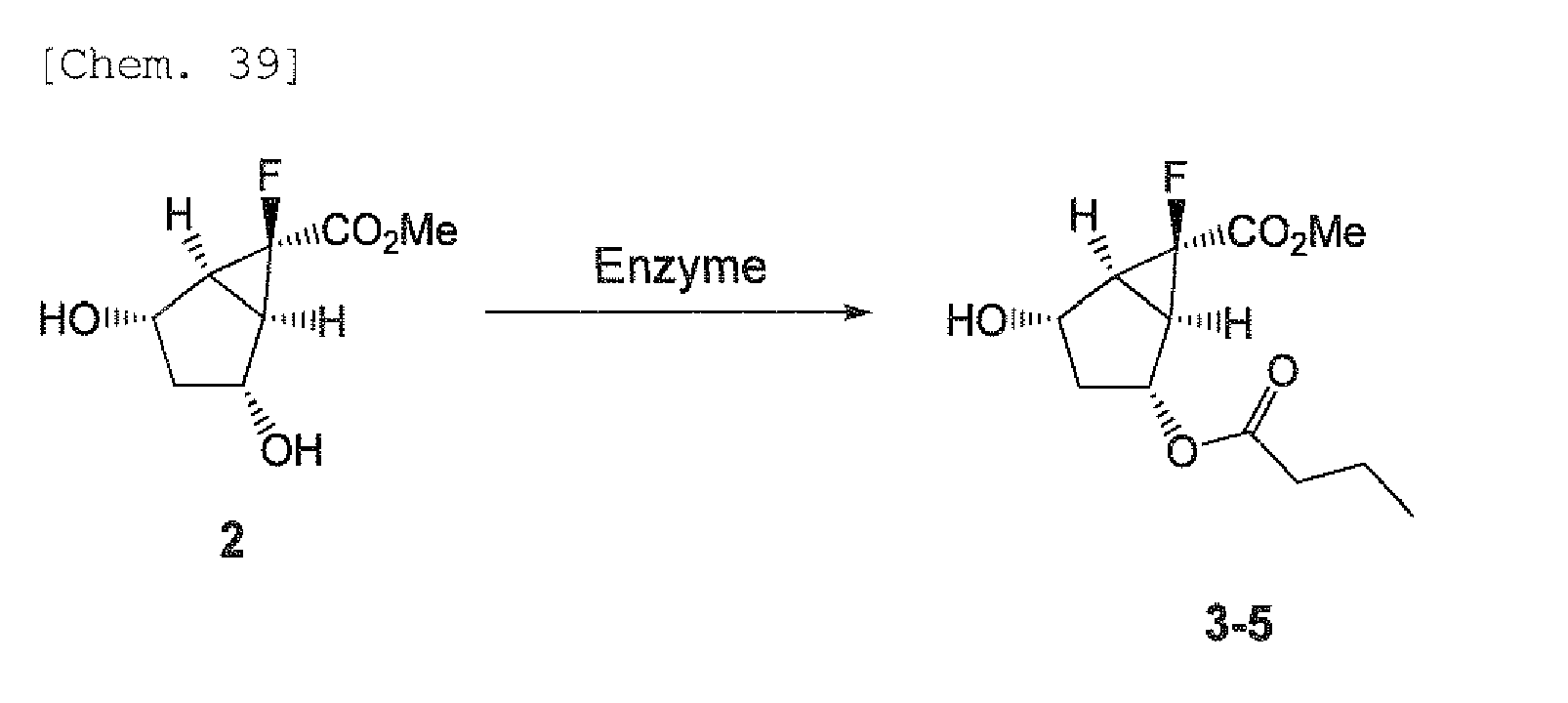
- In addition, the state of the starting material compound of Formula 2 and formation of the target compound of Formula 3-5 and its enantiomer, a compound of Formula 3-5', were confirmed by the TLC method and the HPLC method below.
(TLC method: TLC plate; silica gel Si60 (Art 1.5715, Merck & Co., Inc.))
Developing solvent; n-hexane/ethyl acetate = 10/1
Coloration; anisaldehyde/conc. sulfuric acid/acetic acid = 1/2/100 Rf value; compound of Formula 2 = 0.20, compound of Formula 3-5 = 0.55
(HPLC method: column CHIRALCEL OJ-RH
4.6 mm ID × 150 mm L (Daicel Chemical Industries, Ltd.)) Mobile phase; (methanol:acetonitrile = 1:1)/0.1% phosphoric acid aqueous solution = 52/48
Flow rate; 0.8 mL/min
Temperature; 35°C
Detection; UV 195 nm
Retention time;
compound of Formula 3-5: 4.2 min
compound of Formula 3-5': 4.5 min -

- In addition, the state of the starting material compound of Formula 2 and formation of the target compound of Formula 3-6 and its enantiomer, a compound of Formula 3-6', were confirmed by the TLC method and the HPLC method below.
(TLC method: TLC plate; silica gel Si60 (Art 1.5715, Merck & Co., Inc.))
Developing solvent; n-hexane/ethyl acetate = 10/1
Coloration; anisaldehyde/conc. sulfuric acid/acetic acid = 1/2/100 Rf value; compound of Formula 2 = 0.20, compound of Formula 3-6 = 0.50
(HPLC method: column CHIRALCEL OJ-RH
4.6 mm ID × 150 mm L (Daicel Chemical Industries, Ltd.)) Mobile phase; methanol/0.1% phosphoric acid aqueous solution = 44/56
Flow rate; 0.8 mL/min
Temperature; 35°C
Detection; UV 195 nm
Retention time;
compound of Formula 3-6: 18.1 min
compound of Formula 3-6': 15.0 min -

Among the enzymes shown in Table 9, with regard to Lipase AK "Amano" 20, Lipase PS "Amano" SD, CHE "Amano" 2, and Lipase AS "amino", commercial products were used. Furthermore, with regard to Lipase QLM, Lipase PS "amino" SD, Lipase AK "Amano" 20, Lipase R "amino", Lipase AY "Amino" 30G, and Lipase TL, commercial products were immobilized on Toyonite 200M or Toyonite 200P by the same method as in Example 14 and used. Moreover, with regard to a Dipodascus australiensis NBRC10805 microorganism culture fluid supernatant-derived enzyme, it was immobilized on Toyonite 200M by the method described in Example 18 and used.
After the reaction was completed, the enzyme was removed by filtration using an Ekicrodisc 25CR, and the solution was dried under reduced pressure, dissolved in 1 mL of methanol, and then subjected to analysis by the above-mentioned HPLC method for the compound of Formula 3.
Table 9 shows the amounts formed and optical purities of the compound of Formula 3 after carrying out a reaction using each of the enzymes. -
[Table 9] Enzyme name (trade name) Derived from Support for immobilization Amount of 3 formed Optical purity of 3 Lipase QLM Alcaligenes sp. Toyonite 200M 8.49 mg >99% e.e. Lipase PS "amino" SD Burkholderia cepacia Toyonite 200M 2.21 mg >99% e.e. Lipase AK "Amano" 20 Pseudomonas fluorescens Toyonite 200M 1.56 mg >99% e.e. Lipase AK "amino" 20 Pseudomonas fluorescens None 0.94 mg >99% e.e. Lipase PS "Amano" SD Burkholderia cepacia None 0.41 mg >99% e.e. Lipase R "amino" Penicillium roqueforti Toyonite 200M 0.38 mg >99% e.e. CHE "Amano" 2 Pseudomonas sp. None 0.30 mg >99% e.e. NBRC10805/200M (prepared in the present invention) Dipodascus australiensis NBRC10805 Toyonite 200M 0.12 mg >99% e.e. Lipase AY "Amano" 30G Candida rugosa Toyonite 200M 6.46 mg 88.56% e.e. Lipase TL Pseudomonas stutzeri Toyonite 200M 2.94 mg 80.72% e.e. Lipase AS "Amano" Aspergillus niger None 0.23 mg 72.49% e.e. Lipase AY "Amano" 30G Candida rugosa Toyonite 200P 7.13 mg 70.58% e.e. - The enzymatic reactions below were carried out using Lipase QLM, Lipase OF, Lipase PL, and Novozym CALAL immobilized enzymes as the enzymes used.
0.05 mL of the acyl group acceptor cyclopentanol with toluene added to give 2.0 mL, 0.05 mL of the acyl group acceptor cyclopentanol with isopropyl ether added to give 2.0 mL, 0.05 mL of the acyl group acceptor 2-butanol with toluene added to give 2.0 mL, 0.05 mL of the acyl group acceptor 2-butanol with isopropyl ether added to give 2.0 mL, 0.05 mL of the acyl group acceptor 2-propanol with toluene added to give 2.0 mL, and 0.05 mL of the acyl group acceptor 2-propanol with isopropyl ether added to give 2.0 mL were prepared, and 50 mg of each of the enzymes shown in Table 10 and 50 mg of the compound of Formula 13 were added to each of the above and stirred using a stirrer (600 rpm) at room temperature (21°C to 24°C) for 19 hours. After the reaction was completed, the immobilized enzyme was removed by filtration using an Ekicrodisc 25CR, and the solution was dried under reduced pressure, dissolved in 1 mL of methanol, and then subjected to analysis by the above-mentioned HPLC method for the compound of Formula 3.
Table 10 shows the amounts formed and optical purities of the compound of Formula 3 after the reactions were carried out using each of the enzymes. -
[Table 10] Enzyme/support for immobilization Reaction solvent Amount of 3 formed Optical purity of 3 Lipase OF/Toyonite 200P Toluene/2-Propanol 0.09 mg >99% e.e. Lipase OF/Toyonite 200P Isopropyl ether/2-Propanol 0 mg Lipase OF/Toyonite 200P Toluene/2-Butanol 0.12 mg >99% e.e. Lipase OF/Toyonite 200P Isopropyl ether/2-Butanol 0 mg Lipase OF/Toyonite 200P Toluene/cyclopentanol 0.64 mg >99% e.e. Lipase OF/Toyonite 200P Isopropyl ether/cyclopentanol 0 mg Lipase QLM/Toyonite 200M Toluene/2-Propanol 2.91 mg 7.46% e.e. Lipase QLM/Toyonite 200M Isopropyl ether/2-Propanol 2.13 mg 61.63% e.e. Lipase QLM/Toyonite 200M Toluene/2-Butanal 0.58 mg 47.85% e.e. Lipase QLM/Toyonite 200M Isopropyl ether/2-Butanol 3.39 mg 51.69% e.e. Lipase QLM/Toyonite 200M Toluene/cyclopentanol 2.97 mg 6.21% e.e. Lipase QLM/Toyonite 200M Isopropyl ether/cyclopentanol 2.15 mg 93.09% e.e. Novozym CATAL/Toyonite 200M Toluene/2-Propanol 0 mg Novozym CALAL/Toyonite 200M Isopropyl ether/2-Propanol 0.08 mg 52.11% e.e. Toluene/2-Butanol 0 mg Novozym CALAL/Toyonite 200M Isopropyl ether/2-Butanol 0.15 mg 42.45% e.e. Novozym Toluene/cyclopentanol 0 mg Novozym CALAL/Toyonite 200M Isopropyl ether/cyclopentanol 0 mg Lipase QLM/Toyonite 200M Toluene/2-Propanol 0 mg Lipase PL/Toyonite 200M Isopropyl ether/2-Propanol 0 mg Lipase PL/Toyonite 200M Toluene/2-Butanol 0 mg Lipase PL/Toyonite 200M Isopropyl ether/2-Butanol 0 mg Lipase PL/Toyonite 200M PL/Toyonite Toluene/cyclopentanol 0 mg Lipase PL/Toyonite 200M Isopropyl ether/cyclopentanol 0 mg -

52.170 g (0.241 mol) of a 25 w/w% methanol solution of sodium methoxide was added to a methanol (120 mL) solution of 39.99 g (0.266 mol) of dimethyl fluoropropanedioate (9) over 5 minutes while keeping the internal temperature between 20°C and 30°C. After the solution thus obtained was stirred for 20 minutes, 200.432 g (0.117 mol) of the dichloromethane solution of the compound of Formula 8 was added thereto over 8 minutes while keeping the internal temperature between 25°C and 35°C. After stirring at room temperature for 17 hours, 153 mL of a saturated ammonium chloride aqueous solution was added. 29 g of a 10% sodium thiosulfate aqueous solution was added, and the mixture was stirred and then separated. Extraction was carried out with 30 mL of dichloromethane, and the organic layers were combined and washed with 50 mL of saturated brine. After drying with magnesium sulfate concentration under reduced pressure was carried out. The concentrated residue was purified by flash silica gel column chromatography (eluent: n-hexane/ethyl acetate), thus giving 17.582 g of a mixture of the compound of Formula 10a and the compound of Formula 10b as a yellow oily material. - 1H NMR (300 MHz, CDCl3: δ 2.32-2.39 (m, 1H), 2.45 (d, J = 3.9 Hz, 1H), 2.75-2.84 (m, 1H), 3.47-3.58 (m, 1H), 3.87 (s, 6H), 4.54-4.60 (m, 1H), 5.46-5.49 (m, 1H), 5.87-5.89 (m, 1H).
-

23.193 g (340.67 mmol) of imidazole and 32.682 g (216.82 mmol) of tert-butyldimethylsilyl chloride (TBSCl) were added to a DMF (63 mL) solution of the compound of Formula 12a thus obtained and stirring at room temperature was carried out for 2.5 hours. 170 mL of toluene and 150 mL of water were added thereto, and the mixture was stirred for 10 minutes and then separated. Extraction was carried out with 136 mL of toluene and the organic layers were combined, washed with 30 mL of water, and then concentrated under reduced pressure, thus giving 55.91 g of methyl [(1R, 2R, 3R, 5S)-3-{[tert-butyl(dimethyl)silyl]oxy}-6-oxabicyclo[3.1.0]hex-2-yl](fluoro)acetate (13a) as a brown oily material. - A THF (270 mL) solution of the compound of Formula 13a thus obtained was cooled to -50°C, and 210 mL (197.40 mmol) of a 0.94 mol/L triethylaluminum hexane solution was added thereto over 30 minutes while keeping the internal temperature between -55°C and - 50°C. After stirring at -50°C for 30 minutes, 143 mL (228.80 mmol) of a 1.6 mol/L lithium hexamethyldisilazide (LiHMDS) hexane solution was added thereto over 10 minutes while keeping the internal temperature between -50°C and -40°C. After stirring at - 50°C for 2 hours the reaction mixture was added over 20 minutes to 265.08 g of a 25% citric acid aqueous solution cooled at 5°C. 270 mL of ethyl acetate was added to the reaction mixture, which was stirred and then separated. Extraction was carried out with 100 mL or ethyl acetate, the organic layers were combined, washed with 50 mL of water, and then concentrated under reduced pressure, thus giving 56.65 g of methyl (1R, 2R, 4S, 5S, 6R)-2-{[tert-butyl(dimethyl)silyl]oxy}-6-fluoro-4-hydroxybicyclo[3.1.0]hexane-6-carboxylate (14a) as a brown oily material.
An acetonitrile (185 mL) solution of the compound of Formula 14a thus obtained was cooled to 0°C, and 30 mL of 1 N hydrochloric acid was added. After stirring at room temperature for 4.5 hours, a 4% sodium hydrogen carbonate aqueous solution (95.845 g) and 450 mL of ethyl acetate were added. The mixture was stirred for 10 minutes and then separated. Extraction was carried out with 400 mL of ethyl acetate three times, and the organic layers were then combined, dried with sodium sulfate, and concentrated under reduced pressure. The concentrated residue was precipitated from a mixed liquid of 108.58 g of ethyl acetate and 2.722 g of water, thus giving 21.34 g of the compound of Formula 2 as colorless crystals. - 1H NMR (500 MHz, DMSO-d6): δ 1. 66 (dd, J = 4. 6, 14.8 Hz, 1H), 1.97 (m, 1H), 2.17 (s, 2H), 3.72 (s, 3H), 4.18 (t, J = 5.4 Hz, 2H), 4.93 (d, J = 5.0 Hz, 2H). MS m/z: 213.1 [M+Na]+. IR (KBr): 3548, 3413, 3295, 3239, 2922, 2751, 1732, 1616, 1467, 1442, 1381, 1336, 1285, 1265, 1235, 1198, 1181, 1130, 1078, 1041, 994, 947, 890, 805, 777, 733, 646, 566, 540, 480, 446 cm-1. Anal . Calcd for C8H11FO4·H2O: C, 46.15; H, 6.29; F, 9.13. Found: C, 46.11; H, 6.18; F, 9. 09.
-

- A recovery flask was charged with 84.37 g (638.2 mmol) of dicyclopentadiene and immersed in an oil bath set at 185°C to 190°C. A component distilling at 39°C to 41°C was collected (trapped by a dry ice-acetone bath), thus giving 73.2 g of cyclopentadiene as a colorless oily material. 176.0 g (1.66 mol) of sodium carbonate was placed in a dichloromethane (732 mL) solution of 73.2 g (1.107 mol) of the cyclopentadiene thus obtained, and the mixture was immersed in an ice bath. 198.5 g (886 mmol) of metachloroperoxybenzoic acid (content 77%) was added thereto portionwise over 30 minutes while keeping the internal temperature between 3°C and 35°C. After stirring at room temperature for 15 hours, solids were removed by filtration (washed with 532 mL of dichloromethane). After most of the dichloromethane in the washings was removed by evaporation under reduced pressure, distillation was carried out under reduced pressure, thus giving 14.08 g of epoxide 8 as a pale yellow oily material. The results of 1H NMR measurement (300 MHz, DMSO-d6) of epoxide 8 coincided with those described in the literature (Org. Lett., 7, 4573 (2005)).
- 1H NMR (300 MHz, DMSO-d6) : δ 2.30-2.39 (m, 1H), 2.45-2.53 (m, 1H), 3.80-3.83 (m, 1H), 3.88-3.90 (m., 1H), 5.94-5.98 (m, 1H), 6.12-6.16 (m, 1H).
-


- When preparing the compound of Formula 3 from the compound of Formula 2 by the enzymatic reactions shown in Examples 12 to 19, the diacetyl compound of Formula 13 is formed as a by-product in some cases. The amount of by-product produced can be regulated by controlling the speed at which a solution of the compound of Formula 2 is fed to a column-packed immobilized enzyme. For example, in Example 19, the yield of formation of the diacetyl compound was 3.8% (4.35 g). In this example, examination was carried out for the purpose of isolating the by-product.
Firstly, an immobilized enzyme was prepared using NOVOZYM 735 and Toyonite 200M by the same method as in Example 17, and a 6 mL volume column (Bond Elut Reservoir with frit: purchased from GL Sciences Inc.) was charged with 4.0 g of the immobilized enzyme thus obtained.
Subsequently, 18.28 g of crystals of the compound of Formula 2 was dissolved in 804 mL of vinyl acetate/acetone (10:1), and the solution was fed to the column charged with the above immobilized enzyme via a silicone tube using a peristaltic pump (Atto Corporation). The feed rate was 129 mL/hr. After feeding was completed, the discharged liquid was analyzed by the TLC method and the HPLC method, and from the results 19.02 g (yield 86.56%) of the compound of Formula 3 was obtained at an optical purity of 96.01% e.e. and 2.81 g (yield 10.9%) of the diacetyl compound of Formula 13 was obtained. The compound of Formula 3 and the diacetyl compound of Formula 13 could be separated by concentrating under reduced pressure the liquid discharged from the enzymatic reaction and then purifying the concentrated residue by flash silica gel column chromatography (eluent: n-hexane/ethyl acetate). After the diacetyl compound of Formula 13 was dissolved in ethyl acetate, it was recrystallized, thus giving it as a colorless solid. - 1H NMR (500 MHz, CDCl3) : δ 2.02 (dd, J = 5.0, 16.5 Hz, 1H), 2.11 (s, 6H), 2.35 (ddd, J = 7.0, 16.5 Hz, 1H), 2.45 (s, 2H), 3.81 (s, 3H), 5.27 (d, J = 6.5 Hz 1H). 13C NMR (125 MHz, CDCl3) : δ 21.14, 35.27 (d, J = 9.9 Hz), 39.99 (d, J = 8.7 Hz), 52.99, 74.72, 76.74, 168.12, 168.31, 170.34. MS (Shimadzu LCMS-210EV ESI/APCI Dual positive) m/z: [M+Na]+ 297.0
The abbreviations below are used throughout the specification.
Me: methyl
Et: ethyl
Ac: acetyl
Ph: phenyl
THF: tetrahydrofuran,
TEMPO: 2,2,6,6-tetramethylpiperidine 1-oxyl
TMS: trimethylsilyl
DMSO: dimethyl sulfoxide
TfOH: trifluoromethanesulfonic acid
TMSOTf: trimethylsilyl trifluoromethanesulfonate
LiHMDS: lithium hexamethyldisilazide
HPLC: high-performance liquid chromatography
NMR: nuclear magnetic resonance
TLC: thin-layer chromatography - The production method of the present invention can be applied in order to mass produce a bicycle[3.1.0]hexane derivative, which is useful as a metabotropic glutamate receptor modulator.
Rb and Rc are identical or different and are each hydrogen, a halogen, a C1-6 alkyl group, or a C3-8 cycloalkyl group (the C1-6 alkyl group or C3-8 cycloalkyl group being unsubstituted or substituted with one or more hydroxy groups, C1-6 alkoxy groups, aryl groups, or heteroaryl groups),
or Rb and Rc are bonded to each other and, together with the adjacent nitrogen atom, form a 4- to 7-membered saturated heterocycle (the saturated heterocycle being unsubstituted or substituted with a hydroxy group, a C1-6 alkyl group, or a C1-6 alkoxy group),
R2 and R3 are identical or different and are each hydrogen, a C1-6 alkyl group, a C3-8 cycloalkyl group, or a -(CH2)m-phenyl group, and
m is 0, 1, or 2), the method including
Rb and Rc are identical or different and are each hydrogen, a halogen, a C1-6 alkyl group, or a C3-8 cycloalkyl group (the C1-6 alkyl group or C3-8 cycloalkyl group being unsubstituted or substituted with one or more hydroxy groups, C1-6 alkoxy groups, aryl groups, or heteroaryl groups),
or Rb and Rc are bonded to each other and, together with the adjacent nitrogen atom, form a 4- to 7-membered saturated heterocycle (the saturated heterocycle being unsubstituted or substituted with a hydroxy group, a C1-6 alkyl group, or a C1-6 alkoxy group)), the method including
Rb and Rc are identical or different and are each hydrogen, a halogen, a C1-6 alkyl group, or a C3-8 cycloalkyl group (the C1-6 alkyl group or C3-8 cycloalkyl group being unsubstituted or substituted with one or more hydroxy groups, C1-6 alkoxy groups, aryl groups, or heteroaryl groups),
or Rb and Rc are bonded to each other and, together with the adjacent nitrogen atom, form a 4- to 7-membered saturated heterocycle (the saturated heterocycle being unsubstituted or substituted with a hydroxy group, a C1-6 alkyl group, or a C1-6 alkoxy group))
Claims (29)
- A method for producing a bicyclo[3.1.0]hexane derivative
represented by Formula (I) and a salt thereof (1) -OH,(2) -O-Ra, or(3) -NRbRc,Ra is a C1-6 alkyl group or a C3-8 cycloalkyl group (said C1-6 alkyl group or C3-2 cycloalkyl group being unsubstituted or substituted with one or more C1-6 alkoxy groups, hydroxy groups, halogens, aryl groups, or heteroaryl groups),
Rb and Rc are identical or different and are each hydrogen, a halogen, a C1-6 alkyl group, or a C3-8 cycloalkyl group (said C1-6 alkyl group or C3-8 cycloalkyl group being unsubstituted or substituted with one or more hydroxy groups, C1-6 alkoxy groups, aryl groups, or heteroaryl groups),
or Rb and Rc are bonded to each other and, together with the adjacent nitrogen atom, form a 4- to 7-membered saturated heterocycle (said saturated heterocycle being unsubstituted or substituted with a hydroxy group, a C1-6 alkyl group, or a C1-6 alkoxy group),
R2 and R3 are identical or different and are each hydrogen, a C1-6 alkyl group, a C3-8 cycloalkyl group, or a -(CH2)m-phenyl group, and
m is 0, 1, or 2), said method comprising:(A) converting a compound represented by Formula (II) into a
compound represented by Formula (III)

R4 is hydrogen, a C1-6 alkyl group, a C3-8 cycloalkyl group, or a -(CH2)n-phenyl group (said C1-6 alkyl group, C3-8 cycloalkyl group, or -(CH2)n-phenyl group being unsubstituted or substituted with one or more halogens, hydroxy groups, C1-6 alkyl groups, or C1-6 alkoxy groups), and
n is 0, 1, or 2);(B) converting said compound represented by Formula (III) into a compound represented by Formula (IV) (C) reacting said compound represented by Formula (IV) with a compound represented by Formula (V) to obtain a compound represented by Formula (VI)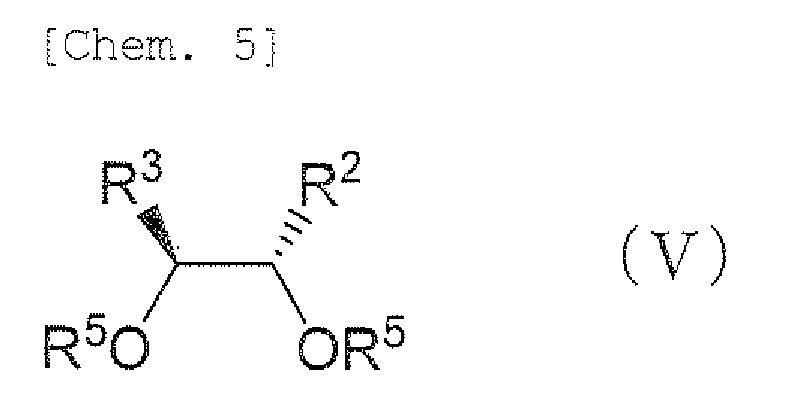
R6, R7 and R8 are identical or different and are each a C1-6 alkyl group or a phenyl group) (D) converting said compound represented by Formula (VI) into the compound represented by Formula (I).
 - A method for producing a compound represented by Formula (III) and a salt thereof
 (1) -OH,(2) -O-Ra, or(3) -NRbRc,R8 is a C1-6 alkyl group or a C3-8 cycloalkyl group (said C1-6 alkyl group or C3-8 cycloalkyl group being unsubstituted or substituted with one or more C1-6 alkoxy groups, hydroxy groups, halogens, aryl groups, or heteroaryl groups),
Rb and Rc are identical or different and are each hydrogen, a halogen, a C1-6 alkyl group, or a C3-8 cycloalkyl group (said C1-6 alkyl group or C3-8 cycloalkyl group being unsubstituted or substituted with one or more hydroxy groups, C1-6 alkoxy groups, aryl groups, or heteroaryl groups),
or Rb and Rc are bonded to each other and, together with the adjacent nitrogen atom, form a 4- to 7-membered saturated heterocycle (said saturated heterocycle being unsubstituted or substituted with a hydroxy group, a C1-6 alkyl group, or a C1-6 alkoxy group),
R4 is hydrogen, a C1-6 alkyl group, a C3-8 cycloalkyl group, or a - (CH2)n-phenyl group (said C1-6 alkyl group, C3-8 cycloalkyl group, or -(CH2)n-phenyl group being unsubstituted or substituted with one or more halogens, hydroxy groups, C1-6 alkyl groups, or C1-6 alkoxy groups), and
n is 0, 1, or 2), said method comprising:converting a compound represented by Formula (II) into the compound represented by Formula (III) (R1 in Formula (II) is as defined in Formula (III)).
 - A method for producing a compound represented by Formula (VII) and a salt thereof
 (1) -OH,(2) -O-Ra, or(3) -NRbRc,Ra is a C1-6 alkyl group or a C3-8 cycloalkyl group (said C1-6 alkyl group or C3-8 cycloalkyl group being unsubstituted or substituted with one or more C1-6 alkoxy groups, hydroxy groups, halogens, aryl groups, or heteroaryl groups),
Rb and are identical or different and are each hydrogen, a halogen, a C1-6 alkyl group, or a C3-8 cycloalkyl group (said C1-6 alkyl group or C3-8 cycloalkyl group being unsubstituted or substituted with one or more hydroxy groups, C1-6 alkoxy groups, aryl groups, or heteroaryl groups),
or Rb and Rc are bonded to each other and, together with the adjacent nitrogen atom, form a 4- to 7-membered saturated heterocycle (said saturated heterocycle being unsubstituted or substituted with a hydroxy group, a C1-6 alkyl group, or a C1-6 alkoxy group)), said method comprising:(A) converting a compound represented by Formula (II) into a
compound represented by Formula (III)

R4 is hydrogen, a C1-6 alkyl group, a C3-8 cycloalkyl group, or a-(CH2)n-phenyl group (said C1-6 alkyl group, C3-8 cycloalkyl group, or -(CH2)n-phenyl group being unsubstituted or substituted with one or more halogens, hydroxy groups, C1-6 alkyl groups, or C1-6 alkoxy groups), and
n is 0, 1, or 2);(B) converting said compound represented by Formula (III) into a compound represented by Formula (IV)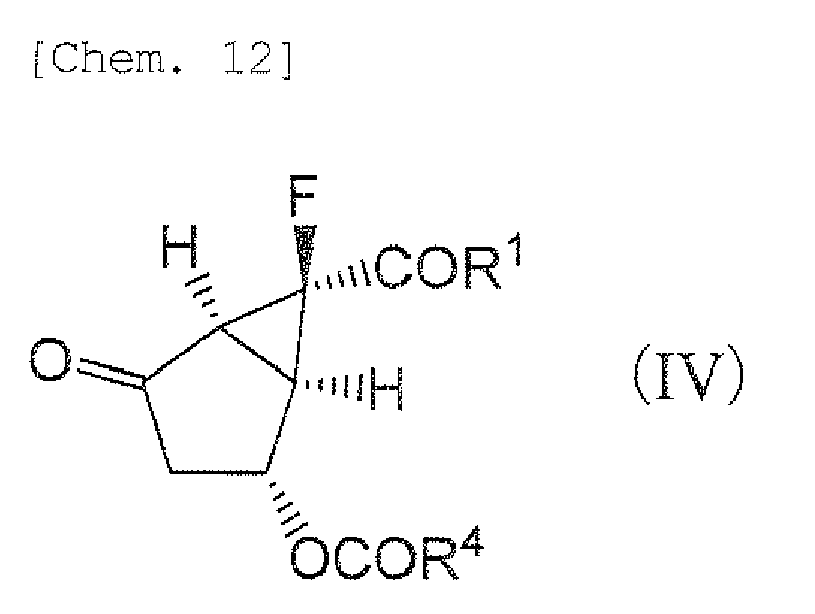 (C) converting said compound represented by Formula (IV) into the compound represented by Formula (VII).
 - The production method as set forth in Claim 1, wherein R2 and R3 are identical or different and are each a phenyl group or a methyl group.
- The production method as set forth in Claim 1 or 4, wherein R5 is hydrogen or a trimethylsilyl group.
- The production method as set forth in any one of Claims 1 to 5, wherein R1 is a methoxy group or an ethoxy group.
- The production method as set forth in any one of Claims 1 to 6, wherein R4 is a group.
- The method as set forth in any one of Claims 1 to 7, wherein the compound represented by Formula (III) is produced by reacting the compound represented by Formula (II) with an acyl group donor in the presence of a microorganism-derived enzyme.
- The production method as set forth in Claim 8, wherein said microorganism comprises at least one type selected from the group consisting of the Candida genus, the Aspergillus genus, the Thermomyces genus, the Penicillium genus, the Humicola genus, the Geotrichum genus, the Galactomyces genus, and the Burkholderia genus.
- The production method as set forth in Claim 8 or 9, wherein said microorganism-derived enzyme is a lipase or an acylase.
- The production method as set forth in Claim 10, wherein said microorganism-derived enzyme is a Candida antarctica-derived lipase A.
- The production method as set forth in any one of Claims 8 to 11, wherein said enzyme is immobilized on a support.
- The production method as set forth in any one of Claims 8 to 12, wherein said acyl group donor is vinyl acetate.
- A method for producing a compound represented by Formula (II)
and a salt thereof (1) -OH,(2) -O-Ra, or(3) -NRbRc,Ra is a C1-6 alkyl group or a C3-8 cycloalkyl group (said C1-6 alkyl group or C3-8 cycloalkyl group being unsubstituted or substituted with one or more C1-6 alkoxy groups, hydroxy groups, halogens, aryl groups, or heteroaryl groups),
Rb and Rc are identical or different and are each hydrogen, a halogen, a C1-6 alkyl group, or a C3-8 cycloalkyl group (said C1-6 alkyl group or C3-8 cycloalkyl group being unsubstituted or substituted with one or more hydroxy groups, C1-6 alkoxy groups, aryl groups, or heteroaryl groups),
or Rb and Rc are bonded to each other and, together with the adjacent nitrogen atom, form a 4- to 7-membered saturated heterocycle (said saturated heterocycle being unsubstituted or substituted with a hydroxy group, a C1-6 alkyl group, or a C1-6 alkoxy group)), said method comprising:(A) reacting a compound represented by Formula (VIII) with a compound represented by Formula (IX) to obtain a mixture formed from a compound represented by Formula (Xa) and a compound represented by Formula (Xb)
 (1) -OH,(2) -O-Ra, or(3) -NRbRc,Ra is a C1-6 alkyl group or a C3-8 cycloalkyl group (said C1-6 alkyl group or C3-8 cycloalkyl group being unsubstituted or substituted with one or more C1-6 alkoxy groups, hydroxy groups, halogen, aryl groups, or heteroaryl groups),
Rb and Rc are identical or different and are each hydrogen, a halogen, a C1-6 alkyl group, or a C3-8 cycloalkyl group (said C1-6 alkyl group or C3-8 cycloalkyl group being unsubstituted or substituted with one or more hydroxy groups, C1-6 alkoxy groups, aryl groups, or heteroaryl groups),
or Rb and Rc are bonded to each other and, together with the adjacent nitrogen atom, form a 4- to 7-membered saturated heterocycle (said saturated heterocycle being unsubstituted or substituted with a hydroxy group, a C1-6 alkyl group, or a C1-6 alkoxy group))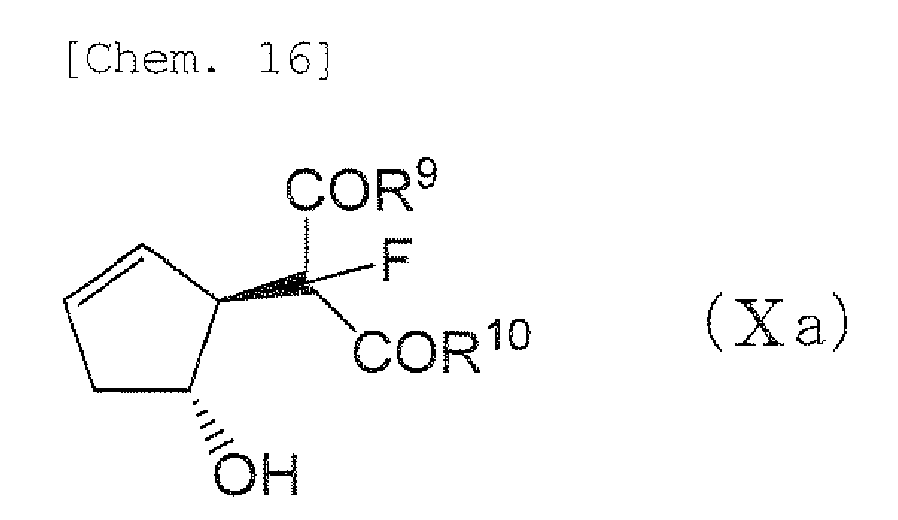
 (B) converting the mixture formed from said compound represented by Formula (Xa) and said compound represented by Formula (Xb) into a mixture formed from a compound represented by Formula (XIa) and a compound represented by Formula (XIb)
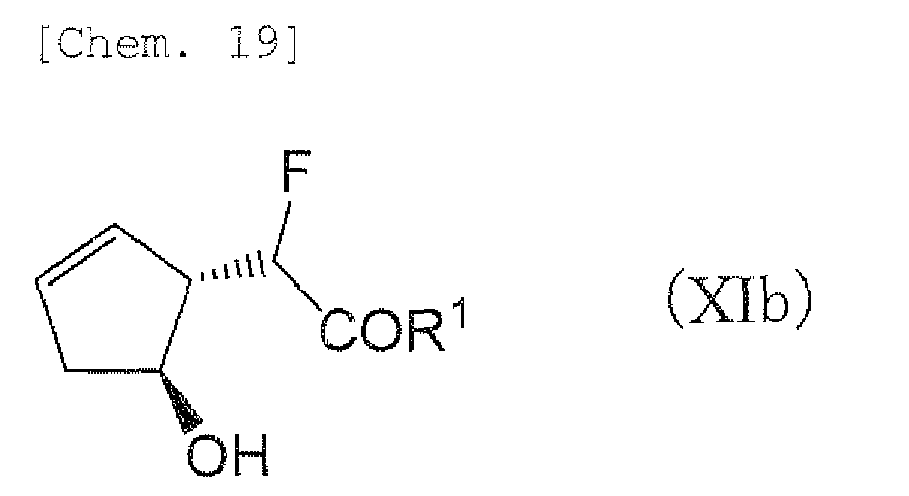 (C) converting the mixture formed from said compound represented by Formula (XIa) and said compound represented by Formula (XIb) into a mixture formed from a compound represented by Formula (XIIa) and a compound represented by Formula (XIIb)
 (D) converting the mixture formed from said compound represented by Formula (XIIa) and said compound represented by Formula (XIIb) into the compound represented by Formula (II).
 - A method for producing a mixture formed from a compound represented by Formula (Xa) and a compound represented by Formula (Xb) and salts thereof
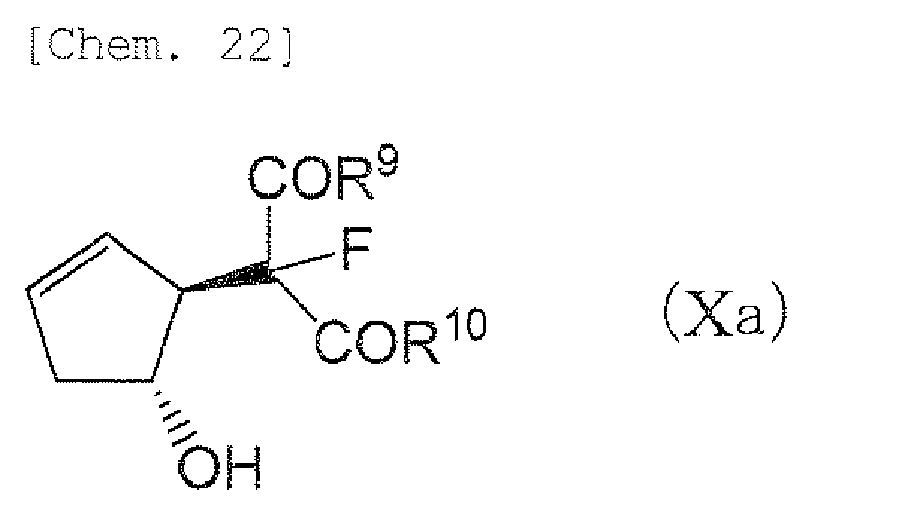
 (1) -OH,(2) -O-Ra, or(3) -NRbRc,Ra is a C1-6 alkyl group or a C3-8 cycloalkyl group (said C1-6 alkyl group or C3-8 cycloalkyl group being unsubstituted or substituted with one or more C1-6 alkoxy groups, hydroxy groups, halogens, aryl groups, or heteroaryl groups),
Rb and Rc are identical or different and are each hydrogen, a halogen, a C1-6 alkyl group, or a C3-8 cycloalkyl, group (said C1-6 alkyl group or C3-8 cycloalkyl group being unsubstituted or substituted with one or more hydroxy groups, C1-6 alkoxy groups, aryl groups, or heteroaryl groups),
or Rb and Rc are bonded to each other and, together with the adjacent nitrogen atom, form a 4- to 7-membered saturated heterocycle (said saturated heterocycle being unsubstituted or substituted with a hydroxy group, a C1-6 alkyl group, or a C1-6 alkoxy group)), said method comprising:reacting a compound represented by Formula (VIII) with a compound represented by Formula (IX) so as to convert them into a mixture formed from said compounds represented by Formula (Xa) and said compound represented by Formula (Xb)
 (R9 and R10 in Formula (IX) are as defined in Formula (Xa) and Formula (Xb)).
 - The production method as set forth in Claim 14 or 15, wherein R9 and R10 are each a methoxy group or an ethoxy group.
- The production method as set forth in Claim 14, wherein R1, R9, and R10 are each a methoxy group or an ethoxy group.
- A compound represented by Formula (II) and a salt thereof
 (1) -OH,(2) -O-Ra, or(3) -NRbRc,Ra is a C1-6 alkyl group or a C3-8 cycloalkyl group (said C1-6 alkyl group or C3-8 cycloalkyl group being unsubstituted or substituted with one or more C1-6 alkoxy groups, hydroxy groups, halogens, aryl groups, or heteroaryl groups),
Rb and Rc are identical or different and are each hydrogen, a halogen, a C1-6 alkyl group, or a C3-8 cycloalkyl group (said C1-6 alkyl group or C3-8 cycloalkyl group being unsubstituted or substituted with one or more hydroxy groups, C1-16 alkoxy groups, aryl groups, or heteroaryl groups),
or Rb and Rc are bonded to each other and, together with the adjacent nitrogen atom, form a 4- to 7-membered saturated heterocycle (said saturated heterocycle being unsubstituted or substituted with a hydroxy group, a C1-6 alkyl group, or a C1-6 alkoxy group)). - A compound represented by Formula (III) and a salt thereof
 (1) -OH,(2) -O-Ra, or(3) -NRbRc,Ra is a C1-6 alkyl group or a C3-8 cycloalkyl group (said C1-6 alkyl group or C3-8 Cycloalkyl group being unsubstituted or substituted with one or more C1-6 alkoxy groups, hydroxy groups, halogens, aryl groups, or heteroaryl groups),
Rb and Rc are identical or different and are each hydrogen, a halogen, a C1-6 alkyl group, or a C3-8 cycloalkyl group (said C1-6 alkyl group or C3-8 cycloalkyl group being unsubstituted or substituted with one or more hydroxy groups, C1-6 alkoxy groups, aryl groups, or heteroaryl groups),
or Rb and Rc are bonded to each other and, together with the adjacent nitrogen atom, form a 4- to 7-membered saturated heterocycle (said saturated heterocycle being unsubstituted or substituted with a hydroxy group, a C1-6 alkyl group, or a C1-6 alkoxy group),
R4 is hydrogen, a C1-6 alkyl group, a C3-8 cycloalkyl group, or a -(CH2)n-phenyl group (said C1-6 alkyl group, C3-8 cycloalkyl group, or -(CH2)n-phenyl group being unsubstituted or substituted with one or more halogens, hydroxy groups, C1-6 alkyl groups, or C1-6 alkoxy groups), and
n is 0, 1, or 2). - A compound represented by Formula (IV) and a salt thereof
 (1) -OH,(2) -O-Ra, or(3) -NRbRc,Ra is a C1-6 alkyl group or a C3-8 cycloalkyl group (said C1-6 alkyl group or C3-8 cycloalkyl group being unsubstituted or substituted with one or more C1-6 alkoxy groups, hydroxy groups, halogens, aryl groups or heteroaryl groups),
Rb and Rc are identical or different and are each hydrogen, a halogen, a C1-5 alkyl group, or a C3-8 cycloalkyl group (said C1-6 alkyl group, or C3-8 cycloalkyl group being unsubstituted or substituted with one or more hydroxy groups, C1-6 alkoxy groups, aryl groups, or heteroaryl groups),
or Rb and Rc are bonded to each other and, together with the adjacent nitrogen atom, form a 4- to 7-membered saturated heterocycle (said saturated heterocycle being unsubstituted or substituted with a hydroxy group, a C1-6 alkyl group, or a C1-6 alkoxy group),
R4 is hydrogen, a C1-6 alkyl group, a C3-8 cycloalkyl group, or a -(CH2)n-phenyl group (said C1-6 alkyl group, C3-8 cycloalkyl group, or -(CH2)n-phenyl group being unsubstituted or substituted with one or more halogens, hydroxy groups, C1-6 alkyl groups, or C1-6 alkoxy groups), and
n is 0, 1, or 2). - A compound represented by Formula (VI) and a salt thereof
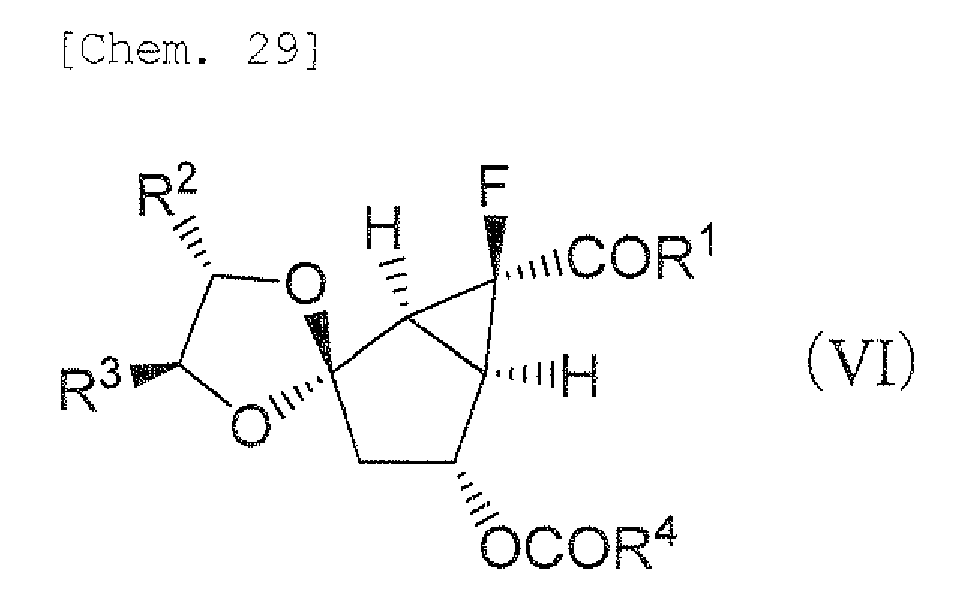 (1) -OH,(2) -O-Ra, or(3) -NRbRc,Ra is a C1-6 alkyl group or a C3-8 cycloalkyl group (said C1-6 alkyl group or C3-8 cycloalkyl group being unsubstituted or substituted with one or more C1-6 alkoxy groups, hydroxy groups, halogens, aryl groups, or heteroaryl groups),
Rb and Rc are identical or different and are each hydrogen, a halogen, a Alkyl group, or a C3-8 Cycloalkyl group (said C1-6 alkyl group or C3-8 cycloalkyl group being unsubstituted or substituted with one or more hydroxy groups, C1-6 alkoxy groups, aryl groups, or heteroaryl groups),
or Rb and Rc are bonded to each other and, together with the adjacent nitrogen atom, form a 4- to 7-membered saturated heterocycle (said saturated heterocycle being unsubstituted or substituted with a hydroxy group, a C1-6 alkyl group, or a C1-6 alkoxy group),
R2 and R3 are identical or different and are each hydrogen, a C1-6 alkyl group, a C3-8 cycloalkyl group, or a - (CH2)m-phenyl group,
m is 0, 1, or 2,
R4 is hydrogen, a C1-6 alkyl group, a C3-8 cycloalkyl group, or a -(CH2)n-phenyl group (said C1-6 alkyl group, C3-8 cycloalkyl group, or -(CH2)n-phenyl group being unsubstituted or substituted with one or more halogens, hydroxy groups, C1-6 alkyl groups, or C1-6 alkoxy groups), and
n is 0, 1, or 2). - A method for producing a compound represented by Formula (III) and a salt thereof
 (1) -OH,(2) -O-Ra, or(3) -NRbRc,Ra is a C1-6 alkyl group or a C3-8 cycloalkyl group (said C1-6 alkyl group or C3-8 cycloalkyl group being unsubstituted or substituted with one or more C1-6 alkoxy groups, hydroxy groups, halogens, aryl groups, or heteroaryl groups),
Rb and Rc are identical or different and are each hydrogen, a halogen, a C1-6 alkyl group, or a C3-8 cycloalkyl group (said C1-6 alkyl group or C3-8 cycloalkyl group being unsubstituted or substituted with one or more hydroxy groups, C1-6 alkoxy groups, aryl groups, or heteroaryl groups),
or Rb and Rc are bonded to each other and, together with the adjacent nitrogen atom, form a 4- to 7-membered saturated heterocycle (said saturated heterocycle being unsubstituted or substituted with a hydroxy group, a C1-6 alkyl group, or a Alkoxy group),
R4 is hydrogen, a C1-6 alkyl group, a C3-8 cycloalkyl group, or a -(CH2)n-phenyl group (said C1-6 alkyl group, C3-8 cycloalkyl group, or -(CH2)n-phenyl group being unsubstituted or substituted with one or more halogens, hydroxy groups, C1-6 alkyl groups, or C1-6 alkoxy groups), and
n is 0, 1, or 2), said method comprising:converting a compound represented by Formula (XIII) into said compound represented by Formula (III).
- The production method as set forth in Claim 22, wherein R1 is a methoxy group or an ethoxy group, and R4 and R4a are both methyl groups.
- The production method as set forth in Claim 22 or 23, wherein the compound represented by Formula (III) is produced by reacting the compound represented by Formula (XIII) with an acyl group acceptor in the presence of a microorganism-derived enzyme.
- The production method as set forth in Claim 24, wherein, said microorganism comprises at least one type selected from the group consisting of the Candida genus, the Aspergillus genus, the Alcaligenes genus, the Pseudomonas genus, the Dipodascus genus, Penicillium, and the Burkholderia genus.
- The production method as set forth in Claim 24 or 25, wherein said microorganism-derived enzyme is a lipase or an esterase.
- The production method as set forth in Claim 24, wherein said microorganism-derived enzyme is a lipase derived from at least one type selected from the group consisting of Alcaligenes sp., Burkholderia cepacia, Pseudomonas fluorescens, and Candida rugosa.
- The production method as set forth in any one of Claims 24 to 27, wherein said enzyme is immobilized on a support.
- The production method as set forth in any one of Claims 24 to 28, wherein said acyl group acceptor is cyclopentanol.
Priority Applications (1)
| Application Number | Priority Date | Filing Date | Title |
|---|---|---|---|
| EP13181672.0A EP2679570A3 (en) | 2008-05-21 | 2009-05-19 | Method of producing bicyclo[3.1.0]hexane derivative |
Applications Claiming Priority (2)
| Application Number | Priority Date | Filing Date | Title |
|---|---|---|---|
| JP2008133056 | 2008-05-21 | ||
| PCT/JP2009/059156 WO2009142184A1 (en) | 2008-05-21 | 2009-05-19 | Method of producing bicyclo[3.1.0]hexane derivative using enzyme |
Related Child Applications (1)
| Application Number | Title | Priority Date | Filing Date |
|---|---|---|---|
| EP13181672.0A Division EP2679570A3 (en) | 2008-05-21 | 2009-05-19 | Method of producing bicyclo[3.1.0]hexane derivative |
Publications (2)
| Publication Number | Publication Date |
|---|---|
| EP2298755A1 true EP2298755A1 (en) | 2011-03-23 |
| EP2298755A4 EP2298755A4 (en) | 2012-12-05 |
Family
ID=41340117
Family Applications (2)
| Application Number | Title | Priority Date | Filing Date |
|---|---|---|---|
| EP09750546A Withdrawn EP2298755A4 (en) | 2008-05-21 | 2009-05-19 | PROCESS FOR THE PREPARATION OF BICYCLO [3.1.0] HEXENE DERIVATIVES USING AN ENZYME |
| EP13181672.0A Withdrawn EP2679570A3 (en) | 2008-05-21 | 2009-05-19 | Method of producing bicyclo[3.1.0]hexane derivative |
Family Applications After (1)
| Application Number | Title | Priority Date | Filing Date |
|---|---|---|---|
| EP13181672.0A Withdrawn EP2679570A3 (en) | 2008-05-21 | 2009-05-19 | Method of producing bicyclo[3.1.0]hexane derivative |
Country Status (4)
| Country | Link |
|---|---|
| US (1) | US8618312B2 (en) |
| EP (2) | EP2298755A4 (en) |
| JP (1) | JPWO2009142184A1 (en) |
| WO (1) | WO2009142184A1 (en) |
Cited By (1)
| Publication number | Priority date | Publication date | Assignee | Title |
|---|---|---|---|---|
| US20120232304A1 (en) * | 2009-11-18 | 2012-09-13 | Taisho Pharmaceutical Co., Ltd | Process for producing optically active bicyclo [3.1.0] hexane derivative using enzyme |
Families Citing this family (1)
| Publication number | Priority date | Publication date | Assignee | Title |
|---|---|---|---|---|
| JP5618126B2 (en) * | 2010-01-21 | 2014-11-05 | 三菱レイヨン株式会社 | Method for producing ester compound |
Family Cites Families (11)
| Publication number | Priority date | Publication date | Assignee | Title |
|---|---|---|---|---|
| DE3620646A1 (en) * | 1986-06-20 | 1987-12-23 | Bayer Ag | METHOD FOR PRODUCING (1R, 4S) -4-HYDROXY-2-CYCLOPENTENYL ESTERS |
| JP3921696B2 (en) | 1995-08-09 | 2007-05-30 | 日産化学工業株式会社 | Asymmetric epoxidation of cycloalkadienes |
| ZA983930B (en) * | 1997-05-14 | 1999-11-08 | Lilly Co Eli | Excitatory amino acid receptor modulators. |
| DK1110943T3 (en) | 1998-08-31 | 2004-10-11 | Taisho Pharmaceutical Co Ltd | 6-fluorobicyclo [3.1.0] hexanderivater |
| JP4194715B2 (en) * | 1998-08-31 | 2008-12-10 | 大正製薬株式会社 | 6-Fluorobicyclo [3.1.0] hexane derivative |
| JP4192331B2 (en) | 1999-04-16 | 2008-12-10 | 住友化学株式会社 | Process for producing optically active 2-oxobicyclo [3.1.0] hexane-6-carboxylic acid derivative |
| AU6785501A (en) | 2000-06-28 | 2002-01-08 | Taisho Pharmaceutical Co Ltd | Intermediate and process for producing fluorinated carboxylic acid derivative from the same |
| US7094795B2 (en) | 2003-02-27 | 2006-08-22 | Sanofi-Aventis Deutschland Gmbh | Process for preparing the enantiomeric forms of cis-configured 1,3-cyclohexanediol derivatives |
| DE10308350B4 (en) * | 2003-02-27 | 2006-06-01 | Sanofi-Aventis Deutschland Gmbh | Process for preparing the enantiomeric forms of cis-configured 1,3-cyclohexanediol derivatives |
| CN100475800C (en) | 2003-11-07 | 2009-04-08 | 大正制药株式会社 | Process for preparing bicyclo [3.1.0] hexane derivatives and intermediates therefor |
| ITRM20080305A1 (en) * | 2008-06-11 | 2009-12-12 | Carlo Natali | PERCUSSION MUSICAL INSTRUMENT. |
-
2009
- 2009-05-19 EP EP09750546A patent/EP2298755A4/en not_active Withdrawn
- 2009-05-19 JP JP2010513016A patent/JPWO2009142184A1/en active Pending
- 2009-05-19 EP EP13181672.0A patent/EP2679570A3/en not_active Withdrawn
- 2009-05-19 WO PCT/JP2009/059156 patent/WO2009142184A1/en not_active Ceased
-
2010
- 2010-11-19 US US12/950,609 patent/US8618312B2/en not_active Expired - Fee Related
Cited By (3)
| Publication number | Priority date | Publication date | Assignee | Title |
|---|---|---|---|---|
| US20120232304A1 (en) * | 2009-11-18 | 2012-09-13 | Taisho Pharmaceutical Co., Ltd | Process for producing optically active bicyclo [3.1.0] hexane derivative using enzyme |
| EP2502897A4 (en) * | 2009-11-18 | 2013-04-17 | Taisho Pharmaceutical Co Ltd | PROCESS FOR PRODUCING OPTICALLY ACTIVE BICYCLO [3.1.0] HEXANE DERIVATIVE USING OXYGEN |
| US8742161B2 (en) * | 2009-11-18 | 2014-06-03 | Taisho Pharmaceutical Co., Ltd | Process for producing optically active bicyclo [3.1.0] hexane derivative using enzyme |
Also Published As
| Publication number | Publication date |
|---|---|
| US8618312B2 (en) | 2013-12-31 |
| EP2679570A2 (en) | 2014-01-01 |
| JPWO2009142184A1 (en) | 2011-09-29 |
| WO2009142184A1 (en) | 2009-11-26 |
| EP2679570A3 (en) | 2014-07-02 |
| EP2298755A4 (en) | 2012-12-05 |
| US20110065934A1 (en) | 2011-03-17 |
Similar Documents
| Publication | Publication Date | Title |
|---|---|---|
| JP3184350B2 (en) | Enzymatic resolution of enantiomeric mixtures of compounds useful as intermediates in the production of taxanes | |
| Ferreira et al. | Highly enantioselective acylation of chlorohydrins using Amano AK lipase from P. fluorescens immobilized on silk fibroin–alginate spheres | |
| JPH0775595A (en) | Enzymatic resolution of enantiomeric mixtures of compounds useful as intermediates in taxane production | |
| Kimura et al. | Chemo-enzymatic synthesis of enantiomerically pure (R)-2-naphthylmethoxyacetic acid | |
| Rouf et al. | Cyclic trans-β-amino alcohols: preparation and enzymatic kinetic resolution | |
| US8618312B2 (en) | Method of producing bicyclo[3.1.0] hexane derivative using enzyme | |
| Borowiecki et al. | Lipase-catalyzed kinetic resolution of 1-(1, 3-benzothiazol-2-ylsulfanyl) propan-2-ol with antifungal activity: a comparative study of transesterification versus hydrolysis | |
| CN102947461B (en) | Preparation of (3aS,7aR)-Hexahydroisobenzofuran-1(3H)-one by Catalytic Bioresolution of Dimethyl Cyclohexane-1,2-Dicarboxylate | |
| EP2502897B1 (en) | Method for producing optically active bicyclo [3.1.0]hexane derivative using enzyme | |
| CN1989253A (en) | Method for the preparation of enantiomer forms of cis-configured 3-hydroxycyclohexane carboxylic acid derivatives using hydrolases | |
| Forró et al. | Preparation of the stereoisomers of 2-cyanocycloalkanols by lipase-catalysed acylation | |
| Gupta et al. | Arthrobacter sp. lipase catalyzed kinetic resolution of BINOL: The effect of substrate immobilization | |
| Kirschner et al. | Lipase-catalyzed highly enantioselective kinetic resolution of racemic α-hydroxy butenolides | |
| WO2005051910A1 (en) | Method for preparing (s)-indoline-2-carboxylic acid and (s)-indoline-2-carboxylic acid methyl ester using hydrolytic enzyme | |
| WO1999004028A1 (en) | PROCESS FOR PREPARING OPTICALLY ACTIVE α-TRIFLUOROMETHYLLACTIC ACID AND ANTIPODE ESTERS THEREOF AND METHOD OF PURIFICATION THEREOF | |
| Bencze et al. | Sequential use of regio-and stereoselective lipases for the efficient kinetic resolution of racemic 1-(5-phenylfuran-2-yl) ethane-1, 2-diols | |
| Fadnavis et al. | ‘Gelozymes’ in organic synthesis.(Part 3): Lipase mediated synthesis of enantiomerically pure (R)-and (S)-enantiomers of 2-acetoxy-4-phenyl-(E)-but-3-enenitrile | |
| Lemaire et al. | Enzymatic resolution of a 1, 2-cyclic sulphite glycerol derivative | |
| Maguire et al. | A practical chemo-enzymatic approach to highly enantio-enriched cyanohydrin acetates | |
| AU2014200205B2 (en) | Preparation of (3aS,7aR)-hexahydroisobenzofuran-1(3H)-one by catalyzed biological resolution of dimethyl cyclohexane-1,2-dicarboxylate | |
| Rodriguez-Rodriguez et al. | Lipase catalyzed resolution of the quaternary stereogenic center in ketone-derived benzo-fused cyclic cyanohydrins | |
| JP3001332B2 (en) | Method for producing optically active substance (-)-(1S, 2S, 4R) -exo-2-norbornanol | |
| HK1002014A (en) | Enzymatic processes for the resolution of enantiomeric mixtures of compounds useful as intermediates in the preparation of taxanes | |
| HK1183909A (en) | Preparation of (3as,7ar)-hexahydroisobenzofuran-1(3h)-one by catalyzed biological resolution of dimethyl cyclohexane-1,2-dicarboxylate | |
| HK1183909B (en) | Preparation of (3as,7ar)-hexahydroisobenzofuran-1(3h)-one by catalyzed biological resolution of dimethyl cyclohexane-1,2-dicarboxylate |
Legal Events
| Date | Code | Title | Description |
|---|---|---|---|
| PUAI | Public reference made under article 153(3) epc to a published international application that has entered the european phase |
Free format text: ORIGINAL CODE: 0009012 |
|
| 17P | Request for examination filed |
Effective date: 20101221 |
|
| AK | Designated contracting states |
Kind code of ref document: A1 Designated state(s): AT BE BG CH CY CZ DE DK EE ES FI FR GB GR HR HU IE IS IT LI LT LU LV MC MK MT NL NO PL PT RO SE SI SK TR |
|
| AX | Request for extension of the european patent |
Extension state: AL BA RS |
|
| A4 | Supplementary search report drawn up and despatched |
Effective date: 20121105 |
|
| RIC1 | Information provided on ipc code assigned before grant |
Ipc: C07C 69/738 20060101ALI20121029BHEP Ipc: C12P 7/62 20060101ALI20121029BHEP Ipc: A61P 43/00 20060101ALI20121029BHEP Ipc: C07C 67/343 20060101ALI20121029BHEP Ipc: C07C 67/313 20060101ALI20121029BHEP Ipc: C07C 69/675 20060101ALI20121029BHEP Ipc: C07D 317/72 20060101AFI20121029BHEP Ipc: C07C 69/757 20060101ALI20121029BHEP Ipc: C07C 67/31 20060101ALI20121029BHEP |
|
| 17Q | First examination report despatched |
Effective date: 20130704 |
|
| GRAP | Despatch of communication of intention to grant a patent |
Free format text: ORIGINAL CODE: EPIDOSNIGR1 |
|
| INTG | Intention to grant announced |
Effective date: 20131211 |
|
| STAA | Information on the status of an ep patent application or granted ep patent |
Free format text: STATUS: THE APPLICATION IS DEEMED TO BE WITHDRAWN |
|
| 18D | Application deemed to be withdrawn |
Effective date: 20140423 |