EP2297985B1 - Verfahren zur unterstützung eines notrufs in einem mobilkommunikationssystem - Google Patents
Verfahren zur unterstützung eines notrufs in einem mobilkommunikationssystem Download PDFInfo
- Publication number
- EP2297985B1 EP2297985B1 EP09773744.9A EP09773744A EP2297985B1 EP 2297985 B1 EP2297985 B1 EP 2297985B1 EP 09773744 A EP09773744 A EP 09773744A EP 2297985 B1 EP2297985 B1 EP 2297985B1
- Authority
- EP
- European Patent Office
- Prior art keywords
- message
- attach request
- information
- hnb
- terminal
- Prior art date
- Legal status (The legal status is an assumption and is not a legal conclusion. Google has not performed a legal analysis and makes no representation as to the accuracy of the status listed.)
- Active
Links
Images



Classifications
-
- H—ELECTRICITY
- H04—ELECTRIC COMMUNICATION TECHNIQUE
- H04W—WIRELESS COMMUNICATION NETWORKS
- H04W76/00—Connection management
- H04W76/50—Connection management for emergency connections
-
- H—ELECTRICITY
- H04—ELECTRIC COMMUNICATION TECHNIQUE
- H04W—WIRELESS COMMUNICATION NETWORKS
- H04W60/00—Affiliation to network, e.g. registration; Terminating affiliation with the network, e.g. de-registration
- H04W60/04—Affiliation to network, e.g. registration; Terminating affiliation with the network, e.g. de-registration using triggered events
-
- H—ELECTRICITY
- H04—ELECTRIC COMMUNICATION TECHNIQUE
- H04W—WIRELESS COMMUNICATION NETWORKS
- H04W4/00—Services specially adapted for wireless communication networks; Facilities therefor
- H04W4/90—Services for handling of emergency or hazardous situations, e.g. earthquake and tsunami warning systems [ETWS]
-
- H—ELECTRICITY
- H04—ELECTRIC COMMUNICATION TECHNIQUE
- H04W—WIRELESS COMMUNICATION NETWORKS
- H04W76/00—Connection management
- H04W76/10—Connection setup
-
- H—ELECTRICITY
- H04—ELECTRIC COMMUNICATION TECHNIQUE
- H04W—WIRELESS COMMUNICATION NETWORKS
- H04W76/00—Connection management
- H04W76/20—Manipulation of established connections
- H04W76/27—Transitions between radio resource control [RRC] states
-
- H—ELECTRICITY
- H04—ELECTRIC COMMUNICATION TECHNIQUE
- H04L—TRANSMISSION OF DIGITAL INFORMATION, e.g. TELEGRAPHIC COMMUNICATION
- H04L65/00—Network arrangements, protocols or services for supporting real-time applications in data packet communication
- H04L65/1066—Session management
- H04L65/1069—Session establishment or de-establishment
-
- H—ELECTRICITY
- H04—ELECTRIC COMMUNICATION TECHNIQUE
- H04L—TRANSMISSION OF DIGITAL INFORMATION, e.g. TELEGRAPHIC COMMUNICATION
- H04L65/00—Network arrangements, protocols or services for supporting real-time applications in data packet communication
- H04L65/1066—Session management
- H04L65/1096—Supplementary features, e.g. call forwarding or call holding
-
- H—ELECTRICITY
- H04—ELECTRIC COMMUNICATION TECHNIQUE
- H04M—TELEPHONIC COMMUNICATION
- H04M2207/00—Type of exchange or network, i.e. telephonic medium, in which the telephonic communication takes place
- H04M2207/18—Type of exchange or network, i.e. telephonic medium, in which the telephonic communication takes place wireless networks
-
- H—ELECTRICITY
- H04—ELECTRIC COMMUNICATION TECHNIQUE
- H04M—TELEPHONIC COMMUNICATION
- H04M2242/00—Special services or facilities
- H04M2242/04—Special services or facilities for emergency applications
-
- H—ELECTRICITY
- H04—ELECTRIC COMMUNICATION TECHNIQUE
- H04W—WIRELESS COMMUNICATION NETWORKS
- H04W88/00—Devices specially adapted for wireless communication networks, e.g. terminals, base stations or access point devices
- H04W88/02—Terminal devices
Definitions
- the present invention relates to the communication field, especially to a method for supporting an emergency call in a mobile communication system.
- 3GPP 3rd Generation Mobile Communication System Partnership Project
- Figure 1 The existing structure of the 3rd Generation Mobile Communication System Partnership Project (hereinafter referred to as 3GPP) is shown in Figure 1 .
- the description of the 3GPP system structure shown in Figure 1 is given below.
- a User Equipment (hereinafter referred to as UE) 101 is a terminal device for receiving data.
- a Node B 102 is a node responsible for radio transmitting/receiving in a Radio Network Subsystem (RNS).
- RNC Radio Network Subsystem
- a Controlling Radio Network Controller (hereinafter referred to as CRNC) 103 is a radio network controller which directly controls a Node B.
- RNC Radio Network Controller
- the interface between a Radio Network Controller (hereinafter referred to as RNC) and the UE is known as the air interface.
- a Serving Radio Network Controller (hereinafter referred to as SRNC) 104 is a RNC which controls bearer information, such as the Radio Resource Control (hereinafter referred to as RRC) status.
- RRC Radio Resource Control
- a Gateway General Packet Radio Service (the General Packet Radio Service is hereinafter referred to as GPRS) Supporting Node (the Gateway GPRS Supporting Node is hereinafter referred to as GGSN) 105 and a Serving GPRS Supporting Node (hereinafter referred to as SGSN) 106 provide routing function for data transmission.
- the interface between the SGSN and the RNC is the interface known as lu.
- E-PDN 107 is an external public data network providing data source.
- SAE System Architecture Evolution
- a User Equipment (hereinafter referred to as UE) 201 is a terminal device for receiving data.
- An EUTRAN 202 also known as eNB
- eNB which is the radio access network of the evolution system SAE, is responsible for providing a LTE (Long Term Evolution) mobile phone with the access to the radio network.
- the eNB is also connected to a mobility management entity (MME) 203 of the mobile phone and a user plane entity (Serving Gateway) 204 via an interface S1.
- MME mobility management entity
- Server Serving Gateway
- Serving Gateway (Serving GW) 204 mainly provides functions of the user plane.
- An interface S1-MME is responsible for establishing a radio access bearer for the UE and forwarding messages from the UE to the MME via the radio access network.
- the combined function of the MME 203 and the Serving Gateway 204 is similar to that of the original SGSN 206. Both the MME and the Serving Gateway may be located at the same physical entity.
- a PDN Gateway 205 is responsible for functions like billing, lawful interception and the like. In addition, both the Serving Gateway and the PDN Gateway may be located at the same physical entity.
- the SGSN 206 is now configured to provide routing function for data transmission in the UMTS.
- the existing SGSN is configured to find out the corresponding Gateway GPRS Supporting Node (GGSN) based on an Access Point Name (APN).
- GGSN Gateway GPRS Supporting Node
- API Access Point Name
- a HSS 207 is a home subscriber subsystem which is responsible for storing user information including the current location of the UE, the address of a serving node, user information on security, Packet Data Protocol (PDP) context activated by the UE and so on.
- PCRF 208 provides QoS policies and billing criteria via an interface S7.
- a user data stream passes through the PDN Gateway 205 to the Serving Gateway 204 which then transmits the data to the eNB where the UE locates using a GPRS Tunneling Protocol (GTP) channel.
- GTP GPRS Tunneling Protocol
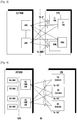
- FIG. 3 shows the structure of the interface S1 in the SAE, where an EPC is a core network of the evolution.
- Each eNB is connected with a plurality of MMEs in a MME pool.
- Each eNB is further connected to a plurality of S-GWs in a S-GW Pool.
- a HNB (including 3G HNB, LTE HNB and an HNB in another access system) is a Node B applied in a home and can be applied in such a site as a university, a company and so on.
- the HNB is a Plug-and-Play device, and can be of an open type and a closed subscriber group type.
- the difference between a HNB of the closed subscriber group type and a common macro base station lies in that typically not all the UEs are permitted to access the HNB. For instance, only UEs which belong to a user's home or are permitted by one of the family members to access the HNB are permitted to access the HNB of the home.
- For a HNB in a company only the company's staff and its granted partners are permitted to access the HNB.
- a HNB group having the same access subscriber set (e.g., HNBs arranged in the same company) is referred to as a CSG (Closed Subscriber Group).
- a UTRAN includes a 3G HNB and a 3G HNB GW.
- the HNB and the HNB GW constitute a HNB RAN.
- the 3G HNB performs the functions of an original Node B and some functions of the RNC, such as RRC, RLC, MAC, etc.
- the 3G HNB GW which is a node connected to the core network, includes the functions of a NNSF.
- the interface between the HNB and the HNB GW is known as Iuh.
- the 3G HNB GW accesses the core network via the lu interface.
- the HNB or the HNB GW can perform the access control of the UE.
- the HNB or the HNB GW stores a list of UEs identity which the HNB is permitted to access.
- the HNB RAN receives a message from UE, it is determined whether the UE is permitted to be accessed or not based on the UE's IMSI. If no IMSI is contained in the received message, the HNB RAN can transmit an identification request message to the UE. The UE'S IMSI can be obtained once a response message from the UE is received. There is no final conclusion on which one of the HNB and the HNB GW is more suitable to perform the access control of the UE. By far, most companies support a decision that the HNB GW should perform the access control of the UE, e.g., the access of the UE is permitted or not.
- a radio resource management entity such as a HNB, a RNC or an eNB
- receives a Radio Link Setup Request message from a UE it is known that there is an emergency service based on the information element Establishment Cause in the message.
- the upper-layer node e.g., a SGSN or a HNB GW
- the upper-layer node of the radio resource management entity may perform the access control of the UE, which may result in a failure or delay of the access of the emergency service.
- Document US 2005090224 discloses a system for emergency call messaging with mobile telephone devices by determining position of mobile telecommunications device before sending emergency call and sending it with the call.
- An object of the present invention is to provide a method for supporting an emergency service in a mobile communication system.
- emergency service indication in the first message transmitted by a radio resource management entity to its upper-layer node to inform its upper-layer node that the service to be accessed is an emergency service
- its upper-layer node can thus treat the service as an emergency one such that the resources allocation to the service can be prioritized without access control.
- a method for supporting an emergency call in a mobile communication system comprising the steps of:
- the access failure of an emergency service can be reduced, and the access speed of the emergency service can be increased.
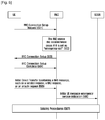
- FIG. 5 shows an embodiment in which the present method is applied in a 3G system.
- the detailed description of this embodiment is given below.
- detailed technical descriptions irrelevant to the present invention are omitted.
- a UE operating in an idle mode desires to initiate an emergency service. Therefore, it initiates a RRC connection setup process.
- a UE transmits 501 a RRC Connection Setup Request message to a RNC, in which the information element Establishment Cause is set as "emergency call".
- the RNC stores the establishment cause if it is set as "emergency call". In any other cases, the necessity for the RNC to store the establishment cause is irrelevant. It is not necessary for the RNC to perform the access control of the UE based on whether the UE is authorized to be accessed or not (for example, it is not necessary to determine whether the UE is permitted to access the current cell).
- the present invention does not focus on the access control of services based on the status of radio resource.
- the RNC transmits 503 a RRC Connection Setup message to the UE which then transmits 504 a RRC Connection Setup Complete message to the RNC.
- the UE transmits 505 an Initial Direct Transfer message to the RNC, which contains a Non-Access Stratum (NAS) message, such as a service request, a Routing Area Update (RAU) request, or an attach request, etc.
- NAS Non-Access Stratum
- the RNC transmits 506 an Initial UE message to the SGSN.
- the message contains Emergency Service Indication, which is only present when the establishment cause for the RRC connection is set as "emergency service”.
- the message further contains the NAS message in 505.
- the SGSN then receives the Initial UE message. If there is an emergency service indication in the received message, it is not necessary for the SGSN to perform the access control of the UE based on whether the UE is authorized to be accessed (e.g., it is not necessary to determine whether the UE is permitted to access the current service area which comprises a routing area (RA) and a location area (LA)).
- RA routing area
- LA location area
- the SGSN performs 507 the existing procedures according to the NAS message received in 506. For example, if the message received in step 506 is a service request message, the SGSN determines whether to transmit a service accept message (a NAS message) to the UE or not according to the prior art, and then initiates a Radio Access Bearer (RAB) setup procedure. If the message received in 506 is a Routing Area Update Request message, the SGSN transmits a RAU Accept message (a NAS message) to the UE. All these procedures are the same as the prior art, and detailed technical descriptions are therefore omitted here. The transmission of the NAS message from the SGSN to the UE is performed using a direct transfer message via the lu interface and a Downlink Direct Transfer message via the air interface.
- RAU Radio Access Bearer
- the emergency call to be accessed is an IMS emergency service, it is required to exchange IMS signalling between the UE and IMS entities, as illustrated in Figure 9 .
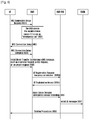
- FIG. 6 shows an embodiment in which the present method is applied in a 3G HNB system.
- the detailed description of this embodiment is given below.
- detailed technical descriptions irrelevant to the present invention are omitted.
- a UE operating in an idle mode desires to initiate an emergency service. Therefore, it initiates a RRC connection setup process.
- a UE transmits 601 a RRC Connection Setup Request message to a HNB, in which the information element Establishment Cause is set as "emergency call".
- the HNB stores the establishment cause if it is set as "emergency call". In any other cases, the necessity for the HNB to store the establishment cause is irrelevant. It is not necessary for the HNB to perform the access control of the UE based on whether the UE is authorized to be accessed or not (for example, it is not necessary to determine whether the UE is permitted to access the current HNB cell).
- the present invention does not focus on the access control of services based on the status of radio resource.
- the HNB transmits 603 a RRC Connection Setup message to the UE which then transmits 604 a RRC Connection Setup Complete message to the HNB.
- the UE transmits 605 a Initial Direct Transfer message to the HNB, which contains a Non-Access Stratum (NAS) message, such as a service request, a RAU request, or an attach request, etc.
- NAS Non-Access Stratum
- the HNB transmits 606 an Initial Direct Transfer message to a HNB GW.
- the message is an access stratum message between the HNB and the HNB GW, such as a HNBAP (Home Node B Application Protocol) message.
- the message contains Emergency Service Indication, which is only present when the establishment cause for the RRC connection is set as "emergency service”.
- the message further contains the NAS message in 605.
- the HNB GW then receives the Initial Direct Transfer message. If there is an emergency service indication in the received message, it is not necessary for the HNB GW to perform the access control of the UE (e.g., it is not necessary for the HNB GW to determine whether the UE is authorized to access the current HNB). Alternatively, if no IMSI of the UE is included in the message, the HNB GW does not need to perform an identification request process to acquire the UE's IMSI from the UE.
- the HNB performs a UE registration process prior to transmitting the Initial Direct Transfer message to the HNB GW.
- the HNB transmits a UE Registration Request message to the HNB GW, which contains a registration type and a HNB ID.
- the message further contains a UE ID if the registration type is set as UE.
- the HNB can transmit an emergency service indication to the HNB GW using the UE Registration Request message. It is not necessary for the HNB GW to perform the access control of the UE (e.g., it is not necessary for the HNB GW to determine whether the UE is authorized to access the current HNB).
- the HNB GW accepts the access of the UE and transmits a Registration Accept message to the HNB. Then it goes to step 606. If an emergency service indication is included by the HNB in the UE Registration Request message, it is not necessary to include an emergency service indication in the Initial Direct Transfer message in step 606.
- the HNB GW transmits 607 a RANAP message, Initial UE, to the SGSN, which contains a NAS message and, optionally, emergency service indication.
- the SGSN does not need to perform the access control of the UE based on whether the UE is authorized to be accessed if there is emergency service indication in the received message (e.g., it is not necessary to determine whether the UE is permitted to access the current service area which comprises a routing area (RA) and a location area (LA)).
- the SGSN can prioritize the resource allocation to the emergency service.
- the SGSN transmits 608 a downlink NAS message to the UE according to the NAS message received in 607.
- the transmission of the NAS message from the SGSN to the UE is performed using a direct transfer message via the lu interface, a direct transfer message via the Iuh interface and a Downlink Direct Transfer message via the air interface.
- the SGSN performs 608 the existing procedures according to the NAS message received in 607. For example, if the message received in step 607 is a service request message, the SGSN determines whether to transmit a service accept message (a NAS message) to the UE or not according to the prior art, and then initiates a Radio Access Bearer (RAB) setup procedure. If the message received in 607 is a Routing Area Update Request message, the SGSN transmits a RAU Accept message (a NAS message) to the UE. All these procedures are the same as the prior art, and detailed technical descriptions are therefore omitted here. The transmission of the NAS message from the SGSN to the UE is performed using a direct transfer message via the lu interface, a direct transfer message via the Iuh interface and a Downlink Direct Transfer message via the air interface.
- RAU Radio Access Bearer
- the emergency call to be accessed is an IMS emergency service, it is required to exchange IMS signalling between the UE and IMS entities, as illustrated in Figure 9 .
- Step 608 corresponds to the existing procedures in LTE (e.g., the initial context establishment procedure, the radio bearer setup procedure and the TAU accept procedure). If there is no HNB GW in the LTE HNB, the supporting of emergency services in the LTE HNB is the same as that illustrated in Figure 7 .
- FIG. 7 shows an embodiment in which the present method is applied in a SAE system.
- the detailed description of this embodiment is given below.
- detailed technical descriptions irrelevant to the present invention are omitted.
- a UE operating in an idle mode desires to initiate an emergency service. Therefore, it initiates a RRC connection setup process.
- a UE transmits 701 a RRC Connection Setup Request message to an eNB, in which the information element Establishment Cause is set as "emergency call".
- the eNB stores the establishment cause if it is set as "emergency call". In any other cases, the necessity for the eNB to store the establishment cause is irrelevant. It is not necessary for the eNB to perform the access control of the UE based on whether the UE is authorized to be accessed or not (for example, it is not necessary to determine whether the UE is permitted to access the current cell).
- the present invention does not focus on the access control of services based on the status of radio resource.
- the eNB transmits 703 a RRC Connection Setup message to the UE which then transmits 704 a RRC Connection Setup Complete message to the eNB.
- the UE transmits 705 a Uplink Information Transfer message to the eNB, which contains a Non-Access Stratum (NAS) message, such as a service request, a tracking area update (TAU) request, or an attach request, etc.
- NAS Non-Access Stratum
- the eNB transmits 706 an Initial UE message to a MME.
- the message contains Emergency Service Indication, which is only present when the establishment cause for the RRC connection is set as "emergency service”.
- the message further contains the NAS message in 705.
- the MME then receives the Initial UE message. If there is emergency service indication in the received message, it is not necessary for the MME to perform the access control of the UE based on whether the UE is authorized to be accessed (e.g., it is not necessary to determine whether the UE is permitted to access the current service area which comprises a TA, a location area, etc).
- the MME performs 707 the existing procedures according to the NAS message received in 706. For example, if the message received in step 706 is a service request message, the MME initiates an initial context setup procedure, including a Radio Access Bearer Setup procedure. If the message received in step 706 is a TAU Request message, the MME transmits a TAU Accept message (a NAS message) to the UE. All these procedures are the same as the prior art, and detailed technical descriptions are therefore omitted here.
- the transmission of the NAS message from the MME to the UE is performed using a downlink NAS transport message via the S1 interface and a Downlink Information Transfer message via the air interface.
- the emergency call to be accessed is an IMS emergency service, it is required to exchange IMS signalling between the UE and IMS entities. This process is the same as the prior art, and detailed technical descriptions are therefore omitted here.
- the operation flow of the node which receives the emergency service indication (e.g., the SGSN in Figure 5 , the HNB GW or SGSN in Figure 6 and the MME in Figure 7 ) is illustrated in Figure 8 whose detailed description will be given in the following. Here, detailed technical descriptions irrelevant to the present invention are omitted.
- a radio network node device receives 801 a message.
- the received message is an Initial Direct Transfer message 606 or an Initial UE message 506 or 706 from a radio network resource management entity (e.g., a RNC, an eNB, a HNB or a HNB GW) in step 802 and the message contains an emergency service indication in step 803, the process proceeds with step 804 if the corresponding radio network node device is a HNB GW. Otherwise, the process proceeds with step 806 if the corresponding radio network node device is a SGSN or a MME.
- a radio network resource management entity e.g., a RNC, an eNB, a HNB or a HNB GW
- step 804 if the received message contains emergency service indication, it is not necessary for the HNB GW to perform the access control of the UE (e.g., to check whether the UE is in the registration list of the HNB or not).
- the HNB GW forwards the received NAS message to a core network node device (e.g., a SGSN or a MME).
- a core network node device e.g., a SGSN or a MME
- the HNB GW stores information on the emergency service. If the HNB GW is associated with the resource allocation function, it needs to prioritize the resource allocation to the UE. All other procedures are the same as the prior art, and detailed technical descriptions are therefore omitted here.
- the SGSN or MME stores the information on emergency service.
- it is not necessary for the SGSN or MME to perform the access control of the UE based on whether the UE is authorized to be accessed e.g., it is not necessary to determine whether the UE is permitted to access the current service area which comprises a routing area (RA) and a location area (LA)).
- the SGSN or MME is required to prioritize the resource allocation to the service to be accessed. All other procedures are the same as the prior art, and detailed technical descriptions are therefore omitted here.
- a request for establishing an emergency session is detected 901 by the UE.
- step 902 if there is no sufficient resource or capability for the UE to establish an emergency call due to other active sessions, the UE should terminate the current communication to release the preserved bearer resource.
- step 903 if the bearer registration process is required but it has not been performed yet, the UE should perform the bearer registration with an IP-CAN (IP connection access network). Subsequently, the bearer registration process is no longer required.
- IP-CAN IP connection access network
- the IP-CAN can assign an IP address to the UE.
- step 904 if it is necessary for the IP-CAN to preserve bearer resource for the transmission of the IMS signalling, the UE should preserve the resource in the IP-CAN. If no IP address is assigned to the UE by the IP-CAN in step 904, the IP-CAN should assign an IP address to the UE during the bearer resource request process.
- step 905 the UE performs a P-CSCF (Proxy-call session control function) discovery process.
- the P-CSCF in local network suitable for emergency session is discovered by the UE, wherein the detailed P-CSCF discovery method depends on the IP-CAN.
- step 906 if the UE is sufficiently trusted such that it is authorized to verify an IMS network, the UE initiates an IMS emergency registration process.
- the UE provides the IP address obtained in step 903 or 904 to the P-CSCF selected in step 905.
- the IP address for signalling is assigned in step 903 or 904 in a synchronous manner.
- the IMS registration request should contain an emergency common user ID.
- the implicitly registered emergency common user ID should contain an associated Tel URI (unified resource ID), which is used to call the user back from a PSTN (public switched telephone network).
- Tel URI unified resource ID
- the termination of the requested registration can be set by an S-CSCF (serving CSCF) according to the internal policy of the service system and rule.
- the subsequent registration procedures are the same as other registration procedures. If the UE is not sufficiently trusted to authenticate an IMS network, it establishes an emergency session with the P-CSCF immediately (as illustrated in step 907) instead of initiating any IMS emergency registration request.
- step 907 if the IMS emergency registration is completed, the UE initiates an IMS emergency session establishment using an IMS session establishment procedure in which an emergency session indicator and an emergency common user ID are incorporated. Otherwise, the UE should initiate an IMS emergency session establishment using an IMS session establishment procedure in which an emergency session indicator and any registered emergency common user ID are incorporated.
- the establishment of the IMS emergency call mainly depends on the IMS signalling.
- the access stratum of the SGSN is informed that the service to be established is an emergency one and can thereby be treated as an emergency service.
Landscapes
- Engineering & Computer Science (AREA)
- Computer Networks & Wireless Communication (AREA)
- Signal Processing (AREA)
- Business, Economics & Management (AREA)
- Health & Medical Sciences (AREA)
- Emergency Management (AREA)
- Environmental & Geological Engineering (AREA)
- Public Health (AREA)
- Mobile Radio Communication Systems (AREA)
Claims (15)
- Verfahren zur Unterstützung eines Notfalldienstes durch eine Basisstation in einem mobilen Kommunikationssystem, umfassend:Empfangen (705), durch die Basisstation, einer ersten Nachricht von einem Terminal, die erste Informationen beinhaltet, die mit einer Attachment-Anforderung des Terminals assoziiert sind;Feststellen, durch die Basisstation, dass eine zweite Nachricht zweite Informationen enthält, welche einen Notfalldienst anzeigen, basierend auf den ersten Informationen;Übermitteln (706), durch die Basisstation, der zweiten Nachricht inklusive der ersten und der zweiten Informationen an eine Mobility Management Entity (MME); undEmpfangen (707), durch die Basisstation, einer dritten Nachricht von der MME falls die Attachment-Anforderung akzeptiert wird,wobei die Attachment-Anforderung von der MME akzeptiert wird, wenn die zweite Nachricht die zweiten Informationen enthält.
- Verfahren nach Anspruch 1, wobei die erste Nachricht eine Attachment-Anforderungs-Nachricht beinhaltet.
- Verfahren nach Anspruch 1, wobei die ersten Informationen, die mit der Attachment-Anforderung des Terminals assoziiert sind, Informationen zur Identifizierung des Terminals beinhalten.
- Verfahren nach Anspruch 1, wobei die zweite Nachricht eine ursprüngliche User Equipment (UE) Nachricht ist und eine Attachment-Anforderungs-Nachricht beinhaltet.
- Eine Basisstation, umfassend:Einen Transceiver konfiguriert zum Senden und Empfangen eines Signals; undEinen Controller, der an den Transceiver gekoppelt ist und konfiguriert ist zum:Empfangen (705) einer ersten Nachricht von einem Terminal (705), die erste Informationen beinhaltet, die mit einer Attachment-Anforderung des Terminals assoziiert sind;Feststellen, dass eine zweite Nachricht zweite Informationen enthält, welche einen Notfalldienst anzeigen, basierend auf den ersten Informationen;Übermitteln (706) der zweiten Nachricht inklusive der ersten und der zweiten Informationen an eine Mobility Management Entity (MME); undEmpfangen (707) einer dritten Nachricht von der MME falls die Attachment-Anforderung akzeptiert wird,wobei die Attachment-Anforderung von der MME akzeptiert wird, wenn die zweite Nachricht die zweiten Informationen enthält.
- Basisstation nach Anspruch 5, wobei die erste Nachricht eine Attachment-Anforderungs-Nachricht beinhaltet.
- Basisstation nach Anspruch 5, wobei die ersten Informationen, die mit der Attachment-Anforderung des Terminals assoziiert sind, Informationen zur Identifizierung des Terminals beinhalten.
- Basisstation nach Anspruch 5, wobei die zweite Nachricht eine ursprüngliche User Equipment (UE) Nachricht ist und eine Attachment-Anforderungs-Nachricht beinhaltet.
- Verfahren zur Unterstützung eines Notfalldienstes durch eine Mobility Management Entity (MME) in einem mobilen Kommunikationssystem, umfassend:Empfangen (706), durch die MME, einer ersten Nachricht von einer Basisstation, die erste Informationen beinhaltet, die mit einer Attachment-Anforderung des Terminals assoziiert sind;Feststellen, durch die MME, ob die Attachment-Anforderung akzeptiert wird, basierend auf der ersten Nachricht; undÜbermitteln (707), durch die MME, einer zweiten Nachricht an die Basisstation falls die Attachment-Anforderung akzeptiert wird,wobei die Attachment-Anforderung von der MME akzeptiert wird, wenn die erste Nachricht weiterhin zweite Informationen enthält, die einen Notfalldienst anzeigen, undwobei die zweiten Informationen von der Basisstation in die erste Nachricht eingefügt werden, basierend auf Informationen, die in einer von dem Terminal empfangenen Radio-Resource-Control (RRC) Nachricht enthalten sind.
- Verfahren nach Anspruch 9, wobei die erste Nachricht eine ursprüngliche User Equipment (UE) Nachricht ist und eine von dem Terminal empfangene Attachment-Anforderungs-Nachricht beinhaltet.
- Verfahren nach Anspruch 9, wobei die ersten Informationen, die mit der Attachment-Anforderung des Terminals assoziiert sind, Informationen zur Identifizierung des Terminals beinhalten.
- Verfahren nach Anspruch 9, wobei die emfpangene RRC Nachricht des Terminals eine Attachment-Anforderungs-Nachricht beinhaltet.
- Basisstation, umfassend:Einen Transceiver konfiguriert zum Senden und Empfangen eines Signals; undEinen Controller, der an den Transceiver gekoppelt ist und konfiguriert ist zum:Empfangen (706) einer ersten Nachricht von einer Basisstation, die erste Informationen beinhaltet, die mit einer Attachment-Anforderung des Terminals assoziiert sind;Feststellen ob die Attachment-Anforderung akzeptiert wird, basierend auf der ersten Nachricht; undÜbermitteln (707) einer zweiten Nachricht an die Basisstation, falls die Attachment-Anforderung akzeptiert wird,wobei die Attachment-Anforderung von der MME akzeptiert wird, wenn die erste Nachricht weiterhin zweite Informationen enthält, die einen Notfalldienst anzeigen, undwobei die zweiten Informationen von der Basisstation in die erste Nachricht eingefügt werden, basierend auf Informationen, die in einer von dem Terminal empfangenen Radio-Resource-Control (RRC) Nachricht enthalten sind.
- Basisstation nach Anspruch 13, wobei die erste Nachricht eine ursprüngliche User Equipment (UE) Nachricht ist und eine von dem Terminal empfangene Attachment-Anforderungs-Nachricht beinhaltet.
- Basisstation nach Anspruch 13, wobei die ersten Informationen, die mit der Attachment-Anforderung des Terminals assoziiert sind, Informationen zur Identifizierung des Terminals beinhalten.
Priority Applications (1)
| Application Number | Priority Date | Filing Date | Title |
|---|---|---|---|
| EP18169279.9A EP3370393B1 (de) | 2008-07-04 | 2009-07-02 | Verfahren zur unterstützung eines notrufs in einem mobilkommunikationssystem |
Applications Claiming Priority (2)
| Application Number | Priority Date | Filing Date | Title |
|---|---|---|---|
| CN200810128235A CN101621777A (zh) | 2008-07-04 | 2008-07-04 | 移动通信系统中支持紧急呼叫的方法 |
| PCT/KR2009/003624 WO2010002208A2 (en) | 2008-07-04 | 2009-07-02 | Method for supporting an emergency call in a mobile communication system |
Related Child Applications (1)
| Application Number | Title | Priority Date | Filing Date |
|---|---|---|---|
| EP18169279.9A Division EP3370393B1 (de) | 2008-07-04 | 2009-07-02 | Verfahren zur unterstützung eines notrufs in einem mobilkommunikationssystem |
Publications (3)
| Publication Number | Publication Date |
|---|---|
| EP2297985A2 EP2297985A2 (de) | 2011-03-23 |
| EP2297985A4 EP2297985A4 (de) | 2017-05-17 |
| EP2297985B1 true EP2297985B1 (de) | 2018-05-02 |
Family
ID=41466481
Family Applications (2)
| Application Number | Title | Priority Date | Filing Date |
|---|---|---|---|
| EP09773744.9A Active EP2297985B1 (de) | 2008-07-04 | 2009-07-02 | Verfahren zur unterstützung eines notrufs in einem mobilkommunikationssystem |
| EP18169279.9A Active EP3370393B1 (de) | 2008-07-04 | 2009-07-02 | Verfahren zur unterstützung eines notrufs in einem mobilkommunikationssystem |
Family Applications After (1)
| Application Number | Title | Priority Date | Filing Date |
|---|---|---|---|
| EP18169279.9A Active EP3370393B1 (de) | 2008-07-04 | 2009-07-02 | Verfahren zur unterstützung eines notrufs in einem mobilkommunikationssystem |
Country Status (5)
| Country | Link |
|---|---|
| US (3) | US8818323B2 (de) |
| EP (2) | EP2297985B1 (de) |
| KR (2) | KR101561068B1 (de) |
| CN (1) | CN101621777A (de) |
| WO (1) | WO2010002208A2 (de) |
Families Citing this family (13)
| Publication number | Priority date | Publication date | Assignee | Title |
|---|---|---|---|---|
| WO2011083151A1 (en) * | 2010-01-08 | 2011-07-14 | Research In Motion Limited | Emergency radio connection setup |
| CN101902716B (zh) * | 2010-08-16 | 2015-12-16 | 中兴通讯股份有限公司 | 一种紧急业务的处理方法和系统 |
| WO2012110350A1 (en) * | 2011-02-16 | 2012-08-23 | Nokia Siemens Networks Oy | Method and apparatus for maintaining a registration for an emergency service |
| US8655305B2 (en) * | 2011-03-21 | 2014-02-18 | Htc Corporation | Methods for requesting emergency bearer services for low priority devices, and apparatuses using the same |
| CN103037418B (zh) * | 2011-09-30 | 2016-03-30 | 华为技术有限公司 | 一种实现告警事件处理的方法、装置和系统 |
| US20140351949A1 (en) * | 2012-01-27 | 2014-11-27 | Nec Corporation | Privacy issues in m2m |
| US20130282803A1 (en) * | 2012-04-18 | 2013-10-24 | Microsoft Corporation | Engaging session elements in conference sessions |
| CN104039016B (zh) * | 2013-03-08 | 2019-08-13 | 中兴通讯股份有限公司 | 业务数据的传输处理、传输方法及装置 |
| CN104883668B (zh) | 2014-02-28 | 2020-02-21 | 北京三星通信技术研究有限公司 | 一种支持pws快速恢复的方法 |
| WO2017036494A1 (en) | 2015-08-28 | 2017-03-09 | Nokia Solutions And Networks Oy | Data routing in cellular communication system |
| CN107222894A (zh) * | 2016-03-22 | 2017-09-29 | 中兴通讯股份有限公司 | 一种数据传输方法、装置和系统 |
| WO2019147176A1 (en) * | 2018-01-23 | 2019-08-01 | Telefonaktiebolaget Lm Ericsson (Publ) | Methods, core network node and ran node for enabling emergency services |
| EP3777466A1 (de) * | 2018-03-28 | 2021-02-17 | NEC Corporation | Notdienstunterstützung für eine vorrichtung ohne gültiges abonnement |
Family Cites Families (13)
| Publication number | Priority date | Publication date | Assignee | Title |
|---|---|---|---|---|
| US6208627B1 (en) * | 1997-12-10 | 2001-03-27 | Xircom, Inc. | Signaling and protocol for communication system with wireless trunk |
| US6397054B1 (en) | 1998-07-30 | 2002-05-28 | Ericsson Inc. | Features for emergency calling and short messaging system |
| DE10101282A1 (de) * | 2001-01-12 | 2002-07-18 | Siemens Ag | Notrufmeldung mittels mobiler Telekommunikationsgeräte |
| DE602004001458T2 (de) * | 2003-02-27 | 2006-12-28 | Thomson Licensing | Eine tight-coupling wlan lösung |
| US7333795B2 (en) * | 2003-10-24 | 2008-02-19 | Motorola Inc. | Emergency call placement method |
| KR20060014631A (ko) * | 2004-08-11 | 2006-02-16 | 삼성전자주식회사 | 이동통신 시스템에서 목적 셀의 혼잡성을 고려한 셀선택/재선택 방법 및 시스템 |
| US10178522B2 (en) | 2005-08-02 | 2019-01-08 | Qualcomm Incorporated | VoIP emergency call support |
| US9137770B2 (en) * | 2005-09-15 | 2015-09-15 | Qualcomm Incorporated | Emergency circuit-mode call support |
| US7995994B2 (en) * | 2006-09-22 | 2011-08-09 | Kineto Wireless, Inc. | Method and apparatus for preventing theft of service in a communication system |
| WO2008074782A1 (en) * | 2006-12-21 | 2008-06-26 | Nokia Corporation | Emergency support in a communication system |
| US8019331B2 (en) * | 2007-02-26 | 2011-09-13 | Kineto Wireless, Inc. | Femtocell integration into the macro network |
| US8295830B1 (en) * | 2007-05-09 | 2012-10-23 | Marvell International Ltd. | System and method for enabling authorization of local breakout for internet protocol multimedia services |
| US8165587B2 (en) * | 2008-02-07 | 2012-04-24 | Telefonaktiebolaget Lm Ericsson (Publ) | Communicating cell restriction status information between radio access network nodes |
-
2008
- 2008-07-04 CN CN200810128235A patent/CN101621777A/zh active Pending
-
2009
- 2009-07-02 KR KR1020117000133A patent/KR101561068B1/ko active Active
- 2009-07-02 US US13/001,868 patent/US8818323B2/en active Active
- 2009-07-02 WO PCT/KR2009/003624 patent/WO2010002208A2/en not_active Ceased
- 2009-07-02 EP EP09773744.9A patent/EP2297985B1/de active Active
- 2009-07-02 EP EP18169279.9A patent/EP3370393B1/de active Active
- 2009-07-02 KR KR1020157012469A patent/KR101575237B1/ko active Active
-
2014
- 2014-08-12 US US14/457,832 patent/US9344871B2/en active Active
-
2016
- 2016-05-16 US US15/155,591 patent/US9730251B2/en active Active
Non-Patent Citations (1)
| Title |
|---|
| None * |
Also Published As
| Publication number | Publication date |
|---|---|
| KR20110026464A (ko) | 2011-03-15 |
| US20110117876A1 (en) | 2011-05-19 |
| KR101575237B1 (ko) | 2015-12-07 |
| EP2297985A2 (de) | 2011-03-23 |
| US8818323B2 (en) | 2014-08-26 |
| KR20150061004A (ko) | 2015-06-03 |
| WO2010002208A2 (en) | 2010-01-07 |
| US9730251B2 (en) | 2017-08-08 |
| WO2010002208A3 (en) | 2010-04-15 |
| EP3370393A1 (de) | 2018-09-05 |
| CN101621777A (zh) | 2010-01-06 |
| US20160262189A1 (en) | 2016-09-08 |
| EP3370393B1 (de) | 2019-12-04 |
| US9344871B2 (en) | 2016-05-17 |
| US20140349604A1 (en) | 2014-11-27 |
| EP2297985A4 (de) | 2017-05-17 |
| KR101561068B1 (ko) | 2015-10-16 |
Similar Documents
| Publication | Publication Date | Title |
|---|---|---|
| EP2297985B1 (de) | Verfahren zur unterstützung eines notrufs in einem mobilkommunikationssystem | |
| US11122550B2 (en) | Method and apparatus for controlling specific service in network congestion state in wireless communication system | |
| US8504055B2 (en) | Method and arrangement for load balancing in a wireless communication system | |
| US7606152B2 (en) | Setting a communication channel | |
| US9668293B2 (en) | Relocation of mobility anchor for nomadic subscribers | |
| JP6096246B2 (ja) | パケットデータ網ゲートウェイ選択方法 | |
| US20100226314A1 (en) | Method for user equipment performing direct communications via hnb access systems | |
| CN105191367B (zh) | 用于确定启用isr能力的方法 | |
| CN103797773A (zh) | 通信系统 | |
| WO2012094957A1 (zh) | 一种对mtc终端进行移动性管理的方法和系统 | |
| CN101860910B (zh) | 本地网络的承载建立方法、系统及装置 | |
| CN101867986B (zh) | 一种csfb功能的激活方法及系统 | |
| JP6191768B2 (ja) | 移動無線通信装置からのデータ転送 | |
| CN101651592A (zh) | 家用基站网关消息处理的方法 | |
| CN101959209B (zh) | 一种部分故障处理的同步方法和系统 | |
| KR20180027152A (ko) | 전용망 정책에 대응하여 휴대용 단말기에 네트워크 연결을 제공하는 방법 및 장치 | |
| HK1137887A (en) | Method for supporting emergency calls in the mobile communication system | |
| CN101742688A (zh) | 移动通信系统中发送寻呼的方法 |
Legal Events
| Date | Code | Title | Description |
|---|---|---|---|
| PUAI | Public reference made under article 153(3) epc to a published international application that has entered the european phase |
Free format text: ORIGINAL CODE: 0009012 |
|
| 17P | Request for examination filed |
Effective date: 20110103 |
|
| AK | Designated contracting states |
Kind code of ref document: A2 Designated state(s): AT BE BG CH CY CZ DE DK EE ES FI FR GB GR HR HU IE IS IT LI LT LU LV MC MK MT NL NO PL PT RO SE SI SK SM TR |
|
| AX | Request for extension of the european patent |
Extension state: AL BA RS |
|
| DAX | Request for extension of the european patent (deleted) | ||
| RAP1 | Party data changed (applicant data changed or rights of an application transferred) |
Owner name: SAMSUNG ELECTRONICS CO., LTD. |
|
| A4 | Supplementary search report drawn up and despatched |
Effective date: 20170413 |
|
| RIC1 | Information provided on ipc code assigned before grant |
Ipc: H04W 76/04 20090101ALI20170408BHEP Ipc: H04W 4/22 20090101AFI20170408BHEP Ipc: H04W 60/04 20090101ALI20170408BHEP Ipc: H04W 88/02 20090101ALI20170408BHEP Ipc: H04W 76/00 20090101ALI20170408BHEP Ipc: H04L 29/06 20060101ALI20170408BHEP |
|
| GRAP | Despatch of communication of intention to grant a patent |
Free format text: ORIGINAL CODE: EPIDOSNIGR1 |
|
| RIC1 | Information provided on ipc code assigned before grant |
Ipc: H04W 76/04 20090101ALI20171026BHEP Ipc: H04L 29/06 20060101ALI20171026BHEP Ipc: H04W 76/00 20090101ALI20171026BHEP Ipc: H04W 88/02 20090101ALI20171026BHEP Ipc: H04W 60/04 20090101ALI20171026BHEP Ipc: H04W 4/22 20090101AFI20171026BHEP |
|
| INTG | Intention to grant announced |
Effective date: 20171116 |
|
| GRAS | Grant fee paid |
Free format text: ORIGINAL CODE: EPIDOSNIGR3 |
|
| GRAA | (expected) grant |
Free format text: ORIGINAL CODE: 0009210 |
|
| AK | Designated contracting states |
Kind code of ref document: B1 Designated state(s): AT BE BG CH CY CZ DE DK EE ES FI FR GB GR HR HU IE IS IT LI LT LU LV MC MK MT NL NO PL PT RO SE SI SK SM TR |
|
| REG | Reference to a national code |
Ref country code: GB Ref legal event code: FG4D |
|
| REG | Reference to a national code |
Ref country code: CH Ref legal event code: EP Ref country code: AT Ref legal event code: REF Ref document number: 996504 Country of ref document: AT Kind code of ref document: T Effective date: 20180515 |
|
| REG | Reference to a national code |
Ref country code: DE Ref legal event code: R096 Ref document number: 602009052117 Country of ref document: DE Ref country code: IE Ref legal event code: FG4D |
|
| REG | Reference to a national code |
Ref country code: DE Ref legal event code: R096 Ref document number: 602009052117 Country of ref document: DE |
|
| REG | Reference to a national code |
Ref country code: FR Ref legal event code: PLFP Year of fee payment: 10 |
|
| REG | Reference to a national code |
Ref country code: SE Ref legal event code: TRGR |
|
| REG | Reference to a national code |
Ref country code: NL Ref legal event code: FP |
|
| REG | Reference to a national code |
Ref country code: LT Ref legal event code: MG4D |
|
| PG25 | Lapsed in a contracting state [announced via postgrant information from national office to epo] |
Ref country code: ES Free format text: LAPSE BECAUSE OF FAILURE TO SUBMIT A TRANSLATION OF THE DESCRIPTION OR TO PAY THE FEE WITHIN THE PRESCRIBED TIME-LIMIT Effective date: 20180502 Ref country code: BG Free format text: LAPSE BECAUSE OF FAILURE TO SUBMIT A TRANSLATION OF THE DESCRIPTION OR TO PAY THE FEE WITHIN THE PRESCRIBED TIME-LIMIT Effective date: 20180802 Ref country code: LT Free format text: LAPSE BECAUSE OF FAILURE TO SUBMIT A TRANSLATION OF THE DESCRIPTION OR TO PAY THE FEE WITHIN THE PRESCRIBED TIME-LIMIT Effective date: 20180502 Ref country code: NO Free format text: LAPSE BECAUSE OF FAILURE TO SUBMIT A TRANSLATION OF THE DESCRIPTION OR TO PAY THE FEE WITHIN THE PRESCRIBED TIME-LIMIT Effective date: 20180802 |
|
| PG25 | Lapsed in a contracting state [announced via postgrant information from national office to epo] |
Ref country code: LV Free format text: LAPSE BECAUSE OF FAILURE TO SUBMIT A TRANSLATION OF THE DESCRIPTION OR TO PAY THE FEE WITHIN THE PRESCRIBED TIME-LIMIT Effective date: 20180502 Ref country code: GR Free format text: LAPSE BECAUSE OF FAILURE TO SUBMIT A TRANSLATION OF THE DESCRIPTION OR TO PAY THE FEE WITHIN THE PRESCRIBED TIME-LIMIT Effective date: 20180803 Ref country code: HR Free format text: LAPSE BECAUSE OF FAILURE TO SUBMIT A TRANSLATION OF THE DESCRIPTION OR TO PAY THE FEE WITHIN THE PRESCRIBED TIME-LIMIT Effective date: 20180502 |
|
| REG | Reference to a national code |
Ref country code: AT Ref legal event code: MK05 Ref document number: 996504 Country of ref document: AT Kind code of ref document: T Effective date: 20180502 |
|
| PG25 | Lapsed in a contracting state [announced via postgrant information from national office to epo] |
Ref country code: PT Free format text: LAPSE BECAUSE OF FAILURE TO SUBMIT A TRANSLATION OF THE DESCRIPTION OR TO PAY THE FEE WITHIN THE PRESCRIBED TIME-LIMIT Effective date: 20180903 |
|
| PG25 | Lapsed in a contracting state [announced via postgrant information from national office to epo] |
Ref country code: SK Free format text: LAPSE BECAUSE OF FAILURE TO SUBMIT A TRANSLATION OF THE DESCRIPTION OR TO PAY THE FEE WITHIN THE PRESCRIBED TIME-LIMIT Effective date: 20180502 Ref country code: RO Free format text: LAPSE BECAUSE OF FAILURE TO SUBMIT A TRANSLATION OF THE DESCRIPTION OR TO PAY THE FEE WITHIN THE PRESCRIBED TIME-LIMIT Effective date: 20180502 Ref country code: PL Free format text: LAPSE BECAUSE OF FAILURE TO SUBMIT A TRANSLATION OF THE DESCRIPTION OR TO PAY THE FEE WITHIN THE PRESCRIBED TIME-LIMIT Effective date: 20180502 Ref country code: CZ Free format text: LAPSE BECAUSE OF FAILURE TO SUBMIT A TRANSLATION OF THE DESCRIPTION OR TO PAY THE FEE WITHIN THE PRESCRIBED TIME-LIMIT Effective date: 20180502 Ref country code: AT Free format text: LAPSE BECAUSE OF FAILURE TO SUBMIT A TRANSLATION OF THE DESCRIPTION OR TO PAY THE FEE WITHIN THE PRESCRIBED TIME-LIMIT Effective date: 20180502 Ref country code: EE Free format text: LAPSE BECAUSE OF FAILURE TO SUBMIT A TRANSLATION OF THE DESCRIPTION OR TO PAY THE FEE WITHIN THE PRESCRIBED TIME-LIMIT Effective date: 20180502 Ref country code: DK Free format text: LAPSE BECAUSE OF FAILURE TO SUBMIT A TRANSLATION OF THE DESCRIPTION OR TO PAY THE FEE WITHIN THE PRESCRIBED TIME-LIMIT Effective date: 20180502 |
|
| REG | Reference to a national code |
Ref country code: CH Ref legal event code: PK Free format text: BERICHTIGUNGEN |
|
| REG | Reference to a national code |
Ref country code: DE Ref legal event code: R097 Ref document number: 602009052117 Country of ref document: DE |
|
| RIC2 | Information provided on ipc code assigned after grant |
Ipc: H04W 76/04 20090101ALI20171026BHEP Ipc: H04W 76/00 20180101ALI20171026BHEP Ipc: H04W 88/02 20090101ALI20171026BHEP Ipc: H04W 60/04 20090101ALI20171026BHEP Ipc: H04L 29/06 20060101ALI20171026BHEP Ipc: H04W 4/22 20090101AFI20171026BHEP |
|
| PG25 | Lapsed in a contracting state [announced via postgrant information from national office to epo] |
Ref country code: SM Free format text: LAPSE BECAUSE OF FAILURE TO SUBMIT A TRANSLATION OF THE DESCRIPTION OR TO PAY THE FEE WITHIN THE PRESCRIBED TIME-LIMIT Effective date: 20180502 |
|
| REG | Reference to a national code |
Ref country code: CH Ref legal event code: PL |
|
| PLBE | No opposition filed within time limit |
Free format text: ORIGINAL CODE: 0009261 |
|
| STAA | Information on the status of an ep patent application or granted ep patent |
Free format text: STATUS: NO OPPOSITION FILED WITHIN TIME LIMIT |
|
| PG25 | Lapsed in a contracting state [announced via postgrant information from national office to epo] |
Ref country code: LU Free format text: LAPSE BECAUSE OF NON-PAYMENT OF DUE FEES Effective date: 20180702 Ref country code: MC Free format text: LAPSE BECAUSE OF FAILURE TO SUBMIT A TRANSLATION OF THE DESCRIPTION OR TO PAY THE FEE WITHIN THE PRESCRIBED TIME-LIMIT Effective date: 20180502 |
|
| REG | Reference to a national code |
Ref country code: BE Ref legal event code: MM Effective date: 20180731 |
|
| 26N | No opposition filed |
Effective date: 20190205 |
|
| REG | Reference to a national code |
Ref country code: IE Ref legal event code: MM4A |
|
| PG25 | Lapsed in a contracting state [announced via postgrant information from national office to epo] |
Ref country code: CH Free format text: LAPSE BECAUSE OF NON-PAYMENT OF DUE FEES Effective date: 20180731 Ref country code: IE Free format text: LAPSE BECAUSE OF NON-PAYMENT OF DUE FEES Effective date: 20180702 Ref country code: LI Free format text: LAPSE BECAUSE OF NON-PAYMENT OF DUE FEES Effective date: 20180731 |
|
| PG25 | Lapsed in a contracting state [announced via postgrant information from national office to epo] |
Ref country code: SI Free format text: LAPSE BECAUSE OF FAILURE TO SUBMIT A TRANSLATION OF THE DESCRIPTION OR TO PAY THE FEE WITHIN THE PRESCRIBED TIME-LIMIT Effective date: 20180502 Ref country code: BE Free format text: LAPSE BECAUSE OF NON-PAYMENT OF DUE FEES Effective date: 20180731 |
|
| PG25 | Lapsed in a contracting state [announced via postgrant information from national office to epo] |
Ref country code: MT Free format text: LAPSE BECAUSE OF NON-PAYMENT OF DUE FEES Effective date: 20180702 |
|
| PG25 | Lapsed in a contracting state [announced via postgrant information from national office to epo] |
Ref country code: TR Free format text: LAPSE BECAUSE OF FAILURE TO SUBMIT A TRANSLATION OF THE DESCRIPTION OR TO PAY THE FEE WITHIN THE PRESCRIBED TIME-LIMIT Effective date: 20180502 |
|
| PG25 | Lapsed in a contracting state [announced via postgrant information from national office to epo] |
Ref country code: HU Free format text: LAPSE BECAUSE OF FAILURE TO SUBMIT A TRANSLATION OF THE DESCRIPTION OR TO PAY THE FEE WITHIN THE PRESCRIBED TIME-LIMIT; INVALID AB INITIO Effective date: 20090702 |
|
| PG25 | Lapsed in a contracting state [announced via postgrant information from national office to epo] |
Ref country code: MK Free format text: LAPSE BECAUSE OF NON-PAYMENT OF DUE FEES Effective date: 20180502 Ref country code: CY Free format text: LAPSE BECAUSE OF FAILURE TO SUBMIT A TRANSLATION OF THE DESCRIPTION OR TO PAY THE FEE WITHIN THE PRESCRIBED TIME-LIMIT Effective date: 20180502 |
|
| PG25 | Lapsed in a contracting state [announced via postgrant information from national office to epo] |
Ref country code: IS Free format text: LAPSE BECAUSE OF FAILURE TO SUBMIT A TRANSLATION OF THE DESCRIPTION OR TO PAY THE FEE WITHIN THE PRESCRIBED TIME-LIMIT Effective date: 20180902 |
|
| PGFP | Annual fee paid to national office [announced via postgrant information from national office to epo] |
Ref country code: FR Payment date: 20240624 Year of fee payment: 16 Ref country code: FI Payment date: 20240620 Year of fee payment: 16 |
|
| PGFP | Annual fee paid to national office [announced via postgrant information from national office to epo] |
Ref country code: SE Payment date: 20240621 Year of fee payment: 16 |
|
| PGFP | Annual fee paid to national office [announced via postgrant information from national office to epo] |
Ref country code: IT Payment date: 20240620 Year of fee payment: 16 |
|
| PGFP | Annual fee paid to national office [announced via postgrant information from national office to epo] |
Ref country code: GB Payment date: 20250624 Year of fee payment: 17 |
|
| PGFP | Annual fee paid to national office [announced via postgrant information from national office to epo] |
Ref country code: NL Payment date: 20250623 Year of fee payment: 17 |
|
| PGFP | Annual fee paid to national office [announced via postgrant information from national office to epo] |
Ref country code: DE Payment date: 20250624 Year of fee payment: 17 |