EP2297959B1 - Videostreaming mit linearen hinweisen - Google Patents
Videostreaming mit linearen hinweisen Download PDFInfo
- Publication number
- EP2297959B1 EP2297959B1 EP09771075.0A EP09771075A EP2297959B1 EP 2297959 B1 EP2297959 B1 EP 2297959B1 EP 09771075 A EP09771075 A EP 09771075A EP 2297959 B1 EP2297959 B1 EP 2297959B1
- Authority
- EP
- European Patent Office
- Prior art keywords
- media data
- index
- hinting
- file
- level
- Prior art date
- Legal status (The legal status is an assumption and is not a legal conclusion. Google has not performed a legal analysis and makes no representation as to the accuracy of the status listed.)
- Not-in-force
Links
- 239000012634 fragment Substances 0.000 claims description 12
- 238000000034 method Methods 0.000 claims description 9
- 238000012856 packing Methods 0.000 claims 2
- 238000010586 diagram Methods 0.000 description 4
- 241000238876 Acari Species 0.000 description 3
- 239000011800 void material Substances 0.000 description 3
- 230000008520 organization Effects 0.000 description 2
- 230000002411 adverse Effects 0.000 description 1
- 230000005540 biological transmission Effects 0.000 description 1
- 239000003550 marker Substances 0.000 description 1
- 230000001902 propagating effect Effects 0.000 description 1
- 230000003252 repetitive effect Effects 0.000 description 1
- 230000004044 response Effects 0.000 description 1
Images


Classifications
-
- H—ELECTRICITY
- H04—ELECTRIC COMMUNICATION TECHNIQUE
- H04N—PICTORIAL COMMUNICATION, e.g. TELEVISION
- H04N21/00—Selective content distribution, e.g. interactive television or video on demand [VOD]
- H04N21/40—Client devices specifically adapted for the reception of or interaction with content, e.g. set-top-box [STB]; Operations thereof
- H04N21/43—Processing of content or additional data, e.g. demultiplexing additional data from a digital video stream; Elementary client operations, e.g. monitoring of home network or synchronising decoder's clock; Client middleware
- H04N21/435—Processing of additional data, e.g. decrypting of additional data, reconstructing software from modules extracted from the transport stream
-
- H—ELECTRICITY
- H04—ELECTRIC COMMUNICATION TECHNIQUE
- H04N—PICTORIAL COMMUNICATION, e.g. TELEVISION
- H04N21/00—Selective content distribution, e.g. interactive television or video on demand [VOD]
- H04N21/20—Servers specifically adapted for the distribution of content, e.g. VOD servers; Operations thereof
- H04N21/23—Processing of content or additional data; Elementary server operations; Server middleware
- H04N21/235—Processing of additional data, e.g. scrambling of additional data or processing content descriptors
-
- H—ELECTRICITY
- H04—ELECTRIC COMMUNICATION TECHNIQUE
- H04N—PICTORIAL COMMUNICATION, e.g. TELEVISION
- H04N21/00—Selective content distribution, e.g. interactive television or video on demand [VOD]
- H04N21/60—Network structure or processes for video distribution between server and client or between remote clients; Control signalling between clients, server and network components; Transmission of management data between server and client, e.g. sending from server to client commands for recording incoming content stream; Communication details between server and client
- H04N21/63—Control signaling related to video distribution between client, server and network components; Network processes for video distribution between server and clients or between remote clients, e.g. transmitting basic layer and enhancement layers over different transmission paths, setting up a peer-to-peer communication via Internet between remote STB's; Communication protocols; Addressing
- H04N21/643—Communication protocols
- H04N21/6437—Real-time Transport Protocol [RTP]
-
- H—ELECTRICITY
- H04—ELECTRIC COMMUNICATION TECHNIQUE
- H04N—PICTORIAL COMMUNICATION, e.g. TELEVISION
- H04N21/00—Selective content distribution, e.g. interactive television or video on demand [VOD]
- H04N21/80—Generation or processing of content or additional data by content creator independently of the distribution process; Content per se
- H04N21/83—Generation or processing of protective or descriptive data associated with content; Content structuring
- H04N21/845—Structuring of content, e.g. decomposing content into time segments
- H04N21/8455—Structuring of content, e.g. decomposing content into time segments involving pointers to the content, e.g. pointers to the I-frames of the video stream
-
- H—ELECTRICITY
- H04—ELECTRIC COMMUNICATION TECHNIQUE
- H04N—PICTORIAL COMMUNICATION, e.g. TELEVISION
- H04N21/00—Selective content distribution, e.g. interactive television or video on demand [VOD]
- H04N21/80—Generation or processing of content or additional data by content creator independently of the distribution process; Content per se
- H04N21/85—Assembly of content; Generation of multimedia applications
- H04N21/854—Content authoring
- H04N21/85406—Content authoring involving a specific file format, e.g. MP4 format
Definitions
- the present disclosure relates to video streaming, and in particular to file formats that provide linear hinting information to improve cache performance.
- RTP real-time transport protocol
- data Before any media data can be transmitted using real-time transport protocol (RTP), such data has to be packetized according to certain rules.
- RFC 2250 describes the rules for MPEG-1 and MPEG-2 data.
- the data In order to avoid the repetitive job of file parsing, the data can be packetized once and stored for future use.
- the QuickTime file format uses "hint" tracks for this purpose.
- the QuickTime file format was constructed for local playback, and does not perform well in streaming applications.
- the QuickTime file format is non-linear, and therefore gathering data to build a single RTP packet requires several seek operations within each file.
- the time-to-sample, sample-to-chunk, chunk-to-offset, sample-to-size, and hint sample offset tables within the metadata all have to be consulted before the actual media data can be read.
- These operations lead to a very inefficient use of the system caches. For example, as a caching file grows, various tables within the metadata must be constantly updated.
- the metadata structures need to be kept in memory, and cannot be saved to the disk until each caching session ends. Such metadata is usually 1-2% of the media data in size, so caching multiple large files can quickly lead to the RAM itself becoming a bottleneck.
- the complexity of the QuickTime file format also prevents building lightweight kernel modules for high performance streaming. What is needed is a file format that can be used as a generic container for both streaming and caching applications.
- US 2005/076136 discloses a multimedia streaming apparatus by which multimedia data is adaptively transmitted according to the conditions of a network.
- the multimedia streaming apparatus streams multimedia data corresponding to a predetermined QoS level in response to a parsing result of metadata corresponding to multimedia data intended to be provided and information on a network bandwidth measured by a client which receives the multimedia data.
- a hinting file has a file header section with a file header object, a media data file descriptor, and an index descriptor.
- a hinting index section includes a first level hinting index with a linear organization corresponding to timing tick key values.
- a second level hinting index has a non-sequential organization corresponding to the timing tick key values.
- a special mark is disposed in the second level hinting index to indicate to a streaming engine that the first level hinting index must be consulted for a next timing tick key value. The special mark is positioned in the last of a sequential run of timing tick key values associated with its entries.
- Fig. 1 depicts a streaming format file 100 for storing hinting information and metadata for media files that is extensible and flexible file.
- the streaming format file helps servers to stream requests with less real-time performance impact.
- the streaming format file 100 includes a file header section 102, a hinting index section 104, and a data section 106.
- the file header section 102 includes a file header object 108, a media data file descriptor 110, and an index descriptor 112.
- the index section includes a first-level hinting index 114 and a second-level hinting index 116.
- the data section 106 carries the actual media data and may instead be fully contained in a separate file.
- the streaming format file 100 supports efficient lookup of the hinting information with multi-level sparse indexing that is independent of any particular digital media container format or transport format.
- In-file hinting is supported for the data stored in the streaming format file.
- Out-of-file hinting lookup is provided for data stored in files separate from a linear hint format (LHF) file.
- Multi-level linear indexing (MLI) can assist a stream engine (SE) to efficiently locate the data.
- a typical hinting-process works through the hinting information to get the offset of the desired data block in the same file or a separate media data file. This lets a stream engine fetch the data that is going to be sent out in a more efficient way without first having to know the payload or the container format of the streaming media.
- Dense indexing is a conventional way to organize hinting information.
- dense indexing a sequence number of data blocks, an adjusted RTP time stamp, or a normal play time (NPT), are used as the keys.
- NPT normal play time
- a dense hinting index 202 provides pointers to a sequential media file 204.
- An adjusted RTP time-stamp of the packet is used as an indexing key.
- a sequence ⁇ 0T, 1T, 2T, 3T, 3T, 5T, 7T, 8T, 8T, 10T, 11T ⁇ in a media packet has a tick time (T) value of 3003, for example.
- T tick time
- the media data is stored sequentially in a separate file, and media data blocks (RTP packets), with the same adjusted RTP time-stamp, are packed contiguously.
- RTP packets media data blocks
- the media data with the adjusted RTP time-stamp is not contiguously stored. But with an offset pointer for each packet in the dense index, each block of media data can be located.
- the stream engine looks at the dense hinting index 202, locates key "0T", and follows the offset pointer to locate the start of the media data block in the sequential media data file 204, and starts streaming one data block at a time from there.
- the dense hinting index scan is on the order of O(log (n)), if a binary search is used. If the number of data elements is large, using this method can adversely impact performance.
- a multi-level linear index e.g., as represented in Fig. 3 .
- the tick value is rounded up to the nearest multiple of the tick value during the linear hinting process. A non-propagating round-up error in time is introduced thereby, but it is insignificant.
- a first level linear hinting index 302 e.g., 4T, 6T and 9T, as exemplified in Fig. 3 .
- Each entry in the first level index 302 needs only a few bytes. So, the adjusted RTP time-stamp should have kept on being linearly increased, because the space wasted on empty slots is negligible.
- the stream engine calculates the offset of the 5T entry and follows its offset pointer to a second level index 304. This operation can be done in O(1), a constant amount of time, and index 304 provides the start of the actual offset of a desired media data block in a sequential media data file 306.
- the media data is sequentially placed in the file when its linear hint file 104 is generated.
- the latter parts of a movie are stored near the front of a media data file 106.
- the caching proxy case may initiate a request to the original server with a range request that does not start with the beginning of the movie. For example, in a movie that is sixty minutes long, there could be three time segments request, e.g., 0-20 minutes [0m, 20m], 40-60 minutes [40m, 60m], and 20-40 minutes [20m, 40m].
- the caching proxy When the caching proxy is writing data into a media data file, the resulting media data file will be non-sequential.
- the data for the first twenty minutes, [0,20m] request will go to a first portion of the file followed by data for the [40m, 60m] request, and a last portion of the file is for the [20m,40m] request.
- Three fragments of a second level index may be stored in a linear hint file in that order.
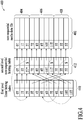
- FIG. 4 illustrates a media data file 402 organized in a non-sequential way such that data, e.g., for 7T ⁇ 11T comes before data for 3T ⁇ 5T.
- the non-sequential media data file 402 can be divided into several fragments. Within each fragment, the data can exist in sequential order.
- the data file includes three fragments 404, 406, and 408, namely [0T,2T], [7T,11T] and [3T,5T].
- An extension represented by a dollar-sign symbol ($), tells the stream engine when to expect a jump, and when to go back to a first level linear hinting index 410 to get an index for the next time stamp. Indicating when to expect a jump or when to go back to a first level hinting index is accomplished with the special marking or flag ($) in a second level non-sequential hinting index 412.
- the stream engine looks at the first level linear hinting index 410 and [0T] to get a pointer to the second level non-sequential hinting index 412.
- the stream engine follows the pointer to locate the corresponding 0T entry in the second level non-sequential hinting index 412, and obtains an offset address pointer to a first media data 404 having the time stamp 0T in the non-sequential media file 402. Thereafter, the stream engine can iterate through the entries in the second level non-sequential hinting index 412 to follow the offset address pointers to the media file 404.
- the special marking indicates that the stream engine should go back to the first level hinting index 410 to locate a second level index offset for a next adjusted RTP time-stamp.
- the stream engine goes back to the first level 410 and gets the offset in the second level non-sequential hinting index 412 for 3T.
- the offset points to another section 408 of the non-sequential media data file 402.
- the stream engine will continue fetching a next entry in second level non-sequential hinting index 412 until the special marking ($) at 5T is encountered.
- RTP real-time protocol
- RTS receiver time stamp
- DTS packet send time or packet number as the index into each packet, from the RTP extension header or from the output of a committed access rate (CAR) algorithm.
- CAR committed access rate
- the packet in media file/cache file could be stored in the decoding/encoding order to speed up packetization.
- the time range in a RTP play request is the presentation time stamp (PTS), but can be treated as decoding time stamp (DTS) when locating the range of packets to send.
- DTS decoding time stamp
- the actual PTS in the meta information of the packet can be compared with the requested PTS range as well.
- Multiple packets can share the same RTS, as long as the first packet is located with the RTS.
- the data is stored in such a way, but the same assumption cannot be made for other media file formats such as .mov and .mp4.
- An additional field can be included in the file format to convey what kind of key to use in the hinting index, e.g., RTS, PTS, DTS or packet number, so as to have more flexibility
- the complexity can be O(1) using a dense hinting index if the dense hinting index file is separated from the original media data and a single big index file is used to store a big array.
- the play time in the unit of T is used directly as an index into the array.
- Index[t] is a pointer to the packet in the data file.
- space is reserved for all timestamps in the hint/index file. The file system won't actually allocate disk space until the corresponding offset is written to.
- a streaming format file 100 can define multiple streams or tracks, such as one video stream/track associated with multiple audio streams/tracks.
- a track/stream can be further partitioned into multiple clips, with each clip containing a segment of the streaming data.
- Each clip has its own first level hinting index 114 and second level hinting indes 116 pointing to actual media data.
- the streaming format file 100 begins with a mandatory file header object 108, as detailed in Table-I.
- a header extension section can be located with the file header object using the extension offset and the header length.
- TABLE-I Field name Description Field type Size (bits) Type File Type BYTE 8 Version File Type version ID BYTE 8 Header Length Header length incl. ext header WORD 16 Extension Offset 0: no extension header present WORD 16 Non-zero value: offset to the extension header section Number of descriptors Number of file header descriptors in the file header WORD 8 Reserved 0 Not in use for this version DWORD 32
- file header descriptor objects in the form of type, length, value (TLV).
- TLV type, length, value
- Two file header descriptor objects are defined, a media data file descriptor 110, and an index descriptor 112. See Table-II.
- TABLE-II Field name Description Field type Size (bits)
- Object Type File Header Descriptor Type BYTE 8 Object Length File Header Descriptor Length WORD 16 Object Value
- the media data file descriptor carries information about the sequential or non-sequential data file that the hinting index section will point to. For flexibility, there could be multiple media data file descriptors within a single streaming format file 100, e.g., to hint multiple data files with a single hinting index. Multiple data files with a single hinting index can be used to handle multiple clips in one movie in which those clips are stored in different media data files and to make the partial cache file handling more flexible.
- a media file ID is used in the hinting index section 104 to hint to the stream engine that the offset in the index is for a particular media data file. See Table-III. TABLE-III Field name Description Field type Size (bits) Object Type Media Data File Descriptor Type BYTE 8 Object Length Media Data File Descriptor Length WORD 16 Media File ID Internal File ID for this file BYTE 8 Payload Type RTP or UDP. This is to tell the stream engine what kind of packetization scheme it should use to process the media data in the file BYTE 8 File Name Null terminated string as the file name STRING (128) 8x128 Table-IV describes one format for an index descriptor.
- Session description protocol (SDP) data is on a per-movie basis, the SDP data is packed in each linear hint file for convenience.
- the SDP data is packed in the header section 102 in a text format, and is described in Table-V.
- TABLE-V Field name Description Field type Size (bits) Object Type SDP Data Extension Header Type BYTE 8 Object Length SDP Data Header Length WORD 16 SDP Data Length SDP Data field length WORD 16 SDP Data SDP Data string STRING (N) where N is the SDP Data Length 8xN
- the first-level index section 114 has the following header in Table-VI.
- the first-level index section is a sparse type. TABLE-VI Field name Description Field type Size (bits) Object Type Index Section Type BYTE 8 Object Length Index Section Length WORD 16 Index ID Internal ID for this hinting index BYTE 8 Index Level 0: First Level BYTE 8 Index Type 1: Linear Dense, no duplications BYTE 8 Entry Type Each entry is a fixed size structure. Type itself imply size. Also what is used as KEY is also implied. BYTE 8 First Level Index Data Index Data structure VOID Variable length
- Entry type in the first-level index section header determines what type of data structure is used as the index data. For example, two entry types, Type 1. First-level Linear Index, and Type 2: second level dense index.
- Type 1 index data format is specified in Table-VII. TABLE-VII Field name Description Field type Size (bits) Key Index key. Normally the starting adjusted RTP time-stamp for the first media data is used WORD 16 File ID The media data file ID for this range BYTE 8 Second-Level Offset The offset pointer to the second-level index DWORD 32
- Table-VIII details a second-level index section header.
- TABLE-VIII Field name Description Field type Size (bits) Object Type Index Section Type BYTE 8 Object Length Index Section Length WORD 16 Index ID Internal ID for this hinting index BYTE 8 Index Level N: second level BYTE 8 Index Type 0: Dense, with duplications 1: Sparse BYTE 8 Number of Index Entries Number of index entries in this second-level index DWORD 32 Entry Type
- Each entry is a fixed size structure. Type itself imply size BYTE 8 Second Level Index Data Index Data structure VOID Variable length
- a second level dense index is used as the only second-level index.
- type-2 is used as the data format.
- Type-2 index data format is, as in Table-IX. TABLE-IX Field name Description Field type Size (bits) Key Index key. Normally the starting RTP Time stamp for the first media data is used WORD 16 Media Data File Offset The offset pointer to the actual media file QWORD 64 PTS Presentation Time Stamp.
- Actual packet data may follow header objects and tables, if the data is stored in the same streaming format file 100.
- packet data can be stored in its original file format (like a QT mov file), or the data can be stored in a packet data dump file.
Landscapes
- Engineering & Computer Science (AREA)
- Multimedia (AREA)
- Signal Processing (AREA)
- Computer Security & Cryptography (AREA)
- Information Retrieval, Db Structures And Fs Structures Therefor (AREA)
Claims (8)
- Streaming-Datei; die Folgendes umfasst:einen Dateiheader-Teil, mit einem Dateiheader-Objekt, einem Mediendatendatei-Deskriptor und einem Index-Deskriptor;eine Mediendatendatei (402) mit einer Mehrzahl von Fragmenten (404, 406, 408), wobei jedes Fragment (404, 406, 408) Mediendaten in sequentieller Reihenfolge hat, wobei die Fragmente (404, 406, 408) in nichtsequentieller Reihenfolge in der Mediendatendatei (402) sind; undeinen Hinweisindexteil mit einem linearen Erstlevel-Hinweisindex (410) mit Indexiertasten von sequentiellen Zeitwerten, wobei jeder Indexierschlüssel einen Zeiger auf einen Indexierschlüssel in einem Zweitlevel-Hinweisindex (412) hat, wobei die Indexierschlüssel im Zweitlevel-Hinweisindex (412) in einer Sequenz entsprechend der Sequenz von Mediendaten in der Mediendatendatei (402) sind und jeder Indexierschlüssel im Zweitlevel-Hinweisindex (412) einen Zeiger auf die Mediendaten in der Mediendatendatei (402) hat;wobei der Zweitlevel-Hinweisindex (412) einen Flag am Ende einer Folge von Indexierschlüsseln hat, der einem Fragment (404, 406, 408) in der Mediendatendatei (402) entspricht, um einer Streaming-Engine anzuzeigen, dass der genannte lineare Erstlevel-Hinweisindex (410) um einen nächsten Indexierschlüssel konsultiert werden muss.
- Streaming-Datei nach Anspruch 1, die ferner Folgendes umfasst: die Mediendatendatei umfasst eine separate Datei.
- Streaming-Datei nach einem vorherigen Anspruch, wobei der genannte Mediendatendatei-Deskriptor Informationen über eine sequentielle oder nichtsequentielle Mediendatendatei trägt, auf die der Hinweisindexteil zeigt, und so dass mehrere Mediendatendateien mit einem einzigen Hinweisindex benutzt werden können, und die Handhabung mehrerer Clips in einem in unterschiedlichen Mediendatendateien gespeicherten Movie bereitstellt.
- Verfahren für lineares Hinweisen in Streaming-Mediendatendateien, das Folgendes beinhaltet:Konfigurieren eines linearen Erstlevel-Hinweisindexes (410) mit Indexierschlüsseln von sequentiellen Zeitwerten, wobei jeder Indexierschlüssel einen Zeiger auf einen Indexierschlüssel in einem Zweitlevel-Hinweisindex (412) hat;Versehen der Indexierschlüsselwerte des genannten Zweitlevel-Hinweisindexes (412) mit Zeigern auf eine Mediendatendatei (402), wobei die Mediendatendatei (402) eine Mehrzahl von Fragmenten (404, 406, 408) von Mediendatenblöcken hat, wobei jedes Fragment (404, 406, 408) Mediendatenblöcke in sequentieller Reihenfolge hat, wobei die Fragmente (404, 406, 408) in nichtsequentieller Reihenfolge in der Mediendatendatei (402) sind, wobei die Indexierschlüssel im Zweitlevel-Hinweisindex (412) in einer Sequenz entsprechend der Sequenz von Mediendatenblöcken in der Mediendatendatei (402) sind und jeder Indexierschlüssel im Zweitlevel-Hinweisindex (412) einen Zeiger auf den Mediendatenblock in der Mediendatendatei (402) hat; undSuchen nach Mediendatenblöcken in der genannten Mediendatendatei (402) durch Zugreifen auf den genannten linearen Erstlevel-Hinweisindex (410), um einen Zeiger auf den genannten Zweitlevel-Hinweisindex (412) zu erhalten, der wiederum einen Zeiger auf einen bestimmten Mediendatenblock in der genannten Mediendatendatei (402) bereitstellt, wobei ein Flag in dem genannten Zweitlevel-Hinweisindex (412) am Ende einer Folge von Indexierschlüsseln angeordnet ist, die einem Fragment (404, 406, 408) in der Mediendatendatei (402) entspricht, um anzuzeigen, dass der genannte Erstlevel-Hinweisindex (410) um einen nächsten Indexierschlüssel konsultiert werden muss.
- Verfahren nach Anspruch 4, das ferner Folgendes beinhaltet:nicht zunächst Konsultieren des genannten linearen Erstlevel-Hinweisindexes um einen nächsten Zugang; undEinholen eines nächsten Mediendatenblocks in der genannten Mediendatendatei durch Zugreifen nur auf einen nächsten Eintrag in dem genannten Zweitlevel-Hinweisindex, um einen entsprechenden Zeiger auf den genannten nächsten Mediendatenblock in der genannten Mediendatendatei zu holen.
- Verfahren nach Anspruch 4 oder Anspruch 5, das ferner Folgendes beinhaltet:
Markieren einer Diskontinuität in der Reihenfolge der genannten Mediendatenblöcke in der genannten Mediendatendatei mit einem Sonderzeichen, das in einem entsprechenden Zeiger auf einen letzten kontinuierlichen Mediendatenblock in dem genannten Zweitlevel-Hinweisindex platziert ist. - Verfahren nach Anspruch 6, das ferner Folgendes beinhaltet:Einholen, wenn das genannte Sonderzeichen in einem letzten Zugriff nicht erhalten wurde, eines nächsten Mediendatenblocks in der genannten Mediendatendatei durch Zugreifen nur auf einen nächsten Eintrag in dem genannten Zweitlevel-Hinweisindex, um einen entsprechenden Zeiger auf den genannten nächsten Mediendatenblock in der genannten Mediendatendatei zu holen, und nicht zunächst Konsultieren des genannten linearen Erstlevel-Hinweisindexes;ansonsten Zurückkehren zur Suche nach Mediendatenblöcken in der genannten Mediendatendatei durch Zugreifen auf den genannten linearen Erstlevel-Hinweisindex, um einen Zeiger auf den genannten Zweitlevel-Hinweisindex zu erhalten, der wiederum einen Zeiger auf einen bestimmten Mediendatenblock in der genannten Nicht-Mediendatendatei bereitstellt.
- Verfahren nach einem der Ansprüche 4 bis 7, das ferner Folgendes beinhaltet:Packen des genannten linearen Erstlevel-Hinweisindexes und des genannten Zweitlevel-Hinweisindexes zusammen in eine einzige Datei mit einem Mediendatei-Deskriptor, und Assoziieren von wenigstens einer separaten Mediendatendatei, oderPacken des genannten linearen Erstlevel-Hinweisindexes und des genannen Zweitlevel-Hinweisindexes zusammen in eine einzige Datei mit einem Mediendatei-Deskriptor und wenigstens einer Mediendatendatei.
Applications Claiming Priority (2)
| Application Number | Priority Date | Filing Date | Title |
|---|---|---|---|
| US12/163,916 US8261312B2 (en) | 2008-06-27 | 2008-06-27 | Linear hint video streaming |
| PCT/US2009/048722 WO2009158543A2 (en) | 2008-06-27 | 2009-06-25 | Linear hint video streaming |
Publications (2)
| Publication Number | Publication Date |
|---|---|
| EP2297959A2 EP2297959A2 (de) | 2011-03-23 |
| EP2297959B1 true EP2297959B1 (de) | 2018-12-26 |
Family
ID=41338663
Family Applications (1)
| Application Number | Title | Priority Date | Filing Date |
|---|---|---|---|
| EP09771075.0A Not-in-force EP2297959B1 (de) | 2008-06-27 | 2009-06-25 | Videostreaming mit linearen hinweisen |
Country Status (4)
| Country | Link |
|---|---|
| US (1) | US8261312B2 (de) |
| EP (1) | EP2297959B1 (de) |
| CN (1) | CN102204266B (de) |
| WO (1) | WO2009158543A2 (de) |
Families Citing this family (7)
| Publication number | Priority date | Publication date | Assignee | Title |
|---|---|---|---|---|
| US8095548B2 (en) * | 2008-10-14 | 2012-01-10 | Saudi Arabian Oil Company | Methods, program product, and system of data management having container approximation indexing |
| CN102231804B (zh) * | 2011-03-14 | 2013-06-05 | 新奥特(北京)视频技术有限公司 | 一种支持ps流媒体文件的容错方法 |
| CN102682016B (zh) * | 2011-03-15 | 2018-10-02 | 新奥特(北京)视频技术有限公司 | 一种支持mov/3gp/mp4文件的索引系统及方法 |
| US9710469B2 (en) * | 2013-03-15 | 2017-07-18 | Comcast Cable Communications, Llc | Efficient data distribution to multiple devices |
| CN106454394B (zh) * | 2016-08-03 | 2020-04-03 | 华为技术有限公司 | 一种dvb频道的快速切换方法以及设备和系统 |
| CN107391600A (zh) * | 2017-06-30 | 2017-11-24 | 北京百度网讯科技有限公司 | 用于在内存中存取时序数据的方法和装置 |
| US11733897B1 (en) | 2021-02-25 | 2023-08-22 | Pure Storage, Inc. | Dynamic volume storage adjustment |
Family Cites Families (12)
| Publication number | Priority date | Publication date | Assignee | Title |
|---|---|---|---|---|
| US6453355B1 (en) * | 1998-01-15 | 2002-09-17 | Apple Computer, Inc. | Method and apparatus for media data transmission |
| US6134243A (en) * | 1998-01-15 | 2000-10-17 | Apple Computer, Inc. | Method and apparatus for media data transmission |
| WO2003075524A1 (fr) * | 2002-03-04 | 2003-09-12 | Fujitsu Limited | Repartiteur de donnees a codage hierarchique et procede de repartition |
| KR100486713B1 (ko) * | 2002-09-17 | 2005-05-03 | 삼성전자주식회사 | 멀티미디어 스트리밍 장치 및 방법 |
| WO2004036916A1 (en) * | 2002-10-15 | 2004-04-29 | Koninklijke Philips Electronics N.V. | System and method for transmitting scalable coded video over an ip network |
| CN1729669A (zh) * | 2002-12-20 | 2006-02-01 | 皇家飞利浦电子股份有限公司 | 用于接收机驱动流式传输系统的多磁道提示技术 |
| US7555009B2 (en) * | 2003-11-14 | 2009-06-30 | Canon Kabushiki Kaisha | Data processing method and apparatus, and data distribution method and information processing apparatus |
| JP2006164378A (ja) * | 2004-12-06 | 2006-06-22 | Toshiba Corp | 情報記録媒体、情報記録方法、情報再生方法、情報記録装置、情報再生装置 |
| EP1954054A1 (de) | 2007-02-02 | 2008-08-06 | Thomson Licensing | System und Verfahren zum Transport von interaktiven Markierungen |
| US20100135646A1 (en) | 2007-04-04 | 2010-06-03 | Gun Bang | Storage/playback method and apparatus for mpeg-2 transport stream based on iso base media file format |
| BRPI0811833B1 (pt) | 2007-07-02 | 2020-12-29 | Fraunhofer-Gesellschaft Zur Foerderung Der Angewandten Forschung E.V | aparelho e método para armazenamento e leitura de um arquivo tendo um container de dados de mídia e um container de metadados |
| US20090119594A1 (en) * | 2007-10-29 | 2009-05-07 | Nokia Corporation | Fast and editing-friendly sample association method for multimedia file formats |
-
2008
- 2008-06-27 US US12/163,916 patent/US8261312B2/en active Active
-
2009
- 2009-06-25 WO PCT/US2009/048722 patent/WO2009158543A2/en not_active Ceased
- 2009-06-25 CN CN200980124139.4A patent/CN102204266B/zh not_active Expired - Fee Related
- 2009-06-25 EP EP09771075.0A patent/EP2297959B1/de not_active Not-in-force
Non-Patent Citations (1)
| Title |
|---|
| None * |
Also Published As
| Publication number | Publication date |
|---|---|
| US20090327215A1 (en) | 2009-12-31 |
| US8261312B2 (en) | 2012-09-04 |
| CN102204266B (zh) | 2014-02-12 |
| WO2009158543A3 (en) | 2010-08-19 |
| CN102204266A (zh) | 2011-09-28 |
| EP2297959A2 (de) | 2011-03-23 |
| WO2009158543A2 (en) | 2009-12-30 |
Similar Documents
| Publication | Publication Date | Title |
|---|---|---|
| EP2297959B1 (de) | Videostreaming mit linearen hinweisen | |
| US20230269423A1 (en) | Fast Tune-In for Low Latency Streaming | |
| KR100607784B1 (ko) | 미디어 데이터 전송을 위한 방법 및 장치 | |
| CN103309933B (zh) | 用于媒体数据传输的方法和设备 | |
| EP1062782B1 (de) | Verfahren und vorichtung zur mediendatenübertragung | |
| US20190141102A1 (en) | Apparatus and method for storing and playing content in a multimedia streaming system | |
| US8286213B2 (en) | HTTP based video streaming apparatus and method in mobile communication system | |
| US6742082B1 (en) | Pre-computing streaming media payload method and apparatus | |
| WO2015035942A1 (en) | Method for playing back live video and device | |
| US7076560B1 (en) | Methods and apparatus for storing and serving streaming media data | |
| CN101636726A (zh) | 包含连续播放的视频分配系统 | |
| CN102625193B (zh) | 一种借助辅助文件实现多媒体文件网络播放的方法 | |
| JP2021510047A (ja) | メディアファイルの同期再生方法、装置及び記憶媒体 | |
| US9998768B1 (en) | Apparatus and methods for generating clips using recipes with slice definitions | |
| KR20100068394A (ko) | 저장될 메타데이터를 제공하는 디바이스 및 방법 | |
| CN115048541A (zh) | 多媒体文件的获取方法、装置、设备及介质 | |
| JP2001197120A (ja) | メディア・データ伝送のための方法および装置 | |
| AU2003204873B2 (en) | Method and apparatus for media data transmission | |
| AU755830B2 (en) | Method and apparatus for media data transmission | |
| AU2012203922A1 (en) | Method and apparatus for media data transmission | |
| HK1140035A (en) | Video distribution system including progressive playback | |
| HK1188495B (en) | Method and apparatus for media data transmission | |
| HK1188495A (en) | Method and apparatus for media data transmission | |
| HK1125205B (en) | Method and apparatus for media data transmission | |
| HK1152775B (en) | Method and apparatus for media data transmission |
Legal Events
| Date | Code | Title | Description |
|---|---|---|---|
| PUAI | Public reference made under article 153(3) epc to a published international application that has entered the european phase |
Free format text: ORIGINAL CODE: 0009012 |
|
| 17P | Request for examination filed |
Effective date: 20101222 |
|
| AK | Designated contracting states |
Kind code of ref document: A2 Designated state(s): AT BE BG CH CY CZ DE DK EE ES FI FR GB GR HR HU IE IS IT LI LT LU LV MC MK MT NL NO PL PT RO SE SI SK TR |
|
| AX | Request for extension of the european patent |
Extension state: AL BA RS |
|
| RIN1 | Information on inventor provided before grant (corrected) |
Inventor name: XU, XI Inventor name: HE, KAICHUAN Inventor name: ZHU, JIANG Inventor name: LEMON, JONATHAN Inventor name: THOMAS, ANIL Inventor name: KOROTH, DIPAK, PUNNORAN |
|
| DAX | Request for extension of the european patent (deleted) | ||
| STAA | Information on the status of an ep patent application or granted ep patent |
Free format text: STATUS: EXAMINATION IS IN PROGRESS |
|
| 17Q | First examination report despatched |
Effective date: 20161118 |
|
| GRAP | Despatch of communication of intention to grant a patent |
Free format text: ORIGINAL CODE: EPIDOSNIGR1 |
|
| STAA | Information on the status of an ep patent application or granted ep patent |
Free format text: STATUS: GRANT OF PATENT IS INTENDED |
|
| INTG | Intention to grant announced |
Effective date: 20180717 |
|
| RIN1 | Information on inventor provided before grant (corrected) |
Inventor name: LEMON, JONATHAN Inventor name: THOMAS, ANIL Inventor name: KOROTH, DIPAK, PUNNORAN Inventor name: ZHU, JIANG Inventor name: HE, KAICHUAN Inventor name: XU, XI |
|
| GRAS | Grant fee paid |
Free format text: ORIGINAL CODE: EPIDOSNIGR3 |
|
| GRAA | (expected) grant |
Free format text: ORIGINAL CODE: 0009210 |
|
| STAA | Information on the status of an ep patent application or granted ep patent |
Free format text: STATUS: THE PATENT HAS BEEN GRANTED |
|
| AK | Designated contracting states |
Kind code of ref document: B1 Designated state(s): AT BE BG CH CY CZ DE DK EE ES FI FR GB GR HR HU IE IS IT LI LT LU LV MC MK MT NL NO PL PT RO SE SI SK TR |
|
| REG | Reference to a national code |
Ref country code: GB Ref legal event code: FG4D |
|
| REG | Reference to a national code |
Ref country code: CH Ref legal event code: EP |
|
| REG | Reference to a national code |
Ref country code: DE Ref legal event code: R096 Ref document number: 602009056413 Country of ref document: DE |
|
| REG | Reference to a national code |
Ref country code: AT Ref legal event code: REF Ref document number: 1083038 Country of ref document: AT Kind code of ref document: T Effective date: 20190115 |
|
| REG | Reference to a national code |
Ref country code: IE Ref legal event code: FG4D |
|
| PG25 | Lapsed in a contracting state [announced via postgrant information from national office to epo] |
Ref country code: FI Free format text: LAPSE BECAUSE OF FAILURE TO SUBMIT A TRANSLATION OF THE DESCRIPTION OR TO PAY THE FEE WITHIN THE PRESCRIBED TIME-LIMIT Effective date: 20181226 Ref country code: BG Free format text: LAPSE BECAUSE OF FAILURE TO SUBMIT A TRANSLATION OF THE DESCRIPTION OR TO PAY THE FEE WITHIN THE PRESCRIBED TIME-LIMIT Effective date: 20190326 Ref country code: LT Free format text: LAPSE BECAUSE OF FAILURE TO SUBMIT A TRANSLATION OF THE DESCRIPTION OR TO PAY THE FEE WITHIN THE PRESCRIBED TIME-LIMIT Effective date: 20181226 Ref country code: HR Free format text: LAPSE BECAUSE OF FAILURE TO SUBMIT A TRANSLATION OF THE DESCRIPTION OR TO PAY THE FEE WITHIN THE PRESCRIBED TIME-LIMIT Effective date: 20181226 Ref country code: LV Free format text: LAPSE BECAUSE OF FAILURE TO SUBMIT A TRANSLATION OF THE DESCRIPTION OR TO PAY THE FEE WITHIN THE PRESCRIBED TIME-LIMIT Effective date: 20181226 Ref country code: NO Free format text: LAPSE BECAUSE OF FAILURE TO SUBMIT A TRANSLATION OF THE DESCRIPTION OR TO PAY THE FEE WITHIN THE PRESCRIBED TIME-LIMIT Effective date: 20190326 |
|
| REG | Reference to a national code |
Ref country code: NL Ref legal event code: MP Effective date: 20181226 |
|
| REG | Reference to a national code |
Ref country code: LT Ref legal event code: MG4D |
|
| PG25 | Lapsed in a contracting state [announced via postgrant information from national office to epo] |
Ref country code: GR Free format text: LAPSE BECAUSE OF FAILURE TO SUBMIT A TRANSLATION OF THE DESCRIPTION OR TO PAY THE FEE WITHIN THE PRESCRIBED TIME-LIMIT Effective date: 20190327 Ref country code: SE Free format text: LAPSE BECAUSE OF FAILURE TO SUBMIT A TRANSLATION OF THE DESCRIPTION OR TO PAY THE FEE WITHIN THE PRESCRIBED TIME-LIMIT Effective date: 20181226 |
|
| REG | Reference to a national code |
Ref country code: AT Ref legal event code: MK05 Ref document number: 1083038 Country of ref document: AT Kind code of ref document: T Effective date: 20181226 |
|
| PG25 | Lapsed in a contracting state [announced via postgrant information from national office to epo] |
Ref country code: NL Free format text: LAPSE BECAUSE OF FAILURE TO SUBMIT A TRANSLATION OF THE DESCRIPTION OR TO PAY THE FEE WITHIN THE PRESCRIBED TIME-LIMIT Effective date: 20181226 |
|
| PG25 | Lapsed in a contracting state [announced via postgrant information from national office to epo] |
Ref country code: CZ Free format text: LAPSE BECAUSE OF FAILURE TO SUBMIT A TRANSLATION OF THE DESCRIPTION OR TO PAY THE FEE WITHIN THE PRESCRIBED TIME-LIMIT Effective date: 20181226 Ref country code: PT Free format text: LAPSE BECAUSE OF FAILURE TO SUBMIT A TRANSLATION OF THE DESCRIPTION OR TO PAY THE FEE WITHIN THE PRESCRIBED TIME-LIMIT Effective date: 20190426 Ref country code: IT Free format text: LAPSE BECAUSE OF FAILURE TO SUBMIT A TRANSLATION OF THE DESCRIPTION OR TO PAY THE FEE WITHIN THE PRESCRIBED TIME-LIMIT Effective date: 20181226 Ref country code: ES Free format text: LAPSE BECAUSE OF FAILURE TO SUBMIT A TRANSLATION OF THE DESCRIPTION OR TO PAY THE FEE WITHIN THE PRESCRIBED TIME-LIMIT Effective date: 20181226 Ref country code: PL Free format text: LAPSE BECAUSE OF FAILURE TO SUBMIT A TRANSLATION OF THE DESCRIPTION OR TO PAY THE FEE WITHIN THE PRESCRIBED TIME-LIMIT Effective date: 20181226 |
|
| PG25 | Lapsed in a contracting state [announced via postgrant information from national office to epo] |
Ref country code: SK Free format text: LAPSE BECAUSE OF FAILURE TO SUBMIT A TRANSLATION OF THE DESCRIPTION OR TO PAY THE FEE WITHIN THE PRESCRIBED TIME-LIMIT Effective date: 20181226 Ref country code: RO Free format text: LAPSE BECAUSE OF FAILURE TO SUBMIT A TRANSLATION OF THE DESCRIPTION OR TO PAY THE FEE WITHIN THE PRESCRIBED TIME-LIMIT Effective date: 20181226 Ref country code: IS Free format text: LAPSE BECAUSE OF FAILURE TO SUBMIT A TRANSLATION OF THE DESCRIPTION OR TO PAY THE FEE WITHIN THE PRESCRIBED TIME-LIMIT Effective date: 20190426 Ref country code: EE Free format text: LAPSE BECAUSE OF FAILURE TO SUBMIT A TRANSLATION OF THE DESCRIPTION OR TO PAY THE FEE WITHIN THE PRESCRIBED TIME-LIMIT Effective date: 20181226 |
|
| REG | Reference to a national code |
Ref country code: DE Ref legal event code: R097 Ref document number: 602009056413 Country of ref document: DE |
|
| PG25 | Lapsed in a contracting state [announced via postgrant information from national office to epo] |
Ref country code: DK Free format text: LAPSE BECAUSE OF FAILURE TO SUBMIT A TRANSLATION OF THE DESCRIPTION OR TO PAY THE FEE WITHIN THE PRESCRIBED TIME-LIMIT Effective date: 20181226 Ref country code: AT Free format text: LAPSE BECAUSE OF FAILURE TO SUBMIT A TRANSLATION OF THE DESCRIPTION OR TO PAY THE FEE WITHIN THE PRESCRIBED TIME-LIMIT Effective date: 20181226 |
|
| PLBE | No opposition filed within time limit |
Free format text: ORIGINAL CODE: 0009261 |
|
| STAA | Information on the status of an ep patent application or granted ep patent |
Free format text: STATUS: NO OPPOSITION FILED WITHIN TIME LIMIT |
|
| 26N | No opposition filed |
Effective date: 20190927 |
|
| PG25 | Lapsed in a contracting state [announced via postgrant information from national office to epo] |
Ref country code: MC Free format text: LAPSE BECAUSE OF FAILURE TO SUBMIT A TRANSLATION OF THE DESCRIPTION OR TO PAY THE FEE WITHIN THE PRESCRIBED TIME-LIMIT Effective date: 20181226 |
|
| REG | Reference to a national code |
Ref country code: CH Ref legal event code: PL |
|
| PG25 | Lapsed in a contracting state [announced via postgrant information from national office to epo] |
Ref country code: SI Free format text: LAPSE BECAUSE OF FAILURE TO SUBMIT A TRANSLATION OF THE DESCRIPTION OR TO PAY THE FEE WITHIN THE PRESCRIBED TIME-LIMIT Effective date: 20181226 |
|
| REG | Reference to a national code |
Ref country code: BE Ref legal event code: MM Effective date: 20190630 |
|
| PG25 | Lapsed in a contracting state [announced via postgrant information from national office to epo] |
Ref country code: TR Free format text: LAPSE BECAUSE OF FAILURE TO SUBMIT A TRANSLATION OF THE DESCRIPTION OR TO PAY THE FEE WITHIN THE PRESCRIBED TIME-LIMIT Effective date: 20181226 |
|
| PG25 | Lapsed in a contracting state [announced via postgrant information from national office to epo] |
Ref country code: IE Free format text: LAPSE BECAUSE OF NON-PAYMENT OF DUE FEES Effective date: 20190625 |
|
| PG25 | Lapsed in a contracting state [announced via postgrant information from national office to epo] |
Ref country code: LI Free format text: LAPSE BECAUSE OF NON-PAYMENT OF DUE FEES Effective date: 20190630 Ref country code: BE Free format text: LAPSE BECAUSE OF NON-PAYMENT OF DUE FEES Effective date: 20190630 Ref country code: LU Free format text: LAPSE BECAUSE OF NON-PAYMENT OF DUE FEES Effective date: 20190625 Ref country code: CH Free format text: LAPSE BECAUSE OF NON-PAYMENT OF DUE FEES Effective date: 20190630 |
|
| PGFP | Annual fee paid to national office [announced via postgrant information from national office to epo] |
Ref country code: DE Payment date: 20200629 Year of fee payment: 12 Ref country code: FR Payment date: 20200625 Year of fee payment: 12 |
|
| PGFP | Annual fee paid to national office [announced via postgrant information from national office to epo] |
Ref country code: GB Payment date: 20200629 Year of fee payment: 12 |
|
| PG25 | Lapsed in a contracting state [announced via postgrant information from national office to epo] |
Ref country code: CY Free format text: LAPSE BECAUSE OF FAILURE TO SUBMIT A TRANSLATION OF THE DESCRIPTION OR TO PAY THE FEE WITHIN THE PRESCRIBED TIME-LIMIT Effective date: 20181226 |
|
| PG25 | Lapsed in a contracting state [announced via postgrant information from national office to epo] |
Ref country code: HU Free format text: LAPSE BECAUSE OF FAILURE TO SUBMIT A TRANSLATION OF THE DESCRIPTION OR TO PAY THE FEE WITHIN THE PRESCRIBED TIME-LIMIT; INVALID AB INITIO Effective date: 20090625 Ref country code: MT Free format text: LAPSE BECAUSE OF FAILURE TO SUBMIT A TRANSLATION OF THE DESCRIPTION OR TO PAY THE FEE WITHIN THE PRESCRIBED TIME-LIMIT Effective date: 20181226 |
|
| REG | Reference to a national code |
Ref country code: DE Ref legal event code: R119 Ref document number: 602009056413 Country of ref document: DE |
|
| GBPC | Gb: european patent ceased through non-payment of renewal fee |
Effective date: 20210625 |
|
| PG25 | Lapsed in a contracting state [announced via postgrant information from national office to epo] |
Ref country code: GB Free format text: LAPSE BECAUSE OF NON-PAYMENT OF DUE FEES Effective date: 20210625 Ref country code: DE Free format text: LAPSE BECAUSE OF NON-PAYMENT OF DUE FEES Effective date: 20220101 |
|
| PG25 | Lapsed in a contracting state [announced via postgrant information from national office to epo] |
Ref country code: FR Free format text: LAPSE BECAUSE OF NON-PAYMENT OF DUE FEES Effective date: 20210630 |
|
| PG25 | Lapsed in a contracting state [announced via postgrant information from national office to epo] |
Ref country code: MK Free format text: LAPSE BECAUSE OF FAILURE TO SUBMIT A TRANSLATION OF THE DESCRIPTION OR TO PAY THE FEE WITHIN THE PRESCRIBED TIME-LIMIT Effective date: 20181226 |
|
| P01 | Opt-out of the competence of the unified patent court (upc) registered |
Effective date: 20230525 |