EP2289021B1 - Semantic event detection for digital content records - Google Patents
Semantic event detection for digital content records Download PDFInfo
- Publication number
- EP2289021B1 EP2289021B1 EP09758682A EP09758682A EP2289021B1 EP 2289021 B1 EP2289021 B1 EP 2289021B1 EP 09758682 A EP09758682 A EP 09758682A EP 09758682 A EP09758682 A EP 09758682A EP 2289021 B1 EP2289021 B1 EP 2289021B1
- Authority
- EP
- European Patent Office
- Prior art keywords
- concept
- event
- image
- semantic
- semantic event
- Prior art date
- Legal status (The legal status is an assumption and is not a legal conclusion. Google has not performed a legal analysis and makes no representation as to the accuracy of the status listed.)
- Not-in-force
Links
Images




Classifications
-
- G—PHYSICS
- G06—COMPUTING OR CALCULATING; COUNTING
- G06F—ELECTRIC DIGITAL DATA PROCESSING
- G06F16/00—Information retrieval; Database structures therefor; File system structures therefor
- G06F16/50—Information retrieval; Database structures therefor; File system structures therefor of still image data
- G06F16/58—Retrieval characterised by using metadata, e.g. metadata not derived from the content or metadata generated manually
- G06F16/583—Retrieval characterised by using metadata, e.g. metadata not derived from the content or metadata generated manually using metadata automatically derived from the content
- G06F16/5838—Retrieval characterised by using metadata, e.g. metadata not derived from the content or metadata generated manually using metadata automatically derived from the content using colour
-
- G—PHYSICS
- G06—COMPUTING OR CALCULATING; COUNTING
- G06F—ELECTRIC DIGITAL DATA PROCESSING
- G06F16/00—Information retrieval; Database structures therefor; File system structures therefor
- G06F16/70—Information retrieval; Database structures therefor; File system structures therefor of video data
- G06F16/78—Retrieval characterised by using metadata, e.g. metadata not derived from the content or metadata generated manually
- G06F16/783—Retrieval characterised by using metadata, e.g. metadata not derived from the content or metadata generated manually using metadata automatically derived from the content
- G06F16/7847—Retrieval characterised by using metadata, e.g. metadata not derived from the content or metadata generated manually using metadata automatically derived from the content using low-level visual features of the video content
- G06F16/785—Retrieval characterised by using metadata, e.g. metadata not derived from the content or metadata generated manually using metadata automatically derived from the content using low-level visual features of the video content using colour or luminescence
-
- G—PHYSICS
- G06—COMPUTING OR CALCULATING; COUNTING
- G06F—ELECTRIC DIGITAL DATA PROCESSING
- G06F16/00—Information retrieval; Database structures therefor; File system structures therefor
- G06F16/70—Information retrieval; Database structures therefor; File system structures therefor of video data
- G06F16/78—Retrieval characterised by using metadata, e.g. metadata not derived from the content or metadata generated manually
- G06F16/783—Retrieval characterised by using metadata, e.g. metadata not derived from the content or metadata generated manually using metadata automatically derived from the content
- G06F16/7847—Retrieval characterised by using metadata, e.g. metadata not derived from the content or metadata generated manually using metadata automatically derived from the content using low-level visual features of the video content
- G06F16/7854—Retrieval characterised by using metadata, e.g. metadata not derived from the content or metadata generated manually using metadata automatically derived from the content using low-level visual features of the video content using shape
-
- G—PHYSICS
- G06—COMPUTING OR CALCULATING; COUNTING
- G06F—ELECTRIC DIGITAL DATA PROCESSING
- G06F16/00—Information retrieval; Database structures therefor; File system structures therefor
- G06F16/70—Information retrieval; Database structures therefor; File system structures therefor of video data
- G06F16/78—Retrieval characterised by using metadata, e.g. metadata not derived from the content or metadata generated manually
- G06F16/783—Retrieval characterised by using metadata, e.g. metadata not derived from the content or metadata generated manually using metadata automatically derived from the content
- G06F16/7847—Retrieval characterised by using metadata, e.g. metadata not derived from the content or metadata generated manually using metadata automatically derived from the content using low-level visual features of the video content
- G06F16/7857—Retrieval characterised by using metadata, e.g. metadata not derived from the content or metadata generated manually using metadata automatically derived from the content using low-level visual features of the video content using texture
-
- G—PHYSICS
- G06—COMPUTING OR CALCULATING; COUNTING
- G06V—IMAGE OR VIDEO RECOGNITION OR UNDERSTANDING
- G06V20/00—Scenes; Scene-specific elements
- G06V20/10—Terrestrial scenes
-
- G—PHYSICS
- G06—COMPUTING OR CALCULATING; COUNTING
- G06V—IMAGE OR VIDEO RECOGNITION OR UNDERSTANDING
- G06V20/00—Scenes; Scene-specific elements
- G06V20/40—Scenes; Scene-specific elements in video content
Definitions
- the invention relates to categorizing digital content records, such as digital still images or video.
- the invention relates to categorizing digital content records based on the detection of semantic events.
- a consumer may travel to a number of different locations during the course of a vacation.
- the consumer may take images at each of the specific locations, as well as images at each of the locations that are related to other subject categories or events. For example, the consumer may take images of family members at each of the locations, images of specific events at each of the locations, and images of historical buildings at each of the locations.
- the consumer may desire to sort the digital images based on various groupings such as persons, birthdays, museums, etc., and to store the digital images based on the groupings in an electronic album.
- the consumer is currently faced with manually sorting through hundreds of digital still images and video segments in order to identify them with specific events.
- automatic albuming of consumer photos and videos has gained a great deal of interest in recent years.
- One popular approach to automatic albuming is to organize digital images and videos according to events by chronological order and by visual similarities in image content.
- A.C. Loui and A. Savakis "Automated event clustering and quality screening of consumer pictures for digital albuming," IEEE Trans. on Multimedia, 5(3):390-402, 2003 , discusses how a group of digital images can be automatically clustered into events.
- Semantic event detection presents basic problems: first, a practical system needs to be able to process digital still images and videos simultaneously, as both often exist in real consumer image collections; second, a practical system needs to accommodate the diverse semantic content in real consumer collections, thereby making it desirable to provide a system that incorporates generic methods for detecting different semantic events instead of specific individual methods for detecting each specific semantic event; finally, a practical system needs to be robust to prevent errors in identification and classification.
- the invention provides a system and method for semantic event detection in digital image content records. Specifically, an event-level "Bag-of-Features" ( BOF ) representation is used to model events, and generic semantic events are detected in a concept space instead of an original low-level visual feature space based on the BOF representation.
- BOF event-level "Bag-of-Features"
- an event-level representation is developed where each event is modeled by a BOF feature vector based on which semantic event detectors are directly built.
- the present invention is more robust to the difficult images or mistakenly organized images within events. For example, in any given event, some images may be difficult to classify. These difficult images usually make the decision boundary complex and hard to model.
- the event-level feature representation one is able to avoid the sensitivity problem by decreasing the influence of difficult or erroneous digital still images and videos segments in measuring event-level similarities. As will be shown, good detection performance can be achieved with a small number of support vectors for Support Vector Machine (SVM) classifiers, i.e., the classification problem can be significantly simplified by the event-level representation.
- SVM Support Vector Machine
- a method for facilitating semantic event classification of a group of image records related to an event includes extracting a plurality of visual features from each of the image records, generating a plurality of concept scores for each of the image records using the visual features, wherein each concept score corresponds to a visual concept and each concept score is indicative of a probability that the image record includes the visual concept, generating a feature vector corresponding to the event based on the concept scores of the image records, and supplying the feature vector to an event classifier that identifies at least one semantic event classifier that corresponds to the event.
- the image records may include at least one digital still image and at least one video segment. Accordingly, the system is capable of handling real life consumer image datasets that normally contain both digital still images and video segments.
- the extracting of the plurality of visual features includes extracting a keyframe from the video segment and extracting the plurality of visual features from both the keyframe and the digital still image.
- Initial concept scores are then generated for each keyframe and each digital still image corresponding to each of the extracted visual features.
- Ensemble concept scores are then preferably generated for each keyframe and each digital still image based on the initial concept scores
- the ensemble concept scores are preferably generated by fusing the individual concept scores for each extracted visual feature for a given keyframe or a given digital still image.
- the digital still images and video segments can be tagged to facilitate proper sorting, storage and retrieval of the images and video segments.
- a visual concept can be defined as an image-content characteristic of an image, and are usually semantically represented by words that are broader than the words used to identify a specific event. Accordingly, the visual concepts form a subset of image-content characteristics that can be contributed to a specific event.
- elementary visual concepts are first detected from images, and semantic event detectors are built in the concept space instead of in the original low-level feature space.
- Benefits from such an approach include at least two aspects.
- visual concepts are higher-level and more intuitive descriptors than original low-level features.
- concept scores are powerful to model semantic events.
- the concept space in the present invention is preferably formed by semantic concept detectors, as described for example in S.F.
- the entire dataset first be partitioned into a set of macro-events, and each macro-event be further partitioned into a set of events.
- the partition is preferably based on the capture time of each digital still image of video segment and the color similarity between them, by using the previously developed event clustering algorithm described above. For example, letting E t denote the t -th event which contains m p t photos and m v t videos. l i t and V j t denote the i -th photo and j -th video in E t .
- the goal of the present invention is to tag a specific semantic meaning, i.e., a semantic event S E such as "wedding” and "birthday", to a specific event E t and to the image records correspond to the event.
- a semantic event S E such as "wedding” and "birthday
- semantic events are generated by concurrent visual concepts like "people”, “park” and “flowers”, wherein C 1 ,..., C N denote N visual concepts.
- C 1 ,..., C N denote N visual concepts.
- SVM based concept detectors are preferably developed using low-level color, texture, and edge visual features over the applied dataset. These semantic concept detectors can be applied to generate twenty-one individual concept scores p ( C 1 , l i t ) , ... p(C N , l i t ) for each image l i t .
- each video V j t is preferably partitioned into a set of segments V j .1 t , ⁇ , V j . m j t , with each segment having a given length (for example five seconds).
- the keyframes are then uniformly periodically sampled from the video segments (for example every half second).
- I j , k , l t be the I -th keyframe in the k -th segment V j , k t
- I j , k , l t can also be represented by a feature vector f I j , k , l t in the concept space in the same manner as a digital still image. It will be understood that different sampling rates may be readily employed than those illustrated above.
- Both digital still images and video segments can be defined as data points represented by x .
- BOF The BOF representation has been proven effective for detecting generic concepts for images. See, for example, J. Sivic and A. Zisserman, "Video google: a text retrieval approach to object matching in videos", ICCV, pp 1470-1477, 2003 .
- images are represented by a set of orderless local descriptors.
- clustering techniques a middle-level visual vocabulary is constructed where each visual word is formed by a group of local descriptors. Each visual word is considered as a robust and denoised visual term for describing images.
- S E denote a semantic event, e.g. "wedding”
- E 1 ,...,E M denote M events containing this semantic event.
- Each E t is formed by m p t photos and m ⁇ v t video segments.
- Each concept word can be treated as a pattern of concept concurrences that is a common character for describing all the events containing S E .
- a spectral clustering algorithm See, for example, A.Y. Ng, M. Jordan, and Y. Weiss, “On spectral clustering: analysis and an algorithm," Advances in NIPS, 2001 .) is adopted to construct the concept vocabulary based on pairwise similarities measured by the Earth Mover's Distance ( EMD ), which is described in Y. Rubner, C. Tomasi, and L. Guibas, "The earth mover's distance as a metric for image retrieval," IJCV, 2000 .
- EMD Earth Mover's Distance
- Each data point is treated as a set of images, i.e., one image for a still video image and multiple images for a video segment. Then EMD is used to measure the similarity between two data points (image sets). There are many ways to compute the distance between two image sets, e.g. the maximum /minimum/mean distance between images in these two sets. These methods are easily influenced by noisy outlier images, while EMD provides a more robust distance metric. EMD finds a minimum weighted distance among all pairwise distances between two image sets subject to weight-normalization constraints, and allows partial match between data points and can alleviate the influence of outlier images.
- the EMD between two data points is calculated as follows. Assume that there are n 1 and n 2 images in data points x 1 and x 2 , respectively.
- the EMD between x 1 and x 2 is a linear combination of ground distance d l p 1 l q 2 weighted by flow f l p 1 l q 2 between any two images I p 1 ⁇ x 1 , I p 2 ⁇ x 2 .
- Spectral clustering is a technique for finding groups in data sets consisting of similarities between pairs of data points.
- the algorithm developed in Ng et al. is adopted and can be described as follows. Given the similarity matrix S ( x i , x j ):
- Each data cluster obtained by the spectral clustering algorithm is called a concept word, and all the clusters form a concept vocabulary to represent and detect semantic events.
- W j i denote the j -th word learned for semantic event S Ei
- S x W j i denote the similarity of data x to word W j i calculated as the maximum similarity between x and the member data points in W j i :
- S x W j i max x k ⁇ W j i S ( x k , x ), where S ( x k , x ) is defined in the same way as described above.
- vector [S(x, W 1 i ) , ... , S x W n i ⁇ ] T can be treated as a BOF feature vector for x .
- event E t contains m t data points
- f bot E t [ max x ⁇ E t S x W 1 i , ... , max x ⁇ E t S x W n i ⁇ ] T .
- f bot E t [ max x ⁇ E t S x W 1 i , ... , max x ⁇ E t S x W n i ⁇ ] T .
- the system 100 includes a data processing unit 110, a peripheral unit 120, a user interface unit 130, and a memory unit 140.
- the memory unit 140, the peripheral unit 120, and the user interface unit 130 are communicatively connected to the data processing system 110.
- the data processing system 110 includes one or more data processing devices that implement the processes of the various embodiments of the present invention, including the example processes of Figs. 2-4 described herein.
- the phrases "data processing device” or “data processor” are intended to include any type of data processing device, such as a central processing unit (“CPU"), a desktop computer, a laptop computer, a mainframe computer, a personal digital assistant, a BlackberryTM, a digital camera, cellular phone, or any other device for processing data, managing data, or handling data, whether implemented with electrical, magnetic, optical, biological components, or otherwise.
- the memory unit 140 includes one or more memory devices configured to store information, including the information needed to execute the processes of the various embodiments of the present invention, including the example processes of Figs. 2-4 described herein.
- the memory unit 140 may be a distributed processor-accessible memory system including multiple processor-accessible memories communicatively connected to the data processing system 110 via a plurality of computers and/or devices.
- the memory unit 140 need not be a distributed processor-accessible memory system and, consequently, may include one or more processor-accessible memories located within a single data processor or device.
- memory unit is intended to include any processor-accessible data storage device, whether volatile or nonvolatile, electronic, magnetic, optical, or otherwise, including but not limited to, floppy disks, hard disks, Compact Discs, DVDs, flash memories, ROMs, and RAMs or any other digital storage medium.
- the phrase "communicatively connected” is intended to include any type of connection, whether wired or wireless, between devices, data processors, or programs in which data may be communicated. Further, the phrase “communicatively connected” is intended to include a connection between devices or programs within a single data processor, a connection between devices or programs located in different data processors, and a connection between devices not located in data processors at all.
- the memory unit 140 is shown separately from the data processing system 110, one skilled in the art will appreciate that the memory unit 140 may be implemented completely or partially within the data processing system 110.
- the peripheral system 120 and the user interface system 130 are shown separately from the data processing system 110, one skilled in the art will appreciate that one or both of such systems may be implemented completely or partially within the data processing system 110.
- the peripheral system 120 may include one or more devices configured to provide digital content records to the data processing system 110.
- the peripheral system 120 may include digital video cameras, cellular phones, regular digital cameras, or other data processors.
- the peripheral system 120 may include the necessary equipment, devices, circuitry, etc. to connect the data processing system 110 to remote sources of data.
- the system 100 may be linked via the Internet to servers upon which datasets are stored.
- the datasets may include datasets of digital content records used to train the system 100 or datasets including digital content records that are to be analyzed by the system 100.
- the data processing system 110 upon receipt of digital content records from a device in the peripheral system 120, may store such digital content records in the processor-accessible memory system 140 for future processing or, if sufficient processing power is available, analyze the digital content records in real time as a received data stream.
- the user interface system 130 may include a mouse, a keyboard, another computer, or any device or combination of devices from which data is input to the data processing system 110.
- the peripheral system 120 is shown separately from the user interface system 130, the peripheral system 120 may be included as part of the user interface system 130.
- the user interface system 130 also may include a display device, a processor-accessible memory, or any device or combination of devices to which data is output by the data processing system 110.
- a display device e.g., a liquid crystal display
- a processor-accessible memory e.g., a liquid crystal display
- any device or combination of devices to which data is output by the data processing system 110 e.g., a liquid crystal display
- the user interface system 130 includes a processor-accessible memory, such memory may be part of the memory unit 140 even though the user interface system 130 and the memory unit 140 are shown separately in Fig. 1 .
- Fig. 2 is a flow diagram illustrating processing modules that are implemented by one or more of the units illustrated in Fig 1 .
- the processing modules contain instructions that are implemented by one or more of the units provided in system 100.
- a new event ( E 0 ) is provided to the system 100 via a data entry module 200, where it is desired that the probability that E 0 belongs to a specific semantic event be determined.
- the data processing unit 110 controls the operation of the peripheral unit 120 to download the data corresponding to E 0 into the memory unit 140.
- Each event contains a plurality of digital content records, in the illustrated example still digital images m 0,p and video segments m 0,v , that are grouped together according to capture time and color similarity utilizing the previously described clustering method.
- the clustering method can be applied to a dataset of still digital images and video segments prior to submission to the system 100.
- the dataset can be provided to the system 100 and the data entry module 200 can perform the clustering operation as one operational element of the data processing unit 110 in order to generate E 0 .
- a consumer may capture a dataset consisting of one hundred digital still images and videos of a plurality of different events using an electronic camera.
- a memory card from the electronic camera is provided to a card reader unit as part of the peripheral unit 120.
- the data processing unit 110 controls the operation of the peripheral unit 120 to download the dataset from the memory card to the memory unit 140.
- the data processing unit 110 then proceeds to perform the clustering algorithm on the dataset in order to group the digital still images and videos into a plurality of clusters that correspond to the plurality of events.
- the functions of the instructions provided within the data entry module 200 are completed and a number of digital still images and videos (for example 10 out of the original 100) are identified as being associated with E 0 .
- E 0 has yet to be associated with a particular semantic event such as "wedding".
- a visual feature extraction module 210 is then utilized to obtain keyframes from the video segments in E 0 and to extract visual features from both the keyframes and the digital still images contained in E 0 .
- the visual feature extraction module 210 determines grid-based color moments, Gabor texture and edge directional histogram for each of the digital still images and videos. It will be understood, however, that other visual features may be readily employed other than those utilized in the illustrated example.
- the data processing unit 110 performs the necessary keyframe and visual feature extraction utilizing conventional techniques on each of the digital still images and videos contained with E 0 in accordance with the instructions provided within the visual feature extraction module 210. Accordingly, three visual feature representations of each of ten digital still images and videos corresponding to E 0 are now available for further analysis.
- the three visual features extracted by the feature extraction module 210 are utilized by a concept detection module 220 to generate concept scores reflective of the probability that a particular keyframe or still digital image is related to a specific semantic event.
- the concept detection module 220 preferably determines the concept scores using a two step process.
- a concept score detection module 222 is provided that utilizes twenty-one of the above-described SVM semantic concept detectors (implemented by the data processing unit 110) to generate a concept score based on each individual classifier in each visual feature space for each digital still image and keyframe.
- the individual concept scores are then fused by a fusion module 224 (implemented by the data processing unit 110) to generate an ensemble concept detection score for a particular digital still image or keyframe, thereby reducing the amount of data to be further processed.
- the fusion module 224 first normalizes the different classification outputs from different features by a sigmoid function 1/(1+exp(-D)) where D is the output of the SVM classifier representing the distance to the decision boundary. Fusion is accomplished by taking the average of the classification outputs from the different visual features for each of the twenty-one concepts to generate the ensemble concept detection score.
- the color feature representation of a first image in the group of ten images may have a 90% probability of containing people, a 5% probability of containing a park and a 5% probability of containing flowers
- the texture feature representation of the first image has a 5% probability of containing people, an 80% probability of containing a park, and a 15% probability of containing flowers
- the edge detection feature of the first image has a 10% probability of containing people, an 50% probability of containing a park, and a 40% probability of containing flowers.
- the probabilities for each of the concepts for each of the visual representations is averaged, such that the ensemble concept score for the first image would be 35% probability of containing people (average of the people probabilities for color 90%, texture 5% and edge 5%), a 30% probability of containing a park (average of the park probabilities for color 5%, texture 80% and edge 5%), and a 20% probability of containing flowers (average of the flowers probabilities for color 5%, texture 15% and edge 40%).
- the ensemble concept scores are subsequently provided to a BOF module 230 which determines a BOF vector for E 0 .
- the BOF feature vector for E 0 is obtained by first determining individual feature vectors for each of the digital still images and video segments contained within E 0 using the ensemble concept score of each respective digital still image and video segment.
- each digital still image or video segment is treated as a data point, and a pairwise similarity between the ensemble concept score of each data point in E 0 and the ensemble concept score of each predetermined positive training data point for a given semantic event (SE), for example "wedding", is then calculated by a similarity detection module 232 using EMD. Effectively, an individual feature vector is obtained for each of the digital still images and video segments contained in E 0 .
- SE semantic event
- a mapping module 234 is then used to map each of the individual feature vectors of E 0 to a codebook of semantic events (previously developed during a training process described in greater detail below), and an event feature vector for E 0 is generated based on the mapped similarities.
- the event feature vector can now be supplied to a classifier module 240.
- the classifier module 240 is utilizes a SVM classifier to generate an event detection score for E 0 .
- the event detection score represents a final probability that the new event E 0 corresponds to a given semantic event such as "wedding".
- the event detection score is then preferably compared with a predetermined threshold to determine if E 0 should be categorized as a wedding event.
- the predetermined threshold may be varied depending on the level of accuracy required by the system 100 in a given application.
- the still digital images and video segments corresponding to E 0 can be tagged with the appropriate semantic event classifier and sorted into appropriate album folders or files and stored in the memory unit 140 for later retrieval.
- the tagged still digital images and video segments can be written to an image storage medium via the peripheral unit 120.
- the tagging of the still digital images and video segments with semantic event classifiers provides an additional advantage of enabling the images and video segments to be easily retrieved by search engines.
- T positive training events E 1 ,...,E T are entered using the data entry module 200.
- Each event E t contains m t,p photos and m t,v videos grouped together according to capture time and color similarity by the previously described clustering method.
- the visual extraction module 210 is then used to extract keyframes from video segments, and visual features are extracted from both the keyframes and the digital still images. As in the case of the operation described above, the visual features include grid-based color moments, Gabor texture and edge directional histogram.
- the concept detection module 220 is then used to generate the ensemble concept scores for the keyframes and the digital images as discussed above.
- a BOF learning module 250 is then employed to train the system 100.
- each digital image or video segment is treated as a data point and a pairwise similarity between each pair of data points is calculated by EMD using the similarity detection module 232 previously described.
- a spectral clustering module 252 is used to apply spectral clustering to group the data points into different clusters, with each clustering corresponding to one code word.
- To train a classifier for detecting semantic event SE all training events E i ( E i contains both positive training events and negative training events for SE ) are mapped to the above codebook to generate a BOF feature vectors for each training event by a mapping module 254.
- a classifier training module 260 is used to train a binary SVM classifier to detect a specific semantic event SE .
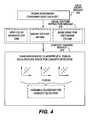
- Fig. 4 depicts the details of the training process for the video concept detectors utilized in the concept score detection module 222.
- N positive training videos from a benchmark consumer video data set are provided via the data entry module 200.
- Keyframes are obtained from videos and visual features are extracted from the keyframes as in the prior examples utilizing the visual feature extraction module 210.
- the visual features include grid-based color moments, Gabor texture and edge directional histogram.
- a concept training module 270 is then used to train the concept detectors. Namely, based on each type of visual feature, each keyframe is represented as a feature vector, and a binary SVM classifier is trained to detect concept C . The discriminant function of these classifiers over individual types of features are averaged together to generate the ensemble concept detector for concept C .
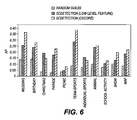
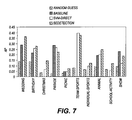
- Average precision was used as the performance metric, which has been used as an official metric for video concept detection. See, for example, Nist, "Tree video retrieval evaluation (treevid),” 2001-2006, http://www-nlpir.nist.gov/projects/treevid . It calculates the average of precision values at different recall points on the precision-recall curve, and thus evaluates the effectiveness of a classifier in detecting a specific semantic event. When multiple semantic events are considered, the mean of APs ( MAP ) is used.
Landscapes
- Engineering & Computer Science (AREA)
- Theoretical Computer Science (AREA)
- Multimedia (AREA)
- Library & Information Science (AREA)
- Physics & Mathematics (AREA)
- General Physics & Mathematics (AREA)
- Data Mining & Analysis (AREA)
- Databases & Information Systems (AREA)
- General Engineering & Computer Science (AREA)
- Image Analysis (AREA)
- Processing Or Creating Images (AREA)
- Information Retrieval, Db Structures And Fs Structures Therefor (AREA)
Applications Claiming Priority (3)
| Application Number | Priority Date | Filing Date | Title |
|---|---|---|---|
| US5820108P | 2008-06-02 | 2008-06-02 | |
| US12/331,927 US8358856B2 (en) | 2008-06-02 | 2008-12-10 | Semantic event detection for digital content records |
| PCT/US2009/003160 WO2009148518A2 (en) | 2008-06-02 | 2009-05-22 | Semantic event detection for digital content records |
Publications (2)
| Publication Number | Publication Date |
|---|---|
| EP2289021A2 EP2289021A2 (en) | 2011-03-02 |
| EP2289021B1 true EP2289021B1 (en) | 2013-01-02 |
Family
ID=41379891
Family Applications (1)
| Application Number | Title | Priority Date | Filing Date |
|---|---|---|---|
| EP09758682A Not-in-force EP2289021B1 (en) | 2008-06-02 | 2009-05-22 | Semantic event detection for digital content records |
Country Status (4)
| Country | Link |
|---|---|
| US (1) | US8358856B2 (enExample) |
| EP (1) | EP2289021B1 (enExample) |
| JP (1) | JP5351958B2 (enExample) |
| WO (1) | WO2009148518A2 (enExample) |
Cited By (1)
| Publication number | Priority date | Publication date | Assignee | Title |
|---|---|---|---|---|
| CN110781963A (zh) * | 2019-10-28 | 2020-02-11 | 西安电子科技大学 | 基于K-means聚类的空中目标分群方法 |
Families Citing this family (40)
| Publication number | Priority date | Publication date | Assignee | Title |
|---|---|---|---|---|
| KR20100052676A (ko) * | 2008-11-11 | 2010-05-20 | 삼성전자주식회사 | 컨텐츠 앨범화 장치 및 그 방법 |
| US8611677B2 (en) * | 2008-11-19 | 2013-12-17 | Intellectual Ventures Fund 83 Llc | Method for event-based semantic classification |
| US8406461B2 (en) | 2010-04-27 | 2013-03-26 | Intellectual Ventures Fund 83 Llc | Automated template layout system |
| US8406460B2 (en) | 2010-04-27 | 2013-03-26 | Intellectual Ventures Fund 83 Llc | Automated template layout method |
| US8970720B2 (en) | 2010-07-26 | 2015-03-03 | Apple Inc. | Automatic digital camera photography mode selection |
| JP5598159B2 (ja) * | 2010-08-23 | 2014-10-01 | 株式会社ニコン | 画像処理装置、撮像システム、画像処理方法、およびプログラム |
| US20130132377A1 (en) * | 2010-08-26 | 2013-05-23 | Zhe Lin | Systems and Methods for Localized Bag-of-Features Retrieval |
| JP5649425B2 (ja) * | 2010-12-06 | 2015-01-07 | 株式会社東芝 | 映像検索装置 |
| US8923607B1 (en) * | 2010-12-08 | 2014-12-30 | Google Inc. | Learning sports highlights using event detection |
| US8635197B2 (en) | 2011-02-28 | 2014-01-21 | International Business Machines Corporation | Systems and methods for efficient development of a rule-based system using crowd-sourcing |
| US20120275714A1 (en) * | 2011-04-27 | 2012-11-01 | Yuli Gao | Determination of an image selection representative of a storyline |
| US9055276B2 (en) | 2011-07-29 | 2015-06-09 | Apple Inc. | Camera having processing customized for identified persons |
| US8874557B2 (en) | 2011-09-02 | 2014-10-28 | Adobe Systems Incorporated | Object retrieval and localization using a spatially-constrained similarity model |
| US8634661B2 (en) * | 2011-09-07 | 2014-01-21 | Intellectual Ventures Fund 83 Llc | Event classification method using light source detection |
| US20130058577A1 (en) * | 2011-09-07 | 2013-03-07 | Peter O. Stubler | Event classification method for related digital images |
| US8634660B2 (en) * | 2011-09-07 | 2014-01-21 | Intellectual Ventures Fund 83 Llc | Event classification method using lit candle detection |
| US8805116B2 (en) | 2011-09-17 | 2014-08-12 | Adobe Systems Incorporated | Methods and apparatus for visual search |
| JP2015529365A (ja) * | 2012-09-05 | 2015-10-05 | エレメント,インク. | カメラ付きデバイスに関連する生体認証のためのシステム及び方法 |
| US8880563B2 (en) | 2012-09-21 | 2014-11-04 | Adobe Systems Incorporated | Image search by query object segmentation |
| US9451335B2 (en) | 2014-04-29 | 2016-09-20 | At&T Intellectual Property I, Lp | Method and apparatus for augmenting media content |
| US9898685B2 (en) | 2014-04-29 | 2018-02-20 | At&T Intellectual Property I, L.P. | Method and apparatus for analyzing media content |
| CN106489248A (zh) | 2014-05-13 | 2017-03-08 | 埃利蒙特公司 | 用于与移动设备相关的电子钥匙供应和访问管理的系统和方法 |
| US9965728B2 (en) | 2014-06-03 | 2018-05-08 | Element, Inc. | Attendance authentication and management in connection with mobile devices |
| CN105335595A (zh) | 2014-06-30 | 2016-02-17 | 杜比实验室特许公司 | 基于感受的多媒体处理 |
| CN104133917B (zh) * | 2014-08-15 | 2018-08-10 | 百度在线网络技术(北京)有限公司 | 照片的分类存储方法及装置 |
| AU2014218444B2 (en) | 2014-08-29 | 2017-06-15 | Canon Kabushiki Kaisha | Dynamic feature selection for joint probabilistic recognition |
| US10572735B2 (en) * | 2015-03-31 | 2020-02-25 | Beijing Shunyuan Kaihua Technology Limited | Detect sports video highlights for mobile computing devices |
| CN104915685A (zh) * | 2015-07-02 | 2015-09-16 | 北京联合大学 | 基于多矩形划分的图像表示方法 |
| KR102225088B1 (ko) * | 2015-10-26 | 2021-03-08 | 에스케이텔레콤 주식회사 | 상황 정보 기반의 태그 생성 방법 및 장치 |
| US9961202B2 (en) * | 2015-12-31 | 2018-05-01 | Nice Ltd. | Automated call classification |
| US11205103B2 (en) | 2016-12-09 | 2021-12-21 | The Research Foundation for the State University | Semisupervised autoencoder for sentiment analysis |
| US20190019107A1 (en) * | 2017-07-12 | 2019-01-17 | Samsung Electronics Co., Ltd. | Method of machine learning by remote storage device and remote storage device employing method of machine learning |
| JP7130348B2 (ja) | 2017-09-18 | 2022-09-05 | エレメント,インク. | モバイル認証におけるスプーフィングを検出するための方法、システム、および媒体 |
| CN108090199B (zh) * | 2017-12-22 | 2020-02-21 | 浙江大学 | 一种大型图像集的语义信息提取和可视化方法 |
| CN113826110B (zh) | 2019-03-12 | 2023-06-20 | 埃利蒙特公司 | 利用移动设备检测生物特征身份识别的欺骗的方法、系统和介质 |
| US11586861B2 (en) | 2019-09-13 | 2023-02-21 | Toyota Research Institute, Inc. | Embeddings + SVM for teaching traversability |
| US11507248B2 (en) | 2019-12-16 | 2022-11-22 | Element Inc. | Methods, systems, and media for anti-spoofing using eye-tracking |
| CN111221984B (zh) * | 2020-01-15 | 2024-03-01 | 北京百度网讯科技有限公司 | 多模态内容处理方法、装置、设备及存储介质 |
| WO2021171652A1 (ja) * | 2020-02-27 | 2021-09-02 | パナソニックIpマネジメント株式会社 | 画像処理装置及び画像処理方法 |
| US12548309B2 (en) * | 2022-01-05 | 2026-02-10 | Dell Products L.P. | Label inheritance for soft label generation in information processing system |
Family Cites Families (7)
| Publication number | Priority date | Publication date | Assignee | Title |
|---|---|---|---|---|
| US6832006B2 (en) * | 2001-07-23 | 2004-12-14 | Eastman Kodak Company | System and method for controlling image compression based on image emphasis |
| US7039239B2 (en) * | 2002-02-07 | 2006-05-02 | Eastman Kodak Company | Method for image region classification using unsupervised and supervised learning |
| US20030233232A1 (en) * | 2002-06-12 | 2003-12-18 | Lucent Technologies Inc. | System and method for measuring domain independence of semantic classes |
| US7383260B2 (en) * | 2004-08-03 | 2008-06-03 | International Business Machines Corporation | Method and apparatus for ontology-based classification of media content |
| US7545978B2 (en) * | 2005-07-01 | 2009-06-09 | International Business Machines Corporation | Methods and apparatus for filtering video packets for large-scale video stream monitoring |
| JP2007317077A (ja) * | 2006-05-29 | 2007-12-06 | Fujifilm Corp | 画像分類装置および方法ならびにプログラム |
| US8165406B2 (en) * | 2007-12-12 | 2012-04-24 | Microsoft Corp. | Interactive concept learning in image search |
-
2008
- 2008-12-10 US US12/331,927 patent/US8358856B2/en not_active Expired - Fee Related
-
2009
- 2009-05-22 WO PCT/US2009/003160 patent/WO2009148518A2/en not_active Ceased
- 2009-05-22 JP JP2011512451A patent/JP5351958B2/ja not_active Expired - Fee Related
- 2009-05-22 EP EP09758682A patent/EP2289021B1/en not_active Not-in-force
Cited By (2)
| Publication number | Priority date | Publication date | Assignee | Title |
|---|---|---|---|---|
| CN110781963A (zh) * | 2019-10-28 | 2020-02-11 | 西安电子科技大学 | 基于K-means聚类的空中目标分群方法 |
| CN110781963B (zh) * | 2019-10-28 | 2022-03-04 | 西安电子科技大学 | 基于K-means聚类的空中目标分群方法 |
Also Published As
| Publication number | Publication date |
|---|---|
| WO2009148518A3 (en) | 2010-01-28 |
| JP5351958B2 (ja) | 2013-11-27 |
| EP2289021A2 (en) | 2011-03-02 |
| WO2009148518A2 (en) | 2009-12-10 |
| US8358856B2 (en) | 2013-01-22 |
| JP2011525012A (ja) | 2011-09-08 |
| US20090297032A1 (en) | 2009-12-03 |
Similar Documents
| Publication | Publication Date | Title |
|---|---|---|
| US8358856B2 (en) | Semantic event detection for digital content records | |
| US8213725B2 (en) | Semantic event detection using cross-domain knowledge | |
| Zhou et al. | Recent advance in content-based image retrieval: A literature survey | |
| US12222980B2 (en) | Generating congruous metadata for multimedia | |
| Salih et al. | An effective bi-layer content-based image retrieval technique | |
| US8548256B2 (en) | Method for fast scene matching | |
| Amores et al. | Context-based object-class recognition and retrieval by generalized correlograms | |
| Mehmood et al. | A novel image retrieval based on a combination of local and global histograms of visual words | |
| Bailly et al. | Dense bag-of-temporal-SIFT-words for time series classification | |
| Jiang | Super: Towards real-time event recognition in internet videos | |
| Dharani et al. | Content based image retrieval system using feature classification with modified KNN algorithm | |
| Nader et al. | Kinship verification and recognition based on handcrafted and deep learning feature-based techniques | |
| Bekhet et al. | Gender recognition from unconstrained selfie images: a convolutional neural network approach | |
| Abdullah et al. | Fixed partitioning and salient points with MPEG-7 cluster correlograms for image categorization | |
| Imran et al. | Event recognition from photo collections via pagerank | |
| Jiang et al. | Semantic event detection for consumer photo and video collections | |
| Deselaers et al. | Overview of the ImageCLEF 2007 object retrieval task | |
| Liu et al. | Determining the best attributes for surveillance video keywords generation | |
| Watcharapinchai et al. | Dimensionality reduction of SIFT using PCA for object categorization | |
| Diou et al. | Vitalas at trecvid-2008 | |
| Olaode | Application of unsupervised image classification to semantic based image retrieval | |
| Wang | Automatic animal species identification based on camera trapping data | |
| Tao | Visual concept detection and real time object detection | |
| Derakhshan et al. | A Review of Methods of Instance-based Automatic Image Annotation | |
| CN116956052A (zh) | 应用匹配方法和应用匹配装置 |
Legal Events
| Date | Code | Title | Description |
|---|---|---|---|
| PUAI | Public reference made under article 153(3) epc to a published international application that has entered the european phase |
Free format text: ORIGINAL CODE: 0009012 |
|
| 17P | Request for examination filed |
Effective date: 20101202 |
|
| AK | Designated contracting states |
Kind code of ref document: A2 Designated state(s): AT BE BG CH CY CZ DE DK EE ES FI FR GB GR HR HU IE IS IT LI LT LU LV MC MK MT NL NO PL PT RO SE SI SK TR |
|
| AX | Request for extension of the european patent |
Extension state: AL BA RS |
|
| DAX | Request for extension of the european patent (deleted) | ||
| GRAP | Despatch of communication of intention to grant a patent |
Free format text: ORIGINAL CODE: EPIDOSNIGR1 |
|
| GRAS | Grant fee paid |
Free format text: ORIGINAL CODE: EPIDOSNIGR3 |
|
| GRAA | (expected) grant |
Free format text: ORIGINAL CODE: 0009210 |
|
| AK | Designated contracting states |
Kind code of ref document: B1 Designated state(s): AT BE BG CH CY CZ DE DK EE ES FI FR GB GR HR HU IE IS IT LI LT LU LV MC MK MT NL NO PL PT RO SE SI SK TR |
|
| REG | Reference to a national code |
Ref country code: GB Ref legal event code: FG4D |
|
| REG | Reference to a national code |
Ref country code: AT Ref legal event code: REF Ref document number: 591954 Country of ref document: AT Kind code of ref document: T Effective date: 20130115 Ref country code: CH Ref legal event code: EP |
|
| REG | Reference to a national code |
Ref country code: IE Ref legal event code: FG4D |
|
| REG | Reference to a national code |
Ref country code: DE Ref legal event code: R096 Ref document number: 602009012498 Country of ref document: DE Effective date: 20130314 |
|
| REG | Reference to a national code |
Ref country code: DE Ref legal event code: R082 Ref document number: 602009012498 Country of ref document: DE Representative=s name: MUELLER-BORE & PARTNER PATENTANWAELTE, EUROPEA, DE |
|
| RAP2 | Party data changed (patent owner data changed or rights of a patent transferred) |
Owner name: INTELLECTUAL VENTURES FUND 83 LLC |
|
| REG | Reference to a national code |
Ref country code: NL Ref legal event code: T3 |
|
| REG | Reference to a national code |
Ref country code: AT Ref legal event code: MK05 Ref document number: 591954 Country of ref document: AT Kind code of ref document: T Effective date: 20130102 |
|
| PG25 | Lapsed in a contracting state [announced via postgrant information from national office to epo] |
Ref country code: SI Free format text: LAPSE BECAUSE OF FAILURE TO SUBMIT A TRANSLATION OF THE DESCRIPTION OR TO PAY THE FEE WITHIN THE PRESCRIBED TIME-LIMIT Effective date: 20130102 |
|
| REG | Reference to a national code |
Ref country code: LT Ref legal event code: MG4D |
|
| REG | Reference to a national code |
Ref country code: DE Ref legal event code: R082 Ref document number: 602009012498 Country of ref document: DE Representative=s name: MUELLER-BORE & PARTNER PATENTANWAELTE, EUROPEA, DE Effective date: 20130430 Ref country code: DE Ref legal event code: R081 Ref document number: 602009012498 Country of ref document: DE Owner name: INTELLECTUAL VENTURES FUND 83 LLC (N.D.GES.D.S, US Free format text: FORMER OWNER: EASTMAN KODAK CO., ROCHESTER, US Effective date: 20130430 Ref country code: DE Ref legal event code: R082 Ref document number: 602009012498 Country of ref document: DE Representative=s name: MUELLER-BORE & PARTNER PATENTANWAELTE PARTG MB, DE Effective date: 20130430 Ref country code: DE Ref legal event code: R081 Ref document number: 602009012498 Country of ref document: DE Owner name: INTELLECTUAL VENTURES FUND 83 LLC (N.D.GES.D.S, US Free format text: FORMER OWNER: EASTMAN KODAK CO., ROCHESTER, N.Y., US Effective date: 20130430 |
|
| PG25 | Lapsed in a contracting state [announced via postgrant information from national office to epo] |
Ref country code: NO Free format text: LAPSE BECAUSE OF FAILURE TO SUBMIT A TRANSLATION OF THE DESCRIPTION OR TO PAY THE FEE WITHIN THE PRESCRIBED TIME-LIMIT Effective date: 20130402 Ref country code: CZ Free format text: LAPSE BECAUSE OF FAILURE TO SUBMIT A TRANSLATION OF THE DESCRIPTION OR TO PAY THE FEE WITHIN THE PRESCRIBED TIME-LIMIT Effective date: 20130102 Ref country code: ES Free format text: LAPSE BECAUSE OF FAILURE TO SUBMIT A TRANSLATION OF THE DESCRIPTION OR TO PAY THE FEE WITHIN THE PRESCRIBED TIME-LIMIT Effective date: 20130413 Ref country code: AT Free format text: LAPSE BECAUSE OF FAILURE TO SUBMIT A TRANSLATION OF THE DESCRIPTION OR TO PAY THE FEE WITHIN THE PRESCRIBED TIME-LIMIT Effective date: 20130102 Ref country code: BE Free format text: LAPSE BECAUSE OF FAILURE TO SUBMIT A TRANSLATION OF THE DESCRIPTION OR TO PAY THE FEE WITHIN THE PRESCRIBED TIME-LIMIT Effective date: 20130102 Ref country code: IS Free format text: LAPSE BECAUSE OF FAILURE TO SUBMIT A TRANSLATION OF THE DESCRIPTION OR TO PAY THE FEE WITHIN THE PRESCRIBED TIME-LIMIT Effective date: 20130502 Ref country code: SE Free format text: LAPSE BECAUSE OF FAILURE TO SUBMIT A TRANSLATION OF THE DESCRIPTION OR TO PAY THE FEE WITHIN THE PRESCRIBED TIME-LIMIT Effective date: 20130102 Ref country code: BG Free format text: LAPSE BECAUSE OF FAILURE TO SUBMIT A TRANSLATION OF THE DESCRIPTION OR TO PAY THE FEE WITHIN THE PRESCRIBED TIME-LIMIT Effective date: 20130402 Ref country code: LT Free format text: LAPSE BECAUSE OF FAILURE TO SUBMIT A TRANSLATION OF THE DESCRIPTION OR TO PAY THE FEE WITHIN THE PRESCRIBED TIME-LIMIT Effective date: 20130102 |
|
| REG | Reference to a national code |
Ref country code: GB Ref legal event code: 732E Free format text: REGISTERED BETWEEN 20130711 AND 20130717 |
|
| PG25 | Lapsed in a contracting state [announced via postgrant information from national office to epo] |
Ref country code: GR Free format text: LAPSE BECAUSE OF FAILURE TO SUBMIT A TRANSLATION OF THE DESCRIPTION OR TO PAY THE FEE WITHIN THE PRESCRIBED TIME-LIMIT Effective date: 20130403 Ref country code: PL Free format text: LAPSE BECAUSE OF FAILURE TO SUBMIT A TRANSLATION OF THE DESCRIPTION OR TO PAY THE FEE WITHIN THE PRESCRIBED TIME-LIMIT Effective date: 20130102 Ref country code: FI Free format text: LAPSE BECAUSE OF FAILURE TO SUBMIT A TRANSLATION OF THE DESCRIPTION OR TO PAY THE FEE WITHIN THE PRESCRIBED TIME-LIMIT Effective date: 20130102 Ref country code: LV Free format text: LAPSE BECAUSE OF FAILURE TO SUBMIT A TRANSLATION OF THE DESCRIPTION OR TO PAY THE FEE WITHIN THE PRESCRIBED TIME-LIMIT Effective date: 20130102 Ref country code: PT Free format text: LAPSE BECAUSE OF FAILURE TO SUBMIT A TRANSLATION OF THE DESCRIPTION OR TO PAY THE FEE WITHIN THE PRESCRIBED TIME-LIMIT Effective date: 20130502 |
|
| REG | Reference to a national code |
Ref country code: NL Ref legal event code: SD Effective date: 20130913 |
|
| PG25 | Lapsed in a contracting state [announced via postgrant information from national office to epo] |
Ref country code: HR Free format text: LAPSE BECAUSE OF FAILURE TO SUBMIT A TRANSLATION OF THE DESCRIPTION OR TO PAY THE FEE WITHIN THE PRESCRIBED TIME-LIMIT Effective date: 20130102 |
|
| PG25 | Lapsed in a contracting state [announced via postgrant information from national office to epo] |
Ref country code: EE Free format text: LAPSE BECAUSE OF FAILURE TO SUBMIT A TRANSLATION OF THE DESCRIPTION OR TO PAY THE FEE WITHIN THE PRESCRIBED TIME-LIMIT Effective date: 20130102 Ref country code: SK Free format text: LAPSE BECAUSE OF FAILURE TO SUBMIT A TRANSLATION OF THE DESCRIPTION OR TO PAY THE FEE WITHIN THE PRESCRIBED TIME-LIMIT Effective date: 20130102 Ref country code: RO Free format text: LAPSE BECAUSE OF FAILURE TO SUBMIT A TRANSLATION OF THE DESCRIPTION OR TO PAY THE FEE WITHIN THE PRESCRIBED TIME-LIMIT Effective date: 20130102 Ref country code: DK Free format text: LAPSE BECAUSE OF FAILURE TO SUBMIT A TRANSLATION OF THE DESCRIPTION OR TO PAY THE FEE WITHIN THE PRESCRIBED TIME-LIMIT Effective date: 20130102 |
|
| PLBE | No opposition filed within time limit |
Free format text: ORIGINAL CODE: 0009261 |
|
| STAA | Information on the status of an ep patent application or granted ep patent |
Free format text: STATUS: NO OPPOSITION FILED WITHIN TIME LIMIT |
|
| PG25 | Lapsed in a contracting state [announced via postgrant information from national office to epo] |
Ref country code: CY Free format text: LAPSE BECAUSE OF FAILURE TO SUBMIT A TRANSLATION OF THE DESCRIPTION OR TO PAY THE FEE WITHIN THE PRESCRIBED TIME-LIMIT Effective date: 20130102 |
|
| 26N | No opposition filed |
Effective date: 20131003 |
|
| PG25 | Lapsed in a contracting state [announced via postgrant information from national office to epo] |
Ref country code: IT Free format text: LAPSE BECAUSE OF FAILURE TO SUBMIT A TRANSLATION OF THE DESCRIPTION OR TO PAY THE FEE WITHIN THE PRESCRIBED TIME-LIMIT Effective date: 20130102 Ref country code: MC Free format text: LAPSE BECAUSE OF FAILURE TO SUBMIT A TRANSLATION OF THE DESCRIPTION OR TO PAY THE FEE WITHIN THE PRESCRIBED TIME-LIMIT Effective date: 20130102 |
|
| REG | Reference to a national code |
Ref country code: CH Ref legal event code: PL |
|
| REG | Reference to a national code |
Ref country code: DE Ref legal event code: R097 Ref document number: 602009012498 Country of ref document: DE Effective date: 20131003 |
|
| PG25 | Lapsed in a contracting state [announced via postgrant information from national office to epo] |
Ref country code: LI Free format text: LAPSE BECAUSE OF NON-PAYMENT OF DUE FEES Effective date: 20130531 Ref country code: CH Free format text: LAPSE BECAUSE OF NON-PAYMENT OF DUE FEES Effective date: 20130531 |
|
| REG | Reference to a national code |
Ref country code: IE Ref legal event code: MM4A |
|
| REG | Reference to a national code |
Ref country code: FR Ref legal event code: ST Effective date: 20140131 |
|
| PG25 | Lapsed in a contracting state [announced via postgrant information from national office to epo] |
Ref country code: IE Free format text: LAPSE BECAUSE OF NON-PAYMENT OF DUE FEES Effective date: 20130522 |
|
| PG25 | Lapsed in a contracting state [announced via postgrant information from national office to epo] |
Ref country code: FR Free format text: LAPSE BECAUSE OF NON-PAYMENT OF DUE FEES Effective date: 20130531 |
|
| PG25 | Lapsed in a contracting state [announced via postgrant information from national office to epo] |
Ref country code: MT Free format text: LAPSE BECAUSE OF FAILURE TO SUBMIT A TRANSLATION OF THE DESCRIPTION OR TO PAY THE FEE WITHIN THE PRESCRIBED TIME-LIMIT Effective date: 20130102 |
|
| PG25 | Lapsed in a contracting state [announced via postgrant information from national office to epo] |
Ref country code: TR Free format text: LAPSE BECAUSE OF FAILURE TO SUBMIT A TRANSLATION OF THE DESCRIPTION OR TO PAY THE FEE WITHIN THE PRESCRIBED TIME-LIMIT Effective date: 20130102 |
|
| PG25 | Lapsed in a contracting state [announced via postgrant information from national office to epo] |
Ref country code: HU Free format text: LAPSE BECAUSE OF FAILURE TO SUBMIT A TRANSLATION OF THE DESCRIPTION OR TO PAY THE FEE WITHIN THE PRESCRIBED TIME-LIMIT; INVALID AB INITIO Effective date: 20090522 Ref country code: LU Free format text: LAPSE BECAUSE OF NON-PAYMENT OF DUE FEES Effective date: 20130522 Ref country code: MK Free format text: LAPSE BECAUSE OF FAILURE TO SUBMIT A TRANSLATION OF THE DESCRIPTION OR TO PAY THE FEE WITHIN THE PRESCRIBED TIME-LIMIT Effective date: 20130102 |
|
| PGFP | Annual fee paid to national office [announced via postgrant information from national office to epo] |
Ref country code: NL Payment date: 20160506 Year of fee payment: 8 |
|
| PGFP | Annual fee paid to national office [announced via postgrant information from national office to epo] |
Ref country code: DE Payment date: 20170727 Year of fee payment: 9 Ref country code: GB Payment date: 20170727 Year of fee payment: 9 |
|
| REG | Reference to a national code |
Ref country code: NL Ref legal event code: MM Effective date: 20170601 |
|
| PG25 | Lapsed in a contracting state [announced via postgrant information from national office to epo] |
Ref country code: NL Free format text: LAPSE BECAUSE OF NON-PAYMENT OF DUE FEES Effective date: 20170601 |
|
| REG | Reference to a national code |
Ref country code: DE Ref legal event code: R119 Ref document number: 602009012498 Country of ref document: DE |
|
| GBPC | Gb: european patent ceased through non-payment of renewal fee |
Effective date: 20180522 |
|
| PG25 | Lapsed in a contracting state [announced via postgrant information from national office to epo] |
Ref country code: DE Free format text: LAPSE BECAUSE OF NON-PAYMENT OF DUE FEES Effective date: 20181201 Ref country code: GB Free format text: LAPSE BECAUSE OF NON-PAYMENT OF DUE FEES Effective date: 20180522 |