EP2286788A2 - Hair removal device - Google Patents
Hair removal device Download PDFInfo
- Publication number
- EP2286788A2 EP2286788A2 EP10172938A EP10172938A EP2286788A2 EP 2286788 A2 EP2286788 A2 EP 2286788A2 EP 10172938 A EP10172938 A EP 10172938A EP 10172938 A EP10172938 A EP 10172938A EP 2286788 A2 EP2286788 A2 EP 2286788A2
- Authority
- EP
- European Patent Office
- Prior art keywords
- removal device
- hair removal
- lubricating composition
- solid lubricating
- hair
- Prior art date
- Legal status (The legal status is an assumption and is not a legal conclusion. Google has not performed a legal analysis and makes no representation as to the accuracy of the status listed.)
- Withdrawn
Links
Images
Classifications
-
- A—HUMAN NECESSITIES
- A61—MEDICAL OR VETERINARY SCIENCE; HYGIENE
- A61Q—SPECIFIC USE OF COSMETICS OR SIMILAR TOILETRY PREPARATIONS
- A61Q9/00—Preparations for removing hair or for aiding hair removal
- A61Q9/02—Shaving preparations
-
- A—HUMAN NECESSITIES
- A61—MEDICAL OR VETERINARY SCIENCE; HYGIENE
- A61K—PREPARATIONS FOR MEDICAL, DENTAL OR TOILETRY PURPOSES
- A61K8/00—Cosmetics or similar toiletry preparations
- A61K8/18—Cosmetics or similar toiletry preparations characterised by the composition
- A61K8/72—Cosmetics or similar toiletry preparations characterised by the composition containing organic macromolecular compounds
- A61K8/73—Polysaccharides
- A61K8/738—Cyclodextrins
-
- A—HUMAN NECESSITIES
- A61—MEDICAL OR VETERINARY SCIENCE; HYGIENE
- A61K—PREPARATIONS FOR MEDICAL, DENTAL OR TOILETRY PURPOSES
- A61K8/00—Cosmetics or similar toiletry preparations
- A61K8/18—Cosmetics or similar toiletry preparations characterised by the composition
- A61K8/72—Cosmetics or similar toiletry preparations characterised by the composition containing organic macromolecular compounds
- A61K8/84—Cosmetics or similar toiletry preparations characterised by the composition containing organic macromolecular compounds obtained by reactions otherwise than those involving only carbon-carbon unsaturated bonds
- A61K8/86—Polyethers
-
- A—HUMAN NECESSITIES
- A61—MEDICAL OR VETERINARY SCIENCE; HYGIENE
- A61Q—SPECIFIC USE OF COSMETICS OR SIMILAR TOILETRY PREPARATIONS
- A61Q9/00—Preparations for removing hair or for aiding hair removal
-
- A—HUMAN NECESSITIES
- A61—MEDICAL OR VETERINARY SCIENCE; HYGIENE
- A61K—PREPARATIONS FOR MEDICAL, DENTAL OR TOILETRY PURPOSES
- A61K2800/00—Properties of cosmetic compositions or active ingredients thereof or formulation aids used therein and process related aspects
- A61K2800/40—Chemical, physico-chemical or functional or structural properties of particular ingredients
- A61K2800/56—Compounds, absorbed onto or entrapped into a solid carrier, e.g. encapsulated perfumes, inclusion compounds, sustained release forms
-
- A—HUMAN NECESSITIES
- A61—MEDICAL OR VETERINARY SCIENCE; HYGIENE
- A61K—PREPARATIONS FOR MEDICAL, DENTAL OR TOILETRY PURPOSES
- A61K2800/00—Properties of cosmetic compositions or active ingredients thereof or formulation aids used therein and process related aspects
- A61K2800/80—Process related aspects concerning the preparation of the cosmetic composition or the storage or application thereof
- A61K2800/81—Preparation or application process involves irradiation
Definitions
- the present invention concerns the provision of a hair removal device comprising robust solid lubricating compositions.
- Hair removal devices comprising a soap composition are known - reference is made to WO 07/056509 .
- WO 07/056509 also variously teaches to include a small amount of polymer, such as polyoxyethylene, and fatty alcohol, such as behenyl alcohol, within the soap composition.
- WO 97/02116 and WO 97/02117 A disadvantage of the compositions of '116 and '117 is that they may be prone to disintegrate in water and therefore be unsuited to provide lubrication for more than a few shaves.
- a hair removal device comprising a solid lubricating composition, the solid lubricating composition comprising:
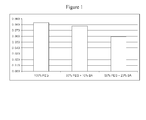
- Figure 1 is a graph of PEG released into a solvent as discussed in the Disintegration/dissolution Test, below.
- the present invention overcomes problems associated with prior art hair removal devices incorporating comprise a solid lubricating composition comprising hydrophilic lubricating polymer.
- a solid lubricating composition comprising hydrophilic lubricating polymer.
- the inclusion of the defined fatty alcohols renders the compositions more resistant to dissolution in water and therefore enhances their longevity - in other words, it enables them to provide lubrication for a greater number of uses than would otherwise be the case.
- STP Standard Temperature and Pressure
- the hair removal device may be any hair removal device, such as, but not limited to, a razor or a hair removal device comprising a light source to degrade or destroy the hair.
- the hair removal device comprises a light source
- the light source is advantageously a source of laser light.
- the hair removal device is a razor.
- the solid lubricating composition may advantageously be provided on the razor cartridge, and is preferably as a strip located before and/or after the blade(s) in the direction of cutting.
- WO 97/02116 illustrates locations in which such a strip may be placed.
- the solid lubricating composition may comprise from 3 to 50%, preferable from 5 to 25% by weight of the solid lubricating composition of one or more fatty alcohols selected from C 12 - C 30 , preferably C 12 - C 22 fatty alcohol. More preferably, the fatty alcohol comprises cetyl, stearyl, or behenyl alcohol or mixtures thereof.
- the presence of the defined amount of fatty alcohol may enhance the life of the composition by reducing its tendency to disintegrate by dissolution in water, as illustrated in Figure 1 , discussed below. If too much fatty alcohol is present, however, then the solid lubricating composition may become too hydrophobic and the water soluble lubricating polymer may be prevented from performing its intended function.
- the solid lubricating composition is cold-pressed, then it advantageously does not comprise more than 20% and preferably less than 15% of fatty alcohol by weight of the solid lubricating composition. This is because, as the amount of fatty alcohol increases, the solid lubricating composition becomes increasingly brittle to the extent that it cannot properly be affixed to a hair removal device or may break in use.
- the solid lubricating composition comprises a water-soluble lubricating polymer.
- the water-soluble lubricating polymer may achieve lubrication by a number of mechanisms, such as binding water to form a gel.
- the polymer In order to be effective, the polymer must be solid at STP and have a molecular weight of less than 8,000,000. Preferably, it has a molecular weight from 100,000 to 7,000,000.
- Suitable water-soluble lubricating polymers include polyalkylene glycol; cellulosic polymers, including hydroxypropyl cellulose; hydroxypropyl methylcellulose (HPMC); polyvinyl pyrrolidone; polyacrylamide; polyvinyl imidazoline; polyhydroxyethylmethacrylate and mixtures thereof.
- polyalkylene glycol is synonymous with “polyalkane oxide”, although some sources have, in the past, referred to lower molecular weight variants as “polyalkylene glycol” and higher molecular weight variants as “polyalkane oxide”.
- the polyalkylene glycol (polyalkane oxide) comprises polyethylene glycol (which may also be referred to herein as "PEG”), polypropylene glycol, or mixtures thereof and more preferably it comprises polyethylene glycol.
- the solid lubricating composition preferably comprises from 40 to 95%, preferably from 45 to 85%, by weight of water-soluble lubricating polymer.
- the water-soluble lubricating polymers comprise polyethylene oxides generally known as POLYOX (available from the Dow Chemical Company) or ALKOX (available from Meisei Chemical Works, Kyoto, Japan).
- these particular polyethylene oxides will have molecular weights of about 100,000 to about 6 million, preferably from about 300,000 to about 5 million and the polyethylene oxide comprises a blend of polyethylene oxide having an average molecular weight of about 5 million and polyethylene oxide having an average molecular weight of about 300,000.
- the solid lubricating composition comprises less than 2%, preferably less than 1% and more preferably 0% of water-soluble surfactant, by weight of the solid lubricating composition.
- water-soluble surfactant refers to surfactant which fulfils the following condition: at 25°C, 1g of the surfactant dissolves in 1000ml or less of water. For completeness, one requires more than 10,000ml of water at 25°C in order to dissolve 1g of magnesium stearate or 1g of cetyl alcohol.
- the solid lubricating compositions may comprise a hydrophobic binder.
- the presence of such a component may enhance the life of the composition by reducing its tendency to be mechanically eroded.
- the hydrophobic binder is solid at STP.
- Suitable hydrophobic binders include divalent metal cation stearate, preferably magnesium stearate, calcium stearate, zinc stearate, or mixtures thereof, more preferably magnesium stearate; ethyl cellulose; polycaprolactone; polyethylene; polypropylene; polystyrene; butadiene-styrene copolymer (e.g.
- the solid lubricating composition preferably comprises from 1 to 20% and more preferably from 5 to 15% hydrophobic binder, by weight of the solid lubricating composition.
- the solid lubricating composition is manufactured by an extrusion process, as discussed below, then it preferably comprises from 10 to 50%, more preferably from 15 to 40% and yet more preferably 20 to 35% hydrophobic binder, by weight of the solid lubricating composition.
- perfume oils may volatilize and boil off. During a cold-pressing process, the perfume may be squeezed out during compaction and lost as well. Furthermore, perfume oils are usually fairly hydrophobic and may be repelled by hydrophilic materials, such as the water-soluble lubricating polymers disclosed herein. The result tends to be an unsatisfactorily perfumed product.
- perfume oils comprised within the solid lubricating compositions according to the invention may be releasably encapsulated within a powder.
- Any powder which permits perfume release in use, such as on contact with water, may suitably be used.
- the powder comprises a cyclic oligosaccharide, which may encapsulate the perfume.
- cyclic oligosaccharide means a cyclic structure comprising six or more saccharide units.
- Preferred for use herein are cyclic oligosaccharides having six, seven or eight saccharide units and mixtures thereof, more preferably six or seven saccharide units and even more preferably seven saccharide units. It is common in the art to abbreviate six, seven and eight membered cyclic oligosaccharides to ⁇ , ⁇ and ⁇ respectively.
- Cyclic oligosaccharides for use herein may comprise any suitable saccharide or mixtures of saccharides.
- suitable saccharides include, but are not limited to, glucose, fructose, mannose, galactose, maltose and mixtures thereof, preferably glucose.
- the preferred cyclic oligosaccharides for use herein are ⁇ -cyclodextrins or ⁇ - cyclodextrins, or mixtures thereof, and the most preferred cyclic oligosaccharides for use herein are ⁇ -cyclodextrins.
- the cyclic oligosaccharides for use herein may be substituted by any suitable substituent or mixture of substituents.
- mixture of substituents means that two or more different suitable substituents can be substituted onto one cyclic oligosaccharide.
- the derivatives of cyclodextrins consist mainly of molecules wherein some of the OH groups have been substituted.
- Suitable substituents include, but are not limited to, alkyl groups; hydroxyalkyl groups; dihydroxyalkyl groups; (hydroxyalkyl) alkylenyl bridging groups such as cyclodextrin glycerol ethers; aryl groups; maltosyl groups; allyl groups; benzyl groups; alkanoyl groups; cationic cyclodextrins such as those containing 2-hydroxy-3- (dimethylamino) propyl ether; quaternary ammonium groups; anionic cyclodextrins such as carboxyalkyl groups, sulphobutylether groups, sulphate groups, and succinylates; amphoteric cyclodextrins; and mixtures thereof.
- the substituents may be saturated or unsaturated, straight or branched chain.
- Preferred substituents include saturated and straight chain alkyl groups, hydroxyalkyl groups and mixtures thereof.
- Preferred alkyl and hydroxyalkyl substituents are selected from C1-C8 alkyl or hydroxyalkyl groups or mixtures thereof, more preferred alkyl and hydroxyalkyl substituents are selected from C1-C6 alkyl or hydroxyalkyl groups or mixtures thereof, even more preferred alkyl and hydroxyalkyl substituents are selected from C1-C4 alkyl or hydroxyalkyl groups and mixtures thereof.
- Especially preferred alkyl and hydroxyalkyl substituents are propyl, ethyl and methyl, more especially hydroxypropyl and methyl and even more preferably methyl.
- cyclic oligosaccharides for use in the present invention are unsubstituted, or are substituted by only saturated straight chain alkyl, or hydroxyalkyl substituents. Therefore, preferred examples of cyclic oligosaccharides for use herein are ⁇ -cyclodextrin, ⁇ -cyclodextrin, methyl- ⁇ -cyclodextrin, methyl- ⁇ -cyclodextrin, and hydroxypropyl- ⁇ -cyclodextrin.
- the solid lubricating composition comprised within the hair removal device according to the invention may be manufactured in a number of ways. Traditionally, such a composition may be manufactured using an extrusion method, such as is disclosed in WO 97/02116 and WO 97/02117 , referred to above. If the solid lubricating composition comprises a temperature-sensitive component, such as a fragrance oil, then the solid lubricating composition may advantageously be a cold-pressed composition, as exemplified in Examples 1 to 3 below. By cold-pressing, temperature-sensitive components may be better retained within the composition and not lost by boiling off, degradation, and the like. As discussed above, if the composition is cold-pressed, then it advantageously does not comprise more than 20% and preferably less than 15% of fatty alcohol by weight of the solid lubricating composition.
- a temperature-sensitive component such as a fragrance oil
- the term "cold-pressed” means that the formulation has been manufactured by process involving a compression step, without any active heating and the term “cold-pressing” should be interpreted accordingly. For the avoidance of doubt, heat generated by the compression step itself is not regarded as being active heating.
- temperature-sensitive component refers to materials which have a boiling point, undergo significant sublimation, or which undergo a change in chemical structure at temperatures above ambient temperatures and below 100°C.
- Materials having a boiling point in this range are known to the skilled person and include many low boiling point perfume oils.
- Low boiling perfume oils, or top notes are those that provide the initial burst of fragrance following application to the skin, because they boil off quickly when exposed to body heat.
- the skilled person is similarly familiar with materials which undergo significant sublimation in the present temperature range.
- An example of a commonly used sensate which sublimes in this temperatures range is menthol.
- Materials whose chemical structures change at temperatures within the cited range are known to the skilled person.
- One example of such a material is L-ascorbic acid, which oxidizes at an increasing rate as the temperature rises.
- Component Wt% PEG 1 90 Behenyl alcohol 2 10
- compositions of Examples 1 -3 are manufactured by placing the materials into a blending device and blending until the mixture is entirely homogeneous. Once homogenised, the mixture is pressed into the desired shape using an appropriate mould tool / punch.
- An example of a suitable device is the GEA Courtoy R253-27 tablet press. The powder is compressed using a force of 1 x 10 10 - 1 x 10 12 Nm -2 . The resultant tablet is ejected from the mould in the desired shape.
- the above composition is manufactured by extruding the blend through a Haake System 90, 0.019m (3 ⁇ 4 inch) diameter extruder with a barrel pressure of about 68.9 - 137.8 bar (1000-2000 psi), a rotor speed of about 10 to 50 rpm, and a temperature of about 150-185"C and a die temperature of about 170-185"C.
- the extruded strip of composite is cooled and sliced to the appropriate size.
Landscapes
- Health & Medical Sciences (AREA)
- Life Sciences & Earth Sciences (AREA)
- Veterinary Medicine (AREA)
- Animal Behavior & Ethology (AREA)
- General Health & Medical Sciences (AREA)
- Public Health (AREA)
- Dermatology (AREA)
- Birds (AREA)
- Epidemiology (AREA)
- Cosmetics (AREA)
- Lubricants (AREA)
- Laser Surgery Devices (AREA)
- Radiation-Therapy Devices (AREA)
Abstract
a. from 40% to 95% by weight of the solid lubricating composition of a water-soluble lubricating polymer which:
i. is solid at STP;
ii. has a molecular weight of less than or equal to 8,000,000, preferably from 100,000 to 3,000,000;
b. from 3 to 50%, preferably from 5 to 25%, by weight of the solid lubricating composition of one or more fatty alcohols, selected from C12 - C30 fatty alcohols.
Description
- The present invention concerns the provision of a hair removal device comprising robust solid lubricating compositions.
- Hair removal devices comprising a soap composition are known - reference is made to
WO 07/056509 WO 07/056509 WO 97/02116 WO 97/02117 - According to the invention, a hair removal device is provided comprising a solid lubricating composition, the solid lubricating composition comprising:
- a. from 40% to 95% by weight of the solid lubricating composition of a water-soluble lubricating polymer which:
- i. is solid at STP;
- ii. has a molecular weight of less than or equal to 8,000,000, preferably from 100,000 to 3,000,000;
- b. from 3 to 50%, preferably from 5 to 25%, by weight of the solid lubricating composition of one or more fatty alcohols, selected from C12 - C30 fatty alcohols.
-
Figure 1 is a graph of PEG released into a solvent as discussed in the Disintegration/dissolution Test, below. - The present invention overcomes problems associated with prior art hair removal devices incorporating comprise a solid lubricating composition comprising hydrophilic lubricating polymer. The inclusion of the defined fatty alcohols renders the compositions more resistant to dissolution in water and therefore enhances their longevity - in other words, it enables them to provide lubrication for a greater number of uses than would otherwise be the case.
- As used herein, the term "STP", or "Standard Temperature and Pressure", refers to a temperature of 20 °C and a pressure of 101.325 kPa.
- The hair removal device according to the invention may be any hair removal device, such as, but not limited to, a razor or a hair removal device comprising a light source to degrade or destroy the hair. If the hair removal device comprises a light source, then the light source is advantageously a source of laser light. Preferably, the hair removal device is a razor. In the case of a razor, then the solid lubricating composition may advantageously be provided on the razor cartridge, and is preferably as a strip located before and/or after the blade(s) in the direction of cutting.
WO 97/02116 - According to the invention, the solid lubricating composition may comprise from 3 to 50%, preferable from 5 to 25% by weight of the solid lubricating composition of one or more fatty alcohols selected from C12 - C30, preferably C12 - C22 fatty alcohol. More preferably, the fatty alcohol comprises cetyl, stearyl, or behenyl alcohol or mixtures thereof. The presence of the defined amount of fatty alcohol may enhance the life of the composition by reducing its tendency to disintegrate by dissolution in water, as illustrated in
Figure 1 , discussed below. If too much fatty alcohol is present, however, then the solid lubricating composition may become too hydrophobic and the water soluble lubricating polymer may be prevented from performing its intended function. In addition, as discussed below, if the solid lubricating composition is cold-pressed, then it advantageously does not comprise more than 20% and preferably less than 15% of fatty alcohol by weight of the solid lubricating composition. This is because, as the amount of fatty alcohol increases, the solid lubricating composition becomes increasingly brittle to the extent that it cannot properly be affixed to a hair removal device or may break in use. - The solid lubricating composition, comprises a water-soluble lubricating polymer. The water-soluble lubricating polymer may achieve lubrication by a number of mechanisms, such as binding water to form a gel. In order to be effective, the polymer must be solid at STP and have a molecular weight of less than 8,000,000. Preferably, it has a molecular weight from 100,000 to 7,000,000. Suitable water-soluble lubricating polymers include polyalkylene glycol; cellulosic polymers, including hydroxypropyl cellulose; hydroxypropyl methylcellulose (HPMC); polyvinyl pyrrolidone; polyacrylamide; polyvinyl imidazoline; polyhydroxyethylmethacrylate and mixtures thereof. As used herein, "polyalkylene glycol" is synonymous with "polyalkane oxide", although some sources have, in the past, referred to lower molecular weight variants as "polyalkylene glycol" and higher molecular weight variants as "polyalkane oxide". Preferably, the polyalkylene glycol (polyalkane oxide) comprises polyethylene glycol (which may also be referred to herein as "PEG"), polypropylene glycol, or mixtures thereof and more preferably it comprises polyethylene glycol.
- The solid lubricating composition preferably comprises from 40 to 95%, preferably from 45 to 85%, by weight of water-soluble lubricating polymer.
- Advantageously, the water-soluble lubricating polymers comprise polyethylene oxides generally known as POLYOX (available from the Dow Chemical Company) or
ALKOX (available from Meisei Chemical Works, Kyoto, Japan). In one embodiment, these particular polyethylene oxides will have molecular weights of about 100,000 to about 6 million, preferably from about 300,000 to about 5 million and the polyethylene oxide comprises a blend of polyethylene oxide having an average molecular weight of about 5 million and polyethylene oxide having an average molecular weight of about 300,000. - Advantageously, the solid lubricating composition comprises less than 2%, preferably less than 1% and more preferably 0% of water-soluble surfactant, by weight of the solid lubricating composition. As used herein, the term "water-soluble surfactant" refers to surfactant which fulfils the following condition: at 25°C, 1g of the surfactant dissolves in 1000ml or less of water. For completeness, one requires more than 10,000ml of water at 25°C in order to dissolve 1g of magnesium stearate or 1g of cetyl alcohol.
- Advantageously, the solid lubricating compositions may comprise a hydrophobic binder. The presence of such a component may enhance the life of the composition by reducing its tendency to be mechanically eroded. Advantageously, the hydrophobic binder is solid at STP. Suitable hydrophobic binders include divalent metal cation stearate, preferably magnesium stearate, calcium stearate, zinc stearate, or mixtures thereof, more preferably magnesium stearate; ethyl cellulose; polycaprolactone; polyethylene; polypropylene; polystyrene; butadiene-styrene copolymer (e.g. medium and high impact polystyrene); polyacetal; acrylonitrilebutadiene-styrene copolymer; ethylene vinyl acetate copolymer and blends such as polypropylene/polystyrene blend; and mixtures thereof. In the event that the solid lubricating composition is cold-pressed, then it preferably comprises from 1 to 20% and more preferably from 5 to 15% hydrophobic binder, by weight of the solid lubricating composition. In the event that the solid lubricating composition is manufactured by an extrusion process, as discussed below, then it preferably comprises from 10 to 50%, more preferably from 15 to 40% and yet more preferably 20 to 35% hydrophobic binder, by weight of the solid lubricating composition.
- It may be difficult to provide a perfumed a solid lubricating composition of the present type, because perfumes are liquids and are therefore difficult to retain within distribute evenly throughout the solid matrix during the manufacturing process. For example, in a high temperature extrusion process, perfume oils may volatilize and boil off. During a cold-pressing process, the perfume may be squeezed out during compaction and lost as well. Furthermore, perfume oils are usually fairly hydrophobic and may be repelled by hydrophilic materials, such as the water-soluble lubricating polymers disclosed herein. The result tends to be an unsatisfactorily perfumed product.
- In order to overcome this disadvantage, perfume oils comprised within the solid lubricating compositions according to the invention may be releasably encapsulated within a powder. Any powder which permits perfume release in use, such as on contact with water, may suitably be used. Advantageously, the powder comprises a cyclic oligosaccharide, which may encapsulate the perfume.
- As used herein, the term "cyclic oligosaccharide" means a cyclic structure comprising six or more saccharide units. Preferred for use herein are cyclic oligosaccharides having six, seven or eight saccharide units and mixtures thereof, more preferably six or seven saccharide units and even more preferably seven saccharide units. It is common in the art to abbreviate six, seven and eight membered cyclic oligosaccharides to α, β and γ respectively.
- Cyclic oligosaccharides for use herein may comprise any suitable saccharide or mixtures of saccharides. Examples of suitable saccharides include, but are not limited to, glucose, fructose, mannose, galactose, maltose and mixtures thereof, preferably glucose. The preferred cyclic oligosaccharides for use herein are α-cyclodextrins or β- cyclodextrins, or mixtures thereof, and the most preferred cyclic oligosaccharides for use herein are β-cyclodextrins.
- The cyclic oligosaccharides for use herein may be substituted by any suitable substituent or mixture of substituents. Herein the use of the term "mixture of substituents" means that two or more different suitable substituents can be substituted onto one cyclic oligosaccharide. The derivatives of cyclodextrins consist mainly of molecules wherein some of the OH groups have been substituted. Suitable substituents include, but are not limited to, alkyl groups; hydroxyalkyl groups; dihydroxyalkyl groups; (hydroxyalkyl) alkylenyl bridging groups such as cyclodextrin glycerol ethers; aryl groups; maltosyl groups; allyl groups; benzyl groups; alkanoyl groups; cationic cyclodextrins such as those containing 2-hydroxy-3- (dimethylamino) propyl ether; quaternary ammonium groups; anionic cyclodextrins such as carboxyalkyl groups, sulphobutylether groups, sulphate groups, and succinylates; amphoteric cyclodextrins; and mixtures thereof.
- The substituents may be saturated or unsaturated, straight or branched chain. Preferred substituents include saturated and straight chain alkyl groups, hydroxyalkyl groups and mixtures thereof. Preferred alkyl and hydroxyalkyl substituents are selected from C1-C8 alkyl or hydroxyalkyl groups or mixtures thereof, more preferred alkyl and hydroxyalkyl substituents are selected from C1-C6 alkyl or hydroxyalkyl groups or mixtures thereof, even more preferred alkyl and hydroxyalkyl substituents are selected from C1-C4 alkyl or hydroxyalkyl groups and mixtures thereof. Especially preferred alkyl and hydroxyalkyl substituents are propyl, ethyl and methyl, more especially hydroxypropyl and methyl and even more preferably methyl.
- Preferred cyclic oligosaccharides for use in the present invention are unsubstituted, or are substituted by only saturated straight chain alkyl, or hydroxyalkyl substituents. Therefore, preferred examples of cyclic oligosaccharides for use herein are α-cyclodextrin, β-cyclodextrin, methyl-α-cyclodextrin, methyl-α-cyclodextrin, and hydroxypropyl-β-cyclodextrin.
- The solid lubricating composition comprised within the hair removal device according to the invention may be manufactured in a number of ways. Traditionally, such a composition may be manufactured using an extrusion method, such as is disclosed in
WO 97/02116 WO 97/02117 - As used herein, the term "cold-pressed" means that the formulation has been manufactured by process involving a compression step, without any active heating and the term "cold-pressing" should be interpreted accordingly. For the avoidance of doubt, heat generated by the compression step itself is not regarded as being active heating.
- The term "temperature-sensitive component" refers to materials which have a boiling point, undergo significant sublimation, or which undergo a change in chemical structure at temperatures above ambient temperatures and below 100°C. Materials having a boiling point in this range are known to the skilled person and include many low boiling point perfume oils. Low boiling perfume oils, or top notes, are those that provide the initial burst of fragrance following application to the skin, because they boil off quickly when exposed to body heat. The skilled person is similarly familiar with materials which undergo significant sublimation in the present temperature range. An example of a commonly used sensate which sublimes in this temperatures range is menthol. Materials whose chemical structures change at temperatures within the cited range are known to the skilled person. One example of such a material is L-ascorbic acid, which oxidizes at an increasing rate as the temperature rises.
- The following, non-limiting examples, illustrate the manufacture of solid lubricating compositions:
-
Component Wt% PEG 1 90 Behenyl alcohol 210 -
Component Wt% PEG 1 80 Behenyl alcohol 220 -
Component Wt% PEG 1 80 Behenyl alcohol 210 Magnesium Stearate 10 1Polyox™ WSR-N750 powder, a polyethylene glycol with molecular weigh about 300,000 manufactured by Dow Chemicals
2Stenol-1822 powder manufactured by Cognis - The compositions of Examples 1 -3 are manufactured by placing the materials into a blending device and blending until the mixture is entirely homogeneous. Once homogenised, the mixture is pressed into the desired shape using an appropriate mould tool / punch. An example of a suitable device is the GEA Courtoy R253-27 tablet press. The powder is compressed using a force of 1 x 10¹⁰ - 1 x 10¹² Nm-2. The resultant tablet is ejected from the mould in the desired shape.
-
Component Wt% Cetyl Alcohol 10.0 Stearyl Alcohol 10.0 PEG-115M1 28.53 PEG-7M2 18.18 Styrene/Butadiene Copolymer3 23.55 PEG-1004 4.50 BHT 0.24 Polycaprolactone 5.00 1 Polyox Coag., manufactured by Dow Chemical
2 Polyox N750, manufactured by Dow Chemical
3 731 HIPS (High Impact Polystyrene) manufactured by BASF
4 Carbowax PEG - The above composition is manufactured by extruding the blend through a
Haake System 90, 0.019m (¾ inch) diameter extruder with a barrel pressure of about 68.9 - 137.8 bar (1000-2000 psi), a rotor speed of about 10 to 50 rpm, and a temperature of about 150-185"C and a die temperature of about 170-185"C. The extruded strip of composite is cooled and sliced to the appropriate size. - The following identically sized and shaped strip samples were manufactured:
- A sample of 100% PEG (Polyox™ WSR-N750);
- A solid lubricating composition to Example 1
- A solid lubricating composition to Example 2
- In each case, a 10µl drop of extraction solvent (Deuterium oxide) was placed at the bottom of a glass vial and the strip of solid lubricant placed on the drop of solvent. The vial was then placed into an oven at 50°C for two minutes which 'glued' the fragment to the vial. 1000µl of extraction solvent (Deuterium oxide) was added to the vial and it was tumble mixed for 20 minutes. After 20 minutes, 200ul of the solution was extracted from the top of the vial for NMR analysis of PEG levels. The results are presented in
Figure 1 , in which illustrates PEG released into the solvent: - the term "Polyox" refers to the Polyox™ WSR-N750, powdered polyethylene glycol;
- the term "BA" refers the Stenol-1822, powdered behenyl alcohol;
- the y-axis relates to the relative PEG level
- The results show reduced dissolution of PEG with increasing levels of behenyl alcohol.
- The dimensions and values disclosed herein are not to be understood as being strictly limited to the exact numerical values recited. Instead, unless otherwise specified, each such dimension is intended to mean both the recited value and a functionally equivalent range surrounding that value. For example, a dimension disclosed as "40mm" is intended to mean "about 40mm".
Claims (13)
- A hair removal device comprising a solid lubricating composition, the solid lubricating composition comprising:a. from 40% to 95% by weight of the solid lubricating composition of a water-soluble lubricating polymer which:i. is solid at STP;ii. has a molecular weight of less than or equal to 8,000,000, preferably from 100,000 to 3,000,000;b. from 3 to 50%, preferably from 5 to 25%, by weight of the solid lubricating composition of one or more fatty alcohols, selected from C12 - C30 fatty alcohols.
- The hair removal device of claim 1, wherein the fatty alcohol comprises cetyl, stearyl, or behenyl alcohol or mixtures thereof.
- The hair removal device of claim 1 or 2, wherein the solid lubricating composition comprises less than 2%, preferably less than 1% and more preferably 0% of water-soluble surfactant, by weight of the solid lubricating composition.
- The hair removal device of any preceding claim, wherein the water-soluble lubricating polymer comprises polyoxyalkylene glycol, polyalkane oxide, cellulosic polymer, polyvinyl pyrrolidone, polyacrylamide, polyvinyl imidazoline, polyhydroxyethylmethacrylate or mixtures thereof.
- The hair removal device of any preceding claim, wherein the solid lubricating composition additionally comprising a hydrophobic binder.
- The hair removal device of claim 5, wherein the hydrophobic binder comprises magnesium stearate, calcium stearate, zinc stearate, polycaprolactone, polyethylene, polypropylene, polystyrene, butadiene-styrene copolymer, polyacetal, acrylonitrilebutadiene-styrene copolymer, ethylene vinyl acetate copolymer, polypropylene/polystyrene blends or mixtures thereof.
- The hair removal device of any preceding claim, wherein the solid lubricating composition comprises fragrance oil releasably encapsulated within a cyclic oligosaccharide.
- The hair removal device of claim 7, wherein the cyclic oligosaccharide comprises α-cyclodextrin, β-cyclodextrin, methyl-α-cyclodextrin, methyl-α-cyclodextrin, hydroxypropyl-β-cyclodextrin, or mixtures thereof.
- The hair removal device of any preceding claim, wherein the solid lubricating composition is cold-pressed and comprises less than or equal to 20%, preferably less than 15% of fatty alcohol by weight of the solid lubricating composition.
- The hair removal device of any preceding claim, configured as a razor.
- The hair removal device of any of claims 1 to 8, wherein the hair removal device comprises a light source to degrade or destroy the hair or hair root.
- The hair removal device of claim 10, wherein the light source comprises a laser light source.
- Use of a hair removal device according to any preceding claim to lubricate the skin and remove hair.
Priority Applications (1)
| Application Number | Priority Date | Filing Date | Title |
|---|---|---|---|
| EP10172938A EP2286788A3 (en) | 2009-08-21 | 2010-08-16 | Hair removal device |
Applications Claiming Priority (2)
| Application Number | Priority Date | Filing Date | Title |
|---|---|---|---|
| EP09168358 | 2009-08-21 | ||
| EP10172938A EP2286788A3 (en) | 2009-08-21 | 2010-08-16 | Hair removal device |
Publications (2)
| Publication Number | Publication Date |
|---|---|
| EP2286788A2 true EP2286788A2 (en) | 2011-02-23 |
| EP2286788A3 EP2286788A3 (en) | 2012-10-24 |
Family
ID=42026183
Family Applications (1)
| Application Number | Title | Priority Date | Filing Date |
|---|---|---|---|
| EP10172938A Withdrawn EP2286788A3 (en) | 2009-08-21 | 2010-08-16 | Hair removal device |
Country Status (11)
| Country | Link |
|---|---|
| US (1) | US20110041865A1 (en) |
| EP (1) | EP2286788A3 (en) |
| JP (1) | JP5173034B2 (en) |
| CN (1) | CN102481240A (en) |
| AU (1) | AU2010284467B2 (en) |
| BR (1) | BR112012003751A2 (en) |
| CA (1) | CA2770836A1 (en) |
| MX (1) | MX2012002173A (en) |
| RU (1) | RU2485934C1 (en) |
| WO (1) | WO2011022285A2 (en) |
| ZA (1) | ZA201201081B (en) |
Cited By (2)
| Publication number | Priority date | Publication date | Assignee | Title |
|---|---|---|---|---|
| EP2559418A1 (en) * | 2011-08-17 | 2013-02-20 | The Procter & Gamble Company | Fragrant depilatory article |
| WO2013025857A1 (en) * | 2011-08-16 | 2013-02-21 | The Gillette Company | Skin engaging member comprising an anti-irritation agent |
Families Citing this family (10)
| Publication number | Priority date | Publication date | Assignee | Title |
|---|---|---|---|---|
| PL2537511T3 (en) * | 2011-06-24 | 2017-07-31 | The Gillette Company Llc | Hair removal device comprising erodable moisturizer |
| AU2015325131B2 (en) * | 2014-09-30 | 2020-11-05 | Edgewell Personal Care Brands, Llc | Erodible anhydrous polyethylene oxide film |
| MX2017008210A (en) * | 2014-12-18 | 2017-10-06 | Gillette Co Llc | Lubricating members having hydrophobic components for razor cartridges. |
| AU2016285816A1 (en) * | 2015-06-30 | 2018-01-18 | The Gillette Company Llc | Lubricating members for razor cartridges |
| US10898425B2 (en) * | 2016-11-17 | 2021-01-26 | The Gillette Company Llc | Skin engaging member comprising ethylene vinyl acetate and a fragrance |
| US11872711B2 (en) | 2019-05-10 | 2024-01-16 | The Gillette Company Llc | Lubricating member for razor cartridges |
| US20210322290A1 (en) | 2020-04-10 | 2021-10-21 | The Procter & Gamble Company | Rheological Solid Composition for Use in Shaving |
| US11554087B2 (en) | 2020-11-05 | 2023-01-17 | The Gillette Company Llc | Shaving aid comprising an antioxidant |
| DE102021131291A1 (en) | 2020-12-29 | 2022-06-30 | The Gillette Company Llc | SHAVING AID COMPRISING AN ACTIVE INGREDIENT |
| EP4587128A1 (en) | 2022-09-14 | 2025-07-23 | The Gillette Company LLC | Lubricating member comprising polyglutamic acid |
Citations (3)
| Publication number | Priority date | Publication date | Assignee | Title |
|---|---|---|---|---|
| WO1997002117A1 (en) | 1995-06-30 | 1997-01-23 | The Gillette Company | Shaving aid composite with an inclusion complex of a skin-soothing agent and cyclodextrin |
| WO1997002116A1 (en) | 1995-06-30 | 1997-01-23 | The Gillette Company | Shaving aid composite with a non-volatile cooling agent |
| WO2007056509A1 (en) | 2005-11-09 | 2007-05-18 | The Gillette Company | Molded shaving aid compositions, components and methode of manufacture |
Family Cites Families (6)
| Publication number | Priority date | Publication date | Assignee | Title |
|---|---|---|---|---|
| US5113585A (en) * | 1990-09-28 | 1992-05-19 | The Gillette Company | Shaving system |
| US5910472A (en) * | 1994-12-03 | 1999-06-08 | The Procter & Gamble Company | Cleansing compositions |
| DE60101151T2 (en) * | 2000-02-18 | 2004-09-02 | The Gillette Co., Boston | SHAVING AID STRIP FOR RAZOR BLADE UNIT |
| US6763590B2 (en) * | 2002-10-21 | 2004-07-20 | Eveready Battery Company, Inc. | Razor assembly having a clutch controlled shaving aid delivery system |
| AU2009223548B2 (en) * | 2008-03-07 | 2015-01-29 | Edgewell Personal Care Brands, Llc | Shaving aid material |
| IN2012DN01371A (en) * | 2009-08-21 | 2015-06-05 | Gillette Co |
-
2010
- 2010-08-12 CA CA2770836A patent/CA2770836A1/en not_active Abandoned
- 2010-08-12 WO PCT/US2010/045270 patent/WO2011022285A2/en not_active Ceased
- 2010-08-12 RU RU2012102689/15A patent/RU2485934C1/en not_active IP Right Cessation
- 2010-08-12 MX MX2012002173A patent/MX2012002173A/en unknown
- 2010-08-12 JP JP2011536633A patent/JP5173034B2/en not_active Expired - Fee Related
- 2010-08-12 CN CN2010800369887A patent/CN102481240A/en active Pending
- 2010-08-12 AU AU2010284467A patent/AU2010284467B2/en not_active Expired - Fee Related
- 2010-08-12 BR BR112012003751A patent/BR112012003751A2/en not_active IP Right Cessation
- 2010-08-16 EP EP10172938A patent/EP2286788A3/en not_active Withdrawn
- 2010-08-17 US US12/858,120 patent/US20110041865A1/en not_active Abandoned
-
2012
- 2012-02-14 ZA ZA2012/01081A patent/ZA201201081B/en unknown
Patent Citations (3)
| Publication number | Priority date | Publication date | Assignee | Title |
|---|---|---|---|---|
| WO1997002117A1 (en) | 1995-06-30 | 1997-01-23 | The Gillette Company | Shaving aid composite with an inclusion complex of a skin-soothing agent and cyclodextrin |
| WO1997002116A1 (en) | 1995-06-30 | 1997-01-23 | The Gillette Company | Shaving aid composite with a non-volatile cooling agent |
| WO2007056509A1 (en) | 2005-11-09 | 2007-05-18 | The Gillette Company | Molded shaving aid compositions, components and methode of manufacture |
Non-Patent Citations (1)
| Title |
|---|
| "Polyderm Polyurethanes", INTERNET CITATION, 13 June 2014 (2014-06-13), XP055123328, Retrieved from the Internet <URL:http://www.zeusquimica.com/ftp/Representadas/231/ZQ-ALZO cosmetica.pdf> [retrieved on 20140613] * |
Cited By (3)
| Publication number | Priority date | Publication date | Assignee | Title |
|---|---|---|---|---|
| WO2013025857A1 (en) * | 2011-08-16 | 2013-02-21 | The Gillette Company | Skin engaging member comprising an anti-irritation agent |
| EP2559418A1 (en) * | 2011-08-17 | 2013-02-20 | The Procter & Gamble Company | Fragrant depilatory article |
| WO2013025901A3 (en) * | 2011-08-17 | 2013-04-11 | The Procter & Gamble Company | Fragrant depilatory article |
Also Published As
| Publication number | Publication date |
|---|---|
| RU2485934C1 (en) | 2013-06-27 |
| CN102481240A (en) | 2012-05-30 |
| MX2012002173A (en) | 2012-05-29 |
| CA2770836A1 (en) | 2011-02-24 |
| JP5173034B2 (en) | 2013-03-27 |
| ZA201201081B (en) | 2015-08-26 |
| AU2010284467B2 (en) | 2014-10-02 |
| US20110041865A1 (en) | 2011-02-24 |
| EP2286788A3 (en) | 2012-10-24 |
| BR112012003751A2 (en) | 2016-04-12 |
| AU2010284467A1 (en) | 2012-03-15 |
| JP2012508088A (en) | 2012-04-05 |
| WO2011022285A3 (en) | 2011-04-14 |
| WO2011022285A2 (en) | 2011-02-24 |
Similar Documents
| Publication | Publication Date | Title |
|---|---|---|
| EP2286788A2 (en) | Hair removal device | |
| EP2146681B1 (en) | Impermeable capsules | |
| RU2537231C1 (en) | Skin contacting element containing encapsulated active ingredients | |
| US20110041339A1 (en) | Hair Removal Device | |
| KR20200016878A (en) | Tablet Freeze Dried Cosmetic | |
| Lins et al. | Composite PHB/chitosan microparticles obtained by spray drying: Effect of chitosan concentration and crosslinking agents on drug relesase | |
| CN113795240B (en) | Lubricating components for razor cartridges | |
| JP5536937B1 (en) | Mist cosmetics | |
| KR102372160B1 (en) | Gel-form composition and method for preparing same, and shrinkage improving agent and method for improving shrinkage of gel-form composition | |
| JP5695339B2 (en) | Aqueous composition in a container | |
| JP3622832B2 (en) | Capsule-containing gel cosmetics | |
| KR100786492B1 (en) | Thixotropic gel type cosmetic composition | |
| KR102551953B1 (en) | Cleansing bar and Composition for the bar | |
| KR102805946B1 (en) | Personal cleansing soap bar composition | |
| JP5464818B2 (en) | Scalp and hair cosmetics | |
| TWI282740B (en) | Liquid cosmetics | |
| JPH09202727A (en) | Capsule particles with excellent solubility | |
| EP4332206A1 (en) | Temperature stable gel compositions | |
| EP3398736A1 (en) | Blade unit for safety razor including lubrication and/or care pad, safety razor and method of manufacture | |
| JP2008291047A (en) | Lipophilic component-containing powder | |
| DE10062263A1 (en) | Production of detergent tablets comprising adding particulate tableting mixture to preformed coated core tablet and pressing mixture to form unitary tablet |
Legal Events
| Date | Code | Title | Description |
|---|---|---|---|
| PUAI | Public reference made under article 153(3) epc to a published international application that has entered the european phase |
Free format text: ORIGINAL CODE: 0009012 |
|
| AK | Designated contracting states |
Kind code of ref document: A2 Designated state(s): AL AT BE BG CH CY CZ DE DK EE ES FI FR GB GR HR HU IE IS IT LI LT LU LV MC MK MT NL NO PL PT RO SE SI SK SM TR |
|
| AX | Request for extension of the european patent |
Extension state: BA ME RS |
|
| RAP1 | Party data changed (applicant data changed or rights of an application transferred) |
Owner name: THE GILLETTE COMPANY |
|
| PUAL | Search report despatched |
Free format text: ORIGINAL CODE: 0009013 |
|
| AK | Designated contracting states |
Kind code of ref document: A3 Designated state(s): AL AT BE BG CH CY CZ DE DK EE ES FI FR GB GR HR HU IE IS IT LI LT LU LV MC MK MT NL NO PL PT RO SE SI SK SM TR |
|
| AX | Request for extension of the european patent |
Extension state: BA ME RS |
|
| RIC1 | Information provided on ipc code assigned before grant |
Ipc: B26B 21/44 20060101ALI20120919BHEP Ipc: A61Q 9/00 20060101ALI20120919BHEP Ipc: A61Q 9/02 20060101ALI20120919BHEP Ipc: A61K 8/36 20060101ALI20120919BHEP Ipc: A61K 8/86 20060101ALI20120919BHEP Ipc: A61K 8/34 20060101AFI20120919BHEP |
|
| 17P | Request for examination filed |
Effective date: 20130405 |
|
| 17Q | First examination report despatched |
Effective date: 20140624 |
|
| STAA | Information on the status of an ep patent application or granted ep patent |
Free format text: STATUS: THE APPLICATION IS DEEMED TO BE WITHDRAWN |
|
| 18D | Application deemed to be withdrawn |
Effective date: 20141105 |