EP2282735B1 - Pp2a modulators for treating alzheimer, parkinson, diabetes - Google Patents
Pp2a modulators for treating alzheimer, parkinson, diabetes Download PDFInfo
- Publication number
- EP2282735B1 EP2282735B1 EP09734282.8A EP09734282A EP2282735B1 EP 2282735 B1 EP2282735 B1 EP 2282735B1 EP 09734282 A EP09734282 A EP 09734282A EP 2282735 B1 EP2282735 B1 EP 2282735B1
- Authority
- EP
- European Patent Office
- Prior art keywords
- compound
- disease
- pp2a
- compounds
- certain embodiments
- Prior art date
- Legal status (The legal status is an assumption and is not a legal conclusion. Google has not performed a legal analysis and makes no representation as to the accuracy of the status listed.)
- Not-in-force
Links
- 206010012601 diabetes mellitus Diseases 0.000 title claims description 17
- 150000001875 compounds Chemical class 0.000 claims description 441
- 239000000203 mixture Substances 0.000 claims description 128
- 208000037265 diseases, disorders, signs and symptoms Diseases 0.000 claims description 57
- LFQSCWFLJHTTHZ-UHFFFAOYSA-N Ethanol Chemical compound CCO LFQSCWFLJHTTHZ-UHFFFAOYSA-N 0.000 claims description 56
- 235000016213 coffee Nutrition 0.000 claims description 31
- 235000013353 coffee beverage Nutrition 0.000 claims description 31
- 208000035475 disorder Diseases 0.000 claims description 30
- 201000010099 disease Diseases 0.000 claims description 27
- 230000004770 neurodegeneration Effects 0.000 claims description 26
- 150000003839 salts Chemical class 0.000 claims description 25
- 208000024827 Alzheimer disease Diseases 0.000 claims description 24
- NOESYZHRGYRDHS-UHFFFAOYSA-N insulin Chemical compound N1C(=O)C(NC(=O)C(CCC(N)=O)NC(=O)C(CCC(O)=O)NC(=O)C(C(C)C)NC(=O)C(NC(=O)CN)C(C)CC)CSSCC(C(NC(CO)C(=O)NC(CC(C)C)C(=O)NC(CC=2C=CC(O)=CC=2)C(=O)NC(CCC(N)=O)C(=O)NC(CC(C)C)C(=O)NC(CCC(O)=O)C(=O)NC(CC(N)=O)C(=O)NC(CC=2C=CC(O)=CC=2)C(=O)NC(CSSCC(NC(=O)C(C(C)C)NC(=O)C(CC(C)C)NC(=O)C(CC=2C=CC(O)=CC=2)NC(=O)C(CC(C)C)NC(=O)C(C)NC(=O)C(CCC(O)=O)NC(=O)C(C(C)C)NC(=O)C(CC(C)C)NC(=O)C(CC=2NC=NC=2)NC(=O)C(CO)NC(=O)CNC2=O)C(=O)NCC(=O)NC(CCC(O)=O)C(=O)NC(CCCNC(N)=N)C(=O)NCC(=O)NC(CC=3C=CC=CC=3)C(=O)NC(CC=3C=CC=CC=3)C(=O)NC(CC=3C=CC(O)=CC=3)C(=O)NC(C(C)O)C(=O)N3C(CCC3)C(=O)NC(CCCCN)C(=O)NC(C)C(O)=O)C(=O)NC(CC(N)=O)C(O)=O)=O)NC(=O)C(C(C)CC)NC(=O)C(CO)NC(=O)C(C(C)O)NC(=O)C1CSSCC2NC(=O)C(CC(C)C)NC(=O)C(NC(=O)C(CCC(N)=O)NC(=O)C(CC(N)=O)NC(=O)C(NC(=O)C(N)CC=1C=CC=CC=1)C(C)C)CC1=CN=CN1 NOESYZHRGYRDHS-UHFFFAOYSA-N 0.000 claims description 24
- 208000018737 Parkinson disease Diseases 0.000 claims description 23
- 208000001145 Metabolic Syndrome Diseases 0.000 claims description 18
- 201000000690 abdominal obesity-metabolic syndrome Diseases 0.000 claims description 18
- 208000015122 neurodegenerative disease Diseases 0.000 claims description 18
- KFZMGEQAYNKOFK-UHFFFAOYSA-N Isopropanol Chemical compound CC(C)O KFZMGEQAYNKOFK-UHFFFAOYSA-N 0.000 claims description 16
- 201000011240 Frontotemporal dementia Diseases 0.000 claims description 15
- 230000002829 reductive effect Effects 0.000 claims description 14
- 208000001072 type 2 diabetes mellitus Diseases 0.000 claims description 14
- 206010022489 Insulin Resistance Diseases 0.000 claims description 13
- 235000010482 polyoxyethylene sorbitan monooleate Nutrition 0.000 claims description 13
- 229920000053 polysorbate 80 Polymers 0.000 claims description 13
- 102000004877 Insulin Human genes 0.000 claims description 12
- 108090001061 Insulin Proteins 0.000 claims description 12
- 241000533293 Sesbania emerus Species 0.000 claims description 12
- RYYVLZVUVIJVGH-UHFFFAOYSA-N caffeine Chemical compound CN1C(=O)N(C)C(=O)C2=C1N=CN2C RYYVLZVUVIJVGH-UHFFFAOYSA-N 0.000 claims description 12
- 229940125396 insulin Drugs 0.000 claims description 12
- 238000004519 manufacturing process Methods 0.000 claims description 10
- 206010067889 Dementia with Lewy bodies Diseases 0.000 claims description 9
- 201000002832 Lewy body dementia Diseases 0.000 claims description 9
- 208000001089 Multiple system atrophy Diseases 0.000 claims description 9
- 229920002565 Polyethylene Glycol 400 Polymers 0.000 claims description 9
- 208000034799 Tauopathies Diseases 0.000 claims description 9
- 235000013399 edible fruits Nutrition 0.000 claims description 9
- QAIPRVGONGVQAS-DUXPYHPUSA-N trans-caffeic acid Chemical compound OC(=O)\C=C\C1=CC=C(O)C(O)=C1 QAIPRVGONGVQAS-DUXPYHPUSA-N 0.000 claims description 8
- 201000002212 progressive supranuclear palsy Diseases 0.000 claims description 7
- 208000011990 Corticobasal Degeneration Diseases 0.000 claims description 6
- LVGKNOAMLMIIKO-UHFFFAOYSA-N Elaidinsaeure-aethylester Natural products CCCCCCCCC=CCCCCCCCC(=O)OCC LVGKNOAMLMIIKO-UHFFFAOYSA-N 0.000 claims description 6
- LPHGQDQBBGAPDZ-UHFFFAOYSA-N Isocaffeine Natural products CN1C(=O)N(C)C(=O)C2=C1N(C)C=N2 LPHGQDQBBGAPDZ-UHFFFAOYSA-N 0.000 claims description 6
- 208000032859 Synucleinopathies Diseases 0.000 claims description 6
- 229960001948 caffeine Drugs 0.000 claims description 6
- VJEONQKOZGKCAK-UHFFFAOYSA-N caffeine Natural products CN1C(=O)N(C)C(=O)C2=C1C=CN2C VJEONQKOZGKCAK-UHFFFAOYSA-N 0.000 claims description 6
- LVGKNOAMLMIIKO-QXMHVHEDSA-N ethyl oleate Chemical compound CCCCCCCC\C=C/CCCCCCCC(=O)OCC LVGKNOAMLMIIKO-QXMHVHEDSA-N 0.000 claims description 6
- 229940093471 ethyl oleate Drugs 0.000 claims description 6
- 201000001421 hyperglycemia Diseases 0.000 claims description 6
- 230000003914 insulin secretion Effects 0.000 claims description 6
- JVKUCNQGESRUCL-UHFFFAOYSA-N 2-Hydroxyethyl 12-hydroxyoctadecanoate Chemical compound CCCCCCC(O)CCCCCCCCCCC(=O)OCCO JVKUCNQGESRUCL-UHFFFAOYSA-N 0.000 claims description 5
- 208000000609 Pick Disease of the Brain Diseases 0.000 claims description 5
- 229920001304 Solutol HS 15 Polymers 0.000 claims description 5
- 230000007850 degeneration Effects 0.000 claims description 5
- ACEAELOMUCBPJP-UHFFFAOYSA-N (E)-3,4,5-trihydroxycinnamic acid Natural products OC(=O)C=CC1=CC(O)=C(O)C(O)=C1 ACEAELOMUCBPJP-UHFFFAOYSA-N 0.000 claims description 4
- CWVRJTMFETXNAD-FWCWNIRPSA-N 3-O-Caffeoylquinic acid Natural products O[C@H]1[C@@H](O)C[C@@](O)(C(O)=O)C[C@H]1OC(=O)\C=C\C1=CC=C(O)C(O)=C1 CWVRJTMFETXNAD-FWCWNIRPSA-N 0.000 claims description 4
- 235000010870 Annona cherimola x Annona squamosa Nutrition 0.000 claims description 4
- 235000017401 Annona x atemoya Nutrition 0.000 claims description 4
- 244000137984 Annona x atemoya Species 0.000 claims description 4
- 235000015418 Bacopa monnieria Nutrition 0.000 claims description 4
- 244000187129 Bacopa monnieria Species 0.000 claims description 4
- PZIRUHCJZBGLDY-UHFFFAOYSA-N Caffeoylquinic acid Natural products CC(CCC(=O)C(C)C1C(=O)CC2C3CC(O)C4CC(O)CCC4(C)C3CCC12C)C(=O)O PZIRUHCJZBGLDY-UHFFFAOYSA-N 0.000 claims description 4
- 235000013162 Cocos nucifera Nutrition 0.000 claims description 4
- 244000060011 Cocos nucifera Species 0.000 claims description 4
- 201000010374 Down Syndrome Diseases 0.000 claims description 4
- 244000194101 Ginkgo biloba Species 0.000 claims description 4
- 235000017309 Hypericum perforatum Nutrition 0.000 claims description 4
- 244000141009 Hypericum perforatum Species 0.000 claims description 4
- CWVRJTMFETXNAD-KLZCAUPSSA-N Neochlorogenin-saeure Natural products O[C@H]1C[C@@](O)(C[C@@H](OC(=O)C=Cc2ccc(O)c(O)c2)[C@@H]1O)C(=O)O CWVRJTMFETXNAD-KLZCAUPSSA-N 0.000 claims description 4
- 208000012902 Nervous system disease Diseases 0.000 claims description 4
- 235000016698 Nigella sativa Nutrition 0.000 claims description 4
- 244000090896 Nigella sativa Species 0.000 claims description 4
- 208000037658 Parkinson-dementia complex of Guam Diseases 0.000 claims description 4
- 208000024571 Pick disease Diseases 0.000 claims description 4
- 235000003500 Ruscus aculeatus Nutrition 0.000 claims description 4
- 240000000353 Ruscus aculeatus Species 0.000 claims description 4
- 241000231366 Scorodocarpus Species 0.000 claims description 4
- 244000299461 Theobroma cacao Species 0.000 claims description 4
- 206010044688 Trisomy 21 Diseases 0.000 claims description 4
- 235000001978 Withania somnifera Nutrition 0.000 claims description 4
- 240000004482 Withania somnifera Species 0.000 claims description 4
- 229940074360 caffeic acid Drugs 0.000 claims description 4
- 235000004883 caffeic acid Nutrition 0.000 claims description 4
- CWVRJTMFETXNAD-JUHZACGLSA-N chlorogenic acid Chemical compound O[C@@H]1[C@H](O)C[C@@](O)(C(O)=O)C[C@H]1OC(=O)\C=C\C1=CC=C(O)C(O)=C1 CWVRJTMFETXNAD-JUHZACGLSA-N 0.000 claims description 4
- 229940074393 chlorogenic acid Drugs 0.000 claims description 4
- 235000001368 chlorogenic acid Nutrition 0.000 claims description 4
- FFQSDFBBSXGVKF-KHSQJDLVSA-N chlorogenic acid Natural products O[C@@H]1C[C@](O)(C[C@@H](CC(=O)C=Cc2ccc(O)c(O)c2)[C@@H]1O)C(=O)O FFQSDFBBSXGVKF-KHSQJDLVSA-N 0.000 claims description 4
- 235000019219 chocolate Nutrition 0.000 claims description 4
- BMRSEYFENKXDIS-KLZCAUPSSA-N cis-3-O-p-coumaroylquinic acid Natural products O[C@H]1C[C@@](O)(C[C@@H](OC(=O)C=Cc2ccc(O)cc2)[C@@H]1O)C(=O)O BMRSEYFENKXDIS-KLZCAUPSSA-N 0.000 claims description 4
- QAIPRVGONGVQAS-UHFFFAOYSA-N cis-caffeic acid Natural products OC(=O)C=CC1=CC=C(O)C(O)=C1 QAIPRVGONGVQAS-UHFFFAOYSA-N 0.000 claims description 4
- 208000017004 dementia pugilistica Diseases 0.000 claims description 4
- 239000001711 nigella sativa Substances 0.000 claims description 4
- SASUFNRGCZMRFD-JCUIILOWSA-N withanolide D Chemical compound C1C(C)=C(C)C(=O)O[C@H]1[C@](C)(O)[C@@H]1[C@@]2(C)CC[C@@H]3[C@@]4(C)C(=O)C=C[C@H](O)[C@@]54O[C@@H]5C[C@H]3[C@@H]2CC1 SASUFNRGCZMRFD-JCUIILOWSA-N 0.000 claims description 4
- 241000167854 Bourreria succulenta Species 0.000 claims description 3
- 235000021028 berry Nutrition 0.000 claims description 3
- 235000019693 cherries Nutrition 0.000 claims description 3
- -1 polycyclic aliphatic hydrocarbons Chemical class 0.000 description 183
- 230000000694 effects Effects 0.000 description 168
- 241000699670 Mus sp. Species 0.000 description 70
- 235000013350 formula milk Nutrition 0.000 description 61
- 238000000034 method Methods 0.000 description 51
- 239000002904 solvent Substances 0.000 description 51
- 230000005764 inhibitory process Effects 0.000 description 47
- UDTZTAZZFLXENU-UHFFFAOYSA-N n-[2-(5-hydroxy-1h-indol-3-yl)ethyl]icosanamide Chemical compound C1=C(O)C=C2C(CCNC(=O)CCCCCCCCCCCCCCCCCCC)=CNC2=C1 UDTZTAZZFLXENU-UHFFFAOYSA-N 0.000 description 45
- 239000000284 extract Substances 0.000 description 44
- YMWUJEATGCHHMB-UHFFFAOYSA-N Dichloromethane Chemical compound ClCCl YMWUJEATGCHHMB-UHFFFAOYSA-N 0.000 description 42
- 102000016397 Methyltransferase Human genes 0.000 description 39
- 108060004795 Methyltransferase Proteins 0.000 description 39
- ZMXDDKWLCZADIW-UHFFFAOYSA-N N,N-Dimethylformamide Chemical compound CN(C)C=O ZMXDDKWLCZADIW-UHFFFAOYSA-N 0.000 description 39
- 230000011987 methylation Effects 0.000 description 36
- 238000007069 methylation reaction Methods 0.000 description 36
- 238000009472 formulation Methods 0.000 description 35
- WEVYAHXRMPXWCK-UHFFFAOYSA-N Acetonitrile Chemical compound CC#N WEVYAHXRMPXWCK-UHFFFAOYSA-N 0.000 description 33
- 239000000126 substance Substances 0.000 description 33
- 125000001931 aliphatic group Chemical group 0.000 description 32
- XLYOFNOQVPJJNP-UHFFFAOYSA-N water Chemical compound O XLYOFNOQVPJJNP-UHFFFAOYSA-N 0.000 description 32
- 238000006243 chemical reaction Methods 0.000 description 31
- 239000000047 product Substances 0.000 description 31
- 241001465754 Metazoa Species 0.000 description 30
- 125000000217 alkyl group Chemical group 0.000 description 30
- WQZGKKKJIJFFOK-GASJEMHNSA-N Glucose Natural products OC[C@H]1OC(O)[C@H](O)[C@@H](O)[C@@H]1O WQZGKKKJIJFFOK-GASJEMHNSA-N 0.000 description 29
- 239000000654 additive Substances 0.000 description 29
- 241000723377 Coffea Species 0.000 description 28
- 102000004160 Phosphoric Monoester Hydrolases Human genes 0.000 description 28
- 108090000608 Phosphoric Monoester Hydrolases Proteins 0.000 description 28
- WQZGKKKJIJFFOK-VFUOTHLCSA-N beta-D-glucose Chemical compound OC[C@H]1O[C@@H](O)[C@H](O)[C@@H](O)[C@@H]1O WQZGKKKJIJFFOK-VFUOTHLCSA-N 0.000 description 28
- 108090000623 proteins and genes Proteins 0.000 description 28
- 102000003802 alpha-Synuclein Human genes 0.000 description 27
- 108090000185 alpha-Synuclein Proteins 0.000 description 27
- 239000008103 glucose Substances 0.000 description 27
- 238000002360 preparation method Methods 0.000 description 27
- 102000004169 proteins and genes Human genes 0.000 description 27
- JUJWROOIHBZHMG-UHFFFAOYSA-N Pyridine Chemical compound C1=CC=NC=C1 JUJWROOIHBZHMG-UHFFFAOYSA-N 0.000 description 26
- 235000018102 proteins Nutrition 0.000 description 25
- 102000013498 tau Proteins Human genes 0.000 description 25
- 108010026424 tau Proteins Proteins 0.000 description 25
- 125000003342 alkenyl group Chemical group 0.000 description 24
- 125000000304 alkynyl group Chemical group 0.000 description 24
- 239000000758 substrate Substances 0.000 description 24
- 239000002417 nutraceutical Substances 0.000 description 23
- 235000021436 nutraceutical agent Nutrition 0.000 description 23
- 239000011541 reaction mixture Substances 0.000 description 23
- 239000002253 acid Substances 0.000 description 22
- 125000003118 aryl group Chemical group 0.000 description 22
- 239000000243 solution Substances 0.000 description 22
- ZMANZCXQSJIPKH-UHFFFAOYSA-N Triethylamine Chemical compound CCN(CC)CC ZMANZCXQSJIPKH-UHFFFAOYSA-N 0.000 description 21
- 235000005911 diet Nutrition 0.000 description 21
- 230000037213 diet Effects 0.000 description 19
- 239000003814 drug Substances 0.000 description 19
- XEKOWRVHYACXOJ-UHFFFAOYSA-N Ethyl acetate Chemical compound CCOC(C)=O XEKOWRVHYACXOJ-UHFFFAOYSA-N 0.000 description 18
- WYURNTSHIVDZCO-UHFFFAOYSA-N Tetrahydrofuran Chemical compound C1CCOC1 WYURNTSHIVDZCO-UHFFFAOYSA-N 0.000 description 18
- 230000015572 biosynthetic process Effects 0.000 description 18
- 210000004027 cell Anatomy 0.000 description 18
- 125000001424 substituent group Chemical group 0.000 description 18
- 239000002585 base Substances 0.000 description 17
- 230000026731 phosphorylation Effects 0.000 description 17
- 238000006366 phosphorylation reaction Methods 0.000 description 17
- 238000003786 synthesis reaction Methods 0.000 description 17
- 239000008280 blood Substances 0.000 description 16
- 210000004369 blood Anatomy 0.000 description 16
- 125000004432 carbon atom Chemical group C* 0.000 description 16
- 230000008878 coupling Effects 0.000 description 15
- 238000010168 coupling process Methods 0.000 description 15
- 238000005859 coupling reaction Methods 0.000 description 15
- LOKCTEFSRHRXRJ-UHFFFAOYSA-I dipotassium trisodium dihydrogen phosphate hydrogen phosphate dichloride Chemical compound P(=O)(O)(O)[O-].[K+].P(=O)(O)([O-])[O-].[Na+].[Na+].[Cl-].[K+].[Cl-].[Na+] LOKCTEFSRHRXRJ-UHFFFAOYSA-I 0.000 description 15
- 239000002552 dosage form Substances 0.000 description 15
- 239000000945 filler Substances 0.000 description 15
- 235000013305 food Nutrition 0.000 description 15
- 239000002953 phosphate buffered saline Substances 0.000 description 15
- 239000007787 solid Substances 0.000 description 15
- 238000012360 testing method Methods 0.000 description 15
- PLRACCBDVIHHLZ-UHFFFAOYSA-N 1-methyl-4-phenyl-1,2,3,6-tetrahydropyridine Chemical compound C1N(C)CCC(C=2C=CC=CC=2)=C1 PLRACCBDVIHHLZ-UHFFFAOYSA-N 0.000 description 14
- 0 CCC#CC1(C2)C2=C*C1 Chemical compound CCC#CC1(C2)C2=C*C1 0.000 description 14
- OKKJLVBELUTLKV-MZCSYVLQSA-N Deuterated methanol Chemical compound [2H]OC([2H])([2H])[2H] OKKJLVBELUTLKV-MZCSYVLQSA-N 0.000 description 14
- 238000000605 extraction Methods 0.000 description 14
- 239000000725 suspension Substances 0.000 description 14
- 239000001993 wax Substances 0.000 description 14
- IJGRMHOSHXDMSA-UHFFFAOYSA-N Atomic nitrogen Chemical compound N#N IJGRMHOSHXDMSA-UHFFFAOYSA-N 0.000 description 13
- 235000013361 beverage Nutrition 0.000 description 13
- 210000004556 brain Anatomy 0.000 description 13
- 125000003178 carboxy group Chemical group [H]OC(*)=O 0.000 description 13
- 125000000623 heterocyclic group Chemical group 0.000 description 13
- 239000007788 liquid Substances 0.000 description 13
- 125000006239 protecting group Chemical group 0.000 description 13
- UMJSCPRVCHMLSP-UHFFFAOYSA-N pyridine Natural products COC1=CC=CN=C1 UMJSCPRVCHMLSP-UHFFFAOYSA-N 0.000 description 13
- 108010058956 Protein Phosphatase 2 Proteins 0.000 description 12
- 102000006478 Protein Phosphatase 2 Human genes 0.000 description 12
- 230000000996 additive effect Effects 0.000 description 12
- 125000003710 aryl alkyl group Chemical group 0.000 description 12
- 235000020940 control diet Nutrition 0.000 description 12
- 238000002330 electrospray ionisation mass spectrometry Methods 0.000 description 12
- 125000001072 heteroaryl group Chemical group 0.000 description 12
- 239000000546 pharmaceutical excipient Substances 0.000 description 12
- 230000009467 reduction Effects 0.000 description 12
- 239000002562 thickening agent Substances 0.000 description 12
- 238000011830 transgenic mouse model Methods 0.000 description 12
- OKKJLVBELUTLKV-UHFFFAOYSA-N Methanol Chemical compound OC OKKJLVBELUTLKV-UHFFFAOYSA-N 0.000 description 11
- 241000699660 Mus musculus Species 0.000 description 11
- 108091000117 Tyrosine 3-Monooxygenase Proteins 0.000 description 11
- 102000048218 Tyrosine 3-monooxygenases Human genes 0.000 description 11
- 150000001412 amines Chemical class 0.000 description 11
- 239000003153 chemical reaction reagent Substances 0.000 description 11
- 125000004122 cyclic group Chemical group 0.000 description 11
- 235000014113 dietary fatty acids Nutrition 0.000 description 11
- 239000000194 fatty acid Substances 0.000 description 11
- 229930195729 fatty acid Natural products 0.000 description 11
- 238000001914 filtration Methods 0.000 description 11
- 238000004128 high performance liquid chromatography Methods 0.000 description 11
- 239000000651 prodrug Substances 0.000 description 11
- 229940002612 prodrug Drugs 0.000 description 11
- 238000005160 1H NMR spectroscopy Methods 0.000 description 10
- NLXLAEXVIDQMFP-UHFFFAOYSA-N Ammonia chloride Chemical compound [NH4+].[Cl-] NLXLAEXVIDQMFP-UHFFFAOYSA-N 0.000 description 10
- PEDCQBHIVMGVHV-UHFFFAOYSA-N Glycerine Chemical compound OCC(O)CO PEDCQBHIVMGVHV-UHFFFAOYSA-N 0.000 description 10
- UIIMBOGNXHQVGW-UHFFFAOYSA-M Sodium bicarbonate Chemical compound [Na+].OC([O-])=O UIIMBOGNXHQVGW-UHFFFAOYSA-M 0.000 description 10
- 239000004480 active ingredient Substances 0.000 description 10
- 239000000872 buffer Substances 0.000 description 10
- 239000003795 chemical substances by application Substances 0.000 description 10
- 230000017858 demethylation Effects 0.000 description 10
- 238000010520 demethylation reaction Methods 0.000 description 10
- 230000030609 dephosphorylation Effects 0.000 description 10
- 238000006209 dephosphorylation reaction Methods 0.000 description 10
- 239000000539 dimer Substances 0.000 description 10
- 230000035772 mutation Effects 0.000 description 10
- 229910052757 nitrogen Inorganic materials 0.000 description 10
- 241000282414 Homo sapiens Species 0.000 description 9
- 108010065084 Phosphorylase a Proteins 0.000 description 9
- FAPWRFPIFSIZLT-UHFFFAOYSA-M Sodium chloride Chemical compound [Na+].[Cl-] FAPWRFPIFSIZLT-UHFFFAOYSA-M 0.000 description 9
- DHKHKXVYLBGOIT-UHFFFAOYSA-N acetaldehyde Diethyl Acetal Natural products CCOC(C)OCC DHKHKXVYLBGOIT-UHFFFAOYSA-N 0.000 description 9
- VLKZOEOYAKHREP-UHFFFAOYSA-N n-Hexane Chemical compound CCCCCC VLKZOEOYAKHREP-UHFFFAOYSA-N 0.000 description 9
- 239000003960 organic solvent Substances 0.000 description 9
- 230000008569 process Effects 0.000 description 9
- 230000000153 supplemental effect Effects 0.000 description 9
- 239000003826 tablet Substances 0.000 description 9
- YLQBMQCUIZJEEH-UHFFFAOYSA-N tetrahydrofuran Natural products C=1C=COC=1 YLQBMQCUIZJEEH-UHFFFAOYSA-N 0.000 description 9
- KXDHJXZQYSOELW-UHFFFAOYSA-M Carbamate Chemical compound NC([O-])=O KXDHJXZQYSOELW-UHFFFAOYSA-M 0.000 description 8
- RTZKZFJDLAIYFH-UHFFFAOYSA-N Diethyl ether Chemical compound CCOCC RTZKZFJDLAIYFH-UHFFFAOYSA-N 0.000 description 8
- 125000002015 acyclic group Chemical group 0.000 description 8
- 239000007822 coupling agent Substances 0.000 description 8
- 229940079593 drug Drugs 0.000 description 8
- 150000004665 fatty acids Chemical class 0.000 description 8
- 125000000524 functional group Chemical group 0.000 description 8
- 125000004446 heteroarylalkyl group Chemical group 0.000 description 8
- 230000003993 interaction Effects 0.000 description 8
- 125000002496 methyl group Chemical group [H]C([H])([H])* 0.000 description 8
- 239000000843 powder Substances 0.000 description 8
- 239000002244 precipitate Substances 0.000 description 8
- 239000003755 preservative agent Substances 0.000 description 8
- 230000001105 regulatory effect Effects 0.000 description 8
- 229920006395 saturated elastomer Polymers 0.000 description 8
- 239000003765 sweetening agent Substances 0.000 description 8
- MTCFGRXMJLQNBG-REOHCLBHSA-N (2S)-2-Amino-3-hydroxypropansäure Chemical compound OC[C@H](N)C(O)=O MTCFGRXMJLQNBG-REOHCLBHSA-N 0.000 description 7
- 238000001644 13C nuclear magnetic resonance spectroscopy Methods 0.000 description 7
- 239000007821 HATU Substances 0.000 description 7
- 108010025076 Holoenzymes Proteins 0.000 description 7
- 102000045595 Phosphoprotein Phosphatases Human genes 0.000 description 7
- 108700019535 Phosphoprotein Phosphatases Proteins 0.000 description 7
- 241000283984 Rodentia Species 0.000 description 7
- MTCFGRXMJLQNBG-UHFFFAOYSA-N Serine Natural products OCC(N)C(O)=O MTCFGRXMJLQNBG-UHFFFAOYSA-N 0.000 description 7
- 125000003545 alkoxy group Chemical group 0.000 description 7
- 125000004414 alkyl thio group Chemical group 0.000 description 7
- 230000001419 dependent effect Effects 0.000 description 7
- 125000001495 ethyl group Chemical group [H]C([H])([H])C([H])([H])* 0.000 description 7
- 239000000796 flavoring agent Substances 0.000 description 7
- 235000003599 food sweetener Nutrition 0.000 description 7
- 239000008187 granular material Substances 0.000 description 7
- 210000004379 membrane Anatomy 0.000 description 7
- 239000012528 membrane Substances 0.000 description 7
- 239000003921 oil Substances 0.000 description 7
- 235000019198 oils Nutrition 0.000 description 7
- 230000011664 signaling Effects 0.000 description 7
- 239000007858 starting material Substances 0.000 description 7
- 229910052717 sulfur Inorganic materials 0.000 description 7
- 239000006228 supernatant Substances 0.000 description 7
- 208000024891 symptom Diseases 0.000 description 7
- 239000003981 vehicle Substances 0.000 description 7
- QTBSBXVTEAMEQO-UHFFFAOYSA-N Acetic acid Chemical compound CC(O)=O QTBSBXVTEAMEQO-UHFFFAOYSA-N 0.000 description 6
- UHOVQNZJYSORNB-UHFFFAOYSA-N Benzene Chemical compound C1=CC=CC=C1 UHOVQNZJYSORNB-UHFFFAOYSA-N 0.000 description 6
- IAZDPXIOMUYVGZ-WFGJKAKNSA-N Dimethyl sulfoxide Chemical compound [2H]C([2H])([2H])S(=O)C([2H])([2H])[2H] IAZDPXIOMUYVGZ-WFGJKAKNSA-N 0.000 description 6
- 102000004190 Enzymes Human genes 0.000 description 6
- 108090000790 Enzymes Proteins 0.000 description 6
- CSNNHWWHGAXBCP-UHFFFAOYSA-L Magnesium sulfate Chemical compound [Mg+2].[O-][S+2]([O-])([O-])[O-] CSNNHWWHGAXBCP-UHFFFAOYSA-L 0.000 description 6
- JGFZNNIVVJXRND-UHFFFAOYSA-N N,N-Diisopropylethylamine (DIPEA) Chemical compound CCN(C(C)C)C(C)C JGFZNNIVVJXRND-UHFFFAOYSA-N 0.000 description 6
- KWYUFKZDYYNOTN-UHFFFAOYSA-M Potassium hydroxide Chemical compound [OH-].[K+] KWYUFKZDYYNOTN-UHFFFAOYSA-M 0.000 description 6
- DNIAPMSPPWPWGF-UHFFFAOYSA-N Propylene glycol Chemical compound CC(O)CO DNIAPMSPPWPWGF-UHFFFAOYSA-N 0.000 description 6
- MEFKEPWMEQBLKI-AIRLBKTGSA-N S-adenosyl-L-methioninate Chemical compound O[C@@H]1[C@H](O)[C@@H](C[S+](CC[C@H](N)C([O-])=O)C)O[C@H]1N1C2=NC=NC(N)=C2N=C1 MEFKEPWMEQBLKI-AIRLBKTGSA-N 0.000 description 6
- CDBYLPFSWZWCQE-UHFFFAOYSA-L Sodium Carbonate Chemical compound [Na+].[Na+].[O-]C([O-])=O CDBYLPFSWZWCQE-UHFFFAOYSA-L 0.000 description 6
- HEMHJVSKTPXQMS-UHFFFAOYSA-M Sodium hydroxide Chemical compound [OH-].[Na+] HEMHJVSKTPXQMS-UHFFFAOYSA-M 0.000 description 6
- YXFVVABEGXRONW-UHFFFAOYSA-N Toluene Chemical compound CC1=CC=CC=C1 YXFVVABEGXRONW-UHFFFAOYSA-N 0.000 description 6
- 230000002159 abnormal effect Effects 0.000 description 6
- 229960001570 ademetionine Drugs 0.000 description 6
- 239000011230 binding agent Substances 0.000 description 6
- 230000037396 body weight Effects 0.000 description 6
- 235000015872 dietary supplement Nutrition 0.000 description 6
- 239000003085 diluting agent Substances 0.000 description 6
- 239000002270 dispersing agent Substances 0.000 description 6
- VYFYYTLLBUKUHU-UHFFFAOYSA-N dopamine Chemical compound NCCC1=CC=C(O)C(O)=C1 VYFYYTLLBUKUHU-UHFFFAOYSA-N 0.000 description 6
- 235000019439 ethyl acetate Nutrition 0.000 description 6
- 230000006870 function Effects 0.000 description 6
- 239000004615 ingredient Substances 0.000 description 6
- GTCAXTIRRLKXRU-UHFFFAOYSA-N methyl carbamate Chemical compound COC(N)=O GTCAXTIRRLKXRU-UHFFFAOYSA-N 0.000 description 6
- 231100000252 nontoxic Toxicity 0.000 description 6
- 230000003000 nontoxic effect Effects 0.000 description 6
- 229910052760 oxygen Inorganic materials 0.000 description 6
- 239000000523 sample Substances 0.000 description 6
- 239000007790 solid phase Substances 0.000 description 6
- 235000000346 sugar Nutrition 0.000 description 6
- 239000000375 suspending agent Substances 0.000 description 6
- FYSNRJHAOHDILO-UHFFFAOYSA-N thionyl chloride Chemical group ClS(Cl)=O FYSNRJHAOHDILO-UHFFFAOYSA-N 0.000 description 6
- 230000003442 weekly effect Effects 0.000 description 6
- 239000000080 wetting agent Substances 0.000 description 6
- SCYULBFZEHDVBN-UHFFFAOYSA-N 1,1-Dichloroethane Chemical compound CC(Cl)Cl SCYULBFZEHDVBN-UHFFFAOYSA-N 0.000 description 5
- 108010010803 Gelatin Proteins 0.000 description 5
- 241000282412 Homo Species 0.000 description 5
- 102100025087 Insulin receptor substrate 1 Human genes 0.000 description 5
- 102100040243 Microtubule-associated protein tau Human genes 0.000 description 5
- 101710115937 Microtubule-associated protein tau Proteins 0.000 description 5
- 108091000080 Phosphotransferase Proteins 0.000 description 5
- CZMRCDWAGMRECN-UGDNZRGBSA-N Sucrose Chemical compound O[C@H]1[C@H](O)[C@@H](CO)O[C@@]1(CO)O[C@@H]1[C@H](O)[C@@H](O)[C@H](O)[C@@H](CO)O1 CZMRCDWAGMRECN-UGDNZRGBSA-N 0.000 description 5
- 229930006000 Sucrose Natural products 0.000 description 5
- 238000004458 analytical method Methods 0.000 description 5
- 239000007900 aqueous suspension Substances 0.000 description 5
- 238000007906 compression Methods 0.000 description 5
- 230000006835 compression Effects 0.000 description 5
- 239000007859 condensation product Substances 0.000 description 5
- 230000001335 demethylating effect Effects 0.000 description 5
- 238000007907 direct compression Methods 0.000 description 5
- 239000000839 emulsion Substances 0.000 description 5
- 150000002148 esters Chemical class 0.000 description 5
- 239000000499 gel Substances 0.000 description 5
- 229920000159 gelatin Polymers 0.000 description 5
- 235000019322 gelatine Nutrition 0.000 description 5
- 235000011852 gelatine desserts Nutrition 0.000 description 5
- 150000004820 halides Chemical class 0.000 description 5
- VKOBVWXKNCXXDE-UHFFFAOYSA-N icosanoic acid Chemical compound CCCCCCCCCCCCCCCCCCCC(O)=O VKOBVWXKNCXXDE-UHFFFAOYSA-N 0.000 description 5
- 229940090044 injection Drugs 0.000 description 5
- 238000002347 injection Methods 0.000 description 5
- 239000007924 injection Substances 0.000 description 5
- 239000007791 liquid phase Substances 0.000 description 5
- 239000000463 material Substances 0.000 description 5
- 239000002609 medium Substances 0.000 description 5
- 238000002156 mixing Methods 0.000 description 5
- QJGQUHMNIGDVPM-UHFFFAOYSA-N nitrogen group Chemical group [N] QJGQUHMNIGDVPM-UHFFFAOYSA-N 0.000 description 5
- 238000013116 obese mouse model Methods 0.000 description 5
- 150000007530 organic bases Chemical class 0.000 description 5
- 230000036961 partial effect Effects 0.000 description 5
- JLFNLZLINWHATN-UHFFFAOYSA-N pentaethylene glycol Chemical compound OCCOCCOCCOCCOCCO JLFNLZLINWHATN-UHFFFAOYSA-N 0.000 description 5
- 239000012071 phase Substances 0.000 description 5
- 102000020233 phosphotransferase Human genes 0.000 description 5
- 238000001556 precipitation Methods 0.000 description 5
- QLNJFJADRCOGBJ-UHFFFAOYSA-N propionamide Chemical compound CCC(N)=O QLNJFJADRCOGBJ-UHFFFAOYSA-N 0.000 description 5
- 229940080818 propionamide Drugs 0.000 description 5
- 238000000746 purification Methods 0.000 description 5
- 125000006413 ring segment Chemical group 0.000 description 5
- 229910000030 sodium bicarbonate Inorganic materials 0.000 description 5
- 239000011780 sodium chloride Substances 0.000 description 5
- 239000005720 sucrose Substances 0.000 description 5
- 235000013616 tea Nutrition 0.000 description 5
- 210000001519 tissue Anatomy 0.000 description 5
- 125000002023 trifluoromethyl group Chemical group FC(F)(F)* 0.000 description 5
- 238000001262 western blot Methods 0.000 description 5
- PAQZWJGSJMLPMG-UHFFFAOYSA-N 2,4,6-tripropyl-1,3,5,2$l^{5},4$l^{5},6$l^{5}-trioxatriphosphinane 2,4,6-trioxide Chemical compound CCCP1(=O)OP(=O)(CCC)OP(=O)(CCC)O1 PAQZWJGSJMLPMG-UHFFFAOYSA-N 0.000 description 4
- APBYPCHFWDIXRQ-UHFFFAOYSA-N 4-[[3-[2-(icosanoylamino)ethyl]-1h-indol-5-yl]oxy]-4-oxobutanoic acid Chemical compound C1=C(OC(=O)CCC(O)=O)C=C2C(CCNC(=O)CCCCCCCCCCCCCCCCCCC)=CNC2=C1 APBYPCHFWDIXRQ-UHFFFAOYSA-N 0.000 description 4
- DLFVBJFMPXGRIB-UHFFFAOYSA-N Acetamide Chemical class CC(N)=O DLFVBJFMPXGRIB-UHFFFAOYSA-N 0.000 description 4
- CIWBSHSKHKDKBQ-JLAZNSOCSA-N Ascorbic acid Chemical compound OC[C@H](O)[C@H]1OC(=O)C(O)=C1O CIWBSHSKHKDKBQ-JLAZNSOCSA-N 0.000 description 4
- 241000416162 Astragalus gummifer Species 0.000 description 4
- VTYYLEPIZMXCLO-UHFFFAOYSA-L Calcium carbonate Chemical compound [Ca+2].[O-]C([O-])=O VTYYLEPIZMXCLO-UHFFFAOYSA-L 0.000 description 4
- OKTJSMMVPCPJKN-UHFFFAOYSA-N Carbon Chemical compound [C] OKTJSMMVPCPJKN-UHFFFAOYSA-N 0.000 description 4
- XTHFKEDIFFGKHM-UHFFFAOYSA-N Dimethoxyethane Chemical compound COCCOC XTHFKEDIFFGKHM-UHFFFAOYSA-N 0.000 description 4
- IAZDPXIOMUYVGZ-UHFFFAOYSA-N Dimethylsulphoxide Chemical compound CS(C)=O IAZDPXIOMUYVGZ-UHFFFAOYSA-N 0.000 description 4
- IAYPIBMASNFSPL-UHFFFAOYSA-N Ethylene oxide Chemical compound C1CO1 IAYPIBMASNFSPL-UHFFFAOYSA-N 0.000 description 4
- 206010018429 Glucose tolerance impaired Diseases 0.000 description 4
- VEXZGXHMUGYJMC-UHFFFAOYSA-N Hydrochloric acid Chemical compound Cl VEXZGXHMUGYJMC-UHFFFAOYSA-N 0.000 description 4
- 208000031773 Insulin resistance syndrome Diseases 0.000 description 4
- 240000007472 Leucaena leucocephala Species 0.000 description 4
- 235000010643 Leucaena leucocephala Nutrition 0.000 description 4
- 241000699666 Mus <mouse, genus> Species 0.000 description 4
- SECXISVLQFMRJM-UHFFFAOYSA-N N-Methylpyrrolidone Chemical compound CN1CCCC1=O SECXISVLQFMRJM-UHFFFAOYSA-N 0.000 description 4
- 206010029350 Neurotoxicity Diseases 0.000 description 4
- 208000008589 Obesity Diseases 0.000 description 4
- MUBZPKHOEPUJKR-UHFFFAOYSA-N Oxalic acid Chemical compound OC(=O)C(O)=O MUBZPKHOEPUJKR-UHFFFAOYSA-N 0.000 description 4
- 108091008611 Protein Kinase B Proteins 0.000 description 4
- MDIGAZPGKJFIAH-UHFFFAOYSA-N Serotonin hydrochloride Chemical compound Cl.C1=C(O)C=C2C(CCN)=CNC2=C1 MDIGAZPGKJFIAH-UHFFFAOYSA-N 0.000 description 4
- NINIDFKCEFEMDL-UHFFFAOYSA-N Sulfur Chemical compound [S] NINIDFKCEFEMDL-UHFFFAOYSA-N 0.000 description 4
- QAOWNCQODCNURD-UHFFFAOYSA-N Sulfuric acid Chemical compound OS(O)(=O)=O QAOWNCQODCNURD-UHFFFAOYSA-N 0.000 description 4
- 206010044221 Toxic encephalopathy Diseases 0.000 description 4
- 229920001615 Tragacanth Polymers 0.000 description 4
- HEDRZPFGACZZDS-MICDWDOJSA-N Trichloro(2H)methane Chemical compound [2H]C(Cl)(Cl)Cl HEDRZPFGACZZDS-MICDWDOJSA-N 0.000 description 4
- XSQUKJJJFZCRTK-UHFFFAOYSA-N Urea Chemical compound NC(N)=O XSQUKJJJFZCRTK-UHFFFAOYSA-N 0.000 description 4
- 125000005110 aryl thio group Chemical group 0.000 description 4
- 125000004104 aryloxy group Chemical group 0.000 description 4
- PUJDIJCNWFYVJX-UHFFFAOYSA-N benzyl carbamate Chemical compound NC(=O)OCC1=CC=CC=C1 PUJDIJCNWFYVJX-UHFFFAOYSA-N 0.000 description 4
- 230000004071 biological effect Effects 0.000 description 4
- 239000000969 carrier Substances 0.000 description 4
- 230000008859 change Effects 0.000 description 4
- 239000003086 colorant Substances 0.000 description 4
- 230000003247 decreasing effect Effects 0.000 description 4
- SBZXBUIDTXKZTM-UHFFFAOYSA-N diglyme Chemical compound COCCOCCOC SBZXBUIDTXKZTM-UHFFFAOYSA-N 0.000 description 4
- 238000010790 dilution Methods 0.000 description 4
- 239000012895 dilution Substances 0.000 description 4
- 239000013070 direct material Substances 0.000 description 4
- 239000007884 disintegrant Substances 0.000 description 4
- 235000013355 food flavoring agent Nutrition 0.000 description 4
- 239000008273 gelatin Substances 0.000 description 4
- 238000007446 glucose tolerance test Methods 0.000 description 4
- 235000011187 glycerol Nutrition 0.000 description 4
- 238000010438 heat treatment Methods 0.000 description 4
- 125000004405 heteroalkoxy group Chemical group 0.000 description 4
- 125000005553 heteroaryloxy group Chemical group 0.000 description 4
- 125000005368 heteroarylthio group Chemical group 0.000 description 4
- 125000005842 heteroatom Chemical group 0.000 description 4
- 125000000592 heterocycloalkyl group Chemical group 0.000 description 4
- 125000004435 hydrogen atom Chemical group [H]* 0.000 description 4
- 230000006951 hyperphosphorylation Effects 0.000 description 4
- 238000001727 in vivo Methods 0.000 description 4
- 150000002632 lipids Chemical class 0.000 description 4
- HQKMJHAJHXVSDF-UHFFFAOYSA-L magnesium stearate Chemical compound [Mg+2].CCCCCCCCCCCCCCCCCC([O-])=O.CCCCCCCCCCCCCCCCCC([O-])=O HQKMJHAJHXVSDF-UHFFFAOYSA-L 0.000 description 4
- 230000007246 mechanism Effects 0.000 description 4
- 230000001035 methylating effect Effects 0.000 description 4
- ZDAZUJBASMCUAK-UHFFFAOYSA-N n-[2-(1h-indol-3-yl)ethyl]pyridine-3-carboxamide Chemical class C=1NC2=CC=CC=C2C=1CCNC(=O)C1=CC=CN=C1 ZDAZUJBASMCUAK-UHFFFAOYSA-N 0.000 description 4
- PZQQEVYIIXMERW-UHFFFAOYSA-N n-[2-(5-fluoro-1h-indol-3-yl)ethyl]icosanamide Chemical compound C1=C(F)C=C2C(CCNC(=O)CCCCCCCCCCCCCCCCCCC)=CNC2=C1 PZQQEVYIIXMERW-UHFFFAOYSA-N 0.000 description 4
- 239000013642 negative control Substances 0.000 description 4
- 230000007135 neurotoxicity Effects 0.000 description 4
- 231100000228 neurotoxicity Toxicity 0.000 description 4
- 235000020824 obesity Nutrition 0.000 description 4
- 150000002894 organic compounds Chemical class 0.000 description 4
- 125000001997 phenyl group Chemical group [H]C1=C([H])C([H])=C(*)C([H])=C1[H] 0.000 description 4
- 229920001223 polyethylene glycol Polymers 0.000 description 4
- 229920000036 polyvinylpyrrolidone Polymers 0.000 description 4
- 235000013855 polyvinylpyrrolidone Nutrition 0.000 description 4
- 230000001144 postural effect Effects 0.000 description 4
- BWHMMNNQKKPAPP-UHFFFAOYSA-L potassium carbonate Chemical compound [K+].[K+].[O-]C([O-])=O BWHMMNNQKKPAPP-UHFFFAOYSA-L 0.000 description 4
- 201000009104 prediabetes syndrome Diseases 0.000 description 4
- 108010090166 protein methylesterase Proteins 0.000 description 4
- 230000011514 reflex Effects 0.000 description 4
- 238000011160 research Methods 0.000 description 4
- 238000000926 separation method Methods 0.000 description 4
- QZAYGJVTTNCVMB-UHFFFAOYSA-N serotonin Chemical compound C1=C(O)C=C2C(CCN)=CNC2=C1 QZAYGJVTTNCVMB-UHFFFAOYSA-N 0.000 description 4
- 229940026197 serotonin hydrochloride Drugs 0.000 description 4
- 238000000638 solvent extraction Methods 0.000 description 4
- 239000006188 syrup Substances 0.000 description 4
- 235000020357 syrup Nutrition 0.000 description 4
- 229940124597 therapeutic agent Drugs 0.000 description 4
- LWIHDJKSTIGBAC-UHFFFAOYSA-K tripotassium phosphate Chemical compound [K+].[K+].[K+].[O-]P([O-])([O-])=O LWIHDJKSTIGBAC-UHFFFAOYSA-K 0.000 description 4
- RYFMWSXOAZQYPI-UHFFFAOYSA-K trisodium phosphate Chemical compound [Na+].[Na+].[Na+].[O-]P([O-])([O-])=O RYFMWSXOAZQYPI-UHFFFAOYSA-K 0.000 description 4
- 235000015112 vegetable and seed oil Nutrition 0.000 description 4
- 239000008158 vegetable oil Substances 0.000 description 4
- RYHBNJHYFVUHQT-UHFFFAOYSA-N 1,4-Dioxane Chemical compound C1COCCO1 RYHBNJHYFVUHQT-UHFFFAOYSA-N 0.000 description 3
- JOSRZNDWQQADHI-UHFFFAOYSA-N 2-(5-hydroxy-1h-indol-3-yl)-n-octadecylacetamide Chemical compound C1=C(O)C=C2C(CC(=O)NCCCCCCCCCCCCCCCCCC)=CNC2=C1 JOSRZNDWQQADHI-UHFFFAOYSA-N 0.000 description 3
- WFDIJRYMOXRFFG-UHFFFAOYSA-N Acetic anhydride Chemical compound CC(=O)OC(C)=O WFDIJRYMOXRFFG-UHFFFAOYSA-N 0.000 description 3
- GUBGYTABKSRVRQ-XLOQQCSPSA-N Alpha-Lactose Chemical compound O[C@@H]1[C@@H](O)[C@@H](O)[C@@H](CO)O[C@H]1O[C@@H]1[C@@H](CO)O[C@H](O)[C@H](O)[C@H]1O GUBGYTABKSRVRQ-XLOQQCSPSA-N 0.000 description 3
- FBPFZTCFMRRESA-FSIIMWSLSA-N D-Glucitol Natural products OC[C@H](O)[C@H](O)[C@@H](O)[C@H](O)CO FBPFZTCFMRRESA-FSIIMWSLSA-N 0.000 description 3
- FBPFZTCFMRRESA-JGWLITMVSA-N D-glucitol Chemical compound OC[C@H](O)[C@@H](O)[C@H](O)[C@H](O)CO FBPFZTCFMRRESA-JGWLITMVSA-N 0.000 description 3
- 206010012289 Dementia Diseases 0.000 description 3
- KCXVZYZYPLLWCC-UHFFFAOYSA-N EDTA Chemical compound OC(=O)CN(CC(O)=O)CCN(CC(O)=O)CC(O)=O KCXVZYZYPLLWCC-UHFFFAOYSA-N 0.000 description 3
- 235000008100 Ginkgo biloba Nutrition 0.000 description 3
- 208000002705 Glucose Intolerance Diseases 0.000 description 3
- 101000834898 Homo sapiens Alpha-synuclein Proteins 0.000 description 3
- 108010001336 Horseradish Peroxidase Proteins 0.000 description 3
- 101710201824 Insulin receptor substrate 1 Proteins 0.000 description 3
- GUBGYTABKSRVRQ-QKKXKWKRSA-N Lactose Natural products OC[C@H]1O[C@@H](O[C@H]2[C@H](O)[C@@H](O)C(O)O[C@@H]2CO)[C@H](O)[C@@H](O)[C@H]1O GUBGYTABKSRVRQ-QKKXKWKRSA-N 0.000 description 3
- 239000007993 MOPS buffer Substances 0.000 description 3
- AFVFQIVMOAPDHO-UHFFFAOYSA-N Methanesulfonic acid Chemical compound CS(O)(=O)=O AFVFQIVMOAPDHO-UHFFFAOYSA-N 0.000 description 3
- 102000029749 Microtubule Human genes 0.000 description 3
- 108091022875 Microtubule Proteins 0.000 description 3
- 229910002651 NO3 Inorganic materials 0.000 description 3
- 208000025966 Neurological disease Diseases 0.000 description 3
- NHNBFGGVMKEFGY-UHFFFAOYSA-N Nitrate Chemical compound [O-][N+]([O-])=O NHNBFGGVMKEFGY-UHFFFAOYSA-N 0.000 description 3
- OFOBLEOULBTSOW-UHFFFAOYSA-N Propanedioic acid Natural products OC(=O)CC(O)=O OFOBLEOULBTSOW-UHFFFAOYSA-N 0.000 description 3
- 229920002472 Starch Polymers 0.000 description 3
- QAOWNCQODCNURD-UHFFFAOYSA-L Sulfate Chemical compound [O-]S([O-])(=O)=O QAOWNCQODCNURD-UHFFFAOYSA-L 0.000 description 3
- 244000269722 Thea sinensis Species 0.000 description 3
- 239000007983 Tris buffer Substances 0.000 description 3
- 230000004913 activation Effects 0.000 description 3
- 239000013543 active substance Substances 0.000 description 3
- 239000000443 aerosol Substances 0.000 description 3
- 230000002776 aggregation Effects 0.000 description 3
- 238000004220 aggregation Methods 0.000 description 3
- 150000001298 alcohols Chemical class 0.000 description 3
- 235000010443 alginic acid Nutrition 0.000 description 3
- 229920000615 alginic acid Polymers 0.000 description 3
- 125000003282 alkyl amino group Chemical group 0.000 description 3
- 230000004075 alteration Effects 0.000 description 3
- 239000003472 antidiabetic agent Substances 0.000 description 3
- 239000007864 aqueous solution Substances 0.000 description 3
- 238000003556 assay Methods 0.000 description 3
- 125000004429 atom Chemical group 0.000 description 3
- QVGXLLKOCUKJST-UHFFFAOYSA-N atomic oxygen Chemical compound [O] QVGXLLKOCUKJST-UHFFFAOYSA-N 0.000 description 3
- 229910052799 carbon Inorganic materials 0.000 description 3
- 230000003197 catalytic effect Effects 0.000 description 3
- 238000005119 centrifugation Methods 0.000 description 3
- 235000013339 cereals Nutrition 0.000 description 3
- KRKNYBCHXYNGOX-UHFFFAOYSA-N citric acid Chemical compound OC(=O)CC(O)(C(O)=O)CC(O)=O KRKNYBCHXYNGOX-UHFFFAOYSA-N 0.000 description 3
- 238000002648 combination therapy Methods 0.000 description 3
- 230000007423 decrease Effects 0.000 description 3
- 230000006735 deficit Effects 0.000 description 3
- 238000011161 development Methods 0.000 description 3
- 125000004663 dialkyl amino group Chemical group 0.000 description 3
- 239000012973 diazabicyclooctane Substances 0.000 description 3
- 229960003638 dopamine Drugs 0.000 description 3
- 230000003291 dopaminomimetic effect Effects 0.000 description 3
- 238000009510 drug design Methods 0.000 description 3
- 239000003974 emollient agent Substances 0.000 description 3
- 239000003995 emulsifying agent Substances 0.000 description 3
- 238000002474 experimental method Methods 0.000 description 3
- 239000012458 free base Substances 0.000 description 3
- 239000001963 growth medium Substances 0.000 description 3
- 125000005843 halogen group Chemical group 0.000 description 3
- 230000036541 health Effects 0.000 description 3
- 229910052739 hydrogen Inorganic materials 0.000 description 3
- 239000001257 hydrogen Substances 0.000 description 3
- 238000000338 in vitro Methods 0.000 description 3
- 230000001965 increasing effect Effects 0.000 description 3
- 230000002401 inhibitory effect Effects 0.000 description 3
- 230000007794 irritation Effects 0.000 description 3
- 238000002955 isolation Methods 0.000 description 3
- 239000008101 lactose Substances 0.000 description 3
- 229940057995 liquid paraffin Drugs 0.000 description 3
- 230000033001 locomotion Effects 0.000 description 3
- 230000006742 locomotor activity Effects 0.000 description 3
- 239000000314 lubricant Substances 0.000 description 3
- 229910052943 magnesium sulfate Inorganic materials 0.000 description 3
- 235000019341 magnesium sulphate Nutrition 0.000 description 3
- 210000004688 microtubule Anatomy 0.000 description 3
- NNFUZYROHYJDMW-UHFFFAOYSA-N n-[2-(5-methyl-1h-indol-3-yl)ethyl]icosanamide Chemical compound C1=C(C)C=C2C(CCNC(=O)CCCCCCCCCCCCCCCCCCC)=CNC2=C1 NNFUZYROHYJDMW-UHFFFAOYSA-N 0.000 description 3
- 230000000269 nucleophilic effect Effects 0.000 description 3
- 235000016709 nutrition Nutrition 0.000 description 3
- QNDVLZJODHBUFM-WFXQOWMNSA-N okadaic acid Chemical compound C([C@H](O1)[C@H](C)/C=C/[C@H]2CC[C@@]3(CC[C@H]4O[C@@H](C([C@@H](O)[C@@H]4O3)=C)[C@@H](O)C[C@H](C)[C@@H]3[C@@H](CC[C@@]4(OCCCC4)O3)C)O2)C(C)=C[C@]21O[C@H](C[C@@](C)(O)C(O)=O)CC[C@H]2O QNDVLZJODHBUFM-WFXQOWMNSA-N 0.000 description 3
- VEFJHAYOIAAXEU-UHFFFAOYSA-N okadaic acid Natural products CC(CC(O)C1OC2CCC3(CCC(O3)C=CC(C)C4CC(=CC5(OC(CC(C)(O)C(=O)O)CCC5O)O4)C)OC2C(O)C1C)C6OC7(CCCCO7)CCC6C VEFJHAYOIAAXEU-UHFFFAOYSA-N 0.000 description 3
- 239000004006 olive oil Substances 0.000 description 3
- 235000008390 olive oil Nutrition 0.000 description 3
- 239000006186 oral dosage form Substances 0.000 description 3
- CTSLXHKWHWQRSH-UHFFFAOYSA-N oxalyl chloride Chemical group ClC(=O)C(Cl)=O CTSLXHKWHWQRSH-UHFFFAOYSA-N 0.000 description 3
- 239000001301 oxygen Substances 0.000 description 3
- 230000007170 pathology Effects 0.000 description 3
- 239000008177 pharmaceutical agent Substances 0.000 description 3
- 239000008194 pharmaceutical composition Substances 0.000 description 3
- 125000003367 polycyclic group Chemical group 0.000 description 3
- 239000000244 polyoxyethylene sorbitan monooleate Substances 0.000 description 3
- 239000001267 polyvinylpyrrolidone Substances 0.000 description 3
- 230000000750 progressive effect Effects 0.000 description 3
- 230000001681 protective effect Effects 0.000 description 3
- 230000004044 response Effects 0.000 description 3
- 230000002441 reversible effect Effects 0.000 description 3
- 210000003491 skin Anatomy 0.000 description 3
- 239000011734 sodium Substances 0.000 description 3
- 229910000029 sodium carbonate Inorganic materials 0.000 description 3
- 239000000600 sorbitol Substances 0.000 description 3
- 239000007921 spray Substances 0.000 description 3
- 239000003381 stabilizer Substances 0.000 description 3
- 235000019698 starch Nutrition 0.000 description 3
- 239000011593 sulfur Substances 0.000 description 3
- 239000004094 surface-active agent Substances 0.000 description 3
- 230000004083 survival effect Effects 0.000 description 3
- 238000004885 tandem mass spectrometry Methods 0.000 description 3
- 230000008685 targeting Effects 0.000 description 3
- 230000001988 toxicity Effects 0.000 description 3
- 231100000419 toxicity Toxicity 0.000 description 3
- 238000012345 traction test Methods 0.000 description 3
- VZCYOOQTPOCHFL-UHFFFAOYSA-N trans-butenedioic acid Natural products OC(=O)C=CC(O)=O VZCYOOQTPOCHFL-UHFFFAOYSA-N 0.000 description 3
- IMNIMPAHZVJRPE-UHFFFAOYSA-N triethylenediamine Chemical compound C1CN2CCN1CC2 IMNIMPAHZVJRPE-UHFFFAOYSA-N 0.000 description 3
- NQPDZGIKBAWPEJ-UHFFFAOYSA-N valeric acid Chemical class CCCCC(O)=O NQPDZGIKBAWPEJ-UHFFFAOYSA-N 0.000 description 3
- 239000011782 vitamin Substances 0.000 description 3
- 235000013343 vitamin Nutrition 0.000 description 3
- 229930003231 vitamin Natural products 0.000 description 3
- 229940088594 vitamin Drugs 0.000 description 3
- PUPZLCDOIYMWBV-UHFFFAOYSA-N (+/-)-1,3-Butanediol Chemical compound CC(O)CCO PUPZLCDOIYMWBV-UHFFFAOYSA-N 0.000 description 2
- 125000003088 (fluoren-9-ylmethoxy)carbonyl group Chemical group 0.000 description 2
- GVJHHUAWPYXKBD-UHFFFAOYSA-N (±)-α-Tocopherol Chemical compound OC1=C(C)C(C)=C2OC(CCCC(C)CCCC(C)CCCC(C)C)(C)CCC2=C1C GVJHHUAWPYXKBD-UHFFFAOYSA-N 0.000 description 2
- ZORQXIQZAOLNGE-UHFFFAOYSA-N 1,1-difluorocyclohexane Chemical compound FC1(F)CCCCC1 ZORQXIQZAOLNGE-UHFFFAOYSA-N 0.000 description 2
- IXPNQXFRVYWDDI-UHFFFAOYSA-N 1-methyl-2,4-dioxo-1,3-diazinane-5-carboximidamide Chemical compound CN1CC(C(N)=N)C(=O)NC1=O IXPNQXFRVYWDDI-UHFFFAOYSA-N 0.000 description 2
- VBICKXHEKHSIBG-UHFFFAOYSA-N 1-monostearoylglycerol Chemical compound CCCCCCCCCCCCCCCCCC(=O)OCC(O)CO VBICKXHEKHSIBG-UHFFFAOYSA-N 0.000 description 2
- IIZPXYDJLKNOIY-JXPKJXOSSA-N 1-palmitoyl-2-arachidonoyl-sn-glycero-3-phosphocholine Chemical compound CCCCCCCCCCCCCCCC(=O)OC[C@H](COP([O-])(=O)OCC[N+](C)(C)C)OC(=O)CCC\C=C/C\C=C/C\C=C/C\C=C/CCCCC IIZPXYDJLKNOIY-JXPKJXOSSA-N 0.000 description 2
- LJCZNYWLQZZIOS-UHFFFAOYSA-N 2,2,2-trichlorethoxycarbonyl chloride Chemical compound ClC(=O)OCC(Cl)(Cl)Cl LJCZNYWLQZZIOS-UHFFFAOYSA-N 0.000 description 2
- IZHVBANLECCAGF-UHFFFAOYSA-N 2-hydroxy-3-(octadecanoyloxy)propyl octadecanoate Chemical compound CCCCCCCCCCCCCCCCCC(=O)OCC(O)COC(=O)CCCCCCCCCCCCCCCCC IZHVBANLECCAGF-UHFFFAOYSA-N 0.000 description 2
- LSBDFXRDZJMBSC-UHFFFAOYSA-N 2-phenylacetamide Chemical class NC(=O)CC1=CC=CC=C1 LSBDFXRDZJMBSC-UHFFFAOYSA-N 0.000 description 2
- 125000003903 2-propenyl group Chemical group [H]C([*])([H])C([H])=C([H])[H] 0.000 description 2
- 125000001494 2-propynyl group Chemical group [H]C#CC([H])([H])* 0.000 description 2
- JMTMSDXUXJISAY-UHFFFAOYSA-N 2H-benzotriazol-4-ol Chemical compound OC1=CC=CC2=C1N=NN2 JMTMSDXUXJISAY-UHFFFAOYSA-N 0.000 description 2
- FPQQSJJWHUJYPU-UHFFFAOYSA-N 3-(dimethylamino)propyliminomethylidene-ethylazanium;chloride Chemical compound Cl.CCN=C=NCCCN(C)C FPQQSJJWHUJYPU-UHFFFAOYSA-N 0.000 description 2
- HJBLUNHMOKFZQX-UHFFFAOYSA-N 3-hydroxy-1,2,3-benzotriazin-4-one Chemical compound C1=CC=C2C(=O)N(O)N=NC2=C1 HJBLUNHMOKFZQX-UHFFFAOYSA-N 0.000 description 2
- XMIIGOLPHOKFCH-UHFFFAOYSA-M 3-phenylpropionate Chemical compound [O-]C(=O)CCC1=CC=CC=C1 XMIIGOLPHOKFCH-UHFFFAOYSA-M 0.000 description 2
- JOOXCMJARBKPKM-UHFFFAOYSA-M 4-oxopentanoate Chemical compound CC(=O)CCC([O-])=O JOOXCMJARBKPKM-UHFFFAOYSA-M 0.000 description 2
- JTEJPPKMYBDEMY-UHFFFAOYSA-N 5-methoxytryptamine Chemical compound COC1=CC=C2NC=C(CCN)C2=C1 JTEJPPKMYBDEMY-UHFFFAOYSA-N 0.000 description 2
- HBAQYPYDRFILMT-UHFFFAOYSA-N 8-[3-(1-cyclopropylpyrazol-4-yl)-1H-pyrazolo[4,3-d]pyrimidin-5-yl]-3-methyl-3,8-diazabicyclo[3.2.1]octan-2-one Chemical class C1(CC1)N1N=CC(=C1)C1=NNC2=C1N=C(N=C2)N1C2C(N(CC1CC2)C)=O HBAQYPYDRFILMT-UHFFFAOYSA-N 0.000 description 2
- 235000006491 Acacia senegal Nutrition 0.000 description 2
- 244000215068 Acacia senegal Species 0.000 description 2
- NIXOWILDQLNWCW-UHFFFAOYSA-N Acrylic acid Chemical compound OC(=O)C=C NIXOWILDQLNWCW-UHFFFAOYSA-N 0.000 description 2
- 108010039627 Aprotinin Proteins 0.000 description 2
- 235000003911 Arachis Nutrition 0.000 description 2
- 244000105624 Arachis hypogaea Species 0.000 description 2
- 210000002237 B-cell of pancreatic islet Anatomy 0.000 description 2
- KXDAEFPNCMNJSK-UHFFFAOYSA-N Benzamide Chemical compound NC(=O)C1=CC=CC=C1 KXDAEFPNCMNJSK-UHFFFAOYSA-N 0.000 description 2
- BTBUEUYNUDRHOZ-UHFFFAOYSA-N Borate Chemical compound [O-]B([O-])[O-] BTBUEUYNUDRHOZ-UHFFFAOYSA-N 0.000 description 2
- 238000009010 Bradford assay Methods 0.000 description 2
- VQGUIVCHEIUOOB-UHFFFAOYSA-N CCCCCCCCCCCCCCCCCCCC(NCCc1c[nH]c(cc2)c1cc2OC(C)=O)=O Chemical compound CCCCCCCCCCCCCCCCCCCC(NCCc1c[nH]c(cc2)c1cc2OC(C)=O)=O VQGUIVCHEIUOOB-UHFFFAOYSA-N 0.000 description 2
- 241000282693 Cercopithecidae Species 0.000 description 2
- HEDRZPFGACZZDS-UHFFFAOYSA-N Chloroform Chemical compound ClC(Cl)Cl HEDRZPFGACZZDS-UHFFFAOYSA-N 0.000 description 2
- 101000746263 Conus leopardus Conotoxin Lp5.1 Proteins 0.000 description 2
- FBPFZTCFMRRESA-KVTDHHQDSA-N D-Mannitol Chemical compound OC[C@@H](O)[C@@H](O)[C@H](O)[C@H](O)CO FBPFZTCFMRRESA-KVTDHHQDSA-N 0.000 description 2
- FEWJPZIEWOKRBE-JCYAYHJZSA-N Dextrotartaric acid Chemical compound OC(=O)[C@H](O)[C@@H](O)C(O)=O FEWJPZIEWOKRBE-JCYAYHJZSA-N 0.000 description 2
- JOYRKODLDBILNP-UHFFFAOYSA-N Ethyl urethane Chemical compound CCOC(N)=O JOYRKODLDBILNP-UHFFFAOYSA-N 0.000 description 2
- ZHNUHDYFZUAESO-UHFFFAOYSA-N Formamide Chemical class NC=O ZHNUHDYFZUAESO-UHFFFAOYSA-N 0.000 description 2
- BDAGIHXWWSANSR-UHFFFAOYSA-M Formate Chemical compound [O-]C=O BDAGIHXWWSANSR-UHFFFAOYSA-M 0.000 description 2
- DHMQDGOQFOQNFH-UHFFFAOYSA-N Glycine Chemical compound NCC(O)=O DHMQDGOQFOQNFH-UHFFFAOYSA-N 0.000 description 2
- 235000010469 Glycine max Nutrition 0.000 description 2
- 229920000084 Gum arabic Polymers 0.000 description 2
- UFHFLCQGNIYNRP-UHFFFAOYSA-N Hydrogen Chemical compound [H][H] UFHFLCQGNIYNRP-UHFFFAOYSA-N 0.000 description 2
- 229920002153 Hydroxypropyl cellulose Polymers 0.000 description 2
- 206010020710 Hyperphagia Diseases 0.000 description 2
- 108010034219 Insulin Receptor Substrate Proteins Proteins 0.000 description 2
- 102100025092 Insulin receptor substrate 2 Human genes 0.000 description 2
- 125000002842 L-seryl group Chemical group O=C([*])[C@](N([H])[H])([H])C([H])([H])O[H] 0.000 description 2
- GDBQQVLCIARPGH-UHFFFAOYSA-N Leupeptin Natural products CC(C)CC(NC(C)=O)C(=O)NC(CC(C)C)C(=O)NC(C=O)CCCN=C(N)N GDBQQVLCIARPGH-UHFFFAOYSA-N 0.000 description 2
- WMFOQBRAJBCJND-UHFFFAOYSA-M Lithium hydroxide Chemical compound [Li+].[OH-] WMFOQBRAJBCJND-UHFFFAOYSA-M 0.000 description 2
- 241000124008 Mammalia Species 0.000 description 2
- 229930195725 Mannitol Natural products 0.000 description 2
- 102000008135 Mechanistic Target of Rapamycin Complex 1 Human genes 0.000 description 2
- 108010035196 Mechanistic Target of Rapamycin Complex 1 Proteins 0.000 description 2
- BAVYZALUXZFZLV-UHFFFAOYSA-N Methylamine Chemical compound NC BAVYZALUXZFZLV-UHFFFAOYSA-N 0.000 description 2
- 206010061296 Motor dysfunction Diseases 0.000 description 2
- 208000010428 Muscle Weakness Diseases 0.000 description 2
- 206010028372 Muscular weakness Diseases 0.000 description 2
- FXHOOIRPVKKKFG-UHFFFAOYSA-N N,N-Dimethylacetamide Chemical compound CN(C)C(C)=O FXHOOIRPVKKKFG-UHFFFAOYSA-N 0.000 description 2
- LRHPLDYGYMQRHN-UHFFFAOYSA-N N-Butanol Chemical compound CCCCO LRHPLDYGYMQRHN-UHFFFAOYSA-N 0.000 description 2
- IMNFDUFMRHMDMM-UHFFFAOYSA-N N-Heptane Chemical class CCCCCCC IMNFDUFMRHMDMM-UHFFFAOYSA-N 0.000 description 2
- 239000000020 Nitrocellulose Substances 0.000 description 2
- BZQFBWGGLXLEPQ-UHFFFAOYSA-N O-phosphoryl-L-serine Natural products OC(=O)C(N)COP(O)(O)=O BZQFBWGGLXLEPQ-UHFFFAOYSA-N 0.000 description 2
- 229910019142 PO4 Inorganic materials 0.000 description 2
- 101800004021 PP2-A Proteins 0.000 description 2
- 208000027089 Parkinsonian disease Diseases 0.000 description 2
- 206010034010 Parkinsonism Diseases 0.000 description 2
- ISWSIDIOOBJBQZ-UHFFFAOYSA-N Phenol Chemical compound OC1=CC=CC=C1 ISWSIDIOOBJBQZ-UHFFFAOYSA-N 0.000 description 2
- NBIIXXVUZAFLBC-UHFFFAOYSA-N Phosphoric acid Chemical compound OP(O)(O)=O NBIIXXVUZAFLBC-UHFFFAOYSA-N 0.000 description 2
- 208000001280 Prediabetic State Diseases 0.000 description 2
- 240000001341 Reynoutria japonica Species 0.000 description 2
- YASAKCUCGLMORW-UHFFFAOYSA-N Rosiglitazone Chemical compound C=1C=CC=NC=1N(C)CCOC(C=C1)=CC=C1CC1SC(=O)NC1=O YASAKCUCGLMORW-UHFFFAOYSA-N 0.000 description 2
- 239000012722 SDS sample buffer Substances 0.000 description 2
- 229910006124 SOCl2 Inorganic materials 0.000 description 2
- VYPSYNLAJGMNEJ-UHFFFAOYSA-N Silicium dioxide Chemical compound O=[Si]=O VYPSYNLAJGMNEJ-UHFFFAOYSA-N 0.000 description 2
- 239000006180 TBST buffer Substances 0.000 description 2
- 102000013530 TOR Serine-Threonine Kinases Human genes 0.000 description 2
- 108010065917 TOR Serine-Threonine Kinases Proteins 0.000 description 2
- 240000008042 Zea mays Species 0.000 description 2
- 235000005824 Zea mays ssp. parviglumis Nutrition 0.000 description 2
- 235000002017 Zea mays subsp mays Nutrition 0.000 description 2
- 235000010489 acacia gum Nutrition 0.000 description 2
- DPXJVFZANSGRMM-UHFFFAOYSA-N acetic acid;2,3,4,5,6-pentahydroxyhexanal;sodium Chemical compound [Na].CC(O)=O.OCC(O)C(O)C(O)C(O)C=O DPXJVFZANSGRMM-UHFFFAOYSA-N 0.000 description 2
- 230000001154 acute effect Effects 0.000 description 2
- 210000001789 adipocyte Anatomy 0.000 description 2
- 238000013019 agitation Methods 0.000 description 2
- 229910052784 alkaline earth metal Inorganic materials 0.000 description 2
- 208000026935 allergic disease Diseases 0.000 description 2
- VREFGVBLTWBCJP-UHFFFAOYSA-N alprazolam Chemical compound C12=CC(Cl)=CC=C2N2C(C)=NN=C2CN=C1C1=CC=CC=C1 VREFGVBLTWBCJP-UHFFFAOYSA-N 0.000 description 2
- 230000003178 anti-diabetic effect Effects 0.000 description 2
- 239000003963 antioxidant agent Substances 0.000 description 2
- 230000003078 antioxidant effect Effects 0.000 description 2
- 235000006708 antioxidants Nutrition 0.000 description 2
- 238000013459 approach Methods 0.000 description 2
- 229960004405 aprotinin Drugs 0.000 description 2
- 239000011260 aqueous acid Substances 0.000 description 2
- 235000010323 ascorbic acid Nutrition 0.000 description 2
- 239000011668 ascorbic acid Substances 0.000 description 2
- 235000013871 bee wax Nutrition 0.000 description 2
- 239000012166 beeswax Substances 0.000 description 2
- 230000009286 beneficial effect Effects 0.000 description 2
- 230000008901 benefit Effects 0.000 description 2
- WPYMKLBDIGXBTP-UHFFFAOYSA-N benzoic acid Chemical compound OC(=O)C1=CC=CC=C1 WPYMKLBDIGXBTP-UHFFFAOYSA-N 0.000 description 2
- ISAOCJYIOMOJEB-UHFFFAOYSA-N benzoin Chemical compound C=1C=CC=CC=1C(O)C(=O)C1=CC=CC=C1 ISAOCJYIOMOJEB-UHFFFAOYSA-N 0.000 description 2
- WGQKYBSKWIADBV-UHFFFAOYSA-N benzylamine Chemical compound NCC1=CC=CC=C1 WGQKYBSKWIADBV-UHFFFAOYSA-N 0.000 description 2
- XMIIGOLPHOKFCH-UHFFFAOYSA-N beta-phenylpropanoic acid Natural products OC(=O)CCC1=CC=CC=C1 XMIIGOLPHOKFCH-UHFFFAOYSA-N 0.000 description 2
- 230000031018 biological processes and functions Effects 0.000 description 2
- 230000033228 biological regulation Effects 0.000 description 2
- 229910000019 calcium carbonate Inorganic materials 0.000 description 2
- 239000001506 calcium phosphate Substances 0.000 description 2
- 229910000389 calcium phosphate Inorganic materials 0.000 description 2
- 235000011010 calcium phosphates Nutrition 0.000 description 2
- 239000002775 capsule Substances 0.000 description 2
- 239000004202 carbamide Substances 0.000 description 2
- 239000001768 carboxy methyl cellulose Substances 0.000 description 2
- 150000001732 carboxylic acid derivatives Chemical class 0.000 description 2
- 230000003915 cell function Effects 0.000 description 2
- 239000013522 chelant Substances 0.000 description 2
- 230000001684 chronic effect Effects 0.000 description 2
- 238000004040 coloring Methods 0.000 description 2
- 238000004440 column chromatography Methods 0.000 description 2
- 235000009508 confectionery Nutrition 0.000 description 2
- 235000005822 corn Nutrition 0.000 description 2
- 239000006184 cosolvent Substances 0.000 description 2
- 235000013365 dairy product Nutrition 0.000 description 2
- 230000007547 defect Effects 0.000 description 2
- 230000007812 deficiency Effects 0.000 description 2
- 230000003111 delayed effect Effects 0.000 description 2
- 238000013461 design Methods 0.000 description 2
- 229950006137 dexfosfoserine Drugs 0.000 description 2
- 230000000378 dietary effect Effects 0.000 description 2
- 125000005982 diphenylmethyl group Chemical group [H]C1=C([H])C([H])=C(C([H])=C1[H])C([H])(*)C1=C([H])C([H])=C([H])C([H])=C1[H] 0.000 description 2
- MOTZDAYCYVMXPC-UHFFFAOYSA-N dodecyl hydrogen sulfate Chemical compound CCCCCCCCCCCCOS(O)(=O)=O MOTZDAYCYVMXPC-UHFFFAOYSA-N 0.000 description 2
- 229940043264 dodecyl sulfate Drugs 0.000 description 2
- 238000012377 drug delivery Methods 0.000 description 2
- 239000003792 electrolyte Substances 0.000 description 2
- 235000015897 energy drink Nutrition 0.000 description 2
- FIRHQRGFVOSDDY-UHFFFAOYSA-N ethyl 1-hydroxytriazole-4-carboxylate Chemical compound CCOC(=O)C1=CN(O)N=N1 FIRHQRGFVOSDDY-UHFFFAOYSA-N 0.000 description 2
- 239000003925 fat Substances 0.000 description 2
- 235000019197 fats Nutrition 0.000 description 2
- 235000020680 filtered tap water Nutrition 0.000 description 2
- 239000000706 filtrate Substances 0.000 description 2
- 235000021588 free fatty acids Nutrition 0.000 description 2
- 239000007903 gelatin capsule Substances 0.000 description 2
- 238000007429 general method Methods 0.000 description 2
- 125000001188 haloalkyl group Chemical group 0.000 description 2
- 229910052736 halogen Inorganic materials 0.000 description 2
- 150000002367 halogens Chemical class 0.000 description 2
- 230000007407 health benefit Effects 0.000 description 2
- 239000000833 heterodimer Substances 0.000 description 2
- BXWNKGSJHAJOGX-UHFFFAOYSA-N hexadecan-1-ol Chemical compound CCCCCCCCCCCCCCCCO BXWNKGSJHAJOGX-UHFFFAOYSA-N 0.000 description 2
- FUZZWVXGSFPDMH-UHFFFAOYSA-N hexanoic acid Chemical compound CCCCCC(O)=O FUZZWVXGSFPDMH-UHFFFAOYSA-N 0.000 description 2
- 125000002887 hydroxy group Chemical group [H]O* 0.000 description 2
- NPZTUJOABDZTLV-UHFFFAOYSA-N hydroxybenzotriazole Substances O=C1C=CC=C2NNN=C12 NPZTUJOABDZTLV-UHFFFAOYSA-N 0.000 description 2
- 235000010977 hydroxypropyl cellulose Nutrition 0.000 description 2
- 239000001863 hydroxypropyl cellulose Substances 0.000 description 2
- OOCSVLHOTKHEFZ-UHFFFAOYSA-N icosanamide Chemical compound CCCCCCCCCCCCCCCCCCCC(N)=O OOCSVLHOTKHEFZ-UHFFFAOYSA-N 0.000 description 2
- 125000002883 imidazolyl group Chemical group 0.000 description 2
- 239000012535 impurity Substances 0.000 description 2
- 239000003701 inert diluent Substances 0.000 description 2
- 238000001802 infusion Methods 0.000 description 2
- ZPNFWUPYTFPOJU-LPYSRVMUSA-N iniprol Chemical compound C([C@H]1C(=O)NCC(=O)NCC(=O)N[C@H]2CSSC[C@H]3C(=O)N[C@@H](CCCCN)C(=O)N[C@@H](C)C(=O)N[C@@H](CCCNC(N)=N)C(=O)N[C@H](C(N[C@H](C(=O)N[C@@H](CCCNC(N)=N)C(=O)N[C@@H](CC=4C=CC(O)=CC=4)C(=O)N[C@@H](CC=4C=CC=CC=4)C(=O)N[C@@H](CC=4C=CC(O)=CC=4)C(=O)N[C@@H](CC(N)=O)C(=O)N[C@@H](C)C(=O)N[C@@H](CCCCN)C(=O)N[C@@H](C)C(=O)NCC(=O)N[C@@H](CC(C)C)C(=O)N[C@@H](CSSC[C@H](NC(=O)[C@H](CC(O)=O)NC(=O)[C@H](CCC(O)=O)NC(=O)[C@H](C)NC(=O)[C@H](CO)NC(=O)[C@H](CCCCN)NC(=O)[C@H](CC=4C=CC=CC=4)NC(=O)[C@H](CC(N)=O)NC(=O)[C@H](CC(N)=O)NC(=O)[C@H](CCCNC(N)=N)NC(=O)[C@H](CCCCN)NC(=O)[C@H](C)NC(=O)[C@H](CCCNC(N)=N)NC2=O)C(=O)N[C@@H](CCSC)C(=O)N[C@@H](CCCNC(N)=N)C(=O)N[C@@H]([C@@H](C)O)C(=O)N[C@@H](CSSC[C@H](NC(=O)[C@H](CC=2C=CC=CC=2)NC(=O)[C@H](CC(O)=O)NC(=O)[C@H]2N(CCC2)C(=O)[C@@H](N)CCCNC(N)=N)C(=O)N[C@@H](CC(C)C)C(=O)N[C@@H](CCC(O)=O)C(=O)N2[C@@H](CCC2)C(=O)N2[C@@H](CCC2)C(=O)N[C@@H](CC=2C=CC(O)=CC=2)C(=O)N[C@@H]([C@@H](C)O)C(=O)NCC(=O)N2[C@@H](CCC2)C(=O)N3)C(=O)NCC(=O)NCC(=O)N[C@@H](C)C(O)=O)C(=O)N[C@@H](CCC(N)=O)C(=O)N[C@H](C(=O)N[C@@H](CC=2C=CC=CC=2)C(=O)N[C@H](C(=O)N1)C(C)C)[C@@H](C)O)[C@@H](C)CC)=O)[C@@H](C)CC)C1=CC=C(O)C=C1 ZPNFWUPYTFPOJU-LPYSRVMUSA-N 0.000 description 2
- 239000007972 injectable composition Substances 0.000 description 2
- 150000007529 inorganic bases Chemical class 0.000 description 2
- 229910052500 inorganic mineral Inorganic materials 0.000 description 2
- 239000002198 insoluble material Substances 0.000 description 2
- 230000002452 interceptive effect Effects 0.000 description 2
- 239000000543 intermediate Substances 0.000 description 2
- 238000007912 intraperitoneal administration Methods 0.000 description 2
- 235000010445 lecithin Nutrition 0.000 description 2
- 239000000787 lecithin Substances 0.000 description 2
- 229940067606 lecithin Drugs 0.000 description 2
- 108010052968 leupeptin Proteins 0.000 description 2
- GDBQQVLCIARPGH-ULQDDVLXSA-N leupeptin Chemical compound CC(C)C[C@H](NC(C)=O)C(=O)N[C@@H](CC(C)C)C(=O)N[C@H](C=O)CCCN=C(N)N GDBQQVLCIARPGH-ULQDDVLXSA-N 0.000 description 2
- 238000004895 liquid chromatography mass spectrometry Methods 0.000 description 2
- 238000011068 loading method Methods 0.000 description 2
- 239000007937 lozenge Substances 0.000 description 2
- 235000019359 magnesium stearate Nutrition 0.000 description 2
- 238000012423 maintenance Methods 0.000 description 2
- VZCYOOQTPOCHFL-UPHRSURJSA-N maleic acid Chemical compound OC(=O)\C=C/C(O)=O VZCYOOQTPOCHFL-UPHRSURJSA-N 0.000 description 2
- 239000000594 mannitol Substances 0.000 description 2
- 235000010355 mannitol Nutrition 0.000 description 2
- 235000012054 meals Nutrition 0.000 description 2
- 230000001404 mediated effect Effects 0.000 description 2
- 208000030159 metabolic disease Diseases 0.000 description 2
- 230000002503 metabolic effect Effects 0.000 description 2
- 150000004702 methyl esters Chemical class 0.000 description 2
- 125000004092 methylthiomethyl group Chemical group [H]C([H])([H])SC([H])([H])* 0.000 description 2
- 235000010755 mineral Nutrition 0.000 description 2
- 239000011707 mineral Substances 0.000 description 2
- 239000002480 mineral oil Substances 0.000 description 2
- 235000010446 mineral oil Nutrition 0.000 description 2
- 150000007522 mineralic acids Chemical class 0.000 description 2
- 238000000329 molecular dynamics simulation Methods 0.000 description 2
- 239000001788 mono and diglycerides of fatty acids Substances 0.000 description 2
- 125000002950 monocyclic group Chemical group 0.000 description 2
- 125000002757 morpholinyl group Chemical group 0.000 description 2
- 238000000465 moulding Methods 0.000 description 2
- 238000010172 mouse model Methods 0.000 description 2
- QUUXHKMPDGNPLH-UHFFFAOYSA-N n-[2-(5-methoxy-1h-indol-3-yl)ethyl]-n-methylicosanamide Chemical compound C1=C(OC)C=C2C(CCN(C)C(=O)CCCCCCCCCCCCCCCCCCC)=CNC2=C1 QUUXHKMPDGNPLH-UHFFFAOYSA-N 0.000 description 2
- ZUSSTQCWRDLYJA-UHFFFAOYSA-N n-hydroxy-5-norbornene-2,3-dicarboximide Chemical compound C1=CC2CC1C1C2C(=O)N(O)C1=O ZUSSTQCWRDLYJA-UHFFFAOYSA-N 0.000 description 2
- 230000001537 neural effect Effects 0.000 description 2
- 210000002682 neurofibrillary tangle Anatomy 0.000 description 2
- 230000002232 neuromuscular Effects 0.000 description 2
- 210000002569 neuron Anatomy 0.000 description 2
- 229920001220 nitrocellulos Polymers 0.000 description 2
- 235000015097 nutrients Nutrition 0.000 description 2
- QIQXTHQIDYTFRH-UHFFFAOYSA-N octadecanoic acid Chemical compound CCCCCCCCCCCCCCCCCC(O)=O QIQXTHQIDYTFRH-UHFFFAOYSA-N 0.000 description 2
- 150000007524 organic acids Chemical class 0.000 description 2
- 239000012188 paraffin wax Substances 0.000 description 2
- 238000007911 parenteral administration Methods 0.000 description 2
- 239000002245 particle Substances 0.000 description 2
- 238000005192 partition Methods 0.000 description 2
- 230000037361 pathway Effects 0.000 description 2
- 239000008188 pellet Substances 0.000 description 2
- 108010091212 pepstatin Proteins 0.000 description 2
- 229950000964 pepstatin Drugs 0.000 description 2
- FAXGPCHRFPCXOO-LXTPJMTPSA-N pepstatin A Chemical compound OC(=O)C[C@H](O)[C@H](CC(C)C)NC(=O)[C@H](C)NC(=O)C[C@H](O)[C@H](CC(C)C)NC(=O)[C@H](C(C)C)NC(=O)[C@H](C(C)C)NC(=O)CC(C)C FAXGPCHRFPCXOO-LXTPJMTPSA-N 0.000 description 2
- VLTRZXGMWDSKGL-UHFFFAOYSA-N perchloric acid Chemical compound OCl(=O)(=O)=O VLTRZXGMWDSKGL-UHFFFAOYSA-N 0.000 description 2
- 239000003208 petroleum Substances 0.000 description 2
- NBIIXXVUZAFLBC-UHFFFAOYSA-K phosphate Chemical compound [O-]P([O-])([O-])=O NBIIXXVUZAFLBC-UHFFFAOYSA-K 0.000 description 2
- 239000010452 phosphate Substances 0.000 description 2
- BZQFBWGGLXLEPQ-REOHCLBHSA-N phosphoserine Chemical compound OC(=O)[C@@H](N)COP(O)(O)=O BZQFBWGGLXLEPQ-REOHCLBHSA-N 0.000 description 2
- 235000017807 phytochemicals Nutrition 0.000 description 2
- 125000003386 piperidinyl group Chemical group 0.000 description 2
- 229930000223 plant secondary metabolite Natural products 0.000 description 2
- 229920002401 polyacrylamide Polymers 0.000 description 2
- 239000004417 polycarbonate Substances 0.000 description 2
- 229920000515 polycarbonate Polymers 0.000 description 2
- 229940068968 polysorbate 80 Drugs 0.000 description 2
- 239000011736 potassium bicarbonate Substances 0.000 description 2
- 229910000028 potassium bicarbonate Inorganic materials 0.000 description 2
- 229910000027 potassium carbonate Inorganic materials 0.000 description 2
- TYJJADVDDVDEDZ-UHFFFAOYSA-M potassium hydrogencarbonate Chemical compound [K+].OC([O-])=O TYJJADVDDVDEDZ-UHFFFAOYSA-M 0.000 description 2
- 229960004063 propylene glycol Drugs 0.000 description 2
- 125000000719 pyrrolidinyl group Chemical group 0.000 description 2
- 125000000168 pyrrolyl group Chemical group 0.000 description 2
- 150000003254 radicals Chemical class 0.000 description 2
- 230000028527 righting reflex Effects 0.000 description 2
- 238000010825 rotarod performance test Methods 0.000 description 2
- 238000003345 scintillation counting Methods 0.000 description 2
- 238000013207 serial dilution Methods 0.000 description 2
- 229940076279 serotonin Drugs 0.000 description 2
- 235000012239 silicon dioxide Nutrition 0.000 description 2
- 235000011888 snacks Nutrition 0.000 description 2
- 235000010413 sodium alginate Nutrition 0.000 description 2
- 239000000661 sodium alginate Substances 0.000 description 2
- 229940005550 sodium alginate Drugs 0.000 description 2
- 235000019812 sodium carboxymethyl cellulose Nutrition 0.000 description 2
- 229920001027 sodium carboxymethylcellulose Polymers 0.000 description 2
- 239000001488 sodium phosphate Substances 0.000 description 2
- MWEMXEWFLIDTSJ-UHFFFAOYSA-M sodium;3-morpholin-4-ylpropane-1-sulfonate Chemical compound [Na+].[O-]S(=O)(=O)CCCN1CCOCC1 MWEMXEWFLIDTSJ-UHFFFAOYSA-M 0.000 description 2
- 239000011877 solvent mixture Substances 0.000 description 2
- 235000011069 sorbitan monooleate Nutrition 0.000 description 2
- 239000001593 sorbitan monooleate Substances 0.000 description 2
- 229940035049 sorbitan monooleate Drugs 0.000 description 2
- 239000008107 starch Substances 0.000 description 2
- 229940032147 starch Drugs 0.000 description 2
- 150000008163 sugars Chemical class 0.000 description 2
- 239000013589 supplement Substances 0.000 description 2
- 208000011580 syndromic disease Diseases 0.000 description 2
- 239000000454 talc Substances 0.000 description 2
- 235000012222 talc Nutrition 0.000 description 2
- 229910052623 talc Inorganic materials 0.000 description 2
- 125000000999 tert-butyl group Chemical group [H]C([H])([H])C(*)(C([H])([H])[H])C([H])([H])[H] 0.000 description 2
- ILMRJRBKQSSXGY-UHFFFAOYSA-N tert-butyl(dimethyl)silicon Chemical group C[Si](C)C(C)(C)C ILMRJRBKQSSXGY-UHFFFAOYSA-N 0.000 description 2
- 125000003718 tetrahydrofuranyl group Chemical group 0.000 description 2
- 125000001412 tetrahydropyranyl group Chemical group 0.000 description 2
- 125000000341 threoninyl group Chemical group [H]OC([H])(C([H])([H])[H])C([H])(N([H])[H])C(*)=O 0.000 description 2
- JOXIMZWYDAKGHI-UHFFFAOYSA-N toluene-4-sulfonic acid Chemical compound CC1=CC=C(S(O)(=O)=O)C=C1 JOXIMZWYDAKGHI-UHFFFAOYSA-N 0.000 description 2
- 235000010487 tragacanth Nutrition 0.000 description 2
- 239000000196 tragacanth Substances 0.000 description 2
- 229940116362 tragacanth Drugs 0.000 description 2
- QORWJWZARLRLPR-UHFFFAOYSA-H tricalcium bis(phosphate) Chemical compound [Ca+2].[Ca+2].[Ca+2].[O-]P([O-])([O-])=O.[O-]P([O-])([O-])=O QORWJWZARLRLPR-UHFFFAOYSA-H 0.000 description 2
- 125000000025 triisopropylsilyl group Chemical group C(C)(C)[Si](C(C)C)(C(C)C)* 0.000 description 2
- 229910000404 tripotassium phosphate Inorganic materials 0.000 description 2
- 229910000406 trisodium phosphate Inorganic materials 0.000 description 2
- 125000000391 vinyl group Chemical group [H]C([*])=C([H])[H] 0.000 description 2
- 238000005406 washing Methods 0.000 description 2
- LSPHULWDVZXLIL-UHFFFAOYSA-N (+/-)-Camphoric acid Chemical compound CC1(C)C(C(O)=O)CCC1(C)C(O)=O LSPHULWDVZXLIL-UHFFFAOYSA-N 0.000 description 1
- DFNJPPOAVCXQQQ-UHFFFAOYSA-N (1,1,1-trichloro-2-methylpropan-2-yl) carbamate Chemical compound ClC(Cl)(Cl)C(C)(C)OC(N)=O DFNJPPOAVCXQQQ-UHFFFAOYSA-N 0.000 description 1
- AXTXAVIVKGDCLE-UHFFFAOYSA-N (1,1-dibromo-2-methylpropan-2-yl) carbamate Chemical compound BrC(Br)C(C)(C)OC(N)=O AXTXAVIVKGDCLE-UHFFFAOYSA-N 0.000 description 1
- AFCTUKSQTSHXEZ-UHFFFAOYSA-N (1-cyano-2-methylpropan-2-yl) carbamate Chemical compound N#CCC(C)(C)OC(N)=O AFCTUKSQTSHXEZ-UHFFFAOYSA-N 0.000 description 1
- FTVXFBJENACRRL-UHFFFAOYSA-N (1-hydroxypiperidin-2-yl) carbamate Chemical compound NC(=O)OC1CCCCN1O FTVXFBJENACRRL-UHFFFAOYSA-N 0.000 description 1
- KLWCNEYVHPBUNM-UHFFFAOYSA-N (1-methylcyclobutyl) carbamate Chemical compound NC(=O)OC1(C)CCC1 KLWCNEYVHPBUNM-UHFFFAOYSA-N 0.000 description 1
- AKIHTGIGOHBKGE-UHFFFAOYSA-N (1-methylcyclohexyl) carbamate Chemical compound NC(=O)OC1(C)CCCCC1 AKIHTGIGOHBKGE-UHFFFAOYSA-N 0.000 description 1
- ZLIHDHDAJVINAN-UHFFFAOYSA-N (2,4,6-trimethyl-3-pyridin-2-ylphenyl)methanimine Chemical compound CC1=C(C=N)C(C)=CC(C)=C1C1=CC=CC=N1 ZLIHDHDAJVINAN-UHFFFAOYSA-N 0.000 description 1
- KJOPTLWVYZCJBX-UHFFFAOYSA-N (2,4,6-trimethylphenyl)methyl carbamate Chemical class CC1=CC(C)=C(COC(N)=O)C(C)=C1 KJOPTLWVYZCJBX-UHFFFAOYSA-N 0.000 description 1
- IUZVXNNZBSTDJT-UHFFFAOYSA-N (2,4,6-tritert-butylphenyl) carbamate Chemical compound CC(C)(C)C1=CC(C(C)(C)C)=C(OC(N)=O)C(C(C)(C)C)=C1 IUZVXNNZBSTDJT-UHFFFAOYSA-N 0.000 description 1
- LZZRHUUMSXNYBI-UHFFFAOYSA-N (2,4-dichlorophenyl)methyl carbamate Chemical compound NC(=O)OCC1=CC=C(Cl)C=C1Cl LZZRHUUMSXNYBI-UHFFFAOYSA-N 0.000 description 1
- LEDMDNAHWYVAPC-UHFFFAOYSA-N (2-carbamoylphenyl)methyl benzoate Chemical compound NC(=O)C1=CC=CC=C1COC(=O)C1=CC=CC=C1 LEDMDNAHWYVAPC-UHFFFAOYSA-N 0.000 description 1
- SWHAGWLVMRLFKO-UHFFFAOYSA-N (2-nitrophenyl)methyl carbamate Chemical compound NC(=O)OCC1=CC=CC=C1[N+]([O-])=O SWHAGWLVMRLFKO-UHFFFAOYSA-N 0.000 description 1
- PQZVBIJEPVKNOZ-PCLZMVHQSA-N (2R)-2-[(1S)-1-hydroxy-1-[(5R,6R,8R,9S,10R,13S,14R,17S)-5,6,14,17-tetrahydroxy-10,13-dimethyl-1-oxo-6,7,8,9,11,12,15,16-octahydro-4H-cyclopenta[a]phenanthren-17-yl]ethyl]-4,5-dimethyl-2,3-dihydropyran-6-one Chemical class C1C(C)=C(C)C(=O)O[C@H]1[C@](C)(O)[C@@]1(O)[C@@]2(C)CC[C@@H]3[C@@]4(C)C(=O)C=CC[C@]4(O)[C@H](O)C[C@H]3[C@]2(O)CC1 PQZVBIJEPVKNOZ-PCLZMVHQSA-N 0.000 description 1
- DDCPKNYKNWXULB-RXMQYKEDSA-N (2r)-2-azaniumyl-3-[(2-methylpropan-2-yl)oxy]propanoate Chemical compound CC(C)(C)OC[C@@H]([NH3+])C([O-])=O DDCPKNYKNWXULB-RXMQYKEDSA-N 0.000 description 1
- HIPYHINICCKLGX-UHFFFAOYSA-N (3,5-dimethoxyphenyl)methyl carbamate Chemical compound COC1=CC(COC(N)=O)=CC(OC)=C1 HIPYHINICCKLGX-UHFFFAOYSA-N 0.000 description 1
- YVOBGLMMNWZYCL-UHFFFAOYSA-N (3-nitrophenyl) carbamate Chemical compound NC(=O)OC1=CC=CC([N+]([O-])=O)=C1 YVOBGLMMNWZYCL-UHFFFAOYSA-N 0.000 description 1
- WTKQMHWYSBWUBE-UHFFFAOYSA-N (3-nitropyridin-2-yl) thiohypochlorite Chemical compound [O-][N+](=O)C1=CC=CN=C1SCl WTKQMHWYSBWUBE-UHFFFAOYSA-N 0.000 description 1
- AWOKSNNHYRGYIA-UHFFFAOYSA-N (4,5-dimethoxy-2-nitrophenyl)methyl carbamate Chemical compound COC1=CC(COC(N)=O)=C([N+]([O-])=O)C=C1OC AWOKSNNHYRGYIA-UHFFFAOYSA-N 0.000 description 1
- XHTUZBFAOYRMHI-UHFFFAOYSA-N (4-bromophenyl)methyl carbamate Chemical compound NC(=O)OCC1=CC=C(Br)C=C1 XHTUZBFAOYRMHI-UHFFFAOYSA-N 0.000 description 1
- SODPIMGUZLOIPE-UHFFFAOYSA-N (4-chlorophenoxy)acetic acid Chemical compound OC(=O)COC1=CC=C(Cl)C=C1 SODPIMGUZLOIPE-UHFFFAOYSA-N 0.000 description 1
- HIIOEWGKFCWTJU-UHFFFAOYSA-N (4-chlorophenyl)methyl carbamate Chemical compound NC(=O)OCC1=CC=C(Cl)C=C1 HIIOEWGKFCWTJU-UHFFFAOYSA-N 0.000 description 1
- NULWVEYYQSYAHP-UHFFFAOYSA-N (4-cyanophenyl)methyl carbamate Chemical compound NC(=O)OCC1=CC=C(C#N)C=C1 NULWVEYYQSYAHP-UHFFFAOYSA-N 0.000 description 1
- IERCGNSLWQVTPC-UHFFFAOYSA-N (4-decoxyphenyl)methyl carbamate Chemical compound CCCCCCCCCCOC1=CC=C(COC(N)=O)C=C1 IERCGNSLWQVTPC-UHFFFAOYSA-N 0.000 description 1
- QXENIPSNYCZWNY-UHFFFAOYSA-N (4-methoxyphenyl)-diphenylmethanamine Chemical compound C1=CC(OC)=CC=C1C(N)(C=1C=CC=CC=1)C1=CC=CC=C1 QXENIPSNYCZWNY-UHFFFAOYSA-N 0.000 description 1
- OKLFHGKWEQKSDZ-UHFFFAOYSA-N (4-methoxyphenyl)methanimine Chemical compound COC1=CC=C(C=N)C=C1 OKLFHGKWEQKSDZ-UHFFFAOYSA-N 0.000 description 1
- SDEOSHAQCMPJIJ-UHFFFAOYSA-N (4-methoxyphenyl)methyl carbamate Chemical compound COC1=CC=C(COC(N)=O)C=C1 SDEOSHAQCMPJIJ-UHFFFAOYSA-N 0.000 description 1
- WNNZAHBBDIVWBB-UHFFFAOYSA-N (4-methylsulfanylphenyl) carbamate Chemical compound CSC1=CC=C(OC(N)=O)C=C1 WNNZAHBBDIVWBB-UHFFFAOYSA-N 0.000 description 1
- RZTAQRMRWPYVRR-UHFFFAOYSA-N (4-methylsulfinylphenyl)methyl carbamate Chemical compound CS(=O)C1=CC=C(COC(N)=O)C=C1 RZTAQRMRWPYVRR-UHFFFAOYSA-N 0.000 description 1
- LRJOVUGHUMSKFA-UHFFFAOYSA-N (4-nitrophenyl)methanimine Chemical compound [O-][N+](=O)C1=CC=C(C=N)C=C1 LRJOVUGHUMSKFA-UHFFFAOYSA-N 0.000 description 1
- HQNKOEZESXBYJA-UHFFFAOYSA-N (4-phenyldiazenylphenyl)methyl carbamate Chemical compound C1=CC(COC(=O)N)=CC=C1N=NC1=CC=CC=C1 HQNKOEZESXBYJA-UHFFFAOYSA-N 0.000 description 1
- HEVMDQBCAHEHDY-UHFFFAOYSA-N (Dimethoxymethyl)benzene Chemical compound COC(OC)C1=CC=CC=C1 HEVMDQBCAHEHDY-UHFFFAOYSA-N 0.000 description 1
- YQXHKIKYTYUEJU-DTQAZKPQSA-N (E)-12-hydroxyoctadec-2-enoic acid Chemical compound CCCCCCC(O)CCCCCCCC\C=C\C(O)=O YQXHKIKYTYUEJU-DTQAZKPQSA-N 0.000 description 1
- RASLWNGTMHFPIQ-AATRIKPKSA-N (e)-3-(2-nitrophenyl)prop-2-enamide Chemical compound NC(=O)\C=C\C1=CC=CC=C1[N+]([O-])=O RASLWNGTMHFPIQ-AATRIKPKSA-N 0.000 description 1
- ZOJKRWXDNYZASL-NSCUHMNNSA-N (e)-4-methoxybut-2-enoic acid Chemical compound COC\C=C\C(O)=O ZOJKRWXDNYZASL-NSCUHMNNSA-N 0.000 description 1
- HMDZPUWLMHZQBZ-BYMZIJLFSA-N (z,12s)-12-hydroxy-n-[2-(5-hydroxy-1h-indol-3-yl)ethyl]octadec-9-enamide Chemical compound C1=C(O)C=C2C(CCNC(=O)CCCCCCC\C=C/C[C@@H](O)CCCCCC)=CNC2=C1 HMDZPUWLMHZQBZ-BYMZIJLFSA-N 0.000 description 1
- TTXKLVVJWALEOY-UHFFFAOYSA-N 1,2-benzoxazol-5-ylmethyl carbamate Chemical compound NC(=O)OCC1=CC=C2ON=CC2=C1 TTXKLVVJWALEOY-UHFFFAOYSA-N 0.000 description 1
- BDNKZNFMNDZQMI-UHFFFAOYSA-N 1,3-diisopropylcarbodiimide Chemical compound CC(C)N=C=NC(C)C BDNKZNFMNDZQMI-UHFFFAOYSA-N 0.000 description 1
- 150000000185 1,3-diols Chemical class 0.000 description 1
- VAYTZRYEBVHVLE-UHFFFAOYSA-N 1,3-dioxol-2-one Chemical compound O=C1OC=CO1 VAYTZRYEBVHVLE-UHFFFAOYSA-N 0.000 description 1
- PKYCWFICOKSIHZ-UHFFFAOYSA-N 1-(3,7-dihydroxyphenoxazin-10-yl)ethanone Chemical compound OC1=CC=C2N(C(=O)C)C3=CC=C(O)C=C3OC2=C1 PKYCWFICOKSIHZ-UHFFFAOYSA-N 0.000 description 1
- ASOKPJOREAFHNY-UHFFFAOYSA-N 1-Hydroxybenzotriazole Chemical compound C1=CC=C2N(O)N=NC2=C1 ASOKPJOREAFHNY-UHFFFAOYSA-N 0.000 description 1
- PCIVHGHFCVYRRP-UHFFFAOYSA-N 1-[2-(5-hydroxy-1h-indol-3-yl)ethyl]-3-octadecylurea Chemical compound C1=C(O)C=C2C(CCNC(=O)NCCCCCCCCCCCCCCCCCC)=CNC2=C1 PCIVHGHFCVYRRP-UHFFFAOYSA-N 0.000 description 1
- FJANNOJSTOGZHK-UHFFFAOYSA-N 1-adamantyl carbamate Chemical compound C1C(C2)CC3CC2CC1(OC(=O)N)C3 FJANNOJSTOGZHK-UHFFFAOYSA-N 0.000 description 1
- MNCMBBIFTVWHIP-UHFFFAOYSA-N 1-anthracen-9-yl-2,2,2-trifluoroethanone Chemical group C1=CC=C2C(C(=O)C(F)(F)F)=C(C=CC=C3)C3=CC2=C1 MNCMBBIFTVWHIP-UHFFFAOYSA-N 0.000 description 1
- XIUQHVQLGXTGGN-UHFFFAOYSA-N 1-cyclopropylethyl carbamate Chemical compound NC(=O)OC(C)C1CC1 XIUQHVQLGXTGGN-UHFFFAOYSA-N 0.000 description 1
- SUNKILWHFLSCMU-UHFFFAOYSA-N 1-hexadecyl-3-[2-(5-hydroxy-1h-indol-3-yl)ethyl]urea Chemical compound C1=C(O)C=C2C(CCNC(=O)NCCCCCCCCCCCCCCCC)=CNC2=C1 SUNKILWHFLSCMU-UHFFFAOYSA-N 0.000 description 1
- GFLXBRUGMACJLQ-UHFFFAOYSA-N 1-isocyanatohexadecane Chemical compound CCCCCCCCCCCCCCCCN=C=O GFLXBRUGMACJLQ-UHFFFAOYSA-N 0.000 description 1
- QWDQYHPOSSHSAW-UHFFFAOYSA-N 1-isocyanatooctadecane Chemical compound CCCCCCCCCCCCCCCCCCN=C=O QWDQYHPOSSHSAW-UHFFFAOYSA-N 0.000 description 1
- LNETULKMXZVUST-UHFFFAOYSA-N 1-naphthoic acid Chemical compound C1=CC=C2C(C(=O)O)=CC=CC2=C1 LNETULKMXZVUST-UHFFFAOYSA-N 0.000 description 1
- 125000000530 1-propynyl group Chemical group [H]C([H])([H])C#C* 0.000 description 1
- UPHWIOZSXCZKNQ-UHFFFAOYSA-N 12-hydroxy-n-[2-(5-hydroxy-1h-indol-3-yl)ethyl]octadecanamide Chemical compound C1=C(O)C=C2C(CCNC(=O)CCCCCCCCCCC(O)CCCCCC)=CNC2=C1 UPHWIOZSXCZKNQ-UHFFFAOYSA-N 0.000 description 1
- YBYIRNPNPLQARY-UHFFFAOYSA-N 1H-indene Natural products C1=CC=C2CC=CC2=C1 YBYIRNPNPLQARY-UHFFFAOYSA-N 0.000 description 1
- UJIBOGAQJRDRES-UHFFFAOYSA-N 1h-pyridin-2-one Chemical group OC1=CC=CC=N1.O=C1C=CC=CN1 UJIBOGAQJRDRES-UHFFFAOYSA-N 0.000 description 1
- UPQQXPKAYZYUKO-UHFFFAOYSA-N 2,2,2-trichloroacetamide Chemical class OC(=N)C(Cl)(Cl)Cl UPQQXPKAYZYUKO-UHFFFAOYSA-N 0.000 description 1
- QPLJYAKLSCXZSF-UHFFFAOYSA-N 2,2,2-trichloroethyl carbamate Chemical compound NC(=O)OCC(Cl)(Cl)Cl QPLJYAKLSCXZSF-UHFFFAOYSA-N 0.000 description 1
- 125000000453 2,2,2-trichloroethyl group Chemical group [H]C([H])(*)C(Cl)(Cl)Cl 0.000 description 1
- NRKYWOKHZRQRJR-UHFFFAOYSA-N 2,2,2-trifluoroacetamide Chemical class NC(=O)C(F)(F)F NRKYWOKHZRQRJR-UHFFFAOYSA-N 0.000 description 1
- XNMOEWPBTNQAQB-UHFFFAOYSA-N 2,2,5,7,8-pentamethyl-3,4-dihydrochromene-6-sulfonamide Chemical compound C1CC(C)(C)OC2=C1C(C)=C(S(N)(=O)=O)C(C)=C2C XNMOEWPBTNQAQB-UHFFFAOYSA-N 0.000 description 1
- PXVUDLXXKGSXHH-UHFFFAOYSA-N 2,4,6-trimethoxybenzenesulfonamide Chemical compound COC1=CC(OC)=C(S(N)(=O)=O)C(OC)=C1 PXVUDLXXKGSXHH-UHFFFAOYSA-N 0.000 description 1
- YECJUZIGFPJWGQ-UHFFFAOYSA-N 2,4,6-trimethylbenzenesulfonamide Chemical compound CC1=CC(C)=C(S(N)(=O)=O)C(C)=C1 YECJUZIGFPJWGQ-UHFFFAOYSA-N 0.000 description 1
- FFFIRKXTFQCCKJ-UHFFFAOYSA-M 2,4,6-trimethylbenzoate Chemical compound CC1=CC(C)=C(C([O-])=O)C(C)=C1 FFFIRKXTFQCCKJ-UHFFFAOYSA-M 0.000 description 1
- 125000001917 2,4-dinitrophenyl group Chemical group [H]C1=C([H])C(=C([H])C(=C1*)[N+]([O-])=O)[N+]([O-])=O 0.000 description 1
- YJRISODHEYGPEL-UHFFFAOYSA-N 2,6-dimethoxy-4-methylbenzenesulfonamide Chemical compound COC1=CC(C)=CC(OC)=C1S(N)(=O)=O YJRISODHEYGPEL-UHFFFAOYSA-N 0.000 description 1
- DWKLSWPFGOTZII-UHFFFAOYSA-N 2-(1-adamantyl)propan-2-yl carbamate Chemical compound C1C(C2)CC3CC2CC1(C(C)(OC(N)=O)C)C3 DWKLSWPFGOTZII-UHFFFAOYSA-N 0.000 description 1
- YURLCYGZYWDCHL-UHFFFAOYSA-N 2-(2,6-dichloro-4-methylphenoxy)acetic acid Chemical compound CC1=CC(Cl)=C(OCC(O)=O)C(Cl)=C1 YURLCYGZYWDCHL-UHFFFAOYSA-N 0.000 description 1
- DVCVYHFEWYAJCP-UHFFFAOYSA-N 2-(2-nitrophenoxy)acetamide Chemical compound NC(=O)COC1=CC=CC=C1[N+]([O-])=O DVCVYHFEWYAJCP-UHFFFAOYSA-N 0.000 description 1
- XHNQIEUUMIBVBX-UHFFFAOYSA-N 2-(3,5-dimethoxyphenyl)propan-2-yl carbamate Chemical compound COC1=CC(OC)=CC(C(C)(C)OC(N)=O)=C1 XHNQIEUUMIBVBX-UHFFFAOYSA-N 0.000 description 1
- KPJXVLVCTUUFBA-UHFFFAOYSA-N 2-(3,5-ditert-butylphenyl)propan-2-yl carbamate Chemical compound CC(C)(C)C1=CC(C(C)(C)C)=CC(C(C)(C)OC(N)=O)=C1 KPJXVLVCTUUFBA-UHFFFAOYSA-N 0.000 description 1
- JTQUNAJHSFYGSN-UHFFFAOYSA-N 2-(4-methylphenyl)sulfonylethyl carbamate Chemical compound CC1=CC=C(S(=O)(=O)CCOC(N)=O)C=C1 JTQUNAJHSFYGSN-UHFFFAOYSA-N 0.000 description 1
- RHTMIQNZSGHFCN-UHFFFAOYSA-N 2-(4-phenyldiazenylphenyl)propan-2-yl carbamate Chemical compound C1=CC(C(C)(OC(N)=O)C)=CC=C1N=NC1=CC=CC=C1 RHTMIQNZSGHFCN-UHFFFAOYSA-N 0.000 description 1
- KXKIBGGGFMXVBJ-UHFFFAOYSA-N 2-(4-phenylphenyl)propan-2-yl carbamate Chemical compound C1=CC(C(C)(OC(N)=O)C)=CC=C1C1=CC=CC=C1 KXKIBGGGFMXVBJ-UHFFFAOYSA-N 0.000 description 1
- ZKIORVIXEWIOGB-UHFFFAOYSA-N 2-(5-fluoro-1h-indol-3-yl)ethanamine Chemical compound C1=C(F)C=C2C(CCN)=CNC2=C1 ZKIORVIXEWIOGB-UHFFFAOYSA-N 0.000 description 1
- PYOUAIQXJALPKW-UHFFFAOYSA-N 2-(5-methyl-1H-indol-3-yl)ethanamine Chemical compound CC1=CC=C2NC=C(CCN)C2=C1 PYOUAIQXJALPKW-UHFFFAOYSA-N 0.000 description 1
- FGJAPOYTPXTLPY-UHFFFAOYSA-N 2-(benzylideneamino)-4-chlorophenol Chemical compound OC1=CC=C(Cl)C=C1N=CC1=CC=CC=C1 FGJAPOYTPXTLPY-UHFFFAOYSA-N 0.000 description 1
- FALRKNHUBBKYCC-UHFFFAOYSA-N 2-(chloromethyl)pyridine-3-carbonitrile Chemical compound ClCC1=NC=CC=C1C#N FALRKNHUBBKYCC-UHFFFAOYSA-N 0.000 description 1
- TYYAMZMDZWXHHA-UHFFFAOYSA-N 2-(dibromomethyl)benzoic acid Chemical compound OC(=O)C1=CC=CC=C1C(Br)Br TYYAMZMDZWXHHA-UHFFFAOYSA-N 0.000 description 1
- JGYNXZIYXGSEJH-UHFFFAOYSA-N 2-(methylsulfanylmethoxymethyl)benzoic acid Chemical compound CSCOCC1=CC=CC=C1C(O)=O JGYNXZIYXGSEJH-UHFFFAOYSA-N 0.000 description 1
- 125000003821 2-(trimethylsilyl)ethoxymethyl group Chemical group [H]C([H])([H])[Si](C([H])([H])[H])(C([H])([H])[H])C([H])([H])C(OC([H])([H])[*])([H])[H] 0.000 description 1
- QXQMENSTZKYZCE-UHFFFAOYSA-N 2-[2,4-bis(2-methylbutan-2-yl)phenoxy]acetic acid Chemical compound CCC(C)(C)C1=CC=C(OCC(O)=O)C(C(C)(C)CC)=C1 QXQMENSTZKYZCE-UHFFFAOYSA-N 0.000 description 1
- XTRFZKJEMAVUIK-UHFFFAOYSA-N 2-[2,6-dichloro-4-(2,4,4-trimethylpentan-2-yl)phenoxy]acetic acid Chemical compound CC(C)(C)CC(C)(C)C1=CC(Cl)=C(OCC(O)=O)C(Cl)=C1 XTRFZKJEMAVUIK-UHFFFAOYSA-N 0.000 description 1
- QKNYBSVHEMOAJP-UHFFFAOYSA-N 2-amino-2-(hydroxymethyl)propane-1,3-diol;hydron;chloride Chemical compound Cl.OCC(N)(CO)CO QKNYBSVHEMOAJP-UHFFFAOYSA-N 0.000 description 1
- UJRMHFPTLFNSTA-UHFFFAOYSA-N 2-chloro-2,2-diphenylacetic acid Chemical compound C=1C=CC=CC=1C(Cl)(C(=O)O)C1=CC=CC=C1 UJRMHFPTLFNSTA-UHFFFAOYSA-N 0.000 description 1
- SHHKMWMIKILKQW-UHFFFAOYSA-N 2-formylbenzenesulfonic acid Chemical compound OS(=O)(=O)C1=CC=CC=C1C=O SHHKMWMIKILKQW-UHFFFAOYSA-N 0.000 description 1
- CJNZAXGUTKBIHP-UHFFFAOYSA-M 2-iodobenzoate Chemical compound [O-]C(=O)C1=CC=CC=C1I CJNZAXGUTKBIHP-UHFFFAOYSA-M 0.000 description 1
- UYCIUCIKUGYNBR-UHFFFAOYSA-N 2-iodoethyl carbamate Chemical compound NC(=O)OCCI UYCIUCIKUGYNBR-UHFFFAOYSA-N 0.000 description 1
- LPUAWADEOBHDIP-UHFFFAOYSA-N 2-methyl-2-(2-nitrophenoxy)propanamide Chemical compound NC(=O)C(C)(C)OC1=CC=CC=C1[N+]([O-])=O LPUAWADEOBHDIP-UHFFFAOYSA-N 0.000 description 1
- OBEJXZIQPCOKSK-UHFFFAOYSA-N 2-methyl-2-(2-phenyldiazenylphenoxy)propanamide Chemical compound NC(=O)C(C)(C)OC1=CC=CC=C1N=NC1=CC=CC=C1 OBEJXZIQPCOKSK-UHFFFAOYSA-N 0.000 description 1
- SDJNOBUNFYNROE-UHFFFAOYSA-N 2-methylbut-3-yn-2-yl carbamate Chemical compound C#CC(C)(C)OC(N)=O SDJNOBUNFYNROE-UHFFFAOYSA-N 0.000 description 1
- AUQKXXDHDKEBEY-UHFFFAOYSA-N 2-methylbutan-2-yl carbamate Chemical compound CCC(C)(C)OC(N)=O AUQKXXDHDKEBEY-UHFFFAOYSA-N 0.000 description 1
- BRUZQRBVNRKLJG-UHFFFAOYSA-N 2-methylpropyl carbamate Chemical compound CC(C)COC(N)=O BRUZQRBVNRKLJG-UHFFFAOYSA-N 0.000 description 1
- OWXVECVXBTWHPP-UHFFFAOYSA-N 2-methylsulfanylethyl carbamate Chemical compound CSCCOC(N)=O OWXVECVXBTWHPP-UHFFFAOYSA-N 0.000 description 1
- IXTODZAWAAKENF-UHFFFAOYSA-N 2-methylsulfonylethyl carbamate Chemical compound CS(=O)(=O)CCOC(N)=O IXTODZAWAAKENF-UHFFFAOYSA-N 0.000 description 1
- 229940080296 2-naphthalenesulfonate Drugs 0.000 description 1
- KLGQWSOYKYFBTR-UHFFFAOYSA-N 2-nitrobenzamide Chemical compound NC(=O)C1=CC=CC=C1[N+]([O-])=O KLGQWSOYKYFBTR-UHFFFAOYSA-N 0.000 description 1
- MUAUTBNKPSNTFM-UHFFFAOYSA-N 2-phenylethyl carbamate Chemical compound NC(=O)OCCC1=CC=CC=C1 MUAUTBNKPSNTFM-UHFFFAOYSA-N 0.000 description 1
- UCZSGRLQZLKLCQ-UHFFFAOYSA-N 2-phenylpropan-2-yl carbamate Chemical compound NC(=O)OC(C)(C)C1=CC=CC=C1 UCZSGRLQZLKLCQ-UHFFFAOYSA-N 0.000 description 1
- FCOXSVSQGYUZTB-UHFFFAOYSA-N 2-phosphanylethyl carbamate Chemical compound NC(=O)OCCP FCOXSVSQGYUZTB-UHFFFAOYSA-N 0.000 description 1
- WYECGUSLBPACPT-UHFFFAOYSA-N 2-pyridin-4-ylpropan-2-yl carbamate Chemical compound NC(=O)OC(C)(C)C1=CC=NC=C1 WYECGUSLBPACPT-UHFFFAOYSA-N 0.000 description 1
- MZASHBBAFBWNFL-UHFFFAOYSA-N 2-trimethylsilylethanesulfonamide Chemical compound C[Si](C)(C)CCS(N)(=O)=O MZASHBBAFBWNFL-UHFFFAOYSA-N 0.000 description 1
- XSXPJNJLDYOPTF-UHFFFAOYSA-N 2-trimethylsilylethoxymethanamine Chemical compound C[Si](C)(C)CCOCN XSXPJNJLDYOPTF-UHFFFAOYSA-N 0.000 description 1
- QWYTUBPAXJYCTH-UHFFFAOYSA-N 2-trimethylsilylethyl carbamate Chemical compound C[Si](C)(C)CCOC(N)=O QWYTUBPAXJYCTH-UHFFFAOYSA-N 0.000 description 1
- LDZNCSVWVMBVST-UHFFFAOYSA-N 2-trimethylsilylethyl hydrogen carbonate Chemical compound C[Si](C)(C)CCOC(O)=O LDZNCSVWVMBVST-UHFFFAOYSA-N 0.000 description 1
- GPVOTFQILZVCFP-UHFFFAOYSA-N 2-trityloxyacetic acid Chemical compound C=1C=CC=CC=1C(C=1C=CC=CC=1)(OCC(=O)O)C1=CC=CC=C1 GPVOTFQILZVCFP-UHFFFAOYSA-N 0.000 description 1
- 125000002774 3,4-dimethoxybenzyl group Chemical group [H]C1=C([H])C(=C([H])C(OC([H])([H])[H])=C1OC([H])([H])[H])C([H])([H])* 0.000 description 1
- KADQHJDUFKAUEB-UHFFFAOYSA-N 3-(2-nitrophenyl)propanamide Chemical compound NC(=O)CCC1=CC=CC=C1[N+]([O-])=O KADQHJDUFKAUEB-UHFFFAOYSA-N 0.000 description 1
- OEHZEBOCZWCVMK-UHFFFAOYSA-N 3-(4-hydroxyphenyl)propanamide Chemical compound NC(=O)CCC1=CC=C(O)C=C1 OEHZEBOCZWCVMK-UHFFFAOYSA-N 0.000 description 1
- NRZLJLXOGSCRAO-UHFFFAOYSA-N 3-(4-nitrophenyl)prop-2-enyl carbamate Chemical compound NC(=O)OCC=CC1=CC=C([N+]([O-])=O)C=C1 NRZLJLXOGSCRAO-UHFFFAOYSA-N 0.000 description 1
- SHBHYINHXNTBRP-UHFFFAOYSA-N 3-[4-(aminomethyl)-6-(trifluoromethyl)pyridin-2-yl]oxy-N-(2-methylsulfonylethyl)benzamide Chemical compound NCC1=CC(=NC(=C1)C(F)(F)F)OC=1C=C(C(=O)NCCS(=O)(=O)C)C=CC=1 SHBHYINHXNTBRP-UHFFFAOYSA-N 0.000 description 1
- ISXSUKUXUPLGTD-UHFFFAOYSA-N 3-[4-(aminomethyl)-6-(trifluoromethyl)pyridin-2-yl]oxy-N-[(5-oxopyrrolidin-2-yl)methyl]benzamide Chemical compound NCC1=CC(=NC(=C1)C(F)(F)F)OC=1C=C(C(=O)NCC2NC(CC2)=O)C=CC=1 ISXSUKUXUPLGTD-UHFFFAOYSA-N 0.000 description 1
- FJPUKTJEFOXMJX-UHFFFAOYSA-N 3-[4-(aminomethyl)-6-(trifluoromethyl)pyridin-2-yl]oxy-N-[1-(hydroxymethyl)cyclopropyl]benzamide Chemical compound NCC1=CC(=NC(=C1)C(F)(F)F)OC=1C=C(C(=O)NC2(CC2)CO)C=CC=1 FJPUKTJEFOXMJX-UHFFFAOYSA-N 0.000 description 1
- FVQKGQNSCKJPIJ-UHFFFAOYSA-N 3-[4-(aminomethyl)-6-(trifluoromethyl)pyridin-2-yl]oxy-N-[2-(2-oxo-1,3-oxazolidin-3-yl)ethyl]benzamide Chemical compound NCC1=CC(=NC(=C1)C(F)(F)F)OC=1C=C(C(=O)NCCN2C(OCC2)=O)C=CC=1 FVQKGQNSCKJPIJ-UHFFFAOYSA-N 0.000 description 1
- MTZNODTZOSBYJW-UHFFFAOYSA-N 3-amino-5,5-dimethylcyclohex-2-en-1-one Chemical compound CC1(C)CC(N)=CC(=O)C1 MTZNODTZOSBYJW-UHFFFAOYSA-N 0.000 description 1
- SCLGGNBFBLJQFU-UHFFFAOYSA-N 3-aminopropyl acetate Chemical compound CC(=O)OCCCN SCLGGNBFBLJQFU-UHFFFAOYSA-N 0.000 description 1
- BMYNFMYTOJXKLE-UHFFFAOYSA-N 3-azaniumyl-2-hydroxypropanoate Chemical compound NCC(O)C(O)=O BMYNFMYTOJXKLE-UHFFFAOYSA-N 0.000 description 1
- ZRPLANDPDWYOMZ-UHFFFAOYSA-N 3-cyclopentylpropionic acid Chemical compound OC(=O)CCC1CCCC1 ZRPLANDPDWYOMZ-UHFFFAOYSA-N 0.000 description 1
- UVODFYVXDPJZFJ-UHFFFAOYSA-N 3-methyl-3-nitrobutanamide Chemical compound [O-][N+](=O)C(C)(C)CC(N)=O UVODFYVXDPJZFJ-UHFFFAOYSA-N 0.000 description 1
- SFYDWLYPIXHPML-UHFFFAOYSA-N 3-nitro-1-(2,4,6-trimethylphenyl)sulfonyl-1,2,4-triazole Chemical compound CC1=CC(C)=CC(C)=C1S(=O)(=O)N1N=C([N+]([O-])=O)N=C1 SFYDWLYPIXHPML-UHFFFAOYSA-N 0.000 description 1
- VYIBCOSBNVFEIW-UHFFFAOYSA-N 3-phenylpropanamide Chemical class NC(=O)CCC1=CC=CC=C1 VYIBCOSBNVFEIW-UHFFFAOYSA-N 0.000 description 1
- UBARRNXCKBFUEN-UHFFFAOYSA-N 4,5-diphenyl-5h-1,3-oxazol-2-one Chemical compound N=1C(=O)OC(C=2C=CC=CC=2)C=1C1=CC=CC=C1 UBARRNXCKBFUEN-UHFFFAOYSA-N 0.000 description 1
- NDRAHSMAGKWWFZ-UHFFFAOYSA-N 4-(methylsulfanylmethoxy)butanoic acid Chemical compound CSCOCCCC(O)=O NDRAHSMAGKWWFZ-UHFFFAOYSA-N 0.000 description 1
- BLEFBWAGWNSEGB-UHFFFAOYSA-N 4-[(4,8-dimethoxynaphthalen-1-yl)methyl]benzenesulfonamide Chemical compound C12=C(OC)C=CC=C2C(OC)=CC=C1CC1=CC=C(S(N)(=O)=O)C=C1 BLEFBWAGWNSEGB-UHFFFAOYSA-N 0.000 description 1
- WAGMYTXJRVPMGW-UHFFFAOYSA-N 4-azidobutanoic acid Chemical compound OC(=O)CCCN=[N+]=[N-] WAGMYTXJRVPMGW-UHFFFAOYSA-N 0.000 description 1
- QPSBONMVNZJUMM-UHFFFAOYSA-N 4-chloro-2-methanimidoylphenol Chemical compound OC1=CC=C(Cl)C=C1C=N QPSBONMVNZJUMM-UHFFFAOYSA-N 0.000 description 1
- XYOXIERJKILWCG-UHFFFAOYSA-N 4-chlorobutanamide Chemical compound NC(=O)CCCCl XYOXIERJKILWCG-UHFFFAOYSA-N 0.000 description 1
- UHAAUDAFKLCPEA-UHFFFAOYSA-N 4-methoxy-2,3,5,6-tetramethylbenzenesulfonamide Chemical compound COC1=C(C)C(C)=C(S(N)(=O)=O)C(C)=C1C UHAAUDAFKLCPEA-UHFFFAOYSA-N 0.000 description 1
- ZJJLGMUSGUYZQP-UHFFFAOYSA-N 4-methoxy-2,6-dimethylbenzenesulfonamide Chemical compound COC1=CC(C)=C(S(N)(=O)=O)C(C)=C1 ZJJLGMUSGUYZQP-UHFFFAOYSA-N 0.000 description 1
- MSFQEZBRFPAFEX-UHFFFAOYSA-N 4-methoxybenzenesulfonamide Chemical compound COC1=CC=C(S(N)(=O)=O)C=C1 MSFQEZBRFPAFEX-UHFFFAOYSA-N 0.000 description 1
- 125000004172 4-methoxyphenyl group Chemical group [H]C1=C([H])C(OC([H])([H])[H])=C([H])C([H])=C1* 0.000 description 1
- KHKJLJHJTQRHSA-UHFFFAOYSA-N 4-methyl-4-nitropentanoic acid Chemical compound [O-][N+](=O)C(C)(C)CCC(O)=O KHKJLJHJTQRHSA-UHFFFAOYSA-N 0.000 description 1
- BTJIUGUIPKRLHP-UHFFFAOYSA-N 4-nitrophenol Chemical compound OC1=CC=C([N+]([O-])=O)C=C1 BTJIUGUIPKRLHP-UHFFFAOYSA-N 0.000 description 1
- LUQVCHRDAGWYMG-UHFFFAOYSA-N 4-phenylbenzamide Chemical compound C1=CC(C(=O)N)=CC=C1C1=CC=CC=C1 LUQVCHRDAGWYMG-UHFFFAOYSA-N 0.000 description 1
- NNJMFJSKMRYHSR-UHFFFAOYSA-M 4-phenylbenzoate Chemical compound C1=CC(C(=O)[O-])=CC=C1C1=CC=CC=C1 NNJMFJSKMRYHSR-UHFFFAOYSA-M 0.000 description 1
- 229940097276 5-methoxytryptamine Drugs 0.000 description 1
- FHVDTGUDJYJELY-UHFFFAOYSA-N 6-{[2-carboxy-4,5-dihydroxy-6-(phosphanyloxy)oxan-3-yl]oxy}-4,5-dihydroxy-3-phosphanyloxane-2-carboxylic acid Chemical compound O1C(C(O)=O)C(P)C(O)C(O)C1OC1C(C(O)=O)OC(OP)C(O)C1O FHVDTGUDJYJELY-UHFFFAOYSA-N 0.000 description 1
- ZCYVEMRRCGMTRW-UHFFFAOYSA-N 7553-56-2 Chemical compound [I] ZCYVEMRRCGMTRW-UHFFFAOYSA-N 0.000 description 1
- QXPJDKVEHRKBOE-UHFFFAOYSA-N 9-phenyl-9h-fluoren-1-amine Chemical compound C1=2C(N)=CC=CC=2C2=CC=CC=C2C1C1=CC=CC=C1 QXPJDKVEHRKBOE-UHFFFAOYSA-N 0.000 description 1
- GDXXYJRQFQZYNL-UHFFFAOYSA-N 9h-fluoren-1-ylmethyl carbamate Chemical compound C1C2=CC=CC=C2C2=C1C(COC(=O)N)=CC=C2 GDXXYJRQFQZYNL-UHFFFAOYSA-N 0.000 description 1
- ZZOKVYOCRSMTSS-UHFFFAOYSA-N 9h-fluoren-9-ylmethyl carbamate Chemical compound C1=CC=C2C(COC(=O)N)C3=CC=CC=C3C2=C1 ZZOKVYOCRSMTSS-UHFFFAOYSA-N 0.000 description 1
- QTBSBXVTEAMEQO-UHFFFAOYSA-M Acetate Chemical compound CC([O-])=O QTBSBXVTEAMEQO-UHFFFAOYSA-M 0.000 description 1
- 241000251468 Actinopterygii Species 0.000 description 1
- 102100031260 Acyl-coenzyme A thioesterase THEM4 Human genes 0.000 description 1
- 229920001817 Agar Polymers 0.000 description 1
- VVJKKWFAADXIJK-UHFFFAOYSA-N Allylamine Chemical compound NCC=C VVJKKWFAADXIJK-UHFFFAOYSA-N 0.000 description 1
- 239000005995 Aluminium silicate Substances 0.000 description 1
- QGZKDVFQNNGYKY-UHFFFAOYSA-O Ammonium Chemical compound [NH4+] QGZKDVFQNNGYKY-UHFFFAOYSA-O 0.000 description 1
- VHUUQVKOLVNVRT-UHFFFAOYSA-N Ammonium hydroxide Chemical compound [NH4+].[OH-] VHUUQVKOLVNVRT-UHFFFAOYSA-N 0.000 description 1
- 229920000856 Amylose Polymers 0.000 description 1
- 208000019901 Anxiety disease Diseases 0.000 description 1
- 241000271566 Aves Species 0.000 description 1
- KHBQMWCZKVMBLN-UHFFFAOYSA-N Benzenesulfonamide Chemical compound NS(=O)(=O)C1=CC=CC=C1 KHBQMWCZKVMBLN-UHFFFAOYSA-N 0.000 description 1
- WKBOTKDWSSQWDR-UHFFFAOYSA-N Bromine atom Chemical compound [Br] WKBOTKDWSSQWDR-UHFFFAOYSA-N 0.000 description 1
- DKPFZGUDAPQIHT-UHFFFAOYSA-N Butyl acetate Natural products CCCCOC(C)=O DKPFZGUDAPQIHT-UHFFFAOYSA-N 0.000 description 1
- FERIUCNNQQJTOY-UHFFFAOYSA-M Butyrate Chemical compound CCCC([O-])=O FERIUCNNQQJTOY-UHFFFAOYSA-M 0.000 description 1
- FERIUCNNQQJTOY-UHFFFAOYSA-N Butyric acid Natural products CCCC(O)=O FERIUCNNQQJTOY-UHFFFAOYSA-N 0.000 description 1
- 238000011746 C57BL/6J (JAX™ mouse strain) Methods 0.000 description 1
- IXMVGGYJRYOCSG-YRNVUSSQSA-N CC(C)C/C=C/C(C)CCCC(C)CCCNC(CNCCc1c[nH]c2c1cccc2)=O Chemical compound CC(C)C/C=C/C(C)CCCC(C)CCCNC(CNCCc1c[nH]c2c1cccc2)=O IXMVGGYJRYOCSG-YRNVUSSQSA-N 0.000 description 1
- QWOJMRHUQHTCJG-UHFFFAOYSA-N CC([CH2-])=O Chemical compound CC([CH2-])=O QWOJMRHUQHTCJG-UHFFFAOYSA-N 0.000 description 1
- ANEOXOPPZAOUJB-UHFFFAOYSA-N CCCCCCCCCCCCCCCCCCCC(NCCc(c1c2)c[nH]c1ccc2NCCO)=O Chemical compound CCCCCCCCCCCCCCCCCCCC(NCCc(c1c2)c[nH]c1ccc2NCCO)=O ANEOXOPPZAOUJB-UHFFFAOYSA-N 0.000 description 1
- BMGUJWZQXWRDDV-UHFFFAOYSA-N CCCCCCCCCCCCCCCCCCCC(NCCc1c[nH]c(cc2)c1cc2NC1CCCC1)=O Chemical compound CCCCCCCCCCCCCCCCCCCC(NCCc1c[nH]c(cc2)c1cc2NC1CCCC1)=O BMGUJWZQXWRDDV-UHFFFAOYSA-N 0.000 description 1
- ZRPVQXBSRPSPQX-UHFFFAOYSA-N CCCCCCCCCCCCCCCCCCCN/C(/NCCc1c[nH]c(cc2)c1cc2O)=N\C#N Chemical compound CCCCCCCCCCCCCCCCCCCN/C(/NCCc1c[nH]c(cc2)c1cc2O)=N\C#N ZRPVQXBSRPSPQX-UHFFFAOYSA-N 0.000 description 1
- SDZMKAZFOPHNOG-UHFFFAOYSA-N CCCCCCCCCCCCCCCCCCNC(c(c1ccc2)c[nH]c1c2F)=O Chemical compound CCCCCCCCCCCCCCCCCCNC(c(c1ccc2)c[nH]c1c2F)=O SDZMKAZFOPHNOG-UHFFFAOYSA-N 0.000 description 1
- ZRVIHIHTDPBEDE-UHFFFAOYSA-N CCOBO Chemical compound CCOBO ZRVIHIHTDPBEDE-UHFFFAOYSA-N 0.000 description 1
- DCERHCFNWRGHLK-UHFFFAOYSA-N C[Si](C)C Chemical compound C[Si](C)C DCERHCFNWRGHLK-UHFFFAOYSA-N 0.000 description 1
- OYPRJOBELJOOCE-UHFFFAOYSA-N Calcium Chemical compound [Ca] OYPRJOBELJOOCE-UHFFFAOYSA-N 0.000 description 1
- BVKZGUZCCUSVTD-UHFFFAOYSA-L Carbonate Chemical compound [O-]C([O-])=O BVKZGUZCCUSVTD-UHFFFAOYSA-L 0.000 description 1
- 101150053721 Cdk5 gene Proteins 0.000 description 1
- ZAMOUSCENKQFHK-UHFFFAOYSA-N Chlorine atom Chemical compound [Cl] ZAMOUSCENKQFHK-UHFFFAOYSA-N 0.000 description 1
- 244000223760 Cinnamomum zeylanicum Species 0.000 description 1
- KRKNYBCHXYNGOX-UHFFFAOYSA-K Citrate Chemical compound [O-]C(=O)CC(O)(CC([O-])=O)C([O-])=O KRKNYBCHXYNGOX-UHFFFAOYSA-K 0.000 description 1
- 208000035473 Communicable disease Diseases 0.000 description 1
- 229920002261 Corn starch Polymers 0.000 description 1
- 229920000742 Cotton Polymers 0.000 description 1
- 241000938605 Crocodylia Species 0.000 description 1
- 229920002785 Croscarmellose sodium Polymers 0.000 description 1
- 229920000858 Cyclodextrin Polymers 0.000 description 1
- RGHNJXZEOKUKBD-SQOUGZDYSA-M D-gluconate Chemical compound OC[C@@H](O)[C@@H](O)[C@H](O)[C@@H](O)C([O-])=O RGHNJXZEOKUKBD-SQOUGZDYSA-M 0.000 description 1
- YZCKVEUIGOORGS-OUBTZVSYSA-N Deuterium Chemical compound [2H] YZCKVEUIGOORGS-OUBTZVSYSA-N 0.000 description 1
- 229920002307 Dextran Polymers 0.000 description 1
- 229920001353 Dextrin Polymers 0.000 description 1
- 239000004375 Dextrin Substances 0.000 description 1
- 235000009355 Dianthus caryophyllus Nutrition 0.000 description 1
- 240000006497 Dianthus caryophyllus Species 0.000 description 1
- 208000032928 Dyslipidaemia Diseases 0.000 description 1
- 238000002965 ELISA Methods 0.000 description 1
- 239000006145 Eagle's minimal essential medium Substances 0.000 description 1
- 241000196324 Embryophyta Species 0.000 description 1
- 108090000371 Esterases Proteins 0.000 description 1
- 241000282326 Felis catus Species 0.000 description 1
- 101000941893 Felis catus Leucine-rich repeat and calponin homology domain-containing protein 1 Proteins 0.000 description 1
- PXGOKWXKJXAPGV-UHFFFAOYSA-N Fluorine Chemical compound FF PXGOKWXKJXAPGV-UHFFFAOYSA-N 0.000 description 1
- VZCYOOQTPOCHFL-OWOJBTEDSA-N Fumaric acid Chemical compound OC(=O)\C=C\C(O)=O VZCYOOQTPOCHFL-OWOJBTEDSA-N 0.000 description 1
- 239000004471 Glycine Substances 0.000 description 1
- 244000068988 Glycine max Species 0.000 description 1
- 102000019058 Glycogen Synthase Kinase 3 beta Human genes 0.000 description 1
- 108010051975 Glycogen Synthase Kinase 3 beta Proteins 0.000 description 1
- 101000638510 Homo sapiens Acyl-coenzyme A thioesterase THEM4 Proteins 0.000 description 1
- 101001077604 Homo sapiens Insulin receptor substrate 1 Proteins 0.000 description 1
- 101001077600 Homo sapiens Insulin receptor substrate 2 Proteins 0.000 description 1
- 101100342772 Homo sapiens LCMT1 gene Proteins 0.000 description 1
- 101000950669 Homo sapiens Mitogen-activated protein kinase 9 Proteins 0.000 description 1
- 101001071233 Homo sapiens PHD finger protein 1 Proteins 0.000 description 1
- 239000004354 Hydroxyethyl cellulose Substances 0.000 description 1
- 229920000663 Hydroxyethyl cellulose Polymers 0.000 description 1
- AVXURJPOCDRRFD-UHFFFAOYSA-N Hydroxylamine Chemical compound ON AVXURJPOCDRRFD-UHFFFAOYSA-N 0.000 description 1
- SHBUUTHKGIVMJT-UHFFFAOYSA-N Hydroxystearate Chemical compound CCCCCCCCCCCCCCCCCC(=O)OO SHBUUTHKGIVMJT-UHFFFAOYSA-N 0.000 description 1
- 108010021699 I-kappa B Proteins Proteins 0.000 description 1
- 102000008379 I-kappa B Proteins Human genes 0.000 description 1
- DGAQECJNVWCQMB-PUAWFVPOSA-M Ilexoside XXIX Chemical compound C[C@@H]1CC[C@@]2(CC[C@@]3(C(=CC[C@H]4[C@]3(CC[C@@H]5[C@@]4(CC[C@@H](C5(C)C)OS(=O)(=O)[O-])C)C)[C@@H]2[C@]1(C)O)C)C(=O)O[C@H]6[C@@H]([C@H]([C@@H]([C@H](O6)CO)O)O)O.[Na+] DGAQECJNVWCQMB-PUAWFVPOSA-M 0.000 description 1
- 206010061218 Inflammation Diseases 0.000 description 1
- CKLJMWTZIZZHCS-REOHCLBHSA-N L-aspartic acid Chemical compound OC(=O)[C@@H](N)CC(O)=O CKLJMWTZIZZHCS-REOHCLBHSA-N 0.000 description 1
- FFFHZYDWPBMWHY-VKHMYHEASA-N L-homocysteine Chemical compound OC(=O)[C@@H](N)CCS FFFHZYDWPBMWHY-VKHMYHEASA-N 0.000 description 1
- OUYCCCASQSFEME-QMMMGPOBSA-N L-tyrosine Chemical compound OC(=O)[C@@H](N)CC1=CC=C(O)C=C1 OUYCCCASQSFEME-QMMMGPOBSA-N 0.000 description 1
- JVTAAEKCZFNVCJ-UHFFFAOYSA-M Lactate Chemical compound CC(O)C([O-])=O JVTAAEKCZFNVCJ-UHFFFAOYSA-M 0.000 description 1
- 102100021737 Leucine carboxyl methyltransferase 1 Human genes 0.000 description 1
- 208000017170 Lipid metabolism disease Diseases 0.000 description 1
- WHXSMMKQMYFTQS-UHFFFAOYSA-N Lithium Chemical compound [Li] WHXSMMKQMYFTQS-UHFFFAOYSA-N 0.000 description 1
- 102000043136 MAP kinase family Human genes 0.000 description 1
- 108091054455 MAP kinase family Proteins 0.000 description 1
- FYYHWMGAXLPEAU-UHFFFAOYSA-N Magnesium Chemical compound [Mg] FYYHWMGAXLPEAU-UHFFFAOYSA-N 0.000 description 1
- OFOBLEOULBTSOW-UHFFFAOYSA-L Malonate Chemical compound [O-]C(=O)CC([O-])=O OFOBLEOULBTSOW-UHFFFAOYSA-L 0.000 description 1
- 229920000168 Microcrystalline cellulose Polymers 0.000 description 1
- 102000009664 Microtubule-Associated Proteins Human genes 0.000 description 1
- 108010020004 Microtubule-Associated Proteins Proteins 0.000 description 1
- 102000046795 Mitogen-Activated Protein Kinase 3 Human genes 0.000 description 1
- 108700027649 Mitogen-Activated Protein Kinase 3 Proteins 0.000 description 1
- 102100023482 Mitogen-activated protein kinase 14 Human genes 0.000 description 1
- 102100037809 Mitogen-activated protein kinase 9 Human genes 0.000 description 1
- FNJSWIPFHMKRAT-UHFFFAOYSA-N Monomethyl phthalate Chemical compound COC(=O)C1=CC=CC=C1C(O)=O FNJSWIPFHMKRAT-UHFFFAOYSA-N 0.000 description 1
- 229920000715 Mucilage Polymers 0.000 description 1
- 208000002740 Muscle Rigidity Diseases 0.000 description 1
- XUYPXLNMDZIRQH-LURJTMIESA-N N-acetyl-L-methionine Chemical class CSCC[C@@H](C(O)=O)NC(C)=O XUYPXLNMDZIRQH-LURJTMIESA-N 0.000 description 1
- 108010052419 NF-KappaB Inhibitor alpha Proteins 0.000 description 1
- 102000018745 NF-KappaB Inhibitor alpha Human genes 0.000 description 1
- 206010029260 Neuroblastoma Diseases 0.000 description 1
- 101710138657 Neurotoxin Proteins 0.000 description 1
- PVNIIMVLHYAWGP-UHFFFAOYSA-N Niacin Chemical compound OC(=O)C1=CC=CN=C1 PVNIIMVLHYAWGP-UHFFFAOYSA-N 0.000 description 1
- DFPAKSUCGFBDDF-UHFFFAOYSA-N Nicotinamide Chemical class NC(=O)C1=CC=CN=C1 DFPAKSUCGFBDDF-UHFFFAOYSA-N 0.000 description 1
- REYJJPSVUYRZGE-UHFFFAOYSA-N Octadecylamine Chemical compound CCCCCCCCCCCCCCCCCCN REYJJPSVUYRZGE-UHFFFAOYSA-N 0.000 description 1
- 241000283973 Oryctolagus cuniculus Species 0.000 description 1
- 102100036879 PHD finger protein 1 Human genes 0.000 description 1
- 102000038030 PI3Ks Human genes 0.000 description 1
- 108091007960 PI3Ks Proteins 0.000 description 1
- 101150105440 PME1 gene Proteins 0.000 description 1
- 235000019483 Peanut oil Nutrition 0.000 description 1
- 102000003993 Phosphatidylinositol 3-kinases Human genes 0.000 description 1
- 108090000430 Phosphatidylinositol 3-kinases Proteins 0.000 description 1
- OAICVXFJPJFONN-UHFFFAOYSA-N Phosphorus Chemical compound [P] OAICVXFJPJFONN-UHFFFAOYSA-N 0.000 description 1
- 102000014750 Phosphorylase Kinase Human genes 0.000 description 1
- 108010064071 Phosphorylase Kinase Proteins 0.000 description 1
- 108010065081 Phosphorylase b Proteins 0.000 description 1
- 108010073135 Phosphorylases Proteins 0.000 description 1
- 102000009097 Phosphorylases Human genes 0.000 description 1
- 229920003171 Poly (ethylene oxide) Polymers 0.000 description 1
- 239000004698 Polyethylene Substances 0.000 description 1
- 239000002202 Polyethylene glycol Substances 0.000 description 1
- ZLMJMSJWJFRBEC-UHFFFAOYSA-N Potassium Chemical compound [K] ZLMJMSJWJFRBEC-UHFFFAOYSA-N 0.000 description 1
- 101150096292 Ppme1 gene Proteins 0.000 description 1
- 241000288906 Primates Species 0.000 description 1
- XBDQKXXYIPTUBI-UHFFFAOYSA-M Propionate Chemical compound CCC([O-])=O XBDQKXXYIPTUBI-UHFFFAOYSA-M 0.000 description 1
- 108010029485 Protein Isoforms Proteins 0.000 description 1
- 102000001708 Protein Isoforms Human genes 0.000 description 1
- 102000003923 Protein Kinase C Human genes 0.000 description 1
- 108090000315 Protein Kinase C Proteins 0.000 description 1
- 102000055027 Protein Methyltransferases Human genes 0.000 description 1
- 108700040121 Protein Methyltransferases Proteins 0.000 description 1
- 108010059000 Protein Phosphatase 1 Proteins 0.000 description 1
- 102000005569 Protein Phosphatase 1 Human genes 0.000 description 1
- 102100037834 Protein phosphatase methylesterase 1 Human genes 0.000 description 1
- 108020005067 RNA Splice Sites Proteins 0.000 description 1
- QNVSXXGDAPORNA-UHFFFAOYSA-N Resveratrol Natural products OC1=CC=CC(C=CC=2C=C(O)C(O)=CC=2)=C1 QNVSXXGDAPORNA-UHFFFAOYSA-N 0.000 description 1
- 235000018167 Reynoutria japonica Nutrition 0.000 description 1
- 238000003436 Schotten-Baumann reaction Methods 0.000 description 1
- 102100036782 Serine/threonine-protein phosphatase 2A activator Human genes 0.000 description 1
- 101710196539 Serine/threonine-protein phosphatase 2A activator Proteins 0.000 description 1
- XUIMIQQOPSSXEZ-UHFFFAOYSA-N Silicon Chemical group [Si] XUIMIQQOPSSXEZ-UHFFFAOYSA-N 0.000 description 1
- 229920002125 Sokalan® Polymers 0.000 description 1
- 235000021355 Stearic acid Nutrition 0.000 description 1
- 241000862969 Stella Species 0.000 description 1
- 238000000692 Student's t-test Methods 0.000 description 1
- 238000003639 Student–Newman–Keuls (SNK) method Methods 0.000 description 1
- 244000028419 Styrax benzoin Species 0.000 description 1
- 235000000126 Styrax benzoin Nutrition 0.000 description 1
- KDYFGRWQOYBRFD-UHFFFAOYSA-N Succinic acid Natural products OC(=O)CCC(O)=O KDYFGRWQOYBRFD-UHFFFAOYSA-N 0.000 description 1
- 235000008411 Sumatra benzointree Nutrition 0.000 description 1
- 239000012317 TBTU Substances 0.000 description 1
- FEWJPZIEWOKRBE-UHFFFAOYSA-N Tartaric acid Natural products [H+].[H+].[O-]C(=O)C(O)C(O)C([O-])=O FEWJPZIEWOKRBE-UHFFFAOYSA-N 0.000 description 1
- ZMZDMBWJUHKJPS-UHFFFAOYSA-M Thiocyanate anion Chemical compound [S-]C#N ZMZDMBWJUHKJPS-UHFFFAOYSA-M 0.000 description 1
- LUKBXSAWLPMMSZ-OWOJBTEDSA-N Trans-resveratrol Chemical compound C1=CC(O)=CC=C1\C=C\C1=CC(O)=CC(O)=C1 LUKBXSAWLPMMSZ-OWOJBTEDSA-N 0.000 description 1
- 108700019146 Transgenes Proteins 0.000 description 1
- 206010044565 Tremor Diseases 0.000 description 1
- DTQVDTLACAAQTR-UHFFFAOYSA-M Trifluoroacetate Chemical compound [O-]C(=O)C(F)(F)F DTQVDTLACAAQTR-UHFFFAOYSA-M 0.000 description 1
- YZCKVEUIGOORGS-NJFSPNSNSA-N Tritium Chemical compound [3H] YZCKVEUIGOORGS-NJFSPNSNSA-N 0.000 description 1
- 229920004890 Triton X-100 Polymers 0.000 description 1
- 239000013504 Triton X-100 Substances 0.000 description 1
- 229920001938 Vegetable gum Polymers 0.000 description 1
- 229930003427 Vitamin E Natural products 0.000 description 1
- JAVFSUSPBIUPLW-QEWGJZFKSA-N Withanolide Natural products O=C1[C@@H](C)[C@H](C)C[C@H]([C@@H](C)[C@@H]2[C@@]3(C)[C@H]([C@@H]4[C@@H]([C@]5(C)[C@@H](CC4)CCCC5)CC3)CC2)O1 JAVFSUSPBIUPLW-QEWGJZFKSA-N 0.000 description 1
- TVXBFESIOXBWNM-UHFFFAOYSA-N Xylitol Natural products OCCC(O)C(O)C(O)CCO TVXBFESIOXBWNM-UHFFFAOYSA-N 0.000 description 1
- CLPYVPMXLNNKLB-UHFFFAOYSA-N [(2-nitrophenyl)-phenylmethyl] carbamate Chemical compound C=1C=CC=C([N+]([O-])=O)C=1C(OC(=O)N)C1=CC=CC=C1 CLPYVPMXLNNKLB-UHFFFAOYSA-N 0.000 description 1
- WERKSKAQRVDLDW-ANOHMWSOSA-N [(2s,3r,4r,5r)-2,3,4,5,6-pentahydroxyhexyl] (z)-octadec-9-enoate Chemical compound CCCCCCCC\C=C/CCCCCCCC(=O)OC[C@H](O)[C@@H](O)[C@H](O)[C@H](O)CO WERKSKAQRVDLDW-ANOHMWSOSA-N 0.000 description 1
- LXKLUWFIBVXFGX-QPJJXVBHSA-N [(e)-3-phenylprop-2-enyl] carbamate Chemical compound NC(=O)OC\C=C\C1=CC=CC=C1 LXKLUWFIBVXFGX-QPJJXVBHSA-N 0.000 description 1
- MQLDYIKXBMSDCL-UHFFFAOYSA-N [2,4-bis(methylsulfanyl)phenyl] carbamate Chemical compound CSC1=CC=C(OC(N)=O)C(SC)=C1 MQLDYIKXBMSDCL-UHFFFAOYSA-N 0.000 description 1
- OJUHIDQVEFLXSE-UHFFFAOYSA-N [2-(4-methoxyphenyl)-2-oxoethyl] carbamate Chemical compound COC1=CC=C(C(=O)COC(N)=O)C=C1 OJUHIDQVEFLXSE-UHFFFAOYSA-N 0.000 description 1
- GXFIJNNOECYQOJ-UHFFFAOYSA-N [2-[1-(1-methylpyrazol-4-yl)indol-4-yl]oxy-6-(trifluoromethyl)pyridin-4-yl]methanamine Chemical compound CN1N=CC(=C1)N1C=CC2=C(C=CC=C12)OC1=NC(=CC(=C1)CN)C(F)(F)F GXFIJNNOECYQOJ-UHFFFAOYSA-N 0.000 description 1
- XSXGGUVGOHDUPF-UHFFFAOYSA-N [4-(carbamoyloxymethyl)phenyl]boronic acid Chemical compound NC(=O)OCC1=CC=C(B(O)O)C=C1 XSXGGUVGOHDUPF-UHFFFAOYSA-N 0.000 description 1
- CLZISMQKJZCZDN-UHFFFAOYSA-N [benzotriazol-1-yloxy(dimethylamino)methylidene]-dimethylazanium Chemical compound C1=CC=C2N(OC(N(C)C)=[N+](C)C)N=NC2=C1 CLZISMQKJZCZDN-UHFFFAOYSA-N 0.000 description 1
- 210000000579 abdominal fat Anatomy 0.000 description 1
- 238000002835 absorbance Methods 0.000 description 1
- 238000010521 absorption reaction Methods 0.000 description 1
- 229940022663 acetate Drugs 0.000 description 1
- VJHCJDRQFCCTHL-UHFFFAOYSA-N acetic acid 2,3,4,5,6-pentahydroxyhexanal Chemical compound CC(O)=O.OCC(O)C(O)C(O)C(O)C=O VJHCJDRQFCCTHL-UHFFFAOYSA-N 0.000 description 1
- GCPWJFKTWGFEHH-UHFFFAOYSA-N acetoacetamide Chemical compound CC(=O)CC(N)=O GCPWJFKTWGFEHH-UHFFFAOYSA-N 0.000 description 1
- FKCBLVCOSCZFHV-UHFFFAOYSA-N acetonitrile;ethanol Chemical compound CCO.CC#N FKCBLVCOSCZFHV-UHFFFAOYSA-N 0.000 description 1
- 230000002378 acidificating effect Effects 0.000 description 1
- 230000009471 action Effects 0.000 description 1
- 230000003213 activating effect Effects 0.000 description 1
- 239000012190 activator Substances 0.000 description 1
- 125000005585 adamantoate group Chemical group 0.000 description 1
- 238000011374 additional therapy Methods 0.000 description 1
- 239000000853 adhesive Substances 0.000 description 1
- WNLRTRBMVRJNCN-UHFFFAOYSA-L adipate(2-) Chemical compound [O-]C(=O)CCCCC([O-])=O WNLRTRBMVRJNCN-UHFFFAOYSA-L 0.000 description 1
- 210000004100 adrenal gland Anatomy 0.000 description 1
- 239000008272 agar Substances 0.000 description 1
- 235000010419 agar Nutrition 0.000 description 1
- 125000003158 alcohol group Chemical group 0.000 description 1
- 229940072056 alginate Drugs 0.000 description 1
- 239000000783 alginic acid Substances 0.000 description 1
- 229960001126 alginic acid Drugs 0.000 description 1
- 150000004781 alginic acids Chemical class 0.000 description 1
- 239000003513 alkali Substances 0.000 description 1
- 125000006177 alkyl benzyl group Chemical group 0.000 description 1
- 125000002947 alkylene group Chemical group 0.000 description 1
- HSFWRNGVRCDJHI-UHFFFAOYSA-N alpha-acetylene Natural products C#C HSFWRNGVRCDJHI-UHFFFAOYSA-N 0.000 description 1
- AWUCVROLDVIAJX-UHFFFAOYSA-N alpha-glycerophosphate Natural products OCC(O)COP(O)(O)=O AWUCVROLDVIAJX-UHFFFAOYSA-N 0.000 description 1
- 229910000147 aluminium phosphate Inorganic materials 0.000 description 1
- 235000012211 aluminium silicate Nutrition 0.000 description 1
- 125000003277 amino group Chemical group 0.000 description 1
- BFNBIHQBYMNNAN-UHFFFAOYSA-N ammonium sulfate Chemical compound N.N.OS(O)(=O)=O BFNBIHQBYMNNAN-UHFFFAOYSA-N 0.000 description 1
- 229910052921 ammonium sulfate Inorganic materials 0.000 description 1
- 239000003708 ampul Substances 0.000 description 1
- 206010002022 amyloidosis Diseases 0.000 description 1
- 238000010171 animal model Methods 0.000 description 1
- DQEFBVRIBYYPLE-UHFFFAOYSA-N anthracen-9-ylmethyl carbamate Chemical compound C1=CC=C2C(COC(=O)N)=C(C=CC=C3)C3=CC2=C1 DQEFBVRIBYYPLE-UHFFFAOYSA-N 0.000 description 1
- FKFZOFZWJNHJDE-UHFFFAOYSA-N anthracene-9-sulfonamide Chemical compound C1=CC=C2C(S(=O)(=O)N)=C(C=CC=C3)C3=CC2=C1 FKFZOFZWJNHJDE-UHFFFAOYSA-N 0.000 description 1
- 125000005428 anthryl group Chemical group [H]C1=C([H])C([H])=C2C([H])=C3C(*)=C([H])C([H])=C([H])C3=C([H])C2=C1[H] 0.000 description 1
- 229940127003 anti-diabetic drug Drugs 0.000 description 1
- 230000036506 anxiety Effects 0.000 description 1
- 125000001204 arachidyl group Chemical group [H]C([*])([H])C([H])([H])C([H])([H])C([H])([H])C([H])([H])C([H])([H])C([H])([H])C([H])([H])C([H])([H])C([H])([H])C([H])([H])C([H])([H])C([H])([H])C([H])([H])C([H])([H])C([H])([H])C([H])([H])C([H])([H])C([H])([H])C([H])([H])[H] 0.000 description 1
- 239000003849 aromatic solvent Substances 0.000 description 1
- 210000001367 artery Anatomy 0.000 description 1
- 125000005228 aryl sulfonate group Chemical group 0.000 description 1
- 230000001174 ascending effect Effects 0.000 description 1
- 229940072107 ascorbate Drugs 0.000 description 1
- 229960005070 ascorbic acid Drugs 0.000 description 1
- 229940009098 aspartate Drugs 0.000 description 1
- 238000011914 asymmetric synthesis Methods 0.000 description 1
- 230000003416 augmentation Effects 0.000 description 1
- 125000004069 aziridinyl group Chemical group 0.000 description 1
- 230000004888 barrier function Effects 0.000 description 1
- 230000003542 behavioural effect Effects 0.000 description 1
- 125000002511 behenyl group Chemical group [H]C([*])([H])C([H])([H])C([H])([H])C([H])([H])C([H])([H])C([H])([H])C([H])([H])C([H])([H])C([H])([H])C([H])([H])C([H])([H])C([H])([H])C([H])([H])C([H])([H])C([H])([H])C([H])([H])C([H])([H])C([H])([H])C([H])([H])C([H])([H])C([H])([H])C([H])([H])[H] 0.000 description 1
- 229940077388 benzenesulfonate Drugs 0.000 description 1
- SRSXLGNVWSONIS-UHFFFAOYSA-M benzenesulfonate Chemical compound [O-]S(=O)(=O)C1=CC=CC=C1 SRSXLGNVWSONIS-UHFFFAOYSA-M 0.000 description 1
- DUXANUSOCMOJSI-UHFFFAOYSA-N benzhydryl carbamate Chemical compound C=1C=CC=CC=1C(OC(=O)N)C1=CC=CC=C1 DUXANUSOCMOJSI-UHFFFAOYSA-N 0.000 description 1
- 125000004604 benzisothiazolyl group Chemical group S1N=C(C2=C1C=CC=C2)* 0.000 description 1
- 229940050390 benzoate Drugs 0.000 description 1
- 229960002130 benzoin Drugs 0.000 description 1
- 125000001797 benzyl group Chemical group [H]C1=C([H])C([H])=C(C([H])=C1[H])C([H])([H])* 0.000 description 1
- 238000004166 bioassay Methods 0.000 description 1
- 230000008512 biological response Effects 0.000 description 1
- 239000000090 biomarker Substances 0.000 description 1
- 230000006696 biosynthetic metabolic pathway Effects 0.000 description 1
- HROGQYMZWGPHIB-UHFFFAOYSA-N bis(4-methoxyphenyl)methanamine Chemical compound C1=CC(OC)=CC=C1C(N)C1=CC=C(OC)C=C1 HROGQYMZWGPHIB-UHFFFAOYSA-N 0.000 description 1
- JKJWYKGYGWOAHT-UHFFFAOYSA-N bis(prop-2-enyl) carbonate Chemical compound C=CCOC(=O)OCC=C JKJWYKGYGWOAHT-UHFFFAOYSA-N 0.000 description 1
- 230000000903 blocking effect Effects 0.000 description 1
- 238000009835 boiling Methods 0.000 description 1
- 235000012186 breakfast bars Nutrition 0.000 description 1
- GDTBXPJZTBHREO-UHFFFAOYSA-N bromine Substances BrBr GDTBXPJZTBHREO-UHFFFAOYSA-N 0.000 description 1
- 229910052794 bromium Inorganic materials 0.000 description 1
- 125000005998 bromoethyl group Chemical group 0.000 description 1
- 244000309464 bull Species 0.000 description 1
- KDYFGRWQOYBRFD-NUQCWPJISA-N butanedioic acid Chemical compound O[14C](=O)CC[14C](O)=O KDYFGRWQOYBRFD-NUQCWPJISA-N 0.000 description 1
- 125000004369 butenyl group Chemical group C(=CCC)* 0.000 description 1
- 210000004899 c-terminal region Anatomy 0.000 description 1
- 239000011575 calcium Substances 0.000 description 1
- 229910052791 calcium Inorganic materials 0.000 description 1
- 235000010216 calcium carbonate Nutrition 0.000 description 1
- AXCZMVOFGPJBDE-UHFFFAOYSA-L calcium dihydroxide Chemical compound [OH-].[OH-].[Ca+2] AXCZMVOFGPJBDE-UHFFFAOYSA-L 0.000 description 1
- FATUQANACHZLRT-KMRXSBRUSA-L calcium glucoheptonate Chemical compound [Ca+2].OC[C@@H](O)[C@@H](O)[C@H](O)[C@@H](O)C(O)C([O-])=O.OC[C@@H](O)[C@@H](O)[C@H](O)[C@@H](O)C(O)C([O-])=O FATUQANACHZLRT-KMRXSBRUSA-L 0.000 description 1
- 239000000920 calcium hydroxide Substances 0.000 description 1
- 229910001861 calcium hydroxide Inorganic materials 0.000 description 1
- MIOPJNTWMNEORI-UHFFFAOYSA-N camphorsulfonic acid Chemical compound C1CC2(CS(O)(=O)=O)C(=O)CC1C2(C)C MIOPJNTWMNEORI-UHFFFAOYSA-N 0.000 description 1
- 230000005907 cancer growth Effects 0.000 description 1
- 125000002837 carbocyclic group Chemical group 0.000 description 1
- 150000001720 carbohydrates Chemical class 0.000 description 1
- 235000014633 carbohydrates Nutrition 0.000 description 1
- 229960001631 carbomer Drugs 0.000 description 1
- 235000014171 carbonated beverage Nutrition 0.000 description 1
- 125000002915 carbonyl group Chemical group [*:2]C([*:1])=O 0.000 description 1
- PFKFTWBEEFSNDU-UHFFFAOYSA-N carbonyldiimidazole Chemical compound C1=CN=CN1C(=O)N1C=CN=C1 PFKFTWBEEFSNDU-UHFFFAOYSA-N 0.000 description 1
- 150000007942 carboxylates Chemical class 0.000 description 1
- 239000012876 carrier material Substances 0.000 description 1
- 230000015556 catabolic process Effects 0.000 description 1
- 238000004113 cell culture Methods 0.000 description 1
- 230000001413 cellular effect Effects 0.000 description 1
- 229960000541 cetyl alcohol Drugs 0.000 description 1
- 239000013043 chemical agent Substances 0.000 description 1
- 229910052729 chemical element Inorganic materials 0.000 description 1
- 239000007795 chemical reaction product Substances 0.000 description 1
- 239000000460 chlorine Substances 0.000 description 1
- 229910052801 chlorine Inorganic materials 0.000 description 1
- VXIVSQZSERGHQP-UHFFFAOYSA-N chloroacetamide Chemical class NC(=O)CCl VXIVSQZSERGHQP-UHFFFAOYSA-N 0.000 description 1
- FOCAUTSVDIKZOP-UHFFFAOYSA-M chloroacetate Chemical compound [O-]C(=O)CCl FOCAUTSVDIKZOP-UHFFFAOYSA-M 0.000 description 1
- 229940089960 chloroacetate Drugs 0.000 description 1
- HRYZWHHZPQKTII-UHFFFAOYSA-N chloroethane Chemical compound CCCl HRYZWHHZPQKTII-UHFFFAOYSA-N 0.000 description 1
- 125000004218 chloromethyl group Chemical group [H]C([H])(Cl)* 0.000 description 1
- 210000000349 chromosome Anatomy 0.000 description 1
- 235000017803 cinnamon Nutrition 0.000 description 1
- 239000011248 coating agent Substances 0.000 description 1
- 238000000576 coating method Methods 0.000 description 1
- 229940110456 cocoa butter Drugs 0.000 description 1
- 235000019868 cocoa butter Nutrition 0.000 description 1
- 239000003240 coconut oil Substances 0.000 description 1
- 235000019864 coconut oil Nutrition 0.000 description 1
- 239000005515 coenzyme Substances 0.000 description 1
- 239000010635 coffee oil Substances 0.000 description 1
- 230000001149 cognitive effect Effects 0.000 description 1
- 230000003920 cognitive function Effects 0.000 description 1
- 239000006103 coloring component Substances 0.000 description 1
- 239000002131 composite material Substances 0.000 description 1
- 239000007891 compressed tablet Substances 0.000 description 1
- 239000012468 concentrated sample Substances 0.000 description 1
- 230000001276 controlling effect Effects 0.000 description 1
- 229910052802 copper Inorganic materials 0.000 description 1
- 239000010949 copper Substances 0.000 description 1
- 239000008120 corn starch Substances 0.000 description 1
- 239000006071 cream Substances 0.000 description 1
- 229960005168 croscarmellose Drugs 0.000 description 1
- 239000001767 crosslinked sodium carboxy methyl cellulose Substances 0.000 description 1
- LDHQCZJRKDOVOX-NSCUHMNNSA-N crotonic acid Chemical compound C\C=C\C(O)=O LDHQCZJRKDOVOX-NSCUHMNNSA-N 0.000 description 1
- 239000013078 crystal Substances 0.000 description 1
- 238000002425 crystallisation Methods 0.000 description 1
- 230000008025 crystallization Effects 0.000 description 1
- 125000006165 cyclic alkyl group Chemical group 0.000 description 1
- 150000005676 cyclic carbonates Chemical class 0.000 description 1
- 125000000392 cycloalkenyl group Chemical group 0.000 description 1
- 125000000753 cycloalkyl group Chemical group 0.000 description 1
- LWABFMLTBBNLTA-UHFFFAOYSA-N cyclobutyl carbamate Chemical compound NC(=O)OC1CCC1 LWABFMLTBBNLTA-UHFFFAOYSA-N 0.000 description 1
- 125000001995 cyclobutyl group Chemical group [H]C1([H])C([H])([H])C([H])(*)C1([H])[H] 0.000 description 1
- NNGAQKAUYDTUQR-UHFFFAOYSA-N cyclohexanimine Chemical compound N=C1CCCCC1 NNGAQKAUYDTUQR-UHFFFAOYSA-N 0.000 description 1
- AUELWJRRASQDKI-UHFFFAOYSA-N cyclohexyl carbamate Chemical compound NC(=O)OC1CCCCC1 AUELWJRRASQDKI-UHFFFAOYSA-N 0.000 description 1
- 125000000113 cyclohexyl group Chemical group [H]C1([H])C([H])([H])C([H])([H])C([H])(*)C([H])([H])C1([H])[H] 0.000 description 1
- FNIATMYXUPOJRW-UHFFFAOYSA-N cyclohexylidene Chemical group [C]1CCCCC1 FNIATMYXUPOJRW-UHFFFAOYSA-N 0.000 description 1
- JMFVWNKPLURQMI-UHFFFAOYSA-N cyclopentyl carbamate Chemical compound NC(=O)OC1CCCC1 JMFVWNKPLURQMI-UHFFFAOYSA-N 0.000 description 1
- 125000001511 cyclopentyl group Chemical group [H]C1([H])C([H])([H])C([H])([H])C([H])(*)C1([H])[H] 0.000 description 1
- PWAPCRSSMCLZHG-UHFFFAOYSA-N cyclopentylidene Chemical group [C]1CCCC1 PWAPCRSSMCLZHG-UHFFFAOYSA-N 0.000 description 1
- 125000001559 cyclopropyl group Chemical group [H]C1([H])C([H])([H])C1([H])* 0.000 description 1
- UWYRVVJXSNXVAI-UHFFFAOYSA-N cyclopropylmethyl carbamate Chemical compound NC(=O)OCC1CC1 UWYRVVJXSNXVAI-UHFFFAOYSA-N 0.000 description 1
- 231100000135 cytotoxicity Toxicity 0.000 description 1
- 230000003013 cytotoxicity Effects 0.000 description 1
- 230000034994 death Effects 0.000 description 1
- 230000001934 delay Effects 0.000 description 1
- 238000009795 derivation Methods 0.000 description 1
- 230000001687 destabilization Effects 0.000 description 1
- 238000001514 detection method Methods 0.000 description 1
- 229910052805 deuterium Inorganic materials 0.000 description 1
- 235000019425 dextrin Nutrition 0.000 description 1
- 239000008121 dextrose Substances 0.000 description 1
- 238000000502 dialysis Methods 0.000 description 1
- 229940120124 dichloroacetate Drugs 0.000 description 1
- JXTHNDFMNIQAHM-UHFFFAOYSA-N dichloroacetic acid Chemical compound OC(=O)C(Cl)Cl JXTHNDFMNIQAHM-UHFFFAOYSA-N 0.000 description 1
- 235000018823 dietary intake Nutrition 0.000 description 1
- AJDPNPAGZMZOMN-UHFFFAOYSA-N diethyl (4-oxo-1,2,3-benzotriazin-3-yl) phosphate Chemical compound C1=CC=C2C(=O)N(OP(=O)(OCC)OCC)N=NC2=C1 AJDPNPAGZMZOMN-UHFFFAOYSA-N 0.000 description 1
- DCYUBZJZSBAWEZ-UHFFFAOYSA-N dimethyl 2-(carbamoyloxymethylidene)propanedioate Chemical compound COC(=O)C(C(=O)OC)=COC(N)=O DCYUBZJZSBAWEZ-UHFFFAOYSA-N 0.000 description 1
- SXZIXHOMFPUIRK-UHFFFAOYSA-N diphenylmethanimine Chemical compound C=1C=CC=CC=1C(=N)C1=CC=CC=C1 SXZIXHOMFPUIRK-UHFFFAOYSA-N 0.000 description 1
- SEBARIVPCNBHKO-UHFFFAOYSA-N dipyridin-2-ylmethyl carbamate Chemical compound C=1C=CC=NC=1C(OC(=O)N)C1=CC=CC=N1 SEBARIVPCNBHKO-UHFFFAOYSA-N 0.000 description 1
- 238000004821 distillation Methods 0.000 description 1
- POULHZVOKOAJMA-UHFFFAOYSA-M dodecanoate Chemical compound CCCCCCCCCCCC([O-])=O POULHZVOKOAJMA-UHFFFAOYSA-M 0.000 description 1
- 230000003828 downregulation Effects 0.000 description 1
- 238000009509 drug development Methods 0.000 description 1
- 238000007876 drug discovery Methods 0.000 description 1
- 230000000632 dystonic effect Effects 0.000 description 1
- 239000007938 effervescent tablet Substances 0.000 description 1
- 239000003623 enhancer Substances 0.000 description 1
- 230000002708 enhancing effect Effects 0.000 description 1
- 239000002662 enteric coated tablet Substances 0.000 description 1
- 210000002615 epidermis Anatomy 0.000 description 1
- 238000010931 ester hydrolysis Methods 0.000 description 1
- 230000032050 esterification Effects 0.000 description 1
- 238000005886 esterification reaction Methods 0.000 description 1
- CCIVGXIOQKPBKL-UHFFFAOYSA-M ethanesulfonate Chemical compound CCS([O-])(=O)=O CCIVGXIOQKPBKL-UHFFFAOYSA-M 0.000 description 1
- 238000002481 ethanol extraction Methods 0.000 description 1
- 150000002170 ethers Chemical class 0.000 description 1
- 238000003810 ethyl acetate extraction Methods 0.000 description 1
- OAYLNYINCPYISS-UHFFFAOYSA-N ethyl acetate;hexane Chemical compound CCCCCC.CCOC(C)=O OAYLNYINCPYISS-UHFFFAOYSA-N 0.000 description 1
- 229960003750 ethyl chloride Drugs 0.000 description 1
- 125000002534 ethynyl group Chemical group [H]C#C* 0.000 description 1
- 238000001704 evaporation Methods 0.000 description 1
- 230000008020 evaporation Effects 0.000 description 1
- 230000005284 excitation Effects 0.000 description 1
- 230000029142 excretion Effects 0.000 description 1
- 230000028023 exocytosis Effects 0.000 description 1
- 235000013861 fat-free Nutrition 0.000 description 1
- 239000013020 final formulation Substances 0.000 description 1
- 235000019634 flavors Nutrition 0.000 description 1
- FGIVSGPRGVABAB-UHFFFAOYSA-N fluoren-9-ylmethyl hydrogen carbonate Chemical compound C1=CC=C2C(COC(=O)O)C3=CC=CC=C3C2=C1 FGIVSGPRGVABAB-UHFFFAOYSA-N 0.000 description 1
- 239000011737 fluorine Substances 0.000 description 1
- 229910052731 fluorine Inorganic materials 0.000 description 1
- 230000037406 food intake Effects 0.000 description 1
- 210000004744 fore-foot Anatomy 0.000 description 1
- 210000003194 forelimb Anatomy 0.000 description 1
- 238000001640 fractional crystallisation Methods 0.000 description 1
- 238000005194 fractionation Methods 0.000 description 1
- 235000015203 fruit juice Nutrition 0.000 description 1
- RGEAONPOJJBMHO-UHFFFAOYSA-N furan-2-ylmethyl carbamate Chemical compound NC(=O)OCC1=CC=CO1 RGEAONPOJJBMHO-UHFFFAOYSA-N 0.000 description 1
- 125000002541 furyl group Chemical group 0.000 description 1
- WIGCFUFOHFEKBI-UHFFFAOYSA-N gamma-tocopherol Natural products CC(C)CCCC(C)CCCC(C)CCCC1CCC2C(C)C(O)C(C)C(C)C2O1 WIGCFUFOHFEKBI-UHFFFAOYSA-N 0.000 description 1
- 239000007789 gas Substances 0.000 description 1
- 210000001035 gastrointestinal tract Anatomy 0.000 description 1
- 229940050410 gluconate Drugs 0.000 description 1
- 230000014101 glucose homeostasis Effects 0.000 description 1
- 229940093181 glucose injection Drugs 0.000 description 1
- 230000004153 glucose metabolism Effects 0.000 description 1
- 230000006377 glucose transport Effects 0.000 description 1
- 229940074045 glyceryl distearate Drugs 0.000 description 1
- 229940075507 glyceryl monostearate Drugs 0.000 description 1
- 150000002334 glycols Chemical class 0.000 description 1
- 230000036449 good health Effects 0.000 description 1
- 235000020688 green tea extract Nutrition 0.000 description 1
- 244000144993 groups of animals Species 0.000 description 1
- 239000003102 growth factor Substances 0.000 description 1
- 235000019382 gum benzoic Nutrition 0.000 description 1
- 229940093915 gynecological organic acid Drugs 0.000 description 1
- 150000008282 halocarbons Chemical class 0.000 description 1
- 239000007902 hard capsule Substances 0.000 description 1
- 230000008821 health effect Effects 0.000 description 1
- 125000000755 henicosyl group Chemical group [H]C([*])([H])C([H])([H])C([H])([H])C([H])([H])C([H])([H])C([H])([H])C([H])([H])C([H])([H])C([H])([H])C([H])([H])C([H])([H])C([H])([H])C([H])([H])C([H])([H])C([H])([H])C([H])([H])C([H])([H])C([H])([H])C([H])([H])C([H])([H])C([H])([H])[H] 0.000 description 1
- MNWFXJYAOYHMED-UHFFFAOYSA-N heptanoic acid Chemical compound CCCCCCC(O)=O MNWFXJYAOYHMED-UHFFFAOYSA-N 0.000 description 1
- IPCSVZSSVZVIGE-UHFFFAOYSA-M hexadecanoate Chemical compound CCCCCCCCCCCCCCCC([O-])=O IPCSVZSSVZVIGE-UHFFFAOYSA-M 0.000 description 1
- FBPFZTCFMRRESA-UHFFFAOYSA-N hexane-1,2,3,4,5,6-hexol Chemical compound OCC(O)C(O)C(O)C(O)CO FBPFZTCFMRRESA-UHFFFAOYSA-N 0.000 description 1
- 210000001320 hippocampus Anatomy 0.000 description 1
- 229940088597 hormone Drugs 0.000 description 1
- 239000005556 hormone Substances 0.000 description 1
- 239000000017 hydrogel Substances 0.000 description 1
- XMBWDFGMSWQBCA-UHFFFAOYSA-N hydrogen iodide Chemical compound I XMBWDFGMSWQBCA-UHFFFAOYSA-N 0.000 description 1
- ZMZDMBWJUHKJPS-UHFFFAOYSA-N hydrogen thiocyanate Natural products SC#N ZMZDMBWJUHKJPS-UHFFFAOYSA-N 0.000 description 1
- QAOWNCQODCNURD-UHFFFAOYSA-M hydrogensulfate Chemical compound OS([O-])(=O)=O QAOWNCQODCNURD-UHFFFAOYSA-M 0.000 description 1
- 230000007062 hydrolysis Effects 0.000 description 1
- 238000006460 hydrolysis reaction Methods 0.000 description 1
- XLYOFNOQVPJJNP-UHFFFAOYSA-M hydroxide Chemical compound [OH-] XLYOFNOQVPJJNP-UHFFFAOYSA-M 0.000 description 1
- HSNUXDIQZKIQRR-UHFFFAOYSA-N hydroxy-imino-bis(phenylmethoxy)-$l^{5}-phosphane Chemical compound C=1C=CC=CC=1COP(=O)(N)OCC1=CC=CC=C1 HSNUXDIQZKIQRR-UHFFFAOYSA-N 0.000 description 1
- QWMUDOFWQWBHFI-UHFFFAOYSA-N hydroxy-imino-diphenoxy-$l^{5}-phosphane Chemical compound C=1C=CC=CC=1OP(=O)(N)OC1=CC=CC=C1 QWMUDOFWQWBHFI-UHFFFAOYSA-N 0.000 description 1
- RIGIWEGXTTUCIQ-UHFFFAOYSA-N hydroxy-imino-diphenyl-$l^{5}-phosphane Chemical compound C=1C=CC=CC=1P(=O)(N)C1=CC=CC=C1 RIGIWEGXTTUCIQ-UHFFFAOYSA-N 0.000 description 1
- 235000019447 hydroxyethyl cellulose Nutrition 0.000 description 1
- 229920003063 hydroxymethyl cellulose Polymers 0.000 description 1
- 229940031574 hydroxymethyl cellulose Drugs 0.000 description 1
- 235000010979 hydroxypropyl methyl cellulose Nutrition 0.000 description 1
- 239000001866 hydroxypropyl methyl cellulose Substances 0.000 description 1
- 229920003088 hydroxypropyl methyl cellulose Polymers 0.000 description 1
- UFVKGYZPFZQRLF-UHFFFAOYSA-N hydroxypropyl methyl cellulose Chemical compound OC1C(O)C(OC)OC(CO)C1OC1C(O)C(O)C(OC2C(C(O)C(OC3C(C(O)C(O)C(CO)O3)O)C(CO)O2)O)C(CO)O1 UFVKGYZPFZQRLF-UHFFFAOYSA-N 0.000 description 1
- 229940072106 hydroxystearate Drugs 0.000 description 1
- 230000002806 hypometabolic effect Effects 0.000 description 1
- 230000002631 hypothermal effect Effects 0.000 description 1
- 125000002632 imidazolidinyl group Chemical group 0.000 description 1
- 125000002636 imidazolinyl group Chemical group 0.000 description 1
- 210000000987 immune system Anatomy 0.000 description 1
- 230000001771 impaired effect Effects 0.000 description 1
- 239000007943 implant Substances 0.000 description 1
- 230000006872 improvement Effects 0.000 description 1
- 238000011065 in-situ storage Methods 0.000 description 1
- 238000010348 incorporation Methods 0.000 description 1
- 238000011534 incubation Methods 0.000 description 1
- 125000003392 indanyl group Chemical group C1(CCC2=CC=CC=C12)* 0.000 description 1
- 125000003454 indenyl group Chemical group C1(C=CC2=CC=CC=C12)* 0.000 description 1
- 239000012678 infectious agent Substances 0.000 description 1
- 208000000509 infertility Diseases 0.000 description 1
- 230000004054 inflammatory process Effects 0.000 description 1
- 229940102223 injectable solution Drugs 0.000 description 1
- 229940102213 injectable suspension Drugs 0.000 description 1
- 235000021539 instant coffee Nutrition 0.000 description 1
- 235000020344 instant tea Nutrition 0.000 description 1
- 230000004155 insulin signaling pathway Effects 0.000 description 1
- 230000031146 intracellular signal transduction Effects 0.000 description 1
- 238000007918 intramuscular administration Methods 0.000 description 1
- 238000001990 intravenous administration Methods 0.000 description 1
- 239000011630 iodine Substances 0.000 description 1
- 229910052740 iodine Inorganic materials 0.000 description 1
- 238000005342 ion exchange Methods 0.000 description 1
- 150000002500 ions Chemical class 0.000 description 1
- SUMDYPCJJOFFON-UHFFFAOYSA-N isethionic acid Chemical compound OCCS(O)(=O)=O SUMDYPCJJOFFON-UHFFFAOYSA-N 0.000 description 1
- 125000000959 isobutyl group Chemical group [H]C([H])([H])C([H])(C([H])([H])[H])C([H])([H])* 0.000 description 1
- KQNPFQTWMSNSAP-UHFFFAOYSA-N isobutyric acid Chemical compound CC(C)C(O)=O KQNPFQTWMSNSAP-UHFFFAOYSA-N 0.000 description 1
- 125000001972 isopentyl group Chemical group [H]C([H])([H])C([H])(C([H])([H])[H])C([H])([H])C([H])([H])* 0.000 description 1
- 125000001449 isopropyl group Chemical group [H]C([H])([H])C([H])(*)C([H])([H])[H] 0.000 description 1
- 125000002183 isoquinolinyl group Chemical group C1(=NC=CC2=CC=CC=C12)* 0.000 description 1
- 125000004628 isothiazolidinyl group Chemical group S1N(CCC1)* 0.000 description 1
- 125000003965 isoxazolidinyl group Chemical group 0.000 description 1
- NLYAJNPCOHFWQQ-UHFFFAOYSA-N kaolin Chemical compound O.O.O=[Al]O[Si](=O)O[Si](=O)O[Al]=O NLYAJNPCOHFWQQ-UHFFFAOYSA-N 0.000 description 1
- 229940001447 lactate Drugs 0.000 description 1
- 229940099584 lactobionate Drugs 0.000 description 1
- JYTUSYBCFIZPBE-AMTLMPIISA-N lactobionic acid Chemical compound OC(=O)[C@H](O)[C@@H](O)[C@@H]([C@H](O)CO)O[C@@H]1O[C@H](CO)[C@H](O)[C@H](O)[C@H]1O JYTUSYBCFIZPBE-AMTLMPIISA-N 0.000 description 1
- 229940070765 laurate Drugs 0.000 description 1
- 125000001909 leucine group Chemical group [H]N(*)C(C(*)=O)C([H])([H])C(C([H])([H])[H])C([H])([H])[H] 0.000 description 1
- 229940058352 levulinate Drugs 0.000 description 1
- 210000004558 lewy body Anatomy 0.000 description 1
- 125000002463 lignoceryl group Chemical group [H]C([*])([H])C([H])([H])C([H])([H])C([H])([H])C([H])([H])C([H])([H])C([H])([H])C([H])([H])C([H])([H])C([H])([H])C([H])([H])C([H])([H])C([H])([H])C([H])([H])C([H])([H])C([H])([H])C([H])([H])C([H])([H])C([H])([H])C([H])([H])C([H])([H])C([H])([H])C([H])([H])C([H])([H])[H] 0.000 description 1
- 230000000670 limiting effect Effects 0.000 description 1
- 230000037356 lipid metabolism Effects 0.000 description 1
- 239000012669 liquid formulation Substances 0.000 description 1
- 229910052744 lithium Inorganic materials 0.000 description 1
- 238000002690 local anesthesia Methods 0.000 description 1
- 230000003137 locomotive effect Effects 0.000 description 1
- 230000007774 longterm Effects 0.000 description 1
- 239000006210 lotion Substances 0.000 description 1
- 210000003141 lower extremity Anatomy 0.000 description 1
- 239000011777 magnesium Substances 0.000 description 1
- 229910052749 magnesium Inorganic materials 0.000 description 1
- 229940049920 malate Drugs 0.000 description 1
- 239000011976 maleic acid Substances 0.000 description 1
- 230000007257 malfunction Effects 0.000 description 1
- BJEPYKJPYRNKOW-UHFFFAOYSA-N malic acid Chemical compound OC(=O)C(O)CC(O)=O BJEPYKJPYRNKOW-UHFFFAOYSA-N 0.000 description 1
- 125000002960 margaryl group Chemical group [H]C([*])([H])C([H])([H])C([H])([H])C([H])([H])C([H])([H])C([H])([H])C([H])([H])C([H])([H])C([H])([H])C([H])([H])C([H])([H])C([H])([H])C([H])([H])C([H])([H])C([H])([H])C([H])([H])C([H])([H])[H] 0.000 description 1
- 230000000873 masking effect Effects 0.000 description 1
- 238000005259 measurement Methods 0.000 description 1
- DRLFMBDRBRZALE-UHFFFAOYSA-N melatonin Chemical class COC1=CC=C2NC=C(CCNC(C)=O)C2=C1 DRLFMBDRBRZALE-UHFFFAOYSA-N 0.000 description 1
- HEBKCHPVOIAQTA-UHFFFAOYSA-N meso ribitol Natural products OCC(O)C(O)C(O)CO HEBKCHPVOIAQTA-UHFFFAOYSA-N 0.000 description 1
- 108020004999 messenger RNA Proteins 0.000 description 1
- 230000004060 metabolic process Effects 0.000 description 1
- HNQIVZYLYMDVSB-UHFFFAOYSA-N methanesulfonimidic acid Chemical compound CS(N)(=O)=O HNQIVZYLYMDVSB-UHFFFAOYSA-N 0.000 description 1
- RMIODHQZRUFFFF-UHFFFAOYSA-M methoxyacetate Chemical compound COCC([O-])=O RMIODHQZRUFFFF-UHFFFAOYSA-M 0.000 description 1
- 229920000609 methyl cellulose Polymers 0.000 description 1
- 239000001923 methylcellulose Substances 0.000 description 1
- NYEBKUUITGFJAK-UHFFFAOYSA-N methylsulfanylmethanethioic s-acid Chemical compound CSC(O)=S NYEBKUUITGFJAK-UHFFFAOYSA-N 0.000 description 1
- 229940016286 microcrystalline cellulose Drugs 0.000 description 1
- 235000019813 microcrystalline cellulose Nutrition 0.000 description 1
- 239000008108 microcrystalline cellulose Substances 0.000 description 1
- 235000013336 milk Nutrition 0.000 description 1
- 239000008267 milk Substances 0.000 description 1
- 210000004080 milk Anatomy 0.000 description 1
- 230000004065 mitochondrial dysfunction Effects 0.000 description 1
- 239000003607 modifier Substances 0.000 description 1
- 239000007932 molded tablet Substances 0.000 description 1
- 230000009456 molecular mechanism Effects 0.000 description 1
- 239000003068 molecular probe Substances 0.000 description 1
- 230000004973 motor coordination Effects 0.000 description 1
- 230000007659 motor function Effects 0.000 description 1
- 210000004400 mucous membrane Anatomy 0.000 description 1
- YKYONYBAUNKHLG-UHFFFAOYSA-N n-Propyl acetate Natural products CCCOC(C)=O YKYONYBAUNKHLG-UHFFFAOYSA-N 0.000 description 1
- YNTOKMNHRPSGFU-UHFFFAOYSA-N n-Propyl carbamate Chemical compound CCCOC(N)=O YNTOKMNHRPSGFU-UHFFFAOYSA-N 0.000 description 1
- 125000004108 n-butyl group Chemical group [H]C([H])([H])C([H])([H])C([H])([H])C([H])([H])* 0.000 description 1
- 125000001298 n-hexoxy group Chemical group [H]C([H])([H])C([H])([H])C([H])([H])C([H])([H])C([H])([H])C([H])([H])O* 0.000 description 1
- 125000001280 n-hexyl group Chemical group C(CCCCC)* 0.000 description 1
- 125000000740 n-pentyl group Chemical group [H]C([H])([H])C([H])([H])C([H])([H])C([H])([H])C([H])([H])* 0.000 description 1
- 125000004123 n-propyl group Chemical group [H]C([H])([H])C([H])([H])C([H])([H])* 0.000 description 1
- KVBGVZZKJNLNJU-UHFFFAOYSA-M naphthalene-2-sulfonate Chemical compound C1=CC=CC2=CC(S(=O)(=O)[O-])=CC=C21 KVBGVZZKJNLNJU-UHFFFAOYSA-M 0.000 description 1
- 125000001624 naphthyl group Chemical group 0.000 description 1
- 239000005445 natural material Substances 0.000 description 1
- 239000006199 nebulizer Substances 0.000 description 1
- 230000022001 negative regulation of insulin secretion Effects 0.000 description 1
- 230000000926 neurological effect Effects 0.000 description 1
- 230000006764 neuronal dysfunction Effects 0.000 description 1
- 230000003955 neuronal function Effects 0.000 description 1
- 230000007171 neuropathology Effects 0.000 description 1
- 239000002581 neurotoxin Substances 0.000 description 1
- 231100000618 neurotoxin Toxicity 0.000 description 1
- 230000009994 neurotransmitter pathway Effects 0.000 description 1
- 230000003472 neutralizing effect Effects 0.000 description 1
- 235000001968 nicotinic acid Nutrition 0.000 description 1
- 239000011664 nicotinic acid Substances 0.000 description 1
- SFDJOSRHYKHMOK-UHFFFAOYSA-N nitramide Chemical compound N[N+]([O-])=O SFDJOSRHYKHMOK-UHFFFAOYSA-N 0.000 description 1
- XKLJHFLUAHKGGU-UHFFFAOYSA-N nitrous amide Chemical compound ON=N XKLJHFLUAHKGGU-UHFFFAOYSA-N 0.000 description 1
- 231100000344 non-irritating Toxicity 0.000 description 1
- 239000002687 nonaqueous vehicle Substances 0.000 description 1
- 239000000346 nonvolatile oil Substances 0.000 description 1
- 230000035764 nutrition Effects 0.000 description 1
- OQCDKBAXFALNLD-UHFFFAOYSA-N octadecanoic acid Natural products CCCCCCCC(C)CCCCCCCCC(O)=O OQCDKBAXFALNLD-UHFFFAOYSA-N 0.000 description 1
- 239000002674 ointment Substances 0.000 description 1
- 229940049964 oleate Drugs 0.000 description 1
- ZQPPMHVWECSIRJ-KTKRTIGZSA-N oleic acid Chemical compound CCCCCCCC\C=C/CCCCCCCC(O)=O ZQPPMHVWECSIRJ-KTKRTIGZSA-N 0.000 description 1
- 238000001543 one-way ANOVA Methods 0.000 description 1
- 238000012346 open field test Methods 0.000 description 1
- 235000005985 organic acids Nutrition 0.000 description 1
- 239000012074 organic phase Substances 0.000 description 1
- 125000002524 organometallic group Chemical group 0.000 description 1
- 150000002905 orthoesters Chemical class 0.000 description 1
- 230000003204 osmotic effect Effects 0.000 description 1
- 210000000963 osteoblast Anatomy 0.000 description 1
- 210000002997 osteoclast Anatomy 0.000 description 1
- 125000001715 oxadiazolyl group Chemical group 0.000 description 1
- 235000006408 oxalic acid Nutrition 0.000 description 1
- 125000000160 oxazolidinyl group Chemical group 0.000 description 1
- 125000002971 oxazolyl group Chemical group 0.000 description 1
- 239000007800 oxidant agent Substances 0.000 description 1
- 125000004430 oxygen atom Chemical group O* 0.000 description 1
- 125000003854 p-chlorophenyl group Chemical group [H]C1=C([H])C(*)=C([H])C([H])=C1Cl 0.000 description 1
- 125000006505 p-cyanobenzyl group Chemical group [H]C1=C([H])C(=C([H])C([H])=C1C#N)C([H])([H])* 0.000 description 1
- 125000006503 p-nitrobenzyl group Chemical group [H]C1=C([H])C(=C([H])C([H])=C1[N+]([O-])=O)C([H])([H])* 0.000 description 1
- 108010068338 p38 Mitogen-Activated Protein Kinases Proteins 0.000 description 1
- 230000036407 pain Effects 0.000 description 1
- 125000000913 palmityl group Chemical group [H]C([*])([H])C([H])([H])C([H])([H])C([H])([H])C([H])([H])C([H])([H])C([H])([H])C([H])([H])C([H])([H])C([H])([H])C([H])([H])C([H])([H])C([H])([H])C([H])([H])C([H])([H])C([H])([H])[H] 0.000 description 1
- 239000011236 particulate material Substances 0.000 description 1
- 239000006072 paste Substances 0.000 description 1
- 235000010603 pastilles Nutrition 0.000 description 1
- 230000008506 pathogenesis Effects 0.000 description 1
- 230000001717 pathogenic effect Effects 0.000 description 1
- 239000000312 peanut oil Substances 0.000 description 1
- 125000002460 pentacosyl group Chemical group [H]C([*])([H])C([H])([H])C([H])([H])C([H])([H])C([H])([H])C([H])([H])C([H])([H])C([H])([H])C([H])([H])C([H])([H])C([H])([H])C([H])([H])C([H])([H])C([H])([H])C([H])([H])C([H])([H])C([H])([H])C([H])([H])C([H])([H])C([H])([H])C([H])([H])C([H])([H])C([H])([H])C([H])([H])C([H])([H])[H] 0.000 description 1
- 125000002958 pentadecyl group Chemical group [H]C([*])([H])C([H])([H])C([H])([H])C([H])([H])C([H])([H])C([H])([H])C([H])([H])C([H])([H])C([H])([H])C([H])([H])C([H])([H])C([H])([H])C([H])([H])C([H])([H])C([H])([H])[H] 0.000 description 1
- 239000002304 perfume Substances 0.000 description 1
- 230000000737 periodic effect Effects 0.000 description 1
- JRKICGRDRMAZLK-UHFFFAOYSA-L peroxydisulfate Chemical compound [O-]S(=O)(=O)OOS([O-])(=O)=O JRKICGRDRMAZLK-UHFFFAOYSA-L 0.000 description 1
- LCPDWSOZIOUXRV-UHFFFAOYSA-N phenoxyacetic acid Chemical compound OC(=O)COC1=CC=CC=C1 LCPDWSOZIOUXRV-UHFFFAOYSA-N 0.000 description 1
- DKTXXUNXVCHYDO-UHFFFAOYSA-N phenoxyborinic acid Chemical compound OBOC1=CC=CC=C1 DKTXXUNXVCHYDO-UHFFFAOYSA-N 0.000 description 1
- BSCCSDNZEIHXOK-UHFFFAOYSA-N phenyl carbamate Chemical compound NC(=O)OC1=CC=CC=C1 BSCCSDNZEIHXOK-UHFFFAOYSA-N 0.000 description 1
- FAQJJMHZNSSFSM-UHFFFAOYSA-N phenylglyoxylic acid Chemical compound OC(=O)C(=O)C1=CC=CC=C1 FAQJJMHZNSSFSM-UHFFFAOYSA-N 0.000 description 1
- ABOYDMHGKWRPFD-UHFFFAOYSA-N phenylmethanesulfonamide Chemical compound NS(=O)(=O)CC1=CC=CC=C1 ABOYDMHGKWRPFD-UHFFFAOYSA-N 0.000 description 1
- NIXKBAZVOQAHGC-UHFFFAOYSA-N phenylmethanesulfonic acid Chemical compound OS(=O)(=O)CC1=CC=CC=C1 NIXKBAZVOQAHGC-UHFFFAOYSA-N 0.000 description 1
- AFDMODCXODAXLC-UHFFFAOYSA-N phenylmethanimine Chemical compound N=CC1=CC=CC=C1 AFDMODCXODAXLC-UHFFFAOYSA-N 0.000 description 1
- 150000008298 phosphoramidates Chemical class 0.000 description 1
- 229910052698 phosphorus Inorganic materials 0.000 description 1
- 239000011574 phosphorus Substances 0.000 description 1
- IBBMAWULFFBRKK-UHFFFAOYSA-N picolinamide Chemical class NC(=O)C1=CC=CC=N1 IBBMAWULFFBRKK-UHFFFAOYSA-N 0.000 description 1
- 229940075930 picrate Drugs 0.000 description 1
- OXNIZHLAWKMVMX-UHFFFAOYSA-M picrate anion Chemical compound [O-]C1=C([N+]([O-])=O)C=C([N+]([O-])=O)C=C1[N+]([O-])=O OXNIZHLAWKMVMX-UHFFFAOYSA-M 0.000 description 1
- 239000006187 pill Substances 0.000 description 1
- 125000004193 piperazinyl group Chemical group 0.000 description 1
- 230000001817 pituitary effect Effects 0.000 description 1
- 210000003635 pituitary gland Anatomy 0.000 description 1
- 229950010765 pivalate Drugs 0.000 description 1
- 125000005547 pivalate group Chemical group 0.000 description 1
- IUGYQRQAERSCNH-UHFFFAOYSA-N pivalic acid Chemical compound CC(C)(C)C(O)=O IUGYQRQAERSCNH-UHFFFAOYSA-N 0.000 description 1
- 239000000419 plant extract Substances 0.000 description 1
- 229920003023 plastic Polymers 0.000 description 1
- 239000004033 plastic Substances 0.000 description 1
- 239000003880 polar aprotic solvent Substances 0.000 description 1
- 229920000327 poly(triphenylamine) polymer Polymers 0.000 description 1
- 229920000573 polyethylene Polymers 0.000 description 1
- 229920000136 polysorbate Polymers 0.000 description 1
- 239000013641 positive control Substances 0.000 description 1
- 230000004481 post-translational protein modification Effects 0.000 description 1
- 239000011591 potassium Substances 0.000 description 1
- 229910052700 potassium Inorganic materials 0.000 description 1
- 229910000160 potassium phosphate Inorganic materials 0.000 description 1
- 235000011009 potassium phosphates Nutrition 0.000 description 1
- 238000002953 preparative HPLC Methods 0.000 description 1
- 230000002335 preservative effect Effects 0.000 description 1
- 238000003825 pressing Methods 0.000 description 1
- 125000002924 primary amino group Chemical group [H]N([H])* 0.000 description 1
- 230000002062 proliferating effect Effects 0.000 description 1
- 230000002035 prolonged effect Effects 0.000 description 1
- OCAAZRFBJBEVPS-UHFFFAOYSA-N prop-2-enyl carbamate Chemical compound NC(=O)OCC=C OCAAZRFBJBEVPS-UHFFFAOYSA-N 0.000 description 1
- ZNZJJSYHZBXQSM-UHFFFAOYSA-N propane-2,2-diamine Chemical compound CC(C)(N)N ZNZJJSYHZBXQSM-UHFFFAOYSA-N 0.000 description 1
- 239000003380 propellant Substances 0.000 description 1
- 125000004368 propenyl group Chemical group C(=CC)* 0.000 description 1
- 229940090181 propyl acetate Drugs 0.000 description 1
- 235000013772 propylene glycol Nutrition 0.000 description 1
- 239000003223 protective agent Substances 0.000 description 1
- 235000004252 protein component Nutrition 0.000 description 1
- 108010008361 protein phosphatase 5 Proteins 0.000 description 1
- 230000006920 protein precipitation Effects 0.000 description 1
- 125000003373 pyrazinyl group Chemical group 0.000 description 1
- 125000003072 pyrazolidinyl group Chemical group 0.000 description 1
- 125000002755 pyrazolinyl group Chemical group 0.000 description 1
- 125000003226 pyrazolyl group Chemical group 0.000 description 1
- RWUGBYOALBYTGU-UHFFFAOYSA-N pyridin-4-ylmethyl carbamate Chemical compound NC(=O)OCC1=CC=NC=C1 RWUGBYOALBYTGU-UHFFFAOYSA-N 0.000 description 1
- 125000004076 pyridyl group Chemical group 0.000 description 1
- 125000000714 pyrimidinyl group Chemical group 0.000 description 1
- 125000001453 quaternary ammonium group Chemical group 0.000 description 1
- 150000003242 quaternary ammonium salts Chemical class 0.000 description 1
- FLCPORVHXQFBHT-UHFFFAOYSA-N quinolin-8-yl carbamate Chemical compound C1=CN=C2C(OC(=O)N)=CC=CC2=C1 FLCPORVHXQFBHT-UHFFFAOYSA-N 0.000 description 1
- 125000002943 quinolinyl group Chemical group N1=C(C=CC2=CC=CC=C12)* 0.000 description 1
- 239000011535 reaction buffer Substances 0.000 description 1
- 230000009257 reactivity Effects 0.000 description 1
- 230000000384 rearing effect Effects 0.000 description 1
- 238000011084 recovery Methods 0.000 description 1
- 210000000664 rectum Anatomy 0.000 description 1
- 238000004064 recycling Methods 0.000 description 1
- 238000009877 rendering Methods 0.000 description 1
- 235000021283 resveratrol Nutrition 0.000 description 1
- 229940016667 resveratrol Drugs 0.000 description 1
- 239000012465 retentate Substances 0.000 description 1
- 238000012552 review Methods 0.000 description 1
- 102000000568 rho-Associated Kinases Human genes 0.000 description 1
- 108010041788 rho-Associated Kinases Proteins 0.000 description 1
- WBHHMMIMDMUBKC-QJWNTBNXSA-N ricinoleic acid Chemical compound CCCCCC[C@@H](O)C\C=C/CCCCCCCC(O)=O WBHHMMIMDMUBKC-QJWNTBNXSA-N 0.000 description 1
- 229940092258 rosemary extract Drugs 0.000 description 1
- 235000020748 rosemary extract Nutrition 0.000 description 1
- 229960004586 rosiglitazone Drugs 0.000 description 1
- 239000001233 rosmarinus officinalis l. extract Substances 0.000 description 1
- YBKWIGSMABMNJZ-UHFFFAOYSA-N s-(2,3,4,5,6-pentachlorophenyl)thiohydroxylamine Chemical compound NSC1=C(Cl)C(Cl)=C(Cl)C(Cl)=C1Cl YBKWIGSMABMNJZ-UHFFFAOYSA-N 0.000 description 1
- RTKRAORYZUBVGQ-UHFFFAOYSA-N s-(2,4-dinitrophenyl)thiohydroxylamine Chemical compound NSC1=CC=C([N+]([O-])=O)C=C1[N+]([O-])=O RTKRAORYZUBVGQ-UHFFFAOYSA-N 0.000 description 1
- LOVVSIULYJABJF-UHFFFAOYSA-N s-(2-nitrophenyl)thiohydroxylamine Chemical compound NSC1=CC=CC=C1[N+]([O-])=O LOVVSIULYJABJF-UHFFFAOYSA-N 0.000 description 1
- BDEZGPKAMAVGBE-UHFFFAOYSA-N s-(3-nitropyridin-2-yl)thiohydroxylamine Chemical compound NSC1=NC=CC=C1[N+]([O-])=O BDEZGPKAMAVGBE-UHFFFAOYSA-N 0.000 description 1
- DAXSYWBYJZACTA-UHFFFAOYSA-N s-(4-methoxy-2-nitrophenyl)thiohydroxylamine Chemical compound COC1=CC=C(SN)C([N+]([O-])=O)=C1 DAXSYWBYJZACTA-UHFFFAOYSA-N 0.000 description 1
- LOFZYSZWOLKUGE-UHFFFAOYSA-N s-benzyl carbamothioate Chemical compound NC(=O)SCC1=CC=CC=C1 LOFZYSZWOLKUGE-UHFFFAOYSA-N 0.000 description 1
- MAGSSGQAJNNDLU-UHFFFAOYSA-N s-phenylthiohydroxylamine Chemical compound NSC1=CC=CC=C1 MAGSSGQAJNNDLU-UHFFFAOYSA-N 0.000 description 1
- PIDYQAYNSQSDQY-UHFFFAOYSA-N s-tritylthiohydroxylamine Chemical compound C=1C=CC=CC=1C(C=1C=CC=CC=1)(SN)C1=CC=CC=C1 PIDYQAYNSQSDQY-UHFFFAOYSA-N 0.000 description 1
- CVHZOJJKTDOEJC-UHFFFAOYSA-N saccharin Chemical compound C1=CC=C2C(=O)NS(=O)(=O)C2=C1 CVHZOJJKTDOEJC-UHFFFAOYSA-N 0.000 description 1
- 229940081974 saccharin Drugs 0.000 description 1
- 235000019204 saccharin Nutrition 0.000 description 1
- 239000000901 saccharin and its Na,K and Ca salt Substances 0.000 description 1
- BPELEZSCHIEMAE-UHFFFAOYSA-N salicylaldehyde imine Chemical compound OC1=CC=CC=C1C=N BPELEZSCHIEMAE-UHFFFAOYSA-N 0.000 description 1
- 239000012266 salt solution Substances 0.000 description 1
- 239000012723 sample buffer Substances 0.000 description 1
- HFHDHCJBZVLPGP-UHFFFAOYSA-N schardinger α-dextrin Chemical compound O1C(C(C2O)O)C(CO)OC2OC(C(C2O)O)C(CO)OC2OC(C(C2O)O)C(CO)OC2OC(C(O)C2O)C(CO)OC2OC(C(C2O)O)C(CO)OC2OC2C(O)C(O)C1OC2CO HFHDHCJBZVLPGP-UHFFFAOYSA-N 0.000 description 1
- 238000012216 screening Methods 0.000 description 1
- 125000002914 sec-butyl group Chemical group [H]C([H])([H])C([H])([H])C([H])(*)C([H])([H])[H] 0.000 description 1
- 125000003548 sec-pentyl group Chemical group [H]C([H])([H])C([H])([H])C([H])([H])C([H])(*)C([H])([H])[H] 0.000 description 1
- 230000028327 secretion Effects 0.000 description 1
- 238000005204 segregation Methods 0.000 description 1
- 239000008159 sesame oil Substances 0.000 description 1
- 235000011803 sesame oil Nutrition 0.000 description 1
- 238000007493 shaping process Methods 0.000 description 1
- RMAQACBXLXPBSY-UHFFFAOYSA-N silicic acid Chemical compound O[Si](O)(O)O RMAQACBXLXPBSY-UHFFFAOYSA-N 0.000 description 1
- 239000000377 silicon dioxide Substances 0.000 description 1
- AWUCVROLDVIAJX-GSVOUGTGSA-N sn-glycerol 3-phosphate Chemical compound OC[C@@H](O)COP(O)(O)=O AWUCVROLDVIAJX-GSVOUGTGSA-N 0.000 description 1
- 229910052708 sodium Inorganic materials 0.000 description 1
- 235000017557 sodium bicarbonate Nutrition 0.000 description 1
- 229910001467 sodium calcium phosphate Inorganic materials 0.000 description 1
- 229910000162 sodium phosphate Inorganic materials 0.000 description 1
- 239000008109 sodium starch glycolate Substances 0.000 description 1
- 229940079832 sodium starch glycolate Drugs 0.000 description 1
- 229920003109 sodium starch glycolate Polymers 0.000 description 1
- 239000007901 soft capsule Substances 0.000 description 1
- 235000014214 soft drink Nutrition 0.000 description 1
- 239000012439 solid excipient Substances 0.000 description 1
- 230000003381 solubilizing effect Effects 0.000 description 1
- 238000000935 solvent evaporation Methods 0.000 description 1
- 238000000527 sonication Methods 0.000 description 1
- 235000013599 spices Nutrition 0.000 description 1
- 210000000278 spinal cord Anatomy 0.000 description 1
- 235000015096 spirit Nutrition 0.000 description 1
- 230000002269 spontaneous effect Effects 0.000 description 1
- 235000011496 sports drink Nutrition 0.000 description 1
- 239000008117 stearic acid Substances 0.000 description 1
- 239000000021 stimulant Substances 0.000 description 1
- 239000011550 stock solution Substances 0.000 description 1
- 230000004960 subcellular localization Effects 0.000 description 1
- 238000010254 subcutaneous injection Methods 0.000 description 1
- 239000007929 subcutaneous injection Substances 0.000 description 1
- 238000006467 substitution reaction Methods 0.000 description 1
- KDYFGRWQOYBRFD-UHFFFAOYSA-L succinate(2-) Chemical compound [O-]C(=O)CCC([O-])=O KDYFGRWQOYBRFD-UHFFFAOYSA-L 0.000 description 1
- 229940014800 succinic anhydride Drugs 0.000 description 1
- 150000005846 sugar alcohols Chemical class 0.000 description 1
- 125000000446 sulfanediyl group Chemical group *S* 0.000 description 1
- BDHFUVZGWQCTTF-UHFFFAOYSA-M sulfonate Chemical compound [O-]S(=O)=O BDHFUVZGWQCTTF-UHFFFAOYSA-M 0.000 description 1
- 125000004434 sulfur atom Chemical group 0.000 description 1
- 239000000829 suppository Substances 0.000 description 1
- 230000002459 sustained effect Effects 0.000 description 1
- 238000010189 synthetic method Methods 0.000 description 1
- 239000011975 tartaric acid Substances 0.000 description 1
- 235000002906 tartaric acid Nutrition 0.000 description 1
- 229940095064 tartrate Drugs 0.000 description 1
- 230000002123 temporal effect Effects 0.000 description 1
- XBXCNNQPRYLIDE-UHFFFAOYSA-N tert-butylcarbamic acid Chemical compound CC(C)(C)NC(O)=O XBXCNNQPRYLIDE-UHFFFAOYSA-N 0.000 description 1
- 125000001973 tert-pentyl group Chemical group [H]C([H])([H])C([H])([H])C(*)(C([H])([H])[H])C([H])([H])[H] 0.000 description 1
- 125000001712 tetrahydronaphthyl group Chemical group C1(CCCC2=CC=CC=C12)* 0.000 description 1
- 125000004632 tetrahydrothiopyranyl group Chemical group S1C(CCCC1)* 0.000 description 1
- 125000003831 tetrazolyl group Chemical group 0.000 description 1
- 230000001225 therapeutic effect Effects 0.000 description 1
- 125000001113 thiadiazolyl group Chemical group 0.000 description 1
- 125000001984 thiazolidinyl group Chemical group 0.000 description 1
- 125000000335 thiazolyl group Chemical group 0.000 description 1
- 125000001544 thienyl group Chemical group 0.000 description 1
- RKIDPTUGNXTOMU-UHFFFAOYSA-N thionyl iodide Chemical group IS(I)=O RKIDPTUGNXTOMU-UHFFFAOYSA-N 0.000 description 1
- UIERETOOQGIECD-ONEGZZNKSA-N tiglic acid Chemical compound C\C=C(/C)C(O)=O UIERETOOQGIECD-ONEGZZNKSA-N 0.000 description 1
- LMYRWZFENFIFIT-UHFFFAOYSA-N toluene-4-sulfonamide Chemical compound CC1=CC=C(S(N)(=O)=O)C=C1 LMYRWZFENFIFIT-UHFFFAOYSA-N 0.000 description 1
- 238000011200 topical administration Methods 0.000 description 1
- 230000000699 topical effect Effects 0.000 description 1
- 231100000331 toxic Toxicity 0.000 description 1
- 230000002588 toxic effect Effects 0.000 description 1
- 239000003053 toxin Substances 0.000 description 1
- 231100000765 toxin Toxicity 0.000 description 1
- 108700012359 toxins Proteins 0.000 description 1
- 230000009466 transformation Effects 0.000 description 1
- 230000009261 transgenic effect Effects 0.000 description 1
- 229940066528 trichloroacetate Drugs 0.000 description 1
- YNJBWRMUSHSURL-UHFFFAOYSA-N trichloroacetic acid Chemical compound OC(=O)C(Cl)(Cl)Cl YNJBWRMUSHSURL-UHFFFAOYSA-N 0.000 description 1
- 125000002469 tricosyl group Chemical group [H]C([*])([H])C([H])([H])C([H])([H])C([H])([H])C([H])([H])C([H])([H])C([H])([H])C([H])([H])C([H])([H])C([H])([H])C([H])([H])C([H])([H])C([H])([H])C([H])([H])C([H])([H])C([H])([H])C([H])([H])C([H])([H])C([H])([H])C([H])([H])C([H])([H])C([H])([H])C([H])([H])[H] 0.000 description 1
- 125000006168 tricyclic group Chemical group 0.000 description 1
- KAKQVSNHTBLJCH-UHFFFAOYSA-N trifluoromethanesulfonimidic acid Chemical compound NS(=O)(=O)C(F)(F)F KAKQVSNHTBLJCH-UHFFFAOYSA-N 0.000 description 1
- 125000000026 trimethylsilyl group Chemical group [H]C([H])([H])[Si]([*])(C([H])([H])[H])C([H])([H])[H] 0.000 description 1
- BZVJOYBTLHNRDW-UHFFFAOYSA-N triphenylmethanamine Chemical compound C=1C=CC=CC=1C(C=1C=CC=CC=1)(N)C1=CC=CC=C1 BZVJOYBTLHNRDW-UHFFFAOYSA-N 0.000 description 1
- 229910052722 tritium Inorganic materials 0.000 description 1
- 125000002221 trityl group Chemical group [H]C1=C([H])C([H])=C([H])C([H])=C1C([*])(C1=C(C(=C(C(=C1[H])[H])[H])[H])[H])C1=C([H])C([H])=C([H])C([H])=C1[H] 0.000 description 1
- WFKWXMTUELFFGS-UHFFFAOYSA-N tungsten Chemical compound [W] WFKWXMTUELFFGS-UHFFFAOYSA-N 0.000 description 1
- 229910052721 tungsten Inorganic materials 0.000 description 1
- 239000010937 tungsten Substances 0.000 description 1
- 230000007306 turnover Effects 0.000 description 1
- OUYCCCASQSFEME-UHFFFAOYSA-N tyrosine Natural products OC(=O)C(N)CC1=CC=C(O)C=C1 OUYCCCASQSFEME-UHFFFAOYSA-N 0.000 description 1
- ZDPHROOEEOARMN-UHFFFAOYSA-N undecanoic acid Chemical compound CCCCCCCCCCC(O)=O ZDPHROOEEOARMN-UHFFFAOYSA-N 0.000 description 1
- 210000001364 upper extremity Anatomy 0.000 description 1
- 230000003827 upregulation Effects 0.000 description 1
- 125000005500 uronium group Chemical group 0.000 description 1
- 210000001215 vagina Anatomy 0.000 description 1
- 238000010200 validation analysis Methods 0.000 description 1
- 229940099259 vaseline Drugs 0.000 description 1
- 210000003462 vein Anatomy 0.000 description 1
- LVLANIHJQRZTPY-UHFFFAOYSA-N vinyl carbamate Chemical compound NC(=O)OC=C LVLANIHJQRZTPY-UHFFFAOYSA-N 0.000 description 1
- 229920002554 vinyl polymer Polymers 0.000 description 1
- 235000019165 vitamin E Nutrition 0.000 description 1
- 229940046009 vitamin E Drugs 0.000 description 1
- 239000011709 vitamin E Substances 0.000 description 1
- 230000021542 voluntary musculoskeletal movement Effects 0.000 description 1
- 238000003260 vortexing Methods 0.000 description 1
- 229930189275 withanamide Natural products 0.000 description 1
- 230000029663 wound healing Effects 0.000 description 1
- 125000001834 xanthenyl group Chemical group C1=CC=CC=2OC3=CC=CC=C3C(C12)* 0.000 description 1
- 239000000811 xylitol Substances 0.000 description 1
- HEBKCHPVOIAQTA-SCDXWVJYSA-N xylitol Chemical compound OC[C@H](O)[C@@H](O)[C@H](O)CO HEBKCHPVOIAQTA-SCDXWVJYSA-N 0.000 description 1
- 235000010447 xylitol Nutrition 0.000 description 1
- 229960002675 xylitol Drugs 0.000 description 1
- 239000011701 zinc Substances 0.000 description 1
- 229910052725 zinc Inorganic materials 0.000 description 1
Images
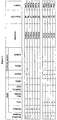
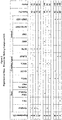
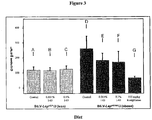
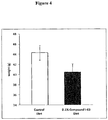
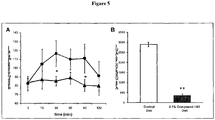

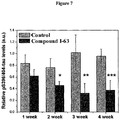
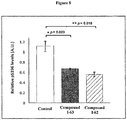
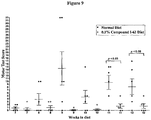

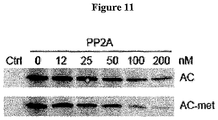

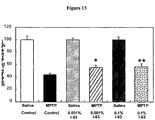

Classifications
-
- A—HUMAN NECESSITIES
- A61—MEDICAL OR VETERINARY SCIENCE; HYGIENE
- A61K—PREPARATIONS FOR MEDICAL, DENTAL OR TOILETRY PURPOSES
- A61K31/00—Medicinal preparations containing organic active ingredients
- A61K31/33—Heterocyclic compounds
- A61K31/395—Heterocyclic compounds having nitrogen as a ring hetero atom, e.g. guanethidine or rifamycins
- A61K31/40—Heterocyclic compounds having nitrogen as a ring hetero atom, e.g. guanethidine or rifamycins having five-membered rings with one nitrogen as the only ring hetero atom, e.g. sulpiride, succinimide, tolmetin, buflomedil
- A61K31/403—Heterocyclic compounds having nitrogen as a ring hetero atom, e.g. guanethidine or rifamycins having five-membered rings with one nitrogen as the only ring hetero atom, e.g. sulpiride, succinimide, tolmetin, buflomedil condensed with carbocyclic rings, e.g. carbazole
- A61K31/404—Indoles, e.g. pindolol
- A61K31/405—Indole-alkanecarboxylic acids; Derivatives thereof, e.g. tryptophan, indomethacin
-
- A—HUMAN NECESSITIES
- A61—MEDICAL OR VETERINARY SCIENCE; HYGIENE
- A61P—SPECIFIC THERAPEUTIC ACTIVITY OF CHEMICAL COMPOUNDS OR MEDICINAL PREPARATIONS
- A61P25/00—Drugs for disorders of the nervous system
-
- A—HUMAN NECESSITIES
- A61—MEDICAL OR VETERINARY SCIENCE; HYGIENE
- A61P—SPECIFIC THERAPEUTIC ACTIVITY OF CHEMICAL COMPOUNDS OR MEDICINAL PREPARATIONS
- A61P25/00—Drugs for disorders of the nervous system
- A61P25/14—Drugs for disorders of the nervous system for treating abnormal movements, e.g. chorea, dyskinesia
- A61P25/16—Anti-Parkinson drugs
-
- A—HUMAN NECESSITIES
- A61—MEDICAL OR VETERINARY SCIENCE; HYGIENE
- A61P—SPECIFIC THERAPEUTIC ACTIVITY OF CHEMICAL COMPOUNDS OR MEDICINAL PREPARATIONS
- A61P25/00—Drugs for disorders of the nervous system
- A61P25/28—Drugs for disorders of the nervous system for treating neurodegenerative disorders of the central nervous system, e.g. nootropic agents, cognition enhancers, drugs for treating Alzheimer's disease or other forms of dementia
-
- A—HUMAN NECESSITIES
- A61—MEDICAL OR VETERINARY SCIENCE; HYGIENE
- A61P—SPECIFIC THERAPEUTIC ACTIVITY OF CHEMICAL COMPOUNDS OR MEDICINAL PREPARATIONS
- A61P25/00—Drugs for disorders of the nervous system
- A61P25/30—Drugs for disorders of the nervous system for treating abuse or dependence
-
- A—HUMAN NECESSITIES
- A61—MEDICAL OR VETERINARY SCIENCE; HYGIENE
- A61P—SPECIFIC THERAPEUTIC ACTIVITY OF CHEMICAL COMPOUNDS OR MEDICINAL PREPARATIONS
- A61P3/00—Drugs for disorders of the metabolism
-
- A—HUMAN NECESSITIES
- A61—MEDICAL OR VETERINARY SCIENCE; HYGIENE
- A61P—SPECIFIC THERAPEUTIC ACTIVITY OF CHEMICAL COMPOUNDS OR MEDICINAL PREPARATIONS
- A61P3/00—Drugs for disorders of the metabolism
- A61P3/08—Drugs for disorders of the metabolism for glucose homeostasis
- A61P3/10—Drugs for disorders of the metabolism for glucose homeostasis for hyperglycaemia, e.g. antidiabetics
-
- A—HUMAN NECESSITIES
- A61—MEDICAL OR VETERINARY SCIENCE; HYGIENE
- A61P—SPECIFIC THERAPEUTIC ACTIVITY OF CHEMICAL COMPOUNDS OR MEDICINAL PREPARATIONS
- A61P43/00—Drugs for specific purposes, not provided for in groups A61P1/00-A61P41/00
-
- A—HUMAN NECESSITIES
- A61—MEDICAL OR VETERINARY SCIENCE; HYGIENE
- A61P—SPECIFIC THERAPEUTIC ACTIVITY OF CHEMICAL COMPOUNDS OR MEDICINAL PREPARATIONS
- A61P5/00—Drugs for disorders of the endocrine system
- A61P5/48—Drugs for disorders of the endocrine system of the pancreatic hormones
- A61P5/50—Drugs for disorders of the endocrine system of the pancreatic hormones for increasing or potentiating the activity of insulin
Definitions
- Protein phosphatase 2A (“PP2A”) is a ubiquitous and conserved serine/threonine phosphatase with broad substrate specificity and diverse cellular functions. PP2A typically exists as heterotrimers comprising of catalytic C-, structural or scaffold A- and regulatory B-type subunits, belonging to the B, B', B" and B'" families. In vivo , a major proportion of the A- and C- subunits form a stable heterodimer, which is also referred to as the core enzyme. (see Price, N. E., and Mumby, M. C. Biochemistry 39, 11312-11318 (2000 )). The B-type subunits direct substrate-specificity and sub-cellular localization.
- heterotrimeric holoenzyme assembly with specific B-type subunits results in PP2A specificity, in the modulation of kinetic properties of PP2A to different substrates (see Price, N. E., and Mumby, M. C. Biochemistry 39, 11312-11318 (2000 )) and therefore is likely to affect PP2A enzyme activity towards those substrates.
- the alpha-carboxyl of the C-terminal leucine residue of the catalytic subunit of PP2A is subject to reversible methyl esterification and methyl-ester hydrolysis, and the methylaton state of PP2A regulates heterotrimer assembly.
- SAM S-adenosyl-methionine
- MT MTase
- LCMT LCMT
- PPMT PPMT
- Methylated PP2A is demethylated by a specific methylesterase (ME, MEase, PME1 or PPME) (see Lee, J., Chen, Y., Tolstykh, T., and Stock, J. P.N.A.S. U.S.A. 93, 6043-6047. (1996 )).
- ME methylesterase
- PP2A As a universal regulator of cellular functions, PP2A is essential for normal biological activities. Malfunction of PP2A is associated with a wide variety of disease conditions. Alterations in PP2A methylation and/or activity are associated with various disorders, diseases, and conditions, including, among others, neurological disorders, neurodegenerative diseases, diabetes, insulin resistance, and metabolic syndrome.
- the invention also provides a composition comprising a compound as defined herein or a pharmaceutically acceptable salt thereof for use in treating or lessening the severity of a disease or disorder as defined herein.
- the invention also provides a composition comprising:
- the invention also provides a compound selected from the group consisting of: I-10 I-32 I-33 or a pharmaceutically acceptable salt thereof.
- additive refers to pharmaceutically acceptable organic or inorganic substances or substances safe to consume which do not deleteriously react with the compositions, are non-toxic, are well-tolerated upon ingestion, and act as carrier materials suitable for administration of the compositions.
- Aliphatic includes both saturated and unsaturated, straight chain ( i.e ., unbranched), branched, acyclic, cyclic, or polycyclic aliphatic hydrocarbons, which are optionally substituted with one or more functional groups.
- aliphatic is intended herein to include, but is not limited to, alkyl, alkenyl, alkynyl, cycloalkyl, cycloalkenyl, and cycloalkynyl moieties.
- alkyl includes straight, branched and cyclic alkyl groups.
- alkyl alkenyl
- alkynyl alkynyl
- lower alkyl is used to indicate those alkyl groups (cyclic, acyclic, substituted, unsubstituted, branched, or unbranched) having 1-6 carbon atoms.
- Alkyl, alkenyl , and alkynyl In certain embodiments, the alkyl, alkenyl, and alkynyl groups employed in the invention contain 10-25 aliphatic carbon atoms. In certain other embodiments, the alkyl, alkenyl, and alkynyl groups employed in the invention contain 12-21 aliphatic carbon atoms. In yet other embodiments, the alkyl, alkenyl, and alkynyl groups employed in the invention contain 15-21 aliphatic carbon atoms. In yet other embodiments, the alkyl, alkenyl, and alkynyl groups employed in the invention contain 15 carbon atoms.
- the alkyl, alkenyl, and alkynyl groups employed in the invention contain 16 carbon atoms. In certain embodiments, the alkyl, alkenyl, and alkynyl groups employed in the invention contain 17 carbon atoms. In certain embodiments, the alkyl, alkenyl, and alkynyl groups employed in the invention contain 18 carbon atoms. In certain embodiments, the alkyl, alkenyl, and alkynyl groups employed in the invention contain 19 carbon atoms. In certain embodiments, the alkyl, alkenyl, and alkynyl groups employed in the invention contain 20 carbon atoms.
- the alkyl, alkenyl, and alkynyl groups employed in the invention contain 21 carbon atoms. In certain embodiments, the alkyl, alkenyl, and alkynyl groups employed in the invention contain 22 carbon atoms In certain embodiments, the alkyl, alkenyl, and alkynyl groups employed in the invention contain 23 carbon atoms In certain embodiments, the alkyl, alkenyl, and alkynyl groups employed in the invention contain 24 carbon atoms In certain embodiments, the alkyl, alkenyl, and alkynyl groups employed in the invention contain 25 carbon atoms Illustrative aliphatic groups thus include, but are not limited to, for example, pentadecyl, hexadecyl, heptadecyl, oxtadecyl, noadecyl, eicosyl, heneicosyl, docosyl, tricosyl, tetracosyl, and pen
- Illustrative aliphatic groups thus include, but are not limited to, for example, methyl, ethyl, n -propyl, isopropyl, cyclopropyl, -CH 2 -cyclopropyl, vinyl, allyl, n -butyl, sec- butyl, isobutyl, tert- butyl, cyclobutyl, -CH 2 -cyclobutyl, n -pentyl, sec-pentyl, isopentyl, tert- pentyl, cyclopentyl, -CH 2 -cyclopentyl, n -hexyl, sec -hexyl, cyclohexyl, -CH 2 -cyclohexyl moieties and the like, which again, may bear one or more substituents.
- Alkenyl groups include, but are not limited to, for example, ethenyl, propenyl, butenyl, 1-methyl-2-buten-1-yl, and the like.
- Representative alkynyl groups include, but are not limited to, ethynyl, 2-propynyl (propargyl), 1-propynyl, and the like.
- Alkoxy and alkylthio refers to an alkyl group, as previously defined, attached to the parent molecule through an oxygen atom or through a sulfur atom.
- the alkyl, alkenyl, and alkynyl groups contain 1-20 alipahtic carbon atoms.
- the alkyl, alkenyl, and alkynyl groups contain 1-10 aliphatic carbon atoms.
- the alkyl, alkenyl, and alkynyl groups employed in the invention contain 1-8 aliphatic carbon atoms.
- the alkyl, alkenyl, and alkynyl groups contain 1-6 aliphatic carbon atoms. In yet other embodiments, the alkyl, alkenyl, and alkynyl groups contain 1-4 aliphatic carbon atoms.
- alkoxy include but are not limited to, methoxy, ethoxy, propoxy, isopropoxy, n-butoxy, tert-butoxy, neopentoxy, and n-hexoxy.
- alkylthio include, but are not limited to, methylthio, ethylthio, propylthio, isopropylthio, n-butylthio, and the like.
- Alkylamino refers to a group having the structure - NHR', wherein R' is aliphatic, as defined herein.
- the aliphatic group contains 1-20 aliphatic carbon atoms.
- the aliphatic group contains 1-10 aliphatic carbon atoms.
- the aliphatic group employed in the invention contains 1-8 aliphatic carbon atoms.
- the aliphatic group contains 1-6 aliphatic carbon atoms.
- the aliphatic group contains 1-4 aliphatic carbon atoms.
- alkylamino groups include, but are not limited to, methylamino, ethylamino, n -propylamino, iso -propylamino, cyclopropylamino, n -butylamino, tert -butylamino, neopentylamino, n -pentylamino, hexylamino, cyclohexylamino, and the like.
- substituents of the aliphatic (and other) moieties of compounds of the invention as described herein include, but are not limited to aliphatic; heteroaliphatic; aryl; heteroaryl; arylalkyl; heteroarylalkyl; alkoxy; aryloxy; heteroalkoxy; heteroaryloxy; alkylthio; arylthio; heteroalkylthio; heteroarylthio; -F; -Cl; -Br; -I; -OH; -NO 2 ; -CN; -CF 3 ; -CH 2 CF 3 ;-CHCl 2 ; -CH 2 OH; -CH 2 CH 2 OH; -CH 2 NH 2 ; -CH 2 SO 2 CH 3 ; -C(O)R x ; -CO 2 (R x ); -CON(R x ) 2 ;-OC(O)R x ; -OCO 2 R x ; -CO 2
- Animal refers to humans as well as non-human animals, including, for example, mammals, birds, reptiles, amphibians, and fish.
- the non-human animal is a mammal (e.g ., a rodent, a mouse, a rat, a rabbit, a monkey, a dog, a cat, a primate, or a pig).
- a non-human animal may be a transgenic animal.
- Aryl and heteroaryl refer to stable mono- or polycyclic, heterocyclic, polycyclic, and polyheterocyclic unsaturated moieties having preferably 3-14 carbon atoms, each of which may be substituted or unsubstituted.
- Substituents include, but are not limited to, any of the previously mentioned substitutents, i.e ., the substituents recited for aliphatic moieties, or for other moieties as disclosed herein, resulting in the formation of a stable compound.
- aryl refers to a mono- or bicyclic carbocyclic ring system having one or two aromatic rings including, but not limited to, phenyl, naphthyl, tetrahydronaphthyl, indanyl, indenyl, and the like.
- heteroaryl refers to a cyclic aromatic radical having from five to ten ring atoms of which one ring atom is selected from S, O, and N; zero, one, or two ring atoms are additional heteroatoms independently selected from S, O, and N; and the remaining ring atoms are carbon, the radical being joined to the rest of the molecule via any of the ring atoms, such as, for example, pyridyl, pyrazinyl, pyrimidinyl, pyrrolyl, pyrazolyl, imidazolyl, thiazolyl, oxazolyl, isooxazolyl, thiadiazolyl,oxadiazolyl, thiophenyl, furanyl, quinolinyl, isoquinolinyl, and the like.
- aryl and heteroaryl groups can be unsubstituted or substituted, wherein substitution includes replacement of one, two, three, or more of the hydrogen atoms thereon independently with any one or more of the following moieties including, but not limited to: aliphatic; heteroaliphatic; aryl; heteroaryl; arylalkyl; heteroarylalkyl; alkoxy; aryloxy; heteroalkoxy; heteroaryloxy; alkylthio; arylthio; heteroalkylthio; heteroarylthio; -F; -Cl; -Br; -I; -OH; -NO 2 ; -CN; -CF 3 ; -CH 2 CF 3 ; -CHCl 2 ; -CH 2 OH; -CH 2 CH 2 OH; -CH 2 NH 2 ;-CH 2 SO 2 CH 3 ; -C(O)R x ; -CO 2 (R x ); -CON
- Combination therapy refers to those situations in which two or more different pharmaceutical agents are administered in overlapping regimens so that the subject is simultaneously exposed to both agents.
- two or more different pharmaceutical agents administered in combination are administered together in a single composition or unit dosage form.
- two or more different pharmaceutical agents are administered in combination through administration of separate compositions via overlapping regimens.
- Comestible refers to a material that is suitable for human consumption, including a material that can be ingested by oral and by a non-oral means, e.g., an inhalant or snuff.
- a non-oral means e.g., an inhalant or snuff.
- the term also includes foods (e.g., beverages) and dietary supplements that are supplemented or enhanced with the compounds of formula I .
- Dialkylamino refers to a group having the structure - NRR', wherein R and R' are each an aliphatic group, as defined herein. R and R' may be the same or different in a dialkyamino moiety.
- the aliphatic groups contain 1-20 aliphatic carbon atoms. In certain other embodiments, the aliphatic groups contain 1-10 aliphatic carbon atoms. In yet other embodiments, the aliphatic groups employed in the invention contain 1-8 aliphatic carbon atoms. In still other embodiments, the aliphatic groups contain 1-6 aliphatic carbon atoms.
- the aliphatic groups contain 1-4 aliphatic carbon atoms.
- dialkylamino groups include, but are not limited to, dimethylamino, methyl ethylamino, diethylamino, methylpropylamino, di( n -propyl)amino, di( iso -propyl)amino, di(cyclopropyl)amino, di( n -butyl)amino, di( tert -butyl)amino, di(neopentyl)amino, di( n -pentyl)amino, di(hexyl)amino, di(cyclohexyl)amino, and the like.
- R and R' are linked to form a cyclic structure.
- the resulting cyclic structure may be aromatic or non-aromatic.
- Examples of cyclic diaminoalkyl groups include, but are not limted to, aziridinyl, pyrrolidinyl, piperidinyl, morpholinyl, pyrrolyl, imidazolyl, 1,3,4-trianolyl, and tetrazolyl.
- Extract refers to a composition prepared from a natural source. Typically, extracts are prepared by contacting the natural source with one or more solvents, such that a portion of the natural material partitions into the solvent and a portion is removed. Serial partition or other separation steps may be performed in the preparation of an extract.
- certain compounds described herein are naturally occurring and can be obtained by extraction of a natural source. Naturally occurring compounds described herein may alternatively be prepared by chemical synthesis. Chemically synthesized compounds described herein, whether naturally-occurring or not, may be added to prepared extracts and/or treated together with an extract.
- compounds present in extracts are compounds of formulae I, II, III, IV, V, VI, VII, VIII, and/or IX .
- compounds present in extracts are compounds of formulae Ia, Ib, Ic, Id, Ie, If, Ig and/or Ih .
- compounds present in extracts according to the present invention are naturally occurring compounds. In some such embodiments, the naturally-occurring compounds are of formulae Ia, Ib, Ic, Id, Ie, If, Ig and/or Ih .
- Heteroaliphatic refers to aliphatic moieties that contain one or more oxygen, sulfur, nitrogen, phosphorus, or silicon atoms, e.g ., in place of carbon atoms. Heteroaliphatic moieties may be branched, unbranched, cyclic or acyclic and include saturated and unsaturated heterocycles such as morpholino, pyrrolidinyl, etc.
- heteroaliphatic moieties are substituted by independent replacement of one or more of the hydrogen atoms thereon with one or more moieties including, but not limited to aliphatic; heteroaliphatic; aryl; heteroaryl; arylalkyl; heteroarylalkyl; alkoxy; aryloxy; heteroalkoxy; heteroaryloxy; alkylthio; arylthio; heteroalkylthio; heteroarylthio; -F; -Cl; -Br; -I;-OH; -NO 2 ; -CN; -CF 3 ; -CH 2 CF 3 ; -CHCl 2 ; -CH 2 OH; -CH 2 CH 2 OH; -CH 2 NH 2 ; -CH 2 SO 2 CH 3 ;-C(O)R x ; -CO 2 (R x ); -CON(R x ) 2 ; -OC(O)R x ; -OCO
- Heterocycloalkyl and Heterocycle refers to a non-aromatic 5-, 6-, or 7- membered ring or a polycyclic group, including, but not limited to a bi- or tri-cyclic group comprising fused six-membered rings having between one and three heteroatoms independently selected from oxygen, sulfur and nitrogen, wherein (i) each 5-membered ring has 0 to 1 double bonds and each 6-membered ring has 0 to 2 double bonds, (ii) the nitrogen and sulfur heteroatoms may be optionally be oxidized, (iii) the nitrogen heteroatom may optionally be quaternized, and (iv) any of the above heterocyclic rings may be fused to a benzene ring.
- heterocycles include, but are not limited to, pyrrolidinyl, pyrazolinyl, pyrazolidinyl, imidazolinyl, imidazolidinyl, piperidinyl, piperazinyl, oxazolidinyl, isoxazolidinyl, morpholinyl, thiazolidinyl, isothiazolidinyl, and tetrahydrofuryl.
- a "substituted heterocycloalkyl or heterocycle” group refers to a heterocycloalkyl or heterocycle group, as defined above, substituted by the independent replacement of one, two or three of the hydrogen atoms thereon with but are not limited to aliphatic; heteroaliphatic; aryl; heteroaryl; arylalkyl; heteroarylalkyl; alkoxy; aryloxy; heteroalkoxy; heteroaryloxy; alkylthio; arylthio; heteroalkylthio; heteroarylthio; -F; -Cl; -Br; -I; -OH; -NO 2 ; -CN; -CF 3 ; -CH 2 CF 3 ; -CHCl 2 ;-CH 2 OH; -CH 2 CH 2 OH; -CH 2 NH 2 ; -CH 2 SO 2 CH 3 ; -C(O)R x ;
- Halo and Halogen refer to an atom selected from fluorine, chlorine, bromine, and iodine.
- Haloalkyl denotes an alkyl group, as defined above, having one, two, or three halogen atoms attached thereto and is exemplified by such groups as chloromethyl, bromoethyl, trifluoromethyl, and the like.
- Isolated means that the isolated entity has been: (i) separated from at least one component with which it was previously associated; and/or (ii) manipulated by the hand of man. In some embodiments, the isolated entity is separated from at least one component with which it was associated when initially produced. When most other components have been removed, the isolated entity is "purified” or “concentrated”. Isolation and/or purification and/or concentration may be performed using any techniques known in the art including, for example, distillation, fractionation, gas stripping, extraction, precipitation, or other separation.
- Modulate As used herein, the term “modulate” is used in in the following contexts. In certain embodiments, the term “modulate” refers to affecting PP2A activity by the direct interaction with PP2A. In certain embodiments, the term “modulate” refers to affecting PP2A activity indirectly, by: modulating levels of PP2A methylation (which typically includes a combination PP2A methylation and PP2A demethylation), binding of auxiliary proteins, and/or binding of a substrate to PP2A, thereby affecting PP2A activity towards that substrate.
- PP2A methylation which typically includes a combination PP2A methylation and PP2A demethylation
- auxiliary proteins binding of a substrate to PP2A
- Exemplary auxiliary proteins include, but are not limited to, ME, MT, PP2A regulatory B-subunits that belong to the B, B', B" and B"' families, and a PP2A activator, e.g., PTPA.
- Exemplary substrates include but are not limited to tau, alpha-synuclein, Akt, p38 kinase, PI3 kinase, ERK1/2, IRS1, IRS2, JNK2/3, I-kappa-B (I ⁇ B), p70S6K, mTORC1, GSK3 ⁇ and cdk5.
- the term “modulate” refers to MT activity, wherein such activity results in PP2A methylation and such modulation of MT activity results in a change in PP2A methylation status. For example, change in methylation status results in modulation of PP2A heterotrimeric holoenzyme assembly and/or in modulation of PP2A activity.
- the term “modulate” refers to MT activity by interfering with interaction of PP2A and MT.
- the term “modulate” refers to ME activity, wherein such activity results in PP2A demethylation and such modulation of ME activity results in a change in PP2A methylation status.
- change in methylation status results in modulation of PP2A heterotrimeric holoenzyme assembly and/or in modulation of PP2A activity.
- modulate refers to ME activity by interfering with interaction of PP2A and ME.
- Nutraceuticals are products that supplement the diet to help promote the maintenance of good health.
- Neurodegenerative disease means any condition in which cells of the brain and/or spinal cord are lost or degraded.
- Neurodegenerative diseases include a subset of neurological disorders containing neuron pathologies and/or any disease caused by a malformed protein, e.g., proteinopathies.
- PP2A means a PP2A C subunit alone, an AC dimer, or a PP2A holoenzyme.
- PP2A dimer formation typically includes the assembly of an A subunit and a C subunit.
- PP2A heterotrimeric holoenzyme formation typically includes the assembly of an A subunit, a C subunit, and a regulatory subunit, selected from any of the B, B', B"and/or B'" families.
- PP2A activity is a PP2A C subunit alone, an AC dimer, or a PP2A holoenzyme.
- PP2A activity means any phosphatase activity resulting from the catalytic C-subunit (PP2A C ), the AC dimer (PP2A AC ), as well as the PP2A holoenzyme, assembled from A, C and any one of the regulatory subunits belonging to the B, B', B"and B"' families.
- PP2A activity can be modulated by compounds and/or compositions that modulate the methylation of PP2A, modulate the demethylation of PP2A, modulate the interaction of PP2A substrates with PP2A, modulate the interaction of auxiliary proteins with PP2A and/or directly interact with PP2A, etc.
- pharmaceuticals are drugs or medicines that are prepared and used for the treatment of diseases and/or disorders.
- prodrugs refers to those prodrugs of the compounds of the present invention which are, within the scope of sound medical judgment, suitable for use in contact with the tissues of humans and lower animals with undue toxicity, irritation, allergic response, and the like, commensurate with a reasonable benefit/risk ratio, and effective for their intended use, as well as the zwitterionic forms, where possible, of the compounds of the invention.
- prodrug refers to compounds that are rapidly transformed in vivo to yield the parent compound of the above formula, for example by hydrolysis in blood. A thorough discussion is provided in T. Higuchi and V. Stella, Pro-drugs as Novel Delivery Systems, Vol. 14 of the A.C.S. Symposium Series , and in Edward B. Roche, ed., Bioreversible Carriers in Drug Design, American Pharmaceutical Association and Pergamon Press, 1987 .
- compositions which are, within the scope of sound medical judgment, suitable for use in contact with the tissues of humans and lower animals without undue toxicity, irritation, allergic response, and the like, and are commensurate with a reasonable benefit/risk ratio.
- Pharmaceutically acceptable salts are well known in the art. For example, Berge et al. describe pharmaceutically acceptable salts in detail in J. Pharmaceutical Sciences, 66: 1-19, 1977 .
- the salts can be prepared in situ during the final isolation and purification of the compounds of the invention, or separately by reacting the free base functionality with a suitable organic or inorganic acid.
- Examples of pharmaceutically acceptable, nontoxic acid addition salts are salts of an amino group formed with inorganic acids such as hydrochloric acid, hydrobromic acid, phosphoric acid, sulfuric acid and perchloric acid or with organic acids such as acetic acid, oxalic acid, maleic acid, tartaric acid, citric acid, succinic acid, or malonic acid or by using other methods used in the art such as ion exchange.
- inorganic acids such as hydrochloric acid, hydrobromic acid, phosphoric acid, sulfuric acid and perchloric acid
- organic acids such as acetic acid, oxalic acid, maleic acid, tartaric acid, citric acid, succinic acid, or malonic acid or by using other methods used in the art such as ion exchange.
- salts include adipate, alginate, ascorbate, aspartate, benzenesulfonate, benzoate, bisulfate, borate, butyrate, camphorate, camphorsulfonate, citrate, cyclopentanepropionate, digluconate, dodecylsulfate, ethanesulfonate, formate, fumarate, glucoheptonate, glycerophosphate, gluconate, hernisulfate, heptanoate, hexanoate, hydroiodide, 2-hydroxy-ethanesulfonate, lactobionate, lactate, laurate, lauryl sulfate, malate, maleate, malonate, methanesulfonate, 2-naphthalenesulfonate, nicotinate, nitrate, oleate, oxalate, palmitate, pamoate, pectinate,
- alkali or alkaline earth metal salts include sodium, lithium, potassium, calcium, magnesium, and the like.
- Further pharmaceutically acceptable salts include, when appropriate, nontoxic ammonium, quaternary ammonium, and amine cations formed using counterions such as halide, hydroxide, carboxylate, sulfate, phosphate, nitrate, loweralkyl sulfonate, and aryl sulfonate.
- protecting group One of ordinary skill in the art will appreciate that the synthetic methods, as described herein, utilize a variety of protecting groups.
- protecting group it is meant that a particular functional moiety, e.g., O, S, or N, is temporarily blocked so that a reaction can be carried out selectively at another reactive site in a multifunctional compound.
- a protecting group reacts selectively in good yield to give a protected substrate that is stable to the projected reactions; the protecting group should be selectively removable in good yield by readily available, preferably non-toxic reagents that do not attack the other functional groups; the protecting group forms an easily separable derivative (more preferably without the generation of new stereogenic centers); and the protecting group has a minimum of additional functionality to avoid further sites of reaction.
- oxygen, sulfur, nitrogen, and carbon protecting groups may be utilized.
- Hydroxyl protecting groups include methyl, methoxylmethyl (MOM), methylthiomethyl (MTM), t -butylthiomethyl, (phenyldimethylsilyl)methoxymethyl (SMOM), benzyloxymethyl (BOM), p- methoxybenzyloxymethyl (PMBM), (4-methoxyphenoxy)methyl ( p -AOM), guaiacolmethyl (GUM), t -butoxymethyl, 4-pentenyloxymethyl (POM), siloxymethyl, 2-methoxyethoxymethyl (MEM), 2,2,2-trichloroethoxymethyl, bis(2-chloroethoxy)methyl, 2-(trimethylsilyl)ethoxymethyl (SEMOR), tetrahydropyranyl (THP), 3-bromotetrahydropyranyl, tetrahydrothiopyranyl, 1-methoxycyclohexyl, 4-methoxytetrahydropyranyl (MTHP), 4-methoxy
- the protecting groups include methylene acetal, ethylidene acetal, 1- t -butylethylidene ketal, 1-phenylethylidene ketal, (4-methoxyphenyl)ethylidene acetal, 2,2,2-trichloroethylidene acetal, acetonide, cyclopentylidene ketal, cyclohexylidene ketal, cycloheptylidene ketal, benzylidene acetal, p -methoxybenzylidene acetal, 2,4-dimethoxybenzylidene ketal, 3,4-dimethoxybenzylidene acetal, 2-nitrobenzylidene acetal, methoxymethylene acetal, ethoxymethylene acetal, dimethoxymethylene ortho ester, 1-methoxyethylidene ortho
- Amino-protecting groups include methyl carbamate, ethyl carbamante, 9-fluorenylmethyl carbamate (Fmoc), 9-(2-sulfo)fluorenylmethyl carbamate, 9-(2,7-dibromo)fluoroenylmethyl carbamate, 2,7-di- t -butyl-[9-(10,10-dioxo-10,10,10,10-tetrahydrothioxanthyl)]methyl carbamate (DBD-Tmoc), 4-methoxyphenacyl carbamate (Phenoc), 2,2,2-trichloroethyl carbamate (Troc), 2-trimethylsilylethyl carbamate (Teoc), 2-phenylethyl carbamate (hZ), 1-(1-adamantyl)-1-methylethyl carbamate (Adpoc), 1,1-dimethyl-2-haloethyl carbamate, 1,1
- protecting groups are detailed herein. However, it will be appreciated that the present invention is not intended to be limited to these protecting groups; rather, a variety of additional equivalent protecting groups can be readily identified using the above criteria and utilized in the method of the present invention. Additionally, a variety of protecting groups are described in Protective Groups in Organic Synthesis, Third Ed. Greene, T.W. and Wuts, P.G., Eds., John Wiley & Sons, New York: 1999 .
- substituted may be substituted with any number of substituents or functional moieties.
- substituted whether preceeded by the term “optionally” or not, and substituents contained in formulas of this invention, refer to the replacement of hydrogen radicals in a given structure with the radical of a specified substituent. When more than one position in any given structure may be substituted with more than one substituent selected from a specified group, the substituent may be either the same or different at every position.
- substituted is contemplated to include all permissible substituents of organic compounds.
- the permissible substituents include acyclic and cyclic, branched and unbranched, carbocyclic and heterocyclic, aromatic and nonaromatic substituents of organic compounds.
- Heteroatoms such as nitrogen may have hydrogen substituents and/or any permissible substituents of organic compounds described herein which satisfy the valencies of the heteroatoms.
- this invention is not intended to be limited in any manner by the permissible substituents of organic compounds. Combinations of substituents and variables envisioned by this invention are preferably those that result in the formation of stable compounds useful in the treatment, for example, of infectious diseases or proliferative disorders.
- Stable preferably refers to compounds which possess stability sufficient to allow manufacture and which maintain the integrity of the compound for a sufficient period of time to be detected and preferably for a sufficient period of time to be useful for the purposes detailed herein.
- Synthetic tryptamide derivatives As used herein, the terms "synthetic tryptamide derivatives” and “synthetic tryptamide analogs”, used interchangeably, mean compounds of Formula I which are not naturally occurring, i.e. are not found in plants or plant extracts. Representative examples of naturally occurring compounds are found in copending applications 61/124,949, 61/125,169, and 61/125,205, and are depicted herein as Compounds 1-63 through I-72, and Compounds I-81 through 1-86.
- Tautomers are particular isomers of a compound in which a hydrogen and double bond have changed position with respect to the other atoms of the molecule. For a pair of tautomers to exist there must be a mechanism for interconversion. Examples of tautomers include keto-enol forms, imine-enamine forms, amide-imino alcohol forms, amidine-aminidine forms, nitroso-oxime forms, thio ketone-enethiol forms, N -nitroso-hydroxyazo forms, nitro- aci -nitro forms, and pyridone-hydroxypyridine forms.
- therapeutically effective amount means an amount of a substance (e.g ., a therapeutic agent, composition, and/or formulation) that elicits a desired biological response.
- a therapeutically effective amount of a substance is an amount that is sufficient, when administered to a subject suffering from or susceptible to a disease, disorder, and/or condition, to treat, diagnose, prevent, and/or delay the onset of the disease, disorder, and/or condition.
- the effective amount of a substance may vary depending on such factors as the desired biological endpoint, the substance to be delivered, the target cell or tissue, etc.
- the effective amount of a composition and/or formulation to treat a disease, disorder, and/or condition is the amount that alleviates, ameliorates, relieves, inhibits, prevents, delays onset of, reduces severity of and/or reduces incidence of one or more symptoms or features of the disease, disorder, and/or condition.
- Treat or treating refers to any method used to partially or completely alleviate, ameliorate, relieve, inhibit, prevent, delay onset of, reduce severity of and/or reduce incidence of one or more symptoms or features of a disease, disorder, and/or condition.
- Treatment may be administered to a subject who does not exhibit signs of a disease, disorder, and/or condition.
- treatment may be administered to a subject who exhibits only early signs of the disease, disorder, and/or condition for the purpose of decreasing the risk of developing pathology associated with the disease, disorder, and/or condition.
- Unit dosage form refers to a physically discrete unit of a provided formulation appropriate for the subject to be treated. It will be understood, however, that the total daily usage of provided formulation will be decided by the attending physician within the scope of sound medical judgment.
- the specific effective dose level for any particular subject or organism will depend upon a variety of factors including the disorder being treated and the severity of the disorder; activity of specific active agent employed; specific formulation employed; age, body weight, general health, sex and diet of the subject; time of administration, and rate of excretion of the specific active agent employed; duration of the treatment; drugs and/or additional therapies used in combination or coincidental with specific compound(s) employed, and like factors well known in the medical arts.
- compounds useful in accordance with the present invention are those selected from the group consisting of I-1 I-2 I-3 I-5 I-6 I-7 I-8 I-9 I-10 I-11 I-12 I-13 I-14 I-15 I-16 I-17 I-22 I-26 I-27 I-30 I-31 I-32 I-33 I-34 I-35 I-36 I-37 I-38 I-39 I-44 I-45 I-46 I-48 I-52 I-53 I-54 I-55 I-56 I-57 I-58 I-61 I-62 and I-63
- the compounds are selected from I-62 I-63 I-1 I-2 I-7 I-14 and I-32
- the compounds are selected from I-62 and I-63
- Prodrugs of one or more compounds of the above described formulae are presently disclosed.
- Various forms of prodrugs are known in the art, for example as discussed in Bundgaard (ed.), Design of Prodrugs, Elsevier (1985 ); Widder et al. (ed.), Methods in Enzymology, vol. 4, Academic Press (1985 ); Kgrogsgaard-Larsen et al.
- Certain compounds useful in the present invention as in the above described formulae may exist in particular geometric or stereoisomeric forms.
- the present invention encompasses all such compounds for use in the invention, including cis- and trans- isomers, R- and S- enantiomers, diastereomers, (D)-isomers, (L)-isomers, the racemic mixtures thereof, and other mixtures thereof, as falling within the scope of the invention.
- asymmetric carbon atoms may be present in a substituent such as an alkyl group, such that different isomers of a particular compound may exist due to different configurations of a substituent. All such stereoisomers for use, as well as mixtures thereof, are intended to be included in this invention.
- the present invention provides individual geometric (or conformational), isomeric compound forms for use (and/or compositions containing them); in some embodiments, the present invention provides compositions comprising two or more isomeric (e.g., geometric or steroisomeric) forms for use. Unless otherwise stated, all tautomeric forms of the compounds for use of the invention are within the scope of the invention. Additionally, unless otherwise stated, the present invention encompasses compounds for use that differ only in the presence of one or more isotopically enriched atoms from structures depicted herein. For example, compounds for use having the present structures including the replacement of hydrogen by deuterium or tritium, or the replacement of a carbon by a 13 C- or 14 C-enriched carbon are within the scope of this invention.
- Such compounds are useful, for example, as analytical tools, as probes in biological assays, or as therapeutic agents in accordance with the present invention.
- Mixtures of isomeric forms may be separated and/or purified by techniques as would be known to one skilled in this art, including but not limited to column chromatography.
- compositions containing two or isomeric forms of a compound may contain such different forms In particular relative amounts.
- compositions containing only two isomers may include such isomers at ratios such as: 50:50, 60:40, 70:30, 80:20, 90:10, 95:5, 96:4, 97:3, 98:2, 99:1, or 100:0 isomer ratios.
- ratios such as: 50:50, 60:40, 70:30, 80:20, 90:10, 95:5, 96:4, 97:3, 98:2, 99:1, or 100:0 isomer ratios.
- analogous ratios are contemplated for more complex isomer mixtures.
- a particular enantiomer of a compound for use of the present invention may be prepared by asymmetric synthesis, or by derivation with a chiral auxiliary, where the resulting diastereomeric mixture is separated and the auxiliary group cleaved to provide the pure desired enantiomers.
- the molecule contains a basic functional group, such as amino, or an acidic functional group, such as carboxyl, diastereomeric salts are formed with an appropriate optically-active acid or base, followed by resolution of the diastereomers thus formed by fractional crystallization or chromatographic means well known in the art, and subsequent recovery of the pure enantiomers.
- Compounds described herein can modulate PP2A activity and/or can have any of a variety of interesting biological activities. Such activities can be tested, assessed, and/or utilized using isolated compounds or using compounds in a composition (e.g., an extract, a comestible composition, a pharmaceutical composition, etc.). Examples included herein describe biological activities of the various compounds.
- Compounds that modulate PP2A activity can function by various mechanisms. To give but a few examples of possible mechanisms, compounds that modulate PP2A activity may modulate the methylation of PP2A, modulate the demethylation of PP2A, modulate the interaction of PP2A substrates with PP2A, modulate the interaction of auxiliary proteins with PP2A and/or directly interact with PP2A, etc
- Some compounds useful in the invention occur in nature and may be prepared or isolated from natural sources.
- such compounds are prepared or isolated from extracts obtained from a botanical source.
- representative such botanical sources include, for example, coffee (e.g., from green coffee beans, roasted coffee beans, spent ground coffee beans, coffee wax, etc.), chocolate, withania somnifera (fruit), Butcher's broom (root), coconut, ginkgo biloba, bacopa monniera, nigella sativa, St. John's wort, annova atemoya (seeds), and scorodocarpus, borneesis (fruit).
- Those of ordinary skill in the art are well familiar with a wide array of separation and isolation techniques useful in the preparation of the compounds from natural extracts (e.g., botanical extracts).
- the present compounds are generally prepared according to Scheme I set forth below:
- each of R 1 , R 2 , n, and R 3 is as defined herein.
- an amine compound of formula A is coupled to an acid compound of formula B .
- Such coupling of a carboxylic acid with an amine can be performed using methods well known to one of ordinary skill in the art.
- the acid compound of formula B is activated prior to coupling.
- the carboxylic acid moiety of the acid compound of formula B is treated with a suitable reagent to form an acid halide prior to coupling.
- the suitable reagent is thionyl chloride.
- the acid halide is then coupled to the amine moiety of the amine compound of formula A , to form a compound of formula I.
- the suitable reagent is thionyl iodide.
- the acid halide is then coupled to the amine moiety of the amine compound of formula A , to form a compound of formula I .
- the suitable reagent is oxalyl chloride.
- the acid halide is then coupled to the amine moiety of the amine compound of formula A, to form a compound of formula I .
- the acid compound of formula B is treated with hydroxybenzotriazole (HOBt) to form the activated acid compound of formula B thereof, which is then coupled to the amine moiety of the amine compound of formula A , to form a compound of formula I .
- the acid compound of formula B is treated with a heterocyclic base to form the activated acid compound of formula B thereof which is then coupled to the amine moiety of the amine compound of formula A , to form a compound of formula I .
- the acid compound of formula B is treated with heterocyclic acid to form the activated acid compound of formula B thereof, which is then coupled to the amine moiety of the amine compound of formula A , to form a compound of formula I .
- the acid compound of formula B is treated with an organic base to form the activated acid compound of formula B thereof which is then coupled to the amine moiety of the amine compound of formula A , to form a compound of formula I .
- Such activated acid compound of formula B can be performed using other methods well known to one of ordinary skill in the art, e.g., see " Comprehensive Organic Transformations-A Guide to Functional Group Preparations," Richard C. Larock, 2nd Ed., pp. 1929-1932, John Wiley & Sons, Inc. New York (1999 ).
- the coupling is achieved with a suitable coupling agent.
- suitable coupling agent include, for example, benzotriazol-1-yl-oxy-tris-(dimethylamino)-phosphonium hexafluorphosphate (BOP), N,N'-carbonyldiimidazole (CDI), N,N'-dicyclohhexylcarbodiimide (DCC), N,N'-diisopropylcarbodiimide (DIC), 3-(diethoxyphosphorylloxy)-1,2,3-benzotriazin-4-(3H)-one (DEPBT), N-ethyl-N'-(3-dimethylaminopropyl)carbodiimide hydrochloride (EDC) or (EDAC), 2-(1H-benzotriazol-1-yl)-1,1,3,3-tetramethyluronoium hexafluorphosphate (HBTU), 2-(3,4-d
- the coupling agent is selected from the group consisting of HATU, SOCl 2 , PyBOP, and combinations thereof.
- the coupling agent is or includes HATU; in some embodiments, the coupling agent is or includes SOCl 2 ; in some embodiments, the coupling agent is or includes PyBOP; in some embodiments, the coupling agent is or includes (COCl) 2 .
- the coupling is performed in the presence of a suitable base.
- suitable bases are well known in the art and include organic bases, e.g., triethylamine, DIEA, pyridine, DABCO, and other non-nucleophilic basic nitrogen containing molecules.
- suitable bases include aqueous inorganic bases, such as NaOH, Na 2 CO 3 , NaHCO 3 , KOH, K 2 CO 3 , KHCO 3 , Na 3 PO 4 , K 3 PO 4 , NH 4 OH, Ca(OH) 2 , LiOH, or Li 2 CO 3 -Combinations of such bases may also be employed.
- a base is selected from the group consisting of pyridine, TEA, NaHCO 3 , DIEA, and combinations thereof (e.g., TEA/pyridine).
- the coupling is performed in the presence of a suitable solvent or a solvent mixture that, in combination with the combined reacting partners and reagents, facilitates the progress of the reaction therebetween.
- a suitable solvent may solubilize one or more of the reaction components, or, alternatively, the suitable solvent may facilitate the suspension of one or more of the reaction components; see generally, Larock, R.C. Comprehensive Organic Transformation, A Guide to Functional Group Preparation, 2nd Edition, 1999, John Wiley & Sons (New York, NY ).
- Suitable solvents for use in the coupling step include ethers, halogenated hydrocarbons, aromatic solvents, polar aprotic solvents, or mixtures thereof.
- the solvent is or contains diethyl ether, dioxane, tetrahydrofuran (THF), dichloromethane (DCM), dichloroethane (DCE), chloroform, toluene, benzene, dimethylformamide (DMF), dimethylacetamide (DMA), dimethylsulfoxide (DMSO), N-methyl pyrrolidinone (NMP), glyme and diglyme, or mixtures thereof.
- the coupling is performed in the presence of a a suitable solvent mixture. This mixture may include water and/or an organic solvent or a mixture of organic solvents.
- the coupling step is conducted at temperatures between about -12 °C to about 90 °C. In certain embodiments, the coupling step is conducted at about 0 °C to about 60 °C. In certain embodiments, the coupling step is conducted at about 16 °C to about 28 °C.
- the coupling step when conducted under Schotten-Bauman conditions, is conducted at a pH in the range of about 7.5 to about 10. In certain embodiments, the coupling step is conducted at a pH in the range of about 8.5 to about 9.5. In certain embodiments, the coupling step is conducted at a pH of about 9.
- the naturally occurring compounds of Formula I may be prepared from extracts obtained from a variety of botanical sources such as green coffee beans, roasted coffee beans, spent ground coffee beans, coffee wax (collectively "coffee"), coffee cherries (berries), chocolate, withania somnifera (fruit), Butcher's broom (root), coconut, ginkgo biloba, bacopa monniera, nigella sativa, St. John's wort, annova atemoya (seeds), and scorodocarpus borneesis (fruit).
- botanical sources such as green coffee beans, roasted coffee beans, spent ground coffee beans, coffee wax (collectively "coffee"), coffee cherries (berries), chocolate, withania somnifera (fruit), Butcher's broom (root), coconut, ginkgo biloba, bacopa monniera, nigella sativa, St. John's wort, annova atemoya (seeds), and scorodocarpus borneesis (fruit).
- the compounds may
- the compounds can be extracted from coffee by adding a solvent to coffee and agitating the resulting mixture, followed by removal of the solvent and collection of the residue containing the compounds.
- Any solvent in which the compounds are soluble may be used, including alcohols, such as ethanol, and chlorinated solvents, such as dichloromethane.
- the agitation is performed by shaking the mixture for about 30 minutes to about 300 minutes. In other embodiments, the agitation is performed at a temperature ranging from about 20°C to about the boiling point of the solvent.
- the residue is then loaded onto a column, eluted with a solvent, and the different fractions collected.
- the fraction containing the desired compound(s) may be further purified as necessary, such as by preparative HPLC, repeated column chromatography, or by extraction.
- This, and related methods known to those of skill in art allow for the separation of compounds from less desirable compounds also contained in the botanical source, such as free fatty acids, caffeine, caffeic acid, chlorogenic acid and other lipids. These methods also allow for the removal of compounds of Formula I where W is less than 15 or greater than 22. In some embodiments these less desirable compounds are present in amounts less than 20% by weight of the composition.
- the product can be purified by precipitation or crystallization.
- naturally occurring compounds of formula I are prepared by extracting coffee wax.
- Coffee wax can be extracted in a solvent such as acetonitrile, hexane, ethyl acetate, petroleum ether, diethyl ether, ethanol, heptanes, benzene, toluene, diglyme, glyme, propyl acetate, butyl acetate, isopropanol, butanol, chlorophorm, dichloroethane or a combination thereof.
- solvent extraction is carried out at elevated temperatures (e.g., at a temperature at or above 50°C, 55°C, or 60°C).
- solvent extraction is carried out under vacuum.
- Insoluble particulate material is removed by any available means (e.g., filtration).
- a fraction containing compounds is isolated from the extract, e.g., by precipitation and/or solvent evaporation.
- an extract is cooled to precipitate impurities, or to precipitate the desired compounds.
- Precipitated material containing compounds can be washed by further extraction, e.g., with one or more additional solvent extraction and precipitation steps, using the same solvents as used in the initial extraction, or using different solvents, optionally at elevated temperatures. Extracts enriched for compounds can be subjected to further purification and/or concentration steps, e.g., to enrich for a particular compound of interest.
- a coffee extraction method produces an extract comprising at least 2%, 3%, 4%, 5%, 10%, 20%, 30%, 40%, 50%, 60%, 70%, 80%, or 90% compound(s). In some embodiments, a coffee extraction method produces an extract comprising at least 2%, 3%, 4%, 5%, 10%, 20%, 30%, 40%, 50%, 60%, 70%, 80%, or 90% of a particular compound.
- an extract is prepared from coffee wax as follows. Coffee wax is dissolved in acetonitrile and heated to 60°C under vacuum. Insoluble material is removed and extraction of insoluble material is repeated. The soluble portions of the extraction are combined and cooled to 4°C over 16 hours and filtered. The precipitate collected from the filtration is dissolved in hot acetonitrile at 60°C, cooled at 4°C up to 16 hours and filtered. The solid phase is dissolved in hot ethanol at 70°C, cooled to room temperature, and incubated for 16 hours. The precipitate is recovered and is optionally subjected to further purification steps, e.g., to isolate a particular compound.
- an extract is prepared from coffee wax by first dissolving the coffee wax in ethyl acetate and heating to 50°C under vacuum. The extract is cooled at room temperature for one hour and filtered. Solid precipitate is discarded. The filtrate is evaporated to dryness and dissolved in hexane or petroleum ether at 50°C and filtered.
- Compounds provided herein can be recovered from the solid phase (e.g., at 60-80% purity) or from the liquid phase (e.g., at 15-40% purity).
- compositions comprising a compound as defined herein or a pharmaceutically acceptable salt thereof for use in treating or lessening the severity of a disease or disorder as defined herein.
- Such compositions may be formulated as pharmaceutical and/or nutraceutical preparations.
- Compositions as described herein may be used in the treatment of one or more diseases, disorders, or conditions, for example, those associated with abnormal levels of PP2A methylation and/or PP2A phosphatase activity.
- one or more compounds described herein may be formulated into pharmaceutical and/or nutraceutical compositions by admixing a compound or extract containing a compound or extract, containing a compound, further fortified with the compound and/or extract of formula I with one or more additives (e.g., carriers, vehicles, binders, diluents, etc.) suitable for the selected route of administration.
- additives e.g., carriers, vehicles, binders, diluents, etc.
- compositions provided herein comprise at least one component of a botanical source that produces the compound, which botanical source is selected from the group consisting of green coffee beans, roasted coffee beans, spent ground coffee beans, coffee wax (collectively “coffee"), coffee cherries (berries), chocolate, withania somnifera (fruit), Butcher's broom (root), coconut, ginkgo biloba, bacopa monniera, nigella sativa, St. John's wort, annova atemoya (seeds), and scorodocarpus borneesis (fruit).
- a botanical source is selected from the group consisting of green coffee beans, roasted coffee beans, spent ground coffee beans, coffee wax (collectively "coffee"), coffee cherries (berries), chocolate, withania somnifera (fruit), Butcher's broom (root), coconut, ginkgo biloba, bacopa monniera, nigella sativa, St. John's wort, annova atemoya (seeds), and scor
- compositions provided herein are substantially free of caffeine, caffeic acid or chlorogenic acid.
- the composition contains less than about 10%, 9%, 8%, 7%, 6%, 5%, 4%, 3%, 2%, 1%, 0.5%, 0.4%, 0.3%, 0.2%, 0.1%, 0.01% or less of caffeine, caffeic acid, and/or chlorogenic acid.
- the amount of compound of formulae described herein added to a nutraceutical, pharmaceutical, or comestible is typically at least about 0.1 mg.
- the compound is dosed at least once per day.
- supplemental dosages can be administered after the initial dosage and can contain any additional amount of compound beyond the initial about 0.1 mg dose.
- the nutraceutical, pharmaceutical or comestible contains at least 0.1 mg of the compound of formulae added to or fortified in an extract containing at least 0.1 mg of the compound.
- the amount of, the compounds added to a nutraceutical, pharmaceutical, or comestible is typically at least about 8 mg.
- the compound is dosed at least once per day.
- supplemental dosages can be administered after the initial dosage and can contain any additional amount of compound beyond the initial about 8 mg dose.
- the nutraceutical, pharmaceutical or comestible contains at least 8 mg of the compound of formulae added to or fortified in an extract containing at least 8 mg of the compound.
- a packaged nutraceutical, pharmaceutical, or comestible comprising at least about 0.1 mg of a compound of the formulae herein, having an activity in the inhibition of methylesterase (IC 50 ) of less than about 100 ⁇ M. In certain embodiments the activity in the inhibition of methylesterase (IC 50 ) is less than about 90 ⁇ M. In certain embodiments the activity in the inhibition of methylesterase (IC 50 ) is less than about 80 ⁇ M. In certain embodiments the activity in the inhibition of methylesterase (IC 50 ) is less than about 70 ⁇ M. In certain embodiments the activity in the inhibition of methylesterase (IC 50 ) is less than about 60 ⁇ M.
- the activity in the inhibition of methylesterase (IC 50 ) is less than about 50 ⁇ M. In certain embodiments the activity in the inhibition of methylesterase (IC 50 ) is less than about 40 ⁇ M. In certain embodiments the activity in the inhibition of methylesterase (IC 50 ) is less than about 30 ⁇ M. In certain embodiments the activity in the inhibition of methylesterase (IC 50 ) is less than about 20 ⁇ M. In certain embodiments the activity in the inbibition of methylesterase (IC 50 ) is less than about 10 ⁇ M. In certain embodiments the activity in the inhibition of methylesterase (IC 50 ) is less than about 5 ⁇ M.
- a packaged nutraceutical, pharmaceutical, or comestible comprising at least about 8 mg of a compound of the formulae herein, having an activity in the inhibition of methylesterase (IC 50 ) of less than about 100 ⁇ M.
- the activity in the inhibition of methylesterase (IC 50 ) is less than about 90 ⁇ M.
- the activity in the inhibition of methylesterase (IC 50 ) is less than about 80 ⁇ M.
- the activity in the inhibition of methylesterase (IC 50 ) is less than about 70 ⁇ M.
- the activity in the inhibition of methylesterase (IC 50 ) is less than about 60 ⁇ M.
- the activity in the inhibition of methylesterase (IC 50 ) is less than about 50 ⁇ M. In certain embodiments the activity in the inhibition of methylesterase (IC 50 ) is less than about 40 ⁇ M. In certain embodiments the activity in the inhibition of methylesterase (IC 50 ) is less than about 30 ⁇ M. In certain embodiments the activity in the inhibition of methylesterase (IC 50 ) is less than about 20 ⁇ M. In certain embodiments the activity in the inhibition of methylesterase (IC 50 ) is less than about 10 ⁇ M. In certain embodiments the activity in the inhibition of methylesterase (IC 50 ) is less than about 5 ⁇ M.
- a packagea nutraceutical, pharmaceutical, or comestible comprising at least about 0.1 mg of a compound of the formulae herein, having an activity in the inhibition of methyltransferase (IC 50 ) of less than about 100 ⁇ M, an additive, and instructions for use thereof.
- the activity in the inhibition of methyltransferase (IC 50 ) is less than about 90 ⁇ M.
- the activity in the inhibition of methyltransferase (IC 50 ) is less than about 80 ⁇ M.
- the activity in the inhibition of methyltransferase (IC 50 ) is less than about 70 ⁇ M.
- the activity in the inhibition of methyltransferase (IC 50 ) is less than about 60 ⁇ M. In certain embodiments the activity in the inhibition of methyltransferase (IC 50 ) is less than 50 ⁇ M. In certain embodiments the activity in the inhibition of methyltransferase (IC 50 ) is less than about 40 ⁇ M. In certain embodiments the activity in the inhibition of methyltransferase (IC 50 ) is less than about 30 ⁇ M. In certain embodiments the activity in the inhibition of methyltransferase (IC 50 ) is less than about 20 ⁇ M. In certain embodiments the activity in the inhibition of methyltransferase (IC 50 ) is less than about 10 ⁇ M. In certain embodiments the activity in the inhibition of methyltransferase (IC 50 ) is less than about 5 ⁇ M.
- a packaged nutraceutical, pharmaceutical, or comestible comprising at least about 8 mg of a compound of the formulae herein, having an activity in the inhibition of methyltransferase (IC 50 ) of less than about 100 ⁇ M, an additive, and instructions for use thereof.
- the activity in the inhibition of methyltransferase (IC 50 ) is less than about 90 ⁇ M.
- the activity in the inhibition of methyltransferase (IC 50 ) is less than about 80 ⁇ M.
- the activity in the inhibition of methyltransferase (IC 50 ) is less than about 70 ⁇ M.
- the activity in the inhibition of methyltransferase (IC 50 ) is less than about 60 ⁇ M. In certain embodiments the activity in the inhibition of methyltransferase (IC 50 ) is less than about 50 ⁇ M. In certain embodiments the activity in the inhibition of methyltransferase (IC 50 ) is less than about 40 ⁇ M. In certain embodiments the activity in the inhibition of methyltransferase (IC 50 ) is less than about 30 ⁇ M. In certain embodiments the activity in the inhibition of methyltransferase (IC 50 ) is less than about 20 ⁇ M. In certain embodiments the activity in the inhibition of methyltransferase (IC 50 ) is less than about 10 ⁇ M. In certain embodiments the activity in the inhibition of methyltransferase (IC 50 ) is less than about 5 ⁇ M.
- any additive may be used provided that they do not destabilize the compositions. Without wishing to be bound by any particular theory, it is believed that strong bases, effervescent disintegrants, and oxidants should be kept to a minimum in any formulation or composition to avoid destabilization.
- Suitable additives include, but are not limited to, dietary suitable starch, vegetable oil, vegetable gums, gelatins, soy extracts, sugars, grains, natural and artificial flavorings, and the like.
- Other suitable additives include water, salt solutions, alcohol, vegetable oils, polyethylene glycols, gelatin, lactose, amylose, magnesium stearate, talc, silicic acid, viscous paraffin, perfume oil; fatty acid monoglycerides and diglycerides, petroethral fatty acid esters, hydroxymethylcellulose, polyvinylpyrrolidone, and the like.
- Yet other suitable additives include Cremaphor, Tween, and cyclodextrin. Further additives or carriers are described in detail in Remington's Pharmaceutical Sciences, Twentieth Edition, ⁇ 2000 .
- the additive selected, and the amount of additive needed, depend on the route of administration and vehicle chosen for delivery.
- the additive is formulated with the compound as a unit-dose formulation.
- a tablet may contain from about 0.5% to about 95% by weight of a compound of formula I and from about 5% to about 99.5% of an additive.
- Those skilled in the art will be able to select an appropriate amount of additive depending on the amount of compound and route of administration.
- a dosage form may include other conventional excipients in generally known amounts.
- these excipients supplement, or depending on their properties, replace the additives mentioned above, and thus can act as carriers or vehicles themselves for the compositions.
- These may include binders, sweeteners, coloring components, flavors, glidants, lubricants, preservatives, fillers, noneffervescent disintegrants, stabilizers, wetting agents, emulsifiers, and salts for influencing osmotic pressure.
- auxiliary ingredients may be added to any formulation, including colorings, flavoring and/or aromatic substances.
- excipients include the following: Fillers include sugar and sugar alcohols and these may include nondirect compression and direct compression fillers.
- Nondirect compression fillers generally, at least when formulated, have flow and/or compression characteristics which make them impractical for use in high speed tableting process without augmentation or adjustment. For example, a formulation may not flow sufficiently well and therefore, a glidant such as, for example, silicon dioxide may need to be added.
- Direct compression fillers do not require similar allowances. They generally have compressibility and flowability characteristics which allow them to be used directly. It is noted that, depending upon the method by which formulations are made, nondirect compression fillers may be imparted with the properties of direct compression fillers. The reverse is also true. As a general matter, non direct compression fillers tend to have a relatively smaller particle size when compared to direct compression fillers. However, certain fillers such as spray dried mannitol have relatively smaller particle sizes and yet are often directly compressible, depending upon how they are further processed. There are also relatively large nondirect compression fillers as well.
- Suitable fillers include mannitol, lactose, sorbitol, dextrose, sucrose, xylitol and glucose. Noneffervescent disintegrants may also be used in accordance with the present invention. These may also include binders that have disintegrating properties. Disintegrants in accordance with the present invention can include microcrystalline cellulose, cross linked polyvinyl pyrrolidone (PVP XL), sodium starch glycolate, croscarmellose dosium, cross-lined hydroxypropyl cellulose and the like.
- PVP XL cross linked polyvinyl pyrrolidone
- compositions may be formulated as aqueous suspensions wherein the compound is in admixture with excipients, additives and/or suitable for the manufacture of aqueous suspensions.
- excipients include suspending agents, for example, sodium carboxymethylcellulose, methylcellulose, hydroxy-propylinethylcellulose, sodium alginate, polyvinylpyrrolidone, gum tragacanth, and gum acacia; dispersing or wetting agents may be a naturally-occurring phosphatide such as lecithin, or condensation products of an alkylene oxide with fatty acids, for example, polyoxyethylene stearate, or condensation products of ethylene oxide with long chain aliphatic alcohols, for example, heptadecaethyl-eneoxycetanol, or condensation products of ethylene oxide with partial esters derived from fatty acids and a hexitol such as polyoxyethylene sorbitol monooleate, or condensation products of ethylene oxide with partial
- compositions may be formulated as oily suspensions by suspending the compound in a vegetable oil, for example arachis oil, olive oil, sesame oil or coconut oil, or in a mineral oil, such as liquid paraffin.
- the oily suspensions may contain a thickening agent, for example, beeswax, hard paraffin or cetyl alcohol.
- Sweetening agents, such as those set forth above, and flavoring agents may be added to provide a palatable oral composition.
- These compositions may be preserved by the addition of an antioxidant such as ascorbic acid.
- compositions may be formulated in the form of dispersible powders, and granules suitable for composition of an aqueous suspension by the addition of water.
- the compounds in such powders and granules is provided in admixture with a dispersing or wetting agent, suspending agent, and one or more preservatives.
- a dispersing or wetting agent, suspending agent, and one or more preservatives are exemplified by those already mentioned above. Additional excipients or example, sweetening, flavoring and coloring agents also may be present.
- Compositions also may be in the form of oil-in-water emulsions.
- the oily phase may be a vegetable oil, for example, olive oil or arachis oil, or a mineral oil, for example a liquid paraffin, or a mixture thereof.
- Suitable emulsifying agents may be naturally-occurring gums, for example, gum acacia or gum tragacanth, naturally occurring phosphatides, for example soy bean, lecithin, and esters or partial esters derived from fatty acids and hexitol anhydrides, for example sorbitan monooleate, and condensation products of the partial esters with ethylene oxide, for example, polyoxyethylene sorbitan monooleate.
- the emulsions also may contain sweetening and flavoring agents.
- compositions also may be formulated as syrups and elixirs.
- Syrups and elixirs may be formulated with sweetening agents, for example, glycerol, propylene glycol, sorbitol or sucrose.
- Such formulations also may contain a demulcent, a preservative, and flavoring and coloring agents.
- Demulcents are protective agents employed primarily to alleviate irritation, particularly mucous membranes or abraded tissues.
- Others include acacia, agar, benzoin, carbomer, gelatin, glycerin, hydroxyethyl cellulose, hydroxypropyl cellulose, hydroxypropyl methylcellulose, propylene glycol, sodium alginate, tragacanth, hydrogels and the like.
- compositions and compounds may be added to traditional pharmaceutical or nutraceutical dosage forms or may be combined with comestibles.
- the dosage form is administered as a pharmaceutical or neutraceutical. In other embodiments, the dosage forms are added to foods, beverages, or other comestibles.
- nutraceutical, pharmaceutical, or comestible formulation comprising: an active ingredient, at least one solubilizing and/or thickening agent, at least one solvent, and a diluent.
- the active ingredient is a compound as described herein. In certain embodiments, the active ingredient in the formulation is compound 1-63. In certain embodiments, the active ingredient is present in the formulation in an amount of about 0.5% (wt %). In certain embodiments, the active ingredient is present in the formulation in an amount of about 5% (wt %). In certain embodiments, the active ingredient is present in the formulation in an amount of about 10% (wt %). In certain embodiments, the active ingredient is present in the formulation in an amount of about 25% (wt %). In certain embodiments, the active ingredient is present in the formulation in an amount of about 50% (wt %).
- the formulation comprises at least one solubilizing agent and/or thickening agent.
- the solubilizing agent and/or thickening agent is a fatty acid ethyl ester.
- the solubilizing agent and/or thickening agent is ethyl oleate.
- the solubilizing agent and/or thickening agent is Solutol-HS15 (i.e., polyethylene glycol 660 hydroxy stearate).
- the solubilizing agent and/or thickening agent is a surfactant. In certain embodiments, the surfactant is nonionic.
- the solubilizing agent and/or thickening agent is Tween-80 or Polysorbate 80. In certain embodiments, the solubilizing agent and/or thickening agent is present in an amount of about 20-30% (wt %). In certain embodiments, the solubilizing agent and/or thickening agent is present in an amount of about 0-7% (wt %). In certain embodiments, the solubilizing agent and/or thickening agent is present in an amount of about 0-1% (wt %).
- the formulation comprises at least one solvent.
- the solvent is a polar, organic solvent.
- the solvent is an alcohol.
- Exemplary alcohols include isopropanol, SDA-3A alcohol, or ethanol.
- the solvent is present in an amount of from about 0 to 5% (wt %). In certain embodiments, the solvent is present in an amount of from about 0 to 1% (wt %).
- the formulation comprises at least one diluent.
- the diluent is phosphate buffered saline (PBS).
- PBS phosphate buffered saline
- the PBS is present in an amount of from about 20%-50% (wt %). In certain embodiments, the PBS is present in an amount of from about 40% (wt %).
- the formulation has a pH range of from about 2.0-9.0. In certain embodiments, the pH is from 3.0-5.0. In certain embodiments, the pH is 4.9.
- ingredients which may be desirable to use in the preparations of provided compositions include preservatives, co-solvents and viscosity building agents, additives, excipients, fillers, organometallic modifiers, coloring and masking agents
- composition comprising:
- the therapeutically effective dose of any specific compounds of the formulae described herein will vary from compound to compound, subject to subject, and upon the route of delivery, as well as the final formulation. In some embodiments, to be therapeutically effective, 0.1 mg of one or more compounds of the formulae described herein must be administered daily. In some embodiments, to be therapeutically effective, 0.1 mg of one or more compounds of the formulae described herein must be administered daily. In certain embodiments, at least about 12 mg of a compound of the formulae described herein can be administered daily. In certain embodiments, at least about 8 mg of at least one compound of the formulae described herein can be administered daily. In yet other embodiments, at least about 20 mg of at least one compound of the formulae described herein can be administered daily. In yet further embodiments, at least about 50 mg of at least one compound of the formulae described herein can be administered daily. In yet even further embodiments, at least about 100 mg of at least one compound of the formulae described herein can be administered daily.
- the supplemental doses include at least an additional 0.1 mg of at least one compound of the formulae described herein. In some embodiments, the supplemental doses include at least an additional 8 mg of at least one compound of the formulae described herein. In some embodiments, the supplemental doses include at least an additional 0.1 mg of at least one compound of the formulae described herein. In some embodiments, the supplemental doses include at least an additional 8 mg of at least one compound of the formulae described herein. In other embodiments, the supplemental dosages include at least an additional 12 mg of at least one compound of the formulae described herein. In yet other embodiments, the supplemental dosages include at least an additional about 20 mg of at least one compound of the formulae described herein.
- any dosage form (whether a nutraceutical, pharmaceutical, comestible, or an extract) which is administered only once daily should contain at least 0.1 mg of a compound of the formulae described herein.
- any dosage form (whether a nutraceutical, pharmaceutical, comestible, or an extract) which is administered only once daily should contain at least 8 mg of a compound of the formulae described herein.
- the subject is dosed two or more times per day. In some embodiments, the subject is provided a daily dose of 0.1 mg/day, 8 mg/day, 12 mg/day, 10 mg/day, 12 mg/day 20 mg/day, 24 mg/day, 50 mg/day, and 100 mg/day of one or more of the compounds of the formulae described herein.
- compositions comprising at least one compound described herein can be administered as conventional pharmaceuticals or as neutraceutical compositions, including dietary supplements.
- the compound may be added to foods or beverages and, thus administered as part of a comestible product.
- compositions comprising a therapeutically or pharmaceutically effective amount of a compound may be formulated for administration in unit dosage forms.
- the dosage form is administered by any route including oral, buccal, parenteral, transdermal, tranmucosal, or inhalation.
- compositions provided herein may be in a form suitable for oral use, for example, as tablets, troches, lozenges, pills, aqueous or oily suspensions, solutions, dispersible powders or granules, emulsions, hard or soft capsules, syrups or elixirs, pastes, gels or the like.
- compositions intended for oral use may be prepared according to any known method, and such compositions may contain one or more excipients selected from the group consisting of sweetening agents, flavoring agents, coloring agents, and preserving agents in order to provide pharmaceutically elegant and palatable compositions.
- excipients selected from the group consisting of sweetening agents, flavoring agents, coloring agents, and preserving agents in order to provide pharmaceutically elegant and palatable compositions.
- the formulations for oral administration are prepared by uniformly and intimately admixing the active compound with a liquid or finely divided solid excipient, or both, and then, if necessary, shaping the resulting mixture.
- Tablets may contain the active ingredient(s) in admixture with non-toxic pharmaceutically acceptable additives and/or excipients which are suitable for the manufacture of tablets.
- additives or excipients may be, for example, fillers, wetting agents, inert diluents, such as calcium carbonate, sodium carbonate, lactose, calcium phosphate or sodium phosphate; granulating effervescent disintegrating agents (e.g., effervescent tablets) and noneffervescent disintegrating agents, for example, corn starch or alginic acid; binding agents, for example, starch, gelatin or acacia; and lubricating agents, for example, magnesium stearate, stearic acid or talc.
- fillers wetting agents, inert diluents, such as calcium carbonate, sodium carbonate, lactose, calcium phosphate or sodium phosphate
- granulating effervescent disintegrating agents e.g., effervescent
- Tablets may be prepared by traditional methods such as by compressing or molding a powder or granules containing the compound.
- Compressed tablets may be prepared by compressing, in a suitable machine, the compound in a free-flowing form, such as a powder or granules optionally mixed with a binder, lubricant, inert diluent, and/or surface active/dispersing agent(s).
- Molded tablets may be made by molding, in a suitable machine, the powdered compound moistened with an inert liquid binder.
- Tablets may be uncoated or they may be coated by known techniques to delay disintegration and absorption in the gastrointestinal tract and thereby provide a sustained action over a longer period.
- a time delay material such as glyceryl monostearate or glyceryl distearate may be employed. They also may be coated for controlled delivery.
- a "delayed release" dosage form releases a product or substance at a time other than promptly after administration. Examples of delayed-release systems include repeat-action tablets and capsules, and enteric-coated tablets where timed release is achieved by a barrier coating.
- compositions may be formulated for oral use as hard gelatin capsules, where the compounds are mixed with an inert solid diluent, for example, calcium carbonate, calcium phosphate or kaolin, or soft gelatin capsules wherein the active ingredient(s) is (are) mixed with water or an oil medium, for example, peanut oil, liquid paraffin, or olive oil.
- an inert solid diluent for example, calcium carbonate, calcium phosphate or kaolin
- an oil medium for example, peanut oil, liquid paraffin, or olive oil.
- liquid preparations for oral administration can also be used.
- Liquid preparations can be in the form of solutions, syrups or suspensions, or a dry product for reconstitution with water or another suitable vehicle before use.
- Such liquid preparations can be prepared by conventional means with pharmaceutically acceptable additives such as suspending agents, emulsifying agents, non-aqueous vehicles, and preservatives.
- Liquid based oral dosage forms like their solid counterparts, must contain at least 0.1 mg of a compound described herein. In certain embodiments, the liquid based oral dosage forms, like their solid counterparts, must contain at least 8 mg of a compound described herein.
- One skilled in the art will be able to properly formulate a liquid formulation containing an appropriate amount of a compound per fluidic ounce, depending on the additive or carrier selected.
- compositions may be administered in the form of suppositories for rectal and/or vaginal administration.
- suppositories for rectal and/or vaginal administration.
- suppositories may be prepared by mixing the agent with a suitable non-irritating excipient which is solid at room temperature but liquid at rectal and/or vaginal temperature and therefore will melt in the rectum and/or vagina to release the drug.
- suitable non-irritating excipient which is solid at room temperature but liquid at rectal and/or vaginal temperature and therefore will melt in the rectum and/or vagina to release the drug.
- suitable non-irritating excipient include cocoa butter, beeswax and polyethylene glycols.
- Formulations suitable for buccal administration include tablets and lozenges comprising a compound described hrerein in a flavored base, such as sucrose, acacia or tragacanth; and pastilles comprising the compound in an. inert base, such as gelatin and glycerin or sucrose and acacia.
- a flavored base such as sucrose, acacia or tragacanth
- pastilles comprising the compound in an. inert base, such as gelatin and glycerin or sucrose and acacia.
- Formulations suitable for topical application to the skin take the form of an ointment, cream, lotion, paste, gel, spray, aerosol, or oil.
- Additives which may be used include vaseline, lanoline, polyethylene glycols, alcohols, transdermal enhancers, and combinations of two or more thereof.
- Formulations suitable for transdermal administration may also be presented as medicated bandages or discrete patches adapted to remain in intimate contact with the epidermis of the recipient for a prolonged period of time.
- Formulations suitable for transdermal administration may also be delivered by iontophoresis (passage of a small electric current (15 mA) to "inject" electrically charged ions into the skin) through the skin.
- the dosage form typically takes the form of an optionally buffered aqueous solution of the active compound.
- compositions for use in the present invention can be delivered in the form of an aerosol spray in a pressurized package or as a nebulizer, with use of suitable propellants and/or pellets.
- the dosage unit can be determined by providing a valve to deliver a metered dose in accordance with the invention.
- Parenterally administered compositions are formulated to allow for injection, either as a bolus or as a continuous infusion.
- parenteral meaning subcutaneous injections, intravenous, intramuscular, intrasternal injection, or infusion techniques
- suitable vehicles consist of solutions, preferably oily or aqueous solutions, as well as suspensions, emulsions, or implants.
- Formulations for injection can be prepared in unit dosage forms, such as ampules, or in multi-dose units, with added preservatives.
- the compositions for injection can be in the form of suspensions, solutions, or emulsions, containing either oily or aqueous additives. They may also contain formulatory agents such as suspending agents, stabilizing agents, and/or dispersing agents.
- Compounds of the present invention may also be presented in powder form for reconstitution with a suitable vehicle before use.
- compositions also may be in the form of a sterile injectable aqueous or oleaginous suspension.
- Injectable compositions such as sterile injectable aqueous or oleaginous suspensions, may be formulated according to the known art using suitable dispersing or wetting agents and suspending agents.
- the sterile injectable composition may also be a sterile injectable solution or suspension in a nontoxic parenterally acceptable diluent or solvent, for example, as a solution in 1,3-butanediol.
- acceptable vehicles and solvents that may be employed are water, Ringer's solution, and isotonic sodium chloride solution.
- formulations of the present invention suitable for parenteral administration conveniently comprise sterile aqueous preparations of the active compound, which preparations are preferably isotonic with the blood of the intended recipient.
- Such preparations may conveniently be prepared by admixing the active compound with water or a glycine buffer and rendering the resulting solution sterile and isotonic with the blood.
- Aqueous suspensions may contain substances which increase the viscosity of the suspension and include, for example, sodium carboxymethyl cellulose, sorbitol and/or dextran.
- the suspension may also contain stabilizers.
- compounds of formula I be added to a parenteral lipid solution.
- the compounds and compositions containing the compounds may also be formulated as or with comestibles.
- the comestibles of the invention include water, flavored water, fruit-based drinks, coffee-based drinks (caffeinated or decaffeinated), tea-based drinks, sport drinks, nutrition bars, snack foods, gums, cereals, candies, baby formulas, energy drinks, adult nutritional drinks, health drinks, spirits, fruit juices, carbonated beverages, and other food products.
- sports drink refers to a beverage that is supposed to rehydrate athletes, as well as restoring electrolytes, sugar and other nutrients, for example, Gatorade®, POWERade®, and All Sport®.
- the term "energy drink” refers to a beverage, including, but not limited to, Jolt Cola®, Red Bull® and similar products, that contains legal stimulants, electrolytes, vitamins and minerals; these products are formulated to give the user a burst of energy.
- the term "adult nutritional drink” as used herein refers to such products as Ensure®, Longetics® or a similar product.
- the term “health drink” refers to any beverage purported to have beneficial health effects, including, but not limited to, reducing inflammation, supporting the immune system, neutralizing infectious agents, preventing clogged arteries, preserving cognitive function and inhibiting cancer growth.
- the comestibles may also include additional ingredients that confer cognitive or other health benefits.
- the comestibles can be used in powder form which can be dissolved in a liquid suitable for human consumption.
- Adding a compound described herein to decaffinated coffee, tea or other decaffeinated products is especially appealing. It is believed that the decaffeination process not only strips caffeine out of the coffee, but also removes or reduces the amount of certain compounds described herein. In that case, in order to attain the health benefits presumably attributed to certain coffees, it is necessary to add back in those compounds which were removed or whose concentrations were reduced.
- compositions can also be combined with ordinary foods.
- the compositions can be mixed with soft drinks, food supplements, candy, cereal, breakfast bars, high-energy bars, and virtually any other food that can be supplemented with a powder, granules, or liquid.
- food substances of specific types combined with the composition of the invention in specified forms and quantities.
- the comestibles can either be a meal replacement or a snack between meals.
- the compounds can be administered either alone or in combination with other phytochemicals, as dietary supplements, known to affect anxiety.
- the dietary supplements can be in the form of a solid bar, a paste, a gel, a tablet, a capsule, or a liquid.
- examples of other phytochemicals which can be used in combination with compounds described herein include, but are not limited to, resveratrol and its hydroxylated and methoxylated analogs, rosemary extract, green tea extracts, orange peel extracts, Mexican Bamboo, and Huzhang extracts.
- the compounds can also be combined with vitamins (e.g. Vitamin E) and minerals.
- the compounds may be administered as part of a multi- vitamin or other herbal formula or remedy.
- the compounds described herein may be added by the subject to any food or beverage as a dietary supplement.
- a subject would add a predetermined therapeutically effective dosage of a compound, preferably pre-packaged, to a food or beverage, such as by sprinkling the compound onto the food or mixing the extract with a beverage.
- a compound may be precombined with a food or beverage (e.g. a dairy or non dairy creamer may contain the extract).
- a compound may be prepackaged as part of, or instead of, a sweetener (e.g.
- a sugar packet containing a teaspoon of sugar and 0.1 mg, or 8 mg, of a compound).
- a therapeutically effective dosage of a compound may be pre-combined with ground coffee (caffeinated or decaffeinated) instant coffee or tea.
- packets of the compound can be provided to be sprinkled in drinks or foods such that it does not affect taste.
- a compound may also be added to spices, such as cinnamon.
- the invention is a package containing at least 0.1 mg of a compound or composition as described herein, an additive, and instructions for use.
- the invention is a package containing at least 8 mg of a compound or composition as described herein, an additive, and instructions for use.
- a compound or composition as described herein contained in the package will contain a suitable additive such that the contents of the package could be added to a comestible.
- Instructions will provide information on how to add the package contents to the comestible.
- the package may provide instructions that 1 mg of a composition should be added per fluidic ounce of a beverage.
- the instructions may further provide dosage information, such as the amount of a composition that should be administered daily.
- the instructions may provide that at least two packets containing a composition should be consumed daily.
- the compounds described herein provide synthetic and/or naturally occurring fatty-acid conjugated compounds which may themselves be added to or combined with pharmaceuticals, nutraceuticals, or other comestibles to treat, prevent, control or ameliorate diabetes, insulin resistance, and metabolic syndrome.
- the compounds describe herein provide synthetic and/or naturally occurring fatty-acid conjugated compounds which may themselves be added to or combined with pharmaceuticals, nutraceuticals, or other comestibles to treat, prevent, control or ameliorate neurodegenerative diseases, such as proteinopathies.
- Exemplary proteinopathies include tauopathies and synucleopathies.
- tauopathies include Alzheimer's Disease, neurodegeneration in adult cases of Down's syndrome, Dementia pugilistica, Pick disease, Guam parkinsonism dementia complex, Fronto-temporal dementia, Cortico-basal degeneration, Pallido-pontal-nigral degeneration, and Progressive supranuclear palsy.
- synucleinopathies e.g., alpha-synucleinopathies
- the metabolic syndrome disorder is selected from hyperglycemia, reduced insulin production, reduced insulin secretion and insulin resistance.
- the neurodegenerative disease is Parkinson's disease or Alzheimer's disease.
- the present disclosure provides compounds, compositions, extracts and/or methods of their preparation or use in the treatment of, for example certain neurodegenerative diseases (e.g., Alzheimer's disease and/or Parkinson's disease), diabetes, insulin resistance, and metabolic syndrome.
- certain neurodegenerative diseases e.g., Alzheimer's disease and/or Parkinson's disease
- diabetes insulin resistance
- metabolic syndrome e.g., diabetes, insulin resistance, and metabolic syndrome.
- the present invention provides compounds, compositions, extracts in the treatment of, or amelioration of symptoms in, for example certain neurodegenerative diseases (e.g., Alzheimer's disease and/or Parkinson's disease), diabetes and metabolic disoders.
- neurodegenerative diseases e.g., Alzheimer's disease and/or Parkinson's disease
- diabetes and metabolic disoders e.g., diabetes and metabolic disoders.
- these compounds, compositions, extracts as described herein are useful for modulating the activity of PP2A for the treatment of or amelioration of symptoms in neurodegenerative diseases such as Alzheimer's disease and/or Parkinson's disease, and in diabetes and/or metabolic disorders.
- the present disclosure provides methods of sustaining PP2A levels in a subject by administering at least 0.1 mg of a compound and/or extract of formula I. In another aspect, the present disclosure provides methods of sustaining PP2A levels in a subject by administering at least 8 mg of a compound and/or extract of formula I. In another aspect, the present disclosure provides methods of modulating PP2A activity in a subject by administering at least 0.1 mg of a compound and/or extract of formula I. In another aspect, the present disclosure provides methods of modulating PP2A activity in a subject by administering at least 8 mg of a compound and/or extract of formula I.
- Such an administration will allow a subject to: (a) maintain current PP2A levels without further loss of PP2A levels and/or activity; (b) restore at least partial PP2A levels and/or activity; and/or (c) completely restore PP2A levels and/or activity compared to those found in normal healthy subjects.
- Tauopathies constitute a family of neurodegenerative disorders characterized by a progressive loss of neuronal structural integrity.
- tauopathies such as Fronto-temporal dementia and Progressive supranuclear palsy
- mutations in the microtubule associated protein, tau contribute to its abnormal hyperphosphorylation, aggregation and subsequent neuronal dysfunction.
- one such tauopathy of particular interest is Alzheimer's Disease.
- Age-related abnormal tau hyperphosphorylation is recognized as a major causative factor of the dementia associated with Alzheimer's disease.
- Alzheimer's disease By 2050, the worldwide incidence of Alzheimer's disease is believed to quadruple from the estimated 26.6 million reported cases in 2006 (see Brookmeyer R., Johnson E., Ziegler-Graham K., Arrighi M.H. Forecasting the Global Burden of Alzheimer's Disease. Alzheimer's and Dementia 2007; 3 (3): 186-91 ).
- Alzheimer's Disease intervention research has been directed towards targeting ⁇ -amyloidosis, only recently, has the focus on much neglected neurofibrillary degeneration, which is another major histopathology in Alzheimer's Disease, brought microtubule associated protein tau to the forefront of drug discovery research in neurodegeneration (see Marx J., "Alzheimer's Disease: A New Take on Tau", Science 2007: Vol. 316. no. 5830, pp. 1416 - 1417 ; Roder H.M., Hutton M.L., Microtubule-associated Protein Tau as a Therapeutic Target in Neurodegenerative Disease. Expert Opin. Ther. Targets 2007; 11(4): 435-442 ; and Mazanetz M., Fisher P.M., "Untangling Tau Hyperphosphorylation in Drug Design for Neurodegenerative Diseases", Nature 2007; 6: 464-479 ).
- Hyperphosphorylation of tau protein leads to its aggregation and formation of neurofibrillary tangles (NFT), subsequently leading to microtubules disruption and ultimately, neurodegeneration not only in Alzheimer's Disease, but also in Pick's disease, progressive supranuclear palsy (PSP) and corticobasal degeneration (CBD)
- NFT neurofibrillary tangles
- PSP progressive supranuclear palsy
- CBD corticobasal degeneration
- Protein phosphatase-2A is the major phosphatase acting to reduce hyperphosphorylated tau, and in AD brains, PP2A is significantly downregulated (see Gong C.X., Shaikh S., Wang J.Z., Zaidi T., Grundke-Iqbal I., Iqbal K., Phosphatase Activity Toward Abnormally Phosphorylated Tau: Decrease in Alzheimer's Disease Brain, J. Neurochem 1995; 65: 732-738 ; and Vogelsberg-Ragaglia V., Schuk T., Trojanowski J.Q., Lee V.M., PP2a mRNA Expression is Quantitatively Decreased in Alzheimer's Disease Hippocampus, Exp. Neurol. 2001; 168: 402-412 ).
- AB ⁇ C i.e., the major form of PP2A that dephophorylates p-tau
- Sontag E. Luangpirom A., Hladik C., Mudrak I., Ogris E., Speciale S., White C.L., 3rd (2004b)
- Altered Expression Levels of the Protein Phosphatase 2A ABalphaC enzyme are Associated with Alzheimer's Disease Pathology, J. Neuropathol. Exp. Neurol., 63(4): 287-301 ).
- PP2A methylation is regulated by a fine balance of two activities: (1) methylation activity of the protein phosphatase 2A methyltransferase (PPMT), which results in the increase of PP2A methylation; and (2) the demethylation activity of the protein phosphatase 2A methylesterase (PPME), which results in a decrease of PP2A methylation.
- the present invention encompasses a class of compounds, compositions and/or extracts of Formula I or a comestible containing such an extract that modulate PP2A activity towards phospho-tau by selectively targeting PPME and PPMT activities.
- Synucleopathies are a class of neurodegenerative disorders associated with abnormal phosphorylation of certain neuronal proteins such as alpha-synuclein. Such abnormal phosphorylation is an early event that leads to their aggregation, formation of neuronal inclusions, and ultimately, loss of neuronal function.
- one such synucleopathy of particular interest is Parkinson's Disease.
- Lewy bodies are aggregates of phosphorylated alpha-synuclein with a pathogenic role in Parkinson's disease, dementia with Lewy bodies, and Multiple system atrophy ( Ma, Q. et.al., J. Alzheimers Dis. 5(2):139-48, 2003 ), among others.
- Parkinson's Disease is the second most frequent neurodegenerative disorder after Alzheimer's Disease.
- the cardinal symptoms of Parkinson's Disease include tremor, muscle rigidity, slowness of voluntary movement and postural instability.
- Parkinson's Disease neuropathology involves a number of different neurotransmitter pathways, the disabling symptoms cited above are attributed primarily to a deficiency in brain dopamine.
- the ascending nigrostriatal pathway is most severely damaged in Parkinson's Disease. Parkinson's Disease researchers rely on model systems to explore various aspects of the disease.
- MPTP (1-methyl-4-phenyl-1,2,3,6-tetrahydropyridine) model has become the most commonly known in Parkinson's Disease research, since it is the only known dopaminergic neurotoxin capable of causing a clinical picture in both humans and monkeys that is similar, to that seen in Parkinson's Disease. (see Jackson-Lewis V. and Przedborski S., "Protocol for the MPTP Mouse Model of Parkinson's Disease, (1-methyl-4-phenyl-1,2,3,6-tetrahydropyridine)", Nature Protocols Vol 2 (1) 2007 Pages 141-152 ).
- Insulin Receptor Substrate 1 and 2 Two critical protein components of the insulin signaling pathway are Insulin Receptor Substrate 1 and 2 (IRS-1/2).
- IRS-1/2 Insulin Receptor Substrate 1 and 2
- Chronic insulin signaling and elevated nutrient and fatty acid levels leads to chronic Ser/Thr phosphorylation of IRS-1/2 by multiple downstream kinases. This has been proposed as one the mechanisms of development of insulin resistance, and some of the kinases implicated in this process include PI3K, Akt, PKC isoforms, mTOR, I ⁇ B ⁇ , and p70S6K (see Furukawa, N., P.
- kinases relevant to the metabolic syndrome are dephosphorylated by Ser/Thr phosphatases such as protein phosphatase 2A (PP2A), protein phosphatase 1 (PP1) and protein phosphatase 5 (PP5). These phosphatases form 'signaling modules' with various kinases and are considered to have an important role in maintaining the balance of phosphorylated and dephosphorylated forms of proteins involved in insulin signaling, (see Westphal, R. S., R. L.
- Targeting therapeutics to correct imbalances in IRS-1/2 signaling and abnormal activation of downstream kinases may thus constitute a novel approach to ameliorating insulin resistance.
- Downregulation of PP2A and PP1 activities has been reported to lead to decreased insulin secretion in pancreatic beta cells, suggesting that normal PP2A activity is important in C2 + -mediated insulin granule exocytosis.
- Sato, Y., P. Mariot, et al., 1998 "Okadaic Acid-induced Decrease in the Magnitude and Efficacy of the Ca2+ Signal in Pancreatic beta Cells and Inhibition of Insulin Secretion", Br. J. Pharmacol. 123(1): 97-105 ).
- Collectively, these findings indicate that an incremental upregulation of PP2A activity may have a beneficial impact on ameliorating insulin resistance and enhancing insulin secretion, and may be an innovative approach to therpaeutic intervention in diabetes-related metabolic disorders.
- a provided compound can be used in combination with other drugs or therapeutic agents.
- compounds as described herein are administered in combination with one or more other agents intended to treat the same condition, or disease.
- additional therapeutic agents that are normally administered to treat a particular disease, or condition, are known as "appropriate for the disease, or condition, being treated.”
- the compounds of Formula I may be prepared synthetically by methods known to those of skill in the art. Examples illustrating these methods are detailed and they are not part of the invention.
- 12-Hydroxy-octadecenoic acid 60 mg, 0.2 mmole
- HATU O-(7-azabenzotriazol-1-yl)-N,N,N',N'-tetramethyluronium hexafluorophosphate, 70 mg, 0.2 mmole
- pyridine 1 mL
- Serotonin hydrochloride 42 mg, 0.2 mmole was added to the reaction mixture and the reaction mixture was stirred at room temperature overnight, water (10mL) was added, the water-insoluble product precipitated and was isolated by filtration to yield the desired product.
- Serotonin hydrochloride 42 mg, 0.2 mmole
- hexadecyl isocyanate 54 mg, 0.2 mmole
- the reaction mixture was stirred at room temperature overnight, water (10mL) was added, the water-insoluble urea product precipitated and was isolated by filtration to yield the desired product.
- the desired product was washed with water (3 x 10 mL) and dried under the vacuum to yield the desired compound (60mg, 67% yield) as a white solid.
- Serotonin hydrochloride 42 mg, 0.2 mmole
- octadecyl isocyanate 60 mg, 0.2 mmole
- pyridine 1 mL
- the reaction mixture was stirred at room temperature overnight, water (10 mL) was added, the water-insoluble urea product precipitated and was isolated by filtration to yield the desired product.
- the desired product was washed with water (3 X 10 mL) and dried under the vacuum to yield the desired compound (50 mg, 53% yield) as a white solid.
- a tryptamide starting material with a free hydroxyl group such as Compound I-63
- a slight molar excess of an acylating reagent is added and the reaction mixture is stirred at RT for about 1 to about 6 hours. Reaction completion is monitored by HPLC and once complete, the reaction mixture is diluted with NH 4 Cl, and extracted with dichloromethane (DCM). The DCM layer is washed with NH 4 Cl (aq., sat, 3x washes), is dried over magnesium sulfate, is concentrated and is dried under vacuum to afford the desired compound.
- Arachidic acid (0.11 mmol, 0.034g) is mixed with HATU (0.11 mmol, 0.042g) and triethylamine (0.5 mL, co-solvent) in DMF (2mL, anhydrous). The reaction mixture is stirred for 30 minutes, and the appropriately substituted compound (0.1 mmol) is added. The reaction mixture is stirred at room temperature for about 4 to about 16 hrs (monitored by HPLC). Upon completion NH 4 Cl (10mL, aq., saturated) is added and the solid is collected by filtration, is washed with water (10 mL x 2), NaHCO 3 (10 mL x 2, aq., is saturated) and is washed finally by acetonitrile (2mL). The desired product is dried under the vacuum.
- Arachidic acid (9.38 g, 30 mmol,) was mixed with the appropriate amounts (30-45 mmol) of a coupling reagent, and if needed, an additional activating agent (10-45 mmol) (e.g., HOBt, heterocyclic base, heterocyclic acid) and/or organic base (10-60 mmol) (e.g., triethylamine, DIEA, pyridine, DABCO, non-nucleophilic basic nitrogen containing molecule) in an appropriate solvent (e.g., DMF, THF, dioxane, DCM, DCE, glyme, diglyme).
- an additional activating agent e.g., HOBt, heterocyclic base, heterocyclic acid
- organic base (10-60 mmol) e.g., triethylamine, DIEA, pyridine, DABCO, non-nucleophilic basic nitrogen containing molecule
- an appropriate solvent e.g., DMF, THF, di
- reaction mixture was stirred for 0.5-6 hrs, then serotonin (it's salt, free base or appropriately protected form) was added (either neat or premixed with solvent and/or organic base).
- serotonin (it's salt, free base or appropriately protected form) was added (either neat or premixed with solvent and/or organic base).
- the reaction mixture was stirred at room temperature for about 4 to about 16 hrs (monitored by HPLC). Upon completion the excess of the organic solvent was removed and the residual oil was treated with aqueous acid (0.1-3 N HCl, NH 4 Cl (aq., saturated), 0.1-1N H 2 SO 4 , etc.).
- N-(2-5-hydroxy-1 H- indol-3-yl)ethyl)propionamide was collected by filtration as amorphous solid, washed with water (4 x 250mL) and acetonitrile (100 mL). The product was dried under the vacuum and re-crystallized from hot organic solvent (ethanol, methanol, isopropanol, acetonitrile, EtOAc, THF, etc.) to yield 12.43 g (88%) of N-(2-5-hydroxy-1 H -indol-3-yl)propionamide as an off-white amorphous solid.
- An activated arachidic acid was mixed (stepwise or as a whole) with serotonin (in the salt, free base or appropriately protected form) in the presence of the appropriate amount of organic base (30-60 mmol) (e.g., triethylamine, DIEA, pyridine, DABCO, non-nucleophilic basic nitrogen containing molecule) in an appropriate solvent (e.g., DMF, THF, dioxane, DCM, DCE, glyme, diglyme).
- organic base e.g., triethylamine, DIEA, pyridine, DABCO, non-nucleophilic basic nitrogen containing molecule
- an appropriate solvent e.g., DMF, THF, dioxane, DCM, DCE, glyme, diglyme.
- N-(2-5-hydroxy-1 H -indol-3-yl)ethyl)propionamide was collected by filtration as amorphous solid, washed with water (4 x 250mL) and acetonitrile (100 mL).
- This preparation is performed substantially as described in Example 13 except that the reaction is run under Schotten-Baumann conditions (use of a two-phase solvent system, consisting of water and an organic solvent.
- the base within the water phase neutralizes the acid, generated in the reaction, while the starting materials and product remain in the organic phase) in the presence of the appropriate amount of aqueous inorganic base (NaOH, Na 2 CO 3 , NaHCO 3 , KOH, K 2 CO 3 , KHCO 3 , Na 3 PO 4 , K 3 PO 4 ) and an appropriate organic solvent not miscible with water.
- solvents including DCM, DMF, THF, and combinations thereof each gave yields of at least 65%, and purities of at least 50%.
- Figure 1 presents a Table summarizing the different reaction conditions utilized to prepare compounds of formula I as set forth in the Examples.
- Figure 1 demonstrates that higher yields of 50% to 81% were obtained with DCM and/or pyridine.
- IC 50 values are represented as IC 50 values, where the IC 50 value is a measure of the effectiveness of a compound in inhibiting a biological or biochemical function. This quantitative measure indicates how much of a particular substance is needed to inhibit a given biological process (or component of a process, e.g. an enzyme) by half, i.e., IC 50 represents the concentration of a substance that is required for 50% inhibition. Exemplary results of provided compounds are presented in Table 2 below.
- the present example demonstrates that compounds modulate phosphatase activity of the un-methylated form of PP2A towards a non-protein substrate like pNPP.
- PP2A (10-200 nM) and pNPP (5-10mM, Sigma) were mixed into 96-well plate (Fisher Scientific Inc.) in 50 ⁇ L of the buffer required. Reactions were performed at room temperature, and fully stopped by adding equal volume of 0.1 M EDTA. Production of p-nitrophenol (pNPP) was quantified by absorbance of reaction mixtures at 405 nm using the VMax® microplate reader (Molecular Devices). Exemplary results are presented in Table 2 below.
- the present example demonstrates that compounds modulate the phosphatase activity of the un-methylated PP2A towards protein substrates like phosphorylase a.
- 32 P-labeled phosphorylase a was made by incubating phosphorylase b (Sigma), phosphorylase b kinase (Sigma) and 32 P-ATP (Amersham) at 30°C in for 1 hour. After the reaction, proteins were precipitated by 50% (NH 4 ) 2 SO 4 (final concentration) twice, and collected by centrifugation. The pellet was re-dissolved and dialyzed in a buffer containing 50 mM Tris-HCl (pH 6.9) and 1mM DTT for 2 x 2 L at 4°C overnight.
- Phosphorylase a (phospho-phosphorylase b) crystallized during the dialysis.
- the dialysate was centrifuged 14,000 r.p.m at 4 °C for 30 minutes, the supernatant was removed and purified 32 P-labelled phosphorylase a was re-dissolved in +50% glycerol, and stored at -20°C.
- PP2A phosphatase activity
- phosphorylase a 5-10 ⁇ M
- TCA final concentration
- the present example demonstrates that compounds modulate the methylesterase activity (i.e., the carboxyl demethylating activity of the protein phosphatase specific protein methylesterase (ME), wherein such activity results in PP2A demethylation.
- Methylated PP2A was made by incubating PP2A, His-tagged MTase and [ 3 H]-SAM together for 1 hour at room temperature, to reach maximum methylation (>90%).
- the reaction mixture was loaded onto mini SourceQ column (1mL) that was pre-equilibrated with a buffer containing 50 mM MOPS and 1 mM DTT (pH 7.2) (Buffer A).
- the present example demonstrates that compounds modulate the methyltransferase activity [i.e., the carboxyl methylating activity of the protein phosphatase 2A specific methyltransferase (MTase)], wherein such activity results in PP2A methylation.
- MTase protein phosphatase 2A specific methyltransferase
- Purified PP2A, MTase and [ 3 H]-SAM were incubated in reaction buffer at 37°C. At the end of the reaction, mixture was added onto the membranes of 96-well filter plate (MultiscreenTM, Millipore). The membranes were then pre-wetted with 70% ethanol (50 ⁇ L/well) and then subsequently washed with water (2 x 200 ⁇ L/well).
- the present example demonstrates exemplary in vitro PP2A activity data of certain compounds .
- Compounds of formulae described herein have been tested for their activity in the inhibition of the carboxyl demethylating activity of the protein phosphatase specific protein methylesterase and/or in the inhibition of methyltransferase, and PP2A.
- Data are presented as IC 50 values, where the IC 50 value is a measure of the effectiveness of a compound in inhibiting a biological or biochemical function. This quantitative measure indicates how much of a particular substance is needed to inhibit a given biological process (or component of a process, e.g., an enzyme) by half. In other words, IC 50 represents the concentration of a substance that is required for 50% inhibition.
- Exemplary in vitro PP2A activity data of certain compounds are shown in Table 2 , and were generated using the protocols described above. Specifically, the column in Table 2 labeled “pNPP” refers to data obtained using the protocol from Example 19. The column labeled “Phosphorylase a” refers to data obtained using the protocol from Example 20. The column labeled “ME” refers to data obtained using the protocol from Example 21. The column labeled “MT” refers to data obtained using the protocol from Example 22.
- Proteins including the PP2A A subunit, PP2A C subunit, PP2A AC dimer, PPME, and PPMT are purified by methods known in the art, including described in U.S. Patent Application 2006/0171938 , Xing et al. Cell. 2008, 133(1):154-63 , Xing et al. Cell. 2006, 127(2):341-53 , Chao et al. Molecular Cell. 2006, 23(4):535-46 .
- the coenzyme [ 3 H]-SAM or tritiated S-adenosyl methionine is obtained from any commercially available source (e.g., Perkin Elmer).
- the present example demonstrates that compounds modulate MT activity, wherein such activity results in PP2A methylation and/or ME activity, wherein such activity results in PP2A demethylation, and/or the phosphatase activity of PP2A.
- PP2A 100 nM
- [ 3 H]-SAM 0.5 mM
- total volume of reaction was 25-50 ul
- Reactions were stopped by 5% SDS or acetic acid (final concentration).
- the lids of eppendorf tubes (1.7ml) were removed, so the tubes could be placed into scintillation vials.
- certain compounds modulate the phosphatase activity of PP2A towards non-protein substrates (e.g., pNPP) in the absence of ME and MT.
- compounds show IC 50 values that range between 10 ⁇ M and 300 ⁇ M. In certain embodiments, compounds show IC 50 values that range between 3 ⁇ M and 10 ⁇ M. In certain embodiments, compounds show IC 50 values that range between 10 ⁇ M and 100 ⁇ M. In certain embodiments, compounds show IC 50 values that range between 100 ⁇ M and 300 ⁇ M, and higher.
- IC 50 values within the range between 100 ⁇ M and 300 ⁇ M suggest that activity of PP2A with respect to non-protein substrates is comparable to presence of compounds described herein, or in the absence of compounds described herein. That is, such compounds do not have a direct material effect (in the absence of ME and MT) on PP2A activity toward non-protein substrates.
- a direct material effect may refer to compounds having an IC 50 of below 100 ⁇ M.
- certain compounds modulate the phosphatase activity of PP2A towards protein substrates (e.g., phosphorylase a) in the absence of ME and MT.
- compounds show IC 50 values that range between 10 ⁇ M and 300 ⁇ M.
- compounds show IC 50 values that range between 10 ⁇ M and 100 ⁇ M.
- compounds show IC 50 values that range between 100 ⁇ M and 300 ⁇ M, and higher.
- compounds show IC 50 values that range between 100 ⁇ M and 300 ⁇ M, and higher.
- IC 50 values within the range between 100 ⁇ M and 300 ⁇ M suggest that activity of PP2a with respect to protein substrates is comparable to presence of compounds described herein, or in the absence of compounds described herein. That is, such compounds do not have a direct material effect (in the absence of ME and MT) on PP2A activity toward protein substrates.
- a direct material effect may refer to compounds having an IC 50 of below 100 ⁇ M.
- compounds selectively modulate the carboxyl demethylating activity of the protein phosphatase specific protein methylesterase (MEase), thereby resulting in modulation of PP2A demethylation.
- compounds show IC 50 values that range between 0.5 ⁇ M and 300 ⁇ M. In certain embodiments, compounds show IC 50 values that range between 0.5 ⁇ M and 5 ⁇ M. In certain embodiments, compounds show IC 50 values that range between 5 ⁇ M and 10 ⁇ M. In certain embodiments, compounds show IC 50 values that range between 10 ⁇ M and 20 ⁇ M. In certain embodiments, compounds show IC 50 values that range between 20 ⁇ M and 50 ⁇ M.
- compounds show IC 50 values that range between 50 ⁇ M and 100 ⁇ M. In certain embodiments, compounds show IC 50 values that range between 100 ⁇ M and 300 ⁇ M, and higher. Table 2 further suggests that certain compounds modulate the methyl esterase (i.e., the carboxyl demethylating activity of the protein phosphatase specific protein MEase). Table 2 therefore shows that certain compounds that show IC 50 values that range between 1 ⁇ M and 10 ⁇ M are selective towards MEase.
- methyl esterase i.e., the carboxyl demethylating activity of the protein phosphatase specific protein MEase
- compounds selectively modulate the methylating activity of MTase, thereby resulting in modulation of PP2A methylation.
- compounds show IC 50 values that range between 0.5 ⁇ M and 300 ⁇ M.
- compounds show IC 50 values that range between 0.5 ⁇ M and 10 ⁇ M.
- compounds show IC 50 values that range between 10 ⁇ M and 100 ⁇ M.
- compounds of the present invention show IC 50 values that between 100 ⁇ M and 300 ⁇ M, and higher.
- Table 2 further suggests that certain compounds modulate the methyltransferase (i.e., the carboxyl methylating activity of the protein phosphatase 2A specific MTase).
- Table 2 therefore demonstrates that compounds that show IC 50 values that range between 0.5 ⁇ M and 10 ⁇ M are selective towards MTase.
- PP2A methylation is reduced in the presence of compound(s) described herein. In certain embodiments, PP2A methylation is reduced by at least 40%, 50%, 75%, 100% in the presence of compound(s) described herein. In certain embodiments, PP2A methylation is increased in the presence of compound(s) described herein. In certain embodiments, PP2A methylation is 1.5-fold, 2-fold, 3-fold, 4-fold, and 5-fold higher in the presence of compound(s) described herein.
- PP2A phosphatase activity is increased in the presence of compound(s) described herein. In certain embodiments, phosphatase activity is 1.5-fold, 2-fold, 3-fold, 4-fold, 5-fold higher in the presence of compound(s) described herein. In certain embodiments, PP2A phosphatase activity is decreased in the presence of compound(s) described herein. In certain embodiments, PP2A phosphatase activity is reduced by at least 40%, 50%, 75%, 100% in the presence of compound(s) described herein.
- PP2A phosphatase activity is higher in the presence of compound(s) described herein. In some embodiments, the PP2A phosphatase activity is at least 1.1-fold, 1.2-fold, 1.5-fold, 2-fold, 3-fold, 4-fold, 5-fold higher in the presence of compound(s) described herein.
- PP2A phosphatase activity is lower in the presence of compound(s) described herein. In some embodiments, the PP2A phosphatase activity is lower by at least 40%, 50%, 75%, 100% in the presence of compound(s) described herein.
- activity of MT is higher in the presence of compound(s) described herein. In some embodiments, the activity of MT is at least 1.1-fold, 1.2-fold, 1.5-fold, 2-fold, 3-fold, 4-fold, 5-fold higher in the presence of compound(s) described herein.
- activity of ME is lower in the presence of compound(s) described herein. In some embodiments, the activity of ME is lower by at least 40%, 50%, 75%, 100% in the presence of compound(s) described herein.
- mice homozygous for the obese spontaneous mutation, ( Lep ob commonly referred to as ob or ob / ob ) , exhibit obesity, hyperphagia, a diabetes-like syndrome of hyperglycemia, glucose intolerance, elevated plasma insulin, subfertility, impaired wound healing and an increase in hormone production from both pituitary and adrenal glands. They are also hypometabolic and hypothermic.
- the obesity is characterized by an increase in both the number and the size of adipocytes.
- hyperphagia contributes to the obesity, homozygotes gain excess weight and deposit excess fat even when restricted to a diet sufficient for normal weight maintenance in lean mice.
- Mice heterozygous for the Lep ob mutation appear like wild-type and are lean.
- B6.V- Lep ob /J mice (00632, The Jackson Laboratory, JAX ⁇ mice), homozygous for the Lep ob mutation and thirty six (36) controls B6.V- Lep ob /J-lean, heterozygous for the Lep ob mutation were used to study the effect of SIG1012 on non-fasted glucose levels.
- the mice were ear notched for identification and housed in individually and positively ventilated polycarbonate cages with HEPA filtered air at a density of 3 mice per cage. Bed-o-cob corn cob bedding was used and cages were changed every two weeks.
- the animal room was lighted entirely with artificial fluorescent lighting, with a controlled 12 h light/dark cycle (7 am to 7 pm light).
- the normal temperature and relative humidity ranges in the animal rooms were 22 ⁇ 4°C and 50 ⁇ 15%, respectively.
- the animal rooms were set to have 15 air exchanges per hour. Filtered tap water, acidified to a pH of 2.8 to 3.2, and LabDiet AIN-76A was provided ad libitum.
- mice were assigned to groups A through G according to their body weight and genotype:
- mice from Groups A through G were maintained on the respective diet for 14 days and blood glucose levels were measured weekly. Exemplary results are depicted in Figure 3 , which demonstrates that weekly administration of Compound 1-63 results in 26-30% reduction in non-fasted blood glucose levels in homozygous obese mice while the anti-diabetic control drug, Rosiglitizone results in 66% reduction in non-fasted glucose levels in homozygous obese mice. No effect was observed with Compound 1-63 on non-fasted blood glucose levels in heterozygous lean mice control.
- the present example demonstrates that long-term administration of compounds (eg. Compound I-63) significantly improves glucose tolerance.
- the glucose tolerance test measures the body's ability to metabolize glucose. It is currently used to diagnose patients with prediabetes disposition and diabetes.
- mice Twenty (20) Swiss-Webster (wild-type) mice were acclimated for 2 weeks. The mice were ear notched for identification and housed in individually and negatively ventilated polycarbonate cages with HEPA filtered air at a density of 6 mice per cage. Bed-o-cob corn cob bedding was used and cages were changed every two weeks.
- the animal room was lighted entirely with artificial fluorescent lighting, with a controlled 12 h light/dark cycle (7 am to 7 pm light).
- the normal temperature and relative humidity ranged in the animal rooms are 22 ⁇ 4°C and 50 ⁇ 15%, respectively.
- the animal rooms were set to have 15 air exchanges per hour. Filtered tap water, acidified to a pH of 2.8 to 3.2. LabDiet D10001 was provided ad libitum, and leftover food was removed once per week.
- mice are assigned to groups according to diet.
- mice were maintained on the diet for 128 days. The mice are fasted for 18 hours prior to glucose measurements. Mice were weighed and glucose dose calculated for 2 mg/kg body weight. Sterile glucose solution was prepared at concentration of 10 mg/ml in advance. Blood glucose levels were measured with the OneTouch UltraSmart electronic glucometer at time point 0 with tail vein blood. Tail snipping was used to get blood samples. Before snips, the tail end was sprayed with ethyl chloride for local anesthesia to reduce pain. Glucose at a concentration of 2 mg/kg body weight in 0.2 ml solution was injected into the peritoneal of each mouse. Blood glucose was measured at 15, 30, 45, 90 and 120 minutes after glucose injection.
- Figure 4 demonstrates that wild-type mice treated with Compound 1-63 has ⁇ 10% lower body weights than wild-type mice on control diet.
- Figure 5A demonstrates that wild-type mice treated with Compound 1-63 significantly maintains consistently lower glucose levels in the intraperitoneal glucose tolerance test (*p ⁇ 0.05).
- Figure 5B demonstrates that incremental area under blood glucose curve from basal levels after injection of glucose (20 mg/kg) in case of Compound I-63-treated mice is ⁇ 10% compared to similar mice on control diet (***p ⁇ 0.0001).
- the present example demonstrates that compounds (e.g., compound 1-63) are not toxic to neuronal cells.
- 2 x 10 4 N2a cells were plated in each well of a 96-well cell culture plate containing 100 ⁇ l EMEM (Gibco), supplemented with 10% FBS (N2a growth medium), and were incubated at 37°C for 48 hours.
- stock solutions of 5 mM, 1 mM, 0.5 mM and 0.1 mM of Compound 1-63 in ethanol were further diluted with N2a growth medium to obtain Compound I-63-containing N2a medium with 50 ⁇ M, 10 ⁇ M, 5 ⁇ M and 1 ⁇ M Compound I-63.
- the final concentration of ethanol in all media dilutions was 1%, and therefore 1% ethanol was added to the 0 ⁇ M Compound 1-63 (untreated) control.
- the media dilutions were applied to the N2a cells (100 ⁇ l per well) and incubated at 37°C for 4 hours or 24 hours. At the end of the treatment period, cell media was removed and 100 ⁇ l of pre-warmed phenol red-free N2a growth media was added to each well. 20 ⁇ l of the CellTiter 96® AQ ueous One Solution (Promega) was added to each well and the dish was incubated at 37°C for 1-4 hours until visible reddish color develops.
- N2a cells were grown in 96-well dishes and were treated for 4 hours ( ⁇ ) or 24 hours ( ⁇ ) with increasing concentrations of Compound 1-63.
- Cell survival was assayed using the CellTiter 96® AQ ueous One Solution (Promega) using the manufacturer's directions. The error bars represent the standard error of the mean of three experiments.
- Figure 6 demonstrates that cell survival is over 85% at all concentrations of compound 1-63 tested, both at 4 hours and at 24 hours.
- the present example demonstrates that compounds (e.g., compound 1-63) lowers phosphorylated Tau in young, wild-type mice.
- Swiss Webster mice (9-12 weeks old) were fed ad libitum, either standard rodent chow (Control), or rodent chow formulated with 0.1 g Compound I-63 per 100 g chow (0.1% Comound 1-63); water was changed weekly.
- Mice were housed at 23°C, on a 12 hour light and dark cycle, with 6 mice per cage. At weekly intervals up to 4 weeks, three and six mice from the Control and 0.1% Compound 1-63 groups respectively were sacrificed by cervical dislocation, brains removed, snap-frozen in liquid nitrogen, and were stored at -80°C.
- Brains were homogenized in 350 ⁇ l of buffer containing 20 mM MOPS-Na, pH 7.2, 1 mM EDTA/DTT, 0.5 mg/L of aprotinin, leupeptin and pepstatin, 100nM okadaic acid, and clarified by centrifugation (14,000 rpm, 10 min, 4°C). Supernatant protein concentrations were measured by the Bradford method, 4 volumes of the supernatant and 1 volume of 5xSDS sample buffer were mixed and boiled for 2 minutes. 40 ⁇ g of the boiled homogenate were loaded on 12% polyacrylamide gels, and transferred to nitrocellulose membranes.
- Membranes are blocked in 5% BSA + TBST for 1 hour at room temperature, and incubated overnight at 4°C with the following primary antibodies at the indicated dilutions: PHF1 mAb (recognizes phospho-Serine 396/404) at 1:2000, Tau-5 (Millipore; pan-tau mAb) at 1:10,000, and anti-GAPDH (Sigma mAb; used as loading control) at 1:50,000. Protein bands were detected with the ECL Plus reagent (GE Healthcare) and blots were exposed to Kodak XOmat film. Densitometric analyses were performed with ImageJ software.
- Figure 7 depicts a bar graph demonstrating that when compound 1-63 is administered at a 0.1% dosage level (% by weight in feed), there is a ⁇ 40% reduction (p ⁇ 0.05) in phosphorylation of tau at the serine and threonine residues whose phosphorylation has been associated with neurodegeneration and senile demensia, after two weeks of administration; and when compound 1-63 is administered at a 0.1% dosage level, there is >50% and at least ⁇ 70% reduction in phosphorylation of tau at the serine and threonine residues whose phosphorylation has been associated with neurodegeneration and senile demensia, after three and four weeks of administration, when compared to a control.
- the present example demonstrates that compounds (e.g., Compounds 1-62 and I-63) lowers phosphorylated Tau in young, wild-type mice following four weeks of administration.
- Swiss Webster mice (9-12 weeks old) were fed ad libitum, either standard rodent chow (Control), or rodent chow formulated with 0.1 g Compound I-63 per 100g chow (0.1% Compound I-63) or 0.1 g Compound I-62 per 100 g chow (0.1% Compound I-62); water was changed weekly.
- Mice were housed at 23°C, on a 12 hour light and dark cycle, with 6 mice per cage.
- mice from the Control 0.1% Compound I-63 and 0.1% Compound I-62 groups were sacrificed by cervical dislocation, brains removed, snap-frozen in liquid nitrogen, and stored at -80°C. Brains were homogenized in 350 ⁇ l of buffer containing 20 mM MOPS-Na, pH 7.2, 1mM EDTA/DTT, 0.5 mg/L of aprotinin, leupeptin and pepstatin, 100 nM okadaic acid, and clarified by centrifugation (14000 rpm, 10 min, 4°C).
- the present example demonstrates that compounds (e.g, Compound 1-63) has protective effects towards progressive motor deficits in JNPL3 transgenic mice.
- the JNPL3 transgenic mouse line that carries the transgene for the human P301L mutation of the microtubule-associated protein tau gene (MAPT) was used in this experiment (Lewis et al., 2000).
- 9-12 weeks old homozygous JNPL3 males (Taconic Farms, Hudson, NY) were housed under standard conditions (temperature 22 ⁇ 2°C; relative humidity 50 ⁇ 10%; 12h light / 12h dark cycle) and allowed to acclimatize for 2 weeks.
- NS neuroscore
- the neurological and motor examination included the basic reflex response by special attention to the assessment of the hind-limb escape extension reflex, the righting and postural reflexes and the prehensile traction test where the animal is allowed to grasp with its forepaws a horizontal cotton string (1 mm in diameter) suspended 70 cm above a padded surface.
- the scoring conditions were graded as follows:
- Each animal was scored using a scaling system ranging from 0-12 (normal), 13-20 (mild or early), 21-23 (moderate) and 24-30 (severe) to reflect serious impairment of neuromuscular functionality and muscular weakness. The total score was averaged and compared between groups since 7 months in diet.
- Figure 9 demonstrates that administration of 0.1% of Compound I-63 after ten weeks resulted in protection of JNPL3 transgenic mice from developing motor dysfunction; and that mean motor test scores for mice on Compound 1-63 diet were 75% less than motor test scores of mice on control diet after eleven and twelve weeks of administration of Compound 1-63 (p ⁇ 0.05).
- a reduction in motor scores represents a reduction in impairment of neuromuscular functionality and muscular weakness.
- the present example provides a method for PP2A or PP1 dephosphorylation of human alpha-synuclein which is phosphorylated at Ser129, and demonstrates that PP2A (unmethylated AC dimer) but not PP1 can dephosphorylate alpha-synuclein phosphorylated at Ser129 under the in-vitro experimental conditions described below.
- PP2A or PP1 were incubated with serine 129 phosphorylated alpha-synuclein in MOPS buffer. The reactions were stopped by adding 5x SDS sample buffer. Levels of phosphorylated- alpha-synuclein were assessed by western blotting using an anti- phospho-Ser 129 antibody.
- Figure 10 demonstrates that phosphorylated alpha-synuclein can be dephosphorylated by PP2A in a concentration dependent manner whereas this effect is not observed with PP1. Specifically, at 200nM concentration, PP2A dephosphorylates more than 95% of the serine 129 phosphorylated alpha-synuclein.
- the present example demonstrates that methylation of PP2A increases its dephosphorylation activity or phosphatase activity towards alpha-synuclein phosphorylated at Ser129.
- Concentrated samples of the methylated and unmethylated AC dimer of PP2A were each serially diluted to final concentrations of 200 nM, 100 nM, 50 nM, 25 nM, and 12 nM.
- a buffer sample (with 0 nM PP2A) was used as the negative control.
- the dephosphorylation assay and western blotting were performed as described above in Example 31 Western blots were scanned on a Storm Scanner (Molecular Dynamics) and band intensities quantified with Image Quant software.
- Relative phosphorylation level (%) Signal of Sample/Signal of Negative Control *100%. Regression curves of relative phosphorylation levels as a function of PP2A concentration were plotted, and the EC 50 values for methylated and unmethylated PP2A were estimated using the SigmaPlot program.
- the EC 50 is a measure of phosphatase activity or dephosphorylation activity of PP2A toward phosphorylated alpha-synuclein. Specifically, it is the concentration of the AC dimer required to achieve 50% dephosphorylation of phosphorylated alpha-synuclein.
- Exemplary results are depicted in Figure 11 and Figure 12 , which demonstrate that methylation increases PP2A dephosphorylation activity towards alpha-synuclein. Specifically, methylation reduces the EC 50 value of PP2A AC dimer from ⁇ 60nM to ⁇ 20nM.
- the present example provides a method for identifying a compound which is capable of modulating the phosphatase activity of PP2A towards alpha synuclein.
- PP2A is incubated with serial dilutions of the compound (to yield final concentrations of 100 ⁇ M, 10 ⁇ M, 1 ⁇ M, 0.1 ⁇ M, and 0 ⁇ M as negative control) in a solution containing MOPS buffer for 10 min - 30 min.
- the substrate serine 129 phosphorylated ⁇ synuclein
- the effect of the compound is based on the dephosphorylation-dependent EC 50 value of the reaction with the compound, compared to the control reaction without the compound sample.
- MPTP (1-methyl-4-phenyl-1,2,3,6-tetrahydropyridine) is routinely used as a chemical agent that induces Parkinson's disease-like neurodegeneration in cellular and animal models. Both Parkinson's Disease and MPTP-induced neurotoxicity are associated with a number of different biomarkers including reduction of tyrosine hydroxylase levels and activity.
- Tyrosine hydroxylase is a key enzyme in the dopamine biosynthesis pathway as it is involved in the conversion of tyrosine to dopamine. Tyrosine hydroxylase activity is regulated by its phosphorylation status and PP2A is known to be involved in this regulation.
- the present example demonstrates that compounds of the present invention have a protective effect towards toxin-induced neurodegeneration.
- C57BL/6J mice, aged 2-3 months were fed ad libitum, either standard rodent chow (Control), or rodent chow formulated with 0.1 g Compound I-63, or 0.001g Compound 1-63 per 100 g chow (0.1% and 0.001% Compound I-63, respectively); water was changed weekly.
- Mice were housed at 23°C, on a 12 hour light and dark cycle, with 6 mice per cage.
- mice After 2 weeks, 8-12 mice each from the Control, 0.1% Compound I-63 and 0.001% Compound I-63 groups were injected with either saline, or 10 mg/kg MPTP i.e., four times, every 2 hours, on the same day. Mice were then maintained on their respective feeds for another week, at which point they were sacrificed by cervical dislocation and brains dissected for biochemical analyses.
- Striatal tyrosine hydroxylase (TH) content was measured by ELISA as follows.
- Ninety-six well microtiter plates (Thermo Labsystems) were incubated overnight at 4°C with monoclonal anti-TH antibody (1:500; Calbiochem) in 8 mM sodium phosphate, 2 mM potassium phosphate, and 0.14 M sodium chloride, pH 7.4 (PBS).
- Wells were washed four times with PBS and then blocked for 1 hour using 5% (w/v) Carnation (Nestlé) nonfat dry milk in PBS.
- Striatal tissue samples were homogenized by sonication in PBS-0.5% Triton X-100 (PBST) with 0.25% (w/v) SDS.
- PBST Triton X-100
- TH protein Purified TH protein (Cell 2 Cell, San Clemente, CA) was used to establish a standard curve. Samples and standards were incubated for 1 hour at room temperature, washed four times with PBST, and then incubated for 1 hour with both polyclonal anti-TH (1:500; Calbiochem) and polyclonal anti-rabbit horseradish peroxidase (HRP) (1:3000; Amersham Biosciences) in blocking solution. After washing four times with PBST, wells were incubated with Amplex Red (Molecular Probes) HRP substrate. The reaction product was measured fluorometrically within the linear range of detection (excitation:emission ratio of 530:580 nm). Controls included omission of primary or secondary TH antibody.
- mice over-expressing the full length human alpha-synuclein have been described previously, and are excellent models for sensorimotor tests that are sensitive to alterations in the nigrostriatal dopaminergic system [ Fleming, S.M. et.al., J. Neurosci. 24, 9434-40, (2004 )].
- the present example demonstrates that administration of Compound 1-63 to alpha-synuclein transgenic mice for 3 months, results in a significant improvement in locomotor activity as measured by the open-field and rota-rod tests.
- Thyl-alpha-synuclein transgenic mice (9-12 weeks old) and age-matched wild type mice were housed in clear plastic cages in a temperature-, and humidity-controlled environment with a 12 hour-light/dark cycle (light switched on at 7 a.m.), and were maintained on an ad libitum diet of lab chow and water.
- Locomotor activity was assessed in an open field paradigm by a Digiscan activity monitor utilizing a grid of infrared beams that record the location and path of the animal (horizontal activity) as well as the number of rearing movements (vertical activity). Mice were first placed in the same environment as that of the testing chamber 30 min. prior to testing. Each mouse was then placed in the middle of an open field chamber (42 x 42 cm acrylic animal cages, Accuscan Instruments) and locomotion was recorded for 10 min. The infrared light beam sensors were connected to a computer that recorded animal position every millisecond. AccuScan VersaMax software was used to record the total number of movements, the distance traveled, the time spent moving and the total number of infrared beam breaks. The total number of squares crossed by each mouse was recorded and average horizontal and vertical activities was determined for each group of mice.
- the precipitate included a mixture of crude compound I-63 and I-62 to yield 4.4 grams.
- the obtained sample contained high levels of compounds described herein.
- Levels of compound I-63 were estimated between 4% (wt/wt) (as measured by HPLC) to 14% (wt/wt) (as measured by LC/MS) and 17-20% (wt/wt) (as measured by MS/MS). Analysis by MS/MS showed that the remaining compounds in the sample were I-62 , an analog of compound I-63.
- HPLC methods were performed using an Agilent 1200 HPLC.
- LC/MS and MS/MS methods were performed using an Agilent 6410 Triple Quadrupole mass spectrometer with Agilent 1200 HPLC.
- Compound I-63 (11.0 mg) was mixed with Tween 80 (1375 ⁇ L) and heated using a heat gun with constant mixing until clear. PEG400 (1375 ⁇ L) was added to the solution and again mixed until clear. When PBS (2750 ⁇ L) was added, the solution would not clear despite mixing and heating. Additional Tween 80 (1375 ⁇ L) and PEG400 (1375 ⁇ L) were added to rescue the solution, which cleared after extensive mixing with heat. PBS (2750 ⁇ L) was added make up the 25:25:50 PEG400: Tween 80:PBS ratio of solvents.
- Compound I-63 (247.5 mg) was mixed with ethyl oleate (500.8 mg), Solutol HS-15 (5000.3 mg), and ethanol (2.8 mL of denatured SDA-3A containing 95% SDA-3A (100:5 ethanol:methanol) and 5% isopropanol) to generate Formulation C .
- compound I-63 (30.3 mg) was dissolved Tween 80 (3 mL) with heat and vortexing until clear.
- PEG400 (3 mL)
- compound I-63 (1 mL of Formulation C as described above) was mixed with phosphate buffered saline (5 mL) and vortexed thoroughly. These two solutions were mixed to yield a final solution containing 0.5% of compound I-63 in 25% Tween 80, 25% PEG400, and 50% PBS containing ethanol, solutol, and ethyl oleate.
- INGREDIENTS AMOUNT (wt %) Compound I-63 0.5-3.0% Ethyl Oleate 0-1% Solutol-HS15 0-7% SDA-3A alcohol 0-5% Isopropanol 0-1% Tween-80 (Polysorbate 80) 20-30% PEG-400 20-30% PBS 40-43% pH 4.0-9.0
Landscapes
- Health & Medical Sciences (AREA)
- Medicinal Chemistry (AREA)
- General Health & Medical Sciences (AREA)
- Veterinary Medicine (AREA)
- Public Health (AREA)
- Chemical & Material Sciences (AREA)
- Animal Behavior & Ethology (AREA)
- Life Sciences & Earth Sciences (AREA)
- Pharmacology & Pharmacy (AREA)
- Engineering & Computer Science (AREA)
- Bioinformatics & Cheminformatics (AREA)
- Organic Chemistry (AREA)
- General Chemical & Material Sciences (AREA)
- Chemical Kinetics & Catalysis (AREA)
- Nuclear Medicine, Radiotherapy & Molecular Imaging (AREA)
- Biomedical Technology (AREA)
- Diabetes (AREA)
- Neurosurgery (AREA)
- Neurology (AREA)
- Epidemiology (AREA)
- Psychiatry (AREA)
- Obesity (AREA)
- Hematology (AREA)
- Endocrinology (AREA)
- Addiction (AREA)
- Emergency Medicine (AREA)
- Hospice & Palliative Care (AREA)
- Psychology (AREA)
- Pharmaceuticals Containing Other Organic And Inorganic Compounds (AREA)
- Indole Compounds (AREA)
- Medicines Containing Plant Substances (AREA)
- Saccharide Compounds (AREA)
- Furan Compounds (AREA)
- Coloring Foods And Improving Nutritive Qualities (AREA)
- Plural Heterocyclic Compounds (AREA)
- Acyclic And Carbocyclic Compounds In Medicinal Compositions (AREA)
Description
- Protein phosphatase 2A ("PP2A") is a ubiquitous and conserved serine/threonine phosphatase with broad substrate specificity and diverse cellular functions. PP2A typically exists as heterotrimers comprising of catalytic C-, structural or scaffold A- and regulatory B-type subunits, belonging to the B, B', B" and B'" families. In vivo, a major proportion of the A- and C- subunits form a stable heterodimer, which is also referred to as the core enzyme. (see Price, N. E., and Mumby, M. C. Biochemistry 39, 11312-11318 (2000)). The B-type subunits direct substrate-specificity and sub-cellular localization. The heterotrimeric holoenzyme assembly with specific B-type subunits results in PP2A specificity, in the modulation of kinetic properties of PP2A to different substrates (see Price, N. E., and Mumby, M. C. Biochemistry 39, 11312-11318 (2000)) and therefore is likely to affect PP2A enzyme activity towards those substrates.
- The alpha-carboxyl of the C-terminal leucine residue of the catalytic subunit of PP2A is subject to reversible methyl esterification and methyl-ester hydrolysis, and the methylaton state of PP2A regulates heterotrimer assembly. [see Tokstykh, T. et al., EMBO J. 19 (21): 5682-91 (2000); Wu, J. et al., EMBO J. 19 (21): 5672-81 (2000); Wei, H. et al. J. Biol. Chem. 276 (2): 1570-77 (2001); and Yu, X. X. et al., Mol. Biol. Cell 12 (1): 185-99 (2001)]. The carboxyl methylation requires an S-adenosyl-methionine (SAM) dependent methyltransferase (MT, MTase, LCMT or PPMT) (see Lee, J., and Stock, J. J. Biol. Chem. 268, 19192-19195 (1993)), which recognizes SAM and the AC heterodimer or the heterotrimeric holoenzyme (but not C subunit alone) as substrates. Methylated PP2A is demethylated by a specific methylesterase (ME, MEase, PME1 or PPME) (see Lee, J., Chen, Y., Tolstykh, T., and Stock, J. P.N.A.S. U.S.A. 93, 6043-6047. (1996)).
- As a universal regulator of cellular functions, PP2A is essential for normal biological activities. Malfunction of PP2A is associated with a wide variety of disease conditions. Alterations in PP2A methylation and/or activity are associated with various disorders, diseases, and conditions, including, among others, neurological disorders, neurodegenerative diseases, diabetes, insulin resistance, and metabolic syndrome.
- Isolated and purified withanamides and withanolides are described in United States Patent No.
7,282,593 . United States Patent Publication No.2007/0197629 describes melatonin analogs which act suppressively on both osteoblasts and osteoclasts. United States Patent No.5,714,094 describes an antioxidant composition and a process of recovering the same from a gelatinous retentate of spent ground coffee oil. United States Patent No.4,939,174 describes the formation of a prodrug from a fatty acid carrier and a neuroactive drug. - A compound selected from the group consisting of:

I-1 
I-2 
I-3 
I-5 
I-6 
I-7 
I-8 
I-9 
I-10 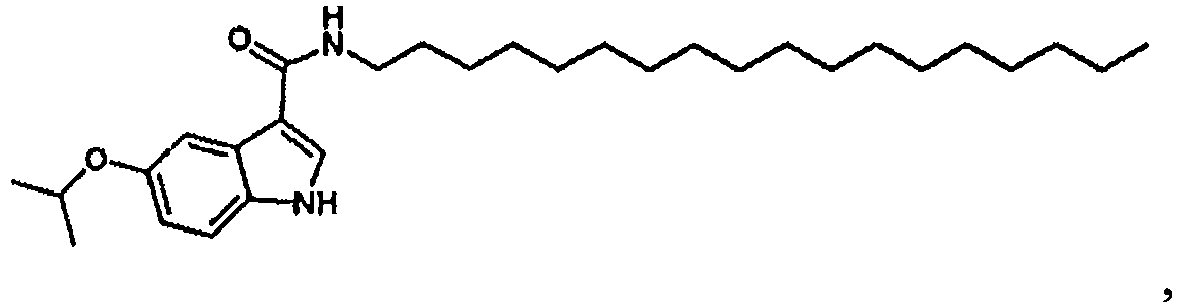
I-11 
I-12 
I-13 
I-14 
I-15 
I-16 
I-17 
I-22 
I-26 
I-27 
I-30 
I-31 
I-32 
I-33 
I-34 
I-35 
I-36 
I-37 
I-38 
I-39 
I-44 
I-45 
I-46 
I-48 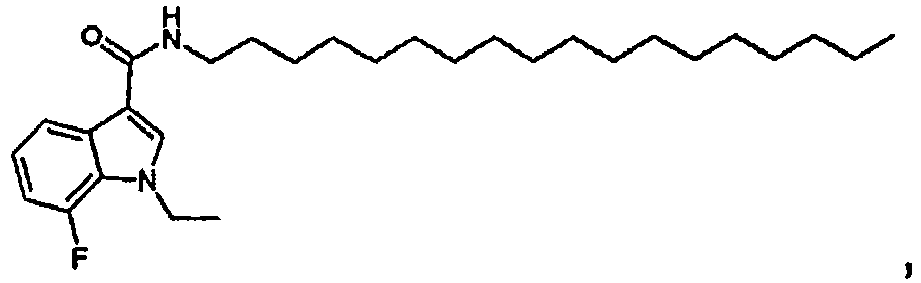
I-52 
I-53 
I-54 
I-55 
I-56 
I-57 
I-58 
I-61 
I-62 and 
I-63
a taupathy selected from Alzheimer's disease, neurodegeneration in adult cases of Down's syndrome, dementia pugilistica, Pick disease, Guam parkinsonism dementia complex, frontotemporal dementia, corticobasal degeneration, pallido-pontal-nigral degeneration and progressive supranuclear palsy:
a synucleinopathy selected from Parkinson's disease, dementia with Lewy bodies (DLB), and multiple system atrophy (MSA):
diabetes: - metabolic syndrome; or
- a metabolic syndrome disorder selected from hyperglycemia, reduced insulin production, reduced insulin secretion and insulin resistance.
- The invention also provides a composition comprising a compound as defined herein or a pharmaceutically acceptable salt thereof for use in treating or lessening the severity of a disease or disorder as defined herein.
- The invention also provides a composition comprising:
- a compound as defined herein in an amount of 0.5% to 3.0% (wt%);
- Tween 80 in an amount of 20% to 30% (wt%);
- PEG-400 in an amount of 20% to 30% (wt%|);
- PBS in an amount of 40% to 43% (wt%); and
- having a PH of from 4.0 to 9.0.
- The invention also provides a compound selected from the group consisting of:

I-10 
I-32 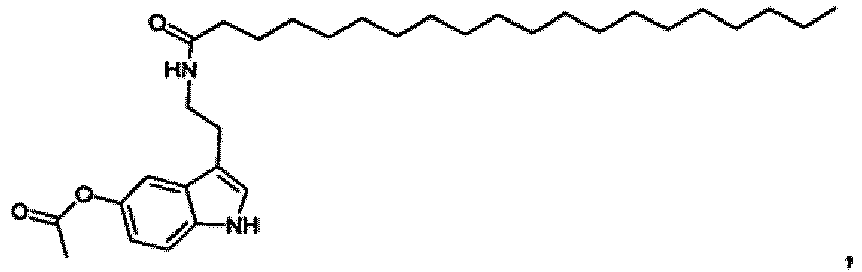
I-33 -
-
Figure 1 presents a table summarizing the different reaction conditions utilized to prepare compounds of formula I as set forth in Examples 1-14. -
Figure 2 presents a table summarizing different synthetic conditions that were tested in the preparation of various compounds of the formulae described herein. -
Figure 3 depicts a bar graph demonstrating that daily administration, over a two week period, of Compound 1-63 results in 26-30% reduction in non-fasted blood glucose levels in homozygous obese mice while the anti-diabetic control drug, Rosiglitizone results in 66% reduction in non-fasted glucose levels in homozygous obese mice. -
Figure 4 depicts a bar graph demonstrating that wild-type mice treated with Compound 1-63 have, on average, approximately 10% lower body weights than wild-type mice on control diet. -
Figure 5A depicts a graph demonstrating that wild-type mice treated with Compound 1-63 show improved glucose tolerance in an intraperitoneal glucose tolerance test, with reductions in blood glucose levels at two time points (*p<0.05). -
Figure 5B depicts a bar graph demonstrating that incremental area under the curve of blood glucose levels in the glucose tolerance test for Compound I-63 treated mice is <10 % than when mice were fed a control diet. (***p<0.0001). -
Figure 6 depicts a graph demonstrating that cell survival is over 85% at all concentrations of compound 1-63 tested, both at 4 hours and at 24 hours. -
Figure 7 depicts a bar graph demonstrating that when compound I-63 is administered at a 0.1% dosage level (% by weight in feed), there is a <40% reduction (p<0.05) in phosphorylation of tau, after two weeks of administration; and when compound 1-63 is administered at a 0.1% dosage level, there is >50% and at least ∼70% reduction in phosphorylation of tau, after three and four weeks of administration, when compared to a control. -
Figure 8 depicts a bar graph demonstrating that both compound 1-62 and compound 1-63 are similarly effective in lowering phosphorylated tau levels in the brain by 40% following four weeks of administration, when compared to a control. -
Figure 9 depicts a graph demonstrating that administration of 0.1% of Compound 1-63 after ten weeks resulted in protection of JNPL3 transgenic mice from developing motor dysfunction; and that mean motor test scores for mice on Compound 1-63 diet were 75% less than motor test scores of mice on control diet after eleven and twelve weeks of administration of Compound 1-63 (p<0.05). -
Figure 10 depicts a Western blot demonstrating that phosphorylated α synuclein can be dephosphorylated by PP2A in a concentration dependent manner whereas this effect is not observed with PP1; and specifically, at 200nM concentration, PP2A dephosphorylates more than 95% of theserine 129 phosphorylated alpha synuclein. -
Figure 11 depicts a Western blot demonstrating that methylation increases PP2A dephosphorylation activity towards alpha-synuclein. -
Figure 12 depicts a graph demonstrating that methylation increases PP2A dephosphorylation activity towards alpha-synuclein; and specifically, methylation reduces the EC50 value of PP2A AC dimer from ∼60nM to ∼20nM. -
Figure 13 depicts a bar graph demonstrating that mice fed 0.001% and 0.1% Compound 1-63 diets were protected against acute MPTP-induced neurotoxicity, which was evidenced by rescuing (p < 0.05) of the tyrosine hydroxylase defect by approximately 20%. -
Figure 14A depicts a bar graph demonstrating that alpha-synuclein transgenic mice treated with 0.1% Compound 1-63 have an average 30% increase (p = 0.004) in horizontal activity. -
Figure 14B depicts a bar graph demonstrating that alpha-synuclein transgenic mice treated with 0.1% Compound 1-63 have an average 25% increase (p = 0.03) in Rota-rod on time. - Definitions of specific functional groups and chemical terms are described in more detail below. For purposes of this invention, the chemical elements are identified in accordance with the Periodic Table of the Elements, CAS version, Handbook of Chemistry and Physics, 75th Ed., inside cover, and specific functional groups are generally defined as described therein. Additionally, general principles of organic chemistry, as well as specific functional moieties and reactivity, are described in Organic Chemistry, Thomas Sorrell, University Science Books, Sausalito: 1999.
- Additives : The term "additives" as used herein refers to pharmaceutically acceptable organic or inorganic substances or substances safe to consume which do not deleteriously react with the compositions, are non-toxic, are well-tolerated upon ingestion, and act as carrier materials suitable for administration of the compositions.
- Aliphatic: The term "aliphatic", as used herein, includes both saturated and unsaturated, straight chain (i.e., unbranched), branched, acyclic, cyclic, or polycyclic aliphatic hydrocarbons, which are optionally substituted with one or more functional groups. As will be appreciated by one of ordinary skill in the art, "aliphatic" is intended herein to include, but is not limited to, alkyl, alkenyl, alkynyl, cycloalkyl, cycloalkenyl, and cycloalkynyl moieties. Thus, as used herein, the term "alkyl" includes straight, branched and cyclic alkyl groups. An analogous convention applies to other generic terms such as "alkenyl", "alkynyl", and the like. Furthermore, as used herein, the terms "alkyl", "alkenyl", "alkynyl", and the like encompass both substituted and unsubstituted groups. In certain embodiments, as used herein, "lower alkyl" is used to indicate those alkyl groups (cyclic, acyclic, substituted, unsubstituted, branched, or unbranched) having 1-6 carbon atoms.
- Alkyl, alkenyl, and alkynyl : In certain embodiments, the alkyl, alkenyl, and alkynyl groups employed in the invention contain 10-25 aliphatic carbon atoms. In certain other embodiments, the alkyl, alkenyl, and alkynyl groups employed in the invention contain 12-21 aliphatic carbon atoms. In yet other embodiments, the alkyl, alkenyl, and alkynyl groups employed in the invention contain 15-21 aliphatic carbon atoms. In yet other embodiments, the alkyl, alkenyl, and alkynyl groups employed in the invention contain 15 carbon atoms. In certain embodiments, the alkyl, alkenyl, and alkynyl groups employed in the invention contain 16 carbon atoms. In certain embodiments, the alkyl, alkenyl, and alkynyl groups employed in the invention contain 17 carbon atoms. In certain embodiments, the alkyl, alkenyl, and alkynyl groups employed in the invention contain 18 carbon atoms. In certain embodiments, the alkyl, alkenyl, and alkynyl groups employed in the invention contain 19 carbon atoms. In certain embodiments, the alkyl, alkenyl, and alkynyl groups employed in the invention contain 20 carbon atoms. In certain embodiments, the alkyl, alkenyl, and alkynyl groups employed in the invention contain 21 carbon atoms. In certain embodiments, the alkyl, alkenyl, and alkynyl groups employed in the invention contain 22 carbon atoms In certain embodiments, the alkyl, alkenyl, and alkynyl groups employed in the invention contain 23 carbon atoms In certain embodiments, the alkyl, alkenyl, and alkynyl groups employed in the invention contain 24 carbon atoms In certain embodiments, the alkyl, alkenyl, and alkynyl groups employed in the invention contain 25 carbon atoms Illustrative aliphatic groups thus include, but are not limited to, for example, pentadecyl, hexadecyl, heptadecyl, oxtadecyl, noadecyl, eicosyl, heneicosyl, docosyl, tricosyl, tetracosyl, and pentacosyl.
- Illustrative aliphatic groups thus include, but are not limited to, for example, methyl, ethyl, n-propyl, isopropyl, cyclopropyl, -CH2-cyclopropyl, vinyl, allyl, n-butyl, sec-butyl, isobutyl, tert-butyl, cyclobutyl, -CH2-cyclobutyl, n-pentyl, sec-pentyl, isopentyl, tert-pentyl, cyclopentyl, -CH2-cyclopentyl, n-hexyl, sec-hexyl, cyclohexyl, -CH2-cyclohexyl moieties and the like, which again, may bear one or more substituents. Alkenyl groups include, but are not limited to, for example, ethenyl, propenyl, butenyl, 1-methyl-2-buten-1-yl, and the like. Representative alkynyl groups include, but are not limited to, ethynyl, 2-propynyl (propargyl), 1-propynyl, and the like.
- Alkoxy and alkylthio : The term "alkoxy", or "alkylthio" as used herein refers to an alkyl group, as previously defined, attached to the parent molecule through an oxygen atom or through a sulfur atom. In certain embodiments, the alkyl, alkenyl, and alkynyl groups contain 1-20 alipahtic carbon atoms. In certain other embodiments, the alkyl, alkenyl, and alkynyl groups contain 1-10 aliphatic carbon atoms. In yet other embodiments, the alkyl, alkenyl, and alkynyl groups employed in the invention contain 1-8 aliphatic carbon atoms. In still other embodiments, the alkyl, alkenyl, and alkynyl groups contain 1-6 aliphatic carbon atoms. In yet other embodiments, the alkyl, alkenyl, and alkynyl groups contain 1-4 aliphatic carbon atoms. Examples of alkoxy, include but are not limited to, methoxy, ethoxy, propoxy, isopropoxy, n-butoxy, tert-butoxy, neopentoxy, and n-hexoxy. Examples of alkylthio include, but are not limited to, methylthio, ethylthio, propylthio, isopropylthio, n-butylthio, and the like.
- Alkylamino: The term "alkylamino" refers to a group having the structure - NHR', wherein R' is aliphatic, as defined herein. In certain embodiments, the aliphatic group contains 1-20 aliphatic carbon atoms. In certain other embodiments, the aliphatic group contains 1-10 aliphatic carbon atoms. In yet other embodiments, the aliphatic group employed in the invention contains 1-8 aliphatic carbon atoms. In still other embodiments, the aliphatic group contains 1-6 aliphatic carbon atoms. In yet other embodiments, the aliphatic group contains 1-4 aliphatic carbon atoms. Examples of alkylamino groups include, but are not limited to, methylamino, ethylamino, n-propylamino, iso-propylamino, cyclopropylamino, n-butylamino, tert-butylamino, neopentylamino, n-pentylamino, hexylamino, cyclohexylamino, and the like.
- Some examples of substituents of the aliphatic (and other) moieties of compounds of the invention as described herein include, but are not limited to aliphatic; heteroaliphatic; aryl; heteroaryl; arylalkyl; heteroarylalkyl; alkoxy; aryloxy; heteroalkoxy; heteroaryloxy; alkylthio; arylthio; heteroalkylthio; heteroarylthio; -F; -Cl; -Br; -I; -OH; -NO2; -CN; -CF3; -CH2CF3;-CHCl2; -CH2OH; -CH2CH2OH; -CH2NH2; -CH2SO2CH3; -C(O)Rx; -CO2(Rx); -CON(Rx)2;-OC(O)Rx; -OCO2Rx; -OCON(Rx)2; -N(Rx)2; -S(O)2Rx; -NRx(CO)Rx wherein each occurrence of Rx independently includes, but is not limited to, aliphatic, heteroaliphatic, aryl, heteroaryl, arylalkyl, or heteroarylalkyl, wherein any of the aliphatic, heteroaliphatic, arylalkyl, or heteroarylalkyl substituents described above and herein may be substituted or unsubstituted, branched or unbranched, cyclic or acyclic, and wherein any of the aryl or heteroaryl substituents described above and herein may be substituted or unsubstituted. Additional examples of generally applicable substituents are illustrated by the specific embodiments described herein.
- Animal : The term "animal", as used herein, refers to humans as well as non-human animals, including, for example, mammals, birds, reptiles, amphibians, and fish. Preferably, the non-human animal is a mammal (e.g., a rodent, a mouse, a rat, a rabbit, a monkey, a dog, a cat, a primate, or a pig). A non-human animal may be a transgenic animal.
- Aryl and heteroaryl: In general, the terms "aryl" and "heteroaryl", as used herein, refer to stable mono- or polycyclic, heterocyclic, polycyclic, and polyheterocyclic unsaturated moieties having preferably 3-14 carbon atoms, each of which may be substituted or unsubstituted. Substituents include, but are not limited to, any of the previously mentioned substitutents, i.e., the substituents recited for aliphatic moieties, or for other moieties as disclosed herein, resulting in the formation of a stable compound. In certain embodiments of the present invention, "aryl" refers to a mono- or bicyclic carbocyclic ring system having one or two aromatic rings including, but not limited to, phenyl, naphthyl, tetrahydronaphthyl, indanyl, indenyl, and the like. In certain embodiments of the present invention, the term "heteroaryl", as used herein, refers to a cyclic aromatic radical having from five to ten ring atoms of which one ring atom is selected from S, O, and N; zero, one, or two ring atoms are additional heteroatoms independently selected from S, O, and N; and the remaining ring atoms are carbon, the radical being joined to the rest of the molecule via any of the ring atoms, such as, for example, pyridyl, pyrazinyl, pyrimidinyl, pyrrolyl, pyrazolyl, imidazolyl, thiazolyl, oxazolyl, isooxazolyl, thiadiazolyl,oxadiazolyl, thiophenyl, furanyl, quinolinyl, isoquinolinyl, and the like.
- It will be appreciated that aryl and heteroaryl groups can be unsubstituted or substituted, wherein substitution includes replacement of one, two, three, or more of the hydrogen atoms thereon independently with any one or more of the following moieties including, but not limited to: aliphatic; heteroaliphatic; aryl; heteroaryl; arylalkyl; heteroarylalkyl; alkoxy; aryloxy; heteroalkoxy; heteroaryloxy; alkylthio; arylthio; heteroalkylthio; heteroarylthio; -F; -Cl; -Br; -I; -OH; -NO2; -CN; -CF3; -CH2CF3; -CHCl2; -CH2OH; -CH2CH2OH; -CH2NH2;-CH2SO2CH3; -C(O)Rx; -CO2(Rx); -CON(Rx)2; -OC(O)Rx; -OCO2Rx; -OCON(Rx)2; -N(Rx)2;-S(O)2Rx; -NRx(CO)Rx, wherein each occurrence of Rx independently includes, but is not limited to, aliphatic, heteroaliphatic, aryl, heteroaryl, arylalkyl, or heteroarylalkyl, wherein any of the aliphatic, heteroaliphatic, arylalkyl, or heteroarylalkyl substituents described above and herein may be substituted or unsubstituted, branched or unbranched, cyclic or acyclic, and wherein any of the aryl or heteroaryl substituents described above and herein may be substituted or unsubstituted. Additional examples of generally applicable substitutents are illustrated by the specific embodiments described herein.
- Combination therapy: The term "combination therapy", as used herein, refers to those situations in which two or more different pharmaceutical agents are administered in overlapping regimens so that the subject is simultaneously exposed to both agents. In some embodiments, two or more different pharmaceutical agents administered in combination are administered together in a single composition or unit dosage form. In many embodiments, however, two or more different pharmaceutical agents are administered in combination through administration of separate compositions via overlapping regimens.
- Comestible : As used herein, the term "comestible" refers to a material that is suitable for human consumption, including a material that can be ingested by oral and by a non-oral means, e.g., an inhalant or snuff. For purposes of the present invention, the term also includes foods (e.g., beverages) and dietary supplements that are supplemented or enhanced with the compounds of formula I.
- Dialkylamino : The term "dialkylamino" refers to a group having the structure - NRR', wherein R and R' are each an aliphatic group, as defined herein. R and R' may be the same or different in a dialkyamino moiety. In certain embodiments, the aliphatic groups contain 1-20 aliphatic carbon atoms. In certain other embodiments, the aliphatic groups contain 1-10 aliphatic carbon atoms. In yet other embodiments, the aliphatic groups employed in the invention contain 1-8 aliphatic carbon atoms. In still other embodiments, the aliphatic groups contain 1-6 aliphatic carbon atoms. In yet other embodiments, the aliphatic groups contain 1-4 aliphatic carbon atoms. Examples of dialkylamino groups include, but are not limited to, dimethylamino, methyl ethylamino, diethylamino, methylpropylamino, di(n-propyl)amino, di(iso-propyl)amino, di(cyclopropyl)amino, di(n-butyl)amino, di(tert-butyl)amino, di(neopentyl)amino, di(n-pentyl)amino, di(hexyl)amino, di(cyclohexyl)amino, and the like. In certain embodiments, R and R' are linked to form a cyclic structure. The resulting cyclic structure may be aromatic or non-aromatic. Examples of cyclic diaminoalkyl groups include, but are not limted to, aziridinyl, pyrrolidinyl, piperidinyl, morpholinyl, pyrrolyl, imidazolyl, 1,3,4-trianolyl, and tetrazolyl.
- Extract : The term "extract" refers to a composition prepared from a natural source. Typically, extracts are prepared by contacting the natural source with one or more solvents, such that a portion of the natural material partitions into the solvent and a portion is removed. Serial partition or other separation steps may be performed in the preparation of an extract. As will be appreciated with reference to the present specification, certain compounds described herein are naturally occurring and can be obtained by extraction of a natural source. Naturally occurring compounds described herein may alternatively be prepared by chemical synthesis. Chemically synthesized compounds described herein, whether naturally-occurring or not, may be added to prepared extracts and/or treated together with an extract. In some embodiments, compounds present in extracts are compounds of formulae I, II, III, IV, V, VI, VII, VIII, and/or IX. In some embodiments, compounds present in extracts are compounds of formulae Ia, Ib, Ic, Id, Ie, If, Ig and/or Ih. In some embodiments, compounds present in extracts according to the present invention are naturally occurring compounds. In some such embodiments, the naturally-occurring compounds are of formulae Ia, Ib, Ic, Id, Ie, If, Ig and/or Ih.
- Heteroaliphatic : The term "heteroaliphatic", as used herein, refers to aliphatic moieties that contain one or more oxygen, sulfur, nitrogen, phosphorus, or silicon atoms, e.g., in place of carbon atoms. Heteroaliphatic moieties may be branched, unbranched, cyclic or acyclic and include saturated and unsaturated heterocycles such as morpholino, pyrrolidinyl, etc. In certain embodiments, heteroaliphatic moieties are substituted by independent replacement of one or more of the hydrogen atoms thereon with one or more moieties including, but not limited to aliphatic; heteroaliphatic; aryl; heteroaryl; arylalkyl; heteroarylalkyl; alkoxy; aryloxy; heteroalkoxy; heteroaryloxy; alkylthio; arylthio; heteroalkylthio; heteroarylthio; -F; -Cl; -Br; -I;-OH; -NO2; -CN; -CF3; -CH2CF3; -CHCl2; -CH2OH; -CH2CH2OH; -CH2NH2; -CH2SO2CH3;-C(O)Rx; -CO2(Rx); -CON(Rx)2; -OC(O)Rx; -OCO2Rx; -OCON(Rx)2; -N(Rx)2; -S(O)2Rx;-NRx(CO)Rx, wherein each occurrence of Rx independently includes, but is not limited to, aliphatic, heteroaliphatic, aryl, heteroaryl, arylalkyl, or heteroarylalkyl, wherein any of the aliphatic, heteroaliphatic, arylalkyl, or heteroarylalkyl substituents described above and herein may be substituted or unsubstituted, branched or unbranched, cyclic or acyclic, and wherein any of the aryl or heteroaryl substituents described above and herein may be substituted or unsubstituted. Additional examples of generally applicable substitutents are illustrated by the specific embodiments described herein.
- Heterocycloalkyl and Heterocycle : The term "heterocycloalkyl" or "heterocycle", as used herein, refers to a non-aromatic 5-, 6-, or 7- membered ring or a polycyclic group, including, but not limited to a bi- or tri-cyclic group comprising fused six-membered rings having between one and three heteroatoms independently selected from oxygen, sulfur and nitrogen, wherein (i) each 5-membered ring has 0 to 1 double bonds and each 6-membered ring has 0 to 2 double bonds, (ii) the nitrogen and sulfur heteroatoms may be optionally be oxidized, (iii) the nitrogen heteroatom may optionally be quaternized, and (iv) any of the above heterocyclic rings may be fused to a benzene ring. Representative heterocycles include, but are not limited to, pyrrolidinyl, pyrazolinyl, pyrazolidinyl, imidazolinyl, imidazolidinyl, piperidinyl, piperazinyl, oxazolidinyl, isoxazolidinyl, morpholinyl, thiazolidinyl, isothiazolidinyl, and tetrahydrofuryl. In certain embodiments, a "substituted heterocycloalkyl or heterocycle" group is utilized and as used herein, refers to a heterocycloalkyl or heterocycle group, as defined above, substituted by the independent replacement of one, two or three of the hydrogen atoms thereon with but are not limited to aliphatic; heteroaliphatic; aryl; heteroaryl; arylalkyl; heteroarylalkyl; alkoxy; aryloxy; heteroalkoxy; heteroaryloxy; alkylthio; arylthio; heteroalkylthio; heteroarylthio; -F; -Cl; -Br; -I; -OH; -NO2; -CN; -CF3; -CH2CF3; -CHCl2;-CH2OH; -CH2CH2OH; -CH2NH2; -CH2SO2CH3; -C(O)Rx; -CO2(Rx); -CON(Rx)2; -OC(O)Rx;-OCO2Rx; -OCON(Rx)2; -N(Rx)2; -S(O)2Rx; -NRx(CO)Rx, wherein each occurrence of Rx independently includes, but is not limited to, aliphatic, heteroaliphatic, aryl, heteroaryl, arylalkyl, or heteroarylalkyl, wherein any of the aliphatic, heteroaliphatic, arylalkyl, or heteroarylalkyl substituents described above and herein may be substituted or unsubstituted, branched or unbranched, cyclic or acyclic, and wherein any of the aryl or heteroaryl substituents described above and herein may be substituted or unsubstituted. Additional examples of generally applicable substitutents are illustrated by the specific embodiments described herein.
- Halo and Halogen : The terms "halo" and "halogen" as used herein refer to an atom selected from fluorine, chlorine, bromine, and iodine.
- Haloalkyl: The term "haloalkyl" denotes an alkyl group, as defined above, having one, two, or three halogen atoms attached thereto and is exemplified by such groups as chloromethyl, bromoethyl, trifluoromethyl, and the like.
- Independently selected: The term "independently selected" is used herein to indicate that the R groups can be identical or different.
- Isolated: The term "isolated", as used herein, means that the isolated entity has been: (i) separated from at least one component with which it was previously associated; and/or (ii) manipulated by the hand of man. In some embodiments, the isolated entity is separated from at least one component with which it was associated when initially produced. When most other components have been removed, the isolated entity is "purified" or "concentrated". Isolation and/or purification and/or concentration may be performed using any techniques known in the art including, for example, distillation, fractionation, gas stripping, extraction, precipitation, or other separation.
- Modulate: As used herein, the term "modulate" is used in in the following contexts. In certain embodiments, the term "modulate" refers to affecting PP2A activity by the direct interaction with PP2A. In certain embodiments, the term "modulate" refers to affecting PP2A activity indirectly, by: modulating levels of PP2A methylation (which typically includes a combination PP2A methylation and PP2A demethylation), binding of auxiliary proteins, and/or binding of a substrate to PP2A, thereby affecting PP2A activity towards that substrate. Exemplary auxiliary proteins include, but are not limited to, ME, MT, PP2A regulatory B-subunits that belong to the B, B', B" and B"' families, and a PP2A activator, e.g., PTPA. Exemplary substrates include but are not limited to tau, alpha-synuclein, Akt, p38 kinase, PI3 kinase, ERK1/2, IRS1, IRS2, JNK2/3, I-kappa-B (IκB), p70S6K, mTORC1, GSK3β and cdk5. In certain embodiments, the term "modulate" refers to MT activity, wherein such activity results in PP2A methylation and such modulation of MT activity results in a change in PP2A methylation status. For example, change in methylation status results in modulation of PP2A heterotrimeric holoenzyme assembly and/or in modulation of PP2A activity. In certain embodiments, the term "modulate" refers to MT activity by interfering with interaction of PP2A and MT. In certain embodiments, the term "modulate" refers to ME activity, wherein such activity results in PP2A demethylation and such modulation of ME activity results in a change in PP2A methylation status. For example, change in methylation status results in modulation of PP2A heterotrimeric holoenzyme assembly and/or in modulation of PP2A activity. In certain embodiments, the term "modulate" refers to ME activity by interfering with interaction of PP2A and ME.
- Nutraceuticals : As used herein, "nutraceuticals" are products that supplement the diet to help promote the maintenance of good health.
- Neurodegenerative Disease : As used herein, "neurodegenerative disease" means any condition in which cells of the brain and/or spinal cord are lost or degraded. Neurodegenerative diseases include a subset of neurological disorders containing neuron pathologies and/or any disease caused by a malformed protein, e.g., proteinopathies.
- PP2A : As used herein, "PP2A" means a PP2A C subunit alone, an AC dimer, or a PP2A holoenzyme. PP2A dimer formation typically includes the assembly of an A subunit and a C subunit. PP2A heterotrimeric holoenzyme formation typically includes the assembly of an A subunit, a C subunit, and a regulatory subunit, selected from any of the B, B', B"and/or B'" families. PP2A activity.
- PP2A activity : As used herein, "PP2A activity" means any phosphatase activity resulting from the catalytic C-subunit (PP2AC), the AC dimer (PP2AAC), as well as the PP2A holoenzyme, assembled from A, C and any one of the regulatory subunits belonging to the B, B', B"and B"' families. In certain embodiments, to provide but a few examples, PP2A activity can be modulated by compounds and/or compositions that modulate the methylation of PP2A, modulate the demethylation of PP2A, modulate the interaction of PP2A substrates with PP2A, modulate the interaction of auxiliary proteins with PP2A and/or directly interact with PP2A, etc.
- Pharmaceuticals : As used herein, "pharmaceuticals", like nutraceuticals, are drugs or medicines that are prepared and used for the treatment of diseases and/or disorders.
- Pharmaceutically acceptable prodrugs : The term "pharmaceutically acceptable prodrugs" as used herein refers to those prodrugs of the compounds of the present invention which are, within the scope of sound medical judgment, suitable for use in contact with the tissues of humans and lower animals with undue toxicity, irritation, allergic response, and the like, commensurate with a reasonable benefit/risk ratio, and effective for their intended use, as well as the zwitterionic forms, where possible, of the compounds of the invention. The term "prodrug" refers to compounds that are rapidly transformed in vivo to yield the parent compound of the above formula, for example by hydrolysis in blood. A thorough discussion is provided in T. Higuchi and V. Stella, Pro-drugs as Novel Delivery Systems, Vol. 14 of the A.C.S. Symposium Series, and in Edward B. Roche, ed., Bioreversible Carriers in Drug Design, American Pharmaceutical Association and Pergamon Press, 1987.
- Pharmaceutically acceptable salt : The term "pharmaceutically acceptable salt" refers to those salts which are, within the scope of sound medical judgment, suitable for use in contact with the tissues of humans and lower animals without undue toxicity, irritation, allergic response, and the like, and are commensurate with a reasonable benefit/risk ratio. Pharmaceutically acceptable salts are well known in the art. For example, Berge et al. describe pharmaceutically acceptable salts in detail in J. Pharmaceutical Sciences, 66: 1-19, 1977. The salts can be prepared in situ during the final isolation and purification of the compounds of the invention, or separately by reacting the free base functionality with a suitable organic or inorganic acid. Examples of pharmaceutically acceptable, nontoxic acid addition salts are salts of an amino group formed with inorganic acids such as hydrochloric acid, hydrobromic acid, phosphoric acid, sulfuric acid and perchloric acid or with organic acids such as acetic acid, oxalic acid, maleic acid, tartaric acid, citric acid, succinic acid, or malonic acid or by using other methods used in the art such as ion exchange. Other pharmaceutically acceptable salts include adipate, alginate, ascorbate, aspartate, benzenesulfonate, benzoate, bisulfate, borate, butyrate, camphorate, camphorsulfonate, citrate, cyclopentanepropionate, digluconate, dodecylsulfate, ethanesulfonate, formate, fumarate, glucoheptonate, glycerophosphate, gluconate, hernisulfate, heptanoate, hexanoate, hydroiodide, 2-hydroxy-ethanesulfonate, lactobionate, lactate, laurate, lauryl sulfate, malate, maleate, malonate, methanesulfonate, 2-naphthalenesulfonate, nicotinate, nitrate, oleate, oxalate, palmitate, pamoate, pectinate, persulfate, 3-phenylpropionate, phosphate, picrate, pivalate, propionate, stearate, succinate, sulfate, tartrate, thiocyanate, p-toluenesulfonate, undecanoate, valerate salts, and the like. Representative alkali or alkaline earth metal salts include sodium, lithium, potassium, calcium, magnesium, and the like. Further pharmaceutically acceptable salts include, when appropriate, nontoxic ammonium, quaternary ammonium, and amine cations formed using counterions such as halide, hydroxide, carboxylate, sulfate, phosphate, nitrate, loweralkyl sulfonate, and aryl sulfonate.
- Protecting group : One of ordinary skill in the art will appreciate that the synthetic methods, as described herein, utilize a variety of protecting groups. By the term "protecting group", as used herein, it is meant that a particular functional moiety, e.g., O, S, or N, is temporarily blocked so that a reaction can be carried out selectively at another reactive site in a multifunctional compound. In preferred embodiments, a protecting group reacts selectively in good yield to give a protected substrate that is stable to the projected reactions; the protecting group should be selectively removable in good yield by readily available, preferably non-toxic reagents that do not attack the other functional groups; the protecting group forms an easily separable derivative (more preferably without the generation of new stereogenic centers); and the protecting group has a minimum of additional functionality to avoid further sites of reaction. As detailed herein, oxygen, sulfur, nitrogen, and carbon protecting groups may be utilized. Hydroxyl protecting groups include methyl, methoxylmethyl (MOM), methylthiomethyl (MTM), t-butylthiomethyl, (phenyldimethylsilyl)methoxymethyl (SMOM), benzyloxymethyl (BOM), p-methoxybenzyloxymethyl (PMBM), (4-methoxyphenoxy)methyl (p-AOM), guaiacolmethyl (GUM), t-butoxymethyl, 4-pentenyloxymethyl (POM), siloxymethyl, 2-methoxyethoxymethyl (MEM), 2,2,2-trichloroethoxymethyl, bis(2-chloroethoxy)methyl, 2-(trimethylsilyl)ethoxymethyl (SEMOR), tetrahydropyranyl (THP), 3-bromotetrahydropyranyl, tetrahydrothiopyranyl, 1-methoxycyclohexyl, 4-methoxytetrahydropyranyl (MTHP), 4-methoxytetrahydrothiopyranyl, 4-methoxytetrahydrothiopyranyl S,S-dioxide, 1-[(2-chloro-4-methyl)phenyl]-4-methoxypiperidin-4-yl (CTMP), 1,4-dioxan-2-yl, tetrahydrofuranyl, tetrahydrothiofuranyl, 2,3,3a,4,5,6,7,7a-octahydro-7,8,8-trimethyl-4,7-methanobenzofuran-2-yl, 1-ethoxyethyl, 1-(2-chloroethoxy)ethyl, 1-methyl-1-methoxyethyl, 1-methyl-1-benzyloxyethyl, 1-methyl-1-benzyloxy-2-fluoroethyl, 2,2,2-trichloroethyl, 2-trimethylsilylethyl, 2-(phenylselenyl)ethyl, t-butyl, allyl, p-chlorophenyl, p-methoxyphenyl, 2,4-dinitrophenyl, benzyl, p-methoxybenzyl, 3,4-dimethoxybenzyl, o-nitrobenzyl, p-nitrobenzyl, p-halobenzyl, 2,6-dichlorobenzyl, p-cyanobenzyl, p-phenylbenzyl, 2-picolyl, 4-picolyl, 3-methyl-2-picolyl N-oxido, diphenylmethyl, p,p'-dinitrobenzhydryl, 5-dibenzosuberyl, triphenylmethyl, α-naphthyldiphenylmethyl, p-methoxyphenyldiphenylmethyl, di(p-methoxyphenyl)phenylmethyl, tri(p-methoxyphenyl)methyl, 4-(4'-bromophenacyloxyphenyl)diphenylmethyl, 4,4',4"-tris(4,5-dichlorophthalimidophenyl)methyl, 4,4',4" -tris(levulinoyloxyphenyl)methyl, 4,4',4" -tris(benzoyloxyphenyl)methyl, 3-(imidazol-1-yl)bis(4',4"-dimethoxyphenyl)methyl, 1,1-bis(4-methoxyphenyl)-1'-pyrenylmethyl, 9-anthryl, 9-(9-phenyl)xanthenyl, 9-(9-phenyl-10-oxo)anthryl, 1,3-benzodithiolan-2-yl, benzisothiazolyl S,S-dioxido, trimethylsilyl (TMS), triethylsilyl (TES), triisopropylsilyl (TIPS), dimethylisopropylsilyl (IPDMS), diethylisopropylsilyl (DEIPS), dimethylthexylsilyl, t-butyldimethylsilyl (TBDMS), t-butyldiphenylsilyl (TBDPS), tribenzylsilyl, tri-p-xylylsilyl, triphenylsilyl, diphenylmethylsilyl (DPMS), t-butylmethoxyphenylsilyl (TBMPS), formate, benzoylformate, acetate, chloroacetate, dichloroacetate, trichloroacetate, trifluoroacetate, methoxyacetate, triphenylmethoxyacetate, phenoxyacetate, p-chlorophenoxyacetate, 3-phenylpropionate, 4-oxopentanoate (levulinate), 4,4-(ethylenedithio)pentanoate (levulinoyldithioacetal), pivaloate, adamantoate, crotonate, 4-methoxycrotonate, benzoate, p-phenylbenzoate, 2,4,6-trimethylbenzoate (mesitoate), alkyl methyl carbonate, 9-fluorenylmethyl carbonate (Fmoc), alkyl ethyl carbonate, alkyl 2,2,2-trichloroethyl carbonate (Troc), 2-(trimethylsilyl)ethyl carbonate (TMSEC), 2-(phenylsulfonyl) ethyl carbonate (Psec), 2-(triphenylphosphonio) ethyl carbonate (Peoc), alkyl isobutyl carbonate, alkyl vinyl carbonate alkyl allyl carbonate, alkyl p-nitrophenyl carbonate, alkyl benzyl carbonate, alkyl p-methoxybenzyl carbonate, alkyl 3,4-dimethoxybenzyl carbonate, alkyl o-nitrobenzyl carbonate, alkyl p-nitrobenzyl carbonate, alkyl S-benzyl thiocarbonate, 4-ethoxy-1-napththyl carbonate, methyl dithiocarbonate, 2-iodobenzoate, 4-azidobutyrate, 4-nitro-4-methylpentanoate, o-(dibromomethyl)benzoate, 2-formylbenzenesulfonate, 2-(methylthiomethoxy)ethyl, 4-(methylthiomethoxy)butyrate, 2-(methylthiomethoxymethyl)benzoate, 2,6-dichloro-4-methylphenoxyacetate, 2,6-dichloro-4-(1,1,3,3-tetramethylbutyl)phenoxyacetate, 2,4-bis(1,1-dimethylpropyl)phenoxyacetate, chlorodiphenylacetate, isobutyrate, monosuccinoate, (E)-2-methyl-2-butenoate, o-(methoxycarbonyl)benzoate, α-naphthoate, nitrate, alkyl N,N,N',N'-tetramethylphosphorodiamidate, alkyl N-phenylcarbamate, borate, dimethylphosphinothioyl, alkyl 2,4-dinitrophenylsulfenate, sulfate, methanesulfonate (mesylate), benzylsulfonate, and tosylate (Ts). For protecting 1,2- or 1,3-diols, the protecting groups include methylene acetal, ethylidene acetal, 1-t-butylethylidene ketal, 1-phenylethylidene ketal, (4-methoxyphenyl)ethylidene acetal, 2,2,2-trichloroethylidene acetal, acetonide, cyclopentylidene ketal, cyclohexylidene ketal, cycloheptylidene ketal, benzylidene acetal, p-methoxybenzylidene acetal, 2,4-dimethoxybenzylidene ketal, 3,4-dimethoxybenzylidene acetal, 2-nitrobenzylidene acetal, methoxymethylene acetal, ethoxymethylene acetal, dimethoxymethylene ortho ester, 1-methoxyethylidene ortho ester, 1-ethoxyethylidine ortho ester, 1,2-dimethoxyethylidene ortho ester, α-methoxybenzylidene ortho ester, 1-(N,N-dimethylamino)ethylidene derivative, α-(N,N'-dimethylamino)benzylidene derivative, 2-oxacyclopentylidene ortho ester, di-t-butylsilylene group (DTBS), 1,3-(1,1,3,3-tetraisopropyldisiloxanylidene) derivative (TIPDS), tetra-t-butoxydisiloxane-1,3-diylidene derivative (TBDS), cyclic carbonates, cyclic boronates, ethyl boronate, and phenyl boronate. Amino-protecting groups include methyl carbamate, ethyl carbamante, 9-fluorenylmethyl carbamate (Fmoc), 9-(2-sulfo)fluorenylmethyl carbamate, 9-(2,7-dibromo)fluoroenylmethyl carbamate, 2,7-di-t-butyl-[9-(10,10-dioxo-10,10,10,10-tetrahydrothioxanthyl)]methyl carbamate (DBD-Tmoc), 4-methoxyphenacyl carbamate (Phenoc), 2,2,2-trichloroethyl carbamate (Troc), 2-trimethylsilylethyl carbamate (Teoc), 2-phenylethyl carbamate (hZ), 1-(1-adamantyl)-1-methylethyl carbamate (Adpoc), 1,1-dimethyl-2-haloethyl carbamate, 1,1-dimethyl-2,2-dibromoethyl carbamate (DB-t-BOC), 1,1-dimethyl-2,2,2-trichloroethyl carbamate (TCBOC), 1-methyl-1-(4-biphenylyl)ethyl carbamate (Bpoc), 1-(3,5-dit-butylphenyl)-1-methylethyl carbamate (t-Bumeoc), 2-(2'- and 4'-pyridyl)ethyl carbamate (Pyoc), 2-(N,N-dicyclohexylcarboxamido)ethyl carbamate, t-butyl carbamate (BOC), 1-adamantyl carbamate (Adoc), vinyl carbamate (Voc), allyl carbamate (Alloc), 1-isopropylallyl carbamate (Ipaoc), cinnamyl carbamate (Coc), 4-nitrocinnamyl carbamate (Noc), 8-quinolyl carbamate, N-hydroxypiperidinyl carbamate, alkyldithio carbamate, benzyl carbamate (Cbz), p-methoxybenzyl carbamate (Moz), p-nitobenzyl carbamate, p-bromobenzyl carbamate, p-chlorobenzyl carbamate, 2,4-dichlorobenzyl carbamate, 4-methylsulfinylbenzyl carbamate (Msz), 9-anthrylmethyl carbamate, diphenylmethyl carbamate, 2-methylthioethyl carbamate, 2-methylsulfonylethyl carbamate, 2-(p-toluenesulfonyl)ethyl carbamate, [2-(1,3-dithianyl)]methyl carbamate (Dmoc), 4-methylthiophenyl carbamate (Mtpc), 2,4-dimethylthiophenyl carbamate (Bmpc), 2-phosphonioethyl carbamate (Peoc), 2-triphenylphosphonioisopropyl carbamate (Ppoc), 1,1-dimethyl-2-cyanoethyl carbamate, m-chloro-p-acyloxybenzyl carbamate, p-(dihydroxyboryl)benzyl carbamate, 5-benzisoxazolylmethyl carbamate, 2-(trifluoromethyl)-6-chromonylmethyl carbamate (Tcroc), m-nitrophenyl carbamate, 3,5-dimethoxybenzyl carbamate, o-nitrobenzyl carbamate, 3,4-dimethoxy-6-nitrobenzyl carbamate, phenyl(o-nitrophenyl)methyl carbamate, phenothiazinyl-(10)-carbonyl derivative, N'-p-toluenesulfonylaminocarbonyl derivative, N'-phenylaminothiocarbonyl derivative, t-amyl carbamate, S-benzyl thiocarbamate, p-cyanobenzyl carbamate, cyclobutyl carbamate, cyclohexyl carbamate, cyclopentyl carbamate, cyclopropylmethyl carbamate, p-decyloxybenzyl carbamate, 2,2-dimethoxycarbonylvinyl carbamate, o-(N,N-dimethylcarboxamido)benzyl carbamate, 1,1-dimethyl-3-(N,N-dimethylcarboxamido)propyl carbamate, 1,1-dimethylpropynyl carbamate, di(2-pyridyl)methyl carbamate, 2-furanylmethyl carbamate, 2-iodoethyl carbamate, isoborynl carbamate, isobutyl carbamate, isonicotinyl carbamate, p-(p'-methoxyphenylazo)benzyl carbamate, 1-methylcyclobutyl carbamate, 1-methylcyclohexyl carbamate, 1-methyl-1-cyclopropylmethyl carbamate, 1-methyl-1-(3,5-dimethoxyphenyl)ethyl carbamate, 1-methyl-1-(p-phenylazophenyl)ethyl carbamate, 1-methyl-1-phenylethyl carbamate, 1-methyl-1-(4-pyridyl)ethyl carbamate, phenyl carbamate, p-(phenylazo)benzyl carbamate, 2,4,6-tri-t-butylphenyl carbamate, 4-(trimethylammonium)benzyl carbamate, 2,4,6-trimethylbenzyl carbamate, formamide, acetamide, chloroacetamide, trichloroacetamide, trifluoroacetamide, phenylacetamide, 3-phenylpropanamide, picolinamide, 3-pyridylcarboxamide, N-benzoylphenylalanyl derivative, benzamide, p-phenylbenzamide, o-nitophenylacetamide, o-nitrophenoxyacetamide, acetoacetamide, (N'-dithiobenzyloxycarbonylamino)acetamide, 3-(p-hydroxyphenyl)propanamide, 3-(o-nitrophenyl)propanamide, 2-methyl-2-(o-nitrophenoxy)propanamide, 2-methyl-2-(o-phenylazophenoxy)propanamide, 4-chlorobutanamide, 3-methyl-3-nitrobutanamide, o-nitrocinnamide, N-acetylmethionine derivative, o-nitrobenzamide, o-(benzoyloxymethyl)benzamide, 4,5-diphenyl-3-oxazolin-2-one, N-phthalimide, N-dithiasuccinimide (Dts), N-2,3-diphenylmaleimide, N-2,5-dimethylpyrrole, N-1,1,4,4-tetramethyldisilylazacyclopentane adduct (STABASE), 5-substituted 1,3-dimethyl-1,3,5-triazacyclohexan-2-one, 5-substituted 1,3-dibenzyl-1,3,5-triazacyclohexan-2-one, 1-substituted 3,5-dinitro-4-pyridone, N-methylamine, N-allylamine, N-[2-(trimethylsilyl)ethoxy]methylamine (SEM), N-3-acetoxypropylamine, N-(1-isopropyl-4-nitro-2-oxo-3-pyroolin-3-yl)amine, quaternary ammonium salts, N-benzylamine, N-di(4-methoxyphenyl)methylamine, N-5-dibenzosuberylamine, N-triphenylmethylamine (Tr), N-[(4-methoxyphenyl)diphenylmethyl]amine (MMTr), N-9-phenylfluorenylamine (PhF), N-2,7-dichloro-9-fluorenylmethyleneamine, N-ferrocenylmethylamino (Fcm), N-2-picolylamino N'-oxide, N-1,1-dimethylthiomethyleneamine, N-benzylideneamine, N-p-methoxybenzylideneamine, N-diphenylmethyleneamine, N-[(2-pyridyl)mesityl]methyleneamine, N-(N',N'-dimethylaminomethylene)amine, N,N'-isopropylidenediamine, N-p-nitrobenzylideneamine, N-salicylideneamine, N-5-chlorosalicylideneamine, N-(5-chloro-2-hydroxyphenyl)phenylmethyleneamine, N-cyclohexylideneamine, N-(5,5-dimethyl-3-oxo-1-cyclohexenyl)amine, N-borane derivative, N-diphenylborinic acid derivative, N-[phenyl(pentacarbonylchromium- or tungsten)carbonyl]amine, N-copper chelate, N-zinc chelate, N-nitroamine, N-nitrosoamine, amine N-oxide, diphenylphosphinamide (Dpp), dimethylthiophosphinamide (Mpt), diphenylthiophosphinamide (Ppt), dialkyl phosphoramidates, dibenzyl phosphoramidate, diphenyl phosphoramidate, benzenesulfenamide, o-nitrobenzenesulfenamide (Nps), 2,4-dinitrobenzenesulfenamide, pentachlorobenzenesulfenamide, 2-nitro-4-methoxybenzenesulfenamide, triphenylmethylsulfenamide, 3-nitropyridinesulfenamide (Npys), p-toluenesulfonamide (Ts), benzenesulfonamide, 2,3,6,-trimethyl-4-methoxybenzenesulfonamide (Mtr), 2,4,6-trimethoxybenzenesulfonamide (Mtb), 2,6-dimethyl-4-methoxybenzenesulfonamide (Pme), 2,3,5,6-tetramethyl-4-methoxybenzenesulfonamide (Mte), 4-methoxybenzenesulfonamide (Mbs), 2,4,6-trimethylbenzenesulfonamide (Mts), 2,6-dimethoxy-4-methylbenzenesulfonamide (iMds), 2,2,5,7,8-pentamethylchroman-6-sulfonamide (Pmc), methanesulfonamide (Ms), β-trimethylsilylethanesulfonamide (SES), 9-anthracenesulfonamide, 4-(4',8'-dimethoxynaphthylmethyl)benzenesulfonamide (DNMBS), benzylsulfonamide, trifluoromethylsulfonamide, and phenacylsulfonamide. Exemplary protecting groups are detailed herein. However, it will be appreciated that the present invention is not intended to be limited to these protecting groups; rather, a variety of additional equivalent protecting groups can be readily identified using the above criteria and utilized in the method of the present invention. Additionally, a variety of protecting groups are described in Protective Groups in Organic Synthesis, Third Ed. Greene, T.W. and Wuts, P.G., Eds., John Wiley & Sons, New York: 1999.
- Substituted: It will be appreciated that the compounds, as described herein, may be substituted with any number of substituents or functional moieties. In general, the term "substituted" whether preceeded by the term "optionally" or not, and substituents contained in formulas of this invention, refer to the replacement of hydrogen radicals in a given structure with the radical of a specified substituent. When more than one position in any given structure may be substituted with more than one substituent selected from a specified group, the substituent may be either the same or different at every position. As used herein, the term "substituted" is contemplated to include all permissible substituents of organic compounds. In a broad aspect, the permissible substituents include acyclic and cyclic, branched and unbranched, carbocyclic and heterocyclic, aromatic and nonaromatic substituents of organic compounds. Heteroatoms such as nitrogen may have hydrogen substituents and/or any permissible substituents of organic compounds described herein which satisfy the valencies of the heteroatoms. Furthermore, this invention is not intended to be limited in any manner by the permissible substituents of organic compounds. Combinations of substituents and variables envisioned by this invention are preferably those that result in the formation of stable compounds useful in the treatment, for example, of infectious diseases or proliferative disorders.
- Stable : The term "stable", as used herein, preferably refers to compounds which possess stability sufficient to allow manufacture and which maintain the integrity of the compound for a sufficient period of time to be detected and preferably for a sufficient period of time to be useful for the purposes detailed herein.
- Synthetic tryptamide derivatives : As used herein, the terms "synthetic tryptamide derivatives" and "synthetic tryptamide analogs", used interchangeably, mean compounds of Formula I which are not naturally occurring, i.e. are not found in plants or plant extracts. Representative examples of naturally occurring compounds are found in copending applications 61/124,949, 61/125,169, and 61/125,205, and are depicted herein as Compounds 1-63 through I-72, and Compounds I-81 through 1-86.
- Tautomers : As used herein, the term "tautomers" are particular isomers of a compound in which a hydrogen and double bond have changed position with respect to the other atoms of the molecule. For a pair of tautomers to exist there must be a mechanism for interconversion. Examples of tautomers include keto-enol forms, imine-enamine forms, amide-imino alcohol forms, amidine-aminidine forms, nitroso-oxime forms, thio ketone-enethiol forms, N-nitroso-hydroxyazo forms, nitro-aci-nitro forms, and pyridone-hydroxypyridine forms.
- Therapeutically effective amount : As used herein, the term "therapeutically effective amount" means an amount of a substance (e.g., a therapeutic agent, composition, and/or formulation) that elicits a desired biological response. In some embodiments, a therapeutically effective amount of a substance is an amount that is sufficient, when administered to a subject suffering from or susceptible to a disease, disorder, and/or condition, to treat, diagnose, prevent, and/or delay the onset of the disease, disorder, and/or condition. As will be appreciated by those of ordinary skill in this art, the effective amount of a substance may vary depending on such factors as the desired biological endpoint, the substance to be delivered, the target cell or tissue, etc. For example, the effective amount of a composition and/or formulation to treat a disease, disorder, and/or condition is the amount that alleviates, ameliorates, relieves, inhibits, prevents, delays onset of, reduces severity of and/or reduces incidence of one or more symptoms or features of the disease, disorder, and/or condition.
- Treat or treating: As used herein, the term "treat," "treatment," or "treating" refers to any method used to partially or completely alleviate, ameliorate, relieve, inhibit, prevent, delay onset of, reduce severity of and/or reduce incidence of one or more symptoms or features of a disease, disorder, and/or condition. Treatment may be administered to a subject who does not exhibit signs of a disease, disorder, and/or condition. In some embodiments, treatment may be administered to a subject who exhibits only early signs of the disease, disorder, and/or condition for the purpose of decreasing the risk of developing pathology associated with the disease, disorder, and/or condition.
- Unit dosage form : The expression "unit dosage form" as used herein refers to a physically discrete unit of a provided formulation appropriate for the subject to be treated. It will be understood, however, that the total daily usage of provided formulation will be decided by the attending physician within the scope of sound medical judgment. The specific effective dose level for any particular subject or organism will depend upon a variety of factors including the disorder being treated and the severity of the disorder; activity of specific active agent employed; specific formulation employed; age, body weight, general health, sex and diet of the subject; time of administration, and rate of excretion of the specific active agent employed; duration of the treatment; drugs and/or additional therapies used in combination or coincidental with specific compound(s) employed, and like factors well known in the medical arts.
- As noted above, compounds useful in accordance with the present invention are those selected from the group consisting of

I-1 
I-2 
I-3 
I-5 
I-6 
I-7 
I-8 
I-9 
I-10 
I-11 
I-12 
I-13 
I-14 
I-15 
I-16 
I-17 
I-22 
I-26 
I-27 
I-30 
I-31 
I-32 
I-33 
I-34 
I-35 
I-36 
I-37 
I-38 
I-39 
I-44 
I-45 
I-46 
I-48 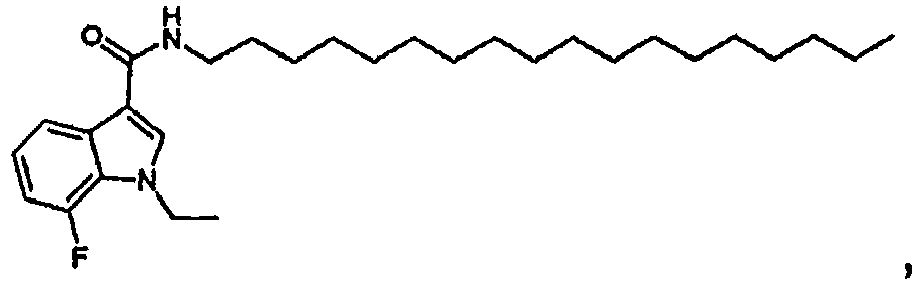
I-52 
I-53 
I-54 
I-55 
I-56 
I-57 
I-58 
I-61 
I-62 and 
I-63 - Preferably, the compounds are selected from
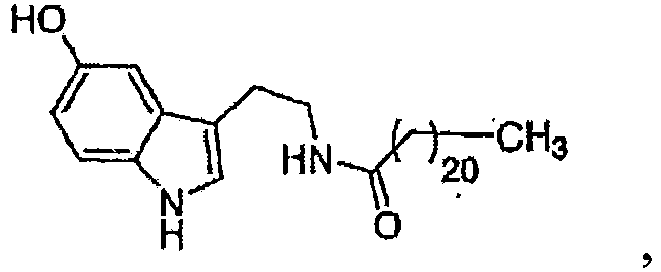
I-62 
I-63 
I-1 
I-2 
I-7 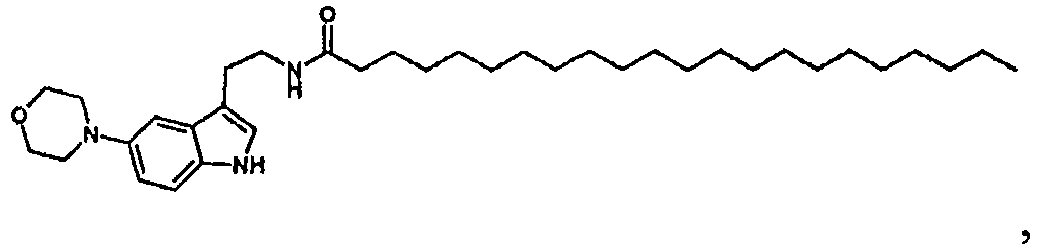
I-14 and 
I-32 - More preferably, the compounds are selected from

I-62 and 
I-63 - Compounds of the above described formulae may be provided according to the present invention in any of a variety of useful forms, for example as pharmaceutically acceptable salts, as particular crystal forms, etc. Prodrugs of one or more compounds of the above described formulae are presently disclosed. Various forms of prodrugs are known in the art, for example as discussed in Bundgaard (ed.), Design of Prodrugs, Elsevier (1985); Widder et al. (ed.), Methods in Enzymology, vol. 4, Academic Press (1985); Kgrogsgaard-Larsen et al. (ed.); "Design and Application of Prodrugs", Textbook of Drug Design and Development, ); Bundgaard et al., Journal of Drug Delivery Reviews, 8:1-38 (1992); Bundgaard et al., J. Pharmaceutical Sciences, 77:285 et seq. (1988); and Higuchi and Stella (eds.), Prodrugs as Novel Drug Delivery Systems, American Chemical Society (1975).
- Certain compounds useful in the present invention as in the above described formulae may exist in particular geometric or stereoisomeric forms. The present invention encompasses all such compounds for use in the invention, including cis- and trans-isomers, R- and S-enantiomers, diastereomers, (D)-isomers, (L)-isomers, the racemic mixtures thereof, and other mixtures thereof, as falling within the scope of the invention. It will be appreciated that asymmetric carbon atoms may be present in a substituent such as an alkyl group, such that different isomers of a particular compound may exist due to different configurations of a substituent. All such stereoisomers for use, as well as mixtures thereof, are intended to be included in this invention. In some embodiments, the present invention provides individual geometric (or conformational), isomeric compound forms for use (and/or compositions containing them); in some embodiments, the present invention provides compositions comprising two or more isomeric (e.g., geometric or steroisomeric) forms for use. Unless otherwise stated, all tautomeric forms of the compounds for use of the invention are within the scope of the invention. Additionally, unless otherwise stated, the present invention encompasses compounds for use that differ only in the presence of one or more isotopically enriched atoms from structures depicted herein. For example, compounds for use having the present structures including the replacement of hydrogen by deuterium or tritium, or the replacement of a carbon by a 13C- or 14C-enriched carbon are within the scope of this invention. Such compounds are useful, for example, as analytical tools, as probes in biological assays, or as therapeutic agents in accordance with the present invention. Mixtures of isomeric forms may be separated and/or purified by techniques as would be known to one skilled in this art, including but not limited to column chromatography.
- Those of ordinary skill in the art will appreciate that compositions containing two or isomeric forms of a compound may contain such different forms In particular relative amounts. For example, compositions containing only two isomers may include such isomers at ratios such as: 50:50, 60:40, 70:30, 80:20, 90:10, 95:5, 96:4, 97:3, 98:2, 99:1, or 100:0 isomer ratios. Those of ordinary skill In the art will readily appreciate that analogous ratios are contemplated for more complex isomer mixtures.
- If, for instance, a particular enantiomer of a compound for use of the present invention is desired, it may be prepared by asymmetric synthesis, or by derivation with a chiral auxiliary, where the resulting diastereomeric mixture is separated and the auxiliary group cleaved to provide the pure desired enantiomers. Alternatively, where the molecule contains a basic functional group, such as amino, or an acidic functional group, such as carboxyl, diastereomeric salts are formed with an appropriate optically-active acid or base, followed by resolution of the diastereomers thus formed by fractional crystallization or chromatographic means well known in the art, and subsequent recovery of the pure enantiomers.
- Compounds described herein can modulate PP2A activity and/or can have any of a variety of interesting biological activities. Such activities can be tested, assessed, and/or utilized using isolated compounds or using compounds in a composition (e.g., an extract, a comestible composition, a pharmaceutical composition, etc.). Examples included herein describe biological activities of the various compounds.
- Compounds that modulate PP2A activity can function by various mechanisms. To give but a few examples of possible mechanisms, compounds that modulate PP2A activity may modulate the methylation of PP2A, modulate the demethylation of PP2A, modulate the interaction of PP2A substrates with PP2A, modulate the interaction of auxiliary proteins with PP2A and/or directly interact with PP2A, etc
- Some compounds useful in the invention occur in nature and may be prepared or isolated from natural sources. In some embodiments, such compounds are prepared or isolated from extracts obtained from a botanical source. As will be appreciated by those of ordinary skill in the art, representative such botanical sources include, for example, coffee (e.g., from green coffee beans, roasted coffee beans, spent ground coffee beans, coffee wax, etc.), chocolate, withania somnifera (fruit), Butcher's broom (root), coconut, ginkgo biloba, bacopa monniera, nigella sativa, St. John's wort, annova atemoya (seeds), and scorodocarpus, borneesis (fruit). Those of ordinary skill in the art are well familiar with a wide array of separation and isolation techniques useful in the preparation of the compounds from natural extracts (e.g., botanical extracts).
- Described are synthetic methodologies for preparing compounds useful in the invention and/or compositions containing compounds useful in the invention, derivatives and synthetic intermediates thereof. As will be understood by those in the art, the provision of chemical synthesis methodologies allows access to a wide range of compounds that may not be found in nature and cannot be isolated or prepared from natural sources. Thus, described are methodologies that allow for the preparation of compounds useful in the invention and/or compositions containing compounds useful in the invention, derivatives and synthetic intermediates thereof that were previously not available.
- In certain embodiments, the present compounds are generally prepared according to Scheme I set forth below:

- In Scheme I above, each of R1, R2, n, and R3 is as defined herein.
- Described are methods for preparing compounds of formula I according to the step described in Scheme I above. In this step, an amine compound of formula A is coupled to an acid compound of formula B. Such coupling of a carboxylic acid with an amine can be performed using methods well known to one of ordinary skill in the art.
- In certain embodiments, the acid compound of formula B is activated prior to coupling. In certain embodiments, the carboxylic acid moiety of the acid compound of formula B is treated with a suitable reagent to form an acid halide prior to coupling. In certain embodiments, the suitable reagent is thionyl chloride. In certain embodiments, the acid halide is then coupled to the amine moiety of the amine compound of formula A, to form a compound of formula I. In certain embodiments, the suitable reagent is thionyl iodide. In certain embodiments, the acid halide is then coupled to the amine moiety of the amine compound of formula A, to form a compound of formula I. In certain embodiments, the suitable reagent is oxalyl chloride. In certain embodiments, the acid halide is then coupled to the amine moiety of the amine compound of formula A, to form a compound of formula I. In certain embodiments, the acid compound of formula B is treated with hydroxybenzotriazole (HOBt) to form the activated acid compound of formula B thereof, which is then coupled to the amine moiety of the amine compound of formula A, to form a compound of formula I. In certain embodiments, the acid compound of formula B is treated with a heterocyclic base to form the activated acid compound of formula B thereof which is then coupled to the amine moiety of the amine compound of formula A, to form a compound of formula I. In certain embodiments, the acid compound of formula B is treated with heterocyclic acid to form the activated acid compound of formula B thereof, which is then coupled to the amine moiety of the amine compound of formula A, to form a compound of formula I. In certain embodiments, the acid compound of formula B is treated with an organic base to form the activated acid compound of formula B thereof which is then coupled to the amine moiety of the amine compound of formula A, to form a compound of formula I. Such activated acid compound of formula B can be performed using other methods well known to one of ordinary skill in the art, e.g., see "Comprehensive Organic Transformations-A Guide to Functional Group Preparations," Richard C. Larock, 2nd Ed., pp. 1929-1932, John Wiley & Sons, Inc. New York (1999).
- In certain embodiments, the coupling is achieved with a suitable coupling agent. Such reagents are well known in the art and include, for example, benzotriazol-1-yl-oxy-tris-(dimethylamino)-phosphonium hexafluorphosphate (BOP), N,N'-carbonyldiimidazole (CDI), N,N'-dicyclohhexylcarbodiimide (DCC), N,N'-diisopropylcarbodiimide (DIC), 3-(diethoxyphosphorylloxy)-1,2,3-benzotriazin-4-(3H)-one (DEPBT), N-ethyl-N'-(3-dimethylaminopropyl)carbodiimide hydrochloride (EDC) or (EDAC), 2-(1H-benzotriazol-1-yl)-1,1,3,3-tetramethyluronoium hexafluorphosphate (HBTU), 2-(3,4-dihydro-4-oxo-1,2,3-benzotriazin-3-yl)-N,N,N',N'-tetramethyluronium hexafluorophosphate (HDBTU), 2-(mercaptobenzothiazol)-N,N,N',N'-tetramethyluronium hexafluorophosphate (HMTU), 2-(endo-5-norbornene-2,3-dicarboxymido)-1,1,3,3-tetramethyluronium hexafluorophosphate (HNTU), 1-hydroxibenzotriazol monohydrate (HOBt*H2O), 1-hydroxy-1H-1,2,3-Triazole-4-carboxylate (HOCt), N-hydroxy-5-norbornene-2,3-dicarboxylimide (HONB), 3-hydroxy-3,4-dihydro-4-oxo-1,2,3-benzotriazine (HOOBt), S-(1-oxido-2-pyridyl)-thio-N,N,N',N'-tetramethyluronium hexafluorophosphate (HOTT), O-succinimidyl-1,3-dimethylpropyleneuronium hexafluorophosphate (HPD-OSu), S-(1-oxo-2-pyridyl)-thio-1,3-dimethylpropyleneuronium hexafluorophosphate (HPTDP), O-(1,2-dihydro-2-oxo-pyridyl]-N,N,N',N'-tetramethyluronium hexafluorophosphate (HPTU), 2-succinimido-1,1,3,3-tetramethyluronium hexafluorophosphate (HSTU), 4-(4,6-dimethoxy-1,3,5-triazin-2-yl)-4-morpholinium tetrafluoroborate (MMTM), 1-(mesitylene-2-sulfonyl)-3-nitro-1,2,4-triazole (MSNT), pentafluorphenol-tetramethyluronium hexafluorophosphate (PFTU), tris-n-propan-phosphonic acid anhydride (50% in AcOEt) (PPAA/AcOEt), tris-n-propan-phosphonic acid anhydride (50% in DMF) (PPAA/DMF), 2-(1H-benzotriazole-1-yl)-1,1,3,3-tetramethyluronium tetrafluoroborate (TBTU), N,N,N',N'-tetramethylchloroformamidinium-hexafluorophosphate (TCFH), N,N,N',N'-tetramethylfluoroformamidinium hexafluorophosphate (TFFH), 2-(endo-5-norbornene-2,3-dicarboxymido)-1,1,3,3-tetramethyluronium tetrafluoroborate (TNTU), S-(1-oxo-2-pyridyl)-thio-N,N,N',N'-tetramethyluronium tetrafluoroborate (TOTT), O-succinimidyl-1,3-dimethylpropyleneuronium tetrafluoroborate (TPD-OSu), S-(1-oxo-2-pyridyl)-thio-1,3-dimethylpropyleneuronium tetrafluoroborate (TPTDP), O-(1,2-dihydro-2-oxo-pyridyl]-N,N,N',N'-tetramethyluronium tetrafluoroborate (TPTU), or NN,N',N'-tetramethyl-O-(succinimidyl)uronium tetrafluoroborate (TSTU), and combinations thereof. In some embodiments, the coupling agent is selected from the group consisting of HATU, SOCl2, PyBOP, and combinations thereof. In some embodiments, the coupling agent is or includes HATU; in some embodiments, the coupling agent is or includes SOCl2; in some embodiments, the coupling agent is or includes PyBOP; in some embodiments, the coupling agent is or includes (COCl)2.
- In certain embodiments, the coupling is performed in the presence of a suitable base. Such suitable bases are well known in the art and include organic bases, e.g., triethylamine, DIEA, pyridine, DABCO, and other non-nucleophilic basic nitrogen containing molecules. Other suitable bases include aqueous inorganic bases, such as NaOH, Na2CO3, NaHCO3, KOH, K2CO3, KHCO3, Na3PO4, K3PO4, NH4OH, Ca(OH)2, LiOH, or Li2CO3-Combinations of such bases may also be employed. In some embodiments, a base is selected from the group consisting of pyridine, TEA, NaHCO3, DIEA, and combinations thereof (e.g., TEA/pyridine).
- In certain embodiments, the coupling is performed in the presence of a suitable solvent or a solvent mixture that, in combination with the combined reacting partners and reagents, facilitates the progress of the reaction therebetween. A suitable solvent may solubilize one or more of the reaction components, or, alternatively, the suitable solvent may facilitate the suspension of one or more of the reaction components; see generally, Larock, R.C. Comprehensive Organic Transformation, A Guide to Functional Group Preparation, 2nd Edition, 1999, John Wiley & Sons (New York, NY). Suitable solvents for use in the coupling step include ethers, halogenated hydrocarbons, aromatic solvents, polar aprotic solvents, or mixtures thereof. In certain embodiments, the solvent is or contains diethyl ether, dioxane, tetrahydrofuran (THF), dichloromethane (DCM), dichloroethane (DCE), chloroform, toluene, benzene, dimethylformamide (DMF), dimethylacetamide (DMA), dimethylsulfoxide (DMSO), N-methyl pyrrolidinone (NMP), glyme and diglyme, or mixtures thereof. In certain embodiments, the coupling is performed in the presence of a a suitable solvent mixture. This mixture may include water and/or an organic solvent or a mixture of organic solvents.
- In certain embodiments, the coupling step is conducted at temperatures between about -12 °C to about 90 °C. In certain embodiments, the coupling step is conducted at about 0 °C to about 60 °C. In certain embodiments, the coupling step is conducted at about 16 °C to about 28 °C.
- In certain embodiments, the coupling step, when conducted under Schotten-Bauman conditions, is conducted at a pH in the range of about 7.5 to about 10. In certain embodiments, the coupling step is conducted at a pH in the range of about 8.5 to about 9.5. In certain embodiments, the coupling step is conducted at a pH of about 9.
- The above described methods, and others, are known to one of ordinary skill in the art, e.g., see "Advanced Organic Chemistry," Jerry March, 5th Ed., John Wiley and Sons, N.Y.
- The naturally occurring compounds of Formula I may be prepared from extracts obtained from a variety of botanical sources such as green coffee beans, roasted coffee beans, spent ground coffee beans, coffee wax (collectively "coffee"), coffee cherries (berries), chocolate, withania somnifera (fruit), Butcher's broom (root), coconut, ginkgo biloba, bacopa monniera, nigella sativa, St. John's wort, annova atemoya (seeds), and scorodocarpus borneesis (fruit). The compounds may be separated from the botanical source by any method known to those of ordinary skill in the art. Exemplary methods for extraction are described, for example, in
US 2008/0213406 . - For example, the compounds can be extracted from coffee by adding a solvent to coffee and agitating the resulting mixture, followed by removal of the solvent and collection of the residue containing the compounds. Any solvent in which the compounds are soluble may be used, including alcohols, such as ethanol, and chlorinated solvents, such as dichloromethane. In some embodiments, the agitation is performed by shaking the mixture for about 30 minutes to about 300 minutes. In other embodiments, the agitation is performed at a temperature ranging from about 20°C to about the boiling point of the solvent.
- Depending on the purity of the resulting residue, the residue is then loaded onto a column, eluted with a solvent, and the different fractions collected. The fraction containing the desired compound(s) may be further purified as necessary, such as by preparative HPLC, repeated column chromatography, or by extraction. This, and related methods known to those of skill in art allow for the separation of compounds from less desirable compounds also contained in the botanical source, such as free fatty acids, caffeine, caffeic acid, chlorogenic acid and other lipids. These methods also allow for the removal of compounds of Formula I where W is less than 15 or greater than 22. In some embodiments these less desirable compounds are present in amounts less than 20% by weight of the composition. As an alternative to column purification, one skilled in the art will recognize that the product can be purified by precipitation or crystallization.
- In some aspects, naturally occurring compounds of formula I are prepared by extracting coffee wax. Coffee wax can be extracted in a solvent such as acetonitrile, hexane, ethyl acetate, petroleum ether, diethyl ether, ethanol, heptanes, benzene, toluene, diglyme, glyme, propyl acetate, butyl acetate, isopropanol, butanol, chlorophorm, dichloroethane or a combination thereof. In some embodiments, solvent extraction is carried out at elevated temperatures (e.g., at a temperature at or above 50°C, 55°C, or 60°C). In some embodiments, solvent extraction is carried out under vacuum. Insoluble particulate material is removed by any available means (e.g., filtration). A fraction containing compounds is isolated from the extract, e.g., by precipitation and/or solvent evaporation. In some embodiments, an extract is cooled to precipitate impurities, or to precipitate the desired compounds. One of skill in the art is able to determine whether a given condition precipitates impurities or the desired compounds. Precipitated material containing compounds can be washed by further extraction, e.g., with one or more additional solvent extraction and precipitation steps, using the same solvents as used in the initial extraction, or using different solvents, optionally at elevated temperatures. Extracts enriched for compounds can be subjected to further purification and/or concentration steps, e.g., to enrich for a particular compound of interest.
- In some embodiments, a coffee extraction method produces an extract comprising at least 2%, 3%, 4%, 5%, 10%, 20%, 30%, 40%, 50%, 60%, 70%, 80%, or 90% compound(s). In some embodiments, a coffee extraction method produces an extract comprising at least 2%, 3%, 4%, 5%, 10%, 20%, 30%, 40%, 50%, 60%, 70%, 80%, or 90% of a particular compound.
- In one exemplary method, an extract is prepared from coffee wax as follows. Coffee wax is dissolved in acetonitrile and heated to 60°C under vacuum. Insoluble material is removed and extraction of insoluble material is repeated. The soluble portions of the extraction are combined and cooled to 4°C over 16 hours and filtered. The precipitate collected from the filtration is dissolved in hot acetonitrile at 60°C, cooled at 4°C up to 16 hours and filtered. The solid phase is dissolved in hot ethanol at 70°C, cooled to room temperature, and incubated for 16 hours. The precipitate is recovered and is optionally subjected to further purification steps, e.g., to isolate a particular compound.
- In another exemplary method, an extract is prepared from coffee wax by first dissolving the coffee wax in ethyl acetate and heating to 50°C under vacuum. The extract is cooled at room temperature for one hour and filtered. Solid precipitate is discarded. The filtrate is evaporated to dryness and dissolved in hexane or petroleum ether at 50°C and filtered. Compounds provided herein can be recovered from the solid phase (e.g., at 60-80% purity) or from the liquid phase (e.g., at 15-40% purity).
- The present invention provides a composition comprising a compound as defined herein or a pharmaceutically acceptable salt thereof for use in treating or lessening the severity of a disease or disorder as defined herein. Such compositions may be formulated as pharmaceutical and/or nutraceutical preparations. Compositions as described herein may be used in the treatment of one or more diseases, disorders, or conditions, for example, those associated with abnormal levels of PP2A methylation and/or PP2A phosphatase activity.
- In general, one or more compounds described herein may be formulated into pharmaceutical and/or nutraceutical compositions by admixing a compound or extract containing a compound or extract, containing a compound, further fortified with the compound and/or extract of formula I with one or more additives (e.g., carriers, vehicles, binders, diluents, etc.) suitable for the selected route of administration.
- In certain embodiments, compositions provided herein comprise at least one component of a botanical source that produces the compound, which botanical source is selected from the group consisting of green coffee beans, roasted coffee beans, spent ground coffee beans, coffee wax (collectively "coffee"), coffee cherries (berries), chocolate, withania somnifera (fruit), Butcher's broom (root), coconut, ginkgo biloba, bacopa monniera, nigella sativa, St. John's wort, annova atemoya (seeds), and scorodocarpus borneesis (fruit).
- In certain embodiments, compositions provided herein are substantially free of caffeine, caffeic acid or chlorogenic acid. In certain embodiments, the composition contains less than about 10%, 9%, 8%, 7%, 6%, 5%, 4%, 3%, 2%, 1%, 0.5%, 0.4%, 0.3%, 0.2%, 0.1%, 0.01% or less of caffeine, caffeic acid, and/or chlorogenic acid.
- The amount of compound of formulae described herein added to a nutraceutical, pharmaceutical, or comestible is typically at least about 0.1 mg. In some embodiments, the compound is dosed at least once per day. In other embodiments, supplemental dosages can be administered after the initial dosage and can contain any additional amount of compound beyond the initial about 0.1 mg dose. In some embodiments, the nutraceutical, pharmaceutical or comestible contains at least 0.1 mg of the compound of formulae added to or fortified in an extract containing at least 0.1 mg of the compound.
- In certain embodiments, the amount of, the compounds added to a nutraceutical, pharmaceutical, or comestible is typically at least about 8 mg. In some embodiments, the compound is dosed at least once per day. In other embodiments, supplemental dosages can be administered after the initial dosage and can contain any additional amount of compound beyond the initial about 8 mg dose. In some embodiments, the nutraceutical, pharmaceutical or comestible contains at least 8 mg of the compound of formulae added to or fortified in an extract containing at least 8 mg of the compound.
- Described is a packaged nutraceutical, pharmaceutical, or comestible comprising at least about 0.1 mg of a compound of the formulae herein, having an activity in the inhibition of methylesterase (IC50) of less than about 100 µM. In certain embodiments the activity in the inhibition of methylesterase (IC50) is less than about 90 µM. In certain embodiments the activity in the inhibition of methylesterase (IC50) is less than about 80 µM. In certain embodiments the activity in the inhibition of methylesterase (IC50) is less than about 70 µM. In certain embodiments the activity in the inhibition of methylesterase (IC50) is less than about 60 µM. In certain embodiments the activity in the inhibition of methylesterase (IC50) is less than about 50 µM. In certain embodiments the activity in the inhibition of methylesterase (IC50) is less than about 40 µM. In certain embodiments the activity in the inhibition of methylesterase (IC50) is less than about 30 µM. In certain embodiments the activity in the inhibition of methylesterase (IC50) is less than about 20 µM. In certain embodiments the activity in the inbibition of methylesterase (IC50) is less than about 10 µM. In certain embodiments the activity in the inhibition of methylesterase (IC50) is less than about 5 µM.
- Described is a packaged nutraceutical, pharmaceutical, or comestible comprising at least about 8 mg of a compound of the formulae herein, having an activity in the inhibition of methylesterase (IC50) of less than about 100 µM. In certain embodiments the activity in the inhibition of methylesterase (IC50) is less than about 90 µM. In certain embodiments the activity in the inhibition of methylesterase (IC50) is less than about 80 µM. In certain embodiments the activity in the inhibition of methylesterase (IC50) is less than about 70 µM. In certain embodiments the activity in the inhibition of methylesterase (IC50) is less than about 60 µM. In certain embodiments the activity in the inhibition of methylesterase (IC50) is less than about 50 µM. In certain embodiments the activity in the inhibition of methylesterase (IC50) is less than about 40 µM. In certain embodiments the activity in the inhibition of methylesterase (IC50) is less than about 30 µM. In certain embodiments the activity in the inhibition of methylesterase (IC50) is less than about 20 µM. In certain embodiments the activity in the inhibition of methylesterase (IC50) is less than about 10 µM. In certain embodiments the activity in the inhibition of methylesterase (IC50) is less than about 5 µM.
- Described is a packagea nutraceutical,
pharmaceutical, or comestible comprising at least about 0.1 mg of a compound of the formulae herein, having an activity in the inhibition of methyltransferase (IC50) of less than about 100 µM, an additive, and instructions for use thereof. In certain embodiments the activity in the inhibition of methyltransferase (IC50) is less than about 90 µM. In certain embodiments the activity in the inhibition of methyltransferase (IC50) is less than about 80 µM. In certain embodiments the activity in the inhibition of methyltransferase (IC50) is less than about 70 µM. In certain embodiments the activity in the inhibition of methyltransferase (IC50) is less than about 60 µM. In certain embodiments the activity in the inhibition of methyltransferase (IC50) is less than 50 µM. In certain embodiments the activity in the inhibition of methyltransferase (IC50) is less than about 40 µM. In certain embodiments the activity in the inhibition of methyltransferase (IC50) is less than about 30 µM. In certain embodiments the activity in the inhibition of methyltransferase (IC50) is less than about 20 µM. In certain embodiments the activity in the inhibition of methyltransferase (IC50) is less than about 10 µM. In certain embodiments the activity in the inhibition of methyltransferase (IC50) is less than about 5 µM. - Described is a packaged nutraceutical, pharmaceutical, or comestible comprising at least about 8 mg of a compound of the formulae herein, having an activity in the inhibition of methyltransferase (IC50) of less than about 100 µM, an additive, and instructions for use thereof. In certain embodiments the activity in the inhibition of methyltransferase (IC50) is less than about 90 µM. In certain embodiments the activity in the inhibition of methyltransferase (IC50) is less than about 80 µM. In certain embodiments the activity in the inhibition of methyltransferase (IC50) is less than about 70 µM. In certain embodiments the activity in the inhibition of methyltransferase (IC50) is less than about 60 µM. In certain embodiments the activity in the inhibition of methyltransferase (IC50) is less than about 50 µM. In certain embodiments the activity in the inhibition of methyltransferase (IC50) is less than about 40 µM. In certain embodiments the activity in the inhibition of methyltransferase (IC50) is less than about 30 µM. In certain embodiments the activity in the inhibition of methyltransferase (IC50) is less than about 20 µM. In certain embodiments the activity in the inhibition of methyltransferase (IC50) is less than about 10 µM. In certain embodiments the activity in the inhibition of methyltransferase (IC50) is less than about 5 µM.
- Any additive may be used provided that they do not destabilize the compositions. Without wishing to be bound by any particular theory, it is believed that strong bases, effervescent disintegrants, and oxidants should be kept to a minimum in any formulation or composition to avoid destabilization.
- Suitable additives include, but are not limited to, dietary suitable starch, vegetable oil, vegetable gums, gelatins, soy extracts, sugars, grains, natural and artificial flavorings, and the like. Other suitable additives include water, salt solutions, alcohol, vegetable oils, polyethylene glycols, gelatin, lactose, amylose, magnesium stearate, talc, silicic acid, viscous paraffin, perfume oil; fatty acid monoglycerides and diglycerides, petroethral fatty acid esters, hydroxymethylcellulose, polyvinylpyrrolidone, and the like. Yet other suitable additives include Cremaphor, Tween, and cyclodextrin. Further additives or carriers are described in detail in Remington's Pharmaceutical Sciences, Twentieth Edition, ©2000.
- Of course, the additive selected, and the amount of additive needed, depend on the route of administration and vehicle chosen for delivery. In some embodiments, the additive is formulated with the compound as a unit-dose formulation. For example, a tablet may contain from about 0.5% to about 95% by weight of a compound of formula I and from about 5% to about 99.5% of an additive. Those skilled in the art will be able to select an appropriate amount of additive depending on the amount of compound and route of administration.
- A dosage form may include other conventional excipients in generally known amounts. In some embodiments, these excipients supplement, or depending on their properties, replace the additives mentioned above, and thus can act as carriers or vehicles themselves for the compositions. These may include binders, sweeteners, coloring components, flavors, glidants, lubricants, preservatives, fillers, noneffervescent disintegrants, stabilizers, wetting agents, emulsifiers, and salts for influencing osmotic pressure. Of course, other auxiliary ingredients may be added to any formulation, including colorings, flavoring and/or aromatic substances.
- Examples of excipients include the following: Fillers include sugar and sugar alcohols and these may include nondirect compression and direct compression fillers. Nondirect compression fillers generally, at least when formulated, have flow and/or compression characteristics which make them impractical for use in high speed tableting process without augmentation or adjustment. For example, a formulation may not flow sufficiently well and therefore, a glidant such as, for example, silicon dioxide may need to be added.
- Direct compression fillers, by contrast, do not require similar allowances. They generally have compressibility and flowability characteristics which allow them to be used directly. It is noted that, depending upon the method by which formulations are made, nondirect compression fillers may be imparted with the properties of direct compression fillers. The reverse is also true. As a general matter, non direct compression fillers tend to have a relatively smaller particle size when compared to direct compression fillers. However, certain fillers such as spray dried mannitol have relatively smaller particle sizes and yet are often directly compressible, depending upon how they are further processed. There are also relatively large nondirect compression fillers as well.
- Suitable fillers include mannitol, lactose, sorbitol, dextrose, sucrose, xylitol and glucose. Noneffervescent disintegrants may also be used in accordance with the present invention. These may also include binders that have disintegrating properties. Disintegrants in accordance with the present invention can include microcrystalline cellulose, cross linked polyvinyl pyrrolidone (PVP XL), sodium starch glycolate, croscarmellose dosium, cross-lined hydroxypropyl cellulose and the like.
- The compositions may be formulated as aqueous suspensions wherein the compound is in admixture with excipients, additives and/or suitable for the manufacture of aqueous suspensions. Such additives and/or excipients are suspending agents, for example, sodium carboxymethylcellulose, methylcellulose, hydroxy-propylinethylcellulose, sodium alginate, polyvinylpyrrolidone, gum tragacanth, and gum acacia; dispersing or wetting agents may be a naturally-occurring phosphatide such as lecithin, or condensation products of an alkylene oxide with fatty acids, for example, polyoxyethylene stearate, or condensation products of ethylene oxide with long chain aliphatic alcohols, for example, heptadecaethyl-eneoxycetanol, or condensation products of ethylene oxide with partial esters derived from fatty acids and a hexitol such as polyoxyethylene sorbitol monooleate, or condensation products of ethylene oxide with partial esters derived from fatty acids and hexitol anhydrides, for example polyethylene sorbitan monooleate. The aqueous suspensions also may contain one or more coloring agents, one or more flavoring agents, and one or more sweetening agents, such as sucrose or saccharin.
- Compositions may be formulated as oily suspensions by suspending the compound in a vegetable oil, for example arachis oil, olive oil, sesame oil or coconut oil, or in a mineral oil, such as liquid paraffin. The oily suspensions may contain a thickening agent, for example, beeswax, hard paraffin or cetyl alcohol. Sweetening agents, such as those set forth above, and flavoring agents may be added to provide a palatable oral composition. These compositions may be preserved by the addition of an antioxidant such as ascorbic acid.
- Compositions may be formulated in the form of dispersible powders, and granules suitable for composition of an aqueous suspension by the addition of water. The compounds in such powders and granules is provided in admixture with a dispersing or wetting agent, suspending agent, and one or more preservatives. Suitable dispersing or wetting agents and suspending agents are exemplified by those already mentioned above. Additional excipients or example, sweetening, flavoring and coloring agents also may be present.
- Compositions also may be in the form of oil-in-water emulsions. The oily phase may be a vegetable oil, for example, olive oil or arachis oil, or a mineral oil, for example a liquid paraffin, or a mixture thereof. Suitable emulsifying agents may be naturally-occurring gums, for example, gum acacia or gum tragacanth, naturally occurring phosphatides, for example soy bean, lecithin, and esters or partial esters derived from fatty acids and hexitol anhydrides, for example sorbitan monooleate, and condensation products of the partial esters with ethylene oxide, for example, polyoxyethylene sorbitan monooleate. The emulsions also may contain sweetening and flavoring agents.
- Compositions also may be formulated as syrups and elixirs. Syrups and elixirs may be formulated with sweetening agents, for example, glycerol, propylene glycol, sorbitol or sucrose. Such formulations also may contain a demulcent, a preservative, and flavoring and coloring agents. Demulcents are protective agents employed primarily to alleviate irritation, particularly mucous membranes or abraded tissues. A number of chemical substances possess demulcent properties. These substances include the alginates, mucilages, gums, dextrins, starches, certain sugars, and polymeric polyhydric glycols. Others include acacia, agar, benzoin, carbomer, gelatin, glycerin, hydroxyethyl cellulose, hydroxypropyl cellulose, hydroxypropyl methylcellulose, propylene glycol, sodium alginate, tragacanth, hydrogels and the like.
- The compositions and compounds may be added to traditional pharmaceutical or nutraceutical dosage forms or may be combined with comestibles.
- In some embodiments, the dosage form is administered as a pharmaceutical or neutraceutical. In other embodiments, the dosage forms are added to foods, beverages, or other comestibles.
- Described is a nutraceutical, pharmaceutical, or comestible formulation comprising: an active ingredient, at least one solubilizing and/or thickening agent, at least one solvent, and a diluent.
- In certain embodiments, the active ingredient is a compound as described herein. In certain embodiments, the active ingredient in the formulation is compound 1-63. In certain embodiments, the active ingredient is present in the formulation in an amount of about 0.5% (wt %). In certain embodiments, the active ingredient is present in the formulation in an amount of about 5% (wt %). In certain embodiments, the active ingredient is present in the formulation in an amount of about 10% (wt %). In certain embodiments, the active ingredient is present in the formulation in an amount of about 25% (wt %). In certain embodiments, the active ingredient is present in the formulation in an amount of about 50% (wt %).
- In certain embodiments, the formulation comprises at least one solubilizing agent and/or thickening agent. In certain embodiments, the solubilizing agent and/or thickening agent is a fatty acid ethyl ester. In certain embodiments, the solubilizing agent and/or thickening agent is ethyl oleate. In certain embodiments, the solubilizing agent and/or thickening agent is Solutol-HS15 (i.e., polyethylene glycol 660 hydroxy stearate). In certain embodiments, the solubilizing agent and/or thickening agent is a surfactant. In certain embodiments, the surfactant is nonionic. In certain embodiments, the solubilizing agent and/or thickening agent is Tween-80 or
Polysorbate 80. In certain embodiments, the solubilizing agent and/or thickening agent is present in an amount of about 20-30% (wt %). In certain embodiments, the solubilizing agent and/or thickening agent is present in an amount of about 0-7% (wt %). In certain embodiments, the solubilizing agent and/or thickening agent is present in an amount of about 0-1% (wt %). - In certain embodiments, the formulation comprises at least one solvent. In certain embodiments, the solvent is a polar, organic solvent. In certain embodiments, the solvent is an alcohol. Exemplary alcohols include isopropanol, SDA-3A alcohol, or ethanol. In certain embodiments, the solvent is present in an amount of from about 0 to 5% (wt %). In certain embodiments, the solvent is present in an amount of from about 0 to 1% (wt %).
- In certain embodiments, the formulation comprises at least one diluent. In certain embodiments, the diluent is phosphate buffered saline (PBS). In certain embodiments, the PBS is present in an amount of from about 20%-50% (wt %). In certain embodiments, the PBS is present in an amount of from about 40% (wt %).
- In certain embodiments, the formulation has a pH range of from about 2.0-9.0. In certain embodiments, the pH is from 3.0-5.0. In certain embodiments, the pH is 4.9.
- Other ingredients which may be desirable to use in the preparations of provided compositions include preservatives, co-solvents and viscosity building agents, additives, excipients, fillers, organometallic modifiers, coloring and masking agents
- One skilled in the art will readily appreciate that the category under which a particular component of a formulation is listed is not intended to be limiting. In some cases, a particular component might appropriately fit in more than one category. Also, as will be appreciated by one skilled in the art, the same component can sometimes perform different functions, or can perform more than one function, in the context of a particular formulation for example, depending upon the amount of the ingredient and/or the presence of other ingredients and/or active compound(s). Exemplary categories of components used herein include, but are not limited to, solubilizing agent, thickening agent, preservatives, co-solvents, viscosity building agents, additives, excipients, fillers, etc.
The invention provides composition comprising: - a compound as defined herein in an amount of 0.5% to 3.0% (wt %);
-
Tween 80 in an amount of 20% to 30% (wt %); - PEG-400 in an amount of 20% to 30% (wt %);
- PBS in an amount of 40% to 43% (wt %); and
- having a pH of from 4.0 to 9.0.
- The therapeutically effective dose of any specific compounds of the formulae described herein will vary from compound to compound, subject to subject, and upon the route of delivery, as well as the final formulation. In some embodiments, to be therapeutically effective, 0.1 mg of one or more compounds of the formulae described herein must be administered daily. In some embodiments, to be therapeutically effective, 0.1 mg of one or more compounds of the formulae described herein must be administered daily. In certain embodiments, at least about 12 mg of a compound of the formulae described herein can be administered daily. In certain embodiments, at least about 8 mg of at least one compound of the formulae described herein can be administered daily. In yet other embodiments, at least about 20 mg of at least one compound of the formulae described herein can be administered daily. In yet further embodiments, at least about 50 mg of at least one compound of the formulae described herein can be administered daily. In yet even further embodiments, at least about 100 mg of at least one compound of the formulae described herein can be administered daily.
- Additional doses beyond about a 0.1 mg dose may be given throughout the day. These supplemental doses may contain any amount of the compounds. In some embodiments, the supplemental doses include at least an additional 0.1 mg of at least one compound of the formulae described herein. In some embodiments, the supplemental doses include at least an additional 8 mg of at least one compound of the formulae described herein. In some embodiments, the supplemental doses include at least an additional 0.1 mg of at least one compound of the formulae described herein. In some embodiments, the supplemental doses include at least an additional 8 mg of at least one compound of the formulae described herein. In other embodiments, the supplemental dosages include at least an additional 12 mg of at least one compound of the formulae described herein. In yet other embodiments, the supplemental dosages include at least an additional about 20 mg of at least one compound of the formulae described herein.
- Accordingly, any dosage form (whether a nutraceutical, pharmaceutical, comestible, or an extract) which is administered only once daily should contain at least 0.1 mg of a compound of the formulae described herein. In certain embodiments, any dosage form (whether a nutraceutical, pharmaceutical, comestible, or an extract) which is administered only once daily should contain at least 8 mg of a compound of the formulae described herein. Of course, it is entirely acceptable for multiple doses to be administered.
- In some embodiments, the subject is dosed two or more times per day. In some embodiments, the subject is provided a daily dose of 0.1 mg/day, 8 mg/day, 12 mg/day, 10 mg/day, 12 mg/
day 20 mg/day, 24 mg/day, 50 mg/day, and 100 mg/day of one or more of the compounds of the formulae described herein. - While there is believed to be no upper limit in the amount of a compound of the formulae described herein which may be administered, as with any substance taken into the body, subjects should avoid dosage levels which could result in toxicity.
- The compounds their salts, acid derivatives and/or mixtures thereof are useful as nutraceuticals or as pharmaceutically active agents and may be utilized in bulk form or may be formulated into nutraceutical or pharmaceutical compositions for administration. For example, compositions comprising at least one compound described herein can be administered as conventional pharmaceuticals or as neutraceutical compositions, including dietary supplements.
- Alternatively, the compound may be added to foods or beverages and, thus administered as part of a comestible product.
- In general, compositions comprising a therapeutically or pharmaceutically effective amount of a compound may be formulated for administration in unit dosage forms.
- In some embodiments, the dosage form is administered by any route including oral, buccal, parenteral, transdermal, tranmucosal, or inhalation.
- Compositions provided herein may be in a form suitable for oral use, for example, as tablets, troches, lozenges, pills, aqueous or oily suspensions, solutions, dispersible powders or granules, emulsions, hard or soft capsules, syrups or elixirs, pastes, gels or the like.
- Compounds intended for oral use may be prepared according to any known method, and such compositions may contain one or more excipients selected from the group consisting of sweetening agents, flavoring agents, coloring agents, and preserving agents in order to provide pharmaceutically elegant and palatable compositions. In general, the formulations for oral administration are prepared by uniformly and intimately admixing the active compound with a liquid or finely divided solid excipient, or both, and then, if necessary, shaping the resulting mixture.
- Tablets may contain the active ingredient(s) in admixture with non-toxic pharmaceutically acceptable additives and/or excipients which are suitable for the manufacture of tablets. These additives or excipients may be, for example, fillers, wetting agents, inert diluents, such as calcium carbonate, sodium carbonate, lactose, calcium phosphate or sodium phosphate; granulating effervescent disintegrating agents (e.g., effervescent tablets) and noneffervescent disintegrating agents, for example, corn starch or alginic acid; binding agents, for example, starch, gelatin or acacia; and lubricating agents, for example, magnesium stearate, stearic acid or talc.
- Tablets may be prepared by traditional methods such as by compressing or molding a powder or granules containing the compound. Compressed tablets may be prepared by compressing, in a suitable machine, the compound in a free-flowing form, such as a powder or granules optionally mixed with a binder, lubricant, inert diluent, and/or surface active/dispersing agent(s). Molded tablets may be made by molding, in a suitable machine, the powdered compound moistened with an inert liquid binder.
- Tablets may be uncoated or they may be coated by known techniques to delay disintegration and absorption in the gastrointestinal tract and thereby provide a sustained action over a longer period. For example, a time delay material such as glyceryl monostearate or glyceryl distearate may be employed. They also may be coated for controlled delivery. For example, a "delayed release" dosage form releases a product or substance at a time other than promptly after administration. Examples of delayed-release systems include repeat-action tablets and capsules, and enteric-coated tablets where timed release is achieved by a barrier coating.
- Compositions may be formulated for oral use as hard gelatin capsules, where the compounds are mixed with an inert solid diluent, for example, calcium carbonate, calcium phosphate or kaolin, or soft gelatin capsules wherein the active ingredient(s) is (are) mixed with water or an oil medium, for example, peanut oil, liquid paraffin, or olive oil.
- In another embodiment, liquid preparations for oral administration can also be used. Liquid preparations can be in the form of solutions, syrups or suspensions, or a dry product for reconstitution with water or another suitable vehicle before use. Such liquid preparations can be prepared by conventional means with pharmaceutically acceptable additives such as suspending agents, emulsifying agents, non-aqueous vehicles, and preservatives.
- Liquid based oral dosage forms, like their solid counterparts, must contain at least 0.1 mg of a compound described herein. In certain embodiments, the liquid based oral dosage forms, like their solid counterparts, must contain at least 8 mg of a compound described herein. One skilled in the art will be able to properly formulate a liquid formulation containing an appropriate amount of a compound per fluidic ounce, depending on the additive or carrier selected.
- Alternatively, or additionally, the pharmaceutical compositions may be administered in the form of suppositories for rectal and/or vaginal administration. These may be prepared by mixing the agent with a suitable non-irritating excipient which is solid at room temperature but liquid at rectal and/or vaginal temperature and therefore will melt in the rectum and/or vagina to release the drug. Such materials include cocoa butter, beeswax and polyethylene glycols.
- Formulations suitable for buccal administration include tablets and lozenges comprising a compound described hrerein in a flavored base, such as sucrose, acacia or tragacanth; and pastilles comprising the compound in an. inert base, such as gelatin and glycerin or sucrose and acacia.
- Formulations suitable for topical application to the skin take the form of an ointment, cream, lotion, paste, gel, spray, aerosol, or oil. Additives which may be used include vaseline, lanoline, polyethylene glycols, alcohols, transdermal enhancers, and combinations of two or more thereof.
- Formulations suitable for transdermal administration may also be presented as medicated bandages or discrete patches adapted to remain in intimate contact with the epidermis of the recipient for a prolonged period of time. Formulations suitable for transdermal administration may also be delivered by iontophoresis (passage of a small electric current (15 mA) to "inject" electrically charged ions into the skin) through the skin. For this, the dosage form typically takes the form of an optionally buffered aqueous solution of the active compound.
- For administration by inhalation, compositions for use in the present invention can be delivered in the form of an aerosol spray in a pressurized package or as a nebulizer, with use of suitable propellants and/or pellets. In the case of a pressurized aerosol, the dosage unit can be determined by providing a valve to deliver a metered dose in accordance with the invention.
- Parenterally administered compositions are formulated to allow for injection, either as a bolus or as a continuous infusion. For parenteral application, "parenteral" meaning subcutaneous injections, intravenous, intramuscular, intrasternal injection, or infusion techniques, particularly suitable vehicles consist of solutions, preferably oily or aqueous solutions, as well as suspensions, emulsions, or implants. Formulations for injection can be prepared in unit dosage forms, such as ampules, or in multi-dose units, with added preservatives. The compositions for injection can be in the form of suspensions, solutions, or emulsions, containing either oily or aqueous additives. They may also contain formulatory agents such as suspending agents, stabilizing agents, and/or dispersing agents. Compounds of the present invention may also be presented in powder form for reconstitution with a suitable vehicle before use.
- Compositions also may be in the form of a sterile injectable aqueous or oleaginous suspension. Injectable compositions, such as sterile injectable aqueous or oleaginous suspensions, may be formulated according to the known art using suitable dispersing or wetting agents and suspending agents. The sterile injectable composition may also be a sterile injectable solution or suspension in a nontoxic parenterally acceptable diluent or solvent, for example, as a solution in 1,3-butanediol. Among the acceptable vehicles and solvents that may be employed are water, Ringer's solution, and isotonic sodium chloride solution. In some embodiments, formulations of the present invention suitable for parenteral administration conveniently comprise sterile aqueous preparations of the active compound, which preparations are preferably isotonic with the blood of the intended recipient. Such preparations may conveniently be prepared by admixing the active compound with water or a glycine buffer and rendering the resulting solution sterile and isotonic with the blood.
- In addition, sterile, fixed oils are conventionally employed as a solvent or suspending medium. Aqueous suspensions may contain substances which increase the viscosity of the suspension and include, for example, sodium carboxymethyl cellulose, sorbitol and/or dextran. Optionally, the suspension may also contain stabilizers.
- Alternately, compounds of formula I be added to a parenteral lipid solution.
- The compounds and compositions containing the compounds may also be formulated as or with comestibles. The comestibles of the invention include water, flavored water, fruit-based drinks, coffee-based drinks (caffeinated or decaffeinated), tea-based drinks, sport drinks, nutrition bars, snack foods, gums, cereals, candies, baby formulas, energy drinks, adult nutritional drinks, health drinks, spirits, fruit juices, carbonated beverages, and other food products. The term "sports drink" refers to a beverage that is supposed to rehydrate athletes, as well as restoring electrolytes, sugar and other nutrients, for example, Gatorade®, POWERade®, and All Sport®. As used herein, the term "energy drink" refers to a beverage, including, but not limited to, Jolt Cola®, Red Bull® and similar products, that contains legal stimulants, electrolytes, vitamins and minerals; these products are formulated to give the user a burst of energy. The term "adult nutritional drink" as used herein refers to such products as Ensure®, Longetics® or a similar product. The term "health drink" refers to any beverage purported to have beneficial health effects, including, but not limited to, reducing inflammation, supporting the immune system, neutralizing infectious agents, preventing clogged arteries, preserving cognitive function and inhibiting cancer growth. The comestibles may also include additional ingredients that confer cognitive or other health benefits. In the case of beverages, the comestibles can be used in powder form which can be dissolved in a liquid suitable for human consumption.
- Adding a compound described herein to decaffinated coffee, tea or other decaffeinated products is especially appealing. It is believed that the decaffeination process not only strips caffeine out of the coffee, but also removes or reduces the amount of certain compounds described herein. In that case, in order to attain the health benefits presumably attributed to certain coffees, it is necessary to add back in those compounds which were removed or whose concentrations were reduced.
- The compounds can also be combined with ordinary foods. For example, the compositions can be mixed with soft drinks, food supplements, candy, cereal, breakfast bars, high-energy bars, and virtually any other food that can be supplemented with a powder, granules, or liquid. Thus, specifically described herein are food substances of specific types combined with the composition of the invention in specified forms and quantities. The comestibles can either be a meal replacement or a snack between meals.
- Moreover, the compounds can be administered either alone or in combination with other phytochemicals, as dietary supplements, known to affect anxiety. The dietary supplements can be in the form of a solid bar, a paste, a gel, a tablet, a capsule, or a liquid. Examples of other phytochemicals which can be used in combination with compounds described herein include, but are not limited to, resveratrol and its hydroxylated and methoxylated analogs, rosemary extract, green tea extracts, orange peel extracts, Mexican Bamboo, and Huzhang extracts. The compounds can also be combined with vitamins (e.g. Vitamin E) and minerals. In addition, the compounds may be administered as part of a multi- vitamin or other herbal formula or remedy.
- Various methods are known to those skilled in the art for addition or incorporation of nutraceuticals or extracts into foods or beverages. In some embodiments, the compounds described herein may be added by the subject to any food or beverage as a dietary supplement. For example, a subject would add a predetermined therapeutically effective dosage of a compound, preferably pre-packaged, to a food or beverage, such as by sprinkling the compound onto the food or mixing the extract with a beverage. In other embodiments, a compound may be precombined with a food or beverage (e.g. a dairy or non dairy creamer may contain the extract). In yet other embodiments, a compound may be prepackaged as part of, or instead of, a sweetener (e.g. a sugar packet containing a teaspoon of sugar and 0.1 mg, or 8 mg, of a compound). In yet further embodiments, a therapeutically effective dosage of a compound may be pre-combined with ground coffee (caffeinated or decaffeinated) instant coffee or tea. For example, packets of the compound can be provided to be sprinkled in drinks or foods such that it does not affect taste. A compound may also be added to spices, such as cinnamon.
- Also described is a package containing at least 0.1 mg of a compound or composition as described herein, an additive, and instructions for use. In certain embodiments, the invention is a package containing at least 8 mg of a compound or composition as described herein, an additive, and instructions for use. A compound or composition as described herein contained in the package will contain a suitable additive such that the contents of the package could be added to a comestible. Instructions will provide information on how to add the package contents to the comestible. For example, the package may provide instructions that 1 mg of a composition should be added per fluidic ounce of a beverage. The instructions may further provide dosage information, such as the amount of a composition that should be administered daily. For example, the instructions may provide that at least two packets containing a composition should be consumed daily.
- In certain embodiments, the compounds described herein provide synthetic and/or naturally occurring fatty-acid conjugated compounds which may themselves be added to or combined with pharmaceuticals, nutraceuticals, or other comestibles to treat, prevent, control or ameliorate diabetes, insulin resistance, and metabolic syndrome. In some embodiments, the compounds describe herein provide synthetic and/or naturally occurring fatty-acid conjugated compounds which may themselves be added to or combined with pharmaceuticals, nutraceuticals, or other comestibles to treat, prevent, control or ameliorate neurodegenerative diseases, such as proteinopathies. Exemplary proteinopathies include tauopathies and synucleopathies. In certain embodiments, tauopathies include Alzheimer's Disease, neurodegeneration in adult cases of Down's syndrome, Dementia pugilistica, Pick disease, Guam parkinsonism dementia complex, Fronto-temporal dementia, Cortico-basal degeneration, Pallido-pontal-nigral degeneration, and Progressive supranuclear palsy. In certain embodiments, synucleinopathies (e.g., alpha-synucleinopathies), include Parkinson's Disease, Dementia with Lewy bodies (DLB), and multiple system atrophy (MSA).
- In certain embodiments, compounds which may themselves be added to or combined with pharmaceuticals, nutraceuticals, or other comestibles to treat, prevent, control or ameliorate neurological disorders, neurodegenerative diseases, diabetes, and/or metabolic syndrome. In certain embodiments, the metabolic syndrome disorder is selected from hyperglycemia, reduced insulin production, reduced insulin secretion and insulin resistance. In certain embodiments, the neurodegenerative disease is Parkinson's disease or Alzheimer's disease.
- In certain embodiments the present disclosure provides compounds, compositions, extracts and/or methods of their preparation or use in the treatment of, for example certain neurodegenerative diseases (e.g., Alzheimer's disease and/or Parkinson's disease), diabetes, insulin resistance, and metabolic syndrome.
- In certain particular embodiments, the present invention provides compounds, compositions, extracts in the treatment of, or amelioration of symptoms in, for example certain neurodegenerative diseases (e.g., Alzheimer's disease and/or Parkinson's disease), diabetes and metabolic disoders. Although not wishing to be bound by theory, it is believed these compounds, compositions, extracts as described herein are useful for modulating the activity of PP2A for the treatment of or amelioration of symptoms in neurodegenerative diseases such as Alzheimer's disease and/or Parkinson's disease, and in diabetes and/or metabolic disorders.
- In another aspect, the present disclosure provides methods of sustaining PP2A levels in a subject by administering at least 0.1 mg of a compound and/or extract of formula I. In another aspect, the present disclosure provides methods of sustaining PP2A levels in a subject by administering at least 8 mg of a compound and/or extract of formula I. In another aspect, the present disclosure provides methods of modulating PP2A activity in a subject by administering at least 0.1 mg of a compound and/or extract of formula I. In another aspect, the present disclosure provides methods of modulating PP2A activity in a subject by administering at least 8 mg of a compound and/or extract of formula I. It is believed that such an administration will allow a subject to: (a) maintain current PP2A levels without further loss of PP2A levels and/or activity; (b) restore at least partial PP2A levels and/or activity; and/or (c) completely restore PP2A levels and/or activity compared to those found in normal healthy subjects.
- Specific examples of certain particular diseases, disorders or conditions that may be treated with compounds as described herein in accordance with the present invention are addressed individually below.
- Tauopathies constitute a family of neurodegenerative disorders characterized by a progressive loss of neuronal structural integrity. In tauopathies such as Fronto-temporal dementia and Progressive supranuclear palsy, mutations in the microtubule associated protein, tau, contribute to its abnormal hyperphosphorylation, aggregation and subsequent neuronal dysfunction. As described herein, one such tauopathy of particular interest, inter alia, is Alzheimer's Disease. Age-related abnormal tau hyperphosphorylation is recognized as a major causative factor of the dementia associated with Alzheimer's disease.
- By 2050, the worldwide incidence of Alzheimer's disease is believed to quadruple from the estimated 26.6 million reported cases in 2006 (see Brookmeyer R., Johnson E., Ziegler-Graham K., Arrighi M.H. Forecasting the Global Burden of Alzheimer's Disease. Alzheimer's and Dementia 2007; 3 (3): 186-91). While a significant proportion of Alzheimer's Disease intervention research to date has been directed towards targeting β-amyloidosis, only recently, has the focus on much neglected neurofibrillary degeneration, which is another major histopathology in Alzheimer's Disease, brought microtubule associated protein tau to the forefront of drug discovery research in neurodegeneration (see Marx J., "Alzheimer's Disease: A New Take on Tau", Science 2007: Vol. 316. no. 5830, pp. 1416 - 1417; Roder H.M., Hutton M.L., Microtubule-associated Protein Tau as a Therapeutic Target in Neurodegenerative Disease. Expert Opin. Ther. Targets 2007; 11(4): 435-442; and Mazanetz M., Fisher P.M., "Untangling Tau Hyperphosphorylation in Drug Design for Neurodegenerative Diseases", Nature 2007; 6: 464-479).
- Hyperphosphorylation of tau protein leads to its aggregation and formation of neurofibrillary tangles (NFT), subsequently leading to microtubules disruption and ultimately, neurodegeneration not only in Alzheimer's Disease, but also in Pick's disease, progressive supranuclear palsy (PSP) and corticobasal degeneration (CBD) (see Alonso A.D., Zaidi T., Grundke-Iqbal I., Iqbal K., Role of Abnormally Phosphorylated Tau in the Breakdown of Microtubules in Alzheimer's Disease, Proc Natl Acad Sci USA 1994; 91: 5562-6; Li B., Chohan M.O., Grundke-Iqbal I., Iqbal K., Disruption of Microtubule Network by Alzheimer Abnormally Hyperphosphorylated Tau. Acta Neuropathol. 2007; 113: 501-11; Hutton, M. et al., Association of Missense and 5'-Splice Site Mutations in Tau with the Inherited Dementia FTDP-17, Nature 393, 702-705 (1998); Dumanchin, C. et al., Segregation of a Missense Mutation in the Microtubule- associated Protein Tau Gene with Familial Frontotemporal Dementia and Parkinsonism. Hum. Mol. Genet. 7, 1825-1829 (1998); and Rizzu, P. et al., High Prevalence of Mutations in the Microtubule-associated Protein Tau in a Population Study of Frontotemporal Dementia in the Netherlands. Am. J. Hum. Genet. 64, 414-421 (1999). Tau-mediated neurodegeneration is also linked to specific mutations in the human gene (MAPT) causing frontotemporal dementia and Parkinsonism of chromosome 17 (FTDP-17).
- Protein phosphatase-2A (PP2A) is the major phosphatase acting to reduce hyperphosphorylated tau, and in AD brains, PP2A is significantly downregulated (see Gong C.X., Shaikh S., Wang J.Z., Zaidi T., Grundke-Iqbal I., Iqbal K., Phosphatase Activity Toward Abnormally Phosphorylated Tau: Decrease in Alzheimer's Disease Brain, J. Neurochem 1995; 65: 732-738; and Vogelsberg-Ragaglia V., Schuk T., Trojanowski J.Q., Lee V.M., PP2a mRNA Expression is Quantitatively Decreased in Alzheimer's Disease Hippocampus, Exp. Neurol. 2001; 168: 402-412).
- More specifically, post-mortem analyses of affected regions of the brains of Alzheimer's Disease-afflicted individuals, particularly the frontal and temporal regions, show significant deficiency in levels of ABαC (i.e., the major form of PP2A that dephophorylates p-tau) (see Sontag E., Luangpirom A., Hladik C., Mudrak I., Ogris E., Speciale S., White C.L., 3rd (2004b), Altered Expression Levels of the Protein Phosphatase 2A ABalphaC enzyme are Associated with Alzheimer's Disease Pathology, J. Neuropathol. Exp. Neurol., 63(4): 287-301). Posttranslational modification of PP2A by reversible methylation at carboxy-terminal Leu309 greatly increases the affinity of Bα for AC dimers (see Tolstykh T., Lee J., Vafai S., Stock J.B. (2000), Carboxyl Methylation Regulates Phosphoprotein Phosphatase 2A by Controlling the Association of Regulatory B subunits, Embo. J., 19 (21): 5682-5691) and regulates the assembly of ABαC heterotrimers, the key prerequisite for healthy tau phosphorylation levels (see Vafai S.B., Stock J.B., 2002, "Protein Phosphatase 2A Methylation: A Link Between Elevated Plasma Homocysteine and Alzheimer's Disease", FEBS Lett 518 (1-3): 1-4).
- PP2A methylation is regulated by a fine balance of two activities: (1) methylation activity of the protein phosphatase 2A methyltransferase (PPMT), which results in the increase of PP2A methylation; and (2) the demethylation activity of the protein phosphatase 2A methylesterase (PPME), which results in a decrease of PP2A methylation. The present invention encompasses a class of compounds, compositions and/or extracts of Formula I or a comestible containing such an extract that modulate PP2A activity towards phospho-tau by selectively targeting PPME and PPMT activities.
- Synucleopathies are a class of neurodegenerative disorders associated with abnormal phosphorylation of certain neuronal proteins such as alpha-synuclein. Such abnormal phosphorylation is an early event that leads to their aggregation, formation of neuronal inclusions, and ultimately, loss of neuronal function. As described herein, one such synucleopathy of particular interest, inter alia, is Parkinson's Disease. Lewy bodies are aggregates of phosphorylated alpha-synuclein with a pathogenic role in Parkinson's disease, dementia with Lewy bodies, and Multiple system atrophy (Ma, Q. et.al., J. Alzheimers Dis. 5(2):139-48, 2003), among others.
- Parkinson's Disease is the second most frequent neurodegenerative disorder after Alzheimer's Disease. Clinically, the cardinal symptoms of Parkinson's Disease include tremor, muscle rigidity, slowness of voluntary movement and postural instability. Although Parkinson's Disease neuropathology involves a number of different neurotransmitter pathways, the disabling symptoms cited above are attributed primarily to a deficiency in brain dopamine. Among the different dopaminergic systems of the brain, the ascending nigrostriatal pathway is most severely damaged in Parkinson's Disease. Parkinson's Disease researchers rely on model systems to explore various aspects of the disease. MPTP (1-methyl-4-phenyl-1,2,3,6-tetrahydropyridine) model has become the most commonly known in Parkinson's Disease research, since it is the only known dopaminergic neurotoxin capable of causing a clinical picture in both humans and monkeys that is similar, to that seen in Parkinson's Disease. (see Jackson-Lewis V. and Przedborski S., "Protocol for the MPTP Mouse Model of Parkinson's Disease, (1-methyl-4-phenyl-1,2,3,6-tetrahydropyridine)", Nature Protocols Vol 2 (1) 2007 Pages 141-152).
- Excessive dietary intakes of carbohydrates and fats, combined with a lack of adequate physical exercise are recognized as important causative factors in the development of
type 2 diabetes and obesity. (see Stettler, R., M. Ith, et al., 2005, "Interaction Between Dietary Lipids and Physical Inactivity on Insulin Sensitivity and on Intramyocellular Lipids in Healthy Men", Diabetes Care 28(6): 1404-9; and Weiss, R., S. Dufour, et al, 2003, "Prediabetes in Obese Youth: A Syndrome of Impaired Glucose Tolerance, Severe Insulin Resistance, and Altered Myocellular and Abdominal Fat Partitioning", Lancet 362(9388): 951-7). Chronically elevated levels of glucose and free fatty acids lead to impaired glucose tolerance, dyslipidemia and insulin resistance (see Savage, D. B., K. F. Petersen, et al., 2007, "Disordered Lipid Metabolism and the Pathogenesis of Insulin Resistance", Physiol. Rev. 87(2): 507-20). Individuals with these metabolic disturbances are considered to be in a pre-diabetic condition and are at significantly greater risk of developing not just type 2 diabetes, but other progressively developing complications collectively described herein as metabolic syndrome, which may include disorders such as hyperglycemia, reduced insulin production and/or secretion and insulin resistance (see Laaksonen, D. E., H. M. Lakka, et al., 2002, "Metabolic Syndrome and Development of Diabetes Mellitus: Application and Validation of Recently Suggested Definitions of the Metabolic Syndrome in a Prospective Cohort Study", Am. J. Epidemiol. 156(11): 1070-7; Moller, D. E. and K. D. Kaufman, 2005, "Metabolic Syndrome: A Clinical and Molecular Perspective", Annual Rev. Med. 56: 45-62). Given the scale of this world-wide clinical problem, there is a pressing need to develop novel and effective strategies to halt or slow the progressive nature of the metabolic syndrome and related disorders. - The uptake, utilization, and metabolism of glucose in multiple cell types, is coordinately regulated by insulin and other intracellular signaling pathways. Two critical protein components of the insulin signaling pathway are
Insulin Receptor Substrate 1 and 2 (IRS-1/2). Chronic insulin signaling and elevated nutrient and fatty acid levels leads to chronic Ser/Thr phosphorylation of IRS-1/2 by multiple downstream kinases. This has been proposed as one the mechanisms of development of insulin resistance, and some of the kinases implicated in this process include PI3K, Akt, PKC isoforms, mTOR, IκBα, and p70S6K (see Furukawa, N., P. Ongusaha, et al., 2005, "Role of Rho-kinase in Regulation of Insulin Action and Glucose Homeostasis", Cell Metab. 2(2): 119-29; Tremblay, F., A. Gagnon, et al., 2005, "Activation of the Mammalian Target of Rapamycin Pathway Acutely Inhibits Insulin Signaling to Akt and Glucose Transport in 3T3-L1 and Human Adipocytes", Endocrinology 146(3): 1328-37; and Morino, K., K. F. Petersen, et al., 2006, "Molecular Mechanisms of Insulin Resistance in Humans and Their Potential Links with Mitochondrial Dysfunction." Diabetes 55 Suppl. 2: S9-S15). - Multiple kinases relevant to the metabolic syndrome are dephosphorylated by Ser/Thr phosphatases such as protein phosphatase 2A (PP2A), protein phosphatase 1 (PP1) and protein phosphatase 5 (PP5). These phosphatases form 'signaling modules' with various kinases and are considered to have an important role in maintaining the balance of phosphorylated and dephosphorylated forms of proteins involved in insulin signaling, (see Westphal, R. S., R. L. Coffee, Jr., et al., 1999, "Identification of Kinase-phosphatase Signaling Modules Composed of p70 S6 Kinase-protein Phosphatase 2A (PP2A) and p21-activated kinase-PP2A", J. Biol. Chem. 274(2): 687-92; Andrabi, S., O. V. Gjoerup, et al., 2007, "Protein Phosphatase 2A Regulates Life and Death Decisions via Akt in a Context-dependent Manner", Proc. Natl. Acad. Sci. U S A 104(48): 19011-6; and Harwood, F. C., L. Shu, et al., 2008, "mTORC1 Signaling Can Regulate Growth Factor Activation of p44/42 Mitogen-activated Protein Kinases through Protein Phosphatase 2A", J. Biol. Chem. 283(5): 2575-85).
- Targeting therapeutics to correct imbalances in IRS-1/2 signaling and abnormal activation of downstream kinases may thus constitute a novel approach to ameliorating insulin resistance. Downregulation of PP2A and PP1 activities has been reported to lead to decreased insulin secretion in pancreatic beta cells, suggesting that normal PP2A activity is important in C2+-mediated insulin granule exocytosis. (see Sato, Y., P. Mariot, et al., 1998, "Okadaic Acid-induced Decrease in the Magnitude and Efficacy of the Ca2+ Signal in Pancreatic beta Cells and Inhibition of Insulin Secretion", Br. J. Pharmacol. 123(1): 97-105). Collectively, these findings indicate that an incremental upregulation of PP2A activity may have a beneficial impact on ameliorating insulin resistance and enhancing insulin secretion, and may be an innovative approach to therpaeutic intervention in diabetes-related metabolic disorders.
- It is contemplated that a provided compound can be used in combination with other drugs or therapeutic agents.
- In some embodiments, compounds as described herein are administered in combination with one or more other agents intended to treat the same condition, or disease. As used herein, additional therapeutic agents that are normally administered to treat a particular disease, or condition, are known as "appropriate for the disease, or condition, being treated."
- The compounds of Formula I may be prepared synthetically by methods known to those of skill in the art. Examples illustrating these methods are detailed and they are not part of the invention.
-

- (R)-12-Hydroxy-cis-9-octadecenoic acid (60 mg, 0.2 mmole) and HATU (O-(7-Azabenzotriazol-1-yl)-N,N,N',N'-tetramethyluromum hexafluorophosphate, 70 mg, 0.2 mmole) were dissolved in pyridine (1mL). The reaction mixture was stirred at room temperature for 30 minutes. Serotonin hydrochloride (42 mg, 0.2 mmole) was added to the reaction mixture. The reaction mixture was stirred at room temperature overnight, water (10 mL) was added, the water-insoluble product precipitated and was isolated by filtration to yield the desired product. The desired product was washed with additional water (3 X 10mL) and dried under the vacuum. 45 mg of the desired compound was obtained in 50% yield. 1H-NMR (500 MHz, CD3OD) δ 0.91 (t, J = 6.9Hz, 3H), 1.31 - 1.61 (m, 20H), 2.07 (dt, J = 6.0, 13.0 Hz, 2H), 2.15 - 2.20 (m, 4H), 2.88 (t, J = 7.3 Hz, 2H), 3.45 (t, J = 7.3 Hz, 2H), 3.55 (m, 1H), 5.44 (m, 2H), 6.67 (dd, J = 8.8, 2.0 Hz, 1H), 6.95 (d, J = 2.0 Hz, 1H), 7.01 (s, 1H), 7.16 (d, J = 8.8 Hz, 1H); 13C-NMR (125 MHz, CD3OD) δ 13.7, 22.9, 25.3, 25.6, 26.0, 27.6, 29.5, 29.6, 29.8, 29.9, 32.3, 34.1, 35.5, 36.4, 36.9, 40.4, 71.8, 102.7, 111.5, 111.6, 111.8, 123.4, 126.1, 131.8, 132.1, 132.3, 150.3, 175.5; ES-MS: mass calculated for Chemical Formula: C28H45N2O3 457.7 (MH+). Found m/z 457.4.
-

- 12-Hydroxy-octadecenoic acid (60 mg, 0.2 mmole) and HATU (O-(7-azabenzotriazol-1-yl)-N,N,N',N'-tetramethyluronium hexafluorophosphate, 70 mg, 0.2 mmole) were dissolved in pyridine (1 mL). The reaction mixture was stirred at room temperature for 30 min. Serotonin hydrochloride (42 mg, 0.2 mmole) was added to the reaction mixture and the reaction mixture was stirred at room temperature overnight, water (10mL) was added, the water-insoluble product precipitated and was isolated by filtration to yield the desired product. The desired product was washed with water (3 X 10mL) and dried under the vacuum. 46 mg of product was obtained in 50% yield. 1H-NMR (500 MHz, CD3OD) δ 0.93 (t, J = 6.6 Hz, 3H), 1.30 - 1.59 (m, 28H), 2.17 (t, J = 7.6 Hz, 2H), 2.88 (t, J = 7.3 Hz, 2H), 3.33 (t, J = 7.3 Hz, 2H), 3.47 (m, 1H), 6.67 (dd, J = 8.9, 2.2 Hz, 1H), 6.95 (d, J = 2.0 Hz, 1H), 7.02 (s, 1H), 7.16 (d, J = 8.9 Hz, 1H); 13C-NMR (125 MHz, CD3OD) δ 14.5, 23.8, 24.2, 26.4, 26.8, 26.9, 27.1, 30.3, 30.5, 30.6, 30.7, 30.8, 33.1, 37.2, 38.4, 41.3, 72.5, 103.5, 112.3, 112.4, 112.7, 124.2, 129.5, 133.1, 151.1, 176.4; ES-MS: mass calculated for Chemical Formula: C28H47N2O3 459.7 (M+Na). Found m/z 481.4.
-

- Serotonin hydrochloride (42 mg, 0.2 mmole) and hexadecyl isocyanate (54 mg, 0.2 mmole) were dissolved in pyridine (1 mL). The reaction mixture was stirred at room temperature overnight, water (10mL) was added, the water-insoluble urea product precipitated and was isolated by filtration to yield the desired product. The desired product was washed with water (3 x 10 mL) and dried under the vacuum to yield the desired compound (60mg, 67% yield) as a white solid. 1HNMR (500 MHz, MeOH-d4) δ 0.92 (t, J = 6.9 Hz, 3H), 1.30 (bs, 26H), 1.46 (m, 2H), 2.86 (t, J = 7.25 Hz, 2H), 3.08 (t, J = 7.25 Hz, 2H), 3.63 (t, J = 7.25 Hz, 2H), 6.66 (dd, J = 2.2, 8.5, 1H), 6.94 (d, J=2.2 Hz, 1H), 7.02 (s, 1H), 7.16 (d, J = 8.5 Hz, 1H); 13C NMR (125 MHz, MeOH-d4) δ 14.6, 23.8, 27.3, 27.9, 30.5, 30.8, 31.2, 33.1, 41.0, 41.7, 103.5, 112.3, 112.5, 112.6, 124.4, 129.4, 133.1, 151.1, 161.4; ES-MS: mass calculated for Chemical Formula: C27H46N3O2 444.7 (MH+). Found m/z 444.4.
-

- Serotonin hydrochloride (42 mg, 0.2 mmole) and octadecyl isocyanate (60 mg, 0.2 mmole) were dissolved in pyridine (1 mL). The reaction mixture was stirred at room temperature overnight, water (10 mL) was added, the water-insoluble urea product precipitated and was isolated by filtration to yield the desired product. The desired product was washed with water (3 X 10 mL) and dried under the vacuum to yield the desired compound (50 mg, 53% yield) as a white solid. 1H NMR (500 MHz, MeOH-d4) δ 0.92 (t, J = 6.9 Hz, 3H), 1.30 (bs, 26H), 1.46 (m, 2H), 2.86 (t, J = 7.25 Hz, 2H), 3.09 (t, J = 7.25 Hz, 2H), 3.43 (t, J = 7.25 Hz, 2H), 6.67 (dd, J = 2.2, 8.5, 1H), 6.94 (d, J=2.2 Hz, 1H), 7.02 (s, 1H), 7.16 (d, J = 8.5 Hz, 1H); 13C NMR (125 MHz, MeOH-d4) δ 14.5, 23.8, 27.2, 28.0, 30.5, 30.8, 31.2, 33.1, 41.1, 41.9, 103.5, 112.3, 112.5, 112.6, 124.4, 129.5, 133.1, 151.1, 161.3; ES-MS: mass calculated for Chemical Formula: C29H50N3O2 472.7 (MH+). Found m/z 472.5.
- A tryptamide starting material with a free hydroxyl group, such as Compound I-63, is dissolved in pyridine and a slight molar excess of an acylating reagent is added and the reaction mixture is stirred at RT for about 1 to about 6 hours. Reaction completion is monitored by HPLC and once complete, the reaction mixture is diluted with NH4Cl, and extracted with dichloromethane (DCM). The DCM layer is washed with NH4Cl (aq., sat, 3x washes), is dried over magnesium sulfate, is concentrated and is dried under vacuum to afford the desired compound.
- Exemplary syntheses of the general method in Example 5 are described in Examples below.
-

- Compound I-63 (0.1 mmol, 0.047 g) was dissolved in pyridine (2 mL), succinic anhydride (0.11 mmol) was added and the reaction mixture was stirred at room temperature (between about 20°C and about 28°C). Upon reaction completion (monitored by HPLC) the reaction mixture was diluted with NH4Cl (aq., sat, 5mL) and extracted with DCM (5mL). The DCM layer was further washed with NH4Cl (aq., sat, 5mLx3), dried over magnesium sulfate, concentrated and dried under vacuum to yield the desired compound (43 mg, 75% yield). 1H NMR (500 MHz, MeOH-d4): δ 0.88 (t, J = 6.9 Hz, 3H), 1.27 (bs, 26H), 1.49-1.56 (m, 2H), 2.12 (t, J = 7.1 Hz, 2H), 2.63 (t, J = 7.1 Hz, 2H), 2.83 (t, J = 7.25 Hz, 2H), 3.48 (t, J = 7.25 Hz, 2H), 6.78 (d, J = 8.5, 1H), 7.12 (s, 1H), 7.29 (s, 1H), 7.41 (d, J = 8.5 Hz, 1H); 13C NMR (125 MHz, MeOH-d4): δ 14.8, 23.8, 25.3, 26.9, 30.5, 30.9, 30.0, 30.0-30.1 (6C), 30.2 (7C), 31.2, 33.1, 41.7, 112.3, 113.8, 114.6, 117.1, 124.8, 129.4, 133.1, 147.2, 173.4, 178.1; ES-MS: mass calculated for Chemical Formula: C34H54N2O5 571.4 (MH+). Found m/z 571.5.
-

- Compound 1-63 (0.1 mmol, 0.047 g) was dissolved in pyridine (2 mL) and 0.11 mmol of acetic anhydride was added, and the reaction mixture was stirred at RT. Upon reaction completion (monitored by HPLC) the reaction mixture was diluted with NH4Cl (aq., sat, 5mL) and extracted with DCM (5mL). The DCM layer was washed with NH4Cl (aq., sat, 5 mL x 3), dried over magnesium sulfate, concentrated and dried under vacuum to yield the desired compound (42 mg, 81% yield). 1HNMR (500 MHz, CDCl3): δ 0.88 (t, J = 6.9 Hz, 3H), 1.25 (bs, 26H), 1.53-1.57 (m, 2H), 2.02 (t, J = 7.1 Hz, 2H), 2.31 (s, 3H), 2.83 (t, J = 7.25 Hz, 2H), 3.48 (t, J = 7.25 Hz, 2H), 5.49 (bs, 1H), 6.88 (d, J = 8.5, 1H), 7.07 (s, 1H), 7.28 (s, 1H), 7.32 (d, J = 8.5 Hz, 1H), 8.16 (bs,lH) ; 13C NMR (125 MHz, CDCl3): δ 14.2, 21.2, 22.7, 25.3, 25.8, 29.3-29.7(13C), 30.4, 31.2, 36.9, 39.5, 110.9, 111.7, 113.4, 116.3, 123.4, 127.7, 134.2, 144.1, 170.6, 173.2; ES-MS: mass calculated for Chemical Formula: C32H52N2O3 513.4 (MH+). Found m/z 513.5.
- Arachidic acid (0.11 mmol, 0.034g) is mixed with HATU (0.11 mmol, 0.042g) and triethylamine (0.5 mL, co-solvent) in DMF (2mL, anhydrous). The reaction mixture is stirred for 30 minutes, and the appropriately substituted compound (0.1 mmol) is added. The reaction mixture is stirred at room temperature for about 4 to about 16 hrs (monitored by HPLC). Upon completion NH4Cl (10mL, aq., saturated) is added and the solid is collected by filtration, is washed with water (10 mL x 2), NaHCO3 (10 mL x 2, aq., is saturated) and is washed finally by acetonitrile (2mL). The desired product is dried under the vacuum.
- Exemplary syntheses of the general method in Example 6 are described in Example 7 through Example 11.
-
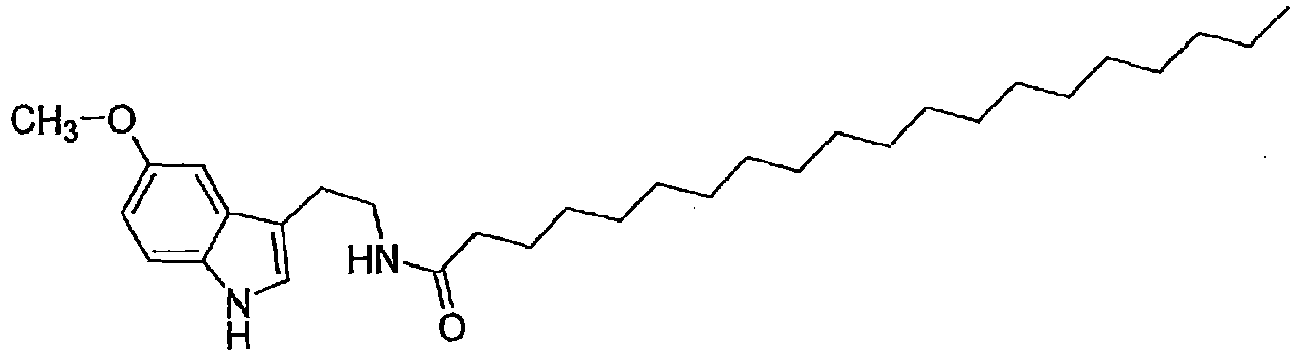
- The desired compound is prepared substantially as described above in Example 6 except that 5-methoxy-tryptamine is used as the starting material. ES-MS: mass calculated for Chemical Formula: C31H52N2O2 484.8 (M+).
-

- The desired compound is prepared substantially as described above in Example 6 except that 5-fluoro-tryptamine is used as the starting material. 1H NMR (500 MHz, DMSO-d6): 0.82 (t, 3H, J=6.9 Hz), 1.15-1.26 (m, 16H), 1.51 (m, 2H), 2.09 (t, 2H, J=7.6 Hz), 2.87 (t, 2H, J=7.6 Hz), 3.41 (q, 2H, J=7.6 Hz), 6.74 (t, 1H, J=8.7 Hz), 7.14 (s, 1H), 7.22 (d, 1H, J=8.6 Hz), 7.28 (dd, 1H, J = 2.2 Hz, J=8.6 Hz); ES-MS: mass calculated for Chemical Formula C30H49FN2O 473.7 (MH+). Found (M+H) m/z 473.4.
-

- The desired compound is prepared substantially as described above in Example 6 except that 5-methyl-tryptamine is used as the starting material. 1H NMR (500 MHz, DMSO-d6): 0.89 (t, 3H, J=7.1 Hz), 1.16-1.29 (m, 16H), 1.47 (m, 2H), 2.03 (t, 2H, J=7.5 Hz), 2.34 (s,3H), 2.67 (t, 2H, J=7.5 Hz), 3.61 (t, 2H, J=6.7 Hz), 6.87 (d, 1H, J=8.7 Hz), 7.02 (s, 1H)), 7.13 (d, 1H, J=6.7 Hz), 7.38 (s, 1H); ES-MS: mass calculated for Chemical Formula C31H52N2O 469.8 (MH+). Found (M+H) m/z 469.5.
-

- The desired compound is prepared substantially as described above in Example 6 except that N-ω-methyl-tryptamme is used as the starting material. 1H NMR (500 MHz, DMSO-d6): 0.84 (t, 3H, J=6.8 Hz), 1.16-1.33 (m, 16H), 1.52 (m, 2H), 2.62 (t, 2H, J=7.6 Hz), 3.59-3.62 (m, 2H), 7.21-7.26 (m, 1H), 7.53-7.71 (m, 2H), 7.84 (d, 1H, J=7.2 Hz), 8.02 (d, 1H, J=7.2 Hz); ES-MS: mass calculated for Chemical Formula C31H52N2O 469.8 (MH+). Found: 469.5 (M+H) m/z.
-

- The desired compound is prepared substantially as described above in Example 6 except that 5-methoxy-2-N-methyl-tryptamine is used as the starting material. ES-MS: mass calc'd for Chemical Formula: C32H54N2O2 498.78 (M+).
-

- Commercial 5-hydroxy-indolyl-3-acetic acid (0.11 mmol, 0.021g) was mixed with HATU (0.11 mmol, 0.042g) and triethylamine (0.5 mL, co-solvent) in DMF (2mL, anhydrous). The reaction mixture was stirred for 30 minutes and octadecylamine (0.1 mmol, 0.026g) was added. The reaction mixture was stirred at room temperature for overnight (monitored by HPLC). Upon reaction completion, NH4Cl (10mL, aq., saturated) was added and the solid was collected by filtration, washed with water (10 mL x 2), NaHCO3 (10 mL x 2, aq., saturated) and finally by acetonitrile (2 mL). The product was dried under the vacuum to afford the desired compound as an off-white solid (74%, 0.033g). 1H-NMR (500 MHz, (CD3)2SO): 0.84 (t, 3H, J=6.9 Hz), 1.18-1.29 (m, 12H), 1.38 (m, 2H), 3.01 (s, 2H), 6.54 (d, 1H, J=7.1 Hz), 6.81 (s, 1H), 7.00 (d, 1H, J=2.2 Hz), 7.09 (d, 1H, J=7.1 Hz), 7.82 (t, 1H, J=5.7 Hz), 8.52 (s, 1H), 10.49 (s, 1H). 13C NMR (125 MHz, (CD3)2SO): d 13.2, 23.2, 25.8, 29.3-29.7(11C), 30.4, 31.2, 36.9, 102.6, 108.0, 111.2, 111.5, 123.8, 127.9, 130.6, 150.1, 170.5; ES-MS: mass calc'd for Chemical Formula C2sH46N2O2 443.7 (MH+). Found (M+Na) m/z 465.3.
-

- Arachidic acid (9.38 g, 30 mmol,) was mixed with the appropriate amounts (30-45 mmol) of a coupling reagent, and if needed, an additional activating agent (10-45 mmol) (e.g., HOBt, heterocyclic base, heterocyclic acid) and/or organic base (10-60 mmol) (e.g., triethylamine, DIEA, pyridine, DABCO, non-nucleophilic basic nitrogen containing molecule) in an appropriate solvent (e.g., DMF, THF, dioxane, DCM, DCE, glyme, diglyme). The reaction mixture was stirred for 0.5-6 hrs, then serotonin (it's salt, free base or appropriately protected form) was added (either neat or premixed with solvent and/or organic base). The reaction mixture was stirred at room temperature for about 4 to about 16 hrs (monitored by HPLC). Upon completion the excess of the organic solvent was removed and the residual oil was treated with aqueous acid (0.1-3 N HCl, NH4Cl (aq., saturated), 0.1-1N H2SO4, etc.). N-(2-5-hydroxy-1H-indol-3-yl)ethyl)propionamide was collected by filtration as amorphous solid, washed with water (4 x 250mL) and acetonitrile (100 mL). The product was dried under the vacuum and re-crystallized from hot organic solvent (ethanol, methanol, isopropanol, acetonitrile, EtOAc, THF, etc.) to yield 12.43 g (88%) of N-(2-5-hydroxy-1H-indol-3-yl)propionamide as an off-white amorphous solid.
- An activated arachidic acid was mixed (stepwise or as a whole) with serotonin (in the salt, free base or appropriately protected form) in the presence of the appropriate amount of organic base (30-60 mmol) (e.g., triethylamine, DIEA, pyridine, DABCO, non-nucleophilic basic nitrogen containing molecule) in an appropriate solvent (e.g., DMF, THF, dioxane, DCM, DCE, glyme, diglyme). The reaction mixture was stirred for about 4 to about 24 hours (monitored by HPLC) at RT-40°C. Upon completion the excess of the organic solvent was removed and the residual oil was treated with aqueous acid (0.1-3 N HCl, NH4Cl (aq., saturated), 0.1-1N H2SO4, etc.). N-(2-5-hydroxy-1H-indol-3-yl)ethyl)propionamide was collected by filtration as amorphous solid, washed with water (4 x 250mL) and acetonitrile (100 mL). The product was dried under the vacuum and re-crystallized from hot organic solvent (ethanol, methanol, isopropanol, acetonitrile, EtOAc, THF, etc.) to yield N-(2-5-hydroxy-1H-indol-3-yl)ethyl)propionamide.
- This preparation is performed substantially as described in Example 13 except that the reaction is run under Schotten-Baumann conditions (use of a two-phase solvent system, consisting of water and an organic solvent. The base within the water phase neutralizes the acid, generated in the reaction, while the starting materials and product remain in the organic phase) in the presence of the appropriate amount of aqueous inorganic base (NaOH, Na2CO3, NaHCO3, KOH, K2CO3, KHCO3, Na3PO4, K3PO4) and an appropriate organic solvent not miscible with water.
- Syntheses of N-(2-5-hydroxy-1H-indol-3-yl)ethyl)propionamide were performed substantially as described above except that different bases, coupling agents, and/or solvents were utilized. The table presented in
Figure 2 illustrates different combinations tested and the resulting yields and purities obtained. - As can be seen with reference to
Figure 2 , solvents including DCM, DMF, THF, and combinations thereof each gave yields of at least 65%, and purities of at least 50%. - High yields were obtained with a variety of different solvents; inclusion of DMF as a solvent (whether alone or in combination) generally gave particularly high yields, particularly when HATU was used as a coupling agent and/or when DIEA was used as a base.
- Higher purities (e.g., 80% or higher) were obtained with THF or DMF, or with solvent combinations in including one of these. Particularly high purities (>95%) were obtained when DMF was used, whether alone or in combination.
-
Figure 1 presents a Table summarizing the different reaction conditions utilized to prepare compounds of formula I as set forth in the Examples.Figure 1 demonstrates that higher yields of 50% to 81% were obtained with DCM and/or pyridine. - Consideration of
Figure 1 , particularly in light ofFigure 2 (corresponding to Examples 15-17), reveals, among other things, that using THF and DMF as solvents and TEA or DIEA as a base resulted in significantly higher yields and higher purities than those experiments using other solvents and/or bases. - Described below are assays that measure the biological activity of provided compounds, in particular, for their activity in: (a) the modulation of the phosphatase activity of PP2A towards non-protein substrates (e.g., pNPP); (b) in the modulation of the phosphatase activity of PP2A towards protein substrates (e.g., phosphorylase a); (c) in the modulation of the carboxyl methyltransferase activity (i.e., which is also referred to herein as the carboxyl methylating activity of the protein phosphatase 2A specific methyltransferase (MTase), wherein such activity results in PP2A methylation); and/or (d) in the modulation of carboxyl methylesterase activity (i.e., which is also referred to hereing as the carboxyl demethylating activity of the protein phosphatase specific protein methylesterase (MEase), wherein such activity results in PP2A demethylation). The data are represented as IC50 values, where the IC50 value is a measure of the effectiveness of a compound in inhibiting a biological or biochemical function. This quantitative measure indicates how much of a particular substance is needed to inhibit a given biological process (or component of a process, e.g. an enzyme) by half, i.e., IC50 represents the concentration of a substance that is required for 50% inhibition. Exemplary results of provided compounds are presented in Table 2 below.
- The present example demonstrates that compounds modulate phosphatase activity of the un-methylated form of PP2A towards a non-protein substrate like pNPP. PP2A (10-200 nM) and pNPP (5-10mM, Sigma) were mixed into 96-well plate (Fisher Scientific Inc.) in 50 µL of the buffer required. Reactions were performed at room temperature, and fully stopped by adding equal volume of 0.1 M EDTA. Production of p-nitrophenol (pNPP) was quantified by absorbance of reaction mixtures at 405 nm using the VMax® microplate reader (Molecular Devices). Exemplary results are presented in Table 2 below.
- The present example demonstrates that compounds modulate the phosphatase activity of the un-methylated PP2A towards protein substrates like phosphorylase a. 32P-labeled phosphorylase a was made by incubating phosphorylase b (Sigma), phosphorylase b kinase (Sigma) and 32P-ATP (Amersham) at 30°C in for 1 hour. After the reaction, proteins were precipitated by 50% (NH4)2SO4 (final concentration) twice, and collected by centrifugation. The pellet was re-dissolved and dialyzed in a buffer containing 50 mM Tris-HCl (pH 6.9) and 1mM DTT for 2 x 2 L at 4°C overnight. Phosphorylase a (phospho-phosphorylase b) crystallized during the dialysis. The dialysate was centrifuged 14,000 r.p.m at 4 °C for 30 minutes, the supernatant was removed and purified 32P-labelled phosphorylase a was re-dissolved in +50% glycerol, and stored at -20°C.
- To measure PP2A's phosphatase activity, PP2A (5-20 nM) was incubated with phosphorylase a (5-10 µM) at 37°C. 10% TCA (final concentration) and was added to the reaction to precipitate proteins. Supernatant that contains free 32P-phosphate group was added into scintillation counting solution (Ecoscint, National Diagnostics), and counted by scintillation counter (LS 6000SE, Beckman). Exemplary results are presented in Table 2 below.
- The present example demonstrates that compounds modulate the methylesterase activity (i.e., the carboxyl demethylating activity of the protein phosphatase specific protein methylesterase (ME), wherein such activity results in PP2A demethylation. Methylated PP2A was made by incubating PP2A, His-tagged MTase and [3H]-SAM together for 1 hour at room temperature, to reach maximum methylation (>90%). The reaction mixture was loaded onto mini SourceQ column (1mL) that was pre-equilibrated with a buffer containing 50 mM MOPS and 1 mM DTT (pH 7.2) (Buffer A). MTase and free SAM were washed out of column with 10 mL of Buffer A containing 75 mM NaCl. PP2A (methylated and unmethylated) were eluted with 1.6 mL of Buffer A containing 350 mM NaCl. Fractions (0.2 mL each) were collected and the radioactivity in each fraction was measured using the scintillation counter (LS 6000SE, Beckman). Fractions with highest radioactivity were containing purified methylated PP2A were pooled with a total volume of 0.6 mL -0.8 mL. Purified methylated PP2A (50 nM - 100 nM) was incubated with MEase (5 nM - 20 nM) in 20 µl - 50 µl reaction at room temperature for 30 minutes. The reaction was terminated by adding TCA (2 µL - 6 µL) to a final concentration of 10%. Released [3H]-methanol in supernatants was counted with scintillation counter (LS 6000SE, Beckman). Exemplary results are presented in Table 2 below.
- The present example demonstrates that compounds modulate the methyltransferase activity [i.e., the carboxyl methylating activity of the protein phosphatase 2A specific methyltransferase (MTase)], wherein such activity results in PP2A methylation. Purified PP2A, MTase and [3H]-SAM, were incubated in reaction buffer at 37°C. At the end of the reaction, mixture was added onto the membranes of 96-well filter plate (Multiscreen™, Millipore). The membranes were then pre-wetted with 70% ethanol (50 µL/well) and then subsequently washed with water (2 x 200 µL/well). The reaction in each well was terminated and the proteins (5 µL -20 µL) were precipitated by adding 25% ice-cold TCA. The plate was kept on ice for 30 minutes to ensure completion of protein precipitation. Excess of the free SAM was then removed by washing with 5% cold TCA (50 (µL/well) and 70% cold ethanol (2x100 µL/well). Membranes were air-dried, radioactivity in each well was counted by TopCountNXT scintillation counter (Packard) with 25µL/well of Microsinct™ 20 (PerkinElmer). Exemplary results are presented in Table 2 below.
- The present example demonstrates exemplary in vitro PP2A activity data of certain compounds .. Compounds of formulae described herein have been tested for their activity in the inhibition of the carboxyl demethylating activity of the protein phosphatase specific protein methylesterase and/or in the inhibition of methyltransferase, and PP2A. Data are presented as IC50 values, where the IC50 value is a measure of the effectiveness of a compound in inhibiting a biological or biochemical function. This quantitative measure indicates how much of a particular substance is needed to inhibit a given biological process (or component of a process, e.g., an enzyme) by half. In other words, IC50 represents the concentration of a substance that is required for 50% inhibition.
- Exemplary in vitro PP2A activity data of certain compounds are shown in Table 2, and were generated using the protocols described above. Specifically, the column in Table 2 labeled "pNPP" refers to data obtained using the protocol from Example 19. The column labeled "Phosphorylase a" refers to data obtained using the protocol from Example 20. The column labeled "ME" refers to data obtained using the protocol from Example 21. The column labeled "MT" refers to data obtained using the protocol from Example 22.
- Proteins including the PP2A A subunit, PP2A C subunit, PP2A AC dimer, PPME, and PPMT are purified by methods known in the art, including described in
U.S. Patent Application 2006/0171938 , Xing et al. Cell. 2008, 133(1):154-63, Xing et al. Cell. 2006, 127(2):341-53, Chao et al. Molecular Cell. 2006, 23(4):535-46. The coenzyme [3H]-SAM or tritiated S-adenosyl methionine is obtained from any commercially available source (e.g., Perkin Elmer). - The present example demonstrates that compounds modulate MT activity, wherein such activity results in PP2A methylation and/or ME activity, wherein such activity results in PP2A demethylation, and/or the phosphatase activity of PP2A. PP2A (100 nM), MTase (10-100 nM), MEase (10-100 nm) and [3H]-SAM (0.5 mM) (total volume of reaction was 25-50 ul) were incubated at 37°C for 30min. Reactions were stopped by 5% SDS or acetic acid (final concentration). The lids of eppendorf tubes (1.7ml) were removed, so the tubes could be placed into scintillation vials. The vials were kept in warm room overnight. During this time, produced [3H]-methanol evaporated out of the aqueous solution and dissolved into scintillation counting solution. Radioactivity was counted by scintillation counter (LS 6000SE, Beckman).
Table 2 COMPOUND NUMBER ACTIVITY RANGE Activity Range 1 is > 100 µM Activity Range 2 is 10 µM - 100 µM Activity Range 3 is < 10 µM pNPP (IC50) Phosphorylase a (IC50) ME (IC50) MT (IC50) I-29 3 1 2 2 I-30 2 2 3 2 I-31 2 2 3 2 I-32 2 2 3 3 I-33 2 - 3 3 I-35 2 1 3 3 I-36 2 1 2 3 I-38 1 - 1 1 I-39 2 2 3 2 I-62 2 1 2 2 I-63 1 1 3 2 I-64 1 2 3 3 I-65 1 2 3 3 I-66 2 1 3 3 I-67 2 1 1 - I-76 1 - 1 1 I-77 1 - 1 1 I-78 1 - 3 3 I-79 1 - 2 3 I-80 2 - 3 3 - As can be seen with reference to above Table 2, certain compounds modulate the phosphatase activity of PP2A towards non-protein substrates (e.g., pNPP) in the absence of ME and MT. In certain embodiments, compounds show IC50 values that range between 10 µM and 300 µM. In certain embodiments, compounds show IC50 values that range between 3 µM and 10 µM. In certain embodiments, compounds show IC50 values that range between 10 µM and 100 µM. In certain embodiments, compounds show IC50 values that range between 100 µM and 300 µM, and higher. IC50 values within the range between 100 µM and 300 µM suggest that activity of PP2A with respect to non-protein substrates is comparable to presence of compounds described herein, or in the absence of compounds described herein. That is, such compounds do not have a direct material effect (in the absence of ME and MT) on PP2A activity toward non-protein substrates. A direct material effect may refer to compounds having an IC50 of below 100µM.
- As can be seen with reference to above Table 2, certain compounds modulate the phosphatase activity of PP2A towards protein substrates (e.g., phosphorylase a) in the absence of ME and MT. In certain embodiments, compounds show IC50 values that range between 10 µM and 300 µM. In certain embodiments, compounds show IC50 values that range between 10 µM and 100 µM. In certain embodiments, compounds show IC50 values that range between 100 µM and 300 µM, and higher. In certain embodiments, compounds show IC50 values that range between 100 µM and 300 µM, and higher. IC50 values within the range between 100 µM and 300 µM suggest that activity of PP2a with respect to protein substrates is comparable to presence of compounds described herein, or in the absence of compounds described herein. That is, such compounds do not have a direct material effect (in the absence of ME and MT) on PP2A activity toward protein substrates. A direct material effect may refer to compounds having an IC50 of below 100 µM.
- As can be seen with reference to above Table 2, certain compounds selectively modulate the carboxyl demethylating activity of the protein phosphatase specific protein methylesterase (MEase), thereby resulting in modulation of PP2A demethylation. In certain embodiments, compounds show IC50 values that range between 0.5 µM and 300 µM. In certain embodiments, compounds show IC50 values that range between 0.5 µM and 5 µM. In certain embodiments, compounds show IC50 values that range between 5 µM and 10 µM. In certain embodiments, compounds show IC50 values that range between 10 µM and 20 µM. In certain embodiments, compounds show IC50 values that range between 20 µM and 50 µM. In certain embodiments, compounds show IC50 values that range between 50 µM and 100 µM. In certain embodiments, compounds show IC50 values that range between 100 µM and 300 µM, and higher. Table 2 further suggests that certain compounds modulate the methyl esterase (i.e., the carboxyl demethylating activity of the protein phosphatase specific protein MEase). Table 2 therefore shows that certain compounds that show IC50 values that range between 1µM and 10 µM are selective towards MEase.
- As can be seen with reference to above Table 2, certain compounds selectively modulate the methylating activity of MTase, thereby resulting in modulation of PP2A methylation. In certain embodiments, compounds show IC50 values that range between 0.5 µM and 300 µM. In certain embodiments, compounds show IC50 values that range between 0.5 µM and 10 µM. In certain embodiments, compounds show IC50 values that range between 10 µM and 100 µM. In certain embodiments, compounds of the present invention show IC50 values that between 100 µM and 300 µM, and higher. Table 2 further suggests that certain compounds modulate the methyltransferase (i.e., the carboxyl methylating activity of the protein phosphatase 2A specific MTase). Table 2 therefore demonstrates that compounds that show IC50 values that range between 0.5 µM and 10 µM are selective towards MTase.
- In certain embodiments, PP2A methylation is reduced in the presence of compound(s) described herein. In certain embodiments, PP2A methylation is reduced by at least 40%, 50%, 75%, 100% in the presence of compound(s) described herein. In certain embodiments, PP2A methylation is increased in the presence of compound(s) described herein. In certain embodiments, PP2A methylation is 1.5-fold, 2-fold, 3-fold, 4-fold, and 5-fold higher in the presence of compound(s) described herein.
- In certain embodiments, PP2A phosphatase activity is increased in the presence of compound(s) described herein. In certain embodiments, phosphatase activity is 1.5-fold, 2-fold, 3-fold, 4-fold, 5-fold higher in the presence of compound(s) described herein. In certain embodiments, PP2A phosphatase activity is decreased in the presence of compound(s) described herein. In certain embodiments, PP2A phosphatase activity is reduced by at least 40%, 50%, 75%, 100% in the presence of compound(s) described herein.
- In some embodiments, PP2A phosphatase activity is higher in the presence of compound(s) described herein. In some embodiments, the PP2A phosphatase activity is at least 1.1-fold, 1.2-fold, 1.5-fold, 2-fold, 3-fold, 4-fold, 5-fold higher in the presence of compound(s) described herein.
- In some embodiments PP2A phosphatase activity is lower in the presence of compound(s) described herein. In some embodiments, the PP2A phosphatase activity is lower by at least 40%, 50%, 75%, 100% in the presence of compound(s) described herein.
- In some embodiments, activity of MT is higher in the presence of compound(s) described herein. In some embodiments, the activity of MT is at least 1.1-fold, 1.2-fold, 1.5-fold, 2-fold, 3-fold, 4-fold, 5-fold higher in the presence of compound(s) described herein.
- In some embodiments activity of ME is lower in the presence of compound(s) described herein. In some embodiments, the activity of ME is lower by at least 40%, 50%, 75%, 100% in the presence of compound(s) described herein.
- The present example demonstrates that compounds (eg. Compound 1-63) lowers non-fasted blood glucose levels in obese mice. Mice homozygous for the obese spontaneous mutation, (Lepob commonly referred to as ob or ob/ob), exhibit obesity, hyperphagia, a diabetes-like syndrome of hyperglycemia, glucose intolerance, elevated plasma insulin, subfertility, impaired wound healing and an increase in hormone production from both pituitary and adrenal glands. They are also hypometabolic and hypothermic. The obesity is characterized by an increase in both the number and the size of adipocytes. Although hyperphagia contributes to the obesity, homozygotes gain excess weight and deposit excess fat even when restricted to a diet sufficient for normal weight maintenance in lean mice. Mice heterozygous for the Lepob mutation appear like wild-type and are lean.
- Forty-eight (48) B6.V-Lepob /J mice (00632, The Jackson Laboratory, JAXò mice), homozygous for the Lepob mutation and thirty six (36) controls B6.V-Lepob /J-lean, heterozygous for the Lepob mutation were used to study the effect of SIG1012 on non-fasted glucose levels. The mice were ear notched for identification and housed in individually and positively ventilated polycarbonate cages with HEPA filtered air at a density of 3 mice per cage. Bed-o-cob corn cob bedding was used and cages were changed every two weeks. The animal room was lighted entirely with artificial fluorescent lighting, with a controlled 12 h light/dark cycle (7 am to 7 pm light). The normal temperature and relative humidity ranges in the animal rooms were 22 ± 4°C and 50 ± 15%, respectively. The animal rooms were set to have 15 air exchanges per hour. Filtered tap water, acidified to a pH of 2.8 to 3.2, and LabDiet AIN-76A was provided ad libitum.
- Following acclimation, mice were assigned to groups A through G according to their body weight and genotype:
- A Lean heterozygotes - B6.V-Lepob /J-lean Mice Fed Control Diet (AIN-76A);
- B Lean heterozygotes - B6.V-Lepob /J-lean Mice Fed "Low" Compound 1-63 (AIN-76A with 0.001% Compound 1-63);
- C Lean heterozygotes - B6.V-Lepob /J-lean Mice Fed "Medium" Compound 1-63 (AIN-76A with 0.1% Compound 1-63);
- D Obese homozygotes - B6.V-Lepob /J Mice Fed Control Diet (AIN-76A);
- E Obese homozygotes - B6.V-Lepob /J Mice Fed "Low" Compound 1-63 (AIN-76A with 0.001% Compound 1-63);
- F Obese homozygotes - B6.V-Lepob /J Mice Fed "Medium" Compound I-63 (AIN-76A with 0.1% Compound 1-63); and
- G Obese homozygotes - B6.V-Lepob /J Mice Fed Rosiglitazone Diet (AIN-76A with 195 mg/kg Rosilitizone). Rosiglitizone is an anti-diabetic drug and lowers blood glucose levels, therefore served as positive control.
- Mice from Groups A through G were maintained on the respective diet for 14 days and blood glucose levels were measured weekly. Exemplary results are depicted in
Figure 3 , which demonstrates that weekly administration of Compound 1-63 results in 26-30% reduction in non-fasted blood glucose levels in homozygous obese mice while the anti-diabetic control drug, Rosiglitizone results in 66% reduction in non-fasted glucose levels in homozygous obese mice. No effect was observed with Compound 1-63 on non-fasted blood glucose levels in heterozygous lean mice control. - The present example demonstrates that long-term administration of compounds (eg. Compound I-63) significantly improves glucose tolerance. The glucose tolerance test (GTT) measures the body's ability to metabolize glucose. It is currently used to diagnose patients with prediabetes disposition and diabetes.
- Twenty (20) Swiss-Webster (wild-type) mice were acclimated for 2 weeks. The mice were ear notched for identification and housed in individually and negatively ventilated polycarbonate cages with HEPA filtered air at a density of 6 mice per cage. Bed-o-cob corn cob bedding was used and cages were changed every two weeks. The animal room was lighted entirely with artificial fluorescent lighting, with a controlled 12 h light/dark cycle (7 am to 7 pm light). The normal temperature and relative humidity ranged in the animal rooms are 22 ± 4°C and 50 ± 15%, respectively. The animal rooms were set to have 15 air exchanges per hour. Filtered tap water, acidified to a pH of 2.8 to 3.2. LabDiet D10001 was provided ad libitum, and leftover food was removed once per week.
- Following acclimation, mice are assigned to groups according to diet.
- 1. Control Diet (D10001)
- 2. Compound 1-63 ((D10001 with 0.1% 1-63)
- The mice were maintained on the diet for 128 days. The mice are fasted for 18 hours prior to glucose measurements. Mice were weighed and glucose dose calculated for 2 mg/kg body weight. Sterile glucose solution was prepared at concentration of 10 mg/ml in advance. Blood glucose levels were measured with the OneTouch UltraSmart electronic glucometer at
time point 0 with tail vein blood. Tail snipping was used to get blood samples. Before snips, the tail end was sprayed with ethyl chloride for local anesthesia to reduce pain. Glucose at a concentration of 2 mg/kg body weight in 0.2 ml solution was injected into the peritoneal of each mouse. Blood glucose was measured at 15, 30, 45, 90 and 120 minutes after glucose injection. -
Figure 4 demonstrates that wild-type mice treated with Compound 1-63 has <10% lower body weights than wild-type mice on control diet.Figure 5A demonstrates that wild-type mice treated with Compound 1-63 significantly maintains consistently lower glucose levels in the intraperitoneal glucose tolerance test (*p<0.05).Figure 5B demonstrates that incremental area under blood glucose curve from basal levels after injection of glucose (20 mg/kg) in case of Compound I-63-treated mice is <10% compared to similar mice on control diet (***p< 0.0001). - The present example demonstrates that compounds (e.g., compound 1-63) are not toxic to neuronal cells. 2 x 10⁴ N2a cells were plated in each well of a 96-well cell culture plate containing 100 µl EMEM (Gibco), supplemented with 10% FBS (N2a growth medium), and were incubated at 37°C for 48 hours. On the day of treatment, stock solutions of 5 mM, 1 mM, 0.5 mM and 0.1 mM of Compound 1-63 in ethanol were further diluted with N2a growth medium to obtain Compound I-63-containing N2a medium with 50 µM, 10 µM, 5 µM and 1 µM Compound I-63. The final concentration of ethanol in all media dilutions was 1%, and therefore 1% ethanol was added to the 0 µM Compound 1-63 (untreated) control. The media dilutions were applied to the N2a cells (100 µl per well) and incubated at 37°C for 4 hours or 24 hours. At the end of the treatment period, cell media was removed and 100 µl of pre-warmed phenol red-free N2a growth media was added to each well. 20 µl of the CellTiter 96® AQueous One Solution (Promega) was added to each well and the dish was incubated at 37°C for 1-4 hours until visible reddish color develops. The dish was read at a wavelength of 490 nm using a plate reader. N2a cells were grown in 96-well dishes and were treated for 4 hours (◆) or 24 hours (■) with increasing concentrations of Compound 1-63. Cell survival was assayed using the CellTiter 96® AQueous One Solution (Promega) using the manufacturer's directions. The error bars represent the standard error of the mean of three experiments.
Figure 6 demonstrates that cell survival is over 85% at all concentrations of compound 1-63 tested, both at 4 hours and at 24 hours. - The present example demonstrates that compounds (e.g., compound 1-63) lowers phosphorylated Tau in young, wild-type mice. Swiss Webster mice (9-12 weeks old) were fed ad libitum, either standard rodent chow (Control), or rodent chow formulated with 0.1 g Compound I-63 per 100 g chow (0.1% Comound 1-63); water was changed weekly. Mice were housed at 23°C, on a 12 hour light and dark cycle, with 6 mice per cage. At weekly intervals up to 4 weeks, three and six mice from the Control and 0.1% Compound 1-63 groups respectively were sacrificed by cervical dislocation, brains removed, snap-frozen in liquid nitrogen, and were stored at -80°C. Brains were homogenized in 350 µl of buffer containing 20 mM MOPS-Na, pH 7.2, 1 mM EDTA/DTT, 0.5 mg/L of aprotinin, leupeptin and pepstatin, 100nM okadaic acid, and clarified by centrifugation (14,000 rpm, 10 min, 4°C). Supernatant protein concentrations were measured by the Bradford method, 4 volumes of the supernatant and 1 volume of 5xSDS sample buffer were mixed and boiled for 2 minutes. 40 µg of the boiled homogenate were loaded on 12% polyacrylamide gels, and transferred to nitrocellulose membranes. Membranes are blocked in 5% BSA + TBST for 1 hour at room temperature, and incubated overnight at 4°C with the following primary antibodies at the indicated dilutions: PHF1 mAb (recognizes phospho-
Serine 396/404) at 1:2000, Tau-5 (Millipore; pan-tau mAb) at 1:10,000, and anti-GAPDH (Sigma mAb; used as loading control) at 1:50,000. Protein bands were detected with the ECL Plus reagent (GE Healthcare) and blots were exposed to Kodak XOmat film. Densitometric analyses were performed with ImageJ software. For relative phospho-tau levels of the Compound I-63-treated animals, the ratio of GAPDH-normalized phospho-tau to GAPDH-normalized total tau was further normalized to the corresponding ratios for the control group of mice. Error bars represent the standard error of the means.Figure 7 depicts a bar graph demonstrating that when compound 1-63 is administered at a 0.1% dosage level (% by weight in feed), there is a <40% reduction (p<0.05) in phosphorylation of tau at the serine and threonine residues whose phosphorylation has been associated with neurodegeneration and senile demensia, after two weeks of administration; and when compound 1-63 is administered at a 0.1% dosage level, there is >50% and at least ∼70% reduction in phosphorylation of tau at the serine and threonine residues whose phosphorylation has been associated with neurodegeneration and senile demensia, after three and four weeks of administration, when compared to a control. - The present example demonstrates that compounds (e.g., Compounds 1-62 and I-63) lowers phosphorylated Tau in young, wild-type mice following four weeks of administration. Swiss Webster mice (9-12 weeks old) were fed ad libitum, either standard rodent chow (Control), or rodent chow formulated with 0.1 g Compound I-63 per 100g chow (0.1% Compound I-63) or 0.1 g Compound I-62 per 100 g chow (0.1% Compound I-62); water was changed weekly. Mice were housed at 23°C, on a 12 hour light and dark cycle, with 6 mice per cage. At 4 weeks, six mice from the Control, 0.1% Compound I-63 and 0.1% Compound I-62 groups were sacrificed by cervical dislocation, brains removed, snap-frozen in liquid nitrogen, and stored at -80°C. Brains were homogenized in 350 µl of buffer containing 20 mM MOPS-Na, pH 7.2, 1mM EDTA/DTT, 0.5 mg/L of aprotinin, leupeptin and pepstatin, 100 nM okadaic acid, and clarified by centrifugation (14000 rpm, 10 min, 4°C). Supernatant protein concentrations were measured by the Bradford method, 4 volumes of the supernatant and 1 volume of 5 x SDS sample buffer were mixed and boiled for 2 minutes. Boiled homogenate (20µg) were loaded on 12% polyacrylamide gels, and transferred to nitrocellulose membranes. Membranes were blocked in 5% BSA + TBST for 1 hour at room temperature, and incubated overnight at 4°C with the following primary antibodies at the indicated dilutions: pS396 (Signalway) that recognizes phospho-
Serine 396 at 1:1000; Tau-5 (Millipore; pan-tau mAb) at 1:500, and anti-GAPDH (Sigma mAb; used as loading control) at 1:50000. Protein bands were detected with the ECL Plus reagent (GE Healthcare) and blots scanned on a Molecular Dynamics Storm Imager. Densitometric analyses were performed with ImageQuant software. For relative phospho-tau levels of the Compound I-63-treated and Compound I-62-treated animals, the ratio of GAPDH-normalized phospho-tau to GAPDH-normalized total tau was further normalized to the corresponding ratios for the control group of mice. Error bars represent the standard error of the means.Figure 8 depicts a bar graph demonstrating that both compound I-62 and compound I-63 are similarly effective in lowering phosphorylated tau levels in the brain by 40% following four weeks of administration, when compared to a control. - The present example demonstrates that compounds (e.g, Compound 1-63) has protective effects towards progressive motor deficits in JNPL3 transgenic mice. The JNPL3 transgenic mouse line that carries the transgene for the human P301L mutation of the microtubule-associated protein tau gene (MAPT) was used in this experiment (Lewis et al., 2000). 9-12 weeks old homozygous JNPL3 males (Taconic Farms, Hudson, NY) were housed under standard conditions (
temperature 22 ± 2°C;relative humidity 50 ± 10%; 12h light / 12h dark cycle) and allowed to acclimatize for 2 weeks. Following acclimatization, two groups of animals (6 animals per group) are changed to control diet (Research Diets; New Brunswick, NJ) or purified 0.1% Compound 1-63 formulated diet. The composite neuroscore (NS) was used as the scoring system to measure the following tasks: (1) forelimb flexion response during suspension by the tail, (2) righting and postural reflexes, and (3) prehensile traction test (Yoshiyama et al., 2005; Korenova et al., 2009). The neurological and motor examination included the basic reflex response by special attention to the assessment of the hind-limb escape extension reflex, the righting and postural reflexes and the prehensile traction test where the animal is allowed to grasp with its forepaws a horizontal cotton string (1 mm in diameter) suspended 70 cm above a padded surface. The scoring conditions were graded as follows: -
- 0 - Animal displayed standard escape response
- 1 - Animal did not exhibit full escape or inward trend with leg response
- 2 - Animal maintained forelimbs in scissored, clasped or dystonic position
-
- 0 - Animal could right when placed supine
- 1 - Animal righting slowed (>1s)
- 2 - Animal did not exhibit any righting reflex
-
- 0 - Animal could complete test with at least 3 paws and tail within 2 min
- 1 - Animal could hold on to string without falling within 2 min
- 2 - Animal fell before 2 min without completion
- 3 - Animal was unable to perform test
- Each animal was scored using a scaling system ranging from 0-12 (normal), 13-20 (mild or early), 21-23 (moderate) and 24-30 (severe) to reflect serious impairment of neuromuscular functionality and muscular weakness. The total score was averaged and compared between groups since 7 months in diet.
- Motor test scores vs. weeks of mice fed control diet (closed circles) and 0.1% Compound I-63 formulated diet (open circles).
Figure 9 demonstrates that administration of 0.1% of Compound I-63 after ten weeks resulted in protection of JNPL3 transgenic mice from developing motor dysfunction; and that mean motor test scores for mice on Compound 1-63 diet were 75% less than motor test scores of mice on control diet after eleven and twelve weeks of administration of Compound 1-63 (p<0.05). A reduction in motor scores represents a reduction in impairment of neuromuscular functionality and muscular weakness. - Dephosphorylation Assay of Human α Synuclein by PP2A and PP1. The present example provides a method for PP2A or PP1 dephosphorylation of human alpha-synuclein which is phosphorylated at Ser129, and demonstrates that PP2A (unmethylated AC dimer) but not PP1 can dephosphorylate alpha-synuclein phosphorylated at Ser129 under the in-vitro experimental conditions described below. PP2A or PP1 (serial dilutions of 200 nM, 100 nM, 50 nM, 25 nM, 12 nM, and 0 nM as a negative control) were incubated with
serine 129 phosphorylated alpha-synuclein in MOPS buffer. The reactions were stopped by adding 5x SDS sample buffer. Levels of phosphorylated- alpha-synuclein were assessed by western blotting using an anti- phospho-Ser 129 antibody.Figure 10 demonstrates that phosphorylated alpha-synuclein can be dephosphorylated by PP2A in a concentration dependent manner whereas this effect is not observed with PP1. Specifically, at 200nM concentration, PP2A dephosphorylates more than 95% of theserine 129 phosphorylated alpha-synuclein. - The present example demonstrates that methylation of PP2A increases its dephosphorylation activity or phosphatase activity towards alpha-synuclein phosphorylated at Ser129. Concentrated samples of the methylated and unmethylated AC dimer of PP2A were each serially diluted to final concentrations of 200 nM, 100 nM, 50 nM, 25 nM, and 12 nM. A buffer sample (with 0 nM PP2A) was used as the negative control. The dephosphorylation assay and western blotting were performed as described above in Example 31 Western blots were scanned on a Storm Scanner (Molecular Dynamics) and band intensities quantified with Image Quant software. The relative phosphorylation levels were calculated with the following formula: Relative phosphorylation level (%) = Signal of Sample/Signal of Negative Control *100%. Regression curves of relative phosphorylation levels as a function of PP2A concentration were plotted, and the EC50 values for methylated and unmethylated PP2A were estimated using the SigmaPlot program. The EC50 is a measure of phosphatase activity or dephosphorylation activity of PP2A toward phosphorylated alpha-synuclein. Specifically, it is the concentration of the AC dimer required to achieve 50% dephosphorylation of phosphorylated alpha-synuclein. Exemplary results are depicted in
Figure 11 andFigure 12 , which demonstrate that methylation increases PP2A dephosphorylation activity towards alpha-synuclein. Specifically, methylation reduces the EC50 value of PP2A AC dimer from ∼60nM to ∼20nM. - The present example provides a method for identifying a compound which is capable of modulating the phosphatase activity of PP2A towards alpha synuclein. PP2A is incubated with serial dilutions of the compound (to yield final concentrations of 100 µM, 10 µM, 1 µM, 0.1 µM, and 0 µM as negative control) in a solution containing MOPS buffer for 10 min - 30 min. Following incubation, the substrate (
serine 129 phosphorylated α synuclein) is added to the reaction, and the reaction is allowed to continue as described in Example 31. The effect of the compound is based on the dephosphorylation-dependent EC50 value of the reaction with the compound, compared to the control reaction without the compound sample. - MPTP (1-methyl-4-phenyl-1,2,3,6-tetrahydropyridine) is routinely used as a chemical agent that induces Parkinson's disease-like neurodegeneration in cellular and animal models. Both Parkinson's Disease and MPTP-induced neurotoxicity are associated with a number of different biomarkers including reduction of tyrosine hydroxylase levels and activity. Tyrosine hydroxylase is a key enzyme in the dopamine biosynthesis pathway as it is involved in the conversion of tyrosine to dopamine. Tyrosine hydroxylase activity is regulated by its phosphorylation status and PP2A is known to be involved in this regulation.
- The present example demonstrates that compounds of the present invention have a protective effect towards toxin-induced neurodegeneration. C57BL/6J mice, aged 2-3 months were fed ad libitum, either standard rodent chow (Control), or rodent chow formulated with 0.1 g Compound I-63, or 0.001g Compound 1-63 per 100 g chow (0.1% and 0.001% Compound I-63, respectively); water was changed weekly. Mice were housed at 23°C, on a 12 hour light and dark cycle, with 6 mice per cage. After 2 weeks, 8-12 mice each from the Control, 0.1% Compound I-63 and 0.001% Compound I-63 groups were injected with either saline, or 10 mg/kg MPTP i.e., four times, every 2 hours, on the same day. Mice were then maintained on their respective feeds for another week, at which point they were sacrificed by cervical dislocation and brains dissected for biochemical analyses.
- Striatal tyrosine hydroxylase (TH) content was measured by ELISA as follows. Ninety-six well microtiter plates (Thermo Labsystems) were incubated overnight at 4°C with monoclonal anti-TH antibody (1:500; Calbiochem) in 8 mM sodium phosphate, 2 mM potassium phosphate, and 0.14 M sodium chloride, pH 7.4 (PBS). Wells were washed four times with PBS and then blocked for 1 hour using 5% (w/v) Carnation (Nestlé) nonfat dry milk in PBS. Striatal tissue samples were homogenized by sonication in PBS-0.5% Triton X-100 (PBST) with 0.25% (w/v) SDS. Purified TH protein (
Cell 2 Cell, San Clemente, CA) was used to establish a standard curve. Samples and standards were incubated for 1 hour at room temperature, washed four times with PBST, and then incubated for 1 hour with both polyclonal anti-TH (1:500; Calbiochem) and polyclonal anti-rabbit horseradish peroxidase (HRP) (1:3000; Amersham Biosciences) in blocking solution. After washing four times with PBST, wells were incubated with Amplex Red (Molecular Probes) HRP substrate. The reaction product was measured fluorometrically within the linear range of detection (excitation:emission ratio of 530:580 nm). Controls included omission of primary or secondary TH antibody. Data were expressed as percent TH levels in MPTP-treated mice relative to saline-injected mice. Multiple comparisons were made using one-way ANOVA followed by the Newman-Keuls multiple range test. Administration of MPTP to mice on control diets significantly reduced tyrosine hydroxylase levels by 60%. Mice on 0.001% and 0.1% Compound I-63 diets were protected against acute MPTP-induced neurotoxicity, evidenced as a significant (p < 0.05) rescuing of the tyrosine hydroxylase defect by approximately 20%. Results are depicted inFigure 13 which demonstrate that compounds of the present invention are useful to ameliorate symptoms associated with Parkinson's Disease. - Transgenic mice over-expressing the full length human alpha-synuclein have been described previously, and are excellent models for sensorimotor tests that are sensitive to alterations in the nigrostriatal dopaminergic system [Fleming, S.M. et.al., J. Neurosci. 24, 9434-40, (2004)]. The present example demonstrates that administration of Compound 1-63 to alpha-synuclein transgenic mice for 3 months, results in a significant improvement in locomotor activity as measured by the open-field and rota-rod tests.
- Thyl-alpha-synuclein transgenic mice (9-12 weeks old) and age-matched wild type mice were housed in clear plastic cages in a temperature-, and humidity-controlled environment with a 12 hour-light/dark cycle (light switched on at 7 a.m.), and were maintained on an ad libitum diet of lab chow and water. The animal feeds used were either normal (Control) or formulated with Compound I-63 at 0.001% and 0.1%. Behavioral testing was carried out monthly, for three months, for each group of mice (n=9 to 13).
- Locomotor activity was assessed in an open field paradigm by a Digiscan activity monitor utilizing a grid of infrared beams that record the location and path of the animal (horizontal activity) as well as the number of rearing movements (vertical activity). Mice were first placed in the same environment as that of the
testing chamber 30 min. prior to testing. Each mouse was then placed in the middle of an open field chamber (42 x 42 cm acrylic animal cages, Accuscan Instruments) and locomotion was recorded for 10 min. The infrared light beam sensors were connected to a computer that recorded animal position every millisecond. AccuScan VersaMax software was used to record the total number of movements, the distance traveled, the time spent moving and the total number of infrared beam breaks. The total number of squares crossed by each mouse was recorded and average horizontal and vertical activities was determined for each group of mice. - Motor coordination and motor learning were measured by rota-rod tests. The Mice were placed on top of a speed-controlled rotating cylinder (diameter: 4.5cm) with a coarse surface for a firm grip. Mice were individually tested three times with the cylinder rotating at a speed of 5 rpm, accelerating at 0.2 rpm/second, to a final speed of 40 rpm. A cut-off time of 3 min and an inter-trial interval of 60 min were used. The time spent on the rotating cylinder without falling down was measured. The significance of differences in activity at 3 months between treated and control groups was measured by a student's t-test.
- In the present example, alpha-synuclein transgenic mice on a diet of 0.1% Compound 1-63 showed increases in horizontal activity (p = 0.004;
Figure 14A ), and in Rota-rod on-time (p = 0.03;Figure 14B ). Transgenic mice on a diet of Compound 1-63 showed an increase in horizontal activity at a dosage of 0.001% (p = 0.068) and at a dosage of 0.1% (p = 0.004) (Figure 14A ) in comparison to wild-type mice on the same diet, which indicates that Compound I-63 has protective effects specific to alpha-synuclein-induced alterations in locomotor activity. - Forty-eight grams of coffee wax (Amsyn, Inc., Alemark Chemicals) was dispensed in 100 ml of acetonitrile and heated at 60°C on a rotovap. The soluble phase was separated from the insoluble solid phase. This extraction was repeated three times. The three soluble phases were combined, cooled at 4°C up to 16 hours and filtered. The precipitate collected from the above filtration was redissolved in 200 ml of hot acetonitrile at 60°C, cooled at 4°C up to 16 hours, and filtered. The solid phase was redissolved with 100 ml of hot ethanol at 70°C, cooled at room temperature and incubated for 16 hours. The precipitate included a mixture of crude compound I-63 and I-62 to yield 4.4 grams. The obtained sample contained high levels of compounds described herein. Levels of compound I-63 were estimated between 4% (wt/wt) (as measured by HPLC) to 14% (wt/wt) (as measured by LC/MS) and 17-20% (wt/wt) (as measured by MS/MS). Analysis by MS/MS showed that the remaining compounds in the sample were I-62, an analog of compound I-63. HPLC methods were performed using an Agilent 1200 HPLC. LC/MS and MS/MS methods were performed using an Agilent 6410 Triple Quadrupole mass spectrometer with Agilent 1200 HPLC.
- Ten grams of coffee wax (Amsyn Inc., Alemark Chemicals) were completely dissolved in 150 ml of ethyl acetate by heating at 50°C on a rotorvapor. The mixture was subsequently cooled at room temperature for 1 hour and filtered. The solid precipitate was discarded. The filtrate was evaporated to dryness and the precipitate was dissolved in 200 ml of hexane at 50 °C and filtered. The purity of compound I-63 and I-62 in the solid phase was approximately 70%. The purity of compound I-63 and I-62 in the liquid phase was 15-40%. The majority of compound I-63 and I-62 was in the liquid phase. Further extraction of the solid phase with ethyl acetate can remove a substantial amount of caffeine. Further extraction of the liquid phase to obtain more 1-62 and 1-63 is achieved by evaporation and/or concentration, precipitation with another solvent, recycling the liquid phase back to treat more coffee wax.
- Compound I-63 (11.0 mg) was mixed with Tween 80 (1375 µL) and heated using a heat gun with constant mixing until clear. PEG400 (1375 µL) was added to the solution and again mixed until clear. When PBS (2750 µL) was added, the solution would not clear despite mixing and heating. Additional Tween 80 (1375 µL) and PEG400 (1375 µL) were added to rescue the solution, which cleared after extensive mixing with heat. PBS (2750 µL) was added make up the 25:25:50 PEG400: Tween 80:PBS ratio of solvents.
- Compound I-63 (247.5 mg) was mixed with ethyl oleate (500.8 mg), Solutol HS-15 (5000.3 mg), and ethanol (2.8 mL of denatured SDA-3A containing 95% SDA-3A (100:5 ethanol:methanol) and 5% isopropanol) to generate Formulation C. In a separate vial, compound I-63 (30.3 mg) was dissolved Tween 80 (3 mL) with heat and vortexing until clear. To this solution was added PEG400 (3 mL), and the mixture was again mixed until clear with light heating. Separately, compound I-63 (1 mL of Formulation C as described above) was mixed with phosphate buffered saline (5 mL) and vortexed thoroughly. These two solutions were mixed to yield a final solution containing 0.5% of compound I-63 in 25
% Tween - The following example further illustrates an oral composition containing a compound as described herein.
-
INGREDIENTS AMOUNT (wt %) Compound I-63 0.5-3.0% Ethyl Oleate 0-1% Solutol-HS15 0-7% SDA-3A alcohol 0-5% Isopropanol 0-1% Tween-80 (Polysorbate 80) 20-30% PEG-400 20-30% PBS 40-43% pH 4.0-9.0 - In the claims articles such as "a," "an," and "the" may mean one or more than one unless indicated to the contrary or otherwise evident from the context. Claims or descriptions that include "or" between one or more members of a group are considered satisfied if one, more than one, or all of the group members are present in, employed in, or otherwise relevant to a given product or process unless indicated to the contrary or otherwise evident from the context. The invention includes embodiments in which exactly one member of the group is present in, employed in, or otherwise relevant to a given product or process. The invention includes embodiments in which more than one, or all of the, group members are present in, employed in, or otherwise relevant to a given product or process. Furthermore, it is to be understood that the invention encompasses all variations, combinations, and permutations in which one or more limitations, elements, clauses, descriptive terms, etc., from one or more of the listed claims is introduced into another claim. For example, any claim that is dependent on another claim can be modified to include one or more limitations found in any other claim that is dependent on the same base claim.
- Where elements are presented as lists, e.g., in Markush group format, it is to be understood that each subgroup of the elements is also disclosed, and any element(s) can be removed from the group. It should it be understood that, in general, where the invention, or aspects of the invention, is/are referred to as comprising particular elements, features, etc., certain embodiments of the invention or aspects of the invention consist, or consist essentially of, such elements, features, etc. For purposes of simplicity those embodiments have not been specifically set forth in haec verba herein. It is noted that the term "comprising" is intended to be open and permits the inclusion of additional elements or steps.
- Where ranges are given, endpoints are included. Furthermore, it is to be understood that unless otherwise indicated or otherwise evident from the context and understanding of one of ordinary skill in the art, .
- Publications discussed above and throughout the text are provided solely for their disclosure prior to the filing date of the present application.
Claims (13)
- A compound selected from the group consisting of:

I-1 
I-2 
I-3 
I-5 
I-6 
I-7 
I-8 
I-9 
I-10 
I-11 
I-12 
I-13 
I-14 
I-15 
I-16 
I-17 
I-22 
I-26 
I-27 
I-30 
I-31 
I-32 
I-33 
I-34 
I-35 
I-36 
I-37 
I-38 
I-39 
I-44 
I-45 
I-46 
I-48 
I-52 
I-53 
I-54 
I-55 
I-56 
I-57 
I-58 
I-61 
I-62 and 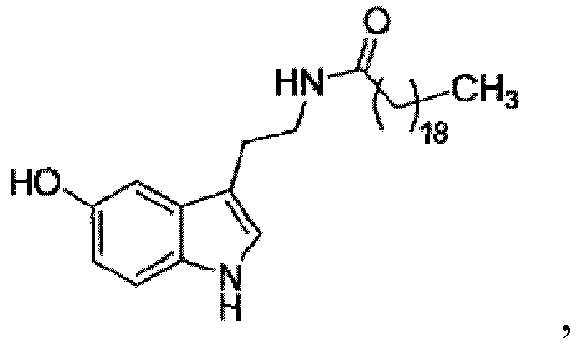
I-63 a tauopathy selected from Alzheimer's disease, neurodegeneration in adult cases of Down's syndrome, dementia pugilistica, Pick disease, Guam parkinsonism dementia complex, fronto-temporal dementia, cortico-basal degeneration, pallido-pontal-nigral degeneration and progressive supranuclear palsy;a synucleinopathy selected from Parkinson's disease, dementia with Lewy bodies (DLB) and multiple system atrophy (MSA);diabetes;metabolic syndrome; ora metabolic syndrome disorder selected from hyperglycemia, reduced insulin production, reduced insulin secretion and insulin resistance. - A compound for use according to claim 1, wherein the compound is selected from the group consisting of:

I-62 
I-63 
I-1 
I-2 
I-7 
I-14 and 
I-32 - A compound for use according to claim 1, wherein the compound is selected from the group consisting of:

I-62 and 
I-63 - A compound for use according to any one of claims 1 to 3, wherein the disease or disorder is a neurological disorder or neurodegenerative disease which is:a tauopathy selected from Alzheimer's disease, neurodegeneration in adult cases of Down's syndrome, dementia pugilistica, Pick disease, Guam parkinsonism dementia complex, fronto-temporal dementia, cortico-basal degeneration, pallido-pontal-nigral degeneration and progressive supranuclear palsy; ora synucleinopathy selected from Parkinson's disease, dementia with Lewy bodies (DLB) and multiple system atrophy (MSA).
- A compound for use according to claim 4, wherein the neurodegenerative disease is a synucleinopathy which is Parkinson's disease.
- A compound for use according to claim 4, wherein the neurodegenerative disease is a tauopathy which is Alzheimer's disease.
- A compound for use according to any one of claims 1 to 3, wherein the disease or disorder is selected from diabetes and/or metabolic syndrome.
- A compound for use according to claim 7, wherein the metabolic syndrome disorder is selected from hyperglycemia, reduced insulin production, reduced insulin secretion and insulin resistance.
- A composition comprising a compound as defined in any one of claims 1 to 3 or a pharmaceutically acceptable salt thereof for use in treating or lessening the severity of a disease or disorder as defined in claim 1.
- A composition for use according to claim 9, wherein the composition further comprises at least one component of a botanical source that produces the compound, which botanical source is selected from the group consisting of green coffee beans, roasted coffee beans, spent ground coffee beans, coffee wax (collectively "coffee"), coffee cherries (berries), chocolate, withania somnifera (fruit), Butcher's broom (root), coconut, gingko biloba, bacopa monniera, nigella sativa, St. John's wort, annova atemoya (seeds) and scorodocarpus borneesis (fruit),
and wherein composition is substantially free of caffeine, caffeic acid or chlorogenic acid. - A composition comprising:a compound as defined in any one of claims 1 to 3 in an amount of 0.5% to 3.0% (wt %);Tween 80 in an amount of 20% to 30% (wt %);PEG-400 in an amount of 20% to 30% (wt %);PBS in an amount of 40% to 43% (wt %); andhaving a pH of from 4.0 to 9.0.
- A composition according to claim 11 further comprising:ethyl oleate in an amount of 0.01% to 1% (wt %);solutol-HS15 in an amount of 0.01% to 7% (wt %);SDA-3A alcohol in an amount of 0.01% to 5% (wt %); andisopropanol in an amount of 0.01% to 7% (wt %).
- A compound selected from the group consisting of:

I-10 
I-32 
I-33
Applications Claiming Priority (4)
| Application Number | Priority Date | Filing Date | Title |
|---|---|---|---|
| US12494908P | 2008-04-21 | 2008-04-21 | |
| US12520508P | 2008-04-23 | 2008-04-23 | |
| US12790008P | 2008-05-16 | 2008-05-16 | |
| PCT/US2009/041321 WO2009132051A1 (en) | 2008-04-21 | 2009-04-21 | Compounds, compositions and methods for making the same |
Publications (3)
| Publication Number | Publication Date |
|---|---|
| EP2282735A1 EP2282735A1 (en) | 2011-02-16 |
| EP2282735A4 EP2282735A4 (en) | 2013-05-29 |
| EP2282735B1 true EP2282735B1 (en) | 2019-01-16 |
Family
ID=41201651
Family Applications (1)
| Application Number | Title | Priority Date | Filing Date |
|---|---|---|---|
| EP09734282.8A Not-in-force EP2282735B1 (en) | 2008-04-21 | 2009-04-21 | Pp2a modulators for treating alzheimer, parkinson, diabetes |
Country Status (7)
| Country | Link |
|---|---|
| US (2) | US9486441B2 (en) |
| EP (1) | EP2282735B1 (en) |
| JP (5) | JP5607025B2 (en) |
| CN (1) | CN102014897B (en) |
| AU (3) | AU2009239430B2 (en) |
| CA (1) | CA2758424C (en) |
| WO (1) | WO2009132051A1 (en) |
Families Citing this family (18)
| Publication number | Priority date | Publication date | Assignee | Title |
|---|---|---|---|---|
| US7565145B2 (en) | 2002-10-18 | 2009-07-21 | Kineto Wireless, Inc. | Handover messaging in an unlicensed mobile access telecommunications system |
| US7940746B2 (en) | 2004-08-24 | 2011-05-10 | Comcast Cable Holdings, Llc | Method and system for locating a voice over internet protocol (VoIP) device connected to a network |
| US20090175973A1 (en) * | 2007-09-05 | 2009-07-09 | Nina Vikhrieva | Coffee cherry compositions and methods for their use in the treatment of diabetes and diabetes related disorders |
| CN102014897B (en) | 2008-04-21 | 2015-08-05 | 西格纳姆生物科学公司 | Compound, compositions and its preparation method |
| DE102008025893B4 (en) * | 2008-05-26 | 2014-09-18 | Technische Universität Dresden | Process for the preparation of fatty acid amides with saturated, unsaturated or hydroxy fatty acids |
| FR2942625B1 (en) * | 2009-03-02 | 2013-11-22 | Centre Nat Rech Scient | INDOLIC DERIVATIVES FOR THE TREATMENT OF NEURODEGENERATIVE DISEASES |
| US9073851B2 (en) * | 2011-10-28 | 2015-07-07 | Board Of Regents, The University Of Texas System | Compositions and methods for treating cancer |
| CN103086948A (en) * | 2011-11-02 | 2013-05-08 | 上海朴颐化学科技有限公司 | Preparation method of (S,S,S)-2-azabicyclo[3,3,0]octane-3-carboxylic acid |
| EP2867239A4 (en) | 2012-06-29 | 2015-12-23 | Lixte Biotechnology Inc | Oxabicycloheptanes and oxabicycloheptenes for the treatment of diabetes |
| US20170224757A1 (en) | 2014-07-22 | 2017-08-10 | Signum Nutralogix, Inc. | Natural extracts for modulating pp2a methylation, and providing antioxidant and anti inflammatory activity |
| JP7179459B2 (en) * | 2014-10-15 | 2022-11-29 | シグナム バイオサイエンシーズ, インコーポレイテッド | Tryptamide composition and method of use |
| US20160201009A1 (en) * | 2015-01-10 | 2016-07-14 | Aurelio Lopez | Integrated oil extraction apparatus |
| KR101874594B1 (en) * | 2016-12-07 | 2018-07-05 | 한국한의학연구원 | A composition for prevention or treating cognitive dysfunction comprising Annona atemoya leaf extract or fraction thereof |
| WO2020092930A1 (en) * | 2018-11-02 | 2020-05-07 | Rutgers, The State University Of New Jersey | Synergistic composition having neuroprotective properties and methods of use thereof |
| WO2021016548A1 (en) | 2019-07-25 | 2021-01-28 | North Carolina State University | Polyiodide binding compounds and methods of use thereof |
| JP2021028325A (en) * | 2019-08-09 | 2021-02-25 | 株式会社ACrux | Central function improver and central function improving food/drink |
| CA3217559A1 (en) * | 2021-05-05 | 2022-11-10 | Kamaluddin Abdur-Rashid | Catalytic tryptamine processes and precursors |
| CA3229361A1 (en) * | 2021-08-20 | 2023-02-23 | Abdelmalik Slassi | 3-cycloamino-indole compounds as serotonergic agents useful for the treatment of disorders related thereto |
Family Cites Families (192)
| Publication number | Priority date | Publication date | Assignee | Title |
|---|---|---|---|---|
| US2852520A (en) | 1957-01-08 | 1958-09-16 | Searle & Co | Trialkoxybenzoyloxyalkyl derivatives related to norharman |
| US4448785A (en) * | 1978-01-09 | 1984-05-15 | Sandoz, Inc. | N-Unsaturated fatty acid amides of tryptophan ester homologues and anti-cholesteric use thereof |
| US4229463A (en) | 1978-02-27 | 1980-10-21 | Sandoz, Inc. | Unsaturated fatty acid hydrazides |
| US4194002A (en) | 1978-03-29 | 1980-03-18 | Sandoz, Inc. | Cholesterol ester-reducing amides of hexahydroindolinols |
| US4185118A (en) | 1978-01-09 | 1980-01-22 | Sandoz, Inc. | Benzocycloalkylamides |
| DE2856856A1 (en) * | 1978-01-09 | 1979-07-12 | Sandoz Ag | FATTY ACID AMIDE AND HYDRACIDE DERIVATIVES, THEIR PRODUCTION AND USE AS PHARMACEUTICALS |
| US4201785A (en) | 1978-02-27 | 1980-05-06 | Sandoz Inc. | Cyclopropanyl-bearing hydrazides |
| US4248893A (en) | 1978-12-30 | 1981-02-03 | Sandoz, Inc. | Arterial wall cholesterol ester reducing cyclopropanyl-bearing amides |
| DE3105850A1 (en) | 1981-02-18 | 1982-08-19 | Horst, Hans Jörg, Priv.Doz.Dr., 2057 Reinbek | Agent for treating tumours |
| CA1280414C (en) | 1985-03-15 | 1991-02-19 | Saichi Matsumoto | Isoprenoidamine derivatives and antiulcer agents |
| US4709094A (en) | 1986-07-10 | 1987-11-24 | State Of Oregon, Acting By And Through The Oregon State Board Of Higher Education, Acting For And On Behalf Of The Oregon Health Sciences University And The University Of Oregon | Sigma brain receptor ligands and their use |
| US5093525A (en) | 1986-07-10 | 1992-03-03 | State Of Oregon, Acting By And Through The Oregon State Board Of Higher Education, Acting For And On Behalf Of The Oregon Health Sciences University | N,N'-disubstituted guanidines and their use as excitatory amino acid antagonists |
| US4906779A (en) | 1986-07-10 | 1990-03-06 | State Of Oregon, Acting By And Through The Oregon State Board Of Higher Education, Acting For And On Behalf Of The Oregon Health Sciences University | N,N'-disubstituted guanidines and their use as excitatory amino acid antagonists |
| US5190976A (en) | 1986-07-10 | 1993-03-02 | State Of Oregon, Acting By And Through The Oregon State Board Of Higher Education, Acting For And On Behalf Of The Oregon Health Sciences University And University Of Oregon | N,N'-disubstituted guanidines and their use as excitatory amino acid antagonists |
| US4933324A (en) | 1988-02-26 | 1990-06-12 | Shashoua Victor E | Fatty acid-neuroactive drug conjugate as a prodrug |
| US5284876A (en) | 1988-02-26 | 1994-02-08 | Neuromedica, Inc. | Method of treating tardive dyskinesia using dopaminergic agents of prodrugs of therapeutic agents |
| US6107499A (en) | 1988-02-26 | 2000-08-22 | Neuromedica, Inc. | Dopamine analog amide |
| US5994392A (en) | 1988-02-26 | 1999-11-30 | Neuromedica, Inc. | Antipsychotic prodrugs comprising an antipsychotic agent coupled to an unsaturated fatty acid |
| US4939174A (en) | 1988-02-26 | 1990-07-03 | Shashoua Victor E | Appetite suppression with dopamine-fatty acid conjugates |
| JPH0752542Y2 (en) | 1988-02-26 | 1995-11-29 | 東芝設備機器株式会社 | Cooler |
| US4935422A (en) | 1988-12-15 | 1990-06-19 | E. I. Du Pont De Nemours And Company | Acyloxypropanolamines |
| US5175183A (en) | 1989-02-01 | 1992-12-29 | Abbott Laboratories | Lipoxygenase inhibiting compounds |
| IE68593B1 (en) | 1989-12-06 | 1996-06-26 | Sanofi Sa | Heterocyclic substituted acylaminothiazoles their preparation and pharmaceutical compositions containing them |
| JPH0625276Y2 (en) | 1989-12-29 | 1994-07-06 | 株式会社ワコール | Indenter for rigid linear body Manual protector |
| IT1243846B (en) | 1990-10-17 | 1994-06-28 | Pulitzer Italiana | THERAPEUTIC ACTIVITY OF MELATONIN DERIVED IN DERMATOLOGY. |
| CA2102303A1 (en) | 1991-06-19 | 1992-12-20 | Roy Allen Johnson | Dialkyl (dialkoxyphosphinyl) methyl phosphates as anti-inflammatory agents |
| GB9218541D0 (en) | 1991-09-30 | 1992-10-14 | Ici Plc | Fungicides |
| FR2706456B1 (en) | 1993-06-18 | 1996-06-28 | Rhone Poulenc Agrochimie | Optically active derivatives of 2-imidazoline-5-ones and 2-imidazoline-5-thiones fungicides. |
| US5322858A (en) | 1992-02-14 | 1994-06-21 | Jacobus Pharmaceutical Co. Inc. | N,N'-substituted imidodicarbonimidic diamides derived from hydroxylamines |
| JPH0625276A (en) | 1992-05-13 | 1994-02-01 | Tanabe Seiyaku Co Ltd | Acylaminosugar derivative and its production |
| US5585358A (en) | 1993-07-06 | 1996-12-17 | Yissum Research Development Corporation Of The Hebrew University Of Jerusalem | Derivatives of valproic acid amides and 2-valproenoic acid amides, method of making and use thereof as anticonvulsant agents |
| EP0634402A1 (en) | 1993-07-14 | 1995-01-18 | Takeda Chemical Industries, Ltd. | Isochinolinone derivatives, their production and use |
| JP3268073B2 (en) | 1993-08-17 | 2002-03-25 | 三菱製紙株式会社 | Reversible thermosensitive recording material |
| US6869957B1 (en) | 1993-11-17 | 2005-03-22 | Eli Lilly And Company | Non-peptide tachykinin receptor antagonists |
| US6403577B1 (en) | 1993-11-17 | 2002-06-11 | Eli Lilly And Company | Hexamethyleneiminyl tachykinin receptor antagonists |
| AU710575B2 (en) * | 1994-02-08 | 1999-09-23 | Nps Pharmaceuticals, Inc. | Compounds active at a novel site on receptor-operated calcium channels useful for treatment of neurological disorders and diseases |
| ES2153447T3 (en) | 1994-07-23 | 2001-03-01 | Nestle Sa | ANTIOXIDANT COMPOSITION AND PROCEDURE FOR PREPARATION. |
| FR2724384B1 (en) | 1994-09-14 | 1999-04-16 | Cemaf | NOVEL 3,4-DIHYDRO BETA-CARBOLINE DERIVATIVES OF MELATONIN AGONISTS, PROCESS FOR THEIR PREPARATION AND THEIR USE AS MEDICAMENTS |
| JP3795093B2 (en) | 1994-11-25 | 2006-07-12 | キッセイ薬品工業株式会社 | 1-hydroxyindole derivatives |
| JPH08157816A (en) | 1994-12-02 | 1996-06-18 | Oriza Yuka Kk | Natural antioxidant and method for producing the same |
| GB9426102D0 (en) | 1994-12-23 | 1995-02-22 | Merck Sharp & Dohme | Pharmacuetical compositions |
| MY113488A (en) | 1995-01-27 | 2002-03-30 | Novo Nordisk As | Compounds with growth hormone releasing properties |
| FR2734814B1 (en) | 1995-05-31 | 1997-07-04 | Adir | NOVEL ALKOXY-ARYL COMPOUNDS, PROCESS FOR THEIR PREPARATION AND THE PHARMACEUTICAL COMPOSITIONS CONTAINING THEM |
| GB9513972D0 (en) | 1995-07-08 | 1995-09-06 | Merck Sharp & Dohme | Pharmaceutical compositions |
| WO1997007117A1 (en) | 1995-08-21 | 1997-02-27 | Eli Lilly And Company | 2-acylaminopropanamines as growth hormone secretagogues |
| US5821261A (en) | 1995-12-08 | 1998-10-13 | Merck & Co., Inc. | Substituted saturated aza heterocycles as inhibitors of nitric oxide synthase |
| US5849764A (en) * | 1995-12-14 | 1998-12-15 | Merck & Co., Inc. | Antagonists of gonadotropin releasing hormone |
| JPH09301954A (en) | 1996-05-14 | 1997-11-25 | Kumiai Chem Ind Co Ltd | N- (Fused Heteroarylalkyl) alkanoic acid amide derivative and agricultural / horticultural fungicide |
| US5795877A (en) | 1996-12-31 | 1998-08-18 | Guilford Pharmaceuticals Inc. | Inhibitors of NAALADase enzyme activity |
| US6046180A (en) | 1996-06-17 | 2000-04-04 | Guilford Pharmaceuticals Inc. | NAALADase inhibitors |
| US5824662A (en) | 1996-09-27 | 1998-10-20 | Guilford Pharmaceuticals Inc. | Treatment of global and focal ischemia using naaladase inhibitors |
| US6017903A (en) | 1996-09-27 | 2000-01-25 | Guilford Pharmaceuticals Inc. | Pharmaceutical compositions and methods of treating a glutamate abnormality and effecting a neuronal activity in an animal using NAALADase inhibitors |
| US6054444A (en) | 1997-04-24 | 2000-04-25 | Guilford Pharmaceuticals Inc. | Phosphonic acid derivatives |
| US5977090A (en) | 1996-09-27 | 1999-11-02 | Guilford Pharmaceuticals Inc. | Pharmaceutical compositions and methods of treating compulsive disorders using NAALADase inhibitors |
| US5863536A (en) | 1996-12-31 | 1999-01-26 | Guilford Pharmaceuticals Inc. | Phosphoramidate derivatives |
| US6025344A (en) | 1996-06-17 | 2000-02-15 | Guilford Pharmaceuticals Inc. | Certain dioic acid derivatives useful as NAALADase inhibitors |
| US6071965A (en) | 1996-06-17 | 2000-06-06 | Guilford Pharmaceuticals Inc. | Phosphinic alkanoic acid derivatives |
| US5902817A (en) | 1997-04-09 | 1999-05-11 | Guilford Pharmaceuticals Inc. | Certain sulfoxide and sulfone derivatives |
| US5700821A (en) | 1996-07-30 | 1997-12-23 | University Of Pittsburgh | Phosphatase inhibitors and methods of use thereof |
| AU6824396A (en) | 1996-08-09 | 1998-03-06 | Sederma Sa | Melatonin derivatives and their use in cosmetic or dermopharmaceutical compositions |
| JPH1077229A (en) | 1996-09-03 | 1998-03-24 | Sagami Chem Res Center | Inhibitor against spontaneous movement |
| JPH1077267A (en) | 1996-09-03 | 1998-03-24 | Sagami Chem Res Center | 5-methoxytryptamine derivative |
| US5962521A (en) | 1997-04-04 | 1999-10-05 | Guilford Pharmaceuticals Inc. | Hydroxamic acid derivatives |
| GB9620777D0 (en) | 1996-10-07 | 1996-11-20 | Merck Sharp & Dohme | Therapeutic use |
| AT2009U1 (en) | 1997-01-24 | 1998-03-25 | Trodat Werke Walter Just Gmbh | DEVICE FOR STORING HAND STAMPS AND OTHER OFFICE UTILITIES |
| RU2141483C1 (en) | 1997-07-04 | 1999-11-20 | Небольсин Владимир Евгеньевич | Peptide derivatives or their pharmaceutically acceptable salts, method of their synthesis, use and pharmaceutical composition |
| CA2295697A1 (en) | 1997-07-10 | 1999-01-21 | Jason Scott Sawyer | Inhibitors of neutrophil mediated oxidant production |
| CN1067527C (en) | 1997-07-13 | 2001-06-27 | 赵宁斌 | Method for prepn. of persimmon leaf tea |
| AP9801302A0 (en) | 1997-07-23 | 2000-01-23 | Pfizer | Indole compounds as anti-inflammatory/analgesic agents.. |
| US7041702B1 (en) | 1997-10-21 | 2006-05-09 | Scion Pharmaceuticals, Inc. | Pharmaceutically active compounds and methods of use |
| BR9814340B1 (en) | 1997-12-24 | 2010-07-13 | indole derivatives, process for preparing them and pharmaceutical composition. | |
| GB9804343D0 (en) | 1998-02-27 | 1998-04-22 | Univ Cardiff | Chemical compounds |
| AU3648499A (en) | 1998-04-17 | 1999-11-08 | Emory University | Protein phosphatase methylesterase dna |
| FR2778671B1 (en) | 1998-05-14 | 2002-07-05 | Rhone Poulenc Agrochimie | NEW PROCESS FOR THE PREPARATION OF SYNTHESIS INTERMEDIATES |
| GB9812083D0 (en) | 1998-06-05 | 1998-08-05 | Ici Plc | Removal of water |
| WO2000012045A2 (en) | 1998-08-26 | 2000-03-09 | St. Elizabeth's Medical Center Of Boston, Inc. | Method for treating neurodegenerative disorders |
| DE19842416A1 (en) * | 1998-09-16 | 2000-04-13 | Max Planck Gesellschaft | Secondary amines for the prevention and therapy of diseases caused or intensified by oxidation processes |
| CA2369378A1 (en) | 1999-04-09 | 2000-10-19 | Basf Aktiengesellschaft | Low-molecular inhibitors of complement proteases |
| US6503949B1 (en) | 1999-05-17 | 2003-01-07 | Noro Nordisk A/S | Glucagon antagonists/inverse agonists |
| JP2003509507A (en) | 1999-09-21 | 2003-03-11 | キネティック リミテッド | Liquid crystal compound |
| AU7832000A (en) | 1999-09-23 | 2001-04-24 | Washington University | Compounds directed against pilus biogenesis and activity in pathogenic bacteria;methods and compositions for synthesis thereof |
| US20030036070A1 (en) | 1999-10-21 | 2003-02-20 | Shukti Chakravarti | Gene expression profiling of inflammatory bowel disease |
| FR2802206B1 (en) | 1999-12-14 | 2005-04-22 | Sod Conseils Rech Applic | 4-AMINOPIPERIDINE DERIVATIVES AND THEIR USE AS MEDICINAL PRODUCTS |
| DE19962924A1 (en) | 1999-12-24 | 2001-07-05 | Bayer Ag | Substituted oxazolidinones and their use |
| US6372752B1 (en) | 2000-02-07 | 2002-04-16 | Genzyme Corporation | Inha inhibitors and methods of use thereof |
| JP2004502642A (en) | 2000-02-11 | 2004-01-29 | ブリストル−マイヤーズ スクイブ カンパニー | Cannabinoid receptor modulators, methods for their production, and use of cannabinoid receptor modulators for the treatment of respiratory and non-respiratory diseases |
| JP2001247539A (en) | 2000-03-03 | 2001-09-11 | Hunan Research Inst Of Chemical Industry | Biocidal alkyl-substituted (hetero)aryl-ketoxime-o-ether, and method of producing the same |
| US6852734B2 (en) | 2000-05-02 | 2005-02-08 | Meiji Seika Kaisha, Ltd. | Indole derivatives exhibiting chymase-inhibitory activities and process for preparation thereof |
| US20020034524A1 (en) | 2000-06-19 | 2002-03-21 | Poret Jacques Louis | Cosmetic compositions containing keratinization modulators and methods for improving keratinous surfaces |
| US6562807B2 (en) | 2000-06-23 | 2003-05-13 | Novo Nordisk A/S | Glucagon antagonists/inverse agonists |
| CA2321348A1 (en) | 2000-09-27 | 2002-03-27 | Blaise Magloire N'zemba | Aromatic derivatives with hiv integrase inhibitory properties |
| AU2002239506A1 (en) | 2000-12-11 | 2002-06-24 | Smith Kline Beecham Corporation | Urotensin-ii receptor antagonists |
| JP2002193923A (en) | 2000-12-26 | 2002-07-10 | Taisho Pharmaceut Co Ltd | Aminobenzoic acid derivative |
| KR100939243B1 (en) | 2001-01-19 | 2010-01-29 | 인스티튜트 오브 파마콜로지 앤드 톡시콜로지 아캐더미 오브 밀리터리 메디칼 사이언시스 피.엘.에이. 차이나 | Amine Derivatives That Modulate Potassium Channel Functions, Method of Preparation and Use thereof |
| US6818655B2 (en) | 2001-01-26 | 2004-11-16 | Smithkline Beecham Corporation | Urotensin-II receptor antagonists |
| US7820144B2 (en) | 2001-01-29 | 2010-10-26 | University Of Connecticut | Receptor selective cannabimimetic aminoalkylindoles |
| WO2002060447A1 (en) | 2001-01-29 | 2002-08-08 | University Of Connecticut | Receptor selective cannabimimetic aminoalkylindoles |
| AUPR392301A0 (en) | 2001-03-23 | 2001-04-26 | University Of Newcastle Research Associates Limited, The | Protein phosphatase inhibitors |
| US20040152692A1 (en) | 2001-03-29 | 2004-08-05 | Dashyant Dhanak | Pyrrolidine sulfonamides |
| US20040138224A1 (en) | 2002-03-28 | 2004-07-15 | Dashyant Dhanak | Pyrrolidine sulfonamides |
| US6608196B2 (en) | 2001-05-03 | 2003-08-19 | Galileo Pharmaceuticals, Inc. | Process for solid supported synthesis of pyruvate-derived compounds |
| US6916850B2 (en) | 2001-05-03 | 2005-07-12 | Galileo Pharmaceuticals, Inc. | Pyruvate derivatives |
| SE0101978D0 (en) | 2001-06-01 | 2001-06-01 | Astrazeneca Ab | New compounds |
| WO2003008632A1 (en) | 2001-07-16 | 2003-01-30 | Hoegestaett Edward | Fatty acid conjugation as a method for screening of potentially bioactive substances |
| WO2003017924A2 (en) * | 2001-08-06 | 2003-03-06 | Cubist Pharmaceuticals, Inc. | Lipopeptide stereoisomers, methods for preparing same, and useful intermediates |
| AU2002324666B2 (en) * | 2001-08-10 | 2007-10-11 | The Rockefeller University | Compostions and methods for modulation of DARPP-32 phosphorylation |
| IL160845A0 (en) | 2001-09-14 | 2004-08-31 | Tularik Inc | Linked biaryl compounds |
| US20030215456A1 (en) | 2001-10-02 | 2003-11-20 | Sui-Long Yao | Method of treating cancer |
| EP1439834A1 (en) | 2001-10-30 | 2004-07-28 | Applied Research Systems ARS Holding N.V. | Oxindole hydrazide modulators of protein tyrosine phosphatases (ptps) |
| JP4156825B2 (en) | 2001-11-01 | 2008-09-24 | 株式会社ロッテ | Antidepressant / antistress agent and composition containing the same |
| HUP0402245A3 (en) | 2001-11-01 | 2010-03-29 | Janssen Pharmaceutica Nv | Pyrimidinyl-aminobenzamide derivatives as glycogen synthase kinase 3betha inhibitors, their use, pharmaceutical compositions containing them and process for producing them |
| CN1205175C (en) | 2001-11-02 | 2005-06-08 | 中国人民解放军军事医学科学院毒物药物研究所 | Amine derivative possessing the function of anti-pulmonary hypertension and its application in pharmacological science |
| KR101018318B1 (en) | 2001-12-21 | 2011-03-04 | 노보 노르디스크 에이/에스 | Amide derivatives as active agents |
| WO2003078448A1 (en) | 2002-03-13 | 2003-09-25 | Signum Biosciences, Inc. | Modulation of protein methylation and phosphoprotein phosphate |
| US20040138238A1 (en) | 2002-08-08 | 2004-07-15 | Dhanoa Dale S. | Substituted aminopyrimidine compounds as neurokinin antagonists |
| AU2003266668A1 (en) | 2002-09-30 | 2004-04-23 | Banyu Pharmaceutical Co., Ltd. | 2-aminobenzimidazole derivative |
| DE10253426B4 (en) | 2002-11-15 | 2005-09-22 | Elbion Ag | Novel hydroxyindoles, their use as inhibitors of phosphodiesterase 4 and methods for their preparation |
| DE10300099A1 (en) | 2003-01-07 | 2004-07-15 | Bayer Healthcare Ag | Indole-phenylsulfonamide derivatives |
| WO2004063147A1 (en) | 2003-01-10 | 2004-07-29 | Novo Nordisk A/S | Salts and solvates of glucagon antagonists |
| AU2004210082B2 (en) | 2003-02-06 | 2011-03-17 | Dompe' Farmaceutici S.P.A. | 2-aryl-acetic acids, their derivatives and pharmaceutical compositions containing them |
| JP4421832B2 (en) | 2003-03-27 | 2010-02-24 | 株式会社常磐植物化学研究所 | Memory accelerator |
| JP2006525364A (en) | 2003-04-30 | 2006-11-09 | ジ インスチチュート フォー ファーマシューティカル ディスカバリー、エルエルシー | Substituted aminocarboxylic acid |
| CA2527024C (en) | 2003-05-28 | 2012-08-21 | Paul Anziano | Compositions and methods for inhibiting an isoform of human manganese superoxide dismutase |
| EP1659881B1 (en) | 2003-08-06 | 2019-04-03 | Senomyx Inc. | Novel flavors, flavor modifiers, tastants, taste enhancers, umami or sweet tastants, and/or enhancers and use thereof |
| WO2005014532A1 (en) | 2003-08-08 | 2005-02-17 | Transtech Pharma, Inc. | Aryl and heteroaryl compounds, compositions and methods of use |
| WO2005019168A2 (en) | 2003-08-20 | 2005-03-03 | Pfizer Products Inc. | Fluorinated lysine derivatives as dipeptidyl peptidase iv inhibitors |
| US7282593B2 (en) | 2003-09-11 | 2007-10-16 | Board Of Trustees Of Michigan State University | Withanamide and withanolide compositions and method of use thereof |
| FR2860793A1 (en) | 2003-10-14 | 2005-04-15 | Entomed | New norcantharidin derivatives e.g. used for treating cancer, neurodegenerative diseases, restenosis, diabetes, asthma and bacterial and fungal infections |
| WO2005054176A1 (en) | 2003-11-25 | 2005-06-16 | Eli Lilly And Company | Peroxisome proliferator activated receptor modulators |
| JP2007516259A (en) | 2003-12-09 | 2007-06-21 | メッドクリスタルフォームズ、エルエルシー | Method for preparing mixed phase co-crystal with activator |
| WO2005071101A1 (en) | 2004-01-23 | 2005-08-04 | University Hospital Of Basel | Treatment of hepatitis c infection by increasing stat1 methylation |
| US7626030B2 (en) | 2004-01-23 | 2009-12-01 | Amgen Inc. | Compounds and methods of use |
| WO2005084664A1 (en) * | 2004-03-08 | 2005-09-15 | Kanazawa University Technology Licensing Organization Ltd. | Indole derivatives and uses thereof |
| AU2006230674A1 (en) | 2004-03-18 | 2006-11-16 | The Brigham And Women's Hospital, Inc. | Methods for the Treatment of Synucleinopathies |
| CA2559285A1 (en) | 2004-03-18 | 2005-09-29 | Brigham And Women's Hospital, Inc. | Methods for the treatment of synucleinopathies |
| WO2005097788A2 (en) | 2004-04-02 | 2005-10-20 | Elixir Pharmaceuticals, Inc. | Sulfonamides and uses thereof |
| AU2005244770A1 (en) | 2004-04-26 | 2005-12-01 | Vanderbilt University | Indoleacetic acid and indenacetic acid derivatives as therapeutic agents with reduced gastrointestinal toxicity |
| WO2006083266A1 (en) | 2004-05-07 | 2006-08-10 | Janssen Pharmaceutica, N.V. | Inhibitors of bacterial type iii protein secretion systems |
| FR2872704B1 (en) | 2004-07-12 | 2007-11-02 | Laurent Schwartz | PLURITHERAPY AGAINST CANCER |
| US20060045953A1 (en) | 2004-08-06 | 2006-03-02 | Catherine Tachdjian | Aromatic amides and ureas and their uses as sweet and/or umami flavor modifiers, tastants and taste enhancers |
| KR20070106969A (en) | 2004-09-09 | 2007-11-06 | 추가이 세이야쿠 가부시키가이샤 | New imidazolidine derivatives and uses thereof |
| JP3964417B2 (en) | 2004-09-27 | 2007-08-22 | 国立大学法人金沢大学 | Α2 receptor blocker and vasodilator containing indole derivative as active ingredient |
| ATE554087T1 (en) | 2004-10-29 | 2012-05-15 | Abbott Lab | NEW KINASE INHIBITORS |
| MX2007005611A (en) | 2004-11-11 | 2007-07-11 | Ferrer Int | Imidazo[1,2-a]pyridine compounds, compositions, uses and methods related thereto. |
| US20060160109A1 (en) | 2004-11-22 | 2006-07-20 | Odyssey Thera, Inc. | Harnessing network biology to improve drug discovery |
| US20070212677A1 (en) | 2004-11-22 | 2007-09-13 | Odyssey Thera, Inc. | Identifying off-target effects and hidden phenotypes of drugs in human cells |
| EP1838690A2 (en) | 2004-12-21 | 2007-10-03 | Devgen N.V. | Compounds with kv4 ion channel activity |
| FR2879601B1 (en) | 2004-12-22 | 2007-01-19 | Galderma Res & Dev | NOVEL COMPOUNDS DERIVED FROM PHENYL-BORONIC ACID AND PROCESS FOR PREPARING THE SAME |
| EP1676842A1 (en) | 2004-12-30 | 2006-07-05 | Laboratorios Del Dr. Esteve, S.A. | Nitro-substituted phenyl-piperazine compounds, their preparation and use in medicaments |
| US20070161644A1 (en) | 2005-01-25 | 2007-07-12 | Stockwell Brent R | Erastin analogs and uses thereof |
| KR100896889B1 (en) | 2005-01-28 | 2009-05-14 | 아이알엠 엘엘씨 | Phenyl-substituted pyrrolidones |
| WO2006084033A1 (en) * | 2005-02-03 | 2006-08-10 | Signum Biosciences, Inc. | Compositions and methods for enhancing cognitive function |
| US7923041B2 (en) | 2005-02-03 | 2011-04-12 | Signum Biosciences, Inc. | Compositions and methods for enhancing cognitive function |
| US7998974B2 (en) | 2005-03-03 | 2011-08-16 | Sirtris Pharmaceuticals, Inc. | Fused heterocyclic compounds and their use as sirtuin modulators |
| WO2006101456A1 (en) | 2005-03-21 | 2006-09-28 | S*Bio Pte Ltd | Bicyclic heterocycles hydroxamate compounds useful as histone deacetylase (hdac) inhibitors |
| CN101146763A (en) | 2005-03-30 | 2008-03-19 | 默克公司 | Glucagon receptor antagonist compounds, compositions containing such compounds, and methods of use |
| CN1304396C (en) | 2005-04-08 | 2007-03-14 | 中山大学 | Derivative of canthardin and preparation method |
| TW200738677A (en) | 2005-06-27 | 2007-10-16 | Elbion Ag | Nitro-substituted hydroxyindoles, their use as inhibitors of phosphodiesterase 4, and processes for preparing them |
| WO2007008514A2 (en) | 2005-07-07 | 2007-01-18 | Georgetown University | Inhibitors of glycogen synthase kinase 3 |
| WO2007015866A2 (en) | 2005-07-20 | 2007-02-08 | Kalypsys, Inc. | Inhibitors of p38 kinase and methods of treating inflammatory disorders |
| RU2008109911A (en) | 2005-08-17 | 2009-09-27 | Зольвай Фармасьютикалз Гмбх (De) | METHOD OF APPLICATION OF COMPOUNDS INHIBITING POTASSIUM CHANNELS |
| US20070203209A1 (en) | 2005-08-18 | 2007-08-30 | Wilmin Bartolini | Useful indole compounds |
| CA2624683A1 (en) | 2005-10-06 | 2007-04-19 | Vertex Pharmaceuticals Incorporated | Modulators of atp-binding cassette transporters |
| US20080021198A1 (en) | 2005-10-12 | 2008-01-24 | Yigong Shi | Modulators of protein phosphatase 2A and PP2A methyl esterase |
| US7902251B2 (en) | 2005-10-19 | 2011-03-08 | Allergan, Inc. | Method for treating pain |
| US20070259945A1 (en) | 2005-10-19 | 2007-11-08 | Allergan, Inc. | Method for treating pain |
| US20070105940A1 (en) | 2005-10-19 | 2007-05-10 | Allergan, Inc. | Method for treating pain |
| JP4993900B2 (en) | 2005-11-28 | 2012-08-08 | 国立大学法人 東京医科歯科大学 | Memory impairment inhibitor |
| CN1974545B (en) * | 2005-11-29 | 2010-05-26 | 上海第二医科大学 | Long chain fatty acid amide compound and its application |
| DE102005061428A1 (en) | 2005-12-22 | 2007-08-16 | Grünenthal GmbH | Substituted cyclohexylmethyl derivatives |
| AR059826A1 (en) | 2006-03-13 | 2008-04-30 | Univ California | UREA INHIBITORS CONFORMATIONALLY RESTRICTED OF SOLUBLE HYDROLASSE EPOXIDE |
| GB0611417D0 (en) | 2006-06-09 | 2006-07-19 | Leuven K U Res & Dev | Treatment of cndaria intoxication |
| US8080563B2 (en) | 2006-07-07 | 2011-12-20 | Kalypsys | Bicyclic heteroaryl inhibitors of PDE4 |
| WO2008007123A2 (en) | 2006-07-14 | 2008-01-17 | Astex Therapeutics Limited | Pharmaceutical compounds |
| WO2008019357A2 (en) | 2006-08-07 | 2008-02-14 | Ironwood Pharmaceuticals, Inc. | Indole compounds |
| EP2069289B1 (en) | 2006-09-13 | 2013-10-02 | Sanofi | ISOSERINE DERIVATIVES FOR USE AS COAGULATION FACTOR IXa INHIBITORS |
| CN101553224A (en) | 2006-10-06 | 2009-10-07 | 艾博特公司 | Novel imidazothiazoles and imidazoxazoles |
| US7960569B2 (en) | 2006-10-17 | 2011-06-14 | Bristol-Myers Squibb Company | Indole antagonists of P2Y1 receptor useful in the treatment of thrombotic conditions |
| EP2076513A1 (en) | 2006-10-20 | 2009-07-08 | Irm Llc | Compositions and methods for modulating c-kit and pdgfr receptors |
| GB0623258D0 (en) | 2006-11-22 | 2007-01-03 | Remynd Nv | Thiadiazole derivatives for the treatment of neuro-degenerative diseases |
| JP4771975B2 (en) | 2007-02-27 | 2011-09-14 | 三菱製紙株式会社 | Reversible thermosensitive recording material |
| US8153798B2 (en) | 2007-03-09 | 2012-04-10 | High Point Pharmaceuticals, Llc | Indole- and benzimidazole amides as hydroxysteroid dehydrogenase inhibitors |
| EP2155197A4 (en) | 2007-03-09 | 2011-10-12 | Link Medicine Corp | Treatment of lysosomal storage diseases |
| DE102007012284A1 (en) | 2007-03-16 | 2008-09-18 | Boehringer Ingelheim Pharma Gmbh & Co. Kg | Novel substituted arylsulfonylglycines, their preparation and their use as pharmaceuticals |
| US8563594B2 (en) | 2007-05-08 | 2013-10-22 | Allergan, Inc. | S1P3 receptor inhibitors for treating pain |
| EP1992624A1 (en) | 2007-05-16 | 2008-11-19 | Sanofi-Aventis | Heteroarylamide pyrimidone compounds |
| EP1992621A1 (en) | 2007-05-16 | 2008-11-19 | Sanofi-Aventis | Heteroarylamide-substituted pyrimidone derivatives for the treatment of neurodegenerative diseases |
| US20110236953A1 (en) | 2007-08-03 | 2011-09-29 | Beth Israel Deaconness Medical Center | EMBRYONIC CEREBROSPINAL FLUID (e-CSF), PROTEINS FROM e-CSF, AND RELATED METHODS AND COMPOSITIONS |
| CN102014897B (en) * | 2008-04-21 | 2015-08-05 | 西格纳姆生物科学公司 | Compound, compositions and its preparation method |
| JP4842996B2 (en) | 2008-06-09 | 2011-12-21 | 株式会社ロッテ | Anti-depressant / anti-stress composition |
| WO2021221087A1 (en) | 2020-05-01 | 2021-11-04 | 株式会社村田製作所 | Semiconductor device and module |
| CN115941304B (en) | 2022-11-29 | 2025-10-03 | 深圳云里物里科技股份有限公司 | Data encryption method, device, terminal device and computer-readable storage medium |
-
2009
- 2009-04-21 CN CN200980114132.4A patent/CN102014897B/en not_active Expired - Fee Related
- 2009-04-21 CA CA2758424A patent/CA2758424C/en active Active
- 2009-04-21 AU AU2009239430A patent/AU2009239430B2/en not_active Ceased
- 2009-04-21 JP JP2011505265A patent/JP5607025B2/en not_active Expired - Fee Related
- 2009-04-21 EP EP09734282.8A patent/EP2282735B1/en not_active Not-in-force
- 2009-04-21 US US12/427,743 patent/US9486441B2/en not_active Expired - Fee Related
- 2009-04-21 WO PCT/US2009/041321 patent/WO2009132051A1/en not_active Ceased
-
2012
- 2012-03-30 JP JP2012082834A patent/JP2012126753A/en not_active Withdrawn
-
2014
- 2014-08-07 JP JP2014161026A patent/JP2014208706A/en active Pending
-
2015
- 2015-04-22 AU AU2015202037A patent/AU2015202037A1/en not_active Abandoned
-
2016
- 2016-04-25 JP JP2016086766A patent/JP6383377B2/en not_active Expired - Fee Related
- 2016-04-25 JP JP2016086767A patent/JP2016135809A/en active Pending
- 2016-11-08 US US15/346,636 patent/US10583119B2/en not_active Expired - Fee Related
- 2016-12-15 AU AU2016273941A patent/AU2016273941B2/en not_active Ceased
Non-Patent Citations (1)
| Title |
|---|
| None * |
Also Published As
| Publication number | Publication date |
|---|---|
| JP6383377B2 (en) | 2018-08-29 |
| US10583119B2 (en) | 2020-03-10 |
| JP2011518196A (en) | 2011-06-23 |
| JP2012126753A (en) | 2012-07-05 |
| AU2009239430A1 (en) | 2009-10-29 |
| JP5607025B2 (en) | 2014-10-15 |
| JP2016188208A (en) | 2016-11-04 |
| AU2016273941B2 (en) | 2018-11-15 |
| US9486441B2 (en) | 2016-11-08 |
| US20090264496A1 (en) | 2009-10-22 |
| EP2282735A1 (en) | 2011-02-16 |
| CA2758424A1 (en) | 2009-10-29 |
| AU2016273941A1 (en) | 2017-01-12 |
| AU2009239430B2 (en) | 2015-01-22 |
| US20170266161A1 (en) | 2017-09-21 |
| CN102014897A (en) | 2011-04-13 |
| AU2015202037A1 (en) | 2015-05-21 |
| CA2758424C (en) | 2018-03-06 |
| WO2009132051A1 (en) | 2009-10-29 |
| JP2014208706A (en) | 2014-11-06 |
| EP2282735A4 (en) | 2013-05-29 |
| CN102014897B (en) | 2015-08-05 |
| JP2016135809A (en) | 2016-07-28 |
Similar Documents
| Publication | Publication Date | Title |
|---|---|---|
| US10583119B2 (en) | Compounds, compositions and methods for making the same | |
| US10927138B2 (en) | Inhibitors of D-amino acid oxidase (DAAO) and uses thereof | |
| CN111479806B (en) | D-amino acid oxidase inhibitors and therapeutic uses thereof | |
| JP7723991B2 (en) | Cocrystals of substituted glycine compounds and uses thereof | |
| ES2936094T3 (en) | Sodium benzoate cocrystals and uses thereof | |
| KR20140105598A (en) | [1,2,4]triazolopyridines and their use as phospodiesterase inhibitors | |
| US12521410B2 (en) | Compounds and pharmaceutical uses thereof | |
| EP3468946B1 (en) | Co-crystals of lithium benzoate and uses thereof | |
| BR122022012366B1 (en) | POTENT D-AMINO ACID OXIDASE (DAAO) INHIBITORS, THEIR PRODUCTION METHOD, USE, KIT AND PHARMACEUTICAL COMPOSITION | |
| HK40017282A (en) | Co-crystals of substituted glycine compounds and uses thereof | |
| HK40017282B (en) | Co-crystals of substituted glycine compounds and uses thereof |
Legal Events
| Date | Code | Title | Description |
|---|---|---|---|
| PUAI | Public reference made under article 153(3) epc to a published international application that has entered the european phase |
Free format text: ORIGINAL CODE: 0009012 |
|
| 17P | Request for examination filed |
Effective date: 20101116 |
|
| AK | Designated contracting states |
Kind code of ref document: A1 Designated state(s): AT BE BG CH CY CZ DE DK EE ES FI FR GB GR HR HU IE IS IT LI LT LU LV MC MK MT NL NO PL PT RO SE SI SK TR |
|
| AX | Request for extension of the european patent |
Extension state: AL BA RS |
|
| RIN1 | Information on inventor provided before grant (corrected) |
Inventor name: SARNGADHARAN, GOPAL Inventor name: GU, HAOMING Inventor name: STOCK, JEFFRY, B. Inventor name: STOCK, MAXWELL Inventor name: VAFAI, SCOTT Inventor name: VORONKOV, MICHAEL Inventor name: LI, ZHU Inventor name: LEE, SEUNG-YUB |
|
| DAX | Request for extension of the european patent (deleted) | ||
| RIC1 | Information provided on ipc code assigned before grant |
Ipc: A61K 31/405 20060101AFI20130412BHEP Ipc: A61P 3/10 20060101ALI20130412BHEP Ipc: A61P 25/00 20060101ALI20130412BHEP Ipc: A61P 25/28 20060101ALI20130412BHEP |
|
| A4 | Supplementary search report drawn up and despatched |
Effective date: 20130426 |
|
| 17Q | First examination report despatched |
Effective date: 20150702 |
|
| STAA | Information on the status of an ep patent application or granted ep patent |
Free format text: STATUS: EXAMINATION IS IN PROGRESS |
|
| GRAP | Despatch of communication of intention to grant a patent |
Free format text: ORIGINAL CODE: EPIDOSNIGR1 |
|
| STAA | Information on the status of an ep patent application or granted ep patent |
Free format text: STATUS: GRANT OF PATENT IS INTENDED |
|
| INTG | Intention to grant announced |
Effective date: 20171011 |
|
| RIN1 | Information on inventor provided before grant (corrected) |
Inventor name: LEE, SEUNG-YUB Inventor name: GU, HAOMING Inventor name: LI, ZHU Inventor name: VORONKOV, MICHAEL Inventor name: STOCK, MAXWELL Inventor name: SARNGADHARAN, GOPAL Inventor name: VAFAI, SCOTT Inventor name: STOCK, JEFFRY, B. |
|
| GRAJ | Information related to disapproval of communication of intention to grant by the applicant or resumption of examination proceedings by the epo deleted |
Free format text: ORIGINAL CODE: EPIDOSDIGR1 |
|
| STAA | Information on the status of an ep patent application or granted ep patent |
Free format text: STATUS: EXAMINATION IS IN PROGRESS |
|
| GRAP | Despatch of communication of intention to grant a patent |
Free format text: ORIGINAL CODE: EPIDOSNIGR1 |
|
| STAA | Information on the status of an ep patent application or granted ep patent |
Free format text: STATUS: GRANT OF PATENT IS INTENDED |
|
| INTC | Intention to grant announced (deleted) | ||
| RAP1 | Party data changed (applicant data changed or rights of an application transferred) |
Owner name: SIGNUM BIOSCIENCES, INC. |
|
| INTG | Intention to grant announced |
Effective date: 20180309 |
|
| GRAJ | Information related to disapproval of communication of intention to grant by the applicant or resumption of examination proceedings by the epo deleted |
Free format text: ORIGINAL CODE: EPIDOSDIGR1 |
|
| STAA | Information on the status of an ep patent application or granted ep patent |
Free format text: STATUS: EXAMINATION IS IN PROGRESS |
|
| GRAP | Despatch of communication of intention to grant a patent |
Free format text: ORIGINAL CODE: EPIDOSNIGR1 |
|
| STAA | Information on the status of an ep patent application or granted ep patent |
Free format text: STATUS: GRANT OF PATENT IS INTENDED |
|
| INTC | Intention to grant announced (deleted) | ||
| INTG | Intention to grant announced |
Effective date: 20180807 |
|
| GRAS | Grant fee paid |
Free format text: ORIGINAL CODE: EPIDOSNIGR3 |
|
| GRAA | (expected) grant |
Free format text: ORIGINAL CODE: 0009210 |
|
| STAA | Information on the status of an ep patent application or granted ep patent |
Free format text: STATUS: THE PATENT HAS BEEN GRANTED |
|
| AK | Designated contracting states |
Kind code of ref document: B1 Designated state(s): AT BE BG CH CY CZ DE DK EE ES FI FR GB GR HR HU IE IS IT LI LT LU LV MC MK MT NL NO PL PT RO SE SI SK TR |
|
| REG | Reference to a national code |
Ref country code: GB Ref legal event code: FG4D |
|
| REG | Reference to a national code |
Ref country code: CH Ref legal event code: EP |
|
| REG | Reference to a national code |
Ref country code: IE Ref legal event code: FG4D |
|
| REG | Reference to a national code |
Ref country code: DE Ref legal event code: R096 Ref document number: 602009056734 Country of ref document: DE |
|
| REG | Reference to a national code |
Ref country code: AT Ref legal event code: REF Ref document number: 1089170 Country of ref document: AT Kind code of ref document: T Effective date: 20190215 |
|
| REG | Reference to a national code |
Ref country code: NL Ref legal event code: MP Effective date: 20190116 |
|
| REG | Reference to a national code |
Ref country code: LT Ref legal event code: MG4D |
|
| PG25 | Lapsed in a contracting state [announced via postgrant information from national office to epo] |
Ref country code: NL Free format text: LAPSE BECAUSE OF FAILURE TO SUBMIT A TRANSLATION OF THE DESCRIPTION OR TO PAY THE FEE WITHIN THE PRESCRIBED TIME-LIMIT Effective date: 20190116 |
|
| REG | Reference to a national code |
Ref country code: AT Ref legal event code: MK05 Ref document number: 1089170 Country of ref document: AT Kind code of ref document: T Effective date: 20190116 |
|
| PG25 | Lapsed in a contracting state [announced via postgrant information from national office to epo] |
Ref country code: PT Free format text: LAPSE BECAUSE OF FAILURE TO SUBMIT A TRANSLATION OF THE DESCRIPTION OR TO PAY THE FEE WITHIN THE PRESCRIBED TIME-LIMIT Effective date: 20190516 Ref country code: SE Free format text: LAPSE BECAUSE OF FAILURE TO SUBMIT A TRANSLATION OF THE DESCRIPTION OR TO PAY THE FEE WITHIN THE PRESCRIBED TIME-LIMIT Effective date: 20190116 Ref country code: LT Free format text: LAPSE BECAUSE OF FAILURE TO SUBMIT A TRANSLATION OF THE DESCRIPTION OR TO PAY THE FEE WITHIN THE PRESCRIBED TIME-LIMIT Effective date: 20190116 Ref country code: ES Free format text: LAPSE BECAUSE OF FAILURE TO SUBMIT A TRANSLATION OF THE DESCRIPTION OR TO PAY THE FEE WITHIN THE PRESCRIBED TIME-LIMIT Effective date: 20190116 Ref country code: PL Free format text: LAPSE BECAUSE OF FAILURE TO SUBMIT A TRANSLATION OF THE DESCRIPTION OR TO PAY THE FEE WITHIN THE PRESCRIBED TIME-LIMIT Effective date: 20190116 Ref country code: NO Free format text: LAPSE BECAUSE OF FAILURE TO SUBMIT A TRANSLATION OF THE DESCRIPTION OR TO PAY THE FEE WITHIN THE PRESCRIBED TIME-LIMIT Effective date: 20190416 Ref country code: FI Free format text: LAPSE BECAUSE OF FAILURE TO SUBMIT A TRANSLATION OF THE DESCRIPTION OR TO PAY THE FEE WITHIN THE PRESCRIBED TIME-LIMIT Effective date: 20190116 |
|
| PG25 | Lapsed in a contracting state [announced via postgrant information from national office to epo] |
Ref country code: IS Free format text: LAPSE BECAUSE OF FAILURE TO SUBMIT A TRANSLATION OF THE DESCRIPTION OR TO PAY THE FEE WITHIN THE PRESCRIBED TIME-LIMIT Effective date: 20190516 Ref country code: BG Free format text: LAPSE BECAUSE OF FAILURE TO SUBMIT A TRANSLATION OF THE DESCRIPTION OR TO PAY THE FEE WITHIN THE PRESCRIBED TIME-LIMIT Effective date: 20190416 Ref country code: HR Free format text: LAPSE BECAUSE OF FAILURE TO SUBMIT A TRANSLATION OF THE DESCRIPTION OR TO PAY THE FEE WITHIN THE PRESCRIBED TIME-LIMIT Effective date: 20190116 Ref country code: LV Free format text: LAPSE BECAUSE OF FAILURE TO SUBMIT A TRANSLATION OF THE DESCRIPTION OR TO PAY THE FEE WITHIN THE PRESCRIBED TIME-LIMIT Effective date: 20190116 Ref country code: GR Free format text: LAPSE BECAUSE OF FAILURE TO SUBMIT A TRANSLATION OF THE DESCRIPTION OR TO PAY THE FEE WITHIN THE PRESCRIBED TIME-LIMIT Effective date: 20190417 |
|
| REG | Reference to a national code |
Ref country code: DE Ref legal event code: R097 Ref document number: 602009056734 Country of ref document: DE |
|
| PG25 | Lapsed in a contracting state [announced via postgrant information from national office to epo] |
Ref country code: IT Free format text: LAPSE BECAUSE OF FAILURE TO SUBMIT A TRANSLATION OF THE DESCRIPTION OR TO PAY THE FEE WITHIN THE PRESCRIBED TIME-LIMIT Effective date: 20190116 Ref country code: SK Free format text: LAPSE BECAUSE OF FAILURE TO SUBMIT A TRANSLATION OF THE DESCRIPTION OR TO PAY THE FEE WITHIN THE PRESCRIBED TIME-LIMIT Effective date: 20190116 Ref country code: EE Free format text: LAPSE BECAUSE OF FAILURE TO SUBMIT A TRANSLATION OF THE DESCRIPTION OR TO PAY THE FEE WITHIN THE PRESCRIBED TIME-LIMIT Effective date: 20190116 Ref country code: DK Free format text: LAPSE BECAUSE OF FAILURE TO SUBMIT A TRANSLATION OF THE DESCRIPTION OR TO PAY THE FEE WITHIN THE PRESCRIBED TIME-LIMIT Effective date: 20190116 Ref country code: AT Free format text: LAPSE BECAUSE OF FAILURE TO SUBMIT A TRANSLATION OF THE DESCRIPTION OR TO PAY THE FEE WITHIN THE PRESCRIBED TIME-LIMIT Effective date: 20190116 Ref country code: CZ Free format text: LAPSE BECAUSE OF FAILURE TO SUBMIT A TRANSLATION OF THE DESCRIPTION OR TO PAY THE FEE WITHIN THE PRESCRIBED TIME-LIMIT Effective date: 20190116 Ref country code: RO Free format text: LAPSE BECAUSE OF FAILURE TO SUBMIT A TRANSLATION OF THE DESCRIPTION OR TO PAY THE FEE WITHIN THE PRESCRIBED TIME-LIMIT Effective date: 20190116 |
|
| REG | Reference to a national code |
Ref country code: DE Ref legal event code: R119 Ref document number: 602009056734 Country of ref document: DE |
|
| PLBE | No opposition filed within time limit |
Free format text: ORIGINAL CODE: 0009261 |
|
| STAA | Information on the status of an ep patent application or granted ep patent |
Free format text: STATUS: NO OPPOSITION FILED WITHIN TIME LIMIT |
|
| REG | Reference to a national code |
Ref country code: CH Ref legal event code: PL |
|
| REG | Reference to a national code |
Ref country code: BE Ref legal event code: MM Effective date: 20190430 |
|
| 26N | No opposition filed |
Effective date: 20191017 |
|
| GBPC | Gb: european patent ceased through non-payment of renewal fee |
Effective date: 20190421 |
|
| PG25 | Lapsed in a contracting state [announced via postgrant information from national office to epo] |
Ref country code: LU Free format text: LAPSE BECAUSE OF NON-PAYMENT OF DUE FEES Effective date: 20190421 Ref country code: MC Free format text: LAPSE BECAUSE OF FAILURE TO SUBMIT A TRANSLATION OF THE DESCRIPTION OR TO PAY THE FEE WITHIN THE PRESCRIBED TIME-LIMIT Effective date: 20190116 |
|
| PG25 | Lapsed in a contracting state [announced via postgrant information from national office to epo] |
Ref country code: GB Free format text: LAPSE BECAUSE OF NON-PAYMENT OF DUE FEES Effective date: 20190421 Ref country code: DE Free format text: LAPSE BECAUSE OF NON-PAYMENT OF DUE FEES Effective date: 20191101 Ref country code: CH Free format text: LAPSE BECAUSE OF NON-PAYMENT OF DUE FEES Effective date: 20190430 Ref country code: LI Free format text: LAPSE BECAUSE OF NON-PAYMENT OF DUE FEES Effective date: 20190430 |
|
| PG25 | Lapsed in a contracting state [announced via postgrant information from national office to epo] |
Ref country code: SI Free format text: LAPSE BECAUSE OF FAILURE TO SUBMIT A TRANSLATION OF THE DESCRIPTION OR TO PAY THE FEE WITHIN THE PRESCRIBED TIME-LIMIT Effective date: 20190116 Ref country code: BE Free format text: LAPSE BECAUSE OF NON-PAYMENT OF DUE FEES Effective date: 20190430 Ref country code: FR Free format text: LAPSE BECAUSE OF NON-PAYMENT OF DUE FEES Effective date: 20190430 |
|
| PG25 | Lapsed in a contracting state [announced via postgrant information from national office to epo] |
Ref country code: TR Free format text: LAPSE BECAUSE OF FAILURE TO SUBMIT A TRANSLATION OF THE DESCRIPTION OR TO PAY THE FEE WITHIN THE PRESCRIBED TIME-LIMIT Effective date: 20190116 |
|
| PG25 | Lapsed in a contracting state [announced via postgrant information from national office to epo] |
Ref country code: IE Free format text: LAPSE BECAUSE OF NON-PAYMENT OF DUE FEES Effective date: 20190421 |
|
| PG25 | Lapsed in a contracting state [announced via postgrant information from national office to epo] |
Ref country code: CY Free format text: LAPSE BECAUSE OF FAILURE TO SUBMIT A TRANSLATION OF THE DESCRIPTION OR TO PAY THE FEE WITHIN THE PRESCRIBED TIME-LIMIT Effective date: 20190116 |
|
| PG25 | Lapsed in a contracting state [announced via postgrant information from national office to epo] |
Ref country code: HU Free format text: LAPSE BECAUSE OF FAILURE TO SUBMIT A TRANSLATION OF THE DESCRIPTION OR TO PAY THE FEE WITHIN THE PRESCRIBED TIME-LIMIT; INVALID AB INITIO Effective date: 20090421 Ref country code: MT Free format text: LAPSE BECAUSE OF FAILURE TO SUBMIT A TRANSLATION OF THE DESCRIPTION OR TO PAY THE FEE WITHIN THE PRESCRIBED TIME-LIMIT Effective date: 20190116 |
|
| PG25 | Lapsed in a contracting state [announced via postgrant information from national office to epo] |
Ref country code: MK Free format text: LAPSE BECAUSE OF FAILURE TO SUBMIT A TRANSLATION OF THE DESCRIPTION OR TO PAY THE FEE WITHIN THE PRESCRIBED TIME-LIMIT Effective date: 20190116 |