EP2282636B1 - Benzene sulfonamide thiazole and oxazole compounds - Google Patents
Benzene sulfonamide thiazole and oxazole compounds Download PDFInfo
- Publication number
- EP2282636B1 EP2282636B1 EP09743378.3A EP09743378A EP2282636B1 EP 2282636 B1 EP2282636 B1 EP 2282636B1 EP 09743378 A EP09743378 A EP 09743378A EP 2282636 B1 EP2282636 B1 EP 2282636B1
- Authority
- EP
- European Patent Office
- Prior art keywords
- compound
- formula
- compounds
- cancer
- raf
- Prior art date
- Legal status (The legal status is an assumption and is not a legal conclusion. Google has not performed a legal analysis and makes no representation as to the accuracy of the status listed.)
- Active
Links
- 0 CC1=CCC=CC(S(NC(*)=*)(=O)=O)=CC=C1 Chemical compound CC1=CCC=CC(S(NC(*)=*)(=O)=O)=CC=C1 0.000 description 4
- MMLTXASWQSTAGF-UHFFFAOYSA-N C=CCOC(Nc1cccc(C(Cc2ccnc(Cl)n2)=O)c1)=O Chemical compound C=CCOC(Nc1cccc(C(Cc2ccnc(Cl)n2)=O)c1)=O MMLTXASWQSTAGF-UHFFFAOYSA-N 0.000 description 1
- OEEVUFQBFCXZHY-UHFFFAOYSA-N O=S(c(c(F)ccc1)c1F)Nc1cc(-c2c(-c3nc(Cl)ncc3)[s]c(N3CCCC3)n2)ccc1 Chemical compound O=S(c(c(F)ccc1)c1F)Nc1cc(-c2c(-c3nc(Cl)ncc3)[s]c(N3CCCC3)n2)ccc1 OEEVUFQBFCXZHY-UHFFFAOYSA-N 0.000 description 1
Images

Classifications
-
- C—CHEMISTRY; METALLURGY
- C07—ORGANIC CHEMISTRY
- C07D—HETEROCYCLIC COMPOUNDS
- C07D417/00—Heterocyclic compounds containing two or more hetero rings, at least one ring having nitrogen and sulfur atoms as the only ring hetero atoms, not provided for by group C07D415/00
- C07D417/14—Heterocyclic compounds containing two or more hetero rings, at least one ring having nitrogen and sulfur atoms as the only ring hetero atoms, not provided for by group C07D415/00 containing three or more hetero rings
-
- A—HUMAN NECESSITIES
- A61—MEDICAL OR VETERINARY SCIENCE; HYGIENE
- A61K—PREPARATIONS FOR MEDICAL, DENTAL OR TOILETRY PURPOSES
- A61K31/00—Medicinal preparations containing organic active ingredients
- A61K31/33—Heterocyclic compounds
- A61K31/395—Heterocyclic compounds having nitrogen as a ring hetero atom, e.g. guanethidine or rifamycins
- A61K31/41—Heterocyclic compounds having nitrogen as a ring hetero atom, e.g. guanethidine or rifamycins having five-membered rings with two or more ring hetero atoms, at least one of which being nitrogen, e.g. tetrazole
- A61K31/425—Thiazoles
- A61K31/427—Thiazoles not condensed and containing further heterocyclic rings
-
- A—HUMAN NECESSITIES
- A61—MEDICAL OR VETERINARY SCIENCE; HYGIENE
- A61P—SPECIFIC THERAPEUTIC ACTIVITY OF CHEMICAL COMPOUNDS OR MEDICINAL PREPARATIONS
- A61P35/00—Antineoplastic agents
-
- A—HUMAN NECESSITIES
- A61—MEDICAL OR VETERINARY SCIENCE; HYGIENE
- A61P—SPECIFIC THERAPEUTIC ACTIVITY OF CHEMICAL COMPOUNDS OR MEDICINAL PREPARATIONS
- A61P35/00—Antineoplastic agents
- A61P35/02—Antineoplastic agents specific for leukemia
-
- A—HUMAN NECESSITIES
- A61—MEDICAL OR VETERINARY SCIENCE; HYGIENE
- A61P—SPECIFIC THERAPEUTIC ACTIVITY OF CHEMICAL COMPOUNDS OR MEDICINAL PREPARATIONS
- A61P35/00—Antineoplastic agents
- A61P35/04—Antineoplastic agents specific for metastasis
-
- C—CHEMISTRY; METALLURGY
- C07—ORGANIC CHEMISTRY
- C07D—HETEROCYCLIC COMPOUNDS
- C07D413/00—Heterocyclic compounds containing two or more hetero rings, at least one ring having nitrogen and oxygen atoms as the only ring hetero atoms
- C07D413/02—Heterocyclic compounds containing two or more hetero rings, at least one ring having nitrogen and oxygen atoms as the only ring hetero atoms containing two hetero rings
- C07D413/04—Heterocyclic compounds containing two or more hetero rings, at least one ring having nitrogen and oxygen atoms as the only ring hetero atoms containing two hetero rings directly linked by a ring-member-to-ring-member bond
-
- C—CHEMISTRY; METALLURGY
- C07—ORGANIC CHEMISTRY
- C07D—HETEROCYCLIC COMPOUNDS
- C07D413/00—Heterocyclic compounds containing two or more hetero rings, at least one ring having nitrogen and oxygen atoms as the only ring hetero atoms
- C07D413/14—Heterocyclic compounds containing two or more hetero rings, at least one ring having nitrogen and oxygen atoms as the only ring hetero atoms containing three or more hetero rings
-
- C—CHEMISTRY; METALLURGY
- C07—ORGANIC CHEMISTRY
- C07D—HETEROCYCLIC COMPOUNDS
- C07D417/00—Heterocyclic compounds containing two or more hetero rings, at least one ring having nitrogen and sulfur atoms as the only ring hetero atoms, not provided for by group C07D415/00
- C07D417/02—Heterocyclic compounds containing two or more hetero rings, at least one ring having nitrogen and sulfur atoms as the only ring hetero atoms, not provided for by group C07D415/00 containing two hetero rings
- C07D417/04—Heterocyclic compounds containing two or more hetero rings, at least one ring having nitrogen and sulfur atoms as the only ring hetero atoms, not provided for by group C07D415/00 containing two hetero rings directly linked by a ring-member-to-ring-member bond
Definitions
- the present invention relates to a benzene sulfonamide thiazole compound, compositions containing the same, as well as processes for the preparation and methods of using such compound and compositions.
- Both receptor tyrosine kinases and serine/threonine kinases have been implicated in cellular signaling pathways that control cell function, division, growth, differentiation, and death (apoptosis) through reversible phosphorylation of the hydroxyl groups of tyrosine or serine and threonine residues, respectively, in proteins.
- signal transduction for example, extracellular signals are transduced via membrane receptor activation, with amplification and propagation using a complex choreography of cascades of protein phosphorylation, and protein dephosphorylation events to avoid uncontrolled signaling.
- RTKs Receptor tyrosine kinases
- Ras-Raf-MEK-ERK kinase pathway Downstream of the several RTKs lie several signaling pathways, among them is the Ras-Raf-MEK-ERK kinase pathway. It is currently understood that activation of Ras GTPase proteins in response to growth factors, hormones, cytokines, etc. stimulates phosphorylation and activation of Raf kinases. These kinases then phosphorylate and activate the intracellular protein kinases MEK1 and MEK2, which in turn phosphorylate and activate other protein kinases, ERK1 and 2. This signaling pathway, also known as the mitogen-activated protein kinase (MAPK) pathway or cytoplasmic cascade, mediates cellular responses to growth signals.
- MAPK mitogen-activated protein kinase
- the ultimate function of this is to link receptor activity at the cell membrane with modification of cytoplasmic or nuclear targets that govern cell proliferation, differentiation, and survival. Mutations in various Ras GTPases and the B-Raf kinase have been identified that can lead to sustained and constitutive activation of the MAPK pathway, ultimately resulting in increased cell division and survival. As a consequence of this, these mutations have been strongly linked with the establishment, development, and progression of a wide range of human cancers.
- the biological role of the Raf kinases, and specifically that of B-Raf, in signal transduction is described in Davies, H., et al., Nature (2002) 9:1-6 ; Garnett, M.J.
- Raf family kinases By virtue of the role played by the Raf family kinases in these cancers and exploratory studies with a range of preclinical and therapeutic agents, including one selectively targeted to inhibition of B-Raf kinase activity ( King A.J., et al., (2006) Cancer Res. 66:11100-11105 ), it is generally accepted that inhibitors of one or more Raf family kinases will be useful for the treatment of such cancers or other condition associated with Raf kinase.
- B-Raf has also been implicated in other conditions, including cardio-facio cutaneous syndrome ( Rodriguez-Viciana et al Science (2006) 311(5765) 1287-1290 ) and polycystic kidney disease ( Nagao et al Kidney Int. (2003) 63(2) 427-437 ).
- WO2008/022286 discloses compounds of the formula in which A is selected from the group consisting of aryl and heteroaryl; Ar 1 and Ar 2 are independently selected from the group consisting of aryl, substituted aryl, heteroaryl, and substituted heteroaryl; R 3 is selected from the group consisting of hydrogen, alkyl, substituted alkyl, alkoxy, substituted alkoxy, halo, amino, substituted amino, alkylthio, substituted alkylthio, substituted sulfonyl, substituted sulfinyl, aryl, substituted aryl, heteroaryl, and substituted heteroaryl; R 6 is selected from the group consisting of hydrogen, alkyl, substituted alkyl, aryl, substituted aryl, heteroaryl, and substituted heteroaryl; n is an integer from 0 to 3; or its tautomer and/or a pharmaceutically acceptable salt thereof, with the proviso that A is not 1,3-thiazol-2-yl
- a compound of formula (Ia) N- ⁇ 3-[5-(2-amino-4-pyrimidinyl)-2-(1,1-dimethylethyl)-1,3-thiazol-4-yl]-2-fluorophenyl ⁇ -2,6-difluorobenzenesulfonamide,or a pharmaceutically acceptable salt thereof.
- Particularly the free base of the compound is provided.
- a pharmaceutical composition comprising a compound of formula (Ia) or a pharmaceutically acceptable salt thereof.
- the pharmaceutical composition further comprises one or more of pharmaceutically acceptable carriers, diluents or excipients.
- Also disclosed herein is a process for preparing a compound of formula (I) or a pharmaceutically acceptable salt thereof.
- the process comprises reacting a compound of formula (VIII): wherein R 10 is halo or thiomethyl; with one of:
- Also disclosed herein is a process for preparing a compound of formula (I) or a pharmaceutically acceptable salt thereof.
- the process comprises reacting a compound of formula (XVIII): with a compound of formula (VII):
- a compound of formula (Ia) or a pharmaceutically acceptable salt thereof for use in the treatment of a susceptible neoplasm (e.g., Barret's adenocarcinoma; billiary tract carcinomas; breast cancer; cervical cancer; cholangiocarcinoma; central nervous system tumors including primary CNS tumors such as glioblastomas, astrocytomas (e.g., glioblastoma multiforme) and ependymomas, and secondary CNS tumors (i.e., metastases to the central nervous system of tumors originating outside of the central nervous system); colorectal cancer including large intestinal colon carcinoma; gastric cancer; carcinoma of the head and neck including squamous cell carcinoma of the head and neck; hematologic cancers including leukemias and lymphomas such as acute lymphoblastic leukemia, acute myelogenous leukemia (AML), myelodysplastic syndromes, chronic myelogenous leuk
- a compound of formula (Ia) or a pharmaceutically acceptable salt thereof for use in the treatment of breast cancer, cholangiocarcinoma, colorectal cancer, melanoma, non-small cell lung cancer, ovarian cancer, or thyroid cancer in a mammal (e.g., human) in need thereof.
- a susceptible neoplasm e.g., Barret's adenocarcinoma; billiary tract carcinomas; breast cancer; cervical cancer; cholangiocarcinoma; central nervous system tumors including primary CNS tumors such as glioblastomas, astrocytomas (e.g., glioblastoma multiforme) and ependymomas, and secondary CNS tumors (i.e., metastases to the central nervous system of tumors originating outside of the central nervous system); colorectal cancer including large intestinal colon carcinoma; gastric cancer; carcinoma of the head and neck including squamous cell carcinoma of the head and neck; hematologic cancers including leukemias and lymphomas such as acute lymphoblastic leukemia, acute myelogenous leukemia (AML),
- AML acute lymphoblastic leukemia
- a compound of formula (Ia) or a pharmaceutically acceptable salt thereof in the preparation of a medicament for use in the treatment of breast cancer, cholangiocarcinoma, colorectal cancer, melanoma, non-small cell lung cancer, ovarian cancer, or thyroid cancer in a mammal (e.g., human) in need thereof.
- a pharmaceutical composition comprising a compound of formula (Ia) or a pharmaceutically acceptable salt thereof for use in the treatment of a susceptible neoplasm (e.g., Barret's adenocarcinoma; billiary tract carcinomas; breast cancer; cervical cancer; cholangiocarcinoma; central nervous system tumors including primary CNS tumors such as glioblastomas, astrocytomas (e.g., glioblastoma multiforme) and ependymomas, and secondary CNS tumors (i.e., metastases to the central nervous system of tumors originating outside of the central nervous system); colorectal cancer including large intestinal colon carcinoma; gastric cancer; carcinoma of the head and neck including squamous cell carcinoma of the head and neck; hematologic cancers including leukemias and lymphomas such as acute lymphoblastic leukemia, acute myelogenous leukemia (AML), myelodysplastic syndrome
- a susceptible neoplasm
- a pharmaceutical composition comprising a compound of formula (Ia) or a pharmaceutically acceptable salt thereof for use in the treatment of breast cancer, colorectal cancer, melanoma, non-small cell lung cancer, ovarian cancer, or thyroid cancer in a mammal (e.g., human) in need thereof.
- Raf family kinase refers to Raf kinases including A-Raf, B-Raf and c-Raf (also known as Raf-1). Unless distinguished herein, the term refers to both wildtype and mutant variations thereof.
- compound(s) of formula (I) means any compound having the structural formula (I) as defined by the variable definitions provided, possible solvates, including hydrates thereof, and amorphous and crystal forms, including one or more polymorphic forms and mixtures thereof.
- the compounds may be in the form of a racemic mixture, or one or more isomerically enriched or pure stereoisomers, including enantiomers and diastereomers thereof.
- “compound(s) of formula (I)” includes the racemic form as well as the enriched or pure enantiomers and diastereomers.
- Enantiomerically enriched or pure compounds will be designated using conventional nomenclature, including the designations +, -, R, S, d, I, D and L, according to the predominant isomer present.
- a compound of the invention contains an alkenyl or alkenylene group
- cis (E) and trans (Z) isomerism may also occur.
- compound(s) of formula (I) includes the individual stereoisomers of the compound of the invention, which will be indicated using conventional, cis/trans nomenclature. It should also be understood that compounds of formula (I) may exist in tautomeric forms other than that shown in the formula and alternative tautomeric forms are also included within "compound(s) of formula (I).”
- compound(s) of the invention means a compound of formula (Ia) (as defined above) in any version, i.e., as the free base or as a pharmaceutically acceptable salt thereof.
- the compound as any version may be in any form, including amorphous or crystalline forms, specific polymorphic forms, solvates, including hydrates (e.g., mono-, di- and hemi- hydrates), and mixtures of various forms.
- alkyl refers to linear or branched hydrocarbon chains having from 1 to 8 carbon atoms, unless a different number of atoms is specified.
- alkyl as used herein include, but are not limited to, methyl, ethyl, n-propyl, isopropyl, n-butyl, n-pentyl, sec-butyl, isobutyl, and tert-butyl.
- alkyl and variations thereof (i.e., "C 1-4 alkyl”) is intended to independently describe each member of the genus.
- alkylene refers to linear or branched divalent hydrocarbon chains containing from 1 to 8 carbon atoms, unless a different number of atoms is specified.
- alkylene as used herein include, but are not limited to, methylene, ethylene, propylene, butylene, and isobutylene.
- alkylene and variations thereof (i.e., "C 1-3 alkylene") is intended to independently describe each member of the genus.
- alkenyl refers to linear or branched hydrocarbon chains having from 2 to 8 carbon atoms, unless a different number of atoms is specified, and at least one and up to three carbon-carbon double bonds. Examples of “alkenyl” as used herein include, but are not limited to ethenyl and propenyl. The term “alkenyl” and variations thereof (i.e., “C 2-4 alkenyl”) is intended to independently describe each member of the genus.
- cycloalkyl refers to a saturated monocyclic carbocyclic ring having from 3 to 8 carbon atoms, unless a different number of atoms is specified.
- Cycloalkyl includes by way of example cyclopropyl, cyclobutyl, cyclopentyl, cyclohexyl, cycloheptyl and cyclooctyl.
- Preferred cycloalkyl groups include substituted and unsubstituted C 3-6 cycloalkyl.
- the term "cycloalkyl” and variations thereof i.e., "C 3-6 cycloalkyl" is intended to independently describe each member of the genus.
- halo and halogen are synonymous and refer to fluoro, chloro, bromo and iodo. In particular embodiments, “halo” refers to fluoro and chloro.
- haloalkyl refers to an alkyl, as defined above, substituted by one or more halogen atoms, fluoro, chloro, bromo or iodo. Where the haloalkyl group has less than 8 carbon atoms, the number of carbon atoms in the group is indicated as, for example, "haloC 1-3 alkyl", which indicates that the haloalkyl group has 1, 2 or 3 carbon atoms. Examples of haloalkyl as used herein include, but are not limited to fluoromethyl, difluoromethyl, trifluoromethyl, fluoroethyl, trifluoroethyl, and the like. The term “haloalkyl” and variations thereof (i.e., "haloC 1-3 alkyl”) is intended to independently describe each member of the genus.
- heterocycle and “heterocyclic” are synonymous and refer to monocyclic saturated or unsaturated non-aromatic groups, having from 4 to 6 members (unless a different number of members is specified) and including 1, 2, or 3 heteroatoms selected from N, O and S, unless a different number of heteroatoms is specified.
- the heterocycle includes 2 or more heteroatoms
- the heteroatoms may be the same or different and are independently selected from N, O and S.
- the compound of formula (I) includes two or more heterocyclic groups
- the heterocyclic groups may be the same or different and are independently selected.
- heterocyclic groups include but are not limited to tetrahydrofuran, dihydropyran, tetrahydropyran, pyran, thietane, 1,4-dioxane, 1,3-dioxane, 1,3-dioxalane, piperidine, piperazine, pyrrolidine, morpholine, thiomorpholine, thiazolidine, oxazolidine, tetrahydrothiopyran, tetrahydrothiophene and the like.
- heterocycle and variations thereof (i.e., "N-heterocycle) is intended to independently describe each member of the genus.
- N-heterocycle refers to monocyclic saturated or unsaturated non-aromatic groups having from 4 to 6 members, including at least one N and optionally 1 or 2 additional heteroatoms selected from N, O and S, unless a different number of additional heteroatoms is specified.
- additional heteroatoms is meant 1 or 2 heteroatoms in addition to the N already specified in the N-heterocycle ring.
- the heteroatoms may be the same or different and are independently selected from N, O and S.
- N-heterocycles include both groups bound through the N of the N-heterocycle and groups bound through a C or S of the N-heterocycle.
- the N-heterocyclic groups may be the same or different and are independently selected.
- Examples of N-heterocycles include piperidine, piperazine, pyrrolidine, morpholine, thiomorpholine and the like.
- heteroaryl refers to aromatic, monocyclic groups having 5 or 6 members (unless a different number of members is specified) including 1, 2 or 3 heteroatoms selected from N, O and S, unless a different number of heteroatoms is specified.
- the heteroaryl includes 2 or more heteroatoms, the heteroatoms may be the same or different and are independently selected from N, O and S.
- the compound of formula (I) includes two or more heteroaryl groups, the heteroaryl groups may be the same or different and are independently selected.
- heteroaryl groups include but are not limited to furan, thiophene, pyrrole, imidazole, pyrazole, triazole, tetrazole, thiazole, oxazole, isoxazole, oxadiazole, thiadiazole, isothiazole, pyridine, pyridazine, pyrazine, pyrimidine, and triazine.
- heteroaryl and variations thereof (i.e., "N-heteroaryl”) is intended to independently describe each member of the genus.
- N-heteroaryl refers to aromatic, monocyclic groups having 5 or 6 members (unless a different number of members is specified) including at least one N and optionally 1 or 2 additional heteroatoms selected from N, O and S, unless a different number of heteroatoms is specified.
- additional heteroatoms is meant 1 or 2 heteroatoms in addition to the N already specified in the N-heteroaryl ring.
- the heteroaryl includes 1 or more additional heteroatoms, the heteroatoms may be the same or different and are independently selected from N, O and S.
- N-heteroaryls include both groups bound through the N of the N-heteroaryl and groups bound through a C or S of the N-heteroaryl.
- the N-heteroaryl groups may be the same or different and are independently selected.
- Examples of N-heteroaryls include pyrrole, imidazole, pyrazole, thiazole, isoxazole, pyridine, pyridazine, pyrazine, pyrimidine and triazine.
- the term "members" (and variants thereof e.g., “membered") in the context of heterocyclic and heteroaryl groups refers to the total number of ring atoms, including carbon and heteroatoms N, O and/or S.
- an example of a 6-membered heterocyclic ring is piperidine and an example of a 6-membered heteroaryl ring is pyridine.
- optionally substituted means unsubstituted groups or rings (e.g., cycloalkyl, heterocycle, and heteroaryl rings) and rings substituted with one or more specified substituents.
- the present invention provides a compound of formula (Ia), N- ⁇ 3-[5-(2-amino-4-pyrimidinyl)-2-(1,1-dimethylethyl)-1,3-thiazol-4-yl]-2-fluorophenyl ⁇ -2,6-difluorobenzenesulfonamide, or a pharmaceutically acceptable salt thereof.
- the compound is the free base.
- the compound is a pharmaceutically acceptable salt form thereof, selected from the mesylate, sulfate, hydrochloride and sodium salt forms of the compound.
- the compounds of formula (I) may be utilized as a pharmaceutically acceptable salt version thereof.
- the pharmaceutically acceptable salts of the compounds of formula (I) include conventional salts formed from pharmaceutically acceptable (i.e., non-toxic) inorganic or organic acids or bases as well as quaternary ammonium salts.
- Representative salts include the following: acetate, benzenesulfonate, benzoate, bicarbonate, bisulfate, bitartrate, borate, bromide, calcium edetate, camsylate, carbonate, chloride, clavulanate, citrate, dihydrochloride, edetate, edisylate, estolate, esylate, ethanol amine, fumarate, gluceptate, gluconate, glutamate, glycollylarsanilate, hexylresorcinate, hydrabamine, hydrobromide, hydrochloride, hydroxynaphthoate, iodide, isethionate, lactate, lactobionate, laurate, malate, maleate, mandelate, mesylate (methanesulfonate), methylbromide, methylnitrate, methylsulfate, monopotassium maleate, mucate, napsylate, nitrate
- the compound of formula (I) is in the form of the free base.
- the compound of formula (I) is in the form of the mesylate salt.
- the compound of formula (I) is in the form of the sulfate salt.
- the compound of formula (I) is in the form of the hydrochloride salt.
- the compound of formula (I) is in the form of the sodium salt.
- Certain salt versions of the compounds may be solvates, particularly hydrates.
- the compound of formula (I) or a pharmaceutically acceptable salt thereof is in the form of a mono-, di-, tri- or hemi- hydrate.
- Processes for preparing pharmaceutically acceptable salts of compounds such as the compounds of formula (I) are conventional in the art. See, e.g., Burger's Medicinal Chemistry And Drug Discovery 5th Edition, Vol 1: Principles And Practice . As will be apparent to those skilled in the art, in the processes described below for the preparation of compounds of formula (I), certain intermediates, may be in the form of pharmaceutically acceptable salts of the compound. Processes for preparing pharmaceutically acceptable salts of intermediates are known in the art and are analogous to the processes for preparing pharmaceutically acceptable salts of other compounds such as the compounds of formula (I).
- Raf inhibitor a Raf family kinases
- Compounds of the invention may also inhibit one or more other kinases, and particularly tyrosine kinases.
- Certain compounds of the invention may inhibit B-Raf ("B-Raf inhibitor”). It is well documented that Raf inhibitors, including B-Raf inhibitors, are believed to be useful as anticancer and antitumor agents. See, e.g., Davies (2002) supra, Garnett (2004) supra, and Zebisch (2006) supra.
- the anticancer and antitumor effects of these kinase inhibitors is currently believed to result from inhibition of one or more Raf family kinases, and the effect of such inhibition on cell lines whose growth and/or viability is dependent on the kinase activity of Raf family kinases.
- Compounds of the invention may be Raf inhibitors and optionally also inhibit one or more ErbB family kinases (i.e., EGFR, ErbB2 and ErbB4). Certain compounds of the invention may inhibit B-Raf and also inhibit one or more ErbB family kinases (i.e., EGFR, ErbB2 and ErB4).
- Some compounds of the invention may be selective inhibitors of Raf family kinases ("selective Raf inhibitor"), meaning that preferential inhibition of one or more Raf family kinases is significantly greater than that of any number of other kinases, for example by a factor of 5-fold or more.
- the present invention is not limited to compounds which are selective inhibitors of one or more Raf family kinases rather, the present invention expressly contemplates that certain compounds of the invention may possess activity against multiple kinases, including kinases other than Raf family kinases.
- particular compounds of the invention may possess activity against multiple other kinases, including but not limited to EGFR, ErbB2, ErbB4, IGF-1R, IR, IRR, Src, VEGFR, PDGFR, Met, Lyn, Lck, Alk5, Aurora A and B, JNK, Syk, p38, BTK, FAK, Abl, CK1.
- Epherin receptors for example EphB4
- FGFR Flt
- Fyn Flt
- Hck JAK
- MLK MLK
- PKC ⁇ Ret
- Yes BRK
- Particular compounds of the invention may be deemed to be unselective or non-selective, meaning that they are not considered by one skilled in the art to be selective for any particular kinase over others.
- a Raf inhibitor is a compound that exhibits a pIC 50 of greater than about 6 against at least one Raf family kinase in the Raf inhibition enzyme assay described below and/or an IC 50 of not greater than about 5 ⁇ M potency against at least one cell line that expresses mutated B-Raf kinase (e.g., A375P, Colo205, HT-29, SK-MEL-3, SK-MEL-28) in the methylene blue and/or the CellTiter-Glo cellular proliferation assays described below.
- mutated B-Raf kinase e.g., A375P, Colo205, HT-29, SK-MEL-3, SK-MEL-28
- a Raf inhibitor refers to a compound of the invention that exhibits a pIC 50 of greater than about 6.5 against at least one Raf family kinase in the Raf inhibition enzyme assay described below and an IC 50 of not greater than about 500nM potency against at least one cell line that expresses mutated B-Raf kinase in the methylene blue and/or the CellTiter-Glo cellular proliferation assays described below.
- B-Raf inhibitor refers to a compound of the invention that exhibits a pIC 50 of greater than about 6.5 against B-Raf (including B-Raf mutants) in the Raf inhibition enzyme assay described below and an IC 50 of not greater than about 500nM potency against at least one cell line that expresses mutated B-Raf kinase in the methylene blue and/or the CellTiter-Glo cellular proliferation assay described below.
- the present invention provides compounds for use in medical therapy in a mammal, e.g., a human, in need thereof. Described herein are methods for the treatment of several conditions in a mammal, in need thereof, all of which comprise the step of administering a therapeutically effective amount of a compound of the invention. All methods described herein are applicable to mammals, and particularly to humans.
- treatment refers to alleviating the specified condition, eliminating or reducing the symptoms of the condition, slowing or eliminating the progression, invasion, or metastatic spread of the condition and preventing or delaying the reoccurrence of the condition in a previously afflicted subject.
- the present invention further provides use of the compounds of the invention for the preparation of a medicament for the treatment of several conditions in a mammal (e.g., human) in need thereof.
- the present invention provides compounds for use in the treatment of a condition mediated by at least one Raf family kinases (e.g., B-Raf) in a mammal in need thereof.
- a condition mediated by at least one Raf family kinases e.g., B-Raf
- the compounds of the invention are of use in regulating, modulating, binding or inhibiting one or more Raf family kinases (e.g., B-Raf) in a mammal, including in methods of regulating, modulating, binding, or inhibiting at least one Raf family kinase (e.g., B-Raf) by administering a therapeutically effective amount of a compound of the invention.
- Raf family kinases e.g., B-Raf
- Raf family kinase refers to regulating, modulating, binding or inhibiting the activity of at least one Raf family kinase, as well as regulating, modulating, binding or inhibiting overexpression of an upstream regulator of at least one Raf family kinase in order to inhibit the cellular potency of its signaling ability.
- the invention provides compounds for use in the treatment of a condition mediated by inappropriate activity of one or more Raf family kinases (e.g., B-Raf), or an upstream activator of one or more Raf family kinases in a mammal.
- the present invention provides the use of a compound of the invention for the preparation of a medicament for the treatment of a condition mediated by inappropriate activity of one or more Raf family kinases (particularly B-Raf), in a mammal.
- a condition mediated by inappropriate activity of one or more Raf family kinases includes neoplasms.
- inappropriate activity is meant Raf family kinase activity that deviates from the expected activity for that kinase or for an upstream activator of that kinase in a particular mammal.
- the inappropriate activity of a Raf family kinase may arise from one or more of A-Raf, B-Raf or c-Raf or an upstream activator of a Raf family kinase.
- Inappropriate Raf family kinase activity may take the form of, for instance, an abnormal increase in activity, or an aberration in the timing and/or control of Raf family kinase activity.
- Such inappropriate activity may result, for example, from overexpression or mutation of the kinase, upstream activator, receptor or ligand leading to inappropriate or uncontrolled activation of the corresponding kinase or receptor.
- unwanted Raf family kinase activity may reside in an abnormal source, such as a neoplasm.
- the level of Raf family kinase activity does not need to be abnormal to be considered inappropriate in the case where the activity derives from an abnormal source including, but not limited to, upstream activators (e.g., activated mutant Ras GTPases) or neoplasm.
- inappropriate Raf family kinase activity not resulting from mutation or overexpression of a Raf family kinase
- inappropriate activity of a Ras GTPase may result from mutation or overexpression of Ras GTPase, for example the G13D mutation in KRas2, and may lead to overactivation of the MAPK pathway mediated by Raf family kinase activity.
- the present invention provides compounds for use in the treatment of a condition which directly or indirectly results from a mutation of a Raf family kinase or overexpression of a Raf family kinase, or a mutation of an upstream activator of a Raf family kinase or overexpression of an upstream activator of a Raf family kinase in a mammal in need thereof.
- the present invention provides the use of a compound of the invention for the preparation of a medicament for the treatment of a condition which directly or indirectly results from mutation of a Raf family kinase or overexpression of a Raf family kinase, or a mutation of an upstream activator of a Raf family kinase or overexpression of an upstream activator of a Raf family kinase in a mammal.
- Conditions which are mediated by at least one Raf family kinase, and particularly conditions mediated by inappropriate activity of one or more Raf family kinases, including those which directly or indirectly result from mutation of a Raf family kinase, overexpression of a Raf family kinase, or mutation of an upstream activator of a Raf family kinase or overexpression of an upstream activator of a Raf family kinase are known in the art and include but are not limited to neoplasms.
- Compounds of the invention may also be used in the treatment of conditions attenuated by inhibition of a Raf family kinase (particularly B-Raf). Also provided is the use of a compound of the invention for the preparation of a medicament for the treatment of a condition attenuated by inhibition of a Raf family kinase (particularly B-Raf) in a mammal.
- Conditions attenuated by inhibition of a Raf family kinase include but are not limited to neoplasms.
- compounds of the invention may be used in the treatment of a neoplasm, particularly a susceptible neoplasm (a cancer or tumor) in a mammal.
- the invention also provides the use of a compound of the invention for the preparation of a medicament for the treatment of neoplasm, particularly a susceptible neoplasm, in a mammal.
- “Susceptible neoplasm” as used herein refers to neoplasms which are susceptible to treatment by a kinase inhibitor and particularly neoplasms that are susceptible to treatment by a Raf inhibitor.
- Neoplasms which have been associated with inappropriate activity of one or more Raf family kinases and particularly neoplasms which are exhibit mutation of a Raf family kinase, overexpression of a Raf family kinase, or mutation of an upstream activator of a Raf family kinase or overexpression of an upstream activator of a Raf family kinase, and are therefore susceptible to treatment with an Raf inhibitor are known in the art, and include both primary and metastatic tumors and cancers. See, Catalogue of Somatic Mutations in Cancer (COSMIC), the Wellcome Trust Sanger Institute, http://www.sanger.ac.uk/genetics/CGP/cosmic/ and those references cited in the background.
- susceptible neoplasms within the scope of the invention include, but are not limited to:
- the susceptible neoplasm is a neoplasm which exhibits a mutation in BRaf.
- the present invention also provides a compound of formula (Ia) or a pharmaceutically acceptable salt thereof for use in the treatment of Barret's adenocarcinoma; billiary tract carcinomas; breast cancer; cervical cancer; cholangiocarcinoma; central nervous system tumors including primary CNS tumors such as glioblastomas, astrocytomas (e.g., glioblastoma multiforme) and ependymomas, and secondary CNS tumors (i.e., metastases to the central nervous system of tumors originating outside of the central nervous system); colorectal cancer including large intestinal colon carcinoma; gastric cancer; carcinoma of the head and neck including squamous cell carcinoma of the head and neck; hematologic cancers including leukemias and lymphomas such as acute lymphoblastic leukemia, acute myelogenous leukemia (AML), myelodysplastic syndromes, chronic myelogenous leukemia, Hodgkin's lymphoma, non-
- the present invention further provides the use of a compound of formula (Ia) or a pharmaceutically acceptable salt thereof for the preparation of a medicament for the treatment of Barret's adenocarcinoma; billiary tract carcinomas; breast cancer; cervical cancer; cholangiocarcinoma; central nervous system tumors including primary CNS tumors such as glioblastomas, astrocytomas (e.g., glioblastoma multiforme) and ependymomas, and secondary CNS tumors (i.e., metastases to the central nervous system of tumors originating outside of the central nervous system); colorectal cancer including large intestinal colon carcinoma; gastric cancer; carcinoma of the head and neck including squamous cell carcinoma of the head and neck; hematologic cancers including leukemias and lymphomas such as acute lymphoblastic leukemia, acute myelogenous leukemia (AML), myelodysplastic syndromes, chronic myelogenous leukemia, Hodgkin'
- tumors may metastasize from a first or primary locus of tumor to one or more other body tissues or sites.
- metastases to the central nervous system i.e., secondary CNS tumors
- the brain i.e., brain metastases
- tumors and cancers such as breast, lung, melanoma, renal and colorectal.
- reference to uses or methods for treatment or treatments for a "neoplasm,” “tumor” or “cancer” in a subject includes use for and treatment of the primary neoplasm, tumor or cancer, and where appropriate, also the use for and treatment of metastases (i.e., metastatic tumor growth) as well.
- the susceptible neoplasm is colorectal cancer and the invention provides compounds for use in the treatment of colorectal cancer in a mammal (e.g., human) and the use of such compounds for the preparation of a medicament for the treatment of colorectal cancer in a mammal (e.g., human).
- the susceptible neoplasm is melanoma
- the invention provides compounds for use in the treatment of melanoma in a mammal (e.g., human) and the use of such compounds for the preparation of a medicament for the treatment of melanoma in a mammal (e.g., human).
- the susceptible neoplasm is cholangiocarcinoma
- the invention provides compounds for use in the treatment of cholangiocarcinoma in a mammal (e.g., human) and the use of such compounds for the preparation of a medicament for the treatment of cholangiocarcinoma in a mammal (e.g., human).
- the susceptible neoplasm is thyroid cancer
- the invention provides compounds for use in the treatment of thyroid cancer in a mammal (e.g., human) and the use of such compounds for the preparation of a medicament for the treatment of thyroid cancer in a mammal (e.g., human).
- the susceptible neoplasm is breast cancer and the invention provides compounds for use in the treatment of breast cancer in a mammal (e.g., human) and the use of such compounds for the preparation of a medicament for the treatment of breast cancer in a mammal (e.g., human).
- the susceptible neoplasm is ovarian cancer and the invention provides compounds for use in the treatment of ovarian cancer in a mammal (e.g., human) and the use of such compounds for the preparation of a medicament for the treatment of ovarian cancer in a mammal (e.g., human).
- a mammal e.g., human
- the invention provides compounds for use in the treatment of ovarian cancer in a mammal (e.g., human) and the use of such compounds for the preparation of a medicament for the treatment of ovarian cancer in a mammal (e.g., human).
- the susceptible neoplasm is non-small cell lung cancer
- the invention provides compounds for use in the treatment of non-small cell lung cancer in a mammal (e.g., human) and the use of such compounds for the preparation of a medicament for the treatment of non-small cell lung cancer in a mammal (e.g., human).
- the compounds of the invention can be used alone in the treatment of each of the foregoing conditions or can be used to provide additive or potentially synergistic effects with certain existing chemotherapies, radiation, biological or immunotherapeutics (including monoclonal antibodies) and vaccines.
- the compounds of the invention may be useful for restoring effectiveness of certain existing chemotherapies and radiation and or increasing sensitivity to certain existing chemotherapies and/or radiation.
- the compounds of the invention may also be used in the treatment of other conditions attenuated by inhibition of a Raf family kinase, such as cardio-facio cutaneous syndrome and polycystic kidney disease.
- a method for treating a susceptible neoplasm in a mammal in need thereof can, therefore, comprise the steps of:
- the activating mutation present in the coding sequence for BRAF results in a BRAF having an amino acid substitution selected from the group consisting of R462I, I463S, G464V, G464E, G466A, G466E, G466V, G469A, G469E, D594V, F595L, G596R, L597V, L597R, T599I, V600E, V600D, V600K, V600R, T119S, and K601 E. See, for example, Figure 2 of Halilovic and Solvit (2008) Current Opinion in Pharmacology 8:419-26 .
- a method for treating a susceptible neoplasm in a mammal in need thereof can, therefore, comprise the steps of:
- the V600E amino acid substitution in B-Raf is described, for example, in Kumar et al. (2004) J Invest Dermatol. 122(2):342-8 .
- This mutation commonly results from a T1799A mutation in the coding sequence for human B-Raf.
- the step of analyzing a sample from said neoplasm to determine whether a mutation encoding a V600E amino acid substitution is present in the coding sequence for B-Raf is performed by determining whether the coding sequence for B-Raf in cells of the neoplasm contains the T1799A mutation.
- the neoplasm may be selected from Barret's adenocarcinoma; billiary tract carcinomas; breast cancer; cervical cancer; cholangiocarcinoma; central nervous system tumors including primary CNS tumors such as glioblastomas, astrocytomas (e.g., glioblastoma multiforme) and ependymomas, and secondary CNS tumors (i.e., metastases to the central nervous system of tumors originating outside of the central nervous system); colorectal cancer including large intestinal colon carcinoma; gastric cancer; carcinoma of the head and neck including squamous cell carcinoma of the head and neck; hematologic cancers including leukemias and lymphomas such as acute lymphoblastic leukemia, acute myelogenous leukemia (AML), myelodysplastic syndromes, chronic myelogenous leukemia, Hodgkin's lymphoma, non-Hodgkin's lymphoma, megakaryoblastic le
- the neoplasm is selected from breast cancer, cholangiocarcinoma, colorectal cancer, melanoma, non-small cell lung cancer, ovarian cancer, and thyroid cancer.
- the neoplasm is melanoma.
- the mammal is a human.
- the compound of the invention is a pharmaceutically acceptable salt of N- ⁇ 3-[5-(2-amino-4-pyrimidinyl)-2-(1,1-dimethylethyl)-1,3-thiazol-4-yl]-2-fluorophenyl ⁇ -2,6-difluorobenzenesulfonamide.
- the compound of the invention is N- ⁇ 3-[5-(2-amino-4-pyrimidinyl)-2-(1,1-dimethylethyl)-1,3-thiazol-4-yl]-2-fluorophenyl ⁇ -2,6-difluorobenzenesulfonamide mesylate.
- the compound of the invention is N- ⁇ 3-[5-(2-amino-4-pyrimidinyl)-2-(1,1-dimethylethyl)-1,3-thiazol-4-yl]-2-fluorophenyl ⁇ -2,6-difluorobenzenesulfonamide.
- the sample of the neoplasm to be analyzed for the presence of B-raf activating mutations can be derived from a variety of sources including, but not limited to, single cells, a collection of cells, tissue, cell culture, bone marrow, blood, or other bodily fluids.
- the tissue or cell source may include a tissue biopsy sample, a cell sorted population, cell culture, or a single cell. In selecting a sample, the percentage of the sample that constitutes neoplastic cells should be considered.
- the sample from the neoplasm is fixed using a preservative prior to analyzing for the presence of an activating mutation.
- the step of analyzing a sample from the neoplasm to determine whether an activating mutation is present in the coding sequence for B-Raf in cells of said neoplasm may be performed using any method known in the art.
- the coding sequence for B-raf in cells of the sample may be analyzed to determine if it contains a mutation which results in the expression of activated B-Raf.
- Methods for detecting such mutations are well known in the art. See, for example, Whitcombe et al. (1999) Nature Biotechnology 17:804-7 , Gibson (2006) Clinica Chimica Acta 363: 32-47 , Kim and Misra (2007) Annual Review of Biomedical Engineering 9:289-320 , and U.S. Patent Nos.
- activating mutations in B-Raf may be identified by directly detecting the activated B-raf protein using an agent (e.g . an antibody) that selectively binds activated B-raf.
- an agent e.g . an antibody
- the term "therapeutically effective amount” means an amount of a compound of the invention which is sufficient, in the subject to which it is administered, to elicit a biological or medical response of a cell culture, tissue, system, mammal (including human) that is being sought, for instance, by a researcher or clinician.
- the term also includes within its scope amounts effective to enhance normal physiological function.
- a therapeutically effective amount of a compound of the invention for the treatment of a condition mediated by at least one Raf family kinase is an amount sufficient to treat the condition in the particular subject.
- a therapeutically effective amount of a compound of the invention for the treatment of a susceptible neoplasm is an amount sufficient to treat the particular susceptible neoplasm in the subject.
- a therapeutically effective amount of a compound of the invention is an amount sufficient to regulate, modulate, bind or inhibit at least one Raf family kinase. More particularly, in such embodiment, the therapeutically effective amount of a compound of the invention is an amount sufficient to regulate, modulate, bind or inhibit B-Raf.
- the precise therapeutically effective amount of the compounds of the invention will depend on a number of factors. There are variables inherent to the compounds including, but not limited to, the following: molecular weight, inhibitory activity at the target kinase, absorption, bioavailability, distribution in the body, tissue penetration, half-life, metabolism, protein binding, and excretion. These variables determine what dose of compound needs to be administered in order to inhibit the target kinase by a sufficient percentage and for a sufficient amount of time to have the desired effect on the condition being treated (e.g., neoplasm). In general, the goal will be to inhibit the target kinase by 50% or more for as long as possible.
- the duration of drug exposure will be limited only by the compound half-life, and side effects from treatment requiring cessation of dosing.
- the amount of compound administered will also depend on factors related to patients and disease including, but not limited to, the following: the age, weight, concomitant medications and medical condition of the subject being treated, the precise condition requiring treatment and its severity, the nature of the formulation, and the route of administration. Ultimately the dose will be at the discretion of the attendant physician or veterinarian.
- the compound of the invention will be given for treatment in the range of 0.01 to 30 mg/kg body weight of recipient (mammal) per day or per dose or per cycle of treatment and more usually in the range of 0.1 to 10 mg/kg body weight per day or per dose or per cycle of treatment.
- the actual amount per day or per dose or per cycle of treatment would usually be from 1 to 2000 mg and this amount may be given in a single or multiple doses per day or per dose or per cycle of treatment.
- Dosing regimens may vary significantly and will be determined and altered based on clinical experience with the compound. The full spectrum of dosing regimens may be employed ranging from continuous dosing (with daily doses) to intermittent dosing.
- a therapeutically effective amount of a pharmaceutically acceptable salt of a compound of formula (I) may be determined as a proportion of the therapeutically effective amount of the compound of formula (I) as the free base. It is envisaged that similar dosages would be appropriate for treatment of the susceptible neoplasms described above.
- the invention further provides a pharmaceutical composition comprising a compound of the invention.
- the pharmaceutical composition may further comprise one or more pharmaceutically acceptable carriers, diluents, and/or excipients.
- the carrier(s), diluent(s) and/or excipient(s) must be acceptable in the sense of being compatible with the other ingredients of the formulation and not deleterious to the recipient thereof.
- a process for the preparation of a pharmaceutical formulation includes admixing a compound of the invention with one or more pharmaceutically acceptable carriers, diluents and/or excipients.
- compositions may be presented in unit dose forms containing a predetermined amount of active ingredient per unit dose.
- a unit may contain, for example, 0.5 mg to 1 g, preferably 1 mg to 700 mg, more preferably 5 mg to 100 mg of a compound of the invention (as a free-base, solvate (including hydrate) or salt, in any form), depending on the condition being treated, the route of administration, and the age, weight and condition of the patient.
- Preferred unit dosage formulations are those containing a daily dose, weekly dose, monthly dose, a sub-dose or an appropriate fraction thereof, of an active ingredient.
- such pharmaceutical formulations may be prepared by any of the methods well known in the pharmacy art.
- compositions may be adapted for administration by any appropriate route, for example by the oral (including capsules, tablets, liquid-filled capsules, disintegrating tablets, immediate, delayed and controlled release tablets, oral strips, solutions, syrups, buccal and sublingual), rectal, nasal, inhalation, topical (including transdermal), vaginal or parenteral (including subcutaneous, intramuscular, intravenous or intradermal) route.
- Such formulations may be prepared by any method known in the art of pharmacy, for example by bringing into association the active ingredient with the carrier(s), excipient(s) or diluent.
- the carrier, excipient or diluent employed in the pharmaceutical formulation is "non-toxic,” meaning that it/they is/are deemed safe for consumption in the amount delivered in the pharmaceutical composition, and "inert” meaning that it/they does/do not appreciably react with or result in an undesired effect on the therapeutic activity of the active ingredient.
- compositions adapted for oral administration may be presented as discrete units such as liquid-filled or solid capsules; immediate, delayed or controlled release tablets; powders or granules; solutions or suspensions in aqueous or non-aqueous liquids; edible foams or whips; oil-in-water liquid emulsions, water-in-oil liquid emulsions or oral strips, such as impregnated gel strips.
- the active drug component can be combined with an oral pharmaceutically acceptable carrier such as ethanol, glycerol, water and the like.
- an oral pharmaceutically acceptable carrier such as ethanol, glycerol, water and the like.
- Powders are prepared by comminuting the compound to a suitable fine size and mixing with a similarly comminuted pharmaceutical carrier such as an edible carbohydrate, as, for example, starch or mannitol. Flavoring, preservative, dispersing and coloring agent can also be present.
- Solid capsules are made by preparing a powder mixture, as described above, and filling formed gelatin sheaths.
- Glidants and lubricants such as colloidal silica, talc, magnesium stearate, calcium stearate or solid polyethylene glycol can be added to the powder mixture before the filling operation.
- a disintegrating or solubilizing agent such as agar-agar, calcium carbonate or sodium carbonate can also be added to improve the availability of the medicament when the capsule is ingested.
- suitable binders include starch, gelatin, natural sugars such as glucose or beta-lactose, corn sweeteners, natural and synthetic gums such as acacia, tragacanth or sodium alginate, carboxymethylcellulose, polyethylene glycol, waxes and the like.
- Lubricants used in these dosage forms include sodium oleate, sodium stearate, magnesium stearate, sodium benzoate, sodium acetate, sodium chloride and the like.
- Disintegrators include, without limitation, starch, methyl cellulose, agar, bentonite, xanthan gum and the like.
- Tablets are formulated, for example, by preparing a powder mixture, granulating or slugging, adding a lubricant and disintegrant and pressing into tablets.
- a powder mixture is prepared by mixing the compound, suitably comminuted, with a diluent or base as described above, and optionally, with a binder such as carboxymethylcellulose, an alginate, gelatin, or polyvinyl pyrrolidone, a solution retardant such as paraffin, a resorption accelerator such as a quaternary salt and/or an absorption agent such as bentonite, kaolin or dicalcium phosphate.
- a binder such as carboxymethylcellulose, an alginate, gelatin, or polyvinyl pyrrolidone
- a solution retardant such as paraffin
- a resorption accelerator such as a quaternary salt
- an absorption agent such as bentonite, kaolin or dicalcium phosphate.
- the powder mixture can be granulated by wetting with a binder such as syrup, starch paste, acadia mucilage or solutions of cellulosic or polymeric materials and forcing through a screen.
- a binder such as syrup, starch paste, acadia mucilage or solutions of cellulosic or polymeric materials and forcing through a screen.
- the powder mixture can be run through the tablet machine and the result is imperfectly formed slugs broken into granules.
- the granules can be lubricated to prevent sticking to the tablet forming dies by means of the addition of stearic acid, a stearate salt, talc or mineral oil.
- the lubricated mixture is then compressed into tablets.
- the compounds of the present invention can also be combined with a free flowing inert carrier and compressed into tablets directly without going through the granulating or slugging steps.
- a clear or opaque protective coating consisting of a sealing coat of shellac, a coating of
- Oral fluids such as solutions, syrups and elixirs can be prepared in dosage unit form so that a given quantity contains a predetermined amount of the compound.
- Solutions and syrups can be prepared by dissolving the compound in a suitably flavored aqueous solution, while elixirs are prepared through the use of a pharmaceutically acceptable alcoholic vehicle.
- Suspensions can be formulated by dispersing the compound in a pharmaceutically acceptable vehicle.
- Solubilizers and emulsifiers such as ethoxylated isostearyl alcohols and polyoxy ethylene sorbitol ethers, preservatives, flavor additive such as peppermint oil or natural sweeteners or saccharin or other artificial sweeteners, and the like can also be added.
- unit dosage formulations for oral administration can be microencapsulated.
- the formulation can also be prepared to prolong or sustain the release as for example by coating or embedding particulate material in polymers, wax or the like.
- the compounds of the invention can also be administered in the form of liposome delivery systems, such as small unilamellar vesicles, large unilamellar vesicles and multilamellar vesicles.
- Liposomes can be formed from a variety of phospholipids, such as cholesterol, stearylamine or phosphatidylcholines.
- the compounds of the invention may also be delivered by the use of monoclonal antibodies as individual carriers to which the compound molecules are coupled.
- the compounds may also be coupled with soluble polymers as targetable drug carriers.
- Such polymers can include polyvinylpyrrolidone, pyran copolymer, polyhydroxypropyl-methacrylamidephenol, polyhydroxyethylaspartamidephenol, or polyethyleneoxide-polylysine substituted with palmitoyl residues.
- the compounds may be coupled to a class of biodegradable polymers useful in achieving controlled release of a drug, for example, polycentric acid, polepsilon caprolactone, polyhydroxy butyric acid, polyorthoesters, polyacetals, polydihydropyrans, polycyanoacrylates and cross-linked or amphipathic block copolymers of hydrogels.
- biodegradable polymers useful in achieving controlled release of a drug, for example, polycentric acid, polepsilon caprolactone, polyhydroxy butyric acid, polyorthoesters, polyacetals, polydihydropyrans, polycyanoacrylates and cross-linked or amphipathic block copolymers of hydrogels.
- compositions adapted for transdermal administration may be presented as discrete patches intended to remain in intimate contact with the epidermis of the recipient for a prolonged period of time.
- the active ingredient may be delivered from the patch by iontophoresis as generally described in Pharmaceutical Research (1986) 3(6):318 .
- compositions adapted for topical administration may be formulated as ointments, creams, suspensions, lotions, powders, solutions, pastes, gels, sprays, aerosols or oils.
- the formulations may be applied as a topical ointment or cream.
- the active ingredient may be employed with either a paraffinic or a water-miscible ointment base.
- the active ingredient may be formulated in a cream with an oil-in-water cream base or a water-in-oil base.
- Pharmaceutical formulations adapted for topical administrations to the eye include eye drops wherein the active ingredient is dissolved or suspended in a suitable carrier, especially an aqueous solvent.
- Pharmaceutical formulations adapted for topical administration in the mouth include lozenges, pastilles and mouth washes.
- compositions adapted for rectal administration may be presented as suppositories or as enemas.
- compositions adapted for nasal administration wherein the carrier is a solid include a coarse powder having a particle size for example in the range 20 to 500 microns which is administered in the manner in which snuff is taken, i.e. by rapid inhalation through the nasal passage from a container of the powder held close up to the nose.
- Suitable formulations wherein the carrier is a liquid, for administration as a nasal spray or as nasal drops, include aqueous or oil solutions of the active ingredient.
- Fine particle dusts or mists which may be generated by means of various types of metered dose pressurized aerosols, metered dose inhalers, dry powder inhalers, nebulizers or insufflators.
- compositions adapted for vaginal administration may be presented as pessaries, tampons, creams, gels, pastes, foams or spray formulations.
- compositions adapted for parenteral administration include aqueous and non-aqueous sterile injection solutions which may contain anti-oxidants, buffers, bacteriostats and solutes which render the formulation of pharmaceutically acceptable tonicity with the blood of the intended recipient; and aqueous and non-aqueous sterile suspensions which may include suspending agents and thickening agents.
- the formulations may be presented in unit-dose or multi-dose containers, for example sealed ampoules and vials, and may be stored in a freeze-dried (lyophilized) condition requiring only the addition of the sterile liquid carrier, for example water for injection, immediately prior to use.
- Extemporaneous injection solutions and suspensions may be prepared from sterile powders, granules and tablets.
- formulations may include other agents conventional in the art having regard to the type of formulation in question, for example those suitable for oral administration may include flavoring agents.
- a compound of the invention may be employed alone, in combination with one or more other compounds of the invention or in combination with other therapeutic methods or agents.
- combination with other chemotherapeutic, biologic, hormonal, antibody and supportive care agents is envisaged as well as combination with surgical therapy and radiotherapy.
- Supportive care agents include analgesics, anti-emetics and agents used to treat heamatologic side effects such as neutropenia. Analgesics are well known in the art.
- Anti-emetics include but are not limited to 5HT 3 antagonists such as ondansetron, granisetron, dolasetron, palonosetron and the like; prochlorperazine; metaclopromide; diphenhydramine; promethazine; dexamethasone; lorazepam; haloperidol; dronabinol; olanzapine; and neurokinin-1 antagonists such as aprepitant, fosaprepitant and casopitant administered alone or in various combinations.
- 5HT 3 antagonists such as ondansetron, granisetron, dolasetron, palonosetron and the like
- prochlorperazine metaclopromide
- diphenhydramine promethazine
- dexamethasone dexamethasone
- lorazepam haloperidol
- dronabinol olanzapine
- neurokinin-1 antagonists such as aprepitant, fosaprepitant and casopi
- chemotherapeutic refers to any chemical agent having a therapeutic effect on the subject to which it is administered.
- “Chemotherapeutic” agents include but are not limited to anti-neoplastic agents.
- anti-neoplastic agents include both cytotoxic and cytostatic agents including biological, immunological and vaccine therapies.
- Combination therapies thus comprise the administration of at least one compound of the invention and the use of at least one other treatment method.
- combination therapies comprise the administration of at least one compound of the invention and surgical therapy.
- combination therapies comprise the administration of at least one compound of the invention and radiotherapy.
- combination therapies comprise the administration of at least one compound of the invention and at least one supportive care agent (e.g., at least one anti-emetic agent).
- combination therapies comprise the administration of at least one compound of the invention and at least one other chemotherapeutic agent.
- the invention comprises a combination comprising a compound of the invention and at least one anti-neoplastic agent.
- the uses as described above comprise administering a compound of the invention together with at least one chemotherapeutic agent.
- the chemotherapeutic agent is an anti-neoplastic agent.
- the invention provides a pharmaceutical composition as described above further comprising at least one other anti-neoplastic agent.
- the compounds of the invention and at least one additional anti-neoplastic or supportive care therapy may be employed in combination concomitantly or sequentially in any therapeutically appropriate combination.
- the administration of a compound of the invention with one or more other anti-neoplastic agents may be in combination in accordance with the invention by administration concomitantly in one unitary pharmaceutical composition including both or all compounds or two or more separate pharmaceutical compositions each including one or more of the compounds.
- the components of the combination may be administered separately in a sequential manner wherein one active ingredient is administered first and the other(s) second or vice versa. Such sequential administration may be close in time or remote in time.
- the dose of each compound may differ from that when the compound is used alone. Appropriate doses will be readily appreciated by those skilled in the art. The appropriate dose of the compound(s) of the invention and the other therapeutically active agent(s) and the relative timings of administration will be selected in order to achieve the desired combined therapeutic effect, and are within the expertise and discretion of the attendant clinician.
- any chemotherapeutic agent that has activity against a susceptible neoplasm being treated may be utilized in combination with the compounds of the invention, provided that the particular agent is clinically compatible with therapy employing a compound of the invention.
- Typical anti-neoplastic agents useful in the present invention include, but are not limited to: alkylating agents, anti-metabolites, antitumor antibiotics, antimitotic agents, topoisomerase I and II inhibitors, hormones and hormonal analogues; retinoids, signal transduction pathway inhibitors including inhibitors of cell growth or growth factor function, angiogenesis inhibitors, and serine/threonine or other kinase inhibitors; cyclin dependent kinase inhibitors; antisense therapies and immunotherapeutic agents, including monoclonals, vaccines or other biological agents.
- Alkylating agents are non-phase specific anti-neoplastic agents and strong electrophiles. Typically, alkylating agents form covalent linkages, by alkylation, to DNA through nucleophilic moieties of the DNA molecule such as phosphate, amino, and hydroxyl groups. Such alkylation disrupts nucleic acid function leading to cell death. Alkylating agents may be employed in combination with the compounds of the invention in the compositions and methods described above.
- alkylating agents include but are not limited to nitrogen mustards such as cyclophosphamides, temozolamide, melphalan, and chlorambucil; oxazaphosphor-ines; alkyl sulfonates such as busulfan; nitrosoureas such as carmustine; triazenes such as dacarbazine; and platinum coordination complexes such as cisplatin, oxaliplatin and carboplatin.
- nitrogen mustards such as cyclophosphamides, temozolamide, melphalan, and chlorambucil
- oxazaphosphor-ines alkyl sulfonates
- alkyl sulfonates such as busulfan
- nitrosoureas such as carmustine
- triazenes such as dacarbazine
- platinum coordination complexes such as cisplatin, oxaliplatin and carboplatin.
- Antimetabolite neoplastic agents are phase specific anti-neoplastic agents that act at S phase (DNA synthesis) of the cell cycle by inhibiting DNA synthesis or by inhibiting purine or pyrimidine base synthesis and thereby limiting DNA synthesis. The end result of discontinuing S phase is cell death.
- Antimetabolite neoplastic agents may be employed in combination with the compounds of the invention in the compositions and methods described above.
- antimetabolite anti-neoplastic agents include but are not limited to purine and pyrimidine analogues and anti-folate compounds, and more specifically, hydroxyurea, cytosine, arabinoside, ralitrexed, tegafur, fluorouracil (e.g., 5FU), methotrexate, cytarabine, mecaptopurine and thioguanine.
- purine and pyrimidine analogues and anti-folate compounds and more specifically, hydroxyurea, cytosine, arabinoside, ralitrexed, tegafur, fluorouracil (e.g., 5FU), methotrexate, cytarabine, mecaptopurine and thioguanine.
- Antitumor antibiotic agents are non-phase specific agents, which bind to or intercalate with DNA. Typically, such action disrupts ordinary function of the nucleic acids, leading to cell death. Antitumor antibiotics may be employed in combination with the compounds of the invention in the compositions and methods described above. Examples of antitumor antibiotic agents include, but are not limited to, actinomycins such as dactinomycin; anthracyclines such as daunorubicin, doxorubicin, idarubicin, epirubicin and mitoxantrone; mitomycin C and bleomycins. Antimicrotubule or antimitotic agents are phase specific agents active against the microtubules of tumor cells during M or the mitosis phase of the cell cycle.
- Antimitotic agents may be employed in combination with the compounds of the invention in the compositions and methods described above.
- antimitotic agents include, but are not limited to, diterpenoids, vinca alkaloids, polo-like kinase (Plk) inhibitors and CenpE inhibitors.
- diterpenoids include, but are not limited to, paclitaxel and its analog docetaxel.
- vinca alkaloids include, but are not limited to, vinblastine, vincristine, vindesine and vinorelbine. Plk inhibitors are discussed further below.
- Topoisomerase inhibitors include inhibitors of Topoisomerase II and inhibitors of Topoisomerase I.
- Topoisomerase II inhibitors such as epipodophyllotoxins, are anti-neoplastic agents derived from the mandrake plant, that typically affect cells in the S and G 2 phases of the cell cycle by forming a ternary complex with topoisomerase II and DNA, causing DNA strand breaks. The strand breaks accumulate and cell death follows.
- Examples of epipodophyllotoxins include, but are not limited to, etoposide and teniposide. Camptothecins, including camptothecin and camptothecin derivatives, are available or under development as Topoisomerase I inhibitors.
- camptothecins include, but are not limited to amsacrine, irinotecan, topotecan, and the various optical forms of 7-(4-methylpiperazino-methylene)-10,11-ethylenedioxy-20-camptothecin.
- Topoisomerase inhibitors may be employed in combination with the compounds of the invention in the compositions and methods described above.
- Hormones and hormonal analogues are useful compounds for treating cancers in which there is a relationship between the hormone(s) and growth and/or lack of growth of the cancer.
- Antitumor hormones and hormonal analogues may be employed in combination with the compounds of the invention in the compositions and methods described above.
- hormones and hormonal analogues believed to be useful in the treatment of neoplasms include, but are not limited to antiestrogens, such as tamoxifen, toremifene, raloxifene, fulvestrant, iodoxyfene and droloxifene; anti-androgens; such as flutamide, nilutamide, bicalutamide and cyproterone acetate; adrenocorticosteroids such as prednisone and prednisolone; aminoglutethimide and other aromatase inhibitors such as anastrozole, letrazole, vorazole, and exemestane; progestrins such as megestrol acetate; 5 ⁇ -reductase inhibitors such as finasteride and dutasteride; and gonadotropin-releasing hormones (GnRH) and analogues thereof, such as Leutinizing Hormone-releasing Hor
- Retinoid(s) are compounds that bind to and activate at least one retinoic acid receptor selected from RAR ⁇ , RAR ⁇ , and RAR ⁇ and/or compounds that bind to and activate at least one of RAR ⁇ , RAR ⁇ , and RAR ⁇ and also at least one retinoic X receptor (RXR), including RXR ⁇ , RXR ⁇ , and RXR ⁇ .
- RXR retinoic X receptor
- Retinoids for use in the present invention typically have affinity for RAR, and particularly for RAR ⁇ and/or RAR ⁇ .
- certain synthetic retinoids, such as 9-cis-retinoic acid also have affinity for both RAR and RXR.
- the retinoid has affinity for RAR ⁇ (and RAR ⁇ agonist).
- retinoids examples include: retinoic acid; all-trans-retinoic acid (“ATRA” also known as “tretinoin”); tamibarotene (“Am80”); 9-cis-retinoic acid ((2E,4E,6Z,8E)-3,7-Dimethyl-9-(2,6,6-trimethylcyclohex-1-enyl)nona-2,4,6,8-tetraenoic Acid) (also known as “9-cis-Tretinoin”) (available from Sigma); Isotretinoin ((2 Z ,4 E ,6 E ,8 E )-3,7-dimethyl-9-(2,6,6-trimethyl-1-cyclohexenyl)nona-2,4,6,8-tetraenoic acid) (also known as "13-cis-retinoic acid”) (ACCUTANE®); Am580 (4-(5,6,7,8-tetrahydro-5
- TTNPB (4-[E-2-(5,6,7,8-Tetrahydro-5,5,8,8-tetramethyl-2-naphthalenyl)-1-propenyl]benzoic acid) (also known as "Ro 13-7410") See, M.F. Boehm et al. J. Med. Chem. 1994 37:2930 and R.P. Bissonnette et al., Mol. Cell. Biol.
- Signal transduction pathway inhibitors are those inhibitors which block or inhibit a chemical process which evokes an intracellular change. As used herein these changes include, but are not limited to, cell proliferation or differentiation or survival.
- Signal transduction pathway inhibitors useful in the present invention include, but are not limited to, inhibitors of receptor tyrosine kinases, non-receptor tyrosine kinases, SH2/SH3 domain blockers, serine/threonine kinases, phosphatidyl inositol-3-OH kinases, myoinositol signaling, and Ras oncogenes. Signal transduction pathway inhibitors may be employed in combination with the compounds of the invention in the compositions and methods described above.
- protein tyrosine kinases catalyze the phosphorylation of specific tyrosine residues in various proteins involved in the regulation of cell growth.
- protein tyrosine kinases can be broadly classified as receptor or non-receptor kinases.
- Receptor tyrosine kinase inhibitors which may be combined with the compounds of the invention include those involved in the regulation of cell growth, which receptor tyrosine kinases are sometimes referred to as "growth factor receptors."
- growth factor receptor inhibitors include but are not limited to inhibitors of: insulin growth factor receptors (IGF-1R, IR and IRR); epidermal growth factor family receptors (EGFR, ErbB2, and ErbB4); platelet derived growth factor receptors (PDGFRs), vascular endothelial growth factor receptors (VEGFRs), tyrosine kinase with immunoglobulin-like and epidermal growth factor homology domains (TIE-2), macrophage colony stimulating factor (c-fms), c-kit, c-met, fibroblast growth factor receptors (FGFRs), hepatocyte growth factor receptors (HGFRs), Trk receptors (TrkA, TrkB, and TrkC), ephrin (Ep
- Trastuzumab (Herceptin®) is an example of an anti-erbB2 antibody inhibitor of growth factor function.
- An anti-erbB1 antibody inhibitor of growth factor function is cetuximab (ErbituxTM, C225).
- Bevacizumab (Avastin®) is an example of a monoclonal antibody directed against VEGFR.
- small molecule inhibitors of epidermal growth factor receptors include but are not limited to lapatinib (TykerbTM) and erlotinib (TARCEVA®).
- Imatinib GLEEVEC®
- VEGFR inhibitors include pazopanib, ZD6474, AZD2171, PTK787, sunitinib and sorafenib.
- the invention provides a compound of the invention in combination with an EGFR or ErbB inhibitor for use in treatment of any of the various conditions enumerated above .
- a compound of the invention is used in combination with lapatinib.
- a compound of the invention is used in combination with trastuzumab.
- a compound of the invention is used in combination with erlotinib.
- a compound of the invention is used in combination with gefitinib.
- the present invention provides a compound of the invention in combination with a VEGFR inhibitor for use in of treatment of any of the various conditions enumerated above .
- a compound of the invention is used in combination with pazopanib.
- Tyrosine kinases that are not transmembrane growth factor receptor kinases are termed non-receptor, or intracellular tyrosine kinases.
- Inhibitors of non-receptor tyrosine kinases are sometimes referred to as "anti-metastatic agents" and are useful in the present invention.
- Targets or potential targets of anti-metastatic agents include, but are not limited to, c-Src, Lck, Fyn, Yes, Jak, Abl kinase (c-Abl and Bcr-Abl), FAK (focal adhesion kinase) and Bruton's tyrosine kinase (BTK).
- Non-receptor kinases and agents, which inhibit non-receptor tyrosine kinase function are described in Sinha, S. and Corey, S.J., (1999) J. Hematother. Stem Cell Res. 8:465-80 ; and Bolen, J.B. and Brugge, J.S., (1997) Annu. Rev. of Immunol. 15:371-404 .
- SH2/SH3 domain blockers are agents that disrupt SH2 or SH3 domain binding in a variety of enzymes or adaptor proteins including, but not limited to, PI3-K p85 subunit, Src family kinases, adaptor molecules (Shc, Crk, Nck, Grb2) and Ras-GAP.
- Src inhibitors include, but are not limited to, dasatinib and BMS-354825 ( J.Med.Chem (2004) 47:6658-6661 ).
- Inhibitors of serine/threonine kinases may also be used in combination with the compounds of the invention in any of the compositions and methods described above.
- Examples of serine/threonine kinase inhibitors that may also be used in combination with a compound of the present invention include, but are not limited to, polo-like kinase inhibitors (Plk family e.g., Plk1, Plk2, and Plk3), which play critical roles in regulating processes in the cell cycle including the entry into and the exit from mitosis; MAP kinase cascade blockers, which include other Ras/Raf kinase inhibitors, mitogen or extracellular regulated kinases (MEKs), and extracellular regulated kinases (ERKs); Aurora kinase inhibitors (including inhibitors of Aurora A and Aurora B); protein kinase C (PKC) family member blockers, including inhibitors of PKC subtypes (alpha, beta, gamma, ep
- the present invention provides a compound of the invention in combination with a Plk inhibitor for use in the treatment of any of the various conditions enumerated above.
- the present invention comprises a compound of the invention in combination with 5- ⁇ 6-[(4-methylpiperazin-1-yl)methyl]-1H-benzimidazol-1-yl ⁇ -3- ⁇ (1R)-1-[2-(trifluoromethyl)phenyl]ethoxy ⁇ thiophene-2-carboxamide for such use.
- Urokinase also referred to as urokinase-type Plasminogen Activator (uPA) is a serine protease. Activation of the serine protease plasmin triggers a proteolysis cascade which is involved in thrombolysis or extracellular matrix degradation. Elevated expression of urokinase and several other components of the plasminogen activation system have been correlated with tumor malignancy including several aspects of cancer biology such as cell adhesion, migration and cellular mitotic pathways as well. Inhibitors of urokinase expression may be used in combination with the compounds of the invention in the compositions and methods described above.
- Inhibitors of Ras oncogene may also be useful in combination with the compounds of the present invention.
- Such inhibitors include, but are not limited to, inhibitors of farnesyltransferase, geranyl-geranyl transferase, and CAAX proteases as well as anti-sense oligonucleotides, ribozymes and immunotherapy. Such inhibitors have been shown to block Ras activation in cells containing mutant Ras, thereby acting as antiproliferative agents.
- Inhibitors of kinases involved in the IGF-1R signaling axis may also be useful in combination with the compounds of the present invention.
- Such inhibitors include but are not limited to inhibitors of JNK1/2/3, PI3K, AKT and MEK, and 14.3.3 signaling inhibitors.
- Examples of AKT inhibitors are described in PCT Publication No. WO 2007/058850, published 24 May 2007 which corresponds to PCT Application No. PCT/US2006/043513, filed 9 Nov 2006 .
- AKT inhibitor disclosed therein is 4-(2-(4-amino-1,2,5-oxadiazol-3-yl)-1-ethyl-7- ⁇ [(3S)-3-piperidinylmethyl]oxy ⁇ -1H-imidazo[4,5-c]pyridin-4-yl)-2-methyl-3-butyn-2-ol.
- Cell cycle signaling inhibitors including inhibitors of cyclin dependent kinases (CDKs) are also useful in combination with the compounds of the invention in the compositions and methods described above.
- CDKs cyclin dependent kinases
- Examples of cyclin dependent kinases, including CDK2, CDK4, and CDK6 and inhibitors for the same are described in, for instance, Rosania G. R., et al., Exp. Opin. Ther. Patents (2000) 10:215-230 .
- Receptor kinase angiogenesis inhibitors may also find use in the present invention.
- Inhibitors of angiogenesis related to VEGFR and TIE-2 are discussed above in regard to signal transduction inhibitors (both are receptor tyrosine kinases).
- Other inhibitors may be used in combination with the compounds of the invention.
- anti-VEGF antibodies which do not recognize VEGFR (the receptor tyrosine kinase), but bind to the ligand; small molecule inhibitors of integrin (alpha v beta 3 ) that inhibit angiogenesis; endostatin and angiostatin (non-RTK) may also prove useful in combination with the compounds of the invention.
- VEGFR antibody is bevacizumab (AVASTIN®).
- Inhibitors of phosphatidyl inositol-3-OH kinase family members including blockers of PI3-kinase, ATM, DNA-PK, and Ku may also be useful in combination with the present invention.
- myoinositol signaling inhibitors such as phospholipase C blockers and myoinositol analogues.
- siRNA, RNAi, locked nucleic acid polynucleotides, and antisense therapies may also be used in combination with the compounds of the invention.
- antisense therapies include those directed towards the targets described above such as ISIS 2503 and gene therapy approaches such as those using thymidine kinase or cytosine deaminase.
- Agents used in immunotherapeutic regimens may also be useful in combination with the compounds of the invention.
- Immunotherapeutic regimens include ex-vivo and in-vivo approaches to increasing immunogenicity of patient tumor cells such as transfection with cytokines (eg. IL-2, IL-4, GMCFS and MCFS), approaches to increase T-cell activity, approaches with transfected immune cells and approaches with anti-idiotypic antibodies.
- Another potentially useful immunotherapeutic regimen is monoclonal antibodies with wild-type Fc receptors that may illicit an immune response in the host (e.g., IGF-1R monoclonal antibodies).
- Bcl-2 antisense oligonucleotides may also be used in combination with the compounds of the invention.
- Members of the Bcl-2 family of proteins block apoptosis. Upregulation of Bcl-2 has therefore been linked to chemoresistance.
- EGF epidermal growth factor
- NBS is N-bromosuccinimide
- Compounds of formula (I) wherein R 4 is H may be prepared by reacting a compound of formula (VIII) with a source of molecular hydrogen in the presence of a transition metal catalyst: wherein all variables are as defined above.
- reaction conditions for the reduction reaction include palladium hydroxide on carbon, palladium on carbon, sulfided platinum on carbon, or Raney nickel using ammonium formate or other suitable source of molecular hydrogen or alternatively under a hydrogen atmosphere.
- the reaction may be carried out in an inert solvent at either atmospheric or elevated pressure.
- the reaction may be carried out at a temperature of about 25 °C to 80°C, preferably 50-70 °C.
- Suitable inert solvents include but are not limited to ethanol, methanol, and ethyl acetate.
- Compounds of formula (I) wherein R 4 is alkyl, haloalkyl, alkenyl, -R 5 -OR 6 , R 5 -CO 2 R 6 , -R 5 -SO 2 R 6 , -R 5 -Het or -R 5 -NR 6 R 7 may be prepared by reacting a compound of formula (VIII) with an alkyl or alkenyl metal reagent such as compounds having the formula Alk n MX m or X m MR 5 -CO 2 R 6
- alkyl or alkenyl metal reagents include but not limited to dialkylzinc, alkylzinc halides, alkylboranes, alkenylboranes, alkenylborates and alkenylstannanes, either found commercially or which can be prepared by those of ordinary skill in the art by conventional means.
- the reaction is performed in the presence of a palladium source, optionally a phosphine ligand and optionally a base in a suitable inert solvent.
- a palladium source optionally a phosphine ligand and optionally a base in a suitable inert solvent.
- suitable palladium sources include but are not limited to bis(tri-t-butylphosphine)palladium (0), tris(dibenzylideneacetone)dipalladium (0), dichlorobis(triphenylphosphine)-palladium (II) or acetato(2'-di- t -butylphosphino-1,1'-biphenyl-2-yl)palladium (II).
- phosphine ligands include but are not limited to 9,9-dimethyl-4,5-bis(diphenylphosphino)xanthene and triphenylphosphine.
- suitable bases include but are not limited to potassium acetate, cesium carbonate, sodium methoxide, and triethylamine.
- suitable inert solvents include but are not limited to THF, toluene, N,N -dimethylformamide or 1,4-dioxane, or isopropanol in the case of alkenylborates.
- the reaction may be carried out at a temperature of about 25 °C to 100°C.
- a compound of formula (I 2 ) wherein R 4 is alkenyl may be converted to a compound of formula (I) wherein R 4 is -R 5 -SO 2 R 6 , -R 5 -Het or -R 5 -NR 6 R 7 by reaction with an appropriate nucleophile.
- a compound of formula (I) wherein R 4 is -R 5 -SO 2 R 6 , or -R 5 NR 6 R 7 may be prepared by reacting a compound of formula (I 2 ) wherein R4 is alkenyl with a thiol or amine, respectively. Reaction conditions for such transformations are known to those skilled in the art.
- Suitable alcohols include but not limited to methanol, ethanol, n-propanol or n-butanol.
- the reaction may optionally be carried out in the presence of a base such as, but not limited to cesium carbonate, sodium methoxide, and triethylamine.
- the reaction is typically carried out at a temperature of about 50-120 °C, at atmospheric or elevated pressure and optionally in a microwave.
- R 10 is halo (preferably chloro)
- the reaction is generally performed in a solvent or neat.
- suitable solvents include but are not limited to isopropanol, methanol, 1,4-dioxane, ethanol, dimethylacetamide, triflouroethanol, and N,N-dimethylformamide.
- the reaction is typically carried out at a temperature of from about 30 to about 120°C, or optionally in a microwave apparatus.
- R 4 is NH 2
- the reaction is carried out with a source of ammonia, for example, ammonia in methanol or preferably ammonium hydroxide.
- the reaction is typically carried out without the addition of other solvents and at temperatures of about 60 °C to about 120 °C, in a sealed reaction vessel or optionally in a microwave apparatus.
- appropriate protecting groups prior to reacting the compound of formula (VIII) with the compound of formula (IX).
- R 4 is a group containing a pendant primary or secondary amine
- the addition is preferably carried out when the pendant amine is protected as, for example, its corresponding t-butyl carbamate or trifluoracetamide.
- the choice, installation and removal of appropriate protecting groups for reactions such as this is conventional in the art.
- Compounds of formula (IX) are commercially available or may be synthesized using techniques conventional in the art.
- the thiomethyl may first be converted to a more suitable leaving group, for example sulfoxide, sulfone, or chloride.
- the thiomethyl can be converted into a sulfoxide or sulfone by oxidation with an appropriate oxidizing agent, for example oxone, sodium periodate, or meta -chloroperbenzoic acid, in an appropriate solvent, for example dichloromethane, methanol, or water.
- an appropriate oxidizing agent for example oxone, sodium periodate, or meta -chloroperbenzoic acid
- an appropriate solvent for example dichloromethane, methanol, or water.
- reaction are generally performed in a suitable solvent, for example 2-propanol, dimethylacetamide, or dioxane, optionally with the addition of acid, for example hydrochloric acid, and at a temperature of 25-110°C, preferably 70-90°C, or in a microwave reactor at a temperature of 90-220°C, preferably 160-190°C.
- a suitable solvent for example 2-propanol, dimethylacetamide, or dioxane
- acid for example hydrochloric acid
- the pyrimidinyl sulfoxide or sulfone can be converted to the corresponding hydroxyl pyrimidine by reaction with an appropriate aqueous acid, for example hydrochloric acid or acetic acid, at a temperature of 25-110°C, preferably 70-90°C.
- the hydroxyl pyrimidine can then be converted to a chloride using an appropriate chlorinating reagent, for example phosphorous oxychloride or thionyl chloride, optionally in a solvent, for example dichloromethane, at a temperature of 25-120°C, preferably 60-80°C.
- an appropriate chlorinating reagent for example phosphorous oxychloride or thionyl chloride
- solvent for example dichloromethane
- Compounds of formula (VIII) may be prepared by reacting a compound of formula (XI) with a suitable brominating reagent, particularly bromine or NBS, followed by reacting with one of: 1) a thiourea, 2) a formamide 3) an amide 4) a thioamide or 5) a urea depending upon whether the thiazole or oxazole and which particular substituents R 3 , are desired: wherein all variables are as defined above.
- a suitable brominating reagent particularly bromine or NBS
- reference to thiourea, formamide, amide, thioamide or urea in connection with this type of reaction refers to unsubstituted thiourea, formamide, amide, thioamide or urea and substituted analogs thereof.
- the thiourea, formamide, amide, thioamide or urea may be substituted with the desired group R 3 .
- substituted analogs of thiourea, formamide, amide, thioamide or urea are commercially available or may be prepared using conventional techniques.
- the reaction can be accomplished by the initial bromination of a compound of formula (XI) using an appropriate brominating reagent, for example bromine in solvent such as acetic acid or NBS:
- an appropriate brominating reagent for example bromine in solvent such as acetic acid or NBS:
- the reaction is typically carried out in an appropriate solvent, for example dichloromethane, N,N-dimethylformamide, or N,N-dimethylacetamide, and at a temperature of 25-50°C, particularly 25°C.
- the brominated analog i.e., a compound of formula (XI-A)
- thiourea wherein W is S, R 3a is -NR 6 R 7 or Het and all other variables are as defined above.
- the reaction is typically carried out in an appropriate solvent, for example, N,N-dimethylformamide, N,N-dimethylacetamide, dichloromethane, tetrahydrofuran, dioxane, or acetonitrile, optionally in the presence of a suitable base, for example magnesium carbonate or sodium bicarbonate, and at a temperature of 25-90°C, particularly 25-50°C.
- a suitable base for example magnesium carbonate or sodium bicarbonate
- a compound such as a compound of formula (VIII), wherein R 3 is an amino group (i.e., -NR 6 R 7 ), may be further converted to a corresponding compound wherein R 3 is other than amino (or substituted amino) using the techniques described herein and those conventional in the art.
- the aminothiazole compound of formula (VIII-A) wherein R 3 is an amino group may be converted to an unsubstituted thiazole (i.e., a compound of formula (VIII) wherein R 3 is H) using methods familiar to those of skill in the art.
- the thiazole may be prepared by reacting the aminothiazole with an appropriate reagent, for example t -butyl nitrite, in an appropriate solvent, for example tetrahydrofuran, and at a temperature of 35-75°C, particularly 40-60°C.
- an aminothiazole of formula (VIII) may be modified according to methods that will be familiar to those skilled in the art.
- the aminothiazole compound of formula (VIII-A) may be converted to a compound of formula (VIII-B) by reaction with reagents capable of replacing the amino group with a halide, preferably a bromide: wherein Hal is halo, preferably Br; and all other variables are as defined above.
- the conversion to a halo-thiazole of formula (VIII-B) may be carried out by reaction with for example, t -butyl nitrite and copper (II) bromide in a suitable solvent, such as tetrahydrofuran or acetonitrile, and at a temperature from -10°C to 50°C, preferably 0°C to 25°C.
- a suitable solvent such as tetrahydrofuran or acetonitrile
- the halo-thiazole of formula (VIII-B) may then be reacted under a variety of conditions known to those in the art to produce different thiazole compounds of formula (VIII-C) wherein R 3 can be a variety of substituents consistent with the definition of R 3 in reference to compounds of Formula (I).
- halo-thiazole of formula (VIII-B) may be reacted with a boronic acid, boronate ester, alkyl tin, alkyl zinc or Grignard reagent, in an appropriate solvent, for example tetrahydrofuran, dioxane, or dimethylformamide, in the presence of a catalyst capable of inducing such a transformation, particularly a palladium catalyst, for example palladiumdicholorobistriphenylphosphine, and at a temperature of 25-150°C, preferably 25-60°C.
- a catalyst capable of inducing such a transformation particularly a palladium catalyst, for example palladiumdicholorobistriphenylphosphine, and at a temperature of 25-150°C, preferably 25-60°C.
- a suitable base such as aqueous sodium carbonate, cesium carbonate, or triethylamine
- a suitable ligand for the palladium species for example a trialkylphosphine or a triarylphosphine, for example triphenylphosphine.
- Another example of such a reaction involves the reaction of the halo-thiazole of formula (V-B) with a reagent capable of displacing the bromide, for example an amine, such as piperidine, methylamine, or methyl piperazine:
- a reagent capable of displacing the bromide for example an amine, such as piperidine, methylamine, or methyl piperazine:
- reaction is generally performed by reacting the compound of formula (V-B) with the amine or substituted amine optionally in a suitable solvent, such as 2-propanol, dioxane, or dimethylformamide, at a temperature of 25°C to 150°C, preferably 50-90°C, optionally in the presence of a suitable acid, for example hydrochloric acid.
- a suitable solvent such as 2-propanol, dioxane, or dimethylformamide
- a compound of formula (XI-A) is reacted with a thioamide, for example thioacetamide, to prepare a compound of formula (VIII-D) wherein R 3d is alkyl: wherein all variables are as defined above.
- Alkyl substituted thioamides for use in this process are commercially available or may be prepared using conventional techniques.
- the reaction is carried out in an appropriate solvent, for example, dichloromethane, tetrahydrofuran, dimethylformamide, N,N-dimethylacetamide, or acetonitrile, particularly dimethylformamide or N,N-dimethylacetamide, optionally in the presence of a suitable base, for example magnesium carbonate or sodium bicarbonate, and at a temperature of 35-100°C, preferably 50-80°C.
- an appropriate solvent for example, dichloromethane, tetrahydrofuran, dimethylformamide, N,N-dimethylacetamide, or acetonitrile, particularly dimethylformamide or N,N-dimethylacetamide, optionally in the presence of a suitable base, for example magnesium carbonate or sodium bicarbonate, and at a temperature of 35-100°C, preferably 50-80°C.
- reaction can be accomplished by reacting the compound of formula (XI-A) with formamide in the presence of an acid, such as sulfuric acid, and at a temperature of 60-150°C, preferably 90-130°C: wherein all variables are as defined above.
- an acid such as sulfuric acid
- a substituted oxazole of formula (VIII-F) may be prepared from the compound of formula (XI-A): wherein R 3e is Het or -NR 6 R 7 and all other variables are as defined above.
- the reaction may be carried out by reacting the compound of formula (XI-A) with urea or substituted urea in an appropriate solvent, for example, N,N -dimethylformamide, N,N- dimethylacetamide dichloromethane, tetrahydrofuran, dioxane, or acetonitrile, optionally in the presence of a suitable base, for example magnesium carbonate or sodium bicarbonate, and at a temperature of 25-170°C, particularly 60-150°C or in a microwave reactor at a temperature of 100-190°C, particularly 120-160°C.
- an appropriate solvent for example, N,N -dimethylformamide, N,N- dimethylacetamide dichloromethane, tetrahydrofuran, dioxane, or acetonitrile
- a suitable base for example magnesium carbonate or sodium bicarbonate
- substituted ureas that may be employed in the foregoing method to prepare compounds of formula (VIII-F) wherein R 3e is as defined above.
- R 3e is as defined above.
- One example of a substituted urea for use in this method is 1-pyrrolidinecarboxamide. Suitable substituted ureas are commercially available or can be made using techniques known to those skilled in the art.
- a substituted oxazole of formula (VIII-G) may also be prepared from a compound of formula (XI-A): wherein R 3f is alkyl or haloalkyl and all other variables are as defined above.
- the reaction may be carried out by reacting the compound of formula (XI-A) with an amide (i.e., a compound of formula R 3f -C(O)NH 2 ), for example acetamide, in an appropriate solvent, for example, dichloromethane, tetrahydrofuran, dimethylformamide, or acetonitrile, particularly dimethylformamide or neat, optionally in the presence of a suitable base, for example magnesium carbonate or sodium bicarbonate, and at a temperature of 35-170°C, preferably 60-150°C or in a microwave reactor at a temperature of 100-190°C, particularly 130-170°C.
- Suitable amides for use in this reaction will be apparent to those skilled in the art and are commercially available or may be prepared using conventional techniques.
- a bromo-substituted oxazole of formula (VIII-H), wherein all other variables are as defined above; may also be prepared by conversion of an oxazole of formula (VIII-F) (wherein R 3 is an amine or substituted amino group) to the bromo analog using techniques known to those of skill in the art, including those described above.
- Compounds of formula (XI) may be prepared by reacting a compound of formula (X) with a substituted pyrimidine of formula (III): wherein all variables are as defined above.
- the reaction is generally performed by reacting a compound of formula (X) and a compound of formula (III) in the presence of a suitable base capable of deprotonating a compound of formula (III), for example lithium hexamethyldisilazide (LiHMDS), sodium hexamethyldisilazide, or lithium diisopropylamide, particularly LiHMDS, in an appropriate solvent, such as THF, and at a temperature of about -78°C to about 25°C, particularly about 0°C to about 25°C.
- a suitable base capable of deprotonating a compound of formula (III)
- LiHMDS lithium hexamethyldisilazide
- sodium hexamethyldisilazide sodium hexamethyldisilazide
- lithium diisopropylamide particularly LiHMDS
- a compound of formula (X) may be prepared by reacting the compound of formula (II) with a compound of formula (VII):
- This reaction may be carried out using conditions conventional in the art for such coupling reactions, including the use of a solvent such as tetrahydrofuran, 1,4-dioxane or dichloromethane at room temperature or with heating from about 40°C to about 100°C.
- a solvent such as tetrahydrofuran, 1,4-dioxane or dichloromethane
- a suitable base for example pyridine or triethylamine.
- Compounds of formula (VII) are commercially available or may be synthesized using techniques conventional in the art.
- Compounds of formula (II) wherein Q 1 , Q 2 , Q 3 and Q 4 are CH are commercially available.
- Compounds of formula (II) wherein one of Q 1 , Q 2 , Q 3 and Q 4 is C-R 2 may be prepared by reduction of the compound of formula (XIII).
- Appropriate conditions for the reduction reaction will be apparent to those skilled in the art and include palladium on carbon under a hydrogen atmosphere, sulfided platinum on carbon under a hydrogen atmosphere, or iron powder in acetic acid.
- the reduction may be effected using Raney nickel under a hydrogen atmosphere.
- the reaction may be carried out in an inert solvent at either atmospheric or elevated pressure. Suitable inert solvents include but are not limited to ethanol, methanol, and ethyl acetate.
- Compounds of formula (XIII) may be prepared by oxidation of the compound of formula (XX) using an appropriate oxidizing agent such as but not limited to chromium trioxide or potassium permanganate to yield compounds of formula (XXI).
- an appropriate oxidizing agent such as but not limited to chromium trioxide or potassium permanganate to yield compounds of formula (XXI).
- the reaction is performed with chromium trioxide under strongly acidic conditions such as in the presence of sulfuric acid.
- the reaction may be carried out at a temperature of about 80 °C to 100°C.
- Compounds of formula (XXI) can be then converted to compounds of formula (XIII) by esterification of the acid functionality using conditions standard for such transformations, specifically in methanol in the presence of catalytic sulfuric acid: wherein all variables are as defined above.
- compounds of formula (II) wherein one of Q 1 , Q 2 , Q 3 and Q 4 is C-R 2 may be prepared by reaction of the compound of formula (XV) with a nitrogen source such as benzophenone imine or t-butyl carbamate using conditions conventional in the art for Buchwald cross-coupling reactions.
- a nitrogen source such as benzophenone imine or t-butyl carbamate
- a palladium source optionally a phosphine ligand, and a base in a suitable inert solvent.
- Suitable palladium sources include but are not limited to tris(dibenzylideneacetone)dipalladium (0), dichlorobis(triphenylphosphine)-palladium (II) or acetato(2'-di- t -butylphosphino-1,1'-biphenyl-2-yl)palladium (II).
- suitable phosphine ligands include but are not limited to 9,9-dimethyl-4,5-bis(diphenylphosphino)xanthene and triphenylphosphine.
- suitable bases include but are not limited to potassium acetate, cesium carbonate, sodium methoxide, and triethylamine.
- Suitable inert solvents include but are not limited to toluene, N,N -dimethylformamide or 1,4-dioxane.
- the reaction may be carried out at a temperature of about 80 °C to 150°C, optionally in the microwave:
- Conversion of compounds of formula (XVI) to compounds of formula (II) can be achieved by reaction with a strong acid in a suitable organic solvent using conventional acidic deprotection techniques.
- Suitable acids used in such transformations include but are not limited to hydrochloric acid.
- Suitable solvents for such transformations include but are not limited to tetrahydrofuran and 1,4-dioxane. See, Kocienski, P.J. Protecting Groups, Georg Thieme Verlag, Stuttgart, 1994 ; and Greene, T.W., Wuts, P. G. M. Protecting Groups in Organic Synthesis (2nd Edition), J. Wiley and Sons, 1991 .
- the installation and removal of the Alloc protecting group may be achieved using conventional means.
- the compound of formula (II) may be reacted with allylchloroformate using conventional acylation conditions to those skilled in the art for the installation of carbamate protecting groups.
- Removal of the protecting group may be achieved by reacting the compound of formula (V) with tributyltin hydride in the presence of a Pd catalyst and weak acid.
- dichlorobis(triphenylphosphine)-palladium (II) was used along with acetic acid.
- a variety of solvents may be used including but not limited to dichloromethane, toluene, diethyl ether, acetone and N,N- dimethylformamide.
- compounds of formula (I) may also be prepared according to Scheme 3. wherein R 10 is halo (preferably chloro) or thiomethyl, and all other variables are as defined above.
- a compound of formula (I) may be converted to another compound of formula (I) using techniques well known in the art.
- compounds of formula (I) may be modified using conventional techniques to modify or diversify the groups defined by the variable R 3 and thereby provide different compounds of formula (I).
- a compound of formula (I-1) (wherein R 3 is -NH 2 ) may be converted to a compound of formula (I-2) by reductive amination of the amine with acetone and sodium cyanoborohydride: wherein all variables are as defined above.
- a compound of formula (I-1) may also be converted to a compound of formula (I-3) by reacting with mesyl chloride: wherein all variables are as defined above.
- the present invention also provides radiolabeled compounds of formula (I) and biotinylated compounds of formula (I) and solid-support-bound versions thereof, i.e. a compound of formula (I) having a radiolabel or biotin bound thereto.
- Radiolabeled compounds of formula (I) and biotinylated compounds of formula (I) can be prepared using conventional techniques.
- radiolabeled compounds of formula (I) can be prepared by reacting the compound of formula (I) with tritium gas in the presence of an appropriate catalyst to produce radiolabeled compounds of formula (I).
- the compounds of formula (I) are tritiated.
- the radiolabeled compounds of formula (I) and biotinylated compounds of formula (I) are useful in assays for the identification of compounds which inhibit at least one Raf family kinase, for the identification of compounds for the treatment of a condition capable of being treated with a Raf inhibitor, e.g., for the treatment of neoplasms susceptible to treatment with a Raf inhibitor.
- Such an assay method for identifying such compounds comprises the step of specifically binding a radiolabeled compound of the invention or a biotinylated compound of the invention to the target protein or cellular homogenate. More specifically, suitable assay methods will include competition binding assays.
- the radiolabeled compounds of the invention and biotinylated compounds of the invention and solid-support-bound versions thereof can also be employed in assays according to the methods conventional in the art.
- pyrrolidine (1.5 g, 21 mmol) was placed in a round bottom flask under N 2 with stirring.
- THF (4mL) was added followed by the drop-wise addition of 4N HCl in dioxane (5.3 mL, 21 mmol).
- Potassium thiocyanate (2.0 g, 21 mmol) was then added in one portion to the stirring solution of pyrrolidine hydrochloride. This mixture was then stirred at rt for 30 min followed by heating at 100 °C for 2 h. The reaction was then cooled to rt, MeOH (50 mL) was added, and solids that persisted were filtered away.
- Step A Ethyl 3- ⁇ [(2,6-difluorophenyl)sulfonyl]amino ⁇ benzoate
- Step B N - ⁇ 3-[(Z)-2-(2-Chloro-4-pyrimidinyl)-1-hydroxyethenyl]phenyl ⁇ -2,6-difluorobenzenesulfonamide
- Step A Ethyl 3- ⁇ [(2-propen-1-yloxy)carbonyl]amino ⁇ benzoate
- Step B 2-Propen-1-yl ⁇ 3-[(2-chloro-4-pyrimidinyl)acetyl]phenyl ⁇ carbamate
- Step C Methyl 3- ⁇ [(2,6-difluorophenyl)sulfonyl]amino ⁇ -2-fluorobenzoate
- Step D N- ⁇ 3-[(2-Chloro-4-pyrimidinyl)acetyl]-2-fluorophenyl ⁇ -2,6-difluorobenzenesulfonamide
- Step B 2-Propen-1-yl ⁇ 3-[(2-chloro-4-pyrimidinyl)acetyl]-2-fluorophenyl ⁇ carbamate
- the reaction was quenched by addition of the saturated aqueous NH 4 Cl (800 mL) at 0 °C.
- the reaction mixture was extracted with EtOAc (1 L x 3).
- the combined organic layers were washed with water and brine successively, dried over Na 2 SO 4 , filtered and concentrated under reduced pressure to give the crude product, which was purified by flash column on silica gel, rinsing with DCM. This solution was concentrated to obtain a solid.
- the orange solid was triturated with a small amount of EtOAc and filtered, rinsing with diethyl ether to give the product (240.1 g, 67.0%, three batches combined).
- Step A N - ⁇ 3-[5-(2-Chloro-4-pyrimidinyl)-2-(4-morpholinyl)-1,3-thiazol-4-yl]-2-fluorophenyl ⁇ cyclopropanesulfonamide
- Step B N - ⁇ 3-[5-(2-Amino-4-pyrimidinyl)-2-(4-morpholinyl)-1,3-thiazol-4-yl]-2-fluorophenyl ⁇ cyclopropanesulfonamide
- the crude product was repurified by reverse phase HPLC (a gradient of acetonitrile:water with 0.1%TFA in both). The combined clean fractions were concentrated then partitioned between DCM and saturated NaHCO 3 . The DCM layer was separated and dried over Na 2 SO 4 . The title compound was obtained as a yellow solid (26 mg, 21% yield).
- Example 1a N - ⁇ 3-[5-(2-Amino-4-pyrimidinyl)-2-(1,1-dimethylethyl)-1,3-thiazol-4-yl]-2-fluorophenyl ⁇ -2,6-difluorobenzenesulfonamide
- Step B using N - ⁇ 3-[5-(2-chloro-4-pyrimidinyl)-2-(1,1-dimethylethyl)-1,3-thiazol-4-yl]-2-fluorophenyl ⁇ -2,6-difluorobenzenesulfonamide (196 mg, 0.364 mmol) and ammonia in methanol 7M (8 ml, 56.0 mmol) and heating to 90 °C for 24 h, the title compound, N - ⁇ 3-[5-(2-amino-4-pyrimidinyl)-2-(1,1-dimethylethyl)-1,3-thiazol-4-yl]-2-fluorophenyl ⁇ -2,6-difluorobenzenesulfonamide was obtained (94 mg, 47% yield).
- Example 1b N - ⁇ 3-[5-(2-Amino-4-pyrimidinyl)-2-(1,1-dimethylethyl)-1,3-thiazol-4-yl]-2-fluorophenyl ⁇ -2,6-difluorobenzenesulfonamide
- Example 1c N - ⁇ 3-[5-(2-Amino-4-pyrimidinyl)-2-(1,1-dimethylethyl)-1,3-thiazol-4-y]-2-fluorophenyl ⁇ -2,6-difluorobenzenesulfonamide
- Step A Methyl 3- ⁇ [(2,6-difluorophenyl)sulfonyl]amino ⁇ -2-fluorobenzoate
- Methyl 3-amino-2-fluorobenzoate (50 g, 1 eq) was charged to reactor followed by dichloromethane (250 mL, 5 vol). The contents were stirred and cooled to ⁇ 15°C and pyridine (26.2 mL, 1.1 eq) was added. After addition of the pyridine, the reactor contents were adjusted to ⁇ 15°C and the addition of 2,6-difluorobenzenesulfonyl chloride (39.7 mL, 1.0 eq) was started via addition funnel. The temperature during addition was kept ⁇ 25°C. After complete addition, the reactor contents were warmed to 20-25°C and held overnight.
- Step B N - ⁇ 3-[(2-Chloro-4-pyrimidinyl)acetyl]-2-fluorophenyl ⁇ -2,6-difluorobenzenesulfonamide
- the reaction was quenched with 4.5M HCl (3.92 L, 8 vols). The aqueous layer (bottom layer) was removed and discarded. The organic layer was concentrated under reduced pressure to ⁇ 2L. IPAC (isopropyl acetate) (2.45L) was added to the reaction mixture which was then concentrated to ⁇ 2L. IPAC (0.5L) and MTBE (2.45 L) was added and stirred overnight under N 2 . The solids were filtered. The solids and mother filtrate added back together and stirred for several hours. The solids were filtered and washed with MTBE ( ⁇ 5 vol). The solids were placed in vacuum oven at 50 °C overnight.
- Step C N - ⁇ 3-[5-(2-Chloro-4-pyrimidinyl)-2-(1,1-dimethylethyl)-1,3-thiazol-4-yl]-2-fluorophenyl ⁇ -2,6-difluorobenzenesulfonamide
- NBS N-bromosuccinimide
- reaction mixture was then cooled to 5°C and water (270 ml) was slowly charged keeping the temperature below 30°C.
- Ethyl acetate (4 vol) was then charged and the mixture was stirred and layers separated.
- Ethyl acetate (7 vol) was again charged to the aqueous layer and the contents were stirred and separated.
- Ethyl acetate (7 vol) was charged again to the aqueous layer and the contents were stirred and separated.
- the organic layers were combined and washed with water (4 vol) 4 times and stirred overnight at 20-25°C.
- the organic layers were then concentrated under heat and vacuum to 120 mL.
- the vessel contents were then heated to 50°C and heptanes (120 mL) were added slowly.
- Step D N - ⁇ 3-[5-(2-Amino-4-pyrimidinyl)-2-(1,1-dimethylethyl)-1,3-thiazol-4-yl]-2-fluorophenyl ⁇ -2,6-difluorobenzenesulfonamide
- EtOAc was removed via vacuum distillation to concentrate the reaction mixture to ⁇ 3 volumes.
- the reaction mixture was maintained at ⁇ 65-70°C for ⁇ 30mins.
- Product crystals having the same crystal form as those prepared in Example 1 b (and preparable by the procedure of Example 1 b), above, in heptanes slurry were charged.
- Heptane (9 vol) was slowly added at 65-70 °C.
- the slurry was stirred at 65-70 °C for 2-3 hours and then cooled slowly to 0-5°C.
- Example 1d N - ⁇ 3-[5-(2-amino-4-pyrimidinyl)-2-(1,1-dimethylethyl)-1,3-thiazol-4-yl]-2-fluorophenyl ⁇ -2,6-difluorobenzenesulfonamide methanesulfonate
- Example 1e N - ⁇ 3-[5-(2-amino-4-pyrimidinyl)-2-(1,1-dimethylethyl)-1,3-thiazol-4-yl]-2-fluorophenyl ⁇ -2,6-difluorobenzenesulfonamide methanesulfonate
- N - ⁇ 3-[5-(2-Amino-4-pyrimidinyl)-2-(1,1-dimethylethyl)-1,3-thiazol-4-yl]-2-fluorophenyl ⁇ -2,6-difluorobenzenesulfonamide (as may be prepared according to Example 1 a) (2.37g, 4.56 mmol) was combined with pre-filtered acetonitrile (5.25 vol, 12.4 mL). A pre-filtered solution of mesic acid (1.1 eq., 5.02 mmol, 0.48 g) in H 2 O (0.75 eq., 1.78 mL) was added at 20°C.
- the temperature of the resulting mixture was raised to 50-60°C while maintaining a low agitation speed.
- a seed slurry of N - ⁇ 3-[5-(2-amino-4-pyrimidinyl)-2-(1,1-dimethylethyl)-1,3-thiazol-4-yl]-2-fluorophenyl ⁇ -2,6-difluorobenzenesulfonamide methanesulfonate (1.0 %w/w slurried in 0.2 vol of pre-filtered acetonitrile) was added, and the mixture was aged while agitating at a speed fast enough to keep solids from settling at 50-60°C for 2 hr.
- the mixture was then cooled to 0-5°C at 0.25°C/min and held at 0-5°C for at 6 hr.
- the mixture was filtered and the wet cake was washed twice with pre-filtered acetonitrile.
- the first wash consisted of 14.2 ml (6 vol) pre-filtered acetonitrile and the second wash consisted of 9.5 ml (4 vol) pre-filtered acetonitrile.
- the wet solid was dried at 50°C under vacuum, yielding 2.39 g (85.1% yield) of product.
- BRAMA B-Raf Accelerated MEK ATPase assay
- Example 1 The exemplified compound of Example 1 was run in the recited assay (A). The results are reported in the following Table 1a in which the highest pIC50 for the one or more runs of each assayed compound is categorized as indicated. In the following table:
- Human colon tumor cells (Colo205) were cultured in RPMI (Mediatech 50-020-PB) containing 10% FBS and 1% penicillin-streptomycin.
- Human melanoma cancer cells (SK-MEL-28) were cultured in EMEM with nonessential amino acids (Mediatech 50-011-PB) containing 10% FBS, 1% sodium pyruvate (JT Baker 3354-04), and 1% penicillin-streptomycin. All cell lines were maintained at 37°C in a humidified 5% CO 2 , 95% air incubator. Cells were harvested using trypsin/EDTA (Invitrogen 25200), counted using a haemocytometer, and plated.
- Total ATP was measured (as a surrogate estimate of cell number) using CellTiter-Glo® reagent (Promega G7571). Briefly, plates were removed from the incubator and allowed to equilibrate to room temperature for 30 minutes. CellTiter-Glo® (25 ⁇ L or 55 ⁇ L for 384-well or 96-well assays, respectively) reagent was added to each well and plates were shaken on an orbital plate shaker for 2 minutes. Plates were incubated without shaking for a further 30 minutes and read on an LJL Analyst GT reader in luminometer mode with an integration time of 0.5 seconds per well. Percent inhibition of cell growth was calculated relative to DMSO vehicle-treated control wells.
- Example 1a The compound of Example 1a was dosed in a 0.5% HPMC/0.2% Tween 80 pH 7-8 vehicle. Tumor growth was measured twice a week using calipers for the duration of the study. Tumor volumes were calculated as a product of (length x width x width)/2 and median values were used to compare groups. Complete regressions (CR) were defined as three consecutive tumor measurements of ⁇ 13.5 mm 3 . Partial regressions were defined as three consecutive measurements of ⁇ 50% of starting tumor volume. Tumor growth delay was defined as the difference in time taken for treated and control groups to reach 1000 mm 3 (T-C1000).
- A375PF11s melanoma cell line encoding a B-Raf V600E mutation
- the A375P F11s cell line, encoding a mutation for BRAF V600E was subcloned from the A375P human melanoma cell line (obtained from ATCC, Cat # CRL-1619) by limiting dilution and selected based on high (90%) sensitivity to the BRAF inhibitor, SB-590885 (commercially available), in 3-day proliferation assays.
- the selected clone (A375P F11s) was isolated and mutation in B-Raf (T1799A) encoding the V600E amino acid change was reconfirmed.
- mice Female CD-1 nu / nu mice of 8-10 weeks in age were used in these studies; all mice were obtained from Charles River Laboratories (Wilmington, DE). Animals were housed in pathogen free conditions and handled with aseptic technique. A375P F11s were harvested from culture flasks by exposure to 0.25% trypsin/EDTA for 5 min at 37°C. Detached cells were collected, centrifuged (1500 rpm, 5 min, 4°C) and rinsed to remove the trypsin solution. Cells were resuspended in PBS without magnesium or calcium and counted.
- Example 1 The compound of Example 1 and nine other reference compounds within formula (I) were prepared in formulations of either 0.5% HPMC/0.2% TWEEN 80 ph 7-8 or 20% encapsin/1%DMSO. The preparations were administered orally to the mice as a single oral dose of 100mg/kg.
- mice were euthanized using carbon dioxide. Tumors were carefully excised, homogenized using Medimachine (BD Bioscience) with 1 ml of lysis buffer (25 mM Tris-HCl (pH 7.5), 2 mM EDTA (pH 8.0), 2 mM EGTA (pH 8.0), 1 % Triton X-100, 0.1% SDS, 50 mM Na-B-PO4, 2 mM NaVO4, 4 mM Na-Pyr-PO4, 2x phosphatase inhibitor cocktail. Crude homogenate was transferred to a 12 ml polypropylene tube containing 1.5 ml of lysis buffer and kept on ice.
- lysis buffer 25 mM Tris-HCl (pH 7.5), 2 mM EDTA (pH 8.0), 2 mM EGTA (pH 8.0), 1 % Triton X-100, 0.1% SDS, 50 mM Na-B-PO4, 2 mM NaVO4, 4 m
- BioRad dye was added to BSA dilutions and diluted test lysates. Samples were incubated at room temperature for 15 min and read on the SpectraMax plate reader at 595 nM. Comparison to the standard curve provides a relative measurement of protein concentration.
- pERK/tERK ratio For determination of pERK/tERK ratio by western blot analysis 50 ⁇ g microgram of tumor lysates were electrophoresed on Invitrogen 4-12% bis-Tris HCl SDS-PAGE. The gels were transferred onto nitrocellulose membranes using the iBlot transfer apparatus, which were then blocked and incubated with different primary antibodies overnight at 4°C. Western blots dually probed against pERK and tERK were scanned using LI-COR Odyssey@ reader.
- a ratio of the immunofluorescent density obtained for pERK/tERK is calculated and expressed as a ratio (in percentage) to control untreated samples.
- MSD MesoScale Discovery
- ELISA MesoScale Discovery
- MSD plates were block with 150 ⁇ l /well of blocking buffer for 1 hr before being washed 4 times with 200 ⁇ l of washing buffer. Thirty microliter (30 ⁇ l) of serially diluted samples was added to wells and plates were incubated overnight at 4°C under slow agitation (-500 rpm).
- Inhibition of pERK by B-Raf inhibitors is a good pharmacodynamic marker (PD marker) for BRAF inhibition.
- the compound of Example 1 and the nine other compounds exhibited inhibition of pERK (pERK/tERK) of equal to or greater than 30%.
- Component Quantity (mg/tablet) %w/w Core Tablet API 405.0 71.6 Lactose monohydrate 59.0 10.4 Polysorbate 80 1.0 0.2 Povidone 40.0 7.1 Colloidal Silicon Dioxide 5.5 1.0 Crospovidone 51.0 9.0 Magnesium Stearate 4.5 0.8 Purified Water qs Film Coating Opadry® Orange, YS-1-13065-A 17.0 3.0 Purified water qs
- the X-ray powder diffraction pattern of Form 1 of Example No. 1 can be determined using conventional techniques and equipment known to those skilled in the art of analytical chemistry and physical characterization.
- the diffraction patterns of Figure 1 was obtained with a PANalytical diffractometer system utilizing copper K X-radiation and equipped with automated divergent slits, nickel filter, and a real time multiple strip detector.
- the powder sample used to generate the X-ray powder diffraction data was mounted on a silicon zero background plate.
- 2 2 theta angles in degrees (x-axis) is plotted against peak intensity (y-axis).
- the XRD pattern for each form of Example No. 1 is unique to the particular form; exhibiting a unique set of diffraction peaks which can be expressed in 2 theta angles, d-spacings (A) and/or relative peak intensities.
- the preferred method of comparing XRD patterns in order to identify a particular form of a sample is to overlay the XRD pattern of the unknown sample over the XRD pattern of a known form.
- the preferred method of comparing XRD patterns in order to identify a particular form of a sample is to overlay the XRD pattern of the unknown sample over the XRD pattern of a known form.
- one skilled in the art can overlay an XRD pattern of an unknown sample of Example No. 1, obtained using the methods described herein, over Figure 1 and, using expertise and knowledge in the art, readily determine whether the XRD pattern of the unknown sample is substantially the same as the XRD pattern of Form 1 of Example No. 1. If the XRD pattern is substantially the same as Figure 1 , the previously unknown form can be readily and accurately identified as Form 1 of Example No. 1.
- thermogram is provided at Figure 2 .
- the present invention provides a particular solid state form, identified as "Form 1" of N- ⁇ 3-[5-(2-amino-4-pyrimidinyl)-2-(1,1-dimethylethyl)-1,3-thiazol-4-yl]-2-fluorophenyl ⁇ -2,6-difluorobenzenesulfonamide.
Landscapes
- Chemical & Material Sciences (AREA)
- Organic Chemistry (AREA)
- Health & Medical Sciences (AREA)
- Animal Behavior & Ethology (AREA)
- Public Health (AREA)
- Medicinal Chemistry (AREA)
- Veterinary Medicine (AREA)
- General Health & Medical Sciences (AREA)
- Pharmacology & Pharmacy (AREA)
- Life Sciences & Earth Sciences (AREA)
- Chemical Kinetics & Catalysis (AREA)
- General Chemical & Material Sciences (AREA)
- Nuclear Medicine, Radiotherapy & Molecular Imaging (AREA)
- Epidemiology (AREA)
- Oncology (AREA)
- Hematology (AREA)
- Pharmaceuticals Containing Other Organic And Inorganic Compounds (AREA)
- Plural Heterocyclic Compounds (AREA)
- Thiazole And Isothizaole Compounds (AREA)
- Heterocyclic Carbon Compounds Containing A Hetero Ring Having Nitrogen And Oxygen As The Only Ring Hetero Atoms (AREA)
Description
- The present invention relates to a benzene sulfonamide thiazole compound, compositions containing the same, as well as processes for the preparation and methods of using such compound and compositions.
- Both receptor tyrosine kinases and serine/threonine kinases have been implicated in cellular signaling pathways that control cell function, division, growth, differentiation, and death (apoptosis) through reversible phosphorylation of the hydroxyl groups of tyrosine or serine and threonine residues, respectively, in proteins. In signal transduction, for example, extracellular signals are transduced via membrane receptor activation, with amplification and propagation using a complex choreography of cascades of protein phosphorylation, and protein dephosphorylation events to avoid uncontrolled signaling. These signaling pathways are highly regulated, often by complex and intermeshed kinase pathways where each kinase may itself be regulated by one or more other kinases and protein phosphatases. The biological importance of these finely tuned systems is such that a variety of cell proliferative disorders have been linked to defects in one or more of the various cell signaling pathways mediated by tyrosine or serine/threonine kinases.
- Receptor tyrosine kinases (RTKs) catalyze phosphorylation of certain tyrosyl amino acid residues in various proteins, including themselves, which govern cell growth, proliferation and differentiation.
- Downstream of the several RTKs lie several signaling pathways, among them is the Ras-Raf-MEK-ERK kinase pathway. It is currently understood that activation of Ras GTPase proteins in response to growth factors, hormones, cytokines, etc. stimulates phosphorylation and activation of Raf kinases. These kinases then phosphorylate and activate the intracellular protein kinases MEK1 and MEK2, which in turn phosphorylate and activate other protein kinases, ERK1 and 2. This signaling pathway, also known as the mitogen-activated protein kinase (MAPK) pathway or cytoplasmic cascade, mediates cellular responses to growth signals. The ultimate function of this is to link receptor activity at the cell membrane with modification of cytoplasmic or nuclear targets that govern cell proliferation, differentiation, and survival. Mutations in various Ras GTPases and the B-Raf kinase have been identified that can lead to sustained and constitutive activation of the MAPK pathway, ultimately resulting in increased cell division and survival. As a consequence of this, these mutations have been strongly linked with the establishment, development, and progression of a wide range of human cancers. The biological role of the Raf kinases, and specifically that of B-Raf, in signal transduction is described in Davies, H., et al., Nature (2002) 9:1-6; Garnett, M.J. & Marais, R., Cancer Cell (2004) 6:313-319; Zebisch, A. & Troppmair, J., Cell. Mol. Life Sci. (2006) 63:1314-1330; Midgley, R.S. & Kerr, D.J., Crit. Rev. Onc/Hematol. (2002) 44:109-120; Smith, R.A., et al., Curr. Top. Med. Chem. (2006) 6:1071-1089; and Downward, J., Nat. Rev. Cancer (2003) 3:11-22.
- Naturally occurring mutations of the B-Raf kinase that activate MAPK pathway signaling have been found in a large percentage of human melanomas (Davies (2002) supra) and thyroid cancers (Cohen et al J. Nat. Cancer Inst. (2003) 95(8) 625-627 and Kimura et al Cancer Res. (2003) 63(7) 1454-1457), as well as at lower, but still significant, frequencies in the following:
- Barret's adenocarcinoma (Garnett et al., Cancer Cell (2004) 6 313-319 and Sommerer et al Oncogene (2004) 23(2) 554-558),
- billiary tract carcinomas (Zebisch et al., Cell. Mol. Life Sci. (2006) 63 1314-1330),
- breast cancer (Davies (2002) supra),
- cervical cancer (Moreno-Bueno et al Clin. Cancer Res. (2006) 12(12) 3865-3866),
- cholangiocarcinoma (Tannapfel et al Gut (2003) 52(5) 706-712),
- central nervous system tumors including primary CNS tumors such as glioblastomas, astrocytomas and ependymomas (Knobbe et al Acta Neuropathol. (Berl.) (2004) 108(6) 467-470, Davies (2002) supra, and Garnett et al., Cancer Cell (2004) supra) and secondary CNS tumors (i.e., metastases to the central nervous system of tumors originating outside of the central nervous system),
- colorectal cancer, including large intestinal colon carcinoma (Yuen et al Cancer Res. (2002) 62(22) 6451-6455, Davies (2002) supra and Zebisch et al., Cell. Mol. Life Sci. (2006),
- gastric cancer (Lee et al Oncogene (2003) 22(44) 6942-6945),
- carcinoma of the head and neck including squamous cell carcinoma of the head and neck (Cohen et al J. Nat. Cancer Inst. (2003) 95(8) 625-627 and Weber et al Oncogene (2003) 22(30) 4757-4759),
- hematologic cancers including leukemias (Garnett et al., Cancer Cell (2004) supra, particularly acute lymphoblastic leukemia (Garnett et al., Cancer Cell (2004) supra and Gustafsson et al Leukemia (2005) 19(2) 310-312), acute myelogenous leukemia (AML) (Lee et al Leukemia (2004) 18(1) 170-172, and Christiansen et al Leukemia (2005) 19(12) 2232-2240), myelodysplastic syndromes (Christiansen et al Leukemia (2005) supra ) and chronic myelogenous leukemia (Mizuchi et al Biochem. Biophys. Res. Commun. (2005) 326(3) 645-651); Hodgkin's lymphoma (Figl et al Arch. Dermatol. (2007) 143(4) 495-499), non-Hodgkin's lymphoma (Lee et al Br. J. Cancer (2003) 89(10) 1958-1960), megakaryoblastic leukemia (Eychene et al Oncogene (1995) 10(6) 1159-1165) and multiple myeloma (Ng et al Br. J. Haematol. (2003) 123(4) 637-645),
- hepatocellular carcinoma (Garnett et al., Cancer Cell (2004),
- lung cancer (Brose et al Cancer Res. (2002) 62(23) 6997-7000, Cohen et al J. Nat. Cancer Inst. (2003) supra and Davies (2002) supra), including small cell lung cancer (Pardo et al EMBO J. (2006) 25(13) 3078-3088) and non-small cell lung cancer (Davies (2002) supra),
- ovarian cancer (Russell & McCluggage J. Pathol. (2004) 203(2) 617-619 and Davies (2002) supr), endometrial cancer (Garnett et al., Cancer Cell (2004) supra, and Moreno-Bueno et al Clin. Cancer Res. (2006) supra),
- pancreatic cancer (Ishimura et al Cancer Lett. (2003) 199(2) 169-173),
- pituitary adenoma (De Martino et al J. Endocrinol. Invest. (2007) 30(1) RC1-3),
- prostate cancer (Cho et al Int. J. Cancer (2006) 119(8) 1858-1862),
- renal cancer (Nagy et al Int. J. Cancer (2003) 106(6) 980-981),
- sarcoma (Davies (2002) supra), and
- skin cancers (Rodriguez-Viciana et al Science (2006) 311(5765) 1287-1290 and Davies (2002) supra).
- Overexpression of c-Raf has been linked to AML (Zebisch et al., Cancer Res. (2006) 66(7) 3401-3408, and Zebisch (Cell. Mol. Life Sci. (2006)) and erythroleukemia (Zebisch et la., Cell. Mol. Life Sci. (2006).
- By virtue of the role played by the Raf family kinases in these cancers and exploratory studies with a range of preclinical and therapeutic agents, including one selectively targeted to inhibition of B-Raf kinase activity (King A.J., et al., (2006) Cancer Res. 66:11100-11105), it is generally accepted that inhibitors of one or more Raf family kinases will be useful for the treatment of such cancers or other condition associated with Raf kinase.
- Mutation of B-Raf has also been implicated in other conditions, including cardio-facio cutaneous syndrome (Rodriguez-Viciana et al Science (2006) 311(5765) 1287-1290) and polycystic kidney disease (Nagao et al Kidney Int. (2003) 63(2) 427-437).
-
WO2008/022286 discloses compounds of the formula
- Described herein are compounds of formula (I):
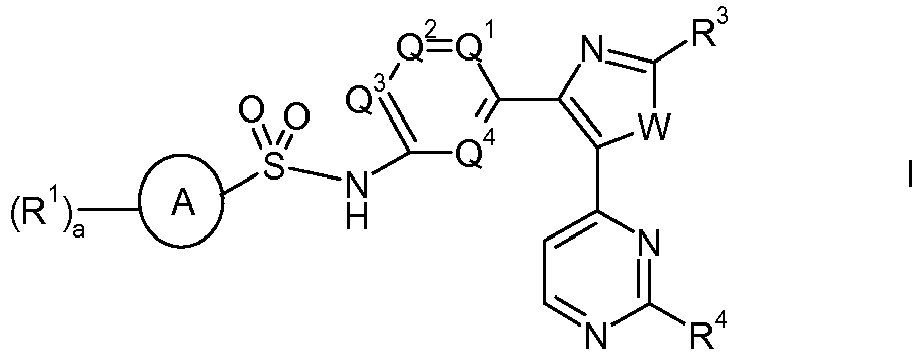
- a is 0, 1, 2 or 3;
- each R1 is the same or different and is independently selected from halo, alkyl, haloalkyl, -OR6, -CO2R6, -NR6R7, and -CN;
- Ring A is selected from C3-6cycloalkyl, phenyl, 5-6 membered heterocycle and 5-6 membered heteroaryl, said heterocycle and said heteroaryl each having 1 or 2 heteroatoms selected from N, O and S;
- each of Q1, Q2, Q3 and Q4 is CH, C-R2 or N, wherein not more than one of Q1, Q2, Q3, and Q4 is N;
- each R2 is the same or different and is independently selected from halo, alkyl, haloalkyl, and -OR6;
- W is selected from -O- and -S-;
- R3 is selected from H, alkyl, haloalkyl-, -alkylene-OH, -NR6R7, -C3-6cycloalkyl, -alkylene-C(O)-OH, -alkylene-NH2, and Het;
wherein said R3 C3-6cycloalkyl is optionally substituted with 1 or 2 substituents which are the same or different and are independently selected from halo, C1-3alkyl, haloC1-3alkyl, OH, O-C1-3alkyl, oxo, S(C1-3alkyl), SO2, NH2, N(H)C1-3alkyl and N(C1-3alkyl)2;
Het is a 5-6 membered heterocycle having 1 or 2 heteroatoms selected from N, O and S and optionally substituted with 1 or 2 substituents which are the same or different and are each independently selected from halo, C1-3alkyl, haloC1-3alkyl, O-C1-3alkyl, C1-3alkylene-O-C1-3alkyl, OH, C1-3alkylene-OH, oxo, SO2(1-3alkyl), C1-3alkylene-SO2(C1-3alkyl), NH2, N(H)C1-3alkyl, N(C1-3alkyl)2, CN, and -CH2CN; - R4 is selected from H, alkyl, haloalkyl, alkenyl, -OR6, -R5-OR6, -R5-CO2R6, -R5-SO2R6, -R5-Het, -R5-C(O)-Het, -N(H)R8, -N(CH3)R8, and -R5-NR6R7; each R5 is the same or different and is independently C1-4alkylene;
- each R6 and each R7 is the same or different and is independently selected from H, alkyl, haloalkyl, -C(O)-alkyl, and -C(O)-cycloalkyl;
- R8 is selected from H, alkyl (optionally substituted by -OH), haloalkyl, C3-6cycloalkyl, -R5-C3-6cycloalkyl, Het2, -R5-Het2, -R5-OR6, -R5-O-R5-OR6, -R5-C(O)2R6, -R5-C(O)NR6R7, -R5-N(H)C(O)-R6, -R5-N(H)C(O)-R5-OR6, -R5-N(H)C(O)2-R6, -R5-NR6R7, -R5-S(O)2R6, -R5-CN, and -R5-N(H)S(O)2R6;
wherein said R8 C3-6cycloalkyl is optionally substituted with 1 or 2 substituents which are the same or different and are independently selected from halo, C1-3alkyl, haloC1-3alkyl, OH, O-C1-3alkyl, oxo, S(C1-3alkyl), SO2(C1-3alkyl), NH2, N(H)C1-3alkyl and N(C1-3alkyl)2, and N(H)SO2C1-3alkyl; and
Het2 is a 4-6 membered heterocycle having 1 or 2 heteroatoms selected from N, O and S and optionally substituted with 1, 2, 3, 4 or 5 C1-3alkyl or 1 or 2 substituents which are the same or different and are each independently selected from halo, C1-3alkyl, haloC1-3alkyl, O-C1-3alkyl, C1-3alkylene-O-C1-3alkyl, OH, C1-3alkylene-OH, oxo, SO2(C1-3alkyl), C1-3alkylene-SO2(C1-3alkyl), NH2, N(H)C1-3alkyl, N(C1-3alkyl)2, N(H)SO2C1-3alkyl, C(O)(C1-3alkyl), CO2(C1-3alkyl), CN, and -CH2CN; - and R9 and R10 are independently selected from H and alkyl,
- and pharmaceutically acceptable salts thereof.
- In a first aspect of the present invention, there is provided a compound of formula (Ia)

- In another aspect of the present invention, there is provided a pharmaceutical composition comprising a compound of formula (Ia) or a pharmaceutically acceptable salt thereof. In one embodiment, the pharmaceutical composition further comprises one or more of pharmaceutically acceptable carriers, diluents or excipients.
- Also disclosed herein is a process for preparing a compound of formula (I) or a pharmaceutically acceptable salt thereof. The process comprises reacting a compound of formula (VIII):

with one of: - i) molecular hydrogen, or
- ii) an alkyl metal reagent or alkenyl metal reagent, or
- iii) an alcohol, or
- iv) a compound of formula (IX): N(Ra)-R8, wherein Ra is H or CH3 and R8 is as defined above;
- Also disclosed herein is a process for preparing a compound of formula (I) or a pharmaceutically acceptable salt thereof. The process comprises reacting a compound of formula (XVIII):


- In another aspect of the present invention, there is provided a compound of formula (Ia), or a pharmaceutically acceptable salt thereof for use in therapy.
- In another aspect, there is provided a compound of formula (Ia) or a pharmaceutically acceptable salt thereof for use in the treatment of a susceptible neoplasm (e.g., Barret's adenocarcinoma; billiary tract carcinomas; breast cancer; cervical cancer; cholangiocarcinoma; central nervous system tumors including primary CNS tumors such as glioblastomas, astrocytomas (e.g., glioblastoma multiforme) and ependymomas, and secondary CNS tumors (i.e., metastases to the central nervous system of tumors originating outside of the central nervous system); colorectal cancer including large intestinal colon carcinoma; gastric cancer; carcinoma of the head and neck including squamous cell carcinoma of the head and neck; hematologic cancers including leukemias and lymphomas such as acute lymphoblastic leukemia, acute myelogenous leukemia (AML), myelodysplastic syndromes, chronic myelogenous leukemia, Hodgkin's lymphoma, non-Hodgkin's lymphoma, megakaryoblastic leukemia, multiple myeloma and erythroleukemia; hepatocellular carcinoma; lung cancer including small cell lung cancer and non-small cell lung cancer; ovarian cancer; endometrial cancer; pancreatic cancer; pituitary adenoma; prostate cancer; renal cancer; sarcoma; skin cancers including melanomas; and thyroid cancers) in a mammal (e.g., human) in need thereof.
- In another aspect, there is provided a compound of formula (Ia) or a pharmaceutically acceptable salt thereof for use in the treatment of breast cancer, cholangiocarcinoma, colorectal cancer, melanoma, non-small cell lung cancer, ovarian cancer, or thyroid cancer in a mammal (e.g., human) in need thereof.
- In a another aspect of the present invention, there is provided the use of a compound of formula (Ia) or a pharmaceutically acceptable salt thereof, in the preparation of a medicament for use in the treatment of a susceptible neoplasm (e.g., Barret's adenocarcinoma; billiary tract carcinomas; breast cancer; cervical cancer; cholangiocarcinoma; central nervous system tumors including primary CNS tumors such as glioblastomas, astrocytomas (e.g., glioblastoma multiforme) and ependymomas, and secondary CNS tumors (i.e., metastases to the central nervous system of tumors originating outside of the central nervous system); colorectal cancer including large intestinal colon carcinoma; gastric cancer; carcinoma of the head and neck including squamous cell carcinoma of the head and neck; hematologic cancers including leukemias and lymphomas such as acute lymphoblastic leukemia, acute myelogenous leukemia (AML), myelodysplastic syndromes, chronic myelogenous leukemia, Hodgkin's lymphoma, non-Hodgkin's lymphoma, megakaryoblastic leukemia, multiple myeloma and erythroleukemia; hepatocellular carcinoma; lung cancer including small cell lung cancer and non-small cell lung cancer; ovarian cancer; endometrial cancer; pancreatic cancer; pituitary adenoma; prostate cancer; renal cancer; sarcoma; skin cancers including melanomas; and thyroid cancers) in a mammal (e.g., human) in need thereof.
- In a another aspect of the present invention, there is provided the use of a compound of formula (Ia) or a pharmaceutically acceptable salt thereof, in the preparation of a medicament for use in the treatment of breast cancer, cholangiocarcinoma, colorectal cancer, melanoma, non-small cell lung cancer, ovarian cancer, or thyroid cancer in a mammal (e.g., human) in need thereof.
- In another aspect of the present invention, there is provided a pharmaceutical composition comprising a compound of formula (Ia) or a pharmaceutically acceptable salt thereof for use in the treatment of a susceptible neoplasm (e.g., Barret's adenocarcinoma; billiary tract carcinomas; breast cancer; cervical cancer; cholangiocarcinoma; central nervous system tumors including primary CNS tumors such as glioblastomas, astrocytomas (e.g., glioblastoma multiforme) and ependymomas, and secondary CNS tumors (i.e., metastases to the central nervous system of tumors originating outside of the central nervous system); colorectal cancer including large intestinal colon carcinoma; gastric cancer; carcinoma of the head and neck including squamous cell carcinoma of the head and neck; hematologic cancers including leukemias and lymphomas such as acute lymphoblastic leukemia, acute myelogenous leukemia (AML), myelodysplastic syndromes, chronic myelogenous leukemia, Hodgkin's lymphoma, non-Hodgkin's lymphoma, megakaryoblastic leukemia, multiple myeloma and erythroleukemia; hepatocellular carcinoma; lung cancer including small cell lung cancer and non-small cell lung cancer; ovarian cancer; endometrial cancer; pancreatic cancer; pituitary adenoma; prostate cancer; renal cancer; sarcoma; skin cancers including melanomas; and thyroid cancers) in a mammal (e.g., human) in need thereof.
- In another aspect of the present invention, there is provided a pharmaceutical composition comprising a compound of formula (Ia) or a pharmaceutically acceptable salt thereof for use in the treatment of breast cancer, colorectal cancer, melanoma, non-small cell lung cancer, ovarian cancer, or thyroid cancer in a mammal (e.g., human) in need thereof.
- These and other aspects of the invention are described further in the Detailed Description and Examples which follow.
-
-
Figure 1 is an X-Ray Powder Diffraction Pattern of a particular solid state form of N-{3-[5-(2-amino-4-pyrimidinyl)-2-(1,1-dimethylethyl)-1,3-thiazol-4-yl]-2-fluorophenyl}-2,6-difluorobenzenesulfonamide. The XRD pattern is expressed in terms of 2 theta angles and obtained with a PANalytical diffractometer equipped with a diffracted beam nickel filter using copper Kα X-radiation, according to the procedures described herein. -
Figure 2 is a differential scanning calorimetry (DSC) thermogram of a particular solid state form of N-{3-[5-(2-amino-4-pyrimidinyl)-2-(1,1-dimethylethyl)-1,3-thiazol-4-yl]-2-fluorophenyl}-2,6-difluorobenzenesulfonamide. The DSC was carried out on a TA Instruments DSC Q100 system at a heating rate of 10°C per minute, using a sample size of 0.4-1.5mg, according to the procedures described herein. - As used herein, the term "Raf family kinase" refers to Raf kinases including A-Raf, B-Raf and c-Raf (also known as Raf-1). Unless distinguished herein, the term refers to both wildtype and mutant variations thereof.
- As used herein, "compound(s) of formula (I)" means any compound having the structural formula (I) as defined by the variable definitions provided, possible solvates, including hydrates thereof, and amorphous and crystal forms, including one or more polymorphic forms and mixtures thereof. In the case of compounds of formula (I) which possess one or more chiral centers, the compounds may be in the form of a racemic mixture, or one or more isomerically enriched or pure stereoisomers, including enantiomers and diastereomers thereof. In such embodiments, "compound(s) of formula (I)" includes the racemic form as well as the enriched or pure enantiomers and diastereomers. Enantiomerically enriched or pure compounds will be designated using conventional nomenclature, including the designations +, -, R, S, d, I, D and L, according to the predominant isomer present. Where a compound of the invention contains an alkenyl or alkenylene group, cis (E) and trans (Z) isomerism may also occur. In such embodiments, "compound(s) of formula (I)" includes the individual stereoisomers of the compound of the invention, which will be indicated using conventional, cis/trans nomenclature. It should also be understood that compounds of formula (I) may exist in tautomeric forms other than that shown in the formula and alternative tautomeric forms are also included within "compound(s) of formula (I)."
- As used herein, "compound(s) of the invention" means a compound of formula (Ia) (as defined above) in any version, i.e., as the free base or as a pharmaceutically acceptable salt thereof. The compound as any version may be in any form, including amorphous or crystalline forms, specific polymorphic forms, solvates, including hydrates (e.g., mono-, di- and hemi- hydrates), and mixtures of various forms.
- Intermediates may also be present as salts. Thus, in reference to intermediates, the phrase "compound(s) of formula (number)" means a compound having that structural formula or a pharmaceutically acceptable salt thereof.
- The term "alkyl" as used herein refers to linear or branched hydrocarbon chains having from 1 to 8 carbon atoms, unless a different number of atoms is specified. Examples of "alkyl" as used herein include, but are not limited to, methyl, ethyl, n-propyl, isopropyl, n-butyl, n-pentyl, sec-butyl, isobutyl, and tert-butyl. The term "alkyl" and variations thereof (i.e., "C1-4alkyl") is intended to independently describe each member of the genus. Similarly, the term "alkylene" refers to linear or branched divalent hydrocarbon chains containing from 1 to 8 carbon atoms, unless a different number of atoms is specified. Examples of "alkylene" as used herein include, but are not limited to, methylene, ethylene, propylene, butylene, and isobutylene. The term "alkylene" and variations thereof (i.e., "C1-3alkylene") is intended to independently describe each member of the genus.
- As used herein, the term "alkenyl" refers to linear or branched hydrocarbon chains having from 2 to 8 carbon atoms, unless a different number of atoms is specified, and at least one and up to three carbon-carbon double bonds. Examples of "alkenyl" as used herein include, but are not limited to ethenyl and propenyl. The term "alkenyl" and variations thereof (i.e., "C2-4alkenyl") is intended to independently describe each member of the genus.
- As used herein, the term "cycloalkyl" refers to a saturated monocyclic carbocyclic ring having from 3 to 8 carbon atoms, unless a different number of atoms is specified. "Cycloalkyl" includes by way of example cyclopropyl, cyclobutyl, cyclopentyl, cyclohexyl, cycloheptyl and cyclooctyl. Preferred cycloalkyl groups include substituted and unsubstituted C3-6cycloalkyl. The term "cycloalkyl" and variations thereof (i.e., "C3-6cycloalkyl") is intended to independently describe each member of the genus.
- The terms "halo" and "halogen" are synonymous and refer to fluoro, chloro, bromo and iodo. In particular embodiments, "halo" refers to fluoro and chloro.
- As used herein, "haloalkyl" refers to an alkyl, as defined above, substituted by one or more halogen atoms, fluoro, chloro, bromo or iodo. Where the haloalkyl group has less than 8 carbon atoms, the number of carbon atoms in the group is indicated as, for example, "haloC1-3alkyl", which indicates that the haloalkyl group has 1, 2 or 3 carbon atoms. Examples of haloalkyl as used herein include, but are not limited to fluoromethyl, difluoromethyl, trifluoromethyl, fluoroethyl, trifluoroethyl, and the like. The term "haloalkyl" and variations thereof (i.e., "haloC1-3alkyl") is intended to independently describe each member of the genus.
- The term "oxo" as used herein refers to the group =O attached directly to a carbon atom of a hydrocarbon ring (e.g., cycloalkyl or cycloalkenyl) or a C, N or S of a heterocyclic or heteroaryl ring to result in oxides, N-oxides, sulfones and sulfoxides.
- As used herein, the terms "heterocycle" and "heterocyclic" are synonymous and refer to monocyclic saturated or unsaturated non-aromatic groups, having from 4 to 6 members (unless a different number of members is specified) and including 1, 2, or 3 heteroatoms selected from N, O and S, unless a different number of heteroatoms is specified. In all embodiments wherein the heterocycle includes 2 or more heteroatoms, the heteroatoms may be the same or different and are independently selected from N, O and S. In all embodiments wherein the compound of formula (I) includes two or more heterocyclic groups, the heterocyclic groups may be the same or different and are independently selected. Examples of particular heterocyclic groups include but are not limited to tetrahydrofuran, dihydropyran, tetrahydropyran, pyran, thietane, 1,4-dioxane, 1,3-dioxane, 1,3-dioxalane, piperidine, piperazine, pyrrolidine, morpholine, thiomorpholine, thiazolidine, oxazolidine, tetrahydrothiopyran, tetrahydrothiophene and the like. The term "heterocycle" and variations thereof (i.e., "N-heterocycle") is intended to independently describe each member of the genus.
- As used herein, the term "N-heterocycle" refers to monocyclic saturated or unsaturated non-aromatic groups having from 4 to 6 members, including at least one N and optionally 1 or 2 additional heteroatoms selected from N, O and S, unless a different number of additional heteroatoms is specified. By "additional heteroatoms" is meant 1 or 2 heteroatoms in addition to the N already specified in the N-heterocycle ring. In all embodiments wherein the heterocycle includes 1 or more additional heteroatoms, the heteroatoms may be the same or different and are independently selected from N, O and S. N-heterocycles include both groups bound through the N of the N-heterocycle and groups bound through a C or S of the N-heterocycle. In all embodiments wherein the compound of formula (I) includes two or more N-heterocyclic groups, the N-heterocyclic groups may be the same or different and are independently selected. Examples of N-heterocycles include piperidine, piperazine, pyrrolidine, morpholine, thiomorpholine and the like.
- As used herein, the term "heteroaryl" refers to aromatic, monocyclic groups having 5 or 6 members (unless a different number of members is specified) including 1, 2 or 3 heteroatoms selected from N, O and S, unless a different number of heteroatoms is specified. In all embodiments wherein the heteroaryl includes 2 or more heteroatoms, the heteroatoms may be the same or different and are independently selected from N, O and S. In all embodiments wherein the compound of formula (I) includes two or more heteroaryl groups, the heteroaryl groups may be the same or different and are independently selected. Examples of particular heteroaryl groups include but are not limited to furan, thiophene, pyrrole, imidazole, pyrazole, triazole, tetrazole, thiazole, oxazole, isoxazole, oxadiazole, thiadiazole, isothiazole, pyridine, pyridazine, pyrazine, pyrimidine, and triazine. The term "heteroaryl" and variations thereof (i.e., "N-heteroaryl") is intended to independently describe each member of the genus.
- As used herein, the term "N-heteroaryl" refers to aromatic, monocyclic groups having 5 or 6 members (unless a different number of members is specified) including at least one N and optionally 1 or 2 additional heteroatoms selected from N, O and S, unless a different number of heteroatoms is specified. By "additional heteroatoms" is meant 1 or 2 heteroatoms in addition to the N already specified in the N-heteroaryl ring. In all embodiments wherein the heteroaryl includes 1 or more additional heteroatoms, the heteroatoms may be the same or different and are independently selected from N, O and S. N-heteroaryls include both groups bound through the N of the N-heteroaryl and groups bound through a C or S of the N-heteroaryl. In all embodiments wherein the compound of formula (I) includes two or more N-heteroaryl groups, the N-heteroaryl groups may be the same or different and are independently selected. Examples of N-heteroaryls include pyrrole, imidazole, pyrazole, thiazole, isoxazole, pyridine, pyridazine, pyrazine, pyrimidine and triazine.
- As used herein, the term "members" (and variants thereof e.g., "membered") in the context of heterocyclic and heteroaryl groups refers to the total number of ring atoms, including carbon and heteroatoms N, O and/or S. Thus, an example of a 6-membered heterocyclic ring is piperidine and an example of a 6-membered heteroaryl ring is pyridine.
- As used herein, the term "optionally substituted" means unsubstituted groups or rings (e.g., cycloalkyl, heterocycle, and heteroaryl rings) and rings substituted with one or more specified substituents.
- Throughout this disclosure, a list of alternatives, such as those provided above and below, is intended to particularly describe each species individually as well as subgroups of one or more species within the list of alternatives (e.g., "or subset thereof").
- Specific examples of compounds of the present invention include those recited in the Examples which follow as well as pharmaceutically acceptable salts of compounds exemplified as the free base and other pharmaceutically acceptable salts of those compounds exemplified as salts.
- The present invention provides a compound of formula (Ia), N-{3-[5-(2-amino-4-pyrimidinyl)-2-(1,1-dimethylethyl)-1,3-thiazol-4-yl]-2-fluorophenyl}-2,6-difluorobenzenesulfonamide,

- It will be appreciated by those skilled in the art that the compounds of formula (I) may be utilized as a pharmaceutically acceptable salt version thereof. The pharmaceutically acceptable salts of the compounds of formula (I) include conventional salts formed from pharmaceutically acceptable (i.e., non-toxic) inorganic or organic acids or bases as well as quaternary ammonium salts. Representative salts include the following: acetate, benzenesulfonate, benzoate, bicarbonate, bisulfate, bitartrate, borate, bromide, calcium edetate, camsylate, carbonate, chloride, clavulanate, citrate, dihydrochloride, edetate, edisylate, estolate, esylate, ethanol amine, fumarate, gluceptate, gluconate, glutamate, glycollylarsanilate, hexylresorcinate, hydrabamine, hydrobromide, hydrochloride, hydroxynaphthoate, iodide, isethionate, lactate, lactobionate, laurate, malate, maleate, mandelate, mesylate (methanesulfonate), methylbromide, methylnitrate, methylsulfate, monopotassium maleate, mucate, napsylate, nitrate, N-methylglucamine, oxalate, pamoate (embonate), palmitate, pantothenate, phosphate/diphosphate, polygalacturonate, potassium, salicylate, sodium, stearate, subacetate, succinate, tannate, tartrate, teoclate, tosylate (methylbenzenesulfonate), triethiodide, trimethylammonium and valerate. Other salts, such as oxalic and trifluoroacetic, which are not themselves pharmaceutically acceptable, may be useful in the preparation of salts useful as intermediates in obtaining compounds of this invention. In one embodiment, the compound of formula (I) is in the form of the free base. In one embodiment, the compound of formula (I) is in the form of the mesylate salt. In one embodiment, the compound of formula (I) is in the form of the sulfate salt. In one embodiment, the compound of formula (I) is in the form of the hydrochloride salt. In one embodiment, the compound of formula (I) is in the form of the sodium salt. Certain salt versions of the compounds may be solvates, particularly hydrates. In one embodiment, the compound of formula (I) or a pharmaceutically acceptable salt thereof is in the form of a mono-, di-, tri- or hemi- hydrate.
- Processes for preparing pharmaceutically acceptable salts of compounds such as the compounds of formula (I) are conventional in the art. See, e.g., Burger's Medicinal Chemistry And Drug Discovery 5th Edition, Vol 1: Principles And Practice. As will be apparent to those skilled in the art, in the processes described below for the preparation of compounds of formula (I), certain intermediates, may be in the form of pharmaceutically acceptable salts of the compound. Processes for preparing pharmaceutically acceptable salts of intermediates are known in the art and are analogous to the processes for preparing pharmaceutically acceptable salts of other compounds such as the compounds of formula (I).
- Compounds of the invention are believed to inhibit of one or more kinases and in particular one or more Raf family kinases ("Raf inhibitor"). Compounds of the invention may also inhibit one or more other kinases, and particularly tyrosine kinases. Certain compounds of the invention may inhibit B-Raf ("B-Raf inhibitor"). It is well documented that Raf inhibitors, including B-Raf inhibitors, are believed to be useful as anticancer and antitumor agents. See, e.g., Davies (2002) supra, Garnett (2004) supra, and Zebisch (2006) supra. The anticancer and antitumor effects of these kinase inhibitors is currently believed to result from inhibition of one or more Raf family kinases, and the effect of such inhibition on cell lines whose growth and/or viability is dependent on the kinase activity of Raf family kinases.
- Compounds of the invention may be Raf inhibitors and optionally also inhibit one or more ErbB family kinases (i.e., EGFR, ErbB2 and ErbB4). Certain compounds of the invention may inhibit B-Raf and also inhibit one or more ErbB family kinases (i.e., EGFR, ErbB2 and ErB4).
- Some compounds of the invention may be selective inhibitors of Raf family kinases ("selective Raf inhibitor"), meaning that preferential inhibition of one or more Raf family kinases is significantly greater than that of any number of other kinases, for example by a factor of 5-fold or more.
- However, the present invention is not limited to compounds which are selective inhibitors of one or more Raf family kinases rather, the present invention expressly contemplates that certain compounds of the invention may possess activity against multiple kinases, including kinases other than Raf family kinases. For example, particular compounds of the invention may possess activity against multiple other kinases, including but not limited to EGFR, ErbB2, ErbB4, IGF-1R, IR, IRR, Src, VEGFR, PDGFR, Met, Lyn, Lck, Alk5, Aurora A and B, JNK, Syk, p38, BTK, FAK, Abl, CK1. cKit, Epherin receptors (for example EphB4), FGFR, Flt, Fyn, Hck, JAK, MLK, PKCµ, Ret, Yes, and BRK, as well. Particular compounds of the invention may be deemed to be unselective or non-selective, meaning that they are not considered by one skilled in the art to be selective for any particular kinase over others.
- As used herein, a Raf inhibitor is a compound that exhibits a pIC50 of greater than about 6 against at least one Raf family kinase in the Raf inhibition enzyme assay described below and/or an IC50 of not greater than about 5 µM potency against at least one cell line that expresses mutated B-Raf kinase (e.g., A375P, Colo205, HT-29, SK-MEL-3, SK-MEL-28) in the methylene blue and/or the CellTiter-Glo cellular proliferation assays described below. In a particular embodiment, a Raf inhibitor refers to a compound of the invention that exhibits a pIC50 of greater than about 6.5 against at least one Raf family kinase in the Raf inhibition enzyme assay described below and an IC50 of not greater than about 500nM potency against at least one cell line that expresses mutated B-Raf kinase in the methylene blue and/or the CellTiter-Glo cellular proliferation assays described below.
- A "B-Raf inhibitor" refers to a compound of the invention that exhibits a pIC50 of greater than about 6.5 against B-Raf (including B-Raf mutants) in the Raf inhibition enzyme assay described below and an IC50 of not greater than about 500nM potency against at least one cell line that expresses mutated B-Raf kinase in the methylene blue and/or the CellTiter-Glo cellular proliferation assay described below.
- The present invention provides compounds for use in medical therapy in a mammal, e.g., a human, in need thereof. Described herein are methods for the treatment of several conditions in a mammal, in need thereof, all of which comprise the step of administering a therapeutically effective amount of a compound of the invention. All methods described herein are applicable to mammals, and particularly to humans.
- As used herein, the term "treatment" or "treating" in the context of therapeutic methods, refers to alleviating the specified condition, eliminating or reducing the symptoms of the condition, slowing or eliminating the progression, invasion, or metastatic spread of the condition and preventing or delaying the reoccurrence of the condition in a previously afflicted subject. The present invention further provides use of the compounds of the invention for the preparation of a medicament for the treatment of several conditions in a mammal (e.g., human) in need thereof.
- More particularly, the present invention provides compounds for use in the treatment of a condition mediated by at least one Raf family kinases (e.g., B-Raf) in a mammal in need thereof.
- The compounds of the invention are of use in regulating, modulating, binding or inhibiting one or more Raf family kinases (e.g., B-Raf) in a mammal, including in methods of regulating, modulating, binding, or inhibiting at least one Raf family kinase (e.g., B-Raf) by administering a therapeutically effective amount of a compound of the invention. "Regulating, modulating, binding or inhibiting at least one Raf family kinase" refers to regulating, modulating, binding or inhibiting the activity of at least one Raf family kinase, as well as regulating, modulating, binding or inhibiting overexpression of an upstream regulator of at least one Raf family kinase in order to inhibit the cellular potency of its signaling ability.
- In a particular embodiment, the invention provides compounds for use in the treatment of a condition mediated by inappropriate activity of one or more Raf family kinases (e.g., B-Raf), or an upstream activator of one or more Raf family kinases in a mammal. In an additional aspect, the present invention provides the use of a compound of the invention for the preparation of a medicament for the treatment of a condition mediated by inappropriate activity of one or more Raf family kinases (particularly B-Raf), in a mammal. One example of a condition mediated by inappropriate activity of one or more Raf family kinases includes neoplasms.
- By "inappropriate activity" is meant Raf family kinase activity that deviates from the expected activity for that kinase or for an upstream activator of that kinase in a particular mammal. The inappropriate activity of a Raf family kinase may arise from one or more of A-Raf, B-Raf or c-Raf or an upstream activator of a Raf family kinase. Inappropriate Raf family kinase activity may take the form of, for instance, an abnormal increase in activity, or an aberration in the timing and/or control of Raf family kinase activity. Such inappropriate activity may result, for example, from overexpression or mutation of the kinase, upstream activator, receptor or ligand leading to inappropriate or uncontrolled activation of the corresponding kinase or receptor. Furthermore, it is also contemplated that unwanted Raf family kinase activity may reside in an abnormal source, such as a neoplasm. Thus, the level of Raf family kinase activity does not need to be abnormal to be considered inappropriate in the case where the activity derives from an abnormal source including, but not limited to, upstream activators (e.g., activated mutant Ras GTPases) or neoplasm. In one example of inappropriate Raf family kinase activity not resulting from mutation or overexpression of a Raf family kinase, inappropriate activity of a Ras GTPase may result from mutation or overexpression of Ras GTPase, for example the G13D mutation in KRas2, and may lead to overactivation of the MAPK pathway mediated by Raf family kinase activity.
- Thus, in one embodiment, the present invention provides compounds for use in the treatment of a condition which directly or indirectly results from a mutation of a Raf family kinase or overexpression of a Raf family kinase, or a mutation of an upstream activator of a Raf family kinase or overexpression of an upstream activator of a Raf family kinase in a mammal in need thereof. In an additional aspect, the present invention provides the use of a compound of the invention for the preparation of a medicament for the treatment of a condition which directly or indirectly results from mutation of a Raf family kinase or overexpression of a Raf family kinase, or a mutation of an upstream activator of a Raf family kinase or overexpression of an upstream activator of a Raf family kinase in a mammal. Conditions which are mediated by at least one Raf family kinase, and particularly conditions mediated by inappropriate activity of one or more Raf family kinases, including those which directly or indirectly result from mutation of a Raf family kinase, overexpression of a Raf family kinase, or mutation of an upstream activator of a Raf family kinase or overexpression of an upstream activator of a Raf family kinase are known in the art and include but are not limited to neoplasms.
- Compounds of the invention may also be used in the treatment of conditions attenuated by inhibition of a Raf family kinase (particularly B-Raf). Also provided is the use of a compound of the invention for the preparation of a medicament for the treatment of a condition attenuated by inhibition of a Raf family kinase (particularly B-Raf) in a mammal. Conditions attenuated by inhibition of a Raf family kinase (including B-Raf) include but are not limited to neoplasms.
- Accordingly, compounds of the invention may be used in the treatment of a neoplasm, particularly a susceptible neoplasm (a cancer or tumor) in a mammal. The invention also provides the use of a compound of the invention for the preparation of a medicament for the treatment of neoplasm, particularly a susceptible neoplasm, in a mammal.
- "Susceptible neoplasm" as used herein refers to neoplasms which are susceptible to treatment by a kinase inhibitor and particularly neoplasms that are susceptible to treatment by a Raf inhibitor. Neoplasms which have been associated with inappropriate activity of one or more Raf family kinases and particularly neoplasms which are exhibit mutation of a Raf family kinase, overexpression of a Raf family kinase, or mutation of an upstream activator of a Raf family kinase or overexpression of an upstream activator of a Raf family kinase, and are therefore susceptible to treatment with an Raf inhibitor are known in the art, and include both primary and metastatic tumors and cancers. See, Catalogue of Somatic Mutations in Cancer (COSMIC), the Wellcome Trust Sanger Institute, http://www.sanger.ac.uk/genetics/CGP/cosmic/ and those references cited in the background.
- Specific examples of susceptible neoplasms within the scope of the invention include, but are not limited to:
- Barret's adenocarcinoma;
- billiary tract carcinomas;
- breast cancer;
- cervical cancer;
- cholangiocarcinoma;
- central nervous system tumors including primary CNS tumors such as glioblastomas, astrocytomas (including glioblastoma multiforme) and ependymomas, and secondary CNS tumors (i.e., metastases to the central nervous system of tumors originating outside of the central nervous system),
- colorectal cancer, including large intestinal colon carcinoma;
- gastric cancer;
- carcinoma of the head and neck including squamous cell carcinoma of the head and neck;
- hematologic cancers including leukemias and lymphomas such as acute lymphoblastic leukemia, acute myelogenous leukemia (AML), myelodysplastic syndromes, chronic myelogenous leukemia, Hodgkin's lymphoma, non-Hodgkin's lymphoma, megakaryoblastic leukemia, multiple myeloma and erythroleukemia;
- hepatocellular carcinoma;
- lung cancer including small cell lung cancer and non-small cell lung cancer;
- ovarian cancer;
- endometrial cancer;
- pancreatic cancer;
- pituitary adenoma;
- prostate cancer;
- renal cancer;
- sarcoma;
- skin cancers including melanomas; and
- thyroid cancers.
- The foregoing list is intended to disclose each of the recited neoplasms individually. In one particular embodiment, the susceptible neoplasm is a neoplasm which exhibits a mutation in BRaf.
- The present invention also provides a compound of formula (Ia) or a pharmaceutically acceptable salt thereof for use in the treatment of Barret's adenocarcinoma; billiary tract carcinomas; breast cancer; cervical cancer; cholangiocarcinoma; central nervous system tumors including primary CNS tumors such as glioblastomas, astrocytomas (e.g., glioblastoma multiforme) and ependymomas, and secondary CNS tumors (i.e., metastases to the central nervous system of tumors originating outside of the central nervous system); colorectal cancer including large intestinal colon carcinoma; gastric cancer; carcinoma of the head and neck including squamous cell carcinoma of the head and neck; hematologic cancers including leukemias and lymphomas such as acute lymphoblastic leukemia, acute myelogenous leukemia (AML), myelodysplastic syndromes, chronic myelogenous leukemia, Hodgkin's lymphoma, non-Hodgkin's lymphoma, megakaryoblastic leukemia, multiple myeloma and erythroleukemia; hepatocellular carcinoma; lung cancer including small cell lung cancer and non-small cell lung cancer; ovarian cancer; endometrial cancer; pancreatic cancer; pituitary adenoma; prostate cancer; renal cancer; sarcoma; skin cancers including melanomas; and thyroid cancers, or any subset thereof, in a mammal (e.g., human).
- The present invention further provides the use of a compound of formula (Ia) or a pharmaceutically acceptable salt thereof for the preparation of a medicament for the treatment of Barret's adenocarcinoma; billiary tract carcinomas; breast cancer; cervical cancer; cholangiocarcinoma; central nervous system tumors including primary CNS tumors such as glioblastomas, astrocytomas (e.g., glioblastoma multiforme) and ependymomas, and secondary CNS tumors (i.e., metastases to the central nervous system of tumors originating outside of the central nervous system); colorectal cancer including large intestinal colon carcinoma; gastric cancer; carcinoma of the head and neck including squamous cell carcinoma of the head and neck; hematologic cancers including leukemias and lymphomas such as acute lymphoblastic leukemia, acute myelogenous leukemia (AML), myelodysplastic syndromes, chronic myelogenous leukemia, Hodgkin's lymphoma, non-Hodgkin's lymphoma, megakaryoblastic leukemia, multiple myeloma and erythroleukemia; hepatocellular carcinoma; lung cancer including small cell lung cancer and non-small cell lung cancer; ovarian cancer; endometrial cancer; pancreatic cancer; pituitary adenoma; prostate cancer; renal cancer; sarcoma; skin cancers including melanomas; and thyroid cancers, or any subset thereof, in a mammal (e.g., human).
- As is well known in the art, tumors may metastasize from a first or primary locus of tumor to one or more other body tissues or sites. In particular, metastases to the central nervous system (i.e., secondary CNS tumors), and particularly the brain (i.e., brain metastases), are well documented for tumors and cancers, such as breast, lung, melanoma, renal and colorectal. As used herein, reference to uses or methods for treatment or treatments for a "neoplasm," "tumor" or "cancer" in a subject includes use for and treatment of the primary neoplasm, tumor or cancer, and where appropriate, also the use for and treatment of metastases (i.e., metastatic tumor growth) as well.
- In another embodiment, the susceptible neoplasm is colorectal cancer and the invention provides compounds for use in the treatment of colorectal cancer in a mammal (e.g., human) and the use of such compounds for the preparation of a medicament for the treatment of colorectal cancer in a mammal (e.g., human).
- In another embodiment, the susceptible neoplasm is melanoma, and the invention provides compounds for use in the treatment of melanoma in a mammal (e.g., human) and the use of such compounds for the preparation of a medicament for the treatment of melanoma in a mammal (e.g., human).
- In another embodiment, the susceptible neoplasm is cholangiocarcinoma, and the invention provides compounds for use in the treatment of cholangiocarcinoma in a mammal (e.g., human) and the use of such compounds for the preparation of a medicament for the treatment of cholangiocarcinoma in a mammal (e.g., human).
- In another embodiment, the susceptible neoplasm is thyroid cancer, and the invention provides compounds for use in the treatment of thyroid cancer in a mammal (e.g., human) and the use of such compounds for the preparation of a medicament for the treatment of thyroid cancer in a mammal (e.g., human).
- In one particular embodiment, the susceptible neoplasm is breast cancer and the invention provides compounds for use in the treatment of breast cancer in a mammal (e.g., human) and the use of such compounds for the preparation of a medicament for the treatment of breast cancer in a mammal (e.g., human).
- In another embodiment, the susceptible neoplasm is ovarian cancer and the invention provides compounds for use in the treatment of ovarian cancer in a mammal (e.g., human) and the use of such compounds for the preparation of a medicament for the treatment of ovarian cancer in a mammal (e.g., human).
- In another embodiment, the susceptible neoplasm is non-small cell lung cancer, and the invention provides compounds for use in the treatment of non-small cell lung cancer in a mammal (e.g., human) and the use of such compounds for the preparation of a medicament for the treatment of non-small cell lung cancer in a mammal (e.g., human).
- The compounds of the invention can be used alone in the treatment of each of the foregoing conditions or can be used to provide additive or potentially synergistic effects with certain existing chemotherapies, radiation, biological or immunotherapeutics (including monoclonal antibodies) and vaccines. The compounds of the invention may be useful for restoring effectiveness of certain existing chemotherapies and radiation and or increasing sensitivity to certain existing chemotherapies and/or radiation.
- In addition to the treatment of susceptible neoplasms, the compounds of the invention may also be used in the treatment of other conditions attenuated by inhibition of a Raf family kinase, such as cardio-facio cutaneous syndrome and polycystic kidney disease.
- A method for treating a susceptible neoplasm in a mammal in need thereof can, therefore, comprise the steps of:
- (a) analyzing a sample from said neoplasm to determine whether an activating mutation is present in the coding sequence for B-Raf in cells of said neoplasm;
- (b) selecting a mammal having a neoplasm with an activating mutation in the coding sequence for B-Raf; and
- (c) administering a therapeutically effective amount of a compound of the present invention to the mammal selected in step (b).
- In certain embodiments, the activating mutation present in the coding sequence for BRAF results in a BRAF having an amino acid substitution selected from the group consisting of R462I, I463S, G464V, G464E, G466A, G466E, G466V, G469A, G469E, D594V, F595L, G596R, L597V, L597R, T599I, V600E, V600D, V600K, V600R, T119S, and K601 E. See, for example,
Figure 2 of Halilovic and Solvit (2008) Current Opinion in Pharmacology 8:419-26. - A method for treating a susceptible neoplasm in a mammal in need thereof can, therefore, comprise the steps of:
- (a) analyzing a sample from said neoplasm to determine whether a mutation encoding a V600E amino acid substitution is present in the coding sequence for B-Raf in cells of said neoplasm;
- (b) selecting a mammal having a neoplasm with a mutation encoding the V600E amino acid substitution in B-Raf; and
- (c) administering a therapeutically effective amount of a compound of the present invention to the mammal selected in step (b).
- The V600E amino acid substitution in B-Raf is described, for example, in Kumar et al. (2004) J Invest Dermatol. 122(2):342-8. This mutation commonly results from a T1799A mutation in the coding sequence for human B-Raf. Accordingly,, the step of analyzing a sample from said neoplasm to determine whether a mutation encoding a V600E amino acid substitution is present in the coding sequence for B-Raf is performed by determining whether the coding sequence for B-Raf in cells of the neoplasm contains the T1799A mutation.
- The neoplasm may be selected from Barret's adenocarcinoma; billiary tract carcinomas; breast cancer; cervical cancer; cholangiocarcinoma; central nervous system tumors including primary CNS tumors such as glioblastomas, astrocytomas (e.g., glioblastoma multiforme) and ependymomas, and secondary CNS tumors (i.e., metastases to the central nervous system of tumors originating outside of the central nervous system); colorectal cancer including large intestinal colon carcinoma; gastric cancer; carcinoma of the head and neck including squamous cell carcinoma of the head and neck; hematologic cancers including leukemias and lymphomas such as acute lymphoblastic leukemia, acute myelogenous leukemia (AML), myelodysplastic syndromes, chronic myelogenous leukemia, Hodgkin's lymphoma, non-Hodgkin's lymphoma, megakaryoblastic leukemia, multiple myeloma and erythroleukemia; hepatocellular carcinoma; lung cancer including small cell lung cancer and non-small cell lung cancer; ovarian cancer; endometrial cancer; pancreatic cancer; pituitary adenoma; prostate cancer; renal cancer; sarcoma; skin cancers including melanomas; and thyroid cancers.
- In particular embodiments, the neoplasm is selected from breast cancer, cholangiocarcinoma, colorectal cancer, melanoma, non-small cell lung cancer, ovarian cancer, and thyroid cancer. In one preferred embodiment, the neoplasm is melanoma.
- In one embodiment, the mammal is a human.
- In one embodiment, the compound of the invention is a pharmaceutically acceptable salt of N-{3-[5-(2-amino-4-pyrimidinyl)-2-(1,1-dimethylethyl)-1,3-thiazol-4-yl]-2-fluorophenyl}-2,6-difluorobenzenesulfonamide. In a particular embodiment, the compound of the invention is N-{3-[5-(2-amino-4-pyrimidinyl)-2-(1,1-dimethylethyl)-1,3-thiazol-4-yl]-2-fluorophenyl}-2,6-difluorobenzenesulfonamide mesylate. In an alternate embodiment, the compound of the invention is N-{3-[5-(2-amino-4-pyrimidinyl)-2-(1,1-dimethylethyl)-1,3-thiazol-4-yl]-2-fluorophenyl}-2,6-difluorobenzenesulfonamide.
- The sample of the neoplasm to be analyzed for the presence of B-raf activating mutations can be derived from a variety of sources including, but not limited to, single cells, a collection of cells, tissue, cell culture, bone marrow, blood, or other bodily fluids. The tissue or cell source may include a tissue biopsy sample, a cell sorted population, cell culture, or a single cell. In selecting a sample, the percentage of the sample that constitutes neoplastic cells should be considered. In some embodiments, the sample from the neoplasm is fixed using a preservative prior to analyzing for the presence of an activating mutation.
- The step of analyzing a sample from the neoplasm to determine whether an activating mutation is present in the coding sequence for B-Raf in cells of said neoplasm may be performed using any method known in the art. For example, the coding sequence for B-raf in cells of the sample may be analyzed to determine if it contains a mutation which results in the expression of activated B-Raf. Methods for detecting such mutations are well known in the art. See, for example, Whitcombe et al. (1999) Nature Biotechnology 17:804-7, Gibson (2006) Clinica Chimica Acta 363: 32-47, Kim and Misra (2007) Annual Review of Biomedical Engineering 9:289-320, and
U.S. Patent Nos. 6,326,145 and6,270,967 ). Alternatively, activating mutations in B-Raf may be identified by directly detecting the activated B-raf protein using an agent (e.g. an antibody) that selectively binds activated B-raf. - As used herein, the term "therapeutically effective amount" means an amount of a compound of the invention which is sufficient, in the subject to which it is administered, to elicit a biological or medical response of a cell culture, tissue, system, mammal (including human) that is being sought, for instance, by a researcher or clinician. The term also includes within its scope amounts effective to enhance normal physiological function. For example, a therapeutically effective amount of a compound of the invention for the treatment of a condition mediated by at least one Raf family kinase is an amount sufficient to treat the condition in the particular subject. Similarly, a therapeutically effective amount of a compound of the invention for the treatment of a susceptible neoplasm is an amount sufficient to treat the particular susceptible neoplasm in the subject. In one embodiment of the present invention, a therapeutically effective amount of a compound of the invention is an amount sufficient to regulate, modulate, bind or inhibit at least one Raf family kinase. More particularly, in such embodiment, the therapeutically effective amount of a compound of the invention is an amount sufficient to regulate, modulate, bind or inhibit B-Raf.
- The precise therapeutically effective amount of the compounds of the invention will depend on a number of factors. There are variables inherent to the compounds including, but not limited to, the following: molecular weight, inhibitory activity at the target kinase, absorption, bioavailability, distribution in the body, tissue penetration, half-life, metabolism, protein binding, and excretion. These variables determine what dose of compound needs to be administered in order to inhibit the target kinase by a sufficient percentage and for a sufficient amount of time to have the desired effect on the condition being treated (e.g., neoplasm). In general, the goal will be to inhibit the target kinase by 50% or more for as long as possible. The duration of drug exposure will be limited only by the compound half-life, and side effects from treatment requiring cessation of dosing. The amount of compound administered will also depend on factors related to patients and disease including, but not limited to, the following: the age, weight, concomitant medications and medical condition of the subject being treated, the precise condition requiring treatment and its severity, the nature of the formulation, and the route of administration. Ultimately the dose will be at the discretion of the attendant physician or veterinarian. Typically, the compound of the invention will be given for treatment in the range of 0.01 to 30 mg/kg body weight of recipient (mammal) per day or per dose or per cycle of treatment and more usually in the range of 0.1 to 10 mg/kg body weight per day or per dose or per cycle of treatment. Thus, for a 70kg adult human being treated for a condition mediated by or correlated to at least one Raf family kinase, the actual amount per day or per dose or per cycle of treatment would usually be from 1 to 2000 mg and this amount may be given in a single or multiple doses per day or per dose or per cycle of treatment. Dosing regimens may vary significantly and will be determined and altered based on clinical experience with the compound. The full spectrum of dosing regimens may be employed ranging from continuous dosing (with daily doses) to intermittent dosing. A therapeutically effective amount of a pharmaceutically acceptable salt of a compound of formula (I) may be determined as a proportion of the therapeutically effective amount of the compound of formula (I) as the free base. It is envisaged that similar dosages would be appropriate for treatment of the susceptible neoplasms described above.
- While it is possible that, for use in therapy, a therapeutically effective amount of a compound of the invention may be administered as the raw chemical, it is typically presented as the active ingredient of a pharmaceutical composition or formulation. Accordingly, the invention further provides a pharmaceutical composition comprising a compound of the invention. The pharmaceutical composition may further comprise one or more pharmaceutically acceptable carriers, diluents, and/or excipients. The carrier(s), diluent(s) and/or excipient(s) must be acceptable in the sense of being compatible with the other ingredients of the formulation and not deleterious to the recipient thereof. A process for the preparation of a pharmaceutical formulation includes admixing a compound of the invention with one or more pharmaceutically acceptable carriers, diluents and/or excipients.
- Pharmaceutical formulations may be presented in unit dose forms containing a predetermined amount of active ingredient per unit dose. Such a unit may contain, for example, 0.5 mg to 1 g, preferably 1 mg to 700 mg, more preferably 5 mg to 100 mg of a compound of the invention (as a free-base, solvate (including hydrate) or salt, in any form), depending on the condition being treated, the route of administration, and the age, weight and condition of the patient. Preferred unit dosage formulations are those containing a daily dose, weekly dose, monthly dose, a sub-dose or an appropriate fraction thereof, of an active ingredient. Furthermore, such pharmaceutical formulations may be prepared by any of the methods well known in the pharmacy art.
- Pharmaceutical formulations may be adapted for administration by any appropriate route, for example by the oral (including capsules, tablets, liquid-filled capsules, disintegrating tablets, immediate, delayed and controlled release tablets, oral strips, solutions, syrups, buccal and sublingual), rectal, nasal, inhalation, topical (including transdermal), vaginal or parenteral (including subcutaneous, intramuscular, intravenous or intradermal) route. Such formulations may be prepared by any method known in the art of pharmacy, for example by bringing into association the active ingredient with the carrier(s), excipient(s) or diluent. Generally, the carrier, excipient or diluent employed in the pharmaceutical formulation is "non-toxic," meaning that it/they is/are deemed safe for consumption in the amount delivered in the pharmaceutical composition, and "inert" meaning that it/they does/do not appreciably react with or result in an undesired effect on the therapeutic activity of the active ingredient.
- Pharmaceutical formulations adapted for oral administration may be presented as discrete units such as liquid-filled or solid capsules; immediate, delayed or controlled release tablets; powders or granules; solutions or suspensions in aqueous or non-aqueous liquids; edible foams or whips; oil-in-water liquid emulsions, water-in-oil liquid emulsions or oral strips, such as impregnated gel strips.
- For instance, for oral administration in the form of a tablet or capsule, the active drug component can be combined with an oral pharmaceutically acceptable carrier such as ethanol, glycerol, water and the like. Powders are prepared by comminuting the compound to a suitable fine size and mixing with a similarly comminuted pharmaceutical carrier such as an edible carbohydrate, as, for example, starch or mannitol. Flavoring, preservative, dispersing and coloring agent can also be present.
- Solid capsules are made by preparing a powder mixture, as described above, and filling formed gelatin sheaths. Glidants and lubricants such as colloidal silica, talc, magnesium stearate, calcium stearate or solid polyethylene glycol can be added to the powder mixture before the filling operation. A disintegrating or solubilizing agent such as agar-agar, calcium carbonate or sodium carbonate can also be added to improve the availability of the medicament when the capsule is ingested.
- Moreover, when desired or necessary, suitable binders, lubricants, disintegrating agents and coloring agents can also be incorporated into the mixture. Suitable binders include starch, gelatin, natural sugars such as glucose or beta-lactose, corn sweeteners, natural and synthetic gums such as acacia, tragacanth or sodium alginate, carboxymethylcellulose, polyethylene glycol, waxes and the like. Lubricants used in these dosage forms include sodium oleate, sodium stearate, magnesium stearate, sodium benzoate, sodium acetate, sodium chloride and the like. Disintegrators include, without limitation, starch, methyl cellulose, agar, bentonite, xanthan gum and the like. Tablets are formulated, for example, by preparing a powder mixture, granulating or slugging, adding a lubricant and disintegrant and pressing into tablets. A powder mixture is prepared by mixing the compound, suitably comminuted, with a diluent or base as described above, and optionally, with a binder such as carboxymethylcellulose, an alginate, gelatin, or polyvinyl pyrrolidone, a solution retardant such as paraffin, a resorption accelerator such as a quaternary salt and/or an absorption agent such as bentonite, kaolin or dicalcium phosphate. The powder mixture can be granulated by wetting with a binder such as syrup, starch paste, acadia mucilage or solutions of cellulosic or polymeric materials and forcing through a screen. As an alternative to granulating, the powder mixture can be run through the tablet machine and the result is imperfectly formed slugs broken into granules. The granules can be lubricated to prevent sticking to the tablet forming dies by means of the addition of stearic acid, a stearate salt, talc or mineral oil. The lubricated mixture is then compressed into tablets. The compounds of the present invention can also be combined with a free flowing inert carrier and compressed into tablets directly without going through the granulating or slugging steps. A clear or opaque protective coating consisting of a sealing coat of shellac, a coating of sugar or polymeric material and a polish coating of wax can be provided. Dyestuffs can be added to these coatings to distinguish different unit dosages.
- Oral fluids such as solutions, syrups and elixirs can be prepared in dosage unit form so that a given quantity contains a predetermined amount of the compound. Solutions and syrups can be prepared by dissolving the compound in a suitably flavored aqueous solution, while elixirs are prepared through the use of a pharmaceutically acceptable alcoholic vehicle. Suspensions can be formulated by dispersing the compound in a pharmaceutically acceptable vehicle. Solubilizers and emulsifiers such as ethoxylated isostearyl alcohols and polyoxy ethylene sorbitol ethers, preservatives, flavor additive such as peppermint oil or natural sweeteners or saccharin or other artificial sweeteners, and the like can also be added.
- Where appropriate, unit dosage formulations for oral administration can be microencapsulated. The formulation can also be prepared to prolong or sustain the release as for example by coating or embedding particulate material in polymers, wax or the like.
- The compounds of the invention can also be administered in the form of liposome delivery systems, such as small unilamellar vesicles, large unilamellar vesicles and multilamellar vesicles. Liposomes can be formed from a variety of phospholipids, such as cholesterol, stearylamine or phosphatidylcholines.
- The compounds of the invention may also be delivered by the use of monoclonal antibodies as individual carriers to which the compound molecules are coupled. The compounds may also be coupled with soluble polymers as targetable drug carriers. Such polymers can include polyvinylpyrrolidone, pyran copolymer, polyhydroxypropyl-methacrylamidephenol, polyhydroxyethylaspartamidephenol, or polyethyleneoxide-polylysine substituted with palmitoyl residues. Furthermore, the compounds may be coupled to a class of biodegradable polymers useful in achieving controlled release of a drug, for example, polycentric acid, polepsilon caprolactone, polyhydroxy butyric acid, polyorthoesters, polyacetals, polydihydropyrans, polycyanoacrylates and cross-linked or amphipathic block copolymers of hydrogels.
- Pharmaceutical formulations adapted for transdermal administration may be presented as discrete patches intended to remain in intimate contact with the epidermis of the recipient for a prolonged period of time. For example, the active ingredient may be delivered from the patch by iontophoresis as generally described in Pharmaceutical Research (1986) 3(6):318.
- Pharmaceutical formulations adapted for topical administration may be formulated as ointments, creams, suspensions, lotions, powders, solutions, pastes, gels, sprays, aerosols or oils. For treatments of external tissues, such as skin, the formulations may be applied as a topical ointment or cream. When formulated in an ointment, the active ingredient may be employed with either a paraffinic or a water-miscible ointment base. Alternatively, the active ingredient may be formulated in a cream with an oil-in-water cream base or a water-in-oil base. Pharmaceutical formulations adapted for topical administrations to the eye include eye drops wherein the active ingredient is dissolved or suspended in a suitable carrier, especially an aqueous solvent. Pharmaceutical formulations adapted for topical administration in the mouth include lozenges, pastilles and mouth washes.
- Pharmaceutical formulations adapted for rectal administration may be presented as suppositories or as enemas.
- Pharmaceutical formulations adapted for nasal administration wherein the carrier is a solid include a coarse powder having a particle size for example in the
range 20 to 500 microns which is administered in the manner in which snuff is taken, i.e. by rapid inhalation through the nasal passage from a container of the powder held close up to the nose. Suitable formulations wherein the carrier is a liquid, for administration as a nasal spray or as nasal drops, include aqueous or oil solutions of the active ingredient. - Pharmaceutical formulations adapted for administration by inhalation include fine particle dusts or mists, which may be generated by means of various types of metered dose pressurized aerosols, metered dose inhalers, dry powder inhalers, nebulizers or insufflators.
- Pharmaceutical formulations adapted for vaginal administration may be presented as pessaries, tampons, creams, gels, pastes, foams or spray formulations.
- Pharmaceutical formulations adapted for parenteral administration include aqueous and non-aqueous sterile injection solutions which may contain anti-oxidants, buffers, bacteriostats and solutes which render the formulation of pharmaceutically acceptable tonicity with the blood of the intended recipient; and aqueous and non-aqueous sterile suspensions which may include suspending agents and thickening agents. The formulations may be presented in unit-dose or multi-dose containers, for example sealed ampoules and vials, and may be stored in a freeze-dried (lyophilized) condition requiring only the addition of the sterile liquid carrier, for example water for injection, immediately prior to use. Extemporaneous injection solutions and suspensions may be prepared from sterile powders, granules and tablets.
- It should be understood that in addition to the ingredients particularly mentioned above, the formulations may include other agents conventional in the art having regard to the type of formulation in question, for example those suitable for oral administration may include flavoring agents.
- In the above-described uses, a compound of the invention may be employed alone, in combination with one or more other compounds of the invention or in combination with other therapeutic methods or agents. In particular, in methods of treating a condition attenuated by inhibition of at least one Raf family kinase and in methods of treating susceptible neoplasms, combination with other chemotherapeutic, biologic, hormonal, antibody and supportive care agents is envisaged as well as combination with surgical therapy and radiotherapy. Supportive care agents include analgesics, anti-emetics and agents used to treat heamatologic side effects such as neutropenia. Analgesics are well known in the art. Anti-emetics include but are not limited to 5HT3 antagonists such as ondansetron, granisetron, dolasetron, palonosetron and the like; prochlorperazine; metaclopromide; diphenhydramine; promethazine; dexamethasone; lorazepam; haloperidol; dronabinol; olanzapine; and neurokinin-1 antagonists such as aprepitant, fosaprepitant and casopitant administered alone or in various combinations.
- The term "chemotherapeutic" as used herein refers to any chemical agent having a therapeutic effect on the subject to which it is administered. "Chemotherapeutic" agents include but are not limited to anti-neoplastic agents. As used herein, "anti-neoplastic agents" include both cytotoxic and cytostatic agents including biological, immunological and vaccine therapies. Combination therapies thus comprise the administration of at least one compound of the invention and the use of at least one other treatment method. In one embodiment, combination therapies comprise the administration of at least one compound of the invention and surgical therapy. In one embodiment, combination therapies comprise the administration of at least one compound of the invention and radiotherapy. In one embodiment, combination therapies comprise the administration of at least one compound of the invention and at least one supportive care agent (e.g., at least one anti-emetic agent). In one embodiment, combination therapies comprise the administration of at least one compound of the invention and at least one other chemotherapeutic agent. In one particular embodiment, the invention comprises a combination comprising a compound of the invention and at least one anti-neoplastic agent.
- As an additional aspect, the uses as described above, comprise administering a compound of the invention together with at least one chemotherapeutic agent. In one particular embodiment, the chemotherapeutic agent is an anti-neoplastic agent. In another embodiment, the invention provides a pharmaceutical composition as described above further comprising at least one other anti-neoplastic agent.
- The compounds of the invention and at least one additional anti-neoplastic or supportive care therapy may be employed in combination concomitantly or sequentially in any therapeutically appropriate combination. The administration of a compound of the invention with one or more other anti-neoplastic agents may be in combination in accordance with the invention by administration concomitantly in one unitary pharmaceutical composition including both or all compounds or two or more separate pharmaceutical compositions each including one or more of the compounds. The components of the combination may be administered separately in a sequential manner wherein one active ingredient is administered first and the other(s) second or vice versa. Such sequential administration may be close in time or remote in time.
- When a compound of the invention is used in combination with an anti-neoplastic and/or supportive care agent, the dose of each compound may differ from that when the compound is used alone. Appropriate doses will be readily appreciated by those skilled in the art. The appropriate dose of the compound(s) of the invention and the other therapeutically active agent(s) and the relative timings of administration will be selected in order to achieve the desired combined therapeutic effect, and are within the expertise and discretion of the attendant clinician.
- Typically, any chemotherapeutic agent that has activity against a susceptible neoplasm being treated may be utilized in combination with the compounds of the invention, provided that the particular agent is clinically compatible with therapy employing a compound of the invention. Typical anti-neoplastic agents useful in the present invention include, but are not limited to: alkylating agents, anti-metabolites, antitumor antibiotics, antimitotic agents, topoisomerase I and II inhibitors, hormones and hormonal analogues; retinoids, signal transduction pathway inhibitors including inhibitors of cell growth or growth factor function, angiogenesis inhibitors, and serine/threonine or other kinase inhibitors; cyclin dependent kinase inhibitors; antisense therapies and immunotherapeutic agents, including monoclonals, vaccines or other biological agents.
- Alkylating agents are non-phase specific anti-neoplastic agents and strong electrophiles. Typically, alkylating agents form covalent linkages, by alkylation, to DNA through nucleophilic moieties of the DNA molecule such as phosphate, amino, and hydroxyl groups. Such alkylation disrupts nucleic acid function leading to cell death. Alkylating agents may be employed in combination with the compounds of the invention in the compositions and methods described above. Examples of alkylating agents include but are not limited to nitrogen mustards such as cyclophosphamides, temozolamide, melphalan, and chlorambucil; oxazaphosphor-ines; alkyl sulfonates such as busulfan; nitrosoureas such as carmustine; triazenes such as dacarbazine; and platinum coordination complexes such as cisplatin, oxaliplatin and carboplatin.
- Antimetabolite neoplastic agents are phase specific anti-neoplastic agents that act at S phase (DNA synthesis) of the cell cycle by inhibiting DNA synthesis or by inhibiting purine or pyrimidine base synthesis and thereby limiting DNA synthesis. The end result of discontinuing S phase is cell death. Antimetabolite neoplastic agents may be employed in combination with the compounds of the invention in the compositions and methods described above. Examples of antimetabolite anti-neoplastic agents include but are not limited to purine and pyrimidine analogues and anti-folate compounds, and more specifically, hydroxyurea, cytosine, arabinoside, ralitrexed, tegafur, fluorouracil (e.g., 5FU), methotrexate, cytarabine, mecaptopurine and thioguanine.
- Antitumor antibiotic agents are non-phase specific agents, which bind to or intercalate with DNA. Typically, such action disrupts ordinary function of the nucleic acids, leading to cell death. Antitumor antibiotics may be employed in combination with the compounds of the invention in the compositions and methods described above. Examples of antitumor antibiotic agents include, but are not limited to, actinomycins such as dactinomycin; anthracyclines such as daunorubicin, doxorubicin, idarubicin, epirubicin and mitoxantrone; mitomycin C and bleomycins.
Antimicrotubule or antimitotic agents are phase specific agents active against the microtubules of tumor cells during M or the mitosis phase of the cell cycle. Antimitotic agents may be employed in combination with the compounds of the invention in the compositions and methods described above. Examples of antimitotic agents include, but are not limited to, diterpenoids, vinca alkaloids, polo-like kinase (Plk) inhibitors and CenpE inhibitors. Examples of diterpenoids include, but are not limited to, paclitaxel and its analog docetaxel. Examples of vinca alkaloids include, but are not limited to, vinblastine, vincristine, vindesine and vinorelbine. Plk inhibitors are discussed further below. - Topoisomerase inhibitors include inhibitors of Topoisomerase II and inhibitors of Topoisomerase I. Topoisomerase II inhibitors, such as epipodophyllotoxins, are anti-neoplastic agents derived from the mandrake plant, that typically affect cells in the S and G2 phases of the cell cycle by forming a ternary complex with topoisomerase II and DNA, causing DNA strand breaks. The strand breaks accumulate and cell death follows. Examples of epipodophyllotoxins include, but are not limited to, etoposide and teniposide. Camptothecins, including camptothecin and camptothecin derivatives, are available or under development as Topoisomerase I inhibitors. Examples of camptothecins include, but are not limited to amsacrine, irinotecan, topotecan, and the various optical forms of 7-(4-methylpiperazino-methylene)-10,11-ethylenedioxy-20-camptothecin. Topoisomerase inhibitors may be employed in combination with the compounds of the invention in the compositions and methods described above.
- Hormones and hormonal analogues are useful compounds for treating cancers in which there is a relationship between the hormone(s) and growth and/or lack of growth of the cancer. Antitumor hormones and hormonal analogues may be employed in combination with the compounds of the invention in the compositions and methods described above. Examples of hormones and hormonal analogues believed to be useful in the treatment of neoplasms include, but are not limited to antiestrogens, such as tamoxifen, toremifene, raloxifene, fulvestrant, iodoxyfene and droloxifene; anti-androgens; such as flutamide, nilutamide, bicalutamide and cyproterone acetate; adrenocorticosteroids such as prednisone and prednisolone; aminoglutethimide and other aromatase inhibitors such as anastrozole, letrazole, vorazole, and exemestane; progestrins such as megestrol acetate; 5α-reductase inhibitors such as finasteride and dutasteride; and gonadotropin-releasing hormones (GnRH) and analogues thereof, such as Leutinizing Hormone-releasing Hormone (LHRH) agonists and antagonists such as goserelin luprolide, leuprorelin and buserelin.
- Retinoid(s) are compounds that bind to and activate at least one retinoic acid receptor selected from RARα, RARβ, and RARγ and/or compounds that bind to and activate at least one of RARα, RARβ, and RARγ and also at least one retinoic X receptor (RXR), including RXRα, RXRβ, and RXRγ. Retinoids for use in the present invention typically have affinity for RAR, and particularly for RARα and/or RARβ. However, certain synthetic retinoids, such as 9-cis-retinoic acid also have affinity for both RAR and RXR. In one embodiment, the retinoid has affinity for RARα (and RARα agonist).
Examples of specific retinoids that may be used in combination with the compounds of the invention include: retinoic acid; all-trans-retinoic acid ("ATRA" also known as "tretinoin"); tamibarotene ("Am80"); 9-cis-retinoic acid ((2E,4E,6Z,8E)-3,7-Dimethyl-9-(2,6,6-trimethylcyclohex-1-enyl)nona-2,4,6,8-tetraenoic Acid) (also known as "9-cis-Tretinoin") (available from Sigma); Isotretinoin ((2Z,4E,6E,8E)-3,7-dimethyl-9-(2,6,6-trimethyl-1-cyclohexenyl)nona-2,4,6,8-tetraenoic acid) (also known as "13-cis-retinoic acid") (ACCUTANE®); Am580 (4-(5,6,7,8-tetrahydro-5,5,8,8-tetramethyl-2-naphtamido) benzoic acid), See, M. Gianni, Blood 1996 87(4):1520-1531; TTNPB (4-[E-2-(5,6,7,8-Tetrahydro-5,5,8,8-tetramethyl-2-naphthalenyl)-1-propenyl]benzoic acid) (also known as "Ro 13-7410") See, M.F. Boehm et al. J. Med. Chem. 1994 37:2930 and R.P. Bissonnette et al., Mol. Cell. Biol. 1995 15:5576; and BMS753 (4-[[(2,3-dihydro-1,1,3,3-tetramethyl-2-oxo-1 H-inden-5-yl)carbonyl]amino]benzoic acid) See, USPN 6184256. Other RARα agonists known the art may also be used in the present invention. - Signal transduction pathway inhibitors are those inhibitors which block or inhibit a chemical process which evokes an intracellular change. As used herein these changes include, but are not limited to, cell proliferation or differentiation or survival. Signal transduction pathway inhibitors useful in the present invention include, but are not limited to, inhibitors of receptor tyrosine kinases, non-receptor tyrosine kinases, SH2/SH3 domain blockers, serine/threonine kinases, phosphatidyl inositol-3-OH kinases, myoinositol signaling, and Ras oncogenes. Signal transduction pathway inhibitors may be employed in combination with the compounds of the invention in the compositions and methods described above.
- Several protein tyrosine kinases catalyze the phosphorylation of specific tyrosine residues in various proteins involved in the regulation of cell growth. Such protein tyrosine kinases can be broadly classified as receptor or non-receptor kinases.
- Receptor tyrosine kinase inhibitors which may be combined with the compounds of the invention include those involved in the regulation of cell growth, which receptor tyrosine kinases are sometimes referred to as "growth factor receptors." Examples of growth factor receptor inhibitors, include but are not limited to inhibitors of: insulin growth factor receptors (IGF-1R, IR and IRR); epidermal growth factor family receptors (EGFR, ErbB2, and ErbB4); platelet derived growth factor receptors (PDGFRs), vascular endothelial growth factor receptors (VEGFRs), tyrosine kinase with immunoglobulin-like and epidermal growth factor homology domains (TIE-2), macrophage colony stimulating factor (c-fms), c-kit, c-met, fibroblast growth factor receptors (FGFRs), hepatocyte growth factor receptors (HGFRs), Trk receptors (TrkA, TrkB, and TrkC), ephrin (Eph) receptors and the RET protooncogene.
- Several inhibitors of growth factor receptors are under development and include ligand antagonists, antibodies, tyrosine kinase inhibitors, anti-sense oligonucleotides and aptamers. Any of these growth factor receptor inhibitors may be employed in combination with the compounds of the invention in any of the compositions and methods/uses described herein. Trastuzumab (Herceptin®) is an example of an anti-erbB2 antibody inhibitor of growth factor function. One example of an anti-erbB1 antibody inhibitor of growth factor function is cetuximab (Erbitux™, C225). Bevacizumab (Avastin®) is an example of a monoclonal antibody directed against VEGFR. Examples of small molecule inhibitors of epidermal growth factor receptors include but are not limited to lapatinib (Tykerb™) and erlotinib (TARCEVA®). Imatinib (GLEEVEC®) is one example of a PDGFR inhibitor. Examples of VEGFR inhibitors include pazopanib, ZD6474, AZD2171, PTK787, sunitinib and sorafenib.
- In one embodiment, the invention provides a compound of the invention in combination with an EGFR or ErbB inhibitor for use in treatment of any of the various conditions enumerated above . In one particular embodiment of the present invention a compound of the invention is used in combination with lapatinib. In one particular embodiment of the present invention a compound of the invention is used in combination with trastuzumab. In one particular embodiment of the present a compound of the invention is used in combination with erlotinib. In one particular embodiment of the present invention a compound of the invention is used in combination with gefitinib.
- In another embodiment, the present invention provides a compound of the invention in combination with a VEGFR inhibitor for use in of treatment of any of the various conditions enumerated above . In one particular embodiment of the present invention a compound of the invention is used in combination with pazopanib.
- Tyrosine kinases that are not transmembrane growth factor receptor kinases are termed non-receptor, or intracellular tyrosine kinases. Inhibitors of non-receptor tyrosine kinases are sometimes referred to as "anti-metastatic agents" and are useful in the present invention. Targets or potential targets of anti-metastatic agents, include, but are not limited to, c-Src, Lck, Fyn, Yes, Jak, Abl kinase (c-Abl and Bcr-Abl), FAK (focal adhesion kinase) and Bruton's tyrosine kinase (BTK). Non-receptor kinases and agents, which inhibit non-receptor tyrosine kinase function, are described in Sinha, S. and Corey, S.J., (1999) J. Hematother. Stem Cell Res. 8:465-80; and Bolen, J.B. and Brugge, J.S., (1997) Annu. Rev. of Immunol. 15:371-404.
- SH2/SH3 domain blockers are agents that disrupt SH2 or SH3 domain binding in a variety of enzymes or adaptor proteins including, but not limited to, PI3-K p85 subunit, Src family kinases, adaptor molecules (Shc, Crk, Nck, Grb2) and Ras-GAP. Examples of Src inhibitors include, but are not limited to, dasatinib and BMS-354825 (J.Med.Chem (2004) 47:6658-6661).
- Inhibitors of serine/threonine kinases may also be used in combination with the compounds of the invention in any of the compositions and methods described above. Examples of serine/threonine kinase inhibitors that may also be used in combination with a compound of the present invention include, but are not limited to, polo-like kinase inhibitors (Plk family e.g., Plk1, Plk2, and Plk3), which play critical roles in regulating processes in the cell cycle including the entry into and the exit from mitosis; MAP kinase cascade blockers, which include other Ras/Raf kinase inhibitors, mitogen or extracellular regulated kinases (MEKs), and extracellular regulated kinases (ERKs); Aurora kinase inhibitors (including inhibitors of Aurora A and Aurora B); protein kinase C (PKC) family member blockers, including inhibitors of PKC subtypes (alpha, beta, gamma, epsilon, mu, lambda, iota, zeta); inhibitors of kappa-B (IkB) kinase family (IKK-alpha, IKK-beta); PKB/Akt kinase family inhibitors; and inhibitors of TGF-beta receptor kinases. Examples of Plk inhibitors are described in
PCT Publication No. WO04/014899 WO07/03036 - Urokinase, also referred to as urokinase-type Plasminogen Activator (uPA), is a serine protease. Activation of the serine protease plasmin triggers a proteolysis cascade which is involved in thrombolysis or extracellular matrix degradation. Elevated expression of urokinase and several other components of the plasminogen activation system have been correlated with tumor malignancy including several aspects of cancer biology such as cell adhesion, migration and cellular mitotic pathways as well. Inhibitors of urokinase expression may be used in combination with the compounds of the invention in the compositions and methods described above.
- Inhibitors of Ras oncogene may also be useful in combination with the compounds of the present invention. Such inhibitors include, but are not limited to, inhibitors of farnesyltransferase, geranyl-geranyl transferase, and CAAX proteases as well as anti-sense oligonucleotides, ribozymes and immunotherapy. Such inhibitors have been shown to block Ras activation in cells containing mutant Ras, thereby acting as antiproliferative agents.
- Inhibitors of kinases involved in the IGF-1R signaling axis may also be useful in combination with the compounds of the present invention. Such inhibitors include but are not limited to inhibitors of JNK1/2/3, PI3K, AKT and MEK, and 14.3.3 signaling inhibitors. Examples of AKT inhibitors are described in
PCT Publication No. WO 2007/058850, published 24 May 2007 which corresponds to PCT Application No.PCT/US2006/043513, filed 9 Nov 2006 . One particular AKT inhibitor disclosed therein is 4-(2-(4-amino-1,2,5-oxadiazol-3-yl)-1-ethyl-7-{[(3S)-3-piperidinylmethyl]oxy}-1H-imidazo[4,5-c]pyridin-4-yl)-2-methyl-3-butyn-2-ol. - Cell cycle signaling inhibitors, including inhibitors of cyclin dependent kinases (CDKs) are also useful in combination with the compounds of the invention in the compositions and methods described above. Examples of cyclin dependent kinases, including CDK2, CDK4, and CDK6 and inhibitors for the same are described in, for instance, Rosania G. R., et al., Exp. Opin. Ther. Patents (2000) 10:215-230.
- Receptor kinase angiogenesis inhibitors may also find use in the present invention. Inhibitors of angiogenesis related to VEGFR and TIE-2 are discussed above in regard to signal transduction inhibitors (both are receptor tyrosine kinases). Other inhibitors may be used in combination with the compounds of the invention. For example, anti-VEGF antibodies, which do not recognize VEGFR (the receptor tyrosine kinase), but bind to the ligand; small molecule inhibitors of integrin (alphav beta3) that inhibit angiogenesis; endostatin and angiostatin (non-RTK) may also prove useful in combination with the compounds of the invention. One example of a VEGFR antibody is bevacizumab (AVASTIN®).
- Inhibitors of phosphatidyl inositol-3-OH kinase family members including blockers of PI3-kinase, ATM, DNA-PK, and Ku may also be useful in combination with the present invention.
- Also of potential use in combination with the compounds of the invention are myoinositol signaling inhibitors such as phospholipase C blockers and myoinositol analogues.
- siRNA, RNAi, locked nucleic acid polynucleotides, and antisense therapies may also be used in combination with the compounds of the invention. Examples of such antisense therapies include those directed towards the targets described above such as ISIS 2503 and gene therapy approaches such as those using thymidine kinase or cytosine deaminase. Agents used in immunotherapeutic regimens may also be useful in combination with the compounds of the invention. Immunotherapeutic regimens include ex-vivo and in-vivo approaches to increasing immunogenicity of patient tumor cells such as transfection with cytokines (eg. IL-2, IL-4, GMCFS and MCFS), approaches to increase T-cell activity, approaches with transfected immune cells and approaches with anti-idiotypic antibodies. Another potentially useful immunotherapeutic regimen is monoclonal antibodies with wild-type Fc receptors that may illicit an immune response in the host (e.g., IGF-1R monoclonal antibodies).
- Agents used in proapoptotic regimens (e.g., Bcl-2 antisense oligonucleotides) may also be used in combination with the compounds of the invention. Members of the Bcl-2 family of proteins block apoptosis. Upregulation of Bcl-2 has therefore been linked to chemoresistance. Studies have shown that the epidermal growth factor (EGF) stimulates anti-apoptotic members of the Bcl-2 family (i.e., mcl-1). Therefore, strategies designed to downregulate the expression of Bcl-2 in tumors have demonstrated clinical benefit and are now in Phase II/III trials, namely Genta's G3139 bcl-2 antisense oligonucleotide. Such proapoptotic strategies using the antisense oligonucleotide strategy for Bcl-2 are discussed in Water, J.S., et al., J. Clin. Oncol. (2000) 18:1812-1823; and Kitada, S., et al., Antisense Res. Dev. (1994) 4:71-79.
- Compounds of formula (I) may be prepared using the processes described below. In all of the schemes described below, it is understood that protecting groups may be employed where necessary in accordance with general principles known to those of skill in the art, for example, see Green, T.W. and Wuts, P.G.M. (1991) Protecting Groups in Organic Synthesis, John Wiley & Sons. The selection of a particular protecting group and processes for installation and removal of protecting groups is within the skill of those in the art. The selection of processes for installation and removal of protecting groups as well as the reaction conditions and order of their execution shall be consistent with the preparation of compounds of the invention.
- Compounds of formula (I), may be conveniently prepared by the methods outlined in Scheme 1 below.

- R10 is halo (preferably chloro) or thiomethyl;
- E is a suitable carboxylic ester or carboxylic ester equivalent, particularly a methyl ester, ethyl ester, or Weinreb's amide;
- Ra is H or CH3;
- alk is alkyl or alkenyl; and
- all other variables are as defined above.
- In this and subsequent reaction Schemes, NBS is N-bromosuccinimide.
- The process for preparing the compounds of formula (I) according to Scheme 1 (all formulas and all variables having been defined above) comprises the steps of:
- a) reacting a compound of formula (II) with a compound of formula (VII) to prepare a compound of formula (X);
- b) condensing the compound of formula (X) with a substituted pyrimidine of formula (III) to prepare a compound of formula (XI);
- c) reacting the compound of formula (XI) with a suitable brominating agent, followed by reacting with one of:
- i) a thiourea,
- ii) a formamide,
- iii) an amide,
- iv) a thioamide, or
- v) a urea;
to prepare a compound of formula (VIII);
- d) reacting the compound of formula (VIII) with one of:
- i) molecular hydrogen
- ii) an alkyl metal reagent or alkenyl metal reagent
- iii) an alcohol, or
- iv) a compound of formula (IX): N(Ra)-R8, wherein Ra is H or CH3,
to prepare a compound of formula (I);
- e) optionally converting the compound of formula (I) to a pharmaceutically acceptable salt thereof; and
- f) optionally converting the compound of formula (I) or a pharmaceutically acceptable salt thereof to a different compound of formula (I) or a pharmaceutically acceptable salt thereof.
- The order of the foregoing steps is not critical to the processes and the process may be carried out using any suitable order of steps.
- Compounds of formula (I) wherein R4 is H may be prepared by reacting a compound of formula (VIII) with a source of molecular hydrogen in the presence of a transition metal catalyst:

- Appropriate conditions for the reduction reaction will be apparent to those skilled in the art and include palladium hydroxide on carbon, palladium on carbon, sulfided platinum on carbon, or Raney nickel using ammonium formate or other suitable source of molecular hydrogen or alternatively under a hydrogen atmosphere. The reaction may be carried out in an inert solvent at either atmospheric or elevated pressure. The reaction may be carried out at a temperature of about 25 °C to 80°C, preferably 50-70 °C. Suitable inert solvents include but are not limited to ethanol, methanol, and ethyl acetate.
- Compounds of formula (I) wherein R4 is alkyl, haloalkyl, alkenyl, -R5-OR6, R5-CO2R6, -R5-SO2R6, -R5-Het or -R5-NR6R7, may be prepared by reacting a compound of formula (VIII) with an alkyl or alkenyl metal reagent such as compounds having the formula AlknMXm or XmMR5-CO2R6
- wherein Alk is alkyl or alkenyl;
- n is 1, 2, 3 or 4;
- M is a transition metal such as Zn, B or Sn;
- X is halo, particularly Cl or Br;
- m is 0, 1 or 2; and
- all other variables are as defined above:

- R4a is alkyl, haloalkyl, alkenyl, -R5-OR6, or R5-CO2R6 ; and
- all other variables are as defined above.
- Specific examples of suitable alkyl or alkenyl metal reagents include but not limited to dialkylzinc, alkylzinc halides, alkylboranes, alkenylboranes, alkenylborates and alkenylstannanes, either found commercially or which can be prepared by those of ordinary skill in the art by conventional means.
- In particular, the reaction is performed in the presence of a palladium source, optionally a phosphine ligand and optionally a base in a suitable inert solvent. Examples of suitable palladium sources include but are not limited to bis(tri-t-butylphosphine)palladium (0), tris(dibenzylideneacetone)dipalladium (0), dichlorobis(triphenylphosphine)-palladium (II) or acetato(2'-di-t-butylphosphino-1,1'-biphenyl-2-yl)palladium (II). Examples of suitable phosphine ligands include but are not limited to 9,9-dimethyl-4,5-bis(diphenylphosphino)xanthene and triphenylphosphine. Examples of suitable bases include but are not limited to potassium acetate, cesium carbonate, sodium methoxide, and triethylamine. Examples of suitable inert solvents include but are not limited to THF, toluene, N,N-dimethylformamide or 1,4-dioxane, or isopropanol in the case of alkenylborates. The reaction may be carried out at a temperature of about 25 °C to 100°C.
- A compound of formula (I2) wherein R4 is alkenyl, may be converted to a compound of formula (I) wherein R4 is -R5-SO2R6, -R5-Het or -R5-NR6R7 by reaction with an appropriate nucleophile. For example a compound of formula (I) wherein R4 is -R5-SO2R6, or -R5NR6R7 may be prepared by reacting a compound of formula (I2) wherein R4 is alkenyl with a thiol or amine, respectively. Reaction conditions for such transformations are known to those skilled in the art.
- Compounds of formula (I) wherein R4 is -OR6, are prepared by reacting a compound of formula (VIII) with a suitable alcohol:

- Specific examples of suitable alcohols include but not limited to methanol, ethanol, n-propanol or n-butanol. The reaction may optionally be carried out in the presence of a base such as, but not limited to cesium carbonate, sodium methoxide, and triethylamine. The reaction is typically carried out at a temperature of about 50-120 °C, at atmospheric or elevated pressure and optionally in a microwave.
- Compounds of formula (I) wherein R4 is N(H)R8 (i.e., compounds of formula (I4)) are prepared by reacting a compound of formula (VIII) with a compound of formula (IX):

- Those skilled in the art will recognize that the conditions required for the above reaction will differ depending upon the definition of R10. When R10 is halo (preferably chloro), the reaction is generally performed in a solvent or neat. Suitable solvents include but are not limited to isopropanol, methanol, 1,4-dioxane, ethanol, dimethylacetamide, triflouroethanol, and N,N-dimethylformamide. The reaction is typically carried out at a temperature of from about 30 to about 120°C, or optionally in a microwave apparatus. In the embodiment where R4 is NH2, the reaction is carried out with a source of ammonia, for example, ammonia in methanol or preferably ammonium hydroxide. The reaction is typically carried out without the addition of other solvents and at temperatures of about 60 °C to about 120 °C, in a sealed reaction vessel or optionally in a microwave apparatus. As will be apparent to those skilled in the art of organic chemistry, it may also be desirable to install appropriate protecting groups prior to reacting the compound of formula (VIII) with the compound of formula (IX). For example, in the embodiment, wherein R4 is a group containing a pendant primary or secondary amine, the addition is preferably carried out when the pendant amine is protected as, for example, its corresponding t-butyl carbamate or trifluoracetamide. The choice, installation and removal of appropriate protecting groups for reactions such as this is conventional in the art. Compounds of formula (IX) are commercially available or may be synthesized using techniques conventional in the art.
- When R10 is thiomethyl, the thiomethyl may first be converted to a more suitable leaving group, for example sulfoxide, sulfone, or chloride. The thiomethyl can be converted into a sulfoxide or sulfone by oxidation with an appropriate oxidizing agent, for example oxone, sodium periodate, or meta-chloroperbenzoic acid, in an appropriate solvent, for example dichloromethane, methanol, or water. Those skilled in the art will recognize that this will produce an analogue of the compound of formula (VIII) in which R10 is a sulfoxide or sulfone. The oxidized product can then be reacted with the compound of formula (IX) to prepare a compound of formula (I).
- These reactions are generally performed in a suitable solvent, for example 2-propanol, dimethylacetamide, or dioxane, optionally with the addition of acid, for example hydrochloric acid, and at a temperature of 25-110°C, preferably 70-90°C, or in a microwave reactor at a temperature of 90-220°C, preferably 160-190°C.
- Alternately, the pyrimidinyl sulfoxide or sulfone can be converted to the corresponding hydroxyl pyrimidine by reaction with an appropriate aqueous acid, for example hydrochloric acid or acetic acid, at a temperature of 25-110°C, preferably 70-90°C. The hydroxyl pyrimidine can then be converted to a chloride using an appropriate chlorinating reagent, for example phosphorous oxychloride or thionyl chloride, optionally in a solvent, for example dichloromethane, at a temperature of 25-120°C, preferably 60-80°C. Those skilled in the art will recognize that this process will produce a compound of formula (VIII) wherein R10 is chloro, which can be reacted with a compound of formula (IX) as described above.
- Compounds of formula (VIII) may be prepared by reacting a compound of formula (XI) with a suitable brominating reagent, particularly bromine or NBS, followed by reacting with one of: 1) a thiourea, 2) a formamide 3) an amide 4) a thioamide or 5) a urea depending upon whether the thiazole or oxazole and which particular substituents R3, are desired:

- In this and subsequent Schemes, reference to thiourea, formamide, amide, thioamide or urea in connection with this type of reaction refers to unsubstituted thiourea, formamide, amide, thioamide or urea and substituted analogs thereof. In particular, the thiourea, formamide, amide, thioamide or urea may be substituted with the desired group R3. Suitably substituted analogs of thiourea, formamide, amide, thioamide or urea are commercially available or may be prepared using conventional techniques.
- When an aminothiazole (i.e., the compound of formula (VIII) wherein W is S and R3 is -NR6R7 or Het is desired, the reaction can be accomplished by the initial bromination of a compound of formula (XI) using an appropriate brominating reagent, for example bromine in solvent such as acetic acid or NBS:

- The reaction is typically carried out in an appropriate solvent, for example dichloromethane, N,N-dimethylformamide, or N,N-dimethylacetamide, and at a temperature of 25-50°C, particularly 25°C. The brominated analog (i.e., a compound of formula (XI-A)) is then reacted with an appropriately substituted thiourea:

- The reaction is typically carried out in an appropriate solvent, for example, N,N-dimethylformamide, N,N-dimethylacetamide, dichloromethane, tetrahydrofuran, dioxane, or acetonitrile, optionally in the presence of a suitable base, for example magnesium carbonate or sodium bicarbonate, and at a temperature of 25-90°C, particularly 25-50°C. Those skilled in the art will recognize that the thiourea can be unsubstituted, thus resulting in a compound of formula (VIII) wherein R3 is NH2; or the thiourea may bear one or more additional substituents on one of the nitrogen atoms.
- In this and subsequent reactions, a compound, such as a compound of formula (VIII), wherein R3 is an amino group (i.e., -NR6R7), may be further converted to a corresponding compound wherein R3 is other than amino (or substituted amino) using the techniques described herein and those conventional in the art.
- For example, the aminothiazole compound of formula (VIII-A) wherein R3 is an amino group, may be converted to an unsubstituted thiazole (i.e., a compound of formula (VIII) wherein R3 is H) using methods familiar to those of skill in the art. For example, the thiazole may be prepared by reacting the aminothiazole with an appropriate reagent, for example t-butyl nitrite, in an appropriate solvent, for example tetrahydrofuran, and at a temperature of 35-75°C, particularly 40-60°C.
- When a substituted thiazole is desired, an aminothiazole of formula (VIII) may be modified according to methods that will be familiar to those skilled in the art. For example, the aminothiazole compound of formula (VIII-A) may be converted to a compound of formula (VIII-B) by reaction with reagents capable of replacing the amino group with a halide, preferably a bromide:

- The conversion to a halo-thiazole of formula (VIII-B) may be carried out by reaction with for example, t-butyl nitrite and copper (II) bromide in a suitable solvent, such as tetrahydrofuran or acetonitrile, and at a temperature from -10°C to 50°C, preferably 0°C to 25°C. The halo-thiazole of formula (VIII-B), may then be reacted under a variety of conditions known to those in the art to produce different thiazole compounds of formula (VIII-C) wherein R3 can be a variety of substituents consistent with the definition of R3 in reference to compounds of Formula (I).
- One example of such a reaction is similar to the method of J. Tsuji "Palladium Reagents and Catalysts: Innovations in Organic Synthesis", Wiley, Chichester, UK, 1995, involving reaction of the halo-thiazole of formula (VIII-B) with a reagent capable of undergoing palladium-based coupling to prepare compounds of formula (VIII-C) wherein R3c is alkyl, haloalkyl, or alkenyl:

- wherein Hal is halogen;
- R3c is alkyl, haloalkyl or alkyl-OH; and
- all other variables are as defined above.
- For example the halo-thiazole of formula (VIII-B) may be reacted with a boronic acid, boronate ester, alkyl tin, alkyl zinc or Grignard reagent, in an appropriate solvent, for example tetrahydrofuran, dioxane, or dimethylformamide, in the presence of a catalyst capable of inducing such a transformation, particularly a palladium catalyst, for example palladiumdicholorobistriphenylphosphine, and at a temperature of 25-150°C, preferably 25-60°C. Those skilled in the art will recognize that these coupling reactions will often require the addition of a suitable base, such as aqueous sodium carbonate, cesium carbonate, or triethylamine and/or the addition of a suitable ligand for the palladium species, for example a trialkylphosphine or a triarylphosphine, for example triphenylphosphine.
- Another example of such a reaction involves the reaction of the halo-thiazole of formula (V-B) with a reagent capable of displacing the bromide, for example an amine, such as piperidine, methylamine, or methyl piperazine:

- wherein Hal is halogen;
- R3d is -NR6R7; and
- all other variables are as defined above.
- In the case of reacting a halo-thiazole of formula (VIII-B) with an amine or substituted amine (e.g., dimethylamine) the reaction is generally performed by reacting the compound of formula (V-B) with the amine or substituted amine optionally in a suitable solvent, such as 2-propanol, dioxane, or dimethylformamide, at a temperature of 25°C to 150°C, preferably 50-90°C, optionally in the presence of a suitable acid, for example hydrochloric acid.
- According to another process of producing a substituted thiazole of formula (VIII), a compound of formula (XI-A) is reacted with a thioamide, for example thioacetamide, to prepare a compound of formula (VIII-D) wherein R3d is alkyl:

- Alkyl substituted thioamides for use in this process are commercially available or may be prepared using conventional techniques. Typically, the reaction is carried out in an appropriate solvent, for example, dichloromethane, tetrahydrofuran, dimethylformamide, N,N-dimethylacetamide, or acetonitrile, particularly dimethylformamide or N,N-dimethylacetamide, optionally in the presence of a suitable base, for example magnesium carbonate or sodium bicarbonate, and at a temperature of 35-100°C, preferably 50-80°C.
- In the embodiment wherein an oxazole of formula (VIII) is desired wherein R3 is H, the reaction can be accomplished by reacting the compound of formula (XI-A) with formamide in the presence of an acid, such as sulfuric acid, and at a temperature of 60-150°C, preferably 90-130°C:

- A substituted oxazole of formula (VIII-F) may be prepared from the compound of formula (XI-A):

- The reaction may be carried out by reacting the compound of formula (XI-A) with urea or substituted urea in an appropriate solvent, for example, N,N-dimethylformamide, N,N-dimethylacetamide dichloromethane, tetrahydrofuran, dioxane, or acetonitrile, optionally in the presence of a suitable base, for example magnesium carbonate or sodium bicarbonate, and at a temperature of 25-170°C, particularly 60-150°C or in a microwave reactor at a temperature of 100-190°C, particularly 120-160°C. Those skilled in the art will envision substituted ureas that may be employed in the foregoing method to prepare compounds of formula (VIII-F) wherein R3e is as defined above. One example of a substituted urea for use in this method is 1-pyrrolidinecarboxamide. Suitable substituted ureas are commercially available or can be made using techniques known to those skilled in the art.
- A substituted oxazole of formula (VIII-G), may also be prepared from a compound of formula (XI-A):

- Typically, the reaction may be carried out by reacting the compound of formula (XI-A) with an amide (i.e., a compound of formula R3f-C(O)NH2), for example acetamide, in an appropriate solvent, for example, dichloromethane, tetrahydrofuran, dimethylformamide, or acetonitrile, particularly dimethylformamide or neat, optionally in the presence of a suitable base, for example magnesium carbonate or sodium bicarbonate, and at a temperature of 35-170°C, preferably 60-150°C or in a microwave reactor at a temperature of 100-190°C, particularly 130-170°C. Suitable amides for use in this reaction will be apparent to those skilled in the art and are commercially available or may be prepared using conventional techniques.
- As will be appreciated by those skilled in the art a bromo-substituted oxazole of formula (VIII-H),

may also be prepared by conversion of an oxazole of formula (VIII-F) (wherein R3 is an amine or substituted amino group) to the bromo analog using techniques known to those of skill in the art, including those described above. - Those of skill in the art will recognize that some of the reactions described above may be incompatible with compounds of formula (VIII) in which R10 is chloride. In such embodiments, the foregoing reactions may be performed using compounds of formula (XI) wherein R10 is thiomethyl, and subsequently converting the thiomethyl to a more suitable leaving group, such as a sulfoxide, sulfone or chloride using techniques conventional in the art, including those described above.
- Compounds of formula (XI) may be prepared by reacting a compound of formula (X) with a substituted pyrimidine of formula (III):

- The reaction is generally performed by reacting a compound of formula (X) and a compound of formula (III) in the presence of a suitable base capable of deprotonating a compound of formula (III), for example lithium hexamethyldisilazide (LiHMDS), sodium hexamethyldisilazide, or lithium diisopropylamide, particularly LiHMDS, in an appropriate solvent, such as THF, and at a temperature of about -78°C to about 25°C, particularly about 0°C to about 25°C.
- A compound of formula (X) may be prepared by reacting the compound of formula (II) with a compound of formula (VII):

- This reaction may be carried out using conditions conventional in the art for such coupling reactions, including the use of a solvent such as tetrahydrofuran, 1,4-dioxane or dichloromethane at room temperature or with heating from about 40°C to about 100°C. Those skilled in the art will recognize that it may be desirable to carry out this reaction in the presence of a suitable base, for example pyridine or triethylamine. Compounds of formula (VII) are commercially available or may be synthesized using techniques conventional in the art.
- Compounds of formula (II) wherein Q1, Q2, Q3 and Q4 are CH are commercially available. Compounds of formula (II) wherein one of Q1, Q2, Q3 and Q4 is C-R2 may be prepared by reduction of the compound of formula (XIII). Appropriate conditions for the reduction reaction will be apparent to those skilled in the art and include palladium on carbon under a hydrogen atmosphere, sulfided platinum on carbon under a hydrogen atmosphere, or iron powder in acetic acid. In one embodiment, the reduction may be effected using Raney nickel under a hydrogen atmosphere. The reaction may be carried out in an inert solvent at either atmospheric or elevated pressure. Suitable inert solvents include but are not limited to ethanol, methanol, and ethyl acetate.

- Compounds of formula (XIII) may be prepared by oxidation of the compound of formula (XX) using an appropriate oxidizing agent such as but not limited to chromium trioxide or potassium permanganate to yield compounds of formula (XXI). In one embodiment, the reaction is performed with chromium trioxide under strongly acidic conditions such as in the presence of sulfuric acid. The reaction may be carried out at a temperature of about 80 °C to 100°C. Compounds of formula (XXI) can be then converted to compounds of formula (XIII) by esterification of the acid functionality using conditions standard for such transformations, specifically in methanol in the presence of catalytic sulfuric acid:

- Alternatively, compounds of formula (II) wherein one of Q1, Q2, Q3 and Q4 is C-R2 may be prepared by reaction of the compound of formula (XV) with a nitrogen source such as benzophenone imine or t-butyl carbamate using conditions conventional in the art for Buchwald cross-coupling reactions. In particular, in the presence of a palladium source, optionally a phosphine ligand, and a base in a suitable inert solvent. Examples of suitable palladium sources include but are not limited to tris(dibenzylideneacetone)dipalladium (0), dichlorobis(triphenylphosphine)-palladium (II) or acetato(2'-di-t-butylphosphino-1,1'-biphenyl-2-yl)palladium (II). Examples of suitable phosphine ligands include but are not limited to 9,9-dimethyl-4,5-bis(diphenylphosphino)xanthene and triphenylphosphine. Examples of suitable bases include but are not limited to potassium acetate, cesium carbonate, sodium methoxide, and triethylamine. Examples of suitable inert solvents include but are not limited to toluene, N,N-dimethylformamide or 1,4-dioxane. The reaction may be carried out at a temperature of about 80 °C to 150°C, optionally in the microwave:

- wherein X is halo, particularly Br;
- P is protected nitrogen, particularly benzophenone imine or t-butyl carbamate;
- and all other variables are as defined above.
- Conversion of compounds of formula (XVI) to compounds of formula (II) can be achieved by reaction with a strong acid in a suitable organic solvent using conventional acidic deprotection techniques. Suitable acids used in such transformations include but are not limited to hydrochloric acid. Suitable solvents for such transformations include but are not limited to tetrahydrofuran and 1,4-dioxane. See, Kocienski, P.J. Protecting Groups, Georg Thieme Verlag, Stuttgart, 1994; and Greene, T.W., Wuts, P. G. M. Protecting Groups in Organic Synthesis (2nd Edition), J. Wiley and Sons, 1991.
- As noted above, the order of the foregoing steps is not critical. In another embodiment, compounds of formula (I) may also be prepared according to Scheme 2, which demonstrates an alternative order of the steps of Scheme 1.

- R10 is halo (preferably chloro) or thiomethyl;
- E is a suitable carboxylic ester or ester equivalent, particularly a methyl ester, ethyl ester, or Weinreb's amide;
- Alloc is allylchloroformate;
- Bu3SnH is tri-n-butyl tin hydride; and
- all other variables are as defined above.
- The process according to Scheme 2 comprises the steps of:
- a) installing a protecting group such as allylchloroformate, on a compound of formula (II) to prepare a compound of formula (II-A);
- b) condensing the compound of formula (II-A) with a substituted pyrimidine compound of formula (III) to prepare a compound of formula (IV);
- c) reacting the compound of formula (IV) with a suitable brominating agent followed by one of:
- i) a thiourea,
- ii) a formamide,
- iii) an amide,
- iv) a thioamide, or
- v) a urea;
- d) reacting the compound of formula (V) in the presence of a Palladium catalyst to prepare a compound of formula VI;
- e) reacting a compound of formula (VI) with a compound of formula (VII) to prepare a compound of formula (VIII);
- f) reacting the compound of formula (VIII) with one of:
- i) molecular hydrogen
- ii) an alkyl metal reagent or alkenyl metal reagent
- iii) an alcohol, or
- iv) a compound of formula (IX),
to prepare a compound of formula (I);
- g) optionally converting the compound of formula (I) to a pharmaceutically acceptable salt thereof; and
- h) optionally converting the compound of formula (I) or a pharmaceutically acceptable salt thereof to a different compound of formula (I) or a pharmaceutically acceptable salt thereof.
- The installation and removal of the Alloc protecting group may be achieved using conventional means. For example, the compound of formula (II) may be reacted with allylchloroformate using conventional acylation conditions to those skilled in the art for the installation of carbamate protecting groups. Removal of the protecting group may be achieved by reacting the compound of formula (V) with tributyltin hydride in the presence of a Pd catalyst and weak acid. In one embodiment dichlorobis(triphenylphosphine)-palladium (II) was used along with acetic acid. A variety of solvents may be used including but not limited to dichloromethane, toluene, diethyl ether, acetone and N,N-dimethylformamide. See, Kocienski, P.J. Protecting Groups, Georg Thieme Verlag, Stuttgart, 1994; and Greene, T.W., Wuts, P. G. M. Protecting Groups in Organic Synthesis (2nd Edition), J. Wiley and Sons, 1991.
- The remaining steps of the reaction may be carried out generally in the manner described above for the analogous steps in Scheme 1.
- As a further example of changing the order of the steps, compounds of formula (I) may also be prepared according to Scheme 3.

- Generally, the process for preparing the compounds of formula (I) according to Scheme 3 (all formulas and all variables having been defined above) comprises the steps of:
- a) reacting the compound of formula (V) with one of:
- i) molecular hydrogen
- ii) an alkyl or alkenyl metal reagent
- iii) an alcohol, or
- iv) a compound of formula (IX),
to prepare a compound of formula (XVIII);
- b) reacting the compound of formula (XVII) in the presence of a Palladium catalyst to prepare a compound of formula (XVIII);
- c) reacting the compound of formula (XVIII) with a compound of formula (VII) to prepare a compound of formula (I);
- d) optionally converting the compound of formula (I) to a pharmaceutically acceptable salt thereof; and
- e) optionally converting the compound of formula (I) or a pharmaceutically acceptable salt thereof to a different compound of formula (I) or a pharmaceutically acceptable salt thereof.
- Each of the foregoing steps may be carried out using the techniques described above for analogous reactions with different starting materials.
- It will be appreciated by those skilled in the art that the optimal choice of the reaction sequence employed to prepare a particular compound of the invention may depend upon the specific compound of the invention that is desired as well as the preference and availability of starting materials.
- As will be apparent to those skilled in the art, a compound of formula (I) may be converted to another compound of formula (I) using techniques well known in the art. For example, compounds of formula (I) may be modified using conventional techniques to modify or diversify the groups defined by the variable R3 and thereby provide different compounds of formula (I). Specifically, a compound of formula (I-1) (wherein R3 is -NH2) may be converted to a compound of formula (I-2) by reductive amination of the amine with acetone and sodium cyanoborohydride:

- A compound of formula (I-1) may also be converted to a compound of formula (I-3) by reacting with mesyl chloride:

- Based upon this disclosure and the examples contained herein one skilled in the art can readily convert a compound of formula (I) or a pharmaceutically acceptable salt thereof into a different compound of formula (I), or a pharmaceutically acceptable salt thereof.
- The present invention also provides radiolabeled compounds of formula (I) and biotinylated compounds of formula (I) and solid-support-bound versions thereof, i.e. a compound of formula (I) having a radiolabel or biotin bound thereto. Radiolabeled compounds of formula (I) and biotinylated compounds of formula (I) can be prepared using conventional techniques. For example, radiolabeled compounds of formula (I) can be prepared by reacting the compound of formula (I) with tritium gas in the presence of an appropriate catalyst to produce radiolabeled compounds of formula (I). In one embodiment, the compounds of formula (I) are tritiated.
- The radiolabeled compounds of formula (I) and biotinylated compounds of formula (I) are useful in assays for the identification of compounds which inhibit at least one Raf family kinase, for the identification of compounds for the treatment of a condition capable of being treated with a Raf inhibitor, e.g., for the treatment of neoplasms susceptible to treatment with a Raf inhibitor. Such an assay method for identifying such compounds, comprises the step of specifically binding a radiolabeled compound of the invention or a biotinylated compound of the invention to the target protein or cellular homogenate. More specifically, suitable assay methods will include competition binding assays. The radiolabeled compounds of the invention and biotinylated compounds of the invention and solid-support-bound versions thereof, can also be employed in assays according to the methods conventional in the art.
- The following examples are intended for illustration only and are not intended to limit the scope of the invention in any way. The invention is defined by the claims which follow.
- As used herein, the symbols and conventions used in these processes, schemes and examples are consistent with those used in the contemporary scientific literature, for example, the Journal of the American Chemical Society or the Journal of Biological Chemistry. Standard single-letter or three-letter abbreviations are generally used to designate amino acid residues, which are assumed to be in the L-configuration unless otherwise noted. Unless otherwise noted, all starting materials were obtained from commercial suppliers and used without further purification. Specifically, the following abbreviations may be used in the examples and throughout the specification:
atm (atmosphere); CHCl3 (chloroform); g (grams); mCPBA (meta-chloroperbenzoic acid); mg (milligrams); DCC (dicyclohexylcarbodiimide); h (hour(s)); DCE (dichloroethane); min (minutes); DCM (CH2Cl2; dichloromethane); Hz (Hertz); DIEA (N,N-Diisopropylethylamine); MHz (megahertz); DMA (dimethyl acetamide); i. v. (intravenous); DMAP (4-dimethylaminopyridine); L (liters); DME (1,2-dimethoxyethane); mL (milliliters); DMEM (Dulbecco's modified Eagle µL (microliters); medium); M (molar); DMF (N,dimethylformamide); mM (millimolar); DMSO (dimethylsulfoxide); mol (moles); EDC (ethylcarbodiimide hydrochloride); mmol (millimoles); EDTA (ethylenediaminetetraacetic acid); mp (melting point); Et (ethyl; -CH2CH3) psi (pounds per square inch); EtOH (ethanol); rt (room temperature); EtOAc (ethyl acetate); TLC (thin layer chromatography); FBS (fetal bovine serum); Tr (retention time); FMOC (9-fluorenylmethoxycarbonyl); RP (reverse phase; HATU (O-(7-Azabenzotriazol-1-yl- H2 (hydrogen); N,N,N',N'-tetramethyluronium N2 (nitrogen) hexafluorophosphate); Ac (acetyl); HCl (hydrochloric acid) ACN (acetonitrile); HEPES (4-(2-hydroxyethyl)-1-piperazine Ac2O (acetic anhydride); ethane sulfonic acid); ATP (adenosine triphosphate); Hex (hexanes); BOC (tert-butyloxycarbonyl); HOAc (acetic acid); BSA (bovine serum albumin) HPLC (high pressure liquid NaHSO4 (sodium bisulfate); chromatography); NBS is N-bromosuccinamide; i-PrOH (isopropanol); NH4OH (ammonium hydroxide); K2CO3 (potassium carbonate); Pd(PPh3)2Cl2 (bis(triphenylphosphine)- KOH (potassuim hydroxide); palladium (II) chloride); LiHMDS (lithium hexamethyldisilazide); PdCl2(dppf) (dichloro[1,1'bis(diphenyl- LiOH (lithium hydroxide); phosphino)ferrocene]palladium (II) LiOH·H2O (lithium hydroxide dichloromethane adduct; monohydrate); TBAF (tetrabutylammonium fluoride); Me (methyl; -CH3) TEA (triethylamine); MeOH (methanol); TFA (trifluoroacetic acid); MgCO3 (magnesium carbonate); THF (tetrahydrofuran); MgSO4 (magnesium sulfate); TIPS (triisopropylsilyl); Na2CO3 (sodium carbonate); TMS (trimethylsilyl); and NaHCO3 (sodium bicarbonate); TMSE (2-(trimethylsilyl)ethyl); and NaH (sodium hydride) TsOH (p-Toluenesulfonic acid). Na2SO4 (sodium sulfate); - All references to ether are to diethyl ether; brine refers to a saturated aqueous solution of NaCl. Unless otherwise indicated, all temperatures are expressed in °C (degrees Centigrade). All reactions are conducted under an inert atmosphere at rt unless otherwise noted.
- 1H-NMR spectra were recorded on a Varian VXR-300, a Varian Unity-300, a Varian Unity-400 instrument, a General Electric QE-300, a
Bruker 300, or aBruker 400 . Chemical shifts are expressed in parts per million (ppm, δ units). Coupling constants are in units of hertz (Hz). Splitting patterns describe apparent multiplicities and are designated as s (singlet), d (doublet), t (triplet), q (quartet), m (multiplet), br (broad). - Low-resolution mass spectra (MS) were recorded on a Agilent LCMS, JOEL JMS-AX505HA, JOEL SX-102, a SCIEX-APIiii, a Finnegan MSQ, Waters SQD, Waters ZQ, or a Finnegan LCQ spectrometer; high resolution MS were obtained using a JOEL SX-102A spectrometer. All mass spectra were taken under electrospray ionization (ESI), chemical ionization (CI), electron impact (EI) or by fast atom bombardment (FAB) methods. All reactions were monitored by thin-layer chromatography on 0.25 mm E. Merck silica gel plates (60F-254), visualized with UV light, 5% ethanolic phosphomolybdic acid or p-anisaldehyde solution or mass spectrometry (electrospray or AP). Flash column chromatography was performed on silica gel (230-400 mesh, Merck) or using automated silica gel chromatography (Isco, Inc. Sq 16x or 100sg Combiflash). Reported HPLC retention times (RT) were obtained on a Waters 2795 instrument attached to a Waters 996 diode array detector reading 210-500 nm. The column used was a Synergi Max-RP (50 x 2 mm) model #00B-4337-B0. Solvent gradient was 15% MeOH:water to 100% MeOH (0.1% formic acid) over 6 min. Flow rate was 0.8 mL/min. Injection volume was 3 µL.
-

- A solution of 2-methylpropanamide (6.53 g, 75.0 mmol) and 2,4-bis(4-methoxyphenyl)-1,3-dithia-2,4-diphosphetane-2,4-disulfide (15.17 g, 37.51 mmol) in THF (100 mL) was heated to reflux for 4 h. The reaction mixture was then cooled to rt and poured into saturated aqueous NaHCO3 (200 mL). The mixture was extracted with ether (4 x 100 mL). The organic fractions were combined, dried over Na2SO4, filtered, and concentrated. Purification by flash column chromatography (20% EtOAc:hexanes) afforded 4.77 g (62%) of the title compound. 1H-NMR (400 MHz, CDCl3) δ 7.63 (brs, 1 H), 6.90 (brs, 1 H), 2.88 (m, 1 H), and 1.27 (d, 6H, J= 6.8 Hz).
-

- To obtain the title compound, pyrrolidine (1.5 g, 21 mmol) was placed in a round bottom flask under N2 with stirring. THF (4mL) was added followed by the drop-wise addition of 4N HCl in dioxane (5.3 mL, 21 mmol). Potassium thiocyanate (2.0 g, 21 mmol) was then added in one portion to the stirring solution of pyrrolidine hydrochloride. This mixture was then stirred at rt for 30 min followed by heating at 100 °C for 2 h. The reaction was then cooled to rt, MeOH (50 mL) was added, and solids that persisted were filtered away. Subsequent concentration of the MeOH/reaction solution yielded 3.0 g of the crude 1-pyrrolidinecarbothioamide. 1H-NMR (400 MHz, DMSO-d6 ) δ 8.60 (brs, 2 H), 3.07 (m, 4 H), and 1.82 (m, 4 H).
-

- The title compound was prepared (3.2 g, 36%) from 2,2-dimethylpropanamide (7.59 g, 75.0 mmol) and 2,4-bis(4-methoxyphenyl)-1,3-dithia-2,4-diphosphetane-2,4-disulfide (15.17 g, 37.51 mmol) by a procedure analogous to Intermediate 1. 1H-NMR (400 MHz, CDCl3) δ 7.92 (brs, 1 H), 7.03 (brs, 1 H), and 1.38 (s, 9 H).
-

-

- To a solution of ethyl-3-aminobenzoate (50 mL, 333 mmol) and 2,6-difluorobenzenesulfonyl chloride (44.2 mL, 333 mmol) in DCM (300 mL) at 0 °C was added pyridine (32.2 mL, 400 mmol). The reaction mixture was warmed to rt, stirred for 36 h, and quenched with 2 mL NH3 (7 M in MeOH). The suspension washed with 10% NaHSO4 and the organic extracts combined and passed through a short column of silica gel. Residual material was flushed from the column with 10% MeOH/EtOAc. The organic extracts were combined and the solvent removed under reduced pressure to provide 107.9 g (95 %) of the title compound of Step A. 1H-NMR (400 MHz, DMSO-d6) δ ppm 11.20 (s, 1 H), 7.77 (s, 1 H), 7.71 (t, J = 7.4 Hz, 1 H), 7.63 (d, J = 7.3 Hz, 1 H), 7.35 - 7.49 (m, 2 H), 7.29 (t, J = 9.3 Hz, 2 H), 4.28 (q, J = 7.1 Hz, 2 H), and 1.29 (t, J = 7.1 Hz, 3 H).
- To a stirring solution of ethyl 3-{[(2,6-difluorophenyl)sulfonyl]amino}benzoate (47.9 g, 140 mmol) in 100 mL anhydrous THF at 0 °C was added 1 M LiHMDS in THF (421 mL, 421 mmol). A solution of 2-chloro-4-methylpyrimidine (19.9 g, 154 mmol) in 100 mL of anhydrous THF was added to the reaction mixture over 30 min and warmed to rt. The reaction mixture was quenched with 50 mL of MeOH and concentrated to a black solid under vacuum. The residue was partitioned between DCM and 10% NaHSO4. The aqueous and suspended solids were extracted 2X with DCM and the combined organic extracts were filtered through a pad of Celite, concentrated, and passed through a short silica gel column (elution with THF) to provide 57 g (96 %) of the title compound of Step B. 1H-NMR (400 MHz, DMSO-d6) δ ppm 11.03 - 11.34 (m, 1 H), 8.49 - 8.91 (m, 1 H), 7.79 (d, J = 7.4 Hz, 1 H), 7.65 - 7.76 (m, 2 H), 7.55 - 7.63 (m, 1 H), 7.50 (t, J = 7.7 Hz, 1 H), 7.35 - 7.47 (m, 1 H), 7.22 - 7.34 (m, 2 H), 6.43 (s, 1 H), and 4.60 (s, 1 H); ES-LCMS m/z 423.93 (M+H).
-

- To a stirring suspension of N-{3-[(Z)-2-(2-chloro-4-pyrimidinyl)-1-hydroxyethenyl]phenyl}-2,6-difluorobenzenesulfonamide (1.0 g, 2.36 mmol, 1.0 eq) in DCM (∼5 mL) was added NBS (0.44 g, 2.48 mmol, 1.05 eq). Upon formation of a red solution (∼10 minutes) the reaction mixture was concentrated to a solid and taken up in dioxane (10 mL). To this solution was added MgCO3 (0.38 g) followed by 1-pyrrolidinecarbothioamide (0.384 g, 2.95 mmol, 1.25 eq). After stirring 3 h, the mixture was quenched with water (50 mL) and 1 N HCl (10 mL) and stirred 0.25 h. The mixture was filtered and the resultant solid triturated with EtOAc/Hexanes to give 0.52 g (41%) of the title compound. 1H-NMR (400 MHz, DMSO-d 6) δ ppm 11.11 (s, 1 H), 8.14 (d, J = 5.7 Hz, 1 H), 7.65 - 7.74 (m, 1 H), 7.41 (t, J = 7.7 Hz, 1 H), 7.18 - 7.29 (m, 5 H), 6.44 (d, J = 5.5 Hz, 1 H), 3.45 - 3.52 (m, 4 H), and 1.98 - 2.05 (m, 4 H).
-

-

- A solution of ethyl-3-aminobenzoate (25.0 g, 151.33 mmol) in DCM (500 mL) was cooled to 0 °C. 2,6-Lutidine (19.46 g, 181.60 mmol) was added to the solution followed by addition of 2-propen-1-yl chloridocarbonate (20.07 g, 166.46 mmol). Following addition, the reaction was removed from ice bath and stirred at rt for 30 min. The reaction was quenched with saturated NaHCO3 and the layers were separated. The mixture was extracted with DCM x 3, and the combined organics were washed with 10% HCl/H2O x 3, dried over MgSO4 and the solvent was removed to give the title compound of Step A (38.80 g, 80% yield). 1H-NMR (400 MHz, DMSO-d6) δ 9.96 (s, 1 H), 8.15 (s, 1 H), 7.66 - 7.72 (m, 1 H), 7.59 (d, J = 7.7 Hz, 1 H), 7.43 (t, J = 7.9 Hz, 1 H), 5.94 - 6.04 (m, 1 H), 5.37 (dd, J = 17.4 and 1.7 Hz, 1 H), 5.24 (dd, J = 10.6 and 1.5 Hz, 1 H), 4.63 (d, J = 5.5 Hz, 2 H), 4.31 (q, J = 7.3 Hz, 2 H), and 1.31 (t, J = 7.1 Hz, 3 H); ES-LCMS m/z 250 (M+H).
- Ethyl 3-{[(2-propen-1-yloxy)carbonyl]amino}benzoate (20.0 g, 80.24 mmol) was dissolved in 1 M LiHMDS in THF (260 mL) and cooled to 0 °C. A solution containing 2-chloro-4-methylpyrimidine (10.32 g, 80.24 mmol) in 20 mL dry THF was added to the reaction mixture. The reaction was stirred at 0 °C for 2 h, quenched with MeOH (100 mL), dried directly onto silica, and purified via flash chromatography EtOAc/CH2Cl2 0-100% gradient run over 60 min. The desired fractions were combined and the solvent was removed to give the title compound (13.6 g, 51% yield); ES-LCMS m/z 332 (M+H).
-
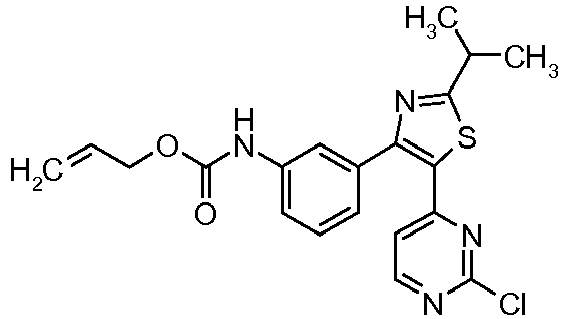
- Following a procedure analogous to the procedure described in
Intermediate 5, using 2-propen-1-yl {3-[(2-chloro-4-pyrimidinyl)acetyl]phenyl}carbamate (10.0 g, 30.14 mmol), and 2-methylpropanethioamide (3.73 g, 36.17 mmol), prepared by a procedure analogous to Intermediate 1, 5.74 g of the title compound was obtained. MS (ESI): 415 [M+H]+. -

- To a solution containing 2-propen-1-yl {3-[5-(2-chloro-4-pyrimidinyl)-2-(1-methylethyl)-1,3-thiazol-4-yl]phenyl}carbamate (5.3 g, 12.77 mmol) and DCM (225 mL) was added tri-n-butyltin hydride (5.95 g, 20.43 mmol), followed by transdichlorobis(triphenylphosphine)palladium (II) (0.53 g, 0.64 mmol) and HOAc (1.84 g, 30.65 mmol). At the conclusion of the reaction, silica was added and the volatiles removed under reduced pressure. The residue was purified by flash column chromatography with (84% DCM, 15% MeOH, and 1% NH4OH):
DCM 0% to 100% to afford 3.4 g of the title compound. 1H-NMR (400 MHz, DMSO-d6) δ 8.57 (d, J=5.1 Hz, 1 H), 7.16 (d, J=5.1 Hz, 1 H), 7.10 (t, J=7.7 Hz, 1 H), 6.72 - 6.75 (m, 1 H), 6.64 - 6.69 (m, 1 H), 6.60 - 6.63 (m, 1 H), 5.28 (s, 2 H), 3.27 - 3.40 (m, 1 H), and 1.38 (d, J=7.0 Hz, 6 H). MS (ESI): 331 [M+H]+. -

- To a solution of 3-[5-(2-chloro-4-pyrimidinyl)-2-(1-methylethyl)-1,3-thiazol-4-yl]phenyl amine (1.0 g, 3.0 mmol), and pyridine (360 µL, 4.5 mmol) in DCM (50 mL) was added a solution of 2,6-difluorobenzenesulfonyl chloride (620 µL, 4.5 mmol) in DCM (25 mL). The reaction was stirred for 48 h at rt. The reaction mixture was concentrated, adsorbed onto silica gel, and purified via flash chromatography with 0-50% EtOAc/DCM to give 1.39 g (91% yield) of the title compound as a white powder. ES-LCMS m/z 507 (M+H).
-

-
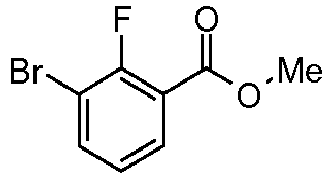
- To a 100 mL round bottom flask was added 3-bromo-2-fluorobenzoic acid (10.4 g, 47.5 mmol), MeOH (100 mL, 2472 mmol) and sulfuric acid (6 mL, 113 mmol). The reaction mixture was refluxed for 1 hr. After cooling to rt, the MeOH was removed under reduced pressure and the acidic residue was poured into cold water and EtOAc, the layers were separated and the aqueous layer was extracted with EtOAc. The organic layers were combined, washed with brine, dried over NaSO4 and concentrated under reduced pressure to afford 10.02 g of methyl 3-bromo-2-fluorobenzoate. 1H-NMR (400 MHz, DMSO-d6) δ 7.95 (ddd, J = 8.1, 6.4, and 1.7 Hz, 1 H), 7.82 - 7.87 (m, 1 H), 7.26 (t, J = 7.9 Hz, 1 H), and 3.86 (s, 3 H).
-

- In a 500 mL flask was placed 1,1-dimethylethyl carbamate (6.03 g, 51.5 mmol), methyl 3-bromo-2-fluorobenzoate (10 g, 42.9 mmol), Pd2(dba)3.CHCl3(0.89 g, 0.86 mmol), xantphos (1.49 g, 2.57 mmol) and cesium carbonate (16.8 g, 51.5 mmol). The flask was sealed with a rubber septum, placed under high vacuum, and toluene (200 mL) was added. Three cycles of high vacuum/N2 were performed and the reaction mixture was stirred at 90 °C overnight. The reaction was filtered through a pad of celite with EtOAc washing and concentrated. To the residue was added DCM (200 mL) followed by TFA (50 mL, 649 mmol), and the mixture was stirred at rt for 1 h. The volatiles were removed under reduced pressure and the residue was taken up in EtOAc and washed with saturated NaHCO3 and brine. The organic layer was dried over NaSO4, stripped onto silica and column chromatographed on silica with 5% to 50% EtOAc:Hexane to give 5.53 g (76%) of the title compound of Step B. 1H-NMR (400 MHz, DMSO-d 6) δ 6.92 - 7.01 (m, 3 H), 5.37 (s, 2 H), and 3.81 (s, 3 H). MS (ESI): 170 [M+H]+.
-

- In a 500 mL flask was placed methyl 3-amino-2-fluorobenzoate (5.5 g, 32.5 mmol) and DCM (100 mL), and pyridine (2.9 mL, 35.8 mmol) was added. 2,6-Difluorobenzenesulfonyl chloride (7.6 g, 35.8 mmol) in DCM (50 mL) was added dropwise via addition funnel and the reaction mixture was allowed to stir at rt overnight. The reaction mixture was stripped onto silica and column chromatographed on silica with 5% to 100% EtOAc:Hexane to give 9.75 g (87%) of the title compound of Step C. 1H-NMR (400 MHz, DMSO-d 6) δ 10.98 (s, 1 H), 7.64 - 7.82 (m, 3 H), 7.46 - 7.61 (m, 1 H), 7.29 (t, J = 8.8 Hz, 2 H), and 3.81 (s, 3 H). MS (ESI): 346 [M+H]+.
- In a 1000 mL flask was placed methyl 3-{[(2,6-difluorophenyl)sulfonyl]amino}-2-fluorobenzoate (9.64 g, 27.9 mmol) and THF (200 mL) was added. The flask was placed in an ice/water bath and LiHMDS (90 mL, 90 mmol) was added. 2-Chloro-4-methylpyrimidine (4.5 g, 35.0 mmol) in THF (60 mL) was added dropwise via addition funnel. After the addition was complete, the reaction was allowed to warm to 20 °C over 1 h. The THF volume was reduced to half under reduced pressure and then treated with 6 N HCl. EtOAc was added and the layers were separated. The aqueous layer was extracted twice with EtOAc and the combined organic layer was washed once with brine, dried over NaSO4, and concentrated. The residue was triturated with EtOAc/ether to afford 8.71 g (71 %) of the title compound of Step D. MS (ESI): 442 [M+H]+.
-

-

- Concentrated sulfuric acid (195 ml) was added carefully with stirring to a solution of 2-fluoro-3-nitrotoluene (100 g, 645 mmol) in acetic acid (1000 ml). The mixture was warmed up to 95°C and the solution of chromium trioxide (226 g, 2.25 mol) in water (200 ml) was added dropwise with stirring over 2h. After addition the mixture was heated with stirring for another 3h, allowed to cool down to room temperature and poured into water (3 L). The mixture was extracted with ethyl acetate (3 x 1 L), the combined organic layers were dried over Na2SO4 and concentrated under reduced pressure to afford a light green solid, which was washed with dichloromethane (3 x 300 ml) and dried under vacuum to afford the title compound was obtained as a light yellow solid (75 g, 62.8%). 1H NMR(300MHz, DMSO) δ ppm 8.27 (m, 1H), 8.15 (m, 1H), 7.48 (m, 1H).
-

- 2-Fluoro-3-nitrobenzoic acid (75 g) was dissolved in 300 ml of methanol, and then 20 ml of concentrated H2SO4 was added. The mixture was stirred at 70 °C overnight and cooled to rt, the resulting solid was filtered and washed with water (3 x 200 ml), to the filtered was added water (400 ml), the resulting precipitate was filtered and washed with water (2 x 100 ml) to afford another batch of product. The solid were combined and dried under vacuum to afford the title compound was obtained as a light yellow solid (78 g, 96%).
- To a solution of methyl 2-fluoro-3-nitrobenzoate (78 g) in THF (400 ml) and methanol (100 ml) was added Raney Ni (40 g), the mixture was heated to 70 °C, and then 25 ml of hydrazine hydrate (N2H4H2O, 85%) was added dropwise. The reaction was monitored by TLC, when the starting material was totally consumed the addition of hydrazine was stop. The mixture was cooled to rt and filtered, the filtrate was concentrated under vacuum to leave a brown oil, which was purified by chromatography (SiO2, 300-400 mesh, PE: EtOAc=11:2) to afford the title compound was obtained as a yellow oil (45 g, 68%). 1H NMR (300MHz, DMSO) δ ppm 6.96 (m, 3H), 5.36 (s, 2H), 3.81 (s, 3H).
-

- To a solution of N-{3-[(2-chloro-4-pyrimidinyl)acetyl]-2-fluorophenyl}-2,6-difluorobenzenesulfonamide (2.0 g, 4.53 mmol) in 40 mL DMA, 1.0 eq. NBS (0.806 g, 4.53 mmol) was added and the solution was allowed to stir 15 min at rt. 2,2-dimethylpropanethioamide (0.531 g, 4.53 mmol) was then added at rt. The reaction was heated to 60 °C for 2 hours. The reaction was not complete by LC-MS. The reaction mixture was then heated to 80 °C for an additional hour. The reaction mixture was diluted with water and extracted x 2 with EtOAc. The combined EtOAc washings were washed with water x 3 to remove DMA, dried over MgSO4, filtered and concentrated onto silica gel. The crude material was chromatographed in 10-80% EtOAc in Hexanes to give the desired product, 1.6 g (64%). MS (ESI): 539.1 [M+H]+.
-
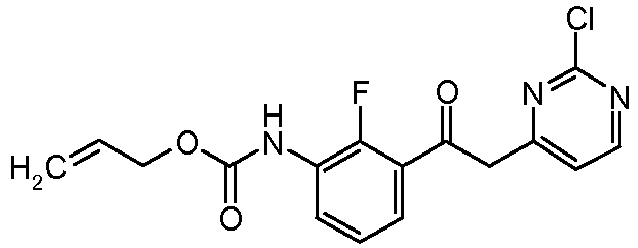
-

- To a solution of methyl 3-amino-2-fluorobenzoate (200.0 g, 1183 mmol, 1 eq) in THF (500 mL), saturated NaHCO3 (1600 mL) was added. Then 2-propen-1-yl chloridocarbonate (170.0 g, 1420 mmol, 1.2 eq) was added dropwise at 0 °C. The mixture was stirred at rt for 2 h. The solution was extracted with EtOAc (1 L x 3). The combined organic layers were washed with water and brine successively, dried over Na2SO4, filtered and concentrated under reduced pressure to give the crude product (260 g, 86.9% yield), which was used in the next step directly. 1H NMR (400 MHz, DMSO-d 6) δ ppm 9.66 (s, 1 H), 7.96 (t, J = 7.6 Hz, 1 H), 7.64 (t, J = 6.4 Hz, 1 H),7.33 (t, J = 8.0 Hz, 1 H), 6.07-6.00 (m, 1 H), 5.43 (dd, J = 1.6, 17.6 Hz, 1 H), 5.30 (dd, J = 1.2, 10.4 Hz, 1 H) 4.67 (d, J = 5.6 Hz, 2 H), 3.91 (s, 3 H).
- To a solution of methyl 3-(allyloxycarbonylamino)-2-fluorobenzoate (86.7g, 342 mmol, 1 eq) in dry THF (500 mL) at -10 °C, LiHMDS (1 M in THF, 1198 mmol, 1198 mL, 3.5 eq) was added dropwise and the solution was allowed to stir for 1 h at 0 °C. A solution of pyrimidine chloride (48.0 g, 376 mmol, 1.2 eq) in THF (200 mL) was then added dropwise to the solution of ester and base at 0 °C over 20 min. The solution was allowed to stir 1 h at rt. TLC showed the reaction was complete. The reaction was quenched by addition of the saturated aqueous NH4Cl (800 mL) at 0 °C. The reaction mixture was extracted with EtOAc (1 L x 3). The combined organic layers were washed with water and brine successively, dried over Na2SO4, filtered and concentrated under reduced pressure to give the crude product, which was purified by flash column on silica gel, rinsing with DCM. This solution was concentrated to obtain a solid. The orange solid was triturated with a small amount of EtOAc and filtered, rinsing with diethyl ether to give the product (240.1 g, 67.0%, three batches combined). 1H NMR (400 MHz, DMSO-d 6) δ ppm 13.70 (s, 1 H), 8.52 (dd, J = 0.8, 4.8 Hz, 0.3 H), 8.34 (dd, J = 0.8, 5.2 Hz, 1 H), 8.27 (s, 0.4 H), 8.10 (s, 1 H), 7.47 (t, J = 8.0 Hz, 1.4 H), 7.22-7.12 (m, 1.8 H), 6.96 (s, 1.4 H), 6.85 (d, J = 4.2 Hz, 1 H), 6.07 (s, 1 H), 5.97-5.86 (m, 1.4 H), 5.32 (d, J = 15.6 Hz,1.4 H), 5.24 (d, J = 6.4 Hz, 1.4 H), 4.64 (d, J = 6.0 Hz, 2.8 H), 4.38 (d, J = 2.8 Hz, 0.8 H).
-

- To a solution of 2-propen-1-yl {3-[(2-chloro-4-pyrimidinyl)acetyl]-2-fluorophenyl}carbamate (20 g, 57 mmol) (Intermediate 12) in DMA (300 mL), NBS (10.2 g, 57 mmol) was added. The reaction mixture was stirred at rt for 1 h. Then morpholine-4-carbothioamide (9.2 g, 63 mmol) was added at 0 °C. The mixture was stirred at rt for 2 h. The mixture was poured into water and extracted with EtOAc (1 L x 3). The combined organic layers were washed with water and brine successively, dried over Na2SO4, filtered and concentrated under reduced pressure to give the crude product, which was purified by column chromatography on silica gel (DCM:petroleum ether 2:1) to afford the title compound (20 g, 83.5% yield). 1H NMR (400 MHz, CDCl3) δ ppm 8.20-8.27 (m, 1H), 8.19 (d, J=5.5 Hz, 1H), 7.20-7.26 (m, 1H), 7.08-7.12 (m, 1H), 6.92-6.98 (br, 1H), 6.62 (d, J=5.5 Hz, 1 H), 5.90-6.03 (m, 1 H), 5.25-5.41 (m, 2H), 5.65-5.70 (m, 2H), 3.57-3.63 (m, 4H), 3.77-3.86 (m, 4H). m/z (ES+): 476 [M+H]+
-

- To a solution of 2-propen-1-yl {3-[5-(2-chloro-4-pyrimidinyl)-2-(4-morpholinyl)-1,3-thiazol-4-yl]-2-fluorophenyl}carbamate (57 g, 120 mmol) (prepared by a process analogous to that described for Intermediate 13) in DCM (500 mL), HOAc (17.3 g, 288 mmol), Pd(PPh3)2Cl2 (1.68 g, 2.4 mmol) were added. Then tri-n-butyltin hydride (38.4 g, 132 mmol) was added dropwise to the mixture at 0 °C. The mixture was stirred at rt for 30 min. The reaction was quenched by adding saturated NaHCO3 (300 mL) slowly. The two layers were separated. The aqueous layer was extracted with DCM (1 L x 2). The combined organic layers were washed with water and brine successively, dried over Na2SO4, filtered and concentrated under reduced pressure to give the crude product, which was washed with petroleum ether (500 mL) to afford the title compound (43 g, 91.6% yield). 1H NMR (400 MHz, CDCl3) δ ppm 8.15 (d, J=5.5 Hz, 1H), 6.95-7.07 (m, 1 H), 6.83-6.92 (m, 1 H), 6.74-6.80 (m, 1 H), 6.70 (d, J=5.5 Hz, 1 H), 3.57-3.63 (m, 4H), 3.75-3.88 (m, 4H).
-

-

- Following a procedure analogous to the procedure described in Intermediate 9 using 3-(5-(2-chloropyrimidin-4-yl)-2-morpholinothiazol-4-yl)-2-fluoroaniline (150 mg, 0.383 mmol) and cyclopropanesulfonyl chloride (0.039 mL, 0.383 mmol) the title compound of Step A was obtained as a yellow solid (125 mg, 66% yield). 1H NMR (400 MHz, DMSO-d 6) δ ppm 9.71 (s, 1 H), 8.27 - 8.39 (m, 1 H), 7.54 (td, J=7.6, 1.7 Hz, 1 H), 7.22- 7.42 (m, 2 H), 6.62 - 6.72 (m, 1 H), 5.30 (s, 1 H), 3.68 (t, J=4.7 Hz, 4 H), 3.52 (t, J=4.6 Hz, 4 H), 2.59 - 2.70 (m, 1 H), 0.75 - 0.93 (m, 3 H).
- A suspension of N-{3-[5-(2-chloro-4-pyrimidinyl)-2-(4-morpholinyl)-1,3-thiazol-4-yl]-2-fluorophenyl}cyclopropanesulfonamide (125 mg, 0.252 mmol) and 7M ammonia in MeOH (7 mL, 49 mmol) was heated in a sealed tube to 80 °C for 2 days. The reaction was diluted with DCM and added silica gel and concentrated. The crude product was chromatographed on silica gel eluting with 100% DCM to 1:1 [DCM:(9:1 EtOAc:MeOH)]. The clean fractions were concentrated to yield the crude product as a yellow solid (62 mg). The crude product was repurified by reverse phase HPLC (a gradient of acetonitrile:water with 0.1%TFA in both). The combined clean fractions were concentrated then partitioned between DCM and saturated NaHCO3. The DCM layer was separated and dried over Na2SO4. The title compound was obtained as a yellow solid (26 mg, 21% yield). 1H NMR (400 MHz, DMSO-d 6) δ ppm 9.67 (s, 1 H), 7.86 (d, J=5.4 Hz, 1 H), 7.49 (td, J=7.4, 2.2 Hz, 1 H), 7.11 - 7.38 (m, 2 H), 6.53 (s, 2 H), 5.84 (d, J=5.3 Hz, 1 H), 3.68 (t, J=4.7 Hz, 4 H), 3.43 (t, J=4.7 Hz, 4 H), 2.53 - 2.68 (m, 1 H), 0.74 - 0.92 (m, 4 H). MS (ESI): 477.0 [M+H]+.
-

- Following a procedure analogous to the procedure described in Reference Example A, Step B using N-{3-[5-(2-chloro-4-pyrimidinyl)-2-(1,1-dimethylethyl)-1,3-thiazol-4-yl]-2-fluorophenyl}-2,6-difluorobenzenesulfonamide (196 mg, 0.364 mmol) and ammonia in methanol 7M (8 ml, 56.0 mmol) and heating to 90 °C for 24 h, the title compound, N-{3-[5-(2-amino-4-pyrimidinyl)-2-(1,1-dimethylethyl)-1,3-thiazol-4-yl]-2-fluorophenyl}-2,6-difluorobenzenesulfonamide was obtained (94 mg, 47% yield). 1H NMR (400 MHz, DMSO-d6) δ ppm 10.83 (s, 1 H), 7.93 (d, J=5.2 Hz, 1 H), 7.55 - 7.70 (m, 1 H), 7.35 - 7.43 (m, 1 H), 7.31 (t, J=6.3 Hz, 1 H), 7.14 - 7.27 (m, 3 H), 6.70 (s, 2 H), 5.79 (d, J=5.13 Hz, 1 H), 1.35 (s, 9 H). MS (ESI): 519.9 [M+H]+.
- 19.6 mg of N-{3-[5-(2-Amino-4-pyrimidinyl)-2-(1,1-dimethylethyl)-1,3-thiazol-4-yl]-2-fluorophenyl}-2,6-difluorobenzenesulfonamide (may be prepared in accordance with Example 1 a) was combined with 500 µL of ethyl acetate in a 2-mL vial at room temperature. The slurry was temperature-cycled between 0-40°C for 48 hrs. The resulting slurry was allowed to cool to room temperature and the solids were collected by vacuum filtration. The solids were analyzed by Raman, PXRD, DSC/TGA analyses, which indicated a crystal form different from the crystal form resulting from Example 1a, above.
-

-
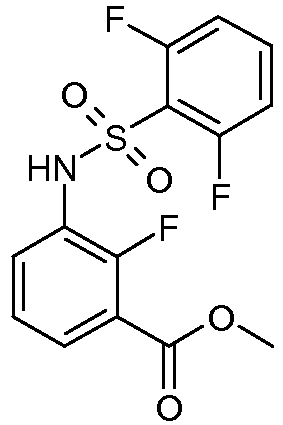
- Methyl 3-amino-2-fluorobenzoate (50 g, 1 eq) was charged to reactor followed by dichloromethane (250 mL, 5 vol). The contents were stirred and cooled to ∼15°C and pyridine (26.2 mL, 1.1 eq) was added. After addition of the pyridine, the reactor contents were adjusted to ∼15°C and the addition of 2,6-difluorobenzenesulfonyl chloride (39.7 mL, 1.0 eq) was started via addition funnel. The temperature during addition was kept <25°C. After complete addition, the reactor contents were warmed to 20-25°C and held overnight. Ethyl acetate (150 mL) was added and dichloromethane was removed by distillation. Once distillation was complete, the reaction mixture was then diluted once more with ethyl acetate (5 vol) and concentrated. The reaction mixture was diluted with ethyl acetate (10 vol) and water (4 vol) and the contents heated to 50-55°C with stirring until all solids dissolve. The layers were settled and separated. The organic layer was diluted with water (4 vol) and the contents heated to 50-55° for 20-30 min. The layers were settled and then separated and the ethyl acetate layer was evaporated under reduced pressure to ~3 volumes. Ethyl Acetate (5 vol.) was added and again evaporated under reduced pressure to ~3 volumes. Cyclohexane (9 vol) was then added to the reactor and the contents were heated to reflux for 30 min then cooled to 0 °C. The solids were filtered and rinsed with cyclohexane (2 x 100 mL). The solids were air dried overnight to obtain methyl 3-{[(2,6-difluorophenyl)sulfonyl]amino}-2-fluorobenzoate (94.1 g, 91%).
-
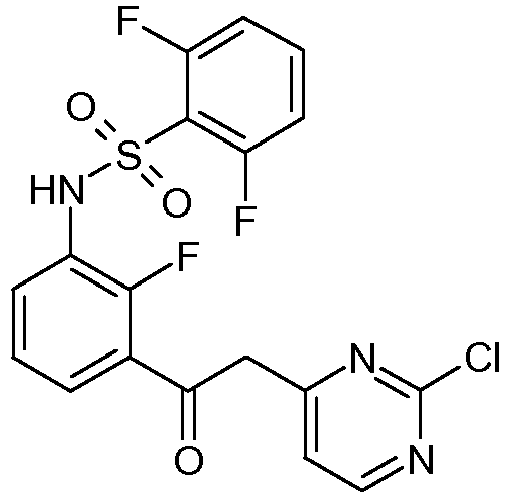
- Methyl 3-{[(2,6-difluorophenyl)sulfonyl]amino}-2-fluorobenzoate (490 g, 1 equiv.), prepared generally in accordance with Step A, above, was dissolved in THF (2.45 L, 5 vols) and stirred and cooled to 0-3 °C. 1M lithium bis(trimethylsilyl)amide in THF (5.25 L, 3.7 equiv.) solution was charged to the reaction mixture followed addition of 2-chloro-4-methylpyrimidine (238 g, 1.3 equiv.) in THF (2.45 L, 5 vols). The reaction was then stirred for 1 hr. The reaction was quenched with 4.5M HCl (3.92 L, 8 vols). The aqueous layer (bottom layer) was removed and discarded. The organic layer was concentrated under reduced pressure to ~2L. IPAC (isopropyl acetate) (2.45L) was added to the reaction mixture which was then concentrated to ~2L. IPAC (0.5L) and MTBE (2.45 L) was added and stirred overnight under N2. The solids were filtered. The solids and mother filtrate added back together and stirred for several hours. The solids were filtered and washed with MTBE (~5 vol). The solids were placed in vacuum oven at 50 °C overnight. The solids were dried in vacuum oven at 30 °C over weekend to obtain N-{3-[(2-chloro-4-pyrimidinyl)acetyl]-2-fluorophenyl}-2,6-difluorobenzenesulfonamide (479 g, 72%).
-

- To a reactor vessel was charged N-{3-[(2-chloro-4-pyrimidinyl)acetyl]-2-fluorophenyl}-2,6-difluorobenzenesulfonamide (30 g, 1 eq) followed by dichloromethane (300 mL). The reaction slurry was cooled to ∼10°C and N-bromosuccinimide ("NBS") (12.09 g, 1 eq) was added in 3 approximately equal portions, stirring for 10-15 minutes between each addition. After the final addition of NBS, the reaction mixture was warmed to ∼20°C and stirred for 45 min. Water (5 vol) was then added to the reaction vessel and the mixture was stirred and then the layers separated. Water (5 vol) was again added to the dichloromethane layer and the mixture was stirred and the layers separated. The dichloromethane layers were concentrated to -120 mL. Ethyl acetate (7 vol) was added to the reaction mixture and concentrated to -120 mL. Dimethylacetamide (270 mL) was then added to the reaction mixture and cooled to ∼10°C. 2,2-Dimethylpropanethioamide (1.3 g, 0.5 eq) in 2 equal portions was added to the reactor contents with stirring for ∼5 minutes between additions. The reaction was warmed to 20-25 °C. After 45 min, the vessel contents were heated to 75°C and held for 1.75 hours. The reaction mixture was then cooled to 5°C and water (270 ml) was slowly charged keeping the temperature below 30°C. Ethyl acetate (4 vol) was then charged and the mixture was stirred and layers separated. Ethyl acetate (7 vol) was again charged to the aqueous layer and the contents were stirred and separated. Ethyl acetate (7 vol) was charged again to the aqueous layer and the contents were stirred and separated. The organic layers were combined and washed with water (4 vol) 4 times and stirred overnight at 20-25°C. The organic layers were then concentrated under heat and vacuum to 120 mL. The vessel contents were then heated to 50°C and heptanes (120 mL) were added slowly. After addition of heptanes, the vessel contents were heated to reflux then cooled to 0°C and held for ∼2 hrs. The solids were filtered and rinsed with heptanes (2 x 2 vol). The solid product was then dried under vacuum at 30°C to obtain N-{3-[5-(2-chloro-4-pyrimidinyl)-2-(1,1-dimethylethyl)-1,3-thiazol-4-yl]-2-fluorophenyl}-2,6-difluorobenzenesulfonamide (28.8 g, 80%).
- In 1 gal pressure reactor, a mixture of N-{3-[5-(2-chloro-4-pyrimidinyl)-2-(1,1-dimethylethyl)-1,3-thiazol-4-yl]-2-fluorophenyl}-2,6-difluorobenzenesulfonamide (120 g) prepared in accordance with Step C, above, and ammonium hydroxide (28-30%, 2.4 L, 20 vol) was heated in the sealed pressure reactor to 98-103 °C and stirred at this temperature for 2 hours. The reaction was cooled slowly to room temperature (20 °C) and stirred overnight. The solids were filtered and washed with minimum amount of the mother liquor and dried under vacuum. The solids were added to a mixture of EtOAc (15 vol)/ water (2 vol) and heated to complete dissolution at 60-70 °C and the aqueous layer was removed and discarded. The EtOAC layer was charged with water (1 vol) and neutralized with aq. HCl to ∼pH 5.4-5.5.and added water (1vol). The aqueous layer was removed and discarded at 60-70 °C. The organic layer was washed with water (1 vol) at 60-70 °C and the aqueous layer was removed and discarded. The organic layer was filtered at 60 °C and concentrated to 3 volumes. EtOAc (6 vol) was charged into the mixture and heated and stirred at 72 °C for 10 min, then cooled to 20°C and stirred overnight. EtOAc was removed via vacuum distillation to concentrate the reaction mixture to ∼3 volumes. The reaction mixture was maintained at ∼65-70°C for ∼30mins. Product crystals having the same crystal form as those prepared in Example 1 b (and preparable by the procedure of Example 1 b), above, in heptanes slurry were charged. Heptane (9 vol) was slowly added at 65-70 °C. The slurry was stirred at 65-70 °C for 2-3 hours and then cooled slowly to 0-5°C. The product was filtered, washed with EtOAc/heptane (3/1 v/v, 4 vol) and dried at 45°C under vacuum to obtain N-{3-[5-(2-amino-4-pyrimidinyl)-2-(1,1-dimethylethyl)-1,3-thiazol-4-yl]-2-fluorophenyl}-2,6-difluorobenzenesulfonamide (102.3 g, 88%).
-

- To a solution of N-{3-[5-(2-amino-4-pyrimidinyl)-2-(1,1-dimethylethyl)-1,3-thiazol-4-yl]-2-fluorophenyl}-2,6-difluorobenzenesulfonamide (204 mg, 0.393 mmol) in isopropanol (2 mL), methanesulfonic acid (0.131 mL, 0.393 mmol) was added and the solution was allowed to stir at room temperature for 3 hours. A white precipitate formed and the slurry was filtered and rinsed with diethyl ether to give the title product as a white crystalline solid (210 mg, 83% yield). 1H NMR (400 MHz, DMSO-d6) δ ppm 10.85 (s, 1 H) 7.92 - 8.05 (m, 1 H) 7.56 - 7.72 (m, 1 H) 6.91 - 7.50 (m, 7 H) 5.83 - 5.98 (m, 1 H) 2.18 - 2.32 (m, 3 H) 1.36 (s, 9 H). MS (ESI): 520.0 [M+H]+.
- N-{3-[5-(2-Amino-4-pyrimidinyl)-2-(1,1-dimethylethyl)-1,3-thiazol-4-yl]-2-fluorophenyl}-2,6-difluorobenzenesulfonamide (as may be prepared according to Example 1 a) (2.37g, 4.56 mmol) was combined with pre-filtered acetonitrile (5.25 vol, 12.4 mL). A pre-filtered solution of mesic acid (1.1 eq., 5.02 mmol, 0.48 g) in H2O (0.75 eq., 1.78 mL) was added at 20°C. The temperature of the resulting mixture was raised to 50-60°C while maintaining a low agitation speed. Once the mixture temperature reached to 50-60°C, a seed slurry of N-{3-[5-(2-amino-4-pyrimidinyl)-2-(1,1-dimethylethyl)-1,3-thiazol-4-yl]-2-fluorophenyl}-2,6-difluorobenzenesulfonamide methanesulfonate (1.0 %w/w slurried in 0.2 vol of pre-filtered acetonitrile) was added, and the mixture was aged while agitating at a speed fast enough to keep solids from settling at 50-60°C for 2 hr. The mixture was then cooled to 0-5°C at 0.25°C/min and held at 0-5°C for at 6 hr. The mixture was filtered and the wet cake was washed twice with pre-filtered acetonitrile. The first wash consisted of 14.2 ml (6 vol) pre-filtered acetonitrile and the second wash consisted of 9.5 ml (4 vol) pre-filtered acetonitrile. The wet solid was dried at 50°C under vacuum, yielding 2.39 g (85.1% yield) of product.
- Compounds of formula (I) were tested for B-Raf protein kinase inhibitory activity in substrate phosphorylation assays and cell proliferation assays.
- Compounds of formula (I) were tested for B-Raf protein serine kinase inhibitory activity in a B-Raf Accelerated MEK ATPase assay (BRAMA). Baculovirus-expressed His6-tagged BRAFV600E full-length (amino acids 2-766) was used in the BRAMA assay.The BRAMA assay is a high sensitivity assay which measures an intrinsic MEK-mediated ATP hydrolysis uncoupled from downstream ERK phosphorylation by coupling the formation of ADP to NADH oxidation through the enzymes pyruvate kinase and lactate dehydrogenase. When ADP production is initiated by addition of catalytic amounts of an activated Raf enzyme and non-phosphorylated MEK, one observes robust ADP production concomitant with Raf-mediated phosphorylation of MEK. The method is disclosed in: C. Rominger, M. Schaber, E. May. Assay for B-Raf Activity Based on Intrinsic MEK ATPase Activity. Statutory Invention Registration 11/084,993 (March, 2005) but includes the following changes: 1) the assay was performed with a final MEK concentration of 150 nM and 2) the assay was read as single end point instead of a kinetic read.
- Acceleration of MEK ATPase activity was determined from the data and plotted as a function of inhibitor concentration to give concentration response curves, from which the pIC50 values were generated following standard pIC50 fitting protocol.
- The exemplified compound of Example 1 was run in the recited assay (A). The results are reported in the following Table 1a in which the highest pIC50 for the one or more runs of each assayed compound is categorized as indicated. In the following table:
- "+" indicates no pIC50 measurement greater than 6 against B-Raf
- "++" indicates at least one pIC50 measurement greater than 6 against B-Raf but no measurement greater than pIC50 of 7; and
- "+++" indicates at least one pIC50 measurement of greater than 7 against B-Raf.
- At a time after the assay runs shown in Table 1 a, above, the exemplified compounds of Example 1 were re-run in the recited assay (A). The results are reported in the following Table 1 b in which the average pIC50 for the one or more runs of each assayed compound is categorized as indicated. In the following table:
- pIC50 values for the compounds of the Examples were categorized by relative inhibition of B-Raf. The results are summarized in the tables below.
- Human colon tumor cells (Colo205) were cultured in RPMI (Mediatech 50-020-PB) containing 10% FBS and 1% penicillin-streptomycin. Human melanoma cancer cells (SK-MEL-28) were cultured in EMEM with nonessential amino acids (Mediatech 50-011-PB) containing 10% FBS, 1% sodium pyruvate (JT Baker 3354-04), and 1% penicillin-streptomycin. All cell lines were maintained at 37°C in a humidified 5% CO2, 95% air incubator. Cells were harvested using trypsin/EDTA (Invitrogen 25200), counted using a haemocytometer, and plated. For 96-well assays (using white full-area NUNC plates cat. #136102), cells were plated in 105 µL at the following densities (cells/well): Colo205, 500; SK-MEL-28, 500. For 384-well assays (white full-area NUNC plates, cat. #781080), cells were plated in 48 µL at the following densities (cells/well): Colo205, 500; SK-MEL-28, 500.
- The next day, compounds were diluted as follow: For 96-well assays, 13.5 µL of compound in DMSO were diluted using nine (9) serial 1:3 dilutions of 4.5 µL in 9 µL of DMSO. Medium (270 µL/well of RPMI with 10% FBS and 1% penicillin-streptomycin) was added to the plates. Aliquots (7 µL) were added to cells in the final assay giving a final DMSO concentration of 0.2%. For 384-well assays, 15 µL of compound in DMSO were diluted using nine (9) serial 1:3 dilutions of 5 µL in 10 µL of DMSO, followed by a further dilution of 5 µL of compound with 95 µL of medium, of which 2 µL were added to cells in the final assay giving a final DMSO concentration of 0.2%. Cells were incubated at 37°C, 5% CO2 for 3 days.
- Total ATP was measured (as a surrogate estimate of cell number) using CellTiter-Glo® reagent (Promega G7571). Briefly, plates were removed from the incubator and allowed to equilibrate to room temperature for 30 minutes. CellTiter-Glo® (25 µL or 55 µL for 384-well or 96-well assays, respectively) reagent was added to each well and plates were shaken on an orbital plate shaker for 2 minutes. Plates were incubated without shaking for a further 30 minutes and read on an LJL Analyst GT reader in luminometer mode with an integration time of 0.5 seconds per well. Percent inhibition of cell growth was calculated relative to DMSO vehicle-treated control wells. Concentration of compound required to give 50% inhibition of vehicle-treated control cell growth (IC50) was interpolated using a 4-parameter fit for determining IC50 using the following equation: Y = A + ((B-A)/(1+((C/X)^D))) where X = IC50.
- The compounds of Example 1 were run in the recited assay and the results are reported in the following Table 2a. In the following table:
- "+" indicates that the compound showed activity of >1 µM in Colo205 tumor cells;
- "++" indicates that the compound showed activity of between 100 nM and 1 µM in Colo205 tumor cells; and
- "+++" indicates that the compound showed activity of less than 100 nM in Colo205 tumor cells.
- At a time after the assay runs shown in Table 2a, above, the exemplified compounds of Example 1 were re-run in the recited assay (B). The results are reported in the following Table 2b in which the average inhibition for the one or more runs of each assayed compound is categorized as indicated. In the following table:
- IC50 (nM) values for compounds of select Examples were categorized by relative inhibition of cell proliferation. The results are summarized in the tables below.
- The compounds of Example 1 were run in the recited assay and the results are reported in the following Table 3a. In the following table:
- "+" indicates that the compound showed activity of >1 µM in SK-MEL-28 tumor cells;
- "++" indicates that the compound showed activity of between 100 nM and 1 µM in SK-MEL-28 tumor cells; and
- "+++" indicates that the compound showed activity of less than 100 nM in SK-MEL-28 tumor cells.
- At a time after the assay runs shown in Table 3a, above, the exemplified compounds of Example 1 were re-run one or more times in the recited assay (B). The results are reported in the following Table 3b in which the average inhibition for the one or more runs of each assayed compound is categorized as indicated. In the following table:
IC50 (nM) values for compounds of select Examples were categorized by relative inhibition of cell proliferation. The results are summarized in the tables below.IC50 for SK-MEL-28 Example No. <100nM 1a, 1d - Twenty two (22) cancer cell lines encoding B-Raf V600E mutation, cultured generally according to instructions supplied by cell culture supplier American Type Culture Collection, Manassas, VA, were tested for sensitivity to the compound of Example 1 a in a 3 day proliferation assay. Data demonstrated that 16 out of 22 cancer cell lines encoding B-Raf V600E were sensitive with gIC50 <100nM while 2 out of 22 demonstrated an intermediate response (gIC50≥100nM and <1000nM) and 4 out of 22 were not sensitive (gIC50>1000M) to the compound. Activity of the compound of Example 1a against B-Raf V600E mutant cancer cell lines is shown in Table 4.
Table 4 CELL LINE Tissue Origin BRAF Mean gIC50 (nM) MALME-3M Skin V600E (+++) UACC-62 Skin V600E (+++) C32TG Skin V600E (+++) SK-MEL-1 Skin V600E (+++) UCLA-SO-M14 Skin V600E (+++) SK-MEL-28 Skin V600E (+++) DU4475 Breast V600E (+++) WM115 Skin V600D, V600E (+++) UACC-257 Skin V600E (+++) COLO 205 Colon V600E (+++) SK-MEL-3 Skin V600E (+++) A375P F11s Skin V600E (+++) SH-4 Skin V600E (+++) A101D Skin V600E (+++) ES-2 Ovary V600E (+++) HT-29 Colon T119S, V600E (+++) SW1417 Colon V600E (++) SW872 Connective tissue V600E (++) RKO Colon V600E (-) A673 Muscle V600E (-) GCT Skin V600E (-) NCI-H292 Lung T119S, V600E (-) (+++) gIC50<100nM
(++) gIC50 >100nM and <1000nM
(-) gIC50 >1000nM - A375P F11s were cultured in RPMI 1640 medium supplemented with 10% fetal bovine serum, 1% Penicillin-streptomycin and 1% sodium pyruvate. Tumor cells (2 x10⁶ A375P F11s) were implanted subcutaneously into the right flank of athymic mice on Day 1. To facilitate their growth, A375P F11s cells were suspended in Matrigel diluted 1:1 in phosphate-buffered saline before implantation. When tumors had reached approximately 200 mm3 in volume (Day 19-22), tumor-bearing mice were randomized into study groups (n=7 or 8). Animals were dosed orally once or twice daily for a 14-day period. The compound of Example 1a was dosed in a 0.5% HPMC/0.2
% Tween 80 pH 7-8 vehicle. Tumor growth was measured twice a week using calipers for the duration of the study. Tumor volumes were calculated as a product of (length x width x width)/2 and median values were used to compare groups. Complete regressions (CR) were defined as three consecutive tumor measurements of ≤ 13.5 mm3. Partial regressions were defined as three consecutive measurements of ≤ 50% of starting tumor volume. Tumor growth delay was defined as the difference in time taken for treated and control groups to reach 1000 mm3 (T-C1000). - In the following table:
- "-" indicates no response
- "+" indicates growth delay (1-2x doubling)
- "++" indicates growth delay (>2x doubling)
- "+++" indicates stable disease
- "++++" indicates partial regression
- "+++++" indicates complete regression
- Activity of select compounds of formula (I) was tested in vivo against A375PF11s (melanoma cell line encoding a B-Raf V600E mutation) xenograft mouse model. The A375P F11s cell line, encoding a mutation for BRAFV600E, was subcloned from the A375P human melanoma cell line (obtained from ATCC, Cat # CRL-1619) by limiting dilution and selected based on high (90%) sensitivity to the BRAF inhibitor, SB-590885 (commercially available), in 3-day proliferation assays. The selected clone (A375P F11s) was isolated and mutation in B-Raf (T1799A) encoding the V600E amino acid change was reconfirmed.
- Female CD-1 nu/nu mice of 8-10 weeks in age were used in these studies; all mice were obtained from Charles River Laboratories (Wilmington, DE). Animals were housed in pathogen free conditions and handled with aseptic technique. A375P F11s were harvested from culture flasks by exposure to 0.25% trypsin/EDTA for 5 min at 37°C. Detached cells were collected, centrifuged (1500 rpm, 5 min, 4°C) and rinsed to remove the trypsin solution. Cells were resuspended in PBS without magnesium or calcium and counted. Cells were spun as previously to remove PBS and a single cell suspension was created either in 50% Matrigel: 50% PBS (v:v) or 100% PBS so that a 100 µL subcutaneous injection would deliver the required number of cells per mouse. The A375P F11s melanoma line was injected with Matrigel at 4 million cells per mouse. Tumors were established (∼150-300 mm3) for all cell lines within 2-4 weeks post-injection.
- The compound of Example 1 and nine other reference compounds within formula (I) were prepared in formulations of either 0.5% HPMC/0.2
% TWEEN 80 ph 7-8 or 20% encapsin/1%DMSO. The preparations were administered orally to the mice as a single oral dose of 100mg/kg. - At 2h following oral administration of compound mice were euthanized using carbon dioxide. Tumors were carefully excised, homogenized using Medimachine (BD Bioscience) with 1 ml of lysis buffer (25 mM Tris-HCl (pH 7.5), 2 mM EDTA (pH 8.0), 2 mM EGTA (pH 8.0), 1 % Triton X-100, 0.1% SDS, 50 mM Na-B-PO4, 2 mM NaVO4, 4 mM Na-Pyr-PO4, 2x phosphatase inhibitor cocktail. Crude homogenate was transferred to a 12 ml polypropylene tube containing 1.5 ml of lysis buffer and kept on ice. Following homogenization of all samples, 1 ml of homogenate was transferred to an eppendorf tube and centrifuged at 14,000 rpm for 15 min at 4°C. Five hundred microliter of clarified lysate was transferred to a new tube, flash frozen and processed for quantitation of pERK and tERK using western blot or Elisa (MSD) assays. Before the ratio of pERK/tERK was determined and to ensure linear range, a BSA standard curve was made by performing serial ⅓-fold dilution to reach concentrations of 20, 13.3, 8.9, 5.9, 3.9, 2.6, 1.7, 1.2, 0.8, 0.5, 0 µg/µl. BioRad dye was added to BSA dilutions and diluted test lysates. Samples were incubated at room temperature for 15 min and read on the SpectraMax plate reader at 595 nM. Comparison to the standard curve provides a relative measurement of protein concentration. For determination of pERK/tERK ratio by
western blot analysis 50 µg microgram of tumor lysates were electrophoresed on Invitrogen 4-12% bis-Tris HCl SDS-PAGE. The gels were transferred onto nitrocellulose membranes using the iBlot transfer apparatus, which were then blocked and incubated with different primary antibodies overnight at 4°C. Western blots dually probed against pERK and tERK were scanned using LI-COR Odyssey@ reader. A ratio of the immunofluorescent density obtained for pERK/tERK is calculated and expressed as a ratio (in percentage) to control untreated samples. For determination of pERK/tERK ratio by ELISA, MesoScale Discovery (MSD) (cat# K15107) plate were used according to manufacturer's instructions. In brief, MSD plates were block with 150 µl /well of blocking buffer for 1 hr before being washed 4 times with 200 µl of washing buffer. Thirty microliter (30 µl) of serially diluted samples was added to wells and plates were incubated overnight at 4°C under slow agitation (-500 rpm). Plates were washed 4 times in 200 µl 1X Tris wash buffer and 25 µl detection antibody solution was added to all wells and incubated at room temperature for 1 hr (-500 rpm). Plates were washed 4 times in 200 µl wash buffer and 150µl of read buffer was added to all wells. Plates were read on MSD.SI6000. In this assay vehicle and compound treated samples were tested at 4 different dilutions to allow linear range coverage of the assay. From pERK and tERK signal, background (BSA signal) was subtracted and ratio of pERK/tERK determined and normalized to untreated vehicle samples, arbitrarily set at 100%. - Inhibition of pERK by B-Raf inhibitors is a good pharmacodynamic marker (PD marker) for BRAF inhibition. The compound of Example 1 and the nine other compounds exhibited inhibition of pERK (pERK/tERK) of equal to or greater than 30%.
- Of the 10 compounds tested for inhibition of pERK, in C.2 above, eight of the compounds (the compound described in Example 1 and seven of the other compounds) were tested in an efficacy study similar to study D.1 above. The results demonstrate that six of the eight tested compounds caused tumor regression (mean tumor volume smaller after 14 day treatment than initial tumor volume) or stable disease (mean tumor volume similar after 14day treatment to initial mean tumor volume) compared to vehicle treated animals.
-
- ▪ Contents in each capsule:
- =60 mg Active Pharmaceutical ingredient (API) + 60 mg Avicel + 13 mg SSG.
- ▪ 133 mg total powder in a
size 0 hard gelatin capsule. The Avicel/SSG weight may be reasonably approximate. -
- 1. Separate the halves of hard-gelatin capsule and mark/identify each as appropriate/needed.
- 2. Place the bottom capsule half in capsule filler with the filling funnel on top.
- 3. Weigh the components (Avicel, Sodium Starch Glycolate (SSG), API) onto a single weigh paper (tared on an analytical balance between each weighing).
- 4. Record weights of each component.
- 5. Carefully and thoroughly mix the dry powders on the weigh paper with a small spatula.
- 6. Carefully transfer the mixed powders into the capsule through the funnel.
- 7. Place the top half onto the capsule and close until secure, shake capsule to mix/distribute contents.
- 8. IF powder begins to near top of capsule, gently tap capsule and powder should settle.
- 9. Place the capsule into a small appropriately labeled bottle (but large enough to easily remove it).
-
Component Quantity (mg/tablet) %w/w Core Tablet API 405.0 71.6 Lactose monohydrate 59.0 10.4 Polysorbate 801.0 0.2 Povidone 40.0 7.1 Colloidal Silicon Dioxide 5.5 1.0 Crospovidone 51.0 9.0 Magnesium Stearate 4.5 0.8 Purified Water qs Film Coating Opadry® Orange, YS-1-13065-A 17.0 3.0 Purified water qs -
- 1. Sieve Lactose, Silicon dioxide, Crospovidone and half Povidone.
- 2. Add API.
- 3. Granulate in High Shear Granulator with granulating solution containing dissolved
Polysorbate 80 and other half of Povidone in Purified water. - 4. Mill using Comil 197, 0.375" screen.
- 5. Dry using Fluid Bed Dryer
- 6. Mill using Comil 197, 0.075" screen
- 7. Add Crospofidone, magnesium stearate.
- 8.
Blend 5 minute - 9. Compress tablet
- 10. Aqueous film coat tablet
- The X-ray powder diffraction pattern of Form 1 of Example No. 1 can be determined using conventional techniques and equipment known to those skilled in the art of analytical chemistry and physical characterization. The diffraction patterns of
Figure 1 was obtained with a PANalytical diffractometer system utilizing copper K X-radiation and equipped with automated divergent slits, nickel filter, and a real time multiple strip detector. The powder sample used to generate the X-ray powder diffraction data was mounted on a silicon zero background plate. InFigure 1 ,2 theta angles in degrees (x-axis) is plotted against peak intensity (y-axis). The XRD pattern for each form of Example No. 1 is unique to the particular form; exhibiting a unique set of diffraction peaks which can be expressed in 2 theta angles, d-spacings (A) and/or relative peak intensities. - Since some margin of error is possible in the assignment of 2 theta angles and d-spacings, the preferred method of comparing XRD patterns in order to identify a particular form of a sample is to overlay the XRD pattern of the unknown sample over the XRD pattern of a known form. For example, one skilled in the art can overlay an XRD pattern of an unknown sample of Example No. 1, obtained using the methods described herein, over
Figure 1 and, using expertise and knowledge in the art, readily determine whether the XRD pattern of the unknown sample is substantially the same as the XRD pattern of Form 1 of Example No. 1. If the XRD pattern is substantially the same asFigure 1 , the previously unknown form can be readily and accurately identified as Form 1 of Example No. 1. - Although 2 theta angles or d-spacings are the primary method of identifying a particular crystalline form, it may be desirable to also compare relative peak intensities. As noted above, relative peak intensities may vary depending upon the specific diffractometer employed and the analyst's sample preparation technique. The peak intensities are reported as intensities relative to the peak intensity of the strongest peak. The intensity units on the XRD are counts/sec. The absolute counts = counts/time x count time = counts/sec x 10 sec.
- Differential scanning calorimetry was carried out on TA Instruments DSC Q100 DSC system. Heating rate of 10°C per minute. Sample size 0.4-1.5 mg. The thermogram is provided at
Figure 2 . - As an additional aspect, the present invention provides a particular solid state form, identified as "Form 1" of N-{3-[5-(2-amino-4-pyrimidinyl)-2-(1,1-dimethylethyl)-1,3-thiazol-4-yl]-2-fluorophenyl}-2,6-difluorobenzenesulfonamide.
| Example | Activity |
| 1 | +++ |
| B-Raf pIC50 | Example No. |
| 8.5 and over | 1a, 1d |
| Example | Activity |
| 1 | +++ |
| IC50 for Colo205 | Example No. |
| <100nM | 1a, 1d |
| Example | Activity |
| 1 | +++ |
| Tumor Line | Dosage | |
| A375P F11s | ||
| 300 mg/kg bid | ++++(+) | |
| | 300 mg/kg qd | ++++(+) |
| | 100 mg/kg bid | ++++(+) |
| | 100 mg/kg qd | ++++(+) |
| | 10 mg/kg qd | ++(+) |
| A375P F11s | 1 mg/kg qd | + |
| A375P F11s | 0.1 mg/kg qd | - |
Claims (19)
- N-{3-[5-(2-amino-4-pyrimidinyl)-2-(1,1-dimethylethyl)-1,3-thiazol-4-yl]-2-fluorophenyl}-2,6-difluorobenzenesulfonamide, which is a compound of formula (Ia)

- A pharmaceutically acceptable salt of N-{3-[5-(2-amino-4-pyrimidinyl)-2-(1,1-dimethylethyl)-1,3-thiazol-4-yl]-2-fluorophenyl}-2,6-difluorobenzenesulfonamide, which is a compound of formula (Ia)

- N-{3-[5-(2-amino-4-pyrimidinyl)-2-(1,1-dimethylethyl)-1,3-thiazol-4-yl]-2-fluorophenyl}-2,6-difluorobenzenesulfonamide mesylate.
- N-{3-[5-(2-amino-4-pyrimidinyl)-2-(1,1-dimethylethyl)-1,3-thiazol-4-yl]-2-fluorophenyl}-2,6-difluorobenzenesulfonamide.
- A pharmaceutical composition comprising a compound of formula (Ia) or a pharmaceutically acceptable salt thereof according to any one of claims 1 to 4 and optionally further comprising one or more of pharmaceutically acceptable carriers, diluents or excipients.
- A pharmaceutical composition according to claim 5 in unit dosage form.
- A pharmaceutical composition according to claim 6 wherein the unit dosage form contains 1 mg to 700 mg of a compound of formula (Ia) or a pharmaceutically acceptable salt thereof according to any one of claims 1 to 4.
- A pharmaceutical composition according to claim 7 wherein the unit dosage form contains 5 mg to 100 mg of a compound of formula (Ia) or a pharmaceutically acceptable salt thereof.
- A combination comprising a compound of formula (Ia) or a pharmaceutically acceptable salt thereof according to any one of claims 1 to 4 and at least one anti-neoplastic agent.
- A combination according to claim 9 wherein an anti-neoplastic agent is an inhibitor of serine/threonine kinases.
- A combination according to claim 10 wherein the inhibitor of serine/threonine kinases is an inhibitor of mitogen or extracellular regulated kinases (MEKs).
- A compound of formula (Ia) or a pharmaceutically acceptable salt according to any one of claims 1 to 4, or a combination according to any one of claims 9 to11, for use in therapy.
- A compound of formula (Ia) or a pharmaceutically acceptable salt according to any one of claims 1 to 4, or a pharmaceutical composition according to any one of claims 5 to 8, or a combination according to any one of claims 9 to11, for use in the treatment of a susceptible neoplasm in a human.
- The use of a compound of formula (Ia) or a pharmaceutically acceptable salt according to any one of claims 1 to 4, or of a pharmaceutical composition according to any one of claims 5 to 8, or of a combination according to any one of claims 9 to11, for the preparation of a medicament for the treatment of a susceptible neoplasm in a human.
- A compound , pharmaceutical composition, or combination for use according to claim 13 or the use of a compound, a pharmaceutical composition, or a combination according to claim 14, wherein said susceptible neoplasm is selected from breast cancer, cholangiocarcinoma, colorectal cancer, melanoma, non-small cell lung cancer, ovarian cancer and thyroid cancer.
- A compound, pharmaceutical composition, or combination for use according to claim 13 or the use of a compound, a pharmaceutical composition, or a combination according to claim 14, wherein said susceptible neoplasm is a melanoma.
- A compound, pharmaceutical composition, or combination for use or the use of a compound, a pharmaceutical composition, or a combination according to claim 16, wherein said melanoma is a metastatic melanoma.
- A compound, pharmaceutical composition, or combination for use according to claim 13 or the use of a compound, a pharmaceutical composition, or a combination according to claim 14, wherein the susceptible neoplasm is a neoplasm which exhibits a mutation in BRaf.
- A compound, pharmaceutical composition, or combination for use or the use of a compound, a pharmaceutical composition, or a combination according to claim 18, wherein the mutation results in the BRaf having a V600E amino acid substitution.
Priority Applications (6)
| Application Number | Priority Date | Filing Date | Title |
|---|---|---|---|
| EP16159264.7A EP3106462A1 (en) | 2008-05-06 | 2009-05-04 | Benzene sulfonamide thiazole and oxazole compounds |
| RS20160291A RS54725B1 (en) | 2008-05-06 | 2009-05-04 | BENZEN SULFONAMIDE THIAZOLE AND OXAZOLE COMPOUNDS |
| HRP20160447TT HRP20160447T1 (en) | 2008-05-06 | 2009-05-04 | Benzene sulfonamide thiazole and oxazole compounds |
| SI200931416A SI2282636T1 (en) | 2008-05-06 | 2009-05-04 | Benzene sulfonamide thiazole and oxazole compounds |
| PL09743378T PL2282636T3 (en) | 2008-05-06 | 2009-05-04 | Benzene sulfonamide thiazole and oxazole compounds |
| CY20161100487T CY1117615T1 (en) | 2008-05-06 | 2016-06-02 | THEIAZOLIS SULFONAMIDIS AND OXAZOLIS COMPOUNDS |
Applications Claiming Priority (2)
| Application Number | Priority Date | Filing Date | Title |
|---|---|---|---|
| US5074408P | 2008-05-06 | 2008-05-06 | |
| PCT/US2009/042682 WO2009137391A2 (en) | 2008-05-06 | 2009-05-04 | Benzene sulfonamide thiazole and oxazole compounds |
Related Child Applications (2)
| Application Number | Title | Priority Date | Filing Date |
|---|---|---|---|
| EP16159264.7A Division EP3106462A1 (en) | 2008-05-06 | 2009-05-04 | Benzene sulfonamide thiazole and oxazole compounds |
| EP16154723 Division-Into | 2016-02-08 |
Publications (3)
| Publication Number | Publication Date |
|---|---|
| EP2282636A2 EP2282636A2 (en) | 2011-02-16 |
| EP2282636A4 EP2282636A4 (en) | 2012-06-13 |
| EP2282636B1 true EP2282636B1 (en) | 2016-03-23 |
Family
ID=41265326
Family Applications (2)
| Application Number | Title | Priority Date | Filing Date |
|---|---|---|---|
| EP09743378.3A Active EP2282636B1 (en) | 2008-05-06 | 2009-05-04 | Benzene sulfonamide thiazole and oxazole compounds |
| EP16159264.7A Withdrawn EP3106462A1 (en) | 2008-05-06 | 2009-05-04 | Benzene sulfonamide thiazole and oxazole compounds |
Family Applications After (1)
| Application Number | Title | Priority Date | Filing Date |
|---|---|---|---|
| EP16159264.7A Withdrawn EP3106462A1 (en) | 2008-05-06 | 2009-05-04 | Benzene sulfonamide thiazole and oxazole compounds |
Country Status (34)
| Country | Link |
|---|---|
| US (6) | US7994185B2 (en) |
| EP (2) | EP2282636B1 (en) |
| JP (1) | JP5426664B2 (en) |
| KR (1) | KR101628746B1 (en) |
| CN (1) | CN102083312B (en) |
| AR (1) | AR071617A1 (en) |
| AU (1) | AU2009244491B2 (en) |
| BR (1) | BRPI0912541B8 (en) |
| CA (1) | CA2723396C (en) |
| CL (1) | CL2009001065A1 (en) |
| CO (1) | CO6321189A2 (en) |
| CY (1) | CY1117615T1 (en) |
| DK (1) | DK2282636T3 (en) |
| DO (1) | DOP2010000326A (en) |
| EA (1) | EA019349B1 (en) |
| ES (1) | ES2576684T3 (en) |
| HR (1) | HRP20160447T1 (en) |
| HU (1) | HUE028820T2 (en) |
| IL (1) | IL209018A (en) |
| JO (1) | JO3408B1 (en) |
| MA (1) | MA32369B1 (en) |
| MX (1) | MX2010012074A (en) |
| MY (1) | MY155317A (en) |
| NZ (1) | NZ588970A (en) |
| PE (1) | PE20091952A1 (en) |
| PL (1) | PL2282636T3 (en) |
| RS (1) | RS54725B1 (en) |
| SG (1) | SG190624A1 (en) |
| SI (1) | SI2282636T1 (en) |
| TW (1) | TWI432430B (en) |
| UA (1) | UA103319C2 (en) |
| UY (1) | UY31806A (en) |
| WO (1) | WO2009137391A2 (en) |
| ZA (1) | ZA201007960B (en) |
Cited By (1)
| Publication number | Priority date | Publication date | Assignee | Title |
|---|---|---|---|---|
| EP3560516A1 (en) | 2018-04-27 | 2019-10-30 | Bergen Teknologioverforing AS | Combination therapy including beta-sitosterol in combination with at least one of a braf inhibitor, a mek inhibitor or an erk inhibitor and methods and use thereof |
Families Citing this family (104)
| Publication number | Priority date | Publication date | Assignee | Title |
|---|---|---|---|---|
| WO2008063888A2 (en) | 2006-11-22 | 2008-05-29 | Plexxikon, Inc. | Compounds modulating c-fms and/or c-kit activity and uses therefor |
| US20100190777A1 (en) | 2007-07-17 | 2010-07-29 | Plexxikon Inc. | Compounds and methods for kinase modulation, and indications therefor |
| WO2009111277A1 (en) * | 2008-02-29 | 2009-09-11 | Array Biopharma Inc. | Imdizo [4. 5-b] pyridine derivatives used as raf inhibitors |
| EP2265610B1 (en) * | 2008-02-29 | 2012-12-12 | Array Biopharma, Inc. | Pyrazole [3, 4-b]pyridine raf inhibitors |
| EP2265574A1 (en) * | 2008-02-29 | 2010-12-29 | Array Biopharma, Inc. | N- (6-aminopyridin-3-yl) -3- (sulfonamido) benzamide derivatives as b-raf inhibitors for the treatment of cancer |
| CN102015707A (en) * | 2008-02-29 | 2011-04-13 | 阵列生物制药公司 | RAF inhibitor compounds and methods of use thereof |
| UA103319C2 (en) | 2008-05-06 | 2013-10-10 | Глаксосмитклайн Ллк | Thiazole- and oxazole-benzene sulfonamide compounds |
| US20110319392A1 (en) * | 2009-03-12 | 2011-12-29 | George Adjabeng | Thiazole Sulfonamide And Oxazole Sulfonamide Kinase Inhibitors |
| HUE027598T2 (en) | 2009-04-03 | 2016-10-28 | Hoffmann La Roche | Propane-i-sulfonic acid {3-[5-(4-chloro-phenyl)-1h-pyrrolo[2,3-b]pyridine-3-carbonyl]-2,4-difluoro-phenyl}-amide compositions and uses thereof |
| US8329724B2 (en) | 2009-08-03 | 2012-12-11 | Hoffmann-La Roche Inc. | Process for the manufacture of pharmaceutically active compounds |
| AR077975A1 (en) | 2009-08-28 | 2011-10-05 | Irm Llc | PIRAZOL PYRIMIDINE DERIVATIVES AND COMPOSITIONS AS PROTEIN KINASE INHIBITORS |
| US8242260B2 (en) * | 2009-08-28 | 2012-08-14 | Novartis Ag | Compounds and compositions as protein kinase inhibitors |
| MX2012004139A (en) | 2009-10-08 | 2012-09-07 | Glaxosmithkline Llc | Combination. |
| BR112012008274A2 (en) * | 2009-10-08 | 2015-09-22 | Glaxosmithkline Llc | combination |
| AU2010307043C1 (en) * | 2009-10-12 | 2014-03-13 | Glaxosmithkline Llc | Combination |
| DK4397376T3 (en) * | 2009-10-16 | 2026-02-23 | Novartis Ag | COMBINATION COMPRISING A MEK INHIBITOR AND A B-RAF INHIBITOR |
| ES2633317T3 (en) | 2009-11-06 | 2017-09-20 | Plexxikon, Inc. | Compounds and methods for kinase modulation, and indications for it |
| WO2011059610A1 (en) * | 2009-11-10 | 2011-05-19 | Glaxosmithkline Llc | Benzene sulfonamide thiazole and oxazole compounds |
| CN104958294A (en) * | 2010-01-27 | 2015-10-07 | 内尔维安诺医学科学有限公司 | Sulfonamido derivatives of 3, 4-diarylpyrazoles as protein kinase inhibitors |
| KR20130048293A (en) * | 2010-06-25 | 2013-05-09 | 노파르티스 아게 | Heteroaryl compounds and compositions as protein kinase inhibitors |
| JP5938038B2 (en) * | 2010-08-03 | 2016-06-22 | ネルヴィアーノ・メディカル・サイエンシズ・ソチエタ・ア・レスポンサビリタ・リミタータ | Derivatives of pyrazolophenyl-benzenesulfonamide compounds and their use as antitumor agents |
| US20130172378A1 (en) * | 2010-09-14 | 2013-07-04 | Glaxosmithkline Llc | Combination of BRAF and VEGF Inhibitors |
| EP2635286A4 (en) * | 2010-11-05 | 2014-11-12 | Glaxosmithkline Ip No 2 Ltd | METHODS OF TREATING CANCER |
| WO2012068468A1 (en) * | 2010-11-19 | 2012-05-24 | Glaxosmithkline Llc | Method of treatment with braf inhibitor |
| TWI505828B (en) | 2010-12-20 | 2015-11-01 | 葛蘭素史克智慧財產(第二)有限公司 | Novel pharmaceutical composition |
| JP5998152B2 (en) * | 2011-01-25 | 2016-09-28 | ザ リージェンツ オブ ザ ユニバーシティー オブ ミシガン | BCL-2 / BCL-XL inhibitor and therapeutic method using the same |
| MA34948B1 (en) | 2011-02-07 | 2014-03-01 | Plexxikon Inc | COMPOUNDS AND METHODS FOR MODULATING KINASE, AND INDICATIONS THEREOF |
| TWI558702B (en) | 2011-02-21 | 2016-11-21 | 普雷辛肯公司 | Solid forms of a pharmaceutically active substance |
| WO2012113774A1 (en) | 2011-02-24 | 2012-08-30 | Nerviano Medical Sciences S.R.L. | Thiazolylphenyl-benzenesulfonamido derivatives as kinase inhibitors |
| WO2013019620A2 (en) * | 2011-07-29 | 2013-02-07 | Glaxosmithkline Llc | Method of treating cancer using combination of braf inhibitor, mek inhibitor, and anti-ctla-4 antibody |
| US8389723B1 (en) * | 2011-08-24 | 2013-03-05 | Glaxosmithkline Llc | Deuterated benzene sulfonamide thiazole compounds |
| US11007194B2 (en) | 2011-11-11 | 2021-05-18 | Array Biopharma Inc. | Method of treating a proliferative disease |
| WO2013078264A1 (en) | 2011-11-23 | 2013-05-30 | Novartis Ag | Pharmaceutical formulations |
| US20130184280A1 (en) * | 2011-12-21 | 2013-07-18 | Telik, Inc. | Substituted thiazoles as vegfr2 kinase inhibitors |
| US9150570B2 (en) | 2012-05-31 | 2015-10-06 | Plexxikon Inc. | Synthesis of heterocyclic compounds |
| JP6335169B2 (en) | 2012-08-17 | 2018-05-30 | エフ・ホフマン−ラ・ロシュ・アクチェンゲゼルシャフト | Combination therapy of melanoma including administration of cobimetinib and mebemurafenib |
| HRP20211817T1 (en) * | 2012-09-04 | 2022-03-04 | Novartis Ag | Method of adjuvant cancer treatment |
| BR112015009134A2 (en) * | 2012-10-25 | 2017-07-04 | Glaxosmithkline Llc | combination |
| KR102271794B1 (en) * | 2012-11-09 | 2021-07-01 | 인쎄름 (엥스띠뛰 나씨오날 드 라 쌍떼 에 드 라 흐쉐르슈 메디깔) | Benzene sulfonamide thiazole compounds having anti-cancer activity |
| CN103936728B (en) * | 2013-01-18 | 2016-08-10 | 通化济达医药有限公司 | Thiazole kinase inhibitors |
| CN103936730A (en) * | 2013-01-22 | 2014-07-23 | 通化济达医药有限公司 | Benzenesulfonamide thiazole kinases inhibitor |
| CN103965170A (en) * | 2013-01-24 | 2014-08-06 | 通化济达医药有限公司 | Benzene sulfonamide pyrazole kinase inhibitor |
| CN103965180B (en) * | 2013-01-24 | 2016-09-07 | 通化济达医药有限公司 | Benzsulfamide azoles and thiazole inhibitors of kinases |
| US9242969B2 (en) | 2013-03-14 | 2016-01-26 | Novartis Ag | Biaryl amide compounds as kinase inhibitors |
| CN104109159A (en) * | 2013-04-17 | 2014-10-22 | 杭州普晒医药科技有限公司 | New crystal forms of benzene sulfonamide thiazole and preparation method thereof |
| TWI634114B (en) | 2013-05-08 | 2018-09-01 | 永恒生物科技公司 | Furanone compound as a kinase inhibitor |
| AU2014274093B2 (en) * | 2013-05-30 | 2018-11-08 | Plexxikon Inc. | Compounds for kinase modulation, and indications therefor |
| CN105658206A (en) | 2013-06-03 | 2016-06-08 | 诺华股份有限公司 | Combinations of anti-PD-L1 antibodies with MEK inhibitors and/or BRAF inhibitors |
| CN104540822B (en) * | 2013-07-08 | 2016-08-31 | 杭州普晒医药科技有限公司 | Crystal formation of dabrafenib mesylate and preparation method thereof |
| WO2015059677A1 (en) | 2013-10-26 | 2015-04-30 | Glaxosmithkline Intellectual Property (No.2) Limited | Methods of treating cancer |
| CN103588767B (en) * | 2013-11-20 | 2016-01-20 | 苏州明锐医药科技有限公司 | The preparation method of Da Lafeini |
| CN103880831A (en) * | 2013-11-25 | 2014-06-25 | 镇江圣安医药有限公司 | Derivatives of N-(2-fluorophenyl)-2,6-difluorobenzenesulfonamide and application of derivatives |
| MX2016007653A (en) | 2013-12-12 | 2016-10-13 | Novartis Ag | Combinations of trametinib, panitumumab and dabrafenib for the treatment of cancer. |
| ES2660989T3 (en) | 2013-12-28 | 2018-03-27 | Guardant Health, Inc. | Methods and systems to detect genetic variants |
| WO2015105822A1 (en) * | 2014-01-07 | 2015-07-16 | Glaxosmithkline Llc | Cancer treatment method |
| UY36294A (en) | 2014-09-12 | 2016-04-29 | Novartis Ag | COMPOUNDS AND COMPOSITIONS AS QUINASA INHIBITORS |
| WO2016038582A1 (en) * | 2014-09-12 | 2016-03-17 | Novartis Ag | Compounds and compositions as raf kinase inhibitors |
| WO2016059548A1 (en) | 2014-10-13 | 2016-04-21 | Mylan Laboratories Ltd | Processes for the preparation of dabrafenib |
| CN105651927B (en) * | 2014-11-14 | 2019-12-13 | 泰州复旦张江药业有限公司 | RT-HPLC detection method for valdecoxib/parecoxib related substances |
| EP3967305A1 (en) * | 2015-03-31 | 2022-03-16 | Syros Pharmaceuticals, Inc. | Methods of stratifying patients for treatment with retinoic acid receptor-alpha agonists |
| CN106366080A (en) * | 2015-07-21 | 2017-02-01 | 重庆大学 | Anti-melanoma compound and application thereof |
| WO2017037573A1 (en) * | 2015-08-28 | 2017-03-09 | Novartis Ag | Pharmaceutical combination comprising the pi3k inhibitor alpelisib and the b-raf inhibitor dabrafenib; the use of such combination in the treatment or prevention of cancer |
| EP3340987A1 (en) | 2015-08-28 | 2018-07-04 | Novartis AG | Combination of ribociclib and dabrafenib for treating or preventing cancer |
| US9868994B2 (en) | 2016-04-08 | 2018-01-16 | Syros Pharmaceuticals, Inc. | Methods of stratifying patients for treatment with retinoic acid receptor-α agonists |
| EP3515446B1 (en) | 2016-09-19 | 2023-12-20 | Novartis AG | Therapeutic combinations comprising a raf inhibitor and a erk inhibitor |
| JP2019532944A (en) | 2016-09-23 | 2019-11-14 | セルイプセ | LIM kinase inhibitors, pharmaceutical compositions and methods of use in LIMK mediated diseases |
| US20180125812A1 (en) | 2016-11-04 | 2018-05-10 | Emory University | Dehydroacetic Acid (DHAA) and Derivative for Uses in Treating Cancer |
| US11471538B2 (en) | 2017-02-10 | 2022-10-18 | INSERM (Institut National de la Santéet de la Recherche Medicale) | Methods and pharmaceutical compositions for the treatment of cancers associated with activation of the MAPK pathway |
| US11266653B2 (en) | 2017-05-02 | 2022-03-08 | Novartis Ag | Combination therapy |
| KR20250026366A (en) * | 2017-07-05 | 2025-02-25 | 노파르티스 아게 | Novel pharmaceutical composition |
| EP3732285A1 (en) | 2017-12-28 | 2020-11-04 | Tract Pharmaceuticals, Inc. | Stem cell culture systems for columnar epithelial stem cells, and uses related thereto |
| CN108129471A (en) * | 2018-03-20 | 2018-06-08 | 韩邦森 | A kind of synthesis technology of thiazole substituted uracil compound |
| EP3773586A1 (en) | 2018-03-30 | 2021-02-17 | Novartis AG | A triple pharmaceutical combination comprising dabrafenib, trametinib and an erk inhibitor |
| EP3823615A4 (en) * | 2018-06-18 | 2022-04-06 | Duke University | COMPOSITIONS AND METHODS OF TREATMENT OF DISORDERS CHARACTERIZED BY ABERRANTE RAS/MAPK SIGNALING |
| WO2020079581A1 (en) | 2018-10-16 | 2020-04-23 | Novartis Ag | Tumor mutation burden alone or in combination with immune markers as biomarkers for predicting response to targeted therapy |
| WO2020124397A1 (en) * | 2018-12-19 | 2020-06-25 | Inventisbio Shanghai Ltd. | C-terminal src kinase inhibitors |
| CA3124330A1 (en) | 2018-12-21 | 2020-06-25 | Daiichi Sankyo Company, Limited | Combination of antibody-drug conjugate and kinase inhibitor |
| GB201901507D0 (en) | 2019-02-04 | 2019-03-27 | St Georges Hospital Medical School | New treatment |
| ES3025633T3 (en) | 2019-05-13 | 2025-06-09 | Novartis Ag | New crystalline forms of n-(3-(2-(2-hydroxyethoxy)-6-morpholinopyridin-4-yl)-4-methvlphenyl)-2(trifluoromethyl)isonicotinamide as raf inhibitors for the treatment of cancer |
| JP2023504730A (en) * | 2019-12-05 | 2023-02-06 | アンセルム(アンスティチュート・ナシオナル・ドゥ・ラ・サンテ・エ・ドゥ・ラ・ルシェルシュ・メディカル) | N-(3-(5-(pyrimidin-4-yl)thiazol-4-yl)phenyl)sulfonamide compounds and their use as BRAF inhibitors |
| CN114981298B (en) | 2019-12-12 | 2024-08-20 | 听治疗有限责任公司 | Compositions and methods for preventing and treating hearing loss |
| EP4110338A1 (en) | 2020-02-28 | 2023-01-04 | Novartis AG | A triple pharmaceutical combination comprising dabrafenib, an erk inhibitor and a shp2 inhibitor |
| JP2023516155A (en) | 2020-02-28 | 2023-04-18 | ノバルティス アーゲー | Triple drug combinations containing dabrafenib, ERK inhibitors and RAF inhibitors or PD-1 inhibitors |
| CA3177298C (en) * | 2020-04-30 | 2023-11-21 | Xile LIU | Compounds containing benzosultam as erk inhibitors |
| EP4255434A4 (en) * | 2020-12-02 | 2024-10-23 | Neupharma, Inc. | Certain chemical entities, compositions, and methods |
| CN112724052B (en) * | 2021-01-21 | 2021-09-07 | 南京艾美斐生物医药科技有限公司 | A kind of GPR101 protein receptor inhibitor and its preparation and application |
| CN113024384A (en) * | 2021-03-16 | 2021-06-25 | 湖南工程学院 | Synthesis method of 2-fluoro-3-nitrobenzoic acid intermediate raw material |
| CN117321418A (en) | 2021-03-18 | 2023-12-29 | 诺华股份有限公司 | Cancer biomarkers and how to use them |
| WO2022259157A1 (en) | 2021-06-09 | 2022-12-15 | Novartis Ag | A triple pharmaceutical combination comprising dabrafenib, trametinib and a shp2 inhibitor |
| CN113717053B (en) * | 2021-09-02 | 2023-10-27 | 合肥利夫生物科技有限公司 | A method for synthesizing key intermediates of tyrosine kinase inhibitors |
| WO2023070076A1 (en) * | 2021-10-22 | 2023-04-27 | The Board Of Trustees Of The University Of Illinois | Compounds for cancers driven by braf mutation |
| KR20240167846A (en) * | 2022-03-28 | 2024-11-28 | 니캉 테라퓨틱스 인코포레이티드 | Sulfonamido derivatives as cyclin-dependent kinase 2 inhibitors |
| EP4536363A1 (en) * | 2022-06-08 | 2025-04-16 | Nikang Therapeutics, Inc. | Sulfamide derivatives as cyclin-dependent kinase 2 inhibitors |
| CN115260179A (en) * | 2022-08-23 | 2022-11-01 | 江苏大学 | 2-aminopyrimidine derivative and preparation method and application thereof |
| EP4604918A1 (en) * | 2022-10-20 | 2025-08-27 | Biper Therapeutics SAS | Compositions comprising a benzene sulfonamide thiazole compound |
| CN115925630B (en) * | 2022-12-15 | 2025-03-25 | 金仓(上海)医药生物科技有限公司 | A kind of preparation method of pyrazole thioamide |
| WO2024189184A1 (en) | 2023-03-16 | 2024-09-19 | Hua Huang | N-[3-(5-(2-aminopyrimidin-4-yl)-2-(tert-butyl)thiazol-4-yl)-2-fluorophenyl]-2,6-difluorobenzenesulfonamide or a pharmaceutically acceptable salt thereof for use in the treatment and/or prevention of cerebral cavernous malformation |
| CN120813358A (en) | 2023-04-06 | 2025-10-17 | 卫材R&D管理有限公司 | Pharmaceutical composition for treating tumors |
| CN119490423A (en) * | 2023-08-15 | 2025-02-21 | 沈阳中化农药化工研发有限公司 | A method for preparing 2-fluoro-3-aminobenzoic acid and its ester compounds |
| WO2025072462A1 (en) * | 2023-09-27 | 2025-04-03 | Nikang Therapeutics, Inc. | Sulfonamide derivatives as cyclin-dependent kinase 2 inhibitors |
| WO2025132388A2 (en) | 2023-12-21 | 2025-06-26 | Synthon B.V | A process for making dabrafenib |
| WO2025253311A1 (en) | 2024-06-04 | 2025-12-11 | Hetero Labs Limited | 1,2-dicarboxamide compounds as kinase inhibitors |
| WO2026074526A1 (en) | 2024-10-04 | 2026-04-09 | Hetero Labs Limited | 1,2-dicarboxamide compounds as kinase inhibitors |
| CN120393011A (en) * | 2025-04-14 | 2025-08-01 | 武汉大学人民医院(湖北省人民医院) | Diagnostic and pharmaceutical uses of SMOC2 |
Citations (6)
| Publication number | Priority date | Publication date | Assignee | Title |
|---|---|---|---|---|
| WO2003022832A1 (en) | 2001-09-05 | 2003-03-20 | Smithkline Beecham P.L.C. | Pyridylfurans and pyrroles as raf kinase inhibitors |
| WO2005070900A1 (en) | 2004-01-22 | 2005-08-04 | Altana Pharma Ag | N-4-(6- (heteo) aryl-pyrimidin-4-ylaminophenyl) -bezenesulfonamides as kinase inhibitors |
| WO2006006691A2 (en) | 2004-07-09 | 2006-01-19 | Takeda Pharmaceutical Company Limited | Solid dispersion of a p38 map kinase inhibitor |
| WO2006064375A2 (en) | 2004-12-16 | 2006-06-22 | Ab Science | Aminoaryl substituted five-membered ring heterocyclic compounds for the treatment of diseases |
| WO2007002433A1 (en) | 2005-06-22 | 2007-01-04 | Plexxikon, Inc. | Pyrrolo [2, 3-b] pyridine derivatives as protein kinase inhibitors |
| US20080051395A1 (en) | 2004-12-21 | 2008-02-28 | Smithkline Beecham Corporation | 2-Pyrimidinyl Pyrazolopyridine Erbb Kinase Inhibitors |
Family Cites Families (201)
| Publication number | Priority date | Publication date | Assignee | Title |
|---|---|---|---|---|
| GB9015764D0 (en) | 1990-07-18 | 1990-09-05 | Fujisawa Pharmaceutical Co | Pyrazolopyridine compound and processes for preparation thereof |
| KR970069028A (en) | 1996-04-01 | 1997-11-07 | 김은영 | Manufacturing method of chemical color exclusive emulsion |
| JP2000507592A (en) | 1996-04-03 | 2000-06-20 | メルク エンド カンパニー インコーポレーテッド | Farnesyl-protein transferase inhibitor |
| JP2000507595A (en) | 1996-04-03 | 2000-06-20 | メルク エンド カンパニー インコーポレーテッド | Inhibitors of farnesyl protein transferase |
| JP2000509371A (en) | 1996-04-03 | 2000-07-25 | メルク エンド カンパニー インコーポレーテッド | Farnesyl-protein transferase inhibitor |
| AU715658B2 (en) | 1996-04-03 | 2000-02-10 | Merck & Co., Inc. | Inhibitors of farnesyl-protein transferase |
| JP2000507593A (en) | 1996-04-03 | 2000-06-20 | メルク エンド カンパニー インコーポレーテッド | Farnesyl-protein transferase inhibitor |
| EP0904076A1 (en) | 1996-04-03 | 1999-03-31 | Merck & Co., Inc. | Inhibitors of farnesyl-protein transferase |
| GB9609441D0 (en) | 1996-05-04 | 1996-07-10 | Zeneca Ltd | Process |
| CA2258093A1 (en) | 1996-06-28 | 1998-01-08 | Mark E. Duggan | Fibrinogen receptor antagonists |
| US5755056A (en) | 1996-07-15 | 1998-05-26 | Remington Arms Company, Inc. | Electronic firearm and process for controlling an electronic firearm |
| US5877193A (en) * | 1996-07-19 | 1999-03-02 | Hoffmann-La Roche Inc. | Use of N-(4-aryl-thiazol-2-yl)-sulfonamides |
| DZ2376A1 (en) | 1996-12-19 | 2002-12-28 | Smithkline Beecham Plc | New sulfonamide derivatives process for their preparation and pharmaceutical compositions containing them. |
| EP0977892A1 (en) | 1997-04-24 | 2000-02-09 | Institut National De La Sante Et De La Recherche Medicale (Inserm) | Methods and compositions for use in modulating expression of matrix metalloproteinase genes |
| ES2203985T3 (en) | 1997-09-05 | 2004-04-16 | Glaxo Group Limited | DERIVATIVES OF 2,3-DIARIL-PIRAZOLO (1,5) PIRIDAZINE, ITS PREPARATION AND ITS USE AS INHIBITORS OF CYCLLOXYGENASE 2 (COX-2) `. |
| ES2361146T3 (en) | 1998-03-27 | 2011-06-14 | Janssen Pharmaceutica Nv | DERIVATIVES OF HIV INHIBITATORY PYRAMIDINE. |
| US6294558B1 (en) * | 1999-05-31 | 2001-09-25 | Pfizer Inc. | Sulfonylbenzene compounds as anti-inflammatory/analgesic agents |
| GB9812768D0 (en) | 1998-06-13 | 1998-08-12 | Zeneca Ltd | Methods |
| PT1123283E (en) | 1998-10-22 | 2004-09-30 | Hoffmann La Roche | TIAZOLE DERIVATIVES |
| CN1263755C (en) | 1998-11-03 | 2006-07-12 | 葛兰素集团有限公司 | Pyrazolopyridine derivatives as selective COX-2 inhibitors |
| AU2201500A (en) * | 1999-01-13 | 2000-08-01 | Warner-Lambert Company | Benzenesulfonamide derivatives and their use as mek inhibitors |
| FR2788770B1 (en) | 1999-01-21 | 2001-02-16 | Oreal | NOVEL CATIONIC 2-SULFONYLAMINOPHENOLS, THEIR USE AS A COUPLER FOR OXIDATION DYE, COMPOSITIONS COMPRISING THE SAME AND DYEING METHODS |
| ATE261444T1 (en) | 1999-02-27 | 2004-03-15 | Glaxo Group Ltd | PYRAZOLOPYRIDINES |
| GB9904930D0 (en) * | 1999-03-04 | 1999-04-28 | Glaxo Group Ltd | Thiazoloindolinone compounds |
| AU4556800A (en) | 1999-04-27 | 2000-11-10 | Smithkline Beecham Plc | Novel treatment |
| UA71971C2 (en) * | 1999-06-04 | 2005-01-17 | Agoron Pharmaceuticals Inc | Diaminothiazoles, composition based thereon, a method for modulation of protein kinases activity, a method for the treatment of diseases mediated by protein kinases |
| WO2001005768A1 (en) | 1999-07-19 | 2001-01-25 | Shionogi & Co., Ltd. | Tricyclic compounds bearing acyloxymethoxycarbonyl pendants |
| WO2001007401A1 (en) | 1999-07-23 | 2001-02-01 | Shionogi & Co., Ltd. | Tricyclic compounds and drug compositions containing the same |
| CA2375982A1 (en) | 1999-07-23 | 2001-02-01 | Shionogi & Co., Ltd. | Th2 differentiation inhibitors |
| JP2003509412A (en) | 1999-09-17 | 2003-03-11 | シーオーアール セラピューティクス インコーポレイテッド | Factor Xa inhibitor |
| DE60040676D1 (en) | 1999-09-17 | 2008-12-11 | Millennium Pharm Inc | BENZAMIDES AND SIMILAR INHIBITORS OF FACTOR Xa |
| US6632815B2 (en) | 1999-09-17 | 2003-10-14 | Millennium Pharmaceuticals, Inc. | Inhibitors of factor Xa |
| AU7922900A (en) | 1999-10-27 | 2001-05-08 | Novartis Ag | Thiazole and imidazo (4,5-b) pyridine compounds and their pharmaceutical use |
| US7189745B1 (en) | 1999-11-22 | 2007-03-13 | Smithkline Beecham Corporation | Compounds |
| AU2001234689A1 (en) | 2000-02-01 | 2001-08-14 | Cor Therapeutics, Inc. | Bivalent phenylene inhibitors of factor xa |
| ES2254385T3 (en) | 2000-02-29 | 2006-06-16 | Millennium Pharmaceuticals, Inc. | RELATED BENZAMIDS AND INHIBITORS OF FACTOR XA. |
| AU2001242629B2 (en) | 2000-03-29 | 2005-08-11 | Cyclacel Limited | 2-substituted 4-heteroaryl-pyrimidines and their use in the treatment of proliferative disorders |
| AU2001244614A1 (en) | 2000-04-04 | 2001-10-15 | Shionogi & Co., Ltd. | Oily compositions containing highly fat-soluble drugs |
| WO2001076582A1 (en) | 2000-04-05 | 2001-10-18 | Shionogi & Co., Ltd. | Oil-in-water microemulsions containing tricyclic compounds or preconcentrates thereof |
| AU2001253206A1 (en) | 2000-04-05 | 2001-10-23 | Tularik, Inc. | Ns5b hcv polymerase inhibitors |
| ATE268771T1 (en) | 2000-04-28 | 2004-06-15 | Glaxo Group Ltd | METHOD FOR PRODUCING PYRAZOLOPYRIDINE DERIVATIVES |
| AU2001256765A1 (en) | 2000-05-16 | 2001-11-26 | Nippon Soda Co., Ltd. | Phenyloxazole compounds and fungicides for agricultural and horticultural use |
| ES2225558T3 (en) | 2000-06-13 | 2005-03-16 | Eli Lilly And Company | DERIVATIVES OF SULFONAMIDE. |
| WO2002000647A1 (en) | 2000-06-23 | 2002-01-03 | Bristol-Myers Squibb Pharma Company | Heteroaryl-phenyl substituted factor xa inhibitors |
| PE20020506A1 (en) | 2000-08-22 | 2002-07-09 | Glaxo Group Ltd | PIRAZOLE DERIVATIVES FUSED AS PROTEIN KINASE INHIBITORS |
| AU2002214626A1 (en) | 2000-09-29 | 2002-04-08 | Cor Therapeutics, Inc. | Quaternary amines and related inhibitors of factor xa |
| WO2002048148A2 (en) | 2000-12-15 | 2002-06-20 | Glaxo Group Limited | Pyrazolopyridine derivatives |
| ATE301653T1 (en) | 2000-12-15 | 2005-08-15 | Glaxo Group Ltd | PYRAZOLOPYRIDINES |
| WO2002053101A2 (en) | 2000-12-29 | 2002-07-11 | Alteon, Inc. | Method for treating fibrotic diseases or other indications |
| EP1364949A4 (en) | 2001-02-02 | 2005-11-23 | Takeda Pharmaceutical | INHIBITOR OF JNK |
| AU2002247208A1 (en) | 2001-03-05 | 2002-09-19 | Icos Corporation | Selective pde3b inhibitors and use of the same in therapy |
| DE60201074T2 (en) | 2001-03-08 | 2005-09-15 | Smithkline Beecham Corp. | pyrazolopyridine derivatives |
| EP1372642A1 (en) | 2001-03-30 | 2004-01-02 | SmithKline Beecham Corporation | Use of pyrazolopyridines as therapeutic compounds |
| EP1372643A1 (en) | 2001-03-30 | 2004-01-02 | Smithkline Beecham Corporation | Pyrazolopyridines, process for their preparation and use as therapeutic compounds |
| US7141569B2 (en) | 2001-04-10 | 2006-11-28 | Smithkline Beecham Corporation | Antiviral pyrazolopyridine compounds |
| CN100540538C (en) | 2001-04-16 | 2009-09-16 | 田边三菱制药株式会社 | High Conductivity Calcium-Activated K Channel Opener |
| ES2242028T3 (en) | 2001-04-27 | 2005-11-01 | Smithkline Beecham Corporation | DERIVATIVES OF PIRAZOLO (1,5-A) PIRIDINA. |
| MXPA03011002A (en) | 2001-06-06 | 2004-10-28 | Agouron Pharma | NON-PEPTIDE GnRH AGENTS, PHARMACEUTICAL COMPOSITIONS AND METHODS FOR THEIR USES, AND PROCESSES FOR PREPARING THEM. |
| HUP0400266A2 (en) | 2001-06-21 | 2004-08-30 | Smithkline Beecham Corp. | Pharmaceutical compositions containing imidazo[1,2-a]pyridine derivatives, and their use for the prophylaxis and treatment of herpes viral infections |
| AUPR738301A0 (en) | 2001-08-30 | 2001-09-20 | Starpharma Limited | Chemotherapeutic agents |
| ATE364043T1 (en) | 2001-09-07 | 2007-06-15 | Smithkline Beecham Corp | PYRAZOLO-PYRIDINE FOR THE TREATMENT OF HERPES INFECTIONS |
| GB0123589D0 (en) | 2001-10-01 | 2001-11-21 | Syngenta Participations Ag | Organic compounds |
| WO2003031446A1 (en) | 2001-10-05 | 2003-04-17 | Smithkline Beecham Corporation | Imidazo-pyridine derivatives for use in the treatment of herpes viral infection |
| DE10154125A1 (en) | 2001-10-25 | 2003-05-22 | Zeiss Carl Semiconductor Mfg | System for determination of the imaging quality of an optical imaging system has an electronic object pattern generating device such as a projector or monitor that is used to generate an electronically controllable pattern |
| AU2002365899B2 (en) | 2001-12-04 | 2007-09-13 | Onyx Pharmaceuticals, Inc. | RAF-MEK-ERK pathway inhibitors to treat cancer |
| AU2002357740A1 (en) | 2001-12-11 | 2003-06-23 | Smithkline Beecham Corporation | Pyrazolo-pyridine derivatives as antiherpes agents |
| CA2475206A1 (en) | 2002-02-15 | 2003-08-15 | The General Hospital Corporation | Map-kinase inhibitors as regulators of tumor-associated antigen expression |
| EP1485385B1 (en) | 2002-03-07 | 2005-08-17 | SmithKline Beecham Corporation | Pyrazolopyrimidine and pyrazolotriazine derivatives and pharmaceutical compositions containing them |
| GB0205693D0 (en) | 2002-03-09 | 2002-04-24 | Astrazeneca Ab | Chemical compounds |
| AR039241A1 (en) | 2002-04-04 | 2005-02-16 | Biogen Inc | HETEROARILOS TRISUSTITUIDOS AND METHODS FOR ITS PRODUCTION AND USE OF THE SAME |
| NI200300045A (en) | 2002-04-26 | 2005-07-08 | Pfizer Prod Inc | INHIBITORS OF TRIARILOXIARILOXIPIRIMIDIN-2,4,6-METALOPROTEINASE TRION. |
| MXPA04010550A (en) | 2002-04-26 | 2005-01-25 | Pfizer Prod Inc | Pyrimidine-2, 4, 6-trione metallo-proteinase inhibitors. |
| ATE365740T1 (en) | 2002-05-10 | 2007-07-15 | Smithkline Beecham Corp | SUBSTITUTED PYRAZOLOPYRIMIDINES |
| US7015227B2 (en) | 2002-06-21 | 2006-03-21 | Cgi Pharmaceuticals, Inc. | Certain amino-substituted monocycles as kinase modulators |
| PL375532A1 (en) | 2002-08-08 | 2005-11-28 | Smithkline Beecham Corporation | Benzimidazol-1-yl-thiophene compounds for the treatment of cancer |
| WO2005027710A2 (en) | 2002-09-11 | 2005-03-31 | Sequenom, Inc. | Methods for identifying subjects at risk of melanoma and treatments thereof |
| US20040121375A1 (en) | 2002-09-30 | 2004-06-24 | Bayer Pharmaceuticals Corporation | Methods for prediction and prognosis of cancer, and monitoring cancer therapy |
| US20040157836A1 (en) * | 2002-10-08 | 2004-08-12 | Comess Kenneth M. | Sulfonamides having antiangiogenic and anticancer activity |
| WO2004043368A2 (en) | 2002-11-06 | 2004-05-27 | Smithkline Beecham Corporation | Sulfonamides |
| SE0203754D0 (en) | 2002-12-17 | 2002-12-17 | Astrazeneca Ab | New compounds |
| US7125997B2 (en) | 2002-12-20 | 2006-10-24 | Irm Llc | Differential tumor cytotoxicity compounds and compositions |
| US7144911B2 (en) | 2002-12-31 | 2006-12-05 | Deciphera Pharmaceuticals Llc | Anti-inflammatory medicaments |
| US7202257B2 (en) | 2003-12-24 | 2007-04-10 | Deciphera Pharmaceuticals, Llc | Anti-inflammatory medicaments |
| US6893159B1 (en) | 2003-01-27 | 2005-05-17 | Christopher Eugene Hosmer | Lubrication free connection |
| WO2004078114A2 (en) | 2003-02-28 | 2004-09-16 | Encysive Pharmaceuticals Inc. | Pyridine, pyrimidine, quinoline, quinazoline, and naphthalene urotensin-ii receptor antagonists. |
| CA2520255C (en) | 2003-04-09 | 2014-07-08 | Exelixis, Inc. | Tie-2 modulators and methods of use |
| WO2004090545A2 (en) | 2003-04-14 | 2004-10-21 | Novartis Ag | Methods for treating proliferative diseases and for monitoring the effectiveness of treatment of proliferative diseases |
| WO2004092146A2 (en) | 2003-04-14 | 2004-10-28 | The Institutes For Pharmaceutical Discovery, Llc | N- (((((1,3-thiazol-2-yl) amino) carbonyl) phenyl) sulfonyl) phenylalanine derivatives and related compounds for the treatment of diabetes |
| US7358248B2 (en) | 2003-04-30 | 2008-04-15 | The Institute For Pharmaceutical Discovery Llc | Substituted amino carboxylic acids |
| JP2006525366A (en) | 2003-04-30 | 2006-11-09 | ジ インスチチュート フォー ファーマシューティカル ディスカバリー、エルエルシー | Heterocyclic carboxylic acid substituent |
| BRPI0409916A (en) | 2003-04-30 | 2006-04-25 | Inst For Pharm Discovery Inc | phenyl substituted carboxylic acids |
| WO2004099168A2 (en) | 2003-04-30 | 2004-11-18 | The Institutes For Pharmaceutical Discovery, Llc | Substituted carboxylic acids |
| SE0301650D0 (en) | 2003-06-04 | 2003-06-04 | Astrazeneca Ab | Novel compounds |
| EP1635800A2 (en) | 2003-06-10 | 2006-03-22 | Kalypsys, Inc. | Carbonyl compounds as inhibitors of histone deacetylase for the treatment of disease |
| GB0315111D0 (en) | 2003-06-27 | 2003-07-30 | Cancer Rec Tech Ltd | Substituted 5-membered ring compounds and their use |
| GB0315517D0 (en) | 2003-07-02 | 2003-08-06 | Barrett Kevin J | Earth clamp |
| WO2005007090A2 (en) | 2003-07-03 | 2005-01-27 | President And Fellows Of Harvard College | Inhibitors of the map kinase pathway |
| CA2533870A1 (en) * | 2003-07-30 | 2005-02-10 | Shudong Wang | Pyridinylamino-pyrimidine derivatives as protein kinase inhibitors |
| AU2003286447A1 (en) | 2003-10-16 | 2004-06-06 | The Government Of The United States Of America As Represented By The Secretary Of The Department Of Health And Human Services | Treatments for inhibiting development and progression of nevi and melanoma having braf mutations |
| CA2542880A1 (en) | 2003-10-21 | 2005-05-12 | Cyclacel Limited | Pyrimidin-4-yl-3, 4-thione compounds and their use in therapy |
| GB0325956D0 (en) | 2003-11-06 | 2003-12-10 | Addex Pharmaceuticals Sa | Novel compounds |
| CA2554925A1 (en) | 2004-01-30 | 2005-08-11 | Ab Science | 2-(3-substituted-aryl)amino-4-aryl-thiazoles as tyrosine kinase inhibitors |
| WO2005087236A1 (en) | 2004-03-11 | 2005-09-22 | Glaxo Group Limited | Novel m3 muscarinic acetylcholine receptor antagonists |
| JP2007528405A (en) | 2004-03-11 | 2007-10-11 | イーラン ファーマスーティカルズ、インコーポレイテッド | N-substituted benzenesulfonamide |
| CA2560269A1 (en) | 2004-03-19 | 2005-09-29 | The Penn State Research Foundation | Combinatorial methods and compositions for treatment of melanoma |
| DE102004018198A1 (en) | 2004-04-15 | 2005-11-03 | Merck Patent Gmbh | sulfonamides |
| WO2005113490A1 (en) | 2004-05-21 | 2005-12-01 | Icagen, Inc. | Sulfone-containing prodrugs |
| GB0411791D0 (en) | 2004-05-26 | 2004-06-30 | Cyclacel Ltd | Compounds |
| PT2298768E (en) | 2004-06-11 | 2012-12-05 | Japan Tobacco Inc | 5-amino-2,4,7-trioxo-3,4,7,8-tetrahydro-2h-pyrido[2,3-d]pyrimidine derivatives and related compounds for the treatment of cancer |
| AU2005266448A1 (en) * | 2004-07-28 | 2006-02-02 | Glaxo Group Limited | Piperazine derivatives useful for the treatment of gastrointestinal disorders |
| RU2007109073A (en) | 2004-08-13 | 2008-09-20 | Дженентек, Инк. (Us) | INHIBITORS FOR ATP-DEPENDENT ENZYM ON THE BASIS OF THIAZOL |
| US20080171755A1 (en) | 2004-08-31 | 2008-07-17 | Wen-Cherng Lee | Pyrimidinylpyrazoles as Tgf-Beta Inhibitors |
| GB0420424D0 (en) | 2004-09-14 | 2004-10-20 | Ionix Pharmaceuticals Ltd | Therapeutic compounds |
| JP4810814B2 (en) | 2004-09-15 | 2011-11-09 | オムロン株式会社 | Optical sheet and surface light source device |
| EP1640018A1 (en) | 2004-09-24 | 2006-03-29 | Universität Zürich | Combinational therapy for treating cancer |
| JP2008514608A (en) | 2004-09-24 | 2008-05-08 | ジヤンセン・フアーマシユーチカ・ナームローゼ・フエンノートシヤツプ | Sulfonamide compounds |
| AU2005295734A1 (en) | 2004-10-15 | 2006-04-27 | Biogen Idec Ma Inc. | Methods of treating vascular injuries |
| WO2006047772A2 (en) | 2004-10-26 | 2006-05-04 | Third-Order Nanotechnologies, Inc. | Tricyclic spacer systems for nonlinear optical devices |
| EP1805159A1 (en) | 2004-10-28 | 2007-07-11 | The Institutes for Pharmaceutical Discovery, LLC | Substituted carboxylic acids |
| JP2008518926A (en) | 2004-10-28 | 2008-06-05 | ジ インスティチューツ フォー ファーマシューティカル ディスカバリー、エルエルシー | Substituted phenylalkanoic acid |
| US20060134068A1 (en) | 2004-11-09 | 2006-06-22 | Mount Sinai School Of Medicine Of New York University | Treatment of cancer by simultaneous inhibiton of BRAF and restoration or mimicry of p16INK4A activity |
| ATE542817T1 (en) | 2004-11-10 | 2012-02-15 | Ono Pharmaceutical Co | NITROGEN-CONTAINING HETEROCYCLIC COMPOUND AND PHARMACEUTICAL USE THEREOF |
| EP1827439A4 (en) | 2004-11-15 | 2009-11-18 | Glaxo Group Ltd | Novel m3 muscarinic acetylcholine receptor antagonists |
| JP2008520579A (en) | 2004-11-15 | 2008-06-19 | グラクソ グループ リミテッド | Novel M3 muscarinic acetylcholine receptor antagonist |
| AU2005307718A1 (en) | 2004-11-18 | 2006-05-26 | The Institutes For Pharmaceutical Discovery, Llc | Heterocycle substituted carboxylic acids for the treatment of diabetes |
| CA2587566A1 (en) | 2004-11-18 | 2006-05-26 | The Institutes For Pharmaceutical Discovery, Llc | Heterocyclylbiphenyl derivates as protein tyrosine phosphatase inhibitors |
| CA2588776A1 (en) | 2004-11-18 | 2006-05-26 | The Institutes For Pharmaceutical Discovery, Llc | Substituted amino carboxylic acids |
| WO2006068826A2 (en) | 2004-12-21 | 2006-06-29 | Smithkline Beecham Corporation | 2-pyrimidinyl pyrazolopyridine erbb kinase inhibitors |
| WO2006076644A2 (en) | 2005-01-14 | 2006-07-20 | Chemocentryx, Inc. | Heteroaryl sulfonamides and ccr2 |
| US7622583B2 (en) | 2005-01-14 | 2009-11-24 | Chemocentryx, Inc. | Heteroaryl sulfonamides and CCR2 |
| EP2527337A1 (en) | 2005-04-14 | 2012-11-28 | Bristol-Myers Squibb Company | Inhibitors of 11-beta hydroxysteroid dehydrogenase type I |
| GB0510139D0 (en) | 2005-05-18 | 2005-06-22 | Addex Pharmaceuticals Sa | Novel compounds B1 |
| WO2006130493A2 (en) | 2005-05-31 | 2006-12-07 | Vertex Pharmaceuticals Incorporated | Heterocycles useful as modulators of ion channels |
| EP1899695B8 (en) | 2005-06-30 | 2012-06-27 | LED Roadway Lighting Ltd. | Method and system for luminance characterization |
| GB0513702D0 (en) | 2005-07-04 | 2005-08-10 | Sterix Ltd | Compound |
| WO2007009013A2 (en) | 2005-07-13 | 2007-01-18 | University Of Utah Research Foundation | Methods and compositions related to a braf mutation and microsatellite stability |
| WO2007013997A2 (en) | 2005-07-22 | 2007-02-01 | H. Lee Moffitt Cancer Center And Research Institute | Inhibition of the raf/mek/p-erk pathway for treating cancer |
| WO2007037187A1 (en) | 2005-09-27 | 2007-04-05 | Shionogi & Co., Ltd. | Sulfonamide derivative having pgd2 receptor antagonistic activity |
| US7910742B2 (en) | 2005-09-29 | 2011-03-22 | Abbott Laboratories | Survivin inhibitors |
| KR20080068839A (en) | 2005-10-03 | 2008-07-24 | 오노 야꾸힝 고교 가부시키가이샤 | Nitrogen-containing heterocyclic compounds and their pharmaceutical uses |
| CA2626443A1 (en) | 2005-11-07 | 2007-05-18 | Irm Llc | Oxazole and thiazole ppar modulators |
| CN101304983A (en) | 2005-11-07 | 2008-11-12 | Irm责任有限公司 | Compounds and compositions as PPAR modulators |
| TW200736260A (en) | 2005-11-10 | 2007-10-01 | Smithkline Beecham Corp | Inhibitors of Akt activity |
| US20070179125A1 (en) | 2005-11-16 | 2007-08-02 | Damien Fraysse | Aminopyrimidines useful as kinase inhibitors |
| US7625896B2 (en) | 2005-11-25 | 2009-12-01 | Hoffman-La Roche Inc. | Pyridylsulfonamide derivatives |
| CN101326182B (en) | 2005-12-05 | 2011-09-28 | 史密丝克莱恩比彻姆公司 | 2-pyrimidinyl pyrazolopyridine ErbB kinase inhibitors |
| US20070135368A1 (en) | 2005-12-09 | 2007-06-14 | Knapp Pamela E | Cell-to-cell transmission of siRNA induced gene silencing in mammalian cells |
| NZ593074A (en) | 2005-12-21 | 2012-04-27 | Vertex Pharma | sulfonamide-pyrrolidone derivatives as Modulators of Ion Channels |
| CN101421265A (en) * | 2006-01-18 | 2009-04-29 | 安姆根有限公司 | Thiazole compounds as protein kinase b (pkb) inhibitors |
| US7560551B2 (en) | 2006-01-23 | 2009-07-14 | Amgen Inc. | Aurora kinase modulators and method of use |
| DK1984353T3 (en) | 2006-01-23 | 2016-03-14 | Amgen Inc | Aurorakinasemodulatorer and method of use |
| CA2639913A1 (en) | 2006-01-25 | 2007-08-02 | Synta Pharmaceutical Corp. | Phenyl and pyridyl compounds for inflammation and immune-related uses |
| WO2008054454A2 (en) | 2006-02-10 | 2008-05-08 | Transtech Pharma, Inc. | Nitrogen-containing heterocycle derivatives, pharmaceutical compositions, and methods of use thereof as antiviral agents |
| TW200808709A (en) * | 2006-03-31 | 2008-02-16 | Glaxo Group Ltd | Novel compounds |
| US7351434B2 (en) | 2006-04-07 | 2008-04-01 | Academia Sinica | Therapeutic Gastrodia extracts |
| EP2007716A1 (en) * | 2006-04-13 | 2008-12-31 | Glaxo Group Limited | Aryl and heteroaryl sulphonamides as growth hormone secretagogue receptor agonists |
| EP2016057A1 (en) | 2006-04-20 | 2009-01-21 | Janssen Pharmaceutica N.V. | C-fms kinase inhibitors |
| ATE480525T1 (en) | 2006-05-12 | 2010-09-15 | Ab Science | NEW METHOD FOR SYNTHESIS OF 2-AMINOOXAZOLE COMPOUNDS |
| ES2436028T3 (en) | 2006-06-23 | 2013-12-26 | Radius Health, Inc. | Treatment of vasomotor symptoms with selective estrogen receptor modulators |
| WO2008013660A2 (en) | 2006-07-07 | 2008-01-31 | Biostratum, Inc. | Inhibitors of advanced glycation end products |
| PE20080401A1 (en) | 2006-07-07 | 2008-06-23 | Boehringer Ingelheim Int | HETEROARYL-PHENYL DERIVATIVES SUBSTITUTED AS INHIBITORS OF B-Raf-KINASES |
| WO2008013928A2 (en) | 2006-07-28 | 2008-01-31 | Biogen Idec Ma Inc. | Treatment of cancer with interferon gene delivery in combination with a tgf-beta inhibitor |
| EP2054056A4 (en) * | 2006-08-16 | 2010-08-25 | J David Gladstone Inst A Testa | SMALL MOLECULAR INHIBITORS OF KYNURENINE-3- MONOOXYGENASE |
| DK2054397T3 (en) | 2006-08-16 | 2016-01-18 | J David Gladstone Inst A Testamentary Trust Established Under The Will Of J David Gladstone | SMALL MOLECULAR INHIBITORS OF KYNURENIN-3-MONOOXYGENASE |
| GB0622202D0 (en) | 2006-11-07 | 2006-12-20 | Addex Pharmaceuticals Sa | Novel compounds |
| NZ578180A (en) | 2006-12-08 | 2012-02-24 | Millennium Pharm Inc | Unit dose formulations and methods of treating thrombosis with an oral factor xa inhibitor |
| CL2007003627A1 (en) | 2006-12-15 | 2008-07-25 | Bayer Schering Pharma Ag | COMPOUNDS DERIVED FROM 3-H-PIRAZOLOPIRIDINAS; PREPARATION METHOD; PHARMACEUTICAL COMPOSITION; AND USE FOR THE TREATMENT OF DECREGULATED VASCULAR GROWTH DISEASES SUCH AS ACUTE MYELOGEN LEUKEMIA, RETINOPATIA, REUMATOID ARTHRITIS, PSORIAS |
| AU2008214095B2 (en) | 2007-02-02 | 2014-07-10 | Baylor College Of Medicine | Compositions and methods for the treatment of metabolic disorders |
| EP2129791A4 (en) | 2007-02-26 | 2010-07-28 | Wayne John Cancer Inst | USEFULNESS OF B-RAF DNA MUTATION IN THE DIAGNOSIS AND TREATMENT OF CANCER |
| US8338437B2 (en) | 2007-02-28 | 2012-12-25 | Methylgene Inc. | Amines as small molecule inhibitors |
| JP2010520303A (en) * | 2007-03-08 | 2010-06-10 | プレキシコン,インコーポレーテッド | PPAR active compounds |
| WO2008120004A1 (en) | 2007-04-02 | 2008-10-09 | Astrazeneca Ab | Combination of a mek- inhibitor and a b-raf inhibitor for the treatment of cancer |
| WO2008129288A2 (en) | 2007-04-19 | 2008-10-30 | Boehringer Ingelheim International Gmbh | Disulfonamides useful in the treatment of inflammation |
| PE20090288A1 (en) | 2007-05-10 | 2009-04-03 | Smithkline Beecham Corp | QUINOXALINE DERIVATIVES AS PI3 KINASE INHIBITORS |
| US20110091377A1 (en) | 2007-05-11 | 2011-04-21 | The Johns Hopkins University | Biomarkers for melanoma |
| RU2469036C2 (en) * | 2007-06-01 | 2012-12-10 | ГЛАКСОСМИТКЛАЙН ЭлЭлСи | Imidazopyridine kinase inhibitors |
| CA2934114A1 (en) | 2007-06-12 | 2008-12-18 | Achaogen, Inc. | Antibacterial agents |
| WO2009003998A2 (en) | 2007-07-02 | 2009-01-08 | Boehringer Ingelheim International Gmbh | Antiproliferative compounds based on 5-membered heterocycles |
| WO2009010871A2 (en) | 2007-07-13 | 2009-01-22 | Addex Pharma S.A. | Pyrazole derivatives as antagonists of adenosine a3 receptor |
| US20090069288A1 (en) | 2007-07-16 | 2009-03-12 | Breinlinger Eric C | Novel therapeutic compounds |
| US20100190777A1 (en) | 2007-07-17 | 2010-07-29 | Plexxikon Inc. | Compounds and methods for kinase modulation, and indications therefor |
| CA2999440C (en) | 2007-09-11 | 2021-09-21 | University Of Massachusetts | Insulin-like growth factor binding protein 7 for treatment of cancer |
| CL2008002793A1 (en) | 2007-09-20 | 2009-09-04 | Cgi Pharmaceuticals Inc | Compounds derived from substituted amides, inhibitors of btk activity; pharmaceutical composition comprising them; Useful in the treatment of cancer, bone disorders, autoimmune diseases, among others |
| CA2705229A1 (en) | 2007-11-09 | 2009-05-14 | John Wayne Cancer Institute | Utility of ret mutant in diagnosis and treatment of melanoma |
| GB0722680D0 (en) | 2007-11-19 | 2007-12-27 | Topotarget As | Therapeutic compounds and their use |
| WO2009076140A1 (en) | 2007-12-13 | 2009-06-18 | Smithkline Beecham Corporation | Thiazole and oxazole kinase inhibitors |
| AR069700A1 (en) | 2007-12-18 | 2010-02-10 | Sanofi Aventis | DERIVATIVES OF AZETIDINE, PHARMACEUTICAL COMPOSITIONS THAT INCLUDE THEM, PREPARATION METHOD, SYNTHESIS INTERMEDIARIES, AND USES OF THE SAME IN THE TREATMENT OR PREVENTION OF PSYCHIATRIC DISORDERS, OF THE IMMUNE SYSTEM AND ENTREPRESTINAL GASTROINTESTINAL SYSTEMS. |
| WO2009096198A1 (en) | 2008-02-01 | 2009-08-06 | Pharma Ip Limited Liability Intermediary Corporations | Novel biaryl derivative |
| CA2714232A1 (en) * | 2008-02-05 | 2009-08-13 | Pfizer Inc. | Pyridinyl amides for the treatment of cns and metabolic disorders |
| WO2009100214A2 (en) | 2008-02-05 | 2009-08-13 | The Johns Hopkins University | Induction of thyroid iodide-handling gene expression in human cancers |
| US20090275546A1 (en) | 2008-04-10 | 2009-11-05 | Istituto Superiore Di Sanita | Diagnostic tests and personalized treatment regimes for cancer stem cells |
| US8198284B2 (en) | 2008-04-30 | 2012-06-12 | National Health Research Institutes | Treatment of neurodegenerative disorders with thiourea compounds |
| US8133884B2 (en) | 2008-05-06 | 2012-03-13 | Bristol-Myers Squibb Company | Compounds for the treatment of hepatitis C |
| UA103319C2 (en) * | 2008-05-06 | 2013-10-10 | Глаксосмитклайн Ллк | Thiazole- and oxazole-benzene sulfonamide compounds |
| MX2011000051A (en) | 2008-07-07 | 2011-07-28 | Fasgen Inc | Novel compounds, pharmaceutical compositions containing same, methods of use for same, and methods for preparing same. |
| PL2324008T3 (en) | 2008-07-24 | 2012-09-28 | Nerviano Medical Sciences Srl | 3,4-diarylpyrazoles as protein kinase inhibitors |
| NZ601483A (en) | 2008-08-04 | 2013-10-25 | Chdi Foundation Inc | Certain kynurenine-3-monooxygenase inhibitors, pharmaceutical compositions, and methods of use thereof |
| WO2010018458A2 (en) | 2008-08-12 | 2010-02-18 | Crystalgenomics, Inc. | Phenol derivatives and methods of use thereof |
| EP2321645A1 (en) | 2008-08-18 | 2011-05-18 | Max-Planck-Gesellschaft zur Förderung der Wissenschaften e.V. | Susceptibility to hsp90-inhibitors |
| GB0815947D0 (en) | 2008-09-02 | 2008-10-08 | Univ Dundee | Compounds |
| US8499305B2 (en) | 2010-10-15 | 2013-07-30 | Via Technologies, Inc. | Systems and methods for performing multi-program general purpose shader kickoff |
-
2009
- 2009-04-05 UA UAA201013069A patent/UA103319C2/en unknown
- 2009-05-04 EP EP09743378.3A patent/EP2282636B1/en active Active
- 2009-05-04 AR ARP090101596A patent/AR071617A1/en active IP Right Grant
- 2009-05-04 PL PL09743378T patent/PL2282636T3/en unknown
- 2009-05-04 KR KR1020107027452A patent/KR101628746B1/en active Active
- 2009-05-04 DK DK09743378.3T patent/DK2282636T3/en active
- 2009-05-04 CN CN200980126781.6A patent/CN102083312B/en active Active
- 2009-05-04 HR HRP20160447TT patent/HRP20160447T1/en unknown
- 2009-05-04 CL CL2009001065A patent/CL2009001065A1/en unknown
- 2009-05-04 EA EA201001680A patent/EA019349B1/en not_active IP Right Cessation
- 2009-05-04 NZ NZ588970A patent/NZ588970A/en unknown
- 2009-05-04 ES ES09743378.3T patent/ES2576684T3/en active Active
- 2009-05-04 MY MYPI2010005179A patent/MY155317A/en unknown
- 2009-05-04 BR BRPI0912541A patent/BRPI0912541B8/en active IP Right Grant
- 2009-05-04 HU HUE09743378A patent/HUE028820T2/en unknown
- 2009-05-04 SI SI200931416A patent/SI2282636T1/en unknown
- 2009-05-04 MX MX2010012074A patent/MX2010012074A/en active IP Right Grant
- 2009-05-04 AU AU2009244491A patent/AU2009244491B2/en active Active
- 2009-05-04 RS RS20160291A patent/RS54725B1/en unknown
- 2009-05-04 TW TW098114746A patent/TWI432430B/en active
- 2009-05-04 US US12/434,963 patent/US7994185B2/en active Active
- 2009-05-04 JP JP2011508571A patent/JP5426664B2/en active Active
- 2009-05-04 JO JOP/2009/0162A patent/JO3408B1/en active
- 2009-05-04 WO PCT/US2009/042682 patent/WO2009137391A2/en not_active Ceased
- 2009-05-04 SG SG2013034004A patent/SG190624A1/en unknown
- 2009-05-04 PE PE2009000600A patent/PE20091952A1/en active IP Right Grant
- 2009-05-04 CA CA2723396A patent/CA2723396C/en active Active
- 2009-05-04 EP EP16159264.7A patent/EP3106462A1/en not_active Withdrawn
- 2009-05-04 US US12/991,004 patent/US8415345B2/en active Active
- 2009-05-04 UY UY0001031806A patent/UY31806A/en active IP Right Grant
-
2010
- 2010-10-28 DO DO2010000326A patent/DOP2010000326A/en unknown
- 2010-10-31 IL IL209018A patent/IL209018A/en active IP Right Grant
- 2010-11-05 ZA ZA2010/07960A patent/ZA201007960B/en unknown
- 2010-11-29 CO CO10150410A patent/CO6321189A2/en active IP Right Grant
- 2010-12-01 MA MA33384A patent/MA32369B1/en unknown
-
2013
- 2013-01-31 US US13/755,466 patent/US8642759B2/en active Active
- 2013-11-25 US US14/088,598 patent/US9233956B2/en active Active
-
2015
- 2015-10-21 US US14/918,679 patent/US20160068523A1/en not_active Abandoned
-
2016
- 2016-06-02 CY CY20161100487T patent/CY1117615T1/en unknown
- 2016-10-26 US US15/334,457 patent/US20170073341A1/en not_active Abandoned
Patent Citations (6)
| Publication number | Priority date | Publication date | Assignee | Title |
|---|---|---|---|---|
| WO2003022832A1 (en) | 2001-09-05 | 2003-03-20 | Smithkline Beecham P.L.C. | Pyridylfurans and pyrroles as raf kinase inhibitors |
| WO2005070900A1 (en) | 2004-01-22 | 2005-08-04 | Altana Pharma Ag | N-4-(6- (heteo) aryl-pyrimidin-4-ylaminophenyl) -bezenesulfonamides as kinase inhibitors |
| WO2006006691A2 (en) | 2004-07-09 | 2006-01-19 | Takeda Pharmaceutical Company Limited | Solid dispersion of a p38 map kinase inhibitor |
| WO2006064375A2 (en) | 2004-12-16 | 2006-06-22 | Ab Science | Aminoaryl substituted five-membered ring heterocyclic compounds for the treatment of diseases |
| US20080051395A1 (en) | 2004-12-21 | 2008-02-28 | Smithkline Beecham Corporation | 2-Pyrimidinyl Pyrazolopyridine Erbb Kinase Inhibitors |
| WO2007002433A1 (en) | 2005-06-22 | 2007-01-04 | Plexxikon, Inc. | Pyrrolo [2, 3-b] pyridine derivatives as protein kinase inhibitors |
Non-Patent Citations (5)
| Title |
|---|
| GAESTEL ET AL.: "Protein Kinases as Small Molecule Inhibitor Targets in Intlammation", CURRENT MEDICINAL CHEMISTRY, vol. 14, no. 21, 2007, pages 2.214 - 2.234, XP055335507 |
| KNIGHT ET AL.: "Features of Selective Kinase Inhibitors", CHEMISTRY & BIOLOGY, vol. 12, no. 6, 2005, pages 621 - 637, XP055315586 |
| LIU ET AL.: "Ratlonal design of inhibitors that bind to inactive kinase conformations", NATURE CHEMICAL BIOLOGY, vol. 2, no. 7, 16 June 2006 (2006-06-16), pages 358 - 364, XP002487804 |
| ROBERTS ET AL.: "Targeting the Raf-MEK-ERK mitogen-activated protein kinase cascade for the treatment of cancet", ONCOGENE, vol. 26, no. 22, 2007, pages 3.291 - 3.310, XP002508857 |
| TSAI ET AL.: "Discovery of a selective inhibitor of oncogenic B-Raf kinase with potent antimelanoma activit", PROCEEDINGS OF THE NATIONAL ACADEMY OF SCIENCES, vol. 105, no. 8, 26 February 2008 (2008-02-26), pages 3.041 - 3.046, XP055003766 |
Cited By (1)
| Publication number | Priority date | Publication date | Assignee | Title |
|---|---|---|---|---|
| EP3560516A1 (en) | 2018-04-27 | 2019-10-30 | Bergen Teknologioverforing AS | Combination therapy including beta-sitosterol in combination with at least one of a braf inhibitor, a mek inhibitor or an erk inhibitor and methods and use thereof |
Also Published As
Similar Documents
| Publication | Publication Date | Title |
|---|---|---|
| DK2282636T3 (en) | Benzenesulfonamide thiazole and oxazole compounds | |
| WO2011059610A1 (en) | Benzene sulfonamide thiazole and oxazole compounds | |
| US20110190280A1 (en) | Thiazole And Oxazole Kinase Inhibitors | |
| JP5561702B2 (en) | PI3 kinase modulator and method of use | |
| US20110319392A1 (en) | Thiazole Sulfonamide And Oxazole Sulfonamide Kinase Inhibitors | |
| JP2011506454A (en) | Thiazole and oxazole kinase inhibitors | |
| CN107295799A (en) | Parg inhibiting compounds | |
| JP2012514044A (en) | Heteroaryl compounds useful as Raf kinase inhibitors | |
| WO2016009297A1 (en) | Pyridine derivatives as muscarinic m1 receptor positive allosteric modulators | |
| EP3134405B1 (en) | Heteroaromatic compounds and their use as dopamine d1 ligands | |
| HK1147907B (en) | Benzene sulfonamide thiazole and oxazole compounds | |
| HK1245253B (en) | Parg inhibitory compounds |
Legal Events
| Date | Code | Title | Description |
|---|---|---|---|
| PUAI | Public reference made under article 153(3) epc to a published international application that has entered the european phase |
Free format text: ORIGINAL CODE: 0009012 |
|
| 17P | Request for examination filed |
Effective date: 20101118 |
|
| AK | Designated contracting states |
Kind code of ref document: A2 Designated state(s): AT BE BG CH CY CZ DE DK EE ES FI FR GB GR HR HU IE IS IT LI LT LU LV MC MK MT NL NO PL PT RO SE SI SK TR |
|
| AX | Request for extension of the european patent |
Extension state: AL BA RS |
|
| REG | Reference to a national code |
Ref country code: HK Ref legal event code: DE Ref document number: 1147907 Country of ref document: HK |
|
| A4 | Supplementary search report drawn up and despatched |
Effective date: 20120515 |
|
| RIC1 | Information provided on ipc code assigned before grant |
Ipc: A01N 43/42 20060101AFI20120509BHEP |
|
| 17Q | First examination report despatched |
Effective date: 20130524 |
|
| RAP1 | Party data changed (applicant data changed or rights of an application transferred) |
Owner name: GLAXOSMITHKLINE LLC |
|
| RAP1 | Party data changed (applicant data changed or rights of an application transferred) |
Owner name: NOVARTIS AG |
|
| GRAP | Despatch of communication of intention to grant a patent |
Free format text: ORIGINAL CODE: EPIDOSNIGR1 |
|
| INTG | Intention to grant announced |
Effective date: 20151218 |
|
| GRAS | Grant fee paid |
Free format text: ORIGINAL CODE: EPIDOSNIGR3 |
|
| GRAA | (expected) grant |
Free format text: ORIGINAL CODE: 0009210 |
|
| AK | Designated contracting states |
Kind code of ref document: B1 Designated state(s): AT BE BG CH CY CZ DE DK EE ES FI FR GB GR HR HU IE IS IT LI LT LU LV MC MK MT NL NO PL PT RO SE SI SK TR |
|
| AX | Request for extension of the european patent |
Extension state: AL BA RS |
|
| REG | Reference to a national code |
Ref country code: GB Ref legal event code: FG4D |
|
| REG | Reference to a national code |
Ref country code: CH Ref legal event code: EP |
|
| REG | Reference to a national code |
Ref country code: FR Ref legal event code: PLFP Year of fee payment: 8 |
|
| REG | Reference to a national code |
Ref country code: AT Ref legal event code: REF Ref document number: 782209 Country of ref document: AT Kind code of ref document: T Effective date: 20160415 |
|
| REG | Reference to a national code |
Ref country code: IE Ref legal event code: FG4D |
|
| REG | Reference to a national code |
Ref country code: HR Ref legal event code: TUEP Ref document number: P20160447 Country of ref document: HR Ref country code: RO Ref legal event code: EPE |
|
| REG | Reference to a national code |
Ref country code: DK Ref legal event code: T3 Effective date: 20160427 |
|
| REG | Reference to a national code |
Ref country code: DE Ref legal event code: R096 Ref document number: 602009037054 Country of ref document: DE |
|
| REG | Reference to a national code |
Ref country code: PT Ref legal event code: SC4A Free format text: AVAILABILITY OF NATIONAL TRANSLATION Effective date: 20160510 |
|
| REG | Reference to a national code |
Ref country code: SE Ref legal event code: TRGR |
|
| REG | Reference to a national code |
Ref country code: NL Ref legal event code: FP |
|
| REG | Reference to a national code |
Ref country code: HR Ref legal event code: T1PR Ref document number: P20160447 Country of ref document: HR |
|
| REG | Reference to a national code |
Ref country code: NO Ref legal event code: T2 Effective date: 20160323 |
|
| REG | Reference to a national code |
Ref country code: ES Ref legal event code: FG2A Ref document number: 2576684 Country of ref document: ES Kind code of ref document: T3 Effective date: 20160708 |
|
| REG | Reference to a national code |
Ref country code: EE Ref legal event code: FG4A Ref document number: E011859 Country of ref document: EE Effective date: 20160504 |
|
| REG | Reference to a national code |
Ref country code: GR Ref legal event code: EP Ref document number: 20160401070 Country of ref document: GR Effective date: 20160628 |
|
| REG | Reference to a national code |
Ref country code: HK Ref legal event code: GR Ref document number: 1147907 Country of ref document: HK |
|
| REG | Reference to a national code |
Ref country code: SK Ref legal event code: T3 Ref document number: E 21375 Country of ref document: SK |
|
| REG | Reference to a national code |
Ref country code: DE Ref legal event code: R026 Ref document number: 602009037054 Country of ref document: DE |
|
| PLBI | Opposition filed |
Free format text: ORIGINAL CODE: 0009260 |
|
| PLAX | Notice of opposition and request to file observation + time limit sent |
Free format text: ORIGINAL CODE: EPIDOSNOBS2 |
|
| REG | Reference to a national code |
Ref country code: HU Ref legal event code: AG4A Ref document number: E028820 Country of ref document: HU |
|
| 26 | Opposition filed |
Opponent name: STADA ARZNEIMITTEL AG Effective date: 20161221 |
|
| REG | Reference to a national code |
Ref country code: FR Ref legal event code: PLFP Year of fee payment: 9 |
|
| PLBB | Reply of patent proprietor to notice(s) of opposition received |
Free format text: ORIGINAL CODE: EPIDOSNOBS3 |
|
| REG | Reference to a national code |
Ref country code: FR Ref legal event code: PLFP Year of fee payment: 10 |
|
| REG | Reference to a national code |
Ref country code: DE Ref legal event code: R100 Ref document number: 602009037054 Country of ref document: DE |
|
| PLCK | Communication despatched that opposition was rejected |
Free format text: ORIGINAL CODE: EPIDOSNREJ1 |
|
| PLBN | Opposition rejected |
Free format text: ORIGINAL CODE: 0009273 |
|
| STAA | Information on the status of an ep patent application or granted ep patent |
Free format text: STATUS: OPPOSITION REJECTED |
|
| REG | Reference to a national code |
Ref country code: AT Ref legal event code: UEP Ref document number: 782209 Country of ref document: AT Kind code of ref document: T Effective date: 20160323 |
|
| 27O | Opposition rejected |
Effective date: 20180509 |
|
| REG | Reference to a national code |
Ref country code: BE Ref legal event code: FP Effective date: 20160513 |
|
| REG | Reference to a national code |
Ref country code: HR Ref legal event code: ODRP Ref document number: P20160447 Country of ref document: HR Payment date: 20190425 Year of fee payment: 11 |
|
| REG | Reference to a national code |
Ref country code: HR Ref legal event code: ODRP Ref document number: P20160447 Country of ref document: HR Payment date: 20200504 Year of fee payment: 12 |
|
| REG | Reference to a national code |
Ref country code: HR Ref legal event code: ODRP Ref document number: P20160447 Country of ref document: HR Payment date: 20210428 Year of fee payment: 13 |
|
| REG | Reference to a national code |
Ref country code: HR Ref legal event code: ODRP Ref document number: P20160447 Country of ref document: HR Payment date: 20220429 Year of fee payment: 14 |
|
| REG | Reference to a national code |
Ref country code: HR Ref legal event code: ODRP Ref document number: P20160447 Country of ref document: HR Payment date: 20230426 Year of fee payment: 15 |
|
| P01 | Opt-out of the competence of the unified patent court (upc) registered |
Effective date: 20230513 |
|
| REG | Reference to a national code |
Ref country code: HR Ref legal event code: ODRP Ref document number: P20160447 Country of ref document: HR Payment date: 20240429 Year of fee payment: 16 |
|
| PGFP | Annual fee paid to national office [announced via postgrant information from national office to epo] |
Ref country code: NL Payment date: 20250425 Year of fee payment: 17 |
|
| PGFP | Annual fee paid to national office [announced via postgrant information from national office to epo] |
Ref country code: LU Payment date: 20250429 Year of fee payment: 17 |
|
| REG | Reference to a national code |
Ref country code: HR Ref legal event code: ODRP Ref document number: P20160447 Country of ref document: HR Payment date: 20250424 Year of fee payment: 17 |
|
| PGFP | Annual fee paid to national office [announced via postgrant information from national office to epo] |
Ref country code: MC Payment date: 20250428 Year of fee payment: 17 |
|
| PGFP | Annual fee paid to national office [announced via postgrant information from national office to epo] |
Ref country code: FI Payment date: 20250513 Year of fee payment: 17 |
|
| PGFP | Annual fee paid to national office [announced via postgrant information from national office to epo] |
Ref country code: PL Payment date: 20250425 Year of fee payment: 17 Ref country code: DE Payment date: 20250423 Year of fee payment: 17 |
|
| PGFP | Annual fee paid to national office [announced via postgrant information from national office to epo] |
Ref country code: ES Payment date: 20250605 Year of fee payment: 17 Ref country code: DK Payment date: 20250516 Year of fee payment: 17 |
|
| PGFP | Annual fee paid to national office [announced via postgrant information from national office to epo] |
Ref country code: LT Payment date: 20250422 Year of fee payment: 17 |
|
| PGFP | Annual fee paid to national office [announced via postgrant information from national office to epo] |
Ref country code: IS Payment date: 20250509 Year of fee payment: 17 Ref country code: HU Payment date: 20250513 Year of fee payment: 17 Ref country code: NO Payment date: 20250509 Year of fee payment: 17 |
|
| PGFP | Annual fee paid to national office [announced via postgrant information from national office to epo] |
Ref country code: IT Payment date: 20250428 Year of fee payment: 17 Ref country code: BE Payment date: 20250425 Year of fee payment: 17 |
|
| PGFP | Annual fee paid to national office [announced via postgrant information from national office to epo] |
Ref country code: HR Payment date: 20250424 Year of fee payment: 17 |
|
| PGFP | Annual fee paid to national office [announced via postgrant information from national office to epo] |
Ref country code: PT Payment date: 20250502 Year of fee payment: 17 Ref country code: LV Payment date: 20250423 Year of fee payment: 17 |
|
| PGFP | Annual fee paid to national office [announced via postgrant information from national office to epo] |
Ref country code: FR Payment date: 20250422 Year of fee payment: 17 Ref country code: EE Payment date: 20250501 Year of fee payment: 17 |
|
| PGFP | Annual fee paid to national office [announced via postgrant information from national office to epo] |
Ref country code: MT Payment date: 20250516 Year of fee payment: 17 Ref country code: BG Payment date: 20250429 Year of fee payment: 17 Ref country code: GR Payment date: 20250428 Year of fee payment: 17 |
|
| PGFP | Annual fee paid to national office [announced via postgrant information from national office to epo] |
Ref country code: CH Payment date: 20250601 Year of fee payment: 17 |
|
| PGFP | Annual fee paid to national office [announced via postgrant information from national office to epo] |
Ref country code: RO Payment date: 20250428 Year of fee payment: 17 Ref country code: AT Payment date: 20250425 Year of fee payment: 17 |
|
| PGFP | Annual fee paid to national office [announced via postgrant information from national office to epo] |
Ref country code: TR Payment date: 20250425 Year of fee payment: 17 Ref country code: SK Payment date: 20250423 Year of fee payment: 17 |
|
| PGFP | Annual fee paid to national office [announced via postgrant information from national office to epo] |
Ref country code: CZ Payment date: 20250428 Year of fee payment: 17 |
|
| PGFP | Annual fee paid to national office [announced via postgrant information from national office to epo] |
Ref country code: IE Payment date: 20250423 Year of fee payment: 17 |
|
| PGFP | Annual fee paid to national office [announced via postgrant information from national office to epo] |
Ref country code: SI Payment date: 20250424 Year of fee payment: 17 Ref country code: SE Payment date: 20250429 Year of fee payment: 17 |
|
| REG | Reference to a national code |
Ref country code: CH Ref legal event code: SPCF Free format text: PRODUCT NAME: DABRAFENIB (TAFINLAR ); REGISTRATION NO/DATE: SWISSMEDIC-ZULASSUNG 62781 05.09.2023 Filing date: 20250815 |
|
| PGFP | Annual fee paid to national office [announced via postgrant information from national office to epo] |
Ref country code: MK Payment date: 20250417 Year of fee payment: 17 |
|
| PGFP | Annual fee paid to national office [announced via postgrant information from national office to epo] |
Ref country code: CY Payment date: 20250424 Year of fee payment: 17 |
|
| PGFP | Annual fee paid to national office [announced via postgrant information from national office to epo] |
Ref country code: GB Payment date: 20260313 Year of fee payment: 18 |