EP2277990A1 - Strain of CECT 13030 of Saccharomyces cerevisiae and its use for the production of alcoholic beverages - Google Patents
Strain of CECT 13030 of Saccharomyces cerevisiae and its use for the production of alcoholic beverages Download PDFInfo
- Publication number
- EP2277990A1 EP2277990A1 EP10170494A EP10170494A EP2277990A1 EP 2277990 A1 EP2277990 A1 EP 2277990A1 EP 10170494 A EP10170494 A EP 10170494A EP 10170494 A EP10170494 A EP 10170494A EP 2277990 A1 EP2277990 A1 EP 2277990A1
- Authority
- EP
- European Patent Office
- Prior art keywords
- yeast
- native
- fermentation
- commercial
- cect
- Prior art date
- Legal status (The legal status is an assumption and is not a legal conclusion. Google has not performed a legal analysis and makes no representation as to the accuracy of the status listed.)
- Granted
Links
Images


Classifications
-
- C—CHEMISTRY; METALLURGY
- C12—BIOCHEMISTRY; BEER; SPIRITS; WINE; VINEGAR; MICROBIOLOGY; ENZYMOLOGY; MUTATION OR GENETIC ENGINEERING
- C12N—MICROORGANISMS OR ENZYMES; COMPOSITIONS THEREOF; PROPAGATING, PRESERVING, OR MAINTAINING MICROORGANISMS; MUTATION OR GENETIC ENGINEERING; CULTURE MEDIA
- C12N1/00—Microorganisms; Compositions thereof; Processes of propagating, maintaining or preserving microorganisms or compositions thereof; Processes of preparing or isolating a composition containing a microorganism; Culture media therefor
- C12N1/14—Fungi; Culture media therefor
- C12N1/16—Yeasts; Culture media therefor
- C12N1/18—Baker's yeast; Brewer's yeast
-
- C—CHEMISTRY; METALLURGY
- C12—BIOCHEMISTRY; BEER; SPIRITS; WINE; VINEGAR; MICROBIOLOGY; ENZYMOLOGY; MUTATION OR GENETIC ENGINEERING
- C12G—WINE; PREPARATION THEREOF; ALCOHOLIC BEVERAGES; PREPARATION OF ALCOHOLIC BEVERAGES NOT PROVIDED FOR IN SUBCLASSES C12C OR C12H
- C12G1/00—Preparation of wine or sparkling wine
- C12G1/02—Preparation of must from grapes; Must treatment and fermentation
- C12G1/0203—Preparation of must from grapes; Must treatment and fermentation by microbiological or enzymatic treatment
-
- C—CHEMISTRY; METALLURGY
- C12—BIOCHEMISTRY; BEER; SPIRITS; WINE; VINEGAR; MICROBIOLOGY; ENZYMOLOGY; MUTATION OR GENETIC ENGINEERING
- C12C—BEER; PREPARATION OF BEER BY FERMENTATION; PREPARATION OF MALT FOR MAKING BEER; PREPARATION OF HOPS FOR MAKING BEER
- C12C11/00—Fermentation processes for beer
-
- C—CHEMISTRY; METALLURGY
- C12—BIOCHEMISTRY; BEER; SPIRITS; WINE; VINEGAR; MICROBIOLOGY; ENZYMOLOGY; MUTATION OR GENETIC ENGINEERING
- C12N—MICROORGANISMS OR ENZYMES; COMPOSITIONS THEREOF; PROPAGATING, PRESERVING, OR MAINTAINING MICROORGANISMS; MUTATION OR GENETIC ENGINEERING; CULTURE MEDIA
- C12N1/00—Microorganisms; Compositions thereof; Processes of propagating, maintaining or preserving microorganisms or compositions thereof; Processes of preparing or isolating a composition containing a microorganism; Culture media therefor
- C12N1/14—Fungi; Culture media therefor
- C12N1/16—Yeasts; Culture media therefor
-
- C—CHEMISTRY; METALLURGY
- C12—BIOCHEMISTRY; BEER; SPIRITS; WINE; VINEGAR; MICROBIOLOGY; ENZYMOLOGY; MUTATION OR GENETIC ENGINEERING
- C12N—MICROORGANISMS OR ENZYMES; COMPOSITIONS THEREOF; PROPAGATING, PRESERVING, OR MAINTAINING MICROORGANISMS; MUTATION OR GENETIC ENGINEERING; CULTURE MEDIA
- C12N1/00—Microorganisms; Compositions thereof; Processes of propagating, maintaining or preserving microorganisms or compositions thereof; Processes of preparing or isolating a composition containing a microorganism; Culture media therefor
- C12N1/14—Fungi; Culture media therefor
- C12N1/16—Yeasts; Culture media therefor
- C12N1/18—Baker's yeast; Brewer's yeast
- C12N1/185—Saccharomyces isolates
-
- C—CHEMISTRY; METALLURGY
- C12—BIOCHEMISTRY; BEER; SPIRITS; WINE; VINEGAR; MICROBIOLOGY; ENZYMOLOGY; MUTATION OR GENETIC ENGINEERING
- C12R—INDEXING SCHEME ASSOCIATED WITH SUBCLASSES C12C - C12Q, RELATING TO MICROORGANISMS
- C12R2001/00—Microorganisms ; Processes using microorganisms
- C12R2001/645—Fungi ; Processes using fungi
- C12R2001/85—Saccharomyces
- C12R2001/865—Saccharomyces cerevisiae
Definitions
- yeasts The origin of these yeasts is fundamentally on the surface of the grapes as well as the environment of the winery (machinery, hoppers, presses, fermentation tanks, etc.), this latter being an important source of microorganisms that inoculate the grape musts.
- the number of yeasts present in the skin of a healthy grape is very low (between 10 3 and 10 6 CFU/mL) and the number of Saccharomyces cerevisiae is even less, less than 50 cells/mL of grape must.
- S. Cerevisiae is the predominant species.
- microflora present in the grape can be affected by a large number of factors that influence the number and proportion of the different species.
- the yeasts When selecting the yeasts for the production of quality wines, it is sought that the yeasts have the following characteristics:
- the present invention provides a strain of the species Saccharomyces cerevisiae identified as GBiot-EL 011, said strain was deposited on 12 May 2009 in the Spanish Type Culture Collection (CECT), Burjasot, Valencia, with access number CECT 13030.
- CECT Spanish Type Culture Collection
- the strain of the present invention is in liquid form, fresh in paste, active dry and instant dry.
- the present invention relates to the use of the strain of the species Saccharomyces cerevisiae identified as GBiot-EL 011 deposited in the CECT, with access number CECT 13030 in the preparation of alcoholic drinks produced by alcoholic fermentation.
- the alcoholic drink is selected from wine, beer, cava and cider.
- the alcoholic drink is wine produced from grape musts.
- the musts are from grapes from the Rioja Alavesa wine region, more in particular they are grape musts from the red wine variety, more in particular they are of the variety Garnacha, Graciano, Mencia, Monastrell, Mazuelo, Bobal, more in particular the grape is of the Tempranillo variety.
- the present invention relates to the use of the strain of the species Saccharomyces cerevisiae identified as GBiot-EL 011 deposited in the CECT, with access number CECT 13030 for biomass production.
- the stain GBiot-EL 011 deposited in the Spanish Type Culture Collection (CECT) with access number CECT 13030, has the following characteristics:
- the strain GBiot-EL 011 (CECT 13030) showed fast and regular fermentation kinetics with a short latency phase. It was capable of performing alcoholic fermentations within a wide temperature range, at least between 14°C and 30°C, however it was optimum for the fermentation of red wines with a temperature range of 20-30°C. The flocculation capacity was good and with average foam formation.
- the alcohol yield was high: 16.8 grams of sugar per degree of alcohol produced. It almost completely exhausted all reducing sugars present in the grape must, leaving the wine practically dry (between 1-6 g/L residual sugars).
- the strain GBiot-EL 011 (CECT 13030) showed high resistance to sulphur dioxide, resisting concentrations of up to 100 g/L of total SO 2 .
- the yeast strain GBiot-EL 011 (CECT 13030) was inoculated in a culture medium, which contained concentrations of 50, 75 and 100 mg/L of SO 2 and it was observed if growth occurred after 48-72 hours of incubation.
- Ethanol resistance was determined by inoculation of a native strain both in the liquid culture medium and in Petri dishes with ethanol content of 12, 14 and 6% v/v.
- the strain GBiot-EL 011 (CECT 13030) has a neutral Killer phenotype, in other words, it does not secrete the Killer toxin but it is resistant to it. Determination of the Killer phenotype is based on inoculating the yeast to be tested in a dish with a buffered and inoculated medium with a lawn of sensitive yeast, and on another dish, with the same medium inoculated with a lawn of Killer yeast (Bevan and Somers, 1969). After its incubation at 27°C during 72 h growth was observed on both dishes on the two lawns of control strains without the appearance of inhibiting halos.
- H 2 S formation was low.
- the method used to determine H 2 S formation was based on the degree of darkening of the colonies growth in a Biggy (Bismuth-Glucose-Glycine-Yeast) agar medium, a modification of the formula developed by Nickerson (1953).
- This medium contains bismuth sulphite and varies from cream colour (unproductive strains) to dark brown (very productive strains).
- the degree of darkening is determined by bismuth sulphide, which is formed by the combination of bismuth in the medium and H 2 S released by the yeast.
- Glycerol production was average, 8 g/L of glycerol.
- the glycerol produced during the alcoholic fermentation was determined by the enzymatic method developed by Kreutz (1962) modified.
- the genetic characterization of the strain GBiot-EL 011 (CECT 13030) was obtained by two complementary molecular techniques: PCR (polymerase chain reaction) amplification of the inter delta sequences that flank the Ty1 retrotransposons (Ness, 1993) and the analysis of the polymorphisms of the mitochondrial DNA restriction fragments (Querol, 1992).
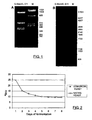
- Figure 1 shows the genetic profiles of the strain GBiot-EL 011 (CECT 13030) obtained with each of the techniques.
- Biomass production was carried out by Fed-Batch culture, in a fermenter with a total capacity of 12 litres (Biostat C), with continuous control of pH, temperature, dissolved oxygen and agitation.
- the feeding was carried out using a food medium with a total sugar concentration of 250 g/L (sucrose, glucose, fructose), supplemented with a source of nitrogen, magnesium, vitamins (biotin, inositol and calcium pantothenate) and mineral salts (iron sulphate, zinc sulphate and copper sulphate).
- the fermenter was inoculated with an inoculation volume guaranteeing a cell count in the initial fermentation volume of 10 8 CFU/mL.
- the fermentation conditions were as follows:
- the biomass production process lasted in the order of 40 hours.
- the feasibility obtained by mL of the fermented broth reached the order of 10 9 CFU/mL.
- the isolation and selection of the yeast was carried out during two consecutive wine harvests.
- a native yeast strain was selected of the species S. cerevisiae, GBiot-EL 011 (CECT 13030).
- the testing of the native yeast selected was performed during 3 wine harvests.
- the grapes were transferred to the laboratory and were stored in a fresh and aerated place until their processing. At this time, they were pressed and fermented in sterile receptacles. Said receptacles were introduced in an orbital incubator with controlled temperature of 27°C. Throughout the fermentation, monitoring was performed on the °Brix and once they were stabilized, these containers were sampled to isolate the yeasts. The samples obtained to isolate the yeasts were inoculated, after the corresponding decimal dilutions, on Petri dishes containing malt agar extract and they were left to incubate at 27°C. From each dish, with 30-300 colonies, three different colonies were taken with an appearance in line with Saccharomyces cerevisiae. The total yeast strains isolated from the grape, with appearance of S. cerevisiae was 175.
- yeasts isolated 76 of the strains were identified as S. cerevisiae using the Rapid Yeast Plus System (Remel).
- yeasts selected under these criteria were 41.These yeasts were subjected to a first microvinification process with sterile grape must.
- microvinifications consisted of the inoculation with the native yeasts characterized in a sterile grape must and later vinification on laboratory scale under controlled conditions. Inoculation with preselected native yeasts were performed in grape must of the Tempranillo variety from Rioja Alavesa,
- This microvinification process allowed us to reject the yeasts with unsuitable kinetic fermentations and which gave rise to unsuitable yeasts from the organoleptic standpoint.
- the fermentation process was carried out in 250 mL glass fermentation flasks, in duplicate, immersed in a thermostatic bath with agitation and controlled temperature of 16 to 27 °C, depending on the product one wants to obtain.
- the yeasts to test were inoculated in a proportion which allowed us to reach in all cases the initial population of 10 6 cells/mL.
- the fermentation process was followed by daily measurement of °Brix until reaching a constant value. At that time the wine was decanted, centrifuged and stored in inert nitrogen atmosphere or it was sulphited (20 mg SO 2 /L) until the time of wine tasting. The following aspects were assessed in the wine tasting:
- strains with good activity and fermentation kinetics and which were positively valued at tasting were identified by molecular biology tests (PCR and RFLP of mitochondrial DNA). This molecular characterization revealed to us how many of the strains isolated and identified as S. cerevisiae were genetically different, in other words, were different strains.
- microvinification With the information obtained in the microvinification, both of fermentation kinetics, results of tasting and wine analysis and with the molecular characterization information of the previously selected strains of said microvinification, another two microvinifications were performed which selected for us the strains which we tested on an industrial scale, i.e. in the winery. These microvinifications tested the strains varying the conditions of the grape must and depending on the application sought.
- ANALYSIS MUST 1 MUST 2 pH 3.83 3.65 °Brix 22 23.4 Density (g/ml) 1093 1098 Reducing sugars (g/L) 190 208 Probable degree (%v/v) 12.8 13.7 YAN (mg/L) 167 149 Free SO 2 (mg/L) 0 13 Total SO 2 (mg/L) 3 26 Volatile acidity (g/L acetic acid) 0.06 0.03 Total acidity (g/L tartaric acid) 5.2 5.7 Malic acid (g/L) 3.3 3.9 Glycerol (g/L) 0.58 0.57 Colour intensity 5.888 4.02 Tonality 0.699 0.43 TPI 30 19 Total anthocyanins (mg/L) 217 278 Total tannins (mg/L) 1.5 1 CIELAB parameters
- Both the native yeast and the commercial strain had fast and regular fermentation kinetics and ended fermentation after 19 days.
- the native yeast selected leads to producing a wine, after alcoholic fermentation, of characteristics very similar to those produced with the commercial yeast.
- the wines were correct from an organoleptic standpoint, not noting defects.
- the results obtained in the analyses did not show significant differences between the two yeasts.
- Figure 2 represents the fermentation kinetics of these yeasts expressed as the evolution of the °Brix of the must over time. The two yeasts ended fermentation after 13 days and showed similar fermentation kinetics.
- Table 3 shows the analytical parameters of the wines obtained in this microvinification.
- microvinification performed used as its base the must tested in the first vinification, indicated as must 2, with the skins present in the same must.
- the fermentation kinetics of the yeast in this must are shown in figure 3 .
- the fermentations with this must were faster than in the two previous microvinifications, and they were finished in only 8 days.
- the content of solids in suspension stimulated the growth and metabolism of the yeasts during fermentation.
- Example 3 Microvinification with different formats of the native yeast.
- 3 presentation formats of the native yeast were tested in order to assess the fermenting, organoleptic and analytical qualities of the different formulations.
- the formats were the following: in the form of fresh paste and in the active dry form.
- the native yeast was compared with Zymaflore F15, frequently used in the preparation of Rioja wine and appreciated by enologists due to its fermentation, analytical and organoleptic characteristics.
- the test was performed in its active dry form, which is the commercially available format.
- microvinifications performed were as follows:
- the inoculations were prepared as follows:
- Figure 4 shows the fermentation kinetics of these yeasts expressed as the evolution of the °Brix of the must over time.
- microvinifications were carried out by inoculation of the native yeast in its two formats (fresh in paste and dry) and the commercial yeast on Must 2.
- Figure 5 shows the fermentation kinetics of these yeasts expressed as the evolution of the °Brix of the must over time.
- the native yeast started the fermentation immediately after its addition to the must, whilst the commercial yeast has a greater "adaptation period”. All yeasts ended fermentation in 15 days and the resulting wines had similar residual sugar levels.
- Table 7 shows the analytical results of the wines obtained from the microvinifications by inoculation of the native yeast in its different formats and the commercial yeast on must 2.
- Table 7. Physicochemical parameters of the wines obtained by inoculation of the native yeast in its different formats and the commercial yeast on must 2 ⁇ S.D.
- the objective of the test was to observe the evolution of the strains in a must with solids in suspension and to see its influence on the fermentation kinetics, in the analytical parameters of the wines, as well as on its organoleptic characteristics. Likewise, also to see its interaction with the indigenous yeasts of the must, which in this case grew during fermentation together with the yeast inoculated.
- the yeasts tested and the formats tested were the same as those tested for previous microvinifications.
- Figure 6 shows the fermentation kinetics of these yeasts expressed as the evolution of the °Brix of the must over time.
- Table 8 shows the analytical results of the wines obtained by inoculation of Must 2 with paste, with the native yeast and the commercial yeast. Table 8. Physicochemical parameters of the wines obtained by inoculation of the native yeast in its different formats and the commercial yeast on must 2 ⁇ S.D.
- the wines produced with the native yeast have been evaluated independently from the tasted yeast format.
- the microvinification was performed using Must 1 as a base, with a somewhat higher average sugar concentration level in the must (23 ° Brix).
- Figure 7 shows the fermentation kinetics of these yeasts expressed as the evolution of the °Brix of the must over time.
- the wines inoculated with the dry native and commercial yeast took a little longer than the others to start fermenting. However, all finished in a similar time, and with a similar residual Brix degree.
- the following table shows the analytical results of the wines obtained by inoculation of Must 1 with greater sugar content with the native yeast and the commercial yeast.
- Table 9 Physicochemical parameters of the wines obtained by inoculation of the native yeast in its different formats and the commercial yeast on must 1 with greater sugar content. Average ⁇ S.D.
- the yeast GBiot-EL 011 (CECT 13030), tested in the microvinification tests on laboratory scale, was tested during three consecutive wine harvests in two wineries of Rioja Alavesa (Bodegas Vinos de los Herederos de Marqués de Riscal and Bodegas Baigorri). In addition to this yeast, the same commercial yeast as used in the previous examples was used as control. The two yeasts were tested in tanks containing Tempranillo grape must.
- the native yeast was supplied to the wineries in fresh format in liquid and in paste.
- the commercial yeast was tested in the form of active dry yeast, which is the commercially available form.
- the native yeast was tested in the two aforementioned wineries of Rioja Alavesa during two consecutive wine harvests.
- the yeast was supplied in liquid format.
- the inoculations were performed in tanks with 20,000 kg of grapes.
- the grape variety on which the inoculation was performed was the Tempranillo variety.
- Table 10 shows the analytical parameters of the must (before inoculation) and the wine after alcoholic fermentation (FOH), in winery 1 of the tank inoculated with the commercial yeast of the tank inoculated with the native yeast in its liquid format.
- Reducing sugars (g/L) 251 6 247 3 Free SO 2 (mg/L) 16 0 0 0 Combined SO 2 (mg/L) 17 7 32 13 Total SO 2 (mg/L) 33 7 32 13 Volatile acidity (g/L acetic acid) 0.09 0.24 0.21 0.39 Volatile acidity (g/L tartaric acid) 4.5 5.9 4.5 5.2 G
- Table 11 shows the analytical parameters of the must (before inoculating) and the wine after alcoholic fermentation (FOH), of winery 2 of one of the fermentation tanks inoculated with the commercial yeast with the native yeast in fresh liquid format.
- No data Reducing sugars (g/L) No data 1 273 2 Free SO 2 (mg/L) No data 2 3 6 Combined SO 2 (mg/L) No data 8 3 15 Total SO 2 (mg/L)
- the inoculations were carried out in tanks holding 20,000 kg of grapes belonging to the same wineries as above.
- the grape variety on which the inoculation was carried out was yeast of the Tempranillo variety.
- the native yeast was tested in the form of paste.
- the same commercial yeast was used as control.
- Table 14 shows the data obtained in the course of the fermentation of the tanks inoculated with the fresh yeast in paste and they were compared with the details for the inoculations with the commercial yeast typically used in the winery.
- Vinification in winery 1 Fresh native yeast in paste
- the alcoholic and malolactic fermentations of the tanks on which the native yeasts had been inoculated took place with complete normality, producing the wines perfectly.
- the fermentations with this yeast took place with total normality, producing very high quality wines and with organoleptic evaluations by tasting which were exceptional, according to the details collected by the participating wineries.
- Table 15 shows the analytical results during the course of fermentation in winery 2 of the tanks where the fresh native yeast in paste has been inoculated and they were compared with the data from the commercial yeast typically used in the winery.
- Fresh native yeast in paste Commercial yeast BEFORE INOCULATING AFTER FOH BEFORE INOCULATING AFTER FOH pH 3.3 3.41 3.22 3.52 °Brix 23.6 7.4 22.4 7.6 Degree (v/v) 0 13.46 0 13.46 EtOH yield (%) 0 51.37 0 54.81 Reducing sugars (g/L) 207 1 194 2 Free SO 2 (mg/L) 0 0 0 0 0 Combined SO 2 (mg/L) 0 0 0 22 Total SO 2 (mg/L) 0 0 0 22 Volatile acidity (g/L acetic acid) 0 0.21 0.03 0.27 Volatile acidity (g/L tartaric acid) 5.2 5.8 5.8 5.6 Glycerol (g
- results show exceptional physicochemical characteristics in the wine produced by inoculation of the must with the native yeast selected comparatively with the wine produced by inoculation of the must with the commercial yeast typically used in the winery.
- Example 5 Differentiation of native yeast as compared with commercial yeast.
- Table 16 indicates the characteristics of the sterile must used for the microvinifications.
- Table 16 ANALYTICAL PARAMETERS MUST pH 3.53 °Brix 26 YAN (mg/L) 249.2 Glucose (g/L) 155.81 Fructose (g/L) 164.51
- the following figure represents the fermentation kinetics of the yeasts expressed as the evolution of the °Brix of the grape must over time.
- Figure 8 shows that both the native yeast and the commercial strain showed fast and regular fermentation kinetics and ended fermentation in 14 days.
- Figure 9 represents the fermentation kinetics of the yeasts expressed as the evolution of the °Brix of the grape must over time.
- Both the native yeast and the commercial strain showed fast and regular fermentation kinetics and ended fermentation in 14 days.
Landscapes
- Life Sciences & Earth Sciences (AREA)
- Chemical & Material Sciences (AREA)
- Engineering & Computer Science (AREA)
- Health & Medical Sciences (AREA)
- Organic Chemistry (AREA)
- Mycology (AREA)
- Bioinformatics & Cheminformatics (AREA)
- Zoology (AREA)
- Genetics & Genomics (AREA)
- Wood Science & Technology (AREA)
- Biotechnology (AREA)
- General Health & Medical Sciences (AREA)
- General Engineering & Computer Science (AREA)
- Biochemistry (AREA)
- Microbiology (AREA)
- Biomedical Technology (AREA)
- Medicinal Chemistry (AREA)
- Virology (AREA)
- Tropical Medicine & Parasitology (AREA)
- Botany (AREA)
- Molecular Biology (AREA)
- Food Science & Technology (AREA)
- Micro-Organisms Or Cultivation Processes Thereof (AREA)
Abstract
Description
- In the course of grape must fermentation, the sequential action of different genii and species of yeast occurs. In the first stages of fermentation (4-5% vo. alcohol) indigenous yeasts are developed with low fermentation power of the species: Kloeckera, Hanseniaspora, Candida and Pichia. Once 4-5% alcohol has been exceeded, the fermentation process is fundamentally dominated by the species Saccharomyces cerevisiae, more resistant to alcohol.
- The origin of these yeasts is fundamentally on the surface of the grapes as well as the environment of the winery (machinery, hoppers, presses, fermentation tanks, etc.), this latter being an important source of microorganisms that inoculate the grape musts. The number of yeasts present in the skin of a healthy grape is very low (between 103 and 106 CFU/mL) and the number of Saccharomyces cerevisiae is even less, less than 50 cells/mL of grape must. In the winery, S. Cerevisiae is the predominant species.
- The microflora present in the grape can be affected by a large number of factors that influence the number and proportion of the different species.
- These factors include the temperature, rainfall and other climatic influences, the degree of ripeness of the grape, the use of phytosanitary treatments, physical damage due to fungi, insects, etc. and the grape variety. Variations in the initial flora may influence the fermentation process, causing delays and even stoppages of fermentation, and may affect the quality of wine and give rises to changes in volatile acidity and unpleasant tastes and/or aromas.
- Indeed, variability of the yeast-like flora of the grape musts can be resolved by adding in each grape harvest a microbial inoculation which on being majority normalizes the initial flora and, in this way, gives rise to a homogeneous fermentation in the winery year after year.
- When selecting the yeasts for the production of quality wines, it is sought that the yeasts have the following characteristics:
- High ethanol tolerance
- Total degradation of fermentable sugars
- Resistance to SO2
- High fermentation capacity
- Glycerol production
- Killer phenotype
- In contrast, it is attempted to avoid that the yeast has the following undesired qualities:
- H2S production
- Volatile acidity production
- Production of acetaldehyde and pyruvate
- Formation of ethyl carbamate precursors
- At present, almost all wineries used commercial yeast inoculations for fermenting their grape musts. The use of these commercial inoculations in wineries reduces the risk of slow fermentation kinetics and defects in the taste and aroma of wine. Due to this, the inoculation of the must with these yeasts is a widespread practice in wineries. These yeasts have mainly been isolated in areas, grape varieties and conditions other than those existing in the wineries which also use them equally in other Spanish designations of origin and from other countries, the consequence of their use being the production of wines with a certain loss of typical characteristics.
- Against this drawback of a widespread application and loss of typical characteristics, an alternative that is demonstrating its validity is the use of native yeasts, isolated from grapes in a certain area to make wines from that same area. In this way it is possible to control the fermentation process also respecting the local character of the wines. This point should therefore indicate the numerous advantages that the use of native yeasts would have when they are selected in the designations of origin for the winemaking. On the other hand, the selection should be centred on the grapes, not in the winery environment, as wineries precisely have a residual population of yeasts of varied origin and largely commercial.
- In a first aspect, the present invention provides a strain of the species Saccharomyces cerevisiae identified as GBiot-EL 011, said strain was deposited on 12 May 2009 in the Spanish Type Culture Collection (CECT), Burjasot, Valencia, with access number CECT 13030.
- In a more particular aspect, the strain of the present invention is in liquid form, fresh in paste, active dry and instant dry.
- In a second aspect, the present invention relates to the use of the strain of the species Saccharomyces cerevisiae identified as GBiot-
EL 011 deposited in the CECT, with access number CECT 13030 in the preparation of alcoholic drinks produced by alcoholic fermentation. - In a more particular aspect, the alcoholic drink is selected from wine, beer, cava and cider.
- In another more particular aspect, the alcoholic drink is wine produced from grape musts. In another more particular aspect, the musts are from grapes from the Rioja Alavesa wine region, more in particular they are grape musts from the red wine variety, more in particular they are of the variety Garnacha, Graciano, Mencia, Monastrell, Mazuelo, Bobal, more in particular the grape is of the Tempranillo variety.
- In a third aspect, the present invention relates to the use of the strain of the species Saccharomyces cerevisiae identified as GBiot-
EL 011 deposited in the CECT, with access number CECT 13030 for biomass production. -
-
Figure 1 : Genetic profiles of the strain GBiot-EL 11 (CECT 13030) obtained by electrophoretic separation in agarose gels using the inter delta sequence amplification technique (A) and the analysis of mitochondrial DNA restriction fragments (B). M: molecular weight marker (phage λ digested with restriction enzyme Pstl.) -
Figure 2 : Fermentation kinetics of the native yeast and the commercial yeast in microvinification I of example 2. The fermentation kinetics of these yeasts is expressed as the evolution of the °Brix of the grape must over time. -
Figure 3 : Fermentation kinetics of the native yeast and the commercial yeast in microvinification III of example 2. -
Figure 4 : Fermentation kinetics of the native yeast in formats: fresh in paste, dry and of the commercial yeast in microvinification I of example 3. -
Figure 5 : Fermentation kinetics of the native yeast in formats: fresh in paste, dry and of the commercial yeast in microvinification II of example 3. -
Figure 6 : Fermentation kinetics of the native yeast in formats: fresh in paste, dry and of the commercial yeast in microvinification III of example 3. -
Figure 7 : Fermentation kinetics of the native yeast in formats: fresh in paste, dry and of the commercial yeast in microvinification IV of example 3. -
Figure 8 : Fermentation kinetics of the native yeast and the commercial yeast in microvinification I of example 5. -
Figure 9 : Fermentation kinetics of the native yeast and the commercial yeast in microvinification II of example 5. - The stain GBiot-EL 011 deposited in the Spanish Type Culture Collection (CECT) with access number CECT 13030, has the following characteristics:
-
- Cellular morphology: oval, rounded cells
- In solid medium (malt extract agar) the colony had a whitish colour, smooth and shiny surface.
- In lysine agar it showed no growth.
-
- Fermentation of carbohydrates in aerobiotic conditions, the strain was: Glucose (+), maltose (+), sucrose (+), trehalose (+), raffinose (+), α glucosidase (+), xylose (+), galactose (+), histidine (+), leucyl-glycine (+), proline (-) and lactose (-).
- Fermentation of carbohydrates in anaerobiotic conditions, the strain was: Glucose (+), maltose (+), sucrose (+), trehalose (+), raffinose (+), β glucosidase (+) and galactose (+).
- Assimilation of nitrogenated compounds, the stain was: nitrate (-), lysine (-).
- Oxygen requirements: it is facultative anaerobic.
- Growth at different temperatures: the strain grew, at least, in a temperature range of between 14°C and 37°C.
- Resistance to cycloheximide: it showed its growth limit in the presence of 10 ppms of cycloheximide.
- The strain GBiot-EL 011 (CECT 13030) showed fast and regular fermentation kinetics with a short latency phase. It was capable of performing alcoholic fermentations within a wide temperature range, at least between 14°C and 30°C, however it was optimum for the fermentation of red wines with a temperature range of 20-30°C. The flocculation capacity was good and with average foam formation.
- The alcohol yield was high: 16.8 grams of sugar per degree of alcohol produced. It almost completely exhausted all reducing sugars present in the grape must, leaving the wine practically dry (between 1-6 g/L residual sugars).
- The strain GBiot-EL 011 (CECT 13030) showed high resistance to sulphur dioxide, resisting concentrations of up to 100 g/L of total SO2. The yeast strain GBiot-EL 011 (CECT 13030) was inoculated in a culture medium, which contained concentrations of 50, 75 and 100 mg/L of SO2 and it was observed if growth occurred after 48-72 hours of incubation.
- The ethanol tolerance was also high, around 16% vol. Ethanol resistance was determined by inoculation of a native strain both in the liquid culture medium and in Petri dishes with ethanol content of 12, 14 and 6% v/v.
- The strain GBiot-EL 011 (CECT 13030) has a neutral Killer phenotype, in other words, it does not secrete the Killer toxin but it is resistant to it. Determination of the Killer phenotype is based on inoculating the yeast to be tested in a dish with a buffered and inoculated medium with a lawn of sensitive yeast, and on another dish, with the same medium inoculated with a lawn of Killer yeast (Bevan and Somers, 1969). After its incubation at 27°C during 72 h growth was observed on both dishes on the two lawns of control strains without the appearance of inhibiting halos.
- Hydrogen sulphide production was low. The method used to determine H2S formation was based on the degree of darkening of the colonies growth in a Biggy (Bismuth-Glucose-Glycine-Yeast) agar medium, a modification of the formula developed by Nickerson (1953). This medium contains bismuth sulphite and varies from cream colour (unproductive strains) to dark brown (very productive strains). The degree of darkening is determined by bismuth sulphide, which is formed by the combination of bismuth in the medium and H2S released by the yeast.
- Glycerol production was average, 8 g/L of glycerol. The glycerol produced during the alcoholic fermentation was determined by the enzymatic method developed by Kreutz (1962) modified.
- Volatile acidity production was also low (<0.54 g /L of acetic acid). The García-Tena method was used (García Barceló, 1976).
- The genetic characterization of the strain GBiot-EL 011 (CECT 13030) was obtained by two complementary molecular techniques: PCR (polymerase chain reaction) amplification of the inter delta sequences that flank the Ty1 retrotransposons (Ness, 1993) and the analysis of the polymorphisms of the mitochondrial DNA restriction fragments (Querol, 1992).
Figure 1 shows the genetic profiles of the strain GBiot-EL 011 (CECT 13030) obtained with each of the techniques. - Biomass production was carried out by Fed-Batch culture, in a fermenter with a total capacity of 12 litres (Biostat C), with continuous control of pH, temperature, dissolved oxygen and agitation. The feeding was carried out using a food medium with a total sugar concentration of 250 g/L (sucrose, glucose, fructose), supplemented with a source of nitrogen, magnesium, vitamins (biotin, inositol and calcium pantothenate) and mineral salts (iron sulphate, zinc sulphate and copper sulphate).
- The fermenter was inoculated with an inoculation volume guaranteeing a cell count in the initial fermentation volume of 108 CFU/mL.
- The fermentation conditions were as follows:
- pH: the pH of the culture was kept at 4.5 throughout the process by adding 25% NaOH (w·v-1) and 75% H3PO4 (w·v-1)
- Temperature: 30°C
- Agitation: 700 rpm
- The biomass production process lasted in the order of 40 hours. The feasibility obtained by mL of the fermented broth reached the order of 109 CFU/mL.
- We obtained the following formats for the yeast from this broth:
- Liquid format: fermented broth with no type of treatment with a viable cell count ≥ 109 CFU/mL.
- Paste format: obtained from the filtration, by press filter, of the fermented broth. This treatment allowed us to obtain a cream with a viable cell count ≥ 1010 CFU/g.
- Active dry format: this format was obtained from the yeast paste and with a dehydration treatment consisting of fluid bed drying. The product must have a humidity content less than 8%. The drying at 37°C for 60 minutes provided a dry yeast product with a viable cell count ≥ 5 x 10⁵ CFU/g. The product must be previously rehydrated for its application.
- Instant dry formula: this format was obtained from the yeast paste and with a dehydration treatment consisting of fluid bed drying. The product must have a humidity content less than 5% and a viable cell count ≥ 1010 CFU/g.
- The isolation and selection of the yeast was carried out during two consecutive wine harvests. As a result of this study, a native yeast strain was selected of the species S. cerevisiae, GBiot-EL 011 (CECT 13030). The testing of the native yeast selected was performed during 3 wine harvests.
- For the isolation of native yeasts, healthy and ripe grapes of the Tempranillo variety were collected in several vineyards belonging to the Rioja Alavesa wine region. Samples were taken from young vines (stock with age less than 25 years), old vines (stock with age between 25-50 years) and native vines (stock with an age over 50 years).
- The grapes were transferred to the laboratory and were stored in a fresh and aerated place until their processing. At this time, they were pressed and fermented in sterile receptacles. Said receptacles were introduced in an orbital incubator with controlled temperature of 27°C. Throughout the fermentation, monitoring was performed on the °Brix and once they were stabilized, these containers were sampled to isolate the yeasts. The samples obtained to isolate the yeasts were inoculated, after the corresponding decimal dilutions, on Petri dishes containing malt agar extract and they were left to incubate at 27°C. From each dish, with 30-300 colonies, three different colonies were taken with an appearance in line with Saccharomyces cerevisiae. The total yeast strains isolated from the grape, with appearance of S. cerevisiae was 175.
- Once all the yeasts were characterized, those that complied with the following technological characteristics were selected:
- Growth on lysine-agar: negative
- Rapid test: S. cerevisiae
- Killer phenotype: neutral or Killer
- Formation of hydrogen sulphide: medium or low
- Sulphur dioxide resistance: positive growth at least on dishes with 50 mg/L SO2/L
- Ethanol resistance: positive growth at least on dishes with 12% ethanol.
- Of all the yeasts isolated, 76 of the strains were identified as S. cerevisiae using the Rapid Yeast Plus System (Remel).
- The total of yeasts selected under these criteria were 41.These yeasts were subjected to a first microvinification process with sterile grape must.
- The microvinifications consisted of the inoculation with the native yeasts characterized in a sterile grape must and later vinification on laboratory scale under controlled conditions. Inoculation with preselected native yeasts were performed in grape must of the Tempranillo variety from Rioja Alavesa,
- This microvinification process allowed us to reject the yeasts with unsuitable kinetic fermentations and which gave rise to unsuitable yeasts from the organoleptic standpoint.
- The fermentation process was carried out in 250 mL glass fermentation flasks, in duplicate, immersed in a thermostatic bath with agitation and controlled temperature of 16 to 27 °C, depending on the product one wants to obtain. The yeasts to test were inoculated in a proportion which allowed us to reach in all cases the initial population of 106 cells/mL. The fermentation process was followed by daily measurement of °Brix until reaching a constant value. At that time the wine was decanted, centrifuged and stored in inert nitrogen atmosphere or it was sulphited (20 mg SO2/L) until the time of wine tasting. The following aspects were assessed in the wine tasting:
- Colour: the formation of robe, limpidity and shine was assessed.
- Nose: intensity, complexity and with aromas without defects.
- Palate: tannins and body
- In addition to the tasting, an analysis of the following parameters of the wines produced was also performed: pH, sugars, degree, free sulphur, combined sulphur and total sulphur, volatile acidity, total acidity, glycerol, malic acid, colour intensity, tonality, total polyphenol index, total anthocyanins, total tannins and CIELAB parameters. These analyses were performed by FUNDACION LEIA.
- The results obtained in this vinification process allowed us to reject all those strains without good fermentation activity and which gave rise to organoleptic defects in the wine.
- The strains with good activity and fermentation kinetics and which were positively valued at tasting, were identified by molecular biology tests (PCR and RFLP of mitochondrial DNA). This molecular characterization revealed to us how many of the strains isolated and identified as S. cerevisiae were genetically different, in other words, were different strains.
- With the information obtained in the microvinification, both of fermentation kinetics, results of tasting and wine analysis and with the molecular characterization information of the previously selected strains of said microvinification, another two microvinifications were performed which selected for us the strains which we tested on an industrial scale, i.e. in the winery. These microvinifications tested the strains varying the conditions of the grape must and depending on the application sought.
- To select the yeast strains for the alcoholic fermentation to obtain the red wine, the following microvinifications were performed:
- Microvinification of sugar-rich grape must: the grape must used as substrate, had a sugar content of 25 °Brix, which gave 14.8° proof.
- Microvinification of grape must with paste: it was a microvinification where the grape must contained a great amount of material in suspension such as lees, skins, etc. which simulated the conditions of the grape must in the winery.
- In the case of selection of strains for refermentation processes, in addition to testing these conditions, other microvinifications were tested such as:
- Microvinification of grape must with low nutrient content, such as nitrogen and vitamins.
- Microvinification at
low temperature 12°C and high temperature 33°C - Microvinification with inactive grape must, with sugar and high alcohol content.
Depending on the fermentation kinetics, the analytical results obtained and the tasting results, the strains tested in the winery were selected. - The microvinification was performed on two different Tempranillo grape musts which had the physicochemical characteristics described in table 1.
Table 1. Analytical parameters of the starting grape musts for the microvinifications. ANALYSIS MUST 1 MUST 2pH 3.83 3.65 ° Brix 22 23.4 Density (g/ml) 1093 1098 Reducing sugars (g/L) 190 208 Probable degree (%v/v) 12.8 13.7 YAN (mg/L) 167 149 Free SO2 (mg/L) 0 13 Total SO2 (mg/L) 3 26 Volatile acidity (g/L acetic acid) 0.06 0.03 Total acidity (g/L tartaric acid) 5.2 5.7 Malic acid (g/L) 3.3 3.9 Glycerol (g/L) 0.58 0.57 Colour intensity 5.888 4.02 Tonality 0.699 0.43 TPI 30 19 Total anthocyanins (mg/L) 217 278 Total tannins (mg/L) 1.5 1 CIELAB parameters: L* significance 21.219 39.085 a* significance 45.099 61.8 b* 24.936 20.127 - This microvinification compared the native yeast GBiot-EL 11 (CECT 13030) isolated from grapes from the vineyards of Rioja Alavesa together with a commercial yeast Zymaflore F15 which was used as reference. A sterile Tempranillo must was used as substrate, indicated as
must 2 in table 1 (sterile must without microbial population and without skins). - Both the native yeast and the commercial strain had fast and regular fermentation kinetics and ended fermentation after 19 days.
- The analytical results of the wines obtained from inoculate must are summarized in table 2.
SAMPLE COMMERCIAL YEAST NATIVE YEAST pH 3.46 3.43 °Brix 7.5 7.5 Degree (v/v) 13.5 13.62 EtOH yield (%) 47.4 47.8 Reducing sugars (g/L) 3.1 3.6 Free SO2 (mg/L) 0 0 Combined SO2 (mg/L) 9 6 Total SO2 (mg/L) 9 6 Volatile acidity (g/L acetic acid) 0.26 0.29 Total acidity (g/L tartaric acid) 6.3 6.3 Glycerol (g/L) 8.5 8.5 Malic acid (g/L) 3.08 3.4 Colour intensity 3.557 3.3 Tonality 0.86 0.862 TPI 21 19 Anthocyanins (mg/L) 144 153 Total tannins (mg/L) 1 1 CIELAB parameters: L* 34.184 37.163 a* 30.953 30.717 b* 12.716 12.121 - As can be observed, the native yeast selected leads to producing a wine, after alcoholic fermentation, of characteristics very similar to those produced with the commercial yeast. In the two cases, the wines were correct from an organoleptic standpoint, not noting defects. The results obtained in the analyses did not show significant differences between the two yeasts.
- In this microvinification the must indicated as
must 1 in table 1 was used, which is the same of the previous, which was a sterile must without microbial population and without skins. -
Figure 2 represents the fermentation kinetics of these yeasts expressed as the evolution of the °Brix of the must over time. The two yeasts ended fermentation after 13 days and showed similar fermentation kinetics. - Table 3 shows the analytical parameters of the wines obtained in this microvinification.
SAMPLE COMMERCIAL YEAST NATIVE YEAST pH 3.44 3.41 ° Brix 7 7 Degree (v/v) 12.97 13.78 EtOH yield (%) 45.5 48.4 Reducing sugars (g/L) 2.6 2.6 Volatile acidity (g/L acetic acid) 0.27 0.21 Volatile acidity (g/L tartaric acid) 5 5 Glycerol (g/L) 8.8 8.5 Malic acid (g/L) 2.76 2.72 Colour intensity 0.496 0.478 Tonality 1.286 1.306 TPI 6 6 Anthocyanins (mg/L) 20 22 Total tannins (mg/L) 0.3 0.3 CIELAB parameters: L* 87.886 88.46 a* 8.987 9.123 b* 9.015 9.343 Table 3. Analytical parameters of the wines produced with microvinification II. - In the second microvinification, small differences were observed between the native and commercial yeast, which was appreciated in the value of the degree and ethanol yield produced, those obtained with native yeast being slightly superior.
- As regards the assessment in tasting, the wine inoculated with the native yeast stood out due to its intensity and roundness.
- The microvinification performed used as its base the must tested in the first vinification, indicated as
must 2, with the skins present in the same must. The fermentation kinetics of the yeast in this must are shown infigure 3 . - The fermentations with this must were faster than in the two previous microvinifications, and they were finished in only 8 days. The content of solids in suspension stimulated the growth and metabolism of the yeasts during fermentation. The two yeasts, as in the two previous microvinifications, showed similar kinetics.
- The analytical results of the wines obtained in this microvinification are shown in table 4.
Table 4. Analytical parameters of the wines obtained in microvinification III. SAMPLE COMMERCIAL YEAST NATIVE YEAST pH 3.48 3.47 °Brix 7.6 7.6 Degree (v/v) 13.98 13.34 EtOH yield (%) 49.1 46.8 Reducing sugars (g/L) 1.6 1.7 Volatile acidity (g/L acetic acid) 0.24 0.21 Volatile acidity (g/L tartaric acid) 7.2 6.5 Glycerol (g/L) 10 9.9 Malic acid (g/L) 3.56 3.54 Colour intensity 1.981 2.123 Tonality 0.813 0.864 TPI 15 15 Anthocyanins (mg/L) 117 112 Total tannins (mg/L) 0.8 0.8 CIELAB parameters: L* 58.139 55.992 a* 45.227 42.969 b* 17.163 18.446 - In this microvinification, small differences were found between the native yeast and the commercial yeast, which was appreciated in the ethanol yield obtained, in this case being slightly higher in the wine fermented with commercial yeast.
- With respect to the tasting, the wines were positively assessed, and no defects were appreciated therein.
- In addition to the tasting and analysis of the wines, a study of implantation of the two yeasts was carried out, since the must with skins had its own indigenous population. In the two cases, both the native yeast and the commercial yeast were implanted 100%.
- 3 presentation formats of the native yeast were tested in order to assess the fermenting, organoleptic and analytical qualities of the different formulations. The formats were the following: in the form of fresh paste and in the active dry form. The native yeast was compared with Zymaflore F15, frequently used in the preparation of Rioja wine and appreciated by enologists due to its fermentation, analytical and organoleptic characteristics. In the case of the commercial yeast, the test was performed in its active dry form, which is the commercially available format.
- As substrates for the fermentations in the laboratory, two grape musts from the Tempranillo variety from Rioja Alavesa were used. The following table includes the main characteristics of these musts.
Table 5: Physicochemical parameters of the musts used in the microvinifications. Analytical parameters Must 1 Must 2Probable degree (%v/v) 12.90 14.72 Volatile acidity (g/L acetic acid) 0.03 0.03 Total acidity (g/L tartaric acid) 3.7 3.7 Malic acid (g/L) 2.41 2.8 Glycerol (g/L) 0.19 0.25 Colour intensity 1.994 2.472 Tonality 0.465 0.532 TPI 15 16 Total anthocyanins (mg/L) 140 156 Total tannins (mg/L) 1 1 CIELAB parameters: L* 58.153 48.673 a* 57.331 49.962 b* 8.449 5.453 - The microvinifications performed were as follows:
- Microvinification I:
sterile must 1, adjusted to 23 °Brix, 257 mg assimilable N/L, 40 mg SO2/L and pH 3.51 - Microvinification II:
sterile must 2 with excess sugars, at 25 °Brix, 260 mg assimilable N/L, 40 mg SO2/L and pH 3.54 - Microvinification III: must 2 with paste (skins), at 24.6 °Brix, 40 mg SO2/L and pH 3.42
- Microvinification II:
sterile must 1, adjusted to 23 °Brix, 250 mg assimilable N/L, 40 mg SO2/L and pH 3.5. - The inoculations were prepared as follows:
- Fresh yeast: one aliquot of must was dissolved and directly added.
- Dry yeast: it was dissolved in distilled water with glucose (1:10 w/v), it was incubated at 40 °C for 20 minutes, mixed with one aliquot of must, incubated during 10 minutes and the must was added to start the fermentation.
- At this time of inoculating, in all cases an initial population of yeasts of 106 cells/mL was obtained. The fermentations were carried out in 250 mL glass flasks immersed in thermostatted baths with agitation and controlled temperature (27°C). The process was followed by daily measurement of °Brix and it as considered finalized when this was stabilized. The wines produced were decanted, centrifuged and stored in inert nitrogen atmosphere and were sulphited (20 mg SO2/L) until the time of wine tasting.
- Once the microvinifications were finished, the tasting of the wines obtained were performed, assessing their colour, aroma and taste. The corresponding analyses were also performed.
- On these data a two-way variance analysis (ANOVA) was carried out (yeast type and format) to detect significant differences between the microvinifications prepared with different yeasts in its different formats. The significance level in all cases is 95%.
- Must 1 was used in this microvinification as substrate for fermentation.
-
Figure 4 shows the fermentation kinetics of these yeasts expressed as the evolution of the °Brix of the must over time. - As observed in
Figure 4 , the native yeast (fresh or dry) started fermenting rapidly, whilst the commercial yeast started a little later. All fermentations ended in a similar time and with similar °Brix. - The analytical results of the wines obtained from the microvinifications of the native yeast and the control yeast in its different formats are shown in table 6.
Table 6: Physicochemical parameters of the wines obtained by inoculation of the native yeast in its different formats and the commercial yeast on must 1.Yeast NATIVE COMMERCIAL Format Fresh Dry Dry pH 3.26 ± 0.07 3.16 ± 0.04 3.23 ± 0.03 °Brix 6.9 ± 0.1 6.7 ± 0.4 6.9 ± 0.1 Degree 13.4 ± 0 12.5 ± 0.5 12.8 ± 0.1 Reducing sugars (g/L) 2.8 ± 0.6 2.5 ± 1.7 2.7 ± 1.1 EtOH yield (%) 57.90 ± 0.09 54.14 ± 2.22 55.21 ± 0.37 Volatile acidity (g/L acetic acid) 0.29 ± 0.06 0.29 ± 0.11 0.44 ± 0.02 Total acidity (g/L tartaric acid) 5.7 ± 0.1 6.0 ± 0.2 5.7 ± 0.1 Glycerol (g/L) 6.4 ± 0.1 7.4 ± 0.4 8.2 ± 0.1 Malic acid (g/L) 3.07 ± 0.08 2.65 ± 0.64 2.47 ± 0.01 Colour intensity 1.380 ± 0.230 1.580 ± 0.160 1.040 ± 0.100 Tonality 0.570 ± 0.030 0.610 ± 0.040 0.650 ± 0.010 TPI 13 ± 1 13 ± 0 13 ± 1 Anthocyanins (mg/L) 85 ± 6 84 ± 13 84 ± 0 Total tannins (mg/L) 0.62 ± 0.01 0.66 ± 0.01 0.65 ± 0.04 CIELAB parameters: L* 67.370 ± 4.060 63.480 ± 2.540 73.160 ± 2.300 a* 43.840 ± 4.990 42.460 ± 5.430 34.740 ± 0.950 b* 8.060 ± 0.910 8.620 ± 1.460 6.780 ± 0.410 - From the organoleptic standpoint, the tasters described the wines as correct, without sensorial defects which rejected any of the formats of presentation of the native yeast.
- The experimental design developed in Microvinification I was repeated, using the must indicated as 2 with a °Brix slighter higher (25°Brix) in order to verify the effectiveness of the native yeast in a medium with a greater sugar content.
- In all cases, the microvinifications were carried out by inoculation of the native yeast in its two formats (fresh in paste and dry) and the commercial yeast on
Must 2. -
Figure 5 shows the fermentation kinetics of these yeasts expressed as the evolution of the °Brix of the must over time. - As with microvinification I, the native yeast started the fermentation immediately after its addition to the must, whilst the commercial yeast has a greater "adaptation period". All yeasts ended fermentation in 15 days and the resulting wines had similar residual sugar levels.
- Table 7 shows the analytical results of the wines obtained from the microvinifications by inoculation of the native yeast in its different formats and the commercial yeast on
must 2.Table 7. Physicochemical parameters of the wines obtained by inoculation of the native yeast in its different formats and the commercial yeast on must 2 ± S.D.Yeast NATIVE COMMERCIAL Format Fresh Dry Dry pH 3.32 ± 0.0 3.33 ± 0.04 3.31 ± 0.01 °Brix 9.5 ± 0.1 8.7 ± 0.4 9.3 ± 0.4 Degree 13.7 ± 0.3 13.9 ± 0.5 13.6 ± 0.3 Reducing sugars (g/L) 21.7 ± 1.6 14.0 ± 6.2 19.5 ± 4.5 EtOH yield (%) 44.01 ± 1.08 44.55 ± 1.53 43.51 ± 0.06 Volatile acidity (g/L acetic acid) 0.38 ± 0.02 0.53 ± 0.02 0.36 ± 0.04 Total acidity (g/L tartaric acid) 6.0 ± 0.1 6.1 ± 0.3 6.2 ± 0.1 Glycerol (g/L) 8.6 ± 1.1 8.1 ± 0.6 8.7 ± 1.1 Malic acid (g/L) 3.10 ± 011 2.84 ± 0.23 2.97 ± 0.21 Colour intensity 1.910 ± 0.980 1.240 ± 0.210 1.650 ± 0.410 Tonality 0.750 ± 0.070 0.720 ± 0.040 0.740 ± 0.070 TPI 15 ± 1 14 ± 0 15 ± 1 Anthocyanins (mg/L) 95 ± 1 93 ± 3 93 ± 3 Total tannins (mg/L) 0.73 ± 0.02 0.70 ± 0.01 0.73 ± 0.01 CIELAB parameters: L* 57.650 ± 18.680 48.680 ± 24.17 61.620 ± 8.900 a* 30.790 ± 7.990 32.540 32.530 ± 7.370 b* 7.900 ± 3.170 7.230 ± 2.92 8.540 ± 2.210 - The analytical results did not show relevant differences between the different formats of native yeast nor with respect to the commercial yeast. On a tasting level, all wines were described as correct without finding large differences between the wines tested.
- The objective of the test was to observe the evolution of the strains in a must with solids in suspension and to see its influence on the fermentation kinetics, in the analytical parameters of the wines, as well as on its organoleptic characteristics. Likewise, also to see its interaction with the indigenous yeasts of the must, which in this case grew during fermentation together with the yeast inoculated. The yeasts tested and the formats tested were the same as those tested for previous microvinifications.
-
Figure 6 shows the fermentation kinetics of these yeasts expressed as the evolution of the °Brix of the must over time. - The fermentations with this must were much faster than in the previous microvinifications, and in only 12 days were finished, since the content of solids in suspension stimulated the growth and metabolism of the yeasts during fermentation. In spontaneous fermentation and in the fermentations with commercial yeasts, the fermentation start-up was slower than in the fermentations inoculated with the native yeast. No significant differences were found in the final Brix degree.
- Table 8 shows the analytical results of the wines obtained by inoculation of
Must 2 with paste, with the native yeast and the commercial yeast.Table 8. Physicochemical parameters of the wines obtained by inoculation of the native yeast in its different formats and the commercial yeast on must 2 ± S.D.Yeast NATIVE COMMERCIAL Format Fresh Dry Dry pH 3.57 ± 0.02 3.55 3.54 °Brix 8.6 ± 0.0 8.3 8.6 Degree 14.5 ± 0.1 13.5 14 Reducing sugars (g/L) 1.6 ± 0.1 1.4 1.5 EtOH yield (%) 46.58 ± 0.27 43.26 44.90 Volatile acidity (g/L acetic acid) 0.24 ± 0.04 0.30 0.30 Total acidity (g/L tartaric acid) 6.5 ± 0.1 6.8 6.4 Glycerol (g/L) 9.6 ± 0.6 10.7 12.5 Malic acid (g/L) 2.95 ± 0.08 2.61 2.47 Colour intensity 2.250 ± 0.040 2.790 1.940 Tonality 0.860 ± 0.010 0.790 0.870 TPI 18 ± 3 20 16 Anthocyanins (mg/L) 131 ± 1 140 104 Total tannins (mg/L) 0.94 ± 0.14 0.98 0.80 CIELAB parameters: L* 55.070 ± 1.480 49.300 60.510 a* 50.530 ± 3.490 57.800 50.330 b* 17.520 ± 5.060 18.430 12.530 - As with the previous microvinifications, no significant differences were found in the values obtained with the parameters analysed between the native yeast in its different formats with respect to the commercial yeast.
- In the tasting panel, the wines produced with the native yeast have been evaluated independently from the tasted yeast format.
- In this case, the microvinification was performed using
Must 1 as a base, with a somewhat higher average sugar concentration level in the must (23 ° Brix). -
Figure 7 shows the fermentation kinetics of these yeasts expressed as the evolution of the °Brix of the must over time. - The fermentations ended after 16 days and the wines were removed to do the chemical analysis and testing. In this case, the wines inoculated with the dry native and commercial yeast took a little longer than the others to start fermenting. However, all finished in a similar time, and with a similar residual Brix degree.
- The following table shows the analytical results of the wines obtained by inoculation of
Must 1 with greater sugar content with the native yeast and the commercial yeast.Table 9. Physicochemical parameters of the wines obtained by inoculation of the native yeast in its different formats and the commercial yeast on must 1 with greater sugar content. Average ± S.D.Yeast NATIVE COMMERCIAL Format Fresh Dry Dry pH 3.13 ± 0.17 3.20 ± 0.07 3.01 ± 0.18 °Brix 7.4 ± 0.3 6.9 ± 0.4 7.2 ± 0.0 Degree 12.7 ± 0.3 12.6 ± 0.6 12.6 ± 0.8 Reducing sugars (g/L) 5.4 ± 4.6 2.4 ± 2.5 3.9 ± 0.4 EtOH yield (%) 54.67 ± 1.33 54.39 ± 2.44 54.50 ± 3.53 Volatile acidity (g/L acetic acid) 0.35 ± 0.06 0.47 ± 0.11 0.32 ± 0.02 Total acidity (g/L tartaric acid) 6.0 ± 0.3 5.5 ± 0.1 6.3 ± 0.1 Glycerol (g/L) 7.6 ± 0.1 7.6 ± 0.6 8.9 ± 0.5 Malic acid (g/L) 2.31 ± 0.03 2.39 ± 0.24 2.10 ± 0.01 Colour intensity 1.480 ± 0.120 1.750 ± 0.410 1.550 ± 0.020 Tonality 0.540 ± 0.000 0.600 ± 0.040 0.530 ± 0.010 TPI 12 ± 0 12 ± 0 12 ± 0 Anthocyanins (mg/L) 137 ± 3 120 ± 14 130 ± 4 Total tannins (mg/L) 0.62 ± 0.01 0.61 ± 0.01 0.61 ± 0.01 CIELAB parameters: L* 65.020 ± 2.330 58.930 ± 7.250 63.730 ± 0.280 a* 45.790 ± 0.080 43.760 ± 4.760 47. 290 ± 1.170 b* 5.490 ± 0.090 6.410 ± 0.270 6.400 ± 0.110 - The results obtained with the microvinifications carried out by inoculation of the native yeast in its two formats (fresh in paste, dry) and the commercial yeast show that:
- The native yeast, both with different musts and in its different formats, showed a high fermenting capacity, the fermentation ending in 23 °Brix musts, corresponding to a high probable alcohol degree of 13.5%.
- Both in musts with 23 °Brix and with 25 °Brix, the native yeast began fermentation more vigorously. The commercial yeast had a slower fermentation start.
- None of the yeasts tested formed high quantities of acetic acid and the volatile acidity values were below 0.54 g/L in all microvinifications.
- The total acidity was always under 6.7 g of tartaric acid/L.
- Glycerol formation by the native yeasts was similar to the commercial strain, characterized by a high production of this compound. The format type the yeast was presented in did not influence glycerol production.
- In all fermentations, the native yeast gave rise to wines with similar degrees of alcohol to those produced with commercial yeast.
- In terms of ethanol yield, there was significant differences between the commercial and native yeast.
- With respect to contribution of the native yeast to the wine colour parameters, this was conditional upon the type of must fermented. Within each type of must, there was no differences between the yeasts inoculated and the different formats tested.
- With respect to the sensorial analysis of the wines tested, the native yeast in all its formats had a similar behaviour to the commercial yeast in all tests.
- The yeast GBiot-EL 011 (CECT 13030), tested in the microvinification tests on laboratory scale, was tested during three consecutive wine harvests in two wineries of Rioja Alavesa (Bodegas Vinos de los Herederos de Marqués de Riscal and Bodegas Baigorri). In addition to this yeast, the same commercial yeast as used in the previous examples was used as control. The two yeasts were tested in tanks containing Tempranillo grape must.
- The native yeast was supplied to the wineries in fresh format in liquid and in paste. The commercial yeast was tested in the form of active dry yeast, which is the commercially available form.
- The native yeast was tested in the two aforementioned wineries of Rioja Alavesa during two consecutive wine harvests. The yeast was supplied in liquid format. The inoculations were performed in tanks with 20,000 kg of grapes. The grape variety on which the inoculation was performed was the Tempranillo variety.
- Table 10 shows the analytical parameters of the must (before inoculation) and the wine after alcoholic fermentation (FOH), in
winery 1 of the tank inoculated with the commercial yeast of the tank inoculated with the native yeast in its liquid format.COMMERCIAL YEAST NATIVE YEAST IN LIQUID FORMAT BEFORE AFTER BEFORE AFTER INOCULATING FOH INOCULATING FOH pH 3.5 3.52 3.52 3.62 °Brix 23.6 7.8 22.2 7.6 Degree (v/v) 0.00 13.46 0.00 13.45 EtOH yield (%) Reducing sugars (g/L) 251 6 247 3 Free SO2 (mg/L) 16 0 0 0 Combined SO2 (mg/L) 17 7 32 13 Total SO2 (mg/L) 33 7 32 13 Volatile acidity (g/L acetic acid) 0.09 0.24 0.21 0.39 Volatile acidity (g/L tartaric acid) 4.5 5.9 4.5 5.2 Glycerol (g/L) 0.1 8.7 0.3 7.8 Malic acid (g/L) 3.11 3.12 2.22 2.64 Colour intensity 5.458 8.628 3.751 9.389 Tonality 0.416 0.544 0.512 0.588 TPI 26 42 15 50 Anthocyanins (mg/L) 551 619 218 647 Total tannins (mg/L) 1.3 2.1 0.8 2.5 CIELAB parameters: L* 30.005 17.594 36.909 15.631 a* 60.168 48.448 58.76 47.997 b* 23.639 28.414 13.075 26.246 - Table 11 shows the analytical parameters of the must (before inoculating) and the wine after alcoholic fermentation (FOH), of
winery 2 of one of the fermentation tanks inoculated with the commercial yeast with the native yeast in fresh liquid format.COMMERCIAL YEAST NATIVE YEAST IN LIQUID FORMAT BEFORE INOCULATING AFTER FOH BEFORE INOCULATING AFTER FOH pH No data 3.62 3.69 3.8 ° Brix No data 8 25.2 8.8 Degree (v/v) No data 13.46 0 14.43 EtOH yield (%) No data Reducing sugars (g/L) No data 1 273 2 Free SO2 (mg/L) No data 2 3 6 Combined SO2 (mg/L) No data 8 3 15 Total SO2 (mg/L) No data 10 6 21 Volatile acidity (g/L acetic acid) No data 0.33 0.06 0.39 Volatile acidity (g/L tartaric acid) No data 5.6 4.4 6.1 Glycerol (g/L) No data 5.8 0.3 9.5 Malic acid (g/L) No data 2.06 3.57 3.43 Colour intensity No data 12.27 3.459 11.12 Tonality No data 0.535 0.692 0.591 TPI No data 52 18 54 Anthocyanins (mg/L) No data 749 212 902 Total tannins (mg/L) No data 2.6 0.9 2.7 CIELAB parameters: L* No data 12.491 39.953 11.125 a* No data 43.633 53.025 41.424 b* No data 21.415 20.756 18.909 - The results showed exceptional physicochemical characteristics in the wine produced by inoculation of the must with the native yeast selected, comparatively with the wine produced by inoculation of the must with the commercial yeast usually used in the winery. On a tasting level, the wines obtained were classified by the enologists of the wineries as very correct and good quality wines.
- All these results reveal the exceptional characteristics of the native yeast isolated and selected from Rioja Alavesa, for the production of extraordinary quality wine and which maintains the typical characteristics of the wines of this important wine region.
- The inoculations were carried out in tanks holding 20,000 kg of grapes belonging to the same wineries as above. The grape variety on which the inoculation was carried out was yeast of the Tempranillo variety. In this wine harvest, the native yeast was tested in the form of paste. As with the previous wine harvests, the same commercial yeast was used as control.
- Table 14 shows the data obtained in the course of the fermentation of the tanks inoculated with the fresh yeast in paste and they were compared with the details for the inoculations with the commercial yeast typically used in the winery. Vinification in
winery 1Fresh native yeast in paste Commercial yeast BEFORE INOCULATING AFTER FOH BEFORE INOCULATING AFTER FOH pH 3.41 3.55 3.31 3.56 °Brix 23.2 8 23.2 7.6 Degree (v/v) 0 13.94 0 13.46 EtOH yield (%) 0 49.61 0 48.11 Reducing sugars (g/L) 222 6 221 5 Free SO2 (mg/L) 0 0 10 0 Combined SO2 (mg/L) 15 5 23 0 Total SO2 (mg/L) 15 5 33 0 Volatile acidity (g/L acetic acid) 0.24 0.21 0.09 0.18 Volatile acidity (g/L tartaric acid) 6.4 5.8 6.9 6.1 Glycerol (g/L) 0.9 8.7 0.2 8.1 Malic acid (g/L) 4.38 3.58 4.56 3.82 Colour intensity 8.841 10.151 6.89 8.148 Tonality 0.43 0.515 0.373 0.493 TPI 24 53 19 48 Anthocyanins (mg/L) 351 502 364 489 Total tannins (mg/L) 1.2 2.6 1 2.4 CIELAB parameters: L* 20.128 16.278 30.27 23.614 a* 50.441 47.695 60.729 56.223 b* 31.955 27.293 39.1 37.178 - The results show very good physicochemical characteristics in the wine produced by inoculation of the must with this native yeast selected, comparatively with the use of the commercial yeast.
- The alcoholic and malolactic fermentations of the tanks on which the native yeasts had been inoculated took place with complete normality, producing the wines perfectly. The fermentations with this yeast took place with total normality, producing very high quality wines and with organoleptic evaluations by tasting which were exceptional, according to the details collected by the participating wineries.
- The results obtained with the industrial fermentations carried out with the native yeast in its fresh format in fresh paste and commercial yeast allow us to draw the following general conclusions:
- The native yeast has good implantation results.
- The native yeast in its fresh format in paste has shown a high fermenting capacity and has given rise to wines with a suitable alcohol degree for Rioja wines. Good yield was also reached in ethanol production with both formats of native yeast.
- The wines produced with fresh native yeast in paste have a volatile acidity lower than 0.35 g/L after alcoholic fermentation and total acidity lower than 6.8 g of tartaric acid/L. These values are suitable for Rioja wines.
- Inoculation with fresh native yeast in paste gave rise to wines with high glycerol content, even higher values than with the commercial yeast.
- It can be concluded according to the results obtained as a whole, that the fresh native yeast in paste has a high technological quality.
- Table 15 shows the analytical results during the course of fermentation in
winery 2 of the tanks where the fresh native yeast in paste has been inoculated and they were compared with the data from the commercial yeast typically used in the winery.Fresh native yeast in paste Commercial yeast BEFORE INOCULATING AFTER FOH BEFORE INOCULATING AFTER FOH pH 3.3 3.41 3.22 3.52 °Brix 23.6 7.4 22.4 7.6 Degree (v/v) 0 13.46 0 13.46 EtOH yield (%) 0 51.37 0 54.81 Reducing sugars (g/L) 207 1 194 2 Free SO2 (mg/L) 0 0 0 0 Combined SO2 (mg/L) 0 0 0 22 Total SO2 (mg/L) 0 0 0 22 Volatile acidity (g/L acetic acid) 0 0.21 0.03 0.27 Volatile acidity (g/L tartaric acid) 5.2 5.8 5.8 5.6 Glycerol (g/L) 0.3 9.1 0.4 8.8 Malic acid (g/L) 3.69 2.9 3.03 3.15 Colour intensity 2.588 8.801 3.69 8.064 Tonality 0.71 0.491 0.633 0.552 TPI 13 44 18 49 Anthocyanins (mg/L) 93 552 140 670 Total tannins (mg/L) 0.6 2.2 0.9 2.4 CIELAB parameters: L* 47.792 20.529 39.386 17.634 a* 48.681 52.12 55.19 47.498 b* 18.96 33.092 23.745 26.845 - The results show exceptional physicochemical characteristics in the wine produced by inoculation of the must with the native yeast selected comparatively with the wine produced by inoculation of the must with the commercial yeast typically used in the winery.
- All these results reveal the exceptional characteristics of the native yeast isolated and selected from Rioja Alavesa, for the production of extraordinary quality wine and which maintains the typical characteristics of the wines of this important wine region.
- In addition to evaluating the contribution of the yeasts from a physicochemical standpoint, the capacity of implanting in the inoculated tanks compared with the indigenous population present in the must was studied. The study of implantation combined the molecular mitochondrial DNA technique and determination of the killer phenotype. The results obtained for each one of the wineries are shown below.
- The results obtained with the industrial fermentations carried out with the native yeast in its fresh format in fresh paste and commercial yeast show that:
- The fresh native yeast in paste has shown good implantation results.
- The native yeast in its fresh format in paste has shown a high fermenting capacity and has given rise to wines with a suitable alcohol degree for Rioja wines. Good yield was also reached in ethanol production.
- The wines produced with fresh native yeast in paste have a volatile acidity lower than 0.25 g/L after alcoholic fermentation and total acidity lower than 6.0 g of tartaric acid/L. These values are suitable for Rioja wines.
- Inoculation with fresh native yeast in paste gave rise to wines with high glycerol content, even higher values than with the commercial yeast.
- The fresh yeast in paste gave rise to a wine with a high colour intensity and high robe after alcoholic fermentation.
- In order to verify if these are differences in fructose consumption between the native yeast strain isolated from grapes from the vineyards of Rioja Alavesa and the reference commercial yeast, a series of microvinification processes were carried out in the laboratory, inoculating each one of the yeasts in different fermentation flasks which contained sterile must of the Tempranillo variety, from which the initial glucose and fructose content were determined. The size of the inoculation both of the native yeast and commercial yeast, with which the sterile yeast was inoculated was of 2 x 10⁸ CFU/mL.
- Table 16 indicates the characteristics of the sterile must used for the microvinifications.
Table 16 ANALYTICAL PARAMETERS MUST pH 3.53 °Brix 26 YAN (mg/L) 249.2 Glucose (g/L) 155.81 Fructose (g/L) 164.51 - The following figure represents the fermentation kinetics of the yeasts expressed as the evolution of the °Brix of the grape must over time.
-
Figure 8 shows that both the native yeast and the commercial strain showed fast and regular fermentation kinetics and ended fermentation in 14 days. - The analytical results of the wines produced from the inoculated must are shown in table 17.
Table 17 SAMPLE COMMERCIAL YEAST NATIVE YEAST pH 3.5 3.6 °Brix 8.8 8.4 YAN (mg/L) 78.4 78.4 Glucose (g/L) 0.316 0.215 Fructose (g/L) 7.625 3.921 -
Figure 9 represents the fermentation kinetics of the yeasts expressed as the evolution of the °Brix of the grape must over time. - Both the native yeast and the commercial strain showed fast and regular fermentation kinetics and ended fermentation in 14 days.
- The analytical results of the wines produced in microvinification II are shown in table 18.
SAMPLE COMMERCIAL YEAST NATIVE YEAST pH 3.48 3.51 ° Brix 9 8.6 YAN (mg/L) 78.4 78.4 Glucose (g/L) 0.65 0.189 Fructose (g/L) 11.212 6.119 - From the data obtained in these two microvinifications it is observed that there is a considerable difference with respect to fructose consumption between the two yeasts. Both in microvinification I and II, the native yeast consumed more fructose than the commercial, the value obtained of the residual fructose in the must inoculated with the native yeast being in the order of half that obtained with the commercial yeast. It is also observed, although with a less significant difference, that the native yeast made it possible to obtain a wine with less glucose content.
- These data show that the native yeast had a greater consumption capacity and, therefore, greater fructose assimilation of the must fructose, compared to commercial yeast.
Claims (7)
- Strain of the species Saccharomyces cerevisiae identified as GBiot-EL 011 deposited in the Spanish Type Culture Collection (CECT), with access number CECT 13030.
- Strain according to claim 1, characterized in that it is in liquid format, fresh in paste, active dry or instant dry.
- Use of the strain of the species Saccharomyces cerevisiae identified as GBiot-EL 011 deposited in the CECT with access number CECT 13030 in the production of alcoholic drinks produced from alcoholic fermentation.
- Use according to claim 3, where the alcoholic drink is selected from wine, beer, cava and cider.
- Use according either of claims 3-4, where the alcoholic drink is wine produced from grape must.
- Use according to claim 5, where the grape is of the Tempranillo variety.
- Use of the strain of the species Saccharomyces cerevisiae identified as GBiot-EL 011 deposited in the CECT with access number CECT 13030 for biomass production.
Applications Claiming Priority (1)
| Application Number | Priority Date | Filing Date | Title |
|---|---|---|---|
| ES200901625A ES2334753B1 (en) | 2009-07-22 | 2009-07-22 | CEPA DE SACCHAROMYCES CEREVISIAE CECT 13030 AND ITS USE FOR THE ELABORATION OF ALCOHOLIC BEVERAGES. |
Publications (2)
| Publication Number | Publication Date |
|---|---|
| EP2277990A1 true EP2277990A1 (en) | 2011-01-26 |
| EP2277990B1 EP2277990B1 (en) | 2014-07-02 |
Family
ID=41722669
Family Applications (1)
| Application Number | Title | Priority Date | Filing Date |
|---|---|---|---|
| EP10170494.8A Not-in-force EP2277990B1 (en) | 2009-07-22 | 2010-07-22 | Strain of CECT 13030 of Saccharomyces cerevisiae and its use for the production of alcoholic beverages |
Country Status (2)
| Country | Link |
|---|---|
| EP (1) | EP2277990B1 (en) |
| ES (2) | ES2334753B1 (en) |
Cited By (5)
| Publication number | Priority date | Publication date | Assignee | Title |
|---|---|---|---|---|
| EP2634247A1 (en) * | 2012-02-29 | 2013-09-04 | Guserbiot S.L.U. | Strain of saccharomyces cerevisiae and its use for the production of alcoholic beverages |
| JP2016002003A (en) * | 2014-06-13 | 2016-01-12 | サントリーホールディングス株式会社 | Fruit wine with use of plurality kinds of yeasts, and manufacturing method thereof |
| IT201700051113A1 (en) * | 2017-05-11 | 2018-11-11 | Bioenologia 2 0 S R L | YEAST MUSHROOM Saccharomyces bayanus subsp. uvarum DBVPG36P, ITS USE FOR FERMENTATIVE PRODUCTION OF FOOD AND A METHOD FOR THE SELECTION OF THE STRAW |
| CN114763517A (en) * | 2022-05-11 | 2022-07-19 | 江南大学 | High-temperature-resistant saccharomyces cerevisiae and development of high-temperature fermentation process thereof in fermented food |
| CN116769621A (en) * | 2023-06-28 | 2023-09-19 | 河北农业大学 | Saccharomyces cerevisiae MSL, fermentation inoculant containing saccharomyces cerevisiae MSL and application |
Families Citing this family (7)
| Publication number | Priority date | Publication date | Assignee | Title |
|---|---|---|---|---|
| ES2334753B1 (en) * | 2009-07-22 | 2011-01-21 | Guserbiot, S.L.U | CEPA DE SACCHAROMYCES CEREVISIAE CECT 13030 AND ITS USE FOR THE ELABORATION OF ALCOHOLIC BEVERAGES. |
| MD4242C1 (en) * | 2012-04-06 | 2014-02-28 | Общественное Учреждение Научно-Практический Институт Садоводства И Пищевых Технологий | Strain of Saccharomyces cerevisiae yeast for the production of dry red wines |
| MD4203C1 (en) * | 2012-04-06 | 2013-09-30 | Общественное Учреждение Научно-Практический Институт Садоводства И Пищевых Технологий | Strain of yeast Saccharomyces cerevisiae for the production of white dry wines |
| MD4210C1 (en) * | 2012-04-06 | 2013-10-31 | Общественное Учреждение Научно-Практический Институт Садоводства И Пищевых Технологий | Strain of Saccharomyces vini yeast for the production of white dry wines |
| ES2704201B2 (en) | 2017-09-14 | 2019-11-18 | Tomsa Destil S L | Saccharomyces cerevisiae strain and its use for the elaboration of alcoholic products |
| CN112280695A (en) * | 2020-11-18 | 2021-01-29 | 中国农业大学 | Native saccharomyces cerevisiae YT28 and application thereof in Matherland wine brewing |
| CN120591122B (en) * | 2025-05-26 | 2026-04-28 | 中国农业大学 | A high-glycerol-producing brewer's yeast and its application in wine fermentation in Ningxia. |
Citations (4)
| Publication number | Priority date | Publication date | Assignee | Title |
|---|---|---|---|---|
| DE3701193A1 (en) * | 1987-01-16 | 1988-07-28 | Sieben Hans Hermann | Process for the production of wine |
| ES2091723A1 (en) * | 1995-02-24 | 1996-11-01 | Univ Castilla La Mancha | STRAINS OF YEAST CECT 10835 SACCHAROMYCES CEREVISIAE AND CECT 10836 SACCHAROMYCES CEREVISIAE BAYANUS OF APPLICATION AS INITIATING CROPS IN VINIFICATIONS. |
| EP1482029A1 (en) * | 2003-05-27 | 2004-12-01 | Instituto Madrileno de Investigacion Agraria y Alimentari - IMIA | CECT 11774 and CECT 11775 Saccharomyces cerevisiae strains and their use in the production by alcoholic fermentation of alcoholic drinks and other foodstuff |
| ES2334753A1 (en) * | 2009-07-22 | 2010-03-15 | Guserbiot, S.L.U | Strain of CECT 13030 of Saccharomyces cerevisiae and its use for the production of alcoholic beverages |
-
2009
- 2009-07-22 ES ES200901625A patent/ES2334753B1/en not_active Expired - Fee Related
-
2010
- 2010-07-22 ES ES10170494.8T patent/ES2524704T3/en active Active
- 2010-07-22 EP EP10170494.8A patent/EP2277990B1/en not_active Not-in-force
Patent Citations (4)
| Publication number | Priority date | Publication date | Assignee | Title |
|---|---|---|---|---|
| DE3701193A1 (en) * | 1987-01-16 | 1988-07-28 | Sieben Hans Hermann | Process for the production of wine |
| ES2091723A1 (en) * | 1995-02-24 | 1996-11-01 | Univ Castilla La Mancha | STRAINS OF YEAST CECT 10835 SACCHAROMYCES CEREVISIAE AND CECT 10836 SACCHAROMYCES CEREVISIAE BAYANUS OF APPLICATION AS INITIATING CROPS IN VINIFICATIONS. |
| EP1482029A1 (en) * | 2003-05-27 | 2004-12-01 | Instituto Madrileno de Investigacion Agraria y Alimentari - IMIA | CECT 11774 and CECT 11775 Saccharomyces cerevisiae strains and their use in the production by alcoholic fermentation of alcoholic drinks and other foodstuff |
| ES2334753A1 (en) * | 2009-07-22 | 2010-03-15 | Guserbiot, S.L.U | Strain of CECT 13030 of Saccharomyces cerevisiae and its use for the production of alcoholic beverages |
Non-Patent Citations (6)
| Title |
|---|
| CHRISTIAN A LOPES ET AL: "Patagonian wines: the selection of an indigenous yeast starter", JOURNAL OF INDUSTRIAL MICROBIOLOGY & BIOTECHNOLOGY, vol. 34, no. 8, 19 June 2007 (2007-06-19), pages 539 - 546, XP019521823, ISSN: 1476-5535 * |
| GUTIERREZ A R ET AL: "Killer yeasts: Incidence in the ecology of spontaneous fermentation", AMERICAN JOURNAL OF ENOLOGY AND VITICULTURE, vol. 52, no. 4, 2001, pages 352 - 356, XP008127650, ISSN: 0002-9254 * |
| GUTIERREZ ANA ROSA ET AL: "Ecology of inoculated and spontaneous fermentations in Rioja (Spain) musts, examined by mitochondrial DNA restriction analysis", INTERNATIONAL JOURNAL OF FOOD MICROBIOLOGY, vol. 36, no. 2-3, 1997, pages 241 - 245, XP002603387, ISSN: 0168-1605 * |
| INAKI ETAIO ET AL: "Sensory attribute evolution in bottled young red wines from Rioja Alavesa", EUROPEAN FOOD RESEARCH AND TECHNOLOGY, vol. 228, no. 5, 11 November 2008 (2008-11-11), pages 695 - 705, XP019702906, ISSN: 1438-2385 * |
| NIKOLAOU E ET AL: "Selection of indigenous Saccharomyces cerevisiae strains according to their oenological characteristics and vinification results", FOOD MICROBIOLOGYS, vol. 23, no. 2, 1 April 2006 (2006-04-01), pages 205 - 211, XP024904302, ISSN: 0740-0020, [retrieved on 20060401] * |
| TRONCHONI J ET AL: "Differences in the glucose and fructose consumption profiles in diverse Saccharomyces wine species and their hybrids during grape juice fermentation", INTERNATIONAL JOURNAL OF FOOD MICROBIOLOGY, vol. 134, no. 3, 12 July 2009 (2009-07-12), pages 237 - 243, XP026495592, ISSN: 0168-1605, [retrieved on 20090712] * |
Cited By (10)
| Publication number | Priority date | Publication date | Assignee | Title |
|---|---|---|---|---|
| EP2634247A1 (en) * | 2012-02-29 | 2013-09-04 | Guserbiot S.L.U. | Strain of saccharomyces cerevisiae and its use for the production of alcoholic beverages |
| JP2016002003A (en) * | 2014-06-13 | 2016-01-12 | サントリーホールディングス株式会社 | Fruit wine with use of plurality kinds of yeasts, and manufacturing method thereof |
| IT201700051113A1 (en) * | 2017-05-11 | 2018-11-11 | Bioenologia 2 0 S R L | YEAST MUSHROOM Saccharomyces bayanus subsp. uvarum DBVPG36P, ITS USE FOR FERMENTATIVE PRODUCTION OF FOOD AND A METHOD FOR THE SELECTION OF THE STRAW |
| WO2018207141A1 (en) * | 2017-05-11 | 2018-11-15 | Bioenologia 2.0 S.R.L. | A strain of yeast saccharomyces bayanus subsp. uvarum dbvpg36p, its use in the fermentative production of foods and a method for the selection of the strain. |
| US11525109B2 (en) | 2017-05-11 | 2022-12-13 | Bioenologia 2.0 S.R.L. | Strain of yeast Saccharomyces bayanus subsp. uvarum DBVPG36P, its use in the fermentative production of foods and a method for the selection of the strain |
| IL267688B1 (en) * | 2017-05-11 | 2023-07-01 | Bioenologia 2 0 S R L | A strain of yeast saccharomyces bayanus subsp. uvarumdbvpg36p, its use in the fermentative production of foods and a method for the selection of the strain. |
| IL267688B2 (en) * | 2017-05-11 | 2023-11-01 | Bioenologia 2 0 S R L | A strain of yeast saccharomyces bayanus subsp. uvarumdbvpg36p, its use in the fermentative production of foods and a method for the selection of the strain. |
| CN114763517A (en) * | 2022-05-11 | 2022-07-19 | 江南大学 | High-temperature-resistant saccharomyces cerevisiae and development of high-temperature fermentation process thereof in fermented food |
| CN114763517B (en) * | 2022-05-11 | 2023-09-26 | 江南大学 | High-temperature resistant saccharomyces cerevisiae and high-temperature fermentation process development of saccharomyces cerevisiae in fermented food |
| CN116769621A (en) * | 2023-06-28 | 2023-09-19 | 河北农业大学 | Saccharomyces cerevisiae MSL, fermentation inoculant containing saccharomyces cerevisiae MSL and application |
Also Published As
| Publication number | Publication date |
|---|---|
| ES2524704T3 (en) | 2014-12-11 |
| ES2334753A1 (en) | 2010-03-15 |
| ES2334753B1 (en) | 2011-01-21 |
| EP2277990B1 (en) | 2014-07-02 |
Similar Documents
| Publication | Publication Date | Title |
|---|---|---|
| EP2277990B1 (en) | Strain of CECT 13030 of Saccharomyces cerevisiae and its use for the production of alcoholic beverages | |
| EP2634247B1 (en) | Strain of saccharomyces cerevisiae and its use for the production of alcoholic beverages | |
| Longo et al. | Production of higher alcohols, ethyl acetate, acetaldehyde and other compounds by 14 Saccharomyces cerevisiae wine strains isolated from the same region (Salnés, NW Spain) | |
| Zironi et al. | Volatile metabolites produced in wine by mixed and sequential cultures of Hanseniaspora guilliermondii or Kloeckera apiculata and Saccharomyces cerevisiae | |
| Esteve-Zarzoso et al. | Selection and molecular characterization of wine yeasts isolated from the ‘El Penedes’ area (Spain) | |
| EGLINTON et al. | The effect of Saccharomyces bayanus‐mediated fermentation on the chemical composition and aroma profile of Chardonnay wine | |
| Ferrando et al. | Evaluating the effect of using non-Saccharomyces on Oenococcus oeni and wine malolactic fermentation | |
| Ciani et al. | Growth and fermentation behaviour of Brettanomyces/Dekkera yeasts under different conditions of aerobiosis | |
| López et al. | Performance of malolactic fermentation by inoculation of selected Lactobacillus plantarum and Oenococcus oeni strains isolated from Rioja red wines | |
| Pielech‐Przybylska et al. | Influence of yeast on the yield of fermentation and volatile profile of ‘Węgierka Zwykła’plum distillates | |
| ES2330709B1 (en) | FERMENTING MICROORGANISM PRODUCER OF HIGH CONCENTRATIONS OF GLICEROL AND ITS APPLICATIONS IN THE PRODUCTION OF ALCOHOLIC DRINKS / WINE. | |
| Fiore et al. | Comparison between yeasts from grape and agave musts for traits of technological interest | |
| EP1482029B1 (en) | CECT 11774 and CECT 11775 Saccharomyces cerevisiae strains and their use in the production by alcoholic fermentation of alcoholic drinks and other foodstuff | |
| Romano et al. | Biotechnological suitability of Saccharomycodes ludwigii for fermented beverages | |
| Guillamón et al. | Acetic acid bacteria | |
| Vontrobová et al. | Autochthonous yeasts as one of the tools to produce wines by original technologies | |
| ES2356011B1 (en) | FERMENTING MICROORGANISM PRODUCER OF HIGH CONCENTRATIONS OF GLICEROL AND ITS APPLICATIONS IN THE PRODUCTION OF ALCOHOLIC DRINKS / WINE. | |
| Nogueira et al. | Slow fermentation in French cider processing due to partial biomass reduction | |
| VLADEI et al. | ASSESSMENT OF GRAPES INDIGENOUS MICROBIOME FROM “ȘTEFAN VODĂ” PROTECTED GEOGRAPHICAL INDICATION. | |
| US20120114792A1 (en) | Reduced stuck alcoholic fermentations in production of alcoholic beverages | |
| KR102944656B1 (en) | Novel Kazachstania hellenica HY2022 strain and method for producing non-alcoholic beverage therewith | |
| Maicas | Advances in Wine Fermentation. Fermentation 2021, 7, 187 | |
| Soldatenco et al. | The influence of new yeast strains from the indigenous flora of” Trifeshti” Vineyard on the alcoholic fermentation process | |
| RU145613U1 (en) | Straw yeast SACCHAROMYCES CEREVISIAE IBM Y-5054 for the preparation of wine materials for the production of champagne and sparkling wines | |
| OH | 11.4 Lactic acid production and pH control during fermentation |
Legal Events
| Date | Code | Title | Description |
|---|---|---|---|
| PUAI | Public reference made under article 153(3) epc to a published international application that has entered the european phase |
Free format text: ORIGINAL CODE: 0009012 |
|
| AK | Designated contracting states |
Kind code of ref document: A1 Designated state(s): AL AT BE BG CH CY CZ DE DK EE ES FI FR GB GR HR HU IE IS IT LI LT LU LV MC MK MT NL NO PL PT RO SE SI SK SM TR |
|
| AX | Request for extension of the european patent |
Extension state: BA ME RS |
|
| 17P | Request for examination filed |
Effective date: 20110624 |
|
| RIC1 | Information provided on ipc code assigned before grant |
Ipc: C12N 1/18 20060101AFI20131129BHEP Ipc: C12G 1/022 20060101ALI20131129BHEP Ipc: C12C 11/00 20060101ALI20131129BHEP Ipc: C12R 1/865 20060101ALN20131129BHEP Ipc: C12G 3/02 20060101ALI20131129BHEP |
|
| GRAP | Despatch of communication of intention to grant a patent |
Free format text: ORIGINAL CODE: EPIDOSNIGR1 |
|
| INTG | Intention to grant announced |
Effective date: 20140214 |
|
| GRAS | Grant fee paid |
Free format text: ORIGINAL CODE: EPIDOSNIGR3 |
|
| GRAA | (expected) grant |
Free format text: ORIGINAL CODE: 0009210 |
|
| AK | Designated contracting states |
Kind code of ref document: B1 Designated state(s): AL AT BE BG CH CY CZ DE DK EE ES FI FR GB GR HR HU IE IS IT LI LT LU LV MC MK MT NL NO PL PT RO SE SI SK SM TR |
|
| REG | Reference to a national code |
Ref country code: GB Ref legal event code: FG4D |
|
| REG | Reference to a national code |
Ref country code: CH Ref legal event code: EP Ref country code: AT Ref legal event code: REF Ref document number: 675945 Country of ref document: AT Kind code of ref document: T Effective date: 20140715 |
|
| REG | Reference to a national code |
Ref country code: IE Ref legal event code: FG4D |
|
| REG | Reference to a national code |
Ref country code: DE Ref legal event code: R096 Ref document number: 602010017162 Country of ref document: DE Effective date: 20140814 |
|
| REG | Reference to a national code |
Ref country code: AT Ref legal event code: MK05 Ref document number: 675945 Country of ref document: AT Kind code of ref document: T Effective date: 20140702 |
|
| REG | Reference to a national code |
Ref country code: NL Ref legal event code: VDEP Effective date: 20140702 |
|
| REG | Reference to a national code |
Ref country code: ES Ref legal event code: FG2A Ref document number: 2524704 Country of ref document: ES Kind code of ref document: T3 Effective date: 20141211 |
|
| REG | Reference to a national code |
Ref country code: LT Ref legal event code: MG4D |
|
| PG25 | Lapsed in a contracting state [announced via postgrant information from national office to epo] |
Ref country code: BG Free format text: LAPSE BECAUSE OF FAILURE TO SUBMIT A TRANSLATION OF THE DESCRIPTION OR TO PAY THE FEE WITHIN THE PRESCRIBED TIME-LIMIT Effective date: 20141002 Ref country code: GR Free format text: LAPSE BECAUSE OF FAILURE TO SUBMIT A TRANSLATION OF THE DESCRIPTION OR TO PAY THE FEE WITHIN THE PRESCRIBED TIME-LIMIT Effective date: 20141003 Ref country code: CZ Free format text: LAPSE BECAUSE OF FAILURE TO SUBMIT A TRANSLATION OF THE DESCRIPTION OR TO PAY THE FEE WITHIN THE PRESCRIBED TIME-LIMIT Effective date: 20140702 Ref country code: PT Free format text: LAPSE BECAUSE OF FAILURE TO SUBMIT A TRANSLATION OF THE DESCRIPTION OR TO PAY THE FEE WITHIN THE PRESCRIBED TIME-LIMIT Effective date: 20141103 Ref country code: NO Free format text: LAPSE BECAUSE OF FAILURE TO SUBMIT A TRANSLATION OF THE DESCRIPTION OR TO PAY THE FEE WITHIN THE PRESCRIBED TIME-LIMIT Effective date: 20141002 Ref country code: SE Free format text: LAPSE BECAUSE OF FAILURE TO SUBMIT A TRANSLATION OF THE DESCRIPTION OR TO PAY THE FEE WITHIN THE PRESCRIBED TIME-LIMIT Effective date: 20140702 Ref country code: LT Free format text: LAPSE BECAUSE OF FAILURE TO SUBMIT A TRANSLATION OF THE DESCRIPTION OR TO PAY THE FEE WITHIN THE PRESCRIBED TIME-LIMIT Effective date: 20140702 Ref country code: FI Free format text: LAPSE BECAUSE OF FAILURE TO SUBMIT A TRANSLATION OF THE DESCRIPTION OR TO PAY THE FEE WITHIN THE PRESCRIBED TIME-LIMIT Effective date: 20140702 |
|
| REG | Reference to a national code |
Ref country code: DE Ref legal event code: R119 Ref document number: 602010017162 Country of ref document: DE |
|
| PG25 | Lapsed in a contracting state [announced via postgrant information from national office to epo] |
Ref country code: IS Free format text: LAPSE BECAUSE OF FAILURE TO SUBMIT A TRANSLATION OF THE DESCRIPTION OR TO PAY THE FEE WITHIN THE PRESCRIBED TIME-LIMIT Effective date: 20141102 Ref country code: AT Free format text: LAPSE BECAUSE OF FAILURE TO SUBMIT A TRANSLATION OF THE DESCRIPTION OR TO PAY THE FEE WITHIN THE PRESCRIBED TIME-LIMIT Effective date: 20140702 Ref country code: HR Free format text: LAPSE BECAUSE OF FAILURE TO SUBMIT A TRANSLATION OF THE DESCRIPTION OR TO PAY THE FEE WITHIN THE PRESCRIBED TIME-LIMIT Effective date: 20140702 Ref country code: PL Free format text: LAPSE BECAUSE OF FAILURE TO SUBMIT A TRANSLATION OF THE DESCRIPTION OR TO PAY THE FEE WITHIN THE PRESCRIBED TIME-LIMIT Effective date: 20140702 Ref country code: LV Free format text: LAPSE BECAUSE OF FAILURE TO SUBMIT A TRANSLATION OF THE DESCRIPTION OR TO PAY THE FEE WITHIN THE PRESCRIBED TIME-LIMIT Effective date: 20140702 Ref country code: NL Free format text: LAPSE BECAUSE OF FAILURE TO SUBMIT A TRANSLATION OF THE DESCRIPTION OR TO PAY THE FEE WITHIN THE PRESCRIBED TIME-LIMIT Effective date: 20140702 Ref country code: CY Free format text: LAPSE BECAUSE OF FAILURE TO SUBMIT A TRANSLATION OF THE DESCRIPTION OR TO PAY THE FEE WITHIN THE PRESCRIBED TIME-LIMIT Effective date: 20140702 |
|
| REG | Reference to a national code |
Ref country code: CH Ref legal event code: PL |
|
| REG | Reference to a national code |
Ref country code: IE Ref legal event code: MM4A |
|
| REG | Reference to a national code |
Ref country code: DE Ref legal event code: R119 Ref document number: 602010017162 Country of ref document: DE Effective date: 20150203 |
|
| PG25 | Lapsed in a contracting state [announced via postgrant information from national office to epo] |
Ref country code: EE Free format text: LAPSE BECAUSE OF FAILURE TO SUBMIT A TRANSLATION OF THE DESCRIPTION OR TO PAY THE FEE WITHIN THE PRESCRIBED TIME-LIMIT Effective date: 20140702 Ref country code: DE Free format text: LAPSE BECAUSE OF NON-PAYMENT OF DUE FEES Effective date: 20150203 Ref country code: MC Free format text: LAPSE BECAUSE OF FAILURE TO SUBMIT A TRANSLATION OF THE DESCRIPTION OR TO PAY THE FEE WITHIN THE PRESCRIBED TIME-LIMIT Effective date: 20140702 Ref country code: LI Free format text: LAPSE BECAUSE OF NON-PAYMENT OF DUE FEES Effective date: 20140731 Ref country code: DK Free format text: LAPSE BECAUSE OF FAILURE TO SUBMIT A TRANSLATION OF THE DESCRIPTION OR TO PAY THE FEE WITHIN THE PRESCRIBED TIME-LIMIT Effective date: 20140702 Ref country code: RO Free format text: LAPSE BECAUSE OF FAILURE TO SUBMIT A TRANSLATION OF THE DESCRIPTION OR TO PAY THE FEE WITHIN THE PRESCRIBED TIME-LIMIT Effective date: 20140702 Ref country code: SK Free format text: LAPSE BECAUSE OF FAILURE TO SUBMIT A TRANSLATION OF THE DESCRIPTION OR TO PAY THE FEE WITHIN THE PRESCRIBED TIME-LIMIT Effective date: 20140702 Ref country code: IT Free format text: LAPSE BECAUSE OF FAILURE TO SUBMIT A TRANSLATION OF THE DESCRIPTION OR TO PAY THE FEE WITHIN THE PRESCRIBED TIME-LIMIT Effective date: 20140702 Ref country code: CH Free format text: LAPSE BECAUSE OF NON-PAYMENT OF DUE FEES Effective date: 20140731 |
|
| PLBE | No opposition filed within time limit |
Free format text: ORIGINAL CODE: 0009261 |
|
| STAA | Information on the status of an ep patent application or granted ep patent |
Free format text: STATUS: NO OPPOSITION FILED WITHIN TIME LIMIT |
|
| 26N | No opposition filed |
Effective date: 20150407 |
|
| REG | Reference to a national code |
Ref country code: FR Ref legal event code: ST Effective date: 20150511 |
|
| GBPC | Gb: european patent ceased through non-payment of renewal fee |
Effective date: 20141002 |
|
| PG25 | Lapsed in a contracting state [announced via postgrant information from national office to epo] |
Ref country code: GB Free format text: LAPSE BECAUSE OF NON-PAYMENT OF DUE FEES Effective date: 20141002 |
|
| PG25 | Lapsed in a contracting state [announced via postgrant information from national office to epo] |
Ref country code: FR Free format text: LAPSE BECAUSE OF NON-PAYMENT OF DUE FEES Effective date: 20140902 Ref country code: IE Free format text: LAPSE BECAUSE OF NON-PAYMENT OF DUE FEES Effective date: 20140722 |
|
| PG25 | Lapsed in a contracting state [announced via postgrant information from national office to epo] |
Ref country code: SI Free format text: LAPSE BECAUSE OF FAILURE TO SUBMIT A TRANSLATION OF THE DESCRIPTION OR TO PAY THE FEE WITHIN THE PRESCRIBED TIME-LIMIT Effective date: 20140702 |
|
| PG25 | Lapsed in a contracting state [announced via postgrant information from national office to epo] |
Ref country code: SM Free format text: LAPSE BECAUSE OF FAILURE TO SUBMIT A TRANSLATION OF THE DESCRIPTION OR TO PAY THE FEE WITHIN THE PRESCRIBED TIME-LIMIT Effective date: 20140702 |
|
| PG25 | Lapsed in a contracting state [announced via postgrant information from national office to epo] |
Ref country code: MT Free format text: LAPSE BECAUSE OF FAILURE TO SUBMIT A TRANSLATION OF THE DESCRIPTION OR TO PAY THE FEE WITHIN THE PRESCRIBED TIME-LIMIT Effective date: 20140702 |
|
| PG25 | Lapsed in a contracting state [announced via postgrant information from national office to epo] |
Ref country code: BE Free format text: LAPSE BECAUSE OF FAILURE TO SUBMIT A TRANSLATION OF THE DESCRIPTION OR TO PAY THE FEE WITHIN THE PRESCRIBED TIME-LIMIT Effective date: 20140702 Ref country code: LU Free format text: LAPSE BECAUSE OF NON-PAYMENT OF DUE FEES Effective date: 20140722 Ref country code: TR Free format text: LAPSE BECAUSE OF FAILURE TO SUBMIT A TRANSLATION OF THE DESCRIPTION OR TO PAY THE FEE WITHIN THE PRESCRIBED TIME-LIMIT Effective date: 20140702 Ref country code: HU Free format text: LAPSE BECAUSE OF FAILURE TO SUBMIT A TRANSLATION OF THE DESCRIPTION OR TO PAY THE FEE WITHIN THE PRESCRIBED TIME-LIMIT; INVALID AB INITIO Effective date: 20100722 |
|
| REG | Reference to a national code |
Ref country code: ES Ref legal event code: PC2A Owner name: ABG BIOTECH HOLDING, S.L. Effective date: 20171127 |
|
| PG25 | Lapsed in a contracting state [announced via postgrant information from national office to epo] |
Ref country code: MK Free format text: LAPSE BECAUSE OF FAILURE TO SUBMIT A TRANSLATION OF THE DESCRIPTION OR TO PAY THE FEE WITHIN THE PRESCRIBED TIME-LIMIT Effective date: 20140702 |
|
| PG25 | Lapsed in a contracting state [announced via postgrant information from national office to epo] |
Ref country code: AL Free format text: LAPSE BECAUSE OF FAILURE TO SUBMIT A TRANSLATION OF THE DESCRIPTION OR TO PAY THE FEE WITHIN THE PRESCRIBED TIME-LIMIT Effective date: 20140702 |
|
| PGFP | Annual fee paid to national office [announced via postgrant information from national office to epo] |
Ref country code: ES Payment date: 20210830 Year of fee payment: 12 |
|
| REG | Reference to a national code |
Ref country code: ES Ref legal event code: FD2A Effective date: 20230901 |
|
| PG25 | Lapsed in a contracting state [announced via postgrant information from national office to epo] |
Ref country code: ES Free format text: LAPSE BECAUSE OF NON-PAYMENT OF DUE FEES Effective date: 20220723 |