EP2276744B1 - 1-aryl-3-aminoalkoxy pyrazoles as sigma ligands enhancing analgesic effect of opioids and attenuating the dependency thereof - Google Patents
1-aryl-3-aminoalkoxy pyrazoles as sigma ligands enhancing analgesic effect of opioids and attenuating the dependency thereof Download PDFInfo
- Publication number
- EP2276744B1 EP2276744B1 EP09735235.5A EP09735235A EP2276744B1 EP 2276744 B1 EP2276744 B1 EP 2276744B1 EP 09735235 A EP09735235 A EP 09735235A EP 2276744 B1 EP2276744 B1 EP 2276744B1
- Authority
- EP
- European Patent Office
- Prior art keywords
- dichlorophenyl
- pyrazol
- yloxy
- methyl
- ethyl
- Prior art date
- Legal status (The legal status is an assumption and is not a legal conclusion. Google has not performed a legal analysis and makes no representation as to the accuracy of the status listed.)
- Revoked
Links
Images



Classifications
-
- C—CHEMISTRY; METALLURGY
- C07—ORGANIC CHEMISTRY
- C07D—HETEROCYCLIC COMPOUNDS
- C07D231/00—Heterocyclic compounds containing 1,2-diazole or hydrogenated 1,2-diazole rings
- C07D231/02—Heterocyclic compounds containing 1,2-diazole or hydrogenated 1,2-diazole rings not condensed with other rings
- C07D231/10—Heterocyclic compounds containing 1,2-diazole or hydrogenated 1,2-diazole rings not condensed with other rings having two or three double bonds between ring members or between ring members and non-ring members
- C07D231/14—Heterocyclic compounds containing 1,2-diazole or hydrogenated 1,2-diazole rings not condensed with other rings having two or three double bonds between ring members or between ring members and non-ring members with hetero atoms or with carbon atoms having three bonds to hetero atoms with at the most one bond to halogen, e.g. ester or nitrile radicals, directly attached to ring carbon atoms
- C07D231/18—One oxygen or sulfur atom
- C07D231/20—One oxygen atom attached in position 3 or 5
- C07D231/22—One oxygen atom attached in position 3 or 5 with aryl radicals attached to ring nitrogen atoms
-
- A—HUMAN NECESSITIES
- A61—MEDICAL OR VETERINARY SCIENCE; HYGIENE
- A61K—PREPARATIONS FOR MEDICAL, DENTAL OR TOILETRY PURPOSES
- A61K31/00—Medicinal preparations containing organic active ingredients
- A61K31/33—Heterocyclic compounds
- A61K31/395—Heterocyclic compounds having nitrogen as a ring hetero atom, e.g. guanethidine or rifamycins
- A61K31/41—Heterocyclic compounds having nitrogen as a ring hetero atom, e.g. guanethidine or rifamycins having five-membered rings with two or more ring hetero atoms, at least one of which being nitrogen, e.g. tetrazole
- A61K31/415—1,2-Diazoles
- A61K31/4152—1,2-Diazoles having oxo groups directly attached to the heterocyclic ring, e.g. antipyrine, phenylbutazone, sulfinpyrazone
-
- A—HUMAN NECESSITIES
- A61—MEDICAL OR VETERINARY SCIENCE; HYGIENE
- A61K—PREPARATIONS FOR MEDICAL, DENTAL OR TOILETRY PURPOSES
- A61K31/00—Medicinal preparations containing organic active ingredients
- A61K31/33—Heterocyclic compounds
- A61K31/395—Heterocyclic compounds having nitrogen as a ring hetero atom, e.g. guanethidine or rifamycins
- A61K31/41—Heterocyclic compounds having nitrogen as a ring hetero atom, e.g. guanethidine or rifamycins having five-membered rings with two or more ring hetero atoms, at least one of which being nitrogen, e.g. tetrazole
- A61K31/415—1,2-Diazoles
- A61K31/4155—1,2-Diazoles non condensed and containing further heterocyclic rings
-
- A—HUMAN NECESSITIES
- A61—MEDICAL OR VETERINARY SCIENCE; HYGIENE
- A61K—PREPARATIONS FOR MEDICAL, DENTAL OR TOILETRY PURPOSES
- A61K31/00—Medicinal preparations containing organic active ingredients
- A61K31/33—Heterocyclic compounds
- A61K31/395—Heterocyclic compounds having nitrogen as a ring hetero atom, e.g. guanethidine or rifamycins
- A61K31/435—Heterocyclic compounds having nitrogen as a ring hetero atom, e.g. guanethidine or rifamycins having six-membered rings with one nitrogen as the only ring hetero atom
- A61K31/47—Quinolines; Isoquinolines
- A61K31/485—Morphinan derivatives, e.g. morphine, codeine
-
- A—HUMAN NECESSITIES
- A61—MEDICAL OR VETERINARY SCIENCE; HYGIENE
- A61K—PREPARATIONS FOR MEDICAL, DENTAL OR TOILETRY PURPOSES
- A61K31/00—Medicinal preparations containing organic active ingredients
- A61K31/33—Heterocyclic compounds
- A61K31/395—Heterocyclic compounds having nitrogen as a ring hetero atom, e.g. guanethidine or rifamycins
- A61K31/535—Heterocyclic compounds having nitrogen as a ring hetero atom, e.g. guanethidine or rifamycins having six-membered rings with at least one nitrogen and one oxygen as the ring hetero atoms, e.g. 1,2-oxazines
- A61K31/5375—1,4-Oxazines, e.g. morpholine
- A61K31/5377—1,4-Oxazines, e.g. morpholine not condensed and containing further heterocyclic rings, e.g. timolol
-
- A—HUMAN NECESSITIES
- A61—MEDICAL OR VETERINARY SCIENCE; HYGIENE
- A61K—PREPARATIONS FOR MEDICAL, DENTAL OR TOILETRY PURPOSES
- A61K45/00—Medicinal preparations containing active ingredients not provided for in groups A61K31/00 - A61K41/00
- A61K45/06—Mixtures of active ingredients without chemical characterisation, e.g. antiphlogistics and cardiaca
-
- A—HUMAN NECESSITIES
- A61—MEDICAL OR VETERINARY SCIENCE; HYGIENE
- A61P—SPECIFIC THERAPEUTIC ACTIVITY OF CHEMICAL COMPOUNDS OR MEDICINAL PREPARATIONS
- A61P25/00—Drugs for disorders of the nervous system
- A61P25/04—Centrally acting analgesics, e.g. opioids
-
- A—HUMAN NECESSITIES
- A61—MEDICAL OR VETERINARY SCIENCE; HYGIENE
- A61P—SPECIFIC THERAPEUTIC ACTIVITY OF CHEMICAL COMPOUNDS OR MEDICINAL PREPARATIONS
- A61P25/00—Drugs for disorders of the nervous system
- A61P25/30—Drugs for disorders of the nervous system for treating abuse or dependence
- A61P25/36—Opioid-abuse
-
- A—HUMAN NECESSITIES
- A61—MEDICAL OR VETERINARY SCIENCE; HYGIENE
- A61P—SPECIFIC THERAPEUTIC ACTIVITY OF CHEMICAL COMPOUNDS OR MEDICINAL PREPARATIONS
- A61P29/00—Non-central analgesic, antipyretic or antiinflammatory agents, e.g. antirheumatic agents; Non-steroidal antiinflammatory drugs [NSAID]
-
- A—HUMAN NECESSITIES
- A61—MEDICAL OR VETERINARY SCIENCE; HYGIENE
- A61P—SPECIFIC THERAPEUTIC ACTIVITY OF CHEMICAL COMPOUNDS OR MEDICINAL PREPARATIONS
- A61P43/00—Drugs for specific purposes, not provided for in groups A61P1/00-A61P41/00
-
- C—CHEMISTRY; METALLURGY
- C07—ORGANIC CHEMISTRY
- C07D—HETEROCYCLIC COMPOUNDS
- C07D401/00—Heterocyclic compounds containing two or more hetero rings, having nitrogen atoms as the only ring hetero atoms, at least one ring being a six-membered ring with only one nitrogen atom
- C07D401/02—Heterocyclic compounds containing two or more hetero rings, having nitrogen atoms as the only ring hetero atoms, at least one ring being a six-membered ring with only one nitrogen atom containing two hetero rings
- C07D401/12—Heterocyclic compounds containing two or more hetero rings, having nitrogen atoms as the only ring hetero atoms, at least one ring being a six-membered ring with only one nitrogen atom containing two hetero rings linked by a chain containing hetero atoms as chain links
-
- C—CHEMISTRY; METALLURGY
- C07—ORGANIC CHEMISTRY
- C07D—HETEROCYCLIC COMPOUNDS
- C07D403/00—Heterocyclic compounds containing two or more hetero rings, having nitrogen atoms as the only ring hetero atoms, not provided for by group C07D401/00
- C07D403/02—Heterocyclic compounds containing two or more hetero rings, having nitrogen atoms as the only ring hetero atoms, not provided for by group C07D401/00 containing two hetero rings
- C07D403/12—Heterocyclic compounds containing two or more hetero rings, having nitrogen atoms as the only ring hetero atoms, not provided for by group C07D401/00 containing two hetero rings linked by a chain containing hetero atoms as chain links
-
- C—CHEMISTRY; METALLURGY
- C07—ORGANIC CHEMISTRY
- C07D—HETEROCYCLIC COMPOUNDS
- C07D471/00—Heterocyclic compounds containing nitrogen atoms as the only ring hetero atoms in the condensed system, at least one ring being a six-membered ring with one nitrogen atom, not provided for by groups C07D451/00 - C07D463/00
- C07D471/02—Heterocyclic compounds containing nitrogen atoms as the only ring hetero atoms in the condensed system, at least one ring being a six-membered ring with one nitrogen atom, not provided for by groups C07D451/00 - C07D463/00 in which the condensed system contains two hetero rings
- C07D471/04—Ortho-condensed systems
Definitions
- the present invention relates to potentiation of the analgesic effect of opioids and opiates as well as to attenuation of the addiction thereof. More specifically, the present invention relates to a pharmaceutical combination of a group of sigma receptor ligands and opioid receptor ligands for the potentiation of the analgesic effect of opioids and opiates and for decreasing the dependency induced by them at the same time.
- Opioids and opiates are potent analgesics widely used in clinical practice. Opioid and opiates drugs are classified typically by their binding selectivity in respect of the cellular and differentiated tissue receptors to which specific drug specie binds as a ligand. These receptors include mu ( ⁇ ), delta ( ⁇ ), kappa ( ⁇ ) and the nociceptive receptors.
- narcotic opiates such as morphine and its analogues
- Mu receptors mediate analgesia, respiratory depression, and inhibition of gastrointestinal transit.
- Kappa receptors mediate analgesia and sedation.
- opioids and opiates have the drawback of causing dependence.
- Sigma receptors are non-opiaceous type of receptors of great interest in pharmacology due to their role in analgesia related processes.
- the sigma binding sites have preferential affinity for the dextrorotatory isomers of certain opiate benzomorphans, such as (+)SKF 10047, (+)cyclazocine, and (+)pentazocine and also for some narcoleptics such as haloperidol.
- the sigma receptor has at least two subtypes, which may be discriminated by stereoselective isomers of these pharmacoactive drugs.
- SKF 10047 has nanomolar affinity for the sigma 1 ( ⁇ -1) site, and has micromolar affinity for the sigma 2 ( ⁇ -2) site.
- Haloperidol has similar affinities for both subtypes.
- haloperidol potentiates the activity of different opioids and opiates such as morphine, DADL or bremazocine [ Chichenkov, O. N. et al: Effect of haloperidol on the analgesic activity of intracisternally and intrathecally injected opiate agonists, Farmakologiya i Toksikologiya (Moscow) (1985), 48(4), 58-61 ]. Chien C. et al.
- sigma-1 receptor agonist SA4503 has been shown to have a modulatory effect on addiction to morphine [ Nomura, M. et al: Studies on drug dependence (Rept. 322): Attenuation of morphine- and psychostimulants-induced place preference by sigma1 receptor agonist SA4503, 72nd Annual Meeting of the Japanese Pharmacological Society (Sapporo, Japan-March 1999 )]. Also, sigma-1 agonist DHEA has shown some capacity to attenuate the development of morphine dependence [ Noda, Y.
- the inventors of the present invention have surprisingly found that some specific sigma ligands show the capacity to potentiate synergistically the analgesic effects of opioids or opiates while decreasing at the same time the dependency induced by them.
- One objective of the present invention relates to a pharmaceutical combination of at least one sigma ligand and at least one opioid receptor ligand, wherein the sigma ligand has the general formula (I): wherein
- the compounds of formula (I) can be prepared as disclosed in our previous application WO2006021462 .
- salt must be understood as any form of an active compound used in accordance with this invention in which said compound is in ionic form or is charged and coupled to a counter-ion (a cation or anion) or is in solution.
- This definition also includes quaternary ammonium salts and complexes of the active molecule with other molecules and ions, particularly, complexes formed via ionic interactions.
- the definition includes in particular physiologically acceptable salts; this term must be understood as equivalent to "pharmacologically acceptable salts”.
- pharmaceutically acceptable salts in the context of this invention means any salt that is tolerated physiologically (normally meaning that it is not toxic, particularly, as a result of the counter-ion) when used in an appropriate manner for a treatment, applied or used, particularly, in humans and/or mammals.
- physiologically acceptable salts may be formed with cations or bases and, in the context of this invention, are understood to be salts formed by at least one compound used in accordance with the invention -normally an acid (deprotonated)- such as an anion and at least one physiologically tolerated cation, preferably inorganic, particularly when used on humans and/or mammals.
- Salts with alkali and alkali earth metals are preferred particularly, as well as those formed with ammonium cations (NH 4 + ).
- Preferred salts are those formed with (mono) or (di)sodium, (mono) or (di)potassium, magnesium or calcium.
- These physiologically acceptable salts may also be formed with anions or acids and, in the context of this invention, are understood as being salts formed by at least one compound used in accordance with the invention - normally protonated, for example in nitrogen - such as a cation and at least one physiologically tolerated anion, particularly when used on humans and/or mammals.
- This definition specifically includes in the context of this invention a salt formed by a physiologically tolerated acid, i.e.
- salts of a specific active compound with physiologically tolerated organic or inorganic acids particularly when used on humans and/or mammals.
- this type of salts are those formed with: hydrochloric acid, hydrobromic acid, sulphuric acid, methanesulfonic acid, formic acid, acetic acid, oxalic acid, succinic acid, malic acid, tartaric acid, mandelic acid, fumaric acid, lactic acid or citric acid.
- solvate in accordance with this invention should be understood as meaning any form of the active compound in accordance with the invention in which said compound is bonded by a non-covalent bond to another molecule (normally a polar solvent), including especially hydrates and alcoholates, like for example, methanolate.
- R 1 in compounds of formula I is selected from H, -COR 8 , or alkyl. More preferably, R 1 is elected from H methyl of acetyl. A more preferred embodiment is when R 1 is H.
- R 2 represents H or alkyl, more preferably methyl.
- R 3 and R 4 are situated in the meta and para positions of the phenyl group, and preferably, they are selected independently from halogen or alkyl.
- both R 3 and R 4 together with the phenyl group form a fused ring system, more preferably, a naphthyl ring system.
- n is selected from 2, 3, 4 are preferred in the context of the present invention.
- R 5 and R 6 together form a morpholine-4-yl group.
- Opioids and opiates are compounds that bind to opioid receptors.
- Compounds that bind to the opioid receptor within the scope of the present invention include natural opiates, such as morphine, codeine and thebaine; semi-synthetic opiates, derived from the natural opioids, such as hydromorphone, hydrocodone, oxycodone, oxymorphone, desomorphine, diacetylmorphine, nicomorphine, dipropanoylmorphine, benzylmorphine and ethylmorphine; fully synthetic opioids, such as fentanyl, pethidine, methadone, tramadol and propoxyphene; and endogenous opioid peptides, produced naturally in the body, such as endorphins, enkephalins, dynorphins, and endomorphins and their analogues.
- the opioid receptor ligand utilized according to this invention is morphine or its analogues.
- analogue in the context of this invention refers to any entity structurally derived or homologous to a compound that binds to an opioid receptor and ellicit an analgesic effect.
- Examples of analogues according to this definition include the morphine analogues disclosed, for instance, in EP0975648 or EP0793364 .
- the preferred combination of the invention comprises the combination of 4- ⁇ 2-[5-Methyl-1-(naphthalen-2-yl)-1 H-pyrazol-3-yloxy]ethyl ⁇ morpholine and morphine.
- the combination of the invention may be formulated for its simultaneous separate or sequential administration, with at least a pharmaceutically acceptable carrier, additive, adjuvant or vehicle. This has the implication that the combination of the two active compounds may be administered:
- auxiliary materials or additives can be selected among carriers, excipients, support materials, lubricants, fillers, solvents, diluents, colorants, flavour conditioners such as sugars, antioxidants and/or agglutinants. In the case of suppositories, this may imply waxes or fatty acid esters or preservatives, emulsifiers and/or carriers for parenteral application. The selection of these auxiliary materials and/or additives and the amounts to be used will depend on the form of application of the pharmaceutical composition.
- the pharmaceutical combination in accordance with the invention can be adapted to any form of administration, be it orally or parenterally, for example pulmonarily, nasally, rectally and/or intravenously. Therefore, the formulation in accordance with the invention may be adapted for topical or systemic application, particularly for dermal, subcutaneous, intramuscular, intra-articular, intraperitoneal, pulmonary, buccal, sublingual, nasal, percutaneous, vaginal, oral or parenteral application.
- Suitable preparations for oral applications are tablets, pills, chewing gums, capsules, granules, drops or syrups.
- Suitable preparations for parenteral applications are solutions, suspensions, reconstitutable dry preparations or sprays.
- the combination of the invention may be formulated as deposits in dissolved form or in patches, for percutaneous application.
- Skin applications include ointments, gels, creams, lotions, suspensions or emulsions.
- the combination of at least one opioid or opiate and at least one compound of general formula I are suited for use in potentiating the analgesic effect of opioids or opiates and/or for decreasing their dependency. These combinations could be administered simultaneously, separately or sequentially.
- the combination of the invention shows both the effect of potentiating the analgesia produced by opioids or opiates and for decreasing their dependency but could be used; in any case, to achieve solely one of these objectives.
- a compound of formula (I) and an opioid or opiate could be directed only to maximize the opioid or opiate analgesic effect. Under this scenario, it will be possible to attain the added benefit of maintaining the same analgesic level while reducing the opioid or opiate dosage.
- the administration may be intended just for the attenuation of the dependency or addiction induced by opioids or opiates.
- the invention comprises the use of a combination se defined herein for both potentiating the analgesic effect of opioids or opiates and decreasing at the same time the dependency induced by them.
- a preferred dosage regime of comprises an administration of a compound of formula (I) within a range of 0.5 to 100 mg/kg and of the opioid or opiate from 0.15 to 15 mg/kg and it is administered daily in one or several doses.
- Another object of the invention is based on the discovery that sigma ligands are capable at the same time of synergistically enhancing the analgesic effect of opioids and opiates and decreasing the dependence induced by them.
- This aspect of the invention comprises a combination of at least one sigma ligand and at least an opioid or opiate compound. The combination is then administered in a simultaneous, separate or sequential manner to potentiate the analgesic effect of the opioid or opiate and decrease its dependency.
- the opiate used is preferably morphine or analogues thereof.
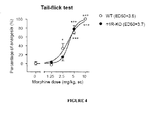
- morphine produced a clear dose-dependent analgesic effect either in WT and KO mice with similar efficacy and potency (ED 50 3.5 and 3.7 mg/kg for WT and KO, respectively) indicating that KO mice perceive normally the morphine analgesia in these conditions of tail flick assay (see figures 2, 3 and 4 ).
- Figure 5 shows the potentiation of the antinociceptive action of morphine (2 mg/kg, s.c.) by compound 63 represented by the tail flick latency (A) and by the percentage of analgesia (B).
- the combination of morphine with 40mg/kg of compound 63 increases the analgesia potency of morphine alone by a factor of 2.4.
- mice received morphine alone (1mg/kg) and in combination with compound 63 (40 mg/kg) and it was found only 10% of analgesia with morphine alone (no significant) and 55% of analgesia with the combination. This synergistic effect is, however, abolished when the combination is administered to sigma-1 KO mice as shown in figure 7 .
- Example 3 Attenuation of dependence induced by morphine by co-administration with compound 63.
- the place conditioning paradigm is a behavioural model used in mice to evaluate the possible rewarding/aversive properties of a drug.
- the rewarding effects of the drug are associated with the physical characteristics of an environment, and thus, mice will prefer spend more time in the environment associated with a drug having rewarding properties.
- This model also allows exploring the aversive effects of a drug, and in this case, the mouse will avoid stay in the compartment associated with the drug having aversive properties.
- the purpose was to evaluate the effects induced by the administration compound 63 in the mouse place conditioning paradigm and their capability to modify the rewarding properties of morphine in this paradigm. Two different doses of morphine were tested and compound 63 was administered at a single dose calculated from the data previously obtained in the neuropathic pain model (data not shown).
- mice Male CD-1 mice (Charles River, France) weighing 20-22 gr at the beginning of the experiment were used. Mice were identified by a mark on the tail and housed individually in controlled laboratory conditions with the temperature maintained at 21 ⁇ 1 °C, humidity at 55 ⁇ 10%, and light controlled cycle (light on at 08:00 h ; light off at 20:00 h). All experiments were conducted in a sound attenuated room. The mice were given access to food and water ad libitum except during the behavioural testing. All experimental procedures and animal husbandry were conducted according to standard ethical guidelines (European Community Guidelines on the Care and Use of Laboratory Animals) and approved by the local ethical committee.
- the rewarding properties of morphine and the possible rewarding/aversive effect of compound 63 were evaluated by using an apparatus adapted for the conditioning place preference paradigm.
- the apparatus consists of two main square conditioning compartments separated by a triangular central division.
- each mouse was placed in the middle of the central division and had free access to both compartments of the conditioning apparatus for 18 min, with the time spent in each compartment recorded.
- Treatments were counterbalanced between compartments in order to use an unbiased procedure.
- mice were treated during 6 days with alternate injections of drugs (morphine and/or compound 63) or saline. Saline and compound 63 were administered 30 min before morphine or saline injection.
- mice were confined into the corresponding compartment immediately after morphine or saline administration by using guillotine doors matching walls for 20 min. Drugs were administered on days 1, 3 and 5, and saline on days 2, 4 and 6. Control animals received saline every day.
- the test phase was conducted as in the preconditioning phase, i.e. free access to both compartments for 18 min, and the time spent in each compartment was recorded.
- a score was calculated for each mouse as the difference between the post-conditioning and pre-conditioning time spent in the drug-paired compartment. Data were expressed as raw time score values (seconds) ( Figure 9 ) and time spent in the drug-paired compartment during pre-conditioning and test phases (seconds) ( Figure 10 ).
- Time score values were compared using one-way ANOVA (between subjects) followed by a Dunnet post-hoc comparison. Values of the time spent for each group of mice in drug-paired compartment during the pre-conditioning and post-conditioning measurements were compared by using a two-tailed Student's paired t -test.
Landscapes
- Health & Medical Sciences (AREA)
- Chemical & Material Sciences (AREA)
- Organic Chemistry (AREA)
- Animal Behavior & Ethology (AREA)
- Veterinary Medicine (AREA)
- Public Health (AREA)
- Medicinal Chemistry (AREA)
- General Health & Medical Sciences (AREA)
- Pharmacology & Pharmacy (AREA)
- Life Sciences & Earth Sciences (AREA)
- Epidemiology (AREA)
- Nuclear Medicine, Radiotherapy & Molecular Imaging (AREA)
- General Chemical & Material Sciences (AREA)
- Chemical Kinetics & Catalysis (AREA)
- Bioinformatics & Cheminformatics (AREA)
- Engineering & Computer Science (AREA)
- Emergency Medicine (AREA)
- Pain & Pain Management (AREA)
- Addiction (AREA)
- Biomedical Technology (AREA)
- Neurology (AREA)
- Neurosurgery (AREA)
- Rheumatology (AREA)
- Psychiatry (AREA)
- Pharmaceuticals Containing Other Organic And Inorganic Compounds (AREA)
- Medicines That Contain Protein Lipid Enzymes And Other Medicines (AREA)
- Acyclic And Carbocyclic Compounds In Medicinal Compositions (AREA)
- Peptides Or Proteins (AREA)
- Other In-Based Heterocyclic Compounds (AREA)
- Investigating Or Analyzing Non-Biological Materials By The Use Of Chemical Means (AREA)
Description
- The present invention relates to potentiation of the analgesic effect of opioids and opiates as well as to attenuation of the addiction thereof. More specifically, the present invention relates to a pharmaceutical combination of a group of sigma receptor ligands and opioid receptor ligands for the potentiation of the analgesic effect of opioids and opiates and for decreasing the dependency induced by them at the same time.
- Opioids and opiates are potent analgesics widely used in clinical practice. Opioid and opiates drugs are classified typically by their binding selectivity in respect of the cellular and differentiated tissue receptors to which specific drug specie binds as a ligand. These receptors include mu (µ), delta (δ), kappa (κ) and the nociceptive receptors.
- The well-known narcotic opiates, such as morphine and its analogues, are selective for the opioid mu receptors. Mu receptors mediate analgesia, respiratory depression, and inhibition of gastrointestinal transit. Kappa receptors mediate analgesia and sedation. However, despite their good activity as analgesics, opioids and opiates have the drawback of causing dependence.
- Sigma receptors are non-opiaceous type of receptors of great interest in pharmacology due to their role in analgesia related processes. The sigma binding sites have preferential affinity for the dextrorotatory isomers of certain opiate benzomorphans, such as (+)SKF 10047, (+)cyclazocine, and (+)pentazocine and also for some narcoleptics such as haloperidol. The sigma receptor has at least two subtypes, which may be discriminated by stereoselective isomers of these pharmacoactive drugs. SKF 10047 has nanomolar affinity for the sigma 1 (σ-1) site, and has micromolar affinity for the sigma 2 (σ-2) site. Haloperidol has similar affinities for both subtypes.
- It has been reported that some sigma ligands in combination with opioids or opiates are capable of modulating the analgesic effect thereof. It is known, for example, that haloperidol potentiates the activity of different opioids and opiates such as morphine, DADL or bremazocine [ Chichenkov, O. N. et al: Effect of haloperidol on the analgesic activity of intracisternally and intrathecally injected opiate agonists, Farmakologiya i Toksikologiya (Moscow) (1985), 48(4), 58-61]. Chien C. et al. also referred the synergistic effect of the combination of haloperidol and morphine [Selective antagonism of opioid analgesia by a sigma system, J Pharmacol Exp Ther (1994), 271, 1583-1590 and Sigma antagonists potentiate opioid analgesia in rats, Neurosci Lett (1995), 190, 137-139] and Marazzo A. et al taught the capacity of the sigma ligand (+)-MR200 to modulate κ-opioid receptor mediated analgesia. Mei J. et al confirmed the importance of sigma-1 receptors as a modulatory system on the analgesic activity of opioid drugs [Sigma1 receptor modulation of opioid analgesia in the mouse, J Pharmacol Exp Ther (2002), 300(3), 1070-1074]. Notwithstanding, in all of this cases the problem of dependence induced by opioids and opiates remain to be present.
- One of the pharmacological approaches to solve the problem of opioid and opiate dependency has been the co-administration of opioids or opiates and sigma ligands. For instance, sigma-1 receptor agonist SA4503 has been shown to have a modulatory effect on addiction to morphine [Nomura, M. et al: Studies on drug dependence (Rept. 322): Attenuation of morphine- and psychostimulants-induced place preference by sigma1 receptor agonist SA4503, 72nd Annual Meeting of the Japanese Pharmacological Society (Sapporo, Japan-March 1999)]. Also, sigma-1 agonist DHEA has shown some capacity to attenuate the development of morphine dependence [Noda, Y. et al: A neuroactive steroid, dehydroepiandrosterone sulfate, attenuates the development of morphine dependence: an association with sigma1 receptors, 31st Annual Meeting of the Society of Neuroscience (San Diego-Nov 2001)].
EP1130018 teaches the use of sigma ligands for the treatment of drug addiction to morphine, cocaine and methamphetamine. However, none of these approaches show an enhancement of the analgesic effect of morphine. - Therefore, it is desirable to find sigma ligands capable of synergistically potentiate the analgesic effect of opioids or opiates while attenuating at the same time the dependency thereof.
- The inventors of the present invention have surprisingly found that some specific sigma ligands show the capacity to potentiate synergistically the analgesic effects of opioids or opiates while decreasing at the same time the dependency induced by them.
- One objective of the present invention relates to a pharmaceutical combination of at least one sigma ligand and at least one opioid receptor ligand, wherein the sigma ligand has the general formula (I):

- R1 is selected from the group formed by hydrogen, alkyl, cycloalkyl, alkenyl, aryl, arylalkyl, non-aromatic heterocyclyl, aromatic heterocyclyl, heterocyclylalkyl, - COR8, -C(O)OR8, -C(O)NR8R9, -CN, -OR8, -OC(O)R8, -S(O)t-R8, -NR8R9, - NR8C(O)R9, -NO2, -N=CR8R9, or halogen;
- R2 is selected from the group formed by hydrogen, alkyl, cycloalkyl, alkenyl, aryl, arylalkyl, heterocyclyl, heterocyclylalkyl, -COR8, -C(O)OR8, -C(O)NR8R9, -CN, - OR8, -OC(O)R8, -S(O)t-R8, -NR8R9, -NR8C(O)R9, -NO2, -N=CR8R9, or halogen;
- R3 and R4 are independently selected from the group formed by hydrogen, alkyl, cycloalkyl, alkenyl, aryl, arylalkyl, heterocyclyl, heterocyclylalkyl, -COR8, - C(O)OR8, -C(O)NR8R9, -CN, -OR8, -OC(O)R8, -S(O)t-R8, -NR8R9, -NR8C(O)R9, - NO2, -N=CR8R9, or halogen, or together they form a fused ring system;
- R5 and R6 are independently selected from the group formed by hydrogen, alkyl, cycloalkyl, alkenyl, aryl, arylalkyl, heterocyclyl, heterocyclylalkyl, -COR8, - C(O)OR8, -C(O)NR8R9, -CN, -OR8, -OC(O)R8, -S(O)t-R8, -NR8R9, -NR8C(O)R9, - NO2, -N=CR8R9, or halogen, or together form, with the nitrogen atom to which they are attached, a heterocyclyl group;
- n is selected from 1, 2, 3, 4, 5, 6, 7 or 8;
- t is 1,2 or 3;
- R8 and R9 are each independently selected from hydrogen, alkyl, cycloalkyl, alkenyl, aryl, heterocyclyl, alkoxy, aryloxy, or halogen;
- Herein described is also the simultaneous, separate or sequential administration of a combination as defined above to potentiate the analgesic effect of an opioid or opiate and/or decrease its dependency.
-
-
Figure 1 : Dose-response effects of acute administration of compound 63 (10, 20, 40 and 80 mg/kg, i.p.) in the tail-flick test in male CD-1 WT mice (A) and in CD-1 σ1R-KO mice (B). Compounds were injected 30 min before the test. Data, obtained from 12 (A) or 10 (B) animals per group, are presented as the mean±SEM of the tail-flick latency (s). ***p<0.001 vs. vehicle (HPMC 0.5%) treated group (Newman-Keuls Multiple comparison Test post-ANOVA). -
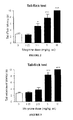
Figure 2 : Dose-response effects of acute administration of morphine (1.25, 2.5, 5 and 10 mg/kg, sc) in the tail-flick test in male CD-1 WT mice. Compounds were injected 30 min before the test. Data, obtained from 8 animals per group, are presented as the mean±SEM of the tail-flick latency (s). *p<0.05, ***p<0.001 vs. vehicle (saline) treated group (Newman-Keuls Multiple comparison Test post-ANOVA). -
Figure 3 : Dose-response effects of acute administration of morphine (1.25, 2.5, 5 and 10 mg/kg, sc) in the tail-flick test in male CD-1 σ1R-KO mice. Compounds were injected 30 min before the test. Data, obtained from 10 to 11 animals per group, are presented as the mean±SEM of the tail-flick latency (s). ***p<0.001 vs. vehicle (saline) treated group (Newman-Keuls Multiple comparison Test post-ANOVA). -
Figure 4 : Sigmoidal dose-response curves of morphine (1.25, 2.5, 5 and 10 mg/kg, sc) in the tail-flick test in male CD-1 WT and σ1R-KO mice. Compounds were injected 30 min before the test. Data, obtained from 8 to 11 animals per group, are presented as the mean±SEM percentages of analgesia (%). Insert: Tail-Flick latency of both, WT and σ1R-KO, vehicle treated groups. *p<0.05, ***p<0.001 vs. corresponding vehicle group (saline) (Newman-Keuls Multiple comparison Test post-ANOVA). -
Figure 5 : A) Potentiation of the antinociceptive actions of morphine (2 mg/kg, sc) by compound 63 (10, 20, 40 mg/kg, ip) in the tail-flick test in male CD-1 WT mice. Compounds were injected 30 min before the test. Data, obtained from 11 to 12 animals per group, are presented as the mean±SEM of the tail-flick latency (s). ***p<0.001 vs. vehicle treated group; ###p<0.001 vs. morphine (2 mg/kg) group (Newman-Keuls Multiple comparison Test post-ANOVA). B) Sigmoidal dose-response curves representation. -
Figure 6 : Sigmoidal dose-response curves of morphine (1, 2, 4, and 10 mg/kg, sc) and combination of compound 63 (40 mg/kg, ip) with morphine (1, 2 and 4 mg/kg, sc) in the tail-flick test in male CD-1 WT mice. Compounds were injected 30 min before the test. Data, obtained from 10 to 11 animals per group, are presented as the mean±SEM percentages of analgesia (%). **p<0.01; ***p<0.001 vs. corresponding vehicle treated group (Newman-Keuls Multiple comparison Test post-ANOVA).; #p<0.05 vs. corresponding group treated with morphine (2 and 4 mg/kg) (Unpaired t-test). -
Figure 7 : Antinociceptive effect of morphine (MOR) and the combination of morphine +compound 63 in the tail-flick test in WT and σ1R-KO male CD-1 mice. Compounds were injected intraperitoneally 30 min before the test. Dose of drugs are expressed in mg/kg (brackets in the graph). Data, obtained from 6 to 14 animals per group, are presented as the mean±SEM of the tail-flick latency (s). ***p<0.001 vs. vehicle treated WT group; ###p<0.001 vs. MOR+compound 63 treated WT group. (Newman-Keuls Multiple comparison Test post-ANOVA). -
Figure 8 : Enhanced synergistic effect ofcompound 63 and 11 in analgesia mediated by morphine when compared to well known sigma ligand BD1063. -
Figure 9 : Effect of compound 63 (25 mg/kg s.c) on the rewarding effects induced by morphine in the place conditioning paradigm (score values). -
Figure 10 : Effect of compound 63 (25mg/kg s.c.) on the rewarding effects induced by morphine in the place conditioning paradigm. Time spent in the drug paired compartment during the preconditioning and test phase. - The compounds of formula (I) can be prepared as disclosed in our previous application
WO2006021462 . - Thee term "salt" must be understood as any form of an active compound used in accordance with this invention in which said compound is in ionic form or is charged and coupled to a counter-ion (a cation or anion) or is in solution. This definition also includes quaternary ammonium salts and complexes of the active molecule with other molecules and ions, particularly, complexes formed via ionic interactions. The definition includes in particular physiologically acceptable salts; this term must be understood as equivalent to "pharmacologically acceptable salts".
- The term "pharmaceutically acceptable salts" in the context of this invention means any salt that is tolerated physiologically (normally meaning that it is not toxic, particularly, as a result of the counter-ion) when used in an appropriate manner for a treatment, applied or used, particularly, in humans and/or mammals. These physiologically acceptable salts may be formed with cations or bases and, in the context of this invention, are understood to be salts formed by at least one compound used in accordance with the invention -normally an acid (deprotonated)- such as an anion and at least one physiologically tolerated cation, preferably inorganic, particularly when used on humans and/or mammals. Salts with alkali and alkali earth metals are preferred particularly, as well as those formed with ammonium cations (NH4 +). Preferred salts are those formed with (mono) or (di)sodium, (mono) or (di)potassium, magnesium or calcium. These physiologically acceptable salts may also be formed with anions or acids and, in the context of this invention, are understood as being salts formed by at least one compound used in accordance with the invention - normally protonated, for example in nitrogen - such as a cation and at least one physiologically tolerated anion, particularly when used on humans and/or mammals. This definition specifically includes in the context of this invention a salt formed by a physiologically tolerated acid, i.e. salts of a specific active compound with physiologically tolerated organic or inorganic acids - particularly when used on humans and/or mammals. Examples of this type of salts are those formed with: hydrochloric acid, hydrobromic acid, sulphuric acid, methanesulfonic acid, formic acid, acetic acid, oxalic acid, succinic acid, malic acid, tartaric acid, mandelic acid, fumaric acid, lactic acid or citric acid.
- The term "solvate" in accordance with this invention should be understood as meaning any form of the active compound in accordance with the invention in which said compound is bonded by a non-covalent bond to another molecule (normally a polar solvent), including especially hydrates and alcoholates, like for example, methanolate. In a preferred embodiment, R1 in compounds of formula I is selected from H, -COR8, or alkyl. More preferably, R1 is elected from H methyl of acetyl. A more preferred embodiment is when R1 is H.
- In another preferred embodiment, R2 represents H or alkyl, more preferably methyl.
- In yet another preferred embodiment of the invention, R3 and R4 are situated in the meta and para positions of the phenyl group, and preferably, they are selected independently from halogen or alkyl.
- In an especially preferred embodiment of the invention, both R3 and R4 together with the phenyl group form a fused ring system, more preferably, a naphthyl ring system.
- Also, embodiments where n is selected from 2, 3, 4 are preferred in the context of the present invention.
- Finally, in another embodiment it is preferred that R5 and R6 together form a morpholine-4-yl group.
- In preferred variants of the invention, it encompasses the combination of at least one opioid or opiate with at least one compound of formula I selected from:
- [1] 4-{2-(1-(3,4-dichlorophenyl)-5-methyl-1H pyrazol-3-yloxy)ethyl}morpholine
- [2] 2-[1-(3,4-Dichlorophenyl)-5-methyl-1H-pyrazol-3-yloxy]-N,N-diethylethanamine
- [3] 1-(3,4-Dichlorophenyl)-5-methyl-3-[2-(pyrrolidin-1-yl)ethoxy]-1H-pyrazole
- [4] 1-(3,4-Dichlorophenyl)-5-methyl-3-[3-(pyrrolidin-1-yl)propoxy]-1 H-pyrazole
- [5] 1-{2-[1-(3,4-Dichlorophenyl)-5-methyl-1H-pyrazol-3-yloxy]ethyl}piperidine
- [6] 1-{2-[1-(3,4-dichlorophenyl)-5-methyl-1H-pyrazol-3-yloxy]ethyl}-1H-imidazole
- [7] 3-{1-[2-(1-(3,4-Dichlorophenyl)-5-methyl-1H-pyrazol-3-yloxy)ethyl]piperidin-4-yl}-3H-imidazo[4,5-b]pyridine
- [8] 1-{2-[1-(3,4-Dichlorophenyl)-5-methyl-1H-pyrazol-3-yloxy]ethyl}-4-methylpiperazine
- [9] Ethyl 4-{2-[1-(3,4-dichlorophenyl)-5-methyl-1H-pyrazol-3-yloxy]ethyl}piperazine carboxylate
- [10] 1-(4-(2-(1-(3,4-dichlorophenyl)-5-methyl-1 H-pyrazol-3-yloxy)ethyl)piperazin-1-yl)ethanone
- [11] 4-{2-[1-(4-Methoxyphenyl)-5-methyl-1H-pyrazol-3-yloxy]ethyl}morpholine
- [12] 1-(4-Methoxyphenyl)-5-methyl-3-[2-(pyrrolidin-1-yl)ethoxy]-1 H-pyrazole
- [13] 1-(4-Methoxyphenyl)-5-methyl-3-[3-(pyrrolidin-1-yl)propoxy]-1H-pyrazole
- [14] 1-[2-(1-(4-Methoxyphenyl)-5-methyl-1H-pyrazol-3-yloxy)ethyl]piperidine
- [15] 1-{2-[1-(4-Methoxyphenyl)-5-methyl-1H-pyrazol-3-yloxy]ethyl}-1H-imidazole
- [16] 4-{2-[1-(3,4-Dichlorophenyl)-5-phenyl-1H-pyrazol-3-yloxy]ethyl}morpholine
- [17] 1-(3,4-Dichlorophenyl)-5-phenyl-3-[2-(pyrrolidin-1-yl)ethoxy]-1 H-pyrazole
- [18] 1-(3,4-Dichlorophenyl)-5-phenyl-3-[3-(pyrrolidin-1-yl)propoxy]-1 H-pyrazole
- [19] 1-{2-[1-(3,4-Dichlorophenyl)-5-phenyl-1H-pyrazol-3-yloxy]ethyl}piperidine
- [20] 1-{2-[1-(3,4-Dichlorophenyl)-5-phenyl-1 H-pyrazol-3-yloxy]ethyl}-1H-imidazole
- [21]2-{2-[1-(3,4-dichlorophenyl)-5-phenyl-1H-pyrazol-3-yloxy]ethyl}-1,2,3,4-tetrahydroisoquinoline
- [22] 4-{4-[1-(3,4-Dichlorophenyl)-5-methyl-1H-pyrazol-3-yloxy]butyl}morpholine
- [23] 1-(3,4-Dichlorophenyl)-5-methyl-3-[4-(pyrrolidin-1-yl)butoxy]-1H-pyrazole
- [24] 1-{4-[1-(3,4-Dichlorophenyl)-5-methyl-1H-pyrazol-3-yloxy]butyl}piperidine
- [25]1-{4-[1-(3,4-Dichlorophenyl)-5-methyl-1H-pyrazol-3-yloxy]butyl}-4-methylpiperazine
- [26] 1-{4-[1-(3,4-Dichlorophenyl)-5-methyl-1H-pyrazol-3-yloxy]butyl}-1H-imidazole
- [27] 4-[1-(3,4-Dichlorophenyl)-5-methyl-1 H-pyrazol-3-yloxy]-N,N-diethylbutan-1-amine
- [28]1-{4-[1-(3,4-dichlorophenyl)-5-methyl-1H-pyrazol-3-yloxy]butyl}-4-phenylpiperidine
- [29] 1-{4-[1-(3,4-dichlorophenyl)-5-methyl-1H-pyrazol-3-yloxy]butyl}-6,7-dihydro-1 H-indol-4(5H)-one
- [30] 2-{4-[1-(3,4-dichlorophenyl)-5-methyl-1H-pyrazol-3-yloxy]butyl}-1,2,3,4-tetrahydroisoquinoline
- [31] 4-{2-[1-(3,4-dichlorophenyl)-5-isopropyl-1 H-pyrazol-3-yloxy]ethyl}morpholine
- [32]2-[1-(3,4-Dichlorophenyl)-5-isopropyl-1 H-pyrazol-3-yloxy]-N,N-diethylethanamine
- [33] 1-(3,4-Dichlorophenyl)-5-isopropyl-3-[2-(pyrrolidin-1-yl)ethoxy]-1H-pyrazole
- [34] 1-(3,4-Dichlorophenyl)-5-isopropyl-3-[3-(pyrrolidin-1-yl)propoxy]-1H-pyrazole
- [35] 1-{2-[1-(3,4-Dichlorophenyl)-5-isopropyl-1H-pyrazol-3-yloxy]ethyl}piperidine
- [36] 2-{2-[1-(3,4-dichlorophenyl)-5-isopropyl-1H-pyrazol-3-yloxy]ethyl}-1,2,3,4-tetrahydroisoquinoline
- [37] 4-{2-[1-(3,4-dichlorophenyl)-1H-pyrazol-3-yloxy]ethyl}morpholine
- [38] 2-[1-(3,4-dichlorophenyl)-1 H-pyrazol-3-yloxy] N,N-diethylethanamine
- [39] 1-(3,4-dichlorophenyl)-3-[2-(pyrrolidin-1-yl)ethoxy]-1 H-pyrazole
- [40] 1-{2-[1-(3,4-dichlorophenyl)-1H-pyrazol-3-yloxy]ethyl}piperidine
- [41] 1-(3,4-dichlorophenyl)-3-[3-(pyrrolidin-1-yl)propoxy]-1H-pyrazole
- [42]1-{2-[1-(3,4-Dichlorophenyl)-5-methyl-1H-pyrazol-3-yloxy]ethyl}piperazine
- [43] 1-{2-[1-(3,4-Dichlorophenyl)-5-methyl-1H-pyrazol-3-yloxy]ethyl}pyrrolidin-3-amine
- [44]4-{2-[1-(3,4-Dichlorophenyl)-4,5-dimethyl-1H-pyrazol-3-yloxy]ethyl}morpholine
- [45]4-{2-[1-(3,4-Dichlorophenyl)-4,5-dimethyl-1H-pyrazol-3-yloxy]ethyl}morpholine
- [46]2-[1-(3,4-Dichlorophenyl)-4,5-dimethyl-1 H-pyrazol-3-yloxy]-N,N-diethylethanamine
- [47] 1-(3,4-Dichlorophenyl)-4,5-dimethyl-3-[2-(pyrrolidin-1-yl)ethoxy]-1 H-pyrazole
- [48] 1-(3,4-Dichlorophenyl)-4,5-dimethyl-3-[3-(pyrrolidin-1-yl)propoxy]-1H-pyrazole
- [49] 1-{2-[1-(3,4-Dichlorophenyl)-4,5-dimethyl-1 H-pyrazol-3-yloxy]ethyl}piperidine
- [50] 4-{4-[1-(3,4-dichlorophenyl)-1H-pyrazol-3-yloxy]butyl}morpholine
- [51](2S,6R)-4-{4-[1-(3,4-dichlorophenyl)-1H-pyrazol-3-yloxy]butyl}-2,6-dimethylmorpholine
- [52] 1-{4-[1-(3,4-Dichlorophenyl)-1H-pyrazol-3-yloxy]butyl}piperidine
- [53] 1-(3,4-Dichlorophenyl)-3-[4-(pyrrolidin-1-yl)butoxy]-1 H-pyrazole
- [55] 4-[1-(3,4-dichlorophenyl)-1 H-pyrazol-3-yloxy]-N,N-diethylbutan-1-amine
- [56] N-benzyl-4-[1-(3,4-dichlorophenyl)-1H-pyrazol-3-yloxy]-N-methylbutan-1-amine
- [57]4-[1-(3,4-dichlorophenyl)-1H-pyrazol-3-yloxy]-N-(2-methoxyethyl)-N-methylbutan-1-amine
- [58] 4-{4-[1-(3,4-dichlorophenyl)-1H-pyrazol-3-yloxy]butyl}thiomorpholine
- [59]1-[1-(3,4-Dichlorophenyl)-5-methyl-3-(2-morpholinoethoxy)-1H-pyrazol-4-yl]ethanone
- [60]1-{1-(3,4-dichlorophenyl)-5-methyl-3-[2-(pyrrolidin-1-yl)ethoxy]-1H-pyrazol-4-yl}ethanone
- [61] 1-{1-(3,4-dichlorophenyl)-5-methyl-3-[2-(piperidin-1-yl)ethoxy]-1H-pyrazol-4-yl}ethanone
- [62] 1-{1-(3,4-dichlorophenyl)-3-[2-(diethylamino)ethoxy]-5-methyl-1H-pyrazol-4-yl}ethanone
- [63] 4-{2-[5-Methyl-1-(naphthalen-2-yl)-1H-pyrazol-3-yloxy]ethyl}morpholine
- [64] N,N-Diethyl-2-[5-methyl-1-(naphthalen-2-yl)-1H-pyrazol-3-yloxy]ethanamine
- [65] 1-{2-[5-Methyl-1-(naphthalen-2-yl)-1H-pyrazol-3-yloxy]ethyl}piperidine
- [66] 5-Methyl-1-(naphthalen-2-yl)-3-[2-(pyrrolidin-1-yl)ethoxy]-1H-pyrazole
- Opioids and opiates are compounds that bind to opioid receptors. Compounds that bind to the opioid receptor within the scope of the present invention include natural opiates, such as morphine, codeine and thebaine; semi-synthetic opiates, derived from the natural opioids, such as hydromorphone, hydrocodone, oxycodone, oxymorphone, desomorphine, diacetylmorphine, nicomorphine, dipropanoylmorphine, benzylmorphine and ethylmorphine; fully synthetic opioids, such as fentanyl, pethidine, methadone, tramadol and propoxyphene; and endogenous opioid peptides, produced naturally in the body, such as endorphins, enkephalins, dynorphins, and endomorphins and their analogues. Preferably, the opioid receptor ligand utilized according to this invention is morphine or its analogues.
- The term "analogue" in the context of this invention refers to any entity structurally derived or homologous to a compound that binds to an opioid receptor and ellicit an analgesic effect. Examples of analogues according to this definition, include the morphine analogues disclosed, for instance, in
EP0975648 orEP0793364 . - The preferred combination of the invention comprises the combination of 4-{2-[5-Methyl-1-(naphthalen-2-yl)-1 H-pyrazol-3-yloxy]ethyl}morpholine and morphine.
- The combination of the invention may be formulated for its simultaneous separate or sequential administration, with at least a pharmaceutically acceptable carrier, additive, adjuvant or vehicle. This has the implication that the combination of the two active compounds may be administered:
- a) As a combination that is being part of the same medicament formulation, the two active compounds being then administered always simultaneously.
- b) As a combination of two units, each with one of the active substances giving rise to the possibility of simultaneous, sequential or separate administration. In a particular embodiment, the sigma ligand is independently administered from the opioid or opiate (i.e in two units) but at the same time. In another particular embodiment, the sigma ligand is administered first, and then the opioid or opiate is separately or sequentially administered. In yet another particular embodiment, the opioid or opiate is administered first, and then the sigma ligand is administered, separately or sequentially, as defined.
- Each of these particular and different ways of administration produce the desired effect: to potentiate synergistically the opioid or opiate analgesia and/or attenuate its dependence.
The auxiliary materials or additives can be selected among carriers, excipients, support materials, lubricants, fillers, solvents, diluents, colorants, flavour conditioners such as sugars, antioxidants and/or agglutinants. In the case of suppositories, this may imply waxes or fatty acid esters or preservatives, emulsifiers and/or carriers for parenteral application.The selection of these auxiliary materials and/or additives and the amounts to be used will depend on the form of application of the pharmaceutical composition.
The pharmaceutical combination in accordance with the invention can be adapted to any form of administration, be it orally or parenterally, for example pulmonarily, nasally, rectally and/or intravenously. Therefore, the formulation in accordance with the invention may be adapted for topical or systemic application, particularly for dermal, subcutaneous, intramuscular, intra-articular, intraperitoneal, pulmonary, buccal, sublingual, nasal, percutaneous, vaginal, oral or parenteral application. - Suitable preparations for oral applications are tablets, pills, chewing gums, capsules, granules, drops or syrups.
- Suitable preparations for parenteral applications are solutions, suspensions, reconstitutable dry preparations or sprays.
- The combination of the invention may be formulated as deposits in dissolved form or in patches, for percutaneous application.
- Skin applications include ointments, gels, creams, lotions, suspensions or emulsions.
- The preferred form of rectal application is by means of suppositories.
- The combination of at least one opioid or opiate and at least one compound of general formula I are suited for use in potentiating the analgesic effect of opioids or opiates and/or for decreasing their dependency. These combinations could be administered simultaneously, separately or sequentially.
- The combination of the invention shows both the effect of potentiating the analgesia produced by opioids or opiates and for decreasing their dependency but could be used; in any case, to achieve solely one of these objectives.
- For example, for the co-administration of a compound of formula (I) and an opioid or opiate could be directed only to maximize the opioid or opiate analgesic effect. Under this scenario, it will be possible to attain the added benefit of maintaining the same analgesic level while reducing the opioid or opiate dosage.
- In another embodiment, the administration may be intended just for the attenuation of the dependency or addiction induced by opioids or opiates.
- In a preferred embodiment, the invention comprises the use of a combination se defined herein for both potentiating the analgesic effect of opioids or opiates and decreasing at the same time the dependency induced by them.
- The dosage regime that must be administered to the patient depends on the patient's weight, the type of application, the condition and severity of the disease. A preferred dosage regime of comprises an administration of a compound of formula (I) within a range of 0.5 to 100 mg/kg and of the opioid or opiate from 0.15 to 15 mg/kg and it is administered daily in one or several doses.
- Another object of the invention is based on the discovery that sigma ligands are capable at the same time of synergistically enhancing the analgesic effect of opioids and opiates and decreasing the dependence induced by them. This aspect of the invention comprises a combination of at least one sigma ligand and at least an opioid or opiate compound. The combination is then administered in a simultaneous, separate or sequential manner to potentiate the analgesic effect of the opioid or opiate and decrease its dependency.
- In another embodiment of the present invention, the opiate used is preferably morphine or analogues thereof.
- The following examples will serve to illustrate the invention.
- The analgesia induced by the combination of
compound 63, a sigma-1 ligand, and morphine was assessed by the tail flick test following the method described by Carlsson et al [Neurosci Lett. 1986 Nov 21; 71(3):356-60] in CD-1 wild type (WT) mice as well as in sigma-1 deficient mice (KO). - First, the efficacy of
compound 63 alone was evaluated in WT as well as KO mice by its administration at different doses (10, 20, 40 and 80 mg/kg, i.p.).Compound 63 had no significant effect on response latency except for the highest dose tested. As expected, this effect was even no present for KO mice (seefigure 1 ). - In contrast morphine produced a clear dose-dependent analgesic effect either in WT and KO mice with similar efficacy and potency (
ED 50 3.5 and 3.7 mg/kg for WT and KO, respectively) indicating that KO mice perceive normally the morphine analgesia in these conditions of tail flick assay (seefigures 2, 3 and4 ). - Next, the analgesia produced by the combination of
compound 63 and morphine was evaluated in WT mice.Figure 5 shows the potentiation of the antinociceptive action of morphine (2 mg/kg, s.c.) bycompound 63 represented by the tail flick latency (A) and by the percentage of analgesia (B). - As shown in
figure 6 , the sigmoidal dose response curves in CD1 WT mice of the combination of morphine (1, 2 and 4 mg/kg, s.c.) with compound 63 (40mg/kg, i.p.) when compared to morphine alone (1, 2, 4 and 10 mg/kg, s.c.) shows a significant increase in the percentage of analgesia of the combination and a significant decrease in the ED50 of the combination (ED50=1.33) vs morphine alone (ED50=3.21). The combination of morphine with 40mg/kg ofcompound 63 increases the analgesia potency of morphine alone by a factor of 2.4. - Groups of mice received morphine alone (1mg/kg) and in combination with compound 63 (40 mg/kg) and it was found only 10% of analgesia with morphine alone (no significant) and 55% of analgesia with the combination. This synergistic effect is, however, abolished when the combination is administered to sigma-1 KO mice as shown in
figure 7 . - In order to further study the effect of
compound 63 on morphine analgesia, experiments were performed in the hot-plate (supraspinally integrated responses) as described by Janicki et al [Pharmacol Biochem Behave.1979 Apr; 10(4):623-6]. The effect ofcompound 63 on morphine analgesia was examined: groups of mice received morphine alone (2.5 mg/kg) and in combination with compound 63 (40mg/kg). When the hot-plate test is performed at 50°C, we found a 45% of analgesic activity with morphine alone, and 83% with the morphine andcompound 63 combination. When it is performed at 55°C, morphine produced 43% of analgesic activity and the combination 94%. Therefore, compound is able to enhance morphine analgesia also in the hot-plate test. - The analgesic effect of two of the compounds of the invention (
compound 63 and compound 11) and of BD1063 well known sigma-1 ligand in combination with morphine was evaluated in CD-1 wild type (WT) mice by the tail flick test as under example 1.Compound 63 and 11 and BD1063 where administered in a single dose of 40 mg/kg i.p 30 minutes before the administration of morphine (1 mg/kg s.c.) - The results shown in
figures 8 demonstrate that all combination of sigma ligand with morphine produced an enhancement of the analgesic effect of morphine although this effect was more pronounced in the case of the co administration with thecompound 63 and 11 of the present invention. - The attenuation of the addictive effect of morphine by
compound 63 was tested with the place conditioning paradigm model. The place conditioning paradigm is a behavioural model used in mice to evaluate the possible rewarding/aversive properties of a drug. In this paradigm the rewarding effects of the drug are associated with the physical characteristics of an environment, and thus, mice will prefer spend more time in the environment associated with a drug having rewarding properties. This model also allows exploring the aversive effects of a drug, and in this case, the mouse will avoid stay in the compartment associated with the drug having aversive properties. - The purpose was to evaluate the effects induced by the
administration compound 63 in the mouse place conditioning paradigm and their capability to modify the rewarding properties of morphine in this paradigm. Two different doses of morphine were tested andcompound 63 was administered at a single dose calculated from the data previously obtained in the neuropathic pain model (data not shown). - Male CD-1 mice (Charles River, France) weighing 20-22 gr at the beginning of the experiment were used. Mice were identified by a mark on the tail and housed individually in controlled laboratory conditions with the temperature maintained at 21 ± 1 °C, humidity at 55 ± 10%, and light controlled cycle (light on at 08:00 h ; light off at 20:00 h). All experiments were conducted in a sound attenuated room. The mice were given access to food and water ad libitum except during the behavioural testing. All experimental procedures and animal husbandry were conducted according to standard ethical guidelines (European Community Guidelines on the Care and Use of Laboratory Animals) and approved by the local ethical committee.
- The following experimental groups were tested:
Group 1 (n = 12): saline + saline Group 2 (n = 14): morphine (1.5 mg/kg s.c.) + saline Group 3 (n = 11): morphine (5 mg/kg s.c.) + saline Group 4 (n = 12): saline + compound 63 (25 mg/kg s.c.) Group 5 (n = 11): morphine (1.5 mg/kg s.c.) + compound 63 (25 mg/kg s.c.) Group 6 (n = 12): morphine (5 mg/kg s.c.) + compound 63 (25 mg/kg s.c.) - The rewarding properties of morphine and the possible rewarding/aversive effect of
compound 63 were evaluated by using an apparatus adapted for the conditioning place preference paradigm. The apparatus consists of two main square conditioning compartments separated by a triangular central division. During the preconditioning phase, each mouse was placed in the middle of the central division and had free access to both compartments of the conditioning apparatus for 18 min, with the time spent in each compartment recorded. Treatments were counterbalanced between compartments in order to use an unbiased procedure. For conditioning phase, mice were treated during 6 days with alternate injections of drugs (morphine and/or compound 63) or saline. Saline andcompound 63 were administered 30 min before morphine or saline injection. Mice were confined into the corresponding compartment immediately after morphine or saline administration by using guillotine doors matching walls for 20 min. Drugs were administered ondays days Figure 9 ) and time spent in the drug-paired compartment during pre-conditioning and test phases (seconds) (Figure 10 ). Time score values were compared using one-way ANOVA (between subjects) followed by a Dunnet post-hoc comparison. Values of the time spent for each group of mice in drug-paired compartment during the pre-conditioning and post-conditioning measurements were compared by using a two-tailed Student's paired t-test. - The results as shown in
figures 9 and10 give rise to the following conclusions: - Morphine administered at the dose of 5 mg/kg induced rewarding effects revealed by a conditioned place preference: No effects were observed when morphine was administered at the dose of 1.5 mg/kg. These effective and non-effective doses of morphine were used to evaluate the possible interactions with
compound 63. - Compound 63 (25 mg/kg) did not produce any place conditioning effect when administered alone. This result suggests that
compound 63 does not produce rewarding or aversive effects when administered at this dose. - Compound 63 (25 mg/kg) attenuated the rewarding effects induced by morphine in the place conditioning paradigm. Thus,
compound 63 suppressed the rewarding responses produced by the effective dose of morphine (5 mg/kg) and did not produce any conditioned response when it was associated to the non-effective dose of morphine (1.5 mg/kg).
Claims (16)
- A pharmaceutical combination of at least one sigma ligand and at least one opioid receptor ligand, wherein the sigma ligand has a general formula (I)
 R1 is selected from the group formed by hydrogen, alkyl, cycloalkyl, alkenyl, aryl, arylalkyl, non-aromatic heterocyclyl, aromatic heterocyclyl, heterocyclylalkyl, -COR8, -C(O)OR8, -C(O)NR8R9, -CN, -OR8, -OC(O)R8, -S(O)t-R8, -NFR8R9, -NR8C(O)R9, -NO2, -N=CR8R9, or halogen;R2 is selected from the group formed by hydrogen, alkyl, cycloalkyl, alkenyl, aryl, arylalkyl, heterocyclyl, heterocyclylalkyl, -COR8, -C(O)OR8, -C(O)NR8R9, - CN, -OR8, -OC(O)R8, -S(O)t-R8, -NR8R9, -NR8C(O)R9, -NO2, -N=CR8R9, or halogen;R3 and R4 are independently selected from the group formed by hydrogen, alkyl, cycloalkyl, alkenyl, aryl, arylalkyl, heterocyclyl, heterocyclylalkyl, -COR8, - C(O)OR8, -C(O)NR8R9, -CN, -OR8, -OC(O)R8, -S(O)t-R8, -NR8R9, -NR8C(O)R9, - NO2, -N=CR8R9, or halogen, or together they form a fused ring system;R5 and R6 are independently selected from the group formed by hydrogen, alkyl, cycloalkyl, alkenyl, aryl, arylalkyl, heterocyclyl, heterocyclylalkyl, -COR8, - C(O)OR8, -C(O)NR8R9, -CN, -OR8, -OC(O)R8, -S(O)t-R8, -NR8R9, -NR8C(O)R9, - NO2, -N=CR8R9, or halogen, or together form, with the nitrogen atom to which they are attached, a heterocyclyl group;n is selected from 1, 2, 3, 4, 5, 6, 7 or 8;t is 1,2 or 3;R8 and R9 are each independently selected from hydrogen, alkyl, cycloalkyl, alkenyl, aryl, heterocyclyl, alkoxy, aryloxy, or halogen;or a pharmaceutically acceptable salt or solvate thereof.
 - A combination according to claim 1 wherein R1 is selected from H, -COR8, or alkyl.
- A combination according to claim 1 or 2 wherein R2 is H or alkyl.
- A combination according to any of the preceding claims wherein R3 and R4 are situated in the meta and para positions of the phenyl group.
- A combination according to any of the preceding claims wherein R3 and R4 are independently selected from halogen or alkyl.
- A combination according to any of claims 1-3 where R3 and R4 together form a fused naphthyl ring system.
- A combination according to any of the preceding claims wherein n is selected from 2, 3, and 4.
- A combination according to any of the preceding claims wherein R5 and R6 together form a morpholine-4-yl group.
- A combination according to claim 1 wherein compound of formula I is selected from:[1] 4-{2-(1-(3,4-dichlorophenyl)-5-methyl-1H pyrazol-3-yloxy)ethyl}morpholine[2] 2-[1-(3,4-Dichlorophenyl)-5-methyl-1H-pyrazol-3-yloxy]-N,N-diethylethanamine[3] 1-(3,4-Dichlorophenyl)-5-methyl-3-[2-(pyrrolidin-1-yl)ethoxy]-1H-pyrazole[4] 1-(3,4-Dichlorophenyl)-5-methyl-3-[3-(pyrrolidin-1-yl)propoxy]-1H-pyrazole[5] 1-{2-[1-(3,4-Dichlorophenyl)-5-methyl-1H-pyrazol-3-yloxy]ethyl}piperidine[6] 1-{2-[1-(3,4-dichlorophenyl)-5-methyl-1H-pyrazol-3-yloxy]ethyl}-1H-imidazole[7] 3-{1-[2-(1-(3,4-Dichlorophenyl)-5-methyl-1H-pyrazol-3-yloxy)ethyl]piperidin-4-yl}-3H-imidazo[4,5-b]pyridine[8]1-{2-[1-(3,4-Dichlorophenyl)-5-methyl-1H-pyrazol-3-yloxy]ethyl}-4-methylpiperazine[9] Ethyl 4-{2-[1-(3,4-dichlorophenyl)-5-methyl-1H-pyrazol-3-yloxy]ethyl}piperazine carboxylate[10] 1-(4-(2-(1-(3,4-dichlorophenyl)-5-methyl-1H-pyrazol-3-yloxy)ethyl)piperazin-1-yl)ethanone[11] 4-{2-[1-(4-Methoxyphenyl)-5-methyl-1H-pyrazol-3-yloxy]ethyl}morpholine[12] 1-(4-Methoxyphenyl)-5-methyl-3-[2-(pyrrolidin-1-yl)ethoxy]-1H-pyrazole[13] 1-(4-Methoxyphenyl)-5-methyl-3-[3-(pyrrolidin-1-yl)propoxy]-1H-pyrazole[14] 1-[2-(1-(4-Methoxyphenyl)-5-methyl-1H-pyrazol-3-yloxy)ethyl]piperidine[15] 1-{2-[1-(4-Methoxyphenyl)-5-methyl-1H-pyrazol-3-yloxy]ethyl}-1H-imidazole[16] 4-{2-[1-(3,4-Dichlorophenyl)-5-phenyl-1H-pyrazol-3-yloxy]ethyl}morpholine[17] 1-(3,4-Dichlorophenyl)-5-phenyl-3-[2-(pyrrolidin-1-yl)ethoxy]-1 H-pyrazole[18] 1-(3,4-Dichlorophenyl)-5-phenyl-3-[3-(pyrrolidin-1-yl)propoxy]-1H-pyrazole[19] 1-{2-[1-(3,4-Dichlorophenyl)-5-phenyl-1H-pyrazol-3-yloxy]ethyl}piperidine[20] 1-{2-[1-(3,4-Dichlorophenyl)-5-phenyl-1H-pyrazol-3-yloxy]ethyl}-1H-imidazole[21]2-{2-[1-(3,4-dichlorophenyl)-5-phenyl-1H-pyrazol-3-yloxy]ethyl}-1,2,3,4-tetrahydroisoquinoline[22] 4-{4-[1-(3,4-Dichlorophenyl)-5-methyl-1H-pyrazol-3-yloxy]butyl}morpholine[23] 1-(3,4-Dichlorophenyl)-5-methyl-3-[4-(pyrrolidin-1-yl)butoxy]-1H-pyrazole[24] 1-{4-[1-(3,4-Dichlorophenyl)-5-methyl-1H-pyrazol-3-yloxy]butyl}piperidine[25]1-{4-[1-(3,4-Dichlorophenyl)-5-methyl-1H-pyrazol-3-yloxy]butyl}-4-methylpiperazine[26] 1-{4-[1-(3,4-Dichlorophenyl)-5-methyl-1H-pyrazol-3-yloxy]butyl}-1H-imidazole[27] 4-[1-(3,4-Dichlorophenyl)-5-methyl-1H-pyrazol-3-yloxy]-N,N-diethylbutan-1-amine[28]1-{4-[1-(3,4-dichlorophenyl)-5-methyl-1H-pyrazol-3-yloxy]butyl}-4-phenylpiperidine[29] 1-{4-[1-(3,4-dichlorophenyl)-5-methyl-1H-pyrazol-3-yloxy]butyl}-6,7-dihydro-1 H-indol-4(5H)-one[30] 2-{4-[1-(3,4-dichlorophenyl)-5-methyl-1H-pyrazol-3-yloxy]butyl}-1,2,3,4-tetrahydroisoquinoline[31] 4-{2-[1-(3,4-dichlorophenyl)-5-isopropyl-1H-pyrazol-3-yloxy]ethyl}morpholine[32]2-[1-(3,4-Dichlorophenyl)-5-isopropyl-1 H-pyrazol-3-yloxy]-N,N-diethylethanamine[33] 1-(3,4-Dichlorophenyl)-5-isopropyl-3-[2-(pyrrolidin-1-yl)ethoxy]-1H-pyrazole[34] 1-(3,4-Dichlorophenyl)-5-isopropyl-3-[3-(pyrrolidin-1-yl)propoxy]-1H-pyrazole[35] 1-{2-[1-(3,4-Dichlorophenyl)-5-isopropyl-1H-pyrazol-3-yloxy]ethyl}piperidine[36] 2-{2-[1-(3,4-dichlorophenyl)-5-isopropyl-1H-pyrazol-3-yloxy]ethyl}-1,2,3,4-tetrahydroisoquinoline[37] 4-{2-[1-(3,4-dichlorophenyl)-1H-pyrazol-3-yloxy]ethyl}morpholine[38] 2-[1-(3,4-dichlorophenyl)-1H-pyrazol-3-yloxy] N,N-diethylethanamine[39] 1-(3,4-dichlorophenyl)-3-[2-(pyrrolidin-1-yl)ethoxy]-1H-pyrazole[40] 1-{2-[1-(3,4-dichlorophenyl)-1H-pyrazol-3-yloxy]ethyl}piperidine[41] 1-(3,4-dichlorophenyl)-3-[3-(pyrrolidin-1-yl)propoxy]-1H-pyrazole[42]1-{2-[1-(3,4-Dichlorophenyl)-5-methyl-1H-pyrazol-3-yloxy]ethyl}piperazine[43] 1-{2-[1-(3,4-Dichlorophenyl)-5-methyl-1H-pyrazol-3-yloxy]ethyl}pyrrolidin-3-amine[44]4-{2-[1-(3,4-Dichlorophenyl)-4,5-dimethyl-1H-pyrazol-3-yloxy]ethyl}morpholine[45]4-{2-[1-(3,4-Dichlorophenyl)-4,5-dimethyl-1H-pyrazol-3-yloxy]ethyl}morpholine[46]2-[1-(3,4-Dichlorophenyl)-4,5-dimethyl-1 H-pyrazol-3-yloxy]-N,N-diethylethanamine[47] 1-(3,4-Dichlorophenyl)-4,5-dimethyl-3-[2-(pyrrolidin-1-yl)ethoxy]-1H-pyrazole[48] 1-(3,4-Dichlorophenyl)-4,5-dimethyl-3-[3-(pyrrolidin-1-yl)propoxy]-1H-pyrazole[49] 1-{2-[1-(3,4-Dichlorophenyl)-4,5-dimethyl-1H-pyrazol-3-yloxy]ethyl}piperidine[50] 4-{4-[1-(3,4-dichlorophenyl)-1H-pyrazol-3-yloxy]butyl}morpholine[51]((2S,6R)-4-{4-[1-(3,4-dichlorophenyl)-1H-pyrazol-3-yloxy]butyl}-2,6-dimethylmorpholine[52] 1-{4-[1-(3,4-Dichlorophenyl)-1H-pyrazol-3-yloxy]butyl}piperidine[53] 1-(3,4-Dichlorophenyl)-3-[4-(pyrrolidin-1-yl)butoxy]-1H-pyrazole[55] 4-[1-(3,4-dichlorophenyl)-1H-pyrazol-3-yloxy]-N,N-diethylbutan-1-amine[56] N-benzyl-4-[1-(3,4-dichlorophenyl)-1 H-pyrazol-3-yloxy]-N-methylbutan-1-amine[57]4-[1-(3,4-dichlorophenyl)-1 H-pyrazol-3-yloxy]-N-(2-methoxyethyl)-N-methylbutan-1-amine[58] 4-{4-[1-(3,4-dichlorophenyl)-1H-pyrazol-3-yloxy]butyl}thiomorpholine[59]1-[1-(3,4-Dichlorophenyl)-5-methyl-3-(2-morpholinoethoxy)-1 H-pyrazol-4-yl]ethanone[60]1-{1-(3,4-dichlorophenyl)-5-methyl-3-[2-(pyrrolidin-1-yl)ethoxy]-1H-pyrazol-4-yl}ethanone[61] 1-{1-(3,4-dichlorophenyl)-5-methyl-3-[2-(piperidin-1-yl)ethoxy]-1H-pyrazol-4-yl}ethanone[62] 1-{1-(3,4-dichlorophenyl)-3-[2-(diethylamino)ethoxy]-5-methyl-1H-pyrazol-4-yl}ethanone[63] 4-{2-[5-Methyl-1-(naphthalen-2-yl)-1H-pyrazol-3-yloxy]ethyl}morpholine[64] N,N-Diethyl-2-[5-methyl-1-(naphthalen-2-yl)-1H-pyrazol-3-yloxy]ethanamine[65] 1-{2-[5-Methyl-1-(naphthalen-2-yl)-1H-pyrazol-3-yloxy]ethyl}piperidine[66] 5-Methyl-1-(naphthalen-2-yl)-3-[2-(pyrrolidin-1-yl)ethoxy]-1H-pyrazole or a pharmaceutically acceptable salt or solvate thereof.
- A combination according to any of the preceding claims wherein the opioid receptor ligand comprises morphine.
- A combination according to claim 1 wherein the combination comprises 4-{2-[5-Methyl-1-(naphthalen-2-yl)-1H-pyrazol-3-yloxy]ethyl}morpholine and morphine.
- A combination according to any of the preceding claim for use in potentiating the analgesic effect of opioids or opiates and/or for decreasing the dependency induced thereby.
- A combination according to any of claims 1-11 for use in potentiating the analgesic effect of opioids or opiates.
- A combination according to any of claims 1-11 for use in decreasing the dependency induced by opioids or opiates.
- A combination of at least one sigma ligand and at least an opioid or opiate compound for simultaneous, separate or sequential administration for use in potentiating the analgesic effect of opioids or opiates and for decreasing the dependency induced thereby.
- A combination for use according to claim 15 where the opioid receptor ligand comprises morphine.
Priority Applications (6)
| Application Number | Priority Date | Filing Date | Title |
|---|---|---|---|
| EP09735235.5A EP2276744B1 (en) | 2008-04-25 | 2009-04-24 | 1-aryl-3-aminoalkoxy pyrazoles as sigma ligands enhancing analgesic effect of opioids and attenuating the dependency thereof |
| EP13176926.7A EP2671875A1 (en) | 2008-04-25 | 2009-04-24 | 1-aryl-3-aminoalkoxy pyrazoles as sigma ligands enhancing analgesic effect of opioids and attenuating the dependency thereof |
| PL09735235T PL2276744T3 (en) | 2008-04-25 | 2009-04-24 | 1-aryl-3-aminoalkoxy pyrazoles as sigma ligands enhancing analgesic effect of opioids and attenuating the dependency thereof |
| SI200931101T SI2276744T1 (en) | 2008-04-25 | 2009-04-24 | 1-aryl-3-aminoalkoxy pyrazoles as sigma ligands enhancing analgesic effect of opioids and attenuating the dependency thereof |
| HRP20141263AT HRP20141263T1 (en) | 2008-04-25 | 2009-04-24 | 1-aryl-3-aminoalkoxy pyrazoles as sigma ligands enhancing analgesic effect of opioids and attenuating the dependency thereof |
| CY20141101079T CY1115848T1 (en) | 2008-04-25 | 2014-12-23 | 1-ARYLO-3-AMINALOKOXY PYRAZOLS AS A PROMOTIONAL SIGNAL FOR AIDING ANALYTICAL EFFECTS |
Applications Claiming Priority (3)
| Application Number | Priority Date | Filing Date | Title |
|---|---|---|---|
| EP08380122A EP2116539A1 (en) | 2008-04-25 | 2008-04-25 | 1-aryl-3-aminoalkoxy-pyrazoles as sigma ligands enhancing analgesic effects of opioids and attenuating the dependency thereof |
| EP09735235.5A EP2276744B1 (en) | 2008-04-25 | 2009-04-24 | 1-aryl-3-aminoalkoxy pyrazoles as sigma ligands enhancing analgesic effect of opioids and attenuating the dependency thereof |
| PCT/EP2009/054974 WO2009130310A1 (en) | 2008-04-25 | 2009-04-24 | 1-aryl-3-aminoalkoxy pyrazoles as sigma ligands enhancing analgesic effect of opioids and attenuating the dependency thereof |
Related Child Applications (1)
| Application Number | Title | Priority Date | Filing Date |
|---|---|---|---|
| EP13176926.7A Division-Into EP2671875A1 (en) | 2008-04-25 | 2009-04-24 | 1-aryl-3-aminoalkoxy pyrazoles as sigma ligands enhancing analgesic effect of opioids and attenuating the dependency thereof |
Publications (2)
| Publication Number | Publication Date |
|---|---|
| EP2276744A1 EP2276744A1 (en) | 2011-01-26 |
| EP2276744B1 true EP2276744B1 (en) | 2014-10-01 |
Family
ID=39768934
Family Applications (3)
| Application Number | Title | Priority Date | Filing Date |
|---|---|---|---|
| EP08380122A Withdrawn EP2116539A1 (en) | 2008-04-25 | 2008-04-25 | 1-aryl-3-aminoalkoxy-pyrazoles as sigma ligands enhancing analgesic effects of opioids and attenuating the dependency thereof |
| EP09735235.5A Revoked EP2276744B1 (en) | 2008-04-25 | 2009-04-24 | 1-aryl-3-aminoalkoxy pyrazoles as sigma ligands enhancing analgesic effect of opioids and attenuating the dependency thereof |
| EP13176926.7A Withdrawn EP2671875A1 (en) | 2008-04-25 | 2009-04-24 | 1-aryl-3-aminoalkoxy pyrazoles as sigma ligands enhancing analgesic effect of opioids and attenuating the dependency thereof |
Family Applications Before (1)
| Application Number | Title | Priority Date | Filing Date |
|---|---|---|---|
| EP08380122A Withdrawn EP2116539A1 (en) | 2008-04-25 | 2008-04-25 | 1-aryl-3-aminoalkoxy-pyrazoles as sigma ligands enhancing analgesic effects of opioids and attenuating the dependency thereof |
Family Applications After (1)
| Application Number | Title | Priority Date | Filing Date |
|---|---|---|---|
| EP13176926.7A Withdrawn EP2671875A1 (en) | 2008-04-25 | 2009-04-24 | 1-aryl-3-aminoalkoxy pyrazoles as sigma ligands enhancing analgesic effect of opioids and attenuating the dependency thereof |
Country Status (27)
| Country | Link |
|---|---|
| US (3) | US8877753B2 (en) |
| EP (3) | EP2116539A1 (en) |
| JP (1) | JP5753076B2 (en) |
| KR (1) | KR101764817B1 (en) |
| CN (1) | CN102066334B (en) |
| AU (1) | AU2009239968B2 (en) |
| BR (1) | BRPI0910677A2 (en) |
| CA (1) | CA2722345C (en) |
| CO (1) | CO6410301A2 (en) |
| CY (1) | CY1115848T1 (en) |
| DK (1) | DK2276744T3 (en) |
| EC (1) | ECSP10010634A (en) |
| ES (1) | ES2526360T3 (en) |
| HR (1) | HRP20141263T1 (en) |
| IL (1) | IL208865B (en) |
| MA (1) | MA32301B1 (en) |
| MX (1) | MX2010011673A (en) |
| MY (1) | MY160800A (en) |
| NZ (1) | NZ588829A (en) |
| PL (1) | PL2276744T3 (en) |
| PT (1) | PT2276744E (en) |
| RS (1) | RS53717B1 (en) |
| RU (1) | RU2519060C2 (en) |
| SG (1) | SG190578A1 (en) |
| SI (1) | SI2276744T1 (en) |
| UA (1) | UA105900C2 (en) |
| WO (1) | WO2009130310A1 (en) |
Families Citing this family (18)
| Publication number | Priority date | Publication date | Assignee | Title |
|---|---|---|---|---|
| MX2007002341A (en) * | 2004-08-27 | 2007-09-25 | Esteve Labor Dr | Sigma receptor inhibitors. |
| EP2116539A1 (en) | 2008-04-25 | 2009-11-11 | Laboratorios Del. Dr. Esteve, S.A. | 1-aryl-3-aminoalkoxy-pyrazoles as sigma ligands enhancing analgesic effects of opioids and attenuating the dependency thereof |
| EP2335688A1 (en) | 2009-11-25 | 2011-06-22 | Laboratorios Del. Dr. Esteve, S.A. | Pharmaceutical compositions comprising sigma receptor ligands |
| EP2426112A1 (en) * | 2010-08-09 | 2012-03-07 | Laboratorios Del. Dr. Esteve, S.A. | 4-[-2-[[5-methyl-1-(2-naphtalenyl)-1h-pyrazol-3-yl]oxy]ethyl]morpholine hydrochloride polymorphs and solvates |
| EP2353591A1 (en) * | 2010-02-04 | 2011-08-10 | Laboratorios Del. Dr. Esteve, S.A. | Sigma ligands for potentiating the analgesic effect of opioids and opiates in post-operative pain and attenuating the dependency thereof |
| EP2353598A1 (en) | 2010-02-04 | 2011-08-10 | Laboratorios Del. Dr. Esteve, S.A. | Sigma ligands for use in the prevention and/or treatment of postoperative pain |
| EP2388005A1 (en) | 2010-05-21 | 2011-11-23 | Laboratorios Del. Dr. Esteve, S.A. | Sigma ligands for the prevention and/or treatment of emesis induced by chemotherapy or radiotherapy |
| EP2415471A1 (en) * | 2010-08-03 | 2012-02-08 | Laboratorios Del. Dr. Esteve, S.A. | Use of sigma ligands in opioid-induced hyperalgesia |
| EP2426111A1 (en) * | 2010-08-09 | 2012-03-07 | Laboratorios Del. Dr. Esteve, S.A. | 4-[-2-[[5-methyl-1-(2-naphtalenyl)-1h-pyrazol-3-yl]oxy]ethyl]morpholine hydrochloride amorphous solid forms |
| EP2460519A1 (en) * | 2010-12-03 | 2012-06-06 | Laboratorios Del. Dr. Esteve, S.A. | Use of sigma ligands in bone cancer pain |
| EP2524694A1 (en) * | 2011-05-19 | 2012-11-21 | Laboratorios Del. Dr. Esteve, S.A. | Use of sigma ligands in diabetes type-2 associated pain |
| EP2792352A1 (en) * | 2013-04-16 | 2014-10-22 | Laboratorios Del. Dr. Esteve, S.A. | Alpha-2 adrenoreceptor and sigma receptor ligand combinations |
| EP2818166A1 (en) * | 2013-06-26 | 2014-12-31 | Laboratorios del Dr. Esteve S.A. | Use of sigma receptor ligands for the prevention and treatment of pain associated to interstitial cystitis/bladder pain syndrome (IC/BPS) |
| MX2016002892A (en) * | 2013-09-12 | 2016-06-10 | Esteve Labor Dr | BINDING COMBINATIONS OF SIGMA AND NSAID RECEIVERS. |
| SG11201604480PA (en) * | 2013-12-17 | 2016-07-28 | Esteve Labor Dr | SEROTONIN-NOREPINEPHRINE REUPTAKE INHIBITORS (SNRIs) AND SIGMA RECEPTOR LIGANDS COMBINATIONS |
| MX2016007286A (en) * | 2013-12-17 | 2016-08-04 | Esteve Labor Dr | Gabapentinoids and sigma receptor ligands combinations. |
| AU2019387370A1 (en) | 2018-11-30 | 2021-06-10 | Nuvation Bio Inc. | Pyrrole and pyrazole compounds and methods of use thereof |
| CN112341397B (en) * | 2019-08-09 | 2023-05-23 | 成都苑东生物制药股份有限公司 | Pyrazine derivatives or salts, isomers, preparation method and application thereof |
Family Cites Families (133)
| Publication number | Priority date | Publication date | Assignee | Title |
|---|---|---|---|---|
| SU11248A1 (en) | 1927-03-29 | 1929-09-30 | В.С. Григорьев | Anthracene cleaning method |
| US2908677A (en) | 1955-03-30 | 1959-10-13 | Eastman Kodak Co | Nickel and cobalt complexes of pyrazolone monoazo compounds |
| US3428634A (en) | 1965-03-13 | 1969-02-18 | Acraf | 3-tertiary amino alkoxy-1-hydrocarbon indazoles |
| CH471199A (en) | 1965-07-06 | 1969-04-15 | Sandoz Ag | Process for the production of metal-containing azo dyes |
| DE2313722C3 (en) | 1973-03-20 | 1987-04-16 | Bayer Ag, 5090 Leverkusen | Chromic complex dye and its use for dyeing and printing nitrogen-containing fibre materials |
| IT1005472B (en) | 1974-02-15 | 1976-08-20 | Montedison Spa | PROCEDURE FOR THE PREPARATION OF 2,5, DIMETHYL 3,2H, FURANONE |
| DE2460891C2 (en) | 1974-12-21 | 1982-09-23 | Gödecke AG, 1000 Berlin | 1-aminomethyl-1-cycloalkaneacetic acids and their esters, processes for their preparation and medicaments containing these compounds |
| FR2301250A1 (en) | 1975-02-21 | 1976-09-17 | Bellon Labor Sa Roger | 3-Omega dialkyl amino alkoxy 1,4-diaryl 1H-pyrazoles - analgesics and antiinflammatories prepd. from 3-hydroxy pyrazoles and alkyl halides |
| CA1121651A (en) | 1978-07-27 | 1982-04-13 | Chi-Kuen Shu | 2,5-dialkyl dihydrofuranones and 2,4,5-trialkyl dihydrofuranones, mixtures of same and organoleptic uses thereof |
| US4207392A (en) | 1978-10-30 | 1980-06-10 | Eastman Kodak Company | Heat developable and stabilizable photographic materials and process |
| FR2460299A1 (en) | 1979-07-05 | 1981-01-23 | Bellon Labor Sa Roger | NOVEL DERIVATIVES OF PYRAZOLE AND THEIR THERAPEUTIC APPLICATION |
| US4234616A (en) | 1979-08-03 | 1980-11-18 | International Flavors & Fragrances Inc. | Flavoring with mixtures of 2,5-dialkyl dihydrofuranones and 2,4,5-trialkyl dihydrofuranones |
| FR2472564A1 (en) | 1979-12-31 | 1981-07-03 | Bellon Labor Sa Roger | 1-Aryl-4-aryl:sulphonyl-3-amino-propoxy-1H-pyrazole derivs. - hypolipaemics and hypocholesterolaemics of low toxicity and non-ulcerogenic |
| US4826868A (en) | 1986-05-29 | 1989-05-02 | Ortho Pharmaceutical Corporation | 1,5-Diaryl-3-substituted pyrazoles pharmaceutical compositions and use |
| GB8917069D0 (en) | 1989-07-26 | 1989-09-13 | Merck Sharp & Dohme | Therapeutic agents |
| IL96507A0 (en) | 1989-12-08 | 1991-08-16 | Merck & Co Inc | Nitrogen-containing spirocycles and pharmaceutical compositions containing them |
| CA2071897A1 (en) | 1989-12-28 | 1991-06-29 | Richard A. Glennon | Sigma receptor ligands and the use thereof |
| JPH03232817A (en) | 1990-02-07 | 1991-10-16 | Showa Yakuhin Kako Kk | Application agent |
| EP0445974A3 (en) | 1990-03-05 | 1992-04-29 | Merck Sharp & Dohme Ltd. | Spirocyclic antipsychotic agents |
| JPH04364129A (en) | 1990-10-26 | 1992-12-16 | Asahi Chem Ind Co Ltd | 6-substituted alkoxyquinoxaline derivative-containing medicinal composition and its production |
| WO1992009560A1 (en) | 1990-11-27 | 1992-06-11 | Northwestern University | Gaba and l-glutamic acid analogs for antiseizure treatment |
| NZ243065A (en) | 1991-06-13 | 1995-07-26 | Lundbeck & Co As H | Piperidine derivatives and pharmaceutical compositions |
| US5240925A (en) | 1991-08-26 | 1993-08-31 | Rohm And Haas Company | Fungicidal 2-aryl-2-cyano-2-(heterocyclylalkyl)ethyl-1,2,4-triazoles |
| DK0641330T3 (en) | 1992-05-20 | 2001-12-03 | Univ Northwestern | Gaba and L-glutamic acid analogues for anticonvulsant therapy |
| GB9423542D0 (en) | 1994-11-22 | 1995-01-11 | Marples Brian A | Pharmaceutical compounds |
| SG65637A1 (en) | 1996-02-27 | 1999-06-22 | Thomson Consumer Electronics | Oscillation network in a digital timing recovery system |
| JPH1036259A (en) | 1996-04-11 | 1998-02-10 | Kikkoman Corp | Cataract prevention or treatment agent |
| JPH1055048A (en) | 1996-08-08 | 1998-02-24 | Fuji Photo Film Co Ltd | Silver halide photograhic sensitive material |
| CA2278307A1 (en) | 1997-01-21 | 1998-07-23 | Siegfried Benjamin Christensen Iv | Novel cannabinoid receptor modulators |
| EP0979228A4 (en) | 1997-03-18 | 2000-05-03 | Smithkline Beecham Corp | Novel cannabinoid receptor agonists |
| ES2201482T3 (en) | 1997-04-14 | 2004-03-16 | Ufc Limited | DERIVATIVES OF MORPHINE. |
| PL191496B1 (en) | 1997-07-02 | 2006-05-31 | Merck & Co Inc | Polymorphous variety of 2-(r)-{1-(r) -[3,5-bis(trifluoromethyl) -phenyl]ethoxy}-3-(s)-(4-fluoro)phenyl-4-[3-(5-oxo-1h,4h-1,2,4-triazole)methyl] morpholine an antagonist of tachykinin |
| ATE323067T1 (en) | 1997-10-27 | 2006-04-15 | Warner Lambert Co | CYCLIC AMINO ACIDS AND THEIR DERIVATIVES AS MEDICINAL PRODUCTS |
| CN1279667A (en) | 1997-12-16 | 2001-01-10 | 沃尼尔·朗伯公司 | 4(3)-substituted-4(3)-aminonethyl-(thioxo)pyran(thiapyran)or-piperidine derivatives(=gabapendin analogues), their preparation and their use in treatment of neurological disorders |
| NZ503963A (en) | 1997-12-16 | 2002-09-27 | Warner Lambert Co | 1-substituted-1-aminomethyl-cycloalkane derivatives, or gabapentin analogues, preparation and use in the treatment of neurological disorders |
| WO1999031074A2 (en) | 1997-12-16 | 1999-06-24 | Warner-Lambert Company | ((cyclo)alkyl substituted)-.gamma.-aminobutyric acid derivatives (=gaba analogues), their preparation and their use in the treatment of neurological disorders |
| CN1204890C (en) * | 1997-12-22 | 2005-06-08 | 欧罗赛铁克股份有限公司 | Ways to Prevent Opioid Abuse |
| TR200001942T2 (en) * | 1997-12-22 | 2000-11-21 | Euro-Celtique, S.A. | Opioid agonist / antagonist combinations |
| WO1999059409A1 (en) * | 1998-05-21 | 1999-11-25 | Matsumoto Rae R | Compounds and uses thereof |
| JP2002516312A (en) | 1998-05-26 | 2002-06-04 | ワーナー−ランバート・カンパニー | Conformationally constrained amino acid compounds with affinity for the α2δ subunit of calcium channels |
| US6166072A (en) | 1998-08-03 | 2000-12-26 | Allelix Neuroscience, Inc. | Amino acid derivatives |
| AU9553898A (en) | 1998-10-01 | 2000-04-26 | Egis Gyogyszergyar Rt. | Pharmaceutical compositions containing an opiate analgesic and a synergizing substance |
| GB9824310D0 (en) | 1998-11-05 | 1998-12-30 | Univ London | Activators of soluble guanylate cyclase |
| JP3752580B2 (en) * | 1998-11-09 | 2006-03-08 | 参天製薬株式会社 | Drug dependence treatment |
| CN1131221C (en) * | 1998-11-09 | 2003-12-17 | 参天制药株式会社 | Drug dependence remedies |
| WO2000031020A1 (en) | 1998-11-25 | 2000-06-02 | Warner-Lambert Company | Improved gamma amino butyric acid analogs |
| NO310544B1 (en) | 1999-01-04 | 2001-07-23 | Algeta As | Preparation and use of radium-223 for the preparation of preparations and kits for the treatment of calcified tissue for palliation, bone cancer therapy and / or bone surface treatment |
| US6451857B1 (en) | 1999-03-10 | 2002-09-17 | Warner-Lambert Company | Analgesic compositions comprising anti-epileptic compounds and methods of using same |
| JP2003500466A (en) | 1999-05-26 | 2003-01-07 | ワーナー−ランバート・カンパニー | Fusion polycyclic amino acids as pharmaceuticals |
| PT1185524E (en) | 1999-05-28 | 2005-04-29 | Warner Lambert Co | GABA ANALOGS SUBSTITUTED BY 3-HETEROARYLALKYL |
| JP2003525207A (en) | 1999-06-02 | 2003-08-26 | ワーナー−ランバート・カンパニー、リミテッド、ライアビリティ、カンパニー | Amino heterocycles useful as drugs |
| US7091257B2 (en) | 1999-07-27 | 2006-08-15 | Alcatel | Radiation-curable composition with simultaneous color formation during cure |
| US6469030B2 (en) | 1999-11-29 | 2002-10-22 | Adolor Corporation | Methods for the treatment and prevention of ileus |
| US6492529B1 (en) | 2000-01-18 | 2002-12-10 | Boehringer Ingelheim Pharmaceuticals, Inc. | Bis pyrazole-1H-pyrazole intermediates and their synthesis |
| EP1272567A2 (en) | 2000-04-03 | 2003-01-08 | Sun Chemical Corporation | Mono- and bis-hydrazone pigments |
| CA2444053C (en) | 2001-04-19 | 2008-06-17 | Warner-Lambert Company Llc | Fused bicyclic or tricyclic amino acids |
| JP4316893B2 (en) | 2001-05-16 | 2009-08-19 | バーテックス ファーマシューティカルズ インコーポレイテッド | Inhibitors of Src and other protein kinases |
| WO2002102387A1 (en) | 2001-06-18 | 2002-12-27 | H. Lundbeck A/S | Treatment of neuropathic pain |
| US6509367B1 (en) | 2001-09-22 | 2003-01-21 | Virginia Commonwealth University | Pyrazole cannabinoid agonist and antagonists |
| RU2218187C2 (en) | 2002-02-11 | 2003-12-10 | Ростовский научно-исследовательский онкологический институт | Method for treating the cases of pain syndrome in oncological patients |
| GB0206505D0 (en) | 2002-03-19 | 2002-05-01 | Euro Celtique Sa | Pharmaceutical combination |
| WO2004016592A1 (en) | 2002-08-14 | 2004-02-26 | Ppd Discovery, Inc. | Prenylation inhibitors and methods of their synthesis and use |
| TW200413351A (en) | 2002-08-21 | 2004-08-01 | Astrazeneca Ab | Chemical compounds |
| AU2003295491B2 (en) | 2002-11-15 | 2009-10-08 | E.I. Du Pont De Nemours And Company | Novel anthranilamide insecticides |
| JP2004196678A (en) | 2002-12-17 | 2004-07-15 | Dainippon Pharmaceut Co Ltd | Pyrazole derivatives |
| US7135575B2 (en) | 2003-03-03 | 2006-11-14 | Array Biopharma, Inc. | P38 inhibitors and methods of use thereof |
| EP1635805A4 (en) | 2003-06-12 | 2007-08-08 | Ms Science Corp | Sigma ligands for neuronal regeneration and functional recovery |
| WO2005061462A2 (en) | 2003-12-19 | 2005-07-07 | Neurogen Corporation | Diaryl pyrazole derivatives and their use as neurokinin-3 receptor modulators |
| EP1781272B1 (en) | 2004-07-24 | 2017-09-06 | Laboratorios Del Dr. Esteve, S.A. | Use of compounds active on the sigma receptor for the treatment of mechanical allodynia |
| WO2006021463A1 (en) | 2004-08-27 | 2006-03-02 | Laboratorios Del Dr. Esteve, S.A. | Sigma receptor inhibitors |
| KR101352012B1 (en) * | 2004-08-27 | 2014-01-15 | 라보라토리오스 델 드라. 에스테브.에스.에이. | Sigma receptor inhibitors |
| MX2007002341A (en) | 2004-08-27 | 2007-09-25 | Esteve Labor Dr | Sigma receptor inhibitors. |
| EP1634872A1 (en) | 2004-08-27 | 2006-03-15 | Laboratorios Del Dr. Esteve, S.A. | Pyrazole derivatives as sigma receptor inhibitors |
| ES2251316B1 (en) | 2004-10-14 | 2007-03-16 | Laboratorios Del Dr. Esteve, S.A. | SIGMA RECEIVER INHIBITORS. |
| EP1634873A1 (en) | 2004-08-27 | 2006-03-15 | Laboratorios Del Dr. Esteve, S.A. | Sigma receptor inhibitors |
| EP1632227A1 (en) | 2004-09-07 | 2006-03-08 | Laboratorios del Dr. Esteve S.A. | Derivatives of aryl (or heteroaryl) azolylcarbinols (in particular cizolirtin citrate) for the treatment of opioid addiction |
| US20080161604A1 (en) | 2005-04-26 | 2008-07-03 | Sigma-Tau Industrie Farmaceutiche Riunite S.P.A. | Acetyl L-Carnitine For Preventing Painful Peripheral Diabetic Neuropathy |
| JP2008179541A (en) | 2005-05-02 | 2008-08-07 | Mochida Pharmaceut Co Ltd | Neuropathic pain treatment |
| ITRM20050332A1 (en) * | 2005-06-24 | 2006-12-25 | Lay Line Genomics Spa | USE OF MOLECULES ABLE TO BLOCK TRKA'S ACTIVITY TO STRENGTHEN THE EFFECTS OF ANALGESIC OPPIACEI ON PAIN. |
| KR101363278B1 (en) | 2005-06-27 | 2014-02-21 | 엑셀리시스 페이턴트 컴퍼니 엘엘씨 | Imidazole based lxr modulators |
| US20090325975A1 (en) | 2005-07-15 | 2009-12-31 | Helmut H Buschmann | Use of compounds binding to the sigma receptor for the treatment of diabetes-associated pain |
| EP1787679A1 (en) | 2005-07-29 | 2007-05-23 | Laboratorios Del Dr. Esteve, S.A. | Use of compounds binding to the sigma receptor for the treatment of diabetes-associated pain |
| US20070208134A1 (en) | 2005-10-03 | 2007-09-06 | Hunter William L | Anti-scarring drug combinations and use thereof |
| EP1951678A1 (en) | 2005-10-21 | 2008-08-06 | Mitsubishi Tanabe Pharma Corporation | Pyrazole compounds having cannabinoid receptor (cb1) antagonizing activity |
| WO2007079086A1 (en) | 2005-12-28 | 2007-07-12 | Coley Pharmaceutical Group, Inc. | Pyrazoloalkyl substituted imidazo ring compounds and methods |
| EP1820502A1 (en) | 2006-02-10 | 2007-08-22 | Laboratorios Del Dr. Esteve, S.A. | Active substance combination comprising azolylcarbinol compounds |
| EP1991211A1 (en) | 2006-02-28 | 2008-11-19 | Laboratorios Del Dr. Esteve, S.A. | Use of compounds binding to the sigma receptor for the treatment of metabolic syndrome |
| WO2007098953A1 (en) | 2006-03-01 | 2007-09-07 | Laboratorios Del Dr. Esteve, S.A. | Pyrazole derivatives as sigma receptor inhibitors |
| EP1829875A1 (en) * | 2006-03-01 | 2007-09-05 | Laboratorios Del Dr. Esteve, S.A. | Pyrazole derivatives as sigma receptor inhibitors |
| EP1829866A1 (en) | 2006-03-02 | 2007-09-05 | Laboratorios Del Dr. Esteve, S.A. | Sigma receptor inhibitors |
| EP1829873A1 (en) | 2006-03-02 | 2007-09-05 | Laboratorios Del Dr. Esteve, S.A. | Pyrrazole derivatives as sigma receptors antagonists |
| JP5017256B2 (en) | 2006-03-22 | 2012-09-05 | パナソニック株式会社 | Blood test equipment |
| EP1847542A1 (en) | 2006-04-21 | 2007-10-24 | Laboratorios del Dr. Esteve S.A. | Spiro[benzopyran] or spiro[benzofuran] derivatives which inhibit the sigma receptor |
| CA2652667A1 (en) | 2006-06-08 | 2007-12-13 | Schwarz Pharma Ag | Therapeutic combination for painful medical conditions |
| RU2322977C1 (en) | 2006-08-01 | 2008-04-27 | Закрытое акционерное общество "Физиофарм" | Synthetic analgesic agent and method for treatment based on this agent |
| CA2660028A1 (en) | 2006-08-04 | 2008-02-07 | Laboratorios Del Dr. Esteve, S.A. | Substituted dimethylcyclobutyl compounds, their preparation and use in medicaments |
| US7645767B2 (en) | 2006-08-31 | 2010-01-12 | Trinity Laboratories, Inc. | Pharmaceutical compositions for treating chronic pain and pain associated with neuropathy |
| EP1921071A1 (en) | 2006-11-10 | 2008-05-14 | Laboratorios del Dr. Esteve S.A. | 1,2,3- triazole derivatives as sigma receptor inhibitors |
| EP1921073A1 (en) | 2006-11-10 | 2008-05-14 | Laboratorios del Dr. Esteve S.A. | 1,2,4-Triazole derivatives as sigma receptor inhibitors |
| US20090018151A1 (en) | 2007-02-23 | 2009-01-15 | Ezekiel Fink | Topical Treatment of Peripheral diabetic complications |
| KR100868353B1 (en) | 2007-03-08 | 2008-11-12 | 한국화학연구원 | Novel piperazinylpropylpyrazole derivatives as dopamine D4 receptor antagonists, methods for their preparation and pharmaceutical compositions comprising the same |
| GB0710981D0 (en) | 2007-06-07 | 2007-07-18 | Acacia Pharma Ltd | New Therapeutic use |
| EP2191830A4 (en) | 2007-09-21 | 2011-11-23 | Shionogi & Co | Solid preparation comprising npyy5 receptor antagonist |
| EP2070933A1 (en) | 2007-12-07 | 2009-06-17 | Laboratorios del Dr. Esteve S.A. | Tricyclic triazolic compounds |
| EP2090311A1 (en) | 2008-02-18 | 2009-08-19 | Laboratorios Del. Dr. Esteve, S.A. | Use of compounds binding to the sigma receptor ligands for the treatment of neuropathic pain developing as a consequence of chemotherapy |
| RU2537226C2 (en) | 2008-02-18 | 2014-12-27 | Лабораторьос Дель Др. Эстеве, С.А. | Using compounds binding to sigma receptor ligands for treating neuropathic pain progression caused by chemotherapy |
| EP2116539A1 (en) | 2008-04-25 | 2009-11-11 | Laboratorios Del. Dr. Esteve, S.A. | 1-aryl-3-aminoalkoxy-pyrazoles as sigma ligands enhancing analgesic effects of opioids and attenuating the dependency thereof |
| EP2113501A1 (en) | 2008-04-25 | 2009-11-04 | Laboratorios Del. Dr. Esteve, S.A. | 5-Methyl-1-(naphthalen-2-YL)-1H-Pyrazoles useful as sigma receptor inhibitors |
| EP2112139A1 (en) | 2008-04-25 | 2009-10-28 | Laboratorios Del. Dr. Esteve, S.A. | Process for the preparation of naphthalen-2-yl-pyrazol-3-one intermediates useful in the synthesis of sigma receptor inhibitors |
| RU2382646C1 (en) | 2008-11-20 | 2010-02-27 | Федеральное государственное учреждение "Московский научно-исследовательский онкологический институт им. П.А. Герцена Федерального агентства по высокотехнологичной медицинской помощи" | Method of prevention and treatment of post-operation pain syndrome in case of vast thoraco-abdominal operations |
| US8192885B2 (en) | 2009-01-26 | 2012-06-05 | GM Global Technology Operations LLC | Shutdown strategy for enhanced water management |
| EP2292236A1 (en) | 2009-08-14 | 2011-03-09 | Laboratorios Del. Dr. Esteve, S.A. | Sigma ligands for the prevention or treatment of pain induced by chemotherapy |
| EP2335688A1 (en) | 2009-11-25 | 2011-06-22 | Laboratorios Del. Dr. Esteve, S.A. | Pharmaceutical compositions comprising sigma receptor ligands |
| EP2361904A1 (en) | 2010-02-04 | 2011-08-31 | Laboratorios Del. Dr. Esteve, S.A. | 4-[-2-[[5-methyl-1-(2-naphtalenyl)-1h-pyrazol-3-yl]oxy]ethyl]morpholine hydrochloride and crystalline forms thereof |
| DK2503993T3 (en) | 2009-11-25 | 2016-08-22 | Esteve Labor Dr | Hydrochloridsalt af 4-[2-[[5-methyl-1-(2-naphthalenyl)-1H-pyrazol-3-yl]oxy]ethyl]-morpholin |
| EP2353591A1 (en) | 2010-02-04 | 2011-08-10 | Laboratorios Del. Dr. Esteve, S.A. | Sigma ligands for potentiating the analgesic effect of opioids and opiates in post-operative pain and attenuating the dependency thereof |
| EP2353598A1 (en) | 2010-02-04 | 2011-08-10 | Laboratorios Del. Dr. Esteve, S.A. | Sigma ligands for use in the prevention and/or treatment of postoperative pain |
| EP2426112A1 (en) | 2010-08-09 | 2012-03-07 | Laboratorios Del. Dr. Esteve, S.A. | 4-[-2-[[5-methyl-1-(2-naphtalenyl)-1h-pyrazol-3-yl]oxy]ethyl]morpholine hydrochloride polymorphs and solvates |
| MA34047B1 (en) | 2010-02-04 | 2013-03-05 | Esteve Labor Dr | Polymorphic hydrochloride and soluble L4-2-2 5-methyl-1 (2 naphthalene) 1h pyrazole-3yl [oxy [etyl morpholine] |
| US20110269727A1 (en) | 2010-04-29 | 2011-11-03 | Toledano Annette C | Composition to reduce allodynic back pain and related method of use |
| EP2388005A1 (en) | 2010-05-21 | 2011-11-23 | Laboratorios Del. Dr. Esteve, S.A. | Sigma ligands for the prevention and/or treatment of emesis induced by chemotherapy or radiotherapy |
| EP2395003A1 (en) | 2010-05-27 | 2011-12-14 | Laboratorios Del. Dr. Esteve, S.A. | Pyrazole compounds as sigma receptor inhibitors |
| EP2415471A1 (en) | 2010-08-03 | 2012-02-08 | Laboratorios Del. Dr. Esteve, S.A. | Use of sigma ligands in opioid-induced hyperalgesia |
| EP2426111A1 (en) | 2010-08-09 | 2012-03-07 | Laboratorios Del. Dr. Esteve, S.A. | 4-[-2-[[5-methyl-1-(2-naphtalenyl)-1h-pyrazol-3-yl]oxy]ethyl]morpholine hydrochloride amorphous solid forms |
| EP2460804A1 (en) | 2010-12-03 | 2012-06-06 | Laboratorios Del Dr. Esteve, S.A. | 5-methyl-1-(naphthalen-2-yl)-1h-pyrazole derivatives and their use in potentiating the effect of opioid analgesics |
| EP2460519A1 (en) | 2010-12-03 | 2012-06-06 | Laboratorios Del. Dr. Esteve, S.A. | Use of sigma ligands in bone cancer pain |
| NZ618795A (en) | 2011-05-13 | 2015-07-31 | Array Biopharma Inc | Pyrrolidinyl urea, pyrrolidinyl thiourea and pyrrolidinyl guanidine compounds as trka kinase inhibitors |
| EP2524694A1 (en) | 2011-05-19 | 2012-11-21 | Laboratorios Del. Dr. Esteve, S.A. | Use of sigma ligands in diabetes type-2 associated pain |
| EP2792352A1 (en) | 2013-04-16 | 2014-10-22 | Laboratorios Del. Dr. Esteve, S.A. | Alpha-2 adrenoreceptor and sigma receptor ligand combinations |
| EP2818166A1 (en) | 2013-06-26 | 2014-12-31 | Laboratorios del Dr. Esteve S.A. | Use of sigma receptor ligands for the prevention and treatment of pain associated to interstitial cystitis/bladder pain syndrome (IC/BPS) |
| MX2016002892A (en) | 2013-09-12 | 2016-06-10 | Esteve Labor Dr | BINDING COMBINATIONS OF SIGMA AND NSAID RECEIVERS. |
| SG11201604480PA (en) | 2013-12-17 | 2016-07-28 | Esteve Labor Dr | SEROTONIN-NOREPINEPHRINE REUPTAKE INHIBITORS (SNRIs) AND SIGMA RECEPTOR LIGANDS COMBINATIONS |
| MX2016007286A (en) | 2013-12-17 | 2016-08-04 | Esteve Labor Dr | Gabapentinoids and sigma receptor ligands combinations. |
-
2008
- 2008-04-25 EP EP08380122A patent/EP2116539A1/en not_active Withdrawn
-
2009
- 2009-04-24 MX MX2010011673A patent/MX2010011673A/en active IP Right Grant
- 2009-04-24 CN CN200980122591.7A patent/CN102066334B/en not_active Expired - Fee Related
- 2009-04-24 SI SI200931101T patent/SI2276744T1/en unknown
- 2009-04-24 BR BRPI0910677-4A patent/BRPI0910677A2/en not_active IP Right Cessation
- 2009-04-24 PL PL09735235T patent/PL2276744T3/en unknown
- 2009-04-24 RU RU2010147925/15A patent/RU2519060C2/en not_active IP Right Cessation
- 2009-04-24 NZ NZ588829A patent/NZ588829A/en not_active IP Right Cessation
- 2009-04-24 CA CA2722345A patent/CA2722345C/en not_active Expired - Fee Related
- 2009-04-24 WO PCT/EP2009/054974 patent/WO2009130310A1/en not_active Ceased
- 2009-04-24 HR HRP20141263AT patent/HRP20141263T1/en unknown
- 2009-04-24 JP JP2011505522A patent/JP5753076B2/en not_active Expired - Fee Related
- 2009-04-24 EP EP09735235.5A patent/EP2276744B1/en not_active Revoked
- 2009-04-24 SG SG2013031166A patent/SG190578A1/en unknown
- 2009-04-24 PT PT97352355T patent/PT2276744E/en unknown
- 2009-04-24 RS RS20140694A patent/RS53717B1/en unknown
- 2009-04-24 EP EP13176926.7A patent/EP2671875A1/en not_active Withdrawn
- 2009-04-24 AU AU2009239968A patent/AU2009239968B2/en not_active Ceased
- 2009-04-24 KR KR1020107026491A patent/KR101764817B1/en not_active Expired - Fee Related
- 2009-04-24 US US12/988,951 patent/US8877753B2/en not_active Expired - Fee Related
- 2009-04-24 ES ES09735235.5T patent/ES2526360T3/en active Active
- 2009-04-24 MY MYPI2010004933A patent/MY160800A/en unknown
- 2009-04-24 UA UAA201014038A patent/UA105900C2/en unknown
- 2009-04-24 DK DK09735235.5T patent/DK2276744T3/en active
-
2010
- 2010-10-21 IL IL208865A patent/IL208865B/en not_active IP Right Cessation
- 2010-11-11 MA MA33343A patent/MA32301B1/en unknown
- 2010-11-25 EC EC2010010634A patent/ECSP10010634A/en unknown
- 2010-11-25 CO CO10148511A patent/CO6410301A2/en not_active Application Discontinuation
-
2014
- 2014-09-30 US US14/502,422 patent/US9914705B2/en not_active Expired - Fee Related
- 2014-12-23 CY CY20141101079T patent/CY1115848T1/en unknown
-
2018
- 2018-02-01 US US15/886,145 patent/US20190010128A1/en not_active Abandoned
Non-Patent Citations (5)
| Title |
|---|
| DEHAVEN-HUDKINS D L ET AL: "Characterization of the binding of [<3>H](+)-pentazocine to sigma recognition sites in guinea pig brain", EUROPEAN JOURNAL OF PHARMACOLOGY. MOLECULAR PHARMACOLOGY SECTION, ELSEVIER SCIENCE BV, AMSTERDAM, NL, vol. 227, no. 4, 1 December 1992 (1992-12-01), pages 371 - 378, XP023861851, ISSN: 0922-4106, [retrieved on 19921201], DOI: 10.1016/0922-4106(92)90153-M * |
| JIANJING CAO, SANTOSH S. KULKARNI, STEPHEN M. HUSBANDS, WAYNE D. BOWEN, WANDA WILLIAMS: "Dual Probes for the Dopamine Transporter and sigma1 Receptors: Novel Piperazinyl Alkyl-bis(4-fluorophenyl)amine Analogues as Potential Cocaine-Abuse Therapeutic Agents", J. MED. CHEM, no. 13, 20 March 1946 (1946-03-20), pages 2589 - 2598, DOI: 10.1021/jm030008u * |
| NOMURA MUTSUKO ET AL: "Studies on drug dependence (Rept. 322): Attenuation of morphine- and psychostimulants-induced place preference by sigma1 receptor agonist SA4503", JAPANESE JOURNAL OF PHARMACOLOGY, THE JAPANESE PHARMACOLOGICAL SOCIETY, KYOTO, JP, vol. 79, no. suppl. 1, 1 January 1999 (1999-01-01), pages 224P, XP009146913, ISSN: 0021-5198 * |
| SARI IZENWASSER ET AL: "Characterization of kappa-opioid receptor binding in human insular cortex", LIFE SCIENCES, PERGAMON PRESS, OXFORD, GB, vol. 65, no. 9, 23 July 1999 (1999-07-23), pages 857 - 862, XP008126754, ISSN: 0024-3205 * |
| WERMUTH C G ET AL: "Glossary of terms used in medicinal chemistry", PURE & APPLIED CHEMISTRY, PERGAMON PRESS, OXFORD, GB, vol. 70, no. 5, 1 January 1998 (1998-01-01), pages 1129 - 1143, XP002392198, ISSN: 0033-4545 * |
Also Published As
Similar Documents
| Publication | Publication Date | Title |
|---|---|---|
| US8877753B2 (en) | 1-aryl-3-aminoalkoxy pyrazoles as sigma ligands enhancing analgesic effect of opioids and attenuating the dependency thereof | |
| US9757358B2 (en) | Sigma ligands for potentiating the analgesic effect of opioids and opiates in post-operative pain and attenuating the dependency thereof | |
| DK2646025T3 (en) | Use of sigma ligands for pain in bone cancer | |
| AU2011287627B2 (en) | Use of sigma ligands in opioid-induced hyperalgesia | |
| AU2014240337B2 (en) | 1-aryl-3-aminoalkoxy pyrazoles as sigma ligands enhancing analgesic effect of opioids and attenuating the dependency thereof | |
| HK1155724B (en) | 1-aryl-3-aminoalkoxy pyrazoles as sigma ligands enhancing analgesic effect of opioids and attenuating the dependency thereof | |
| HK1190072B (en) | Use of sigma ligands in bone cancer pain | |
| HK1190072A (en) | Use of sigma ligands in bone cancer pain |
Legal Events
| Date | Code | Title | Description |
|---|---|---|---|
| PUAI | Public reference made under article 153(3) epc to a published international application that has entered the european phase |
Free format text: ORIGINAL CODE: 0009012 |
|
| 17P | Request for examination filed |
Effective date: 20101116 |
|
| AK | Designated contracting states |
Kind code of ref document: A1 Designated state(s): AT BE BG CH CY CZ DE DK EE ES FI FR GB GR HR HU IE IS IT LI LT LU LV MC MK MT NL NO PL PT RO SE SI SK TR |
|
| AX | Request for extension of the european patent |
Extension state: AL BA RS |
|
| 17Q | First examination report despatched |
Effective date: 20110708 |
|
| REG | Reference to a national code |
Ref country code: HK Ref legal event code: DE Ref document number: 1155724 Country of ref document: HK |
|
| RIC1 | Information provided on ipc code assigned before grant |
Ipc: C07D 403/12 20060101ALI20130814BHEP Ipc: C07D 401/12 20060101ALI20130814BHEP Ipc: C07D 471/04 20060101AFI20130814BHEP Ipc: C07D 231/22 20060101ALI20130814BHEP |
|
| REG | Reference to a national code |
Ref country code: DE Ref legal event code: R079 Ref document number: 602009026952 Country of ref document: DE Free format text: PREVIOUS MAIN CLASS: C07D0231220000 Ipc: A61K0045060000 |
|
| RIC1 | Information provided on ipc code assigned before grant |
Ipc: A61K 31/4152 20060101ALI20140313BHEP Ipc: A61K 31/485 20060101ALI20140313BHEP Ipc: C07D 403/12 20060101ALI20140313BHEP Ipc: C07D 401/12 20060101ALI20140313BHEP Ipc: A61K 31/4155 20060101ALI20140313BHEP Ipc: A61K 45/06 20060101AFI20140313BHEP Ipc: C07D 471/04 20060101ALI20140313BHEP Ipc: C07D 231/22 20060101ALI20140313BHEP |
|
| GRAP | Despatch of communication of intention to grant a patent |
Free format text: ORIGINAL CODE: EPIDOSNIGR1 |
|
| INTG | Intention to grant announced |
Effective date: 20140423 |
|
| GRAS | Grant fee paid |
Free format text: ORIGINAL CODE: EPIDOSNIGR3 |
|
| GRAA | (expected) grant |
Free format text: ORIGINAL CODE: 0009210 |
|
| AK | Designated contracting states |
Kind code of ref document: B1 Designated state(s): AT BE BG CH CY CZ DE DK EE ES FI FR GB GR HR HU IE IS IT LI LT LU LV MC MK MT NL NO PL PT RO SE SI SK TR |
|
| AX | Request for extension of the european patent |
Extension state: AL BA RS |
|
| REG | Reference to a national code |
Ref country code: GB Ref legal event code: FG4D |
|
| REG | Reference to a national code |
Ref country code: CH Ref legal event code: EP Ref country code: AT Ref legal event code: REF Ref document number: 689189 Country of ref document: AT Kind code of ref document: T Effective date: 20141015 |
|
| REG | Reference to a national code |
Ref country code: IE Ref legal event code: FG4D |
|
| REG | Reference to a national code |
Ref country code: DE Ref legal event code: R096 Ref document number: 602009026952 Country of ref document: DE Effective date: 20141113 |
|
| REG | Reference to a national code |
Ref country code: RO Ref legal event code: EPE |
|
| REG | Reference to a national code |
Ref country code: SE Ref legal event code: TRGR |
|
| REG | Reference to a national code |
Ref country code: HR Ref legal event code: TUEP Ref document number: P20141263 Country of ref document: HR |
|
| REG | Reference to a national code |
Ref country code: ES Ref legal event code: FG2A Ref document number: 2526360 Country of ref document: ES Kind code of ref document: T3 Effective date: 20150109 |
|
| REG | Reference to a national code |
Ref country code: DK Ref legal event code: T3 Effective date: 20150105 |
|
| REG | Reference to a national code |
Ref country code: PT Ref legal event code: SC4A Free format text: AVAILABILITY OF NATIONAL TRANSLATION Effective date: 20141223 |
|
| REG | Reference to a national code |
Ref country code: NL Ref legal event code: T3 |
|
| REG | Reference to a national code |
Ref country code: NO Ref legal event code: T2 Effective date: 20141001 |
|
| REG | Reference to a national code |
Ref country code: EE Ref legal event code: FG4A Ref document number: E009997 Country of ref document: EE Effective date: 20141222 |
|
| REG | Reference to a national code |
Ref country code: SK Ref legal event code: T3 Ref document number: E 17738 Country of ref document: SK |
|
| REG | Reference to a national code |
Ref country code: GR Ref legal event code: EP Ref document number: 20140402671 Country of ref document: GR Effective date: 20150128 |
|
| REG | Reference to a national code |
Ref country code: HR Ref legal event code: T1PR Ref document number: P20141263 Country of ref document: HR |
|
| REG | Reference to a national code |
Ref country code: PL Ref legal event code: T3 |
|
| REG | Reference to a national code |
Ref country code: FR Ref legal event code: PLFP Year of fee payment: 7 |
|
| REG | Reference to a national code |
Ref country code: DE Ref legal event code: R026 Ref document number: 602009026952 Country of ref document: DE |
|
| PLBI | Opposition filed |
Free format text: ORIGINAL CODE: 0009260 |
|
| 26 | Opposition filed |
Opponent name: GALLAFENT, ALISON Effective date: 20150701 |
|
| PLAX | Notice of opposition and request to file observation + time limit sent |
Free format text: ORIGINAL CODE: EPIDOSNOBS2 |
|
| REG | Reference to a national code |
Ref country code: HK Ref legal event code: GR Ref document number: 1155724 Country of ref document: HK |
|
| PLAF | Information modified related to communication of a notice of opposition and request to file observations + time limit |
Free format text: ORIGINAL CODE: EPIDOSCOBS2 |
|
| REG | Reference to a national code |
Ref country code: HU Ref legal event code: AG4A Ref document number: E024041 Country of ref document: HU |
|
| PLBB | Reply of patent proprietor to notice(s) of opposition received |
Free format text: ORIGINAL CODE: EPIDOSNOBS3 |
|
| PLAB | Opposition data, opponent's data or that of the opponent's representative modified |
Free format text: ORIGINAL CODE: 0009299OPPO |
|
| REG | Reference to a national code |
Ref country code: FR Ref legal event code: PLFP Year of fee payment: 8 |
|
| R26 | Opposition filed (corrected) |
Opponent name: GALLAFENT, ALISON Effective date: 20150701 |
|
| REG | Reference to a national code |
Ref country code: FR Ref legal event code: PLFP Year of fee payment: 9 |
|
| REG | Reference to a national code |
Ref country code: HR Ref legal event code: ODRP Ref document number: P20141263 Country of ref document: HR Payment date: 20180410 Year of fee payment: 10 |
|
| REG | Reference to a national code |
Ref country code: FR Ref legal event code: PLFP Year of fee payment: 10 |
|
| APAH | Appeal reference modified |
Free format text: ORIGINAL CODE: EPIDOSCREFNO |
|
| APBM | Appeal reference recorded |
Free format text: ORIGINAL CODE: EPIDOSNREFNO |
|
| APBP | Date of receipt of notice of appeal recorded |
Free format text: ORIGINAL CODE: EPIDOSNNOA2O |
|
| PGFP | Annual fee paid to national office [announced via postgrant information from national office to epo] |
Ref country code: NL Payment date: 20180426 Year of fee payment: 10 Ref country code: LU Payment date: 20180427 Year of fee payment: 10 |
|
| APBU | Appeal procedure closed |
Free format text: ORIGINAL CODE: EPIDOSNNOA9O |
|
| PGFP | Annual fee paid to national office [announced via postgrant information from national office to epo] |
Ref country code: CH Payment date: 20180502 Year of fee payment: 10 Ref country code: DE Payment date: 20180427 Year of fee payment: 10 Ref country code: EE Payment date: 20180404 Year of fee payment: 10 Ref country code: NO Payment date: 20180427 Year of fee payment: 10 Ref country code: HR Payment date: 20180410 Year of fee payment: 10 Ref country code: LT Payment date: 20180403 Year of fee payment: 10 Ref country code: IE Payment date: 20180427 Year of fee payment: 10 Ref country code: SK Payment date: 20180404 Year of fee payment: 10 Ref country code: DK Payment date: 20180426 Year of fee payment: 10 Ref country code: PT Payment date: 20180403 Year of fee payment: 10 Ref country code: MC Payment date: 20180406 Year of fee payment: 10 Ref country code: CZ Payment date: 20180410 Year of fee payment: 10 Ref country code: FI Payment date: 20180427 Year of fee payment: 10 |
|
| PGFP | Annual fee paid to national office [announced via postgrant information from national office to epo] |
Ref country code: LV Payment date: 20180412 Year of fee payment: 10 Ref country code: FR Payment date: 20180425 Year of fee payment: 10 Ref country code: PL Payment date: 20180403 Year of fee payment: 10 Ref country code: GR Payment date: 20180427 Year of fee payment: 10 Ref country code: RO Payment date: 20180403 Year of fee payment: 10 Ref country code: IT Payment date: 20180423 Year of fee payment: 10 Ref country code: IS Payment date: 20180403 Year of fee payment: 10 Ref country code: BG Payment date: 20180419 Year of fee payment: 10 Ref country code: TR Payment date: 20180406 Year of fee payment: 10 Ref country code: BE Payment date: 20180427 Year of fee payment: 10 Ref country code: AT Payment date: 20180405 Year of fee payment: 10 Ref country code: SI Payment date: 20180405 Year of fee payment: 10 |
|
| RAP2 | Party data changed (patent owner data changed or rights of a patent transferred) |
Owner name: ESTEVE PHARMACEUTICALS, S.A. |
|
| PGFP | Annual fee paid to national office [announced via postgrant information from national office to epo] |
Ref country code: SE Payment date: 20180427 Year of fee payment: 10 Ref country code: MT Payment date: 20180409 Year of fee payment: 10 Ref country code: HU Payment date: 20180410 Year of fee payment: 10 |
|
| REG | Reference to a national code |
Ref country code: ES Ref legal event code: PC2A Owner name: ESTEVE PHARMACEUTICALS, S.A. Effective date: 20181016 |
|
| PGFP | Annual fee paid to national office [announced via postgrant information from national office to epo] |
Ref country code: GB Payment date: 20180427 Year of fee payment: 10 Ref country code: CY Payment date: 20180412 Year of fee payment: 10 Ref country code: ES Payment date: 20180718 Year of fee payment: 10 |
|
| PGFP | Annual fee paid to national office [announced via postgrant information from national office to epo] |
Ref country code: MK Payment date: 20180405 Year of fee payment: 10 |
|
| RDAF | Communication despatched that patent is revoked |
Free format text: ORIGINAL CODE: EPIDOSNREV1 |
|
| STAA | Information on the status of an ep patent application or granted ep patent |
Free format text: STATUS: THE PATENT HAS BEEN GRANTED |
|
| REG | Reference to a national code |
Ref country code: DE Ref legal event code: R064 Ref document number: 602009026952 Country of ref document: DE Ref country code: DE Ref legal event code: R103 Ref document number: 602009026952 Country of ref document: DE |
|
| RDAG | Patent revoked |
Free format text: ORIGINAL CODE: 0009271 |
|
| STAA | Information on the status of an ep patent application or granted ep patent |
Free format text: STATUS: PATENT REVOKED |
|
| REG | Reference to a national code |
Ref country code: CH Ref legal event code: PL |
|
| REG | Reference to a national code |
Ref country code: HR Ref legal event code: PBON Ref document number: P20141263 Country of ref document: HR Effective date: 20190424 |
|
| REG | Reference to a national code |
Ref country code: EE Ref legal event code: MM4A Ref document number: E009997 Country of ref document: EE Effective date: 20190430 |
|
| REG | Reference to a national code |
Ref country code: NO Ref legal event code: MMEP |
|
| 27W | Patent revoked |
Effective date: 20190720 |
|
| GBPR | Gb: patent revoked under art. 102 of the ep convention designating the uk as contracting state |
Effective date: 20190720 |
|
| REG | Reference to a national code |
Ref country code: DK Ref legal event code: EBP Effective date: 20190430 |
|
| REG | Reference to a national code |
Ref country code: AT Ref legal event code: MM01 Ref document number: 689189 Country of ref document: AT Kind code of ref document: T Effective date: 20190424 |
|
| REG | Reference to a national code |
Ref country code: EE Ref legal event code: MF4A Ref document number: E009997 Country of ref document: EE Effective date: 20191126 |
|
| PG25 | Lapsed in a contracting state [announced via postgrant information from national office to epo] |
Ref country code: LU Free format text: LAPSE BECAUSE OF NON-PAYMENT OF DUE FEES Effective date: 20190424 Ref country code: MC Free format text: LAPSE BECAUSE OF NON-PAYMENT OF DUE FEES Effective date: 20190430 |
|
| REG | Reference to a national code |
Ref country code: SK Ref legal event code: MM4A Ref document number: E 17738 Country of ref document: SK Effective date: 20190424 |
|
| REG | Reference to a national code |
Ref country code: GR Ref legal event code: NF Ref document number: 20140402671 Country of ref document: GR Effective date: 20191128 |
|
| PG25 | Lapsed in a contracting state [announced via postgrant information from national office to epo] |
Ref country code: AT Free format text: LAPSE BECAUSE OF NON-PAYMENT OF DUE FEES Effective date: 20190424 Ref country code: HU Free format text: LAPSE BECAUSE OF NON-PAYMENT OF DUE FEES Effective date: 20190425 Ref country code: CY Free format text: LAPSE BECAUSE OF NON-PAYMENT OF DUE FEES Effective date: 20190424 Ref country code: HR Free format text: LAPSE BECAUSE OF NON-PAYMENT OF DUE FEES Effective date: 20190424 Ref country code: CZ Free format text: LAPSE BECAUSE OF NON-PAYMENT OF DUE FEES Effective date: 20190424 Ref country code: NO Free format text: LAPSE BECAUSE OF NON-PAYMENT OF DUE FEES Effective date: 20190430 Ref country code: SK Free format text: LAPSE BECAUSE OF NON-PAYMENT OF DUE FEES Effective date: 20190424 |
|
| REG | Reference to a national code |
Ref country code: SK Ref legal event code: MC4A Ref document number: E 17738 Country of ref document: SK Effective date: 20190720 |
|
| PG25 | Lapsed in a contracting state [announced via postgrant information from national office to epo] |
Ref country code: SI Free format text: LAPSE BECAUSE OF NON-PAYMENT OF DUE FEES Effective date: 20190425 Ref country code: LV Free format text: LAPSE BECAUSE OF NON-PAYMENT OF DUE FEES Effective date: 20190424 |
|
| REG | Reference to a national code |
Ref country code: SE Ref legal event code: ECNC |
|
| PG25 | Lapsed in a contracting state [announced via postgrant information from national office to epo] |
Ref country code: DK Free format text: LAPSE BECAUSE OF NON-PAYMENT OF DUE FEES Effective date: 20190430 |
|
| REG | Reference to a national code |
Ref country code: AT Ref legal event code: MA03 Ref document number: 689189 Country of ref document: AT Kind code of ref document: T Effective date: 20190720 |
|
| PG25 | Lapsed in a contracting state [announced via postgrant information from national office to epo] |
Ref country code: ES Free format text: LAPSE BECAUSE OF NON-PAYMENT OF DUE FEES Effective date: 20190425 |
|
| PG25 | Lapsed in a contracting state [announced via postgrant information from national office to epo] |
Ref country code: ES Free format text: LAPSE BECAUSE OF NON-PAYMENT OF DUE FEES Effective date: 20190425 |
|
| PG25 | Lapsed in a contracting state [announced via postgrant information from national office to epo] |
Ref country code: IE Free format text: LAPSE BECAUSE OF NON-PAYMENT OF DUE FEES Effective date: 20190424 |
|
| PG25 | Lapsed in a contracting state [announced via postgrant information from national office to epo] |
Ref country code: PT Free format text: LAPSE BECAUSE OF NON-PAYMENT OF DUE FEES Effective date: 20190424 |
|
| PG25 | Lapsed in a contracting state [announced via postgrant information from national office to epo] |
Ref country code: PT Free format text: LAPSE BECAUSE OF NON-PAYMENT OF DUE FEES Effective date: 20190424 |
|
| PG25 | Lapsed in a contracting state [announced via postgrant information from national office to epo] |
Ref country code: FI Free format text: LAPSE BECAUSE OF NON-PAYMENT OF DUE FEES Effective date: 20190430 |
|
| PG25 | Lapsed in a contracting state [announced via postgrant information from national office to epo] |
Ref country code: FI Free format text: LAPSE BECAUSE OF NON-PAYMENT OF DUE FEES Effective date: 20190430 |
|
| PG25 | Lapsed in a contracting state [announced via postgrant information from national office to epo] |
Ref country code: BG Free format text: LAPSE BECAUSE OF NON-PAYMENT OF DUE FEES Effective date: 20190424 |
|
| PG25 | Lapsed in a contracting state [announced via postgrant information from national office to epo] |
Ref country code: BG Free format text: LAPSE BECAUSE OF NON-PAYMENT OF DUE FEES Effective date: 20190424 |