EP2274922B1 - System und verfahren zum hinweisen eines teilnehmers eines anrufs auf eine anruftrennung eines anderen teilnehmers - Google Patents
System und verfahren zum hinweisen eines teilnehmers eines anrufs auf eine anruftrennung eines anderen teilnehmers Download PDFInfo
- Publication number
- EP2274922B1 EP2274922B1 EP09728736.1A EP09728736A EP2274922B1 EP 2274922 B1 EP2274922 B1 EP 2274922B1 EP 09728736 A EP09728736 A EP 09728736A EP 2274922 B1 EP2274922 B1 EP 2274922B1
- Authority
- EP
- European Patent Office
- Prior art keywords
- call
- party
- user
- cause
- node
- Prior art date
- Legal status (The legal status is an assumption and is not a legal conclusion. Google has not performed a legal analysis and makes no representation as to the accuracy of the status listed.)
- Active
Links
Images




Classifications
-
- H—ELECTRICITY
- H04—ELECTRIC COMMUNICATION TECHNIQUE
- H04M—TELEPHONIC COMMUNICATION
- H04M3/00—Automatic or semi-automatic exchanges
- H04M3/22—Arrangements for supervision, monitoring or testing
- H04M3/2254—Arrangements for supervision, monitoring or testing in networks
-
- H—ELECTRICITY
- H04—ELECTRIC COMMUNICATION TECHNIQUE
- H04Q—SELECTING
- H04Q3/00—Selecting arrangements
- H04Q3/0016—Arrangements providing connection between exchanges
- H04Q3/0025—Provisions for signalling
-
- H—ELECTRICITY
- H04—ELECTRIC COMMUNICATION TECHNIQUE
- H04M—TELEPHONIC COMMUNICATION
- H04M7/00—Arrangements for interconnection between switching centres
- H04M7/006—Networks other than PSTN/ISDN providing telephone service, e.g. Voice over Internet Protocol (VoIP), including next generation networks with a packet-switched transport layer
- H04M7/0081—Network operation, administration, maintenance, or provisioning
-
- H—ELECTRICITY
- H04—ELECTRIC COMMUNICATION TECHNIQUE
- H04Q—SELECTING
- H04Q2213/00—Indexing scheme relating to selecting arrangements in general and for multiplex systems
- H04Q2213/13178—Control signals
-
- H—ELECTRICITY
- H04—ELECTRIC COMMUNICATION TECHNIQUE
- H04Q—SELECTING
- H04Q2213/00—Indexing scheme relating to selecting arrangements in general and for multiplex systems
- H04Q2213/13272—Premature release
Definitions
- the present invention generally relates to telecommunications, and more specifically to the delivery of enhanced communications services.
- GSM Global System for Mobile
- CDMA Code Division Multiple Access
- the loss of connection signal, causing the call disconnection may be due for instance to a poor network coverage, e.g. when a user enters a tunnel, takes a lift or the subway.
- Such loss of connection signal (or connectivity) during a call is often called a call drop or dropped call.
- the call/session is also lost (i.e. terminated) and the two parties are disconnected, even if the disruption is very short.
- a dropped call none of the two parties can simply rejoin the call, one of them needing to start a new one. It becomes then desirable for the user who lost the connection signal to easily reconnect with the other party to resume the call.
- NewStep has already provided a solution to this problem called "Automatic ReconnectTM", for a dropped call between first and second parties or users A and B respectively.
- Automatic ReconnectTM a solution to this problem
- the call is not terminated as opposed to a normal termination after user A hangs up.
- the other user B stays in the call temporarily to give the first user A a window of time to reconnect to the call.
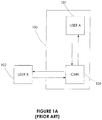
- FIG. 1A shows an illustration of this known solution.
- a first and second communication devices respectively 101 attached to user A and 102 attached to user B, are in communication (i.e. a call) with each other in a telecommunication network 100, for example a Private Branch eXchange (PBX) network.
- PBX Private Branch eXchange
- User A is attached to telecommunication network 100 while user B may be either in network 100 or attached to another telecommunication network.
- PBX Private Branch eXchange
- a call management node (CMN) 109 is provided within network 100 to provide advanced call management. To that extend, Call Management Node 109, plugged to PBX network 100, is aware of all signaling information (e.g. signaling messages) sent or received by any user of the network 100. CMN 109 is further adapted to intercept any signaling information of call disconnections issued by the network or coming from either party of network 100 in the call (in the example of FIG. 1 user A only). This information corresponds, in the present illustration, to the end (termination) of the call from user A's branch of the call. This management node 109 then keeps the message in order to keep the call active for user B, and will start a timer.
- signaling information e.g. signaling messages
- CMN 109 allows user A to reconnected to the call with B. If the timer reaches the given delay before A dials this "reconnect" number, the call is dropped following known call termination methods, e.g. through the release of the disconnect message to the rest of the network for further processing. This feature will be referred to as the reconnect feature here after.
- a main drawback in this solution is that the other party B has no indication of what is happening with the call. Even though the call is maintained while the timer is running, user B, without indication, may even guess that first user A has been disconnected after not hearing any further answer back from A. User B is then very likely to hang up, not knowing that A has the possibility to reconnect. Furthermore, if user B wants to hang up, he is not offered the possibility to leave a message prior to hanging up, that user A may retrieve when gaining connectivity again.
- call disconnection signaling information referred to here after as "call disconnection” or “BYE” messages
- BYE call disconnection signaling information
- the existing solution is started for each BYE message received by the call management node, whether the BYE message results from a dropped call, a regular hung up or any other events triggering such a message. In other words, if A hangs up on purpose, the call will not be dropped.
- European patent application publication No. EP 1 480 427 A describes a dropped call continuation method that allows reestablishment effected to a same or a different phone number as that of the dropped party.
- U.S. patent No. 5,566,236 describes a method that allows re-establishing a disconnected telephone connection between parties by sensing, through a call control platform, a disconnection of one of first and second telephone lines, and by controlling a tandem switch to maintain the connection with the other of first and second telephone lines.
- the present method proposes a method for alerting at least a second party in a call with a first party that said first party experience a call disconnection according to claim 1.
- a mean is proposed to provide to the second party a service either to have said second party waiting for the first party to reconnect or to inform said second party that the first party has been disconnected.
- the second party knows that he/she is dealing with a dropped call and that the first party may optionally rejoin the call shortly.
- the second party may proceed with different actions depending on the service, instead of simply hanging up.
- the present method may be achieved through a dedicated call management node (CMN) that is aware the signaling messages between the two parties, retains a BYE message, and allows the connection of the first party with a service hosted by a service node from the telecommunication network.
- CMS dedicated call management node
- routers, servers, nodes, base stations, or other entities in a telecommunication network are not represented as their implementation is beyond the scope of the present system and method.
- PBX Primary Branch eXchange
- a call in this description may be a standard voice call or any other session established between a first party A and another party referred to as user B, more precisely between their respective telecommunication devices, for instance a video call between user A and user B.
- Each side of the call in the telecommunication network will be referred to a branch or a leg of the call.
- the call will be illustrated here after as a call between two parties A and B.
- the present teaching may be readily transposed to a call between 3 or more parties with at least one party experiencing a call disconnection.
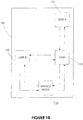
- FIG. 1B shows an exemplary embodiment of the present system.
- a PBX 100 comprises a first telecommunication device 101 (attached to a first user A) and a second telecommunication device 102 (attached to a second user B) communicating with each other.
- first and second parties A and B are part of the same telecommunication network.
- a Private Branch eXchange is a private telephone network that serves a particular business or office, as opposed to one that a common carrier or telephone company operates for many businesses or for the general public.
- a PBX is generally enable through a PBX server and includes an access to a public switched telephone network (PSTN) for access outside the private telephone network (not shown here).
- PSTN public switched telephone network
- the functions of the PBX include the handling of connections between end (or telecommunication) devices such as telephones, and various feature-based services such as voicemail, call forwarding and conferencing, remote call forwarding among others. These features may be activated through service-specific buttons on end devices or through browsing a menu of features available on said end devices.
- the PBX network 100 is provided with a call management node 110 that is aware of all signaling messages sent or received by the PBX in connection to a communication session between user A and user B.
- the signaling messages may be limited to user A only if user B were to be located outside PBX 100.
- CMN 110 may be part of the PBX or hosted by a different node. These signaling messages may either transit through CMN 110 ("direct awareness") or notification of such messages may be sent to CMN 110 ("indirect awareness”). Furthermore a service node (or server) 120 is also provided for rendering one or more services to any user of the PBX network, services such as voicemail, media rendering or else.
- a communication between these two users generally involves a two level exchange mechanism:
- a communication path or link is formed within the network through different network entities to ensure the connection between these two users.
- a BYE message is sent by either telecommunication device that terminated the call (if not both), and this message is passed on the signaling level through the different entities (of the communication path) that terminate the exchange.
- user B is not alerted of user A's loss of connection signal. That may result in user B hanging up before user A even gets a chance to user the reconnect feature. More generally user B is not given any indication of the call disconnection except for the lack of interaction with user A.
- user B is connected to service node 120 which provides to said user B an indication that user A has been disconnected.
- That indication may be for instance an indication that:
- user A may try to reconnect as soon as the first telecommunication device gets a network signal.
- a music server (or music node) for instance may be used so that user B gets to hear a given music while waiting for A to reconnect.
- a voicemail server may also be used so that user B hears a voicemail greeting signaling the call drop and offering this user B the possibility of leaving a message that user A will get upon regaining network coverage.
- CMN 110 may be a standalone node or embedded in another node of network 100.
- CMN 110 may for instance be associated to the existing CMN 109 of FIG. 1A as this later node is already adapted to intercept the disconnection messages.
- the call reconnect feature if implemented, may be available to any users from network 100 or on a subscription based.
- CMN 110 is also adapted to identify whether user A or user B are registered users to this feature.
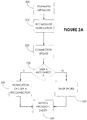
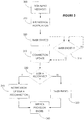
- FIG. 2A shows a flowchart illustrating an exemplary embodiment of the present method.
- CMN 110 is adapted to carry out the following acts.
- CMN 110 may receive and handle registration requests from users of the communication network.
- CMN 110 collects the information necessary to identify the registered users in case the reconnection feature is only available on a subscription or registration basis. This identification information may be network specific and is beyond the scope of the present method.
- the present embodiment is illustrated with a call between two users A and B, having respectively a first and second telecommunication devices.
- CMN 110 is aware in a further act 200 of the signaling messages sent or received by the network users.
- CMN 110 may only receive the BYE messages if a filtering node is provided in PBX 100 to reroute such messages to CMN 110.
- the BYE messages may be intercepted by a dedicated node, which will notify the CMN of any received BYE messages.
- the here after embodiment of the present method will be illustrated with CMN 110 intercepting the BYE messages itself.
- a disconnection message is intercepted. This message is generated when the first device (from user A) gets disconnected and corresponds to a BYE message received by CMN 110 from user A's call leg.
- a timer may be started by CMN 110 to measure the duration before user A reconnects. As the disconnection message is intercepted and kept at the call management node, the second device (from user B) is not disconnected and user B "remains in the call".
- CMN 110 is adapted to connect user B with a service node that can activate, i.e. trigger, a given communication service to said user B. This may be achieved through sending a connection update to the second device so that the second party B (ie his/her telecommunication device) becomes connected to the service node for provision of the communication service.
- CMN 110 waits for an indication that the first party A has reconnected.
- user A When user A re-enters a location with network coverage, or has access again to the network, he/she may request a call reconnection.
- the first telecommunication device may send a "reconnect" INVITE to the network.
- CMN is adapted to intercept either said reconnect INVITE or a notification that A has sent such an invite.
- CMN may proceed with sending both users A and B a connection update so that the call may be resumed between the two telecommunication devices.
- a notification sent to the service node 120 by CMN 110 to end the provision of the communication service.
- a given time i.e. a first delay MAX_DELAY
- MAX_DELAY the maximum delay offered to user A to reconnect to the call before ending said call definitively. If - in an additional act 250 - the timer (started in act 210) reaches MAX_DELAY before CMN 110 receives any indication that user A is trying to reconnect, the call is disconnected, i.e. CMN 110 forwards (or triggers the forwarding of) the intercepted BYE message (received from user A's call leg) to the different network entities ensuring that user B's call leg is dropped.
- the service node may be a media server.
- a variety of media may be streamed, played, pushed, ... to user B so that his/her device may play the media.
- Existing solutions are readily available to the man skilled in the art, and are beyond the scope of the present method.
- connection update sent by CMN 110 comprises configuration information for the communication service.
- This configuration information may be based on profiles associated with either one or both parties in the call. For instance, the information may be based on:
- CMN may forward any subset of the following parameters:
- all BYE messages trigger the given communication service.
- the cause of communication ending is available at the network level.
- this cause may be used to decide if the situation requires user B to wait for user A to reconnect.
- the given communication service may only be triggered whether the identified cause for the call disconnection belongs or not to listed causes (requiring user B to be connected to the communication service).
- the telecommunication network When the first telecommunication device loses its connectivity, the telecommunication network is adapted to end the call and generates a disconnection message to do so, as mentioned before.
- This signaling message has a different name depending on the signaling protocol as illustrated in Table 1 here below. Whatever the signaling protocol may be, the objective of such messages is the same and its parameters are usually very similar across protocols.
- Table 1 disconnection message for different protocols Message name Protocol Standards Standard reference REL SS7 - ISUP ITU-T Q.850 disconnect ISDN ITU-T Q.931 BYE SIP IETF RFC 3261 with:
- All this messages include a field called either "cause” or “reason” which gives an indication of the reason why the communication ended.
- the CMN is adapted to use this field to distinguish a "regular hang up" from a dropped call as the reason indicated in this field is usually different.
- the different protocols usually have similar way to represent the cause or reason of a user disconnection and provide tables to map the cause codes between different protocols.
- the main reference is Q.850 (Usage of cause and location in the Digital subscriber signaling system n°1 and the signaling system n°7 ISDN User Part) which is usually used in SIP messages and Q.931 contains a subset of Q.850.
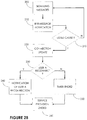
- FIG. 2B The use of this field in the present method is illustrated in FIG. 2B .
- acts 200 to 260 remain unchanged with the exception of the transition between acts 210 and 220, which corresponds to act 215.
- CMN 110 is further adapted to match the identified cause with any listed cause for triggering the communication service. If the cause is identified as a cause that requires user B to be informed through the communication service, acts 220 to 260 are carried on as described before.
- the list of possible causes that will trigger acts 220 to 260 may be defined at the network level. The causes may include a loss of connectivity (dropped call), a low battery, or any other call disconnection that leaves the possibility for user A to resume the call shortly. If the identified cause does not need user B to be informed, CMN 110 will resume act 200.
- the list of causes that trigger the communication service to user B may be configurable in the CMN or in a different node (that stores said list) CMN 110 has access to.
- the CMN 110 may also be adapted to inform the rest of the system that the communication service does not need to be activated.
- SERVICE_DELAY it may be interesting to wait for a second delay SERVICE_DELAY before starting the rendering of the media service. This may be useful for instance when the cause of the call disconnection is not known. As the CMN cannot know the reason behind the disconnection of user A, all BYE messages trigger the communication service as illustrated in the embodiment of FIG. 2A .
- This second delay called here after SERVICE_DELAY, may give enough time for user B to hang up in case the disconnection from user A is a regular hang up.
- B may not hang up if he/she hears music or any communication service in his/her phone. For that reason it may be useful to wait for a few seconds before starting the music to give B the time to hang up.
- FIG. 3 shows a flowchart illustrating another embodiment of the present method, which implements this second delay SERVICE_DELAY prior to triggering the communication service.
- Acts 300 and 310 correspond to acts 200 and 210 described before.
- a second timer (as opposed to the timer measuring MAX_DELAY) is started.
- the CMN checks if the timer has reached the SERVICE_DELAY value. If not, act 316 is repeated. When this value is reached, CMN proceeds with activating communication service in a further act 320.
- Acts 320 to 360 correspond to acts 220 to 260 respectively, and described here before in relation to FIG. 2A .
- the timer is started by the CMN.
- the timer may be started in act 312 by the service node itself, following a timer request sent from the CMN.
- the different embodiments may be implemented alone or with each other in any possible combination.
- the use of the cause in the BYE message ( FIG. 2B ) may be combined with the timer delay the service connection ( FIG. 3 ).
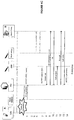
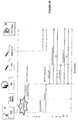
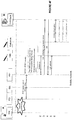
- FIG. 4A-G illustrate different call flows corresponding to implementations of the present method in various telecommunication networks.
- the triggering event is a loss of connectivity.
- the communication service node is illustrated as a music server for simplification purpose.
- the CMN may be integrated or connected to a PBX, in an enterprise network as illustrated in FIG. 4A-E .
- User A may be a PBX subscriber.
- User B may be any phone, whether from the enterprise network or not.
- a mobile network ensures communication links between user A and the PBX.
- the enterprise network comprises a PBX node, a music node, and the CMN.
- the PBX is assumed to already implement the known reconnect feature.
- the exemplary call flow shows a situation wherein user A has lost connectivity with his/her network and the MNC redirects user B call to the music server so that user B can listen to music while waiting for A to reconnect.
- the CMN uses the PBX to implement the call redirection.
- CMN sends a connection update in an act 2 of FIG. 4A indirectly to user B, using the PBX node as an intermediary node.
- This implementation relies upon the fact that the PBX node is the node already managing the communication session between user A and users B. For instance, in a call waiting feature, if user A were to put user B on hold, the PBX would be the active node updating the call session for user B so that B is redirected to a music server.
- the CMN may handle the call redirection itself. As may be seen in act 2 of FIG. 4B , the connection update is sent directly by the CMN to user B.
- FIG. 4C An additional implementation of the present method is illustrated in FIG. 4C .
- This exemplary implementation illustrates the flow of messages when a timer is started to give a delay of MAX_DELAY for user A to reconnect.
- the case is a continuation of the case illustrated in FIG. 4A , and only initial act 1 and part of act 6 are shown for simplification purposes.
- the timer measuring the first delay is started by the PBX node, and this case carries on from FIG. 4A with the PBX node notify in a further act 7 the end of the timer (MAX_DELAY has been reached).
- the PBX node is managing the call session between user B and the music node, the PBX node ends the call session and the music is stopped in further acts 9 and 10 of FIG. 4C .
- FIG. 4D Another exemplary implantation of the present method is illustrated in FIG. 4D .
- the triggering event in relation to this example is a normal hung up.
- the CMN 110 is adapted to identify the cause behind user A disconnection, and identifies such a cause (normal hung up) as not requiring the reconnection of user B to the music server.
- the call is terminated normally by the PBX after the intercepted BYE message (intercepted in act 1 of FIG. 4D ) is unlocked by the CMN.
- FIG. 4E An additional implementation of the present method is illustrated in FIG. 4E .
- This exemplary implementation illustrates the flow of messages when user A regains network coverage and reconnect to the call.
- the case is a continuation of the case illustrated in FIG. 4A , and only initial act 1 and part of act 6 are shown for simplification purposes.
- the reconnection of user A takes place during act 6 while the music steam is sent to user B.
- the reconnect feature is handled by the PBX which sends a message (act 9) to the CMN to inform this node that the call between user A and user B is about to resume.
- the CMN notifies the music server to stop the music played to user B.
- the here above exemplary implementations were illustrated with a enterprise network using a PBX node.
- the present teachings may be easily transposed to other network infrastructures, such as mobile networks (GSM, 3G, CDMA, and the likes), IP centrex networks or wired line networks, or a combination of two or more of all the listed infrastructures.
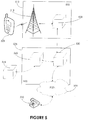
- FIG. 5 is an illustration of a GSM network.
- User A 505 is a mobile user, while user B 510 may a wired line phone accessible through the Public Switched Telephone Network (PSTN) 550 or a mobile user as well.
- Mobile 505 is attached to Base Station 515, which with the Base Station Controller (BSC) 520 form the Base Station Subsystem 510.
- BSC 520 is linked to the Mobile Switching Center MSC 530 within the GSM Network Subsystem NSS 535.
- MSC 530 is the primary service delivery node in a GSM network, responsible for handling voice calls and SMS , as well as other services (conference calls, circuit switched data, ).
- MSC 530 can connect user A to user B through PSTN 550.
- the Call Management Node 540 is either a module plugged into MSC 530, or part of a different node.
- CMN 540 is adapted as before to intercept the BYE messages (or notification thereof), when user A is disconnected.
- the communication service node here illustrated as a music server 545, may stand within or outside the GSM network.
- FIG. 4F is an illustration of an embodiment of the present method for a GSM network as illustrated in FIG. 5 .
- This embodiment is similar to the embodiment illustrated in FIG. 4A , with the PBX node and MSC 530 playing the same role in relation to the present method.
- FIG. 4G An additional implementation of the present method is illustrated in FIG. 4G .
- This exemplary implementation illustrates the flow of messages when user A regains network coverage and reconnect to the call in a GSM telecommunication network.
- the case is a continuation of the case illustrated in FIG. 4F , and only initial act 1 and part of act 6 are shown for simplification purposes.
- the reconnection of user A takes place during act 6 while the music steam is sent to user B.
- the reconnect feature is handled by the MSC 530 which sends a message (act 9) to CMN 540 to inform this node that the call between user A and user B is about to resume.
- the CMN then notify the music server 545 to stop the music played to user B.
- the CMN may trigger the communication services in various ways. For instance:
- the parameters used by the CMN may be either stored in the CMN itself or retrieved from any other node.
- A's profile, B's capabilities or a communication server address and capabilities may be retrieve from a PBX.
- the CMN may be integrated in another environment, whether it is an enterprise or mobile environment, or any other environment, possibly reusing existing features.
- CMN As the CMN needs to be aware of all "BYE" messages from user A, it may preferably be connected or part of a node which can see all of user A's messages. This usually the case when user A is a subscriber of the telecommunication system, for instance a PBX user is a PBX subscriber, a mobile phone user is a subscriber to a mobile network. In other words, user A may preferably be a subscriber of the telecommunication system the CMN is connected to or embedded in.
- user B may be presented with a service menu, offering said user the possibility to either listen to music, leave a message, or any other communication service that may be interesting to present to user B to either make him/her wait for the reconnection of user A, or make him use a service pushed by the network operator, or let said user B know that user A experienced a call disconnection.
- the reconnect feature is an optional feature offered to the first party A to reconnect, and is not part of the present method and system.
Landscapes
- Engineering & Computer Science (AREA)
- Signal Processing (AREA)
- Computer Networks & Wireless Communication (AREA)
- Mobile Radio Communication Systems (AREA)
- Telephonic Communication Services (AREA)
Claims (8)
- Verfahren zum Hinweisen wenigstens eines zweiten Teilnehmers (102) einer Verbindung mit einem ersten Teilnehmer (101) darauf, dass beim ersten Teilnehmer eine Verbindungstrennung erfolgt ist, wobei das Verfahren dadurch gekennzeichnet ist, dass es die folgenden Schritte in einem Anrufmanagement-Knoten (110) eines Telekommunikationsnetzes umfasst:- Abfangen von Signalisierungsinformationen (210), die der Verbindungstrennung des ersten Teilnehmers entsprechen, wobei die Signalisierungsinformationen (210) eine Angabe einer Ursache der Verbindungstrennung umfassen; und- Senden wenigstens einer Verbindungsaktualisierung (220), die darauf ausgerichtet ist, den zweiten Teilnehmer mit einem Dienstknoten (120) in dem Telekommunikationsnetz zur Bereitstellung eines oder mehrerer Kommunikationsdienste zu verbinden, falls die Ursache die Bereitstellung der ein oder mehreren Kommunikationsdienste für den zweiten Teilnehmer erfordert, wobei die Ursache in einer Liste möglicher Ursachen als übereinstimmend mit irgendeiner aufgelisteten Ursache identifiziert wird, welche erfordert, dass der zweite Teilnehmer durch die ein oder mehreren Kommunikationsdienste informiert wird,wobei die Verbindungsaktualisierung zurückgehalten wird, falls die Ursache nicht die Bereitstellung der ein oder mehreren Kommunikationsdienste für den zweiten Teilnehmer erfordert, wobei die Ursache in der Liste als eine Ursache identifiziert wird, welche nicht erfordert, dass der zweite Teilnehmer informiert wird.
- Verfahren nach Anspruch 1, wobei die Verbindungsaktualisierung Konfigurationsinformationen für den Kommunikationsdienst umfasst, wobei die Konfigurationsinformationen auf Profilen basieren,
die einem von dem ersten und zweiten Teilnehmer (101-102) oder beiden zugeordnet sind. - Verfahren nach einem der vorhergehenden Ansprüche, welches ferner umfasst: Abwarten einer bestimmten Zeit vor dem Senden der Verbindungsaktualisierung.
- Anrufmanagement-Knoten (110) in einem Telekommunikationsnetz zum Hinweisen wenigstens eines zweiten Teilnehmers (102) einer Verbindung mit einem ersten Teilnehmer (101) darauf, dass beim ersten Teilnehmer eine Verbindungstrennung erfolgt ist, dadurch gekennzeichnet, dass der Anrufmanagement-Knoten dafür ausgelegt ist:- Signalisierungsinformationen (210) abzufangen, die der Verbindungstrennung des ersten Teilnehmers entsprechen, wobei die Signalisierungsinformationen (210) eine Angabe einer Ursache der Verbindungstrennung umfassen, und- wenigstens eine Verbindungsaktualisierung (220) zu senden, die darauf ausgerichtet ist, den zweiten Teilnehmer mit einem Dienstknoten (120) in dem Telekommunikationsnetz zur Bereitstellung eines oder mehrerer Kommunikationsdienste zu verbinden, falls die Ursache die Bereitstellung des Kommunikationsdienstes für den zweiten Teilnehmer erfordert, wobei die Ursache in einer Liste möglicher Ursachen als übereinstimmend mit irgendeiner aufgelisteten Ursache identifiziert wird, welche erfordert, dass der zweite Teilnehmer durch die ein oder mehreren Kommunikationsdienste informiert wird,
wobei die Verbindungsaktualisierung zurückgehalten wird, falls die Ursache nicht die Bereitstellung der ein oder mehreren Kommunikationsdienste für den zweiten Teilnehmer erfordert, wobei die Ursache in der Liste als eine Ursache identifiziert wird, welche nicht erfordert, dass der zweite Teilnehmer informiert wird. - Anrufmanagement-Knoten (110) nach Anspruch 4, wobei der Dienstknoten (120) dafür ausgelegt ist, einen oder mehrere Kommunikationsdienste für einen von dem ersten und zweiten Teilnehmer bereitzustellen.
- Anrufmanagement-Knoten (110) nach Anspruch 4, wobei die Verbindungsaktualisierung Konfigurationsinformationen für den Kommunikationsdienst umfasst, wobei die Konfigurationsinformationen auf Profilen basieren, die einem von dem ersten und zweiten Teilnehmer (101-102) oder beiden zugeordnet sind.
- Anrufmanagement-Knoten (110) nach einem der Ansprüche 4 und 6, wobei der Anrufmanagement-Knoten (110) ferner dafür ausgelegt ist, vor dem Senden der Verbindungsaktualisierung eine bestimmte Zeit zu warten.
- Computerlesbarer Datenträger, welcher Computerprogrammanweisungen enthält, welche bewirken, dass ein Computer ein Verfahren zum Hinweisen wenigstens eines zweiten Teilnehmers (102) einer Verbindung mit einem ersten Teilnehmer (101), dass beim ersten Teilnehmer (101) eine Verbindungstrennung erfolgt ist, nach einem der Ansprüche 1 bis 3 implementiert.
Priority Applications (1)
| Application Number | Priority Date | Filing Date | Title |
|---|---|---|---|
| EP09728736.1A EP2274922B1 (de) | 2008-04-03 | 2009-04-03 | System und verfahren zum hinweisen eines teilnehmers eines anrufs auf eine anruftrennung eines anderen teilnehmers |
Applications Claiming Priority (3)
| Application Number | Priority Date | Filing Date | Title |
|---|---|---|---|
| EP08305081A EP2107817A1 (de) | 2008-04-03 | 2008-04-03 | System und Verfahren zum Hinweis einer Partei in einem Anruf über den Anrufabbruch einer anderen Partei |
| PCT/EP2009/054009 WO2009121954A1 (en) | 2008-04-03 | 2009-04-03 | A system and method for alerting a party in a call of a call disconnection of another party |
| EP09728736.1A EP2274922B1 (de) | 2008-04-03 | 2009-04-03 | System und verfahren zum hinweisen eines teilnehmers eines anrufs auf eine anruftrennung eines anderen teilnehmers |
Publications (2)
| Publication Number | Publication Date |
|---|---|
| EP2274922A1 EP2274922A1 (de) | 2011-01-19 |
| EP2274922B1 true EP2274922B1 (de) | 2020-03-25 |
Family
ID=39764102
Family Applications (2)
| Application Number | Title | Priority Date | Filing Date |
|---|---|---|---|
| EP08305081A Withdrawn EP2107817A1 (de) | 2008-04-03 | 2008-04-03 | System und Verfahren zum Hinweis einer Partei in einem Anruf über den Anrufabbruch einer anderen Partei |
| EP09728736.1A Active EP2274922B1 (de) | 2008-04-03 | 2009-04-03 | System und verfahren zum hinweisen eines teilnehmers eines anrufs auf eine anruftrennung eines anderen teilnehmers |
Family Applications Before (1)
| Application Number | Title | Priority Date | Filing Date |
|---|---|---|---|
| EP08305081A Withdrawn EP2107817A1 (de) | 2008-04-03 | 2008-04-03 | System und Verfahren zum Hinweis einer Partei in einem Anruf über den Anrufabbruch einer anderen Partei |
Country Status (2)
| Country | Link |
|---|---|
| EP (2) | EP2107817A1 (de) |
| WO (1) | WO2009121954A1 (de) |
Families Citing this family (4)
| Publication number | Priority date | Publication date | Assignee | Title |
|---|---|---|---|---|
| US8401159B2 (en) | 2005-11-30 | 2013-03-19 | On-Q Telecom Systems Co., Inc. | Data provision to a virtual personal assistant for handling calls in a communication system |
| US7974398B2 (en) | 2005-11-30 | 2011-07-05 | On-Q Telecom Systems Co., Inc. | Virtual personal assistant for handling calls in a communication system |
| US7957521B2 (en) | 2005-11-30 | 2011-06-07 | On-Q Telecom Systems Co., Inc. | Method and system for user prioritization within telecommunication services and in particular within call completion services |
| US8374323B2 (en) | 2010-03-18 | 2013-02-12 | On-Q Telecom Systems Co., Inc. | Availability notification system with inter-network capabilities |
Family Cites Families (3)
| Publication number | Priority date | Publication date | Assignee | Title |
|---|---|---|---|---|
| US5862208A (en) * | 1994-02-16 | 1999-01-19 | Priority Call Management, Inc. | Method and system for enabling a party to change terminals during a call |
| US7072641B2 (en) * | 2002-03-19 | 2006-07-04 | Sprint Spectrum L.P. | Reactive management of dropped calls in a wireless communication system |
| US7228145B2 (en) * | 2003-05-21 | 2007-06-05 | Avaya Technology Corp. | Dropped call continuation |
-
2008
- 2008-04-03 EP EP08305081A patent/EP2107817A1/de not_active Withdrawn
-
2009
- 2009-04-03 EP EP09728736.1A patent/EP2274922B1/de active Active
- 2009-04-03 WO PCT/EP2009/054009 patent/WO2009121954A1/en not_active Ceased
Non-Patent Citations (1)
| Title |
|---|
| None * |
Also Published As
| Publication number | Publication date |
|---|---|
| WO2009121954A1 (en) | 2009-10-08 |
| EP2274922A1 (de) | 2011-01-19 |
| EP2107817A1 (de) | 2009-10-07 |
Similar Documents
| Publication | Publication Date | Title |
|---|---|---|
| US6909776B2 (en) | Systems and methods for monitoring network-based voice messaging systems | |
| US8045689B2 (en) | Method and system for call screening | |
| US7123697B2 (en) | Method and system for providing a call answering service between a source telephone and a target telephone | |
| EP1927243B1 (de) | Anrufverteilung mit warteschlange für anrufer die auflegen | |
| US8369311B1 (en) | Methods and systems for providing telephony services to fixed and mobile telephonic devices | |
| US8107609B2 (en) | Methods and systems for telephony call-back processing | |
| US7315617B2 (en) | Method and system for managing calls of an automatic call distributor | |
| US8494504B2 (en) | Methods and systems for telephony processing, including location based call transfers | |
| US6463146B1 (en) | Call waiting service in a telecommunications network | |
| CN100508660C (zh) | 丢失的呼叫的继续 | |
| US8270582B1 (en) | Methods and systems for routing calls | |
| US20050048981A1 (en) | Method and apparatus for reconnecting dropped wireless calls | |
| US8855107B1 (en) | Methods and systems for call routing via a telephone number | |
| WO2001076210A1 (en) | Internet call waiting with voice mail system that provides monitoring during recording | |
| US20070189466A1 (en) | Method and apparatus for disabling advanced call features during an emergency call | |
| EP2274922B1 (de) | System und verfahren zum hinweisen eines teilnehmers eines anrufs auf eine anruftrennung eines anderen teilnehmers | |
| US7174009B1 (en) | Elimination of inoperable service node during call set up | |
| CN101485214B (zh) | 管理寻址到与接入设备相关联的终端的呼叫的方法 | |
| US7792269B2 (en) | Method and apparatus for providing network announcements about service impairments | |
| US9900352B2 (en) | SIP network border element session augmentation | |
| EP2182768A1 (de) | System und Verfahren für einen Benutzer zum Empfang einer Wiederverbindungsbenachrichtigung in einem Telekommunikationsnetzwerk |
Legal Events
| Date | Code | Title | Description |
|---|---|---|---|
| PUAI | Public reference made under article 153(3) epc to a published international application that has entered the european phase |
Free format text: ORIGINAL CODE: 0009012 |
|
| 17P | Request for examination filed |
Effective date: 20101026 |
|
| AK | Designated contracting states |
Kind code of ref document: A1 Designated state(s): AT BE BG CH CY CZ DE DK EE ES FI FR GB GR HR HU IE IS IT LI LT LU LV MC MK MT NL NO PL PT RO SE SI SK TR |
|
| AX | Request for extension of the european patent |
Extension state: AL BA RS |
|
| RIN1 | Information on inventor provided before grant (corrected) |
Inventor name: LE SAUX, LOUIS-MARIE Inventor name: JIMENEZ ALDAMA, BORJA Inventor name: MOULIN, BENEDICTE |
|
| DAX | Request for extension of the european patent (deleted) | ||
| RAP1 | Party data changed (applicant data changed or rights of an application transferred) |
Owner name: ORANGE |
|
| 17Q | First examination report despatched |
Effective date: 20160316 |
|
| STAA | Information on the status of an ep patent application or granted ep patent |
Free format text: STATUS: EXAMINATION IS IN PROGRESS |
|
| GRAP | Despatch of communication of intention to grant a patent |
Free format text: ORIGINAL CODE: EPIDOSNIGR1 |
|
| STAA | Information on the status of an ep patent application or granted ep patent |
Free format text: STATUS: GRANT OF PATENT IS INTENDED |
|
| INTG | Intention to grant announced |
Effective date: 20191018 |
|
| GRAS | Grant fee paid |
Free format text: ORIGINAL CODE: EPIDOSNIGR3 |
|
| GRAA | (expected) grant |
Free format text: ORIGINAL CODE: 0009210 |
|
| STAA | Information on the status of an ep patent application or granted ep patent |
Free format text: STATUS: THE PATENT HAS BEEN GRANTED |
|
| AK | Designated contracting states |
Kind code of ref document: B1 Designated state(s): AT BE BG CH CY CZ DE DK EE ES FI FR GB GR HR HU IE IS IT LI LT LU LV MC MK MT NL NO PL PT RO SE SI SK TR |
|
| REG | Reference to a national code |
Ref country code: GB Ref legal event code: FG4D |
|
| REG | Reference to a national code |
Ref country code: DE Ref legal event code: R096 Ref document number: 602009061531 Country of ref document: DE |
|
| REG | Reference to a national code |
Ref country code: AT Ref legal event code: REF Ref document number: 1249971 Country of ref document: AT Kind code of ref document: T Effective date: 20200415 Ref country code: IE Ref legal event code: FG4D |
|
| RAP2 | Party data changed (patent owner data changed or rights of a patent transferred) |
Owner name: ORANGE |
|
| PG25 | Lapsed in a contracting state [announced via postgrant information from national office to epo] |
Ref country code: FI Free format text: LAPSE BECAUSE OF FAILURE TO SUBMIT A TRANSLATION OF THE DESCRIPTION OR TO PAY THE FEE WITHIN THE PRESCRIBED TIME-LIMIT Effective date: 20200325 Ref country code: NO Free format text: LAPSE BECAUSE OF FAILURE TO SUBMIT A TRANSLATION OF THE DESCRIPTION OR TO PAY THE FEE WITHIN THE PRESCRIBED TIME-LIMIT Effective date: 20200625 |
|
| PG25 | Lapsed in a contracting state [announced via postgrant information from national office to epo] |
Ref country code: GR Free format text: LAPSE BECAUSE OF FAILURE TO SUBMIT A TRANSLATION OF THE DESCRIPTION OR TO PAY THE FEE WITHIN THE PRESCRIBED TIME-LIMIT Effective date: 20200626 Ref country code: HR Free format text: LAPSE BECAUSE OF FAILURE TO SUBMIT A TRANSLATION OF THE DESCRIPTION OR TO PAY THE FEE WITHIN THE PRESCRIBED TIME-LIMIT Effective date: 20200325 Ref country code: BG Free format text: LAPSE BECAUSE OF FAILURE TO SUBMIT A TRANSLATION OF THE DESCRIPTION OR TO PAY THE FEE WITHIN THE PRESCRIBED TIME-LIMIT Effective date: 20200625 Ref country code: SE Free format text: LAPSE BECAUSE OF FAILURE TO SUBMIT A TRANSLATION OF THE DESCRIPTION OR TO PAY THE FEE WITHIN THE PRESCRIBED TIME-LIMIT Effective date: 20200325 Ref country code: LV Free format text: LAPSE BECAUSE OF FAILURE TO SUBMIT A TRANSLATION OF THE DESCRIPTION OR TO PAY THE FEE WITHIN THE PRESCRIBED TIME-LIMIT Effective date: 20200325 |
|
| REG | Reference to a national code |
Ref country code: NL Ref legal event code: MP Effective date: 20200325 |
|
| REG | Reference to a national code |
Ref country code: LT Ref legal event code: MG4D |
|
| PG25 | Lapsed in a contracting state [announced via postgrant information from national office to epo] |
Ref country code: NL Free format text: LAPSE BECAUSE OF FAILURE TO SUBMIT A TRANSLATION OF THE DESCRIPTION OR TO PAY THE FEE WITHIN THE PRESCRIBED TIME-LIMIT Effective date: 20200325 |
|
| PG25 | Lapsed in a contracting state [announced via postgrant information from national office to epo] |
Ref country code: CZ Free format text: LAPSE BECAUSE OF FAILURE TO SUBMIT A TRANSLATION OF THE DESCRIPTION OR TO PAY THE FEE WITHIN THE PRESCRIBED TIME-LIMIT Effective date: 20200325 Ref country code: RO Free format text: LAPSE BECAUSE OF FAILURE TO SUBMIT A TRANSLATION OF THE DESCRIPTION OR TO PAY THE FEE WITHIN THE PRESCRIBED TIME-LIMIT Effective date: 20200325 Ref country code: SK Free format text: LAPSE BECAUSE OF FAILURE TO SUBMIT A TRANSLATION OF THE DESCRIPTION OR TO PAY THE FEE WITHIN THE PRESCRIBED TIME-LIMIT Effective date: 20200325 Ref country code: IS Free format text: LAPSE BECAUSE OF FAILURE TO SUBMIT A TRANSLATION OF THE DESCRIPTION OR TO PAY THE FEE WITHIN THE PRESCRIBED TIME-LIMIT Effective date: 20200725 Ref country code: PT Free format text: LAPSE BECAUSE OF FAILURE TO SUBMIT A TRANSLATION OF THE DESCRIPTION OR TO PAY THE FEE WITHIN THE PRESCRIBED TIME-LIMIT Effective date: 20200818 Ref country code: LT Free format text: LAPSE BECAUSE OF FAILURE TO SUBMIT A TRANSLATION OF THE DESCRIPTION OR TO PAY THE FEE WITHIN THE PRESCRIBED TIME-LIMIT Effective date: 20200325 Ref country code: EE Free format text: LAPSE BECAUSE OF FAILURE TO SUBMIT A TRANSLATION OF THE DESCRIPTION OR TO PAY THE FEE WITHIN THE PRESCRIBED TIME-LIMIT Effective date: 20200325 |
|
| REG | Reference to a national code |
Ref country code: AT Ref legal event code: MK05 Ref document number: 1249971 Country of ref document: AT Kind code of ref document: T Effective date: 20200325 |
|
| REG | Reference to a national code |
Ref country code: CH Ref legal event code: PL |
|
| PG25 | Lapsed in a contracting state [announced via postgrant information from national office to epo] |
Ref country code: MC Free format text: LAPSE BECAUSE OF FAILURE TO SUBMIT A TRANSLATION OF THE DESCRIPTION OR TO PAY THE FEE WITHIN THE PRESCRIBED TIME-LIMIT Effective date: 20200325 |
|
| REG | Reference to a national code |
Ref country code: DE Ref legal event code: R097 Ref document number: 602009061531 Country of ref document: DE |
|
| PG25 | Lapsed in a contracting state [announced via postgrant information from national office to epo] |
Ref country code: ES Free format text: LAPSE BECAUSE OF FAILURE TO SUBMIT A TRANSLATION OF THE DESCRIPTION OR TO PAY THE FEE WITHIN THE PRESCRIBED TIME-LIMIT Effective date: 20200325 Ref country code: AT Free format text: LAPSE BECAUSE OF FAILURE TO SUBMIT A TRANSLATION OF THE DESCRIPTION OR TO PAY THE FEE WITHIN THE PRESCRIBED TIME-LIMIT Effective date: 20200325 Ref country code: DK Free format text: LAPSE BECAUSE OF FAILURE TO SUBMIT A TRANSLATION OF THE DESCRIPTION OR TO PAY THE FEE WITHIN THE PRESCRIBED TIME-LIMIT Effective date: 20200325 Ref country code: CH Free format text: LAPSE BECAUSE OF NON-PAYMENT OF DUE FEES Effective date: 20200430 Ref country code: LI Free format text: LAPSE BECAUSE OF NON-PAYMENT OF DUE FEES Effective date: 20200430 Ref country code: IT Free format text: LAPSE BECAUSE OF FAILURE TO SUBMIT A TRANSLATION OF THE DESCRIPTION OR TO PAY THE FEE WITHIN THE PRESCRIBED TIME-LIMIT Effective date: 20200325 Ref country code: LU Free format text: LAPSE BECAUSE OF NON-PAYMENT OF DUE FEES Effective date: 20200403 |
|
| REG | Reference to a national code |
Ref country code: BE Ref legal event code: MM Effective date: 20200430 |
|
| PLBE | No opposition filed within time limit |
Free format text: ORIGINAL CODE: 0009261 |
|
| STAA | Information on the status of an ep patent application or granted ep patent |
Free format text: STATUS: NO OPPOSITION FILED WITHIN TIME LIMIT |
|
| PG25 | Lapsed in a contracting state [announced via postgrant information from national office to epo] |
Ref country code: PL Free format text: LAPSE BECAUSE OF FAILURE TO SUBMIT A TRANSLATION OF THE DESCRIPTION OR TO PAY THE FEE WITHIN THE PRESCRIBED TIME-LIMIT Effective date: 20200325 Ref country code: BE Free format text: LAPSE BECAUSE OF NON-PAYMENT OF DUE FEES Effective date: 20200430 |
|
| 26N | No opposition filed |
Effective date: 20210112 |
|
| PG25 | Lapsed in a contracting state [announced via postgrant information from national office to epo] |
Ref country code: IE Free format text: LAPSE BECAUSE OF NON-PAYMENT OF DUE FEES Effective date: 20200403 |
|
| PG25 | Lapsed in a contracting state [announced via postgrant information from national office to epo] |
Ref country code: SI Free format text: LAPSE BECAUSE OF FAILURE TO SUBMIT A TRANSLATION OF THE DESCRIPTION OR TO PAY THE FEE WITHIN THE PRESCRIBED TIME-LIMIT Effective date: 20200325 |
|
| PG25 | Lapsed in a contracting state [announced via postgrant information from national office to epo] |
Ref country code: TR Free format text: LAPSE BECAUSE OF FAILURE TO SUBMIT A TRANSLATION OF THE DESCRIPTION OR TO PAY THE FEE WITHIN THE PRESCRIBED TIME-LIMIT Effective date: 20200325 Ref country code: MT Free format text: LAPSE BECAUSE OF FAILURE TO SUBMIT A TRANSLATION OF THE DESCRIPTION OR TO PAY THE FEE WITHIN THE PRESCRIBED TIME-LIMIT Effective date: 20200325 Ref country code: CY Free format text: LAPSE BECAUSE OF FAILURE TO SUBMIT A TRANSLATION OF THE DESCRIPTION OR TO PAY THE FEE WITHIN THE PRESCRIBED TIME-LIMIT Effective date: 20200325 |
|
| PG25 | Lapsed in a contracting state [announced via postgrant information from national office to epo] |
Ref country code: MK Free format text: LAPSE BECAUSE OF FAILURE TO SUBMIT A TRANSLATION OF THE DESCRIPTION OR TO PAY THE FEE WITHIN THE PRESCRIBED TIME-LIMIT Effective date: 20200325 |
|
| PGFP | Annual fee paid to national office [announced via postgrant information from national office to epo] |
Ref country code: DE Payment date: 20250319 Year of fee payment: 17 |
|
| PGFP | Annual fee paid to national office [announced via postgrant information from national office to epo] |
Ref country code: GB Payment date: 20260319 Year of fee payment: 18 |
|
| PGFP | Annual fee paid to national office [announced via postgrant information from national office to epo] |
Ref country code: FR Payment date: 20260320 Year of fee payment: 18 |