EP1927243B1 - Anrufverteilung mit warteschlange für anrufer die auflegen - Google Patents
Anrufverteilung mit warteschlange für anrufer die auflegen Download PDFInfo
- Publication number
- EP1927243B1 EP1927243B1 EP06813705.8A EP06813705A EP1927243B1 EP 1927243 B1 EP1927243 B1 EP 1927243B1 EP 06813705 A EP06813705 A EP 06813705A EP 1927243 B1 EP1927243 B1 EP 1927243B1
- Authority
- EP
- European Patent Office
- Prior art keywords
- call
- connection
- caller
- intermediary device
- endpoint
- Prior art date
- Legal status (The legal status is an assumption and is not a legal conclusion. Google has not performed a legal analysis and makes no representation as to the accuracy of the status listed.)
- Active
Links
Images

Classifications
-
- H—ELECTRICITY
- H04—ELECTRIC COMMUNICATION TECHNIQUE
- H04M—TELEPHONIC COMMUNICATION
- H04M3/00—Automatic or semi-automatic exchanges
- H04M3/42—Systems providing special services or facilities to subscribers
- H04M3/50—Centralised arrangements for answering calls; Centralised arrangements for recording messages for absent or busy subscribers ; Centralised arrangements for recording messages
- H04M3/51—Centralised call answering arrangements requiring operator intervention, e.g. call or contact centers for telemarketing
- H04M3/523—Centralised call answering arrangements requiring operator intervention, e.g. call or contact centers for telemarketing with call distribution or queueing
- H04M3/5231—Centralised call answering arrangements requiring operator intervention, e.g. call or contact centers for telemarketing with call distribution or queueing with call back arrangements
-
- H—ELECTRICITY
- H04—ELECTRIC COMMUNICATION TECHNIQUE
- H04M—TELEPHONIC COMMUNICATION
- H04M3/00—Automatic or semi-automatic exchanges
- H04M3/42—Systems providing special services or facilities to subscribers
- H04M3/48—Arrangements for recalling a calling subscriber when the wanted subscriber ceases to be busy
-
- H—ELECTRICITY
- H04—ELECTRIC COMMUNICATION TECHNIQUE
- H04M—TELEPHONIC COMMUNICATION
- H04M7/00—Arrangements for interconnection between switching centres
- H04M7/006—Networks other than PSTN/ISDN providing telephone service, e.g. Voice over Internet Protocol (VoIP), including next generation networks with a packet-switched transport layer
Definitions
- This invention relates in general to automated network communication distribution and, more particularly, to a method and system for handling a queued automatic call distributor call.
- ACDs Automatic call distributors
- ACDs are specialized systems designed to match incoming requests for service, for example a telephone call, a chat or any other multimedia call or contact request with a resource that is able to provide that service, for example a human contact center agent.
- ACDs generally perform one or more of the following functions: (i) recognize and answer incoming contacts; (ii) review database(s) for instructions on what to do with a particular contact; (iii) receive caller input regarding the contact; (iv) use the instructions and input to identify an appropriate agent and queue the contact, often times providing a prerecorded message; and (v) connect the contact to an agent as soon as the agent is available.
- VoIP Voice over IP
- WO 99/41895 discloses a call queueing system for a call center which establishes virtual calls for callers, and allows the callers to disconnect and await a later callback when the virtual call is routed to an agent.
- Callers are connected to an interactive voice response (IVR) and informed that they may disconnect and await the callback.
- IVR interactive voice response
- An IVR may also be used when the callback is made, informing the caller of the nature of the new call, and that they are now being connected to an agent.
- virtual calls may be sequenced in the same queue with real calls.
- the virtual call system may be initiated in a call center by exceeding load threshold, at particular time frames, and the like.
- a key is associated with each virtual call in a manner that the origination number of the call for whom the virtual call is entered may be retrieved when the call is routed to an agent.
- the system is adapted to work with all intelligent routing systems.
- US 5,181,236 describes a method of automatically returning calls to callers who have recorded a message in an ACD mail controlled message bin of a voice response unit in response to a stored announcement in an announcement table selected in accordance with call statistics in a statistics table from an automatic call distributor to provide the caller with queue information when no agent stations are available.
- the recorded voice message in queue is automatically provided to an agent when one becomes available in the same manner as an incoming call except an indication is given to the agent station that the incoming call is, in fact, a prerecorded message which requires a cell back.
- the agent must obtain the telephone number from the recorded voice message and then input the multidigit number to place a return call.
- DTMF tones recorded with the voice message are employed to enable the agent to auto dial the return call in response to the recorded message.
- the calls are automatically placed by an ACD control computer and connected to an available agent station the same as an original incoming call when answer detection occurs. If no answer detection occurs within a predetermined time limit, then the recorded message is returned to the queue on a preselected priority basis, and after a preselected number of unsuccessful attempts, the number and related information is printed on a printer and removed from storage in the message bin.
- Disclosed herein is a method and system for handling a queued automatic call distributor call that substantially eliminates or reduces at least some of the disadvantages and problems associated with methods and systems.
- a method for handling a queued automatic call distributor call includes receiving, at an intermediary device, a call from an endpoint of a caller over a first connection between the caller and the intermediary device in accordance with claim 1.
- Receiving an indicator to reestablish a connection with the caller may comprise receiving a wait time for the queued call or receiving a SIP communication indicating a transfer of the call to an agent.
- Reestablishing a connection with the caller may comprise ringing the endpoint of the caller.
- the method may also include communicating a hold time to the caller.
- an intermediary device for handling a queued automatic call distributor call in accordance with claim 8 is provided.
- a further aspect of the invention is logic embodied in a computer readable medium in accordance with claim 15.
- Technical advantages of particular embodiments include a method and system for handling a queued ACD call that allows a caller of an ACD whose call has been queued by the ACD to disconnect his endpoint connection while an intermediary device, such as a PBX, gateway, call manager or otherwise maintains a connection with the ACD to hold the caller's place in the queue.
- an intermediary device such as a PBX, gateway, call manager or otherwise maintains a connection with the ACD to hold the caller's place in the queue.
- the connection with the caller may be reestablished so that the caller can communicate with the ACD agent.
- use of call resources such as bandwidth (e.g., cell phone or other call minutes) and processing resources used to maintain the voice path or other connection on the caller's endpoint may be reduced.
- use of other resources may be reduced such as endpoint power (e.g., cell phone power). The amount of time a customer spends waiting on the queued call to the serviced is reduced.
- FIGURE 1 illustrates a communication system 30 including a plurality of endpoints 32a-32d having the ability to establish communication sessions between each other and/or automatic call distributors (ACDs) 34a-34b, using one or more of communication networks 36a-36c.
- ACDs are specialized communication systems designed to route incoming calls to available agents. In some cases ACDs ensure that calls are properly and/or evenly distributed.
- automated call distributor or “ACD” shall refer to any combination of hardware, software and/or embedded logic which is operable to automatically distribute incoming calls
- "calls” and “contacts” shall include requests for service transmitted using any audio and/or video means, including signals, data or messages transmitted through voice devices, text chat, web sessions, facsimile, instant messaging, SMS and e-mail.
- references herein to a call shall also refer to a contact and vice versa.
- Particular embodiments provide a system and method for handling a queued ACD call that allows a caller of an ACD whose call has been queued by the ACD to disconnect his endpoint connection while an intermediary device, such as a PBX, gateway, call manager or otherwise maintains a connection with the ACD to hold the caller's place in the queue.
- an intermediary device such as a PBX, gateway, call manager or otherwise maintains a connection with the ACD to hold the caller's place in the queue.
- the connection with the caller may be reestablished so that the caller can communicate with the ACD agent.
- use of call resources such as bandwidth (e.g., cell phone or other call minutes) and processing resources used to maintain the voice path or other connection on the caller's endpoint may be reduced.
- use of other resources may be reduced such as endpoint power (e.g., cell phone power). The amount of time a customer spends waiting on the queued call to the serviced is reduced.
- communication network 36a is a wide area network (WAN) that enables communication between a plurality of endpoints 32a-32d and automatic call distributors 34a-34b distributed across multiple cities and geographic regions.
- WAN wide area network
- a single, central automatic call distributor may be used, which distributes incoming calls to agents distributed across multiple cities and geographic regions.
- Communication network 36b is a public switched telephone network (PSTN) and couples endpoint 32b with communication network 36a through gateway 38.
- Communication network 36c is a local area network (LAN), which couples endpoints 32c and 32d and private branch exchange (PBX) 35 with communication network 36a.
- PSTN public switched telephone network
- LAN local area network
- PBX private branch exchange
- a call admission control (CAC) system 45 may be used to monitor the amount of bandwidth available over link 37b.
- Communication network 36a includes a plurality of segments 40 and nodes 41 that couple endpoint 32a with automatic call distributors 34a and 34b, gateway 38, and communication networks 36b-36c. Therefore, a user of endpoint 32a is provided with access to endpoints 32b-32d, and automatic call distributors 34a-34b.
- Nodes 41 may include any combination of network components, gatekeepers, call managers, routers, hubs, switches, gateways, endpoints, or other hardware, software, or embedded logic implementing any number of communication protocols that allow for the exchange of packets in communication system 30.
- network 36a provides for the communication of packets, cells, frames, or other portions of information (generally referred to as packets herein) between endpoints 32a-32d.
- Communication network 36a may include any number and combination of segments 40, nodes 41, endpoints 32a-32d, and/or automatic call distributors 34a-34b.
- communication network 36a employs voice communication protocols that allow for the addressing or identification of endpoints, nodes, and/or automatic call distributors coupled to communication network 36a.
- voice communication protocols that allow for the addressing or identification of endpoints, nodes, and/or automatic call distributors coupled to communication network 36a.
- IP Internet protocol
- each of the components coupled together by communication network 36a in communication system 30 may be identified in information directed using IP addresses.
- network 36a may support any form and/or combination of point-to-point, multicast, unicast, or other techniques for exchanging media packets among components in communication system 30. Any network components capable of exchanging audio, video, or other data using frames or packets, are included within the scope of the present invention.
- Network 36a may be directly coupled to other IP networks including, but not limited to, another LAN, or the Internet. Since IP networks share a common method of transmitting data, telecommunication signals may be transmitted between telephony devices located on different, but interconnected, IP networks.
- communication network 36a may also be coupled to non-IP telecommunication networks through the use of interfaces or components, for example gateway 38.
- communication network 36a is coupled with PSTN 36b through gateway 38.
- PSTN 36b includes switching stations, central offices, mobile telephone switching offices, pager switching offices, remote terminals, and other related telecommunications equipment that are located throughout the world.
- IP networks transmit data (including voice and video data) by placing the data in packets and sending each packet individually to the selected destination, along one or more communication paths.
- a dedicated circuit is not required for the duration of a call or fax transmission over IP networks.
- IP Voice over IP
- VoIP Voice over Packet
- endpoint 32d, automatic call distributors 34a-34b, and gateway 38 are IP telephony devices.
- IP telephony devices have the ability of encapsulating a user's voice (or other input) into IP packets so that the voice can be transmitted over network 36a.
- IP telephony devices may include telephones, fax machines, computers running telephony software, nodes, gateways, or any other devices capable of performing telephony functions over an IP network.
- Components of communication system 30 may utilize session initiation protocol (SIP) technology in the transmission of audio, video or other data across the system.
- SIP session initiation protocol
- users of endpoints32 may be identified by components of system 30 according to a uniform reference identifier (URI), such as a user's e-mail address, or other suitable identifier so that a user may be located, monitored and/or contacted through presence detection technology.
- URI uniform reference identifier
- the use of presence detection by components of system 30 enable the components to capture information about various communication devices, or endpoints, available to a user and their status, such as whether a cellular phone is switched on or whether a user is logged into a personal computer (PC).
- PC personal computer
- gateway 38 may comprise a SIP/PSTN gateway so that components coupled to PSTN 36b may utilize features and capabilities available through SIP technology.
- endpoints 32a-32d, automatic call distributors 34a-34b, and/or gateway 38 may be any combination of hardware, software, and/or encoded logic that provides communication services to a user.
- endpoints 32a-32d may include a telephone, a computer running telephony software, a video monitor, a camera, an IP phone, a cell phone or any other communication hardware, software, and/or encoded logic that supports the communication of packets of media (or frames) using communication network 36a.
- Endpoints 32a-32d may also include unattended or automated systems, gateways, other intermediate components, or other devices that can establish media sessions.
- Figure 1 illustrates a particular number and configuration of endpoints, automatic call distributors, segments, nodes, and gateways
- communication system 30 contemplates any number or arrangement of such components for communicating media.
- FIGURE 2 illustrates a PBX 70 and an ACD 42 in more detail, in accordance with a particular embodiment.
- ACD 42 may include the same or similar components and operate in a similar manner to ACDs 34 of FIGURE 1 , such as ACD 34a.
- PBX 70 may include the same or similar components and may operate in a similar manner to PBX 35 of FIGURE 1.
- FIGURE 2 also illustrates a caller 60 and the caller's mobile phone endpoint 61.
- caller 60 and associated endpoint 61 may be part of an entity that uses PBX 70 to provide telecommunication services for the entity.
- Endpoint 61 is connected to PBX 70 through connection 63, and PBX 70 is connected to ACD 42 through connection 65.
- Connections 63 and 65 may represent connections through one or more communication networks including any suitable network components such as nodes, segments and call managers.
- FIGURE 2 illustrates example functionality provided for queued ACD calls in particular embodiments.
- PBX 70 provides this functionality, however in other embodiments other network components, such as a gateway, proxy or other intermediate device between a caller's endpoint and an ACD may provide such functionality.
- ACD 42 includes an interface or input ports 44 which couples ACD 42 with callers.
- a processor 46 determines which of a plurality of agents 48a-48c should receive the call using endpoints 47a-47c, respectively.
- Endpoints 47a-47c may comprise PCs, IP phones, cell phones or other devices which may be used by agents to communicate on a call.
- Processor 46 may use a memory lookup, a database or other memory module, such as memory module 50, in determining which agent should receive the call.
- Processor 46 may be a microprocessor, controller, or any other suitable computing device or resource.
- Memory module 50 may be any form of volatile or non-volatile memory including, without limitation, magnetic media, optical media, random access memory (RAM), read-only memory (ROM), removable media, or any other suitable local or remote memory component.
- Agent endpoints 47a-47c are logically illustrated as coupled to ACD 42 and distributor 52.
- agent endpoints may be coupled to PBX 70 (e.g., through one or more communication network components) for the call transfer process and may communicate with ACD 42, for example, through interface 49.
- PBX 70 e.g., through one or more communication network components
- the actual method of connection between agent endpoints 47 and ACD 42 may vary in different embodiments.
- ACD 42 uses processor 46 to monitor conditions of the ACD, such as the number, type or characteristics of calls in queue 54. It will be recognized by those of ordinary skill in the art that ACD 42 may include any number of processors or memory modules to accomplish the functionality and features described herein.
- the processors 46, memory modules 50 and other components associated with ACD 42 may be centrally located (local) with respect to one another, or distributed throughout one or more communication networks.
- a distributor 52 of ACD 42 distributes the call to such agent for connection.
- Such connection may comprise, for example, facilitating the coupling the user or caller of the call with the suitable agent if the call comprises a voice call.
- the call may be placed into a queue 54 in order to wait for an appropriate agent (s) .
- ACD 42 has one queue 54; however other embodiments of the present invention may have none or more than one queue 54. The selection of which particular queue to place an incoming call may depend on the type of customer making the call, the type of service requested in the call or any other characteristic or condition relating to the call or ACD 42.
- ACD 42 may perform one or more of several functions including data collection from the user, playing of pre-recorded messages, playing music on hold (MOH) or performing other automated process. As soon as a suitable agent becomes available, distributor 52 distributes the call to the appropriate agent.
- MOH music on hold
- PBX 70 includes an interface 72 which couples PBX 70 with other components of a communication system, such as communication system 30.
- PBX 70 also includes a processor 74, memory module 76 and a queued call handler 78.
- Processor 74 may be a microprocessor, controller or any other suitable computing device, resource or combination of hardware, software, and/or encoded logic that allows processor 74 to, either alone or with other PBX components such as queued call handler 78, provide the functionality of PBX 70 described herein.
- Memory module 76 may be any form of volatile or non-volatile memory including, without limitation, magnetic media, optical media, random access memory (RAM), read-only memory (ROM), removable media or any other suitable local or remote memory component.
- Memory module 76 may include and store any suitable information needed for PBX 70 to perform the functionality described herein.
- memory module 76 may include information associated with endpoints and their users that may be connected to PBX, such as extension information.
- Queued call handler 78 may include any hardware, software or embedded logic, such as a microprocessor, controller or any other suitable computing device or resource, that maintains a connection with ACD 42 while allowing a caller of a queued ACD call to terminate his endpoint connection. Queued call handler 78 also determines, through any suitable method such as those described below, when it is time to reestablish a connection with the caller's endpoint to enable the caller to communicate with an ACD agent. Queued call handler 78 may provide its functionality in combination with processor 74. While queued call handler 78 is illustrated in PBX 70, in particular embodiments it may reside or be distributed in one or more locations throughout a communication network.
- PBX 70 provides functionality to enable a caller of ACD 42 whose call has been queued to terminate the caller's endpoint connection while still maintaining his place in queue 54 of ACD 42.
- PBX 70 acts as a proxy for caller 60 on the call to ACD 42.
- this functionality may be invoked by the caller.
- PBX 70 will stay on the call in queue, while disconnecting the connection between the PBX and the caller's endpoint 61.
- PBX 70 may determine when to reestablish the connection with endpoint 61 through any of a variety of methods and heuristics.
- queued call handler 78 may utilize methods such as listening for a ring indicating a transfer of the call to an agent 48, using a heuristic based on an announced wait time, listening for a particular pattern of speech when an agent answers (e.g., "hello") and waiting for music on hold (MOH) to end to determine an appropriate time to reestablish a connection with the caller's endpoint 61.
- Some of these heuristics may require a connection between endpoint 61 and PBX 70 to be reestablished before the call is transferred and/or connected to an agent 48 and ACD 42 and may still require some wait time for the caller.
- PBX 70 can reestablish the connection with endpoint 61 by ringing the endpoint thus notifying caller 60 that it is time to get back on the ACD call.
- caller 60 may always elect to return to the call at anytime by invoking the service again.
- PBX 70 may receive this information and communicate it to caller 60 using endpoint 61 or another endpoint.
- Such communication may be made using any suitable communication method, such as e-mail, SMS, IM or voice prompt.
- caller 60 uses endpoint 61 which may comprise, for example, an office phone of the caller, to call ACD 42.
- the call travels through PBX 70 to ACD 42.
- the call travels through connection 63 to reach PBX 70 and through connection 65 to reach ACD 42.
- caller 60 may have to navigate through an ACD menu, such as via an interactive voice response (IVR) system.
- ACD 42 queues the call to wait for a suitable agent 48 to become available to handle the call.
- the ACD may provide an estimated wait time, such as ten minutes.
- Caller 60 may press a key on his endpoint 61 to invoke the functionality described herein.
- Caller 60 may then hang up his endpoint as PBX 70 disconnects connection 63 with the endpoint. Meanwhile, PBX 70 maintains connection 65 with ACD 42 to hold the place in queue 54 for caller 60. Queued call handler 78 may then use any of a variety of methods to determine an appropriate time to reestablish the connection with endpoint 61. In some cases, queued call handler 78 may monitor connection 65 with the ACD and may receive an indicator to reestablish the connection with the caller.
- Such an indicator may include, for example, a signal indicating a transfer to an agent (e.g., such as a ring), predefined speech communicated along connection 65 indicating a transfer to an agent, the termination of MOH, the end or approximate end of a given wait time or a SIP communication indicating a transfer of the call to an agent.
- Automatic speech recognition may be used by the queued call handler in some of these methods.
- queued call handler 78 may play a repeating prompt over connection 65 that instructs an agent to press a particular key, such as "#,” when the agent answers the call transferred from the queue. Thus, the pressing of this key may serve as the indicator for the call handler to reestablish the connection with the caller's endpoint.
- camp-on features and functionality may be used by PBX 70 to determine when to reestablish connection with the caller.
- the choice of a particular method to determine when it is appropriate to reestablish a connection with the caller's endpoint may be made using any suitable criteria.
- the method may be chosen by the caller or by a system administrator or operator. In some situations the method used may be determined by operational constraints of the particular ACD called.
- the call handler of the PBX may ring the endpoint 61 so that caller 60 may communicate with an ACD agent.
- a wait time may be communicated to the caller.
- Caller 60 may decide to call back the PBX near the end of the wait time or at any other time. In these cases, receiving such a call from caller 60 may be the indicator that PBX receives to reestablish the connection between endpoint 61 and the PBX.
- FIGURE 2 utilizes a PBX to provide functionality for handling queued calls described herein
- intermediary network components may be used to provide this functionality, such as a call manager, a proxy component or a gateway.
- Such intermediary components will be able to maintain a connection with an ACD or call center while a call is queued to allow the original caller to terminate his endpoint connection with the intermediary component and determine, through monitoring the connection with the ACD or otherwise, when it is appropriate to reestablish the connection between the caller's endpoint and the intermediary component.
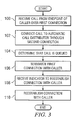
- FIGURE 3 is a flowchart illustrating a method for handling a queued automatic call distributor call in accordance with a particular embodiment.
- the method begins at step 100 where a call is received from an endpoint of a caller over a first connection.
- the call may comprise a request for service from an ACD.
- the call may be received at a PBX, gateway, call manager or other network component between the endpoint of the caller and the ACD.
- the call may be received at a component of an entity or a network of which the caller is associated, such as a PBX of a business or a gateway of a network providing personal telecommunications services to users.
- the first connection may comprise one or more communication links through one or more communication networks.
- the call is connected to an automatic call distributor through a second connection.
- the PBX, gateway, call manager or other intermediary device may connect the call to an automatic call distributor (e.g., may itself call the automatic call distributor) based on a phone number or other information used by the caller to make the original call.
- Functionality of the intermediary device described herein may be performed by a processor which may include a queued call handler of the intermediary device.
- the second connection may include one or more communication links through one or more communication networks.
- Such a determination may be made through any suitable method, such as by monitoring the second connection for a signal or indication that the call has been queued. In some cases this determination may be made by receiving, through the caller's endpoint or otherwise, a signal from the caller indicating that the call has been queued. Such a signal may act as an instruction for the intermediary device to perform the steps below to enable the caller to maintain his place in queue while not having to maintain the first connection between the caller's endpoint and the intermediary device.
- the first connection with the caller is terminated.
- the intermediary device may terminate the connection to allow the caller to hang up his endpoint or in response to the caller hanging up his endpoint.
- the intermediary device maintains the second connection with the ACD when the first connection is terminated.
- call resources including bandwidth such as call minutes or processing resources are saved while the call is queued at the ACD awaiting a transfer to an agent.
- an indicator is received to reestablish a connection with the caller.
- This indicator may comprise, for example, a signal that the call has been transferred out of the queue to an ACD agent. This signal may come from the ACD.
- the intermediary device may monitor the second connection with the ACD for the indicator.
- the intermediary device may continuously play a message to the ACD for an agent to transmit a transfer signal when the call is transferred to an agent.
- the indicator indicating a transfer of the call may include the transfer signal received from the agent to whom the call is transferred upon such transfer.
- the received indicator may also include predefined speech indicating an answering of the call by an agent (e.g., speech such as "hello" received through ASR functionality of the intermediary device) or the termination of hold music played by the ACD while the call has been queued.
- the ACD may communicate an estimated wait time for the queued call, and the received indicator may include the determination by the intermediary device that such wait time has elapsed or is near elapsing.
- the received indicator may also include a SIP communication received from the ACD that indicates a transfer of the call to an agent.
- the receipt of the indicator to reestablish a connection with the caller may include a request from the caller (e.g., through the caller's endpoint) to reestablish the connection between the endpoint and the intermediary device.
- the intermediary device may communicate an estimated hold time received from the ACD to the caller, and the caller may call back the intermediary device at or near the end of the hold time. This call back from the user may serve as the receipt of an indicator to reestablish a connection with the caller.
- the language of step 108 may include the situation where the user calls back (e.g., calling the ACD, the intermediary device or otherwise) to check on the status of the call in the queue.
- a connection with the caller (e.g., with the caller's endpoint) is reestablished so that the caller may communicate with the ACD agent handling the call.
- this may include the intermediary device ringing the endpoint of the caller upon response to receiving the indicator to reestablish a connection with the caller.
- the intermediary device may reestablish the connection between the caller's endpoint and the intermediary device. Since the connection between the intermediary device and the ACD has been maintained to maintain the caller's place in the queue, the caller is now connected to the ACD via the intermediary device.
- Technical advantages of particular embodiments include a system and method for handling a queued ACD call that allows a caller of an ACD whose call has been queued by the ACD to disconnect his endpoint connection while an intermediary device, such as a PBX, gateway, call manager or otherwise maintains a connection with the ACD to hold the caller's place in the queue.
- an intermediary device such as a PBX, gateway, call manager or otherwise maintains a connection with the ACD to hold the caller's place in the queue.
- the connection with the caller may be reestablished so that the caller can communicate with the ACD agent. Accordingly, use of call resources such as bandwidth (e.g., cell phone or other call minutes) and processing resources used to maintain the voice path or other connection on the caller's endpoint may be reduced.
- Bandwidth between the caller's endpoint and a telephone system or network may be reduced.
- use of other resources may be reduced such as endpoint power (e.g., cell phone power).
- endpoint power e.g., cell phone power
Landscapes
- Engineering & Computer Science (AREA)
- Signal Processing (AREA)
- Business, Economics & Management (AREA)
- Marketing (AREA)
- Telephonic Communication Services (AREA)
Claims (15)
- Verfahren zum Abwickeln eines Anrufs in einem automatischen Anrufverteiler mit Warteschlange, das Folgendes aufweist:Empfangen, an einer Zwischenvorrichtung (70), eines Anrufs von einem Endpunkt (61) eines Anrufers (60) über eine erste Verbindung (63) zwischen dem Anrufer (60) und der Zwischenvorrichtung (70), wobei der Anruf eine Anforderung eines Dienstes aufweist;Verbinden, durch die Zwischenvorrichtung (70), des Anrufs mit einem automatischen Anrufverteiler (42) durch eine zweite Verbindung (65) zwischen der Zwischenvorrichtung (70) und dem automatischen Anrufverteiler (42);Bestimmen, durch die Zwischenvorrichtung (70), dass der Anruf am automatischen Anrufverteiler (42) in eine Warteschlange (54) eingereiht wird;Beenden der ersten Verbindung (63) zwischen der Zwischenvorrichtung (70) und dem Anrufer (60), während die Zwischenvorrichtung (70) die zweite Verbindung (65) aufrechterhält, um für den Anrufer (60) einen Platz in der der Warteschlange (54) zu halten;Überwachen, durch die Zwischenvorrichtung (70), der zweiten Verbindung (65) mit dem automatischen Anrufverteiler (42) bis zum Empfang einer Anzeige an der Zwischenvorrichtung (70) zur Wiederherstellung einer Verbindung zwischen dem Anrufer (60) und dem automatischen Anrufverteiler (42) undWiederherstellen, durch die Zwischenvorrichtung (70), der Verbindung zwischen dem Anrufer (60) und dem automatischen Anrufverteiler (42), wobei die Anzeige eines der folgenden aufweist:ein Signal über die zweite Verbindung (65), das eine Übergabe eines Anrufs an einen Agenten anzeigt;über die zweite Verbindung (65) empfangene vordefinierte Sprache, die eine Beantwortung eines Anrufs anzeigt;Beendigung von Warteschleifenmusik über die zweite Verbindung (65);Empfangen einer Verbindungsanforderung vom Endpunkt des Anrufers.
- Verfahren nach Anspruch 1:das ferner das Übermitteln einer Nachricht an den automatischen Anrufverteiler (42) über die zweite Verbindung (65) aufweist, damit ein Agent (48) ein Übergabesignal sendet, wenn der Anruf an einen Agenten (48) übergeben wird, aufweist undwobei das Empfangen eines Signals, das eine Übergabe des Anrufs an einen Agenten (48) anzeigt, durch die zweite Verbindung (65) mit dem automatischen Anrufverteiler (42) das Empfangen des Übergabesignals, das die Übergabe des Anrufs an einen Agenten (48) anzeigt, durch die zweite Verbindung (65) aufweist.
- Verfahren nach Anspruch 1, wobei das Empfangen einer Anzeige zur Wiederherstellung einer Verbindung mit dem Anrufer (60) das Empfangen einer Wartezeit für den Anruf in der Warteschlange aufweist.
- Verfahren nach Anspruch 1, wobei das Empfangen einer Anzeige zur Wiederherstellung einer Verbindung mit dem Anrufer (60) das Empfangen einer SIP-Mitteilung, die eine Übergabe des Anrufs an einen Agenten (48) anzeigt, aufweist.
- Verfahren nach Anspruch 1, wobei das Wiederherstellen einer Verbindung mit dem Anrufer (60) das Anklingeln des Endpunkts (61) des Anrufers (60) aufweist.
- Verfahren nach Anspruch 1:das ferner das Übermitteln einer Haltezeit an den Endpunkt (61) des Anrufers (60) aufweist und wobeidas Empfangen einer Verbindungsanforderung vom Endpunkt (61) des Anrufers (60) das Empfangen einer Verbindungsanforderung vom Endpunkt (61) des Anrufers (60) bei ungefährem Ablauf der Haltezeit aufweist.
- Verfahren nach Anspruch 1, das ferner das Übermitteln einer Haltezeit an den Anrufer (60) aufweist.
- Zwischenvorrichtung (70) zum Abwickeln eines Anrufs in einem automatischen Anrufverteiler (42) mit Warteschlange, die Folgendes aufweist:eine Schnittstelle (72), die zum Empfangen eines Anrufs von einem Endpunkt (61) eines Anrufers (60) über eine erste Verbindung (63) zwischen dem Anrufer (60) und der Zwischenvorrichtung (70) funktionell ist, wobei der Anruf eine Dienstanforderung aufweist; undeinen Prozessor (74), der mit der Schnittstelle (72) gekoppelt ist und funktionell ist zum:Verbinden des Anrufs mit einem automatischen Anrufverteiler (42) durch eine zweite Verbindung (65) zwischen der Zwischenvorrichtung (70) und dem automatischen Anrufverteiler (42);Bestimmen, dass der Anruf am automatischen Anrufverteiler (42) in eine Warteschlange (54) eingereiht wird;Beenden der ersten Verbindung (63) zwischen der Zwischenvorrichtung (70) und dem Anrufer (60), während die Zwischenvorrichtung (70) die zweite Verbindung (65) aufrechterhält, um für den Anrufer (60) einen Platz in der der Warteschlange (54) zu halten;Überwachen der zweiten Verbindung (65) bis zum Empfang einer Anzeige zur Wiederherstellung einer Verbindung zwischen dem Anrufer (60) und dem automatischen Anrufverteiler (42) undWiederherstellen der Verbindung zwischen dem Anrufer (60) und dem automatischen Anrufverteiler (42), wobei die Anzeige eines der folgenden aufweist:ein Signal über die zweite Verbindung (65), das eine Übergabe eines Anrufs an einen Agenten anzeigt;über die zweite Verbindung (65) empfangene vordefinierte Sprache, die eine Beantwortung eines Anrufs anzeigt;Beendigung von Warteschleifenmusik über die zweite Verbindung (65);Empfangen einer Verbindungsanforderung vom Endpunkt des Anrufers.
- Zwischenvorrichtung (70) nach Anspruch 8, wobei:der Prozessor (74) ferner zum Übermitteln einer Nachricht an den automatischen Anrufverteiler (42) über die zweite Verbindung (65), damit ein Agent (48) ein Übergabesignal sendet, wenn der Anruf an einen Agenten (48) übergeben wird, funktionell ist undder Prozessor (74), der zum Empfangen eines Signals, das eine Übergabe des Anrufs an einen Agenten (48) anzeigt, durch die zweite Verbindung (65) mit dem automatischen Anrufverteiler (42) funktionell ist, aufweist, dass der Prozessor zum Empfangen des Übergabesignals, das die Übergabe des Anrufs an einen Agenten (48) anzeigt, durch die zweite Verbindung (65) funktionell ist.
- Zwischenvorrichtung (70) nach Anspruch 8, wobei der Prozessor (74), der zum Empfangen einer Anzeige zur Wiederherstellung einer Verbindung mit dem Anrufer (60) funktionell ist, aufweist, dass der Prozessor zum Empfangen einer Wartezeit für den Anruf in der Warteschlange funktionell ist.
- Zwischenvorrichtung (70) nach Anspruch 8, wobei der Prozessor (74), der zum Empfangen einer Anzeige zur Wiederherstellung einer Verbindung mit dem Anrufer (60) funktionell ist, aufweist, dass der Prozessor zum Empfangen einer SIP-Mitteilung, die eine Übergabe des Anrufs an einen Agenten (48) anzeigt, funktionell ist.
- Zwischenvorrichtung (70) nach Anspruch 8, wobei der Prozessor (74), der zum Wiederherstellen einer Verbindung mit dem Anrufer (60) funktionell ist, aufweist, dass der Prozessor zum Anklingeln des Endpunkts des Anrufers (60) funktionell ist.
- Zwischenvorrichtung (70) nach Anspruch 8, wobei:der Prozessor (74) ferner zum Übermitteln einer Haltezeit an den Endpunkt (61) des Anrufers (60) funktionell ist undder Prozessor (74), der zum Empfangen einer Verbindungsanforderung von dem Endpunkt (61) des Anrufers (60) funktionell ist, aufweist, dass der Prozessor zum Empfangen einer Verbindungsanforderung bei ungefährem Ablauf der Haltezeit vom Endpunkt (61) des Anrufers (60) funktionell ist.
- Zwischenvorrichtung (70) nach Anspruch 8, wobei der Prozessor (74) ferner zum Übermitteln einer Haltezeit an den Anrufer (60) funktionell ist.
- Logik, die in einem computerlesbaren Medium ausgestaltet ist, wobei das computerlesbare Medium Kode aufweist, der zum Durchführen eines Verfahrens nach einem der Ansprüche 1 bis 7 funktionell ist.
Applications Claiming Priority (2)
| Application Number | Priority Date | Filing Date | Title |
|---|---|---|---|
| US11/231,598 US7630486B2 (en) | 2005-09-20 | 2005-09-20 | Method and system for handling a queued automatic call distributor call |
| PCT/US2006/033077 WO2007035222A1 (en) | 2005-09-20 | 2006-08-23 | Queuing an automatic call distribution call that has disconnected |
Publications (2)
| Publication Number | Publication Date |
|---|---|
| EP1927243A1 EP1927243A1 (de) | 2008-06-04 |
| EP1927243B1 true EP1927243B1 (de) | 2018-10-03 |
Family
ID=37682579
Family Applications (1)
| Application Number | Title | Priority Date | Filing Date |
|---|---|---|---|
| EP06813705.8A Active EP1927243B1 (de) | 2005-09-20 | 2006-08-23 | Anrufverteilung mit warteschlange für anrufer die auflegen |
Country Status (3)
| Country | Link |
|---|---|
| US (1) | US7630486B2 (de) |
| EP (1) | EP1927243B1 (de) |
| WO (1) | WO2007035222A1 (de) |
Families Citing this family (81)
| Publication number | Priority date | Publication date | Assignee | Title |
|---|---|---|---|---|
| US8705710B2 (en) | 2001-11-01 | 2014-04-22 | Callwave Communications, Llc | Methods and systems for telephony call completion |
| US8433915B2 (en) | 2006-06-28 | 2013-04-30 | Intellisist, Inc. | Selective security masking within recorded speech |
| US8068601B2 (en) | 2006-07-26 | 2011-11-29 | Cisco Technology, Inc. | Queuing and routing telephone calls |
| US8175255B2 (en) * | 2006-08-31 | 2012-05-08 | At&T Intellectual Property I, L.P. | Methods, systems and computer-readable media for managing customer service requests |
| US8929533B2 (en) * | 2006-11-27 | 2015-01-06 | Rockstar Consortium Us Lp | Peer to peer contact center |
| US8774387B2 (en) * | 2007-06-20 | 2014-07-08 | At&T Intellectual Property Ii, Lp | System and method for avoiding hold times on a telephone call |
| US9386151B2 (en) | 2007-11-23 | 2016-07-05 | Foncloud, Inc. | System and method for replacing hold-time with a call-back in a contact center environment |
| US8515028B2 (en) | 2007-11-23 | 2013-08-20 | Foncloud, Inc. | System and method for externally mapping an Interactive Voice Response menu |
| WO2009067719A2 (en) * | 2007-11-23 | 2009-05-28 | Foncloud, Inc. | Method for determining the on-hold status in a call |
| US9288316B2 (en) * | 2007-11-23 | 2016-03-15 | Foncloud, Inc. | System and method for eliminating hold-time in phone calls |
| US8908847B2 (en) * | 2007-11-23 | 2014-12-09 | Foncloud, Inc. | System and method for deep dialing phone systems |
| WO2009124223A1 (en) | 2008-04-02 | 2009-10-08 | Twilio Inc. | System and method for processing telephony sessions |
| US8837465B2 (en) | 2008-04-02 | 2014-09-16 | Twilio, Inc. | System and method for processing telephony sessions |
| CN102227904A (zh) | 2008-10-01 | 2011-10-26 | 特维里奥公司 | 电话网络事件的系统和方法 |
| CN102415068B (zh) | 2009-03-02 | 2015-09-02 | 特维里奥公司 | 用于多租户电话网络的方法和系统 |
| US8885012B2 (en) * | 2009-05-07 | 2014-11-11 | Match.Com, L.L.C. | System and method for providing anonymity in a video/multimedia communications session over a network |
| US9185184B2 (en) | 2009-03-31 | 2015-11-10 | Match.Com, L.L.C. | System and method for providing calendar and speed dating features for matching users in a network environment |
| US8621090B2 (en) * | 2009-05-07 | 2013-12-31 | Match.Com, L.L.C. | System and method for providing sequenced anonymous communication sessions over a network |
| US9148333B2 (en) * | 2009-03-31 | 2015-09-29 | Match.Com, L.L.C. | System and method for providing anonymity in a session initiated protocol network |
| US9210275B2 (en) | 2009-10-07 | 2015-12-08 | Twilio, Inc. | System and method for running a multi-module telephony application |
| US9459925B2 (en) | 2010-06-23 | 2016-10-04 | Twilio, Inc. | System and method for managing a computing cluster |
| US20120208495A1 (en) | 2010-06-23 | 2012-08-16 | Twilio, Inc. | System and method for monitoring account usage on a platform |
| US9459926B2 (en) | 2010-06-23 | 2016-10-04 | Twilio, Inc. | System and method for managing a computing cluster |
| US9590849B2 (en) | 2010-06-23 | 2017-03-07 | Twilio, Inc. | System and method for managing a computing cluster |
| US9338064B2 (en) | 2010-06-23 | 2016-05-10 | Twilio, Inc. | System and method for managing a computing cluster |
| US8838707B2 (en) | 2010-06-25 | 2014-09-16 | Twilio, Inc. | System and method for enabling real-time eventing |
| US20120027185A1 (en) * | 2010-07-27 | 2012-02-02 | Chris Fuelling | Automated marketing system utilizing email trigger for telephone contact |
| US8804934B2 (en) * | 2010-08-31 | 2014-08-12 | Tata Consultancy Services Limited | System and method to enable access of multiple service providers in a single call |
| GB201015954D0 (en) | 2010-09-22 | 2010-11-03 | Data Connection Ltd | Processing telephone calls |
| US8649268B2 (en) | 2011-02-04 | 2014-02-11 | Twilio, Inc. | Method for processing telephony sessions of a network |
| US20140044123A1 (en) | 2011-05-23 | 2014-02-13 | Twilio, Inc. | System and method for real time communicating with a client application |
| US9648006B2 (en) | 2011-05-23 | 2017-05-09 | Twilio, Inc. | System and method for communicating with a client application |
| WO2012162397A1 (en) | 2011-05-23 | 2012-11-29 | Twilio, Inc. | System and method for connecting a communication to a client |
| GB2493018A (en) * | 2011-07-22 | 2013-01-23 | Orderly Mind Ltd | Automated telephone queuing service |
| CN102917142B (zh) * | 2011-08-01 | 2015-11-25 | 上海贝尔股份有限公司 | 遇忙建立呼叫的方法和装置 |
| EP2748776B1 (de) * | 2011-08-26 | 2018-10-31 | Five9, Inc. | Warteschlangenverwaltung in einem prädiktiven netzwerk-kundenservice |
| WO2013044138A1 (en) | 2011-09-21 | 2013-03-28 | Twilio, Inc. | System and method for authorizing and connecting application developers and users |
| US10182147B2 (en) | 2011-09-21 | 2019-01-15 | Twilio Inc. | System and method for determining and communicating presence information |
| US9280541B2 (en) | 2012-01-09 | 2016-03-08 | Five9, Inc. | QR data proxy and protocol gateway |
| US9495227B2 (en) | 2012-02-10 | 2016-11-15 | Twilio, Inc. | System and method for managing concurrent events |
| US20130304928A1 (en) | 2012-05-09 | 2013-11-14 | Twilio, Inc. | System and method for managing latency in a distributed telephony network |
| US9240941B2 (en) | 2012-05-09 | 2016-01-19 | Twilio, Inc. | System and method for managing media in a distributed communication network |
| US9602586B2 (en) | 2012-05-09 | 2017-03-21 | Twilio, Inc. | System and method for managing media in a distributed communication network |
| US9247062B2 (en) | 2012-06-19 | 2016-01-26 | Twilio, Inc. | System and method for queuing a communication session |
| US8737962B2 (en) | 2012-07-24 | 2014-05-27 | Twilio, Inc. | Method and system for preventing illicit use of a telephony platform |
| US8738051B2 (en) | 2012-07-26 | 2014-05-27 | Twilio, Inc. | Method and system for controlling message routing |
| CN102857634A (zh) * | 2012-08-21 | 2013-01-02 | 华为终端有限公司 | 接听来电的方法、装置及终端 |
| US8948356B2 (en) | 2012-10-15 | 2015-02-03 | Twilio, Inc. | System and method for routing communications |
| US8938053B2 (en) | 2012-10-15 | 2015-01-20 | Twilio, Inc. | System and method for triggering on platform usage |
| US9253254B2 (en) | 2013-01-14 | 2016-02-02 | Twilio, Inc. | System and method for offering a multi-partner delegated platform |
| US9282124B2 (en) | 2013-03-14 | 2016-03-08 | Twilio, Inc. | System and method for integrating session initiation protocol communication in a telecommunications platform |
| US9819798B2 (en) | 2013-03-14 | 2017-11-14 | Intellisist, Inc. | Computer-implemented system and method for efficiently facilitating appointments within a call center via an automatic call distributor |
| US9001666B2 (en) | 2013-03-15 | 2015-04-07 | Twilio, Inc. | System and method for improving routing in a distributed communication platform |
| US9338280B2 (en) | 2013-06-19 | 2016-05-10 | Twilio, Inc. | System and method for managing telephony endpoint inventory |
| US9160696B2 (en) | 2013-06-19 | 2015-10-13 | Twilio, Inc. | System for transforming media resource into destination device compatible messaging format |
| US9225840B2 (en) | 2013-06-19 | 2015-12-29 | Twilio, Inc. | System and method for providing a communication endpoint information service |
| US9483328B2 (en) | 2013-07-19 | 2016-11-01 | Twilio, Inc. | System and method for delivering application content |
| US9338018B2 (en) | 2013-09-17 | 2016-05-10 | Twilio, Inc. | System and method for pricing communication of a telecommunication platform |
| US9274858B2 (en) | 2013-09-17 | 2016-03-01 | Twilio, Inc. | System and method for tagging and tracking events of an application platform |
| US9137127B2 (en) | 2013-09-17 | 2015-09-15 | Twilio, Inc. | System and method for providing communication platform metadata |
| US9325624B2 (en) | 2013-11-12 | 2016-04-26 | Twilio, Inc. | System and method for enabling dynamic multi-modal communication |
| US9553799B2 (en) | 2013-11-12 | 2017-01-24 | Twilio, Inc. | System and method for client communication in a distributed telephony network |
| US9344573B2 (en) | 2014-03-14 | 2016-05-17 | Twilio, Inc. | System and method for a work distribution service |
| US9226217B2 (en) | 2014-04-17 | 2015-12-29 | Twilio, Inc. | System and method for enabling multi-modal communication |
| US9774687B2 (en) | 2014-07-07 | 2017-09-26 | Twilio, Inc. | System and method for managing media and signaling in a communication platform |
| US9251371B2 (en) | 2014-07-07 | 2016-02-02 | Twilio, Inc. | Method and system for applying data retention policies in a computing platform |
| US9516101B2 (en) | 2014-07-07 | 2016-12-06 | Twilio, Inc. | System and method for collecting feedback in a multi-tenant communication platform |
| US9246694B1 (en) | 2014-07-07 | 2016-01-26 | Twilio, Inc. | System and method for managing conferencing in a distributed communication network |
| WO2016065080A1 (en) | 2014-10-21 | 2016-04-28 | Twilio, Inc. | System and method for providing a miro-services communication platform |
| US9477975B2 (en) | 2015-02-03 | 2016-10-25 | Twilio, Inc. | System and method for a media intelligence platform |
| US9948703B2 (en) | 2015-05-14 | 2018-04-17 | Twilio, Inc. | System and method for signaling through data storage |
| US10419891B2 (en) | 2015-05-14 | 2019-09-17 | Twilio, Inc. | System and method for communicating through multiple endpoints |
| US10033864B2 (en) * | 2015-05-18 | 2018-07-24 | Interactive Intelligence Group, Inc. | Dynamically switching communications to text interactions |
| US10659349B2 (en) | 2016-02-04 | 2020-05-19 | Twilio Inc. | Systems and methods for providing secure network exchanged for a multitenant virtual private cloud |
| US10686902B2 (en) | 2016-05-23 | 2020-06-16 | Twilio Inc. | System and method for a multi-channel notification service |
| US10063713B2 (en) | 2016-05-23 | 2018-08-28 | Twilio Inc. | System and method for programmatic device connectivity |
| US10754978B2 (en) | 2016-07-29 | 2020-08-25 | Intellisist Inc. | Computer-implemented system and method for storing and retrieving sensitive information |
| US10735475B2 (en) * | 2016-10-04 | 2020-08-04 | Avaya Inc. | Session initiation protocol (SIP) dialog reconstruction through reconstruction anchors for user agents |
| CN108712580B (zh) * | 2018-05-10 | 2020-08-11 | 我要家网络科技有限公司 | 一种定向回拨在线咨询免费通话系统 |
| US11762757B2 (en) * | 2021-10-07 | 2023-09-19 | Jpmorgan Chase Bank, N.A. | System and method for model-driven multi-cloud contact center |
| US20250280214A1 (en) * | 2024-02-29 | 2025-09-04 | Textnow, Inc. | System and method for establishing calls |
Family Cites Families (54)
| Publication number | Priority date | Publication date | Assignee | Title |
|---|---|---|---|---|
| US4788715A (en) | 1986-10-16 | 1988-11-29 | American Telephone And Telegraph Company At&T Bell Laboratories | Announcing waiting times in queuing systems |
| US5155761A (en) * | 1990-01-26 | 1992-10-13 | Intervoice, Inc. | Automatic call back system and method of operation |
| US5181236A (en) | 1990-09-25 | 1993-01-19 | Rockwell International Corporation | Automatic call returning method for call distributor with message record capability |
| US5309505A (en) | 1991-05-20 | 1994-05-03 | Inventions, Inc. | Automated voice system for improving agent efficiency and improving service to parties on hold |
| US5311574A (en) * | 1991-10-23 | 1994-05-10 | At&T Bell Laboratories | Automatic customer call back for automatic call distribution systems |
| US5991645A (en) | 1992-03-02 | 1999-11-23 | Gn Netcom, Inc. | Wireless telephone headset system with automatic log on/log off detection |
| US5329583A (en) | 1992-06-30 | 1994-07-12 | At&T Bell Laboratories | Enhanced automatic call distribution system operation |
| US5857018A (en) | 1992-08-11 | 1999-01-05 | Rockwell International Corp. | Automatic call distributor with prioritization |
| US5526416A (en) | 1992-11-16 | 1996-06-11 | Dezonno; Anthony J. | Automatic call distribution system with an ISDN compatible call connection system and method |
| US6185619B1 (en) | 1996-12-09 | 2001-02-06 | Genuity Inc. | Method and apparatus for balancing the process load on network servers according to network and serve based policies |
| US5506898A (en) | 1994-07-12 | 1996-04-09 | At&T Corp. | Expected wait-time indication arrangement |
| DE19536212B4 (de) | 1994-09-28 | 2004-12-23 | Rockwell International Corp., Downers Grove | Anordnung zum Erkennen eines Anrufbeantworters |
| US5774668A (en) | 1995-06-07 | 1998-06-30 | Microsoft Corporation | System for on-line service in which gateway computer uses service map which includes loading condition of servers broadcasted by application servers for load balancing |
| US6128657A (en) | 1996-02-14 | 2000-10-03 | Fujitsu Limited | Load sharing system |
| US5774660A (en) | 1996-08-05 | 1998-06-30 | Resonate, Inc. | World-wide-web server with delayed resource-binding for resource-based load balancing on a distributed resource multi-node network |
| US5946388A (en) | 1997-02-06 | 1999-08-31 | Walker Asset Management Limited Partnership | Method and apparatus for priority queuing of telephone calls |
| US6263066B1 (en) | 1997-02-06 | 2001-07-17 | Genesys Telecommunications Laboratories, Inc. | Multimedia managing and prioritized queuing system integrated with intelligent routing capability |
| US6002760A (en) | 1998-02-17 | 1999-12-14 | Genesys Telecommunications Laboratories, Inc. | Intelligent virtual queue |
| US5905793A (en) | 1997-03-07 | 1999-05-18 | Lucent Technologies Inc. | Waiting-call selection based on anticipated wait times |
| US6016305A (en) | 1997-03-27 | 2000-01-18 | Lucent Technologies Inc. | Apparatus and method for template-based scheduling processes using regularity measure lower bounds |
| US6046762A (en) | 1997-04-01 | 2000-04-04 | Cosmocom, Inc. | Multimedia telecommunication automatic call distribution system |
| US5978467A (en) | 1997-04-11 | 1999-11-02 | Walker Asset Management Limited Partnership | Method and apparatus for enabling interaction between callers with calls positioned in a queue |
| US6088444A (en) | 1997-04-11 | 2000-07-11 | Walker Asset Management Limited Partnership | Method and apparatus for value-based queuing of telephone calls |
| CA2202572C (en) | 1997-04-14 | 2004-02-10 | Ka Lun Eddie Law | A scaleable web server and method of efficiently managing multiple servers |
| US6445704B1 (en) | 1997-05-02 | 2002-09-03 | Cisco Technology, Inc. | Method and apparatus for virtualizing a locally initiated outbound connection from a connection manager |
| US6201962B1 (en) | 1997-05-14 | 2001-03-13 | Telxon Corporation | Seamless roaming among multiple networks including seamless transitioning between multiple devices |
| US6137777A (en) | 1997-05-27 | 2000-10-24 | Ukiah Software, Inc. | Control tool for bandwidth management |
| US6411805B1 (en) * | 1997-06-05 | 2002-06-25 | Mci Communications Corporation | System and method for a network-based call continuation service |
| US6263368B1 (en) | 1997-06-19 | 2001-07-17 | Sun Microsystems, Inc. | Network load balancing for multi-computer server by counting message packets to/from multi-computer server |
| US6128642A (en) | 1997-07-22 | 2000-10-03 | At&T Corporation | Load balancing based on queue length, in a network of processor stations |
| US6006264A (en) | 1997-08-01 | 1999-12-21 | Arrowpoint Communications, Inc. | Method and system for directing a flow between a client and a server |
| US6148410A (en) | 1997-09-15 | 2000-11-14 | International Business Machines Corporation | Fault tolerant recoverable TCP/IP connection router |
| US5903642A (en) | 1997-09-24 | 1999-05-11 | Call-A-Guide, Inc. | Method for eliminating telephone hold time |
| US6493447B1 (en) * | 1997-11-21 | 2002-12-10 | Mci Communications Corporation | Contact server for call center for syncronizing simultaneous telephone calls and TCP/IP communications |
| US6295354B1 (en) | 1998-06-26 | 2001-09-25 | Rockwell Semiconductor Systems, Inc. | Method for incoming call answering for automatic call distributors |
| US6249801B1 (en) | 1998-07-15 | 2001-06-19 | Radware Ltd. | Load balancing |
| US6327622B1 (en) | 1998-09-03 | 2001-12-04 | Sun Microsystems, Inc. | Load balancing in a network environment |
| WO2000016209A1 (en) | 1998-09-15 | 2000-03-23 | Local2Me.Com, Inc. | Dynamic matchingtm of users for group communication |
| US6434618B1 (en) | 1998-11-12 | 2002-08-13 | Lucent Technologies Inc. | Programmable network element for packet-switched computer network |
| US6442165B1 (en) | 1998-12-02 | 2002-08-27 | Cisco Technology, Inc. | Load balancing between service component instances |
| US6665537B1 (en) | 1999-01-21 | 2003-12-16 | Qualcomm, Incorporated | Automatic invocation of mobile IP registration in a wireless communication network |
| US6393458B1 (en) | 1999-01-28 | 2002-05-21 | Genrad, Inc. | Method and apparatus for load balancing in a distributed object architecture |
| US6154528A (en) | 1999-02-11 | 2000-11-28 | Ameritech Corporation | System and method for storing and transferring information tokens in a low network communication |
| US6546097B1 (en) | 1999-05-13 | 2003-04-08 | Rockwell Electronic Commerce Corp. | Automatic call distribution system with signal generator and method |
| US6374300B2 (en) | 1999-07-15 | 2002-04-16 | F5 Networks, Inc. | Method and system for storing load balancing information with an HTTP cookie |
| US6788769B1 (en) | 1999-10-13 | 2004-09-07 | Emediacy, Inc. | Internet directory system and method using telephone number based addressing |
| US6484143B1 (en) | 1999-11-22 | 2002-11-19 | Speedera Networks, Inc. | User device and system for traffic management and content distribution over a world wide area network |
| US6724885B1 (en) | 2000-03-31 | 2004-04-20 | Lucent Technologies Inc. | Automatic call distribution center with queue position restoration for call-back customers |
| US6665396B1 (en) | 2000-10-06 | 2003-12-16 | Cisco Technologies, Inc. | Call hold manager system and method |
| US6546087B2 (en) | 2001-02-16 | 2003-04-08 | Siemens Information & Communication Networks, Inc. | Method and system for enabling queue camp-on for skills-based routing |
| US6879683B1 (en) * | 2001-06-28 | 2005-04-12 | Bellsouth Intellectual Property Corp. | System and method for providing a call back option for callers to a call center |
| US6704396B2 (en) * | 2002-02-27 | 2004-03-09 | Sbc Technology Resources, Inc. | Multi-modal communications method |
| US7315617B2 (en) * | 2003-08-25 | 2008-01-01 | Cisco Technology, Inc. | Method and system for managing calls of an automatic call distributor |
| US20060109974A1 (en) * | 2004-11-23 | 2006-05-25 | Sbc Knowledge Ventures, L.P. | System and method for IVR transfer of an inbound call |
-
2005
- 2005-09-20 US US11/231,598 patent/US7630486B2/en active Active
-
2006
- 2006-08-23 WO PCT/US2006/033077 patent/WO2007035222A1/en not_active Ceased
- 2006-08-23 EP EP06813705.8A patent/EP1927243B1/de active Active
Non-Patent Citations (1)
| Title |
|---|
| None * |
Also Published As
| Publication number | Publication date |
|---|---|
| US20070071223A1 (en) | 2007-03-29 |
| WO2007035222A1 (en) | 2007-03-29 |
| EP1927243A1 (de) | 2008-06-04 |
| US7630486B2 (en) | 2009-12-08 |
Similar Documents
| Publication | Publication Date | Title |
|---|---|---|
| EP1927243B1 (de) | Anrufverteilung mit warteschlange für anrufer die auflegen | |
| US7315617B2 (en) | Method and system for managing calls of an automatic call distributor | |
| US7801295B2 (en) | Method and system for providing agent training | |
| US7170991B2 (en) | Method and system for utilizing proxy designation in a call system | |
| US6909776B2 (en) | Systems and methods for monitoring network-based voice messaging systems | |
| US7580510B2 (en) | Peer to peer voice over IP network with distributed call processing | |
| US6934380B2 (en) | Method and system for automatic contact distribution utilizing presence detection | |
| US8284920B2 (en) | Method and system for transferring a call at an automatic call distribution system | |
| JP4519962B2 (ja) | 通信制御システム | |
| US7899172B2 (en) | Call forwarding systems, methods and network devices | |
| US8081749B1 (en) | System and method for integrated queue management | |
| KR101233736B1 (ko) | 분산형 피어-투-피어 네트워크에서 브리지 호 출현을 위한시스템 및 방법 | |
| US7657263B1 (en) | Method and system for automatic call distribution based on customized logic relating to agent behavior | |
| US8102985B2 (en) | Method and system for providing a camp-on hold service | |
| US7542561B1 (en) | Method and system for queuing calls based on call time commitment | |
| CN1476220B (zh) | 分布式电话系统中支持集中式语音信箱服务的方法和装置 | |
| US8548156B2 (en) | Method and system for blocking lower priority communications for improved automatic call distribution | |
| US20060154654A1 (en) | Method and system for the automated answering and holding of a call | |
| US8102991B2 (en) | Method and system for automatic call distribution | |
| US7853001B2 (en) | Method and system for providing a camp-on service | |
| EP1664980B1 (de) | Verfahren und system zur benutzung der proxy-kennzeichnung in einem anrufsystem |
Legal Events
| Date | Code | Title | Description |
|---|---|---|---|
| PUAI | Public reference made under article 153(3) epc to a published international application that has entered the european phase |
Free format text: ORIGINAL CODE: 0009012 |
|
| 17P | Request for examination filed |
Effective date: 20080129 |
|
| AK | Designated contracting states |
Kind code of ref document: A1 Designated state(s): AT BE BG CH CY CZ DE DK EE ES FI FR GB GR HU IE IS IT LI LT LU LV MC NL PL PT RO SE SI SK TR |
|
| RIN1 | Information on inventor provided before grant (corrected) |
Inventor name: JABBOUR, FADI, R. Inventor name: LEE, JOHNNY, H. Inventor name: LEE, DAVID, C. |
|
| DAX | Request for extension of the european patent (deleted) | ||
| RAP1 | Party data changed (applicant data changed or rights of an application transferred) |
Owner name: CISCO TECHNOLOGY, INC. |
|
| 17Q | First examination report despatched |
Effective date: 20160218 |
|
| GRAP | Despatch of communication of intention to grant a patent |
Free format text: ORIGINAL CODE: EPIDOSNIGR1 |
|
| STAA | Information on the status of an ep patent application or granted ep patent |
Free format text: STATUS: GRANT OF PATENT IS INTENDED |
|
| RIC1 | Information provided on ipc code assigned before grant |
Ipc: H04M 3/523 20060101AFI20180314BHEP |
|
| INTG | Intention to grant announced |
Effective date: 20180410 |
|
| GRAS | Grant fee paid |
Free format text: ORIGINAL CODE: EPIDOSNIGR3 |
|
| GRAA | (expected) grant |
Free format text: ORIGINAL CODE: 0009210 |
|
| STAA | Information on the status of an ep patent application or granted ep patent |
Free format text: STATUS: THE PATENT HAS BEEN GRANTED |
|
| AK | Designated contracting states |
Kind code of ref document: B1 Designated state(s): AT BE BG CH CY CZ DE DK EE ES FI FR GB GR HU IE IS IT LI LT LU LV MC NL PL PT RO SE SI SK TR |
|
| REG | Reference to a national code |
Ref country code: GB Ref legal event code: FG4D |
|
| REG | Reference to a national code |
Ref country code: CH Ref legal event code: EP Ref country code: AT Ref legal event code: REF Ref document number: 1049920 Country of ref document: AT Kind code of ref document: T Effective date: 20181015 |
|
| REG | Reference to a national code |
Ref country code: DE Ref legal event code: R096 Ref document number: 602006056507 Country of ref document: DE |
|
| REG | Reference to a national code |
Ref country code: IE Ref legal event code: FG4D |
|
| REG | Reference to a national code |
Ref country code: NL Ref legal event code: MP Effective date: 20181003 |
|
| REG | Reference to a national code |
Ref country code: LT Ref legal event code: MG4D |
|
| REG | Reference to a national code |
Ref country code: AT Ref legal event code: MK05 Ref document number: 1049920 Country of ref document: AT Kind code of ref document: T Effective date: 20181003 |
|
| PG25 | Lapsed in a contracting state [announced via postgrant information from national office to epo] |
Ref country code: NL Free format text: LAPSE BECAUSE OF FAILURE TO SUBMIT A TRANSLATION OF THE DESCRIPTION OR TO PAY THE FEE WITHIN THE PRESCRIBED TIME-LIMIT Effective date: 20181003 |
|
| PG25 | Lapsed in a contracting state [announced via postgrant information from national office to epo] |
Ref country code: AT Free format text: LAPSE BECAUSE OF FAILURE TO SUBMIT A TRANSLATION OF THE DESCRIPTION OR TO PAY THE FEE WITHIN THE PRESCRIBED TIME-LIMIT Effective date: 20181003 Ref country code: PL Free format text: LAPSE BECAUSE OF FAILURE TO SUBMIT A TRANSLATION OF THE DESCRIPTION OR TO PAY THE FEE WITHIN THE PRESCRIBED TIME-LIMIT Effective date: 20181003 Ref country code: LT Free format text: LAPSE BECAUSE OF FAILURE TO SUBMIT A TRANSLATION OF THE DESCRIPTION OR TO PAY THE FEE WITHIN THE PRESCRIBED TIME-LIMIT Effective date: 20181003 Ref country code: ES Free format text: LAPSE BECAUSE OF FAILURE TO SUBMIT A TRANSLATION OF THE DESCRIPTION OR TO PAY THE FEE WITHIN THE PRESCRIBED TIME-LIMIT Effective date: 20181003 Ref country code: FI Free format text: LAPSE BECAUSE OF FAILURE TO SUBMIT A TRANSLATION OF THE DESCRIPTION OR TO PAY THE FEE WITHIN THE PRESCRIBED TIME-LIMIT Effective date: 20181003 Ref country code: BG Free format text: LAPSE BECAUSE OF FAILURE TO SUBMIT A TRANSLATION OF THE DESCRIPTION OR TO PAY THE FEE WITHIN THE PRESCRIBED TIME-LIMIT Effective date: 20190103 Ref country code: LV Free format text: LAPSE BECAUSE OF FAILURE TO SUBMIT A TRANSLATION OF THE DESCRIPTION OR TO PAY THE FEE WITHIN THE PRESCRIBED TIME-LIMIT Effective date: 20181003 Ref country code: CZ Free format text: LAPSE BECAUSE OF FAILURE TO SUBMIT A TRANSLATION OF THE DESCRIPTION OR TO PAY THE FEE WITHIN THE PRESCRIBED TIME-LIMIT Effective date: 20181003 Ref country code: IS Free format text: LAPSE BECAUSE OF FAILURE TO SUBMIT A TRANSLATION OF THE DESCRIPTION OR TO PAY THE FEE WITHIN THE PRESCRIBED TIME-LIMIT Effective date: 20190203 |
|
| PG25 | Lapsed in a contracting state [announced via postgrant information from national office to epo] |
Ref country code: GR Free format text: LAPSE BECAUSE OF FAILURE TO SUBMIT A TRANSLATION OF THE DESCRIPTION OR TO PAY THE FEE WITHIN THE PRESCRIBED TIME-LIMIT Effective date: 20190104 Ref country code: PT Free format text: LAPSE BECAUSE OF FAILURE TO SUBMIT A TRANSLATION OF THE DESCRIPTION OR TO PAY THE FEE WITHIN THE PRESCRIBED TIME-LIMIT Effective date: 20190203 Ref country code: SE Free format text: LAPSE BECAUSE OF FAILURE TO SUBMIT A TRANSLATION OF THE DESCRIPTION OR TO PAY THE FEE WITHIN THE PRESCRIBED TIME-LIMIT Effective date: 20181003 |
|
| REG | Reference to a national code |
Ref country code: DE Ref legal event code: R097 Ref document number: 602006056507 Country of ref document: DE |
|
| PG25 | Lapsed in a contracting state [announced via postgrant information from national office to epo] |
Ref country code: DK Free format text: LAPSE BECAUSE OF FAILURE TO SUBMIT A TRANSLATION OF THE DESCRIPTION OR TO PAY THE FEE WITHIN THE PRESCRIBED TIME-LIMIT Effective date: 20181003 Ref country code: IT Free format text: LAPSE BECAUSE OF FAILURE TO SUBMIT A TRANSLATION OF THE DESCRIPTION OR TO PAY THE FEE WITHIN THE PRESCRIBED TIME-LIMIT Effective date: 20181003 |
|
| PLBE | No opposition filed within time limit |
Free format text: ORIGINAL CODE: 0009261 |
|
| STAA | Information on the status of an ep patent application or granted ep patent |
Free format text: STATUS: NO OPPOSITION FILED WITHIN TIME LIMIT |
|
| PG25 | Lapsed in a contracting state [announced via postgrant information from national office to epo] |
Ref country code: SK Free format text: LAPSE BECAUSE OF FAILURE TO SUBMIT A TRANSLATION OF THE DESCRIPTION OR TO PAY THE FEE WITHIN THE PRESCRIBED TIME-LIMIT Effective date: 20181003 Ref country code: EE Free format text: LAPSE BECAUSE OF FAILURE TO SUBMIT A TRANSLATION OF THE DESCRIPTION OR TO PAY THE FEE WITHIN THE PRESCRIBED TIME-LIMIT Effective date: 20181003 Ref country code: RO Free format text: LAPSE BECAUSE OF FAILURE TO SUBMIT A TRANSLATION OF THE DESCRIPTION OR TO PAY THE FEE WITHIN THE PRESCRIBED TIME-LIMIT Effective date: 20181003 |
|
| 26N | No opposition filed |
Effective date: 20190704 |
|
| PG25 | Lapsed in a contracting state [announced via postgrant information from national office to epo] |
Ref country code: SI Free format text: LAPSE BECAUSE OF FAILURE TO SUBMIT A TRANSLATION OF THE DESCRIPTION OR TO PAY THE FEE WITHIN THE PRESCRIBED TIME-LIMIT Effective date: 20181003 |
|
| PG25 | Lapsed in a contracting state [announced via postgrant information from national office to epo] |
Ref country code: TR Free format text: LAPSE BECAUSE OF FAILURE TO SUBMIT A TRANSLATION OF THE DESCRIPTION OR TO PAY THE FEE WITHIN THE PRESCRIBED TIME-LIMIT Effective date: 20181003 |
|
| PG25 | Lapsed in a contracting state [announced via postgrant information from national office to epo] |
Ref country code: MC Free format text: LAPSE BECAUSE OF FAILURE TO SUBMIT A TRANSLATION OF THE DESCRIPTION OR TO PAY THE FEE WITHIN THE PRESCRIBED TIME-LIMIT Effective date: 20181003 Ref country code: LI Free format text: LAPSE BECAUSE OF NON-PAYMENT OF DUE FEES Effective date: 20190831 Ref country code: CH Free format text: LAPSE BECAUSE OF NON-PAYMENT OF DUE FEES Effective date: 20190831 Ref country code: LU Free format text: LAPSE BECAUSE OF NON-PAYMENT OF DUE FEES Effective date: 20190823 |
|
| REG | Reference to a national code |
Ref country code: BE Ref legal event code: MM Effective date: 20190831 |
|
| PG25 | Lapsed in a contracting state [announced via postgrant information from national office to epo] |
Ref country code: IE Free format text: LAPSE BECAUSE OF NON-PAYMENT OF DUE FEES Effective date: 20190823 |
|
| PG25 | Lapsed in a contracting state [announced via postgrant information from national office to epo] |
Ref country code: BE Free format text: LAPSE BECAUSE OF NON-PAYMENT OF DUE FEES Effective date: 20190831 |
|
| PG25 | Lapsed in a contracting state [announced via postgrant information from national office to epo] |
Ref country code: CY Free format text: LAPSE BECAUSE OF FAILURE TO SUBMIT A TRANSLATION OF THE DESCRIPTION OR TO PAY THE FEE WITHIN THE PRESCRIBED TIME-LIMIT Effective date: 20181003 |
|
| PG25 | Lapsed in a contracting state [announced via postgrant information from national office to epo] |
Ref country code: HU Free format text: LAPSE BECAUSE OF FAILURE TO SUBMIT A TRANSLATION OF THE DESCRIPTION OR TO PAY THE FEE WITHIN THE PRESCRIBED TIME-LIMIT; INVALID AB INITIO Effective date: 20060823 |
|
| P01 | Opt-out of the competence of the unified patent court (upc) registered |
Effective date: 20230525 |
|
| PGFP | Annual fee paid to national office [announced via postgrant information from national office to epo] |
Ref country code: DE Payment date: 20250715 Year of fee payment: 20 |
|
| PGFP | Annual fee paid to national office [announced via postgrant information from national office to epo] |
Ref country code: GB Payment date: 20250801 Year of fee payment: 20 |
|
| PGFP | Annual fee paid to national office [announced via postgrant information from national office to epo] |
Ref country code: FR Payment date: 20250804 Year of fee payment: 20 |