EP2274344B1 - Polyalphaolefins and processes for forming polyalphaolefins - Google Patents
Polyalphaolefins and processes for forming polyalphaolefins Download PDFInfo
- Publication number
- EP2274344B1 EP2274344B1 EP09743251A EP09743251A EP2274344B1 EP 2274344 B1 EP2274344 B1 EP 2274344B1 EP 09743251 A EP09743251 A EP 09743251A EP 09743251 A EP09743251 A EP 09743251A EP 2274344 B1 EP2274344 B1 EP 2274344B1
- Authority
- EP
- European Patent Office
- Prior art keywords
- pao
- catalyst
- olefin
- hydrocarbon
- weight percent
- Prior art date
- Legal status (The legal status is an assumption and is not a legal conclusion. Google has not performed a legal analysis and makes no representation as to the accuracy of the status listed.)
- Not-in-force
Links
- 229920013639 polyalphaolefin Polymers 0.000 title claims abstract description 268
- 238000000034 method Methods 0.000 title claims abstract description 78
- 230000008569 process Effects 0.000 title claims abstract description 71
- 239000003054 catalyst Substances 0.000 claims abstract description 190
- 238000006243 chemical reaction Methods 0.000 claims abstract description 177
- 239000004711 α-olefin Substances 0.000 claims abstract description 131
- 229930195733 hydrocarbon Natural products 0.000 claims abstract description 113
- 150000002430 hydrocarbons Chemical class 0.000 claims abstract description 111
- 229930195734 saturated hydrocarbon Natural products 0.000 claims abstract description 105
- 239000004215 Carbon black (E152) Substances 0.000 claims abstract description 93
- 239000001257 hydrogen Substances 0.000 claims abstract description 83
- 229910052739 hydrogen Inorganic materials 0.000 claims abstract description 83
- 125000004432 carbon atom Chemical group C* 0.000 claims abstract description 28
- 230000000379 polymerizing effect Effects 0.000 claims abstract description 13
- 125000004435 hydrogen atom Chemical class [H]* 0.000 claims abstract description 6
- AFFLGGQVNFXPEV-UHFFFAOYSA-N 1-decene Chemical compound CCCCCCCCC=C AFFLGGQVNFXPEV-UHFFFAOYSA-N 0.000 claims description 89
- DIOQZVSQGTUSAI-UHFFFAOYSA-N decane Chemical compound CCCCCCCCCC DIOQZVSQGTUSAI-UHFFFAOYSA-N 0.000 claims description 78
- 229910052799 carbon Inorganic materials 0.000 claims description 13
- JWODTHZDJZWWEU-UHFFFAOYSA-L [Cl-].[Cl-].C1(=CC=CC=C1)C(C1=CC=CC=C1)=[Zr+2]C1C2=CC=CC=C2C=2C=CC=C(C1=2)C1C=CC=C1 Chemical compound [Cl-].[Cl-].C1(=CC=CC=C1)C(C1=CC=CC=C1)=[Zr+2]C1C2=CC=CC=C2C=2C=CC=C(C1=2)C1C=CC=C1 JWODTHZDJZWWEU-UHFFFAOYSA-L 0.000 claims description 6
- 229920001519 homopolymer Polymers 0.000 claims description 4
- 238000010924 continuous production Methods 0.000 claims description 3
- 239000000178 monomer Substances 0.000 abstract description 156
- 229920006395 saturated elastomer Polymers 0.000 abstract description 21
- 239000003463 adsorbent Substances 0.000 abstract description 20
- 239000007787 solid Substances 0.000 abstract description 16
- 239000002245 particle Substances 0.000 abstract description 10
- 239000000047 product Substances 0.000 description 77
- UFHFLCQGNIYNRP-UHFFFAOYSA-N Hydrogen Chemical compound [H][H] UFHFLCQGNIYNRP-UHFFFAOYSA-N 0.000 description 64
- 238000006116 polymerization reaction Methods 0.000 description 56
- 238000000926 separation method Methods 0.000 description 53
- YXFVVABEGXRONW-UHFFFAOYSA-N Toluene Chemical compound CC1=CC=CC=C1 YXFVVABEGXRONW-UHFFFAOYSA-N 0.000 description 48
- 239000000203 mixture Substances 0.000 description 35
- -1 zirconium Chemical class 0.000 description 27
- 239000012968 metallocene catalyst Substances 0.000 description 24
- 239000002904 solvent Substances 0.000 description 24
- 239000000314 lubricant Substances 0.000 description 22
- 230000000052 comparative effect Effects 0.000 description 21
- 239000000463 material Substances 0.000 description 21
- 229920000642 polymer Polymers 0.000 description 17
- 150000002431 hydrogen Chemical class 0.000 description 16
- 239000007788 liquid Substances 0.000 description 16
- CPOFMOWDMVWCLF-UHFFFAOYSA-N methyl(oxo)alumane Chemical compound C[Al]=O CPOFMOWDMVWCLF-UHFFFAOYSA-N 0.000 description 16
- 239000000243 solution Substances 0.000 description 16
- 150000001875 compounds Chemical class 0.000 description 13
- 238000004458 analytical method Methods 0.000 description 12
- 238000001460 carbon-13 nuclear magnetic resonance spectrum Methods 0.000 description 12
- 230000001965 increasing effect Effects 0.000 description 12
- 239000012530 fluid Substances 0.000 description 11
- 239000003446 ligand Substances 0.000 description 11
- NFHFRUOZVGFOOS-UHFFFAOYSA-N palladium;triphenylphosphane Chemical compound [Pd].C1=CC=CC=C1P(C=1C=CC=CC=1)C1=CC=CC=C1.C1=CC=CC=C1P(C=1C=CC=CC=1)C1=CC=CC=C1.C1=CC=CC=C1P(C=1C=CC=CC=1)C1=CC=CC=C1.C1=CC=CC=C1P(C=1C=CC=CC=1)C1=CC=CC=C1 NFHFRUOZVGFOOS-UHFFFAOYSA-N 0.000 description 11
- LWNGJAHMBMVCJR-UHFFFAOYSA-N (2,3,4,5,6-pentafluorophenoxy)boronic acid Chemical compound OB(O)OC1=C(F)C(F)=C(F)C(F)=C1F LWNGJAHMBMVCJR-UHFFFAOYSA-N 0.000 description 10
- ZCYVEMRRCGMTRW-UHFFFAOYSA-N 7553-56-2 Chemical compound [I] ZCYVEMRRCGMTRW-UHFFFAOYSA-N 0.000 description 10
- 239000006227 byproduct Substances 0.000 description 10
- 229910052740 iodine Inorganic materials 0.000 description 10
- 239000011630 iodine Substances 0.000 description 10
- JRZJOMJEPLMPRA-UHFFFAOYSA-N olefin Natural products CCCCCCCC=C JRZJOMJEPLMPRA-UHFFFAOYSA-N 0.000 description 10
- 239000011541 reaction mixture Substances 0.000 description 10
- QQONPFPTGQHPMA-UHFFFAOYSA-N Propene Chemical compound CC=C QQONPFPTGQHPMA-UHFFFAOYSA-N 0.000 description 9
- 150000001336 alkenes Chemical class 0.000 description 9
- 125000000058 cyclopentadienyl group Chemical group C1(=CC=CC1)* 0.000 description 9
- 238000004519 manufacturing process Methods 0.000 description 9
- 229910052752 metalloid Inorganic materials 0.000 description 9
- UORVGPXVDQYIDP-UHFFFAOYSA-N borane Chemical class B UORVGPXVDQYIDP-UHFFFAOYSA-N 0.000 description 8
- 230000015572 biosynthetic process Effects 0.000 description 7
- 150000001721 carbon Chemical group 0.000 description 7
- 238000004891 communication Methods 0.000 description 7
- 230000000694 effects Effects 0.000 description 7
- 238000010926 purge Methods 0.000 description 7
- 229910052723 transition metal Inorganic materials 0.000 description 7
- 229920001577 copolymer Polymers 0.000 description 6
- 238000010586 diagram Methods 0.000 description 6
- ZSWFCLXCOIISFI-UHFFFAOYSA-N endo-cyclopentadiene Natural products C1C=CC=C1 ZSWFCLXCOIISFI-UHFFFAOYSA-N 0.000 description 6
- 238000005984 hydrogenation reaction Methods 0.000 description 6
- 239000002480 mineral oil Substances 0.000 description 6
- 239000003921 oil Substances 0.000 description 6
- 229920000098 polyolefin Polymers 0.000 description 6
- 150000003624 transition metals Chemical class 0.000 description 6
- CRSBERNSMYQZNG-UHFFFAOYSA-N 1-dodecene Chemical compound CCCCCCCCCCC=C CRSBERNSMYQZNG-UHFFFAOYSA-N 0.000 description 5
- 238000001644 13C nuclear magnetic resonance spectroscopy Methods 0.000 description 5
- WHXSMMKQMYFTQS-UHFFFAOYSA-N Lithium Chemical compound [Li] WHXSMMKQMYFTQS-UHFFFAOYSA-N 0.000 description 5
- 230000004913 activation Effects 0.000 description 5
- 229910000085 borane Inorganic materials 0.000 description 5
- 239000003426 co-catalyst Substances 0.000 description 5
- 229910052736 halogen Inorganic materials 0.000 description 5
- 150000002367 halogens Chemical group 0.000 description 5
- 238000004128 high performance liquid chromatography Methods 0.000 description 5
- 229910052744 lithium Inorganic materials 0.000 description 5
- 229910052751 metal Inorganic materials 0.000 description 5
- 239000002184 metal Substances 0.000 description 5
- 235000010446 mineral oil Nutrition 0.000 description 5
- 238000006384 oligomerization reaction Methods 0.000 description 5
- 239000002685 polymerization catalyst Substances 0.000 description 5
- 238000001228 spectrum Methods 0.000 description 5
- VPGLGRNSAYHXPY-UHFFFAOYSA-L zirconium(2+);dichloride Chemical compound Cl[Zr]Cl VPGLGRNSAYHXPY-UHFFFAOYSA-L 0.000 description 5
- BTBUEUYNUDRHOZ-UHFFFAOYSA-N Borate Chemical compound [O-]B([O-])[O-] BTBUEUYNUDRHOZ-UHFFFAOYSA-N 0.000 description 4
- VYPSYNLAJGMNEJ-UHFFFAOYSA-N Silicium dioxide Chemical compound O=[Si]=O VYPSYNLAJGMNEJ-UHFFFAOYSA-N 0.000 description 4
- QCWXUUIWCKQGHC-UHFFFAOYSA-N Zirconium Chemical compound [Zr] QCWXUUIWCKQGHC-UHFFFAOYSA-N 0.000 description 4
- 125000002877 alkyl aryl group Chemical group 0.000 description 4
- VSCWAEJMTAWNJL-UHFFFAOYSA-K aluminium trichloride Chemical compound Cl[Al](Cl)Cl VSCWAEJMTAWNJL-UHFFFAOYSA-K 0.000 description 4
- 125000003710 aryl alkyl group Chemical group 0.000 description 4
- 238000004821 distillation Methods 0.000 description 4
- 238000009826 distribution Methods 0.000 description 4
- 125000001183 hydrocarbyl group Chemical group 0.000 description 4
- 239000010687 lubricating oil Substances 0.000 description 4
- VLKZOEOYAKHREP-UHFFFAOYSA-N n-Hexane Chemical class CCCCCC VLKZOEOYAKHREP-UHFFFAOYSA-N 0.000 description 4
- 230000007935 neutral effect Effects 0.000 description 4
- 238000003786 synthesis reaction Methods 0.000 description 4
- 229910052726 zirconium Inorganic materials 0.000 description 4
- 125000000027 (C1-C10) alkoxy group Chemical group 0.000 description 3
- UHOVQNZJYSORNB-UHFFFAOYSA-N Benzene Chemical compound C1=CC=CC=C1 UHOVQNZJYSORNB-UHFFFAOYSA-N 0.000 description 3
- OKTJSMMVPCPJKN-UHFFFAOYSA-N Carbon Chemical compound [C] OKTJSMMVPCPJKN-UHFFFAOYSA-N 0.000 description 3
- VYZAMTAEIAYCRO-UHFFFAOYSA-N Chromium Chemical compound [Cr] VYZAMTAEIAYCRO-UHFFFAOYSA-N 0.000 description 3
- RTAQQCXQSZGOHL-UHFFFAOYSA-N Titanium Chemical compound [Ti] RTAQQCXQSZGOHL-UHFFFAOYSA-N 0.000 description 3
- YCXDJXRQSCYMGC-UHFFFAOYSA-L [Cl-].[Cl-].C1(=C(C=CC=C1)C(C1=C(C=CC=C1)C)=[Zr+2](C1C=C(C(=C1)C)C)C1C=CC=C1)C Chemical compound [Cl-].[Cl-].C1(=C(C=CC=C1)C(C1=C(C=CC=C1)C)=[Zr+2](C1C=C(C(=C1)C)C)C1C=CC=C1)C YCXDJXRQSCYMGC-UHFFFAOYSA-L 0.000 description 3
- 230000003213 activating effect Effects 0.000 description 3
- 239000012190 activator Substances 0.000 description 3
- 229910052796 boron Inorganic materials 0.000 description 3
- 229910052804 chromium Inorganic materials 0.000 description 3
- 239000011651 chromium Substances 0.000 description 3
- 239000004927 clay Substances 0.000 description 3
- 239000000356 contaminant Substances 0.000 description 3
- 230000003247 decreasing effect Effects 0.000 description 3
- 239000002270 dispersing agent Substances 0.000 description 3
- 229940069096 dodecene Drugs 0.000 description 3
- 230000006870 function Effects 0.000 description 3
- 238000005227 gel permeation chromatography Methods 0.000 description 3
- DMEGYFMYUHOHGS-UHFFFAOYSA-N heptamethylene Natural products C1CCCCCC1 DMEGYFMYUHOHGS-UHFFFAOYSA-N 0.000 description 3
- 239000007791 liquid phase Substances 0.000 description 3
- GYNNXHKOJHMOHS-UHFFFAOYSA-N methyl-cycloheptane Natural products CC1CCCCCC1 GYNNXHKOJHMOHS-UHFFFAOYSA-N 0.000 description 3
- UAEPNZWRGJTJPN-UHFFFAOYSA-N methylcyclohexane Chemical compound CC1CCCCC1 UAEPNZWRGJTJPN-UHFFFAOYSA-N 0.000 description 3
- 230000008707 rearrangement Effects 0.000 description 3
- 150000004760 silicates Chemical class 0.000 description 3
- 229910052719 titanium Inorganic materials 0.000 description 3
- 239000010936 titanium Substances 0.000 description 3
- 238000013022 venting Methods 0.000 description 3
- 239000004034 viscosity adjusting agent Substances 0.000 description 3
- XLYOFNOQVPJJNP-UHFFFAOYSA-N water Substances O XLYOFNOQVPJJNP-UHFFFAOYSA-N 0.000 description 3
- 239000008096 xylene Substances 0.000 description 3
- RFFLAFLAYFXFSW-UHFFFAOYSA-N 1,2-dichlorobenzene Chemical compound ClC1=CC=CC=C1Cl RFFLAFLAYFXFSW-UHFFFAOYSA-N 0.000 description 2
- VXNZUUAINFGPBY-UHFFFAOYSA-N 1-Butene Chemical compound CCC=C VXNZUUAINFGPBY-UHFFFAOYSA-N 0.000 description 2
- ZGEGCLOFRBLKSE-UHFFFAOYSA-N 1-Heptene Chemical compound CCCCCC=C ZGEGCLOFRBLKSE-UHFFFAOYSA-N 0.000 description 2
- VQOXUMQBYILCKR-UHFFFAOYSA-N 1-Tridecene Chemical compound CCCCCCCCCCCC=C VQOXUMQBYILCKR-UHFFFAOYSA-N 0.000 description 2
- ADOBXTDBFNCOBN-UHFFFAOYSA-N 1-heptadecene Chemical compound CCCCCCCCCCCCCCCC=C ADOBXTDBFNCOBN-UHFFFAOYSA-N 0.000 description 2
- GQEZCXVZFLOKMC-UHFFFAOYSA-N 1-hexadecene Chemical compound CCCCCCCCCCCCCCC=C GQEZCXVZFLOKMC-UHFFFAOYSA-N 0.000 description 2
- LIKMAJRDDDTEIG-UHFFFAOYSA-N 1-hexene Chemical compound CCCCC=C LIKMAJRDDDTEIG-UHFFFAOYSA-N 0.000 description 2
- KWKAKUADMBZCLK-UHFFFAOYSA-N 1-octene Chemical compound CCCCCCC=C KWKAKUADMBZCLK-UHFFFAOYSA-N 0.000 description 2
- PJLHTVIBELQURV-UHFFFAOYSA-N 1-pentadecene Chemical compound CCCCCCCCCCCCCC=C PJLHTVIBELQURV-UHFFFAOYSA-N 0.000 description 2
- HFDVRLIODXPAHB-UHFFFAOYSA-N 1-tetradecene Chemical compound CCCCCCCCCCCCC=C HFDVRLIODXPAHB-UHFFFAOYSA-N 0.000 description 2
- DCTOHCCUXLBQMS-UHFFFAOYSA-N 1-undecene Chemical compound CCCCCCCCCC=C DCTOHCCUXLBQMS-UHFFFAOYSA-N 0.000 description 2
- YBYIRNPNPLQARY-UHFFFAOYSA-N 1H-indene Natural products C1=CC=C2CC=CC2=C1 YBYIRNPNPLQARY-UHFFFAOYSA-N 0.000 description 2
- WSSSPWUEQFSQQG-UHFFFAOYSA-N 4-methyl-1-pentene Chemical compound CC(C)CC=C WSSSPWUEQFSQQG-UHFFFAOYSA-N 0.000 description 2
- ZOXJGFHDIHLPTG-UHFFFAOYSA-N Boron Chemical group [B] ZOXJGFHDIHLPTG-UHFFFAOYSA-N 0.000 description 2
- 125000006374 C2-C10 alkenyl group Chemical group 0.000 description 2
- 125000000041 C6-C10 aryl group Chemical group 0.000 description 2
- XDTMQSROBMDMFD-UHFFFAOYSA-N Cyclohexane Chemical compound C1CCCCC1 XDTMQSROBMDMFD-UHFFFAOYSA-N 0.000 description 2
- RGSFGYAAUTVSQA-UHFFFAOYSA-N Cyclopentane Chemical compound C1CCCC1 RGSFGYAAUTVSQA-UHFFFAOYSA-N 0.000 description 2
- DGAQECJNVWCQMB-PUAWFVPOSA-M Ilexoside XXIX Chemical compound C[C@@H]1CC[C@@]2(CC[C@@]3(C(=CC[C@H]4[C@]3(CC[C@@H]5[C@@]4(CC[C@@H](C5(C)C)OS(=O)(=O)[O-])C)C)[C@@H]2[C@]1(C)O)C)C(=O)O[C@H]6[C@@H]([C@H]([C@@H]([C@H](O6)CO)O)O)O.[Na+] DGAQECJNVWCQMB-PUAWFVPOSA-M 0.000 description 2
- FYYHWMGAXLPEAU-UHFFFAOYSA-N Magnesium Chemical compound [Mg] FYYHWMGAXLPEAU-UHFFFAOYSA-N 0.000 description 2
- IMNFDUFMRHMDMM-UHFFFAOYSA-N N-Heptane Chemical class CCCCCCC IMNFDUFMRHMDMM-UHFFFAOYSA-N 0.000 description 2
- 238000005481 NMR spectroscopy Methods 0.000 description 2
- CTQNGGLPUBDAKN-UHFFFAOYSA-N O-Xylene Chemical compound CC1=CC=CC=C1C CTQNGGLPUBDAKN-UHFFFAOYSA-N 0.000 description 2
- OAICVXFJPJFONN-UHFFFAOYSA-N Phosphorus Chemical group [P] OAICVXFJPJFONN-UHFFFAOYSA-N 0.000 description 2
- ZLMJMSJWJFRBEC-UHFFFAOYSA-N Potassium Chemical compound [K] ZLMJMSJWJFRBEC-UHFFFAOYSA-N 0.000 description 2
- ATJFFYVFTNAWJD-UHFFFAOYSA-N Tin Chemical compound [Sn] ATJFFYVFTNAWJD-UHFFFAOYSA-N 0.000 description 2
- 239000007983 Tris buffer Substances 0.000 description 2
- RPVWMAUIGAZUDX-UHFFFAOYSA-L [SiH](c1ccccc1)c1ccccc1.CC1=CC(C(C)=C1)[Zr](Cl)(Cl)C1C=C(C)C=C1C Chemical compound [SiH](c1ccccc1)c1ccccc1.CC1=CC(C(C)=C1)[Zr](Cl)(Cl)C1C=C(C)C=C1C RPVWMAUIGAZUDX-UHFFFAOYSA-L 0.000 description 2
- 239000002253 acid Substances 0.000 description 2
- 230000002378 acidificating effect Effects 0.000 description 2
- 125000001931 aliphatic group Chemical group 0.000 description 2
- 229910052782 aluminium Inorganic materials 0.000 description 2
- XAGFODPZIPBFFR-UHFFFAOYSA-N aluminium Chemical compound [Al] XAGFODPZIPBFFR-UHFFFAOYSA-N 0.000 description 2
- PNEYBMLMFCGWSK-UHFFFAOYSA-N aluminium oxide Inorganic materials [O-2].[O-2].[O-2].[Al+3].[Al+3] PNEYBMLMFCGWSK-UHFFFAOYSA-N 0.000 description 2
- 125000005018 aryl alkenyl group Chemical group 0.000 description 2
- 125000003118 aryl group Chemical group 0.000 description 2
- QVGXLLKOCUKJST-UHFFFAOYSA-N atomic oxygen Chemical group [O] QVGXLLKOCUKJST-UHFFFAOYSA-N 0.000 description 2
- 150000001642 boronic acid derivatives Chemical class 0.000 description 2
- BRPQOXSCLDDYGP-UHFFFAOYSA-N calcium oxide Chemical compound [O-2].[Ca+2] BRPQOXSCLDDYGP-UHFFFAOYSA-N 0.000 description 2
- 239000000292 calcium oxide Substances 0.000 description 2
- ODINCKMPIJJUCX-UHFFFAOYSA-N calcium oxide Inorganic materials [Ca]=O ODINCKMPIJJUCX-UHFFFAOYSA-N 0.000 description 2
- 230000003197 catalytic effect Effects 0.000 description 2
- 239000003795 chemical substances by application Substances 0.000 description 2
- 238000007334 copolymerization reaction Methods 0.000 description 2
- 230000009849 deactivation Effects 0.000 description 2
- DOIRQSBPFJWKBE-UHFFFAOYSA-N dibutyl phthalate Chemical compound CCCCOC(=O)C1=CC=CC=C1C(=O)OCCCC DOIRQSBPFJWKBE-UHFFFAOYSA-N 0.000 description 2
- 230000001747 exhibiting effect Effects 0.000 description 2
- 125000003983 fluorenyl group Chemical group C1(=CC=CC=2C3=CC=CC=C3CC12)* 0.000 description 2
- 125000003709 fluoroalkyl group Chemical group 0.000 description 2
- 125000004407 fluoroaryl group Chemical group 0.000 description 2
- 230000009477 glass transition Effects 0.000 description 2
- 125000005842 heteroatom Chemical group 0.000 description 2
- 125000003454 indenyl group Chemical group C1(C=CC2=CC=CC=C12)* 0.000 description 2
- 239000003112 inhibitor Substances 0.000 description 2
- 238000003780 insertion Methods 0.000 description 2
- 230000037431 insertion Effects 0.000 description 2
- 239000011777 magnesium Substances 0.000 description 2
- 229910052749 magnesium Inorganic materials 0.000 description 2
- 239000000395 magnesium oxide Substances 0.000 description 2
- CPLXHLVBOLITMK-UHFFFAOYSA-N magnesium oxide Inorganic materials [Mg]=O CPLXHLVBOLITMK-UHFFFAOYSA-N 0.000 description 2
- 239000000391 magnesium silicate Substances 0.000 description 2
- 235000012243 magnesium silicates Nutrition 0.000 description 2
- AXZKOIWUVFPNLO-UHFFFAOYSA-N magnesium;oxygen(2-) Chemical compound [O-2].[Mg+2] AXZKOIWUVFPNLO-UHFFFAOYSA-N 0.000 description 2
- 230000007246 mechanism Effects 0.000 description 2
- 229910044991 metal oxide Inorganic materials 0.000 description 2
- 150000004706 metal oxides Chemical class 0.000 description 2
- 150000002739 metals Chemical class 0.000 description 2
- GDOPTJXRTPNYNR-UHFFFAOYSA-N methylcyclopentane Chemical compound CC1CCCC1 GDOPTJXRTPNYNR-UHFFFAOYSA-N 0.000 description 2
- 238000002156 mixing Methods 0.000 description 2
- 239000003607 modifier Substances 0.000 description 2
- 239000002808 molecular sieve Substances 0.000 description 2
- VAMFXQBUQXONLZ-UHFFFAOYSA-N n-alpha-eicosene Natural products CCCCCCCCCCCCCCCCCCC=C VAMFXQBUQXONLZ-UHFFFAOYSA-N 0.000 description 2
- NHLUYCJZUXOUBX-UHFFFAOYSA-N nonadec-1-ene Chemical compound CCCCCCCCCCCCCCCCCC=C NHLUYCJZUXOUBX-UHFFFAOYSA-N 0.000 description 2
- CCCMONHAUSKTEQ-UHFFFAOYSA-N octadec-1-ene Chemical compound CCCCCCCCCCCCCCCCC=C CCCMONHAUSKTEQ-UHFFFAOYSA-N 0.000 description 2
- 230000001590 oxidative effect Effects 0.000 description 2
- 229910052760 oxygen Inorganic materials 0.000 description 2
- 239000001301 oxygen Substances 0.000 description 2
- YWAKXRMUMFPDSH-UHFFFAOYSA-N pentene Chemical compound CCCC=C YWAKXRMUMFPDSH-UHFFFAOYSA-N 0.000 description 2
- 230000000737 periodic effect Effects 0.000 description 2
- 239000003208 petroleum Substances 0.000 description 2
- 125000001997 phenyl group Chemical group [H]C1=C([H])C([H])=C(*)C([H])=C1[H] 0.000 description 2
- 229910052698 phosphorus Chemical group 0.000 description 2
- 239000011574 phosphorus Chemical group 0.000 description 2
- 230000000704 physical effect Effects 0.000 description 2
- 229920001296 polysiloxane Polymers 0.000 description 2
- 239000011591 potassium Substances 0.000 description 2
- 229910052700 potassium Inorganic materials 0.000 description 2
- 238000005086 pumping Methods 0.000 description 2
- 238000004064 recycling Methods 0.000 description 2
- 229910052710 silicon Inorganic materials 0.000 description 2
- 239000010703 silicon Substances 0.000 description 2
- 239000000377 silicon dioxide Substances 0.000 description 2
- 239000011734 sodium Substances 0.000 description 2
- 229910052708 sodium Inorganic materials 0.000 description 2
- URGAHOPLAPQHLN-UHFFFAOYSA-N sodium aluminosilicate Chemical compound [Na+].[Al+3].[O-][Si]([O-])=O.[O-][Si]([O-])=O URGAHOPLAPQHLN-UHFFFAOYSA-N 0.000 description 2
- 239000012798 spherical particle Substances 0.000 description 2
- 229910001220 stainless steel Inorganic materials 0.000 description 2
- 239000010935 stainless steel Substances 0.000 description 2
- 229910052718 tin Inorganic materials 0.000 description 2
- 238000012546 transfer Methods 0.000 description 2
- BPKXQSLAVGBZEM-UHFFFAOYSA-N tris[3,5-bis(trifluoromethyl)phenyl]borane Chemical compound FC(F)(F)C1=CC(C(F)(F)F)=CC(B(C=2C=C(C=C(C=2)C(F)(F)F)C(F)(F)F)C=2C=C(C=C(C=2)C(F)(F)F)C(F)(F)F)=C1 BPKXQSLAVGBZEM-UHFFFAOYSA-N 0.000 description 2
- 230000007306 turnover Effects 0.000 description 2
- 239000010457 zeolite Substances 0.000 description 2
- 125000000008 (C1-C10) alkyl group Chemical group 0.000 description 1
- 229940106006 1-eicosene Drugs 0.000 description 1
- FIKTURVKRGQNQD-UHFFFAOYSA-N 1-eicosene Natural products CCCCCCCCCCCCCCCCCC=CC(O)=O FIKTURVKRGQNQD-UHFFFAOYSA-N 0.000 description 1
- GQGTXJRZSBTHOB-UHFFFAOYSA-N 1-phenoxy-4-(4-phenoxyphenoxy)benzene Chemical class C=1C=C(OC=2C=CC(OC=3C=CC=CC=3)=CC=2)C=CC=1OC1=CC=CC=C1 GQGTXJRZSBTHOB-UHFFFAOYSA-N 0.000 description 1
- HNRMPXKDFBEGFZ-UHFFFAOYSA-N 2,2-dimethylbutane Chemical class CCC(C)(C)C HNRMPXKDFBEGFZ-UHFFFAOYSA-N 0.000 description 1
- YHQXBTXEYZIYOV-UHFFFAOYSA-N 3-methylbut-1-ene Chemical compound CC(C)C=C YHQXBTXEYZIYOV-UHFFFAOYSA-N 0.000 description 1
- 241001072256 Boraginaceae Species 0.000 description 1
- 235000007689 Borago officinalis Nutrition 0.000 description 1
- IGZMKWDPBIKTDK-UHFFFAOYSA-N C1C(C([Zr](C2C=CC=C2)(C2CCCCC2)C2CCCCC2)=CC=C2)=C2C2=CC=CC=C12.Cl.Cl Chemical compound C1C(C([Zr](C2C=CC=C2)(C2CCCCC2)C2CCCCC2)=CC=C2)=C2C2=CC=CC=C12.Cl.Cl IGZMKWDPBIKTDK-UHFFFAOYSA-N 0.000 description 1
- HZNHSPPMWVRDKE-UHFFFAOYSA-N CC1=C(F)C(F)=C(F)C(B(C=2C(=C(C)C(F)=C(F)C=2F)CF)C=2C(=C(C)C(F)=C(F)C=2F)CF)=C1CF Chemical compound CC1=C(F)C(F)=C(F)C(B(C=2C(=C(C)C(F)=C(F)C=2F)CF)C=2C(=C(C)C(F)=C(F)C=2F)CF)=C1CF HZNHSPPMWVRDKE-UHFFFAOYSA-N 0.000 description 1
- OXLXAPYJCPFBFT-UHFFFAOYSA-L CC1=CC(C)(C=C1)[Zr](Cl)(Cl)C1(C)C=CC(C)=C1 Chemical compound CC1=CC(C)(C=C1)[Zr](Cl)(Cl)C1(C)C=CC(C)=C1 OXLXAPYJCPFBFT-UHFFFAOYSA-L 0.000 description 1
- OYPRJOBELJOOCE-UHFFFAOYSA-N Calcium Chemical compound [Ca] OYPRJOBELJOOCE-UHFFFAOYSA-N 0.000 description 1
- ZAMOUSCENKQFHK-UHFFFAOYSA-N Chlorine atom Chemical compound [Cl] ZAMOUSCENKQFHK-UHFFFAOYSA-N 0.000 description 1
- SKURHWUGZRHHIG-UHFFFAOYSA-L Cl[Zr](Cl)(C1C=CC=C1)(C1C=CC2=C1CCCC2)=C(C1=CC=CC=C1)C1=CC=CC=C1 Chemical compound Cl[Zr](Cl)(C1C=CC=C1)(C1C=CC2=C1CCCC2)=C(C1=CC=CC=C1)C1=CC=CC=C1 SKURHWUGZRHHIG-UHFFFAOYSA-L 0.000 description 1
- DGPMGBWRNXDALZ-UHFFFAOYSA-L Cl[Zr](Cl)(C1C=CC=C1)(C1C=CC2=CC=CC=C12)=C(C1CCCCC1)C1CCCCC1 Chemical compound Cl[Zr](Cl)(C1C=CC=C1)(C1C=CC2=CC=CC=C12)=C(C1CCCCC1)C1CCCCC1 DGPMGBWRNXDALZ-UHFFFAOYSA-L 0.000 description 1
- AKKALHAZUAHZQU-UHFFFAOYSA-L Cl[Zr](Cl)(C1C=CC=C1)(C1C=CC2=CC=CC=C12)=C(CC1=CC=CC=C1)CC1=CC=CC=C1 Chemical compound Cl[Zr](Cl)(C1C=CC=C1)(C1C=CC2=CC=CC=C12)=C(CC1=CC=CC=C1)CC1=CC=CC=C1 AKKALHAZUAHZQU-UHFFFAOYSA-L 0.000 description 1
- SNRUBQQJIBEYMU-UHFFFAOYSA-N Dodecane Natural products CCCCCCCCCCCC SNRUBQQJIBEYMU-UHFFFAOYSA-N 0.000 description 1
- LFQSCWFLJHTTHZ-UHFFFAOYSA-N Ethanol Chemical compound CCO LFQSCWFLJHTTHZ-UHFFFAOYSA-N 0.000 description 1
- VGGSQFUCUMXWEO-UHFFFAOYSA-N Ethene Chemical compound C=C VGGSQFUCUMXWEO-UHFFFAOYSA-N 0.000 description 1
- 239000005977 Ethylene Substances 0.000 description 1
- JLTDJTHDQAWBAV-UHFFFAOYSA-N N,N-dimethylaniline Chemical compound CN(C)C1=CC=CC=C1 JLTDJTHDQAWBAV-UHFFFAOYSA-N 0.000 description 1
- OFBQJSOFQDEBGM-UHFFFAOYSA-N Pentane Chemical class CCCCC OFBQJSOFQDEBGM-UHFFFAOYSA-N 0.000 description 1
- 239000002202 Polyethylene glycol Substances 0.000 description 1
- 229920002367 Polyisobutene Polymers 0.000 description 1
- 239000004793 Polystyrene Substances 0.000 description 1
- XUIMIQQOPSSXEZ-UHFFFAOYSA-N Silicon Chemical compound [Si] XUIMIQQOPSSXEZ-UHFFFAOYSA-N 0.000 description 1
- NINIDFKCEFEMDL-UHFFFAOYSA-N Sulfur Chemical group [S] NINIDFKCEFEMDL-UHFFFAOYSA-N 0.000 description 1
- 229910007928 ZrCl2 Inorganic materials 0.000 description 1
- UVSSPWOKVSKHCU-UHFFFAOYSA-N [2-(trifluoromethyl)phenoxy]boronic acid Chemical compound OB(O)OC1=CC=CC=C1C(F)(F)F UVSSPWOKVSKHCU-UHFFFAOYSA-N 0.000 description 1
- HFKJQIJFRMRSKM-UHFFFAOYSA-N [3,5-bis(trifluoromethyl)phenoxy]boronic acid Chemical compound OB(O)OC1=CC(C(F)(F)F)=CC(C(F)(F)F)=C1 HFKJQIJFRMRSKM-UHFFFAOYSA-N 0.000 description 1
- UIGXCGOMEBBBGD-UHFFFAOYSA-L [Cl-].[Cl-].C(C1=CC=CC=C1)C(CC1=CC=CC=C1)=[Zr+2](C1(C(=C(C(=C1)C)C)C)C)C1C=CC=C1 Chemical compound [Cl-].[Cl-].C(C1=CC=CC=C1)C(CC1=CC=CC=C1)=[Zr+2](C1(C(=C(C(=C1)C)C)C)C)C1C=CC=C1 UIGXCGOMEBBBGD-UHFFFAOYSA-L 0.000 description 1
- HMGDUCBURSJYBD-UHFFFAOYSA-L [Cl-].[Cl-].C(C1=CC=CC=C1)C(CC1=CC=CC=C1)=[Zr+2](C1=CC=CC=2C3=CC=CC=C3CC1=2)C1C=CC=C1 Chemical compound [Cl-].[Cl-].C(C1=CC=CC=C1)C(CC1=CC=CC=C1)=[Zr+2](C1=CC=CC=2C3=CC=CC=C3CC1=2)C1C=CC=C1 HMGDUCBURSJYBD-UHFFFAOYSA-L 0.000 description 1
- MTIZBYBUQKMVQX-UHFFFAOYSA-L [Cl-].[Cl-].C(C1=CC=CC=C1)[SiH](CC1=CC=CC=C1)[Zr+2](C1=C(C=CC=2C3=CC=C(C=C3CC1=2)C(C)(C)C)C(C)(C)C)C1C=CC=C1 Chemical compound [Cl-].[Cl-].C(C1=CC=CC=C1)[SiH](CC1=CC=CC=C1)[Zr+2](C1=C(C=CC=2C3=CC=C(C=C3CC1=2)C(C)(C)C)C(C)(C)C)C1C=CC=C1 MTIZBYBUQKMVQX-UHFFFAOYSA-L 0.000 description 1
- VODCPMGVNDRTDG-UHFFFAOYSA-L [Cl-].[Cl-].C(C1=CC=CC=C1)[SiH](CC1=CC=CC=C1)[Zr+2](C1=CC=CC=2C3=CC=CC=C3CC1=2)C1C=CC=C1 Chemical compound [Cl-].[Cl-].C(C1=CC=CC=C1)[SiH](CC1=CC=CC=C1)[Zr+2](C1=CC=CC=2C3=CC=CC=C3CC1=2)C1C=CC=C1 VODCPMGVNDRTDG-UHFFFAOYSA-L 0.000 description 1
- LLBJLGLPGZPNKR-UHFFFAOYSA-L [Cl-].[Cl-].C1(=C(C=CC=C1)C(C1=C(C=CC=C1)C)=[Zr+2](C1C=CC2=CC=CC=C12)C1C=CC=C1)C Chemical compound [Cl-].[Cl-].C1(=C(C=CC=C1)C(C1=C(C=CC=C1)C)=[Zr+2](C1C=CC2=CC=CC=C12)C1C=CC=C1)C LLBJLGLPGZPNKR-UHFFFAOYSA-L 0.000 description 1
- KDKNBJHIRGBOSO-UHFFFAOYSA-L [Cl-].[Cl-].C1(=C(C=CC=C1)[SiH](C1=C(C=CC=C1)C)[Zr+2](C1(C(=C(C(=C1)C)C)C)C)C1C=CC=C1)C Chemical compound [Cl-].[Cl-].C1(=C(C=CC=C1)[SiH](C1=C(C=CC=C1)C)[Zr+2](C1(C(=C(C(=C1)C)C)C)C)C1C=CC=C1)C KDKNBJHIRGBOSO-UHFFFAOYSA-L 0.000 description 1
- FCLHURWUBGNBKF-UHFFFAOYSA-L [Cl-].[Cl-].C1(=C(C=CC=C1)[SiH](C1=C(C=CC=C1)C)[Zr+2](C1(C(=C(C=C1)C)C)C)C1C=CC=C1)C Chemical compound [Cl-].[Cl-].C1(=C(C=CC=C1)[SiH](C1=C(C=CC=C1)C)[Zr+2](C1(C(=C(C=C1)C)C)C)C1C=CC=C1)C FCLHURWUBGNBKF-UHFFFAOYSA-L 0.000 description 1
- PWOHBBPSWHKCOE-UHFFFAOYSA-L [Cl-].[Cl-].C1(=C(C=CC=C1)[SiH](C1=C(C=CC=C1)C)[Zr+2](C1(C(=C(C=C1)CC)CC)CC)C1C=CC=C1)C Chemical compound [Cl-].[Cl-].C1(=C(C=CC=C1)[SiH](C1=C(C=CC=C1)C)[Zr+2](C1(C(=C(C=C1)CC)CC)CC)C1C=CC=C1)C PWOHBBPSWHKCOE-UHFFFAOYSA-L 0.000 description 1
- NUMAHUTWOLQTGB-UHFFFAOYSA-L [Cl-].[Cl-].C1(=C(C=CC=C1)[SiH](C1=C(C=CC=C1)C)[Zr+2](C1C=C(C(=C1)CC)CC)C1C=CC=C1)C Chemical compound [Cl-].[Cl-].C1(=C(C=CC=C1)[SiH](C1=C(C=CC=C1)C)[Zr+2](C1C=C(C(=C1)CC)CC)C1C=CC=C1)C NUMAHUTWOLQTGB-UHFFFAOYSA-L 0.000 description 1
- VAEBGLXEWKUQMV-UHFFFAOYSA-L [Cl-].[Cl-].C1(=CC=CC=C1)C(C1=CC=CC=C1)=[Zr+2](C1C(=CC2=CC=CC=C12)C)C1C=CC=C1 Chemical compound [Cl-].[Cl-].C1(=CC=CC=C1)C(C1=CC=CC=C1)=[Zr+2](C1C(=CC2=CC=CC=C12)C)C1C=CC=C1 VAEBGLXEWKUQMV-UHFFFAOYSA-L 0.000 description 1
- CGGGDFGVTGPZAT-UHFFFAOYSA-L [Cl-].[Cl-].C1(=CC=CC=C1)C(C1=CC=CC=C1)=[Zr+2](C1C=C(C=C1C)C(C)(C)C)C1=C(C=C(C1)C(C)(C)C)C Chemical compound [Cl-].[Cl-].C1(=CC=CC=C1)C(C1=CC=CC=C1)=[Zr+2](C1C=C(C=C1C)C(C)(C)C)C1=C(C=C(C1)C(C)(C)C)C CGGGDFGVTGPZAT-UHFFFAOYSA-L 0.000 description 1
- KZHKBEZJIPKURZ-UHFFFAOYSA-L [Cl-].[Cl-].C1(=CC=CC=C1)C(C1=CC=CC=C1)=[Zr+2](C1C=C(C=C1C)C)C1=C(C=C(C1)C)C Chemical compound [Cl-].[Cl-].C1(=CC=CC=C1)C(C1=CC=CC=C1)=[Zr+2](C1C=C(C=C1C)C)C1=C(C=C(C1)C)C KZHKBEZJIPKURZ-UHFFFAOYSA-L 0.000 description 1
- RBQGALRSGWYFMO-UHFFFAOYSA-L [Cl-].[Cl-].C1(C=CC=C1)[Zr+2]C1=CC=CC=2C3=CC=CC=C3CC1=2 Chemical compound [Cl-].[Cl-].C1(C=CC=C1)[Zr+2]C1=CC=CC=2C3=CC=CC=C3CC1=2 RBQGALRSGWYFMO-UHFFFAOYSA-L 0.000 description 1
- BANIKQTXMYAJEO-UHFFFAOYSA-L [Cl-].[Cl-].C1(CCCCC1)C(C1CCCCC1)=[Zr+2](C1=CC=CC=2C3=CC=CC=C3CC1=2)C1C(=CC=C1)C Chemical compound [Cl-].[Cl-].C1(CCCCC1)C(C1CCCCC1)=[Zr+2](C1=CC=CC=2C3=CC=CC=C3CC1=2)C1C(=CC=C1)C BANIKQTXMYAJEO-UHFFFAOYSA-L 0.000 description 1
- RFMANRIMEMNDKO-UHFFFAOYSA-L [Cl-].[Cl-].C1(CCCCC1)[SiH](C1CCCCC1)[Zr+2](C1=CC=CC=2C3=CC=CC=C3CC1=2)C1C=CC=C1 Chemical compound [Cl-].[Cl-].C1(CCCCC1)[SiH](C1CCCCC1)[Zr+2](C1=CC=CC=2C3=CC=CC=C3CC1=2)C1C=CC=C1 RFMANRIMEMNDKO-UHFFFAOYSA-L 0.000 description 1
- BBWXSJQXUKKFAF-UHFFFAOYSA-L [Cl-].[Cl-].C=12CC3=CC=CC=C3C2=CC=CC=1[Zr+2](C1C2=CC=CC=C2C=C1)=C(C=1C=CC=CC=1)C1=CC=CC=C1 Chemical compound [Cl-].[Cl-].C=12CC3=CC=CC=C3C2=CC=CC=1[Zr+2](C1C2=CC=CC=C2C=C1)=C(C=1C=CC=CC=1)C1=CC=CC=C1 BBWXSJQXUKKFAF-UHFFFAOYSA-L 0.000 description 1
- AWXKEFJIQBQSSC-UHFFFAOYSA-L [Cl-].[Cl-].CC1=CC(C)([Zr++]C2(C)C=C(C)C(C)=C2)C=C1C Chemical compound [Cl-].[Cl-].CC1=CC(C)([Zr++]C2(C)C=C(C)C(C)=C2)C=C1C AWXKEFJIQBQSSC-UHFFFAOYSA-L 0.000 description 1
- RSFPLOQWAROJDH-UHFFFAOYSA-L [Cl-].[Cl-].CC1=CC([Zr++]C2(C=CC(C)=C2)C(C)(C)C)(C=C1)C(C)(C)C Chemical compound [Cl-].[Cl-].CC1=CC([Zr++]C2(C=CC(C)=C2)C(C)(C)C)(C=C1)C(C)(C)C RSFPLOQWAROJDH-UHFFFAOYSA-L 0.000 description 1
- 238000013019 agitation Methods 0.000 description 1
- 229910052783 alkali metal Inorganic materials 0.000 description 1
- 125000003342 alkenyl group Chemical group 0.000 description 1
- 125000000217 alkyl group Chemical group 0.000 description 1
- 125000005213 alkyl heteroaryl group Chemical group 0.000 description 1
- 150000004645 aluminates Chemical class 0.000 description 1
- 239000002518 antifoaming agent Substances 0.000 description 1
- 238000013459 approach Methods 0.000 description 1
- 239000008346 aqueous phase Substances 0.000 description 1
- 150000001491 aromatic compounds Chemical class 0.000 description 1
- 239000003849 aromatic solvent Substances 0.000 description 1
- 125000004104 aryloxy group Chemical group 0.000 description 1
- 125000004429 atom Chemical group 0.000 description 1
- 238000010923 batch production Methods 0.000 description 1
- SAOKZLXYCUGLFA-UHFFFAOYSA-N bis(2-ethylhexyl) adipate Chemical compound CCCCC(CC)COC(=O)CCCCC(=O)OCC(CC)CCCC SAOKZLXYCUGLFA-UHFFFAOYSA-N 0.000 description 1
- 235000013844 butane Nutrition 0.000 description 1
- 239000011575 calcium Substances 0.000 description 1
- 229910052791 calcium Inorganic materials 0.000 description 1
- 235000013877 carbamide Nutrition 0.000 description 1
- 238000006555 catalytic reaction Methods 0.000 description 1
- 230000008859 change Effects 0.000 description 1
- 239000007795 chemical reaction product Substances 0.000 description 1
- 239000003153 chemical reaction reagent Substances 0.000 description 1
- 239000007810 chemical reaction solvent Substances 0.000 description 1
- 239000000460 chlorine Substances 0.000 description 1
- 229910052801 chlorine Inorganic materials 0.000 description 1
- 150000001844 chromium Chemical class 0.000 description 1
- 238000007796 conventional method Methods 0.000 description 1
- 238000001816 cooling Methods 0.000 description 1
- 238000005260 corrosion Methods 0.000 description 1
- 230000007797 corrosion Effects 0.000 description 1
- 239000002537 cosmetic Substances 0.000 description 1
- 125000004122 cyclic group Chemical group 0.000 description 1
- 125000000392 cycloalkenyl group Chemical group 0.000 description 1
- 125000000753 cycloalkyl group Chemical group 0.000 description 1
- SSLYIXHGTXGSJZ-UHFFFAOYSA-L cyclopentane;dichlorozirconium;indene Chemical compound Cl[Zr]Cl.[CH]1[CH][CH][CH][CH]1.C1=CC=C[C]2[CH][CH][CH][C]21 SSLYIXHGTXGSJZ-UHFFFAOYSA-L 0.000 description 1
- 239000003599 detergent Substances 0.000 description 1
- 238000009792 diffusion process Methods 0.000 description 1
- 238000010790 dilution Methods 0.000 description 1
- 239000012895 dilution Substances 0.000 description 1
- VJHINFRRDQUWOJ-UHFFFAOYSA-N dioctyl sebacate Chemical compound CCCCC(CC)COC(=O)CCCCCCCCC(=O)OCC(CC)CCCC VJHINFRRDQUWOJ-UHFFFAOYSA-N 0.000 description 1
- USIUVYZYUHIAEV-UHFFFAOYSA-N diphenyl ether Chemical class C=1C=CC=CC=1OC1=CC=CC=C1 USIUVYZYUHIAEV-UHFFFAOYSA-N 0.000 description 1
- NAGJZTKCGNOGPW-UHFFFAOYSA-N dithiophosphoric acid Chemical class OP(O)(S)=S NAGJZTKCGNOGPW-UHFFFAOYSA-N 0.000 description 1
- 230000008030 elimination Effects 0.000 description 1
- 238000003379 elimination reaction Methods 0.000 description 1
- 230000002708 enhancing effect Effects 0.000 description 1
- 150000002148 esters Chemical class 0.000 description 1
- NNYBQONXHNTVIJ-UHFFFAOYSA-N etodolac Chemical compound C1COC(CC)(CC(O)=O)C2=C1C(C=CC=C1CC)=C1N2 NNYBQONXHNTVIJ-UHFFFAOYSA-N 0.000 description 1
- 238000001704 evaporation Methods 0.000 description 1
- 230000008020 evaporation Effects 0.000 description 1
- 230000002349 favourable effect Effects 0.000 description 1
- KTWOOEGAPBSYNW-UHFFFAOYSA-N ferrocene Chemical class [Fe+2].C=1C=C[CH-]C=1.C=1C=C[CH-]C=1 KTWOOEGAPBSYNW-UHFFFAOYSA-N 0.000 description 1
- 239000012467 final product Substances 0.000 description 1
- 238000010528 free radical solution polymerization reaction Methods 0.000 description 1
- 229910052732 germanium Inorganic materials 0.000 description 1
- GNPVGFCGXDBREM-UHFFFAOYSA-N germanium atom Chemical compound [Ge] GNPVGFCGXDBREM-UHFFFAOYSA-N 0.000 description 1
- 229910052735 hafnium Inorganic materials 0.000 description 1
- VBJZVLUMGGDVMO-UHFFFAOYSA-N hafnium atom Chemical compound [Hf] VBJZVLUMGGDVMO-UHFFFAOYSA-N 0.000 description 1
- 125000001072 heteroaryl group Chemical group 0.000 description 1
- 125000004366 heterocycloalkenyl group Chemical group 0.000 description 1
- 125000000592 heterocycloalkyl group Chemical group 0.000 description 1
- 239000012535 impurity Substances 0.000 description 1
- 239000011261 inert gas Substances 0.000 description 1
- 238000011835 investigation Methods 0.000 description 1
- 238000006317 isomerization reaction Methods 0.000 description 1
- 229940063718 lodine Drugs 0.000 description 1
- 239000003879 lubricant additive Substances 0.000 description 1
- 230000001050 lubricating effect Effects 0.000 description 1
- 150000002738 metalloids Chemical class 0.000 description 1
- TVMXDCGIABBOFY-UHFFFAOYSA-N n-Octanol Natural products CCCCCCCC TVMXDCGIABBOFY-UHFFFAOYSA-N 0.000 description 1
- IJDNQMDRQITEOD-UHFFFAOYSA-N n-butane Chemical class CCCC IJDNQMDRQITEOD-UHFFFAOYSA-N 0.000 description 1
- 125000001971 neopentyl group Chemical group [H]C([*])([H])C(C([H])([H])[H])(C([H])([H])[H])C([H])([H])[H] 0.000 description 1
- 229910052758 niobium Inorganic materials 0.000 description 1
- 239000010955 niobium Substances 0.000 description 1
- GUCVJGMIXFAOAE-UHFFFAOYSA-N niobium atom Chemical compound [Nb] GUCVJGMIXFAOAE-UHFFFAOYSA-N 0.000 description 1
- 229910052757 nitrogen Inorganic materials 0.000 description 1
- IJGRMHOSHXDMSA-UHFFFAOYSA-N nitrogen Substances N#N IJGRMHOSHXDMSA-UHFFFAOYSA-N 0.000 description 1
- QJGQUHMNIGDVPM-UHFFFAOYSA-N nitrogen group Chemical group [N] QJGQUHMNIGDVPM-UHFFFAOYSA-N 0.000 description 1
- 230000003606 oligomerizing effect Effects 0.000 description 1
- 230000003647 oxidation Effects 0.000 description 1
- 238000007254 oxidation reaction Methods 0.000 description 1
- WXZMFSXDPGVJKK-UHFFFAOYSA-N pentaerythritol Chemical class OCC(CO)(CO)CO WXZMFSXDPGVJKK-UHFFFAOYSA-N 0.000 description 1
- 125000000538 pentafluorophenyl group Chemical group FC1=C(F)C(F)=C(*)C(F)=C1F 0.000 description 1
- 238000005191 phase separation Methods 0.000 description 1
- XMGMFRIEKMMMSU-UHFFFAOYSA-N phenylmethylbenzene Chemical group C=1C=CC=CC=1[C]C1=CC=CC=C1 XMGMFRIEKMMMSU-UHFFFAOYSA-N 0.000 description 1
- VWSUVZVPDQDVRT-UHFFFAOYSA-N phenylperoxybenzene Chemical class C=1C=CC=CC=1OOC1=CC=CC=C1 VWSUVZVPDQDVRT-UHFFFAOYSA-N 0.000 description 1
- 229920001083 polybutene Polymers 0.000 description 1
- 229920001223 polyethylene glycol Polymers 0.000 description 1
- 229920006389 polyphenyl polymer Polymers 0.000 description 1
- 229920001451 polypropylene glycol Polymers 0.000 description 1
- 229920002223 polystyrene Polymers 0.000 description 1
- 239000000843 powder Substances 0.000 description 1
- 238000002360 preparation method Methods 0.000 description 1
- 125000004805 propylene group Chemical group [H]C([H])([H])C([H])([*:1])C([H])([H])[*:2] 0.000 description 1
- 239000002516 radical scavenger Substances 0.000 description 1
- 230000009467 reduction Effects 0.000 description 1
- 238000010992 reflux Methods 0.000 description 1
- 238000011160 research Methods 0.000 description 1
- 238000012827 research and development Methods 0.000 description 1
- 150000004756 silanes Chemical class 0.000 description 1
- 239000002002 slurry Substances 0.000 description 1
- 238000012916 structural analysis Methods 0.000 description 1
- 125000001424 substituent group Chemical group 0.000 description 1
- KZNICNPSHKQLFF-UHFFFAOYSA-N succinimide Chemical class O=C1CCC(=O)N1 KZNICNPSHKQLFF-UHFFFAOYSA-N 0.000 description 1
- 150000003871 sulfonates Chemical class 0.000 description 1
- 239000011593 sulfur Chemical group 0.000 description 1
- 229910052717 sulfur Inorganic materials 0.000 description 1
- 239000000725 suspension Substances 0.000 description 1
- 229910052715 tantalum Inorganic materials 0.000 description 1
- GUVRBAGPIYLISA-UHFFFAOYSA-N tantalum atom Chemical compound [Ta] GUVRBAGPIYLISA-UHFFFAOYSA-N 0.000 description 1
- 230000008685 targeting Effects 0.000 description 1
- YONPGGFAJWQGJC-UHFFFAOYSA-K titanium(iii) chloride Chemical compound Cl[Ti](Cl)Cl YONPGGFAJWQGJC-UHFFFAOYSA-K 0.000 description 1
- SQBBHCOIQXKPHL-UHFFFAOYSA-N tributylalumane Chemical compound CCCC[Al](CCCC)CCCC SQBBHCOIQXKPHL-UHFFFAOYSA-N 0.000 description 1
- VOITXYVAKOUIBA-UHFFFAOYSA-N triethylaluminium Chemical compound CC[Al](CC)CC VOITXYVAKOUIBA-UHFFFAOYSA-N 0.000 description 1
- 125000002023 trifluoromethyl group Chemical group FC(F)(F)* 0.000 description 1
- MCULRUJILOGHCJ-UHFFFAOYSA-N triisobutylaluminium Chemical compound CC(C)C[Al](CC(C)C)CC(C)C MCULRUJILOGHCJ-UHFFFAOYSA-N 0.000 description 1
- JLTRXTDYQLMHGR-UHFFFAOYSA-N trimethylaluminium Chemical compound C[Al](C)C JLTRXTDYQLMHGR-UHFFFAOYSA-N 0.000 description 1
- CNWZYDSEVLFSMS-UHFFFAOYSA-N tripropylalumane Chemical compound CCC[Al](CCC)CCC CNWZYDSEVLFSMS-UHFFFAOYSA-N 0.000 description 1
- NBZDBMZORQYISZ-UHFFFAOYSA-N tris(2,3,4,5-tetrafluoro-6-methylphenyl)borane Chemical compound CC1=C(F)C(F)=C(F)C(F)=C1B(C=1C(=C(F)C(F)=C(F)C=1C)F)C1=C(C)C(F)=C(F)C(F)=C1F NBZDBMZORQYISZ-UHFFFAOYSA-N 0.000 description 1
- KXAFPGIIPCUEHY-UHFFFAOYSA-N tris(2-methoxyphenyl)borane Chemical compound COC1=CC=CC=C1B(C=1C(=CC=CC=1)OC)C1=CC=CC=C1OC KXAFPGIIPCUEHY-UHFFFAOYSA-N 0.000 description 1
- OBAJXDYVZBHCGT-UHFFFAOYSA-N tris(pentafluorophenyl)borane Chemical compound FC1=C(F)C(F)=C(F)C(F)=C1B(C=1C(=C(F)C(F)=C(F)C=1F)F)C1=C(F)C(F)=C(F)C(F)=C1F OBAJXDYVZBHCGT-UHFFFAOYSA-N 0.000 description 1
- 150000003672 ureas Chemical class 0.000 description 1
- 238000007738 vacuum evaporation Methods 0.000 description 1
- 229910052720 vanadium Inorganic materials 0.000 description 1
- GPPXJZIENCGNKB-UHFFFAOYSA-N vanadium Chemical compound [V]#[V] GPPXJZIENCGNKB-UHFFFAOYSA-N 0.000 description 1
- 125000000391 vinyl group Chemical group [H]C([*])=C([H])[H] 0.000 description 1
- 229920002554 vinyl polymer Polymers 0.000 description 1
- 150000003738 xylenes Chemical class 0.000 description 1
Images






Classifications
-
- C—CHEMISTRY; METALLURGY
- C08—ORGANIC MACROMOLECULAR COMPOUNDS; THEIR PREPARATION OR CHEMICAL WORKING-UP; COMPOSITIONS BASED THEREON
- C08F—MACROMOLECULAR COMPOUNDS OBTAINED BY REACTIONS ONLY INVOLVING CARBON-TO-CARBON UNSATURATED BONDS
- C08F6/00—Post-polymerisation treatments
- C08F6/001—Removal of residual monomers by physical means
- C08F6/003—Removal of residual monomers by physical means from polymer solutions, suspensions, dispersions or emulsions without recovery of the polymer therefrom
-
- B—PERFORMING OPERATIONS; TRANSPORTING
- B01—PHYSICAL OR CHEMICAL PROCESSES OR APPARATUS IN GENERAL
- B01J—CHEMICAL OR PHYSICAL PROCESSES, e.g. CATALYSIS OR COLLOID CHEMISTRY; THEIR RELEVANT APPARATUS
- B01J8/00—Chemical or physical processes in general, conducted in the presence of fluids and solid particles; Apparatus for such processes
- B01J8/18—Chemical or physical processes in general, conducted in the presence of fluids and solid particles; Apparatus for such processes with fluidised particles
- B01J8/20—Chemical or physical processes in general, conducted in the presence of fluids and solid particles; Apparatus for such processes with fluidised particles with liquid as a fluidising medium
-
- C—CHEMISTRY; METALLURGY
- C08—ORGANIC MACROMOLECULAR COMPOUNDS; THEIR PREPARATION OR CHEMICAL WORKING-UP; COMPOSITIONS BASED THEREON
- C08F—MACROMOLECULAR COMPOUNDS OBTAINED BY REACTIONS ONLY INVOLVING CARBON-TO-CARBON UNSATURATED BONDS
- C08F10/00—Homopolymers and copolymers of unsaturated aliphatic hydrocarbons having only one carbon-to-carbon double bond
- C08F10/14—Monomers containing five or more carbon atoms
-
- C—CHEMISTRY; METALLURGY
- C08—ORGANIC MACROMOLECULAR COMPOUNDS; THEIR PREPARATION OR CHEMICAL WORKING-UP; COMPOSITIONS BASED THEREON
- C08F—MACROMOLECULAR COMPOUNDS OBTAINED BY REACTIONS ONLY INVOLVING CARBON-TO-CARBON UNSATURATED BONDS
- C08F6/00—Post-polymerisation treatments
- C08F6/02—Neutralisation of the polymerisation mass, e.g. killing the catalyst also removal of catalyst residues
-
- C—CHEMISTRY; METALLURGY
- C08—ORGANIC MACROMOLECULAR COMPOUNDS; THEIR PREPARATION OR CHEMICAL WORKING-UP; COMPOSITIONS BASED THEREON
- C08L—COMPOSITIONS OF MACROMOLECULAR COMPOUNDS
- C08L23/00—Compositions of homopolymers or copolymers of unsaturated aliphatic hydrocarbons having only one carbon-to-carbon double bond; Compositions of derivatives of such polymers
- C08L23/02—Compositions of homopolymers or copolymers of unsaturated aliphatic hydrocarbons having only one carbon-to-carbon double bond; Compositions of derivatives of such polymers not modified by chemical after-treatment
- C08L23/18—Homopolymers or copolymers of hydrocarbons having four or more carbon atoms
- C08L23/20—Homopolymers or copolymers of hydrocarbons having four or more carbon atoms having four to nine carbon atoms
-
- B—PERFORMING OPERATIONS; TRANSPORTING
- B01—PHYSICAL OR CHEMICAL PROCESSES OR APPARATUS IN GENERAL
- B01J—CHEMICAL OR PHYSICAL PROCESSES, e.g. CATALYSIS OR COLLOID CHEMISTRY; THEIR RELEVANT APPARATUS
- B01J2208/00—Processes carried out in the presence of solid particles; Reactors therefor
- B01J2208/00008—Controlling the process
- B01J2208/00017—Controlling the temperature
- B01J2208/00106—Controlling the temperature by indirect heat exchange
- B01J2208/00265—Part of all of the reactants being heated or cooled outside the reactor while recycling
- B01J2208/00283—Part of all of the reactants being heated or cooled outside the reactor while recycling involving reactant liquids
-
- C—CHEMISTRY; METALLURGY
- C08—ORGANIC MACROMOLECULAR COMPOUNDS; THEIR PREPARATION OR CHEMICAL WORKING-UP; COMPOSITIONS BASED THEREON
- C08F—MACROMOLECULAR COMPOUNDS OBTAINED BY REACTIONS ONLY INVOLVING CARBON-TO-CARBON UNSATURATED BONDS
- C08F110/00—Homopolymers of unsaturated aliphatic hydrocarbons having only one carbon-to-carbon double bond
- C08F110/14—Monomers containing five or more carbon atoms
-
- C—CHEMISTRY; METALLURGY
- C08—ORGANIC MACROMOLECULAR COMPOUNDS; THEIR PREPARATION OR CHEMICAL WORKING-UP; COMPOSITIONS BASED THEREON
- C08F—MACROMOLECULAR COMPOUNDS OBTAINED BY REACTIONS ONLY INVOLVING CARBON-TO-CARBON UNSATURATED BONDS
- C08F4/00—Polymerisation catalysts
- C08F4/42—Metals; Metal hydrides; Metallo-organic compounds; Use thereof as catalyst precursors
- C08F4/44—Metals; Metal hydrides; Metallo-organic compounds; Use thereof as catalyst precursors selected from light metals, zinc, cadmium, mercury, copper, silver, gold, boron, gallium, indium, thallium, rare earths or actinides
- C08F4/60—Metals; Metal hydrides; Metallo-organic compounds; Use thereof as catalyst precursors selected from light metals, zinc, cadmium, mercury, copper, silver, gold, boron, gallium, indium, thallium, rare earths or actinides together with refractory metals, iron group metals, platinum group metals, manganese, rhenium technetium or compounds thereof
- C08F4/62—Refractory metals or compounds thereof
- C08F4/64—Titanium, zirconium, hafnium or compounds thereof
- C08F4/659—Component covered by group C08F4/64 containing a transition metal-carbon bond
- C08F4/65912—Component covered by group C08F4/64 containing a transition metal-carbon bond in combination with an organoaluminium compound
Definitions
- the present invention relates to polyalphaolefins. More particularly, the invention relates to polyalphaolefins and processes and reaction systems for forming polyalphaolefins from an ⁇ -olefin, preferably a C 8 -C 12 ⁇ -olefrin such as I-decene, by co-feeding to the polymerization reaction mixture a C 8 -C 12 saturated hydrocarbon, having the same number of carbon atoms, within 1 carbon atom, as the ⁇ -olefin.
- an ⁇ -olefin preferably a C 8 -C 12 ⁇ -olefrin such as I-decene
- Catalytic polymerization of olefins is a known technique for manufacturing basestocks useful as lubricants.
- There are various known methods for forming polyalphaolefins in the art such as for example, U.S. Pat. Nos. 4.827,073 ; 4,892,851 ; 4,912,272 ; 5,012,020 ; 5,177,276 ; 5,661,096 ; 5,731,254 ; 6.706,828 ; 6,858.767 ; and 7,129,197 .
- Earlier catalytic polymerization processes uses chromium-based catalysts, as discussed in U.S. Pat. No.
- Such catalyst systems typically comprise the combination of: (a) a metallocene compound, typically a metallocene compound that is based on a Group IVb transition metal such as zirconium, and (b) an aluminoxane.
- a metallocene compound typically a metallocene compound that is based on a Group IVb transition metal such as zirconium
- an aluminoxane typically a metallocene compound that is based on a Group IVb transition metal such as zirconium.
- polyalphaolefins produced by such methods may, for example, be used as lubricants or as lubricant additives, as discussed in U.S. Pub. App. Nos. 2006/0276355 ; 2007/0289897 ; and 2007/0298990 .
- U.S. Patent No. 6,858,767 discloses that a liquid polyalphaolefin homo- or copolymer, preferably 1-decene, which is substantially amorphous is obtained by a polymerization process employing hydrogen and a particular type of metallocene catalyst. Additionally, liquid polyalphaolefin homo- or copolymer containing from 2 to about 12 carbon atoms possess a unique combination of properties, i.e., low molecular weight (M w ), low polydispersity index (M w /M n ), controllable kinematic viscosity (Kv 100 ), low lodine Number (I 2 ) and low glass transition temperature (T g ) and are substantially amorphous.
- the liquid polyalphaolefin homo- or copolymers are useful for manufacturing a variety of products including lubricating oils in which the polyalphaolefin functions as a viscosity modifier.
- U.S. Patent No. 7,129,197 discloses that one or more oligomers of an olefin are prepared in the presence of a single-site catalyst.
- the olefin is an ⁇ -olefin
- the oligomer is a poly-alpha-olefin (PAO).
- PAO poly-alpha-olefin
- the PAO so prepared is completely or substantially free of tertiary hydrogen resulting from isomerization. Consequently, the PAO possesses improved biodegradability, improved oxidation resistance, and/or a relatively higher viscosity index.
- the PAO has many useful application, such as a component of a lubricant.
- U.S. Patent No. 5, 177,276 discloses an alpha-olefin oligomer consisting essentially of repeating units having the structural formula: wherein x represents an integer from 3 to 11, inclusive; and y represents the number of repeating units in the oligomer such that the weight average molecular weight is from about 5,000 to about 20,000; said oligomer having from about 70 to 100 percent head-to-tail alignment of the repeating units of the oligomer.
- the weight average molecular weight ot the oligomer oligomer is from 5,000 to about 10,000; and said oligomer is further characterized as having a dispersity of less than about 5.5, and a Z average molecular weight of less than about 24,000.
- U.S. Patent No.5, 177,276 discloses recycling unconverted feed, which usually contains saturated alpha-olefin, to the oligomerization process to serve as the reaction solvent.
- This polyolefin has a very high molecular weight, a very narrow molecular weight distribution and a very high syndiotactic index. Shaped articles produced from the polymer are distinguished by a high transparency, flexibillty, tear resistance and an excellent surface gloss.
- U.S. Patent No. 4,892,851 discloses a metallocene catalyst for use in preparing syndiotactic polyolefins.
- the catalyst comprises a bridged metallocene in which one of the cyclopentadienyl rings is substituted in a substantially different manner from the other ring. It was discovered that this type of catalyst is highly syndiospecific, and it also produces a polymer with a novel microstructure.
- the invention further includes the use of one or more of the catalysts in a polymerization process.
- the catalyst is generally described by the formula R"(CpR a )(CpR' m )MeQ h wherein each Cp is a cyclopentadienyl or substituted cyclopentadienyl each R a and R' m is the same or different and is a hydrocarbyl radical having 1-20 carbon atoms; R" is a structural bridge between the two Cp rings imparting stereorigidity to the catatyst; Me is a group 4b, 5b, or 6b metal from the Periodic Table of Elements; each Q is a hydrocarbyl radical having 1-20 carbon atoms or is a halogen; 0 ⁇ k ⁇ 3; 0 ⁇ n ⁇ 4; 1 ⁇ m ⁇ 4; and wherein R' m is selected such that (CpR' m ) is a sterically different ring than (CpR a ).
- U.S. Patent No. 4,827,073 discloses a process for oligomerizing alpha olefin to produce lubricant range hydrocarbon stock including the step of contacting said alpha olefin with a supported solid reduced Group VIB (e.g., chromium) catalyst under oligomerization conditions at a temperature of about 90° to 250°C to produce liquid lubricant hydrocarbon.
- the product comprises the polymeric residue of linear C 6 -C 20 I-alkenes, said composition having a branch ratio of less than 0.19.
- the weight average molecular weight is between 420 and 45.000, number average molecular weight between 420 and 18,000, molecular weight distribution between 1 and 5 and pour point below -15°C.
- the hydrogenated lubricant range hydrocarbon product has viscosity index of about 130 to 280 and viscosity up to about 750 cS.
- the process is particularly useful where the starting alpha olefin consists essentially of olefinic hydrocarbon having 8 to 14 carbon atoms or mixtures thereof; wherein the process conditions include reaction temperature of about 100° to 180°; and wherein the support catalyst includes porous inert silica.
- U.S. Patent No. 5,661,096 discloses Ziegler catalysts based on a metallocene as the transition metal component and an aluminoxane as the activator, preactivation of the metallocene with the aluminoxane results in a considerable increase in the activity of the catalyst system. Furthermore, 1-olefin polymers of a high degree of isotacticity and having compact, spherical particles, a very narrow particle size distribution and a high bulk density are obtained by means of catalyst system of this type.
- U.S. Patent No. 5,012,020 discloses a novel composition is disclosed that is particularly useful as a lubricant viscosity index improver.
- the composition comprises branched branched C 30 -C 10000 hydrocarbons that have a branch ratio of less than 0.19 and viscosity at 100°C between 725 CS and 15,000 cS.
- the novel compositions comprise the product of the oligomerization of C 6 to C 20 alpha-olefin feedstock, or mixtures thereof, under oligomerization conditions at a temperature between -20°C and +90°C, in contact with a reduced valence state Group VIB metal catalyst on porous support.
- the compositions have viscosities at 100°C between 725 cS and 15,000 cS.
- compositions in admixture with mineral oil and synthetic lubricants provides novel lubricant blends that show an elevated viscosity index.
- the mixtures also show an increased stability to shear stress at high temperature with all blends notable by exhibiting Newtonian flow.
- U.S. Patent No. 4,912,272 discloses a lubricant mixtures having unexpectedly high viscosity indices.
- the mixtures are blends of high viscosity index polyalphaolefins (HVIXPAO) prepared with activated chromium on silica catalyst and polyalphaolefins prepared with BF3, aluminum chloride, or Ziegler-type catalyst.
- Superior blends are also prepared from HVIXPAO with mineral oil and/or other synthetic liquid lubricants.
- U.S. Patent No. 6,706,828 discloses a process for the preparation of a poly( ⁇ -olefin) polymer wherein the process comprises polymerizing at least one ⁇ -olefin in the presence of hydrogen and a catalytically effective amount of catalyst comprising the product obtained by combining a metallocene catalyst with a cocatalyst, the metallocene catalyst being at least one meso compound of general formula: wherein: A 1 and A 2 are independently selected from the group consisting of mononuclear and polynuclear hydrocarbons; M 1 is a metal from group IVb, Vb, or VIb of the Periodic Table; R 1 and R 2 arc independendy selected from the group consisting of hydrogen, C 1 -C 19 alkyl, C 1 -C 10 -alkoxy, C 6 -C 10 aryl, C 6 -C 10 aryloxy.
- C 1 -C 10 fluoroalkyl C 6 -C 10 aryl, C 6 -C 10 fluoroaryl, C 1 -C 10 alkoxy, C 2 -C 10 alkenyl, C 7 -C 40 arylalkyl, C 8 -C 40 arylalkenyl, and C 7 -C 40 alkylaryl;
- m and n are identical or different and are zero. 1, or 2, with m plus n being zero, 1 or 2.
- the present invention is directed to high selectivity processes for forming polyalphaolefins (PAOs) from an ⁇ -olefin monomer.
- PAOs polyalphaolefins
- a saturated hydrocarbon preferably a saturated hydrocarbon having about the same number of carbon atoms as the ⁇ -olefin monomer
- a suitable catalyst system increases selectivity white maintaining desirable physical characteristics for the resulting PAO such as viscosity, viscosity index, Iodine Number, molecular weight (M w and M n ) and tacticity. relative to similar systems in which such hydrocarbons are not or are minimally co-fed to the reaction system.
- the process is continuous and comprises the steps of adding a C 8 -C 12 ⁇ -olefin, a C 8 -C 12 saturated hydrocarbon, hydrogen, and a catalytically effective amount of a catalyst system to a reaction vessel, wherein the C 8 -C 12 saturated hydrocarbon has a carbon atom number within 1 carbon as the ⁇ -olefin and is fed to the reaction vessel in an amount ranging from 5 to 70 weight percent, e.g., from 10 to 50 weight percent or from 15 to 30 weight percent, based on the combined weight of the C 8 -C 12 ⁇ -olefin and the C 8 -C 12 saturated hydrocarbon fed to the reaction vessel; and polymerizing the C 8 -C 12 ⁇ -olefin in the reaction vessel in the presence of the C 8 -C 12 saturated hydrocarbon, the hydrogen, and the catalyst system under conditions effective to form the PAO, the hydrocarbons being maintained at 8-40 wt% based on the combined weight of ⁇ -olefin,
- the invention is to a process, preferably a continuous process, for forming a PAO, comprising the steps of adding an ⁇ -olefin, a hydrocarbon having a 50°C vapor pressure within 20%, e.g., within 10%, or within 5%, of the vapor pressure of the ⁇ -olefin, hydrogen, and a catalytically effective amount of a catalyst system to a reaction vessel; and polymerizing the ⁇ -olefin in the reaction vessel in the presence of the hydrocarbon, the hydrogen, and the catalyst system under conditions effective to form the PAO.
- the olefin, the C 8 -C 12 ⁇ -olefin and the hydrocarbon optionally have the same number of carbon atoms within 1 carbon atom.
- the C 8 -C 12 -olefin comprises 1-decene
- the C 8 -C 12 saturated hydrocarbon preferably comprises a decane such as n-decane.
- the hydrocarbons, e.g., C 8 -C 12 saturated hydrocarbons are maintained in the reaction vessel at a level of from 8 to 40 weight percent, based on the combined weight of the C 8 -C 12 the C 8 -C 12 saturated hydrocarbon, and the PAO in the reaction vessel.
- the catalyst system preferably comprises a metallocene catalyst, e.g., a bridged metallocene catalyst such as diphenylmethylene (cyclopentadienyl-9-fluorenyl)zirconium dichloride, and optionally further comprises an aluminoxane cocatalyst, e.g., methylaluminoxane (MAO).
- a metallocene catalyst e.g., a bridged metallocene catalyst such as diphenylmethylene (cyclopentadienyl-9-fluorenyl)zirconium dichloride
- an aluminoxane cocatalyst e.g., methylaluminoxane (MAO).
- MAO methylaluminoxane
- the process typically has high overall conversion, e.g., greater than 95 percent, and a high yield, e.g., greater than 85 percent, greater than 90 percent, or greater than 95 percent.
- the polymerization processes optionally are conducted at a temperature ranging from 105°C to 170°C, and preferably at a pressure from 520 to 720 kPag.
- the process preferably has a PAO residence time of from 10 to 60 minutes, e.g., from 15 to 45 minutes.
- the process initially forms a crude PAO product comprising the PAO, unreacted monomer, and C 8 -C 12 saturated hydrocarbon, and the process further comprises the steps of separating the C 8 -C 12 saturated hydrocarbons from the crude PAO product, and adding at least a portion of the separated C 8 -C 12 saturated hydrocarbons to the reaction vessel.
- a first portion of the separated C 8- C 12 saturated hydrocarbons is purged, and a second portion of the separated C 8 -C 12 saturated hydrocarbons is added to the reaction vessel.
- the unreacted monomer may be separated from the crude PAO product with the separated C 8 -C 12 saturated hydrocarbons and added to the reaction vessel with the separated C 8- C 12 saturated hydrocarbons.
- the process further comprises the step of contacting a crude PAO product from the reaction vessel with solid adsorbent particles packed in a catalyst removal column under conditions effective to selectively adsorb spent catalyst from the PAO reaction system.
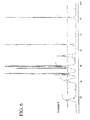
- the PAO formed by the above process comprises from 0.5 to 5 mole % of mm triads and from 40 to 58 mole % of rr triads, as determined by 13 C NMR.
- the PAO also preferably comprises from 37 to 59.5 mole % of mr triads.
- the PAO ideally is substantially free of peaks in a region of form 27.0 to 29.0 ppm, and/or in a region of about 20.0 ppm and/or in a region of about 42.5 ppm in a 13 C NMR spectrum.
- the PAO preferably has a high degree of saturation, and ideally has an iodine Number of from 0.2 to 5.
- the PAO preferably is formed by polymerizing an olefin monomer, e.g., a C 8 -C 12 olefin, preferably 1-decene, in the presence of a metallocene catalyst, preferably a bridged metallocene, and hydrogen, is described above.
- a metallocene catalyst preferably a bridged metallocene, and hydrogen.
- the viscosity of the PAO may vary, but preferably the PAO has a kinematic viscosity at 100°C from 50 to 500 centistokes, e.g., from 50 to 150 centistokes.
- a catalyst removal column may be in fluid communication with a PAO reaction vessel.
- the catalyst removal column is packed with solid adsorbent particles configured to selectively adsorb spent catalyst from the PAO reaction system.
- the solid adsorbent particles may, for example, be selected from the group consisting of acidic clay, zeolites, calcium oxide, magnesium oxide, silicates and mixtures thereof.
- the solid adsorbent is dried, using methods known in the art, to remove any moisture.
- the solid adsorbent particles comprise a metal oxide.
- the solid adsorbent particles may have an average particle size of from 100 ⁇ m to 1 cm. Since the catalyst removal column does not employ water to deactivate the catalyst, the catalyst removal column is particularly well suited for being employed in the PAO synthesis processes in which at least a portion of a crude PAO product is to be recycled to the reaction vessel.
- PAO viscosity may be controlled based on PAO residence time. Specifically, it has surprisingly and unexpectedly been discovered that residence time has an inverse relationship on PAO viscosity.
- the invention is to a process for forming a PAO, comprising the step of polymerizing in a reaction vessel a C 8 -C 11 ⁇ -olefin in the presence of hydrogen, and a catalytically effective amount of a catalyst system under conditions effective to form the PAO.
- the PAO has an average residence time in the reaction vessel of greater than minute, and the PAO has a kinematic viscosity of less than 1000 cSt, e.g., less than 500 cSt, less than 250 cSt, less than 150 cSt, or less than 100 cSt.
- the PAO has an average residence time in the reaction vessel of greater than 5 minutes, and the PAO has a kinematic viscosity of less than 200 cSt, e.g., less than 150 cSt, or less than 100 cSt.
- the PAO has an average residence time in the reaction vessel of greater than 10 minutes, and the PAO has a kinematic viscosity of less than 150 cSt, e.g, less than 125 cSt, or less than 100 cSt.
- one or more C 8 -C 12 saturated hydrocarbon may be co-fed to the reaction vessel.
- the C 8 -C 12 ⁇ -olefin comprises 1-decene and, if present, the C 8 -C 12 saturated hydrocarbon comprises n-decane.
- the catalyst system preferably comprises a metallocene catalyst, e.g., a bridged metallocene catalyst such as diphenylmethylene (cyclopentadienyl-9-fluorenyl)zirconium dichloride, and optionally further comprises an aluminoxane cocatalyst, e.g., methylaluminoxane (MAO).
- a metallocene catalyst e.g., a bridged metallocene catalyst such as diphenylmethylene (cyclopentadienyl-9-fluorenyl)zirconium dichloride
- an aluminoxane cocatalyst e.g., methylaluminoxane (MAO).
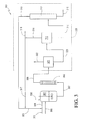
- the reaction system comprises a reaction vessel in which a C 8 -C 12 ⁇ -olefin contacts a C 8 -C 12 saturated hydrocarbon, hydrogen, and a catalytically effective amount of catalyst system under conditions effective to form a crude PAO stream.
- the system also includes a catalyst separation unit in fluid communication with the reaction vessel for separating spent catalyst from the crude PAO stream and forming a reduced catalyst PAO stream.
- the reaction system further comprises a separation zone in fluid communication with the catalyst separation unit for separating the reduced catalyst PAO stream into a purified PAO stream and a recycle stream comprising the C 8 -C 12 saturated straight-chain hydrocarbon and unreacted C 8 -C 12 ⁇ -olefin.
- the recycle stream is in fluid communication between the separation zone and the reaction vessel.
- the C 8 -C 12 ⁇ -olefin and the C 8 -C 12 saturated hydrocarbon preferably have the same number of carbon atoms.
- the C 8 -C 12 ⁇ -olefin comprises 1-decene and the C 8 -C 12 saturated hydrocarbon comprises n-decane.
- the catalyst system preferably comprises a metallocene catalyst, e.g., a bridged metallocene catalyst such as disphenylmethylene (cyclopentadienyl-9-flurenyl) zirconium dichloride, and optionally further comprises an aluminoxane cocatalyst, e.g., MAO.
- the system may comprise a reaction vessel in which an ⁇ -olefin contacts a hydrocarbon having a 50°C vapor pressure within 20%, e.g., within 10% or within 5%, of the ⁇ -olefin, hydrogen, and a catalytically effective amount of catalyst system under conditions effective to form a crude PAO stream.
- the system also includes a catalyst separation unit in fluid communication with the reaction vessel for separating spent catalyst from the crude PAO stream and forming a reduced catalyst PAO stream.
- a separation zone is in fluid communication with the catalyst separation unit for separating the reduced catalyst PAO stream into a purified PAO stream and a recycled stream comprising the hydrocarbon and unreacted ⁇ -olefin.
- the recycle stream is in fluid communication between the separation zone and the reaction vessel.
- the hydrocarbon preferably comprises a saturated hydrocarbon having an equal number of carbon atoms, within I carbon atom, as the ⁇ -olefin.
- the ⁇ -olefin comprises 1-decene and the hydrocarbon comprises n-decane.
- the catalyst system preferably comprises a metallocene catalyst, e.g., a bridged metallocene catalyst such as diphenylmethylene
- the present invention relates to processes for forming polyalphaolefins ("PAOs") from an ⁇ -olefin monomer, preferably a C 8 -C 12 ⁇ -olefin monomer, more preferably 1-decene monomer,
- PAOs polyalphaolefins
- the invention is to a process for polymerizing C 8 -C 12 ⁇ -olefins, such as 1-decene, in the presence of hydrogen and a catalytically effective amount of a catalyst (or catalyst system) to from oligomers and/or polymers having viscosities and other physical properties suitable for synthetic lubricant applications.
- a C 8 -C 12 satured hydrocarbon preferably saturated straight-chain hydrocarbon, preferably having the same number of carbon atoms as the C 8 -C 12 ⁇ -olefin monomer, is co-fed to the reaction mixture with the monomer.
- the monomer comprises 1-decene
- the saturated straight or branched chain hydrocarbon preferably comprises one or more decanes (in particular n-decane).
- the C 8 -C 12 saturated hydrocarbon preferably saturated straight-chain hydrocarbon
- the hydrocarbon has a number of carbon atoms within carbon as the ⁇ -olefin
- the overall selectivity and yield of the resulting process may be advantageously increased.
- This increase in selectivity and yield desirable and surprisingly is not generally accompanied by a significant change in PAO viscosity.
- the process of this embodiment of the present invention may provide improved conversion.
- the C 8 -C 12 saturated hydrocarbon is derived from a crude PAO byproduct formed in the polymerization process.
- the invention in a second embodiment, relates to a process for forming a PAO, comprising the steps of: (a) polymerizing an ⁇ -olefin monomer, preferably a C 8 -C 12 ⁇ -olefin monomer, more preferably a 1-decene monomer, in the presence of hydrogen, and a catalyst system in a reaction vessel, and (b) adding a hydrocarbon to the reaction vessel.
- the hydrocarbon has a vapor pressure within 20%, e.g., within 10%or within 5 %, of the vapor pressure of the pure ⁇ -olefin monomer (as measured at 50°C),
- the hydrocarbon comprises a saturated hydrocarbon, e.g., a saturated hydrocarbon having a substantially equal number of carbon atoms, within I carbon atom, as the major ⁇ -olefin monomer.
- the hydrocarbon comprises a C 8 -C 12 saturated hydrocarbon, preferably having the same number of carbon atoms as the major ⁇ -olefin monomer.
- the hydrocarbon optionally is derived from a crude PAO product formed in the polymerization process.
- the hydrocarbon optionally is present in the feed in an amount ranging from 5 to 50 weight percent, preferably in an amount ranging from 10 to 50 weight percent, and most preferably in an amount ranging from 15 to 30 weight percent, based on the combined weight of the ⁇ -olefin monomer (preferably the C 8 -C 12 ⁇ -olefin monomer) and the hydrocarbon fed to the reaction vessel.
- an ⁇ -olefin monomer preferably a C 8 -C 12 ⁇ -olefin monomer
- the ⁇ -olefin preferably is selected from the group consisting or I-octene, I-nonene, I-decene, I-undecene, and 1-dodecene, more preferably is selected from the group consisting of I-octene, I-decene, and I - dodecene, and most preferably is I-dccene.
- the purity level of the ⁇ -olefin employed, preferably 1-decene, ideally, but not necessarily, is greater than 90 wt.%, e.g., greater than 94 wt.%or greater than 98 wt.%.
- the amount of ⁇ -olefin that is added to the reaction vessel may vary depending, for example, on the activity of the catatyst employed.
- the ⁇ -olefin monomer e.g., C 8 -C 12 ⁇ -olefin
- the C 8 -C 12 ⁇ -olefin monomer comprises I-decene in an amount greater than 75 weight percent, e.g., greater than 90 weight percent or greater than 99 weight percent, based on the total weight of C 8 -C 12 ⁇ -olefin monomer added to the reaction vessel.
- the C 8 -C 12 ⁇ -olefin monomer comprises a major C 8 -C 12 ⁇ -olefin monomer, e.g., 1-decene in combination with one or more minor monomers.
- a "major" C 8 -C 12 ⁇ -olefin monomer is a C 8 -C 12 ⁇ -olefin monomer that is present in a polymerization feedstock in an amount greater than or equal to 50 weight percent, based on total monomer contained in the feedstock.
- a “minor” monomer is a monomer that is present in a polymerization feedstock in an amount less than 50 weight percent, based on total monomer contained in the feedstock.
- the PAO that is formed in the processes of the invention may be a homopolymer of an ⁇ -olefin monomer, e.g., a C 8 -C 12 ⁇ -olefin monomer such as 1-decene, or a copolymer of a major C 8 -C 12 ⁇ -olefin monomer and one or more minor monomers.
- the minor monomers(s) may comprise, for example, one or more C 2 -C 25 monomers, preferably one or more C 2 -C 25 ⁇ -olefins.
- the combination of two or more monomers in the polymerization reaction mixture may be desirable, for example, to control the branching characteristics and viscosity of the resulting PAO product that is formed, as described, for example, in U.S. Patent Application Serial No. 12/026,981, filed February 6, 2008 , entitled "Controlling Branch Level and Viscosity of Polyalphaolefins with Propene Addition.
- the monomer feedstock may comprise: (1) from 75 weight percent to 99 weight percent major (C 8 -C 12 ⁇ -olefin monomer (such as 1-decene), e.g., from 80 weight percent to 90 weight percent major C 8 -C 12 ⁇ -olefin monomer, from 85 weight percent to 95 weight percent major C 8 -C 12 ⁇ -olefin monomer, or from 90 weight percent, to 99 weight percent major C 8 -C 12 ⁇ -olefin monomer; and (2) from weight percent to 25 weight percent minor monomer(s) (such as propene), e.g., from 10 weight percent to 20 weight percent minor monomers, from 5 weight percent to 15 weight percent minor monomers, or from weight percent to 10 weight percent minor monomers.
- C 8 -C 12 ⁇ -olefin monomer such as 1-decene
- the monomer feedstock may comprise: (1) from 75 weight percent to 99 weight percent major (C 8 -C 12 ⁇ -olefin monomer (such as 1-
- the minor monomers may include, for example, one or more of the following: ethylene, propylene, 2-methylpropene, 1-butene, 3-methyl-1-butene, 1-pentene, 4-methyl-1-pentene, 1-hexene, 1-heptene, 1-octene, 1-nonene, 1-decene, 1-undecene, 1-dodecene, 1-tridecene, 1-tetradecene, 1-pentadecene, 1-hexadecene, 1-heptadecene, 1-octadecene, 1-nonadecene, 1-eicosene.
- the weight ratio of the decene to the one or more minor monomers in the polymerization reaction mixture preferably is greater than 3:1, e.g., greater than 4:1, greater than 5:1, greater than 10:1. greater than 20:1 or greater than 50: 1.
- the monomers employed in the processes of the invention preferably are converted to PAOs in the presence of hydrogen.
- a key role of hydrogen in the reaction is to hydrogenate residual unsaturation left in the PAO molecules.
- the presence of hydrogen in the reaction vessel may advantageously result in the elimination of the need for an additional hydrogenation step after formation of the PAO.
- hydrogen may add to the unsaturation in the monomer ⁇ -olefin to form a saturated byproduct which is generally unreactive. It is therefore desirable to promote the hydrogenation of PAO over the hydrogenation of the ⁇ -olefin.
- the formation (and/or addition) of saturated monomer reduces the overall viscosity of the reaction mixture and may enhance hydrogen solubility.
- enhancing hydrogen solubility may enable better diffusion of hydrogen through the reaction mixture to the unsaturation sites of the PAO.
- the net result of the improved mass transfer of hydrogen to the PAO is a favorable shift in the relative reaction rates of PAO hydrogenation over ⁇ -olefin hydrogenation, and thus a reduction in the amount of monomer that is hydrogenated resulting in improved selectivity and yield. See, for example, Published U.S. Patent Appl. No. 2007/0043248, filed July 19, 2006 .
- the liquid PAOs formed by the processes of the invention are substantially saturated and, therefore, will possess a low iodine Number, e.g., an Iodine Number of from 0.0 to 10, preferably from 0.1 to 5, more preferably from 0.2 to 5, and most preferably from 0.2 to 3.
- Iodine Number refers to the mass of iodine in grams that is consumed by 100 grams of polymer.
- Iodine Number is determined as described in Gallo et al., "Unsaturation in Isoprene-Isobutylene Copolymers", Industrial and Engineering Chemistry, Vol. 40, (1948) pp. 1277-1280 but using o-dichlorobenzene as solvent, a 0.8 g sample size, 50% of the associated reagent volumes, and without reflux.
- the monomer and the hydrogen are co-fed into the polymerization reaction vessel.
- co-fed it is meant that the monomer and hydrogen are fed to the reaction vessel simultaneously, at least in part (whether in a single combined stream or separate streams).
- hydrogen is added to the reaction vessel separately from the monomer feedstock.
- the hydrogen may be added directly to the reaction mixture through a sparging system.
- the hydrogen may be added to the monomer feedstock, optionally under pressure, prior to addition to the reaction vessel.
- the amount of hydrogen fed to the reaction vessel may vary widely depending, for example, on the desired degree of hydrogenation, and the activity of the catalyst system that is employed.
- hydrogen is added to the reaction vessel in an amount greater than 0.01 moles hydrogen per mole of monomer, e.g., greater than 0.04 moles hydrogen per mole of monomer or greater than 0,08 moles hydrogen per mole of monomer.
- 0.01 to 1.2 moles of hydrogen are fed to the reaction vessel per mole of monomer, e.g., from 0.04 to 0.76 moles hydrogen per mole of monomer or from 0.08 to 0.12 moles hydrogen per mole of monomer.
- the flow rate of hydrogen to the reaction vessel is from 10 to 10,000 standard cubic centimeters per minute (seem) per liter of reactor, e.g., from 10 to 5,000 seem per liter of reactor, or from 500 to 1000 seem/min per liter of reactor.
- a saturated hydrocarbon e.g., a C 8 -C 12 saturated hydrocarbon, preferably a C 8 -C 12 saturated straight chain hydrocarbon
- the ⁇ -olefin monomer e.g., the C 8 -C 12 ⁇ -olefin monomer.
- the hydrocarbon has the same number of carbon atoms as the major C 5 -C 12 ⁇ -olefin monomer.
- a hydrocarbon (preferably a saturated hydrocarbon having a substantially equal number of carbon atoms, within I carbon atom, as the major ⁇ -olefin monomer) having a 50°C vapor pressure within 20%, e.g., within 10 % or within 5 %, of the vapor pressure of the major ⁇ -olefin monomer that is added to the polymerization reaction vessel is co-fed to the reaction mixture with the major ⁇ -olefin monomer.
- a saturated hydrocarbon e.g., a C 8 -C 12 saturated hydrocarbon, preferably a C 8 -C 12 saturated straight chain hydrocarbon, with monomer to the reaction vessel, selectivity and yield may be advantageously increased.
- the level of saturated hydrocarbons that is co-fed to the reaction system may vary depending on conditions such as the activity of the catalyst system and process conditions employed, but preferably is less than 40 weight percent, e.g., less than 30 weight percent or less than 20 weight percent (but preferably is greater than 5 weight percent, greater than 10 weight percent or greater than 15 weight percent), based on the combined weight of the a-olefin monomer (e.g., the C 8 -C 12 ⁇ -olefin monomer) and C 8 -C 12 saturated hydrocarbon fed to the reaction vessel.
- the saturated hydrocarbon level in the reaction vessel is maintained substantially constant.
- the saturated hydrocarbons are fed to (or maintained in) the reaction vessel at a level ranging from 5 to 50 weight percent, e.g., from 8 to 30 weight percent, from 10 to 50 weight percent, from 10 to 25 weight percent, or from 15 to 30 weight percent, based on the combined weight of the ⁇ -olefin monomer (e.g., the C 8 -C 12 ⁇ -olefin monomer) and the C 8 -C 12 saturated hydrocarbon fed to the reaction vessel.
- the ⁇ -olefin monomer e.g., the C 8 -C 12 ⁇ -olefin monomer
- the weight ratio of the monomer to hydrocarbon in the feed optionally is less than 19:1, e.g., less than 9:1, less than 5.7:1 or less than 2.3:1, and, in terms of ranges, may range from 1:1 to 19.1, e.g., from 9:1 to 19:1, or from 2.3:1 to 5.7:1.
- any unsaturated polydecene formed from the I-decene monomer may be hydrogenated to a greater extent than the unsaturated polydecene that would be present in a reaction system under the same conditions but in the absence of the saturated hydrocarbon.
- the monomer in the reaction system containing the saturated hydrocarbon will be less likely to be hydrogenated to form additional saturated hydrocarbons (e.g., forming n-decane from 1-decene) relative to monomer that would be present in a reaction system under the same conditions but in the absence of the saturated hydrocarbon.
- additional saturated hydrocarbons e.g., forming n-decane from 1-decene
- the presence of the saturated hydrocarbon, e.g., decane should suppress formation of additional n-decane, thereby improving overall selectivity and yield.
- Saturated hydrocarbons e.g., C 8 -C 12 saturated hydrocarbons, preferably C 8 -C 12 saturated straight-chain hydrocarbons, may be formed as a byproduct of the PAO polymerization processes of the present invention.
- a crude PAO product that is yielded from the reaction vessel optionally may be separated in one or more separation units into an enriched saturated hydrocarbon stream and a purified PAO product stream comprising purified PAO.
- the enriched saturated hydrocarbon stream may comprise, for example, one or more overhead streams from the multiple separation units.
- the purified PAO product stream may comprise, for example, one or more bottoms streams from the multiple separation units.
- the concentration of the hydrocarbon (e.g., the C 8 -C 12 saturated straight-chain hydrocarbon such as one or more decanes or the hydrocarbon having a 50°C vapor pressure within 20%, e.g., within 10% or within 5%, of the ⁇ -olefin) contained in the enriched saturated hydrocarbon stream will vary depending on reaction conditions, the catalyst employed, and the separation system that is used.
- the enriched saturated hydrocarbon stream may comprise the hydrocarbons in an amount greater than 40 weight percent, e.g., greater than 50 weight percent, greater than 60 weight percent or greater than 75 weight percent, based on the total weight of the enriched saturated hydrocarbon stream.
- the enriched saturated hydrocarbon stream may also comprise unreacted monomer in an amount greater than 40 weight percent, e.g., greater than 50 weight percent, greater than 60 weight percent or greater than 75 weight percent, based on the total weight of the enriched saturated hydrocarbon stream.
- the enriched saturated hydrocarbon stream preferably comprises the PAO in an amount less than 5 weight percent, e.g., less than 2 weight percent or less than weight percent, based on the total weight of the enriched saturated hydrocarbon stream.
- the purified PAO product stream preferably comprises the hydrocarbons in an amount less than I weight percent, e.g., less than 0.5 weight percent or less than 0.1 weight percent, based on the total weight of the purified PAO product stream.
- the purified PAO product stream preferably comprises PAO in an amount greater than 97 weight percent, e.g., greater than 99 weight percent or greater than 99.9 weight percent, based on the total weight of the purified PAO product stream.
- the enriched saturated hydrocarbon stream may be recycled to the reaction vessel as a recycle stream, optionally after being combined with the monomer feedstock.
- Additional hydrocarbon e.g., commercially available C 8 -C 12 saturated hydrocarbon, preferably straight chain hydrocarbon
- C 8 -C 12 saturated hydrocarbon preferably straight chain hydrocarbon
- a portion of the enriched saturated hydrocarbon stream preferably is removed from the polymerization system as a purge stream to prevent the buildup or undesirable byproducts and contaminants.
- the purge stream preferably comprises on the order of from 5 to 35 weight percent of the total enriched saturated hydrocarbon stream, e.g., from 10 to 30 weight percent, or from 15 to 25 weight percent. In other words, from about 65 to 95 weight percent, e.g., from 70 to 90 weight percent, or from 75 to 85 weight percent of the enriched saturated hydrocarbon stream preferably is recycled to the reaction vessel.
- the saturated hydrocarbon e.g., C 8 -C 12 saturated hydrocarbon or C 8 -C 12 saturated straight-chain hydrocarbon
- the hydrocarbon may be a commercially available saturated hydrocarbon, e.g., a saturated hydrocarbon having a 50°C vapor pressure within 20%, e.g., within 10 % or within 5%, or the vapor pressure of the ⁇ -olefin.
- the saturated hydrocarbon initially may be co-fed to the reaction vessel with the monomer but is not derived from the crude PAO product.
- additional saturated hydrocarbons will be formed as a byproduct of the polymerization process.
- the level of saturated hydrocarbon byproducts formed in the reaction system increases and is separated from the crude PAO product and recycled to the reaction vessel, the level of "fresh" hydrocarbon that is co-fed to the system may be gradually decreased until the system reaches a steady state.
- additional saturated hydrocarbons e.g., C 8 -C 12 saturated hydrocarbons
- C 8 -C 12 saturated hydrocarbons may also be formed as a byproduct of the polymerization process of the invention, particularly since the monomer employed will typically comprise a C 8 -C 12 ⁇ -olefin monomer and the reaction is conducted in the presence of hydrogen. This should be taken into consideration when determining the amount of "fresh" hydrocarbon that is fed to the reaction vessel so that a desired saturated hydrocarbon level is maintained in the reaction vessel.
- the level of saturated hydrocarbons (e.g., the C 8 -C 12 saturated hydrocarbon such as one or more decanes or the hydrocarbon having a 50°C vapor pressure within 20%, e.g., within 10% or within 5%, of the ⁇ -olefin) is maintained in the reaction vessel at a level of from 5 to 70 weight percent, e.g., from 8 to 40 weight percent, from 8 to 30 weight percent, or from 15 to 40 weight percent, based on the combined weight of the ⁇ -olefin monomer (e.g., the C 8 -C 12 ⁇ -olefin monomer), saturated hydrocarbons and PAO in the reaction vessel.
- the ⁇ -olefin monomer e.g., the C 8 -C 12 ⁇ -olefin monomer
- the catalyst system used to produce the PAOs of the present invention preferably is formed by activating a metallocene procatalyst with a suitable co-catalyst.
- the metallocene procatalyst may be bridged or unbridged.
- the metallocene procatalyst comprises one or a mixture of metanocene compounds of the formula (I): (Cp 1 R 1 m )R 3 (Cp 2 R 2 p )MX q (I) wherein Cp 1 of ligand (Cp 1 R 1 m ) and Cp 2 of ligand (C p 2 R 2 p ) are the same or different cyclopendadienyl rings, R 1 and R 2 each is, independently, a hydrocarbyl, halocarbyl, heterocarbyl, hydrocarbyl-substituted organometalloid or halocarbylsubstituted organometalloid group containing up to 20 carbon atoms; m is an integer from 0 to 5; p is an integer from 0 to 5: two R 1 and/or R 2 substituents on adjacent carbon atoms of the cyclopentadienyl ring associated therewith can be joined together to form a ring fused to the
- the catalyst composition for use herein is preferably formed by activating a metallocene procatalyst with a suitable catalyst.
- metallocene procatalyst preferably formed by activating a metallocene procatalyst with a suitable catalyst.
- metallocene procatalyst shall be understood to refer to compounds possessing a transition metal M, at least one non-cyclopentadienyl-derived ligand X and zero or one heteroatom-containing ligand Y, the ligand being coordinated to M and corresponding in number to the valence thereof.
- Such compounds, cocatalysts useful for their activation to provide metallocene catalysts that may be employed for the polymerization of olefins to provide polyolefin homopolymers and copolymers, and/or polymerization processes employing one or more of the metallocene catalysts are described in, among others, U.S. Pat. Nos.
- ligand (Cp 1 R 1 m ) is preferably different from ligand (Cp 2 R 2 p ), and bridging group R 3 preferably contains at least two bulky groups.
- a bridging group R 3 possess the structure: wherein each of bulky groups R 4 and R 5 , independently, is, or contains, a cyclohydrocarbyl group containing up to 20 and preferably from 6 to 12 carbon atoms and from 0 to 3 heteroatoms such as oxygen, sulfur, tertiary nitrogen, boron or phosphorus and, in particular, is a cycloalkyl, heterocycloalkyl, cycloalkenyl, heterocycloalkenyl, aryl, heteroaryl, alkaryl, alkylheteroaryl, aralkyl, heteroarallcyl, and the like.
- M in the compound of formula (I) is titanium, zirconium or hafnium, q is 2 and each X is halogen.
- bridged metallocenes those in which ligand (Cp 1 R m 1 ) is substituted or unsubstituled cyclopentadienyl, ligand (C p 2 R p 2 ) is indenyl or fluorenyl, M is zirconium, R 4 and R 5 each is substituted or unsubstituted phenyl and each X ligand is chlorine are particularly preferred.
- Exemplary bridged metallocenes of the formula (I) that can be used in the polymerization process of the embodiments of the present invention include, without limitation: diphenylmethylene (indenyl) (fluorenyl) zirconium dichloride, diphenylmethylene (cyclopentadienyl) (4,5,6,7-tetrahydro-indenyl) zirconium dichloride, diphenylmethylene (cyclopentadienyl) (2-methylindenyl) zirconium dichloride, diphenylmethylene (2,4-dimethylcyclo-pentadienyl) (3', 5'dimethylcyclopentadienyl) zirconium dichloride, diphenylmethylene(2-methyl-4-tert-butylcyclo-pentadienyl) (3'-tert-butyl-5methylcyclopentadienyl) zirconium dichloride, dixylylmethylene (2,3,5-
- the polymerizing occurs in the presence of a catalyst having the formula Ph 2 C(Cp-9-Flu)ZrCl 2 (diphenylmethylene (cyclopentadienyl-9-fluorenyl)zirconium dichloride, also referred to herein as CpFlu), which is represented by the following structure.
- the cocatalyst, or activator, employed with the metallocene procatalysls of formula (I) can be any of the aluminoxanes known to activate metallocene procatalysts.
- exemplary aluminoxane cocatalysts include alkylaluminoxanes such as methylaluminoxane (MAO). See, e.g., U.S. Patent No. 5,229,478 .
- the bridged metallocene procatalyst can be present in the reaction vessel in an amount, expressed in terms of its transition metal content, of from 0.0001 mmol/L to 5 mmol/L, e.g., from 0.0001 mmol/L to 0.09 mmol/L, from 0.001 to mmol/L to 0.05 mmol/L, 0.002 mmol/L to 0.05 mmol/L, 0.01 to mmol/L to 0.05 mmol/L, from 0.015 mmol/L to 0.03 mmol/L, and preferably 0.025 mmol/L.
- the aluminoxane cocatalyst can be utilized in an amount in the reaction vessel of from 0.002 mmol/L to 50 mmol/L, preferably from 0.002 mmol/L to 25 mmol/L and more preferably from 0.02 mmol/L to 10 mmol/L.
- the optimum levels of bridged metallocene procatalyst and aluminoxane cocatalyst will, to some extent, depend upon the specific procatatyst and cocatalyst selected as well as other polymerization process variables.
- the molar ratios can be, for example, 1000:1, 750:1, 500:1, 250:1, 100:1, 50:1, or 25:1.
- the level of metallocene procatalyst to aluminoxane cocatalyst is preferably 500:1.
- the level of metallocene procatalyst to aluminoxane cocatalyst is preferably 100:1.
- the levels of metallocene procalalyst to aluminoxane cocatalyst is preferably 25:1.
- the molar ratio of the aluminoxane cocatalyst to the metallocene catalyst optionally is from 25:1 to 3000:1, e.g., 25:1 to 1000:1, or 250:1 to 1000:1.
- the preferred molar ratio of aluminoxane cocatalyst to metallocene catalyst is from 50: 1 to 1000: 1, e.g., from 200:1 to 800:1, and most preferably 300:1. Higher ratios are generally desired for polymerization reaction systems in which hydrocarbons are not fed to the reaction system.
- a trialkylaluminum compound such as trimethylaluminum, triethylaluminum, tri (n-propyl) aluminum, triisopropyaluminum, tri (n-butyl) aluminum, triisobutylaluminum, to reduce the amount of aluminoxane required for suitable activation of the metallocene procatalyst.
- the optional trialkylaluminum can be utilized in a molar level to metallocene procatalyst of from 1 to 1000 and preferably from 2 to 500.
- a neutral or anionic metalloid-containing components can optionally be employed with the aluminoxane cocatalyst in activating the metallocene procatalyst.
- exemplary neutral metalloid-containing components include boranes such as perfluoroarylborane compounds, e.
- tris (pentafluorophenyl) borane tris (methoxyphenyl) borane, tris(trifuoromethylphenyl) borane, tris (3,5-di [trifluoro-methyl] phenyl) borane, tris (tetrafluoroxylyl) borane, tris (tetrafluoro-o-tolyl) borane .
- tris (pentafluorophenyl) borage and tris (3,5di [trifluoromethyl] phenyl) borane are preferred.
- Other useful second components include aluminum homologues of the foregoing compounds.
- Exemplary anionic metalloid-containing components include berates such as perfluoroaryl borates, e. g., lithium tetrakis (pentafluorophenyl) borate, lithium tetrakis (trifluoromethylphenyl) borate, lithium tetrakis (3,5-di [tri-fluoromethyl] phenyl) borate, sodium tetrakis (pentafluoro-phenyl) borate, potassium tetrakis (pentafluorophenyl) borate, magnesium tetrakis (pentafluorophenyl) borate, titanium tetrakis (pentafluorophenyl) borate, tin tetrakis (pentafluorophenyl) borate, dimethylanilinium tetrakis (pentafluorophenyl) borate Of the foregoing borates, dimethylaniliniumtetrakis (
- neutral or anionic metalloid-containing components can be utilized in a molar level to metallocene procatalyst of 1:2, 1: 1.5, 1:1, or 1:0.5.
- anionic metalloid-containing component is dimethylaniliniumtetrakis (pentafluorophenyl) borate
- the level of the borate to the metallocene procatatyst is 1:1.
- Activation of the metallocene to yield an activated metallocene catalyst composition can be achieved by combining the aforementioned metallocene procatalysts with the aluminoxane cocatalyst, optionally in the presence of a neutral or anionic metalloid-containing component, either simultaneously or in any sequence and with any interval of time therebetween and either in the presence of, or in the absence of, the olefin monomer(s) and hydrogen.
- the activation optionally occurs at a temperature ranging from 0 to 100°C, and optionally for a time period ranging from I minute to 72 brs.
- activation occurs in from 0 to 99% of an inert hydrocarbon solvent, either aliphatic or aromatic.
- the metallocene catalyst is activated for 10 minutes at room temperature and with toluene as solvent.
- the activated metallocene catalyst compositions is prepared in advance and thereafter the composition is introduced into the polymerization reactor with the olefin monomer (s), optionally in the presence of hydrogen.
- the reaction of the metallocene procatalyst with the aluminoxane cocatalyst to generate an activated metallocene catalyst preferably is conducted at a temperature ranging from 0 to 100°C, e.g., from 0 to 80°C, from 10 to 50°C, or from 25 to 50°C; for a time period of from 1 minute to 72 hours, e.g. from minute to 50 hours, from 1 minute to 30 hours, or from 1 minute to 24 hours.
- the polymerization processes of the invention may be carried out in any known manner, e.g., in the liquid phase, i.e., in a solution or slurry process, or in a suspension process, either continuously, semi-continuously, or in batch. These processes are generally carried out at temperatures in the range of from 105°C to 170°C, preferably from 110°C to 150°C, from 120°C to 140°C, and preferably 130°C (lower temperatures are generally desired for polymerization reaction processes).
- the pressure within the reaction vessel optionally ranges from 0 to 3000 psig (0 to 20700 kPag), e.g., from 0 to 600 psig (0 to 4100 kPag) or from 10 to 240 psig (70 to 1700 kPag). Other preferred pressures range from 0 to 4240 kPag, e.g.,) 1.7 to 1760 kPag or from 520 to 720 kPag. Pressures greater than 1500 kPag are generally desired for conventional polymerization reaction processes.
- control of the polymerization temperature has a direct bearing on the quality of the polymerization, e.g., activity, as well as the final product properties, e.g., Iodine Number.
- the exothermic temperature i.e., the maximum temperature reached during the polymerization, should be substantially close to the initial polymerization temperature, e.g., at temperatures above 150°C the exothermic temperature should be no more than 20°C greater than the initial polymerization temperature.
- solvent refers to a nonreactive liquid other than the C 8 -C 12 saturated hydrocarbon of the first embodiment or the hydrocarbon of the second embodiment.
- Dilution solvents that can be employed include straight and branched chain hydrocarbons, such as butanes, pentanes, hexanes, heptanes, cyclic and alicyclic hydrocarbons, such as cyclopentane, cyclohexane.
- cycloheptane methylcyclopentane, methylcyclohexane, methylcycloheptane, and alkyl-substituted aromatic compounds, such as toluene, xylene, and mixtures of the foregoing.
- the polymerization process is a continuous or semi-continuous polymerisation reaction process, meaning that monomer is continuously or semi-continuously fed to the reaction vessel and product is continuously or semi-continuously removed from the reaction vessel.
- This aspect of the invention is described in greater detail below with reference to FIGS. 1-3 .
- the PAO preferably has a residence time in the reaction vessel on the order of from 5 to 300 minutes, e.g., 10 to 60 minutes. 15 to 45 minutes, or 20 to 40 minutes.
- the residence time of the PAO in the reaction vessel has an inverse impact on the viscosity of the resulting PAO that is formed.
- the invention is to a process for forming a PAO in which the kinematic viscosity of the PAO is controlled based on the residence time of the PAO in the reaction vessel.
- the process comprises the step of polymerizing in a reaction vessel a C 8 -C 12 ⁇ -olefin in the presence of hydrogen, and a catalytically effective amount of a catalyst system under conditions effective to form the PAO, wherein the PAO has an average residence time in the reaction vessel of greater than 5 minutes, and the PAO has a kinematic viscosity of no more than 200 cSt.
- the PAO has an average residence time in the reaction vessel of greater than 10 minutes, and the PAO has a kinematic viscosity of no more than 150 cSt.
- the PAO has an average residence time in the reaction vessel of greater than 25 minutes, and the PAO has a kinematic viscosity of no more than 125 cSt.
- the process is a batch polymerization process.
- a typical batch solution polymerization process can be carried out by first introducing the ⁇ -olefin monomer, e.g., a C 8 -C 12 ⁇ -olefin monomer such as 1-decene, either alone or in combination with an optional hydrocarbon solvent, e.g., hexanes, xylenes, into a stirred tank reactor.
- the ⁇ -olefin monomer e.g., a C 8 -C 12 ⁇ -olefin monomer such as 1-decene
- an optional hydrocarbon solvent e.g., hexanes, xylenes
- the C 8 -C 12 saturated hydrocarbon of the first embodiment, e.g., one or more decanes, or the hydrocarbon of the second embodiment (having a 50°C vapor pressure within 20%, e.g., within 10 % or within 5 %, of the vapor pressure of the pure ⁇ -olefin monomer) can be fed either sequentially or simultaneously with the ⁇ -olefin monomer.
- a minor amount of an inert impurity scavenger, e.g., the aforememioned trialkylaluminum compounds, can also be fed at this time.
- the reactor is then brought up to the desired temperature, e.g., from 0°C to 200°C, from 50°C to 150°C, or from 80°C to 140°C and a measured amount of hydrogen can then be introduced into the stirred tank reactor.
- a minor monomer feed comprising the minor monomer, for example, ethylene or 1-propene, may be sparged into the liquid phase, either in combination with, or separate from the hydrogen feed.
- a hydrocarbon solution of the catalyst in the required amount is then fed to the liquid phase in the reactor.
- the hydrocarbon solution optionally comprises the C 8 -C 12 saturated hydrocarbon of the first embodiment or the hydrocarbon of the second embodiment.
- the hydrocarbon solution comprises toluene.
- high levels of toluene may result in decreased selectivity, a small amount of toluene, e.g., less than 7 weight percent, less than 5 weight percent, less than 2 weight percent or less than 1 weight percent toluene, based on the total weight of the feedstock, has been found to be generally tolerable in the polymerization reaction processes of the present invention.
- the rate of polymerization is controlled, among other factors, by the concentration of the catalyst and monomers present or fed during polymerization.
- the reactor temperature is preferably controlled by means of cooling coils, agitation, etc., and the initial total pressure in the reactor may be maintained by a constant flow of hydrogen, inert gas, gaseous monomers or a combination thereof. After polymerization is complete, the reactor is depressurized and the catalyst is deactivated by conventional means.
- a hydrocarbon solvent in addition to the C 8 -C 12 saturated hydrocarbon of the first embodiment or the hydrocarbon of the second embodiment
- Spent catalyst components can be isolated from the reaction product via mixing with, e.g., alcohol, water, or a mixture of both, and then by phase separation of the hydrocarbyl component from the aqueous component.
- the liquid PAO can then be recovered from the hydrocarbyl component by conventional methods, e.g., evaporation, distillation, and then further processed as desired.
- the spent catalyst components preferably are not isolated via mixing with an aqueous phase.
- the spent catalyst e.g., metallocene catalyst, co-catalyst and optional activator
- the spent catalyst may be separated from the crude PAO product stream by contacting the crude PAO product stream, which contains the spent catalyst, with one or more solid adsorbent materials capable of selectively adsorbing the catalyst thereto.
- the contacting preferably occurs in a catalyst removal column-particularly when the polymerization process is a continuous or semi-continuous process.
- the catalyst removal column preferably is packed with the solid adsorbent material.
- the crude PAO product stream may be allowed to flow in an upward direction or a downward direction, at an angle, or in a horizontal direction.
- a non-limiting list of exemplary solid adsorbent materials includes acidic clay, zeolites, calcium oxide, magnesium oxide, silicates and mixtures thereof. Other metal oxides may also be used.
- the solid adsorbent material may have a volume average particle size (diameter for generally spherical particles) ranging, for example, from 50 ⁇ m to 2 cm, e.g., from 100 ⁇ m to 1 cm, or from 250 ⁇ m to 1000 ⁇ m, and a bulk density that maintains a reasonable pressure drop (e.g., ⁇ 200 psi ( ⁇ 1379 kPa).
- the recycle of saturated hydrocarbon to the reaction vessel is highly desirable in those embodiments of the invention that employ a catalyst removal column because the saturated hydrocarbon reduces the viscosity of the crude PAO product stream such that the crude PAO product is capable of passing through the solid adsorbent material.
- the saturated hydrocarbon recycle preferably is employed together with the inventive catalyst removal column.
- the amount of solid adsorbent contained in the column will vary depending, for example, on the adsorbent used, particle size and distribution, and the flow rate.
- the weight ratio of adsorbent employed to PAO to be processed ranges from 0,005:1 to 0.5:1, e.g., from 0.01:1 to 0.25:1, or from 0.01:1 to 0.1:1, and most preferably is about 0.05:1.
- the temperature of the column may range, for example, from about room temperature to about 125°C or higher.
- the PAO pressure to the column may range, for example, from 10 psig (172 kPag) for a fresh column to 200 psig (1379 kPag) for a more used column, e.g., from 25 psig (172 kPag) to 200 psig (1379 kPag) or from 100 psig (689 kPag) to 200 psig (1379 kPag).
- the spent adsorbent may be disposed of or regenerated and reused.
- the solid adsorbent material may be added directly to the crude PAO product, e.g., as a powder, and then filtered to remove the solid adsorbent material and the catalyst that is adsorbed thereon and thereby form a reduced catalyst PAO stream.
- the processes of the present invention preferably provide significantly improved selectivity and yield over conventional PAO synthesis processes, while maintaining high conversion.
- the overall conversion of the polymerization processes of the present invention may be greater than 85 percent, e.g., greater than 90 percent greater than 95 percent or greater than 99 percent.
- Conversion refers to amount of ⁇ -olefins that are converted during the polymerization process to saturated monomers, PAO, or any other byproducts. Conversion percentage is calculated by dividing the weight of the ⁇ -olefins reacted by the weight of the ⁇ -olefins fed to the system.
- Selectivity preferably is maintained at a high level, e.g., at least 90 percent, at least 95 percent, at least 97 percent or at least 99 percent.
- selectivity refers to the percent of converted ⁇ -olefins that are converted to PAO (on a weight basis). A higher selectivity indicates a higher production of the desired PAO relative to non-PAO products.
- the overall yield for the polymerization processes of the present invention may, for example, be greater than 75 percent, e.g., greater than 80 percent, greater than 85 percent, greater than 90 percent or greater than 95 percent. Yield percentage is calculated by multiplying conversion by selectivity.
- the selectivity is greater than 90 percent
- the yield is greater that 75 percent
- the conversion is greater than 85 percent
- a PAO produced by the present invention may have the percentages defined by any combination of the above-identified ranges for selectivity, yield and conversion.
- the PAO polymers that can be obtained by the polymerization processes described herein are preferably substantially amorphous.
- the PAO polymers that can he obtained by the polymerization process herein possess a unique combination of low weight average molecular weight (M w ), low poydispersity index (M w /M n , where M n is number average molecular weight), controllable kinematic viscosity (Kv 100 ).
- Kv 100 controllable kinematic viscosity
- VI high viscosity index
- I 2 # low Iodine Number
- T g glass transition temperature
- the novel PAO polymers possess a M w of from 500 to 80,000, e.g., from 750 to 60.000, from 1,000 to 40.000, from 1,000 to 10,000, or from 2,500 to 7,500, a M w /M n of from 1.0 to 10, preferably from 1.5 to 5, more preferably from 1.75 to 4, an Iodine Number of from 0.0 to 10. preferably from 0.1 to 5, more preferably from 0.2 to 3, and a T g of below -20°C, preferably below -30°C, more preferably below -40°C.
- molecular weights provided herein are determined through gel permeation chromatography using polystyrene standards.
- the PAO formed by the processes of the present invention preferably has a particularly low kinematic viscosity.
- the Kv 100 may range from 10 to 10,000 cSt, e.g., from 20 to 7,500 cSt, or from 25 to 5,000 cSt.
- the Kv 100 may range from 50 to 500 cSt, e.g., from 50 to 150 cSt, from 90 to 120 cSt or from 95 to 115 cSt.
- kinematic viscosity is determined according to ASTM D-445, the entirety of which is incorporated herein by reference.
- the PAO preferably has a Vi ranging from 120 to 500, e.g., from 170 to 200, as determined by ASTM D-2270, the entirety of which is incorporated herein by reference.
- the PAO structure has a predominately head-to-tail configuration, where 70% or more of the ⁇ -olefin monomers are joined in a head to tail manner, e.g. 80% or more or 90% or more.
- a head-to-tail configuration is the result of a 1-2 addition, where the first carbon atom of a first monomer (head) is bonded to the second carbon in a second monomer (tail).
- the PAO structure has a low head-to-head or tail-to-tail configuration where less than 30% of the monomers are either head-to-head or tail-to-tail. e.g. less than 20% or less than 10%.
- the predominately head-to-tail configuration of PAOs produced by the present invention may have a peak in the region of 41-40 ppm in a 13 C Nuclear Magnetic Resonance (NMR) analysis.
- a low head-to-head configuration may have no discernible peak in the region of 42.5 ppm and a low tail-to-tail configuration may have no discernible peak in the region of 21-20 ppm.
- no discernible peak it is meant that that the relative content or peak integral in the respective region is less than 1.0%, e.g. less than 0.5% or less than 0.1 of the total peak integral.
- a low head-to-head or tail-to-tail configuration indicates that there are few misinsertions or rearrangements in the PAO structure. In one embodiment the low head-to-head or tail-to-tail configuration indicates that there arc no misinsertions or rearrangements in the PAO structure.
- PAOs of the present invention typically have low isotacticity. Isotacticity may be determined using 13 C NMR analysis based on the relative content or peak integral in a region that corresponds to mm triads. The relative content of isotactic structure is equivalent to the mole percent of mm triads. The region of mm triads is from 35.50 to 34.96 ppm. and the region may include one or more pentads such as mmmm, mmmr, or rmmr.
- a low isotacticity PAO in accordance with an embodiment of the present invention has a mole % of mm triads of from 0.5 to 5.0, e.g., from 1.0 to 4.0, or from 1.5 to 3.0.
- PAOs of the present invention typically have a very high degree of syndiotacticity.
- Syndiotacticity may be determined using 13 C NMR analysts by the relative content or peak integral in a region that corresponds to rr triads.
- the relative content of syndiotactic structure is equivalent to the mole percent of rr triads.
- the region of rr triads is from 34.40 to 33.71 ppm, and the region may include one or more pentads such as rrrr, mm, or mrrm.
- the syndiotacticity of a PAO in accordance with an embodiment of the present invention has a mole % of rr triads from 40.0 to 58.0. e.g.. from 42.0 to 55.0, or from 46.0 to 52.0 mole %.
- PAOs of the present invention also may be atactic or heterotactic in addition to having a predominant head-to-tail configuration. Atacticity may be determined by the relative content of a region using 13 C NMR analysis that corresponds to mr triads. The relative content of atactic structure is equivalent to the mole percent of mr triads. The region of mr triads is from 34.96 to 34.40 ppm, and the region may include one or more pentads such as mmrr, mmrm, rmrr or rmrm.
- the atacticity of a PAO in accordance with an embodiment of the present invention has a mole % of mr triads from 37.0 to 59.5, e.g., from 40.0 to 55.0 mole % or from 45.0 to 50-0 mole %.
- the PAO structure may have the following tacticities: 0.5 to 5.0 mole % of mm triads and 40.0 to 58.0 mole % ofrr triads. In another embodiment, the PAO structure may have the following tacticities: 0.5 to 5.0 mole % of mm triads, 40.0 to 58.0 mole % of rr triads and 37.0 to 59.5 mole % of mr triads. In still another embodiment, a PAO produced by the present invention may have tacticities defined by any combination of the above-identified ranges for mm, mr or rr triads.
- the products of this invention can be used in grafting applications to produce functionalized low molecular weight polymers.
- the PAO polymers of this invention are particularly useful as viscosity modifiers for lubricants, especially lubricating oils, wherein the polymer is employed in a viscosity-modifying amount. Concentrations of from about 1 to about 99 weight percent based on the total weight of the lubricant composition can be used. Preferably, the concentration is from about 5 to about 85 weight percent.
- mineral oils both paraffinic, naphthenic and mixtures thereof, including those oils defined as American Petroleum Institute Groups I, II, and III can be employed as the lubricant vehicle, and can be any suitable lubricating viscosity range, as, for example, from 2 cSt at 100°C to 1,000 cSt at 100°C, preferably from 2 to 100 cSt at 100°C.
- These oils can have viscosity indices preferably ranging to 180.
- the average molecular weights of these oils can range from 250 to 800.
- synthetic oils can include, but are not limited to, polyisobutylene, polybutenes, hydrogenated polydecenes, polypropylene glycol, polyethylene glycol, trimethylpropane esters, neopentyl and pentaerythritol esters, di(2-ethylhexyl) sebacate, di(2-ethylhexyl) adipate, dibutyl phthalate, fluorocarbons, silicate esters, silanes, esters of phosphorus-containing acid, liquid ureas, ferrocene derivatives, hydrogenated synthetic oils, chain-type polyphenyls, siloxanes and silicones (polysiloxanes), alkylsubstituted diphenyl ethers typified by a butyl-substituted bis(p-phenoxy phenyl) ether, and phenoxy phenylethers.
- the lubricant compositions can also contain one or more other materials, for example, detergents, corrosion inhibitors, oxidative inhibitors, dispersants, pour point dispersants, antifoaming agents, anti-wear agents, other viscosity modifiers, friction modifiers, at the usual levels in accordance with well known practice.
- Other material including extreme pressure agents, low temperature properties modifiers, and the like, can also be used, as exemplified, respectively, by metallic phenates or sulfonates, polymeric succinimides, non-metallic or metallic phosphorodithioates, at the usual levels in accordance with well known practice. These materials do not detract from the value of the compositions of this invention, but rather serve to impart their customary properties to the particular compositions in which they arc incorporated.
- the low pays of the invention may be blended with one or more higher viscosity materials as described, for example, in U.S. Publ. Pat. Appl. Nos. US 2006/0276355 A1 , US2007/0298990 A1 , US 2007/0289897 A1 , US 2008/0020954 A1 , and WO 2007/145924 A1 and WO 2007/146081 .
- FIG. 1 illustrates a flow diagram of an exemplary reaction system 100 according to one aspect of the second embodiment of the invention.
- reaction system 100 comprises a reaction vessel 101, a catalyst removal unit 102, and a separation zone 103.
- the monomer-containing feedstock 104 comprises an ⁇ -olefin (e.g., a C 8 -C 12 ⁇ -olefin monomer such as 1-decene), a hydrocarbon (e.g., a C 8 -C 12 saturated hydrocarbon such as one or more decanes or a hydrocarbon having a 50°C vapor pressure within 20%, e.g., within 10% or within 5%, of the ⁇ -olefin), optionally one or more minor monomers and optionally a solvent.
- the hydrocarbon may, for example, be a commercially available hydrocarbon.
- the hydrocarbon preferably has the same number of carbon atoms as the ⁇ -olefin.
- the catalyst feed 105 comprises a catalyst system, which preferably comprises a polymerization catalyst (preferably a metallocene procatalyst), a suitable co-catalyst (preferably an aluminoxane such as MAO), and optionally an anionic metalloid-containing component (e.g., a borane or a borate), as described above.
- the catalyst feed 105 may also include a catalyst solvent, such as toluene.
- Hydrogen feedstock 106 comprises hydrogen gas. Hydrogen feedstock 106 may, for example, be sparged into reaction system 100.
- the hydrogen may be added (e.g., bubbled or sparged) to the monomer-containing feedstock 104, which is then directed to reaction vessel 101.
- Reaction vessel 101 also preferably includes a vent line, not shown, for venting gaseous components therefrom.
- the monomers contact the polymerization catalyst, the hydrocarbon, and the hydrogen under conditions elective to form the PAO, preferably a highly saturated PAO.
- the crude PAO product is yielded from the reaction vessel 101 via crude PAO stream 107, and directed to a catalyst separation unit 102.
- the catalyst separation unit comprises a catalyst removal column, which preferably is packed with one or more materials capable of deactivating the catalyst and preferably capable of selectively separating the catalyst from the crude PAO product to form a reduced catalyst PAO stream 108, which is directed to separation zone 103.
- Separation zone 103 comprises one or more separation units, e.g., flash vessels, evaporators, strippers, distillation columns, etc., capable of separating the PAO product from the other components contained in reduced catalyst PAO stream 108. As shown, separation zone 103 separates the reduced catalyst PAO stream 108 into one or more byproduct streams 109 (one is shown) and a purified PAO product stream 110.
- separation units e.g., flash vessels, evaporators, strippers, distillation columns, etc.
- FIG. 2 provides a flow diagram of an exemplary reaction system 200 according to this aspect of the invention.
- reaction system 200 comprises a reaction vessel 201, a catalyst removal unit 202, and a separation zone 203.
- separation zone 203 comprises a flash vessel 211 and a separation unit 212.
- an initial monomer-containing feedstock 213 is combined with a recycle stream 220 comprising a hydrocarbon, e.g., a C 8 -C 12 saturated hydrocarbon, to form combined monomer-containing feedstock 204.
- Recycle stream 220 also may comprise unreacted monomer.
- Combined monomer-containing feedstock 204, hydrogen feedstock 206 and catalyst feed 205 are directed to reaction vessel 201.
- the combined monomer-containing feedstock 204 comprises an ⁇ -olefin (e.g., a C 8 -C 12 ⁇ -olefin such as I-decene), a hydrocarbon (e.g., a C 8 -C 12 saturated hydrocarbon such as one or more decanes or a hydrocarbon having a 50°C vapor pressure within 20%, e.g., within 10% or within 5%, of the ⁇ -olefin derived from the crude PAO product, optionally one or more minor monomers and optionally a solvent.
- the hydrocarbon preferably has the same number of carbon atoms as the ⁇ -olefin.
- the catalyst feed 205 comprises a catalyst system, which preferably comprises a polymerization catatyst (preferably a metallocene procatalyst), a suitable co-catalyst (preferably an aluminoxane such as PAO), and optionally an anionic metalloid-containing component (e.g., borne or a berate), as described above.
- the catalyst feed 205 may also include a catalyst solvent, such as toluene.
- Hydrogen feedstock 206 comprises hydrogen gas. In another embodiment, not shown, the hydrogen may be added to the monomer-containing feedstock 204, which is then directed to reaction vessel 201.
- Reaction vessel 201 also preferably includes a vent line, not shown, for venting gaseous components therefrom.
- the ⁇ -olefin contacts the polymerization catalyst, the hydrocarbon, and the hydrogen under conditions effective to form the PAO, preferably a highly saturated PAO.
- Crude PAO product is yielded from the reaction vessel 201 via crude PAO stream 207 and is directed to a catalyst separation unit 202.
- the catalyst separation unit comprises a catalyst removal column, which preferably is packed with one or more materials capable of deactivating the catalyst and preferably separating the catalyst from the crude PAO product to form a reduced catalyst PAO stream 208, which is directed to separation zone 203.
- separation zone 203 comprises flash vessel 211 and one or more separation units 212 (one is shown), e.g., flash vessels, evaporators, and/or distillation columns, and preferably is capable of efficiently separating the PAO product from the other components contained in reduced catalyst PAO stream 208.
- Separation zone 203 also preferably is capable of efficiently separating a weight majority of the hydrocarbon, e.g., a decane, from reduced catalyst PAO stream 208.
- separation zone 203 separates the reduced catalyst PAO stream 208 into first stage overhead stream 214, second stage overhead stream 216, and purified PAO product stream 210.
- reduced catalyst PAO stream 208 is directed to flash vessel 211, where a rough separation is made between the PAO product formed in the reaction process and the light components (e.g., unreacted monomer, the hydrocarbon and catalyst solvent) contained in reduced catalyst PAO stream 208.
- flash vessel 211 forms first overhead stream 214 and first bottoms stream 215.
- First overhead stream 214 preferably comprises a weight majority, e.g., at least 80 weight percent, at least 95 weight percent, at least 98 weight percent or at least 99 weight percent of the hydrocarbons (e.g., the C 8 -C 12 saturated hydrocarbon such as one or more decanes or a hydrocarbon having a 50°C vapor pressure within 20%, e.g., within 10% or within 5%, of the ⁇ -olefin) contained in the reduced catalyst PAO stream 208.
- First overhead stream 214 also preferably comprises a weight majority, e.g., at least 80 weight percent, at least 95 weight percent, at least 98 weight percent or at least 99 weight percent of the unreacted monomer contained in the reduced catalyst PAO stream 208.
- first overhead stream 214 may also comprise a weight majority, e.g., at least 80 weight percent, at least 95 weight percent, at least 98 weight percent or at least 99 weight percent of the catalyst solvent contained in the reduced catalyst PAO stream 208.
- First bottoms stream 215 preferably comprises a weight majority, e.g., at least 80 weight percent, at least 95 weight percent, at least 98 weight percent or at least 99 weight percent of the PAO contained in the reduced catalyst PAO stream 208.
- first overhead stream 214 is separated into a first aliquot portion 217 and a second aliquot portion 218. Second aliquot portion 218 is removed from the reaction system 200 as a purge stream in order to avoid the undesirable build up of light contaminants in the reaction system.
- First bottoms stream 215 is then directed to separation unit 212, where a second separation is made between the PAO product and any light components (e.g., unreacted monomer, the hydrocarbons and catalyst solvent) contained in first bottoms stream 215.
- separation unit 212 forms second overhead stream 216 and purified PAO product stream 210.
- Second overhead stream 216 preferably comprises a weight majority, e.g., at least 80 weight percent, at least 95 weight percent, at least 98 weight percent or at least 99 weight percent of the hydrocarbon (e.g., the (C 8 -C 12 saturated hydrocarbon such as one or more decanes or the hydrocarbon having a 50°C vapor pressure within 20%, e.g., within 10% or within 5%, of the ⁇ -olefin) contained in the first bottoms stream 215.
- the hydrocarbon e.g., the (C 8 -C 12 saturated hydrocarbon such as one or more decanes or the hydrocarbon having a 50°C vapor pressure within 20%, e.g., within 10% or within 5%, of the ⁇ -olefin
- an aliquot portion, not shown, of second overhead stream 216 may be removed from the reaction system 200 as a purge stream.
- Purified PAO product stream 210 preferably comprises a weight majority, e.g., at least 80 weight percent, at least 95 weight percent, at least 98 weight percent or at least 99 weight percent of the PAO contained in the first bottoms stream 215. Ideally, purified PAO product stream 210 comprises substantially pure PAO product.
- first aliquot portion 217 of first overhead stream 214 is combined with second overhead stream 216 to form recycle stream 220, which is added to initial monomer-containing stream 213 to form combined monomer-containing feedstock 204.
- recycle stream 220 is added to initial monomer-containing stream 213 to form combined monomer-containing feedstock 204.
- hydrocarbons and unreacted monomer from first overhead stream 214 and second overhead stream 216 are recycled to reaction vessel 201, surprisingly and unexpectedly resulting in improved overall selectivity and yield.
- FIG.3 provides a flow diagram an exemplary reaction system 300 according to this aspect of the invention.
- reaction system 300 comprises a reaction vessel 301, a catalyst removal unit 302, and a separation zone 303.
- separation zone 303 comprises a first flash vessel 321, a second flash vessel 311 and a separation unit 312.
- an initial monomer-containing feedstock 313 is combined with a recycle stream 320 comprising the hydrocarbon to form combined monomer-containing feedstock 304.
- Combined monomer-containing feedstock 304, hydrogen feedstock 306 and catalyst feed 305 are directed to reaction vessel 301.
- the combined monomer-containing feedstock 304 comprises an ⁇ -olefin (e.g., a C 8 -C 12 ⁇ -olefin such as 1-decene), a hydrocarbon (e.g., a C 8 -C 12 saturated hydrocarbon such as one or more decanes or a hydrocarbon having a 50°C vapor pressure within 20%, e.g., within 10% or within 5%, of the ⁇ -olefin) derived from the crude PAO product, optionally one or more minor monomers and optionally a solvent.
- the hydrocarbon preferably has the same number of carbon atoms as the ⁇ -olefin.
- the catalyst feed 305 comprises a catalyst system, which preferably comprises a polymerization catalyst (preferably a metallocene procatalyst), a suitable co-catalyst (preferably an aluminoxane such as MAO), and optionally an anionic metalloid-containing component (e.g., a borane or a borate), as described above.
- the catalyst feed 305 may also include a catalyst solvent, such as toluene.
- Hydrogen feedstock 306 comprises hydrogen gas.
- the hydrogen may be added to the monomer-containing feedstock 304, which is then directed to reaction vessel 301.
- Reaction vessel 301 also preferably includes a vent line, not shown, for venting gaseous components therefrom.
- the monomers contact the polymerization catalyst, the hydrocarbon, and hydrogen under conditions effective to form the PAO, preferably a highly saturated PAO.
- Crude PAO product is yielded from the reaction vessel 301 via crude PAO stream 307 and directed to a catalyst separation unit 302.
- the catalyst separation unit comprises a catalyst removal column, which preferably is packed with one or more materials capable of deactivating the catalyst and preferably separating the catalyst from the crude PAO product to form a reduced catalyst PAO stream 308, which is directed to separation zone 303.
- separation zone 303 comprises first flash vessel 321, second flash vessel 311 and one or more separation units 312 (one is shown) and preferably is capable of efficiently separating the PAO product from the other components contained in reduced catalyst PAO stream 308.
- Separation zone 303 also preferably is capable of efficiently separating a weight majority of the following components from reduced catalyst PAO stream 308 in separate streams: (1) the hydrocarbon, e.g., a decane; and (2) lighter components (for example, catalyst solvent such as toluene).
- lighter components means components having a vapor pressure less than the vapor pressure of the major hydrocarbon contained in crude PAO stream 307.
- separation zone 303 separates the reduced catalyst PAO stream 308 into first stage overhead stream 322, second stage overhead stream 314, third overhead stream 316, and purified PAO product stream 310.
- reduced catalyst PAO stream 308 is directed to first flash vessel 321, where a rough separation is made between the lighter components contained in reduced catalyst PAO stream 308 and components having a vapor pressure greater than the lighter components, e.g., PAO product, unreacted monomer and the hydrocarbon.
- flash vessel 321 forms first overhead stream 322 and first bottoms stream 323.
- First overhead stream 322 preferably comprises a weight majority, e.g., at least 80 weight percent, at least 95 weight percent, at least 98 weight percent or at least 99 weight percent of the lighter components, e.g., catalyst solvent such as toluene, contained in the reduced catalyst PAO stream 308.
- First overhead stream 322 preferably comprises less than 20 weight percent, e.g., less than 10 weight percent or less than 5 weight percent, of the hydrocarbon (e.g., the C 8 -C 12 saturated hydrocarbon such as one or more decanes or the hydrocarbon having a 50°C vapor pressure within 20%, e.g., within 10% or within 5%, of the ( ⁇ -olefin) contained in reduced catalyst PAO stream 308.
- First bottoms stream 323 preferably comprises a weight majority, e.g., at least 80 weight percent, at least 95 weight percent, at least 98 weight percent or at least 99 weight percent of the PAO contained in the reduced catalyst PAO stream 308.
- First bottoms stream 323 also preferably comprises a weight majority, e.g., at least 80 weight percent, at least 95 weight percent, at least 98 weight percent or at least 99 weight percent of the hydrocarbon contained in the reduced catalyst PAO stream 308.
- First bottoms stream 323 also preferably comprises a weight majority, e.g., at least 80 weight percent, at least 95 weight percent, at least 98 weight percent or at least 99 weight percent of the unreacted monomer contained in the reduced catalyst PAO stream 308.
- first bottoms stream 323 A rough separation of first bottoms stream 323 is then performed to separate the PAO product contained therein from the bulk of the unreacted monomer and C 8 -C 12 saturated hydrocarbons contained therein.
- second flask vessel 311 separates first bottoms stream 323 into second overhead stream 314 and second bottoms stream 315.
- Second overhead stream 314 preferably comprises a weight majority, e.g., at least 80 weight percent, at least 95 weight percent, at least 98 weight percent or at least 99 weight percent of the hydrocarbon contained in first bottoms stream 323.
- Second overhead stream 314 also preferably comprises a weight majority, e.g., at least 80 weight percent, at least 95 weight percent, at least 98 weight percent or at least 99 weight percent of the unreacted monomer contained in first bottoms stream 323.
- Second bottoms stream 315 preferably comprises a weight majority, e.g., at least 80 weight percent, at least 95 weight percent, at least 98 weight percent or at least 99 weight percent of the PAO contained in first bottoms stream 323.
- second overhead stream 314 is separated into a first aliquot portion 317 and a second aliquot portion 318. Second aliquot portion 318 is removed from the reaction system 300 as a purge stream in order to avoid the undesirable build up of light contaminants in the reaction system.
- Second bottoms stream 315 is then directed to separation unit 312, where a third separation is made between the PAO product and any light components (e.g., unreacted monomer, C 8 -C 12 saturated hydrocarbon) contained in second bottoms stream 315.
- separation unit 312 forms third overhead stream 316 and purified PAO product stream 310.
- Third overhead stream 316 preferably comprises a weight majority, e.g., at least 80 weight percent, at least 95 weight percent, at least 98 weight percent or at least 99 weight percent of the hydrocarbon (e.g., the C 8 -C 12 saturated hydrocarbon such as one or more decanes or the hydrocarbon having a 50°C vapor pressure within 20%, e.g., within 10% or within 5%, of the ⁇ -olefin) contained in the second bottoms stream 315.
- the hydrocarbon e.g., the C 8 -C 12 saturated hydrocarbon such as one or more decanes or the hydrocarbon having a 50°C vapor pressure within 20%, e.g., within 10% or within 5%, of the ⁇ -olefin
- Purified PAO product stream 310 preferably comprises a weight majority, e.g., at least 80 weight percent, at least 95 weight percent, at least 98 weight percent or at least 99 weight percent of the PAO contained in the second bottoms stream 315. Ideally, purified PAO product stream 310 comprises substantially pure PAO product.
- first flash vessel 321 advantageously removes lighter components (e.g., catalyst solvent) from the reaction system, thereby preventing their recycle back to reaction vessel 306 and effectively maximizing selectivity for the overall process.
- Examples 1-3 demonstrate the unexpected increase for selectivity and yields when polymerizing 1-decene in the presence of n-decanc.
- the selectivity %, yield %, conversion % and Kv, cSt at 100°C are as shown below in TABLE 1.
- a two liter stainless-steel oil-heated autoclave reactor was equipped with an agitator, 1-decene delivery system (pressurized flow and mass flow control), catalyst and hydrogen delivery system (pressurized flow and mass flow control with sub-surface hydrogen sparge) capable of achieving 300 psig (2068 kPa) pressure and 150°C and overflowing at 1 liter liquid volume.
- the system was equipped with a closed loop temperature, pressure and flow control (on hydrogen, decene, and catalyst). Product was collected in a product tank for subsequent catalyst deactivation and analysis.
- the catalyst solution was pro-made as follows. In a glove box free of oxygen, 136.16 g dry toluene and 29.08 g of 10% methylamuminoxane (MAO) in toluene was added to a clean 1 liter bottle equipped with dip-tube cap. The MAO was mixed for 30 minutes, 0.080 g diphenylmethylene (cyclopentadienyl-9-fluorenyl)zirconium dichloride (CpFlu) catalyst was added to the 1 liter bottle and the mixture was mixed an additional 15 minutes. The bottle was seated with the dip tube cap.
- MAO methylamuminoxane
- a reactor containing 1 liter residual crude polydecene was heated to 115°C and pressurized with hydrogen to 240 psig (1655 kPag).
- the catalyst solution bottle was connected to a high pressure liquid chromatography (HPLC) piston pump which was used to feed the catalyst to the reactor.
- HPLC high pressure liquid chromatography
- a 10 liter decene feed tank was filled with dry 1-decene, treated by pumping through a packed column containing 3 ⁇ molecular sieves and alumina.
- Example 2 simulates a recycle operation of unreacted 1-decene and 1-decane.
- a 2 liter stainless-steel oil-heated autoclave reactor was equipped with an agitator, 1-decene delivery system (pressurized flow and mass flow control), catalyst and 1-deeane delivery system (HPLC pumps) and hydrogen delivery system (pressurized now and mass flow control with sub-surface hydrogen sparge) capable of achieving 300 psig (2068 kPag) pressure and 150°C and overflowing at 1 liter liquid volume.
- the monomer used contained about 95 wt.% 1-decene, about 3 wt.% other decene, and about 2 wt.% other hydrocarbons.
- the decane used contained about 98 wt.% 1-decane, about 1.5 wt.% other decane and about 0.5 wt.% unknown hydrocarbons.
- the system was equipped with closed loop temperature, pressure and flow control (on hydrogen, decene/decane, and catalyst). Product was collected in a product tank for subsequent catalyst deactivation and analysis.
- the catalyst solution was pre-made according to the procedure of Example 1.
- Decene has a higher vapor pressure than decane by about 20% at 50°C and 10% at 150°C.
- a reactor containing residual polydecene was heated to 115°C and pressurised with hydrogen to 240 psig (1655 kPag).
- the catalyst solution bottle and decane section bottles were connected to separate high pressure liquid chromatography (HPLC) piston pumps which were used to feed catalyst and decant to the reactor.
- HPLC high pressure liquid chromatography
- a 10 liter decene feed tank was filled with dry 1-decene, treated by pumping through a packed column containing 3 ⁇ molecular sieves and alumina.
- Example 2 As shown, the overall yield was much lower in Example 1 owing to the lower selectivity (due to not adding decane) and the fact that unreacted decene was purged.
- the addition of decane in Example 2 improved single pass and overall selectivity (simulating decane recycle). Adding decene in Example 2 (simulated decene recycle) also improved overall conversion since the unreacted decene was not purged.
- selectivity may be increased by also increasing the Kv. However, as shown in Example 2, the selectivity surprisingly and unexpectedly increased even though the Kv increased only slightly relative to comparative Example 1.
- the conditions for the material balance are provided below in TABLE 2.
- FIG. 4 provides the relative amounts or components contained in the various streams shown in FIG. 2 .
- TABLE 3 provides the Conversion, selectivity and yield for the material balance analysis were derived from Example 2 and are provided below in TABLE 3.
- 1-decene was polymerized without the presence of decane.
- the reaction was begun by simultaneously starting the catalyst feed pump at 2 ml/min of catalyst solution, the decene flow controller at 4.0 L/hr and the hydrogen flow controller at 1000 sccm.
- the Kv at 100°C was measured at 147 cSt.
- Catalyst flow was kept proportional to decene flow in order to keep catalyst concentration constant.
- the residence time was increased to 30 minutes by feeding 1.0 ml)/min of catalyst solution, 2.0 l/hr of decene and 1000 sccm of hydrogen using a similar process as in Example 4.
- the Kv at 100°C was measured at 113 cSt.
- the residence time was increased to 45 minutes by feeding 0.67 ml/min of a catalyst solution, 1.3 l/hr of decene and 1000 sccm of hydrogen using a similar process as in Example 4.
- the Kv at 100°C was measured at 81 cSt.
- FIG. 8 provides a chart plotting PAO viscosity as a function of residence time based on the data from Examples 4-6. As shown, Examples 4-6 surprisingly and unexpectedly demonstrate that as residence time increased, the viscosity decreased. The viscosity was generally proportional to molecular weight. Thus, as shown in Example 5, a residence time of 30 minutes produced a PAO with a highly desirable viscosity of about 100 cSt. TABLE 4 Example 4 Example 5 Example 6 Reactor Liq. Vol.
- Polydecene was prepared in a similar fashion to Example 2, but the 1-decene and decane were premixed to make a 30/70 wt% decane/1-decene mixture that was fed through the decene delivery system. The process was run at 130°C and at 90 psig (621 kPag) and a catalyst mixture of 51.0 grams dry toluene. 19.14 grams 10 wt.% MAO and 0.068 grams CpFlu was added at a rate of 0.5 ml/minute. The resulting product was analyzed in 13 C NMR. The upper portion of FIG. 5A provides a 13 C NMR spectrum for Example 7 and the upper portion of FIG.
- 5B provides a more detailed 13 C NMR spectrum in the region from 35.5 to 33.6 ppm. No discernible peaks are shown for FIG. 5A for example 7 in the regions of 21 to 20 ppm or 42.5 ppm, indicating a low degree of misinsertion or rearrangement.
- Polydecene was prepared in a similar fashion to Example 2, but using 140°C, 40 psig (276 kPag) and catalyst feed pump feeding at 1.5 ml/min of catalyst solution.
- Decane was fed at 1.0 L/hr decane, and the decene flow controller was set at 2.0 L/hr.
- FIG. 6 provides a 13 C NMR spectrum for Example 8 any, when compared with FIG. 5 , demonstrates the structural similarity of Examples 7 and 8.
- a property analysis is provided in TABLE 6, below.
- Polydecene was prepared using a chromium catalyst through the polymerization process described in U.S. Patent No. 4,921,272
- a 13 C NMR spectrum for the polydecene is provided in the lower portion of FIG. 5A .
- the lower portion of FIG. 5B provides a detailed 13 C NMR spectrum in the region from 35.5 to 33.6 ppm for Comparative Example A.
- the properties of the PAO formed in comparative Example A are shown below in TABLE 6.
- FIG. 5A shows that the PAO sample from Example 7 has a much cleaner spectrum having fewer peaks than the PAO of comparative Example A, reflecting a less diverse structure than the polydecene from comparative Example A.
- the polydecene from comparative Example A has additional peaks in the region of 28.0 and 36-37 ppm while there are no similar peaks in the PAO analyzed in Example 7 (see FIG. 5A ).
- the relative content (area) of comparative Example A is greater than the PAO in Example 7 in the region of 35.50 to 34.96 ppm, indicating the presence of greater isotacticity in the PAO of comparative Example A.
- TABLE 5 compares the relative content (area) in the region of from 35.40 to 33.71 ppm from the spectra of FIG. 5B .
- FIG. 7 illustrates a 13 C NMR spectrum for the PAO of Comparative Example B.
- the spectrum in FIG. 7 is not nearly as clean as the spectra shown for Example 7 in FIG. 5A , indicating a much more diverse structure than the structure formed in Example 7.
- FIG. 7 shows that the polydecene of Comparative Example B has a greater degree of tail-to-tail insertions than the PAOs of Example 7 or Comparative Example A based on the presence of a peak in the region of 21-20 ppm. Further,
- FIG. 7 shows a greater degree of head-to-head insertions by the presence of a peak in the region of 42.5 ppm. Minor head-to-tail configuration is evidenced by FIG. 7 because there is only a marginally discernible peak in the region of 41-40 ppm.
- Example 9 Predeactivation Example 9 Column Deactivated Metals. ppm. ASTM D-5185 Aluminum 195 ⁇ 1 Boron ⁇ 1 ⁇ 1 Calcium ⁇ 1 ⁇ 1 Magnesium ⁇ 1 ⁇ 1 Potassium ⁇ 1 ⁇ 1 Sodium ⁇ 1 ⁇ 1 Silicon ⁇ 1 ⁇ 1
Landscapes
- Chemical & Material Sciences (AREA)
- Chemical Kinetics & Catalysis (AREA)
- Organic Chemistry (AREA)
- Health & Medical Sciences (AREA)
- Medicinal Chemistry (AREA)
- Polymers & Plastics (AREA)
- Engineering & Computer Science (AREA)
- Combustion & Propulsion (AREA)
- Dispersion Chemistry (AREA)
- Addition Polymer Or Copolymer, Post-Treatments, Or Chemical Modifications (AREA)
- Transition And Organic Metals Composition Catalysts For Addition Polymerization (AREA)
- Polymerisation Methods In General (AREA)
Abstract
Description
- This application claims priority to
US Patent Application Serial No. 12/116,147, filed May 6, 2008 - The present invention relates to polyalphaolefins. More particularly, the invention relates to polyalphaolefins and processes and reaction systems for forming polyalphaolefins from an α-olefin, preferably a C8-C12 α-olefrin such as I-decene, by co-feeding to the polymerization reaction mixture a C8-C12 saturated hydrocarbon, having the same number of carbon atoms, within 1 carbon atom, as the α-olefin.
- Efforts to improve upon the performance of natural mineral oil based lubricants by the synthesis of oligomeric hydrocarbon fluids have been the subject of important research and development in the petroleum industry for several decades, leading to recent commercial production of a number of polyalphaolefin synthetic lubricants. These materials are primarily based on the polymerization of α-oleifins, such as C2-C2 α-olefins. Industrial research efforts on synthetic lubricants have generally focused on fluids exhibiting useful viscosities over a wide range of temperatures, i.e., having an improved viscosity index (VI), while also showing lubricity, thermal, and oxidative stability and pour point equal to or better than mineral oil. These newer synthetic lubricants provide lower friction and hence increased mechanical efficiency across the full spectrum of mechanical loads and do so over a wider range of operating conditions than mineral oil lubricants.
- Well known structural and physical property relationships for polymers as contained in the various disciplines of polymer chemistry have pointed the way to α-olefins as a fruitful field of investigation for the synthesis of oligomers with the structure thought to be needed to confer improved lubricant properties thereon. Owing largely to studies on the polymerization of propene and vinyl monomers, the mechanism of the polymerization of α-olefins and the effect of that mechanism on polymer structure is reasonably well understood, providing a strong resource for targeting on potentially useful oligomerization methods and oligomer structures.
- Catalytic polymerization of olefins is a known technique for manufacturing basestocks useful as lubricants. There are various known methods for forming polyalphaolefins in the art, such as for example,
U.S. Pat. Nos. 4.827,073 ;4,892,851 ;4,912,272 ;5,012,020 ;5,177,276 ;5,661,096 ;5,731,254 ;6.706,828 ;6,858.767 ; and7,129,197 . Earlier catalytic polymerization processes uses chromium-based catalysts, as discussed inU.S. Pat. No. 4,827,073 and5,012.020 , Zlegler-type catalysts, such as titanium trichloride, as discussed inU.S. Pat. No. 5,177,276 , and aluminum chloride, as discussed inU.S. Pat. No. 4,912,272 . These earlier catalysis gave way to later developed processes using various metallocene catalysts and metallocene catalyst systems, as discussed, for example, inU.S. Pat. Nos. 4,892,851 ;5,661,096 ;573,254 ;6,706,828 ;6,858,767 ; and7,129,197 . Such catalyst systems typically comprise the combination of: (a) a metallocene compound, typically a metallocene compound that is based on a Group IVb transition metal such as zirconium, and (b) an aluminoxane. Unbridged substituted bis-cyclopentadienyl transition metal metallocene compounds are discussed inU.S. Published Application No. 2007/0043248 . - The polyalphaolefins produced by such methods may, for example, be used as lubricants or as lubricant additives, as discussed in
U.S. Pub. App. Nos. 2006/0276355 ;2007/0289897 ; and2007/0298990 . -
U.S. Patent No. 6,858,767 discloses that a liquid polyalphaolefin homo- or copolymer, preferably 1-decene, which is substantially amorphous is obtained by a polymerization process employing hydrogen and a particular type of metallocene catalyst. Additionally, liquid polyalphaolefin homo- or copolymer containing from 2 to about 12 carbon atoms possess a unique combination of properties, i.e., low molecular weight (Mw), low polydispersity index (Mw/Mn), controllable kinematic viscosity (Kv100), low lodine Number (I2) and low glass transition temperature (Tg) and are substantially amorphous. The liquid polyalphaolefin homo- or copolymers are useful for manufacturing a variety of products including lubricating oils in which the polyalphaolefin functions as a viscosity modifier. -
U.S. Patent No. 7,129,197 discloses that one or more oligomers of an olefin are prepared in the presence of a single-site catalyst. Preferably, the olefin is an α-olefin, and the oligomer is a poly-alpha-olefin (PAO). The PAO so prepared is completely or substantially free of tertiary hydrogen resulting from isomerization. Consequently, the PAO possesses improved biodegradability, improved oxidation resistance, and/or a relatively higher viscosity index. The PAO has many useful application, such as a component of a lubricant. -
U.S. Patent No. 5, 177,276 discloses an alpha-olefin oligomer consisting essentially of repeating units having the structural formula:
U.S. Patent No.5, 177,276 discloses recycling unconverted feed, which usually contains saturated alpha-olefin, to the oligomerization process to serve as the reaction solvent. -
U.S. Patent No. 5,731,254 discloses a syndiotactic polyolefin is obtained in a high yield by polymerization or copolymerization of an olefin of the formula Ra-CH=CH-Rb in the presence of a catalyst consisting of a metallocene of the formula I
-
U.S. Patent No. 4,892,851 discloses a metallocene catalyst for use in preparing syndiotactic polyolefins. The catalyst comprises a bridged metallocene in which one of the cyclopentadienyl rings is substituted in a substantially different manner from the other ring. It was discovered that this type of catalyst is highly syndiospecific, and it also produces a polymer with a novel microstructure. The invention further includes the use of one or more of the catalysts in a polymerization process. The catalyst is generally described by the formula
R"(CpR a )(CpR' m )MeQ h
wherein each Cp is a cyclopentadienyl or substituted cyclopentadienyl each Ra and R'm is the same or different and is a hydrocarbyl radical having 1-20 carbon atoms; R" is a structural bridge between the two Cp rings imparting stereorigidity to the catatyst; Me is a group 4b, 5b, or 6b metal from the Periodic Table of Elements; each Q is a hydrocarbyl radical having 1-20 carbon atoms or is a halogen; 0≤k≤3; 0≤n≤4; 1≤m≤4; and wherein R'm is selected such that (CpR'm) is a sterically different ring than (CpRa). -
U.S. Patent No. 4,827,073 discloses a process for oligomerizing alpha olefin to produce lubricant range hydrocarbon stock including the step of contacting said alpha olefin with a supported solid reduced Group VIB (e.g., chromium) catalyst under oligomerization conditions at a temperature of about 90° to 250°C to produce liquid lubricant hydrocarbon. The product comprises the polymeric residue of linear C6-C20 I-alkenes, said composition having a branch ratio of less than 0.19. The weight average molecular weight is between 420 and 45.000, number average molecular weight between 420 and 18,000, molecular weight distribution between 1 and 5 and pour point below -15°C. The hydrogenated lubricant range hydrocarbon product has viscosity index of about 130 to 280 and viscosity up to about 750 cS. The process is particularly useful where the starting alpha olefin consists essentially of olefinic hydrocarbon having 8 to 14 carbon atoms or mixtures thereof; wherein the process conditions include reaction temperature of about 100° to 180°; and wherein the support catalyst includes porous inert silica. -
U.S. Patent No. 5,661,096 discloses Ziegler catalysts based on a metallocene as the transition metal component and an aluminoxane as the activator, preactivation of the metallocene with the aluminoxane results in a considerable increase in the activity of the catalyst system. Furthermore, 1-olefin polymers of a high degree of isotacticity and having compact, spherical particles, a very narrow particle size distribution and a high bulk density are obtained by means of catalyst system of this type. -
U.S. Patent No. 5,012,020 discloses a novel composition is disclosed that is particularly useful as a lubricant viscosity index improver. The composition comprises branched branched C30-C10000 hydrocarbons that have a branch ratio of less than 0.19 and viscosity at 100°C between 725 CS and 15,000 cS. The novel compositions comprise the product of the oligomerization of C6 to C20 alpha-olefin feedstock, or mixtures thereof, under oligomerization conditions at a temperature between -20°C and +90°C, in contact with a reduced valence state Group VIB metal catalyst on porous support. The compositions have viscosities at 100°C between 725 cS and 15,000 cS. Using the foregoing compositions in admixture with mineral oil and synthetic lubricants provides novel lubricant blends that show an elevated viscosity index. The mixtures also show an increased stability to shear stress at high temperature with all blends notable by exhibiting Newtonian flow. -
U.S. Patent No. 4,912,272 discloses a lubricant mixtures having unexpectedly high viscosity indices. The mixtures are blends of high viscosity index polyalphaolefins (HVIXPAO) prepared with activated chromium on silica catalyst and polyalphaolefins prepared with BF3, aluminum chloride, or Ziegler-type catalyst. Superior blends are also prepared from HVIXPAO with mineral oil and/or other synthetic liquid lubricants. -
U.S. Patent No. 6,706,828 discloses a process for the preparation of a poly(α-olefin) polymer wherein the process comprises polymerizing at least one α-olefin in the presence of hydrogen and a catalytically effective amount of catalyst comprising the product obtained by combining a metallocene catalyst with a cocatalyst, the metallocene catalyst being at least one meso compound of general formula:
M1 is a metal from group IVb, Vb, or VIb of the Periodic Table;
R1 and R2 arc independendy selected from the group consisting of hydrogen, C1-C19 alkyl, C1-C10-alkoxy, C6-C10 aryl, C6-C10 aryloxy. C2-C10 alkenyl, C7-C40 arylalkyl, C7-C40 alkylaryl, (8-C40 arylalkenyl and halogen;
R7 is selected from the group consisting of:

R11, R12, and R13 are independently selected from the group consisting of hydrogen, halogen, C1-C10alkyl, C1-C10 fluoroalkyl, C6-C10 aryl, C6-C10 fluoroaryl, C1-C10 alkoxy, C2-C40 alkenyl, C7-C40 arylalkyl, C8-C40 and C7-C40 alkylaryl, or and R12 or R11 and R13, in each case with the atoms connecting them, form a ring; and M2 is selected from the group consisting of silicon, germanium, and tin;
R8 and R9 are independently selected from the group consisting of hydrogen, hatogen, C1-C10 alkyl. C1-C10 fluoroalkyl C6-C10aryl, C6-C10 fluoroaryl, C1-C10alkoxy, C2-C10 alkenyl, C7-C40 arylalkyl, C8-C40 arylalkenyl, and C7-C40 alkylaryl; m and n are identical or different and are zero. 1, or 2, with m plus n being zero, 1 or 2. - Regardless of the catalyst system and process parameters employed, it has been difficult to directly produce lower viscosity range polyalphaolefins, e.g., polyalphaolefins having a viscosity of 100 cSt or below, without incurring lower selectivity and yields due to the simultaneous production of higher viscosity byproducts and higher molecular weight oligomers and polymers. Thus, a significant problem in the manufacture of synthetic lubricants is the production of lubricams in a preferred viscosity range at high selectivity. and yield, as well as conversion. Thus, the need exists for processes and reaction systems for forming polyalphaolefins of desired lubricant viscosity at high conversion, selectivity and yield.
- The present invention is directed to high selectivity processes for forming polyalphaolefins (PAOs) from an α-olefin monomer. It has surprisingly and unexpectedly been discovered that the addition of a saturated hydrocarbon, preferably a saturated hydrocarbon having about the same number of carbon atoms as the α-olefin monomer, to a PAO reaction vessel with the α-olefin monomer in the presence of hydrogen and a suitable catalyst system increases selectivity white maintaining desirable physical characteristics for the resulting PAO such as viscosity, viscosity index, Iodine Number, molecular weight (Mw and Mn) and tacticity. relative to similar systems in which such hydrocarbons are not or are minimally co-fed to the reaction system.
- In a first embodiment, the process is continuous and comprises the steps of adding a C8-C12 α-olefin, a C8-C12 saturated hydrocarbon, hydrogen, and a catalytically effective amount of a catalyst system to a reaction vessel, wherein the C8-C12 saturated hydrocarbon has a carbon atom number within 1 carbon as the α-olefin and is fed to the reaction vessel in an amount ranging from 5 to 70 weight percent, e.g., from 10 to 50 weight percent or from 15 to 30 weight percent, based on the combined weight of the C8-C12 α-olefin and the C8-C12 saturated hydrocarbon fed to the reaction vessel; and polymerizing the C8-C12 α-olefin in the reaction vessel in the presence of the C8-C12 saturated hydrocarbon, the hydrogen, and the catalyst system under conditions effective to form the PAO, the hydrocarbons being maintained at 8-40 wt% based on the combined weight of α-olefin, hydrocarbon and poly-α-olefin.
- In a second embodiment, the invention is to a process, preferably a continuous process, for forming a PAO, comprising the steps of adding an α-olefin, a hydrocarbon having a 50°C vapor pressure within 20%, e.g., within 10%, or within 5%, of the vapor pressure of the α-olefin, hydrogen, and a catalytically effective amount of a catalyst system to a reaction vessel; and polymerizing the α-olefin in the reaction vessel in the presence of the hydrocarbon, the hydrogen, and the catalyst system under conditions effective to form the PAO.
- In the above embodiments, the olefin, the C8-C12 α-olefin and the hydrocarbon, e.g., C8-C12 saturated hydrocarbon, optionally have the same number of carbon atoms within 1 carbon atom. For example, if the C8-C12-olefin comprises 1-decene, then the C8-C12 saturated hydrocarbon preferably comprises a decane such as n-decane. The hydrocarbons, e.g., C8-C12 saturated hydrocarbons, are maintained in the reaction vessel at a level of from 8 to 40 weight percent, based on the combined weight of the C8-C12 the C8-C12 saturated hydrocarbon, and the PAO in the reaction vessel. The catalyst system preferably comprises a metallocene catalyst, e.g., a bridged metallocene catalyst such as diphenylmethylene (cyclopentadienyl-9-fluorenyl)zirconium dichloride, and optionally further comprises an aluminoxane cocatalyst, e.g., methylaluminoxane (MAO). As indicated above, in either embodiment, the process typically is highly selective, e.g., providing a PAO selectivity greater than 80 wt.%, greater than 85 wt.%, greater than 90 wt.% or greater than 95 wt.%. Additionally, the process typically has high overall conversion, e.g., greater than 95 percent, and a high yield, e.g., greater than 85 percent, greater than 90 percent, or greater than 95 percent. The polymerization processes optionally are conducted at a temperature ranging from 105°C to 170°C, and preferably at a pressure from 520 to 720 kPag. The process preferably has a PAO residence time of from 10 to 60 minutes, e.g., from 15 to 45 minutes.
- In a preferred aspect, the process initially forms a crude PAO product comprising the PAO, unreacted monomer, and C8-C12 saturated hydrocarbon, and the process further comprises the steps of separating the C8-C12 saturated hydrocarbons from the crude PAO product, and adding at least a portion of the separated C8-C12 saturated hydrocarbons to the reaction vessel. Optionally, a first portion of the separated C8-C12 saturated hydrocarbons is purged, and a second portion of the separated C8-C12 saturated hydrocarbons is added to the reaction vessel. The unreacted monomer may be separated from the crude PAO product with the separated C8-C12 saturated hydrocarbons and added to the reaction vessel with the separated C8-C12 saturated hydrocarbons. Optionally, the process further comprises the step of contacting a crude PAO product from the reaction vessel with solid adsorbent particles packed in a catalyst removal column under conditions effective to selectively adsorb spent catalyst from the PAO reaction system.
- The PAO formed by the above process comprises from 0.5 to 5 mole % of mm triads and from 40 to 58 mole % of rr triads, as determined by 13C NMR. The PAO also preferably comprises from 37 to 59.5 mole % of mr triads. The PAO ideally is substantially free of peaks in a region of form 27.0 to 29.0 ppm, and/or in a region of about 20.0 ppm and/or in a region of about 42.5 ppm in a 13C NMR spectrum. The PAO preferably has a high degree of saturation, and ideally has an iodine Number of from 0.2 to 5. The PAO preferably is formed by polymerizing an olefin monomer, e.g., a C8-C12 olefin, preferably 1-decene, in the presence of a metallocene catalyst, preferably a bridged metallocene, and hydrogen, is described above. The viscosity of the PAO may vary, but preferably the PAO has a kinematic viscosity at 100°C from 50 to 500 centistokes, e.g., from 50 to 150 centistokes.
- A catalyst removal column may be in fluid communication with a PAO reaction vessel. The catalyst removal column is packed with solid adsorbent particles configured to selectively adsorb spent catalyst from the PAO reaction system. The solid adsorbent particles may, for example, be selected from the group consisting of acidic clay, zeolites, calcium oxide, magnesium oxide, silicates and mixtures thereof. Optionally, the solid adsorbent is dried, using methods known in the art, to remove any moisture. In a preferred aspect, the solid adsorbent particles comprise a metal oxide. The solid adsorbent particles may have an average particle size of from 100 µm to 1 cm. Since the catalyst removal column does not employ water to deactivate the catalyst, the catalyst removal column is particularly well suited for being employed in the PAO synthesis processes in which at least a portion of a crude PAO product is to be recycled to the reaction vessel.
- PAO viscosity may be controlled based on PAO residence time. Specifically, it has surprisingly and unexpectedly been discovered that residence time has an inverse relationship on PAO viscosity. In this aspect, the invention is to a process for forming a PAO, comprising the step of polymerizing in a reaction vessel a C8-C11 α-olefin in the presence of hydrogen, and a catalytically effective amount of a catalyst system under conditions effective to form the PAO. The PAO has an average residence time in the reaction vessel of greater than minute, and the PAO has a kinematic viscosity of less than 1000 cSt, e.g., less than 500 cSt, less than 250 cSt, less than 150 cSt, or less than 100 cSt. Preferably, the PAO has an average residence time in the reaction vessel of greater than 5 minutes, and the PAO has a kinematic viscosity of less than 200 cSt, e.g., less than 150 cSt, or less than 100 cSt. More preferably, the PAO has an average residence time in the reaction vessel of greater than 10 minutes, and the PAO has a kinematic viscosity of less than 150 cSt, e.g, less than 125 cSt, or less than 100 cSt. As with the above processes, one or more C8-C12 saturated hydrocarbon, preferably have the same number of carbon atoms as the α-olefin, may be co-fed to the reaction vessel. Preferably, the C8-C12 α-olefin comprises 1-decene and, if present, the C8-C12 saturated hydrocarbon comprises n-decane. The catalyst system preferably comprises a metallocene catalyst, e.g., a bridged metallocene catalyst such as diphenylmethylene (cyclopentadienyl-9-fluorenyl)zirconium dichloride, and optionally further comprises an aluminoxane cocatalyst, e.g., methylaluminoxane (MAO).
- The reaction system comprises a reaction vessel in which a C8-C12 α-olefin contacts a C8-C12 saturated hydrocarbon, hydrogen, and a catalytically effective amount of catalyst system under conditions effective to form a crude PAO stream. The system also includes a catalyst separation unit in fluid communication with the reaction vessel for separating spent catalyst from the crude PAO stream and forming a reduced catalyst PAO stream. The reaction system further comprises a separation zone in fluid communication with the catalyst separation unit for separating the reduced catalyst PAO stream into a purified PAO stream and a recycle stream comprising the C8-C12 saturated straight-chain hydrocarbon and unreacted C8-C12 α-olefin. According to this embodiment, the recycle stream is in fluid communication between the separation zone and the reaction vessel. The C8-C12 α-olefin and the C8-C12 saturated hydrocarbon preferably have the same number of carbon atoms. Preferably, the C8-C12 α-olefin comprises 1-decene and the C8-C12 saturated hydrocarbon comprises n-decane. The catalyst system preferably comprises a metallocene catalyst, e.g., a bridged metallocene catalyst such as disphenylmethylene (cyclopentadienyl-9-flurenyl) zirconium dichloride, and optionally further comprises an aluminoxane cocatalyst, e.g., MAO.
- The system may comprise a reaction vessel in which an α-olefin contacts a hydrocarbon having a 50°C vapor pressure within 20%, e.g., within 10% or within 5%, of the α-olefin, hydrogen, and a catalytically effective amount of catalyst system under conditions effective to form a crude PAO stream. The system also includes a catalyst separation unit in fluid communication with the reaction vessel for separating spent catalyst from the crude PAO stream and forming a reduced catalyst PAO stream. A separation zone is in fluid communication with the catalyst separation unit for separating the reduced catalyst PAO stream into a purified PAO stream and a recycled stream comprising the hydrocarbon and unreacted α-olefin. The recycle stream is in fluid communication between the separation zone and the reaction vessel. The hydrocarbon preferably comprises a saturated hydrocarbon having an equal number of carbon atoms, within I carbon atom, as the α-olefin. Preferably, the α-olefin comprises 1-decene and the hydrocarbon comprises n-decane. The catalyst system preferably comprises a metallocene catalyst, e.g., a bridged metallocene catalyst such as diphenylmethylene
- (cyclopentadienyl-9-nuorenyl)zirconium dichloride, and optionally further comprises an aluminoxane cocatalyst, e.g., MAO.
- The present invention will be better understood in view of the appended non-limiting figures, in which:
-
FIG. 1 is an exemplary flow diagram of a reaction system for forming polyalphaolefin ("PAO") according to one embodiment, of the invention; -
FIG. 2 is an exemplary flow diagram of a reaction system for forming PAO according to another embodiment of the invention: -
FIG. 3 is an exemplary now diagram of a reaction system for forming PAO according to another embodiment of the invention: -
FIG. 4 is a table providing exemplary relative flow rates of various components contained in the effluent streams of the reaction system ofFIG. 2 ; -
FIG. 5A is at 13C NMR spectra in accordance to one embodiment of the present invention compared with a first comparative example; -
FIG. 5B is a detail portion of the 13C NMR spectrum ofFIG. 5A ; -
FIG. 6 is a 13C NMR spectrum of the PAO formed in Example 8; -
FIG. 7 is a 13C NMR spectrum of a second comparative example; and -
FIG. 8 is a chart plotting viscosity as a function of residence time according to Examples 4-6. - In a first embodiment, the present invention relates to processes for forming polyalphaolefins ("PAOs") from an α-olefin monomer, preferably a C8-C12 α-olefin monomer, more preferably 1-decene monomer, In this embodiment, the invention is to a process for polymerizing C8-C12 α-olefins, such as 1-decene, in the presence of hydrogen and a catalytically effective amount of a catalyst (or catalyst system) to from oligomers and/or polymers having viscosities and other physical properties suitable for synthetic lubricant applications. In this embodiment, a C8-C12 satured hydrocarbon, preferably saturated straight-chain hydrocarbon, preferably having the same number of carbon atoms as the C8-C12 α-olefin monomer, is co-fed to the reaction mixture with the monomer. For example, if the monomer comprises 1-decene, then the saturated straight or branched chain hydrocarbon preferably comprises one or more decanes (in particular n-decane). In this embodiment; the C8-C12 saturated hydrocarbon, preferably saturated straight-chain hydrocarbon, is present in the feed in an amount ranging from 5 to 50 weight percent, preferably in an amount ranging from 10 to 50 weight percent, and most preferably in an amount ranging from 15 to 30 weight percent, based on the weight of the α-olefin monomer (e.g., the C8-C12 α-olefin monomer) and the C8-C12 saturated hydrocarbon in the feed. The hydrocarbon has a number of carbon atoms within carbon as the α-olefin
- It has surprisingly and unexpectedly been discovered that by maintaining a heightened concentration of saturated hydrocarbons in the reaction mixture, the overall selectivity and yield of the resulting process may be advantageously increased. This increase in selectivity and yield desirable and surprisingly is not generally accompanied by a significant change in PAO viscosity. In addition, the process of this embodiment of the present invention may provide improved conversion. Optionally, the C8-C12 saturated hydrocarbon is derived from a crude PAO byproduct formed in the polymerization process.
- In a second embodiment, the invention relates to a process for forming a PAO, comprising the steps of: (a) polymerizing an α-olefin monomer, preferably a C8-C12 α-olefin monomer, more preferably a 1-decene monomer, in the presence of hydrogen, and a catalyst system in a reaction vessel, and (b) adding a hydrocarbon to the reaction vessel. In this embodiment, the hydrocarbon has a vapor pressure within 20%, e.g., within 10%or within 5 %, of the vapor pressure of the pure α-olefin monomer (as measured at 50°C), Preferably, the hydrocarbon comprises a saturated hydrocarbon, e.g., a saturated hydrocarbon having a substantially equal number of carbon atoms, within I carbon atom, as the major α-olefin monomer. More preferably, the hydrocarbon comprises a C8-C12 saturated hydrocarbon, preferably having the same number of carbon atoms as the major α-olefin monomer. As with the first embodiment, the hydrocarbon optionally is derived from a crude PAO product formed in the polymerization process. Similarly, the hydrocarbon optionally is present in the feed in an amount ranging from 5 to 50 weight percent, preferably in an amount ranging from 10 to 50 weight percent, and most preferably in an amount ranging from 15 to 30 weight percent, based on the combined weight of the α-olefin monomer (preferably the C8-C12 α-olefin monomer) and the hydrocarbon fed to the reaction vessel.
- As indicated above, in the processes of the invention an α-olefin monomer, preferably a C8-C12 α-olefin monomer, is polymerized in the presence of hydrogen and a catalytically effective amount of catalyst (or a catalyst system) to form PAO. The α-olefin preferably is selected from the group consisting or I-octene, I-nonene, I-decene, I-undecene, and 1-dodecene, more preferably is selected from the group consisting of I-octene, I-decene, and I - dodecene, and most preferably is I-dccene. The purity level of the α-olefin employed, preferably 1-decene, ideally, but not necessarily, is greater than 90 wt.%, e.g., greater than 94 wt.%or greater than 98 wt.%.
- The amount of α-olefin that is added to the reaction vessel may vary depending, for example, on the activity of the catatyst employed. In some exemplary embodiments, the α-olefin monomer, e.g., C8-C12 α-olefin, is added to the reaction vessel in an amount ranging from 10 to 95 weight percent, e.g., from 50 to 95 weight percent or from 70 to 93 weight percent, based on the total weight of aft material fed to the reaction vessel. Ideally, the C8-C12 α-olefin monomer comprises I-decene in an amount greater than 75 weight percent, e.g., greater than 90 weight percent or greater than 99 weight percent, based on the total weight of C8-C12 α-olefin monomer added to the reaction vessel.
- Optionally, the C8-C12 α-olefin monomer comprises a major C8-C12 α-olefin monomer, e.g., 1-decene in combination with one or more minor monomers. As used herein, a "major" C8-C12 α-olefin monomer is a C8-C12 α-olefin monomer that is present in a polymerization feedstock in an amount greater than or equal to 50 weight percent, based on total monomer contained in the feedstock. Conversely, for purposes of the present specification, a "minor" monomer is a monomer that is present in a polymerization feedstock in an amount less than 50 weight percent, based on total monomer contained in the feedstock. Thus, the PAO that is formed in the processes of the invention may be a homopolymer of an α-olefin monomer, e.g., a C8-C12 α-olefin monomer such as 1-decene, or a copolymer of a major C8-C12 α-olefin monomer and one or more minor monomers. The minor monomers(s) may comprise, for example, one or more C2-C25 monomers, preferably one or more C2-C25 α-olefins. The combination of two or more monomers in the polymerization reaction mixture may be desirable, for example, to control the branching characteristics and viscosity of the resulting PAO product that is formed, as described, for example, in
U.S. Patent Application Serial No. 12/026,981, filed February 6, 2008 , entitled "Controlling Branch Level and Viscosity of Polyalphaolefins with Propene Addition. For example, in some exemplary embodiments, the monomer feedstock may comprise: (1) from 75 weight percent to 99 weight percent major (C8-C12 α-olefin monomer (such as 1-decene), e.g., from 80 weight percent to 90 weight percent major C8-C12 α-olefin monomer, from 85 weight percent to 95 weight percent major C8-C12 α-olefin monomer, or from 90 weight percent, to 99 weight percent major C8-C12 α-olefin monomer; and (2) from weight percent to 25 weight percent minor monomer(s) (such as propene), e.g., from 10 weight percent to 20 weight percent minor monomers, from 5 weight percent to 15 weight percent minor monomers, or from weight percent to 10 weight percent minor monomers. The minor monomers may include, for example, one or more of the following: ethylene, propylene, 2-methylpropene, 1-butene, 3-methyl-1-butene, 1-pentene, 4-methyl-1-pentene, 1-hexene, 1-heptene, 1-octene, 1-nonene, 1-decene, 1-undecene, 1-dodecene, 1-tridecene, 1-tetradecene, 1-pentadecene, 1-hexadecene, 1-heptadecene, 1-octadecene, 1-nonadecene, 1-eicosene. If the monomers employed include decene and one or more minor monomers, then the weight ratio of the decene to the one or more minor monomers in the polymerization reaction mixture preferably is greater than 3:1, e.g., greater than 4:1, greater than 5:1, greater than 10:1. greater than 20:1 or greater than 50: 1. - The monomers employed in the processes of the invention preferably are converted to PAOs in the presence of hydrogen. A key role of hydrogen in the reaction is to hydrogenate residual unsaturation left in the PAO molecules. Thus, the presence of hydrogen in the reaction vessel may advantageously result in the elimination of the need for an additional hydrogenation step after formation of the PAO. Unfortunately, hydrogen may add to the unsaturation in the monomer α-olefin to form a saturated byproduct which is generally unreactive. It is therefore desirable to promote the hydrogenation of PAO over the hydrogenation of the α-olefin. Desirably, however, the formation (and/or addition) of saturated monomer reduces the overall viscosity of the reaction mixture and may enhance hydrogen solubility. Without being bound by theory, enhancing hydrogen solubility may enable better diffusion of hydrogen through the reaction mixture to the unsaturation sites of the PAO. the net result of the improved mass transfer of hydrogen to the PAO is a favorable shift in the relative reaction rates of PAO hydrogenation over α-olefin hydrogenation, and thus a reduction in the amount of monomer that is hydrogenated resulting in improved selectivity and yield. See, for example, Published
U.S. Patent Appl. No. 2007/0043248, filed July 19, 2006 . - By carrying out the polymerization reaction in the presence of hydrogen and employing the catalysts described herein, the liquid PAOs formed by the processes of the invention are substantially saturated and, therefore, will possess a low iodine Number, e.g., an Iodine Number of from 0.0 to 10, preferably from 0.1 to 5, more preferably from 0.2 to 5, and most preferably from 0.2 to 3. As used herein, Iodine Number refers to the mass of iodine in grams that is consumed by 100 grams of polymer. In a preferred embodiment, and for purposes of the present specification, Iodine Number is determined as described in Gallo et al., "Unsaturation in Isoprene-Isobutylene Copolymers", Industrial and Engineering Chemistry, Vol. 40, (1948) pp. 1277-1280 but using o-dichlorobenzene as solvent, a 0.8 g sample size, 50% of the associated reagent volumes, and without reflux.
- Preferably, the monomer and the hydrogen are co-fed into the polymerization reaction vessel. By "co-fed" it is meant that the monomer and hydrogen are fed to the reaction vessel simultaneously, at least in part (whether in a single combined stream or separate streams). In one aspect, hydrogen is added to the reaction vessel separately from the monomer feedstock. For example, the hydrogen may be added directly to the reaction mixture through a sparging system. Additionally or alternatively, the hydrogen may be added to the monomer feedstock, optionally under pressure, prior to addition to the reaction vessel.
- The amount of hydrogen fed to the reaction vessel may vary widely depending, for example, on the desired degree of hydrogenation, and the activity of the catalyst system that is employed. Optionally, hydrogen is added to the reaction vessel in an amount greater than 0.01 moles hydrogen per mole of monomer, e.g., greater than 0.04 moles hydrogen per mole of monomer or greater than 0,08 moles hydrogen per mole of monomer. In terms of ranges, optionally from 0.01 to 1.2 moles of hydrogen are fed to the reaction vessel per mole of monomer, e.g., from 0.04 to 0.76 moles hydrogen per mole of monomer or from 0.08 to 0.12 moles hydrogen per mole of monomer.
- In some exemplary embodiments, the flow rate of hydrogen to the reaction vessel is from 10 to 10,000 standard cubic centimeters per minute (seem) per liter of reactor, e.g., from 10 to 5,000 seem per liter of reactor, or from 500 to 1000 seem/min per liter of reactor.
- As indicated above, in some aspects of the invention, a saturated hydrocarbon, e.g., a C8-C12 saturated hydrocarbon, preferably a C8-C12 saturated straight chain hydrocarbon, is co-fed to the reaction mixture with the α-olefin monomer, e.g., the C8-C12 α-olefin monomer. In a preferred embodiment, the hydrocarbon has the same number of carbon atoms as the major C5-C12 α-olefin monomer. Similarly, in some embodiments, a hydrocarbon (preferably a saturated hydrocarbon having a substantially equal number of carbon atoms, within I carbon atom, as the major α-olefin monomer) having a 50°C vapor pressure within 20%, e.g., within 10 % or within 5 %, of the vapor pressure of the major α-olefin monomer that is added to the polymerization reaction vessel is co-fed to the reaction mixture with the major α-olefin monomer.
- It has surprisingly and unexpectedly been discovered that by co-feeding a saturated hydrocarbon, e.g., a C8-C12 saturated hydrocarbon, preferably a C8-C12 saturated straight chain hydrocarbon, with monomer to the reaction vessel, selectivity and yield may be advantageously increased. The level of saturated hydrocarbons that is co-fed to the reaction system may vary depending on conditions such as the activity of the catalyst system and process conditions employed, but preferably is less than 40 weight percent, e.g., less than 30 weight percent or less than 20 weight percent (but preferably is greater than 5 weight percent, greater than 10 weight percent or greater than 15 weight percent), based on the combined weight of the a-olefin monomer (e.g., the C8-C12 α-olefin monomer) and C8-C12 saturated hydrocarbon fed to the reaction vessel. In a preferred aspect, the saturated hydrocarbon level in the reaction vessel is maintained substantially constant. In particularly preferred embodiments, the saturated hydrocarbons are fed to (or maintained in) the reaction vessel at a level ranging from 5 to 50 weight percent, e.g., from 8 to 30 weight percent, from 10 to 50 weight percent, from 10 to 25 weight percent, or from 15 to 30 weight percent, based on the combined weight of the α-olefin monomer (e.g., the C8-C12 α-olefin monomer) and the C8-C12 saturated hydrocarbon fed to the reaction vessel. The weight ratio of the monomer to hydrocarbon in the feed (whether separate or combined) optionally is less than 19:1, e.g., less than 9:1, less than 5.7:1 or less than 2.3:1, and, in terms of ranges, may range from 1:1 to 19.1, e.g., from 9:1 to 19:1, or from 2.3:1 to 5.7:1. These saturated hydrocarbon levels have surprisingly and unexpectedly shown to effectively maximize selectivity and yield, while maintaining commercially acceptable levels of overall PAO production.
- Without being bound by theory, the selectivity and yield are believed to be improved by improving access of the hydrogen in the reaction system to unsaturated PAO relative to the monomer, For example, when I-decene is used as the monomer and a decane, e.g., n-decane, is employed as the saturated hydrocarbon, any unsaturated polydecene formed from the I-decene monomer may be hydrogenated to a greater extent than the unsaturated polydecene that would be present in a reaction system under the same conditions but in the absence of the saturated hydrocarbon. Conversely, the monomer in the reaction system containing the saturated hydrocarbon, particularly in the amounts claimed, will be less likely to be hydrogenated to form additional saturated hydrocarbons (e.g., forming n-decane from 1-decene) relative to monomer that would be present in a reaction system under the same conditions but in the absence of the saturated hydrocarbon. Thus, the presence of the saturated hydrocarbon, e.g., decane, should suppress formation of additional n-decane, thereby improving overall selectivity and yield.
- Saturated hydrocarbons, e.g., C8-C12 saturated hydrocarbons, preferably C8-C12 saturated straight-chain hydrocarbons, may be formed as a byproduct of the PAO polymerization processes of the present invention. Accordingly, a crude PAO product that is yielded from the reaction vessel optionally may be separated in one or more separation units into an enriched saturated hydrocarbon stream and a purified PAO product stream comprising purified PAO. If If more than one separation unit (e.g., distillation column, evaporator (preferably a wiped film evaporator), flash vessel, etc.) is employed in the separation step, then the enriched saturated hydrocarbon stream may comprise, for example, one or more overhead streams from the multiple separation units. Similarly, if more than one separation unit is employed in the separation step, then the purified PAO product stream may comprise, for example, one or more bottoms streams from the multiple separation units.
- The concentration of the hydrocarbon (e.g., the C8-C12 saturated straight-chain hydrocarbon such as one or more decanes or the hydrocarbon having a 50°C vapor pressure within 20%, e.g., within 10% or within 5%, of the α-olefin) contained in the enriched saturated hydrocarbon stream will vary depending on reaction conditions, the catalyst employed, and the separation system that is used. In some exemplary embodiments, the enriched saturated hydrocarbon stream may comprise the hydrocarbons in an amount greater than 40 weight percent, e.g., greater than 50 weight percent, greater than 60 weight percent or greater than 75 weight percent, based on the total weight of the enriched saturated hydrocarbon stream. The enriched saturated hydrocarbon stream may also comprise unreacted monomer in an amount greater than 40 weight percent, e.g., greater than 50 weight percent, greater than 60 weight percent or greater than 75 weight percent, based on the total weight of the enriched saturated hydrocarbon stream. The enriched saturated hydrocarbon stream preferably comprises the PAO in an amount less than 5 weight percent, e.g., less than 2 weight percent or less than weight percent, based on the total weight of the enriched saturated hydrocarbon stream. Conversely, the purified PAO product stream preferably comprises the hydrocarbons in an amount less than I weight percent, e.g., less than 0.5 weight percent or less than 0.1 weight percent, based on the total weight of the purified PAO product stream. The purified PAO product stream preferably comprises PAO in an amount greater than 97 weight percent, e.g., greater than 99 weight percent or greater than 99.9 weight percent, based on the total weight of the purified PAO product stream.
- Once separated, at least a portion of the enriched saturated hydrocarbon stream may be recycled to the reaction vessel as a recycle stream, optionally after being combined with the monomer feedstock. Additional hydrocarbon (e.g., commercially available C8-C12 saturated hydrocarbon, preferably straight chain hydrocarbon) may be added to the recycle stream and/or to the monomer feedstock, if desired, to boost the concentration of C8-C12 saturated hydrocarbon that is contained in the reaction vessel.
- In this aspect, a portion of the enriched saturated hydrocarbon stream preferably is removed from the polymerization system as a purge stream to prevent the buildup or undesirable byproducts and contaminants. The purge stream preferably comprises on the order of from 5 to 35 weight percent of the total enriched saturated hydrocarbon stream, e.g., from 10 to 30 weight percent, or from 15 to 25 weight percent. In other words, from about 65 to 95 weight percent, e.g., from 70 to 90 weight percent, or from 75 to 85 weight percent of the enriched saturated hydrocarbon stream preferably is recycled to the reaction vessel.
- In an alternative aspect, the saturated hydrocarbon, e.g., C8-C12 saturated hydrocarbon or C8-C12 saturated straight-chain hydrocarbon, is co-fed to the reaction vessel with the monomer but is not derived from the crude PAO product. In this aspect, for example, the hydrocarbon may be a commercially available saturated hydrocarbon, e.g., a saturated hydrocarbon having a 50°C vapor pressure within 20%, e.g., within 10 % or within 5%, or the vapor pressure of the α-olefin.
- In a hybrid aspect, during start up of the reaction vessel, the saturated hydrocarbon initially may be co-fed to the reaction vessel with the monomer but is not derived from the crude PAO product. As indicated above, additional saturated hydrocarbons will be formed as a byproduct of the polymerization process. As the level of saturated hydrocarbon byproducts formed in the reaction system increases and is separated from the crude PAO product and recycled to the reaction vessel, the level of "fresh" hydrocarbon that is co-fed to the system may be gradually decreased until the system reaches a steady state.
- As indicated above, additional saturated hydrocarbons, e.g., C8-C12 saturated hydrocarbons, may also be formed as a byproduct of the polymerization process of the invention, particularly since the monomer employed will typically comprise a C8-C12 α-olefin monomer and the reaction is conducted in the presence of hydrogen. This should be taken into consideration when determining the amount of "fresh" hydrocarbon that is fed to the reaction vessel so that a desired saturated hydrocarbon level is maintained in the reaction vessel. In some exemplary embodiments, the level of saturated hydrocarbons (e.g., the C8-C12 saturated hydrocarbon such as one or more decanes or the hydrocarbon having a 50°C vapor pressure within 20%, e.g., within 10% or within 5%, of the α-olefin) is maintained in the reaction vessel at a level of from 5 to 70 weight percent, e.g., from 8 to 40 weight percent, from 8 to 30 weight percent, or from 15 to 40 weight percent, based on the combined weight of the α-olefin monomer (e.g., the C8-C12 α-olefin monomer), saturated hydrocarbons and PAO in the reaction vessel.
- Catalyst
- The catalyst system used to produce the PAOs of the present invention preferably is formed by activating a metallocene procatalyst with a suitable co-catalyst. The metallocene procatalyst may be bridged or unbridged. Preferably, the metallocene procatalyst comprises one or a mixture of metanocene compounds of the formula (I):
(Cp1R1 m)R3(Cp2R2 p)MXq (I)
wherein Cp1 of ligand (Cp1R1 m) and Cp2 of ligand (Cp 2R2 p) are the same or different cyclopendadienyl rings, R1 and R2 each is, independently, a hydrocarbyl, halocarbyl, heterocarbyl, hydrocarbyl-substituted organometalloid or halocarbylsubstituted organometalloid group containing up to 20 carbon atoms; m is an integer from 0 to 5; p is an integer from 0 to 5: two R1 and/or R2 substituents on adjacent carbon atoms of the cyclopentadienyl ring associated therewith can be joined together to form a ring fused to the cyclopentadienyl ring, the fused ring containing from 4 to 20 carbon atoms; R3 is a bridging group bridging Cp1 and Cp2; M is a transition metal having a valence of from 3 to 6; each X is a non-cyclopentadienyl ligand and is, independently, halogen or a hydrocarbyl, oxyhydrocarbyl, halocarbyl, hydrocarbyl-substituted organometalloid, oxyhydrocarbyl-substituted organometalloid or halocarbyl-substituted organometalloid group containing up to 20 carbon atoms; and q is equal to the valence ofM minus 2. Methods for preparing these and other useful metallocene procatalysts are known in the art. The catalyst composition for use herein is preferably formed by activating a metallocene procatalyst with a suitable catalyst. The terms "metallocene" and "metallocene procatalyst" as used herein shall be understood to refer to compounds possessing a transition metal M, at least one non-cyclopentadienyl-derived ligand X and zero or one heteroatom-containing ligand Y, the ligand being coordinated to M and corresponding in number to the valence thereof. Such compounds, cocatalysts useful for their activation to provide metallocene catalysts that may be employed for the polymerization of olefins to provide polyolefin homopolymers and copolymers, and/or polymerization processes employing one or more of the metallocene catalysts are described in, among others,U.S. Pat. Nos. 4,752,597 ;4,892,851 ;4,913,437 ;4,931,517 ;4,933,403 ;5,001,205 ;5,017,714 ;5,026,798 ;5,034,549 ;5,036,034 ;5,055,438 ;5,064,802 ;5,086,134 ;5,087,677 ;5;126,301 ;5,126,303 ;5,132,262 ;5,132,380 ;5,132,381 ;5,145,819 ;5,153,157 ;5,155,080 ;5,225,501 ;5,227,478 ;5,241,025 ;5,243,002 ;5,278,119 ;5,278,265; 5,281,679 ;5,296,434 ;5,304,614 ;5,308,817 ;5,324,800 ;5,328,969 ;5,329,031 ;5,330,948 ;5,331,057 ;5,349,032 ;5,372,980 ;5,374,753 ;5,385,877 ;5,391,629 ;5,391,789 ;5,399,636 ;5,401,817 ;5,406,013 ;5,416,177 ;5,416,178 ;5,416,228 ;5,427,991 ;5,439,994 ;5,441,920 ;5,442,020 ;5,449,651 ;5,453,410 ;5,455,365 ;5,455,366 ;5,459,117 ;5,466,649 ;5,470,811 ;5,470,927 ;5,477,895 ;5,491,205 ; and,5,491,207 . - When employing the foregoing metallocene procatalyst and the cocatalyst is entirely an aluminoxane, ligand (Cp1R1 m) is preferably different from ligand (Cp2R2 p), and bridging group R3 preferably contains at least two bulky groups. Of these bridged metallocenes, it is preferred that a bridging group R3 possess the structure:

- Of this preferred group of bridged metallocenes, those in which ligand (Cp1Rm 1) is substituted or unsubstituled cyclopentadienyl, ligand (Cp 2Rp 2) is indenyl or fluorenyl, M is zirconium, R4 and R5 each is substituted or unsubstituted phenyl and each X ligand is chlorine are particularly preferred.
- Exemplary bridged metallocenes of the formula (I) that can be used in the polymerization process of the embodiments of the present invention include, without limitation: diphenylmethylene (indenyl) (fluorenyl) zirconium dichloride, diphenylmethylene (cyclopentadienyl) (4,5,6,7-tetrahydro-indenyl) zirconium dichloride, diphenylmethylene (cyclopentadienyl) (2-methylindenyl) zirconium dichloride, diphenylmethylene (2,4-dimethylcyclo-pentadienyl) (3', 5'dimethylcyclopentadienyl) zirconium dichloride, diphenylmethylene(2-methyl-4-tert-butylcyclo-pentadienyl) (3'-tert-butyl-5methylcyclopentadienyl) zirconium dichloride, dixylylmethylene (2,3,5-trimethylcyclopentadienyl) (2', 4,5'-trimethylcyclopentadienyl) zirconium dichloride, dixylylmethylene (2,4dimethylcyclopentadienyl) (3',5'-dimethylcyclopentadienyl) zirconium dichloride, dixylylmethylene (2-methyl-4-tert-butylcyclopentadienyl) (3'-tert-butyl-5-methylcyclopentadienyl) zirconium dichloride, dixylylmethylene (cyclopentadienyl) (fluorenyl) zirconium dichloride, di-o-tolylmethylene (cyclopentadienyl) (3,4-dimethyl-cyclopentadienyl) zirconium dichloride, di-o-tolylmethylene (cyclopentadienyl) (3,4-dimethyl-cyclopentadienyl) zirconium dichloride, di-o-tolylmethylene (cyclopentadienyl)(3,4-dimethylcyclopentadienyl) zirconium dichloride, di-o-tolylmethylene (cyclopentadienyl) (indenyl) zirconium dichloride, dibenzylmethylene (cyclopentadienyl) (tetramethylcyclopentadienyl) zirconium dichloride, dibenzylmethylene (cyclopentadienyl) (indenyl) zirconium dichloride, dibenzylmethylene (cyclopentadienyl) (fluorenyl) zirconium dichloride, dicyclohexylmethylene (cyclopentadienyl) (indenyl) zirconium dichloride, dicyclohexyl (cyclopentadienyl) (fluorenyl) zirconium dichloride, dicyclohexylmethylene (2-methylcyclopentadienyl) (fluorenyl) zirconium dichloride, diphenylsilyl (2,4-dimethylcyclopentadienyl)(3',5-dimethylcyclopentadienyl) zirconium dichloride, diphenylsilyl (2,4-dimethylcyclopentadienyl) (3',5'-dimethylcyclopentadienyl) zirconium dichloride, diphenylsilyl (2,3,5-trimethylcyclopentadienyl) (2,4,trimethylcyclopentadienyl) zirconium dichloride, tetraphenyldisilyl (cyclopentadienyl) (indenyl) zirconium dichloride, tetraphenyldisilyl (3-methylcyclopentadienyl) (indenyl) zirconium dichloride, tetraphenyldisilyl (cyclopentadienyl) (fluorenyl) zirconium dichloride, di-o-tolylsilyl (cyclopentadienyl) (trimethylcyclopentadienyl) zirconium dichloride, di-o-tolylsilyl (cyclopentadienyl)(tetramethylcyclopentadienyl) zirconium dichloride, di-o-tolylsilyl (cyclopentadienyl) (3,4-diethylcyclopentadienyl) zirconium dichloride, di-o-tolylsilyl (cyclopentadienyl) (triethylcyclopentadienyl) zirconium dichloride, dibenzylsilyl (cyclopentadienyl) (fluorenyl) zirconium dichloride, dibenzylsilyl (cyclopentadienyl) (2,7-di-t-butyl-fluorenyl) zirconium dichloride, dicyclohexylsilyl (cyclopentadienyl) (fluorenyl) zirconium dichloride, and diphenylmethylene (cyclopentadienyl-9-fluorenyl)zirconium dichloride.
- In a preferred embodiment, the polymerizing occurs in the presence of a catalyst having the formula Ph2C(Cp-9-Flu)ZrCl2(diphenylmethylene (cyclopentadienyl-9-fluorenyl)zirconium dichloride, also referred to herein as CpFlu), which is represented by the following structure.

- The cocatalyst, or activator, employed with the metallocene procatalysls of formula (I) can be any of the aluminoxanes known to activate metallocene procatalysts. Exemplary aluminoxane cocatalysts include alkylaluminoxanes such as methylaluminoxane (MAO). See, e.g.,
U.S. Patent No. 5,229,478 . - In general, the bridged metallocene procatalyst can be present in the reaction vessel in an amount, expressed in terms of its transition metal content, of from 0.0001 mmol/L to 5 mmol/L, e.g., from 0.0001 mmol/L to 0.09 mmol/L, from 0.001 to mmol/L to 0.05 mmol/L, 0.002 mmol/L to 0.05 mmol/L, 0.01 to mmol/L to 0.05 mmol/L, from 0.015 mmol/L to 0.03 mmol/L, and preferably 0.025 mmol/L.
- Corresponding to these amounts of transition metal, the aluminoxane cocatalyst can be utilized in an amount in the reaction vessel of from 0.002 mmol/L to 50 mmol/L, preferably from 0.002 mmol/L to 25 mmol/L and more preferably from 0.02 mmol/L to 10 mmol/L. The optimum levels of bridged metallocene procatalyst and aluminoxane cocatalyst will, to some extent, depend upon the specific procatatyst and cocatalyst selected as well as other polymerization process variables.
- In terms of levels of aluminoxane cocatalyst to metallocene procatalyst in the reaction vessel, the molar ratios can be, for example, 1000:1, 750:1, 500:1, 250:1, 100:1, 50:1, or 25:1. In some embodiments, the level of metallocene procatalyst to aluminoxane cocatalyst is preferably 500:1. In other embodiments, the level of metallocene procatalyst to aluminoxane cocatalyst is preferably 100:1. In still other embodiments, the levels of metallocene procalalyst to aluminoxane cocatalyst is preferably 25:1. In terms of ranges, the molar ratio of the aluminoxane cocatalyst to the metallocene catalyst optionally is from 25:1 to 3000:1, e.g., 25:1 to 1000:1, or 250:1 to 1000:1. When C8-C12 saturated hydrocarbons and/or hydrocarbons having a vapor pressure within 20% of the α-olefin are fed to the reaction system, the preferred molar ratio of aluminoxane cocatalyst to metallocene catalyst is from 50: 1 to 1000: 1, e.g., from 200:1 to 800:1, and most preferably 300:1. Higher ratios are generally desired for polymerization reaction systems in which hydrocarbons are not fed to the reaction system.
- When employing an aluminoxane cocatalyst, it can be advantageous to include a trialkylaluminum compound such as trimethylaluminum, triethylaluminum, tri (n-propyl) aluminum, triisopropyaluminum, tri (n-butyl) aluminum, triisobutylaluminum, to reduce the amount of aluminoxane required for suitable activation of the metallocene procatalyst. In general, the optional trialkylaluminum can be utilized in a molar level to metallocene procatalyst of from 1 to 1000 and preferably from 2 to 500.
- It is also contemplated that a neutral or anionic metalloid-containing components can optionally be employed with the aluminoxane cocatalyst in activating the metallocene procatalyst. Exemplary neutral metalloid-containing components include boranes such as perfluoroarylborane compounds, e. g., tris (pentafluorophenyl) borane, tris (methoxyphenyl) borane, tris(trifuoromethylphenyl) borane, tris (3,5-di [trifluoro-methyl] phenyl) borane, tris (tetrafluoroxylyl) borane, tris (tetrafluoro-o-tolyl) borane . Of the foregoing boranes, tris (pentafluorophenyl) borage and tris (3,5di [trifluoromethyl] phenyl) borane are preferred. Other useful second components include aluminum homologues of the foregoing compounds.
- Exemplary anionic metalloid-containing components include berates such as perfluoroaryl borates, e. g., lithium tetrakis (pentafluorophenyl) borate, lithium tetrakis (trifluoromethylphenyl) borate, lithium tetrakis (3,5-di [tri-fluoromethyl] phenyl) borate, sodium tetrakis (pentafluoro-phenyl) borate, potassium tetrakis (pentafluorophenyl) borate, magnesium tetrakis (pentafluorophenyl) borate, titanium tetrakis (pentafluorophenyl) borate, tin tetrakis (pentafluorophenyl) borate, dimethylanilinium tetrakis (pentafluorophenyl) borate Of the foregoing borates, dimethylaniliniumtetrakis (pentafluorophenyl) borate and alkali metal borates such as lithium tetrakis (pentafluorophenyl) borate and lithium tetrakis (3,5-di trifluoro-methyl] phenyl) borate are preferred. In some embodiments, aluminate homologues of the foregoing compounds may be used.
- In general, neutral or anionic metalloid-containing components can be utilized in a molar level to metallocene procatalyst of 1:2, 1: 1.5, 1:1, or 1:0.5. When the anionic metalloid-containing component is dimethylaniliniumtetrakis (pentafluorophenyl) borate, the level of the borate to the metallocene procatatyst is 1:1.
- Activation of the metallocene to yield an activated metallocene catalyst composition can be achieved by combining the aforementioned metallocene procatalysts with the aluminoxane cocatalyst, optionally in the presence of a neutral or anionic metalloid-containing component, either simultaneously or in any sequence and with any interval of time therebetween and either in the presence of, or in the absence of, the olefin monomer(s) and hydrogen. The activation optionally occurs at a temperature ranging from 0 to 100°C, and optionally for a time period ranging from I minute to 72 brs. Optionally, activation occurs in from 0 to 99% of an inert hydrocarbon solvent, either aliphatic or aromatic. In a preferred embodiment the metallocene catalyst is activated for 10 minutes at room temperature and with toluene as solvent.
- In some embodiments, the activated metallocene catalyst compositions is prepared in advance and thereafter the composition is introduced into the polymerization reactor with the olefin monomer (s), optionally in the presence of hydrogen.
- The reaction of the metallocene procatalyst with the aluminoxane cocatalyst to generate an activated metallocene catalyst preferably is conducted at a temperature ranging from 0 to 100°C, e.g., from 0 to 80°C, from 10 to 50°C, or from 25 to 50°C; for a time period of from 1 minute to 72 hours, e.g. from minute to 50 hours, from 1 minute to 30 hours, or from 1 minute to 24 hours.
- The polymerization processes of the invention may be carried out in any known manner, e.g., in the liquid phase, i.e., in a solution or slurry process, or in a suspension process, either continuously, semi-continuously, or in batch. These processes are generally carried out at temperatures in the range of from 105°C to 170°C, preferably from 110°C to 150°C, from 120°C to 140°C, and preferably 130°C (lower temperatures are generally desired for polymerization reaction processes). The pressure within the reaction vessel optionally ranges from 0 to 3000 psig (0 to 20700 kPag), e.g., from 0 to 600 psig (0 to 4100 kPag) or from 10 to 240 psig (70 to 1700 kPag). Other preferred pressures range from 0 to 4240 kPag, e.g.,) 1.7 to 1760 kPag or from 520 to 720 kPag. Pressures greater than 1500 kPag are generally desired for conventional polymerization reaction processes. As one skilled in the art would readily appreciate, control of the polymerization temperature has a direct bearing on the quality of the polymerization, e.g., activity, as well as the final product properties, e.g., Iodine Number. However, as these temperatures approach 150°C or greater, the exothermic temperature, i.e., the maximum temperature reached during the polymerization, should be substantially close to the initial polymerization temperature, e.g., at temperatures above 150°C the exothermic temperature should be no more than 20°C greater than the initial polymerization temperature.
- The polymerization can be carried out in liquid monomer and in the absence of solvent or, if desired, in the presence of solvent. In this context, the term "solvent" refers to a nonreactive liquid other than the C8-C12 saturated hydrocarbon of the first embodiment or the hydrocarbon of the second embodiment. Dilution solvents that can be employed include straight and branched chain hydrocarbons, such as butanes, pentanes, hexanes, heptanes, cyclic and alicyclic hydrocarbons, such as cyclopentane, cyclohexane. cycloheptane, methylcyclopentane, methylcyclohexane, methylcycloheptane, and alkyl-substituted aromatic compounds, such as toluene, xylene, and mixtures of the foregoing.
- Preferably, the polymerization process is a continuous or semi-continuous polymerisation reaction process, meaning that monomer is continuously or semi-continuously fed to the reaction vessel and product is continuously or semi-continuously removed from the reaction vessel. This aspect of the invention is described in greater detail below with reference to
FIGS. 1-3 . In these aspects, the PAO preferably has a residence time in the reaction vessel on the order of from 5 to 300 minutes, e.g., 10 to 60 minutes. 15 to 45 minutes, or 20 to 40 minutes. - Surprisingly and unexpectedly, it has been discovered that the residence time of the PAO in the reaction vessel has an inverse impact on the viscosity of the resulting PAO that is formed. Specifically, it has been discovered that when the reaction system is operated at greater residence times, the kinematic viscosity of the resuming PAO is reduced relative to PAO formed at lower residence times. Thus, in the fifth embodiment, the invention is to a process for forming a PAO in which the kinematic viscosity of the PAO is controlled based on the residence time of the PAO in the reaction vessel. The process comprises the step of polymerizing in a reaction vessel a C8-C12 α-olefin in the presence of hydrogen, and a catalytically effective amount of a catalyst system under conditions effective to form the PAO, wherein the PAO has an average residence time in the reaction vessel of greater than 5 minutes, and the PAO has a kinematic viscosity of no more than 200 cSt. In a preferred embodiment, the PAO has an average residence time in the reaction vessel of greater than 10 minutes, and the PAO has a kinematic viscosity of no more than 150 cSt. In an even more preferred embodiment, the PAO has an average residence time in the reaction vessel of greater than 25 minutes, and the PAO has a kinematic viscosity of no more than 125 cSt.
- In another embodiment, the process is a batch polymerization process. A typical batch solution polymerization process can be carried out by first introducing the α-olefin monomer, e.g., a C8-C12 α-olefin monomer such as 1-decene, either alone or in combination with an optional hydrocarbon solvent, e.g., hexanes, xylenes, into a stirred tank reactor. The C8-C12 saturated hydrocarbon of the first embodiment, e.g., one or more decanes, or the hydrocarbon of the second embodiment (having a 50°C vapor pressure within 20%, e.g., within 10 % or within 5 %, of the vapor pressure of the pure α-olefin monomer) can be fed either sequentially or simultaneously with the α-olefin monomer. A minor amount of an inert impurity scavenger, e.g., the aforememioned trialkylaluminum compounds, can also be fed at this time. The reactor is then brought up to the desired temperature, e.g., from 0°C to 200°C, from 50°C to 150°C, or from 80°C to 140°C and a measured amount of hydrogen can then be introduced into the stirred tank reactor. If copolymerization is desired with a gaseous monomer, a minor monomer feed comprising the minor monomer, for example, ethylene or 1-propene, may be sparged into the liquid phase, either in combination with, or separate from the hydrogen feed.
- Once the desired conditions are established, a hydrocarbon solution of the catalyst in the required amount is then fed to the liquid phase in the reactor. In this aspect, the hydrocarbon solution optionally comprises the C8-C12 saturated hydrocarbon of the first embodiment or the hydrocarbon of the second embodiment. In another aspect, the hydrocarbon solution comprises toluene. Although high levels of toluene may result in decreased selectivity, a small amount of toluene, e.g., less than 7 weight percent, less than 5 weight percent, less than 2 weight percent or less than 1 weight percent toluene, based on the total weight of the feedstock, has been found to be generally tolerable in the polymerization reaction processes of the present invention. Other aliphatic and aromatic solvents, such as a xylene and benzene, may have a similar effect on selectivity. The rate of polymerization is controlled, among other factors, by the concentration of the catalyst and monomers present or fed during polymerization. The reactor temperature is preferably controlled by means of cooling coils, agitation, etc., and the initial total pressure in the reactor may be maintained by a constant flow of hydrogen, inert gas, gaseous monomers or a combination thereof. After polymerization is complete, the reactor is depressurized and the catalyst is deactivated by conventional means.
- Depending on the amount of monomer conversion and viscosity of the reactor contents, a hydrocarbon solvent (in addition to the C8-C12 saturated hydrocarbon of the first embodiment or the hydrocarbon of the second embodiment) can be added to aid in removing the product polyolefin from the reactor. Spent catalyst components can be isolated from the reaction product via mixing with, e.g., alcohol, water, or a mixture of both, and then by phase separation of the hydrocarbyl component from the aqueous component. The liquid PAO can then be recovered from the hydrocarbyl component by conventional methods, e.g., evaporation, distillation, and then further processed as desired.
- Since water, even in small amounts, is highly undesirable in the polymerization reaction vessel, in those embodiments of the invention in which the C8-C12 saturated hydrocarbon of the first embodiment or the hydrocarbon of the second embodiment is derived from the crude PAO product and recycled to the reaction vessel, as described above, the spent catalyst components preferably are not isolated via mixing with an aqueous phase. Instead, for example, the spent catalyst (e.g., metallocene catalyst, co-catalyst and optional activator) may be separated from the crude PAO product stream by contacting the crude PAO product stream, which contains the spent catalyst, with one or more solid adsorbent materials capable of selectively adsorbing the catalyst thereto.
- The contacting preferably occurs in a catalyst removal column-particularly when the polymerization process is a continuous or semi-continuous process. The catalyst removal column preferably is packed with the solid adsorbent material. The crude PAO product stream may be allowed to flow in an upward direction or a downward direction, at an angle, or in a horizontal direction. A non-limiting list of exemplary solid adsorbent materials includes acidic clay, zeolites, calcium oxide, magnesium oxide, silicates and mixtures thereof. Other metal oxides may also be used. The solid adsorbent material may have a volume average particle size (diameter for generally spherical particles) ranging, for example, from 50 µm to 2 cm, e.g., from 100 µm to 1 cm, or from 250 µm to 1000 µm, and a bulk density that maintains a reasonable pressure drop (e.g., <200 psi (<1379 kPa). The recycle of saturated hydrocarbon to the reaction vessel is highly desirable in those embodiments of the invention that employ a catalyst removal column because the saturated hydrocarbon reduces the viscosity of the crude PAO product stream such that the crude PAO product is capable of passing through the solid adsorbent material. In the absence of the saturated hydrocarbon recycle (or the presence of an alternative solvent system), the high viscosity of the resulting PAO product stream may preclude the use of the inventive catalyst removal column. Thus, the saturated hydrocarbon recycle preferably is employed together with the inventive catalyst removal column.
- The amount of solid adsorbent contained in the column will vary depending, for example, on the adsorbent used, particle size and distribution, and the flow rate. In some exemplary embodiments, the weight ratio of adsorbent employed to PAO to be processed ranges from 0,005:1 to 0.5:1, e.g., from 0.01:1 to 0.25:1, or from 0.01:1 to 0.1:1, and most preferably is about 0.05:1. The temperature of the column may range, for example, from about room temperature to about 125°C or higher.
- As the catalyst removal column is used, the flow rate of the PAO product stream through the column gradually will tend to slow. Accordingly, the pressure of the PAO to the column may be gradually increased to offset the gradual plugging of the column. The PAO pressure to the column may range, for example, from 10 psig (172 kPag) for a fresh column to 200 psig (1379 kPag) for a more used column, e.g., from 25 psig (172 kPag) to 200 psig (1379 kPag) or from 100 psig (689 kPag) to 200 psig (1379 kPag). At some point, it may be necessary to temporarily stop the flow of catalyst to the column in order to allow the spent adsorbent to be replaced with fresh adsorbent. The spent adsorbent may be disposed of or regenerated and reused.
- For batch processes, the solid adsorbent material may be added directly to the crude PAO product, e.g., as a powder, and then filtered to remove the solid adsorbent material and the catalyst that is adsorbed thereon and thereby form a reduced catalyst PAO stream.
- As indicated above, the processes of the present invention preferably provide significantly improved selectivity and yield over conventional PAO synthesis processes, while maintaining high conversion. For example, the overall conversion of the polymerization processes of the present invention may be greater than 85 percent, e.g., greater than 90 percent greater than 95 percent or greater than 99 percent. Conversion refers to amount of α-olefins that are converted during the polymerization process to saturated monomers, PAO, or any other byproducts. Conversion percentage is calculated by dividing the weight of the α-olefins reacted by the weight of the α-olefins fed to the system. Selectivity, according to the processes of the invention, preferably is maintained at a high level, e.g., at least 90 percent, at least 95 percent, at least 97 percent or at least 99 percent. As used herein, "selectivity" refers to the percent of converted α-olefins that are converted to PAO (on a weight basis). A higher selectivity indicates a higher production of the desired PAO relative to non-PAO products. Similarly, the overall yield for the polymerization processes of the present invention may, for example, be greater than 75 percent, e.g., greater than 80 percent, greater than 85 percent, greater than 90 percent or greater than 95 percent. Yield percentage is calculated by multiplying conversion by selectivity. In one embodiment, the selectivity is greater than 90 percent, the yield is greater that 75 percent and the conversion is greater than 85 percent, In still other embodiments, a PAO produced by the present invention may have the percentages defined by any combination of the above-identified ranges for selectivity, yield and conversion.
- The PAO polymers that can be obtained by the polymerization processes described herein are preferably substantially amorphous. In addition to being substantially amorphous, the PAO polymers that can he obtained by the polymerization process herein possess a unique combination of low weight average molecular weight (Mw), low poydispersity index (Mw/Mn, where Mn is number average molecular weight), controllable kinematic viscosity (Kv100). high viscosity index (VI), low Iodine Number (I2#), i.e., a substantially saturated PAO, and low glass transition temperature (Tg) that distinguish them from known PAOs. The novel PAO polymers possess a Mw of from 500 to 80,000, e.g., from 750 to 60.000, from 1,000 to 40.000, from 1,000 to 10,000, or from 2,500 to 7,500, a Mw/Mn of from 1.0 to 10, preferably from 1.5 to 5, more preferably from 1.75 to 4, an Iodine Number of from 0.0 to 10. preferably from 0.1 to 5, more preferably from 0.2 to 3, and a Tg of below -20°C, preferably below -30°C, more preferably below -40°C. Unless otherwise specified, molecular weights provided herein are determined through gel permeation chromatography using polystyrene standards.
- The PAO formed by the processes of the present invention preferably has a particularly low kinematic viscosity. In various exemplary embodiments, the Kv100 may range from 10 to 10,000 cSt, e.g., from 20 to 7,500 cSt, or from 25 to 5,000 cSt. In more preferred aspects, the Kv100 may range from 50 to 500 cSt, e.g., from 50 to 150 cSt, from 90 to 120 cSt or from 95 to 115 cSt. Unless otherwise indicated, kinematic viscosity is determined according to ASTM D-445, the entirety of which is incorporated herein by reference. The PAO preferably has a Vi ranging from 120 to 500, e.g., from 170 to 200, as determined by ASTM D-2270, the entirety of which is incorporated herein by reference.
- These advantageous properties can be exploited in a variety of products such as, for example, products which require a viscous oil or an inert material with fluid properties such as dispersants, heat transfer fluids, cosmetics, or other such consumer products.
- In one embodiment, the PAO structure has a predominately head-to-tail configuration, where 70% or more of the α-olefin monomers are joined in a head to tail manner, e.g. 80% or more or 90% or more. A head-to-tail configuration is the result of a 1-2 addition, where the first carbon atom of a first monomer (head) is bonded to the second carbon in a second monomer (tail). In one embodiment, the PAO structure has a low head-to-head or tail-to-tail configuration where less than 30% of the monomers are either head-to-head or tail-to-tail. e.g. less than 20% or less than 10%. The predominately head-to-tail configuration of PAOs produced by the present invention may have a peak in the region of 41-40 ppm in a 13C Nuclear Magnetic Resonance (NMR) analysis. In addition, a low head-to-head configuration may have no discernible peak in the region of 42.5 ppm and a low tail-to-tail configuration may have no discernible peak in the region of 21-20 ppm. By "no discernible peak" it is meant that that the relative content or peak integral in the respective region is less than 1.0%, e.g. less than 0.5% or less than 0.1 of the total peak integral. A low head-to-head or tail-to-tail configuration indicates that there are few misinsertions or rearrangements in the PAO structure. In one embodiment the low head-to-head or tail-to-tail configuration indicates that there arc no misinsertions or rearrangements in the PAO structure.
- In addition to a predominately head-to-tail configuration, PAOs of the present invention typically have low isotacticity. Isotacticity may be determined using 13C NMR analysis based on the relative content or peak integral in a region that corresponds to mm triads. The relative content of isotactic structure is equivalent to the mole percent of mm triads. The region of mm triads is from 35.50 to 34.96 ppm. and the region may include one or more pentads such as mmmm, mmmr, or rmmr. A low isotacticity PAO in accordance with an embodiment of the present invention has a mole % of mm triads of from 0.5 to 5.0, e.g., from 1.0 to 4.0, or from 1.5 to 3.0.
- In addition to a predominately head-to-tail configuration, PAOs of the present invention typically have a very high degree of syndiotacticity. Syndiotacticity may be determined using 13C NMR analysts by the relative content or peak integral in a region that corresponds to rr triads. The relative content of syndiotactic structure is equivalent to the mole percent of rr triads. The region of rr triads is from 34.40 to 33.71 ppm, and the region may include one or more pentads such as rrrr, mm, or mrrm. The syndiotacticity of a PAO in accordance with an embodiment of the present invention has a mole % of rr triads from 40.0 to 58.0. e.g.. from 42.0 to 55.0, or from 46.0 to 52.0 mole %.
- PAOs of the present invention also may be atactic or heterotactic in addition to having a predominant head-to-tail configuration. Atacticity may be determined by the relative content of a region using 13C NMR analysis that corresponds to mr triads. The relative content of atactic structure is equivalent to the mole percent of mr triads. The region of mr triads is from 34.96 to 34.40 ppm, and the region may include one or more pentads such as mmrr, mmrm, rmrr or rmrm. The atacticity of a PAO in accordance with an embodiment of the present invention has a mole % of mr triads from 37.0 to 59.5, e.g., from 40.0 to 55.0 mole % or from 45.0 to 50-0 mole %.
- In one embodiment, the PAO structure may have the following tacticities: 0.5 to 5.0 mole % of mm triads and 40.0 to 58.0 mole % ofrr triads. In another embodiment, the PAO structure may have the following tacticities: 0.5 to 5.0 mole % of mm triads, 40.0 to 58.0 mole % of rr triads and 37.0 to 59.5 mole % of mr triads. In still another embodiment, a PAO produced by the present invention may have tacticities defined by any combination of the above-identified ranges for mm, mr or rr triads.
- Additionally, the products of this invention can be used in grafting applications to produce functionalized low molecular weight polymers. The PAO polymers of this invention are particularly useful as viscosity modifiers for lubricants, especially lubricating oils, wherein the polymer is employed in a viscosity-modifying amount. Concentrations of from about 1 to about 99 weight percent based on the total weight of the lubricant composition can be used. Preferably, the concentration is from about 5 to about 85 weight percent.
- In general, mineral oils, both paraffinic, naphthenic and mixtures thereof, including those oils defined as American Petroleum Institute Groups I, II, and III can be employed as the lubricant vehicle, and can be any suitable lubricating viscosity range, as, for example, from 2 cSt at 100°C to 1,000 cSt at 100°C, preferably from 2 to 100 cSt at 100°C. These oils can have viscosity indices preferably ranging to 180. The average molecular weights of these oils can range from 250 to 800.
- Where synthetic oils are employed, they can include, but are not limited to, polyisobutylene, polybutenes, hydrogenated polydecenes, polypropylene glycol, polyethylene glycol, trimethylpropane esters, neopentyl and pentaerythritol esters, di(2-ethylhexyl) sebacate, di(2-ethylhexyl) adipate, dibutyl phthalate, fluorocarbons, silicate esters, silanes, esters of phosphorus-containing acid, liquid ureas, ferrocene derivatives, hydrogenated synthetic oils, chain-type polyphenyls, siloxanes and silicones (polysiloxanes), alkylsubstituted diphenyl ethers typified by a butyl-substituted bis(p-phenoxy phenyl) ether, and phenoxy phenylethers.
- The lubricant compositions can also contain one or more other materials, for example, detergents, corrosion inhibitors, oxidative inhibitors, dispersants, pour point dispersants, antifoaming agents, anti-wear agents, other viscosity modifiers, friction modifiers, at the usual levels in accordance with well known practice. Other material, including extreme pressure agents, low temperature properties modifiers, and the like, can also be used, as exemplified, respectively, by metallic phenates or sulfonates, polymeric succinimides, non-metallic or metallic phosphorodithioates, at the usual levels in accordance with well known practice. These materials do not detract from the value of the compositions of this invention, but rather serve to impart their customary properties to the particular compositions in which they arc incorporated.
- In one aspect, the low pays of the invention may be blended with one or more higher viscosity materials as described, for example, in U.S. Publ. Pat. Appl. Nos.
US 2006/0276355 A1 ,US2007/0298990 A1 ,US 2007/0289897 A1 ,US 2008/0020954 A1 , andWO 2007/145924 A1 andWO 2007/146081 . - In another embodiment, the invention is to a reaction system for performing the above-described processes of the present invention.
FIG. 1 illustrates a flow diagram of anexemplary reaction system 100 according to one aspect of the second embodiment of the invention. As shown,reaction system 100 comprises areaction vessel 101, acatalyst removal unit 102, and aseparation zone 103. - As shown, monomer-containing
feedstock 104,hydrogen feedstock 106 and catalyst feed 105, are directed toreaction vessel 101. The monomer-containingfeedstock 104 comprises an α-olefin (e.g., a C8-C12 α-olefin monomer such as 1-decene), a hydrocarbon (e.g., a C8-C12 saturated hydrocarbon such as one or more decanes or a hydrocarbon having a 50°C vapor pressure within 20%, e.g., within 10% or within 5%, of the α-olefin), optionally one or more minor monomers and optionally a solvent. In this embodiment, the hydrocarbon may, for example, be a commercially available hydrocarbon. As indicated above, the hydrocarbon preferably has the same number of carbon atoms as the α-olefin. The catalyst feed 105 comprises a catalyst system, which preferably comprises a polymerization catalyst (preferably a metallocene procatalyst), a suitable co-catalyst (preferably an aluminoxane such as MAO), and optionally an anionic metalloid-containing component (e.g., a borane or a borate), as described above. The catalyst feed 105 may also include a catalyst solvent, such as toluene.Hydrogen feedstock 106 comprises hydrogen gas.Hydrogen feedstock 106 may, for example, be sparged intoreaction system 100. In another embodiment, not shown, the hydrogen may be added (e.g., bubbled or sparged) to the monomer-containingfeedstock 104, which is then directed toreaction vessel 101.Reaction vessel 101 also preferably includes a vent line, not shown, for venting gaseous components therefrom. - In
reaction vessel 101, the monomers contact the polymerization catalyst, the hydrocarbon, and the hydrogen under conditions elective to form the PAO, preferably a highly saturated PAO. The crude PAO product is yielded from thereaction vessel 101 viacrude PAO stream 107, and directed to acatalyst separation unit 102. As shown, the catalyst separation unit comprises a catalyst removal column, which preferably is packed with one or more materials capable of deactivating the catalyst and preferably capable of selectively separating the catalyst from the crude PAO product to form a reducedcatalyst PAO stream 108, which is directed toseparation zone 103. -
Separation zone 103 comprises one or more separation units, e.g., flash vessels, evaporators, strippers, distillation columns, etc., capable of separating the PAO product from the other components contained in reducedcatalyst PAO stream 108. As shown,separation zone 103 separates the reducedcatalyst PAO stream 108 into one or more byproduct streams 109 (one is shown) and a purifiedPAO product stream 110. - In another aspect, as discussed above, hydrocarbons are separated from the crude PAO product and recycled to the reaction vessel.
FIG. 2 provides a flow diagram of anexemplary reaction system 200 according to this aspect of the invention. As shown,reaction system 200 comprises areaction vessel 201, acatalyst removal unit 202, and aseparation zone 203. As shown,separation zone 203 comprises aflash vessel 211 and aseparation unit 212. - As shown, an initial monomer-containing
feedstock 213 is combined with arecycle stream 220 comprising a hydrocarbon, e.g., a C8-C12 saturated hydrocarbon, to form combined monomer-containingfeedstock 204.Recycle stream 220 also may comprise unreacted monomer. Combined monomer-containingfeedstock 204,hydrogen feedstock 206 and catalyst feed 205 are directed toreaction vessel 201. The combined monomer-containingfeedstock 204 comprises an α-olefin (e.g., a C8-C12 α-olefin such as I-decene), a hydrocarbon (e.g., a C8-C12 saturated hydrocarbon such as one or more decanes or a hydrocarbon having a 50°C vapor pressure within 20%, e.g., within 10% or within 5%, of the α-olefin derived from the crude PAO product, optionally one or more minor monomers and optionally a solvent. As indicated above, the hydrocarbon preferably has the same number of carbon atoms as the α-olefin. The catalyst feed 205 comprises a catalyst system, which preferably comprises a polymerization catatyst (preferably a metallocene procatalyst), a suitable co-catalyst (preferably an aluminoxane such as PAO), and optionally an anionic metalloid-containing component (e.g., borne or a berate), as described above. The catalyst feed 205 may also include a catalyst solvent, such as toluene.Hydrogen feedstock 206 comprises hydrogen gas. In another embodiment, not shown, the hydrogen may be added to the monomer-containingfeedstock 204, which is then directed toreaction vessel 201.Reaction vessel 201 also preferably includes a vent line, not shown, for venting gaseous components therefrom. - In
reaction vessel 201, the α-olefin contacts the polymerization catalyst, the hydrocarbon, and the hydrogen under conditions effective to form the PAO, preferably a highly saturated PAO. Crude PAO product is yielded from thereaction vessel 201 viacrude PAO stream 207 and is directed to acatalyst separation unit 202. As shown, the catalyst separation unit comprises a catalyst removal column, which preferably is packed with one or more materials capable of deactivating the catalyst and preferably separating the catalyst from the crude PAO product to form a reducedcatalyst PAO stream 208, which is directed toseparation zone 203. - In
FIG. 2 ,separation zone 203 comprisesflash vessel 211 and one or more separation units 212 (one is shown), e.g., flash vessels, evaporators, and/or distillation columns, and preferably is capable of efficiently separating the PAO product from the other components contained in reducedcatalyst PAO stream 208.Separation zone 203 also preferably is capable of efficiently separating a weight majority of the hydrocarbon, e.g., a decane, from reducedcatalyst PAO stream 208. As shown,separation zone 203 separates the reducedcatalyst PAO stream 208 into firststage overhead stream 214, secondstage overhead stream 216, and purifiedPAO product stream 210. - In the embodiment shown, reduced
catalyst PAO stream 208 is directed toflash vessel 211, where a rough separation is made between the PAO product formed in the reaction process and the light components (e.g., unreacted monomer, the hydrocarbon and catalyst solvent) contained in reducedcatalyst PAO stream 208. Specifically,flash vessel 211 forms firstoverhead stream 214 andfirst bottoms stream 215. Firstoverhead stream 214 preferably comprises a weight majority, e.g., at least 80 weight percent, at least 95 weight percent, at least 98 weight percent or at least 99 weight percent of the hydrocarbons (e.g., the C8-C12 saturated hydrocarbon such as one or more decanes or a hydrocarbon having a 50°C vapor pressure within 20%, e.g., within 10% or within 5%, of the α-olefin) contained in the reducedcatalyst PAO stream 208. Firstoverhead stream 214 also preferably comprises a weight majority, e.g., at least 80 weight percent, at least 95 weight percent, at least 98 weight percent or at least 99 weight percent of the unreacted monomer contained in the reducedcatalyst PAO stream 208. If the catalyst from catalyst feed 205 contained a catalyst solvent, e.g., toluene, then the firstoverhead stream 214 may also comprise a weight majority, e.g., at least 80 weight percent, at least 95 weight percent, at least 98 weight percent or at least 99 weight percent of the catalyst solvent contained in the reducedcatalyst PAO stream 208. First bottoms stream 215 preferably comprises a weight majority, e.g., at least 80 weight percent, at least 95 weight percent, at least 98 weight percent or at least 99 weight percent of the PAO contained in the reducedcatalyst PAO stream 208. Preferably, firstoverhead stream 214 is separated into afirst aliquot portion 217 and asecond aliquot portion 218.Second aliquot portion 218 is removed from thereaction system 200 as a purge stream in order to avoid the undesirable build up of light contaminants in the reaction system. - First bottoms stream 215 is then directed to
separation unit 212, where a second separation is made between the PAO product and any light components (e.g., unreacted monomer, the hydrocarbons and catalyst solvent) contained infirst bottoms stream 215. Specifically,separation unit 212 forms secondoverhead stream 216 and purifiedPAO product stream 210. Secondoverhead stream 216 preferably comprises a weight majority, e.g., at least 80 weight percent, at least 95 weight percent, at least 98 weight percent or at least 99 weight percent of the hydrocarbon (e.g., the (C8-C12 saturated hydrocarbon such as one or more decanes or the hydrocarbon having a 50°C vapor pressure within 20%, e.g., within 10% or within 5%, of the α-olefin) contained in thefirst bottoms stream 215. As described above with reference to firstoverhead stream 214, an aliquot portion, not shown, of secondoverhead stream 216 may be removed from thereaction system 200 as a purge stream. PurifiedPAO product stream 210 preferably comprises a weight majority, e.g., at least 80 weight percent, at least 95 weight percent, at least 98 weight percent or at least 99 weight percent of the PAO contained in thefirst bottoms stream 215. Ideally, purifiedPAO product stream 210 comprises substantially pure PAO product. - In the embodiment of
FIG. 2 , thefirst aliquot portion 217 of firstoverhead stream 214 is combined with secondoverhead stream 216 to formrecycle stream 220, which is added to initial monomer-containingstream 213 to form combined monomer-containingfeedstock 204. In this manner, hydrocarbons and unreacted monomer from firstoverhead stream 214 and secondoverhead stream 216 are recycled toreaction vessel 201, surprisingly and unexpectedly resulting in improved overall selectivity and yield. - In another aspect, additional separation steps are employed in order to remove undesirable light components, e.g., catalyst solvent, from the crude PAO product, while recycling the hydrocarbon (e.g., the C8-C12 saturated hydrocarbon such as one or more decanes or a hydrocarbon having a 50°C vapor pressure within 20%, e.g., within 10% or within 5%, of the α-olefin) from the crude PAO product to the reaction vessel.
FIG.3 provides a flow diagram anexemplary reaction system 300 according to this aspect of the invention. As shown,reaction system 300 comprises areaction vessel 301, acatalyst removal unit 302, and aseparation zone 303. As shown,separation zone 303 comprises afirst flash vessel 321, asecond flash vessel 311 and aseparation unit 312. - As shown, an initial monomer-containing
feedstock 313 is combined with arecycle stream 320 comprising the hydrocarbon to form combined monomer-containingfeedstock 304. Combined monomer-containingfeedstock 304,hydrogen feedstock 306 and catalyst feed 305 are directed toreaction vessel 301. The combined monomer-containingfeedstock 304 comprises an α-olefin (e.g., a C8-C12 α-olefin such as 1-decene), a hydrocarbon (e.g., a C8-C12 saturated hydrocarbon such as one or more decanes or a hydrocarbon having a 50°C vapor pressure within 20%, e.g., within 10% or within 5%, of the α-olefin) derived from the crude PAO product, optionally one or more minor monomers and optionally a solvent. As indicated above, the hydrocarbon preferably has the same number of carbon atoms as the α-olefin. The catalyst feed 305 comprises a catalyst system, which preferably comprises a polymerization catalyst (preferably a metallocene procatalyst), a suitable co-catalyst (preferably an aluminoxane such as MAO), and optionally an anionic metalloid-containing component (e.g., a borane or a borate), as described above. The catalyst feed 305 may also include a catalyst solvent, such as toluene.Hydrogen feedstock 306 comprises hydrogen gas. In another embodiment, not shown, the hydrogen may be added to the monomer-containingfeedstock 304, which is then directed toreaction vessel 301.Reaction vessel 301 also preferably includes a vent line, not shown, for venting gaseous components therefrom. - In
reaction vessel 301 shown inFIG. 3 , the monomers contact the polymerization catalyst, the hydrocarbon, and hydrogen under conditions effective to form the PAO, preferably a highly saturated PAO. Crude PAO product is yielded from thereaction vessel 301 viacrude PAO stream 307 and directed to acatalyst separation unit 302. As shown, the catalyst separation unit comprises a catalyst removal column, which preferably is packed with one or more materials capable of deactivating the catalyst and preferably separating the catalyst from the crude PAO product to form a reducedcatalyst PAO stream 308, which is directed toseparation zone 303. - In
FIG. 3 .separation zone 303 comprisesfirst flash vessel 321,second flash vessel 311 and one or more separation units 312 (one is shown) and preferably is capable of efficiently separating the PAO product from the other components contained in reducedcatalyst PAO stream 308.Separation zone 303 also preferably is capable of efficiently separating a weight majority of the following components from reducedcatalyst PAO stream 308 in separate streams: (1) the hydrocarbon, e.g., a decane; and (2) lighter components (for example, catalyst solvent such as toluene). As used herein, the term "lighter components" means components having a vapor pressure less than the vapor pressure of the major hydrocarbon contained incrude PAO stream 307. - As shown,
separation zone 303 separates the reducedcatalyst PAO stream 308 into firststage overhead stream 322, secondstage overhead stream 314, thirdoverhead stream 316, and purifiedPAO product stream 310. - In the embodiment shown, reduced
catalyst PAO stream 308 is directed tofirst flash vessel 321, where a rough separation is made between the lighter components contained in reducedcatalyst PAO stream 308 and components having a vapor pressure greater than the lighter components, e.g., PAO product, unreacted monomer and the hydrocarbon. Specifically,flash vessel 321 forms firstoverhead stream 322 andfirst bottoms stream 323. Firstoverhead stream 322 preferably comprises a weight majority, e.g., at least 80 weight percent, at least 95 weight percent, at least 98 weight percent or at least 99 weight percent of the lighter components, e.g., catalyst solvent such as toluene, contained in the reducedcatalyst PAO stream 308. Firstoverhead stream 322 preferably comprises less than 20 weight percent, e.g., less than 10 weight percent or less than 5 weight percent, of the hydrocarbon (e.g., the C8-C12 saturated hydrocarbon such as one or more decanes or the hydrocarbon having a 50°C vapor pressure within 20%, e.g., within 10% or within 5%, of the (α-olefin) contained in reducedcatalyst PAO stream 308. First bottoms stream 323 preferably comprises a weight majority, e.g., at least 80 weight percent, at least 95 weight percent, at least 98 weight percent or at least 99 weight percent of the PAO contained in the reducedcatalyst PAO stream 308. First bottoms stream 323 also preferably comprises a weight majority, e.g., at least 80 weight percent, at least 95 weight percent, at least 98 weight percent or at least 99 weight percent of the hydrocarbon contained in the reducedcatalyst PAO stream 308. First bottoms stream 323 also preferably comprises a weight majority, e.g., at least 80 weight percent, at least 95 weight percent, at least 98 weight percent or at least 99 weight percent of the unreacted monomer contained in the reducedcatalyst PAO stream 308. - A rough separation of first bottoms stream 323 is then performed to separate the PAO product contained therein from the bulk of the unreacted monomer and C8-C12 saturated hydrocarbons contained therein. Specifically,
second flask vessel 311 separates first bottoms stream 323 into secondoverhead stream 314 andsecond bottoms stream 315. Secondoverhead stream 314 preferably comprises a weight majority, e.g., at least 80 weight percent, at least 95 weight percent, at least 98 weight percent or at least 99 weight percent of the hydrocarbon contained infirst bottoms stream 323. Secondoverhead stream 314 also preferably comprises a weight majority, e.g., at least 80 weight percent, at least 95 weight percent, at least 98 weight percent or at least 99 weight percent of the unreacted monomer contained infirst bottoms stream 323. Second bottoms stream 315 preferably comprises a weight majority, e.g., at least 80 weight percent, at least 95 weight percent, at least 98 weight percent or at least 99 weight percent of the PAO contained infirst bottoms stream 323. Optionally, secondoverhead stream 314 is separated into afirst aliquot portion 317 and asecond aliquot portion 318.Second aliquot portion 318 is removed from thereaction system 300 as a purge stream in order to avoid the undesirable build up of light contaminants in the reaction system. - Second bottoms stream 315 is then directed to
separation unit 312, where a third separation is made between the PAO product and any light components (e.g., unreacted monomer, C8-C12 saturated hydrocarbon) contained insecond bottoms stream 315. Specifically,separation unit 312 forms thirdoverhead stream 316 and purifiedPAO product stream 310. Thirdoverhead stream 316 preferably comprises a weight majority, e.g., at least 80 weight percent, at least 95 weight percent, at least 98 weight percent or at least 99 weight percent of the hydrocarbon (e.g., the C8-C12 saturated hydrocarbon such as one or more decanes or the hydrocarbon having a 50°C vapor pressure within 20%, e.g., within 10% or within 5%, of the α-olefin) contained in thesecond bottoms stream 315. As described above with reference to secondoverhead stream 314, an aliquot portion, not shown, of thirdoverhead stream 316 may be removed from thereaction system 300 as a purge stream. PurifiedPAO product stream 310 preferably comprises a weight majority, e.g., at least 80 weight percent, at least 95 weight percent, at least 98 weight percent or at least 99 weight percent of the PAO contained in thesecond bottoms stream 315. Ideally, purifiedPAO product stream 310 comprises substantially pure PAO product. - In the embodiment of
FIG. 3 , as inFIG. 2 . thefirst aliquot portion 317 of first secondoverhead stream 314 is combined with thirdoverhead stream 316 to formrecycle stream 320, which is added to initial monomer-containingstream 313 to form combined monomer-containingfeedstock 304. In this manner, the hydrocarbons and unreacted monomer from secondoverhead stream 314 and thirdoverhead stream 316 are recycled toreaction vessel 301, surprisingly and unexpectedly resulting in improved overall selectivity and yield. In addition,first flash vessel 321 advantageously removes lighter components (e.g., catalyst solvent) from the reaction system, thereby preventing their recycle back toreaction vessel 306 and effectively maximizing selectivity for the overall process. - Various features and aspects of the present invention are illustrated further in the examples that follow. While these examples are presented to show one skilled in the art how to operate within the scope of the invention, they are not intended in any way to serve as a limitation upon the scope of the invention.
- Examples 1-3 demonstrate the unexpected increase for selectivity and yields when polymerizing 1-decene in the presence of n-decanc. The selectivity %, yield %, conversion % and Kv, cSt at 100°C are as shown below in TABLE 1.
- A two liter stainless-steel oil-heated autoclave reactor was equipped with an agitator, 1-decene delivery system (pressurized flow and mass flow control), catalyst and hydrogen delivery system (pressurized flow and mass flow control with sub-surface hydrogen sparge) capable of achieving 300 psig (2068 kPa) pressure and 150°C and overflowing at 1 liter liquid volume. The system was equipped with a closed loop temperature, pressure and flow control (on hydrogen, decene, and catalyst). Product was collected in a product tank for subsequent catalyst deactivation and analysis.
- The catalyst solution was pro-made as follows. In a glove box free of oxygen, 136.16 g dry toluene and 29.08 g of 10% methylamuminoxane (MAO) in toluene was added to a clean 1 liter bottle equipped with dip-tube cap. The MAO was mixed for 30 minutes, 0.080 g diphenylmethylene (cyclopentadienyl-9-fluorenyl)zirconium dichloride (CpFlu) catalyst was added to the 1 liter bottle and the mixture was mixed an additional 15 minutes. The bottle was seated with the dip tube cap.
- A reactor containing 1 liter residual crude polydecene was heated to 115°C and pressurized with hydrogen to 240 psig (1655 kPag). The catalyst solution bottle was connected to a high pressure liquid chromatography (HPLC) piston pump which was used to feed the catalyst to the reactor. A 10 liter decene feed tank was filled with dry 1-decene, treated by pumping through a packed column containing 3Å molecular sieves and alumina. The reaction began (time=0) by simultaneously starting the catalyst feed pump feeding at 1 ml/min catalyst solution, the 1-decene flow controller at 2 L/hr and the hydrogen flow controller at 500 standard cubic centimeters/minute (sccm). After 2.5 hours, the reactor reached steady state and a sample was taken. Unreacted decene and decane in the sample was removed by vacuum evaporation (240°C, 5mm Hg absolute pressure) and purged. The viscosity of the sample was determined by ASTM D445. Conversion, selectivity, and yield were also determined and are shown in TABLE 1, below.
- Example 2 simulates a recycle operation of unreacted 1-decene and 1-decane. A 2 liter stainless-steel oil-heated autoclave reactor was equipped with an agitator, 1-decene delivery system (pressurized flow and mass flow control), catalyst and 1-deeane delivery system (HPLC pumps) and hydrogen delivery system (pressurized now and mass flow control with sub-surface hydrogen sparge) capable of achieving 300 psig (2068 kPag) pressure and 150°C and overflowing at 1 liter liquid volume. The monomer used contained about 95 wt.% 1-decene, about 3 wt.% other decene, and about 2 wt.% other hydrocarbons. The decane used contained about 98 wt.% 1-decane, about 1.5 wt.% other decane and about 0.5 wt.% unknown hydrocarbons. The system was equipped with closed loop temperature, pressure and flow control (on hydrogen, decene/decane, and catalyst). Product was collected in a product tank for subsequent catalyst deactivation and analysis.
- The catalyst solution was pre-made according to the procedure of Example 1.
- Two clean 1 liter bottles equipped with a dip-tube were separated filled with 1 liter each of substantiate pure decane. Decene has a higher vapor pressure than decane by about 20% at 50°C and 10% at 150°C.
- A reactor containing residual polydecene was heated to 115°C and pressurised with hydrogen to 240 psig (1655 kPag). The catalyst solution bottle and decane section bottles were connected to separate high pressure liquid chromatography (HPLC) piston pumps which were used to feed catalyst and decant to the reactor. A 10 liter decene feed tank was filled with dry 1-decene, treated by pumping through a packed column containing 3Å molecular sieves and alumina. The reaction began (time= 0) by simultaneously starting the catalyst feed pump feeding at 1 ml/min of catalyst solution, the decane feed pump at 0.5L/hr decane, the decane flow controller at 1.5 L/hr thus achieving 25% decane in the reactor and the hydrogen flow controller at 500 standard cubic centimeters/minute (sccm).
- Average residence time was calculated by dividing the liquid volume in the reactor by the liquid flow rates. In this example, 1 liter liquid volume divided by (1.5 + 0.5) or 2 liters/hr = 30 minutes residence time. After feeding decane/decene hydrogen and the catalyst solution for approximately 4 reactor turnovers (residence times) which was 2 hours total, the reactor reached 1-c4 or 98.2% of its steady-state composition. The reaction was then shut down and the product sampled for analysis.
- TABLE 1, below, compares viscosity, conversion, selectivity and yield data from Examples 1 and 2.
TABLE 1 Example Kv.cSt at 100°C Conversion % Selectivity % Yield % 1 110 89.1% 85.2% 75.9% 2 105 87.2% 91.3% 79.6% - As shown, the overall yield was much lower in Example 1 owing to the lower selectivity (due to not adding decane) and the fact that unreacted decene was purged. The addition of decane in Example 2 improved single pass and overall selectivity (simulating decane recycle). Adding decene in Example 2 (simulated decene recycle) also improved overall conversion since the unreacted decene was not purged. Note that selectivity may be increased by also increasing the Kv. However, as shown in Example 2, the selectivity surprisingly and unexpectedly increased even though the Kv increased only slightly relative to comparative Example 1.
- A material balance analysis, based on conversion, selectivity and yield data from Example 2, was performed for the reaction system described above with reference to
FIG. 2 , in which the monomer comprised 1-decene, with decane/decene recycle and CpFlu catalyst. The conditions for the material balance are provided below in TABLE 2.FIG. 4 provides the relative amounts or components contained in the various streams shown inFIG. 2 . TABLE 3 provides the Conversion, selectivity and yield for the material balance analysis were derived from Example 2 and are provided below in TABLE 3.TABLE 2 CONDITIONS FOR MATERIALS BALANCE ANALYSIS OF EXAMPLE 1 Basis: 1.05 MM lbs/yr (0.48 MM kg/yr) Laboratory Conditions Production: 7.446 hrs/yr Cat Conc. 0.00075 moles/L Residence Time 30.00 min Cat. Flow 1.00 Ml/min Reactor Vol. 25 gallons (95 L) MAO Ratio 750 mol/mol Zr Purge Fraction 0.177 MAO Prac. 0.1 Flash Overhead (w/w) 0.980 Decene + Decane 2.00 L/hr Evaporator Overhead (w/w) 0.999 Decane fraction 0.25 TABLE 3 CONVERSION, SELECTIVITY & YIELD One Pass1 Overall2 Conversion 0.872 1.000 Selectivity 0.913 0.891 Yield 0.796 0.891 1From combined monomer-containing stream 204 to crudePAO product stream 207.
2Fromdecene feed stream 213 to purifiedPAO product stream 210, - Using a similar system and catalyst as in Example 1, 1-decene was polymerized without the presence of decane. At time (0), the reaction was begun by simultaneously starting the catalyst feed pump at 2 ml/min of catalyst solution, the decene flow controller at 4.0 L/hr and the hydrogen flow controller at 1000 sccm. Average residence time was calculated by dividing the liquid volume in the reactor by the liquid flow rates. In this example, 1 liter liquid volume divided by 4 liters/hr = 15 minutes residence time. After feeding decene/hydrogen and catalyst solution for approximately 4 reactor turnovers (residence times) which was 1 hour total, the reactor reached 1-e-4 or 98.2% of its steady-state composition. The Kv at 100°C was measured at 147 cSt. Catalyst flow was kept proportional to decene flow in order to keep catalyst concentration constant.
- The residence time was increased to 30 minutes by feeding 1.0 ml)/min of catalyst solution, 2.0 l/hr of decene and 1000 sccm of hydrogen using a similar process as in Example 4. The Kv at 100°C was measured at 113 cSt.
- The residence time was increased to 45 minutes by feeding 0.67 ml/min of a catalyst solution, 1.3 l/hr of decene and 1000 sccm of hydrogen using a similar process as in Example 4. The Kv at 100°C was measured at 81 cSt.
- The conditions employed in Examples 4-6 and the resulting viscosities of the product PAOs are provided bellow in TABLE 4.
FIG. 8 provides a chart plotting PAO viscosity as a function of residence time based on the data from Examples 4-6. As shown, Examples 4-6 surprisingly and unexpectedly demonstrate that as residence time increased, the viscosity decreased. The viscosity was generally proportional to molecular weight. Thus, as shown in Example 5, a residence time of 30 minutes produced a PAO with a highly desirable viscosity of about 100 cSt.TABLE 4 Example 4 Example 5 Example 6 Reactor Liq. Vol. (L) 1.0 1.0 1.0 T (°C) 115 115 115 Pressure (psig: kPag) 140; 1655 140; 1655 140; 1655 H2 flow (sccm) 1000 1000 1000 Decene Flow 4.0 2.0 1.33 Rate (ml/min) Catalyst Flow Rate (ml/min) 2.0 1.0 0.67 Residence Time (min) 15 30 45 Viscosity (cSt) 147 113 81 - Polydecene was prepared in a similar fashion to Example 2, but the 1-decene and decane were premixed to make a 30/70 wt% decane/1-decene mixture that was fed through the decene delivery system. The process was run at 130°C and at 90 psig (621 kPag) and a catalyst mixture of 51.0 grams dry toluene. 19.14
grams 10 wt.% MAO and 0.068 grams CpFlu was added at a rate of 0.5 ml/minute. The resulting product was analyzed in 13C NMR. The upper portion ofFIG. 5A provides a 13C NMR spectrum for Example 7 and the upper portion ofFIG. 5B provides a more detailed 13C NMR spectrum in the region from 35.5 to 33.6 ppm. No discernible peaks are shown forFIG. 5A for example 7 in the regions of 21 to 20 ppm or 42.5 ppm, indicating a low degree of misinsertion or rearrangement. - Polydecene was prepared in a similar fashion to Example 2, but using 140°C, 40 psig (276 kPag) and catalyst feed pump feeding at 1.5 ml/min of catalyst solution. Decane was fed at 1.0 L/hr decane, and the decene flow controller was set at 2.0 L/hr.
FIG. 6 provides a 13C NMR spectrum for Example 8 any, when compared withFIG. 5 , demonstrates the structural similarity of Examples 7 and 8. A property analysis is provided in TABLE 6, below. - Polydecene was prepared using a chromium catalyst through the polymerization process described in
U.S. Patent No. 4,921,272 A 13C NMR spectrum for the polydecene is provided in the lower portion ofFIG. 5A . The lower portion ofFIG. 5B provides a detailed 13C NMR spectrum in the region from 35.5 to 33.6 ppm for Comparative Example A. The properties of the PAO formed in comparative Example A are shown below in TABLE 6. -
FIG. 5A shows that the PAO sample from Example 7 has a much cleaner spectrum having fewer peaks than the PAO of comparative Example A, reflecting a less diverse structure than the polydecene from comparative Example A. - The polydecene from comparative Example A has additional peaks in the region of 28.0 and 36-37 ppm while there are no similar peaks in the PAO analyzed in Example 7 (see
FIG. 5A ). As shown, when comparing the 13C NMR spectra ofFIG. 5 , the relative content (area) of comparative Example A is greater than the PAO in Example 7 in the region of 35.50 to 34.96 ppm, indicating the presence of greater isotacticity in the PAO of comparative Example A. TABLE 5 compares the relative content (area) in the region of from 35.40 to 33.71 ppm from the spectra ofFIG. 5B .TABLE 5 Triad Pentad Shift Integral Range Relative Content (%) (PPM) (PPM) Example 7 Comparative Example A mmmm 35.40 35.50-35.35 0 4.5 mm mmmr 35.24 35.35 - 35.09 0.9 10.5 rmmr 35.04 35.09 - 34.96 2.9 6.4 mmrr 34.86 34.96-34.75 12.2 10.7 mr mmrm/rmrr 34.68 34.75-34.56 13.8 9.6 rmrm 34.52 34.56 - 34.40 14.4 9.3 rrrr 34.30 34.40 - 34.29 13.8 8.4 rr rrrm 34.19 34.29 - 34.08 22.2 17.7 mrrm 34.03 34.08 - 33.71 19.6 22.9 - Polydecene was prepared through the polymerization process described in
U.S. Patent No. 4.532.061 .FIG. 7 illustrates a 13C NMR spectrum for the PAO of Comparative Example B. The spectrum inFIG. 7 is not nearly as clean as the spectra shown for Example 7 inFIG. 5A , indicating a much more diverse structure than the structure formed in Example 7.FIG. 7 shows that the polydecene of Comparative Example B has a greater degree of tail-to-tail insertions than the PAOs of Example 7 or Comparative Example A based on the presence of a peak in the region of 21-20 ppm. Further, -
FIG. 7 shows a greater degree of head-to-head insertions by the presence of a peak in the region of 42.5 ppm. Minor head-to-tail configuration is evidenced byFIG. 7 because there is only a marginally discernible peak in the region of 41-40 ppm. - The properties of the polydecene of Examples 7 and 8 are provided below in TABLE 6 and are comparable to the polydecene of comparative Examples A and B, even though the polydecene of these examples had different structures from those of comparative Examples A and B, as shown in
FIGS. 5A ,5B ,6 and7 .TABLE 6 PROPERTY COMPARISON Example 7 Example 8 Comparative Example A Comparative Example B Kv.cSt at 100°C 280.0 102 158.4 99.73 GPC.Mw ** 6.241 9.129 5.448 GPC, Mn ** 3.192 3.818 3.372 Pd ** 2.0 2.39 1.65 % Propylene ** 18.6 18.8 20.7 - Polydecene prepared in a similar fashion to Example 7, but using 180 psig (1241 kPag) and a catalyst mixture of 106.3 grams dry toluene. 41.08
grams 10% MAO and 0.14 grams CpFlu added at a rate of 0.5 ml/minute, was deactivated using a column packed with acid clay, Filtrol F-24 manufactured by Engelhard Corporation. A metals analysis, used to determine the removal of catalyst, shown in TABLE 7, below, demonstrated the effectiveness in comparing the column deactivated polymer to the predeactivated polymer.TABLE 7 Example 9 Predeactivation Example 9 Column Deactivated Metals. ppm. ASTM D-5185 Aluminum 195 <1 Boron <1 <1 Calcium <1 <1 Magnesium <1 <1 Potassium <1 <1 Sodium <1 <1 Silicon <1 <1 - Any feature described or claimed with respect to any disclosed implementation may be combined in any combination with any one or more other feature(s) described or claimed with respect to any other disclosed implementation or implementations, to the extent that the features are not necessarily technically incompatible, and all such combinations are within the scope of the present invention. Furthermore, the claims appended below set forth some non-limiting combinations of features within the scope of the invention, but also contemplated as being within the scope of the invention are all possible combinations of the subject matter of any two or more of the claims, in any possible combination, provided that the combination is not necessarily technically incompatible.
Claims (9)
- A continuous process for forming a polyalphaolefin homopolymer, comprising the steps of:(a) adding a C8-C12 α-olefin, a C8-C12 saturated hydrocarbon, hydrogen, and a catalytically effective amount of a catalyst system to a reaction vessel, wherein the C8-C12 saturated hydrocarbon is a saturated hydrocarbon having an equal number of carbon atoms, within 1 carbon atom, as the α-olefin and is fed to the reaction vessel in an amount ranging from 5 to 70 weight percent optionally from 10 to 50 weight percent or from 15 to 30 weight percent, based on the combined weight of the C8-C12 α-olefin and the C8-C12 saturated hydrocarbon fed to the reaction vessel; and(b) polymerizing the C8-C12 α-olefin in the reaction vessel in the presence of the C8-C12 saturated hydrocarbon, the hydrogen, and the catalyst system under conditions effective to form the polyalphaolefin,
wherein the hydrocarbons are maintained in the reaction vessel at a level of from 8 to 40 weight percent, based on the combined weight of the α-olefin, the hydrocarbon and the polyalphaolefin contained in the reaction vessel. - A process for forming a polyalphaolefin homopolymer, comprising the steps of:(a) adding an α-olefin, a hydrocarbon having a 50°C vapor pressure within 20%, optionally within 10% or within 5%, of the vapor pressure of the α-olefin, hydrogen, and a catalytically effective amount of a catalyst system to a reaction vessel; and(b) polymerizing the α-olefin in the reaction vessel in the presence of the hydrocarbon, the hydrogen, and the catalyst system under conditions effective to form the polyalphaolefin.
- The process of any one of the preceding claims, wherein the process has an overall conversion greater than 95 percent
- The process of any one of the preceding claims, wherein the process has a PAO selectivity of from 90% to 100%.
- The process of any one of the preceding claims, wherein the process has an overall yield greater than 85 percent.
- The process of any one of the preceding claims, wherein the α-olefin and the hydrocarbon have the same number of carbon atoms.
- The process of any one of the preceding claims, wherein the α-olefin comprises 1-decene and the hydrocarbon comprises n-decane.
- The process of any one of the preceding claims, wherein the catalyst system comprises diphenylmethylene (cyclopentadienyl-9-fluorenyl)zirconium dichloride and optionally an aluminoxane cocatalyst.
- The process of any one of the preceding claims, wherein the polyalphaolefin has a residence time in the reaction vessel of from 10 to 60 minutes, optionally from 15 to 45 minutes.
Applications Claiming Priority (2)
| Application Number | Priority Date | Filing Date | Title |
|---|---|---|---|
| US12/116,147 US7880047B2 (en) | 2008-05-06 | 2008-05-06 | Polyalphaolefins and processes for forming polyalphaolefins |
| PCT/US2009/041115 WO2009137264A1 (en) | 2008-05-06 | 2009-04-20 | Polyalphaolefins and processes for forming polyalphaolefins |
Publications (2)
| Publication Number | Publication Date |
|---|---|
| EP2274344A1 EP2274344A1 (en) | 2011-01-19 |
| EP2274344B1 true EP2274344B1 (en) | 2012-08-01 |
Family
ID=40691336
Family Applications (1)
| Application Number | Title | Priority Date | Filing Date |
|---|---|---|---|
| EP09743251A Not-in-force EP2274344B1 (en) | 2008-05-06 | 2009-04-20 | Polyalphaolefins and processes for forming polyalphaolefins |
Country Status (7)
| Country | Link |
|---|---|
| US (2) | US7880047B2 (en) |
| EP (1) | EP2274344B1 (en) |
| JP (1) | JP5535199B2 (en) |
| KR (1) | KR101569228B1 (en) |
| CN (1) | CN102015787B (en) |
| RU (1) | RU2494113C2 (en) |
| WO (1) | WO2009137264A1 (en) |
Families Citing this family (68)
| Publication number | Priority date | Publication date | Assignee | Title |
|---|---|---|---|---|
| US7989670B2 (en) | 2005-07-19 | 2011-08-02 | Exxonmobil Chemical Patents Inc. | Process to produce high viscosity fluids |
| WO2007011462A1 (en) | 2005-07-19 | 2007-01-25 | Exxonmobil Chemical Patents Inc. | Lubricants from mixed alpha-olefin feeds |
| CA2615982C (en) | 2005-07-19 | 2012-02-21 | Exxonmobil Chemical Patents Inc. | Polyalpha-olefin compositions and processes to produce the same |
| US8834705B2 (en) | 2006-06-06 | 2014-09-16 | Exxonmobil Research And Engineering Company | Gear oil compositions |
| US8299007B2 (en) | 2006-06-06 | 2012-10-30 | Exxonmobil Research And Engineering Company | Base stock lubricant blends |
| US8535514B2 (en) | 2006-06-06 | 2013-09-17 | Exxonmobil Research And Engineering Company | High viscosity metallocene catalyst PAO novel base stock lubricant blends |
| US8501675B2 (en) | 2006-06-06 | 2013-08-06 | Exxonmobil Research And Engineering Company | High viscosity novel base stock lubricant viscosity blends |
| US8921290B2 (en) | 2006-06-06 | 2014-12-30 | Exxonmobil Research And Engineering Company | Gear oil compositions |
| CN101490105B (en) | 2006-07-19 | 2013-10-02 | 埃克森美孚化学专利公司 | Process to produce polyolefins using metallocene catalysts |
| US8513478B2 (en) | 2007-08-01 | 2013-08-20 | Exxonmobil Chemical Patents Inc. | Process to produce polyalphaolefins |
| ATE524500T1 (en) * | 2008-01-31 | 2011-09-15 | Exxonmobil Chem Patents Inc | IMPROVED USE OF LINEAR ALPHA-OLEFINS IN THE PRODUCTION OF METALLOCENE-CATALYzed POLY-ALPHA-OLEFINS |
| US8865959B2 (en) | 2008-03-18 | 2014-10-21 | Exxonmobil Chemical Patents Inc. | Process for synthetic lubricant production |
| JP5633976B2 (en) | 2008-03-31 | 2014-12-03 | エクソンモービル・ケミカル・パテンツ・インク | Production of shear stable high viscosity PAO |
| US7880047B2 (en) * | 2008-05-06 | 2011-02-01 | Chemtura Corporation | Polyalphaolefins and processes for forming polyalphaolefins |
| US8394746B2 (en) | 2008-08-22 | 2013-03-12 | Exxonmobil Research And Engineering Company | Low sulfur and low metal additive formulations for high performance industrial oils |
| US8476205B2 (en) | 2008-10-03 | 2013-07-02 | Exxonmobil Research And Engineering Company | Chromium HVI-PAO bi-modal lubricant compositions |
| EP2351722A1 (en) * | 2008-11-04 | 2011-08-03 | Idemitsu Kosan Co., Ltd. | Method for producing -olefin oligomer, -olefin oligomer, and lubricating oil composition |
| MY173869A (en) | 2009-06-16 | 2020-02-25 | Chevron Phillips Chemical Co Lp | Oligomerization of alpha olefins using metallocene-ssa catalyst systems and use of the resultant polyalphaolefins to prepare lubricant blends |
| US8067652B2 (en) * | 2009-08-13 | 2011-11-29 | Chemtura Corporation | Processes for controlling the viscosity of polyalphaolefins |
| US8716201B2 (en) | 2009-10-02 | 2014-05-06 | Exxonmobil Research And Engineering Company | Alkylated naphtylene base stock lubricant formulations |
| CA2779627C (en) * | 2009-12-07 | 2015-07-14 | Exxonmobil Chemical Patents Inc. | Manufacture of oligomers from nonene |
| JP5575267B2 (en) | 2009-12-24 | 2014-08-20 | エクソンモービル・ケミカル・パテンツ・インク | Manufacturing method of new synthetic base stock |
| US8642523B2 (en) | 2010-02-01 | 2014-02-04 | Exxonmobil Research And Engineering Company | Method for improving the fuel efficiency of engine oil compositions for large low and medium speed engines by reducing the traction coefficient |
| US8598103B2 (en) | 2010-02-01 | 2013-12-03 | Exxonmobil Research And Engineering Company | Method for improving the fuel efficiency of engine oil compositions for large low, medium and high speed engines by reducing the traction coefficient |
| US8748362B2 (en) | 2010-02-01 | 2014-06-10 | Exxonmobile Research And Engineering Company | Method for improving the fuel efficiency of engine oil compositions for large low and medium speed gas engines by reducing the traction coefficient |
| US8728999B2 (en) | 2010-02-01 | 2014-05-20 | Exxonmobil Research And Engineering Company | Method for improving the fuel efficiency of engine oil compositions for large low and medium speed engines by reducing the traction coefficient |
| US8759267B2 (en) | 2010-02-01 | 2014-06-24 | Exxonmobil Research And Engineering Company | Method for improving the fuel efficiency of engine oil compositions for large low and medium speed engines by reducing the traction coefficient |
| US20120165580A1 (en) * | 2010-09-03 | 2012-06-28 | Bahler Kenneth A | Process For Production of Polyolefins |
| US9815915B2 (en) * | 2010-09-03 | 2017-11-14 | Exxonmobil Chemical Patents Inc. | Production of liquid polyolefins |
| US8343885B2 (en) | 2010-12-21 | 2013-01-01 | Basf Corporation | Isomerization catalysts |
| US20120304531A1 (en) * | 2011-05-30 | 2012-12-06 | Shell Oil Company | Liquid fuel compositions |
| SG11201401125WA (en) | 2011-10-10 | 2014-04-28 | Exxonmobil Res & Eng Co | Low viscosity engine oil compositions |
| WO2013109371A1 (en) * | 2012-01-17 | 2013-07-25 | Exxonmobil Chemical Patents Inc. | Process for production of liquid polyolefins |
| US9365661B2 (en) * | 2012-08-03 | 2016-06-14 | Exxonmobil Chemical Patents Inc. | Polyalphaolefins prepared using modified salan catalyst compounds |
| US8957171B2 (en) | 2012-08-03 | 2015-02-17 | Exxonmobil Chemical Patents Inc. | Catalysts comprising salan ligands |
| WO2014022011A1 (en) | 2012-08-03 | 2014-02-06 | Exxonmobil Chemical Patents Inc. | Halogenated catalysts comprising salan ligands |
| CN104379541B (en) | 2012-08-03 | 2018-02-23 | 埃克森美孚化学专利公司 | Asymmetric Catalysts Containing Salan Ligands |
| US9382349B2 (en) * | 2012-08-03 | 2016-07-05 | Exxonmobil Chemical Patents Inc. | Polyalphaolefins prepared using modified Salan catalyst compounds |
| EP2880097B1 (en) | 2012-08-03 | 2023-10-18 | ExxonMobil Chemical Patents Inc. | Process to prepare a vinyl terminated polyethylene with long chain branching |
| EP2914636A4 (en) | 2012-11-02 | 2016-07-06 | Exxonmobil Chem Patents Inc | Supported salan catalysts |
| SG11201506868UA (en) | 2013-03-13 | 2015-09-29 | Exxonmobil Chem Patents Inc | Diphenylamine salan catalyst |
| EP2975068B1 (en) | 2013-03-14 | 2018-12-05 | Idemitsu Kosan Co., Ltd | Methods for producing alpha-olefin polymer and hydrogenated alpha-olefin polymer |
| KR20140144076A (en) | 2013-06-10 | 2014-12-18 | 주식회사 엘지화학 | Preparation method of elastic terpolymer |
| CN105992774B (en) | 2013-06-20 | 2018-08-24 | 埃克森美孚化学专利公司 | Salenol catalyst |
| CN105392776B (en) | 2013-06-20 | 2019-02-12 | 埃克森美孚化学专利公司 | Thio-Salalen catalyst |
| US9200100B2 (en) | 2013-06-20 | 2015-12-01 | Exxonmobil Chemical Patents Inc. | Long-bridged salen catalyst |
| KR101511701B1 (en) * | 2013-07-30 | 2015-04-13 | 대림산업 주식회사 | Apparatus and method for recirculation of raw material used during the polyisobutylene preparation process |
| US9759830B2 (en) * | 2013-10-30 | 2017-09-12 | Schlumberger Technology Corporation | Method and apparatus for determining mud contamination of formation fluid |
| CN105814015B (en) | 2013-12-13 | 2019-04-02 | 埃克森美孚化学专利公司 | Cyclopentadienyl Substituted Salan Catalyst |
| EP3126325B1 (en) | 2014-03-31 | 2019-04-24 | ExxonMobil Chemical Patents Inc. | Phenylene-bridged salalen catalysts |
| CN108559012A (en) * | 2015-01-26 | 2018-09-21 | 亚培烯科技(杭州)有限公司 | Synthetic lubricant base oil metallocene poly-alpha olefins catalyst and its preparation and application |
| CN105062555B (en) * | 2015-07-23 | 2018-04-24 | 中国科学院上海高等研究院 | A kind of coal alpha-olefin is the method for Material synthesis metallocene poly alpha olefin |
| EP3337880A1 (en) | 2015-08-21 | 2018-06-27 | ExxonMobil Chemical Patents Inc. | Lubricant base stock blends |
| US10059898B2 (en) | 2015-08-21 | 2018-08-28 | Exxonmobil Chemical Patents Inc. | High-viscosity metallocene polyalpha-olefins with high electrohydrodynamic performance |
| US10611980B2 (en) | 2015-10-15 | 2020-04-07 | Exxonmobil Chemical Patents Inc. | Lubricant containing high-viscosity metallocene polyalpha-olefins |
| KR101633076B1 (en) * | 2015-10-30 | 2016-06-23 | 주식회사 엘지화학 | Preparation method of elastic terpolymer |
| WO2017088279A1 (en) * | 2015-11-25 | 2017-06-01 | 亚培烯科技(嘉兴)有限公司 | Metallocene polyalphaolefin catalyst for synthetic lubricant base stocks, preparation method therefor and application thereof |
| US10351488B2 (en) | 2016-08-02 | 2019-07-16 | Exxonmobil Chemical Patents Inc. | Unsaturated polyalpha-olefin materials |
| US11198745B2 (en) * | 2018-11-29 | 2021-12-14 | Exxonmobil Chemical Patents Inc. | Poly(alpha-olefin)s and methods thereof |
| CN112745415B (en) * | 2019-10-30 | 2022-09-09 | 中国石油化工股份有限公司 | A kind of method for preparing high viscosity index polyalpha-olefin |
| ES2956484T3 (en) | 2020-04-14 | 2023-12-21 | Indian Oil Corp Ltd | Polyalphaolefin Kinematic Viscosity Control Method |
| CN111909293B (en) | 2020-06-17 | 2023-02-03 | 南京延长反应技术研究院有限公司 | A micro-interface strengthening reaction system and method for preparing polyalphaolefin |
| CN115212922B (en) | 2021-04-15 | 2024-11-26 | 中国石油天然气股份有限公司 | A catalyst composition for alpha-olefin polymerization and its preparation and application |
| FI129793B (en) * | 2021-06-15 | 2022-08-31 | Neste Oyj | Process and apparatus for producing poly-alpha-olefins |
| CN116023562B (en) * | 2021-10-25 | 2025-04-18 | 中国石油化工股份有限公司 | A production process of polyalphaolefin |
| KR102760980B1 (en) | 2022-03-02 | 2025-02-03 | 피이 주식회사 | Method for preparing olefin-based polymer using metal-containing ionic liquid catalyst |
| CN118384522B (en) * | 2024-04-03 | 2024-12-06 | 广东众和工程设计有限公司 | A device and method for preparing POE elastomer |
| EP4732940A1 (en) * | 2024-10-04 | 2026-04-29 | Borealis GmbH | Process for producing a polyolefin with highly efficient recycling of 1-butene |
Family Cites Families (41)
| Publication number | Priority date | Publication date | Assignee | Title |
|---|---|---|---|---|
| US3113167A (en) * | 1962-05-08 | 1963-12-03 | Atlantic Refining Co | High viscosity synthetic lubricants from alpha-olefins |
| JPS58210907A (en) * | 1982-06-02 | 1983-12-08 | Mitsui Petrochem Ind Ltd | Preparation of olefin polymer |
| US4956122A (en) | 1982-03-10 | 1990-09-11 | Uniroyal Chemical Company, Inc. | Lubricating composition |
| US5177276A (en) * | 1985-06-17 | 1993-01-05 | Chevron Research Company | Alpha-olefin oligomers useful as base stocks and viscosity index improvers, and lubricating oils containing same |
| DE3726067A1 (en) | 1987-08-06 | 1989-02-16 | Hoechst Ag | METHOD FOR PRODUCING 1-OLEFIN POLYMERS |
| US4827073A (en) | 1988-01-22 | 1989-05-02 | Mobil Oil Corporation | Process for manufacturing olefinic oligomers having lubricating properties |
| US4912272A (en) | 1988-06-23 | 1990-03-27 | Mobil Oil Corporation | Lubricant blends having high viscosity indices |
| US5155080A (en) | 1988-07-15 | 1992-10-13 | Fina Technology, Inc. | Process and catalyst for producing syndiotactic polyolefins |
| US4892851A (en) | 1988-07-15 | 1990-01-09 | Fina Technology, Inc. | Process and catalyst for producing syndiotactic polyolefins |
| CA2004494A1 (en) * | 1988-12-29 | 1990-06-29 | Alexis A. Oswald | Multistep process for the manufacture of novel polyolefin lubricants from sulfur containing thermally cracked petroleum residua |
| DE3907965A1 (en) | 1989-03-11 | 1990-09-13 | Hoechst Ag | METHOD FOR PRODUCING A SYNDIOTACTIC POLYOLEFIN |
| US5012020A (en) | 1989-05-01 | 1991-04-30 | Mobil Oil Corporation | Novel VI enhancing compositions and Newtonian lube blends |
| CA2028770A1 (en) | 1989-10-30 | 1991-05-01 | Luc Haspeslagh | Syndiotactic homopolymers of olefins |
| ES2071888T3 (en) | 1990-11-12 | 1995-07-01 | Hoechst Ag | BISINDENILMETALOCENOS SUBSTITUTED IN POSITION 2, PROCEDURE FOR ITS PREPARATION AND USE AS CATALYSTS IN THE POLYMERIZATION OF OLEFINS. |
| US5105051A (en) | 1991-04-29 | 1992-04-14 | Mobil Oil Corporation | Production of olefin oligomer lubricants |
| US5243114A (en) | 1992-09-08 | 1993-09-07 | Mobil Oil Corporation | Oligomerization of alpha-olefins over layered silicate compositions containing pillars of silica and group VIB metal oxide |
| US5488191A (en) | 1994-01-06 | 1996-01-30 | Mobil Oil Corporation | Hydrocarbon lube and distillate fuel additive |
| US6858767B1 (en) * | 2000-08-11 | 2005-02-22 | Uniroyal Chemical Company, Inc. | Process for producing liquid polyalphaolefin polymer, metallocene catalyst therefor, the resulting polymer and lubricant containing same |
| US6858768B2 (en) * | 2001-08-01 | 2005-02-22 | Conocophillips Company | Oxidative dehydrogenation of alkanes to olefins using an oxide surface |
| MY139205A (en) * | 2001-08-31 | 2009-08-28 | Pennzoil Quaker State Co | Synthesis of poly-alpha olefin and use thereof |
| US6646174B2 (en) * | 2002-03-04 | 2003-11-11 | Bp Corporation North America Inc. | Co-oligomerization of 1-dodecene and 1-decene |
| US6706828B2 (en) | 2002-06-04 | 2004-03-16 | Crompton Corporation | Process for the oligomerization of α-olefins having low unsaturation |
| US7501372B2 (en) * | 2003-11-21 | 2009-03-10 | Chevron Phillips Chemical Company Lp | Catalyst compositions for producing polyolefins in the absence of cocatalysts |
| JP2005200446A (en) * | 2004-01-13 | 2005-07-28 | Mitsui Chemicals Inc | α-Olefin (co) polymers and their uses |
| JP2005200448A (en) * | 2004-01-13 | 2005-07-28 | Mitsui Chemicals Inc | Lubricating oil additive and lubricating oil composition |
| US20060021231A1 (en) | 2004-07-28 | 2006-02-02 | Carey Nancy D | Adaptive scissors |
| EP1661921B1 (en) * | 2004-11-26 | 2019-07-17 | Mitsui Chemicals, Inc. | Synthetic lubricating oil and lubricating oil composition thereof |
| JP2006176760A (en) * | 2004-11-26 | 2006-07-06 | Mitsui Chemicals Inc | Synthetic lubricating oil and lubricating oil composition |
| JP2006209625A (en) * | 2005-01-31 | 2006-08-10 | Tdk Corp | Memory controller, flash memory system and control method of flash memory |
| US8399390B2 (en) | 2005-06-29 | 2013-03-19 | Exxonmobil Chemical Patents Inc. | HVI-PAO in industrial lubricant and grease compositions |
| WO2007011462A1 (en) | 2005-07-19 | 2007-01-25 | Exxonmobil Chemical Patents Inc. | Lubricants from mixed alpha-olefin feeds |
| CA2615982C (en) * | 2005-07-19 | 2012-02-21 | Exxonmobil Chemical Patents Inc. | Polyalpha-olefin compositions and processes to produce the same |
| US7989670B2 (en) * | 2005-07-19 | 2011-08-02 | Exxonmobil Chemical Patents Inc. | Process to produce high viscosity fluids |
| US7662895B2 (en) * | 2005-11-22 | 2010-02-16 | Exxonmobil Chemical Patents Inc. | Syndiotactic propylene elastomers |
| US8535514B2 (en) | 2006-06-06 | 2013-09-17 | Exxonmobil Research And Engineering Company | High viscosity metallocene catalyst PAO novel base stock lubricant blends |
| US20070289897A1 (en) | 2006-06-06 | 2007-12-20 | Carey James T | Novel base stock lubricant blends |
| CN101490105B (en) | 2006-07-19 | 2013-10-02 | 埃克森美孚化学专利公司 | Process to produce polyolefins using metallocene catalysts |
| US7601255B2 (en) | 2006-09-06 | 2009-10-13 | Chemtura Corporation | Process for removal of residual catalyst components |
| US8513478B2 (en) * | 2007-08-01 | 2013-08-20 | Exxonmobil Chemical Patents Inc. | Process to produce polyalphaolefins |
| US7880047B2 (en) * | 2008-05-06 | 2011-02-01 | Chemtura Corporation | Polyalphaolefins and processes for forming polyalphaolefins |
| JP5575267B2 (en) * | 2009-12-24 | 2014-08-20 | エクソンモービル・ケミカル・パテンツ・インク | Manufacturing method of new synthetic base stock |
-
2008
- 2008-05-06 US US12/116,147 patent/US7880047B2/en active Active
-
2009
- 2009-04-20 JP JP2011508542A patent/JP5535199B2/en not_active Expired - Fee Related
- 2009-04-20 KR KR1020107024541A patent/KR101569228B1/en not_active Expired - Fee Related
- 2009-04-20 WO PCT/US2009/041115 patent/WO2009137264A1/en not_active Ceased
- 2009-04-20 EP EP09743251A patent/EP2274344B1/en not_active Not-in-force
- 2009-04-20 RU RU2010149603/04A patent/RU2494113C2/en not_active IP Right Cessation
- 2009-04-20 CN CN200980116320.0A patent/CN102015787B/en not_active Expired - Fee Related
-
2010
- 2010-12-17 US US12/928,752 patent/US8389780B2/en not_active Expired - Fee Related
Also Published As
| Publication number | Publication date |
|---|---|
| US8389780B2 (en) | 2013-03-05 |
| US20110092752A1 (en) | 2011-04-21 |
| RU2494113C2 (en) | 2013-09-27 |
| KR20110009122A (en) | 2011-01-27 |
| CN102015787B (en) | 2013-06-19 |
| US20090281360A1 (en) | 2009-11-12 |
| CN102015787A (en) | 2011-04-13 |
| JP2011520010A (en) | 2011-07-14 |
| JP5535199B2 (en) | 2014-07-02 |
| RU2010149603A (en) | 2012-06-20 |
| WO2009137264A1 (en) | 2009-11-12 |
| KR101569228B1 (en) | 2015-11-13 |
| US7880047B2 (en) | 2011-02-01 |
| EP2274344A1 (en) | 2011-01-19 |
Similar Documents
| Publication | Publication Date | Title |
|---|---|---|
| US7880047B2 (en) | Polyalphaolefins and processes for forming polyalphaolefins | |
| EP1309633B1 (en) | Process for producing liquid polyalphaolefin polymer, metallocene catalyst therefor and lubricants containing the same | |
| KR101721277B1 (en) | Process for controlling the viscosity of polyalphaolefins | |
| KR101612136B1 (en) | Controlling branch level and viscosity of polyalphaolefins with propene addition | |
| JP5934684B2 (en) | Polyalphaolefin production process | |
| JP4129433B2 (en) | Method for oligomerizing low-unsaturated α-olefin, polymer obtained, and lubricant containing the same | |
| JP4914894B2 (en) | Low viscosity poly-alpha-olefin production process | |
| CN121758662A (en) | Method for preparing poly-alpha-olefin by combining alpha-olefin and application |
Legal Events
| Date | Code | Title | Description |
|---|---|---|---|
| PUAI | Public reference made under article 153(3) epc to a published international application that has entered the european phase |
Free format text: ORIGINAL CODE: 0009012 |
|
| 17P | Request for examination filed |
Effective date: 20101022 |
|
| AK | Designated contracting states |
Kind code of ref document: A1 Designated state(s): AT BE BG CH CY CZ DE DK EE ES FI FR GB GR HR HU IE IS IT LI LT LU LV MC MK MT NL NO PL PT RO SE SI SK TR |
|
| AX | Request for extension of the european patent |
Extension state: AL BA RS |
|
| 17Q | First examination report despatched |
Effective date: 20110526 |
|
| DAX | Request for extension of the european patent (deleted) | ||
| GRAP | Despatch of communication of intention to grant a patent |
Free format text: ORIGINAL CODE: EPIDOSNIGR1 |
|
| GRAS | Grant fee paid |
Free format text: ORIGINAL CODE: EPIDOSNIGR3 |
|
| GRAA | (expected) grant |
Free format text: ORIGINAL CODE: 0009210 |
|
| AK | Designated contracting states |
Kind code of ref document: B1 Designated state(s): AT BE BG CH CY CZ DE DK EE ES FI FR GB GR HR HU IE IS IT LI LT LU LV MC MK MT NL NO PL PT RO SE SI SK TR |
|
| REG | Reference to a national code |
Ref country code: GB Ref legal event code: FG4D |
|
| REG | Reference to a national code |
Ref country code: CH Ref legal event code: EP Ref country code: AT Ref legal event code: REF Ref document number: 568665 Country of ref document: AT Kind code of ref document: T Effective date: 20120815 |
|
| REG | Reference to a national code |
Ref country code: IE Ref legal event code: FG4D |
|
| REG | Reference to a national code |
Ref country code: NL Ref legal event code: T3 |
|
| REG | Reference to a national code |
Ref country code: DE Ref legal event code: R096 Ref document number: 602009008702 Country of ref document: DE Effective date: 20120927 |
|
| REG | Reference to a national code |
Ref country code: AT Ref legal event code: MK05 Ref document number: 568665 Country of ref document: AT Kind code of ref document: T Effective date: 20120801 |
|
| REG | Reference to a national code |
Ref country code: LT Ref legal event code: MG4D Effective date: 20120801 |
|
| PG25 | Lapsed in a contracting state [announced via postgrant information from national office to epo] |
Ref country code: IS Free format text: LAPSE BECAUSE OF FAILURE TO SUBMIT A TRANSLATION OF THE DESCRIPTION OR TO PAY THE FEE WITHIN THE PRESCRIBED TIME-LIMIT Effective date: 20121201 Ref country code: LT Free format text: LAPSE BECAUSE OF FAILURE TO SUBMIT A TRANSLATION OF THE DESCRIPTION OR TO PAY THE FEE WITHIN THE PRESCRIBED TIME-LIMIT Effective date: 20120801 Ref country code: FI Free format text: LAPSE BECAUSE OF FAILURE TO SUBMIT A TRANSLATION OF THE DESCRIPTION OR TO PAY THE FEE WITHIN THE PRESCRIBED TIME-LIMIT Effective date: 20120801 Ref country code: CY Free format text: LAPSE BECAUSE OF FAILURE TO SUBMIT A TRANSLATION OF THE DESCRIPTION OR TO PAY THE FEE WITHIN THE PRESCRIBED TIME-LIMIT Effective date: 20120801 Ref country code: NO Free format text: LAPSE BECAUSE OF FAILURE TO SUBMIT A TRANSLATION OF THE DESCRIPTION OR TO PAY THE FEE WITHIN THE PRESCRIBED TIME-LIMIT Effective date: 20121101 Ref country code: HR Free format text: LAPSE BECAUSE OF FAILURE TO SUBMIT A TRANSLATION OF THE DESCRIPTION OR TO PAY THE FEE WITHIN THE PRESCRIBED TIME-LIMIT Effective date: 20120801 Ref country code: AT Free format text: LAPSE BECAUSE OF FAILURE TO SUBMIT A TRANSLATION OF THE DESCRIPTION OR TO PAY THE FEE WITHIN THE PRESCRIBED TIME-LIMIT Effective date: 20120801 |
|
| PG25 | Lapsed in a contracting state [announced via postgrant information from national office to epo] |
Ref country code: PL Free format text: LAPSE BECAUSE OF FAILURE TO SUBMIT A TRANSLATION OF THE DESCRIPTION OR TO PAY THE FEE WITHIN THE PRESCRIBED TIME-LIMIT Effective date: 20120801 Ref country code: GR Free format text: LAPSE BECAUSE OF FAILURE TO SUBMIT A TRANSLATION OF THE DESCRIPTION OR TO PAY THE FEE WITHIN THE PRESCRIBED TIME-LIMIT Effective date: 20121102 Ref country code: SI Free format text: LAPSE BECAUSE OF FAILURE TO SUBMIT A TRANSLATION OF THE DESCRIPTION OR TO PAY THE FEE WITHIN THE PRESCRIBED TIME-LIMIT Effective date: 20120801 Ref country code: PT Free format text: LAPSE BECAUSE OF FAILURE TO SUBMIT A TRANSLATION OF THE DESCRIPTION OR TO PAY THE FEE WITHIN THE PRESCRIBED TIME-LIMIT Effective date: 20121203 Ref country code: SE Free format text: LAPSE BECAUSE OF FAILURE TO SUBMIT A TRANSLATION OF THE DESCRIPTION OR TO PAY THE FEE WITHIN THE PRESCRIBED TIME-LIMIT Effective date: 20120801 Ref country code: LV Free format text: LAPSE BECAUSE OF FAILURE TO SUBMIT A TRANSLATION OF THE DESCRIPTION OR TO PAY THE FEE WITHIN THE PRESCRIBED TIME-LIMIT Effective date: 20120801 |
|
| PG25 | Lapsed in a contracting state [announced via postgrant information from national office to epo] |
Ref country code: DK Free format text: LAPSE BECAUSE OF FAILURE TO SUBMIT A TRANSLATION OF THE DESCRIPTION OR TO PAY THE FEE WITHIN THE PRESCRIBED TIME-LIMIT Effective date: 20120801 Ref country code: RO Free format text: LAPSE BECAUSE OF FAILURE TO SUBMIT A TRANSLATION OF THE DESCRIPTION OR TO PAY THE FEE WITHIN THE PRESCRIBED TIME-LIMIT Effective date: 20120801 Ref country code: EE Free format text: LAPSE BECAUSE OF FAILURE TO SUBMIT A TRANSLATION OF THE DESCRIPTION OR TO PAY THE FEE WITHIN THE PRESCRIBED TIME-LIMIT Effective date: 20120801 Ref country code: CZ Free format text: LAPSE BECAUSE OF FAILURE TO SUBMIT A TRANSLATION OF THE DESCRIPTION OR TO PAY THE FEE WITHIN THE PRESCRIBED TIME-LIMIT Effective date: 20120801 Ref country code: ES Free format text: LAPSE BECAUSE OF FAILURE TO SUBMIT A TRANSLATION OF THE DESCRIPTION OR TO PAY THE FEE WITHIN THE PRESCRIBED TIME-LIMIT Effective date: 20121112 |
|
| PG25 | Lapsed in a contracting state [announced via postgrant information from national office to epo] |
Ref country code: SK Free format text: LAPSE BECAUSE OF FAILURE TO SUBMIT A TRANSLATION OF THE DESCRIPTION OR TO PAY THE FEE WITHIN THE PRESCRIBED TIME-LIMIT Effective date: 20120801 |
|
| PLBE | No opposition filed within time limit |
Free format text: ORIGINAL CODE: 0009261 |
|
| STAA | Information on the status of an ep patent application or granted ep patent |
Free format text: STATUS: NO OPPOSITION FILED WITHIN TIME LIMIT |
|
| 26N | No opposition filed |
Effective date: 20130503 |
|
| PG25 | Lapsed in a contracting state [announced via postgrant information from national office to epo] |
Ref country code: BG Free format text: LAPSE BECAUSE OF FAILURE TO SUBMIT A TRANSLATION OF THE DESCRIPTION OR TO PAY THE FEE WITHIN THE PRESCRIBED TIME-LIMIT Effective date: 20121101 |
|
| REG | Reference to a national code |
Ref country code: DE Ref legal event code: R097 Ref document number: 602009008702 Country of ref document: DE Effective date: 20130503 |
|
| PG25 | Lapsed in a contracting state [announced via postgrant information from national office to epo] |
Ref country code: MC Free format text: LAPSE BECAUSE OF FAILURE TO SUBMIT A TRANSLATION OF THE DESCRIPTION OR TO PAY THE FEE WITHIN THE PRESCRIBED TIME-LIMIT Effective date: 20120801 |
|
| REG | Reference to a national code |
Ref country code: CH Ref legal event code: PL |
|
| GBPC | Gb: european patent ceased through non-payment of renewal fee |
Effective date: 20130420 |
|
| REG | Reference to a national code |
Ref country code: IE Ref legal event code: MM4A |
|
| PG25 | Lapsed in a contracting state [announced via postgrant information from national office to epo] |
Ref country code: LI Free format text: LAPSE BECAUSE OF NON-PAYMENT OF DUE FEES Effective date: 20130430 Ref country code: GB Free format text: LAPSE BECAUSE OF NON-PAYMENT OF DUE FEES Effective date: 20130420 Ref country code: CH Free format text: LAPSE BECAUSE OF NON-PAYMENT OF DUE FEES Effective date: 20130430 |
|
| REG | Reference to a national code |
Ref country code: FR Ref legal event code: ST Effective date: 20131231 |
|
| PG25 | Lapsed in a contracting state [announced via postgrant information from national office to epo] |
Ref country code: FR Free format text: LAPSE BECAUSE OF NON-PAYMENT OF DUE FEES Effective date: 20130430 Ref country code: IT Free format text: LAPSE BECAUSE OF NON-PAYMENT OF DUE FEES Effective date: 20130420 |
|
| PG25 | Lapsed in a contracting state [announced via postgrant information from national office to epo] |
Ref country code: IE Free format text: LAPSE BECAUSE OF NON-PAYMENT OF DUE FEES Effective date: 20130420 |
|
| PG25 | Lapsed in a contracting state [announced via postgrant information from national office to epo] |
Ref country code: MT Free format text: LAPSE BECAUSE OF FAILURE TO SUBMIT A TRANSLATION OF THE DESCRIPTION OR TO PAY THE FEE WITHIN THE PRESCRIBED TIME-LIMIT Effective date: 20120801 |
|
| PG25 | Lapsed in a contracting state [announced via postgrant information from national office to epo] |
Ref country code: TR Free format text: LAPSE BECAUSE OF FAILURE TO SUBMIT A TRANSLATION OF THE DESCRIPTION OR TO PAY THE FEE WITHIN THE PRESCRIBED TIME-LIMIT Effective date: 20120801 |
|
| PG25 | Lapsed in a contracting state [announced via postgrant information from national office to epo] |
Ref country code: MK Free format text: LAPSE BECAUSE OF FAILURE TO SUBMIT A TRANSLATION OF THE DESCRIPTION OR TO PAY THE FEE WITHIN THE PRESCRIBED TIME-LIMIT Effective date: 20120801 Ref country code: HU Free format text: LAPSE BECAUSE OF FAILURE TO SUBMIT A TRANSLATION OF THE DESCRIPTION OR TO PAY THE FEE WITHIN THE PRESCRIBED TIME-LIMIT; INVALID AB INITIO Effective date: 20090420 Ref country code: LU Free format text: LAPSE BECAUSE OF NON-PAYMENT OF DUE FEES Effective date: 20130420 |
|
| REG | Reference to a national code |
Ref country code: DE Ref legal event code: R081 Ref document number: 602009008702 Country of ref document: DE Owner name: LANXESS CORPORATION (N.D.GES.D. STAATES DELAWA, US Free format text: FORMER OWNER: CHEMTURA CORPORATION, MIDDLEBURY, CONN., US |
|
| PGFP | Annual fee paid to national office [announced via postgrant information from national office to epo] |
Ref country code: BE Payment date: 20230315 Year of fee payment: 15 |
|
| PGFP | Annual fee paid to national office [announced via postgrant information from national office to epo] |
Ref country code: NL Payment date: 20230314 Year of fee payment: 15 |
|
| P01 | Opt-out of the competence of the unified patent court (upc) registered |
Effective date: 20230608 |
|
| PGFP | Annual fee paid to national office [announced via postgrant information from national office to epo] |
Ref country code: DE Payment date: 20230307 Year of fee payment: 15 |
|
| REG | Reference to a national code |
Ref country code: DE Ref legal event code: R119 Ref document number: 602009008702 Country of ref document: DE |
|
| REG | Reference to a national code |
Ref country code: NL Ref legal event code: MM Effective date: 20240501 |
|
| REG | Reference to a national code |
Ref country code: BE Ref legal event code: MM Effective date: 20240430 |
|
| PG25 | Lapsed in a contracting state [announced via postgrant information from national office to epo] |
Ref country code: DE Free format text: LAPSE BECAUSE OF NON-PAYMENT OF DUE FEES Effective date: 20241105 |
|
| PG25 | Lapsed in a contracting state [announced via postgrant information from national office to epo] |
Ref country code: BE Free format text: LAPSE BECAUSE OF NON-PAYMENT OF DUE FEES Effective date: 20240430 Ref country code: NL Free format text: LAPSE BECAUSE OF NON-PAYMENT OF DUE FEES Effective date: 20240501 |
|
| PG25 | Lapsed in a contracting state [announced via postgrant information from national office to epo] |
Ref country code: NL Free format text: LAPSE BECAUSE OF NON-PAYMENT OF DUE FEES Effective date: 20240501 Ref country code: DE Free format text: LAPSE BECAUSE OF NON-PAYMENT OF DUE FEES Effective date: 20241105 Ref country code: BE Free format text: LAPSE BECAUSE OF NON-PAYMENT OF DUE FEES Effective date: 20240430 |