EP2272293B1 - Ressourcenanhäufung über mehrere frames in einem tdd-kommunikationssystem - Google Patents
Ressourcenanhäufung über mehrere frames in einem tdd-kommunikationssystem Download PDFInfo
- Publication number
- EP2272293B1 EP2272293B1 EP09738462.2A EP09738462A EP2272293B1 EP 2272293 B1 EP2272293 B1 EP 2272293B1 EP 09738462 A EP09738462 A EP 09738462A EP 2272293 B1 EP2272293 B1 EP 2272293B1
- Authority
- EP
- European Patent Office
- Prior art keywords
- frame
- frame allocation
- base station
- user terminal
- slots
- Prior art date
- Legal status (The legal status is an assumption and is not a legal conclusion. Google has not performed a legal analysis and makes no representation as to the accuracy of the status listed.)
- Not-in-force
Links
- 230000002776 aggregation Effects 0.000 title description 10
- 238000004220 aggregation Methods 0.000 title description 10
- 238000004891 communication Methods 0.000 title description 4
- 230000005540 biological transmission Effects 0.000 claims description 28
- 238000000034 method Methods 0.000 claims description 21
- 238000013468 resource allocation Methods 0.000 description 15
- 108700026140 MAC combination Proteins 0.000 description 4
- 238000010295 mobile communication Methods 0.000 description 4
- 230000001413 cellular effect Effects 0.000 description 2
- 230000001186 cumulative effect Effects 0.000 description 1
- 230000006735 deficit Effects 0.000 description 1
- 238000013467 fragmentation Methods 0.000 description 1
- 238000006062 fragmentation reaction Methods 0.000 description 1
- 238000009432 framing Methods 0.000 description 1
- 230000007774 longterm Effects 0.000 description 1
- 230000004044 response Effects 0.000 description 1
- 230000011664 signaling Effects 0.000 description 1
Images

Classifications
-
- H—ELECTRICITY
- H04—ELECTRIC COMMUNICATION TECHNIQUE
- H04W—WIRELESS COMMUNICATION NETWORKS
- H04W72/00—Local resource management
- H04W72/12—Wireless traffic scheduling
- H04W72/1263—Mapping of traffic onto schedule, e.g. scheduled allocation or multiplexing of flows
- H04W72/1268—Mapping of traffic onto schedule, e.g. scheduled allocation or multiplexing of flows of uplink data flows
-
- H—ELECTRICITY
- H04—ELECTRIC COMMUNICATION TECHNIQUE
- H04W—WIRELESS COMMUNICATION NETWORKS
- H04W72/00—Local resource management
- H04W72/20—Control channels or signalling for resource management
- H04W72/23—Control channels or signalling for resource management in the downlink direction of a wireless link, i.e. towards a terminal
-
- H—ELECTRICITY
- H04—ELECTRIC COMMUNICATION TECHNIQUE
- H04L—TRANSMISSION OF DIGITAL INFORMATION, e.g. TELEGRAPHIC COMMUNICATION
- H04L5/00—Arrangements affording multiple use of the transmission path
- H04L5/14—Two-way operation using the same type of signal, i.e. duplex
- H04L5/1469—Two-way operation using the same type of signal, i.e. duplex using time-sharing
-
- H—ELECTRICITY
- H04—ELECTRIC COMMUNICATION TECHNIQUE
- H04L—TRANSMISSION OF DIGITAL INFORMATION, e.g. TELEGRAPHIC COMMUNICATION
- H04L5/00—Arrangements affording multiple use of the transmission path
- H04L5/0001—Arrangements for dividing the transmission path
- H04L5/0003—Two-dimensional division
- H04L5/0005—Time-frequency
- H04L5/0007—Time-frequency the frequencies being orthogonal, e.g. OFDM(A) or DMT
-
- H—ELECTRICITY
- H04—ELECTRIC COMMUNICATION TECHNIQUE
- H04W—WIRELESS COMMUNICATION NETWORKS
- H04W72/00—Local resource management
- H04W72/04—Wireless resource allocation
- H04W72/044—Wireless resource allocation based on the type of the allocated resource
- H04W72/0446—Resources in time domain, e.g. slots or frames
Definitions
- the present invention relates generally to scheduling of user terminals on an uplink shared channel in a mobile communication system and, more particularly, to a method of multi-frame allocation to enable the aggregation of symbol energies over multiple frames for greater efficiency.
- the WiMax standard supports both time division duplex (TDD) and frequency division duplex (FDD) operation.
- TDD time division duplex
- FDD frequency division duplex
- the uplink and downlink transmissions occur at different times and usually share the same frequency.
- Time is divided into a sequence of consecutive frames.
- Each frame has a fixed duration and contains one downlink sub-frame and one uplink sub-frame.
- the frame is divided into an integer number of OFDM symbols.
- the number of symbols allocated to the downlink sub-frame and uplink sub-frame is variable.
- the medium access control (MAC) protocol for WiMax currently requires that a single MAC protocol data unit (PDU) must be transmitted in one frame. This requirement may result in some inefficiencies.
- PDU MAC protocol data unit
- the increase in the information bit signal-to-noise ratio due to reduction of sub-channels (greater sub-channelization) is referred to as sub-channelization gain.
- the reduction in the number of sub-channels limits the available bandwidth for the user terminal.
- the bandwidth limitation may prevent the user terminal from using the most robust modulation and coding scheme. Further, the bandwidth limitation may increase overhead on both the uplink and downlink.
- the size of an uplink burst is limited because of sub-channelization, the size of the MAC PDU payload is reduced and the overhead ratio, i.e., the ratio of overhead bits to total bits, is increased. Thus, the effective data rate on the uplink is reduced.
- multiple frames or sub-frames on an uplink channel may be aggregated into one logical unit for demodulation and decoding to allow one data packet to span over multiple frames.
- Frame aggregation avoids packet-size limitations due to sub-channelization, enables the base station to select the most robust modulation and coding, extend cell range by allowing symbol energies over multiple frames, increase cell range for user terminals, and maintain a desired UL-to-DL ratio.
- Multi-frame aggregation is enabled by modifying the uplink resource allocation messages transmitted to the user terminals.
- the multi-frame resource allocation message includes a BEGIN FLAG field indicating whether a corresponding frame is the first frame in a multi-frame allocation and a REMAINING RESOURCES field to indicate the number of units (e.g., slots or frames) remaining in the multi-frame allocation.
- the multi-frame resource allocation message enables a single data packet to be transmitted in multiple frames
- Fig. 1 illustrates a user terminal 100 in a mobile communication network 10.
- the user terminal 100 may comprise, for example, a cellular telephone, personal digital assistant, smart phone, laptop computer, handheld computer, or other device with wireless communication capabilities.
- User terminal 100 communicates with a base station 20 in a serving cell or sector 12 of the mobile communication network 10.
- the user terminal 100 receives signals on one or more downlink (DL) channels and transmits signals to the base station 20 on one or more uplink (UL) channels.
- DL downlink
- UL uplink
- WiMax IEEE 802.16
- WCDMA Wideband Code-Division Multiple Access
- LTE Long-Term Evolution
- WiMax systems employ orthogonal frequency division multiplexing (OFDM).
- WiMax systems divide the available bandwidth into a plurality of frequency subcarriers.
- the subcarriers can be organized into sub-channels for allocation to individual users.
- the subcarriers comprising a single sub-channel may be contiguous, or may be spread over the available bandwidth.
- the WiMax standard supports both time division duplex (TDD) and frequency division duplex (FDD) operation.
- TDD time division duplex
- FDD frequency division duplex
- the uplink and downlink transmissions occur on the same frequency or carrier and are multiplexed in time.
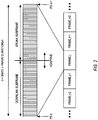
- time is divided into a sequence of consecutive frames as illustrated in Fig. 2 .
- Each frame has a fixed duration and contains one downlink sub-frame and one uplink sub-frame.
- the frame is divided into an integer number of OFDM symbols.
- the number of symbols allocated to the downlink sub-frame and uplink sub-frame is variable.
- the split between the uplink and downlink is a system parameter and is controlled at higher layers within the system.
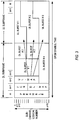
- Fig. 3 illustrates a single TDD frame in a WiMax system.
- the first symbol of the downlink sub-frame includes a preamble, which is used for synchronization.
- a frame control header (FCH) and resource allocations for the downlink and uplink designated respectively as the DL-MAP and UL-MAP, follow the preamble.
- the FCH provides information about the frame configuration, such as the usable sub-channels, coding scheme, and MAP message length.
- the DL-MAP and UL-MAP indicate the allocation of downlink and uplink resources in the downlink sub-frame and uplink sub-frame, respectively.
- the DL-MAP comprises a series of resource allocation messages to the user terminals 100 receiving an allocation of downlink slots.
- the UL-MAP comprises a series of uplink resource messages to user terminals receiving allocations of uplink slots.
- Fig. 3 shows allocations of the downlink slots to four different user terminals and the allocation of uplink slots to three different user terminals.
- the medium access control (MAC) protocol for WiMax currently requires that a single MAC protocol data unit (PDU) must be transmitted in one frame. This requirement may result in some inefficiencies.
- PDU MAC protocol data unit
- user terminals 100 are power limited, it is generally desirable to reduce the number of sub-channels allocated to a single user terminal 100 when the user terminal 100 is operating near the cell edge. Power for a transmission gets divided among the assigned subchannels in frequency. Reducing the number of subchannels, while proportionally increasing the duration of transmission, enables increase in the amount of energy per bit of transmission, thereby increasing the signal-to-noise ratio. However, the reduction in the number of sub-channels limits the available bandwidth for the user terminal 100.
- the bandwidth limitation may prevent the user terminal 100 from using the most robust modulation and coding scheme, without fragmentation of the data packet into smaller MAC PDUs.
- the size of an uplink burst is limited because of sub-channelization, the size of the MAC PDU payload is reduced and the overhead ratio, i.e., the ratio of overhead bits to total bits, is increased.
- the effective data rate on the uplink is reduced.
- multiple UL sub-frames may be aggregated into one logical unit for demodulation and decoding to allow one MAC PDU to span over multiple frames. Consequently, greater symbol energies can be accumulated to provide increased coverage and larger payload for better efficiency.
- Uplink sub-frame aggregation is enabled by modifying the uplink resource allocation messages transmitted in the UL-MAP message.
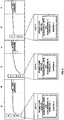
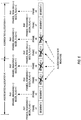
- Fig. 4 illustrates the aggregation of three uplink sub-frames into a single logical unit for demodulation and decoding.
- uplink slots are allocated to a user terminal 100 in three separate frames. While the aggregated uplink sub-frames are shown in Fig. 3 as being in three consecutive frames, it is not required that the uplink slots be allocated in consecutive frames. That is, the present invention allows the allocation of uplink slots in non-consecutive frames. In the example, a total of 13 slots are allocated with 5 slots in the first frame, 5 slots in the middle frame, and 3 slots in the last frame. The allocated slots from all three frames are combined and processed as a single MAC PDU at the receiver. At the MAC level, data is divided into a number of chunks equal to the number of allocated slots and mapped in order to the allocated slots.
- Fig. 4 also illustrates an exemplary signaling protocol that may be used to enable uplink sub-frame aggregation.
- each frame containing data for the user terminal 100 includes a UL-MAP message indicating the uplink resource allocations for a subsequent frame.
- the UL-MAP message contains UL-MAP information elements (IEs) which may embed resource allocation messages or IEs with multiple formats.
- IEs UL-MAP information elements
- One such format is the extended-2 UIUC IE, which is referred to herein as the extended 2 format.
- the extended 2 format is used when UIUC field in a UL-MAP IE is et to 11.
- the UL-MAP message with the extended 2 format may encapsulate one or more uplink resource allocation messages referred to in the standard as UL-MAP information elements (IEs).
- a modified version of the UL-MAP IE is used to indicate a multi-frame allocation.
- the modified UL-MAP IE is referred to herein as an Aggregated UL-MAP IE or, more generically, as a multi-frame resource allocation message.
- the Aggregated UL-MAP IE contains a DURATION field that indicates the number of uplink slots allocated in a corresponding frame.
- the Aggregated UL-MAP IE contains two fields not present in a conventional UL-MAP IE.
- the Aggregated UL-MAP IE contains a BEGIN FLAG field and a REMAINING RESOURCES field.
- the BEGIN FLAG field contains a flag indicating whether the current frame in a multi-frame allocation is the first frame of the multi-frame allocation.
- the REMAINING RESOURCES field contains an integer value indicating the number of remaining resources in a multi-frame allocation.
- the REMAINING RESOURCES field may comprise a REMAINING SLOTS filed indicating the number of remaining slots in a multi-frame allocation. In other embodiments, the REMAINING RESOURCES field may comprise a REMAINING FRAMES field indicating the number of remaining frames in a multi-frame allocation.
- the Aggregated UL-MAP IE may also include a TRANSMISSION TOGGLE field to make the protocol more robust.
- the TRANSMISSION TOGGLE field contains a flag that is toggled for every new multi-frame allocation.
- an Aggregated UL-MAP IE may include additional elements as required by the standard. These other elements are well known in the art and are not material to uplink sub-frame aggregation. Therefore, such non-material details are omitted for the sake of brevity. Information about additional fields required for the UL-MAP IE are described in the IEEE 802-16-2004 standard.
- the begin flag is set to 1 to indicate that the current frame is the first frame of a multi-frame allocation and the REMAINING RESOURCES field is set to indicate the total number of slots or frames in the multi-frame allocation.
- the begin flag is set to 0 and the value of the REMAINING RESOURCES field is decremented by the number of slots previously allocated to the user terminal 100 in all previous frames of the multi-frame allocation.
- the DURATION field in each Aggregated UL-MAP IE indicates the number of slots allocated in the corresponding frame.
- the user terminal 100 is allocated 13 slots over three frames: 5 slots in the first two frames and 3 slots in the last frame.
- the REMAINING RESOURCES field equals 13 in the first frame, 8 in the second, and 3 in the last frame.
- the REMAINING RESOURCES field could, alternatively, indicate the number of remaining frames in the multi-frame allocation.
- the BEGIN FLAG field and REMAINING RESOURCES field enables multi-frame allocation and allows the base station 20 to allocate uplink slots in non-consecutive frames.
- the user terminal 100 only transmits in frames where it has received an allocation. In each frame where uplink slots are allocated, the user terminal 100 transmits a corresponding portion of the MAC PDU. In the examples given above where thirteen slots are allocated over three frames, the MAC PDU is segmented into three segments and each segment is mapped to the slots in a corresponding frame.
- the UL-MAP message transmitted by the base station 20 may contain both Aggregated UL-MAP IEs and conventional UL-MAP IEs as defined in the WiMax standard.
- the Aggregated UL-MAP IEs are used to make multi-frame allocations as described above.
- Conventional UL-MAP IEs are used to allocate slots in a single frame.
- the allocations are cumulative and begin with the lowest numbered sub-channel on the first non-allocated OFDM symbol defined by the allocation start time field of the UL-MAP message.
- Each UL-MAP IE (both aggregated and conventional) indicates the number of slots allocated.
- Each UL-MAP IE after the first allocates slots immediately following the previous allocation. The slots are allocated in a time-first manner. If the end of the uplink sub-frame is reached, the allocation shall continue at the first OFDM symbol as defined by the allocation start time field in the next sub-channel.
- a user terminal 100 In order to determine what resources have been allocated, a user terminal 100 needs to parse the preceding UL-MAP IEs to determine the number of slots previously allocated to determine the beginning point in its own allocation. Because pre-existing or legacy user terminals will not be able to interpret the Aggregated UL-MAP IE used for multi-frame allocations, the conventional UL-MAP IEs may be placed in front of the Aggregated UL-MAP IEs in the UL-MAP message. That is, locating the Aggregated UL-MAP IEs at the end of the UL-MAP message will allow the legacy mobile terminals to parse the conventional UL-MAP IEs and determine their respective allocations before any multi-frame allocations are made. Alternatively, any conventional UL-MAP IEs preceded by an Aggregated UL-MAP IE may include an offset field that is set to skip over any preceding multi-frame allocations.
- base station 20 may indicate the number of remaining frames in the Aggregated UL-MAP IE, rather than the number of remaining slots as shown in Fig. 4 .
- the base station 20 sets the begin flag in the first frame of the multi-frame allocation to 1, and sets the REMAINING RESOURCES field equal to the total number of frames in the multi-frame allocation. In succeeding frames, which do not have to be consecutive, the base station 20 sets the begin flag to 0, and decrements the number of frames remaining.
- the number of slots allocated in each frame is indicated by the DURATION field.
- the user terminal 100 only transmits in frames where it receives an allocation.
- base station 20 may be constrained to allocate an equal number of slots in every frame.
- the base station 20 sets the begin flag to 1 in the first frame and to 0 in each succeeding frame of the multi-frame allocation.
- the REMAINING RESOURCES field in the first frame indicates the total number of frames in the multi-frame allocation.
- the size of the allocation equals the total number of frames times the number of slots allocated in each frame.
- the begin flag is set to 0 and the REMAINING RESOURCES field is decremented. Because the number of slots allocated is indicated in the first frame, it is not necessary to include a DURATION field in the succeeding frames. Thus, the size of the UL-MAP message is reduced.
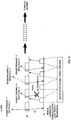
- Fig. 5 illustrates an exemplary scenario where a resource allocation message in a multi-frame allocation is missed by the user terminal 100.
- the multi-frame allocation spans four frames. For convenience, the frames are numbered from 0-3.
- the user terminal 100 successfully decodes the Aggregated UL-MAP IE for the first frame of the multi-frame allocation.
- the BEGIN FLAG field is set to 1 and the remaining frames field is set to 3.
- the total number of frames allocated may be determined by adding 1 to the remaining frames indicated by the first frame of the multi-frame allocation.
- the user terminal 100 fails to decode the Aggregated UL-MAP IE transmitted for the second frame of the multi-frame allocation, but receives the Aggregated UL-MAP IE for the third and fourth frames.
- the remaining frames field in the Aggregated UL-MAP IE for the third frame is set to 1.
- the user terminal 100 decodes the Aggregated UL-MAP IE for the third frame, it can determine based on the value of the REMAINING RESOURCES field that the Aggregated UL-MAP IE for the second frame was missed.
- user terminal 100 may discard the portion of the MAC PDU that was mapped to the slots in the second frame of the multi-frame allocation.
- base station 20 receives the portions of the MAC PDU corresponding to frames 0, 2, and 3.
- the receiver at the base station 20 declares erasure of the bits corresponding to the slots in frame 1 and proceeds to decode the MAC PDU. Because the entire transmission is channel coded and interleaved, the missing bits are spread over the entire code word, allowing the base station 20 to potentially decode the MAC PDU depending on the signal to impairment ratio for the transmission.
- Fig. 6 illustrates another scenario wherein user terminal 100 misses some resource allocation messages in two consecutive multi-frame allocations.
- base station 20 makes two consecutive multi-frame allocations to a user terminal 100.
- Each multi-frame allocation spans four frames.
- the frames in each allocation are numbered 0 - 3.
- the user terminal 100 receives the Aggregated UL-MAP IE for frames 0 and 1 in first multi-frame allocation, and for frames 2 and 3 in the second multi-frame allocation.
- the Aggregated UL-MAP IE for the frame 2 and 3 of the first multi-frame allocation and frames 0 and 1 of the second multi-frame allocation are missed.
- user terminal 100 could mistakenly conclude that the Aggregated UL-MAP IE for frame 2 in the second allocation is part of the previous multi-frame allocation.
- the problem described above can be avoided by including a TRANSMISSION TOGGLE field in the Aggregated UL-MAP IE.
- the TRANSMISSION TOGGLE field comprises a binary flag that is toggled after each multi-frame allocation.
- the TRANSMISSION TOGGLE field would be set to "0" or "1" during the first multi-frame allocation and to "1" or "0" during the second multi-frame allocation.
- user terminal 100 would recognize that frame 2 in the second multi-frame allocation is not a continuation of the previous multi-frame allocation.
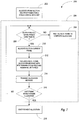
- Fig. 7 illustrates an exemplary procedure 200 implemented by a base station 20 for scheduling transmissions from a user terminal 100 to the base station 20 on an uplink channel.
- Base station 20 allocates uplink slots in multiple frames for a single MAC PDU (block 202). After the allocation is made, the base station 20 generates and sends a multi-frame allocation message to the user terminal 100 for each frame of the multi-frame allocation (block 204). It is not necessary that the frames allocated be consecutive.
- the multi-frame allocation message for each frame includes a BEGIN FLAG field and a REMAINING RESOURCES field. As previously noted, the BEGIN FLAG field is set to 1 in the first frame of the multi-frame allocation and is set to 0 in each succeeding frame.
- the REMAINING RESOURCES field is set to indicate the total number of units allocated (either slots or frames) and is decremented in each subsequent frame of the multi-frame allocation.
- the multi-frame allocation messages may also include a DURATION field indicating the number of slots allocated in each frame of the multi-frame allocation and a TRANSMISSION TOGGLE field as previously described.
- the scheduler at base station 20 first determines the total number of slots in the multi-frame allocation, the coding and modulation scheme, and the number of frames in the multi-frame allocation. Thereafter, allocations are made on a frame-by-frame basis. In each frame, the scheduler determines whether slots are available in the current frame within the power constraints of the user terminal 100 (block 206). If not, the scheduler waits for the next frame (block 208).
- the scheduler allocates slots in the current frame (block 210), generates a multi-frame allocation message with a BEGIN FLAG field and REMAINING RESOURCES field (block 212), and transmits the resource allocation message to the user terminal 100 (block 214).
- the scheduler determines whether the last frame in the multi-frame allocation is reached (block 216). If not, the process repeats until the last frame is reached, after which the scheduler waits for the next multi-frame allocation (block 218).
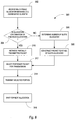
- Fig. 8 illustrates an exemplary procedure 300 implemented by a user terminal 100 in response to receipt of a multi-frame allocation message.
- the procedure begins when user terminal 100 receives the multi-frame allocation message (block 302).
- the user terminal 100 determines whether the multi-frame allocation message is a new multi-frame allocation or a continuation of a previous multi-frame allocation (block 304).
- the user terminal 100 determines the number of slots allocated based on the REMAINING RESOURCES field (block 306) and constructs a MAC PDU to fit the number of allocated slots (block 308).
- the user terminal 100 retrieves the untransmitted portion of the MAC PDU from a memory (block 310). In both cases, the user terminal 100 selects a portion of the MAC PDU corresponding to the current frame (block 312) and transmits the selected portion to the base station 20 (block 314). The user terminal 100 then waits for the next frame of the multi-frame allocation (block 316).
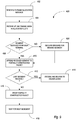
- Fig. 9 illustrates an exemplary procedure 400 implemented by the base station 20 to aggregate data transmitted over multiple frames.
- the procedure 400 begins when the base station 20 sends a multi-frame allocation message to the user terminal 100 (block 402).
- Base station 20 receives the uplink transmission in the slots allocated to the user terminal 100 (block 404) and processes the received signal to determine whether a segment of the MAC PDU has been transmitted by the user terminal 100 (block 406). If no MAC PDU segment is transmitted by the user terminal 100, the base station 20 declares an erasure for the missing segment that should have been transmitted (block 408) and appends the erasure to the previously received segments, if any (block 410).
- Base station 20 determines whether the last segment of the MAC PDU has been received (block 412). If so, the base station 20 decodes and delivers the received MAC PDU to higher protocol layers (block 414). If not, base station 20 stores the partially-received MAC PDU (block 416) and waits for the next segment of the MAC PDU (block 418).
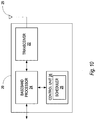
- Fig. 10 illustrates an exemplary base station 20 according to one exemplary embodiment of the present invention.
- Base station 20 comprises a transceiver 22 coupled to an antenna 25, baseband processor 24, and control unit 26.
- Transceiver 22 comprises a standard cellular transceiver operating according to any known standard.
- the transceiver 22 comprises a WiMax transceiver.
- Baseband processor 24 comprises one or more processors, microcontrollers, hardware circuits, or a combination thereof, for processing signals transmitted and received by the base station 20.
- the baseband processor 24 may demodulate and decode signals received from a user terminal in the allocated uplink slots.
- the baseband processor 24 may declare an erasure if no data is received in one of said allocated uplink slots; and decode the data packet without the erased data.
- Control unit 26 which may comprise one or more processors, controls the overall operation of the base station 20.
- the control unit 26 includes a scheduler 28, which operates within the MAC protocol layer. The scheduler 28 schedules the user terminals 100 on the uplink and allocates resources to the user terminals 100 as previously described.
Landscapes
- Engineering & Computer Science (AREA)
- Signal Processing (AREA)
- Computer Networks & Wireless Communication (AREA)
- Mobile Radio Communication Systems (AREA)
Claims (18)
- Verfahren zum Festlegen von Übertragungen von einem Nutzerendgerät (100) zu einer Basisstation (20) an einem Uplink-Kanal (UL), wobei das Verfahren umfasst:Zuweisen von Uplink-Slots in mehreren Frames für das Nutzerendgerät (100) für eine Übertragung eines einzelnen Datenpakets von dem Nutzerendgerät (100) an die Basisstation (20); undSenden einer Mehrfach-Frame-Zuweisungsnachricht, UL-MAP IE, an das Nutzerendgerät (100) für jeden Frame der Mehrfach-Frame-Zuweisung, wobei die Mehrfach-Frame-Zuweisungsnachricht umfasst:ein BEGINN-FLAG-Feld mit einem Beginn-Flag zum Anzeigen, ob der gegenwärtige Frame ein Beginn-Frame in der Mehrfach-Frame-Zuweisung ist; undein REMAINING-RESOURCES-Feld mit einer Anzahl von verbleibenden Ressourcen in der Mehrfach-Frame-Zuweisung.
- Verfahren nach Anspruch 1, wobei die Mehrfach-Frame-Zuweisungsnachricht ferner ein DURATION-Feld enthält, mit einer Anzahl von Slots in dem gegenwärtigen, dem Nutzerendgerät zugewiesenen Frame.
- Verfahren nach Anspruch 1, wobei die Mehrfach-Frame-Zuweisungsnachricht ferner ein TRANSMISSION-TOGGLE-Feld enthält, mit einem Toggle-Flag, das einen Wert in jeder sukzessiven Mehrfach-Frame-Zuweisung ändert.
- Verfahren nach Anspruch 1, wobei das REMAINING-RESOURCES-Feld eine Anzahl von verbleibenden Frames in der Mehrfach-Frame-Zuweisung enthält.
- Verfahren nach Anspruch 1, wobei das REMAINING-RESOURCES-Feld eine Anzahl verbleibender Slots in der Mehrfach-Frame-Zuweisung enthält.
- Verfahren nach Anspruch 1, ferner mit einem Senden von einer oder mehreren Einzel-Frame-Zuweisungsnachrichten in dem gleichen Frame wie die Mehrfach-Frame-Zuweisungsnachricht, vor dem Übertragen der Mehrfach-Frame-Zuweisungsnachricht.
- Verfahren nach Anspruch 1, ferner mit einem Senden von einer oder mehreren Einzel-Frame-Zuweisungsnachrichten in dem gleichen Frame wie die Mehrfach-Frame-Zuweisungsnachricht, der Übertragung der Mehrfach-Frame-Zuweisungsnachricht folgend, wobei die Einzel-Frame-Zuweisungsnachricht einen Offset zum Anzeigen eines Startpunkts der Zuweisung enthält.
- Verfahren nach Anspruch 1, wobei die Anzahl zugewiesener Slots in jedem Frame der Mehrfach-Frame-Zuweisung gleich ist.
- Verfahren nach Anspruch 1, ferner umfassend:Demodulieren von Segmenten des Datenpakets, das in den zugewiesenen Uplink-Slots empfangen wird;Deklarieren einer Löschung, wenn ein Segment nicht in einem der zugewiesenen Uplink-Slots empfangen wird;Decodieren des Datenpakets ohne das fehlende Segment, wenn eine Löschung auftritt.
- Basisstation zum (20) zum Festlegen von Übertragungen von einem Nutzerendgerät (100) an die Basisstation (20) an einem Uplink-Kanal, wobei die Basisstation umfasst:einen Empfänger zum Empfangen von Übertragungen von dem Nutzerendgerät an einem Uplink-Kanal; undein Festlegungsmittel (28) zum Festlegen der Übertragungen von dem Nutzerendgerät an die Basisstation an dem Uplink-Kanal, wobei das Festlegungsmittel (28) konfiguriert ist zum:Zuweisen von Uplink-Slots in mehreren Frames an ein Nutzerendgerät für eine Übertragung eines einzelnen Datenpakets von dem Nutzerendgerät an die Basisstation; undSenden einer Mehrfach-Frame-Zuweisungsnachricht an das Nutzerendgerät für jeden Frame der Mehrfach-Frame-Zuweisung, wobei die Mehrfach-Frame-Zuweisungsnachricht ein BEGIN-FLAG-Feld umfasst mit einem Begin-Flag zum Anzeigen, ob der gegenwärtige Frame ein Begin-Frame in der Mehrfach-Frame-Zuweisung ist, und ein REMAINING-RESOURCES-Feld mit einer Anzahl verbleibender Ressourcen in der Mehrfach-Frame-Zuweisung.
- Basisstation (20) nach Anspruch 10, wobei die Mehrfach-Frame-Zuweisungsnachricht ferner ein DURATION-Feld enthält, mit einer Anzahl von Slots in dem gegenwärtigen, dem Nutzerendgerät zugewiesenen Frame.
- Basisstation (20) nach Anspruch 10, wobei die Mehrfach-Frame-Zuweisungsnachricht ferner ein TRANSMISSION-TOGGLE-Feld enthält, mit einem Toggle-Flag, das einen Wert in jeder sukzessiven Mehrfach-Frame-Zuweisung ändert.
- Basisstation (20) nach Anspruch 10, wobei das REMAINING-RESOURCES-Feld eine Anzahl verbleibender Frames in der Mehrfach-Frame-Zuweisung enthält.
- Basisstation (20) nach Anspruch 10, wobei das REMAINING-RESOURCES-Feld eine Anzahl verbleibender Slots in der Mehrfach-Frame-Zuweisung enthält.
- Basisstation (20) nach Anspruch 10, wobei das Festlegungsmittel (28) ferner konfiguriert ist zum Senden von einer oder mehreren Einzel-Frame-Zuweisungsnachrichten in dem gleichen Frame wie die Mehrfach-Frame-Zuweisungsnachricht, vor der Übertragung der Mehrfach-Frame-Zuweisungsnachricht.
- Basisstation (20) nach Anspruch 10, wobei das Festlegungsmittel (28) ferner konfiguriert ist zum Senden von einer oder mehreren Einzel-Frame-Zuweisungsnachrichten in dem gleichen Frame wie die Mehrfach-Frame-Zuweisungsnachricht, der Übertragung der Mehrfach-Frame-Zuweisungsnachricht folgend, wobei die Einzel-Frame-Zuweisungsnachricht einen Offset zum Anzeigen eines Startpunkts der Zuweisung enthält.
- Basisstation (20) nach Anspruch 10, wobei die Anzahl zugewiesener Slots in jedem Frame der Mehrfach-Frame-Zuweisung gleich ist.
- Basisstation (20) nach Anspruch 10, ferner mit einem Basisband-Prozessor (24), konfiguriert zum Demodulieren von Segmenten der Datenpakete, die in einem oder mehreren der zugewiesenen Uplink-Slots empfangen werden; Deklarieren einer Löschung, wenn ein Segment nicht in einem der zugewiesenen Uplink-Slots empfangen wird; und Decodieren des Datenpakets ohne das fehlende Segment, wenn eine Löschung auftritt.
Applications Claiming Priority (3)
| Application Number | Priority Date | Filing Date | Title |
|---|---|---|---|
| US4883308P | 2008-04-29 | 2008-04-29 | |
| US12/430,605 US8331272B2 (en) | 2008-04-29 | 2009-04-27 | Aggregation of resources over multiple frames in a TDD communication system |
| PCT/IB2009/005410 WO2009133449A1 (en) | 2008-04-29 | 2009-04-28 | Aggregation of resources over multiple frames in a tdd communication system |
Publications (2)
| Publication Number | Publication Date |
|---|---|
| EP2272293A1 EP2272293A1 (de) | 2011-01-12 |
| EP2272293B1 true EP2272293B1 (de) | 2017-01-25 |
Family
ID=40902731
Family Applications (1)
| Application Number | Title | Priority Date | Filing Date |
|---|---|---|---|
| EP09738462.2A Not-in-force EP2272293B1 (de) | 2008-04-29 | 2009-04-28 | Ressourcenanhäufung über mehrere frames in einem tdd-kommunikationssystem |
Country Status (7)
| Country | Link |
|---|---|
| US (1) | US8331272B2 (de) |
| EP (1) | EP2272293B1 (de) |
| KR (1) | KR20110018882A (de) |
| CN (1) | CN102017758B (de) |
| CA (1) | CA2723091C (de) |
| TW (1) | TWI461085B (de) |
| WO (1) | WO2009133449A1 (de) |
Cited By (1)
| Publication number | Priority date | Publication date | Assignee | Title |
|---|---|---|---|---|
| EP4465576A4 (de) * | 2022-02-11 | 2025-10-15 | Huawei Tech Co Ltd | Kommunikationsverfahren und kommunikationsvorrichtung |
Families Citing this family (16)
| Publication number | Priority date | Publication date | Assignee | Title |
|---|---|---|---|---|
| CN101960879A (zh) * | 2008-03-06 | 2011-01-26 | 京瓷株式会社 | 通信方法以及使用该方法的基站设备 |
| EP2364534A1 (de) * | 2008-06-13 | 2011-09-14 | Nokia Siemens Networks OY | Subkanalerzeugung für ein drahtloses mesh-netzwerk |
| US20100111012A1 (en) * | 2008-11-06 | 2010-05-06 | Qualcomm Incorporated | Methods and systems for fast network entry and re-entry in multiple access networks |
| US9948424B2 (en) * | 2009-04-27 | 2018-04-17 | Samsung Electronics Co., Ltd. | System and method for reducing blind decoding complexity in OFDMA-based systems |
| KR20110007988A (ko) * | 2009-07-17 | 2011-01-25 | 엘지전자 주식회사 | 광대역 무선 접속 시스템에서 효율적인 방송 메시지 전송 방법 |
| KR101650573B1 (ko) * | 2009-11-27 | 2016-08-23 | 삼성전자주식회사 | 다중 사용자 ofdm 시스템의 적응적 자원 할당 방법 및 장치 |
| TWI437900B (zh) * | 2009-12-22 | 2014-05-11 | Universal Scient Ind Shanghai | 封包傳輸規劃方法及其通訊裝置 |
| US9036491B2 (en) | 2011-08-12 | 2015-05-19 | Sharp Laboratories Of America, Inc. | Devices for converting a downlink subframe |
| US20130230059A1 (en) * | 2011-09-02 | 2013-09-05 | Qualcomm Incorporated | Fragmentation for long packets in a low-speed wireless network |
| US8934424B2 (en) | 2011-09-29 | 2015-01-13 | Sharp Laboratories Of America, Inc. | Devices for reconfiguring a subframe allocation |
| US9602251B2 (en) | 2012-01-27 | 2017-03-21 | Sharp Kabushiki Kaisha | Devices for reconfiguring uplink and downlink allocations in time domain duplexing wireless systems |
| US9295022B2 (en) * | 2012-05-18 | 2016-03-22 | Comcast Cable Communications, LLC. | Wireless network supporting extended coverage of service |
| CN108683485B (zh) * | 2013-01-17 | 2021-03-12 | 苹果公司 | Tdd传输的ul/dl帧资源动态配置的方法和装置 |
| WO2014113095A1 (en) | 2013-01-17 | 2014-07-24 | Intel Corporation | Dynamic configuration of uplink (ul) and downlink (dl) frame resources for a time division duplex (tdd) transmission |
| CN106658739B (zh) * | 2015-07-13 | 2020-01-31 | 中国移动通信集团公司 | 一种多ue上行子帧聚合传输方法、装置和系统 |
| US11997523B2 (en) * | 2020-10-26 | 2024-05-28 | Mediatek Singapore Pte. Ltd. | Efficient trigger-based multi-user uplink transmissions in wireless local area networks |
Family Cites Families (7)
| Publication number | Priority date | Publication date | Assignee | Title |
|---|---|---|---|---|
| PL366339A1 (en) * | 2000-07-11 | 2005-01-24 | Ensemble Communications, Inc. | Method and apparatus for bandwidth request/grant protocols in a wireless communication system |
| US7489688B2 (en) * | 2003-12-23 | 2009-02-10 | Agere Systems Inc. | Frame aggregation |
| US20060245384A1 (en) * | 2005-05-02 | 2006-11-02 | Talukdar Anup K | Method and apparatus for transmitting data |
| KR100615139B1 (ko) | 2005-10-18 | 2006-08-22 | 삼성전자주식회사 | 무선통신 시스템에서 전송 시간 구간의 할당 방법과 장치및 그 시스템 |
| US8588201B2 (en) | 2005-11-15 | 2013-11-19 | Intel Corporation | Method and apparatus for improving RF coverage area in a wireless network |
| KR100945820B1 (ko) * | 2006-06-14 | 2010-03-05 | 삼성전자주식회사 | 무선통신시스템에서 데이터 통신 장치 및 방법 |
| EP3554171B1 (de) | 2006-07-07 | 2021-09-01 | Samsung Electronics Co., Ltd. | Vorrichtung und verfahren zur reduzierung des volumens einer ressourcenzuweisungsinformationsnachricht in einem breitband-kommunikationssystem |
-
2009
- 2009-04-27 US US12/430,605 patent/US8331272B2/en not_active Expired - Fee Related
- 2009-04-28 TW TW098114089A patent/TWI461085B/zh not_active IP Right Cessation
- 2009-04-28 CA CA2723091A patent/CA2723091C/en active Active
- 2009-04-28 CN CN200980116162.9A patent/CN102017758B/zh not_active Expired - Fee Related
- 2009-04-28 KR KR1020107026501A patent/KR20110018882A/ko not_active Ceased
- 2009-04-28 EP EP09738462.2A patent/EP2272293B1/de not_active Not-in-force
- 2009-04-28 WO PCT/IB2009/005410 patent/WO2009133449A1/en not_active Ceased
Non-Patent Citations (1)
| Title |
|---|
| None * |
Cited By (1)
| Publication number | Priority date | Publication date | Assignee | Title |
|---|---|---|---|---|
| EP4465576A4 (de) * | 2022-02-11 | 2025-10-15 | Huawei Tech Co Ltd | Kommunikationsverfahren und kommunikationsvorrichtung |
Also Published As
| Publication number | Publication date |
|---|---|
| CN102017758B (zh) | 2014-03-26 |
| US20090274071A1 (en) | 2009-11-05 |
| CA2723091A1 (en) | 2009-11-05 |
| KR20110018882A (ko) | 2011-02-24 |
| TWI461085B (zh) | 2014-11-11 |
| WO2009133449A1 (en) | 2009-11-05 |
| CA2723091C (en) | 2018-01-09 |
| CN102017758A (zh) | 2011-04-13 |
| TW201010483A (en) | 2010-03-01 |
| US8331272B2 (en) | 2012-12-11 |
| EP2272293A1 (de) | 2011-01-12 |
Similar Documents
| Publication | Publication Date | Title |
|---|---|---|
| EP2272293B1 (de) | Ressourcenanhäufung über mehrere frames in einem tdd-kommunikationssystem | |
| CN110192413B (zh) | 用于复用业务的系统和方法 | |
| EP2109338B1 (de) | Anzeige des Frame Offsets von Multicast Broadcast Service Datenbursts in einer MBS-MAP Nachricht | |
| USRE46529E1 (en) | Method for transmitting and receiving data with superframe structure | |
| EP2070362B1 (de) | Funkbetriebsmittelzuweisung im steuerkanal in drahtlosen kommunikationssystemen | |
| KR101962245B1 (ko) | 광대역 단말과 협대역 단말을 함께 운용하는 무선통신시스템에서 협대역 단말의 시스템 접속 방법 및 장치 | |
| EP2424147B1 (de) | Subträgerzuteilung für Steuerdaten in einem Kommunikationssystem | |
| EP2375792B1 (de) | Senden und empfangen von rundfunkdienstdaten in einem drahtlosen kommunikationssystem | |
| EP4080777B1 (de) | System und verfahren zur trägeraktivierung | |
| CN101595690B (zh) | 用于异构通信系统之间的业务互配的系统和方法 | |
| EP2327263B1 (de) | Mehrträgerentwurf für steuerung und prozeduren, umfassend paarung von trägern | |
| EP3968719A1 (de) | Verfahren zur zuteilung von ressourcen in einem drahtlosen kommunikationssystem und vorrichtung damit | |
| EP2425669B1 (de) | Verfahren zur kommunikation in einem mobilen netzwerk | |
| US11297635B2 (en) | Slot bundling | |
| CN120710639A (zh) | 在无线通信系统中生成harq-ack码本的方法、装置和系统 | |
| KR20080082889A (ko) | 통신 시스템에서 공통 제어 정보 송수신 방법 및 그 시스템 | |
| EP2467949A1 (de) | System und verfahren für ein kanaltiming-offset | |
| JP2011504317A (ja) | 複数の多元接続技術が割り当てられたアップリンク無線フレーム | |
| CN101287281A (zh) | 无线通信系统中下行调度控制信令的传输设备和方法 | |
| US8218495B2 (en) | Apparatus and method for circuit mode resource allocation in broadband wireless access (BWA) system | |
| WO2008108567A1 (en) | Method and system for transmitting/receiving signal in a communication system | |
| EP3577973B1 (de) | Dynamische ressourcenbestimmung für kurzen physikalischen downlink-steuerkanal (spdch) | |
| KR100810338B1 (ko) | 이동통신 시스템에서 메모리 제어 방법 | |
| WO2008066284A1 (en) | Method for transmitting/receiving resource allocation information in a communication system | |
| CN101611604A (zh) | 局部化及分布式分配多路复用及控制 |
Legal Events
| Date | Code | Title | Description |
|---|---|---|---|
| PUAI | Public reference made under article 153(3) epc to a published international application that has entered the european phase |
Free format text: ORIGINAL CODE: 0009012 |
|
| 17P | Request for examination filed |
Effective date: 20101110 |
|
| AK | Designated contracting states |
Kind code of ref document: A1 Designated state(s): AT BE BG CH CY CZ DE DK EE ES FI FR GB GR HR HU IE IS IT LI LT LU LV MC MK MT NL NO PL PT RO SE SI SK TR |
|
| AX | Request for extension of the european patent |
Extension state: AL BA RS |
|
| RIN1 | Information on inventor provided before grant (corrected) |
Inventor name: BALACHANDRAN, KUMAR Inventor name: KOORAPATY, HAVISH Inventor name: RAMESH, RAJARAM |
|
| RIN1 | Information on inventor provided before grant (corrected) |
Inventor name: BALACHANDRAN, KUMAR Inventor name: KOORAPATY, HAVISH Inventor name: RAMESH, RAJARAM |
|
| DAX | Request for extension of the european patent (deleted) | ||
| GRAP | Despatch of communication of intention to grant a patent |
Free format text: ORIGINAL CODE: EPIDOSNIGR1 |
|
| RIC1 | Information provided on ipc code assigned before grant |
Ipc: H04W 72/04 20090101AFI20160901BHEP Ipc: H04L 5/00 20060101ALN20160901BHEP |
|
| INTG | Intention to grant announced |
Effective date: 20160914 |
|
| RIC1 | Information provided on ipc code assigned before grant |
Ipc: H04L 5/00 20060101ALN20160905BHEP Ipc: H04W 72/04 20090101AFI20160905BHEP |
|
| GRAS | Grant fee paid |
Free format text: ORIGINAL CODE: EPIDOSNIGR3 |
|
| GRAA | (expected) grant |
Free format text: ORIGINAL CODE: 0009210 |
|
| AK | Designated contracting states |
Kind code of ref document: B1 Designated state(s): AT BE BG CH CY CZ DE DK EE ES FI FR GB GR HR HU IE IS IT LI LT LU LV MC MK MT NL NO PL PT RO SE SI SK TR |
|
| REG | Reference to a national code |
Ref country code: GB Ref legal event code: FG4D |
|
| REG | Reference to a national code |
Ref country code: CH Ref legal event code: EP |
|
| REG | Reference to a national code |
Ref country code: AT Ref legal event code: REF Ref document number: 864757 Country of ref document: AT Kind code of ref document: T Effective date: 20170215 |
|
| REG | Reference to a national code |
Ref country code: IE Ref legal event code: FG4D |
|
| REG | Reference to a national code |
Ref country code: DE Ref legal event code: R096 Ref document number: 602009043944 Country of ref document: DE |
|
| REG | Reference to a national code |
Ref country code: LT Ref legal event code: MG4D |
|
| REG | Reference to a national code |
Ref country code: NL Ref legal event code: MP Effective date: 20170125 |
|
| REG | Reference to a national code |
Ref country code: AT Ref legal event code: MK05 Ref document number: 864757 Country of ref document: AT Kind code of ref document: T Effective date: 20170125 |
|
| PG25 | Lapsed in a contracting state [announced via postgrant information from national office to epo] |
Ref country code: NL Free format text: LAPSE BECAUSE OF FAILURE TO SUBMIT A TRANSLATION OF THE DESCRIPTION OR TO PAY THE FEE WITHIN THE PRESCRIBED TIME-LIMIT Effective date: 20170125 |
|
| PG25 | Lapsed in a contracting state [announced via postgrant information from national office to epo] |
Ref country code: FI Free format text: LAPSE BECAUSE OF FAILURE TO SUBMIT A TRANSLATION OF THE DESCRIPTION OR TO PAY THE FEE WITHIN THE PRESCRIBED TIME-LIMIT Effective date: 20170125 Ref country code: IS Free format text: LAPSE BECAUSE OF FAILURE TO SUBMIT A TRANSLATION OF THE DESCRIPTION OR TO PAY THE FEE WITHIN THE PRESCRIBED TIME-LIMIT Effective date: 20170525 Ref country code: HR Free format text: LAPSE BECAUSE OF FAILURE TO SUBMIT A TRANSLATION OF THE DESCRIPTION OR TO PAY THE FEE WITHIN THE PRESCRIBED TIME-LIMIT Effective date: 20170125 Ref country code: LT Free format text: LAPSE BECAUSE OF FAILURE TO SUBMIT A TRANSLATION OF THE DESCRIPTION OR TO PAY THE FEE WITHIN THE PRESCRIBED TIME-LIMIT Effective date: 20170125 Ref country code: GR Free format text: LAPSE BECAUSE OF FAILURE TO SUBMIT A TRANSLATION OF THE DESCRIPTION OR TO PAY THE FEE WITHIN THE PRESCRIBED TIME-LIMIT Effective date: 20170426 Ref country code: NO Free format text: LAPSE BECAUSE OF FAILURE TO SUBMIT A TRANSLATION OF THE DESCRIPTION OR TO PAY THE FEE WITHIN THE PRESCRIBED TIME-LIMIT Effective date: 20170425 |
|
| PG25 | Lapsed in a contracting state [announced via postgrant information from national office to epo] |
Ref country code: SE Free format text: LAPSE BECAUSE OF FAILURE TO SUBMIT A TRANSLATION OF THE DESCRIPTION OR TO PAY THE FEE WITHIN THE PRESCRIBED TIME-LIMIT Effective date: 20170125 Ref country code: AT Free format text: LAPSE BECAUSE OF FAILURE TO SUBMIT A TRANSLATION OF THE DESCRIPTION OR TO PAY THE FEE WITHIN THE PRESCRIBED TIME-LIMIT Effective date: 20170125 Ref country code: LV Free format text: LAPSE BECAUSE OF FAILURE TO SUBMIT A TRANSLATION OF THE DESCRIPTION OR TO PAY THE FEE WITHIN THE PRESCRIBED TIME-LIMIT Effective date: 20170125 Ref country code: ES Free format text: LAPSE BECAUSE OF FAILURE TO SUBMIT A TRANSLATION OF THE DESCRIPTION OR TO PAY THE FEE WITHIN THE PRESCRIBED TIME-LIMIT Effective date: 20170125 Ref country code: PL Free format text: LAPSE BECAUSE OF FAILURE TO SUBMIT A TRANSLATION OF THE DESCRIPTION OR TO PAY THE FEE WITHIN THE PRESCRIBED TIME-LIMIT Effective date: 20170125 Ref country code: PT Free format text: LAPSE BECAUSE OF FAILURE TO SUBMIT A TRANSLATION OF THE DESCRIPTION OR TO PAY THE FEE WITHIN THE PRESCRIBED TIME-LIMIT Effective date: 20170525 Ref country code: BG Free format text: LAPSE BECAUSE OF FAILURE TO SUBMIT A TRANSLATION OF THE DESCRIPTION OR TO PAY THE FEE WITHIN THE PRESCRIBED TIME-LIMIT Effective date: 20170425 |
|
| REG | Reference to a national code |
Ref country code: DE Ref legal event code: R097 Ref document number: 602009043944 Country of ref document: DE |
|
| PG25 | Lapsed in a contracting state [announced via postgrant information from national office to epo] |
Ref country code: IT Free format text: LAPSE BECAUSE OF FAILURE TO SUBMIT A TRANSLATION OF THE DESCRIPTION OR TO PAY THE FEE WITHIN THE PRESCRIBED TIME-LIMIT Effective date: 20170125 Ref country code: CZ Free format text: LAPSE BECAUSE OF FAILURE TO SUBMIT A TRANSLATION OF THE DESCRIPTION OR TO PAY THE FEE WITHIN THE PRESCRIBED TIME-LIMIT Effective date: 20170125 Ref country code: EE Free format text: LAPSE BECAUSE OF FAILURE TO SUBMIT A TRANSLATION OF THE DESCRIPTION OR TO PAY THE FEE WITHIN THE PRESCRIBED TIME-LIMIT Effective date: 20170125 Ref country code: RO Free format text: LAPSE BECAUSE OF FAILURE TO SUBMIT A TRANSLATION OF THE DESCRIPTION OR TO PAY THE FEE WITHIN THE PRESCRIBED TIME-LIMIT Effective date: 20170125 Ref country code: SK Free format text: LAPSE BECAUSE OF FAILURE TO SUBMIT A TRANSLATION OF THE DESCRIPTION OR TO PAY THE FEE WITHIN THE PRESCRIBED TIME-LIMIT Effective date: 20170125 |
|
| PG25 | Lapsed in a contracting state [announced via postgrant information from national office to epo] |
Ref country code: DK Free format text: LAPSE BECAUSE OF FAILURE TO SUBMIT A TRANSLATION OF THE DESCRIPTION OR TO PAY THE FEE WITHIN THE PRESCRIBED TIME-LIMIT Effective date: 20170125 |
|
| REG | Reference to a national code |
Ref country code: CH Ref legal event code: PL |
|
| PLBE | No opposition filed within time limit |
Free format text: ORIGINAL CODE: 0009261 |
|
| STAA | Information on the status of an ep patent application or granted ep patent |
Free format text: STATUS: NO OPPOSITION FILED WITHIN TIME LIMIT |
|
| 26N | No opposition filed |
Effective date: 20171026 |
|
| REG | Reference to a national code |
Ref country code: IE Ref legal event code: MM4A |
|
| REG | Reference to a national code |
Ref country code: FR Ref legal event code: ST Effective date: 20171229 |
|
| PG25 | Lapsed in a contracting state [announced via postgrant information from national office to epo] |
Ref country code: MC Free format text: LAPSE BECAUSE OF FAILURE TO SUBMIT A TRANSLATION OF THE DESCRIPTION OR TO PAY THE FEE WITHIN THE PRESCRIBED TIME-LIMIT Effective date: 20170125 Ref country code: FR Free format text: LAPSE BECAUSE OF NON-PAYMENT OF DUE FEES Effective date: 20170502 |
|
| PG25 | Lapsed in a contracting state [announced via postgrant information from national office to epo] |
Ref country code: LU Free format text: LAPSE BECAUSE OF NON-PAYMENT OF DUE FEES Effective date: 20170428 Ref country code: LI Free format text: LAPSE BECAUSE OF NON-PAYMENT OF DUE FEES Effective date: 20170430 Ref country code: SI Free format text: LAPSE BECAUSE OF FAILURE TO SUBMIT A TRANSLATION OF THE DESCRIPTION OR TO PAY THE FEE WITHIN THE PRESCRIBED TIME-LIMIT Effective date: 20170125 Ref country code: CH Free format text: LAPSE BECAUSE OF NON-PAYMENT OF DUE FEES Effective date: 20170430 |
|
| REG | Reference to a national code |
Ref country code: BE Ref legal event code: MM Effective date: 20170430 |
|
| PG25 | Lapsed in a contracting state [announced via postgrant information from national office to epo] |
Ref country code: IE Free format text: LAPSE BECAUSE OF NON-PAYMENT OF DUE FEES Effective date: 20170428 |
|
| PG25 | Lapsed in a contracting state [announced via postgrant information from national office to epo] |
Ref country code: BE Free format text: LAPSE BECAUSE OF NON-PAYMENT OF DUE FEES Effective date: 20170430 |
|
| PGFP | Annual fee paid to national office [announced via postgrant information from national office to epo] |
Ref country code: DE Payment date: 20180427 Year of fee payment: 10 |
|
| PG25 | Lapsed in a contracting state [announced via postgrant information from national office to epo] |
Ref country code: MT Free format text: LAPSE BECAUSE OF NON-PAYMENT OF DUE FEES Effective date: 20170428 |
|
| PGFP | Annual fee paid to national office [announced via postgrant information from national office to epo] |
Ref country code: GB Payment date: 20180427 Year of fee payment: 10 |
|
| PG25 | Lapsed in a contracting state [announced via postgrant information from national office to epo] |
Ref country code: HU Free format text: LAPSE BECAUSE OF FAILURE TO SUBMIT A TRANSLATION OF THE DESCRIPTION OR TO PAY THE FEE WITHIN THE PRESCRIBED TIME-LIMIT; INVALID AB INITIO Effective date: 20090428 |
|
| PG25 | Lapsed in a contracting state [announced via postgrant information from national office to epo] |
Ref country code: CY Free format text: LAPSE BECAUSE OF NON-PAYMENT OF DUE FEES Effective date: 20170125 |
|
| REG | Reference to a national code |
Ref country code: DE Ref legal event code: R119 Ref document number: 602009043944 Country of ref document: DE |
|
| PG25 | Lapsed in a contracting state [announced via postgrant information from national office to epo] |
Ref country code: MK Free format text: LAPSE BECAUSE OF FAILURE TO SUBMIT A TRANSLATION OF THE DESCRIPTION OR TO PAY THE FEE WITHIN THE PRESCRIBED TIME-LIMIT Effective date: 20170125 |
|
| GBPC | Gb: european patent ceased through non-payment of renewal fee |
Effective date: 20190428 |
|
| PG25 | Lapsed in a contracting state [announced via postgrant information from national office to epo] |
Ref country code: GB Free format text: LAPSE BECAUSE OF NON-PAYMENT OF DUE FEES Effective date: 20190428 Ref country code: DE Free format text: LAPSE BECAUSE OF NON-PAYMENT OF DUE FEES Effective date: 20191101 |
|
| PG25 | Lapsed in a contracting state [announced via postgrant information from national office to epo] |
Ref country code: TR Free format text: LAPSE BECAUSE OF FAILURE TO SUBMIT A TRANSLATION OF THE DESCRIPTION OR TO PAY THE FEE WITHIN THE PRESCRIBED TIME-LIMIT Effective date: 20170125 |