EP2270715A2 - Verfahren und System zum Sammeln von Stimm- und Bilddaten auf einer Ferneinrichtung und zum Konvertieren der kombinierten Daten - Google Patents
Verfahren und System zum Sammeln von Stimm- und Bilddaten auf einer Ferneinrichtung und zum Konvertieren der kombinierten Daten Download PDFInfo
- Publication number
- EP2270715A2 EP2270715A2 EP10167931A EP10167931A EP2270715A2 EP 2270715 A2 EP2270715 A2 EP 2270715A2 EP 10167931 A EP10167931 A EP 10167931A EP 10167931 A EP10167931 A EP 10167931A EP 2270715 A2 EP2270715 A2 EP 2270715A2
- Authority
- EP
- European Patent Office
- Prior art keywords
- image data
- data
- image
- machine vision
- unit
- Prior art date
- Legal status (The legal status is an assumption and is not a legal conclusion. Google has not performed a legal analysis and makes no representation as to the accuracy of the status listed.)
- Withdrawn
Links
Images



Classifications
-
- G—PHYSICS
- G06—COMPUTING OR CALCULATING; COUNTING
- G06K—GRAPHICAL DATA READING; PRESENTATION OF DATA; RECORD CARRIERS; HANDLING RECORD CARRIERS
- G06K7/00—Methods or arrangements for sensing record carriers, e.g. for reading patterns
- G06K7/10—Methods or arrangements for sensing record carriers, e.g. for reading patterns by electromagnetic radiation, e.g. optical sensing; by corpuscular radiation
- G06K7/10544—Methods or arrangements for sensing record carriers, e.g. for reading patterns by electromagnetic radiation, e.g. optical sensing; by corpuscular radiation by scanning of the records by radiation in the optical part of the electromagnetic spectrum
- G06K7/10821—Methods or arrangements for sensing record carriers, e.g. for reading patterns by electromagnetic radiation, e.g. optical sensing; by corpuscular radiation by scanning of the records by radiation in the optical part of the electromagnetic spectrum further details of bar or optical code scanning devices
- G06K7/10881—Methods or arrangements for sensing record carriers, e.g. for reading patterns by electromagnetic radiation, e.g. optical sensing; by corpuscular radiation by scanning of the records by radiation in the optical part of the electromagnetic spectrum further details of bar or optical code scanning devices constructional details of hand-held scanners
-
- G—PHYSICS
- G06—COMPUTING OR CALCULATING; COUNTING
- G06V—IMAGE OR VIDEO RECOGNITION OR UNDERSTANDING
- G06V10/00—Arrangements for image or video recognition or understanding
- G06V10/10—Image acquisition
- G06V10/17—Image acquisition using hand-held instruments
-
- G—PHYSICS
- G06—COMPUTING OR CALCULATING; COUNTING
- G06V—IMAGE OR VIDEO RECOGNITION OR UNDERSTANDING
- G06V10/00—Arrangements for image or video recognition or understanding
- G06V10/94—Hardware or software architectures specially adapted for image or video understanding
- G06V10/95—Hardware or software architectures specially adapted for image or video understanding structured as a network, e.g. client-server architectures
Definitions
- aspects of the present invention relate to a system to capture and analyze image data of an object and a method thereof, and more particularly, to a system to capture image data at an end device and to analyze the captured image data in a server to thereafter perform a function or return an analysis result to the end unit and a method thereof.
- a barcode reader scans an image to generate digital data therefrom.
- the conventional barcode reader includes a light source, a lens, a photodetector, a decoder, and an output unit.
- the light source outputs a light (such as a laser beam) through the lens and onto the image (i.e., a barcode).
- the barcode includes dark bars of different thicknesses and white spaces also having different thicknesses between the dark bars. While the dark bars absorb the light, the white spaces reflect the light to the photodetector (such as a photodiode).
- the photodetector measures the intensity of the light reflected back from the barcode to generate a waveform that represents the bar and space pattern of the barcode.
- the decoder then analyzes the generated waveform and converts the waveform into digital data.
- the output unit connects to a computer and transmits the data to the computer. Accordingly, different objects (for example, products in a store) can be identified by their corresponding barcodes using the barcode reader.
- the image data collected by the barcode reader is limited to a series of dark bars and white spaces.
- the conventional barcode reader is unable to analyze and digitize more complex image data, as this would require more complex vision functions and image analysis.
- conventional mobile devices including barcode readers
- aspects of the present invention provide a system to capture image data at an end unit, and to analyze the captured image data in a server to thereafter perform a function or return an analysis result to the end unit.
- a system to capture and analyze image data of an object including: an end unit to capture the image data, the end unit including: an image capturing unit to capture the image data of the object, and a transmitting unit to transmit the captured image data; and a data analysis server to analyze the image data, the data analysis server including: a receiving unit to receive the transmitted image data, and a control unit to analyze the received image data by performing one or more machine vision functions on the received image data, and to control a transmitting of a result of the one or more machine vision functions to the end unit and/or a performing of a function according to the result of the one or more machine vision functions.
- a method of capturing and analyzing image data of an object including: capturing the image data of the object in an end unit; transmitting the captured image data from the end unit to a data analysis server; analyzing the transmitted image data in the data analysis server by performing one or more machine vision functions on the transmitted image data; and transmitting a result of the one or more machine vision functions to the end unit and/or performing a function according to the result of the one or more machine vision functions.
- a mobile device of a system including a data analysis server that performs one or more machine vision functions on received image data, the mobile device including: an image capturing unit to capture image data of an object; and a transmitting unit to transmit the captured image data to the data analysis server, wherein the data analysis server analyzes the captured image data by performing the one or more machine vision functions thereon and transmits a result of the one or more machine vision functions to the mobile device and/or performs a function according to the result of the one or more machine vision functions.
- a data analysis server to analyze image data of an object captured by a mobile device
- the data analysis server including: a receiving unit to receive the image data from the mobile device; and a control unit to analyze the received image data by performing one or more machine vision functions on the received image data, and to control a transmitting of a result of the one or more machine vision functions to the mobile device and/or a performing of a function according to the result of the one or more machine vision functions.
- a method of analyzing image data of an object captured by a mobile device including: receiving the image data from the mobile device; analyzing the received image data by performing one or more machine vision functions on the received image data; and transmitting a result of the one or more machine vision functions to the mobile device and/or performing a function according to the result of the one or more machine vision functions.
- a computer readable recording medium encoded with the method and implemented by a computer.
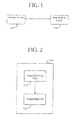
- FIG. 1 is a block diagram of a system to collect and to analyze image data according to an embodiment of the present invention.
- the system includes a remote device 110 and a data analysis server 120.
- the remote device 110 captures an image of an object, and transmits corresponding image data to the data analysis server 120.
- the data analysis server 120 analyzes the image data to identify the object.
- the remote device 110 can be any device that can capture an image and transmit data (such as a barcode scanner and a personal digital assistant (PDA), a mobile phone, and a portable data terminal (PDT) with a camera function).
- the remote device 110 can be a transmission-enabled imager (such as a Bluetooth imager) that captures an image and transmits the image locally to an intermediary device. The intermediary device then transmits the image data to the data analysis server 120 to be analyzed.
- a transmission-enabled imager such as a Bluetooth imager
- the intermediary device may be a desktop computer, a notebook computer, or a mobile phone that includes a web browser through which the image data is submitted via the Internet to a web server that is the data analysis server 120.
- the image data may be a simple barcode, a more complex two-dimensional image, or a three-dimensional image.
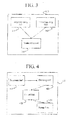
- FIG. 2 is a block diagram of the remote device 110 according to an embodiment of the present invention.
- the remote device 110 includes an image capturing unit 211 and a transmitting unit 213.
- the image capturing unit 211 captures an image of an object. Specifically, the image capturing unit 211 may capture one image, a plurality of images, or video of the object. Where a plurality of images are captured, different angles of the object may be captured in each image or a similar angle may be captured in each image so that, for example, the data analysis server 120 can choose an image with a best lighting or quality to analyze.
- the image capturing unit 211 may be activated to capture the image by manipulation of one or more input devices (such as a button, a rotating dial, and/or a touch screen).
- the image capturing unit 211 may be a stand-alone device that captures the image (or images) and transmits the corresponding image data locally to a separate transmitting unit 213.
- the stand-alone image capturing unit 211 may transmit the data via local wired (UART, IEEE 802.3, USB, RS-232, etc.) and/or wireless (IEEE 802.11, infrared, Bluetooth, etc.) transmission methods.
- the transmitting unit 213 transmits the image data (which may correspond to a single image, a plurality of images, or video) to the data analysis server 120 via wired (IEEE 802.3, USB, RS-232, etc.) and/or wireless (IEEE 802.11, infrared, Bluetooth, GSM, GRPS, EDGE, CDMA, etc.) transmission methods.
- the transmitting unit 213 may transmit the image data using a web browser connected to the Internet.
- the data analysis server 120 may be a web server.
- the transmitting unit 213 may transmit the image data in a data packet through a GSM network or in a Multimedia Messaging Service (MMS)-type message.
- MMS Multimedia Messaging Service
- FIG. 3 is a block diagram of the remote device 110 according to another embodiment of the present invention.
- the remote device 110 includes an image capturing unit 311, a voice capturing unit 312, and a transmitting unit 313.
- the image capturing unit 311 is similar to the image capturing unit 211 described with reference to FIG. 2 , and a detailed description thereof will not be repeated here.
- the voice capturing unit 312 captures voice data that is transmitted with the image data to the data analysis server 120 to be analyzed.
- the voice data may include a customer identity, a quantity of the product, and/or a quality of the product.
- the voice capturing unit 312 can be activated to capture, "Customer Bob, order three, color yellow,” and the image capturing unit 311 can be activated to capture image data, as described with reference to FIG. 2 , of the widget. While not limited to all aspects, according to some aspects of the present invention, the image capturing unit 311 can be voice activated.
- the voice capturing unit 312 can be activated to capture, "Customer Bob, order three scan, color yellow” (emphasis added).
- the voice capturing unit 312 Upon capturing the "scan" voice data, the voice capturing unit 312 triggers the image capturing unit 311 to take a picture (i.e., capture an image) of the product (i.e., the object).
- the image capturing unit 311 may capture one image, a plurality of images, or video of the object.
- the transmitting unit 313 transmits the image data and the voice data to the data analysis server 120.
- the transmitting unit 313 may package the image data and voice data together and/or transmit the image data and the voice data simultaneously, or the transmitting unit 313 may transmit the image data and the voice data separately (for example, in separate data packets, and/or subsequently).
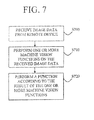
- FIG. 4 is a block diagram of the data analysis server 120 according to an embodiment of the present invention.
- the data analysis server 120 includes a receiving unit 421, a decoding unit 422, a control unit 423, and a storage unit 424.
- the receiving unit 421 receives the image data and the decoding unit 422 decodes the image data.
- the receiving unit 421 may receive the data through the Internet, a wired or wireless network, a GSM network, and/or a GPS network.
- the control unit 423 then analyzes the image data and performs machine vision functions (such as barcode reading, optical character recognition, dimensioning, etc.) thereon.
- the decoding unit 422 may decode and convert the image data to machine language, and the control unit 423 may then compare the converted data against a reference database to identify an object in the corresponding image.
- the storage unit 424 stores the reference database.
- the storage unit may be a volatile memory (such as random access memory (RAM)) or a non-volatile memory (such as read-only memory (ROM), flash memory, or a hard disk drive).
- the reference database may include a plurality of reference images such that the control unit 423 compares the received image to each of the reference images until the received image is identified against a reference image. Specifically, the control unit 423 may compare the received image against the reference database until the received image matches a reference image, or reference points (e.g., feature points) of the received image match reference points of a reference image. For each reference image, the reference database may include an identifier of the corresponding object, and additional information (such as dimensions and a cost of the object).
- the storage unit 424 and/or reference database may be omitted.
- the control unit 423 may alternatively run an algorithm on the image data in order to analyze the image data and return an identifier of the corresponding object and/or dimensions of the object. Once the image data has been analyzed, the control unit 423 can perform additional functions, such as creating an order for the identified object or transmitting the identifier and/or additional information of the object back to the remote device 110.
- the identifier and/or additional information may be ascii data.
- the remote device 110 may also transmit voice data.
- the receiving unit 421 receives the image data and the voice data
- the control unit 423 analyzes the received image data and the received voice data.
- the decoding unit 422 may decode and convert the voice data to machine language, and the control unit 423 correlates the voice data to a person (such as a customer) and a number (such as a quantity of the object).
- the control unit 423 also analyzes and processes the image data as described above. Accordingly, the control unit 423 can create an order for the customer based on the received data.
- FIG. 5 is a flowchart illustrating a method of collecting and analyzing image data according to an embodiment of the present invention.
- image data of an object is captured by a remote device in operation S500.
- the captured image data is transmitted from the remote device to a data analysis server in operation S510.
- the data analysis server analyzes the received image data by performing one or more machine vision functions thereon in operation S520.
- the analyzing (operation S520) may include identifying a bar code or identifying the object of the image data.
- the data analysis server may transmit a result of the one or more machine vision functions to the remote device and/or perform a function according to the result of the one or more machine vision functions.
- the data analysis server may create a customer order for the object identified in the image data by the one or more machine vision functions.
- FIG. 6 is a flowchart illustrating a method of collecting and analyzing image data and voice data according to an embodiment of the present invention.
- image data of an object and voice data is captured by a remote device in operation S600.
- the captured image data and the captured voice data are transmitted from the remote device to a data analysis server in operation S610.
- the data analysis server analyzes the received image data by performing one or more machine vision functions thereon in operation S620.
- the analyzing (operation S620) may include identifying a bar code or identifying the object of the image data.
- the data analysis server analyzes the received voice data in operation S630. For example, the data analysis server may convert the voice data to numbers or text.
- the data analysis server may transmit a result of the one or more machine vision functions and voice analysis to the remote device and/or perform a function according to the result of the one or more machine vision functions and voice analysis.
- the data analysis server may create a customer order for the object identified in the image data by the one or more machine vision functions for a customer identified by the voice data.
- FIG. 7 is a flowchart illustrating a method of analyzing image data according to an embodiment of the present invention.
- a data analysis server receives image data from a remote device in operation S700. Then, the image data is analyzed by performing one or more machine vision functions thereon in operation S710. Thereafter, the data analysis server performs a function according to the result of the one or more machine vision functions in operation S720. For example, the data analysis server may return a machine-readable result of the analysis to the remote device, or create a customer order for the object identified in the image data by the one or more machine vision functions.
- FIGs. 8A through 9B illustrate two types of remote devices 110 according to embodiments of the present invention: PDTs ( FIGs. 8A and 8B ) and handheld bar code scanners ( FIGs. 9A and 9B ).
- PDTs FIGs. 8A and 8B
- handheld bar code scanners FIGs. 9A and 9B
- FIGs. 8A and 8B When viewed at a systems level, PDTs and handheld bar code scanners illustrate a variety of sub-systems utilized by remote devices. However, while the following discussion focuses on PDTs and handheld bar code scanners, it is understood that aspects of the present invention can be applied to any remote device capable of capturing image data and transmitting the image data as described above with reference to FIGs. 1 through 4 .
- PDTs generally integrate a mobile computer, one or more data transport paths, and one or more data collection subsystems.
- the mobile computer portion is generally similar to known touch screen consumer oriented portable computing devices (e.g. "Pocket PCs" or “PDAs”), such as those available from PALM, HEWLETT PACKARD, and DELL.
- the data transport paths include wired and wireless paths, such as 802.11, IrDA, BLUETOOTH, RS-232, USB, CDMA, GSM (incl. GRPS), and so forth.
- the data collection subsystem generally includes a device that captures image data from an external source.
- PDTs further distinguish from consumer oriented portable computing devices through the use of "industrial" components integrated into a housing that provide increased durability, ergonomics, and environmental independence over consumer oriented devices. Additionally, PDTs tend to provide improved battery life by utilizing superior batteries and power management systems. PDTs are available from several sources, including the assignee of the present application: HONEYWELL INTERNATIONAL, INC.
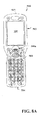
- FIG. 8A is a plan view of a PDT 510 according to an embodiment of the present invention.
- the PDT 510 utilizes an elongated water resistant body 502 supporting a variety of components, including: a battery (not illustrated); a display screen 506 (such as an LCD screen under a touch sensitive panel); a keypad 508 (including a scan button 508a); a scan engine (not illustrated); and a data/charging port (not illustrated).
- the scan engine includes an image engine and may be located near a top end 503 of the PDT 510.
- the data/charging port may include a proprietary mechanical interface with one set of pins or pads to transmit and/or to receive data (for example, via a serial interface standard such as USB or RS-232) and a second set of pins or pads to receive power to operate the system and/or to charge the battery.
- the data charging port may be located near a bottom end 504 of the PDT 510.
- the user presses the scan key 508a to initiate an image data capture via the scan engine.
- the captured image data may be stored and/or displayed on the display screen 506.
- additional processing of the data takes place in the data analysis server 120 to which the data is transmitted.
- FIG. 8B is a block diagram of a PDT 510 according to an embodiment of the present invention.
- a central processing unit (CPU) 507 receives data from and outputs data to other sub-systems for storage and transmission.
- the CPU 507 may include one or more of a number of off-the-shelf solutions including: embedded processors (such as an XSCALE® processor available from MARVELL® TECHNOLOGY GROUP); general purpose processors (such as a PENTIUM® 4 available from INTEL®); or any number of custom solutions including pre-configured field programmable gate arrays (FPGAs) and application specific integrated circuits (ASICs).
- embedded processors such as an XSCALE® processor available from MARVELL® TECHNOLOGY GROUP
- general purpose processors such as a PENTIUM® 4 available from INTEL®
- custom solutions including pre-configured field programmable gate arrays (FPGAs) and application specific integrated circuits (ASICs).
- CPU 505 is controlled by software or firmware (typically referred to as an operating system) stored in one or more memory locations 505n, such as random access memory (RAM) 505a, flash memory 505b, and electrically erasable programmable read-only memory (EEPROM) 505c.
- RAM random access memory
- EEPROM electrically erasable programmable read-only memory
- suitable operating systems for the PDT 510 include graphical user interfaces such as WINDOWS MOBILE®, WINDOWS® CE, WINDOWS® XP, LINUX, PALM®, and OSX operating systems.
- communication between the CPU 507 and the various sub-components takes place via one or more ports and/or busses, including a main system bus 509, a plurality of Universal Asynchronous Receiver/Transmitter (UART) ports 514n; and a Dual Universal Asynchronous Receiver/Transmitter (DUART) 515.
- UART Universal Asynchronous Receiver/Transmitter
- DUART Dual Universal Asynchronous Receiver/Transmitter
- a variety of secondary processors may be provided to perform general and application specific functions.
- the embodiment illustrated in FIG. 5B provides three such processors: a field programmable gate array (FPGA) 516; an auxiliary processor 517; and an LCD controller 518.
- the FPGA 516 may include any number of FPGAs including the Virtex-4 family of FPGAs available from XILINX.
- the FPGA 516 is used to interface with one or more data acquisition systems as described hereinafter.
- the auxiliary processor 517 may include any number of embedded (or general purpose) processors, including the PICmicro® family of microcontrollers available from MICROCHIP TECHNOLOGY.
- the auxiliary processor 517 interfaces with and controls a variety of data input devices including, for example a touch sensitive panel 522, a keypad 508, and a scan key or trigger 508.
- the LCD controller 518 controls the display of images on an LCD display 506, such as any number of displays available from SHARP.
- the PDT 510 further includes one or more transmission units (such as an 802.11 transmission unit 540, an infrared (IR) transmission unit 542, a Bluetooth transmission unit 544, and a cellular transmission unit 546) to transmit captured image data to the data analysis server 120.
- the 802.11 transmission unit 540 interfaces with the CPU 507 via the main system bus 509.
- the IR transmission unit 542 and the Bluetooth transmission unit 544 are connected to the CPU 507 via UART channels 514n.
- the cellular transmission unit 546 is connected to the CPU 507 via the DUART 515. Wired communication may be conducted via a UART, such as the UART 514e.
- the PDT 510 is configured to activate a data collection subsystem based, for example, on the actuation of a key on the keypad 508 (including the trigger 508a) or a touch on the touch panel 522.
- an image signal generation system 550 is integrated into the PDT 510.
- the image signal generation system 550 may be controlled by the main CPU 507 and/or a secondary processor.
- the image signal generation system 550 is illustrated in FIG. 5B as being controlled by the FPGA 516. Possible configurations of the FPGA 516 are illustrated in United States Patent No. 6,947,612 incorporated herein by reference. According to other aspects, the image signal generation system 550 may be controlled by the CPU 507 via the system bus 509.
- the image signal generating system 550 includes a two dimensional solid state image sensor 552 (such as a charge-coupled device (CCD), a complementary metal-oxide-semiconductor (CMOS), or a charge injection device (CID)) to capture the image data (such as an image or a bar code).
- CMOS complementary metal-oxide-semiconductor
- CID charge injection device
- Two-dimensional solid state image sensors generally have a plurality of photo sensor picture elements (“pixels”) that are formed in a pattern including a plurality of rows and a plurality of columns of pixels.
- the image signal generating system 550 further includes imaging optics (not shown) to focus an image onto an active surface of the image sensor 552.
- the image sensor 552 may be incorporated into an image sensor integrated circuit (IC) chip having disposed thereon image sensor control circuitry, image signal conditioning circuitry, and an analog-to-digital converter.
- the FPGA 516 manages the capture and transfer of the image data into memory 505n. Possible configurations of the FPGA 516 are illustrated in United States Patent 6,947,612 , incorporated herein by reference. Decoding may be performed by the CPU 507, any suitable secondary processor, or the data analysis server 120. Examples of a suitable image signal generation system 550 include the 5000 2D engine series available from Hand Held Products, assignee of the present application, such as the 5X00 and 5X80 engines.
- the image signal generating system 550 (corresponding to the image capturing unit 211 and 311 illustrated in FIGs. 2 and 3 , respectively) captures an image of an object 70. Specifically, when the trigger button 508a is actuated, the CPU 507 causes the appropriate control signals to be sent to the image sensor 552. In response thereto, the image sensor 552 generates digital image data including a representation of the object 70. This image data is acquired by the FPGA 516 where it is collected and subsequently transmitted to the data analysis server 120 or an intermediary device that transmits the image data to the data analysis server 120. The image data is transmitted via the 802.11 transmission unit 540, the IR transmission unit 542, the Bluetooth transmission unit 544, and/or the cellular transmission unit 546.
- the image data may also be transferred to the memory 505n to be stored and/or displayed on the LCD display 506.
- the image signal generating system 550 may capture one image, a plurality of images, or video of the object 70. Where a plurality of images are captured, different angles of the object 70 may be captured in each image such that, for example, the data analysis server 120 can choose an image with a best lighting or quality to analyze.
- the capturing of the image or images may occur automatically in response to a trigger signal being generated by activation of the trigger 508a.
- the CPU 507 may be configured, typically through execution of a program resident in the memory 505n, to continuously capture images until the trigger 508a is released. The continuous capturing may also be terminated by timing out after a predetermined period of time.
- the data analysis server 120 receives, decodes, and analyzes the image data to identify the corresponding object 70.
- FIG. 9A is a partial cutaway view of a handheld bar code scanner 610 according to an embodiment of the present invention.
- the handheld bar code scanner 610 (hereinafter, "scanner”) includes an imaging reader assembly 650 provided within a head portion or housing 616 connected to a handle portion 613.
- a trigger 608 is used to control an operation of the scanner 610.
- the head portion 616 has a medial plane MP so that the scanner 610 is held with the head portion horizontal.
- the medial plane MP is roughly perpendicular to the face of the head portion 616 as operators have a tendency to hold the medial plane of the head portion of the imager approximately normal to the plane of the target when collecting data.
- FIG. 9B is a block diagram of an imaging reader assembly 650 of the scanner of FIG. 6A according to an embodiment of the present invention.
- the image reader assembly 650 includes a read optical system 651, an illumination assembly 652, an aiming pattern generator 620 and a plurality of control and communication modules.
- the read optical system 651 generates frames of data containing indications of the intensity of light received by the read optical system 651.
- the illumination assembly 652 illuminates a target T creating reflections that are received by the read optical system 651.
- the aiming pattern generator 630 projects an aiming light pattern to assist with aiming the scanner 610. While the present description employs an imager based data collection subsystem (the image reader assembly 650), it is understood the data collection subsystem may take other forms for image capturing (such as a laser scanner).
- the read optical system 651 includes imaging optics 651 a and an image sensor 651 b.
- the imaging optics 651 a receives light reflected from the target T and projects the reflected light onto the image sensor 651 b.
- the image sensor 651 b generates image data from the received light, and may include one or more two-dimensional solid state image sensors, one or more color solid state image sensors, and/or one or more monochrome solid state image sensors (using such technologies as CCD, CMOS, NMOS, PMOS, CID, CMD, etc.).
- the image sensor 651 b may include the MT9V022 sensor from Micron Technology Inc. Such a sensor contains an array of light sensitive photodiodes (or pixels) that convert incident light energy into electric charges.
- the image sensor 651 b may employ in a full frame (or global) shutter operating mode, wherein the entire imager is reset prior to an image capture operation to remove any residual signal in the photodiodes.
- the photodiodes (pixels) then accumulate charge for some period of time (exposure period), with the light collection starting and ending at about the same time for all pixels.
- Exposure period time during which light is collected
- all charges are simultaneously transferred to light shielded areas of the sensor.
- the light shield prevents further accumulation of charge during the readout process.
- the signals are then shifted out of the light shielded areas of the sensor and read out.
- the illumination assembly 652 includes a power supply 652a, illumination sources 652b, and illumination optics 652c.
- the illumination optics 652c directs the output of the illumination sources 652b (including LEDs or the like) onto the target T. The light is reflected off the target T and received by the read optical system 651. It is understood that, according to other aspects, the illumination provided by the illumination assembly 652 may be combined with (or replaced by) other sources of illumination, including ambient light, from sources outside of the scanner 610.
- the aiming pattern generator 630 includes a power supply 630a, a light source 630b, an aperture 630c, and optics 630d.
- the aiming pattern generator 630 creates an aiming light pattern projected on or near the target T that spans a portion of the read optical system's 651 operational field of view in order to assist the operator in properly aiming the scanner 610 at a bar code pattern that is to be read.
- a number of representative generated aiming patterns are possible and not limited to any particular pattern or type of pattern, such as any combination of rectilinear, linear, circular, elliptical, etc., figures, whether continuous or discontinuous (i.e., defined by sets of discrete dots, dashes, and the like).
- the aimer pattern generator 630 may be a laser pattern generator.
- a host processor 618 controls overall operations of the image reader assembly 650.
- the host processor 618 and other components of the image reader assembly are generally connected by one or more buses 668n and/or dedicated communication lines.
- a parallel bus 668a connects the host processor 618 to a main system memory 666 used to store processed (and unprocessed) image data from the image sensor 651 b.
- the host processor 618 utilizes an I2C bus 668b to communicate exposure settings to the image sensor 651 b and illumination parameters to a microcontroller 660.
- a dedicated 8 to 10 bit parallel bus 668c is used to transfer the image data from the image sensor 651 b to the host processor 618.
- the output of the image sensor 651 b is processed by the host processor 618 utilizing, for example, one or more functions or algorithms to condition the signal appropriately for use in further processing by the data analysis server 120.
- the microcontroller 660 maintains illumination parameters, used to control operation of the illumination assembly 652 and the aiming pattern generator 630, in a memory 662.
- the memory 162 may include tables indicative of power settings for the power supplies 652a and 630a corresponding to various states of the signal from the image sensor 651 b. Based upon signals from the host processor 618 and/or the image sensor 651 b, the microcontroller 660 sends signals to the power supplies 652a and 630a according to values stored in the table in the memory 662.
- the image reader assembly 650 further includes one or more communication modules 680 to transmit the image data to the data analysis server 120 or an intermediary device that transmits the image data to the data analysis server 120, as described above.
- the one or more communication modules 680 may transmit the image data through a wired (such as UART, USB, serial, parallel, scan wedge, or Ethernet) and/or wireless (such as IrDA, BLUETOOTH, GSM, GPRS, EDGE, and 802.11) transmission method and may also be integrated with the host processor 618.
- the data analysis server 120 receives, decodes, and analyzes the image data to identify the corresponding object T.
- complex image data of an object may be collected by a remote image capturing device in order to identify the object by analyzing the image data in a separate server.
- image data of an object may be captured with voice data by a remote image capturing device in order to identify the object and process the object according to the voice data by analyzing the image data and voice data in a separate server.
- aspects of the present invention can also be embodied as computer-readable codes on a computer-readable recording medium. Also, codes and code segments to accomplish the present invention can be easily construed by programmers skilled in the art to which the present invention pertains.
- the computer-readable recording medium is any data storage device that can store data which can be thereafter read by a computer system or computer code processing apparatus. Examples of the computer-readable recording medium include read-only memory (ROM), random-access memory (RAM), CD-ROMs, magnetic tapes, floppy disks, and optical data storage devices.
- the computer-readable recording medium can also be distributed over network-coupled computer systems so that the computer-readable code is stored and executed in a distributed fashion.
- aspects of the present invention may also be realized as a data signal embodied in a carrier wave and comprising a program readable by a computer and transmittable over the Internet.
Landscapes
- Engineering & Computer Science (AREA)
- Physics & Mathematics (AREA)
- Theoretical Computer Science (AREA)
- General Physics & Mathematics (AREA)
- Electromagnetism (AREA)
- Multimedia (AREA)
- Software Systems (AREA)
- Health & Medical Sciences (AREA)
- General Health & Medical Sciences (AREA)
- Toxicology (AREA)
- Artificial Intelligence (AREA)
- Computer Vision & Pattern Recognition (AREA)
- Telephonic Communication Services (AREA)
- Studio Devices (AREA)
Applications Claiming Priority (2)
| Application Number | Priority Date | Filing Date | Title |
|---|---|---|---|
| US22228809P | 2009-07-01 | 2009-07-01 | |
| US12/825,934 US20110135144A1 (en) | 2009-07-01 | 2010-06-29 | Method and system for collecting voice and image data on a remote device and coverting the combined data |
Publications (2)
| Publication Number | Publication Date |
|---|---|
| EP2270715A2 true EP2270715A2 (de) | 2011-01-05 |
| EP2270715A3 EP2270715A3 (de) | 2014-05-28 |
Family
ID=42935430
Family Applications (1)
| Application Number | Title | Priority Date | Filing Date |
|---|---|---|---|
| EP10167931.4A Withdrawn EP2270715A3 (de) | 2009-07-01 | 2010-06-30 | Verfahren und System zum Sammeln von Stimm- und Bilddaten auf einer Ferneinrichtung und zum Konvertieren der kombinierten Daten |
Country Status (3)
| Country | Link |
|---|---|
| US (1) | US20110135144A1 (de) |
| EP (1) | EP2270715A3 (de) |
| CN (1) | CN102117400A (de) |
Families Citing this family (8)
| Publication number | Priority date | Publication date | Assignee | Title |
|---|---|---|---|---|
| KR101497386B1 (ko) | 2011-05-24 | 2015-03-02 | 엠파이어 테크놀로지 디벨롭먼트 엘엘씨 | 실제 물체를 사용하는 암호화 |
| US9087058B2 (en) | 2011-08-03 | 2015-07-21 | Google Inc. | Method and apparatus for enabling a searchable history of real-world user experiences |
| US9406090B1 (en) | 2012-01-09 | 2016-08-02 | Google Inc. | Content sharing system |
| US9137308B1 (en) * | 2012-01-09 | 2015-09-15 | Google Inc. | Method and apparatus for enabling event-based media data capture |
| US9955123B2 (en) | 2012-03-02 | 2018-04-24 | Sight Machine, Inc. | Machine-vision system and method for remote quality inspection of a product |
| CN103116771A (zh) * | 2013-02-20 | 2013-05-22 | 吴凡 | 一种基于条形码的目标识别方法及应用系统 |
| JP6455424B2 (ja) * | 2013-03-26 | 2019-01-23 | 凸版印刷株式会社 | 画像処理装置、画像処理システム、画像処理方法及び画像処理プログラム |
| US10405003B2 (en) * | 2017-01-20 | 2019-09-03 | Google Llc | Image compression based on semantic relevance |
Citations (1)
| Publication number | Priority date | Publication date | Assignee | Title |
|---|---|---|---|---|
| US6947612B2 (en) | 2000-09-29 | 2005-09-20 | Hand Held Products, Inc. | Methods and apparatus for image capture and decoding in a centralized processing unit |
Family Cites Families (86)
| Publication number | Priority date | Publication date | Assignee | Title |
|---|---|---|---|---|
| US2206697A (en) * | 1938-06-23 | 1940-07-02 | Bela E De Tuscan | Electric foil |
| US5304786A (en) * | 1990-01-05 | 1994-04-19 | Symbol Technologies, Inc. | High density two-dimensional bar code symbol |
| US5923735A (en) * | 1996-05-29 | 1999-07-13 | Symbol Technologies, Inc. | Self-service checkout system utilizing portable self-checkout communications terminal |
| US5513264A (en) * | 1994-04-05 | 1996-04-30 | Metanetics Corporation | Visually interactive encoding and decoding of dataforms |
| US5602377A (en) * | 1995-03-01 | 1997-02-11 | Metanetics Corporation | Bar code dataform scanning and labeling apparatus and method |
| US5671288A (en) * | 1995-05-31 | 1997-09-23 | Neopath, Inc. | Method and apparatus for assessing slide and specimen preparation quality |
| US5783811A (en) * | 1995-06-26 | 1998-07-21 | Metanetics Corporation | Portable data collection device with LED targeting and illumination assembly |
| US5818028A (en) * | 1995-06-26 | 1998-10-06 | Telxon Corporation | Portable data collection device with two dimensional imaging assembly |
| US7171018B2 (en) * | 1995-07-27 | 2007-01-30 | Digimarc Corporation | Portable devices and methods employing digital watermarking |
| US5742263A (en) * | 1995-12-18 | 1998-04-21 | Telxon Corporation | Head tracking system for a head mounted display system |
| US5714745A (en) * | 1995-12-20 | 1998-02-03 | Metanetics Corporation | Portable data collection device with color imaging assembly |
| US5818023A (en) * | 1996-03-05 | 1998-10-06 | Metanetics Corporation | Portable ID card verification apparatus |
| US5793033A (en) * | 1996-03-29 | 1998-08-11 | Metanetics Corporation | Portable data collection device with viewing assembly |
| US6169789B1 (en) * | 1996-12-16 | 2001-01-02 | Sanjay K. Rao | Intelligent keyboard system |
| US6606395B1 (en) * | 1999-11-29 | 2003-08-12 | Xerox Corporation | Method to allow automated image quality analysis of arbitrary test patterns |
| US8701857B2 (en) * | 2000-02-11 | 2014-04-22 | Cummins-Allison Corp. | System and method for processing currency bills and tickets |
| US7289110B2 (en) * | 2000-07-17 | 2007-10-30 | Human Messaging Ab | Method and arrangement for identifying and processing commands in digital images, where the user marks the command, for example by encircling it |
| US7464877B2 (en) * | 2003-11-13 | 2008-12-16 | Metrologic Instruments, Inc. | Digital imaging-based bar code symbol reading system employing image cropping pattern generator and automatic cropped image processor |
| US6825864B2 (en) * | 2001-11-26 | 2004-11-30 | Codonics, Inc. | Multi-media printer |
| CN1209730C (zh) * | 2001-11-30 | 2005-07-06 | 温天 | 一种数字防伪方法 |
| JP4278918B2 (ja) * | 2002-04-19 | 2009-06-17 | 富士通株式会社 | 画像データ処理装置とその方法 |
| US7028902B2 (en) * | 2002-10-03 | 2006-04-18 | Hewlett-Packard Development Company, L.P. | Barcode having enhanced visual quality and systems and methods thereof |
| JP2004153638A (ja) * | 2002-10-31 | 2004-05-27 | Canon Inc | 複写装置 |
| JP4251629B2 (ja) * | 2003-01-31 | 2009-04-08 | キヤノン株式会社 | 画像処理システム及び情報処理装置、並びに制御方法及びコンピュータプログラム及びコンピュータ可読記憶媒体 |
| US20050090233A1 (en) * | 2003-10-28 | 2005-04-28 | Agere Systems, Incorporated | System and method employing a mobile telephone to retrieve information regarding an article |
| US7944467B2 (en) * | 2003-12-01 | 2011-05-17 | Omnivision Technologies, Inc. | Task-based imaging systems |
| US7364081B2 (en) * | 2003-12-02 | 2008-04-29 | Hand Held Products, Inc. | Method and apparatus for reading under sampled bar code symbols |
| US7707039B2 (en) * | 2004-02-15 | 2010-04-27 | Exbiblio B.V. | Automatic modification of web pages |
| US7568015B2 (en) * | 2004-04-07 | 2009-07-28 | Hand Held Products, Inc. | Routing device and method for use with a HTTP enabled computer peripheral |
| US7017623B2 (en) * | 2004-06-21 | 2006-03-28 | Forhealth Technologies, Inc. | Automated use of a vision system to unroll a label to capture and process drug identifying indicia present on the label |
| US7568628B2 (en) * | 2005-03-11 | 2009-08-04 | Hand Held Products, Inc. | Bar code reading device with global electronic shutter control |
| US7611060B2 (en) * | 2005-03-11 | 2009-11-03 | Hand Held Products, Inc. | System and method to automatically focus an image reader |
| US7780089B2 (en) * | 2005-06-03 | 2010-08-24 | Hand Held Products, Inc. | Digital picture taking optical reader having hybrid monochrome and color image sensor array |
| US9967424B2 (en) * | 2005-06-02 | 2018-05-08 | Invention Science Fund I, Llc | Data storage usage protocol |
| US7782365B2 (en) * | 2005-06-02 | 2010-08-24 | Searete Llc | Enhanced video/still image correlation |
| US8964054B2 (en) * | 2006-08-18 | 2015-02-24 | The Invention Science Fund I, Llc | Capturing selected image objects |
| US7770799B2 (en) * | 2005-06-03 | 2010-08-10 | Hand Held Products, Inc. | Optical reader having reduced specular reflection read failures |
| US7717342B2 (en) * | 2005-08-26 | 2010-05-18 | Hand Held Products, Inc. | Data collection device having dynamic access to multiple wireless networks |
| US20070156021A1 (en) * | 2005-09-14 | 2007-07-05 | Bradford Morse | Remote imaging apparatus having an adaptive lens |
| US20070063048A1 (en) * | 2005-09-14 | 2007-03-22 | Havens William H | Data reader apparatus having an adaptive lens |
| US20070201066A1 (en) * | 2005-10-30 | 2007-08-30 | Asa Ziv | Density measurement, colorimetric data, and inspection of printed sheet using contact image sensor |
| US8139117B2 (en) * | 2006-04-21 | 2012-03-20 | Sick, Inc. | Image quality analysis with test pattern |
| CN1897004A (zh) * | 2006-06-07 | 2007-01-17 | 李同 | 虹膜图像网络传输方法和网络虹膜仪 |
| US7784696B2 (en) * | 2006-06-09 | 2010-08-31 | Hand Held Products, Inc. | Indicia reading apparatus having image sensing and processing circuit |
| US7740176B2 (en) * | 2006-06-09 | 2010-06-22 | Hand Held Products, Inc. | Indicia reading apparatus having reduced trigger-to-read time |
| US7706567B2 (en) * | 2006-06-16 | 2010-04-27 | Certifi Media Inc. | Assured document and method of making |
| EP1926047A1 (de) * | 2006-11-21 | 2008-05-28 | STMicroelectronics (Research & Development) Limited | Artefaktentfernung von phasenkodierten Bildern |
| US8369642B2 (en) * | 2006-11-21 | 2013-02-05 | Stmicroelectronics (Research & Development) Ltd | Artifact removal from phase encoded images |
| US8027096B2 (en) * | 2006-12-15 | 2011-09-27 | Hand Held Products, Inc. | Focus module and components with actuator polymer control |
| US8098956B2 (en) * | 2007-03-23 | 2012-01-17 | Vantana Medical Systems, Inc. | Digital microscope slide scanning system and methods |
| EP2153401B1 (de) * | 2007-05-04 | 2016-12-28 | Leica Biosystems Imaging, Inc. | System und verfahren zur qualitätssicherstellung bei der pathologie |
| US8794526B2 (en) * | 2007-06-04 | 2014-08-05 | Hand Held Products, Inc. | Indicia reading terminal processing plurality of frames of image data responsively to trigger signal activation |
| US8635309B2 (en) * | 2007-08-09 | 2014-01-21 | Hand Held Products, Inc. | Methods and apparatus to change a feature set on data collection devices |
| US8068674B2 (en) * | 2007-09-04 | 2011-11-29 | Evolution Robotics Retail, Inc. | UPC substitution fraud prevention |
| US7973098B2 (en) * | 2007-09-18 | 2011-07-05 | Pitney Bowes Inc. | Postal-compliant fluorescent inkjet papers, inks for preparing them and individualized postage stamps printed thereon |
| US8218199B2 (en) * | 2008-01-17 | 2012-07-10 | Kyocera Mita Corporation | Image forming apparatus capable of improving an image quality of a barcode while suppressing deterioration in a quality of an image |
| CN101226591A (zh) * | 2008-01-31 | 2008-07-23 | 上海交通大学 | 基于手机摄像头结合人脸识别技术的身份识别方法 |
| US8596541B2 (en) * | 2008-02-22 | 2013-12-03 | Qualcomm Incorporated | Image capture device with integrated barcode scanning |
| EP2093697B1 (de) * | 2008-02-25 | 2017-08-23 | Telefonaktiebolaget LM Ericsson (publ) | Verfahren und anordnung zum abrufen von in einem strichcode enthaltener information |
| US8794520B2 (en) * | 2008-09-30 | 2014-08-05 | Hand Held Products, Inc. | Method and apparatus for operating indicia reading terminal including parameter determination |
| CN101382497B (zh) * | 2008-10-06 | 2012-03-07 | 南京大学 | 基于路况监控视频的能见度检测方法 |
| US8628015B2 (en) * | 2008-10-31 | 2014-01-14 | Hand Held Products, Inc. | Indicia reading terminal including frame quality evaluation processing |
| JP5481137B2 (ja) * | 2008-11-21 | 2014-04-23 | 日本特殊陶業株式会社 | 窒化珪素・メリライト複合焼結体 |
| US8083148B2 (en) * | 2008-12-16 | 2011-12-27 | Hand Held Products, Inc. | Indicia reading terminal including frame processing |
| US20100208282A1 (en) * | 2009-02-18 | 2010-08-19 | Andrey Isaev | Method and apparatus for improving the quality of document images when copying documents |
| US8218027B2 (en) * | 2009-04-09 | 2012-07-10 | Hand Held Products, Inc. | Imaging terminal having color correction |
| US8373108B2 (en) * | 2009-08-12 | 2013-02-12 | Hand Held Products, Inc. | Indicia reading terminal operative for processing of frames having plurality of frame featurizations |
| US8141784B2 (en) * | 2009-09-25 | 2012-03-27 | Hand Held Products, Inc. | Encoded information reading terminal with user-configurable multi-protocol wireless communication interface |
| US8587595B2 (en) * | 2009-10-01 | 2013-11-19 | Hand Held Products, Inc. | Low power multi-core decoder system and method |
| US20110080500A1 (en) * | 2009-10-05 | 2011-04-07 | Hand Held Products, Inc. | Imaging terminal, imaging sensor having multiple reset and/or multiple read mode and methods for operating the same |
| US20110234829A1 (en) * | 2009-10-06 | 2011-09-29 | Nikhil Gagvani | Methods, systems and apparatus to configure an imaging device |
| US8819172B2 (en) * | 2010-11-04 | 2014-08-26 | Digimarc Corporation | Smartphone-based methods and systems |
| US8167209B2 (en) * | 2009-11-23 | 2012-05-01 | Symbol Technologies, Inc. | Increasing imaging quality of a bar code reader |
| US8364018B2 (en) * | 2010-03-09 | 2013-01-29 | International Business Machines Corporation | Selecting options located on a media disc |
| US8531517B2 (en) * | 2010-07-15 | 2013-09-10 | Kai Tao | IV monitoring by video and image processing |
| WO2012037416A1 (en) * | 2010-09-16 | 2012-03-22 | Omnyx, LLC | Histology workflow management system |
| ES2745739T3 (es) * | 2010-09-20 | 2020-03-03 | Qualcomm Inc | Un entorno adaptable para realidad aumentada asistida por la nube |
| US9195870B2 (en) * | 2010-09-20 | 2015-11-24 | Lumidigm, Inc. | Copy-resistant symbol having a substrate and a machine-readable symbol instantiated on the substrate |
| US8879085B2 (en) * | 2010-09-20 | 2014-11-04 | Ncr Corporation | Automatic print failure detection and correction |
| US20120076371A1 (en) * | 2010-09-23 | 2012-03-29 | Siemens Aktiengesellschaft | Phantom Identification |
| US8791795B2 (en) * | 2010-09-28 | 2014-07-29 | Hand Held Products, Inc. | Terminal for line-of-sight RFID tag reading |
| US8792748B2 (en) * | 2010-10-12 | 2014-07-29 | International Business Machines Corporation | Deconvolution of digital images |
| US8950678B2 (en) * | 2010-11-17 | 2015-02-10 | Hand Held Products, Inc. | Barcode reader with edge detection enhancement |
| JP2012123269A (ja) * | 2010-12-09 | 2012-06-28 | Canon Inc | 画像形成装置、サーバ装置および画像形成システム |
| US8408464B2 (en) * | 2011-02-03 | 2013-04-02 | Metrologic Instruments, Inc. | Auto-exposure method using continuous video frames under controlled illumination |
| EP2697648B1 (de) * | 2011-04-13 | 2018-08-22 | Akonni Biosystems, Inc. | Probendetektionssystem auf mikroarraybasis |
-
2010
- 2010-06-29 US US12/825,934 patent/US20110135144A1/en not_active Abandoned
- 2010-06-30 EP EP10167931.4A patent/EP2270715A3/de not_active Withdrawn
- 2010-06-30 CN CN2010102568571A patent/CN102117400A/zh active Pending
Patent Citations (1)
| Publication number | Priority date | Publication date | Assignee | Title |
|---|---|---|---|---|
| US6947612B2 (en) | 2000-09-29 | 2005-09-20 | Hand Held Products, Inc. | Methods and apparatus for image capture and decoding in a centralized processing unit |
Also Published As
| Publication number | Publication date |
|---|---|
| CN102117400A (zh) | 2011-07-06 |
| EP2270715A3 (de) | 2014-05-28 |
| US20110135144A1 (en) | 2011-06-09 |
Similar Documents
| Publication | Publication Date | Title |
|---|---|---|
| JP7385688B2 (ja) | 非汎用装置のための汎用連結性 | |
| EP2270715A2 (de) | Verfahren und System zum Sammeln von Stimm- und Bilddaten auf einer Ferneinrichtung und zum Konvertieren der kombinierten Daten | |
| US9507988B2 (en) | Hand-mounted device with finger motion triggering | |
| JPH11514461A (ja) | データフォームリーダー及び方法 | |
| EP2397967B1 (de) | Tragbares Datenendgerät mit integrierter Lampe | |
| EP2908245B1 (de) | Markierungslesegerät mit programmierbaren Indikatoren für Softwareaktualisierungen | |
| US20110261203A1 (en) | Imaging scanner utilized as a cctv camera | |
| US20130341404A1 (en) | Optical reader having improved back-illuminated image sensor | |
| EP1854044A2 (de) | Verfahren und vorrichtung zur verbesserung der direct-part-mark-scannerleistung | |
| US20080191026A1 (en) | Methods and Apparatus for Swipe or Presentation Image Scanning |
Legal Events
| Date | Code | Title | Description |
|---|---|---|---|
| PUAI | Public reference made under article 153(3) epc to a published international application that has entered the european phase |
Free format text: ORIGINAL CODE: 0009012 |
|
| 17P | Request for examination filed |
Effective date: 20100630 |
|
| AK | Designated contracting states |
Kind code of ref document: A2 Designated state(s): AL AT BE BG CH CY CZ DE DK EE ES FI FR GB GR HR HU IE IS IT LI LT LU LV MC MK MT NL NO PL PT RO SE SI SK SM TR |
|
| AX | Request for extension of the european patent |
Extension state: BA ME RS |
|
| PUAL | Search report despatched |
Free format text: ORIGINAL CODE: 0009013 |
|
| AK | Designated contracting states |
Kind code of ref document: A3 Designated state(s): AL AT BE BG CH CY CZ DE DK EE ES FI FR GB GR HR HU IE IS IT LI LT LU LV MC MK MT NL NO PL PT RO SE SI SK SM TR |
|
| AX | Request for extension of the european patent |
Extension state: BA ME RS |
|
| RIC1 | Information provided on ipc code assigned before grant |
Ipc: G06K 7/10 20060101ALI20140423BHEP Ipc: G06K 9/22 20060101AFI20140423BHEP Ipc: G06K 9/00 20060101ALI20140423BHEP |
|
| 17Q | First examination report despatched |
Effective date: 20140527 |
|
| STAA | Information on the status of an ep patent application or granted ep patent |
Free format text: STATUS: THE APPLICATION IS DEEMED TO BE WITHDRAWN |
|
| 18D | Application deemed to be withdrawn |
Effective date: 20150717 |