EP2268625B1 - Oxo-heterocyclisch substituierte carbonsäure-derivate und ihre verwendung - Google Patents
Oxo-heterocyclisch substituierte carbonsäure-derivate und ihre verwendung Download PDFInfo
- Publication number
- EP2268625B1 EP2268625B1 EP09732141A EP09732141A EP2268625B1 EP 2268625 B1 EP2268625 B1 EP 2268625B1 EP 09732141 A EP09732141 A EP 09732141A EP 09732141 A EP09732141 A EP 09732141A EP 2268625 B1 EP2268625 B1 EP 2268625B1
- Authority
- EP
- European Patent Office
- Prior art keywords
- methyl
- group
- diyl
- substituted
- phenyl
- Prior art date
- Legal status (The legal status is an assumption and is not a legal conclusion. Google has not performed a legal analysis and makes no representation as to the accuracy of the status listed.)
- Not-in-force
Links
- 150000001732 carboxylic acid derivatives Chemical class 0.000 title claims abstract description 43
- 238000000034 method Methods 0.000 claims abstract description 312
- 150000001875 compounds Chemical class 0.000 claims abstract description 226
- 239000003814 drug Substances 0.000 claims abstract description 12
- 238000004519 manufacturing process Methods 0.000 claims abstract description 4
- -1 methylene, ethane-1,2-diyl Chemical group 0.000 claims description 279
- 125000002496 methyl group Chemical group [H]C([H])([H])* 0.000 claims description 167
- 125000002023 trifluoromethyl group Chemical group FC(F)(F)* 0.000 claims description 133
- PXGOKWXKJXAPGV-UHFFFAOYSA-N Fluorine Chemical compound FF PXGOKWXKJXAPGV-UHFFFAOYSA-N 0.000 claims description 129
- 239000001257 hydrogen Substances 0.000 claims description 101
- 229910052739 hydrogen Inorganic materials 0.000 claims description 101
- 239000011737 fluorine Substances 0.000 claims description 91
- 229910052731 fluorine Inorganic materials 0.000 claims description 91
- UFHFLCQGNIYNRP-UHFFFAOYSA-N Hydrogen Chemical compound [H][H] UFHFLCQGNIYNRP-UHFFFAOYSA-N 0.000 claims description 86
- 125000004178 (C1-C4) alkyl group Chemical group 0.000 claims description 78
- 239000012453 solvate Substances 0.000 claims description 69
- 125000001997 phenyl group Chemical group [H]C1=C([H])C([H])=C(*)C([H])=C1[H] 0.000 claims description 68
- ZAMOUSCENKQFHK-UHFFFAOYSA-N Chlorine atom Chemical compound [Cl] ZAMOUSCENKQFHK-UHFFFAOYSA-N 0.000 claims description 64
- 150000003839 salts Chemical class 0.000 claims description 59
- 239000002904 solvent Substances 0.000 claims description 54
- 239000000460 chlorine Substances 0.000 claims description 50
- 229910052801 chlorine Inorganic materials 0.000 claims description 50
- 125000000876 trifluoromethoxy group Chemical group FC(F)(F)O* 0.000 claims description 46
- 150000002431 hydrogen Chemical group 0.000 claims description 44
- 125000000229 (C1-C4)alkoxy group Chemical group 0.000 claims description 32
- 125000005913 (C3-C6) cycloalkyl group Chemical group 0.000 claims description 32
- 125000001495 ethyl group Chemical group [H]C([H])([H])C([H])([H])* 0.000 claims description 32
- 238000011282 treatment Methods 0.000 claims description 28
- 125000004093 cyano group Chemical group *C#N 0.000 claims description 25
- 125000004169 (C1-C6) alkyl group Chemical group 0.000 claims description 23
- 125000001511 cyclopentyl group Chemical group [H]C1([H])C([H])([H])C([H])([H])C([H])(*)C1([H])[H] 0.000 claims description 23
- 229910052757 nitrogen Inorganic materials 0.000 claims description 23
- 125000001570 methylene group Chemical group [H]C([H])([*:1])[*:2] 0.000 claims description 22
- 239000003112 inhibitor Substances 0.000 claims description 19
- 208000037265 diseases, disorders, signs and symptoms Diseases 0.000 claims description 18
- 229910052736 halogen Inorganic materials 0.000 claims description 18
- 150000002367 halogens Chemical class 0.000 claims description 18
- 125000000623 heterocyclic group Chemical group 0.000 claims description 17
- 125000000843 phenylene group Chemical group C1(=C(C=CC=C1)*)* 0.000 claims description 16
- 125000003258 trimethylene group Chemical group [H]C([H])([*:2])C([H])([H])C([H])([H])[*:1] 0.000 claims description 16
- 125000006529 (C3-C6) alkyl group Chemical group 0.000 claims description 15
- PCLIMKBDDGJMGD-UHFFFAOYSA-N N-bromosuccinimide Chemical compound BrN1C(=O)CCC1=O PCLIMKBDDGJMGD-UHFFFAOYSA-N 0.000 claims description 15
- 125000000956 methoxy group Chemical group [H]C([H])([H])O* 0.000 claims description 15
- 125000005678 ethenylene group Chemical group [H]C([*:1])=C([H])[*:2] 0.000 claims description 14
- 125000000816 ethylene group Chemical group [H]C([H])([*:1])C([H])([H])[*:2] 0.000 claims description 14
- 239000012442 inert solvent Substances 0.000 claims description 14
- 229910052760 oxygen Inorganic materials 0.000 claims description 14
- 239000003795 chemical substances by application Substances 0.000 claims description 13
- 125000005549 heteroarylene group Chemical group 0.000 claims description 13
- 125000003566 oxetanyl group Chemical group 0.000 claims description 13
- 229910052717 sulfur Inorganic materials 0.000 claims description 13
- HBAQYPYDRFILMT-UHFFFAOYSA-N 8-[3-(1-cyclopropylpyrazol-4-yl)-1H-pyrazolo[4,3-d]pyrimidin-5-yl]-3-methyl-3,8-diazabicyclo[3.2.1]octan-2-one Chemical class C1(CC1)N1N=CC(=C1)C1=NNC2=C1N=C(N=C2)N1C2C(N(CC1CC2)C)=O HBAQYPYDRFILMT-UHFFFAOYSA-N 0.000 claims description 12
- 239000002253 acid Substances 0.000 claims description 12
- WKBOTKDWSSQWDR-UHFFFAOYSA-N Bromine atom Chemical compound [Br] WKBOTKDWSSQWDR-UHFFFAOYSA-N 0.000 claims description 11
- 125000005842 heteroatom Chemical group 0.000 claims description 11
- 125000001449 isopropyl group Chemical group [H]C([H])([H])C([H])(*)C([H])([H])[H] 0.000 claims description 11
- 229920006395 saturated elastomer Polymers 0.000 claims description 11
- 208000035475 disorder Diseases 0.000 claims description 9
- 230000002265 prevention Effects 0.000 claims description 9
- 125000006272 (C3-C7) cycloalkyl group Chemical group 0.000 claims description 8
- GDTBXPJZTBHREO-UHFFFAOYSA-N bromine Substances BrBr GDTBXPJZTBHREO-UHFFFAOYSA-N 0.000 claims description 8
- 229910052794 bromium Inorganic materials 0.000 claims description 8
- 125000000596 cyclohexenyl group Chemical group C1(=CCCCC1)* 0.000 claims description 8
- 125000002433 cyclopentenyl group Chemical group C1(=CCCC1)* 0.000 claims description 8
- 125000002914 sec-butyl group Chemical group [H]C([H])([H])C([H])([H])C([H])(*)C([H])([H])[H] 0.000 claims description 8
- 125000000391 vinyl group Chemical group [H]C([*])=C([H])[H] 0.000 claims description 8
- 229920002554 vinyl polymer Polymers 0.000 claims description 8
- 206010020772 Hypertension Diseases 0.000 claims description 7
- AFVFQIVMOAPDHO-UHFFFAOYSA-N Methanesulfonic acid Chemical compound CS(O)(=O)=O AFVFQIVMOAPDHO-UHFFFAOYSA-N 0.000 claims description 7
- 125000003718 tetrahydrofuranyl group Chemical group 0.000 claims description 7
- 125000001412 tetrahydropyranyl group Chemical group 0.000 claims description 7
- 125000004399 C1-C4 alkenyl group Chemical group 0.000 claims description 6
- 108010078321 Guanylate Cyclase Proteins 0.000 claims description 6
- 102000014469 Guanylate cyclase Human genes 0.000 claims description 6
- 150000007513 acids Chemical class 0.000 claims description 6
- 125000001153 fluoro group Chemical group F* 0.000 claims description 6
- 125000003548 sec-pentyl group Chemical group [H]C([H])([H])C([H])([H])C([H])([H])C([H])(*)C([H])([H])[H] 0.000 claims description 6
- 206010002383 Angina Pectoris Diseases 0.000 claims description 5
- 206010019280 Heart failures Diseases 0.000 claims description 5
- 150000001412 amines Chemical class 0.000 claims description 5
- 125000001559 cyclopropyl group Chemical group [H]C1([H])C([H])([H])C1([H])* 0.000 claims description 5
- 208000028867 ischemia Diseases 0.000 claims description 5
- 125000001989 1,3-phenylene group Chemical group [H]C1=C([H])C([*:1])=C([H])C([*:2])=C1[H] 0.000 claims description 4
- 125000001140 1,4-phenylene group Chemical group [H]C1=C([H])C([*:2])=C([H])C([H])=C1[*:1] 0.000 claims description 4
- 206010003210 Arteriosclerosis Diseases 0.000 claims description 4
- 230000002378 acidificating effect Effects 0.000 claims description 4
- 239000004480 active ingredient Substances 0.000 claims description 4
- 208000011775 arteriosclerosis disease Diseases 0.000 claims description 4
- 230000006806 disease prevention Effects 0.000 claims description 4
- 239000000546 pharmaceutical excipient Substances 0.000 claims description 4
- 208000002815 pulmonary hypertension Diseases 0.000 claims description 4
- 125000005551 pyridylene group Chemical group 0.000 claims description 4
- 125000005557 thiazolylene group Chemical group 0.000 claims description 4
- 125000005556 thienylene group Chemical group 0.000 claims description 4
- 230000009424 thromboembolic effect Effects 0.000 claims description 4
- 208000019553 vascular disease Diseases 0.000 claims description 4
- CPELXLSAUQHCOX-UHFFFAOYSA-N Hydrogen bromide Chemical compound Br CPELXLSAUQHCOX-UHFFFAOYSA-N 0.000 claims description 3
- 125000002887 hydroxy group Chemical group [H]O* 0.000 claims description 3
- 231100000252 nontoxic Toxicity 0.000 claims description 3
- 230000003000 nontoxic effect Effects 0.000 claims description 3
- 229940082615 organic nitrates used in cardiac disease Drugs 0.000 claims description 3
- ITMCEJHCFYSIIV-UHFFFAOYSA-M triflate Chemical compound [O-]S(=O)(=O)C(F)(F)F ITMCEJHCFYSIIV-UHFFFAOYSA-M 0.000 claims description 3
- YGYAWVDWMABLBF-UHFFFAOYSA-N Phosgene Chemical compound ClC(Cl)=O YGYAWVDWMABLBF-UHFFFAOYSA-N 0.000 claims description 2
- 230000036772 blood pressure Effects 0.000 claims description 2
- 125000004043 oxo group Chemical group O=* 0.000 claims description 2
- 238000003797 solvolysis reaction Methods 0.000 claims description 2
- JOXIMZWYDAKGHI-UHFFFAOYSA-N toluene-4-sulfonic acid Chemical compound CC1=CC=C(S(O)(=O)=O)C=C1 JOXIMZWYDAKGHI-UHFFFAOYSA-N 0.000 claims description 2
- 125000004435 hydrogen atom Chemical group [H]* 0.000 claims 18
- IJGRMHOSHXDMSA-UHFFFAOYSA-N Atomic nitrogen Chemical compound N#N IJGRMHOSHXDMSA-UHFFFAOYSA-N 0.000 claims 2
- 230000002785 anti-thrombosis Effects 0.000 claims 1
- 230000037356 lipid metabolism Effects 0.000 claims 1
- 102000007637 Soluble Guanylyl Cyclase Human genes 0.000 abstract description 18
- 108010007205 Soluble Guanylyl Cyclase Proteins 0.000 abstract description 18
- 239000012190 activator Substances 0.000 abstract description 5
- 208000024172 Cardiovascular disease Diseases 0.000 abstract description 4
- 229940079593 drug Drugs 0.000 abstract description 3
- 230000036961 partial effect Effects 0.000 abstract description 3
- 238000002483 medication Methods 0.000 abstract 1
- XEKOWRVHYACXOJ-UHFFFAOYSA-N Ethyl acetate Chemical compound CCOC(C)=O XEKOWRVHYACXOJ-UHFFFAOYSA-N 0.000 description 351
- 238000004895 liquid chromatography mass spectrometry Methods 0.000 description 237
- YMWUJEATGCHHMB-UHFFFAOYSA-N Dichloromethane Chemical compound ClCCl YMWUJEATGCHHMB-UHFFFAOYSA-N 0.000 description 190
- 239000000243 solution Substances 0.000 description 165
- 238000005160 1H NMR spectroscopy Methods 0.000 description 120
- ZMXDDKWLCZADIW-UHFFFAOYSA-N N,N-Dimethylformamide Chemical compound CN(C)C=O ZMXDDKWLCZADIW-UHFFFAOYSA-N 0.000 description 114
- WYURNTSHIVDZCO-UHFFFAOYSA-N Tetrahydrofuran Chemical compound C1CCOC1 WYURNTSHIVDZCO-UHFFFAOYSA-N 0.000 description 109
- 238000006243 chemical reaction Methods 0.000 description 101
- VYPSYNLAJGMNEJ-UHFFFAOYSA-N Silicium dioxide Chemical compound O=[Si]=O VYPSYNLAJGMNEJ-UHFFFAOYSA-N 0.000 description 84
- 239000003480 eluent Substances 0.000 description 80
- WEVYAHXRMPXWCK-UHFFFAOYSA-N Acetonitrile Chemical compound CC#N WEVYAHXRMPXWCK-UHFFFAOYSA-N 0.000 description 78
- LFQSCWFLJHTTHZ-UHFFFAOYSA-N Ethanol Chemical compound CCO LFQSCWFLJHTTHZ-UHFFFAOYSA-N 0.000 description 78
- OKKJLVBELUTLKV-UHFFFAOYSA-N Methanol Chemical compound OC OKKJLVBELUTLKV-UHFFFAOYSA-N 0.000 description 78
- XLYOFNOQVPJJNP-UHFFFAOYSA-N water Substances O XLYOFNOQVPJJNP-UHFFFAOYSA-N 0.000 description 77
- 239000000203 mixture Substances 0.000 description 76
- RTZKZFJDLAIYFH-UHFFFAOYSA-N Diethyl ether Chemical compound CCOCC RTZKZFJDLAIYFH-UHFFFAOYSA-N 0.000 description 70
- 239000012074 organic phase Substances 0.000 description 69
- 239000011541 reaction mixture Substances 0.000 description 67
- 239000012071 phase Substances 0.000 description 64
- 239000000741 silica gel Substances 0.000 description 63
- 229910002027 silica gel Inorganic materials 0.000 description 63
- CSNNHWWHGAXBCP-UHFFFAOYSA-L Magnesium sulfate Chemical compound [Mg+2].[O-][S+2]([O-])([O-])[O-] CSNNHWWHGAXBCP-UHFFFAOYSA-L 0.000 description 61
- 239000012043 crude product Substances 0.000 description 61
- YXFVVABEGXRONW-UHFFFAOYSA-N Toluene Chemical compound CC1=CC=CC=C1 YXFVVABEGXRONW-UHFFFAOYSA-N 0.000 description 60
- BDAGIHXWWSANSR-UHFFFAOYSA-N methanoic acid Natural products OC=O BDAGIHXWWSANSR-UHFFFAOYSA-N 0.000 description 60
- XDTMQSROBMDMFD-UHFFFAOYSA-N Cyclohexane Chemical compound C1CCCCC1 XDTMQSROBMDMFD-UHFFFAOYSA-N 0.000 description 55
- XKRFYHLGVUSROY-UHFFFAOYSA-N Argon Chemical compound [Ar] XKRFYHLGVUSROY-UHFFFAOYSA-N 0.000 description 52
- VEXZGXHMUGYJMC-UHFFFAOYSA-N Hydrochloric acid Chemical compound Cl VEXZGXHMUGYJMC-UHFFFAOYSA-N 0.000 description 47
- 238000002290 gas chromatography-mass spectrometry Methods 0.000 description 47
- MWUXSHHQAYIFBG-UHFFFAOYSA-N Nitric oxide Chemical compound O=[N] MWUXSHHQAYIFBG-UHFFFAOYSA-N 0.000 description 40
- 238000004587 chromatography analysis Methods 0.000 description 40
- 239000007787 solid Substances 0.000 description 40
- ZMANZCXQSJIPKH-UHFFFAOYSA-N Triethylamine Chemical compound CCN(CC)CC ZMANZCXQSJIPKH-UHFFFAOYSA-N 0.000 description 35
- HEMHJVSKTPXQMS-UHFFFAOYSA-M sodium hydroxide Inorganic materials [OH-].[Na+] HEMHJVSKTPXQMS-UHFFFAOYSA-M 0.000 description 35
- PMZURENOXWZQFD-UHFFFAOYSA-L Sodium Sulfate Chemical compound [Na+].[Na+].[O-]S([O-])(=O)=O PMZURENOXWZQFD-UHFFFAOYSA-L 0.000 description 31
- VLKZOEOYAKHREP-UHFFFAOYSA-N n-Hexane Chemical compound CCCCCC VLKZOEOYAKHREP-UHFFFAOYSA-N 0.000 description 31
- 229910052938 sodium sulfate Inorganic materials 0.000 description 31
- 235000011152 sodium sulphate Nutrition 0.000 description 31
- OSWFIVFLDKOXQC-UHFFFAOYSA-N 4-(3-methoxyphenyl)aniline Chemical compound COC1=CC=CC(C=2C=CC(N)=CC=2)=C1 OSWFIVFLDKOXQC-UHFFFAOYSA-N 0.000 description 30
- DTQVDTLACAAQTR-UHFFFAOYSA-N Trifluoroacetic acid Chemical compound OC(=O)C(F)(F)F DTQVDTLACAAQTR-UHFFFAOYSA-N 0.000 description 30
- 235000019253 formic acid Nutrition 0.000 description 30
- 229910052943 magnesium sulfate Inorganic materials 0.000 description 30
- 235000019341 magnesium sulphate Nutrition 0.000 description 30
- 239000000706 filtrate Substances 0.000 description 29
- 238000000825 ultraviolet detection Methods 0.000 description 29
- UIIMBOGNXHQVGW-UHFFFAOYSA-M Sodium bicarbonate Chemical compound [Na+].OC([O-])=O UIIMBOGNXHQVGW-UHFFFAOYSA-M 0.000 description 27
- 229910052786 argon Inorganic materials 0.000 description 26
- 238000001914 filtration Methods 0.000 description 26
- KDLHZDBZIXYQEI-UHFFFAOYSA-N Palladium Chemical compound [Pd] KDLHZDBZIXYQEI-UHFFFAOYSA-N 0.000 description 25
- UAOMVDZJSHZZME-UHFFFAOYSA-N diisopropylamine Chemical compound CC(C)NC(C)C UAOMVDZJSHZZME-UHFFFAOYSA-N 0.000 description 24
- 239000008346 aqueous phase Substances 0.000 description 23
- QTBSBXVTEAMEQO-UHFFFAOYSA-N Acetic acid Chemical compound CC(O)=O QTBSBXVTEAMEQO-UHFFFAOYSA-N 0.000 description 21
- AFABGHUZZDYHJO-UHFFFAOYSA-N 2-Methylpentane Chemical compound CCCC(C)C AFABGHUZZDYHJO-UHFFFAOYSA-N 0.000 description 20
- NLXLAEXVIDQMFP-UHFFFAOYSA-N Ammonia chloride Chemical class [NH4+].[Cl-] NLXLAEXVIDQMFP-UHFFFAOYSA-N 0.000 description 20
- FAPWRFPIFSIZLT-UHFFFAOYSA-M Sodium chloride Chemical class [Na+].[Cl-] FAPWRFPIFSIZLT-UHFFFAOYSA-M 0.000 description 20
- 238000004128 high performance liquid chromatography Methods 0.000 description 20
- 239000011734 sodium Substances 0.000 description 20
- JUJWROOIHBZHMG-UHFFFAOYSA-N Pyridine Chemical compound C1=CC=NC=C1 JUJWROOIHBZHMG-UHFFFAOYSA-N 0.000 description 18
- 150000003254 radicals Chemical class 0.000 description 18
- DGAQECJNVWCQMB-PUAWFVPOSA-M Ilexoside XXIX Chemical compound C[C@@H]1CC[C@@]2(CC[C@@]3(C(=CC[C@H]4[C@]3(CC[C@@H]5[C@@]4(CC[C@@H](C5(C)C)OS(=O)(=O)[O-])C)C)[C@@H]2[C@]1(C)O)C)C(=O)O[C@H]6[C@@H]([C@H]([C@@H]([C@H](O6)CO)O)O)O.[Na+] DGAQECJNVWCQMB-PUAWFVPOSA-M 0.000 description 17
- 239000002585 base Substances 0.000 description 17
- 238000001816 cooling Methods 0.000 description 17
- 238000003818 flash chromatography Methods 0.000 description 17
- JGFZNNIVVJXRND-UHFFFAOYSA-N N,N-Diisopropylethylamine (DIPEA) Chemical compound CCN(C(C)C)C(C)C JGFZNNIVVJXRND-UHFFFAOYSA-N 0.000 description 16
- MZRVEZGGRBJDDB-UHFFFAOYSA-N N-Butyllithium Chemical compound [Li]CCCC MZRVEZGGRBJDDB-UHFFFAOYSA-N 0.000 description 16
- 150000003278 haem Chemical class 0.000 description 16
- FYSNRJHAOHDILO-UHFFFAOYSA-N thionyl chloride Chemical compound ClS(Cl)=O FYSNRJHAOHDILO-UHFFFAOYSA-N 0.000 description 16
- RYHBNJHYFVUHQT-UHFFFAOYSA-N 1,4-Dioxane Chemical compound C1COCCO1 RYHBNJHYFVUHQT-UHFFFAOYSA-N 0.000 description 15
- 229910052796 boron Inorganic materials 0.000 description 15
- 125000002924 primary amino group Chemical group [H]N([H])* 0.000 description 15
- 238000010992 reflux Methods 0.000 description 15
- NXFFJDQHYLNEJK-UHFFFAOYSA-N 2-[4-[(4-chlorophenyl)methyl]-7-fluoro-5-methylsulfonyl-2,3-dihydro-1h-cyclopenta[b]indol-3-yl]acetic acid Chemical compound C1=2C(S(=O)(=O)C)=CC(F)=CC=2C=2CCC(CC(O)=O)C=2N1CC1=CC=C(Cl)C=C1 NXFFJDQHYLNEJK-UHFFFAOYSA-N 0.000 description 14
- BZLVMXJERCGZMT-UHFFFAOYSA-N Methyl tert-butyl ether Chemical compound COC(C)(C)C BZLVMXJERCGZMT-UHFFFAOYSA-N 0.000 description 14
- 125000004432 carbon atom Chemical group C* 0.000 description 14
- 238000002953 preparative HPLC Methods 0.000 description 14
- ZOOGRGPOEVQQDX-KHLHZJAASA-N cyclic guanosine monophosphate Chemical compound C([C@H]1O2)O[P@](O)(=O)O[C@@H]1[C@H](O)[C@H]2N1C(N=C(NC2=O)N)=C2N=C1 ZOOGRGPOEVQQDX-KHLHZJAASA-N 0.000 description 13
- 229910000030 sodium bicarbonate Inorganic materials 0.000 description 13
- 235000017557 sodium bicarbonate Nutrition 0.000 description 13
- KFZMGEQAYNKOFK-UHFFFAOYSA-N Isopropanol Chemical compound CC(C)O KFZMGEQAYNKOFK-UHFFFAOYSA-N 0.000 description 12
- 239000012230 colorless oil Substances 0.000 description 12
- 125000000999 tert-butyl group Chemical group [H]C([H])([H])C(*)(C([H])([H])[H])C([H])([H])[H] 0.000 description 12
- IAZDPXIOMUYVGZ-UHFFFAOYSA-N Dimethylsulphoxide Chemical compound CS(C)=O IAZDPXIOMUYVGZ-UHFFFAOYSA-N 0.000 description 11
- 239000003208 petroleum Substances 0.000 description 11
- 229910000104 sodium hydride Inorganic materials 0.000 description 11
- 238000003756 stirring Methods 0.000 description 11
- 239000003643 water by type Substances 0.000 description 11
- KEAYESYHFKHZAL-UHFFFAOYSA-N Sodium Chemical compound [Na] KEAYESYHFKHZAL-UHFFFAOYSA-N 0.000 description 10
- 238000002360 preparation method Methods 0.000 description 10
- 229910052708 sodium Inorganic materials 0.000 description 10
- 239000012312 sodium hydride Substances 0.000 description 10
- QGZKDVFQNNGYKY-UHFFFAOYSA-N Ammonia Chemical compound N QGZKDVFQNNGYKY-UHFFFAOYSA-N 0.000 description 9
- UHOVQNZJYSORNB-UHFFFAOYSA-N Benzene Chemical compound C1=CC=CC=C1 UHOVQNZJYSORNB-UHFFFAOYSA-N 0.000 description 9
- HEDRZPFGACZZDS-UHFFFAOYSA-N Chloroform Chemical compound ClC(Cl)Cl HEDRZPFGACZZDS-UHFFFAOYSA-N 0.000 description 9
- SJRJJKPEHAURKC-UHFFFAOYSA-N N-Methylmorpholine Chemical compound CN1CCOCC1 SJRJJKPEHAURKC-UHFFFAOYSA-N 0.000 description 9
- 239000005557 antagonist Substances 0.000 description 9
- WPYMKLBDIGXBTP-UHFFFAOYSA-N benzoic acid Chemical compound OC(=O)C1=CC=CC=C1 WPYMKLBDIGXBTP-UHFFFAOYSA-N 0.000 description 9
- IXCSERBJSXMMFS-UHFFFAOYSA-N hydrogen chloride Substances Cl.Cl IXCSERBJSXMMFS-UHFFFAOYSA-N 0.000 description 9
- 229910000041 hydrogen chloride Inorganic materials 0.000 description 9
- 238000012544 monitoring process Methods 0.000 description 9
- BWHMMNNQKKPAPP-UHFFFAOYSA-L potassium carbonate Substances [K+].[K+].[O-]C([O-])=O BWHMMNNQKKPAPP-UHFFFAOYSA-L 0.000 description 9
- 239000000047 product Substances 0.000 description 9
- 238000000746 purification Methods 0.000 description 9
- UMJSCPRVCHMLSP-UHFFFAOYSA-N pyridine Natural products COC1=CC=CN=C1 UMJSCPRVCHMLSP-UHFFFAOYSA-N 0.000 description 9
- 239000000725 suspension Substances 0.000 description 9
- YLQBMQCUIZJEEH-UHFFFAOYSA-N tetrahydrofuran Natural products C=1C=COC=1 YLQBMQCUIZJEEH-UHFFFAOYSA-N 0.000 description 9
- GQHTUMJGOHRCHB-UHFFFAOYSA-N 2,3,4,6,7,8,9,10-octahydropyrimido[1,2-a]azepine Chemical compound C1CCCCN2CCCN=C21 GQHTUMJGOHRCHB-UHFFFAOYSA-N 0.000 description 8
- BKHCFFMTBGZSIR-UHFFFAOYSA-N 2-phenyl-4h-1,3,4-oxadiazin-5-one Chemical compound N1C(=O)COC(C=2C=CC=CC=2)=N1 BKHCFFMTBGZSIR-UHFFFAOYSA-N 0.000 description 8
- 229960000583 acetic acid Drugs 0.000 description 8
- FJDQFPXHSGXQBY-UHFFFAOYSA-L caesium carbonate Chemical compound [Cs+].[Cs+].[O-]C([O-])=O FJDQFPXHSGXQBY-UHFFFAOYSA-L 0.000 description 8
- 229910000024 caesium carbonate Inorganic materials 0.000 description 8
- 150000001735 carboxylic acids Chemical class 0.000 description 8
- 229940043279 diisopropylamine Drugs 0.000 description 8
- 201000010099 disease Diseases 0.000 description 8
- ZCSHNCUQKCANBX-UHFFFAOYSA-N lithium diisopropylamide Chemical compound [Li+].CC(C)[N-]C(C)C ZCSHNCUQKCANBX-UHFFFAOYSA-N 0.000 description 8
- WMFOQBRAJBCJND-UHFFFAOYSA-M lithium hydroxide Inorganic materials [Li+].[OH-] WMFOQBRAJBCJND-UHFFFAOYSA-M 0.000 description 8
- KLPPEZBHYAAHBS-UHFFFAOYSA-N methyl 4-amino-2,3-dihydro-1h-indene-2-carboxylate Chemical compound C1=CC(N)=C2CC(C(=O)OC)CC2=C1 KLPPEZBHYAAHBS-UHFFFAOYSA-N 0.000 description 8
- NFBAXHOPROOJAW-UHFFFAOYSA-N phenindione Chemical class O=C1C2=CC=CC=C2C(=O)C1C1=CC=CC=C1 NFBAXHOPROOJAW-UHFFFAOYSA-N 0.000 description 8
- 238000000926 separation method Methods 0.000 description 8
- 239000000126 substance Substances 0.000 description 8
- OZAIFHULBGXAKX-UHFFFAOYSA-N 2-(2-cyanopropan-2-yldiazenyl)-2-methylpropanenitrile Chemical compound N#CC(C)(C)N=NC(C)(C)C#N OZAIFHULBGXAKX-UHFFFAOYSA-N 0.000 description 7
- 102000004190 Enzymes Human genes 0.000 description 7
- 108090000790 Enzymes Proteins 0.000 description 7
- WHXSMMKQMYFTQS-UHFFFAOYSA-N Lithium Chemical compound [Li] WHXSMMKQMYFTQS-UHFFFAOYSA-N 0.000 description 7
- SECXISVLQFMRJM-UHFFFAOYSA-N N-Methylpyrrolidone Chemical compound CN1CCCC1=O SECXISVLQFMRJM-UHFFFAOYSA-N 0.000 description 7
- 102000004861 Phosphoric Diester Hydrolases Human genes 0.000 description 7
- 108090001050 Phosphoric Diester Hydrolases Proteins 0.000 description 7
- KWYUFKZDYYNOTN-UHFFFAOYSA-M Potassium hydroxide Chemical compound [OH-].[K+] KWYUFKZDYYNOTN-UHFFFAOYSA-M 0.000 description 7
- 125000000218 acetic acid group Chemical group C(C)(=O)* 0.000 description 7
- 239000012298 atmosphere Substances 0.000 description 7
- 230000000694 effects Effects 0.000 description 7
- 229940088598 enzyme Drugs 0.000 description 7
- 239000005457 ice water Substances 0.000 description 7
- UUEVFMOUBSLVJW-UHFFFAOYSA-N oxo-[[1-[2-[2-[2-[4-(oxoazaniumylmethylidene)pyridin-1-yl]ethoxy]ethoxy]ethyl]pyridin-4-ylidene]methyl]azanium;dibromide Chemical compound [Br-].[Br-].C1=CC(=C[NH+]=O)C=CN1CCOCCOCCN1C=CC(=C[NH+]=O)C=C1 UUEVFMOUBSLVJW-UHFFFAOYSA-N 0.000 description 7
- HSINOMROUCMIEA-FGVHQWLLSA-N (2s,4r)-4-[(3r,5s,6r,7r,8s,9s,10s,13r,14s,17r)-6-ethyl-3,7-dihydroxy-10,13-dimethyl-2,3,4,5,6,7,8,9,11,12,14,15,16,17-tetradecahydro-1h-cyclopenta[a]phenanthren-17-yl]-2-methylpentanoic acid Chemical compound C([C@@]12C)C[C@@H](O)C[C@H]1[C@@H](CC)[C@@H](O)[C@@H]1[C@@H]2CC[C@]2(C)[C@@H]([C@H](C)C[C@H](C)C(O)=O)CC[C@H]21 HSINOMROUCMIEA-FGVHQWLLSA-N 0.000 description 6
- PAMIQIKDUOTOBW-UHFFFAOYSA-N 1-methylpiperidine Chemical compound CN1CCCCC1 PAMIQIKDUOTOBW-UHFFFAOYSA-N 0.000 description 6
- ZWEHNKRNPOVVGH-UHFFFAOYSA-N 2-Butanone Chemical compound CCC(C)=O ZWEHNKRNPOVVGH-UHFFFAOYSA-N 0.000 description 6
- QTBSBXVTEAMEQO-UHFFFAOYSA-M Acetate Chemical compound CC([O-])=O QTBSBXVTEAMEQO-UHFFFAOYSA-M 0.000 description 6
- CSCPPACGZOOCGX-UHFFFAOYSA-N Acetone Chemical compound CC(C)=O CSCPPACGZOOCGX-UHFFFAOYSA-N 0.000 description 6
- WVDDGKGOMKODPV-UHFFFAOYSA-N Benzyl alcohol Chemical compound OCC1=CC=CC=C1 WVDDGKGOMKODPV-UHFFFAOYSA-N 0.000 description 6
- 206010012289 Dementia Diseases 0.000 description 6
- ZHNUHDYFZUAESO-UHFFFAOYSA-N Formamide Chemical compound NC=O ZHNUHDYFZUAESO-UHFFFAOYSA-N 0.000 description 6
- 239000007821 HATU Substances 0.000 description 6
- ZLMJMSJWJFRBEC-UHFFFAOYSA-N Potassium Chemical compound [K] ZLMJMSJWJFRBEC-UHFFFAOYSA-N 0.000 description 6
- QAOWNCQODCNURD-UHFFFAOYSA-N Sulfuric acid Chemical compound OS(O)(=O)=O QAOWNCQODCNURD-UHFFFAOYSA-N 0.000 description 6
- 230000004913 activation Effects 0.000 description 6
- 235000019270 ammonium chloride Nutrition 0.000 description 6
- 239000003146 anticoagulant agent Substances 0.000 description 6
- WGQKYBSKWIADBV-UHFFFAOYSA-N benzylamine Chemical compound NCC1=CC=CC=C1 WGQKYBSKWIADBV-UHFFFAOYSA-N 0.000 description 6
- 239000003613 bile acid Substances 0.000 description 6
- 230000015572 biosynthetic process Effects 0.000 description 6
- 229910052799 carbon Inorganic materials 0.000 description 6
- 229960001701 chloroform Drugs 0.000 description 6
- 150000002148 esters Chemical class 0.000 description 6
- 239000000543 intermediate Substances 0.000 description 6
- 229910000027 potassium carbonate Inorganic materials 0.000 description 6
- VZGDMQKNWNREIO-UHFFFAOYSA-N tetrachloromethane Chemical compound ClC(Cl)(Cl)Cl VZGDMQKNWNREIO-UHFFFAOYSA-N 0.000 description 6
- ASOKPJOREAFHNY-UHFFFAOYSA-N 1-Hydroxybenzotriazole Chemical compound C1=CC=C2N(O)N=NC2=C1 ASOKPJOREAFHNY-UHFFFAOYSA-N 0.000 description 5
- WHNNVMHBKIWJHI-UHFFFAOYSA-N 2-[4-[[4-(4-chlorophenyl)-1-oxophthalazin-2-yl]methyl]phenyl]-2-cyclopentylacetic acid Chemical compound C=1C=C(CN2C(C3=CC=CC=C3C(C=3C=CC(Cl)=CC=3)=N2)=O)C=CC=1C(C(=O)O)C1CCCC1 WHNNVMHBKIWJHI-UHFFFAOYSA-N 0.000 description 5
- CICQPGCYVXOSJV-UHFFFAOYSA-N 2-cyclopentyl-2-[4-[(5-oxo-2-phenyl-1,3,4-oxadiazin-4-yl)methyl]phenyl]acetic acid Chemical compound C=1C=C(CN2C(COC(=N2)C=2C=CC=CC=2)=O)C=CC=1C(C(=O)O)C1CCCC1 CICQPGCYVXOSJV-UHFFFAOYSA-N 0.000 description 5
- 201000001320 Atherosclerosis Diseases 0.000 description 5
- OKTJSMMVPCPJKN-UHFFFAOYSA-N Carbon Chemical compound [C] OKTJSMMVPCPJKN-UHFFFAOYSA-N 0.000 description 5
- YVHAIVPPUIZFBA-UHFFFAOYSA-N Cyclopentylacetic acid Chemical compound OC(=O)CC1CCCC1 YVHAIVPPUIZFBA-UHFFFAOYSA-N 0.000 description 5
- 238000005481 NMR spectroscopy Methods 0.000 description 5
- 208000006011 Stroke Diseases 0.000 description 5
- 235000011054 acetic acid Nutrition 0.000 description 5
- 125000004202 aminomethyl group Chemical group [H]N([H])C([H])([H])* 0.000 description 5
- 239000013078 crystal Substances 0.000 description 5
- 239000007788 liquid Substances 0.000 description 5
- 229910052763 palladium Inorganic materials 0.000 description 5
- 239000011591 potassium Substances 0.000 description 5
- LPNYRYFBWFDTMA-UHFFFAOYSA-N potassium tert-butoxide Chemical compound [K+].CC(C)(C)[O-] LPNYRYFBWFDTMA-UHFFFAOYSA-N 0.000 description 5
- RPIZUBOYXYOZNQ-UHFFFAOYSA-N 2-(2-methylpropyl)-4h-1,3,4-oxadiazin-5-one Chemical compound CC(C)CC1=NNC(=O)CO1 RPIZUBOYXYOZNQ-UHFFFAOYSA-N 0.000 description 4
- KIBFBKHMSJODIS-UHFFFAOYSA-N 2-[4-(acetyloxymethyl)phenyl]-2-cyclopentylacetic acid Chemical compound C1=CC(COC(=O)C)=CC=C1C(C(O)=O)C1CCCC1 KIBFBKHMSJODIS-UHFFFAOYSA-N 0.000 description 4
- COMDOAFJYANKAF-UHFFFAOYSA-N 3-methyl-2-[4-[(5-oxo-2-phenyl-1,3,4-oxadiazin-4-yl)methyl]phenyl]butanoic acid Chemical compound C1=CC(C(C(O)=O)C(C)C)=CC=C1CN1C(=O)COC(C=2C=CC=CC=2)=N1 COMDOAFJYANKAF-UHFFFAOYSA-N 0.000 description 4
- 102000015427 Angiotensins Human genes 0.000 description 4
- 108010064733 Angiotensins Proteins 0.000 description 4
- BZKFMUIJRXWWQK-UHFFFAOYSA-N Cyclopentenone Chemical compound O=C1CCC=C1 BZKFMUIJRXWWQK-UHFFFAOYSA-N 0.000 description 4
- XTHFKEDIFFGKHM-UHFFFAOYSA-N Dimethoxyethane Chemical compound COCCOC XTHFKEDIFFGKHM-UHFFFAOYSA-N 0.000 description 4
- XKMLYUALXHKNFT-UUOKFMHZSA-N Guanosine-5'-triphosphate Chemical compound C1=2NC(N)=NC(=O)C=2N=CN1[C@@H]1O[C@H](COP(O)(=O)OP(O)(=O)OP(O)(O)=O)[C@@H](O)[C@H]1O XKMLYUALXHKNFT-UUOKFMHZSA-N 0.000 description 4
- XEEYBQQBJWHFJM-UHFFFAOYSA-N Iron Chemical group [Fe] XEEYBQQBJWHFJM-UHFFFAOYSA-N 0.000 description 4
- NBIIXXVUZAFLBC-UHFFFAOYSA-N Phosphoric acid Chemical compound OP(O)(O)=O NBIIXXVUZAFLBC-UHFFFAOYSA-N 0.000 description 4
- 229910052783 alkali metal Inorganic materials 0.000 description 4
- 150000001340 alkali metals Chemical class 0.000 description 4
- 229910021529 ammonia Inorganic materials 0.000 description 4
- 125000002393 azetidinyl group Chemical group 0.000 description 4
- 235000019445 benzyl alcohol Nutrition 0.000 description 4
- MUALRAIOVNYAIW-UHFFFAOYSA-N binap Chemical compound C1=CC=CC=C1P(C=1C(=C2C=CC=CC2=CC=1)C=1C2=CC=CC=C2C=CC=1P(C=1C=CC=CC=1)C=1C=CC=CC=1)C1=CC=CC=C1 MUALRAIOVNYAIW-UHFFFAOYSA-N 0.000 description 4
- QARVLSVVCXYDNA-UHFFFAOYSA-N bromobenzene Chemical class BrC1=CC=CC=C1 QARVLSVVCXYDNA-UHFFFAOYSA-N 0.000 description 4
- MVPPADPHJFYWMZ-UHFFFAOYSA-N chlorobenzene Chemical compound ClC1=CC=CC=C1 MVPPADPHJFYWMZ-UHFFFAOYSA-N 0.000 description 4
- WPYWMXNXEZFMAK-UHFFFAOYSA-N cinaciguat Chemical compound C=1C=C(C(O)=O)C=CC=1CN(CCCCC(=O)O)CCC1=CC=CC=C1OCC(C=C1)=CC=C1CCC1=CC=CC=C1 WPYWMXNXEZFMAK-UHFFFAOYSA-N 0.000 description 4
- 229950002128 cinaciguat Drugs 0.000 description 4
- KRKNYBCHXYNGOX-UHFFFAOYSA-N citric acid group Chemical group C(CC(O)(C(=O)O)CC(=O)O)(=O)O KRKNYBCHXYNGOX-UHFFFAOYSA-N 0.000 description 4
- 238000005859 coupling reaction Methods 0.000 description 4
- 125000000113 cyclohexyl group Chemical group [H]C1([H])C([H])([H])C([H])([H])C([H])(*)C([H])([H])C1([H])[H] 0.000 description 4
- 238000007257 deesterification reaction Methods 0.000 description 4
- 230000001419 dependent effect Effects 0.000 description 4
- 150000002170 ethers Chemical class 0.000 description 4
- 125000002541 furyl group Chemical group 0.000 description 4
- PCHJSUWPFVWCPO-UHFFFAOYSA-N gold Chemical compound [Au] PCHJSUWPFVWCPO-UHFFFAOYSA-N 0.000 description 4
- 229910052737 gold Inorganic materials 0.000 description 4
- 239000010931 gold Substances 0.000 description 4
- 125000000959 isobutyl group Chemical group [H]C([H])([H])C([H])(C([H])([H])[H])C([H])([H])* 0.000 description 4
- 125000000842 isoxazolyl group Chemical group 0.000 description 4
- PQUSVJVVRXWKDG-UHFFFAOYSA-N methyl 2-bromo-2-methylpropanoate Chemical compound COC(=O)C(C)(C)Br PQUSVJVVRXWKDG-UHFFFAOYSA-N 0.000 description 4
- GIZCKBSSWNIUMZ-UHFFFAOYSA-N methyl 4-(aminomethyl)benzoate;hydrochloride Chemical compound Cl.COC(=O)C1=CC=C(CN)C=C1 GIZCKBSSWNIUMZ-UHFFFAOYSA-N 0.000 description 4
- 125000002757 morpholinyl group Chemical group 0.000 description 4
- 239000003921 oil Substances 0.000 description 4
- 125000002971 oxazolyl group Chemical group 0.000 description 4
- LXNAVEXFUKBNMK-UHFFFAOYSA-N palladium(II) acetate Substances [Pd].CC(O)=O.CC(O)=O LXNAVEXFUKBNMK-UHFFFAOYSA-N 0.000 description 4
- YJVFFLUZDVXJQI-UHFFFAOYSA-L palladium(ii) acetate Chemical compound [Pd+2].CC([O-])=O.CC([O-])=O YJVFFLUZDVXJQI-UHFFFAOYSA-L 0.000 description 4
- 125000003538 pentan-3-yl group Chemical group [H]C([H])([H])C([H])([H])C([H])(*)C([H])([H])C([H])([H])[H] 0.000 description 4
- 125000004193 piperazinyl group Chemical group 0.000 description 4
- 125000003386 piperidinyl group Chemical group 0.000 description 4
- 239000000843 powder Substances 0.000 description 4
- LEHBURLTIWGHEM-UHFFFAOYSA-N pyridinium chlorochromate Chemical compound [O-][Cr](Cl)(=O)=O.C1=CC=[NH+]C=C1 LEHBURLTIWGHEM-UHFFFAOYSA-N 0.000 description 4
- 125000004076 pyridyl group Chemical group 0.000 description 4
- 125000000714 pyrimidinyl group Chemical group 0.000 description 4
- 125000000719 pyrrolidinyl group Chemical group 0.000 description 4
- QEVHRUUCFGRFIF-MDEJGZGSSA-N reserpine Chemical compound O([C@H]1[C@@H]([C@H]([C@H]2C[C@@H]3C4=C(C5=CC=C(OC)C=C5N4)CCN3C[C@H]2C1)C(=O)OC)OC)C(=O)C1=CC(OC)=C(OC)C(OC)=C1 QEVHRUUCFGRFIF-MDEJGZGSSA-N 0.000 description 4
- 238000004007 reversed phase HPLC Methods 0.000 description 4
- BNRNXUUZRGQAQC-UHFFFAOYSA-N sildenafil Chemical compound CCCC1=NN(C)C(C(N2)=O)=C1N=C2C(C(=CC=1)OCC)=CC=1S(=O)(=O)N1CCN(C)CC1 BNRNXUUZRGQAQC-UHFFFAOYSA-N 0.000 description 4
- 239000012279 sodium borohydride Substances 0.000 description 4
- 229910000033 sodium borohydride Inorganic materials 0.000 description 4
- MFRIHAYPQRLWNB-UHFFFAOYSA-N sodium tert-butoxide Chemical compound [Na+].CC(C)(C)[O-] MFRIHAYPQRLWNB-UHFFFAOYSA-N 0.000 description 4
- 229940127296 soluble guanylate cyclase stimulator Drugs 0.000 description 4
- KZNICNPSHKQLFF-UHFFFAOYSA-N succinimide Chemical compound O=C1CCC(=O)N1 KZNICNPSHKQLFF-UHFFFAOYSA-N 0.000 description 4
- 238000003786 synthesis reaction Methods 0.000 description 4
- JNXWYJWBRZOTAF-UHFFFAOYSA-N tert-butyl 2-(4-methylphenyl)acetate Chemical compound CC1=CC=C(CC(=O)OC(C)(C)C)C=C1 JNXWYJWBRZOTAF-UHFFFAOYSA-N 0.000 description 4
- PAXUMWVHPFOIIP-UHFFFAOYSA-N tert-butyl 3-(3-aminophenyl)propanoate Chemical compound CC(C)(C)OC(=O)CCC1=CC=CC(N)=C1 PAXUMWVHPFOIIP-UHFFFAOYSA-N 0.000 description 4
- 125000000335 thiazolyl group Chemical group 0.000 description 4
- 125000001544 thienyl group Chemical group 0.000 description 4
- AQRLNPVMDITEJU-UHFFFAOYSA-N triethylsilane Chemical compound CC[SiH](CC)CC AQRLNPVMDITEJU-UHFFFAOYSA-N 0.000 description 4
- RIOQSEWOXXDEQQ-UHFFFAOYSA-N triphenylphosphine Chemical compound C1=CC=CC=C1P(C=1C=CC=CC=1)C1=CC=CC=C1 RIOQSEWOXXDEQQ-UHFFFAOYSA-N 0.000 description 4
- CYPYTURSJDMMMP-WVCUSYJESA-N (1e,4e)-1,5-diphenylpenta-1,4-dien-3-one;palladium Chemical compound [Pd].[Pd].C=1C=CC=CC=1\C=C\C(=O)\C=C\C1=CC=CC=C1.C=1C=CC=CC=1\C=C\C(=O)\C=C\C1=CC=CC=C1.C=1C=CC=CC=1\C=C\C(=O)\C=C\C1=CC=CC=C1 CYPYTURSJDMMMP-WVCUSYJESA-N 0.000 description 3
- LBJYCOSMENQQQK-ZDUSSCGKSA-N (2s)-2-cyclopentyl-2-(4-methylphenyl)acetic acid Chemical compound C1=CC(C)=CC=C1[C@@H](C(O)=O)C1CCCC1 LBJYCOSMENQQQK-ZDUSSCGKSA-N 0.000 description 3
- NHAYDXCUCXRAMF-UHFFFAOYSA-N (4-methoxycarbonylcyclohexyl)azanium;chloride Chemical compound Cl.COC(=O)C1CCC(N)CC1 NHAYDXCUCXRAMF-UHFFFAOYSA-N 0.000 description 3
- YYGNTYWPHWGJRM-UHFFFAOYSA-N (6E,10E,14E,18E)-2,6,10,15,19,23-hexamethyltetracosa-2,6,10,14,18,22-hexaene Chemical compound CC(C)=CCCC(C)=CCCC(C)=CCCC=C(C)CCC=C(C)CCC=C(C)C YYGNTYWPHWGJRM-UHFFFAOYSA-N 0.000 description 3
- CMQUSSPDBMCALG-UHFFFAOYSA-N 2-cyclopentyl-2-[4-[(1,3-dioxoisoindol-2-yl)methyl]phenyl]acetic acid Chemical compound C=1C=C(CN2C(C3=CC=CC=C3C2=O)=O)C=CC=1C(C(=O)O)C1CCCC1 CMQUSSPDBMCALG-UHFFFAOYSA-N 0.000 description 3
- FWJUNMQJTOKTLF-UHFFFAOYSA-N 2-cyclopentyl-2-[4-[(3-oxo-1h-indazol-2-yl)methyl]phenyl]acetic acid Chemical compound C=1C=C(CN2C(C3=CC=CC=C3N2)=O)C=CC=1C(C(=O)O)C1CCCC1 FWJUNMQJTOKTLF-UHFFFAOYSA-N 0.000 description 3
- CWKMSMMGJTUOLZ-UHFFFAOYSA-N 2-cyclopentyl-2-[4-[(3-oxo-1h-isoindol-2-yl)methyl]phenyl]acetic acid Chemical compound C=1C=C(CN2C(C3=CC=CC=C3C2)=O)C=CC=1C(C(=O)O)C1CCCC1 CWKMSMMGJTUOLZ-UHFFFAOYSA-N 0.000 description 3
- UIIFGYLISODRGY-UHFFFAOYSA-N 2-cyclopentyl-2-[4-[(5,6-difluoro-3-oxo-1h-isoindol-2-yl)methyl]phenyl]acetic acid Chemical compound C=1C=C(CN2C(C3=CC(F)=C(F)C=C3C2)=O)C=CC=1C(C(=O)O)C1CCCC1 UIIFGYLISODRGY-UHFFFAOYSA-N 0.000 description 3
- JREBKHOGWUWIOB-UHFFFAOYSA-N 3-(trifluoromethyl)-1h-pyridazin-6-one Chemical compound OC1=CC=C(C(F)(F)F)N=N1 JREBKHOGWUWIOB-UHFFFAOYSA-N 0.000 description 3
- 239000005541 ACE inhibitor Substances 0.000 description 3
- 229940127291 Calcium channel antagonist Drugs 0.000 description 3
- UGFAIRIUMAVXCW-UHFFFAOYSA-N Carbon monoxide Chemical compound [O+]#[C-] UGFAIRIUMAVXCW-UHFFFAOYSA-N 0.000 description 3
- HTTJABKRGRZYRN-UHFFFAOYSA-N Heparin Chemical compound OC1C(NC(=O)C)C(O)OC(COS(O)(=O)=O)C1OC1C(OS(O)(=O)=O)C(O)C(OC2C(C(OS(O)(=O)=O)C(OC3C(C(O)C(O)C(O3)C(O)=O)OS(O)(=O)=O)C(CO)O2)NS(O)(=O)=O)C(C(O)=O)O1 HTTJABKRGRZYRN-UHFFFAOYSA-N 0.000 description 3
- 102000057248 Lipoprotein(a) Human genes 0.000 description 3
- 108010033266 Lipoprotein(a) Proteins 0.000 description 3
- 102100031545 Microsomal triglyceride transfer protein large subunit Human genes 0.000 description 3
- CTQNGGLPUBDAKN-UHFFFAOYSA-N O-Xylene Chemical compound CC1=CC=CC=C1C CTQNGGLPUBDAKN-UHFFFAOYSA-N 0.000 description 3
- 239000012317 TBTU Substances 0.000 description 3
- BHEOSNUKNHRBNM-UHFFFAOYSA-N Tetramethylsqualene Natural products CC(=C)C(C)CCC(=C)C(C)CCC(C)=CCCC=C(C)CCC(C)C(=C)CCC(C)C(C)=C BHEOSNUKNHRBNM-UHFFFAOYSA-N 0.000 description 3
- VORIUEAZEKLUSJ-UHFFFAOYSA-M [(6-chlorobenzotriazol-1-yl)oxy-(dimethylamino)methylidene]-dimethylazanium;trifluoroborane;fluoride Chemical compound [F-].FB(F)F.C1=C(Cl)C=C2N(OC(N(C)C)=[N+](C)C)N=NC2=C1 VORIUEAZEKLUSJ-UHFFFAOYSA-M 0.000 description 3
- CLZISMQKJZCZDN-UHFFFAOYSA-N [benzotriazol-1-yloxy(dimethylamino)methylidene]-dimethylazanium Chemical compound C1=CC=C2N(OC(N(C)C)=[N+](C)C)N=NC2=C1 CLZISMQKJZCZDN-UHFFFAOYSA-N 0.000 description 3
- 229940083712 aldosterone antagonist Drugs 0.000 description 3
- 150000001408 amides Chemical class 0.000 description 3
- 229940044094 angiotensin-converting-enzyme inhibitor Drugs 0.000 description 3
- 229940127218 antiplatelet drug Drugs 0.000 description 3
- 235000010233 benzoic acid Nutrition 0.000 description 3
- AGEZXYOZHKGVCM-UHFFFAOYSA-N benzyl bromide Chemical class BrCC1=CC=CC=C1 AGEZXYOZHKGVCM-UHFFFAOYSA-N 0.000 description 3
- 239000002876 beta blocker Substances 0.000 description 3
- 230000033228 biological regulation Effects 0.000 description 3
- 230000037396 body weight Effects 0.000 description 3
- CODNYICXDISAEA-UHFFFAOYSA-N bromine monochloride Chemical compound BrCl CODNYICXDISAEA-UHFFFAOYSA-N 0.000 description 3
- 125000005997 bromomethyl group Chemical group 0.000 description 3
- 125000000484 butyl group Chemical group [H]C([*])([H])C([H])([H])C([H])([H])C([H])([H])[H] 0.000 description 3
- 239000002775 capsule Substances 0.000 description 3
- 239000003610 charcoal Substances 0.000 description 3
- 125000001309 chloro group Chemical group Cl* 0.000 description 3
- 239000003354 cholesterol ester transfer protein inhibitor Substances 0.000 description 3
- 230000008878 coupling Effects 0.000 description 3
- 238000010168 coupling process Methods 0.000 description 3
- SBZXBUIDTXKZTM-UHFFFAOYSA-N diglyme Chemical compound COCCOCCOC SBZXBUIDTXKZTM-UHFFFAOYSA-N 0.000 description 3
- 239000002934 diuretic Substances 0.000 description 3
- GUVUOGQBMYCBQP-UHFFFAOYSA-N dmpu Chemical compound CN1CCCN(C)C1=O GUVUOGQBMYCBQP-UHFFFAOYSA-N 0.000 description 3
- PRAKJMSDJKAYCZ-UHFFFAOYSA-N dodecahydrosqualene Natural products CC(C)CCCC(C)CCCC(C)CCCCC(C)CCCC(C)CCCC(C)C PRAKJMSDJKAYCZ-UHFFFAOYSA-N 0.000 description 3
- UEUURYZTMLPUEE-VOTSOKGWSA-N ethyl (e)-3-(3-aminophenyl)prop-2-enoate Chemical compound CCOC(=O)\C=C\C1=CC=CC(N)=C1 UEUURYZTMLPUEE-VOTSOKGWSA-N 0.000 description 3
- NDKKMXUQVXPIFL-OBGWFSINSA-N ethyl (e)-3-[3-[[3-methyl-2-[4-[(5-oxo-2-phenyl-1,3,4-oxadiazin-4-yl)methyl]phenyl]butanoyl]amino]phenyl]prop-2-enoate Chemical compound CCOC(=O)\C=C\C1=CC=CC(NC(=O)C(C(C)C)C=2C=CC(CN3C(COC(=N3)C=3C=CC=CC=3)=O)=CC=2)=C1 NDKKMXUQVXPIFL-OBGWFSINSA-N 0.000 description 3
- CUNKFKQHEJGIIB-UHFFFAOYSA-N ethyl 3-(3-aminophenyl)propanoate Chemical compound CCOC(=O)CCC1=CC=CC(N)=C1 CUNKFKQHEJGIIB-UHFFFAOYSA-N 0.000 description 3
- 239000010408 film Substances 0.000 description 3
- 239000012362 glacial acetic acid Substances 0.000 description 3
- 239000001307 helium Substances 0.000 description 3
- 229910052734 helium Inorganic materials 0.000 description 3
- SWQJXJOGLNCZEY-UHFFFAOYSA-N helium atom Chemical compound [He] SWQJXJOGLNCZEY-UHFFFAOYSA-N 0.000 description 3
- IKDUDTNKRLTJSI-UHFFFAOYSA-N hydrazine hydrate Chemical compound O.NN IKDUDTNKRLTJSI-UHFFFAOYSA-N 0.000 description 3
- 229930195733 hydrocarbon Natural products 0.000 description 3
- 150000002430 hydrocarbons Chemical class 0.000 description 3
- NPZTUJOABDZTLV-UHFFFAOYSA-N hydroxybenzotriazole Substances O=C1C=CC=C2NNN=C12 NPZTUJOABDZTLV-UHFFFAOYSA-N 0.000 description 3
- 150000007529 inorganic bases Chemical class 0.000 description 3
- PNDPGZBMCMUPRI-UHFFFAOYSA-N iodine Chemical compound II PNDPGZBMCMUPRI-UHFFFAOYSA-N 0.000 description 3
- 229910052742 iron Inorganic materials 0.000 description 3
- 239000003446 ligand Substances 0.000 description 3
- 229910052744 lithium Inorganic materials 0.000 description 3
- YNESATAKKCNGOF-UHFFFAOYSA-N lithium bis(trimethylsilyl)amide Chemical compound [Li+].C[Si](C)(C)[N-][Si](C)(C)C YNESATAKKCNGOF-UHFFFAOYSA-N 0.000 description 3
- TUQBDQPPBVABFN-VOTSOKGWSA-N methyl (e)-3-(2-aminophenyl)prop-2-enoate Chemical compound COC(=O)\C=C\C1=CC=CC=C1N TUQBDQPPBVABFN-VOTSOKGWSA-N 0.000 description 3
- 125000002950 monocyclic group Chemical group 0.000 description 3
- GTWJETSWSUWSEJ-UHFFFAOYSA-N n-benzylaniline Chemical class C=1C=CC=CC=1CNC1=CC=CC=C1 GTWJETSWSUWSEJ-UHFFFAOYSA-N 0.000 description 3
- 230000007935 neutral effect Effects 0.000 description 3
- 210000000056 organ Anatomy 0.000 description 3
- 150000007530 organic bases Chemical class 0.000 description 3
- 238000007911 parenteral administration Methods 0.000 description 3
- 230000002093 peripheral effect Effects 0.000 description 3
- 239000000106 platelet aggregation inhibitor Substances 0.000 description 3
- 229910052700 potassium Inorganic materials 0.000 description 3
- 230000008569 process Effects 0.000 description 3
- 230000009103 reabsorption Effects 0.000 description 3
- 229940044601 receptor agonist Drugs 0.000 description 3
- 239000000018 receptor agonist Substances 0.000 description 3
- 239000002461 renin inhibitor Substances 0.000 description 3
- 229940086526 renin-inhibitors Drugs 0.000 description 3
- DCKVNWZUADLDEH-UHFFFAOYSA-N sec-butyl acetate Chemical compound CCC(C)OC(C)=O DCKVNWZUADLDEH-UHFFFAOYSA-N 0.000 description 3
- 229910000029 sodium carbonate Inorganic materials 0.000 description 3
- 229940031439 squalene Drugs 0.000 description 3
- TUHBEKDERLKLEC-UHFFFAOYSA-N squalene Natural products CC(=CCCC(=CCCC(=CCCC=C(/C)CCC=C(/C)CC=C(C)C)C)C)C TUHBEKDERLKLEC-UHFFFAOYSA-N 0.000 description 3
- 125000001424 substituent group Chemical group 0.000 description 3
- 239000003826 tablet Substances 0.000 description 3
- NFEGNISFSSLEGU-UHFFFAOYSA-N tert-butyl 2-diethoxyphosphorylacetate Chemical compound CCOP(=O)(OCC)CC(=O)OC(C)(C)C NFEGNISFSSLEGU-UHFFFAOYSA-N 0.000 description 3
- FTEAAYMAQFBUJJ-UHFFFAOYSA-N tert-butyl cyclopropanecarboxylate Chemical compound CC(C)(C)OC(=O)C1CC1 FTEAAYMAQFBUJJ-UHFFFAOYSA-N 0.000 description 3
- HJUGFYREWKUQJT-UHFFFAOYSA-N tetrabromomethane Chemical compound BrC(Br)(Br)Br HJUGFYREWKUQJT-UHFFFAOYSA-N 0.000 description 3
- 102000004217 thyroid hormone receptors Human genes 0.000 description 3
- 108090000721 thyroid hormone receptors Proteins 0.000 description 3
- 210000001519 tissue Anatomy 0.000 description 3
- COIOYMYWGDAQPM-UHFFFAOYSA-N tris(2-methylphenyl)phosphane Chemical compound CC1=CC=CC=C1P(C=1C(=CC=CC=1)C)C1=CC=CC=C1C COIOYMYWGDAQPM-UHFFFAOYSA-N 0.000 description 3
- 238000004704 ultra performance liquid chromatography Methods 0.000 description 3
- 239000008096 xylene Substances 0.000 description 3
- SKAOQQWRMZRCTM-UHFFFAOYSA-N (5-methyl-2-oxohexan-3-yl) thiocyanate Chemical compound CC(C)CC(C(C)=O)SC#N SKAOQQWRMZRCTM-UHFFFAOYSA-N 0.000 description 2
- QPFMBZIOSGYJDE-UHFFFAOYSA-N 1,1,2,2-tetrachloroethane Chemical compound ClC(Cl)C(Cl)Cl QPFMBZIOSGYJDE-UHFFFAOYSA-N 0.000 description 2
- WSLDOOZREJYCGB-UHFFFAOYSA-N 1,2-Dichloroethane Chemical compound ClCCCl WSLDOOZREJYCGB-UHFFFAOYSA-N 0.000 description 2
- IQGHMTSQJHRRFH-UHFFFAOYSA-N 1,2-bis(bromomethyl)-3-nitrobenzene Chemical compound [O-][N+](=O)C1=CC=CC(CBr)=C1CBr IQGHMTSQJHRRFH-UHFFFAOYSA-N 0.000 description 2
- LYTNSGFSAXWBCA-UHFFFAOYSA-N 1-bromo-2-methyl-3-nitrobenzene Chemical compound CC1=C(Br)C=CC=C1[N+]([O-])=O LYTNSGFSAXWBCA-UHFFFAOYSA-N 0.000 description 2
- ZBTMRBYMKUEVEU-UHFFFAOYSA-N 1-bromo-4-methylbenzene Chemical compound CC1=CC=C(Br)C=C1 ZBTMRBYMKUEVEU-UHFFFAOYSA-N 0.000 description 2
- LUPQMDJQSPFZDQ-UHFFFAOYSA-N 1-methyl-4-(5,5,5-trifluoro-3-methylpent-1-en-2-yl)benzene Chemical compound FC(F)(F)CC(C)C(=C)C1=CC=C(C)C=C1 LUPQMDJQSPFZDQ-UHFFFAOYSA-N 0.000 description 2
- OFJRNBWSFXEHSA-UHFFFAOYSA-N 2-(3-amino-1,2-benzoxazol-5-yl)-n-[4-[2-[(dimethylamino)methyl]imidazol-1-yl]-2-fluorophenyl]-5-(trifluoromethyl)pyrazole-3-carboxamide Chemical compound CN(C)CC1=NC=CN1C(C=C1F)=CC=C1NC(=O)C1=CC(C(F)(F)F)=NN1C1=CC=C(ON=C2N)C2=C1 OFJRNBWSFXEHSA-UHFFFAOYSA-N 0.000 description 2
- CJBSGCLCHABTCK-UHFFFAOYSA-N 2-[4-(bromomethyl)phenyl]-2-cyclopentylacetic acid Chemical compound C=1C=C(CBr)C=CC=1C(C(=O)O)C1CCCC1 CJBSGCLCHABTCK-UHFFFAOYSA-N 0.000 description 2
- XRKUKOLFKGLJSO-UHFFFAOYSA-N 2-[4-(bromomethyl)phenyl]-2-cyclopentylacetyl chloride Chemical compound C=1C=C(CBr)C=CC=1C(C(=O)Cl)C1CCCC1 XRKUKOLFKGLJSO-UHFFFAOYSA-N 0.000 description 2
- WKIVBBWLRIFGHF-UHFFFAOYSA-N 2-chloro-3-nitrobenzaldehyde Chemical compound [O-][N+](=O)C1=CC=CC(C=O)=C1Cl WKIVBBWLRIFGHF-UHFFFAOYSA-N 0.000 description 2
- CQRIBBKYBARROP-UHFFFAOYSA-N 2-cyclopentyl-2-[4-[(5-oxo-2-phenyl-1,3,4-oxadiazin-4-yl)methyl]phenyl]acetyl chloride Chemical compound C=1C=C(CN2C(COC(=N2)C=2C=CC=CC=2)=O)C=CC=1C(C(=O)Cl)C1CCCC1 CQRIBBKYBARROP-UHFFFAOYSA-N 0.000 description 2
- LSBDFXRDZJMBSC-UHFFFAOYSA-N 2-phenylacetamide Chemical class NC(=O)CC1=CC=CC=C1 LSBDFXRDZJMBSC-UHFFFAOYSA-N 0.000 description 2
- 125000003903 2-propenyl group Chemical group [H]C([*])([H])C([H])=C([H])[H] 0.000 description 2
- XNPJJQIVMRDNPT-UHFFFAOYSA-N 3-(3-amino-2-methylphenyl)propanoic acid Chemical compound CC1=C(N)C=CC=C1CCC(O)=O XNPJJQIVMRDNPT-UHFFFAOYSA-N 0.000 description 2
- FPQQSJJWHUJYPU-UHFFFAOYSA-N 3-(dimethylamino)propyliminomethylidene-ethylazanium;chloride Chemical compound Cl.CCN=C=NCCCN(C)C FPQQSJJWHUJYPU-UHFFFAOYSA-N 0.000 description 2
- WCXYTBUDVLMXND-UHFFFAOYSA-N 3-[4-[(2-methylpropan-2-yl)oxycarbonylamino]cyclohexyl]propanoic acid Chemical compound CC(C)(C)OC(=O)NC1CCC(CCC(O)=O)CC1 WCXYTBUDVLMXND-UHFFFAOYSA-N 0.000 description 2
- HYPQOSVTIONWSN-UHFFFAOYSA-N 3-bromo-2-fluoroaniline Chemical compound NC1=CC=CC(Br)=C1F HYPQOSVTIONWSN-UHFFFAOYSA-N 0.000 description 2
- NCGICGYLBXGBGN-UHFFFAOYSA-N 3-morpholin-4-yl-1-oxa-3-azonia-2-azanidacyclopent-3-en-5-imine;hydrochloride Chemical compound Cl.[N-]1OC(=N)C=[N+]1N1CCOCC1 NCGICGYLBXGBGN-UHFFFAOYSA-N 0.000 description 2
- IJUIPRDMWWBTTQ-UHFFFAOYSA-N 3-phenyl-1h-pyridazin-6-one Chemical compound N1C(=O)C=CC(C=2C=CC=CC=2)=N1 IJUIPRDMWWBTTQ-UHFFFAOYSA-N 0.000 description 2
- FQFGQWDVQZCYAR-UHFFFAOYSA-N 4,4,4-trifluoro-2-methyl-1-(4-methylphenyl)butan-1-one Chemical compound FC(F)(F)CC(C)C(=O)C1=CC=C(C)C=C1 FQFGQWDVQZCYAR-UHFFFAOYSA-N 0.000 description 2
- ZHLKSRYOYNILEG-UHFFFAOYSA-N 4-(4-chlorophenyl)-2h-phthalazin-1-one Chemical compound C1=CC(Cl)=CC=C1C1=NNC(=O)C2=CC=CC=C12 ZHLKSRYOYNILEG-UHFFFAOYSA-N 0.000 description 2
- FGJCVUHQFUCHRA-UHFFFAOYSA-N 4-fluoro-3-hydroxy-2,3-dihydroisoindol-1-one Chemical compound C1=CC(F)=C2C(O)NC(=O)C2=C1 FGJCVUHQFUCHRA-UHFFFAOYSA-N 0.000 description 2
- ROFGDCOBISHGRK-UHFFFAOYSA-N 4-fluoroisoindole-1,3-dione Chemical compound FC1=CC=CC2=C1C(=O)NC2=O ROFGDCOBISHGRK-UHFFFAOYSA-N 0.000 description 2
- DBDFIUAOEDQFQG-UHFFFAOYSA-N 4-nitro-2,3-dihydro-1h-indene-2-carboxylic acid Chemical compound C1=CC([N+]([O-])=O)=C2CC(C(=O)O)CC2=C1 DBDFIUAOEDQFQG-UHFFFAOYSA-N 0.000 description 2
- HYLHQVMIZBMPOC-UHFFFAOYSA-N 5,5,5-trifluoro-3-methyl-2-(4-methylphenyl)pentan-1-ol Chemical compound FC(F)(F)CC(C)C(CO)C1=CC=C(C)C=C1 HYLHQVMIZBMPOC-UHFFFAOYSA-N 0.000 description 2
- WDOGHTTZQDFARW-UHFFFAOYSA-N 5,5,5-trifluoro-3-methyl-2-(4-methylphenyl)pentanoic acid Chemical compound FC(F)(F)CC(C)C(C(O)=O)C1=CC=C(C)C=C1 WDOGHTTZQDFARW-UHFFFAOYSA-N 0.000 description 2
- IJOHNPVMHPDBIT-UHFFFAOYSA-N 5,6-difluoro-2,3-dihydroisoindol-1-one Chemical compound C1=C(F)C(F)=CC2=C1C(=O)NC2 IJOHNPVMHPDBIT-UHFFFAOYSA-N 0.000 description 2
- IWELDUGCUOLGSM-UHFFFAOYSA-N 5,6-difluoro-3-hydroxy-2,3-dihydroisoindol-1-one Chemical compound FC1=C(F)C=C2C(O)NC(=O)C2=C1 IWELDUGCUOLGSM-UHFFFAOYSA-N 0.000 description 2
- MROUYCSLODQSRN-UHFFFAOYSA-N 5,6-difluoroisoindole-1,3-dione Chemical compound C1=C(F)C(F)=CC2=C1C(=O)NC2=O MROUYCSLODQSRN-UHFFFAOYSA-N 0.000 description 2
- OCKGFTQIICXDQW-ZEQRLZLVSA-N 5-[(1r)-1-hydroxy-2-[4-[(2r)-2-hydroxy-2-(4-methyl-1-oxo-3h-2-benzofuran-5-yl)ethyl]piperazin-1-yl]ethyl]-4-methyl-3h-2-benzofuran-1-one Chemical compound C1=C2C(=O)OCC2=C(C)C([C@@H](O)CN2CCN(CC2)C[C@H](O)C2=CC=C3C(=O)OCC3=C2C)=C1 OCKGFTQIICXDQW-ZEQRLZLVSA-N 0.000 description 2
- OZAIFHULBGXAKX-VAWYXSNFSA-N AIBN Substances N#CC(C)(C)\N=N\C(C)(C)C#N OZAIFHULBGXAKX-VAWYXSNFSA-N 0.000 description 2
- KWOLFJPFCHCOCG-UHFFFAOYSA-N Acetophenone Chemical compound CC(=O)C1=CC=CC=C1 KWOLFJPFCHCOCG-UHFFFAOYSA-N 0.000 description 2
- ZKHQWZAMYRWXGA-KQYNXXCUSA-N Adenosine triphosphate Chemical compound C1=NC=2C(N)=NC=NC=2N1[C@@H]1O[C@H](COP(O)(=O)OP(O)(=O)OP(O)(O)=O)[C@@H](O)[C@H]1O ZKHQWZAMYRWXGA-KQYNXXCUSA-N 0.000 description 2
- ZKHQWZAMYRWXGA-UHFFFAOYSA-N Adenosine triphosphate Natural products C1=NC=2C(N)=NC=NC=2N1C1OC(COP(O)(=O)OP(O)(=O)OP(O)(O)=O)C(O)C1O ZKHQWZAMYRWXGA-UHFFFAOYSA-N 0.000 description 2
- CIWBSHSKHKDKBQ-JLAZNSOCSA-N Ascorbic acid Chemical compound OC[C@H](O)[C@H]1OC(=O)C(O)=C1O CIWBSHSKHKDKBQ-JLAZNSOCSA-N 0.000 description 2
- KZMGYPLQYOPHEL-UHFFFAOYSA-N Boron trifluoride etherate Chemical compound FB(F)F.CCOCC KZMGYPLQYOPHEL-UHFFFAOYSA-N 0.000 description 2
- OYPRJOBELJOOCE-UHFFFAOYSA-N Calcium Chemical compound [Ca] OYPRJOBELJOOCE-UHFFFAOYSA-N 0.000 description 2
- VTYYLEPIZMXCLO-UHFFFAOYSA-L Calcium carbonate Chemical compound [Ca+2].[O-]C([O-])=O VTYYLEPIZMXCLO-UHFFFAOYSA-L 0.000 description 2
- VGCXGMAHQTYDJK-UHFFFAOYSA-N Chloroacetyl chloride Chemical compound ClCC(Cl)=O VGCXGMAHQTYDJK-UHFFFAOYSA-N 0.000 description 2
- 229940127328 Cholesterol Synthesis Inhibitors Drugs 0.000 description 2
- 208000006545 Chronic Obstructive Pulmonary Disease Diseases 0.000 description 2
- 102000002045 Endothelin Human genes 0.000 description 2
- 108050009340 Endothelin Proteins 0.000 description 2
- QUSNBJAOOMFDIB-UHFFFAOYSA-N Ethylamine Chemical compound CCN QUSNBJAOOMFDIB-UHFFFAOYSA-N 0.000 description 2
- 229940121710 HMGCoA reductase inhibitor Drugs 0.000 description 2
- 206010019196 Head injury Diseases 0.000 description 2
- 102000004286 Hydroxymethylglutaryl CoA Reductases Human genes 0.000 description 2
- 108090000895 Hydroxymethylglutaryl CoA Reductases Proteins 0.000 description 2
- 208000031226 Hyperlipidaemia Diseases 0.000 description 2
- 102100021711 Ileal sodium/bile acid cotransporter Human genes 0.000 description 2
- VQTUBCCKSQIDNK-UHFFFAOYSA-N Isobutene Chemical compound CC(C)=C VQTUBCCKSQIDNK-UHFFFAOYSA-N 0.000 description 2
- 229940127470 Lipase Inhibitors Drugs 0.000 description 2
- 208000026139 Memory disease Diseases 0.000 description 2
- 241001465754 Metazoa Species 0.000 description 2
- LRHPLDYGYMQRHN-UHFFFAOYSA-N N-Butanol Chemical compound CCCCO LRHPLDYGYMQRHN-UHFFFAOYSA-N 0.000 description 2
- PVNIIMVLHYAWGP-UHFFFAOYSA-N Niacin Chemical compound OC(=O)C1=CC=CN=C1 PVNIIMVLHYAWGP-UHFFFAOYSA-N 0.000 description 2
- SNIOPGDIGTZGOP-UHFFFAOYSA-N Nitroglycerin Chemical compound [O-][N+](=O)OCC(O[N+]([O-])=O)CO[N+]([O-])=O SNIOPGDIGTZGOP-UHFFFAOYSA-N 0.000 description 2
- 239000000006 Nitroglycerin Substances 0.000 description 2
- 108010015181 PPAR delta Proteins 0.000 description 2
- 108010016731 PPAR gamma Proteins 0.000 description 2
- 102000000536 PPAR gamma Human genes 0.000 description 2
- 102000003728 Peroxisome Proliferator-Activated Receptors Human genes 0.000 description 2
- 108090000029 Peroxisome Proliferator-Activated Receptors Proteins 0.000 description 2
- 102100038831 Peroxisome proliferator-activated receptor alpha Human genes 0.000 description 2
- XBDQKXXYIPTUBI-UHFFFAOYSA-N Propionic acid Chemical compound CCC(O)=O XBDQKXXYIPTUBI-UHFFFAOYSA-N 0.000 description 2
- YASAKCUCGLMORW-UHFFFAOYSA-N Rosiglitazone Chemical compound C=1C=CC=NC=1N(C)CCOC(C=C1)=CC=C1CC1SC(=O)NC1=O YASAKCUCGLMORW-UHFFFAOYSA-N 0.000 description 2
- DKGAVHZHDRPRBM-UHFFFAOYSA-N Tert-Butanol Chemical compound CC(C)(C)O DKGAVHZHDRPRBM-UHFFFAOYSA-N 0.000 description 2
- GSEJCLTVZPLZKY-UHFFFAOYSA-N Triethanolamine Chemical compound OCCN(CCO)CCO GSEJCLTVZPLZKY-UHFFFAOYSA-N 0.000 description 2
- SECKRCOLJRRGGV-UHFFFAOYSA-N Vardenafil Chemical compound CCCC1=NC(C)=C(C(N=2)=O)N1NC=2C(C(=CC=1)OCC)=CC=1S(=O)(=O)N1CCN(CC)CC1 SECKRCOLJRRGGV-UHFFFAOYSA-N 0.000 description 2
- 230000009471 action Effects 0.000 description 2
- 239000000556 agonist Substances 0.000 description 2
- 229910000102 alkali metal hydride Inorganic materials 0.000 description 2
- 150000008046 alkali metal hydrides Chemical class 0.000 description 2
- 238000005804 alkylation reaction Methods 0.000 description 2
- 229910000147 aluminium phosphate Inorganic materials 0.000 description 2
- VSCWAEJMTAWNJL-UHFFFAOYSA-K aluminium trichloride Chemical compound Cl[Al](Cl)Cl VSCWAEJMTAWNJL-UHFFFAOYSA-K 0.000 description 2
- 238000002399 angioplasty Methods 0.000 description 2
- 150000001448 anilines Chemical class 0.000 description 2
- 230000003110 anti-inflammatory effect Effects 0.000 description 2
- 229940127219 anticoagulant drug Drugs 0.000 description 2
- 229940030600 antihypertensive agent Drugs 0.000 description 2
- 239000002220 antihypertensive agent Substances 0.000 description 2
- 229960004676 antithrombotic agent Drugs 0.000 description 2
- 238000013459 approach Methods 0.000 description 2
- QVGXLLKOCUKJST-UHFFFAOYSA-N atomic oxygen Chemical compound [O] QVGXLLKOCUKJST-UHFFFAOYSA-N 0.000 description 2
- WARCRYXKINZHGQ-UHFFFAOYSA-N benzohydrazide Chemical compound NNC(=O)C1=CC=CC=C1 WARCRYXKINZHGQ-UHFFFAOYSA-N 0.000 description 2
- 150000001559 benzoic acids Chemical class 0.000 description 2
- 150000003938 benzyl alcohols Chemical class 0.000 description 2
- SIPUZPBQZHNSDW-UHFFFAOYSA-N bis(2-methylpropyl)aluminum Chemical compound CC(C)C[Al]CC(C)C SIPUZPBQZHNSDW-UHFFFAOYSA-N 0.000 description 2
- UORVGPXVDQYIDP-UHFFFAOYSA-N borane Chemical compound B UORVGPXVDQYIDP-UHFFFAOYSA-N 0.000 description 2
- ILAHWRKJUDSMFH-UHFFFAOYSA-N boron tribromide Chemical compound BrB(Br)Br ILAHWRKJUDSMFH-UHFFFAOYSA-N 0.000 description 2
- 230000031709 bromination Effects 0.000 description 2
- 238000005893 bromination reaction Methods 0.000 description 2
- 229910052791 calcium Inorganic materials 0.000 description 2
- 239000011575 calcium Substances 0.000 description 2
- 150000001721 carbon Chemical group 0.000 description 2
- 229910002091 carbon monoxide Inorganic materials 0.000 description 2
- PFKFTWBEEFSNDU-UHFFFAOYSA-N carbonyldiimidazole Chemical compound C1=CN=CN1C(=O)N1C=CN=C1 PFKFTWBEEFSNDU-UHFFFAOYSA-N 0.000 description 2
- 150000001733 carboxylic acid esters Chemical class 0.000 description 2
- 230000003197 catalytic effect Effects 0.000 description 2
- 210000003169 central nervous system Anatomy 0.000 description 2
- 238000000451 chemical ionisation Methods 0.000 description 2
- 230000001906 cholesterol absorption Effects 0.000 description 2
- 238000003776 cleavage reaction Methods 0.000 description 2
- 208000010877 cognitive disease Diseases 0.000 description 2
- ZYGHJZDHTFUPRJ-UHFFFAOYSA-N coumarin Chemical compound C1=CC=C2OC(=O)C=CC2=C1 ZYGHJZDHTFUPRJ-UHFFFAOYSA-N 0.000 description 2
- 125000000753 cycloalkyl group Chemical group 0.000 description 2
- 125000001047 cyclobutenyl group Chemical group C1(=CCC1)* 0.000 description 2
- 125000001995 cyclobutyl group Chemical group [H]C1([H])C([H])([H])C([H])(*)C1([H])[H] 0.000 description 2
- 125000001162 cycloheptenyl group Chemical group C1(=CCCCCC1)* 0.000 description 2
- 125000000582 cycloheptyl group Chemical group [H]C1([H])C([H])([H])C([H])([H])C([H])([H])C([H])(*)C([H])([H])C1([H])[H] 0.000 description 2
- FWFSEYBSWVRWGL-UHFFFAOYSA-N cyclohex-2-enone Chemical compound O=C1CCCC=C1 FWFSEYBSWVRWGL-UHFFFAOYSA-N 0.000 description 2
- 125000000298 cyclopropenyl group Chemical group [H]C1=C([H])C1([H])* 0.000 description 2
- 230000007850 degeneration Effects 0.000 description 2
- 238000001514 detection method Methods 0.000 description 2
- 206010012601 diabetes mellitus Diseases 0.000 description 2
- YNOARURNDVTFQP-UHFFFAOYSA-N dimethyl 4-nitro-1,3-dihydroindene-2,2-dicarboxylate Chemical compound C1=CC([N+]([O-])=O)=C2CC(C(=O)OC)(C(=O)OC)CC2=C1 YNOARURNDVTFQP-UHFFFAOYSA-N 0.000 description 2
- 229940030606 diuretics Drugs 0.000 description 2
- 239000000839 emulsion Substances 0.000 description 2
- ZUBDGKVDJUIMQQ-UBFCDGJISA-N endothelin-1 Chemical compound C([C@@H](C(=O)N[C@@H](CC(C)C)C(=O)N[C@@H](CC(O)=O)C(=O)N[C@@H]([C@@H](C)CC)C(=O)N[C@@H]([C@@H](C)CC)C(=O)N[C@@H](CC=1C2=CC=CC=C2NC=1)C(O)=O)NC(=O)[C@H]1NC(=O)[C@H](CC=2C=CC=CC=2)NC(=O)[C@@H](CC=2C=CC(O)=CC=2)NC(=O)[C@H](C(C)C)NC(=O)[C@H]2CSSC[C@@H](C(N[C@H](CO)C(=O)N[C@@H](CO)C(=O)N[C@H](CC(C)C)C(=O)N[C@@H](CCSC)C(=O)N[C@H](CC(O)=O)C(=O)N[C@@H](CCCCN)C(=O)N[C@@H](CCC(O)=O)C(=O)N2)=O)NC(=O)[C@@H](CO)NC(=O)[C@H](N)CSSC1)C1=CNC=N1 ZUBDGKVDJUIMQQ-UBFCDGJISA-N 0.000 description 2
- NRPMBSHHBFFYBF-VMPITWQZSA-N ethyl (e)-3-(4-aminophenyl)prop-2-enoate Chemical compound CCOC(=O)\C=C\C1=CC=C(N)C=C1 NRPMBSHHBFFYBF-VMPITWQZSA-N 0.000 description 2
- CSDATBMKTXLETM-UHFFFAOYSA-N ethyl 2-[4-(bromomethyl)phenyl]-4,4,4-trifluoro-3-methylbutanoate Chemical compound CCOC(=O)C(C(C)C(F)(F)F)C1=CC=C(CBr)C=C1 CSDATBMKTXLETM-UHFFFAOYSA-N 0.000 description 2
- FUBBWDWIGBTUPQ-UHFFFAOYSA-N ethyl 2-[4-[3-[(4-fluorophenyl)-hydroxymethyl]-4-hydroxyphenoxy]-3,5-dimethylanilino]-2-oxoacetate Chemical compound CC1=CC(NC(=O)C(=O)OCC)=CC(C)=C1OC1=CC=C(O)C(C(O)C=2C=CC(F)=CC=2)=C1 FUBBWDWIGBTUPQ-UHFFFAOYSA-N 0.000 description 2
- PSJSGFLPPIONDB-UHFFFAOYSA-N ethyl 4,4,4-trifluoro-3-methyl-2-(4-methylphenyl)butanoate Chemical compound CCOC(=O)C(C(C)C(F)(F)F)C1=CC=C(C)C=C1 PSJSGFLPPIONDB-UHFFFAOYSA-N 0.000 description 2
- DONUCKBZMBGRHQ-UHFFFAOYSA-N ethyl 4-[[[2-cyclopentyl-2-[4-[(5-oxo-2-phenyl-1,3,4-oxadiazin-4-yl)methyl]phenyl]acetyl]amino]methyl]cyclohexane-1-carboxylate Chemical compound C1CC(C(=O)OCC)CCC1CNC(=O)C(C=1C=CC(CN2C(COC(=N2)C=2C=CC=CC=2)=O)=CC=1)C1CCCC1 DONUCKBZMBGRHQ-UHFFFAOYSA-N 0.000 description 2
- WOSPCRZLPSNOIF-UHFFFAOYSA-N ethyl 4-methoxy-2-methyl-1,3-dihydroindene-2-carboxylate Chemical compound C1=CC(OC)=C2CC(C(=O)OCC)(C)CC2=C1 WOSPCRZLPSNOIF-UHFFFAOYSA-N 0.000 description 2
- GSWZGDLAZFBBPB-UHFFFAOYSA-N ethyl 5-(aminomethyl)furan-2-carboxylate Chemical compound CCOC(=O)C1=CC=C(CN)O1 GSWZGDLAZFBBPB-UHFFFAOYSA-N 0.000 description 2
- 230000007717 exclusion Effects 0.000 description 2
- 239000007789 gas Substances 0.000 description 2
- 229960003711 glyceryl trinitrate Drugs 0.000 description 2
- 150000005826 halohydrocarbons Chemical class 0.000 description 2
- 125000004634 hexahydroazepinyl group Chemical group N1(CCCCCC1)* 0.000 description 2
- 150000004677 hydrates Chemical class 0.000 description 2
- 239000002471 hydroxymethylglutaryl coenzyme A reductase inhibitor Substances 0.000 description 2
- QWPPOHNGKGFGJK-UHFFFAOYSA-N hypochlorous acid Chemical compound ClO QWPPOHNGKGFGJK-UHFFFAOYSA-N 0.000 description 2
- 125000002883 imidazolyl group Chemical group 0.000 description 2
- 239000007943 implant Substances 0.000 description 2
- 230000005764 inhibitory process Effects 0.000 description 2
- 238000002347 injection Methods 0.000 description 2
- 239000007924 injection Substances 0.000 description 2
- 238000002955 isolation Methods 0.000 description 2
- 125000000555 isopropenyl group Chemical group [H]\C([H])=C(\*)C([H])([H])[H] 0.000 description 2
- 125000001786 isothiazolyl group Chemical group 0.000 description 2
- 150000002632 lipids Chemical class 0.000 description 2
- 230000014759 maintenance of location Effects 0.000 description 2
- 238000004949 mass spectrometry Methods 0.000 description 2
- 229940098779 methanesulfonic acid Drugs 0.000 description 2
- CKMCJNXERREXFB-KGZKBUQUSA-N methyl (1r,3r)-3-aminocyclopentane-1-carboxylate;hydrochloride Chemical compound Cl.COC(=O)[C@@H]1CC[C@@H](N)C1 CKMCJNXERREXFB-KGZKBUQUSA-N 0.000 description 2
- CKMCJNXERREXFB-IBTYICNHSA-N methyl (1r,3s)-3-aminocyclopentane-1-carboxylate;hydrochloride Chemical compound Cl.COC(=O)[C@@H]1CC[C@H](N)C1 CKMCJNXERREXFB-IBTYICNHSA-N 0.000 description 2
- CKMCJNXERREXFB-RIHPBJNCSA-N methyl (1s,3r)-3-aminocyclopentane-1-carboxylate;hydrochloride Chemical compound Cl.COC(=O)[C@H]1CC[C@@H](N)C1 CKMCJNXERREXFB-RIHPBJNCSA-N 0.000 description 2
- WCKKZLNAARDAKU-UHFFFAOYSA-N methyl 2,2-dimethyl-3-(3-nitrophenyl)propanoate Chemical compound COC(=O)C(C)(C)CC1=CC=CC([N+]([O-])=O)=C1 WCKKZLNAARDAKU-UHFFFAOYSA-N 0.000 description 2
- OOGVJPZOIXNNHQ-UHFFFAOYSA-N methyl 2-(3-aminophenyl)acetate;hydrochloride Chemical compound Cl.COC(=O)CC1=CC=CC(N)=C1 OOGVJPZOIXNNHQ-UHFFFAOYSA-N 0.000 description 2
- KJDLKBSDGZSBBG-UHFFFAOYSA-N methyl 2-methyl-2-(2-methyl-3-nitrophenoxy)propanoate Chemical compound COC(=O)C(C)(C)OC1=CC=CC([N+]([O-])=O)=C1C KJDLKBSDGZSBBG-UHFFFAOYSA-N 0.000 description 2
- XSMNPZFSKVRUNL-UHFFFAOYSA-N methyl 3-(3-aminocyclohexyl)propanoate;hydrochloride Chemical compound Cl.COC(=O)CCC1CCCC(N)C1 XSMNPZFSKVRUNL-UHFFFAOYSA-N 0.000 description 2
- OTWVCYHRHVSCKF-UHFFFAOYSA-N methyl 4-(benzylamino)-2-methyl-1,3-dihydroindene-2-carboxylate Chemical compound C=12CC(C(=O)OC)(C)CC2=CC=CC=1NCC1=CC=CC=C1 OTWVCYHRHVSCKF-UHFFFAOYSA-N 0.000 description 2
- WYUGRUXNMWEDSO-UHFFFAOYSA-N methyl 4-amino-2-methyl-1,3-dihydroindene-2-carboxylate Chemical compound C1=CC(N)=C2CC(C(=O)OC)(C)CC2=C1 WYUGRUXNMWEDSO-UHFFFAOYSA-N 0.000 description 2
- LOTJFTLIVCTRAI-UHFFFAOYSA-N methyl 4-hydroxy-2-methyl-1,3-dihydroindene-2-carboxylate Chemical compound C1=CC(O)=C2CC(C(=O)OC)(C)CC2=C1 LOTJFTLIVCTRAI-UHFFFAOYSA-N 0.000 description 2
- KRHARWFTTQYZPM-UHFFFAOYSA-N methyl 4-nitro-2,3-dihydro-1h-indene-2-carboxylate Chemical compound C1=CC([N+]([O-])=O)=C2CC(C(=O)OC)CC2=C1 KRHARWFTTQYZPM-UHFFFAOYSA-N 0.000 description 2
- 239000002394 mineralocorticoid antagonist Substances 0.000 description 2
- XLFWDASMENKTKL-UHFFFAOYSA-N molsidomine Chemical compound O1C(N=C([O-])OCC)=C[N+](N2CCOCC2)=N1 XLFWDASMENKTKL-UHFFFAOYSA-N 0.000 description 2
- 229960004027 molsidomine Drugs 0.000 description 2
- 208000010125 myocardial infarction Diseases 0.000 description 2
- ZBWQOEDUGLTWDX-UHFFFAOYSA-N n'-(2-chloroacetyl)-2,2-dimethylpropanehydrazide Chemical compound CC(C)(C)C(=O)NNC(=O)CCl ZBWQOEDUGLTWDX-UHFFFAOYSA-N 0.000 description 2
- WGMBYJNNXDASJS-UHFFFAOYSA-N n'-(2-chloroacetyl)benzohydrazide Chemical compound ClCC(=O)NNC(=O)C1=CC=CC=C1 WGMBYJNNXDASJS-UHFFFAOYSA-N 0.000 description 2
- SYSQUGFVNFXIIT-UHFFFAOYSA-N n-[4-(1,3-benzoxazol-2-yl)phenyl]-4-nitrobenzenesulfonamide Chemical class C1=CC([N+](=O)[O-])=CC=C1S(=O)(=O)NC1=CC=C(C=2OC3=CC=CC=C3N=2)C=C1 SYSQUGFVNFXIIT-UHFFFAOYSA-N 0.000 description 2
- 125000004108 n-butyl group Chemical group [H]C([H])([H])C([H])([H])C([H])([H])C([H])([H])* 0.000 description 2
- 125000001280 n-hexyl group Chemical group C(CCCCC)* 0.000 description 2
- 125000000740 n-pentyl group Chemical group [H]C([H])([H])C([H])([H])C([H])([H])C([H])([H])C([H])([H])* 0.000 description 2
- 125000004123 n-propyl group Chemical group [H]C([H])([H])C([H])([H])C([H])([H])* 0.000 description 2
- 125000004433 nitrogen atom Chemical group N* 0.000 description 2
- 239000001301 oxygen Substances 0.000 description 2
- 125000003854 p-chlorophenyl group Chemical group [H]C1=C([H])C(*)=C([H])C([H])=C1Cl 0.000 description 2
- 108091008725 peroxisome proliferator-activated receptors alpha Proteins 0.000 description 2
- 239000008194 pharmaceutical composition Substances 0.000 description 2
- WLJVXDMOQOGPHL-UHFFFAOYSA-N phenylacetic acid Chemical class OC(=O)CC1=CC=CC=C1 WLJVXDMOQOGPHL-UHFFFAOYSA-N 0.000 description 2
- HYAFETHFCAUJAY-UHFFFAOYSA-N pioglitazone Chemical compound N1=CC(CC)=CC=C1CCOC(C=C1)=CC=C1CC1C(=O)NC(=O)S1 HYAFETHFCAUJAY-UHFFFAOYSA-N 0.000 description 2
- 229920001223 polyethylene glycol Polymers 0.000 description 2
- IUBQJLUDMLPAGT-UHFFFAOYSA-N potassium bis(trimethylsilyl)amide Chemical compound C[Si](C)(C)N([K])[Si](C)(C)C IUBQJLUDMLPAGT-UHFFFAOYSA-N 0.000 description 2
- FYRHIOVKTDQVFC-UHFFFAOYSA-M potassium phthalimide Chemical compound [K+].C1=CC=C2C(=O)[N-]C(=O)C2=C1 FYRHIOVKTDQVFC-UHFFFAOYSA-M 0.000 description 2
- 230000000019 pro-fibrinolytic effect Effects 0.000 description 2
- BDERNNFJNOPAEC-UHFFFAOYSA-N propan-1-ol Chemical compound CCCO BDERNNFJNOPAEC-UHFFFAOYSA-N 0.000 description 2
- AQHHHDLHHXJYJD-UHFFFAOYSA-N propranolol Chemical compound C1=CC=C2C(OCC(O)CNC(C)C)=CC=CC2=C1 AQHHHDLHHXJYJD-UHFFFAOYSA-N 0.000 description 2
- 125000003373 pyrazinyl group Chemical group 0.000 description 2
- 125000003072 pyrazolidinyl group Chemical group 0.000 description 2
- 125000003226 pyrazolyl group Chemical group 0.000 description 2
- 125000002098 pyridazinyl group Chemical group 0.000 description 2
- 125000000168 pyrrolyl group Chemical group 0.000 description 2
- 230000001105 regulatory effect Effects 0.000 description 2
- 208000037803 restenosis Diseases 0.000 description 2
- 230000002441 reversible effect Effects 0.000 description 2
- 125000006413 ring segment Chemical group 0.000 description 2
- 230000007017 scission Effects 0.000 description 2
- 229960003310 sildenafil Drugs 0.000 description 2
- CDBYLPFSWZWCQE-UHFFFAOYSA-L sodium carbonate Substances [Na+].[Na+].[O-]C([O-])=O CDBYLPFSWZWCQE-UHFFFAOYSA-L 0.000 description 2
- 239000007858 starting material Substances 0.000 description 2
- 230000000638 stimulation Effects 0.000 description 2
- 238000006467 substitution reaction Methods 0.000 description 2
- 229960002317 succinimide Drugs 0.000 description 2
- 208000011580 syndromic disease Diseases 0.000 description 2
- 230000002195 synergetic effect Effects 0.000 description 2
- 229960000835 tadalafil Drugs 0.000 description 2
- IEHKWSGCTWLXFU-IIBYNOLFSA-N tadalafil Chemical compound C1=C2OCOC2=CC([C@@H]2C3=C([C]4C=CC=CC4=N3)C[C@H]3N2C(=O)CN(C3=O)C)=C1 IEHKWSGCTWLXFU-IIBYNOLFSA-N 0.000 description 2
- RMMXLENWKUUMAY-UHFFFAOYSA-N telmisartan Chemical compound CCCC1=NC2=C(C)C=C(C=3N(C4=CC=CC=C4N=3)C)C=C2N1CC(C=C1)=CC=C1C1=CC=CC=C1C(O)=O RMMXLENWKUUMAY-UHFFFAOYSA-N 0.000 description 2
- HSRRZIUQYVNWQZ-FNORWQNLSA-N tert-butyl (e)-3-(4-chloro-3-nitrophenyl)prop-2-enoate Chemical compound CC(C)(C)OC(=O)\C=C\C1=CC=C(Cl)C([N+]([O-])=O)=C1 HSRRZIUQYVNWQZ-FNORWQNLSA-N 0.000 description 2
- HODBLQKLSXHWOK-UHFFFAOYSA-N tert-butyl 1-[(2-methyl-3-nitrophenyl)methyl]cyclopropane-1-carboxylate Chemical compound C1=CC=C([N+]([O-])=O)C(C)=C1CC1(C(=O)OC(C)(C)C)CC1 HODBLQKLSXHWOK-UHFFFAOYSA-N 0.000 description 2
- HDPJTAVBPTYOES-UHFFFAOYSA-N tert-butyl 1-[(3-bromophenyl)methyl]cyclopropane-1-carboxylate Chemical compound C=1C=CC(Br)=CC=1CC1(C(=O)OC(C)(C)C)CC1 HDPJTAVBPTYOES-UHFFFAOYSA-N 0.000 description 2
- DENHGNOBKQTJHB-UHFFFAOYSA-N tert-butyl 2-(4-methylphenyl)-2-(3-oxocyclopentyl)acetate Chemical compound C1=CC(C)=CC=C1C(C(=O)OC(C)(C)C)C1CC(=O)CC1 DENHGNOBKQTJHB-UHFFFAOYSA-N 0.000 description 2
- VQOWAMGSDNVFCV-UHFFFAOYSA-N tert-butyl 2-[4-(bromomethyl)phenyl]-2-cyclopentylacetate Chemical compound C=1C=C(CBr)C=CC=1C(C(=O)OC(C)(C)C)C1CCCC1 VQOWAMGSDNVFCV-UHFFFAOYSA-N 0.000 description 2
- KYPJJMLZJBQYAE-UHFFFAOYSA-N tert-butyl 3-[3-[[2-[4-(aminomethyl)phenyl]-2-cyclopentylacetyl]amino]-2-methylphenyl]propanoate Chemical compound CC1=C(CCC(=O)OC(C)(C)C)C=CC=C1NC(=O)C(C=1C=CC(CN)=CC=1)C1CCCC1 KYPJJMLZJBQYAE-UHFFFAOYSA-N 0.000 description 2
- PWWZGRKSDUNTLV-UHFFFAOYSA-N tert-butyl 3-methyl-2-(4-methylphenyl)pentanoate Chemical compound CC(C)(C)OC(=O)C(C(C)CC)C1=CC=C(C)C=C1 PWWZGRKSDUNTLV-UHFFFAOYSA-N 0.000 description 2
- BTDVJCSEZXBKMC-UHFFFAOYSA-N tert-butyl 5,5,5-trifluoro-2-(4-methylphenyl)pentanoate Chemical compound CC1=CC=C(C(CCC(F)(F)F)C(=O)OC(C)(C)C)C=C1 BTDVJCSEZXBKMC-UHFFFAOYSA-N 0.000 description 2
- ISXSCDLOGDJUNJ-UHFFFAOYSA-N tert-butyl prop-2-enoate Chemical compound CC(C)(C)OC(=O)C=C ISXSCDLOGDJUNJ-UHFFFAOYSA-N 0.000 description 2
- 230000001225 therapeutic effect Effects 0.000 description 2
- 125000004568 thiomorpholinyl group Chemical group 0.000 description 2
- 230000009466 transformation Effects 0.000 description 2
- 229960002381 vardenafil Drugs 0.000 description 2
- 235000012431 wafers Nutrition 0.000 description 2
- 238000010792 warming Methods 0.000 description 2
- CEMAWMOMDPGJMB-UHFFFAOYSA-N (+-)-Oxprenolol Chemical compound CC(C)NCC(O)COC1=CC=CC=C1OCC=C CEMAWMOMDPGJMB-UHFFFAOYSA-N 0.000 description 1
- MOCPJIDJALBRIX-UHFFFAOYSA-N (2-chloro-3-nitrophenyl)methanol Chemical compound OCC1=CC=CC([N+]([O-])=O)=C1Cl MOCPJIDJALBRIX-UHFFFAOYSA-N 0.000 description 1
- NXWGWUVGUSFQJC-GFCCVEGCSA-N (2r)-1-[(2-methyl-1h-indol-4-yl)oxy]-3-(propan-2-ylamino)propan-2-ol Chemical compound CC(C)NC[C@@H](O)COC1=CC=CC2=C1C=C(C)N2 NXWGWUVGUSFQJC-GFCCVEGCSA-N 0.000 description 1
- DMYZJLOWGSRVKP-RTBURBONSA-N (2r,4r)-1-n-(4-chlorophenyl)-4-hydroxy-2-n-[4-(3-oxomorpholin-4-yl)phenyl]pyrrolidine-1,2-dicarboxamide Chemical compound N1([C@H](C[C@H](C1)O)C(=O)NC=1C=CC(=CC=1)N1C(COCC1)=O)C(=O)NC1=CC=C(Cl)C=C1 DMYZJLOWGSRVKP-RTBURBONSA-N 0.000 description 1
- BAVDEDVBIHTHJQ-UVJOBNTFSA-N (2s)-1-[(2s)-6-amino-2-[[(1s)-1-carboxy-3-phenylpropyl]amino]hexanoyl]pyrrolidine-2-carboxylic acid;hydrate Chemical compound O.C([C@H](N[C@@H](CCCCN)C(=O)N1[C@@H](CCC1)C(O)=O)C(O)=O)CC1=CC=CC=C1 BAVDEDVBIHTHJQ-UVJOBNTFSA-N 0.000 description 1
- NWZSZGALRFJKBT-KNIFDHDWSA-N (2s)-2,6-diaminohexanoic acid;(2s)-2-hydroxybutanedioic acid Chemical compound OC(=O)[C@@H](O)CC(O)=O.NCCCC[C@H](N)C(O)=O NWZSZGALRFJKBT-KNIFDHDWSA-N 0.000 description 1
- AMNXBQPRODZJQR-DITALETJSA-N (2s)-2-cyclopentyl-2-[3-[(2,4-dimethylpyrido[2,3-b]indol-9-yl)methyl]phenyl]-n-[(1r)-2-hydroxy-1-phenylethyl]acetamide Chemical compound C1([C@@H](C=2C=CC=C(C=2)CN2C3=CC=CC=C3C3=C(C)C=C(N=C32)C)C(=O)N[C@@H](CO)C=2C=CC=CC=2)CCCC1 AMNXBQPRODZJQR-DITALETJSA-N 0.000 description 1
- CWKMSMMGJTUOLZ-FQEVSTJZSA-N (2s)-2-cyclopentyl-2-[4-[(3-oxo-1h-isoindol-2-yl)methyl]phenyl]acetic acid Chemical compound C1([C@H](C(=O)O)C=2C=CC(CN3C(C4=CC=CC=C4C3)=O)=CC=2)CCCC1 CWKMSMMGJTUOLZ-FQEVSTJZSA-N 0.000 description 1
- ZXEIEKDGPVTZLD-NDEPHWFRSA-N (2s)-2-dodecylsulfanyl-n-(4-hydroxy-2,3,5-trimethylphenyl)-2-phenylacetamide Chemical compound O=C([C@@H](SCCCCCCCCCCCC)C=1C=CC=CC=1)NC1=CC(C)=C(O)C(C)=C1C ZXEIEKDGPVTZLD-NDEPHWFRSA-N 0.000 description 1
- LJCBAPRMNYSDOP-LVCYMWGESA-N (2s)-3-(7-carbamimidoylnaphthalen-2-yl)-2-[4-[(3s)-1-ethanimidoylpyrrolidin-3-yl]oxyphenyl]propanoic acid;hydron;chloride;pentahydrate Chemical compound O.O.O.O.O.Cl.C1N(C(=N)C)CC[C@@H]1OC1=CC=C([C@H](CC=2C=C3C=C(C=CC3=CC=2)C(N)=N)C(O)=O)C=C1 LJCBAPRMNYSDOP-LVCYMWGESA-N 0.000 description 1
- AJBMORBNKXNZSF-COSHMZDQSA-N (2s,3s,4s,5r,6r)-6-[(2r,3r,4s,5r,6r)-6-[(2r,3s,4s,5r,6r)-2-carboxy-4,5-dimethoxy-6-[(2r,3r,4s,5r,6s)-6-methoxy-4,5-disulfooxy-2-(sulfooxymethyl)oxan-3-yl]oxyoxan-3-yl]oxy-4,5-disulfooxy-2-(sulfooxymethyl)oxan-3-yl]oxy-4,5-dimethoxy-3-[(2r,3r,4s,5r,6r)-3,4 Chemical compound OS(=O)(=O)O[C@@H]1[C@@H](OS(O)(=O)=O)[C@@H](OC)O[C@H](COS(O)(=O)=O)[C@H]1O[C@H]1[C@H](OC)[C@@H](OC)[C@H](O[C@@H]2[C@@H]([C@@H](OS(O)(=O)=O)[C@H](O[C@H]3[C@@H]([C@@H](OC)[C@H](O[C@@H]4[C@@H]([C@@H](OC)[C@H](OC)[C@@H](COS(O)(=O)=O)O4)OC)[C@H](O3)C(O)=O)OC)[C@@H](COS(O)(=O)=O)O2)OS(O)(=O)=O)[C@H](C(O)=O)O1 AJBMORBNKXNZSF-COSHMZDQSA-N 0.000 description 1
- BIDNLKIUORFRQP-XYGFDPSESA-N (2s,4s)-4-cyclohexyl-1-[2-[[(1s)-2-methyl-1-propanoyloxypropoxy]-(4-phenylbutyl)phosphoryl]acetyl]pyrrolidine-2-carboxylic acid Chemical compound C([P@@](=O)(O[C@H](OC(=O)CC)C(C)C)CC(=O)N1[C@@H](C[C@H](C1)C1CCCCC1)C(O)=O)CCCC1=CC=CC=C1 BIDNLKIUORFRQP-XYGFDPSESA-N 0.000 description 1
- LIZLYZVAYZQVPG-UHFFFAOYSA-N (3-bromo-2-fluorophenyl)methanol Chemical compound OCC1=CC=CC(Br)=C1F LIZLYZVAYZQVPG-UHFFFAOYSA-N 0.000 description 1
- KQWBQTOZXPPFIY-UHFFFAOYSA-N (3-bromo-5-fluorophenyl)methanol Chemical compound OCC1=CC(F)=CC(Br)=C1 KQWBQTOZXPPFIY-UHFFFAOYSA-N 0.000 description 1
- FJLGEFLZQAZZCD-MCBHFWOFSA-N (3R,5S)-fluvastatin Chemical compound C12=CC=CC=C2N(C(C)C)C(\C=C\[C@@H](O)C[C@@H](O)CC(O)=O)=C1C1=CC=C(F)C=C1 FJLGEFLZQAZZCD-MCBHFWOFSA-N 0.000 description 1
- UOSBHJFKMGLWGX-UHFFFAOYSA-N (5-bromo-2-fluorophenyl)methanol Chemical compound OCC1=CC(Br)=CC=C1F UOSBHJFKMGLWGX-UHFFFAOYSA-N 0.000 description 1
- RWIUTHWKQHRQNP-ZDVGBALWSA-N (9e,12e)-n-(1-phenylethyl)octadeca-9,12-dienamide Chemical compound CCCCC\C=C\C\C=C\CCCCCCCC(=O)NC(C)C1=CC=CC=C1 RWIUTHWKQHRQNP-ZDVGBALWSA-N 0.000 description 1
- METKIMKYRPQLGS-GFCCVEGCSA-N (R)-atenolol Chemical compound CC(C)NC[C@@H](O)COC1=CC=C(CC(N)=O)C=C1 METKIMKYRPQLGS-GFCCVEGCSA-N 0.000 description 1
- TWBNMYSKRDRHAT-RCWTXCDDSA-N (S)-timolol hemihydrate Chemical compound O.CC(C)(C)NC[C@H](O)COC1=NSN=C1N1CCOCC1.CC(C)(C)NC[C@H](O)COC1=NSN=C1N1CCOCC1 TWBNMYSKRDRHAT-RCWTXCDDSA-N 0.000 description 1
- KOHIRBRYDXPAMZ-YHBROIRLSA-N (S,R,R,R)-nebivolol Chemical compound C1CC2=CC(F)=CC=C2O[C@H]1[C@H](O)CNC[C@@H](O)[C@H]1OC2=CC=C(F)C=C2CC1 KOHIRBRYDXPAMZ-YHBROIRLSA-N 0.000 description 1
- SWEICGMKXPNXNU-UHFFFAOYSA-N 1,2-dihydroindazol-3-one Chemical compound C1=CC=C2C(O)=NNC2=C1 SWEICGMKXPNXNU-UHFFFAOYSA-N 0.000 description 1
- SGUVLZREKBPKCE-UHFFFAOYSA-N 1,5-diazabicyclo[4.3.0]-non-5-ene Chemical compound C1CCN=C2CCCN21 SGUVLZREKBPKCE-UHFFFAOYSA-N 0.000 description 1
- KPWVALMTRXELOS-UHFFFAOYSA-N 1-(bromomethyl)-2-methyl-3-nitrobenzene Chemical compound CC1=C(CBr)C=CC=C1[N+]([O-])=O KPWVALMTRXELOS-UHFFFAOYSA-N 0.000 description 1
- LNWXALCHPJANMJ-UHFFFAOYSA-N 1-(bromomethyl)-3-nitrobenzene Chemical compound [O-][N+](=O)C1=CC=CC(CBr)=C1 LNWXALCHPJANMJ-UHFFFAOYSA-N 0.000 description 1
- ZUCFGSAENWHFPO-UHFFFAOYSA-N 1-[4-amino-2,6-di(propan-2-yl)phenyl]-3-[1-butyl-4-[3-(3-hydroxypropoxy)phenyl]-2-oxo-1,8-naphthyridin-3-yl]urea;hydrate;hydrochloride Chemical compound O.Cl.CC(C)C=1C=C(N)C=C(C(C)C)C=1NC(=O)NC=1C(=O)N(CCCC)C2=NC=CC=C2C=1C1=CC=CC(OCCCO)=C1 ZUCFGSAENWHFPO-UHFFFAOYSA-N 0.000 description 1
- PMGZJNCIQHGNLT-UHFFFAOYSA-N 1-[bis(2,2-dimethylpropanoyloxymethoxy)phosphoryl]-4-(3-phenoxyphenyl)butane-1-sulfonic acid Chemical compound CC(C)(C)C(=O)OCOP(=O)(OCOC(=O)C(C)(C)C)C(S(O)(=O)=O)CCCC1=CC=CC(OC=2C=CC=CC=2)=C1 PMGZJNCIQHGNLT-UHFFFAOYSA-N 0.000 description 1
- GTKXSYHXQSKWNP-UHFFFAOYSA-N 1-aminocyclohexane-1-carboxylic acid;hydron;chloride Chemical compound Cl.OC(=O)C1(N)CCCCC1 GTKXSYHXQSKWNP-UHFFFAOYSA-N 0.000 description 1
- MWYFDHRLYOKUMH-UHFFFAOYSA-N 1-bromo-2-fluoro-3-nitrobenzene Chemical compound [O-][N+](=O)C1=CC=CC(Br)=C1F MWYFDHRLYOKUMH-UHFFFAOYSA-N 0.000 description 1
- MGVHFTWDCYIBDO-UHFFFAOYSA-N 1-bromo-3-(bromomethyl)-2-fluorobenzene Chemical compound FC1=C(Br)C=CC=C1CBr MGVHFTWDCYIBDO-UHFFFAOYSA-N 0.000 description 1
- DAUWIPUGOIFZNF-UHFFFAOYSA-N 1-bromo-3-(bromomethyl)-5-fluorobenzene Chemical compound FC1=CC(Br)=CC(CBr)=C1 DAUWIPUGOIFZNF-UHFFFAOYSA-N 0.000 description 1
- ZPCJPJQUVRIILS-UHFFFAOYSA-N 1-bromo-3-(bromomethyl)benzene Chemical compound BrCC1=CC=CC(Br)=C1 ZPCJPJQUVRIILS-UHFFFAOYSA-N 0.000 description 1
- MICMHFIQSAMEJG-UHFFFAOYSA-N 1-bromopyrrolidine-2,5-dione Chemical compound BrN1C(=O)CCC1=O.BrN1C(=O)CCC1=O MICMHFIQSAMEJG-UHFFFAOYSA-N 0.000 description 1
- CMCBDXRRFKYBDG-UHFFFAOYSA-N 1-dodecoxydodecane Chemical compound CCCCCCCCCCCCOCCCCCCCCCCCC CMCBDXRRFKYBDG-UHFFFAOYSA-N 0.000 description 1
- GUSVHVVOABZHAH-OPZWKQDFSA-N 1aw8p77hkj Chemical compound O([C@@H]1[C@@H](CO)O[C@H]([C@@H]([C@H]1O)O)O[C@@H]1C[C@@H]2CC[C@H]3[C@@H]4C[C@H]5[C@@H]([C@]4(CC[C@@H]3[C@@]2(C)CC1)C)[C@@H]([C@]1(OC[C@H](C)CC1)O5)C)[C@@H]1O[C@H](CO)[C@@H](O)[C@H](O)[C@H]1O GUSVHVVOABZHAH-OPZWKQDFSA-N 0.000 description 1
- OARJXUPBZNUYBG-UHFFFAOYSA-N 2,2-dimethylpropanehydrazide Chemical compound CC(C)(C)C(=O)NN OARJXUPBZNUYBG-UHFFFAOYSA-N 0.000 description 1
- JKRRWWYHPLEZNB-UHFFFAOYSA-N 2-(2-chlorophenyl)-4h-1,3,4-oxadiazin-5-one Chemical compound ClC1=CC=CC=C1C1=NNC(=O)CO1 JKRRWWYHPLEZNB-UHFFFAOYSA-N 0.000 description 1
- ZEMZPXWZVTUONV-UHFFFAOYSA-N 2-(2-dicyclohexylphosphanylphenyl)-n,n-dimethylaniline Chemical group CN(C)C1=CC=CC=C1C1=CC=CC=C1P(C1CCCCC1)C1CCCCC1 ZEMZPXWZVTUONV-UHFFFAOYSA-N 0.000 description 1
- WZQAFGYPAOXAFD-UHFFFAOYSA-N 2-(2-methoxyphenyl)-4h-1,3,4-oxadiazin-5-one Chemical compound COC1=CC=CC=C1C1=NNC(=O)CO1 WZQAFGYPAOXAFD-UHFFFAOYSA-N 0.000 description 1
- SGTNSNPWRIOYBX-UHFFFAOYSA-N 2-(3,4-dimethoxyphenyl)-5-{[2-(3,4-dimethoxyphenyl)ethyl](methyl)amino}-2-(propan-2-yl)pentanenitrile Chemical compound C1=C(OC)C(OC)=CC=C1CCN(C)CCCC(C#N)(C(C)C)C1=CC=C(OC)C(OC)=C1 SGTNSNPWRIOYBX-UHFFFAOYSA-N 0.000 description 1
- GXXXUZIRGXYDFP-UHFFFAOYSA-N 2-(4-methylphenyl)acetic acid Chemical compound CC1=CC=C(CC(O)=O)C=C1 GXXXUZIRGXYDFP-UHFFFAOYSA-N 0.000 description 1
- DEMLYXMVPJAVFU-UHFFFAOYSA-N 2-(chloromethyl)oxirane;2-methyl-1h-imidazole Chemical compound ClCC1CO1.CC1=NC=CN1 DEMLYXMVPJAVFU-UHFFFAOYSA-N 0.000 description 1
- HZAXFHJVJLSVMW-UHFFFAOYSA-N 2-Aminoethan-1-ol Chemical compound NCCO HZAXFHJVJLSVMW-UHFFFAOYSA-N 0.000 description 1
- LBLYYCQCTBFVLH-UHFFFAOYSA-N 2-Methylbenzenesulfonic acid Chemical compound CC1=CC=CC=C1S(O)(=O)=O LBLYYCQCTBFVLH-UHFFFAOYSA-N 0.000 description 1
- HQSRVYUCBOCBLY-XOOFNSLWSA-N 2-[(2r)-butan-2-yl]-4-[4-[4-[4-[[(2s,4r)-2-(4-chlorophenyl)-2-[(4-methyl-1,2,4-triazol-3-yl)sulfanylmethyl]-1,3-dioxolan-4-yl]methoxy]phenyl]piperazin-1-yl]phenyl]-1,2,4-triazol-3-one Chemical compound O=C1N([C@H](C)CC)N=CN1C1=CC=C(N2CCN(CC2)C=2C=CC(OC[C@H]3O[C@@](CSC=4N(C=NN=4)C)(OC3)C=3C=CC(Cl)=CC=3)=CC=2)C=C1 HQSRVYUCBOCBLY-XOOFNSLWSA-N 0.000 description 1
- CMLUGNQVANVZHY-POURPWNDSA-N 2-[1-[2-[(3r,5s)-1-(3-acetyloxy-2,2-dimethylpropyl)-7-chloro-5-(2,3-dimethoxyphenyl)-2-oxo-5h-4,1-benzoxazepin-3-yl]acetyl]piperidin-4-yl]acetic acid Chemical compound COC1=CC=CC([C@@H]2C3=CC(Cl)=CC=C3N(CC(C)(C)COC(C)=O)C(=O)[C@@H](CC(=O)N3CCC(CC(O)=O)CC3)O2)=C1OC CMLUGNQVANVZHY-POURPWNDSA-N 0.000 description 1
- FBMYKMYQHCBIGU-UHFFFAOYSA-N 2-[2-hydroxy-3-[[1-(1h-indol-3-yl)-2-methylpropan-2-yl]amino]propoxy]benzonitrile Chemical compound C=1NC2=CC=CC=C2C=1CC(C)(C)NCC(O)COC1=CC=CC=C1C#N FBMYKMYQHCBIGU-UHFFFAOYSA-N 0.000 description 1
- UOJMJBUYXYEPFX-UHFFFAOYSA-N 2-[4-(4-hydroxy-3-propan-2-ylphenoxy)-3,5-dimethylanilino]-2-oxoacetic acid Chemical compound C1=C(O)C(C(C)C)=CC(OC=2C(=CC(NC(=O)C(O)=O)=CC=2C)C)=C1 UOJMJBUYXYEPFX-UHFFFAOYSA-N 0.000 description 1
- MNRXUHFOIWAHPS-UHFFFAOYSA-N 2-[4-[(2-tert-butyl-5-oxo-1,3,4-oxadiazin-4-yl)methyl]phenyl]-2-cyclopentylacetic acid Chemical compound O=C1COC(C(C)(C)C)=NN1CC1=CC=C(C(C2CCCC2)C(O)=O)C=C1 MNRXUHFOIWAHPS-UHFFFAOYSA-N 0.000 description 1
- MJRLTWSYJKBVLF-UHFFFAOYSA-N 2-[4-[(2-tert-butyl-5-oxo-1,3,4-oxadiazin-4-yl)methyl]phenyl]-2-cyclopentylacetyl chloride Chemical compound O=C1COC(C(C)(C)C)=NN1CC1=CC=C(C(C2CCCC2)C(Cl)=O)C=C1 MJRLTWSYJKBVLF-UHFFFAOYSA-N 0.000 description 1
- NQSPGYSUFYGGAD-UHFFFAOYSA-N 2-[4-[[3-(3-chlorophenyl)-2-oxoimidazolidin-1-yl]methyl]phenyl]-2-cyclopentylacetic acid Chemical compound C=1C=C(CN2C(N(CC2)C=2C=C(Cl)C=CC=2)=O)C=CC=1C(C(=O)O)C1CCCC1 NQSPGYSUFYGGAD-UHFFFAOYSA-N 0.000 description 1
- TXIIZHHIOHVWJD-UHFFFAOYSA-N 2-[7-(2,2-dimethylpropanoylamino)-4,6-dimethyl-1-octyl-2,3-dihydroindol-5-yl]acetic acid Chemical compound CC(C)(C)C(=O)NC1=C(C)C(CC(O)=O)=C(C)C2=C1N(CCCCCCCC)CC2 TXIIZHHIOHVWJD-UHFFFAOYSA-N 0.000 description 1
- QHVBWSIFLCIXBD-UHFFFAOYSA-N 2-[[2-[3-(diaminomethylidene)-6-oxocyclohexa-1,4-dien-1-yl]oxy-3,5-difluoro-6-[3-(1-methyl-4,5-dihydroimidazol-2-yl)phenoxy]pyridin-4-yl]-methylamino]acetic acid Chemical compound N=1C(OC=2C=C(C=CC=2)C=2N(CCN=2)C)=C(F)C(N(CC(O)=O)C)=C(F)C=1OC1=CC(=C(N)N)C=CC1=O QHVBWSIFLCIXBD-UHFFFAOYSA-N 0.000 description 1
- ZRWSODQPUJMFRV-UHFFFAOYSA-N 2-bromo-4-(bromomethyl)-1-fluorobenzene Chemical compound FC1=CC=C(CBr)C=C1Br ZRWSODQPUJMFRV-UHFFFAOYSA-N 0.000 description 1
- UPSXAPQYNGXVBF-UHFFFAOYSA-N 2-bromobutane Chemical compound CCC(C)Br UPSXAPQYNGXVBF-UHFFFAOYSA-N 0.000 description 1
- GVAKJCSWANTLQU-UHFFFAOYSA-N 2-cyclopentyl-2-[4-[(2-oxo-5-phenyl-1,3,4-oxadiazol-3-yl)methyl]phenyl]acetic acid Chemical compound C=1C=C(CN2C(OC(=N2)C=2C=CC=CC=2)=O)C=CC=1C(C(=O)O)C1CCCC1 GVAKJCSWANTLQU-UHFFFAOYSA-N 0.000 description 1
- MFLYKQKRWXAUOI-UHFFFAOYSA-N 2-cyclopentyl-2-[4-[(3,5-dioxo-6-phenyl-2h-1,2,4-triazin-4-yl)methyl]phenyl]acetic acid Chemical compound C=1C=C(CN2C(C(C=3C=CC=CC=3)=NNC2=O)=O)C=CC=1C(C(=O)O)C1CCCC1 MFLYKQKRWXAUOI-UHFFFAOYSA-N 0.000 description 1
- VESRRXJYESIGBP-UHFFFAOYSA-N 2-cyclopentyl-2-[4-[(3-methyl-2-oxoimidazolidin-1-yl)methyl]phenyl]acetic acid Chemical compound O=C1N(C)CCN1CC1=CC=C(C(C2CCCC2)C(O)=O)C=C1 VESRRXJYESIGBP-UHFFFAOYSA-N 0.000 description 1
- IYPXULCTFIZYPN-UHFFFAOYSA-N 2-cyclopentyl-2-[4-[(4-oxo-1,2,3-benzotriazin-3-yl)methyl]phenyl]acetic acid Chemical compound C=1C=C(CN2C(C3=CC=CC=C3N=N2)=O)C=CC=1C(C(=O)O)C1CCCC1 IYPXULCTFIZYPN-UHFFFAOYSA-N 0.000 description 1
- WUEFJBSRBVGNFC-UHFFFAOYSA-N 2-cyclopentyl-2-[4-[(5-methyl-2-oxo-5-phenylpiperidin-1-yl)methyl]phenyl]acetic acid Chemical compound C1C(C)(C=2C=CC=CC=2)CCC(=O)N1CC(C=C1)=CC=C1C(C(O)=O)C1CCCC1 WUEFJBSRBVGNFC-UHFFFAOYSA-N 0.000 description 1
- IAKGYESORJKBAP-UHFFFAOYSA-N 2-cyclopentyl-2-[4-[(5-oxo-2-propan-2-yl-1,3,4-oxadiazin-4-yl)methyl]phenyl]acetyl chloride Chemical compound O=C1COC(C(C)C)=NN1CC1=CC=C(C(C2CCCC2)C(Cl)=O)C=C1 IAKGYESORJKBAP-UHFFFAOYSA-N 0.000 description 1
- YDQGCNLNLNQIND-UHFFFAOYSA-N 2-cyclopentyl-2-[4-[[2-(2-methoxyphenyl)-5-oxo-1,3,4-oxadiazin-4-yl]methyl]phenyl]acetic acid Chemical compound COC1=CC=CC=C1C(OCC1=O)=NN1CC1=CC=C(C(C2CCCC2)C(O)=O)C=C1 YDQGCNLNLNQIND-UHFFFAOYSA-N 0.000 description 1
- YHTJDVREGAXMLC-UHFFFAOYSA-N 2-cyclopentyl-2-[4-[[2-(4-fluorophenyl)-5-oxo-1,3,4-oxadiazin-4-yl]methyl]phenyl]acetic acid Chemical compound C=1C=C(CN2C(COC(=N2)C=2C=CC(F)=CC=2)=O)C=CC=1C(C(=O)O)C1CCCC1 YHTJDVREGAXMLC-UHFFFAOYSA-N 0.000 description 1
- QNYOAURLWZBWEI-UHFFFAOYSA-N 2-cyclopentyl-2-[4-[[4-methyl-5-(2-methylpropyl)-2-oxo-1,3-thiazol-3-yl]methyl]phenyl]acetyl chloride Chemical compound CC1=C(CC(C)C)SC(=O)N1CC1=CC=C(C(C2CCCC2)C(Cl)=O)C=C1 QNYOAURLWZBWEI-UHFFFAOYSA-N 0.000 description 1
- JCJODSMQBXMELN-UHFFFAOYSA-N 2-ethyl-5-phenyl-1,2-oxazol-2-ium Chemical compound O1[N+](CC)=CC=C1C1=CC=CC=C1 JCJODSMQBXMELN-UHFFFAOYSA-N 0.000 description 1
- SGUAFYQXFOLMHL-UHFFFAOYSA-N 2-hydroxy-5-{1-hydroxy-2-[(4-phenylbutan-2-yl)amino]ethyl}benzamide Chemical compound C=1C=C(O)C(C(N)=O)=CC=1C(O)CNC(C)CCC1=CC=CC=C1 SGUAFYQXFOLMHL-UHFFFAOYSA-N 0.000 description 1
- 125000004204 2-methoxyphenyl group Chemical group [H]C1=C([H])C(*)=C(OC([H])([H])[H])C([H])=C1[H] 0.000 description 1
- GAKLFAZBKQGUBO-UHFFFAOYSA-N 2-methyl-3-nitrophenol Chemical compound CC1=C(O)C=CC=C1[N+]([O-])=O GAKLFAZBKQGUBO-UHFFFAOYSA-N 0.000 description 1
- YOETUEMZNOLGDB-UHFFFAOYSA-N 2-methylpropyl carbonochloridate Chemical compound CC(C)COC(Cl)=O YOETUEMZNOLGDB-UHFFFAOYSA-N 0.000 description 1
- QBFGRQKFTXRCKV-UHFFFAOYSA-N 2-propan-2-yl-4h-1,3,4-oxadiazin-5-one Chemical compound CC(C)C1=NNC(=O)CO1 QBFGRQKFTXRCKV-UHFFFAOYSA-N 0.000 description 1
- MPSXGPCFLAGJOM-UHFFFAOYSA-M 2-tert-butyl-5-methyl-1,2-oxazol-2-ium;perchlorate Chemical compound [O-]Cl(=O)(=O)=O.CC1=CC=[N+](C(C)(C)C)O1 MPSXGPCFLAGJOM-UHFFFAOYSA-M 0.000 description 1
- AUYYCJSJGJYCDS-UHFFFAOYSA-N 2/3/6893 Natural products IC1=CC(CC(N)C(O)=O)=CC(I)=C1OC1=CC=C(O)C(I)=C1 AUYYCJSJGJYCDS-UHFFFAOYSA-N 0.000 description 1
- HSZWZTVUABCVCQ-UHFFFAOYSA-N 3-(3-azaniumylcyclohexyl)propanoate Chemical compound NC1CCCC(CCC(O)=O)C1 HSZWZTVUABCVCQ-UHFFFAOYSA-N 0.000 description 1
- IJGACGPBDXVCGJ-UHFFFAOYSA-N 3-(trifluoromethyl)-4,5-dihydro-1h-pyridazin-6-one Chemical compound FC(F)(F)C1=NNC(=O)CC1 IJGACGPBDXVCGJ-UHFFFAOYSA-N 0.000 description 1
- KLDLRDSRCMJKGM-UHFFFAOYSA-N 3-[chloro-(2-oxo-1,3-oxazolidin-3-yl)phosphoryl]-1,3-oxazolidin-2-one Chemical compound C1COC(=O)N1P(=O)(Cl)N1CCOC1=O KLDLRDSRCMJKGM-UHFFFAOYSA-N 0.000 description 1
- KFFUEVDMVNIOHA-UHFFFAOYSA-N 3-aminobenzenethiol Chemical compound NC1=CC=CC(S)=C1 KFFUEVDMVNIOHA-UHFFFAOYSA-N 0.000 description 1
- BMYNFMYTOJXKLE-UHFFFAOYSA-N 3-azaniumyl-2-hydroxypropanoate Chemical compound NCC(O)C(O)=O BMYNFMYTOJXKLE-UHFFFAOYSA-N 0.000 description 1
- SAUGMJLWYLQPEM-UHFFFAOYSA-N 3-bromo-1,1,1-trifluoropropane Chemical compound FC(F)(F)CCBr SAUGMJLWYLQPEM-UHFFFAOYSA-N 0.000 description 1
- YICPBKWYZXFJNB-UHFFFAOYSA-N 3-chloro-1h-pyridazin-6-one Chemical compound OC1=CC=C(Cl)N=N1 YICPBKWYZXFJNB-UHFFFAOYSA-N 0.000 description 1
- OCYAGSWQPUEBHQ-UHFFFAOYSA-N 3-chloro-5-methylhexan-2-one Chemical compound CC(C)CC(Cl)C(C)=O OCYAGSWQPUEBHQ-UHFFFAOYSA-N 0.000 description 1
- QZWIXLPWMGHDDD-UHFFFAOYSA-N 3-methyl-1h-pyridazin-6-one Chemical compound CC1=CC=C(O)N=N1 QZWIXLPWMGHDDD-UHFFFAOYSA-N 0.000 description 1
- QGNYXXCFRLTIHG-UHFFFAOYSA-N 3-methyl-2-[4-[(5-oxo-2-phenyl-1,3,4-oxadiazin-4-yl)methyl]phenyl]hexanoic acid Chemical compound C1=CC(C(C(O)=O)C(C)CCC)=CC=C1CN1C(=O)COC(C=2C=CC=CC=2)=N1 QGNYXXCFRLTIHG-UHFFFAOYSA-N 0.000 description 1
- QVAVDKKLEAWZOW-UHFFFAOYSA-N 3-methyl-2-[4-[(5-oxo-2-phenyl-1,3,4-oxadiazin-4-yl)methyl]phenyl]pentanoic acid Chemical compound C1=CC(C(C(O)=O)C(C)CC)=CC=C1CN1C(=O)COC(C=2C=CC=CC=2)=N1 QVAVDKKLEAWZOW-UHFFFAOYSA-N 0.000 description 1
- KJGTUKSHPIVAPB-UHFFFAOYSA-N 4,4,4-trifluoro-2-methylbutanoyl chloride Chemical compound ClC(=O)C(C)CC(F)(F)F KJGTUKSHPIVAPB-UHFFFAOYSA-N 0.000 description 1
- VJNADVBQELGFGO-UHFFFAOYSA-N 4,4,4-trifluoro-3-methyl-2-[4-[(3-oxo-1h-isoindol-2-yl)methyl]phenyl]butanoic acid Chemical compound C1=CC(C(C(O)=O)C(C)C(F)(F)F)=CC=C1CN1C(=O)C2=CC=CC=C2C1 VJNADVBQELGFGO-UHFFFAOYSA-N 0.000 description 1
- AVLRPSLTCCWJKC-UHFFFAOYSA-N 4,7-difluoro-2-benzofuran-1,3-dione Chemical compound FC1=CC=C(F)C2=C1C(=O)OC2=O AVLRPSLTCCWJKC-UHFFFAOYSA-N 0.000 description 1
- SJTJZLUESDHJJB-UHFFFAOYSA-N 4,7-difluoroisoindole-1,3-dione Chemical compound FC1=CC=C(F)C2=C1C(=O)NC2=O SJTJZLUESDHJJB-UHFFFAOYSA-N 0.000 description 1
- NOBZETMXGVAWIM-UHFFFAOYSA-N 4-[(2-carbamimidoyl-3,4-dihydro-1h-isoquinolin-7-yl)oxymethyl]-1-pyridin-4-ylpiperidine-4-carboxylic acid;methanesulfonic acid Chemical compound CS(O)(=O)=O.C1=C2CN(C(=N)N)CCC2=CC=C1OCC(CC1)(C(O)=O)CCN1C1=CC=NC=C1 NOBZETMXGVAWIM-UHFFFAOYSA-N 0.000 description 1
- ZLXSSLJXCUISKG-UHFFFAOYSA-N 4-bromo-2-(bromomethyl)-1-fluorobenzene Chemical compound FC1=CC=C(Br)C=C1CBr ZLXSSLJXCUISKG-UHFFFAOYSA-N 0.000 description 1
- HETBKLHJEWXWBM-UHFFFAOYSA-N 4-chloro-3-nitrobenzaldehyde Chemical compound [O-][N+](=O)C1=CC(C=O)=CC=C1Cl HETBKLHJEWXWBM-UHFFFAOYSA-N 0.000 description 1
- PIHBUQWEZJSSDB-UHFFFAOYSA-N 4-cyano-3-methyl-2-[4-[(5-oxo-2-phenyl-1,3,4-oxadiazin-4-yl)methyl]phenyl]butanoic acid Chemical compound C1=CC(C(C(O)=O)C(CC#N)C)=CC=C1CN1C(=O)COC(C=2C=CC=CC=2)=N1 PIHBUQWEZJSSDB-UHFFFAOYSA-N 0.000 description 1
- KEWSCDNULKOKTG-UHFFFAOYSA-N 4-cyano-4-ethylsulfanylcarbothioylsulfanylpentanoic acid Chemical compound CCSC(=S)SC(C)(C#N)CCC(O)=O KEWSCDNULKOKTG-UHFFFAOYSA-N 0.000 description 1
- GAHFFZDPDRNMNC-UHFFFAOYSA-N 4-fluoro-2,3-dihydroisoindol-1-one Chemical compound FC1=CC=CC2=C1CNC2=O GAHFFZDPDRNMNC-UHFFFAOYSA-N 0.000 description 1
- WWJAZKZLSDRAIV-UHFFFAOYSA-N 4-fluoro-2-benzofuran-1,3-dione Chemical compound FC1=CC=CC2=C1C(=O)OC2=O WWJAZKZLSDRAIV-UHFFFAOYSA-N 0.000 description 1
- ILKWFRCNNILIJW-UHFFFAOYSA-N 4-fluoro-3-nitrobenzaldehyde Chemical compound [O-][N+](=O)C1=CC(C=O)=CC=C1F ILKWFRCNNILIJW-UHFFFAOYSA-N 0.000 description 1
- ALPNQKGQMDFIPR-UHFFFAOYSA-N 4-methoxy-3-methyl-2-[4-[(5-oxo-2-phenyl-1,3,4-oxadiazin-4-yl)methyl]phenyl]butanoic acid Chemical compound C1=CC(C(C(O)=O)C(C)COC)=CC=C1CN1C(=O)COC(C=2C=CC=CC=2)=N1 ALPNQKGQMDFIPR-UHFFFAOYSA-N 0.000 description 1
- MMDFKVYPOQFQHP-UHFFFAOYSA-N 4-methyl-1h-pyridazin-6-one Chemical compound CC=1C=NNC(=O)C=1 MMDFKVYPOQFQHP-UHFFFAOYSA-N 0.000 description 1
- NPLMPTHJUSBCLD-UHFFFAOYSA-N 4-methyl-5-(2-methylpropyl)-3h-1,3-thiazol-2-one Chemical compound CC(C)CC=1SC(=O)NC=1C NPLMPTHJUSBCLD-UHFFFAOYSA-N 0.000 description 1
- ADMARFIMQOPYGB-UHFFFAOYSA-N 5,5,5-trifluoro-2-[4-[(5-oxo-2-phenyl-1,3,4-oxadiazin-4-yl)methyl]phenyl]pentanoic acid Chemical compound C1=CC(C(CCC(F)(F)F)C(=O)O)=CC=C1CN1C(=O)COC(C=2C=CC=CC=2)=N1 ADMARFIMQOPYGB-UHFFFAOYSA-N 0.000 description 1
- UATBWQQFLABWKR-UHFFFAOYSA-N 5,6-difluoro-2-benzofuran-1,3-dione Chemical compound C1=C(F)C(F)=CC2=C1C(=O)OC2=O UATBWQQFLABWKR-UHFFFAOYSA-N 0.000 description 1
- BTGLOMZCOJVBFE-UHFFFAOYSA-N 5-bromo-1,1,1-trifluoro-3-methylpentane Chemical compound BrCCC(C)CC(F)(F)F BTGLOMZCOJVBFE-UHFFFAOYSA-N 0.000 description 1
- HBPUWDXGIIXNTF-UHFFFAOYSA-N 5-methyl-1h-pyridazin-6-one Chemical compound CC1=CC=NN=C1O HBPUWDXGIIXNTF-UHFFFAOYSA-N 0.000 description 1
- XVMSFILGAMDHEY-UHFFFAOYSA-N 6-(4-aminophenyl)sulfonylpyridin-3-amine Chemical compound C1=CC(N)=CC=C1S(=O)(=O)C1=CC=C(N)C=N1 XVMSFILGAMDHEY-UHFFFAOYSA-N 0.000 description 1
- LFRYVKXHKZPNED-UHFFFAOYSA-N 6-chloro-n-methylpyridin-3-amine Chemical group CNC1=CC=C(Cl)N=C1 LFRYVKXHKZPNED-UHFFFAOYSA-N 0.000 description 1
- ZCYVEMRRCGMTRW-UHFFFAOYSA-N 7553-56-2 Chemical compound [I] ZCYVEMRRCGMTRW-UHFFFAOYSA-N 0.000 description 1
- 208000009304 Acute Kidney Injury Diseases 0.000 description 1
- 108010088751 Albumins Proteins 0.000 description 1
- 102000009027 Albumins Human genes 0.000 description 1
- UXOWGYHJODZGMF-QORCZRPOSA-N Aliskiren Chemical compound COCCCOC1=CC(C[C@@H](C[C@H](N)[C@@H](O)C[C@@H](C(C)C)C(=O)NCC(C)(C)C(N)=O)C(C)C)=CC=C1OC UXOWGYHJODZGMF-QORCZRPOSA-N 0.000 description 1
- GUBGYTABKSRVRQ-XLOQQCSPSA-N Alpha-Lactose Chemical compound O[C@@H]1[C@@H](O)[C@@H](O)[C@@H](CO)O[C@H]1O[C@@H]1[C@@H](CO)O[C@H](O)[C@H](O)[C@H]1O GUBGYTABKSRVRQ-XLOQQCSPSA-N 0.000 description 1
- 208000024827 Alzheimer disease Diseases 0.000 description 1
- 208000000044 Amnesia Diseases 0.000 description 1
- 229940123413 Angiotensin II antagonist Drugs 0.000 description 1
- 208000019901 Anxiety disease Diseases 0.000 description 1
- QNZCBYKSOIHPEH-UHFFFAOYSA-N Apixaban Chemical compound C1=CC(OC)=CC=C1N1C(C(=O)N(CC2)C=3C=CC(=CC=3)N3C(CCCC3)=O)=C2C(C(N)=O)=N1 QNZCBYKSOIHPEH-UHFFFAOYSA-N 0.000 description 1
- 101710095342 Apolipoprotein B Proteins 0.000 description 1
- 102100040202 Apolipoprotein B-100 Human genes 0.000 description 1
- 239000004475 Arginine Substances 0.000 description 1
- BSYNRYMUTXBXSQ-UHFFFAOYSA-N Aspirin Chemical compound CC(=O)OC1=CC=CC=C1C(O)=O BSYNRYMUTXBXSQ-UHFFFAOYSA-N 0.000 description 1
- XUKUURHRXDUEBC-KAYWLYCHSA-N Atorvastatin Chemical compound C=1C=CC=CC=1C1=C(C=2C=CC(F)=CC=2)N(CC[C@@H](O)C[C@@H](O)CC(O)=O)C(C(C)C)=C1C(=O)NC1=CC=CC=C1 XUKUURHRXDUEBC-KAYWLYCHSA-N 0.000 description 1
- XUKUURHRXDUEBC-UHFFFAOYSA-N Atorvastatin Natural products C=1C=CC=CC=1C1=C(C=2C=CC(F)=CC=2)N(CCC(O)CC(O)CC(O)=O)C(C(C)C)=C1C(=O)NC1=CC=CC=C1 XUKUURHRXDUEBC-UHFFFAOYSA-N 0.000 description 1
- 206010061666 Autonomic neuropathy Diseases 0.000 description 1
- PTQXTEKSNBVPQJ-UHFFFAOYSA-N Avasimibe Chemical compound CC(C)C1=CC(C(C)C)=CC(C(C)C)=C1CC(=O)NS(=O)(=O)OC1=C(C(C)C)C=CC=C1C(C)C PTQXTEKSNBVPQJ-UHFFFAOYSA-N 0.000 description 1
- 239000005552 B01AC04 - Clopidogrel Substances 0.000 description 1
- 239000005528 B01AC05 - Ticlopidine Substances 0.000 description 1
- 229940127280 BAY 41-2272 Drugs 0.000 description 1
- ATOAHNRJAXSBOR-UHFFFAOYSA-N BAY 41-2272 Chemical compound NC1=NC(C=2C3=CC=CN=C3N(CC=3C(=CC=CC=3)F)N=2)=NC=C1C1CC1 ATOAHNRJAXSBOR-UHFFFAOYSA-N 0.000 description 1
- AQYFUZRYBJBAGZ-UHFFFAOYSA-N BAY-41-8543 Chemical compound NC1=NC(C=2C3=CC=CN=C3N(CC=3C(=CC=CC=3)F)N=2)=NC(N)=C1N1CCOCC1 AQYFUZRYBJBAGZ-UHFFFAOYSA-N 0.000 description 1
- 206010004446 Benign prostatic hyperplasia Diseases 0.000 description 1
- 239000005711 Benzoic acid Substances 0.000 description 1
- OMPJBNCRMGITSC-UHFFFAOYSA-N Benzoylperoxide Chemical compound C=1C=CC=CC=1C(=O)OOC(=O)C1=CC=CC=C1 OMPJBNCRMGITSC-UHFFFAOYSA-N 0.000 description 1
- 108091003079 Bovine Serum Albumin Proteins 0.000 description 1
- 238000006443 Buchwald-Hartwig cross coupling reaction Methods 0.000 description 1
- COVZYZSDYWQREU-UHFFFAOYSA-N Busulfan Chemical compound CS(=O)(=O)OCCCCOS(C)(=O)=O COVZYZSDYWQREU-UHFFFAOYSA-N 0.000 description 1
- 239000002083 C09CA01 - Losartan Substances 0.000 description 1
- 239000004072 C09CA03 - Valsartan Substances 0.000 description 1
- 239000002053 C09CA06 - Candesartan Substances 0.000 description 1
- 239000005537 C09CA07 - Telmisartan Substances 0.000 description 1
- 201000002829 CREST Syndrome Diseases 0.000 description 1
- JOATXPAWOHTVSZ-UHFFFAOYSA-N Celiprolol Chemical compound CCN(CC)C(=O)NC1=CC=C(OCC(O)CNC(C)(C)C)C(C(C)=O)=C1 JOATXPAWOHTVSZ-UHFFFAOYSA-N 0.000 description 1
- 206010008120 Cerebral ischaemia Diseases 0.000 description 1
- 108091006146 Channels Proteins 0.000 description 1
- 229940122502 Cholesterol absorption inhibitor Drugs 0.000 description 1
- 102100037637 Cholesteryl ester transfer protein Human genes 0.000 description 1
- 229920001268 Cholestyramine Polymers 0.000 description 1
- 229920002905 Colesevelam Polymers 0.000 description 1
- 229920002911 Colestipol Polymers 0.000 description 1
- 208000011990 Corticobasal Degeneration Diseases 0.000 description 1
- FBPFZTCFMRRESA-KVTDHHQDSA-N D-Mannitol Chemical compound OC[C@@H](O)[C@@H](O)[C@H](O)[C@H](O)CO FBPFZTCFMRRESA-KVTDHHQDSA-N 0.000 description 1
- XUIIKFGFIJCVMT-GFCCVEGCSA-N D-thyroxine Chemical compound IC1=CC(C[C@@H](N)C(O)=O)=CC(I)=C1OC1=CC(I)=C(O)C(I)=C1 XUIIKFGFIJCVMT-GFCCVEGCSA-N 0.000 description 1
- 206010067889 Dementia with Lewy bodies Diseases 0.000 description 1
- 101000783577 Dendroaspis angusticeps Thrombostatin Proteins 0.000 description 1
- 101000783578 Dendroaspis jamesoni kaimosae Dendroaspin Proteins 0.000 description 1
- 206010012335 Dependence Diseases 0.000 description 1
- 206010012689 Diabetic retinopathy Diseases 0.000 description 1
- 206010056340 Diabetic ulcer Diseases 0.000 description 1
- BWLUMTFWVZZZND-UHFFFAOYSA-N Dibenzylamine Chemical compound C=1C=CC=CC=1CNCC1=CC=CC=C1 BWLUMTFWVZZZND-UHFFFAOYSA-N 0.000 description 1
- XBPCUCUWBYBCDP-UHFFFAOYSA-N Dicyclohexylamine Chemical compound C1CCCCC1NC1CCCCC1 XBPCUCUWBYBCDP-UHFFFAOYSA-N 0.000 description 1
- QOSSAOTZNIDXMA-UHFFFAOYSA-N Dicylcohexylcarbodiimide Chemical compound C1CCCCC1N=C=NC1CCCCC1 QOSSAOTZNIDXMA-UHFFFAOYSA-N 0.000 description 1
- 206010052804 Drug tolerance Diseases 0.000 description 1
- GKQLYSROISKDLL-UHFFFAOYSA-N EEDQ Chemical compound C1=CC=C2N(C(=O)OCC)C(OCC)C=CC2=C1 GKQLYSROISKDLL-UHFFFAOYSA-N 0.000 description 1
- 108010061435 Enalapril Proteins 0.000 description 1
- 206010048554 Endothelial dysfunction Diseases 0.000 description 1
- YARKMNAWFIMDKV-UHFFFAOYSA-N Epanolol Chemical compound C=1C=CC=C(C#N)C=1OCC(O)CNCCNC(=O)CC1=CC=C(O)C=C1 YARKMNAWFIMDKV-UHFFFAOYSA-N 0.000 description 1
- 208000010228 Erectile Dysfunction Diseases 0.000 description 1
- JIGUQPWFLRLWPJ-UHFFFAOYSA-N Ethyl acrylate Chemical compound CCOC(=O)C=C JIGUQPWFLRLWPJ-UHFFFAOYSA-N 0.000 description 1
- PIICEJLVQHRZGT-UHFFFAOYSA-N Ethylenediamine Chemical compound NCCN PIICEJLVQHRZGT-UHFFFAOYSA-N 0.000 description 1
- 229940123583 Factor Xa inhibitor Drugs 0.000 description 1
- 206010057671 Female sexual dysfunction Diseases 0.000 description 1
- 238000005863 Friedel-Crafts acylation reaction Methods 0.000 description 1
- YDBLKRPLXZNVNB-UHFFFAOYSA-N GW 501516 Chemical compound CC=1N=C(C=2C=CC(=CC=2)C(F)(F)F)SC=1CSC1=CC=C(OCC(O)=O)C(C)=C1 YDBLKRPLXZNVNB-UHFFFAOYSA-N 0.000 description 1
- 208000010412 Glaucoma Diseases 0.000 description 1
- 101000880514 Homo sapiens Cholesteryl ester transfer protein Proteins 0.000 description 1
- 208000023105 Huntington disease Diseases 0.000 description 1
- MHAJPDPJQMAIIY-UHFFFAOYSA-N Hydrogen peroxide Chemical compound OO MHAJPDPJQMAIIY-UHFFFAOYSA-N 0.000 description 1
- 101710156096 Ileal sodium/bile acid cotransporter Proteins 0.000 description 1
- 206010021518 Impaired gastric emptying Diseases 0.000 description 1
- 206010021639 Incontinence Diseases 0.000 description 1
- 102100025306 Integrin alpha-IIb Human genes 0.000 description 1
- 101710149643 Integrin alpha-IIb Proteins 0.000 description 1
- 206010022562 Intermittent claudication Diseases 0.000 description 1
- ODKSFYDXXFIFQN-BYPYZUCNSA-P L-argininium(2+) Chemical compound NC(=[NH2+])NCCC[C@H]([NH3+])C(O)=O ODKSFYDXXFIFQN-BYPYZUCNSA-P 0.000 description 1
- KDXKERNSBIXSRK-YFKPBYRVSA-N L-lysine Chemical compound NCCCC[C@H](N)C(O)=O KDXKERNSBIXSRK-YFKPBYRVSA-N 0.000 description 1
- GUBGYTABKSRVRQ-QKKXKWKRSA-N Lactose Natural products OC[C@H]1O[C@@H](O[C@H]2[C@H](O)[C@@H](O)C(O)O[C@@H]2CO)[C@H](O)[C@@H](O)[C@H]1O GUBGYTABKSRVRQ-QKKXKWKRSA-N 0.000 description 1
- 208000020358 Learning disease Diseases 0.000 description 1
- 201000002832 Lewy body dementia Diseases 0.000 description 1
- 229940086609 Lipase inhibitor Drugs 0.000 description 1
- 102000004895 Lipoproteins Human genes 0.000 description 1
- 108090001030 Lipoproteins Proteins 0.000 description 1
- 108010007859 Lisinopril Proteins 0.000 description 1
- 239000004472 Lysine Substances 0.000 description 1
- KDXKERNSBIXSRK-UHFFFAOYSA-N Lysine Natural products NCCCCC(N)C(O)=O KDXKERNSBIXSRK-UHFFFAOYSA-N 0.000 description 1
- 229930195725 Mannitol Natural products 0.000 description 1
- XOBKSJJDNFUZPF-UHFFFAOYSA-N Methoxyethane Chemical compound CCOC XOBKSJJDNFUZPF-UHFFFAOYSA-N 0.000 description 1
- 238000006845 Michael addition reaction Methods 0.000 description 1
- 229920000168 Microcrystalline cellulose Polymers 0.000 description 1
- 208000019695 Migraine disease Diseases 0.000 description 1
- PCZOHLXUXFIOCF-UHFFFAOYSA-N Monacolin X Natural products C12C(OC(=O)C(C)CC)CC(C)C=C2C=CC(C)C1CCC1CC(O)CC(=O)O1 PCZOHLXUXFIOCF-UHFFFAOYSA-N 0.000 description 1
- NQTADLQHYWFPDB-UHFFFAOYSA-N N-Hydroxysuccinimide Chemical compound ON1C(=O)CCC1=O NQTADLQHYWFPDB-UHFFFAOYSA-N 0.000 description 1
- UEEJHVSXFDXPFK-UHFFFAOYSA-N N-dimethylaminoethanol Chemical compound CN(C)CCO UEEJHVSXFDXPFK-UHFFFAOYSA-N 0.000 description 1
- 229910002651 NO3 Inorganic materials 0.000 description 1
- NHNBFGGVMKEFGY-UHFFFAOYSA-N Nitrate Chemical compound [O-][N+]([O-])=O NHNBFGGVMKEFGY-UHFFFAOYSA-N 0.000 description 1
- 208000008589 Obesity Diseases 0.000 description 1
- 208000010195 Onychomycosis Diseases 0.000 description 1
- 208000001132 Osteoporosis Diseases 0.000 description 1
- 208000002193 Pain Diseases 0.000 description 1
- 206010033799 Paralysis Diseases 0.000 description 1
- 208000018737 Parkinson disease Diseases 0.000 description 1
- 229940122054 Peroxisome proliferator-activated receptor delta agonist Drugs 0.000 description 1
- 229940080774 Peroxisome proliferator-activated receptor gamma agonist Drugs 0.000 description 1
- 229940123333 Phosphodiesterase 5 inhibitor Drugs 0.000 description 1
- 239000002202 Polyethylene glycol Substances 0.000 description 1
- TUZYXOIXSAXUGO-UHFFFAOYSA-N Pravastatin Natural products C1=CC(C)C(CCC(O)CC(O)CC(O)=O)C2C(OC(=O)C(C)CC)CC(O)C=C21 TUZYXOIXSAXUGO-UHFFFAOYSA-N 0.000 description 1
- 208000004403 Prostatic Hyperplasia Diseases 0.000 description 1
- 102000001253 Protein Kinase Human genes 0.000 description 1
- 208000003782 Raynaud disease Diseases 0.000 description 1
- 208000033626 Renal failure acute Diseases 0.000 description 1
- 208000013616 Respiratory Distress Syndrome Diseases 0.000 description 1
- 208000025747 Rheumatic disease Diseases 0.000 description 1
- RYMZZMVNJRMUDD-UHFFFAOYSA-N SJ000286063 Natural products C12C(OC(=O)C(C)(C)CC)CC(C)C=C2C=CC(C)C1CCC1CC(O)CC(=O)O1 RYMZZMVNJRMUDD-UHFFFAOYSA-N 0.000 description 1
- 108091006614 SLC10A2 Proteins 0.000 description 1
- 208000034189 Sclerosis Diseases 0.000 description 1
- 201000001880 Sexual dysfunction Diseases 0.000 description 1
- DBMJMQXJHONAFJ-UHFFFAOYSA-M Sodium laurylsulphate Chemical compound [Na+].CCCCCCCCCCCCOS([O-])(=O)=O DBMJMQXJHONAFJ-UHFFFAOYSA-M 0.000 description 1
- 208000007718 Stable Angina Diseases 0.000 description 1
- 101000712605 Theromyzon tessulatum Theromin Proteins 0.000 description 1
- 229940122388 Thrombin inhibitor Drugs 0.000 description 1
- 208000007536 Thrombosis Diseases 0.000 description 1
- AUYYCJSJGJYCDS-LBPRGKRZSA-N Thyrolar Chemical compound IC1=CC(C[C@H](N)C(O)=O)=CC(I)=C1OC1=CC=C(O)C(I)=C1 AUYYCJSJGJYCDS-LBPRGKRZSA-N 0.000 description 1
- 229910021626 Tin(II) chloride Inorganic materials 0.000 description 1
- VXFJYXUZANRPDJ-WTNASJBWSA-N Trandopril Chemical compound C([C@@H](C(=O)OCC)N[C@@H](C)C(=O)N1[C@@H](C[C@H]2CCCC[C@@H]21)C(O)=O)CC1=CC=CC=C1 VXFJYXUZANRPDJ-WTNASJBWSA-N 0.000 description 1
- 208000030886 Traumatic Brain injury Diseases 0.000 description 1
- XSTXAVWGXDQKEL-UHFFFAOYSA-N Trichloroethylene Chemical group ClC=C(Cl)Cl XSTXAVWGXDQKEL-UHFFFAOYSA-N 0.000 description 1
- OKJPEAGHQZHRQV-UHFFFAOYSA-N Triiodomethane Natural products IC(I)I OKJPEAGHQZHRQV-UHFFFAOYSA-N 0.000 description 1
- 208000007814 Unstable Angina Diseases 0.000 description 1
- 201000004810 Vascular dementia Diseases 0.000 description 1
- FZNCGRZWXLXZSZ-CIQUZCHMSA-N Voglibose Chemical compound OCC(CO)N[C@H]1C[C@](O)(CO)[C@@H](O)[C@H](O)[C@H]1O FZNCGRZWXLXZSZ-CIQUZCHMSA-N 0.000 description 1
- 201000008485 Wernicke-Korsakoff syndrome Diseases 0.000 description 1
- NBKUJLCINUCXKB-MSYGRNIXSA-N [(1r,2s,5r)-5-methyl-2-propan-2-ylcyclohexyl] (2s)-2-cyclopentyl-2-(4-methylphenyl)acetate Chemical compound CC(C)[C@@H]1CC[C@@H](C)C[C@H]1OC(=O)[C@H](C=1C=CC(C)=CC=1)C1CCCC1 NBKUJLCINUCXKB-MSYGRNIXSA-N 0.000 description 1
- RQFCJASXJCIDSX-GIMIYPNGSA-N [(2s,3r,4s,5s)-5-(2-amino-6-oxo-3h-purin-9-yl)-3,4-dihydroxyoxolan-2-yl]methyl dihydrogen phosphate Chemical compound C1=2NC(N)=NC(=O)C=2N=CN1[C@H]1O[C@@H](COP(O)(O)=O)[C@H](O)[C@@H]1O RQFCJASXJCIDSX-GIMIYPNGSA-N 0.000 description 1
- YWXYYJSYQOXTPL-UNTFVMJOSA-N [(3s,3ar,6s,6as)-3-hydroxy-2,3,3a,5,6,6a-hexahydrofuro[3,2-b]furan-6-yl] nitrate Chemical compound [O-][N+](=O)O[C@H]1CO[C@@H]2[C@@H](O)CO[C@@H]21 YWXYYJSYQOXTPL-UNTFVMJOSA-N 0.000 description 1
- MOYKHGMNXAOIAT-OMMKOOBNSA-N [(3s,3as,6s,6ar)-3-nitrooxy-2,3,3a,5,6,6a-hexahydrofuro[3,2-b]furan-6-yl] nitrate Chemical compound [O-][N+](=O)O[C@H]1CO[C@H]2[C@@H](O[N+](=O)[O-])CO[C@@H]21 MOYKHGMNXAOIAT-OMMKOOBNSA-N 0.000 description 1
- BSKGSLKRFICJSC-UHFFFAOYSA-N [4-[(6-oxo-3-phenylpyridazin-1-yl)methyl]phenyl] acetate Chemical compound C(C)(=O)OC1=CC=C(C=C1)CN1N=C(C=CC1=O)C1=CC=CC=C1 BSKGSLKRFICJSC-UHFFFAOYSA-N 0.000 description 1
- YUDRVAHLXDBKSR-UHFFFAOYSA-N [CH]1CCCCC1 Chemical compound [CH]1CCCCC1 YUDRVAHLXDBKSR-UHFFFAOYSA-N 0.000 description 1
- 229960000446 abciximab Drugs 0.000 description 1
- 230000009102 absorption Effects 0.000 description 1
- 238000010521 absorption reaction Methods 0.000 description 1
- 229960001138 acetylsalicylic acid Drugs 0.000 description 1
- 230000001154 acute effect Effects 0.000 description 1
- 125000004442 acylamino group Chemical group 0.000 description 1
- IPGLIOFIFLXLKR-AXYNENQYSA-N adaprolol Chemical compound C1=CC(OCC(O)CNC(C)C)=CC=C1CC(=O)OCCC1(C2)C[C@@H](C3)C[C@H]2C[C@@H]3C1 IPGLIOFIFLXLKR-AXYNENQYSA-N 0.000 description 1
- 229950000221 adaprolol Drugs 0.000 description 1
- 239000000654 additive Substances 0.000 description 1
- 230000000996 additive effect Effects 0.000 description 1
- 229960001456 adenosine triphosphate Drugs 0.000 description 1
- 239000002671 adjuvant Substances 0.000 description 1
- 239000003463 adsorbent Substances 0.000 description 1
- 239000000443 aerosol Substances 0.000 description 1
- 150000001298 alcohols Chemical class 0.000 description 1
- 229960004601 aliskiren Drugs 0.000 description 1
- 239000003513 alkali Substances 0.000 description 1
- 229910000288 alkali metal carbonate Inorganic materials 0.000 description 1
- 150000008041 alkali metal carbonates Chemical class 0.000 description 1
- 150000008044 alkali metal hydroxides Chemical class 0.000 description 1
- 229910000272 alkali metal oxide Inorganic materials 0.000 description 1
- 229910052784 alkaline earth metal Inorganic materials 0.000 description 1
- 229910001860 alkaline earth metal hydroxide Inorganic materials 0.000 description 1
- 125000000217 alkyl group Chemical group 0.000 description 1
- 230000029936 alkylation Effects 0.000 description 1
- 229960002213 alprenolol Drugs 0.000 description 1
- PAZJSJFMUHDSTF-UHFFFAOYSA-N alprenolol Chemical compound CC(C)NCC(O)COC1=CC=CC=C1CC=C PAZJSJFMUHDSTF-UHFFFAOYSA-N 0.000 description 1
- 229960002414 ambrisentan Drugs 0.000 description 1
- OUJTZYPIHDYQMC-LJQANCHMSA-N ambrisentan Chemical compound O([C@@H](C(OC)(C=1C=CC=CC=1)C=1C=CC=CC=1)C(O)=O)C1=NC(C)=CC(C)=N1 OUJTZYPIHDYQMC-LJQANCHMSA-N 0.000 description 1
- BIVUUOPIAYRCAP-UHFFFAOYSA-N aminoazanium;chloride Chemical compound Cl.NN BIVUUOPIAYRCAP-UHFFFAOYSA-N 0.000 description 1
- 229960000528 amlodipine Drugs 0.000 description 1
- ZPBWCRDSRKPIDG-UHFFFAOYSA-N amlodipine benzenesulfonate Chemical compound OS(=O)(=O)C1=CC=CC=C1.CCOC(=O)C1=C(COCCN)NC(C)=C(C(=O)OC)C1C1=CC=CC=C1Cl ZPBWCRDSRKPIDG-UHFFFAOYSA-N 0.000 description 1
- 150000003863 ammonium salts Chemical class 0.000 description 1
- 239000002333 angiotensin II receptor antagonist Substances 0.000 description 1
- 150000008064 anhydrides Chemical class 0.000 description 1
- 230000003266 anti-allergic effect Effects 0.000 description 1
- 229940121363 anti-inflammatory agent Drugs 0.000 description 1
- 239000002260 anti-inflammatory agent Substances 0.000 description 1
- 230000000702 anti-platelet effect Effects 0.000 description 1
- 239000003963 antioxidant agent Substances 0.000 description 1
- 235000006708 antioxidants Nutrition 0.000 description 1
- 239000003698 antivitamin K Substances 0.000 description 1
- 230000036506 anxiety Effects 0.000 description 1
- 229960003886 apixaban Drugs 0.000 description 1
- 239000000010 aprotic solvent Substances 0.000 description 1
- 239000007864 aqueous solution Substances 0.000 description 1
- 239000007900 aqueous suspension Substances 0.000 description 1
- ODKSFYDXXFIFQN-UHFFFAOYSA-N arginine Natural products OC(=O)C(N)CCCNC(N)=N ODKSFYDXXFIFQN-UHFFFAOYSA-N 0.000 description 1
- 239000012300 argon atmosphere Substances 0.000 description 1
- 206010003119 arrhythmia Diseases 0.000 description 1
- 230000006793 arrhythmia Effects 0.000 description 1
- 208000037849 arterial hypertension Diseases 0.000 description 1
- 238000006254 arylation reaction Methods 0.000 description 1
- 235000010323 ascorbic acid Nutrition 0.000 description 1
- 229960005070 ascorbic acid Drugs 0.000 description 1
- 239000011668 ascorbic acid Substances 0.000 description 1
- 208000006673 asthma Diseases 0.000 description 1
- 229960002274 atenolol Drugs 0.000 description 1
- 125000004429 atom Chemical group 0.000 description 1
- 229960005370 atorvastatin Drugs 0.000 description 1
- 229950010046 avasimibe Drugs 0.000 description 1
- 229950003799 axitirome Drugs 0.000 description 1
- RQPZNWPYLFFXCP-UHFFFAOYSA-L barium dihydroxide Chemical compound [OH-].[OH-].[Ba+2] RQPZNWPYLFFXCP-UHFFFAOYSA-L 0.000 description 1
- 229910001863 barium hydroxide Inorganic materials 0.000 description 1
- 239000003637 basic solution Substances 0.000 description 1
- 230000006399 behavior Effects 0.000 description 1
- 229960004365 benzoic acid Drugs 0.000 description 1
- 150000008366 benzophenones Chemical class 0.000 description 1
- 235000019400 benzoyl peroxide Nutrition 0.000 description 1
- KCXMKQUNVWSEMD-UHFFFAOYSA-N benzyl chloride Chemical compound ClCC1=CC=CC=C1 KCXMKQUNVWSEMD-UHFFFAOYSA-N 0.000 description 1
- 125000001797 benzyl group Chemical group [H]C1=C([H])C([H])=C(C([H])=C1[H])C([H])([H])* 0.000 description 1
- 229960004324 betaxolol Drugs 0.000 description 1
- CHDPSNLJFOQTRK-UHFFFAOYSA-N betaxolol hydrochloride Chemical compound [Cl-].C1=CC(OCC(O)C[NH2+]C(C)C)=CC=C1CCOCC1CC1 CHDPSNLJFOQTRK-UHFFFAOYSA-N 0.000 description 1
- 239000011230 binding agent Substances 0.000 description 1
- 238000004166 bioassay Methods 0.000 description 1
- 230000005540 biological transmission Effects 0.000 description 1
- 229960002781 bisoprolol Drugs 0.000 description 1
- VHYCDWMUTMEGQY-UHFFFAOYSA-N bisoprolol Chemical compound CC(C)NCC(O)COC1=CC=C(COCCOC(C)C)C=C1 VHYCDWMUTMEGQY-UHFFFAOYSA-N 0.000 description 1
- OIRCOABEOLEUMC-GEJPAHFPSA-N bivalirudin Chemical compound C([C@@H](C(=O)N[C@@H](CCC(O)=O)C(=O)N[C@@H](CCC(O)=O)C(=O)N[C@@H]([C@@H](C)CC)C(=O)N1[C@@H](CCC1)C(=O)N[C@@H](CCC(O)=O)C(=O)N[C@@H](CCC(O)=O)C(=O)N[C@@H](CC=1C=CC(O)=CC=1)C(=O)N[C@@H](CC(C)C)C(O)=O)NC(=O)[C@H](CC(O)=O)NC(=O)CNC(=O)[C@H](CC(N)=O)NC(=O)CNC(=O)CNC(=O)CNC(=O)CNC(=O)[C@H]1N(CCC1)C(=O)[C@H](CCCNC(N)=N)NC(=O)[C@H]1N(CCC1)C(=O)[C@H](N)CC=1C=CC=CC=1)C1=CC=CC=C1 OIRCOABEOLEUMC-GEJPAHFPSA-N 0.000 description 1
- 108010055460 bivalirudin Proteins 0.000 description 1
- 229960001500 bivalirudin Drugs 0.000 description 1
- 230000017531 blood circulation Effects 0.000 description 1
- 238000009835 boiling Methods 0.000 description 1
- 229910000085 borane Inorganic materials 0.000 description 1
- 229960003065 bosentan Drugs 0.000 description 1
- SXTRWVVIEPWAKM-UHFFFAOYSA-N bosentan hydrate Chemical compound O.COC1=CC=CC=C1OC(C(=NC(=N1)C=2N=CC=CN=2)OCCO)=C1NS(=O)(=O)C1=CC=C(C(C)(C)C)C=C1 SXTRWVVIEPWAKM-UHFFFAOYSA-N 0.000 description 1
- 229940098773 bovine serum albumin Drugs 0.000 description 1
- BRTFVKHPEHKBQF-UHFFFAOYSA-N bromocyclopentane Chemical compound BrC1CCCC1 BRTFVKHPEHKBQF-UHFFFAOYSA-N 0.000 description 1
- 239000006189 buccal tablet Substances 0.000 description 1
- 229950005341 bucindolol Drugs 0.000 description 1
- 229960000330 bupranolol Drugs 0.000 description 1
- HQIRNZOQPUAHHV-UHFFFAOYSA-N bupranolol Chemical compound CC1=CC=C(Cl)C(OCC(O)CNC(C)(C)C)=C1 HQIRNZOQPUAHHV-UHFFFAOYSA-N 0.000 description 1
- ZOAIGCHJWKDIPJ-UHFFFAOYSA-M caesium acetate Chemical compound [Cs+].CC([O-])=O ZOAIGCHJWKDIPJ-UHFFFAOYSA-M 0.000 description 1
- 229910000019 calcium carbonate Inorganic materials 0.000 description 1
- 239000000480 calcium channel blocker Substances 0.000 description 1
- ZJKZKKPIKDNHDM-UHFFFAOYSA-L calcium;6-(5-carboxylato-5-methylhexoxy)-2,2-dimethylhexanoate Chemical compound [Ca+2].[O-]C(=O)C(C)(C)CCCCOCCCCC(C)(C)C([O-])=O ZJKZKKPIKDNHDM-UHFFFAOYSA-L 0.000 description 1
- SGZAIDDFHDDFJU-UHFFFAOYSA-N candesartan Chemical compound CCOC1=NC2=CC=CC(C(O)=O)=C2N1CC(C=C1)=CC=C1C1=CC=CC=C1C1=NN=N[N]1 SGZAIDDFHDDFJU-UHFFFAOYSA-N 0.000 description 1
- 229960000932 candesartan Drugs 0.000 description 1
- FAKRSMQSSFJEIM-RQJHMYQMSA-N captopril Chemical compound SC[C@@H](C)C(=O)N1CCC[C@H]1C(O)=O FAKRSMQSSFJEIM-RQJHMYQMSA-N 0.000 description 1
- 229960000830 captopril Drugs 0.000 description 1
- 150000001718 carbodiimides Chemical class 0.000 description 1
- 150000004649 carbonic acid derivatives Chemical class 0.000 description 1
- 230000000747 cardiac effect Effects 0.000 description 1
- 239000012876 carrier material Substances 0.000 description 1
- 229960001222 carteolol Drugs 0.000 description 1
- LWAFSWPYPHEXKX-UHFFFAOYSA-N carteolol Chemical compound N1C(=O)CCC2=C1C=CC=C2OCC(O)CNC(C)(C)C LWAFSWPYPHEXKX-UHFFFAOYSA-N 0.000 description 1
- 229960004195 carvedilol Drugs 0.000 description 1
- NPAKNKYSJIDKMW-UHFFFAOYSA-N carvedilol Chemical compound COC1=CC=CC=C1OCCNCC(O)COC1=CC=CC2=NC3=CC=C[CH]C3=C12 NPAKNKYSJIDKMW-UHFFFAOYSA-N 0.000 description 1
- 230000015556 catabolic process Effects 0.000 description 1
- 229960002320 celiprolol Drugs 0.000 description 1
- 230000004663 cell proliferation Effects 0.000 description 1
- 230000001413 cellular effect Effects 0.000 description 1
- 208000015114 central nervous system disease Diseases 0.000 description 1
- 230000003727 cerebral blood flow Effects 0.000 description 1
- 206010008118 cerebral infarction Diseases 0.000 description 1
- 229960005110 cerivastatin Drugs 0.000 description 1
- SEERZIQQUAZTOL-ANMDKAQQSA-N cerivastatin Chemical compound COCC1=C(C(C)C)N=C(C(C)C)C(\C=C\[C@@H](O)C[C@@H](O)CC(O)=O)=C1C1=CC=C(F)C=C1 SEERZIQQUAZTOL-ANMDKAQQSA-N 0.000 description 1
- 229940125881 cholesteryl ester transfer protein inhibitor Drugs 0.000 description 1
- 238000013375 chromatographic separation Methods 0.000 description 1
- 208000020832 chronic kidney disease Diseases 0.000 description 1
- 208000024980 claudication Diseases 0.000 description 1
- GKTWGGQPFAXNFI-HNNXBMFYSA-N clopidogrel Chemical compound C1([C@H](N2CC=3C=CSC=3CC2)C(=O)OC)=CC=CC=C1Cl GKTWGGQPFAXNFI-HNNXBMFYSA-N 0.000 description 1
- 229960003009 clopidogrel Drugs 0.000 description 1
- 238000000576 coating method Methods 0.000 description 1
- GMRWGQCZJGVHKL-UHFFFAOYSA-N colestipol Chemical compound ClCC1CO1.NCCNCCNCCNCCN GMRWGQCZJGVHKL-UHFFFAOYSA-N 0.000 description 1
- 229960002604 colestipol Drugs 0.000 description 1
- 230000001276 controlling effect Effects 0.000 description 1
- 238000007887 coronary angioplasty Methods 0.000 description 1
- 208000029078 coronary artery disease Diseases 0.000 description 1
- 229960000956 coumarin Drugs 0.000 description 1
- 235000001671 coumarin Nutrition 0.000 description 1
- 239000006071 cream Substances 0.000 description 1
- QQOJAXYDCRDWRX-UHFFFAOYSA-N cyclobutan-1,3-diyl Chemical group [CH]1C[CH]C1 QQOJAXYDCRDWRX-UHFFFAOYSA-N 0.000 description 1
- YFPCLQKFNXUAAK-UHFFFAOYSA-N cyclopentyl acetate Chemical compound CC(=O)OC1CCCC1 YFPCLQKFNXUAAK-UHFFFAOYSA-N 0.000 description 1
- 230000006378 damage Effects 0.000 description 1
- FEJVSJIALLTFRP-LJQANCHMSA-N darusentan Chemical compound COC1=CC(OC)=NC(O[C@H](C(O)=O)C(OC)(C=2C=CC=CC=2)C=2C=CC=CC=2)=N1 FEJVSJIALLTFRP-LJQANCHMSA-N 0.000 description 1
- 229950008833 darusentan Drugs 0.000 description 1
- 229960002887 deanol Drugs 0.000 description 1
- 238000006731 degradation reaction Methods 0.000 description 1
- WOUOLAUOZXOLJQ-MBSDFSHPSA-N delapril Chemical compound C([C@@H](C(=O)OCC)N[C@@H](C)C(=O)N(CC(O)=O)C1CC2=CC=CC=C2C1)CC1=CC=CC=C1 WOUOLAUOZXOLJQ-MBSDFSHPSA-N 0.000 description 1
- 229960005227 delapril Drugs 0.000 description 1
- 230000003111 delayed effect Effects 0.000 description 1
- 229960001767 dextrothyroxine Drugs 0.000 description 1
- 201000009101 diabetic angiopathy Diseases 0.000 description 1
- WMKGGPCROCCUDY-PHEQNACWSA-N dibenzylideneacetone Chemical compound C=1C=CC=CC=1\C=C\C(=O)\C=C\C1=CC=CC=C1 WMKGGPCROCCUDY-PHEQNACWSA-N 0.000 description 1
- OCXGTPDKNBIOTF-UHFFFAOYSA-N dibromo(triphenyl)-$l^{5}-phosphane Chemical compound C=1C=CC=CC=1P(Br)(C=1C=CC=CC=1)(Br)C1=CC=CC=C1 OCXGTPDKNBIOTF-UHFFFAOYSA-N 0.000 description 1
- ZBCBWPMODOFKDW-UHFFFAOYSA-N diethanolamine Chemical compound OCCNCCO ZBCBWPMODOFKDW-UHFFFAOYSA-N 0.000 description 1
- ZWWWLCMDTZFSOO-UHFFFAOYSA-N diethoxyphosphorylformonitrile Chemical compound CCOP(=O)(C#N)OCC ZWWWLCMDTZFSOO-UHFFFAOYSA-N 0.000 description 1
- FPUQGCOBYOXAED-UHFFFAOYSA-N diethyl 2-[[2-[3-(dimethylcarbamoyl)-4-[[2-[4-(trifluoromethyl)phenyl]benzoyl]amino]phenyl]acetyl]oxymethyl]-2-phenylpropanedioate Chemical compound C=1C=CC=CC=1C(C(=O)OCC)(C(=O)OCC)COC(=O)CC(C=C1C(=O)N(C)C)=CC=C1NC(=O)C1=CC=CC=C1C1=CC=C(C(F)(F)F)C=C1 FPUQGCOBYOXAED-UHFFFAOYSA-N 0.000 description 1
- HPNMFZURTQLUMO-UHFFFAOYSA-N diethylamine Chemical compound CCNCC HPNMFZURTQLUMO-UHFFFAOYSA-N 0.000 description 1
- 229960004166 diltiazem Drugs 0.000 description 1
- HSUGRBWQSSZJOP-RTWAWAEBSA-N diltiazem Chemical compound C1=CC(OC)=CC=C1[C@H]1[C@@H](OC(C)=O)C(=O)N(CCN(C)C)C2=CC=CC=C2S1 HSUGRBWQSSZJOP-RTWAWAEBSA-N 0.000 description 1
- 238000010790 dilution Methods 0.000 description 1
- 239000012895 dilution Substances 0.000 description 1
- BEPAFCGSDWSTEL-UHFFFAOYSA-N dimethyl malonate Chemical compound COC(=O)CC(=O)OC BEPAFCGSDWSTEL-UHFFFAOYSA-N 0.000 description 1
- 125000002147 dimethylamino group Chemical group [H]C([H])([H])N(*)C([H])([H])[H] 0.000 description 1
- UXGNZZKBCMGWAZ-UHFFFAOYSA-N dimethylformamide dmf Chemical compound CN(C)C=O.CN(C)C=O UXGNZZKBCMGWAZ-UHFFFAOYSA-N 0.000 description 1
- 229960002768 dipyridamole Drugs 0.000 description 1
- IZEKFCXSFNUWAM-UHFFFAOYSA-N dipyridamole Chemical compound C=12N=C(N(CCO)CCO)N=C(N3CCCCC3)C2=NC(N(CCO)CCO)=NC=1N1CCCCC1 IZEKFCXSFNUWAM-UHFFFAOYSA-N 0.000 description 1
- XRKMNJXYOFSTBE-UHFFFAOYSA-N disodium;iron(4+);nitroxyl anion;pentacyanide;dihydrate Chemical compound O.O.[Na+].[Na+].[Fe+4].N#[C-].N#[C-].N#[C-].N#[C-].N#[C-].O=[N-] XRKMNJXYOFSTBE-UHFFFAOYSA-N 0.000 description 1
- 239000002270 dispersing agent Substances 0.000 description 1
- VHJLVAABSRFDPM-QWWZWVQMSA-N dithiothreitol Chemical compound SC[C@@H](O)[C@H](O)CS VHJLVAABSRFDPM-QWWZWVQMSA-N 0.000 description 1
- 230000001882 diuretic effect Effects 0.000 description 1
- CETRZFQIITUQQL-UHFFFAOYSA-N dmso dimethylsulfoxide Chemical compound CS(C)=O.CS(C)=O CETRZFQIITUQQL-UHFFFAOYSA-N 0.000 description 1
- 239000008298 dragée Substances 0.000 description 1
- 239000006196 drop Substances 0.000 description 1
- 238000001035 drying Methods 0.000 description 1
- 239000000975 dye Substances 0.000 description 1
- 229960000622 edoxaban Drugs 0.000 description 1
- PSMMNJNZVZZNOI-SJILXJHISA-N edoxaban tosylate hydrate Chemical compound O.CC1=CC=C(S(O)(=O)=O)C=C1.N([C@H]1CC[C@@H](C[C@H]1NC(=O)C=1SC=2CN(C)CCC=2N=1)C(=O)N(C)C)C(=O)C(=O)NC1=CC=C(Cl)C=N1 PSMMNJNZVZZNOI-SJILXJHISA-N 0.000 description 1
- 230000002500 effect on skin Effects 0.000 description 1
- 229950005925 eflucimibe Drugs 0.000 description 1
- 238000000132 electrospray ionisation Methods 0.000 description 1
- XFLQIRAKKLNXRQ-UUWRZZSWSA-N elobixibat Chemical compound C12=CC(SC)=C(OCC(=O)N[C@@H](C(=O)NCC(O)=O)C=3C=CC=CC=3)C=C2S(=O)(=O)CC(CCCC)(CCCC)CN1C1=CC=CC=C1 XFLQIRAKKLNXRQ-UUWRZZSWSA-N 0.000 description 1
- 239000003995 emulsifying agent Substances 0.000 description 1
- GBXSMTUPTTWBMN-XIRDDKMYSA-N enalapril Chemical compound C([C@@H](C(=O)OCC)N[C@@H](C)C(=O)N1[C@@H](CCC1)C(O)=O)CC1=CC=CC=C1 GBXSMTUPTTWBMN-XIRDDKMYSA-N 0.000 description 1
- 229960000873 enalapril Drugs 0.000 description 1
- 230000008694 endothelial dysfunction Effects 0.000 description 1
- 239000002308 endothelin receptor antagonist Substances 0.000 description 1
- 210000003038 endothelium Anatomy 0.000 description 1
- 229960002711 epanolol Drugs 0.000 description 1
- JUKPWJGBANNWMW-VWBFHTRKSA-N eplerenone Chemical compound C([C@@H]1[C@]2(C)C[C@H]3O[C@]33[C@@]4(C)CCC(=O)C=C4C[C@H]([C@@H]13)C(=O)OC)C[C@@]21CCC(=O)O1 JUKPWJGBANNWMW-VWBFHTRKSA-N 0.000 description 1
- 229960001208 eplerenone Drugs 0.000 description 1
- 229960003745 esmolol Drugs 0.000 description 1
- AQNDDEOPVVGCPG-UHFFFAOYSA-N esmolol Chemical compound COC(=O)CCC1=CC=C(OCC(O)CNC(C)C)C=C1 AQNDDEOPVVGCPG-UHFFFAOYSA-N 0.000 description 1
- 125000004185 ester group Chemical group 0.000 description 1
- 238000010931 ester hydrolysis Methods 0.000 description 1
- WQARSLRIYPALHQ-UHFFFAOYSA-N ethyl 2-(4-methylphenyl)-3-(trifluoromethyl)pentanoate Chemical compound CCOC(=O)C(C(CC)C(F)(F)F)C1=CC=C(C)C=C1 WQARSLRIYPALHQ-UHFFFAOYSA-N 0.000 description 1
- ADQHZDXOHOSCGC-UHFFFAOYSA-N ethyl 2-[4-(bromomethyl)phenyl]-3-(trifluoromethyl)pentanoate Chemical compound CCOC(=O)C(C(CC)C(F)(F)F)C1=CC=C(CBr)C=C1 ADQHZDXOHOSCGC-UHFFFAOYSA-N 0.000 description 1
- WDQUKUHXGZYOQF-UHFFFAOYSA-N ethyl 3-(3-amino-2-methylphenyl)propanoate Chemical compound CCOC(=O)CCC1=CC=CC(N)=C1C WDQUKUHXGZYOQF-UHFFFAOYSA-N 0.000 description 1
- USQBAFVPDSPYHV-UHFFFAOYSA-N ethyl 3-(trifluoromethyl)pentanoate Chemical compound CCOC(=O)CC(CC)C(F)(F)F USQBAFVPDSPYHV-UHFFFAOYSA-N 0.000 description 1
- MSLGMZCASQXDJP-UHFFFAOYSA-N ethyl 4,4,4-trifluoro-3-methyl-2-[4-[(3-oxo-1h-isoindol-2-yl)methyl]phenyl]butanoate Chemical compound C1=CC(C(C(C)C(F)(F)F)C(=O)OCC)=CC=C1CN1C(=O)C2=CC=CC=C2C1 MSLGMZCASQXDJP-UHFFFAOYSA-N 0.000 description 1
- SRVTXLPAWBTQSA-UHFFFAOYSA-N ethyl 4,4,4-trifluoro-3-methylbutanoate Chemical compound CCOC(=O)CC(C)C(F)(F)F SRVTXLPAWBTQSA-UHFFFAOYSA-N 0.000 description 1
- QMOFEHFWKKNFJS-UHFFFAOYSA-N ethyl 4-(3-aminophenyl)butanoate Chemical compound CCOC(=O)CCCC1=CC=CC(N)=C1 QMOFEHFWKKNFJS-UHFFFAOYSA-N 0.000 description 1
- YKPFISPUYINSAF-UHFFFAOYSA-N ethyl 4-(aminomethyl)cyclohexane-1-carboxylate Chemical compound CCOC(=O)C1CCC(CN)CC1 YKPFISPUYINSAF-UHFFFAOYSA-N 0.000 description 1
- ZGOGVHCRASZRFV-UHFFFAOYSA-N ethyl 4-(aminomethyl)cyclohexane-1-carboxylate;hydrochloride Chemical compound Cl.CCOC(=O)C1CCC(CN)CC1 ZGOGVHCRASZRFV-UHFFFAOYSA-N 0.000 description 1
- BGCLTAHIHGCCRY-UHFFFAOYSA-N ethyl 4-methoxy-2,3-dihydro-1h-indene-2-carboxylate Chemical compound C1=CC(OC)=C2CC(C(=O)OCC)CC2=C1 BGCLTAHIHGCCRY-UHFFFAOYSA-N 0.000 description 1
- NJCWXJCDLIEWLI-UHFFFAOYSA-N ethyl 5-(aminomethyl)-1,2-oxazole-3-carboxylate;hydrochloride Chemical compound Cl.CCOC(=O)C=1C=C(CN)ON=1 NJCWXJCDLIEWLI-UHFFFAOYSA-N 0.000 description 1
- XMBGWRAQFDOMCS-UHFFFAOYSA-N ethyl 5-[[(2-methylpropan-2-yl)oxycarbonylamino]methyl]-1,2-oxazole-3-carboxylate Chemical compound CCOC(=O)C=1C=C(CNC(=O)OC(C)(C)C)ON=1 XMBGWRAQFDOMCS-UHFFFAOYSA-N 0.000 description 1
- SRACXYPKTRDBQX-UHFFFAOYSA-N ethyl 5-[[[2-[4-[[4-(4-chlorophenyl)-1-oxophthalazin-2-yl]methyl]phenyl]-2-cyclopentylacetyl]amino]methyl]furan-2-carboxylate Chemical compound O1C(C(=O)OCC)=CC=C1CNC(=O)C(C=1C=CC(CN2C(C3=CC=CC=C3C(C=3C=CC(Cl)=CC=3)=N2)=O)=CC=1)C1CCCC1 SRACXYPKTRDBQX-UHFFFAOYSA-N 0.000 description 1
- 239000002024 ethyl acetate extract Substances 0.000 description 1
- PQVSTLUFSYVLTO-UHFFFAOYSA-N ethyl n-ethoxycarbonylcarbamate Chemical compound CCOC(=O)NC(=O)OCC PQVSTLUFSYVLTO-UHFFFAOYSA-N 0.000 description 1
- 238000000605 extraction Methods 0.000 description 1
- OLNTVTPDXPETLC-XPWALMASSA-N ezetimibe Chemical compound N1([C@@H]([C@H](C1=O)CC[C@H](O)C=1C=CC(F)=CC=1)C=1C=CC(O)=CC=1)C1=CC=C(F)C=C1 OLNTVTPDXPETLC-XPWALMASSA-N 0.000 description 1
- 229960000815 ezetimibe Drugs 0.000 description 1
- 229950010034 fidexaban Drugs 0.000 description 1
- 239000000796 flavoring agent Substances 0.000 description 1
- 235000019634 flavors Nutrition 0.000 description 1
- OMRRUNXAWXNVFW-UHFFFAOYSA-N fluoridochlorine Chemical compound ClF OMRRUNXAWXNVFW-UHFFFAOYSA-N 0.000 description 1
- 229960003765 fluvastatin Drugs 0.000 description 1
- 239000006260 foam Substances 0.000 description 1
- KANJSNBRCNMZMV-ABRZTLGGSA-N fondaparinux Chemical compound O[C@@H]1[C@@H](NS(O)(=O)=O)[C@@H](OC)O[C@H](COS(O)(=O)=O)[C@H]1O[C@H]1[C@H](OS(O)(=O)=O)[C@@H](O)[C@H](O[C@@H]2[C@@H]([C@@H](OS(O)(=O)=O)[C@H](O[C@H]3[C@@H]([C@@H](O)[C@H](O[C@@H]4[C@@H]([C@@H](O)[C@H](O)[C@@H](COS(O)(=O)=O)O4)NS(O)(=O)=O)[C@H](O3)C(O)=O)O)[C@@H](COS(O)(=O)=O)O2)NS(O)(=O)=O)[C@H](C(O)=O)O1 KANJSNBRCNMZMV-ABRZTLGGSA-N 0.000 description 1
- 229960001318 fondaparinux Drugs 0.000 description 1
- 235000013305 food Nutrition 0.000 description 1
- 229960002490 fosinopril Drugs 0.000 description 1
- 210000001652 frontal lobe Anatomy 0.000 description 1
- 150000002238 fumaric acids Chemical class 0.000 description 1
- ZZUFCTLCJUWOSV-UHFFFAOYSA-N furosemide Chemical compound C1=C(Cl)C(S(=O)(=O)N)=CC(C(O)=O)=C1NCC1=CC=CO1 ZZUFCTLCJUWOSV-UHFFFAOYSA-N 0.000 description 1
- 229960003883 furosemide Drugs 0.000 description 1
- 238000004817 gas chromatography Methods 0.000 description 1
- 208000001288 gastroparesis Diseases 0.000 description 1
- 239000007903 gelatin capsule Substances 0.000 description 1
- 229940052308 general anesthetics halogenated hydrocarbons Drugs 0.000 description 1
- 238000007429 general method Methods 0.000 description 1
- 239000008187 granular material Substances 0.000 description 1
- 150000008282 halocarbons Chemical class 0.000 description 1
- 229960002897 heparin Drugs 0.000 description 1
- 229920000669 heparin Polymers 0.000 description 1
- 239000002628 heparin derivative Substances 0.000 description 1
- 125000001072 heteroaryl group Chemical group 0.000 description 1
- 239000000833 heterodimer Substances 0.000 description 1
- 230000003054 hormonal effect Effects 0.000 description 1
- 238000005984 hydrogenation reaction Methods 0.000 description 1
- RCBVKBFIWMOMHF-UHFFFAOYSA-L hydroxy-(hydroxy(dioxo)chromio)oxy-dioxochromium;pyridine Chemical compound C1=CC=NC=C1.C1=CC=NC=C1.O[Cr](=O)(=O)O[Cr](O)(=O)=O RCBVKBFIWMOMHF-UHFFFAOYSA-L 0.000 description 1
- 229950005809 implitapide Drugs 0.000 description 1
- 201000001881 impotence Diseases 0.000 description 1
- 238000001727 in vivo Methods 0.000 description 1
- 150000002473 indoazoles Chemical class 0.000 description 1
- 238000001802 infusion Methods 0.000 description 1
- 239000003999 initiator Substances 0.000 description 1
- 229910052500 inorganic mineral Inorganic materials 0.000 description 1
- 239000001023 inorganic pigment Substances 0.000 description 1
- 230000003993 interaction Effects 0.000 description 1
- 230000003834 intracellular effect Effects 0.000 description 1
- 238000001990 intravenous administration Methods 0.000 description 1
- 150000004694 iodide salts Chemical class 0.000 description 1
- 239000011630 iodine Substances 0.000 description 1
- 229910052740 iodine Inorganic materials 0.000 description 1
- INQOMBQAUSQDDS-UHFFFAOYSA-N iodomethane Chemical compound IC INQOMBQAUSQDDS-UHFFFAOYSA-N 0.000 description 1
- UQSXHKLRYXJYBZ-UHFFFAOYSA-N iron oxide Inorganic materials [Fe]=O UQSXHKLRYXJYBZ-UHFFFAOYSA-N 0.000 description 1
- 235000013980 iron oxide Nutrition 0.000 description 1
- VBMVTYDPPZVILR-UHFFFAOYSA-N iron(2+);oxygen(2-) Chemical class [O-2].[Fe+2] VBMVTYDPPZVILR-UHFFFAOYSA-N 0.000 description 1
- 230000000302 ischemic effect Effects 0.000 description 1
- LRDFRRGEGBBSRN-UHFFFAOYSA-N isobutyronitrile Chemical compound CC(C)C#N LRDFRRGEGBBSRN-UHFFFAOYSA-N 0.000 description 1
- PXZQEOJJUGGUIB-UHFFFAOYSA-N isoindolin-1-one Chemical compound C1=CC=C2C(=O)NCC2=C1 PXZQEOJJUGGUIB-UHFFFAOYSA-N 0.000 description 1
- MOYKHGMNXAOIAT-JGWLITMVSA-N isosorbide dinitrate Chemical compound [O-][N+](=O)O[C@H]1CO[C@@H]2[C@H](O[N+](=O)[O-])CO[C@@H]21 MOYKHGMNXAOIAT-JGWLITMVSA-N 0.000 description 1
- 229960000201 isosorbide dinitrate Drugs 0.000 description 1
- YWXYYJSYQOXTPL-SLPGGIOYSA-N isosorbide mononitrate Chemical compound [O-][N+](=O)O[C@@H]1CO[C@@H]2[C@@H](O)CO[C@@H]21 YWXYYJSYQOXTPL-SLPGGIOYSA-N 0.000 description 1
- 229960003827 isosorbide mononitrate Drugs 0.000 description 1
- CTAPFRYPJLPFDF-UHFFFAOYSA-N isoxazole Chemical class C=1C=NOC=1 CTAPFRYPJLPFDF-UHFFFAOYSA-N 0.000 description 1
- 125000000468 ketone group Chemical group 0.000 description 1
- 229960001632 labetalol Drugs 0.000 description 1
- 239000008101 lactose Substances 0.000 description 1
- WMDSZGFJQKSLLH-RBBKRZOGSA-N landiolol Chemical compound O1C(C)(C)OC[C@H]1COC(=O)CCC(C=C1)=CC=C1OC[C@@H](O)CNCCNC(=O)N1CCOCC1 WMDSZGFJQKSLLH-RBBKRZOGSA-N 0.000 description 1
- 229950005241 landiolol Drugs 0.000 description 1
- 201000003723 learning disability Diseases 0.000 description 1
- 230000007786 learning performance Effects 0.000 description 1
- 239000003199 leukotriene receptor blocking agent Substances 0.000 description 1
- 238000004811 liquid chromatography Methods 0.000 description 1
- 239000006193 liquid solution Substances 0.000 description 1
- 229960002394 lisinopril Drugs 0.000 description 1
- 239000012280 lithium aluminium hydride Substances 0.000 description 1
- 229910052808 lithium carbonate Inorganic materials 0.000 description 1
- 229940040692 lithium hydroxide monohydrate Drugs 0.000 description 1
- GLXDVVHUTZTUQK-UHFFFAOYSA-M lithium hydroxide monohydrate Substances [Li+].O.[OH-] GLXDVVHUTZTUQK-UHFFFAOYSA-M 0.000 description 1
- 229960003566 lomitapide Drugs 0.000 description 1
- QKVKOFVWUHNEBX-UHFFFAOYSA-N lomitapide mesylate Chemical compound CS(O)(=O)=O.C12=CC=CC=C2C2=CC=CC=C2C1(C(=O)NCC(F)(F)F)CCCCN(CC1)CCC1NC(=O)C1=CC=CC=C1C1=CC=C(C(F)(F)F)C=C1 QKVKOFVWUHNEBX-UHFFFAOYSA-N 0.000 description 1
- 229960004773 losartan Drugs 0.000 description 1
- KJJZZJSZUJXYEA-UHFFFAOYSA-N losartan Chemical compound CCCCC1=NC(Cl)=C(CO)N1CC1=CC=C(C=2C(=CC=CC=2)C=2[N]N=NN=2)C=C1 KJJZZJSZUJXYEA-UHFFFAOYSA-N 0.000 description 1
- 239000006210 lotion Substances 0.000 description 1
- 229960004844 lovastatin Drugs 0.000 description 1
- PCZOHLXUXFIOCF-BXMDZJJMSA-N lovastatin Chemical compound C([C@H]1[C@@H](C)C=CC2=C[C@H](C)C[C@@H]([C@H]12)OC(=O)[C@@H](C)CC)C[C@@H]1C[C@@H](O)CC(=O)O1 PCZOHLXUXFIOCF-BXMDZJJMSA-N 0.000 description 1
- QLJODMDSTUBWDW-UHFFFAOYSA-N lovastatin hydroxy acid Natural products C1=CC(C)C(CCC(O)CC(O)CC(O)=O)C2C(OC(=O)C(C)CC)CC(C)C=C21 QLJODMDSTUBWDW-UHFFFAOYSA-N 0.000 description 1
- 159000000003 magnesium salts Chemical class 0.000 description 1
- VXWPONVCMVLXBW-UHFFFAOYSA-M magnesium;carbanide;iodide Chemical compound [CH3-].[Mg+2].[I-] VXWPONVCMVLXBW-UHFFFAOYSA-M 0.000 description 1
- 150000002689 maleic acids Chemical class 0.000 description 1
- 210000004962 mammalian cell Anatomy 0.000 description 1
- 239000000594 mannitol Substances 0.000 description 1
- 235000010355 mannitol Nutrition 0.000 description 1
- 230000007246 mechanism Effects 0.000 description 1
- 230000001404 mediated effect Effects 0.000 description 1
- DKWNMCUOEDMMIN-PKOBYXMFSA-N melagatran Chemical compound C1=CC(C(=N)N)=CC=C1CNC(=O)[C@H]1N(C(=O)[C@H](NCC(O)=O)C2CCCCC2)CC1 DKWNMCUOEDMMIN-PKOBYXMFSA-N 0.000 description 1
- 229960002137 melagatran Drugs 0.000 description 1
- 229950008446 melinamide Drugs 0.000 description 1
- 230000006984 memory degeneration Effects 0.000 description 1
- 208000023060 memory loss Diseases 0.000 description 1
- 230000007334 memory performance Effects 0.000 description 1
- 229960003134 mepindolol Drugs 0.000 description 1
- QSHDDOUJBYECFT-UHFFFAOYSA-N mercury Chemical compound [Hg] QSHDDOUJBYECFT-UHFFFAOYSA-N 0.000 description 1
- 229910052753 mercury Inorganic materials 0.000 description 1
- MLVGJFMHFIQWQZ-PHDIDXHHSA-N methyl (1r,3r)-3-aminocyclopentane-1-carboxylate Chemical compound COC(=O)[C@@H]1CC[C@@H](N)C1 MLVGJFMHFIQWQZ-PHDIDXHHSA-N 0.000 description 1
- CKMCJNXERREXFB-GEMLJDPKSA-N methyl (1s,3s)-3-aminocyclopentane-1-carboxylate;hydrochloride Chemical compound Cl.COC(=O)[C@H]1CC[C@H](N)C1 CKMCJNXERREXFB-GEMLJDPKSA-N 0.000 description 1
- NNCJIRVMQHKHOF-UHFFFAOYSA-N methyl 2-(3-amino-2-methylphenoxy)-2-methylpropanoate;hydrochloride Chemical compound Cl.COC(=O)C(C)(C)OC1=CC=CC(N)=C1C NNCJIRVMQHKHOF-UHFFFAOYSA-N 0.000 description 1
- RFTOFJJRLNMARC-UHFFFAOYSA-N methyl 2-(3-aminophenyl)-2-methylpropanoate Chemical compound COC(=O)C(C)(C)C1=CC=CC(N)=C1 RFTOFJJRLNMARC-UHFFFAOYSA-N 0.000 description 1
- MJCIFUHPSFSWCQ-UHFFFAOYSA-N methyl 2-(3-aminophenyl)sulfanyl-2-methylpropanoate Chemical compound COC(=O)C(C)(C)SC1=CC=CC(N)=C1 MJCIFUHPSFSWCQ-UHFFFAOYSA-N 0.000 description 1
- WBJGAHORYROPJJ-UHFFFAOYSA-N methyl 2-[3-[[2-cyclopentyl-2-[4-[(5-oxo-2-phenyl-1,3,4-oxadiazin-4-yl)methyl]phenyl]acetyl]amino]-2-methylphenoxy]-2-methylpropanoate Chemical compound COC(=O)C(C)(C)OC1=CC=CC(NC(=O)C(C2CCCC2)C=2C=CC(CN3C(COC(=N3)C=3C=CC=CC=3)=O)=CC=2)=C1C WBJGAHORYROPJJ-UHFFFAOYSA-N 0.000 description 1
- PZHWCGTZLWYVMU-UHFFFAOYSA-N methyl 2-[3-[[2-cyclopentyl-2-[4-[(5-oxo-2-phenyl-1,3,4-oxadiazin-4-yl)methyl]phenyl]acetyl]amino]phenyl]-2-methylpropanoate Chemical compound COC(=O)C(C)(C)C1=CC=CC(NC(=O)C(C2CCCC2)C=2C=CC(CN3C(COC(=N3)C=3C=CC=CC=3)=O)=CC=2)=C1 PZHWCGTZLWYVMU-UHFFFAOYSA-N 0.000 description 1
- NAQFTDNZUJALPA-UHFFFAOYSA-N methyl 2-[3-[[2-cyclopentyl-2-[4-[(5-oxo-2-phenyl-1,3,4-oxadiazin-4-yl)methyl]phenyl]acetyl]amino]phenyl]sulfanyl-2-methylpropanoate Chemical compound COC(=O)C(C)(C)SC1=CC=CC(NC(=O)C(C2CCCC2)C=2C=CC(CN3C(COC(=N3)C=3C=CC=CC=3)=O)=CC=2)=C1 NAQFTDNZUJALPA-UHFFFAOYSA-N 0.000 description 1
- OCICDTOQZOSSQU-UHFFFAOYSA-N methyl 2-[4-(aminomethyl)phenyl]acetate Chemical compound COC(=O)CC1=CC=C(CN)C=C1 OCICDTOQZOSSQU-UHFFFAOYSA-N 0.000 description 1
- JIBOLQTUPJKIGG-UHFFFAOYSA-N methyl 2-cyclopentyl-2-[4-[[4-methyl-5-(2-methylpropyl)-2-oxo-1,3-thiazol-3-yl]methyl]phenyl]acetate Chemical compound C=1C=C(CN2C(SC(CC(C)C)=C2C)=O)C=CC=1C(C(=O)OC)C1CCCC1 JIBOLQTUPJKIGG-UHFFFAOYSA-N 0.000 description 1
- ILSNISVKFYYCCE-UHFFFAOYSA-N methyl 2-cyclopentylacetate Chemical compound COC(=O)CC1CCCC1 ILSNISVKFYYCCE-UHFFFAOYSA-N 0.000 description 1
- ISSJKCCAYFGHHB-UHFFFAOYSA-N methyl 2-methyl-4-(trifluoromethylsulfonyloxy)-1,3-dihydroindene-2-carboxylate Chemical compound C1=CC(OS(=O)(=O)C(F)(F)F)=C2CC(C(=O)OC)(C)CC2=C1 ISSJKCCAYFGHHB-UHFFFAOYSA-N 0.000 description 1
- USAUBMVWKMRYBV-UHFFFAOYSA-N methyl 2-methyl-4-[[3-methyl-2-[4-[(5-oxo-2-phenyl-1,3,4-oxadiazin-4-yl)methyl]phenyl]butanoyl]amino]-1,3-dihydroindene-2-carboxylate Chemical compound C=12CC(C(=O)OC)(C)CC2=CC=CC=1NC(=O)C(C(C)C)C(C=C1)=CC=C1CN(C(CO1)=O)N=C1C1=CC=CC=C1 USAUBMVWKMRYBV-UHFFFAOYSA-N 0.000 description 1
- NHGPWHURFXDAQW-UHFFFAOYSA-N methyl 2-methyl-4-[[3-methyl-2-[4-[(5-oxo-2-phenyl-1,3,4-oxadiazin-4-yl)methyl]phenyl]pentanoyl]amino]-1,3-dihydroindene-2-carboxylate Chemical compound C=1C=CC=2CC(C)(C(=O)OC)CC=2C=1NC(=O)C(C(C)CC)C(C=C1)=CC=C1CN(C(CO1)=O)N=C1C1=CC=CC=C1 NHGPWHURFXDAQW-UHFFFAOYSA-N 0.000 description 1
- MRHIVRJOYKKQEB-UHFFFAOYSA-N methyl 3-(3-aminophenyl)-2,2-dimethylpropanoate Chemical compound COC(=O)C(C)(C)CC1=CC=CC(N)=C1 MRHIVRJOYKKQEB-UHFFFAOYSA-N 0.000 description 1
- PITMSNMLUXCPLM-UHFFFAOYSA-N methyl 3-(3-aminophenyl)propanoate Chemical compound COC(=O)CCC1=CC=CC(N)=C1 PITMSNMLUXCPLM-UHFFFAOYSA-N 0.000 description 1
- WJSCVFDEZHSZFB-UHFFFAOYSA-N methyl 3-[3-[[2-cyclopentyl-2-[4-[(5-oxo-2-phenyl-1,3,4-oxadiazin-4-yl)methyl]phenyl]acetyl]amino]cyclohexyl]propanoate Chemical compound C1C(CCC(=O)OC)CCCC1NC(=O)C(C=1C=CC(CN2C(COC(=N2)C=2C=CC=CC=2)=O)=CC=1)C1CCCC1 WJSCVFDEZHSZFB-UHFFFAOYSA-N 0.000 description 1
- QSRRZKPKHJHIRB-UHFFFAOYSA-N methyl 4-[(2,5-dichloro-4-methylthiophen-3-yl)sulfonylamino]-2-hydroxybenzoate Chemical compound C1=C(O)C(C(=O)OC)=CC=C1NS(=O)(=O)C1=C(Cl)SC(Cl)=C1C QSRRZKPKHJHIRB-UHFFFAOYSA-N 0.000 description 1
- DHVBIRXTPHXEDZ-UHFFFAOYSA-N methyl 4-[[2-[4-(bromomethyl)phenyl]-2-cyclopentylacetyl]amino]-2,3-dihydro-1h-indene-2-carboxylate Chemical compound C=12CC(C(=O)OC)CC2=CC=CC=1NC(=O)C(C=1C=CC(CBr)=CC=1)C1CCCC1 DHVBIRXTPHXEDZ-UHFFFAOYSA-N 0.000 description 1
- GPSXOZVOVPVCGB-UHFFFAOYSA-N methyl 4-[[2-[4-[[2-(4-chlorophenyl)-5-oxo-1,3,4-oxadiazin-4-yl]methyl]phenyl]-2-cyclopentylacetyl]amino]-2,3-dihydro-1h-indene-2-carboxylate Chemical compound C=12CC(C(=O)OC)CC2=CC=CC=1NC(=O)C(C=1C=CC(CN2C(COC(=N2)C=2C=CC(Cl)=CC=2)=O)=CC=1)C1CCCC1 GPSXOZVOVPVCGB-UHFFFAOYSA-N 0.000 description 1
- GTYODYSLFJHWJU-UHFFFAOYSA-N methyl 4-[[2-cyclopentyl-2-[4-[(5-oxo-2-phenyl-1,3,4-oxadiazin-4-yl)methyl]phenyl]acetyl]amino]-2,3-dihydro-1h-indene-2-carboxylate Chemical compound C=12CC(C(=O)OC)CC2=CC=CC=1NC(=O)C(C=1C=CC(CN2C(COC(=N2)C=2C=CC=CC=2)=O)=CC=1)C1CCCC1 GTYODYSLFJHWJU-UHFFFAOYSA-N 0.000 description 1
- RLQYKOXYZHDIMX-UHFFFAOYSA-N methyl 4-[[2-cyclopentyl-2-[4-[(5-oxo-2-phenyl-1,3,4-oxadiazin-4-yl)methyl]phenyl]acetyl]amino]-2-methyl-1,3-dihydroindene-2-carboxylate Chemical compound C=12CC(C(=O)OC)(C)CC2=CC=CC=1NC(=O)C(C=1C=CC(CN2C(COC(=N2)C=2C=CC=CC=2)=O)=CC=1)C1CCCC1 RLQYKOXYZHDIMX-UHFFFAOYSA-N 0.000 description 1
- VNMSSPXMCHIUAD-UHFFFAOYSA-N methyl 4-[[2-cyclopentyl-2-[4-[(5-oxo-2-propan-2-yl-1,3,4-oxadiazin-4-yl)methyl]phenyl]acetyl]amino]-2,3-dihydro-1h-indene-2-carboxylate Chemical compound C=12CC(C(=O)OC)CC2=CC=CC=1NC(=O)C(C=1C=CC(CN2C(COC(=N2)C(C)C)=O)=CC=1)C1CCCC1 VNMSSPXMCHIUAD-UHFFFAOYSA-N 0.000 description 1
- NWHZIQUXWKPCKV-UHFFFAOYSA-N methyl 4-[[2-cyclopentyl-2-[4-[[2-(2-methylpropyl)-5-oxo-1,3,4-oxadiazin-4-yl]methyl]phenyl]acetyl]amino]-2,3-dihydro-1h-indene-2-carboxylate Chemical compound C=12CC(C(=O)OC)CC2=CC=CC=1NC(=O)C(C=1C=CC(CN2C(COC(CC(C)C)=N2)=O)=CC=1)C1CCCC1 NWHZIQUXWKPCKV-UHFFFAOYSA-N 0.000 description 1
- VHESRZOOTQLJLF-UHFFFAOYSA-N methyl 4-[[2-cyclopentyl-2-[4-[[2-(4-fluorophenyl)-5-oxo-1,3,4-oxadiazin-4-yl]methyl]phenyl]acetyl]amino]-2,3-dihydro-1h-indene-2-carboxylate Chemical compound C=12CC(C(=O)OC)CC2=CC=CC=1NC(=O)C(C=1C=CC(CN2C(COC(=N2)C=2C=CC(F)=CC=2)=O)=CC=1)C1CCCC1 VHESRZOOTQLJLF-UHFFFAOYSA-N 0.000 description 1
- BDERKGSJSWFBPW-UHFFFAOYSA-N methyl 4-[[2-cyclopentyl-2-[4-[[4-methyl-5-(2-methylpropyl)-2-oxo-1,3-thiazol-3-yl]methyl]phenyl]acetyl]amino]-2,3-dihydro-1h-indene-2-carboxylate Chemical compound C=12CC(C(=O)OC)CC2=CC=CC=1NC(=O)C(C=1C=CC(CN2C(SC(CC(C)C)=C2C)=O)=CC=1)C1CCCC1 BDERKGSJSWFBPW-UHFFFAOYSA-N 0.000 description 1
- FPUTWPQQZJMKQM-UHFFFAOYSA-N methyl 4-[[3-methyl-2-[4-[(5-oxo-2-phenyl-1,3,4-oxadiazin-4-yl)methyl]phenyl]butanoyl]amino]-2,3-dihydro-1h-indene-2-carboxylate Chemical compound C=12CC(C(=O)OC)CC2=CC=CC=1NC(=O)C(C(C)C)C(C=C1)=CC=C1CN(C(CO1)=O)N=C1C1=CC=CC=C1 FPUTWPQQZJMKQM-UHFFFAOYSA-N 0.000 description 1
- UGPVKSLFJPXSRZ-UHFFFAOYSA-N methyl 4-[[3-methyl-2-[4-[(5-oxo-2-phenyl-1,3,4-oxadiazin-4-yl)methyl]phenyl]hexanoyl]amino]-2,3-dihydro-1h-indene-2-carboxylate Chemical compound C=1C=CC=2CC(C(=O)OC)CC=2C=1NC(=O)C(C(C)CCC)C(C=C1)=CC=C1CN(C(CO1)=O)N=C1C1=CC=CC=C1 UGPVKSLFJPXSRZ-UHFFFAOYSA-N 0.000 description 1
- UTSQOYZEEVQFNM-UHFFFAOYSA-N methyl 4-[[3-methyl-2-[4-[(5-oxo-2-phenyl-1,3,4-oxadiazin-4-yl)methyl]phenyl]pentanoyl]amino]-2,3-dihydro-1h-indene-2-carboxylate Chemical compound C=1C=CC=2CC(C(=O)OC)CC=2C=1NC(=O)C(C(C)CC)C(C=C1)=CC=C1CN(C(CO1)=O)N=C1C1=CC=CC=C1 UTSQOYZEEVQFNM-UHFFFAOYSA-N 0.000 description 1
- WPCBTKPODMNRGP-UHFFFAOYSA-N methyl 4-[[4-cyano-3-methyl-2-[4-[(5-oxo-2-phenyl-1,3,4-oxadiazin-4-yl)methyl]phenyl]butanoyl]amino]-2,3-dihydro-1h-indene-2-carboxylate Chemical compound C=12CC(C(=O)OC)CC2=CC=CC=1NC(=O)C(C(C)CC#N)C(C=C1)=CC=C1CN(C(CO1)=O)N=C1C1=CC=CC=C1 WPCBTKPODMNRGP-UHFFFAOYSA-N 0.000 description 1
- LURYPOQEUZGQGP-UHFFFAOYSA-N methyl 4-[[5,5,5-trifluoro-2-[4-[(5-oxo-2-phenyl-1,3,4-oxadiazin-4-yl)methyl]phenyl]pentanoyl]amino]-2,3-dihydro-1h-indene-2-carboxylate Chemical compound C=12CC(C(=O)OC)CC2=CC=CC=1NC(=O)C(CCC(F)(F)F)C(C=C1)=CC=C1CN(C(CO1)=O)N=C1C1=CC=CC=C1 LURYPOQEUZGQGP-UHFFFAOYSA-N 0.000 description 1
- UKURAJNUUIFURJ-UHFFFAOYSA-N methyl 4-[[[2-[4-[[4-(4-chlorophenyl)-1-oxophthalazin-2-yl]methyl]phenyl]-2-cyclopentylacetyl]amino]methyl]benzoate Chemical compound C1=CC(C(=O)OC)=CC=C1CNC(=O)C(C=1C=CC(CN2C(C3=CC=CC=C3C(C=3C=CC(Cl)=CC=3)=N2)=O)=CC=1)C1CCCC1 UKURAJNUUIFURJ-UHFFFAOYSA-N 0.000 description 1
- ACICMJBJQPLWKY-UHFFFAOYSA-N methyl 6-(aminomethyl)pyridine-3-carboxylate;hydrochloride Chemical compound Cl.COC(=O)C1=CC=C(CN)N=C1 ACICMJBJQPLWKY-UHFFFAOYSA-N 0.000 description 1
- XMJHPCRAQCTCFT-UHFFFAOYSA-N methyl chloroformate Chemical compound COC(Cl)=O XMJHPCRAQCTCFT-UHFFFAOYSA-N 0.000 description 1
- 150000004702 methyl esters Chemical class 0.000 description 1
- BHIWKHZACMWKOJ-UHFFFAOYSA-N methyl isobutyrate Chemical compound COC(=O)C(C)C BHIWKHZACMWKOJ-UHFFFAOYSA-N 0.000 description 1
- 229960002704 metipranolol Drugs 0.000 description 1
- BLWNYSZZZWQCKO-UHFFFAOYSA-N metipranolol hydrochloride Chemical compound [Cl-].CC(C)[NH2+]CC(O)COC1=CC(C)=C(OC(C)=O)C(C)=C1C BLWNYSZZZWQCKO-UHFFFAOYSA-N 0.000 description 1
- 229960002237 metoprolol Drugs 0.000 description 1
- IUBSYMUCCVWXPE-UHFFFAOYSA-N metoprolol Chemical compound COCCC1=CC=C(OCC(O)CNC(C)C)C=C1 IUBSYMUCCVWXPE-UHFFFAOYSA-N 0.000 description 1
- 239000008108 microcrystalline cellulose Substances 0.000 description 1
- 235000019813 microcrystalline cellulose Nutrition 0.000 description 1
- 229940016286 microcrystalline cellulose Drugs 0.000 description 1
- 206010027599 migraine Diseases 0.000 description 1
- 208000027061 mild cognitive impairment Diseases 0.000 description 1
- 235000013336 milk Nutrition 0.000 description 1
- 239000008267 milk Substances 0.000 description 1
- 210000004080 milk Anatomy 0.000 description 1
- 235000010755 mineral Nutrition 0.000 description 1
- 239000011707 mineral Substances 0.000 description 1
- 238000002156 mixing Methods 0.000 description 1
- 239000012452 mother liquor Substances 0.000 description 1
- 210000000214 mouth Anatomy 0.000 description 1
- 238000003541 multi-stage reaction Methods 0.000 description 1
- 201000006417 multiple sclerosis Diseases 0.000 description 1
- QYZFTMMPKCOTAN-UHFFFAOYSA-N n-[2-(2-hydroxyethylamino)ethyl]-2-[[1-[2-(2-hydroxyethylamino)ethylamino]-2-methyl-1-oxopropan-2-yl]diazenyl]-2-methylpropanamide Chemical compound OCCNCCNC(=O)C(C)(C)N=NC(C)(C)C(=O)NCCNCCO QYZFTMMPKCOTAN-UHFFFAOYSA-N 0.000 description 1
- 229960004255 nadolol Drugs 0.000 description 1
- VWPOSFSPZNDTMJ-UCWKZMIHSA-N nadolol Chemical compound C1[C@@H](O)[C@@H](O)CC2=C1C=CC=C2OCC(O)CNC(C)(C)C VWPOSFSPZNDTMJ-UCWKZMIHSA-N 0.000 description 1
- 239000007923 nasal drop Substances 0.000 description 1
- 229940100662 nasal drops Drugs 0.000 description 1
- 229920005615 natural polymer Polymers 0.000 description 1
- 229960000619 nebivolol Drugs 0.000 description 1
- 230000007372 neural signaling Effects 0.000 description 1
- PVNIIMVLHYAWGP-UHFFFAOYSA-M nicotinate Chemical compound [O-]C(=O)C1=CC=CN=C1 PVNIIMVLHYAWGP-UHFFFAOYSA-M 0.000 description 1
- 235000001968 nicotinic acid Nutrition 0.000 description 1
- 229960003512 nicotinic acid Drugs 0.000 description 1
- 239000011664 nicotinic acid Substances 0.000 description 1
- HYIMSNHJOBLJNT-UHFFFAOYSA-N nifedipine Chemical compound COC(=O)C1=C(C)NC(C)=C(C(=O)OC)C1C1=CC=CC=C1[N+]([O-])=O HYIMSNHJOBLJNT-UHFFFAOYSA-N 0.000 description 1
- 229960001597 nifedipine Drugs 0.000 description 1
- 235000020824 obesity Nutrition 0.000 description 1
- 239000002674 ointment Substances 0.000 description 1
- 239000003960 organic solvent Substances 0.000 description 1
- AHLBNYSZXLDEJQ-FWEHEUNISA-N orlistat Chemical compound CCCCCCCCCCC[C@H](OC(=O)[C@H](CC(C)C)NC=O)C[C@@H]1OC(=O)[C@H]1CCCCCC AHLBNYSZXLDEJQ-FWEHEUNISA-N 0.000 description 1
- 229960001243 orlistat Drugs 0.000 description 1
- MOOYVEVEDVVKGD-UHFFFAOYSA-N oxaldehydic acid;hydrate Chemical compound O.OC(=O)C=O MOOYVEVEDVVKGD-UHFFFAOYSA-N 0.000 description 1
- 229960004570 oxprenolol Drugs 0.000 description 1
- 125000004430 oxygen atom Chemical group O* 0.000 description 1
- 229950003510 pactimibe Drugs 0.000 description 1
- 210000002741 palatine tonsil Anatomy 0.000 description 1
- 208000021090 palsy Diseases 0.000 description 1
- VWMZIGBYZQUQOA-QEEMJVPDSA-N pamaqueside Chemical compound O([C@@H]1[C@@H](CO)O[C@H]([C@@H]([C@H]1O)O)O[C@@H]1C[C@@H]2CC[C@H]3[C@@H]4C[C@H]5[C@@H]([C@]4(CC(=O)[C@@H]3[C@@]2(C)CC1)C)[C@@H]([C@]1(OC[C@H](C)CC1)O5)C)[C@@H]1O[C@H](CO)[C@@H](O)[C@H](O)[C@H]1O VWMZIGBYZQUQOA-QEEMJVPDSA-N 0.000 description 1
- 229950005482 pamaqueside Drugs 0.000 description 1
- 239000006072 paste Substances 0.000 description 1
- 230000001575 pathological effect Effects 0.000 description 1
- 230000004963 pathophysiological condition Effects 0.000 description 1
- 230000037361 pathway Effects 0.000 description 1
- 239000008188 pellet Substances 0.000 description 1
- 229960002035 penbutolol Drugs 0.000 description 1
- KQXKVJAGOJTNJS-HNNXBMFYSA-N penbutolol Chemical compound CC(C)(C)NC[C@H](O)COC1=CC=CC=C1C1CCCC1 KQXKVJAGOJTNJS-HNNXBMFYSA-N 0.000 description 1
- 230000008447 perception Effects 0.000 description 1
- 230000010412 perfusion Effects 0.000 description 1
- IPVQLZZIHOAWMC-QXKUPLGCSA-N perindopril Chemical compound C1CCC[C@H]2C[C@@H](C(O)=O)N(C(=O)[C@H](C)N[C@@H](CCC)C(=O)OCC)[C@H]21 IPVQLZZIHOAWMC-QXKUPLGCSA-N 0.000 description 1
- 229960002582 perindopril Drugs 0.000 description 1
- 208000027232 peripheral nervous system disease Diseases 0.000 description 1
- 208000033808 peripheral neuropathy Diseases 0.000 description 1
- 230000000144 pharmacologic effect Effects 0.000 description 1
- 229960003424 phenylacetic acid Drugs 0.000 description 1
- 239000003279 phenylacetic acid Substances 0.000 description 1
- 239000002590 phosphodiesterase V inhibitor Substances 0.000 description 1
- XKJCHHZQLQNZHY-UHFFFAOYSA-N phthalimide Chemical compound C1=CC=C2C(=O)NC(=O)C2=C1 XKJCHHZQLQNZHY-UHFFFAOYSA-N 0.000 description 1
- 230000035790 physiological processes and functions Effects 0.000 description 1
- 229960002508 pindolol Drugs 0.000 description 1
- PHUTUTUABXHXLW-UHFFFAOYSA-N pindolol Chemical compound CC(C)NCC(O)COC1=CC=CC2=NC=C[C]12 PHUTUTUABXHXLW-UHFFFAOYSA-N 0.000 description 1
- 229960005095 pioglitazone Drugs 0.000 description 1
- 229960002797 pitavastatin Drugs 0.000 description 1
- VGYFMXBACGZSIL-MCBHFWOFSA-N pitavastatin Chemical compound OC(=O)C[C@H](O)C[C@H](O)\C=C\C1=C(C2CC2)N=C2C=CC=CC2=C1C1=CC=C(F)C=C1 VGYFMXBACGZSIL-MCBHFWOFSA-N 0.000 description 1
- 230000010118 platelet activation Effects 0.000 description 1
- BASFCYQUMIYNBI-UHFFFAOYSA-N platinum Chemical compound [Pt] BASFCYQUMIYNBI-UHFFFAOYSA-N 0.000 description 1
- 229920000036 polyvinylpyrrolidone Polymers 0.000 description 1
- 239000001267 polyvinylpyrrolidone Substances 0.000 description 1
- 235000013855 polyvinylpyrrolidone Nutrition 0.000 description 1
- RPDAUEIUDPHABB-UHFFFAOYSA-N potassium ethoxide Chemical compound [K+].CC[O-] RPDAUEIUDPHABB-UHFFFAOYSA-N 0.000 description 1
- NTTOTNSKUYCDAV-UHFFFAOYSA-N potassium hydride Chemical compound [KH] NTTOTNSKUYCDAV-UHFFFAOYSA-N 0.000 description 1
- 229910000105 potassium hydride Inorganic materials 0.000 description 1
- BDAWXSQJJCIFIK-UHFFFAOYSA-N potassium methoxide Chemical compound [K+].[O-]C BDAWXSQJJCIFIK-UHFFFAOYSA-N 0.000 description 1
- 159000000001 potassium salts Chemical class 0.000 description 1
- 230000003389 potentiating effect Effects 0.000 description 1
- TUZYXOIXSAXUGO-PZAWKZKUSA-N pravastatin Chemical compound C1=C[C@H](C)[C@H](CC[C@@H](O)C[C@@H](O)CC(O)=O)[C@H]2[C@@H](OC(=O)[C@@H](C)CC)C[C@H](O)C=C21 TUZYXOIXSAXUGO-PZAWKZKUSA-N 0.000 description 1
- 229960002965 pravastatin Drugs 0.000 description 1
- IENZQIKPVFGBNW-UHFFFAOYSA-N prazosin Chemical compound N=1C(N)=C2C=C(OC)C(OC)=CC2=NC=1N(CC1)CCN1C(=O)C1=CC=CO1 IENZQIKPVFGBNW-UHFFFAOYSA-N 0.000 description 1
- 229960001289 prazosin Drugs 0.000 description 1
- 239000002244 precipitate Substances 0.000 description 1
- 239000003761 preservation solution Substances 0.000 description 1
- MFDFERRIHVXMIY-UHFFFAOYSA-N procaine Chemical compound CCN(CC)CCOC(=O)C1=CC=C(N)C=C1 MFDFERRIHVXMIY-UHFFFAOYSA-N 0.000 description 1
- 229960004919 procaine Drugs 0.000 description 1
- 102000004196 processed proteins & peptides Human genes 0.000 description 1
- 108090000765 processed proteins & peptides Proteins 0.000 description 1
- 230000000750 progressive effect Effects 0.000 description 1
- 230000035755 proliferation Effects 0.000 description 1
- 150000004672 propanoic acids Chemical class 0.000 description 1
- 238000011321 prophylaxis Methods 0.000 description 1
- 235000019260 propionic acid Nutrition 0.000 description 1
- 229960003712 propranolol Drugs 0.000 description 1
- 125000001436 propyl group Chemical group [H]C([*])([H])C([H])([H])C([H])([H])[H] 0.000 description 1
- 201000004240 prostatic hypertrophy Diseases 0.000 description 1
- 108060006633 protein kinase Proteins 0.000 description 1
- 230000002685 pulmonary effect Effects 0.000 description 1
- 150000005229 pyrazolopyridines Chemical class 0.000 description 1
- JUJWROOIHBZHMG-UHFFFAOYSA-O pyridinium Chemical compound C1=CC=[NH+]C=C1 JUJWROOIHBZHMG-UHFFFAOYSA-O 0.000 description 1
- XKMLYUALXHKNFT-UHFFFAOYSA-N rGTP Natural products C1=2NC(N)=NC(=O)C=2N=CN1C1OC(COP(O)(=O)OP(O)(=O)OP(O)(O)=O)C(O)C1O XKMLYUALXHKNFT-UHFFFAOYSA-N 0.000 description 1
- HDACQVRGBOVJII-JBDAPHQKSA-N ramipril Chemical compound C([C@@H](C(=O)OCC)N[C@@H](C)C(=O)N1[C@@H](C[C@@H]2CCC[C@@H]21)C(O)=O)CC1=CC=CC=C1 HDACQVRGBOVJII-JBDAPHQKSA-N 0.000 description 1
- 229960003401 ramipril Drugs 0.000 description 1
- 229950010535 razaxaban Drugs 0.000 description 1
- 239000003087 receptor blocking agent Substances 0.000 description 1
- 230000002829 reductive effect Effects 0.000 description 1
- 206010038464 renal hypertension Diseases 0.000 description 1
- 230000010410 reperfusion Effects 0.000 description 1
- 229960000529 riociguat Drugs 0.000 description 1
- WXXSNCNJFUAIDG-UHFFFAOYSA-N riociguat Chemical compound N1=C(N)C(N(C)C(=O)OC)=C(N)N=C1C(C1=CC=CN=C11)=NN1CC1=CC=CC=C1F WXXSNCNJFUAIDG-UHFFFAOYSA-N 0.000 description 1
- 229960001148 rivaroxaban Drugs 0.000 description 1
- KGFYHTZWPPHNLQ-AWEZNQCLSA-N rivaroxaban Chemical compound S1C(Cl)=CC=C1C(=O)NC[C@@H]1OC(=O)N(C=2C=CC(=CC=2)N2C(COCC2)=O)C1 KGFYHTZWPPHNLQ-AWEZNQCLSA-N 0.000 description 1
- 229960004586 rosiglitazone Drugs 0.000 description 1
- 229960000672 rosuvastatin Drugs 0.000 description 1
- BPRHUIZQVSMCRT-VEUZHWNKSA-N rosuvastatin Chemical compound CC(C)C1=NC(N(C)S(C)(=O)=O)=NC(C=2C=CC(F)=CC=2)=C1\C=C\[C@@H](O)C[C@@H](O)CC(O)=O BPRHUIZQVSMCRT-VEUZHWNKSA-N 0.000 description 1
- 201000000980 schizophrenia Diseases 0.000 description 1
- 231100000872 sexual dysfunction Toxicity 0.000 description 1
- 229960002855 simvastatin Drugs 0.000 description 1
- RYMZZMVNJRMUDD-HGQWONQESA-N simvastatin Chemical compound C([C@H]1[C@@H](C)C=CC2=C[C@H](C)C[C@@H]([C@H]12)OC(=O)C(C)(C)CC)C[C@@H]1C[C@@H](O)CC(=O)O1 RYMZZMVNJRMUDD-HGQWONQESA-N 0.000 description 1
- 229960002578 sitaxentan Drugs 0.000 description 1
- PHWXUGHIIBDVKD-UHFFFAOYSA-N sitaxentan Chemical compound CC1=NOC(NS(=O)(=O)C2=C(SC=C2)C(=O)CC=2C(=CC=3OCOC=3C=2)C)=C1Cl PHWXUGHIIBDVKD-UHFFFAOYSA-N 0.000 description 1
- 208000019116 sleep disease Diseases 0.000 description 1
- 210000000329 smooth muscle myocyte Anatomy 0.000 description 1
- WBHQBSYUUJJSRZ-UHFFFAOYSA-M sodium bisulfate Chemical class [Na+].OS([O-])(=O)=O WBHQBSYUUJJSRZ-UHFFFAOYSA-M 0.000 description 1
- 229940083618 sodium nitroprusside Drugs 0.000 description 1
- VGTPCRGMBIAPIM-UHFFFAOYSA-M sodium thiocyanate Chemical compound [Na+].[S-]C#N VGTPCRGMBIAPIM-UHFFFAOYSA-M 0.000 description 1
- HPALAKNZSZLMCH-UHFFFAOYSA-M sodium;chloride;hydrate Chemical class O.[Na+].[Cl-] HPALAKNZSZLMCH-UHFFFAOYSA-M 0.000 description 1
- 229960002370 sotalol Drugs 0.000 description 1
- ZBMZVLHSJCTVON-UHFFFAOYSA-N sotalol Chemical compound CC(C)NCC(O)C1=CC=C(NS(C)(=O)=O)C=C1 ZBMZVLHSJCTVON-UHFFFAOYSA-N 0.000 description 1
- 229960002256 spironolactone Drugs 0.000 description 1
- LXMSZDCAJNLERA-ZHYRCANASA-N spironolactone Chemical compound C([C@@H]1[C@]2(C)CC[C@@H]3[C@@]4(C)CCC(=O)C=C4C[C@H]([C@@H]13)SC(=O)C)C[C@@]21CCC(=O)O1 LXMSZDCAJNLERA-ZHYRCANASA-N 0.000 description 1
- 208000010110 spontaneous platelet aggregation Diseases 0.000 description 1
- 239000007921 spray Substances 0.000 description 1
- 230000006641 stabilisation Effects 0.000 description 1
- 238000011105 stabilization Methods 0.000 description 1
- 239000003381 stabilizer Substances 0.000 description 1
- 235000011150 stannous chloride Nutrition 0.000 description 1
- 239000006190 sub-lingual tablet Substances 0.000 description 1
- 150000003460 sulfonic acids Chemical class 0.000 description 1
- 229910021653 sulphate ion Inorganic materials 0.000 description 1
- 239000000829 suppository Substances 0.000 description 1
- 238000011477 surgical intervention Methods 0.000 description 1
- 229920001059 synthetic polymer Polymers 0.000 description 1
- 229960005187 telmisartan Drugs 0.000 description 1
- 125000004213 tert-butoxy group Chemical group [H]C([H])([H])C(O*)(C([H])([H])[H])C([H])([H])[H] 0.000 description 1
- WVUNBBJLJPVTBU-INIZCTEOSA-N tert-butyl (2s)-2-cyclopentyl-2-(4-methylphenyl)acetate Chemical compound C1=CC(C)=CC=C1[C@@H](C(=O)OC(C)(C)C)C1CCCC1 WVUNBBJLJPVTBU-INIZCTEOSA-N 0.000 description 1
- QSBABAMRJOBBCO-QHCPKHFHSA-N tert-butyl (2s)-2-cyclopentyl-2-[4-[(3-oxo-1h-isoindol-2-yl)methyl]phenyl]acetate Chemical compound C1([C@H](C(=O)OC(C)(C)C)C=2C=CC(CN3C(C4=CC=CC=C4C3)=O)=CC=2)CCCC1 QSBABAMRJOBBCO-QHCPKHFHSA-N 0.000 description 1
- OIXVCOARSUAESD-BQYQJAHWSA-N tert-butyl (e)-3-(2-chloro-3-nitrophenyl)prop-2-enoate Chemical compound CC(C)(C)OC(=O)\C=C\C1=CC=CC([N+]([O-])=O)=C1Cl OIXVCOARSUAESD-BQYQJAHWSA-N 0.000 description 1
- OFWFNWRVEKQEBJ-FNORWQNLSA-N tert-butyl (e)-3-(4-fluoro-3-nitrophenyl)prop-2-enoate Chemical compound CC(C)(C)OC(=O)\C=C\C1=CC=C(F)C([N+]([O-])=O)=C1 OFWFNWRVEKQEBJ-FNORWQNLSA-N 0.000 description 1
- MCFYABKFBGFVRL-UHFFFAOYSA-N tert-butyl 1-[(3-amino-2-fluorophenyl)methyl]cyclopropane-1-carboxylate Chemical compound C=1C=CC(N)=C(F)C=1CC1(C(=O)OC(C)(C)C)CC1 MCFYABKFBGFVRL-UHFFFAOYSA-N 0.000 description 1
- COQYEVQKEUXTKP-UHFFFAOYSA-N tert-butyl 1-[(3-amino-2-methylphenyl)methyl]cyclopropane-1-carboxylate Chemical compound CC1=C(N)C=CC=C1CC1(C(=O)OC(C)(C)C)CC1 COQYEVQKEUXTKP-UHFFFAOYSA-N 0.000 description 1
- FKIGGVQHZMJOHQ-UHFFFAOYSA-N tert-butyl 1-[(3-aminophenyl)methyl]cyclopropane-1-carboxylate Chemical compound C=1C=CC(N)=CC=1CC1(C(=O)OC(C)(C)C)CC1 FKIGGVQHZMJOHQ-UHFFFAOYSA-N 0.000 description 1
- UOSSUJMLXVMDMY-UHFFFAOYSA-N tert-butyl 1-[(3-bromo-2-fluorophenyl)methyl]cyclopropane-1-carboxylate Chemical compound C=1C=CC(Br)=C(F)C=1CC1(C(=O)OC(C)(C)C)CC1 UOSSUJMLXVMDMY-UHFFFAOYSA-N 0.000 description 1
- DKMRPTLYGZLVLC-UHFFFAOYSA-N tert-butyl 1-[(3-bromo-4-fluorophenyl)methyl]cyclopropane-1-carboxylate Chemical compound C=1C=C(F)C(Br)=CC=1CC1(C(=O)OC(C)(C)C)CC1 DKMRPTLYGZLVLC-UHFFFAOYSA-N 0.000 description 1
- UPUARWBGWLARPI-UHFFFAOYSA-N tert-butyl 1-[(5-bromo-2-fluorophenyl)methyl]cyclopropane-1-carboxylate Chemical compound C=1C(Br)=CC=C(F)C=1CC1(C(=O)OC(C)(C)C)CC1 UPUARWBGWLARPI-UHFFFAOYSA-N 0.000 description 1
- RREDMUYNYHMJKK-UHFFFAOYSA-N tert-butyl 1-[[3-(benzylamino)-4-fluorophenyl]methyl]cyclopropane-1-carboxylate Chemical compound C=1C=C(F)C(NCC=2C=CC=CC=2)=CC=1CC1(C(=O)OC(C)(C)C)CC1 RREDMUYNYHMJKK-UHFFFAOYSA-N 0.000 description 1
- PCPQVEPIXWDJCE-UHFFFAOYSA-N tert-butyl 1-[[3-(benzylamino)-5-fluorophenyl]methyl]cyclopropane-1-carboxylate Chemical compound C=1C(F)=CC(NCC=2C=CC=CC=2)=CC=1CC1(C(=O)OC(C)(C)C)CC1 PCPQVEPIXWDJCE-UHFFFAOYSA-N 0.000 description 1
- YXWCFHCSYNDHLC-UHFFFAOYSA-N tert-butyl 1-[[3-(benzylamino)phenyl]methyl]cyclopropane-1-carboxylate Chemical compound C=1C=CC(NCC=2C=CC=CC=2)=CC=1CC1(C(=O)OC(C)(C)C)CC1 YXWCFHCSYNDHLC-UHFFFAOYSA-N 0.000 description 1
- CQXDYHPBXDZWBA-UHFFFAOYSA-N tert-butyl 2,2,2-trichloroethanimidate Chemical compound CC(C)(C)OC(=N)C(Cl)(Cl)Cl CQXDYHPBXDZWBA-UHFFFAOYSA-N 0.000 description 1
- BRYXPTXWFLCYDP-UHFFFAOYSA-N tert-butyl 2-[4-(bromomethyl)phenyl]-3-methylbutanoate Chemical compound CC(C)(C)OC(=O)C(C(C)C)C1=CC=C(CBr)C=C1 BRYXPTXWFLCYDP-UHFFFAOYSA-N 0.000 description 1
- OSDFWGURCNCLRH-UHFFFAOYSA-N tert-butyl 2-[4-(bromomethyl)phenyl]-3-methylhexanoate Chemical compound CCCC(C)C(C(=O)OC(C)(C)C)C1=CC=C(CBr)C=C1 OSDFWGURCNCLRH-UHFFFAOYSA-N 0.000 description 1
- LOXXVKQUBZXDLG-UHFFFAOYSA-N tert-butyl 2-[4-(bromomethyl)phenyl]-3-methylpentanoate Chemical compound CC(C)(C)OC(=O)C(C(C)CC)C1=CC=C(CBr)C=C1 LOXXVKQUBZXDLG-UHFFFAOYSA-N 0.000 description 1
- TZJBSUHFSKDISQ-UHFFFAOYSA-N tert-butyl 2-[4-(bromomethyl)phenyl]-4-cyano-3-methylbutanoate Chemical compound N#CCC(C)C(C(=O)OC(C)(C)C)C1=CC=C(CBr)C=C1 TZJBSUHFSKDISQ-UHFFFAOYSA-N 0.000 description 1
- OYWHWFSYKIJWPK-UHFFFAOYSA-N tert-butyl 2-[4-(bromomethyl)phenyl]-4-methoxy-3-methylbutanoate Chemical compound COCC(C)C(C(=O)OC(C)(C)C)C1=CC=C(CBr)C=C1 OYWHWFSYKIJWPK-UHFFFAOYSA-N 0.000 description 1
- DKXDDUZEFQBFJI-UHFFFAOYSA-N tert-butyl 2-[4-(bromomethyl)phenyl]-5,5,5-trifluoro-3-methylpentanoate Chemical compound FC(F)(F)CC(C)C(C(=O)OC(C)(C)C)C1=CC=C(CBr)C=C1 DKXDDUZEFQBFJI-UHFFFAOYSA-N 0.000 description 1
- UILVCXFSQFEGLD-UHFFFAOYSA-N tert-butyl 2-[4-(bromomethyl)phenyl]-5,5,5-trifluoropentanoate Chemical compound CC(C)(C)OC(=O)C(CCC(F)(F)F)C1=CC=C(CBr)C=C1 UILVCXFSQFEGLD-UHFFFAOYSA-N 0.000 description 1
- CPZXOVBXSHAXDS-UHFFFAOYSA-N tert-butyl 2-[4-(bromomethyl)phenyl]-6,6,6-trifluoro-4-methylhexanoate Chemical compound FC(F)(F)CC(C)CC(C(=O)OC(C)(C)C)C1=CC=C(CBr)C=C1 CPZXOVBXSHAXDS-UHFFFAOYSA-N 0.000 description 1
- UPWGYRVYCZWNML-UHFFFAOYSA-N tert-butyl 3-(3-amino-2-chlorophenyl)propanoate Chemical compound CC(C)(C)OC(=O)CCC1=CC=CC(N)=C1Cl UPWGYRVYCZWNML-UHFFFAOYSA-N 0.000 description 1
- BFWDLVZTBOWMNY-UHFFFAOYSA-N tert-butyl 3-(3-amino-2-fluorophenyl)propanoate Chemical compound CC(C)(C)OC(=O)CCC1=CC=CC(N)=C1F BFWDLVZTBOWMNY-UHFFFAOYSA-N 0.000 description 1
- RUMVTWYVXOGMIP-UHFFFAOYSA-N tert-butyl 3-(3-amino-2-methylphenyl)propanoate Chemical compound CC1=C(N)C=CC=C1CCC(=O)OC(C)(C)C RUMVTWYVXOGMIP-UHFFFAOYSA-N 0.000 description 1
- ZLKOACIDIBZPEW-UHFFFAOYSA-N tert-butyl 3-(3-amino-4-fluorophenyl)propanoate Chemical compound CC(C)(C)OC(=O)CCC1=CC=C(F)C(N)=C1 ZLKOACIDIBZPEW-UHFFFAOYSA-N 0.000 description 1
- NUJCVJFHIHSMID-UHFFFAOYSA-N tert-butyl 3-(3-amino-5-fluorophenyl)propanoate Chemical compound CC(C)(C)OC(=O)CCC1=CC(N)=CC(F)=C1 NUJCVJFHIHSMID-UHFFFAOYSA-N 0.000 description 1
- WCGCBOGJFDWOEY-UHFFFAOYSA-N tert-butyl 3-(3-bromo-5-fluorophenyl)propanoate Chemical compound CC(C)(C)OC(=O)CCC1=CC(F)=CC(Br)=C1 WCGCBOGJFDWOEY-UHFFFAOYSA-N 0.000 description 1
- LCYJOWQYBLCTGJ-UHFFFAOYSA-N tert-butyl 3-(5-bromo-2-fluorophenyl)propanoate Chemical compound CC(C)(C)OC(=O)CCC1=CC(Br)=CC=C1F LCYJOWQYBLCTGJ-UHFFFAOYSA-N 0.000 description 1
- KXHVLDUSBSBSKY-UHFFFAOYSA-N tert-butyl 3-[3-(benzylamino)-5-fluorophenyl]propanoate Chemical compound CC(C)(C)OC(=O)CCC1=CC(F)=CC(NCC=2C=CC=CC=2)=C1 KXHVLDUSBSBSKY-UHFFFAOYSA-N 0.000 description 1
- OZZZGNKMXQMKTD-UHFFFAOYSA-N tert-butyl 3-[3-[[2-[4-[[3-(3-chlorophenyl)-2-oxoimidazolidin-1-yl]methyl]phenyl]-2-cyclopentylacetyl]amino]phenyl]propanoate Chemical compound CC(C)(C)OC(=O)CCC1=CC=CC(NC(=O)C(C2CCCC2)C=2C=CC(CN3C(N(CC3)C=3C=C(Cl)C=CC=3)=O)=CC=2)=C1 OZZZGNKMXQMKTD-UHFFFAOYSA-N 0.000 description 1
- OIDJPWMNUZIPNB-UHFFFAOYSA-N tert-butyl 3-[3-[[2-cyclopentyl-2-[4-(hydroxymethyl)phenyl]acetyl]amino]-2-methylphenyl]propanoate Chemical compound CC1=C(CCC(=O)OC(C)(C)C)C=CC=C1NC(=O)C(C=1C=CC(CO)=CC=1)C1CCCC1 OIDJPWMNUZIPNB-UHFFFAOYSA-N 0.000 description 1
- NNOHVFKJJSWZGI-UHFFFAOYSA-N tert-butyl 3-[3-[[2-cyclopentyl-2-[4-[(3-methyl-2-oxoimidazolidin-1-yl)methyl]phenyl]acetyl]amino]-2-methylphenyl]propanoate Chemical compound O=C1N(C)CCN1CC1=CC=C(C(C2CCCC2)C(=O)NC=2C(=C(CCC(=O)OC(C)(C)C)C=CC=2)C)C=C1 NNOHVFKJJSWZGI-UHFFFAOYSA-N 0.000 description 1
- UDSFGHKVUUYNKQ-UHFFFAOYSA-N tert-butyl 3-[3-[[2-cyclopentyl-2-[4-[(3-methyl-2-oxoimidazolidin-1-yl)methyl]phenyl]acetyl]amino]phenyl]propanoate Chemical compound O=C1N(C)CCN1CC1=CC=C(C(C2CCCC2)C(=O)NC=2C=C(CCC(=O)OC(C)(C)C)C=CC=2)C=C1 UDSFGHKVUUYNKQ-UHFFFAOYSA-N 0.000 description 1
- BXOIZACPZMXBEF-UHFFFAOYSA-N tert-butyl 3-[5-(benzylamino)-2-fluorophenyl]propanoate Chemical compound C1=C(F)C(CCC(=O)OC(C)(C)C)=CC(NCC=2C=CC=CC=2)=C1 BXOIZACPZMXBEF-UHFFFAOYSA-N 0.000 description 1
- RHYNIKDXUBETOY-UHFFFAOYSA-N tert-butyl 3-methyl-2-(4-methylphenyl)butanoate Chemical compound CC(C)(C)OC(=O)C(C(C)C)C1=CC=C(C)C=C1 RHYNIKDXUBETOY-UHFFFAOYSA-N 0.000 description 1
- OVZFNKGNKQGCPC-UHFFFAOYSA-N tert-butyl 3-methyl-2-(4-methylphenyl)hexanoate Chemical compound CCCC(C)C(C(=O)OC(C)(C)C)C1=CC=C(C)C=C1 OVZFNKGNKQGCPC-UHFFFAOYSA-N 0.000 description 1
- YEGRKBCFEFDZKA-UHFFFAOYSA-N tert-butyl 4-cyano-3-methyl-2-(4-methylphenyl)butanoate Chemical compound N#CCC(C)C(C(=O)OC(C)(C)C)C1=CC=C(C)C=C1 YEGRKBCFEFDZKA-UHFFFAOYSA-N 0.000 description 1
- KBZIBBYEZKUGDU-UHFFFAOYSA-N tert-butyl 4-methoxy-3-methyl-2-(4-methylphenyl)butanoate Chemical compound COCC(C)C(C(=O)OC(C)(C)C)C1=CC=C(C)C=C1 KBZIBBYEZKUGDU-UHFFFAOYSA-N 0.000 description 1
- CRTCYXCDPJQJKU-UHFFFAOYSA-N tert-butyl 5,5,5-trifluoro-3-methyl-2-(4-methylphenyl)pentanoate Chemical compound FC(F)(F)CC(C)C(C(=O)OC(C)(C)C)C1=CC=C(C)C=C1 CRTCYXCDPJQJKU-UHFFFAOYSA-N 0.000 description 1
- FAFDROXYNFGLQV-UHFFFAOYSA-N tert-butyl 6,6,6-trifluoro-4-methyl-2-(4-methylphenyl)hexanoate Chemical compound FC(F)(F)CC(C)CC(C(=O)OC(C)(C)C)C1=CC=C(C)C=C1 FAFDROXYNFGLQV-UHFFFAOYSA-N 0.000 description 1
- 125000005931 tert-butyloxycarbonyl group Chemical group [H]C([H])([H])C(OC(*)=O)(C([H])([H])[H])C([H])([H])[H] 0.000 description 1
- 238000012360 testing method Methods 0.000 description 1
- WHRNULOCNSKMGB-UHFFFAOYSA-N tetrahydrofuran thf Chemical compound C1CCOC1.C1CCOC1 WHRNULOCNSKMGB-UHFFFAOYSA-N 0.000 description 1
- 230000000542 thalamic effect Effects 0.000 description 1
- 238000002560 therapeutic procedure Methods 0.000 description 1
- 239000003868 thrombin inhibitor Substances 0.000 description 1
- 230000002537 thrombolytic effect Effects 0.000 description 1
- PHWBOXQYWZNQIN-UHFFFAOYSA-N ticlopidine Chemical compound ClC1=CC=CC=C1CN1CC(C=CS2)=C2CC1 PHWBOXQYWZNQIN-UHFFFAOYSA-N 0.000 description 1
- 229960005001 ticlopidine Drugs 0.000 description 1
- 229960004605 timolol Drugs 0.000 description 1
- AXZWODMDQAVCJE-UHFFFAOYSA-L tin(II) chloride (anhydrous) Chemical compound [Cl-].[Cl-].[Sn+2] AXZWODMDQAVCJE-UHFFFAOYSA-L 0.000 description 1
- 201000005882 tinea unguium Diseases 0.000 description 1
- 229950004437 tiqueside Drugs 0.000 description 1
- COKMIXFXJJXBQG-NRFANRHFSA-N tirofiban Chemical compound C1=CC(C[C@H](NS(=O)(=O)CCCC)C(O)=O)=CC=C1OCCCCC1CCNCC1 COKMIXFXJJXBQG-NRFANRHFSA-N 0.000 description 1
- 229960003425 tirofiban Drugs 0.000 description 1
- 150000003613 toluenes Chemical class 0.000 description 1
- CMSGWTNRGKRWGS-NQIIRXRSSA-N torcetrapib Chemical compound COC(=O)N([C@H]1C[C@@H](CC)N(C2=CC=C(C=C21)C(F)(F)F)C(=O)OCC)CC1=CC(C(F)(F)F)=CC(C(F)(F)F)=C1 CMSGWTNRGKRWGS-NQIIRXRSSA-N 0.000 description 1
- 238000000844 transformation Methods 0.000 description 1
- 238000002054 transplantation Methods 0.000 description 1
- CYRMSUTZVYGINF-UHFFFAOYSA-N trichlorofluoromethane Chemical compound FC(Cl)(Cl)Cl CYRMSUTZVYGINF-UHFFFAOYSA-N 0.000 description 1
- ITMCEJHCFYSIIV-UHFFFAOYSA-N triflic acid Chemical compound OS(=O)(=O)C(F)(F)F ITMCEJHCFYSIIV-UHFFFAOYSA-N 0.000 description 1
- 238000000870 ultraviolet spectroscopy Methods 0.000 description 1
- 210000002229 urogenital system Anatomy 0.000 description 1
- 229960005486 vaccine Drugs 0.000 description 1
- 229960004699 valsartan Drugs 0.000 description 1
- SJSNUMAYCRRIOM-QFIPXVFZSA-N valsartan Chemical compound C1=CC(CN(C(=O)CCCC)[C@@H](C(C)C)C(O)=O)=CC=C1C1=CC=CC=C1C1=NN=N[N]1 SJSNUMAYCRRIOM-QFIPXVFZSA-N 0.000 description 1
- 230000002792 vascular Effects 0.000 description 1
- 229960001722 verapamil Drugs 0.000 description 1
- 229940019333 vitamin k antagonists Drugs 0.000 description 1
- 238000005406 washing Methods 0.000 description 1
- 230000003313 weakening effect Effects 0.000 description 1
- 239000000080 wetting agent Substances 0.000 description 1
- 230000029663 wound healing Effects 0.000 description 1
- ZXIBCJHYVWYIKI-PZJWPPBQSA-N ximelagatran Chemical compound C1([C@@H](NCC(=O)OCC)C(=O)N2[C@@H](CC2)C(=O)NCC=2C=CC(=CC=2)C(\N)=N\O)CCCCC1 ZXIBCJHYVWYIKI-PZJWPPBQSA-N 0.000 description 1
- 229960001522 ximelagatran Drugs 0.000 description 1
- UGOMMVLRQDMAQQ-UHFFFAOYSA-N xphos Chemical group CC(C)C1=CC(C(C)C)=CC(C(C)C)=C1C1=CC=CC=C1P(C1CCCCC1)C1CCCCC1 UGOMMVLRQDMAQQ-UHFFFAOYSA-N 0.000 description 1
Classifications
-
- C—CHEMISTRY; METALLURGY
- C07—ORGANIC CHEMISTRY
- C07D—HETEROCYCLIC COMPOUNDS
- C07D237/00—Heterocyclic compounds containing 1,2-diazine or hydrogenated 1,2-diazine rings
- C07D237/26—Heterocyclic compounds containing 1,2-diazine or hydrogenated 1,2-diazine rings condensed with carbocyclic rings or ring systems
- C07D237/30—Phthalazines
- C07D237/32—Phthalazines with oxygen atoms directly attached to carbon atoms of the nitrogen-containing ring
-
- A—HUMAN NECESSITIES
- A61—MEDICAL OR VETERINARY SCIENCE; HYGIENE
- A61P—SPECIFIC THERAPEUTIC ACTIVITY OF CHEMICAL COMPOUNDS OR MEDICINAL PREPARATIONS
- A61P3/00—Drugs for disorders of the metabolism
-
- A—HUMAN NECESSITIES
- A61—MEDICAL OR VETERINARY SCIENCE; HYGIENE
- A61P—SPECIFIC THERAPEUTIC ACTIVITY OF CHEMICAL COMPOUNDS OR MEDICINAL PREPARATIONS
- A61P43/00—Drugs for specific purposes, not provided for in groups A61P1/00-A61P41/00
-
- A—HUMAN NECESSITIES
- A61—MEDICAL OR VETERINARY SCIENCE; HYGIENE
- A61P—SPECIFIC THERAPEUTIC ACTIVITY OF CHEMICAL COMPOUNDS OR MEDICINAL PREPARATIONS
- A61P7/00—Drugs for disorders of the blood or the extracellular fluid
- A61P7/02—Antithrombotic agents; Anticoagulants; Platelet aggregation inhibitors
-
- A—HUMAN NECESSITIES
- A61—MEDICAL OR VETERINARY SCIENCE; HYGIENE
- A61P—SPECIFIC THERAPEUTIC ACTIVITY OF CHEMICAL COMPOUNDS OR MEDICINAL PREPARATIONS
- A61P9/00—Drugs for disorders of the cardiovascular system
-
- A—HUMAN NECESSITIES
- A61—MEDICAL OR VETERINARY SCIENCE; HYGIENE
- A61P—SPECIFIC THERAPEUTIC ACTIVITY OF CHEMICAL COMPOUNDS OR MEDICINAL PREPARATIONS
- A61P9/00—Drugs for disorders of the cardiovascular system
- A61P9/04—Inotropic agents, i.e. stimulants of cardiac contraction; Drugs for heart failure
-
- A—HUMAN NECESSITIES
- A61—MEDICAL OR VETERINARY SCIENCE; HYGIENE
- A61P—SPECIFIC THERAPEUTIC ACTIVITY OF CHEMICAL COMPOUNDS OR MEDICINAL PREPARATIONS
- A61P9/00—Drugs for disorders of the cardiovascular system
- A61P9/08—Vasodilators for multiple indications
-
- A—HUMAN NECESSITIES
- A61—MEDICAL OR VETERINARY SCIENCE; HYGIENE
- A61P—SPECIFIC THERAPEUTIC ACTIVITY OF CHEMICAL COMPOUNDS OR MEDICINAL PREPARATIONS
- A61P9/00—Drugs for disorders of the cardiovascular system
- A61P9/10—Drugs for disorders of the cardiovascular system for treating ischaemic or atherosclerotic diseases, e.g. antianginal drugs, coronary vasodilators, drugs for myocardial infarction, retinopathy, cerebrovascula insufficiency, renal arteriosclerosis
-
- A—HUMAN NECESSITIES
- A61—MEDICAL OR VETERINARY SCIENCE; HYGIENE
- A61P—SPECIFIC THERAPEUTIC ACTIVITY OF CHEMICAL COMPOUNDS OR MEDICINAL PREPARATIONS
- A61P9/00—Drugs for disorders of the cardiovascular system
- A61P9/12—Antihypertensives
-
- C—CHEMISTRY; METALLURGY
- C07—ORGANIC CHEMISTRY
- C07D—HETEROCYCLIC COMPOUNDS
- C07D209/00—Heterocyclic compounds containing five-membered rings, condensed with other rings, with one nitrogen atom as the only ring hetero atom
- C07D209/02—Heterocyclic compounds containing five-membered rings, condensed with other rings, with one nitrogen atom as the only ring hetero atom condensed with one carbocyclic ring
- C07D209/44—Iso-indoles; Hydrogenated iso-indoles
- C07D209/46—Iso-indoles; Hydrogenated iso-indoles with an oxygen atom in position 1
-
- C—CHEMISTRY; METALLURGY
- C07—ORGANIC CHEMISTRY
- C07D—HETEROCYCLIC COMPOUNDS
- C07D209/00—Heterocyclic compounds containing five-membered rings, condensed with other rings, with one nitrogen atom as the only ring hetero atom
- C07D209/02—Heterocyclic compounds containing five-membered rings, condensed with other rings, with one nitrogen atom as the only ring hetero atom condensed with one carbocyclic ring
- C07D209/44—Iso-indoles; Hydrogenated iso-indoles
- C07D209/48—Iso-indoles; Hydrogenated iso-indoles with oxygen atoms in positions 1 and 3, e.g. phthalimide
-
- C—CHEMISTRY; METALLURGY
- C07—ORGANIC CHEMISTRY
- C07D—HETEROCYCLIC COMPOUNDS
- C07D211/00—Heterocyclic compounds containing hydrogenated pyridine rings, not condensed with other rings
- C07D211/04—Heterocyclic compounds containing hydrogenated pyridine rings, not condensed with other rings with only hydrogen or carbon atoms directly attached to the ring nitrogen atom
- C07D211/68—Heterocyclic compounds containing hydrogenated pyridine rings, not condensed with other rings with only hydrogen or carbon atoms directly attached to the ring nitrogen atom having one double bond between ring members or between a ring member and a non-ring member
- C07D211/72—Heterocyclic compounds containing hydrogenated pyridine rings, not condensed with other rings with only hydrogen or carbon atoms directly attached to the ring nitrogen atom having one double bond between ring members or between a ring member and a non-ring member with hetero atoms or with carbon atoms having three bonds to hetero atoms, with at the most one bond to halogen, directly attached to ring carbon atoms
- C07D211/74—Oxygen atoms
- C07D211/76—Oxygen atoms attached in position 2 or 6
-
- C—CHEMISTRY; METALLURGY
- C07—ORGANIC CHEMISTRY
- C07D—HETEROCYCLIC COMPOUNDS
- C07D213/00—Heterocyclic compounds containing six-membered rings, not condensed with other rings, with one nitrogen atom as the only ring hetero atom and three or more double bonds between ring members or between ring members and non-ring members
- C07D213/02—Heterocyclic compounds containing six-membered rings, not condensed with other rings, with one nitrogen atom as the only ring hetero atom and three or more double bonds between ring members or between ring members and non-ring members having three double bonds between ring members or between ring members and non-ring members
- C07D213/04—Heterocyclic compounds containing six-membered rings, not condensed with other rings, with one nitrogen atom as the only ring hetero atom and three or more double bonds between ring members or between ring members and non-ring members having three double bonds between ring members or between ring members and non-ring members having no bond between the ring nitrogen atom and a non-ring member or having only hydrogen or carbon atoms directly attached to the ring nitrogen atom
- C07D213/60—Heterocyclic compounds containing six-membered rings, not condensed with other rings, with one nitrogen atom as the only ring hetero atom and three or more double bonds between ring members or between ring members and non-ring members having three double bonds between ring members or between ring members and non-ring members having no bond between the ring nitrogen atom and a non-ring member or having only hydrogen or carbon atoms directly attached to the ring nitrogen atom with hetero atoms or with carbon atoms having three bonds to hetero atoms with at the most one bond to halogen, e.g. ester or nitrile radicals, directly attached to ring carbon atoms
- C07D213/62—Oxygen or sulfur atoms
- C07D213/63—One oxygen atom
- C07D213/64—One oxygen atom attached in position 2 or 6
-
- C—CHEMISTRY; METALLURGY
- C07—ORGANIC CHEMISTRY
- C07D—HETEROCYCLIC COMPOUNDS
- C07D215/00—Heterocyclic compounds containing quinoline or hydrogenated quinoline ring systems
- C07D215/02—Heterocyclic compounds containing quinoline or hydrogenated quinoline ring systems having no bond between the ring nitrogen atom and a non-ring member or having only hydrogen atoms or carbon atoms directly attached to the ring nitrogen atom
- C07D215/16—Heterocyclic compounds containing quinoline or hydrogenated quinoline ring systems having no bond between the ring nitrogen atom and a non-ring member or having only hydrogen atoms or carbon atoms directly attached to the ring nitrogen atom with hetero atoms or with carbon atoms having three bonds to hetero atoms with at the most one bond to halogen, e.g. ester or nitrile radicals, directly attached to ring carbon atoms
- C07D215/20—Oxygen atoms
- C07D215/22—Oxygen atoms attached in position 2 or 4
- C07D215/227—Oxygen atoms attached in position 2 or 4 only one oxygen atom which is attached in position 2
-
- C—CHEMISTRY; METALLURGY
- C07—ORGANIC CHEMISTRY
- C07D—HETEROCYCLIC COMPOUNDS
- C07D231/00—Heterocyclic compounds containing 1,2-diazole or hydrogenated 1,2-diazole rings
- C07D231/54—Heterocyclic compounds containing 1,2-diazole or hydrogenated 1,2-diazole rings condensed with carbocyclic rings or ring systems
- C07D231/56—Benzopyrazoles; Hydrogenated benzopyrazoles
-
- C—CHEMISTRY; METALLURGY
- C07—ORGANIC CHEMISTRY
- C07D—HETEROCYCLIC COMPOUNDS
- C07D233/00—Heterocyclic compounds containing 1,3-diazole or hydrogenated 1,3-diazole rings, not condensed with other rings
- C07D233/04—Heterocyclic compounds containing 1,3-diazole or hydrogenated 1,3-diazole rings, not condensed with other rings having one double bond between ring members or between a ring member and a non-ring member
- C07D233/28—Heterocyclic compounds containing 1,3-diazole or hydrogenated 1,3-diazole rings, not condensed with other rings having one double bond between ring members or between a ring member and a non-ring member with hetero atoms or with carbon atoms having three bonds to hetero atoms with at the most one bond to halogen, e.g. ester or nitrile radicals, directly attached to ring carbon atoms
- C07D233/30—Oxygen or sulfur atoms
- C07D233/32—One oxygen atom
-
- C—CHEMISTRY; METALLURGY
- C07—ORGANIC CHEMISTRY
- C07D—HETEROCYCLIC COMPOUNDS
- C07D237/00—Heterocyclic compounds containing 1,2-diazine or hydrogenated 1,2-diazine rings
- C07D237/02—Heterocyclic compounds containing 1,2-diazine or hydrogenated 1,2-diazine rings not condensed with other rings
- C07D237/06—Heterocyclic compounds containing 1,2-diazine or hydrogenated 1,2-diazine rings not condensed with other rings having three double bonds between ring members or between ring members and non-ring members
- C07D237/10—Heterocyclic compounds containing 1,2-diazine or hydrogenated 1,2-diazine rings not condensed with other rings having three double bonds between ring members or between ring members and non-ring members with hetero atoms or with carbon atoms having three bonds to hetero atoms with at the most one bond to halogen, e.g. ester or nitrile radicals, directly attached to ring carbon atoms
- C07D237/14—Oxygen atoms
-
- C—CHEMISTRY; METALLURGY
- C07—ORGANIC CHEMISTRY
- C07D—HETEROCYCLIC COMPOUNDS
- C07D239/00—Heterocyclic compounds containing 1,3-diazine or hydrogenated 1,3-diazine rings
- C07D239/70—Heterocyclic compounds containing 1,3-diazine or hydrogenated 1,3-diazine rings condensed with carbocyclic rings or ring systems
- C07D239/72—Quinazolines; Hydrogenated quinazolines
- C07D239/86—Quinazolines; Hydrogenated quinazolines with hetero atoms directly attached in position 4
- C07D239/88—Oxygen atoms
-
- C—CHEMISTRY; METALLURGY
- C07—ORGANIC CHEMISTRY
- C07D—HETEROCYCLIC COMPOUNDS
- C07D253/00—Heterocyclic compounds containing six-membered rings having three nitrogen atoms as the only ring hetero atoms, not provided for by group C07D251/00
- C07D253/02—Heterocyclic compounds containing six-membered rings having three nitrogen atoms as the only ring hetero atoms, not provided for by group C07D251/00 not condensed with other rings
- C07D253/06—1,2,4-Triazines
- C07D253/065—1,2,4-Triazines having three double bonds between ring members or between ring members and non-ring members
- C07D253/07—1,2,4-Triazines having three double bonds between ring members or between ring members and non-ring members with hetero atoms, or with carbon atoms having three bonds to hetero atoms with at the most one bond to halogen, e.g. ester or nitrile radicals, directly attached to ring carbon atoms
- C07D253/075—Two hetero atoms, in positions 3 and 5
-
- C—CHEMISTRY; METALLURGY
- C07—ORGANIC CHEMISTRY
- C07D—HETEROCYCLIC COMPOUNDS
- C07D253/00—Heterocyclic compounds containing six-membered rings having three nitrogen atoms as the only ring hetero atoms, not provided for by group C07D251/00
- C07D253/08—Heterocyclic compounds containing six-membered rings having three nitrogen atoms as the only ring hetero atoms, not provided for by group C07D251/00 condensed with carbocyclic rings or ring systems
-
- C—CHEMISTRY; METALLURGY
- C07—ORGANIC CHEMISTRY
- C07D—HETEROCYCLIC COMPOUNDS
- C07D261/00—Heterocyclic compounds containing 1,2-oxazole or hydrogenated 1,2-oxazole rings
- C07D261/20—Heterocyclic compounds containing 1,2-oxazole or hydrogenated 1,2-oxazole rings condensed with carbocyclic rings or ring systems
-
- C—CHEMISTRY; METALLURGY
- C07—ORGANIC CHEMISTRY
- C07D—HETEROCYCLIC COMPOUNDS
- C07D263/00—Heterocyclic compounds containing 1,3-oxazole or hydrogenated 1,3-oxazole rings
- C07D263/02—Heterocyclic compounds containing 1,3-oxazole or hydrogenated 1,3-oxazole rings not condensed with other rings
- C07D263/08—Heterocyclic compounds containing 1,3-oxazole or hydrogenated 1,3-oxazole rings not condensed with other rings having one double bond between ring members or between a ring member and a non-ring member
- C07D263/16—Heterocyclic compounds containing 1,3-oxazole or hydrogenated 1,3-oxazole rings not condensed with other rings having one double bond between ring members or between a ring member and a non-ring member with hetero atoms or with carbon atoms having three bonds to hetero atoms with at the most one bond to halogen, e.g. ester or nitrile radicals, directly attached to ring carbon atoms
- C07D263/18—Oxygen atoms
- C07D263/20—Oxygen atoms attached in position 2
-
- C—CHEMISTRY; METALLURGY
- C07—ORGANIC CHEMISTRY
- C07D—HETEROCYCLIC COMPOUNDS
- C07D271/00—Heterocyclic compounds containing five-membered rings having two nitrogen atoms and one oxygen atom as the only ring hetero atoms
- C07D271/02—Heterocyclic compounds containing five-membered rings having two nitrogen atoms and one oxygen atom as the only ring hetero atoms not condensed with other rings
- C07D271/10—1,3,4-Oxadiazoles; Hydrogenated 1,3,4-oxadiazoles
- C07D271/113—1,3,4-Oxadiazoles; Hydrogenated 1,3,4-oxadiazoles with oxygen, sulfur or nitrogen atoms, directly attached to ring carbon atoms, the nitrogen atoms not forming part of a nitro radical
-
- C—CHEMISTRY; METALLURGY
- C07—ORGANIC CHEMISTRY
- C07D—HETEROCYCLIC COMPOUNDS
- C07D273/00—Heterocyclic compounds containing rings having nitrogen and oxygen atoms as the only ring hetero atoms, not provided for by groups C07D261/00 - C07D271/00
- C07D273/02—Heterocyclic compounds containing rings having nitrogen and oxygen atoms as the only ring hetero atoms, not provided for by groups C07D261/00 - C07D271/00 having two nitrogen atoms and only one oxygen atom
- C07D273/04—Six-membered rings
-
- C—CHEMISTRY; METALLURGY
- C07—ORGANIC CHEMISTRY
- C07D—HETEROCYCLIC COMPOUNDS
- C07D275/00—Heterocyclic compounds containing 1,2-thiazole or hydrogenated 1,2-thiazole rings
- C07D275/04—Heterocyclic compounds containing 1,2-thiazole or hydrogenated 1,2-thiazole rings condensed with carbocyclic rings or ring systems
- C07D275/06—Heterocyclic compounds containing 1,2-thiazole or hydrogenated 1,2-thiazole rings condensed with carbocyclic rings or ring systems with hetero atoms directly attached to the ring sulfur atom
-
- C—CHEMISTRY; METALLURGY
- C07—ORGANIC CHEMISTRY
- C07D—HETEROCYCLIC COMPOUNDS
- C07D277/00—Heterocyclic compounds containing 1,3-thiazole or hydrogenated 1,3-thiazole rings
- C07D277/02—Heterocyclic compounds containing 1,3-thiazole or hydrogenated 1,3-thiazole rings not condensed with other rings
- C07D277/20—Heterocyclic compounds containing 1,3-thiazole or hydrogenated 1,3-thiazole rings not condensed with other rings having two or three double bonds between ring members or between ring members and non-ring members
- C07D277/32—Heterocyclic compounds containing 1,3-thiazole or hydrogenated 1,3-thiazole rings not condensed with other rings having two or three double bonds between ring members or between ring members and non-ring members with hetero atoms or with carbon atoms having three bonds to hetero atoms with at the most one bond to halogen, e.g. ester or nitrile radicals, directly attached to ring carbon atoms
- C07D277/34—Oxygen atoms
-
- C—CHEMISTRY; METALLURGY
- C07—ORGANIC CHEMISTRY
- C07D—HETEROCYCLIC COMPOUNDS
- C07D417/00—Heterocyclic compounds containing two or more hetero rings, at least one ring having nitrogen and sulfur atoms as the only ring hetero atoms, not provided for by group C07D415/00
- C07D417/02—Heterocyclic compounds containing two or more hetero rings, at least one ring having nitrogen and sulfur atoms as the only ring hetero atoms, not provided for by group C07D415/00 containing two hetero rings
- C07D417/12—Heterocyclic compounds containing two or more hetero rings, at least one ring having nitrogen and sulfur atoms as the only ring hetero atoms, not provided for by group C07D415/00 containing two hetero rings linked by a chain containing hetero atoms as chain links
Definitions
- the present application relates to novel carboxylic acid derivatives having an oxo-substituted azaheterocyclic partial structure, processes for their preparation, their use for the treatment and / or prevention of diseases and their use for the preparation of medicaments for the treatment and / or prevention of diseases, in particular for treatment and / or prevention of cardiovascular disease.
- cGMP cyclic guanosine monophosphate
- NO nitric oxide
- GTP guanosine triphosphate
- the soluble guanylate cyclases consist of two subunits and most likely contain one heme per heterodimer that is part of the regulatory center. This is central to the activation mechanism. NO can bind to the iron atom of the heme and thus significantly increase the activity of the enzyme. On the other hand, heme-free preparations can not be stimulated by NO. Carbon monoxide (CO) is also capable of attacking the central iron atom of the heme, with stimulation by CO being significantly less than by NO.
- CO Carbon monoxide
- guanylate cyclase plays a crucial role in various physiological processes, in particular in the relaxation and proliferation of smooth muscle cells, platelet aggregation and adhesion and neuronal signaling as well as diseases based on a disturbance of the above operations.
- the NO / cGMP system may be suppressed, which may, for example, lead to hypertension, platelet activation, increased cell proliferation, endothelial dysfunction, atherosclerosis, angina pectoris, heart failure, thrombosis, stroke and myocardial infarction.
- a NO-independent treatment option for such diseases which is aimed at influencing the cGMP pathway in organisms, is a promising approach on account of the expected high efficiency and low side effects.
- the enzyme When the heme group is removed from soluble guanylate cyclase, the enzyme still shows detectable catalytic basal activity, ie cGMP is still produced. The remaining catalytic basal activity of the heme-free enzyme is not stimulable by any of the above stimulators [Evgenov et al., Ibid. ].
- NO- and heme-independent sGC activators with BAY 58-2667 as the prototype of this class were identified. Common characteristics of these substances are that in combination with NO they exert only an additive effect on the enzyme activation, and that the activation of the oxidized or heme-free enzyme is markedly stronger compared to the heme-containing enzyme [Evgenov et al., Ibid. ; JP Stasch et al., Br. J. Pharmacol. 136 (2002), 773 ; JP Stasch et al., J. Clin. Invest. 116 (2006), 2552 ].
- Di- and triaryl acid derivatives are claimed as PPAR ligands for the treatment of diabetes, hyperlipidemia, atherosclerosis and hypertension.
- Other multicyclic carboxylic acid derivatives are disclosed in US Pat EP 1 357 115-A1 .
- EP 1 394 154 A1 such as EP 1 541 564-A1 as PPAR and / or RXR ligands for the treatment of diabetes, hyperlipidemia, obesity and hypertension.
- multicyclic acid derivatives are made WO 91/19475 known as leukotriene antagonists with anti-inflammatory and anti-allergic properties.
- the object of the present invention was to provide novel compounds which act as activators of soluble guanylate cyclase in the manner described above and can be used as such in particular for the treatment and prevention of cardiovascular diseases.
- the compounds of the present invention are characterized by a terminal carboxylic acid moiety, which is linked in the manner shown below with an oxo-substituted aza heterocycle as a head group.
- Compounds according to the invention are the compounds of the formula (I) and their salts, solvates and solvates of the salts comprising the compounds of the formulas below and their salts, solvates and solvates of the salts and of the formula (I) encompassed by formula (I), hereinafter referred to as exemplary compounds and their salts, solvates and solvates of the salts, as far as the compounds of formula (I), the compounds mentioned below are not already salts, solvates and solvates of the salts.
- the compounds of the invention may exist in stereoisomeric forms (enantiomers, diastereomers).
- the invention therefore includes the enantiomers or diastereomers and their respective mixtures. From such mixtures of enantiomers and / or diastereomers, the stereoisomerically uniform components can be isolated in a known manner.
- the present invention encompasses all tautomeric forms.
- Salts used in the context of the present invention are physiologically acceptable salts of the compounds according to the invention. Also included are salts which are themselves unsuitable for pharmaceutical applications but can be used, for example, for the isolation or purification of the compounds of the invention.
- Physiologically acceptable salts of the compounds of the invention include acid addition salts of mineral acids, carboxylic acids and sulfonic acids, e.g. Salts of hydrochloric, hydrobromic, sulfuric, phosphoric, methanesulfonic, ethanesulfonic, toluenesulfonic, benzenesulfonic, naphthalenedisulfonic, acetic, trifluoroacetic, propionic, lactic, tartaric, malic, citric, fumaric, maleic and benzoic acids.
- Salts of hydrochloric, hydrobromic, sulfuric, phosphoric, methanesulfonic, ethanesulfonic, toluenesulfonic, benzenesulfonic, naphthalenedisulfonic acetic, trifluoroacetic, propionic, lactic, tartaric, malic, citric, fumaric, maleic and benzoic acids.
- Physiologically acceptable salts of the compounds according to the invention also include salts of customary bases, such as, by way of example and by way of preference, alkali metal salts (for example sodium and potassium salts), alkaline earth salts (for example calcium and magnesium salts) and ammonium salts derived from ammonia or organic amines having 1 to 16 carbon atoms, such as, by way of example and by way of preference, ethylamine, diethylamine, triethylamine, ethyldiisopropylamine, monoethanolamine, diethanolamine, triethanolamine, dicyclohexylamine, dimethylaminoethanol, procaine, dibenzylamine, N-methylmorpholine, arginine, lysine, ethylenediamine and N-methylpiperidine.
- customary bases such as, by way of example and by way of preference, alkali metal salts (for example sodium and potassium salts), alkaline earth salts (for example calcium and magnesium salts
- Solvates in the context of the invention are those forms of the compounds according to the invention which form a complex in the solid or liquid state by coordination with solvent molecules. Hydrates are a special form of solvates in which the coordination with water takes place. As solvates, hydrates are preferred in the context of the present invention.
- the present invention also encompasses hydrolyzable ester derivatives of the carboxylic acids of the formula (I) according to the invention.
- esters which can be hydrolyzed in physiological media, under the conditions of the biological assays described below, and in particular in vivo enzymatically or chemically to the free carboxylic acids, as the main biologically active compounds.
- esters (C 1 -C 4 ) -alkyl esters in which the alkyl group may be straight-chain or branched are preferred. Particularly preferred are methyl, ethyl or tert -butyl esters.
- An oxo substituent in the context of the invention is an oxygen atom which is bonded via a double bond to a carbon atom.
- radicals are substituted in the compounds according to the invention, the radicals can, unless otherwise specified, be monosubstituted or polysubstituted. In the context of the present invention, the meaning is independent of each other for all radicals which occur repeatedly is. Substitution with one, two or three identical or different substituents is preferred. Particularly preferred is the substitution with one or two substituents.
- a separation of the compounds according to the invention into the corresponding enantiomers and / or diastereomers may, if appropriate, also be carried out at the stage of the compounds (VII), (VIII) or (X), which then take place in separated form in accordance with the process sequences described above be implemented further.
- Such a separation of the stereoisomers can be carried out by customary methods known to those skilled in the art; Preferably, chromatographic methods or separation via diastereomeric salts are used.
- Inert solvents for process step (II) + (III) ⁇ (IV) are, for example, ethers, such as diethyl ether, methyl tert -butyl ether, dioxane, tetrahydrofuran, glycol dimethyl ether or diethylene glycol dimethyl ether, hydrocarbons, such as benzene, toluene, xylene, hexane, cyclohexane or petroleum fractions , or dipolar aprotic solvents such as dimethylformamide (DMF), dimethyl sulfoxide (DMSO), N, N'-dimethylpropyleneurea (DMPU) or N- methylpyrrolidone (NMP). It is likewise possible to use mixtures of the solvents mentioned. Preference is given to using tetrahydrofuran, dimethylformamide or mixtures thereof.
- ethers such as diethyl ether, methyl tert -butyl ether, diox
- Suitable bases for process step (II) + (III) ⁇ (IV) are customary strong inorganic or organic bases. These include in particular alkali metal such as sodium or potassium, sodium or potassium or sodium or potassium tert -butoxide, alkali metal hydrides such as sodium or potassium, or amides such as lithium, sodium or potassium bis (trimethylsilyl) amide or lithium diisopropylamide , Kaüum- tert.-Butylate, sodium hydride or lithium diisopropylamide is preferably used.
- alkali metal such as sodium or potassium, sodium or potassium or sodium or potassium tert -butoxide
- alkali metal hydrides such as sodium or potassium
- amides such as lithium, sodium or potassium bis (trimethylsilyl) amide or lithium diisopropylamide
- Kaüum- tert.-Butylate sodium hydride or lithium diisopropylamide is preferably used.
- reaction (II) + (III) ⁇ (IV) is generally carried out in a temperature range from -100 ° C to + 30 ° C, preferably at -78 ° C to 0 ° C.
- the bromination in process step (IV) ⁇ (V) is preferably carried out in a halohydrocarbon as solvent, in particular in dichloromethane or carbon tetrachloride, in a temperature range from + 40 ° C to + 100 ° C.
- Suitable brominating agents are elemental bromine in the presence of light and in particular N- bromosuccinimide (NBS) with addition of ⁇ , ⁇ '-azobis (isobutyronitrile) (AIBN) or dibenzoyl peroxide as initiator [cf. eg RR Kurtz, DJ Houser, J. Org. Chem. 46, 202 (1981 ); Z.-J. Yao et al., Tetrahedron 55, 2865 (1999 )].
- Inert solvents for process steps (V) + (VI) ⁇ (VII) and (XII) + (VI) ⁇ (X) are, for example, ethers, such as diethyl ether, methyl tert-butyl ether, dioxane, tetrahydrofuran, glycol dimethyl ether or diethylene glycol dimethyl ether, hydrocarbons such as benzene, toluene, xylene, hexane, cyclohexane or petroleum fractions, halohydrocarbons such as dichloromethane, trichloromethane, chlorobenzene or chlorotoluene, or other solvents such as dimethylformamide (DMF), dimethyl sulfoxide (DMSO), N, N'-dimethylpropyleneurea (DMPU), N- methylpyrrolidone (NMP), acetonitrile or pyridine. It is likewise possible to use mixtures of the solvents mentioned.
- Suitable bases for these reactions are the usual inorganic or organic bases. These include, in particular, alkali metal hydroxides such as, for example, lithium, sodium or potassium hydroxide, alkali metal carbonates such as lithium, sodium, potassium or cesium carbonate, alkali metal alcoholates such as sodium or potassium methoxide, sodium or potassium ethoxide or sodium or potassium tert -butylate, alkali metal hydrides such as sodium or potassium hydride, or amides such as lithium, sodium or potassium bis (trimethylsilyl) amide or lithium diisopropylamide. Cesium carbonate or sodium hydride is preferably used.
- alkali metal hydroxides such as, for example, lithium, sodium or potassium hydroxide
- alkali metal carbonates such as lithium, sodium, potassium or cesium carbonate
- alkali metal alcoholates such as sodium or potassium methoxide, sodium or potassium ethoxide or sodium or potassium tert -butylate
- alkali metal hydrides such as sodium
- the reactions (V) + (VI) ⁇ (VII) and (XII) + (VI) ⁇ (X) are generally carried out in a temperature range from -20 ° C to + 120 ° C, preferably in the range of 0 ° C to + 80 ° C.
- the cleavage of the ester groups T 1 or T 2 in the process steps (VII) ⁇ (VIII), (X) ⁇ (I) and (VA) ⁇ (XI) is carried out by customary methods by reacting the esters in inert Treated solvents with acids or bases, in the latter, the initially resulting salts are converted by treatment with acid in the free carboxylic acids.
- the ester cleavage is preferably carried out with acids.
- Suitable inert solvents for these reactions are water or the organic solvents customary for ester cleavage. These include, preferably, alcohols, such as methanol, ethanol, n-propanol, isopropanol, n-butanol or tert -butanol, or ethers, such as diethyl ether, tetrahydrofuran, dioxane or glycol dimethyl ether, or other solvents, such as acetone, dichloromethane, Dimethylformamide or dimethyl sulfoxide. It is also possible mixtures of the above. Use solvent.
- alcohols such as methanol, ethanol, n-propanol, isopropanol, n-butanol or tert -butanol
- ethers such as diethyl ether, tetrahydrofuran, dioxane or glycol dimethyl ether
- solvents such as acetone, dichloromethane, Di
- Suitable bases are the customary inorganic bases. These include in particular alkali metal or alkaline earth metal hydroxides such as lithium, sodium, potassium or barium hydroxide, or alkali metal or alkaline earth metal carbonates such as sodium, potassium or calcium carbonate. Preference is given to lithium, sodium or potassium hydroxide.
- Suitable acids for the ester cleavage are generally sulfuric acid, hydrochloric acid / hydrochloric acid, hydrobromic / hydrobromic acid, phosphoric acid, acetic acid, trifluoroacetic acid, toluenesulfonic acid, methanesulfonic acid or trifluoromethanesulfonic acid or mixtures thereof, optionally with the addition of water.
- Hydrogen chloride or trifluoroacetic acid are preferred in the case of the tert -butyl esters and hydrochloric acid in the case of the methyl esters.
- the ester cleavage is generally carried out in a temperature range from -20 ° C to + 100 ° C, preferably at 0 ° C to + 60 ° C.
- Inert solvents for process steps (VIII) + (IX) ⁇ (X) and (XI) + (IX) ⁇ (XII) [amide coupling] are, for example, ethers, such as diethyl ether, tert -butyl methyl ether, dioxane, tetrahydrofuran, Glycol dimethyl ether or diethylene glycol dimethyl ether, hydrocarbons such as benzene, toluene, xylene, hexane, cyclohexane or petroleum fractions, halogenated hydrocarbons such as dichloromethane, trichloromethane, carbon tetrachloride, 1,2-dichloroethane, trichlorethylene or chlorobenzene, or other solvents such as acetone, acetonitrile, ethyl acetate, pyridine, dimethyl sulfoxide ( DMSO), dimethylformamide (DMF), N, N'
- carbodiimides such as N, N'-diethyl, N, N 'dipropyl, N, N -Diisopropyl-, N, N-dicyclohexylcarbodiimide (DCC) or N are - (3-dimethylaminoisopropyl) - N '-ethylcarbodiimid hydrochloride (EDC), phosgene derivatives such as N, N-carbonyldiimidazole (CDI), 1,2-oxazolium compounds such as 2-ethyl-5-phenyl-1,2-oxazolium 3-sulphate or 2- tert -butyl-5-methylisoxazolium perchlorate, acylamino compounds such as 2-ethoxy-1-ethoxycarbonyl-1,2-dihydroquinoline, or isobutyl chloroformate, propanephosphonic anhydride, diethyl cyan
- the couplings (VIII) + (IX) ⁇ (X) and (XI) + (IX) ⁇ (XII) are generally in a temperature range from 0 ° C to + 60 ° C, preferably at + 10 ° C to + 40 ° C performed.
- reaction of (IX) with the carboxylic acid chloride is generally carried out in a temperature range from -20 ° C to + 60 ° C, preferably in the range of 0 ° C to + 40 ° C.
- the reactions mentioned can be carried out at normal, elevated or reduced pressure (for example from 0.5 to 5 bar). In general, one works at normal pressure.
- R 3 is an optionally substituted cyclopentyl or cyclohexyl radical
- corresponding compounds of the formula (IV) can also be synthesized, for example, via the Michael addition of a phenylacetic acid ester of the formula (XVIII) in which R 1 , R 2 and T 1 each have the meanings given above, be prepared on 2-cyclopenten-1-one or 2-cyclohexen-1-one and subsequent transformation of the keto group (see reaction scheme 5 below).
- the compounds according to the invention have valuable pharmacological properties and can be used for the prevention and treatment of diseases in humans and animals.
- the compounds according to the invention are potent activators of soluble guanylate cyclase. They lead to vascular relaxation, antiplatelet inhibition and a lowering of blood pressure and an increase in coronary blood flow. These effects are mediated via direct, heme-independent activation of soluble guanylate cyclase and intracellular cGMP increase.
- the compounds according to the invention can therefore be used in medicaments for the treatment of cardiovascular diseases such as for the treatment of hypertension and cardiac insufficiency, stable and unstable angina pectoris, pulmonary hypertension, renal hypertension, peripheral and cardiac vascular diseases, arrhythmias, for the treatment of thromboembolic Disorders and ischemia such as myocardial infarction, stroke, transitory and ischemic attacks, peripheral circulatory disorders, for the prevention of restenosis such as after thrombolytic therapy, percutaneous transluminal angioplasties (PTA), percutaneous transluminal coronary angioplasty (PTCA) and bypass and for the treatment of arteriosclerosis, asthmatic diseases, Diseases of the genitourinary system such as prostatic hypertrophy, erectile dysfunction, female sexual dysfunction and incontinence, osteoporosis, glaucoma and gastroparesis.
- cardiovascular diseases such as for the treatment of hypertension and cardiac insufficiency, stable and unstable angina pectoris, pulmonary hypertension,
- the compounds of the present invention can be used for the treatment of primary and secondary Raynaud's phenomenon, microcirculatory disorders, claudication, peripheral and autonomic neuropathies, diabetic microangiopathies, diabetic retinopathy, diabetic ulcers on the extremities, CREST syndrome, erythematosis, onychomycosis and rheumatic diseases ,
- the compounds according to the invention can be used for the prevention of ischemia- and / or reperfusion-related damage to organs or tissues and as additives for perfusion and preservation solutions of organs, organ parts, tissues or tissue parts of human or animal origin, in particular in surgical interventions or in the field of transplantation medicine Find.
- the compounds according to the invention are suitable for the treatment of respiratory distress syndromes and chronic obstructive pulmonary diseases (COPD), of acute and chronic renal insufficiency and for the promotion of wound healing.
- COPD chronic obstructive pulmonary diseases
- the compounds described in the present invention are also agents for controlling central nervous system diseases characterized by disorders of the NO / cGMP system.
- they are suitable for improving the perception, concentration performance, learning performance or memory performance after cognitive disorders such as occur in situations / diseases / syndromes such as mild cognitive impairment, age-associated learning and memory disorders, age-associated memory loss, vascular dementia, cranial brain -Trauma, stroke, post-stroke dementia, post-traumatic craniocerebral trauma, generalized concentration disorder, difficulty concentrating in children with learning and memory problems, Alzheimer's disease, dementia with Lewy bodies , Dementia with degeneration of the frontal lobes including Pick's syndrome, Parkinson's disease, progressive nuclear palsy, dementia with corticobasal degeneration, amyolateral sclerosis (ALS), Huntington's disease, multiple sclerosis, thalamic degeneration, Creutzfeld-Jacob dementia, HIV Dementia, Schizo phrenia with dementia or Korsakoff's psychosis. They are
- the compounds according to the invention are also suitable for regulating cerebral blood flow and are effective agents for combating migraine. They are also suitable for the prophylaxis and control of the consequences of cerebral infarct events (Apoplexia cerebri) such as stroke, cerebral ischaemias and craniocerebral trauma , Likewise, the compounds of the invention can be used to combat pain.
- cerebral infarct events Apoplexia cerebri
- cerebral infarct events such as stroke, cerebral ischaemias and craniocerebral trauma
- the compounds of the invention can be used to combat pain.
- the compounds of the invention have anti-inflammatory activity and can therefore be used as anti-inflammatory agents.
- Another object of the present invention is the use of the compounds of the invention for the manufacture of a medicament for the treatment and / or prevention of diseases, in particular the aforementioned diseases.
- Antithrombotic agents are preferably understood as meaning compounds from the group of platelet aggregation inhibitors, anticoagulants or profibrinolytic substances.
- the compounds according to the invention are administered in combination with a platelet aggregation inhibitor, such as, by way of example and by way of preference, aspirin, clopidogrel, ticlopidine or dipyridamole.
- a platelet aggregation inhibitor such as, by way of example and by way of preference, aspirin, clopidogrel, ticlopidine or dipyridamole.
- the compounds according to the invention are administered in combination with a thrombin inhibitor, such as, by way of example and by way of preference, ximelagatran, melagatran, bivalirudin or Clexane.
- a thrombin inhibitor such as, by way of example and by way of preference, ximelagatran, melagatran, bivalirudin or Clexane.
- the compounds according to the invention are administered in combination with a GPIIb / IIIa antagonist, such as, by way of example and by way of preference, tirofiban or abciximab.
- a GPIIb / IIIa antagonist such as, by way of example and by way of preference, tirofiban or abciximab.
- the compounds of the invention are used in combination with a factor Xa inhibitor, such as by way of example and preferably rivaroxaban, apixaban, fidexaban, razaxaban, fondaparinux, idraparinux, DU-176b, PMD-3112, YM-150, KFA-1982 , EMD-503982, MCM-17, MLN-1021, DX 9065a, DPC 906, JTV 803, SSR-126512 or SSR-128428.
- a factor Xa inhibitor such as by way of example and preferably rivaroxaban, apixaban, fidexaban, razaxaban, fondaparinux, idraparinux, DU-176b, PMD-3112, YM-150, KFA-1982 , EMD-503982, MCM-17, MLN-1021, DX 9065a, DPC 906, JTV 803, SSR-126512 or SSR-128428
- the compounds according to the invention are administered in combination with heparin or a low molecular weight (LMW) heparin derivative.
- LMW low molecular weight
- the compounds according to the invention are administered in combination with a vitamin K antagonist, such as by way of example and preferably coumarin.
- antihypertensive agents are preferably compounds from the group of calcium antagonists, angiotensin AII antagonists, ACE inhibitors, endothelin antagonists, renin inhibitors, alpha-receptor blockers, beta-receptor blockers, mineralocorticoid receptor antagonists and diuretics.
- the compounds according to the invention are administered in combination with a calcium antagonist, such as, by way of example and by way of preference, nifedipine, amlodipine, verapamil or diltiazem.
- a calcium antagonist such as, by way of example and by way of preference, nifedipine, amlodipine, verapamil or diltiazem.
- the compounds according to the invention are administered in combination with an alpha-1-receptor blocker, such as by way of example and preferably prazosin.
- the compounds according to the invention are used in combination with a beta-receptor blocker, such as by way of example and preferably propranolol, atenolol, timolol, pindolol, alprenolol, oxprenolol, penbutolol, bupranolol, metipranolol, nadolol, mepindolol, carazalol, sotalol, Metoprolol, betaxolol, celiprolol, bisoprolol, carteolol, esmolol, labetalol, carvedilol, adaprolol, landiolol, nebivolol, epanolol or bucindolol.
- a beta-receptor blocker such as by way of example and preferably propranolol, atenolol, timolol
- the compounds according to the invention are administered in combination with an angiotensin AII antagonist, such as by way of example and preferably losartan, candesartan, valsartan, telmisartan or embursatan.
- an angiotensin AII antagonist such as by way of example and preferably losartan, candesartan, valsartan, telmisartan or embursatan.
- the compounds according to the invention are used in combination with an ACE inhibitor, such as by way of example and preferably enalapril, Captopril, lisinopril, ramipril, delapril, fosinopril, quinopril, perindopril or trandopril.
- an ACE inhibitor such as by way of example and preferably enalapril, Captopril, lisinopril, ramipril, delapril, fosinopril, quinopril, perindopril or trandopril.
- the compounds according to the invention are administered in combination with an endothelin antagonist such as, by way of example and by way of preference, bosentan, darusentan, ambrisentan or sitaxsentan.
- an endothelin antagonist such as, by way of example and by way of preference, bosentan, darusentan, ambrisentan or sitaxsentan.
- the compounds of the invention are administered in combination with a renin inhibitor, such as by way of example and preferably aliskiren, SPP-600 or SPP-800.
- a renin inhibitor such as by way of example and preferably aliskiren, SPP-600 or SPP-800.
- the compounds according to the invention are administered in combination with a mineralocorticoid receptor antagonist, such as by way of example and preferably spironolactone or eplerenone.
- a mineralocorticoid receptor antagonist such as by way of example and preferably spironolactone or eplerenone.
- the compounds according to the invention are administered in combination with a diuretic, such as by way of example and preferably furosemide.
- lipid metabolizing agents are preferably compounds from the group of CETP inhibitors, thyroid receptor agonists, cholesterol synthesis inhibitors such as HMG-CoA reductase or squalene synthesis inhibitors, the ACAT inhibitors, MTP inhibitors, PPAR-alpha, PPAR gamma and / or PPAR delta agonists, cholesterol absorption inhibitors, polymeric bile acid adsorbers, bile acid reabsorption inhibitors, lipase inhibitors and the lipoprotein (a) antagonists understood.
- CETP inhibitors such as HMG-CoA reductase or squalene synthesis inhibitors
- ACAT inhibitors such as HMG-CoA reductase or squalene synthesis inhibitors
- MTP inhibitors MTP inhibitors
- PPAR-alpha PPAR-alpha
- PPAR gamma and / or PPAR delta agonists cholesterol absorption inhibitors
- polymeric bile acid adsorbers
- the compounds according to the invention are administered in combination with a CETP inhibitor, such as by way of example and preferably torcetrapib (CP-529 414), JJT-705 or CETP vaccine (Avant).
- a CETP inhibitor such as by way of example and preferably torcetrapib (CP-529 414), JJT-705 or CETP vaccine (Avant).
- the compounds of the invention are administered in combination with a thyroid receptor agonist such as, by way of example and by way of preference, D-thyroxine, 3,5,3'-triiodothyronine (T3), CGS 23425 or axitirome (CGS 26214).
- a thyroid receptor agonist such as, by way of example and by way of preference, D-thyroxine, 3,5,3'-triiodothyronine (T3), CGS 23425 or axitirome (CGS 26214).
- the compounds according to the invention are administered in combination with an HMG-CoA reductase inhibitor from the class of statins such as, for example and preferably, lovastatin, simvastatin, pravastatin, fluvastatin, atorvastatin, rosuvastatin, cerivastatin or pitavastatin.
- statins such as, for example and preferably, lovastatin, simvastatin, pravastatin, fluvastatin, atorvastatin, rosuvastatin, cerivastatin or pitavastatin.
- the compounds according to the invention are administered in combination with a squalene synthesis inhibitor, such as by way of example and preferably BMS-188494 or TAK-475.
- a squalene synthesis inhibitor such as by way of example and preferably BMS-188494 or TAK-475.
- the compounds according to the invention are administered in combination with an ACAT inhibitor, such as by way of example and preferably avasimibe, melinamide, pactimibe, eflucimibe or SMP-797.
- an ACAT inhibitor such as by way of example and preferably avasimibe, melinamide, pactimibe, eflucimibe or SMP-797.
- the compounds according to the invention are administered in combination with an MTP inhibitor such as, for example and preferably, implitapide, BMS-201038, R-103757 or JTT-130.
- an MTP inhibitor such as, for example and preferably, implitapide, BMS-201038, R-103757 or JTT-130.
- the compounds of the invention are administered in combination with a PPAR-gamma agonist such as, by way of example and by way of preference, pioglitazone or rosiglitazone.
- a PPAR-gamma agonist such as, by way of example and by way of preference, pioglitazone or rosiglitazone.
- the compounds according to the invention are administered in combination with a PPAR delta agonist, such as by way of example and preferably GW 501516 or BAY 68-5042.
- the compounds according to the invention are administered in combination with a cholesterol absorption inhibitor, such as by way of example and preferably ezetimibe, tiqueside or pamaqueside.
- a cholesterol absorption inhibitor such as by way of example and preferably ezetimibe, tiqueside or pamaqueside.
- the compounds according to the invention are administered in combination with a lipase inhibitor, such as, for example and preferably, orlistat.
- a lipase inhibitor such as, for example and preferably, orlistat.
- the compounds of the invention are administered in combination with a polymeric bile acid adsorbent such as, by way of example and by way of preference, cholestyramine, colestipol, colesolvam, cholesta gel or colestimide.
- a polymeric bile acid adsorbent such as, by way of example and by way of preference, cholestyramine, colestipol, colesolvam, cholesta gel or colestimide.
- ASBT IBAT
- AZD-7806 S-8921
- AK-105 AK-105
- BARI-1741 AK-105
- SC-435 SC-635.
- the compounds of the invention are administered in combination with a lipoprotein (a) antagonist such as, by way of example and by way of preference, gemcabene calcium (CI-1027) or nicotinic acid.
- a lipoprotein (a) antagonist such as, by way of example and by way of preference, gemcabene calcium (CI-1027) or nicotinic acid.
- compositions containing at least one compound of the invention usually together with one or more inert, non-toxic, pharmaceutically suitable excipients, and their use for the purposes mentioned above.
- the compounds according to the invention can act systemically and / or locally.
- they may be applied in a suitable manner, e.g. oral, parenteral, pulmonary, nasal, sublingual, lingual, buccal, rectal, dermal, transdermal, conjunctival, otic or as an implant or stent.
- the compounds according to the invention can be administered in suitable administration forms.
- the compounds of the invention rapidly and / or modified donating application forms containing the compounds of the invention in crystalline and / or amorphized and / or dissolved form, such.
- Tablets uncoated or coated tablets, for example with enteric or delayed-release or insoluble coatings which control the release of the compound of the invention
- tablets or films / wafers rapidly breaking down in the oral cavity, films / lyophilisates
- capsules e.g. Soft gelatin capsules
- dragees granules, pellets, powders, emulsions, suspensions, aerosols or solutions.
- Parenteral administration can be accomplished by bypassing a resorption step (e.g., intravenously, intraarterially, intracardially, intraspinal, or intralumbar) or by resorting to absorption (e.g., intramuscularly, subcutaneously, intracutaneously, percutaneously, or intraperitoneally).
- a resorption step e.g., intravenously, intraarterially, intracardially, intraspinal, or intralumbar
- absorption e.g., intramuscularly, subcutaneously, intracutaneously, percutaneously, or intraperitoneally.
- parenteral administration are suitable as application forms u.a. Injection and infusion preparations in the form of solutions, suspensions, emulsions, lyophilisates or sterile powders.
- Inhalation medicaments including powder inhalers, nebulizers
- nasal drops solutions or sprays
- lingual, sublingual or buccal tablets films / wafers or capsules
- suppositories ear or ophthalmic preparations
- vaginal capsules aqueous suspensions (lotions, shake mixtures), lipophilic suspensions
- Ointments creams, transdermal therapeutic systems (eg patches), milk, pastes, foams, powdered powders, implants or stents.
- the compounds according to the invention can be converted into the stated administration forms. This can be done in a conventional manner by mixing with inert, non-toxic, pharmaceutically suitable excipients.
- These adjuvants include, among others.
- Carrier materials for example microcrystalline cellulose, lactose, mannitol
- solvents for example liquid polyethylene glycols
- emulsifiers and dispersants or wetting agents for example sodium dodecyl sulfate, polyoxysorbitanoleate
- binders for example polyvinylpyrrolidone
- synthetic and natural polymers for example albumin
- stabilizers for example antioxidants such as ascorbic acid
- dyes eg, inorganic pigments such as iron oxides
- flavor and / or odor remedies include, among others.
- Carrier materials for example microcrystalline cellulose, lactose, mannitol
- solvents for example liquid polyethylene glycols
- emulsifiers and dispersants or wetting agents for example
- the dosage is about 0.01 to 100 mg / kg, preferably about 0.01 to 20 mg / kg and most preferably 0.1 to 10 mg / kg of body weight.
- Device type MS Micromass ZQ
- Device type HPLC HP 1100 Series
- UV DAD Column: Phenomenex Synergi 2 ⁇ Hydro-RP Mercury 20 mm x 4 mm
- Eluent A 11 water + 0.5 ml 50% formic acid
- eluent B 11 acetonitrile + 0.5 ml 50% formic acid
- Flow 0.0 min 1 ml / min ⁇ 2.5 min / 3.0 min / 4.5 min 2 ml / min
- Oven 50 ° C
- UV detection 210 nm.
- Device type MS Micromass ZQ
- Device type HPLC Waters Alliance 2795; Column: Phenomenex Synergi 2 ⁇ Hydro-RP Mercury 20 mm x 4 mm; Eluent A: 11 water + 0.5 ml 50% formic acid, eluent B: 1 liter acetonitrile + 0.5 ml 50% formic acid; Gradient: 0.0 min 90% A ⁇ 2.5 min 30% A ⁇ 3.0 min 5% A ⁇ 4.5 min 5% A; Flow: 0.0 min 1 ml / min ⁇ 2.5 min / 3.0 min / 4.5 min 2 ml / min; Oven: 50 ° C; UV detection: 210 nm.
- Device type MS Micromass ZQ
- Device type HPLC Waters Alliance 2795; Column: Merck Chromolith SpeedROD RP-18e 100 mm x 4.6 mm; Eluent A: water + 500 ⁇ l 50% formic acid / 1, eluent B: acetonitrile + 500 ⁇ l 50% formic acid / 1; Gradient: 0.0 min 10% B ⁇ 7.0 min 95% B ⁇ 9.0 min 95% B; Flow: 0.0 min 1.0 ml / min ⁇ 7.0 min 2.0 ml / min ⁇ 9.0 min 2.0 ml / min; Oven: 35 ° C; UV detection: 210 nm.
- Device type MS Micromass ZQ
- Device type HPLC HP 1100 Series
- UV DAD Column: Phenomenex Gemini 3 ⁇ 30 mm x 3.00 mm
- Eluent A 1 l of water + 0.5 ml of 50% formic acid
- eluent B 1 l of acetonitrile + 0.5 ml of 50% formic acid
- Flow 0.0 min 1 ml / min ⁇ 2.5 min / 3.0 min / 4.5 min 2 ml / min
- Oven 50 ° C
- UV detection 210 nm.
- Device Type MS Waters ZQ
- Device type HPLC Waters Alliance 2795
- Column Phenomenex Onyx Monolithic C18, 100 mm x 3 mm
- Eluent A 1 l of water + 0.5 ml of 50% formic acid
- eluent B 1 l of acetonitrile + 0.5 ml of 50% formic acid
- Gradient 0.0 min 90% A ⁇ 2 min 65% A ⁇ 4.5 min 5% A ⁇ 6 min 5% A
- Flow 2 ml / min
- Oven 40 ° C
- UV detection 210 nm.
- Device type MS Micromass ZQ
- Device type HPLC Waters Alliance 2795; Column: Phenomenex Synergi 2.5 ⁇ MAX-RP 100A Mercury 20 mm x 4 mm; Eluent A: 1 l of water + 0.5 ml of 50% formic acid, eluent B: 1 l of acetonitrile + 0.5 ml of 50% formic acid; Gradient: 0.0 min 90% A ⁇ 0.1 min 90% A ⁇ 3.0 min 5% A ⁇ 4.0 min 5% A ⁇ 4.01 min 90% A; Flow: 2 ml / min; Oven: 50 ° C; UV detection: 210 nm.
- Device Type MS Waters Micromass Quattro Micro
- Device type HPLC Agilent 1100 series
- Eluent A 1 l of water + 0.5 ml of 50% formic acid
- eluent B 1 l of acetonitrile + 0.5 ml of 50% formic acid
- Oven 50 ° C
- Flow 2 ml / min
- UV detection 210 nm.
- Device Type MS Waters ZQ
- Device Type HPLC Agilent 1100 Series
- UV DAD Column: Thermo Hypersil GOLD 3 ⁇ 20 mm x 4 mm
- Eluent A 1 l of water + 0.5 ml of 50% formic acid
- eluent B 1 l of acetonitrile + 0.5 ml of 50% formic acid
- Flow 2 ml / min
- UV detection 210 nm.
- Instrument Micromass GCT, GC 6890; Column: Restek RTX-35MS, 30 m ⁇ 250 ⁇ m ⁇ 0.25 ⁇ m; constant flow with helium: 0.88 ml / min; Oven: 60 ° C; Inlet: 250 ° C; Gradient: 60 ° C (hold for 0.30 min), 50 ° C / min ⁇ 120 ° C, 16 ° C / min ⁇ 250 ° C, 30 ° C / min ⁇ 300 ° C (hold for 1.7 min).
- Instrument Micromass GCT, GC 6890; Column: Restek RTX-35MS, 30 m ⁇ 250 ⁇ m ⁇ 0.25 ⁇ m; constant flow with helium: 0.88 ml / min; Oven: 60 ° C; Inlet: 250 ° C; Gradient: 60 ° C (hold for 0.30 min), 50 ° C / min ⁇ 120 ° C, 16 ° C / min ⁇ 250 ° C, 30 ° C / min ⁇ 300 ° C (hold for 8.7 min).
- Instrument Micromass GCT, GC 6890; Column: Restek RTX-35, 15 m ⁇ 200 ⁇ m ⁇ 0.33 ⁇ m; constant flow with helium: 0.88 ml / min; Oven: 70 ° C; Inlet: 250 ° C; Gradient: 70 ° C, 30 ° C / min ⁇ 310 ° C (hold for 3 min).
- reaction solution was then slowly heated to -30 ° C and then cooled again to -78 ° C. After reaching this temperature, 0.62 ml (5.82 mmol) of 3-bromo-1,1,1-trifluoropropane were slowly added dropwise. Upon complete addition, the solution was slowly warmed to room temperature and stirred overnight. After TLC monitoring (mobile phase cyclohexane / ethyl acetate 10: 1), the batch was admixed with saturated ammonium chloride solution and taken up in ethyl acetate. The aqueous phase was extracted twice with ethyl acetate. The combined organic phases were dried over sodium sulfate. After filtration, the solvent was removed in vacuo.
- the batch was extracted three times with ethyl acetate, the combined organic phases were washed with saturated sodium chloride solution and dried over sodium sulfate. After filtration, the solvent was removed in vacuo to dryness.
- the resulting crude product was purified by flash chromatography on silica gel (mobile phase: first cyclohexane / ethyl acetate 3: 1, then ethyl acetate). 630 mg (93% purity, 1.11 mmol, 57% of theory) of a colorless solid were obtained.
- the aqueous phase was extracted three times with tert -butyl methyl ether, and the combined organic phases were washed with saturated sodium chloride solution and dried over sodium sulfate. After filtration, the solvent was removed in vacuo to dryness. The residue obtained was purified by flash chromatography on silica gel (eluent petroleum ether / ethyl acetate 9: 1). 89 g (338 mmol, 73% of theory) of the intermediate tert -butyl (2 E ) -3- (2-methyl-3-nitrophenyl) prop-2-enoate were obtained as a colorless solid.
- the aqueous phase was extracted three times with tert -butyl methyl ether, and the combined organic phases were washed with saturated sodium chloride solution and dried over sodium sulfate. After filtration, the solvent was removed in vacuo to dryness. The residue obtained was purified by flash chromatography on silica gel (mobile phase petroleum ether / ethyl acetate 3: 1). There were obtained 6.6 g (27.2 mmol, content 97%, 75% of theory) of the intermediate ethyl (2 E ) -3- (2-methyl-3-nitrophenyl) prop-2-enoate as a colorless solid.
- Example 65A 60 mg (0.127 mmol) (4 - ⁇ [4- (4-chlorophenyl) -1-oxophthalazin-2 (1 H) -yl] methyl ⁇ phenyl) (cyclopentyl) acetic acid (Example 65A) were dissolved in 0.6 ml of dichloromethane and successively with 26 mg (0.127 mmol) of methyl 4- (aminomethyl) benzolcarboxylat hydrochloride, 19 mg (0.140 mmol) of 1-hydroxy-1 H -benzotriazole hydrate, 28 mg (0.146 mmol) of 1- (3-dimethylaminopropyl) - 3-ethyl-carbodiimide hydrochloride and 28 mg (0.273 mmol) of triethylamine.
- (+/-) - 3- (3 - ⁇ [ ⁇ 4 - [(acetyloxy) methyl] phenyl ⁇ (cyclopentyl) acetyl] amino ⁇ -2-methylphenyl) propanoic acid tert -butyl ester
- the title compound can according to U.S. Patent 5,714,494 by bromination of (1 R , 2 S , 5 R ) -5-methyl-2- (propan-2-yl) cyclohexyl- (2 S ) -cyclopentyl (4-methylphenyl) ethanoate in boiling carbon tetrachloride with N -Bromsuccinimid in the presence of 2,2'-azobis (2-methylpropionitrile).
- LC-MS (Method 12): R t 3.54 min; no ionization.
- MS (DCI): m / z 452/454 (M + NH 4) +.
- reaction solution was cooled to -10 ° C, slowly added with 7 g (38.0 mmol) of ethyl-4,4,4-trifluoro-3-methylbutanoat and stirred at -10 ° C for 10 min. Thereafter, 5 g (29.2 mmol) of 4-bromotoluene, dissolved in 50 ml of toluene, was added dropwise and the reaction solution was heated to room temperature and then to 80 ° C. The mixture was stirred for 2 h at this temperature, then cooled to room temperature and stirred overnight.
- reaction solution was then slowly heated to -30 ° C and then cooled again to -78 ° C. After reaching this temperature, 596 mg (2.91 mmol) of 5-bromo-1,1,1-trifluoro-3-methylpentane were slowly added dropwise. Upon complete addition, the solution was slowly warmed to room temperature and stirred overnight. After TLC monitoring (mobile phase cyclohexane / ethyl acetate 10: 1), the batch was admixed with saturated ammonium chloride solution and taken up in ethyl acetate. The aqueous phase was extracted twice with ethyl acetate. The combined organic phases were dried over sodium sulfate. After filtration the solvent was removed in vacuo.
- reaction solution was then cooled to -78 ° C and slowly added with 2.2 ml (25.7 mmol) of 2-cyclopenten-1-one dissolved in 20 ml of THF. After completion of the addition, the solution was stirred for one hour at this temperature.
- TLC monitoring mobile phase cyclohexane / ethyl acetate 9: 1
- the mixture was admixed with saturated ammonium chloride solution and taken up in ethyl acetate.
- the aqueous phase was extracted twice with ethyl acetate.
- the combined organic phases were dried over sodium sulfate. After filtration, the solvent was removed in vacuo.
- reaction solution was slowly added with 1 g (3.45 mmol) of tert -butyl (4-methylphenyl) (3-oxocyclopentyl) acetate dissolved in 5 ml of toluene, then heated to 55 ° C. and stirred at this temperature for 24 hours , The reaction mixture was then added to a cooled to 0 ° C mixture consisting of 5 ml of toluene and 10 ml of 2 M sodium hydroxide solution. The organic phase was separated and the aqueous phase was extracted twice more with ethyl acetate. The combined organic phases were dried over sodium sulfate. After filtration, the solvent was removed in vacuo.
- the reaction mixture was stirred for 1.5 h at 110 ° C.
- the mixture was then filtered off with suction through kieselguhr, the residue was washed with toluene and the filtrate was concentrated.
- the filtrate residue was taken up in ethyl acetate and extracted twice with ammonium chloride solution.
- the organic phase was dried over magnesium sulfate and concentrated in vacuo.
- the crude product was purified by chromatography on silica gel (eluent cyclohexane / ethyl acetate 20: 1). There was obtained 6.98 g (48.4% of theory) of the title compound.
- the resulting suspension was poured into 5% sodium hydroxide solution (5 ml / mmol) and the mixture was filtered through Celite and washed with ethyl acetate. The filtrate was extracted several times with ethyl acetate. The combined organic phases were washed with saturated brine, dried over magnesium sulfate and concentrated in vacuo.
- Method 2A The benzyl alcohol in question was initially charged in DMF (2 ml / mmol) and washed with 2 eq. Tetrabromkohlenstoff added. Subsequently, 2 eq. Were added in portions within 30 min. Triphenylphosphine added and the mixture was stirred at RT overnight. The reaction mixture was then poured into water and extracted with tert- butyl methyl ether. The organic phases were dried over magnesium sulfate and concentrated. The crude product was then purified by flash chromatography on silica gel (mobile phase cyclohexane).
- Method 2B The benzyl alcohol in question was initially charged in dichloromethane (2 ml / mmol), with 1.2 eq. Triphenylphosphine dibromide and stirred overnight at RT. Subsequently, the reaction mixture was washed with water, and the organic phase was dried over magnesium sulfate dried and concentrated. The crude product was purified by flash chromatography on silica gel (mobile phase cyclohexane).
- the organic phase was washed once each with saturated ammonium chloride solution and saturated sodium chloride solution, then dried over magnesium sulfate and concentrated.
- the crude product thus obtained was purified by flash chromatography on silica gel (typical mobile phase mixture: cyclohexane / ethyl acetate 50: 1).
- (+/-) - 3- (3- (2-Cyclopentyl-2- (4 - ((1,3-dioxoisoindolin-2-yl) methyl) phenyl) acetamido) -2-methylphenyl) propanoic acid tert -butyl ester
- Example 287A The racemate obtained in Example 287A was separated into the enantiomers by preparative HPLC on a chiral phase [column: Daicel Chiralpak IA-H, 5 ⁇ m, 250 mm ⁇ 20 mm; Flow: 15 ml / min; UV detection: 220 nm; Injection volume: 0.25 ml; Temperature: 30 ° C; Eluent: 20% acetonitrile / 80% methyl tert-butyl ether]. Starting from 3.40 g of racemate, 1.50 g of the (+) - enantiomer were obtained (the other enantiomer was not isolated in isolation).
Landscapes
- Organic Chemistry (AREA)
- Chemical & Material Sciences (AREA)
- Health & Medical Sciences (AREA)
- Bioinformatics & Cheminformatics (AREA)
- Engineering & Computer Science (AREA)
- Chemical Kinetics & Catalysis (AREA)
- Medicinal Chemistry (AREA)
- Nuclear Medicine, Radiotherapy & Molecular Imaging (AREA)
- General Chemical & Material Sciences (AREA)
- Pharmacology & Pharmacy (AREA)
- Life Sciences & Earth Sciences (AREA)
- Animal Behavior & Ethology (AREA)
- General Health & Medical Sciences (AREA)
- Public Health (AREA)
- Veterinary Medicine (AREA)
- Cardiology (AREA)
- Heart & Thoracic Surgery (AREA)
- Diabetes (AREA)
- Hematology (AREA)
- Hospice & Palliative Care (AREA)
- Urology & Nephrology (AREA)
- Vascular Medicine (AREA)
- Obesity (AREA)
- Pharmaceuticals Containing Other Organic And Inorganic Compounds (AREA)
- Thiazole And Isothizaole Compounds (AREA)
- Other In-Based Heterocyclic Compounds (AREA)
- Hydrogenated Pyridines (AREA)
- Pyridine Compounds (AREA)
- Plural Heterocyclic Compounds (AREA)
- Quinoline Compounds (AREA)
- Heterocyclic Carbon Compounds Containing A Hetero Ring Having Nitrogen And Oxygen As The Only Ring Hetero Atoms (AREA)
- Indole Compounds (AREA)
Abstract
Description
- Die vorliegende Anmeldung betrifft neue Carbonsäure-Derivate mit einer Oxo-substituierten azaheterocyclischen Partialstruktur, Verfahren zu ihrer Herstellung, ihre Verwendung zur Behandlung und/oder Prävention von Krankheiten sowie ihre Verwendung zur Herstellung von Arzneimitteln zur Behandlung und/oder Prävention von Krankheiten, insbesondere zur Behandlung und/oder Prävention kardiovaskulärer Erkrankungen.
- Eines der wichtigsten zellulären Übertragungssysteme in Säugerzellen ist das cyclische Guanosinmonophosphat (cGMP). Zusammen mit Stickstoffmonoxid (NO), das aus dem Endothel freigesetzt wird und hormonelle und mechanische Signale überträgt, bildet es das NO/cGMP-System. Die Guanylatcyclasen katalysieren die Biosynthese von cGMP aus Guanosintriphosphat (GTP). Die bisher bekannten Vertreter dieser Familie lassen sich sowohl nach strukturellen Merkmalen als auch nach der Art der Liganden in zwei Gruppen aufteilen: Die partikulären, durch natriwetische Peptide stimulierbaren Guanylatcyclasen und die löslichen, durch NO stimulierbaren Guanylatcyclasen. Die löslichen Guanylatcyclasen bestehen aus zwei Untereinheiten und enthalten höchstwahrscheinlich ein Häm pro Heterodimer, das ein Teil des regulatorischen Zentrums ist. Dieses hat eine zentrale Bedeutung für den Aktivierungsmechanismus. NO kann an das Eisenatom des Häms binden und so die Aktivität des Enzyms deutlich erhöhen. Hämfreie Präparationen lassen sich hingegen nicht durch NO stimulieren. Auch Kohlenmonoxid (CO) ist in der Lage, am Eisen-Zentralatom des Häms anzugreifen, wobei die Stimulierung durch CO deutlich geringer ist als die durch NO.
- Durch die Bildung von cGMP und der daraus resultierenden Regulation von Phosphodiesterasen, Innenkanälen und Proteinkinasen spielt die Guanylatcyclase eine entscheidende Rolle bei unterschiedlichen physiologischen Prozessen, insbesondere bei der Relaxation und Proliferation glatter Muskelzellen, der Plättchenaggregation und -adhäsion und der neuronalen Signalübertragung sowie bei Erkrankungen, welche auf einer Störung der vorstehend genannten Vorgänge beruhen. Unter pathophysiologischen Bedingungen kann das NO/cGMP-System supprimiert sein, was zum Beispiel zu Bluthochdruck, einer Plättchenaktivierung, einer vermehrten Zellproliferation, endothelialer Dysfunktion, Atherosklerose, Angina pectoris, Herzinsuffizienz, Thrombosen, Schlaganfall und Myokardinfarkt führen kann.
- Eine auf die Beeinflussung des cGMP-Signalweges in Organismen abzielende NO-unabhängige Behandlungsmöglichkeit für derartige Erkrankungen ist aufgrund der zu erwartenden hohen Effizienz und geringen Nebenwirkungen ein vielversprechender Ansatz.
- Zur therapeutischen Stimulation der löslichen Guanylatcyclase wurden bisher ausschließlich Verbindungen wie organische Nitrate verwendet, deren Wirkung auf NO beruht. Dieses wird durch Biokonversion gebildet und aktiviert die lösliche Guanylatcyclase durch Angriffe am Eisen-Zentralatom des Häms. Neben den Nebenwirkungen gehört die Toleranzentwicklung zu den entscheidenden Nachteilen dieser Behandlungsweise [O.V. Evgenov et al., Nature Rev. Drug Disc. 5 (2006), 755].
- In den letzten Jahren wurden Substanzen identifiziert, die die lösliche Guanylatcyclase direkt, d.h. ohne vorherige Freisetzung von NO stimulieren. Mit dem Indazolderivat YC-1 wurde erstmals ein NO-unabhängiger, jedoch Häm-abhängiger Stimulator der sGC beschrieben [Evgenov et al., ibid.]. Ausgehend von YC-1 wurden weitere Substanzen gefunden, welche eine höhere Potenz als YC-1 besitzen und keine relevante Hemmung von Phosphodiesterasen (PDE) aufweisen. Dies führte zur Identifizierung der Pyrazolopyridin-Derivate BAY 41-2272, BAY 41-8543 und BAY 63-2521. Diese Verbindungen bilden gemeinsam mit den kürzlich publizierten, strukturell diversen Substanzen CMF-1571 und A-350619 die neue Klasse der sGC-Stimulatoren [Evgenov et al., ibid.]. Gemeinsames Charakteristikum dieser Substanzklasse ist eine NO-uriabhängige und selektive Aktivierung der hämhaltigen sGC. Darüber hinaus zeigen die sGC-Stimulatoren in Kombination mit NO einen synergistischen Effekt auf die sGC-Aktivierung, welcher auf einer Stabilisierung des Nitrosyl-Häm-Komplexes basiert. Die genaue Bindungsstelle der sGC-Stimulatoren an der sGC ist bis heute Gegenstand der Diskussion. Entfernt man von der löslichen Guanylatcyclase die HämGruppe, zeigt das Enzym immer noch eine nachweisbare katalytische Basalaktivität, d.h. es wird nach wie vor cGMP gebildet. Die verbleibende katalytische Basalaktivität des Häm-freien Enzyms ist durch keinen der vorstehend genannten Stimulatoren stimulierbar [Evgenov et al., ibid.].
- Darüber hinaus wurden NO- und Häm-unabhängige sGC-Aktivatoren, mit BAY 58-2667 als Prototyp dieser Klasse, identifiziert. Gemeinsame Charakteristika dieser Substanzen sind, dass sie in Kombination mit NO nur einen additiven Effekt auf die Enzymaktivierung ausüben, und dass die Aktivierung des oxidierten oder hämfreien Enzyms im Vergleich zum hämhaltigen Enzym deutlich stärker ist [Evgenov et al., ibid.; J.P. Stasch et al., Br. J. Pharmacol. 136 (2002), 773; J.P. Stasch et al., J. Clin. Invest. 116 (2006), 2552]. Spektroskopische Untersuchungen lassen erkennen, dass BAY 58-2667 die oxidierte Hämgruppe verdrängt, die durch Schwächung der Eisen-Histidin-Bindung nur schwach an der sGC gebunden ist. Auch wurde gezeigt, dass das charakteristische sGC-Hämbindungsmotiv Tyr-x-Ser-x-Arg sowohl für die Interaktion der negativ geladenen Propionsäuren der Hämgruppe als auch für die Wirkung von BAY 58-2667 zwingend erforderlich ist. Vor diesem Hintergrund wird angenommen, dass die Bindungsstelle von BAY 58-2667 an der sGC identisch zur Bindungsstelle der Hämgruppe ist [J.P. Stasch et al., J. Clin. Invest. 116 (2006), 2552].
- Die in der vorliegenden Erfindung beschriebenen Verbindungen sind nun ebenfalls in der Lage, die Häm-freie Form der löslichen Guanylatcyclase zu aktivieren. Dies wird auch dadurch belegt, dass diese neuartigen Aktivatoren einerseits am Häm-haltigen Enzym keine synergistische Wirkung mit NO zeigen und andererseits sich ihre Wirkung nicht durch den Häm-abhängigen Inhibitor der löslichen Guanylatcyclase, 1H-1,2,4-Oxadiazolo[4,3-a]chinoxalin-1-on (ODQ), blockieren lässt, sondern durch diesen sogar potenziert wird [vgl. O.V. Evgenov et al., Nature Rev. Drug Disc. 5 (2006), 755; J.P. Stasch et al., J. Clin. Invest. 116 (2006), 2552].
- In
WO 00/64876 WO 00/64888 EP 1 357 115-A1 ,EP 1 394 154-A1 sowieEP 1 541 564-A1 als PPAR- und/oder RXR-Liganden für die Behandlung von Diabetes, Hyperlipidämie, Obesitas und Hypertonie beschrieben. Weiterhin sind multicyclische Säurederivate ausWO 91/19475 EP 1 229 010-A1 werden bestimmte Diarylamid-Derivate zur Behandlung von Atherosklerose und Restenose offenbart. Ferner werden inEP 0 779 279-A1 undEP 0 802 192-A1 verschiedene Phenylacetamid-Derivate mit azaheterocyclischer Partialstruktur als Apolipoprotein B-Inhibitoren zur Behandlung von Atherosklerose und koronaren Herzerkrankungen beschrieben, und inEP 0 608 709-A1 werden 2-Oxochinolinylmethyl-substituierte Phenylacetamide als Angiotensin II-Antagonisten zur Behandlung von arterieller Hypertonie und Atherosklerose offenbart. - Aufgabe der vorliegenden Erfindung war die Bereitstellung neuer Verbindungen, welche in der oben beschriebenen Weise als Aktivatoren der löslichen Guanylatcyclase wirken und als solche insbesondere zur Behandlung und zur Prävention kardiovaskulärer Erkrankungen eingesetzt werden können.
- Strukturell zeichnen sich die Verbindungen der vorliegenden Erfindung durch eine terminale Carbonsäure-Gruppierung aus, welche auf die im Folgenden dargestellte Weise mit einem Oxo-substituierten Aza-Heterocyclus als Kopfgruppe verknüpft ist.
- Gegenstand der vorliegenden Erfindung sind Verbindungen der allgemeinen Formel (I)

der Ring A für einen N-verknüpften 5- bis 7-gliedrigen, gesättigten oder partiell ungesättigten, Oxo-substituierten Azaheterocyclus steht,
der (i) ein oder zwei weitere Heteroatome aus der Reihe N, O und/oder S als Ringglieder enthalten kann,
der (ii) mit einem Rest ausgewählt aus der Reihe Fluor, Chlor, (C1-C6)-Alkyl, Trifluormethyl, (C3-C7)-Cycloalkyl, 4- bis 7-gliedriges Heterocyclyl und Phenyl substituiert ist oder der benzo-anelliert ist,
wobei der Phenyl-Substituent und der anellierte Phenylring ihrerseits bis zu zweifach, gleich oder verschieden, mit einem Rest ausgewählt aus der Reihe Halogen, Cyano, (C1-C4)-Alkyl, (C2-C4)-Alkenyl, Trifluormethyl, (C1-C4)-Alkoxy und Trifluormethoxy substituiert sein können,
und
der (iii) darüber hinaus bis zu zweifach, gleich oder verschieden, mit weiteren Resten ausgewählt aus der Reihe Fluor, (C1-C6)-Alkyl, Trifluormethyl, Oxo, (C3-C7)-Cycloalkyl, 4- bis 7-gliedriges Heterocyclyl und Phenyl substituiert sein kann,
wobei Phenyl seinerseits bis zu zweifach, gleich oder verschieden, mit einem Rest ausgewählt aus der Reihe Halogen, Cyano, (C1-C4)-Alkyl, (C2-C4)-Alkenyl, Trifluormethyl, (C1-C4)-Alkoxy und Trifluormethoxy substituiert sein kann, - R1
- für Wasserstoff, (C1-C4)-Alkyl oder Cyclopropyl steht,
- R2
- für Wasserstoff, Halogen, Cyano, (C1-C4)-Alkyl oder Trifluormethyl steht,
- R3
- für (C3-C6)-Alkyl oder (C3-C6)-Alkenyl, welche jeweils mit Cyano, (C1-C4)-Alkoxy oder Trifluormethoxy und bis zu sechsfach mit Fluor substituiert sein können,
oder
für (C3-C7)-Cycloalkyl oder (C3-C7)-Cycloalkenyl, welche jeweils bis zu zweifach, gleich oder verschieden, mit (C1-C4)-Alkyl, Trifluormethyl und (C1-C4)-Alkoxy sowie bis zu vierfach mit Fluor substituiert sein können,
oder
für Oxetanyl, Tetrahydrofuranyl oder Tetrahydropyranyl steht, - L1
- für eine Bindung oder für Methylen, Ethan-1,2-diyl oder Propan-1,3-diyl, welche jeweils bis zu zweifach, gleich oder verschieden, mit (C1-C4)-Alkyl substituiert sein können, steht,
- L2
- für eine Bindung oder für Methylen, Ethan-1,2-diyl, Propan-1,3-diyl, Ethen-1,2-diyl oder Propen-1,3-diyl, welche jeweils bis zu zweifach, gleich oder verschieden, mit (C1-C4)-Alkyl substituiert sein können, steht
oder
für eine Gruppe der Formel
worin - #
- die Verknüpfungsposition mit der Carbonsäure-Gruppierung kennzeichnet,
- ##
- die Verknüpfungsposition mit der Gruppe M kennzeichnet,
- m
- die Zahl 0 oder 1 bedeutet,
- n
- die Zahl 0, 1 oder 2 bedeutet,
- p
- die Zahl 1 oder 2 bedeutet,
- D
- O oder S bedeutet
- und R4A und R4B
- unabhängig voneinander Wasserstoff oder (C1-C4)-Alkyl bedeuten,
wobei im Falle, dass die Gruppe -CR4AR4B- zweifach auftritt, die einzelnen Bedeutungen von R4A und R4B jeweils gleich oder verschieden sein können, - M
- für Phenylen oder 5- oder 6-gliedriges Heteroarylen mit bis zu zwei Ring-Heteroatomen aus der Reihe N, O und/oder S steht, wobei Phenylen und Heteroarylen jeweils bis zu zweifach, gleich oder verschieden, mit einem Rest ausgewählt aus der Reihe Halogen, Cyano, (C1C4)-Alkyl, Trifluormethyl, Hydroxy, (C1-C4)-Alkoxy und Trifluormethoxy substituiert sein können,
oder
für Cyclopropan-1,2-diyl, Cyclobutan-1,2-diyl, Cyclobutan-1,3-diyl, Cyclopentan-1,2-diyl, Cyclopentan-1,3-diyl, Cyclohexan-1,2-diyl, Cyclohexan-1,3-diyl oder Cyclohexan-1,4-diyl steht, welche jeweils bis zu zweifach, gleich oder verschieden, mit einem Rest ausgewählt aus der Reihe Fluor, (C1-C4)-Alkyl, Trifluormethyl und (C1-C4)-Alkoxy substituiert sein können, - oder L2 und M
- miteinander verknüpft sind und zusammen eine Gruppe der Formel

- #
- die Verknüpfungsposition mit der Carbonsäure-Gruppierung kennzeichnet,
- ###
- die Verknüpfungsposition mit der Gruppe L1 kennzeichnet,
- E
- O, S, CH2 oder CH2CH2 bedeutet,
- R5
- Wasserstoff, (C1-C4)-Alkyl oder Trifluormethyl bedeutet
- und R6
- Wasserstoff, Halogen, (C1-C4)-Alkyl, Trifluormethyl, (C1-C4)-Alkoxy oder Trifluormethoxy bedeutet,
- Erfindungsgemäße Verbindungen sind die Verbindungen der Formel (I) und deren Salze, Solvate und Solvate der Salze, die von Formel (I) umfassten Verbindungen der nachfolgend genannten Formeln und deren Salze, Solvate und Solvate der Salze sowie die von Formel (I) umfassten, nachfolgend als Ausführungsbeispiele genannten Verbindungen und deren Salze, Solvate und Solvate der Salze, soweit es sich bei den von Formel (I) umfassten, nachfolgend genannten Verbindungen nicht bereits um Salze, Solvate und Solvate der Salze handelt.
- Die erfindungsgemäßen Verbindungen können in Abhängigkeit von ihrer Struktur in stereoisomeren Formen (Enantiomere, Diastereomere) existieren. Die Erfindung umfasst deshalb die Enantiomeren oder Diastereomeren und ihre jeweiligen Mischungen. Aus solchen Mischungen von Enantiomeren und/oder Diastereomeren lassen sich die stereoisomer einheitlichen Bestandteile in bekannter Weise isolieren.
- Sofern die erfindungsgemäßen Verbindungen in tautomeren Formen vorkommen können, umfasst die vorliegende Erfindung sämtliche tautomere Formen.
- Als Salze sind im Rahmen der vorliegenden Erfindung physiologisch unbedenkliche Salze der erfindungsgemäßen Verbindungen bevorzugt. Umfasst sind auch Salze, die für pharmazeutische Anwendungen selbst nicht geeignet sind, jedoch beispielsweise für die Isolierung oder Reinigung der erfindungsgemäßen Verbindungen verwendet werden können.
- Physiologisch unbedenkliche Salze der erfindungsgemäßen Verbindungen umfassen Säureadditionssalze von Mineralsäuren, Carbonsäuren und Sulfonsäuren, z.B. Salze der Chlorwasserstoffsäure, Bromwasserstoffsäure, Schwefelsäure, Phosphorsäure, Methansulfonsäure, Ethansulfonsäwe, Toluolsulfonsäwe, Benzolsulfonsäure, Naphthalindisulfonsäwe, Essigsäure, Trifluoressigsäure, Propionsäure, Milchsäure, Weinsäure, Äpfelsäure, Zitronensäure, Fumarsäure, Maleinsäure und Benzoesäure.
- Physiologisch unbedenkliche Salze der erfindungsgemäßen Verbindungen umfassen auch Salze üblicher Basen, wie beispielhaft und vorzugsweise Alkalimetallsalze (z.B. Natrium- und Kaliumsalze), Erdalkalisalze (z.B. Calcium- und Magnesiumsalze) und Ammoniumsalze, abgeleitet von Ammoniak oder organischen Aminen mit 1 bis 16 C-Atomen, wie beispielhaft und vorzugsweise Ethylamin, Diethylamin, Triethylamin, Ethyldiisopropylamin, Monoethanolamin, Diethanolamin, Triethanolamin, Dicyclohexylamin, Dimethylaminoethanol, Prokain, Dibenzylamin, N-Methylmorpholin, Arginin, Lysin, Ethylendiamin und N-Methylpiperidin.
- Als Solvate werden im Rahmen der Erfindung solche Formen der erfindungsgemäßen Verbindungen bezeichnet, welche in festem oder flüssigem Zustand durch Koordination mit Lösungsmittelmolekülen einen Komplex bilden. Hydrate sind eine spezielle Form der Solvate, bei denen die Koordination mit Wasser erfolgt. Als Solvate sind im Rahmen der vorliegenden Erfindung Hydrate bevorzugt.
- Außerdem umfasst die vorliegende Erfindung auch hydrolysierbare Ester-Derivate der erfindungsgemäßen Carbonsäuren der Formel (I). Hierunter werden Ester verstanden, die in physiologischen Medien, unter den Bedingungen der im weiteren beschriebenen biologischen Tests und insbesondere in vivo auf enzymatischem oder chemischem Wege zu den freien Carbonsäuren, als den biologisch hauptsächlich aktiven Verbindungen, hydrolysiert werden können. Als solche Ester werden (C1-C4)-Alkylester, in welchen die Alkylgruppe geradkettig oder verzweigt sein kann, bevorzugt. Besonders bevorzugt sind Methyl-, Ethyl- oder tert.-Butylester.
- Im Rahmen der vorliegenden Erfindung haben die Substituenten, soweit nicht anders spezifiziert, die folgende Bedeutung:
- (C 1 -C 6 )-Alkyl und (C 1 -C 4 )-Alkyl stehen im Rahmen der Erfindung für einen geradkettigen oder verzweigten Alkylrest mit 1 bis 6 bzw. 1 bis 4 Kohlenstoffatomen. Bevorzugt ist ein geradkettiger oder verzweigter Alkylrest mit 1 bis 4 Kohlenstoffatomen. Beispielhaft und vorzugsweise seien genannt: Methyl, Ethyl, n-Propyl, Isopropyl, n-Butyl, iso-Butyl, sec.-Butyl, tert.-Butyl, n-Pentyl, 2-Pentyl, 3-Pentyl, n-Hexyl, 2-Hexyl und 3-Hexyl.
- (C 1 -C 6 )-Alkyl steht im Rahmen der Erfindung für einen geradkettigen oder verzweigten Alkylrest mit 3 bis 6 Kohlenstoffatomen. Bevorzugt ist ein verzweigter Alkylrest mit 3 bis 5 Kohlenstoff atomen. Beispielhaft und vorzugsweise seien genannt: n-Propyl, Isopropyl, n-Butyl, iso-Butyl, sec.-Butyl, tert.-Butyl, n-Pentyl, 2-Pentyl, 3-Pentyl, n-Hexyl, 2-Hexyl und 3-Hexyl.
- (C 3 -C 6 )-Alkenyl und (C 2 -C 4 )-Alkenyl stehen im Rahmen der Erfindung für einen geradkettigen oder verzweigten Alkenylrest mit einer Doppelbindung und 3 bis 6 bzw. 2 bis 4 Kohlenstoff atomen. Bevorzugt ist ein verzweigter Alkenylrest mit 3 bis 5 Kohlenstoffatomen bzw. ein geradkettiger Alkenylrest mit 2 oder 3 Kohlenstoffatomen. Beispielhaft und vorzugsweise seien genannt: Vinyl, Allyl, Isopropenyl, n-But-2-en-1-yl, 2-Methylprop-2-en-1-yl und n-But-3-en-1-yl.
- (C 1 -C 4 )-Alkoxy steht im Rahmen der Erfindung für einen geradkettigen oder verzweigten Alkoxyrest mit 1 bis 4 Kohlenstoffatomen. Beispielhaft und vorzugsweise seien genannt: Methoxy, Ethoxy, n-Propoxy, Isopropoxy, n-Butoxy und tert.-Butoxy.
- (C 3 -C 7 )-Cycloalkyl und (C 3 -C 6 )-Cycloalkyl stehen im Rahmen der Erfindung für eine monocyclische, gesättigte Cycloalkylgruppe mit 3 bis 7 bzw. 3 bis 6 Kohlenstoffatomen. Bevorzugt ist ein Cycloalkylrest mit 3 bis 6 Kohlenstoffatomen. Beispielhaft und vorzugsweise seien genannt: Cyclopropyl, Cyclobutyl, Cyclopentyl, Cyclohexyl und Cycloheptyl.
- (C 3 -C 7 )-Cycloalkenyl und (C 4 -C 6 )-Cycloalkenyl stehen im Rahmen der Erfindung für eine monocyclische Cycloalkylgruppe mit 3 bis 7 bzw. 4 bis 6 Ring-Kohlenstoffatomen und einer Ring-Doppelbindung. Bevorzugt ist ein Cycloalkenylrest mit 4 bis 6, besonders bevorzugt mit 5 oder 6 Kohlenstoffatomen. Beispielhaft und vorzugsweise seien genannt: Cyclopropenyl, Cyclobutenyl, Cyclopentenyl, Cyclohexenyl und Cycloheptenyl.
- 4- bis 7-gliedriges Heterocyclyl und 4- bis 6-gliedriges Heterocyclyl stehen im Rahmen der Erfindung für einen monocyclischen, gesättigten Heterocyclus mit insgesamt 4 bis 7 bzw. 4 bis 6 Ringatomen, der ein oder zwei Ring-Heteroatome aus der Reihe N, O und/oder S enthält und über ein Ring-Kohlenstoffatom oder gegebenenfalls ein Ring-Stickstoffatom verknüpft ist. Bevorzugt ist 4-bis 6-gliedriges Heterocyclyl mit ein oder zwei Ring-Heteroatomen aus der Reihe N und/oder O. Beispielhaft seien genannt: Azetidinyl, Oxetanyl, Pyrrolidinyl, Pyrazolidinyl, Tetrahydrofuranyl, Piperidinyl, Piperazinyl, Tetrahydropyranyl, Morpholinyl, Thiomorpholinyl, Hexahydroazepinyl und Hexahydro-1,4-diazepinyl. Bevorzugt sind Azetidinyl, Oxetanyl, Pyrrolidinyl, Tetrahydrofuranyl, Piperidinyl, Piperazinyl, Tetrahydropyranyl und Morpholinyl.
- 5- oder 6-gliedriges Heteroarylen steht im Rahmen der Erfindung für einen divalenten aromatischen Heterocyclus (Heteroaromaten) mit insgesamt 5 oder 6 Ringatomen, der ein oder zwei Ring-Heteroatome aus der Reihe N, O und/oder S enthält und über Ring-Kohlenstoffatome und/oder gegebenenfalls ein Ring-Stickstoffatom verknüpft ist. Beispielhaft seien genannt: Furyl, Pyrrolyl, Thienyl, Pyrazolyl, Imidazolyl, Thiazolyl, Oxazolyl, Isoxazolyl, Isothiazolyl, Pyridyl, Pyrimidinyl, Pyridazinyl und Pyrazinyl. Bevorzugt sind Furyl, Thienyl, Thiazolyl, Oxazolyl, Isoxazolyl, Pyridyl und Pyrimidinyl.
- Halogen schließt im Rahmen der Erfindung Fluor, Chlor, Brom und Iod ein. Bevorzugt sind Chlor, Fluor oder Brom, besonders bevorzugt Fluor oder Chlor.
- Ein Oxo-Substituent steht im Rahmen der Erfindung für ein Sauerstoffatom, das über eine Doppelbindung an ein Kohlenstoffatom gebunden ist.
- Wenn Reste in den erfindungsgemäßen Verbindungen substituiert sind, können die Reste, soweit nicht anders spezifiziert, ein- oder mehrfach substituiert sein. Im Rahmen der vorliegenden Erfindung gilt, dass für alle Reste, die mehrfach auftreten, deren Bedeutung unabhängig voneinander ist. Eine Substitution mit ein, zwei oder drei gleichen oder verschiedenen Substituenten ist bevorzugt. Besonders bevorzugt ist die Substitution mit einem oder zwei Substituenten.
- Gegenstand der vorliegenden Erfindung sind insbesondere Verbindungen der Formel (I), in welcher
der Ring A für einen Oxo-substituierten Azaheterocyclus der Formel


- *
- die Verknüpfungsposition mit dem restlichen Teil des Moleküls kennzeichnet,
- R7
- Wasserstoff, (C1-C6)-Alkyl oder (C3-C6)-Cycloalkyl bedeutet,
- R8
- (C1-C6)-Alkyl, Trifluormethyl, (C3-C6)-Cycloalkyl, 4- bis 6-gliedriges Heterocyclyl oder Phenyl bedeutet, wobei Phenyl seinerseits bis zu zweifach, gleich oder ver- schieden, mit einem Rest ausgewählt aus der Reihe Fluor, Chlor, Brom, Cyano, (C1-C4)-Alkyl, Vinyl, Trifluormethyl, (C1-C4)-Alkoxy und Trifluormethoxy substituiert sein kann,
- und R9
- Wasserstoff bedeutet oder die oben genannte Bedeutung von R8 hat,
- Gegenstand der vorliegenden Erfindung sind insbesondere auch Verbindungen der Formel (I), in welcher
der Ring A für einen Oxo-substituierten Azaheterocyclus der Formel

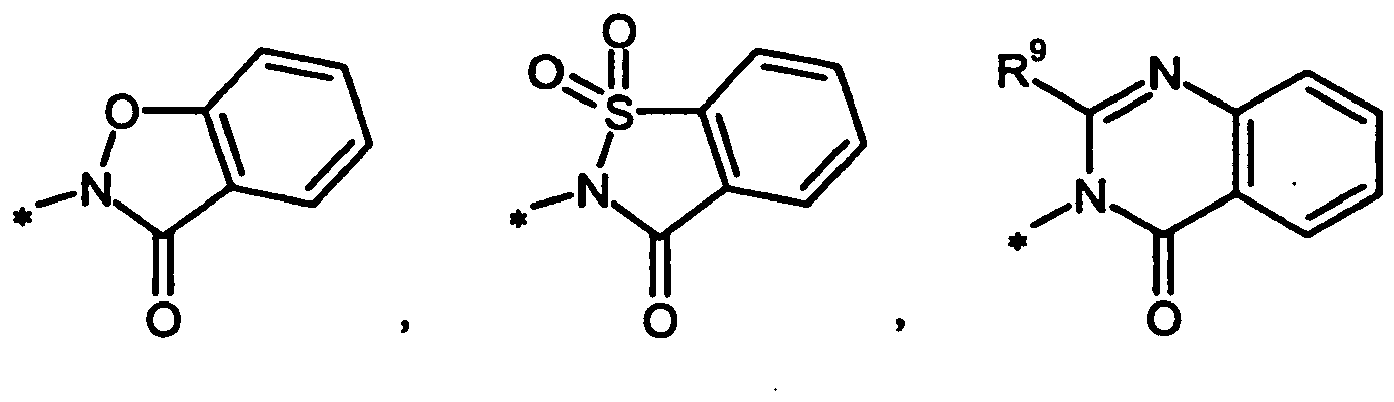

- *
- die Verknüpfungsposition mit dem restlichen Teil des Moleküls kennzeichnet,
- R8
- (C1-C6)-Alkyl, Trifluormethyl, (C3-C6)-Cycloalkyl, 4- bis 6-gliedriges Heterocyclyl oder Phenyl bedeutet, wobei Phenyl seinerseits bis zu zweifach, gleich oder verschieden, mit einem Rest ausgewählt aus der Reihe Fluor, Chlor, Brom, Cyano, (C1-C4)-Alkyl, Vinyl, Trifluormethyl, (C1-C4)-Alkoxy und Trifluormethoxy substituiert sein kann,
- R9
- Wasserstoff bedeutet oder die oben genannte Bedeutung von R8 hat,
- R10A und R10B
- unabhängig voneinander Wasserstoff, Fluor oder Chlor bedeuten
- und R11
- Wasserstoff, Fluor oder Chlor bedeutet,
- Bevorzugt im Rahmen der vorliegenden Erfindung sind Verbindungen der Formel (I), in welcher der Ring A für einen Oxo-substituierten Azaheterocyclus der Formel
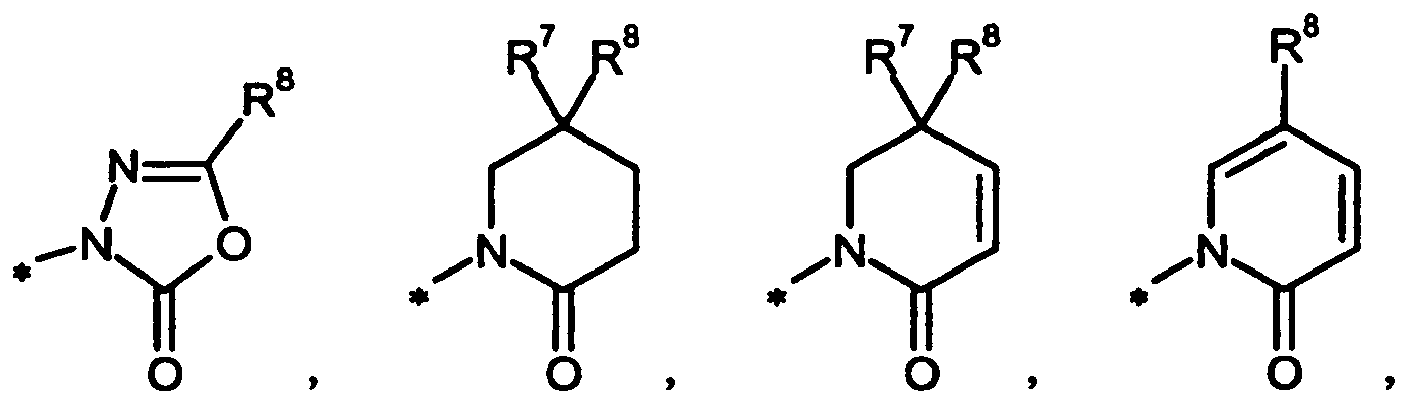


- *
- die Verknüpfungsposition mit dem restlichen Teil des Moleküls kennzeichnet,
- R7
- Wasserstoff oder (C1-C4)-Alkyl bedeutet,
- R8
- (C1-C6)-Alkyl, Trifluormethyl, (C3-C6)-Cycloalkyl oder Phenyl bedeutet, wobei Phenyl seinerseits bis zu zweifach, gleich oder verschieden, mit einem Rest ausgewählt aus der Reihe Fluor, Chlor, Cyano, (C1-C4)-Alkyl, Trifluormethyl, (C1-C4)-Alkoxy und Trifluormethoxy substituiert sein kann,
- und R9
- Wasserstoff bedeutet oder die zuvor genannte Bedeutung von R8 hat,
- R1
- für Wasserstoff oder (C1-C4)-Alkyl steht,
- R2
- für Wasserstoff, Fluor, Chlor oder Trifluormethyl steht,
- R3
- für (C3-C6)-Alkyl oder (C3-C6)-Alkenyl, welche jeweils mit Cyano, Methoxy, Ethoxy oder Trifluormethoxy und bis zu sechsfach mit Fluor substituiert sein können,
oder
für (C3-C6)-Cycloalkyl oder (C4-C6)-Cycloalkenyl, welche jeweils bis zu zweifach, gleich oder verschieden, mit (C1-C4)-Alkyl und Trifluormethyl sowie bis zu vierfach mit Fluor substituiert sein können,
oder
für Oxetanyl steht, - L1
- für eine Bindung oder für Methylen, Ethan-1,2-diyl oder Propan-1,3-diyl, welche jeweils bis zu zweifach mit Methyl substituiert sein können, steht,
- L2
- für eine Bindung oder für Methylen, Ethan-1,2-diyl, Propan-1,3-diyl oder Ethen-1,2-diyl, welche jeweils bis zu zweifach mit Methyl substituiert sein können, steht
oder
für eine Gruppe der Formel
worin - #
- die Verknüpfungsposition mit der Carbonsäure-Gruppierung kennzeichnet,
- ##
- die Verknüpfungsposition mit der Gruppe M kennzeichnet,
- m
- die Zahl 0 oder 1 bedeutet,
- n
- die Zahl 0, 1 oder 2 bedeutet,
- D
- O oder S bedeutet
und - R4A und R4B
- unabhängig voneinander Wasserstoff oder Methyl bedeuten,
- M
- für Phenylen oder 5- oder 6-gliedriges Heteroarylen mit bis zu zwei Ring-Heteroatomen aus der Reihe N, O und/oder S steht, wobei Phenylen und Heteroarylen jeweils bis zu zweifach, gleich oder verschieden, mit einem Rest ausgewählt aus der Reihe Fluor, Chlor, (C1-C4)-Alkyl, Trifluormethyl, Methoxy und Trifluormethoxy substituiert sein können, oder für Cyclopentan-1,3-diyl, Cyclohexan-1,3-diyl oder Cyclohexan-1,4-diyl steht, welche jeweils bis zu zweifach, gleich oder verschieden, mit einem Rest ausgewählt aus der Reihe Fluor, Methyl und Trifluormethyl substituiert sein können,
- oder L2 und M
- miteinander verknüpft sind und zusammen eine Gruppe der Formel
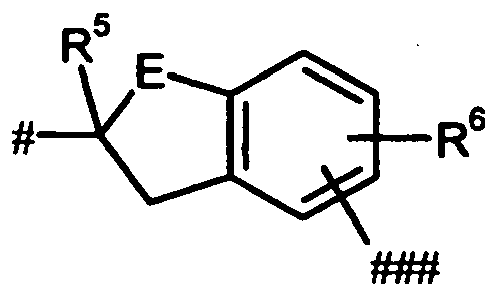
# die Verknüpfungsposition mit der Carbonsäure-Gruppierung kennzeichnet,
### die Verknüpfungsposition mit der Gruppe L1 kennzeichnet,
E CH2 oder CH2CH2 bedeutet,
R5 Wasserstoff, Methyl oder Trifluormethyl bedeutet
und R6 Wasserstoff, Fluor, Chlor, Methyl, Trifluormethyl, Methoxy oder Trifluormethoxy bedeutet, - Bevorzugt im Rahmen der vorliegenden Erfindung sind auch Verbindungen der Formel (I), in welcher
der Ring A für einen Oxo-substituierten Azaheterocyclus der Formel


- *
- die Verknüpfungsposition mit dem restlichen Teil des Moleküls kennzeichnet,
- R8
- (C1-C6)-Alkyl, Trifluormethyl, (C3-C6)-Cycloalkyl oder Phenyl bedeutet, wobei Phenyl seinerseits bis zu zweifach, gleich oder verschieden, mit einem Rest ausge- wählt aus der Reihe Fluor, Chlor, Cyano, (C1-C4)-Alkyl, Trifluormethyl, (C1-C4)-Alkoxy und Trifluormethoxy substituiert sein kann,
- R9
- Wasserstoff bedeutet oder die zuvor genannte Bedeutung von R8 hat
- und R10A und R10B
- unabhängig voneinander Wasserstoff, Fluor oder Chlor bedeuten,
- R1
- für Wasserstoff oder (C1-C4)-Alkyl steht,
- R2
- für Wasserstoff, Fluor, Chlor oder Trifluormethyl steht,
- R3
- für (C3-C6)-Alkyl oder (C3-C6)-Alkenyl, welche jeweils mit Cyano, Methoxy, Ethoxy oder Trifluormethoxy und bis zu sechsfach mit Fluor substituiert sein können,
oder
für (C3-C6)-Cycloalkyl oder (C4-C6)-Cycloalkenyl, welche jeweils bis zu zweifach, gleich oder verschieden, mit (C1-C4)-Alkyl und Trifluormethyl sowie bis zu vierfach mit Fluor substituiert sein können,
oder
für Oxetanyl steht, - L1
- für eine Bindung oder für Methylen, Ethan-1,2-diyl oder Propan-1,3-diyl, welche jeweils bis zu zweifach mit Methyl substituiert sein können, steht,
- L2
- für eine Bindung oder für Methylen, Ethan-1,2-diyl, Propan-1,3-diyl oder Ethen-1,2-diyl, welche jeweils bis zu zweifach mit Methyl substituiert sein können, steht
oder
für eine Gruppe der Formel
worin
# die Verknüpfungsposition mit der Carbonsäure-Gruppierung kennzeichnet,
## die Verknüpfungsposition mit der Gruppe M kennzeichnet,
m die Zahl 0 oder 1 bedeutet,
n die Zahl 0, 1 oder 2 bedeutet,
D O oder S bedeutet
und R4A und R4B unabhängig voneinander Wasserstoff oder Methyl bedeuten, - M
- für Phenylen oder 5- oder 6-gliedriges Heteroarylen mit bis zu zwei Ring-Heteroatomen aus der Reihe N, O und/oder S steht, wobei Phenylen und Heteroarylen jeweils bis zu zweifach, gleich oder verschieden, mit einem Rest ausgewählt aus der Reihe Fluor, Chlor, (C1-C4)-Alkyl, Trifluormethyl, Methoxy und Trifluormethoxy substituiert sein können,
oder
für Cyclopentan-1,3-diyl, Cyclohexan-1,3-diyl oder Cyclohexan-1,4-diyl steht, welche jeweils bis zu zweifach, gleich oder verschieden, mit einem Rest ausgewählt aus der Reihe Fluor, Methyl und Trifluormethyl substituiert sein können, - oder L2 und M
- miteinander verknüpft sind und zusammen eine Gruppe der Formel

# die Verknüpfungsposition mit der Carbonsäure-Gruppierung kennzeichnet,
### die Verknüpfungsposition mit der Gruppe L1 kennzeichnet,
E CH2 oder CH2CH2 bedeutet,
R5 und Wasserstoff, Methyl oder Trifluormethyl bedeutet
R6 Wasserstoff, Fluor, Chlor, Methyl, Trifluormethyl, Methoxy oder Trifluormethoxy bedeutet, - Besonders bevorzugt im Rahmen der vorliegenden Erfindung sind Verbindungen der Formel (I), in welcher
der Ring A für einen Oxo-substituierten Azaheterocyclus der Formel

- *
- die Verknüpfungsposition mit dem restlichen Teil des Moleküls kennzeichnet,
- R8
- Trifluormethyl, (C3-C6)-Cycloalkyl oder Phenyl bedeutet, wobei Phenyl seinerseits bis zu zweifach, gleich oder verschieden, mit einem Rest ausgewählt aus der Reihe Fluor, Chlor, Cyano, Methyl, Trifluormethyl, Methoxy und Trifluormethoxy substituiert sein kann,
- und R9
- Wasserstoff bedeutet oder die zuvor genannte Bedeutung von R8 hat,
- R1
- für Wasserstoff oder Methyl steht,
- R2
- für Wasserstoff, Fluor oder Chlor steht,
- R3
- für (C3-C6)-Alkyl oder (C3-C6)-Alkenyl, welche jeweils bis zu sechsfach mit Fluor substituiert sein können, steht
oder
für (C3-C6)-Cycloalkyl, Cyclopentenyl oder Cyclohexenyl, welche jeweils bis zu zweifach, gleich oder verschieden, mit Methyl, Ethyl und Trifluormethyl sowie bis zu vierfach mit Fluor substituiert sein können, steht, - L1
- für eine Bindung oder für Methylen oder Ethan-1,2-diyl steht,
- L2
- für eine Bindung oder für Methylen, Ethan-1,2-diyl, Propan-1,3-diyl oder Ethen-1,2-diyl, welche jeweils bis zu zweifach mit Methyl substituiert sein können, steht oder für eine Gruppe der Formel

worin
# die Verknüpfungsposition mit der Carbonsäure-Gruppierung kennzeichnet,
## die Verknüpfungsposition mit der Gruppe M kennzeichnet,
m die Zahl 0 oder 1 bedeutet,
n die Zahl 1 oder 2 bedeutet,
und R4A und R4B unabhängig voneinander Wasserstoff oder Methyl bedeuten, - M
- für Phenylen, Pyridylen, Furylen, Thienylen, Thiazolylen oder Isoxazolylen, welche jeweils bis zu zweifach, gleich oder verschieden, mit einem Rest ausgewählt aus der Reihe Fluor, Chlor, Methyl und Trifluormethyl substituiert sein können, steht
oder
für Cyclopentan-1,3-diyl, Cyclohexan-1,3-diyl oder Cyclohexan-1,4-diyl, welche jeweils bis zu zweifach, gleich oder verschieden, mit Fluor und Methyl substituiert sein können, steht, - oder L2 und M
- miteinander verknüpft sind und zusammen eine Gruppe der Formel

# die Verknüpfungsposition mit der Carbonsäure-Gruppierung kennzeichnet,
### die Verknüpfungsposition mit der Gruppe L1 kennzeichnet,
R5 Wasserstoff, Methyl oder Trifluormethyl bedeutet
und R6 Wasserstoff, Fluor oder Chlor bedeutet, - Besonders bevorzugt im Rahmen der vorliegenden Erfindung sind auch Verbindungen der Formel (I), in welcher
der Ring A für einen Oxo-substituierten Azaheterocyclus der Formel

- *
- die Verknüpfungsposition mit dem restlichen Teil des Moleküls kennzeichnet,
- R9
- Wasserstoff, Methyl oder Trifluormethyl bedeutet
und
R10A und R10B unabhängig voneinander Wasserstoff oder Fluor bedeuten, - R1
- für Wasserstoff oder Methyl steht,
- R2
- für Wasserstoff, Fluor oder Chlor steht,
- R3
- für (C3-C6)-Alkyl oder (C3-C6)-Alkenyl, welche jeweils bis zu sechsfach mit Fluor substituiert sein können, steht
oder
für (C3-C6)-Cycloalkyl, Cyclopentenyl oder Cyclohexenyl, welche jeweils bis zu zweifach, gleich oder verschieden, mit Methyl, Ethyl und Trifluormethyl sowie bis zu vierfach mit Fluor substituiert sein können, steht, - L1
- für eine Bindung oder für Methylen oder Ethan-1,2-diyl steht,
- L2
- für eine Bindung oder für Methylen, Ethan-1,2-diyl, Propan-1,3-diyl oder Ethen-1,2-diyl, welche jeweils bis zu zweifach mit Methyl substituiert sein können, steht
oder
für eine Gruppe der Formel
worin
# die Verknüpfungsposition mit der Carbonsäure-Gruppierung kennzeichnet,
## die Verknüpfungsposition mit der Gruppe M kennzeichnet,
m die Zahl 0 oder 1 bedeutet,
n die Zahl 1 oder 2 bedeutet,
und R4A und R4B unabhängig voneinander Wasserstoff oder Methyl bedeuten, - M
- für Phenylen, Pyridylen, Furylen, Thienylen, Thiazolylen oder Isoxazolylen, welche jeweils bis zu zweifach, gleich oder verschieden, mit einem Rest ausgewählt aus der Reihe Fluor, Chlor, Methyl und Trifluormethyl substituiert sein können, steht oder für Cyclopentan-1,3-diyl, Cyclohexan-1,3-diyl oder Cyclohexan-1,4-diyl, welche jeweils bis zu zweifach, gleich oder verschieden, mit Fluor und Methyl substituiert sein können, steht,
- oder L2 und M
- miteinander verknüpft sind und zusammen eine Gruppe der Formel

# die Verknüpfungsposition mit der Carbonsäure-Gruppierung kennzeichnet,
### die Verknüpfungsposition mit der Gruppe L1 kennzeichnet,
R5 Wasserstoff, Methyl oder Trifluormethyl bedeutet
und R6 Wasserstoff, Fluor oder Chlor bedeutet, - Ganz besonders bevorzugt im Rahmen der vorliegenden Erfindung sind Verbindungen der Formel (I), in welcher
der Ring A für einen Oxo-substituierten Azaheterocyclus der Formel

- *
- die Verknüpfungsposition mit dem restlichen Teil des Moleküls kennzeichnet,
- R8
- Trifluormethyl oder Phenyl, welches bis zu zweifach, gleich oder verschieden, mit einem Rest ausgewählt aus der Reihe Fluor, Chlor, Methyl und Trifluormethyl substituiert sein kann, bedeutet
- und R9
- Wasserstoff bedeutet oder die zuvor genannte Bedeutung von R8 hat,
- R1
- für Wasserstoff steht,
- R2
- für Wasserstoff steht,
- R3
- für Propan-2-yl, Butan-2-yl, Pentan-2-yl, 1,1,1-Trifluorpropan-2-yl, 1,1,1-Trifluorbutan-2-yl, 4,4,4-Trifluorbutan-2-yl, 4,4,4-Trifluor-2-methylbutan-1-yl, Cyclopentyl oder 3,3-Difluorcyclopentyl steht,
- L1
- für eine Bindung oder für Methylen steht,
- L2
- für eine Bindung, für Methylen oder Ethan-1,2-diyl, welche jeweils bis zu zweifach mit Methyl substituiert sein können, oder für Ethen-1,2-diyl steht
oder für eine Gruppe der Formel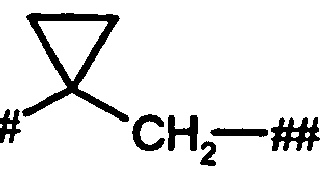
# die Verknüpfungsposition mit der Carbonsäure-Gruppierung
und ## die Verknüpfungsposition mit der Gruppe M kennzeichnen, - M
- für 1,3-Phenylen oder 1,4-Phenylen, welche bis zu zweifach, gleich oder verschieden, mit Fluor, Chlor, Methyl und Trifluormethyl substituiert sein können, oder für Cyclohexan-1,3-diyl oder Cyclohexan-1,4-diyl steht,
- oder L2 und M
- miteinander verknüpft sind und zusammen eine Gruppe der Formel

# die Verknüpfungsposition mit der Carbonsäure-Gruppierung kennzeichnet,
### die Verknüpfungsposition mit der Gruppe L1 kennzeichnet,
R5 Wasserstoff oder Methyl bedeutet
und R6 Wasserstoff oder Fluor bedeutet, - Ganz besonders bevorzugt im Rahmen der vorliegenden Erfindung sind auch Verbindungen der Formel (I), in welcher
der Ring A für einen Oxo-substituierten Azaheterocyclus der Formel
- * und
- die Verknüpfungsposition mit dem restlichen Teil des Moleküls kennzeichnet
- R10A und R10B
- unabhängig voneinander Wasserstoff oder Fluor bedeuten,
- R1
- für Wasserstoff steht,
- R2
- für Wasserstoff steht,
- R3
- für Propan-2-yl, Butan-2-yl, Pentan-2-yl, 1,1,1-Trifluorpropan-2-yl, 1,1,1-Trifluorbutan-2-yl, 4,4,4-Trifluorbutan-2-yl, 4,4,4-Trifluor-2-methylbutan-1-yl, Cyclopentyl oder 3,3-Difluorcyclopentyl steht,
- L1
- für eine Bindung steht,
- L2
- für Methylen oder Ethan-1,2-diyl, welche jeweils bis zu zweifach mit Methyl substituiert sein können, oder für Ethen-1,2-diyl steht
oder
für eine Gruppe der Formel
# die Verknüpfungsposition mit der Carbonsäure-Gruppierung
und ## die Verknüpfungsposition mit der Gruppe M kennzeichnen, - M oder
- für 1,3-Phenylen oder 1,4-Phenylen, welche bis zu zweifach, gleich oder verschieden, mit Fluor, Chlor, Methyl und Trifluormethyl substituiert sein können, steht,
- L2 und M
- miteinander verknüpft sind und zusammen eine Gruppe der Formel

# die Verknüpfungsposition mit der Carbonsäure-Gruppierung kennzeichnet,
### die Verknüpfungsposition mit der Gruppe L1 kennzeichnet,
R5 Wasserstoff oder Methyl bedeutet
und R6 Wasserstoff oder Fluor bedeutet, - Die in den jeweiligen Kombinationen bzw. bevorzugten Kombinationen von Resten im einzelnen angegebenen Reste-Definitionen werden unabhängig von den jeweiligen angegebenen Kombinationen der Reste beliebig auch durch Reste-Definitionen anderer Kombinationen ersetzt.
- Ganz besonders bevorzugt sind Kombinationen von zwei oder mehreren der oben genannten Vorzugsbereiche.
- Weiterer Gegenstand der Erfindung ist ein Verfahren zur Herstellung der erfindungsgemäßen Verbindungen der Formel (I), dadurch gekennzeichnet, dass man zunächst eine Verbindung der Formel (II)

und - T1
- für (C1-C4)-Alkyl steht,
- X
- für eine Abgangsgruppe wie beispielsweise Halogen, Mesylat, Tosylat oder Triflat steht,
- T2
- für (C1-C4)-Alkyl steht,
- Bei der zuvor beschriebenen Reaktionssequenz kann es gegebenenfalls zweckmäßig sein, die Reihenfolge einzelner Transformationen zu vertauschen. So ist es beispielsweise möglich, die Verbindung der Formel (V-A) [T1in (V) = tert.-Butyl]

zunächst durch Behandlung mit einer Säure in eine Carbonsäure der Formel (XI)
zu überführen und diese anschließend in einem inerten Lösungsmittel in Gegenwart eines Kondensationsmittels oder über die Zwischenstufe des entsprechenden Carbonsäurechlorids in Gegenwart einer Base mit einem Amin der Formel (IX)
und - T2
- für (C1-C4)-Alkyl steht,
- Eine Trennung der erfindungsgemäßen Verbindungen in die entsprechenden Enantiomere und/ oder Diastereomere kann gegebenenfalls, je nach Zweckmäßigkeit, auch bereits auf der Stufe der Verbindungen (VII), (VIII) oder (X) erfolgen, welche dann in separierter Form entsprechend den zuvor beschriebenen Verfahrenssequenzen weiter umgesetzt werden. Eine solche Auftrennung der Stereoisomeren läßt sich nach üblichen, dem Fachmann bekannten Methoden durchführen; vorzugsweise werden chromatographische Verfahren oder eine Trennung über diastereomere Salze verwendet.
- Inerte Lösungsmittel für den Verfahrensschritt (II) + (III) → (IV) sind beispielsweise Ether wie Diethylether, Methyl-tert.-butylether, Dioxan, Tetrahydrofuran, Glykoldimethylether oder Diethylenglykoldimethylether, Kohlenwasserstoffe wie Benzol, Toluol, Xylol, Hexan, Cyclohexan oder Erdölfraktionen, oder dipolar-aprotische Lösungsmittel wie Dimethylformamid (DMF), Dimethylsulfoxid (DMSO), N,N'-Dimethylpropylenharnstoff (DMPU) oder N-Methylpyrrolidon (NMP). Ebenso ist es möglich, Gemische der genannten Lösungsmittel einzusetzen. Bevorzugt werden Tetrahydrofuran, Dimethylformamid oder Gemische hiervon verwendet.
- Als Basen für den Verfahrensschritt (II) + (III) → (IV) eignen sich übliche starke anorganische oder organische Basen. Hierzu gehören insbesondere Alkalialkoholate wie Natrium- oder Kaliummethanolat, Natrium- oder Kaliumethanolat oder Natrium- oder Kalium-tert.-butylat, Alkalihydride wie Natrium- oder Kaliumhydrid, oder Amide wie Lithium-, Natrium- oder Kalium-bis (trimethylsilyl)amid oder Lithiumdüsopropylamid. Bevorzugt wird Kaüum-tert.-butylat, Natriumhydrid oder Lithiumdiisopropylamid verwendet.
- Die Umsetzung (II) + (III) → (IV) erfolgt im Allgemeinen in einem Temperaturbereich von -100°C bis +30°C, bevorzugt bei -78°C bis 0°C.
- Die Bromierung im Verfahrensschritt (IV) → (V) wird vorzugsweise in einem Halogenkohlenwasserstoff als Lösungsmittel, insbesondere in Dichlormethan oder Tetrachlormethan, in einem Temperaturbereich von +40°C bis +100°C durchgeführt. Als Bromierungsmittel eignen sich elementares Brom in Gegenwart von Licht sowie insbesondere N-Bromsuccinimid (NBS) unter Zusatz von α,α'-Azobis(isobutyronitril) (AIBN) oder Dibenzoylperoxid als Initiator [vgl. z.B. R.R. Kurtz, D.J. Houser, J. Org. Chem. 46, 202 (1981); Z.-J. Yao et al., Tetrahedron 55, 2865 (1999)].
- Inerte Lösungsmittel für die Verfahrensschritte (V) + (VI) → (VII) und (XII) + (VI) → (X) sind beispielsweise Ether wie Diethylether, Methyl-tert.-butylether, Dioxan, Tetrahydrofuran, Glykoldimethylether oder Diethylenglykoldimethylether, Kohlenwasserstoffe wie Benzol, Toluol, Xylol, Hexan, Cyclohexan oder Erdölfraktionen, Halogenkohlenwasserstoffe wie Dichlormethan, Trichlormethan, Chlorbenzol oder Chlortoluol, oder andere Lösungsmittel wie Dimethylformamid (DMF), Dimethylsulfoxid (DMSO), N,N'-Dimethylpropylenharnstoff (DMPU), N-Methylpyrrolidon (NMP), Acetonitril oder Pyridin. Ebenso ist es möglich, Gemische der genannten Lösungsmittel einzusetzen. Bevorzugt werden Tetrahydrofuran, Dimethylformamid oder Gemische hiervon verwendet.
- Als Basen für diese Umsetzungen eignen sich die üblichen anorganischen oder organischen Basen. Hierzu gehören insbesondere Alkalihydroxide wie beispielsweise Lithium-, Natrium- oder Kaliumhydroxid, Alkalicarbonate wie Lithium-, Natrium-, Kalium- oder Cäsiumcarbonat, Alkalialkoholate wie Natrium- oder Kaliummethanolat, Natrium- oder Kaliumethanolat oder Natrium-oder Kalium-tert.-butylat, Alkalihydride wie Natrium- oder Kaliumhydrid, oder Amide wie Lithium-, Natrium- oder Kalium-bis-(trimethylsilyl)amid oder Lithiumdiisopropylamid. Bevorzugt wird Cäsiumcarbonat oder Natriumhydrid eingesetzt.
- Die Reaktionen (V) + (VI) → (VII) und (XII) + (VI) → (X) erfolgen im Allgemeinen in einem Temperaturbereich von -20°C bis +120°C, bevorzugt im Bereich von 0°C bis +80°C.
- Die Abspaltung der Ester-Gruppen T1 bzw. T2 in den Verfahrensschritten (VII) → (VIII), (X) → (I) und (V-A) → (XI) wird nach üblichen Methoden durchgeführt, indem man die Ester in inerten Lösungsmitteln mit Säuren oder Basen behandelt, wobei bei letzterem die zunächst entstehenden Salze durch Behandeln mit Säure in die freien Carbonsäuren überführt werden. Im Falle der tert.-Butylester erfolgt die Esterspaltung bevorzugt mit Säuren.
- Als inerte Lösungsmittel eignen sich für diese Reaktionen Wasser oder die für eine Esterspaltung üblichen organischen Lösungsmittel. Hierzu gehören bevorzugt Alkohole wie Methanol, Ethanol, n-Propanol, Isopropanol, n-Butanol oder tert.-Butanol, oder Ether wie Diethylether, Tetrahydrofuran, Dioxan oder Glykoldimethylether, oder andere Lösungsmittel wie Aceton, Dichlormethan, Dimethylformamid oder Dimethylsulfoxid. Ebenso ist es möglich, Gemische der genannten . Lösungsmittel einzusetzen. Im Falle einer basischen Ester-Hydrolyse werden bevorzugt Gemische von Wasser mit Dioxan, Tetrahydrofuran, Methanol und/oder Ethanol eingesetzt. Im Falle der Umsetzung mit Trifluoressigsäure wird bevorzugt Dichlormethan und im Falle der Umsetzung mit Chlorwasserstoff bevorzugt Tetrahydrofuran, Diethylether, Dioxan oder Wasser verwendet.
- Als Basen sind die üblichen anorganischen Basen geeignet. Hierzu gehören insbesondere Alkali-oder Erdalkalihydroxide wie beispielsweise Lithium-, Natrium-, Kalium- oder Bariumhydroxid, oder Alkali- oder Erdalkalicarbonate wie Natrium-, Kalium- oder Calciumcarbonat. Bevorzugt sind Lithium-, Natrium- oder Kaliumhydroxid.
- Als Säuren eignen sich für die Esterspaltung im Allgemeinen Schwefelsäure, Chlorwasserstoff/ Salzsäure, Bromwasserstoff/Bromwasserstoffsäure, Phosphorsäure, Essigsäure, Trifluoressigsäure, Toluolsulfonsäure, Methansulfonsäure oder Trifluormethansulfonsäure oder deren Gemische gegebenenfalls unter Zusatz von Wasser. Bevorzugt sind Chlorwasserstoff oder Trifluoressigsäure im Falle der tert.-Butylester und Salzsäure im Falle der Methylester.
- Die Esterspaltung erfolgt im Allgemeinen in einem Temperaturbereich von -20°C bis +100°C, bevorzugt bei 0°C bis +60°C.
- Inerte Lösungsmittel für die Verfahrensschritte (VIII) + (IX) → (X) und (XI) + (IX) → (XII) [Amid-Kupplung] sind beispielsweise Ether wie Diethylether, tert.-Butyl-methylether, Dioxan, Tetrahydrofuran, Glykoldimethylether oder Diethylenglykoldimethylether, Kohlenwasserstoffe wie Benzol, Toluol, Xylol, Hexan, Cyclohexan oder Erdölfraktionen, Halogenkohlenwasserstoffe wie Dichlormethan, Trichlormethan, Tetrachlormethan, 1,2-Dichlorethan, Trichlorethylen oder Chlorbenzol, oder andere Lösungsmittel wie Aceton, Acetonitril, Ethylacetat, Pyridin, Dimethylsulfoxid (DMSO), Dimethylformamid (DMF), N,N'-Dimethylpropylenharnstoff (DMPU) oder N-Methylpyrrolidinon (NMP). Ebenso ist es möglich, Gemische der genannten Lösungsmittel zu verwenden. Bevorzugt sind Dichlormethan, Tetrahydrofuran, Dimethylformamid oder Gemische dieser Lösungsmittel.
- Als Kondensationsmittel bei diesen Kupplungsreaktionen eignen sich beispielsweise Carbodiimide wie N,N'-Diethyl-, N,N'-Dipropyl-, N,N-Diisopropyl-, N,N-Dicyclohexylcarbodiimid (DCC) oder N-(3-Dimethylaminoisopropyl)-N'-ethylcarbodiimid-Hydrochlorid (EDC), Phosgen-Derivate wie N,N'-Carbonyldiimidazol (CDI), 1,2-Oxazoliumverbindungen wie 2-Ethyl-5-phenyl-1,2-oxazolium-3-sulfat oder 2-tert.-Butyl-5-methylisoxazolium-perchlorat, Acylaminoverbindungen wie 2-Ethoxy-1-ethoxycarbonyl-1,2-dihydrochinolin, oder Isobutylchlorformiat, Propanphosphonsäureanhydrid, Cyanophosphonsäurediethylester, Bis-(2-oxo-3-oxazolidinyl)-phosphorylchlorid, Benzotriazol-1-yloxy-tris(dimethylamino)phosphonium-hexafluorophosphat, Benzotriazol-1-yloxy-tris-(pyrrolidino)phosphonium-hexafluorophosphat (PyBOP), O-(Benzotriazol-1-yl)-N,N,N',N'-tetra-methyluronium-tetrafluoroborat (TBTU), O-(Benzotriazol-1-yl)-N,N,N;N'-tetramethyluronium-hexafluorophosphat (HBTU), 2-(2-Oxo-1-(2H)-pyridyl)-1,1,3,3-tetramethyluronium-tetrafluoroborat (TPTU), O-(7-Azabenzotriazol-1-yl)-N,N,N,N'-tetramethyluronium-hexafluorophosphat (HATU) oder O-(1H-6-Chlorbenzotriazol-1-yl)-1,1,3,3-tetramethyluronium-tetrafluoroborat (TCTU), gegebenenfalls in Kombination mit weiteren Hilfsstoffen wie 1-Hydroxybenzotriazol (HOBt) oder N-Hydroxysuccinimid (HOSu), sowie als Basen Alkalicarbonate, z.B. Natrium- oder Kaliumcarbonat, oder organische Basen wie Triethylamin, N-Methylmorpholin, N-Methylpiperidin, N,N-Diisopropylethylamin, Pyridin oder 4-N,N-Dimethylaminopyridin. Bevorzugt eingesetzt werden O-(7-Azabenzotriazol-1-yl)-N,N,N',N'-tetramethyluronium-hexafluorophosphat (HATU) oder O-(Benzotriazol-1-yl)-N,N,N',N'-tetrarnethyluronium-tetrafluoroborat (TBTU), jeweils in Kombination mit Pyridin oder N,N-Diisopropylethylamin, oder N-(3-Dimethylaminoisopropyl)-N'-etbylcarbodiimid-Hydrochlorid (EDC) in Verbindung mit 1-Hydroxybenzotriazol (HOBt) und Triethylamin.
- Die Kupplungen (VIII) + (IX) → (X) und (XI) + (IX) → (XII) werden in der Regel in einem Temperaturbereich von 0°C bis +60°C, bevorzugt bei +10°C bis +40°C durchgeführt.
- Beim Einsatz eines der Verbindung (VIII) bzw. (XI) entsprechenden Carbonsäurechlorids wird die Kupplung mit der Amin-Komponente (IX) in Gegenwart einer üblichen organischen Hilfsbase wie Triethylamin, N-Methylmorpholin, N-Methylpiperidin, N,N-Diisopropylethylamin, Pyridin, 4-N,N Dimethylaminopyridin, 1,8-Diazabicyclo[5.4.0]undec-7-en (DBU) oder 1,5-Diazabicyclo[4.3.0]-non-5-en (DBN) durchgeführt. Bevorzugt wird Triethylamin oder N,N-Diisopropylethylamin verwendet.
- Die Reaktion von (IX) mit dem Carbonsäurechlorid erfolgt im Allgemeinen in einem Temperaturbereich von -20°C bis +60°C, bevorzugt im Bereich von 0°C bis +40°C.
- Die Herstellung der Carbonsäurechloride selbst erfolgt auf übliche Weise durch Behandlung der Carbonsäuren (VIII) bzw. (XI) mit Thionylchlorid.
- Die genannten Umsetzungen können bei normalem, bei erhöhtem oder bei erniedrigtem Druck durchgeführt werden (z.B. von 0.5 bis 5 bar). Im Allgemeinen arbeitet man jeweils bei Normaldruck.
- Die Intermediate der Formel (IV) können auch auf anderen Wegen - als Alternativen zum oben beschriebenen Alkylierungsverfahren (II) + (III) → (IV) - hergestellt werden. So sind Verbindungen der Formel (IV) beispielsweise auch durch Palladium-katalysierte Arylierung von Carbonsäureestern der Formel (XIII)

mit Phenylbromiden oder -iodiden der Formel (XIV)
und - Z
- für Brom oder Iod steht,
- Im Falle, dass R3 für einen gegebenenfalls substituierten Cyclopentyl- oder Cyclohexyl-Rest steht, können entsprechende Verbindungen der Formel (IV) beispielsweise auch über die Michael-Addition eines Phenylessigsäureesters der Formel (XVIII)

an 2-Cyclopenten-1-on bzw. 2-Cyclohexen-1-on und anschließende Transformation der Keto-Gruppe hergestellt werden (siehe nachfolgendes Reaktionsschema 5). - Die Verbindungen der Formeln (II), (III), (VI), (IX), (XIII), (XIV), (XV), (XVI) und (XVIII) sind kommerziell erhältlich, als solche in der Literatur beschrieben oder können in Analogie zu literaturbekannten Verfahren hergestellt werden (vgl. auch nachfolgendes Reaktionsschema 6).
- Die Herstellung der erfindungsgemäßen Verbindungen kann durch die folgenden Syntheseschemata beispielhaft veranschaulicht werden:


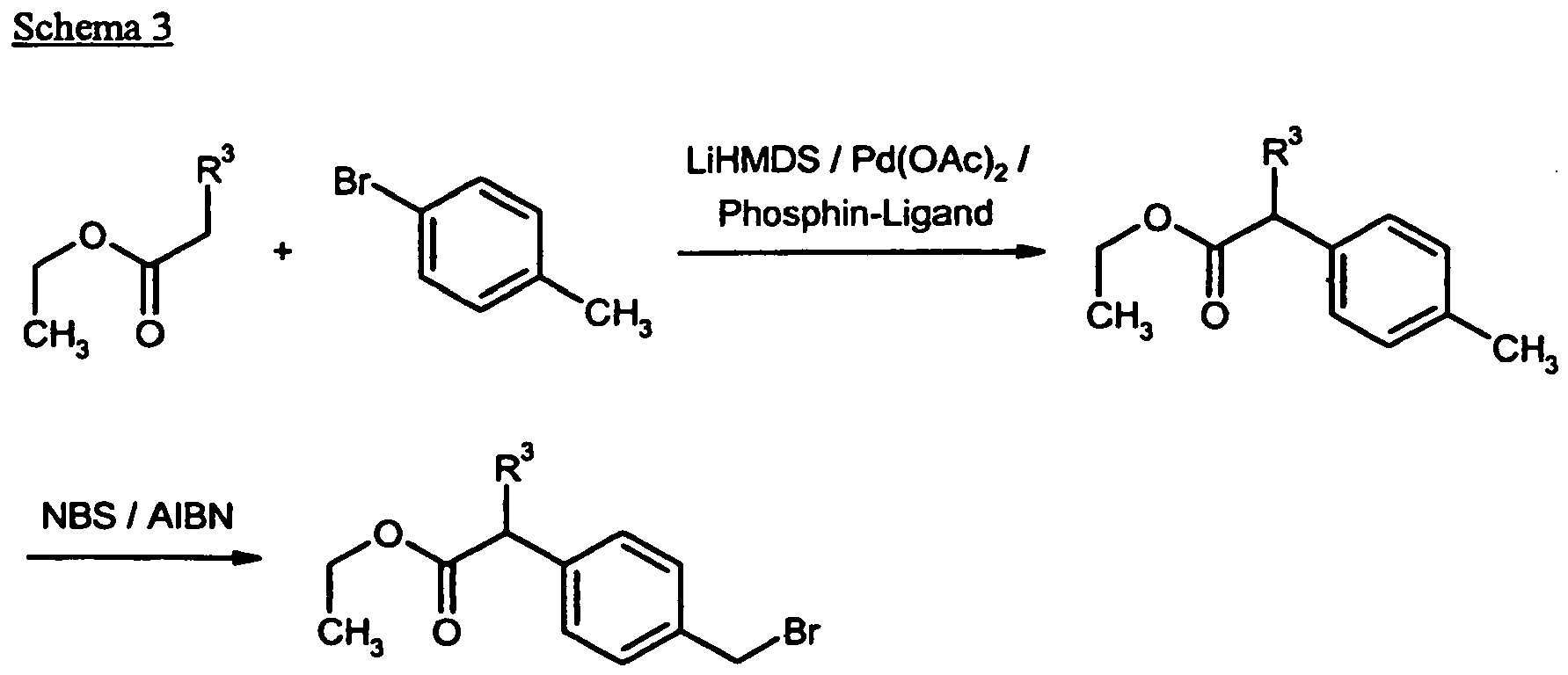


- Die erfindungsgemäßen Verbindungen besitzen wertvolle pharmakologische Eigenschaften und können zur Vorbeugung und Behandlung von Erkrankungen bei Menschen und Tieren verwendet werden.
- Die erfindungsgemäßen Verbindungen stellen potente Aktivatoren der löslichen Guanylatcyclase dar. Sie führen zu einer Gefäßrelaxation, zu einer Thrombozytenaggregationshemmung und zu einer Blutdrucksenkung sowie zu einer Steigerung des koronaren Blutflusses. Diese Wirkungen sind über eine direkte, Häm-unabhängige Aktivierung der löslichen Guanylatcyclase und einen intrazellulären cGMP-Anstieg vermittelt.
- Die erfindungsgemäßen Verbindungen können daher in Arzneimitteln zur Behandlung von kardiovaskulären Erkrankungen wie beispielsweise zur Behandlung des Bluthochdrucks und der Herzinsuffizienz, stabiler und instabiler Angina pectoris, pulmonaler Hypertonie, renaler Hypertonie, peripheren und kardialen Gefäßerkrankungen, Arrhythmien, zur Behandlung von thromboembolischen Erkrankungen und Ischämien wie Myokardinfarkt, Hirnschlag, transistorischen und ischämischen Attacken, peripheren Durchblutungsstörungen, zur Verhinderung von Restenosen wie nach Thrombolysetherapien, percutan-transluminalen Angioplastien (PTA), percutan-transluminalen Koronarangioplastien (PTCA) und Bypass sowie zur Behandlung von Arteriosklerose, asthmatischen Erkrankungen, Krankheiten des Urogenitalsystems wie beispielsweise Prostatahypertrophie, erektile Dysfunktion, weibliche sexuelle Dysfunktion und Inkontinenz, von Osteoporose, Glaukom und Gastroparese eingesetzt werden.
- Außerdem können die erfindungsgemäßen Verbindungen zur Behandlung von primärem und sekundärem Raynaud-Phänomen, von Mikrozirkulationsstörungen, Claudicatio, peripheren und autonomen Neuropathien, diabetischen Mikroangiopathien, diabetischer Retinopathie, diabetischen Geschwüren an den Extremitäten, CREST-Syndrom, Erythematose, Onychomykose sowie von rheumatischen Erkrankungen verwendet werden.
- Die erfindungsgemäßen Verbindungen können darüber hinaus zur Verhinderung von ischämie-und/oder reperfusionsbedingten Schädigungen von Organen oder Geweben sowie als Zusatzstoffe für Perfusions- und Konservierungslösungen von Organen, Organteilen, Geweben oder Gewebeteilen menschlichen oder tierischen Ursprungs insbesondere bei chirurgischen Eingriffen oder im Bereich der Transplantationsmedizin Verwendung finden.
- Ferner eignen sich die erfindungsgemäßen Verbindungen zur Behandlung von Respiratory Distress-Syndromen und chronisch-obstruktiven Atemwegserkrankungen (COPD), von akuter und chronischer Niereninsuffizienz sowie zur Förderung der Wundheilung.
- Die in der vorliegenden Erfindung beschriebenen Verbindungen stellen auch Wirkstoffe zur Bekämpfung von Krankheiten im Zentralnervensystem dar, die durch Störungen des NO/cGMP-Systems gekennzeichnet sind. Insbesondere sind sie geeignet zur Verbesserung der Wahrnehmung, Konzentrationsleistung, Lernleistung oder Gedächtnisleistung nach kognitiven Störungen, wie sie insbesondere bei Situationen/Krankheiten/Syndromen auftreten wie "Mild cognitive impairment", altersassoziierten Lern- und Gedächtnisstörungen, altersassoziierten Gedächtnisverlusten, vaskulärer Demenz, Schädel-Hirn-Trauma, Schlaganfall, Demenz, die nach Schlaganfällen auftritt ("post stroke dementia"), post-traumatischem Schädel-Him-Trauma, allgemeinen Konzentrationsstörungen, Konzentrationsstörungen bei Kindern mit Lern- und Gedächtnisproblemen, Alzheimer'scher Krankheit, Demenz mit Lewy-Körperchen, Demenz mit Degeneration der Frontallappen einschliesslich des Pick's-Syndroms, Parkinson'scher Krankheit, progressiver nuclear palsy, Demenz mit corticobasaler Degeneration, Amyolateralsklerose (ALS), Huntington'scher Krankheit, Multipler Sklerose, Thalamischer Degeneration, Creutzfeld-Jacob-Demenz, HIV-Demenz, Schizophrenie mit Demenz oder Korsakoff-Psychose. Sie eignen sich auch zur Behandlung von Erkrankungen des Zentralnervensystems wie Angst-, Spannungs- und Depressionszuständen, zentral-nervös bedingten Sexualdysfunktionen und Schlafstörungen sowie zur Regulierung krankhafter Störungen der Nahrungs-, Genuss- und Suchtmittelaufnahme.
- Weiterhin eignen sich die erfindungsgemäßen Verbindungen auch zur Regulation der cerebralen Durchblutung und stellen wirkungsvolle Mittel zur Bekämpfung von Migräne dar. Auch eignen sie sich zur Prophylaxe und Bekämpfung der Folgen cerebraler Infarktgeschehen (Apoplexia cerebri) wie Schlaganfall, cerebraler Ischämien und des Schädel-Him-Traumas. Ebenso können die erfindungsgemäßen Verbindungen zur Bekämpfung von Schmerzzuständen eingesetzt werden.
- Zudem besitzen die erfindungsgemäßen Verbindungen anti-inflammatorische Wirkung und können daher als entzündungshemmende Mittel eingesetzt werden.
- Weiterer Gegenstand der vorliegenden Erfindung ist die Verwendung der erfindungsgemäßen Verbindungen zur Herstellung eines Arzneimittels zur Behandlung und/oder Prävention von Erkrankungen, insbesondere der zuvor genannten Erkrankungen.
- Die erfindungsgemäßen Verbindungen können allein oder bei Bedarf in Kombination mit anderen Wirkstoffen eingesetzt werden. Weiterer Gegenstand der vorliegenden Erfindung sind Arzneimittel, enthaltend mindestens eine der erfindungsgemäßen Verbindungen und einen oder mehrere weitere Wirkstoffe, insbesondere zur Behandlung und/oder Prävention der zuvor genannten Erkrankungen. Als geeignete Kombinationswirkstoffe seien beispielhaft und vorzugsweise genannt:
- organische Nitrate und NO-Donatoren, wie beispielsweise Natriumnitroprussid, Nitroglycerin, Isosorbidmononitrat, Isosorbiddinitrat, Molsidomin oder SIN-1, sowie inhalatives NO;
- Verbindungen, die den Abbau von cyclischem Guanosinmonophosphat (cGMP) inhibieren, wie beispielsweise Inhibitoren der Phosphodiesterasen (PDE) 1, 2 und/oder 5, insbesondere PDE 5-Inhibitoren wie Sildenafil, Vardenafil und Tadalafil;
- NO-unabhängige, jedoch Häm-abhängige Stimulatoren der Guanylatcyclase, wie insbesondere die in
WO 00/06568 WO 00/06569 WO 02/42301 WO 03/095451 - antithrombotisch wirkende Mittel, beispielhaft und vorzugsweise aus der Gruppe der Thrombozytenaggregationshemmer, der Antikoagulantien oder der profibrinolytischen Substanzen;
- den Blutdruck senkende Wirkstoffe, beispielhaft und vorzugsweise aus der Gruppe der Calcium-Antagonisten, Angiotensin AII-Antagonisten, ACE-Hemmer, Endothelin-Antagonisten, Renin-Inhibitoren, alpha-Rezeptoren-Blocker, beta-Rezeptoren-Blocker, Mineralocorticoid-Rezeptor-Antagonisten sowie der Diuretika; und/oder
- den Fettstoffwechsel verändernde Wirkstoffe, beispielhaft und vorzugsweise aus der Gruppe der Thyroidrezeptor-Agonisten, Cholesterinsynthese-Inhibitoren wie beispielhaft und vorzugsweise HMG-CoA-Reduktase- oder Squalensynthese-Inhibitoren, der ACAT-Inhibitoren, CETP-Inhibitoren, MTP-Inhibitoren, PPAR-alpha-, PPAR-gamma- und/oder PPAR-delta-Agonisten, Cholesterin-Absorptionshemmer, Lipase-Inhibitoren, polymeren Gallensäureadsorber, Gallensäure-Reabsorptionshemmer und Lipoprotein(a)-Antagonisten.
- Unter antithrombotisch wirkenden Mittel werden vorzugsweise Verbindungen aus der Gruppe der Thrombozytenaggregationshemmer, der Antikoagulantien oder der profibrinolytischen Substanzen verstanden.
- Bei einer bevorzugten Ausführungsform der Erfindung werden die erfindungsgemäßen Verbindungen in Kombination mit einem Thrombozytenaggregationshemmer, wie beispielhaft und vorzugsweise Aspirin, Clopidogrel, Ticlopidin oder Dipyridamol, verabreicht.
- Bei einer bevorzugten Ausführungsform der Erfindung werden die erfindungsgemäßen Verbindungen in Kombination mit einem Thrombin-Inhibitor, wie beispielhaft und vorzugsweise Ximelagatran, Melagatran, Bivalirudin oder Clexane, verabreicht.
- Bei einer bevorzugten Ausführungsform der Erfindung werden die erfindungsgemäßen Verbindungen in Kombination mit einem GPIIb/IIIa-Antagonisten, wie beispielhaft und vorzugsweise Tirofiban oder Abciximab, verabreicht.
- Bei einer bevorzugten Ausführungsform der Erfindung werden die erfindungsgemäßen Verbindungen in Kombination mit einem Faktor Xa-Inhibitor, wie beispielhaft und vorzugsweise Rivaroxaban, Apixaban, Fidexaban, Razaxaban, Fondaparinux, Idraparinux, DU-176b, PMD-3112, YM-150, KFA-1982, EMD-503982, MCM-17, MLN-1021, DX 9065a, DPC 906, JTV 803, SSR-126512 oder SSR-128428, verabreicht.
- Bei einer bevorzugten Ausführungsform der Erfindung werden die erfindungsgemäßen Verbindungen in Kombination mit Heparin oder einem low molecular weight (LMW)-Heparin-Derivat verabreicht.
- Bei einer bevorzugten Ausführungsform der Erfindung werden die erfindungsgemäßen Verbindungen in Kombination mit einem Vitamin K-Antagonisten, wie beispielhaft und vorzugsweise Coumarin, verabreicht.
- Unter den Blutdruck senkenden Mitteln werden vorzugsweise Verbindungen aus der Gruppe der Calcium-Antagonisten, Angiotensin AII-Antagonisten, ACE-Hemmer, Endothelin-Antagonisten, Renin-Inhibitoren, alpha-Rezeptoren-Blocker, beta-Rezeptoren-Blocker, Mineralocorticoid-Rezeptor-Antagonisten sowie der Diuretika verstanden.
- Bei einer bevorzugten Ausführungsform der Erfindung werden die erfindungsgemäßen Verbindungen in Kombination mit einem Calcium-Antagonisten, wie beispielhaft und vorzugsweise Nifedipin, Amlodipin, Verapamil oder Diltiazem, verabreicht.
- Bei einer bevorzugten Ausführungsform der Erfindung werden die erfindungsgemäßen Verbindungen in Kombination mit einem alpha-1-Rezeptoren-Blocker, wie beispielhaft und vorzugsweise Prazosin, verabreicht.
- Bei einer bevorzugten Ausführungsform der Erfindung werden die erfindungsgemäßen Verbindungen in Kombination mit einem beta-Rezeptoren-Blocker, wie beispielhaft und vorzugsweise Propranolol, Atenolol, Timolol, Pindolol, Alprenolol, Oxprenolol, Penbutolol, Bupranolol, Metipranolol, Nadolol, Mepindolol, Carazalol, Sotalol, Metoprolol, Betaxolol, Celiprolol, Bisoprolol, Carteolol, Esmolol, Labetalol, Carvedilol, Adaprolol, Landiolol, Nebivolol, Epanolol oder Bucindolol, verabreicht.
- Bei einer bevorzugten Ausführungsform der Erfindung werden die erfindungsgemäßen Verbindungen in Kombination mit einem Angiotensin AII-Antagonisten, wie beispielhaft und vorzugsweise Losartan, Candesartan, Valsartan, Telmisartan oder Embursatan, verabreicht.
- Bei einer bevorzugten Ausführungsform der Erfindung werden die erfindungsgemäßen Verbindungen in Kombination mit einem ACE-Hemmer, wie beispielhaft und vorzugsweise Enalapril, Captopril, Lisinopril, Ramipril, Delapril, Fosinopril, Quinopril, Perindopril oder Trandopril, verabreicht.
- Bei einer bevorzugten Ausführungsform der Erfindung werden die erfindungsgemäßen Verbindungen in Kombination mit einem Endothelin-Antagonisten, wie beispielhaft und vorzugsweise Bosentan, Darusentan, Ambrisentan oder Sitaxsentan, verabreicht.
- Bei einer bevorzugten Ausführungsform der Erfindung werden die erfindungsgemäßen Verbindungen in Kombination mit einem Renin-Inhibitor, wie beispielhaft und vorzugsweise Aliskiren, SPP-600 oder SPP-800, verabreicht.
- Bei einer bevorzugten Ausführungsform der Erfindung werden die erfindungsgemäßen Verbindungen in Kombination mit einem Mineralocorticoid-Rezeptor-Antagonisten, wie beispielhaft und vorzugsweise Spironolacton oder Eplerenon, verabreicht.
- Bei einer bevorzugten Ausführungsform der Erfindung werden die erfindungsgemäßen Verbindungen in Kombination mit einem Diuretikum, wie beispielhaft und vorzugsweise Furosemid, verabreicht.
- Unter den Fettstoffwechsel verändernden Mitteln werden vorzugsweise Verbindungen aus der Gruppe der CETP-Inhibitoren, Thyroidrezeptor-Agonisten, Cholesterinsynthese-Inhibitoren wie HMG-CoA-Reduktase- oder Squalensynthese-Inhibitoren, der ACAT-Inhibitoren, MTP-Inhibitoren, PPAR-alpha-, PPAR-gamma- und/oder PPAR-delta-Agonisten, Cholesterin-Absorptionshemmer, polymeren Gallensäureadsorber, Gallensäure-Reabsorptionshemmer, Lipase-Inhibitoren sowie der Lipoprotein(a)-Antagonisten verstanden.
- Bei einer bevorzugten Ausführungsform der Erfindung werden die erfindungsgemäßen Verbindungen in Kombination mit einem CETP-Inhibitor, wie beispielhaft und vorzugsweise Torcetrapib (CP-529 414), JJT-705 oder CETP-vaccine (Avant), verabreicht.
- Bei einer bevorzugten Ausführungsform der Erfindung werden die erfindungsgemäßen Verbindungen in Kombination mit einem Thyroidrezeptor-Agonisten, wie beispielhaft und vorzugsweise D-Thyroxin, 3,5,3'-Triiodothyronin (T3), CGS 23425 oder Axitirome (CGS 26214), verabreicht.
- Bei einer bevorzugten Ausführungsform der Erfindung werden die erfindungsgemäßen Verbindungen in Kombination mit einem HMG-CoA-Reduktase-Inhibitor aus der Klasse der Statine, wie beispielhaft und vorzugsweise Lovastatin, Simvastatin, Pravastatin, Fluvastatin, Atorvastatin, Rosuvastatin, Cerivastatin oder Pitavastatin, verabreicht.
- Bei einer bevorzugten Ausführungsform der Erfindung werden die erfindungsgemäßen Verbindungen in Kombination mit einem Squalensynthese-Inhibitor, wie beispielhaft und vorzugsweise BMS-188494 oder TAK-475, verabreicht.
- Bei einer bevorzugten Ausführungsform der Erfindung werden die erfindungsgemäßen Verbindungen in Kombination mit einem ACAT-Inhibitor, wie beispielhaft und vorzugsweise Avasimibe, Melinamide, Pactimibe, Eflucimibe oder SMP-797, verabreicht.
- Bei einer bevorzugten Ausführungsform der Erfindung werden die erfindungsgemäßen Verbindungen in Kombination mit einem MTP-Inhibitor, wie beispielhaft und vorzugsweise Implitapide, BMS-201038, R-103757 oder JTT-130, verabreicht.
- Bei einer bevorzugten Ausführungsform der Erfindung werden die erfindungsgemäßen Verbindungen in Kombination mit einem PPAR-gamma-Agonisten, wie beispielhaft und vorzugsweise Pioglitazone oder Rosiglitazone, verabreicht.
- Bei einer bevorzugten Ausführungsform der Erfindung werden die erfindungsgemäßen Verbindungen in Kombination mit einem PPAR-delta-Agonisten, wie beispielhaft und vorzugsweise GW 501516 oder BAY 68-5042, verabreicht.
- Bei einer bevorzugten Ausführungsform der Erfindung werden die erfindungsgemäßen Verbindungen in Kombination mit einem Cholesterin-Absorptionshemmer, wie beispielhaft und vorzugsweise Ezetimibe, Tiqueside oder Pamaqueside, verabreicht.
- Bei einer bevorzugten Ausführungsform der Erfindung werden die erfindungsgemäßen Verbindungen in Kombination mit einem Lipase-Inhibitor, wie beispielhaft und vorzugsweise Orlistat, verabreicht.
- Bei einer bevorzugten Ausführungsform der Erfindung werden die erfindungsgemäßen Verbindungen in Kombination mit einem polymeren Gallensäureadsorber, wie beispielhaft und vorzugsweise Cholestyramin, Colestipol, Colesolvam, CholestaGel oder Colestimid, verabreicht.
- Bei einer bevorzugten Ausführungsform der Erfindung werden die erfindungsgemäßen Verbindungen in Kombination mit einem Gallensäure-Reabsorptionshemmer, wie beispielhaft und vorzugsweise ASBT (= IBAT)-Inhibitoren wie z.B. AZD-7806, S-8921, AK-105, BARI-1741, SC-435 oder SC-635, verabreicht.
- Bei einer bevorzugten Ausführungsform der Erfindung werden die erfindungsgemäßen Verbindungen in Kombination mit einem Lipoprotein(a)-Antagonisten, wie beispielhaft und vorzugsweise Gemcabene calcium (CI-1027) oder Nicotinsäure, verabreicht.
- Weiterer Gegenstand der vorliegenden Erfindung sind Arzneimittel, die mindestens eine erfindungsgemäße Verbindung, üblicherweise zusammen mit einem oder mehreren inerten, nichttoxischen, pharmazeutisch geeigneten Hilfsstoffen enthalten, sowie deren Verwendung zu den zuvor genannten Zwecken.
- Die erfindungsgemäßen Verbindungen können systemisch und/oder lokal wirken. Zu diesem Zweck können sie auf geeignete Weise appliziert werden, wie z.B. oral, parenteral, pulmonal, nasal, sublingual, lingual, buccal, rectal, dermal, transdermal, conjunctival, otisch oder als Implantat bzw. Stent.
- Für diese Applikationswege können die erfindungsgemäßen Verbindungen in geeigneten Applikationsformen verabreicht werden.
- Für die orale Applikation eignen sich nach dem Stand der Technik funktionierende, die erfindungsgemäßen Verbindungen schnell und/oder modifiziert abgebende Applikationsformen, die die erfindungsgemäßen Verbindungen in kristalliner und/oder amorphisierter und/oder gelöster Form enthalten, wie z.B. Tabletten (nicht-überzogene oder überzogene Tabletten, beispielsweise mit magensaftresistenten oder sich verzögert auflösenden oder unlöslichen Überzügen, die die Freisetzung der erfindungsgemäßen Verbindung kontrollieren), in der Mundhöhle schnell zerfallende Tabletten oder Filme/Oblaten, Filme/Lyophylisate, Kapseln (beispielsweise Hart- oder Weichgelatinekapseln), Dragees, Granulate, Pellets, Pulver, Emulsionen, Suspensionen, Aerosole oder Lösungen.
- Die parenterale Applikation kann unter Umgehung eines Resorptionsschrittes geschehen (z.B. intravenös, intraarteriell, intrakardial, intraspinal oder intralumbal) oder unter Einschaltung einer Resorption (z.B. intramuskulär, subcutan, intracutan, percutan oder intraperitoneal). Für die parenterale Applikation eignen sich als Applikationsformen u.a. Injektions- und Infusionszubereitungen in Form von Lösungen, Suspensionen, Emulsionen, Lyophilisaten oder sterilen Pulvern.
- Für die sonstigen Applikationswege eignen sich z.B. Inhalationsarzneiformen (u.a. Pulverinhalatoren, Nebulizer), Nasentropfen, -lösungen oder -sprays, lingual, sublingual oder buccal zu applizierende Tabletten, Filme/Oblaten oder Kapseln, Suppositorien, Ohren- oder Augenpräparationen, Vaginalkapseln, wäßrige Suspensionen (Lotionen, Schüttelmixturen), lipophile Suspensionen, Salben, Cremes, transdermale therapeutische Systeme (z.B. Pflaster), Milch, Pasten, Schäume, Streupuder, Implantate oder Stents.
- Bevorzugt sind die orale oder parenterale Applikation, insbesondere die orale und die intravenöse Applikation.
- Die erfindungsgemäßen Verbindungen können in die angeführten Applikationsformen überführt werden. Dies kann in an sich bekannter Weise durch Mischen mit inerten, nichttoxischen, pharmazeutisch geeigneten Hilfsstoffen geschehen. Zu diesen Hilfsstoffen zählen u.a. Trägerstoffe (beispielsweise mikrokristalline Cellulose, Lactose, Mannitol), Lösungsmittel (z.B. flüssige Polyethylenglycole), Emulgatoren und Dispergier- oder Netzmittel (beispielsweise Natriumdodecylsulfat, Polyoxysorbitanoleat), Bindemittel (beispielsweise Polyvinylpyrrolidon), synthetische und natürliche Polymere (beispielsweise Albumin), Stabilisatoren (z.B. Antioxidantien wie beispielsweise Ascorbinsäure), Farbstoffe (z.B. anorganische Pigmente wie beispielsweise Eisenoxide) und Geschmacks- und/oder Geruchskorrigentien.
- Im Allgemeinen hat es sich als vorteilhaft erwiesen, bei parenteraler Applikation Mengen von etwa 0.001 bis 1 mg/kg, vorzugsweise etwa 0.01 bis 0.5 mg/kg Körpergewicht zur Erzielung wirksamer Ergebnisse zu verabreichen. Bei oraler Applikation beträgt die Dosierung etwa 0.01 bis 100 mg/kg, vorzugsweise etwa 0.01 bis 20 mg/kg und ganz besonders bevorzugt 0.1 bis 10 mg/kg Körpergewicht.
- Trotzdem kann es gegebenenfalls erforderlich sein, von den genannten Mengen abzuweichen, und zwar in Abhängigkeit von Körpergewicht, Applikationsweg, individuellem Verhalten gegenüber dem Wirkstoff, Art der Zubereitung und Zeitpunkt bzw. Intervall, zu welchem die Applikation erfolgt. So kann es in einigen Fällen ausreichend sein, mit weniger als der vorgenannten Mindestmenge auszukommen, während in anderen Fällen die genannte obere Grenze überschritten werden muss. Im Falle der Applikation größerer Mengen kann es empfehlenswert sein, diese in mehreren Einzelgaben über den Tag zu verteilen.
- Die nachfolgenden Ausführungsbeispiele erläutern die Erfindung. Die Erfindung ist nicht auf die Beispiele beschränkt.
- Die Prozentangaben in den folgenden Tests und Beispielen sind, sofern nicht anders angegeben, Gewichtsprozente; Teile sind Gewichtsteile. Lösungsmittelverhältnisse, Verdünnungsverhältnisse und Konzentrationsangaben von flüssig/flüssig-Lösungen beziehen sich jeweils auf das Volumen.
-
- abs.
- absolut
- Ac
- Acetyl
- AIBN
- 2,2'-Azobis-(2-methylpropionitril)
- aq.
- wässrig, wässrige Lösung
- ATP
- Adenosin-5'-triphosphat
- BINAP
- 2,2'-Bis(diphenylphosphino)-1,1'-binaphthyl
- Boc
- tert.-Butoxycarbonyl
- Brij®
- Polyethylenglycol-dodecylether
- BSA
- bovines Serumalbumin
- Bsp.
- Beispiel
- Bu
- Butyl
- c
- Konzentration
- CI
- chemische Ionisation (bei MS)
- d
- Tag(e)
- dba
- Dibenzylidenaceton
- DBU
- 1,8-Diazabicyclo[5.4.0]undec-7-en
- DC
- Dünnschichtchromatographie
- DCI
- direkte chemische Ionisation (bei MS)
- de
- Diastereomerenüberschuss
- DIBAH
- Düsobutylaluminiumhydrid
- DIEA
- Diisopropylethylamin
- DMF
- Dimethylformamid
- DMSO
- Dimethylsulfoxid
- d. Th.
- der Theorie (bei Ausbeute)
- DTT
- Dithiothreitol
- EDC
- N'-(3-Dimethylaminopropyl)-N-ethylcarbodiimid-Hydrochlorid
- ee
- Enantiomerenüberschuss
- EI
- Elektronenstoß-Ionisation (bei MS)
- ent
- enantiomerenrein, Enantiomer
- eq.
- Äquivalent(e)
- ESI
- Elektrospray-Ionisation (bei MS)
- Et
- Ethyl
- GC
- Gaschromatographie
- GTP
- Guanosin-5'-triphosphat
- h
- Stunde(n)
- HATU
- O-(7-Azabenzotriazol-1-yl)-N,N,N',N'-tetramethyluronium-Hexafluorophosphat
- HOBt
- 1-Hydroxy-1H-benzotriazol-Hydrat
- HPLC
- Hochdruck-, Hochleistungsflüssigchromatographie
- iPr
- Isopropyl
- KOtBu
- Kalium-tert.-butylat
- LC-MS
- Flüssigchromatographie-gekoppelte Massenspektroskopie
- LDA
- Lithiumdiisopropylamid
- LiHDMS
- Lithiumhexamethyldisilazid [Lithium-bis(trimethylsilyl)amid]
- Me
- Methyl
- min
- Minute(n)
- MS
- Massenspektroskopie
- NBS
- N-Bromsuccinimid
- NMR
- Kernresonanzspektroskopie
- PDC
- Pyridiniumdichromat
- Ph
- Phenyl
- Pr
- Propyl
- rac
- racemisch, Racemat
- Rf
- Retentionsindex (bei DC)
- RP
- reverse phase (Umkehrphase, bei HPLC)
- RT
- Raumtemperatur
- Rt
- Retentionszeit (bei HPLC)
- s.o.
- siehe oben
- tBu
- tert.-Butyl
- TBTU
- O-(Benzotriazol-1-yl)-N,N,N',N'-tetramethyluronium-Tetrafluoroborat
- TCTU
- O-(1H-6-Chlorbenzotriazol-1-yl)-1,1,3,3-tetramethyluronium-Tetrafluoroborat
- TEA
- Triethanolamin
- TFA
- Trifluoressigsäure
- THF
- Tetrahydrofuran
- UV
- Ultraviolett-Spektroskopie
- v/v
- Volumen zu Volumen-Verhältnis (einer Lösung)
- zus.
- zusammen
- Gerätetyp MS: Micromass ZQ; Gerätetyp HPLC: HP 1100 Series; UV DAD; Säule: Phenomenex Synergi 2µ Hydro-RP Mercury 20 mm x 4 mm; Eluent A: 11 Wasser + 0.5 ml 50%-ige Ameisensäure, Eluent B: 11 Acetonitril + 0.5 ml 50%-ige Ameisensäure; Gradient: 0.0 min 90% A → 2.5 min 30% A → 3.0 min 5% A → 4.5 min 5% A; Fluss: 0.0 min 1 ml/min → 2.5 min/3.0 min/4.5 min 2 ml/min; Ofen: 50°C; UV-Detektion: 210 nm.
- Gerätetyp MS: Micromass ZQ; Gerätetyp HPLC: Waters Alliance 2795; Säule: Phenomenex Synergi 2µ Hydro-RP Mercury 20 mm x 4 mm; Eluent A: 11 Wasser + 0.5 ml 50%-ige Ameisensäure, Eluent B: 1 1 Acetonitril + 0.5 ml 50%-ige Ameisensäure; Gradient: 0.0 min 90% A → 2.5 min 30% A → 3.0 min 5% A → 4.5 min 5% A; Fluss: 0.0 min 1 ml/min → 2.5 min/3.0 min/4.5 min 2 ml/min; Ofen: 50°C; UV-Detektion: 210 nm.
- Instrument: Micromass Platform LCZ mit HPLC Agilent Serie 1100; Säule: Phenomenex Synergi 2µ Hydro-RP Mercury 20 mm x 4 mm; Eluent A: 1 1 Wasser + 0.5 ml 50%-ige Ameisensäure, Eluent B: 1 1 Acetonitril + 0.5 ml 50%-ige Ameisensäure; Gradient: 0.0 min 90% A → 2.5 min 30% A → 3.0 min 5% A → 4.5 min 5% A; Fluss: 0.0 min 1 ml/min → 2.5 min/3.0 min/4.5 min 2 ml/min; Ofen: 50°C; UV-Detektion: 210 nm.
- Instrument: Micromass Quattro LCZ mit HPLC Agilent Serie 1100; Säule: Phenomenex Synergi 2µ Hydro-RP Mercury 20 mm x 4 mm; Eluent A: 11 Wasser + 0.5 ml 50%-ige Ameisensäure, Eluent B: 1 1 Acetonitril + 0.5 ml 50%-ige Ameisensäure; Gradient: 0.0 min 90% A → 2.5 min 30% A → 3.0 min 5% A → 4.5 min 5% A; Fluss: 0.0 min 1 ml/min → 2.5 min/3.0 min/4.5 min 2 ml/min; Ofen: 50°C; UV-Detektion: 208-400 nm.
- Instrument: Micromass Platform LCZ mit HPLC Agilent Serie 1100; Säule: Thermo Hypersil GOLD 3µ 20 mm x 4 mm; Eluent A: 1 1 Wasser + 0.5 ml 50%-ige Ameisensäure, Eluent B: 1 1 Acetonitril + 0.5 ml 50%-ige Ameisensäure; Gradient: 0.0 min 100% A → 0.2 min 100% A → 2.9 min 30% A → 3.1 min 10% A → 5.5 min 10% A; Ofen: 50°C; Fluss: 0.8 ml/min; UV-Detektion: 210 nm.
- Gerätetyp MS: Micromass ZQ; Gerätetyp HPLC: Waters Alliance 2795; Säule: Merck Chromolith SpeedROD RP-18e 100 mm x 4.6 mm; Eluent A: Wasser + 500 µl 50%-ige Ameisensäure / 1, Eluent B: Acetonitril + 500 µl 50%-ige Ameisensäure / 1; Gradient: 0.0 min 10% B → 7.0 min 95% B → 9.0 min 95% B; Fluss: 0.0 min 1.0 ml/min → 7.0 min 2.0 ml/min → 9.0 min 2.0 ml/min; Ofen: 35°C; UV-Detektion: 210 nm.
- Gerätetyp MS: Micromass ZQ; Gerätetyp HPLC: HP 1100 Series; UV DAD; Säule: Phenomenex Gemini 3µ 30 mm x 3.00 mm; Eluent A: 1 1 Wasser + 0.5 ml 50%-ige Ameisensäure, Eluent B: 1 1 Acetonitril + 0.5 ml 50%-ige Ameisensäure; Gradient: 0.0 min 90% A → 2.5 min 30% A → 3.0 min 5% A → 4.5 min 5% A; Fluss: 0.0 min 1 ml/min → 2.5 min/3.0 min/4.5 min 2 ml/min; Ofen: 50°C; UV-Detektion: 210 nm.
- Instrument: Micromass Quattro LCZ mit HPLC Agilent Serie 1100; Säule: Phenomenex Onyx Monolithic C18, 100 mm x 3 mm; Eluent A: 11 Wasser + 0.5 ml 50%-ige Ameisensäure, Eluent B: 11 Acetonitril + 0.5 ml 50%-ige Ameisensäure; Gradient: 0.0 min 90% A → 2 min 65% A → 4.5 min 5% A → 6 min 5% A; Fluss: 2 ml/min; Ofen: 40°C; UV-Detektion: 208-400 nm.
- Gerätetyp MS: Waters ZQ; Gerätetyp HPLC: Waters Alliance 2795; Säule: Phenomenex Onyx Monolithic C18, 100 mm x 3 mm; Eluent A: 1 1 Wasser + 0.5 ml 50%-ige Ameisensäure, Eluent B: 1 1 Acetonitril + 0.5 ml 50%-ige Ameisensäure; Gradient: 0.0 min 90% A → 2 min 65% A → 4.5 min 5% A → 6 min 5% A; Fluss: 2 ml/min; Ofen: 40°C; UV-Detektion: 210 nm.
- Gerätetyp MS: Micromass ZQ; Gerätetyp HPLC: Waters Alliance 2795; Säule: Phenomenex Synergi 2.5 µ MAX-RP 100A Mercury 20 mm x 4 mm; Eluent A: 1 1 Wasser + 0.5 ml 50%-ige Ameisensäure, Eluent B: 1 1 Acetonitril + 0.5 ml 50%-ige Ameisensäure; Gradient: 0.0 min 90% A → 0.1 min 90% A → 3.0 min 5% A → 4.0 min 5% A → 4.01 min 90% A; Fluss: 2 ml/min; Ofen: 50°C; UV-Detektion: 210 nm.
- Instrument: Micromass Quattro Premier mit Waters UPLC Acquity; Säule: Thermo Hypersil GOLD 1.9 µ 50 mm x 1 mm; Eluent A: 1 1 Wasser + 0.5 ml 50%-ige Ameisensäure, Eluent B: 1 1 Acetonitril + 0.5 ml 50%-ige Ameisensäure; Gradient: 0.0 min 90% A → 0.1 min 90% A → 1.5 min 10% A → 2.2 min 10% A; Fluss: 0.33 ml/min; Ofen:50°C; UV-Detektion: 210 nm.
- Gerätetyp MS: Waters Micromass Quattro Micro; Gerätetyp HPLC: Agilent 1100 Serie; Säule: Thermo Hypersil GOLD 3 µ 20 mm x 4 mm; Eluent A: 1 1 Wasser + 0.5 ml 50%-ige Ameisensäure, Eluent B: 1 1 Acetonitril + 0.5 ml 50%-ige Ameisensäure; Gradient: 0.0 min 100% A → 3.0 min 10% A → 4.0 min 10% A → 4.01 min 100% A (Fluss 2.5 ml/min) → 5.00 min 100% A; Ofen: 50°C; Fluss: 2 ml/min; UV-Detektion: 210 nm.
- Gerätetyp MS: Waters ZQ; Gerätetyp HPLC: Agilent 1100 Series; UV DAD; Säule: Thermo Hypersil GOLD 3 µ 20 mm x 4 mm; Eluent A: 1 1 Wasser + 0.5 ml 50%-ige Ameisensäure, Eluent B: 1 1 Acetonitril + 0.5 ml 50%-ige Ameisensäure; Gradient: 0.0 min 100% A - 3.0 min 10% A → 4.0 min 10% A → 4.1 min 100% A (Fluss 2.5 ml/min); Ofen: 55°C; Fluss: 2 ml/min; UV-Detektion: 210 nm.
- Instrument MS: Waters ZQ 2000; Instrument HPLC: Agilent 1100, 2-Säulen-Schaltung; Autosampler: HTC PAL; Säule: YMC-ODS-AQ, 50 mm x 4.6 mm, 3.0 µm; Eluent A: Wasser + 0.1% Ameisensäure, Eluent B: Acetonitril + 0.1 % Ameisensäure; Gradient: 0.0 min 100% A → 0.2 min 95% A → 1.8 min 25% A → 1.9 min 10% A → 2.0 min 5% A → 3.2 min 5% A → 3.21 min 100% A → 3.35 min 100% A; Ofen: 40°C; Fluss: 3.0 ml/min; UV-Detektion: 210 nm.
- Instrument: Waters Acquity SQD UPLC System; Säule: Waters Acquity UPLC HSS T3 1.8 µ, 50 mm x 1 mm; Eluent A: 1 1 Wasser + 0.25 ml 99%-ige Ameisensäure, Eluent B: 1 1 Acetonitril + 0.25 ml 99%-ige Ameisensäure; Gradient: 0.0 min 90% A → 1.2 min 5% A → 2.0 min 5% A; Fluss: 0.40 ml/min; Ofen: 50°C; UV-Detektion: 210-400 nm.
- Instrument: Micromass GCT, GC 6890; Säule: Restek RTX-35MS, 30 m x 250 µm x 0.25 µm; konstanter Fluss mit Helium: 0.88 ml/min; Ofen: 60°C; Inlet: 250°C; Gradient: 60°C (0.30 min halten), 50°C/min → 120°C, 16°C/min → 250°C, 30°C/min → 300°C (1.7 min halten).
- Instrument: Micromass GCT, GC 6890; Säule: Restek RTX-35MS, 30 m x 250 µm x 0.25 µm; konstanter Fluss mit Helium: 0.88 ml/min; Ofen: 60°C; Inlet: 250°C; Gradient: 60°C (0.30 min halten), 50°C/min → 120°C, 16°C/min → 250°C, 30°C/min → 300°C (8.7 min halten).
- Instrument: Micromass GCT, GC 6890; Säule: Restek RTX-35, 15 m x 200 µm x 0.33 µm; konstanter Fluss mit Helium: 0.88 ml/min; Ofen: 70°C; Inlet: 250°C; Gradient: 70°C, 30°C/min → 310°C (3 min halten).
- Instrument: HP 1100 mit DAD-Detektion; Säule: Kromasil 100 RP-18, 60 mm x 2.1 mm, 3.5 µm; Eluent A: 5 ml HClO4 (70%-ig) / 1 Wasser, Eluent B: Acetonitril; Gradient: 0 min 2% B → 0.5 min 2% B → 4.5 min 90% B → 9 min 90% B → 9.2 min 2% B → 10 min 2% B; Fluss: 0.75 ml/min; Säulentemperatur: 30°C; UV-Detektion: 210 nm.
- Instrument: HP 1100 mit DAD-Detektion; Säule: Kromasil 100 RP-18, 60 mm x 2.1 mm, 3.5 µm; Eluent A: 5 ml HClO4 (70%-ig) / 1 Wasser, Eluent B: Acetonitril; Gradient: 0 min 2% B → 0.5 min 2% B → 4.5 min 90% B → 15 min 90% B → 15.2 min 2% B → 16 min 2% B; Fluss: 0.75 ml/min; Säulentemperatur: 30°C; UV-Detektion: 210 nm.
-

- Unter Sauerstoffausschluss wurden 0.88 ml (6.3 mmol) Diisopropylamin in 20 ml THF vorgelegt, auf -78°C abgekühlt und langsam mit 2.52 ml (6.3 mmol) einer 2.5 M Lösung von n-Butyllithium in Hexan versetzt. Anschließend wurde die Reaktionslösung auf-10°C erwärmt und 10 min bei dieser Temperatur nachgerührt. Die Reaktionslösung wurde dann wieder auf -78°C abgekühlt und langsam mit 1 g (4.85 mmol) tert.-Butyl-(4-methylphenyl)acetat, gelöst in 10 ml THF, versetzt. Die Reaktionslösung wurde anschließend langsam auf -30°C erwärmt und danach erneut auf -78°C abgekühlt. Nach Erreichen dieser Temperatur wurden 0.62 ml (5.82 mmol) 3-Brom-1,1,1-trifluorpropan langsam zugetropft. Nach beendeter Zugabe wurde die Lösung langsam auf Raumtemperatur erwärmt und über Nacht gerührt. Nach DC-Kontrolle (Laufmittel Cyclohexan/Essigsäureethylester 10:1) wurde der Ansatz mit gesättigter Ammoniumchlorid-Lösung versetzt und in Essigsäureethylester aufgenommen. Die wässrige Phase wurde zweimal mit Essigsäureethylester extrahiert. Die vereinigten organischen Phasen wurden über Natriumsulfat getrocknet. Nach Filtration wurde das Lösungsmittel im Vakuum entfernt. Das Rohprodukt wurde über Kieselgel chromatographisch gereinigt (Laufmittel Cyclohexan/Essigsäureethylester 10:1). Es wurden 542 mg (1.79 mmol, 37% d. Th.) eines gelblichen Öls isoliert.
GC-MS (Methode 3): Rt = 4.41 min; m/z = 246 (M-C4H9+H)+. -

- Unter Argon wurden 19.58 g (174.5 mmol) Kalium-tert.-butylat in 200 ml DMF vorgelegt, auf 0°C abgekühlt, langsam mit 30 g (145.4 mmol) tert.-Butyl-(4-methylphenyl)acetat, gelöst in 50 ml DMF, versetzt und anschließend 30 min bei 0°C gerührt. Nachfolgend wurden 18.95 ml (174.5 mmol) 2-Brombutan langsam zugetropft und die Lösung 4 h bei 0°C nachgerührt. Danach wurde die Reaktionslösung mit 200 ml Wasser und 200 ml Diethylether versetzt. Die wässrige Phase wurde zweimal mit Diethylether extrahiert. Die vereinigten organischen Phasen wurden über Magnesiumsulfat getrocknet. Nach Filtration wurde das Lösungsmittel im Vakuum entfernt. Das Rohprodukt wurde über Kieselgel chromatographisch gereinigt (Laufmittel Cyclohexan/Essigsäureethylester 20:1). Es wurden 15.5 g (59.1 mmol, 40.6% d. Th.) einer farblosen Flüssigkeit isoliert.
1H-NMR (400 MHz, DMSO-d6, δ/ppm): 7.17 (2H, d), 7.11 (2H, d), 3.11 (1H, d), 2.27 (3H, s), 2.04-1.90 (1H, m), 1.55-1.42 (1H, m), 1.35 (9H, s), 1.24-1.10 (1H, m), 0.99-0.86 (3H, m), 0.77-0.51 (3H, m).
GC-MS (Methode 3): Rt = 5.04 min; m/z = 206 (M-C4H9+H)+. - Auf zu Beispiel 2A analoge Weise wurden die in der folgenden Tabelle aufgeführten Verbindungen erhalten:
Beispiel Name / Struktur Analytische Daten 3A tert.-Butyl-3-methyl-2-(4-methylphenyl)butanoat 1H-NMR (400 MHz, DMSO-d6, δ/ppm): 7.17 (2H, d), 7.11 (2H, d), 3.00 (1H, d), 2.28 (3H, s), 2.21-2.07 (1H, m), 1.35 (9H, s), 0.97 (3H, d), 0.61 (3H, d).
GC-MS (Methode 3): Rt = 4.70 min; m/z = 192 (M-C4H9+H)+.
4A tert. -Butyl-cyclopentyl(4-methylphenyl)acetat 1H-NMR (400 MHz, DMSO-d6, δ/ppm): 7.19 (2H, d), 7.11 (2H, d), 3.12 (1H, d), 2.45-2.29 (1H, m), 2.27 (3H, s), 1.89-1.71 (1H, m), 1.67-1.45 (3H, m), 1.44-1.15 (3H, m), 1.36 (9H, s), 1.02-0.84 (1H, m).
MS (DCI): m/z = 292 (M+NH4)+; GC-MS (Methode 3): Rt = 5.89 min; m/z = 218 (M-C4H9+H)+.
5A tert.-Butyl-4-cyano-3-methyl-2-(4-methylphenyl)-butanoat 1H-NMR (400 MHz, DMSO-d6, δ/ppm): 7.17 (4H, d), 3.31-3.18 (1H, m), 2.69-2.49 (1H, m), 2.48-2.34 (1H, m), 2.29 (3H, s), 2.08-1.98 (1H, m), 1.34 (9H, s), 1.11 (2H, d), 0.75 (1H, d).
LC-MS (Methode 10): Rt = 2.35 und 2.38 min; m/z = 274 (M+H)+.
6A tert.-Butyl-3-methyl-2-(4-methylphenyl)hexanoat MS (DCI): m/z = 294 (M+NH4)+; GC-MS (Methode 3): Rt = 5.30 min; m/z = 220 (M-C4H9+H)+. 
7A tert.-Butyl-4-methoxy-3-methyl-2-(4-methyl-phenyl)butanoat MS (DCI): m/z = 279 (M+H)+ ; GC-MS (Methode 3): Rt = 5.34 und 5.37 min; m/z = 222 (M-C4H9+H)+. 
-

- 540 mg (1.79 mmol) tert.-Butyl-5,5,5-trifluor-2-(4-methylphenyl)pentanoat, 333.8 mg (1.78 mmol) N-Bromsuccinimid und 14.7 mg (0.09 mmol) 2,2'-Azobis-2-methylpropannitril in 10 ml Tetrachlonnethan wurden 2 h unter Rückfluss gerührt. Nach vollständiger Umsetzung wurde das Succinimid abfiltriert und der Filterrückstand mit Dichlormethan nachgewaschen. Das Filtrat wurde im Vakuum eingeengt. Das Rohprodukt wurde über Kieselgel chromatographisch gereinigt (Laufmittel Cyclohexan/Essigsäureethylester 10:1). Es wurden 659 mg (1.72 mmol, 97% d. Th.) eines gelblichen Öls isoliert.
GC-MS (Methode 3): Rt = 5.91 min; m/z = 301 (M-Br)+. -

- 15 g (59.1 mmol) tert.-Butyl-3-methyl-2-(4-methylphenyl)pentanoat, 11 g (62 mmol) N-Bromsuccinimid und 97 mg (0.59 mmol) 2,2'-Azobis-2-methylpropannitril in 150 ml Dichlormethan wurden 2 h unter Rückfluss gerührt. Nach vollständiger Umsetzung wurde das Lösungsmittel im Vakuum entfernt. Das Rohprodukt wurde über Kieselgel chromatographisch gereinigt (Laufmittel Cyclohexan/Essigsäureethylester 20:1). Es wurden 16.22 g (47.5 mmol, 80% d. Th.) eines farblosen Öls isoliert.
GC-MS (Methode 3): Rt = 6.41 min; m/z = 261 (M-Br)+.
MS (DCI): m/z = 358/360 (M+NH4)+. - Auf analoge Weise wurden die in der folgenden Tabelle aufgeführten Verbindungen erhalten:
Beispiel Name / Struktur Analytische Daten 10A tert.-Butyl-[4-(brommethyl)phenyl](cyclopentyl)-acetat 1H-NMR (400 MHz, DMSO-d6, δ/ppm): 7.39 (2H, d), 7.30 (2H, d), 4.68 (2H, s), 3.21 (1H, d), 2.45-2.31 (1H, m), 1.89-1.74 (1H, m), 1.69-1.45 (3H, m), 1.44-1.16 (3H, m), 1.35 (9H, s), 1.02-0.88 (1H, m).
MS (DCI): m/z = 370/372 (M+NH4)+.
11A tert.-Butyl-2-[4-(brommethyl)phenyl]-3-methyl-butanoat 1H-NMR (400 MHz, DMSO-d6, δ/ppm): 7.40 (2H, d), 7.29 (2H, d), 4.68 (2H, s), 2.99 (1H, d), 2.23-2.08 (1H, m), 1.36 (9H, s), 0.98 (3H, d), 0.60 (3H, d).
GC-MS (Methode 3): Rt = 6.22 min; m/z = 247 (M-Br)+.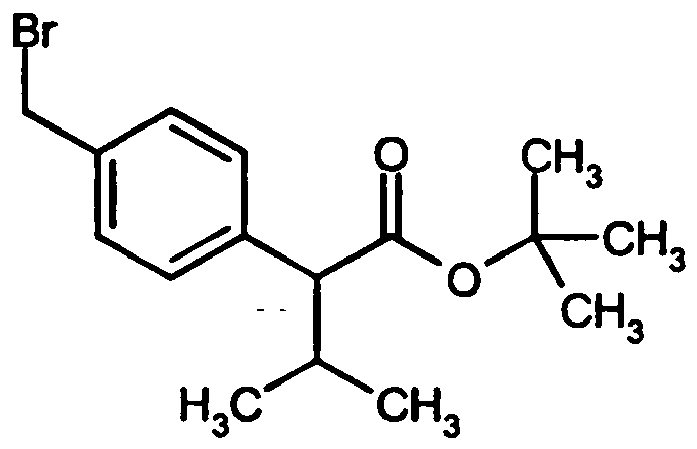
12A tert.-Butyl-2-[4-(brommethyl)phenyl]-4-cyano-3-methylbutanoat 1H-NMR (400 MHz, DMSO-d6, δ/ppm): 7.67-7.26 (4H, m), 4.70 (2H, s), 3.45-3.26 (1H, m), 2.60-2.22 (1H, m), 2.11-1.99 (1H, m), 1.40 und 1.37 (zus. 9H, 2s), 1.15 (2H, d), 0.77 (1H, d).
MS (DCI): m/z = 351/353 (M)+, 369/371 (M+NH4)+.
13A tert.-Butyl-2-[4-(brommethyl)phenyl]-3-methyl-hexanoat MS (DCI): m/z = 372/374 (M+NH4)+. 
14A tert.-Butyl-2-[4-(brommethyl)phenyl]-4-methoxy-3-methylbutanoat MS (DCI): m/z = 357/359 (M+H)+, 318/320 (M-C4H8+NH4)+, 301/303 (M-C4H8)+. 
-

- Eine Suspension von 500 g (3.67 mol) Benzolcarbohydrazid in 3.75 Liter THF wurde auf Rückfluss erhitzt, wobei sich das Benzolcarbohydrazid löste. Zu dieser Lösung wurden 497.7 g (4.41 mol) Chloracetylchlorid, gelöst in 125 ml THF, getropft und die Lösung 30 min unter Rückfluss nachgerührt. Nach vollständiger Umsetzung (DC-Kontrolle, (Laufmittel Dichlormethan/Methanol 9:1) wurde der Ansatz mit 22.5 Liter Wasser und 10 Liter Essigsäureethylester versetzt und mit festem Natriumhydrogencarbonat auf pH 7 eingestellt. Die wässrige Phase wurde einmal mit 2.5 Liter Essigsäureethylester extrahiert. Die vereinigten organischen Phasen wurden getrocknet und die Lösung anschließend im Vakuum bis zur Trockene eingeengt. Der erhaltene weiße Feststoff wurde in einem 1:1-Gemisch aus Dichlormethan und Methanol gelöst und auf 3 kg Kieselgel aufgezogen. An zwei Kieselgel-Portionen (jeweils 8 kg) wurde zunächst mit 50 Liter Dichlormethan/Essigsäureethylester 7:3 und dann mit 125 Liter Dichlormethan/Essigsäureethylester 1:1 als Laufmittel chromatographiert. Nach Einengen der Produktfraktionen wurden 424 g (1.99 mol, 54% d. Th.) der Titelverbindung als weißer Feststoff erhalten.
1H-NMR (400 MHz, DMSO-d6, δ/ppm): 10.56-10.32 (2H, breit), 7.88 (2H, d), 7.58 (1H, t), 7.50 (2H, t), 4.21 (2H, s).
MS (DCI): m/z = 213 (M+H)+, 230 (M+NH4)+. -

- 812 g (3.82 mol) N'-(2-Chloracetyl)benzolcarbohydrazid wurden in 13 Liter trockenem DMF gelöst und mit 384.95 g (4.58 mol) Natriumhydrogencarbonat versetzt. Anschließend wurde die Reaktionslösung auf 100°C erhitzt und über Nacht bei dieser Temperatur gerührt. Nach vollständiger Umsetzung (DC-Kontrolle, Laufmittel Dichlormethan/Essigsäureethylester 9:1) wurde die Reaktionslösung auf Raumtemperatur abgekühlt, auf 65 Liter Wasser gegossen und dreimal mit jeweils 17.5 Liter Essigsäureethylester extrahiert. Die vereinigten organischen Phasen wurden mit 13.8 Liter gesättigter wässriger Natriumhydrogencarbonat-Lösung gewaschen, getrocknet und im Vakuum bis zur Trockene eingeengt. Der erhaltene Feststoff wurde in einem 9:1-Gemisch aus Dichlormethan und Methanol gelöst und auf 17 kg Kieselgel aufgezogen. An zwei Kieselgel-Portionen (jeweils 8 kg) wurde mit 260 Liter Dichlormethan/Essigsäureethylester 9:1 als Laufmittel chromatographiert. Die vereinigten Produktfraktionen wurden eingeengt, und der erhaltene Feststoff wurde mit 3 Liter Diethylether ausgerührt. Nach Filtration wurden 247 g (1.40 mol, 35% d. Th.) der Titelverbindung als weißer Feststoff erhalten.
1H-NMR (400 MHz, DMSO-d6, δ/ppm): 11.04 (1H, s), 7.78 (2H, d), 7.53-7.41 (3H, m), 4.79 (2H, s).
MS (DCI): m/z = 177 (M+H)+. - Auf analoge Weise wurden die in der folgenden Tabelle aufgeführten Verbindungen erhalten:
Beispiel Name / Struktur Analytische Daten 17A 2-(2-Chlorphenyl)-4H-1,3,4-oxadiazin-5(6H)-on LC-MS (Methode 2): Rt = 1.49 min; m/z = 211 (M+H)+. 
18A 2-(2-Methoxyphenyl)-4H-1,3,4-oxadiazin-5(6H)-on LC-MS (Methode 7): Rt = 1.54 min; m/z = 207 (M+H)+. 
-

- In 600 ml trockenem Essigsäureethylester wurden 5.8 g (49.929 mmol) 2,2-Dimethylpropanhydrazid gelöst und auf Rückfluss erhitzt. Zur Lösung wurden 6.767 g (59.915 mmol) Chloracetylchlorid, gelöst in 45 ml trockenem Essigsäureethylester, getropft. Es wurde für 30 min unter Rückfluss nachgerührt. Nach dem Abkühlen wurde das Reaktionsgemisch am Rotationsverdampfer eingeengt und der Rückstand im Hochvakuum getrocknet. Es wurden 10.14 g der Titelverbindung erhalten. Das Rohprodukt wurde ohne weitere Reinigung weiter umgesetzt.
-

- In 800 ml trockenem DMF wurden 8.34 g (43.29 mmol) N'-(Chloracetyl)-2,2-dimethylpropanhydrazid gelöst und mit 4.24 g (50.52 mmol) Natriumhydrogencarbonat versetzt. Das Reaktionsgemisch wurde über Nacht auf 100°C erhitzt. Nach dem Abkühlen wurde das Lösungsmittel am Rotationsverdampfer entfernt, der Rückstand mit Wasser versetzt und mit 1 N Salzsäure angesäuert. Das Gemisch wurde dreimal mit Essigsäureethylester extrahiert, die vereinigten organischen Phasen mit Wasser gewaschen, über Natriumsulfat getrocknet und am Rotationsverdampfer eingeengt. Es wurden 5.05 g der Zielverbindung erhalten. Das Rohprodukt wurde ohne weitere Reinigung weiter umgesetzt.
GC-MS (Methode 3): Rt = 3.81 min; m/z = 156 (M)+. - Auf analoge Weise wurden die in der folgenden Tabelle aufgeführten Verbindungen erhalten:
Beispiel Name / Struktur Analytische Daten 21A 2-(Propan-2-yl)-4H-1,3,4-oxadiazin-5(6H)-on GC-MS (Methode 3): Rt = 3.72 min; m/z = 142 (M)+. 
22A 2-(2-Methylpropyl)-4H-1,3,4-oxadiazin-5(6H)-on GC-MS (Methode 3): Rt = 4.14 min; m/z = 156 (M)+. 
-

- 17.91 g (120.5 mmol) 3-Chlor-5-methylhexan-2-on wurden in 120 ml Methylethylketon gelöst, mit 10.0 g (123.4 mmol) Natriumthiocyanat versetzt und die Reaktionsmischung für 1 h unter Rückfluss erhitzt. Nach dem Abkühlen wurde das Reaktionsgemisch filtriert, der Rückstand mit Methylethylketon gewaschen und die vereinigten Filtrate am Rotationsverdampfer eingeengt. Der ölige Rückstand wurde in ca. 400 ml Dichlormethan aufgenommen und dreimal mit je 100 ml Wasser gewaschen. Die organische Phase wurde über Natriumsulfat getrocknet und das Lösungsmittel am Rotationsverdampfer entfernt. Es wurden 20.07 g des Rohprodukts erhalten, welches als solches weiter umgesetzt wurde.
LC-MS (Methode 13): Rt = 1.99 min; m/z = 171 (M)+. -

- 20.07 g (117.26 mmol) 5-Methyl-2-oxohexan-3-ylthiocyanat wurden mit 25 ml 85%-iger Phosphorsäure versetzt und innerhalb 1 h auf 95°C erhitzt. Bei einer Temperatur von 95-100°C wurde 0.5 h nachgerührt. Nach dem Abkühlen wurde das Reaktionsgemisch auf 40 ml Wasser gegeben und mehrmals mit tert.-Butylmethylether extrahiert. Die vereinigten organischen Phasen wurden mit Wasser gewaschen, über Natriumsulfat getrocknet und am Rotationsverdampfer eingeengt. Es wurden 18.11 g der Zielverbindung erhalten, welche ohne weitere Reinigung weiter umgesetzt wurde.
GC-MS (Methode 3): Rt = 5.80 min; m/z = 171 (M)+. -

- 9.9 g (28.0 mmol) tert.-Butyl-[4-(bronunethyl)phenyl](cyclopentyl)acetat, 5.92 g (33.6 mmol) 2-Phenyl-4H-1,3,4-oxadiazin-5(6H)-on und 13.70 g (42.03 mmol) Cäsiumcarbonat wurden in 100 ml DMF 12 h lang bei 60°C gerührt. Nach dem Abkühlen wurde der Ansatz auf Eiswasser gegeben und mit Diethylether extrahiert. Die organische Phase wurde über Magnesiumsulfat getrocknet und im Vakuum bis zur Trockene eingeengt. Das Rohprodukt wurde über Kieselgel chromatographisch gereinigt (Laufmittel Cyclohexan/Essigsäureethylester 20:1). Es wurden 6.6 g (14.7 mmol, 52% d. Th.) der Titelverbindung erhalten.
- 8.16 g (23.1 mmol) tert.-Butyl-[4-(brommethyl)phenyl](cyclopentyl)acetat, 3.7 g (21 mmol) 2-Phenyl-4H-1,3,4-oxadiazin-5(6H)-on und 7.53 g (23.1 mmol) Cäsiumcarbonat wurden in 147 ml DMF 12 h lang bei Raumtemperatur gerührt. Anschließend wurde die Reaktionslösung mit gesättigter wässriger Natriumhydrogencarbonat-Lösung verrührt und zweimal mit Essigsäureethylester extrahiert. Die vereinigten organischen Phasen wurden über Magnesiumsulfat getrocknet und im Vakuum bis zur Trockene eingeengt. Das erhaltene Rohprodukt wurde über Kieselgel chromatographisch gereinigt (Laufmittel Cyclohexan/Essigsäureethylester 5:1). Es wurden 6.51 g (14.5 mmol, 69% d. Th.) der Titelverbindung erhalten.
1H-NMR (400 MHz, DMSO-d6, δ/ppm): 7.76 (2H, d), 7.55-7.42 (3H, m), 7.31 (4H, s), 4.94 (2H, s), 4.87 (2H, s), 3.19 (1H, d), 2.45-2.31 (1H, m), 1.88-1.74 (1H, m), 1.69-1.46 (3H, m), 1.45-1.15 (3H, m), 1.34 (9H, s), 1.03-0.89 (1H, m).
LC-MS (Methode 7): Rt = 3.27 min; m/z = 449 (M+H)+. - Auf analoge Weise wurden die in der folgenden Tabelle aufgeführten Verbindungen erhalten:
Beispiel Name / Struktur Analytische Daten 26A tert.-Butyl-(4-{[2-(3-chlorphenyl)-5-oxo-5,6-dihydro-4H-1,3,4-oxadiazin-4-yl]methyl}phenyl)(cyclopentyl)acetat LC-MS (Methode 7): Rt = 3.59 min; m/z = 483 (M)+. 
27A tert.-Butyl-(4-{[2-(2-chlorphenyl)-5-oxo-5,6-dihydro-4H-1,3,4-oxadiazin-4-yl]methyl}phenyl)(cyclopentyl)acetat LC-MS (Methode 7): Rt = 3.28 min; m/z = 483 (M)+. 
28A Methyl-(4-([2-(4-chlorphenyl)-5-oxo-5,6-dihydro-4H-l,3,4-oxadiazin-4-yl]methyl)phenyl)(cydopentyl)acetat LC-MS (Methode 7): Rt = 3.29 min; m/z = 441 (M+H)+. 
29A tert.-Butyl-cyclopentyl(4-{[2-(2-methoxyphenyl)-5-oxo-5,6-dihydro-4H-1,3,4-oxadiazin-4-yl]methyl}phenyl)-acetat LC-MS (Methode 2): Rt = 3.09 min; m/z = 479 (M+H)+. 
30A Methyl-cyclopentyl(4-{[2-(4-fluorphenyl)-5-oxo-5,6-dihydro-4H-1,3,4-oxadiazin-4-yl]methyl}phenyl)acetat LC-MS (Methode 7): Rt = 3.16 min; m/z = 425 (M+H)+. 
31A tert.-Butyl-cyclopentyl(4-{[2-(2-methylpropyl)-5-oxo-5,6-dihydro-4H-1,3,4-oxadiazin-4-yl]methyl}phenyl)-acetat LC-MS (Methode 10): Rt = 2.92 min; m/z = 429 (M+H)+. 
32A tert.-Butyl-cyclopentyl{4-[(3,5-dioxo-6-phenyl-2,5-dihydro-1,2,4-triazin-4(3H)-yl)methyl]phenyl}acetat LC-MS (Methode 2): Rt = 3.04 min; m/z = 406 (M-C4H8+H)+. 
33A tert.-Butyl-cyclopentyl{4-[(4-oxo-1,2,3-benzotriazin-3(4H)-yl)methyl]phenyl}acetat 1H-NMR (400 MHz, DMSO-d6, δ/ppm): 8.29-8.11 (2H, m), 8.10 (1H, t), 7.95 (1H, t), 7.37-7.28 (4H, m), 5.58 (2H, s), 3.19 (1H, d), 2.43-2.26 (1H, m), 1.87-1.74 (1H, m), 1.67-1.45 (3H, m), 1.44-1.30 (1H, m), 1.35 (9H, s), 1.30-1.16 (2H, m), 0.99-0.87 (1H, m).
LC-MS (Methode 10): Rt = 2.73 min; m/z = 420 (M+H)+, 442 (M+Na)+.
34A tert.-Butyl-cyclopentyl{4-[(2-oxo-5-phenyl-1,3,4-oxadiazol-3(2H)-yl)methyl]phenyl} acetat LC-MS (Methode 7): Rt = 3.27 min; m/z = 452 (M+NH4)+. 
35A Methyl-cyclopentyl(4-{[4-methyl-5-(2-methylpropyl)-2-oxo-1,3-thiazol-3(2H)-yl]methyl)phenyl)acetat LC-MS (Methode 13): Rt = 2.99 min; m/z = 402 (M+H)+. 
36A Methyl-cyclopentyl(4-{[5-oxo-2-(propan-2-yl)-5,6-dihydro-4H-1,3,4-oxadiazin-4-yl]methyl}phenyl)acetat LC-MS (Methode 7): Rt = 2.86 min; m/z = 373 (M+H)+. 
37A Methyl-{4-[(2-tert.-butyl-5-oxo-5,6-dihydro-4H-1,3,4-oxadiazin-4-yl)methyl]phenyl}(cyclopentyl)acetat LC-MS (Methode 7): Rt = 3.02 min; m/z = 387 (M+H)+. 
38A tert.-Butyl-2-{4-[(2-tert.-butyl-5-oxo-5,6-dihydro-4H 1,3,4-oxadiazin-4-yl)methyl]phenyl}-3-methylbutanoat LC-MS (Methode 11): Rt = 1.69 min; m/z = 403 (M+H)+. 
39A tert.-Butyl-3-methyl-2-{4-[(5-oxo-2-phenyl-5,6-dihydro-4H-1,3,4-oxadiazin-4-yl)methyl]phenyl}butanoat LC-MS (Methode 10): Rt = 2.76 min; m/z = 423 (M+H)+. 
40A tert.-Butyl-5,5,5-trifluor-2-{4-[(5-oxo-2-phenyl-5,6-dihydro-4H-1,3,4-oxadiazin-4-yl)methyl]phenyl}-pentanoat LC-MS (Methode 10): Rt = 2.69 min; m/z = 477 (M+H)+. 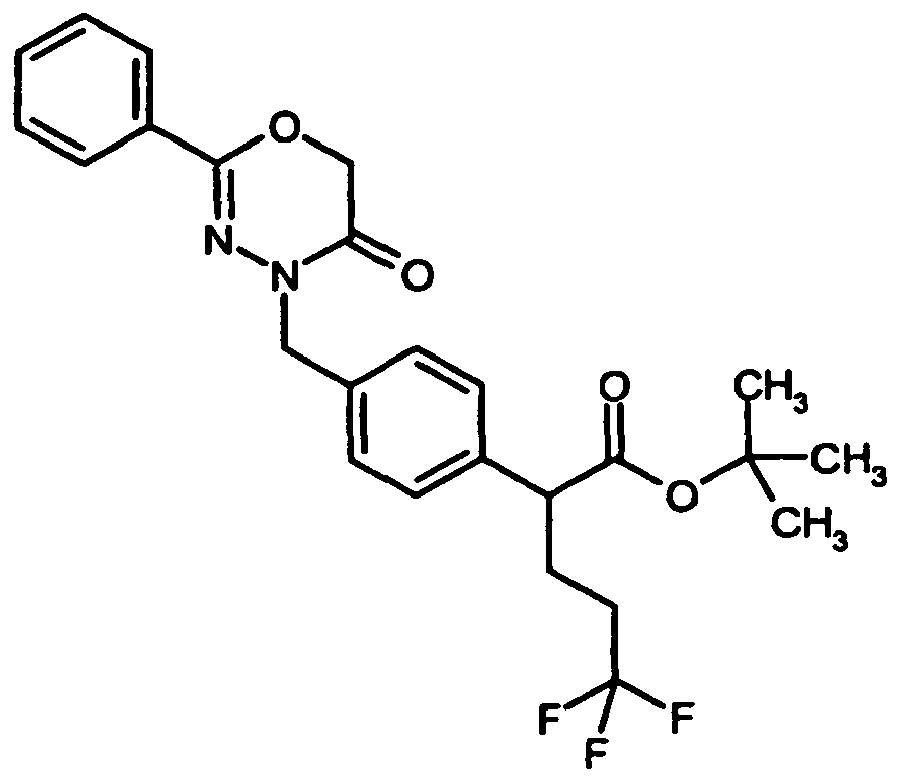
41A tert.-Butyl-3-methyl-2-{4-[(5-oxo-2-phenyl-5,6-dihydro-4H-1,3,4-oxadiazin-4-y1)methyl]phenyl}pentanoat LC-MS (Methode 7): Rt = 3.24 min; m/z = 437 (M+H)+. 
42A tert.-Butyl-3-methyl-2-{4-[(5-oxo-2-phenyl-5,6-dihydro-4H-1,3,4-oxadiazin-4-yl)methyl]phenyl}hexanoat LC-MS (Methode 11): Rt = 1.76 min; m/z = 473 (M+Na)+. 
43A tert.-Butyl-4-cyano-3-methyl-2-{4-[(5-oxo-2-phenyl-5,6-dihydro-4H-1,3,4-oxadiazin-4-yl)methyl]phenyl}butanoat LC-MS (Methode 11): Rt = 1.46 min; m/z = 448 (M+H)+. 
44A tert.-Butyl-4-methoxy-3-methyl-2-{4-[(5-oxo-2-phenyl-5,6-dihydro-4H-1,3,4-oxadiazin-4-yl)methyl]phenyl}-butanoat LC-MS (Methode 10): Rt = 2.62 min; m/z = 475 (M+Na)+. 
-

- Eine Lösung von 500 mg (1.95 mmol) 4-(4-Chlorphenyl)phthalazin-1(2H)-on [CAS Reg.-Nr. 51334-86-2] in 7.6 ml THF wurde bei 0°C portionsweise mit 54 mg (2.14 mmol) Natriumhydrid versetzt. Nach Beendigung der Gasentwicklung wurden 688 mg (1.95 mmol) tert.-Butyl-[4-(brommethyl)phenyl](cyclopentyl)acetat, gelöst in 4.5 ml DMF, langsam bei 0°C zugetropft und die Reaktionslösung dann über Nacht bei Raumtemperatur gerührt. Anschließend wurde das Reaktionsgemisch vorsichtig mit Wasser versetzt. Der Ansatz wurde dreimal mit Essigsäureethylester extrahiert, die vereinigten organischen Phasen mit gesättigter Natriumchlorid-Lösung gewaschen und über Natriumsulfat getrocknet. Nach Filtration wurde das Lösungsmittel im Vakuum bis zur Trockene entfernt. Das erhaltene Rohprodukt wurde durch Flash-Chromatographie an Kieselgel gereinigt (Laufmittel: zunächst Cyclohexan/Essigsäureethylester 3:1, dann Essigsäureethylester). Es wurden 630 mg (93% Reinheit, 1.11 mmol, 57% d. Th.) eines farblosen Feststoffs erhalten.
1H-NMR (400 MHz, DMSO-d6, δ/ppm): 8.43-8.35 (1H, m), 7.98-7.88 (2H, m), 7.74-7.68 (1H, m), 7.57-7.49 (4H, m), 7.37-7.25 (4H, m), 5.37 (2H, s), 3.18 (1H, d), 2.42-2.29 (1H, m), 1.86-1.72 (1H, m), 1.68-1.45 (3H, m), 1.44-1.30 (1H, m), 1.38 (9H, s), 1.29-1.15 (2H, m), 1.00-0.86 (1H, m).
LC-MS (Methode 2): Rt = 3.45 min; m/z = 529 (M+H)+. - Auf analoge Weise wurden die in der folgenden Tabelle aufgeführten Verbindungen erhalten:
Beispiel Name / Struktur Analytische Daten 46A tert.-Butyl-cyclopentyl{4-[(3-methyl-2-oxo-imidazolidin-1-yl)methyl]phenyl} acetat 1H-NMR (400 MHz, DMSO-d6, δ/ppm): 7.28 (2H, d), 7.16 (2H, d), 4.23 (2H, s), 3.24 (2H, t), 3.17 (1H, d), 3.12 (2H, t), 2.44-2.30 (1H, m), 1.87-1.74 (1H, m), 1.67-1.45 (3H, m), 1.44-1.31 (1H, m), 1.35 (9H, s), 1.30-1.17 (2H, m), 1.01-0.90 (1H, m).
MS (DCI): m/z = 373 (M+H)+.
47A tert.-Butyl-(4-{[3-(3-chlorphenyl)-2-oxoimidazolidin-1-yl]methyl}phenyl)(cyclopentyl)acetat 1H-NMR (400 MHz, DMSO-d6, δ/ppm): 7.81 (1H, t), 7.44 (1H, d), 7.35 (1H, d), 7.31 (2H, d), 7.24 (2H, d), 7.05 (1H, d), 4.37 (2H, s), 3.83 (2H, t), 3.37 (2H, t), 3.19 (1H, d), 2.45-2.31 (1H, m), 1.88-1.76 (1H, m), 1.69-1.46 (3H, m), 1.45-1.32 (1H, m), 1.36 (9H, s), 1.31-1.17 (2H, m), 1.01-0.90 (1H, m).
LC-MS (Methode 11): Rt = 1.75 min; m/z = 413 (M-C4H8)+.
48A tert.-Butyl-cyclopentyl(4-{[(4S,5R)-4-methyl-2-oxo-5-phenyl-1,3-oxazolidin-3-yl]methyl}phenyl)acetat LC-MS (Methode 2): Rt = 3.14 min; m/z = 899 (2M+H)+. 
49A tert.-Butyl-cyclopentyl(4-{[(4R,5S)-4-methyl-2-oxo-5-phenyl-1,3-oxazolidin-3-yl]methyl}phenyl)acetat LC-MS (Methode 2): Rt = 3.14 min; m/z = 899 (2M+H)+. 
50A tert.-Butyl-cyclopentyl{4-[(5-methyl-2-oxo-5-phenylpiperidin-1-yl)methyl]phenyl}acetat LC-MS (Methode 7): Rt = 3.35 min; m/z = 923 (2M+H)+. 
-

- Eine Lösung von 6.6 g (14.7 mmol) t ert.-Butyl-cyclopentyl{4-[(5-oxo-2-phenyl-5,6-dihydro-4H 1,3,4-oxadiazin-4-yl)methyl]phenyl}acetat in 90 ml Dichlormethan wurde bei Raumtemperatur langsam mit 22.67 ml (294.3 mmol) Trifluoressigsäure versetzt und die Mischung über Nacht gerührt. Danach wurde das Lösungsmittel im Vakuum entfernt, der Rückstand in 100 ml Essigsäureethylester aufgenommen und mit 50 ml Wasser ausgeschüttelt. Die organische Phase wurde über Magnesiumsulfat getrocknet. Nach Filtration wurde das Lösungsmittel im Vakuum entfernt. Es wurden 4.8 g (12.23 mmol, 83% d. Th.) eines farblosen Feststoffs erhalten.
1H-NMR (400 MHz, DMSO-d6, δ/ppm): 12.35-12.15 (1H, breites s), 7.78 (2H, d), 7.54-7.40 (3H, m), 7.29 (4H, s), 4.91 (2H, s), 4.83 (2H, s), 3.22 (1H, d), 2.48-2.35 (1H, m), 1.89-1.76 (1H, m), 1.68-1.46 (3H, m), 1.45-1.32 (1H, m), 1.32-1.14 (2H, m), 1.01-0.89 (1H, m).
LC-MS (Methode 7): Rt = 2.75 min; m/z = 393 (M+H)+. - Auf analoge Weise wurden die in der folgenden Tabelle aufgeführten Verbindungen erhalten:
Beispiel Name / Struktur Analytische Daten 52A (4-{[2-(3-Chlorphenyl)-5-oxo-5,6-dihydro-4H-1,3,4-oxadiazin-4-yl]methyl}phenyl)(cyclopentyl)essigsäure LC-MS (Methode 7): Rt = 2.78 min; m/z = 427 (M+H)+. 
53A (4-{[2-(2-Chlorphenyl)-5-oxo-5,6-dihydro-4H-1,3,4-oxadiazin-4-yl]methyl}phenyl)(cyclopentyl)essigsäure LC-MS (Methode 7): Rt = 2.74 min; m/z = 427 (M+H)+. 
54A Cyclopentyl(4-{[2-(2-methoxyphenyl)-5-oxo-5,6-dihydro-4H-1,3,4-oxadiazin-4-yl]methyl}phenyl)-essigsäure LC-MS (Methode 7): Rt = 2.66 min; m/z = 423 (M+H)+. 
55A Cyclopentyl {4-[(3,5-dioxo-6-phenyl-2,5-dihydro-1,2,4-triazin-4(3H)-yl)methyl]phenyl}essigsäure LC-MS (Methode 2): Rt = 2.28 min; m/z = 811 (2M+H)+. 
56A Cyclopentyl {4-[(4-oxo-1,2,3-benzotriazin-3(4H)-yl)-methyl]phenyl} essigsäure 1H-NMR (400 MHz, DMSO-d6, δ/ppm): 12.6-11.8 (1H, breites s), 8.28-8.21 (2H, m), 8.10 (1H, t), 7.94 (1H, t), 7.36-7.28 (4H, m), 5.57 (2H, s), 3.21 (1H, d), 2.48-2.35 (1H, m), 1.87-1.77 (1H, m), 1.66-1.45 (3H, m), 1.45-1.33 (1H, m), 1.31-1.16 (2H, m), 0.98-0.86 (1H, m).
LC-MS (Methode 7): Rt = 2.45 min; m/z = 364 (M+H)+.
57A Cyclopentyl {4-[(2-oxo-5-phenyl-1,3,4-oxadiazol-3(2H)-yl)methyl]phenyl} essigsäure 1H-NMR (400 MHz, DMSO-d6, δ/ppm): 12.6-11.9 (1H, breites s), 7.78 (2H, d), 7.62-7.48 (3H, m), 7.39-7.25 (4H, m), 4.95 (2H, s), 3.24 (1H, d), 2.48-2.36 (1H, m), 1.90-1.76 (1H, m), 1.67-1.47 (3H, m), 1.47-1.35 (1H, m), 1.33-1.17 (2H, m), 1.02-0.88 (1H, m).
LC-MS (Methode 7): Rt = 2.64 min; m/z = 379 (M+H)+.
58A 2-{4-[(2-tert.-Butyl-5-oxo-5,6-dihydro-4H-1,3,4-oxadiazin-4-yl)methyl]phenyl}-3-methylbutansäure LC-MS (Methode 7): Rt = 2.53 min; m/z = 347 (M+H)+. 
59A 3-Methyl-2-{4-[(5-oxo-2-phenyl-5,6-dihydro-4H-1,3,4-oxadiazin-4-yl)methyl]phenyl}butansäure 1H-NMR (400 MHz, DMSO-d6, δ/ppm): 12.28 (1H, s), 7.76 (2H, d), 7.54-7.40 (3H, m), 7.38-7.24 (4H, m), 4.91 (2H, s), 4.86 (2H, s), 3.09 (1H, d), 2.26-2.11 (1H, m), 0.98 (3H, d), 0.61 (3H, d).
LC-MS (Methode 7): Rt = 2.60 min; m/z = 367 (M+H)+.
60A 5,5,5-Trifluor-2-{4-[(5-oxo-2-phenyl-5,6-dihydro-4H 1,3,4-oxadiazin-4-yl)methyl]phenyl}pentansäure 1H-NMR (400 MHz, DMSO-d6, δ/ppm): 13.0-12.0 (1H, breites s), 7.77 (2H, d), 7.55-7.41 (3H, m), 7.35 (2H, d), 7.26 (2H, d), 4.92 (2H, s), 4.87 (2H, s), 3.67-3.53 (1H, m), 2.31-1.95 (3H, m), 1.89-1.74 (1H, m).
LC-MS (Methode 7): Rt = 2.47 min; m/z = 421 (M+H)+.
61A 3-Methyl-2-{4-[(5-oxo-2-phenyl-5,6-dihydro-4H-1,3,4-oxadiazin-4-yl)methyl]phenyl}pentansäure LC-MS (Methode 10): Rt = 2.15 min; m/z = 381 (M+H)+. 
62A 3-Methyl-2-{4-[(5-oxo-2-phenyl-5,6-dihydro-4H-1,3,4-oxadiazin-4-yl)methyl]phenyl}hexansäure LC-MS (Methode 12): Rt = 2.52 min; m/z = 395 (M+H)+. 
63A 4-Cyano-3-methyl-2-{4-[(5-oxo-2-phenyl-5,6-dihydro-4H-1,3,4-oxadiazin-4-yl)methyl]phenyl}butansäure LC-MS (Methode 11): Rt = 1.13 min; m/z = 392 (M+H)+. 
64A 4-Methoxy-3-methyl-2-{4-[(5-oxo-2-phenyl-5,6-dihydro-4H-1,3,4-oxadiazin-4-yl)methyl]phenyl}-butansäure LC-MS (Methode 7): Rt = 2.26 min; m/z = 397 (M+H)+. 
65A (4-{[4-(4-Chlorphenyl)-1-oxophthalazin-2(1H)-yl]-methyl}phenyl)(cyclopentyl)essigsäure LC-MS (Methode 2): Rt = 2.89 min; m/z = 473 (M+H)+. 
66A Cyclopentyl{4-[(3-methyl-2-oxoimidazolidin-1-yl)-methyl]phenyl}essigsäure 1H-NMR (400 MHz, DMSO-d6, δ/ppm): 12.23 (1H, s), 7.28 (2H, d), 7.18 (2H, d), 4.22 (2H, s), 3.28-3.17 (3H, m), 3.11 (2H, t), 2.47-2.35 (1H, m), 1.89-1.77 (1H, m), 1.69-1.48 (3H, m), 1.48-1.34 (1H, m), 1.33-1.15 (2H, m), 1.00-0.88 (1H, m).
MS (DCI): m/z = 317 (M+H)+.
67A (4-{[3-(3-Chlorphenyl)-2-oxoimidazolidin-1-yl]-methyl}phenyl)(cyclopentyl)essigsäure 1H-NMR (400 MHz, DMSO-d6, δ/ppm): 12.5-11.9 (1H, breites s), 7.81 (1H, s), 7.44 (1H, d), 7.38-7.28 (3H, m), 7.25 (2H, d), 7.04 (1H, d), 4.37 (2H, s), 3.81 (2H, t), 3.37 (2H, t), 3.22 (1H, d), 2.48-2.37 (1H, m), 1.89-1.76 (1H, m), 1.68-1.47 (3H, m), 1.47-1.34 (1H, m), 1.33-1.15 (2H, m), 1.01-0.88 (1H, m).
LC-MS (Methode 7): Rt = 2.72 min; m/z = 429/ 431 (M+NH4)+.
68A Cyclopentyl(4-{[(4S,5R)-4-methyl-2-oxo-5-phenyl-1,3-oxazolidin-3-yl]methyl}phenyl)essigsäure LC-MS (Methode 2): Rt = 2.38 min; m/z = 787 (2M+H)+. 
69A Cyclopentyl(4-{[(4R,5S)-4-methyl-2-oxo-5-phenyl-1,3-oxazolidin-3-yl]methyl}phenyl)essigsäure LC-MS (Methode 2): Rt = 2.38 min; m/z = 787 (2M+H)+. 
) 70A Cyclopentyl{4-[(5-methyl-2-oxo-5-phenylpiperidin-1-yl)methyl]phenyl} essigsäure LC-MS (Methode 7): Rt = 2.66 min; m/z = 406 (M+H)+. 
-

- 1.01 g (2.515 mmol) Cyclopentyl(4-{[4-methyl-5-(2-methylpropyl)-2-oxo-1,3-thiazol-3(2H)-yl]-methyl}phenyl)essigsäuremethylester wurden in 30 ml THF gelöst und mit 10 ml Methanol sowie 10 ml 1 N Natronlauge versetzt. Die Reaktionslösung wurde 2 Tage bei Raumtemperatur gerührt. Es wurden danach weitere 5 ml 1 N Natronlauge hinzugefügt und nochmals 2 Tage bei RT gerührt. Es wurden dann 20 ml 1 N Salzsäure zugegeben, und die Reaktionsmischung wurde dreimal mit Essigsäureethylester extrahiert. Die vereinigten organischen Phasen wurden über Natriumsulfat getrocknet und das Lösungsmittel am Rotationsverdampfer entfernt. Es wurden 956 mg (2.47 mmol, 98% d. Th.) der Zielverbindung erhalten.
LC-MS (Methode 7): Rt = 2.95 min; m/z = 775.4 (2M+H)+. -

- Eine Lösung von 450 mg (1.02 mmol) Methyl-(4-{[2-(4-chlorphenyl)-5-oxo-5,6-dihydro-4H-1,3,4-oxadiazin-4-yl]methyl}phenyl)(cyclopentyl)acetat in 10 ml Dioxan und 10 ml Wasser wurde mit 86 mg (2.04 mmol) Lithiumhydroxid-Monohydrat versetzt und 12 h bei 80°C gerührt. Nach Entfernen des Dioxans im Vakuum wurde die wässrige Phase mit 1 M Salzsäure auf pH 2 gestellt, wobei das Produkt flockig ausfiel. Die Lösung wurde filtriert und der Filter-Rückstand im Vakuum getrocknet. Es wurden 373 mg (0.87 mmol, 86% d. Th.) der Titelverbindung als weißer Feststoff erhalten.
LC-MS (Methode 13): Rt = 2.67 min; m/z = 427 (M+H)+. - Auf zu Beispiel 71A und 72A analoge Weise wurden die in der folgenden Tabelle aufgeführten Verbindungen erhalten:
Beispiel Name / Struktur Analytische Daten 73A Cyclopentyl(4-{[5-oxo-2-(propan-2-yl)-5,6-dihydro-4H-1,3,4-oxadiazin-4-yl]methyl}phenyl)essigsäure LC-MS (Methode 7): Rt = 2.52 min; m/z = 359 (M+H)+. 
74A {4-[(2-tert.-Butyl-5-oxo-5,6-dihydro-4H-1,3,4-oxadiazin-4-yl)methyl]phenyl}(cyclopentyl)essigsäure LC-MS (Methode 7): Rt = 2.70 min; m/z = 373 (M+H)+. 
75A Cyclopentyl(4-{[2-(4-fluorphenyl)-5-oxo-5,6-dihydro-4H-1,3,4-oxadiazin-4-yl]methyl}phenyl)essigsäure LC-MS (Methode 13): Rt = 2.53 min; m/z = 411 (M+H)+. 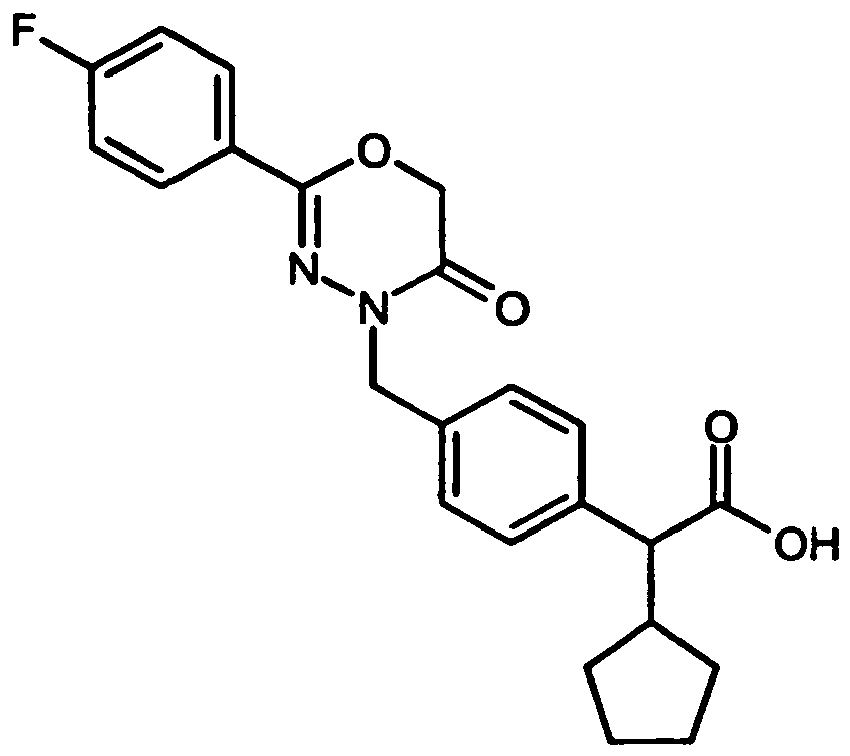
-

- 75 g (191.1 mmol) racemische Cyclopentyl{4-[(5-oxo-2-phenyl-5,6-dihydro-4H-1,3,4-oxadiazin-4-yl)methyl]phenyl}essigsäure (Beispiel 51A) wurden mittels präparativer HPLC an chiraler Phase in die Enantiomere aufgetrennt [Säule: chirale Kieselgel-Phase basierend auf dem Selektor Poly-(N-methacryloyl-L-isoleucin-3-pentylamid), 430 mm x 40 mm; Elutionsmittel: Isohexan/ Ethylacetat 1:1 (v/v); Fluss: 50 ml/min; Temperatur: 24°C; UV-Detektion: 270 nm]:
- Ausbeute: 35 g
LC-MS (Methode 7): Rt = 2.75 min; m/z = 393 (M+H)+
Rt 5.73 min; Reinheit >99%; >99% ee
[Säule: chirale Kieselgel-Phase basierend auf dem Selektor Poly(N-methacryloyl-L-isoleucin-3-pentylamid), 250 mm x 4.6 mm; Elutionsmittel: Isohexan/Ethylacetat 1:1 (v/v); Fluss: 2 ml/min; Temperatur: 24°C; UV-Detektion: 270 nm]. - Ausbeute: 32 g
1H-NMR (400 MHz, DMSO-d6, δ/ppm): 12.35-12.15 (1H, breites s), 7.78 (2H, d), 7.54-7.40 (3H, m), 7.29 (4H, s), 4.91 (2H, s), 4.83 (2H, s), 3.22 (1H, d), 2.48-2.35 (1H, m), 1.89-1.76 (1H, m), 1.68-1.46 (3H, m), 1.45-1.32 (1H, m), 1.32-1.14 (2H, m), 1.01-0.89 (1H, m).
LC-MS (Methode 7): Rt = 2.75 min; m/z = 393 (M+H)+
Rt 6.86 min; Reinheit >99%; >99% ee
[Säule: chirale Kieselgel-Phase basierend auf dem Selektor Poly(N-methacryloyl-L-isoleucin-3-pentylamid), 250 mm x 4.6 mm; Elutionsmittel: Isohexan/Ethylacetat 1:1 (v/v); Fluss: 2 ml/min;
Temperatur: 24°C; UV-Detektion: 270 nm]. -
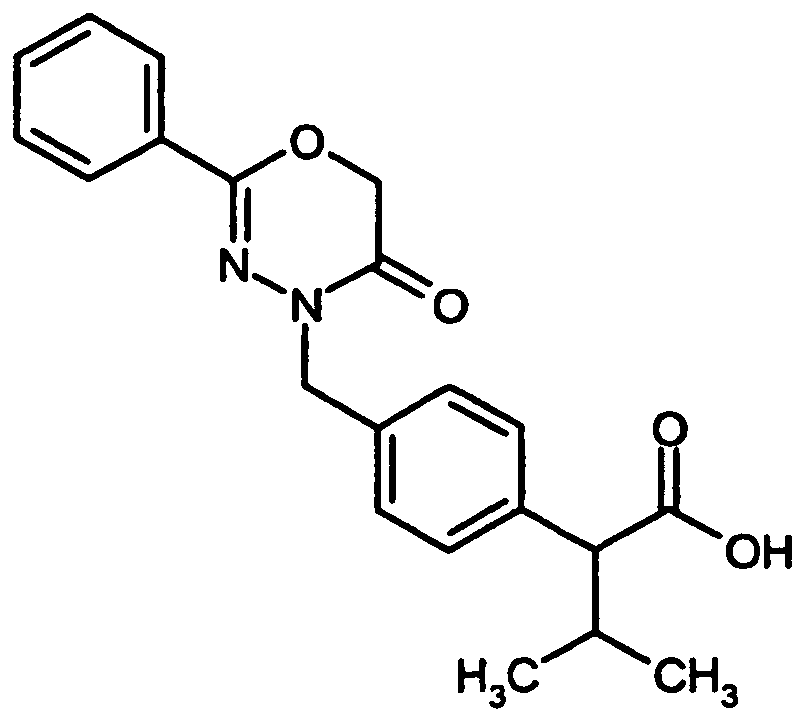
- 3 g (8.19 mmol) racemische 3-Methyl-2-{4-[(5-oxo-2-phenyl-5,6-dihydro-4H-1,3,4-oxadiazin-4-yl)methyl]phenyl}butansäure (Beispiel 59A) wurden mittels präparativer HPLC an chiraler Phase in die Enantiomere aufgetrennt [Säule: Daicel Chiralpak AD-H, 5 µm, 250 mm x 20 mm; Elutionsmittel: Isohexan/(Isopropanol + 0.2% Trifluoressigsäure + 1% Wasser) 50:50 (v/v); Fluss: 15 ml/min; Temperatur: 40°C; UV-Detektion: 220 nm]:
- Rt 4.58 min; Reinheit >99%; >99% ee (Säule s.o.)
Ausbeute: 1.23 g
LC-MS (Methode 11): Rt = 1.26 min; m/z = 367 (M+H)+. - Rt 7.34 min; Reinheit >99%; >99% ee (Säule s.o.)
Ausbeute: 1.32 g
1H-NMR (400 MHz, DMSO-d6, δ/ppm): 12.5-12.0 (1H, breites s), 7.77 (2H, d), 7.55-7.40 (3H, m), 7.38-7.23 (4H, m), 4.91 (2H, s), 4.85 (2H, s), 3.09 (1H, d), 2.27-2.11 (1H, m), 0.99 (3H, d), 0.61 (3H, d).
LC-MS (Methode 11): Rt = 1.25 min; m/z = 367 (M+H)+. -

- 8.9 g (22.68 mmol) rac-Cyclopentyl{4-[(5-oxo-2-phenyl-5,6-dihydro-4H-1,3,4-oxadiazin-4-yl)-methyl]phenyl}essigsäure wurden mit 63.6 ml (871.5 mmol) Thionylchlorid 2 h bei Raumtemperatur gerührt. Die Reaktionslösung wurde anschließend auf 50°C erwärmt und weitere 2 h nachgerührt. Nach vollständiger Umsetzung wurde die Reaktionslösung im Vakuum vom Thionylchlorid befreit. Es wurden 7.7 g (18.74 mmol, 82% d. Th.) der Titelverbindung als farbloses Öl erhalten, welches ohne weitere Reinigung in Folgereaktionen eingesetzt wurde.
1H-NMR (400 MHz, DMSO-d6, δ/ppm): 7.76 (2H, d), 7.58-7.36 (3H, m), 7.30 (4H, s), 4.91 (2H, s), 4.82 (2H, s), 3.21 (1H, d), 2.48-2.29 (1H, m), 1.89-1.76 (1H, m), 1.68-1.45 (3H, m), 1.45-1.32 (1H, m), 1.32-1.15 (2H, m), 1.01-0.87 (1H, m).
MS (ESI): m/z = 411 (M+H)+. - Auf analoge Weise wurden die in der folgenden Tabelle aufgeführten Verbindungen erhalten:
Beispiel Name / Struktur Analytische Daten 81A ent-Cyclopentyl{4-[(5-oxo-2-phenyl-5,6-dihydro-4H-1,3,4-oxadiazin-4-yl)methyl]phenyl}acetylchlorid (Enantiomer 1; aus Beispiel 77A) siehe Beispiel 80A 
82A Cyclopentyl(4-{[5-oxo-2-(propan-2-yl)-5,6-dihydro-4H-1,3,4-oxadiazin-4-yl]methyl}phenyl)acetylchlorid 
83A {4-[(2-tert.-Butyl-5-oxo-5,6-dihydro-4H-1,3,4-oxadiazin-4-yl)methyl]phenyl}(cyclopentyl)acetylchlorid 
84A Cyclopentyl(4-{[4-methyl-5-(2-methylpropyl)-2-oxo-1,3-thiazol-3(2H)-yl]methyl}phenyl)acetylchlorid LC-MS (Methode 11): Rt = 1.45 min; m/z = 388 (M-Cl+H2O)+. 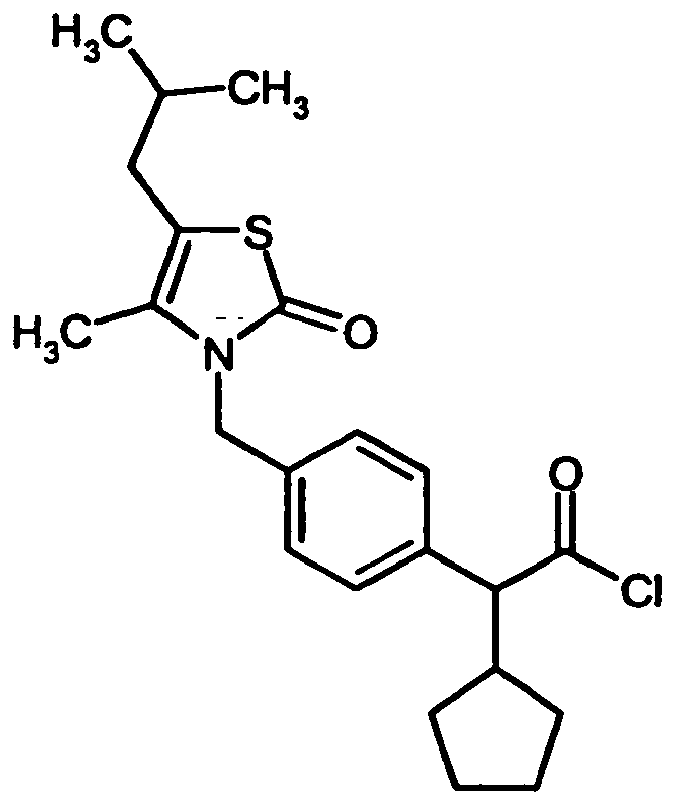
-
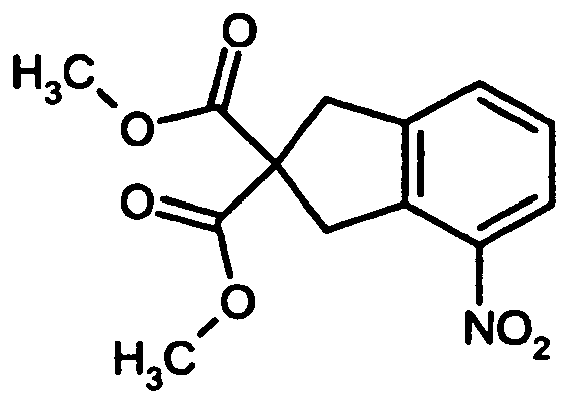
- Eine Lösung von 126.79 g (0.96 mol) Malonsäuredimethylester, 296.5 g (0.96 mol) 1,2-Bis(brommethyl)-3-nitrobenzol und 530.5 g (3.84 mol) Kaliumcarbonat in 5.9 Liter Acetonitril wurde über Nacht unter Rückfluss gerührt (DC-Kontrolle: Laufmittel Petrolether/Dichlormethan 7:3 zur Identifizierung des Eduktes 1,2-Bis(brommethyl)-3-nitrobenzol, Dichlormethan/Petrolether 7:3 zur Identifizierung des Produktes). Nach Abkühlen auf Raumtemperatur und Filtration wurde das Lösungsmittel im Vakuum bis zur Trockene entfernt. Der Rückstand wurde in 2 Liter Essigsäureethylester aufgenommen und einmal mit 500 ml gesättigter Natriumchlorid-Lösung gewaschen und über Natriumsulfat getrocknet. Nach Filtration wurde das Lösungsmittel im Vakuum bis zur Trockene entfernt. Das erhaltene Rohprodukt wurde durch Flash-Chromatographie an 10 kg Kieselgel gereinigt (Laufmittel Dichlormethan/Petrolether 7:3 → 9:1). Es wurden 191 g (0.63 mol, Reinheit 93%, 66% d. Th.) eines farblosen Feststoffs erhalten.
1H-NMR (400 MHz, CDCl3, δ/ppm): 8.04 (1H, d), 7.51 (1H, d), 7.37 (1H, t), 4.11 (2H, s), 3.78 (6H, s), 3.68 (2H, s).
MS (DCI, NH3): m/z = 297 (M+NH4)+. -

- Eine Lösung von 190 g (0.68 mol) Dimethyl-4-nitro-1,3-dihydro-2H-inden-2,2-dicarboxylat in 1520 ml Dioxan wurde bei Raumtemperatur mit 1520 ml 2 N Natronlauge versetzt und anschließend zwei Stunden bei 50°C gerührt. Nach vollständigem Umsatz (DC-Kontrolle: Laufmittel Dichlormethan/Petrolether 8:2) wurde die Reaktionslösung langsam mit konzentrierter Salzsäure auf pH 1 eingestellt und über Nacht unter Rückfluss gerührt. Die Reaktionslösung wurde dann mit 3.4 Liter Wasser versetzt und dreimal mit jeweils 3.4 Liter Essigsäureethylester extrahiert. Die vereinigten organischen Phasen wurden mit gesättigter Natriumchlorid-Lösung gewaschen und über Natriumsulfat getrocknet. Nach Filtration wurde das Lösungsmittel im Vakuum bis zur Trockene entfernt. Das erhaltene Rohprodukt wurde durch Flash-Chromatographie an 5 kg Kieselgel gereinigt (Laufmittel Dichlormethan/Methanol 95:5). Es wurden 75 g (0.35 mol, 97% Reinheit, 51% d. Th.) eines farblosen Feststoffs erhalten.
1H-NMR (400 MHz, DMSO-d6, δ/ppm): 12.6-12.35 (1H, breites s), 7.99 (1H, d), 7.67 (1H, d), 7.46 (1H, t), 3.68-3.47 (3H, m), 3.44-3.17 (2H, m).
MS (DCI, NH3): m/z = 225 (M+NH4)+. -
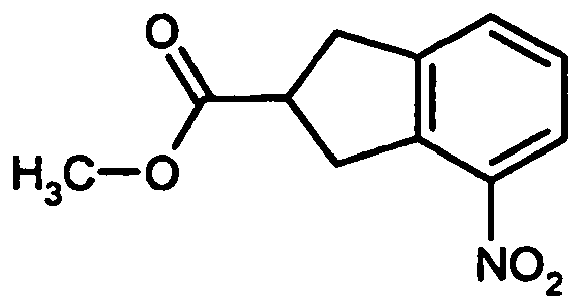
- In 538 ml Methanol wurden 52.8 ml (0.72 mol) Thionylchlorid bei -10°C langsam eingetropft und 10 min bei dieser Temperatur nachgerührt. Anschließend wurden 75 g (0.36 mol) 4-Nitro-2,3-di-hydro-1H-inden-2-carbonsäure in einer Portion zugegeben und die Mischung drei Stunden bei Raumtemperatur gerührt. Nach Beendigung der Reaktion (DC-Kontrolle: Laufmittel Dichlormethan/Methanol 95:5) wurde das Lösungsmittel im Vakuum abgezogen. Der erhaltene Rückstand wurde in Essigsäureethylester gelöst, einmal mit gesättigter Natriumhydrogencarbonat-Lösung gewaschen und über Natriumsulfat getrocknet. Nach Filtration wurde das Lösungsmittel im Vakuum bis zur Trockene entfernt. Das erhaltene Rohprodukt wurde durch Flash-Chromatographie an 2.2 kg Kieselgel gereinigt (Laufmittel Petrolether/Essigsäureethylester 8:2). Es wurden 75 g (0.34 mol, 94% d. Th.) eines farblosen Feststoffs erhalten.
1H-NMR (400 MHz, DMSO-d6, δ/ppm): 7.99 (1H, d), 7.67 (1H, d), 7.47 (1H, t), 3.74-3.43 (3H, m), 3.65 (3H, s), 3.38-3.18 (2H, m).
MS (DCI, NH3): m/z = 239 (M+NH4)+. -

- Eine Lösung von 82 g (0.37 mol) Methyl-4-nitro-2,3-dihydro-1H-inden-2-carboxylat in 800 ml Essigsäureethylester wurde bei Raumtemperatur mit 3 g Palladium auf Kohle (10%) versetzt und 22 Stunden unter Normaldruck hydriert. Nach vollständiger Umsetzung (DC-Kontrolle: Laufmittel Dichlormethan/Methanol 95:5) wurde die Reaktionslösung über Kieselgur filtriert und das Filtrat im Vakuum eingeengt. Es wurden 67.5 g (0.35 mol, 95% d. Th.) eines farblosen Feststoffs erhalten.
1H-NMR (400 MHz, DMSO-d6, δ/ppm): 6.83 (1H, t), 6.39 (2H, t), 4.88 (2H, s), 3.64 (3H, s), 3.38-3.27 (1H, m), 3.12-2.80 (4H, m).
MS (DCI, NH3): m/z = 209 (M+NH4)+, 192 (M+H)+. -

- 67.5 g (0.35 mmol) racemisches Methyl-4-amino-2,3-dihydro-1H-inden-2-carboxylat (Beispiel 88A) wurden mittels präparativer HPLC an chiraler Phase in die Enantiomere aufgetrennt [Säule: Daicel Chiralpak OJ-H, 250 mm x 20 mm; Elutionsmittel: Isohexan/Isopropanol/Methanol 70:18:12 (v/v); Fluss: 25 ml/min; Temperatur: 24°C; UV-Detektion: 260 nm]:
- Rt 11.76 min; Reinheit >99%; >99.5% ee (Säule s.o.)
Ausbeute: 23.1 g
1H-NMR (400 MHz, DMSO-d6, δ/ppm): 6.83 (1H, t), 6.39 (2H, t), 4.88 (2H, s), 3.64 (3H, s), 3.38-3.27 (1H, m), 3.12-2.80 (4H, m).
MS (DCI, NH3): m/z = 209 (M+NH4)+, 192 (M+H)+. - Rt 12.65 min; Reinheit >99%; >99% ee (Säule s.o.)
Ausbeute: 30 g. -

- Eine Lösung von 0.95 ml Diisopropylamin (6.75 mmol) in 30 ml THF wurde bei -78°C mit 2.7 ml einer 2.5 M Lösung von n-Butyllithium in Hexan versetzt und anschließend kurz auf -10°C erwärmt. Nach erneutem Abkühlen auf -78°C wurden 1.24 g (5.63 mmol) Ethyl-4-methoxy-2,3-dihydro-1H-inden-2-carboxylat [Beilstein Reg.-Nr. 8980172], gelöst in 10 ml THF, zugetropft und die Lösung eine Stunde nachgerührt. Danach wurden 0.46 ml (7.32 mmol) Iodmethan zu der Reaktionslösung getropft und der Ansatz weitere 2 Stunden bei -78°C gerührt. Nach vollständiger Umsetzung wurde die Reaktionsmischung zügig mit gesättigter wässriger Ammoniumchlorid-Lösung versetzt. Nach Trennung der Phasen wurde die wässrige Phase dreimal mit Essigsäureethylester extrahiert und die vereinigten organischen Phasen über Magnesiumsulfat getrocknet. Nach Filtration wurde das Lösungsmittel im Vakuum bis zur Trockene entfernt. Das erhaltene Rohprodukt wurde durch Flash-Chromatographie an Kieselgel gereinigt (Laufmittel Cyclohexan/Essigsäureethylester 10:1). Es wurden 1.19 g (5.08 mmol, 90% d. Th.) eines farblosen Feststoffs erhalten.
LC-MS (Methode 7): Rt = 2.60 min; m/z = 235 (M+H)+. -

- Eine Lösung von 1.19 g (5.08 mmol) Ethyl-4-methoxy-2-methyl-2,3-dihydro-1H-inden-2-carboxylat in 20 ml Dichlormethan wurde bei 0°C mit 15.2 ml (15.24 mmol) einer 1 M Lösung von Bortribromid in Dichlormethan versetzt. Man ließ eine Stunde bei 0°C weiter rühren. Dann wurden 16 ml Methanol zugefügt und der Ansatz über Nacht nachgerührt. Anschließend wurden 10 ml Wasser und 10 ml Dichlormethan zugegeben. Nach Trennung der Phasen wurde die wässrige Phase dreimal mit Dichlormethan extrahiert und die vereinigten organischen Phasen über Magnesiumsulfat getrocknet. Nach Filtration wurde das Lösungsmittel im Vakuum bis zur Trockene eingeengt. Es wurden 897 mg (4.35 mmol, 86% d. Th.) eines farblosen Öls erhalten.
LC-MS (Methode 12): Rt = 1.83 min; m/z = 207 (M+H)+. -

- Zu einer Lösung von 897 mg (4.35 mmol) Methyl-4-hydroxy-2-methyl-2,3-dihydro-1H-inden-2-carboxylat in 20 ml Pyridin wurden bei -15°C 1.5 ml (8.7 mmol) Trifluormethansulfonsäureanhydrid langsam zugetropft. Nach Erwärmen auf Raumtemperatur wurde der Ansatz 2 h nachgerührt. Danach wurden 20 ml Wasser zugegeben, und nach Trennung der Phasen wurde die wässrige Phase dreimal mit Essigsäureethylester extrahiert. Die vereinigten organischen Phasen wurden mit gesättigter Natriumchlorid-Lösung gewaschen und über Natriumsulfat getrocknet. Nach Filtration wurde das Lösungsmittel im Vakuum bis zur Trockene entfernt. Das erhaltene Rohprodukt wurde durch Flash-Chromatographie an Kieselgel gereinigt (Laufmittel Cyclohexan/Essigsäureethylester 10:1). Es wurden 1100 mg (3.25 mmol, 75% d. Th.) eines farblosen Öls erhalten.
LC-MS (Methode 7): Rt = 2.76 min; m/z = 339 (M+H)+. -

- Unter Argon wurde eine Lösung von 1 g (2.96 mmol) Methyl-2-methyl-4-{[(trifluormethyl)sulfonyl]oxy}-2,3-dihydro-1H-inden-2-carboxylat, 290 µl (2.66 mmol) Benzylamin, 2.41 g (7.29 mmol) Cäsiumcarbonat, 56 mg (0.12 mmol) 2-Dicyclohexylphosphino-2',4',6'-triisopropylbiphenyl und 54 mg (0.059 mmol) Tris(dibenzylidenaceton)dipalladium in 50 ml Dioxan über Nacht bei 100°C Badtemperatur gerührt. Nach Abkühlen auf Raumtemperatur wurde das Reaktionsgemisch über Kieselgur filtriert und der Rückstand mehrmals mit Dioxan nachgewaschen. Die vereinigten Filtrate wurden im Vakuum bis zur Trockene eingeengt. Das erhaltene Rohprodukt wurde durch Flash-Chromatographie an Kieselgel gereinigt (Laufmittel Cyclohexan/Essigsäureethylester 20:1 → 4:1 → 1:1). Es wurden 769 mg (2.42 mmol, 93% Gehalt, 82% d. Th.) eines farblosen Feststoffs erhalten.
LC-MS (Methode 7): Rt = 2.77 min; m/z = 296 (M+H)+. -

- Eine Lösung von 860 mg (2.91 mmol) Methyl-4-(benzylamino)-2-methyl-2,3-dihydro-1H-inden-2-carboxylat in 84 ml Methanol wurde bei Raumtemperatur mit 50 mg Palladium auf Kohle (10%) versetzt und über Nacht unter Normaldruck hydriert. Nach vollständiger Umsetzung wurde die Reaktionslösung über Kieselgur filtriert und das Filtrat im Vakuum eingeengt. Das erhaltene Rohprodukt wurde durch Flash-Chromatographie an Kieselgel gereinigt (Laufmittel Cyclohexan/ Essigsäureethylester 10:1 → 1:1). Es wurden 483 mg (2.35 mol, 81% d. Th.) eines farblosen Feststoffs erhalten.
LC-MS (Methode 11): Rt = 0.81 min; m/z = 206 (M+H)+. -
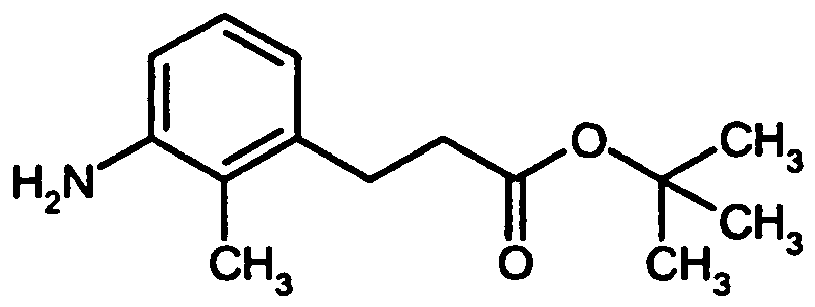
- Unter Argon wurden 201 ml (1.39 mol) tert.-Butyl-prop-2-enoat zu einer Lösung von 100 g (463 mmol) 1-Brom-2-methyl-3-nitrobenzol, 322 ml (2.31 mol) Triethylamin, 28.18 g (92.58 mmol) Tri-2-tolylphosphin und 10.39 g (46.29 mmol) Palladium(II)acetat in 2 Liter DMF getropft und die Mischung anschließend 36 h bei 125°C gerührt. Nach Abkühlen auf Raumtemperatur wurde das Reaktionsgemisch mit gesättigter wässriger Ammoniumchlorid-Lösung verrührt und die organische Phase abgetrennt. Die wässrige Phase wurde dreimal mit tert.-Butylmethylether extrahiert, und die vereinigten organischen Phasen wurden mit gesättigter Natriumchlorid-Lösung gewaschen und über Natriumsulfat getrocknet. Nach Filtration wurde das Lösungsmittel im Vakuum bis zur Trockene entfernt. Der erhaltene Rückstand wurde durch Flash-Chromatographie an Kieselgel gereinigt (Laufmittel Petrolether/Essigsäureethylester 9:1). Es wurden 89 g (338 mmol, 73% d. Th.) des Zwischenprodukts tert.-Butyl-(2E)-3-(2-methyl-3-nitrophenyl)prop-2-enoat als farbloser Feststoff erhalten. 88 g (334 mmol) dieses Feststoffs wurden in 2 Liter Ethanol gelöst, bei Raumtemperatur mit 7 g Palladium auf Kohle (10%) versetzt und 18 h unter Normaldruck hydriert. Nach vollständiger Umsetzung wurde die Reaktionslösung über Kieselgur filtriert und das erhaltene Filtrat im Vakuum eingeengt. Es wurden 61.3 g (260.5 mmol, 78% d. Th.) der Titelverbindung als farbloser Feststoff erhalten.
1H-NMR (400 MHz, DMSO-d6, δ/ppm): 6.77 (1H, t), 6.47 (1H, d), 6.36 (1H, d), 4.72 (2H, s), 2.14 (2H, t), 2.36 (2H, t), 1.95 (3H, s), 1.39 (9H, s).
LC-MS (Methode 7): Rt = 1.84 min; m/z = 236 (M+H)+. -

- Unter Argon wurden 10.844 g (108 mmol) Ethyl-prop-2-enoat zu einer Lösung von 7.8 g (36.1 mmol) 1-Brom-2-methyl-3-nitrobenzol, 25 ml (180.5 mmol) Triethylamin, 2.197 g (7.22 mmol) Tri-2-tolylphosphin und 810 mg (3.6 mmol) Palladium(II)acetat in 200 ml DMF getropft und die Mischung anschließend 36 h bei 125°C gerührt. Nach Abkühlen auf Raumtemperatur wurde das Reaktionsgemisch mit gesättigter wässriger Ammoniumchlorid-Lösung verrührt und die organische Phase abgetrennt. Die wässrige Phase wurde dreimal mit tert.-Butyl-methylether extrahiert, und die vereinigten organischen Phasen wurden mit gesättigter Natriumchlorid-Lösung gewaschen und über Natriumsulfat getrocknet. Nach Filtration wurde das Lösungsmittel im Vakuum bis zur Trockene entfernt. Der erhaltene Rückstand wurde durch Flash-Chromatographie an Kieselgel gereinigt (Laufmittel Petrolether/Essigsäureethylester 3:1). Es wurden 6.6 g (27.2 mmol, Gehalt 97%, 75% d. Th.) des Zwischenprodukts Ethyl-(2E)-3-(2-methyl-3-nitrophenyl)prop-2-enoat als farbloser Feststoff erhalten. 6.6 g (27.2 mmol, Gehalt 97%) dieses Feststoffs wurden in 200 ml Ethanol gelöst, bei Raumtemperatur mit 500 mg Palladium auf Kohle (10%) versetzt und über Nacht unter Normaldruck hydriert. Nach vollständiger Umsetzung wurde die Reaktionslösung über Kieselgur filtriert und das erhaltene Filtrat im Vakuum eingeengt. Es wurden 5.47 g (26.38 mmol, Gehalt 97%, 97% d. Th.) der Titelverbindung als farbloser Feststoff erhalten.
LC-MS (Methode 10): Rt = 1.07 min; m/z = 208 (M+H)+. -

- In 100 ml Methanol wurden 2.9 ml (40.5 mmol) Thionylchlorid bei -5°C langsam eingetropft und 10 min bei dieser Temperatur nachgerührt. Anschließend wurden 5 g (18.4 mmol) 3-{trans-4-[(tert.-Butoxycarbonyl)amino]cyclohexyl}propansäure in einer Portion zugegeben und die Reaktionsmischung über Nacht bei Raumtemperatur gerührt. Nach vollständiger Umsetzung wurde das Lösungsmittel im Vakuum eingedampft. Es wurden 3.97 g (17.9 mmol, 97% d. Th.) eines farblosen Feststoffs erhalten.
1H-NMR (400 MHz, DMSO-d6, δ/ppm): 8.18 (3H, breites s), 3.59 (3H, s), 2.96-2.79 (1H, m), 2.31 (2H, t), 2.03-1.89 (2H, m), 1.81-1.68 (2H, m), 1.49-1.21 (4H, m), 1.21-1.08 (1H, m), 1.00-0.85 (2H, m).
MS (ES): m/z = 186 (M+H-HCl)+. -

- In 100 ml Methanol wurden 2.9 ml (40.5 mmol) Thionylchlorid bei -5°C langsam eingetropft und 10 min bei dieser Temperatur nachgerührt. Anschließend wurden 5 g (18.4 mmol) 3-{cis-4-[(tert.-Butoxycarbonyl)amino]cyclohexyl}propansäure in einer Portion zugegeben und die Reaktionsmischung über Nacht bei Raumtemperatur gerührt. Nach vollständiger Umsetzung wurde das Lösungsmittel im Vakuum eingedampft. Es wurden 3.95 g (17.8 mmol, 96.7% d. Th.) eines farblosen Feststoffs erhalten.
1H-NMR (400 MHz, DMSO-d6, δ/ppm): 8.05 (3H, breites s), 3.59 (3H, s), 3.21-3.05 (1H, m), 2.39-2.24 (2H, m), 1.74-1.31 (11H, m).
MS (ES): m/z = 186 (M+H-HCl)+. -

- In 50 ml Methanol wurden 1.9 ml (25.7 mmol) Thionylchlorid bei -5°C langsam eingetropft und 10 min bei dieser Temperatur nachgerührt. Anschließend wurden 2 g (11.7 mmol) 3-(3-Aminocyclohexyl)propansäure in einer Portion zugegeben und die Reaktionsmischung über Nacht bei Raumtemperatur gerührt. Nach vollständiger Umsetzung wurde das Lösungsmittel im Vakuum eingedampft. Es wurden 2.46 g (11.1 mmol, 95% d. Th.) eines farblosen Feststoffs erhalten.
1H-NMR (400 MHz, DMSO-d6, δ/ppm): 8.05 (3H, breites s), 3.59 (3H, s), 3.01-2.84 (1H, m), 2.39-2.22 (2H, m), 2.01-1.82 (1H, m), 1.80-1.59 (2H, m), 1.59-1.40 (3H, m), 1.40-1.08 (3H, m), 1.01-0.85 (1H, m), 0.85-0.65 (1H, m).
GC-MS (Methode 3): Rt = 4.75 min; m/z = 185 (M-HCl)+. -

- 360 mg (1.3 mmol) Ethyl-5-{[(tert.-butoxycarbonyl)amino]methyl}isoxazol-3-carboxylat wurden über Nacht in 3.3 ml einer 4 M Lösung von Chlorwasserstoff in Dioxan bei Raumtemperatur gerührt. Nach Beendigung der Reaktion wurde das Lösungsmittel im Vakuum eingedampft. Es wurden 258 mg (1.25 mmol, 94% d. Th.) eines gelblichen Feststoffs erhalten.
LC-MS (Methode 12): Rt = 0.49 min; m/z = 171 (M+H-HCl)+. -

- Eine Lösung von 1.2 g (9.6 mmol) 3-Aminobenzolthiol und 1.046 g (12.5 mmol) Natriumhydrogencarbonat in 6 ml DMF wurde bei Raumtemperatur langsam mit 1.36 ml (10.5 mmol) Methyl-2-brom-2-methylpropanoat versetzt und über Nacht gerührt. Nach Beendigung der Reaktion wurde das Reaktionsgemisch auf Wasser gegeben. Der Ansatz wurde dreimal mit Diethylether extrahiert, und die vereinigten organischen Phasen wurden mit gesättigter Natriumchlorid-Lösung gewaschen und über Magnesiumsulfat getrocknet. Nach Filtration wurde das Lösungsmittel im Vakuum bis zur Trockene entfernt. Es wurden 1.45 g (6.4 mmol, 67% d. Th.) eines farblosen Feststoffs erhalten.
LC-MS (Methode 11): Rt = 0.96 min; m/z = 226 (M+H)+. -

- 2.00 g (13.06 mmol) 2-Methyl-3-nitrophenol wurden in 40 ml DMF gelöst und mit 3.55 g (19.59 mmol) Methyl-2-brom-2-methylpropanoat sowie 4.68 g (14.37 mmol) Cäsiumcarbonat versetzt. Das Reaktionsgemisch wurde 2 d bei 100°C gerührt und dann mit weiteren 1.77 g (9.80 mmol) Methyl-2-brom-2-methylpropanoat versetzt. Es wurde erneut 1 d bei 100°C gerührt, danach weitere 1.77 g (9.80 mmol) Methyl-2-brom-2-methylpropanoat zugegeben und nochmals 1 d bei 100°C gerührt. Nach dem Abkühlen wurde gesättigte wässrige Natriumhydrogencarbonat-Lösung zugesetzt und die Mischung mehrfach mit Essigsäureethylester extrahiert. Die vereinigten organischen Phasen wurden mit gesättigter wässriger Natriumhydrogencarbonat-Lösung gewaschen, über Natriumsulfat getrocknet und am Rotationsverdampfer eingeengt. Der Rückstand wurde mittels präparativer HPLC gereinigt. Es wurden 1.33 g (39% d. Th.) der Zielverbindung erhalten.
1H-NMR (300 MHz, CDCl3, δ/ppm): 1.58 (s, 6H), 2.27 (s, 3H), 3.75 (s, 3H), 6.95 (d, 1H), 7.35 (t, 1H), 7.60 (d, 1H). -

- 1.33 g (5.25 mmol) Methyl-2-methyl-2-(2-methyl-3-nitrophenoxy)propanoat wurden in 60 ml Ethanol gelöst und mit 1 ml konzentrierter Salzsäure sowie 0.30 g Palladium auf Kohle (10%) versetzt. Unter einer Wasserstoffatmosphäre wurde 3 h bei Normaldruck und Raumtemperatur hydriert. Die Reaktionsmischung wurde danach über Tonsil filtriert. Es wurde mit Ethanol nachgewaschen und die gesammelten Filtrate im Vakuum eingeengt. Es wurden 1.39 g (89% d. Th.) der Zielverbindung erhalten.
LC-MS (Methode 11): Rt = 0.80 min; m/z = 225 (M-Cl+H)+. -

- 337 mg (0.821 mmol) Cyclopentyl{4-[(5-oxo-2-phenyl-5,6-dihydro-4H-1,3,4-oxadiazin-4-yl)-methyl]phenyl}acetylchlorid (Enantiomer 1; Beispiel 81A) wurden in 8 ml Dichlormethan gelöst und mit 83 mg (0.821 mmol) Triethylamin versetzt. Zum Gemisch wurden 157 mg (0.821 mmol) Methyl-4-amino-2,3-dihydro-1H-inden-2-carboxylat (Enantiomer 1; Beispiel 89A), gelöst in 2 ml Dichlormethan, hinzugefügt. Es wurde über Nacht bei Raumtemperatur gerührt. Die Reaktionslösung wurde danach mit Wasser versetzt und mit Dichlormethan extrahiert. Die vereinigten organischen Phasen wurden über Natriumsulfat getrocknet und am Rotationsverdampfer eingeengt. Der Rückstand wurde durch Chromatographie an Kieselgel gereinigt (Laufmittel Cyclohexan/ Essigsäureethylester 3:1 → 1:1). Es wurden 182 mg (0.32 mmol, 39% d. Th.) der Titelverbindung erhalten.
LC-MS (Methode 10): Rt = 2.50 min; m/z = 566 (M+H)+. - Auf analoge Weise wurden die in der folgenden Tabelle aufgeführten Verbindungen erhalten:
Beispiel Name / Struktur / Edukte Analytische Daten 106A Methyl-4-{[cyclopentyl(4-{[4-methyl-5-(2-methylpropyl)-2-oxo-1,3-thiazol-3(2H)-yl]methyl}phenyl)acetyl]amino}-2,3-dihydro-1H-inden-2-carboxylat LC-MS (Methode 10): Rt = 2.68 min; m/z = 561 (M+H)+. 
(aus Bsp. 84A und Bsp. 88A) 107A Methyl-4-{[cyclopentyl(4-{[5-oxo-2-(propan-2-yl)-5,6-dihydro-4H-1,3,4-oxadiazin-4-yl]methyl}phenyl)-acetyl]amino}-2,3-dihydro-1H-inden-2-carboxylat LC-MS (Methode 10): Rt = 2.42 und 2.47 min; m/z = 532 (M+H)+ (Isomer 1 und 2). 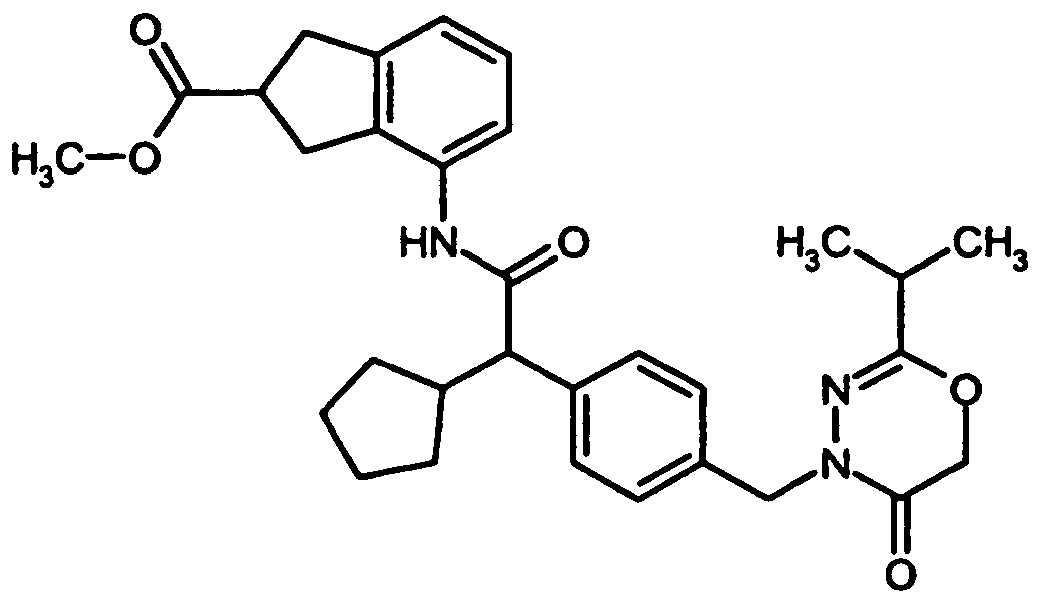
(aus Bsp. 82A und Bsp. 89A) 108A Methyl-4-{[{4-[(2-tert.-butyl-5-oxo-5,6-dihydro-4H-1,3,4-oxadiazin-4-yl)methyl]phenyl}(cyclopentyl)acetyl]amino}-2,3-dihydro-1H-inden-2-carboxylat LC-MS (Methode 11): Rt = 1.53 min; m/z = 546 (M+H)+. 
(aus Bsp. 83A und Bsp. 89A) 109A Methyl-(2E)-3-{2-[(cyclopentyl{4-[(5-oxo-2-phenyl-5,6-dihydro-4H-1,3,4-oxadiazin-4-yl)methyl]phenyl}acetyl)-amino]phenyl}prop-2-enoat LC-MS (Methode 10): Rt = 2.41 min; m/z = 552 (M+H)+. 
(aus Bsp. 81A und Methyl-(2E)-3-(2-aminophenyl)-prop-2-enoat [CAS Reg.-Nr. 1664-62-6]) 110A Methyl-{3-[(cyclopentyl{4-[(5-oxo-2-phenyl-5,6-dihydro-4H-1,3,4-oxadiazin-4-yl)methyl]phenyl}acetyl)amino]-phenyl}acetat LC-MS (Methode 10): Rt = 2.43 min; m/z = 540 (M+H)+. 
(aus Bsp. 81A und Methyl-(3-aminophenyl)acetat-Hydrochlorid [CAS Reg.-Nr. 150319-83-8]) 111A Ethyl-(2E)-3-{4-[(cyclopentyl{4-[(5-oxo-2-phenyl-5,6-dihydro-4H-1,3,4-oxadiazin-4-yl)methyl]phenyl}acetyl)-amino]phenyl}prop-2-enoat LC-MS (Methode 12): Rt = 2.89 min; m/z = 566 (M+H)+. 
(aus Bsp. 81 A und Ethyl-(2E)-3-(4-aminophenyl)-prop-2-enoat [CAS Reg.-Nr. 5048-82-8]) -

- 60 mg (0.127 mmol) (4-{[4-(4-Chlorphenyl)-1-oxophthalazin-2(1H)-yl]methyl}phenyl)(cyclopentyl)essigsäure (Beispiel 65A) wurden in 0.6 ml Dichlormethan gelöst und nacheinander mit 26 mg (0.127 mmol) Methyl-4-(aminomethyl)benzolcarboxylat-Hydrochlorid, 19 mg (0.140 mmol) 1-Hydroxy-1H-benzotriazol-Hydrat, 28 mg (0.146 mmol) 1-(3-Dimethylaminopropyl)-3-ethyl-carbodiimid-Hydrochlorid sowie 28 mg (0.273 mmol) Triethylamin versetzt. Das Reaktionsgemisch wurde über Nacht bei Raumtemperatur gerührt. Danach wurde 1 N Salzsäure zugesetzt und das Gemisch mit Essigsäureethylester extrahiert. Die vereinigten organischen Phasen wurden über Natriumsulfat getrocknet und am Rotationsverdampfer eingeengt. Der Rückstand wurde über präparative HPLC gereinigt. Es wurden 36 mg (46% d. Th.) der Titelverbindung erhalten.
LC-MS (Methode 7): Rt = 3.27 min; m/z = 620 (M+H)+. - Auf analoge Weise wurden die in der folgenden Tabelle aufgeführten Verbindungen erhalten:
Beispiel Name / Struktur / Edukte Analytische Daten 113A Methyl-4-{[(cyclopentyl{4-[(5-oxo-2-phenyl-5,6-dihydro-4H-1,3,4-oxadiazin-4-yl)methyl]phenyl}acetyl)amino]-methyl}benzolcarboxylat LC-MS (Methode 2): Rt = 2.84 min; m/z = 540 (M+H)+. 
(aus Bsp. 51A und Methyl-4-(aminomethyl)-benzolcarboxylat-Hydrochlorid) 114A Methyl-4-{[(cyclopentyl{4-[(2-oxo-5-phenyl-1,3,4-oxadiazol-3(2H)-yl)methyl]phenyl}acetyl)amino]-methyl}benzolcarboxylat LC-MS (Methode 2): Rt = 2.71 min; m/z = 526 (M+H)+. 
(aus Bsp. 57A und Methyl-4-(aminomethyl)-benzolcarboxylat-Hydrochlorid) 115A Methyl-4-({[cyclopentyl(4-{[(4R,5S)-4-methyl-2-oxo-5-phenyl-1,3-oxazolidin-3-yl]methyl}phenyl)acetyl]amino}-methyl)benzolcarboxylat LC-MS (Methode 2): Rt = 2.76 min; m/z = 541 (M+H)+. 
(aus Bsp. 69A und Methyl-4-(aminomethyl)-benzolcarboxylat-Hydrochlorid) 116A Methyl-4-({[cyclopentyl(4-{[(4S,5R)-4-methyl-2-oxo-5-phenyl-1,3-oxazolidin-3-yl]methyl}phenyl)acetyl]amino}-methyl)benzolcarboxylat LC-MS (Methode 2): Rt = 2.76 min; m/z = 541 (M+H)+. 
(aus Bsp. 68A und Methyl-4-aminomethyl)-benzolcarboxylat-Hydrochlorid) 117A Methyl-4-{[(cyclopentyl{4-[(3,5-dioxo-6-phenyl-2,5-dihydro-1,2,4-triazin-4(3H)-yl)methyl]phenyl}acetyl)-amino]methyl}benzolcarboxylat LC-MS (Methode 2): Rt = 2.67 min; m/z = 553 (M+H)+. 
(aus Bsp. 55A und Methyl-4-(aminomethyl)-benzolcarboxylat-Hydrochlorid) 118A Methyl-4-{[(cyclopentyl{4-[(5-methyl-2-oxo-5-phenyl-piperidin-1-yl)methyl]phenyl}acetyl)amino]methyl}-benzolcarboxylat LC-MS (Methode 2): Rt = 2.69 min; m/z = 553 (M+H)+. 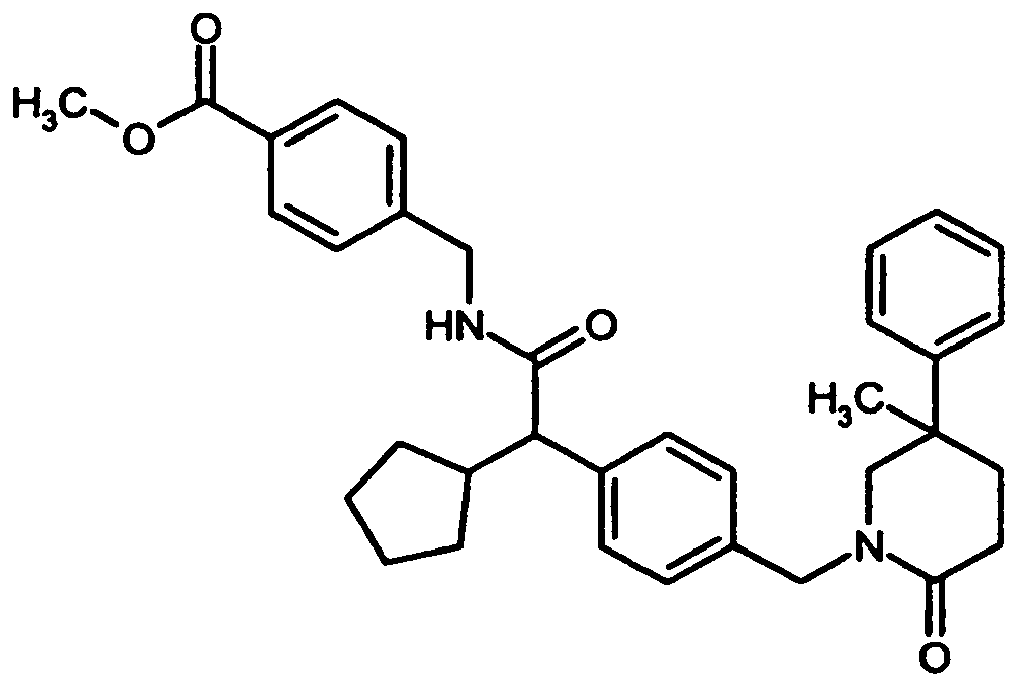
(aus Bsp. 70A und Methyl-4-(aminomethyl)-benzolcarboxylat-Hydrochlorid) 119A Methyl-(4-{[(cyclopentyl{4-[(5-oxo-2-phenyl-5,6-dihydro-4H-1,3,4-oxadiazin-4-yl)methyl]phenyl}acetyl)amino]-methyl}phenyl)acetat LC-MS (Methode 2): Rt = 2.77 min; m/z = 554 (M+H)+. 
(aus Bsp. 51A und Methyl-[4-(aminomethyl)phenyl]acetat-Hydrochlorid [CAS Reg.-Nr. 99075-26-9]) 120A Methyl-4-({[(4-{[2-(3-chlorphenyl)-5-oxo-5,6-dihydro-4H-1,3,4-oxadiazin-4-yl]methyl}phenyl)cyclopentyl)acetyl]-amino}methyl)benzolcarboxylat LC-MS (Methode 2): Rt = 2.87 min; m/z = 574 (M+H)+. 
(aus Bsp. 52A und Methyl-4-(aminomethyl)-benzolcarboxylat-Hydrochlorid) 121A Methyl-6-({[(4-{([4-(4-chlorphenyl)-1-oxophthalazin-2(1H)-yl]methyl}phenyl)(cyclopentyl)acetyl]amino}-methyl)pyridin-3-carboxylat LC-MS (Methode 2): Rt = 2.97 min; m/z = 621 (M+H)+. 
(aus Bsp. 65A und Methyl-6-(aminomethyl)pyridin-3-carboxylat-Hydrochlorid [Beilstein Reg.-Nr. 7701946]) 122A Methyl-4({[(4-{[2-(2-chlorphenyl)-5-oxo-5,6-dihydro-4H-1,3,4-oxadiazin-4-yl]methyl}phenyl)(cyclopentyl)acetyl]-amino}methyl)benzolcarboxylat LC-MS (Methode 7): Rt = 2.95 min; m/z = 574 (M+H)+. 
(aus Bsp. 53A und Methyl-4-(aminomethyl)-benzolcarboxylat-Hydrochlorid) 123A Ethyl-5-({[(4-{[4-(4-chlorphenyl)-1-oxophthalazin-2(1H)-yl]methyl} phenyl)(cyclopentyl)acetyl]amino} methyl)-furan-2-carboxylat LC-MS (Methode 9): Rt = 4.74 min; m/z = 624 (M+H)+. 
(aus Bsp. 65A und Ethyl-5-(aminomethyl)furan-2-carboxylat [CAS Reg.-Nr. 18707-63-6]) 124A Methyl-4-({[(4-{[2-(4-chlorphenyl)-5-oxo-5,6-dihydro-4H 1,3,4-oxadiazin-4-yl]methyl}phenyl)(cyclopentyl)acetyl]-amino}methyl)benzolcarboxylat LC-MS (Methode 9): Rt=4.29 min; m/z = 574 (M+H)+. 
(aus Bsp. 72A und Methyl-4-(aminomethyl)-benzolcarboxylat-Hydrochlorid) 125A Methyl-4-({[cyclopentyl(4-{([2-(2-methoxyphenyl)-5-oxo-5,6-dihydro-4H-1,3,4-oxadiazin-4-yl]methyl}phenyl)-acetyl]amino}methyl)benzolcarboxylat LC-MS (Methode 7): Rt = 2.78 min; m/z = 570 (M+H)+. 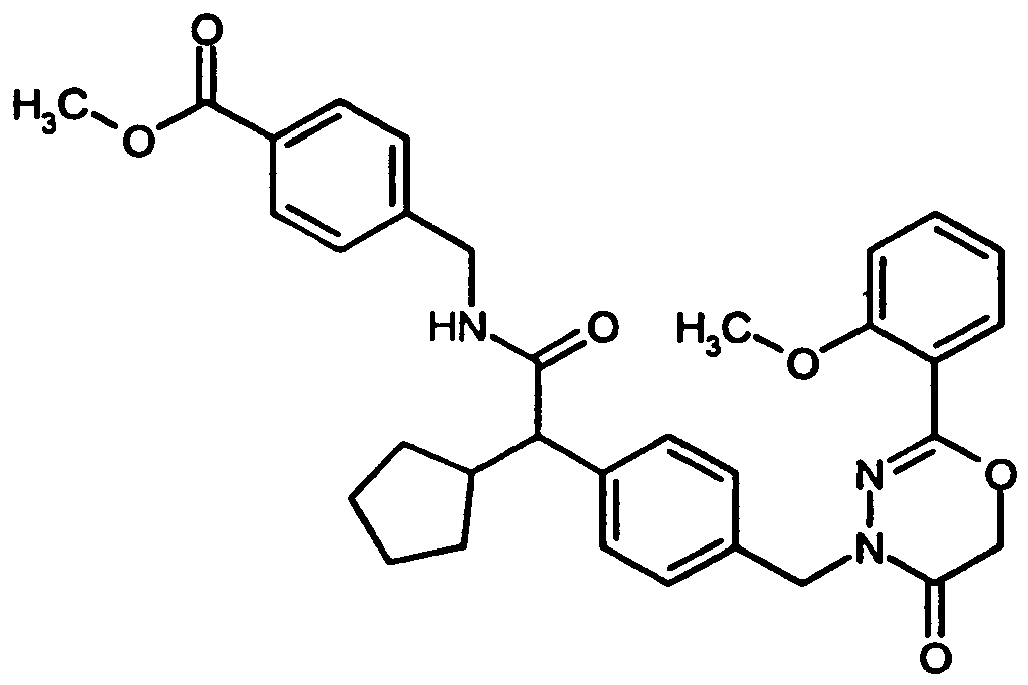
(aus Bsp. 54A und Methyl-4-(aminomethyl)-benzolcarboxylat-Hydrochlorid) 126A Ethyl-4-{[(cyclopentyl{4-[(5-oxo-2-phenyl-5,6-dihydro-4H-1,3,4-oxadiazin-4-yl)methyl]phenyl}acetyl)amino]-methyl}cyclohexancarboxylat LC-MS (Methode 11): Rt = 1.49 min; m/z = 560 (M+H)+. 
(aus Bsp. 51A und Ethyl-4-(aminomethyl)-cyclohexancarboxylat-Hydrochlorid (cis/trans-Gemisch) [Beilstein Reg.-Nr. 10814930]) -

- 297.5 mg der Verbindung aus Beispiel 126A wurden zunächst mittels präparativer HPLC in die beiden racemischen cis- und trans-Diastereomere getrennt [Ausbeute: 63 mg Diastereomer 1, 171 mg Diastereomer 2; Säule: Sunfire C18 OBD, 5 µm, 250 mm x 20 mm; Elutionsmittel: Wasser/Acetonitril 30:70 (v/v); Fluss: 25 ml/min; Temperatur: 24°C; UV-Detektion: 210 nm]. Diese wurden dann nachfolgend durch präparative HPLC an chiraler Phase in die jeweiligen Enantiomere aufgetrennt [Säule: Daicel Chiralpak AD-H, 250 mm x 20 mm; Elutionsmittel: Ethanol/Isohexan 30:70 (v/v); Fluss: 1.0 ml/min; Temperatur: 30°C; UV-Detektion: 220 nm]:
- Ausbeute: 31 mg
Rt 5.63 min; Reinheit >98.5%; >99.0% ee (Daicel-Säule s.o.) - Ausbeute: 25 mg
Rt 6.00 min; Reinheit >99.0%; >99.0% ee (Daicel-Säule s.o.) - Ausbeute: 77 mg
Rt 5.81 min; Reinheit >99.0%; >99.0% ee (Daicel-Säule s.o.) - Ausbeute: 91 mg
Rt 7.01 min; Reinheit >99.8%; >99.0% ee (Daicel-Säule s.o.). -

- Eine Lösung von 200 mg (0.97 mmol) Cyclopentyl{4-[(5-oxo-2-phenyl-5,6-dihydro-4H-1,3,4-oxadiazin-4-yl)methyl]phenyl}essigsäure (Enantiomer 2, Beispiel 77A), 459 mg (1.2 mmol) Methyl-4-amino-2-methyl-2,3-dihydro-1H-inden-2-carboxylat (Beispiel 95A), 556 mg (1.46 mmol) O-(7-Azabenzotriazol-1-yl)-N,N,N',N'-tetramethyluronium-Hexafluorophosphat (HATU) und 5 ml Pyridin in 20 ml DMF wurde über Nacht bei Raumtemperatur gerührt. Nach Beendigung der Reaktion wurde der Ansatz auf Eiswasser gegossen, die Phasen getrennt und die wässrige Phase dreimal mit tert.-Butylmethylether extrahiert. Die vereinigten organischen Phasen wurden über Natriumsulfat getrocknet, und nach Filtration wurde das Lösungsmittel im Vakuum bis zur Trockene entfernt. Das erhaltene Rohprodukt wurde über präparative HPLC gereinigt. Es wurden 448 mg (0.77 mmol, 79% d. Th.) eines farblosen Öls erhalten.
LC-MS (Methode 11): Rt = 1.54 min; m/z = 580 (M+H)+. - Auf analoge Weise wurden die in der folgenden Tabelle aufgeführten Verbindungen erhalten:
Beispiel Name / Struktur / Edukte Analytische Daten 132A Methyl-4-{[(4-{[2-(4-chlorphenyl)-5-oxo-5,6-dihydro-4H-1,3,4-oxadiazin-4-yl]methyl}phenyl)(cyclopentyl)-acetyl]amino}-2,3-dihydro-1H-inden-2-carboxylat 1H-NMR (400 MHz, DMSO-d6, δ/ppm): 9.47 (1H, s), 7.76 (2H, d), 7.51 (2H, d), 7.40 (2H, d), 7.35-7.26 (3H, m), 7.05 (1H, t), 6.95 (1H, d), 4.91 (2H, s), 4.85 (2H, s), 3.62 (3H, s), 3.51 (1H, d), 3.39-3.25 (1H, m), 3.20-2.92 (4H, m), 2.61-2.41 (1H, m), 1.88-1.71 (1H, m), 1.71-1.25 (6H, m), 1.04-0.90 (1H, m).
LC-MS (Methode 10): Rt = 2.65 min; m/z = 600 (M)+.
(aus Bsp. 72A und Bsp. 88A) 133A Methyl-4-{[(4-{[2-(4-fluorphenyl)-5-oxo-5,6-dihydro-4H-1,3,4-oxadiazin-4-yl]methyl}phenyl)(cyclopentyl)-acetyl]amino}-2,3-dihydro-1H-inden-2-carboxylat LC-MS (Methode 13): Rt = 2.79 min; m/z = 584 (M+H)+. 
(aus Bsp. 75A und Bsp. 88A) 134A Methyl-4-[(3-methyl-2-{4-[(5-oxo-2-phenyl-5,6-dihydro-4H-1,3,4-oxadiazin-4-yl)methyl]phenyl}-butanoyl)amino]-2,3-dihydro-1H-inden-2-carboxylat 1H-NMR (400 MHz, DMSO-d6, δ/ppm): 9.49 (1H, s), 7.76 (2H, d), 7.53-7.26 (8H, m), 7.05 (1H, t), 6.95 (1H, d), 4.91 (2H, s), 4.86 (2H, s), 3.62 (3H, s), 3.42-3.27 (2H, m), 3.21-2.92 (4H, m), 2.39-2.21 (1H, m), 1.02 (3H, d), 0.65 (3H, d).
LC-MS (Methode 11): Rt = 1.45 min; m/z = 540 (M+H)+.
(aus Bsp. 59A und Bsp. 88A) 135A Ethyl-(2E)-3-{3-[(3-methyl-2-{4-[(5-oxo-2-phenyl-5,6-dihydro-4H-1,3,4-oxadiazin-4-yl)methyl]phenyl}-butanoyl)amino]phenyl}prop-2-enoat LC-MS (Methode 11): Rt = 1.51 min; m/z = 540 (M+H)+. 
(aus Bsp. 79A und Ethyl-(2E)-3-(3-aminophenyl)-prop-2-enoat [CAS Reg.-Nr. 6328-01-4]) 136A Methyl-2-methyl-4-[(3-methyl-2-{4-[(5-oxo-2-phenyl-5,6-dihydro-4H-1,3,4-oxadiazin-4-yl)methyl]phenyl}-butanoyl)amino]-2,3-dihydro-1H-inden-2-carboxylat LC-MS (Methode 7): Rt = 2.97 min; m/z = 554 (M+H)+. 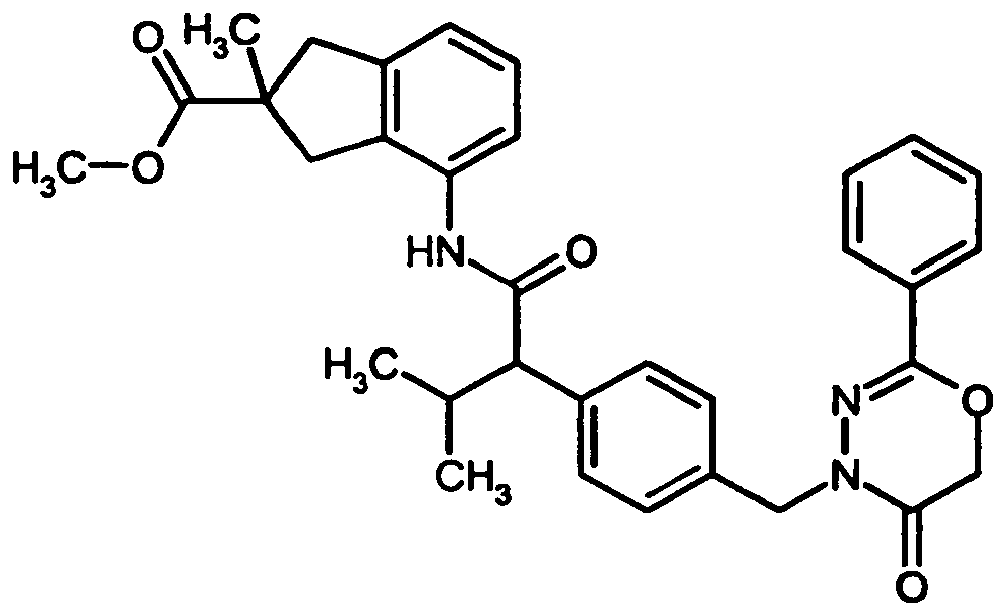
(aus Bsp. 79A und Bsp. 95A) 137A Methyl-({3-[(3-methyl-2-{4-[(5-oxo-2-phenyl-5,6-dihydro-4H-1,3,4-oxadiazin-4-yl)methyl]phenyl}-butanoyl)amino]phenyl}sulfanyl)acetat 1H-NMR (400 MHz, DMSO-d6, δ/ppm): 10.12 (1H, s), 7.75 (2H, d), 7.63 (1H, s), 7.54-7.28 (8H, m), 7.20 (1H, t), 6.99 (1H, d), 4.89 (2H, s), 4.84 (2H, s), 3.84 (2H, s), 3.59 (3H, s), 3.21 (1H, d), 2.40-2.24 (1H, m), 1.00 (3H, d), 0.68 (3H, d).
LC-MS (Methode 7): Rt = 2.88 min; m/z = 546 (M+H)+.
(aus Bsp. 79A und Methyl-[(3-aminophenyl)-sulfanyl]acetat [CAS Reg.-Nr. 933371-82-5]) 138A Methyl-({3-[(cyclopentyl{4-[(5-oxo-2-phenyl-5,6-dihydro-4H-1,3,4-oxadiazin-4-yl)methyl]phenyl}-acetyl)amino]phenyl} sulfanyl)acetat 1H-NMR (400 MHz, DMSO-d6, δ/ppm): 10.08 (1H, s), 7.74 (2H, d), 7.61 (1H, s), 7.52-7.26 (8H, m), 7.19 (1H, t), 6.98 (1H, d), 4.88 (2H, s), 4.83 (2H, s), 3.83 (2H, s), 3.58 (3H, s), 3.31 (1H, d), 2.61-2.45 (1H, m), 1.83-1.69 (1H, m), 1.68-1.15 (6H, m), 1.03-0.85 (1H, m).
LC-MS (Methode 7): Rt = 3.02 min; m/z = 572 (M+H)+.
(aus Bsp. 77A und Methyl-[(3-aminophenyl)-sulfanyl]acetat [CAS Reg.-Nr. 933371-82-5]) 139A Ethyl-5-{[(cyclopentyl{4-[(5-oxo-2-phenyl-5,6-dihydro-4H-1,3,4-oxadiazin-4-yl)methyl]phenyl}acetyl)-amino]methyl}isoxazol-3-carboxylat LC-MS (Methode 7): Rt = 2.81 min; m/z = 545 (M+H)+. 
(aus Bsp. 77A und Bsp. 101A) 140A Methyl-2-methyl-2-({3-[(3-methyl-2-{4-[(5-oxo-2-phenyl-5,6-dihydro-4H-1,3,4-oxadiazin-4-yl)methyl]-phenyl}butanoyl)amino]phenyl}sulfanyl)propanoat LC-MS (Methode 7): Rt = 3.01 min; m/z = 574 (M+H)+. 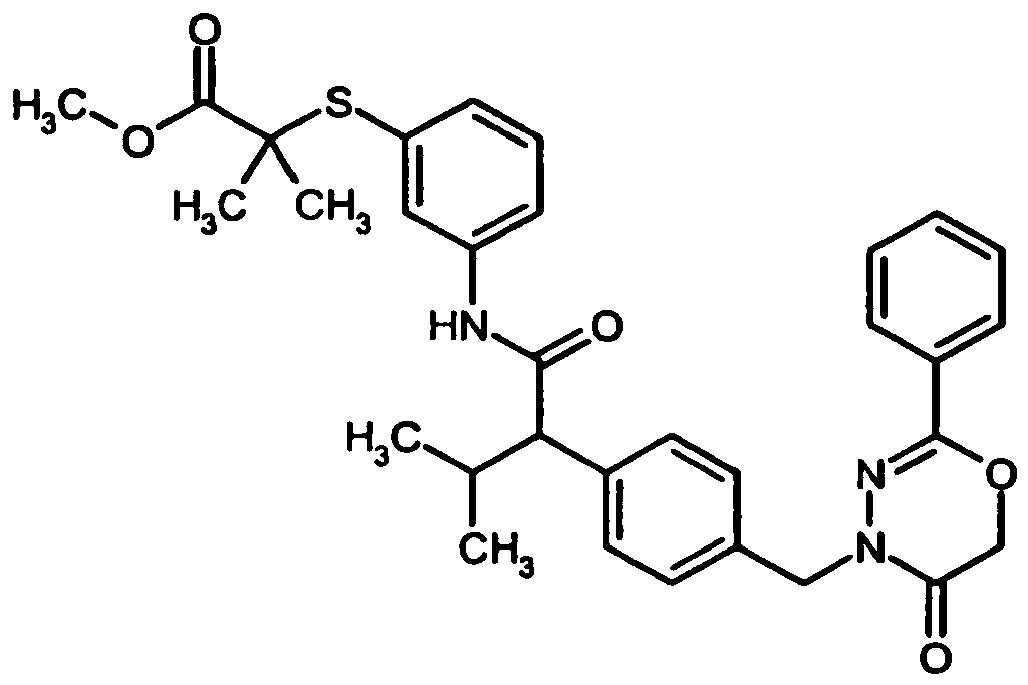
(aus Bsp. 79A und Bsp. 102A) 141A Methyl-2-({3-[(cyclopentyl{4-[(5-oxo-2-phenyl-5,6-dihydro-4H-1,3,4-oxadiazin-4-yl)methyl]phenyl}-acetyl)amino]phenyl} sulfanyl)-2-methylpropanoat LC-MS (Methode 7): Rt = 3.12 min; m/z = 600 (M+H)+. 
(aus Bsp. 77A und Bsp. 102A) 142A Methyl-3-{3-[(3-methyl-2-{4-[(5-oxo-2-phenyl-5,6-dihydro-4H-1,3,4-oxadiazin-4-yl)methyl]phenyl}-butanoyl)amino]cyclohexyl}propanoat LC-MS (Methode 7): Rt = 2.78 min; m/z = 534 (M+H)+. 
(aus Bsp. 79A und Bsp. 100A) 143A Methyl-4-[(5,5,5-trifluor-2-{4-[(5-oxo-2-phenyl-5,6-dihydro-4H-1,3,4-oxadiazin-4-yl)methyl]phenyl}-pentanoyl)amino]-2,3-dihydro-1H-inden-2-carboxylat LC-MS (Methode 10): Rt = 2.44 min; m/z = 594 (M+H)+. 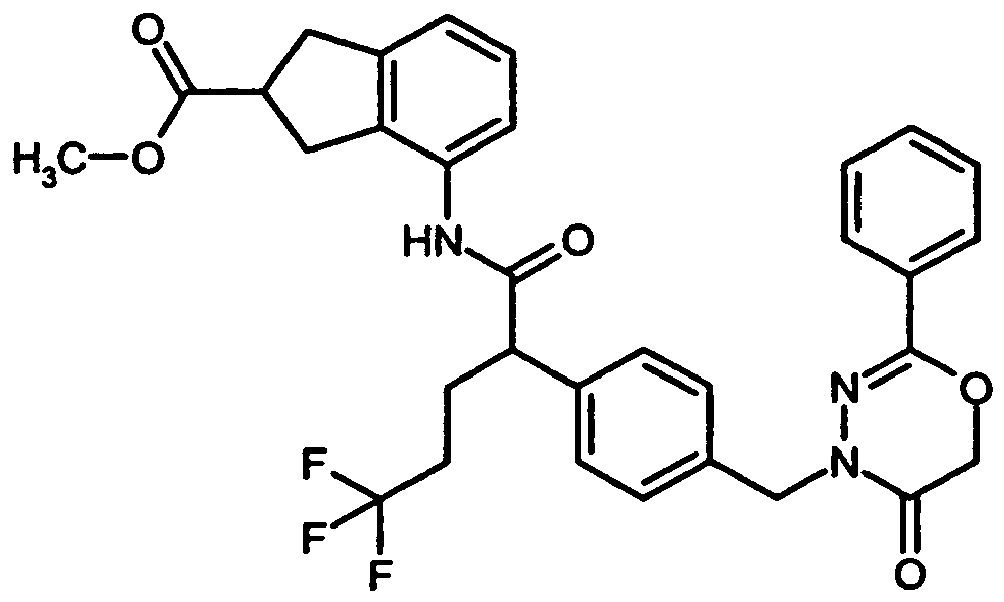
(aus Bsp. 60A und Bsp. 89A) 144A Methyl-3-{trans-4-[(3-methyl-2-{4-[(5-oxo-2-phenyl-5,6-dihydro-4H-1,3,4-oxadiazin-4-yl)methyl]-phenyl}butanoyl)amino]cyclohexyl}propanoat 1H-NMR (400 MHz, DMSO-d6, δ/ppm): 7.83 (1H, d), 7.76 (2H, d), 7.53-7.40 (3H, m), 7.32-7.22 (4H, m), 4.90 (2H, s), 4.84 (2H, s), 3.56 (3H, s), 3.41-3.28 (1H, m), 2.93 (1H, d), 2.27 (2H, t), 2.22-2.11 (1H, m), 1.87-1.75 (1H, m), 1.72-1.49 (2H, m), 1.44-1.31 (2H, m), 1.31-1.18 (2H, m), 1.18-0.95 (2H, m), 0.95-0.77 (2H, m), 0.91 (3H, d), 0.59 (3H, d).
LC-MS (Methode 11): Rt = 1.41 min; m/z = 534 (M+H)+.
(aus Bsp. 79A und Bsp. 98A) 145A Methyl-3-{cis-4-[(3-methyl-2-{4-[(5-oxo-2-phenyl-5,6-dihydro-4H-1,3,4-oxadiazin-4-yl)methyl]phenyl}-butanoyl)amino]cyclohexyl}propanoat 1H-NMR (400 MHz, DMSO-d6, δ/ppm): 7.95 (1H, s), 7.75 (2H, d), 7.54-7.40 (3H, m), 7.35-7.21 (4H, m), 4.91 (2H, s), 4.84 (2H, s), 3.74-3.62 (1H, m), 3.57 (3H, s), 3.11 (1H, d), 2.28 (2H, t), 2.22-2.11 (1H, m), 1.61-1.19 (11H, m), 0.91 (3H, d), 0.61 (3H, d).
LC-MS (Methode 7): Rt =2.78 min; m/z = 534 (M+H)+.
(aus Bsp. 79A und Bsp. 99A) 146A Ethyl-3-{3-[(3-methyl-2-{4-[(5-oxo-2-phenyl-5,6-dihydro-4H-1,3,4-oxadiazin-4-yl)methyl]phenyl}-pentanoyl)amino]phenyl}propanoat LC-MS (Methode 10): Rt = 2.54 min; m/z = 556 (M+H)+. 
(aus Bsp. 61A und Ethyl-3-(3-aminophenyl)propanoat) 147A Methyl-4-[(3-methyl-2-{4-[(5-oxo-2-phenyl-5,6-dihydro-4H-1,3,4-oxadiazin-4-yl)methyl]phenyl}-pentanoyl)amino]-2,3-dihydro-1H-inden-2-carboxylat LC-MS (Methode 10): Rt = 2.45 min; m/z = 554 (M+H)+. 
(aus Bsp. 61A und Bsp. 89A) 148A Methyl-3-{trans-4-[(cyclopentyl{4-[(5-oxo-2-phenyl-5,6-dihydro-4H-1,3,4-oxadiazin-4-yl)methyl]phenyl}-acetyl)amino]cyclohexyl}propanoat 1H-NMR (400 MHz, DMSO-d6, δ/ppm): 7.80 (1H, d), 7.76 (2H, d), 7.54-7.41 (3H, m), 7.28 (4H, q), 4.91 (2H, s), 4.83 (2H, s), 3.56 (3H, s), 3.41-3.31 (1H, m), 3.08 (1H, d), 2.55-2.39 (1H, m), 2.27 (2H, t), 1.86-1.75 (1H, m), 1.75-0.78 (18H, m).
LC-MS (Methode 7): Rt = 2.90 min; m/z = 560 (M+H)+.
(aus Bsp. 77A und Bsp. 98A) 149A Methyl-3-{cis-4-[(cyclopentyl{4-[(5-oxo-2-phenyl-5,6-dihydro-4H-1,3,4-oxadiazin-4-yl)methyl]phenyl}-acetyl)amino]cyclohexyl}propanoat 1H-NMR (400 MHz, DMSO-d6, δ/ppm): 7.82-7.69 (3H, m), 7.54-7.40 (3H, m), 7.33 (2H, d), 7.26 (2H, d), 4.91 (2H, s), 4.84 (2H, s), 3.74-3.61 (1H, m), 3.57 (3H, s), 3.26 (1H, d), 2.55-2.39 (1H, m), 2.28 (2H, t), 1.73-1.10 (16H, m), 0.99-0.78 (3H, m).
LC-MS (Methode 7): Rt = 2.90 min; m/z = 560 (M+H)+.
(aus Bsp. 77A und Bsp. 99A) 150A Ethyl-4-{[(3-methyl-2-{4-[(5-oxo-2-phenyl-5,6-dihydro-4H-1,3,4-oxadiazin-4-yl)methyl]phenyl}pentanoyl)-amino]methyl} cyclohexancarboxylat LC-MS (Methode 10): Rt = 2.45 min; m/z = 548 (M+H)+. 
(aus Bsp. 61A und Ethyl-4-(aminomethyl)-cyclohexancarboxylat (Isomerengemisch; Beilstein Reg.-Nr. 10777142)) 151A Ethyl-3-{2-methyl-3-[(3-methyl-2-{4-[(5-oxo-2-phenyl-5,6-dihydro-4H-1,3,4-oxadiazin-4-yl)methyl]phenyl}-pentanoyl)amino]phenyl}propanoat LC-MS (Methode 10): Rt = 2.49 min; m/z = 570 (M+H)+. 
(aus Bsp. 61A und Bsp. 97A) 152A Methyl-(1S,3S)-3-[(cyclopentyl{4-[(5-oxo-2-phenyl-5,6-dihydro-4H-1,3,4-oxadiazin-4-yl)methyl]phenyl}-acetyl)amino]cyclopentancarboxylat 1H-NMR (400 MHz, DMSO-d6, δ/ppm): 8.00 (1H, d), 7.78 (2H, d), 7.54-7.39 (3H, m), 7.37-7.20 (4H, m), 4.91 (2H, s), 4.84 (2H, s), 4.05-3.91 (1H, m), 3.55 (3H, s), 3.08 (1H, d), 2.94-2.81 (1H, m), 2.60-2.39 (1H, m), 1.99-1.78 (3H, m), 1.75-1.10 (10H, m), 0.96-0.81 (1H, m).
LC-MS (Methode 7): Rt = 2.68 min; m/z =518 (M+H)+.
(aus Bsp. 77A und Methyl-(1S,3S)-3-amino-cyclopentancarboxylat-Hydrochlorid [CAS Reg.-Nr. 222530-45-2]) 153A Methyl-(1S,3R)-3-[(cyclopentyl{4-[(5-oxo-2-phenyl-5,6-dihydro-4H-1,3,4-oxadiazin-4-yl)methyl]phenyl}-acetyl)amino]cyclopentancarboxylat 1H-NMR (400 MHz, DMSO-d6, δ/ppm): 8.01 (1H, d), 7.77 (2H, d), 7.54-7.41 (3H, m), 7.29 (4H, q), 4.91 (2H, s), 4.83 (2H, s), 3.98-3.85 (1H, m), 3.59 (3H, s), 3.10 (1H, d), 2.84-2.70 (1H, m), 2.58-2.39 (1H, m), 2.23-2.10 (1H, m), 1.84-1.11 (12H, m), 0.96-0.81 (1H, m).
LC-MS (Methode 7): Rt =2.69 min; m/z = 518 (M+H)+.
(aus Bsp. 77A und Methyl-(1S,3R)-3-amino-cyclopentancarboxylat-Hydrochlorid [CAS Reg.-Nr. 180323-49-3]) 154A Methyl-(1R,3R)-3-[(cyclopentyl{4-[(5-oxo-2-phenyl-5,6-dihydro-4H-1,3,4-oxadiazin-4-yl)methyl]phenyl}-acetyl)amino]cyclopentancarboxylat 1H-NMR (400 MHz, DMSO-d6, δ/ppm): 7.99 (1H, d), 7.76 (2H, d), 7.55-7.41 (3H, m), 7.28 (4H, q), 4.91 (2H, s), 4.84 (2H, s), 4.04-3.92 (1H, m), 3.58 (3H, s), 3.09 (1H, d), 2.95-2.82 (1H, m), 2.58-2.39 (1H, m), 2.01-1.85 (2H, m), 1.84-1.12 (11H, m), 0.95-0.82 (1H, m).
LC-MS (Methode 7): Rt = 2.66 min; m/z =518 (M+H)+.
(aus Bsp. 77A und Methyl-(1R,3R)-3-amino-cyclopentancarboxylat-Hydrochlorid [CAS Reg.-Nr. 489446-79-9]) 155A Methyl-(1R,3S)-3-[(cyclopentyl{4-[(5-oxo-2-phenyl-5,6-dihydro-4H-1,3,4-oxadiazin-4-yl)methyl]phenyl}-acetyl)amino]cyclopentancarboxylat LC-MS (Methode 11): Rt = 1.39 min; m/z =518 (M+H)+. 
(aus Bsp. 77A und Methyl-(1R,3S)-3-amino-cyclopentancarboxylat-Hydrochlorid [CAS Reg.-Nr. 180196-56-9]) 156A tert.-Butyl-3-{3-[(cyclopentyl{4-[(4-oxo-1,2,3-benzotriazin-3(4H)-yl)methyl]phenyl}acetyl)amino]-phenyl}propanoat LC-MS (Methode 7): Rt = 3.14 min; m/z = 565 (M-H)-. 
(aus Bsp. 56A und tert.-Butyl-3-(3-aminophenyl)-propanoat [Beilstein Reg.-Nr. 10341419]) 157A tert.-Butyl-3-{3-[(cyclopentyl{4-[(2-oxo-5-phenyl-1,3,4-oxadiazol-3(2H)-yl)methyl]phenyl}acetyl)amino]-phenyl}propanoat LC-MS (Methode 7): Rt = 3.24 min; m/z = 580 (M-H)-. 
(aus Bsp. 57A und tert.-Butyl-3-(3-aminophenyl)-propanoat [Beilstein Reg.-Nr. 10341419]) 158A Methyl-trans-4-[(cyclopentyl {4-[(5-oxo-2-phenyl-5,6-dihydro-4H-1,3,4-oxadiazin-4-yl)methyl]phenyl}-acetyl)amino]cyclohexancarboxylat 1H-NMR (400 MHz, DMSO-d6, δ/ppm): 7.85 (1H, d), 7.76 (2H, d), 7.53-7.40 (3H, m), 7.29 (4H, q), 4.91 (2H, s), 4.83 (2H, s), 3.68-3.55 (1H, m), 3.59 (3H, s), 3.20 (1H, d), 2.48-2.39 (1H, m), 1.88-1.73 (2H, m), 1.73-1.35 (10H, m), 1.35-1.12 (4H, m), 0.99-0.82 (1H, m).
LC-MS (Methode 7): Rt = 2.76 min; m/z = 532 (M+H)+.
(aus Bsp. 77A und Methyl-trans-4-aminocyclohexan-carboxylat-Hydrochlorid [CAS Reg.-Nr. 61367-07-5]) 159A Methyl-cis-4-[(cyclopentyl{4-[(5-oxo-2-phenyl-5,6-dihydro-4H-1,3,4-oxadiazin-4-yl)methyl]phenyl}-acetyl)amino]cyclohexancarboxylat 1H-NMR (400 MHz, DMSO-d6, δ/ppm): 7.85 (1H, d), 7.76 (2H, d), 7.54-7.41 (3H, m), 7.28 (4H, q), 4.91 (2H, s), 4.83 (2H, s), 3.56 (3H, s), 3.42-3.55 (1H, m), 3.09 (1H, d), 2.57-2.39 (1H, m), 2.29-2.16 (1H, m), 1.94-1.78 (3H, m), 1.77-1.01 (12H, m), 0.95-0.82 (1H, m).
LC-MS (Methode 7): Rt = 2.73 min; m/z = 532 (M+H)+.
(aus Bsp. 77A und Methyl-cis-aminocyclohexan-carboxylat-Hydrochlorid [CAS Reg.-Nr. 61367-16-6]) 160A Methyl-2-methyl-4-[(3-methyl-2-{4-[(5-oxo-2-phenyl-5,6-dihydro-4H-1,3,4-oxadiazin-4-yl)methyl]phenyl}-pentanoyl)amino]-2,3-dihydro-1H-inden-2-carboxylat LC-MS (Methode 11): Rt = 1.53 min; m/z = 568 (M+H)+. 
(aus Bsp. 61A und Bsp. 95A) 161A tert.-Butyl-3-(3- {[(4-{[3-(3-chlorphenyl)-2-oxo-imidazolidin-1-yl]methyl}phenyl)(cyclopentyl)-acetyl]amino}-2-methylphenyl)propanoat LC-MS (Methode 10): Rt = 2.83 min; m/z = 648 (M+NH4)+. 
(aus Bsp. 67A und Bsp. 96A) 162A tert.-Butyl-3-{3-[(cyclopentyl{4-[(3-methyl-2-oxo-imidazolidin-1-yl)methyl]phenyl}acetyl)amino]-2-methylphenyl}propanoat LC-MS (Methode 11): Rt = 1.43 min; m/z =551 (M+NH4)+. 
(aus Bsp. 66A und Bsp. 96A) 163A tert.-Butyl-3-{2-methyl-3-[(3-methyl-2-{4-[(5-oxo-2-phenyl-5,6-dihydro-4H-1,3,4-oxadiazin-4-yl)methyl]-phenyl}hexanoyl)amino]phenyl}propanoat LC-MS (Methode 11): Rt = 1.68 min; m/z = 634 (M+Na)+, 610 (M-H)-. 
(aus Bsp. 62A und Bsp. 96A) 164A Ethyl-3-{3-[(3-methyl-2-{4-[(5-oxo-2-phenyl-5,6-dihydro-4H-1,3,4-oxadiazin-4-yl)methyl]phenyl}-hexanoyl)amino]phenyl}propanoat LC-MS (Methode 7): Rt = 3.04 min; m/z = 570 (M+H)+. 
(aus Bsp. 62A und Ethyl-3-(3-aminophenyl)propanoat) 165A Methyl-4-[(3-methyl-2-{4-[(5-oxo-2-phenyl-5,6-dihydro-4H-1,3,4-oxadiazin-4-yl)methyl]phenyl}-hexanoyl)amino]-2,3-dihydro-1H-inden-2-carboxylat LC-MS (Methode 7): Rt = 2.96 min; m/z = 568 (M+H)+. 
(aus Bsp. 62A und Bsp. 89A) 166A tert.-Butyl-3-{3-[(cyclopentyl{4-[(4-oxo-1,2,3-benzotriazin-3(4H)-yl)methyl]phenyl}acetyl)amino]-2-methylphenyl}propanoat 1H-NMR (400 MHz, DMSO-d6, δ/ppm): 9.46 (1H, d), 8.28-8.21 (2H, m), 8.10 (1H, t), 7.95 (1H, t), 7.40 (2H, d), 7.33 (2H, d), 7.04-6.92 (3H, m), 5.57 (2H, s), 3.45 (1H, d), 2.77 (2H, t), 2.61-2.48 (1H, m), 2.41 (2H, t), 1.98 (3H, s), 1.89-1.75 (1H, m), 1.74-1.40 (4H, m), 1.40-1.28 (2H, m), 1.36 (9H, s), 1.02-0.88 (1H, m).
LC-MS (Methode 11): Rt = 1.57 min; m/z = 603 (M+Na)+.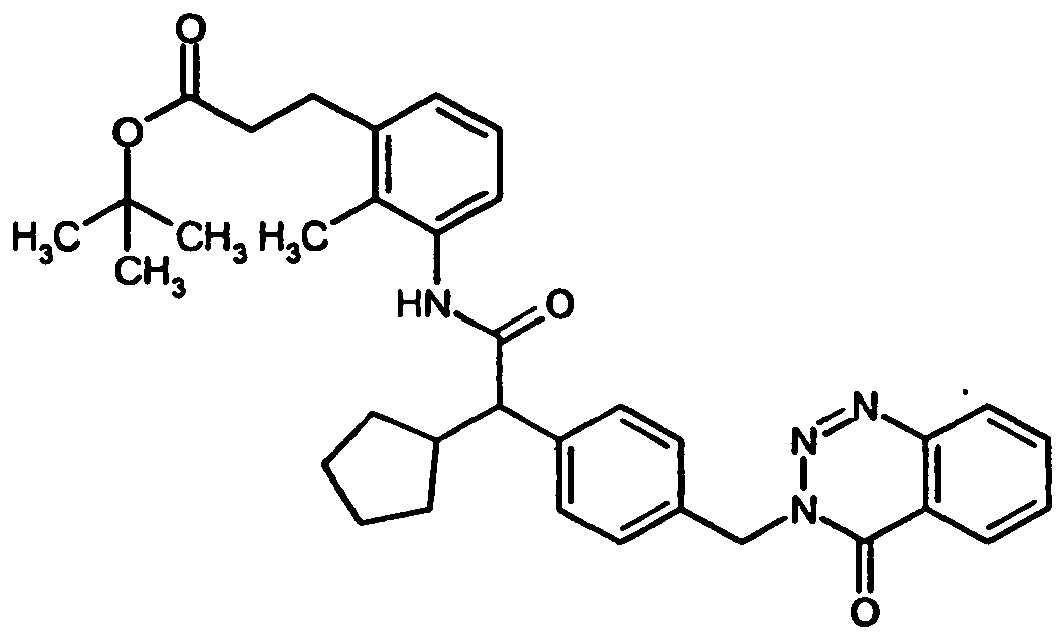
(aus Bsp. 56A und Bsp. 96A) 167A tert.-Butyl-3-{3-[(cyclopentyl{4-[(2-oxo-5-phenyl-1,3,4-oxadiazol-3(2H)-yl)methyl]phenyl}acetyl)amino]-2-methylphenyl}propanoat LC-MS (Methode 10): Rt = 2.77 min; m/z = 613 (M+NH4)+. 
(aus Bsp. 57A und Bsp. 96A) 168A tert.-Butyl-3-(3-{[(4-{[3-(3-chlorphenyl)-2-oxo-imidazolidin-1-yl]methyl}phenyl)(cyclopentyl)acetyl]-amino}phenyl)propanoat LC-MS (Methode 10): Rt = 2.86 min; m/z = 634 (M+NH4)+. 
(aus Bsp. 67A und tert.-Butyl-3-(3-aminophenyl)-propanoat) 169A tert.-Butyl-3-{3-[(cyclopentyl{4-[(3-methyl-2-oxo-imidazolidin-1-yl)methyl]phenyl}acetyl)amino]-phenyl}propanoat LC-MS (Methode 11): Rt = 1.44 min; m/z =518 (M-H)-. 
(aus Bsp. 66A und tert.-Butyl-3-(3-aminophenyl)-propanoat) 170A tert.-Butyl-3-{3-[(4-methoxy-3-methyl-2-{4-[(5-oxo-2-phenyl-5,6-dihydro-4H-1,3,4-oxadiazin-4-yl)methyl]-phenyl}butanoyl)amino]-2-methylphenyl}propanoat LC-MS (Methode 7): Rt = 2.94 min; m/z = 614 (M+H)+. 
(aus Bsp. 64A und Bsp. 96A) 171A tert.-Butyl-3-{3-[(4-cyano-3-methyl-2-{4-[(5-oxo-2-phenyl-5,6-dihydro-4H-1,3,4-oxadiazin-4-yl)methyl]-phenyl}butanoyl)amino]-2-methylphenyl}propanoat LC-MS (Methode 7): Rt = 2.47 min; m/z = 626 (M+NH4)+. 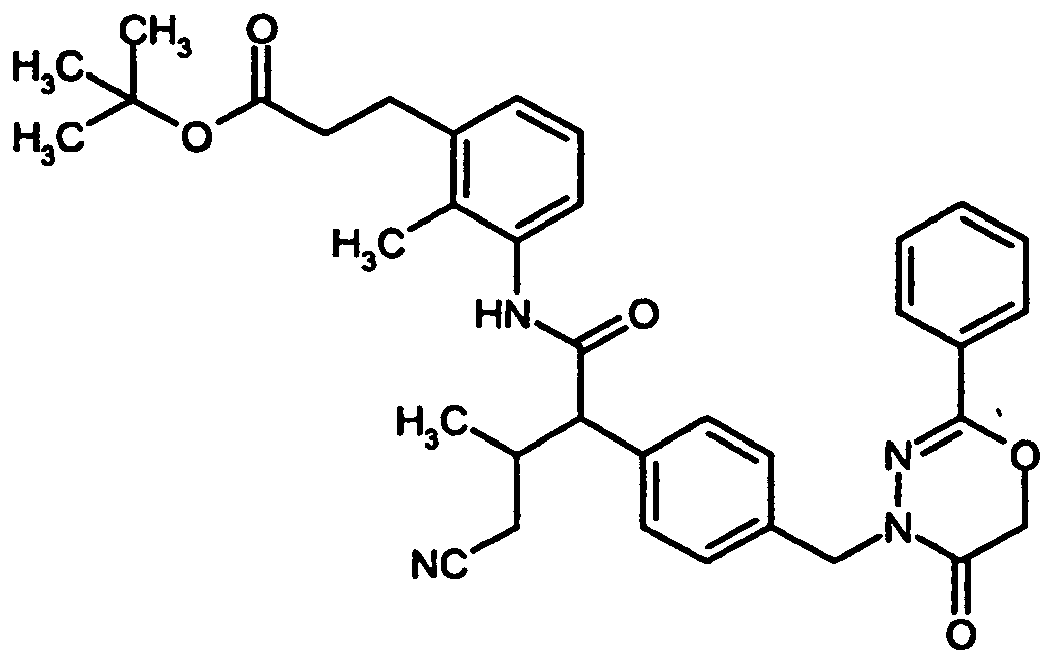
(aus Bsp. 63A und Bsp. 96A) 172A Methyl-3-{3-[(4-cyano-3-methyl-2-{4-[(5-oxo-2-phenyl-5,6-dihydro-4H-1,3,4-oxadiazin-4-yl)methyl]-phenyl}butanoyl)amino]phenyl}propanoat LC-MS (Methode 7): Rt = 2.58 min; m/z = 553 (M+H)+. 
(aus Bsp. 63A und Methyl-3-(3-aminophenyl)-propanoat) 173A Methyl-4-[(4-cyano-3-methyl-2-{4-[(5-oxo-2-phenyl-5,6-dihydro-4H-1,3,4-oxadiazin-4-yl)methyl]phenyl}-butanoyl)amino]-2,3-dihydro-1H-inden-2-carboxylat LC-MS (Methode 7): Rt = 2.59 min; m/z = 565 (M+H)+. 
(aus Bsp. 63A und Bsp. 89A) 174A Ethyl-(2E)-3-{3-[(cyclopentyl{4-[(5-oxo-2-phenyl-5,6-dihydro-4H-1,3,4-oxadiazin-4-yl)methyl]phenyl}-acetyl)amino]phenyl}prop-2-enoat LC-MS (Methode 11): Rt = 1.58 min; m/z = 566 (M+H)+. 
(aus Bsp. 77A und Ethyl-(2E)-3-(3-aminophenyl)-prop-2-enoat) 175A tert.-Butyl-3-{3-[(cyclopentyl{4-[(5-oxo-2-phenyl-5,6-dihydro-4H-1,3,4-oxadiazin-4-yl)methyl]phenyl}-acetyl)amino]-2-methylphenyl}propanoat 1H-NMR (400 MHz, DMSO-d6, δ/ppm): 9.46 (1H, d), 7.78 (2H, d), 7.55-7.38 (5H, m), 7.31 (2H, d), 7.05-6.91 (3H, m), 4.92 (2H, s), 4.86 (2H, s), 3.45 (1H, d), 2.76 (2H, t), 2.61-2.46 (1H, m), 2.40 (2H, t), 1.96 (3H, s), 1.89-1.76 (1H, m), 1.75-1.28 (6H, m), 1.35 (9H, s), 1.06-0.81 (1H, m).
LC-MS (Methode 10): Rt = 2.79 min; m/z = 632 (M+Na)+.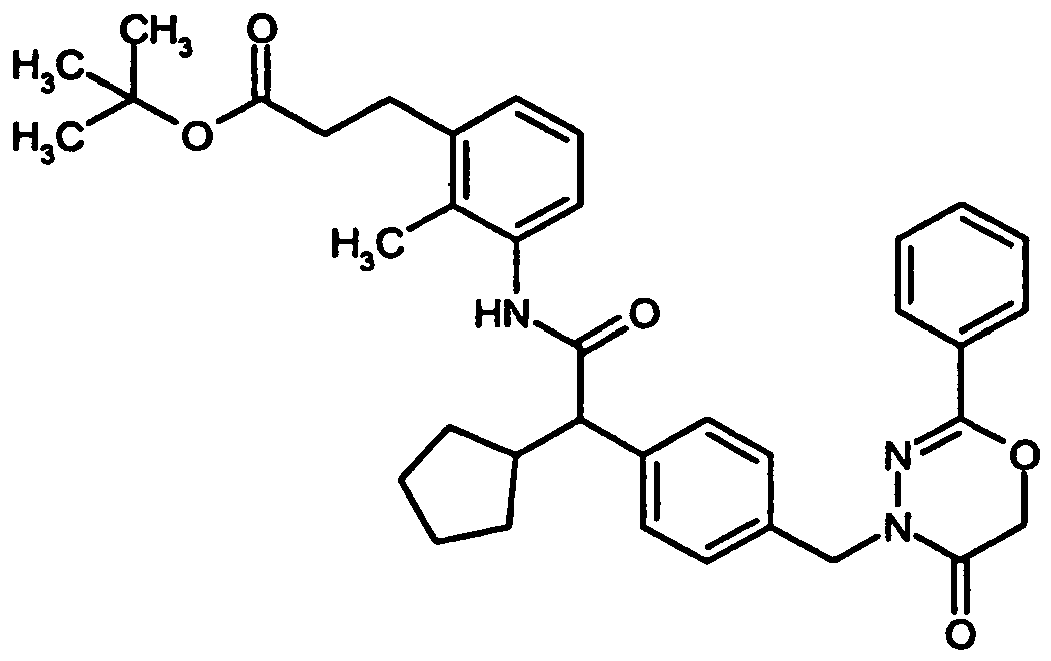
(aus Bsp. 77A und Bsp. 96A) 176A Ethyl-(2E)-3-{4-[(3-methyl-2-{4-[(5-oxo-2-phenyl-5,6-dihydro-4H-1,3,4-oxadiazin-4-yl)methyl]phenyl}-butanoyl)amino]phenyl}prop-2-enoat LC-MS (Methode 11): Rt = 1.50 min; m/z = 540 (M+H)+. 
(aus Bsp. 79A und Ethyl-(2E)-3-(4-aminophenyl)-prop-2-enoat) 177A Methyl-2-{3-[(cyclopentyl{4-[(5-oxo-2-phenyl-5,6-dihydro-4H-1,3,4-oxadiazin-4-yl)methyl]phenyl}acetyl)-amino]-2-methylphenoxy} -2-methylpropanoat LC-MS (Methode 7): Rt = 3.05 min; m/z = 598 (M+H)+. 
(aus Bsp. 77A und Bsp. 104A) 178A Ethyl-(2E)-3-{3-[(2-{4-[(2-tert.-butyl-5-oxo-5,6-dihydro-4H-1,3,4-oxadiazin-4-yl)methyl]phenyl}-3-methylbutanoyl)amino]phenyl}prop-2-enoat LC-MS (Methode 7): Rt = 3.08 min; m/z = 520 (M+H)+. 
(aus Bsp. 58A und Ethyl-(2E)-3-(3-aminophenyl)-prop-2-enoat) 179A Ethyl-4-{3-[(cyclopentyl{4-[(5-oxo-2-phenyl-5,6-dihydro-4H-1,3,4-oxadiazin-4-yl)methyl]phenyl}-acetyl)amino]phenyl}butanoat LC-MS (Methode 7): Rt = 3.16 min; m/z = 582 (M+H)+. 
(aus Bsp. 77A und Ethyl-4-(3-aminophenyl)butanoat [Beilstein Reg.-Nr. 10431434]) 180A Ethyl-3-{3-[(cyclopentyl{4-[(5-oxo-2-phenyl-5,6-dihydro-4H-1,3,4-oxadiazin-4-yl)methyl]phenyl}-acetyl)amino]phenyl}propanoat LC-MS (Methode 7): Rt = 3.03 min; m/z = 568 (M+H)+. 
(aus Bsp. 77A und Ethyl-3-(3-aminophenyl)propanoat) 181A Methyl-2-{3-[(cyclopentyl {4-[(5-oxo-2-phenyl-5,6-dihydro-4H-1,3,4-oxadiazin-4-yl)methyl]phenyl}-acetyl)amino]phenyl}-2-methylpropanoat LC-MS (Methode 11): Rt = 1.55 min; m/z = 568 (M+H)+. 
(aus Bsp. 77A und Methyl-2-(3-aminophenyl)-2-methylpropanoat) -

- Eine Lösung von 500 mg (1.415 mmol) tert.-Butyl-[4-(brommethyl)phenyl](cyclopentyl)acetat (Beispiel 10A) in 5 ml Dichlormethan wurde mit 1.635 ml (2.420 g, 21.228 mmol) Trifluoressigsäure versetzt. Es wurde 2 h bei Raumtemperatur gerührt. Danach wurde gesättigte wässrige Natriumhydrogencarbonat-Lösung zugesetzt und das Gemisch mit Essigsäureethylester extrahiert. Die vereinigten organischen Phasen wurden über Natriumsulfat getrocknet und im Vakuum eingeengt. Es wurden 364 mg (87% d. Th.) der Titelverbindung erhalten.
LC-MS (Methode 10): Rt = 2.09 min; m/z = 295 (M-H)-. -
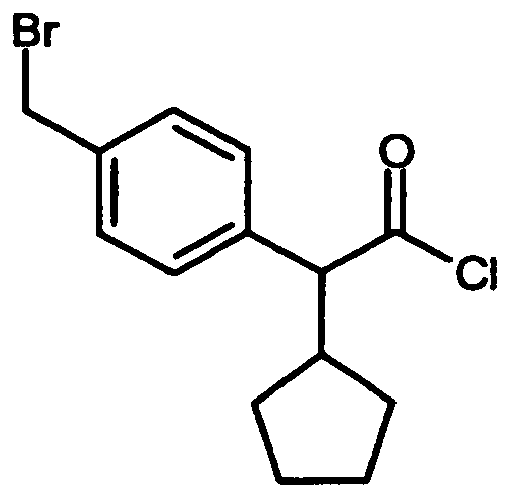
- 246 mg (0.766 mmol) [4-(Brommethyl)phenyl](cyclopentyl)essigsäure wurden in 5 ml Thionylchlorid gelöst und 1 h bei Raumtemperatur und anschließend 1 h bei 50°C gerührt. Das Gemisch wurde danach im Vakuum eingeengt. Es wurden 253 mg der Titelverbindung erhalten, welche ohne weitere Aufreinigung in der Folgestufe umgesetzt wurde.
-

- 235 mg (1.228 mmol) Methyl-4-amino-2,3-dihydro-1H-inden-2-carboxylat (racemisch; Beispiel 88A) wurden in 10 ml THF, gelöst und bei 0°C mit 428 mg (4.911 mmol) N,N-Diisopropylethylamin sowie 388 mg (1.228 mmol) [4-(Brommethyl)phenyl](cyclopentyl)acetylchlorid versetzt. Es wurde 30 min bei 0°C gerührt. Danach wurde gesättigte wässrige Natriumhydrogencarbonat-Lösung zugesetzt und das Gemisch mit Essigsäureethylester extrahiert. Die vereinigten organischen Phasen wurden über Natriumsulfat getrocknet und am Rotationsverdampfer eingeengt. Es wurden 577 mg der Titelverbindung erhalten.
LC-MS (Methode 13): Rt = 2.72 min; m/z = 470 (M+H)+. -

- 100 mg (0.213 mmol) Methyl-4-({[4-(brommethyl)phenyl](cyclopentyl)acetyl}amino)-2,3-dihydro-1H-inden-2-carboxylat wurden in 3.5 ml DMF gelöst und mit 55 mg (0.213 mmol) 2-(2-Methylpropyl)-4H-1,3,4-oxadiazin-5(6H)-on (Beispiel 22A) sowie 76 mg (0.234 mmol) Cäsiumcarbonat versetzt. Das Reaktionsgemisch wurde 3 d bei Raumtemperatur gerührt. Der Ansatz wurde dann im Vakuum eingeengt und der Rückstand mittels präparativer HPLC gereinigt. Es wurden 8 mg (8% d. Th.) der Titelverbindung erhalten.
LC-MS (Methode 7): Rt = 3.07 min; m/z = 546 (M-H)-. -

- 41 mg (0.076 mmol) Ethyl-(2E)-3-{4-[(3-methyl-2-{4-[(5-oxo-2-phenyl-5,6-dihydro-4H-1,3,4-oxadiazin-4-yl)methyl]phenyl}butanoyl)amino]phenyl}prop-2-enoat (Beispiel 176A) wurden in 17 ml Ethanol gelöst und mit 75 mg Palladium auf Kohle (10%) versetzt. Unter Wasserstoffatmosphäre wurde 2 h bei Normaldruck hydriert. Das Reaktionsgemisch wurde danach über Celite filtriert und das Filtrat im Vakuum eingeengt. Es wurden 39 mg (95% d. Th.) der Titelverbindung erhalten.
LC-MS (Methode 10): Rt = 2.46 min; m/z = 542 (M+H)+. -

- Eine Lösung von 590 mg (1.5 mmol) Cyclopentyl{4-[(5-oxo-2-phenyl-5,6-dihydro-4H-1,3,4-oxadiazin-4-yl)methyl]phenyl}essigsäure (Enantiomer 2; Beispiel 77A), 400 mg (1.8 mmol) Methyl-3-(3-aminocyclohexyl)propanoat-Hydrochlorid (Isomerengemisch), 1.05 ml (6.0 mmol) N,N-Diisopropylethylamin und 857 mg (2.26 mmol) O-(7-Azabenzotriazol-1-yl)-N,N,N',N'-tetramethyluronium-Hexafluorophosphat (HATU) in 13 ml DMF wurde über Nacht bei Raumtemperatur gerührt. Nach Beendigung der Reaktion wurde der Ansatz auf Eiswasser gegossen, wobei die Zielverbindung in Form weißer Kristalle ausfiel. Nach Filtration wurden die erhaltenen Kristalle dreimal mit Wasser gewaschen und anschließend über Nacht bei 40°C im Vakuumtrockenschrank getrocknet. Es wurden 830 mg (1.58 mol, 98% d. Th.) der Titelverbindung als Diastereomerengemisch erhalten.
LC-MS (Methode 7): Rt = 2.90 und 2.92 min; m/z = 560 (M+H)+. -

- 830 mg (1.58 mmol) des als Diastereomerengemisch erhaltenen Methyl-3-{3-[(cyclopentyl{4-[(5-oxo-2-phenyl-5,6-dihydro-4H-1,3,4-oxadiazin-4-yl)methyl]phenyl}acetyl)amino]cyclohexyl}propanoats (Beispiel 187A) wurden mittels präparativer HPLC an chiraler Phase weiter aufgetrennt [Säule: Daicel Chiralpak AD-H, 5 µm, 250 mm x 20 mm; Elutionsmittel: Isohexan/Ethanol 60:40 (v/v); Fluss: 15 ml/min; Temperatur: 40°C; UV-Detektion: 220 nm]. Es wurden vier Diastereomere in isomerenreiner Form als farblose Feststoffe erhalten (siehe Beispiele 188A - 191A).
- Rt 6.63 min; Reinheit >95%; >99% ee (Säule s.o.)
Ausbeute: 36 mg
LC-MS (Methode 11): Rt = 1.50 min; m/z = 560 (M+H)+. - Rt 6.98 min; Reinheit >99%; >96% ee (Säule s.o.)
Ausbeute: 36 mg
LC-MS (Methode 11): Rt =1.49 min; m/z = 560 (M+H)+. - Rt 7.39 min; Reinheit >99%; >99% ee (Säule s.o.)
Ausbeute: 295 mg
LC-MS (Methode 7): Rt = 2.89 min; m/z = 560 (M+H)+. - Rt 8.48 min; Reinheit >99%; >99% ee
Ausbeute: 307 mg
LC-MS (Methode 7): Rt = 2.92 min; m/z = 560 (M+H)+. -

- Eine Lösung von 50 mg (0.14 mmol) 3-Methyl-2-{4-[(5-oxo-2-phenyl-5,6-dihydro-4H-1,3,4-oxadiazin-4-yl)methyl]phenyl}butansäure (Enantiomer 2; Beispiel 79A), 20 mg (0.11 mmol) Methyl-(2E)-3-(2-aminophenyl)prop-2-enoat, 1.5 ml Pyridin und 65 mg (0.17 mmol) O-(7-Azabenzotriazol-1-yl)-N,N,N',N'-tetramethyluronium-Hexafluorophosphat (HATU) in 5 ml DMF wurde über Nacht bei Raumtemperatur gerührt. Nach Beendigung der Reaktion wurde der Ansatz auf Eiswasser gegossen, die Phasen getrennt und die wässrige Phase dreimal mit tert.-Butylmethylether extrahiert. Die vereinigten organischen Phasen wurden über Natriumsulfat getrocknet, und nach Filtration wurde das Lösungsmittel im Vakuum bis zur Trockene entfernt. Das erhaltene Rohprodukt wurde über präparative HPLC gereinigt. Es wurden 7 mg (0.01 mmol, 9.8% d. Th.) eines farblosen Öls erhalten.
LC-MS (Methode 11): Rt = 1.38 min; m/z = 526 (M+H)+. -

- 130 mg (0.24 mmol) Ethyl-(2E)-3-{3-[(3-methyl-2-{4-[(5-oxo-2-phenyl-5,6-dihydro-4H-1,3,4-oxadiazin-4-yl)methyl]phenyl}butanoyl)amino]phenyl}prop-2-enoat (Beispiel 135A) wurden in 10 ml Ethanol gelöst und mit 10 mg Palladium auf Kohle (10%) versetzt. Unter Wasserstoffatmosphäre wurde über Nacht bei Normaldruck hydriert. Das Reaktionsgemisch wurde dann über Celite filtriert und das Filtrat im Vakuum eingeengt. Es wurden 118 mg (0.22 mmol, 90% d. Th.) der Titelverbindung erhalten.
LC-MS (Methode 11): Rt = 1.48 min; m/z = 542 (M+H)+. -

- Zu einer Suspension von 16.3 g (84.9 mmol) Cäsiumacetat in 80 ml DMF wurden 20.0 g (75%-ig, 42.5 mmol) (+/-)-[4-(Brommethyl)phenyl](cyclopentyl)essigsäure-tert.-butylester gegeben. Die resultierende Mischung wurde für 1.5 h auf 50°C erhitzt. Nach Abkühlen wurde die Mischung mit Ethylacetat verdünnt, nacheinander mit Wasser und gesättigter Natriumchlorid-Lösung gewaschen, über Magnesiumsulfat getrocknet und im Vakuum eingeengt. Das Rohprodukt wurde durch Chromatographie an Silicagel gereinigt (Laufmittel Cyclohexan/Ethylacetat 40:1 → ca. 10:1). Es wurden 11.7 g (76.4% d. Th.) der Titelverbindung erhalten.
GC-MS (Methode 3): Rt = 7.16 min; keine Ionisation.
MS (DCI): m/z = 350 (M+NH4)+.
1H-NMR (400 MHz, DMSO-d 6): δ = 7.35-7.29 (m, 4H), 5.07 (s, 2H), 3.21 (d, 1H), 2.45-2.37 (m, 1H), 2.07 (s, 3H), 1.98-1.88 (m, 1H), 1.65-1.38 (m, ca. 4H), 1.37 (s, 9H), 1.30-1.18 (m, 2H), 1.01-0.92 (m, 1H). -

- 13.27 g (37.2 mmol, 95%-ig) (+/-)-{4-[(Acetyloxy)methyl]phenyl}(cyclopentyl)essigsäure-tert.-butylester wurden in 117 ml Dichlormethan gelöst, auf 0°C abgekühlt und mit 58.4 ml Trifluoressigsäure versetzt. Die Reaktionsmischung wurde zunächst 1.5 h bei 0°C und dann weitere 1.5 h bei RT gerührt. Die Mischung wurde anschließend im Vakuum eingeengt und der Rückstand im Hochvakuum getrocknet. Der Rückstand wurde in 50 ml Dichlormethan aufgenommen und die Lösung viermal mit Wasser gewaschen. Die organische Phase wurde über Magnesiumsulfat getrocknet und im Vakuum eingeengt. Nach Trocknen im Hochvakuum wurden 11.41 g der Titelverbindung erhalten, welche ohne weitere Reinigung in der Folgereaktion eingesetzt wurde.
LC-MS (Methode 10): Rt = 1.88 min; m/z = 275 (M-H)-.
1H-NMR (400 MHz, DMSO-d 6): δ = 7.35-7.28 (m, 4H), 5.03 (s, 2H), 3.24 (d, 1H), 2.48-2.40 (m, 1H), 2.05 (s, 3H), 1.90-1.80 (m, 1H), 1.65-1.20 (m, ca. 6H), 0.98-0.90 (m, 1H). -

- 11.41 g (90%-ig, 37.16 mmol) (+/-)-{4-[(Acetyloxy)methyl]phenyl}(cyclopentyl)essigsäure wurden in einer Mischung aus 71.8 ml DMF und 22.5 ml Pyridin gelöst und mit 15.54 g (40.88 mmol) 1-[Bis-(dimethylamino)methylen]-5-chlor-3-oxy-1H-benzotriazol-1-ium-Tetrafluoroborat sowie 8.75 g (37.16 mmol) 3-(3-Amino-2-methylphenyl)propansäure-tert.butylester versetzt. Die Reaktionsmischung wurde über Nacht bei RT gerührt, bevor im Hochvakuum eingeengt wurde. Der Rückstand wurde in 100 ml Ethylacetat aufgenommen und nacheinander mit 10%-iger wässriger Zitronensäure, gesättigter Natriumhydrogensulfat-Lösung und gesättigter Natriumchlorid-Lösung gewaschen. Die organische Phase wurde über Magnesiumsulfat getrocknet und im Vakuum eingeengt. Das Rohprodukt wurde durch Chromatographie an Silicagel gereinigt (Laufmittel Cyclohexan/Ethylacetat 10:1 → 3:1). Es wurden 16.36 g (89.2% d. Th.) der Titelverbindung erhalten.
LC-MS (Methode 11): Rt = 1.52 min; m/z = 511 (M+NH4)+.
1H-NMR (400 MHz, DMSO-d 6): δ = 9.98 (s, 1H), 7.42 (d, 2H), 7.32 (d, 2H), 7.05-6.96 (m, 3H), 5.05 (s, 2H), 3.48 (d, 1H), 2.70 (t, 2H), 2.64-2.55 (m, 1H), 2.42 (t, 2H), 2.08 (s, 3H), 2.02 (s, 3H), 1.90-1.80 (m, 1H), 1.72-1.45 (m, ca. 5H), 1.38 (s, 9H), 1.02-0.95 (m, 1H). -

- 16.0 g (32.41 mmol) (+/-)-3-(3-{[{4-[(Acetyloxy)methyl]phenyl}(cyclopentyl)acetyl]amino}-2-methylphenyl)propansäure-tert.-butylester wurden in 300 ml einer 2 M Lösung von Ammoniak in Methanol gelöst und zunächst 2 h bei 30-40°C und dann über Nacht bei RT gerührt. Die Lösung wurde danach im Vakuum eingeengt und der Rückstand durch Chromatographie an Silicagel gereinigt (Laufmittel Dichlormethan/Methanol 100:1). Es wurden 13.6 g (93.1 % d. Th.) der Titelverbindung erhalten.
LC-MS (Methode 11): Rt = 1.37 min; m/z = 452 (M+H)+.
1H-NMR (400 MHz, DMSO-d 6): δ = 9.95 (s, 1H), 7.37 (d, 2H), 7.27 (d, 2H), 7.05-6.96 (m, 3H), 5.13 (t, 1H), 4.47 (d, 2H), 3.45 (d, 1H), 2.79 (t, 2H), 2.62-2.52 (m, 1H), 2.42 (t, 2H), 2.01 (s, 3H), 1.90-1.80 (m, 1H), 1.73-1.40 (m, 4H), 1.38 (s, 9H), 1.02-0.95 (m, 1H). -

- 6.0 g (13.29 mmol) (+/-)-3-[3-({Cyclopentyl[4-(hydroxymethyl)phenyl]acetyl}amino)-2-methylphenyl]propansäure-tert.-butylester wurden in 375 ml trockenem THF gelöst und mit 9.25 g (27.9 mmol) Tetrabromkohlenstoff versetzt. Anschließend wurden über 1.5 h in kleineren Portionen 9.06 g (34.54 mmol) Triphenylphosphin hinzugefügt. Die Reaktionsmischung wurde 5 h bei RT gerührt, bevor vom Feststoff abfiltriert und das Filtrat eingeengt wurde. Der Rückstand wurde durch Chromatographie an Silicagel gereinigt (Laufmittel Cyclohexan/Ethylacetat 5:1 → 1:1). Es wurden 7.22 g (ca. 100% d. Th. bei ca. 95% Reinheit) der Titelverbindung erhalten.
LC-MS (Methode 7): Rt = 3.07 min; m/z= 514/516 (M+H)+.
1H-NMR (400 MHz, DMSO-d 6): δ = 9.99 (s, 1H), 7.42-7.38 (m, 4H), 7.05-6.95 (m, 3H), 4.70 (d, 2H), 3.48 (d, 1H), 3.30-3.25 (m, ca. 1H), 2.70 (t, 2H), 2.64-2.53 (m, 1H), 2.41 (t, 2H), 2.01 (s, 3H), 1.90-1.80 (m, 1H), 1.73-1.40 (m, 4H), 1.35 (s, 9H), 1.02-0.93 (m, 1H). -

- 303.7 g (2022.46 mmol) (4-Methylphenyl)essigsäure und 301 g (1926.2 mmol) (1R,2S,5R)-5-Methyl-2-(propan-2-yl)cyclohexanol wurden in 933 ml Toluol vorgelegt, mit 2.5 ml (38.5 mmol) Methansulfonsäure versetzt und über Nacht unter Rückfluss an einem Wasserabscheider erhitzt. Man ließ danach abkühlen und versetzte die Reaktionslösung mit einer Mischung aus 30 ml 45%-iger Natronlauge und 400 ml Wasser. Nach 30 min wurden die Phasen getrennt. Die organische Phase wurde über Natriumsulfat getrocknet, filtriert und am Rotationsverdampfer eingeengt. Es wurden 569.5 g (97% d. Th.) der Titelverbindung erhalten.
1H-NMR (500 MHz, DMSO-d 6): δ = 7.12 (s, 4H), 4.56 (td, 1H), 3.57 (s, 2H), 2.50 (br. s, 1H), 2.27 (s, 3H), 1.84 (d, 1H), 1.77-1.70 (m, 1H), 1.66-1.57 (m, 2H), 1.48-1.37 (m, 1H), 1.32 (t, 1H), 1.10-0.89 (m, 2H), 0.86 (d, 3H), 0.81 (d, 3H), 0.65 (d, 3H). -

- Unter Argon wurden 442.73 g (3945.5 mmol) Kalium-tert: butylat in 1230 ml DMF bei -10°C vorgelegt und portionsweise mit 569 g (1972.7 mmol) (1R,2S,5R)-5-Methyl-2-(propan-2-yl)cyclohexyl-(4-methylphenyl)acetat versetzt. Anschließend wurden 352.81 g (2367.8 mmol) Bromcyclopentan zugetropft, wobei die Reaktionstemperatur zwischen -5°C und -10°C gehalten wurde. Nach 90 min bei -10°C wurde mit 1.6 Liter Wasser versetzt und 15 min bei RT gerührt. Es wurden dann 1.2 Liter Essigsäureethylester zugegeben, weitere 15 min gerührt und anschließend die Phasen getrennt. Die organische Phase wurde über Natriumsulfat getrocknet, filtriert und am Rotationsverdampfer eingeengt. Das Rohprodukt wurde aus 2 Liter Methanol bei 50°C umkristallisiert. Es wurden 423.0 g (60% d. Th.) der Titelverbindung erhalten.
1H-NMR (400 MHz, DMSO-d 6): δ = 7.19 (d, 2H), 7.11 (d, 2H), 4.55 (td, 1H), 3.26 (d, 1H), 2.27 (s, 3H), 1.83-1.73 (m, 2H), 1.68-1.24 (m, 11H), 1.23-1.13 (m, 1H), 1.04-0.94 (m, 2H), 0.88-0.77 (m, 8H), 0.66 (d, 3H). -

- Die Titelverbindung kann gemäß
US-Patent 5,714,494 durch Bromierung von (1R,2S,5R)-5-Methyl-2-(propan-2-yl)cyclohexyl-(2S)-cyclopentyl(4-methylphenyl)ethanoat in siedendem Tetrachlorkohlenstoff mit N-Bromsuccinimid in Gegenwart von 2,2'-Azobis-(2-methylpropionitril) hergestellt werden.
GC-MS (Methode 3): Rt = 9.15 min; keine Ionisation.
LC-MS (Methode 12): Rt = 3.54 min; keine Ionisation.
MS (DCI): m/z = 452/454 (M+NH4)+. -

- 50.0 g (0.140 mol) (1R,2S,5R)-5-Methyl-2-(propan-2-yl)cyclohexyl-(2S)-cyclopentyl(4-methylphenyl)ethanoat wurden 16 h lang in 500 ml Trifluoressigsäure unter Rückfluss gerührt. Die Trifluoressigsäure wurde danach am Rotationsverdampfer entfernt und der Rückstand in je 500 ml Wasser und Essigsäureethylester aufgenommen. Nach Extraktion wurde die organische Phase mit gesättigter Natriumchlorid-Lösung gewaschen, über Natriumsulfat getrocknet und eingeengt. Der Rückstand wurde in 1.5 Liter Wasser aufgenommen, mit Natronlauge auf pH 10 eingestellt und zweimal mit je 300 ml tert.-Butylmethylether gewaschen. Die wässrige Phase wurde dann mit konzentrierter Salzsäure auf pH 4 eingestellt und zweimal mit je 300 ml Essigsäureethylester extrahiert. Die vereinigten Ethylacetat-Extrakte wurden über Natriumsulfat getrocknet, filtriert und am Rotationsverdampfer eingeengt. Es wurden 27.4 g (89% d. Th.) der Titelverbindung erhalten.
LC-MS (Methode 11): Rt = 1.28 min; m/z = 217 (M-H)-.
1H-NMR (400 MHz, DMSO-d 6): δ = 7.19 (d, 2H), 7.13-7.08 (m, 2H), 3.16 (d, 1H), 2.41 (dt, 1H), 2.26 (s, 3H), 1.87-1.76 (m, 1H), 1.66-1.14 (m, 6H), 1.00-0.87 (m, 1H). -

- 160 g (732.9 mmol) (2S)-Cyclopentyl-(4-methylphenyl)essigsäure wurden in 480 ml Dichlormethan vorgelegt und bei 10°C mit 2.1 ml Schwefelsäure und 172 ml (1722.4 mmol) einkondensiertem 2-Methylprop-1-en versetzt. Die Mischung wurde über Nacht bei RT gerührt. Falls erforderlich, wurde die Zugabe von Schwefelsäure und 2-Methylprop-1-en wiederholt, bis kein Edukt mehr vorhanden war. Nach Beendigung der Reaktion wurden 21 g Kaliumcarbonat zugesetzt und die Mischung 2-3 h nachgerührt (Gasentwicklung). Man verdünnte dann mit 700 ml Wasser und extrahierte mit Essigsäureethylester. Die organische Phase wurde über Natriumsulfat getrocknet, filtriert und am Rotationsverdampfer eingeengt. Das Rohprodukt wurde durch Chromatographie an Silicagel gereinigt (Laufmittel Cyclohexan/Essigsäureethylester 4:1). Es wurden 172 g (85% d. Th.) der Titelverbindung erhalten.
1H-NMR (400 MHz, DMSO-d 6): δ = 7.19 (d, 2H), 7.11 (d, 2H), 3.13 (d, 1H), 2.44-2.31 (m, 1H), 2.27 (s, 3H), 1.86-1.76 (m, 1H), 1.68-1.36 (m, 4H), 1.34 (s, 9H), 1.31-1.17 (m, 2H), 1.00-0.89 (m, 1H). -

- 3.0 g (10.93 mmol) (2S)-Cyclopentyl-(4-methylphenyl)essigsäure-tert.-butylester wurden in 20 ml Chloroform auf Rückfluss erhitzt und dann mit 90 mg (0.55 mmol) 2,2'-Azobis-(2-methylpropannitril) sowie 2.72 g (15.31 mmol) N-Bromsuccinimid, in 5 Portionen alle 30 min, versetzt. Es wurde 6 h unter Rückfluss gerührt, dann auf RT abgekühlt und am Rotationsverdampfer eingeengt. Der Rückstand wurde durch Chromatographie an 120 ml Silicagel gereinigt (Laufmittel Cyclohexan/Essigsäureethylester 4:1). Es wurden 2.8 g (72% d. Th.) der Titelverbindung erhalten.
1H-NMR (400 MHz, DMSO-d 6): δ = 7.39 (d, 2H), 7.31 (d, 2H), 4.68 (s, 2H), 2.45-2.32 (m, 1H), 1.89-1.77 (m, 1H), 1.69-1.38 (m, 5H), 1.37-1.32 (m, 9H), 1.30-1.16 (m, 2H), 1.00-0.92 (m, 1H). -
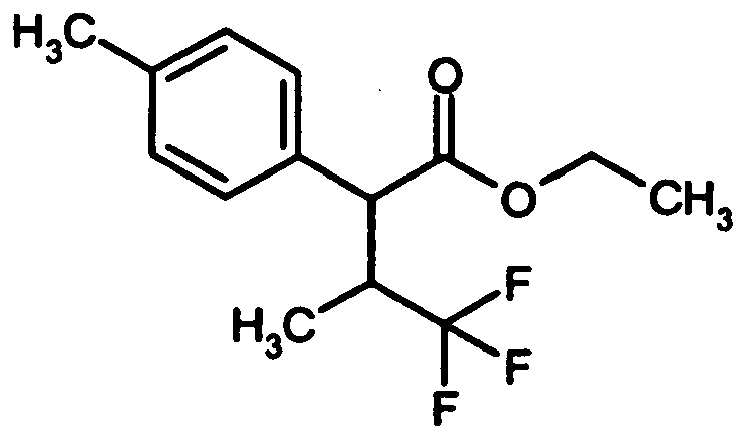
- Unter Argon wurden 196.9 mg (0.88 mmol) Palladium(II)acetat und 724.8 mg (1.84 mmol) 2-Dicyclohexylphosphino-2'-(N,N-dimethylamino)biphenyl in 50 ml wasserfreiem Toluol vorgelegt. Die Reaktionslösung wurde anschließend langsam mit 43.8 ml (43.8 mmol) einer 1 M Lösung von Lithiumhexamethyldisilazid in THF versetzt und 10 min bei Raumtemperatur gerührt. Nachfolgend wurde die Reaktionslösung auf -10°C abgekühlt, langsam mit 7 g (38.0 mmol) Ethyl-4,4,4-trifluor-3-methylbutanoat versetzt und 10 min bei -10°C nachgerührt. Danach wurden 5 g (29.2 mmol) 4-Bromtoluol, gelöst in 50 ml Toluol, zugetropft und die Reaktionslösung erst auf Raumtemperatur und dann auf 80°C erwärmt. Das Gemisch wurde 2 h bei dieser Temperatur gerührt, dann auf Raumtemperatur abgekühlt und über Nacht nachgerührt. Nach erfolgter Umsetzung (DC-Kontrolle; Laufmittel Cyclohexan/Dichlormethan 2: 1) wurde die Reaktionsmischung über Kieselgur filtriert, der Rückstand mehrfach mit Essigsäureethylester und Dichlormethan gewaschen und die vereinigten Filtrate im Vakuum eingeengt. Das erhaltene Rohprodukt wurde über Kieselgel chromatographisch gereinigt (Laufmittel Petrolether/Dichlormethan 4:1 → 3:1). Es wurden 3.91 g (14.3 mmol, 48.8% d. Th.) der Titelverbindung als farblose Flüssigkeit isoliert.
1H-NMR (400 MHz, DMSO-d6, δ/ppm): 7.26 (2H, d), 7.20-7.12 (2H, m), 4.17-3.95 (2H, m), 3.74 (0.25H, d), 3.66 (0.75H, d), 3.35-3.07 (1H, m), 2.29 (2.25H, s), 2.28 (0.75H, s), 1.17 (0.75H, d), 1.11 (3H, t), 0.76 (2.25H, d) (Diastereomerengemisch).
GC-MS (Methode 3): Rt = 4.20 min; m/z = 275 (M+H)+ (Diastereomer 1); Rt = 4.23 min; m/z = 275 (M+H)+ (Diastereomer 2). - Auf analoge Weise wurde die in der folgenden Tabelle aufgeführte Verbindung erhalten:
Beispiel Name / Struktur Analytische Daten 206A Ethyl-2-(4-methylphenyl)-3-(trifluormethyl)pentanoat GC-MS (Methode 3): Rt = 4.57 min; m/z = 288 (M+H)+. 
(aus 4-Bromtoluol und Ethyl-3-(trifluormethyl)pentanoat [CAS Reg.-Nr. 400-25-9]) -

- Unter Sauerstoffausschluss wurden 0.44 ml (3.2 mmol) Diisopropylamin in 4 ml THF vorgelegt, auf -78°C abgekühlt und langsam mit 1.28 ml (3.2 mmol) einer 2.5 M Lösung von n-Butyllithium in Hexan versetzt. Anschließend wurde die Reaktionslösung auf -10°C erwärmt und 10 min bei dieser Temperatur nachgerührt. Die Reaktionslösung wurde dann wieder auf -78°C abgekühlt und langsam mit 500 mg (2.32 mmol) tert.-Butyl-(4-methylphenyl)acetat, gelöst in 6 ml THF, versetzt. Die Reaktionslösung wurde anschließend langsam auf -30°C erwärmt und danach erneut auf -78°C abgekühlt. Nach Erreichen dieser Temperatur wurden 596 mg (2.91 mmol) 5-Brom-1,1,1-trifluor-3-methylpentan langsam zugetropft. Nach beendeter Zugabe wurde die Lösung langsam auf Raumtemperatur erwärmt und über Nacht gerührt. Nach DC-Kontrolle (Laufmittel Cyclohexan/ Essigsäureethylester 10:1) wurde der Ansatz mit gesättigter Ammoniumchlorid-Lösung versetzt und in Essigsäureethylester aufgenommen. Die wässrige Phase wurde zweimal mit Essigsäureethylester extrahiert. Die vereinigten organischen Phasen wurden über Natriumsulfat getrocknet. Nach Filtration wurde das Lösungsmittel im Vakuum entfernt. Das Rohprodukt wurde über Kieselgel chromatographisch gereinigt (Laufmittel Cyclohexan/Essigsäureethylester 20:1). Es wurden 490 mg (1.48 mmol, 61% d. Th.) eines gelblichen Öls isoliert.
GC-MS (Methode 3): Rt = 4.89 min; m/z = 274 (M+H)+. -

- 12.6 ml (118.6 mmol) Toluol und 20.9 g (119.7 mmol) 4,4,4-Trifluor-2-methylbutanoylchlorid in 300 ml 1,2-Dichlorethan wurden bei 0°C portionsweise mit 16.44 g (123.3 mmol) Aluminiumchlorid versetzt und eine Stunde bei 0°C gerührt. Anschließend wurde der Reaktionsansatz langsam auf Raumtemperatur erwärmt und drei Stunden bei dieser Temperatur nachgerührt. Die Reaktionsmischung wurde danach langsam in 300 ml eisgekühlte 18.5%-ige Salzsäure gegeben und die organische Phase anschließend abgetrennt. Die wässrige Phase wurde noch dreimal mit Dichlormethan extrahiert. Die vereinigten organischen Phasen wurden über Natriumsulfat getrocknet, filtriert und das Lösungsmittel im Vakuum entfernt. Das Rohprodukt wurde über Kieselgel chromatographisch gereinigt (Laufmittel Cyclohexan/Essigsäureethylester 4:1). Es wurden 19.96 g (18.7 mmol, 73% d. Th.) der Titelverbindung erhalten.
LC-MS (Methode 11): Rt = 1.35 min; m/z = 228 (M-H)-.
1H-NMR (400 MHz, DMSO-d6): δ = 7.92 (d, 2H), 7.36 (d, 2H), 3.82-3.98 (m, 1H), 2.70-2.92 (m, 1H), 2.40-2.49 (m, 1H), 2.36-2.40 (m, 3H), 1.18 (d, 3H). -

- Unter Argon wurden 1.45 ml (4.34 mmol) einer 3 M Lösung von Methylmagnesiumiodid in Diethylether in 10 ml Diethylether vorgelegt und bei 0°C langsam mit 1000 mg (4.34 mmol) 4,4,4-Trifluor-2-methyl-1-(4-methylphenyl)butan-1-on, gelöst in 5 ml Diethylether, versetzt. Anschlie-βend wurde das Reaktionsgemisch langsam auf Raumtemperatur erwärmt und über Nacht nachgerührt. Die Reaktionslösung wurde danach langsam in 15 ml 1 M Salzsäure gegeben und mit Diethylether verdünnt. Nach Abtrennung der organischen Phase wurde die wässrige Phase noch dreimal mit Diethylether extrahiert. Die vereinigten organischen Phasen wurden über Magnesiumsulfat getrocknet, filtriert und das Lösungsmittel im Vakuum entfernt. Das Rohprodukt wurde über Kieselgel chromatographisch gereinigt (Laufmittel Cyclohexan/Essigsäureethylester 50:1). Es wurden 710 mg (3.11 mmol, 71% d. Th.) der Titelverbindung als farbloses Öl erhalten.
GC-MS (Methode 3): Rt = 3.23 min; m/z = 228 (M)+. -

- Unter Argon wurden 9.4 g (41.2 mmol) 1-Methyl-4-(5,5,5-trifluor-3-methylpent-1-en-2-yl)benzol in 130 ml THF gelöst, mit 57.6 ml einer 1 M Boran-THF-Komplex-Lösung versetzt und 24 h bei Raumtemperatur gerührt. Anschließend wurden unter kräftigen Rühren zunächst 79 ml Wasser, dann 24 ml 6 M Natronlauge und schließlich 14.5 ml (475 mmol) 30%-ige wässrige Wasserstoffperoxid-Lösung zugegeben. Darauf folgend wurde die Reaktionslösung in 200 ml gesättigte Natriumchlorid-Lösung gegeben, die organische Phase abgetrennt und die wässrige Phase noch dreimal mit Diethylether extrahiert. Die vereinigten organischen Phasen wurden über Magnesiumsulfat getrocknet, filtriert und das Lösungsmittel im Vakuum entfernt. Das Rohprodukt wurde über Kieselgel chromatographisch gereinigt (Laufmittel Cyclohexan/Essigsäureethylester 4:1 → 2:1). Es wurden 5 g (20.3 mmol, 49% d. Th.) der Titelverbindung als farbloses Öl erhalten.
GC-MS (Methode 3): Rt = 4.45 min; m/z = 246 (M)+ (Diastereomer 1); Rt = 4.54 min; m/z = 246 (M)+ (Diastereomer 2). -
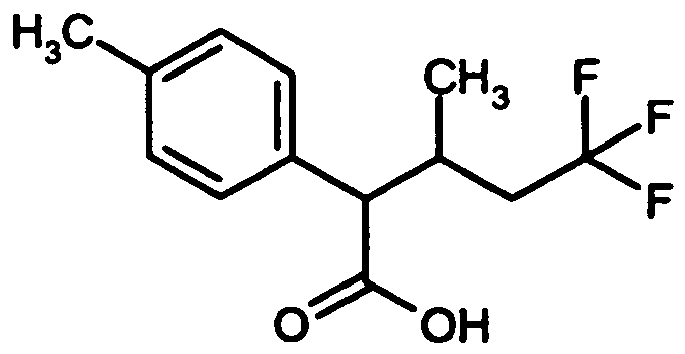
- 5 g (20.3 mmol) 5,5,5-Trifluor-3-methyl-2-(4-methylphenyl)pentan-1-ol in 83 ml DMF wurden mit 26.7 g (71.1 mmol) Pyridiniumdichromat versetzt und 12 Stunden bei Raumtemperatur gerührt. Darauf folgend wurde die Reaktionsmischung in 100 ml Wasser gegeben, die organische Phase abgetrennt und die wässrige Phase noch sechsmal mit Diethylether extrahiert. Die vereinigten organischen Phasen wurden fünfmal mit 0.5 M Natronlauge extrahiert. Anschließend wurden die vereinigten wässrig-basischen Phasen mit 3 M Salzsäure auf ca. pH 3 angesäuert und sechsmal mit Essigsäureethylester extrahiert. Die vereinigten Essigester-Phasen wurden über Magnesiumsulfat getrocknet, filtriert und das Lösungsmittel im Vakuum entfernt. Es wurden 3.79 g (14.56 mmol, 71 % d. Th.) der Titelverbindung als farbloses Öl erhalten.
LC-MS (Methode 15): Rt = 1.09 min; m/z = 259 (M-H)- (Diastereomer 1); Rt = 1.12 min; m/z = 259 (M-H)- (Diastereomer 2). -

- Unter Argon wurden bei Raumtemperatur 3.79 g (14.5 mmol) 5,5,5-Trifluor-3-methyl-2-(4-methylphenyl)pentansäure in 60 ml THF gelöst und mit 27 µl (0.22 mmol) einer 1 M Bortrifluorid-Diethylether-Komplex-Lösung versetzt. Anschließend wurden portionsweise 3.828 g (17.48 mmol) tert.-Butyl-2,2,2-trichlorethanimidoat zudosiert und die Mischung über Nacht bei Raumtemperatur gerührt. Nach vollständiger Umsetzung (DC-Kontrolle; Laufmittel Cyclohexan/ Essigsäureethylester 2:1) wurden unter kräftigern Rühren der Reaktionslösung 2 g festes Natriumhydrogencarbonat zugegeben. Die Reaktionsmischung wurde danach filtriert und das Lösungsmittel im Vakuum entfernt. Das Rohprodukt wurde über Kieselgel chromatographisch gereinigt (Laufmittel Cyclohexan/Essigsäureethylester 5:1). Es wurden 3.25 g (10.27 mmol, 71% d. Th.) der Titelverbindung als farbloses Öl erhalten.
MS (DCI): m/z = 334 (M+NH4)+.
GC-MS (Methode 3): Rt = 4.49 min; m/z = 260 (M-C4H8)+ (Diastereomer 1); Rt = 4.52 min; m/z = 260 (M-C4H8)+ (Diastereomer 2). -

- Unter Argon wurden 4.4 ml (31.5 mmol) Diisopropylamin in 50 ml THF vorgelegt, auf -30°C abgekühlt und langsam mit 13.7 ml (31.5 mmol) einer 2.3 M Lösung von n-Butyllithium in Hexan versetzt. Anschließend wurde die Reaktionslösung auf -20°C erwärmt, langsam mit 5 g (24.3 mmol) tert.-Butyl-(4-methylphenyl)acetat, gelöst in 30 ml THF, versetzt und 2 Stunden bei dieser Temperatur nachgerührt. Die Reaktionslösung wurde anschließend auf -78°C abgekühlt und langsam mit 2.2 ml (25.7 mmol) 2-Cyclopenten-1-on, gelöst in 20 ml THF, versetzt. Nach beendeter Zugabe wurde die Lösung eine Stunde bei dieser Temperatur nachgerührt. Nach DC-Kontrolle (Laufmittel Cyclohexan/Essigsäureethylester 9:1) wurde der Ansatz mit gesättigter Ammoniumchlorid-Lösung versetzt und in Essigsäureethylester aufgenommen. Die wässrige Phase wurde zweimal mit Essigsäureethylester extrahiert. Die vereinigten organischen Phasen wurden über Natriumsulfat getrocknet. Nach Filtration wurde das Lösungsmittel im Vakuum entfernt. Das Rohprodukt wurde über Kieselgel chromatographisch gereinigt (Laufmittel Cyclohexan/Essigsäureethylester 9:1). Es wurden 3020 mg (10.47 mmol, 43% d. Th.) der Titelverbindung als farbloses Öl isoliert.
MS (DCI): m/z = 306 (M+NH4)+.
1H-NMR (500 MHz, DMSO-d6): δ = 7.20 (t, 2H), 7.14 (t, 2H), 3.38 (t, 1H), 2.66-2.80 (m, 1H), 2.30-2.39 (m, 1H), 2.28 (d, 3H), 1.92-2.23 (m, 3H), 1.72-1.79 (m, 1H), 1.51-1.66 (m, 1H), 1.35 (d, 9H). -

- Unter Argon wurden 4.8 ml (4.85 mmol) einer 50%-igen Lösung von 1,1'-[(Trifluor-λ4-sulfanyl)-imino]bis(2-methoxyethan) (Desoxofluor) in THF, gelöst in 5 ml Toluol, vorgelegt, auf 5°C abgekühlt, langsam mit 22 µl (0.17 mmol) einer 1 M Bortrifluorid-Diethylether-Komplex-Lösung versetzt und zwei Stunden bei 5°C nachgerührt. Anschließend wurde die Reaktionslösung langsam mit 1 g (3.45 mmol) tert.-Butyl-(4-methylphenyl)(3-oxocyclopentyl)acetat, gelöst in 5 ml Toluol, versetzt, dann auf 55°C erwärmt und 24 Stunden bei dieser Temperatur nachgerührt. Die Reaktionsmischung wurde danach in ein auf 0°C gekühltes Gemisch bestehend aus 5 ml Toluol und 10 ml 2 M Natronlauge gegeben. Die organische Phase wurde abgetrennt, und die wässrige Phase wurde noch zweimal mit Essigsäureethylester extrahiert. Die vereinigten organischen Phasen wurden über Natriumsulfat getrocknet. Nach Filtration wurde das Lösungsmittel im Vakuum entfernt. Das Rohprodukt wurde über Kieselgel chromatographisch gereinigt (Laufmittel Cyclohexan/ Essigsäureethylester 7:1). Es wurden 701 mg (2.26 mmol, 65% d. Th.) der Titelverbindung als farbloses Öl isoliert.
MS (DCI): m/z = 328 (M+NH4)+.
GC-MS (Methode 3): Rt = 5.64 min; m/z = 254 (M-C4H8)+ (Diastereomer 1); Rt = 5.66 min; m/z = 254 (M-C4H8)+ (Diastereomer 2). -

- 2.25 g (8.2 mmol) Ethyl-4,4,4-trifluor-3-methyl-2-(4-methylphenyl)butanoat, 1.53 g (8.6 mmol) N-Bromsuccinimid und 67 mg (0.41 mmol) 2,2'-Azobis-(2-methylpropannitril) in 36 ml Trichlormethan wurden über Nacht unter Rückfluss gerührt. Nach vollständiger Umsetzung wurde das Succinimid abfiltriert und der Filterrückstand mit Dichlormethan nachgewaschen. Das Filtrat wurde im Vakuum eingeengt. Das Rohprodukt wurde über Kieselgel chromatographisch gereinigt (Laufmittel Cyclohexan/Essigsäureethylester 40:1). Es wurden 2.667 g (7.5 mmol, 92% d. Th.) eines gelblichen Öls isoliert.
GC-MS (Methode 3): Rt = 5.72 min; m/z = 373 (M-Br)+ (Diastereomer 1); Rt = 5.74 min; m/z = 373 (M-Br)+ (Diastereomer 2). - Auf analoge Weise wurden die in der folgender Tabelle aufgeführten Verbindungen erhalten:
Beispiel Name / Struktur Analytische Daten 216A tert.-Butyl-2-[4-(brommethyl)phenyl]-6,6,6-trifluor-4-methylhexanoat GC-MS (Methode 3):
Diastereomer 1
Rt = 6.27 min, m/z = 274 (M-Br-C4H8)+;
Diastereomer 2
Rt = 6.30 min, m/z = 274 (M-Br-C4H8)+.
217A tert.-Butyl-2-[4-(brommethyl)phenyl]-5,5,5-trifluor-3-methylpentanoat GC-MS (Methode 3):
Diastereomer 1
Rt = 5.96 min, m/z = 259 (M-Br-C4H8)+;
Diastereomer 2
Rt = 6.00 min, m/z = 259 (M-Br-C4H8)+.
MS (DCI): m/z = 412/414 (M+NH4)+.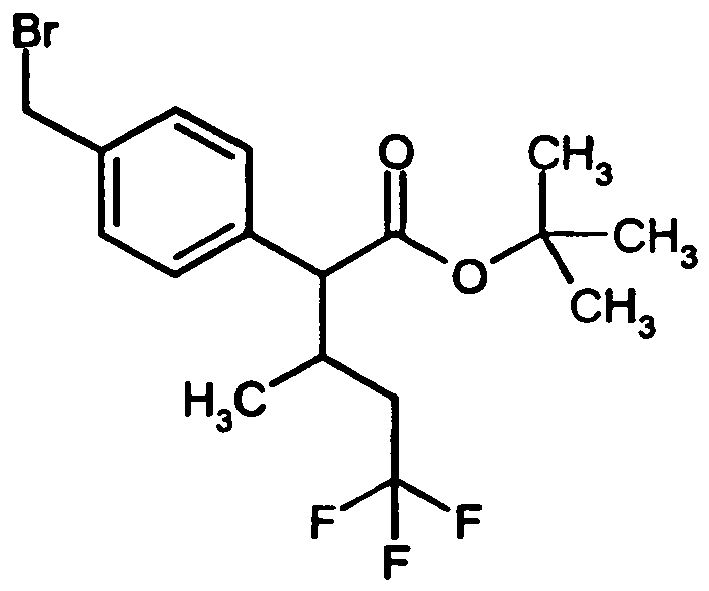
218A Ethyl-2-[4-(brommethyl)phenyl]-3-(trifluormethyl)-pentanoat GC-MS (Methode 3):
Diastereomer 1
Rt = 6.01 min, m/z = 287 (M-Br)+;
Diastereomer 2
Rt = 6.04 min, m/z = 287 (M-Br)+.
219A tert.-Butyl-[4-(brommethyl)phenyl](3,3-difluor-cyclopentyl)acetat GC-MS (Methode 3):
Diastereomer 1
Rt = 5.64 min, m/z = 331/333 (M-C4H9)+, 254 (M-Br-C4H8+H)+;
Diastereomer 2
Rt = 5.66 min, m/z = 331/333 (M-C4H9)+, 254 (M-Br-C4H8+H)+.
-

- 14.8 ml (105.48 mmol) Diisopropylamin wurden unter Argon in 66 ml trockenem THF vorgelegt und auf -40°C abgekühlt. Es wurden langsam 42.2 ml (105.48 mmol) n-Butyllithium-Lösung (2.5 M in Hexan) zugetropft und das Gemisch 30 min nachgerührt. Die Reaktionslösung wurde danach auf -78°C gekühlt und mit einer Lösung von 10.0 g (70.32 mmol) Cyclopropancarbonsäure-tert.-butylester in 17 ml THF versetzt. Nach 4 h Rühren bei -78°C wurde eine Lösung von 19.34 g (77.36 mmol) 3-Brombenzylbromid in 17 ml THF zugegeben. Das Reaktionsgemisch wurde langsam über Nacht auf RT erwärmt, bevor vorsichtig mit Ammoniumchlorid-Lösung versetzt wurde und dreimal mit Ethylacetat extrahiert wurde. Die vereinigten organischen Phasen wurden mit gesättigter Natriumchlorid-Lösung gewaschen, über Magnesiumsulfat getrocknet und im Vakuum eingeengt. Das Rohprodukt wurde durch Chromatographie an 750 g Silicagel gereinigt (Laufmittel Cyclohexan/Dichlormethan 50:1, dann 5:1). Es wurden 13.3 g (60.7% d. Th.) der Titelverbindung erhalten.
GC-MS (Methode 3): Rt = 5.94 min; m/z = 256 (M-C4H8)+.
1H-NMR (400 MHz, DMSO-d 6): δ = 7.46 (s, 1H), 7.38 (m, 1H), 7.25 (m, 2H), 2.82 (s, 2H), 1.28 (s, 9H), 1.08 (q, 2H), 0.87 (q, 2H). -

- Unter Argon und trockenen Bedingungen wurden 13.3 g (42.73 mmol) 1-(3-Brombenzyl)cyclopropancarbonsäure-tert.-butylester, 5.6 ml (51.28 mmol) Benzylamin, 1.96 g (2.14 mmol) Tris-(dibenzylidenaceton)dipalladium, 4.93 g (51.28 mmol) Natrium-tert.-butylat und 1.06 g (1.71 mmol) (+/-)-2,2'-Bis(diphenylphosphino)-1,1'-binaphthyl in 50 ml Toluol suspendiert. Die Reaktionsmischung wurde für 1.5 h bei 110°C gerührt. Das Gemisch wurde dann über Kieselgur abgesaugt, der Rückstand mit Toluol nachgewaschen und das Filtrat eingeengt. Der Filtrat-Rückstand wurde in Ethylacetat aufgenommen und zweimal mit Ammoniumchlorid-Lösung extrahiert. Die organische Phase wurde über Magnesiumsulfat getrocknet und im Vakuum eingeengt. Das Rohprodukt wurde durch Chromatographie an Silicagel gereinigt (Laufmittel Cyclohexan/Ethylacetat 20:1). Es wurden 6.98 g (48.4% d. Th.) der Titelverbindung erhalten.
LC-MS (Methode 12): Rt = 2.75 min; m/z = 338 (M+H)+.
1H-NMR (400 MHz, DMSO-d 6): δ = 7.35-7.26 (m, 4H), 7.20 (t, 1H), 6.91 (t, 1H), 6.45 (s, 1H), 6.38 (m, 2H), 6.12 (t, 1H), 4.23 (d, 2H), 2.69 (s, 2H), 1.28 (s, 9H), 0.99 (q, 2H), 0.69 (q, 2H). -

- 6.98 g (22.43 mmol) 1-[3-(Benzylanmino)benzyl]cyclopropancarbonsäure-tert.-butylester wurden in 50 ml Ethanol und 50 ml THF gelöst und mit 0.48 g (0.45 mmol) Palladium (10%-ig auf Kohle) versetzt. Bei RT wurde 2 h lang unter einer Wasserstoffatmosphäre bei Normaldruck gerührt. Das Reaktionsgemisch wurde danach über Kieselgur abgesaugt, der Rückstand mit THF nachgewaschen und das Filtrat eingeengt. Das Rohprodukt wurde durch Chromatographie an Silicagel gereinigt (Laufmittel Cyclohexan/Ethylacetat 10:1). Es wurden 3.66 g (65.9% d. Th.) der Titelverbindung erhalten.
LC-MS (Methode 7): Rt = 1.84 min; m/z = 192 (M+H)+.
1H-NMR (400 MHz, DMSO-d 6): δ = 6.88 (t, 1 H), 6.42 (s, 1 H), 6.37 (dd, 2 H), 4.89 (d, 2 H), 2.69 (s, 2 H), 1.31 (s, 9 H), 1.03 (q, 2 H), 0.75 (q, 2 H). -

- 1.28 ml (9.15 mmol) Diisopropylamin wurden unter Argon in 6 ml trockenem THF vorgelegt und auf -40°C abgekühlt. Es wurden langsam 4.26 ml (9.15 mmol) n-Butyllithium-Lösung (2.5 M in Hexan) zugetropft und das Gemisch 30 min nachgerührt. Die Reaktionslösung wurde dann auf -78°C gekühlt und mit einer Lösung von 1.30 g (9.15 mmol) Cyclopropancarbonsäure-tert.-butylester in 2 ml THF versetzt. Nach 4 h Rühren bei -78°C wurde eine Lösung von 2.00 g (8.69 mmol) 1-(Brommethyl)-2-methyl-3-nitrobenzol in 2 ml THF zugegeben. Das Reaktionsgemisch wurde langsam über Nacht auf RT erwärmt. Es wurde dann vorsichtig mit Ammoniumchlorid-Lösung versetzt und dreimal mit Ethylacetat extrahiert. Die vereinigten organischen Phasen wurden mit gesättigter Natriumchlorid-Lösung gewaschen, über Magnesiumsulfat getrocknet und im Vakuum eingeengt. Das Rohprodukt wurde durch Chromatographie an Silicagel gereinigt (Laufmittel Cyclohexan/Dichlormethan 50:1, dann 5:1). Es wurden 0.78 g (29.3% d. Th.) der Titelverbindung erhalten.
1H-NMR (400 MHz, DMSO-d6): δ = 7.61 (d, 1 H), 7.54 (d, 1 H), 7.39 (t, 1 H), 2.96 (s, 2 H), 2.26 (s, 3 H), 1.26 (s, 9 H), 1.20 (q, 2 H), 0.79 (q, 2 H). -

- 765 mg (2.63 mmol) 1-(2-Methyl-3-nitrobenzyl)cyclopropancarbonsäure-tert.-butylester wurden in 5 ml Ethanol gelöst und mit 139.7 mg (0.13 mmol) Palladium (10%-ig auf Kohle) versetzt. Bei RT wurde unter Normaldruck für 2 h hydriert. Das Reaktionsgemisch wurde über Kieselgur abgesaugt, der Rückstand mit THF nachgewaschen und das Filtrat eingeengt. Es wurden 680 mg (99.1% d. Th.) der Titelverbindung erhalten.
LC-MS (Methode 7): Rt = 1.96 min; m/z = 262 (M+H)+.
1H-NMR (400 MHz, DMSO-d6): δ = 6.77 (t, 1 H), 6.47 (d, 1 H), 6.40 (d, 2 H), 4.69 (s, 2 H), 2.88 (s, 2 H), 1.91 (s, 3 H), 1.31 (s, 9 H), 1.03 (q, 2 H), 0.55 (q, 2 H). -

- Unter Argon wurden 130.1 mg (3.25 mmol) Natriumhydrid in 2 ml Toluol und 2 ml THF vorgelegt. Die Mischung wurde auf 0°C abgekühlt und langsam mit 857.7 mg (3.40 mmol) tert.-Butyl-(diethoxyphosphoryl)acetat versetzt. Es wurde für 30 min nachgerührt und dann 500 mg (2.96 mmol) 4-Fluor-3-nitrobenzaldehyd zugegeben. Der Ansatz wurde langsam auf RT erwärmt und 3 h gerührt. Das Reaktionsgemisch wurde danach auf Wasser gegeben und dreimal mit Essigsäureethylester extrahiert. Die organische Phase wurde im Vakuum eingeengt und der Rückstand durch Chromatographie an Silicagel gereinigt (Laufmittel Cyclohexan/Ethylacetat 30:1 → 10:1). Es wurden 543 mg (69% d. Th.) der Titelverbindung erhalten.
LC-MS (Methode 12): Rt = 2.41 min; m/z = 212 (M-C4H8+H)+.
1H-NMR (400 MHz, DMSO-d 6): δ = 8.51 (dd, 1 H), 8.19 (ddd, 1 H), 7.69-7.59 (m, 2 H), 6.70 (d, 1 H), 1.49 (s, 9 H). -

- 535 mg (2.00 mmol) (2E)-3-(4-Fluor-3-nitrophenyl)prop-2-ensäure-tert.-butylester wurden in 1 ml Ethanol und 1 ml THF gelöst und mit 21.3 mg Palladium (10%-ig auf Kohle) versetzt. Bei RT wurde über Nacht unter einer Wasserstoffatmosphäre bei Normaldruck hydriert. Das Reaktionsgemisch wurde über Kieselgur abgesaugt, der Rückstand mit THF nachgewaschen und das Filtrat eingeengt. Es wurden 479 mg (100% d. Th.) der Titelverbindung erhalten.
LC-MS (Methode 15): Rt = 1.06 min; m/z = 184 (M-C4H8)+.
1H-NMR (400 MHz, DMSO-d 6): δ = 6.84 (dd, 1 H), 6.58 (dd, 1 H), 6.36-6.29 (m, 1 H), 5.00 (s, 2 H), 2.64 (t, 2 H), 2.42 (t, 2 H), 1.36 (s, 9 H). -

- 1.0 g (4.54 mmol) 3-Brom-2-fluornitrobenzol wurden unter Argon in 5 ml Dioxan vorgelegt und mit 4.3 g (22.72 mmol) Zinn(II)chlorid sowie ein paar Tropfen 1 N Salzsäure versetzt. Nach 2 h Rühren wurde der Ansatz am Rotationsverdampfer eingeengt und der Rückstand in Essigsäureethylester aufgenommen. Die organische Phase wurde mit 1 N Natronlauge, Wasser und gesättigter Natriumchlorid-Lösung gewaschen, dann über Magnesiumsulfat getrocknet und eingeengt. Es wurden 826 mg (95% d. Th.) der Titelverbindung erhalten.
LC-MS (Methode 15): Rt = 0.89 min; m/z = 190 (M+H)+.
1H-NMR (400 MHz, DMSO-d 6): δ = 6.83-6.70 (m, 3 H), 5.43 (s, 2 H). -

- In 2.4 ml DMF wurden 400 mg (2.10 mmol) 3-Brom-2-fluoranilin, 809.42 mg (6.32 mmol) Acrylsäure-tert.-butylester und 1.47 ml (10.53 mmol) Triethylamin vorgelegt. Das Reaktiongefäß wurde dreimal evakuiert und jeweils wieder mit Argon belüftet. Anschließend wurden 47.26 mg (0.21 mmol) Palladium(II)acetat sowie 128.14 mg (0.42 mmol) Tri-2-tolylphosphin zugegeben und das Reaktionsgefäß erneut zweimal evakuiert und wieder mit Argon belüftet. Die Mischung wurde über Nacht bei 145°C gerührt. Der Ansatz wurde danach abgekühlt, auf gesättigte Ammoniumchlorid-Lösung gegeben und dreimal mit Essigsäureethylester extrahiert. Die vereinten organischen Phasen wurden über Magnesiumsulfat getrocknet und eingeengt. Das Rohprodukt wurde durch präparative RP-HPLC gereinigt (Eluent: Acetonitril/Wasser-Gradient). Es wurden 210 mg (42% d. Th.) der Titelverbindung erhalten.
LC-MS (Methode 11): Rt = 1.27 min; m/z = 238 (M+H)+.
1H-NMR (400 MHz, DMSO-d 6): δ = 7.59 (d, 1 H), 6.94-6.87 (m, 2 H), 6.85-6.77 (m, 1 H), 6.45 (d, 1 H), 5.27 (s, 2 H), 1.52-1.43 (m, 9 H). -

- 210 mg (0.88 mmol) (2E)-3-(3-Amino-2-fluorphenyl)prop-2-ensäure-tert.-butylester wurden in 0.44 ml Ethanol und 0.20 ml THF, gelöst und mit 9.4 mg Palladium (10%-ig auf Kohle) versetzt. Bei RT wurde über Nacht unter einer Wasserstoffatmosphäre bei Normaldruck hydriert. Das Reaktionsgemisch wurde über Kieselgur abgesaugt, der Rückstand mit THF nachgewaschen und das Filtrat eingeengt. Das Rohprodukt wurde über eine Biotage-Säule gereinigt (Laufmittel Cyclohexan/Ethylacetat 10:1). Es wurden 116 mg (54% d. Th.) der Titelverbindung erhalten.
LC-MS (Methode 15): Rt = 1.07 min; m/z = 184 (M-C4H8)+.
1H-NMR (400 MHz, DMSO-d 6): δ = 6.75 (t, 1 H), 6.60 (t, 1 H), 6.38 (t, 1 H), 5.01 (br. s, 2 H), 2.74 (t, 2 H), 2.48-2.42 (m, 2 H), 1.36 (s, 9 H). - Eine 0.5 M Lösung der betreffenden Benzoesäure in Toluol wurde bei RT mit 1.3 eq. Triethylamin und anschließend mit 1.2 eq. Chlorameisensäuremethylester versetzt und das Gemisch über Nacht bei RT gerührt. Die entstandene Suspension wurde danach über Celite filtriert und der Rückstand mit Toluol nachgewaschen. Das Filtrat wurde eingeengt, der Filtrat-Rückstand in THF (1.5 ml/ mmol) gelöst und dann zu einer auf -78°C gekühlten Suspension von 1.2 eq. Lithiumaluminiumhydrid in THF (1 ml/mmol) getropft. Nach 1.5 h bei -78°C wurde die Reaktionsmischung auf RT erwärmt und über Nacht weitergerührt. Die entstandene Suspension wurde in 5%-ige Natronlauge (5 ml/mmol) gegossen und das Gemisch über Celite filtriert und mit Ethylacetat nachgewaschen. Das Filtrat wurde mehrfach mit Ethylacetat extrahiert. Die vereinigten organischen Phasen wurden mit gesättigter Kochsalz-Lösung gewaschen, über Magnesiumsulfat getrocknet und im Vakuum eingeengt.
- Nach dieser Vorschrift wurden die folgenden Verbindungen hergestellt:
Beispiel Name / Struktur Analytische Daten 230A (3-Brom-5-fluorphenyl)methanol LC-MS (Methode 11):
Rt = 0.96 min; m/z = 187 [M-H2O]+.
231A (5-Brom-2-fluorphenyl)methanol LC-MS (Methode 12):
Rt = 1.61 min; m/z = 187 [M-H2O]+.
232A (3-Brom-2-fluorphenyl)methanol LC-MS (Methode 15):
Rt = 0.81 min; m/z = 187 [M-H2O]+.
1H-NMR (400 MHz, DMSO-d 6): δ = 7.54-7.66 (m, 1H), 7.47 (t, 1H), 7.16 (t, 1H), 5.39 (t, 1H), 4.56 (d, 2H).
- Methode 2A: Der betreffende Benzylalkohol wurde in DMF (2 ml/mmol) vorgelegt und mit 2 eq. Tetrabromkohlenstoff versetzt. Anschließend wurden portionsweise innerhalb von 30 min 2 eq. Triphenylphosphin zugegeben und die Mischung über Nacht bei RT gerührt. Das Reaktionsgemisch wurde dann in Wasser gegossen und mit tert.-Butylmethylether extrahiert. Die organischen Phasen wurden über Magnesiumsulfat getrocknet und eingeengt. Das Rohprodukt wurde anschließend über Flash-Chromatographie an Kieselgel gereinigt (Laufmittel Cyclohexan).
- Methode 2B: Der betreffende Benzylalkohol wurde in Dichlormethan (2 ml/mmol) vorgelegt, mit 1.2 eq. Triphenylphosphindibromid versetzt und über Nacht bei RT gerührt. Anschließend wurde die Reaktionsmischung mit Wasser gewaschen, und die organische Phase wurde über Magnesiumsulfat getrocknet und eingeengt. Das Rohprodukt wurde über Flash-Chromatographie an Kieselgel gereinigt (Laufmittel Cyclohexan).
- Nach der Allgemeinen Vorschrift 2A bzw. 2B wurden die folgenden Verbindungen hergestellt:
Beispiel Name / Struktur Methode Analytische Daten 233A 1-Brom-3-(brommethyl)-5-fluorbenzol 2A LC-MS (Methode 15):
Rt = 1.17 min; m/z = 289 [M+NH4]+.
234A 2-Brom-4-(brommethyl)-1-fluorbenzol 2B GC-MS (Methode 3):
Rt = 4.53 min; m/z = 268 [M]+.
1H-NMR (400 MHz, DMSO-d 6): δ = 7.84 (dd, 1H), 7.42-7.59 (m, 1H), 7.33-7.42 (m, 1H), 4.71 (s, 2H).
235A 4-Brom-2-(brommethyl)-1-fluorbenzol 2B GC-MS (Methode 3):
Rt = 4.32 min; m/z = 268 [M]+.
1H-NMR (400 MHz, DMSO-d 6): δ = 7.80 (dd, 1H), 7.60 (ddd, 1H), 7.19-7.30 (m, 1H), 4.62-4.73 (m, 2H).
236A 1-Brom-3-(brommethyl)-2-fluorbenzol 2B GC-MS (Methode 3):
Rt = 4.32 min; m/z = 268 [M]+.
1H-NMR (400 MHz, DMSO-d 6): δ = 7.66-7.78 (m, 1H), 7.49-7.63 (m, 1H), 7.18 (t, 1H), 4.73 (s, 2H).
- Eine 0.3 M Lösung von Diisopropylamin in THF wurde unter Argon auf -40°C abgekühlt und mit 1 eq. n-Butyllithium versetzt. Nach 30 min wurde die Lösung auf -78°C abgekühlt und mit 0.8 eq. einer Lösung des betreffenden Carbonsäureesters in THF (0.7 M) versetzt. Die Reaktionsmischung wurde 4 h bei -78°C gerührt und anschließend mit 0.75 eq. des betreffenden Benzylbromids in THF (0.6 M) versetzt. Das Reaktionsgemisch wurde über Nacht unter Erwärmung auf RT gerührt. Danach wurde gesättigte Ammoniumchlorid-Lösung zugegeben. Das Gemisch wurde mit Ethylacetat extrahiert, und die organische Phase wurde über Magnesiumsulfat getrocknet und eingeengt. Das so erhaltene Rohprodukt wurde über Flash-Chromatographie an Kieselgel gereinigt (typisches Laufmittel-Gemisch: Cyclohexan/Ethylacetat 15:1 → 10:1).
- Nach der Allgemeinen Vorschrift 3 wurden die folgenden Verbindungen hergestellt:
Beispiel Name / Struktur Analytische Daten 237A tert.-Butyl-1-(3-brom-5-fluorbenzyl)-cyclopropancarboxylat GC-MS (Methode 3):
Rt = 5.64 min; m/z = 272/274 [M-C4H9]+.
1H-NMR (400 MHz, DMSO-d 6): δ = 7.37 (dd, 1H), 7.33 (s, 1H), 7.13 (d, 1H), 2.84 (s, 2H), 1.25-1.32 (m, 9H), 1.06-1.14 (m, 2H), 0.89-0.93 (m, 2H).
238A tert.-Butyl-3-(3-brom-5-fluorphenyl)propanoat GC-MS (Methode 3):
Rt = 5.24 min; m/z = 246/248 [M-C4H9]+.
1H-NMR (400 MHz, DMSO-d 6): δ = 7.33-7.40 (m, 1H), 7.32 (s, 1H), 7.15 (d, 1H), 2.82 (t, 2H), 2.52-2.58 (m, 2H), 1.35 (s, 9H).
239A tert.-Butyl-1-(3-brom-4-fluorbenzyl)-cyclopropancarboxylat GC-MS (Methode 3):
Rt = 5.85 min; m/z = 272/274 [M-C4H9]+.
1H-NMR (400 MHz, DMSO-d 6): δ = 7.52-7.62 (m, 1H), 7.22-7.36 (m, 2H), 2.81 (s, 2H), 1.29 (s, 9H), 1.05-1.10 (m, 2H), 0.86-0.91 (m, 2H).
240A tert.-Butyl-1-(5-brom-2-fluorbenzyl)-cyclopropancarboxylat GC-MS (Methode 3):
Rt = 5.72 min; m/z = 272/274 [M-C4H9]+.
1H-NMR (400 MHz, DMSO-d 6): δ = 7.52 (dd, 1H), 7.39-7.49 (m, 1H), 7.07-7.21 (m, 1H), 2.86 (s, 2H), 1.29 (s, 9H), 1.10-1.15 (m, 2H), 0.84-0.91 (m, 2H).
241A tert.-Butyl-3-(5-brom-2-fluorphenyl)propanoat GC-MS (Methode 3):
Rt = 5.32 min; m/z = 246/248 [M-C4H9]+.
242A tert.-Butyl-1-(3-brom-2-fluorbenzyl)-cyclopropancarboxylat 1H-NMR (400 MHz, DMSO-d 6): δ = 7.50-7.59 (m, 1H), 7.39 (t, 1H), 7.11 (t, 1H), 2.91 (s, 2H), 1.22-1.29 (m, 9H), 1.10-1.16 (m, 2H), 0.84-0.91 (m, 2H). 
- Unter Argonatmosphäre wurden 1.2 eq. Natrium-tert.-butylat in Toluol (1.5 ml/mmol) suspendiert, mit 1 eq. des betreffenden Phenylbromids, 1.2 eq. Benzylamin, 0.05 eq. Tris(dibenzylidenaceton)-dipalladium sowie 0.04 eq. rac-2,2'-Bis(diphenylphosphino)-1,1'-binaphthyl versetzt und das Gemisch für 2 h auf 110°C erhitzt. Nach Abkühlen auf RT wurde der Ansatz mit gesättigter Anunoniumchlorid-Lösung und Ethylacetat versetzt und über Celite filtriert. Die organische Phase wurde je einmal mit gesättigter Ammoniumchlorid-Lösung und gesättigter Natriumchlorid-Lösung gewaschen, dann über Magnesiumsulfat getrocknet und eingeengt. Das so erhaltene Rohprodukt wurde über Flash-Chromatographie an Kieselgel gereinigt (typisches Laufmittel-Gemisch: Cyclohexan/ Ethylacetat 50:1).
- Nach der Allgemeinen Vorschrift 4 wurden die folgenden Verbindungen hergestellt:
Beispiel Name / Struktur Analytische Daten 243A tert.-Butyl-1-[3-(benzylamino)-5-fluorbenzyl]-cyclopropancarboxylat LC-MS (Methode 11): Rt = 1.60 min; m/z = 356 [M+H]+.
1H-NMR (400 MHz, DMSO-d 6): δ = 7.28-7.37 (m, 4H), 7.16-7.28 (m, 1H), 6.50 (t, 1H), 6.31 (s, 1H), 6.04-6.20 (m, 2H), 4.23 (d, 2H), 2.68 (s, 2H), 1.22-1.32 (m, 9H), 0.97-1.06 (m, 2H), 0.67-0.79 (m, 2H).
244A tert.-Butyl-3-[3-(benzylamino)-5-fluorphenyl]-propanoat LC-MS (Methode 15): Rt = 1.35 min; m/z = 330 [M+H]+.
1H-NMR (400 MHz, DMSO-d 6): δ = 7.26-7.40 (m, 4H), 7.18-7.26 (m, 1H), 6.48 (t, 1H), 6.29 (s, 1H), 6.07-6.20 (m, 2H), 4.24 (d, 2H), 2.64 (t, 2H), 2.43 (t, 2H), 1.36 (s, 9H).
245A tert.-Butyl-1-[3-(benzylamino)-4-fluorbenzyl]-cyclopropancarboxylat LC-MS (Methode 11): Rt = 1.63 min; m/z = 356 [M+H]+.
1H-NMR (400 MHz, DMSO-d 6): δ = 7.27-7.39 (m, 4H), 7.22 (d, 1H), 6.88 (dd, 1H), 6.43 (dd, 1H), 6.31-6.38 (m, 1H), 6.02-6.13 (m, 1H), 4.30 (d, 2H), 2.64 (s, 2H), 1.25 (s, 9H), 0.89-0.96 (m, 2H), 0.55-0.63 (m, 2H).
246A tert.-Butyl-3-[5-(benzylamino)-2-fluorphenyl]-propanoat LC-MS (Methode 15): Rt = 1.34 min; m/z = 330 [M+H]+.
1H-NMR (400 MHz, DMSO-d 6): δ = 7.26-7.46 (m, 4H), 7.16-7.26 (m, 1H), 6.80 (t, 1H), 6.47 (dd, 1H), 6.37 (dt, 1H), 6.04 (t, 1 H), 4.21 (d, 2H), 2.69 (t, 2H), 2.42 (t, 2H), 1.36 (s, 9H).
247A tert.-Butyl-1-[5-(benzylamino)-2-fluorbenzyl]-cyclopropancarboxylat LC-MS (Methode 11): Rt = 1.60 min; m/z = 356 [M+H]+.
1H-NMR (400 MHz, DMSO-d 6): δ = 7.18-7.35 (m, 5H), 6.75-6.87 (m, 1H), 6.52 (dd, 1H), 6.37 (dt, 1H), 6.11 (t, 1H), 4.19 (d, 2H), 2.76 (s, 2H), 1.29 (s, 9H), 0.92-1.04 (m, 2H), 0.60-0.72 (m, 2H).
248A tert.-Butyl-1-[3-(benzylamino)-2-fluorbenzyl]-cyclopropancarboxylat LC-MS (Methode 11): Rt = 1.66 min; m/z = 356 [M+H]+.
1H NMR (400 MHz, DMSO-d 6): δ = 7.25-7.41 (m, 4H), 7.13-7.25 (m, 1H), 6.75 (t, 1H), 6.48 (t, 1H), 6.39 (t, 1H), 6.02-6.16 (m, 1H), 4.32 (d, 2H), 2.85 (s, 2H), 1.29 (s, 9H), 1.03-1.12 (m, 2H), 0.70-0.83 (m, 2H).
- Das betreffende N-Benzylphenylamin wurde in einem 1:1-Gemisch aus Ethanol und THF (5 ml/ mmol) gelöst, mit 10% Palladium auf Aktivkohle (35 mg/mmol) versetzt und das Gemisch bei RT und 1 bar Wasserstoffatmosphäre über Nacht gerührt. Anschließend wurde das Reaktionsgemisch über Celite filtriert, der Rückstand mit Ethanol nachgewaschen und das Filtrat eingeengt. Das so erhaltene Rohprodukt wurde über Flash-Chromatographie an Kieselgel gereinigt (typisches Laufmittel-Gemisch: Cyclohexan/Ethylacetat 3:1).
- Nach der Allgemeinen Vorschrift 5 wurden die folgenden Verbindungen hergestellt:
Beispiel Name / Struktur Analytische Daten 249A tert.-Butyl-1-(3-amino-5-fluorbenzyl)-cyclopropancarboxylat LC-MS (Methode 15): Rt = 1.14 min; m/z = 266 [M+H]+.
1H-NMR (400 MHz, DMSO-d6 ): δ = 6.25 (s, 1H), 6.11 (d, 1H), 6.14 (d, 1H), 5.28 (s, 2H), 2.68 (s, 2H), 1.30 (s, 9H), 1.01-1.11 (m, 2H), 0.71-0.85 (m, 2H).
250A tert.-Butyl-3-(3-amino-5-fluorphenyl)propanoat GC-MS (Methode 3): Rt = 5.89 min; m/z = 239 [M]+.
1H-NMR (400 MHz, DMSO-d6 ): δ = 6.20 (s, 1H), 6.05-6.17 (m, 2H), 5.30 (s, 2H), 2.63 (t, 2H), 2.43 (t, 2H), 1.37 (s, 9H).
251A tert.-Butyl-1-(3-amino-4-fluorbenzyl)-cyclopropancarboxylat LC-MS (Methode 15): Rt = 1.14 min; m/z = 266 [M+H]+.
1H-NMR (400 MHz, DMSO-d6 ): δ = 6.84 (dd, 1H), 6.63 (dd, 1H), 6.36 (ddd, 1H), 4.98 (s, 2H), 2.68 (s, 2H), 1.25-1.35 (m, 9H), 0.96-1.09 (m, 2H), 0.69-0.83 (m, 2H).
252A tert.-Butyl-3-(5-amino-2-fluorphenyl)propanoat LC-MS (Methode 15): Rt = 1.14 min; m/z = 240 [M+H]+.
1H-NMR (400 MHz, DMSO-d6 ): δ = 6.76 (dd, 1H), 6.29-6.50 (m, 2H), 4.85 (br. s, 2H), 2.68 (t, 2H), 2.42 (t, 2H), 1.36 (s, 9H).
253A tert.-Butyl-1-(3-amino-2-fluorbenzyl)-cyclopropancarboxylat LC-MS (Methode 15): Rt = 1.14 min; m/z = 266 [M+H]+.
1H-NMR (400 MHz, DMSO-d 6): δ = 6.68-6.87 (m, 1H), 6.51-6.66 (m, 1H), 6.39-6.51 (m, 1H), 4.98 (s, 2H), 2.83 (s, 2H), 1.25-1.38 (m, 9H), 1.01-1.13 (m, 2H), 0.68-0.84 (m, 2H).
254A tert. -Butyl-1-(5-amino-2-fluorbenzyl)-cyclopropancarboxylat GC-MS (Methode 3): Rt = 6.16 min; m/z = 265 [M]+. 
-

- Unter Argon wurden 11.7 ml (83.32 mmol) Diisopropylamin in 200 ml THF gelöst und auf -78°C abgekühlt. Zu dieser Lösung wurden 33.3 ml (83.32 mmol) einer 2.5 M Lösung von n-Butyllithium in Hexan zugetropft. Anschließend wurde die Reaktionslösung auf -10°C erwärmt und 10 min bei dieser Temperatur nachgerührt. Die Reaktionslösung wurde dann wieder auf -78°C abgekühlt und langsam mit 8.4 ml (72.9 mmol) Methyl-2-methylpropanoat versetzt. Anschließend wurde 30 min bei -78°C nachgerührt. Danach wurden 15 g (69.4 mmol) 1-(Brommethyl)-3-nitrobenzol, gelöst in 150 ml THF, langsam zugetropft. Nach beendeter Zugabe wurde die Lösung langsam auf Raumtemperatur erwärmt und über Nacht gerührt. Nach DC-Kontrolle (Laufmittel: Toluol/Essigsäureethylester 10:1) wurde der Ansatz mit gesättigter Ammoniumchlorid-Lösung versetzt und in Essigsäureethylester aufgenommen. Die wässrige Phase wurde dreimal mit Essigsäureethylester extrahiert. Die vereinigten organischen Phasen wurden über Natriumsulfat getrocknet. Nach Filtration wurde das Lösungsmittel im Vakuum entfernt. Das Rohprodukt wurde über Kieselgel chromatographisch gereinigt (Laufmittel Toluol/Essigsäureethylester 20:1). Es wurden 12.2 g (51.4 mmol, 74% d. Th.) der Titelverbindung erhalten.
1H-NMR (400 MHz, DMSO-d6): δ = 8.11 (d, 1H), 7.96 (s, 1H), 7.54-7.63 (m, 2H), 2.97 (s, 3H), 2.54 (s, 2H), 1.14 (s, 6H). -

- Eine Lösung von 12 g (51.42 mmol) Methyl-2,2-dimethyl-3-(3-nitrophenyl)propanoat in 200 ml Ethanol wurde bei Raumtemperatur mit 1 g Palladium auf Kohle (10%) versetzt und 12 Stunden unter Normaldruck hydriert. Nach vollständiger Umsetzung (DC-Kontrolle; Laufmittel Cyclohexan/Essigsäureethylester 1:1) wurde die Reaktionslösung über Kieselgur filtriert und das Filtrat im Vakuum eingeengt. Das Rohprodukt wurde über Kieselgel chromatographisch gereinigt (Laufmittel Cyclohexan/Essigsäureethylester 4:1 → 1:1). Es wurden 9.2 g (44.39 mmol, 86% d. Th.) der Titelverbindung erhalten.
LC-MS (Methode 10): Rt = 1.10 min; m/z = 208 (M+H)+.
1H-NMR (400 MHz, DMSO-d6): δ = 6.88 (t, 1 H), 6.39 (d, 1 H), 6.27 (s, 1 H), 6.20 (d, 1 H), 4.93 (s, 2 H), 2.62 (s, 3 H), 1.99 (s, 2 H), 1.09 (s, 6 H). -

- Eine Lösung von 6.11 g (32.57 mmol) (2-Chlor-3-nitrophenyl)methanol in 120 ml Dichlormethan wurde mit 8.43 g (39.09 mmol) Pyridiniumchlorochromat (PCC) versetzt und 12 Stunden bei Raumtemperatur gerührt. Nach vollständigem Umsatz wurde das Lösungsmittel im Vakuum bis zur Trockene eingeengt. Der erhaltene Rückstand wurde über Kieselgel chromatographisch gereinigt (Laufmittel Dichlormethan/Methanol 20:1). Es wurden 4.82 g (25.97 mmol, 79.7% d. Th.) der Titelverbindung erhalten.
GC-MS (Methode 3): Rt = 5.09 min; m/z = 186 (M+H)+.
1H-NMR (400 MHz, DMSO-d6): δ = 10.35 (s, 1 H), 8.33 (dd, 1 H), 8.13 (dd, 1 H), 7.77 (t, 1 H). -

- Unter Argon wurden 98 mg (2.46 mmol, 60%-ig) Natriumhydrid in 2 ml Toluol und 2 ml THF suspendiert und auf 0°C abgekühlt. Anschließend wurden 0.6 ml (2.57 mmol) tert.-Butyl-(diethoxyphosphoryl)acetat langsam zugetropft und die Mischung 30 min bei 0°C gerührt. Danach wurden 415 mg (2.24 mmol) 2-Chlor-3-nitrobenzaldehyd zur Reaktionsmischung gegeben und der Ansatz dann auf Raumtemperatur erwärmt. Das Gemisch wurde 2 Stunden bei Raumtemperatur gerührt und anschließend mit 5 ml Wasser versetzt. Nach Abtrennung der organischen Phase wurde die wässrige Phase noch dreimal mit Essigsäureethylester extrahiert. Die vereinigten organischen Phasen wurden über Natriumsulfat getrocknet. Nach Filtration wurde das Lösungsmittel im Vakuum entfernt. Das Rohprodukt wurde über Kieselgel chromatographisch gereinigt (Laufmittel Cyclohexan/Essigsäureethylester 10:1). Es wurden 429 mg (1.51 mmol, 59% d. Th.) der Titelverbindung erhalten.
MS (DCI): m/z = 301 (M+NH4)+.
1H-NMR (400 MHz, DMSO-d6): δ = 8.23 (d, 1 H), 8.07 (d, 1 H), 7.84 (d, 1 H), 7.62 (t, 1 H), 6.73 (d, 1 H), 1.50 (s, 9 H). -

- Eine Lösung von 200 mg (0.71 mmol) tert.-Butyl-(2E)-3-(2-chlor-3-nitrophenyl)prop-2-enoat in 10 ml Essigsäureethylester wurde bei Raumtemperatur mit 50 mg Platin auf Kohle (5%) versetzt und 12 Stunden unter Normaldruck hydriert. Nach vollständiger Umsetzung (DC-Kontrolle; Laufmittel Cyclohexan/Essigsäureethylester 1:1) wurde die Reaktionslösung über Kieselgur filtriert und das Filtrat im Vakuum eingeengt. Das Rohprodukt wurde mittels präparativer HPLC gereinigt. Es wurden 115 mg (0.62 mmol, 64% d. Th.) der Titelverbindung erhalten.
GC-MS (Methode 3): Rt = 6.42 min; m/z = 256 (M+H)+. -

- Unter Argon wurden 1.19 g (29.64 mmol, 60%-ig) Natriumhydrid in 25 ml Toluol und 25 ml THF suspendiert und auf 0°C abgekühlt. Anschließend wurden 7.28 ml (30.99 mmol) tert.-Butyl-(diethoxyphosphoryl)acetat langsam zugetropft und das Gemisch 30 min bei 0°C gerührt. Danach wurden 5 g (26.94 mmol) 4-Chlor-3-nitrobenzaldehyd zur Reaktionsmischung gegeben und der Ansatz dann auf Raumtemperatur erwärmt. Das Gemisch wurde 2 Stunden bei Raumtemperatur gerührt und anschließend mit 50 ml Wasser versetzt. Nach Abtrennung der organischen Phase wurde die wässrige Phase noch dreimal mit Essigsäureethylester extrahiert. Die vereinigten organischen Phasen wurden über Natriumsulfat getrocknet. Nach Filtration wurde das Lösungsmittel im Vakuum entfernt. Das Rohprodukt wurde über Kieselgel chromatographisch gereinigt (Laufmittel Cyclohexan/Essigsäureethylester 9:1). Es wurden 6.77 g (23.86 mmol, 77% d. Th.) der Titelverbindung erhalten.
MS (DCI): m/z = 301 (M+NH4)+.
1H-NMR (400 MHz, DMSO-d6): δ = 8.46 (d, 1 H), 8.07 (dd, 1 H), 7.71 (d, 1 H), 7.51 (d, 1H), 6.75 (d, 1 H), 1.49 (s, 9 H). -

- Eine Lösung von 6.74 g (23.76 mmol) tert.-Butyl-(2E)-3-(4-chlor-3-nitrophenyl)prop-2-enoat in 200 ml Ethanol und 20 ml THF wurde bei Raumtemperatur mit 500 mg Palladium auf Kohle (10%) versetzt und 12 Stunden unter Normaldruck hydriert. Nach vollständiger Umsetzung (DC-Kontrolle; Laufmittel Cyclohexan/Essigsäureethylester 1:1) wurde die Reaktionslösung über Kieselgur filtriert und das Filtrat im Vakuum eingeengt. Das Rohprodukt wurde über Kieselgel chromatographisch gereinigt (Laufmittel Cyclohexan/Essigsäureethylester 4:1 → 2:1). Es wurden 1.40 g (5.47 mmol, 23% d. Th.) der Titelverbindung erhalten.
LC-MS (Methode 15): Rt = 1.14 min; m/z = 256 (M+H)+.
1H-NMR (400 MHz, DMSO-d6): δ = 7.08 (d, 1 H), 6.62 (s, 1 H), 6.39 (dd, 1 H), 5.22 (s, 2 H), 2.66 (t, 2 H), 2.45 (t, 2 H), 1.37 (s, 9 H). -

- 19.6 g (162.95 mmol) 1-Phenylethanon und 5 g (54.32 mmol) Oxoessigsäure-Monohydrat wurden 2 Stunden bei 100°C gerührt. Die Reaktionslösung wurde anschließend auf 40°C abgekühlt und mit 20 ml Wasser und 4 ml Ammoniak versetzt. Nachfolgend wurde das Gemisch zweimal mit 50 ml Dichlormethan extrahiert. Die erhaltene wässrige Phase wurde dann mit 2.64 ml (53.32 mmol) Hydrazin-Monohydrat versetzt und 2 Stunden bei 100°C gerührt. Nach Umsetzung wurde die Reaktionslösung auf Raumtemperatur abgekühlt. Die ausgefallenen Kristalle wurden abgesaugt, mit Wasser gewaschen und über Nacht im Vakuumtrockenschrank bei 50°C getrocknet. Es wurden 4.3 g (24.97 mmol, 15% d. Th.) der Titelverbindung als farblose Kristalle erhalten.
LC-MS (Methode 7): Rt = 1.39 min; m/z = 173 (M+H)+.
1H-NMR (400 MHz, DMSO-d6, δ/ppm): 13.2 (s, 1 H), 8.04 (d, 1 H), 7.86 (d, 2 H), 7.53-7.41 (m, 3 H), 7.00 (d, 1 H). -

- 8.44 g (26.1 mmol) tert.-Butyl-3-[5-oxo-4-(propan-2-yl)-2-(trifluormethyl)-2,5-dihydro-1,3-oxazol-2-yl]propanoat [CAS Reg.-Nr. 87341-14-8] und 13.44 g (130.5 mmol) Hydrazin-Hydrochlorid wurden in 100 ml Eisessig 2 Stunden bei 118°C gerührt. Die Reaktionslösung wurde anschließend im Vakuum bis zur Trockene eingedampft. Der erhaltene Rückstand wurde in 100 ml Wasser aufgenommen und mit Kaliumcarbonat basisch gestellt. Darauf folgend wurde die basische Lösung dreimal mit Dichlormethan extrahiert. Die vereinigten organischen Phasen wurden über Magnesiumsulfat getrocknet, filtriert und bis zur Trockene eingeengt. Das Rohprodukt wurde über Kieselgel chromatographisch gereinigt (Laufmittel Dichlormethan/Methanol 50:1 → 10:1). Es wurden 2.65 g (15.95 mmol, 6 1 % d. Th.) der Titelverbindung erhalten.
1H-NMR (400 MHz, DMSO-d6): δ = 11.33 (br. s, 1 H), 2.76 (t, 2 H), 2.52 (t, 2 H).
GC-MS (Methode 3): Rt = 2.76 min; m/z = 166 (M)+. -

- 2.6 g (15.65 mmol) 6-(Trifluormethyl)-4,5-dihydropyridazin-3(2H)-on wurden in 20 ml Eisessig gelöst und auf 100°C erhitzt. Anschließend wurden zur Lösung langsam 0.81 ml (15.65 mmol) Brom hinzugetropft und 4 Stunden bei 100°C nachgerührt. Nach Abkühlen der Reaktionslösung wurde das Lösungsmittel im Vakuum entfernt und der erhaltene Rückstand über Kieselgel chromatographisch gereinigt (Laufmittel Dichlormethan/Methanol 50:1 → 20:1). Es wurden 1.34 g (8.15 mmol, 52% d. Th.) der Titelverbindung erhalten.
1H-NMR (400 MHz, DMSO-d6): δ = 13.73 (br. s, 1 H), 7.81 (d, 1 H), 7.11 (d, 1 H).
GC-MS (Methode 3): Rt = 2.92 min; m/z = 164 (M)+.
MS (DCI): m/z = 182 (M+NH4)+. - Analog zu Beispiel 25A wurden die in der folgenden Tabelle aufgeführten Verbindungen erhalten:
Beispiel Name / Struktur / Edukte Analytische Daten 265A Ethyl-4,4,4-trifluor-3-methyl-2-{4-[(5-oxo-2-phenyl-5,6-dihydro-4H-1,3,4-oxadiazin-4-yl)methyl]phenyl}butanoat GC-MS (Methode 3): Rt = 9.98 min; m/z = 449 (M+H)+. 
(aus Ethyl-2-[4-(brommethyl)phenyl]-4,4,4-trifluor-3-methylbutanoat und 2-Phenyl-4H-1,3,4-oxadiazin-5(6H)-on) 266A Ethyl-4,4,4-trifluor-3-methyl-2-{4-[(6-oxo-3-phenylpyridazin-1 (6H)-yl)methyl]phenyl}butanoat LC-MS (Methode 7): Rt = 2.78 min; m/z = 445 (M+H)+. 
(aus Ethyl-2-[4-(brommethyl)phenyl]-4,4,4-trifluor-3-methylbutanoat und 6-Phenylpyridazin-3(2H)-on) 267A tert.-Butyl-6,6,6-trifluor-4-methyl-2-{4-[(5-oxo-2-phenyl-5,6-dihydro-4H-1,3,4-oxadiazin-4-yl)methyl]phenyl}-hexanoat LC-MS (Methode 10): Rt = 2.85 min; m/z = 505 (M+H)+. 
(aus tert.-Butyl-2-[4-(brommethyl)phenyl]-6,6,6-trifluor-4-methylhexanoat und 2-Phenyl-4H-1,3,4-oxadiazin-5(6H)-on) 268A tert.-Butyl-cyclopentyl {4-[(6-oxo-3-phenylpyridazin-1(6H)-yl)methyl]phenyl}acetat LC-MS (Methode 11): Rt = 1.70 min; m/z = 445 (M+H)+. 
(aus Beispiel 10A und 6-Phenylpyridazin-3(2H)-on) 269A tert.-Butyl-5,5,5-trifluor-3-methyl-2-{4-[(5-oxo-2-phenyl-5,6-dihydro-4H-1,3,4-oxadiazin-4-yl)methyl]phenyl}-pentanoat LC-MS (Methode 11): Rt = 1.63 min; m/z = 491 (M+H)+. 
(aus tert.-Butyl-2-[4-(brommethyl)phenyl]-5,5,5-trifluor-3-methylpentanoat und 2-Phenyl-4H-1,3,4-oxadiazin-5(6H)-on) 270A Ethyl-2-{4-[(5-oxo-2-phenyl-5,6-dihydro-4H-1,3,4-oxadiazin-4-yl)methyl]phenyl}-3-(trifluormethyl)-pentanoat LC-MS (Methode 12): Rt = 2.77 min; m/z = 463 (M+H)+. 
(aus Ethyl-2-[4-(brommethyl)phenyl]-3-(trifluormethyl)-pentanoat und 2-Phenyl-4H-1,3,4-oxadiazin-5(6H)-on) 271A tert.-Butyl-cyclopentyl{4-[(3-methyl-6-oxopyridazin-1(6H)-yl)methyl]phenyl} acetat LC-MS (Methode 12): Rt = 2.65 min; m/z = 327 (M-C4H8+H)+. 
(aus Beispiel 10A und 6-Methylpyridazin-3(2H)-on) 272A tert.-Butyl-cyclopentyl(4-{[6-oxo-3-(trifluormethyl)-pyridazin-l(6H)-yl]methyl}phenyl)acetat LC-MS (Methode 15): Rt = 1.45 min; m/z = 381 (M-C4H8+H)+.
1H-NMR (400 MHz, DMSO-d6): δ = 7.88 (d, 1H), 7.31 (d, 2H), 7.18-7.27 (m, 3H), 5.29 (s, 2H), 3.19 (d, 1H), 2.30-2.43 (m, 1H), 1.75-1.87 (m, 1H), 1.57-1.64 (m, 1H), 1.46-1.56 (m, 2H), 1.36-1.45 (m, 1H), 1.34 (s, 9H), 1.18-1.29 (m, 2H), 0.84-1.02 (m, 1H).
(aus Beispiel 10A und 6-(Trifluormethyl)pyridazin-3(2H)-on) 273A tert.-Butyl-cyclopentyl{4-[(5-methyl-6-oxopyridazin-1 (6H)-yl)methyl]phenyl} acetat LC-MS (Methode 15): Rt = 1.42 min; m/z = 382 (M+H)+.
1H-NMR (500 MHz, DMSO-d6): δ = 7.65 (d, 1H), 7.25-7.34 (m, 3H), 7.17-7.24 (m, 2H), 6.16 (t, 1H), 5.08 (s, 2H), 3.17 (d, 1H), 2.33-2.42 (m, 1H), 2.00 (s, 3H), 1.76-1.86 (m, 1H), 1.60 (d, 1H), 1.46-1.56 (m, 2H), 1.37-1.46 (m, 1H), 1.34 (s, 9H), 1.18-1.29 (m, 2H), 0.89-0.99 (m, 1H).
(aus Beispiel 10A und 4-Methylpyridazin-3(2H)-on) 274A tert.-Butyl-cyclopentyl(4-{[6-oxo-4-(trifluormethyl)-pyridazin-1(6H)-yl]methyl}phenyl)acetat LC-MS (Methode 15): Rt = 1.39 min; m/z = 380 (M-C4H8+H)+.
1H-NMR (500 MHz, DMSO-d6): δ = 8.10 (d, 1H), 7.30 (d, 2H), 7.24 (d, 2H), 6.82 (s, 1H), 6.53 (d, 1H), 5.13 (s, 2H), 3.18 (d, 1H), 2.29-2.42 (m, 1H), 1.77-1.85 (m, 1H), 1.60 (d, 1H), 1.48-1.56 (m, 2H), 1.37-1.44 (m, 1H), 1.34 (s, 9H), 1.24 (d, 2H), 0.93 (dd, 1H).
(aus Beispiel 10A und 5-(Trifluormethyl)pyridazin-3(2H)-on) 275A tert.-Butyl-(3,3-difluorcyclopentyl){4-[(5-oxo-2-phenyl-5,6-dihydro-4H-1,3,4-oxadiazin-4-yl)methyl]phenyl}-acetat LC-MS (Methode 15): Rt = 1.40 min; m/z = 485 (M+H)+. 
(aus tert.-Butyl-[4-(brommethyl)phenyl](3,3-difluor-cyclopentyl)acetat und 2-Phenyl-4H-1,3,4-oxadiazin-5(6H)-on) 276A tert.-Butyl-cyclopentyl {4-[(4-methyl-6-oxopyridazin-1(6H)-yl)methyl]phenyl} acetat LC-MS (Methode 15): Rt = 1.30 min; m/z = 326 (M-C4H8+H)+.
1H-NMR (500 MHz, DMSO-d6): δ = 7.66 (d, 1H), 7.28 (d, 2H), 7.18 (d, 2H), 6.23 (s, 1H), 6.10 (d, 1H), 5.02 (s, 2H), 3.16 (d, 1H), 2.33-2.41 (m, 1H), 2.12 (s, 3H), 1.75-1.84 (m, 1H), 1.45-1.67 (m, 3H), 1.36-1.44 (m, 1H), 1.34 (s, 9H), 1.17-1.28 (m, 2H), 0.85-0.97 (m, 1H).
(aus Beispiel 10A und 5-Methylpyridazin-3(2H)-on) 277A Ethyl-4,4,4-trifluor-3-methyl-2-(4-{[6-oxo-3-(trifluor-methyl)pyridazin-1(6H)-yl]methyl}phenyl)butanoat LC-MS (Methode 11): Rt = 1.45 min; m/z = 437 (M+H)+. 
(aus Ethyl-2-[4-(brommethyl)phenyl]-3-(trifluormethyl)-pentanoat und 6-(Trifluormethyl)pyridazin-3(2H)-on) 278A tert.-Butyl-cyclopentyl(4-{[6-oxo-5-(trifluormethyl)-pyridazin-1 (6H)-yl]methyl} phenyl)acetat LC-MS (Methode 15): Rt = 1.37 min; m/z = 380 (M-C4H8+H)+. 
(aus Beispiel 10A und 4-(Trifluormethyl)pyridazin-3(2H)-on) 279A tert.-Butyl-{4-[(3-chlor-6-oxopyridazin-1(6H)-yl)-methyl]phenyl}(cyclopentyl)acetat LC-MS (Methode 11): Rt = 1.56 min; m/z = 347 (M-C4H8+H)+. 
(aus Beispiel 10A und 6-Chlorpyridazin-3(2H)-on) -

- 7.42 g (16.69 mmol) des racemischen tert.-Butyl-cyclopentyl{4-[(6-oxo-3-phenylpyridazin-1(6H)-yl)methyl]phenyl}acetats wurden mittels präparativer HPLC an chiraler Phase in die Enantiomere aufgetrennt [Säule: Daicel Chiralpak AS-H, 5 µm, 250 mm x 20 mm; Elutionsmittel: Isohexan/Isopropanol 75:25 (v/v); Fluss: 15 ml/min; UV-Detektion: 220 nm; Temperatur: 30°C]:
- Ausbeute: 4.1 g
Rt 5.28 min; Reinheit >99%; >99% ee
[Säule: Daicel Chiralpak AS-H, 5 µm, 250 mm x 4.6 mm; Elutionsmittel: Isohexan/Isopropanol 75:25 (v/v); Fluss: 1 ml/min; UV-Detektion: 220 nm; Temperatur: 40°C]. - Ausbeute: 2.8 g
R, 5.84 min; Reinheit >98%; >96% ee
[Säule: Daicel Chiralpak AS-H, 5 µm, 250 mm x 4.6 mm; Elutionsmittel: Isohexan/Isopropanol 75:25 (v/v); Fluss: 1 ml/min; UV-Detektion: 220 nm; Temperatur: 40°C]. -

- Unter Argon wurden 6.49 g (35 mmol) Kaliumphthalimid in 60 ml DMF vorgelegt, mit 15 g (31.8 mmol) (+/-)-2-(4-(Brommethyl)phenyl)-2-cyclopentylessigsäure-tert.-butylester versetzt und über Nacht bei 80°C gerührt. Anschließend wurden weitere 0.5 Äquivalente Kaliumphthalimid zugegeben und 6 h bei 80°C nachgerührt. Der Ansatz wurde dann filtriert und das Filtrat im Vakuum eingeengt. Der Rückstand wurde mit Ethanol verrührt und der Feststoff abgesaugt, mit Ethanol gewaschen und im Hochvakuum getrocknet. Es wurden 8.5 g (ca. 96% Reinheit, 6 1 % d. Th.) der Zielverbindung erhalten.
LC-MS (Methode 10): Rt = 2.87 min; m/z = 364 (M-C4H8+H)+.
1H-NMR (400 MHz, DMSO-d6): δ = 7.9-7.85 (m, 4 H), 7.29-7.24 (m, 4 H), 4.75 (s, 1 H), 3.17 (d, 1 H), 2.4-2.3 (m, 1 H), 1.80 (ddd, 1 H), 1.66-1.37 (m, 4 H), 1.34 (s, 9 H), 1.28-1.17 (m, 2 H), 1.06 (t, 1 H), 0.93 (m, 1 H). -

- 8.5 g (20.26 mmol) (+/-)-2-Cyclopentyl-2-(4-((1,3-dioxoisoindolin-2-yl)methyl)phenyl)essigsäure-tert.-butylester wurden in 95 ml Dichlormethan vorgelegt, mit 31.2 ml (405.2 mmol) Trifluoressigsäure versetzt und 2 h bei Raumtemperatur gerührt. Anschließend wurde der Ansatz mit Wasser (250 ml) versetzt und mit Dichlormethan extrahiert. Die organische Phase wurde mit Wasser gewaschen, über Magnesiumsulfat getrocknet und eingeengt. Es wurden 6.98 g (95% d. Th.) der Zielverbindung erhalten.
LC-MS (Methode 11): Rt = 1.28 min; m/z = 364 (M+H)+.
1H-NMR (400 MHz, DMSO-d6): δ = 7.88 (m, 4 H), 7.29-7.24 (m, 4 H), 4.74 (s, 2 H), 3.20 (d, 1 H), 2.46-2.33 (m, 1 H), 1.87-1.76 (m, 1 H), 1.65-1.12 (m, 6 H), 0.97-0.87 (m, 1 H). -

- 7.5 g (20.6 mmol) (+/-)-2-Cyclopentyl-2-(4-((1,3-dioxoisoindolin-2-yl)methyl)phenyl)essigsäure wurden in einem Gemisch aus 170 ml DMF und 68 ml Pyridin gelöst und mit 10.2 g (26.8 mmol) TCTU versetzt. Nach 30 min Rühren bei Raumtemperatur wurden 4.86 g (20.6 mmol) 3-(3-Amino-2-methylphenyl)propansäure-tert.-butylester zugegeben. Nach Rühren über Nacht bei Raumtemperatur wurde das Reaktionsgemisch eingeengt und der Rückstand durch Flash-Chromatogaphie an Kieselgel vorgereinigt (Laufmittel Dichlormethan/Methanol 100:1). Das so erhaltene Produkt wurde nacheinander mit Ethanol und Methanol verrührt, der Feststoff abgesaugt und im Hochvakuum getrocknet. Es wurden 8.5 g (71% d. Th.) der Zielverbindung erhalten.
LC-MS (Methode 10): Rt = 2.71 min; m/z = 581 (M+H)+. -

- 8.5 g (14.6 mmol) (+/-)-3-(3-(2-Cyclopentyl-2-(4-((1,3-dioxoisoindolin-2-yl)methyl)phenyl)acet-amido)-2-methylphenyl)propansäure-tert.-butylester wurden in 85 ml Ethanol vorgelegt und mit 2.35 ml (48.3 mmol) Hydrazinhydrat versetzt. Das Reaktionsgemisch wurde über Nacht unter Rückfluss erhitzt. Nach Abkühlen auf Raumtemperatur wurde der ausgefallene Feststoff abfiltriert und mit Ethanol nachgewaschen. Das Filtrat wurde eingeengt, der Rückstand mit Acetonitril verrührt und die ausgefallenen Kristalle abgesaugt und verworfen. Die Mutterlauge wurde eingeengt und der Rückstand durch Flash-Chromatographie an Kieselgel gereinigt (Laufmittel Dichlormethan/Methanol/aq. Ammoniak 100:5:1). Es wurden 4.51 g (68% d. Th.) der Zielverbindung erhalten.
LC-MS (Methode 7): Rt = 1.70 min; m/z = 451 (M+H)+.
1H-NMR (400 MHz, DMSO-d 6): δ = 9.44 (s, 1 H), 7.31-7.39 (m, 2 H), 7.24-7.30 (m, 2 H), 6.93-7.07 (m, 3 H), 3.68 (s, 2 H), 3.43 (dd, 1 H), 3.12-3.19 (m, 1 H), 2.79 (t, 2 H), 2.38-2.46 (m, 2 H), 2.00 (s, 3 H), 1.21-1.92 (m, 16 H), 0.91-1.06 (m, 1 H). -

- 50 mg (0.11 mmol) (+/-)-tert.-Butyl-3-[3-({[4-(aminomethyl)phenyl](cyclopentyl)acetyl}amino)-2-methylphenyl]propanoat und 16.4 mg (0.12 mmol) Phthaldialdehyd wurden bei RT in 2.5 ml Eisessig gelöst und 1 h stehengelassen. Anschließend wurde das Reaktionsgemisch in Wasser gegossen und mit Ethylacetat extrahiert. Die organische Phase wurde über Magnesiumsulfat getrocknet und eingeengt. Der Rückstand wurde über präparative RP-HPLC gereinigt. Es wurden 53 mg (85% d. Th.) der Zielverbindung erhalten.
LC-MS (Methode 10): Rt = 2.54 min; m/z = 567 (M+H)+.
1H-NMR (400 MHz, DMSO-d 6): δ = 9.45 (s, 1 H), 7.73 (d, 1 H), 7.54-7.63 (m, 2 H), 7.47-7.53 (m, 1 H), 7.40 (d, 2 H), 7.23 (d, 2 H), 6.94-7.06 (m, 3 H), 4.71 (s, 2 H), 4.37 (s, 2 H), 3.45 (d, 1 H), 2.78 (t, 2 H), 2.41 (t, 2 H), 1.97 (s, 3 H), 1.27-1.89 (m, 17 H), 0.90-1.05 (m, 1 H). -

- 2.035 g (15.3 mmol) 1-Oxoindolin in 12 ml DMF wurden bei 0°C mit 611.3 mg (15.3 mmol, 60%-ig) Natriumhydrid versetzt. Es wurde 30 min gerührt und dann bei 0°C 6.0 g (12.7 mmol) (+/-)-[4-(Brommethyl)phenyl](cyclopentyl)essigsäure-tert.-butylester zugegeben. Man rührte das Reaktionsgemisch weitere 4 h, versetzte dann mit Wasser und extrahierte zweimal mit Dichlormethan. Die vereinigten organischen Phasen wurden mit gesättigter Natriumchlorid-Lösung gewaschen, über Magnesiumsulfat getrocknet und eingeengt. Das Rohprodukt wurde im Ultraschallbad mit Diethylether behandelt und der Feststoff durch Filtration isoliert. Es wurden 3.40 g (60.2% d. Th.) der Zielverbindung erhalten.
LC-MS (Methode 11): Rt = 1.57 min; m/z = 350 (M-C4H8+H)+.
1H-NMR (400 MHz, DMSO-d 6): δ = 7.72 (d, 1 H), 7.60-7.50 (m, 3 H), 7.30 (d, 2 H), 7.21 (d, 2 H), 4.71 (s, 2 H), 4.38 (s, 2 H), 3.18 (d, 1 H), 2.35 (m, 1 H), 1.85-1.37 (m, 5 H), 1.34 (s, 9 H), 1.20 (m, 2 H), 0.91 (m, 1 H). -

- Das in Beispiel 287A erhaltene Racemat wurde durch präparative HPLC an chiraler Phase in die Enantiomere getrennt [Säule: Daicel Chiralpak IA-H, 5 µm, 250 mm x 20 mm; Fluss: 15 ml/min; UV-Detektion: 220 nm; Injektionsvolumen: 0.25 ml; Temperatur: 30°C; Eluent: 20% Acetonitril / 80% Methyl-tert.-butylether]. Ausgehend von 3.40 g Racemat wurden 1.50 g des (+)-Enantiomeren erhalten (das andere Enantiomer wurde nicht rein isoliert).
LC-MS (Methode 11): Rt = 1.58 min; m/z = 350 (M-C4H8+H)+.
1H-NMR (400 MHz, DMSO-d 6): δ = 7.73 (d, 1 H), 7.58 (m, 2 H), 7.50 (t, 1 H), 7.30 (d, 2 H), 7.22 (d, 2 H), 4.71 (s, 2 H), 4.38 (s, 2 H), 3.18 (d, 1 H), 2.36 (m, 1 H), 1.80 (m, 1 H), 1.66-1.36 (m, 4 H), 1.34 (s, 9 H), 1.24 (m, 2 H), 0.95 (m, 1 H).
[α]D 20 = + 8.2°, c = 0.38, Chloroform. -

- 695 mg (1.71 mmol) (+/-)-Cyclopentyl{4-[(1-oxo-1,3-dihydro-2H-isoindol-2-yl)methyl]phenyl}-essigsäure-tert.-butylester wurden bei RT in 11 ml einer 4 N Lösung von Chlorwasserstoff in Dioxan gelöst und 12 h gerührt. Das Reaktionsgemisch wurde danach eingefroren und im Hochvakuum gefriergetrocknet. Es wurden 700 mg an Produkt erhalten, welches nicht weiter aufgereinigt wurde.
LC-MS (Methode 11): Rt = 1.17 min; m/z = 350 (M+H)+.
1H-NMR (400 MHz, DMSO-d 6): δ = 12.21 (s, 1 H), 7.73 (d, 1 H), 7.62-7.47 (m, 3 H), 7.30 (d, 2 H), 7.22 (d, 2 H), 4.70 (s, 2 H), 4.37 (s, 2 H), 3.21 (d, 1 H), 2.42 (m, 1 H), 1.89-1.17 (m, 7 H), 0.94 (m, 1 H). -

- 500 mg (1.23 mmol) (+)-(2S)-Cyclopentyl{4-[(1-oxo-1,3-dihydro-2H-isoindol-2-yl)methyl]-phenyl}essigsäure-tert.-butylester wurden bei RT in 11 ml einer 4 N Lösung von Chlorwasserstoff in Dioxan gelöst und 12 h gerührt. Das Reaktionsgemisch wurde danach eingefroren und im Hochvakuum gefriergetrocknet. Es wurden 450 mg an Produkt erhalten, welches nicht weiter aufgereinigt wurde.
LC-MS (Methode 11): Rt = 1.17 min; m/z = 350 (M+H)+.
1H-NMR (400 MHz, DMSO-d 6): δ = 7.72 (d, 1 H), 7.57 (m, 2 H), 7.50 (t, 1 H), 7.30 (d, 2 H), 7.22 (d, 2 H), 4.71 (s, 2 H), 4.37 (s, 2 H), 3.21 (d, 1 H), 2.42 (m, 1 H), 1.82 (m, 1 H), 1.66-1.16 (m, 6 H), 0.93 (m, 1 H).
[α]D 20 = +38.1°, c = 0.585, Chloroform. -

- 1.0 g (5.4 mmol) 4,5-Difluorphthalsäureanhydrid wurde in 6 ml Formamid 2 h bei 130°C gerührt. Die Reaktionsmischung wurde dann nach Abkühlen auf eisgekühltes Wasser gegeben. Der ausgefallene gelbe Feststoff wurde abgesaugt, gründlich mit kaltem Wasser gewaschen und im Hochvakuum getrocknet. Erhalten wurden 744 mg eines weißen Feststoffs (74.8% d. Th.).
LC-MS (Methode 10): Rt = 1.10 min; m/z = 182 (M-H)-.
1H-NMR (400 MHz, DMSO-d6): δ = 11.58 (s, 1 H), 8.01 (t, 2 H). -
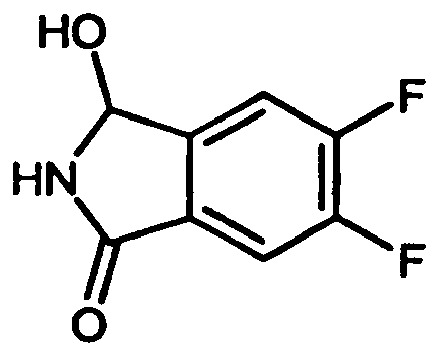
- 740 mg (4.04 mmol) 5,6-Difluor-1H-isoindol-1,3(2H)-dion wurden in 6.6 ml Ethanol gelöst, auf 0°C gekühlt und portionsweise mit 76.4 mg (2.02 mmol) Natriumborhydrid versetzt. Nach Ende der Zugabe wurde die Reaktionsmischung langsam auf RT erwärmt und noch 30 min bei RT nachgerührt, bevor das Reaktionsgemisch mit 1 N Salzsäure neutral gestellt wurde. Das Gemisch wurde im Vakuum bis zur Trockene eingeengt und der Rückstand im Hochvakuum weiter getrocknet. Erhalten wurden 800.8 mg Rohprodukt, welches ohne weitere Reinigung in der Folgereaktion eingesetzt wurde.
LC-MS (Methode 15): Rt = 0.51 min; m/z = 184 (M-H)-. -

- 748 mg 5,6-Difluor-3-hydroxy-2,3-dihydro-1H-isoindol-1-on (Rohprodukt, ca. 4.04 mmol) wurden in 50 ml Dichlormethan vorgelegt, mit 3.8 ml (48.5 mmol) Trifluoressigsäure und 1.3 ml (8.08 mmol) Triethylsilan versetzt und über Nacht bei RT gerührt. Das Reaktionsgemisch wurde danach eingeengt und der Rückstand in Dichlormethan gelöst und mit Natriumhydrogencarbonat-Lösung gewaschen. Das Rohprodukt wurde durch Chromatographie an Silicagel gereinigt (Laufmittel Cyclohexan/Essigsäureethylester 1:1 bis 0:1). Es wurden 72 mg (10.6% d. Th.) der Zielverbindung erhalten.
LC-MS (Methode 15): Rt = 0.61 min; m/z = 170 (M+H)+.
1H-NMR (400 MHz, DMSO-d 6): δ = 8.74 (br. s, 1 H), 7.76-7.64 (m, 2 H), 4.36 (s, 2 H). -

- 10.0 g (60.2 mmol) 4-Fluor-2-benzofuran-1,3-dion wurden unter Argon in 50 ml Formamid 1 h bei 130°C gerührt. Das abgekühlte Reaktionsgemisch wurde dann auf Eiswasser gegeben. Es fiel ein Feststoff aus, der abgesaugt und mit Wasser gewaschen wurde. Das Produkt wurde im Hochvakuum getrocknet. Es wurden 8.3 g (83% d. Th.) der Zielverbindung erhalten.
LC-MS (Methode 11): Rt = 0.57 min; m/z = 166 (M+H)+.
1H-NMR (400 MHz, DMSO-d 6): δ = 11.47 (br. s, 1 H), 7.87 (td, 1 H), 7.69-7.61 (m, 2 H). -

- Zu einer auf 0°C gekühlten Suspension von 4.0 g (24.2 mmol) 4-Fluor-1H-isoindol-1,3(2H)-dion in 40 ml Ethanol wurden portionsweise 458 mg (12.1 mmol) Natriumborhydrid gegeben. Nach Ende der Zugabe wurde die Kühlung entfernt und die Mischung auf RT erwärmt. Nach 20 min Rühren wurden bei RT weitere 458 mg (12.1 mmol) Natriumborhydrid zugesetzt. Nach weiteren 30 min bei RT wurde die Reaktionsmischung vorsichtig mit 1 N Salzsäure versetzt und der pH-Wert neutral eingestellt. Das Gemisch wurde im Vakuum eingeengt und der Rückstand in Dichlormethan aufgenommen und über Celite filtriert. Das aufgefangene Filtrat wurde im Vakuum eingeengt. Erhalten wurden 4.05 g 4-Fluor-3-hydroxy-2,3-dihydro-1H-isoindol-1-on, welches als Rohprodukt direkt weiter umgesetzt wurde.
- 4.05 g (ca. 24.2 mmol) 4-Fluor-3-hydroxy-2,3-dihydro-1H-isoindol-1-on wurden in 10 ml Dichlormethan vorgelegt, mit 22.4 ml (290.8 mmol) Trifluoressigsäure und 7.7 ml (48.5 mmol) Triethylsilan versetzt und über Nacht bei RT gerührt. Das Reaktionsgemisch wurde danach eingeengt und der Rückstand in Dichlormethan gelöst und mit Natriumhydrogencarbonat-Lösung gewaschen. Das Rohprodukt wurde durch Chromatographie an Silicagel gereinigt (Laufmittel Cyclohexan/ Essigsäureethylester 3:1 bis 1:1). Es wurden 890 mg (24.2% d. Th.) der Zielverbindung erhalten.
LC-MS (Methode 12): Rt = 1.18 min; m/z = 152 (M+M)+.
1H-NMR (400 MHz, DMSO-d6): δ = 8.77 (br. s, 1 H), 7.58-7.51 (m, 2 H), 7.49-7.40 (m, 1 H), 4.46 (s, 2 H). -

- 2.15 g (11.68 mmol) 4,7-Difluor-2-benzofuran-1,3-dion wurden unter Argon in 15 ml Formamid 5 h bei 130°C gerührt. Das abgekühlte Reaktionsgemisch wurde dann auf Eiswasser gegeben. Es fiel ein Feststoff aus, der abgesaugt und mit Wasser gewaschen wurde. Das Produkt wurde im Hochvakuum getrocknet. Es wurden 0.45 g (21 % d. Th.) der Zielverbindung erhalten.
LC-MS (Methode 15): Rt = 0.56 min; m/z = 184 (M+H)+.
1H-NMR (400 MHz, DMSO-d6): δ = 11.58 (br. s, 1 H), 7.71 (t, 2 H). -

- 50.9 mg (1.27 mmol, 60%-ig) Natriumhydrid in 1.8 ml DMF wurden bei 0°C mit 170.9 mg (1.27 mmol) 1,2-Dihydro-3H-indazol-3-on versetzt. Es wurde 30 min gerührt und dann bei 0°C 500 mg (1.06 mmol) (+/-)-[4-(Brommethyl)phenyl](cyclopentyl)essigsäure-tert.-butylester zugegeben. Man rührte das Reaktionsgemisch weitere 30 min und versetzte dann mit Wasser und Essigsäureethylester. Die organische Phase wurde mit gesättigter Natriumchlorid-Lösung gewaschen und über Magnesiumsulfat getrocknet. Das Rohprodukt wurde durch präparative RP-HPLC gereinigt (Eluent: Acetonitril/Wasser-Gradient). Es wurden 217 mg (50.3% d. Th.) der Zielverbindung erhalten.
LC-MS (Methode 11): Rt = 1.53 min; m/z = 407 (M+H)+.
1H-NMR (400 MHz, DMSO-d 6): δ = 10.67 (br. s, 1 H), 7.62 (d, 1 H), 7.53 (d, 1 H), 7.32 (t, 1 H), 7.24 (d, 2 H), 7.12 (d, 2 H), 6.99 (t, 1 H), 5.33 (s, 2 H), 3.14 (d, 1 H), 2.40-2.29 (m, 1 H), 1.84-1.72 (m, 1 H), 1.65-1.35 (m, 5 H), 1.33 (s, 9 H), 1.26-1.15 (m, 2 H). -

- 71.0 mg (0.17 mmol) (+/-)-Cyclopentyl{4-[(3-oxo-1,3-dihydro-2H-indazol-2-yl)methyl]phenyl}-essigsäure-tert.-butylester wurden in 400 µl Dichlormethan vorgelegt und mit 134 µl Trifluoressigsäure versetzt. Es wurde 2 h bei RT gerührt. Das Reaktionsgemisch wurde danach am Rotationsverdampfer eingeengt und der Rückstand im Hochvakuum getrocknet. Es wurden 82 mg Rohprodukt erhalten, welches ohne weitere Aufreinigung eingesetzt wurde.
LC-MS (Methode 15): Rt = 1.01 min; m/z = 350 (M+H)+.
1H-NMR (400 MHz, DMSO-d 6): δ = 7.62 (d, 1 H), 7.53 (d, 1 H), 7.32 (t, 1 H), 7.24 (d, 2 H), 7.12 (d, 2 H), 6.99 (t, 1 H), 5.33 (s, 2 H), 3.17 (d, 1 H), 2.45-2.35 (m, 1 H), 1.86-1.75 (m, 1 H), 1.63-1.46 (m, 4 H), 1.44-1.33 (m, 1 H), 1.29-1.15 (m, 2 H), 0.96-0.85 (m, 1 H). -

- 66.9 mg (1.67 mol, 60%-ig) Natriumhydrid in 2 ml DMF wurden bei 0°C mit 222.6 mg (1.67 mmol) 2,3-Dihydro-1H-isoindol-1-on versetzt. Es wurde 30 min gerührt und dann bei 0°C 600 mg (1.39 mmol) Ethyl-2-[4-(brommethyl)phenyl]-4,4,4-trifluor-3-methylbutanoat zugegeben. Man rührte das Reaktionsgemisch weitere 2 h, bevor mit Wasser und Essigsäureethylester versetzt wurde. Die organische Phase wurde mit gesättigter Natriumchlorid-Lösung gewaschen und über Magnesiumsulfat getrocknet. Das Rohprodukt wurde durch präparative RP-HPLC gereinigt (Eluent: Acetonitril/Wasser-Gradient). Es wurden 108 mg (19% d. Th.) der Zielverbindung erhalten.
LC-MS (Methode 12): Rt = 2.42 min; m/z = 406 (M+H)+.
1H-NMR (400 MHz, DMSO-d6): δ = 7.73 (d, 1 H), 7.62-7.47 (m, 3 H), 7.40-7.35 (m, 2 H), 7.30-7.22 (m, 2 H), 4.75-4.70 (m, 2 H), 4.41-4.36 (m, 2 H), 4.15-3.96 (m, 2 H), 3.82-3.68 (m, 1 H), 1.19-1.14 (m, 1 H), 1.13-1.08 (m, 3 H), 0.76 (d, 2 H). -

- Unter Argon wurden 270 mg (0.66 mmol) 4,4,4-Trifluor-3-methyl-2-{4-[(1-oxo-1,3-dihydro-2H-isoindol-2-yl)methyl]phenyl}butansäureethylester in je 1 ml THF, Methanol und Wasser gelöst und mit 69.9 mg (1.66 mmol) Lithiumhydroxid versetzt. Es wurde über Nacht bei RT gerührt. Der Ansatz wurde mit Wasser verdünnt, mit 1 N Salzsäure sauer gestellt und der ausgefallene Niederschlag abgesaugt. Der Feststoff wurde mit Wasser nachgewaschen, bis das Waschwasser neutral blieb. Es wurden 222 mg (88.3% d. Th.) der Zielverbindung erhalten.
LC-MS (Methode 12): Rt = 2.05 min; m/z = 378 (M+H)+.
1H-NMR (400 MHz, DMSO-d 6): δ = 12.72 (br. s, 1 H), 7.73 (d, 1 H), 7.63-7.54 (m, 2 H), 7.50 (t, 1 H), 7.35 (d, 2 H), 7.27 (d, 2 H), 4.73 (s, 2 H), 4.38 (s, 2 H), 3.63-3.57 (m, 1 H), 3.27-3.18 (m, 1 H), 0.75 (d, 3 H). -

- 21.3 mg (0.53 mmol, 60%-ig) Natriumhydrid in 1 ml DMF wurden bei 0°C mit 60 mg (0.355 mmol) 5,6-Difluor-2,3-dihydro-1H-isoindol-1-on versetzt. Es wurde 30 min gerührt und dann bei 0°C 125.3 mg (0.35 mmol) (+/-)-[4-(Brommethyl)phenyl](cyclopentyl)essigsäure-tert.-butylester zugegeben. Man rührte weitere 2 h und versetzte das Reaktionsgemisch dann mit Wasser und Essigsäureethylester. Die organische Phase wurde mit gesättigter Natriumchlorid-Lösung gewaschen und über Magnesiumsulfat getrocknet. Das Rohprodukt wurde durch Chromatographie an Silicagel gereinigt (Laufmittel Cyclohexan/Essigsäureethylester 10:1 bis 2:1). Es wurden 30.0 mg (19.2% d. Th.) der Zielverbindung erhalten.
LC-MS (Methode 10): Rt = 2.75 min; m/z = 442 (M+H)+. -

- 27.0 mg (0.06 mmol) (+/-)-Cyclopentyl{4-[(5,6-difluor-1-oxo-1,3-dihydro-2H-isoindol-2-yl)-methyl]phenyl}essigsäure-tert.-butylester wurden in 200 µl Dichlormethan vorgelegt und mit 94 µl Trifluoressigsäure versetzt. Es wurde 2 h bei RT gerührt. Das Reaktionsgemisch wurde dann am Rotationsverdampfer eingeengt und der Rückstand im Hochvakuum getrocknet. Es wurden 23.5 mg (99.7% d. Th.) der Zielverbindung erhalten.
LC-MS (Methode 15): Rt = 1.09 min; m/z = 386 (M+H)+. -

- Zu einer Lösung von 964.7 mg (2.71 mmol) (+/-)-[4-(Brommethyl)phenyl](cyclopentyl)essigsäure-tert.-butylester in 2 ml DMF wurden 500 mg (2.71 mmol) 4,7-Difluor-1H-isoindol-1,3(2H)-dion und 889.7 mg (2.71 mmol) Cäsiumcarbonat hinzugefügt. Es wurde für 2 h bei 60°C gerührt und das Reaktionsgemisch dann auf Eiswasser gegeben. Man extrahierte dreimal mit Essigsäureethylester. Die vereinigten organischen Phasen wurden mit gesättigter Natriumchlorid-Lösung gewaschen und über Magnesiumsulfat getrocknet. Das Rohprodukt wurde durch Chromatographie an Silicagel gereinigt (Laufmittel Cyclohexan/Essigsäureethylester 10:1 bis 5:1). Es wurden 424 mg (34.1 % d. Th.) der Zielverbindung erhalten.
LC-MS (Methode 15): Rt = 1.47 min; m/z = 478 (M+Na)+.
1H-NMR (400 MHz, DMSO-d 6): δ = 7.76 (t, 2 H), 7.31-7.24 (m, 4 H), 4.70 (s, 2 H), 3.18 (d, 1 H), 2.42-2.26 (m, 1H), 1.85-1.75 (m, 1H), 1.66-1.37 (m, 5 H), 1.34 (s, 9 H), 1.30-1.18 (m, 2 H). -

- Eine Lösung von 200.0 mg (0.44 mmol) (+/-)-Cyclopentyl{4-[(4,7-difluor-1,3-dioxo-1,3-dihydro-2H-isoindol-2-yl)methyl]phenyl}essigsäure-tert.-butylester in 1 ml Ethanol wurde auf 0°C gekühlt und mit 18.3 mg (0.48 mmol) Natriumborhydrid versetzt. Es wurden 0.2 ml Dichlormethan zugegeben und das Reaktionsgemisch auf RT erwärmt. Nach 1 h Rühren wurde das Gemisch eingeengt und der Rückstand durch Chromatographie an Silicagel gereinigt (Laufmittel Cyclohexan/Essigsäureethylester 6:1 bis 4:1). Es wurden 182 mg (90.6% d. Th.) der Zielverbindung erhalten.
LC-MS (Methode 11): Rt = 1.49 min; m/z = 458 (M+H)+.
1H-NMR (400 MHz, DMSO-d6 ): δ = 7.55-7.49 (m, 1 H), 7.41 (td, 1 H), 7.32-7.20 (m, 4 H), 7.03 (dd, 1 H), 5.91-5.82 (m, 1 H), 4.80 (d, 1 H), 4.34 (d, 1 H), 3.18 (d, 1 H), 2.43-2.32 (m, 1 H), 1.86-1.76 (m, 1 H), 1.67-1.46 (m, 3 H), 1.45-1.37 (m, 1 H), 1.35 (s, 9 H), 1.31-1.18 (m, 2 H), 0.95 (dd, 1 H). -

- 90.0 mg (0.20 mmol) Cyclopentyl{4-[(4,7-difluor-1-hydroxy-3-oxo-1,3-dihydro-2H-isoindol-2-yl)-methyl]phenyl}essigsäure-tert.-butylester wurden in 1 ml Dichlormethan vorgelegt und mit 300 µl Trifluoressigsäure sowie 62 µl (0.39 mmol) Triethylsilan versetzt. Es wurde 2 h bei RT gerührt. Das Reaktionsgemisch wurde danach am Rotationsverdampfer eingeengt, der Rückstand in Essigsäureethylester aufgenommen und die Lösung mit Wasser und gesättigter Natriumchlorid-Lösung gewaschen. Die organische Phase wurde über Magnesiumsulfat getrocknet und im Vakuum eingeengt. Es wurden 77.0 mg der Zielverbindung erhalten.
LC-MS (Methode 11): Rt = 1.21 min; m/z = 386 (M+H)+.
1H-NMR (400 MHz, DMSO-d 6): δ = 7.53-7.45 (m, 1 H), 7.38-7.32 (m, 1 H), 7.31 (d, 2 H), 7.25 (d, 2 H), 4.66 (s, 2 H), 4.48 (s, 2 H), 2.47-2.31 (m, 2 H), 1.87-1.77 (m, 1 H), 1.65-1.17 (m, 7 H). -

- Eine Suspension von 96.3 mg (2.41 mmol, 60%-ig) Natriumhydrid in 1 ml DMF wurde bei 0°C mit 280 mg (1.85 mmol) 4-Fluor-2,3-dihydro-1H-isoindol-1-on versetzt. Es wurde 30 min gerührt und dann bei 0°C 654.5 mg (1.85 mmol) (+/-)-[4-(Brommethyl)phenyl](cyclopentyl)essigsäure-tert.-butylester zugegeben. Man rührte weitere 2 h, bevor das Reaktionsgemisch mit Wasser und Essigsäureethylester versetzt wurde. Die organische Phase wurde mit gesättigter Natriumchlorid-Lösung gewaschen und über Magnesiumsulfat getrocknet. Das Rohprodukt wurde durch Chromatographie an Silicagel gereinigt (Laufmittel Cyclohexan/Essigsäureethylester 6:1 bis 5:1). Es wurden 394 mg (50.2% d. Th.) der Zielverbindung erhalten.
LC-MS (Methode 15): Rt = 1.44 min; m/z = 446 (M+Na)+.
1H-NMR (400 MHz, DMSO-d 6): δ = 7.62-7.52 (m, 2 H), 7.45 (dt, 1 H), 7.30 (d, 2 H), 7.24 (d, 2 H), 4.71 (s, 2 H), 4.49 (s, 2 H), 3.18 (d, 1 H), 2.42-2.32 (m, 1 H), 1.80 (dd, 1 In, 1.66-1.36 (m, 5 H), 1.34 (s, 9 H), 1.30-1.14 (m, 2 H). -

- 150.0 mg (0.35 mmol) (+/-)-Cyclopentyl{4-[(4-fluor-1-oxo-1,3-dihydro-2H-isoindol-2-yl)methyl]-phenyl}essigsäure-tert.-butylester wurden in 300 µl Dichlormethan vorgelegt und mit 515 µl Trifluoressigsäure versetzt. Es wurde 1 h bei RT gerührt. Das Reaktionsgemisch wurde dann am Rotationsverdampfer eingeengt und der Rückstand im Hochvakuum getrocknet. Das Produkt wurde mit Acetonitril versetzt und der ausgefallene Feststoff verrührt und dann abgesaugt. Es wurden 112.0 mg (86. 1 % d. Th.) der Zielverbindung erhalten.
LC-MS (Methode 15): Rt = 1.08 min; m/z = 368 (M+H)+.
1H-NMR (400 MHz, DMSO-d 6): δ = 12.25 (br. s, 1 H) 7.62-7.54 (m, 2 H), 7.44 (t, 1 H), 7.30 (d, 2 H), 7.25 (d, 2 H), 4.71 (s, 2 H), 4.51 (s, 2 H), 3.21 (d, 1 H), 2.48-2.40 (m, 1 H), 1.98-1.80 (m, 1 H), 1.66-1.48 (m, 3 H), 1.45-1.38 (m, 1 H), 1.32-1.18 (m, 2 H), 0.99-0.90 (m, 1H). -

- Eine Suspension von 125.4 mg (3.14 mmol, 60%-ig) Natriumhydrid in 5 ml DMF wurde bei RT mit 406.1 mg (3.14 mmol) 5-Chlorpyridin-2(1H)-on versetzt. Es wurde 30 min gerührt und dann bei RT 1050 mg (2.41 mmol) (1R,2S,5R)-5-Methyl-2-(propan-2-yl)cyclohexyl-(2S)-[4-(brommethyl)phenyl](cyclopentyl)ethanoat zugegeben. Man rührte weitere 2 h bei RT und gab das Reaktionsgemisch dann auf Wasser. Der ausgefallene Feststoff wurde abgesaugt und mit Wasser und Isohexan gewaschen. Es wurden 830 mg (71% d. Th.) der Zielverbindung-erhalten.
LC-MS (Methode 15): Rt =1.60 min; m/z = 484 (M+H)+.
1H-NMR (400 MHz, DMSO-d 6): δ = 8.10 (d, 1 H), 7.49 (dd, 1 H), 7.30 (d, 2 H), 7.25 (d, 2 H), 6.46 (d, 1 H), 5.04 (s, 2 H), 4.53 (td, 1 H), 2.47-2.38 (m, 1 H), 1.84-1.69 (m, 2 H), 1.68-1.13 (m, 12 H), 1.03-0.91 (m, 2 H), 0.84-0.75 (m, 8 H), 0.61 (d, 3 H).
[α]D 20 = -27°, c = 0.540, Chloroform. -

- 800.0 mg (1.65 mmol) (1R,2S,5R)-5-Methyl-2-(propan-2-yl)cyclohexyl-(2S)-{4-[(5-chlor-2-oxo-pyridin-1(2H)-yl)methyl]phenyl}(cyclopentyl)ethanoat wurden mit 50 ml Trifluoressigsäure versetzt. Es wurde 48 h unter Rückfluss gerührt. Das Reaktionsgemisch wurde dann am Rotationsverdampfer eingeengt und der Rückstand im Hochvakuum getrocknet. Das Rohprodukt wurde durch Chromatographie an Silicagel gereinigt (Laufmittel Cyclohexan/Essigsäureethylester 4:1 → 2:1 → 1:1). Es wurden 400 mg (70.0% d. Th.) der Zielverbindung erhalten.
LC-MS (Methode 15): Rt = 1.01 min; m/z = 346 (M+H)+.
1H-NMR (400 MHz, DMSO-d 6): δ = 12.25 (s, 1 H), 8.11 (d, 1 H), 7.49 (dd, 1 H), 7.29 (d, 2 H), 7.24 (d, 2 H), 6.46 (d, 1 H), 5.04 (s, 2 H), 3.21 (d, 1 H), 2.47-2.35 (m, 1 H), 1.82 (dd, 1 H), 1.66-1.17 (m, 6 H), 1.00-0.88 (m, 1 H).
[α]D 20 = + 39.5°, c = 0.505, Chloroform. -

- 300 mg (1.84 mmol) 5-(Trifluormethyl)pyridin-2(1H)-on in 2.5 ml DMF wurden mit 73.6 mg (1.84 mmol, 60%-ig) Natriumhydrid versetzt. Nach 30 min Rühren wurden 500 mg (1.42 mmol) (+/-)-[4-(Brommethyl)phenyl](cyclopentyl)essigsäure-tert.-butylester zugegeben. Nach weiteren 2 h Rühren bei RT wurde das Reaktionsgemisch für 1 h auf 40°C erwärmt. Das Gemisch wurde dann mit Wasser und Essigsäureethylester versetzt und die Phasen getrennt. Die organische Phase wurde mit gesättigter Natriumchlorid-Lösung gewaschen und über Magnesiumsulfat getrocknet. Das Rohprodukt wurde durch Chromatographie an Silicagel gereinigt (Laufmittel Cyclohexan/ Essigsäureethylester 6:1 bis 4:1). Es wurden 522.0 mg (84.7% d. Th.) der Zielverbindung erhalten.
LC-MS (Methode 11): Rt = 1.62 min; m/z = 380 (M+H-C4H8)+.
1H-NMR (400 MHz, DMSO-d 6): δ = 8.54 (s, 1 H), 7.70 (dd, 1 H), 7.30 (d, 2 H), 7.24 (d, 2 H), 6.57 (d, 1 H), 5.18-5.07 (m, 2 H), 3.18 (d, 1 H), 2.44-2.30 (m, 1 H), 1.88-1.74 (m, 1 H), 1.67-1.38 (m, 4 H), 1.37-1.33 (m, 9 H), 1.30-1.16 (m, 2 H), 1.00-0.86 (m, 1 H). -

- 390 mg (0.90 mmol) (+/-)-Cyclopentyl(4-{[2-oxo-5-(trifluormethyl)pyridin-1(2H)-yl]methyl}-phenyl)ethansäure-tert.-butylester wurden in 2.7 ml Dichlormethan vorgelegt und mit 690 µl Trifluoressigsäure versetzt. Das Reaktionsgemisch wurde 2 h bei RT gerührt, dann im Vakuum eingeengt und der Rückstand im Hochvakuum getrocknet. Es wurden 523 mg an Produkt erhalten, welches ohne weitere Aufreinigung eingesetzt wurde.
LC-MS (Methode 11): Rt = 1.23 min; m/z = 380 (M+H)+.
1H-NMR (400 MHz, DMSO-d 6): δ = 8.56 (s, 1 H), 7.69 (dd, 1 H), 7.30 (d, 2 H), 7.25 (d, 2 H), 6.57 (d, 1 H), 5.13 (s, 2 H), 3.21 (d, 1 H), 2.47-2.36 (m, 1 H), 1.91-1.76 (m, 1 H), 1.68-1.13 (m, 6 H), 0.92 (dq, 1 H). -

- 238.8 mg (5.97 mmol, 60%-ig) Natriumhydrid in 5 ml DMF wurden bei RT mit 973.8 mg (5.97 mmol) 5-(Trifluormethyl)pyridin-2(1H)-on versetzt. Es wurde 30 min gerührt und dann bei RT 2.0 g (4.59 mmol) (1R,2S,SR)-5-Methyl-2-(propan-2-yl)cyclohexyl-(2S)-[4-(brommethyl)phenyl]-(cyclopentyl)ethanoat zugegeben. Man rührte weitere 2 h bei RT. Das Reaktionsgemisch wurde dann mit Wasser und Essigsäureethylester versetzt. Nach Phasentrennung wurde die organische Phase mit gesättigter Natriumchlorid-Lösung gewaschen und über Magnesiumsulfat getrocknet. Das Rohprodukt wurde durch Chromatographie an Silicagel gereinigt (Laufmittel Cyclohexan/ Essigsäureethylester 5:1). Es wurden 2.0 g (85.0% d. Th.) der Zielverbindung erhalten.
LC-MS (Methode 15): Rt = 1.65 min; m/z = 518 (M+H)+.
1H-NMR (400 MHz, DMSO-d 6): δ = 8.52 (s, 1 H), 7.69 (dd, 1 H), 7.31 (d, 2 H), 7.26 (d, 2 H), 6.57 (d, 1 H), 5.13 (s, 2 H), 4.52 (td, 1 H), 2.48-2.42 (m, 2 H), 1.82-1.13 (m, 13 H), 1.00-0.90 (m, 2 H), 0.83-0.74 (m, 8 H), 0.59 (d, 3 H).
[α]D 20 = -21.2°, c = 0.515, Chloroform. -

- 1.0 g (1.93 mmol) (1R,2S,5R)-5-Methyl-2-(propan-2-yl)cyclohexyl-(2S)-cyclopentyl(4-{[2-oxo-5-(trifluormethyl)pyridin-1(2H)-yl]methyl}phenyl)ethanoat wurden mit 50 ml Trifluoressigsäure versetzt. Es wurde 48 h unter Rückfluss gerührt. Das Reaktionsgemisch wurde dann im Vakuum eingeengt und der Rückstand im Hochvakuum getrocknet. Das Rohprodukt wurde durch Chromatographie an Silicagel gereinigt (Laufmittel Cyclohexan/Essigsäureethylester 4:1 → 2:1 → 1:1). Es wurden 670 mg (91.4% d. Th.) der Zielverbindung erhalten.
LC-MS (Methode 15): Rt = 1.07 min; m/z = 380 (M+H)+.
1H-NMR (400 MHz, DMSO-d 6): δ = 8.56 (s, 1 H), 7.69 (dd, 1 H), 7.30 (d, 2 H), 7.25 (d, 2 H), 6.57 (d, 1 H), 5.13 (s, 2 H), 3.21 (d, 1 H), 2.47-2.36 (m, 1 H), 1.87-1.77 (m, 1 H), 1.67-1.15 (m, 7 H), 0.99-0.88 (m, 1 H).
[α]D 20 = + 19.9°, c = 0.530, Chloroform. -
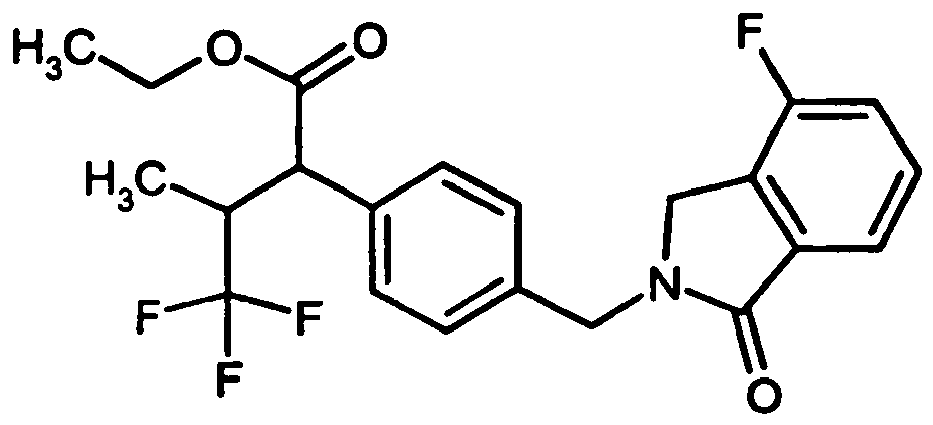
- 170.7 mg (4.27 mmol, 60%-ig) Natriumhydrid in 4 ml DMF wurden bei 0°C mit 645 mg (4.27 mmol) 4-Fluor-2,3-dihydro-1H-isoindol-1-on versetzt. Es wurde 30 min gerührt und dann bei 0°C 2.11 g (5.98 mmol) Ethyl-2-[4-(brommethyl)phenyl]-4,4,4-trifluor-3-methylbutanoat zugegeben. Man rührte weitere 2 h und versetzte das Reaktionsgemisch dann mit Wasser und Essigsäureethylester. Die organische Phase wurde mit gesättigter Natriumchlorid-Lösung gewaschen und über Magnesiumsulfat getrocknet. Das Rohprodukt wurde durch Chromatographie an Silicagel gereinigt (Laufmittel Cyclohexan/Essigsäureethylester 40:1 bis 3:1). Es wurden 856 mg (33.9% d. Th.) der Zielverbindung erhalten.
LC-MS (Methode 15): Rt = 1.24 min; m/z = 424 (M+H)+.
1H-NMR (400 MHz, DMSO-d 6): δ = 7.62-7.53 (m, 2 H), 7.45 (t, 1 H), 7.38 (d, 2 H), 7.29 (d, 2 H), 4.73 (s, 2 H), 4.50 (s, 2 H), 4.14-3.95 (m, 2 H), 3.71 (d, 1 H), 1.14-1.08 (m, 4 H), 0.76 (d, 3 H). -

- 855 mg (2.02 mmol) 4,4,4-Trifluor-2-{4-[(4-fluor-1-oxo-1,3-dihydro-2H-isoindol-2-yl)methyl]-phenyl}-3-methylbutansäureethylester wurden in je 5.7 ml THF, Methanol und Wasser gelöst und mit 16.2 ml (40.39 mmol) 10%-iger Natronlauge versetzt. Es wurde über Nacht bei RT gerührt.
- Der Ansatz wurde dann mit Wasser verdünnt, mit 1 N Salzsäure sauer gestellt und mit Essigsäureethylester extrahiert. Die organische Phase wurde über Natriumsulfat getrocknet und eingeengt. Das Rohprodukt wurde durch präparative RP-HPLC gereinigt (Eluent: Acetonitril/Wasser-Gradient). Es wurden 457.2 mg (58.2% d. Th.) der Zielverbindung erhalten.
LC-MS (Methode 15): Rt = 1.01 min; m/z = 396 (M+H)+.
1H-NMR (400 MHz, DMSO-d 6): δ = 12.72 (br. s, 1 H), 7.62-7.54 (m, 2 H), 7.48-7.41 (m, 1 H), 7.36 (d, 2 H), 7.29 (d, 2 H), 4.73 (s, 2 H), 4.50 (s, 2 H), 3.61 (d, 1 H), 3.28-3.19 (m, 1 H), 0.76 (d, 3 H). -

- 1.80 g (11.04 mmol) 5-(Trifluormethyl)pyridin-2(1H)-on wurden in 2.5 ml DMF vorgelegt und mit 0.44 g (11.04 mmol, 60%-ig) Natriumhydrid versetzt. Es wurde 30 min gerührt und dann mit 3.0 g (8.49 mmol) Ethyl-2-[4-(brommethyl)phenyl]-4,4,4-trifluor-3-methylbutanoat versetzt. Nach weiteren 2 h bei RT wurde das Reaktionsgemisch mit Wasser versetzt und mit Essigsäureethylester extrahiert. Die organische Phase wurde mit gesättigter Natriumchlorid-Lösung gewaschen und über Magnesiumsulfat getrocknet. Das Rohprodukt wurde durch Chromatographie an Silicagel gereinigt (Laufmittel Cyclohexan/Essigsäureethylester 10:1 bis 4:1). Es wurden 2.89 g (78.2% d. Th.) der Zielverbindung erhalten.
LC-MS (Methode 15): Rt = 1.19 min; m/z = 436 (M+H)+.
1H-NMR (400 MHz, DMSO-d 6): δ = 8.61-8.54 (m, 1 H), 7.70 (dd, 1 H), 7.38 (d, 2 H), 7.29 (d, 2 H), 6.57 (d, 1 H), 5.18-5.07 (m, 2 H), 4.17-3.94 (m, 2 H), 3.71 (d, 1 H), 3.31-3.16 (m, 1 H), 1.14-1.05 (m, 3 H), 0.75 (d, 3 H). -

- 2.80 g (6.43 mmol) 4,4,4-Trifluor-3-methyl-2-(4-{[2-oxo-5-(trifluormethyl)pyridin-1(2H)-yl]-methyl}phenyl)butansäureethylester wurden in je 18.2 ml THF, Methanol und Wasser gelöst und mit 51.5 ml (128.6 mmol) 10%-iger Natronlauge versetzt. Es wurde über Nacht bei RT gerührt. Die Reaktionsmischung wurde dann mit Wasser verdünnt, mit 1 N Salzsäure sauer gestellt und mit Essigsäureethylester extrahiert. Die organische Phase wurde über Natriumsulfat getrocknet und eingeengt. Es wurden 2.82 g an Produkt erhalten, welches ohne weitere Aufreinigung eingesetzt wurde.
LC-MS (Methode 15): Rt = 1.02 min; m/z = 408 (M+H)+.
1H-NMR (400 MHz, DMSO-d6): δ = 12.70 (br. s, 1 H), 8.61-8.54 (m, 1 H), 7.70 (dd, 1 H), 7.35 (d, 2 H), 7.28 (d, 2 H), 6.57 (d, 1 H), 5.15 (s, 2 H), 3.61 (d, 1 H), 3.29-3.18 (m, 1 H), 0.75 (d, 3 H). - Das oben erhaltene Isomerengemisch wurde durch präparative HPLC an chiraler Phase aufgetrennt [Säule: Daicel Chiralpak AD-H, 5 µm, 250 mm x 20 mm; Fluss: 15 ml/min; UV-Detektion: 220 nm; Injektionsvolumen: 0.2 ml; Temperatur: 27°C; Eluent: 75% Isohexan / 25% Ethanol (mit 0.2% TFA und 1% Wasser)]. Ausgehend von 2810 mg Isomerengemisch wurden 867 mg von Enantiomer 1 und 776 mg von Enantiomer 2 isoliert (siehe Beispiele 318A und 319A).
-

[α]D 20 = -45.9°, c = 0.335, Chloroform. -

1H-NMR (400 MHz, DMSO-d 6): δ = 8.57 (s, 1 H), 7.70 (dd, 1 H), 7.35 (d, 2 H), 7.29 (d, 2 H), 6.57 (d, 1 H), 5.15 (s, 2 H), 3.60 (d, 1 H), 3.31-3.18 (m, 1 H), 0.75 (d, 3 H).
[α]D 20 = +44.8°, c = 0.400, Chloroform. -

- Eine Lösung von 1283 mg (2.86 mmol) Ethyl-4,4,4-trifluor-3-methyl-2-{4-[(5-oxo-2-phenyl-5,6-dihydro-4H-1,3,4-oxadiazin-4-yl)methyl]phenyl}butanoat in 10 ml Dioxan wurde mit 11.4 ml (11.4 mmol) 1 N Natronlauge versetzt und über Nacht bei 80°C gerührt. Nach vollständiger Umsetzung wurde das Dioxan im Vakuum abgezogen, die verbleibende Lösung mit Wasser verdünnt und anschließend mit 1 M Salzsäure auf pH 2 gestellt. Der ausgefallene Feststoff wurde abfiltriert, mit Wasser gewaschen und über Nacht im Vakuum bei 45°C getrocknet. Es wurden 1058 mg (2.52 mmol, 88% d. Th.) der Titelverbindung als Isomerengemisch erhalten.
LC-MS (Methode 15): Rt = 1.12 min; m/z = 421 (M+H)+ (Diastereomer 1); Rt = 1.13 min; m/z = 421 (M+H)+ (Diastereomer 2). - Analog zu den Beispielen 51A, 72A bzw. 320A wurden die in der folgenden Tabelle aufgeführten Verbindungen hergestellt:
Beispiel Name / Struktur / Edukt Analytische Daten 321A 6,6,6-Trifluor-4-methyl-2-{4-[(5-oxo-2-phenyl-5,6-dihydro-4H-1,3,4-oxadiazin-4-yl)methyl]phenyl}-hexansäure LC-MS (Methode 7): Rt = 2.57 min; m/z = 449 (M+H)+. 
(aus tert.-Butyl-6,6,6-trifluor-4-methyl-2-{4-[(5-oxo-2-phenyl-5,6-dihydro-4H-1,3,4-oxadiazin-4-yl)methyl]-phenyl}hexanoat) 322A 5,5,5-Trifluor-3-methyl-2-{4-[(5-oxo-2-phenyl-5,6-dihydro-4H-1,3,4-oxadiazin-4-yl)methyl]phenyl}-pentansäure LC-MS (Methode 15): Rt = 1.15 min; m/z = 435 (M+H)+. 
(aus tert.-Butyl-5,5,5-trifluor-3-methyl-2-{4-[(5-oxo-2-phenyl-5,6-dihydro-4H-1,3,4-oxadiazin-4-yl)methyl]-phenyl}pentanoat) 323A {4-[(3-Chlor-6-oxopyridazin-1(6H)-yl)methyl]phenyl}-(cyclopentyl)essigsäure LC-MS (Methode 11): Rt = 1.41 min; m/z = 347 (M+H)+. 
(aus tert.-Butyl-{4-[(3-chlor-6-oxopyridazin-1(6H)-yl)-methyl]phenyl} (cyclopentyl)acetat) 324A 2-{4-[(5-Oxo-2-phenyl-5,6-dihydro-4H-1,3,4-oxadiazin-4-yl)methyl]phenyl}-3-(trifluormethyl)pentansäure LC-MS (Methode 15): Rt = 1.18 min; m/z = 435 (M+H)+. 
(aus Ethyl-2-{4-[(5-oxo-2-phenyl-5,6-dihydro-4H-1,3,4-oxadiazin-4-yl)methyl]phenyl}-3(trifluormethyl)-pentanoat) 325A Cyclopentyl{4-[(3-methyl-6-oxopyridazin-1(6H)-yl)-methyl]phenyl} essigsäure LC-MS (Methode 12): Rt = 1.96 min; m/z = 327 (M+H)+. 
(aus tert.-Butyl-cyclopentyl {4-[(3-methyl-6-oxo-pyridazin-1(6H)-yl)methyl]phenyl}acetat) 326A Cyclopentyl(4-{[6-oxo-3-(trifluormethyl)pyridazin-1(6H)-yl]methyl}phenyl)essigsäure LC-MS (Methode 12): Rt = 2.27 min; m/z = 381 (M+H)+.
1H-NMR (400 MHz, DMSO-d6): δ = 12.24 (br. s, 1H), 7.86 (d, 1H), 7.31 (d, 2H), 7.25 (d, 2H), 7.20 (d, 1H), 5.28 (s, 2H), 3.22 (d, 1H), 2.3 8-2.46 (m, 1H), 1.77-1.89 (m, 1H), 1.56-1.67 (m, 1H), 1.48-1.56 (m, 2H), 1.34-1.46 (m, 1H), 1.14-1.32 (m, 2H), 0.86-0.99 (m, 1H).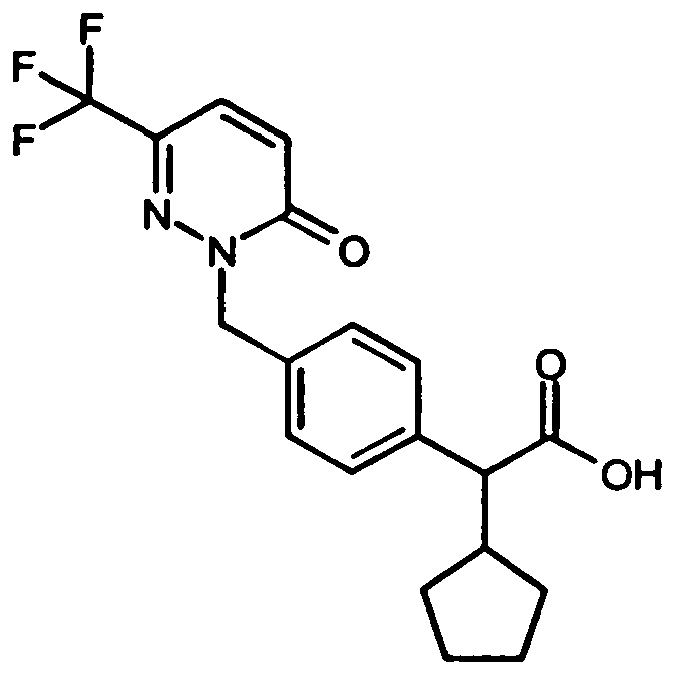
(aus tert.-Butyl-cyclopentyl(4-{[6-oxo-3-(trifluor-methyl)pyridazin-1(6H)-yl)methyl}phenyl)acetat) 327A Cyclopentyl {4-[(5-methyl-6-oxopyridazin-1(6H)-yl)-methyl]phenyl}essigsäure LC-MS (Methode 15): Rt = 0.98 min; m/z = 326 (M+H)+.
1H-NMR (400 MHz, DMSO-d6): δ = 12.24 (s, 1H), 7.64 (d, 1H), 7.26-7.35 (m, 3H), 7.21 (d, 2H), 6.15 (t, 1H), 5.07 (s, 2H), 3.20 (d, 1H), 2.35-2.47 (m, 1H), 2.00 (s, 3H), 1.82 (dd, 1H), 1.47-1.65 (m, 3H), 1.34-1.46 (m, 1H), 1.16-1.31 (m, 2i-n, 0.87-0.99 (m, 1H).
(aus tert.-Butyl-cyclopentyl{4-[(5-methyl-6-oxo-pyridazin-1(6H)-yl)methyl]phenyl}acetat) 328A Cyclopentyl(4-{[6-oxo-4-(trifluormethyl)pyridazin-1(6H)-yl]methyl}phenyl)essigsäure LC-MS (Methode 11): Rt = 1.22 min; m/z = 380 (M+H)+.
1H-NMR (400 MHz, DMSO-d6): δ = 12.24 (s, 1H), 8.08 (d, 1H), 7.30 (d, 2H), 7.25 (d, 2H), 6.81 (s, 1H), 6.51 (dd, 1H), 5.13 (s, 2H), 3.21 (d, 1H), 2.36-2.47 (m, 1H), 1.82 (dd, 1H), 1.47-1.65 (m, 3H), 1.35-1.46 (m, 1H), 1.15-1.31 (m, 2H), 0.87-0.98 (m, 1H).
(aus tert.-Butyl-cyclopentyl(4-{[6-oxo-4-(trifluor-methyl)pyridazin-1(6H)-yl]methyl}phenyl)acetat) 329A (3,3-Difluorcyclopentyl) {4-[(5-oxo-2-phenyl-5,6-dihydro-4H-1,3,4-oxadiazin-4-yl)methyl]phenyl}-essigsäure LC-MS (Methode 11): Rt = 1.28 min; m/z = 429 (M+H)+. 
(aus tert.-Butyl-(3,3-difluorcyclopentyl) {4-[(5-oxo-2-phenyl-5,6-dihydro-4H-1,3,4-oxadiazin-4-yl)methyl]-phenyl}acetat) 330A Cyclopentyl{4-[(4-methyl-6-oxopyridazin-1(6H)-yl)-methyl]phenyl}essigsäure LC-MS (Methode 11): Rt = 1.07 min; m/z = 326 (M+H)+.
1H-NMR (400 MHz, DMSO-d6): δ = 7.64 (d, 1H), 7.27 (d, 2H), 7.19 (d, 2H), 6.23 (s, 1H), 6.09 (dd, 1H), 5.02 (s, 2H), 3.20 (d, 1H), 2.36-2.46 (m, 1H), 2.12 (s, 3H), 1.82 (dd, 1H), 1.57-1.70 (m, 1H), 1.47-1.56 (m, 2H), 1.35-1.45 (m, 1H), 1.19-1.30 (m, 2H), 0.92 (dd, 1H).
(aus tert.-Butyl-cyclopentyl{4-[(4-methyl-6-oxo-pyridazin-1(6H)-yl)methyl]phenyl}acetat) 331A 4,4,4-Trifluor-3-methyl-2-(4-{[6-oxo-3-(trifluormethyl)-pyridazin-1(6H)-yl]methyl}phenyl)butansäure LC-MS (Methode 11): Rt = 1.21 min; m/z = 409 (M+H)+.
1H-NMR (400 MHz, DMSO-d6): δ = 12.74 (br. s, 1H), 7.87 (d, 1H), 7.36 (d, 2H), 7.29 (d, 2H), 7.21 (d, 1H), 5.30 (s, 2H), 3.61 (d, 1H), 3.17-3.29 (m, 1H), 0.75 (d, 3H).
(aus Ethyl-4,4,4-trifluor-3-methyl-2-(4-{[6-oxo-3-(trifluormethyl)pyridazin-1(6H)-yl]methyl}phenyl)-butanoat) 332A Cyclopentyl(4-{[6-oxo-5-(trifluormethyl)pyridazin-1(6H)-yl]methyl}phenyl)essigsäure LC-MS (Methode 11): Rt = 1.39 min; m/z = 380 (M+H)+.
1H-NMR (400 MHz, DMSO-d6): δ = 12.24 (br. s, 1H), 8.16 (d, 1H), 7.94 (d, 1H), 7.31 (d, 2H), 7.25 (d, 2H), 6.40 (t, 1H), 5.14 (s, 2H), 3.22 (d, 1H), 2.35-2.47 (m, 1H), 1.75-1.89 (m, 1H), 1.48-1.66 (m, 3H), 1.35-1.45 (m, 1H), 1.13-1.32 (m, 2H), 0.87-1.00 (m, 1H).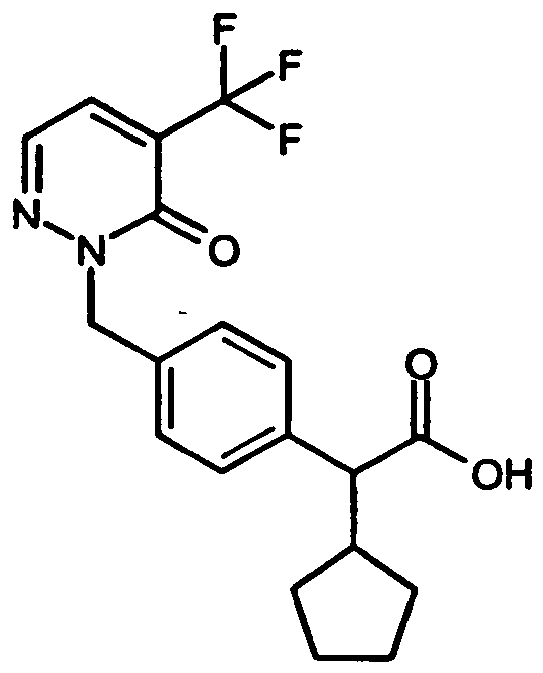
(aus tert.-Butyl-cyclopentyl(4-{[6-oxo-5-(trifluor-methyl)pyridazin-1(6H)-yl]methyl}phenyl)acetat) 333A Cyclopentyl{4-[(6-oxo-3-phenylpyridazin-1(6H)-yl)-methyl]phenyl}essigsäure (Enantiomer 2) LC-MS (Methode 10): Rt=2.11 min; m/z=389 (M+H)+.
[α]D 20 = -21.0°, c = 0.265, Methanol.
(aus tert.-Butyl-cyclopentyl{4-[(6-oxo-3-phenylpyri-dazin-1(6H)-yl)methyl]phenyl} acetat (Enantiomer 2)) 334A Cyclopentyl{4-[(6-oxo-3-phenylpyridazin-1(6H)-yl)-methyl]phenyl}essigsäure (Enantiomer 1) LC-MS (Methode 10): Rt = 2.11 min; m/z = 389 (M+H)+.
[α]D 20 = +37.3°, c = 0.315, Methanol.
1H-NMR (400 MHz, DMSO-d6): δ = 12.15-12.31 (br. s, 1H), 8.09 (d, 1H), 7.89 (d, 2H), 7.43-7.53 (m, 3H), 7.25-7.34 (m, 4H), 7.09 (d, 1H), 5.30 (s, 2H), 3.21 (d, 1H), 2.34-2.47 (m, 1H), 1.75-1.89 (m, 1H), 1.32-1.66 (m, 4H), 1.15-1.31 (m, 2H), 0.87-0.99 (m, 1H).
(aus tert.-Butyl-cyclopentyl{4-[(6-oxo-3-phenylpyri-dazin-1(6H)-yl)methyl]phenyl}acetat (Enantiomer 1)) 335A 4,4,4-Trifluor-3-methyl-2-{4-{(6-oxo-3-phenylpyridazin-1(6H)-yl)methyl]phenyl}butansäure LC-MS (Methode 11): Rt = 1.27 min; m/z = 417 (M+H)+. 
(aus Ethyl-4,4,4-trifluor-3-methyl-2-{4-[(6-oxo-3-phenylpyridazin-1(6H)-yl)methyl]phenyl}butanoat) -

- 630 mg (1.50 mmol) des Isomerengemisches von 4,4,4-Trifluor-3-methyl-2-{4-[(5-oxo-2-phenyl-5,6-dihydro-4H-1,3,4-oxadiazin-4-yl)methyl]phenyl}butansäure wurden mittels präparativer HPLC an chiraler Phase in die Isomere aufgetrennt [Säule: Daicel Chiralpak AD-H, 5 µm, 250 mm x 20 mm; Elutionsmittel: Isohexan/(Isopropanol + 0.2% Trifluoressigsäure + 1% Wasser) 75:25 (v/v); Fluss: 15 ml/min; UV-Detektion: 220 nm; Temperatur: 30°C]:
- Ausbeute: 26 mg
Rt 6.17 min; Reinheit >99%; >99% ee
[Säule: Daicel Chiralpak AD-H, 5 µm, 250 mm x 4.6 mm; Elutionsmittel: Isohexan/(Isopropanol + 0.2% Trifluoressigsäure + 1% Wasser) 75:25 (v/v); Fluss: 1 ml/min; UV-Detektion: 220 nm; Temperatur: 25°C]. - Ausbeute: 35 mg
Rt 6.57 min; Reinheit >98%; >99% ee
[Säule: Daicel Chiralpak AD-H, 5 µm, 250 mm x 4.6 mm; Elutionsmittel: Isohexan/(Isopropanol + 0.2% Trifluoressigsäure + 1% Wasser) 75:25 (v/v); Fluss: 1 ml/min; UV-Detektion: 220 nm; Temperatur: 25°C]. - Ausbeute: 236 mg
Rt 8.03 min; Reinheit >99%; >99% ee
[Säule: Daicel Chiralpak AD-H, 5 µm, 250 mm x 4.6 mm; Elutionsmittel: Isohexan/(Isopropanol + 0.2% Trifluoressigsäure + 1% Wasser) 75:25 (v/v); Fluss: 1 ml/min; UV-Detektion: 220 nm; Temperatur: 25°C].
LC-MS (Methode 15): Rt = 1.12 min; m/z = 421 (M+H)+.
1H-NMR (400 MHz, DMSO-d6, δ/ppm): 12.60-12.81 (1H, br. s), 7.78 (2H, d), 7.41-7.53 (3H, m), 7.37 (4H, s), 4.93 (2H, s), 4.89 (2H, s), 3.61 (1H, d), 3.18-3.32 (1H, m), 0.77 (3H, d).
[α]D 20 = +45.6°, c = 0.565, Methanol. - Ausbeute: 247 mg
Rt 9.17 min; Reinheit >99%; >98% ee
[Säule: Daicel Chiralpak AD-H, 5 µm, 250 mm x 4.6 mm; Elutionsmittel: Isohexan/(Isopropanol + 0.2% Trifluoressigsäure + 1% Wasser) 75:25 (v/v); Fluss: 1 ml/min; UV-Detektion: 220 nm; Temperatur: 25°C].
[α]D 20 = -45.8°, c = 0.305, Methanol. -

- 11.8 g (31.02 mmol) des Isomerengemisches von 3-Methyl-2-{4-[(5-oxo-2-phenyl-5,6-dihydro-4H-1,3,4-oxadiazin-4-yl)methyl]phenyl}pentansäure wurden mittels präparativer HPLC an chiraler Phase zunächst in die Diastereomere aufgetrennt [Säule: chirale Kieselgel-Phase basierend auf dem Selektor Poly(N-methacryloyl-D-valin-3-pentylamid), 500 mm x 75 mm; Elutionsmittel: Isohexan/Essigsäureethylester 30:70 (v/v); Fluss: 200 ml/min; UV-Detektion: 290 nm; Temperatur: 25°C]. Es wurden 4.11 g bzw. 5.2 g der beiden Diastereomere erhalten.
- 4.11 g des Diastereomers 1 wurden mittels präparativer HPLC an chiraler Phase in die Enantiomere (Isomere 1 und 2) aufgetrennt [Säule: Daicel Chiralpak AD-H, 5 µm, 250 mm x 20 mm; Elutionsmittel: Isohexan/Isopropanol 95:5 (v/v); Fluss: 25 ml/min; UV-Detektion: 230 nm; Temperatur: 24°C]:
- Ausbeute: 865 mg
Rt 7.36 min; Reinheit >91%; >93% ee
[Säule: Daicel Chiralpak AD-H, 5 µm, 250 mm x 4 mm; Elutionsmittel: Isohexan/Isopropanol 80:20 (v/v); Fluss: 1 ml/min; UV-Detektion: 230 nm; Temperatur: 25°C].
LC-MS (Methode 10): Rt = 2.16 min; m/z = 381 (M+H)+. - Ausbeute: 1662 mg
Rt 7.91 min; Reinheit >99%; >97% ee
[Säule: Daicel Chiralpak AD-H, 5 µm, 250 mm x 4 mm; Elutionsmittel: Isohexan/Isopropanol 80:20 (v/v); Fluss: 1 ml/min; UV-Detektion: 230 nm; Temperatur: 25°C].
LC-MS (Methode 7): Rt = 2.53 min; m/z = 381 (M+H)+.
1H-NMR (400 MHz, DMSO-d6, δ/ppm): 12.35-12.15 (1H, br. s), 7.78 (2H, d), 7.54-7.40 (3H, m), 7.31 (4H, q), 4.92 (2H, s), 4.86 (2H, s), 3.19 (1H, d), 2.09-1.95 (1H, m), 1.59-1.43 (1H, m), 1.25-1.09 (1H, m), 0.89 (3H, t), 0.58 (3H, d).
[α]D 20 = +21.7°, c = 0.525, Methanol. - 5.2 g des Diastereomers 2 wurden mittels präparativer HPLC an chiraler Phase in die Enantiomere (Isomere 3 und 4) aufgetrennt [Säule: Daicel Chiralcel OJ-H, 5 µm, 250 mm x 20 mm; Elutionsmittel: Isohexan/Isopropanol 95:5 (v/v); Fluss: 25 ml/min; UV-Detektion: 230 nm; Temperatur: 24°C]:
- Ausbeute: 2970 mg
Rt 7.21 min; Reinheit >94%; >99% ee
[Säule: Daicel Chiralcel OJ-H, 5 µm, 250 mm x 4 mm; Elutionsmittel: Isohexan/Isopropanol 80:20 (v/v); Fluss: 1 ml/min; UV-Detektion: 230 nm; Temperatur: 25°C].
LC-MS (Methode 7): Rt = 2.53 min; m/z = 381 (M+H)+. - Ausbeute: 1350 mg
Rt 7.77 min; Reinheit >90%; >84% ee
[Säule: Daicel Chiralcel OJ-H, 5 µm, 250 mm x 4 mm; Elutionsmittel: Isohexan/Isopropanol 80:20 (v/v); Fluss: 1 ml/min; UV-Detektion: 230 nm; Temperatur: 25°C].
LC-MS (Methode 10): Rt = 2.17 min; m/z = 381 (M+H)+. -

- 715 mg (1.72 mmol) des Isomerengemisches von 4,4,4-Trifluor-3-methyl-2-{4-[(6-oxo-3-phenylpyridazin-1(6H)-yl)methyl]phenyl}butansäure wurden mittels präparativer HPLC an chiraler Phase in die Isomere aufgetrennt [Säule: chirale Kieselgel-Phase basierend auf dem Selektor Poly(N-methacryloyl-L-isoleucin-3-pentylamid), 430 mm x 40 mm; Elutionsmittel: Essigsäureethylester; Fluss: 80 ml/min; UV-Detektion: 265 nm; Temperatur: 26°C]. Dabei wurden nur die beiden Enantiomere (Isomere 1 und 2) eines Diastereomers isoliert.
- Ausbeute: 284 mg
Rt 7.71 min; Reinheit >99%; >99.5% ee; >99% de
[Säule: chirale Kieselgel-Phase basierend auf dem Selektor Poly(N-methacryloyl-L-isoleucin-3-pentylamid), 250 mm x 4.6 mm; Elutionsmittel: Isohexan/Essigsäureethylester 20:80 (v/v); Fluss: 2 ml/min; UV-Detektion: 265 nm; Temperatur: 25°C].
LC-MS (Methode 15): Rt = 1.10 min; m/z = 417 (M+H)+.
[α]D 20 = -45.9°, c = 0.48, Methanol. - Ausbeute: 293 mg
Rt 13.19 min; Reinheit >99%; >99.5% ee; >88% de
[Säule: chirale Kieselgel-Phase basierend auf dem Selektor Poly(N-methacryloyl-L-isoleucin-3-pentylamid), 250 mm x 4.6 mm; Elutionsmittel: Isohexan/Essigsäureethylester 20:80 (v/v); Fluss: 2 ml/min; UV-Detektion: 265 nm; Temperatur: 25°C].
LC-MS (Methode 15): Rt = 1.10 min; m/z = 417 (M+H)+.
1H-NMR (400 MHz, DMSO-d6, δ/ppm): 12.72 (1H, br. s), 8.09 (1H, d), 7.79 (2H, d), 7.54-7.42 (3H, m), 7.36 (4H, s), 7.09 (1H, d), 5.33 (2H, s), 3.60 (1H, d), 3.30-3.16 (1H, m), 0.75 (3H, d).
[α]D 20 = +48.0°, c = 0.49, Methanol. - Analog zu Beispiel 112A wurden die in der folgenden Tabelle aufgeführten Verbindungen hergestellt:
Beispiel Name / Struktur / Edukte Analytische Daten 346A tert.-Butyl-3-{2-methyl-3-[(3-methyl-2-{4-[(5-oxo-2-phenyl-5,6-dihydro-4H-1,3,4-oxadiazin-4-yl)methyl]-phenyl}butanoyl)amino]phenyl}propanoat Rt = 2.33 min [Säule: Onxy Monolithic C18; Eluent: Acetonitril / (Wasser + 0.05% TFA) 1:1 (v/v); Fluss: 5 ml/min; UV-Detektion: 214/254 nm; Temperatur: 40°C]. 
(aus Bsp. 79A und Bsp. 96A) 347A Methyl-3-{3-[(cyclopentyl{4-[(5-oxo-2-phenyl-5,6-dihydro-4H-1,3,4-oxadiazin-4-yl)methyl]phenyl}-acetyl)amino]phenyl}-2,2-dimethylpropanoat LC-MS (Methode 7): Rt = 3.06 min; m/z = 582 (M+H)+.
1H-NMR (400 MHz, DMSO-d6): δ = 9.97 (s, 1H), 7.76 (d, 2H), 7.28-7.52 (m, 9H), 7.13 (t, 1H), 6.72 (d, 1H), 4.90 (s, 2H), 4.84 (s, 2H), 3.37 (d, 1H), 3.32 (s, 2H), 2.71 (s, 2H), 1.72-1.83 (m, 1H), 1.13-1.67 (m, 7H), 1.08 (s, 6H), 0.90-1.02 (m, 1H).
(aus Bsp. 77A und Methyl-3-(3-aminophenyl)-2,2-dimethylpropanoat) 348A Methyl-3-{3-[(cyclopentyl{4-[(6-oxo-3-phenylpyridazin-1(6H)-yl)methyl]phenyl}acetyl)amino]phenyl}-2,2-dimethylpropanoat LC-MS (Methode 7): Rt = 2.98 min; m/z = 578 (M+H)+.
1H-NMR (400 MHz, DMSO-d6): δ = 9.96 (s, 1H), 8.06 (d, 1H), 7.87 (d, 2H), 7.42-7.52 (m, 3H), 7.38 (d, 2H), 7.28-7.35 (m, 4H), 7.13 (t, 1H), 7.07 (d, 1H), 6.72 (d, 1H), 5.29 (s, 2H), 3.54 (s, 3H), 3.36 (d, 1H), 2.71 (s, 2H), 1.72-1.82 (m, 1H), 1.17-1.67 (m, 6H), 1.08 (s, 6H), 0.88-1.01 (m, 1H).
(aus Cyclopentyl-{4-[(6-oxo-3-phenylpyridazin-1(6H)-yl)methyl]phenyl}essigsäure und Methyl-3-(3-aminophenyl)-2,2-dimethylpropanoat) 349A Methyl-2,2-dimethyl-3-{3-[(3-methyl-2-{4-[(5-oxo-2-phenyl-5,6-dihydro-4H-1,3,4-oxadiazin-4-yl)methyl]-phenyl}butanoyl)amino]phenyl}propanoat LC-MS (Methode 7): Rt = 2.93 min; m/z = 556 (M+H)+.
1H-NMR (400 MHz, DMSO-d6): δ = 9.99 (s, 1H), 7.76 (d, 2H), 7.40-7.53 (m, 3H), 7.26-7.39 (m, 6H), 7.13 (t, 1H), 6.72 (d, 1H), 4.90 (s, 2H), 4.84 (s, 2H), 3.55 (s, 3H), 3.22 (d, 1H), 2.71 (s, 2H), 2.26-2.38 (m, 1H), 1.07 (s, 6H), 0.99 (d, 3H), 0.65 (d, 3H).
(aus Bsp. 79A und Methyl-3-(3-aminophenyl)-2,2-dimethylpropanoat) 350A tert.-Butyl-3-{3-[(cyclopentyl{4-[(6-oxo-3-phenyl-pyridazin-1(6H)-yl)methyl]phenyl}acetyl)amino]-2-methylphenyl}propanoat LC-MS (Methode 7): Rt = 3.07 min; m/z = 606 (M+H)+.
1H-NMR (400 MHz, DMSO-d6): δ = 9.45 (s, 1H), 8.07 (d, 1H), 7.88 (d, 2H), 7.43-7.53 (m, 3H), 7.41 (d, 2H), 7.32 (d, 2H), 7.09 (d, 1H), 6.92-7.03 (m, 3H), 5.32 (s, 2H), 3.45 (d, 1H), 2.77 (t, 2H), 2.56-2.64 (m, 1H), 2.40 (t, 2H), 1.94-1.99 (m, 3H), 1.41-1.89 (m. 7H), 1.31-1.40 (m, 9H), 0.88-1.06 (m, 1H).
(aus Cyclopentyl-{4-[(6-oxo-3-phenylpyridazin-1(6H)-yl)methyl]phenyl}essigsäure und Bsp. 96A) 351A Methyl-3-{2-methyl-3-[(6,6,6-trifluor-4-methyl-2-{4-[(6-oxo-3-phenylpyridazin-1(6H)-yl)methyl]phenyl}-hexanoyl)amino]phenyl}propanoat LC-MS (Methode 10): Rt = 2.49 min; m/z = 624 (M+1)+. 
(aus 6,6,6-Trifluor-4-methyl-2-{4-[(6-oxo-3-phenyl-pyridazin-1(6H)-yl)methyl]phenyl}hexansäure und Bsp. 97A) 352A Methyl-2,2-dimethyl-3-{3-[(3-methyl-2-{4-[(5-oxo-2-phenyl-5,6-dihydro-4H-1,3,4-oxadiazin-4-yl)methyl]-phenyl}pentanoyl)amino]phenyl}propanoat LC-MS (Methode 7): Rt = 3.02 min; m/z = 570 (M+H)+.
1H-NMR (400 MHz, DMSO-d6): δ = 10.00 (s, 1H), 7.76 (d, 2H), 7.41-7.52 (m, 3H), 7.29-7.38 (m, 6H), 7.13 (t, 1H), 6.72 (d, 1H), 4.90 (s, 2H), 4.84 (s, 2H), 3.54 (s, 3H), 3.34 (d, 1H), 2.71 (s, 2H), 2.12-2.23 (m, 1H), 1.46-1.59 (m, 1H), 1.13-1.25 (m, 1H), 1.07 (s, 6H), 0.85-0.93 (m, 3H), 0.61 (d, 3H).
(aus 3-Methyl-2-{4-[(5-oxo-2-phenyl-5,6-dihydro-4H-1,3,4-oxadiazin-4-yl)methyl]phenyl}pentansäure (Isomer 2) und Methyl-3-(3-aminophenyl)-2,2-dimethylpropanoat) 353A Methyl-4-[(cyclopentyl{4-[(6-oxo-3-phenylpyridazin-1(6H)-yl)methyl]phenyl}acetyl)aminol-2,3-dihydro-1H inden-2-carboxylat LC-MS (Methode 11): Rt = 1.45 min; m/z = 562 (M+H)+. 
(aus Cyclopentyl-{4-[(6-oxo-3-phenylpyridazin-1(6H)-yl)methyl]phenyl}essigsäure und Bsp. 89A) 354A tert.-Butyl-3-{2-methyl-3-[(4,4,4-trifluor-3-methyl-2-{4-[(6-oxo-3-phenylpyridazin-1 (6H)-yl)methyl]-phenyl}butanoyl)amino]phenyl}propanoat LC-MS (Methode 10): Rt = 2.62 min; m/z = 634 (M+H)+. 
(aus 4,4,4-Trifluor-3-methyl-2-{4-[(6-oxo-3-phenyl-pyridazin-1(6H)-yl)methyl]phenyl}butansäure und Bsp. 96A) 355A tert.-Butyl-1-{3-[(cyclopentyl{4-[(6-oxo-3-phenyl-pyridazin-1(6H)-yl)methyl]phenyl}acetyl)amino]-benzyl}cyclopropancarboxylat LC-MS (Methode 7): Rt = 3.18 min; m/z = 616 (M-H)-.
1H-NMR (400 MHz, DMSO-d6): δ = 9.93 (s, 1H), 8.06 (d, 1H), 7.87 (d, 2H), 7.47 (d, 4H), 7.38 (d, 2H), 7.27-7.35 (m, 3H), 7.13 (t, 1H), 7.07 (d, 1H), 6.87 (d, 1H), 5.29 (s, 2H), 3.37 (d, 1H), 2.75 (s, 2H), 1.74-1.82 (m, 1H), 1.58-1.68 (m, 1H), 1.50-1.58 (m, 2H), 1.41-1.49 (m, 1H), 1.33-1.39 (m, 1H), 1.17-1.30 (m, 11H), 1.01-1.06 (m, 2H), 0.92-1.00 (m, 1H), 0.76-0.81 (m, 2H).
(aus Cyclopentyl-{4-[(6-oxo-3-phenylpyridazin-1(6H)-yl)methyl]phenyl}essigsäure (Enantiomer 1) und 1-(3-Aminobenzyl)cyclopropancarbonsäure-tert.-butylester) 356A tert.-Butyl-1-{3-[(4,4,4-trifluor-3-methyl-2-{4-[(6-oxo-3-phenylpyridazin-1(6H)-yl)methyl]phenyl}butanoyl)-amino]benzyl}cyclopropancarboxylat (Isomer 1) LC-MS (Methode 11): Rt = 1.63 min; m/z = 644 (M-H)-. 
(aus 4,4,4-Trifluor-3-methyl-2-{4-[(6-oxo-3-phenyl-pyridazin-1(6H)-yl)methyl]phenyl}butansäure (Isomer 1) und 1-(3-Aminobenzyl)cyclopropancarbonsäure-tert.-butylester) 357A tert.-Butyl-1-{3-[(4,4,4-trifluor-3-methyl-2-{4-[(6-oxo-3-phenylpyridazin-1(6H)-yl)methyl]phenyl}butanoyl)-amino]benzyl} cyclopropancarboxylat (Isomer 2) LC-MS (Methode 11): Rt = 1.63 min; m/z = 644 (M-H)-. 
(aus 4,4,4-Trifluor-3-methyl-2-{4-[(6-oxo-3-phenyl-pyridazin-1(6H)-yl)methyl]phenyl} butansäure (Isomer 2) und 1-(3-Aminobenzyl)cyclopropancarbonsäure-tert.-butylester) 358A tert.-Butyl-1-{3-[(5,5,5-trifluor-3-methyl-2-{4-[(5-oxo-2-phenyl-5,6-dihydro-4H-1,3,4-oxadiazin-4-yl)methyl]-phenyl}pentanoyl)amino]benzyl}cyclopropancarboxylat LC-MS (Methode 15): Rt = 1.49 min; m/z = 662 (M-H)-. 
(aus 5,5,5-Trifluor-3-methyl-2-{4-[(5-oxo-2-phenyl-5,6-dihydro-4H-1,3,4-oxadiazin-4-yl)methyl]phenyl} -pentansäure und 1-(3-Aminobenzyl)cyclopropan-carbonsäure-tert.-butylester) 359A tert.-Butyl-1-(3-{[{4-[(3-chlor-6-oxopyridazin-1(6H)-yl)-methyl]phenyl}(cyclopentyl)acetyl]amino}benzyl)-cyclopropancarboxylat LC-MS (Methode 15): Rt =1.41 min; m/z = 520 (M-C4H8)+. 
(aus {4-[(3-Chlor-6-oxopyridazin-1(6H)-yl)methyl]-phenyl}(cyclopentyl)essigsäure und 1-(3-Aminobenzyl)-cyclopropancarbonsäure-tert.-butylester) 360A tert.-Butyl-1-{3-[(4,4,4-trifluor-3-methyl-2-{4-[(5-oxo-2-phenyl-5,6-dihydro-4H-1,3,4-oxadiazin-4-yl)methyl]-phenyl}butanoyl)amino]benzyl}cyclopropancarboxylat (Isomer 1) LC-MS (Methode 15): Rt = 1.46 min; m/z = 594 (M-C4H8+H)+. 
(aus 4,4,4-Trifluor-3-methyl-2-{4-[(5-oxo-2-phenyl-5,6-dihydro-4H-1,3,4-oxadiazin-4-yl)methyl]phenyl}-butansäure (Isomer 1) und 1-(3-Aminobenzyl)-cyclopropancarbonsäure-tert.-butylester) 361A tert.-Butyl-1-{3-[(4,4,4-trifluor-3-methyl-2-{4-[(5-oxo-2-phenyl-5,6-dihydro-4H-1,3,4-oxadiazin-4-yl)methyl]-phenyl}butanoyl)amino]benzyl}cyclopropancarboxylat (Isomer 2) LC-MS (Methode 15): Rt = 1.46 min; m/z = 594 (M-C4H8+H)+. 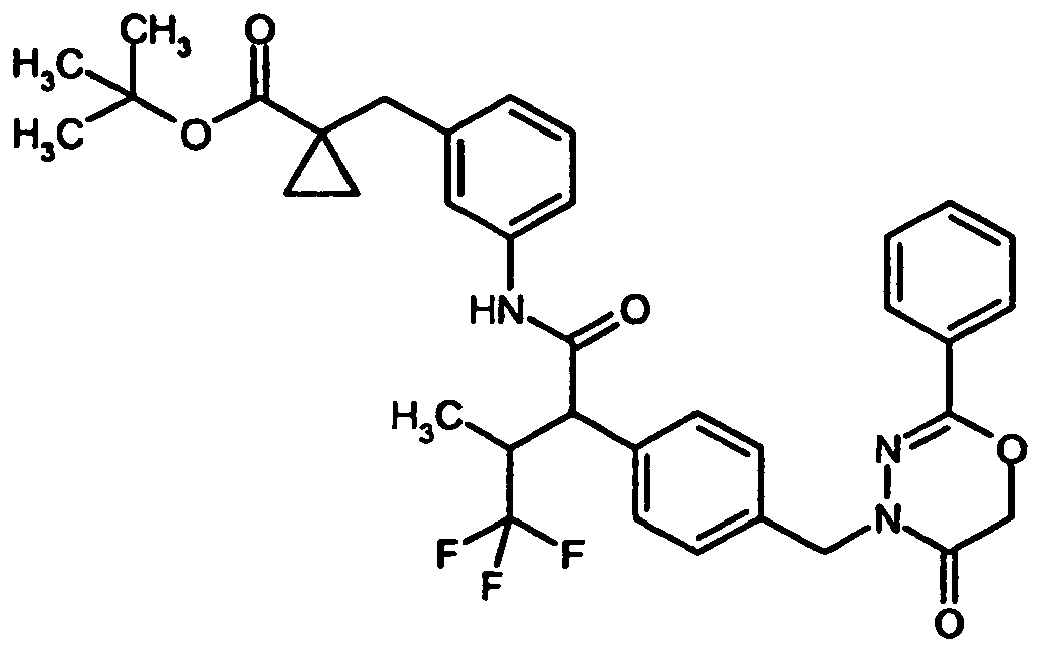
(aus 4,4,4-Trifluor-3-methyl-2-{4-[(5-oxo-2-phenyl-5,6-dihydro-4H-1,3,4-oxadiazin-4-yl)methyl]phenyl}-butansäure (Isomer 2) und 1-(3-Aminobenzyl)-cyclopropancarbonsäure-tert.-butylester) 362A tert:-Butyl-1-{3-[(4,4,4-trifluor-3-methyl-2-{4-[(5-oxo-2-phenyl-5 ,6-dihydro-4H-l ,3,4-oxadiazin-4-yl)metbyl]-phenyl}butanoyl)amino]benzyl}cyclopropancarboxylat (Isomer 3) LC-MS (Methode 15): Rt = 1.46 min; m/z = 648 (M-H)-. 
(aus 4,4,4-Trifluor-3-methyl-2-{4-[(5-oxo-2-phenyl-5,6-dihydro-4H-1,3,4-oxadiazin-4-yl)methyl]phenyl}-butansäure (Isomer 3) und 1-(3-Aminobenzyl)-cyclopropancarbonsäure-tert.-butylester) 363A tert.-Butyl-1-{3-[(4,4,4-trifluor-3-methyl-2-{4-[(5-oxo-2-phenyl-5,6-dihydro-4H-1,3,4-oxadiazin-4-yl)methyl]-phenyl}butanoyl)amino]benzyl}cyclopropancarboxylat (Isomer 4) LC-MS (Methode 15): Rt = 1.46 min; m/z = 648 (M-H)-. 
(aus 4,4,4-Trifluor-3-methyl-2-{4-[(5-oxo-2-phenyl-5,6-dihydro-4H-1,3,4-oxadiazin-4-yl)methyl]phenyl}-butansäure (Isomer 4) und 1-(3-Aminobenzyl)-cyclopropancarbonsäure-tert.-butylester) 364A tert.-Butyl-3-{2-methyl-3-[(4,4,4-trifluor-3-methyl-2-{4-[(5-oxo-2-phenyl-5,6-dihydro-4H-1,3,4-oxadiazin-4-yl)-methyl]phenyl}butanoyl)amino]phenyl}propanoat LC-MS (Methode 11): Rt= 1.61 min; m/z = 636 (M-H)-. 
(aus 4,4,4-Trifluor-3-methyl-2-(4-[(5-oxo-2-phenyl-5,6-dihydro-4H-1,3,4-oxadiazin-4-yl)methyl]phenyl)-butansäure und Bsp. 96A) 365A Methyl-3-{3-[(4,4,4-trifluor-3-methyl-2-{4-[(5-oxo-2-phenyl-5,6-dihydro-4H-1,3,4-oxadiazin-4-yl)methyl]-phenyl}butanoyl)amino]phenyl}propanoat LC-MS (Methode 11): Rt = 1.47 min; m/z = 582 (M+H)+. 
(aus 4,4,4-Trifluor-3-methyl-2-{4-[(5-oxo-2-phenyl-5,6-dihydro-4H-1,3,4-oxadiazin-4-yl)methyl]phenyl}-butansäure und Methyl-3-(3-aminophenyl)propanoat) 366A tert.-Butyl-1-(3-([2-{4-[(5-oxo-2-phenyl-5,6-dihydro-4H-1,3,4-oxadiazin-4-yl)methyl]phenyl}-3-(trifluormethyl)-pentanoyl]an-üno)benzyl)cyclopropancarboxylat LC-MS (Methode 15): Rt = 1.49 min; m/z = 662 (M-H)-. 
(aus 2-{4-[(5-0xo-2-phenyl-5,6-dihydro-4H-1,3,4-oxa-diazin-4-yl)methyl]phenyl}-3-(trifluormethyl)pentan-säure und 1-(3-Aminobenzyl)cyclopropancarbonsäure-tert.-butylester) 367A tert.-Butyl-1-{3-[(cyclopentyl{4-[(3-methyl-6-oxo-pyridazin-1(6H)-yl)methyl]phenyl}acetyl)amino]-benzyl}cyclopropancarboxylat LC-MS (Methode 11): Rt =1.54 min; m/z = 500 (M-C4H8+H)+.
1H-NMR (400 MHz, DMSO-d6): δ = 9.94 (s, 1H), 7.49 (s, 1H), 7.30-7.39 (m, 4H), 7.21 (d, 2H), 7.14 (t, 1H), 6.86-6.92 (m, 2H), 5.14 (s, 2H), 3.36 (d, 1H), 2.77 (s, 2H), 2.56-2.62 (m, 1H), 2.24 (s, 3H), 1.77 (dd, 1H), 1.30-1.67 (m, 5H), 1.16-1.29 (m, 1H), 1.24 (s, 9H), 1.03-1.07 (m, 2H), 0.96 (dt, 1H), 0.76-0.82 (m, 2H).
(aus Cyclopentyl {4-[(3-methyl-6-oxopyridazin-1(6H)-yl)methyl]phenyl}essigsäure und 1-(3-Aminobenzyl)cyclopropancarbonsäure-tert.-butylester) 368A tert.-Butyl-1-(3-{[cyclopentyl(4-{[6-oxo-3-(trifluor-methyl)pyridazin-1(6H)-yl]methyl}phenyl)acetyl]-amino}benzyl)cyclopropancarboxylat LC-MS (Methode 15): Rt = 1.45 min; m/z = 608 (M-H)-.
1H-NMR (400 MHz, DMSO-d6): δ = 9.95 (s, 1H), 7.85 (d, 1H), 7.49 (s, 1H), 7.39 (d, 2H), 7.34 (d, 1H), 7.25 (d, 2H), 7.18 (d, 1H), 7.14 (t, 1H), 6.88 (d, 1H), 5.27 (s, 2H), 3.37 (d, 1H), 2.77 (s, 2H), 2.56-2.64 (m, 1H), 1.71-1.84 (m, 1H), 1.29-1.69 (m, 6H), 1.23 (s, 9H), 1.02-1.07 (m, 2H), 0.89-1.01 (m, 1H), 0.76-0.82 (m, 2H).
(aus Cyclopentyl(4-{[6-oxo-3-(trifluoromethyl)pyridazin-1(6H)-yl]methyl}phenyl)essigsäure und 1-(3-Aminobenzyl)cyclopropancarbonsäure-tert.-butylester) 369A Methyl-3-(3-{[cyclopentyl(4-{[6-oxo-3-(trifluormethyl)-pyridazin-1(6H)-yl]methyl}phenyl)acetyl]amino}-phenyl)propanoat LC-MS (Methode 11): Rt = 1.45 min; m/z = 542 (m+H)+.
1H-NMR (400 MHz, DMSO-d6): δ = 9.98 (s, 1H), 7.84 (d, 1H), 7.36-7.44 (m, 4H), 7.26 (d, 2H), 7.12-7.21 (m, 2H), 6.86 (d, 1H), 5.27 (s, 2H), 3.56 (s, 3H), 3.37 (d, 1H), 2.74-2.82 (m, 2H), 2.54-2.62 (m, 3H), 1.72-1.82 (m, 1H), 1.60-1.70 (m, 1H), 1.50-1.59 (m, 2H), 1.41-1.50 (m, 1H), 1.31-1.38 (m, 1H), 1.22-1.28 (m, 1H), 0.90-1.00 (m, 1H).
(aus Cyclopentyl(4-{[6-oxo-3-(trifluormethyl)pyridazin-1(6H)-yl]methyl}phenyl)essigsäure und Methyl-3-(3-aminophenyl)propanoat) 370A tert.-Butyl-1-{3-[(cyclopentyl{4-[(3-methyl-2-oxo-pyridin-1(2H)-yl)methyl]phenyl}acetyl)amino]benzyl}-cyclopropancarboxylat LC-MS (Methode 11): Rt = 1.54 min; m/z = 553 (M-H)-. 
(aus Cyclopentyl {4-[(3-methyl-2-oxopyridin-1(2H)-yl)-methyl]phenyl} essigsäure und 1-(3-Aminobenzyl)-cyclopropancarbonsäure-tert.-butylester) 371A tert.-Butyl-1-(3-{[cyclopentyl(4-{[2-oxo-4-(trifluor-methyl)pyridin-1(2H)-yl]methyl}phenyl)acetyl]amino}-benzyl)cyclopropancarboxylat LC-MS (Methode 11): Rt = 1.62 min; m/z = 607 (M-H)-. 
(aus Cyclopentyl(4-{[2-oxo-4-(trifluormethyl)pyridin-1(2H)-yl]methyl}phenyl)essigsäure und 1-(3-Amino-benzyl)cyclopropancarbonsäure-tert.-butylester) 372A Methyl-3-(3-{[(3,3-difluorcyclopentyl){4-[(5-oxo-2-phenyl-5,6-dihydro-4H-1,3,4-oxadiazin-4-yl)methyl]-phenyl}acetyl]amino}phenyl)propanoat LC-MS (Methode 11): Rt = 1.46 min; m/z = 590 (M+H)+. 
(aus (3,3-Difluorcyclopentyl) {4-[(5-oxo-2-phenyl-5,6-dihydro-4H-1,3,4-oxadiazin-4-yl)methyl]phenyl}-essigsäure und Methyl-3-(3-aminophenyl)propanoat) 373A tert.-Butyl-1-(3-{[(3,3-difluorcyclopentyl){4-[(5-oxo-2-phenyl-5,6-dihydro-4H-1,3,4-oxadiazin-4-yl)methyl]-phenyl} acetyl]amino}benzyl)cyclopropancarboxylat LC-MS (Methode 11): Rt = 1.66 min; m/z = 602 (M-C4+H)+. 
(aus (3,3-Difluorcyclopentyl) {4-[(5-oxo-2-phenyl-5,6-dihydro-4H-1,3,4-oxadiazin-4-yl)methyl]phenyl}essig-säure und 1-(3-Aminobenzyl)cyclopropancarbonsäure-tert.-butylester) 374A tert.-Butyl-1-{3-[(cyclopentyl{4-[(4-methyl-2-oxo-pyridin-1(2H)-yl)methyl]phenyl}acetyl)amino]benzyl}-cyclopropancarboxylat LC-MS (Methode 15): Rt = 1.34 min; m/z = 555 (M+H)+. 
(aus Cyclopentyl {4-[(4-methyl-2-oxopyridin-1(2H)-yl)-methyl]phenyl}essigsäure und 1-(3-Aminobenzyl)-cyclopropancarbonsäure-tert.-butylester) 375A Methyl-3-(3-{[4,4,4-trifluor-3-methyl-2-(4-{[6-oxo-3-(trifluormethyl)pyridazin-1(6H)-yl]methyl}phenyl)-butanoyl]amino} phenyl)propanoat LC-MS (Methode 11): Rt = 1.40 min; m/z = 570 (M+H)+. 
(aus 4,4,4-Trifluor-3-methyl-2-(4-{[6-oxo-3-(trifluor-methyl)pyridazin-1(6H)-yl]methyl}phenyl)butansäure und Methyl-3-(3-aminophenyl)propanoat) 376A tert.-Butyl-1-(3-{[4,4,4-trifluor-3-methyl-2-(4-{[6-oxo-3-(trifluormethyl)pyridazin-(6H)-yl]methyl}phenyl)-butanoyl]amino}benzyl)cyclopropancarboxylat LC-MS (Methode 11): Rt = 1.61 min; m/z = 636 (M-H)-.
1H-NMR (400 MHz, DMSO-d6): δ = 10.13 (s, 1H), 7.85 (d, 1H), 7.46 (s, 1H), 7.40 (d, 2H), 7.27-7.32 (m, 3H), 7.18 (d, 1H), 7.14 (t, 1H), 6.89 (d, 1H), 5.28 (s, 2H), 3.81 (d, 1H), 3.34-3.42 (m, 1H), 2.76 (s, 2H), 1.21 (s, 9H), 1.04 (q, 2H), 0.80 (q, 2H), 0.77 (d, 3H).
(aus 4,4,4-Trifluor-3-methyl-2-(4-{[6-oxo-3-(trifluor-methyl)pyridazin-1(6H)-yl]methyl}phenyl)butansäure und 1-(3-Aminobenzyl)cyclopropancarbonsäure-tert.-butylester) 377A tert.-Butyl-1-(3-{[cyclopentyl(4-{[2-oxo-3-(trifluor-methyl)pyridin-1(2H)-yl]methyl}phenyl)acetyl]-amino}benzyl)cyclopropancarboxylat LC-MS (Methode 15): Rt = 1.39 min; m/z = 553 (M-C4H8+H)+. 
(aus Cyclopentyl(4-{[2-oxo-3-(trifluormethyl)pyridin-1(2H)-yl]methyl}phenyl)essigsäure und 1-(3-Amino-benzyl)cyclopropancarbonsäure-tert.-butylester) 378A tert.-Butyl-3-{2-chlor-3-[(4,4,4-trifluor-3-methyl-2-{4-[(5-oxo-2-phenyl-5,6-dihydro-4H-1,3,4-oxadiazin-4-yl)-methyl]phenyl}butanoyl)amino]phenyl}propanoat LC-MS (Methode 11): Rt = 1.67 min; m/z = 657 (M-H)-. 
(aus 4,4,4-Trifluor-3-methyl-2-{4-[(5-oxo-2-phenyl-5,6-dihydro-4H-1,3,4-oxadiazin-4-yl)methyl]phenyl}butan-säure und tert.-Butyl-3-(3-amino-2-chlorphenyl)-propanoat) 379A tert.-Butyl-3-{4-fluor-3-[(4,4,4-trifluor-3-methyl-2-{4-[(5-oxo-2-phenyl-5,6-dihydro-4H-1,3,4-oxadiazin-4-yl)-methyl]phenyl}butanoyl)amino]phenyl}propanoat LC-MS (Methode 12): Rt = 2.94 min; m/z = 640 (M-H)-. 
(aus 4,4,4-Trifluor-3-methyl-2-{4-[(5-oxo-2-phenyl-5,6-dihydro-4H-1,3,4-oxadiazin-4-yl)methyl]phenyl}butan-säure (Isomer 3) und tert.-Butyl-3-(3-amino-4-fluor-phenyl)propanoat) 380A tert.-Butyl-1-{4-fluor-3-[(4,4,4-trifluor-3-methyl-2-{4-[(5-oxo-2-phenyl-5,6-dihydro-4H-1,3,4-oxadiazin-4-yl)-methyl]phenyl}butanoyl)amino]benzyl}cyclopropan-carboxylat LC-MS (Methode 12): Rt = 3.03 min; m/z = 666 (M-H)-. 
(aus 4,4,4-Trifluor-3-methyl-2-{4-[(5-oxo-2-phenyl-5,6-dihydro-4H-1,3,4-oxadiazin-4-yl)methyl]phenyl}butan-säure (Isomer 3) und tert.-Butyl-1-(3-amino-4-fluor-benzyl)cyclopropancarboxylat) - Analog zu Beispiel 105A wurde die in der folgenden Tabelle aufgeführte Verbindung erhalten:
381A tert.-Butyl-3-{4-chlor-3-[(cyclopentyl(4-[(5-oxo-2-phenyl-5,6-dihydro-4H-1,3,4-oxadiazin-4-yl)methyl]-phenyl) acetyl)amino]phenyl} propanoat LC-MS (Methode 11): Rt =1.73 min; m/z = 629 (M-H)-. 
(aus Bsp. 80A und tert.-Butyl-3-(3-amino-4-chlor-phenyl)propanoat) -

- 100 mg (0.17 mmol) des Racemats von Methyl-3-{3-[(cyclopentyl{4-[(6-oxo-3-phenylpyridazin-1(6H)-yl)methyl]phenyl}acetyl)amino]phenyl}-2,2-dimethylpropanoat wurden mittels präparativer HPLC an chiraler Phase in die Enantiomere aufgetrennt [Säule: Daicel Chiralpak AS-H, 5 µm, 250 mm x 20 mm; Elutionsmittel: Isohexan/Isopropanol 75:25 (v/v); Fluss: 15 ml/min; UV-Detektion: 220 nm; Temperatur: 40°C]:
- Ausbeute: 58 mg
Rt 6.81 min; Reinheit >99%; >99% ee
[Säule: Daicel Chiralpak AD-H, 5 µm, 250 mm x 4.6 mm; Elutionsmittel: Isohexan/Isopropanol 75:25 (v/v); Fluss: 1 ml/min; UV-Detektion: 220 nm; Temperatur: 40°C]. - Ausbeute: 41 mg
Rt 8.45 min; Reinheit >98%; >98.5% ee
[Säule: Daicel Chiralpak AD-H, 5 µm, 250 mm x 4.6 mm; Elutionsmittel: Isohexan/Isopropanol 75:25 (v/v); Fluss: 1 ml/min; UV-Detektion: 220 nm; Temperatur: 40°C]. -

- 920 mg (1.52 mmol) des Racemats von tert.-Butyl-3-{3-[(cyclopentyl{4-[(6-oxo-3-phenylpyridazin-1(6H)-yl)methyl]phenyl}acetyl)amino]-2-methylphenyl}propanoat wurden mittels präparativer HPLC an chiraler Phase in die Enantiomere aufgetrennt [Säule: Daicel Chiralpak IA, 5 µm, 250 mm x 20 mm; Elutionsmittel: tert.-Butylmethylether/Acetonitril/Methanol 75:20:10 (v/v); Fluss: 15 ml/min; UV-Detektion: 220 nm; Temperatur: 30°C]:
- Ausbeute: 345 mg
R, 4.76 min; Reinheit >99%; >99% ee
[Säule: Daicel Chiralpak IA, 5 µm, 250 mm x 4.6 mm; Elutionsmittel: tert.-Butylmethylether/ Acetonitrivmethanol 75:20:10 (v/v); Fluss: 1 ml/min; UV-Detektion: 220 nm; Temperatur: 25°C]. - Ausbeute: 478 mg
R, 6.43 min; Reinheit >98%; >98% ee
[Säule: Daicel Chiralpak IA, 5 µm, 250 mm x 4.6 mm; Elutionsmittel: tert.-Butylmethylether/ Acetonitril/Methanol 75:20:10 (v/v); Fluss: 1 ml/min; UV-Detektion: 220 nm; Temperatur: 25°C]. -

- 194 mg (0.32 mmol) des Racemats von tert.-Butyl-3-{3-[(cyclopentyl {4-[(2-oxo-5-phenyl-1,3,4-oxadiazol-3(2H)-yl)methyl]phenyl}acetyl)amino]-2-methylphenyl}propanoat (Beispiel 167A) wurden mittels präparativer HPLC an chiraler Phase in die Enantiomere aufgetrennt [Säule: Daicel Chiralpak IA, 5 µm, 250 mm x 20 mm; Elutionsmittel: tert.-Butylmethylether/Acetonitril/ Methanol 75:20:10 (v/v); Fluss: 15 ml/min; UV-Detektion: 220 nm; Temperatur: 27°C]:
- Ausbeute: 70 mg
Rt 4.15 min; Reinheit >99%; >99% ee
[Säule: Daicel Chiralpak IA, 5 µm, 250 mm x 4.6 mm; Elutionsmittel: tert.-Butylmethylether/ Acetonitril/Methanol 75:20:10 (v/v); Fluss: 1 ml/min; UV-Detektion: 220 nm; Temperatur: 25°C]. - Ausbeute: 61 mg
Rt 5.24 min; Reinheit >99%; >97.5% ee
[Säule: Daicel Chiralpak IA, 5 µm, 250 mm x 4.6 mm; Elutionsmittel: tert.-Butylmethyletherl Acetonitril/Methanol 75:20:10 (v/v); Fluss: 1 ml/min; UV-Detektion: 220 nm; Temperatur: 25°C]. -

- 150 mg (0.24 mmol) des Isomerengemisches von tert.-Butyl-1-(3-{[4,4,4-trifluor-3-methyl-2-(4-{[6-oxo-3-(trifluormethyl)pyridazin-1(6H)-yl]methyl}phenyl)butanoyl]amino}benzyl)cyclopropancarboxylat wurden mittels präparativer HPLC an chiraler Phase weiter aufgetrennt [Säule: Daicel Chiralpak AD-H, 5 µm, 250 mm x 20 mm; Elutionsmittel: Isohexan/Ethanol 80:20 (v/v); Fluss: 15 ml/min; UV-Detektion: 220 nm; Temperatur: 30°C]. Dabei wurden nur die Enantiomere des Hauptdiastereomers isoliert.
- Ausbeute: 68 mg
Rt 3.94 min; Reinheit >95%; >99% ee
[Säule: Daicel Chiralpak AD-H, 5 µm, 250 mm x 4.6 mm; Elutionsmittel: Isohexan/(Ethanol + 0.2% Trifluoressigsäure + 1% Wasser) 80:20 (v/v); Fluss: 1 ml/min; UV-Detektion: 220 nm; Temperatur: 40°C]. - Ausbeute: 72 mg
Rt 4.59 min; Reinheit >96%; >98.8% ee
[Säule: Daicel Chiralpak AD-H, 5 µm, 250 mm x 4.6 mm; Elutionsmittel: Isohexan/(Ethanol + 0.2% Trifluoressigsäure + 1% Wasser) 80:20 (v/v); Fluss: 1 ml/min; UV-Detektion: 220 nm; Temperatur: 40°C]. -

- Eine Lösung von 34 mg (0.23 mmol) Chinazolin-4(3H)-on in 5 ml DMF wurde mit 15 mg (0.39 mmol, Gehalt 60%) Natriumhydrid versetzt und 30 min bei 0°C unter einer Argonatmosphäre gerührt. Anschließend wurden 100 mg (0.19 mmol) tert.-Butyl-3-[3-{[4erommethyl)phenyl](cyclopentyl)acetyl}amino)-2-methylphenyl]propanoat, gelöst in 1 ml DMF, zu der Reaktionslösung gegeben und diese langsam auf Raumtemperatur erwärmt. Nach vollständiger Umsetzung (DC-Kontrolle; Cyclohexan/Essigsäureethylester 2:1) wurde das Reaktionsgemisch mit 1 ml gesättigter Ammoniumchlorid-Lösung versetzt und direkt mittels präparativer HPLC aufgereinigt. Es wurden 28 mg (0.05 mmol, 25% d. Th.) der racemischen Titelverbindung erhalten.
LC-MS (Methode 10): Rt = 2.51 min; m/z = 580 (M+H)+.
1H-NMR (400 MHz, DMSO-d6): δ = 9.45 (s, 1H), 8.57 (s, 1H), 8.16 (d, 1H), 7.80-7.88 (m, 1H), 7.70 (d, 1H), 7.56 (t, 1H), 7.40 (d, 2H), 7.31 (d, 2H), 6.87-7.06 (m, 3H), 5.19 (s, 2H), 3.45 (d, 1H), 2.77 (t, 2H), 2.41 (t, 2H), 1.97 (s, 3H), 1.82 (dd, 1H), 1.29-1.72 (m, 14H), 0.79-1.03 (m, 1H). -

- 50 mg (0.097 mmol) tert.-Butyl-3-[3-({[4-(brommethyl)phenyl](cyclopentyl)acetyl}amino)-2-methylphenyl]propanoat, 19 mg (0.12 mmol) 4-Methylphthalazin-1(2H)-on sowie 47 mg (0.15 mmol) Cäsiumcarbonat wurden in 5 ml DMF 12 h lang bei 60°C gerührt. Nach dem Abkühlen wurde der Ansatz direkt mittels präparativer HPLC aufgereinigt. Es wurden 43 mg (0.07 mmol, 74% d. Th.) der racemischen Titelverbindung erhalten.
LC-MS (Methode 10): Rt = 2.70 min; m/z = 594 (M+H)+. - Nach den Darstellungsmethoden 8 und 9 wurden auf analoge Weise die in der folgenden Tabelle aufgeführten Verbindungen hergestellt:
Beispiel Name / Struktur / Edukte Analytische Daten 392A tert.-Butyl-3-{3-[(cyclopentyl{4-[(1-oxoisochinolin-2(1H)-yl)methyl]phenyl}acetyl)amino]-2-methylphenyl}-propanoat LC-MS (Methode 10): Rt = 2.64 min; m/z = 579 (M+H)+. 
(aus tert.-Butyl-3-[3-({[4-(brommethyl)phenyl]-(cyclopentyl)acetyl}amino)-2-methylphenyl]propanoat und Isochinolin-1(2H)-on) 393A tert.-Butyl-3-{3-[(cyclopentyl{4-[(2-oxo-3,4-dihydro-chinolin-1(2H)-yl)methyl]phenyl}acetyl)amino]-2-methylphenyl}propanoat LC-MS (Methode 7): Rt = 3.02 min; m/z = 598 (M+NH4)+. 
(aus tert.-Butyl-3-[3-({[4-(brommethyl)phenyl]-(cyclopentyl)acetyl}amino)-2-methytphenyl]propanoat und 3,4-Dihydrochinolin-2(1H)-on) 394A tert.-Butyl-3-{3-[(cyclopentyl{4-[(1-oxophthalazin-2(1H)-yl)methyl]phenyl}acetyl)amino]-2-methyl-phenyl}propanoat LC-MS (Methode 10): Rt = 2.63 min; m/z = 578 (M-H)-.
1H-NMR (400 MHz, DMSO-d6): δ = 9.45 (s, 1H), 8.47 (s, 1H), 8.29 (d, 1H), 7.93-8.01 (m, 2H), 7.84-7.92 (m, 1H), 7.38 (d, 2H), 7.28 (d, 2H), 6.92-7.05 (m, 3H), 5.32 (s, 2H), 3.45 (d, 1H), 2.78 (t, 2H), 2.34-2.42 (m, 3H), 1.98 (s, 3H), 1.77-1.88 (m, 1H), 1.42-1.71 (m, 4H), 1.30-1.40 (m, 11H), 0.89-1.05 (m, 1H).
(aus tert.-Butyl-3-[3-({[4-(bronunethyl)phenyl]-(cyclopentyl)acetyl}amino)-2-methylphenyl]propanoat und Phthalazin-1 (2H)-on) 395A tert.-Butyl-3-(3-{[{4-[(6-chlor-2-oxo-3,4-dihydro-chinolin-1(2H)-yl)methyl]phenyl}(cyclopentyl)-acetyl]amino}-2-methylphenyl)propanoat LC-MS (Methode 11): Rt = 1.64 min; m/z = 614 (M-H)-. 
(aus tert.-Butyl-3-[3-({[4-(bronmethyl)phenyl]-(cyclopentyl)acetyl}amino)-2-methylphenyl]propanoat-und 6-Chlor-3,4-dihydrochinolin-2(1H)-on) 396A tert.- Butyl-3-(3-{[{4-[(3-chlor-6-oxopyridazin-1(6H)-yl)methyl]phenyl}(cyclopentyl)acetyl]amino}-2-methylphenyl)propanoat LC-MS (Methode 10): Rt = 2.53 min; m/z = 562 (M-H)-.
1H-NMR (400 MHz, DMSO-d6): δ = 9.47 (s, 1H), 7.57 (d, 1H), 7.40 (d, 2H), 7.24 (d, 2H), 7.09 (d, 1H), 6.85-7.05 (m, 3H), 5.18 (s, 2H), 3.46 (d, 1H), 2.79 (t, 2H), 2.41 (t, 2H), 1.99 (s, 3H), 1.81-1.88 (m, 1H), 1.61-1.74 (m, 1H), 1.50-1.60 (m, 2H), 1.46 (d, 1H), 1.33-1.42 (m, 12H), 0.96 (dd, 1H).
(aus tert.-Butyl-3-[3-({[4-(brommethyl)phenyl]-(cyclopentyl)acetyl}amino)-2-methylphenyl]propanoat und 6-Chlorpyridazin-3(2H)-on) 397A tert.-Butyl-3-{3-[(cyclopentyl{4-[(1,1-dioxido-3-oxo-1,2-benzisothiazol-2(3H)-yl)methyl]phenyl}acetyl)amino]-2-methylphenyl}propanoat LC-MS (Methode 10): Rt = 2.65 min; m/z = 615 (M-H)-. 
(aus tert.-Butyl-3-[3-({[4-(brommethyl)phenyl]-(cyclopentyl)acetyl}amino)-2-methylphenyl]propanoat und 1,2-Benzisothiazol-3(2H)-on-1,1-dioxid) 398A tert.-Butyl-3-{3-[(cyclopentyl{4-[(3-methyl-6-oxo-pyridazin-1 (6H)-yl)methyl]phenyl}acetyl)amino]-2-methylphenyl}propanoat LC-MS (Methode 11): Rt = 1.46 min; m/z = 542 (M-H)-.
1H-NMR (400 MHz, DMSO-d6): δ = 9.46 (s, 1H), 7.36 (dd, 3H), 7.22 (d, 2H), 6.95-7.04 (m, 3H), 6.91 (d, 1H), 5.16 (s, 2H), 3.48-3.53 (m, 1H), 3.45 (d, 1H), 2.79 (t, 2H), 2.41 (t, 2H), 2.26 (s, 3H), 1.99 (s, 3H), 1.83 (dd, 1H), 1.62-1.71 (m, 1H), 1.52-1.61 (m, 2H), 1.41-1.50 (m, 1H), 1.36 (m, 11H), 0.96 (dd, 1H).
(aus tert.-Butyl-3-[3-({[4-(brommethyl)phenyl]-(cyclopentyl)acetyl}amino)-2-methylphenyl]propanoat und 6-Methylpyridazin-3(2H)-on) 399A tert.-Butyl-3-{3-[(cyclopentyl{4-[(5-methyl-2-oxo-pyridin-1(2H)-yl)methyl]phenyl}acetyl)amino]-2-methylphenyl}propanoat LC-MS (Methode 15): Rt = 1.27 min; m/z = 487 (M-C4H8+H)+.
1H-NMR (400 MHz, DMSO-d6): δ = 9.47 (s, 1H), 7.56 (s, 1H), 7.38 (d, 2H), 7.29 (dd, 1H), 7.22 (d, 2H), 6.94-7.05 (m, 3H), 6.37 (d, 1H), 5.02 (s, 2H), 3.45 (d, 1H), 2.79 (t, 2H), 2.56-2.65 (m, 1H), 2.41 (t, 2H), 2.00 (s, 3H), 1.99 (s, 3H), 1.78-1.89 (m, 1H), 1.62-1.74 (m, 1H), 1.52-1.61 (m, 2H), 1.42-1.52 (m, 1H), 1.30-1.40 (m, 11H), 0.91-1.02 (m, 1H).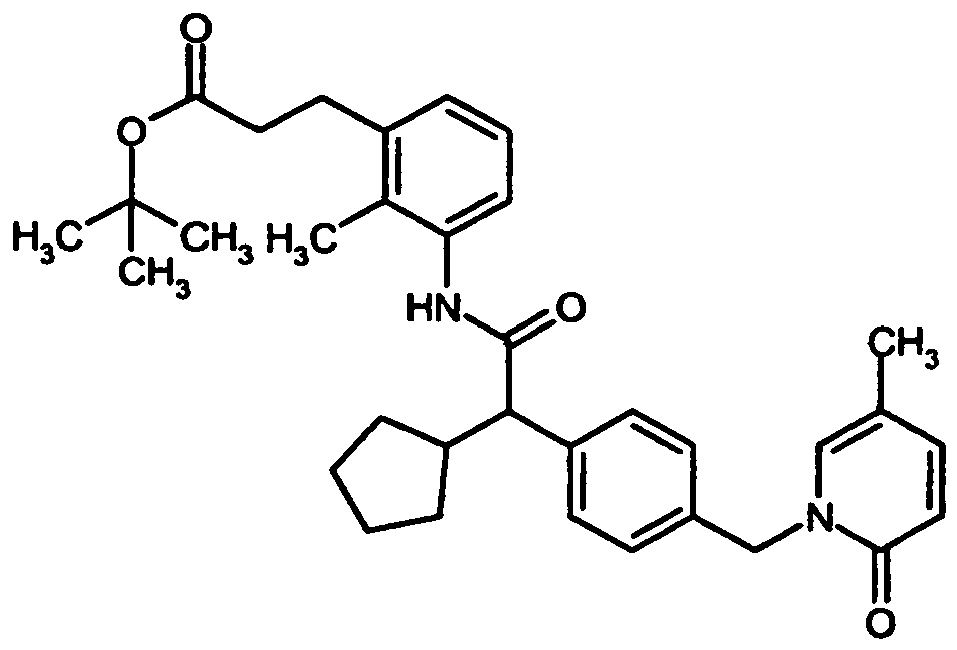
(aus tert.-Butyl-3-[3-({[4-(brommethyl)phenyl]-(cyclopentyl)acetyl}amino)-2-methylphenyl]propanoat und 5-Methylpyridin-2(1H)-on) 400A tert.-Butyl-3-{3-[(cyclopentyl{4-[(3-oxo-1,2-benz-isoxazol-2(3H)-yl)methyl]phenyl}acetyl)amino]-2-methylphenyl}propanoat LC-MS (Methode 11): Rt = 1.54 min; m/z = 513 (M-C4H8+H)+. 
(aus tert.-Butyl-3-[3-({[4-(brommethyl)phenyl](cyclo-pentyl)acetyl}amino)-2-methylphenyl]propanoat und 1,2-Benzisoxazol-3(2H)-on [CAS Reg.-Nr. 21725-69-9]) 401A tert.-Butyl-3-(3-{[cyclopentyl(4-{[6-oxo-3-(trifluor-methyl)pyridazin-1(6H)-yl]methyl}phenyl)acetyl]-amino} -2-methylphenyl)propanoat LC-MS (Methode 15): Rt = 1.39 min; m/z = 542 (M-C4+H8+H)+.
1H-NMR (400 MHz, DMSO-d6): δ = 9.45 (s, 1H), 7.86 (d, 1H), 7.41 (d, 2H), 7.26 (d, 2H), 7.21 (d, 1H), 6.93-7.05 (m, 3H), 5.75 (s, 2H), 3.46 (d, 1H), 2.78 (t, 2H), 2.53-2.62 (m, 1H), 2.41 (t, 2H), 1.97 (s, 3H), 1.79-1.89 (m, 1H), 1.42-1.72 (m, 4H), 1.33-1.39 (m, 11H), 0.90-1.02 (m, 1H).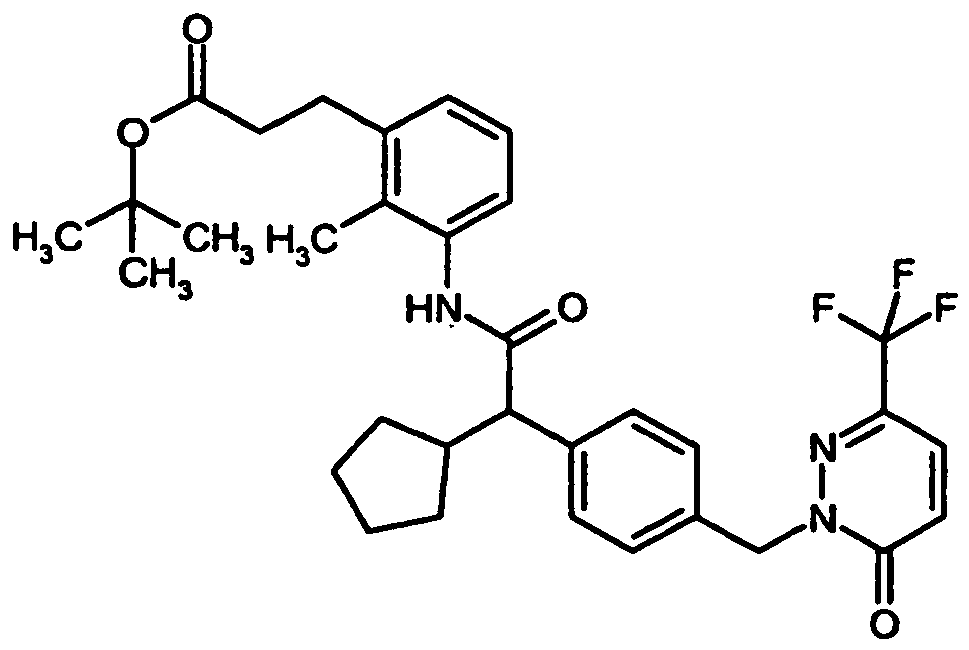
(aus tert.-Butyl-3-[3-({[4-(brommethyl)phenyl]-(cyclopentyl)acetyl}amino)-2-methylphenyl]propanoat und 6-(Trifluormethyl)pyridazin-3(2H)-on) -

- Zu einer Lösung von 786.8 mg (2.0 mmol) (2S)-Cyclopentyl{4-[(5-oxo-2-phenyl-5,6-dihydro-4H-1,3,4-oxadiazin-4-yl)methyl]phenyl}ethansäure und 325.1 mg (2.41 mmol) 1-Hydroxy-1H-benzotriazol-Hydrat in 4 ml DMF wurden bei 0°C 873 µl (5.01 mmol) DIEA und 595.0 mg (2.41 mmol) 1-(3-Aminobenzyl)cyclopropancarbonsäure-tert.-butylester gegeben. Die resultierende Mischung wurde bei 0°C portionsweise mit 838.5 mg (2.21 mmol) HATU versetzt. Das Reaktionsgemisch wurde dann langsam auf RT erwärmt und 3 h bei RT gerührt. Man gab die Mischung danach auf Wasser und extrahierte dreimal mit Ethylacetat. Die vereinigten organischen Phasen wurden über Magnesiumsulfat getrocknet und im Vakuum eingeengt. Das Produkt wurde durch Chromatographie an Silicagel gereinigt (Laufmittel Cyclohexan/Ethylacetat 4:1 bis 3:1). Es wurden 827 mg (66.4% d. Th.) der Titelverbindung erhalten.
LC-MS (Methode 10): Rt = 2.92 min; m/z = 566 (M-C4H8)+.
1H-NMR (400 MHz, DMSO-d6): δ = 9.95 (s, 1 H), 7.77 (d, 2 H), 7.54-7.36 (m, 6 H), 7.37-7.26 (m, 3 H), 7.14 (t, 1 H), 6.88 (d, 1 H), 4.90 (s, 2 H), 4.84 (s, 2 H), 3.38 (d, 1 H), 2.76 (s, 2 H), 2.65-2.56 (m, 1H), 1.85-1.71 (m, 1 H), 1.70-1.30 (m, 5 H), 1.34 (s, 9 H), 1.05 (d, 2 H), 1.03-0.91 (m, 1 H), 0.91-0.81 (m, 1 H), 0.79 (d, 2 H).
[α]D 20 = +27.2°, c = 0.455, Chloroform. -

- Zu einer Lösung von 150.0 mg (0.38 mmol) (2S)-Cyclopentyl{4-[(5-oxo-2-phenyl-5,6-dihydro-4H-1,3,4-oxadiazin-4-yl)methyl]phenyl}ethansäure und 62 mg (0.46 mmol) 1-Hydroxy-1H-benzotriazol-Hydrat in 500 µl DMF wurden bei 0°C 200 µl (1.15 mmol) DIEA und 149.8 mg (0.57 mmol) 1-(3-Amino-2-methylbenzyl)cyclopropancarbonsäure-tert.-butylester gegeben. Die resultierende Mischung wurde bei 0°C portionsweise mit 174.4 mg (0.46 mmol) HATU versetzt. Das Reaktionsgemisch wurde dann langsam auf RT erwärmt und 3 h bei RT gerührt. Die Mischung wurde danach auf Wasser gegeben und dreimal mit Ethylacetat extrahiert. Die vereinigten organischen Phasen wurden über Magnesiumsulfat getrocknet und im Vakuum eingeengt. Das Rohprodukt wurde durch präparative RP-HPLC gereinigt (Eluent: Acetonitril/Wasser-Gradient). Es wurden 175 mg (72.0% d. Th.) der Titelverbindung erhalten.
LC-MS (Methode 7): Rt = 3.23 min; m/z = 580 (M-C4H8)+.
1H-NMR (400 MHz, DMSO-d 6): δ = 9.48 (s, 1 H), 7.76 (d, 2 H), 7.54-7.37 (m, 5 H), 7.31 (d, 2 H), 7.06-6.93 (m, 3 H), 4.92 (s, 2 H), 4.86 (s, 2 H), 3.44 (d, 1 H), 2.85 (s, 2 H), 2.63-2.55 (m, 1 H), 1.90 (s, 3 H), 1.88-1.79 (m, 1 H), 1.71-1.41 (m, 4 H), 1.39 (s, 2 H), 1.27 (s, 9 H), 1.10 (d, 2 H), 1.06-0.92 (m, 1 H), 0.62 (q, 2 H).
[α]D 20 = +15.6°, c = 0.500, Chloroform. -

- 107.4 mg (0.31 mmol) (+/-)-Cyclopentyl{4-[(1-oxo-1,3-dihydro-2H-isoindol-2-yl)methyl]phenyl}-essigsäure wurden in 1 ml DMF und 0.17 ml (2.15 mmol) Pyridin vorgelegt, mit 128.6 mg (0.34 mmol) 1-[Bis-(dimethylamino)methylen]-5-chlor-3-oxy-1H-benzotriazol-1-ium-Tetrafluoroborat sowie 80 mg (0.31 mmol) 1-(3-Aminobenzyl)cyclopropancarbonsäre-tert.-butylester versetzt und über Nacht bei RT gerührt. Das Reaktionsgemisch wurde dann mit wenig Acetonitril verdünnt und direkt mittels präparativer RP-HPLC aufgereinigt (Eluent: Acetonitril/Wasser-Gradient). Es wurden 112 mg (50.4% d. Th.) der Titelverbindung erhalten.
LC-MS (Methode 7): Rt = 3.03 min; m/z = 523 (M-C4H8+H)+.
1H-NMR (400 MHz, DMSO-d 6): δ = 9.95 (s, 1 H), 7.71 (d, 1 H), 7.62-7.47 (m, 5 H), 7.39 (d, 2 H), 7.22 (d, 2 H), 7.14 (t, 1 H), 6.88 (d, 1 H), 4.73-4.65 (s, 2 H), 4.39-4.31 (s, 2 H), 3.39 (d, 1 H), 2.76 (s, 2 H), 2.64-2.56 (m, 1 H), 1.85-1.70 (m, 1 H), 1.69-1.39 (m, 4 H), 1.40-1.29 (m, 1 H), 1.30-1.24 (m, 1 H), 1.22 (s, 9 H), 1.05 (q, 2 H), 1.02-0.89 (m, 1 H), 0.78 (q, 2 H). - Zu einer Lösung von 1 eq. der betreffenden Carbonsäure und 1.0 bis 1.5 eq. des betreffenden Amins in DMF (ca. 0.03 bis 0.5 mol/l) wurden bei RT 1.2 bis 2.5 eq. DIEA gegeben. Die resultierende Mischung wurde auf 0°C gekühlt und portionsweise mit ca. 1.2 eq. HATU versetzt. Das Reaktionsgemisch wurde dann langsam auf RT erwärmt und 1 h bis 24 h bei RT gerührt. Das Zielprodukt konnte durch präparative RP-HPLC (Eluent: Acetonitril/Wasser-Gradient) direkt aus der Reaktionsmischung oder nach wässriger Aufarbeitung und einem weiteren Reinigungsschritt gewonnen werden. Dazu wurde die Reaktionsmischung auf Wasser gegeben und dreimal mit Ethylacetat extrahiert. Die vereinigten organischen Phasen wurden über Magnesiumsulfat getrocknet und im Vakuum eingeengt. Das Rohprodukt wurde durch präparative RP-HPLC (Eluent: Acetonitril/Wasser-Gradient) oder durch Chromatographie an Silicagel (Laufmittel-Gemische aus Cyclohexan/Ethylacetat oder Dichlormethan/Methanol) gereinigt.
- Die folgenden Verbindungen wurden gemäß der Allgemeinen Vorschrift 6 hergestellt:
Beispiel Name / Struktur Analytische Daten 405A 1-(3-{[(2S)-2-Cyclopentyl-2-{4-[(1-oxo-1,3-dihydro-2H-isoindol-2-yl)methyl]phenyl}acetyl]amino}-benzyl)cyclopropancarbonsäure-tert.-butylester LC-MS (Methode 11): Rt = 1.58 min; m/z = 523 (M-C4H8+H)+.
1H-NMR (400 MHz, DMSO-d6): δ = 9.95 (s, 1H), 7.72 (d, 1H), 7.62-7.44 (m, 4H), 7.39 (d, 2H), 7.35 (d, 1H), 7.22 (d, 2H), 7.14 (t, 1H), 6.88 (d, 1H), 4.69 (s, 2H), 4.35 (s, 2H), 3.40-3.35 (m, 1H), 2.76 (s, 2H), 2.63-2.55 (m, 1H), 1.81-1.71 (m, 1H), 1.68-1.41 (m, 4H), 1.40-1.31 (m, 1H), 1.30-1.24 (m, 1H), 1.22 (s, 9H), 1.05 (q, 2H), 1.01-0.90 (m, 1H), 0.79 (q, 2H).
406A 1-{3-[(Cyclopentyl{4-[(3-oxo-1,3-dihydro-2H-indazol-2-yl)methyl]phenyl}acetyl)amino]benzyl}-cyclopropancarbonsäure-tert.-butylester LC-MS (Methode 11): Rt =1.55 min; m/z = 524 (M-C4H8)+.
1H-NMR (400 MHz, CDCl3): δ = 7.73 (d, 1H), 7.40-7.33 (m, 1H), 7.32-7.26 (m, 4H), 7.18 (dd, 3H), 7.11 (t, 1H), 7.05 (t, 1H), 6.93 (d, 1H), 5.29 (s, 2H), 5.24 (s, 2H), 3.08 (d, 1H), 2.84 (s, 2H), 2.65-2.54 (m, 1H), 2.04-1.93 (m, 1H), 1.64-1.34 (m, 7H), 1.30 (s, 9H), 1.18-1.14 (m, 2H), 0.71-0.66 (m, 2H).
407A 1-{3-[(Cyclopentyl{4-[(5,6-difluor-1-oxo-1,3-dihydro-2H-isoindol-2-yl)methyl]phenyl}acetyl)amino]-benzyl}cyclopropancarbonsäure-tert.-butylester LC-MS (Methode 15): Rt = 1.44 min; m/z = 559 (M-C4H8)+.
1H-NMR (400 MHz, DMSO-d6): δ = 9.94 (s, 1H), 7.75 (dd, 1H), 7.65 (dd, 1H), 7.49 (s, 1H), 7.39 (d, 2H), 7.35 (d, 1H), 7.22 (d, 2H), 7.14 (t, 1H), 6.88 (d, 1H), 4.68 (s, 2H), 4.32 (s, 2H), 3.37 (d, 1H), 2.77 (s, 1H), 2.64-2.54 (m, 2H), 1.83-1.72 (m, 1H), 1.68-1.31 (m, 4H), 1.23 (s, 9H), 1.07-1.02 (m, 1H), 1.01-0.90 (m, 1H), 0.82-0.75 (m,1H).
408A 1-{3-[(Cyclopentyl{4-[(4,7-difluor-1-oxo-1,3-dihydro-2H-isoindol-2-yl)methyl]phenyl}acetyl)amino]-benzyl}cyclopropancarbonsäure-tert.-butylester LC-MS (Methode 11): Rt = 1.62 min; m/z = 559 (M-C4H8)+.
1H-NMR (400 MHz, DMSO-d6): δ = 9.95 (s, 1H), 7.51-7.44 (m, 2H), 7.40 (d, 2H), 7.36-7.31 (m, 2H), 7.25 (d, 2H), 7.14 (t, 1H), 6.88 (d, 1H), 4.65 (s, 2H), 4.46 (s, 2H), 3.38 (d, 1H), 2.76 (s, 2H), 2.63-2.56 (m, 1H), 1.82-1.73 (m, 1H), 1.67-1.28 (m, 7H), 1.22 (s, 9H), 1.07-1.03 (m, 2H), 0.81-0.77 (m, 2H).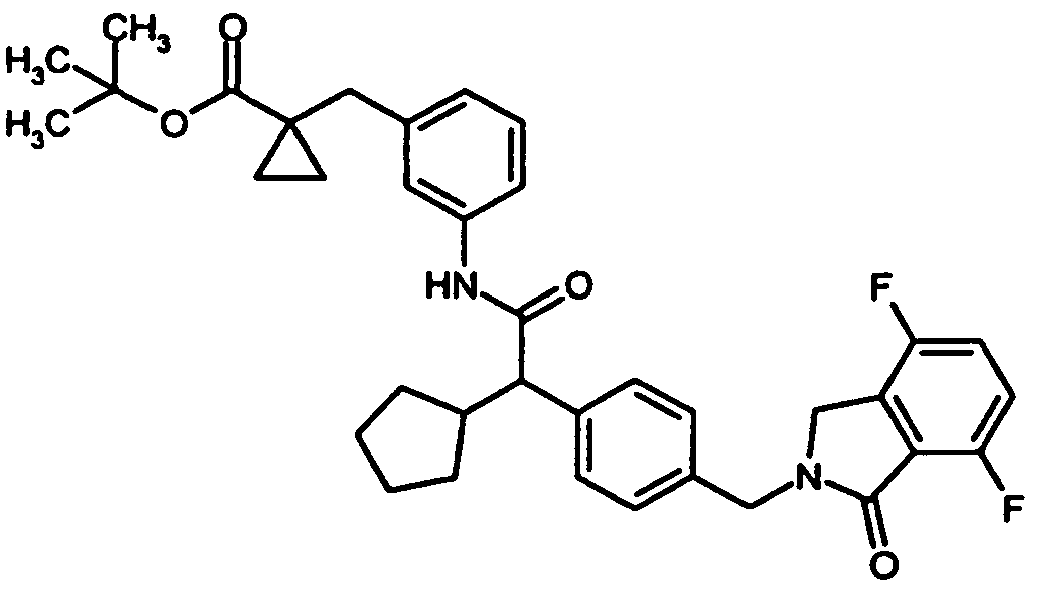
409A 1-(3-{[Cyclopentyl(4-{[2-oxo-5-(trifluormethyl)-pyridin-1(2H)-yl]methyl}phenyl)acetyl]amino}-benzyl)cyclopropancarbonsäure-tert.-butylester LC-MS (Methode 15): Rt = 1.41 min; m/z = 553 (M-C4H8)+.
1H-NMR (400 MHz, DMSO-d6): δ = 9.94 (s, 1H), 8.54 (br. s, 1H), 7.66 (s, 1H), 7.49 (s, 1H), 7.38 (d, 2H), 7.33 (d, 1H), 7.27 (d, 2H), 7.14 (t, 1H), 6.89 (d, 1H), 6.56 (d, 1H), 5.76 (s, 1H), 5.12 (s, 2H), 3.35 (d, 1H), 2.76 (s, 2H), 2.37 (s, 1H), 2.35-2.31 (m, 1H), 1.78 (br. s, 1H), 1.68-1.40 (m, 4H), 1.40-1.28 (m, 1H), 1.23 (s, 9H), 1.05 (br. s, 2H), 0.80 (br. s, 2H).
410A (+)-1-(3-{[(2S)-2-{4-[(5-Chlor-2-oxopyridin-1(2,H)-yl)-methyl]phenyl}-2-cyclopentylacetyl]amino}benzyl)-cyclopropancarbonsäure-tert.-butylester LC-MS (Methode 12): Rt = 2.72 min; m/z = 519 (M-C4H8)+.
1H-NMR (400 MHz, DMSO-d6): δ = 9.94 (s, 1H), 8.09 (d, 1H), 7.51-7.44 (m, 2H), 7.37 (d, 2H), 7.34 (d, 1H), 7.25 (d, 2H), 7.14 (t, 1H), 6.88 (d, 1H), 6.44 (d, 1H), 5.02 (s, 2H), 3.37 (d, 1H), 2.77 (s, 1H), 1.82-1.72 (m, 1H), 1.69-1.27 (m, 8H), 1.24 (s, 9H), 1.07-1.02 (m, 2H), 0.99-0.91 (m, 1H), 0.82-0.78 (m, 2H). [α]D 20 = +40.9 °, c = 0.455, Chloroform.
411A (+)-3-(3-{[(2S)-2-{4-[(5-Chlor-2-oxopyridin-1(2H)-yl)-methyl]phenyl}-2-cyclopentylacetyl]amino}phenyl)-propansäure-tert.-butylester LC-MS (Methode 15): Rt=1.31 min; m/z = 549 (M+H)+.
1H-NMR (400 MHz, DMSO-d6): δ = 9.96 (s, 1H), 8.09 (d, 1H), 7.47 (dd, 1H), 7.45 (s, 1H), 7.37 (d, 2H), 7.34 (d, 1H), 7.25 (d, 2H), 7.15 (t, 1H), 6.86 (d, 1H), 6.44 (d, 1H), 5.03 (s, 2H), 3.36 (d, 1H), 2.74 (t, 2H), 2.63-2.55 (m, 1H), 2.48-2.42 (m, 2H), 1.81-1.32 (m, 6H), 1.31 (s, 9H), 1.27-1.20 (m, 1H), 1.02-0.90 (m, 1H). [α]D 20 = +44.4°, c = 0.490, Chloroform.
412A (+)-3-(3-{[(2S,3R)-4,4,4-Trifluor-3-methyl-2-(4-{[2-oxo-5-(trifluormethyl)pyridin-1(2H)-yl]methyl}-phenyl)butanoyl]amino}phenyl)propansäure-tert.-butylester LC-MS (Methode 11): Rt = 1.51 min; m/z = 555 (M-C4H8)+.
1H-NMR (400 MHz, CDCl3): δ = 7.66 (br. s, 1H), 7.45 (dd, 1H), 7.39 (d, 2H), 7.35-7.28 (m, 3H), 7.24-7.16 (m, 2H), 7.11 (s, 1H), 6.94 (d, 1H), 6.67 (d, 1H), 5.14 (s, 2H), 3.57 (d, 1H), 3.45-3.30 (m, 1H), 2.85 (t, 2H), 2.50 (t, 2H), 1.40 (s, 9H), 0.90 (d, 3H). [α]D 20 = +17.9 °, c = 0.360, Chloroform.
413A (-)-3-(3-{[(2R,3S)-4,4,4-Trifluor-3-methyl-2-(4-([2-oxo-5-(trifluormethyl)pyridin-1(2H)-yl]methyl)-phenyl)butanoyl]amino}phenyl)propansäure-tert.-butylester LC-MS (Methode 11): Rt = 1.51 min; m/z = 555 (M-C4H8)+.
1H-NMR (400 MHz, CDCl3): δ = 7.66 (br. s, 1H), 7.45 (dd, 1H), 7.39 (d, 2H), 7.34-7.29 (m, 3H), 7.24-7.16 (m, 2H), 7.10 (s, 1H), 6.94 (d, 1H), 6.68 (d, 1H), 5.14 (s, 2H), 3.57 (d, 1H), 3.44-3.32 (m, 1H), 2.85 (t, 2H), 2.56-2.45 (m, 2H), 1.40 (s, 9H), 0.90 (d, 3H). [α]D 20 = -74°, c = 0.220, Chloroform.
414A (+)-1-(3-{[(2S)-2-Cyclopentyl-2-(4-{[2-oxo-5-(trifluor-methyl)pyridin-1(2H)-yl]methyl}phenyl)acetyl]-amino}benzyl)cyclopropancarbonsäure-tert.-butylester LC-MS (Methode 15): Rt = 1.40 min; m/z = 553 (M-C4H8)+.
1H-NMR (400 MHz, DMSO-d6): δ = 9.94 (s, 1H), 8.54 (s, 1H), 7.67 (dd, 1H), 7.49 (s, 1H), 7.38 (d, 2H), 7.33 (d, 1H), 7.26 (d, 2H), 7.14 (t, 1H), 6.88 (d, 1H), 6.55 (d, 1H), 5.12 (s, 2H), 3.37 (d, 1H), 2.76 (d, 2H), 2.63-2.55 (m, 1H), 1.82-1.71 (m, 1H), 1.68-1.29 (m, 6H), 1.23 (s, 9H), 1.08-1.03 (m, 2H), 1.00-0.89 (m, 1H), 0.83-0.75 (m, 2H).
[α]D 20 = +22.1°, c = 0.505, Chloroform.
415A (+)-3-(3-{[(2S)-2-Cyclopentyl-2-(4-{[2-oxo-5-(trifluor-methyl)pyridin-1(2H)-yl]methyl)phenyl)acetyl]-amino}phenyl)propansäure-tert.-butylester LC-MS (Methode 15): Rt = 1.35 min; m/z = 527 (M-C4H8)+.
1H-NMR (400 MHz, DMSO-d6): δ = 9.97 (s, 1H), 8.54 (s, 1H), 7.67 (dd, 1H), 7.45 (s, 1H), 7.38 (d, 2H), 7.34 (d, 1H), 7.26 (d, 2H), 7.15 (t, 1H), 6.86 (d, 1H), 6.55 (d, 1H), 5.12 (s, 2H), 3.36 (d, 1H), 2.78-2.70 (m, 2H), 2.64-2.55 (m, 110, 2.48-2.40 (m, 2H),1.81-1.71 (m, 1H), 1.69-1.32 (m, 5H), 1.30 (s, 9H), 1.24 (dd, 1H), 0.88-0.99 (m, 1H).
[α]D 20 = +28.9°, c = 0.525, Chloroform.
-

- Zu einer Lösung von 206 mg (0.55 mmol) 4,4,4-Trifluor-3-methyl-2-{4-[(1-oxo-1,3-dihydro-2H-isoindol-2-yl)methyl]phenyl}butansäure, 100.3 mg (0.66 mmol) 1-Hydroxy-1H-benzotriazol-Hydrat und 285 µl (1.64 mmol) DIEA in 1 ml DMF wurden 202.5 mg (0.82 mmol) 1-(3-Aminobenzyl)cyclopropancarbonsäure-tert.-butylester gegeben. Die resultierende Mischung wurde bei 0°C portionsweise mit 249.1 mg (0.66 mmol) HATU versetzt. Das Reaktionsgemisch wurde dann langsam auf RT erwärmt und 2 h bei RT gerührt. Die Mischung wurde auf Wasser gegeben und dreimal mit Ethylacetat extrahiert. Die vereinigten organischen Phasen wurden über Magnesiumsulfat getrocknet und im Vakuum eingeengt. Das Rohprodukt wurde durch Chromatographie an Silicagel gereinigt (Laufmittel Cyclohexan/Ethylacetat 3:1). Es wurden 287 mg (87% d. Th.) der Titelverbindung erhalten.
LC-MS (Methode 12): Rt = 2.72 min; m/z = 551 (M-C4H8)+. - Das oben erhaltene Isomerengemisch (größtenteils Racemat eines Hauptdiastereomers) wurde durch präparative HPLC an chiraler Phase in die Enantiomere aufgetrennt [Säule: Daicel Chiralpak AD-H, 5 µm, 250 mm x 20 mm; Fluss: 18 ml/min; UV-Detektion: 230 nm; Injektionsvolumen: 0.5 ml; Temperatur: RT; Eluent: 60% Isohexan / 40% Ethanol]. Ausgehend von 250 mg Isomerengemisch wurden 115 mg von Enantiomer 1 und 99 mg von Enantiomer 2 isoliert (siehe Beispiele 417A und 418A).
-

1H-NMR (500 MHz, DMSO-d 6): δ = 10.11 (s, 1 H), 7.71 (d, 1 H), 7.60-7.44 (m, 4 H), 7.40 (d, 2 H), 7.31 (d, 1 H), 7.26 (d, 2 H), 7.14 (t, 1 H), 6.89 (d, 1 H), 4.71 (s, 2 H), 4.35 (s, 2 H), 3.81 (d, 1 H), 2.76 (s, 2 H), 1.20 (s, 10 H), 1.09 (s, 1 H), 1.04 (br. s, 3 H), 0.90-0.82 (m, 1 H), 0.78 (br. s, 2 H).
[α]D 20 = +61°, c = 0.265, Chloroform. -

1H-NMR (500 MHz, DMSO-d 6): δ = 10.11 (s, 1 H), 7.71 (d, 1 H), 7.57 (d, 1 H), 7.54-7.44 (m, 3 H), 7.40 (d, 2 H), 7.31 (d, 1 H), 7.26 (d, 2 H), 7.14 (t, 1 H), 6.89 (d, 1 H), 4.71 (s, 2 H), 4.35 (s, 2 H), 3.81 (d, 1 H), 2.76 (s, 2 H), 1.47-1.40 (m, 1 H), 1.34-1.26 (m, 1 H), 1.20 (s, 9 H), 1.09 (s, 2 H), 1.04 (br. s, 3 H), 0.90-0.82 (m, 1 H).
[α]D 20 = -61°, c = 0.285, Chloroform. -

- Zu einer Lösung von 96 mg (0.26 mmol) Cyclopentyl{4-[(4-fluor-1-oxo-1,3-dihydro-2H-isoindol-2-yl)methyl]phenyl}essigsäure in 1 ml DMF wurden 77.5 mg (0.31 mmol) 1-(3-Aminobenzyl)-cyclopropancarbonsäure-tert.-butylester gegeben. Die resultierende Mischung wurde bei 0°C mit 136 µl (0.78 mmol) DIEA und danach portionsweise mit 119.2 mg (0.31 mmol) HATU versetzt. Das Reaktionsgemisch wurde dann langsam auf RT erwärmt und 1 h bei RT gerührt. Der Ansatz wurde auf Wasser gegeben und dreimal mit Ethylacetat extrahiert. Die vereinigten organischen Phasen wurden über Magnesiumsulfat getrocknet und im Vakuum eingeengt. Es wurden 146 mg (93% d. Th.) der Titelverbindung erhalten.
LC-MS (Methode 15): Rt = 1.44 min; m/z = 541 (M-C4H8)+.
1H-NMR (400 MHz, DMSO-d 6): δ = 9.95 (s, 1 H), 7.62-7.53 (m, 2 H), 7.50 (s, 1 H), 7.47-7.42 (m, 1 H), 7.39 (d, 2 H), 7.34 (d, 1 H), 7.24 (d, 2 H), 7.14 (t, 1 H), 6.88 (d, 1 H), 4.69 (s, 2 H), 4.46 (s, 2 H), 3.37 (d, 1 H), 2.76 (s, 2 H), 1.82-1.72 (m, 1 H), 1.68-1.24 (m, 7 H), 1.22 (s, 9 H), 1.09 (s, 1 H), 1.07-1.02 (m, 2 H), 0.81-0.76 (m, 2 H). - Das oben erhaltene Racemat wurde durch präparative HPLC an chiraler Phase in die Enantiomere aufgetrennt [Säule: Daicel Chiralpak AD-H, 5 µm, 250 mm x 20 mm; Fluss: 15 ml/min; UV-Detektion: 230 nm; Injektionsvolumen: 0.5 ml; Temperatur: 30°C; Eluent: 65% Isohexan / 35% Ethanol]. Ausgehend von 109 mg Racemat wurden 53 mg von Enantiomer 1 und 35 mg von Enantiomer 2 isoliert (siehe Beispiele 420A und 421A).
-

1H-NMR (400 MHz, CDCl3): δ = 7.68 (d, 1 H), 7.50-7.42 (m, 1 H), 7.38 (d, 2 H), 7.32 (br. s, 2 H), 7.27 (br. s, 2 H), 7.17 (q, 2 H), 7.09 (s, 1 H), 6.96 (d, 1 H), 4.77 (s, 2 H), 4.31 (s, 2 H), 3.11 (d, 1 H), 2.87 (s, 2 H), 2.66 (d, 1 H), 2.02 (dd, 1 H), 1.69-1.61 (m, 2 H), 1.48 (td, 2 H), 1.31 (s, 9 H), 1.21-1.16 (m, 2 H), 1.03 (d, 1 H), 0.76-0.68 (m, 2 H).
[α]D 20 = +33°, c = 0.205, Chloroform. -

1H-NMR (400 MHz, CDCl3): δ = 7.68 (d, 1 H), 7.45 (td, 1 H), 7.38 (d, 2 H), 7.32 (br. s, 2 H), 7.27 (br. s, 2 H), 7.17 (q, 2 H), 7.08 (s, 1 H), 6.96 (d, 1 H), 4.77 (s, 2 H), 4.31 (s, 2 H), 3.11 (d, 1 H), 2.87 (s, 2 H), 2.72-2.59 (m, 1 H), 2.07-1.94 (m, 1H), 1.71-1.57 (m, 3 H), 1.48 (td, 2 H), 1.32 (s, 9 H), 1.21-1.16 (m, 2 H), 1.07-0.82 (m, 1 H), 0.74-0.68 (m, 1 H).
[α]D 20 = -37°, c = 0.270, Chloroform. -

- Zu einer Lösung von 129.0 mg (0.33 mmol) 4,4,4-Trifluor-2-{4-[(4-fluor-1-oxo-1,3-dihydro-2H-isoindol-2-yl)methyl]phenyl}-3-methylbutansäure und 52.9 mg (0.39 mmol) 1-Hydroxy-1H-benzotriazol-Hydrat in 1 ml DMF wurden 110.8 mg (0.41 mmol) 1-(3-Aminobenzyl)cyclopropancarbonsäure-tert.-butylester gegeben. Die resultierende Mischung wurde bei 0°C mit 142 µl (0.82 mmol) DIEA und dann portionsweise mit 136.5 mg (0.36 mmol) HATU versetzt. Das Reaktionsgemisch wurde danach langsam auf RT erwärmt und 2.5 h bei RT gerührt. Die Mischung wurde auf Wasser gegeben und dreimal mit Ethylacetat extrahiert. Die vereinigten organischen Phasen wurden über Magnesiumsulfat getrocknet und im Vakuum eingeengt. Das Rohprodukt wurde durch präparative RP-HPLC gereinigt (Eluent: Acetonitril/Wasser-Gradient). Es wurden 97.4 mg (47.6% d. Th.) der Titelverbindung erhalten.
LC-MS (Methode 15): Rt = 1.39 min; m/z = 623 (M-H)-. - Das oben erhaltene Isomerengemisch (größtenteils Racemat eines Hauptdiastereomers) wurde durch präparative HPLC an chiraler Phase in die Enantiomere aufgetrennt [Säule: Daicel Chiralpak AD-H, 5 µm, 250 mm x 20 mm; Fluss: 15 ml/min; UV-Detektion: 220 nm; Injektionsvolumen: 0.5 ml; Temperatur: 30°C; Eluent: 75% Isohexan / 25% Isopropanol]. Ausgehend von 94 mg Isomerengemisch wurden 31 mg von Enantiomer 1 und 32 mg von Enantiomer 2 isoliert (siehe Beispiele 423A und 424A).
-

1H-NMR (400 MHz, CDCl3): δ = 7.69 (d, 1 H), 7.46 (td, 1 H), 7.39-7.33 (m, 2 H), 7.30 (d, 4 H), 7.23-7.11 (m, 3 H), 6.98 (d, 1 H), 4.79 (s, 2 H), 4.33 (s, 2 H), 3.57 (d, 1 H), 3.44-3.34 (m, 1 H), 2.87 (s, 2 H), 1.31 (s, 9 H), 1.22-1.16 (m, 2 H), 0.92-0.87 (m, 3 H), 0.71 (d, 2 H).
[α]D 20 = +34°, c = 0.230, Chloroform. -

1H-NMR (400 MHz, CDCl3): δ = 7.69 (d, 1 H), 7.46 (td, 1 H), 7.40-7.34 (m, 2 H), 7.30 (d, 4 H), 7.23-7.08 (m, 3 H), 6.98 (d, 1 H), 4.79 (s, 2 H), 4.33 (s, 2 H), 3.57 (d, 1 H), 3.45-3.33 (m, 1 H), 2.87 (s, 2 H), 1.31 (s, 9 H), 1.19 (d, 2 H), 0.89 (d, 3 H), 0.71 (d, 2 H).
[α]D 20 = -85°, c = 0.235, Chloroform. -

- Zu einer Lösung von 150.0 mg (0.38 mmol) (2S)-Cyclopentyl{4-[(5-oxo-2-phenyl-5,6-dihydro-4H-1,3,4-oxadiazin-4-yl)methyl]phenyl}ethansäure und 70.2 mg (0.46 mmol) 1-Hydroxy-1H-benzotriazol-Hydrat in 1 ml DMF wurden 109.75 mg (0.46 mmol) 3-(3-Amino-4-fluorphenyl)propansäure-tert.-butylester gegeben. Die resultierende Mischung wurde bei 0°C mit 200 µl (1.15 mmol) DIEA und dann portionsweise mit 174.4 mg (0.46 mmol) HATU versetzt. Das Reaktionsgemisch wurde danach langsam auf RT erwärmt und anschließend 4 h bei 60°C gerührt. Die Mischung wurde auf Wasser gegeben und dreimal mit Ethylacetat extrahiert. Die vereinigten organischen Phasen wurden über Magnesiumsulfat getrocknet und im Vakuum eingeengt. Das Rohprodukt wurde durch präparative RP-HPLC gereinigt (Eluent: Acetonitril/Wasser-Gradient). Es wurden 104 mg (44.3% d. Th.) der Titelverbindung erhalten.
LC-MS (Methode 11): Rt = 1.68 min; m/z = 612 (M-H)-.
1H-NMR (400 MHz, DMSO-d 6): δ = 9.77 (s, 1 H), 7.76 (d, 2 H), 7.65 (dd, 1 H), 7.52-7.43 (m, 3 H), 7.40 (d, 2 H), 7.31 (d, 2 H), 7.09 (dd, 1 H), 6.98-6.90 (m, 1 H), 4.94 (d, 1 H), 4.90 (s, 2 H), 4.85 (s, 2 H), 3.60 (d, 1 H), 2.72 (t, 2 H), 2.43 (t, 2 H), 1.82-1.31 (m, 7 H), 1.29 (s, 9 H), 1.01-0.92 (m, 1H).
[α]D 20 = +61°, c = 0.480, Chloroform. -

- Zu einer Lösung von 280.0 mg (0.71 mmol) 4,4,4-Trifluor-2-(4-[(4-fluor-1-oxo-1,3-Mydro-2H-isoindol-2-yl)methyl]phenyl)-3-methylbutansäure und 114.8 mg (0.85 mmol) 1-Hydroxy-1H-benzotriazol-Hydrat in 1.4 ml DMF wurden 215.3 mg (0.89 mmol) 3-(3-Aminophenyl)propansäure-tert.-butylester gegeben. Die resultierende Mischung wurde bei 0°C mit 308 µl (1.77 mmol) DIEA und dann portionsweise mit 296.2 mg (0.78 mmol) HATU versetzt. Das Reaktionsgemisch wurde danach langsam auf RT erwärmt und anschließend 2.5 h bei RT gerührt. Die Mischung wurde auf Wasser gegeben und dreimal mit Ethylacetat extrahiert. Die vereinigten organischen Phasen wurden über Magnesiumsulfat getrocknet und im Vakuum eingeengt. Das Rohprodukt wurde durch präparative RP-HPLC gereinigt (Eluent: Acetonitril/Wasser-Gradient). Es wurden 333 mg (78.6% d. Th.) der Titelverbindung erhalten.
LC-MS (Methode 15): Rt = 1.33 min; m/z = 597 (M-H)-.
1H-NMR (400 MHz, DMSO-d 6): δ = 10.15 (s, 1 H), 7.61-7.53 (m, 2 H), 7.46-7.37 (m, 4 H), 7.33 (d, 1 H), 7.29 (d, 2 H), 7.16 (t, 1 H), 6.87 (d, 1 H), 4.71 (s, 2 H), 4.47 (s, 2 H), 3.81 (d, 1 H), 2.73 (t, 2 H), 2.44 (t, 2 H), 1.40-1.36 (m, 1 H), 1.28 (s, 9 H), 0.78 (d, 3 H). - Das oben erhaltene Isomerengemisch (größtenteils Racemat eines Hauptdiastereomers) wurde durch präparative HPLC an chiraler Phase in die Enantiomere aufgetrennt [Säule: Daicel Chiralpak AD-H, 5 µm, 250 mm x 20 mm; Fluss: 15 ml/min; UV-Detektion: 220 nm; Injektionsvolumen: 0.25 ml; Temperatur: 40°C; Eluent: 70% Isohexan / 30% Ethanol]. Ausgehend von 333 mg Isomerengemisch wurden 138 mg von Enantiomer 1 und 134 mg von Enantiomer 2 isoliert (siehe Beispiele 427A und 428A).
-

1H-NMR (400 MHz, DMSO-d 6): δ = 10.15 (s, 1 H), 7.61-7.53 (m, 2 H), 7.46-7.37 (m, 4 H), 7.33 (d, 1 H), 7.29 (d, 2 H), 7.16 (t, 1 H), 6.87 (d, 1 H), 4.71 (s, 2 H), 4.47 (s, 2 H), 3.81 (d, 1 H), 3.40-3.30 (m, 1 H), 2.73 (t, 2 H), 2.44 (t, 2 H), 1.40-1.36 (m, 1 H), 1.28 (s, 9 H), 0.78 (d, 3 H).
[α]D 20 = +68.4°, c = 0.605, Chloroform. -

1H-NMR (400 MHz, DMSO-d 6): δ = 10.15 (s, 1 H), 7.61-7.53 (m, 2 H), 7.46-7.37 (m, 4 H), 7.33 (d, 1 H), 7.29 (d, 2 H), 7.16 (t, 1 H), 6.87 (d, 1 H), 4.71 (s, 2 H), 4.47 (s, 2 H), 3.81 (d, 1 H), 3.40-3.30 (m, 1 H), 2.73 (t, 2 H), 2.44 (t, 2 H), 1.40-1.36 (m, 1 H), 1.28 (s, 9 H), 0.78 (d, 3 H).
[α]D 20 = -76.8°, c = 0.485, Chloroform. -

- Zu einer Lösung von 155.8 mg (0.40 mmol) (2S)-Cyclopentyl{4-[(5-oxo-2-phenyl-5,6-dihydro-4H-1,3,4-oxadiazin-4-yl)methyl]phenyl}ethansäure in 1 ml DMF wurden 114.0 mg (0.77 mmol) 3-(3-Amino-2-fluorphenyl)propansäure-tert.-butylester und 193 µl (0.99 mmol) DIEA gegeben. Die resultierende Mischung wurde bei 0°C portionsweise mit 181.1 mg (0.47 mmol) HATU versetzt. Das Reaktionsgemisch wurde 30 min bei 0°C gerührt, dann auf RT erwärmt und anschließend 7 h bei 60°C gerührt. Der Ansatz wurde danach auf gesättigte Natriumcarbonat-Lösung gegeben und dreimal mit Ethylacetat extrahiert. Die vereinigten organischen Phasen wurden über Magnesiumsulfat getrocknet und im Vakuum eingeengt. Das Reaktionsprodukt wurde durch präparative RP-HPLC gereinigt (Eluent: Acetonitril/Wasser-Gradient). Es wurden 125.6 mg (51.6% d. Th.) der Titelverbindung erhalten.
LC-MS (Methode 7): Rt = 3.19 min; m/z = 612 (M-H)-.
1H-NMR (400 MHz, DMSO-d6): δ = 9.78 (s, 1 H), 7.78 (d, 1 H), 7.62 (m, 1 H), 7.52-7.49 (m, 5 H), 7.30 (d, 2 H), 7.02-6.98 (m, 2 H), 4.91 (s, 2 H), 4.85 (s, 2H), 3.61 (d, 1 H), 2.81 (t, 2 H), 1.82-1.75 (m, 1 H), 1.70-1.25 (m, 5 H), 1.35 (s, 9 H), 1.01-0.91 (m, 1 H).
[α]D 20 = +6.5°, c = 0.34, Chloroform. - Methode 7A: Eine 0.35 M Lösung der betreffenden Carbonsäure in DMF wurde mit 1.3 eq. HATU und 3 eq. N,N-Diisopropylethylamin versetzt und 30 min bei RT gerührt. Anschließend wurden 1.1 eq. des betreffenden Anilins zugegeben. Das Reaktionsgemisch wurde über Nacht bei RT gerührt und dann direkt über präparative RP-HPLC aufgereinigt.
- Methode 7B: Eine 0.15 M Lösung der betreffenden Carbonsäure in DMF/Pyridin (3:1 v/v) wurde mit 1.3 eq. TCTU versetzt und 30 min bei RT gerührt. Anschließend wurde das betreffende Anilin zugegeben und das Reaktionsgemisch über Nacht bei RT gerührt. Der Ansatz wurde dann unter vermindertem Druck eingeengt und der Rückstand über präparative RP-HPLC gereinigt.
- Nach der Allgemeinen Vorschrift 7A bzw. 7B wurden die folgenden Verbindungen hergestellt:
Beispiel Struktur Methode Analytische Daten 430A 
7B LC-MS (Methode 7): Rt = 3.08 min; m/z = 599 [M+H]+.
1H-NMR (400 MHz, DMSO-d6): δ = 9.46 (s, 1H), 7.79-7.97 (m, 4H), 7.38 (d, 2H), 7.26 (d, 2H), 6.90-7.06 (m, 3H), 4.75 (s, 2H), 2.78 (t, 2H), 2.38-2.46 (m, 2H), 1.98 (s, 3H), 1.77-1.87 (m, 1H), 1.18-1.73 (m, 17H), 0.95 (dd, 1H).431A 
7A LC-MS (Methode 15): Rt = 1.50 min; m/z = 657 [M+NH4]+.
1H-NMR (400 MHz, DMSO-d6): δ = 10.16 (s, 1H), 7.68-7.85 (m, 2H), 7.41-7.55 (m, 3H), 7.28-7.40 (m, 5H), 7.21 (s, 1H), 6.70 (d, 1H), 4.78-4.96 (m, 4H), 3.34-3.42 (m, 2H), 2.74-2.79 (m, 2H), 1.77 (m, 1H), 1.15-1.68 (m, 15H), 1.04-1.13 (m, 2H), 0.88-1.03 (m, 1H), 0.77-0.87 (m, 2H).432A 
7A LC-MS (Methode 15): Rt = 1.46 min; m/z = 631 [M+NH4]+.
1H-NMR (400 MHz, DMSO-d6): δ = 10.18 (s, 1H), 7.69-7.84 (m, 2H), 7.41-7.54 (m, 3H), 7.28-7.40 (m, 5H), 7.15 (s, 1 H), 6.72 (d, 1 H), 4.80-4.96 (m, 4H), 3.36 (d, 1H), 2.73 (t, 2H), 2.43-2.48 (m, 2H), 1.71-1.84 (m, 1H), 1.13-1.69 (m, 16H), 0.90-1.02 (m, 1H).433A 
7A LC-MS (Methode 11): Rt = 1.50 min; m/z = 584 [M-C4H9]+.
1H-NMR (400 MHz, DMSO-d6): δ = 9.75 (s, 1H), 7.74-7.82 (m, 2H), 7.68 (dd, 1H), 7.35-7.53 (m, 5H), 7.25-7.34 (m, 2H), 7.09 (dd, 1H), 6.89-7.01 (m, 1H), 4.80-4.95 (m, 4H), 3.58 (d, 1H), 2.74 (d, 2H), 1.78 (dd, 1H), 1.16-1.71 (m, 16H), 0.99-1.05 (m, 2H), 0.97 (d, 1H), 0.71-0.82 (m, 2H).434A 
7A LC-MS (Methode 11): Rt = 1.68 min; m/z = 632 [M+NH4]+.
1H-NMR (400 MHz, DMSO-d6): δ = 10.02 (s, 1H), 7.76 (d, 2H), 7.41-7.60 (m, 4H), 7.29-7.41 (m, 5H), 7.02 (t, 1H), 4.80-4.92 (m, 4H), 2.70-2.80 (m, 2H), 2.40-2.47 (m, 2H), 1.71-1.81 (m, 1H), 1.14-1.70 (m, 16H), 0.86-1.04 (m, 1H).435A 
7A LC-MS (Methode 12): Rt = 3.13 min; m/z = 657 [M+NH4]+.
1H-NMR (400 MHz, DMSO-d6): δ = 9.76 (s, 1H), 7.72-7.86 (m, 2H), 7.53-7.66 (m, 1H), 7.38-7.53 (m, 5H), 7.31 (d, 2H), 6.95-7.14 (m, 2H), 4.71-4.99 (m, 4H), 3.54-3.65 (m, 1H), 2.87 (br. s, 2H), 1.74-1.83 (m, 1H), 1.20-1.71 (m, 15H), 1.06-1.10 (m, 2H), 0.91-1.02 (m, 1M), 0.77-0.81 (m, 2H).436A 
7A LC-MS (Methode 12): Rt = 3.13 min; m/z = 657 [M+NH4]+.
1H-NMR (400 MHz, DMSO-d6): δ = 10.01 (s, 1H), 7.73-7.79 (m, 2H), 7.58-7.64 (m, 1H), 7.34-7.53 (m, 7H), 7.28-7.33 (m, 2H), 6.97-7.04 (m, 1H), 4.81-4.94 (m, 4H), 2.78-2.84 (m, 2H), 1.70-1.84 (m, 1H), 1.17-1.68 (m, 15H), 1.05-1.12 (m, 2H), 0.90-1.03 (m, 1H), 0.73-0.84 (m, 2H). -

- 270 mg (0.435 mmol) Methyl-4-({[(4-{[4-(4-chlorphenyl)-1-oxophthalazin-2(1H)-yl]methyl}-phenyl)(cyclopentyl)acetyl]amino}methyl)benzolcarboxylat (Beispiel 112A) wurden in 10 ml Dioxan/Wasser (3:1 v/v) gelöst und mit 0.652 ml (0.652 mmol) 1 N Natronlauge versetzt. Es wurde über Nacht bei Raumtemperatur gerührt. Das Reaktionsgemisch wurde dann mit 1 N Salzsäure angesäuert und mehrmals mit Essigsäureethylester extrahiert. Die vereinigten organischen Phasen wurden über Natriumsulfat getrocknet und im Vakuum eingeengt. Es wurden 269 mg der Zielverbindung erhalten.
LC-MS (Methode 7): Rt = 3.03 min; m/z = 606 (M+H)+. -

- Eine Lösung von 60 mg (0.11 mmol) Methyl-2-methyl-4-[(3-methyl-2-{4-[(5-oxo-2-phenyl-5,6-dihydro-4H-1,3,4-oxadiazin-4-yl)methyl]phenyl}butanoyl)amino]-2,3-dihydro-1H-inden-2-carboxylat (Beispiel 136A) in 2 ml THF, und 2 ml Wasser wurde mit 9.1 mg (0.22 mmol) Lithiumhydroxid-Monohydrat versetzt und 8 h bei 60°C gerührt. Der Ansatz wurde dann mit 1 M Salzsäure auf pH 4 gestellt und im Vakuum bis zur Trockene eingeengt. Das erhaltene Rohprodukt wurde durch Flash-Chromatographie an Kieselgel gereinigt (Laufmittel Cyclohexan/Essigsäureethylester 10:1 → 4:1 → 1:1 oder Dichlormethan/Methanol 10:1). Es wurden 43 mg (0.08 mmol, 74% d. Th.) der Titelverbindung erhalten.
1H-NMR (400 MHz, DMSO-d6, δ/ppm): 12.45-12.24 (1H, breites s), 9.46 (1H, d), 7.76 (2H, d), 7.52-7.26 (8H, m), 7.04 (1H, t), 6.94 (1H, d), 4.91 (2H, s), 4.86 (2H, s), 3.43-3.18 (3H, m), 2.79-2.57 (2H, m), 2.38-2.21 (1H, m), 1.23 (3H, s), 1.02 (3H, d), 0.65 (3H, d).
LC-MS (Methode 11): Rt = 1.34 min; m/z = 540 (M+H)+. -
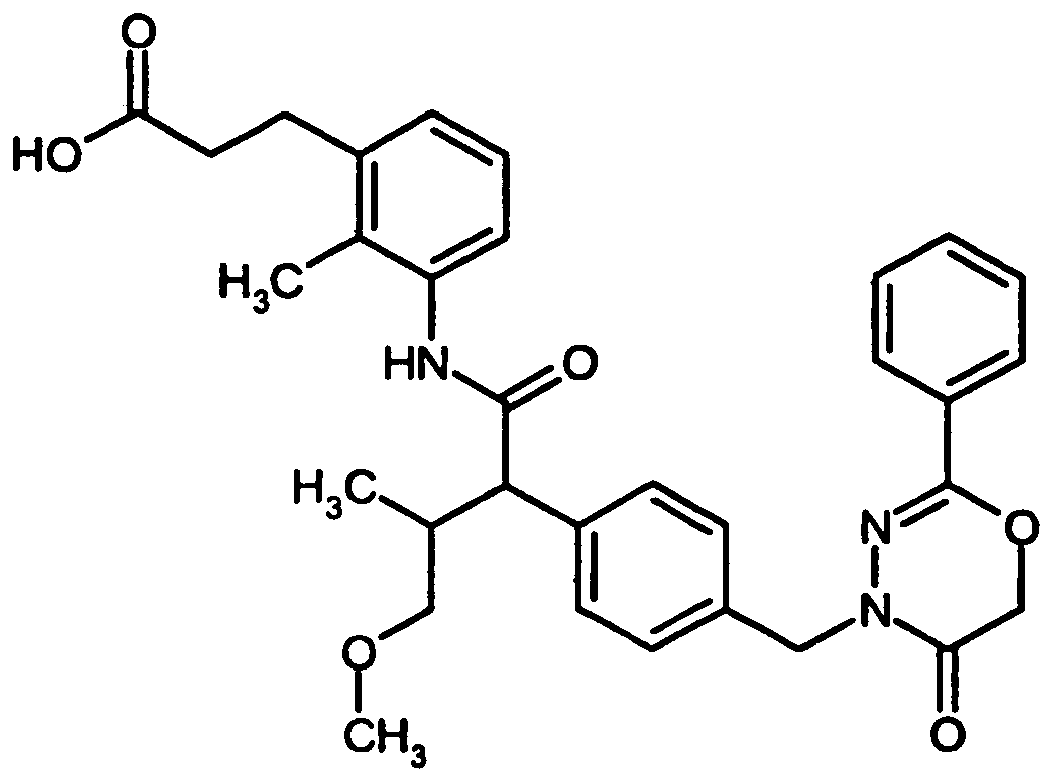
- Zu einer Lösung von 106 mg (0.17 mmol) tert.-Butyl-3-{3-[(4-methoxy-3-methyl-2-{4-[(5-oxo-2-phenyl-5,6-dihydro-4H-1,3,4-oxadiazin-4-yl)methyl]phenyl}butanoyl)amino]-2-methylphenyl}propanoat (Beispiel 170A) in 2 ml Dichlormethan wurden 0.27 ml (3.45 mmol) Trifluoressigsäure getropft und die Mischung 3 h bei Raumtemperatur gerührt. Anschließend wurde die Reaktionslösung im Vakuum bis zur Trockene eingeengt. Der erhaltene Rückstand wurde über präparative HPLC gereinigt. Es wurden 66 mg (0.12 mmol, 68% d. Th.) der Titelverbindung als Diastereomerengemisch erhalten.
LC-MS (Methode 11): Diastereomer 1: Rt = 1.23 min (28%), m/z = 558 (M+H)+; Diastereomer 2: Rt = 1.24 min (72%); m/z = 558 (M+H)+. - Auf analoge Weise wurden die in der folgenden Tabelle aufgeführten Verbindungen erhalten:
Beispiel Name / Struktur Darstellungsmethode / Edukt Analytische Daten 4 4-{[(Cyclopentyl{4-[(2-oxo-5-phenyl-1,3,4-oxadiazol-3(2H)-yl)methyl]phenyl}acetyl)amino]methyl}-benzolcarbonsäure (Racemat) LC-MS (Methode 2): Rt = 2.38 min; m/z = 512 (M+H)+. 
Darstellungsmethode 1 (aus Bsp. 114A) 5 4-{[(Cyclopentyl{4-[(3,5-dioxo-6-phenyl-2,5-dihydro-1,2,4-triazin-4(3H)-yl)methyl]phenyl}acetyl)amino]-methyl}benzolcarbonsäure (Racemat) LC-MS (Methode 2): Rt = 2.22 min; m/z = 539 (M+H)+. 
Darstellungsmethode 1 (aus Bsp. 117A) 6 4-({[Cyclopentyl(4-{[(4R,5S)-4-methyl-2-oxo-5-phenyl-1,3-oxazolidin-3-yl]methyl}phenyl)acetyl]amino}-methyl)benzolcarbonsäure (Racemat) LC-MS (Methode 7): Rt = 2.55 min; m/z = 527 (M+H)+. 
Darstellungsmethode 1 (aus Bsp. 115A) 7 4-({[Cyclopentyl(4-{[(4S,5R)-4-methyl-2-oxo-5-phenyl-1,3-oxazolidin-3-yl]methyl}phenyl)acetyl]amino}-methyl)benzolcarbonsäure (Racemat) LC-MS (Methode 2): Rt = 2.31 min; m/z = 527 (M+H)+. 
Darstellungsmethode 1 (aus Bsp. 116A) 8 4-{[(Cyclopentyl{4-[(5-methyl-2-oxo-5-phenyl-piperidin-1-yl)methyl]phenyl}acetyl)amino]-methyl}benzolcarbonsäure (Diastereomerengemisch) LC-MS (Methode 7): Rt = 2.50 min; m/z = 539 (M+H)+ 
Darstellungsmethode 1 (aus Bsp. 118A) 9 4-{[(Cyclopentyl{4-[(5-oxo-2-phenyl-5,6-dihydro-4H-1,3,4-oxadiazin-4-yl)methyl]phenyl}acetyl)amino]-methyl}phenyl)essigsäure (Racemat) LC-MS (Methode 7): Rt = 2.53 min; m/z = 540 (M+H)+. 
Darstellungsmethode 1 (aus Bsp. 119A) 10 4-({[(4-{[2-(3-Chlorphenyl)-5-oxo-5,6-dihydro-4H-1,3,4-oxadiazin-4-yl]methyl}phenyl)(cyclopentyl)-acetyl]amino}methyl)benzolcarbonsäure (Racemat) LC-MS (Methode 2): Rt = 2.57 min; m/z = 560 (M+H)+. 
Darstellungsmethode 1 (aus Bsp. 120A) 11 6-({[(4-{[4-(4-Chlorphenyl)-1-oxophthalazin-2(1H)-yl]-methyl}phenyl)(cyclopentyl)acetyl]amino}methyl)-pyridin-3-carbonsäure (Racemat) LC-MS (Methode 2): Rt = 2.60 min; m/z = 607 (M+H)+. 
Darstellungsmethode 1 (aus Bsp. 121A) 12 4-({[(4-{[2-(2-Chlorphenyl)-5-oxo-5,6-dihydro-4H-1,3,4-oxadiazin-4-yl]methyl}phenyl)(cyclopentyl)-acetyl]amino}methyl)benzolcarbonsäure (Racemat) LC-MS (Methode 2): Rt = 2.42 min; m/z = 560 (M+H)+. 
Darstellungsmethode 1 (aus Bsp. 122A) 13 5-({[(4-{[4-(4-Chlorphenyl)-1-oxophthalazin-2(1H)-yl]-methyl}phenyl)(cyclopentyl)acetyl]amino}methyl)-furan-2-carbonsäure (Racemat) LC-MS (Methode 9): Rt = 4.09 min; m/z = 596 (M+H)+. 
Darstellungsmethode 1 (aus Bsp. 123A) 14 4-({[(4-{[2-(4-Chlorphenyl)-5-oxo-5,6-dihydro-4H-1,3,4-oxadiazin-4-yl]methyl}phenyl)(cyclopentyl)-acetyl]amino}methyl)benzolcarbonsäure (Racemat) LC-MS (Methode 7): Rt= 2.90 min; m/z = 560 (M+H)+. 
Darstellungsmethode 1 (aus Bsp. 124A) 15 4-({[Cyclopentyl(4-{[2-(2-methoxyphenyl)-5-oxo-5,6-dihydro-4H-1,3,4-oxadiazin-4-yl]methyl}phenyl)-acetyl]amino}methyl)benzolcarbonsäure (Racemat) LC-MS (Methode 8): Rt = 3.57 min; m/z = 566 (M+H)+. 
Darstellungsmethode 1 (aus Bsp. 125A) 16 4-{[Cyclopentyl(4-{[2-(2-methylpropyl)-5-oxo-5,6-dihydro-4H-1,3,4-oxadiazin-4-yl]methyl}phenyl)-acetyl]amino}-2,3-dihydro-1H-inden-2-carbonsäure (Diastereomerengemisch) LC-MS (Methode 11): Rt = 1.38 min; m/z = 532 (M+H)+. 
Darstellungsmethode 1 (aus Bsp. 185A) 17 4-{[(4-{[2-(4-Chlorphenyl)-5-oxo-5,6-dihydro-4H-1,3,4-oxadiazin-4-yl]methyl}phenyl)(cyclopentyl)acetyl]-amino}-2,3-dihydro-1H-inden-2-carbonsäure (Diastereomerengemisch) LC-MS (Methode 7): Rt = 3.01 min; m/z = 586 (M+H)+. 
Darstellungsmethode 2 (aus Bsp. 132A) 18 4-{[(4-{[2-(4-Fluorphenyl)-5-oxo-5,6-dihydro-4H-1,3,4-oxadiazin-4-yl]methyl}phenyl)(cyclopentyl)acetyl]-amino}-2,3-dihydro-1H-inden-2-carbonsäure (Diastereomerengemisch) 1H-NMR (400 MHz, DMSO-d6, δ/ppm): 12.35-12.18 (1H, breites s), 9.47 (1H, d), 7.85-7.75 (2H, m), 7.41 (2H, d), 7.36-7.22 (5H, m), 7.04 (1H, t), 6.96 (1H, d), 4.91 (2H, s), 4.85 (2H, s), 3.52 (1H, d), 3.28-3.15 (1H, m), 3.14-2.97 (4H, m), 2.61-2.46 (1H, m), 1.87-1.74 (1H, m), 1.73-1.21 (5H, m), 1.04-0.90 (1H, m).
LC-MS (Methode 7): Rt = 2.86 min; m/z = 570 (M+H)+.
Darstellungsmethode 2 (aus Bsp. 133A) 19 4-{[Cyclopentyl(4-{[4-methyl-5-(2-methylpropyl)-2-oxo-1,3-thiazol-3(2H)-yl]methyl}phenyl)acetyl]amino}-2,3-dihydro-1H-inden-2-carbonsäure (Diastereomerengemisch) LC-MS (Methode 7): R, = 3.02 min; m/z = 547 (m+H)+ . 
Darstellungsmethode 1 (aus Bsp. 106A) 20 4-{[Cyclopentyl(4-{[5-oxo-2-(propan-2-yl)-5,6-dihydro-4H-1,3,4-oxadiazin-4-yl]methyl}phenyl)acetyl]amino}-2,3-dihydro-1H-inden-2-carbonsäure (Diastereomerengemisch) LC-MS (Methode 10): Rt = 2.14 min; m/z = 518 (M+H)+. 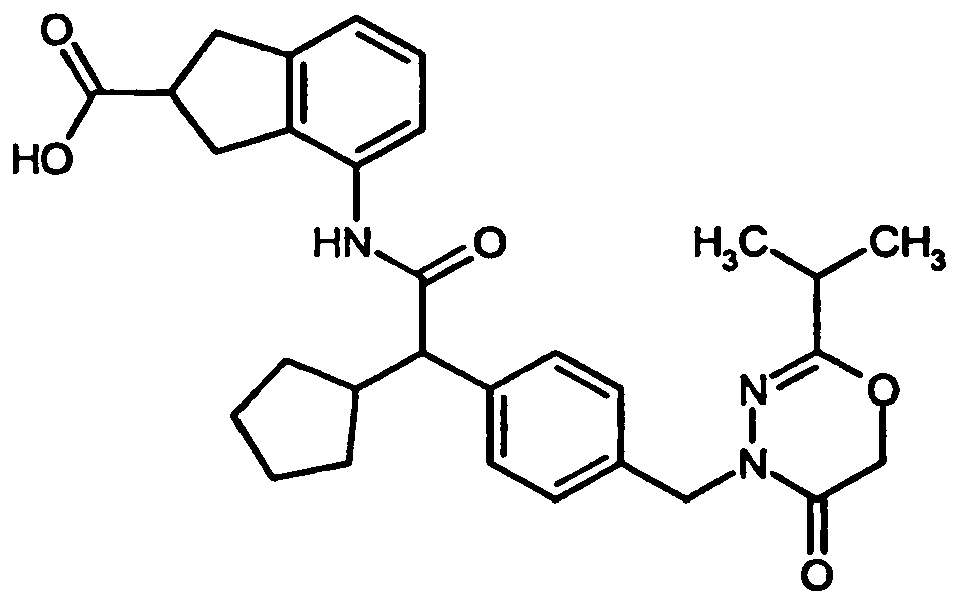
Darstellungsmethode 1 (aus Bsp. 107A) 21 3-{3-[(Cyclopentyl{4-[(4-oxo-1,2,3-benzotriazin-3(4H)-yl)methyl]phenyl}acetyl)amino]phenyl}propansäure (Racemat) 1H-NMR (400 MHz, DMSO-d6, δ/ppm): 12.2-11.8 (1H, breites s), 9.98 (1H, d), 8.30- 
8.18 (2H, m), 8.09 (1H, t), 7.98-7.87 (1H, m), 7.43-7.28 (6H, m), 7.14 (1H, t), 6.86 (1H, d), 5.55 (2H, s), 3.38 (1H, d), 2.73 (2H, t), 2.61-2.46 (1H, m), 2.45 (2H, t), 1.83-1.70 (1H, m), 1.70-1.19 (6H, m), 1.01-0.88 (1H, m).
LC-MS (Methode 11):Darstellungsmethode 3 (aus Bsp. 156A) Rt = 1.28 min; m/z = 511 (M+H)+. 22 3-{3-[(Cyclopentyl{4-[(2-oxo-5-phenyl-1,3,4-oxadiazol-3(2H)-yl)methyl]phenyl}acetyl)amino]phenyl}-propansäure (Racemat) 1H-NMR (400 MHz, DMSO-d6, δ/ppm): 12.25-11.95 (1H, breites s), 10.00 (1H, d), 7.79 (2H, d), 7.62-7.48 (3H, m), 7.48-7.35 (4H, m), 7.32 (2H, d), 7.15 (1H, t), 6.88 (1H, d), 4.94 (2H, s), 3.39 (1H, d), 2.74 (2H, t), 2.65-2.42 (1H, m), 2.48 (2H, t), 1.88-1.71 (1H, m), 1.70-1.19 (6H, m), 1.07-0.89 (1H, m).
LC-MS (Methode 11): Rt = 1.36 min; m/z = 526 (M+H)+.
Darstellungsmethode 3 (aus Bsp. 157A) 23 3-{3-[(3-Methyl-2-{4-[(5-oxo-2-phenyl-5,6-dihydro-4H-1,3,4-oxadiazin-4-yl)methyl]phenyl}hexanoyl)amino]-phenyl}propansäure (Diastereomerengemisch) LC-MS (Methode 7): Rt = 2.70 min; m/z = 542 (M+H)+. 
Darstellungsmethode 2 (aus Bsp. 164A) 24 4-[(3-Methyl-2-{4-[(5-oxo-2-phenyl-5,6-dihydro-4H-1,3,4-oxadiazin-4-yl)methyl]phenyl}hexanoyl)amino]-2,3-dihydro-1H-inden-2-carbonsäure (Diastereomerengemisch) LC-MS (Methode 11): Rt = 1.42 min; m/z = 554 (M+H)+. 
Darstellungsmethode 2 (aus Bsp. 165A) 25 3-{3-[(Cyclopentyl{4-[(3-methyl-2-oxoimidazolidin-1-yl)methyl]phenyl}acetyl)amino]-2-methylphenyl}-propansäure (Racemat) 1H-NMR (400 MHz, DMSO-d6, δ/ppm): 12.3-11.9 (1H, breites s), 9.46 (1H, d), 7.38 (2H, d), 7.17 (2H, d), 7.08-6.95 (3H, m), 4.23 (2H, s), 3.45 (1H, d), 3.22 (2H, t), 3.11 (2H, t), 2.79 (2H, t), 2.66 (3H, s), 2.64-2.42 (1H, m), 2.43 (2H, t), 1.99 (3H, s), 1.90-1.79 (1H, m), 1.75-1.29 (6H, m), 1.05-0.91 (1H, m).
LC-MS (Methode 11): Rt = 1.12 min; m/z = 478 (M+H)+.
Darstellungsmethode 3 (aus Bsp. 162A) 26 3-(3-{[(4-{[3-(3-Chlorphenyl)-2-oxoimidazolidin-1-yl]-methyl}phenyl)(cyclopentyl)acetyl]amino}-2-methylphenyl)propansäure (Racemat) 1H-NMR (400 MHz, DMSO-d6, δ/ppm): 12.3-11.9 (1H, breites s), 9.47 (1H, d), 7.82 (1H, s), 7.49-7.39 (3H, m), 7.34 (1H, t), 7.26 (2H, d), 7.08-6.94 (4H, m), 4.38 (2H, s), 3.82 (2H, t), 3.47 (1H, d), 3.37 (2H, t), 2.80 (2H, t), 2.65-2.48 (1H, m), 2.43 (2H, t), 2.00 (3H, s), 1.91-1.78 (1H, m), 1.75-1.28 (6H, m), 1.05-0.91 (1H, m).
LC-MS (Methode 10): Rt = 2.28 min; m/z = 574 (M+H)+.
Darstellungsmethode 3 (aus Bsp. 161A) 27 3-(3-{[(4-{[3-(3-Chlorphenyl)-2-oxoimidazolidin-1-yl]-methyl}phenyl)(cyclopentyl)acetyl]amino}phenyl)-propansäure (Racemat) 1H-NMR (400 MHz, DMSO-d6, δ/ppm): 12.2-12.0 (1H, breites s), 10.00 (1H, d), 7.81 (1H, s), 7.49-7.38 (5H, m), 7.32 (1H, t), 7.24 (2H, d), 7.16 (1H, t), 7.03 (1H, d), 6.88 (1H, d), 4.36 (2H, s), 3.80 (2H, t), 3.41-3.29 (3H, m), 2.75 (2H, t), 2.69-2.52 (1H, m), 2.65-2.48 (2H, t), 1.86-1.71 (1H, m), 1.69-1.20 (6H, m), 1.03-0.90 (1H, m).
LC-MS (Methode 10): Rt = 2.33 min; m/z = 560 (M+H)+.
Darstellungsmethode 3 (aus Bsp. 168A) 28 3-{3-[(Cyclopentyl{4-[(3-methyl-2-oxoimidazolidin-1-yl)methyl]phenyl}acetyl)amino]phenyl}propansäure (Racemat) LC-MS (Methode 10): Rt = 1.77 min; m/z = 464 (M+H)+. 
Darstellungsmethode 3 (aus Bsp. 169A) 29 3-{3-[(Cyclopentyl{4-[(4-oxo-1,2,3-benzotriazin-3(4H)-yl)methyl]phenyl}acetyl)amino]-2-methylphenyl}-propansäure (Racemat) 1H-NMR (400 MHz, DMSO-d6, δ/ppm): 12.13 (1H, s), 9.46 (1H, d), 8.31-8.19 (2H, m), 8.10 (1H, t), 7.95 (1H, t), 7.40 (2H, d), 7.33 (2H, d), 7.07-6.94 (3H, m), 5.57 (2H, s), 3.45 (1H, d), 2.78 (2H, t), 2.59-2.46 (1H, m), 2.42 (2H, t), 1.97 (3H, s), 1.88-1.75 (1H, m), 1.71-1.25 (6H, m), 1.01-0.89 (1H, m).
LC-MS (Methode 10): Rt = 2.05 min; m/z = 525 (M+H)+.
Darstellungsmethode 3 (aus Bsp. 166A) 30 3-{3-[(Cyclopentyl{4-[(2-oxo-5-phenyl-1,3,4-oxadiazol-3(2H)-yl)methyl]phenyl}acetyl)amino]-2-methyl-phenyl}propansäure (Racemat) 1H-NMR (400 MHz, DMSO-d6, δ/ppm): 12.3-11.8 (1H, breites s), 9.48 (1H, d), 7.80 (2H, m), 7.65-7.50 (3H, m), 7.44 (2H, d), 7.32 (2H, d), 7.09-6.92 (3H, m), 4.96 (2H, s), 3.48 (1H, d), 2.78 (2H, t), 2.62-2.48 (1H, m), 2.42 (2H, t), 1.99 (3H, s), 1.90-1.78 (1H, m), 1.72-1.28 (6H, m), 1.05-0.91 (1H, m).
LC-MS (Methode 7): Rt = 2.61 min; m/z = 540 (M+H)+.
Darstellungsmethode 3 (aus Bsp. 167A) 31 3-{3-[(4-Cyano-3-methyl-2-{4-[(5-oxo-2-phenyl-5,6-dihydro-4H-1,3,4-oxadiazin-4-yl)methyl]phenyl}-butanoyl)amino]-2-methylphenyl}propansäure (Diastereomerengemisch) 1H-NMR (400 MHz, DMSO-d6, δ/ppm): 12.14 (1H, s), 9.68 (1H, d), 7.76 (2H, d), 7.54-7.31 (7H, m), 7.08-6.92 (3H, m), 4.92 (2H, s), 4.89 (2H, s), 3.63 (1H, d), 2.76 (2H, t), 2.65-2.48 (1H, m), 2.48-2.35 (3H, m), 2.11-1.98 (1H, m), 1.92 (3H, s), 1.18 und 0.82 (zus. 3H, 2d).
LC-MS (Methode 11): Rt = 1.18 min; m/z = 553 (M+H)+.
Darstellungsmethode 3 (aus Bsp. 171A) 32 3-{3-[(4-Cyano-3-methyl-2-{4-[(5-oxo-2-phenyl-5,6-dihydro-4H-1,3,4-oxadiazin-4-yl)methyl]phenyl}-butanoyl)amino]phenyl}propansäure (Diastereomerengemisch) LC-MS (Methode 7): Rt = 2.35 min; m/z = 539 (M+H)+. 
Darstellungsmethode 2 (aus Bsp. 172A) 33 4-[(4-Cyano-3-methyl-2-{4-[(5-oxo-2-phenyl-5,6-dihydro-4H-1,3,4-oxadiazin-4-yl)methyl]phenyl}-butanoyl)amino]-2,3-dihydro-1H-inden-2-carbonsäure (Diastereomerengemisch) LC-MS (Methode 7): Rt = 2.36 min; m/z = 551 (M+H)+. 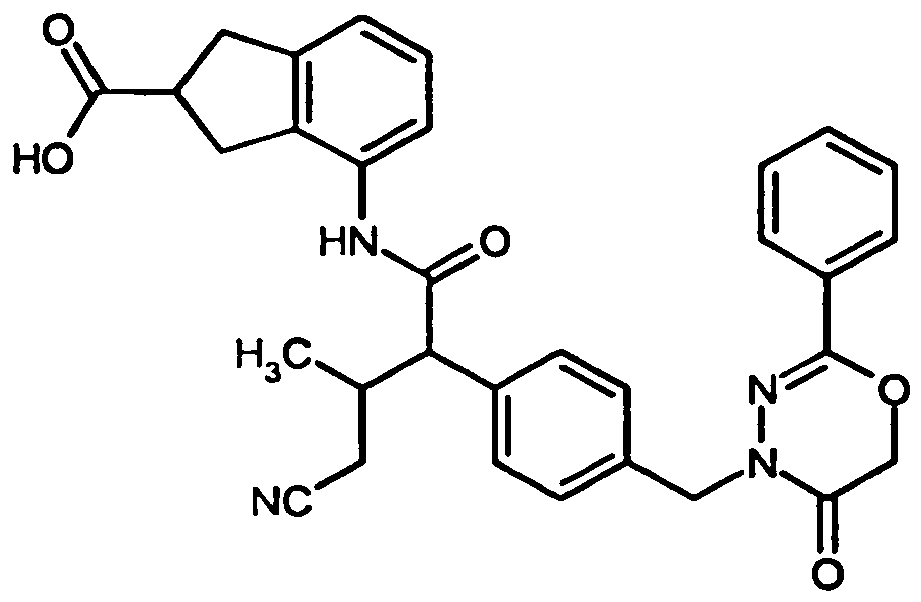
Darstellungsmethode 2 (aus Bsp. 173A) -

- Eine Lösung von 39.2 mg (0.1 mmol) Cyclopentyl{4-[(5-oxo-2-phenyl-5,6-dihydro-4H-1,3,4-oxadiazin-4-yl)methyl]phenyl}essigsäure (Beispiel 51A) in 0.5 ml DMSO wurde mit 20 mg (0.1 mmol) Ethyl-3-(2-amino-1,3-thiazol-4-yl)propanoat [Beilstein Reg.-Nr. 9762098], 41.7 mg (0.13 mmol) TBTU und 25.8 mg Ethyldiisopropylamin versetzt. Es wurde über Nacht bei Raumtemperatur verrührt. Dann wurden 0.3 ml 2 M Natronlauge zugegeben und die Mischung erneut über Nacht gerührt. Das Lösungsmittel wurde danach abgedampft und der erhaltene Rückstand direkt über präparative HPLC/MS gereinigt. Es wurden 7.1 mg (0.013 mmol, 13% d. Th.) der Titelverbindung erhalten.
LC-MS (Methode 14): Rt = 2.20 min; m/z = 547 (M+H)+. - Auf analoge Weise wurde die in der folgenden Tabelle aufgeführte Verbindung erhalten:
Beispiel Name / Struktur Darstellungsmethode / Edukte Analytische Daten 35 {2-[(Cyclopentyl{4-[(5-oxo-2-phenyl-5,6-dihydro-4H-1,3,4-oxadiazin-4-yl)methyl]phenyl}acetyl)amino]-1,3-thiazol-4-yl}essigsäure (Racemat) LC-MS (Methode 14): Rt = 2.23 min; m/z = 533 (M+H)+. 
Darstellungsmethode 4 (aus Bsp. 51A und Methyl-(2-amino-1,3-thiazol-4-yl)-acetat [CAS Reg.-Nr. 64987-16-2]) -

- 969 mg (1.757 mmol) Methyl-4-{[(cyclopentyl{4-[(5-oxo-2-phenyl-5,6-dihydro-4H-1,3,4-oxa-diazin-4-yl)methyl]phenyl}acetyl)amino]methyl}benzolcarboxylat (Beispiel 113A) wurden in 30 ml Dioxan/Wasser (3:1 v/v) gelöst und mit 3.87 ml (3.865 mmol) 1 N Natronlauge versetzt. Es wurde über Nacht bei Raumtemperatur gerührt. Danach wurde gesättigte wässrige Ammoniumchlorid-Lösung zugesetzt und das Gemisch mehrmals mit Dichlormethan extrahiert. Die vereinigten organischen Phasen wurden über Natriumsulfat getrocknet und am Rotationsverdampfer eingeengt. Es wurden 803 mg (1.53 mmol, 87% d. Th.) der Titelverbindung erhalten.
-

- 500 mg der erhaltenen racemischen 4-{[(Cyclopentyl{4-[(5-oxo-2-phenyl-5,6-dihydro-4H-1,3,4-oxadiazin-4-yl)methyl]phenyl}acetyl)amino]methyl}benzolcarbonsäure (Beispiel 36) wurden mittels präparativer HPLC an chiraler Phase in die Enantiomere aufgetrennt [Säule: Daicel Chiralpak OJ-H, 5 µm, 250 mm x 20 mm; Elutionsmittel: Isohexan/(Ethanol + 0.2% Trifluoressigsäure + 1% Wasser) 60:40 (v/v); Fluss: 15 ml/min; UV-Detektion: 220 nm; Temperatur: 40°C]:
- Rt 5.84 min; Reinheit >96%; >99% ee (Säule s.o.)
Ausbeute: 257 mg
LC-MS (Methode 2): Rt = 2.38 min; MS (ESIpos): m/z = 526 (M+H)+. - Rt 7.61 min; Reinheit >97.5%; >98% ee (Säule s.o.)
Ausbeute: 214 mg
LC-MS (Methode 2): Rt = 2.38 min; MS (ESIpos): m/z = 526 (M+H)+. -

- Eine Lösung von 170 mg (0.32 mmol) Methyl-4-[(3-methyl-2-{4-[(5-oxo-2-phenyl-5,6-dihydro-4H-1,3,4-oxadiazin-4-yl)methyl]phenyl}butanoyl)amino]-2,3-dihydro-1H-inden-2-carboxylat(Beispiel 134A) in 11 ml THF und 11 ml Wasser wurde mit 26 mg (0.63 mmol) Lithiumhydroxid-Monohydrat versetzt und 12 h bei 60°C gerührt. Der Ansatz wurde dann mit 1 M Salzsäure auf pH 2 gestellt und zweimal mit Essigsäureethylester extrahiert. Die vereinigten organischen Phasen wurden über Magnesiumsulfat getrocknet und anschließend im Vakuum bis zur Trockene eingeengt. Es wurden 141 mg (Gehalt 98%, 0.26 mmol, 84% d. Th.) der Titelverbindung als Isomerengemisch erhalten.
LC-MS (Methode 11): Rt = 1.30 min; m/z = 526 (M+H)+. -

- 141 mg (Gehalt 98%, 0.26 mmol) des erhaltenen Isomerengemisches von 4-[(3-Methyl-2-{4-[(5-oxo-2-phenyl-5,6-dihydro-4H-1,3,4-oxadiazin-4-yl)methyl]phenyl}butanoyl)amino]-2,3-dihydro-1H-inden-2-carbonsäure (Beispiel 39) wurden mittels präparativer HPLC an chiraler Phase in die einzelnen Isomere aufgetrennt [Säule: Daicel Chiralpak AD-H, 5 µm, 250 mm x 20 mm; Elutionsmittel: Isohexan/(Isopropanol + 0.2% Trifluoressigsäure + 1 % Wasser) 70:30 (v/v); Fluss: 15 ml/ min; UV-Detektion: 220 nm; Temperatur: 25°C]:
- Rt 7.79 min; Reinheit >99%; >99% ee (Säule s.o.)
Ausbeute: 36 mg
LC-MS (Methode 11): Rt = 1.30 min; m/z = 526 (M+H)+. - Rt 8.37 min; Reinheit 93%; >99% ee (Säule s.o.)
Ausbeute: 13 mg
LC-MS (Methode 11): Rt = 1.30 min; m/z = 526 (M+H)+. - Rt 10.70 min; Reinheit >99%; >98.5% ee (Säule s.o.)
Ausbeute: 41.4 mg
1H-NMR (400 MHz, DMSO-d6, δ/ppm): 12.5-12.1 (1H, breites s), 9.49 (1H, s), 7.76 (2H, d), 7.53-7.25 (8H, m), 7.04 (1H, t), 6.95 (1H, d), 4.91 (2H, s), 4.86 (2H, s), 3.38 (1H, d), 3.28-2.95 (6H, m), 2.35-2.21 (1H, m), 1.02 (3H, d), 0.66 (3H, d).
LC-MS (Methode 11): Rt = 1.30 min; m/z = 526 (M+H)+. - Rt12.10 min; Reinheit >94%; >99% ee (Säule s.o.)
Ausbeute: 14 mg
LC-MS (Methode 11): Rt = 1.30 min; m/z = 526 (M+H)+. -

- Eine Lösung von 74 mg (0.13 mmol) Methyl-4-[(cyclopentyl{4-[(5-oxo-2-phenyl-5,6dihydro-4H-1,3,4-oxadiazin-4-yl)methyl]phenyl}acetyl)amino]-2-methyl-2,3-dihydro-1H-inden-2-carboxylat (Beispiel 131A) in 2 ml THF und 1 ml Wasser wurde mit 11 mg (0.26 mmol) Lithiumhydroxid-Monohydrat versetzt und 12 h bei Raumtemperatur gerührt. Der Ansatz wurde dann mit 1 M Salzsäure auf pH 2 gestellt und zweimal mit Essigsäureethylester extrahiert. Die vereinigten organischen Phasen wurden über Magnesiumsulfat getrocknet, filtriert und anschließend im Vakuum bis zur Trockene eingeengt. Es wurden 64 mg (0.11 mmol, 88% d. Th.) der Titelverbindung als Diastereomerengemisch erhalten.
LC-MS (Methode 11): Rt = 1.40 min; m/z = 566 (M+H)+. -

- 60 mg (0.11 mmol) des erhaltenen Diastereomerengemisches von 4-[(Cyclopentyl{4-[(5-oxo-2-phenyl-5,6-dihydro-4H-1,3,4-oxadiazin-4-yl)methyl]phenyl}acetyl)amino]-2-methyl-2,3-dihydro-1H-inden-2-carbonsäure (Beispiel 44) wurden mittels präparativer HPLC an chiraler Phase weiter aufgetrennt [Säule: Daicel Chiralpak AD-H, 5 µm, 250 mm x 20 mm; Elutionsmittel: Isohexan/ (Ethanol + 0.2% Trifluoressigsäure + 1% Wasser) 70:30 (v/v); Fluss: 15 ml/min; UV-Detektion: 220 nm; Temperatur: 35°C]:
- Rt 6.2 min; Reinheit >99%; >99% ee (Säule s.o.)
Ausbeute: 19 mg
LC-MS (Methode 7): Rt = 2.74 min; m/z = 566 (M+H)+. - Rt 8.8 min; Reinheit >95.5%; >99% ee (Säule s.o.)
Ausbeute: 37 mg
1H-NMR (400 MHz, DMSO-d6, δ/ppm): 12.33 (1H, s), 9.48 (1H, s), 7.76 (2H, d), 7.55-7.38 (5H, m), 7.30 (3H, t), 7.04 (1H, t), 6.94 (1H, d), 4.91 (2H, s), 4.85 (2H, s), 3.53 (1H, d), 3.38-3.28 (1H, m), 3.23 (1H, d), 2.78-2.61 (2H, m), 2.61-2.46 (1H, m), 1.87-1.72 (1H, m), 1.72-1.20 (6H, m), 1.24 (3H, s), 1.04-0.90 (1H, m).
LC-MS (Methode 7): Rt = 2.76 min; m/z = 566 (M+H)+. -

- 167 mg (0.306 mmol) Methyl-4-{[{4-[(2-tert.-butyl-5-oxo-5,6-dihydro-4H-1,3,4-oxadiazin-4-yl)-methyl]phenyl}(cyclopentyl)acetyl]amino}-2,3-dihydro-1H-inden-2-carboxylat (Beispiel 108A) wurden in 14 ml Dioxan/Wasser (3:1 v/v) gelöst und mit 0.46 ml 1 N Natronlauge versetzt. Es wurde über Nacht bei Raumtemperatur gerührt. Danach wurde mit 1 N Salzsäure angesäuert, das Gemisch mehrfach mit Dichlormethan extrahiert und die vereinigten organischen Phasen mit gesättigter Natriumchlorid-Lösung gewaschen und über Natriumsulfat getrocknet. Das Lösungsmittel wurde im Vakuum entfernt und der Rückstand mittels präparativer HPLC gereinigt. Es wurden 68 mg (42% d. Th.) der Titelverbindung als Diastereomerengemisch erhalten.
LC-MS (Methode 10): Rt = 2.28 min; m/z = 532 (M+H)+. -

- 62 mg (0.117 mmol) des erhaltenen Diastereomerengemisches von 4-{[{4-[(2-tert.-Butyl-5-oxo-5,6-dihydro-4H-1,3,4-oxadiazin-4-yl)methyl]phenyl}(cyclopentyl)acetyl]amino}-2,3-dihydro-1H-inden-2-carbonsäure (Beispiel 47) wurden mittels präparativer HPLC an chiraler Phase weiter aufgetrennt [Säule: chirale Kieselgel-Phase basierend auf dem Selektor Poly(N-methacryloyl-L-leucin-tert.-butylamid, 670 mm x 40 mm; Elutionsmittel: Essigsäureethylester; Fluss: 80 ml/min; UV-Detektion: 260 nm; Temperatur: 24°C]:
- Rt 2.63 min; >97.5% ee (Säule s.o.)
Ausbeute: 23 mg - Rt 4.04 min; >98% ee (Säule s.o.)
Ausbeute: 27 mg. -

- Eine Lösung von 112 mg (0.19 mmol) Methyl-4-[(5,5,5-trifluor-2-{4-[(5-oxo-2-phenyl-5,6-dihydro-4H-1,3,4-oxadiazin-4-yl)methyl]phenyl}pentanoyl)amino]-2,3-dihydro-1H-inden-2-carboxylat (Beispiel 143A) in 2 ml THF und 1 ml Wasser wurde mit 32 mg (0.76 mmol) Lithiumhydroxid-Monohydrat versetzt und über Nacht bei Raumtemperatur gerührt. Der Ansatz wurde dann mit 1 M Salzsäure auf pH 2 gestellt und zweimal mit Essigsäureethylester extrahiert. Die vereinigten organischen Phasen wurden über Magnesiumsulfat getrocknet, filtriert und anschließend im Vakuum bis zur Trockene eingeengt. Der erhaltene Rückstand wurde über präparative HPLC gereinigt. Es wurden 74 mg (0.13 mmol, 68% d. Th.) der Titelverbindung als Diastereomerengemisch erhalten.
LC-MS (Methode 10): Rt = 2.19 min; m/z = 580 (M+H)+. -
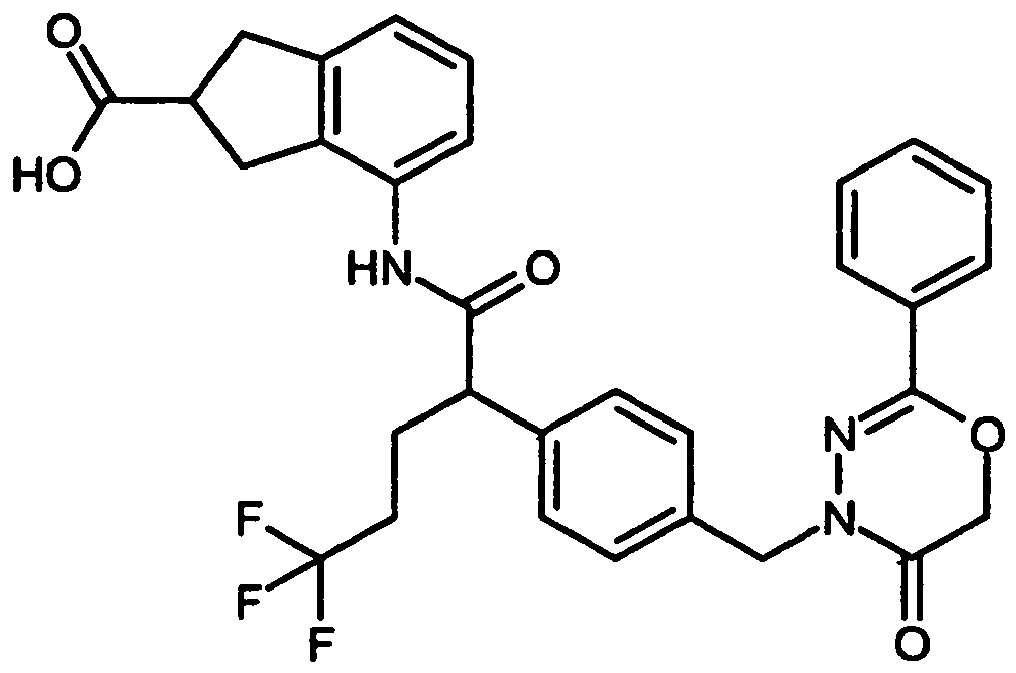
- 74 mg (0.13 mmol) des erhaltenen Diastereomerengemisches von 4-[(5,5,5-Trifluor-2-{4-[(5-oxo-2-phenyl-5,6-dihydro-4H-1,3,4-oxadiazin-4-yl)methyl]phenyl}pentanoyl)amino]-2,3-dihydro-1H-inden-2-carbonsäure (Beispiel 50) wurden mittels präparativer HPLC an chiraler Phase weiter aufgetrennt [Säule: Daicel Chiralpak AD-H, 5 µm, 250 mm x 20 mm; Elutionsmittel: Isohexan/ (Ethanol + 0.2% Trifluoressigsäure + 1% Wasser) 50:50 (v/v); Fluss: 15 ml/min; UV-Detektion: 220 nm; Temperatur: 30°C]:
- Rt 5.61 min; Reinheit >99%; >99% ee (Säule s.o.)
Ausbeute: 20 mg
LC-MS (Methode 11): Rt = 1.34 min; m/z = 580 (M+H)+. - Rt 9.21 min; Reinheit >99%; >99% ee (Säule s.o.)
Ausbeute: 39 mg
1H-NMR (400 MHz, DMSO-d6, δ/ppm): 12.45-12.10 (1H, s), 9.57 (1H, s), 7.76 (2H, d), 7.53-7.31 (8H, m), 7.07 (1H, t), 6.97 (1H, d), 4.91 (2H, s), 4.86 (2H, s), 3.99 (1H, t), 3.24-3.12 (1H, m), 3.08 (2H, d), 2.98 (2H, t), 2.29-2.10 (3H, m), 1.97-1.82 (1H, m).
LC-MS (Methode 11): Rt = 1.34 min; m/z = 580 (M+H)+. -

- Eine Lösung von 600 mg (1.12 mmol) Methyl-3-{3-[(3-methyl-2-{4-[(5-oxo-2-phenyl-5,6-dihydro-4H-1,3,4-oxadiazin-4-yl)methyl]phenyl}butanoyl)amino]cyclohexyl}propanoat (Beispiel 142A) in 15 ml THF und 15 ml Wasser wurde mit 94 mg (2.25 mmol) Lithiumhydroxid-Monohydrat versetzt und über Nacht bei Raumtemperatur gerührt. Der Ansatz wurde dann mit 1 M Salzsäure auf pH 2 gestellt und zweimal mit Essigsäureethylester extrahiert. Die vereinigten organischen Phasen wurden über Magnesiumsulfat getrocknet, filtriert und anschließend im Vakuum bis zur Trockene eingeengt. Es wurden 573 mg (1.10 mmol, 98% d. Th.) der Titelverbindung als Isomerengemisch erhalten.
LC-MS (Methode 7): Rt = 2.48 min, m/z = 520 (M+H)+ (Diastereomer 1); Rt = 2.52 min, m/z = 520 (M+H)+ (Diastereomer 2). -

- 573 mg (1.10 mmol) des erhaltenen Isomerengemisches von 3-{3-[(3-Methyl-2-{4-[(5-oxo-2-phenyl-5,6-dihydro-4H-1,3,4-oxadiazin-4-yl)methyl]phenyl}butanoyl)amino]cyclohexyl}propansäure (Beispiel 53) wurden zunächst mittels präparativer HPLC in die beiden Diastereomere aufgetrennt [Säule: Kromasil 100 C18, 5 µm, 250 mm x 20 mm; Elutionsmittel: Wasser/Acetonitril/ 1% Trifluoressigsäure 40:50:10 (v/v); Fluss: 25 ml/min; UV-Detektion: 210 nm; Temperatur: 40°C; Ausbeute: 209 mg Diastereomer 1 Rt = 7.37 min, 243 mg Diastereomer 2 Rt = 7.77 min].
- 209 mg des so erhaltenen Diastereomers 1 wurden dann mittels präparativer HPLC an chiraler Phase weiter in die Enantiomere aufgetrennt [Daicel Chiralpak AS-H, 5 µm 250 mm x 20 mm; Elutionsmittel: Isohexan/(Ethanol + 0.2% Trifluoressigsäure + 1% Wasser) 80:20 (v/v); Fluss: 15 ml/min; UV-Detektion: 220 nm; Temperatur: 30°C]:
- Rt 6.24 min; Reinheit >99%; >99% ee (Daicel-Säule s.o.)
Ausbeute: 19 mg
1H-NMR (400 MHz, DMSO-d6, δ/ppm): 11.98 (1H, s), 7.84 (1H, s), 7.76 (2H, d), 7.52-7.41 (3H, m), 7.33-7.22 (4H, m), 4.91 (2H, s), 4.84 (2H, s), 3.48-3.35 (1H, m), 2.93 (1H, d), 2.27-2.12 (3H, m), 1.82 (1H, d), 1.60 (2H, d), 1.52 (1H, d), 1.46-1.34 (2H, m), 1.31-1.05 (2H, m), 1.00-0.87 (1H, m), 0.92 (3H, d), 0.80-0.64 (2H, m), 0.59 (3H, d).
LC-MS (Methode 11): Rt = 1.27 min; m/z = 520 (M+H)+. - Rt 14.28 min; Reinheit >99%; >99% ee (Daicel-Säule s.o.)
Ausbeute: 99 mg
LC-MS (Methode 11): Rt = 1.27 min; m/z = 520 (M+H)+. - Ebenso wurden 243 mg des oben erhaltenen Diastereomers 2 mittels präparativer HPLC an chira-1er Phase weiter in die Enantiomere aufgetrennt [Daicel Chiralpak AD-H, 5 µm, 250 mm x 20 mm; Elutionsmittel: Isohexan/(Ethanol + 0.2% Trifluoressigsäure + 1% Wasser) 80:20 (v/v); Fluss: 15 ml/min; UV-Detektion: 220 nm; Temperatur: 30°C]:
- Rt 5.82 min; Reinheit >99%; >99% ee (Daicel-Säule s.o.)
Ausbeute: 17 mg
1H-NMR (400 MHz, DMSO-d6, δ/ppm): 12.1-11.8 (1H, breites s), 7.85 (1H, s), 7.76 (2H, d), 7.53-7.41 (3H, m), 7.32-7.22 (4H, m), 4.91 (2H, s), 4.84 (2H, s), 3.48-3.35 (1H, m), 2.93 (1H, d), 2.25-2.15 (1H, m), 2.12 (2H, t), 1.79 (1H, d), 1.67 (1H, d), 1.57 (2H, t), 1.41-1.28 (2H, m), 1.28-1.11 (2H, m), 1.07-0.96 (1H, m), 0.91 (3H, d), 0.79-0.62 (2H, m), 0.59 (3H, d).
LC-MS (Methode 7): Rt = 2.53 min; m/z = 520 (M+H)+. - Rt 9.89 min; Reinheit >99%; >99% ee (Daicel-Säule s.o.)
Ausbeute: 100 mg
LC-MS (Methode 7): Rt = 2.53 min; m/z = 520 (M+H)+. -

- Eine Lösung von 167 mg (0.30 mmol) Ethyl-3-{3-[(3-methyl-2-{4-[(5-oxo-2-phenyl-5,6-dihydro-4H-1,3,4-oxadiazin-4-yl)methyl]phenyl}pentanoyl)amino]phenyl}propanoat (Beispiel 146A) in 4 ml THF wurde mit 1.2 ml (1.20 mmol) 1 N Natronlauge versetzt und über Nacht bei Raumtemperatur gerührt. Nach vollständiger Umsetzung wurde das THF im Vakuum abgezogen, die Reaktionslösung mit Wasser verdünnt und anschließend mit 1 M Salzsäure auf pH 2 gestellt. Der ausgefallene Feststoff wurde abfiltriert, mit Wasser gewaschen und über Nacht im Vakuum bei 45°C getrocknet. Es wurden 155 mg (0.29 mmol, 97% d. Th.) der Titelverbindung als Isomerengemisch erhalten.
LC-MS (Methode 7): Rt = 2.64 min; m/z = 528 (M+H)+. -

- 155 mg (0.29 mmol) des erhaltenen Isomerengemisches von 3-{3-[(3-Methyl-2-{4-[(5-oxo-2-phenyl-5,6-dihydro-4H-1,3,4-oxadiazin-4-yl)methyl]phenyl}pentanoyl)amino]phenyl}propansäure (Beispiel 58) wurden mittels präparativer HPLC an chiraler Phase weiter aufgetrennt [Säule: Daicel Chiralpak AS-H, 5 µm, 250 mm x 20 mm; Elutionsmittel: Isohexan/(Ethanol + 0.2% Trifluoressigsäure + 1% Wasser) 75:25 (v/v); Fluss: 15 ml/min; UV-Detektion: 220 nm; Temperatur: 25°C]. Es wurden zwei Fraktionen erhalten, die jeweils durch erneute HPLC-Chromatographie an chiraler Phase nachgetrennt wurden [Säule: Daicel Chiralpak AD-H, 5 µm, 250 mm x 20 mm; Elutionsmittel: Isohexan/(Ethanol + 0.2% Trifluoressigsäure + 1% Wasser) 75:25 (v/v); Fluss: 15 ml/min; UV-Detektion: 220 nm; Temperatur: 25°C]:
- Rt 6.81 min; Reinheit >99%; >99% ee (Daicel AD-H-Säule s.o.)
Ausbeute: 49 mg
LC-MS (Methode 11): Rt = 1.36 min; m/z = 528 (M+H)+. - Rt 7.51 min; Reinheit >99%; >99% ee (Daicel AD-H-Säule s.o.)
Ausbeute: 24 mg
1H-NMR (400 MHz, DMSO-d6, δ/ppm): 12.09 (1H, s), 10.02 (1H, s), 7.76 (2H, d), 7.52-7.35 (7H, m), 7.31 (2H, d), 7.14 (1H, t), 6.86 (1H, d), 4.90 (2H, s), 4.84 (2H, s), 3.36 (1H, d), 2.74 (2H, t), 2.47 (2H, t), 2.23-2.10 (1H, m), 1.21-1.07 (1H, m), 0.96 (3H, d), 0.94-0.79 (1H, m), 0.74 (3H, t).
LC-MS (Methode 11): Rt = 1.35 min; m/z = 528 (M+H)+. - Rt 8.20 min; Reinheit >99%; >99% ee (Daicel AD-H-Säule s.o.)
Ausbeute: 44 mg
1H-NMR (400 MHz, DMSO-d6, δ/ppm): 12.09 (1H, s), 10.02 (1H, s), 7.76 (2H, d), 7.53-7.35 (7H, m), 7.31 (2H, d), 7.14 (1H, t), 6.86 (1H, d), 4.90 (2H, s), 4.84 (2H, s), 3.33 (1H, d), 2.73 (2H, t), 2.47 (2H, t), 2.24-2.10 (1H, m), 1.59-1.46 (1H, m), 1.27-1.10 (1H, m), 0.90 (3H, t), 0.61 (3H, d).
LC-MS (Methode 11): Rt = 1.36 min; m/z = 528 (M+H)+. - Rt 9.42 min; Reinheit >99%; >99% ee (Daicel AD-H-Säule s.o.)
Ausbeute: 17 mg
LC-MS (Methode 11): Rt = 1.35 min; m/z = 528 (M+H)+. -

- Eine Lösung von 180 mg (0.31 mmol) Methyl-4-[(3-methyl-2-{4-[(5-oxo-2-phenyl-5,6-dihydro-4H-1,3,4-oxadiazin-4-yl)methyl]phenyl}pentanoyl)amino]-2,3-dihydro-1H-inden-2-carboxylat (Beispiel 147A) in 3.6 ml THF und 1.3 ml (1.3 mmol) 1 N Natronlauge wurde über Nacht bei Raumtemperatur gerührt. Nach vollständiger Umsetzung wurde das THF im Vakuum abgezogen, die Reaktionslösung mit Wasser verdünnt und anschließend mit 1 M Salzsäure auf pH 2 gestellt. Der ausgefallene Feststoff wurde abfiltriert, mit Wasser gewaschen und über Nacht im Vakuum bei 45°C getrocknet. Es wurden 159 mg (0.29 mmol, 91% d. Th.) der Titelverbindung als Isomerengemisch erhalten.
LC-MS (Methode 10): Rt = 2.18 min; m/z = 540 (M+H)+. -

- 159 mg (0.29 mmol) des erhaltenen Isomerengemisches von 4-[(3-Methyl-2-{4-[(5-oxo-2-phenyl-5,6-dihydro-4H-1,3,4-oxadiazin-4-yl)methyl]phenyl}pentanoyl)amino]-2,3-dihydro-1H-inden-2-carbonsäure (Beispiel 63) wurden mittels präparativer HPLC an chiraler Phase weiter aufgetrennt [Säule: Daicel Chiralpak AD-H, 5 µm, 250 mm x 20 mm; Elutionsmittel: Isohexan/(Isopropanol + 0.2% Trifluoressigsäure + 1% Wasser) 70:30 (v/v); Fluss: 15 ml/min; UV-Detektion: 220 nm; Temperatur: 30°C]:
- Rt 9.91 min; Reinheit >99%; >97.5% ee (Säule s.o.)
Ausbeute: 17 mg
LC-MS (Methode 7): Rt = 2.65 min; m/z = 540 (M+H)+. - Rt 11.26 min; Reinheit >99%; >98% ee (Säule s.o.)
Ausbeute: 14 mg
LC-MS (Methode 7): Rt = 2.60 min; m/z = 540 (M+H)+. - Rt 12.27 min; Reinheit >99%; >98% ee (Säule s.o.)
Ausbeute: 34 mg
LC-MS (Methode 7): Rt = 2.65 min; m/z = 540 (M+H)+. - Rt 12.94 min; Reinheit >99%; >98% ee (Säule s.o.)
Ausbeute: 35 mg
1H-NMR (400 MHz, DMSO-d6, δ/ppm): 12.28 (1H, s), 9.49 (1H, s), 7.76 (2H, d), 7.53-7.36 (5H, m), 7.35-7.25 (3H, m), 7.04 (1H, t), 6.95 (1H, d), 4.91 (2H, s), 4.86 (2H, s), 3.49 (1H, d), 3.25-3.18 (1H, m), 3.09 (2H, t), 3.00 (2H, d), 2.22-2.08 (1H, m), 1.62-1.48 (1H, m), 1.29-1.15 (1H, m), 0.92 (3H, t), 0.61 (3H, d).
LC-MS (Methode 7): Rt = 2.66 min; m/z = 540 (M+H)+. -

- Eine Lösung von 492 mg (0.90 mmol) Ethyl-4-{[(3-methyl-2-{4-[(5-oxo-2-phenyl-5,6-dihydro-4H-1,3,4-oxadiazin-4-yl)methyl]phenyl}pentanoyl)amino]methyl}cyclohexancarboxylat (Beispiel 150A) in 8 ml THF und 4.6 ml (4.6 mmol) 1 N Natronlauge wurde vier Tage bei 60°C gerührt. Nach vollständiger Umsetzung wurde das THF im Vakuum abgezogen, die Reaktionslösung mit Wasser verdünnt und anschließend mit 1 M Salzsäure auf pH 2 gestellt. Der ausgefallene Feststoff wurde abfiltriert, mit Wasser gewaschen und über Nacht im Vakuum bei 45°C getrocknet. Es wurden 343 mg (0.66 mmol, 73% d. Th.) der Titelverbindung als Isomerengemisch erhalten.
LC-MS (Methode 7): Rt = 2.48 min und 2.52 min; m/z = 520 (M+H)+. -

- 343 mg (0.66 mmol) des erhaltenen Isomerengemisches von 4-{[(3-Methyl-2-{4-[(5-oxo-2-phenyl-5,6-dihydro-4H-1,3,4-oxadiazin-4-yl)methyl]phenyl}pentanoyl)amino]methyl}cyclohexancarbonsäure (Beispiel 68) wurden mittels präparativer HPLC an chiraler Phase in die einzelnen Isomere aufgetrennt [Säule: Daicel Chiralpak AD-H, 5 µm, 250 mm x 20 mm; Elutionsmittel: Isohexan/ (Ethanol + 0.2% Trifluoressigsäure + 1% Wasser) 75:25 (v/v); Fluss: 15 ml/min; UV-Detektion: 220 nm; Temperatur: 30°C]. Es wurden 18 Fraktionen erhalten, die mit einer Eluentenzusammensetzung von Isohexan/(Isopropanol + 0.2% Trifluoressigsäure + 1% Wasser) 75:25 (v/v) unter ansonsten gleichen Bedingungen nochmals nachchromatographiert wurden.
- Rt 4.71 min; Reinheit >95% (Säule s.o.)
Ausbeute: 19 mg
LC-MS (Methode 10): Rt = 2.03 min; m/z = 520 (M+H)+. - Rt 5.18 min; Reinheit >88% (Säule s.o.)
Ausbeute: 5 mg
LC-MS (Methode 7): Rt = 2.08 min; m/z = 520 (M+H)+. - Rt 5.79 min; Reinheit >93% (Säule s.o.)
Ausbeute: 5 mg
LC-MS (Methode 7): Rt = 2.08 min; m/z = 520 (M+H)+. - Rt 6.92 min; Reinheit >99% (Säule s.o.)
Ausbeute: 55 mg
1H-NMR (400 MHz, DMSO-d6, δ/ppm): 12.4-11.6 (1H, breites s), 7.95 (1H, t), 7.76 (2H, d), 7.53-7.39 (3H, m), 7.32-7.21 (4H, m), 4.91 (2H, s), 4.84 (2H, s), 3.09 (1H, d), 3.04-2.91 (1H, m), 2.78-2.64 (1H, m), 2.40-2.28 (1H, m), 2.12-2.00 (1H, m), 1.82-1.69 (2H, m), 1.54-1.29 (6H, m), 1.18-0.98 (3H, m), 0.86 (3H, t), 0.55 (3H, d).
LC-MS (Methode 7): Rt = 2.08 min; m/z = 520 (M+H)+. - Rt 7.92 min; Reinheit >97.5% (Säule s.o.)
Ausbeute: 41 mg
LC-MS (Methode 7): Rt = 2.08 min; m/z = 520 (M+H)+. - Rt 9.33 min; Reinheit >99% (Säule s.o.)
Ausbeute: 88 mg
LC-MS (Methode 7): Rt = 2.07 min; m/z = 520 (M+H)+. - Rt 9.62 min; Reinheit >93% (Säule s.o.)
Ausbeute: 14 mg
LC-MS (Methode 7): Rt = 2.08 min; m/z = 520 (M+H)+. -
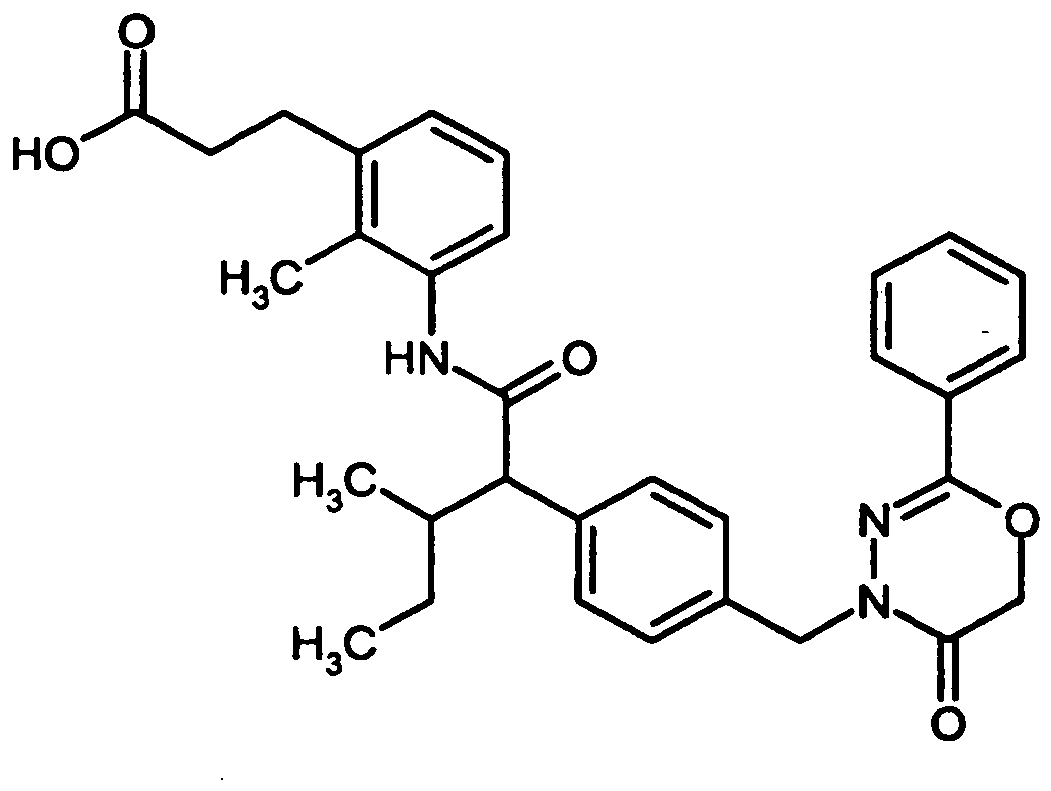
- Eine Lösung von 175 mg (0.31 mmol) Ethyl-3-{2-methyl-3-[(3-methyl-2-{4-[(5-oxo-2-phenyl-5,6-dihydro-4H-1,3,4-oxadiazin-4-yl)methyl]phenyl}pentanoyl)amino]phenyl}propanoat (Beispiel 151A) in 5.5 ml THF und 1.2 ml (1.2 mmol) 1 N Natronlauge wurde über Nacht bei 60°C gerührt. Nach vollständiger Umsetzung wurde das THF im Vakuum abgezogen, die Reaktionslösung mit Wasser verdünnt und anschließend mit 1 M Salzsäure auf pH 2 gestellt. Der ausgefallene Feststoff wurde abfiltriert, mit Wasser gewaschen und über Nacht im Vakuum bei 45°C getrocknet. Es wurden 165 mg (0.30 mmol, 99% d. Th.) der Titelverbindung als Isomerengemisch erhalten.
LC-MS (Methode 10): Rt = 2.13 min; m/z = 542 (M+H)+. -

- 240 mg (0.44 mmol) des erhaltenen Isomerengemisches von 4-{[(3-Methyl-2-{4-[(5-oxo-2-phenyl-5,6-dihydro-4H-1,3,4-oxadiazin-4-yl)methyl]phenyl}pentanoyl)amino]methyl}cyclohexancarbonsäure (Beispiel 76) wurden mittels präparativer HPLC an chiraler Phase weiter aufgetrennt [Säule: Daicel Chiralpak IC, 5 µm 250 mm x 20 mm; Elutionsmittel: (tert.-Butylmethylether + 0.2% Eisessig)/Methanol 90:10 (v/v); Fluss: 15 ml/min; UV-Detektion: 220 nm; Temperatur: 25°C]:
- Rt 7.72 min; Reinheit >99%; >98% ee
[Säule: Daicel Chiralpak AD-H, 5 µm, 250 mm x 4.6 mm; Elutionsmittel: Isohexan/(Isopropanol + 0.2% Trifluoressigsäure + 1% Wasser) 75:25 (v/v); Fluss: 2 ml/min; UV-Detektion: 220 nm; Temperatur: 45°C]
Ausbeute: 69 mg
1H-NMR (400 MHz, DMSO-d6, δ/ppm): 12.4-11.8 (1H, breites s), 9.48 (1H, s), 7.76 (2H, d), 7.53-7.42 (3H, m), 7.39 (2H, d), 7.31 (2H, d), 7.06-6.91 (3H, m), 4.92 (2H, s), 4.87 (2H, s), 3.45 (1H, d), 2.76 (2H, t), 2.40 (2H, t), 2.22-2.09 (1H, m), 1.94 (3H, s), 1.30-1.09 (1H, m), 1.01 (3H, d), 0.96-0.81 (1H, m), 0.76 (3H, t).
LC-MS (Methode 7): Rt = 2.62 min; m/z = 542 (M+H)+. - Rt 8.53 min; Reinheit >99%; >98% ee (analytische Säule s.o.)
Ausbeute: 66 mg
LC-MS (Methode 7): Rt = 2.62 min; m/z = 542 (M+H)+. - Rt 8.84 min; Reinheit >99%; >98% ee (analytische Säule s.o.)
Ausbeute: 37 mg
LC-MS (Methode 7): Rt = 2.62 min; m/z = 542 (M+H)+. - Rt 8.43 min; Reinheit >99%; >98% ee (analytische Säule s.o.)
Ausbeute: 37 mg
LC-MS (Methode 7): Rt = 2.62 min; m/z = 542 (M+H)+. -

- Eine Lösung von 339 mg (0.60 mmol) Methyl-2-methyl-4-[(3-methyl-2-{4-[(5-oxo-2-phenyl-5,6-dihydro-4H-1,3,4-oxadiazin-4-yl)methyl]phenyl}pentanoyl)amino]-2,3-dihydro-1H-inden-2-carboxylat (Beispiel 160A) in 12 ml THF und 6 ml Wasser wurde mit 100 mg (2.39 mmol) Lithiumhydroxid-Monohydrat versetzt und über Nacht bei Raumtemperatur gerührt. Nach vollständiger Umsetzung wurde das THF im Vakuum abgezogen, die Reaktionslösung mit Wasser verdünnt und anschließend mit 1 M Salzsäure auf pH 2 gestellt. Der ausgefallene Feststoff wurde abfiltriert, mit Wasser gewaschen und über Nacht im Vakuum bei 45°C getrocknet. Es wurden 305 mg (0.55 mmol, 92% d. Th.) der Titelverbindung als Isomerengemisch erhalten.
LC-MS (Methode 10): Rt = 2.13 min; m/z = 542 (M+H)+. -

- 300 mg (0.54 mmol) des erhaltenen Isomerengemisches von 2-Methyl-4-[(3-methyl-2-{4-[(5-oxo-2-phenyl-5,6-dihydro-4H-1,3,4-oxadiazin-4-yl)methyl]phenyl}pentanoyl)amino]-2,3-dihydro-1H-inden-2-carbonsäure (Beispiel 81) wurden mittels präparativer HPLC an chiraler Phase weiter aufgetrennt [Säule: Daicel Chiralpak AD-H, 5 µm, 250 mm x 20 mm; Elutionsmittel: Isohexan/(Isopropanol + 0.2% Trifluoressigsäure +1% Wasser) 70:30 (v/v); Fluss: 15 ml/min; UV-Detektion: 220 nm; Temperatur: 30°C]. Es wurden 7 Fraktionen erhalten, die unter gleichen Bedingungen nochmals nachchromatographiert wurden.
- Rt 7.89 min; Reinheit >94% (Säule s.o.)
Ausbeute: 16 mg
LC-MS (Methode 10): Rt = 2.32 min; m/z = 554 (M+H)+. - Rt 8.42 min; Reinheit >98.5% (Säule s.o.)
Ausbeute: 84 mg
LC-MS (Methode 10): Rt = 2.32 min; m/z = 554 (M+H)+. - Rt 9.22 min; Reinheit >98% (Säule s.o.)
Ausbeute: 14 mg
LC-MS (Methode 10): Rt = 2.32 min; m/z = 554 (M+H)+. - Rt 11.61 min; Reinheit >96.5% (Säule s.o.)
Ausbeute: 25 mg
LC-MS (Methode 10): Rt = 2.32 min; m/z = 554 (M+H)+. - Rt 13.40 min; Reinheit >97.3% (Säule s.o.)
Ausbeute: 66 mg
1H-NMR (400 MHz, DMSO-d6, δ/ppm): 12.6-11.9 (1H, breites s), 9.46 (1H, s), 7.76 (2H, d), 7.53-7.45 (3H, m), 7.39 (2H, d), 7.32 (3H, d), 7.04 (1H, m), 6.93 (1H, d), 4.91 (2H, s), 4.86 (2H, s), 3.49 (1H, d), 3.34-3.20 (2H, m), 2.75-2.61 (2H, m), 2.22-2.07 (1H, m), 1.63-1.49 (1H, m), 1.31-1.15 (1H, m), 1.23 (3H, s), 0.92 (3H, t), 0.62 (3H, d).
LC-MS (Methode 10): Rt = 2.32 min; m/z = 554 (M+H)+. - Rt 14.78 min; Reinheit >97.2% (Säule s.o.)
Ausbeute: 14 mg
LC-MS (Methode 10): Rt = 2.32 min; m/z = 554 (M+H)+. - Rt 16.60 min; Reinheit >95.5% (Säule s.o.)
Ausbeute: 52 mg
LC-MS (Methode 10): Rt = 2.32 min; m/z = 554 (M+H)+. -

- Eine Lösung von 460 mg (0.75 mmol) tert.-Butyl-3-{2-methyl-3-[(3-methyl-2-{4-[(5-oxo-2-phenyl-5,6-dihydro-4H-1,3,4-oxadiazin-4-yl)methyl]phenyl}hexanoyl)amino]phenyl}propanoat (Beispiel 163A) in 10 ml Dichlormethan wurde mit 1.74 ml (22.56 mmol) Trifluoressigsäure versetzt und 2 h bei Raumtemperatur gerührt. Der Ansatz wurde dann im Vakuum bis zur Trockene eingeengt. Es wurden 410 mg (0.74 mmol, 98% d. Th.) der Titelverbindung als Isomerengemisch erhalten.
LC-MS (Methode 11): Rt = 1.40 min; m/z = 556 (M+H)+. -

- 400 mg (0.72 mmol) des erhaltenen Isomerengemisches von 3-{2-Methyl-3-[(3-methyl-2-{4-[(5-oxo-2-phenyl-5,6-dihydro-4H-1,3,4-oxadiazin-4-yl)methyl]phenyl}hexanoyl)amino]phenyl}propansäure (Beispiel 89) wurden mittels präparativer HPLC an chiraler Phase weiter aufgetrennt [Säule: Daicel Chiralpak AD-H, 5 µm, 250 mm x 20 mm; Elutionsmittel: Isohexan/(Isopropanol + 0.2% Trifluoressigsäure + 1% Wasser) 70:30 (v/v); Fluss: 15 ml/min; UV-Detektion: 220 nm; Temperatur: 40°C]. Es wurden vier Fraktionen erhalten, die durch erneute HPLC-Chromatographie an chiraler Phase nachgereinigt wurden [Bedingungen wie oben, oder Säule: Daicel Chiralpak IA, 5 µm, 250 mm x 20 mm; Elutionsmittel: Methanol/(tert.-Butylmethylether + 0.2% Eisessig) 7:93 (v/v); Fluss: 15 ml/min; UV-Detektion: 220 nm; Temperatur: 40°C].
- Rt 12.02 min; Reinheit >99%; >99% ee
[Säule: Daicel Chiralpak AD-H, 5 µm, 250 mm x 4.6 mm; Elutionsmittel: Isohexan/(Isopropanol + 0.2% Trifluoressigsäure + 1 % Wasser) 80:20 (v/v); Fluss: 2 ml/min; UV-Detektion: 220 nm; Temperatur: 30°C]
Ausbeute: 94 mg
1H-NMR (400 MHz, DMSO-d6, δ/ppm): 12.14 (1H, s), 9.48 (1H, s), 7.76 (2H, d), 7.53-7.41 (3H, m), 7.38 (2H, d), 7.31 (2H, d), 7.05-6.92 (3H, m), 4.92 (2H, s), 4.87 (2H, s), 3.40 (1H, d), 2.76 (2H, t), 2.41 (2H, t), 2.29-2:16 (1H, m), 1.94 (3H, s), 1.59-1.40 (2H, m), 1.34-1.18 (2H, m), 0.89 (3H, t), 0.63 (3H, d).
LC-MS (Methode 10): Rt = 2.29 min; m/z = 556 (M+H)+. - Rt 15.06 min; Reinheit >99%; >99% ee (analytische Säule s.o.)
Ausbeute: 95 mg
LC-MS (Methode 10): Rt = 2.29 min; m/z = 556 (M+H)+. - Rt 16.42 min; Reinheit >99%; >99% ee (analytische Säule s.o.)
Ausbeute: 32 mg
LC-MS (Methode 10): Rt = 2.29 min; m/z = 556 (M+H)+. - Rt 13.57 min; Reinheit >99%; >99% ee (analytische Säule s.o.)
Ausbeute: 40 mg
LC-MS (Methode 10): Rt = 2.29 min; m/z = 556 (M+H)+. -

- 827 mg (1.461 mmol) Ethyl-(2E)-3-{3-[(cyclopentyl{4-[(5-oxo-2-phenyl-5,6-dihydro-4H-1,3,4-oxadiazin-4-yl)methyl]phenyl}acetyl)amino]phenyl}prop-2-enoat (Beispiel 174A) wurden in 28 ml Dioxan/Wasser (3:1 v/v) gelöst und mit 2.2 ml 1 N Natronlauge versetzt. Der Ansatz wurde über Nacht bei Raumtemperatur gerührt. Das Reaktionsgemisch wurde dann mit 1 N Salzsäure auf pH 1 angesäuert und mehrmals mit Essigsäureethylester extrahiert. Die vereinigten organischen Phasen wurden mit gesättigter Natriumchlorid-Lösung gewaschen, über Natriumsulfat getrocknet und im Vakuum eingeengt. Es wurden 780 mg (95% d. Th.) der Zielverbindung erhalten.
LC-MS (Methode 10): Rt = 2.52 min; m/z = 538 (M+H)+. - Auf analoge Weise wurden die in der folgenden Tabelle aufgeführten Verbindungen erhalten:
Beispiel Name / Struktur Darstellungsmethode / Edukt Analytische Daten 95 (2E)-3-{2-[(Cyclopentyl{4-[(5-oxo-2-phenyl-5,6-dihydro-4H-1,3,4-oxadiazin-4-yl)methyl]phenyl}-acetyl)amino]phenyl}prop-2-ensäure (Enantiomer 1) LC-MS (Methode 11): Rt = 1.33 min; m/z = 538 (M+H)+. 
Darstellungsmethode 5 (aus Bsp. 109A) 96 (2E)-3-{4-[(Cyclopentyl{4-[(5-oxo-2-phenyl-5,6-dihydro-4H-1,3,4-oxadiazin-4-yl)methyl]phenyl}-acetyl)amino]phenyl}prop-2-ensäure (Enantiomer 1) LC-MS (Methode 12): Rt = 2.56 min; m/z = 538 (M+H)+. 
Darstellungsmethode 5 (aus Bsp. 111A) 97 (2E)-3-{2-[(3-Methyl-2-{4-[(5-oxo-2-phenyl-5,6-dihydro-4H-1,3,4-oxadiazin-4-yl)methyl]phenyl} -butanoyl)amino]phenyl}prop-2-ensäure (Enantiomer 1) LC-MS (Methode 10): Rt = 2.04 min; m/z = 512 (M+H)+. 
Darstellungsmethode 5 (aus Bsp. 192A) 98 (2E)-3-{4-[(3-Methyl-2-{4-[(5-oxo-2-phenyl-5,6-dihydro-4H-1,3,4-oxadiazin-4-yl)methyl]phenyl}-butanoyl)amino]phenyl}prop-2-ensäure (Enantiomer 1) LC-MS (Methode 11): Rt = 1.29 min; m/z = 512 (M+H)+. 
Darstellungsmethode 5 (aus Bsp. 176A) 99 (2E)-3-{3-[(2-{4-[(2-tert.-Butyl-5-oxo-5,6-dihydro-4H-1,3,4-oxadiazin-4-yl)methyl]phenyl}-3-methyl-butanoyl)amino]phenyl}prop-2-ensäure (Racemat) LC-MS (Methode 7): Rt = 2.65 min; m/z = 492 (M+H)+. 
Darstellungsmethode 5 (aus Bsp. 178A) -

- Eine Lösung von 46 mg (0.085 mmol) (2E)-3-{4-[(Cyclopentyl{4-[(5-oxo-2-phenyl-5,6-dihydro-4H-1,3,4-oxadiazin-4-yl)methyl]phenyl}acetyl)amino]phenyl}prop-2-ensäure (Beispiel 96) in 10 ml Ethanol wurde mit 50 mg Palladium auf Kohle (10%) versetzt. Unter einer Wasserstoffatmosphäre wurde bei Normaldruck für 2 h hydriert. Das Reaktionsgemisch wurde danach über Tonsil filtriert, der Filter-Rückstand mit Ethanol nachgewaschen und die vereinigten Filtrate am Rotationsverdampfer eingeengt. Das Rohprodukt wurde mittels präparativer HPLC gereinigt. Es wurden 29 mg (63% d. Th.) der Titelverbindung erhalten.
LC-MS (Methode 11): Rt = 1.35 min; m/z = 540 (M+H)+. - Auf analoge Weise wurden die in der folgenden Tabelle aufgeführten Verbindungen erhalten:
Beispiel Name / Struktur / Edukt Analytische Daten 101 3-{2-[(Cyclopentyl{4-[(5-oxo-2-phenyl-5,6-dihydro-4H-1,3,4-oxadiazin-4-yl)methyl]phenyl}acetyl)amino]-phenyl}propansäure (Enantiomer 1) LC-MS (Methode 11): Rt = 1.33 min; m/z = 540 (M+H)+. 
(aus Bsp. 95) 102 3-{3-[(2-{4-[(2-tert.-Butyl-5-oxo-5,6-dihydro-4H-1,3,4-oxadiazin-4-yl)methyl]phenyl} -3-methylbutanoyl)-amino]phenyl}propansäure (Racemat) LC-MS (Methode 11): Rt = 1.32 min; m/z = 494 (M+H)+. 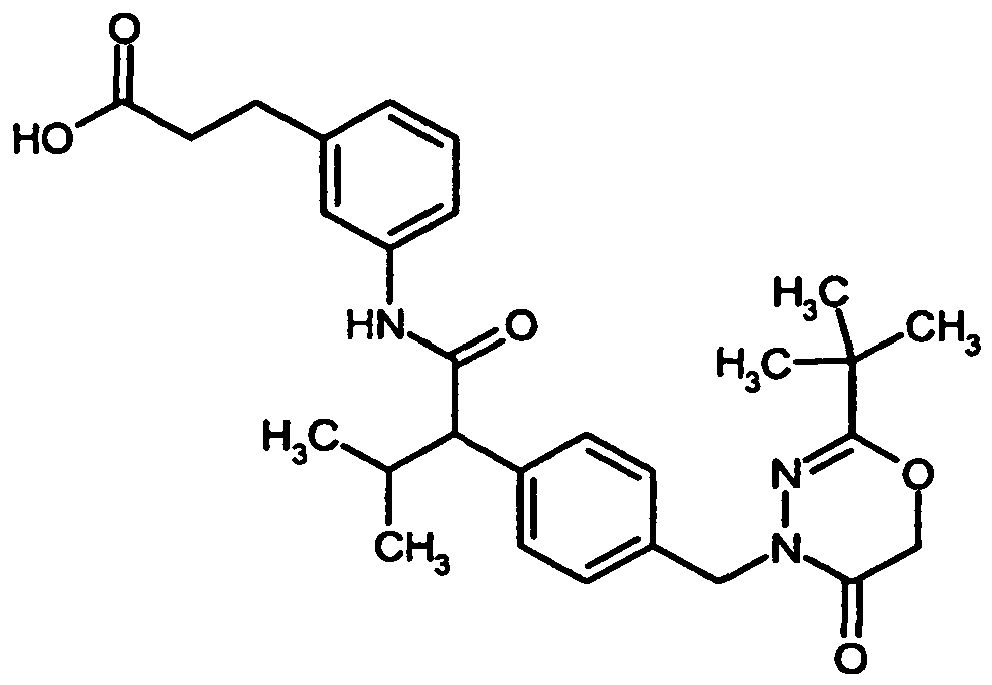
(aus Bsp. 99) -

- Eine Lösung von 4.18 g (7.363 mmol) Ethyl-3-{3-[(cyclopentyl{4-[(5-oxo-2-phenyl-5,6-dihydro-4H-1,3,4-oxadiazin-4-yl)methyl]phenyl}acetyl)amino]phenyl}propanoat (Beispiel 180A) in 195 ml Dioxan/Wasser (4:1 v/v) wurde mit 11.05 ml 1 N Natronlauge versetzt. Das Gemisch wurde über Nacht bei Raumtemperatur gerührt, dann mit 1 N Salzsäure auf pH 1 angesäuert und mehrmals mit Essigsäureethylester extrahiert. Die vereinigten organischen Phasen wurden mit gesättigter Natriumchlorid-Lösung gewaschen, über Natriumsulfat getrocknet und am Rotationsverdampfer eingeengt. Das Rohprodukt wurde in Essigsäureethylester gelöst und über Kieselgel filtriert. Das Filtrat wurde mit Aktivkohle versetzt, auf Rückfluss erhitzt und über Tonsil filtriert. Nach dem Einengen im Vakuum wurden 3.20 g (81% d. Th.) der Titelverbindung erhalten.
LC-MS (Methode 11): Rt = 1.36 min; m/z = 540 (M+H)+. - Auf analoge Weise wurden die in der folgenden Tabelle aufgeführten Verbindungen erhalten:
Beispiel Name / Struktur Darstellungsmethode / Edukt Analytische Daten 104 {3-[(Cyclopentyl {4-[(5-oxo-2-phenyl-5,6-dihydro-4H 1,3,4-oxadiazin-4-yl)methyl]phenyl}acetyl)-amino]phenyl}essigsäure (Enantiomer 1) LC-MS (Methode 10): Rt = 2.16 min; m/z = 526 (M+H)+. 
Darstellungsmethode 6 (aus Bsp. 110A) 105 3-{3-[(3-Methyl-2-{4-[(5-oxo-2-phenyl-5,6-dihydro-4H-1,3,4-oxadiazin-4-yl)methyl]phenyl}butanoyl)-amino]phenyl}propansäure (Enantiomer 1) 1H-NMR (400 MHz, DMSO-d6, δ/ppm): 12.25-11.95 (1H, breites s), 10.01 (1H, s), 7.76 (2H, d), 7.53-7.35 (7H, m), 7.32 (2H, d), 7.14 (1H, t), 6.86 (1H, d), 4.90 (2H, s), 4.84 (2H, s), 3.22 (1H, d), 2.74 (2H, t), 2.48 (2H, t), 2.40-2.22 (1H, m), 1.03 (3H, d), 0.65 (3H, d).
LC-MS (Methode 11): Rt = 1.29 min; m/z = 514 (M+H)+.
Darstellungsmethode 6 (aus Bsp. 193A) 106 3-{4-[(3-Methyl-2-{4-[(5-oxo-2-phenyl-5,6-dihydro-4H-1,3,4-oxadiazin-4-yl)methyl]phenyl}butanoyl)-amino]phenyl}propansäure (Enantiomer 1) LC-MS (Methode 10): Rt = 2.07 min; m/z = 514 (M+H)+. 
Darstellungsmethode 6 (aus Bsp. 186A) 107 ({3-[(3-Methyl-2-{4-[(5-oxo-2-phenyl-5,6-dihydro-4H-1,3,4-oxadiazin-4-yl)methyl]phenyl}butanoyl)-amino]phenyl}sulfanyl)essigsäure (Enantiomer 1) 1H-NMR (400 MHz, DMSO-d6, δ/ppm): 12.85-12.65 (1H, breites s), 10.11 (1H, s), 7.77 (2H, d), 7.60 (1H, s), 7.53-7.40 (3H, m), 7.40-7.28 (5H, m), 7.19 (1H, t), 6.97 (1H, d), 4.90 (2H, s), 4.84 (2H, s), 3,74 (2H, s), 3.21 (1H, d), 2.39-2.25 (1H, m), 0.99 (3H, d), 0.66 (3H, d).
LC-MS (Methode 11): Rt= 1.29 min; m/z = 532 (M+H)+.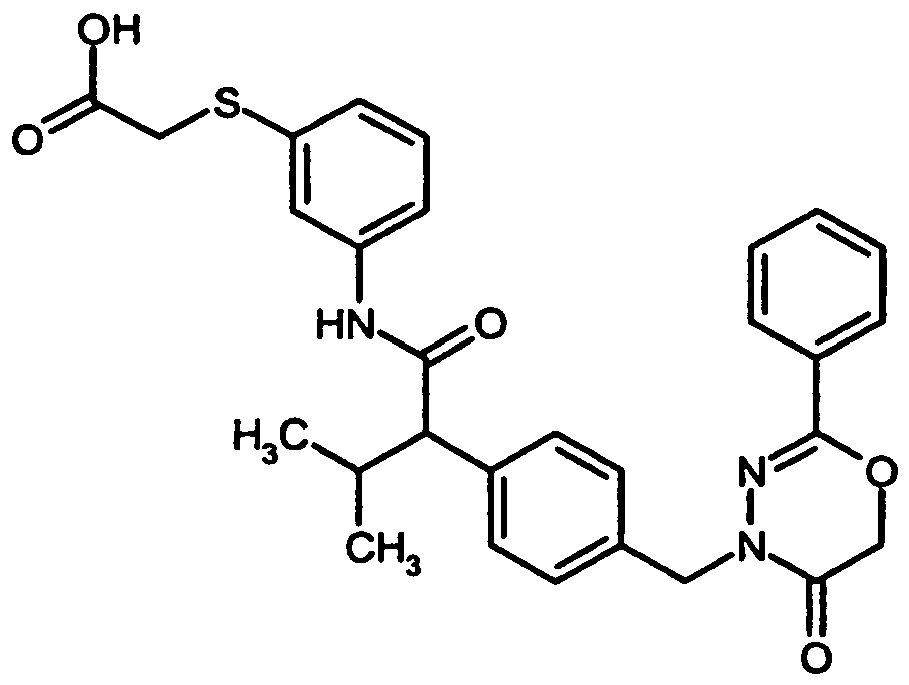
Darstellungsmethode 2 (aus Bsp. 137A) 108 ({3-[(Cyclopentyl{4-[(5-oxo-2-phenyl-5,6-dihydro-4H-1,3,4-oxadiazin-4-yl)methyl]phenyl}acetyl)-amino]phenyl}sulfanyl)essigsäure (Enantiomer 1) 1H-NMR (400 MHz, DMSO-d6, δ/ppm): 12.85-12.60 (1H, breites s), 10.09 (1H, s), 7.76 (2H, d), 7.60 (1H, s), 7.53-7.28 (8H, m), 7.20 (1H, t), 6.97 (1H, d), 4.90 (2H, s), 4.84 (2H, s), 3.74 (2H, s), 3.36 (1H, d), 2.64-2.47 (1H, m), 1.86-1.71 (1H, m), 1.71-1.15 (6H, m), 1.03-0.90 (1H, m).
LC-MS (Methode 11): Rt 1.36 min; m/z = 558 (M+H)+.
Darstellungsmethode 2 (aus Bsp. 138A) 109 5-{[(Cyclopentyl {4-[(5-oxo-2-phenyl-5,6-dihydro-4H 1,3,4-oxadiazin-4-yl)methyl]phenyl}acetyl)amino]-methyl}isoxazol-3-carbonsäure (Enantiomer 1) 1H-NMR (400 MHz, DMSO-d6, δ/ppm): 14.2-13.8 (1H, breites s), 8.72 (1H, t), 7.77 (2H, d), 7.53-7.40 (3H, m), 7.38-7.22 (4H, m), 6.43 (1H, s), 4.91 (2H, s), 4.84 (2H, s), 4.54-4.40 (1H, m), 4.38-4.22 (1H, m), 3.21 (1H, d), 2.60-2.41 (1H, m), 1.79-1.11 (7H, m), 1.01-0.84 (1H, m).
LC-MS (Methode 7): Rt = 2.97 min; m/z = 517 (M+H)+.
Darstellungsmethode 2 (aus Bsp. 139A) 110 4-{3-[(Cyclopentyl{4-[(5-oxo-2-phenyl-5,6-dihydro-4H-1,3,4-oxadiazin-4-yl)methyl]phenyl}acetyl)-amino]phenyl}butansäure (Enantiomer 1) LC-MS (Methode 11): Rt = 1.39 min; m/z = 554 (M+H)+. 
Darstellungsmethode 1 (aus Bsp. 179A) 111 2-{3-[(Cyclopentyl{4-[(5-oxo-2-phenyl-5,6-dihydro-4H-1,3,4-oxadiazin-4-yl)methyl]phenyl}acetyl)-amino]-2-methylphenoxy}-2-methylpropansäure (Enantiomer 1) LC-MS (Methode 11): Rt = 1.40 min; m/z = 584 (M+H)+. 
Darstellungsmethode 1 (aus Bsp. 177A) 112 2-Methyl-2-({3-[(3-methyl-2-{4-[(5-oxo-2-phenyl-5,6-dihydro-4H-1,3,4-oxadiazin-4-yl)methyl]phenyl}-butanoyl)amino]phenyl} sulfanyl)propansäure (Enantiomer 1) 1H-NMR (400 MHz, DMSO-d6, δ/ppm): 12.70-12.45 (1H, breites s), 10.17 (1H, s), 7.81-7.71 (3H, m), 7.59 (1H, d), 7.53-7.41 (3H, m), 7.38 (2H, d), 7.31 (2H, d), 7.26 (1H, t), 7.09 (1H, d), 4.90 (2H, s), 4.85 (2H, s), 3.22 (1H, d), 2.39-2.25 (1H, m), 1.36 (6H, s), 1.00 (3H, d), 0.66 (3H, d).
LC-MS (Methode 10): Rt = 2.32 min; m/z = 560 (M+H)+.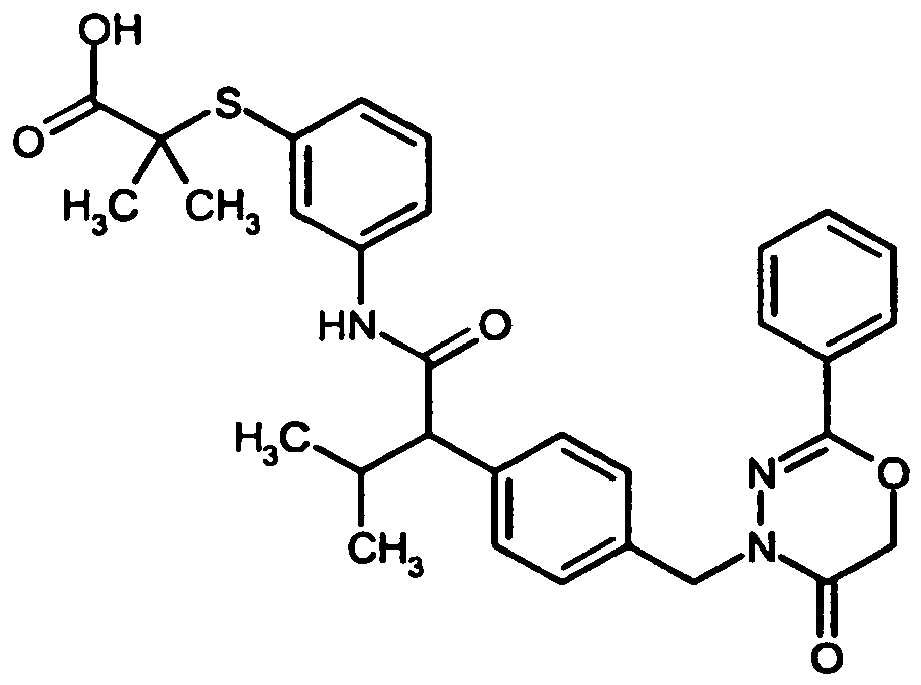
Darstellungsmethode 2 (aus Bsp. 140A) 113 2-({3-[(Cyclopentyl {4-[(5-oxo-2-phenyl-5,6-dihydro-4H-1,3,4-oxadiazin-4-yl)methyl]phenyl}acetyl)-amino]phenyl} sulfanyl)-2-methylpropansäure (Enantiomer 1) 1H-NMR (400 MHz, DMSO-d6, δ/ppm): 12.70-12.45 (1H, breites s), 10.15 (1H, s), 7.75 (3H, t), 7.58 (1H, d), 7.53-7.40 (3H, m), 7.39 (2H, d), 7.32 (2H, d), 7.26 (1H, t), 7.09 (1H, d), 4.90 (2H, s), 4.84 (2H, s), 3.45-3.29 (1H, d), 2.65-2.47 (1H, m), 1.84-1.71 (1H, m), 1.69-1.41 (4H, m), 1.40-1.30 (1H, m), 1.36 (6H, s), 1.29-1.19 (1H, m), 1.06-0.89 (1H, m).
LC-MS (Methode 10): Rt = 2.43 min; m/z = 586 (M+H)+.
Darstellungsmethode 2 (aus Bsp. 141A) 114 2-{3-[(Cyclopentyl{4-[(5-oxo-2-phenyl-5,6-dihydro-4H-1,3,4-oxadiazin-4-yl)methyl]phenyl}acetyl)-amino]phenyl}-2-methylpropansäure (Enantiomer 1) LC-MS (Methode 10): Rt = 2.30 min; m/z = 554 (M+H)+. 
Darstellungsmethode 1 (aus Bsp. 181A) 115 3-{3-[(Cyclopentyl{4-[(5-oxo-2-phenyl-5,6-dihydro-4H-1,3,4-oxadiazin-4-yl)methyl]phenyl}acetyl)-amino]-2-methylphenyl}propansäure (Enantiomer 1) 1H-NMR (400 MHz, DMSO-d6, δ/ppm): 12.14 (1H, s), 9.46 (1H, s), 7.77 (2H, d), 7.53-7.38 (5H, m), 7.31 (2H, d), 7.05-6.93 (3H, m), 4.92 (2H, s), 4.87 (2H, s), 3.45 (1H, d), 2.77 (2H, t), 2.65-2.47 (1H, m), 2.41 (2H, t), 1.96 (3H, s), 1.89-1.77 (1H, m), 1.74-1.27 (6H, m), 1.05-0.91 (1H, m).
LC-MS (Methode 11): Rt = 1.36 min; m/z = 554 (M+H)+.
Darstellungsmethode 3 (aus Bsp. 175A) 116 3-{trans-4-[(3-Methyl-2-{4-[(5-oxo-2-phenyl-5,6-dihydro-4H-1,3,4-oxadiazin-4-yl)methyl]phenyl}-butanoyl)amino]cyclohexyl}propansäure (Enantiomer 1) 1H-NMR (400 MHz, DMSO-d6, δ/ppm): 12.05-11.87 (1H, breites s), 7.83 (1H, d), 7.76 (2H, d), 7.53-7.40 (3H, m), 7.32-7.22 (4H, m), 4.91 (2H, s), 4.84 (2H, s), 3.42-3.28 (1H, m), 2.93 (1H, d), 2.26-2.12 (3H, m), 1.87-1.76 (1H, m), 1.72-1.49 (3H, m), 1.41-1.32 (2H, m), 1.18-0.96 (3H, m), 0.96-0.77 (2H, m), 0.91 (3H, d), 0.59 (3H, d).
LC-MS (Methode 10): Rt = 2.03 min; m/z = 520 (M+H)+.
Darstellungsmethode 2 (aus Bsp. 144A) 117 3-{cis-4-[(3-Methyl-2-{4-[(5-oxo-2-phenyl-5,6-dihydro-4H-1,3,4-oxadiazin-4-yl)methyl]phenyl}-butanoyl)amino]cyclohexyl}propansäure (Enantiomer 1) 1H-NMR (400 MHz, DMSO-d6, δ/ppm): 12.05-11.90 (1H, breites s), 7.82-7.72 (3H, m), 7.53-7.41 (3H, m), 7.35-7.22 (4H, m), 4.91 (2H, s), 4.84 (2H, s), 3.73-3.62 (1H, m), 3.11 (1H, d), 2.27-2.12 (3H, m), 1.63-1.50 (1H, m), 1.50-1.20 (10H, m), 0.92 (3H, d), 0.61 (3H, d).
LC-MS (Methode 10): Rt = 2.04 min; m/z = 520 (M+H)+.
Darstellungsmethode 2 (aus Bsp. 145A) 118 3- {trans-4-[(Cyclopentyl {4-[(5-oxo-2-phenyl-5,6-dihydro-4H-1,3,4-oxadiazin-4-yl)methyl]phenyl}-acetyl)amino]cyclohexyl}propansäure (Enantiomer 1) 1H-NMR (400 MHz, DMSO-d6, δ/ppm): 12.2-11.8 (1H, breites s), 7.81 (1H, d), 7.77 (2H, d), 7.54-7.40 (3H, m), 7.28 (4H, q), 4.91 (2H, s), 4.83 (2H, s), 3.44-3.24 (1H, m), 3.08 (1H, d), 2.57-2.38 (1H, m), 2.17 (2H, t), 1.85-1.74 (1H, m), 1.74-0.96 (15H, m), 0.96-0.77 (3H, m).
LC-MS (Methode 7): Rt = 2.61 min; m/z = 546 (M+H)+.
Darstellungsmethode 2 (aus Bsp. 148A) 119 3- {cis-4-[(Cyclopentyl{4-[(5-oxo-2-phenyl-5,6-dihydro-4H-1,3,4-oxadiazin-4-yl)methyl]phenyl}-acetyl)amino]cyclohexyl}propansäure (Enantiomer 1) 1H-NMR (400 MHz, DMSO-d6, δ/ppm): 11.98 (1H, s), 7.77 (3H, d), 7.54-7.41 (3H, m), 7.33 (2H, d), 7.26 (2H, d), 4.91 (2H, s), 4.84 (2H, s), 3.74-3.62 (1H, m), 3.26 (1H, d), 2.57-2.39 (1H, m), 2.19 (2H, t), 1.72-1.20 (17H, m), 0.99-0.79 (2H, m).
LC-MS (Methode 7): Rt = 2.60 min; m/z = 546 (M+H)+.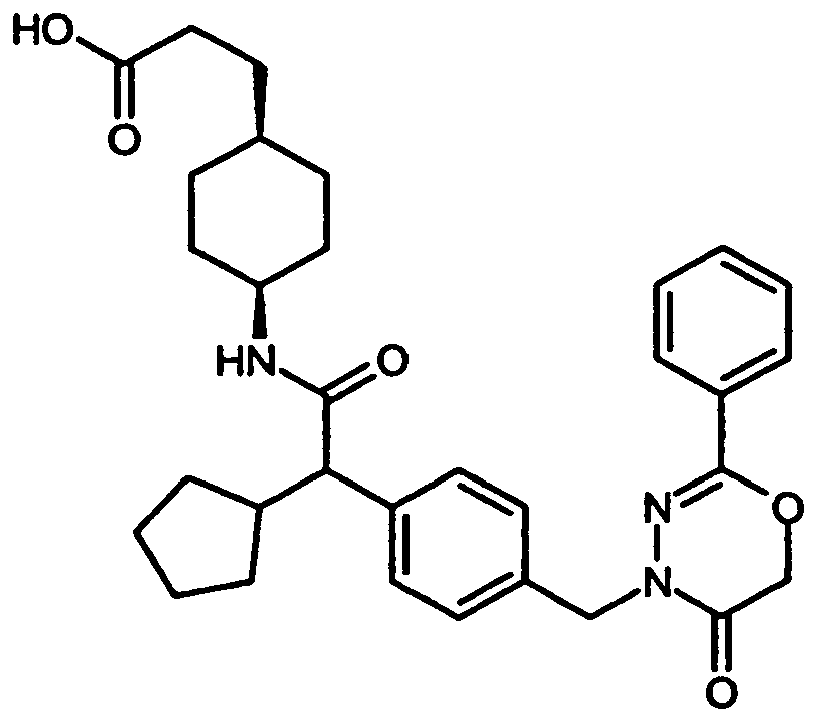
Darstellungsmethode 2 (aus Bsp. 149A) 120 (1S,3S)-3-[(Cyclopentyl {4-[(5-oxo-2-phenyl-5,6-dihydro-4H-1,3,4-oxadiazin-4-yl)methyl]phenyl}-acetyl)amino]cyclopentancarbonsäure (Enantiomer 1) 1H-NMR (400 MHz, DMSO-d6, δ/ppm): 12.05 (1H, s), 7.98 (1H, d), 7.77 (2H, d), 7.53-7.41 (3H, m), 7.29 (4H, q), 4.91 (2H, s), 4.84 (2H, s), 4.01-3.92 (1H, m), 3.09 (1H, d), 2.84-2.72 (1H, m), 2.58-2.39 (1H, m), 1.96-1.79 (3H, m), 1.74-1.11 (10H, m), 0.95-0.81 (1H, m).
LC-MS (Methode 7): Rt = 2.45 min; m/z = 504 (M+H)+.
Darstellungsmethode 2 (aus Bsp. 152A) 121 (1S,3R)-3-[(Cyclopentyl{4-[(5-oxo-2-phenyl-5,6-dihydro-4H-1,3,4-oxadiazin-4-yl)methyl]phenyl}-acetyl)amino]cyclopentancarbonsäure (Enantiomer 1) 1H-NMR (400 MHz, DMSO-d6, δ/ppm): 12.06 (1H, s), 8.00 (1H, d), 7.77 (2H, d), 7.53-7.40 (3H, m), 7.28 (4H, q), 4.91 (2H, s), 4.84 (2H, s), 3.97-3.83 (1H, m), 3.10 (1H, d), 2.72-2.60 (1H, m), 2.57-2.38 (1H, m), 2.21-1.98 (1H, m), 1.82-1.25 (11H, m), 1.25-1.12 (1H, m), 0.96-0.81 (1H, m).
LC-MS (Methode 7): Rt = 2.42 min; m/z = 504 (M+H)+.
Darstellungsmethode 2 (aus Bsp. 153A) 122 (1R,3R)-3-[(Cyclopentyl{4-[(5-oxo-2-phenyl-5,6-dihydro-4H-1,3,4-oxadiazin-4-yl)methyl]phenyl}-acetyl)amino]cyclopentancarbonsäure (Enantiomer 1) 1H-NMR (400 MHz, DMSO-d6, δ/ppm): 12.06 (1H, s), 7.97 (1H, d), 7.77 (2H, d), 7.53-7.41 (3H, m), 7.28 (4H, q), 4.91 (2H, s), 4.84 (2H, s), 4.03-3.92 (1H, m), 3.09 (1H, d), 2.84-2.72 (1H, m), 2.58-2.39 (1H, m), 1.99-1.11 (13H, m), 0.95-0.81 (1H, m).
LC-MS (Methode 7): Rt = 2.42 min; m/z = 504 (M+H)+.
Darstellungsmethode 2 (aus Bsp. 154A) 123 (1R,3S)-3-[(Cyclopentyl {4-[(5-oxo-2-phenyl-5,6-dihydro-4H-1,3,4-oxadizin-4-yl)methyl]phenyl} -acetyl)amino]cyclopentancarbonsäure (Enantiomer 1) 1H-NMR (400 MHz, DMSO-d6, δ/ppm): 12.05 (1H, s), 8.00 (1H, d), 7.77 (2H, d), 7.53-7.40 (3H, m), 7.28 (4H, q), 4.91 (2H, s), 4.84 (2H, s), 3.97-3.83 (1H, m), 3.10 (1H, d), 2.72-2.60 (1H, m), 2.57-2.38 (1H, m), 2.21-1.98 (1H, m), 1.82-1.25 (11H, m), 1.25-1.12 (1H, m), 0.96-0.81 (1H, m).
LC-MS (Methode 11): Rt = 1.24 min; m/z = 504 (M+H)+.
Darstellungsmethode 2 (aus Bsp. 155A) 124 cis-4-[(Cyclopentyl {4-[(5-oxo-2-phenyl-5,6-dihydro-4H-1,3,4-oxadiazin-4-yl)methyl]phenyl}acetyl)-amino]cyclohexancarbonsäure (Enantiomer 1) 1H-NMR (400 MHz, DMSO-d6, δ/ppm): 12.15-11.92 (1H, breites s), 7.85 (1H, d), 7.77 (2H, d), 7.53-7.40 (3H, m), 7.28 (4H, q), 4.91 (2H, s), 4.83 (2H, s), 3.45-3.29 (1H, m), 3.09 (1H, d), 2.56-2.39 (1H, m), 2.25-2.04 (1H, m), 1.92-1.77 (3H, m), 1.75-1.63 (1H, m), 1.63-1.01 (10H, m), 0.95-0.81 (1H, m).
LC-MS (Methode 11): Rt = 1.28 min; m/z = 518 (M+H)+.
Darstellungsmethode 2 (aus Bsp. 159A) 125 trans-4-[(Cyclopentyl {4-[(5-oxo-2-phenyl-5,6-di-hydro-4H-1,3,4-oxadiazin-4-yl)methyl]phenyl}-acetyl)amino]cyclohexancarbonsäure (Enantiomer 1) 1H-NMR (400 MHz, DMSO-d6, δ/ppm): 12.3-11.9 (1H, breites s), 7.85 (1H, d), 7.77 (2H, d), 7.53-7.40 (3H, m), 7.29 (4H, q), 4.91 (2H, s), 4.83 (2H, s), 3.67-3.53 (1H, m), 3.21 (1H, d), 2.57-2.39 (1H, m), 2.38-2.27 (1H, m), 1.87-1.72 (2H, m), 1.72-1.36 (10H, m), 1.36-1.24 (2H, m), 1.24-1.13 (1H, m), 0.95-0.81 (1H, m).
LC-MS (Methode 11): Rt = 1.27 min; m/z = 518 (M+H)+.
Darstellungsmethode 2 (aus Bsp. 158A) 126 4-[(Cyclopentyl {4-[(5-oxo-2-phenyl-5,6-dihydro-4H 1,3,4-oxadiazin-4-yl)methyl]phenyl}acetyl)amino]-2,3-dihydro-1H-inden-2-carbonsäure (Enantiomer 1) 1H-NMR (400 MHz, DMSO-d6, δ/ppm): 12.4-12.2 (1H, breites s), 9.48 (1H, s), 7.77 (2H, d), 7.53-7.38 (5H, m), 7.31 (2H, d), 7.27 (1H, d), 7.04 (1H, t), 6.96 (1H, d), 4.91 (2H, s), 4.85 (2H, s), 3.5 2 (1H, d), 3.28-3.19 (1H, m), 3.14-3.06 (2H, m), 3.06-2.98 (2H, m), 2.63-2.45 (1H, m), 1.85-1.72 (1H, m), 1.72-1.20 (6H, m), 1.02-0.90 (1H, m).
LC-MS (Methode 10): Rt = 2.23 min; m/z = 552 (M+H)+.
Darstellungsmethode 2 (aus Bsp. 105A) 127 3-{3-[(Cyclopentyl {4-[(5-oxo-2-phenyl-5,6-dihydro-4H-1,3,4-oxadiazin-4-yl)methyl]phenyl}acetyl)-amino]cyclohexyl}propansäure (Isomer 1) 1H-NMR (400 MHz, DMSO-d6, δ/ppm): 12.05-11.85 (1H, breites s), 7.81-7.71 (3H, m), 7.53-7.41 (3H, m), 7.33 (2H, d), 7.27 (2H, d), 4.91 (2H, s), 4.83 (2H, s), 3.82-3.72 (1H, m), 3.26 (1H, d), 2.57-2.39 (1H, m), 2.08 (2H, t), 1.72-1.57 (2H, m), 1.57-1.28 (12H, m), 1.28-1.17 (2H, m), 1.17-1.06 (1H, m), 1.02-0.82 (2H, m).
LC-MS (Methode 7): Rt = 2.66 min; m/z = 546 (M+H)+.
Darstellungsmethode 2 (aus Bsp. 188A) 128 3-{3-[(Cyclopentyl {4-[(5-oxo-2-phenyl-5,6-dihydro-4H-1,3,4-oxadiazin-4-yl)methyl]phenyl}acetyl)-amino]cyclohexyl}propansäure (Isomer 2) LC-MS (Methode 7): Rt = 2.60 min; m/z = 546 (M+H)+. 
Darstellungsmethode 2 (aus Bsp. 189A) 129 3-{3-[(Cyclopentyl{4-[(5-oxo-2-phenyl-5,6-dihydro-4H-1,3,4-oxadiazin-4-yl)methyl]phenyl}acetyl)-amino]cyclohexyl}propansäure (Isomer 3) LC-MS (Methode 7): Rt = 2.61 min; m/z = 546 (M+H)+. 
Darstellungsmethode 2 (aus Bsp. 190A) 130 3- {3-[(Cyclopentyl {4-[(5-oxo-2-phenyl-5,6-dihydro-4H-1,3,4-oxadiazin-4-yl)methyl]phenyl}acetyl)-amino]cyclohexyl}propansäure (Isomer 4) 1H-NMR (400 MHz, DMSO-d6, δ/ppm): 11.94 (1H, s), 7.82 (1H, d), 7.77 (2H, d), 7.53-7.40 (3H, m), 7.29 (4H, q), 4.91 (2H, s), 4.84 (2H, s), 3.48-3.35 (1H, m), 3.07 (1H, d), 2.57-2.38 (1H, m), 2.13 (2H, t), 1.82-1.72 (1H, m), 1.72-1.11 (13H, m), 1.08-0.94 (2H, m), 0.94-0.79 (1H, m), 0.79-0.62 (2H, m).
LC-MS (Methode 7): Rt = 2.66 min; m/z = 546 (M+H)+.
Darstellungsmethode 2 (aus Bsp. 191A) -
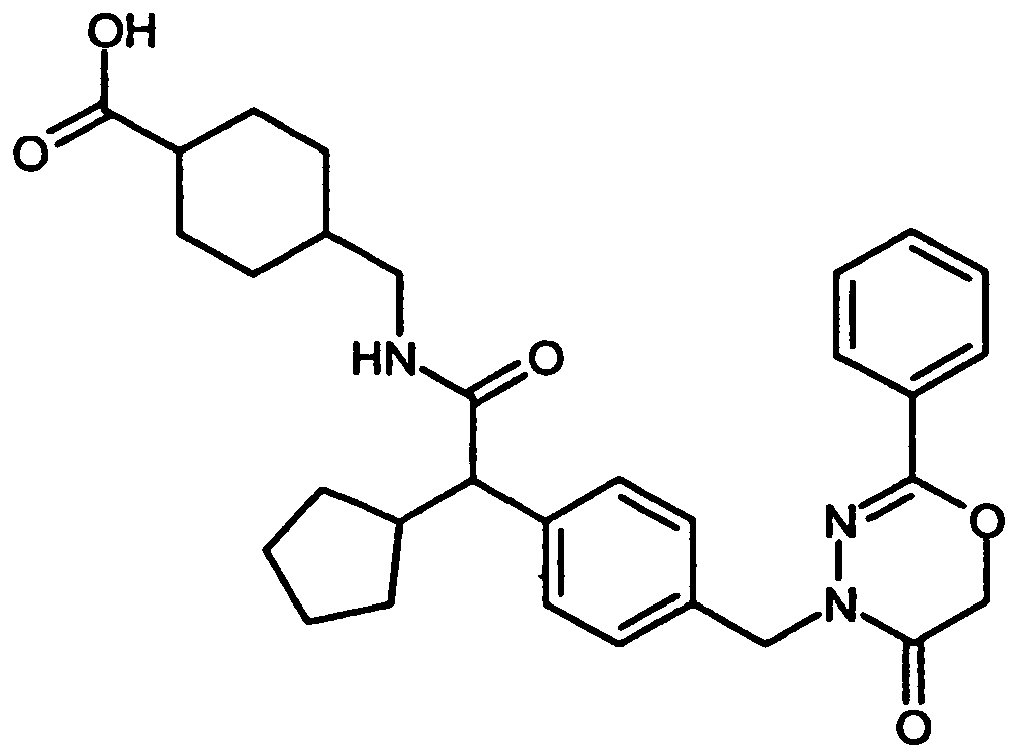
- Eine Lösung von 31 mg (55 µmol) Ethyl-4-{[(cyclopentyl{4-[(5-oxo-2-phenyl-5,6-dihydro-4H-1,3,4-oxadiazin-4-yl)methyl]phenyl}acetyl)amino]methyl}cyclohexancarboxylat (Beispiel 127A) in 3 ml Dioxan wurde mit 0.55 ml (1.11 mmol) 2 M Natronlauge versetzt und über Nacht bei Raumtemperatur gerührt. Der Ansatz wurde dann einmal mit tert.-Butylmethylether extrahiert. Anschließend wurde die wässrige Phase mit 1 M Salzsäure auf pH 2 eingestellt und zweimal mit Essigsäureethylester extrahiert. Die Essigester-Phasen wurden vereinigt und über Natriumsulfat getrocknet. Nach Filtration wurde das Lösungsmittel bis zur Trockene entfernt. Es wurden 25 mg (47 µmol, 85% d. Th.) der Titelverbindung als farbloser Feststoff erhalten.
1H-NMR (400 MHz, DMSO-d6, δ/ppm): 11.97 (1H, breites s), 7.93-7.90 (1H, t), 7.77-7.75 (2H, m), 7.52-7.43 (3H, m), 7.32-7.25 (4H, m), 4.90 (2H, s), 4.83 (2H, s), 3.62-3.59 (1H, m), 3.15-3.13 (1H, d), 2.97-2.90 (1H, m), 2.72-2.66 (1H, m), 2.08-2.02 (1H, m), 1.84-0.78 (17H, m).
LC-MS (Methode 10): Rt = 2.09 min; m/z = 531 (M+H)+. - Auf analoge Weise wurden die in der folgenden Tabelle aufgeführten Verbindungen erhalten:
Beispiel Name / Struktur Darstellungsmethode / Edukt Analytische Daten 132 4-{[(Cyclopentyl{4-[(5-oxo-2-phenyl-5,6-dihydro-4H-1,3,4-oxadiazin-4-yl)methyl]phenyl}acetyl)amino]-methyl}cyclohexancarbonsäure (Isomer 2) 1H-NMR (400 MHz, DMSO-d6, δ/ppm): 11.97 (1H, breites s), 7.93-7.90 (1H, t), 7.77-7.75 (2H, m), 7.52-7.43 (3H, m), 7.32-7.25 (4H, m), 4.90 (2H, s), 4.83 (2H, s), 3.62-3.58 (1H, m), 3.15-3.13 (1H, d), 2.97-2.91 (1H, m), 2.72-2.63 (1H, m), 2.08-2.02 (1H, m), 1.84-0.78 (17H, m).
LC-MS (Methode 11): Rt = 1.31 min; m/z = 532 {M+H)+.
Darstellungsmethode 7 (aus Bsp. 128A) 133 4-{[(Cyclopentyl{4-[(5-oxo-2-phenyl-5,6-dihydro-4H-1,3,4-oxadiazin-4-yl)methyl]phenyl}acetyl)amino]-methyl}cyclohexancarbonsäure (Isomer 3) 1H-NMR (400 MHz, DMSO-d6, δ/ppm): 12.00 (1H, breites s), 7.93-7.90 (1H, t), 7.78-7.75 (2H, m), 7.52-7.43 (3H, m), 7.31-7.23 (4H, m), 4.90 (2H, s), 4.83 (2H, s), 3.13-3.11 (1H, d), 3.00-2.95 (1H, m), 2.73-2.67 (1H, m), 2.37-2.33 (1H, m), 1.76-0.86 (18H, m).
LC-MS (Methode 11): Rt = 1.31 min; m/z = 532 (M+H)+.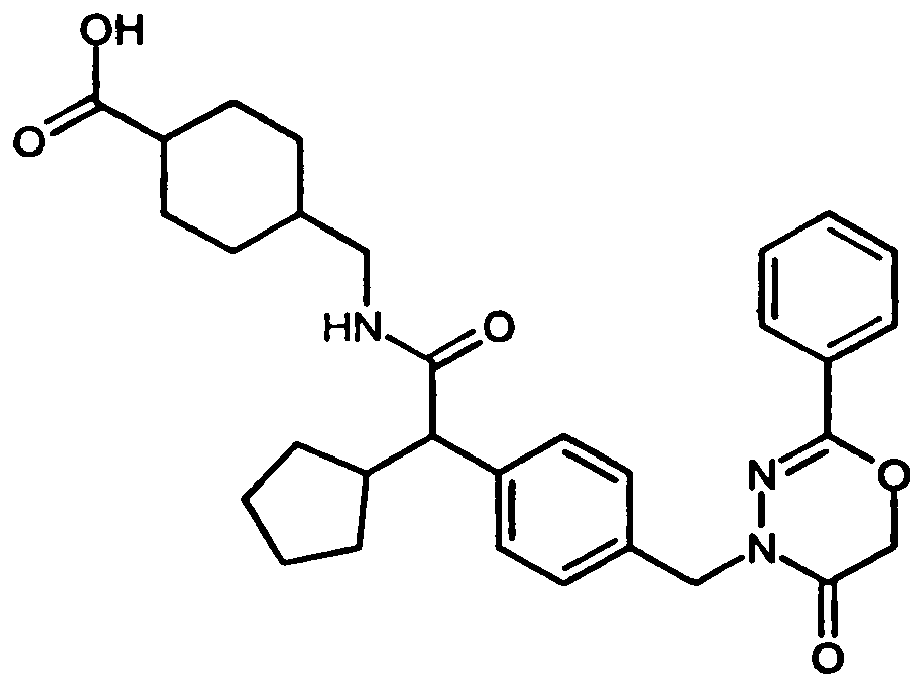
Darstellungsmethode 7 (aus Bsp. 129A) 134 4-{[(Cyclopentyl{4-[(5-oxo-2-phenyl-5,6-dihydro-4H-1,3,4-oxadiazin-4-yl)methyl]phenyl}acetyl)amino]-methyl}cyclohexancarbonsäure (Isomer 4) 1H-NMR (400 MHz, DMSO-d6, δ/ppm): 12.01 (1H, breites s), 7.93-7.90 (1H, t), 7.78-7.75 (2H, m), 7.51-7.43 (3H, m), 7.32-7.25 (4H, m), 4.90 (2H, s), 4.84 (2H, s), 3.14-3.11 (1H, d), 3.02-2.95 (1H, m), 2.73-2.69 (1H, m), 2.36-2.34 (1H, m), 1.80-0.80 (18H, m).
LC-MS (Methode 11): Rt = 1.31 min; m/z = 532 (M+H)+.
Darstellungsmethode 7 (aus Bsp. 130A) - Analog zu Ausführungsbeispiel 1, 2 und 3 wurden die in der folgenden Tabelle aufgeführten Verbindungen hergestellt:
Beispiel Name / Struktur / Edukt Analytische Daten 135 3-{2-Methyl-3-[(3-methyl-2-{4-[(5-oxo-2-phenyl-5,6-dihydro-4H-1,3,4-oxadiazin-4-yl)methyl]phenyl}-butanoyl)amino]phenyl}propansäure LC-MS (Methode 10): Rt = 2.08 min; m/z = 528 (M+H)+.
1H-NMR (400 MHz, DMSO-d6): δ = 9.48 (s, 1H), 7.76 (d, 2H), 7.42-7.54 (m, 3H), 7.39 (d, 2H), 7.32 (d, 2H), 6.94-7.04 (m, 3H), 4.92 (s, 2H), 4.87 (s, 2H), 3.31 (d, 1H), 2.76 (t, 2H), 2.41 (t, 2H), 2.25-2.37 (m, 1H), 1.94 (s, 3H), 1.05 (d, 3H), 0.67 (d, 3H).
(aus tert.-Butyl-3-{2-methyl-3-[(3-methyl-2-{4-[(5-oxo-2-phenyl-5,6-dihydro-4H-1,3,4-oxadiazin-4-yl)-methyl]phenyl}butanoyl)amino]phenyl}propanoat) 136 3-{3-[(Cyclopentyl{4-[(5-oxo-2-phenyl-5,6-dihydro-4H-1,3,4-oxadiazin-4-yl)methyl]phenyl}acetyl)-amino]phenyl}-2,2-dimethylpropansäure LC-MS (Methode 7): Rt = 2.79 min; m/z = 568 (M+H)+.
1H-NMR (400 MHz, DMSO-d6): δ = 12.01-12.37 (br. s, 1H), 9.98 (s, 1H), 7.76 (d, 2H), 7.36-7.55 (m, 6H), 7.28-7.37 (m, 3H), 7.13 (t, 1H), 6.79 (d, 1H), 4.90 (s, 2H), 4.84 (s, 2H), 3.31 (d, 1H), 2.67-2.75 (s, 2H), 2.47-2.64 (m, 1H), 1.71-1.85 (m, 1H), 1.18-1.71 (m, 6H), 1.04 (s, 6H), 0.89-0.99 (m, 1H).
(aus Methyl-3-{3-[(cyclopentyl{4-[(5-oxo-2-phenyl-5,6-dihydro-4H-1,3,4-oxadiazin-4-yl)methyl]phenyl}-acetyl)amino]phenyl}-2,2-dimethylpropanoat) 137 3-{3-[(Cyclopentyl{4-[(6-oxo-3-phenylpyridazin-1(6H)-yl)methyl]phenyl}acetyl)amino]phenyl}-2,2-dimethylpropansäure (Enantiomer 1) LC-MS (Methode 7): Rt = 2.74 min; m/z = 564 (M+H)+.
1H-NMR (400 MHz, DMSO-d6): δ = 12.10 (br. s, 1H), 9.97 (s, 1H), 8.06 (d, 1H), 7.87 (d, 2H), 7.41-7.52 (m, 4H), 7.39 (d, 2H), 7.28-7.35 (m, 3H), 7.13 (t, 1H), 7.07 (d, 1H), 6.79 (d, 1H), 5.29 (s, 2H), 3.37 (d, 1H), 2.70 (s, 2H), 2.47-2.61 (m, 1H), 1.72-1.83 (m, 1H), 1.14-1.68 (m, 6H), 1.05 (s, 6H), 0.91-1.00 (m, 1H).
(aus Methyl-3-{3-[(cyclopentyl{4-[(6-oxo-3-phenyl-pyridazin-1(6H)-yl)methyl]phenyl}acetyl)amino]-phenyl}-2,2-dimethylpropanoat (Enantiomer 1)) 138 3-{3-[(Cyclopentyl{4-[(6-oxo-3-phenylpyridazin-1(6H)-yl)methyl]phenyl}acetyl)amino]phenyl}-2,2-dimethylpropansäure (Enantiomer 2) LC-MS (Methode 7): Rt = 2.74 min; m/z = 564 (M+H)+.
1H-NMR (400 MHz, DMSO-d6): δ= 12.10 (br. s, 1H), 9.97 (s, 1H), 8.06 (d, 1H), 7.87 (d, 2H), 7.41-7.52 (m, 4H), 7.39 (d, 2H), 7.28-7.35 (m, 3H), 7.13 (t, 1H), 7.07 (d, 1H), 6.79 (d, 1H), 5.29 (s, 2H), 3.37 (d, 1H), 2.70 (s, 2H), 2.47-2.61 (m, 1H), 1.72-1.83 (m, 1H), 1.14-1.68 (m, 6H), 1.05 (s, 6H), 0.91-1.00 (m, 1H).
(aus Methyl-3-{3-[(cyclopentyl{4-[(6-oxo-3-phenyl-pyridazin-1(6H)-yl)rnethyl]phenyl}acetyl)amino]-phenyl}-2,2-dimethylpropanoat (Enantiomer 2)) 139 2,2-Dimethyl-3-{3-[(3-methyl-2-{4-[(5-oxo-2-phenyl-5,6-dihydro-4H-1,3,4-oxadiazin-4-yl)methyl]phenyl}-butanoyl)amino]phenyl}propansäure LC-MS (Methode 10): Rt = 2.31 min; m/z = 542 (M+H)+.
1H-NMR (400 MHz, DMSO-d6): δ = 12.22 (br. s, 1H), 10.00 (s, 1H), 7.76 (d, 2H), 7.40-7.52 (m, 4H), 7.37 (d, 2H), 7.27-7.35 (m, 3H), 7.13 (t, 1H), 6.79 (d, 1H), 4.90 (s, 2H), 4.84 (s, 2H), 3.23 (d, 1H), 2.70 (s, 2H), 2.24-2.39 (m, 1H), 1.04 (s, 6H), 0.99 (d, 3H), 0.65 (d, 3H).
(aus Methyl-2,2-dimethyl-3-{3-[(3-methyl-2-{4-[(5-oxo-2-phenyl-5,6-dihydro-4H-1,3,4-oxadiazin-4-yl)-methyl]phenyl}butanoyl)amino]phenyl}propanoat) 140 3-{3-[(Cyclopentyl{4-[(6-oxo-3-phenylpyridazin-1 (6H)-yl)methyl]phenyl}acetyl)amino]-2-methyl-phenyl}propansäure (Enantiomer 1) LC-MS (Methode 10): Rt = 2.12 min; m/z = 550 (M+H)+.
1H-NMR (400 MHz, DMSO-d6): δ = 11.83-12.43 (br. s, 1H), 9.46 (s, 1H), 8.08 (d, 1H), 7.88 (d, 2H), 7.44-7.53 (m, 3H), 7.40 (d, 2H), 7.32 (d, 2H), 7.09 (d, 1H), 6.92-7.05 (m, 3H), 5.32 (s, 2H), 3.45 (d, 1H), 2.78 (t, 2H), 2.55-2.63 (m, 1H), 2.42 (t, 2H), 1.97 (s, 3H), 1.29-1.88 (m, 7H), 0.96 (dd, 1H).
(aus tert.-Butyl-3-{3-[(cyclopentyl{4-[(6-oxo-3-phenylpyridazin-1(6H)-yl)methyl]phenyl}acetyl)-amino]-2-methylphenyl}propanoat (Enantiomer 1)) 141 3-{3-[(Cyclopentyl{4-[(6-oxo-3-phenylpyridazin-1 (6H)-yl)methyl]phenyl}acetyl)amino]-2-methyl-phenyl}propansäure (Enantiomer 2) LC-MS (Methode 10): Rt = 2.12 min; m/z = 550 (M+H)+.
1H-NMR (400 MHz, DMSO-d6): δ = 11.83-12.43 (br. s, 1H), 9.46 (s, 1H), 8.08 (d, 1H), 7.88 (d, 2H), 7.44-7.53 (m, 3H), 7.40 (d, 2H), 7.32 (d, 2H), 7.09 (d, 1H), 6.92-7.05 (m, 3H), 5.32 (s, 2H), 3.45 (d, 1H), 2.78 (t, 2H), 2.55-2.63 (m, 1H), 2.42 (t, 2H), 1.97 (s, 3H), 1.29-1.88 (m, 7H), 0.96 (dd, 1H).
[α]D 20 = +48.0°, c = 0.26, Methanol.
(aus tert.-Butyl-3-{3-[(cyclopentyl{4-[(6-oxo-3-phenylpyridazin-1(6H)-yl)methyl]phenyl}acetyl)-amino]-2-methylphenyl}propanoat (Enantiomer 2)) 142 3-{2-Methyl-3-[(6,6,6-trifluor-4-methyl-2-{4-[(5-oxo-2-phenyl-5,6-dihydro-4H-1,3,4-oxadiazin-4-yl)-methyl]phenyl}hexanoyl)amino]phenyl}propansäure LC-MS (Methode 10): Rt = 2.25 min; m/z = 610 (M+H)+.
1H-NMR (400 MHz, DMSO-d6): δ = 12.14 (s, 1H), 9.54 (d, 1H), 7.76 (d, 2H), 7.42-7.54 (m, 3H), 7.40 (d, 2H), 7.34 (d, 2H), 6.95-7.05 (m, 3H), 4.91 (s, 2H), 4.87 (s, 2H), 3.91 (m, 1H), 2.74-2.81 (m, 2H), 2.37-2.45 (m, 2H), 2.26-2.37 (m, 1H), 2.07-2.26 (m, 1H), 1.91-1.99 (m, 3H), 1.75-1.87 (m, 1H), 1.43-1.72 (m, 3H), 1.08 (d, 1H), 1.01 (d, 1H).
(aus Methyl-3-{2-methyl-3-[(6,6,6-trifluor-4-methyl-2-{4-[(5-oxo-2-phenyl-5,6-dihydro-4H-1,3,4-oxa-diazin-4-yl)methyl]phenyl}hexanoyl)amino]phenyl}-propanoat) 143 2,2-Dimethyl-3-{3-[(3-methyl-2-(4-[(5-oxo-2-phenyl-5,6-dihydro-4H-1,3,4-oxadiazin-4-yl)methyl]phenyl)-pentanoyl)amino]phenyl}propansäure LC-MS (Methode 11): Rt 1.44 min; m/z = 556 (M+H)+.
1H-NMR (400 MHz, DMSO-d6): δ = 10.01 (s, 1H), 7.76 (d, 2H), 7.41-7.52 (m, 4H), 7.35-7.40 (m, 2H), 7.28-7.35 (m, 3H), 7.13 (t, 1H), 6.79 (d, 1H), 4.90 (s, 2H), 4.84 (s, 2H), 2.70 (br. s, 2H), 2.16 (d, 1H), 1.52 (d, 1H), 1.11-1.25 (m, 2H), 1.04 (br. s, 6H), 0.90 (t, 3H), 0.61 (d, 3H).
(aus Methyl-2,2-dimethyl-3-{3-[(3-methyl-2-{4-[(5-oxo-2-phenyl-5,6-dihydro-4H-1,3,4-oxadiazin-4-yl)-methyl]phenyl}pentanoyl)amino]phenyl}propanoat) 144 3- {3-[(Cyclopentyl{4-[(2-oxo-5-phenyl-1,3,4-oxa-diazol-3(2H-yl)methyl]phenyl}acetyl)amino]-2-methylphenyl}propansäure (Enantiomer 1) LC-MS (Methode 10): Rt = 2.22 min; m/z = 540 (M+H)+.
1H-NMR (400 MHz, DMSO-d6): δ = 11.95-12.34 (br. s, 1H), 9.48 (s, 1H), 7.80 (d, 2H), 7.50-7.62 (m, 3H), 7.44 (d, 2H), 7.33 (d, 2H), 6.94-7.06 (m, 3H), 4.96 (s, 2H), 3.48 (d, 1H), 2.79 (t, 2H), 2.43 (t, 2H), 1.99 (s, 3H), 1.78-1.90 (m, 1H), 1.30-1.71 (m, 6H), 0.94-1.03 (m, 2H).
(aus tert.-Butyl-3-{3-[(cyclopentyl{4-[(2-oxo-5-phenyl-1,3,4-oxadiazol-3(2H-yl)methyl]phenyl}-acetyl)amino]-2-methylphenyl}propanoat (Enantiomer 1)) 145 3-{3-[(Cyclopentyl{4-[(2-oxo-5-phenyl-1,3,4-oxa-diazol-3(2H)-yl)methyl]phenyl}-acetyl)amino]-2-methylphenyl}propansäure (Enantiomer 2) LC-MS (Methode 10): Rt = 2.22 min; m/z = 540 (M+H)+.
1H-NMR (400 MHz, DMSO-d6): δ = 11.95-12.34 (br. s, 1H), 9.48 (s, 1H), 7.80 (d, 2H), 7.50-7.62 (m, 3H), 7.44 (d, 2H), 7.33 (d, 2H), 6.94-7.06 (m, 3H), 4.96 (s, 2H), 3.48 (d, 1H), 2.79 (t, 2H), 2.43 (t, 2H), 1.99 (s, 3H), 1.78-1.90 (m, 1H), 1.30-1.71 (m, 6H), 0.94-1.03 (m, 2H).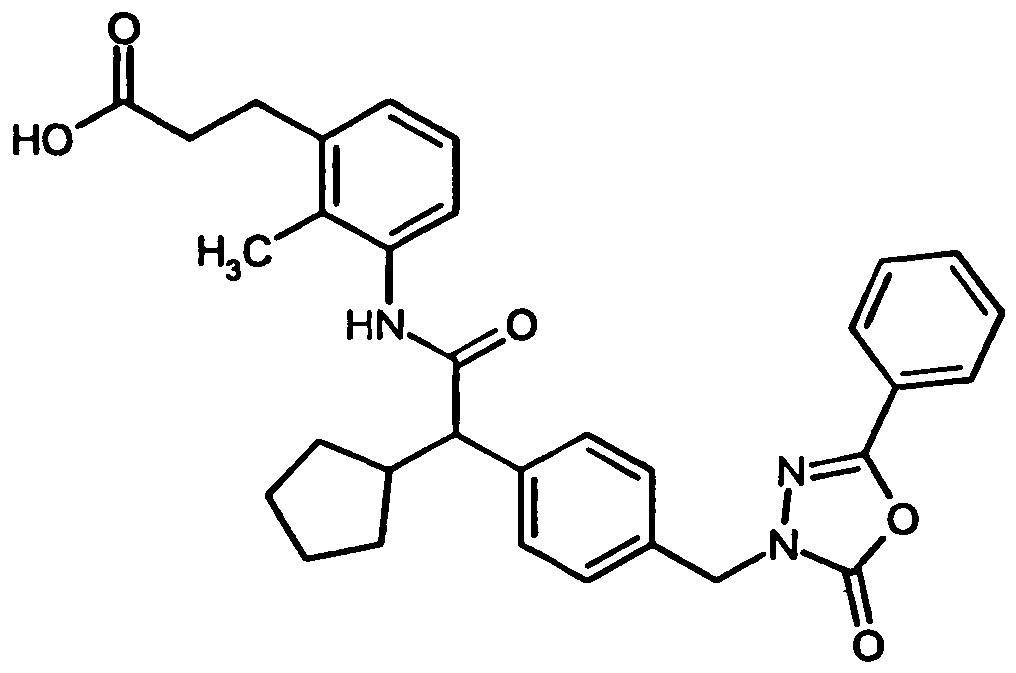
(aus tert.-Butyl-3-{3-[(cyclopentyl{4-[(2-oxo-5-phenyl-1,3,4-oxadiazol-3(2H)-yl)methyl]phenyl}-acetyl)amino]-2-methylphenyl}propanoat (Enantiomer2)) 146 4-[(Cyclopentyl{4-[(6-oxo-3-phenylpyridazin-1(6H-yl)methyl]phenyl}acetyl)amino]-2,3-dihydro-1H-inden-2-carbonsäure LC-MS (Methode 11): Rt= 1.34 min; m/z = 548 (M+H)+.
1H-NMR (400 MHz, DMSO-d6): δ = 12.01-12.32 (br. s, 1H), 9.47 (d, 1H), 8.07 (d, 1H), 7.88 (d, 2H), 7.45-7.51 (m, 3H), 7.40 (d, 2H), 7.32 (d, 2H), 7.26 (d, 1H), 7.08 (d, 1H), 7.04 (t, 1H), 6.95 (d, 1H), 5.31 (s, 2H), 3.46-3.57 (m, 4H), 3.07-3.13 (m, 1H), 3.02 (d, 1H), 1.71-1.85 (m, 1H), 1.21-1.71 (m, 6H), 1.04 (d, 1H), 0.91-0.99 (m, 1H).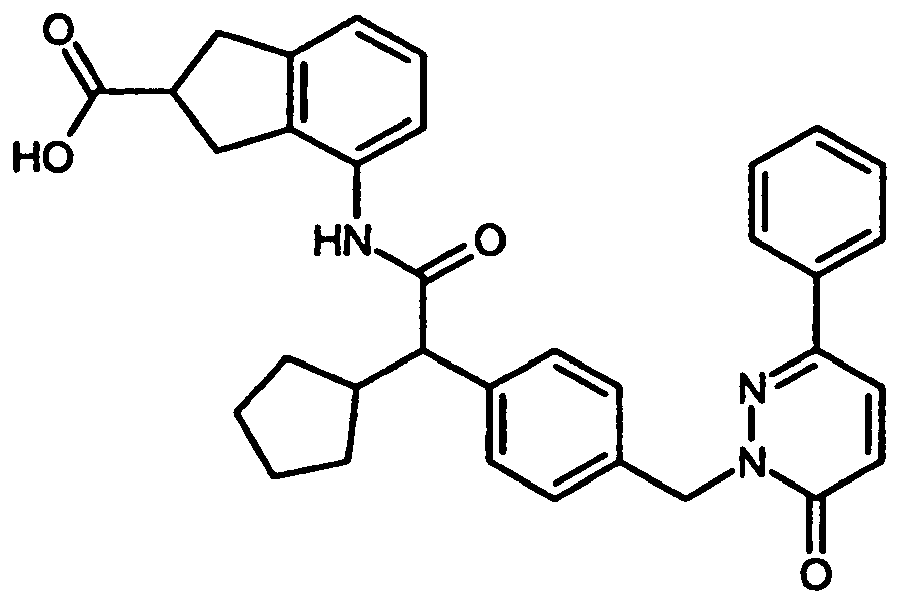
(aus Methyl-4-[(cyclopentyl{4-[(6-oxo-3-phenyl-pyridazin-1(6H-yl)methyl]phenyl}acetyl)amino]-2,3-dihydro-1H-inden-2-carboxylat) 147 3-{2-Methyl-3-[(4,4,4-trifluor-3-methyl-2-{4-[(6-oxo-3-phenylpyridazin-1(6H)-yl)methyl]phenyl}butanoyl)-amino]phenyl}propansäure LC-MS (Methode 11): Rt = 1.27 min; m/z = 578 (M+H)+.
1H-NMR (400 MHz, DMSO-d6): δ = 11.89-12.36 br. s, 1H), 9.62 (s, 1H), 8.08 (d, 1H), 7.87 (d, 2H), 7.40-7.52 (m, 5H), 7.36 (d, 2H), 7.10 (d, 1H), 6.92-7.04 (m, 3H), 5.34 (s, 2H), 3.91 (d, 1H), 3.28-3.41 (m, 1H), 2.75 (t, 2H), 2.40 (t, 2H), 1.88 (s, 3H), 0.78 (d, 3H).
(aus tert.-Butyl-3-{2-methyl-3-[(4,4,4-trifluor-3-methyt-2-{4-[(6-oxo-3-phenytpyridazin-1(6H)-yl)-methyl]phenyl}butanoyl)amino]phenyl}propanoat) 148 3-{3-[(Cyclopentyl{4-[(2-oxo-3,4-dihydrochinolin-1(2H-yl)methyl]phenyl}acetyl)amino]-2-methyl-phenyl}propansäure LC-MS (Methode 11): Rt = 1.28 min; m/z = 525 (M+H)+.
1H-NMR (400 MHz, DMSO-d6): δ = 12.01-12.29 (br. s, 1H), 9.42 (s, 1H), 7.35 (d, 2H), 7.22 (d, 1H), 7.16 (d, 2H), 7.10 (d, 1H), 6.86-7.04 (m, 5H), 5.11 (s, 2H), 2.92-2.98 (m, 2H), 2.79 (t, 2H), 2.65-2.72 (m, 2H), 2.42 (t, 2H), 1.92 (s, 3H), 1.79-1.87 (m, 1H), 1.29-1.72 (m, 7H), 1.23 (s, 2H).
(aus tert.-Butyl-3-{3-[(cyclopentyl{4-[(2-oxo-3,4-dihydrochinolin-1(2H)-yl)methyl]phenyl}-acetyl)amino]-2-methylphenyl}propanoat) 149 3-{3-[(Cyclopentyl{4-[(1-oxoisochinolin-2(1H)-yl)-methyl]phenyl}acetyl)amino]-2-methylphenyl}-propansäure LC-MS (Methode 10): Rt = 2.06 min; m/z = 523 (M+H)+. 
(aus tert.-Butyl-3-{3-[(cyclopentyl{4-[(1-oxo-isochmotin-2(1H)-yl)methyl]phenyl}acetyl)amino]-2-methylphenyl}propanoat) 150 3-{3-[(Cyclopentyl{4-[(4-oxochinazolin-3(4H)-yl)-methyl]phenyl}acetyl)amino]-2-methylphenyl}-propansäure LC-MS (Methode 7): Rt = 2.42 min; m/z = 524 (M+H)+.
1H-NMR (400 MHz, DMSO-d6): δ = 12.03-12.24 (br. s, 1H), 9.45 (s, 1H), 8.47 (s, 1H), 8.28 (d, 1H), 7.82-7.99 (m, 3H), 7.38 (d, 2H), 7.27 (d, 2H), 6.89-7.04 (m, 3H), 5.32 (s, 2H), 3.44 (d, 1H), 2.78 (t, 2H), 2.42 (t, 2H), 1.98 (s, 3H), 1.82 (dd, 1H), 1.61-1.72 (m, 1H), 1.29-1.59 (m, 5H), 0.95 (dd, 1H).
(aus tert.-Butyl-3-{3-[(cyclopentyl{4-[(4-oxo-chinazolin-3(4H)-yl)metbyl]phenyl}acetyl)amino]-2-methylphenyl}propanoat) 151 3-{3-[(Cyclopentyl{4-[(1-oxophthalazin-2(1H)-yl)-methyl]phenyl}acetyl)amino]-2-methylphenyl}-propansäure LC-MS (Methode 7): Rt = 2.30 min; m/z = 524 (M+H)+.
1H-NMR (400 MHz, DMSO-d6): δ = 12.13 (br. s, 1H), 9.45 (s, 1H), 8.57 (s, 1H), 8.16 (d, 1H), 7.84 (t, 1H), 7.70 (d, 1H), 7.56 (t, 1H), 7.40 (d, 2H), 7.31 (d, 2H), 6.90-7.08 (m, 3H), 5.19 (s, 2H), 3.45 (d, 1H), 2.78 (t, 2H), 2.42 (t, 2H), 1.97 (s, 3H), 1.78-1.90 (m, 1H), 1.29-1.71 (m, 6H), 0.88-1.01 (m, 1H).
(aus tert.-Butyl-3-{3-[(cyclopentyl{4-[(1-oxo-phthalazin-2(1H-yl)methyl]phenyl}acetyl)amino]-2-methylphenyl}propanoat) 152 3-(3-{[{4-[(6-Chlor-2-oxo-3,4-dihydrochinolin-1(2H)-yl)methyl]phenyl}(cyclopentyl)acetyl]amino}-2-methylphenyl)propansäure LC-MS (Methode 10): Rt = 2.13 min; m/z = 560 (M+H)+. 
(aus tert.-Butyl-3-(3-{[{4-[(6-chlor-2-oxo-3,4-dihydro-chinolin-1(2H)-yl)methyl]phenyl}(cyclopentyl)-acetyl]amino}-2-methylphenyl)propanoat) 153 3-(3-{[{4-[(3-Chlor-6-oxopyridazin-1(6H)-yl)methyl]-phenyl}(cyclopentyl)acetyl]amino}-2-methylphenyl)-propansäure LC-MS (Methode 7): Rt = 2.30 min; m/z = 508 (M+H)+. 1H-NMR (400 MHz, DMSO-d6): δ = 12.13 (br. s, 1H), 9.46 (s, 1H), 7.57 (d, 1H), 7.40 (d, 2H), 7.24 (d, 2H), 7.09 (d, 1H), 6.95-7.04 (m, 3H), 5.18 (s, 2H), 3.57-3.64 (m, 1H), 3.46 (d, 1H), 2.79 (t, 2H), 2.43 (t, 2H), 1.99 (s, 3H), 1.80-1.88 (m, 1H), 1.76 (dt, 1H), 1.62-1.72 (m, 1H), 1.52-1.60 (m, 2H), 1.46 (d, 1H), 1.29-1.41 (m, 2H). 
(aus tert.-Butyl-3-(3-{[{4-[(3-chlor-6-oxopyridazin-1(6H)-yl)methyl]phenyl}(cyclopentyl)acetyl]amino}-2-methylphenyl)propanoat) 154 3-{3-[(Cyclopentyl{4-[(4-methyl-1-oxophthalazin-2(1H)-yl)methyl]phenyl}acetyl)amino]-2-methyl-phenyl}propansäure LC-MS (Methode 7): Rt = 2.47 min; m/z = 538 (M+H)+.
1H-NMR (400 MHz, DMSO-d6): δ = 12.13 (s, 1H), 9.45 (s, 1H), 8.31 (d, 1H), 7.96 (d, 2H), 7.84-7.92 (m, 1H), 7.38 (d, 2H), 7.26 (d, 2H), 6.94-7.05 (m, 3H), 5.28 (s, 2H), 3.44 (d, 1H), 2.78 (t, 2H), 2.42 (t, 2H), 1.98 (s, 3H), 1.78-1.90 (m, 1H), 1.62-1.73 (m, 1H), 1.49-1.60 (m, 2H), 1.40-1.50 (m, 1H), 1.28-1.38 (m, 2H), 0.96 (dd, 1H).
(aus tert.-Butyl-3-{3-[(cyclopentyl{4-[(4-methyl-1-oxophthalazin-2(1H)-yl)methyl]phenyl}acetyl)amino]-2-methylphenyl}propanoat) 155 3-{3-[(Cyclopentyl{4-[(1,1-dioxido-3-oxo-1,2-benz-isothiazol-2(3H)-yl)methyl]phenyl}acetyl)amino]-2-methylphenyl}propansäure LC-MS (Methode 10): Rt = 2.09 min; m/z = 561 (M+H)+.
1H-NMR (400 MHz, DMSO-d6): δ = 11.93-12.29 (br. s, 1H), 9.48 (s, 1H), 8.33 (d, 1H), 8.13 (d, 1H), 7.96-8.10 (m, 2H), 7.32-7.45 (m, 4H), 6.92-7.06 (m, 3H), 4.90 (s, 2H), 3.46 (d, 1H), 2.79 (t, 2H), 2.43 (t, 2H), 1.99 (s, 3H), 1.77-1.89 (m, 1H), 1.63-1.70 (m, 1H), 1.51-1.62 (m, 2H), 1.41-1.49 (m, 1H), 1.29-1.39 (m, 2H), 1.24 (s, 1H), 0.92-1.05 (m, 1H).
(aus tert.-Butyl-3-{3-[(cyclopentyl{4-[(1,1-dioxido-3-oxo-1,2-benzisothiazol-2(3H)-yl)methyl]phenyl}-acetyl)amino]-2-methylphenyl}propanoat) 156 1-{3-[(Cyclopentyl{4-[(6-oxo-3-phenylpyridazin-1(6H)-yl)methyl]phenyl}acetyl)amino]benzyl}-cyclopropancarbonsäure LC-MS (Methode 10): Rt = 2.29 min; m/z = 562 (M+H)+.
1H-NMR (400 MHz, DMSO-d6): δ = 12.07 (s, 1H), 9.97 (s, 1H), 8.06 (d, 1H), 7.87 (d, 2H), 7.35-7.55 (m, 7H), 7.31 (d, 2H), 7.12 (t, 1H), 7.07 (d, 1H), 6.89 (d, 1H), 5.29 (s, 2H), 3.37 (d, 1H), 2.81 (s, 2H), 2.56-2.64 (m, 1H), 1.72-1.85 (m, 1H), 1.58-1.69 (m, 1H), 1.49-1.58 (m, 2H), 1.38-1.48 (m, 1H), 1.28-1.38 (m, 1H), 1.20-1.28 (m, 1H), 1.10 (d, 2H), 0.91-1.00 (m, 1H), 0.78 (d, 2H).
(aus tert.-Butyl-1-{3-[(cyclopentyl{4-[(6-oxo-3-phenylpyridazin-1(6H)-yl)methyl]phenyl}acetyl)-amino]benzyl}cyclopropancarboxylat) 157 1-{3-[(4,4,4-Trifluor-3-methyl-2-{4-[(6-oxo-3-phenyl-pyridazin-1(6H-yl)methyl]phenyl}butanoyl)amino]-benzyl}cyclopropancarbonsäure (Isomer 1) LC-MS (Methode 11): Rt = 1.36 min; m/z = 590 (M+H)+.
1H-NMR (400 MHz, DMSO-d6): δ = 12.07 (br. s, 1H), 10.15 (s, 1H), 8.06 (d, 1H), 7.87 (d, 2H), 7.42-7.51 (m, 3H), 7.40 (d, 3H), 7.35 (d, 3H), 7.13 (t, 1H), 7.07 (d, 1H), 6.90 (d, 1H), 5.31 (s, 2H), 3.81 (d, 1H), 2.80 (s, 2H), 1.17-1.23 (1H, m), 1.06-1.12 (m, 2H), 0.77 (d, 5H).
(aus tert.-Butyl-1-(3-[(4,4,4-trifluor-3-methyl-2-{4-[(6-oxo-3-phenylpyridazin-1(6H-yl)methyl]phenyl}-butanoyl)amino]benzyl}cyclopropancarboxylat (Isomer 1)) 158 1-{3-[(4,4,4-Trifluor-3-methyl-2-{4-[(6-oxo-3-phenyl-pyridazin-1(6H-yl)methyl]phenyl butanoyl)amino]-benzyl}cyclopropancarbonsäure (Isomer 2) LC-MS (Methode 11): Rt = 1.36 min; m/z = 590 (M+H)+.
1H-NMR (400 MHz, DMSO-d6): δ = 12.07 (br. s, 1H), 10.15 (s, 1H), 8.06 (d, 1H), 7.87 (d, 2H), 7.42-7.51 (m, 3H), 7.40 (d, 3H), 7.35 (d, 3H), 7.13 (t, 1H), 7.07 (d, 1H), 6.90 (d, 1H), 5.31 (s, 2H), 3.81 (d, 1H), 2.80 (s, 2H), 1.17-1.23 (1H, m), 1.06-1.12 (m, 2H), 0.77 (d, 5H).
(aus tert.-Butyl-1-{3-[(4,4,4-trifluor-3-methyl-2-{4-[(6-oxo-3-phenylpyridazin-1(6H)-yl)methyl]phenyl}-butanoyl)amino]benzyl}cyclopropancarboxylat (Isomer 2)) 159 3-{3-[(Cyclopentyl{4-[(3-methyl-6-oxopyridazin-1(6H)-yl)methyl]phenyl}acetyl)amino]-2-methyl-phenyl}propansäure LC-MS (Methode 15): Rt = 1.01 min; m/z = 488 (M+H)+.
1H-NMR (400 MHz, DMSO-d6): δ =11.79-12.29 (br. s, 1H), 9.46 (s, 1H), 7.36 (dd, 3H), 7.22 (d, 2H), 6.95-7.04 (m, 3H), 6.91 (d, 1H), 5.16 (s, 2H), 3.45 (d, 1H), 2.79 (t, 2H), 2.52-2.61 (m, 1H), 2.43 (t, 2H), 2.26 (s, 3H), 1.99 (s, 3H), 1.77-1.89 (m, 1H), 1.62-1.71 (m, 1H), 1.51-1.61 (m, 2H), 1.42-1.50 (m, 1H), 1.30-1.41 (m, 2H), 0.92-1.02 (m, 1H).
(aus tert.-Butyl-3-{3-[(cyclopentyl{4-[(3-methyl-6-oxopyridazin-1(6H)-yl)methyl]phenyl}acetyl)amino]-2-methylphenyl}propanoat) 160 1-{3-[(5,5,5-Trifluor-3-methyl-2-(4-[(5-oxo-2-phenyl-5,6-dihydro-4H-1,3,4-oxadiazin-4-yl)methyl]phenyl)-pentanoyl)amino]benzyl}cyclopropancarbonsäure LC-MS (Methode 11): Rt = 1.43 min; m/z = 608 (M+H)+ (Diastereomer 1); Rt = 1.44 min; m/z = 608 (M+H)+ (Diastereomer 2).
1H-NMR (400 MHz, DMSO-d6): δ = 12.07 (br. s, 1H), 10.14 (s, 0.5H), 10.09 (s, 0.5H) 7.75 (d, 2H), 7.31-7.51 (m, 9H), 7.14 (t, 1H), 6.90 (d, 1H), 4.91 (s, 2H), 4.86 (s, 2H), 3.49 (d, 1H), 2.80 (s, 2H), 2.49-2.64 (m, 1H), 2.24-2.36 (m, 1H), 2.20-2.37 (m, 1H), 1.95-2.10 (m, 0.5H), 1.76-1.95 (m, 0.5H), 1.07-1.15 (m, 4H), 0.72-0.81 (m, 3H).
(aus tert.-Butyl-1-{3-[(5,5,5-trifluor-3-methyl-2-{4-[(5-oxo-2-phenyl-5,6-dihydro-4H-1,3,4-oxadiazin-4-yl)methyl]phenyl}pentanoyl)amino]benzyl}-cyclopropancarboxylat) 161 1-(3-{[{4-[(3-Chlor-6-oxopyridazin-1(6H)-yl)methyl]-phenyl}(cyclopentyl)acetyl]amino}benzyl)-cyclopropancarbonsäure LC-MS (Methode 11): Rt = 1.29 min; m/z = 520 (M+H)+.
1H-NMR (400 MHz, DMSO-d6): δ = 12.08 (s, 1H), 9.97 (s, 1H), 7.40-7.45 (m, 2H), 7.36 (d, 2H), 7.32 (d, 1H), 7.21 (d, 2H), 7.13 (t, 1H), 6.89 (d, 2H), 5.16 (s, 2H), 3.36 (d, 1H), 2.81 (s, 2H), 2.49-2.63 (m, 1H), 1.72-1.83 (m, 1H), 1.41-1.71 (m, 3H), 1.29-1.40 (m, 1H), 1.19-1.30 (m, 1H), 1.10 (d, 2H), 0.89-1.02 (m, 1H), 0.78 (d, 2H).
(aus tert.-Butyl-1-(3-{[{4-[(3-chlor-6-oxopyridazin-1(6H)-yl)methyl]phenyl}(cyclopentyl)acetyl]-amino} benzyl)cyclopropancarboxylat) 162 3-{3-[(Cyclopentyl{4-[(5-methyl-2-oxopyridin-1(2H-yl)methyl]phenyl}acetyl)amino]-2-methyl-phenyl}propansäure LC-MS (Methode 15): Rt = 1.00 min; m/z = 487 (M+H)+.
1H-NMR (500 MHz, DMSO-d6): δ = 11.90-12.30 (br. s, 1H), 9.47 (s, 1H), 7.56 (s, 1H), 7.38 (d, 2H), 7.30 (d, 1H), 7.22 (d, 2H), 6.93-7.06 (m, 3H), 6.37 (d, 1H), 5.02 (s, 2H), 3.45 (d, 1H), 2.79 (t, 2H), 2.53-2.63 (m, 1H), 2.43 (t, 2H), 2.00 (s, 3H), 1.99 (s, 3H), 1.80-1.90 (m, 1H), 1.64-1.73 (m, 1H), 1.50-1.60 (m, 2H), 1.46 (d, 1H), 1.30-1.39 (m, 2H), 0.96 (dd, 1H).
(aus tert.-Butyl-3-{3-[(cyclopentyl{4-[(5-methyl-2-oxopyridin-1(2,H)-yl)methyl]phenyl}acetyl)amino]-2-methylphenyl}propanoat) 163 3-{3-[(Cyclopentyl{4-[(3-oxo-1,2-benzisoxazol-2(3H)-yl)methyl]phenyl}acetyl)amino]-2-methyl-phenyl}propansäure LC-MS (Methode 11): Rt = 1.23 min; m/z = 513 (M+H)+. 
(aus tert.-Butyl-3-{3-[(cyclopentyl{4-[(3-oxo-1,2-benzisoxazol-2(3H)-yl)methyl]phenyl}acetyl)amino]-2-methylphenyl}propanoat) 164 1-{3-[(4,4,4-Trifluor-3-methyl-2-{4-[(5-oxo-2-phenyl-5,6-dihydro-4H 1,3,4-oxadiazin-0-yl)methyl]phenyl}-butanoyl)amino]benzyl}cyclopropancarbonsäure (Isomer 1) LC-MS (Methode 15): Rt = 1.23 min, m/z = 594 (M+H)+.
1H-NMR (400 MHz, DMSO-d6): δ = 12.08 (br. s, 1H), 10.24 (s, 1H), 7.75 (d, 2H), 7.36-7.51 (m, 7H), 7.32 (d, 2H), 7.12-7.18 (m, 1H), 6.91 (d, 1H), 4.90 (s, 2H), 4.83-4.87 (m, 2H), 3.87 (d, 1H), 3.15-3.29 (m, 1H), 2.80 (s, 2H), 1.20 (d, 3H), 1.07-1.12 (m, 2H), 0.75-0.81 (m, 2H).
(aus tert.-Butyl-1-{3-[(4,4,4-trifluor-3-methyl-2-{4-[(5-oxo-2-phenyl-5,6-dihydro-4H-1,3,4-oxadiazin-4-yl)methyl]phenyl}butanoyl)amino]benzyl}-cyclopropancarboxylat (Isomer 1)) 165 1-{3-[(4,4,4-Trifluor-3-methyl-2-{4-[(5-oxo-2-phenyl-5,6-dihydro-4H-1,3,4-oxadiazin-4-yl)methyl]phenyl}-butanoyl)amino]benzyl}cyclopropancarbonsäure (Isomer 2) LC-MS (Methode 15): Rt = 1.23 min; m/z = 594 (M+H)+.
1H-NMR (400 MHz, DMSO-d6): δ = 12.08 (br. s, 1H), 10.24 (s, 1H), 7.75 (d, 2H), 7.36-7.51 (m, 7H), 7.32 (d, 2H), 7.12-7.18 (m, 1H), 6.91 (d, 1H), 4.90 (s, 2H), 4.83-4.87 (m, 2H), 3.87 (d, 1H), 3.15-3.29 (m, 1H), 2.80 (s, 2H), 1.20 (d, 3H), 1.07-1.12 (m, 2H), 0.75-0.81 (m, 2H).
(aus tert.-Butyl-1-{3-[(4,4,4-trifluor-3-methyl-2-{4-[(5-oxo-2-phenyl-5,6-dihydro-4H-1,3,4-oxadiazin-4-yl)methyl]phenyl}butanoyl)amino]benzyl}-cyclopropancarboxylat (Isomer 2)) 166 1-{3-[(4,4,4-Trifluor-3-methyl-2-{4-[(5-oxo-2-phenyl-5,6-dihydro-4H-1,3,4-oxadiazin-4-yl)methyl]phenyl} -butanoyl)amino]benzyl}cyclopropancarbonsäure (Isomer 3) LC-MS (Methode 15): Rt = 1.22 min; m/z = 594 (M+H)+.
1H-NMR (400 MHz, DMSO-d6): δ = 11.50-12.50 (br. s, 1H), 10.15 (s, 1H), 7.75 (d, 2H), 7.39-7.51 (m, 7H), 7.36 (d, 2H), 7.13 (t, 1H), 6.90 (d, 1H), 4.90 (s, 2H), 4.86 (s, 2H), 3.82 (d, 1H), 3.30-3.44 (m, 1H), 2.80 (s, 2H), 1.09 (d, 2H), 0.78 (d, 5H).
(aus tert.-Butyl-1-{3-[(4,4,4-trifluor-3-methyl-2-{4-[(5-oxo-2-phenyl-5,6-dihydro-4H-1,3,4-oxadiazin-4-yl)methyl]phenyl}butanoyl)amino]benzyl}-cyclopropancarboxylat (Isomer 3)) 167 1-{3-[(4,4,4-Trifluor-3-methyl-2-{4-[(5-oxo-2-phenyl-5,6-dihydro-4H-1,3,4-oxadiazin-4-yl)methyl]phenyl}-butanoyl)amino]benzyl}cyclopropancarbonsäure (Isomer 4) LC-MS (Methode 15): Rt = 1.23 min; m/z = 594 (M+H)+.
1H-NMR (400 MHz, DMSO-d6): δ = 11.50-12.50 (br. s, 1H), 10.15 (s, 1H), 7.75 (d, 2H), 7.39-7.51 (m, 7H), 7.36 (d, 2H), 7.13 (t, 1H), 6.90 (d, 1H), 4.90 (s, 2H), 4.86 (s, 2H), 3.82 (d, 1H), 3.30-3.44 (m, 1H), 2.80 (s, 2H), 1.09 (d, 2H), 0.78 (d, 5H).
(aus tert.-Butyl-1-{3-[(4,4,4-trifluor-3-methyl-2-{4-[(5-oxo-2-phenyl-5,6-dihydro-4H-1,3,4-oxadiazin-4-yl)methyl]phenyl}butanoyl)amino]benzyl}-cyclopropancarboxylat (Isomer 4)) 168 3-{2-Methyl-3-[(4,4,4-trifluor-3-methyl-2-{4-[(5-oxo-2-phenyl-5,6-dihydro-4H-1,3,4-oxadiazin-4-yl)-methyl]phenyl} butanoyl)amino]phenyl} propansäure LC-MS (Methode 15): Rt = 1.14 min; m/z = 582 (M+H)+. 
(aus tert.-Butyl-3-{2-methyl-3-[(4,4,4-trifluor-3-methyl-2-{4-[(5-oxo-2-phenyl-5,6-dihydro-4H-,3,4-oxadiazin-4-yl)methyl]phenyl}butanoyl)amino]-phenyl}propanoat) 169 3-{3-[(4,4,4-Trifluor-3-methyl-2-{4-[(5-oxo-2-phenyl-5,6-dihydro-4H-1,3,4-oxadiazin-4-yl)methyl]phenyl}-butanoyl)amino]phenyl}propansäure LC-MS (Methode 15): Rt = 1.17 min; m/z = 568 (M+H)+. 
(aus tert.-Butyl-3-{3-[(4,4,4-trifluor-3-methyl-2-{4-[(5-oxo-2-phenyl-5,6-dihydro-4H-1,3,4-oxadiazin-4-yl)methyl]phenyl}butanoyl)amino]phenyl}propanoat) 170 1-(3-{[2-{4-[(5-Oxo-2-phenyl-5,6-dihydro-4H-1,3,4-oxadiazin-4-yl)methyl]phenyl}-3-(trifluormethyl)-pentanoyl]amino}benzyl)cyclopropancarbonsäure LC-MS (Methode 15): Rt = 1.26 min; m/z = 608 (M+H)+.
1H-NMR (400 MHz, DMSO-d6): δ = 12.10 (br. s, 1H), 10.16 (s, 1H), 7.75 (d, 2H), 7.28-7.60 (m, 9H), 7.13 (t, 1H), 6.89 (d, 1H), 4.90 (s, 2H), 4.86 (s, 2H), 3.94 (d, 1H), 3.20-3.31 (m, 1H), 2.80 (s, 2H), 1.20-1.43 (m, 2H), 1.09 (d, 2H), 0.71-0.81 (m, 5H).
(aus tert.-Butyl-1-(3-{[2-{4-[(5-oxo-2-phenyl-5,6-dihydro-4H-1,3,4-oxadiazin-4-yl)methyl]phenyl}-3-(trifluormethyl)pentanoyl]amino}benzyl)-cyclopropancarboxylat) 171 1-{3-[(Cyclopentyl{4-[(3-methyl-6-oxopyridazin-1 (6H)-yl)methyl]phenyl}acetyl)amino]benzyl} -cyclopropancarbonsäure LC-MS (Methode 11): Rt = 1.23 min; m/z = 500 (M+H)+. 
(aus tert.-Butyl-1-{3-[(cyclopentyl{4-[(3-methyl-6-oxopyridazin-1(6H)-yl)methyl]phenyl}acetyl)amino]-benzyl}cyclopropancarboxylat) 172 3-(3-{[Cyclopentyl(4-{[6-oxo-3-(trifluormethyl)-pyridazin-1 (6H)-yl]methyl}phenyl)acetyl]amino}-2-methylphenyl)propansäure LC-MS (Methode 15): Rt = 1.13 min; m/z = 542 (M+H)+.
1H-NMR (400 MHz, DMSO-d6): δ =12.13 (s, 1H), 9.47 (s, 1H), 7.87 (d, 1H), 7.41 (d, 2H), 7.26 (d, 2H), 7.21 (d, 1H), 6.95-7.06 (m, 3H), 5.29 (s, 2H), 3.46 (d, 1H), 2.79 (t, 2H), 2.56-2.63 (m, 1H), 2.43 (t, 2H), 1.98 (s, 3H), 1.77-1.88 (m, 1H), 1.30-1.72 (m, 6H), 0.96 (dd, 1H).
(aus tert.-Butyl-3-(3-{[cyclopentyl(4-{[6-oxo-3-(trifluormethyl)pyridazin-1(6H)-yl]methyl}phenyl)-acetyl]amino}-2-methylphenyl)propanoat) 173 1-(3-{[Cyclopentyl(4-{[6-oxo-3-(trifluormethyl)-pyridazin-1(6H)-yl]methyl}phenyl)acetyl]amino}-benzyl)cyclopropancarbonsäure LC-MS (Methode 15): Rt = 1.20 min; m/z = 554 (M+H)+.
1H-NMR (400 MHz, DMSO-d6): δ = 12.08 (br. s, 1H), 9.98 (s, 1H), 7.85 (d, 1H), 7.35-7.46 (m, 4H), 7.26 (d, 2H), 7.09-7.21 (m, 2H), 6.89 (d, 1H), 5.27 (s, 2H), 3.38 (d, 1H), 2.81 (s, 2H), 2.56-2.64 (m, 1H), 1.73-1.84 (m, 1H), 1.18-1.70 (m, 6H), 1.07-1.13 (m, 2H), 0.85-1.02 (m, 1H), 0.78 (d, 2H).
(aus tert.-Butyl-1-(3-{[cyclopentyl(4-{[6-oxo-3-(trifluormethyl)pyridazin-1(6H)-yl]methyl}phenyl)-acetyl]amino}benzyl)cyclopropancarboxylat) 174 3-(3-{[Cyclopentyl(4-{[6-oxo-3-(trifluormethyl)-pyridazin-1(6H)-yl]methyl}phenyl)acetyl]amino}-phenyl)propansäure LC-MS (Methode 11): Rt = 1.31 min; m/z = 528 (M+H)+.
1H-NMR (400 MHz, DMSO-d6): δ = 12.07 (br. s, 1H), 9.99 (s, 1H), 7.85 (d, 1H), 7.39 (d, 4H), 7.26 (d, 2H), 7.07-7.20 (m, 2H), 6.87 (d, 1H), 5.27 (s, 2H), 3.37 (d, 1H), 2.75 (t, 2H), 2.57-2.64 (m, 1H), 2.48 (t, 2H), 1.78 (dd, 1H), 1.59-1.71 (m, 1H), 1.41-1.59 (m, 3H), 1.34 (dd, 1H), 1.25 (dd, 1H), 0.95 (dd, 1H).
(aus Methyl-3-(3-{[cyclopentyl(4-{[6-oxo-3-(trifluor-methyl)pyridazin-1(6H)-yl]methyl} phenyl)acetyl]-amino}phenyl)propanoat) 175 1-{3-[(Cyclopentyl{4-[(3-methyl-2-oxopyridin-1(2H)-yl)methyl]phenyl}acetyl)amino]benzyl}-cyclopropancarbonsäure LC-MS (Methode 15): Rt = 1.11 min; m/z = 499 (M+H)+.
1H-NMR (400 MHz, DMSO- (400 MHz, DMSO-d6): δ = 11.5-12.5 (br. s, 1H), 9.97 (s, 1H), 7.62 (d, 1H), 7.39-7.47 (m, 2H), 7.36 (d, 2H), 7.28 (d, 1H), 7.22 (d, 2H), 7.13 (t, 1H), 6.89 (d, 1H), 6.13 (t, 1H), 5.06 (s, 2H), 3.38 (d, 1H), 2.81 (s, 2H), 2.58-2.64 (m, 1H), 1.99 (s, 3H), 1.70-1.82 (m, 1H), 1.58-1.68 (m, 1H), 1.49-1.58 (m, 2H), 1.40-1.49 (m, 1H), 1.29-1.38 (m, 1H), 1.24 (dd, 1H), 1.06-1.13 (m, 2H), 0.94 (dd, 1H), 0.74-0.82 (m, 2H).
(aus tert.-Butyl-1-{3-[(cyclopentyl{4-[(3-methyl-2-oxopyridin-1(2H)-yl)methyl]phenyl}acetyl)amino]-benzyl}cyclopropancarboxylat) 176 1-(3-{[Cyclopentyl(4-{[2-oxo-4-(trifluormethyl)-pyridin-1(2H)-yl]methyl}phenyl)acetyl]amino}-benzyl)cyclopropancarbonsäure LC-MS (Methode 15): Rt = 1.17 min; m/z = 553 (M+H)+.
1H-NMR (400 MHz, DMSO-d6): δ = 12.08 (s, 1H), 9.97 (s, 1H), 8.06 (d, 1H), 7.36-7.46 (m, 4H), 7.25 (d, 2H), 7.13 (t, 1H), 6.89 (d, 1H), 6.80 (s, 1H), 6.49 (dd, 1H), 5.12 (s, 2H), 3.38 (d, 1H), 2.81 (s, 2H), 2.56-2.64 (m, 1H), 1.72-1.83 (m, 1H), 1.59-1.70 (m, 1H), 1.49-1.58 (m, 2H), 1.40-1.49 (m, 1H), 1.28-1.39 (m, 1H), 1.20-1.29 (m, 1H), 1.07-1.12 (m, 2H), 0.89-1.01 (m, 1H), 0.74-0.80 (m, 2H).
(aus tert.-Butyl-1-(3-{[cyclopentyl(4-{[2-oxo-4-(trifluormethyl)pyridin-1(2H)-yl]methyl}phenyl)-acetyl]amino}benzyl)cyclopropancarboxylat) 177 3-(3-{[(3,3-Difluorcyclopentyl) {4-[(5-oxo-2-phenyl-5,6-dihydro-4H-1,3,4-oxadiazin-4-yl)methyl]phenyl}-acetyl]amino}phenyl)propansäure LC-MS (Methode 11): Rt = 1.33 min; m/z = 576 (M+H)+.
1H-NMR (400 MHz, DMSO-d6): δ = 12.08 (br. s, 1H), 10.06 (d, 1H), 7.76 (d, 2H), 7.38-7.54 (m, 7H), 7.34 (d, 2H), 7.15 (t, 1H), 6.88 (d, 1H), 4.90 (s, 2H), 4.85 (s, 2H), 3.52 (d, 1H), 2.82-2.96 (m, 1H), 2.74 (t, 2H), 2.47 (t, 2H), 1.95-2.38 (m, 3H), 1.79-1.92 (m, 1H), 1.44-1.70 (m, 2H).
(aus Methyl-3-(3-{[(3,3-difluorcyclopentyl){4-[(5-oxo-2-phenyl-5,6-dihydro-4H-1,3,4-oxadiazin-4-yl)-methyl]phenyl}acetyl]amino}phenyl)propanoat) 178 1-(3-{[(3,3-Difluorcyclopentyl){4-[(5-oxo-2-phenyl-5,6-dihydro-4H-1,3,4-oxadiazin-4-yl)methyl]phenyl}-acetyl]amino}benzyl)cyclopropancarbonsäure LC-MS (Methode 11): Rt = 1.39 min; m/z = 602 (M+H)+.
1H-NMR (400 MHz, DMSO-d6): δ = 12.07 (br. s, 1H), 10.05 (d, 1H), 7.76 (d, 2H), 7.38-7.53 (m, 7H), 7.34 (d, 2H), 7.14 (t, 1H), 6.90 (d, 1H), 4.90 (s, 2H), 4.85 (s, 2H), 3.49-3.55 (m, 1H), 2.88 (dd, 1H), 2.80 (s, 2H), 1.79-2.39 (m, 4H), 1.46-1.65 (m, 1H), 1.21-1.37 (m, 1H), 1.09 (d, 2H), 0.78 (d, 2H).
(aus tert.-Butyl-1-(3-{[(3,3-difluorcyclopentyl){4-[(5-oxo-2-phenyl-5,6-dihydro-4H-1,3,4-oxadiazin-4-yl)-methyl]phenyl}acetyl]amino} benzyl)cyclopropan-carboxylat) 179 1-{3-[(Cyclopentyl{4-[(4-methyl-2-oxopyridin-1(2H)-yl)methyl]phenyl}acetyl)amino]benzyl}-cyclopropancarbonsäure LC-MS (Methode 15): Rt = 1.06 min; m/z = 499 (M+H)+.
1H-NMR (400 MHz, DMSO-d6): δ = 12.10 (br. s, 1H), 9.96 (s, 1H), 7.62 (d, 1H), 7.39-7.47 (m, 2H), 7.36 (d, 2H), 7.20 (d, 2H), 7.13 (t, 1H), 6.89 (d, 1H), 6.21 (br. s, 1H), 6.07 (d, 1H), 5.01 (s, 2H), 3.38 (d, 1H), 2.81 (s, 2H), 2.10 (s, 3H), 1.71-1.83 (m, 2H), 1.19-1.68 (m, 6H), 1.10 (br. s, 2H), 0.90-1.01 (m, 1H), 0.78 (br. s, 2H).
(aus tert.-Butyl-1-{3-[(cyclopentyl{4-[(4-methyl-2-oxopyridin-1(2H)-yl)methyl]phenyl}acetyl)amino]-benzyl} cyclopropancarboxylat) 180 3-(3-{[4,4,4-Trifluor-3-methyl-2-(4-{[6-oxo-3-(trifluormethyl)pyridazin-1(6H)-yl]methyl}phenyl)-butanoyl]amino}phenyl)propansäure LC-MS (Methode 15): Rt = 1.11 min; m/z = 556 (M+H)+. 
(aus Methyl-3-(3-{[4,4,4-trifluor-3-methyl-2-(4-{[6-oxo-3-(trifluormethyl)pyridazin-1(6H)-yl]methyl}-phenyl)butanoyl]amino}phenyl)propanoat) 181 1-(3-{[4,4,4-Trifluor-3-methyl-2-(4-{[6-oxo-3-(trifluormethyl)pyridazin-1(6H)-yl]methyl}phenyl)-butanoyl]amino}benzyl)cyclopropancarbonsäure (Enantiomer 1) LC-MS (Methode 15): Rt = 1.14 min; m/z = 582 (M+H)+.
1H-NMR (400 MHz, DMSO-d6): δ = 11.85-12.25 (br. s, 1H), 10.15 (s, 1H), 7.84 (d, 1H), 7.41 (d, 3H), 7.36 (s, 1H), 7.30 (d, 2H), 7.19 (d, 1H), 7.14 (t, 1H), 6.91 (d, 1H), 5.29 (s, 2H), 3.82 (d, 1H), 3.28-3.44 (m, 1H), 1.06-1.14 (m, 2H), 0.79 (d, 5H).
(aus tert.-Butyl-1-(3-{[4,4,4-trifluor-3-methyl-2-(4-{[6-oxo-3-(trifluormethyl)pyridazin-1(6H)-yl]methyl}-phenyl)butanoyl]amino}benzyl)cyclopropancarboxylat (Enantiomer 1)) 182 1-(3-{[4,4,4-Trifluor-3-methyl-2-(4-{[6-oxo-3-(trifluormethyl)pyridazin-1(6H)-yl]methyl}phenyl)-butanoyl]amino}benzyl)cyclopropancarbonsäure (Enantiomer 2) LC-MS (Methode 15): Rt = 1.14 min; m/z = 582 (M+H)+.
1H-NMR (400 MHz, DMSO-d6): δ = 11.85-12.25 (br. s, 1H), 10.15 (s, 1H), 7.84 (d, 1H), 7.41 (d, 3H), 7.36 (s, 1H), 7.30 (d, 2H), 7.19 (d, 1H), 7.14 (t, 1H), 6.91 (d, 1H), 5.29 (s, 2H), 3.82 (d, 1H), 3.28-3.44 (m, 1H), 1.06-1.14 (m, 2H), 0.79 (d, 5H).
(aus tert.-Butyl-1-(3-{[4,4,4-trifluor-3-methyl-2-(4-{[6-oxo-3-(trifluormethyl)pyridazin-1(6H)-yl]methyl}-phenyl)butanoyl]amino}benzyl)cyclopropancarboxylat (Enantiomer 2)) 183 1-(3- {[Cyclopentyl(4-{[2-oxo-3-(trifluormethyl)-pyridin-1(2H)-yl]methyl}phenyl)acetyl]amino}-benzyl)cyclopropancarbonsäure LC-MS (Methode 15): Rt = 1.16 min; m/z = 553 (M+H)+.
1H-NMR (400 MHz, DMSO-d6): δ = 12.07 (s, 1H), 9.97 (s, 1H), 8.14 (d, 1H), 7.93 (d, 1H), 7.36-7.46 (m, 4H), 7.26 (d, 2H), 7.13 (t, 1H), 6.89 (d, 1H), 6.38 (t, 1H), 5.13 (s, 2H), 3.38 (d, 1H), 2.81 (s, 2H), 2.56-2.64 (m, 1H), 1.77 (dd, 1H), 1.41-1.68 (m, 4H), 1.28-1.38 (m, 1H), 1.23-1.29 (m, 1H), 1.10 (d, 2H), 0.95 (dd, 1H), 0.78 (d, 2H).
(aus tert.-Butyl-1-(3-{[cyclopentyl(4-{[2-oxo-3-(trifluormethyl)pyridin-1(2H)-yl]methyl}phenyl)-acetyl]amino}benzyl)cyclopropancarboxylat) 184 3-{2-Chlor-3-[(4,4,4-trifluor-3-methyl-2-{4-[(5-oxo-2-phenyl-5,6-dihydro-4H-1,3,4-oxadiazin-4-yl)methyl]-phenyl}butanoyl)amino]phenyl}propansäure LC-MS (Methode 15): Rt = 1.21 min; m/z = 602 (M+H)+.
1H-NMR (400 MHz, DMSO-d6): δ = 12.21 (br. s, 1H), 9.78 (s, 1H), 7.76 (d, 2H), 7.41-7.55 (m, 5H), 7.32-7.39 (m, 3H), 7.19 (t, 1H), 7.12 (d, 1H), 4.92 (s, 2H), 4.88 (s, 2H), 4.10 (d, 1H), 3.36-3.43 (m, 1H), 2.87 (t, 2H), 2.46 (t, 2H), 0.79 (d, 3H).
(aus tert.-Butyl-3-{2-chlor-3-[(4,4,4-trifluor-3-methyl-2-{4-[(5-oxo-2-phenyl-5,6-dihydro-4H-1,3,4-oxa-diazin-4-yl)methyl]phenyl}butanoyl)amino]phenyl}-propanoat) 185 3-{4-Fluor-3-[(4,4,4-trifluor-3-methyl-2-{4-[(5-oxo-2-phenyl-5,6-dihydro-4H-1,3,4-oxadiazin-4-yl)methyl]-phenyl}butanoyl)amino]phenyl}propansäure LC-MS (Methode 15): Rt = 1.15 min; m/z = 586 (M+H)+.
1H-NMR (400 MHz, DMSO-d6): δ = 12.09 (br. s, 1H), 9.99 (s, 1H), 7.76 (d, 2H), 7.66 (d, 1H), 7.40-7.53 (m, 5H), 7.36 (d, 2H), 7.09 (dd, 1H), 6.92-7.00 (m, 1H), 4.91 (s, 2H), 4.87 (s, 2H), 4.08 (d, 1H), 3.36-3.42 (m, 1H), 2.73 (t, 2H), 2.41-2.48 (m, 2H), 0.77 (d, 3H).
(aus tert.-Butyl-3-{4-fluor-3-[(4,4,4-trifluor-3-methyl-2-{4-[(5-oxo-2-phenyl-5,6-dihydro-4H-1,3,4-oxa-diazin-4-yl)methyl]phenyl}butanoyl)amino]phenyl}-propanoat) 186 1-{4-Fluor-3-[(4,4,4-trifluor-3-methyl-2-{4-[(5-oxo-2-phenyl-5,6-dihydro-4H-1,3,4-oxadiazin-4-yl)methyl]-phenyl}butanoyl)amino]benzyl}cyclopropan-carbonsäure LC-MS (Methode 15): Rt = 1.21 min; m/z = 612 (M+H)+.
1H-NMR (400 MHz, DMSO-d6): δ = 12.11 (br. s, 1 H), 9.97 (s, 1H), 7.76 (d, 2H), 7.67 (d, 1H), 7.40-7.53 (m, 5H), 7.36 (d, 2H), 7.08 (t, 1H), 6.95-7.02 (m, 1H), 4.91 (s, 2H), 4.87 (s, 2H), 4.07 (d, 1H), 3.29-3.40 (m, 1H), 2.79 (s, 2H), 1.07 (d, 2H), 0.77 (d, 5H).
(aus tert.-Butyl-1-{4-fluor-3-[(4,4,4-trifluor-3-methyl-2-{4-[(5-oxo-2-phenyl-5,6-dihydro-4H-1,3,4-oxa-diazin-4-yl)methyl]phenyl}butanoyl)amino]benzyl}-cyclopropancarboxylat) 187 3-{4-Chlor-3-[(cyclopentyl{4-[(5-oxo-2-phenyl-5,6-dihydro-4H-1,3,4-oxadiazin-4-yl)methyl]phenyl}-acetyl)amino]phenyl}propansäure LC-MS (Methode 15): Rt = 1.25 min; m/z = 574 (M+H)+.
1H-NMR (400 MHz, DMSO-d6): δ = 12.01-12.25 (br. s, 1H), 9.60 (s, 1H), 7.79 (d, 2H), 7.38-7.55 (m, 6H), 7.33 (t, 3H), 7.02 (dd, 1H), 4.91 (s, 2H), 4.85 (s, 2H), 3.59 (d, 1H), 2.75 (t, 2H), 2.49-2.62 (m, 1H), 2.47 (t, 2H), 1.76-1.89 (m, 1H), 1.61-1.75 (m, 1H), 1.49-1.61 (m, 2H), 1.41-1.49 (m, 1H), 1.29-1.41 (m, 2H), 0.89-1.04 (m, 1H).
(aus tert.-Butyl-3-{4-chlor-3-[(cyclopentyl{4-[(5-oxo-2-phenyl-5,6-dihydro-4H-1,3,4-oxadiazin-4-yl)-methyl]phenyl}acetyl)amino]phenyl}propanoat) -

- 170 mg (0.33 mmol) der racemischen 1-(3-{[{4-[(3-Chlor-6-oxopyridazin-1(6H)-yl)methyl]-phenyl}(cyclopentyl)acetyl]amino}benzyl)cyclopropancarbonsäure wurden mittels präparativer HPLC an chiraler Phase in die Enantiomere aufgetrennt [Säule: Daicel Chiralpak AD-H, 5 µm, 250 mm x 20 mm; Elutionsmittel: Isohexan/(Isopropanol + 0.2% Trifluoressigsäure + 1% Wasser) 70:30 (v/v); Fluss: 15 ml/min; UV-Detektion: 220 nm; Temperatur: 30°C]:
- Ausbeute: 93 mg
Rt 7.83 min; Reinheit >99%; >99% ee
[Säule: Daicel Chiralpak AD-H, 5 µm, 250 mm x 4.6 mm; Elutionsmittel: Isohexan/(Isopropanol + 0.2% Trifluoressigsäure + 1 % Wasser) 65:35 (v/v); Fluss: 1 ml/min; UV-Detektion: 220 nm; Temperatur: 25°C].
LC-MS (Methode 15): Rt = 1.15 min; m/z = 520 (M+H)+.
1H-NMR (400 MHz, DMSO-d6): δ = 9.98 (s, 1H), 7.55 (d, 1H), 7.35-7.46 (m, 4H), 7.25 (d, 2H), 7.14 (t, 1H), 7.07 (d, 1H), 6.89 (d, 1H), 5.15 (s, 2H), 3.38 (d, 1H), 2.81 (s, 2H), 2.55-2.62 (m, 1H), 1.77 (dd, 1H), 1.41-1.68 (m, 4H), 1.20-1.40 (m, 2H), 1.07-1.14 (m, 2H), 0.91-1.00 (m, 1H), 0.78 (d, 2H). - Ausbeute: 85 mg
Rt 9.17 min; Reinheit >99%; >97% ee
[Säule: Daicel Chiralpak AD-H, 5 µm, 250 mm x 4.6 mm; Elutionsmittel: Isohexan/(Isopropanol + 0.2% Trifluoressigsäure + 1% Wasser) 65:35 (v/v); Fluss: 1 ml/min; UV-Detektion: 220 nm; Temperatur: 25°C].
LC-MS (Methode 15): Rt = 1.15 min; m/z = 520 (M+H)+.
1H-NMR (400 MHz, DMSO-d6): δ = 9.98 (s, 1H), 7.55 (d, 1H), 7.35-7.47 (m, 4H), 7.25 (d, 2H), 7.14 (t, 1H), 7.07 (d, 1H), 6.89 (d, 1H), 5.15 (s, 2H), 3.38 (d, 1H), 2.81 (s, 2H), 2.56-2.64 (m, 1H), 1.69-1.84 (m, 1H), 1.40-1.67 (m, 4H), 1.19-1.38 (m, 2H), 1.10 (d, 2H), 0.90-1.01 (m, 1H), 0.78 (d, 2H). -

- 120 mg (0.21 mmol) des Isomerengemisches von 3-{2-Methyl-3-[(4,4,4-trifluor-3-methyl-2-{4-[(5-oxo-2-phenyl-5,6-dihydro-4H-1,3,4-oxadiazin-4-yl)methyl]phenyl}butanoyl)amino]phenyl}propansäure wurden mittels präparativer HPLC an chiraler Phase weiter aufgetrennt [Säule: Daicel Chiralpak AD-H, 5 µm, 250 mm x 20 mm; Elutionsmittel: Isohexan/(Isopropanol + 0.2% Trifluoressigsäure + 1% Wasser) 70:30 (v/v); Fluss: 15 ml/min; UV-Detektion: 220 nm; Temperatur: 30°C]:
- Ausbeute: 37 mg
Rt 6.59 min; Reinheit >99%; >99% ee
[Säule: Daicel Chiralpak AD-H, 5 µm, 250 mm x 4.6 mm; Elutionsmittel: Isohexan/(Isopropanol + 0.2% Trifluoressigsäure + 1% Wasser) 65:35 (v/v); Fluss: 1 ml/min; UV-Detektion: 220 nm; Temperatur: 25°C].
LC-MS (Methode 15): Rt = 1.16 min; m/z = 582 (M+H)+.
1H-NMR (400 MHz, DMSO-d6): δ = 12.13 (br. s, 1H), 9.62 (s, 1H), 7.76 (d, 2H), 7.40-7.55 (m, 5H), 7.36 (d, 2H), 6.92-7.07 (m, 3H), 4.92 (s, 2H), 4.89 (s, 2H), 3.91 (d, 1H), 3.36-3.44 (m, 1H), 2.73 (t, 2H), 2.39 (t, 2H), 1.87 (s, 3H), 0.79 (d, 3H).
[α]D 20 = +64.0°, c = 0.420, Methanol. - Ausbeute: 35 mg
Rt 7.25 min; Reinheit >99%; >96% ee
[Säule: Daicel Chiralpak AD-H, 5 µm, 250 mm x 4.6 mm; Elutionsmittel: Isohexan/(Isopropanol + 0.2% Trifluoressigsäure + 1 % Wasser) 65:35 (v/v); Fluss: 1 ml/min; UV-Detektion: 220 nm; Temperatur. 25°C].
LC-MS (Methode 15): Rt = 1.16 min; m/z = 582 (M+H)+.
1H-NMR (400 MHz, DMSO-d6): δ = 12.13 (br. s, 1H), 9.62 (s, 1H), 7.76 (d, 2H), 7.40-7.55 (m, 5H), 7.36 (d, 2H), 6.92-7.07 (m, 3H), 4.92 (s, 2H), 4.89 (s, 2H), 3.91 (d, 1H), 3.36-3.44 (m, 1H), 2.73 (t, 2H), 2.39 (t, 2H), 1.87 (s, 3H), 0.79 (d, 3H).
[α]D 20 = -62.6°, c = 0.420, Methanol. -

- 125 mg (0.22 mmol) des Isomerengemisches von 3-{3-[(4,4,4-Trifluor-3-methyl-2-{4-[(5-oxo-2-phenyl-5,6-dihydro-4H-1,3,4-oxadiazin-4-yl)methyl]phenyl}butanoyl)amino]phenyl}propansäure wurden mittels präparativer HPLC an chiraler Phase weiter aufgetrennt [Säule: Daicel Chiralpak AD-H, 5 µm, 250 mm x 20 mm; Elutionsmittel: Isohexan/(Isopropanol + 0.2% Trifluoressigsäure + 1% Wasser) 70:30 (v/v); Fluss: 15 ml/min; UV-Detektion: 220 nm; Temperatur: 30°C]. Zunächst wurden 22 mg von Isomer 4 isoliert. Das gleichfalls erhaltene Gemisch der Isomeren 1 bis 3 wurde durch erneute präparative HPLC an chiraler Phase aufgetrennt [Säule: Daicel Chiralpak AS-H, 5 µm, 250 mm x 20 mm; Elutionsmittel: Isohexan/(Ethanol + 0.2% Trifluoressigsäure + 1% Wasser) 75:25 (v/v); Fluss: 15 ml/min; UV-Detektion: 220 nm; Temperatur: 30°C]. Es wurden 26 mg von Isomer 1 isoliert. Das restliche Gemisch der Isomeren 2 und 3 wurde durch nochmalige präparative HPLC an chiraler Phase aufgetrennt [Säule: Daicel Chiralpak AD-H, 5 µm, 250 mm x 20 mm; Elutionsmittel: Isohexan/(Ethanol + 0.2% Trifluoressigsäure + 1% Wasser) 75:25 (v/v); Fluss: 15 ml/min; UV-Detektion: 220 nm; Temperatur: 30°C]. Es wurden 11 mg von Isomer 2 und 19 mg von Isomer 3 isoliert.
- Ausbeute: 26 mg
Rt 6.63 min; Reinheit >98.5%; >97% ee
[Säule: Daicel Chiralpak AS-H, 5 µm, 250 mm x 4.6 mm; Elutionsmittel: Isohexan/(Ethanol + 0.2% Trifluoressigsäure + 1% Wasser) 75:25 (v/v); Fluss: 1 ml/min; UV-Detektion: 220 nm; Temperatur: 25°C].
LC-MS (Methode 15): Rt = 1.16 min; m/z = 568 (M+H)+.
1H-NMR (400 MHz, DMSO-d6): δ = 10.18 (s, 1H), 7.75 (d, 2H), 7.32-7.54 (m, 10H), 7.15 (t, 1H), 6.88 (d, 1H), 4.90 (s, 2H), 4.86 (s, 2H), 3.82 (d, 1H), 2.73 (t, 2H), 2.46 (t, 2H), 0.78 (d, 3H). - Ausbeute: 11 mg
Rt 6.36 min; Reinheit >95%; >97% ee
[Säule: Daicel Chiralpak AD-H, 5 µm, 250 mm x 4.6 mm; Elutionsmittel: Isohexan/(Ethanol + 0.2% Trifluoressigsäure + 1% Wasser) 75:25 (v/v); Fluss: 1 ml/min; UV-Detektion: 220 nm; Temperatur: 25°C].
LC-MS (Methode 11):Rt = 1.34 min; m/z = 568 (M+H)+. - Ausbeute: 19 mg
Rt 7.06 min; Reinheit >96%; >96% ee
[Säule: Daicel Chiralpak AD-H, 5 µm, 250 mm x 4.6 mm; Elutionsmittel: Isohexan/(Ethanol + 0.2% Trifluoressigsäure + 1% Wasser) 75:25 (v/v); Fluss: 1 ml/min; UV-Detektion: 220 nm; Temperatur: 25°C].
LC-MS (Methode 11): Rt = 1.34 min; m/z = 568 (M+H)+. - Ausbeute: 22 mg
Rt 7.82 min; Reinheit >90%; >98% ee
[Säule: Daicel Chiralpak AD-H, 5 µm, 250 mm x 4.6 mm; Elutionsmittel: Isohexan/(Ethanol + 0.2% Trifluoressigsäure + 1% Wasser) 75:25 (v/v); Fluss: 1 ml/min; UV-Detektion: 220 nm; Temperatur: 25°C]. -

- 180 mg (0.36 mmol) der racemischen 1-{3-[(Cyclopentyl{4-[(3-methyl-6-oxopyridazin-1(6H)-yl)-methyl]phenyl}acetyl)amino]benzyl}cyclopropancarbonsäure wurden mittels präparativer HPLC an chiraler Phase in die Enantiomere aufgetrennt [Säule: Daicel Chiralpak AD-H, 5 µm, 250 mm x 20 mm; Elutionsmittel: Isohexan/(Isopropanol + 0.2% Trifluoressigsäure + 1% Wasser) 70:30 (v/v); Fluss: 15 ml/min; UV-Detektion: 220 nm; Temperatur: 30°C]:
- Ausbeute: 94 mg
Rt 8.74 min; Reinheit >99%; >99% ee
[Säule: Daicel Chiralpak AD-H, 5 µm, 250 mm x 4.6 mm; Elutionsmittel: Isohexan/(Isopropanol + 0.2% Trifluoressigsäure + 1% Wasser) 65:35 (v/v); Fluss: 1 ml/min; UV-Detektion: 220 nm; Temperatur: 25°C].
LC-MS (Methode 15): Rt = 1.09 min; m/z = 500 (M+H)+. - Ausbeute: 84 mg
Rt 10.46 min; Reinheit >99%; >98% ee
[Säule: Daicel Chiralpak AD-H, 5 µm, 250 mm x 4.6 mm; Elutionsmittel: Isohexan/(Isopropanol + 0.2% Trifluoressigsäure + 1% Wasser) 65:35 (v/v); Fluss: 1 ml/min; UV-Detektion: 220 nm; Temperatur: 25°C].
LC-MS (Methode 15): Rt = 1.09 min; m/z = 500 (M+H)+. -

- 110 mg (0.20 mmol) der racemischen 3-(3-{[Cyclopentyl(4-{[6-oxo-3-(trifluormethyl)pyridazin-1(6H)-yl]methyl}phenyl)acetyl]amino}-2-methylphenyl)propansäure wurden mittels präparativer HPLC an chiraler Phase in die Enantiomere aufgetrennt [Säule: Daicel Chiralpak AD-H, 5 µm, 250 mm x 20 mm; Elutionsmittel: Isohexan/(Isopropanol + 0.2% Trifluoressigsäure + 1 % Wasser) 70:30 (v/v); Fluss: 15 ml/min; UV-Detektion: 220 nm; Temperatur: 30°C]:
- Ausbeute: 94 mg
Rt 9.32 min; Reinheit >92.5%; >99% ee
[Säule: Chiralcel OD-H, 5 µm, 250 mm x 4.6 mm; Elutionsmittel: Isohexan/(Isopropanol + 0.2% Trifluoressigsäure + 1 % Wasser) 70:30 (v/v); Fluss: 1 ml/min; UV-Detektion: 220 nm; Temperatur: 25°C].
LC-MS (Methode 11): Rt = 1.29 min; m/z = 542 (M+H)+. - Ausbeute: 84 mg
Rt 7.84 min; Reinheit >98%; >96% ee
[Säule: Chiralcel OD-H, 5 µm, 250 mm x 4.6 mm; Elutionsmittel: Isohexan/(Isopropanol + 0.2% Trifluoressigsäure + 1% Wasser) 70:30 (v/v); Fluss: 1 ml/min; UV-Detektion: 220 nm; Temperatur: 25°C].
LC-MS (Methode 11): Rt = 1.29 min; m/z = 542 (M+H)+. -

- 130 mg (0.24 mmol) der racemischen 1-(3-{[Cyclopentyl(4-{[6-oxo-3-(trifluormethyl)pyridazin-1(6H)-yl]methyl}phenyl)acetyl]amino}benzyl)cyclopropancarbonsäure wurden mittels präparativer HPLC an chiraler Phase in die Enantiomere aufgetrennt [Säule: Daicel Chiralpak AD-H, 5 µm, 250 mm x 20 mm; Elutionsmittel: Isohexan/(Isopropanol + 0.2% Trifluoressigsäure + 1% Wasser) 70:30 (v/v); Fluss: 15 ml/min; UV-Detektion: 220 nm; Temperatur: 30°C]:
- Ausbeute: 67 mg
Rt 6.58 min; Reinheit >99%; >99% ee
[Säule: Daicel Chiralpak AD-H, 5 µm, 250 mm x 4.6 mm; Elutionsmittel: Isohexan/(Isopropanol + 0.2% Trifluoressigsäure + 1% Wasser) 70:30 (v/v); Fluss: 1 ml/min; UV-Detektion: 220 nm; Temperatur: 25°C].
LC-MS (Methode 11): Rt = 1.38 min; m/z = 554 (M+H)+. - Ausbeute: 60 mg
Rt 8.10 min; Reinheit >99%; >97.5% ee
[Säule: Daicel Chiralpak AD-H, 5 µm, 250 mm x 4.6 mm; Elutionsmittel: Isohexan/(Isopropanol + 0.2% Trifluoressigsäure + 1% Wasser) 70:30 (v/v); Fluss: 1 ml/min; UV-Detektion: 220 nm; Temperatur: 25°C].
LC-MS (Methode 11): Rt = 1.38 min; m/z = 554 (M+H)+. - Der betreffende tert.-Butylester wurde bei RT in einer 4 N Lösung von Chlorwasserstoff-Gas in 1,4-Dioxan gelöst (ca. 0.05 bis 0.2 mol/l) und 2-6 h bei RT gerührt. Das Reaktionsgemisch wurde dann eingefroren (ca. -76°C) und im Hochvakuum lyophilisiert. Falls erforderlich, wurde das Produkt durch präparative RP-HPLC gereinigt (Eluent: Acetonitril/Wasser-Gradient).
- Die folgenden Beispiele wurden gemäß der Allgemeinen Vorschrift 8 hergestellt:
Beispiel Name / Struktur Analytische Daten 202 1-{3-[(Cyclopentyl{4-[(1-oxo-1,3-dihydro-2H-iso-indol-2-yl)methyl]phenyl}acetyl)amino]benzyl}-cyclopropancarbonsäure LC-MS (Methode 12): Rt = 2.38 min; m/z = 523 (M+H)+.
1H-NMR (400 MHz, DMSO-d 6): δ = 9.98 (s, 1H), 7.72 (d, 1H), 7.61-7.36 (m, 8H), 7.22 (d, 2H), 7.13 (t, 1H), 6.89 (d, 1H), 4.69 (s, 2H), 4.35 (s, 2H), 3.57 (s, 2H), 3.37 (d, 1H), 2.62-2.55 (m, 1H), 1.82-1.72 (m, 1H), 1.69-1.18 (m, 6H), 1.10 (q, 2H), 0.86-1.00 (m, 1H), 0.78 (q, 2H).
203 1-(3-{[(2S)-2-Cyclopentyl-2-{4-[(1-oxo-1,3-dihydro-2H-isoindol-2-yl)methyl]phenyl}acetyl]amino}-benzyl)cyclopropancarbonsäure LC-MS (Methode 11): Rt = 1.29 min; m/z = 523 (M+H)+.
1H-NMR (400 MHz, DMSO-d 6): δ = 12.07 (br. s, 1H), 9.98 (s, 1H), 7.72 (d, 2H), 7.62-7.36 (m, 7H), 7.22 (d, 2H), 7.13 (t, 1H), 6.89 (d, 1H), 4.69 (s, 2H), 4.35 (s, 2H), 2.81 (s, 2H), 2.65-2.59 (m, 1H), 1.85-1.72 (m, 1H), 1.69-1.42 (m, 4H), 1.40-1.30 (m, 1H), 1.28-1.18 (m, 1H), 1.13-1.07 (m, 2H), 1.02-0.89 (m, 1H), 0.83-0.75 (m, 2H).
-

- 4.24 g (0.6.82 mmol) tert.-Butyl-1-(3-{[(2S)-2-cyclopentyl-2-{4-[(5-oxo-2-phenyl-5,6-dihydro-4H-1,3,4-oxadiazin-4-yl)methyl]phenyl}acetyl]amino}benzyl)cyclopropancarboxylat wurden in 20 ml Dichlormethan vorgelegt und mit 5.25 ml Trifluoressigsäure versetzt. Es wurde 2.5 h bei RT gerührt. Das Reaktionsgemisch wurde dann im Vakuum eingeengt, der Rückstand auf Wasser gegeben und die Mischung dreimal mit Ethylacetat extrahiert. Die vereinigten organischen Phasen wurden über Magnesiumsulfat getrocknet und im Vakuum eingeengt. Das Produkt wurde durch Chromatographie an Silicagel gereinigt (LaufiMittel Cyclohexan/Ethylacetat 2:1 + 0.1% Essigsäure). Es wurden 3.6 g (89% d. Th.) der Titelverbindung erhalten.
LC-MS (Methode 15): Rt = 1.27 min; m/z = 566 (M+H)+.
1H-NMR (400 MHz, DMSO-d 6): δ = 12.05 (br. s, 1 H), 9.97 (s, 1 H), 7.76 (d, 2 H), 7.54-7.35 (m, 7 H), 7.31 (d, 2 H), 7.13 (t, 1 H), 6.88 (d, 1 H), 4.89 (s, 2 H), 4.84 (s, 2 H), 3.38 (d, 1 H), 2.80 (s, 2 H), 2.66-2.56 (m, 1 H), 1.85-1.21 (m, 6 H), 1.09 (q, 3 H), 1.02-0.93 (m, 1 H), 0.81-0.74 (m, 2 H).
[α]D 20 = +28.0°, c = 0.570, Chloroform. - Zu einer Lösung des betreffenden tert.-Butylesters in Dichlormethan (Konzentration 0.1 bis 1.0 mol/l; zusätzlich optional ein Tropfen Wasser) wurde bei 0°C bis RT tropfenweise Trifluoressigsäure (TFA) hinzugefügt, bis ein DichlonnethanrTFA-Verhältnis von ca. 2:1 bis 1:2 (v/v) erreicht war. Die Mischung wurde 1-18 h bei RT gerührt (gegebenenfalls Erwärmung bis auf 40°C, bis vollständiger Umsatz erreicht war) und dann im Vakuum eingeengt. Das Rohprodukt wurde, falls erforderlich, durch Kristallisation aus Wasser/Acetonitril-Gemischen oder durch präparative RP-HPLC (Eluent: Acetonitril/Wasser-Gradient) gereinigt.
- Die folgenden Beispiele wurden gemäß der Allgemeinen Vorschrift 9A hergestellt:
Beispiel Name / Struktur Analytische Daten 205 (+)-1-(3-{[(2S)-2-Cyclopentyl-2-{4-[(5-oxo-2-phenyl-5,6-dihydro-4H-1,3,4-oxadiazin-4-yl)methyl]phenyl}-acetyl]amino}-2-methylbenzyl)cyclopropancarbonsäure LC-MS (Methode 7): Rt = 2.71 min; m/z = 580 (M+H)+.
1H-NMR (400 MHz, DMSO-d6): δ = 12.28-12.06 (m, 1H), 9.48 (s, 1H), 7.77 (d, 2H), 7.55-7.35 (m, 5H), 7.31 (d, 2H), 7.06-6.91 (m, 3H), 4.92 (s, 2H), 4.87 (s, 2H), 3.49-3.41 (m, 1H), 2.89 (s, 2H), 2.65-2.57 (m, 1H), 1.89 (s, 3H), 1.87-1.78 (m, 1H), 1.73-1.61 (m, 1H), 1.62-1.52 (m, 2H), 1.50-1.42 (m, 1H), 1.40-1.29 (m, 2H), 1.13 (d, 2H), 1.03-0.91 (m, 1H), 0.59 (d, 2H).
[α]D 20 = +21.0°, c = 0.500, Chloroform.
206 1-{3-[(Cyclopentyl{4-[(3-oxo-1,3-dihydro-2H indazol-2-yl)methyl]phenyl}acetyl)amino]benzyl}-cyclopropancarbonsäure LC-MS (Methode 11): Rt = 1.27 min; m/z = 524 (M+H)+. 
207 1-(3-{[(2S,3R)-4,4,4-Trifluor-3-methyl-2-{4-[(1-oxo-1,3-dihydro-2H-isoindol-2-yl)methyl]phenyl}-butanoyl]amino}benzyl)cyclopropancarbonsäure LC-MS (Methode 15): Rt = 1.11 min; m/z =551 (M+H)+.
1H-NMR (400 MHz, DMSO-d 6): δ =10.15 (s, 1H), 7.72 (d, 1H), 7.61-7.46 (m, 3H), 7.447.39 (m, 3H), 7.36 (s, 1H), 7.27 (d, 2H), 7.14 (t, 1H), 6.90 (d, 1H), 4.71 (s, 2H), 4.36 (s, 2H), 3.82 (d, 1H), 2.81 (s, 2H), 1.09 (d, 2H), 0.81-0.73 (m, 5H).
208 1-(3-{[(2R,3S)-4,4,4-Trifluor-3-methyl-2-{4-[(1-oxo-1,3-dihydro-2H-isoindol-2-yl)methyl]phenyl}-butanoyl]amino}benzyl)cyclopropancarbonsäure LC-MS (Methode 15): Rt = 1.11 min; m/z = 551 (M+H)+.
1H-NMR (400 MHz, DMSO-d 6): δ = 10.15 (s, 1H), 7.72 (d, 1H), 7.62-7.46 (m, 3H), 7.45-7.39 (m, 3H), 7.36 (s, 1H), 7.27 (d, 2H), 7.14 (t, 1H), 6.90 (d, 1H), 4.71 (s, 2H), 4.36 (s, 2H), 3.82 (d, 1H), 2.81 (s, 2H), 1.13-1.07 (m, 2H), 0.77 (d, 5H).
209 1-{3-[(Cyclopentyl{4-[(5,6-difluor-1-oxo-1,3-dihydro-2H-isoindol-2-yl)methyl]phenyl}acetyl)amino]-benzyl}cyclopropancarbonsäure LC-MS (Methode 11): Rt = 1.35 min; m/z = 559 (M+H)+.
1H-NMR (400 MHz, DMSO-d 6): δ = 9.98 (s, 1H), 7.76 (t, 1H), 7.65 (dd, 1H), 7.47-7.36 (m, 4H), 7.22 (d, 2H), 7.14 (t, 1H), 6.89 (d, 1H), 4.68 (s, 2H), 4.33 (s, 2H), 3.38 (d, 1H), 3.17 (d, 1H), 2.81 (s, 2H), 2.64-2.56 (m, 1H), 1.38-1.18 (m, 6H), 1.14-1.07 (m, 2H), 0.99-0.91 (m, 1H), 0.81-0.74 (m, 2H).
210 1-{3-[(Cyclopentyl{4-[(4,7-difluor-1-oxo-1,3-dihydro-2H-isoindol-2-yl)methyl]phenyl}acetyl)amino]-benzyl}cyclopropancarbonsäure LC-MS (Methode 11): Rt = 1.34 min; m/z = 559 (M+H)+.
1H-NMR (400 MHz, DMSO-d 6): δ = 9.98 (s, 1H), 7.51-7.37 (m, 5H), 7.33 (dt, 1H), 7.25 (d, 2H), 7.13 (t, 1H), 6.89 (d, 1H), 4.65 (s, 2H), 4.47 (s, 2H), 3.38 (d, 1H), 2.81 (s, 2H), 2.63-2.56 (m, 1H), 1.84-1.20 (m, 8H), 1.13-1.08 (m, 2H), 1.02-0.91 (m, 1H), 0.81-0.74 (m, 2H).
211 1-(3-{[{4-[(5-Chlor-2-oxopyridin-1(2H)-yl)methyl]-phenyl}(cyclopentyl)acetyl]amino}benzyl)-cyclopropancarbonsäure LC-MS (Methode 15): Rt = 1.12 min; m/z = 519 (M+H)+.
1H-NMR (400 MHz, DMSO-d 6): δ = 9.97 (s, 1H), 8.09 (s, 1H), 7.48 (dd, 1H), 7.42 (s, 2H), 7.38 (d, 2H), 7.25 (d, 2H), 7.13 (t, 1H), 6.89 (d, 1H), 6.45 (d, 1H), 5.03 (s, 2H), 3.39 (d, 1H), 2.81 (s, 2H), 2.63-2.56 (m, 1H), 1.84-1.72 (m, 1H), 1.69-1.19 (m, 6H), 1.10 (q, 2H), 1.00-0.89 (m, 1H), 0.81-0.75 (m, 2H).
212 1-(3-{[Cyclopentyl(4-{[2-oxo-5-(trifluormethyl)-pyridin-1(2H)-yl]methyl}phenyl)acetyl]amino}-benzyl)cyclopropancarbonsäure LC-MS (Methode 15): Rt = 1.17 min; m/z = 553 (M+H)+.
1H-NMR (400 MHz, DMSO-d 6): δ = 9.97 (s, 1H), 8.54 (s, 1H), 7.67 (dd, 1H), 7.47-7.35 (m, 4H), 7.25 (d, 2H), 7.13 (t, 1H), 6.89 (d, 1H), 6.55 (d, 1H), 5.12 (s, 2H), 3.57 (s, 3H), 3.37 (d, 1H), 2.81 (s, 2H), 2.65-2.56 (m, 1H), 1.84-1.19 (m, 4H), 1.13-1.07 (m, 2H), 1.03-0.88 (m, 1H), 0.81-0.74 (m, 2H).
213 1-{3-[(Cyclopentyl{4-[(4-fluor-1-oxo-1,3-dihydro-2H-isoindol-2-yl)methyl]phenyl}acetyl)amino]benzyl}-cyclopropancarbonsäure LC-MS (Methode 15): Rt = 1.18 min; m/z = 541 (M+H)+.
1H-NMR (400 MHz, DMSO-d 6): δ = 9.98 (s, 1H), 7.61-7.53 (m, 2H), 7.46-7.36 (m, 5H), 7.24 (d, 2H), 7.13 (t, 1H), 6.89 (d, 1H), 4.69 (s, 2H), 4.48 (s, 2H), 3.38 (d, 1H), 2.81 (s, 2H), 2.63-2.55 (m, 1H), 1.83-1.21 (m, 7H), 1.10 (q, 2H), 1.00-0.91 (m, 1H), 0.78 (q, 2H).
214 (+)-1-(3-{[(2S)-2-Cyclopentyl-2-{4-[(4-fluor-1-oxo-1,3-dihydro-2H-isoindol-2-yl)methyl]phenyl}acetyl]-amino}benzyl)cyclopropancarbonsäure LC-MS (Methode 15): Rt = 1.16 min; m/z = 541 (M+H)+.
1H-NMR (400 MHz, DMSO-d 6): δ = 12.08 (br. s, 1H), 9.98 (s, 1H), 7.61-7.51 (m, 2H), 7.47-7.36 (m, 5H), 7.24 (d, 2H), 7.13 (t, 1H), 6.89 (d, 1H), 4.69 (s, 2H), 4.48 (s, 2H), 3.38 (d, 1H), 2.81 (s, 2H), 2.63-2.55 (m, 1H), 1.85-1.20 (m, 7H), 1.10 (q, 2H), 1.01-0.91 (m, 1H), 0.78 (q, 2H).
[α]D 20 = +45°, c = 0.112, Chloroform.
215 (-)-1-(3-{[(2R)-2-Cyclopentyl-2-{4-[(4-fluor-1-oxo-1,3-dihydro-2H-isoindol-2-yl)methyl]phenyl}acetyl]-amino}benzyl)cyclopropancarbonsäure LC-MS (Methode 15): Rt = 1.16 min; m/z = 541 (M+H)+.
1H-NMR (400 MHz, DMSO-d 6): δ = 12.08 (br. s, 1H), 9.98 (s, 1H), 7.63-7.52 (m, 2H), 7.47-7.36 (m, 5H), 7.24 (d, 2H), 7.13 (t, 1H), 6.89 (d, 1H), 4.69 (s, 2H), 4.47 (s, 2H), 3.38 (d, 1H), 2.81 (s, 2H), 2.63-2.55 (m, 1H), 1.83-1.18 (m, 7H), 1.10 (q, 2H), 1.01-0.92 (m, 1H), 0.78 (q, 2H).
[α]D 20 = -34°, c = 0.210, Chloroform.
216 (+)-1-(3-{[(2S)-2-{4-[(5-Chlor-2-oxopyridin-1(2H)-yl)methyl]phenyl}-2-cyclopentylacetyl]-amino}benzyl)cyclopropancarbonsäure LC-MS (Methode 15): Rt = 1.12 min; m/z = 519 (M+H)+.
1H-NMR (400 MHz, DMSO-d 6): δ = 9.97 (s, 1H), 8.09 (d, 1H), 7.48 (dd, 1H), 7.44-7.33 (m, 4H), 7.25 (d, 2H), 7.13 (t, 1H), 6.89 (d, 1H), 6.45 (d, 1H), 5.03 (s, 2H), 3.37 (d, 1H), 2.81 (s, 2H), 2.66-2.55 (m, 1H), 1.85-1.18 (m, 7H), 1.13-1.08 (m, 2H), 0.94 (dd, 1H), 0.77 (q, 2H).
[α]D 20 = +40°, c = 0.550, Chloroform.
217 (+)-3-(3-{[(2S)-2-{4-[(5-Chlor-2-oxopyridin-1(2H)-yl)methyl]phenyl}-2-cyclopentylacetyl]-amino}phenyl)propansäure LC-MS (Methode 15): Rt = 1.06 min; m/z = 493 (M+H)+.
1H-NMR (400 MHz, DMSO-d 6): δ = 9.98 (s, 1H), 8.10 (d, 1H), 7.48 (dd, 1H), 7.42-7.35 (m, 4H), 7.25 (d, 2H), 7.15 (t, 1H), 6.87 (d, 1H), 6.45 (d, 1H), 5.03 (s, 2H), 4.03 (q, 1H), 3.37 (d, 1H), 2.79-2.70 (m, 2H), 2.67-2.55 (m, 1H), 1.84-1.20 (m, 7H), 1.21-1.14 (m, 1H), 1.17 (t, 1H).
[α]D 20 = +27.6°, c = 0.485, Chloroform.
218 3-(3-{[(2S)-2-Cyclopentyl-2-(4-{[2-oxo-5-(trifluor-methyl)pyridin-1(2H)-yl]methyl}phenyl)acetyl]-amino}phenyl)propansäure LC-MS (Methode 15): Rt = 1.10 min; m/z = 527 (M+H)+.
1H-NMR (400 MHz, DMSO-d 6): δ = 12.09 (s, 1H), 9.98 (s, 1H), 8.54 (s, 1H), 7.67 (dd, 1H), 7.45-7.36 (m, 4H), 7.26 (d, 2H), 7.15 (t, 1H), 6.87 (d, 1H), 6.55 (d, 1H), 5.12 (s, 2H), 3.37 (d, 1H), 2.80-2.71 (m, 2H), 2.64-2.55 (m, 1H), 1.84-1.18 (m, 7H), 0.94 (dd, 1H).
219 (+)-1-(3-{[(2S,3R)-4,4,4-Trifluor-2-{4-[(4-fluor-1-oxo-1,3-dihydro-2H-isoindol-2-yl)methyl]phenyl}-3-methylbutanoyl]amino}benzyl)cyclopropan-carbonsäure LC-MS (Methode 11): Rt = 1.29 min; m/z = 569 (M+H)+.
1H-NMR (400 MHz, DMSO-d 6): δ = 10.14 (s, 1H), 7.52-7.61 (m, 2H), 7.38-7.47 (m, 4H), 7.36 (s, 1H), 7.29 (d, 2H), 7.14 (t, 1H), 6.90 (d, 1H), 4.71 (s, 2H), 4.48 (s, 2H), 3.82 (d, 1H), 3.37-3.48 (m, 1H), 2.81 (s, 2H), 1.04-1.13 (m, 2H), 0.78 (d, 5H).
[α]D 20 = +45.1°, c = 0.575, Chloroform.
220 (-)-1-(3-{[(2R,3S)-4,4,4-Trifluor-2-{4-[(4-fluor-1-oxo-1,3-dihydro-2H-isoindol-2-yl)methyl]phenyl}-3-methylbutanoyl]amino}benzyl)cyclopropan-carbonsäure LC-MS (Methode 11): Rt = 1.29 min; m/z = 569 (M+H)+.
1H-NMR (400 MHz, DMSO-d 6): δ = 12.00 (br. s, 1H), 10.14 (s, 1H), 7.62-7.51 (m, 2H), 7.49-7.38 (m, 4H), 7.36 (s, 1H), 7.29 (d, 2H), 7.14 (t, 2H), 6.90 (d, 1H), 4.71 (s, 2H), 4.51-4.46 (m, 2H), 3.82 (d, 1H), 2.81 (s, 2H), 1.10 (d, 2H), 0.78 (d, 5H).
[α]D 20 = -32.9°, c = 0.555, Chloroform.
221 1-(3-{[(2S)-2-Cyclopentyl-2-(4-{(2-oxo-5-(trifluor-methyl)pyridin-1(2H)-yl]methyl}phenyl)acetyl]-amino}benzyl)cyclopropancarbonsäure LC-MS (Methode 15): Rt = 1.15 min; m/z = 553 (M+H)+.
1H-NMR (400 MHz, DMSO-d 6): δ = 12.07 (s, 1H), 9.97 (s, 1H), 8.54 (s, 1H), 7.67 (dd, 1H), 7.45-7.36 (m, 4H), 7.25 (d, 2H), 7.13 (t, 1H), 6.89 (d, 1H), 6.55 (d, 1H), 5.12 (s, 2H), 3.37 (d, 1H), 2.81 (s, 2H), 2.67-2.55 (m, 1H), 1.84-1.19 (m, 7H), 1.10 (q, 2H), 1.02-0.88 (m, 1H), 0.78 (q, 2H).
222 (-)-3-(3-{[(2R,3S)-4,4,4-Trifluor-3-methyl-2-(4-{[2-oxo-5-(trifluormethyl)pyridin-1(2H)-yl]methyl}-phenyl)butanoyl]amino}phenyl)propansäure LC-MS (Methode 11): Rt = 1.23 min; m/z = 555 (M+H)+.
1H-NMR (400 MHz, DMSO-d 6): δ = 10.15 (s, 1H), 8.54 (br. s, 1H), 7.67 (dd, 1H), 7.42-7.33 (m, 4H), 7.29 (d, 2H), 7.16 (t, 1H), 6.89 (d, 1H), 6.55 (d, 1H), 5.13 (s, 2H), 3.81 (d, 1H), 3.57 (s, 4H), 2.74 (t, 2H), 0.77 (d, 3H).
[α]D 20 = -45.4 °, c = 0.545, Chloroform.
223 (+)-3-(3-{[(2S,3R)-4,4,4-Trifluor-3-methyl-2-(4-{[2-oxo-5-(trifluormethyl)pyridin-1(2H)-yl]methyl}-phenyl)butanoyl]amino}phenyl)propansäure LC-MS (Methode 11): Rt = 1.23 min; m/z = 555 (M+H)+.
1H-NMR (400 MHz, DMSO-d 6): δ = 10.15 (s, 1H), 8.54 (br. s, 1H), 7.67 (dd, 1H), 7.43-7.33 (m, 4H), 7.29 (d, 2H), 7.15 (t, 1H), 6.88 (d, 1H), 6.55 (d, 1H), 5.13 (s, 2H), 3.81 (d, 1H), 3.57 (s, 3H), 2.77-2.72 (m, 2H), 1.35 (s, 1H), 0.77 (d, 3H).
[α]D 20 = +66°, c = 0.205, Chloroform.
224 (+)-3-(3-{[(2S)-2-Cyclopentyl-2-{4-[(5-oxo-2-phenyl-5,6-dihydro-4H-1,3,4-oxadiazin-4-yl)methyl]phenyl}-acetyl]amino}-4-fluorphenyl)propansäure LC-MS (Methode 15): Rt = 1.22 min; m/z = 558 (M+H)+.
1H-NMR (400 MHz, DMSO-d 6): δ = 9.78 (s, 1H), 7.81-7.74 (m, 2H), 7.64 (dd, 1H), 7.50-7.42 (m, 3H), 7.40 (d, 2H), 7.35-7.27 (m, 3H), 7.09 (dd, 1H), 7.00-6.92 (m, 1H), 4.91 (s, 2H), 4.85 (s, 2H), 3.59 (d, 1H), 2.73 (t, 2H), 2.46 (t, 2H), 0.86-1.87 (m, 9H).
[α]D 20 = +52.6°, c = 0.515, Chloroform.
225 (+)-3-(3-{[(2S)-2-Cyclopentyl-2-{4-[(5-oxo-2-phenyl-5,6-dihydro-4H-1,3,4-oxadiazin-4-yl)methyl]phenyl}-acetyl]amino}-2-fluorphenyl)propansäure LC-MS (Methode 7): Rt = 2.70 min; m/z = 558 (M+H)+.
1H-NMR (400 MHz, DMSO-d 6): δ = 12.19 (br. s, 1H), 9.78 (s, 1H), 7.78 (d, 1H), 7.62 (m, 1H), 7.52-7.48 (m, 5H), 7.31 (d, 2H), 7.03-6.98 (m, 2H), 4.91 (s, 2H), 4.85 (s, 2H), 3.61 (d, 1H), 2.81 (t, 2H), 1.83-1.75 (m, 1H), 1.70-1.25 (m, 5H), 1.01-0.92 (m, 1H).
[α]D 20 = +9.5°, c = 0.455, Chloroform.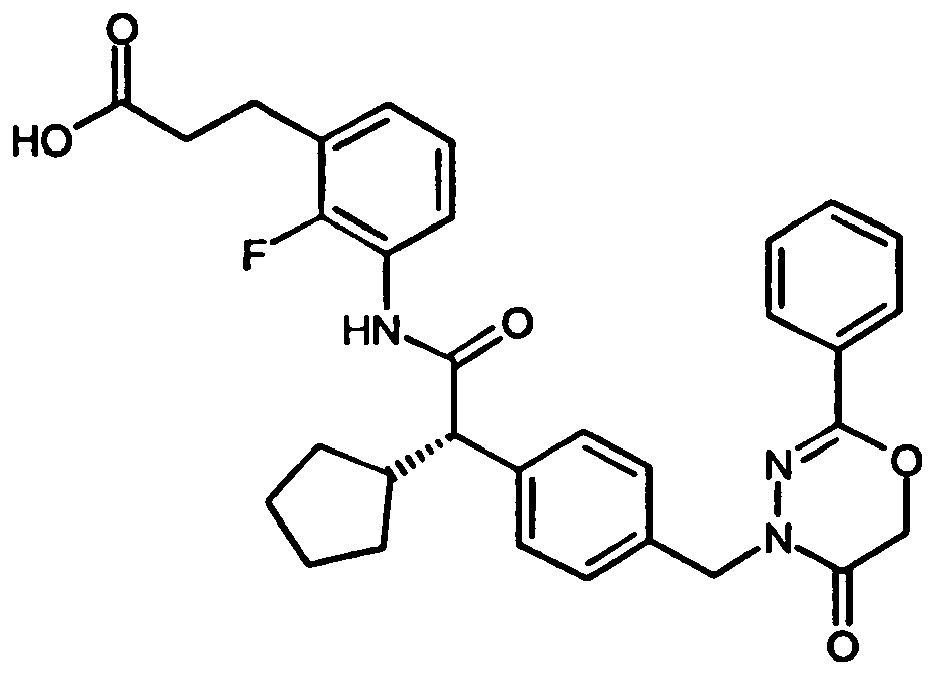
226 (+)-3-(3-{[(2S,3R)-4,4,4-Trifluor-2-{4-[(4-fluor-1-oxo-1,3-dihydro-2H-isoindol-2-yl)methyl]phenyl}-3-methylbutanoyl]amino}phenyl)propansäure LC-MS (Methode 15): Rt = 1.09 min; m/z = 543 (M+H)+.
1H-NMR (400 MHz, DMSO-d 6): δ = 12.11 (s, 1H), 10.18 (s, 1H), 7.60-7.53 (m, 1H), 7.48-7.35 (m, 5H), 7.30 (d, 2H), 7.17 (t, 1H), 6.89 (d, 1H), 4.72 (s, 2H), 4.49 (s, 2H), 3.72 (d, 1H), 3.42-3.30 (m, 1H), 2.79-2.70 (m, ca. 2H), 0.78 (d, 3H).
[α]D 20 = +85°, c = 0.300, Chloroform.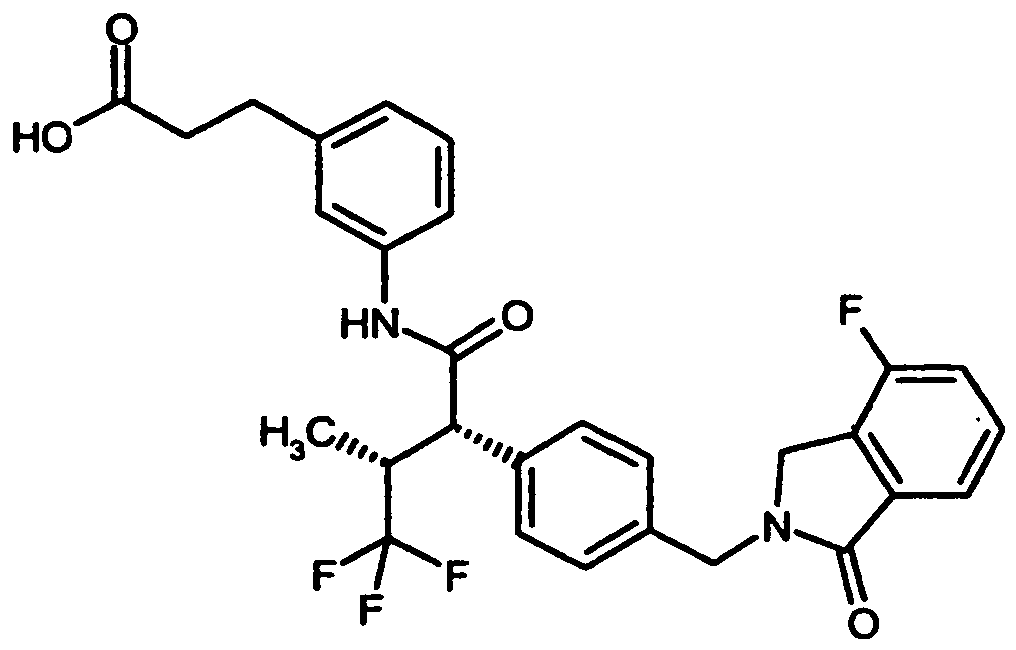
227 (-)-3-(3-{[(2R,3S)-4,4,4-Trifluor-2-{4-[(4-fluor-1-oxo-1,3-dihydro-2H-isoindol-2-yl)methyl]phenyl}-3-methylbutanoyl]amino}phenyl)propansäure LC-MS (Methode 15): Rt = 1.08 min; m/z = 543 (M+H)+.
1H-NMR (400 MHz, DMSO-d 6): δ = 12.12 (br. s, 1H), 10.18 (s, 1H), 7.60-7.53 (m, 1H), 7.48-7.35 (m, 5H), 7.30 (d, 2H), 7.17 (t, 1H), 6.89 (d, 1H), 4.72 (s, 2H), 4.49 (s, 2H), 3.72 (d, 1H), 3.40-3.30 (m, 1H), 2.72 (t, 2H), 2.49 (m, ca. 2H), 0.78 (d, 3H).
[α]D 20 = -73.6°, c = 0.375, Chloroform.
- Zu einer Lösung des betreffenden tert.-Butylesters in Dichlormethan (ca. 0.1 mol/l) wurden 20 eq. Trifluoressigsäure gegeben. Die Reaktionslösung wurde über Nacht bei Raumtemperatur gerührt und anschließend in ein Gemisch aus Wasser und Essigsäureethylester (1:1 v/v) gegeben. Die organische Phase wurde dreimal mit Wasser und einmal mit gesättigter Natriumchlorid-Lösung gewaschen, über Magnesiumsulfat getrocknet und eingeengt. Gegebenenfalls wurde das erhaltene Produkt durch präparative RP-HPLC gereinigt.
- Entsprechend der Allgemeinen Vorschrift 9B wurden die folgenden Verbindungen hergestellt:
Beispiel Name / Struktur Analytische Daten 228 (+/-)-3-{3-[(Cyclopentyl{4-[(1,3-dioxo-1,3-dihydro-2H-isoindol-2-yl)methyl]phenyl}acetyl)amino]-2-methylphenyl}propansäure LC-MS (Methode 7): Rt = 2.50 min; m/z = 525 [M+H]+.
1H-NMR (400 MHz, DMSO-d6): δ = 12.18 (s, 1H), 9.45 (s, 1H), 7.91-7.85 (m, 4H), 7.38 (d, 2H), 7.26 (d, 2H), 7.04-6.96 (m, 3H), 4.75 (s, 2H), 3.44 (d, 1H), 2.78 (t, 2H), 2.42 (t, 2H), 1.98 (s, 3H), 1.87-1.29 (m, 8H), 1.0-0.9 (m, 1H).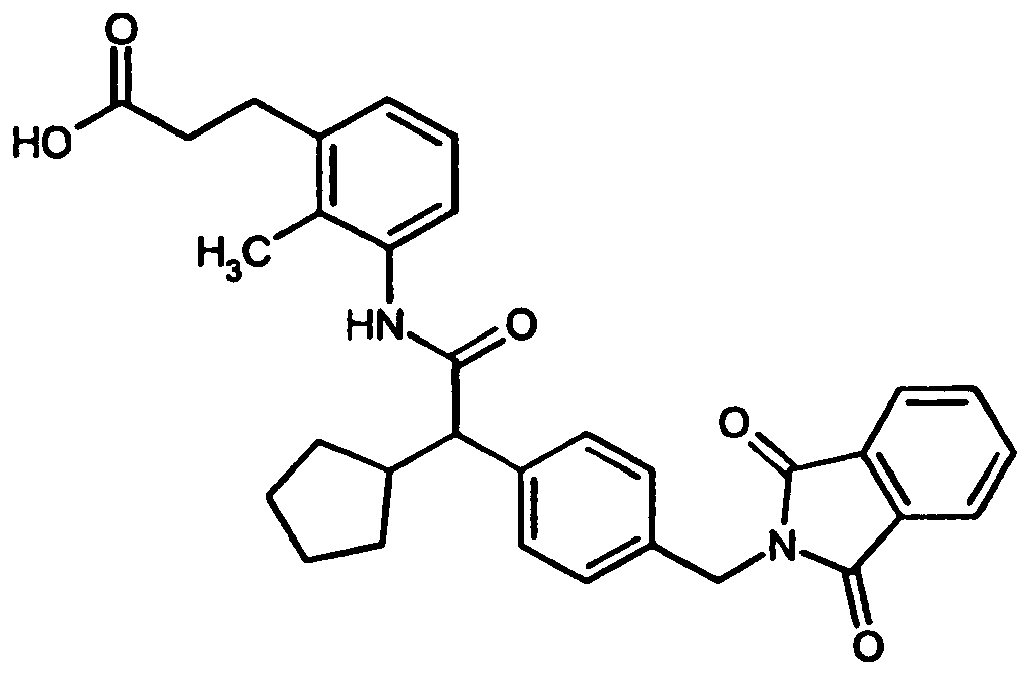
229 (+/-)-3-{3-[(Cyclopentyl{4-[(1-oxo-1,3-dihydro-2H-isoindol-2-yl)methyl]phenyl}acetyl)amino]-2-methylphenyl}propansäure LC-MS (Methode 11): Rt = 2.50 min; m/z = 511 [M+H]+.
1H-NMR (400 MHz, DMSO-d 6): δ = 9.46 (s, 1H), 7.73 (d, 1H), 7.54-7.63 (m, 2H), 7.46-7.53 (m, 1H), 7.41 (d, 2H), 7.23 (d, 2H), 6.94-7.07 (m, 3H), 4.71 (s, 2H), 4.37 (s, 2H), 3.45 (d, 1H), 2.79 (t, 2H), 2.43 (t, 2H), 1.98 (d, 4H), 1.26-1.90 (m, 7H), 0.97 (dq, 1H).
230 (+/-)-3-{3-[(Cyclopentyl{4-[(5-oxo-2-phenyl-5,6-dihydro-4H-1,3,4-oxadiazin-4-yl)methyl]phenyl}-acetyl)amino]-5-fluorphenyl}propansäure LC-MS (Methode 11): Rt = 1.43 min; m/z = 558 [M+H]+.
1H-NMR (400 MHz, DMSO-d 6): δ = 12.13 (br. s, 1H), 10.20 (s, 1H), 7.66-7.83 (m, 2H), 7.41-7.53 (m, 3H), 7.38 (d, 2H), 7.28-7.35 (m, 2H), 7.11 (s, 1H), 6.73 (d, 1H), 4.76-4.95 (m, 4H), 3.27-3.43 (m, 3H), 2.70-2.79 (m, 2H), 1.70-1.85 (m, 1H), 1.17-1.69 (m, 6H), 1.09 (t, 1H), 0.90-1.02 (m, 1H).
231 (+/-)-1-{3-[(Cyclopentyl{4-[(5-oxo-2-phenyl-5,6-dihydro-4H-1,3,4-oxadiazin-4-yl)methyl]phenyl}-acetyl)amino]-4-fluorbenzyl}cyclopropancarbonsäure LC-MS (Methode 11): Rt = 1.45 min; m/z = 584 [M+H]+.
1H-NMR (400 MHz, DMSO-d 6): δ = 12.10 (s, 1H), 9.76 (s, 1H), 7.73-7.82 (m, 2H), 7.65 (dd, 1H), 7.42-7.53 (m, 3H), 7.37-7.42 (m, 2H), 7.28-7.34 (m, 2H), 7.08 (dd, 1H), 6.96-7.03 (m, 1H), 4.81-4.95 (m, 4H), 3.58 (d, 1H), 2.79 (s, 2H), 1.20-1.86 (m, 8H), 1.07 (q, 2H), 0.91-1.02 (m, 1H), 0.73-0.82 (m, 2H).
232 (+/-)-3-(5-{2-Cyclopentyl-2-{4-[(5-oxo-2-phenyl-5,6-dihydro-4H-1,3,4-oxadiazin-4-yl)methyl]phenyl}-acetyl]amino}-2-fluorphenyl)propansäure LC-MS (Methode 11): Rt = 1.41 min; m/z = 558 [M+H]+.
1H-NMR (400 MHz, DMSO-d 6): δ = 12.05-12.34 (m, 1H), 10.04 (s, 1H), 7.69-7.83 (m, 2H), 7.40-7.56 (m, 5H), 7.35-7.40 (m, 2H), 7.27-7.34 (m, 2H), 7.02 (t, 1H), 4.69-4.96 (m, 4H), 3.17 (d, 1H), 2.72-2.81 (m, 2H), 2.42-2.48 (m, 2H), 1.72-1.87 (m, 1H), 1.16-1.72 (m, 7H), 0.90-1.04 (m, 1H).
233 1-{3-[(Cyclopentyl{4-[(5-oxo-2-phenyl-5,6-dihydro-4H-1,3,4-oxadiazin-4-yl)methyl]phenyl}acetyl)-amino]-2-fluorbenzyl}cyclopropancarbonsäure LC-MS (Methode 11): Rt = 1.45 min; m/z = 584 [M+H]+ .
1H-NMR (400 MHz, DMSO-d 6): δ = 12.19 (br. s, 1H), 9.77 (s, 1H), 7.73-7.82 (m, 2H), 7.55-7.65 (m, 1H), 7.36-7.53 (m, 5H), 7.29-7.35 (m, 2H), 7.05-7.13 (m, 1H), 6.96-7.05 (m, 1H), 4.77-4.97 (m, 4H), 3.60 (d, 1H), 2.90 (s, 2H), 1.72-1.86 (m, 1H), 1.21-1.72 (m, 6H), 1.09-1.16 (m, 2H), 0.90-1.02 (m, 1H), 0.70-0.83 (m, 2H).
234 (+/-)-1-{5-[(Cyclopentyl{4-[(5-oxo-2-phenyl-5,6-dihydro-4H-1,3,4-oxadiazin-4-yl)methyl]phenyl}-acetyl)amino]-2-fluorbenzyl}cyclopropancarbonsäure LC-MS (Methode 15): Rt = 1.29 min; m/z = 584 [M+H]+.
1H-NMR (400 MHz, DMSO-d 6): δ = 12.16 (br. s, 1H), 10.05 (s, 1H), 7.71-7.82 (m, 2H), 7.41-7.56 (m, 5H), 7.36-7.41 (m, 2H), 7.28-7.36 (m, 2H), 6.95-7.06 (m, 1H), 4.79-4.96 (m, 4H), 2.85 (s, 2H), 1.71-1.83 (m, 1H), 1.18-1.68 (m, 6H), 1.09-1.15 (m, 2H), 0.91-1.02 (m, 1H), 0.71-0.81 (m, 2H).
235 (+/-)-1-{3-[(Cyclopentyl{4-[(5-oxo-2-phenyl-5,6-dihydro-4H-1,3,4-oxadiazin-4-yl)methyl]phenyl}-acetyl)amino]-5-fluorbenzyl}cyclopropancarbonsäure LC-MS (Methode 15): Rt = 1.30 min; m/z = 584 [M+H]+.
1H-NMR (400 MHz, DMSO-d 6): δ = 12.13 (br. s, 1H), 10.20 (s, 1H), 7.67-7.83 (m, 2H), 7.41-7.54 (m, 5H), 7.36-7.40 (m, 2H), 7.28-7.35 (m, 2H), 7.14 (s, 1H), 6.71 (d, 1H), 4.78-4.94 (m, 4H), 2.80 (s, 2H), 1.71-1.84 (m, 1H), 1.17-1.70 (m, 6H), 1.09-1.16 (m, 2H), 0.96 (dd, 1H), 0.77-0.87 (m, 2H).
-

- 57 mg der racemischen 1-{3-[(Cyclopentyl{4-[(5-oxo-2-phenyl-5,6-dihydro-4H-1,3,4-oxadiazin-4-yl)methyl]phenyl}acetyl)amino]-5-fluorbenzyl}cyclopropancarbonsäure wurden durch präparative HPLC an chiraler Phase in die Enantiomere getrennt [Säule: Daicel Chiralpak AD-H, 5 µm, 250 mm x 20 mm; Fluss: 15 ml/min; UV-Detektion: 220 nm; Injektionsvolumen: 0.2 ml; Temperatur: 40°C; Eluent: 30% Isopropanol / 70% Isohexan]:
- Ausbeute: 30 mg
LC-MS (Methode 15): Rt = 1.30 min; m/z = 584 [M+H]+.
1H-NMR (400 MHz, DMSO-d 6): δ = 12.13 (br. s, 1 H), 10.20 (s, 1 H), 7.67-7.83 (m, 2 H), 7.41-7.54 (m, 5 H), 7.36-7.40 (m, 2 H), 7.28-7.35 (m, 2 H), 7.14 (s, 1 H), 6.71 (d, 1 H), 4.78-4.94 (m, 4 H), 2.80 (s, 2 H), 1.71-1.84 (m, 1 H), 1.17-1.70 (m, 6 H), 1.09-1.16 (m, 2 H), 0.96 (dd, 1 H), 0.77-0.87 (m, 2 H).
[α]D 20 = -26°, c = 0.28, Chloroform. - Ausbeute: 32 mg (leicht verunreinigt)
LC-MS (Methode 15): Rt = 1.30 min; m/z = 584 [M+H]+.
1H-NMR (400 MHz, DMSO-d 6): δ = 12.13 (br. s, 1 H), 10.20 (s, 1 H), 7.67-7.83 (m, 2 H), 7.41-7.54 (m, 5 H), 7.36-7.40 (m, 2 H), 7.28-7.35 (m, 2 H), 7.14 (s, 1 H), 6.71 (d, 1 H), 4.78-4.94 (m, 4 H), 2.80 (s, 2 H), 1.71-1.84 (m, 1 H), 1.17-1.70 (m, 6 H), 1.09-1.16 (m, 2 H), 0.96 (dd, 1 H), 0.77-0.87 (m, 2 H).
[α]D 20 = +23°, c = 0.26, Chloroform. -

- 90 mg (0.15 mmol) des Isomerengemisches von 1-(3-{[(3,3-Difluorcyclopentyl){4-[(5-oxo-2-phenyl-5,6-dihydro-4H-1,3,4-oxadiazin-4-yl)methyl]phenyl}acetyl]amino}benzyl)cyclopropancarbonsäure wurden mittels präparativer HPLC an chiraler Phase weiter aufgetrennt [Säule: Daicel Chiralcel OD-H, 5 µm, 250 mm x 20 mm; Elutionsmittel: Isohexan/(Ethanol + 0.2% Trifluoressigsäure + 1% Wasser) 75:25 (v/v); Fluss: 15 ml/min; UV-Detektion: 220 nm; Temperatur: 40°C]. Es wurden drei Fraktionen isoliert, wobei Fraktion 2 aus zwei Isomeren bestand. Diese Mischfraktion wurde durch nochmalige präparative HPLC an chiraler Phase nachgetrennt [Säule: Daicel Chiralpak AD-H, 5 µm, 250 mm x 20 mm; Elutionsmittel: Isohexan/(Ethanol + 0.2% Trifluoressigsäure + 1% Wasser) 70:30 (v/v); Fluss: 15 ml/min; UV-Detektion: 220 nm; Temperatur: 30°C].
- Ausbeute: 15 mg
Rt 9.61 min; chem. Reinheit >99%; Isomeren-Reinheit: verunreinigt mit 1.2% Isomer 2
[Säule: Daicel Chiralpak AD-H, 5 µm, 250 mm x 4.6 mm; Elutionsmittel: Isohexan/(Ethanol + 0.2% Trifluoressigsäure + 1% Wasser) 70:30 (v/v); Fluss: 1 ml/min; UV-Detektion: 220 nm; Temperatur: 40°C].
LC-MS (Methode 15): Rt = 1.22 min; m/z = 602 (M+H)+. - Ausbeute: 12 mg
Rt 8.68 min; Reinheit >99%; >99% ee
[Säule: Daicel Chiralpak AD-H, 5 µm, 250 mm x 4.6 mm; Elutionsmittel: Isohexan/(Ethanol + 0.2% Trifluoressigsäure + 1% Wasser) 70:30 (v/v); Fluss: 1 ml/min; UV-Detektion: 220 nm; Temperatur: 40°C].
LC-MS (Methode 15): Rt = 1.22 min; m/z = 602 (M+H)+. - Ausbeute: 15 mg
Rt 10.28 min; chem. Reinheit >99%; Isomeren-Reinheit: verunreinigt mit 10.9% Isomer 1 und 3.8% Isomer 2
[Säule: Daicel Chiralpak AD-H, 5 µm, 250 mm x 4.6 mm; Elutionsmittel: Isohexan/(Ethanol + 0.2% Trifluoressigsäure + 1% Wasser) 70:30 (v/v); Fluss: 1 ml/min; UV-Detektion: 220 nm; Temperatur: 40°C].
LC-MS (Methode 15): Rt =1.22 min; m/z = 602 (M+H)+. - Ausbeute: 19 mg
Rt 7.96 min; Reinheit >99%; >99% ee
[Säule: Daicel Chiralpak AD-H, 5 µm, 250 mm x 4.6 mm; Elutionsmittel: Isohexan/(Ethanol + 0.2% Trifluoressigsäure + 1% Wasser) 70:30 (v/v); Fluss: 1 ml/min; UV-Detektion: 220 nm; Temperatur: 40°C].
LC-MS (Methode 15): Rt = 1.22 min; m/z = 602 (M+H)+. - Die pharmakologische Wirkung der erfindungsgemäßen Verbindungen kann in folgenden Assays gezeigt werden:
- Kaninchen werden durch intravenöse Injektion von Thiopental-Natrium narkotisiert bzw. getötet (ca. 50 mg/kg) und entblutet. Die Arteria Saphena wird entnommen und in 3 mm breite Ringe geteilt. Die Ringe werden einzeln auf je einem triangelförmigen, am Ende offenen Häkchenpaar aus 0.3 mm starkem Spezialdraht (Remanium®) montiert. Jeder Ring wird unter Vorspannung in 5 ml-Organbäder mit 37°C warmer, carbogenbegaster Krebs-Henseleit-Lösung folgender Zusammensetzung gebracht: NaCl 119 mM; KC1 4.8 mM; CaCl2 x 2 H2O 1 mM; MgSO4 x 7 H2O 1.4 mM; KH2PO4 1.2 mM; NaHCO3 25 mM; Glucose 10 mM; Rinderserumalbumin 0.001%. Die Kontraktionskraft wird mit Statham UC2-Zellen erfasst, verstärkt und über A/D-Wandler (DAS-1802 HC, Keithley Instruments, München) digitalisiert sowie parallel auf Linienschreibern registriert. Kontraktionen werden durch Zugabe von Phenylephrin induziert.
- Nach mehreren (allgemein 4) Kontrollzyklen wird die zu untersuchende Substanz in jedem weiteren Durchgang in steigender Dosierung zugesetzt und die Höhe der unter dem Einfluss der Testsubstanz erzielten Kontraktion mit der Höhe der im letzten Vordurchgang erreichten Kontraktion verglichen. Daraus wird die Konzentration errechnet, die erforderlich ist, um die in der Vorkontrolle erreichte Kontraktion auf 50% zu reduzieren (IC50-Wert). Das Standard-Applikationsvolumen beträgt 5 µl. Der DMSO-Anteil in der Badlösung entspricht 0.1%.
- Repräsentative Ergebnisse zu den erfindungsgemäßen Verbindungen sind in Tabelle 1 aufgeführt:
Tabelle 1: Gefäßrelaxierende Wirkung in vitro Beispiel Nr. IC50 [nM] 46 110 77 625 86 180 103 120 115 163 126 145 138 52 143 345 156 45 164 26 166 4.9 185 64 186 37 192 356 204 86 214 11 224 490 237 158 - Die Untersuchungen zur Stimulation der rekombinanten löslichen Guanylatcyclase (sGC) durch die erfindungsgemäßen Verbindungen mit und ohne Natriumnitroprussid sowie mit und ohne den Häm-abhängigen sGC-Inhibitor 1H-1,2,4-Oxadiazolo[4,3-a]chinoxalin-1-on (ODQ) werden nach der in folgender Literaturstelle im Detail beschriebenen Methode durchgeführt: M. Hoenicka, E.M. Becker, H. Apeler, T. Sirichoke, H. Schroeder, R. Gerzer und J.-P. Stasch, "Purified soluble guanylyl cyclase expressed in a baculovirus/Sf9 system: Stimulation by YC-1, nitric oxide, and carbon oxide", J. Mol. Med. 77 (1999), 14-23. Die Häm-freie Guanylatcyclase wird durch Zugabe von Tween 20 zum Probenpuffer (0.5% in der Endkonzentration) erhalten.
- Die Aktivierung der sGC durch eine Prüfsubstanz wird als n-fache Stimulation der Basalaktivität angegeben. Das Ergebnis für Beispiel 103 ist in Tabelle 2 gezeigt:
Tabelle 2: Stimulation (n-fach) der rekombinanten löslichen Guanylatcyclase (sGC) in vitro durch Beispiel 103 Konzentration Beispiel 103 [µM] Häm-haltige sGC Häm-freie sGC Basal Basal + 0.1 µM DEA/NO +10 µM ODQ 0 1.0 6.5 5.7 1.0 0.1 1.2 6.9 5.8 1.1 1 1.4 7.8 8.5 2.4 10 6.2 13.5 36.8 13.9 100 22.3 35.6 91.8 56.1 [DEA/NO = 2-(N,N-Diethylamino)diazenolat-2-oxid; ODQ = 1H-1,2,4-Oxadiazolo[4,3-α]chinoxalin-1-on]. - Aus Tabelle 2 ist ersichtlich, dass eine Stimulation sowohl des Häm-haltigen als auch des Hämfreien Enzyms erreicht wird. Weiterhin zeigt die Kombination aus Beispiel 103 und 2-(N,N-Diethylamino)diazenolat-2-oxid (DEA/NO), einem NO-Donor, keinen synergistischen Effekt, d.h. die Wirkung von DEA/NO wird nicht potenziert, wie dies bei einem über einen Häm-abhängigen Mechanismus wirkenden sGC-Aktivator zu erwarten wäre. Darüber hinaus wird die Wirkung des erfindungsgemäßen sGC-Aktivators durch den Häm-abhängigen Inhibitor der löslichen Guanylatcyclase ODQ nicht blockiert, sondern sogar gesteigert. Die Ergebnisse aus Tabelle 2 belegen somit den Wirkmechanismus der erfindungsgemäßen Verbindungen als Aktivatoren der löslichen Guanylatcyclase.
- Die zelluläre Wirkung der erfindungsgemäßen Verbindungen wird an einer rekombinanten Guanylatcyclase-Reporterzelllinie, wie in F. Wunder et al., Anal. Biochem. 339, 104-112 (2005) beschrieben, bestimmt.
- Repräsentative Ergebnisse zu den erfmdungsgemäßen Verbindungen sind in Tabelle 3 aufgeführt:
Tabelle 3: sGC-aktivierende Wirkung in der CHO-Reporterzelle in vitro Beispiel Nr. MEC [nM] 1 10 3 300 11 300 21 30 22 300 26 300 29 30 30 30 38 30 46 3 62 3 77 1 86 1 103 10 105 10 106 10 115 3 118 30 126 30 138 10 143 3 156 3 160 30 164 0.3 166 0.3 170 3 171 30 176 30 181 0.7 184 3 185 0.3 186 0.2 187 1 192 3 204 1 207 3 213 3 214 0.1 219 0.2 220 0.3 224 1 230 30 231 0.2 232 20 233 0.3 234 1 237 1 241 3 (MEC = minimale effektive Konzentration). - Lösliche Guanylatcyclase (sGC) setzt unter Stimulation GTP zu cGMP und Pyrophosphat (PPi) um. PPi wird mit Hilfe des nachfolgend beschriebenen Tests nachgewiesen. Das im Test entstehende Signal nimmt mit fortschreitender Umsetzung zu und dient als Maß für die sGC-Enzymaktivität unter der gegebenen Stimulation.
- Zur Durchführung des Tests werden 29 µl Enzymlösung [0-10 nM lösliche Guanylatcyclase (hergestellt nach Hönicka et al., J. Mol. Med. 77, 14-23 (1999)) in 50 mM TEA, 2 mM MgCl2, 0.1% BSA (Fraktion V), 0.005% Brij®, pH 7.5] in eine Mikroplatte vorgelegt und 1 µl der zu testenden Substanz (als seriell verdünnte Lösung in DMSO) hinzugegeben. Der Ansatz wird 10 min bei Raumtemperatur inkubiert. Anschließend werden 20 µl Detektionsmix [1.2 nM Firefly-Luciferase (Photinus pyralis-Luciferase, Fa. Promega), 29 µM Dehydro-Luziferin (hergestellt nach Bitler & McElroy, Arch. Biochem. Biophys. 72, 358 (1957)), 122 µM Luziferin (Fa. Promega), 153 µM ATP (Fa. Sigma) und 0.4 mM DTT (Fa. Sigma) in 50 mM TEA, 2 mM MgCl2, 0.1% BSA (Fraktion V), 0.005% Brij®, pH 7.5] zugegeben. Die Enzymreaktion wird durch Zugabe von 20 µl Substratlösung [1.25 mM Guanosin-5'-triphosphat (Fa. Sigma) in 50 mM TEA, 2 mM MgCl2, 0.1% BSA (Fraktion V), 0.005% Brij®, pH 7.5] gestartet und kontinuierlich luminometrisch vermessen. Das Maß der Stimulation durch die zu testende Substanz kann relativ zum Signal der nicht stimulierten Reaktion bestimmt werden.
- Durch Zugabe von 25 µM 1H-1,2,4-Oxadiazolo[4,3-α]chinoxalin-1-on (ODQ) zur Enzymlösung und anschließende 30-minütige Inkubation wird die Aktivierung der Häm-freien Guanylatcyclase untersucht und mit der Stimulation des nativen Enzyms verglichen.
- Repräsentative Ergebnisse zu den erfindungsgemäßen Verbindungen sind in Tabelle 4 aufgeführt:
Tabelle 4: Aktivierende Wirkung am sGC-Enzym in vitro Beispiel Nr. MEC [nM] EC50 [nM] 46 4.1 130 77 0.4 24 86 1.4 73 103 20 381 115 1.6 40 126 10 320 138 5.1 330 156 0.2 5.4 160 3.4 35 164 0.5 6.1 166 0.4 2.4 170 1 11 171 3.7 59 176 10 320 181 1.4 69 184 7 240 186 0.1 1.5 192 2.5 30 204 0.5 18 207 0.5 11 213 1.2 24 214 0.4 19 219 0.2 3.6 220 2 75 224 1 20 230 8.1 420 231 0.4 5.2 232 93 1100 233 3.3 78 234 4.1 220 237 0.9 21 241 1.2 17 (MEC = minimale effektive Konzentration; EC50 = Konzentration bei 50% der maximalen Wirksamkeit). - Für die im Folgenden beschriebenen Messungen an wachen SH-Ratten wird ein im Handel erhältliches Telemetriesystem der Firma Data Sciences International DSI, USA, eingesetzt.
- Das System besteht aus 3 Hauptkomponenten: (1) Implantierbare Sender, (2) Empfänger, die über einen Multiplexer mit einem (3) Datenakquisitionscomputer verbunden sind. Die Telemetrieanlage ermöglicht eine kontinuierliche Erfassung von Blutdruck und Herzfrequenz an wachen Tieren in ihrem gewohnten Lebensraum.
- Die Untersuchungen werden an ausgewachsenen weiblichen, spontan-hypertensiven Ratten (SH-Ratten) mit einem Körpergewicht von >200 g durchgeführt. Die Versuchstiere werden nach Senderimplantation einzeln in Makrolon-Käfigen Typ 3 gehalten. Sie haben freien Zugang zu Standardfutter und Wasser. Der Tag/Nacht-Rhythmus im Versuchslabor wird per Raumbeleuchtung um 6:00 Uhr morgens und um 19:00 Uhr abends gewechselt.
- Die eingesetzten Telemetriesender (TAM PA-C40, DSI) werden den Versuchstieren mindestens 14 Tage vor dem ersten Versuchseinsatz unter aseptischen Bedingungen chirurgisch implantiert.
- Die so instrumentierten Tiere sind nach Abheilen der Wunde und Einwachsen des Implantats wiederholt einsetzbar.
- Zur Implantation werden die nüchternen Tiere mit Pentobarbital (Nembutal, Sanofi, 50 mg/kg i.p.) narkotisiert und an der Bauchseite weiträumig rasiert und desinfiziert. Nach Eröffnung des Bauchraumes entlang der Linea alba wird der flüssigkeitsgefüllte Messkatheter des Systems oberhalb der Bifurcation nach cranial in die Aorta descendens eingesetzt und mit Gewebekleber (VetBonD™, 3M) befestigt. Das Sendergehäuse wird intraperitoneal an der Bauchwandmuskulatur fixiert und die Wunde schichtweise verschlossen. Postoperativ wird zur Infektionsprophylaxe ein Antibiotikum verabreicht (Tardomyocel COMP, Bayer AG, 1 ml/kg s.c.).
- Die zu untersuchenden Substanzen werden jeweils einer Gruppe von Tieren (n = 6) per Schlundsonde oral verabreicht. Entsprechend einem Applikationsvolumen von 5 ml/kg Körpergewicht werden die Testsubstanzen in geeigneten Lösungsmittelgemischen gelöst oder in 0.5%-iger Tylose suspendiert. Eine Lösungsmittel-behandelte Gruppe von Tieren wird als Kontrolle eingesetzt.
- Die Telemetrie-Messeinrichtung ist für 24 Tiere konfiguriert. Jeder Versuch wird unter einer Versuchsnummer registriert.
- Den in der Anlage lebenden instrumentierten Ratten ist jeweils eine eigene Empfangsantenne zugeordnet (1010 Receiver, DSI). Die implantierten Sender sind über einen eingebauten Magnetschalter von außen aktivierbar und werden bei Versuchsvorlauf auf Sendung geschaltet. Die ausgestrahlten Signale können durch ein Datenakquisitionssystem (Dataquest™ A.R.T. for Windows, DSI) online erfasst und entsprechend aufgearbeitet werden. Die Ablage der Daten erfolgt jeweils in einem hierfür eröffneten Ordner, der die Versuchsnummer trägt.
- Im Standardablauf werden über je 10 Sekunden Dauer gemessen: (1) systolischer Blutdruck (SBP), (2) diastolischer Blutdruck (DBP), (3) arterieller Mitteldruck (MAP) und (4) Herzfrequenz (HR).
- Die Messwerterfassung wird rechnergesteuert in 5 Minuten-Abständen wiederholt. Die als Absolutwert erhobenen Quelldaten werden im Diagramm mit dem aktuell gemessenen Barometerdruck korrigiert und in Einzeldaten abgelegt. Weitere technische Details sind in der Dokumentation der Herstellerfirma (DSI) aufgeführt.
- Die Verabreichung der Prüfsubstanzen erfolgt am Versuchstag um 9:00 Uhr. Im Anschluss an die Applikation werden die oben beschriebenen Parameter über 24 Stunden gemessen. Nach Versuchsende werden die erhobenen Einzeldaten mit der Analysis-Software (Dataquest™ A.R.T. Analysis) sortiert. Als Leerwert wird der Zeitpunkt 2 Stunden vor Substanz-Applikation angenommen, so dass der selektierte Datensatz den Zeitraum von 7:00 Uhr am Versuchstag bis 9:00 Uhr am Folgetag umfasst.
- Die Daten werden über eine voreinstellbare Zeit durch Mittelwertbestimmung geglättet (15 Minuten-Mittelwert, 30 Minuten-Mittelwert) und als Textdatei auf einen Datenträger übertragen. Die so vorsortierten und komprimierten Messwerte werden in Excel-Vorlagen übertragen und tabellarisch dargestellt.
- Die erfindungsgemäßen Verbindungen können folgendermaßen in pharmazeutische Zubereitungen überführt werden:
- 100 mg der erfindungsgemäßen Verbindung, 50 mg Lactose (Monohydrat), 50 mg Maisstärke (nativ), 10 mg Polyvinylpyrrolidon (PVP 25) (Fa. BASF, Ludwigshafen, Deutschland) und 2 mg Magnesiumstearat.
- Tablettengewicht 212 mg. Durchmesser 8 mm, Wölbungsradius 12 mm.
- Die Mischung aus erfindungsgemäßer Verbindung, Lactose und Stärke wird mit einer 5%-igen Lösung (m/m) des PVPs in Wasser granuliert. Das Granulat wird nach dem Trocknen mit dem Magnesiumstearat 5 Minuten gemischt. Diese Mischung wird mit einer üblichen Tablettenpresse verpresst (Format der Tablette siehe oben). Als Richtwert für die Verpressung wird eine Presskraft von 15 kN verwendet.
- 1000 mg der erfindungsgemäßen Verbindung, 1000 mg Ethanol (96%), 400 mg Rhodigel® (Xanthan gum der Firma FMC, Pennsylvania, USA) und 99 g Wasser.
- Einer Einzeldosis von 100 mg der erfindungsgemäßen Verbindung entsprechen 10 ml orale Suspension.
- Das Rhodigel wird in Ethanol suspendiert, die erfindungsgemäße Verbindung wird der Suspension zugefügt. Unter Rühren erfolgt die Zugabe des Wassers. Bis zum Abschluß der Quellung des Rhodigels wird ca. 6 h gerührt.
- 500 mg der erfindungsgemäßen Verbindung, 2.5 g Polysorbat und 97 g Polyethylenglycol 400. Einer Einzeldosis von 100 mg der erfindungsgemäßen Verbindung entsprechen 20 g orale Lösung.
- Die erfindungsgemäße Verbindung wird in der Mischung aus Polyethylenglycol und Polysorbat unter Rühren suspendiert. Der Rührvorgang wird bis zur vollständigen Auflösung der erfindungsgemäßen Verbindung fortgesetzt.
- Die erfindungsgemäße Verbindung wird in einer Konzentration unterhalb der Sättigungslöslichkeit in einem physiologisch verträglichen Lösungsmittel (z.B. isotonische Kochsalzlösung, Glucoselösung 5% und/oder PEG 400-Lösung 30%) gelöst. Die Lösung wird steril filtriert und in sterile und pyrogenfreie Injektionsbehältnisse abgefüllt.

und

überführt, diese danach in einem inerten Lösungsmittel mit elementarem Brom oder mit N-Bromsuccinimid zu einer Verbindung der Formel (V)

bromiert, anschließend in einem inerten Lösungsmittel in Gegenwart einer Base mit einer Verbindung der Formel (VI)

zu einer Verbindung der Formel (VII)

umsetzt, nachfolgend den Ester-Rest T1 in (VII) unter basischen oder sauren Bedingungen abspaltet, die resultierende Carbonsäure der Formel (VIII)

dann in einem inerten Lösungsmittel in Gegenwart eines Kondensationsmittels oder über die Zwischenstufe des entsprechenden Carbonsäurechlorids in Gegenwart einer Base mit einem Amin der Formel (IX)
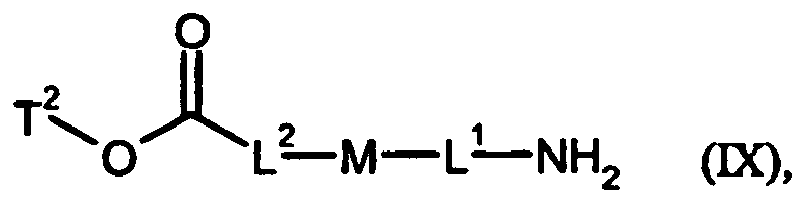
und

kuppelt und abschließend den Ester-Rest T2 in (X) durch erneute basische oder saure Solvolyse zur Carbonsäure der Formel (I) abspaltet
und die Verbindungen der Formel (I) gegebenenfalls nach dem Fachmann bekannten Methoden in ihre Enantiomere und/oder Diastereomere trennt und/oder gegebenenfalls mit den entsprechenden (i) Lösungsmitteln und/oder (ii) Basen oder Säuren zu ihren Solvaten, Salzen und/oder Solvaten der Salze umsetzt.

zu kuppeln, welche dann in einem inerten Lösungsmittel in Gegenwart einer Base mit einer Verbindung der Formel (VI)

zu der Verbindung der Formel (X)

umgesetzt und durch Abspaltung des Ester-Restes T2 in (X) in die Carbonsäure der Formel (I) überführt wird.

mit Carbonsäurechloriden der Formel (XVI)

zu Phenylketonen der Formel (XVII)

erhalten; die Verbindungen der Formel (XVII) können dann in einer mehrstufigen, literaturbekannten Reaktionssequenz in die Phenylessigsäure-Derivate der Formel (IV) überführt werden (siehe nachfolgende Reaktionsschemata 3 und 4).
Claims (16)
- Verbindung der Formel (I)
 der Ring A für einen N-verknüpften 5- bis 7-gliedrigen, gesättigten oder partiell ungesättigten, Oxo-substituierten Azaheterocyclus steht,
der (i) ein oder zwei weitere Heteroatome aus der Reihe N, O und/oder S als Ringglieder enthalten kann,
der (ii) mit einem Rest ausgewählt aus der Reihe Fluor, Chlor, (C1-C6)-Alkyl, Trifluormethyl, (C3-C7)-Cycloalkyl, 4- bis 7-gliedriges Heterocyclyl und Phenyl substituiert ist oder der benzo-anelliert ist,
wobei der Phenyl-Substituent und der anellierte Phenylring ihrerseits bis zu zweifach, gleich oder verschieden, mit einem Rest ausgewählt aus der Reihe Halogen, Cyano, (C1-C4)-Alkyl, (C2-C4)-Alkenyl, Trifluormethyl, (C1-C4)-Alkoxy und Trifluormethoxy substituiert sein können,
und
der (iii) darüber hinaus bis zu zweifach, gleich oder verschieden, mit weiteren Resten ausgewählt aus der Reihe Fluor, (C1-C6)-Alkyl, Trifluormethyl, Oxo, (C3-C7)-Cycloalkyl, 4- bis 7-gliedriges Heterocyclyl und Phenyl substituiert sein kann,
wobei Phenyl seinerseits bis zu zweifach, gleich oder verschieden, mit einem Rest ausgewählt aus der Reihe Halogen, Cyano, (C1-C4)-Alkyl, (C2-C4)-Alkenyl, Trifluormethyl, (C1-C4)-Alkoxy und Trifluormethoxy substituiert sein kann,R1 für Wasserstoff, (C1-C4)-Alkyl oder Cyclopropyl steht,R2 für Wasserstoff, Halogen, Cyano, (C1-C4)-Alkyl oder Trifluormethyl steht,R3 für (C3-C6)-Alkyl oder (C3-C6)-Alkenyl, welche jeweils mit Cyano, (C1-C4)-Alkoxy oder Trifluormethoxy und bis zu sechsfach mit Fluor substituiert sein können,
oder
für (C3-C7)-Cycloalkyl oder (C3-C7)-Cycloalkenyl, welche jeweils bis zu zweifach, gleich oder verschieden, mit (C1-C4)-Alkyl, Trifluormethyl und (C1-C4)-Alkoxy sowie bis zu vierfach mit Fluor substituiert sein können,
oder
für Oxetanyl, Tetrahydrofuranyl oder Tetrahydropyranyl steht,L1 für eine Bindung oder für Methylen, Ethan-1,2-diyl oder Propan-1,3-diyl, welche jeweils bis zu zweifach, gleich oder verschieden, mit (C1-C4)-Alkyl substituiert sein können, steht,L2 für eine Bindung oder für Methylen, Ethan-1,2-diyl, Propan-1,3-diyl, Ethen-1,2-diyl oder Propen-1,3-diyl, welche jeweils bis zu zweifach, gleich oder verschieden, mit (C1-C4)-Alkyl substituiert sein können, steht
oder
für eine Gruppe der Formel # die Verknüpfungsposition mit der Carbonsäure-Gruppierung kennzeichnet,## die Verknüpfungsposition mit der Gruppe M kennzeichnet,m die Zahl 0 oder 1 bedeutet,n die Zahl 0, 1 oder 2 bedeutet,p die Zahl 1 oder 2 bedeutet,D O oder S bedeutetund R4A und R4B voneinander Wasserstoff oder (C1-C4)-Alkyl bedeuten, wobei im Falle, dass die Gruppe -CR4AR4B- zweifach auftritt, die einzelnen Bedeutungen von R4A und R4B jeweils gleich oder verschieden sein können,M für Phenylen oder 5- oder 6-gliedriges Heteroarylen mit bis zu zwei Ring-Heteroatomen aus der Reihe N, O und/oder S steht, wobei Phenylen und Heteroarylen jeweils bis zu zweifach, gleich oder verschieden, mit einem Rest ausgewählt aus der Reihe Halogen, Cyano, (C1-C4)-Alkyl, Trifluormethyl, Hydroxy, (C1-C4)-Alkoxy und Trifluormethoxy substituiert sein können,
oder
für Cyclopropan-1,2-diyl, Cyclobutan-1,2-diyl, Cyclobutan-1,3-diyl, Cyclopentan-1,2-diyl, Cyclopentan-1,3-diyl, Cyclohexan-1,2-diyl, Cyclohexan-1,3-diyl oder Cyclohexan-1,4-diyl steht, welche jeweils bis zu zweifach, gleich oder verschieden, mit einem Rest ausgewählt aus der Reihe Fluor, (C1-C4)-Alkyl, Trifluormethyl und (C1-C4)-Alkoxy substituiert sein können,oder L2 und M miteinander verknüpft sind und zusammen eine Gruppe der Formelsowie ihre Salze, Solvate und Solvate der Salze. # die Verknüpfungsposition mit der Carbonsäure-Gruppierung kennzeichnet,### die Verknüpfungsposition mit der Gruppe L1 kennzeichnet,E O, S, CH2 oder CH2CH2 bedeutet,R5 und Wasserstoff, (C1-C4)-Alkyl oder Trifluormethyl bedeutetR6 Wasserstoff, Halogen, (C1-C4)-Alkyl, Trifluormethyl, (C1-C4)-Alkoxy oder Trifluormethoxy bedeutet,
 - Verbindung der Formel (I) nach Anspruch 1, in welcherder Ring A für einen Oxo-substituierten Azaheterocyclus der Formelsowie ihre Salze, Solvate und Solvate der Salze.


 * die Verknüpfungsposition mit dem restlichen Teil des Moleküls kennzeichnet,R7 Wasserstoff, (C1-C6)-Alkyl oder (C3-C6)-Cycloalkyl bedeutet,R8 (C1-C6)-Alkyl, Trifluormethyl, (C3-C6)-Cycloalkyl, 4- bis 6-gliedriges Heterocyclyl oder Phenyl bedeutet, wobei Phenyl seinerseits bis zu zweifach, gleich oder verschieden, mit einem Rest ausgewählt aus der Reihe Fluor, Chlor, Brom, Cyano, (C1-C4)-Alkyl, Vinyl, Trifluormethyl, (C1-C4)-Alkoxy und Trifluormethoxy substituiert sein kann,und R9 Wasserstoff bedeutet oder die oben genannte Bedeutung von R8 hat,
 - Verbindung der Formel (I) nach Anspruch 1, in welcher
der Ring A für einen Oxo-substituierten Azaheterocyclus der Formel


 * die Verknüpfungsposition mit dem restlichen Teil des Moleküls kennzeichnet,R8 (C1-C6)-Alkyl, Trifluormethyl, (C3-C6)-Cycloalkyl, 4- bis 6-gliedriges Heterocyclyl oder Phenyl bedeutet, wobei Phenyl seinerseits bis zu zweifach, gleich oder verschieden, mit einem Rest ausgewählt aus der Reihe Fluor, Chlor, Brom, Cyano, (C1-C4)-Alkyl, Vinyl, Trifluormethyl, (C1-C4)-Alkoxy und Trifluormethoxy substituiert sein kann,R9 Wasserstoff bedeutet oder die oben genannte Bedeutung von R8 hat,R10A und R10B unabhängig voneinander Wasserstoff, Fluor oder Chlor bedeutenund R11 Wasserstoff, Fluor oder Chlor bedeutet,sowie ihre Salze, Solvate und Solvate der Salze.
 - Verbindung der Formel (I) nach Anspruch 1 oder 2, in welcher
der Ring A für einen Oxo-substituierten Azaheterocyclus der Formel

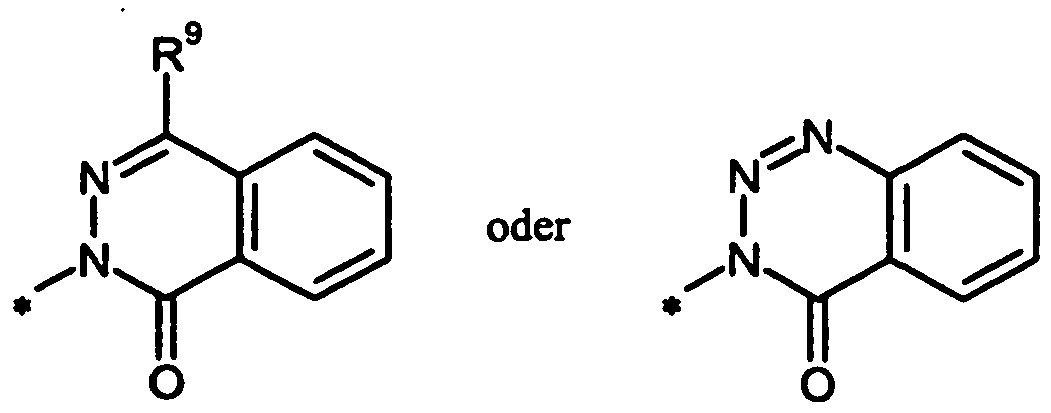 * die Verknüpfungsposition mit dem restlichen Teil des Moleküls kennzeichnet,R7 Wasserstoff oder (C1-C4)-Alkyl bedeutet,R8 (C1-C6)-Alkyl, Trifluormethyl, (C3-C6)-Cycloalkyl oder Phenyl bedeutet, wobei Phenyl seinerseits bis zu zweifach, gleich oder verschieden, mit einem Rest ausgewählt aus der Reihe Fluor, Chlor, Cyano, (C1-C4)-Alkyl, Trifluormethyl, (C1-C4)-Alkoxy und Trifluormethoxy substituiert sein kann,
undR9 Wasserstoff bedeutet oder die zuvor genannte Bedeutung von R8 hat,R1 für Wasserstoff oder (C1-C4)-Alkyl steht,R2 für Wasserstoff, Fluor, Chlor oder Trifluormethyl steht,R3 für (C3-C6)-Alkyl oder (C3-C6)-Alkenyl, welche jeweils mit Cyano, Methoxy, Ethoxy oder Trifluormethoxy und bis zu sechsfach mit Fluor substituiert sein können,
oder
für (C3-C6)-Cycloalkyl oder (C4-C6)-Cycloalkenyl, welche jeweils bis zu zweifach, gleich oder verschieden, mit (C1-C4)-Alkyl und Trifluormethyl sowie bis zu vierfach mit Fluor substituiert sein können,
oder
für Oxetanyl steht,L1 für eine Bindung oder für Methylen, Ethan-1,2-diyl oder Propan-1,3-diyl, welche jeweils bis zu zweifach mit Methyl substituiert sein können, steht,L2 für eine Bindung oder für Methylen, Ethan-1,2-diyl, Propan-1,3-diyl oder Ethen-1,2-diyl, welche jeweils bis zu zweifach mit Methyl substituiert sein können, steht
oder für eine Gruppe der Formel # die Verknüpfungsposition mit der Carbonsäure-Gruppierung kennzeichnet,## die Verknüpfungsposition mit der Gruppe M kennzeichnet,m die Zahl 0 oder 1 bedeutet,n die Zahl 0, 1 oder 2 bedeutet,D O oder S bedeutetund R4A und R4B unabhängig voneinander Wasserstoff oder Methyl bedeuten,M für Phenylen oder 5- oder 6-gliedriges Heteroarylen mit bis zu zwei Ring-Heteroatomen aus der Reihe N, O und/oder S steht, wobei Phenylen und Heteroarylen jeweils bis zu zweifach, gleich oder verschieden, mit einem Rest ausgewählt aus der Reihe Fluor, Chlor, (C1-C4)-Alkyl, Trifluormethyl, Methoxy und Trifluormethoxy substituiert sein können,
oder
für Cyclopentan-1,3-diyl, Cyclohexan-1,3-diyl oder Cyclohexan-1,4-diyl steht, welche jeweils bis zu zweifach, gleich oder verschieden, mit einem Rest ausgewählt aus der Reihe Fluor, Methyl und Trifluormethyl substituiert sein können,oder L2 und M miteinander verknüpft sind und zusammen eine Gruppe der Formelsowie ihre Salze, Solvate und Solvate der Salze. # die Verknüpfungsposition mit der Carbonsäure-Gruppierung kennzeichnet,### die Verknüpfungsposition mit der Gruppe L1 kennzeichnet,E CH2 oder CH2CH2 bedeutet,R5 Wasserstoff, Methyl oder Trifluormethyl bedeutetund R6 Wasserstoff, Fluor, Chlor, Methyl, Trifluormethyl, Methoxy oder Trifluormethoxy bedeutet,
 - Verbindung der Formel (I) nach Anspruch 1 oder 3, in welcher der Ring A für einen Oxo-substituierten Azaheterocyclus der Formel


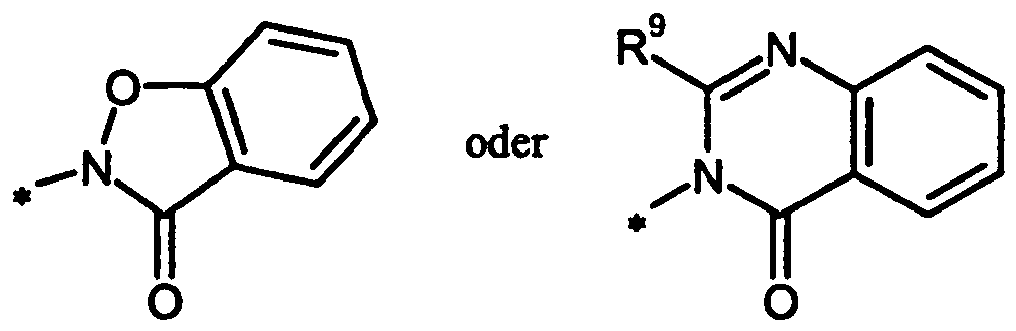 * die Verknüpfungsposition mit dem restlichen Teil des Moleküls kennzeichnet,R8 (C1-C6)-Alkyl, Trifluormethyl, (C3-C6)-Cycloalkyl oder Phenyl bedeutet, wobei Phenyl seinerseits bis zu zweifach, gleich oder verschieden, mit einem Rest ausgewählt aus der Reihe Fluor, Chlor, Cyano, (C1-C4)-Alkyl, Trifluormethyl, (C1-C4)-Alkoxy und Trifluormethoxy substituiert sein kann,R9 Wasserstoff bedeutet oder die zuvor genannte Bedeutung von R8 hatund R10A und R10B unabhängig voneinander Wasserstoff, Fluor oder Chlor bedeuten,R1 für Wasserstoff oder (C1-C4)-Alkyl steht,R2 für Wasserstoff, Fluor, Chlor oder Trifluormethyl steht,R3 für (C3-C6)-Alkyl oder (C3-C6)-Alkenyl, welche jeweils mit Cyano, Methoxy, Ethoxy oder Trifluormethoxy und bis zu sechsfach mit Fluor substituiert sein können,
oder
für (C3-C6)-Cycloalkyl oder (C4-C6)-Cycloalkenyl, welche jeweils bis zu zweifach, gleich oder verschieden, mit (C1-C4)-AlKyl und Trifluormethyl sowie bis zu vierfach mit Fluor substituiert sein können,
oder
für Oxetanyl steht,L1 für eine Bindung oder für Methylen, Ethan-1,2-diyl oder Propan-1,3-diyl, welche jeweils bis zu zweifach mit Methyl substituiert sein können, steht,L2 für eine Bindung oder für Methylen, Ethan-1,2-diyl, Propan-1,3-diyl oder Ethen-1,2-diyl, welche jeweils bis zu zweifach mit Methyl substituiert sein können, steht
oder
für eine Gruppe der Formel # die Verknüpfungsposition mit der Carbonsäure-Gruppierung kennzeichnet,## die Verknüpfungsposition mit der Gruppe M kennzeichnet,m die Zahl 0 oder 1 bedeutet,n die Zahl 0, 1 oder 2 bedeutet,D O oder S bedeutetund R4A und R4B unabhängig voneinander Wasserstoff oder Methyl bedeuten,M für Phenylen oder 5- oder 6-gliedriges Heteroarylen mit bis zu zwei Ring-Heteroatomen aus der Reihe N, O und/oder S steht, wobei Phenylen und Heteroarylen jeweils bis zu zweifach, gleich oder verschieden, mit einem Rest ausgewählt aus der Reihe Fluor, Chlor, (C1-C4)-Alkyl, Trifluormethyl, Methoxy und Trifluormethoxy substituiert sein können,
oder
für Cyclopentan-1,3-diyl, Cyclohexan-1,3-diyl oder Cyclohexan-1,4-diyl steht, welche jeweils bis zu zweifach, gleich oder verschieden, mit einem Rest ausgewählt aus der Reihe Fluor, Methyl und Trifluormethyl substituiert sein können,oder L2 und M miteinander verknüpft sind und zusammen eine Gruppe der Formelsowie ihre Salze, Solvate und Solvate der Salze. # die Verknüpfungsposition mit der Carbonsäure-Gruppierung kennzeichnet,### die Verknüpfungsposition mit der Gruppe L1 kennzeichnet,E CH2 oder CH2CH2 bedeutet,R5 Wasserstoff, Methyl oder Trifluormethyl bedeutetund R6 Wasserstoff, Fluor, Chlor, Methyl, Trifluormethyl, Methoxy oder Trifluormethoxy bedeutet,
 - Verbindung der Formel (I) nach Anspruch 1, 2 oder 4, in welcherder Ring A für einen Oxo-substituierten Azaheterocyclus der Formel

 * die Verknüpfungsposition mit dem restlichen Teil des Moleküls kennzeichnet,R8 Trifluormethyl, (C3-C6)-Cycloalkyl oder Phenyl bedeutet, wobei Phenyl seinerseits bis zu zweifach, gleich oder verschieden, mit einem Rest ausgewählt aus der Reihe Fluor, Chlor, Cyano, Methyl, Trifluormethyl, Methoxy und Trifluormethoxy substituiert sein kann,
undR9 Wasserstoff bedeutet oder die zuvor genannte Bedeutung von R8 hat,R1 für Wasserstoff oder Methyl steht,R2 für Wasserstoff, Fluor oder Chlor steht,R3 für (C3-C6)-Alkyl oder (C3-C6)-Alkenyl, welche jeweils bis zu sechsfach mit Fluor substituiert sein können, steht
oder
für (C3-C6)-Cycloalkyl, Cyclopentenyl oder Cyclohexenyl, welche jeweils bis zu zweifach, gleich oder verschieden, mit Methyl, Ethyl und Trifluormethyl sowie bis zu vierfach mit Fluor substituiert sein können, steht,L1 für eine Bindung oder für Methylen oder Ethan-1,2-diyl steht,L2 für eine Bindung oder für Methylen, Ethan-1,2-diyl, Propan-1,3-diyl oder Ethen-1,2-diyl, welche jeweils bis zu zweifach mit Methyl substituiert sein können, steht
oder
für eine Gruppe der Formel
worin# die Verknüpfungsposition mit der Carbonsäure-Gruppierung kennzeichnet,## die Verknüpfungsposition mit der Gruppe M kennzeichnet,m die Zahl 0 oder 1 bedeutet,n die Zahl 1 oder 2 bedeutet,und R4A und R4B unabhängig voneinander Wasserstoff oder Methyl bedeuten,M für Phenylen, Pyridylen, Furylen, Thienylen, Thiazolylen oder Isoxazolylen, welche jeweils bis zu zweifach, gleich oder verschieden, mit einem Rest ausgewählt aus der Reihe Fluor, Chlor, Methyl und Trifluormethyl substituiert sein können, steht
oder
für Cyclopentan-1,3-diyl, Cyclohexan-1,3-diyl oder Cyclohexan-1,4-diyl, welche jeweils bis zu zweifach, gleich oder verschieden, mit Fluor und Methyl substituiert sein können, steht,oder L2 und M miteinander verknüpft sind und zusammen eine Gruppe der Formelsowie ihre Salze, Solvate und Solvate der Salze. # die Verknüpfungsposition mit der Carbonsäure-Gruppierung kennzeichnet,### die Verknüpfungsposition mit der Gruppe L1 kennzeichnet,R5 Wasserstoff, Methyl oder Trifluormethyl bedeutetund R6 Wasserstoff, Fluor oder Chlor bedeutet,
 - Verbindung der Formel (I) nach Anspruch 1, 3 oder 5, in welcherder Ring A für einen Oxo-substituierten Azaheterocyclus der Formel

 * die Verknüpfungsposition mit dem restlichen Teil des Moleküls kennzeichnet,R9 Wasserstoff, Methyl oder Trifluormethyl bedeutetund R10A und R10B unabhängig voneinander Wasserstoff oder Fluor bedeuten,R1 für Wasserstoff oder Methyl steht,R2 für Wasserstoff, Fluor oder Chlor steht,R3 für (C3-C6)-Alkyl oder (C3-C6)-Alkenyl, welche jeweils bis zu sechsfach mit Fluor substituiert sein können, steht
oder
für (C3-C6)-Cycloalkyl, Cyclopentenyl oder Cyclohexenyl, welche jeweils bis zu zweifach, gleich oder verschieden, mit Methyl, Ethyl und Trifluormethyl sowie bis zu vierfach mit Fluor substituiert sein können, steht,L1 für eine Bindung oder für Methylen oder Ethan-1,2-diyl steht,L2 für eine Bindung oder für Methylen, Ethan-1,2-diyl, Propan-1,3-diyl oder Ethen-1,2-diyl, welche jeweils bis zu zweifach mit Methyl substituiert sein können, steht
oder
für eine Gruppe der Formel
worin# die Verknüpfungsposition mit der Carbonsäure-Gruppierung kennzeichnet,## die Verknüpfungsposition mit der Gruppe M kennzeichnet,m die Zahl 0 oder 1 bedeutet,n die Zahl 1 oder 2 bedeutet,und R4A und R4B unabhängig voneinander Wasserstoff oder Methyl bedeuten,M für Phenylen, Pyridylen, Furylen, Thienylen, Thiazolylen oder Isoxazolylen, welche jeweils bis zu zweifach, gleich oder verschieden, mit einem Rest ausgewählt aus der Reihe Fluor, Chlor, Methyl und Trifluormethyl substituiert sein können, steht
oder
für Cyclopentan-1,3-diyl, Cyclohexan-1,3-diyl oder Cyclohexan-1,4-diyl, welche jeweils bis zu zweifach, gleich oder verschieden, mit Fluor und Methyl substituiert sein können, steht,oder L2 und M miteinander verknüpft sind und zusammen eine Gruppe der Formelsowie ihre Salze, Solvate und Solvate der Salze. # die Verknüpfungsposition mit der Carbonsäure-Gruppierung kennzeichnet,### die Verknüpfungsposition mit der Gruppe L1 kennzeichnet,R5 Wasserstoff, Methyl oder Trifluormethyl bedeutetund R6 Wasserstoff, Fluor oder Chlor bedeutet,
 - Verbindung der Formel (I) nach Anspruch 1, 2, 4 oder 6, in welcherder Ring A für einen Oxo-substituierten Azaheterocyclus der Formel

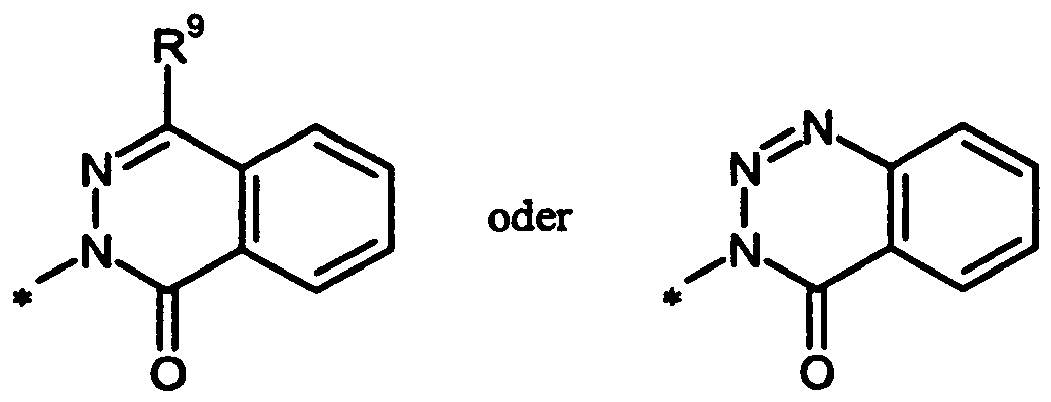 * die Verknüpfungsposition mit dem restlichen Teil des Moleküls kennzeichnet,R8 Trifluormethyl oder Phenyl, welches bis zu zweifach, gleich oder verschieden, mit einem Rest ausgewählt aus der Reihe Fluor, Chlor, Methyl und Trifluormethyl substituiert sein kann, bedeutetund R9 Wasserstoff bedeutet oder die zuvor genannte Bedeutung von R8 hat,R1 für Wasserstoff steht,R2 für Wasserstoff steht,R3 für Propan-2-yl, Butan-2-yl, Pentan-2-yl, 1,1,1-Trifluorpropan-2-yl, 1,1,1-Trifluorbutan-2-yl, 4,4,4-Trifluorbutan-2-yl, 4,4,4-Trifluor-2-methylbutan-1-yl, Cyclopentyl oder 3,3-Difluorcyclopentyl steht,L1 für eine Bindung oder für Methylen steht,L2 für eine Bindung, für Methylen oder Ethan-1,2-diyl, welche jeweils bis zu zweifach mit Methyl substituiert sein können, oder für Ethen-1,2-diyl steht
oder
für eine Gruppe der Formel # die Verknüpfungsposition mit der Carbonsäure-Gruppierungund ## die Verknüpfungsposition mit der Gruppe M kennzeichnen,M für 1,3-Phenylen oder 1,4-Phenylen, welche bis zu zweifach, gleich oder verschieden, mit Fluor, Chlor, Methyl und Trifluormethyl substituiert sein können, oder für Cyclohexan-1,3-diyl oder Cyclohexan-1,4-diyl steht,oder L2 und M miteinander verknüpft sind und zusammen eine Gruppe der Formelsowie ihre Salze, Solvate und Solvate der Salze.
 # die Verknüpfungsposition mit der Carbonsäure-Gruppierung kennzeichnet,### die Verknüpfungsposition mit der Gruppe L1 kennzeichnet,R5 Wasserstoff oder Methyl bedeutetund R6 Wasserstoff oder Fluor bedeutet,
 - Verbindung der Formel (I) nach Anspruch 1, 3, 5 oder 7, in welcherder Ring A für einen Oxo-substituierten Azaheterocyclus der Formel
 * die Verknüpfungsposition mit dem restlichen Teil des Moleküls kennzeichnetund R10A und R10B unabhängig voneinander Wasserstoff oder Fluor bedeuten,R1 für Wasserstoff steht,R2 für Wasserstoff steht,R3 für Propan-2-yl, Butan-2-yl, Pentan-2-yl, 1,1,1-Trifluorpropan-2-yl, 1,1,1-Trifluorbutan-2-yl, 4,4,4-Trifluorbutan-2-yl, 4,4,4-Trifluor-2-methylbutan-1-yl, Cyclopentyl oder 3,3-Difluorcyclopentyl steht,L1 für eine Bindung steht,L2 für Methylen oder Ethan-1,2-diyl, welche jeweils bis zu zweifach mit Methyl substituiert sein können, oder für Ethen-1,2-diyl steht
oder
für eine Gruppe der Formel # und die Verknüpfungsposition mit der Carbonsäure-Gruppierung## die Verknüpfungsposition mit der Gruppe M kennzeichnen,M für 1,3-Phenylen oder 1,4-Phenylen, welche bis zu zweifach, gleich oder verschieden, mit Fluor, Chlor, Methyl und Trifluormethyl substituiert sein können, steht,oder L2 und M miteinander verknüpft sind und zusammen eine Gruppe der Formelsowie ihre Salze, Solvate und Solvate der Salze.
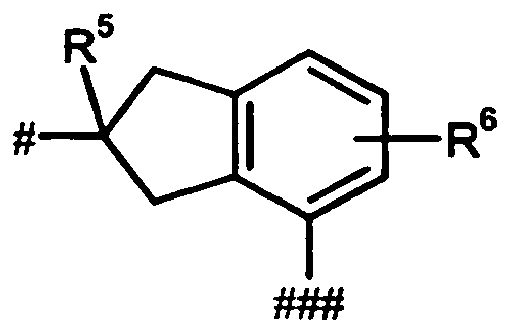 # die Verknüpfungsposition mit der Carbonsäure-Gruppierung kennzeichnet,### die Verknüpfungsposition mit der Gruppe L1 kennzeichnet,R5 Wasserstoff oder Methyl bedeutetund R6 Wasserstoff oder Fluor bedeutet,
 - Verfahren zur Herstellung einer Verbindung der Formel (I), wie in den Ansprüchen 1 bis 9 definiert, dadurch gekennzeichnet, dass man zunächst eine Verbindung der Formel (II)

undT1 für (C1-C4)-Alkyl steht,in einem inerten Lösungsmittel in Gegenwart einer Base mit einer Verbindung der Formel (III)
undX für eine Abgangsgruppe wie beispielsweise Halogen, Mesylat, Tosylat oder Triflat steht,in eine Verbindung der Formel (IV)
überführt, diese danach in einem inerten Lösungsmittel mit elementarem Brom oder mit N-Bromsuccinimid zu einer Verbindung der Formel (V)
bromiert, anschließend in einem inerten Lösungsmittel in Gegenwart einer Base mit einer Verbindung der Formel (VI)
zu einer Verbindung der Formel (VII)
umsetzt, nachfolgend den Ester-Rest T1 in (VII) unter basischen oder sauren Bedingungen abspaltet, die resultierende Carbonsäure der Formel (VIII)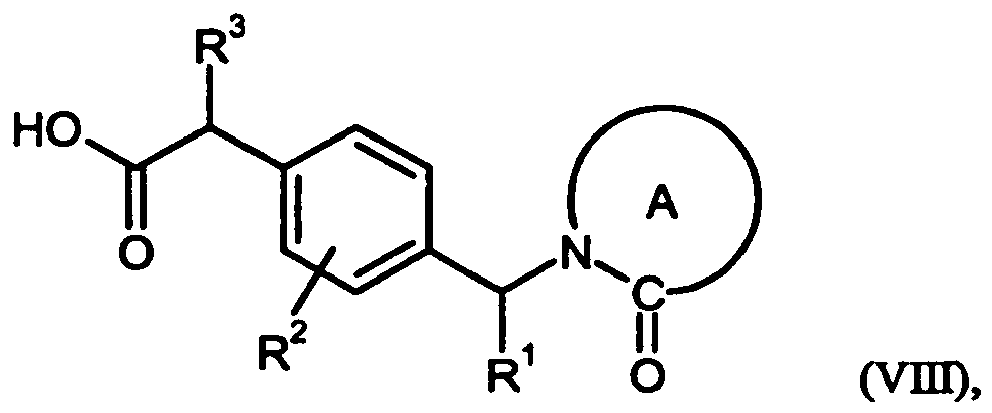
dann in einem inerten Lösungsmittel in Gegenwart eines Kondensationsmittels oder über die Zwischenstufe des entsprechenden Carbonsäurechlorids in Gegenwart einer Base mit einem Amin der Formel (IX)
undT2 für (C1-C4)-Alkyl steht,zu einer Verbindung der Formel (X)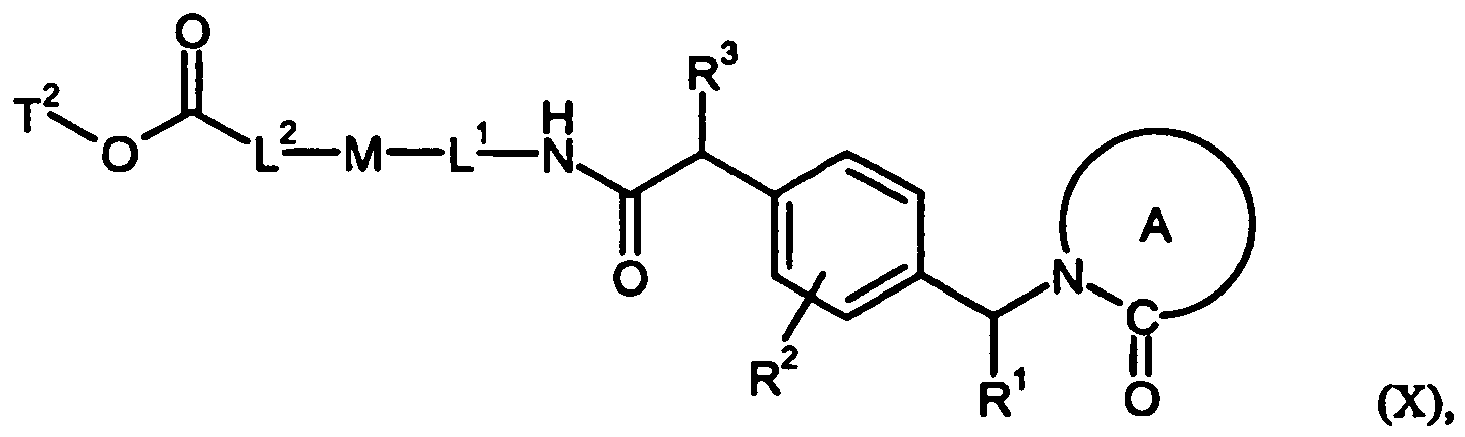
kuppelt und abschließend den Ester-Rest T2 in (X) durch erneute basische oder saure Solvolyse zur Carbonsäure der Formel (I) abspaltet
und die Verbindungen der Formel (I) gegebenenfalls nach dem Fachmann bekannten Methoden in ihre Enantiomere und/oder Diastereomere trennt und/oder gegebenenfalls mit den entsprechenden (i) Lösungsmitteln und/oder (ii) Basen oder Säuren zu ihren Solvaten, Salzen und/oder Solvaten der Salze umsetzt. - Verbindung, wie in einem der Ansprüche 1 bis 9 definiert, zur Behandlung und/oder Prävention von Krankheiten.
- Verbindung, wie in einem der Ansprüche 1 bis 9 definiert, zur Verwendung in einem Verfahren zur Behandlung und/oder Prävention von Herzinsuffizienz, Angina pectoris, Hypertonie, pulmonaler Hypertonie, Ischämien, Gefäßerhankungen, thromboembolischen Erkrankungen und Arteriosklerose.
- Verwendung einer Verbindung, wie in einem der Ansprüche 1 bis 9 definiert, zur Herstellung eines Arzneimittels zur Behandlung und/oder Prävention von Herzinsuffizienz, Angina pectoris, Hypertonie, pulmonaler Hypertonie, Ischämien, Gefäßerkrankungen, thromboembolischen Erkrankungen und Arteriosklerose.
- Arzneimittel enthaltend eine Verbindung, wie in einem der Ansprüche 1 bis 9 definiert, in Kombination mit einem oder mehreren inerten, nicht-toxischen, pharmazeutisch geeigneten Hilfsstoffen.
- Arzneimittel enthaltend eine Verbindung, wie in einem der Ansprüche 1 bis 9 definiert, in Kombination mit einem oder mehreren weiteren Wirkstoffen ausgewählt aus der Gruppe bestehend aus organischen Nitraten, NO-Donatoren, cGMP-PDE-Inhibitoren, Stimulatoren der Guanylatcyclase, antithrombotisch wirkenden Mitteln, den Blutdruck senkenden Mitteln sowie den Fettstoffwechsel verändernden Mitteln.
- Arzneimittel nach Anspruch 14 oder 15 zur Behandlung und/oder Prävention von Herzinsuffizienz, Angina pectoris, Hypertonie, pulmonaler Hypertonie, Ischämien, Gefäßerkrankungen, thromboembolischen Erkrankungen und Arteriosklerose.
Applications Claiming Priority (2)
| Application Number | Priority Date | Filing Date | Title |
|---|---|---|---|
| DE102008018675A DE102008018675A1 (de) | 2008-04-14 | 2008-04-14 | Oxo-heterocyclisch substituierte Carbonsäure-Derivate und ihre Verwendung |
| PCT/EP2009/002510 WO2009127338A1 (de) | 2008-04-14 | 2009-04-06 | Oxo-heterocyclisch substituierte carbonsäure-derivate und ihre verwendung |
Publications (2)
| Publication Number | Publication Date |
|---|---|
| EP2268625A1 EP2268625A1 (de) | 2011-01-05 |
| EP2268625B1 true EP2268625B1 (de) | 2012-05-16 |
Family
ID=40790669
Family Applications (1)
| Application Number | Title | Priority Date | Filing Date |
|---|---|---|---|
| EP09732141A Not-in-force EP2268625B1 (de) | 2008-04-14 | 2009-04-06 | Oxo-heterocyclisch substituierte carbonsäure-derivate und ihre verwendung |
Country Status (9)
| Country | Link |
|---|---|
| US (1) | US8987256B2 (de) |
| EP (1) | EP2268625B1 (de) |
| JP (1) | JP5564488B2 (de) |
| KR (1) | KR20100132075A (de) |
| CN (1) | CN102083803B (de) |
| CA (1) | CA2721098C (de) |
| DE (1) | DE102008018675A1 (de) |
| ES (1) | ES2384309T3 (de) |
| WO (1) | WO2009127338A1 (de) |
Families Citing this family (25)
| Publication number | Priority date | Publication date | Assignee | Title |
|---|---|---|---|---|
| DE102009012314A1 (de) * | 2009-03-09 | 2010-09-16 | Bayer Schering Pharma Aktiengesellschaft | Oxo-heterocyclisch substituierte Alkylcarbonsäuren und ihre Verwendung |
| DE102009046115A1 (de) * | 2009-10-28 | 2011-09-08 | Bayer Schering Pharma Aktiengesellschaft | Substituierte 3-Phenylpropansäuren und ihre Verwendung |
| SG190296A1 (en) * | 2010-12-07 | 2013-06-28 | Bayer Ip Gmbh | Substituted 1-benzylcycloalkylcarboxlic acids and use thereof |
| DE102011006974A1 (de) | 2011-04-07 | 2012-10-11 | Bayer Pharma Aktiengesellschaft | Substituierte 1-Benzylcycloalkylcarbonsäuren und ihre Verwendung |
| DE102010062544A1 (de) | 2010-12-07 | 2012-06-14 | Bayer Schering Pharma Aktiengesellschaft | Substituierte 1-Benzylcycloalkylcarbonsäuren und ihre Verwendung |
| DE102011007272A1 (de) | 2011-04-13 | 2012-10-18 | Bayer Pharma Aktiengesellschaft | Verzweigte 3-Phenylpropionsäure-Derivate und ihre Verwendung |
| DE102012208530A1 (de) | 2012-05-22 | 2013-11-28 | Bayer Pharma AG | Substituierte Piperidinoacetamide und ihre Verwendung |
| TW201625586A (zh) | 2014-07-02 | 2016-07-16 | 諾華公司 | 環己烯-1-基-吡啶-2-基-1h-吡唑-4-羧酸衍生物及其作為可溶性鳥苷酸環化酶活化劑之用途 |
| TW201625601A (zh) | 2014-07-02 | 2016-07-16 | 諾華公司 | 噻吩-2-基-吡啶-2-基-1h-吡唑-4-羧酸衍生物及其作為可溶性鳥苷酸環化酶活化劑之用途 |
| TW201625584A (zh) | 2014-07-02 | 2016-07-16 | 諾華公司 | 茚滿及吲哚啉衍生物及其作為可溶性鳥苷酸環化酶活化劑之用途 |
| CA2970987A1 (en) * | 2014-12-18 | 2016-06-23 | Bayer Pharma Aktiengesellschaft | Substituted pyridyl-cycloalkyl-carboxylic acids, compositions containing them and medical uses thereof |
| US20180169095A1 (en) | 2015-05-06 | 2018-06-21 | Bayer Pharma Aktiengesellschaft | The use of sgc stimulators, sgc activators, alone and combinations with pde5 inhibitors for the treatment of digital ulcers (du) concomitant to systemic sclerosis (ssc) |
| CN113750102A (zh) | 2015-07-23 | 2021-12-07 | 拜耳制药股份公司 | 可溶性鸟苷酸环化酶的刺激剂和/或活化剂及其用途 |
| WO2018069148A1 (de) | 2016-10-11 | 2018-04-19 | Bayer Pharma Aktiengesellschaft | Kombination enthaltend sgc aktivatoren und mineralocorticoid-rezeptor-antagonisten |
| CN108191849B (zh) * | 2016-12-08 | 2021-01-08 | 上海复星星泰医药科技有限公司 | 一种抗表皮生长因子受体耐药性突变抑制剂的制备方法、相关中间体及应用 |
| WO2019081456A1 (en) | 2017-10-24 | 2019-05-02 | Bayer Aktiengesellschaft | USE OF SGC ACTIVATORS AND STIMULATORS COMPRISING A BETA2 SUBUNIT |
| EP3498298A1 (de) | 2017-12-15 | 2019-06-19 | Bayer AG | Verwendung von sgc-stimulatoren und sgc-aktivatoren alleine oder in kombination mit pde5-inhibitoren zur behandlung von knochenerkrankungen einschliesslich osteogenesis imperfecta (oi) |
| CN112055584A (zh) | 2018-04-30 | 2020-12-08 | 拜耳公司 | sGC活化剂和sGC刺激剂用于治疗认知障碍的用途 |
| JP2021523201A (ja) | 2018-05-15 | 2021-09-02 | バイエル アクチェンゲゼルシャフトBayer Aktiengesellschaft | 神経線維感作に関連する疾患を治療するための1,3−チアゾール−2−イル置換ベンズアミド |
| CN110526898A (zh) * | 2018-05-25 | 2019-12-03 | 北京诺诚健华医药科技有限公司 | 3-吲唑啉酮类化合物、其制备方法及其在医药学上的应用 |
| US11508483B2 (en) | 2018-05-30 | 2022-11-22 | Adverio Pharma Gmbh | Method of identifying a subgroup of patients suffering from dcSSc which benefits from a treatment with sGC stimulators and sGC activators in a higher degree than a control group |
| US10905667B2 (en) | 2018-07-24 | 2021-02-02 | Bayer Pharma Aktiengesellschaft | Orally administrable modified-release pharmaceutical dosage form |
| US20220128561A1 (en) | 2019-01-17 | 2022-04-28 | Bayer Aktiengesellschaft | Methods to determine whether a subject is suitable of being treated with an agonist of soluble gyanylyl cyclase (sgc) |
| WO2020164008A1 (en) | 2019-02-13 | 2020-08-20 | Bayer Aktiengesellschaft | Process for the preparation of porous microparticles |
| CA3258617A1 (en) | 2022-06-09 | 2023-12-14 | Bayer Aktiengesellschaft | SOLUBLE GUANYLATE CYCLASE ACTIVATORS FOR USE IN THE TREATMENT OF HEART FAILURE WITH PRESERVED EJECTION FRACTION IN WOMEN |
Family Cites Families (24)
| Publication number | Priority date | Publication date | Assignee | Title |
|---|---|---|---|---|
| US5041453A (en) * | 1990-05-30 | 1991-08-20 | Rhone-Poulenc Rorer Pharmaceuticals Inc. | Quinolinyl-benzoheterobicyclic derivatives as antagonists of leukotriene D4 |
| DE4301900A1 (de) * | 1993-01-25 | 1994-07-28 | Bayer Ag | 2-Oxochinolin-1-yl-methylphenylessigsäurederivate |
| US5401745A (en) * | 1993-03-19 | 1995-03-28 | Merck & Co., Inc. | Quinazolinones substituted with phenoxyphenylacetic acid derivatives |
| US5650386A (en) | 1995-03-31 | 1997-07-22 | Emisphere Technologies, Inc. | Compositions for oral delivery of active agents |
| DE19546918A1 (de) * | 1995-12-15 | 1997-06-19 | Bayer Ag | Bicyclische Heterocyclen |
| EP0802192A1 (de) * | 1996-04-17 | 1997-10-22 | Bayer Ag | Heterocyclisch-substituierte Phenylglycinolamide mit antiatherosklerotischer Wirkung und Verfahren zu ihrer Herstellung |
| DE19834047A1 (de) | 1998-07-29 | 2000-02-03 | Bayer Ag | Substituierte Pyrazolderivate |
| DE19834044A1 (de) | 1998-07-29 | 2000-02-03 | Bayer Ag | Neue substituierte Pyrazolderivate |
| IL145922A0 (en) | 1999-04-28 | 2002-07-25 | Aventis Pharma Gmbh | Di-aryl acid derivatives as ppar receptor ligands |
| PT1177176E (pt) * | 1999-04-28 | 2006-08-31 | Aventis Pharma Gmbh | Derivados de acidos triarilicos como ligandos de receptores ppar. |
| EP1229010A1 (de) | 1999-10-01 | 2002-08-07 | Japan Energy Corporation | Neue diarylamidderivate und deren verwendung als arzneistoffe |
| TWI262185B (en) * | 1999-10-01 | 2006-09-21 | Eisai Co Ltd | Carboxylic acid derivatives having anti-hyperglycemia and anti-hyperlipemia action, and pharmaceutical composition containing the derivatives |
| WO2001032604A1 (en) * | 1999-11-05 | 2001-05-10 | University College London | Activators of soluble guanylate cyclase |
| ATE407919T1 (de) | 2000-05-29 | 2008-09-15 | Kyorin Seiyaku Kk | Substituierte phenylpropionsäure-derivate |
| JP4929472B2 (ja) * | 2000-08-22 | 2012-05-09 | 小野薬品工業株式会社 | カルボン酸誘導体、それらの製造方法およびそれらを有効成分として含有する薬剤 |
| AR031176A1 (es) | 2000-11-22 | 2003-09-10 | Bayer Ag | Nuevos derivados de pirazolpiridina sustituidos con piridina |
| DE60139025D1 (de) * | 2000-12-28 | 2009-07-30 | Takeda Pharmaceutical | Alkansäurederivate, verfahren zu deren herstellung und deren verwendung |
| US7241785B2 (en) * | 2001-03-23 | 2007-07-10 | Takeda Pharmaceutical Company Limited | Five-membered heterocyclic alkanoic acid derivative |
| JP4549021B2 (ja) * | 2001-03-30 | 2010-09-22 | エーザイ・アール・アンド・ディー・マネジメント株式会社 | ベンゼン化合物およびその塩 |
| EP1452521A4 (de) * | 2001-08-17 | 2007-03-14 | Eisai R&D Man Co Ltd | Cyclische verbindung und ppar-agonist |
| DE10220570A1 (de) | 2002-05-08 | 2003-11-20 | Bayer Ag | Carbamat-substituierte Pyrazolopyridine |
| AU2003262023A1 (en) * | 2002-09-10 | 2004-04-30 | Takeda Pharmaceutical Company Limited | Five-membered heterocyclic compounds |
| DE102009012314A1 (de) | 2009-03-09 | 2010-09-16 | Bayer Schering Pharma Aktiengesellschaft | Oxo-heterocyclisch substituierte Alkylcarbonsäuren und ihre Verwendung |
| DE102009046115A1 (de) | 2009-10-28 | 2011-09-08 | Bayer Schering Pharma Aktiengesellschaft | Substituierte 3-Phenylpropansäuren und ihre Verwendung |
-
2008
- 2008-04-14 DE DE102008018675A patent/DE102008018675A1/de not_active Withdrawn
-
2009
- 2009-04-06 KR KR1020107025399A patent/KR20100132075A/ko not_active Withdrawn
- 2009-04-06 US US12/937,995 patent/US8987256B2/en not_active Expired - Fee Related
- 2009-04-06 WO PCT/EP2009/002510 patent/WO2009127338A1/de not_active Ceased
- 2009-04-06 CA CA2721098A patent/CA2721098C/en not_active Expired - Fee Related
- 2009-04-06 ES ES09732141T patent/ES2384309T3/es active Active
- 2009-04-06 EP EP09732141A patent/EP2268625B1/de not_active Not-in-force
- 2009-04-06 JP JP2011504348A patent/JP5564488B2/ja not_active Expired - Fee Related
- 2009-04-06 CN CN200980121861.2A patent/CN102083803B/zh not_active Expired - Fee Related
Also Published As
| Publication number | Publication date |
|---|---|
| WO2009127338A1 (de) | 2009-10-22 |
| US20110034450A1 (en) | 2011-02-10 |
| US8987256B2 (en) | 2015-03-24 |
| CN102083803B (zh) | 2015-02-18 |
| HK1155168A1 (en) | 2012-05-11 |
| KR20100132075A (ko) | 2010-12-16 |
| JP2011517688A (ja) | 2011-06-16 |
| DE102008018675A1 (de) | 2009-10-15 |
| JP5564488B2 (ja) | 2014-07-30 |
| CA2721098C (en) | 2016-08-23 |
| EP2268625A1 (de) | 2011-01-05 |
| CN102083803A (zh) | 2011-06-01 |
| WO2009127338A8 (de) | 2010-10-28 |
| CA2721098A1 (en) | 2009-10-22 |
| ES2384309T3 (es) | 2012-07-03 |
Similar Documents
| Publication | Publication Date | Title |
|---|---|---|
| US8987256B2 (en) | Oxo-heterocyclic substituted carboxylic acid derivatives and the use thereof | |
| EP2406215B1 (de) | Oxo-heterocyclisch substituierte alkylcarbonsäuren und ihre verwendung | |
| EP2649045B1 (de) | Substituierte 1-benzylcycloalkylcarbonsäuren und ihre verwendung | |
| EP2697191B1 (de) | Verzweigte 3-phenylpropionsäure-derivate und ihre verwendung | |
| EP2493845B1 (de) | Substituierte 3-phenylpropionsäuren und ihre verwendung | |
| EP2569277B1 (de) | Substituierte 8-alkoxy-2-aminotetralin-derivate und ihre verwendung | |
| EP2852573B1 (de) | N-[3-(2-carboxyethyl)phenyl]-piperidin-1-ylacetamid- derivate und ihre verwendung als aktivatoren der löslichen guanylatcyclase | |
| EP3045456B1 (de) | Bicyclisch-substituierte uracile und ihre verwendung | |
| EP1966218B1 (de) | Neue, zyklisch substituierte furopyrimidin-derivate und ihre verwendung zur behandlung von kardiovaskulären erkrankungen | |
| DE102010062544A1 (de) | Substituierte 1-Benzylcycloalkylcarbonsäuren und ihre Verwendung | |
| DE102011006974A1 (de) | Substituierte 1-Benzylcycloalkylcarbonsäuren und ihre Verwendung | |
| HK1155168B (en) | Oxo-heterocyclic substituted carboxylic acid derivates and the use thereof |
Legal Events
| Date | Code | Title | Description |
|---|---|---|---|
| PUAI | Public reference made under article 153(3) epc to a published international application that has entered the european phase |
Free format text: ORIGINAL CODE: 0009012 |
|
| 17P | Request for examination filed |
Effective date: 20101115 |
|
| AK | Designated contracting states |
Kind code of ref document: A1 Designated state(s): AT BE BG CH CY CZ DE DK EE ES FI FR GB GR HR HU IE IS IT LI LT LU LV MC MK MT NL NO PL PT RO SE SI SK TR |
|
| AX | Request for extension of the european patent |
Extension state: AL BA RS |
|
| DAX | Request for extension of the european patent (deleted) | ||
| RAP1 | Party data changed (applicant data changed or rights of an application transferred) |
Owner name: BAYER PHARMA AKTIENGESELLSCHAFT |
|
| GRAP | Despatch of communication of intention to grant a patent |
Free format text: ORIGINAL CODE: EPIDOSNIGR1 |
|
| RIC1 | Information provided on ipc code assigned before grant |
Ipc: C07D 209/46 20060101ALI20111014BHEP Ipc: C07D 237/14 20060101ALI20111014BHEP Ipc: C07D 253/075 20060101ALI20111014BHEP Ipc: C07D 213/64 20060101ALI20111014BHEP Ipc: C07D 233/32 20060101ALI20111014BHEP Ipc: C07D 273/04 20060101ALI20111014BHEP Ipc: C07D 275/06 20060101ALI20111014BHEP Ipc: C07D 277/34 20060101ALI20111014BHEP Ipc: C07D 261/20 20060101ALI20111014BHEP Ipc: C07D 253/08 20060101AFI20111014BHEP Ipc: C07D 239/88 20060101ALI20111014BHEP Ipc: C07D 231/56 20060101ALI20111014BHEP Ipc: C07D 209/48 20060101ALI20111014BHEP Ipc: C07D 263/20 20060101ALI20111014BHEP Ipc: A61K 31/498 20060101ALI20111014BHEP Ipc: A61K 31/5395 20060101ALI20111014BHEP Ipc: C07D 237/32 20060101ALI20111014BHEP Ipc: C07D 211/76 20060101ALI20111014BHEP Ipc: A61P 9/00 20060101ALI20111014BHEP Ipc: C07D 417/12 20060101ALI20111014BHEP |
|
| GRAS | Grant fee paid |
Free format text: ORIGINAL CODE: EPIDOSNIGR3 |
|
| GRAA | (expected) grant |
Free format text: ORIGINAL CODE: 0009210 |
|
| AK | Designated contracting states |
Kind code of ref document: B1 Designated state(s): AT BE BG CH CY CZ DE DK EE ES FI FR GB GR HR HU IE IS IT LI LT LU LV MC MK MT NL NO PL PT RO SE SI SK TR |
|
| REG | Reference to a national code |
Ref country code: GB Ref legal event code: FG4D Free format text: NOT ENGLISH |
|
| REG | Reference to a national code |
Ref country code: CH Ref legal event code: EP |
|
| REG | Reference to a national code |
Ref country code: AT Ref legal event code: REF Ref document number: 558038 Country of ref document: AT Kind code of ref document: T Effective date: 20120615 |
|
| REG | Reference to a national code |
Ref country code: IE Ref legal event code: FG4D Free format text: LANGUAGE OF EP DOCUMENT: GERMAN |
|
| REG | Reference to a national code |
Ref country code: ES Ref legal event code: FG2A Ref document number: 2384309 Country of ref document: ES Kind code of ref document: T3 Effective date: 20120703 |
|
| REG | Reference to a national code |
Ref country code: DE Ref legal event code: R096 Ref document number: 502009003557 Country of ref document: DE Effective date: 20120712 |
|
| REG | Reference to a national code |
Ref country code: NL Ref legal event code: VDEP Effective date: 20120516 |
|
| RAP2 | Party data changed (patent owner data changed or rights of a patent transferred) |
Owner name: BAYER INTELLECTUAL PROPERTY GMBH |
|
| REG | Reference to a national code |
Ref country code: LT Ref legal event code: MG4D Effective date: 20120516 |
|
| PG25 | Lapsed in a contracting state [announced via postgrant information from national office to epo] |
Ref country code: IS Free format text: LAPSE BECAUSE OF FAILURE TO SUBMIT A TRANSLATION OF THE DESCRIPTION OR TO PAY THE FEE WITHIN THE PRESCRIBED TIME-LIMIT Effective date: 20120916 Ref country code: SE Free format text: LAPSE BECAUSE OF FAILURE TO SUBMIT A TRANSLATION OF THE DESCRIPTION OR TO PAY THE FEE WITHIN THE PRESCRIBED TIME-LIMIT Effective date: 20120516 Ref country code: FI Free format text: LAPSE BECAUSE OF FAILURE TO SUBMIT A TRANSLATION OF THE DESCRIPTION OR TO PAY THE FEE WITHIN THE PRESCRIBED TIME-LIMIT Effective date: 20120516 Ref country code: CY Free format text: LAPSE BECAUSE OF FAILURE TO SUBMIT A TRANSLATION OF THE DESCRIPTION OR TO PAY THE FEE WITHIN THE PRESCRIBED TIME-LIMIT Effective date: 20120516 Ref country code: LT Free format text: LAPSE BECAUSE OF FAILURE TO SUBMIT A TRANSLATION OF THE DESCRIPTION OR TO PAY THE FEE WITHIN THE PRESCRIBED TIME-LIMIT Effective date: 20120516 Ref country code: NO Free format text: LAPSE BECAUSE OF FAILURE TO SUBMIT A TRANSLATION OF THE DESCRIPTION OR TO PAY THE FEE WITHIN THE PRESCRIBED TIME-LIMIT Effective date: 20120816 Ref country code: PL Free format text: LAPSE BECAUSE OF FAILURE TO SUBMIT A TRANSLATION OF THE DESCRIPTION OR TO PAY THE FEE WITHIN THE PRESCRIBED TIME-LIMIT Effective date: 20120516 |
|
| PG25 | Lapsed in a contracting state [announced via postgrant information from national office to epo] |
Ref country code: GR Free format text: LAPSE BECAUSE OF FAILURE TO SUBMIT A TRANSLATION OF THE DESCRIPTION OR TO PAY THE FEE WITHIN THE PRESCRIBED TIME-LIMIT Effective date: 20120817 Ref country code: LV Free format text: LAPSE BECAUSE OF FAILURE TO SUBMIT A TRANSLATION OF THE DESCRIPTION OR TO PAY THE FEE WITHIN THE PRESCRIBED TIME-LIMIT Effective date: 20120516 Ref country code: SI Free format text: LAPSE BECAUSE OF FAILURE TO SUBMIT A TRANSLATION OF THE DESCRIPTION OR TO PAY THE FEE WITHIN THE PRESCRIBED TIME-LIMIT Effective date: 20120516 Ref country code: PT Free format text: LAPSE BECAUSE OF FAILURE TO SUBMIT A TRANSLATION OF THE DESCRIPTION OR TO PAY THE FEE WITHIN THE PRESCRIBED TIME-LIMIT Effective date: 20120917 Ref country code: HR Free format text: LAPSE BECAUSE OF FAILURE TO SUBMIT A TRANSLATION OF THE DESCRIPTION OR TO PAY THE FEE WITHIN THE PRESCRIBED TIME-LIMIT Effective date: 20120516 |
|
| PG25 | Lapsed in a contracting state [announced via postgrant information from national office to epo] |
Ref country code: EE Free format text: LAPSE BECAUSE OF FAILURE TO SUBMIT A TRANSLATION OF THE DESCRIPTION OR TO PAY THE FEE WITHIN THE PRESCRIBED TIME-LIMIT Effective date: 20120516 Ref country code: CZ Free format text: LAPSE BECAUSE OF FAILURE TO SUBMIT A TRANSLATION OF THE DESCRIPTION OR TO PAY THE FEE WITHIN THE PRESCRIBED TIME-LIMIT Effective date: 20120516 Ref country code: RO Free format text: LAPSE BECAUSE OF FAILURE TO SUBMIT A TRANSLATION OF THE DESCRIPTION OR TO PAY THE FEE WITHIN THE PRESCRIBED TIME-LIMIT Effective date: 20120516 Ref country code: NL Free format text: LAPSE BECAUSE OF FAILURE TO SUBMIT A TRANSLATION OF THE DESCRIPTION OR TO PAY THE FEE WITHIN THE PRESCRIBED TIME-LIMIT Effective date: 20120516 Ref country code: DK Free format text: LAPSE BECAUSE OF FAILURE TO SUBMIT A TRANSLATION OF THE DESCRIPTION OR TO PAY THE FEE WITHIN THE PRESCRIBED TIME-LIMIT Effective date: 20120516 Ref country code: SK Free format text: LAPSE BECAUSE OF FAILURE TO SUBMIT A TRANSLATION OF THE DESCRIPTION OR TO PAY THE FEE WITHIN THE PRESCRIBED TIME-LIMIT Effective date: 20120516 |
|
| PLBE | No opposition filed within time limit |
Free format text: ORIGINAL CODE: 0009261 |
|
| STAA | Information on the status of an ep patent application or granted ep patent |
Free format text: STATUS: NO OPPOSITION FILED WITHIN TIME LIMIT |
|
| 26N | No opposition filed |
Effective date: 20130219 |
|
| REG | Reference to a national code |
Ref country code: DE Ref legal event code: R081 Ref document number: 502009003557 Country of ref document: DE Owner name: BAYER INTELLECTUAL PROPERTY GMBH, DE Free format text: FORMER OWNER: BAYER PHARMA AKTIENGESELLSCHAFT, 13353 BERLIN, DE Effective date: 20130410 |
|
| REG | Reference to a national code |
Ref country code: DE Ref legal event code: R097 Ref document number: 502009003557 Country of ref document: DE Effective date: 20130219 |
|
| PG25 | Lapsed in a contracting state [announced via postgrant information from national office to epo] |
Ref country code: BG Free format text: LAPSE BECAUSE OF FAILURE TO SUBMIT A TRANSLATION OF THE DESCRIPTION OR TO PAY THE FEE WITHIN THE PRESCRIBED TIME-LIMIT Effective date: 20120816 |
|
| BERE | Be: lapsed |
Owner name: BAYER PHARMA A.G. Effective date: 20130430 |
|
| PG25 | Lapsed in a contracting state [announced via postgrant information from national office to epo] |
Ref country code: MC Free format text: LAPSE BECAUSE OF FAILURE TO SUBMIT A TRANSLATION OF THE DESCRIPTION OR TO PAY THE FEE WITHIN THE PRESCRIBED TIME-LIMIT Effective date: 20120516 |
|
| REG | Reference to a national code |
Ref country code: CH Ref legal event code: PL |
|
| REG | Reference to a national code |
Ref country code: IE Ref legal event code: MM4A |
|
| PG25 | Lapsed in a contracting state [announced via postgrant information from national office to epo] |
Ref country code: BE Free format text: LAPSE BECAUSE OF NON-PAYMENT OF DUE FEES Effective date: 20130430 Ref country code: CH Free format text: LAPSE BECAUSE OF NON-PAYMENT OF DUE FEES Effective date: 20130430 Ref country code: LI Free format text: LAPSE BECAUSE OF NON-PAYMENT OF DUE FEES Effective date: 20130430 |
|
| PG25 | Lapsed in a contracting state [announced via postgrant information from national office to epo] |
Ref country code: IE Free format text: LAPSE BECAUSE OF NON-PAYMENT OF DUE FEES Effective date: 20130406 |
|
| PG25 | Lapsed in a contracting state [announced via postgrant information from national office to epo] |
Ref country code: MT Free format text: LAPSE BECAUSE OF FAILURE TO SUBMIT A TRANSLATION OF THE DESCRIPTION OR TO PAY THE FEE WITHIN THE PRESCRIBED TIME-LIMIT Effective date: 20120516 |
|
| REG | Reference to a national code |
Ref country code: AT Ref legal event code: MM01 Ref document number: 558038 Country of ref document: AT Kind code of ref document: T Effective date: 20140406 |
|
| PG25 | Lapsed in a contracting state [announced via postgrant information from national office to epo] |
Ref country code: TR Free format text: LAPSE BECAUSE OF FAILURE TO SUBMIT A TRANSLATION OF THE DESCRIPTION OR TO PAY THE FEE WITHIN THE PRESCRIBED TIME-LIMIT Effective date: 20120516 |
|
| PG25 | Lapsed in a contracting state [announced via postgrant information from national office to epo] |
Ref country code: HU Free format text: LAPSE BECAUSE OF FAILURE TO SUBMIT A TRANSLATION OF THE DESCRIPTION OR TO PAY THE FEE WITHIN THE PRESCRIBED TIME-LIMIT; INVALID AB INITIO Effective date: 20090406 Ref country code: MK Free format text: LAPSE BECAUSE OF FAILURE TO SUBMIT A TRANSLATION OF THE DESCRIPTION OR TO PAY THE FEE WITHIN THE PRESCRIBED TIME-LIMIT Effective date: 20120516 Ref country code: LU Free format text: LAPSE BECAUSE OF NON-PAYMENT OF DUE FEES Effective date: 20130406 |
|
| PG25 | Lapsed in a contracting state [announced via postgrant information from national office to epo] |
Ref country code: AT Free format text: LAPSE BECAUSE OF NON-PAYMENT OF DUE FEES Effective date: 20140406 |
|
| REG | Reference to a national code |
Ref country code: FR Ref legal event code: PLFP Year of fee payment: 8 |
|
| REG | Reference to a national code |
Ref country code: GB Ref legal event code: 732E Free format text: REGISTERED BETWEEN 20160901 AND 20160907 |
|
| REG | Reference to a national code |
Ref country code: FR Ref legal event code: PLFP Year of fee payment: 9 |
|
| PGFP | Annual fee paid to national office [announced via postgrant information from national office to epo] |
Ref country code: FR Payment date: 20170327 Year of fee payment: 9 |
|
| PGFP | Annual fee paid to national office [announced via postgrant information from national office to epo] |
Ref country code: GB Payment date: 20170405 Year of fee payment: 9 Ref country code: DE Payment date: 20170329 Year of fee payment: 9 |
|
| PGFP | Annual fee paid to national office [announced via postgrant information from national office to epo] |
Ref country code: ES Payment date: 20170503 Year of fee payment: 9 Ref country code: IT Payment date: 20170420 Year of fee payment: 9 |
|
| REG | Reference to a national code |
Ref country code: DE Ref legal event code: R119 Ref document number: 502009003557 Country of ref document: DE |
|
| GBPC | Gb: european patent ceased through non-payment of renewal fee |
Effective date: 20180406 |
|
| PG25 | Lapsed in a contracting state [announced via postgrant information from national office to epo] |
Ref country code: DE Free format text: LAPSE BECAUSE OF NON-PAYMENT OF DUE FEES Effective date: 20181101 |
|
| PG25 | Lapsed in a contracting state [announced via postgrant information from national office to epo] |
Ref country code: GB Free format text: LAPSE BECAUSE OF NON-PAYMENT OF DUE FEES Effective date: 20180406 |
|
| PG25 | Lapsed in a contracting state [announced via postgrant information from national office to epo] |
Ref country code: FR Free format text: LAPSE BECAUSE OF NON-PAYMENT OF DUE FEES Effective date: 20180430 Ref country code: IT Free format text: LAPSE BECAUSE OF NON-PAYMENT OF DUE FEES Effective date: 20180406 |
|
| REG | Reference to a national code |
Ref country code: ES Ref legal event code: FD2A Effective date: 20190911 |
|
| PG25 | Lapsed in a contracting state [announced via postgrant information from national office to epo] |
Ref country code: ES Free format text: LAPSE BECAUSE OF NON-PAYMENT OF DUE FEES Effective date: 20180407 |