EP2261274A1 - Polysiloxane, acrylic compound, and vinyl compound - Google Patents
Polysiloxane, acrylic compound, and vinyl compound Download PDFInfo
- Publication number
- EP2261274A1 EP2261274A1 EP09727061A EP09727061A EP2261274A1 EP 2261274 A1 EP2261274 A1 EP 2261274A1 EP 09727061 A EP09727061 A EP 09727061A EP 09727061 A EP09727061 A EP 09727061A EP 2261274 A1 EP2261274 A1 EP 2261274A1
- Authority
- EP
- European Patent Office
- Prior art keywords
- group
- compound
- less
- general formula
- formula
- Prior art date
- Legal status (The legal status is an assumption and is not a legal conclusion. Google has not performed a legal analysis and makes no representation as to the accuracy of the status listed.)
- Granted
Links
- -1 Polysiloxane Polymers 0.000 title claims abstract description 147
- 229920001296 polysiloxane Polymers 0.000 title claims abstract description 45
- 229920002554 vinyl polymer Polymers 0.000 title description 2
- OKTJSMMVPCPJKN-UHFFFAOYSA-N Carbon Chemical compound [C] OKTJSMMVPCPJKN-UHFFFAOYSA-N 0.000 claims abstract description 30
- 229910052799 carbon Inorganic materials 0.000 claims abstract description 30
- 125000000217 alkyl group Chemical group 0.000 claims abstract description 20
- 125000006850 spacer group Chemical group 0.000 claims abstract description 19
- 125000000524 functional group Chemical group 0.000 claims abstract description 16
- 229910052710 silicon Inorganic materials 0.000 claims abstract description 7
- XUIMIQQOPSSXEZ-UHFFFAOYSA-N Silicon Chemical group [Si] XUIMIQQOPSSXEZ-UHFFFAOYSA-N 0.000 claims abstract description 4
- 150000001875 compounds Chemical class 0.000 claims description 55
- 239000003795 chemical substances by application Substances 0.000 claims description 41
- 239000000463 material Substances 0.000 claims description 41
- 238000000034 method Methods 0.000 claims description 38
- 125000003178 carboxy group Chemical group [H]OC(*)=O 0.000 claims description 22
- NJNWCIAPVGRBHO-UHFFFAOYSA-N 2-hydroxyethyl-dimethyl-[(oxo-$l^{5}-phosphanylidyne)methyl]azanium Chemical group OCC[N+](C)(C)C#P=O NJNWCIAPVGRBHO-UHFFFAOYSA-N 0.000 claims description 20
- 229920000058 polyacrylate Polymers 0.000 claims description 20
- 238000004519 manufacturing process Methods 0.000 claims description 16
- 125000000732 arylene group Chemical group 0.000 claims description 15
- 125000002947 alkylene group Chemical group 0.000 claims description 12
- SUHOQUVVVLNYQR-MRVPVSSYSA-N choline alfoscerate Chemical compound C[N+](C)(C)CCOP([O-])(=O)OC[C@H](O)CO SUHOQUVVVLNYQR-MRVPVSSYSA-N 0.000 claims description 12
- 239000008777 Glycerylphosphorylcholine Substances 0.000 claims description 10
- 229960004956 glycerylphosphorylcholine Drugs 0.000 claims description 10
- 125000004435 hydrogen atom Chemical group [H]* 0.000 claims description 10
- 230000001590 oxidative effect Effects 0.000 claims description 6
- 229920001577 copolymer Polymers 0.000 claims description 5
- 125000001841 imino group Chemical group [H]N=* 0.000 claims description 3
- 125000001820 oxy group Chemical group [*:1]O[*:2] 0.000 claims description 3
- 229920001519 homopolymer Polymers 0.000 claims description 2
- OKKJLVBELUTLKV-UHFFFAOYSA-N Methanol Chemical compound OC OKKJLVBELUTLKV-UHFFFAOYSA-N 0.000 description 51
- 239000000243 solution Substances 0.000 description 28
- 102000004169 proteins and genes Human genes 0.000 description 21
- 108090000623 proteins and genes Proteins 0.000 description 21
- 239000006185 dispersion Substances 0.000 description 16
- 239000012530 fluid Substances 0.000 description 16
- 239000000178 monomer Substances 0.000 description 16
- 238000001179 sorption measurement Methods 0.000 description 14
- 125000003277 amino group Chemical group 0.000 description 13
- 125000002887 hydroxy group Chemical group [H]O* 0.000 description 12
- NIXOWILDQLNWCW-UHFFFAOYSA-M Acrylate Chemical compound [O-]C(=O)C=C NIXOWILDQLNWCW-UHFFFAOYSA-M 0.000 description 11
- 238000001035 drying Methods 0.000 description 11
- 238000010586 diagram Methods 0.000 description 10
- 239000004793 Polystyrene Substances 0.000 description 9
- 229920002223 polystyrene Polymers 0.000 description 9
- 229940126062 Compound A Drugs 0.000 description 8
- IAZDPXIOMUYVGZ-UHFFFAOYSA-N Dimethylsulphoxide Chemical compound CS(C)=O IAZDPXIOMUYVGZ-UHFFFAOYSA-N 0.000 description 8
- NLDMNSXOCDLTTB-UHFFFAOYSA-N Heterophylliin A Natural products O1C2COC(=O)C3=CC(O)=C(O)C(O)=C3C3=C(O)C(O)=C(O)C=C3C(=O)OC2C(OC(=O)C=2C=C(O)C(O)=C(O)C=2)C(O)C1OC(=O)C1=CC(O)=C(O)C(O)=C1 NLDMNSXOCDLTTB-UHFFFAOYSA-N 0.000 description 8
- 238000006243 chemical reaction Methods 0.000 description 8
- 238000013019 agitation Methods 0.000 description 7
- 238000011156 evaluation Methods 0.000 description 7
- 230000007062 hydrolysis Effects 0.000 description 7
- 238000006460 hydrolysis reaction Methods 0.000 description 7
- 238000006116 polymerization reaction Methods 0.000 description 7
- 239000000126 substance Substances 0.000 description 7
- 230000000052 comparative effect Effects 0.000 description 6
- 238000002474 experimental method Methods 0.000 description 6
- YHHSONZFOIEMCP-UHFFFAOYSA-O phosphocholine Chemical group C[N+](C)(C)CCOP(O)(O)=O YHHSONZFOIEMCP-UHFFFAOYSA-O 0.000 description 6
- 229950004354 phosphorylcholine Drugs 0.000 description 6
- 239000002904 solvent Substances 0.000 description 6
- 102000016943 Muramidase Human genes 0.000 description 5
- 108010014251 Muramidase Proteins 0.000 description 5
- 108010062010 N-Acetylmuramoyl-L-alanine Amidase Proteins 0.000 description 5
- 239000011248 coating agent Substances 0.000 description 5
- 238000000576 coating method Methods 0.000 description 5
- 238000007598 dipping method Methods 0.000 description 5
- 230000000694 effects Effects 0.000 description 5
- 108010074605 gamma-Globulins Proteins 0.000 description 5
- 239000004325 lysozyme Substances 0.000 description 5
- 229960000274 lysozyme Drugs 0.000 description 5
- 235000010335 lysozyme Nutrition 0.000 description 5
- 238000000425 proton nuclear magnetic resonance spectrum Methods 0.000 description 5
- YBCAZPLXEGKKFM-UHFFFAOYSA-K ruthenium(iii) chloride Chemical compound [Cl-].[Cl-].[Cl-].[Ru+3] YBCAZPLXEGKKFM-UHFFFAOYSA-K 0.000 description 5
- 238000010189 synthetic method Methods 0.000 description 5
- 238000005406 washing Methods 0.000 description 5
- ZSZRUEAFVQITHH-UHFFFAOYSA-N 2-(2-methylprop-2-enoyloxy)ethyl 2-(trimethylazaniumyl)ethyl phosphate Chemical compound CC(=C)C(=O)OCCOP([O-])(=O)OCC[N+](C)(C)C ZSZRUEAFVQITHH-UHFFFAOYSA-N 0.000 description 4
- SOGAXMICEFXMKE-UHFFFAOYSA-N Butylmethacrylate Chemical compound CCCCOC(=O)C(C)=C SOGAXMICEFXMKE-UHFFFAOYSA-N 0.000 description 4
- HTTJABKRGRZYRN-UHFFFAOYSA-N Heparin Chemical compound OC1C(NC(=O)C)C(O)OC(COS(O)(=O)=O)C1OC1C(OS(O)(=O)=O)C(O)C(OC2C(C(OS(O)(=O)=O)C(OC3C(C(O)C(O)C(O3)C(O)=O)OS(O)(=O)=O)C(CO)O2)NS(O)(=O)=O)C(C(O)=O)O1 HTTJABKRGRZYRN-UHFFFAOYSA-N 0.000 description 4
- WOBHKFSMXKNTIM-UHFFFAOYSA-N Hydroxyethyl methacrylate Chemical compound CC(=C)C(=O)OCCO WOBHKFSMXKNTIM-UHFFFAOYSA-N 0.000 description 4
- 239000004677 Nylon Substances 0.000 description 4
- 239000004698 Polyethylene Substances 0.000 description 4
- 239000004743 Polypropylene Substances 0.000 description 4
- 229920002396 Polyurea Polymers 0.000 description 4
- 239000004372 Polyvinyl alcohol Substances 0.000 description 4
- 229920002678 cellulose Polymers 0.000 description 4
- 239000001913 cellulose Substances 0.000 description 4
- 229920002301 cellulose acetate Polymers 0.000 description 4
- 239000000919 ceramic Substances 0.000 description 4
- JNGZXGGOCLZBFB-IVCQMTBJSA-N compound E Chemical compound N([C@@H](C)C(=O)N[C@@H]1C(N(C)C2=CC=CC=C2C(C=2C=CC=CC=2)=N1)=O)C(=O)CC1=CC(F)=CC(F)=C1 JNGZXGGOCLZBFB-IVCQMTBJSA-N 0.000 description 4
- 150000004985 diamines Chemical class 0.000 description 4
- 150000002009 diols Chemical class 0.000 description 4
- 239000011521 glass Substances 0.000 description 4
- 238000010438 heat treatment Methods 0.000 description 4
- 229910052751 metal Inorganic materials 0.000 description 4
- 239000002184 metal Substances 0.000 description 4
- 229920001778 nylon Polymers 0.000 description 4
- KHIWWQKSHDUIBK-UHFFFAOYSA-N periodic acid Chemical compound OI(=O)(=O)=O KHIWWQKSHDUIBK-UHFFFAOYSA-N 0.000 description 4
- 229920002492 poly(sulfone) Polymers 0.000 description 4
- 229920002401 polyacrylamide Polymers 0.000 description 4
- 229920002239 polyacrylonitrile Polymers 0.000 description 4
- 239000004417 polycarbonate Substances 0.000 description 4
- 229920000515 polycarbonate Polymers 0.000 description 4
- 229920000728 polyester Polymers 0.000 description 4
- 229920000573 polyethylene Polymers 0.000 description 4
- 229920000642 polymer Polymers 0.000 description 4
- 229920000193 polymethacrylate Polymers 0.000 description 4
- 229920001155 polypropylene Polymers 0.000 description 4
- 229920002635 polyurethane Polymers 0.000 description 4
- 239000004814 polyurethane Substances 0.000 description 4
- 229920002689 polyvinyl acetate Polymers 0.000 description 4
- 239000011118 polyvinyl acetate Substances 0.000 description 4
- 229920002451 polyvinyl alcohol Polymers 0.000 description 4
- 239000004800 polyvinyl chloride Substances 0.000 description 4
- 229920000915 polyvinyl chloride Polymers 0.000 description 4
- 238000007761 roller coating Methods 0.000 description 4
- 229920002050 silicone resin Polymers 0.000 description 4
- 238000004528 spin coating Methods 0.000 description 4
- 239000007921 spray Substances 0.000 description 4
- 229910001220 stainless steel Inorganic materials 0.000 description 4
- 239000010935 stainless steel Substances 0.000 description 4
- UHOVQNZJYSORNB-UHFFFAOYSA-N Benzene Chemical compound C1=CC=CC=C1 UHOVQNZJYSORNB-UHFFFAOYSA-N 0.000 description 3
- HEDRZPFGACZZDS-UHFFFAOYSA-N Chloroform Chemical compound ClC(Cl)Cl HEDRZPFGACZZDS-UHFFFAOYSA-N 0.000 description 3
- LFQSCWFLJHTTHZ-UHFFFAOYSA-N Ethanol Chemical compound CCO LFQSCWFLJHTTHZ-UHFFFAOYSA-N 0.000 description 3
- LYCAIKOWRPUZTN-UHFFFAOYSA-N Ethylene glycol Chemical compound OCCO LYCAIKOWRPUZTN-UHFFFAOYSA-N 0.000 description 3
- ZMXDDKWLCZADIW-UHFFFAOYSA-N N,N-Dimethylformamide Chemical compound CN(C)C=O ZMXDDKWLCZADIW-UHFFFAOYSA-N 0.000 description 3
- 229920002845 Poly(methacrylic acid) Polymers 0.000 description 3
- PPBRXRYQALVLMV-UHFFFAOYSA-N Styrene Chemical compound C=CC1=CC=CC=C1 PPBRXRYQALVLMV-UHFFFAOYSA-N 0.000 description 3
- YXFVVABEGXRONW-UHFFFAOYSA-N Toluene Chemical compound CC1=CC=CC=C1 YXFVVABEGXRONW-UHFFFAOYSA-N 0.000 description 3
- 125000004429 atom Chemical group 0.000 description 3
- 238000007796 conventional method Methods 0.000 description 3
- 125000000843 phenylene group Chemical group C1(=C(C=CC=C1)*)* 0.000 description 3
- 239000003505 polymerization initiator Substances 0.000 description 3
- 230000000379 polymerizing effect Effects 0.000 description 3
- 239000012460 protein solution Substances 0.000 description 3
- LVTJOONKWUXEFR-FZRMHRINSA-N protoneodioscin Natural products O(C[C@@H](CC[C@]1(O)[C@H](C)[C@@H]2[C@]3(C)[C@H]([C@H]4[C@@H]([C@]5(C)C(=CC4)C[C@@H](O[C@@H]4[C@H](O[C@H]6[C@@H](O)[C@@H](O)[C@@H](O)[C@H](C)O6)[C@@H](O)[C@H](O[C@H]6[C@@H](O)[C@@H](O)[C@@H](O)[C@H](C)O6)[C@H](CO)O4)CC5)CC3)C[C@@H]2O1)C)[C@H]1[C@H](O)[C@H](O)[C@H](O)[C@@H](CO)O1 LVTJOONKWUXEFR-FZRMHRINSA-N 0.000 description 3
- 238000001228 spectrum Methods 0.000 description 3
- 238000004381 surface treatment Methods 0.000 description 3
- 238000012360 testing method Methods 0.000 description 3
- UZKWTJUDCOPSNM-UHFFFAOYSA-N 1-ethenoxybutane Chemical compound CCCCOC=C UZKWTJUDCOPSNM-UHFFFAOYSA-N 0.000 description 2
- OZAIFHULBGXAKX-UHFFFAOYSA-N 2-(2-cyanopropan-2-yldiazenyl)-2-methylpropanenitrile Chemical compound N#CC(C)(C)N=NC(C)(C)C#N OZAIFHULBGXAKX-UHFFFAOYSA-N 0.000 description 2
- BMTZEAOGFDXDAD-UHFFFAOYSA-M 4-(4,6-dimethoxy-1,3,5-triazin-2-yl)-4-methylmorpholin-4-ium;chloride Chemical compound [Cl-].COC1=NC(OC)=NC([N+]2(C)CCOCC2)=N1 BMTZEAOGFDXDAD-UHFFFAOYSA-M 0.000 description 2
- 102000009027 Albumins Human genes 0.000 description 2
- 108010088751 Albumins Proteins 0.000 description 2
- VVJKKWFAADXIJK-UHFFFAOYSA-N Allylamine Chemical compound NCC=C VVJKKWFAADXIJK-UHFFFAOYSA-N 0.000 description 2
- CBENFWSGALASAD-UHFFFAOYSA-N Ozone Chemical compound [O-][O+]=O CBENFWSGALASAD-UHFFFAOYSA-N 0.000 description 2
- WCUXLLCKKVVCTQ-UHFFFAOYSA-M Potassium chloride Chemical compound [Cl-].[K+] WCUXLLCKKVVCTQ-UHFFFAOYSA-M 0.000 description 2
- FAPWRFPIFSIZLT-UHFFFAOYSA-M Sodium chloride Chemical compound [Na+].[Cl-] FAPWRFPIFSIZLT-UHFFFAOYSA-M 0.000 description 2
- DKGAVHZHDRPRBM-UHFFFAOYSA-N Tert-Butanol Chemical compound CC(C)(C)O DKGAVHZHDRPRBM-UHFFFAOYSA-N 0.000 description 2
- WYURNTSHIVDZCO-UHFFFAOYSA-N Tetrahydrofuran Chemical compound C1CCOC1 WYURNTSHIVDZCO-UHFFFAOYSA-N 0.000 description 2
- 238000002835 absorbance Methods 0.000 description 2
- 238000010521 absorption reaction Methods 0.000 description 2
- ROOXNKNUYICQNP-UHFFFAOYSA-N ammonium persulfate Chemical compound [NH4+].[NH4+].[O-]S(=O)(=O)OOS([O-])(=O)=O ROOXNKNUYICQNP-UHFFFAOYSA-N 0.000 description 2
- 239000012935 ammoniumperoxodisulfate Substances 0.000 description 2
- PFKFTWBEEFSNDU-UHFFFAOYSA-N carbonyldiimidazole Chemical compound C1=CN=CN1C(=O)N1C=CN=C1 PFKFTWBEEFSNDU-UHFFFAOYSA-N 0.000 description 2
- 239000003054 catalyst Substances 0.000 description 2
- 238000009833 condensation Methods 0.000 description 2
- 230000005494 condensation Effects 0.000 description 2
- 239000002537 cosmetic Substances 0.000 description 2
- 230000018044 dehydration Effects 0.000 description 2
- 238000006297 dehydration reaction Methods 0.000 description 2
- FJKIXWOMBXYWOQ-UHFFFAOYSA-N ethenoxyethane Chemical compound CCOC=C FJKIXWOMBXYWOQ-UHFFFAOYSA-N 0.000 description 2
- 125000001495 ethyl group Chemical group [H]C([H])([H])C([H])([H])* 0.000 description 2
- 238000001914 filtration Methods 0.000 description 2
- 229960002897 heparin Drugs 0.000 description 2
- 229920000669 heparin Polymers 0.000 description 2
- 239000002628 heparin derivative Substances 0.000 description 2
- WFKAJVHLWXSISD-UHFFFAOYSA-N isobutyramide Chemical compound CC(C)C(N)=O WFKAJVHLWXSISD-UHFFFAOYSA-N 0.000 description 2
- 230000014759 maintenance of location Effects 0.000 description 2
- 239000012567 medical material Substances 0.000 description 2
- 239000008363 phosphate buffer Substances 0.000 description 2
- 238000009832 plasma treatment Methods 0.000 description 2
- BASFCYQUMIYNBI-UHFFFAOYSA-N platinum Chemical compound [Pt] BASFCYQUMIYNBI-UHFFFAOYSA-N 0.000 description 2
- 239000000843 powder Substances 0.000 description 2
- 239000002244 precipitate Substances 0.000 description 2
- JQWHASGSAFIOCM-UHFFFAOYSA-M sodium periodate Chemical compound [Na+].[O-]I(=O)(=O)=O JQWHASGSAFIOCM-UHFFFAOYSA-M 0.000 description 2
- GETQZCLCWQTVFV-UHFFFAOYSA-N trimethylamine Chemical compound CN(C)C GETQZCLCWQTVFV-UHFFFAOYSA-N 0.000 description 2
- FVQMJJQUGGVLEP-UHFFFAOYSA-N (2-methylpropan-2-yl)oxy 2-ethylhexaneperoxoate Chemical compound CCCCC(CC)C(=O)OOOC(C)(C)C FVQMJJQUGGVLEP-UHFFFAOYSA-N 0.000 description 1
- OCNODTCSMUUTNC-UHFFFAOYSA-N (4-hydroxy-2-methylpentan-2-yl) 2,2-dimethylpropaneperoxoate Chemical compound CC(O)CC(C)(C)OOC(=O)C(C)(C)C OCNODTCSMUUTNC-UHFFFAOYSA-N 0.000 description 1
- 229920002818 (Hydroxyethyl)methacrylate Polymers 0.000 description 1
- OEPOKWHJYJXUGD-UHFFFAOYSA-N 2-(3-phenylmethoxyphenyl)-1,3-thiazole-4-carbaldehyde Chemical compound O=CC1=CSC(C=2C=C(OCC=3C=CC=CC=3)C=CC=2)=N1 OEPOKWHJYJXUGD-UHFFFAOYSA-N 0.000 description 1
- CKSAKVMRQYOFBC-UHFFFAOYSA-N 2-cyanopropan-2-yliminourea Chemical compound N#CC(C)(C)N=NC(N)=O CKSAKVMRQYOFBC-UHFFFAOYSA-N 0.000 description 1
- 125000000954 2-hydroxyethyl group Chemical group [H]C([*])([H])C([H])([H])O[H] 0.000 description 1
- AGHDSXKIGIOMJN-UHFFFAOYSA-N 2-methyl-n'-phenylpropanimidamide Chemical compound CC(C)C(=N)NC1=CC=CC=C1 AGHDSXKIGIOMJN-UHFFFAOYSA-N 0.000 description 1
- COZQDNPLORIALF-UHFFFAOYSA-N 3-hydroxy-2-methylpropanenitrile Chemical compound OCC(C)C#N COZQDNPLORIALF-UHFFFAOYSA-N 0.000 description 1
- MKTOIPPVFPJEQO-UHFFFAOYSA-N 4-(3-carboxypropanoylperoxy)-4-oxobutanoic acid Chemical compound OC(=O)CCC(=O)OOC(=O)CCC(O)=O MKTOIPPVFPJEQO-UHFFFAOYSA-N 0.000 description 1
- JLBJTVDPSNHSKJ-UHFFFAOYSA-N 4-Methylstyrene Chemical compound CC1=CC=C(C=C)C=C1 JLBJTVDPSNHSKJ-UHFFFAOYSA-N 0.000 description 1
- XRUKRHLZDVJJSX-UHFFFAOYSA-N 4-cyanopentanoic acid Chemical compound N#CC(C)CCC(O)=O XRUKRHLZDVJJSX-UHFFFAOYSA-N 0.000 description 1
- JSCKLKXCIXPMJK-UHFFFAOYSA-N 4-tert-butylperoxy-3-hydroxy-4-oxobutanoic acid Chemical compound CC(C)(C)OOC(=O)C(CC(=O)O)O JSCKLKXCIXPMJK-UHFFFAOYSA-N 0.000 description 1
- HRPVXLWXLXDGHG-UHFFFAOYSA-N Acrylamide Chemical compound NC(=O)C=C HRPVXLWXLXDGHG-UHFFFAOYSA-N 0.000 description 1
- NLHHRLWOUZZQLW-UHFFFAOYSA-N Acrylonitrile Chemical compound C=CC#N NLHHRLWOUZZQLW-UHFFFAOYSA-N 0.000 description 1
- 239000004342 Benzoyl peroxide Substances 0.000 description 1
- OMPJBNCRMGITSC-UHFFFAOYSA-N Benzoylperoxide Chemical compound C=1C=CC=CC=1C(=O)OOC(=O)C1=CC=CC=C1 OMPJBNCRMGITSC-UHFFFAOYSA-N 0.000 description 1
- MYMOFIZGZYHOMD-UHFFFAOYSA-N Dioxygen Chemical compound O=O MYMOFIZGZYHOMD-UHFFFAOYSA-N 0.000 description 1
- 229910002621 H2PtCl6 Inorganic materials 0.000 description 1
- VQTUBCCKSQIDNK-UHFFFAOYSA-N Isobutene Chemical group CC(C)=C VQTUBCCKSQIDNK-UHFFFAOYSA-N 0.000 description 1
- CERQOIWHTDAKMF-UHFFFAOYSA-N Methacrylic acid Chemical compound CC(=C)C(O)=O CERQOIWHTDAKMF-UHFFFAOYSA-N 0.000 description 1
- AKWHUORRYDZCDN-UHFFFAOYSA-N O=C1CCCC(=O)OC(=O)CCC(=O)OO1 Chemical compound O=C1CCCC(=O)OC(=O)CCC(=O)OO1 AKWHUORRYDZCDN-UHFFFAOYSA-N 0.000 description 1
- OAICVXFJPJFONN-UHFFFAOYSA-N Phosphorus Chemical compound [P] OAICVXFJPJFONN-UHFFFAOYSA-N 0.000 description 1
- 239000002202 Polyethylene glycol Substances 0.000 description 1
- BZHJMEDXRYGGRV-UHFFFAOYSA-N Vinyl chloride Chemical compound ClC=C BZHJMEDXRYGGRV-UHFFFAOYSA-N 0.000 description 1
- QYKIQEUNHZKYBP-UHFFFAOYSA-N Vinyl ether Chemical compound C=COC=C QYKIQEUNHZKYBP-UHFFFAOYSA-N 0.000 description 1
- 230000002159 abnormal effect Effects 0.000 description 1
- 239000002253 acid Substances 0.000 description 1
- 150000001412 amines Chemical class 0.000 description 1
- 239000007864 aqueous solution Substances 0.000 description 1
- 239000012300 argon atmosphere Substances 0.000 description 1
- 235000019400 benzoyl peroxide Nutrition 0.000 description 1
- 239000000560 biocompatible material Substances 0.000 description 1
- 229920000249 biocompatible polymer Polymers 0.000 description 1
- 125000000484 butyl group Chemical group [H]C([*])([H])C([H])([H])C([H])([H])C([H])([H])[H] 0.000 description 1
- 238000011088 calibration curve Methods 0.000 description 1
- 238000004587 chromatography analysis Methods 0.000 description 1
- 239000011247 coating layer Substances 0.000 description 1
- 238000000354 decomposition reaction Methods 0.000 description 1
- 238000011161 development Methods 0.000 description 1
- 150000004683 dihydrates Chemical class 0.000 description 1
- 125000000118 dimethyl group Chemical group [H]C([H])([H])* 0.000 description 1
- 229910001882 dioxygen Inorganic materials 0.000 description 1
- BNIILDVGGAEEIG-UHFFFAOYSA-L disodium hydrogen phosphate Chemical compound [Na+].[Na+].OP([O-])([O-])=O BNIILDVGGAEEIG-UHFFFAOYSA-L 0.000 description 1
- 125000003438 dodecyl group Chemical group [H]C([H])([H])C([H])([H])C([H])([H])C([H])([H])C([H])([H])C([H])([H])C([H])([H])C([H])([H])C([H])([H])C([H])([H])C([H])([H])C([H])([H])* 0.000 description 1
- 238000001879 gelation Methods 0.000 description 1
- 125000004051 hexyl group Chemical group [H]C([H])([H])C([H])([H])C([H])([H])C([H])([H])C([H])([H])C([H])([H])* 0.000 description 1
- 150000002430 hydrocarbons Chemical group 0.000 description 1
- 239000001257 hydrogen Substances 0.000 description 1
- 229910052739 hydrogen Inorganic materials 0.000 description 1
- 125000002768 hydroxyalkyl group Chemical group 0.000 description 1
- 239000005457 ice water Substances 0.000 description 1
- 239000003999 initiator Substances 0.000 description 1
- KQNPFQTWMSNSAP-UHFFFAOYSA-N isobutyric acid Chemical compound CC(C)C(O)=O KQNPFQTWMSNSAP-UHFFFAOYSA-N 0.000 description 1
- 239000007788 liquid Substances 0.000 description 1
- 125000005397 methacrylic acid ester group Chemical group 0.000 description 1
- VHRYZQNGTZXDNX-UHFFFAOYSA-N methacryloyl chloride Chemical compound CC(=C)C(Cl)=O VHRYZQNGTZXDNX-UHFFFAOYSA-N 0.000 description 1
- 229910000402 monopotassium phosphate Inorganic materials 0.000 description 1
- 235000019796 monopotassium phosphate Nutrition 0.000 description 1
- WVFLGSMUPMVNTQ-UHFFFAOYSA-N n-(2-hydroxyethyl)-2-[[1-(2-hydroxyethylamino)-2-methyl-1-oxopropan-2-yl]diazenyl]-2-methylpropanamide Chemical compound OCCNC(=O)C(C)(C)N=NC(C)(C)C(=O)NCCO WVFLGSMUPMVNTQ-UHFFFAOYSA-N 0.000 description 1
- 210000000056 organ Anatomy 0.000 description 1
- 150000001451 organic peroxides Chemical class 0.000 description 1
- 238000012856 packing Methods 0.000 description 1
- 150000002978 peroxides Chemical class 0.000 description 1
- PJNZPQUBCPKICU-UHFFFAOYSA-N phosphoric acid;potassium Chemical compound [K].OP(O)(O)=O PJNZPQUBCPKICU-UHFFFAOYSA-N 0.000 description 1
- 229910052698 phosphorus Inorganic materials 0.000 description 1
- 239000011574 phosphorus Substances 0.000 description 1
- 229910052697 platinum Inorganic materials 0.000 description 1
- 229920001223 polyethylene glycol Polymers 0.000 description 1
- 239000001103 potassium chloride Substances 0.000 description 1
- 235000011164 potassium chloride Nutrition 0.000 description 1
- BDERNNFJNOPAEC-UHFFFAOYSA-N propan-1-ol Chemical compound CCCO BDERNNFJNOPAEC-UHFFFAOYSA-N 0.000 description 1
- 125000001436 propyl group Chemical group [H]C([*])([H])C([H])([H])C([H])([H])[H] 0.000 description 1
- 229920005989 resin Polymers 0.000 description 1
- 239000011347 resin Substances 0.000 description 1
- 238000000926 separation method Methods 0.000 description 1
- 239000011780 sodium chloride Substances 0.000 description 1
- 238000004611 spectroscopical analysis Methods 0.000 description 1
- 125000004079 stearyl group Chemical group [H]C([*])([H])C([H])([H])C([H])([H])C([H])([H])C([H])([H])C([H])([H])C([H])([H])C([H])([H])C([H])([H])C([H])([H])C([H])([H])C([H])([H])C([H])([H])C([H])([H])C([H])([H])C([H])([H])C([H])([H])C([H])([H])[H] 0.000 description 1
- 150000003440 styrenes Chemical class 0.000 description 1
- 239000000758 substrate Substances 0.000 description 1
- OPQYOFWUFGEMRZ-UHFFFAOYSA-N tert-butyl 2,2-dimethylpropaneperoxoate Chemical compound CC(C)(C)OOC(=O)C(C)(C)C OPQYOFWUFGEMRZ-UHFFFAOYSA-N 0.000 description 1
- YLQBMQCUIZJEEH-UHFFFAOYSA-N tetrahydrofuran Natural products C=1C=COC=1 YLQBMQCUIZJEEH-UHFFFAOYSA-N 0.000 description 1
- XLYOFNOQVPJJNP-UHFFFAOYSA-N water Substances O XLYOFNOQVPJJNP-UHFFFAOYSA-N 0.000 description 1
Images




Classifications
-
- C—CHEMISTRY; METALLURGY
- C07—ORGANIC CHEMISTRY
- C07F—ACYCLIC, CARBOCYCLIC OR HETEROCYCLIC COMPOUNDS CONTAINING ELEMENTS OTHER THAN CARBON, HYDROGEN, HALOGEN, OXYGEN, NITROGEN, SULFUR, SELENIUM OR TELLURIUM
- C07F9/00—Compounds containing elements of Groups 5 or 15 of the Periodic Table
- C07F9/02—Phosphorus compounds
- C07F9/06—Phosphorus compounds without P—C bonds
- C07F9/08—Esters of oxyacids of phosphorus
- C07F9/09—Esters of phosphoric acids
- C07F9/091—Esters of phosphoric acids with hydroxyalkyl compounds with further substituents on alkyl
-
- C—CHEMISTRY; METALLURGY
- C08—ORGANIC MACROMOLECULAR COMPOUNDS; THEIR PREPARATION OR CHEMICAL WORKING-UP; COMPOSITIONS BASED THEREON
- C08G—MACROMOLECULAR COMPOUNDS OBTAINED OTHERWISE THAN BY REACTIONS ONLY INVOLVING UNSATURATED CARBON-TO-CARBON BONDS
- C08G77/00—Macromolecular compounds obtained by reactions forming a linkage containing silicon with or without sulfur, nitrogen, oxygen or carbon in the main chain of the macromolecule
- C08G77/04—Polysiloxanes
- C08G77/38—Polysiloxanes modified by chemical after-treatment
- C08G77/382—Polysiloxanes modified by chemical after-treatment containing atoms other than carbon, hydrogen, oxygen or silicon
- C08G77/395—Polysiloxanes modified by chemical after-treatment containing atoms other than carbon, hydrogen, oxygen or silicon containing phosphorus
Definitions
- the present invention relates to a polysiloxane, a method of manufacturing a polysiloxane, an acrylic compound, a method of manufacturing an acrylic compound, an acrylic polymer, a vinylic compound, a method of manufacturing a vinylic compound, a surface modifying agent, and a method of modifying a surface.
- a polymer having a phosphorylcholine group is known as a biocompatible polymer and a biocompatible material is known in which each kind of resin material is coated with such a polymer.
- Patent document 1 discloses a cosmetic powder in which a powder is coated with a polymer obtainable by polymerizing 2-methacryloyloxyethylphosphorylcholine as one monomer.
- patent document 2 discloses a medical material in which a coating layer composed of heparin or a heparin derivative and a copolymer based on a monomer having a phosphorylcholine-like group on a side chain and a monomer having a group capable of bonding to heparin or a heparin derivative is formed on a surface of a substrate.
- patent document 3 discloses a separation material having a phosphorylcholine-like group on at least a surface thereof, wherein the ratio (P/C) of the amount of a phosphorus element originating from a phosphorylcholine-like group to the amount of a carbon element is 0.002 - 0.3 in a spectrum measured by an X-ray photoelectron spectroscopic analysis with respect to the surface.
- patent document 4 discloses a polysiloxane having a phosphorylcholine group.
- a phosphorylcholine group is bonded to a silicon atom via an amino group having a pH dependency, whereby a problem is that a pH for obtaining an effect of a phosphorylcholine group is limited when used as a surface modifying agent.
- patent document 5 discloses a copolymer of 2-methacryloyloxyethylphosphorylcholine (MPC) and a methacrylic acid ester.
- patent document 6 discloses a method for manufacturing a polymer containing a phosphorylcholine group.
- 2-chloro-1,3,2-dioxaphosphorane-2-oxide is reacted with 2-hydroxyethyl methacrylate and subsequently reacted with trimethylamine, whereby it may be possible to obtain MPC.
- acrylic compound having a phosphorylcholine-like group a synthetic method thereof is complicated and a hydrolysis resistance thereof is insufficient.
- the present invention aims at providing a polysiloxane having a phosphorylcholine-like group which is capable of controlling a limitation to a pH when used as a surface modifying agent, and a method of manufacturing the polysiloxane, while a problem of the above-mentioned conventional technique is taken into consideration. Furthermore, the present invention aims at providing a surface modifying agent containing the polysiloxane, and a method of modifying a surface by using the surface modifying agent.
- the present invention aims at providing an acrylic compound having a phosphorylcholine-like group in which a synthetic method thereof is simple and a hydrolysis resistance thereof is excellent, a method of manufacturing the acrylic compound, and an acrylic polymer obtainable by polymerizing the acrylic compound, while a problem of the above-mentioned conventional technique is taken into consideration. Furthermore, the present invention aims at providing a surface modifying agent containing the acrylic compound or the acrylic polymer, and a method of modifying a surface by using the surface modifying agent.
- the present invention aims at providing a vinylic compound having a phosphorylcholine-like group in which a synthetic method thereof is simple and a hydrolysis resistance thereof is excellent, and a method of manufacturing the vinylic compound, while a problem of the above-mentioned conventional technique is taken into consideration. Furthermore, the present invention aims at providing a surface modifying agent containing the vinylic compound, and a method of modifying a surface by using the surface modifying agent.
- the invention as recited in claim 1 is a polysiloxane characterized by including a structural unit in which a group represented by a general formula of (in the formula, each of R 1 , R 2 , and R 3 is independently an alkyl group with a carbon number of 1 or more and 6 or less and m is an integer of 2 or more and 6 or less), an ester bond or an amide bond, a spacer, and a silicon atom are bonded sequentially.
- a group represented by a general formula of in the formula, each of R 1 , R 2 , and R 3 is independently an alkyl group with a carbon number of 1 or more and 6 or less and m is an integer of 2 or more and 6 or less
- the invention as recited in claim 2 is the polysiloxane as recited in claim 1, characterized in that the structural unit is represented, by a general formula of (in the formula, R 4 is a hydrogen atom or an alkyl group with a carbon number of 1 or more and 18 or less, X is an alkylene group with a carbon number of 1 or more and 18 or less, a polyoxyalkylene group with a unit number of 1 or more and 18 or less, or an arylene group, and Y is an ester bond or an amide bond).
- R 4 is a hydrogen atom or an alkyl group with a carbon number of 1 or more and 18 or less
- X is an alkylene group with a carbon number of 1 or more and 18 or less
- a polyoxyalkylene group with a unit number of 1 or more and 18 or less or an arylene group
- Y is an ester bond or an amide bond
- the invention as recited in claim 3 is a method of manufacturing the polysiloxane as recited in claim 1, characterized by including a step of oxidizing glycerophosphorylcholine to synthesize a compound having a carboxyl group or a phosphorylcholine group.
- the invention as recited in claim 4 is a surface modifying agent characterized by containing the polysiloxane as recited in claim 1.
- the invention as recited in claim 5 is a method of modifying a surface characterized by using the surface modifying agent as recited in claim 4 to modify a material surface.
- the invention as recited in claim 6 is an acrylic compound characterized in that a group represented by a general formula of (in the formula, each of R 1 , R 2 , and R 3 is independently an alkyl group with a carbon number of 1 or more and 6 or less, and m is an integer of 2 or more and 6 or less), an ester bond or an amide bond, a spacer, an ester bond or amide bond, and a group represented by a general formula of (in the formula, R 4 is a hydrogen atom or an alkyl group with a carbon number of 1 or more and 18 or less) are bonded sequentially.
- a group represented by a general formula of in the formula, each of R 1 , R 2 , and R 3 is independently an alkyl group with a carbon number of 1 or more and 6 or less, and m is an integer of 2 or more and 6 or less
- R 4 is a hydrogen atom or an alkyl group with a carbon number of 1 or more and 18 or less
- the invention as recited in claim 7 is the acrylic compound as recited in claim 6, characterized by being represented by a general formula of (in the formula, X is an oxy group or an imino group, Y is an alkylene group with a carbon number of 1 or more and 18 or less, a polyoxyalkylene group with a unit number of 1 or more and 18 or less, or an arylene group, and Z is an ester bond or an amide bond).
- the invention as recited in claim 8 is a method of manufacturing the acrylic compound as recited in claim 6, characterized by including a step of oxidizing glycerophosphorylcholine to synthesize a compound having a carboxyl group and a phosphorylcholine group.
- the invention as recited in claim 9 is a surface modifying agent characterized by containing the acrylic compound as recited in claim 6.
- the invention as recited in claim 10 is a method of modifying a surface characterized by using the surface modifying agent as recited in Claim 9 to modify a material surface.
- the invention as recited in claim 11 is an acrylic polymer characterized by being a homopolymer or copolymer of the acrylic compound as recited in claim 6.
- the invention as recited in claim 12 is a surface modifying agent characterized by containing the acrylic polymer as recited in claim 11.
- the invention as recited in claim 13 is a method of modifying a surface characterized by using the surface modifying agent as recited in claim 12 to modify a material surface.
- the invention as recited in claim 14 is a vinylic compound characterized in that a group represented by a general formula of (in the formula, each of R 1 , R 2 , and R 3 is independently an alkyl group with a carbon number of 1 or more and 6 or less and m is an integer of 2 or more and 6 or less), an ester bond or an amide bond, a spacer, and a group represented by a general formula, of (in formula, R 4 is a hydrogen or an alkyl group with a carbon number of 1 or more and 18 or less) are sequentially.
- the invention was recited in claim 15 is the vinylic compound as recited in claim 14, characterized by being represented by a general formula of (in the formula, X is an alkylene group with a carbon number of 1 or more and 18 or less, a polyoxyalkylene group with a unit number of 1 or more and 18 or less, or an arylene group, and Y is an ester bond or an amide bond).
- the invention as recited in claim 16 is a method of manufacturing the vinylic compound as recited in claim 14, characterized by including a step of oxidizing glycerophosphorylcholine to synthesize a compound having a carboxyl group and a phosphorylcholine group.
- the invention as recited in claim 17 is a surface modifying agent characterized by containing the vinylic compound as recited in claim 14.
- the invention as recited in claim 18 is a method of modifying a surface characterized by using the surface modifying agent as recited in claim 17 to modify a material surface.
- a polysiloxane having a phosphorylcholine-like group which is capable of controlling a limitation to a pH when used as a surface modifying agent, and a method of manufacturing the polysiloxane. Furthermore, according to the present invention, it may be possible to provide a surface modifying agent containing the polysiloxane, and a method of modifying a surface by using the surface modifying agent.
- an acrylic compound having a phosphorylcholine-like group in which a synthetic method thereof is simple and a hydrolysis resistance thereof is excellent a method of manufacturing the acrylic compound, and an acrylic polymer obtainable by polymerizing the acrylic compound.
- a surface modifying agent containing the acrylic compound or the acrylic polymer it may be possible to provide a method of modifying a surface by using the surface modifying agent.
- a vinylic compound having a phosphorylcholine-like group in which a synthetic method thereof is simple and a hydrolysis resistance thereof is excellent, and a method of manufacturing the vinylic compound. Furthermore, according to the present invention, it may be possible to provide a surface modifying agent containing the vinylic compound, and a method of modifying a surface by using the surface modifying agent.
- a polysiloxane according to the present invention has a structural unit in which a group represented by a general formula of (in the formula, each of R 1 , R 2 , and R 3 is independently an alkyl group with a carbon number of 1 - 6 and m is an integer of 2 - 6), an ester bond or an amide bond, a spacer, and an Si atom are bonded sequentially.
- a polysiloxane according to the present invention preferably has a structural unit represented by a general formula of (in the formula, R 4 is a hydrogen atom or an alkyl group with a carbon number of 1 - 18, X is an alkylene group with a carbon number of 1 - 18, a polyoxyalkylene group with a unit number of 1 - 18, or an arylene group, and Y is an ester bond or amide bond).
- a polyoxyalkylene group there is provided a polyoxyethylene group, a polyoxypropylene group, or the like.
- arylene group there is provided a phenylene group, an oxyphenylene group, a methylenephenylene group, or the like.
- an alkylene group, polyoxyalkylene group, and arylene group may be substituted with another hydrocarbon-type functional group.
- the ratio of a structural unit represented by general formula (2) to all of structural units of a polysiloxane according to the present invention is preferably 5% by mole or more, and more preferably 20% by mole or more. Thereby, it may be possible to sufficiently develop a characteristic of such a phosphorylcholine-like group such as biocompatibility or moisture retention thereof.
- a polysiloxane according to the present invention may be obtained by condensing a compound having a phosphorylcholine-like group represented by general formula (1) and a carboxyl group with a polysiloxane having a structural unit in which a hydroxyl group or an amino group and an Si atom are bonded via a spacer.
- a polysiloxane according to the present invention may be obtained by condensing a compound having a phosphorylcholine-like group represented by general formula (1) and a hydroxyl group or an amino group with a polysiloxane having a structural unit in which a carboxyl group and an Si atom are bonded via a spacer.
- glycerophosphorylcholine may be oxidized by using periodic acid and ruthenium trichloride to obtain a compound having a phosphorylcholine group and a carboxyl group.
- a compound having a phosphorylcholine group and a carboxyl group may be condensed with a diol or a diamine to obtain a compound having a phosphorylcholine group and a hydroxy group or an amino group.
- a polysiloxane according to the present invention may be obtained by adding (hydrosilylating) a vinylic compound in which a phosphorylcholine-like group represented by general formula (1), an ester bond or an amide bond, a spacer, and a group represented by general formula of (in the formula, R 5 is a hydrogen atom or an alkyl group with a carbon number of 1 - 18) are bonded sequentially, to a polysiloxane having a structural unit represented by a general formula of
- a compound represented by a general formula of (in the formula, Z is a group such that a group represented by a general formula of -CH 2 CHR 5 -Z- or a group represented by a general formula of -C(CH 3 )R 5 -Z-is X).
- a vinylic compound may be obtained by condensing a compound having a phosphorylcholine-like group represented by general formula (1) and a carboxyl group with a compound in which a functional group represented by general formula (3) and a hydroxyl group or an amino group are bonded via a spacer.
- a vinylic compound may be obtained by condensing a compound having a phosphorylcholine-like group represented by general formula, (1) and a hydroxy group or an amino group with a compound in which a functional group represented by general formula (3) and a carboxyl group are bonded via a spacer.
- glycerophosphorylcholine may be oxidized by using periodic acid and ruthenium trichloride to obtain a compound having a phophorylcholine group and a carboxyl group.
- a compound having a phosphorylcholine group and a carboxyl group may be condensed with a diol or a diamine to obtain a compound having a phorphorylcholine group and a hydroxyl group or an amino group.
- a polysiloxane according to the present invention may be used as a surface modifying agent, wherein a material surface may be modified by introducing a desired quantity of a phosphorylcholine-like group thereinto.
- a material with a surface capable of being modified there is provided a polyethylene, a polypropylene, a polystyrene, a polyvinyl chloride, a nylon, a polyurethane, a polyurea, a poly(meth)acrylac acid, a poly(meth)acrylate, a polyester, a polyacrylonitrile, a polyacrylamide, a polyvinyl acetate, a polycarbonate, a polysulfone, a polyvinyl alcohol, a cellulose, a cellulose acetate, a silicone resin, a glass, a ceramic, a metal, a stainless steel, or the like, and two kinds or more thereof may be used in combination.
- a solution or dispersion fluid of a polysiloxane is preferably applied onto and dried on a material surface.
- drying under a reduced pressure, heating treatment, or the like may be conducted according to need.
- a solvent to be used for a solution or dispersion fluid of a polysiloxane is not particularly limited.
- the concentration of a polysiloxane in a solution or dispersion fluid is preferably 0.01 - 30% by weight, and more preferably 0.1 - 20% by weight.
- this concentration is less than 0.01% by weight, the amount of a polysiloxane to be formed on a material surface may be insufficient so that a performance thereof may not be developed.
- concentration is more than 30% by weight, workability for applying a solution or dispersion fluid of a polysiloxane may be deteriorated so that the uniformity of a coating film may be degraded.
- a publicly known method such as a dipping method, a spray method, a roller coating method, or a spin-coating method.
- R 4 is a hydrogen atom or an alkyl group with a carbon number of 1 - 18
- an acrylic compound according to the present invention is preferably a compound represented by a general formula of (in the formula, X is an oxy group or an imino group, Y is an alkylene group with a carbon number of 1 - 18, a polyoxyalkylene group with a unit number of 1 - 18, or an arylene group, and Z is an ester bond or an amide bond).
- a polyoxyalkylene group there is provided a polyoxyethylene group, a polyoxypropylene group, or the like.
- arylene group there is provided a phenylene group, a hydroxyphenylene group, a phenylenemethylene group, or the like.
- any of an alkylene group, polyoxyalkylene group and arylene group may be substituted with another hydrocarbon-type functional group.
- An acrylic compound according to the present invention may be obtained by condensing a compound having a phosphorylcholine-like group represented by general formula (1) and a carboxyl group with a compound in which a functional group represented by general formula, (6), an ester bond or an amide bond, a spacer, and a hydroxyl group or an amino group are bonded sequentially.
- an acrylic compound according to the present invention may be obtained by condensing a compound having a phosphorylcholine-like group represented by general formula (1) and a hydroxyl group or an amino group with a compound in which a functional group represented by general formula (6), an ester bond or an amide bond, a spacer, and a carboxyl group are bonded sequentially.
- glycerophosphorylcholine may be oxidized by using periodic acid and ruthenium trichloride to obtain a compound having a phosporylcholine group and a carboxyl group.
- a compound having a phosphorylcholine group and a carboxyl group may be condensed with a diol or a diamine, whereby it may be possible to obtain a compound having a phosphorylcholine group and a hydroxyl group or an amino group.
- An acrylic compound may be used as a surface modifying agent, wherein a material surface may be modified by introducing a desired quantity of a phosphroylcholine-like group thereinto.
- a material with a surface capable of being modified there is provided a polyethylene, a polypropylene, a polystyrene, a polyvinyl chloride, a nylon, a polyurethane, a polyurea, a poly(meth)acrylic acid, a poly(meth)acrylate, a polyester, a polyacrylonitrile, a polyacrylamide, a polyvinyl acetate, a polycarbonate, a polysulfone, a polyvinyl alcohol, a cellulose, a cellulose acetate, a silicone resin, a glass, a ceramic, a metal, a stainless steel, or the like, and two or more kinds thereof may be used in combination.
- a material surface is modified by using an acrylic compound according to the present invention
- a solvent to be used for a solution or dispersion fluid of an acrylic compound is not particularly limited.
- the concentration of an acrylic compound in a solution or dispersion fluid is preferably 0.01 - 30% by weight, and more preferably 0.1 - 20% by weight.
- this concentration is less than 0.01% by weight, the amount of an acrylic compound to be formed on a material surface may be insufficient so that a performance thereof may not be developed.
- concentration is more than 30% by weight, workability for applying a solution or dispersion fluid of an acrylic compound may be deteriorated so that the uniformity of a coating film may be degraded.
- a publicly-known method such as a dipping method, a spray method, a roller coating method, or a spin-coating method.
- An acrylic polymer according to the present invention may be obtained by radical-polymerizing an acrylic compound according to the present invention in a solvent under the presence of a polymerization initiator.
- a solvent is not particularly limited as long as a monomer is soluble therein, and there is provided water, methanol, ethanol, propanol, t-butanol, benzene, toluene, dimethylformamide, tetrahydrofuran, chloroform, or the like, wherein two or more kinds thereof may be used in combination.
- a polymerization initiator is not particularly limited, and there is provided, for example, an organic peroxide such as benzoyl peroxide, t-butyl peroxy-2-ethylhexanoate, succinyl peroxide, glutar peroxide, succinyl peroxyglutarate, t-butyl peroxymalate, t-butyl peroxypivalate, di-2-ethoxyethyl peroxycarbonate, or 3-hydroxy-1,1-dimethylbutyl peroxypivalate, an azo compound such as azobisisobutyronitrile, dimethyl 2,2-azobis(isobutyrate), 1-((1-cyano-1-methylethyl)azo)formamide, 2,2-azobis(2-methyl-N-phenylpropionamidine) dihydrochloride, 2,2-azobis(2-methyl-N-(2-hydroxyethyl)propionamide), 2,2-azobis(2-methylpropionamide) dihydrate, 4,4-azobis(4
- an acrylic compound according to the present invention may be copolymerized with another monomer.
- Another monomer is not particularly limited and a monofunctional monomer is preferable, wherein there is provided, for example, (meth)acrylic acid; a (meth)acrylate such as ethyl (meth)acrylate, ethyl (meth)acrylate, propyl (meth)acrylate, butyl (meth)acrylate, hexyl (meth)acrylate, lauryl (meth)acrylate, or stearyl (meth)acrylate; a hydroxyalkyl (meth)acrylate such as 2-hydroxyethyl (meth)acrylate or 2-hydroxypropyl (meth)acrylate; (meth)acrylamide; a styrene-type monomer such as styrene, methylstyrene, or a substituted styrene; a vinyl ether such as ethyl vinyl ether or butyl vinyl
- the ratio of an acrylic compound according to the present invention to the total amount of a monomer(s) is preferably 5% by mole or more, and more preferably 20% by mole or more. Thereby, it may be possible to sufficiently develop a characteristic of a phosphorylcholine-like group such as biocompatibility or moisture retention thereof.
- the concentration of a monomer in a solution is preferably 0.01 - 2 mol/l.
- concentration of a monomer is equal to or more then 0.01 mol/l, it may be possible to improve the efficiency of an initiator, and when the concentration is equal to or less that 2 mol/l, it may be possible to reduce abnormal polymerization or gelation.
- a polymerization temperature is usually 5 - 100 °C. When a polymerization temperature is equal to or higher then 5 °C, it may be possible to accelerate a polymerization reaction, and when equal to or lower than 100 °C, it may be possible to reduce decomposition of a phosphorylcholine-like group which is caused by a high temperature.
- a period of time for polymerization is usually 10 minutes - 24 hours, and preferably 30 minutes - 12 hours.
- An acrylic polymer may be used as a surface modifying agent, wherein a material surface may be modified by introducing a desired quantity of a phosphorylcholine-like group thereinto.
- a material with a surface capable of being modified there is provided a polyethylene, a polypropylene, a polystyrene, a polyvinyl chloride, a nylon, a polyurethane, a polyurea, a poly(meth)acrylic acid, a poly(meth)acrylate, a polyester, a polyacrylonitrile, a polyacrylamide, a polyvinyl acetate, a polycarbonate, a polysulfone, a polyvinyl alcohol, a cellulose, a cellulose acetate, a silicone resin, a glass, a ceramic, a metal, a stainless steel, or the like, and two or more kinds thereof may be used in combination.
- a solution or dispersion fluid of an acrylic polymer is preferably applied onto and dried on a material surface.
- drying under a reduced pressure, heating treatment, or the like may be conducted according to need.
- a solvent to be used for a solution or dispersion fluid of an acrylic polymer is not particularly limited.
- the concentration of an acrylic polymer in a solution or dispersion fluid is preferably 0.01 - 30% by weight, and more preferably 0.1 - 20% by weight. If this concentration is less than 0.01% by weight, the amount of an acrylic polymer to be formed on a material surface may be insufficient so that a performance thereof may not be developed.
- a concentration is more than 30% by weight, workability for applying a solution or dispersion fluid of an acrylic polymer may be deteriorated so that the uniformity of a coating film may be degraded.
- a publicly-known method such as a dipping method, a spray method, a roller coating method, or a spin-coating method.
- R 4 is a hydrogen atom or an alkyl group with a carbon number of 1 - 18
- vinyl compound whether purified or unpurified, to modify a material surface, whereby it may be possible to obtain an effect of controlling adsorption of a protein or the like.
- a vinylic compound according to the present invention is preferable a compound, represented by a general formula of (in the formula, X is an alkylene group with a carbon number of 1-18, a polyoxyalkylene group with a unit number of 1 - 18, or an arylene group, and Y is an ester bond or an amide bond).
- a polyoxyalkylene group there is provided a polyoxyethylene group, a polyoxypropylene group, or the like.
- arylene group there is provided a phenylene group, an oxyphenylene group, a methylenephenylene group, or the like.
- any of an alkylene group, polyoxyalkylene group, and arylene group may be substituted with another hydrocarbon functional group.
- a vinylic compound according so the present invention may be obtained by condensing a compound having a phosphorylcholine-like group represented by general formula (1) and a carboxyl group with a compound in which a functional group represented by general formula (6) and a hydroxyl group or an amino group are bonded via a spacer.
- a vinylic compound according to the present invention may be obtained by condensing a compound having a phosphorylcholine-like group represented by general formula, (1) and a hydroxyl group or an amino group with a compound in which a functional group represented by general formula, (6) and a carboxyl group are bonded via a spacer.
- glycerophosphorylcholine may be oxidized by using periodic acid and ruthenium trichloride to obtain a compound having a phosphorylcholine group and a carboxyl group.
- a compound having a phosphorylcholine group and a carboxyl group may be condensed with a diol or a diamine to obtain a compound having a phosphorylcholine group and a hydroxyl group or an amino group.
- a vinylic compound according to the present invention may be used as a surface modifying agent, wherein a material surface may be modified by introducing a desired amount of a phosphorylcholine-like group thereinto.
- a material with a surface capable of being modified there is provided a polyethylene, a polypropylene, a polystyrene, a polyvinyl chloride, a nylon, a polyurethane, a polyurea, a poly(meth)acrylic acid, a poly(meth)acrylate, a polyester, a polyacrylonitrile, a polyacrylamide, a polyvinyl acetate, a polycarbonate, a polysulfone, a polyvinyl alcohol, a cellulose, a cellulose acetate, a silicone resin, a glass, a ceramic, a metal, a stainless steel, or the like, and two or more kinds thereof may be used in combination.
- a vinylic compound according to the present invention When a vinylic compound according to the present invention is used to modify a material surface, it is preferable to treat a material surface by plasma treatment, ozone treatment, or the like, and subsequently apply a solution or dispersion fluid of a vinylic compound onto a material surface, whereby the vinylic compound is polymerize and grafted.
- a solvent to be used for a solution or dispersion fluid of a vinylic compound is not particularly limited.
- the concentration of a vinylic compound in a solution or dispersion fluid is preferable 0.01 - 30% by weight, and more preferably 0.1 - 20% by weight.
- this concentration is less than 0.01% by weight, the amount of a vinylic compound to be formed on a material surface may be insufficient so that a performance thereof may not be developed.
- concentration is more than 30% by weight, workability for applying a solution or dispersion fluid of a vinylic compound may be deteriorated so that the uniformity of a coating film may be degraded.
- a publicly-known method such as a dipping method, a spray method, a roller coating method, or a spin-coating method.
- compound A represented by a chemical formula of
- compound A and carbonyldiimidazole (CDI) with two times equivalent of compound A were added into dimethyl sulfoxide (DMSO) and agitation was conducted at room temperature to cause reaction.
- DMSO dimethyl sulfoxide
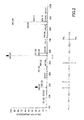
- allylamine was dropped thereinto to cause reaction so that compound B represented by a chemical formula of (a vinylic compound having a molecular weight of 281 and a phosphorylcholine group) was obtained (see FIG. 1 and FIG. 2 ) .
- Proteins were adsorbed to the surface-treated well plate in practical example 1 and an untreated well plate and the amount of an adsorbed protein was quantitatively estimated, by using a direct BCA method.
- absorbance with respect to light with a wavelength of 562 nm was measured similarly to the above, except that after 0, 2, 5, 10, 20, or 40 ⁇ l of each protein solution was fed into the wells of the well plates, the PBS was added so as to reach 50 ⁇ l and 50 ⁇ l of the BCA solution was added.
- the evaluation results are illustrated in FIG. 3 . It is found from FIG. 3 that it may be possible to control adsorption of are protein of albumin, ⁇ -globulin, and lysozyme to a well plate by conducting the surface treatment.
- a surface-treated well plate was obtained similarly to practical example 1 except that 10% by weight solution of a polysiloxane in practical example 2 of patent document 4 in methanol was used.
- the amount of an adsorbed protein was quantitatively estimated similarly to protein adsorption experiment 1 except that the surface-treated well plates in practical examples 2 and 3 and comparative examples 1 were used instead of the surface-treated well plate in practical example, 1.
- the evaluation results are illustrated in FIG. 7 . It is found from FIG. 7 that it may be possible to control adsorption of any protein of albumen, ⁇ -globulin, and lysozyme to a well plate by conducting the surface treatment. Also, it is found that it may be possible for the surface-treated well plates in practical examples 2 and 3 to control absorption of a protein more non-specifically than the surface-treated well plate in comparative example 1.
- compound F and methacryloyl chloride were added into DMSO and agitation was conducted at room temperature to cause reaction, whereby compound G represented by a chemical formula of (an acrylic compound having a phosphorylcholine group) was obtained. Additionally, it is possible to use compound G as a surface modifying agent similarly to compound B.
- HEMA 2-hydroxyethyl methacrylate
- butyl methacrylate was added into methanol at a rate of 7:3, 0.05% by mole of ammonium peroxodisulfate (NH 3 ) 2 S 2 O 8 was added based on the total amount of such monomers and polymerization was conducted at 50 °C for 1 hour, whereby compound I (an acrylic polymer) was obtained.
- the amount of an adsorbed protein was quantitatively estimated similarly to protein adsorption experiment 1 except that the surface-treated well plates in practical example 5 and comparative example 2 were used instead of the surface-treated well plate in practical example 1.
- the evaluation results are illustrated in FIG. 10 . It is found from FIG. 10 that it may be possible to control adsorption of any protein of albumin, ⁇ -globulin, and lysozyme to a well plate by conducting the surface treatment. Also, it is found that it may be possible for the surface-treated well plate in practical example 5 to control adsorption of albumen, ⁇ -globulin, and lysozyme better than the surface-treated well plate in comparative example 2.
- a material modified by a surface modifying agent according to the present invention is a material excellent in biocompatibility and hydrophilicity thereof. Such a material is applicable to a wide variety of application such as cosmetic materials, medical materials such as artificial organs and tools for a surgical operation, packing materials for chromatography, affinity articles, and coating materials.
Landscapes
- Chemical & Material Sciences (AREA)
- Organic Chemistry (AREA)
- Health & Medical Sciences (AREA)
- Chemical Kinetics & Catalysis (AREA)
- Medicinal Chemistry (AREA)
- Polymers & Plastics (AREA)
- General Chemical & Material Sciences (AREA)
- Life Sciences & Earth Sciences (AREA)
- Biochemistry (AREA)
- General Health & Medical Sciences (AREA)
- Molecular Biology (AREA)
- Addition Polymer Or Copolymer, Post-Treatments, Or Chemical Modifications (AREA)
- Paints Or Removers (AREA)
- Silicon Polymers (AREA)
Abstract

Description
- The present invention relates to a polysiloxane, a method of manufacturing a polysiloxane, an acrylic compound, a method of manufacturing an acrylic compound, an acrylic polymer, a vinylic compound, a method of manufacturing a vinylic compound, a surface modifying agent, and a method of modifying a surface.
- Conventionally, a polymer having a phosphorylcholine group is known as a biocompatible polymer and a biocompatible material is known in which each kind of resin material is coated with such a polymer.
-
Patent document 1 discloses a cosmetic powder in which a powder is coated with a polymer obtainable by polymerizing 2-methacryloyloxyethylphosphorylcholine as one monomer. - Furthermore,
patent document 2 discloses a medical material in which a coating layer composed of heparin or a heparin derivative and a copolymer based on a monomer having a phosphorylcholine-like group on a side chain and a monomer having a group capable of bonding to heparin or a heparin derivative is formed on a surface of a substrate. - Moreover,
patent document 3 discloses a separation material having a phosphorylcholine-like group on at least a surface thereof, wherein the ratio (P/C) of the amount of a phosphorus element originating from a phosphorylcholine-like group to the amount of a carbon element is 0.002 - 0.3 in a spectrum measured by an X-ray photoelectron spectroscopic analysis with respect to the surface. - Meanwhile, patent document 4 discloses a polysiloxane having a phosphorylcholine group. However, in such a polysiloxane, a phosphorylcholine group is bonded to a silicon atom via an amino group having a pH dependency, whereby a problem is that a pH for obtaining an effect of a phosphorylcholine group is limited when used as a surface modifying agent.
- Furthermore,
patent document 5 discloses a copolymer of 2-methacryloyloxyethylphosphorylcholine (MPC) and a methacrylic acid ester. Moreover, patent document 6 discloses a method for manufacturing a polymer containing a phosphorylcholine group. - Additionally, for example, 2-chloro-1,3,2-dioxaphosphorane-2-oxide is reacted with 2-hydroxyethyl methacrylate and subsequently reacted with trimethylamine, whereby it may be possible to obtain MPC. However, in regard to thus obtained acrylic compound having a phosphorylcholine-like group, a synthetic method thereof is complicated and a hydrolysis resistance thereof is insufficient.
- Patent document 1: Japanese Patent Application Publication No.
H07-118123 - Patent document 2: Japanese Patent Application Publication No.
2000-279512 - Patent document 3: Japanese Patent Application Publication No.
2002-098676 - Patent document 4: Japanese Patent Application Publication No.
2004-175830 - Patent document 5: Japanese Patent Application Publication No.
H09-003132 - Patent document 6: Japanese Patent Application Publication No.
H10-298240 - The present invention aims at providing a polysiloxane having a phosphorylcholine-like group which is capable of controlling a limitation to a pH when used as a surface modifying agent, and a method of manufacturing the polysiloxane, while a problem of the above-mentioned conventional technique is taken into consideration. Furthermore, the present invention aims at providing a surface modifying agent containing the polysiloxane, and a method of modifying a surface by using the surface modifying agent.
- The present invention aims at providing an acrylic compound having a phosphorylcholine-like group in which a synthetic method thereof is simple and a hydrolysis resistance thereof is excellent, a method of manufacturing the acrylic compound, and an acrylic polymer obtainable by polymerizing the acrylic compound, while a problem of the above-mentioned conventional technique is taken into consideration. Furthermore, the present invention aims at providing a surface modifying agent containing the acrylic compound or the acrylic polymer, and a method of modifying a surface by using the surface modifying agent.
- The present invention aims at providing a vinylic compound having a phosphorylcholine-like group in which a synthetic method thereof is simple and a hydrolysis resistance thereof is excellent, and a method of manufacturing the vinylic compound, while a problem of the above-mentioned conventional technique is taken into consideration. Furthermore, the present invention aims at providing a surface modifying agent containing the vinylic compound, and a method of modifying a surface by using the surface modifying agent.
- The invention as recited in
claim 1 is a polysiloxane characterized by including a structural unit in which a group represented by a general formula of
- The invention as recited in
claim 2 is the polysiloxane as recited inclaim 1, characterized in that the structural unit is represented, by a general formula of
- The invention as recited in
claim 3 is a method of manufacturing the polysiloxane as recited inclaim 1, characterized by including a step of oxidizing glycerophosphorylcholine to synthesize a compound having a carboxyl group or a phosphorylcholine group. - The invention as recited in claim 4 is a surface modifying agent characterized by containing the polysiloxane as recited in
claim 1. - The invention as recited in
claim 5 is a method of modifying a surface characterized by using the surface modifying agent as recited in claim 4 to modify a material surface. - The invention as recited in claim 6 is an acrylic compound characterized in that a group represented by a general formula of

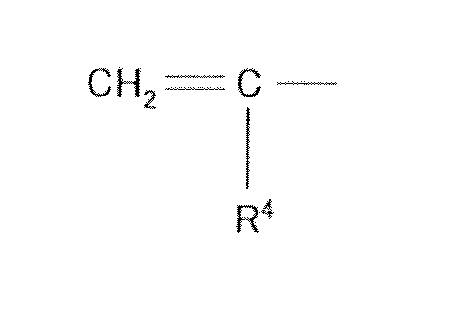
- The invention as recited in claim 7 is the acrylic compound as recited in claim 6, characterized by being represented by a general formula of

- The invention as recited in
claim 8 is a method of manufacturing the acrylic compound as recited in claim 6, characterized by including a step of oxidizing glycerophosphorylcholine to synthesize a compound having a carboxyl group and a phosphorylcholine group. - The invention as recited in claim 9 is a surface modifying agent characterized by containing the acrylic compound as recited in claim 6.
- The invention as recited in
claim 10 is a method of modifying a surface characterized by using the surface modifying agent as recited in Claim 9 to modify a material surface. - The invention as recited in claim 11 is an acrylic polymer characterized by being a homopolymer or copolymer of the acrylic compound as recited in claim 6.
- The invention as recited in claim 12 is a surface modifying agent characterized by containing the acrylic polymer as recited in claim 11.
- The invention as recited in claim 13 is a method of modifying a surface characterized by using the surface modifying agent as recited in claim 12 to modify a material surface.
- The invention as recited in claim 14 is a vinylic compound characterized in that a group represented by a general formula of


- The invention was recited in claim 15 is the vinylic compound as recited in claim 14, characterized by being represented by a general formula of

- The invention as recited in claim 16 is a method of manufacturing the vinylic compound as recited in claim 14, characterized by including a step of oxidizing glycerophosphorylcholine to synthesize a compound having a carboxyl group and a phosphorylcholine group.
- The invention as recited in claim 17 is a surface modifying agent characterized by containing the vinylic compound as recited in claim 14.
- The invention as recited in claim 18 is a method of modifying a surface characterized by using the surface modifying agent as recited in claim 17 to modify a material surface.
- According to the present invention, it may be possible to provide a polysiloxane having a phosphorylcholine-like group which is capable of controlling a limitation to a pH when used as a surface modifying agent, and a method of manufacturing the polysiloxane. Furthermore, according to the present invention, it may be possible to provide a surface modifying agent containing the polysiloxane, and a method of modifying a surface by using the surface modifying agent.
- According to the present invention, it may be possible to provide an acrylic compound having a phosphorylcholine-like group in which a synthetic method thereof is simple and a hydrolysis resistance thereof is excellent, a method of manufacturing the acrylic compound, and an acrylic polymer obtainable by polymerizing the acrylic compound. Furthermore, according to the present invention, it may be possible to provide a surface modifying agent containing the acrylic compound or the acrylic polymer, and a method of modifying a surface by using the surface modifying agent.
- According to the present invention, it may be possible to provide a vinylic compound having a phosphorylcholine-like group in which a synthetic method thereof is simple and a hydrolysis resistance thereof is excellent, and a method of manufacturing the vinylic compound. Furthermore, according to the present invention, it may be possible to provide a surface modifying agent containing the vinylic compound, and a method of modifying a surface by using the surface modifying agent.
-
-
FIG. 1 is a diagram illustrating an 1H NMR spectrum of compound B in practical example 1. -
FIG. 2 is a diagram illustrating an MS spectrum of compound B in practical example 1. -
FIG. 3 is a diagram, illustrating evaluation results ofprotein absorption test 1 in the practical examples. -
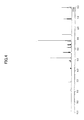
FIG. 4 is a diagram illustrating an 1H NMR spectrum of compound C in practical example 2. -
FIG. 5 is a diagram illustrating an 1H NMR spectrum of an amino-modified polysiloxane in practical example 3. -
FIG. 6 is a diagram illustrating an 1H NMR spectrum of compound D in practical example 3. -
FIG. 7 is a diagram illustrating evaluation results ofprotein adsorption test 2 in the practical examples. -
FIG. 8 is a diagram illustrating an 1H NMR spectrum of compound E in practical example 4. -
FIG. 9 is a diagram illustrating an MS spectrum of compound E in practical example 4. -
FIG. 10 is a diagram illustrating evaluation results ofprotein adsorption test 3 in the practical examples. - Next, the best mode for carrying out the present invention will be described in conjunction with the drawings.
- A polysiloxane according to the present invention has a structural unit in which a group represented by a general formula of

- A polysiloxane according to the present invention preferably has a structural unit represented by a general formula of

- The ratio of a structural unit represented by general formula (2) to all of structural units of a polysiloxane according to the present invention is preferably 5% by mole or more, and more preferably 20% by mole or more. Thereby, it may be possible to sufficiently develop a characteristic of such a phosphorylcholine-like group such as biocompatibility or moisture retention thereof.
- A polysiloxane according to the present invention may be obtained by condensing a compound having a phosphorylcholine-like group represented by general formula (1) and a carboxyl group with a polysiloxane having a structural unit in which a hydroxyl group or an amino group and an Si atom are bonded via a spacer.
- Alternatively, a polysiloxane according to the present invention may be obtained by condensing a compound having a phosphorylcholine-like group represented by general formula (1) and a hydroxyl group or an amino group with a polysiloxane having a structural unit in which a carboxyl group and an Si atom are bonded via a spacer.
- Herein, for example, glycerophosphorylcholine may be oxidized by using periodic acid and ruthenium trichloride to obtain a compound having a phosphorylcholine group and a carboxyl group. Furthermore, a compound having a phosphorylcholine group and a carboxyl group may be condensed with a diol or a diamine to obtain a compound having a phosphorylcholine group and a hydroxy group or an amino group.
- Alternatively, a polysiloxane according to the present invention may be obtained by adding (hydrosilylating) a vinylic compound in which a phosphorylcholine-like group represented by general formula (1), an ester bond or an amide bond, a spacer, and a group represented by general formula of


- For a vinylic compound, it is preferable to provide a compound represented by a general formula of

-CH2CHR5-Z-
or a group represented by a general formula of
-C(CH3)R5-Z-is X). - A vinylic compound may be obtained by condensing a compound having a phosphorylcholine-like group represented by general formula (1) and a carboxyl group with a compound in which a functional group represented by general formula (3) and a hydroxyl group or an amino group are bonded via a spacer.
- Alternatively, a vinylic compound may be obtained by condensing a compound having a phosphorylcholine-like group represented by general formula, (1) and a hydroxy group or an amino group with a compound in which a functional group represented by general formula (3) and a carboxyl group are bonded via a spacer.
- Herein, for example, glycerophosphorylcholine may be oxidized by using periodic acid and ruthenium trichloride to obtain a compound having a phophorylcholine group and a carboxyl group. Furthermore, a compound having a phosphorylcholine group and a carboxyl group may be condensed with a diol or a diamine to obtain a compound having a phorphorylcholine group and a hydroxyl group or an amino group.
- A polysiloxane according to the present invention may be used as a surface modifying agent, wherein a material surface may be modified by introducing a desired quantity of a phosphorylcholine-like group thereinto. Herein, for a material with a surface capable of being modified, there is provided a polyethylene, a polypropylene, a polystyrene, a polyvinyl chloride, a nylon, a polyurethane, a polyurea, a poly(meth)acrylac acid, a poly(meth)acrylate, a polyester, a polyacrylonitrile, a polyacrylamide, a polyvinyl acetate, a polycarbonate, a polysulfone, a polyvinyl alcohol, a cellulose, a cellulose acetate, a silicone resin, a glass, a ceramic, a metal, a stainless steel, or the like, and two kinds or more thereof may be used in combination.
- When a polysiloxane according to the present invention is used to modify a material surface, a solution or dispersion fluid of a polysiloxane is preferably applied onto and dried on a material surface. Herein, drying under a reduced pressure, heating treatment, or the like may be conducted according to need. A solvent to be used for a solution or dispersion fluid of a polysiloxane, is not particularly limited. The concentration of a polysiloxane in a solution or dispersion fluid is preferably 0.01 - 30% by weight, and more preferably 0.1 - 20% by weight. If this concentration is less than 0.01% by weight, the amount of a polysiloxane to be formed on a material surface may be insufficient so that a performance thereof may not be developed. On the other hand, if the concentration is more than 30% by weight, workability for applying a solution or dispersion fluid of a polysiloxane may be deteriorated so that the uniformity of a coating film may be degraded. Additionally, for an application method, there is provided, for example, a publicly known method such as a dipping method, a spray method, a roller coating method, or a spin-coating method.
- In an acrylic compound according to the present invention, a phosphorylcholine-like group represented by a general formula of


- Furthermore, an acrylic compound according to the present invention is preferably a compound represented by a general formula of

- An acrylic compound according to the present invention may be obtained by condensing a compound having a phosphorylcholine-like group represented by general formula (1) and a carboxyl group with a compound in which a functional group represented by general formula, (6), an ester bond or an amide bond, a spacer, and a hydroxyl group or an amino group are bonded sequentially.
- Alternatively, an acrylic compound according to the present invention may be obtained by condensing a compound having a phosphorylcholine-like group represented by general formula (1) and a hydroxyl group or an amino group with a compound in which a functional group represented by general formula (6), an ester bond or an amide bond, a spacer, and a carboxyl group are bonded sequentially.
- Herein, for example, glycerophosphorylcholine may be oxidized by using periodic acid and ruthenium trichloride to obtain a compound having a phosporylcholine group and a carboxyl group. Furthermore, a compound having a phosphorylcholine group and a carboxyl group may be condensed with a diol or a diamine, whereby it may be possible to obtain a compound having a phosphorylcholine group and a hydroxyl group or an amino group.
- An acrylic compound may be used as a surface modifying agent, wherein a material surface may be modified by introducing a desired quantity of a phosphroylcholine-like group thereinto. Herein, for a material with a surface capable of being modified, there is provided a polyethylene, a polypropylene, a polystyrene, a polyvinyl chloride, a nylon, a polyurethane, a polyurea, a poly(meth)acrylic acid, a poly(meth)acrylate, a polyester, a polyacrylonitrile, a polyacrylamide, a polyvinyl acetate, a polycarbonate, a polysulfone, a polyvinyl alcohol, a cellulose, a cellulose acetate, a silicone resin, a glass, a ceramic, a metal, a stainless steel, or the like, and two or more kinds thereof may be used in combination.
- When a material surface is modified by using an acrylic compound according to the present invention, it is preferable to treat a material surface by plasma treatment, ozone treatment, or the like, and subsequently apply a solution or dispersion fluid of an acrylic compound onto the material surface, whereby the acrylic compound is polymerized and grafted. Herein, drying under a reduced pressure, heating treatment, or the like may be conducted according to need. A solvent to be used for a solution or dispersion fluid of an acrylic compound is not particularly limited. The concentration of an acrylic compound in a solution or dispersion fluid is preferably 0.01 - 30% by weight, and more preferably 0.1 - 20% by weight. If this concentration is less than 0.01% by weight, the amount of an acrylic compound to be formed on a material surface may be insufficient so that a performance thereof may not be developed. On the other hand, if the concentration is more than 30% by weight, workability for applying a solution or dispersion fluid of an acrylic compound may be deteriorated so that the uniformity of a coating film may be degraded. Additionally, for an application method, there is provided, for example, a publicly-known method such as a dipping method, a spray method, a roller coating method, or a spin-coating method.
- An acrylic polymer according to the present invention may be obtained by radical-polymerizing an acrylic compound according to the present invention in a solvent under the presence of a polymerization initiator. A solvent is not particularly limited as long as a monomer is soluble therein, and there is provided water, methanol, ethanol, propanol, t-butanol, benzene, toluene, dimethylformamide, tetrahydrofuran, chloroform, or the like, wherein two or more kinds thereof may be used in combination.
- Furthermore, a polymerization initiator is not particularly limited, and there is provided, for example, an organic peroxide such as benzoyl peroxide, t-butyl peroxy-2-ethylhexanoate, succinyl peroxide, glutar peroxide, succinyl peroxyglutarate, t-butyl peroxymalate, t-butyl peroxypivalate, di-2-ethoxyethyl peroxycarbonate, or 3-hydroxy-1,1-dimethylbutyl peroxypivalate, an azo compound such as azobisisobutyronitrile,
dimethyl 2,2-azobis(isobutyrate), 1-((1-cyano-1-methylethyl)azo)formamide, 2,2-azobis(2-methyl-N-phenylpropionamidine) dihydrochloride, 2,2-azobis(2-methyl-N-(2-hydroxyethyl)propionamide), 2,2-azobis(2-methylpropionamide) dihydrate, 4,4-azobis(4-cyanopentanoic acid), 2,2-azobi(2-(hydroxymethyl)propionitrile), or the like, wherein two or more kinds thereof may be used in combination. Preferably, 0.001 - 10% by weight, and more preferably 0.01 - 5% by weight, of a polymerization initiator is added into a monomer solution. - Additionally, an acrylic compound according to the present invention may be copolymerized with another monomer. Another monomer is not particularly limited and a monofunctional monomer is preferable, wherein there is provided, for example, (meth)acrylic acid; a (meth)acrylate such as ethyl (meth)acrylate, ethyl (meth)acrylate, propyl (meth)acrylate, butyl (meth)acrylate, hexyl (meth)acrylate, lauryl (meth)acrylate, or stearyl (meth)acrylate; a hydroxyalkyl (meth)acrylate such as 2-hydroxyethyl (meth)acrylate or 2-hydroxypropyl (meth)acrylate; (meth)acrylamide; a styrene-type monomer such as styrene, methylstyrene, or a substituted styrene; a vinyl ether such as ethyl vinyl ether or butyl vinyl ether; N-vinylpyrolidone; an unsaturated hydrocarbon-type monomer or substituted unsaturated hydrocarbon-type monomer such as vinyl chloride, vinylidene chloride, ethylene, propylene, or isobutylene; acrylonitrile; glyco-2-hydroxyethyl monomethacrylate (GEMA); oligo(ethylene glycol) monomethacrylate; polyethylene glycol monomethacrylate; or the like, and two or more kinds thereof may be used in combination.
- Herein, the ratio of an acrylic compound according to the present invention to the total amount of a monomer(s) is preferably 5% by mole or more, and more preferably 20% by mole or more. Thereby, it may be possible to sufficiently develop a characteristic of a phosphorylcholine-like group such as biocompatibility or moisture retention thereof.
- Furthermore, the concentration of a monomer in a solution is preferably 0.01 - 2 mol/l. When the concentration of a monomer is equal to or more then 0.01 mol/l, it may be possible to improve the efficiency of an initiator, and when the concentration is equal to or less that 2 mol/l, it may be possible to reduce abnormal polymerization or gelation.
- A polymerization temperature is usually 5 - 100 °C. When a polymerization temperature is equal to or higher then 5 °C, it may be possible to accelerate a polymerization reaction, and when equal to or lower than 100 °C, it may be possible to reduce decomposition of a phosphorylcholine-like group which is caused by a high temperature. A period of time for polymerization is usually 10 minutes - 24 hours, and preferably 30 minutes - 12 hours.
- An acrylic polymer According to the present invention may be used as a surface modifying agent, wherein a material surface may be modified by introducing a desired quantity of a phosphorylcholine-like group thereinto. Herein, for a material with a surface capable of being modified, there is provided a polyethylene, a polypropylene, a polystyrene, a polyvinyl chloride, a nylon, a polyurethane, a polyurea, a poly(meth)acrylic acid, a poly(meth)acrylate, a polyester, a polyacrylonitrile, a polyacrylamide, a polyvinyl acetate, a polycarbonate, a polysulfone, a polyvinyl alcohol, a cellulose, a cellulose acetate, a silicone resin, a glass, a ceramic, a metal, a stainless steel, or the like, and two or more kinds thereof may be used in combination.
- When an acrylic polymer According to the present invention is used to modify a material surface, a solution or dispersion fluid of an acrylic polymer is preferably applied onto and dried on a material surface. Herein, drying under a reduced pressure, heating treatment, or the like may be conducted according to need. A solvent to be used for a solution or dispersion fluid of an acrylic polymer is not particularly limited. The concentration of an acrylic polymer in a solution or dispersion fluid is preferably 0.01 - 30% by weight, and more preferably 0.1 - 20% by weight. If this concentration is less than 0.01% by weight, the amount of an acrylic polymer to be formed on a material surface may be insufficient so that a performance thereof may not be developed. On the other hand, if the concentration is more than 30% by weight, workability for applying a solution or dispersion fluid of an acrylic polymer may be deteriorated so that the uniformity of a coating film may be degraded. Additionally, for an application method, there is provided, for example, a publicly-known method such as a dipping method, a spray method, a roller coating method, or a spin-coating method.
- In a vinylic compound according to the present invention, a phosphorylcholine-like group represented by a general formula of


- Additionally, it may be possible for such a vinyl compound, whether purified or unpurified, to modify a material surface, whereby it may be possible to obtain an effect of controlling adsorption of a protein or the like.
- Furthermore, a vinylic compound according to the present invention is preferable a compound, represented by a general formula of

- A vinylic compound according so the present invention may be obtained by condensing a compound having a phosphorylcholine-like group represented by general formula (1) and a carboxyl group with a compound in which a functional group represented by general formula (6) and a hydroxyl group or an amino group are bonded via a spacer.
- Alternatively, a vinylic compound According to the present invention may be obtained by condensing a compound having a phosphorylcholine-like group represented by general formula, (1) and a hydroxyl group or an amino group with a compound in which a functional group represented by general formula, (6) and a carboxyl group are bonded via a spacer.
- Herein, for example, glycerophosphorylcholine may be oxidized by using periodic acid and ruthenium trichloride to obtain a compound having a phosphorylcholine group and a carboxyl group. Furthermore, a compound having a phosphorylcholine group and a carboxyl group may be condensed with a diol or a diamine to obtain a compound having a phosphorylcholine group and a hydroxyl group or an amino group.
- A vinylic compound according to the present invention may be used as a surface modifying agent, wherein a material surface may be modified by introducing a desired amount of a phosphorylcholine-like group thereinto. Herein, for a material with a surface capable of being modified, there is provided a polyethylene, a polypropylene, a polystyrene, a polyvinyl chloride, a nylon, a polyurethane, a polyurea, a poly(meth)acrylic acid, a poly(meth)acrylate, a polyester, a polyacrylonitrile, a polyacrylamide, a polyvinyl acetate, a polycarbonate, a polysulfone, a polyvinyl alcohol, a cellulose, a cellulose acetate, a silicone resin, a glass, a ceramic, a metal, a stainless steel, or the like, and two or more kinds thereof may be used in combination.
- When a vinylic compound according to the present invention is used to modify a material surface, it is preferable to treat a material surface by plasma treatment, ozone treatment, or the like, and subsequently apply a solution or dispersion fluid of a vinylic compound onto a material surface, whereby the vinylic compound is polymerize and grafted. Herein, drying under a reduced pressure, heating treatment, or the like may be conducted according to need. A solvent to be used for a solution or dispersion fluid of a vinylic compound is not particularly limited. The concentration of a vinylic compound in a solution or dispersion fluid is preferable 0.01 - 30% by weight, and more preferably 0.1 - 20% by weight. If this concentration is less than 0.01% by weight, the amount of a vinylic compound to be formed on a material surface may be insufficient so that a performance thereof may not be developed. On the other hand, if the concentration is more than 30% by weight, workability for applying a solution or dispersion fluid of a vinylic compound may be deteriorated so that the uniformity of a coating film may be degraded. Additionally, for an application method, there is provided, for example, a publicly-known method such as a dipping method, a spray method, a roller coating method, or a spin-coating method.
- An aqueous solution of L-α-glycerophosphorylcholine was cooled in an ice-water bath. Then, after sodium periodate with four times equivalent of L-α-glycerophosphorylcholine was added, a catalyst quantity of ruthenium trichloride was added and agitation was conducted for 3 hours to cause reaction. Then, after methanol was added and agitation was further conducted for 30 minutes, filtration was conducted to eliminate a precipitate. Furthermore, after concentration under a reduced pressure was conducted, drying under a reduced pressure was conducted, to obtain compound A represented by a chemical formula of


FIG. 1 andFIG. 2 ) . - After a 96-well plate made of polystyrene (produced by Becton, Dickinson and Company Japan) was plasma-treated under argon atmosphere, reaction was conducted with oxygen gas. Then, after dipping in 5% by weight solution of compound B in methanol was conducted and washing with methanol was conducted, drying was conducted to obtain a surface-treated well plate.
- Proteins were adsorbed to the surface-treated well plate in practical example 1 and an untreated well plate and the amount of an adsorbed protein was quantitatively estimated, by using a direct BCA method. The proteins used for such evaluation were three kinds, i.e., albumen (Mw = 69000, pI = 4.9), γ-globulin (Mw = 150000, 5.0 < pI < 9.5), and lysozyme (Mw = 14000, pI = 11.0) (all produced by Sigma Corporation).
- The method of such an experiment will specifically be described bellow. First, each protein was dissolved in a phosphate buffer (8 mg/mL of sodium chloride, 0.2 mg/mL of potassium chloride, 1.15 mg/mL of sodium monohydrogen phosphate, and 0.2 mg/mL of potassium dihydrogen phosphate, and pH = 7.4) such that the concentration thereof was 0.1 mg/mL, whereby a protein solution was provided. Then, 100 µl of such a protein solution was fed into the wells of the well plates and left at rest at 25 °C for 1 hour. Furthermore, after the wells were washed with 200 µl of the
phosphate buffer 5 times, 50 µl of the PBS and 50 µl of a BCA solution were added and leaving at rest was conducted at 60 °C for 1 hour, whereby color development was caused. Then, POWERSCAN HT (produced by Dainippon Sumitomo Pharma Co., Ltd.) as a plate reader was used to measure absorbance with respect to light with a wavelength of 562 nm. Additionally, in order to prepare a calibration curve, absorbance with respect to light with a wavelength of 562 nm was measured similarly to the above, except that after 0, 2, 5, 10, 20, or 40 µl of each protein solution was fed into the wells of the well plates, the PBS was added so as to reach 50 µl and 50 µl of the BCA solution was added. The evaluation results are illustrated inFIG. 3 . It is found fromFIG. 3 that it may be possible to control adsorption of are protein of albumin, γ-globulin, and lysozyme to a well plate by conducting the surface treatment. - Compound B and HM 151 (produced by Gelest Inc.) as a trimethylsiloxy-terminated methyl-H-siloxane - dimethylsiloxane copolymer represented by a chemical formula of


FIG. 4 ) . - 10% by weight solution of compound C in methanol was applied to a 96-well plate made of polystyrene (produced by Burton, Dickinson and Company Japan). Then, after washing with methanol was conducted, drying was conducted to obtain a surface-treated well plate.
- After compound, A with two times equivalent of a diamine-type amino-modified polysiloxane whose amine equivalent was 144 g/mol (see
FIG. 5 ) was added into a solution of the amino-modified polysiloxane in methanol, a triazine-type dehydration condensation agent DMT-MM (produced by Kokusan Chemical Co., Ltd.) with 1.2 times equivalent of compound A was added and agitation was conducted at room temperature for 3 hours to cause reaction, whereby compound D (a polysiloxane having a phosphorylcholine group) was obtained (seeFIG. 6 ). - 10% by weight solution of compound D in methanol was applied to a 96-swell plate made of polystyrene (produced by Becton, Dickinson and Company Japan) . Then, after washing with methanol was conducted, drying was conducted to obtain a surface-treated well plate.
- A surface-treated well plate was obtained similarly to practical example 1 except that 10% by weight solution of a polysiloxane in practical example 2 of patent document 4 in methanol was used.
- The amount of an adsorbed protein was quantitatively estimated similarly to
protein adsorption experiment 1 except that the surface-treated well plates in practical examples 2 and 3 and comparative examples 1 were used instead of the surface-treated well plate in practical example, 1. The evaluation results are illustrated inFIG. 7 . It is found fromFIG. 7 that it may be possible to control adsorption of any protein of albumen, γ-globulin, and lysozyme to a well plate by conducting the surface treatment. Also, it is found that it may be possible for the surface-treated well plates in practical examples 2 and 3 to control absorption of a protein more non-specifically than the surface-treated well plate in comparative example 1. - Compound A and 2-hydroxyethyl methacrylate (HEMA) were added into DMSO and agitation was conducted at room temperature to cause reaction, whereby compound E represented by a chemical formula of

FIG. 8 andFIG. 9 ). Additionally, it is possible to use compound E as a surface modifying agent similarly to compound B. - After ethylenediaimine with 20 times equivalent of compound A was added into a solution of compound A in methanol, a triazine-type dehydration condensation agent DMT-MM (produced by Kokusan Chemical Co., Ltd.) with 1.2 times equivalent of compound A was added and agitation was conducted at room temperature for 3 hours to cause reaction. Then, after filtration was conducted to eliminate a precipitate and concentration under a reduced pressure was conducted, drying under a reduced pressure was conducted to obtain compound F represented by a chemical formula of

- Then, compound F and methacryloyl chloride were added into DMSO and agitation was conducted at room temperature to cause reaction, whereby compound G represented by a chemical formula of

- After compound G and butyl methacrylate whose proportion was a molar ratio of 7:3 were added into methanol, 0.05% by mole of ammonium peroxodisulfate (NH3)2S2O8 was added based on the total amount of such monomers and polymerization was conducted at 50 °C for 1 hour, whereby compound H (an acrylic polymer having a phosphorylcholine group) was obtained.
- 5% by weight solution of compound H in methanol was applied to a 96-well plate made of polystyrene (produced by Becton, Dickinson and Company Japan). Then, after washing with methanol was conducted, drying was conducted to obtain a surface-treated well plate.
- After 2-hydroxyethyl methacrylate (HEMA) and butyl methacrylate were added into methanol at a rate of 7:3, 0.05% by mole of ammonium peroxodisulfate (NH3)2S2O8 was added based on the total amount of such monomers and polymerization was conducted at 50 °C for 1 hour, whereby compound I (an acrylic polymer) was obtained.
- 5% by weight solution of compound I in methanol was applied to a 96-swell plate made of polystyrene (produced by Beckon, Dickinson and Company Japan). Then, after washing with methanol was conducted, drying was conducted to obtain a surface-treated well plate.
- The amount of an adsorbed protein was quantitatively estimated similarly to
protein adsorption experiment 1 except that the surface-treated well plates in practical example 5 and comparative example 2 were used instead of the surface-treated well plate in practical example 1. The evaluation results are illustrated inFIG. 10 . It is found fromFIG. 10 that it may be possible to control adsorption of any protein of albumin, γ-globulin, and lysozyme to a well plate by conducting the surface treatment. Also, it is found that it may be possible for the surface-treated well plate in practical example 5 to control adsorption of albumen, γ-globulin, and lysozyme better than the surface-treated well plate in comparative example 2. - A material modified by a surface modifying agent according to the present invention is a material excellent in biocompatibility and hydrophilicity thereof. Such a material is applicable to a wide variety of application such as cosmetic materials, medical materials such as artificial organs and tools for a surgical operation, packing materials for chromatography, affinity articles, and coating materials.
- The present international application claims the priority based on Japanese Patent Application No.
2008-092762 2008-092763 20008-092764, filed on March 31, 2008 2008-092762 2008-092763 20008-092764
Claims (18)
- A polysiloxane characterized by comprising a structural unit in which a functional group represented by a general formula of

- The polysiloxane as claimed in claim 1, characterized in that the structural unit is represented by a general formula of
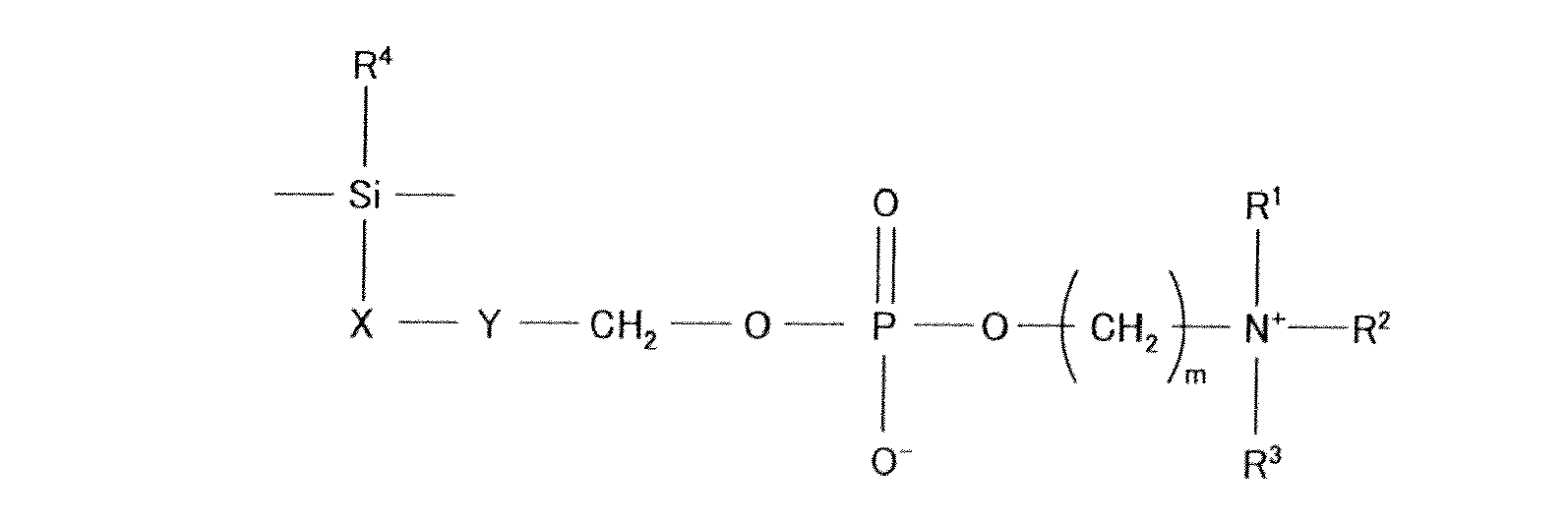
ester bond or an amide bond). - A method of manufacturing the polysiloxane as claimed in claim 1, characterized by comprising a step of oxidizing glycerophosphorylcholine to synthesize a compound having a carboxyl group or a phosphorylcholine group.
- A surface modifying agent characterized by containing the polysiloxane as claimed in claim 1.
- A method of modifying a surface characterized by using the surface modifying agent as claimed in claim 4 to modify a material surface.
- An acrylic compound characterized in that a functional group represented by a general formula of


- The acrylic compound as claimed in claim 6, characterized by being represented by a general formula of

- A method of manufacturing the acrylic compound as claimed in claim 6, characterized by comprising a step of oxidizing glycerophosphorylcholine to synthesize a compound having a carboxyl group and a phosphorylcholine group.
- A surface modifying agent characterized by containing the acrylic compound as claimed in claim 6.
- A method of modifying a surface characterized by using the surface modifying agent as claimed in claim 9 to modify a material surface.
- An acrylic polymer characterized by being a homopolymer or copolymer of the acrylic compound as claimed in claim 6.
- A surface modifying agent characterized by containing the acrylic polymer as claimed in claim 11.
- A method of modifying a surface characterized by using the surface modifying agent as claimed in claim 12 to modify a material surface.
- A vinylic compound characterized in that a functional group represented by a general formula of


bonded sequentially. - The vinylic compound as claimed in claim 14, characterized by being represented by a general formula of

- A method of manufacturing the vinylic compound as claimed in claim 14, characterized by comprising a step of oxidizing glycerophosphorylcholine to synthesize a compound having a carboxyl group and a phosphorylcholine group.
- A surface modifying agent characterized by containing the vinylic compound as claimed in claim 14.
- A method of modifying a surface characterized by using the surface modifying agent as claimed in claim 17 to modify a material surface.
Applications Claiming Priority (4)
| Application Number | Priority Date | Filing Date | Title |
|---|---|---|---|
| JP2008092762 | 2008-03-31 | ||
| JP2008092763 | 2008-03-31 | ||
| JP2008092764 | 2008-03-31 | ||
| PCT/JP2009/056657 WO2009123191A1 (en) | 2008-03-31 | 2009-03-31 | Polysiloxane, acrylic compound, and vinyl compound |
Publications (3)
| Publication Number | Publication Date |
|---|---|
| EP2261274A1 true EP2261274A1 (en) | 2010-12-15 |
| EP2261274A4 EP2261274A4 (en) | 2011-05-18 |
| EP2261274B1 EP2261274B1 (en) | 2016-03-02 |
Family
ID=41135561
Family Applications (1)
| Application Number | Title | Priority Date | Filing Date |
|---|---|---|---|
| EP09727061.5A Not-in-force EP2261274B1 (en) | 2008-03-31 | 2009-03-31 | Polysiloxane, acrylic compound, and vinylic compound |
Country Status (6)
| Country | Link |
|---|---|
| US (1) | US8242222B2 (en) |
| EP (1) | EP2261274B1 (en) |
| KR (1) | KR101539804B1 (en) |
| CN (1) | CN101977968B (en) |
| ES (1) | ES2566753T3 (en) |
| WO (1) | WO2009123191A1 (en) |
Cited By (1)
| Publication number | Priority date | Publication date | Assignee | Title |
|---|---|---|---|---|
| EP2444477A4 (en) * | 2009-06-15 | 2013-01-09 | Shiseido Co Ltd | CONTAINER FOR FORMATION OF AGGREGATED CELL MASS AND METHOD FOR FORMATION OF AGGREGATED CELL MASS |
Families Citing this family (8)
| Publication number | Priority date | Publication date | Assignee | Title |
|---|---|---|---|---|
| US8722853B2 (en) | 2010-06-10 | 2014-05-13 | University Of Washington Through Its Center For Commercialization | Methods and systems for adenovirus interaction with desmoglein 2 (DSG2) |
| JP6024891B2 (en) * | 2012-11-06 | 2016-11-16 | 日油株式会社 | Phosphorylcholine group-containing (meth) acrylate compound, production method thereof, and polymer thereof |
| CN103468085A (en) * | 2013-09-13 | 2013-12-25 | 苏州蔻美新材料有限公司 | Process for preparing probe for monitoring water quality of bionic coating containing phospholipid polymers in real time |
| KR102662172B1 (en) * | 2015-04-24 | 2024-04-29 | 루브리졸 어드밴스드 머티어리얼스, 인코포레이티드 | Surface modified polymer composition |
| CN107868254B (en) * | 2017-12-14 | 2020-07-14 | 成都硅宝科技股份有限公司 | Multifunctional plastic additive and preparation method thereof |
| EP4397694A4 (en) * | 2021-08-31 | 2025-11-19 | Nof Corp | MONOMER CONTAINING POLYDIMETHYLSILOXANE WITH PHOSPHORYLCHOLINE GROUP AND HYDROXYL GROUP |
| KR20240051140A (en) * | 2021-08-31 | 2024-04-19 | 니치유 가부시키가이샤 | Monomer containing polydimethylsiloxane having a phosphorylcholine group and a hydroxyl group |
| WO2026141351A1 (en) * | 2024-12-25 | 2026-07-02 | 日油株式会社 | Phosphorylcholine group-containing silicone compound, method for producing same, composition for contact lens, polymer, and contact lens |
Family Cites Families (21)
| Publication number | Priority date | Publication date | Assignee | Title |
|---|---|---|---|---|
| JPS56135492A (en) | 1979-12-20 | 1981-10-22 | Chiyatsupuman Denisu | Biocompatible surfaces |
| EP0032622B1 (en) * | 1979-12-20 | 1985-08-14 | Dennis Chapman | Polymerisable phospholipids and polymers thereof, methods for their preparation, methods for their use in coating substrates and forming liposomes and the resulting coated substrates and liposome compositions |
| JPS6067489A (en) | 1983-09-22 | 1985-04-17 | Toyo Soda Mfg Co Ltd | Preparation of polymerizable phospholipid |
| GB9118597D0 (en) * | 1991-08-30 | 1991-10-16 | Biocompatibles Ltd | Polymer treatments |
| JP3178950B2 (en) | 1993-10-19 | 2001-06-25 | ポーラ化成工業株式会社 | Powder for cosmetics and cosmetics containing the same |
| JP2870727B2 (en) | 1996-07-04 | 1999-03-17 | 科学技術振興事業団 | 2-methacryloyloxyethyl phosphorylcholine copolymer |
| JPH10298340A (en) | 1997-04-23 | 1998-11-10 | Tonen Chem Corp | Production of microporous polyolefin membrane |
| JP3737241B2 (en) | 1997-04-24 | 2006-01-18 | 日本油脂株式会社 | Process for producing phosphorylcholine group-containing polymer |
| JP4712924B2 (en) | 1999-03-30 | 2011-06-29 | 日油株式会社 | Medical material and manufacturing method |
| EP1198851B1 (en) * | 1999-07-21 | 2012-03-14 | E Ink Corporation | Reactive formation of dielectric layers and protection of organic layers in organic semiconductor device |
| JP4680361B2 (en) * | 2000-09-22 | 2011-05-11 | 一彦 石原 | Separation / collection method |
| JP4010831B2 (en) | 2001-05-22 | 2007-11-21 | 株式会社資生堂 | Phosphorylcholine group-containing polymer and method for producing the same |
| JP4245336B2 (en) * | 2002-11-25 | 2009-03-25 | 株式会社資生堂 | Polysiloxane having phosphorylcholine group and process for producing the same |
| JP4591926B2 (en) * | 2004-05-21 | 2010-12-01 | 株式会社資生堂 | Material surface modification method |
| JP3852942B2 (en) | 2004-05-24 | 2006-12-06 | 株式会社資生堂 | Powder for cosmetics dispersible in water |
| JP3715308B1 (en) | 2004-05-24 | 2005-11-09 | 株式会社資生堂 | Ophthalmic lens material and manufacturing method thereof |
| KR101217010B1 (en) * | 2004-11-29 | 2012-12-31 | 가부시키가이샤 시세이도 | Phosphorylcholine group-containing compound and method for producing same |
| JP3793546B1 (en) | 2004-11-29 | 2006-07-05 | 株式会社資生堂 | Phosphorylcholine group-containing compound and method for producing the same |
| JP2006199749A (en) * | 2005-01-18 | 2006-08-03 | Nof Corp | Phosphorylcholine group-containing siloxane compound, production method and use thereof |
| JP5013575B2 (en) * | 2005-10-28 | 2012-08-29 | 株式会社 資生堂 | Material surface treatment method |
| US7906134B2 (en) | 2005-12-21 | 2011-03-15 | Abbott Laboratories | Room temperature-curable polymers |
-
2009
- 2009-03-31 US US12/934,682 patent/US8242222B2/en not_active Expired - Fee Related
- 2009-03-31 CN CN200980109740.6A patent/CN101977968B/en not_active Expired - Fee Related
- 2009-03-31 EP EP09727061.5A patent/EP2261274B1/en not_active Not-in-force
- 2009-03-31 KR KR1020107018390A patent/KR101539804B1/en not_active Expired - Fee Related
- 2009-03-31 WO PCT/JP2009/056657 patent/WO2009123191A1/en not_active Ceased
- 2009-03-31 ES ES09727061.5T patent/ES2566753T3/en active Active
Cited By (2)
| Publication number | Priority date | Publication date | Assignee | Title |
|---|---|---|---|---|
| EP2444477A4 (en) * | 2009-06-15 | 2013-01-09 | Shiseido Co Ltd | CONTAINER FOR FORMATION OF AGGREGATED CELL MASS AND METHOD FOR FORMATION OF AGGREGATED CELL MASS |
| US9347031B2 (en) | 2009-06-15 | 2016-05-24 | Shiseido Company, Ltd. | Container for forming a cell aggregate and a method for forming a cell aggregate |
Also Published As
| Publication number | Publication date |
|---|---|
| CN101977968B (en) | 2013-03-13 |
| US8242222B2 (en) | 2012-08-14 |
| ES2566753T3 (en) | 2016-04-15 |
| US20110040053A1 (en) | 2011-02-17 |
| KR101539804B1 (en) | 2015-07-27 |
| WO2009123191A1 (en) | 2009-10-08 |
| EP2261274B1 (en) | 2016-03-02 |
| CN101977968A (en) | 2011-02-16 |
| EP2261274A4 (en) | 2011-05-18 |
| KR20110008008A (en) | 2011-01-25 |
Similar Documents
| Publication | Publication Date | Title |
|---|---|---|
| EP2261274B1 (en) | Polysiloxane, acrylic compound, and vinylic compound | |
| Wörz et al. | Protein-resistant polymer surfaces | |
| JP3950197B2 (en) | Method for producing silicone-containing organic polymer | |
| JP2870727B2 (en) | 2-methacryloyloxyethyl phosphorylcholine copolymer | |
| JP2890316B2 (en) | Materials for biocompatible medical devices | |
| EP3266803B1 (en) | Polymer and crosslinked body thereof | |
| EP1055674A1 (en) | Branched siloxane/silalkylene copolymer, silicone-containing organic polymer, and process for producing the same | |
| JPH09183819A (en) | Copolymer having phospholipid-like structure and medical material | |
| WO2001005855A1 (en) | Random copolymer, process for the production thereof and medical material | |
| WO2001007097A1 (en) | Medical materials and process for producing the same | |
| JP2002356519A (en) | Phosphorylcholine-like group-containing polymers and uses | |
| JP2000191667A (en) | Monomer for ophthalmic lens, polymer for ophthalmic lens and contact lens using the same | |
| JP6956403B2 (en) | Porous surface treatment polymer | |
| JP4824151B2 (en) | Glass substrate and film forming agent having polymer film containing terminal functional phosphorylcholine-like group | |
| EP4119587A1 (en) | Coating agent and medical material using same | |
| JP4033514B2 (en) | Soluble cellulose derivatives and uses | |
| JP2009263357A (en) | Acrylic compound and vinyl compound | |
| JP7425405B2 (en) | Copolymers and their uses | |
| JP5044777B2 (en) | Cell immobilization substrate coating material | |
| Sato et al. | “Substitutable” Polymer Brushes: Reactive Poly (methacrylate) Brushes with Exchangeable Alkoxyamine Units in the Side Chain | |
| CN113423745A (en) | Method for producing polymer having compatibility with biomaterial | |
| JP5043501B2 (en) | Random copolymer containing phosphorylcholine-like groups | |
| JPH0641156A (en) | Itaconic acid diester monomer and its polymer | |
| JPS60243167A (en) | Emulsion type coating composition | |
| JP2009263659A (en) | Polysiloxane and production method of producing the same |
Legal Events
| Date | Code | Title | Description |
|---|---|---|---|
| PUAI | Public reference made under article 153(3) epc to a published international application that has entered the european phase |
Free format text: ORIGINAL CODE: 0009012 |
|
| 17P | Request for examination filed |
Effective date: 20101008 |
|
| AK | Designated contracting states |
Kind code of ref document: A1 Designated state(s): AT BE BG CH CY CZ DE DK EE ES FI FR GB GR HR HU IE IS IT LI LT LU LV MC MK MT NL NO PL PT RO SE SI SK TR |
|
| AX | Request for extension of the european patent |
Extension state: AL BA RS |
|
| A4 | Supplementary search report drawn up and despatched |
Effective date: 20110418 |
|
| DAX | Request for extension of the european patent (deleted) | ||
| 17Q | First examination report despatched |
Effective date: 20120522 |
|
| GRAP | Despatch of communication of intention to grant a patent |
Free format text: ORIGINAL CODE: EPIDOSNIGR1 |
|
| INTG | Intention to grant announced |
Effective date: 20150910 |
|
| GRAS | Grant fee paid |
Free format text: ORIGINAL CODE: EPIDOSNIGR3 |
|
| GRAA | (expected) grant |
Free format text: ORIGINAL CODE: 0009210 |
|
| AK | Designated contracting states |
Kind code of ref document: B1 Designated state(s): AT BE BG CH CY CZ DE DK EE ES FI FR GB GR HR HU IE IS IT LI LT LU LV MC MK MT NL NO PL PT RO SE SI SK TR |
|
| REG | Reference to a national code |
Ref country code: GB Ref legal event code: FG4D Ref country code: FR Ref legal event code: PLFP Year of fee payment: 8 |
|
| REG | Reference to a national code |
Ref country code: AT Ref legal event code: REF Ref document number: 777998 Country of ref document: AT Kind code of ref document: T Effective date: 20160315 Ref country code: CH Ref legal event code: EP |
|
| REG | Reference to a national code |
Ref country code: IE Ref legal event code: FG4D |
|
| REG | Reference to a national code |
Ref country code: DE Ref legal event code: R096 Ref document number: 602009036582 Country of ref document: DE |
|
| REG | Reference to a national code |
Ref country code: ES Ref legal event code: FG2A Ref document number: 2566753 Country of ref document: ES Kind code of ref document: T3 Effective date: 20160415 |
|
| REG | Reference to a national code |
Ref country code: NL Ref legal event code: MP Effective date: 20160302 |
|
| REG | Reference to a national code |
Ref country code: LT Ref legal event code: MG4D |
|
| REG | Reference to a national code |
Ref country code: AT Ref legal event code: MK05 Ref document number: 777998 Country of ref document: AT Kind code of ref document: T Effective date: 20160302 |
|
| PG25 | Lapsed in a contracting state [announced via postgrant information from national office to epo] |
Ref country code: HR Free format text: LAPSE BECAUSE OF FAILURE TO SUBMIT A TRANSLATION OF THE DESCRIPTION OR TO PAY THE FEE WITHIN THE PRESCRIBED TIME-LIMIT Effective date: 20160302 Ref country code: FI Free format text: LAPSE BECAUSE OF FAILURE TO SUBMIT A TRANSLATION OF THE DESCRIPTION OR TO PAY THE FEE WITHIN THE PRESCRIBED TIME-LIMIT Effective date: 20160302 Ref country code: GR Free format text: LAPSE BECAUSE OF FAILURE TO SUBMIT A TRANSLATION OF THE DESCRIPTION OR TO PAY THE FEE WITHIN THE PRESCRIBED TIME-LIMIT Effective date: 20160603 Ref country code: NO Free format text: LAPSE BECAUSE OF FAILURE TO SUBMIT A TRANSLATION OF THE DESCRIPTION OR TO PAY THE FEE WITHIN THE PRESCRIBED TIME-LIMIT Effective date: 20160602 |
|
| PG25 | Lapsed in a contracting state [announced via postgrant information from national office to epo] |
Ref country code: NL Free format text: LAPSE BECAUSE OF FAILURE TO SUBMIT A TRANSLATION OF THE DESCRIPTION OR TO PAY THE FEE WITHIN THE PRESCRIBED TIME-LIMIT Effective date: 20160302 Ref country code: PL Free format text: LAPSE BECAUSE OF FAILURE TO SUBMIT A TRANSLATION OF THE DESCRIPTION OR TO PAY THE FEE WITHIN THE PRESCRIBED TIME-LIMIT Effective date: 20160302 Ref country code: SE Free format text: LAPSE BECAUSE OF FAILURE TO SUBMIT A TRANSLATION OF THE DESCRIPTION OR TO PAY THE FEE WITHIN THE PRESCRIBED TIME-LIMIT Effective date: 20160302 Ref country code: LV Free format text: LAPSE BECAUSE OF FAILURE TO SUBMIT A TRANSLATION OF THE DESCRIPTION OR TO PAY THE FEE WITHIN THE PRESCRIBED TIME-LIMIT Effective date: 20160302 Ref country code: AT Free format text: LAPSE BECAUSE OF FAILURE TO SUBMIT A TRANSLATION OF THE DESCRIPTION OR TO PAY THE FEE WITHIN THE PRESCRIBED TIME-LIMIT Effective date: 20160302 Ref country code: LT Free format text: LAPSE BECAUSE OF FAILURE TO SUBMIT A TRANSLATION OF THE DESCRIPTION OR TO PAY THE FEE WITHIN THE PRESCRIBED TIME-LIMIT Effective date: 20160302 Ref country code: BE Free format text: LAPSE BECAUSE OF NON-PAYMENT OF DUE FEES Effective date: 20160331 |
|
| PG25 | Lapsed in a contracting state [announced via postgrant information from national office to epo] |
Ref country code: IS Free format text: LAPSE BECAUSE OF FAILURE TO SUBMIT A TRANSLATION OF THE DESCRIPTION OR TO PAY THE FEE WITHIN THE PRESCRIBED TIME-LIMIT Effective date: 20160702 Ref country code: EE Free format text: LAPSE BECAUSE OF FAILURE TO SUBMIT A TRANSLATION OF THE DESCRIPTION OR TO PAY THE FEE WITHIN THE PRESCRIBED TIME-LIMIT Effective date: 20160302 |
|
| REG | Reference to a national code |
Ref country code: CH Ref legal event code: PL |
|
| PG25 | Lapsed in a contracting state [announced via postgrant information from national office to epo] |
Ref country code: CZ Free format text: LAPSE BECAUSE OF FAILURE TO SUBMIT A TRANSLATION OF THE DESCRIPTION OR TO PAY THE FEE WITHIN THE PRESCRIBED TIME-LIMIT Effective date: 20160302 Ref country code: RO Free format text: LAPSE BECAUSE OF FAILURE TO SUBMIT A TRANSLATION OF THE DESCRIPTION OR TO PAY THE FEE WITHIN THE PRESCRIBED TIME-LIMIT Effective date: 20160302 Ref country code: SK Free format text: LAPSE BECAUSE OF FAILURE TO SUBMIT A TRANSLATION OF THE DESCRIPTION OR TO PAY THE FEE WITHIN THE PRESCRIBED TIME-LIMIT Effective date: 20160302 Ref country code: PT Free format text: LAPSE BECAUSE OF FAILURE TO SUBMIT A TRANSLATION OF THE DESCRIPTION OR TO PAY THE FEE WITHIN THE PRESCRIBED TIME-LIMIT Effective date: 20160704 |
|
| REG | Reference to a national code |
Ref country code: DE Ref legal event code: R097 Ref document number: 602009036582 Country of ref document: DE |
|
| REG | Reference to a national code |
Ref country code: IE Ref legal event code: MM4A |
|
| PG25 | Lapsed in a contracting state [announced via postgrant information from national office to epo] |
Ref country code: BE Free format text: LAPSE BECAUSE OF FAILURE TO SUBMIT A TRANSLATION OF THE DESCRIPTION OR TO PAY THE FEE WITHIN THE PRESCRIBED TIME-LIMIT Effective date: 20160302 |
|
| PLBE | No opposition filed within time limit |
Free format text: ORIGINAL CODE: 0009261 |
|
| STAA | Information on the status of an ep patent application or granted ep patent |
Free format text: STATUS: NO OPPOSITION FILED WITHIN TIME LIMIT |
|
| PG25 | Lapsed in a contracting state [announced via postgrant information from national office to epo] |
Ref country code: CH Free format text: LAPSE BECAUSE OF NON-PAYMENT OF DUE FEES Effective date: 20160331 Ref country code: LI Free format text: LAPSE BECAUSE OF NON-PAYMENT OF DUE FEES Effective date: 20160331 Ref country code: IE Free format text: LAPSE BECAUSE OF NON-PAYMENT OF DUE FEES Effective date: 20160331 Ref country code: DK Free format text: LAPSE BECAUSE OF FAILURE TO SUBMIT A TRANSLATION OF THE DESCRIPTION OR TO PAY THE FEE WITHIN THE PRESCRIBED TIME-LIMIT Effective date: 20160302 |
|
| REG | Reference to a national code |
Ref country code: FR Ref legal event code: PLFP Year of fee payment: 9 |
|
| 26N | No opposition filed |
Effective date: 20161205 |
|
| PG25 | Lapsed in a contracting state [announced via postgrant information from national office to epo] |
Ref country code: SI Free format text: LAPSE BECAUSE OF FAILURE TO SUBMIT A TRANSLATION OF THE DESCRIPTION OR TO PAY THE FEE WITHIN THE PRESCRIBED TIME-LIMIT Effective date: 20160302 Ref country code: BG Free format text: LAPSE BECAUSE OF FAILURE TO SUBMIT A TRANSLATION OF THE DESCRIPTION OR TO PAY THE FEE WITHIN THE PRESCRIBED TIME-LIMIT Effective date: 20160602 |
|
| GBPC | Gb: european patent ceased through non-payment of renewal fee |
Effective date: 20160602 |
|
| PG25 | Lapsed in a contracting state [announced via postgrant information from national office to epo] |
Ref country code: GB Free format text: LAPSE BECAUSE OF NON-PAYMENT OF DUE FEES Effective date: 20160602 |
|
| PG25 | Lapsed in a contracting state [announced via postgrant information from national office to epo] |
Ref country code: MT Free format text: LAPSE BECAUSE OF FAILURE TO SUBMIT A TRANSLATION OF THE DESCRIPTION OR TO PAY THE FEE WITHIN THE PRESCRIBED TIME-LIMIT Effective date: 20160302 |
|
| REG | Reference to a national code |
Ref country code: FR Ref legal event code: PLFP Year of fee payment: 10 |
|
| PG25 | Lapsed in a contracting state [announced via postgrant information from national office to epo] |
Ref country code: CY Free format text: LAPSE BECAUSE OF FAILURE TO SUBMIT A TRANSLATION OF THE DESCRIPTION OR TO PAY THE FEE WITHIN THE PRESCRIBED TIME-LIMIT Effective date: 20160302 Ref country code: HU Free format text: LAPSE BECAUSE OF FAILURE TO SUBMIT A TRANSLATION OF THE DESCRIPTION OR TO PAY THE FEE WITHIN THE PRESCRIBED TIME-LIMIT; INVALID AB INITIO Effective date: 20090331 |
|
| PG25 | Lapsed in a contracting state [announced via postgrant information from national office to epo] |
Ref country code: MK Free format text: LAPSE BECAUSE OF FAILURE TO SUBMIT A TRANSLATION OF THE DESCRIPTION OR TO PAY THE FEE WITHIN THE PRESCRIBED TIME-LIMIT Effective date: 20160302 Ref country code: TR Free format text: LAPSE BECAUSE OF FAILURE TO SUBMIT A TRANSLATION OF THE DESCRIPTION OR TO PAY THE FEE WITHIN THE PRESCRIBED TIME-LIMIT Effective date: 20160302 Ref country code: LU Free format text: LAPSE BECAUSE OF NON-PAYMENT OF DUE FEES Effective date: 20160331 Ref country code: MC Free format text: LAPSE BECAUSE OF FAILURE TO SUBMIT A TRANSLATION OF THE DESCRIPTION OR TO PAY THE FEE WITHIN THE PRESCRIBED TIME-LIMIT Effective date: 20160302 |
|
| PGFP | Annual fee paid to national office [announced via postgrant information from national office to epo] |
Ref country code: IT Payment date: 20200304 Year of fee payment: 12 Ref country code: DE Payment date: 20200309 Year of fee payment: 12 |
|
| PGFP | Annual fee paid to national office [announced via postgrant information from national office to epo] |
Ref country code: FR Payment date: 20200217 Year of fee payment: 12 |
|
| PGFP | Annual fee paid to national office [announced via postgrant information from national office to epo] |
Ref country code: ES Payment date: 20200407 Year of fee payment: 12 |
|
| REG | Reference to a national code |
Ref country code: DE Ref legal event code: R119 Ref document number: 602009036582 Country of ref document: DE |
|
| PG25 | Lapsed in a contracting state [announced via postgrant information from national office to epo] |
Ref country code: FR Free format text: LAPSE BECAUSE OF NON-PAYMENT OF DUE FEES Effective date: 20210331 Ref country code: DE Free format text: LAPSE BECAUSE OF NON-PAYMENT OF DUE FEES Effective date: 20211001 |
|
| PG25 | Lapsed in a contracting state [announced via postgrant information from national office to epo] |
Ref country code: IT Free format text: LAPSE BECAUSE OF NON-PAYMENT OF DUE FEES Effective date: 20210331 |
|
| REG | Reference to a national code |
Ref country code: ES Ref legal event code: FD2A Effective date: 20220524 |
|
| PG25 | Lapsed in a contracting state [announced via postgrant information from national office to epo] |
Ref country code: ES Free format text: LAPSE BECAUSE OF NON-PAYMENT OF DUE FEES Effective date: 20210401 |