EP2258884A1 - High-strength steel sheet excellent in resistance to stress-relief annealing and low-temperature joint toughness - Google Patents
High-strength steel sheet excellent in resistance to stress-relief annealing and low-temperature joint toughness Download PDFInfo
- Publication number
- EP2258884A1 EP2258884A1 EP09726030A EP09726030A EP2258884A1 EP 2258884 A1 EP2258884 A1 EP 2258884A1 EP 09726030 A EP09726030 A EP 09726030A EP 09726030 A EP09726030 A EP 09726030A EP 2258884 A1 EP2258884 A1 EP 2258884A1
- Authority
- EP
- European Patent Office
- Prior art keywords
- steel sheet
- strength
- treatment
- contained
- steel
- Prior art date
- Legal status (The legal status is an assumption and is not a legal conclusion. Google has not performed a legal analysis and makes no representation as to the accuracy of the status listed.)
- Granted
Links
Images
Classifications
-
- C—CHEMISTRY; METALLURGY
- C22—METALLURGY; FERROUS OR NON-FERROUS ALLOYS; TREATMENT OF ALLOYS OR NON-FERROUS METALS
- C22C—ALLOYS
- C22C38/00—Ferrous alloys, e.g. steel alloys
- C22C38/14—Ferrous alloys, e.g. steel alloys containing titanium or zirconium
-
- C—CHEMISTRY; METALLURGY
- C22—METALLURGY; FERROUS OR NON-FERROUS ALLOYS; TREATMENT OF ALLOYS OR NON-FERROUS METALS
- C22C—ALLOYS
- C22C38/00—Ferrous alloys, e.g. steel alloys
- C22C38/02—Ferrous alloys, e.g. steel alloys containing silicon
-
- C—CHEMISTRY; METALLURGY
- C21—METALLURGY OF IRON
- C21D—MODIFYING THE PHYSICAL STRUCTURE OF FERROUS METALS; GENERAL DEVICES FOR HEAT TREATMENT OF FERROUS OR NON-FERROUS METALS OR ALLOYS; MAKING METAL MALLEABLE, e.g. BY DECARBURISATION OR TEMPERING
- C21D9/00—Heat treatment, e.g. annealing, hardening, quenching or tempering, adapted for particular articles; Furnaces therefor
- C21D9/46—Heat treatment, e.g. annealing, hardening, quenching or tempering, adapted for particular articles; Furnaces therefor for sheet metals
-
- C—CHEMISTRY; METALLURGY
- C22—METALLURGY; FERROUS OR NON-FERROUS ALLOYS; TREATMENT OF ALLOYS OR NON-FERROUS METALS
- C22C—ALLOYS
- C22C38/00—Ferrous alloys, e.g. steel alloys
- C22C38/002—Ferrous alloys, e.g. steel alloys containing In, Mg, or other elements not provided for in one single group C22C38/001 - C22C38/60
-
- C—CHEMISTRY; METALLURGY
- C22—METALLURGY; FERROUS OR NON-FERROUS ALLOYS; TREATMENT OF ALLOYS OR NON-FERROUS METALS
- C22C—ALLOYS
- C22C38/00—Ferrous alloys, e.g. steel alloys
- C22C38/04—Ferrous alloys, e.g. steel alloys containing manganese
-
- C—CHEMISTRY; METALLURGY
- C22—METALLURGY; FERROUS OR NON-FERROUS ALLOYS; TREATMENT OF ALLOYS OR NON-FERROUS METALS
- C22C—ALLOYS
- C22C38/00—Ferrous alloys, e.g. steel alloys
- C22C38/06—Ferrous alloys, e.g. steel alloys containing aluminium
-
- C—CHEMISTRY; METALLURGY
- C22—METALLURGY; FERROUS OR NON-FERROUS ALLOYS; TREATMENT OF ALLOYS OR NON-FERROUS METALS
- C22C—ALLOYS
- C22C38/00—Ferrous alloys, e.g. steel alloys
- C22C38/12—Ferrous alloys, e.g. steel alloys containing tungsten, tantalum, molybdenum, vanadium, or niobium
-
- C—CHEMISTRY; METALLURGY
- C22—METALLURGY; FERROUS OR NON-FERROUS ALLOYS; TREATMENT OF ALLOYS OR NON-FERROUS METALS
- C22C—ALLOYS
- C22C38/00—Ferrous alloys, e.g. steel alloys
- C22C38/16—Ferrous alloys, e.g. steel alloys containing copper
-
- C—CHEMISTRY; METALLURGY
- C22—METALLURGY; FERROUS OR NON-FERROUS ALLOYS; TREATMENT OF ALLOYS OR NON-FERROUS METALS
- C22C—ALLOYS
- C22C38/00—Ferrous alloys, e.g. steel alloys
- C22C38/18—Ferrous alloys, e.g. steel alloys containing chromium
-
- C—CHEMISTRY; METALLURGY
- C21—METALLURGY OF IRON
- C21D—MODIFYING THE PHYSICAL STRUCTURE OF FERROUS METALS; GENERAL DEVICES FOR HEAT TREATMENT OF FERROUS OR NON-FERROUS METALS OR ALLOYS; MAKING METAL MALLEABLE, e.g. BY DECARBURISATION OR TEMPERING
- C21D1/00—General methods or devices for heat treatment, e.g. annealing, hardening, quenching or tempering
- C21D1/26—Methods of annealing
- C21D1/30—Stress-relieving
-
- C—CHEMISTRY; METALLURGY
- C21—METALLURGY OF IRON
- C21D—MODIFYING THE PHYSICAL STRUCTURE OF FERROUS METALS; GENERAL DEVICES FOR HEAT TREATMENT OF FERROUS OR NON-FERROUS METALS OR ALLOYS; MAKING METAL MALLEABLE, e.g. BY DECARBURISATION OR TEMPERING
- C21D9/00—Heat treatment, e.g. annealing, hardening, quenching or tempering, adapted for particular articles; Furnaces therefor
- C21D9/08—Heat treatment, e.g. annealing, hardening, quenching or tempering, adapted for particular articles; Furnaces therefor for tubular bodies or pipes
- C21D9/14—Heat treatment, e.g. annealing, hardening, quenching or tempering, adapted for particular articles; Furnaces therefor for tubular bodies or pipes wear-resistant or pressure-resistant pipes
Definitions
- the present invention relates to a high-strength steel sheet which, even when subjected to long-term stress-relief annealing (also referred to as "SR process") after welding, decreases little in strength, and which has excellent low temperature toughness in a heat affected zone (also referred to as "HAZ”) .
- SR process long-term stress-relief annealing
- HZ heat affected zone
- TMCP method The rolling method which is a combination of controlled rolling and controlled cooling is referred to as TMCP method, and is widely employed as a method which can provide a steel material having a low carbon equivalent and yet having high strength, high toughness, and highweldability (hereinafter referred to as "TMCP steel".
- TMCP steel a steel material having a low carbon equivalent and yet having high strength, high toughness, and highweldability
- TMCP steel high strength, high toughness, and highweldability
- TMCP steel the application of TMCP steel have been extended from the steel sheets for welded structures mainly including shipbuilding to the steel sheets for pressure vessels such as tanks. Even in the case of constructing pressure vessels and the like using such TMCP steel, the strength of the steel sheet may be greatly reduced when the long-term SR treatment as described above is carried out.
- Patent document 2 suggests "high strength tough hardened steel for pressure vessels" containing basically 0.10 to 1. 00% of Cr and 0.45 to 0.60% of Mo. This technique suppresses the reaction of Fe 3 C with coarse M 23 C 6 by the long-term SR treatment by the addition of Cr. In this technique, the addition of Cr in a relatively wide range is anticipated, but actually only those containing Cr in an amount of 0.29% or higher are shown. It is therefore expected that the low temperature toughness of the HAZ is lowered.
- the present invention was made in light of the above-mentioned circumstances, and its object is to provide a high-strength steel sheet which decreases little in strength even when subjected to long-term stress-relief annealing after welding (that is, resistance to stress-relief annealing is good), and has excellent low temperature toughness of HAZ (this characteristic is hereinafter referred to as "low temperature joint toughness" in the present invention).
- the high-strength steel sheet according to the present invention comprises C: 0.10 to 0.16% (by mass %. the same applies hereinafter), Si: 0.05 to 0.50%, Mn: 1.3 to 1.9%, Al: 0.01 to 0.05%, Ti: 0.005 to 0.025%, Nb: 0.005 to 0.025%, V: 0.005 to 0.06% and Mo: 0.03 to 0.10%, with the remainder being iron and inevitable impurities, a CP value defined by equation (1) below being 5.40% or higher, and a carbon equivalent Ceq defined by equation (2) below being 0.45% or lower.
- CP value 125 [Ti] +111 [Nb] + 60 [V] + 15 [Mo] ...
- [Ti], [Nb], [V] and [Mo] represent the amounts (mass %) of Ti, Nb, V and Mo contained, respectively.
- Ceq [C] + [Mn] / 6 + ([Cr] + [Mo] + [V]) / 5 + ([Cu] + [Ni]) / 15 ...
- [C], [Mn], [Cr], [Mo], [V], [Cu] and [Ni] represent the amounts (mass %) of C, Mn, Cr, Mo, V, Cu and Ni contained, respectively.
- the high-strength steel sheet of the present invention it is useful to add, in addition to the above basic elements, if necessary, (a) Cr: 0.30% or lower (not including 0%), (b) Cu: 0.50% or lower (not including 0%) and/or Ni: 0.50% or lower (not including 0%), (c) Ca: 0.0040% or lower (not including 0%), among others, so that the characteristics of the steel sheet are further improved depending on the kind of the components contained.
- the present invention by controlling the chemical composition of the steel sheet in such a manner that the CP value and carbon equivalent Ceq represented by equation (1) and equation (2) above, respectively, satisfy defined ranges, a reduction in strength of the steel sheet after the SR treatment can be suppressed and excellent low temperature joint characteristic can be achieved.
- a high-strength steel sheet is extremely useful as a material for manufacturing tanks (pressure vessels) and the like where severe SR treatment is carried out.
- the inventors of the present invention contemplated the realization of a steel material having strength which is not lowered even when subjected to long-term SR treatment and good low temperature joint toughness from various angles.
- a steel sheet whose chemical composition is strictly controlled achieves the above object successfully, accomplishing the present invention.
- the constitution, actions and effects of the present invention will be described along with the history of the accomplishment of the present invention.
- cementite fraction fraction of the cementite phases
- the inventors of the present invention conceived the idea of suppressing the generation of cementite in the TMCP steel during the SR treatment for the purpose of utilizing C to ensure the strength of the steel sheet after the SR treatment. Based on such an idea, the inventors conducted further research on the influence of the chemical components on the strength of the steel sheet after the SR treatment.
- the SR treatment is a heat treatment conducted at high temperatures of 586 to 625°C for about 20 to 30 hours. Under such severe conditions, however, many deposits are dissolved, and C diffuses in cementite. However, it is presumed by using a general thermodynamic software (available from "Thermo-Calc", CRC Research Institute, Inc.) that Ti, Nb, V and Mo control the diffusion of C and suppress a cementite fraction by, for example, forming stable deposits of compositions such as TiC, Nb 2 C, V 2 C and Mo 2 C, even during the SR treatment.
- the inventors of the present invention calculated the amount of deposits in a thermal equilibrium state by the above Thermo-Calc to determine the proportion of deposits formed (that is, the contribution of carbon to suppressing diffusion), and further made correction to match it with a nonequilibrium state, whereby the CP value defined by equation (1) below was determined as a diffusion parameter of C.
- this CP value is 5.40% or higher, diffusion of C into cementite can be suppressed.
- any of the elements prevents weldability when contained in an excessive amount, and therefore its upper limit naturally exists (described later).
- CP value 125 Ti + 111 Nb + 60 V + 15 Mo wherein [Ti], [Nb], [V] and [Mo] represent the amount (mass %) of Ti, Nb, V and Mo contained, respectively.
- Equation (2) In the steel sheet of the present invention, in order to maintain an excellent low temperature joint toughness, it is also necessary for the carbon equivalent Ceq defined by equation (2) below to be 0.45% or lower.
- This carbon equivalent Ceq is a value indicating the influence of each element on the low temperature joint toughness calculated as an amount of carbon contained, and is used in various fields (ASTM standard).
- the present invention uses such carbon equivalent Ceq as a criterion of judgment of the low temperature joint toughness.
- Equation (2) below also includes as members Cr, Cu, Ni and other elements, which are contained if necessary, in addition to the basic components (C, Mn, Mo and V) of the steel material. The amounts of Cr, Cu and Ni may be calculated considering their quantities onlywhen these are contained.
- Ceq C + Mn / 6 + Cr + Mo + V / 5 + Cu + Ni / 15 wherein [C], [Mn], [Cr], [Mo], [V], [Cu] and [Ni] represent the amounts (mass %) of C, Mn, Cr, Mo, V, Cu and Ni contained, respectively.
- the CP value defined by equation (1) above is regulated to 5.40% or higher, and the carbon equivalent Ceq defined by carbon equation (2) above is regulated to 0.45% or lower, whereby good SR resistance and low temperature joint toughness after being subj ected to the severe SR treatment are achieved.
- severe SR treatment not only its time duration but also its relationship with temperature need to be considered.
- conditions under which the P value defined by equation (3) below becomes 18.8 or higher are anticipated. That is, in the steel sheet of the present invention, even when the SR treatment is carried out under such conditions that the P value defined by equation (3) below is 18.8 or higher, SR resistance and low temperature joint toughness are good.
- the proportions of basic components such as C, Si, Mn, Al, Ti, Nb, Mo and V also need to be adjusted to fall within appropriate ranges.
- the reason why the ranges of these components are determined to such values is as follows:
- C is an important element which improves the quenchability of the steel sheet, and ensures predetermined strength after SR treatment, but it deteriorates weldability when its amount contained is excessively high. Therefore, the amount needs to be 0.16% or lower. From the perspective of ensuring weldability, the lower the amount of C contained, the better. However, when the amount is lower than 0.10%, the strength of the steel sheet after the SR treatment cannot be ensured due to a reduction in quenchability.
- a preferable lower limit of the amount of C contained is 0.11%, while a preferable upper limit is 0.13%.
- Si acts as a deoxidizer in ingoting the steel and increases strength. In order to effectively produce such effects, Si needs to be contained in an amount of 0.05% or higher. However, when the amount of Si contained is excessively high, weldability is lowered. Therefore the amount needs to be 0.50% or lower. A preferable lower limit of the amount of Si contained is 0.20%, while a preferable upper limit is 0.40%.
- Mn is an element which increases the strength of the steel sheet. In order to effectively produce such effects, Mn needs to be contained in an amount of 1.3% or higher. However, when the amount of Mn contained isexcessively high,weldabilityisimpaired. Therefore,the upperlimit of its amount is 1.9%. A preferable lower limit of the amount of Mn contained is 1.45%, while a preferable upper limit is 1.60%.
- Al is added as a deoxidizer.
- the upper limit of its amount is 0.05%.
- a preferable lower limit of the amount of Al contained is 0.015%.
- Ti and Nb have low solid solubility into cementite and high affinity for C. Thus, they are elements which suppress an increase in a cementite fraction and ensure the strength of the steel material after the SR treatment by forming the deposits (carbides) as mentioned above. In order to produce such effects, both elements need to be contained in an amount of 0.005% or higher. However, when the amounts of these elements contained are excessively high, their weldability is suppressed. Therefore, their amounts need to be 0.025% or lower. A preferable upper limit of the amount of Ti contained is 0.020%. A preferable lower limit of the amount of Nb contained is 0.010%.
- V and Mo have strong affinity for C, they dissolve into cementite. However, its solid solubility into cementite is lowered when it is added in combination with Nb, forming V2C and Mo2C. These deposits are stably present even during the SR treatment, whereby an increase in a cementite fraction is suppressed.
- the amounts of V and Mo contained need to be 0.005% or higher and 0.03% or higher, respectively. However, when the amounts of these elements contained are excessively high, their weldability is suppressed. Therefore, the amounts of V and Mo contained need to be 0.06% or lower and 0.10% or lower, respectively.
- a preferable lower limit of the amount of V contained is 0.020%, while its preferable upper limit is 0.050%.
- the basic components in the high-strength steel sheet of the present invention are as mentioned above, and the remainder is iron and inevitable impurities.
- the inevitable impurities include raw materials of the steel or P, S, N, O and other elements which can get into the steel sheet during its manufacturing process.
- P, S and N all lower the weldability and toughness of the steel sheet after being subj ected to the SR treatment. Therefore, it is preferable that the amounts of P, S and N are kept to 0.020% or lower, 0.01% or lower, and 0.01%, respectively.
- Cr is an element effective in suppressing diffusion of C, but when it is contained in an excessivelyhigh amount, it impairs weldability. Therefore, its amount is desirably 0.30% or lower. A preferable amount of Cr contained in order to produce such effects is 0.10% or higher. When the amount is lower than this value, it will be treated as an inevitable impurity.
- Ca is an element which is effective in improving the toughness of the steel sheet by controlling inclusions, but when it is contained in an excessively high amount, these effects are saturated. Therefore, the amount is preferably 0.0040% or lower. A preferable amount of Ca contained in order to produce such effects is 0.0005% or higher.
- the CP value represented by equations (1) and (2) above and the carbon equivalent Ceq satisfy the defined ranges, generation of cementite during the SR treatment is suppressed, whereby a reduction in strength of the steel sheet after being subjected to the SR treatment is prevented, and a reduction in joint toughness at a low temperature can be suppressed.
- TMCP method is an application of "control of the state of austenite” conducted basically by rolling and “control of modification from the controlled austenite” successively performed.
- the present invention uses suppression of an increase in the cementite fraction to ensure the strength of the steel sheet. Therefore, it is preferable to roll the steel plate at a temperature not higher than the Ar 3 transformation point at which cementite does not deposit, maintain the diffusion of C in a solid solution state by controlled cooling after rolling, and suppress generation of cementite as much as possible.
- the conditions for manufacturing the steel sheet of the present invention may be selected according to a normal TMCP method except for the rolling temperature mentioned above.
- Table 1 shows the Ar 3 transformation point of the steel types, the values of which were determined based on equation (4) below (wherein [] represents the amount of each element contained (mass %); and t represents the thickness of the sheet (gage: mm)).
- Ar 3 910 - 310 [C] - 80 [Mn] - 20 [Cu] - 15 [Cr] - 55 [Ni] - 80 [Mo] + 0.35 (t-8) ... (4)
- HZ toughness low temperature joint toughnesses
- the steel sheets after being subj ected to the SR treatment were subj ected to cladding by welding by shielded metal arc welding with a welding heat input of 50 kJ/cm.
- a test piece of ASTM A370-05 was collected from a position described as t/4 (t: thickness of sheet) (at the center in width of HAZ) of each of the steel sheets in the direction perpendicular to the weld line to evaluate HAZ toughness.
- Charpy impact test were conducted at -46°C according to ASTM A370-05 to measure absorbed energy (vE -46 ). At this time, each of the steel sheets was measured for its absorbed energy (vE -46 ) with three test pieces and their average was determined. Examples with the average value of vE -46 of 55J or higher were evaluated to have excellent HAZ toughness.
- test piece of ASTM A370-05 (0.500-in.Round Specimen) was collected from a position described as t/4 (t: thickness of sheet) of each of the steel sheets before and after the SR treatment in the direction perpendicular to the direction of rolling.
- Tensile test was carried out on the test pieces in the manner defined in ASTM A370-05 to measure their tensile strengths (TS).
- TS tensile strengths
- ⁇ TS tensile strengths
- Nos. 1 to 7 do not satisfy all of the requirements defined in the present invention, and any of their characteristics is deteriorated. Specifically, as for Nos.1, 2 and 4 to 7 their CP values do not fall within the range defined in the present invention, whereby their reductions in strength ⁇ TS are increased and tensile strengths TS after being subjected to the SR treatment are lowered.
Landscapes
- Chemical & Material Sciences (AREA)
- Engineering & Computer Science (AREA)
- Materials Engineering (AREA)
- Mechanical Engineering (AREA)
- Metallurgy (AREA)
- Organic Chemistry (AREA)
- Physics & Mathematics (AREA)
- Thermal Sciences (AREA)
- Crystallography & Structural Chemistry (AREA)
- Health & Medical Sciences (AREA)
- Child & Adolescent Psychology (AREA)
- Heat Treatment Of Steel (AREA)
Abstract
Description
- The present invention relates to a high-strength steel sheet which, even when subjected to long-term stress-relief annealing (also referred to as "SR process") after welding, decreases little in strength, and which has excellent low temperature toughness in a heat affected zone (also referred to as "HAZ") .
- In recent years, manufacturers of large-scale steel pressure vessels (tanks) have been increasingly shifting the sites of assembly of tanks for overseas to the sites of use for the purpose of cost reduction. Heretofore, it has been a general practice to conduct cutting, bending and assembly (assembly by welding) of steel components, the SR process (local heat treatment) of some of the components, and the final assembly in the company's own factory, and then transport the entire tank to the site of use.
- However, such contents of work have been changing to the following: for local construction considering efficiency, after only cutting and bending of steel components are carried out in the company' s own factory, the materials are transported component by component; the tank is assembled at the site of use (assembly by welding); and the tank is subjected to SR treatment not locally but entirely.
- As such a change progresses, because of the problem of the welding technique and from the perspective of safety, increasing the time and numbers of the SR treatment is required. Therefore, a material design which considers conducting the SR treatment for about 20 to 30 hours in total in consideration is required. There has been pointed out the problem that when the long-term SR treatment as described above is carried out, carbide in the steel is agglomerated and coarsened, whereby a reduction in the strength of the steel becomes noticeable.
- The rolling method which is a combination of controlled rolling and controlled cooling is referred to as TMCP method, and is widely employed as a method which can provide a steel material having a low carbon equivalent and yet having high strength, high toughness, and highweldability (hereinafter referred to as "TMCP steel". In addition, the application of TMCP steel have been extended from the steel sheets for welded structures mainly including shipbuilding to the steel sheets for pressure vessels such as tanks. Even in the case of constructing pressure vessels and the like using such TMCP steel, the strength of the steel sheet may be greatly reduced when the long-term SR treatment as described above is carried out.
- In order to cope with such situation, a means for imparting high strength is employedprior to conducting the SR treatment in general. However, to achieve high strength under severe conditions of the SR treatment, a large amount of alloy elements needs to be contained therein. As a result, HAZ toughness (in particular, low temperature toughness) of the welded structure is disadvantageously lowered.
- Examples of the techniques for suppressing a reduction in strength by the SR treatment as much as possible include patent document 1 which suggests "tough hardened steel for pressure vessels" containing basically 0.26 to 0.75% of Cr and 0.45 to 0.60% of Mo. This technique is for suppressing the coarsening of carbide after the SR treatment by the addition of Cr, and for suppressing a reduction in the strength of the steel after the SR treatment. However, since such a steel material has a large amount of Cr contained, the problem of lowered low temperature toughness of the HAZ remains unsolved.
- Patent document 2 suggests "high strength tough hardened steel for pressure vessels" containing basically 0.10 to 1. 00% of Cr and 0.45 to 0.60% of Mo. This technique suppresses the reaction of Fe3C with coarse M23C6 by the long-term SR treatment by the addition of Cr. In this technique, the addition of Cr in a relatively wide range is anticipated, but actually only those containing Cr in an amount of 0.29% or higher are shown. It is therefore expected that the low temperature toughness of the HAZ is lowered.
- Patent document 1:
JP, S57-116756 - Patent document 2:
JP, S57-120652 - The present invention was made in light of the above-mentioned circumstances, and its object is to provide a high-strength steel sheet which decreases little in strength even when subjected to long-term stress-relief annealing after welding (that is, resistance to stress-relief annealing is good), and has excellent low temperature toughness of HAZ (this characteristic is hereinafter referred to as "low temperature joint toughness" in the present invention).
- The high-strength steel sheet according to the present invention comprises C: 0.10 to 0.16% (by mass %. the same applies hereinafter), Si: 0.05 to 0.50%, Mn: 1.3 to 1.9%, Al: 0.01 to 0.05%, Ti: 0.005 to 0.025%, Nb: 0.005 to 0.025%, V: 0.005 to 0.06% and Mo: 0.03 to 0.10%, with the remainder being iron and inevitable impurities, a CP value defined by equation (1) below being 5.40% or higher, and a carbon equivalent Ceq defined by equation (2) below being 0.45% or lower. CP value =125 [Ti] +111 [Nb] + 60 [V] + 15 [Mo] ... (1)
However, [Ti], [Nb], [V] and [Mo] represent the amounts (mass %) of Ti, Nb, V and Mo contained, respectively. Ceq = [C] + [Mn] / 6 + ([Cr] + [Mo] + [V]) / 5 + ([Cu] + [Ni]) / 15 ... (2)
However, [C], [Mn], [Cr], [Mo], [V], [Cu] and [Ni] represent the amounts (mass %) of C, Mn, Cr, Mo, V, Cu and Ni contained, respectively. - In the high-strength steel sheet of the present invention, it is useful to add, in addition to the above basic elements, if necessary, (a) Cr: 0.30% or lower (not including 0%), (b) Cu: 0.50% or lower (not including 0%) and/or Ni: 0.50% or lower (not including 0%), (c) Ca: 0.0040% or lower (not including 0%), among others, so that the characteristics of the steel sheet are further improved depending on the kind of the components contained.
- According to the present invention, by controlling the chemical composition of the steel sheet in such a manner that the CP value and carbon equivalent Ceq represented by equation (1) and equation (2) above, respectively, satisfy defined ranges, a reduction in strength of the steel sheet after the SR treatment can be suppressed and excellent low temperature joint characteristic can be achieved. Such a high-strength steel sheet is extremely useful as a material for manufacturing tanks (pressure vessels) and the like where severe SR treatment is carried out.
-
-
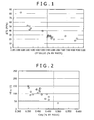
Fig. 1 is a graph which shows the relationship between CP value and reduction in strength ΔTS. -
Fig. 2 is a graph which shows the relationship between carbon equivalent Ceq and HAZ toughness (vE-46). - The inventors of the present invention contemplated the realization of a steel material having strength which is not lowered even when subjected to long-term SR treatment and good low temperature joint toughness from various angles. As a result, a steel sheet whose chemical composition is strictly controlled achieves the above object successfully, accomplishing the present invention. The constitution, actions and effects of the present invention will be described along with the history of the accomplishment of the present invention.
- The inventors of the present invention thought that reduction in the strength of the steel sheet resulted from a change of the state of C. In the steel sheet, C exists as a solid solution, minute carbide deposits, or cementite (Fe3C). It is thought that dissolved carbon and minute carbide deposits contribute to the improvement of strength of the steel sheet, but cementite little contributes to strength because it is coarse. That is, diffusion of C into cementite caused by the SR treatment increases the fraction of the cementite phases (hereinafter referred to simply as "cementite fraction"), and the contribution of C to strength is lost.
- As for a steel subjected to normal reheating quenching and tempering (hereinafter referred to as "QT steel"), there exists a technique for suppressing a reduction in strength by suppressing cementite coarsening during the SR treatment. However, cementite fraction reaches its limit by such a technique due to tempering treatment, and therefore the technique for suppressing cementite fraction cannot be applied. Accordingly, it is necessary to manufacture a steel sheet by TMCP method in which the steel sheet after being rolled is supercooled by quenching to maintain C in the solid solution state and suppress the generation of cementite as much as possible, so that at least the cementite fraction prior to the SR treatment is kept low. However, the cementite fraction of the known TMCP steel tends to be increased due to the SR treatment even by suppressing generation of cementite as described above.
- To this end, the inventors of the present invention conceived the idea of suppressing the generation of cementite in the TMCP steel during the SR treatment for the purpose of utilizing C to ensure the strength of the steel sheet after the SR treatment. Based on such an idea, the inventors conducted further research on the influence of the chemical components on the strength of the steel sheet after the SR treatment.
- As a result, it was found that low temperature joint toughness can be ensured even in a low alloy component system, and the generation of cementite during the SR treatment at a high temperature for a long period of time can be suppressed. Therefore, they realized a high-strength steel sheet in which sufficient strength can be ensured after the SR treatment by strictly defining the chemical composition as described above, and a reduction in low temperature joint toughness is not caused.
- The SR treatment is a heat treatment conducted at high temperatures of 586 to 625°C for about 20 to 30 hours. Under such severe conditions, however, many deposits are dissolved, and C diffuses in cementite. However, it is presumed by using a general thermodynamic software (available from "Thermo-Calc", CRC Research Institute, Inc.) that Ti, Nb, V and Mo control the diffusion of C and suppress a cementite fraction by, for example, forming stable deposits of compositions such as TiC, Nb2C, V2C and Mo2C, even during the SR treatment.
- To this end, the inventors of the present invention calculated the amount of deposits in a thermal equilibrium state by the above Thermo-Calc to determine the proportion of deposits formed (that is, the contribution of carbon to suppressing diffusion), and further made correction to match it with a nonequilibrium state, whereby the CP value defined by equation (1) below was determined as a diffusion parameter of C. In addition, it was found that if this CP value is 5.40% or higher, diffusion of C into cementite can be suppressed. However, any of the elements prevents weldability when contained in an excessive amount, and therefore its upper limit naturally exists (described later).
-

wherein [Ti], [Nb], [V] and [Mo] represent the amount (mass %) of Ti, Nb, V and Mo contained, respectively. - In the steel sheet of the present invention, in order to maintain an excellent low temperature joint toughness, it is also necessary for the carbon equivalent Ceq defined by equation (2) below to be 0.45% or lower. This carbon equivalent Ceq is a value indicating the influence of each element on the low temperature joint toughness calculated as an amount of carbon contained, and is used in various fields (ASTM standard). The present invention uses such carbon equivalent Ceq as a criterion of judgment of the low temperature joint toughness. Equation (2) below also includes as members Cr, Cu, Ni and other elements, which are contained if necessary, in addition to the basic components (C, Mn, Mo and V) of the steel material. The amounts of Cr, Cu and Ni may be calculated considering their quantities onlywhen these are contained.
-

wherein [C], [Mn], [Cr], [Mo], [V], [Cu] and [Ni] represent the amounts (mass %) of C, Mn, Cr, Mo, V, Cu and Ni contained, respectively. - In the steel sheet of the present invention, the CP value defined by equation (1) above is regulated to 5.40% or higher, and the carbon equivalent Ceq defined by carbon equation (2) above is regulated to 0.45% or lower, whereby good SR resistance and low temperature joint toughness after being subj ected to the severe SR treatment are achieved. As for "severe SR treatment", not only its time duration but also its relationship with temperature need to be considered. In the present invention, as a scale to objectively determine the severe SR treatment, conditions under which the P value defined by equation (3) below becomes 18.8 or higher are anticipated. That is, in the steel sheet of the present invention, even when the SR treatment is carried out under such conditions that the P value defined by equation (3) below is 18.8 or higher, SR resistance and low temperature joint toughness are good.
-

wherein T: Heating temperature in SR treatment (K) ; and to: heating time in SR treatment (hour) - In the high-strength steel sheet of the present invention, the proportions of basic components such as C, Si, Mn, Al, Ti, Nb, Mo and V also need to be adjusted to fall within appropriate ranges. The reason why the ranges of these components are determined to such values is as follows:
- C is an important element which improves the quenchability of the steel sheet, and ensures predetermined strength after SR treatment, but it deteriorates weldability when its amount contained is excessively high. Therefore, the amount needs to be 0.16% or lower. From the perspective of ensuring weldability, the lower the amount of C contained, the better. However, when the amount is lower than 0.10%, the strength of the steel sheet after the SR treatment cannot be ensured due to a reduction in quenchability. A preferable lower limit of the amount of C contained is 0.11%, while a preferable upper limit is 0.13%.
- Si acts as a deoxidizer in ingoting the steel and increases strength. In order to effectively produce such effects, Si needs to be contained in an amount of 0.05% or higher. However, when the amount of Si contained is excessively high, weldability is lowered. Therefore the amount needs to be 0.50% or lower. A preferable lower limit of the amount of Si contained is 0.20%, while a preferable upper limit is 0.40%.
- Mn is an element which increases the strength of the steel sheet. In order to effectively produce such effects, Mn needs to be contained in an amount of 1.3% or higher. However, when the amount of Mn contained isexcessively high,weldabilityisimpaired. Therefore,the upperlimit of its amount is 1.9%. A preferable lower limit of the amount of Mn contained is 1.45%, while a preferable upper limit is 1.60%.
- Al is added as a deoxidizer. When its amount is lower than 0.01%, sufficient effects are not produced, while when the amount contained is higher than 0.05%, cleanness in the steel sheet is suppressed. Therefore, the upper limit of its amount is 0.05%. A preferable lower limit of the amount of Al contained is 0.015%.
- Ti and Nb have low solid solubility into cementite and high affinity for C. Thus, they are elements which suppress an increase in a cementite fraction and ensure the strength of the steel material after the SR treatment by forming the deposits (carbides) as mentioned above. In order to produce such effects, both elements need to be contained in an amount of 0.005% or higher. However, when the amounts of these elements contained are excessively high, their weldability is suppressed. Therefore, their amounts need to be 0.025% or lower. A preferable upper limit of the amount of Ti contained is 0.020%. A preferable lower limit of the amount of Nb contained is 0.010%.
- Although V and Mo have strong affinity for C, they dissolve into cementite. However, its solid solubility into cementite is lowered when it is added in combination with Nb, forming V2C and Mo2C. These deposits are stably present even during the SR treatment, whereby an increase in a cementite fraction is suppressed. In order to produce such effects, the amounts of V and Mo contained need to be 0.005% or higher and 0.03% or higher, respectively. However, when the amounts of these elements contained are excessively high, their weldability is suppressed. Therefore, the amounts of V and Mo contained need to be 0.06% or lower and 0.10% or lower, respectively. A preferable lower limit of the amount of V contained is 0.020%, while its preferable upper limit is 0.050%.
- The basic components in the high-strength steel sheet of the present invention are as mentioned above, and the remainder is iron and inevitable impurities. Examples of the inevitable impurities include raw materials of the steel or P, S, N, O and other elements which can get into the steel sheet during its manufacturing process. Among these impurities, P, S and N all lower the weldability and toughness of the steel sheet after being subj ected to the SR treatment. Therefore, it is preferable that the amounts of P, S and N are kept to 0.020% or lower, 0.01% or lower, and 0.01%, respectively.
- It is also useful to add to the steel sheet of the present invention, if necessary, (a) Cr: 0.30% or lower (not including 0%), (b) Cu: 0.50% or lower (not including 0%) and / or Ni: 0.50% or lower (not including 0%), and (c) Ca: 0.0040% or lower (not including 0%), among others. The characteristics of the steel sheet are further improved depending on the kind of the components contained. The reason why the ranges of the amounts of these elements are set is as follows:
- Cr is an element effective in suppressing diffusion of C, but when it is contained in an excessivelyhigh amount, it impairs weldability. Therefore, its amount is desirably 0.30% or lower. A preferable amount of Cr contained in order to produce such effects is 0.10% or higher. When the amount is lower than this value, it will be treated as an inevitable impurity.
- These elements are effective in increasing the quenchability of the steel sheet. However, when they are contained in excessively high amounts, this effect is saturated. Therefore, they are both preferably contained in an amount of 0.50% or lower. In order to produce effects by these elements, they are both preferably contained in an amount of about 0.05% or higher. When the amounts are lower than this value, they will be treated as inevitable impurities.
- Ca is an element which is effective in improving the toughness of the steel sheet by controlling inclusions, but when it is contained in an excessively high amount, these effects are saturated. Therefore, the amount is preferably 0.0040% or lower. A preferable amount of Ca contained in order to produce such effects is 0.0005% or higher.
- In the high-strength steel sheet of the present invention, when its chemical composition, the CP value represented by equations (1) and (2) above and the carbon equivalent Ceq satisfy the defined ranges, generation of cementite during the SR treatment is suppressed, whereby a reduction in strength of the steel sheet after being subjected to the SR treatment is prevented, and a reduction in joint toughness at a low temperature can be suppressed.
- TMCP method is an application of "control of the state of austenite" conducted basically by rolling and "control of modification from the controlled austenite" successively performed. However, the present invention uses suppression of an increase in the cementite fraction to ensure the strength of the steel sheet. Therefore, it is preferable to roll the steel plate at a temperature not higher than the Ar3 transformation point at which cementite does not deposit, maintain the diffusion of C in a solid solution state by controlled cooling after rolling, and suppress generation of cementite as much as possible. The conditions for manufacturing the steel sheet of the present invention may be selected according to a normal TMCP method except for the rolling temperature mentioned above.
- The present invention will now be described in further detail with reference to the example, but it should be understood that the examples are not intended to limit the invention. Any modification in the range of the purpose described above or below can be made, which is within the technical scope of the present invention.
- Steel ingots which were produced to have various chemical compositions shown in Table 1 below by the converter process and continuous casting were subjected to rolling with an exit temperature of not lower than the Ar3 transformation point. The rolled steel sheets were subjected to accelerated cooling from that temperature (cooling rate: about 3 to 30°C/sec.), producing various steel sheets. Each of the obtained steel sheets was subjected to SR treatment (the P value represented by equation (3) above: 18.97) at 615°C for 23 hours.
- Table 1 shows the Ar3 transformation point of the steel types, the values of which were determined based on equation (4) below (wherein [] represents the amount of each element contained (mass %); and t represents the thickness of the sheet (gage: mm)).
Ar3 = 910 - 310 [C] - 80 [Mn] - 20 [Cu] - 15 [Cr] - 55 [Ni] - 80 [Mo] + 0.35 (t-8) ... (4) -

- By using the steel sheets obtained in the manner described above, their low temperature joint toughnesses (HAZ toughness) were measured by the method described below, and their tensile strengths TS before and after the SR treatment were measured by the method described below to determine reductions in strength (ΔTS) before and after the SR treatment.
- The steel sheets after being subj ected to the SR treatment were subj ected to cladding by welding by shielded metal arc welding with a welding heat input of 50 kJ/cm. A test piece of ASTM A370-05 was collected from a position described as t/4 (t: thickness of sheet) (at the center in width of HAZ) of each of the steel sheets in the direction perpendicular to the weld line to evaluate HAZ toughness. Charpy impact test were conducted at -46°C according to ASTM A370-05 to measure absorbed energy (vE-46). At this time, each of the steel sheets was measured for its absorbed energy (vE-46) with three test pieces and their average was determined. Examples with the average value of vE-46 of 55J or higher were evaluated to have excellent HAZ toughness.
- A test piece of ASTM A370-05 (0.500-in.Round Specimen) was collected from a position described as t/4 (t: thickness of sheet) of each of the steel sheets before and after the SR treatment in the direction perpendicular to the direction of rolling. Tensile test was carried out on the test pieces in the manner defined in ASTM A370-05 to measure their tensile strengths (TS). A reduction in strength (variation: ΔTS) was then measured by the difference between the tensile strengths before and after the SR treatment. Examples having this ΔTS value lower than 30 MPa and a tensile strength TS after being subjected to the SR treatment of 550 MPa or higher were evaluated to have good SR resistance.
- These measurement results [tensile strength TS after being subjected to SR treatment (post-SR TS), reduction in strength ΔTS, HAZ toughness (vE-46)] are shown in Table 2 below, along with the thicknesses of the steel sheets.
-

- The following consideration can be derived from these results (Nos. below indicate Experiment Nos. in Table 2). Nos. 8 to 18 satisfy [chemical components, equations (1) and (2)] of the requirements defined in the present invention, and therefore they have small reductions in strength ΔTS and ensure predetermined tensile strengths TS even after severe SR treatment, and have good low temperature joint toughness (HAZ toughness).
- On the contrary, Nos. 1 to 7 do not satisfy all of the requirements defined in the present invention, and any of their characteristics is deteriorated. Specifically, as for Nos.1, 2 and 4 to 7 their CP values do not fall within the range defined in the present invention, whereby their reductions in strength ΔTS are increased and tensile strengths TS after being subjected to the SR treatment are lowered.
- As for No.3, its CP value satisfies the range defined in the present invention, and thus has a small reduction in strength ΔTS, but its carbon equivalent Ceq is beyond the range defined in the present invention, and its HAZ toughness is deteriorated.
- Based on these data, the relationship between the CP values and reductions in strength ΔTS is shown in
Fig. 1 , while the relationship between the carbon equivalents Ceq and HAZ toughnesses (vE-46) is shown inFig. 2 . These results reveal that it is important to regulate the CP value to 5.40 (%) or higher to minimize a reduction in strength ΔTS and the carbon equivalent to 0.45 (%) or lower to ensure goodHAZ toughness.
Claims (4)
- A high-strength steel sheet which decreases little in strength after stress relieving annealing and has excellent low temperature joint toughness, the high-strength steel sheet comprising C: 0.10 to 0.16% (mass %. The same applies hereinafter), Si: 0.05 to 0.50%, Mn: 1.3 to 1.9%, Al: 0.01 to 0.05%, Ti: 0.005 to 0.025%, Nb: 0.005 to 0.025%, V: 0.005 to 0.06% and Mo: 0.03 to 0.10%, with the remainder being iron and inevitable impurities, a CP value defined by equation (1) below being 5.40% or higher, and a carbon equivalent Ceq defined by equation (2) below being 0.45% or lower.

wherein [Ti], [Nb], [V] and [Mo] represent the amounts of Ti, Nb, V and Mo contained (mass %), respectively.
- A high-strength steel sheet according to claim 1, wherein the steel sheet further comprises, as another element, Cr: 0.30% or lower (not including 0%).
- A high-strength steel sheet according to claim 1, wherein the steel sheet further comprises, as other elements, Cu: 0.50% or lower (not including 0%) and / or Ni: 0.50% or lower (not including 0%).
- A high-strength steel sheet according to claim 1, wherein the steel sheet further comprises, as another element, Ca: 0.0040% or lower
(not including 0%).
Applications Claiming Priority (2)
| Application Number | Priority Date | Filing Date | Title |
|---|---|---|---|
| JP2008088137A JP4326020B1 (en) | 2008-03-28 | 2008-03-28 | High-strength steel plate with excellent stress-relieving annealing characteristics and low-temperature joint toughness |
| PCT/JP2009/055050 WO2009119368A1 (en) | 2008-03-28 | 2009-03-16 | High-strength steel sheet excellent in resistance to stress-relief annealing and low-temperature joint toughness |
Publications (3)
| Publication Number | Publication Date |
|---|---|
| EP2258884A1 true EP2258884A1 (en) | 2010-12-08 |
| EP2258884A4 EP2258884A4 (en) | 2011-06-29 |
| EP2258884B1 EP2258884B1 (en) | 2016-08-24 |
Family
ID=41113565
Family Applications (1)
| Application Number | Title | Priority Date | Filing Date |
|---|---|---|---|
| EP09726030.1A Not-in-force EP2258884B1 (en) | 2008-03-28 | 2009-03-16 | High-strength steel sheet excellent in resistance to stress-relief annealing and low-temperature joint toughness |
Country Status (6)
| Country | Link |
|---|---|
| US (1) | US8398787B2 (en) |
| EP (1) | EP2258884B1 (en) |
| JP (1) | JP4326020B1 (en) |
| KR (1) | KR20100121528A (en) |
| CN (1) | CN101932743B (en) |
| WO (1) | WO2009119368A1 (en) |
Cited By (2)
| Publication number | Priority date | Publication date | Assignee | Title |
|---|---|---|---|---|
| EP2520680A4 (en) * | 2009-12-28 | 2014-11-19 | Posco | High strength steel sheet having excellent resistance to post weld heat treatment and method for manufacturing same |
| CN110605542A (en) * | 2019-10-17 | 2019-12-24 | 中船重工龙江广瀚燃气轮机有限公司 | Titanium alloy wheel disc for gas turbine and drum destressing process method |
Families Citing this family (1)
| Publication number | Priority date | Publication date | Assignee | Title |
|---|---|---|---|---|
| CN102321847A (en) * | 2011-10-20 | 2012-01-18 | 南京钢铁股份有限公司 | Quenching and tempering structure thick steel plate for offshore platform and production method for quenching and tempering structure thick steel plate |
Family Cites Families (10)
| Publication number | Priority date | Publication date | Assignee | Title |
|---|---|---|---|---|
| US2008A (en) * | 1841-03-18 | Gas-lamp eok conducting gas pkom ah elevated buhner to one below it | ||
| JPS57116756A (en) | 1981-01-08 | 1982-07-20 | Sumitomo Metal Ind Ltd | High tensile stractural steel for pressure vessel |
| JPS6035985B2 (en) | 1981-01-16 | 1985-08-17 | 住友金属工業株式会社 | High strength steel for pressure vessels |
| JPH02270934A (en) * | 1989-04-13 | 1990-11-06 | Nippon Steel Corp | High tensile strength steel having excellent stress relief annealing embrittlement resistance in heat affected zone |
| JP3845113B2 (en) * | 1994-03-29 | 2006-11-15 | 新日本製鐵株式会社 | Thick steel plate with excellent brittle crack propagation stopping property and low temperature toughness and its manufacturing method |
| JP4267367B2 (en) | 2002-06-19 | 2009-05-27 | 新日本製鐵株式会社 | Crude oil tank steel and its manufacturing method, crude oil tank and its anticorrosion method |
| WO2006004228A1 (en) | 2004-07-07 | 2006-01-12 | Jfe Steel Corporation | Method for producing high tensile steel sheet |
| JP5028760B2 (en) * | 2004-07-07 | 2012-09-19 | Jfeスチール株式会社 | Method for producing high-tensile steel plate and high-tensile steel plate |
| WO2007116593A1 (en) * | 2006-03-30 | 2007-10-18 | Jfe Steel Corporation | Corroson-resistant steel material for crude oil storage tank, and crude oil storage tank |
| JP5305709B2 (en) * | 2008-03-28 | 2013-10-02 | 株式会社神戸製鋼所 | High-strength steel plate with excellent stress-relieving annealing characteristics and low-temperature joint toughness |
-
2008
- 2008-03-28 JP JP2008088137A patent/JP4326020B1/en not_active Expired - Fee Related
-
2009
- 2009-03-16 KR KR1020107021458A patent/KR20100121528A/en not_active Ceased
- 2009-03-16 US US12/867,856 patent/US8398787B2/en not_active Expired - Fee Related
- 2009-03-16 CN CN2009801038499A patent/CN101932743B/en not_active Expired - Fee Related
- 2009-03-16 WO PCT/JP2009/055050 patent/WO2009119368A1/en not_active Ceased
- 2009-03-16 EP EP09726030.1A patent/EP2258884B1/en not_active Not-in-force
Cited By (3)
| Publication number | Priority date | Publication date | Assignee | Title |
|---|---|---|---|---|
| EP2520680A4 (en) * | 2009-12-28 | 2014-11-19 | Posco | High strength steel sheet having excellent resistance to post weld heat treatment and method for manufacturing same |
| CN110605542A (en) * | 2019-10-17 | 2019-12-24 | 中船重工龙江广瀚燃气轮机有限公司 | Titanium alloy wheel disc for gas turbine and drum destressing process method |
| CN110605542B (en) * | 2019-10-17 | 2021-10-08 | 中船重工龙江广瀚燃气轮机有限公司 | Titanium alloy wheel disc for gas turbine and drum destressing process method |
Also Published As
| Publication number | Publication date |
|---|---|
| CN101932743A (en) | 2010-12-29 |
| CN101932743B (en) | 2012-02-29 |
| JP2009242827A (en) | 2009-10-22 |
| JP4326020B1 (en) | 2009-09-02 |
| KR20100121528A (en) | 2010-11-17 |
| US8398787B2 (en) | 2013-03-19 |
| WO2009119368A1 (en) | 2009-10-01 |
| EP2258884B1 (en) | 2016-08-24 |
| US20100322814A1 (en) | 2010-12-23 |
| EP2258884A4 (en) | 2011-06-29 |
Similar Documents
| Publication | Publication Date | Title |
|---|---|---|
| EP2813596B1 (en) | High tensile steel plate having excellent low-temperature toughness in weld heat-affected zones, and method for producing same | |
| AU2016403146B2 (en) | Abrasion-Resistant Steel Plate and Method of Producing Abrasion-Resistant Steel Plate | |
| EP2832889B1 (en) | Low yield ratio high-strength steel plate having superior strain aging resistance, production method therefor, and high-strength welded steel pipe using same | |
| KR101846759B1 (en) | Steel plate and method for manufacturing same | |
| EP2894235A1 (en) | Thick-walled, high tensile strength steel with excellent ctod characteristics of the weld heat-affected zone, and manufacturing method thereof | |
| JP5305709B2 (en) | High-strength steel plate with excellent stress-relieving annealing characteristics and low-temperature joint toughness | |
| EP3128024B1 (en) | Welded joint | |
| US20250115972A1 (en) | Steel plate and method of producing same | |
| JP5432565B2 (en) | Thick steel plate with excellent brittle crack propagation stopping properties and fatigue crack growth inhibition properties | |
| EP2258884B1 (en) | High-strength steel sheet excellent in resistance to stress-relief annealing and low-temperature joint toughness | |
| KR20200052914A (en) | High-strength steel sheet and its manufacturing method | |
| US20250154632A1 (en) | Steel plate and method of producing same | |
| JP4586080B2 (en) | High-strength steel sheet with excellent stress-relieving annealing characteristics and low-temperature toughness | |
| JP4604917B2 (en) | 780 MPa class high strength steel sheet and method for producing the same | |
| JP2003089844A (en) | Steel plate for welded structure excellent in fatigue strength of welded joint and method of manufacturing the same | |
| JP2003321725A (en) | High strength steel sheet and method for producing the same | |
| EP3943621A1 (en) | Base material for clad steel, clad steel, and method for manufacturing clad steel | |
| JP2004076101A (en) | High strength and high toughness steel pipe material excellent in weldability and method for producing the same | |
| JP2003321729A (en) | High strength steel sheet excellent in toughness of weld heat affected zone and method of manufacturing the same | |
| US20250115973A1 (en) | Steel plate and method of producing same | |
| JP2003313641A (en) | Steel sheet pile having high joint strength and method of manufacturing the same | |
| JP2004003012A (en) | High strength steel sheet excellent in toughness of weld heat affected zone and method of manufacturing the same | |
| JP2001152296A (en) | Stainless steel hot rolled steel sheet for civil and building structures with excellent workability and weldability | |
| JP2004003013A (en) | High strength steel sheet excellent in toughness of weld heat affected zone and method of manufacturing the same | |
| JPH09176783A (en) | High-strength steel with excellent weldability and weather resistance and method for producing the same |
Legal Events
| Date | Code | Title | Description |
|---|---|---|---|
| PUAI | Public reference made under article 153(3) epc to a published international application that has entered the european phase |
Free format text: ORIGINAL CODE: 0009012 |
|
| 17P | Request for examination filed |
Effective date: 20100923 |
|
| AK | Designated contracting states |
Kind code of ref document: A1 Designated state(s): AT BE BG CH CY CZ DE DK EE ES FI FR GB GR HR HU IE IS IT LI LT LU LV MC MK MT NL NO PL PT RO SE SI SK TR |
|
| AX | Request for extension of the european patent |
Extension state: AL BA RS |
|
| A4 | Supplementary search report drawn up and despatched |
Effective date: 20110530 |
|
| DAX | Request for extension of the european patent (deleted) | ||
| 17Q | First examination report despatched |
Effective date: 20140602 |
|
| GRAP | Despatch of communication of intention to grant a patent |
Free format text: ORIGINAL CODE: EPIDOSNIGR1 |
|
| RIC1 | Information provided on ipc code assigned before grant |
Ipc: C22C 38/00 20060101AFI20160224BHEP Ipc: C22C 38/04 20060101ALI20160224BHEP Ipc: C22C 38/06 20060101ALI20160224BHEP Ipc: C22C 38/12 20060101ALI20160224BHEP Ipc: C22C 38/14 20060101ALI20160224BHEP Ipc: C21D 9/46 20060101ALI20160224BHEP Ipc: C22C 38/46 20060101ALI20160224BHEP Ipc: C21D 1/30 20060101ALN20160224BHEP Ipc: C22C 38/58 20060101ALI20160224BHEP Ipc: C22C 38/02 20060101ALI20160224BHEP Ipc: C21D 9/14 20060101ALI20160224BHEP Ipc: C21D 1/26 20060101ALN20160224BHEP |
|
| INTG | Intention to grant announced |
Effective date: 20160309 |
|
| GRAS | Grant fee paid |
Free format text: ORIGINAL CODE: EPIDOSNIGR3 |
|
| GRAA | (expected) grant |
Free format text: ORIGINAL CODE: 0009210 |
|
| AK | Designated contracting states |
Kind code of ref document: B1 Designated state(s): AT BE BG CH CY CZ DE DK EE ES FI FR GB GR HR HU IE IS IT LI LT LU LV MC MK MT NL NO PL PT RO SE SI SK TR |
|
| REG | Reference to a national code |
Ref country code: GB Ref legal event code: FG4D |
|
| REG | Reference to a national code |
Ref country code: CH Ref legal event code: EP |
|
| REG | Reference to a national code |
Ref country code: AT Ref legal event code: REF Ref document number: 823172 Country of ref document: AT Kind code of ref document: T Effective date: 20160915 |
|
| REG | Reference to a national code |
Ref country code: IE Ref legal event code: FG4D |
|
| REG | Reference to a national code |
Ref country code: DE Ref legal event code: R096 Ref document number: 602009040598 Country of ref document: DE |
|
| REG | Reference to a national code |
Ref country code: LT Ref legal event code: MG4D |
|
| REG | Reference to a national code |
Ref country code: NL Ref legal event code: MP Effective date: 20160824 |
|
| REG | Reference to a national code |
Ref country code: AT Ref legal event code: MK05 Ref document number: 823172 Country of ref document: AT Kind code of ref document: T Effective date: 20160824 |
|
| PG25 | Lapsed in a contracting state [announced via postgrant information from national office to epo] |
Ref country code: NO Free format text: LAPSE BECAUSE OF FAILURE TO SUBMIT A TRANSLATION OF THE DESCRIPTION OR TO PAY THE FEE WITHIN THE PRESCRIBED TIME-LIMIT Effective date: 20161124 Ref country code: NL Free format text: LAPSE BECAUSE OF FAILURE TO SUBMIT A TRANSLATION OF THE DESCRIPTION OR TO PAY THE FEE WITHIN THE PRESCRIBED TIME-LIMIT Effective date: 20160824 Ref country code: IT Free format text: LAPSE BECAUSE OF FAILURE TO SUBMIT A TRANSLATION OF THE DESCRIPTION OR TO PAY THE FEE WITHIN THE PRESCRIBED TIME-LIMIT Effective date: 20160824 Ref country code: FI Free format text: LAPSE BECAUSE OF FAILURE TO SUBMIT A TRANSLATION OF THE DESCRIPTION OR TO PAY THE FEE WITHIN THE PRESCRIBED TIME-LIMIT Effective date: 20160824 Ref country code: LT Free format text: LAPSE BECAUSE OF FAILURE TO SUBMIT A TRANSLATION OF THE DESCRIPTION OR TO PAY THE FEE WITHIN THE PRESCRIBED TIME-LIMIT Effective date: 20160824 Ref country code: HR Free format text: LAPSE BECAUSE OF FAILURE TO SUBMIT A TRANSLATION OF THE DESCRIPTION OR TO PAY THE FEE WITHIN THE PRESCRIBED TIME-LIMIT Effective date: 20160824 |
|
| PG25 | Lapsed in a contracting state [announced via postgrant information from national office to epo] |
Ref country code: PT Free format text: LAPSE BECAUSE OF FAILURE TO SUBMIT A TRANSLATION OF THE DESCRIPTION OR TO PAY THE FEE WITHIN THE PRESCRIBED TIME-LIMIT Effective date: 20161226 Ref country code: ES Free format text: LAPSE BECAUSE OF FAILURE TO SUBMIT A TRANSLATION OF THE DESCRIPTION OR TO PAY THE FEE WITHIN THE PRESCRIBED TIME-LIMIT Effective date: 20160824 Ref country code: LV Free format text: LAPSE BECAUSE OF FAILURE TO SUBMIT A TRANSLATION OF THE DESCRIPTION OR TO PAY THE FEE WITHIN THE PRESCRIBED TIME-LIMIT Effective date: 20160824 Ref country code: AT Free format text: LAPSE BECAUSE OF FAILURE TO SUBMIT A TRANSLATION OF THE DESCRIPTION OR TO PAY THE FEE WITHIN THE PRESCRIBED TIME-LIMIT Effective date: 20160824 Ref country code: GR Free format text: LAPSE BECAUSE OF FAILURE TO SUBMIT A TRANSLATION OF THE DESCRIPTION OR TO PAY THE FEE WITHIN THE PRESCRIBED TIME-LIMIT Effective date: 20161125 Ref country code: SE Free format text: LAPSE BECAUSE OF FAILURE TO SUBMIT A TRANSLATION OF THE DESCRIPTION OR TO PAY THE FEE WITHIN THE PRESCRIBED TIME-LIMIT Effective date: 20160824 |
|
| PG25 | Lapsed in a contracting state [announced via postgrant information from national office to epo] |
Ref country code: RO Free format text: LAPSE BECAUSE OF FAILURE TO SUBMIT A TRANSLATION OF THE DESCRIPTION OR TO PAY THE FEE WITHIN THE PRESCRIBED TIME-LIMIT Effective date: 20160824 Ref country code: EE Free format text: LAPSE BECAUSE OF FAILURE TO SUBMIT A TRANSLATION OF THE DESCRIPTION OR TO PAY THE FEE WITHIN THE PRESCRIBED TIME-LIMIT Effective date: 20160824 |
|
| REG | Reference to a national code |
Ref country code: DE Ref legal event code: R097 Ref document number: 602009040598 Country of ref document: DE |
|
| PG25 | Lapsed in a contracting state [announced via postgrant information from national office to epo] |
Ref country code: CZ Free format text: LAPSE BECAUSE OF FAILURE TO SUBMIT A TRANSLATION OF THE DESCRIPTION OR TO PAY THE FEE WITHIN THE PRESCRIBED TIME-LIMIT Effective date: 20160824 Ref country code: PL Free format text: LAPSE BECAUSE OF FAILURE TO SUBMIT A TRANSLATION OF THE DESCRIPTION OR TO PAY THE FEE WITHIN THE PRESCRIBED TIME-LIMIT Effective date: 20160824 Ref country code: SK Free format text: LAPSE BECAUSE OF FAILURE TO SUBMIT A TRANSLATION OF THE DESCRIPTION OR TO PAY THE FEE WITHIN THE PRESCRIBED TIME-LIMIT Effective date: 20160824 Ref country code: BG Free format text: LAPSE BECAUSE OF FAILURE TO SUBMIT A TRANSLATION OF THE DESCRIPTION OR TO PAY THE FEE WITHIN THE PRESCRIBED TIME-LIMIT Effective date: 20161124 Ref country code: DK Free format text: LAPSE BECAUSE OF FAILURE TO SUBMIT A TRANSLATION OF THE DESCRIPTION OR TO PAY THE FEE WITHIN THE PRESCRIBED TIME-LIMIT Effective date: 20160824 |
|
| PLBE | No opposition filed within time limit |
Free format text: ORIGINAL CODE: 0009261 |
|
| STAA | Information on the status of an ep patent application or granted ep patent |
Free format text: STATUS: NO OPPOSITION FILED WITHIN TIME LIMIT |
|
| 26N | No opposition filed |
Effective date: 20170526 |
|
| PG25 | Lapsed in a contracting state [announced via postgrant information from national office to epo] |
Ref country code: SI Free format text: LAPSE BECAUSE OF FAILURE TO SUBMIT A TRANSLATION OF THE DESCRIPTION OR TO PAY THE FEE WITHIN THE PRESCRIBED TIME-LIMIT Effective date: 20160824 |
|
| REG | Reference to a national code |
Ref country code: CH Ref legal event code: PL |
|
| PG25 | Lapsed in a contracting state [announced via postgrant information from national office to epo] |
Ref country code: MC Free format text: LAPSE BECAUSE OF FAILURE TO SUBMIT A TRANSLATION OF THE DESCRIPTION OR TO PAY THE FEE WITHIN THE PRESCRIBED TIME-LIMIT Effective date: 20160824 |
|
| REG | Reference to a national code |
Ref country code: IE Ref legal event code: MM4A |
|
| REG | Reference to a national code |
Ref country code: FR Ref legal event code: ST Effective date: 20171130 |
|
| PG25 | Lapsed in a contracting state [announced via postgrant information from national office to epo] |
Ref country code: FR Free format text: LAPSE BECAUSE OF NON-PAYMENT OF DUE FEES Effective date: 20170331 |
|
| PG25 | Lapsed in a contracting state [announced via postgrant information from national office to epo] |
Ref country code: IE Free format text: LAPSE BECAUSE OF NON-PAYMENT OF DUE FEES Effective date: 20170316 Ref country code: CH Free format text: LAPSE BECAUSE OF NON-PAYMENT OF DUE FEES Effective date: 20170331 Ref country code: LI Free format text: LAPSE BECAUSE OF NON-PAYMENT OF DUE FEES Effective date: 20170331 |
|
| PG25 | Lapsed in a contracting state [announced via postgrant information from national office to epo] |
Ref country code: MT Free format text: LAPSE BECAUSE OF NON-PAYMENT OF DUE FEES Effective date: 20170316 |
|
| PG25 | Lapsed in a contracting state [announced via postgrant information from national office to epo] |
Ref country code: HU Free format text: LAPSE BECAUSE OF FAILURE TO SUBMIT A TRANSLATION OF THE DESCRIPTION OR TO PAY THE FEE WITHIN THE PRESCRIBED TIME-LIMIT; INVALID AB INITIO Effective date: 20090316 |
|
| PG25 | Lapsed in a contracting state [announced via postgrant information from national office to epo] |
Ref country code: CY Free format text: LAPSE BECAUSE OF NON-PAYMENT OF DUE FEES Effective date: 20160824 |
|
| PG25 | Lapsed in a contracting state [announced via postgrant information from national office to epo] |
Ref country code: MK Free format text: LAPSE BECAUSE OF FAILURE TO SUBMIT A TRANSLATION OF THE DESCRIPTION OR TO PAY THE FEE WITHIN THE PRESCRIBED TIME-LIMIT Effective date: 20160824 |
|
| PG25 | Lapsed in a contracting state [announced via postgrant information from national office to epo] |
Ref country code: TR Free format text: LAPSE BECAUSE OF FAILURE TO SUBMIT A TRANSLATION OF THE DESCRIPTION OR TO PAY THE FEE WITHIN THE PRESCRIBED TIME-LIMIT Effective date: 20160824 |
|
| PG25 | Lapsed in a contracting state [announced via postgrant information from national office to epo] |
Ref country code: IS Free format text: LAPSE BECAUSE OF FAILURE TO SUBMIT A TRANSLATION OF THE DESCRIPTION OR TO PAY THE FEE WITHIN THE PRESCRIBED TIME-LIMIT Effective date: 20161224 |
|
| PGFP | Annual fee paid to national office [announced via postgrant information from national office to epo] |
Ref country code: LU Payment date: 20210224 Year of fee payment: 13 |
|
| PGFP | Annual fee paid to national office [announced via postgrant information from national office to epo] |
Ref country code: GB Payment date: 20210308 Year of fee payment: 13 Ref country code: DE Payment date: 20210302 Year of fee payment: 13 Ref country code: BE Payment date: 20210217 Year of fee payment: 13 |
|
| REG | Reference to a national code |
Ref country code: DE Ref legal event code: R119 Ref document number: 602009040598 Country of ref document: DE |
|
| GBPC | Gb: european patent ceased through non-payment of renewal fee |
Effective date: 20220316 |
|
| REG | Reference to a national code |
Ref country code: BE Ref legal event code: MM Effective date: 20220331 |
|
| PG25 | Lapsed in a contracting state [announced via postgrant information from national office to epo] |
Ref country code: LU Free format text: LAPSE BECAUSE OF NON-PAYMENT OF DUE FEES Effective date: 20220316 Ref country code: GB Free format text: LAPSE BECAUSE OF NON-PAYMENT OF DUE FEES Effective date: 20220316 Ref country code: DE Free format text: LAPSE BECAUSE OF NON-PAYMENT OF DUE FEES Effective date: 20221001 |
|
| PG25 | Lapsed in a contracting state [announced via postgrant information from national office to epo] |
Ref country code: BE Free format text: LAPSE BECAUSE OF NON-PAYMENT OF DUE FEES Effective date: 20220331 |