EP2246227A1 - Vehicle central lock antitheft method and system - Google Patents
Vehicle central lock antitheft method and system Download PDFInfo
- Publication number
- EP2246227A1 EP2246227A1 EP08773064A EP08773064A EP2246227A1 EP 2246227 A1 EP2246227 A1 EP 2246227A1 EP 08773064 A EP08773064 A EP 08773064A EP 08773064 A EP08773064 A EP 08773064A EP 2246227 A1 EP2246227 A1 EP 2246227A1
- Authority
- EP
- European Patent Office
- Prior art keywords
- central control
- status
- control system
- management system
- engine management
- Prior art date
- Legal status (The legal status is an assumption and is not a legal conclusion. Google has not performed a legal analysis and makes no representation as to the accuracy of the status listed.)
- Granted
Links
Images


Classifications
-
- B—PERFORMING OPERATIONS; TRANSPORTING
- B60—VEHICLES IN GENERAL
- B60R—VEHICLES, VEHICLE FITTINGS, OR VEHICLE PARTS, NOT OTHERWISE PROVIDED FOR
- B60R25/00—Fittings or systems for preventing or indicating unauthorised use or theft of vehicles
- B60R25/01—Fittings or systems for preventing or indicating unauthorised use or theft of vehicles operating on vehicle systems or fittings, e.g. on doors, seats or windscreens
- B60R25/04—Fittings or systems for preventing or indicating unauthorised use or theft of vehicles operating on vehicle systems or fittings, e.g. on doors, seats or windscreens operating on the propulsion system, e.g. engine or drive motor
-
- B—PERFORMING OPERATIONS; TRANSPORTING
- B60—VEHICLES IN GENERAL
- B60R—VEHICLES, VEHICLE FITTINGS, OR VEHICLE PARTS, NOT OTHERWISE PROVIDED FOR
- B60R25/00—Fittings or systems for preventing or indicating unauthorised use or theft of vehicles
- B60R25/20—Means to switch the anti-theft system on or off
- B60R25/24—Means to switch the anti-theft system on or off using electronic identifiers containing a code not memorised by the user
Definitions
- the present invention relates to the field of vehicle antitheft technologies and in particular to a vehicle central control antitheft method and system.
- vehicle antitheft modes There are a variety of vehicle antitheft modes among which vehicle body antitheft mode and engine locking antitheft mode are widely applied at present.
- a vehicle door is controlled to be opened and closed via a remote control attached to an alarm device which will raise a sound and light alarm if the door is not opened via the remote control.
- a shake monitoring gating control protection can be provided so that the alarm device will also raise an alarm upon sensing a shake to which the vehicle is subject.
- such antitheft mode fails to substantially prevent the vehicle from theft.
- engine locking antitheft mode can substantially prevent a vehicle from theft by locking an engine, but such protection requires to add a new hardware device for instructing an engine management system to lock the engine while raising a sound and light alarm, thus adding the cost of a vehicle antitheft system.
- the invention integrates a part of advantages of vehicle body antitheft mode and engine lock antitheft mode to form a new central control antitheft method and system in order to achieve secured vehicle antitheft at a low cost.
- the vehicle can dispensed with a separate antitheft system, and the vehicle can be substantially protected from theft without any additional new hardware device.
- the invention provides a vehicle central control antitheft method, which includes:
- the invention further provides a vehicle central control antitheft system, which includes a remote control, a central control system and an engine management system, wherein:
- Fig.1 is an operation flow chart of an antitheft system according to the invention.
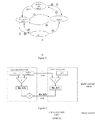
- Fig.2 is a schematic diagram of alert status transition of a central control system according to the invention, where Fig.2A is a schematic diagram of alert status transition of the central control system when an ignition switch is in the OFF status, and Fig.2B is a schematic diagram of alert status transition of the central control system when the ignition switch is in the ON status;
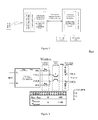
- Fig.3 is a schematic diagram of an authentication process between the central control system and an engine management system
- Fig.4 is a structural schematic diagram of the central control system according to the invention.
- Fig.5 is a reference circuit diagram of a low-speed CAN of the central control system
- Fig.6 is a reference circuit diagram of a high-speed CAN of the central control system.
- Fig.7 is a reference circuit diagram of an LIN bus or K-Line of the central control system.
- a remote control and a controller of a central control system perform identity verification via cipher matching which can be secure hopping code algorithms such as Keelog, AES, etc.
- the central control system selects an alert status in response to a result of identity verification of the remote control and the central control system, the status of an ignition switch and an action of opening or closing a vehicle door.
- the central control system transmits the alert status to an engine management system via cipher matching which can be secure hopping code algorithms such as Keelog, AES, etc, and performs identity verification with the engine management system.
- cipher matching can be secure hopping code algorithms such as Keelog, AES, etc.
- the engine management system and the central control system perform safety authentication in bidirectional encrypted communication.
- the engine management system locks or unlocks an engine in response to a result of safety authentication.
- the remote control can include a remote key.
- the central control system communicates with the engine management system over a data bus.
- the engine management system can lock or unlock the engine by controlling oil injection.
- the invention can both match the remote control and match the central control system and the engine management system.
- the central control system and the engine management system can further perform safety authentication in bidirectional encrypted communication.
- the engine can not be initiated using an unverified remote control or otherwise.
- Fig.1 is an operation flow chart of an antitheft system according to the invention, specific steps of which are as follows:
- S101 a functional key of the remote control is pressed, wherein the remote control firstly encrypts the status of the functional key and then modulates encrypted data into a radio frequency signal for transmission.
- Keelog algorithm AES algorithm or like, and regardless of whichever algorithm is in use, general requirements are as follows:
- a manufacturer will be held a serial number and a manufacturer code in the algorithm in strict confidence
- involved codes include a manufacturer code, a product serial number of the remote key, cryptographic key, the number of synchronous count, an identification code, the status of the functional key typically including LOCKED, UNLOCKED and NORMALLY OPEN, etc.
- the cryptographic key is derived from the manufacturer code and the product serial number of the remote key in the encryption algorithm; when the key of the remote control is pressed, the number of synchronous count, the identification code and the status of the functional key are encrypted into encrypted data in Keelog algorithm; and then the product serial number of the remote key, the status of the functional key and the encrypted data are modulated and transmitted by a transmitting circuit of the remote control.
- modulation can include PWM or Manchester modulation.
- the central control system receives, demodulates and decrypts the radio frequency signal transmitted from the remote control and then determines whether the remote control is verified, and if so, then the process goes to S103; otherwise, the central control system does not respond, and the process terminates in this step.
- the central control system firstly demodulates the received radio frequency signal into the product serial number of the remote key, the status of the functional key and the encrypted data, and then decrypts the encrypted data into decrypted data (including the number of synchronous count, the identification code and the status of the functional key) in Keelog decryption algorithm.
- the central control system determines whether the decrypted data is verified in view of the following three items:
- the decrypted "identification code” is compared with the last 10 bits in the demodulated "product serial number of the remote key” for equality, and if they are equal, then the decrypted data is verified; otherwise, it is unverified;
- S103 the central control system selects an alert status according to the status of the functional key, the status of the ignition switch and an action of opening or closing the vehicle door.
- An alert status of the central control system can be selected as illustrated in Fig.2 .
- a pre-alerting status PREARM
- an alerting status ARM
- an alarm activation status ALARM
- an alarm inactivation status DISARM
- PREARM pre-alerting status
- ARM alerting status
- ALARM alarm activation status
- DISARM alarm inactivation status
- the ignition switch if the ignition switch is in the ON status, then there are only two alert statuses of the central control system: the alarm activation status (ALARM) and the alarm inactivation status (DISARM), and the former can transition to the latter only upon unlocking via the remote key, but the latter can not transition to the former.
- ALARM alarm activation status
- DISARM alarm inactivation status
- the central control system Upon occurrence of the alarm activation status, the central control system initiates immediately a peripheral alarm of the vehicle by activating both a long alarm of a vehicle warning horn and an emergence warning lamp.
- S104 the console system encrypts in real time latest alert status and transmits the encrypted alert status to the engine management system via a communication bus.
- the central control system will encrypt the latest alert status and then transmit them to the engine management system. Specific encryption thereof is similar to that of S101 except for transition of the status of the functional key in S101 to the alert status here.
- the engine management system receive and decrypts encrypted data of the alert status transmitted from the central control system and determines whether the alert status is verified and is the alarm inactivation status, and if so, then the process goes to S107; otherwise, the process terminates, and the engine management system forbids the engine to start.
- the step for determining the alert status at the engine management system is similar to that of S 102 except for transition of the status of the functional key in S101 to the alert status here.
- S107 the engine management system and the central control system perform safety authentication in bidirectional encrypted communication, and if authentication is passed, then the engine management system permit the engine to start; otherwise, the process terminates, and the engine management system forbids the engine to start.
- a process of an identity authentication algorithm is as illustrated in Fig.3 : the engine management system firstly generates a random number r (32 bits) and then uses the random number for concurrent execution of two instruction:
- (2) r is encrypted using a cryptographic key k2 (64 bits) into f(r, k2).
- the central control system receives the random number r transmitted from the engine management system and encrypts the random number r into f(r, k1) by using a cryptographic key k1 (64 bits) and transmits f(r, k1) to the engine management system via the communication bus.
- Control logic of the foregoing flow can be implemented in software, and the engine management system can forbid the engine to start by locking oil injection and shutting off an oil path to thereby avoid a security risk arising from a common antitheft system which shuts off an oil path via a relay (where a thief may start the vehicle by switching on the relay directly via an external power supply).
- the invention further provides a vehicle central control antitheft system for implementing the method, which includes a remote control, a central control system and an engine management system.
- the central control system performs identity verification for the remote control via cipher matching.
- the engine management system communicates with the central control system via a data bus, performs identity verification for the central control system via cipher matching and safety authentication with the central control system in bidirectional encrypted communication, and locks or unlocks an engine in response to a result of safety authentication.
- the central control system communicates wirelessly with the remote control and performs identity authentication for the remote control in a hopping code algorithm.
- the engine management system communicates with the central control system via the data bus and performs identity authentication for the central control system in a hopping code algorithm.
- the engine management system can lock or unlock the engine by controlling oil rejection.
- the vehicle central control antitheft system will be detailed below.
- a remote key its software includes a hopping encoding algorithm for verification with the central control system, which has been applied to a general remote key and which can be derived from Keelog algorithm, AES algorithm or like, and regardless of whichever algorithm is in use, general requirements are as follows:
- a manufacturer will be held a serial number and a manufacturer code in the algorithm in strict confidence
- a hopping decoding algorithm for identification of the remote key (which has been provided in general central control system), which can be derived from Keelog algorithm, AES algorithm or like. Regardless of whichever algorithm is in use, general requirements are as follows:
- This algorithm corresponds to the encoding algorithm of the remote key.
- An encoding algorithm for hopping code verification with the engine management system which is required substantially the same as the hopping encoding algorithm in the remote control except for transition of the status of a functional key (a key of the remote control system) for an input to the encoding algorithm in the remote control to the alert status of the central control system here.
- Peripheral antitheft alarm logic in which the alert status of the central control system is retrieved as in S 103.
- a communication protocol of a CAN bus, an LIN bus or K-Line which includes CAN2.0A, CAN2.0B, LIN1.4-2.1 and any subsequent protocol, K-Line, etc.
- Safety authentication program of the central control system with the engine management system where upon completion of authentication of the remote key with the central control system, the ignition switch is switched on, that is, the program is initiated, and a principle of the authentication program is as described of S 107.
- a communication protocol of a CAN bus, an LIN bus or K-Line which includes CAN2.0A, CAN2.0B, LIN1.4-2.1 and any subsequent protocol, K-Line, etc.
- a decoding algorithm for hopping code verification with the central control system which is required substantially the same as the hopping decoding algorithm for verification with the remote control in the central control system except for transition of the status of a functional key for an output from the encoding algorithm in the central control system to the alert status of the central control system in the engine management system.
- the hopping algorithm can be an algorithm built in the encoding chip itself or specific to a vehicle manufacturer (where the algorithm can be written separately into the encoding chip and decoding chip), and regardless of whichever specific scenario, the encoding chip and decoding chip shall ensure execution of the hopping algorithms.
- a chip selected as the encoding chip shall have respective performance indexes equivalent or superior to those of HCS200, and a chip selected as the decoding chip shall have respective performance indexes equivalent or superior to those of HCS512.
- both the central control system and the engine management system are provided with a communication bus interface (CAN/LIN/K-Line), and a circuit diagram of a CAN/LIN/K-Line bus transceiver can be as illustrated in Fig.5 to Fig.7 .
- the circuit diagram can be modified so that the central control system and the engine management system will satisfy a communication requirement at the physical layer, wherein values of significant R (resistance) and C (capacitance) can be set to ensure that performance indexes of EMC (Electro Magnetic Compatibility) radiated interference and anti-interference will meet the requirement of the vehicle.
- a hardware communication interface is the CAN bus, then it can comply with the protocol of CAN2.0A, CAN2.0B, ISO11898 (for a high-speed CAN) or SAEJ2284 (for a low-speed CAN).
- the hardware interface is the LIN bus, then it can comply with the protocol of LIN1.4, LIN2.0 or LIN2.1.
- the hardware interface is K-Line, then it can comply with the protocol of K-Line.
- Table 1 Signal name Length Transmission mode Sender Receiver Meaning Central control status code 66 bits Trigger Central control system Engine management system Central control status transmitted from central control system to engine management system Random number 32 bits Trigger Engine management system Central control system Random number r transmitted from engine management system to central control system in Fig.3 Encryption result 14 bits Trigger Central control system Engine management system Random number f(r, kl) transmitted from central control system to engine management system in Fig.3
- the foregoing central control antitheft system can be implemented simply with corresponding modifications to the remote key, the central control system and the engine management system of an existing vehicle without any additional new hardware device, thus resulting in an insignificant increase of the cost thereof.
- This solution can be applied widely due to its possible applications to numerous vehicle models.
- Identity verification can be performed between the remote control and the central control system and between the remote control and the engine management system in a secure hopping code algorithm, and in order to ensure a verified identity of the central control system, the central control system and the engine management system can further perform authentication in bidirectional communication.
- the engine can be started by a thief only if he is provided with two sets of algorithms, thereby achieving further improved security.
Landscapes
- Engineering & Computer Science (AREA)
- Mechanical Engineering (AREA)
- Lock And Its Accessories (AREA)
- Combined Controls Of Internal Combustion Engines (AREA)
Abstract
Description
- This application claims priority to Chinese Patent Application No.
200810069398.9 - The present invention relates to the field of vehicle antitheft technologies and in particular to a vehicle central control antitheft method and system.
- There are a variety of vehicle antitheft modes among which vehicle body antitheft mode and engine locking antitheft mode are widely applied at present.
- With traditional vehicle body antitheft mode, a vehicle door is controlled to be opened and closed via a remote control attached to an alarm device which will raise a sound and light alarm if the door is not opened via the remote control. Also a shake monitoring gating control protection can be provided so that the alarm device will also raise an alarm upon sensing a shake to which the vehicle is subject. However, such antitheft mode fails to substantially prevent the vehicle from theft.
- In view of the drawback occurring with vehicle body antitheft mode, engine locking antitheft mode can substantially prevent a vehicle from theft by locking an engine, but such protection requires to add a new hardware device for instructing an engine management system to lock the engine while raising a sound and light alarm, thus adding the cost of a vehicle antitheft system.
- No solution has been available so far in the prior art to substantially preventing a vehicle from theft without any additional new hardware device.
- The invention integrates a part of advantages of vehicle body antitheft mode and engine lock antitheft mode to form a new central control antitheft method and system in order to achieve secured vehicle antitheft at a low cost. With this antitheft system, the vehicle can dispensed with a separate antitheft system, and the vehicle can be substantially protected from theft without any additional new hardware device.
- The invention provides a vehicle central control antitheft method, which includes:
- performing, by a central control system, identity verification for a remote control via cipher matching;
- selecting, by the central control system, an alert status in response to a result of identity verification of the remote control, the status of an ignition switch and an action of opening or closing a vehicle door, and transmitting the alert status to an engine management system;
- receiving, by the engine management system, the alert status transmitted from the central control system, and performing identity verification for the central control system via cipher matching;
- performing safety authentication between the engine management system and the central control system in bidirectional encrypted communication.
- The invention further provides a vehicle central control antitheft system, which includes a remote control, a central control system and an engine management system, wherein:
- the central control system performs identity verification for the remote control via cipher matching; and
- the engine management system communicates with the central control system via a data bus, performs identity verification for the central control system via cipher matching and safety authentication with the central control system in bidirectional encrypted communication, and locks or unlocks an engine in response to a result of safety authentication.
- With the foregoing technical solutions, specific addition hardware device of a antitheft system will not be required except for some modification to software, thus resulting in substantially no increase of the cost thereof, and the engine management system can lock the engine by locking an oil path and oil injection to thereby substantially prevent a vehicle from theft.
-
Fig.1 is an operation flow chart of an antitheft system according to the invention; -
Fig.2 is a schematic diagram of alert status transition of a central control system according to the invention, whereFig.2A is a schematic diagram of alert status transition of the central control system when an ignition switch is in the OFF status, andFig.2B is a schematic diagram of alert status transition of the central control system when the ignition switch is in the ON status; -
Fig.3 is a schematic diagram of an authentication process between the central control system and an engine management system; -
Fig.4 is a structural schematic diagram of the central control system according to the invention; -
Fig.5 is a reference circuit diagram of a low-speed CAN of the central control system; -
Fig.6 is a reference circuit diagram of a high-speed CAN of the central control system; and -
Fig.7 is a reference circuit diagram of an LIN bus or K-Line of the central control system. - Firstly, a vehicle central control method according to the invention will be described as follows.
- A remote control and a controller of a central control system perform identity verification via cipher matching which can be secure hopping code algorithms such as Keelog, AES, etc.
- The central control system selects an alert status in response to a result of identity verification of the remote control and the central control system, the status of an ignition switch and an action of opening or closing a vehicle door.
- The central control system transmits the alert status to an engine management system via cipher matching which can be secure hopping code algorithms such as Keelog, AES, etc, and performs identity verification with the engine management system.
- The engine management system and the central control system perform safety authentication in bidirectional encrypted communication.
- The engine management system locks or unlocks an engine in response to a result of safety authentication.
- Particularly, the remote control can include a remote key.
- The central control system communicates with the engine management system over a data bus.
- The engine management system can lock or unlock the engine by controlling oil injection.
- With a cipher, the invention can both match the remote control and match the central control system and the engine management system. The central control system and the engine management system can further perform safety authentication in bidirectional encrypted communication. Thus for the purpose of protection against theft, the engine can not be initiated using an unverified remote control or otherwise.
- Embodiments of the invention will be detailed below with reference to the drawings.
-
Fig.1 is an operation flow chart of an antitheft system according to the invention, specific steps of which are as follows: - S101: a functional key of the remote control is pressed, wherein the remote control firstly encrypts the status of the functional key and then modulates encrypted data into a radio frequency signal for transmission.
- An encryption algorithm can be derived from Keelog algorithm, AES algorithm or like, and regardless of whichever algorithm is in use, general requirements are as follows:
- (1) A manufacturer will be held a serial number and a manufacturer code in the algorithm in strict confidence; and
- (2) In the algorithm, there are a cryptographic key of no less than 64 bits, a synchronous counter of no less than 16 bits and a hopping code of no less than 32 bits.
- Taking Keelog algorithm here as an example, a process for encoding the remote control chip is described as follows: involved codes include a manufacturer code, a product serial number of the remote key, cryptographic key, the number of synchronous count, an identification code, the status of the functional key typically including LOCKED, UNLOCKED and NORMALLY OPEN, etc.
- Firstly, the cryptographic key is derived from the manufacturer code and the product serial number of the remote key in the encryption algorithm; when the key of the remote control is pressed, the number of synchronous count, the identification code and the status of the functional key are encrypted into encrypted data in Keelog algorithm; and then the product serial number of the remote key, the status of the functional key and the encrypted data are modulated and transmitted by a transmitting circuit of the remote control. Particularly, modulation can include PWM or Manchester modulation.
- S102: the central control system receives, demodulates and decrypts the radio frequency signal transmitted from the remote control and then determines whether the remote control is verified, and if so, then the process goes to S103; otherwise, the central control system does not respond, and the process terminates in this step.
- The central control system firstly demodulates the received radio frequency signal into the product serial number of the remote key, the status of the functional key and the encrypted data, and then decrypts the encrypted data into decrypted data (including the number of synchronous count, the identification code and the status of the functional key) in Keelog decryption algorithm.
- The central control system determines whether the decrypted data is verified in view of the following three items:
- (1) The decrypted "identification code" is compared with the last 10 bits in the demodulated "product serial number of the remote key" for equality, and if they are equal, then the decrypted data is verified; otherwise, it is unverified;
- (2) The decrypted "status of the functional key" is compared with the demodulated "status of the functional key" for equality, and if they are equal, then the decrypted data is verified; otherwise, it is unverified;
- (3) It is determined whether the decrypted "the number of synchronous count" is incremented reasonably from the "the number of synchronous count" stored in the central control system, that is, by more than zero, and if so, then the decrypted data is verified; otherwise, it is unverified.
- If the decrypted data is verified, then the process goes to S103; otherwise, the central control system does not respond, and the process terminates in this step.
- S103: the central control system selects an alert status according to the status of the functional key, the status of the ignition switch and an action of opening or closing the vehicle door.
- An alert status of the central control system can be selected as illustrated in
Fig.2 . Referring toFig.2 , firstly if the ignition switch is in the OFF status, then there totally are four alert statuses in the central control system, i.e., a pre-alerting status (PREARM), an alerting status (ARM), an alarm activation status (ALARM) and an alarm inactivation status (DISARM), which can transition to each other under six specific conditions including: (1) locking the door remotely: locking the door remotely can be triggered in response to the status of a functional key "LOCK" of the remote key; (2) opening the door unverifiedly: an action of opening the door performed in the case that the central control system determines no unlocking via a verified remote control can be deemed as unverified opening of the door, where the action of opening the door can be sensed by the central control system via a switch of the vehicle door status; (3) unlocking remotely: unlocking remotely can be triggered in response to the status of a functional key "UNLOCK" of the remote key; (4) completing an alarm: the alarm may be in the form of a sound and light alarm, e.g., a sound alarm of 28s, a flash alarm of 258s; (5) automatic relocking: automatic relocking may be conditioned on no opening of the door for a period of time from unlocking remotely; and (6) transiting the status of the ignition switch from OFF to ON: specific transition can be as follows: the pre-alerting status can transition to the alarm inactivation status in response to the condition (6) or (3) and to the alerting status under the condition of a 20-second delay; the alerting status can transition to the alarm activation status in response to the condition (2) or (6) and to the alarm inactivation status in response to the condition (3); the alarm activation status can transition to the alerting status in response to the condition (4) and to the alarm inactivation status in response to the condition (3); and the alarm inactivation status can transition to the pre-alerting status in response to the condition (1) and to the alerting status in response to the condition (5). - Referring to
Fig.2B , if the ignition switch is in the ON status, then there are only two alert statuses of the central control system: the alarm activation status (ALARM) and the alarm inactivation status (DISARM), and the former can transition to the latter only upon unlocking via the remote key, but the latter can not transition to the former. - Upon occurrence of the alarm activation status, the central control system initiates immediately a peripheral alarm of the vehicle by activating both a long alarm of a vehicle warning horn and an emergence warning lamp.
- S104: the console system encrypts in real time latest alert status and transmits the encrypted alert status to the engine management system via a communication bus.
- Once the alert status is changed, the central control system will encrypt the latest alert status and then transmit them to the engine management system. Specific encryption thereof is similar to that of S101 except for transition of the status of the functional key in S101 to the alert status here.
- S105: when the ignition switch is switched on, the engine management system determines whether any alert status information transmitted from the central control system has been received, and if so, then the process goes to S106; otherwise, the process terminates, and the engine management system forbids the engine to start.
- S106: the engine management system receive and decrypts encrypted data of the alert status transmitted from the central control system and determines whether the alert status is verified and is the alarm inactivation status, and if so, then the process goes to S107; otherwise, the process terminates, and the engine management system forbids the engine to start.
- The step for determining the alert status at the engine management system is similar to that of S 102 except for transition of the status of the functional key in S101 to the alert status here.
- S107: the engine management system and the central control system perform safety authentication in bidirectional encrypted communication, and if authentication is passed, then the engine management system permit the engine to start; otherwise, the process terminates, and the engine management system forbids the engine to start.
- A process of an identity authentication algorithm is as illustrated in
Fig.3 : the engine management system firstly generates a random number r (32 bits) and then uses the random number for concurrent execution of two instruction: - (1) r is transmitted to the central control system via the communication bus; and
- (2) r is encrypted using a cryptographic key k2 (64 bits) into f(r, k2).
- The central control system receives the random number r transmitted from the engine management system and encrypts the random number r into f(r, k1) by using a cryptographic key k1 (64 bits) and transmits f(r, k1) to the engine management system via the communication bus.
- The engine management system compares f(r, k1) with f(r, k2), and if f(r, k1) = f(r, k2), then it indicates correspondence of the central control system to the engine management system, and the engine is permitted to start; otherwise, the engine is forbidden to start.
- Control logic of the foregoing flow can be implemented in software, and the engine management system can forbid the engine to start by locking oil injection and shutting off an oil path to thereby avoid a security risk arising from a common antitheft system which shuts off an oil path via a relay (where a thief may start the vehicle by switching on the relay directly via an external power supply).
- Based upon the foregoing vehicle central control antitheft method, the invention further provides a vehicle central control antitheft system for implementing the method, which includes a remote control, a central control system and an engine management system.
- The central control system performs identity verification for the remote control via cipher matching.
- The engine management system communicates with the central control system via a data bus, performs identity verification for the central control system via cipher matching and safety authentication with the central control system in bidirectional encrypted communication, and locks or unlocks an engine in response to a result of safety authentication.
- Particularly, the central control system communicates wirelessly with the remote control and performs identity authentication for the remote control in a hopping code algorithm.
- The engine management system communicates with the central control system via the data bus and performs identity authentication for the central control system in a hopping code algorithm.
- The engine management system can lock or unlock the engine by controlling oil rejection.
- The vehicle central control antitheft system will be detailed below.
- For a remote key, its software includes a hopping encoding algorithm for verification with the central control system, which has been applied to a general remote key and which can be derived from Keelog algorithm, AES algorithm or like, and regardless of whichever algorithm is in use, general requirements are as follows:
- (1) A manufacturer will be held a serial number and a manufacturer code in the algorithm in strict confidence; and
- (2) In the algorithm, there are a cryptographic key of no less than 64 bits, a synchronous counter of no less than 16 bits and a hopping code of no less than 32 bits.
- For the central control system, its software includes:
- 1. A hopping decoding algorithm for identification of the remote key (which has been provided in general central control system), which can be derived from Keelog algorithm, AES algorithm or like. Regardless of whichever algorithm is in use, general requirements are as follows:
- (1) A manufacturer strictly will be held a serial number and a manufacturer code in the algorithm in strict confidence;
- (2) In the algorithm, there are a cryptographic key of no less than 64 bits, a synchronous counter of no less than 16 bits and a hopping code of no less than 32 bits; and
- (3) This algorithm corresponds to the encoding algorithm of the remote key.
- 2. An encoding algorithm for hopping code verification with the engine management system, which is required substantially the same as the hopping encoding algorithm in the remote control except for transition of the status of a functional key (a key of the remote control system) for an input to the encoding algorithm in the remote control to the alert status of the central control system here.
- 3. Peripheral antitheft alarm logic in which the alert status of the central control system is retrieved as in
S 103. - 4. A communication protocol of a CAN bus, an LIN bus or K-Line, which includes CAN2.0A, CAN2.0B, LIN1.4-2.1 and any subsequent protocol, K-Line, etc.
- 5. Safety authentication program of the central control system with the engine management system, where upon completion of authentication of the remote key with the central control system, the ignition switch is switched on, that is, the program is initiated, and a principle of the authentication program is as described of
S 107. - For the engine management system, its software includes:
- 1. A communication protocol of a CAN bus, an LIN bus or K-Line, which includes CAN2.0A, CAN2.0B, LIN1.4-2.1 and any subsequent protocol, K-Line, etc.
- 2. A decoding algorithm for hopping code verification with the central control system, which is required substantially the same as the hopping decoding algorithm for verification with the remote control in the central control system except for transition of the status of a functional key for an output from the encoding algorithm in the central control system to the alert status of the central control system in the engine management system.
- 3. Authentication program of the central control system with the engine management system, where upon completion of authentication of the remote key with the central control system, the ignition switch is switched on, that is, the program is initiated, and a principle of the authentication program is as described of
S 107. - Here, it is required in principle that encoding chip and decoding chip implementing the hopping algorithms are provided from the same supplier unless the decoding process is performed directly by an MCU of the central control system, and on the precondition that this requirement is satisfied, the hopping algorithm can be an algorithm built in the encoding chip itself or specific to a vehicle manufacturer (where the algorithm can be written separately into the encoding chip and decoding chip), and regardless of whichever specific scenario, the encoding chip and decoding chip shall ensure execution of the hopping algorithms.
- With specific requirements for the encoding chip and decoding chip and comparing with a microchip, a chip selected as the encoding chip shall have respective performance indexes equivalent or superior to those of HCS200, and a chip selected as the decoding chip shall have respective performance indexes equivalent or superior to those of HCS512.
- Due to communication between the central control system and the engine management system via the bus, both the central control system and the engine management system are provided with a communication bus interface (CAN/LIN/K-Line), and a circuit diagram of a CAN/LIN/K-Line bus transceiver can be as illustrated in
Fig.5 to Fig.7 . The circuit diagram can be modified so that the central control system and the engine management system will satisfy a communication requirement at the physical layer, wherein values of significant R (resistance) and C (capacitance) can be set to ensure that performance indexes of EMC (Electro Magnetic Compatibility) radiated interference and anti-interference will meet the requirement of the vehicle. - If a hardware communication interface is the CAN bus, then it can comply with the protocol of CAN2.0A, CAN2.0B, ISO11898 (for a high-speed CAN) or SAEJ2284 (for a low-speed CAN).
- If the hardware interface is the LIN bus, then it can comply with the protocol of LIN1.4, LIN2.0 or LIN2.1.
- If the hardware interface is K-Line, then it can comply with the protocol of K-Line.
- Relevant communication messages between the central control system and the engine management system can be as illustrated in Table 1.
Table 1 Signal name Length Transmission mode Sender Receiver Meaning Central control status code 66 bits Trigger Central control system Engine management system Central control status transmitted from central control system to engine management system Random number 32 bits Trigger Engine management system Central control system Random number r transmitted from engine management system to central control system in Fig.3 Encryption result 14 bits Trigger Central control system Engine management system Random number f(r, kl) transmitted from central control system to engine management system in Fig.3 - The foregoing central control antitheft system can be implemented simply with corresponding modifications to the remote key, the central control system and the engine management system of an existing vehicle without any additional new hardware device, thus resulting in an insignificant increase of the cost thereof. This solution can be applied widely due to its possible applications to numerous vehicle models. Identity verification can be performed between the remote control and the central control system and between the remote control and the engine management system in a secure hopping code algorithm, and in order to ensure a verified identity of the central control system, the central control system and the engine management system can further perform authentication in bidirectional communication. Thus, the engine can be started by a thief only if he is provided with two sets of algorithms, thereby achieving further improved security.
- The embodiment of the system has been described briefly due to its substantial correspondence to the embodiment of the method, and reference can be made to a part of the descriptions for relevant details of the embodiment of the method. The embodiment of the system described above is merely illustrative, and the units described as separate components may or may not be physically separate, and a part or all of the modules can be selected as needed in practice to attain the object of the embodiment of the method. Those ordinarily skilled in the art can appreciate and implement them without any inventive effort.
Claims (13)
- A vehicle central control antitheft method, comprising:performing, by a central control system, identity verification for a remote control via cipher matching;selecting, by the central control system, an alert status in response to a result of identity verification of the remote control, status of an ignition switch and an action of opening or closing a vehicle door, and transmitting the alert status to an engine management system;receiving, by the engine management system, the alert status transmitted from the central control system, and performing identity verification for the central control system via cipher matching;performing safety authentication between the engine management system and the central control system in bidirectional encrypted communication; andlocking or unlocking, by the engine management system, an engine in response to a result of safety authentication.
- The vehicle central control antitheft method according to claim 1, wherein the central control system communicates with the engine management system via a data bus.
- The vehicle central control antitheft method according to claim 1, wherein the central control system performs identity verification for the remote control in a hopping code algorithm.
- The vehicle central control antitheft method according to claim 1, wherein the engine management system performs identity verification for the central control system in a hopping code algorithm.
- The vehicle central control antitheft method according to claim 3 or 4, wherein the hopping code algorithm is derived from Keelog algorithm or AES algorithm in which there are a cryptographic key of no less than 64 bits and a synchronous counter of no less than 16 bits.
- The vehicle central control antitheft method according to claim 1 or 2, wherein the central control system transmits a cryptograph of the alert status of the central control system to the engine management system; and the engine management system decrypts the cryptograph and performs safety authentication with the central control system in bidirectional encrypted communication in the case that a decryption result is an alarm inactivation status.
- The vehicle central control antitheft method according to claim 2, wherein the data bus is a CAN bus, LIN bus or K-Line transceiver.
- The vehicle central control antitheft method according to claim 1, wherein the remote control is a remote key.
- The vehicle central control antitheft method according to claim 1 or 2, wherein when the ignition switch of the vehicle is in the status OFF, the alert status comprises a pre-alerting status, an alerting status, an alarm activation status and an alarm inactivation status, which can transit to each other under different conditions; and when the ignition switch of the vehicle is in the status ON, the alert status comprises the alarm activation status and the alarm inactivation status, so that the alarm activation status can transition to the alarm inactivation status only upon unlocking via a remote key, and the alarm inactivation status can not transition to the alarm activation status.
- The vehicle central control antitheft method according to claim 9, wherein each time the alert status is changed, the central control system transmits latest alert status to the engine management system.
- The vehicle central control antitheft method according to claim 1 or 2, wherein the engine management system locks or unlocks the engine by controlling oil rejection.
- A vehicle central control antitheft system, comprising a remote control, a central control system and an engine management system, wherein:the central control system performs identity verification for the remote control via cipher matching; andthe engine management system communicates with the central control system via a data bus, performs identity verification for the central control system via cipher matching and safety authentication with the central control system in bidirectional encrypted communication, and locks or unlocks an engine in response to a result of safety authentication.
- The vehicle central control antitheft system according to claim 12, wherein the data bus is a CAN bus, LIN bus or K-Line transceiver, and the remote control is a remote key.
Applications Claiming Priority (2)
| Application Number | Priority Date | Filing Date | Title |
|---|---|---|---|
| CN2008100693989A CN101393658B (en) | 2008-02-27 | 2008-02-27 | Central controlled anti-theft method and system for automobile |
| PCT/CN2008/071486 WO2009105946A1 (en) | 2008-02-27 | 2008-06-30 | Vehicle central lock antitheft method and system |
Publications (3)
| Publication Number | Publication Date |
|---|---|
| EP2246227A1 true EP2246227A1 (en) | 2010-11-03 |
| EP2246227A4 EP2246227A4 (en) | 2013-01-02 |
| EP2246227B1 EP2246227B1 (en) | 2017-08-09 |
Family
ID=40493939
Family Applications (1)
| Application Number | Title | Priority Date | Filing Date |
|---|---|---|---|
| EP08773064.4A Active EP2246227B1 (en) | 2008-02-27 | 2008-06-30 | Vehicle central lock antitheft method and system |
Country Status (6)
| Country | Link |
|---|---|
| US (1) | US8924041B2 (en) |
| EP (1) | EP2246227B1 (en) |
| CN (1) | CN101393658B (en) |
| MY (1) | MY154075A (en) |
| WO (1) | WO2009105946A1 (en) |
| ZA (1) | ZA201004413B (en) |
Cited By (1)
| Publication number | Priority date | Publication date | Assignee | Title |
|---|---|---|---|---|
| CN103067237A (en) * | 2012-12-26 | 2013-04-24 | 福建龙净环保股份有限公司 | Controller area network (CAN) communication protocol and application used for electric-bag or cloth-bag type dust collector control system |
Families Citing this family (30)
| Publication number | Priority date | Publication date | Assignee | Title |
|---|---|---|---|---|
| DE102010015317B4 (en) * | 2010-04-17 | 2012-05-24 | Audi Ag | Method for operating the drives of a motor vehicle with at least two drives |
| US9752369B2 (en) * | 2011-05-24 | 2017-09-05 | Overhead Door Corporation | Barrier operator mechanical transmission assembly |
| JP5599759B2 (en) * | 2011-06-01 | 2014-10-01 | カルソニックカンセイ株式会社 | Start control device |
| US8930087B2 (en) * | 2011-08-09 | 2015-01-06 | GM Global Technology Operations LLC | Systems and methods for interference reduction during keyless ignition authentication |
| KR20140063753A (en) * | 2011-09-12 | 2014-05-27 | 마이크로칩 테크놀로지 인코포레이티드 | Code hopping based system with increased security |
| CN103085761A (en) * | 2013-02-18 | 2013-05-08 | 北京经纬恒润科技有限公司 | Automobile remote control key synchronous method and automobile controller |
| CN103693011A (en) * | 2013-12-16 | 2014-04-02 | 中山菲柯特电子电器有限公司 | Anti-decoding vehicle rolling code burglar alarm |
| CN103809574A (en) * | 2014-02-28 | 2014-05-21 | 北京经纬恒润科技有限公司 | Method for improving security of remote control vehicle |
| DE102015103016A1 (en) * | 2015-03-03 | 2016-09-08 | Dr. Ing. H.C. F. Porsche Aktiengesellschaft | Method for operating an authorization device |
| CN104802882B (en) * | 2015-05-13 | 2019-01-15 | 吴宗黎 | A kind of motorcycle antitheft system and motorcycle |
| CN104802881B (en) * | 2015-05-13 | 2019-01-15 | 吴宗黎 | A kind of motorcycle antitheft system and motorcycle with remote controler |
| CN105235639A (en) * | 2015-09-02 | 2016-01-13 | 钱英 | Electric vehicle antitheft method |
| KR102404543B1 (en) * | 2015-10-07 | 2022-06-02 | 현대모비스 주식회사 | Apparatus and method for controlling vehicle using user terminal |
| CN106800010A (en) * | 2017-01-16 | 2017-06-06 | 北京汽车研究总院有限公司 | Automobile burglar control method, system, car body controller and control unit of engine |
| DE102017209961B4 (en) * | 2017-06-13 | 2022-05-25 | Volkswagen Aktiengesellschaft | Method and device for authenticating a user on a vehicle |
| CN109131216A (en) * | 2017-06-19 | 2019-01-04 | 广州英卓电子科技有限公司 | A kind of method and device thereof of vehicle remote control car door lock and starting |
| CN107302483A (en) * | 2017-07-11 | 2017-10-27 | 安徽合力股份有限公司 | A kind of GPS long-range control methods of loading machine |
| CN108039946B (en) * | 2017-12-12 | 2020-12-08 | 贵州航天计量测试技术研究所 | Automobile intelligent key safety control system and control method |
| CN108407754B (en) * | 2018-04-28 | 2020-07-31 | 广西大联统摩托车有限公司 | Electric vehicle control method and system and electric vehicle |
| CN108944784B (en) * | 2018-08-02 | 2020-03-24 | 安徽江淮汽车集团股份有限公司 | Authentication method and system for engine anti-theft unit |
| US11433853B2 (en) | 2019-03-29 | 2022-09-06 | Guangzhou Xiaopeng Motors Technology Co., Ltd. | Vehicle unlocking authentication method and apparatus based on terminal device |
| CN110011811B (en) * | 2019-03-29 | 2020-04-24 | 广州小鹏汽车科技有限公司 | Vehicle unlocking authentication method and device based on terminal equipment |
| CN112572343B (en) * | 2019-09-29 | 2022-04-01 | 长城汽车股份有限公司 | Anti-theft authentication method, device and storage medium applied to vehicle |
| CN111431779A (en) * | 2020-02-29 | 2020-07-17 | 无锡中慧联合科技有限公司 | Remote intelligent equipment locking terminal system |
| CN111508110B (en) * | 2020-04-12 | 2022-12-27 | 广州通达汽车电气股份有限公司 | Method and device for realizing remote locking of vehicle |
| CN112698595A (en) * | 2020-12-18 | 2021-04-23 | 武汉格罗夫氢能汽车有限公司 | Remote start-up prohibition method for fuel cell hydrogen energy automobile internet of vehicles |
| CN114684069B (en) * | 2020-12-31 | 2023-06-02 | 长城汽车股份有限公司 | Anti-theft starting authorization method and device for vehicle |
| CN113335227A (en) * | 2021-06-15 | 2021-09-03 | 重庆长安汽车股份有限公司 | Method for remotely and temporarily authorizing keyless vehicle use |
| CN113645043B (en) * | 2021-09-09 | 2022-07-29 | 安徽江淮汽车集团股份有限公司 | Anti-theft authentication test method and system based on hardware-in-loop |
| EP4344964A1 (en) | 2022-09-29 | 2024-04-03 | Airbus Operations GmbH | Method for preventing aircraft theft and system for processing data for preventing aircraft theft |
Family Cites Families (17)
| Publication number | Priority date | Publication date | Assignee | Title |
|---|---|---|---|---|
| GB9223226D0 (en) * | 1992-11-05 | 1992-12-16 | Algotronix Ltd | Improved configurable cellular array (cal ii) |
| CN1100046A (en) * | 1993-09-10 | 1995-03-15 | 经昌汽车电子工业股份有限公司 | Automotive locking safety system |
| JP3377267B2 (en) * | 1993-12-17 | 2003-02-17 | 株式会社東海理化電機製作所 | Automotive engine starter |
| JP3250452B2 (en) * | 1996-04-16 | 2002-01-28 | トヨタ自動車株式会社 | Engine start control device |
| JPH1016711A (en) * | 1996-06-28 | 1998-01-20 | Yazaki Corp | Engine start interlocking system |
| US5955940A (en) * | 1997-06-17 | 1999-09-21 | Advance Security Inc. | Integrated security door lock system |
| US6181026B1 (en) | 1999-06-28 | 2001-01-30 | Ford Global Technologies, Inc. | Vehicle immobilizer system for electronic engine control |
| JP3503614B2 (en) | 2000-07-05 | 2004-03-08 | 株式会社デンソー | Vehicle anti-theft device |
| US7904219B1 (en) * | 2000-07-25 | 2011-03-08 | Htiip, Llc | Peripheral access devices and sensors for use with vehicle telematics devices and systems |
| JP3571705B2 (en) * | 2002-04-01 | 2004-09-29 | 株式会社東海理化電機製作所 | Engine start control device |
| CN1374217A (en) * | 2002-04-23 | 2002-10-16 | 郭海兵 | Anti-theft technology for vehicle |
| JP4349780B2 (en) * | 2002-08-02 | 2009-10-21 | 富士通テン株式会社 | Remote start control device and start control device |
| CN100382099C (en) | 2004-09-24 | 2008-04-16 | 比亚迪股份有限公司 | An identification system and identification method for keyless entry into a car |
| JP4598567B2 (en) | 2005-03-07 | 2010-12-15 | 本田技研工業株式会社 | Vehicle anti-theft system |
| CN2886942Y (en) * | 2005-06-20 | 2007-04-04 | 吴立仁 | Automobile anti theft/robbery system |
| DE102006015212B4 (en) * | 2006-03-30 | 2017-05-04 | Bundesdruckerei Gmbh | Method for protecting a movable good, in particular a vehicle, against unauthorized use |
| JP4967544B2 (en) * | 2006-09-01 | 2012-07-04 | ソニー株式会社 | Cryptographic processing apparatus, cryptographic processing method, and computer program |
-
2008
- 2008-02-27 CN CN2008100693989A patent/CN101393658B/en active Active
- 2008-06-30 US US12/810,223 patent/US8924041B2/en active Active
- 2008-06-30 MY MYPI2010002981A patent/MY154075A/en unknown
- 2008-06-30 EP EP08773064.4A patent/EP2246227B1/en active Active
- 2008-06-30 WO PCT/CN2008/071486 patent/WO2009105946A1/en not_active Ceased
-
2010
- 2010-06-22 ZA ZA2010/04413A patent/ZA201004413B/en unknown
Cited By (2)
| Publication number | Priority date | Publication date | Assignee | Title |
|---|---|---|---|---|
| CN103067237A (en) * | 2012-12-26 | 2013-04-24 | 福建龙净环保股份有限公司 | Controller area network (CAN) communication protocol and application used for electric-bag or cloth-bag type dust collector control system |
| CN103067237B (en) * | 2012-12-26 | 2016-06-15 | 福建龙净环保股份有限公司 | Electric bag or sack cleaner based on CAN communication agreement control system and communication adjustment method |
Also Published As
| Publication number | Publication date |
|---|---|
| WO2009105946A1 (en) | 2009-09-03 |
| EP2246227B1 (en) | 2017-08-09 |
| MY154075A (en) | 2015-04-30 |
| US20100286846A1 (en) | 2010-11-11 |
| ZA201004413B (en) | 2011-03-30 |
| US8924041B2 (en) | 2014-12-30 |
| CN101393658A (en) | 2009-03-25 |
| EP2246227A4 (en) | 2013-01-02 |
| CN101393658B (en) | 2011-04-20 |
Similar Documents
| Publication | Publication Date | Title |
|---|---|---|
| EP2246227B1 (en) | Vehicle central lock antitheft method and system | |
| JP7093635B2 (en) | Stand-alone vehicle security methods and equipment | |
| US8437916B2 (en) | Universal garage door opener and appliance control system | |
| CA2953144C (en) | Method and apparatus for providing vehicle security | |
| US5983347A (en) | Authentication device with electronic authentication communication | |
| CN107444309B (en) | Vehicle network communication protection | |
| EP3443544A1 (en) | Authorization control for an anti-theft security system | |
| US10943416B2 (en) | Secured communication in passive entry passive start (PEPS) systems | |
| CN111762126A (en) | Vehicle smart key management method and vehicle control unit | |
| EP3167436B1 (en) | Method and apparatus for providing vehicle security | |
| US20250115196A1 (en) | Component Control Method for Device and Related Apparatus | |
| CN100366474C (en) | biological measuring anti-theft device for motor vehicle | |
| RU2440256C2 (en) | Automotive antitheft device | |
| CN111080852A (en) | A kind of car door lock member setting method | |
| US20040054934A1 (en) | Method for authenticating a first object to at least one further object, especially the vehicle to at least one key | |
| CN107067688A (en) | A kind of mobile terminal and mobile terminal remote control thereof | |
| US20050268088A1 (en) | Vehicle control system, and in-vehicle control apparatus and mobile device used therefor | |
| CN111137245A (en) | Opening and closing method for automobile door lock | |
| RU147956U1 (en) | NETWORK DEVICE FOR PROTECTING A VEHICLE AGAINST Hijacking |
Legal Events
| Date | Code | Title | Description |
|---|---|---|---|
| PUAI | Public reference made under article 153(3) epc to a published international application that has entered the european phase |
Free format text: ORIGINAL CODE: 0009012 |
|
| 17P | Request for examination filed |
Effective date: 20100610 |
|
| AK | Designated contracting states |
Kind code of ref document: A1 Designated state(s): AT BE BG CH CY CZ DE DK EE ES FI FR GB GR HR HU IE IS IT LI LT LU LV MC MT NL NO PL PT RO SE SI SK TR |
|
| AX | Request for extension of the european patent |
Extension state: AL BA MK RS |
|
| DAX | Request for extension of the european patent (deleted) | ||
| A4 | Supplementary search report drawn up and despatched |
Effective date: 20121204 |
|
| RIC1 | Information provided on ipc code assigned before grant |
Ipc: B60R 25/00 20130101ALI20121128BHEP Ipc: B60R 25/04 20130101AFI20121128BHEP |
|
| 17Q | First examination report despatched |
Effective date: 20150518 |
|
| GRAP | Despatch of communication of intention to grant a patent |
Free format text: ORIGINAL CODE: EPIDOSNIGR1 |
|
| INTG | Intention to grant announced |
Effective date: 20170221 |
|
| GRAS | Grant fee paid |
Free format text: ORIGINAL CODE: EPIDOSNIGR3 |
|
| GRAA | (expected) grant |
Free format text: ORIGINAL CODE: 0009210 |
|
| AK | Designated contracting states |
Kind code of ref document: B1 Designated state(s): AT BE BG CH CY CZ DE DK EE ES FI FR GB GR HR HU IE IS IT LI LT LU LV MC MT NL NO PL PT RO SE SI SK TR |
|
| REG | Reference to a national code |
Ref country code: GB Ref legal event code: FG4D |
|
| REG | Reference to a national code |
Ref country code: CH Ref legal event code: EP Ref country code: AT Ref legal event code: REF Ref document number: 916437 Country of ref document: AT Kind code of ref document: T Effective date: 20170815 |
|
| REG | Reference to a national code |
Ref country code: IE Ref legal event code: FG4D |
|
| REG | Reference to a national code |
Ref country code: DE Ref legal event code: R096 Ref document number: 602008051547 Country of ref document: DE |
|
| REG | Reference to a national code |
Ref country code: NL Ref legal event code: MP Effective date: 20170809 |
|
| REG | Reference to a national code |
Ref country code: LT Ref legal event code: MG4D |
|
| REG | Reference to a national code |
Ref country code: AT Ref legal event code: MK05 Ref document number: 916437 Country of ref document: AT Kind code of ref document: T Effective date: 20170809 |
|
| PG25 | Lapsed in a contracting state [announced via postgrant information from national office to epo] |
Ref country code: LT Free format text: LAPSE BECAUSE OF FAILURE TO SUBMIT A TRANSLATION OF THE DESCRIPTION OR TO PAY THE FEE WITHIN THE PRESCRIBED TIME-LIMIT Effective date: 20170809 Ref country code: HR Free format text: LAPSE BECAUSE OF FAILURE TO SUBMIT A TRANSLATION OF THE DESCRIPTION OR TO PAY THE FEE WITHIN THE PRESCRIBED TIME-LIMIT Effective date: 20170809 Ref country code: SE Free format text: LAPSE BECAUSE OF FAILURE TO SUBMIT A TRANSLATION OF THE DESCRIPTION OR TO PAY THE FEE WITHIN THE PRESCRIBED TIME-LIMIT Effective date: 20170809 Ref country code: FI Free format text: LAPSE BECAUSE OF FAILURE TO SUBMIT A TRANSLATION OF THE DESCRIPTION OR TO PAY THE FEE WITHIN THE PRESCRIBED TIME-LIMIT Effective date: 20170809 Ref country code: NO Free format text: LAPSE BECAUSE OF FAILURE TO SUBMIT A TRANSLATION OF THE DESCRIPTION OR TO PAY THE FEE WITHIN THE PRESCRIBED TIME-LIMIT Effective date: 20171109 Ref country code: AT Free format text: LAPSE BECAUSE OF FAILURE TO SUBMIT A TRANSLATION OF THE DESCRIPTION OR TO PAY THE FEE WITHIN THE PRESCRIBED TIME-LIMIT Effective date: 20170809 Ref country code: NL Free format text: LAPSE BECAUSE OF FAILURE TO SUBMIT A TRANSLATION OF THE DESCRIPTION OR TO PAY THE FEE WITHIN THE PRESCRIBED TIME-LIMIT Effective date: 20170809 |
|
| PG25 | Lapsed in a contracting state [announced via postgrant information from national office to epo] |
Ref country code: LV Free format text: LAPSE BECAUSE OF FAILURE TO SUBMIT A TRANSLATION OF THE DESCRIPTION OR TO PAY THE FEE WITHIN THE PRESCRIBED TIME-LIMIT Effective date: 20170809 Ref country code: ES Free format text: LAPSE BECAUSE OF FAILURE TO SUBMIT A TRANSLATION OF THE DESCRIPTION OR TO PAY THE FEE WITHIN THE PRESCRIBED TIME-LIMIT Effective date: 20170809 Ref country code: PL Free format text: LAPSE BECAUSE OF FAILURE TO SUBMIT A TRANSLATION OF THE DESCRIPTION OR TO PAY THE FEE WITHIN THE PRESCRIBED TIME-LIMIT Effective date: 20170809 Ref country code: GR Free format text: LAPSE BECAUSE OF FAILURE TO SUBMIT A TRANSLATION OF THE DESCRIPTION OR TO PAY THE FEE WITHIN THE PRESCRIBED TIME-LIMIT Effective date: 20171110 Ref country code: BG Free format text: LAPSE BECAUSE OF FAILURE TO SUBMIT A TRANSLATION OF THE DESCRIPTION OR TO PAY THE FEE WITHIN THE PRESCRIBED TIME-LIMIT Effective date: 20171109 Ref country code: IS Free format text: LAPSE BECAUSE OF FAILURE TO SUBMIT A TRANSLATION OF THE DESCRIPTION OR TO PAY THE FEE WITHIN THE PRESCRIBED TIME-LIMIT Effective date: 20171209 |
|
| PG25 | Lapsed in a contracting state [announced via postgrant information from national office to epo] |
Ref country code: CZ Free format text: LAPSE BECAUSE OF FAILURE TO SUBMIT A TRANSLATION OF THE DESCRIPTION OR TO PAY THE FEE WITHIN THE PRESCRIBED TIME-LIMIT Effective date: 20170809 Ref country code: RO Free format text: LAPSE BECAUSE OF FAILURE TO SUBMIT A TRANSLATION OF THE DESCRIPTION OR TO PAY THE FEE WITHIN THE PRESCRIBED TIME-LIMIT Effective date: 20170809 Ref country code: DK Free format text: LAPSE BECAUSE OF FAILURE TO SUBMIT A TRANSLATION OF THE DESCRIPTION OR TO PAY THE FEE WITHIN THE PRESCRIBED TIME-LIMIT Effective date: 20170809 |
|
| REG | Reference to a national code |
Ref country code: DE Ref legal event code: R097 Ref document number: 602008051547 Country of ref document: DE |
|
| PG25 | Lapsed in a contracting state [announced via postgrant information from national office to epo] |
Ref country code: IT Free format text: LAPSE BECAUSE OF FAILURE TO SUBMIT A TRANSLATION OF THE DESCRIPTION OR TO PAY THE FEE WITHIN THE PRESCRIBED TIME-LIMIT Effective date: 20170809 Ref country code: EE Free format text: LAPSE BECAUSE OF FAILURE TO SUBMIT A TRANSLATION OF THE DESCRIPTION OR TO PAY THE FEE WITHIN THE PRESCRIBED TIME-LIMIT Effective date: 20170809 Ref country code: SK Free format text: LAPSE BECAUSE OF FAILURE TO SUBMIT A TRANSLATION OF THE DESCRIPTION OR TO PAY THE FEE WITHIN THE PRESCRIBED TIME-LIMIT Effective date: 20170809 |
|
| PLBE | No opposition filed within time limit |
Free format text: ORIGINAL CODE: 0009261 |
|
| STAA | Information on the status of an ep patent application or granted ep patent |
Free format text: STATUS: NO OPPOSITION FILED WITHIN TIME LIMIT |
|
| REG | Reference to a national code |
Ref country code: FR Ref legal event code: PLFP Year of fee payment: 11 |
|
| 26N | No opposition filed |
Effective date: 20180511 |
|
| PG25 | Lapsed in a contracting state [announced via postgrant information from national office to epo] |
Ref country code: SI Free format text: LAPSE BECAUSE OF FAILURE TO SUBMIT A TRANSLATION OF THE DESCRIPTION OR TO PAY THE FEE WITHIN THE PRESCRIBED TIME-LIMIT Effective date: 20170809 |
|
| REG | Reference to a national code |
Ref country code: CH Ref legal event code: PL |
|
| GBPC | Gb: european patent ceased through non-payment of renewal fee |
Effective date: 20180630 |
|
| REG | Reference to a national code |
Ref country code: BE Ref legal event code: MM Effective date: 20180630 |
|
| PG25 | Lapsed in a contracting state [announced via postgrant information from national office to epo] |
Ref country code: MC Free format text: LAPSE BECAUSE OF FAILURE TO SUBMIT A TRANSLATION OF THE DESCRIPTION OR TO PAY THE FEE WITHIN THE PRESCRIBED TIME-LIMIT Effective date: 20170809 Ref country code: LU Free format text: LAPSE BECAUSE OF NON-PAYMENT OF DUE FEES Effective date: 20180630 |
|
| REG | Reference to a national code |
Ref country code: IE Ref legal event code: MM4A |
|
| PG25 | Lapsed in a contracting state [announced via postgrant information from national office to epo] |
Ref country code: LI Free format text: LAPSE BECAUSE OF NON-PAYMENT OF DUE FEES Effective date: 20180630 Ref country code: CH Free format text: LAPSE BECAUSE OF NON-PAYMENT OF DUE FEES Effective date: 20180630 Ref country code: GB Free format text: LAPSE BECAUSE OF NON-PAYMENT OF DUE FEES Effective date: 20180630 Ref country code: IE Free format text: LAPSE BECAUSE OF NON-PAYMENT OF DUE FEES Effective date: 20180630 |
|
| PG25 | Lapsed in a contracting state [announced via postgrant information from national office to epo] |
Ref country code: BE Free format text: LAPSE BECAUSE OF NON-PAYMENT OF DUE FEES Effective date: 20180630 |
|
| PG25 | Lapsed in a contracting state [announced via postgrant information from national office to epo] |
Ref country code: MT Free format text: LAPSE BECAUSE OF NON-PAYMENT OF DUE FEES Effective date: 20180630 |
|
| PG25 | Lapsed in a contracting state [announced via postgrant information from national office to epo] |
Ref country code: TR Free format text: LAPSE BECAUSE OF FAILURE TO SUBMIT A TRANSLATION OF THE DESCRIPTION OR TO PAY THE FEE WITHIN THE PRESCRIBED TIME-LIMIT Effective date: 20170809 |
|
| PG25 | Lapsed in a contracting state [announced via postgrant information from national office to epo] |
Ref country code: PT Free format text: LAPSE BECAUSE OF FAILURE TO SUBMIT A TRANSLATION OF THE DESCRIPTION OR TO PAY THE FEE WITHIN THE PRESCRIBED TIME-LIMIT Effective date: 20170809 Ref country code: HU Free format text: LAPSE BECAUSE OF FAILURE TO SUBMIT A TRANSLATION OF THE DESCRIPTION OR TO PAY THE FEE WITHIN THE PRESCRIBED TIME-LIMIT; INVALID AB INITIO Effective date: 20080630 |
|
| PG25 | Lapsed in a contracting state [announced via postgrant information from national office to epo] |
Ref country code: CY Free format text: LAPSE BECAUSE OF FAILURE TO SUBMIT A TRANSLATION OF THE DESCRIPTION OR TO PAY THE FEE WITHIN THE PRESCRIBED TIME-LIMIT Effective date: 20170809 |
|
| PGFP | Annual fee paid to national office [announced via postgrant information from national office to epo] |
Ref country code: DE Payment date: 20250617 Year of fee payment: 18 |
|
| PGFP | Annual fee paid to national office [announced via postgrant information from national office to epo] |
Ref country code: FR Payment date: 20250630 Year of fee payment: 18 |