EP2245271B1 - Non symmetrical key coupling contact and scroll compressor having same - Google Patents
Non symmetrical key coupling contact and scroll compressor having same Download PDFInfo
- Publication number
- EP2245271B1 EP2245271B1 EP09701802.2A EP09701802A EP2245271B1 EP 2245271 B1 EP2245271 B1 EP 2245271B1 EP 09701802 A EP09701802 A EP 09701802A EP 2245271 B1 EP2245271 B1 EP 2245271B1
- Authority
- EP
- European Patent Office
- Prior art keywords
- scroll
- scroll compressor
- key
- sliding
- keys
- Prior art date
- Legal status (The legal status is an assumption and is not a legal conclusion. Google has not performed a legal analysis and makes no representation as to the accuracy of the status listed.)
- Active
Links
- 230000008878 coupling Effects 0.000 title description 36
- 238000010168 coupling process Methods 0.000 title description 36
- 238000005859 coupling reaction Methods 0.000 title description 36
- 238000000034 method Methods 0.000 claims description 9
- 239000012530 fluid Substances 0.000 claims description 8
- 210000005069 ears Anatomy 0.000 claims description 6
- 238000009826 distribution Methods 0.000 claims description 3
- 239000003507 refrigerant Substances 0.000 description 32
- 230000002093 peripheral effect Effects 0.000 description 12
- 230000006835 compression Effects 0.000 description 9
- 238000007906 compression Methods 0.000 description 9
- 238000013461 design Methods 0.000 description 7
- 239000000314 lubricant Substances 0.000 description 7
- 230000008901 benefit Effects 0.000 description 5
- 238000004519 manufacturing process Methods 0.000 description 3
- 230000002829 reductive effect Effects 0.000 description 3
- 238000005057 refrigeration Methods 0.000 description 3
- 238000012546 transfer Methods 0.000 description 3
- 229910000831 Steel Inorganic materials 0.000 description 2
- 238000004378 air conditioning Methods 0.000 description 2
- 238000013459 approach Methods 0.000 description 2
- 238000001816 cooling Methods 0.000 description 2
- 230000036961 partial effect Effects 0.000 description 2
- 230000000750 progressive effect Effects 0.000 description 2
- 230000000717 retained effect Effects 0.000 description 2
- 239000010959 steel Substances 0.000 description 2
- 239000004610 Internal Lubricant Substances 0.000 description 1
- 230000009471 action Effects 0.000 description 1
- 229910052782 aluminium Inorganic materials 0.000 description 1
- XAGFODPZIPBFFR-UHFFFAOYSA-N aluminium Chemical compound [Al] XAGFODPZIPBFFR-UHFFFAOYSA-N 0.000 description 1
- 238000004891 communication Methods 0.000 description 1
- 230000008602 contraction Effects 0.000 description 1
- 230000003247 decreasing effect Effects 0.000 description 1
- 238000006073 displacement reaction Methods 0.000 description 1
- 230000000694 effects Effects 0.000 description 1
- 238000007710 freezing Methods 0.000 description 1
- 230000008014 freezing Effects 0.000 description 1
- 230000005484 gravity Effects 0.000 description 1
- 238000009434 installation Methods 0.000 description 1
- 238000005461 lubrication Methods 0.000 description 1
- 238000003754 machining Methods 0.000 description 1
- 238000007726 management method Methods 0.000 description 1
- 239000000463 material Substances 0.000 description 1
- 238000005058 metal casting Methods 0.000 description 1
- 238000003801 milling Methods 0.000 description 1
- 238000012986 modification Methods 0.000 description 1
- 230000004048 modification Effects 0.000 description 1
- 230000002265 prevention Effects 0.000 description 1
- 230000009467 reduction Effects 0.000 description 1
- 230000004044 response Effects 0.000 description 1
- 230000002441 reversible effect Effects 0.000 description 1
- 238000005549 size reduction Methods 0.000 description 1
- 238000005728 strengthening Methods 0.000 description 1
- 238000013519 translation Methods 0.000 description 1
- 239000011800 void material Substances 0.000 description 1
Images





Classifications
-
- F—MECHANICAL ENGINEERING; LIGHTING; HEATING; WEAPONS; BLASTING
- F01—MACHINES OR ENGINES IN GENERAL; ENGINE PLANTS IN GENERAL; STEAM ENGINES
- F01C—ROTARY-PISTON OR OSCILLATING-PISTON MACHINES OR ENGINES
- F01C17/00—Arrangements for drive of co-operating members, e.g. for rotary piston and casing
- F01C17/06—Arrangements for drive of co-operating members, e.g. for rotary piston and casing using cranks, universal joints or similar elements
- F01C17/066—Arrangements for drive of co-operating members, e.g. for rotary piston and casing using cranks, universal joints or similar elements with an intermediate piece sliding along perpendicular axes, e.g. Oldham coupling
-
- F—MECHANICAL ENGINEERING; LIGHTING; HEATING; WEAPONS; BLASTING
- F04—POSITIVE - DISPLACEMENT MACHINES FOR LIQUIDS; PUMPS FOR LIQUIDS OR ELASTIC FLUIDS
- F04C—ROTARY-PISTON, OR OSCILLATING-PISTON, POSITIVE-DISPLACEMENT MACHINES FOR LIQUIDS; ROTARY-PISTON, OR OSCILLATING-PISTON, POSITIVE-DISPLACEMENT PUMPS
- F04C18/00—Rotary-piston pumps specially adapted for elastic fluids
- F04C18/02—Rotary-piston pumps specially adapted for elastic fluids of arcuate-engagement type, i.e. with circular translatory movement of co-operating members, each member having the same number of teeth or tooth-equivalents
- F04C18/0207—Rotary-piston pumps specially adapted for elastic fluids of arcuate-engagement type, i.e. with circular translatory movement of co-operating members, each member having the same number of teeth or tooth-equivalents both members having co-operating elements in spiral form
- F04C18/0215—Rotary-piston pumps specially adapted for elastic fluids of arcuate-engagement type, i.e. with circular translatory movement of co-operating members, each member having the same number of teeth or tooth-equivalents both members having co-operating elements in spiral form where only one member is moving
Definitions
- the present invention genci-ally reflates to scroll compressors for compressing refrigerant and more particularly to sliding contacts between scroll members and key couplings often referred to in the art as "Oldham Coupling" for preventing relative angular movement between the scroll members as they orbit relative to each other.
- a scroll compressor is a certain type of compressor that is used to compress refrigerant for such applications as refrigeration, air conditioning, industrial cooling and freezer applications, and/or other applications where compressed fluid may be used.
- Such prior scroll compressors are known, for example, as exemplified in U.S. Patent Nos. 6,398,530 to Hasemann ; 6,814,551, to Kammhoff et al. ; 6,960,070 to Karmmhoff et al. ; and 7,112,046 to Kammhoff et al. , all of which are assigned to a Bitzer entity closely related to the present assignee.
- scroll compressors conventionally include an outer housing having a scroll compressor contained therein.
- a scroll compressor includes first and second scroll compressor members.
- a first compressor member is typically arranged stationary and fixed in the outer housing.
- a second scroll compressor member is moveable relative to the first scroll compressor member in order to compress refrigerant between respective scroll ribs which rise above the respective bases and engage in one another.
- the moveable scroll compressor member is driven about an orbital path about a central axis for the purposes of compressing refrigerant.
- An appropriate drive unit typically an electric motor, is provided usually within the same housing to drive the movable scroll member.
- an Oldham coupling typically includes a ring structure that has two sets of keys. One set of keys slides in one linear direction on a surface of the orbiting scroll compressor body while the other set of keys slides at right angles on a fixed surface such as along the fixed scroll compressor body as illustrated but not numbered in the '55 patent (see also the Oldham key coupling at 90 in then '530 patent).
- the orbiting scroll compressor body will commonly employ two slots spaced 180° apart in separate quadrants defined by the mutually perpendicular axes as for example is illustrated in FIG. 10 .
- Such a slots receive the two keys of the Oldham coupling guiding linear translational movement along one lateral axis.
- the slots are typically provided for through the provision of outwardly projecting ears.
- the movable scroll compressor body slots are positioned in substantial spaced relation from the respective axes so as to provide for carrying moment loads necessary to prevent relative angular movement between the movable and fixed scroll compressor bodies.
- the present invention is directed towards improvements over prior Oldham coupling configurations and scroll body engagements and scroll compressors incorporating the same.
- a scroll compressor comprises scroll compressor bodies including a first scroll body and a second scroll body.
- the first and second scroll bodies have respective bases and respective scroll ribs that project from the respective bases and which mutually engage.
- the scroll ribs generally surround a central axis with the scroll bodies moveable relative another along first and second mutually perpendicular lateral axes.
- a key coupler acts upon the second scroll body(e.g. the second scroll body could be either a movable or a fixed scroll compressor body and may be a movable scroll compressor body according to a preferred embodiments).
- the second scroll body is movable relative to the key coupler along the second lateral axis.
- a nonsymmetrical cooperating sliding contact arrangement is provided between the key coupler and the second scroll compressor body. This arrangement includes first and second sliding contacts that are arranged in opposing relation, with a smaller running clearance provided along the first sliding contact as compared to the second sliding contact.
- Such an aspect includes scroll compressor bodies having respective bases and respective scroll ribs that project from the respective bases and which mutually engage.
- the scroll ribs generally surrounding a central axis, with the scroll bodies are moveable relative to another along mutually perpendicular lateral axes.
- Coupling means that acts upon at least one of the scroll bodies is provided for guiding movement along at least one of the lateral axes, wherein a running clearance is provided between the coupling means and at least one of the scroll bodies.
- Means is provided (e.g. such as uneven placement of running clearance) for correcting key clearance backlash due to the running clearance.
- a method of controlling backlash in a scroll compressor is yet a further inventive aspect.
- This aspect comprises: guiding relative movement between first and second scroll bodies about first and second mutually perpendicular lateral axes, respectively; compressing fluid progressively between the first and second scroll bodies within respective bases and respective scroll ribs that project from the respective bases and which mutually engage; and maintaining an uneven distribution of running clearance to prevent rotational backlash during the elative movement along at least one of the lateral axes.
- a scroll compressor comprises: scroll compressor bodies including a first scroll body and a second scroll body, the first and second scroll bodies having respective bases and respective scroll ribs that project from the respective bases and which mutually engages, the scroll ribs generally surrounding a central axis, wherein the scroll bodies are moveable relative another along first and second lateral axes, the first and second lateral axes being mutually perpendicular; a key coupler acting upon the second scroll body, the second scroll body being movable relative to the key coupler along the second lateral axis; a nonsymmetrical cooperating sliding contact arrangement between the key coupler and the second scroll compressor body, including first and second sliding contacts that are arranged in opposing relation, wherein a smaller running clearance is provided along the first sliding contact as compared to the second sliding contact.
- the running clearance of the first and second contacts is between about 10 and about 200 microns.
- the first sliding contact has a running clearance of zero or about zero, wherein substantially all of the running clearance is provided in the second running contact.
- the key coupler includes four keys including two pairs on opposite sides of the lateral axis, the second scroll body including opposed flange portions, each flange portion slidably received between one of the pairs of key to form the first and second sliding contacts.
- each flange portion has first and second sliding surfaces for contacting respective keys, the first and second sliding surfaces being spaced from the second lateral axis at different distances.
- each pair of keys includes first and second keys on opposite sides of the second lateral axis, each key having sliding surface for engaging one of the flange portions, wherein the sliding surface the first key is spaced farther from the second lateral axis compared to the second key.
- the key coupler includes fifth and sixth keys engaging the first scroll body keyslots formed in the first scroll body for movement of the key coupler along the first lateral axis.
- the second scroll includes ears and slots.
- the scroll compressor further includes a housing containing the scroll compressor bodies, and wherein the first scroll body is fixed relative to the housing, and wherein the second scroll body is movable relative the housing about an orbital path relative to the first scroll body.
- the first and second sliding contact prevents relative rotation between the key coupler and the second scroll body in opposing first and second rotational directions about the central axis, respectively.
- a scroll compressor comprises: scroll compressor bodies having respective bases and respective scroll ribs that project from the respective bases and which mutually engage, the scroll ribs generally surrounding a central axis, wherein the scroll bodies are moveable relative to each other along mutually perpendicular lateral axes; coupling means acting upon at least one of the scroll bodies for guiding movement along at least one of the lateral axes, wherein a running clearance is provided between the coupling means and the at least one of the scroll bodies; means for correcting key clearance backlash due to the running clearance.
- the running clearance between the at least one of the scroll bodies and the coupling means is between about 10 and about 200 micron.
- the correcting means includes first and second sliding contacts, the first sliding contact having a running clearance of zero or about zero, wherein substantially all of the running clearance is provided in the second running contact.
- a method of controlling backlash in a scroll compressor comprises: guiding relative movement between first and second scroll bodies about first and second mutually perpendicular lateral axes, respectively; compressing fluid progressively between the first and second scroll bodies within respective bases and respective scroll ribs that project from the respective bases and which mutually engage; and maintaining an uneven distribution of running clearance to prevent rotational backlash during relative movement along at least one of the lateral axes.
- the guiding is provided by a key coupler having keys for guiding movement of at least one of the scroll bodies, and further comprises offsetting placement of adjacent keys relative to the second lateral axis to minimize scroll rotation during the compressing.
- the method further comprises: arranging running clearance between the key coupler and the second scroll body to facilitate assembly and sliding movement, including arranging more of the running clearance on substantially non-engaging sliding contact surfaces during the compressing as compared with engaging sliding contact surfaces during the compressing.
- FIG. 10 An embodiment of the present invention is illustrated in the figures as a scroll compressor assembly 10 generally including an outer housing 12 in which a scroll compressor 14 can be driven by a drive unit 16.
- the scroll compressor assembly may be arranged in a refrigerant circuit for refrigeration, industrial cooling, freezing, air conditioning or other appropriate applications where compressed fluid is desired.
- Appropriate connection ports provide for connection to a refrigeration circuit and include a refrigerant inlet port 18 and a refrigerant outlet port 20 extending through the outer housing 12.
- the scroll compressor assembly 10 is operable through operation of the drive unit 16 to operate the scroll compressor 14 and thereby compress an appropriate refrigerant or other fluid that enters the refrigerant inlet port 18 and exits the refrigerant outlet port 20 in a compressed high pressure state.
- the outer housing 12 may take many forms.
- the outer housing includes multiple shell sections and preferably three shell sections to include a central cylindrical housing section 24, a top end housing section 26 and a bottom end housing section 28.
- the housing sections 24, 26, 28 are formed of appropriate sheet steel and wielded together to make a permanent outer housing 12 enclosure.
- other housing provisions can be made that can include metal castings or machined components.
- the central housing section 24 is preferably cylindrical and telescopically interfits with the top and bottom end housing sections 26, 28. This forms an enclosed chamber 30 for housing the scroll compressor 14 and drive unit 16.
- Each of the top and bottom end housing sections 26, 28 are generally dome shaped and include respective cylindrical side wall regions 32, 34 to mate with the center section 24 and provide for closing off the top and bottom ends of the outer housing 12.
- the top side wall region 32 telescopically overlaps the central housing section 24 and is exteriorly welded along a circular welded region to the top end of the central housing section 24.
- bottom side wall region 34 of the bottom end housing section 28 telescopically interfits with the central housing section 24 (but is shown as being installed into the interior rather than the exterior of the central housing section 24) and is exteriorly welded by a circular weld region.
- the drive unit 16 may preferably take the form of an electrical motor assembly 40, which is supported by upper and lower bearing members 42, 44.
- the motor assembly 40 operably rotates and drives a shaft 46.
- the electrical motor assembly 40 generally includes an outer annular motor housing 48, a stator 50 comprising electrical coils and a rotor 52 that is coupled to the drive shaft 46 for rotation together. Energizing the stator 50 is operative to rotatably drive the rotor 52 and thereby rotate the drive shaft 46 about a central axis 54.
- the lower bearing member 44 includes a central generally cylindrical hub 58 that includes a central bushing and opening to provide a cylindrical bearing 60 to which the drive shaft 46 is journaled for rotational support.
- a plurality of arms 62 and typically at least three arms project radially outward from the bearing central hub 58 preferably at equally spaced angular intervals. These support arms 62 engage and are seated on a circular seating surface 64 provided by the terminating circular edge of the bottom side wall region 34 of the bottom outer housing section 28.
- the bottom housing section 28 can serve to locate, support and seat the lower bearing member 44 and thereby serves as a base upon which the internal components of the scroll compressor assembly can be supported.
- the lower bearing member 44 in turn supports the cylindrical motor housing 48 by virtue of a circular seat 66 formed on a plate-like ledge region 68 of the lower bearing member 44 that projects outward along the top of the central hub 58.
- the support arms 62 also preferably are closely toleranced relative to the inner diameter of the central housing section. The arms 62 may engage with the inner diameter surface of the central housing section 24 to centrally locate the lower bearing member 44 and thereby maintain position of the central axis 54. This can be by way of an interference and press-fit support arrangement between the lower bearing member 44 and the outer housing 12 (See e.g. FIG. 4 ).
- the lower bearing engages with the lower housing section 28 which is in turn attached to center section 24.
- the outer motor housing 48 may be supported with an interference and press-fit along the stepped seat 66 of the lower bearing member 44. As shown, screws may be used to securely fasten the motor housing to the lower bearing member 44.
- the drive shaft 46 is formed with a plurality of progressively smaller diameter sections 46a - 46d which are aligned concentric with the central axis 54.
- the smallest diameter section 46d is journaled for rotation within the lower bearing member 44 with the next smallest section 46c providing a step 72 for axial support of the drive shaft 46 upon the lower bearing member 44.
- the largest section 46a is journaled for rotation within the upper bearing member 42.
- the drive shaft 46 further includes an offset eccentric drive section 74 that has a cylindrical drive surface 75 about an offset axis that is offset relative to the central axis 54.
- This offset drive section 74 is journaled within a cavity of the movable scroll member of the scroll compressor 14 to drive the movable member of the scroll compressor about an orbital path when the drive shaft 46 is spun about the central axis 54.
- the outer housing 12 provides an oil lubricant sump 76 at the bottom end in which suitable oil lubricant is provided.
- the drive shaft 46 has an oil lubricant pipe and impeller 78 that acts as an oil pump when the drive shaft is spun and thereby pumps oil out of the lubricant sump 76 into an internal lubricant passageway 80 defined within the drive shaft 46.
- centrifugal force acts to drive lubricant oil up through the lubricant passageway 80 against the action of gravity.
- the lubricant passageway 80 includes various radial passages as shown to feed oil through centrifugal force to appropriate bearing surfaces and thereby lubricate sliding surfaces as may be desired.
- the upper bearing member 42 includes a central bearing hub 84 into which the largest section 46a of the drive shaft 46 is journaled for rotation. Extending outward from the bearing hub 84 is a support web 86 that merges into an outer peripheral support rim 88. Provided along the support web 86 is an annular stepped seating surface 90 which may have an interference and press-fit with the top end of the cylindrical motor housing 48 to thereby provide for axial and radial location. The motor housing 48 may also be fastened with screws to the upper bearing member 42.
- the outer peripheral support rim 88 also may include an outer annular stepped seating surface 92 which may have an interference and press-fit with the outer housing 12.
- the outer peripheral rim 88 can engage the seating surface 92 axially, that is it engages on a lateral plane perpendicular to axis 54 and not through a diameter.
- a diametric fit just below the surface 92 between the central housing section 24 and the support rim 88.
- internal circular step 94 is located axially and radially with the outer annular step 92 of the upper bearing member 42.
- the upper bearing member 42 also provides axial thrust support to the movable scroll member through a bearing support via an axial thrust surface 96. While this may be integrally provided by a single unitary component, it is shown as being provided by a separate collar member 98 that is interfit with the upper portion of the upper bearing member 42 along stepped annular interface 100.
- the collar member 98 defines a central opening 102 that is a size large enough to provide for receipt of the eccentric offset drive section 74 and allow for orbital eccentric movement thereof that is provided within a receiving portion of the movable scroll compressor member 112.
- first and second scroll compressor bodies which preferably include a stationary fixed scroll compressor body 110 and a movable scroll compressor body 112.
- the moveable scroll compressor body 112 is arranged for orbital movement relative to the fixed scroll compressor body 110 for the purpose of compressing refrigerant.
- the fixed scroll compressor body includes a first rib 114 projecting axially from a plate-like base 116 and is designed in the form of a spiral.
- the second movable scroll compressor body 112 includes a second scroll rib 118 projecting axially from a plate-like base 120 and is in the design form of a similar spirale.
- the scroll ribs 114, 118 engage in one another and abut sealingly on the respective base surfaces 120, 116 of the respectively other compressor body 112, 110.
- multiple compression chambers 122 are formed between the scroll ribs 114, 118 and the bases 120, 116 of the compressor bodies 112, 110.
- progressive compression of refrigerant takes place. Refrigerant flows with an initial low pressure via an intake area 124 surrounding the scroll ribs 114, 118 in the outer radial region (see e.g. FIGS. 2-3 ).
- the refrigerant exits via a compression outlet 126 which is defined centrally within the base 116 of the fixed scroll compressor body 110. Refrigerant that has been compressed to a high pressure can exit the chambers 122 via the compression outlet 126 during operation of the scroll compressor.
- the movable scroll compressor body 112 engages the eccentric offset drive section 74 of the drive shaft 46. More specifically, the receiving portion of the movable scroll compressor body 112 includes a cylindrical bushing drive hub 128 which slideably receives the eccentric offset drive section 74 with a slideable bearing surface provided therein. In detail, the eccentric offset drive section 74 engages the cylindrical drive hub 128 in order to move the moveable scroll compressor body 112 about an orbital path about the central axis 54 during rotation of the drive shaft 46 about the central axis 54. Considering that this offset relationship causes a weight imbalance relative to the central axis 54, the assembly preferably includes a counter weight 130 that is mounted at a foxed angular orientation to the drive shaft 46.
- the counter weight 130 acts to offset the weight imbalance caused by the eccentric offset drive section 74 and the movable scroll compressor body 112 that is driven about an orbital path (e.g. among other things, the scroll rib is not equally balanced).
- the counter weight 30 includes an attachment collar 132 and an offset weight region 134 (see counter weight shown best in FIG. 2 ) that provides for the counter weight effect and thereby balancing of the overall weight of the rotating components about the central axis 54 in cooperation with a lower counterweight 135 for balancing purposes. This provides for reduced vibration and noise of the overall assembly by internally balancing or cancelling out inertial forces.
- the guiding movement off the scroll compressor can be seen.
- an appropriate key coupling. 140 may be provided. Keyed couplings are often referred to in the scroll compressor art as an "Oldham Coupling.”
- the key coupling 140 includes an outer ring body 142 and includes two first keys 144 that are linearly spaced along a first lateral axis 146 and that slide closely and linearly within two respective keyway tracks 148 that are linearly spaced and aligned along the first axis 146 as well.
- the key way tracks 148 are defined by the stationary fixed scroll compressor body 110 such that the linear movement of the key coupling 140 along the first lateral axis 46 is a linear movement relative to the outer housing 12 and perpendicular to the central axis 54.
- the keys can comprise slots, grooves or, as shown, projections which project from the ring body 142 of the key coupling 140. This control of movement over the first lateral axis 146 guides part of the overall orbital path of the moveable scroll compressor body 112.
- the key coupling includes four second keys 152 in which opposed pairs of the second keys 152 are linearly aligned substantially parallel relative to a second traverse lateral axis 154 that is perpendicular to the first lateral axis 146.
- the guide portions 156 linearly engage and are guided for linear movement along the second traverse lateral axis by virtue of sliding linear guiding movement of the guide portions 156 along sets of the second keys 152.
- the moveable scroll compressor body 112 has movement restrained relative to the fixed scroll compressor body 110 along the first lateral axis 146 and second traverse lateral axis 154. This results in the prevention of any relative rotation of the moveable scroll body as it allows only translational motion. More particularly, the fixed scroll compressor body 110 limits motion of the key coupling 140 to linear movement along the first lateral axis 146; and in turn, the key coupling 140 when moving along the first lateral axis 146 carries the moveable scroll 112 along the first lateral axis 146 therewith.
- the movable scroll compressor body can independently move relative to the key coupling 140 along the second traverse lateral axis 154 by virtue of relative sliding movement afforded by the guide portions 156 which are received and slide between the second keys 152.
- the eccentric motion that is afforded by the eccentric offset drive section 74 of the drive shaft 46 upon the cylindrical drive hub 128 of the movable scroll compressor body 112 is translated into an orbital path movement of the movable scrol compressor body 112 relative to the fixed scroll compressor body 110.
- the fixed scroll compressor body 110 is fixed to the upper bearing member 42 by an extension extending axially and vertically therebetween and around the outside of the moveable scroll compressor body 112.
- the fixed scroll compressor body 110 includes a plurality of axially projecting legs 158 (see FIG. 2 ) projecting on the same side as the scroll rib from the base 116. These legs 158 engage and are seated against the top side of the upper bearing member 42.
- bolts 160 FIG. 2
- the bolts 160 extend axially through the legs 158 of the fixed scroll compressor body and are fastened and screwed into corresponding threaded openings in the upper bearing member 42.
- the outer periphery of the fixed scroll compressor body includes a cylindrical surface 162 that is closely received against the inner cylindrical surface of the outer housing 10 and more particularly the top end housing section 26.
- a clearance gap between surface 162 and side wall 32 serves to permit assembly of upper housing 26 over the compressor assembly and subsequently to contain the o-ring seal 164.
- An O-ring seal 164 seals the region between the cylindrical locating surface 162 and the outer housing 112 to prevent a leak path from compressed high pressure fluid to the uncompressed section/sump region inside of the outer housing 12.
- the seal 164 can be retained in a radially outward facing annular groove 166.
- the upper side (e.g. the side opposite the scroll rib) of the fixed scroll 110 supports a floatable baffle member 170.
- the upper side of the fixed scroll compressor body 110 includes an annular and more specifically cylindrical inner hub region 172 and an outwardly spaced peripheral rim 174 which are connected by radially extending disc region 176 of the base 116. Between the hub 172 and the rim 174 is provided an annular piston-like chamber 178 into which the baffle member 170 is received.
- the combination of the baffle member 170 and the fixed scroll compressor body 110 serve to separate a high pressure chamber 180 from lower pressure regions within the housing 10. While the baffle member 170 is shown as engaging and constrained radially within the outer peripheral rim 174 of the fixed scroll compressor body 110, the baffle member 170 could alternatively be cylindrically located against the inner surface of the outer housing 12 directly.
- the baffle member 170 includes an inner hub region 184, a disc region 186 and an outer peripheral rim region 188.
- a plurality of radially extending ribs 190 extending along the top side of the disc region 186 between the hub region 184 and the peripheral rim region 188 may be integrally provided and are preferably equally angularly spaced relative to the central axis 54.
- the baffle member 170 in addition to tending to separate the high pressure chamber 180 from the remainder of the outer housing 12 also serves to transfer pressure loads generated by high pressure chamber 180 away from the inner region of the fixed scroll compressor body 110 and toward the outer peripheral region of the fixed scroll compressor body 110.
- the baffle member 170 is floatable relative to the fixed scroll compressor body 110 along the inner peripheral region. This can be accomplished, for example, as shown in the illustrated embodiment by a sliding cylindrical interface 192 between mutually cylindrical sliding surfaces of the fixed scroll compressor body and the baffle member along the respective hub regions thereof. As compressed high pressure refrigerant in the high pressure chamber 180 acts upon the baffle member 170, substantially no load may be transferred along the inner region, other than as may be due to frictional engagement.
- an axial contact interface ring 194 is provided at the radial outer periphery where the respective rim regions are located for the fixed scroll compressor body 110 and the baffle member 170.
- an annular axial gap 196 is provided between the innermost diameter of the baffle member 170 and the upper side of the fixed scroll compressor body 110.
- the annular axial gap 196 is defined between the radially innermost portion of the baffle member and the scroll member and is adapted to decrease in size in response to a pressure load caused by high pressure refrigerant compressed within the high pressure chamber 180.
- the gap 196 is hallowed to expand to its relaxed size upon relief of the pressure and load.
- an annular intermediate or lower pressure chamber 198 is defined between the baffle members 170 and the fixed scroll. compressor body 110.
- This intermediate or lower pressure chamber can be subject to either the lower sump pressure as shown, or can be subject to an intermediate pressure (e.g. through a fluid communication passage defined through the fixed scroll compressor body to connect one of the individual compression chambers 122 to the chamber 198).
- Load carrying characteristics can therefore be configured based on the lower or intermediate pressure that is selected for best stress/deflection management. In either event, the pressure contained in the intermediate or low pressure chamber 198 during operation is substantially less than the high pressure chamber 180 thereby causing a pressure differential and load to develop across the baffle member 170.
- inner and outer scals 204, 206 may be provided, both of which may be resilient, elastomcric O-rink acal members.
- the inner seal 204 is preferably a radial seal and disposed in a radically inwardly facing inner groove 208 defined along the inner diameter of the baffle member 170.
- the outer seal 206 can be disposed in a radially outwardly facing outer groove 210 defined along the outer diameter of the baffle member 170 in the peripheral rim region 188. While a radial seal is shown at the outer region, alternatively or in addition an axial seal may be provided along the axial contact interface ring 194.
- the baffle member 170 could be a stamped steel component, preferably and as illustrated, the baffle member 170 comprises a cast and/or machined member (and may be aluminum) to provide for the expanded ability to have several structural features as discussed above. By virtue of making the baffle member in this manner, heavy stamping of such baffles can be avoided.
- the baffle member 170 can be retained to the fixed scroll compressor body 110. Specifically, as can be seen in the figures, a radially inward projecting annular flange 214 of the inner hub region 184 of the baffle member 170 is trapped axially between the stop plate 212 and the fixed scroll compressor body 110.
- the stop plate 212 is mounted with bolts 216 to a fixed scroll compressor body 210.
- the stop plate 212 includes an outer ledge 218 that projects radially over the inner hub 172 of the fixed scroll compressor body 110.
- the stop plate ledge 218 serves as a stop and retainer for the baffle member 170. In this manner, the stop plate 212 serves to retain the baffle member 170 to the fixed scroll compressor body 1 10 such that the baffle member 170 is carried thereby.
- the stop plate 212 can be part of a check valve 220:
- the check valve includes a moveable valve plate element 222 contained within a chamber defined in the outlet area of the fixed scroll compressor body within the inner hub 172.
- the stop plate 212 thus closes off a check valve chamber 224 in which the moveable valve plate element 222 is located.
- Within the check valve chamber there is provided a cylindrical guide wall surface 226 that guides the movement of the check valve 220 along the central axis 54.
- Recesses 228 are provided in the upper section of the guide wall 226 to allow for compressed refrigerant to pass through the check valve when the moveable valve plate element 222 is lifted off of the valve seat 230.
- Openings 232 are provided in the stop plate 212 to facilitate passage of compressed gas from the scroll compressor into the high pressure chamber 180.
- the check valve is operable to allow for one way directional flow such that when the scroll compressor is operating, compressed refrigerant is allowed to leave the scroll compressor bodies through the compression outlet 126 by virtue of the valve plate element 222 being driven off of its valve seat 230. However, once the drive unit shuts down and the scroll compressor is no longer operating, high pressure contained within the high pressure chamber 180 forces the movable valve plate element 222 back upon the valve seat 230. This closes off check valve 220 and thereby prevents backflow of compressed refrigerant back through the scroll compressor.
- the scroll compressor assembly 10 is operable to receive low pressure refrigerant at the housing inlet port 18 and compress the refrigerant for delivery to the high pressure chamber 180 where it can be output through the housing outlet port 20.
- an internal conduit 234 can be connected internally of the housing 12 to guide the lower pressure refrigerant from the inlet port 18 into the motor housing via a motor housing inlet 238. This allows the low pressure refrigerant to flow across the motor and thereby cool and carry heat away from the motor which can be caused by operation of the motor. Low pressure refrigerant can then pass longitudinally through the motor housing and around through void spaces therein toward the top end where it can exit through a plurality of motor housing outlets 240 (see FIG.
- the motor housing outlets 240 may be defined either in the motor housing 48, the upper bearing member 42 or by a combination of the motor housing and upper bearing member (e.g. by gaps formed therebetween as shown in FIG. 2 ).
- the low pressure refrigerant Upon exiting the motor housing outlet 240, the low pressure refrigerant enters an annular chamber 242 formed between the motor housing and the outer housing. From there, the low pressure refrigerant can pass through the upper bearing member through a pair of opposed outer peripheral through ports 244 that are defined by recesses on opposed sides of the upper bearing member 42 to create gaps between the bearing member 42 and housing 12 as shown in FIG. 3 (or alternatively holes in bearing member 42).
- the through ports 244 may be angularly spaced relative to the motor housing outlets 240.
- the low pressure refrigerant Upon passing through the upper bearing member 42, the low pressure refrigerant finally enters the intake area 124 of the scroll compressor bodies 110, 112. from the intake area 124, the lower pressure refrigerant finally enters the scroll ribs 1 14, 118 on opposite sides (one intake on each side of the fixed scroll compressor body) and is progressively compressed through chambers 122 to where it reaches it maximum compressed state at the compression outlet 126 where it subsequently passes through the check valve 220 and into the high pressure chamber 180. From there, high pressure compressed refrigerant may then pass from the scroll compressor assembly 10 through the refrigerant housing outlet port 20.
- the illustrated embodiment includes improvements in relation to the contact arrangement between one or both of the scroll bodies and the key coupling, which will additionally be focused upon below.
- each of the sliding contacts 250 is contained in its own separate quadrant 252 (the quadrants 252 being defined by the mutually perpendicular lateral axes 146, 154).
- Each sliding contact 250 can be provided by a sliding face 254 (e.g. such as an edge) defined by the movable scroll compressor body and another sliding face 256 defined by one of the keys 152 of the key coupling 140.
- cooperating pairs 258 of sliding contacts 250 are provided on each side of the first lateral axis 146.
- keys 152 are provided by the key coupling 140 and project from the ring body 142 to provide for the sliding faces 256, with the keys 152 projecting axially from the ring body 142 toward the movable scroll compressor body 112.
- the reverse may be true in that all or some of the keys may project from the base 120 of the movable scroll compressor body 112 instead.
- guide portions 156 of the movable scroll compressor body base 120 are provided by laterally extending flange portion 262 projecting in opposite directions along the second lateral axis 154 in an outward direction away from the movable compressor body scroll rib 118.
- the flange portions 262 can provide edges for the sliding faces 254 which lie in a plane parallel with a plane defined by the central axis 54 and the second lateral axis 154. Additionally, it can be seen that the flange portions 262 intersect and lie generally symmetrical upon the second lateral axis 154.
- the base 120 of the movable scroll compressor body 112 is slot free and need not define a slot due to the key coupling afforded with this design as compared with, for example, a more conventional design as illustrated in Fig. 10 .
- One benefit of this approach is that space need not be occupied by outwardly projecting ears from the scroll base in order to interact with the Oldham key coupling.
- the housing can have a diameter of less than 320 millimeters. The reduction in size that can be realized by eliminating the ear structures is shown in FIG.
- the center shell can be reduced in diameter to under 310 millimeters to as little as 305 millimeters while providing up to thirty-five tons of capacity or even potentially more with a suitable motor (e.g. a forty ton capacity may be possible).
- a suitable motor e.g. a forty ton capacity may be possible.
- This can all be done while also realizing a significant weight savings, including roughly between 5-10 kilograms in weight savings of the shell alone due to the decreased diameter.
- This can provide significant benefits in relation to lightening the overall weight of the scroll compressor assembly 10 and thereby make it more attractive for several reasons including easier manipulation, easier installation, and material savings.
- comparable thirty-two ton scroll compressor displacement capacities have had shell sizes of greater than 330 millimeters such as 331 or 333 millimeters for example.
- the movable scroll compressor body 112 also includes flange portions 268 projecting in a direction perpendicular relative to the guiding flange portions 262 (e.g. along the first lateral axis 146). These additional flange portions 268 are preferably contained within the diametrical boundary created by the guide flange portions 262 so as to best realize the size reduction benefits. Yet a further advantage of this design is that the sliding faces 254 of the movable scroll compressor body 112 are open and not contained within a slot. This is advantageous during manufacture in that it affords subsequent machining operations such as finishing milling for creating the desirable tolerances and running clearances as may be desired.
- a non-symmetrical contact relationship is also provided between the key coupler and at least one of the scroll compressor bodies as illustrated in FIG. 7 .
- symmetric contact placement can cause unwanted rotation and edge loading of key surfaces indicated in FIG. 9 .
- FIGS. 8 and 9 show exaggerated placement of running clearances 270 considering running clearances are typically on the order of between ten micron and one hundred micron from a manufacturing design standpoint (not counting tolerances).
- running clearances 270 are provided to allow for easy sliding movement of the movable scroll compressor body 112 along the second lateral axis 154 and to allow for easier assembly.
- the running clearance 270 is not equal for each pair 258 of sliding contacts 250.
- sliding contacts 250a which continuously engage during operation, are set at about or around a zero running clearance while all or most of the running clearance is provided by sliding contacts 250b. Sliding contacts 250b can engage, for example, when the scroll compressor is shut down and to prevent relative rotation in the opposite direction and thereby keep the scroll compressor restrained for linear translation along the second lateral axis 154.
- each individual pair 258 of the keys 152 are non-symmetrically placed such that one key of the pair is placed slightly farther from the second lateral axis 154 as compared to the other key of that pair.
Landscapes
- Engineering & Computer Science (AREA)
- Mechanical Engineering (AREA)
- General Engineering & Computer Science (AREA)
- Rotary Pumps (AREA)
- Applications Or Details Of Rotary Compressors (AREA)
Description
- The present invention genci-ally reflates to scroll compressors for compressing refrigerant and more particularly to sliding contacts between scroll members and key couplings often referred to in the art as "Oldham Coupling" for preventing relative angular movement between the scroll members as they orbit relative to each other.
- A scroll compressor is a certain type of compressor that is used to compress refrigerant for such applications as refrigeration, air conditioning, industrial cooling and freezer applications, and/or other applications where compressed fluid may be used. Such prior scroll compressors are known, for example, as exemplified in
U.S. Patent Nos. 6,398,530 to Hasemann ;6,814,551, to Kammhoff et al. ;6,960,070 to Karmmhoff et al. ; and7,112,046 to Kammhoff et al. , all of which are assigned to a Bitzer entity closely related to the present assignee. - As is exemplified by these patents, scroll compressors conventionally include an outer housing having a scroll compressor contained therein. A scroll compressor includes first and second scroll compressor members. A first compressor member is typically arranged stationary and fixed in the outer housing. A second scroll compressor member is moveable relative to the first scroll compressor member in order to compress refrigerant between respective scroll ribs which rise above the respective bases and engage in one another. Conventionally the moveable scroll compressor member is driven about an orbital path about a central axis for the purposes of compressing refrigerant. An appropriate drive unit, typically an electric motor, is provided usually within the same housing to drive the movable scroll member.
- One of the common approaches for preventing relative rotation or movement between the scroll members as they orbit relative to each other is through the use of what is commonly referred to as an "Oldham coupling". As exemplified by the patents referenced herein, an Oldham coupling typically includes a ring structure that has two sets of keys. One set of keys slides in one linear direction on a surface of the orbiting scroll compressor body while the other set of keys slides at right angles on a fixed surface such as along the fixed scroll compressor body as illustrated but not numbered in the '55 patent (see also the Oldham key coupling at 90 in then '530 patent). For one of the set of keys, the orbiting scroll compressor body will commonly employ two slots spaced 180° apart in separate quadrants defined by the mutually perpendicular axes as for example is illustrated in
FIG. 10 . Such a slots receive the two keys of the Oldham coupling guiding linear translational movement along one lateral axis. As also shown inFIG. 10 , the slots are typically provided for through the provision of outwardly projecting ears. The movable scroll compressor body slots are positioned in substantial spaced relation from the respective axes so as to provide for carrying moment loads necessary to prevent relative angular movement between the movable and fixed scroll compressor bodies. - A prior art Oldham coupling is shown
US6,439,867 . - The present invention is directed towards improvements over prior Oldham coupling configurations and scroll body engagements and scroll compressors incorporating the same.
- in one aspect, the present invention provides nonsymmetrical cooperating sliding contacts between at least one of the scroll compressor bodies and the key coupler. In accordance with this aspect, a scroll compressor comprises scroll compressor bodies including a first scroll body and a second scroll body. The first and second scroll bodies have respective bases and respective scroll ribs that project from the respective bases and which mutually engage. The scroll ribs generally surround a central axis with the scroll bodies moveable relative another along first and second mutually perpendicular lateral axes. A key coupler acts upon the second scroll body(e.g. the second scroll body could be either a movable or a fixed scroll compressor body and may be a movable scroll compressor body according to a preferred embodiments). The second scroll body is movable relative to the key coupler along the second lateral axis. A nonsymmetrical cooperating sliding contact arrangement is provided between the key coupler and the second scroll compressor body. This arrangement includes first and second sliding contacts that are arranged in opposing relation, with a smaller running clearance provided along the first sliding contact as compared to the second sliding contact.
- Another aspect is directed toward a scroll compressor with means for correcting key clearance backlash due to the running clearance. Such an aspect includes scroll compressor bodies having respective bases and respective scroll ribs that project from the respective bases and which mutually engage. The scroll ribs generally surrounding a central axis, with the scroll bodies are moveable relative to another along mutually perpendicular lateral axes. Coupling means that acts upon at least one of the scroll bodies is provided for guiding movement along at least one of the lateral axes, wherein a running clearance is provided between the coupling means and at least one of the scroll bodies. Means is provided (e.g. such as uneven placement of running clearance) for correcting key clearance backlash due to the running clearance.
- A method of controlling backlash in a scroll compressor is yet a further inventive aspect. This aspect comprises: guiding relative movement between first and second scroll bodies about first and second mutually perpendicular lateral axes, respectively; compressing fluid progressively between the first and second scroll bodies within respective bases and respective scroll ribs that project from the respective bases and which mutually engage; and maintaining an uneven distribution of running clearance to prevent rotational backlash during the elative movement along at least one of the lateral axes.
- According to one embodiment of the invention a scroll compressor, comprises: scroll compressor bodies including a first scroll body and a second scroll body, the first and second scroll bodies having respective bases and respective scroll ribs that project from the respective bases and which mutually engages, the scroll ribs generally surrounding a central axis, wherein the scroll bodies are moveable relative another along first and second lateral axes, the first and second lateral axes being mutually perpendicular; a key coupler acting upon the second scroll body, the second scroll body being movable relative to the key coupler along the second lateral axis; a nonsymmetrical cooperating sliding contact arrangement between the key coupler and the second scroll compressor body, including first and second sliding contacts that are arranged in opposing relation, wherein a smaller running clearance is provided along the first sliding contact as compared to the second sliding contact.
- In one version of the scroll compressor the running clearance of the first and second contacts is between about 10 and about 200 microns.
- In another version of the scroll compressor the first sliding contact has a running clearance of zero or about zero, wherein substantially all of the running clearance is provided in the second running contact.
- In a further version of the scroll compressor the key coupler includes four keys including two pairs on opposite sides of the lateral axis, the second scroll body including opposed flange portions, each flange portion slidably received between one of the pairs of key to form the first and second sliding contacts.
- In a particular version of the scroll compressor each flange portion has first and second sliding surfaces for contacting respective keys, the first and second sliding surfaces being spaced from the second lateral axis at different distances.
- In a preferred version of the scroll compressor each pair of keys includes first and second keys on opposite sides of the second lateral axis, each key having sliding surface for engaging one of the flange portions, wherein the sliding surface the first key is spaced farther from the second lateral axis compared to the second key.
- In another version of the scroll compressor the key coupler includes fifth and sixth keys engaging the first scroll body keyslots formed in the first scroll body for movement of the key coupler along the first lateral axis.
- In an additional version of the scroll compressor the second scroll includes ears and slots.
- In a further version the scroll compressor further includes a housing containing the scroll compressor bodies, and wherein the first scroll body is fixed relative to the housing, and wherein the second scroll body is movable relative the housing about an orbital path relative to the first scroll body.
- In a particular version of the scroll compressor the first and second sliding contact prevents relative rotation between the key coupler and the second scroll body in opposing first and second rotational directions about the central axis, respectively.
- According to another embodiment of the invention a scroll compressor, comprises: scroll compressor bodies having respective bases and respective scroll ribs that project from the respective bases and which mutually engage, the scroll ribs generally surrounding a central axis, wherein the scroll bodies are moveable relative to each other along mutually perpendicular lateral axes; coupling means acting upon at least one of the scroll bodies for guiding movement along at least one of the lateral axes, wherein a running clearance is provided between the coupling means and the at least one of the scroll bodies; means for correcting key clearance backlash due to the running clearance.
- ln one version of the scroll compressor the running clearance between the at least one of the scroll bodies and the coupling means is between about 10 and about 200 micron.
- In another version of the scroll compressor the correcting means includes first and second sliding contacts, the first sliding contact having a running clearance of zero or about zero, wherein substantially all of the running clearance is provided in the second running contact.
- According to a further embodiment of the invention a method of controlling backlash in a scroll compressor, comprises: guiding relative movement between first and second scroll bodies about first and second mutually perpendicular lateral axes, respectively; compressing fluid progressively between the first and second scroll bodies within respective bases and respective scroll ribs that project from the respective bases and which mutually engage; and maintaining an uneven distribution of running clearance to prevent rotational backlash during relative movement along at least one of the lateral axes.
- In a particular version of the method the guiding is provided by a key coupler having keys for guiding movement of at least one of the scroll bodies, and further comprises offsetting placement of adjacent keys relative to the second lateral axis to minimize scroll rotation during the compressing.
- in a preferred version the method further comprises: arranging running clearance between the key coupler and the second scroll body to facilitate assembly and sliding movement, including arranging more of the running clearance on substantially non-engaging sliding contact surfaces during the compressing as compared with engaging sliding contact surfaces during the compressing.
- Other aspects, objectives and advantages of the invention will become more apparent from the following detailed description when taken in conjunction with the accompanying drawings.
- The accompanying drawings incorporated in and forming a part of the specification illustrate several aspects of the present invention and, together with the description, serve to explain the principles of the invention. In the drawings:
-
FIG. 1 is a cross section of a scroll compressor assembly in accordance with an embodiment of the present invention; -
Fig. 2 is a partial cross section and cut-away view of an isometric drawing of an upper portion of the the scroll compressor embodiment shown inFIG. 1 ; -
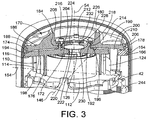
FIG. 3 is a similar view toFIG. 2 but enlarged and taken about a different angle and section in order to show other structural features; -
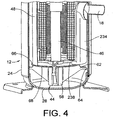
FIG. 4 is a partial cross section and cut-away view of a lower portion of the embodiment ofFIG. 1 ; -
FIG. 5 is a partially cross sectional cutaway symmetric view of the scroll compressor bodies and an Oldham key coupling in accordance with an embodiment of the present invention; -
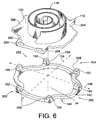
FIG. 6 is an exploded view of the movable scroll member and the Oldham key coupling used in previous embodiments; -
FIG. 7 is a top view of the movable scroll member shown with running clearances (in which the running clearances are greatly exaggerated for demonstrative purposes) and Oldham key contacts shown in accordance with an embodiment of the present invention; -
FIGS. 8 and 9 arc illustrations similar toFIG. 7 except showing a symmetrical Oldham key placement (again with exaggerated running clearances shown) to illustrate that some unwanted rotation of the scroll and edge loading of key surfaces could otherwise occur without the non-symmetrical key contact surfaces ofFIG. 7 ; -
FIG. 10 is a top view of a movable scroll member using a more conventional two slot arrangement for receiving two keys of an Oldham coupling. - While the invention will be described in connection with certain preferred embodiment, there is no intent to limit it to those embodiment. On the contrary, the intent is to cover all alternatives, modifications and equivalents as included within the spirit and scope of the invention as defined by the appended claims.
- An embodiment of the present invention is illustrated in the figures as a
scroll compressor assembly 10 generally including anouter housing 12 in which ascroll compressor 14 can be driven by adrive unit 16. The scroll compressor assembly may be arranged in a refrigerant circuit for refrigeration, industrial cooling, freezing, air conditioning or other appropriate applications where compressed fluid is desired. Appropriate connection ports provide for connection to a refrigeration circuit and include arefrigerant inlet port 18 and arefrigerant outlet port 20 extending through theouter housing 12. Thescroll compressor assembly 10 is operable through operation of thedrive unit 16 to operate thescroll compressor 14 and thereby compress an appropriate refrigerant or other fluid that enters therefrigerant inlet port 18 and exits therefrigerant outlet port 20 in a compressed high pressure state. - The
outer housing 12 may take many forms. In the preferred embodiment, the outer housing includes multiple shell sections and preferably three shell sections to include a centralcylindrical housing section 24, a topend housing section 26 and a bottomend housing section 28. Preferably, thehousing sections outer housing 12 enclosure. However, if disassembly of the housing is desired, other housing provisions can be made that can include metal castings or machined components. - The
central housing section 24 is preferably cylindrical and telescopically interfits with the top and bottomend housing sections enclosed chamber 30 for housing thescroll compressor 14 and driveunit 16. Each of the top and bottomend housing sections side wall regions center section 24 and provide for closing off the top and bottom ends of theouter housing 12. As can be seen inFIG. 1 , the topside wall region 32 telescopically overlaps thecentral housing section 24 and is exteriorly welded along a circular welded region to the top end of thecentral housing section 24. Similarly the bottomside wall region 34 of the bottomend housing section 28 telescopically interfits with the central housing section 24 (but is shown as being installed into the interior rather than the exterior of the central housing section 24) and is exteriorly welded by a circular weld region. - The
drive unit 16 may preferably take the form of anelectrical motor assembly 40, which is supported by upper andlower bearing members motor assembly 40 operably rotates and drives ashaft 46. Theelectrical motor assembly 40 generally includes an outerannular motor housing 48, astator 50 comprising electrical coils and arotor 52 that is coupled to thedrive shaft 46 for rotation together. Energizing thestator 50 is operative to rotatably drive therotor 52 and thereby rotate thedrive shaft 46 about acentral axis 54. - With reference to
FIGS. 1 and4 , thelower bearing member 44 includes a central generallycylindrical hub 58 that includes a central bushing and opening to provide acylindrical bearing 60 to which thedrive shaft 46 is journaled for rotational support. A plurality ofarms 62 and typically at least three arms project radially outward from the bearingcentral hub 58 preferably at equally spaced angular intervals. Thesesupport arms 62 engage and are seated on acircular seating surface 64 provided by the terminating circular edge of the bottomside wall region 34 of the bottomouter housing section 28. As such, thebottom housing section 28 can serve to locate, support and seat thelower bearing member 44 and thereby serves as a base upon which the internal components of the scroll compressor assembly can be supported. - The
lower bearing member 44 in turn supports thecylindrical motor housing 48 by virtue of acircular seat 66 formed on a plate-like ledge region 68 of thelower bearing member 44 that projects outward along the top of thecentral hub 58. Thesupport arms 62 also preferably are closely toleranced relative to the inner diameter of the central housing section. Thearms 62 may engage with the inner diameter surface of thecentral housing section 24 to centrally locate thelower bearing member 44 and thereby maintain position of thecentral axis 54. This can be by way of an interference and press-fit support arrangement between thelower bearing member 44 and the outer housing 12 (See e.g.FIG. 4 ). Alternatively according to a more preferred configuration, as shown inFigure 1 , the lower bearing engages with thelower housing section 28 which is in turn attached tocenter section 24. Likewise, theouter motor housing 48 may be supported with an interference and press-fit along the steppedseat 66 of thelower bearing member 44. As shown, screws may be used to securely fasten the motor housing to thelower bearing member 44. - The
drive shaft 46 is formed with a plurality of progressivelysmaller diameter sections 46a - 46d which are aligned concentric with thecentral axis 54. Thesmallest diameter section 46d is journaled for rotation within thelower bearing member 44 with the nextsmallest section 46c providing astep 72 for axial support of thedrive shaft 46 upon thelower bearing member 44. Thelargest section 46a is journaled for rotation within theupper bearing member 42. - The
drive shaft 46 further includes an offseteccentric drive section 74 that has acylindrical drive surface 75 about an offset axis that is offset relative to thecentral axis 54. This offsetdrive section 74 is journaled within a cavity of the movable scroll member of thescroll compressor 14 to drive the movable member of the scroll compressor about an orbital path when thedrive shaft 46 is spun about thecentral axis 54. To provide for lubrication of all of these bearing surfaces, theouter housing 12 provides anoil lubricant sump 76 at the bottom end in which suitable oil lubricant is provided. Thedrive shaft 46 has an oil lubricant pipe andimpeller 78 that acts as an oil pump when the drive shaft is spun and thereby pumps oil out of thelubricant sump 76 into aninternal lubricant passageway 80 defined within thedrive shaft 46. During rotation of thedrive shaft 46, centrifugal force acts to drive lubricant oil up through thelubricant passageway 80 against the action of gravity. Thelubricant passageway 80 includes various radial passages as shown to feed oil through centrifugal force to appropriate bearing surfaces and thereby lubricate sliding surfaces as may be desired. - The
upper bearing member 42 includes acentral bearing hub 84 into which thelargest section 46a of thedrive shaft 46 is journaled for rotation. Extending outward from the bearinghub 84 is asupport web 86 that merges into an outerperipheral support rim 88. Provided along thesupport web 86 is an annular stepped seatingsurface 90 which may have an interference and press-fit with the top end of thecylindrical motor housing 48 to thereby provide for axial and radial location. Themotor housing 48 may also be fastened with screws to theupper bearing member 42. The outerperipheral support rim 88 also may include an outer annular steppedseating surface 92 which may have an interference and press-fit with theouter housing 12. For example, the outerperipheral rim 88 can engage theseating surface 92 axially, that is it engages on a lateral plane perpendicular toaxis 54 and not through a diameter. To provide for centering there is provided a diametric fit just below thesurface 92 between thecentral housing section 24 and thesupport rim 88. Specifically, between the telescoped central and top-end housing sections circular step 94, which is located axially and radially with the outerannular step 92 of theupper bearing member 42. - The
upper bearing member 42 also provides axial thrust support to the movable scroll member through a bearing support via anaxial thrust surface 96. While this may be integrally provided by a single unitary component, it is shown as being provided by aseparate collar member 98 that is interfit with the upper portion of theupper bearing member 42 along steppedannular interface 100. Thecollar member 98 defines acentral opening 102 that is a size large enough to provide for receipt of the eccentric offsetdrive section 74 and allow for orbital eccentric movement thereof that is provided within a receiving portion of the movablescroll compressor member 112. - Turning in greater detail to the
scroll compressor 14, the scroll compressor body is provided by first and second scroll compressor bodies which preferably include a stationary fixedscroll compressor body 110 and a movablescroll compressor body 112. The moveablescroll compressor body 112 is arranged for orbital movement relative to the fixedscroll compressor body 110 for the purpose of compressing refrigerant. The fixed scroll compressor body includes afirst rib 114 projecting axially from a plate-like base 116 and is designed in the form of a spiral. Similarly, the second movablescroll compressor body 112 includes asecond scroll rib 118 projecting axially from a plate-like base 120 and is in the design form of a similar spirale. Thescroll ribs other compressor body multiple compression chambers 122 are formed between thescroll ribs bases compressor bodies chambers 122, progressive compression of refrigerant takes place. Refrigerant flows with an initial low pressure via anintake area 124 surrounding thescroll ribs FIGS. 2-3 ). Following the progressive compression in the chambers 122 (as the chambers progressively are defined radially inward), the refrigerant exits via acompression outlet 126 which is defined centrally within thebase 116 of the fixedscroll compressor body 110. Refrigerant that has been compressed to a high pressure can exit thechambers 122 via thecompression outlet 126 during operation of the scroll compressor. - The movable
scroll compressor body 112 engages the eccentric offsetdrive section 74 of thedrive shaft 46. More specifically, the receiving portion of the movablescroll compressor body 112 includes a cylindricalbushing drive hub 128 which slideably receives the eccentric offsetdrive section 74 with a slideable bearing surface provided therein. In detail, the eccentric offsetdrive section 74 engages thecylindrical drive hub 128 in order to move the moveablescroll compressor body 112 about an orbital path about thecentral axis 54 during rotation of thedrive shaft 46 about thecentral axis 54. Considering that this offset relationship causes a weight imbalance relative to thecentral axis 54, the assembly preferably includes acounter weight 130 that is mounted at a foxed angular orientation to thedrive shaft 46. Thecounter weight 130 acts to offset the weight imbalance caused by the eccentric offsetdrive section 74 and the movablescroll compressor body 112 that is driven about an orbital path (e.g. among other things, the scroll rib is not equally balanced). Thecounter weight 30 includes anattachment collar 132 and an offset weight region 134 (see counter weight shown best inFIG. 2 ) that provides for the counter weight effect and thereby balancing of the overall weight of the rotating components about thecentral axis 54 in cooperation with alower counterweight 135 for balancing purposes. This provides for reduced vibration and noise of the overall assembly by internally balancing or cancelling out inertial forces. - With reference to F1GS. 1-3, and particularly
FIG. 2 , the guiding movement off the scroll compressor can be seen. To guide the orbital movement of the movablescroll compressor body 112 relative to the fixedscroll compressor body 110, an appropriate key coupling. 140 may be provided. Keyed couplings are often referred to in the scroll compressor art as an "Oldham Coupling." In this embodiment, thekey coupling 140 includes anouter ring body 142 and includes twofirst keys 144 that are linearly spaced along a firstlateral axis 146 and that slide closely and linearly within two respective keyway tracks 148 that are linearly spaced and aligned along thefirst axis 146 as well. The key way tracks 148 are defined by the stationary fixedscroll compressor body 110 such that the linear movement of thekey coupling 140 along the firstlateral axis 46 is a linear movement relative to theouter housing 12 and perpendicular to thecentral axis 54. The keys can comprise slots, grooves or, as shown, projections which project from thering body 142 of thekey coupling 140. This control of movement over the firstlateral axis 146 guides part of the overall orbital path of the moveablescroll compressor body 112. - Additionally, the key coupling includes four
second keys 152 in which opposed pairs of thesecond keys 152 are linearly aligned substantially parallel relative to a secondtraverse lateral axis 154 that is perpendicular to the firstlateral axis 146. There are two sets of thesecond keys 152 that act cooperatively to receive projecting slidingguide portions 156 that project from the base 120 on opposite sides of the movablescroll compressor body 112. Theguide portions 156 linearly engage and are guided for linear movement along the second traverse lateral axis by virtue of sliding linear guiding movement of theguide portions 156 along sets of thesecond keys 152. - By virtue of the
key coupling 140, the moveablescroll compressor body 112 has movement restrained relative to the fixedscroll compressor body 110 along the firstlateral axis 146 and secondtraverse lateral axis 154. This results in the prevention of any relative rotation of the moveable scroll body as it allows only translational motion. More particularly, the fixedscroll compressor body 110 limits motion of thekey coupling 140 to linear movement along the firstlateral axis 146; and in turn, thekey coupling 140 when moving along the firstlateral axis 146 carries themoveable scroll 112 along the firstlateral axis 146 therewith. Additionally, the movable scroll compressor body can independently move relative to thekey coupling 140 along the secondtraverse lateral axis 154 by virtue of relative sliding movement afforded by theguide portions 156 which are received and slide between thesecond keys 152. By allowing for simultaneous movement in two mutuallyperpendicular axes drive section 74 of thedrive shaft 46 upon thecylindrical drive hub 128 of the movablescroll compressor body 112 is translated into an orbital path movement of the movablescrol compressor body 112 relative to the fixedscroll compressor body 110. - Referring in greater detail to the fixed
scroll compressor body 110, thisbody 110 is fixed to theupper bearing member 42 by an extension extending axially and vertically therebetween and around the outside of the moveablescroll compressor body 112. In the illustrated embodiment, the fixedscroll compressor body 110 includes a plurality of axially projecting legs 158 (seeFIG. 2 ) projecting on the same side as the scroll rib from thebase 116. Theselegs 158 engage and are seated against the top side of theupper bearing member 42. Preferably, bolts 160 (FIG. 2 ) are provided to fasten the fixedscroll compressor body 110 to theupper bearing member 42. Thebolts 160 extend axially through thelegs 158 of the fixed scroll compressor body and are fastened and screwed into corresponding threaded openings in theupper bearing member 42. For further support and fixation of the fixedscroll compressor body 110, the outer periphery of the fixed scroll compressor body includes acylindrical surface 162 that is closely received against the inner cylindrical surface of theouter housing 10 and more particularly the topend housing section 26. A clearance gap betweensurface 162 andside wall 32 serves to permit assembly ofupper housing 26 over the compressor assembly and subsequently to contain the o-ring seal 164. An O-ring seal 164 seals the region between thecylindrical locating surface 162 and theouter housing 112 to prevent a leak path from compressed high pressure fluid to the uncompressed section/sump region inside of theouter housing 12. Theseal 164 can be retained in a radially outward facingannular groove 166. - With reference to
FIGS. 1-3 and particularlyFIG. 3 , the upper side (e.g. the side opposite the scroll rib) of the fixedscroll 110 supports afloatable baffle member 170. To accommodate the same, the upper side of the fixedscroll compressor body 110 includes an annular and more specifically cylindricalinner hub region 172 and an outwardly spacedperipheral rim 174 which are connected by radially extendingdisc region 176 of thebase 116. Between thehub 172 and therim 174 is provided an annular piston-like chamber 178 into which thebaffle member 170 is received. With this arrangement, the combination of thebaffle member 170 and the fixedscroll compressor body 110 serve to separate ahigh pressure chamber 180 from lower pressure regions within thehousing 10. While thebaffle member 170 is shown as engaging and constrained radially within the outerperipheral rim 174 of the fixedscroll compressor body 110, thebaffle member 170 could alternatively be cylindrically located against the inner surface of theouter housing 12 directly. - As shown in the embodiment, and with particular reference to
FIG. 3 , thebaffle member 170 includes aninner hub region 184, adisc region 186 and an outerperipheral rim region 188. To provide strengthening, a plurality of radially extendingribs 190 extending along the top side of thedisc region 186 between thehub region 184 and theperipheral rim region 188 may be integrally provided and are preferably equally angularly spaced relative to thecentral axis 54. Thebaffle member 170 in addition to tending to separate thehigh pressure chamber 180 from the remainder of theouter housing 12 also serves to transfer pressure loads generated byhigh pressure chamber 180 away from the inner region of the fixedscroll compressor body 110 and toward the outer peripheral region of the fixedscroll compressor body 110. At the outer peripheral region, pressure loads can be transferred to and carried more directly by theouter housing 12 and therefore avoid or at least minimize stressing components and substantially avoid deformation or deflection in working components such as the scroll bodies. Preferably, thebaffle member 170 is floatable relative to the fixedscroll compressor body 110 along the inner peripheral region. This can be accomplished, for example, as shown in the illustrated embodiment by a slidingcylindrical interface 192 between mutually cylindrical sliding surfaces of the fixed scroll compressor body and the baffle member along the respective hub regions thereof. As compressed high pressure refrigerant in thehigh pressure chamber 180 acts upon thebaffle member 170, substantially no load may be transferred along the inner region, other than as may be due to frictional engagement. Instead, an axialcontact interface ring 194 is provided at the radial outer periphery where the respective rim regions are located for the fixedscroll compressor body 110 and thebaffle member 170. Preferably, an annularaxial gap 196 is provided between the innermost diameter of thebaffle member 170 and the upper side of the fixedscroll compressor body 110. The annularaxial gap 196 is defined between the radially innermost portion of the baffle member and the scroll member and is adapted to decrease in size in response to a pressure load caused by high pressure refrigerant compressed within thehigh pressure chamber 180. Thegap 196 is hallowed to expand to its relaxed size upon relief of the pressure and load. - To facilitate load transfer most effectively, an annular intermediate or
lower pressure chamber 198 is defined between thebaffle members 170 and the fixed scroll.compressor body 110. This intermediate or lower pressure chamber can be subject to either the lower sump pressure as shown, or can be subject to an intermediate pressure (e.g. through a fluid communication passage defined through the fixed scroll compressor body to connect one of theindividual compression chambers 122 to the chamber 198). Load carrying characteristics can therefore be configured based on the lower or intermediate pressure that is selected for best stress/deflection management. In either event, the pressure contained in the intermediate orlow pressure chamber 198 during operation is substantially less than thehigh pressure chamber 180 thereby causing a pressure differential and load to develop across thebaffle member 170. - To prevent leakage and to better facilitate load transfer, inner and
outer scals inner seal 204 is preferably a radial seal and disposed in a radically inwardly facinginner groove 208 defined along the inner diameter of thebaffle member 170. Similarly theouter seal 206 can be disposed in a radially outwardly facingouter groove 210 defined along the outer diameter of thebaffle member 170 in theperipheral rim region 188. While a radial seal is shown at the outer region, alternatively or in addition an axial seal may be provided along the axialcontact interface ring 194. - While the
baffle member 170 could be a stamped steel component, preferably and as illustrated, thebaffle member 170 comprises a cast and/or machined member (and may be aluminum) to provide for the expanded ability to have several structural features as discussed above. By virtue of making the baffle member in this manner, heavy stamping of such baffles can be avoided. - Additionally, the
baffle member 170 can be retained to the fixedscroll compressor body 110. Specifically, as can be seen in the figures, a radially inward projectingannular flange 214 of theinner hub region 184 of thebaffle member 170 is trapped axially between thestop plate 212 and the fixedscroll compressor body 110. Thestop plate 212 is mounted withbolts 216 to a fixedscroll compressor body 210. Thestop plate 212 includes anouter ledge 218 that projects radially over theinner hub 172 of the fixedscroll compressor body 110. Thestop plate ledge 218 serves as a stop and retainer for thebaffle member 170. In this manner, thestop plate 212 serves to retain thebaffle member 170 to the fixedscroll compressor body 1 10 such that thebaffle member 170 is carried thereby. - As shown, the
stop plate 212 can be part of a check valve 220: The check valve includes a moveablevalve plate element 222 contained within a chamber defined in the outlet area of the fixed scroll compressor body within theinner hub 172. Thestop plate 212 thus closes off acheck valve chamber 224 in which the moveablevalve plate element 222 is located. Within the check valve chamber there is provided a cylindricalguide wall surface 226 that guides the movement of thecheck valve 220 along thecentral axis 54.Recesses 228 are provided in the upper section of theguide wall 226 to allow for compressed refrigerant to pass through the check valve when the moveablevalve plate element 222 is lifted off of thevalve seat 230.Openings 232 are provided in thestop plate 212 to facilitate passage of compressed gas from the scroll compressor into thehigh pressure chamber 180. The check valve is operable to allow for one way directional flow such that when the scroll compressor is operating, compressed refrigerant is allowed to leave the scroll compressor bodies through thecompression outlet 126 by virtue of thevalve plate element 222 being driven off of itsvalve seat 230. However, once the drive unit shuts down and the scroll compressor is no longer operating, high pressure contained within thehigh pressure chamber 180 forces the movablevalve plate element 222 back upon thevalve seat 230. This closes offcheck valve 220 and thereby prevents backflow of compressed refrigerant back through the scroll compressor. - During operation, the
scroll compressor assembly 10 is operable to receive low pressure refrigerant at thehousing inlet port 18 and compress the refrigerant for delivery to thehigh pressure chamber 180 where it can be output through thehousing outlet port 20. As is shown, inFIG. 4 , aninternal conduit 234 can be connected internally of thehousing 12 to guide the lower pressure refrigerant from theinlet port 18 into the motor housing via amotor housing inlet 238. This allows the low pressure refrigerant to flow across the motor and thereby cool and carry heat away from the motor which can be caused by operation of the motor. Low pressure refrigerant can then pass longitudinally through the motor housing and around through void spaces therein toward the top end where it can exit through a plurality of motor housing outlets 240 (seeFIG. 2 ) that are equally angularly spaced about thecentral axis 54. Themotor housing outlets 240 may be defined either in themotor housing 48, theupper bearing member 42 or by a combination of the motor housing and upper bearing member (e.g. by gaps formed therebetween as shown inFIG. 2 ). Upon exiting themotor housing outlet 240, the low pressure refrigerant enters anannular chamber 242 formed between the motor housing and the outer housing. From there, the low pressure refrigerant can pass through the upper bearing member through a pair of opposed outer peripheral throughports 244 that are defined by recesses on opposed sides of theupper bearing member 42 to create gaps between the bearingmember 42 andhousing 12 as shown inFIG. 3 (or alternatively holes in bearing member 42). The throughports 244 may be angularly spaced relative to themotor housing outlets 240. Upon passing through theupper bearing member 42, the low pressure refrigerant finally enters theintake area 124 of thescroll compressor bodies intake area 124, the lower pressure refrigerant finally enters thescroll ribs 1 14, 118 on opposite sides (one intake on each side of the fixed scroll compressor body) and is progressively compressed throughchambers 122 to where it reaches it maximum compressed state at thecompression outlet 126 where it subsequently passes through thecheck valve 220 and into thehigh pressure chamber 180. From there, high pressure compressed refrigerant may then pass from thescroll compressor assembly 10 through the refrigeranthousing outlet port 20. - In accordance with the present invention, the illustrated embodiment includes improvements in relation to the contact arrangement between one or both of the scroll bodies and the key coupling, which will additionally be focused upon below.
- Referring to
FIGS. 5-7 and particularlyFIG. 7 , it can be seen that four slidingcontacts 250 are provided between thekey coupling 140 and the movablescroll compressor body 112. As shown, each of the slidingcontacts 250 is contained in its own separate quadrant 252 (thequadrants 252 being defined by the mutually perpendicularlateral axes 146, 154). Each slidingcontact 250 can be provided by a sliding face 254 (e.g. such as an edge) defined by the movable scroll compressor body and another slidingface 256 defined by one of thekeys 152 of thekey coupling 140. As shown, cooperatingpairs 258 of slidingcontacts 250 are provided on each side of the firstlateral axis 146. - Preferably, four
keys 152 are provided by thekey coupling 140 and project from thering body 142 to provide for the sliding faces 256, with thekeys 152 projecting axially from thering body 142 toward the movablescroll compressor body 112. Alternatively, it is also contemplated and herein disclosed that the reverse may be true in that all or some of the keys may project from thebase 120 of the movablescroll compressor body 112 instead. - As illustrated, guide
portions 156 of the movable scrollcompressor body base 120 are provided by laterally extendingflange portion 262 projecting in opposite directions along the secondlateral axis 154 in an outward direction away from the movable compressorbody scroll rib 118. By projecting away from thescroll rib 118, theflange portions 262 can provide edges for the sliding faces 254 which lie in a plane parallel with a plane defined by thecentral axis 54 and the secondlateral axis 154. Additionally, it can be seen that theflange portions 262 intersect and lie generally symmetrical upon the secondlateral axis 154. - Preferably, and as illustrated in the figures, the
base 120 of the movablescroll compressor body 112 is slot free and need not define a slot due to the key coupling afforded with this design as compared with, for example, a more conventional design as illustrated inFig. 10 . One benefit of this approach is that space need not be occupied by outwardly projecting ears from the scroll base in order to interact with the Oldham key coupling. As in the present design, there are no ear structures and as a result the overall diameter of the package can be reduced. For example, for a scroll compressor having at least a thirty ton capacity output, the housing can have a diameter of less than 320 millimeters. The reduction in size that can be realized by eliminating the ear structures is shown inFIG. 10 by schematically illustrating thediameter 264 with the ears and asmaller diameter 266 that can be realized without the ears. In particular, the center shell can be reduced in diameter to under 310 millimeters to as little as 305 millimeters while providing up to thirty-five tons of capacity or even potentially more with a suitable motor (e.g. a forty ton capacity may be possible). This can all be done while also realizing a significant weight savings, including roughly between 5-10 kilograms in weight savings of the shell alone due to the decreased diameter. This can provide significant benefits in relation to lightening the overall weight of thescroll compressor assembly 10 and thereby make it more attractive for several reasons including easier manipulation, easier installation, and material savings. In contrast, comparable thirty-two ton scroll compressor displacement capacities have had shell sizes of greater than 330 millimeters such as 331 or 333 millimeters for example. - To carry axial thrust loads, the movable
scroll compressor body 112 also includesflange portions 268 projecting in a direction perpendicular relative to the guiding flange portions 262 (e.g. along the first lateral axis 146). Theseadditional flange portions 268 are preferably contained within the diametrical boundary created by theguide flange portions 262 so as to best realize the size reduction benefits. Yet a further advantage of this design is that the sliding faces 254 of the movablescroll compressor body 112 are open and not contained within a slot. This is advantageous during manufacture in that it affords subsequent machining operations such as finishing milling for creating the desirable tolerances and running clearances as may be desired. - Preferably, a non-symmetrical contact relationship is also provided between the key coupler and at least one of the scroll compressor bodies as illustrated in
FIG. 7 . In comparing the non-symmetrical arrangement ofFIG. 7 with a symmetrical arrangement ofFIGS. 8 and 9 , it is demonstrated that symmetric contact placement can cause unwanted rotation and edge loading of key surfaces indicated inFIG. 9 . Each of these figures show exaggerated placement of runningclearances 270 considering running clearances are typically on the order of between ten micron and one hundred micron from a manufacturing design standpoint (not counting tolerances). Such runningclearances 270 are provided to allow for easy sliding movement of the movablescroll compressor body 112 along the secondlateral axis 154 and to allow for easier assembly. For example, manufacturing tolerances may cause the surfaces to be slightly greater or less. Also some running clearance should be provided to facilitate sliding movement as opposed to a press fit relationship or otherwise a binding relationship due to frictional forces, expansion/contraction due to temperature differentials that might occur either temporarily or otherwise, and for other similar reasons. Preferably and as illustrated inFIG. 7 , the runningclearance 270 is not equal for eachpair 258 of slidingcontacts 250. In particular, sliding contacts 250a, which continuously engage during operation, are set at about or around a zero running clearance while all or most of the running clearance is provided by sliding contacts 250b. Sliding contacts 250b can engage, for example, when the scroll compressor is shut down and to prevent relative rotation in the opposite direction and thereby keep the scroll compressor restrained for linear translation along the secondlateral axis 154. - There are various ways to accomplish the non-symmetrical running clearance placement including having the sliding faces 256 of the keys slightly offset arid not symmetrical about the second lateral axis and/or having the sliding faces 254 of the movable
scroll compressor body 112 slightly offset and/or not symmetrical relative to the secondlateral axis 154, or a combination of both. As shown in the drawings such asFIG. 7 , eachindividual pair 258 of thekeys 152 are non-symmetrically placed such that one key of the pair is placed slightly farther from the secondlateral axis 154 as compared to the other key of that pair. This offset placement of adjacent keys minimizes scroll rotation and provides parallel surface loading of the scroll compressorbody sliding faccs 254 and keycoupling sliding faces 256 during normal operation when loads are being experienced on contacts 250a during compression of refrigerant. Again, considering that contacts 250b are not so loaded during normal operation, providing the running clearance primarily or in full along sliding contacts 250b even though it may allow for slightly greater counter rotation of the scroll compressor body upon shut down is not of as much importance due to the fact that unwanted rotation of the scroll and edge loading of the key surfaces is more critical while the scroll compressor is actively operating and subject to high loads on a continuous basis. The contrast can be seen betweenFIGS. 7 and9 , in that the scroll compressor body is driven truer to the second lateral axes as shown inFIG. 7 whereas some unwanted rotation of the scroll and edge loading of key surfaces can occur as shown inFIG. 9 as the movablescroll compressor body 112 ofFIG. 9 linearly translates along the second lateral axis. - The above described embodiment and the alternatives in relation thereto (e.g. as to where the offset placement of running clearance may be provided) hereby provide means for correcting clearance backlash due to the provision of running clearance.
- It should be appreciated that a similar provision can also be provided in an embodiment such as shown in
FIG. 10 for a more conventional key coupling. Specifically, such a non-symmetric relationship can similarly be used by placing the running clearance along one of the slot walls in this design so as to similarly correct unwanted rotation and to keep the sliding faces of the keys in the slots more parallel during operation to prevent unwanted edge loading. - The use of the terms "a" and "an" and "the" and similar referents in the context of describing the invention (especially in the context of the following claims) is to be construed to cover both the singular and the plural, unless otherwise indicated herein or clearly contradicted by context. The terms "comprising," "having," "including," and "containing" are to be construed as open-ended terms (i.e., meaning "including, but not limited to,") unless otherwise noted. Recitation of ranges of values herein are merely intended to serve as a shorthand method of referring individually to each separate value falling within the range, unless otherwise indicated herein, and each separate value is incorporated into the specification as if it were individually recited herein. All methods described herein can be performed in any suitable order unless otherwise indicated herein or otherwise clearly contradicted by context. The use of any and all examples, or exemplary language (e.g., "such as") provided herein, is intended merely to better illuminate the invention and does not pose a limitation on the scope of the invention unless otherwise claimed. No language in the specification should be construed as indicating any non-claimed element as essential to the practice of the invention.
Claims (13)
- A scroll compressor, comprising:scroll compressor bodies including a first scroll body (110) and a second scroll body (112), the first and second scroll bodies having respective bases and respective scroll ribs that project from the respective bases and which mutually engage, the scroll ribs generally surrounding a central axis, wherein the scroll bodies are moveable relative another along first (146) and second (154) lateral axes, the first and second lateral axes being mutually perpendicular;a key coupler (140) acting upon the second scroll body, the second scroll body being movable relative to the key coupler along the second lateral axis, characterised in that there isa nonsymmetrical cooperating sliding contact arrangement between the key coupler and the second scroll compressor body, including first and second sliding contacts (250a, 250b) that are arranged in opposing relation, wherein a smaller running clearance (270) is provided along the first sliding contact (250a) as compared to the second sliding contract (250b)
- The scroll compressor of claim 1, wherein the running clearance of the first and second contacts is between about 10 and about 200 micron.
- The scroll compressor of claim 1 or 2, wherein the first sliding contact has a running clearance of zero or about zero, wherein substantially all of the running clearance is provided in the second running contact.
- The scroll compressor of any of claims 1 to 3, wherein the key coupler includes four keys including two pairs on opposite sides of the lateral axis, the second scroll body including opposed flange portions, each flange portion slidably received between one of the pairs of key to form the first and second sliding contacts.
- The scroll compressor of claim 4, wherein each flange portion has first and second sliding surfaces for contacting respective keys, the first and second sliding surfaces being spaced from the second lateral axis at different distances.
- The scroll compressor of claim 4 or 5, wherein each pair of keys includes first and second keys on opposite sides of the second lateral axis, each key having sliding surface for engaging one of the flange portions, wherein the sliding surface the first key is spaced farther from the second lateral axis compared to the second key.
- The scroll compressor of any of claims 1 to 6, wherein the key coupler includes fifth and sixth keys engaging the first scroll body keyslots formed in the first scroll body for movement of the key coupler along the first lateral axis.
- The scroll compressor of any of claims 1 to 7, wherein the second scroll includes ears and slots.
- The scroll compressor of any of claims 1 to 8, further including a housing containing the scroll compressor bodies, and wherein the first scroll body is fixed relative to the housing, and wherein the second scroll body is movable relative the housing about an orbital path relative to the first scroll body.
- The scroll compressor of any of claims 1 to 9, wherein the first and second sliding contact prevents relative rotation between the key coupler and the second scroll body in opposing first and second rotational directions about the central axis, respectively.
- A method of controlling backlash in a scroll compressor, comprising:guiding relative movement between first and second scroll bodies about first and second mutually perpendicular lateral axes, respectively;compressing fluid progressively between the first and second scroll bodies within respective bases and respective scroll ribs that project from the respective bases and which mutually engage characterized in thatan uneven distribution of running clearance is maintained to prevent rotational backlash during relative movement along at least one of the lateral axes.
- The method of claim 11, wherein the guiding is provided by a key coupler having keys for guiding movement of at least one of the scroll bodies, further comprising:offsetting placement of adjacent keys relative to the second lateral axis to minimize scroll rotation during the compressing.
- The method of claim 11 or 12, further comprising:arranging running clearance between the key coupler and the second scroll body to facilitate assembly and sliding movement, including arranging more of the running clearance on substantially non-engaging sliding contact surfaces during the compressing as compared with engaging sliding contact surfaces during the compressing.
Applications Claiming Priority (2)
| Application Number | Priority Date | Filing Date | Title |
|---|---|---|---|
| US12/015,589 US7918658B2 (en) | 2008-01-17 | 2008-01-17 | Non symmetrical key coupling contact and scroll compressor having same |
| PCT/US2009/031071 WO2009091871A1 (en) | 2008-01-17 | 2009-01-15 | Non symmetrical key coupling contact and scroll compressor having same |
Publications (2)
| Publication Number | Publication Date |
|---|---|
| EP2245271A1 EP2245271A1 (en) | 2010-11-03 |
| EP2245271B1 true EP2245271B1 (en) | 2016-11-30 |
Family
ID=40593092
Family Applications (1)
| Application Number | Title | Priority Date | Filing Date |
|---|---|---|---|
| EP09701802.2A Active EP2245271B1 (en) | 2008-01-17 | 2009-01-15 | Non symmetrical key coupling contact and scroll compressor having same |
Country Status (6)
| Country | Link |
|---|---|
| US (1) | US7918658B2 (en) |
| EP (1) | EP2245271B1 (en) |
| JP (1) | JP2011510212A (en) |
| KR (1) | KR101363871B1 (en) |
| CN (1) | CN101952552B (en) |
| WO (1) | WO2009091871A1 (en) |
Families Citing this family (18)
| Publication number | Priority date | Publication date | Assignee | Title |
|---|---|---|---|---|
| US9568002B2 (en) | 2008-01-17 | 2017-02-14 | Bitzer Kuehlmaschinenbau Gmbh | Key coupling and scroll compressor incorporating same |
| US7967581B2 (en) * | 2008-01-17 | 2011-06-28 | Bitzer Kuhlmaschinenbau Gmbh | Shaft mounted counterweight, method and scroll compressor incorporating same |
| US20090185927A1 (en) * | 2008-01-17 | 2009-07-23 | Bitzer Scroll Inc. | Key Coupling and Scroll Compressor Incorporating Same |
| US7963753B2 (en) * | 2008-01-17 | 2011-06-21 | Bitzer Kuhlmaschinenbau Gmbh | Scroll compressor bodies with scroll tip seals and extended thrust region |
| US7878780B2 (en) | 2008-01-17 | 2011-02-01 | Bitzer Kuhlmaschinenbau Gmbh | Scroll compressor suction flow path and bearing arrangement features |
| US8142175B2 (en) | 2008-01-17 | 2012-03-27 | Bitzer Scroll Inc. | Mounting base and scroll compressor incorporating same |
| US8167595B2 (en) | 2008-10-14 | 2012-05-01 | Bitzer Scroll Inc. | Inlet screen and scroll compressor incorporating same |
| US8133043B2 (en) | 2008-10-14 | 2012-03-13 | Bitzer Scroll, Inc. | Suction duct and scroll compressor incorporating same |
| US8328543B2 (en) | 2009-04-03 | 2012-12-11 | Bitzer Kuehlmaschinenbau Gmbh | Contoured check valve disc and scroll compressor incorporating same |
| US8297958B2 (en) * | 2009-09-11 | 2012-10-30 | Bitzer Scroll, Inc. | Optimized discharge port for scroll compressor with tip seals |
| TWM434837U (en) * | 2012-02-13 | 2012-08-01 | Fu Sheng Ind Co Ltd | Anti rotation mechanism of scroll compressor |
| US9057269B2 (en) | 2012-03-23 | 2015-06-16 | Bitzer Kuehlmaschinenbau Gmbh | Piloted scroll compressor |
| FR3000143B1 (en) * | 2012-12-21 | 2018-11-09 | Danfoss Commercial Compressors | SPIRAL COMPRESSOR HAVING OLDHAM FIRST AND SECOND JOINTS |
| US10400770B2 (en) | 2016-02-17 | 2019-09-03 | Emerson Climate Technologies, Inc. | Compressor with Oldham assembly |
| US11136977B2 (en) | 2018-12-31 | 2021-10-05 | Emerson Climate Technologies, Inc. | Compressor having Oldham keys |
| KR102204619B1 (en) * | 2019-03-12 | 2021-01-19 | 엘지전자 주식회사 | A compressor |
| US11555494B2 (en) * | 2019-04-08 | 2023-01-17 | Hitachi-Johnson Controls Air Conditioning, Inc. | Oldham coupling in co-rotating scroll compressors |
| US11353022B2 (en) | 2020-05-28 | 2022-06-07 | Emerson Climate Technologies, Inc. | Compressor having damped scroll |
Family Cites Families (21)
| Publication number | Priority date | Publication date | Assignee | Title |
|---|---|---|---|---|
| JPS6073080A (en) * | 1983-09-30 | 1985-04-25 | Toshiba Corp | Scroll type compressor |
| US4655696A (en) * | 1985-11-14 | 1987-04-07 | American Standard Inc. | Anti-rotation coupling for a scroll machine |
| US5219281A (en) * | 1986-08-22 | 1993-06-15 | Copeland Corporation | Fluid compressor with liquid separating baffle overlying the inlet port |
| US4927339A (en) * | 1988-10-14 | 1990-05-22 | American Standard Inc. | Rotating scroll apparatus with axially biased scroll members |
| JPH03151585A (en) * | 1989-11-07 | 1991-06-27 | Shin Meiwa Ind Co Ltd | Scroll type fluid device |
| DE69103604T2 (en) * | 1990-10-01 | 1994-12-22 | Copeland Corp | Oldham's clutch for scroll compressors. |
| US5090878A (en) * | 1991-01-14 | 1992-02-25 | Carrier Corporation | Non-circular orbiting scroll for optimizing axial compliancy |
| US5141421A (en) * | 1991-12-17 | 1992-08-25 | Carrier Corporation | Nested coupling mechanism for scroll machines |
| US5501351A (en) * | 1992-07-17 | 1996-03-26 | Minnesota Mining And Manufacturing Company | Reusable, multiple-piece storage container |
| JPH07305687A (en) | 1994-05-11 | 1995-11-21 | Daikin Ind Ltd | Scroll compressor |
| KR100321687B1 (en) * | 1998-04-29 | 2002-03-18 | 김천경 | Fluid pump |
| JPH11324943A (en) * | 1998-05-08 | 1999-11-26 | Mitsubishi Heavy Ind Ltd | Scroll type compressor |
| DE19910460A1 (en) * | 1999-03-10 | 2000-09-21 | Bitzer Kuehlmaschinenbau Gmbh | compressor |
| US6227830B1 (en) * | 1999-08-04 | 2001-05-08 | Scroll Technologies | Check valve mounted adjacent scroll compressor outlet |
| US6231324B1 (en) * | 2000-02-02 | 2001-05-15 | Copeland Corporation | Oldham coupling for scroll machine |
| US6761541B1 (en) * | 2000-02-02 | 2004-07-13 | Copeland Corporation | Foot plate for hermetic shell |
| DE10065821A1 (en) * | 2000-12-22 | 2002-07-11 | Bitzer Kuehlmaschinenbau Gmbh | compressor |
| US6682327B2 (en) * | 2001-02-26 | 2004-01-27 | Scroll Technologies | Method of aligning scroll compressor components |
| US6488489B2 (en) * | 2001-02-26 | 2002-12-03 | Scroll Technologies | Method of aligning scroll compressor components |
| US6439867B1 (en) * | 2001-05-14 | 2002-08-27 | Copeland Corporation | Scroll compressor having a clearance for the oldham coupling |
| DE10248926B4 (en) * | 2002-10-15 | 2004-11-11 | Bitzer Kühlmaschinenbau Gmbh | compressor |
-
2008
- 2008-01-17 US US12/015,589 patent/US7918658B2/en active Active
-
2009
- 2009-01-15 WO PCT/US2009/031071 patent/WO2009091871A1/en not_active Ceased
- 2009-01-15 CN CN200980102294.6A patent/CN101952552B/en active Active
- 2009-01-15 KR KR1020107017954A patent/KR101363871B1/en not_active Expired - Fee Related
- 2009-01-15 EP EP09701802.2A patent/EP2245271B1/en active Active
- 2009-01-15 JP JP2010543224A patent/JP2011510212A/en active Pending
Also Published As
| Publication number | Publication date |
|---|---|
| US20090185933A1 (en) | 2009-07-23 |
| US7918658B2 (en) | 2011-04-05 |
| WO2009091871A1 (en) | 2009-07-23 |
| JP2011510212A (en) | 2011-03-31 |
| CN101952552B (en) | 2015-05-06 |
| KR101363871B1 (en) | 2014-02-17 |
| EP2245271A1 (en) | 2010-11-03 |
| CN101952552A (en) | 2011-01-19 |
| KR20100123690A (en) | 2010-11-24 |
Similar Documents
| Publication | Publication Date | Title |
|---|---|---|
| EP2245271B1 (en) | Non symmetrical key coupling contact and scroll compressor having same | |
| EP2250345B1 (en) | Key coupling and scroll compressor incorporating same | |
| EP2414682B1 (en) | Contoured check valve disc and scroll compressor incorporating same | |
| EP2250344B1 (en) | Scroll compressor and baffle for same | |
| US7878775B2 (en) | Scroll compressor with housing shell location | |
| EP2245270B1 (en) | Shaft mounted counterweight, method and scroll compressor incorporating same | |
| EP2245310B1 (en) | Scroll compressor bodies with scroll tip seals and extended thrust region | |
| US9080446B2 (en) | Scroll compressor with captured thrust washer | |
| EP2475891B1 (en) | Optimized discharge port for scroll compressor with tip seals | |
| US9568002B2 (en) | Key coupling and scroll compressor incorporating same |
Legal Events
| Date | Code | Title | Description |
|---|---|---|---|
| PUAI | Public reference made under article 153(3) epc to a published international application that has entered the european phase |
Free format text: ORIGINAL CODE: 0009012 |
|
| 17P | Request for examination filed |
Effective date: 20100812 |
|
| AK | Designated contracting states |
Kind code of ref document: A1 Designated state(s): AT BE BG CH CY CZ DE DK EE ES FI FR GB GR HR HU IE IS IT LI LT LU LV MC MK MT NL NO PL PT RO SE SI SK TR |
|
| AX | Request for extension of the european patent |
Extension state: AL BA RS |
|
| DAX | Request for extension of the european patent (deleted) | ||
| GRAP | Despatch of communication of intention to grant a patent |
Free format text: ORIGINAL CODE: EPIDOSNIGR1 |
|
| INTG | Intention to grant announced |
Effective date: 20160205 |
|
| RAP1 | Party data changed (applicant data changed or rights of an application transferred) |
Owner name: BITZER KUEHLMASCHINENBAU GMBH |
|
| GRAS | Grant fee paid |
Free format text: ORIGINAL CODE: EPIDOSNIGR3 |
|
| GRAP | Despatch of communication of intention to grant a patent |
Free format text: ORIGINAL CODE: EPIDOSNIGR1 |
|
| INTG | Intention to grant announced |
Effective date: 20160628 |
|
| GRAA | (expected) grant |
Free format text: ORIGINAL CODE: 0009210 |
|
| AK | Designated contracting states |
Kind code of ref document: B1 Designated state(s): AT BE BG CH CY CZ DE DK EE ES FI FR GB GR HR HU IE IS IT LI LT LU LV MC MK MT NL NO PL PT RO SE SI SK TR |
|
| REG | Reference to a national code |
Ref country code: CH Ref legal event code: EP Ref country code: GB Ref legal event code: FG4D |
|
| REG | Reference to a national code |
Ref country code: FR Ref legal event code: PLFP Year of fee payment: 9 Ref country code: AT Ref legal event code: REF Ref document number: 849996 Country of ref document: AT Kind code of ref document: T Effective date: 20161215 |
|
| REG | Reference to a national code |
Ref country code: IE Ref legal event code: FG4D |
|
| REG | Reference to a national code |
Ref country code: DE Ref legal event code: R096 Ref document number: 602009042749 Country of ref document: DE |
|
| PG25 | Lapsed in a contracting state [announced via postgrant information from national office to epo] |
Ref country code: LV Free format text: LAPSE BECAUSE OF FAILURE TO SUBMIT A TRANSLATION OF THE DESCRIPTION OR TO PAY THE FEE WITHIN THE PRESCRIBED TIME-LIMIT Effective date: 20161130 |
|
| REG | Reference to a national code |
Ref country code: LT Ref legal event code: MG4D |
|
| REG | Reference to a national code |
Ref country code: NL Ref legal event code: MP Effective date: 20161130 |
|
| REG | Reference to a national code |
Ref country code: AT Ref legal event code: MK05 Ref document number: 849996 Country of ref document: AT Kind code of ref document: T Effective date: 20161130 |
|
| PG25 | Lapsed in a contracting state [announced via postgrant information from national office to epo] |
Ref country code: NO Free format text: LAPSE BECAUSE OF FAILURE TO SUBMIT A TRANSLATION OF THE DESCRIPTION OR TO PAY THE FEE WITHIN THE PRESCRIBED TIME-LIMIT Effective date: 20170228 Ref country code: LT Free format text: LAPSE BECAUSE OF FAILURE TO SUBMIT A TRANSLATION OF THE DESCRIPTION OR TO PAY THE FEE WITHIN THE PRESCRIBED TIME-LIMIT Effective date: 20161130 Ref country code: SE Free format text: LAPSE BECAUSE OF FAILURE TO SUBMIT A TRANSLATION OF THE DESCRIPTION OR TO PAY THE FEE WITHIN THE PRESCRIBED TIME-LIMIT Effective date: 20161130 Ref country code: GR Free format text: LAPSE BECAUSE OF FAILURE TO SUBMIT A TRANSLATION OF THE DESCRIPTION OR TO PAY THE FEE WITHIN THE PRESCRIBED TIME-LIMIT Effective date: 20170301 |
|
| PG25 | Lapsed in a contracting state [announced via postgrant information from national office to epo] |
Ref country code: BE Free format text: LAPSE BECAUSE OF NON-PAYMENT OF DUE FEES Effective date: 20170131 Ref country code: PT Free format text: LAPSE BECAUSE OF FAILURE TO SUBMIT A TRANSLATION OF THE DESCRIPTION OR TO PAY THE FEE WITHIN THE PRESCRIBED TIME-LIMIT Effective date: 20170330 Ref country code: PL Free format text: LAPSE BECAUSE OF FAILURE TO SUBMIT A TRANSLATION OF THE DESCRIPTION OR TO PAY THE FEE WITHIN THE PRESCRIBED TIME-LIMIT Effective date: 20161130 Ref country code: ES Free format text: LAPSE BECAUSE OF FAILURE TO SUBMIT A TRANSLATION OF THE DESCRIPTION OR TO PAY THE FEE WITHIN THE PRESCRIBED TIME-LIMIT Effective date: 20161130 Ref country code: FI Free format text: LAPSE BECAUSE OF FAILURE TO SUBMIT A TRANSLATION OF THE DESCRIPTION OR TO PAY THE FEE WITHIN THE PRESCRIBED TIME-LIMIT Effective date: 20161130 Ref country code: AT Free format text: LAPSE BECAUSE OF FAILURE TO SUBMIT A TRANSLATION OF THE DESCRIPTION OR TO PAY THE FEE WITHIN THE PRESCRIBED TIME-LIMIT Effective date: 20161130 Ref country code: HR Free format text: LAPSE BECAUSE OF FAILURE TO SUBMIT A TRANSLATION OF THE DESCRIPTION OR TO PAY THE FEE WITHIN THE PRESCRIBED TIME-LIMIT Effective date: 20161130 |
|
| PG25 | Lapsed in a contracting state [announced via postgrant information from national office to epo] |
Ref country code: NL Free format text: LAPSE BECAUSE OF FAILURE TO SUBMIT A TRANSLATION OF THE DESCRIPTION OR TO PAY THE FEE WITHIN THE PRESCRIBED TIME-LIMIT Effective date: 20161130 |
|
| PG25 | Lapsed in a contracting state [announced via postgrant information from national office to epo] |
Ref country code: RO Free format text: LAPSE BECAUSE OF FAILURE TO SUBMIT A TRANSLATION OF THE DESCRIPTION OR TO PAY THE FEE WITHIN THE PRESCRIBED TIME-LIMIT Effective date: 20161130 Ref country code: DK Free format text: LAPSE BECAUSE OF FAILURE TO SUBMIT A TRANSLATION OF THE DESCRIPTION OR TO PAY THE FEE WITHIN THE PRESCRIBED TIME-LIMIT Effective date: 20161130 Ref country code: SK Free format text: LAPSE BECAUSE OF FAILURE TO SUBMIT A TRANSLATION OF THE DESCRIPTION OR TO PAY THE FEE WITHIN THE PRESCRIBED TIME-LIMIT Effective date: 20161130 Ref country code: CZ Free format text: LAPSE BECAUSE OF FAILURE TO SUBMIT A TRANSLATION OF THE DESCRIPTION OR TO PAY THE FEE WITHIN THE PRESCRIBED TIME-LIMIT Effective date: 20161130 Ref country code: EE Free format text: LAPSE BECAUSE OF FAILURE TO SUBMIT A TRANSLATION OF THE DESCRIPTION OR TO PAY THE FEE WITHIN THE PRESCRIBED TIME-LIMIT Effective date: 20161130 |
|
| PG25 | Lapsed in a contracting state [announced via postgrant information from national office to epo] |
Ref country code: BE Free format text: LAPSE BECAUSE OF FAILURE TO SUBMIT A TRANSLATION OF THE DESCRIPTION OR TO PAY THE FEE WITHIN THE PRESCRIBED TIME-LIMIT Effective date: 20161130 Ref country code: BG Free format text: LAPSE BECAUSE OF FAILURE TO SUBMIT A TRANSLATION OF THE DESCRIPTION OR TO PAY THE FEE WITHIN THE PRESCRIBED TIME-LIMIT Effective date: 20170228 |
|
| REG | Reference to a national code |
Ref country code: CH Ref legal event code: PL Ref country code: DE Ref legal event code: R097 Ref document number: 602009042749 Country of ref document: DE |
|
| PG25 | Lapsed in a contracting state [announced via postgrant information from national office to epo] |
Ref country code: MC Free format text: LAPSE BECAUSE OF FAILURE TO SUBMIT A TRANSLATION OF THE DESCRIPTION OR TO PAY THE FEE WITHIN THE PRESCRIBED TIME-LIMIT Effective date: 20161130 |
|
| PLBE | No opposition filed within time limit |
Free format text: ORIGINAL CODE: 0009261 |
|
| STAA | Information on the status of an ep patent application or granted ep patent |
Free format text: STATUS: NO OPPOSITION FILED WITHIN TIME LIMIT |
|
| PG25 | Lapsed in a contracting state [announced via postgrant information from national office to epo] |
Ref country code: CH Free format text: LAPSE BECAUSE OF NON-PAYMENT OF DUE FEES Effective date: 20170131 Ref country code: LI Free format text: LAPSE BECAUSE OF NON-PAYMENT OF DUE FEES Effective date: 20170131 |
|
| REG | Reference to a national code |
Ref country code: IE Ref legal event code: MM4A |
|
| 26N | No opposition filed |
Effective date: 20170831 |
|
| PG25 | Lapsed in a contracting state [announced via postgrant information from national office to epo] |
Ref country code: SI Free format text: LAPSE BECAUSE OF FAILURE TO SUBMIT A TRANSLATION OF THE DESCRIPTION OR TO PAY THE FEE WITHIN THE PRESCRIBED TIME-LIMIT Effective date: 20161130 Ref country code: LU Free format text: LAPSE BECAUSE OF NON-PAYMENT OF DUE FEES Effective date: 20170115 |
|
| REG | Reference to a national code |
Ref country code: FR Ref legal event code: PLFP Year of fee payment: 10 |
|
| PG25 | Lapsed in a contracting state [announced via postgrant information from national office to epo] |
Ref country code: IE Free format text: LAPSE BECAUSE OF NON-PAYMENT OF DUE FEES Effective date: 20170115 |
|
| PG25 | Lapsed in a contracting state [announced via postgrant information from national office to epo] |
Ref country code: MT Free format text: LAPSE BECAUSE OF NON-PAYMENT OF DUE FEES Effective date: 20170115 |
|
| PG25 | Lapsed in a contracting state [announced via postgrant information from national office to epo] |
Ref country code: HU Free format text: LAPSE BECAUSE OF FAILURE TO SUBMIT A TRANSLATION OF THE DESCRIPTION OR TO PAY THE FEE WITHIN THE PRESCRIBED TIME-LIMIT; INVALID AB INITIO Effective date: 20090115 |
|
| PG25 | Lapsed in a contracting state [announced via postgrant information from national office to epo] |
Ref country code: CY Free format text: LAPSE BECAUSE OF NON-PAYMENT OF DUE FEES Effective date: 20161130 |
|
| PG25 | Lapsed in a contracting state [announced via postgrant information from national office to epo] |
Ref country code: MK Free format text: LAPSE BECAUSE OF FAILURE TO SUBMIT A TRANSLATION OF THE DESCRIPTION OR TO PAY THE FEE WITHIN THE PRESCRIBED TIME-LIMIT Effective date: 20161130 |
|
| PG25 | Lapsed in a contracting state [announced via postgrant information from national office to epo] |
Ref country code: TR Free format text: LAPSE BECAUSE OF FAILURE TO SUBMIT A TRANSLATION OF THE DESCRIPTION OR TO PAY THE FEE WITHIN THE PRESCRIBED TIME-LIMIT Effective date: 20161130 |
|
| PG25 | Lapsed in a contracting state [announced via postgrant information from national office to epo] |
Ref country code: IS Free format text: LAPSE BECAUSE OF FAILURE TO SUBMIT A TRANSLATION OF THE DESCRIPTION OR TO PAY THE FEE WITHIN THE PRESCRIBED TIME-LIMIT Effective date: 20170330 |
|
| P01 | Opt-out of the competence of the unified patent court (upc) registered |
Effective date: 20230517 |
|
| PGFP | Annual fee paid to national office [announced via postgrant information from national office to epo] |
Ref country code: DE Payment date: 20250129 Year of fee payment: 17 |
|
| PGFP | Annual fee paid to national office [announced via postgrant information from national office to epo] |
Ref country code: FR Payment date: 20250127 Year of fee payment: 17 |
|
| PGFP | Annual fee paid to national office [announced via postgrant information from national office to epo] |
Ref country code: IT Payment date: 20250122 Year of fee payment: 17 Ref country code: GB Payment date: 20250121 Year of fee payment: 17 |