EP2236458A1 - Hydrogen chloride supply apparatus, exhaust gas treatment system, and hydrogen chloride supply management system - Google Patents
Hydrogen chloride supply apparatus, exhaust gas treatment system, and hydrogen chloride supply management system Download PDFInfo
- Publication number
- EP2236458A1 EP2236458A1 EP08869638A EP08869638A EP2236458A1 EP 2236458 A1 EP2236458 A1 EP 2236458A1 EP 08869638 A EP08869638 A EP 08869638A EP 08869638 A EP08869638 A EP 08869638A EP 2236458 A1 EP2236458 A1 EP 2236458A1
- Authority
- EP
- European Patent Office
- Prior art keywords
- hydrogen chloride
- hydrochloric acid
- dilute hydrochloric
- feedstock
- product
- Prior art date
- Legal status (The legal status is an assumption and is not a legal conclusion. Google has not performed a legal analysis and makes no representation as to the accuracy of the status listed.)
- Withdrawn
Links
Images
Classifications
-
- B—PERFORMING OPERATIONS; TRANSPORTING
- B01—PHYSICAL OR CHEMICAL PROCESSES OR APPARATUS IN GENERAL
- B01D—SEPARATION
- B01D53/00—Separation of gases or vapours; Recovering vapours of volatile solvents from gases; Chemical or biological purification of waste gases, e.g. engine exhaust gases, smoke, fumes, flue gases, aerosols
- B01D53/34—Chemical or biological purification of waste gases
- B01D53/46—Removing components of defined structure
- B01D53/64—Heavy metals or compounds thereof, e.g. mercury
-
- B—PERFORMING OPERATIONS; TRANSPORTING
- B01—PHYSICAL OR CHEMICAL PROCESSES OR APPARATUS IN GENERAL
- B01D—SEPARATION
- B01D53/00—Separation of gases or vapours; Recovering vapours of volatile solvents from gases; Chemical or biological purification of waste gases, e.g. engine exhaust gases, smoke, fumes, flue gases, aerosols
- B01D53/34—Chemical or biological purification of waste gases
- B01D53/46—Removing components of defined structure
- B01D53/48—Sulfur compounds
- B01D53/50—Sulfur oxides
-
- B—PERFORMING OPERATIONS; TRANSPORTING
- B01—PHYSICAL OR CHEMICAL PROCESSES OR APPARATUS IN GENERAL
- B01D—SEPARATION
- B01D53/00—Separation of gases or vapours; Recovering vapours of volatile solvents from gases; Chemical or biological purification of waste gases, e.g. engine exhaust gases, smoke, fumes, flue gases, aerosols
- B01D53/34—Chemical or biological purification of waste gases
- B01D53/74—General processes for purification of waste gases; Apparatus or devices specially adapted therefor
- B01D53/75—Multi-step processes
-
- B—PERFORMING OPERATIONS; TRANSPORTING
- B01—PHYSICAL OR CHEMICAL PROCESSES OR APPARATUS IN GENERAL
- B01D—SEPARATION
- B01D53/00—Separation of gases or vapours; Recovering vapours of volatile solvents from gases; Chemical or biological purification of waste gases, e.g. engine exhaust gases, smoke, fumes, flue gases, aerosols
- B01D53/34—Chemical or biological purification of waste gases
- B01D53/74—General processes for purification of waste gases; Apparatus or devices specially adapted therefor
- B01D53/86—Catalytic processes
- B01D53/8621—Removing nitrogen compounds
- B01D53/8625—Nitrogen oxides
-
- C—CHEMISTRY; METALLURGY
- C01—INORGANIC CHEMISTRY
- C01B—NON-METALLIC ELEMENTS; COMPOUNDS THEREOF; METALLOIDS OR COMPOUNDS THEREOF NOT COVERED BY SUBCLASS C01C
- C01B7/00—Halogens; Halogen acids
- C01B7/01—Chlorine; Hydrogen chloride
-
- C—CHEMISTRY; METALLURGY
- C01—INORGANIC CHEMISTRY
- C01B—NON-METALLIC ELEMENTS; COMPOUNDS THEREOF; METALLOIDS OR COMPOUNDS THEREOF NOT COVERED BY SUBCLASS C01C
- C01B7/00—Halogens; Halogen acids
- C01B7/01—Chlorine; Hydrogen chloride
- C01B7/07—Purification ; Separation
- C01B7/0706—Purification ; Separation of hydrogen chloride
-
- G—PHYSICS
- G06—COMPUTING OR CALCULATING; COUNTING
- G06Q—INFORMATION AND COMMUNICATION TECHNOLOGY [ICT] SPECIALLY ADAPTED FOR ADMINISTRATIVE, COMMERCIAL, FINANCIAL, MANAGERIAL OR SUPERVISORY PURPOSES; SYSTEMS OR METHODS SPECIALLY ADAPTED FOR ADMINISTRATIVE, COMMERCIAL, FINANCIAL, MANAGERIAL OR SUPERVISORY PURPOSES, NOT OTHERWISE PROVIDED FOR
- G06Q10/00—Administration; Management
- G06Q10/08—Logistics, e.g. warehousing, loading or distribution; Inventory or stock management
-
- G—PHYSICS
- G06—COMPUTING OR CALCULATING; COUNTING
- G06Q—INFORMATION AND COMMUNICATION TECHNOLOGY [ICT] SPECIALLY ADAPTED FOR ADMINISTRATIVE, COMMERCIAL, FINANCIAL, MANAGERIAL OR SUPERVISORY PURPOSES; SYSTEMS OR METHODS SPECIALLY ADAPTED FOR ADMINISTRATIVE, COMMERCIAL, FINANCIAL, MANAGERIAL OR SUPERVISORY PURPOSES, NOT OTHERWISE PROVIDED FOR
- G06Q10/00—Administration; Management
- G06Q10/08—Logistics, e.g. warehousing, loading or distribution; Inventory or stock management
- G06Q10/087—Inventory or stock management, e.g. order filling, procurement or balancing against orders
- G06Q10/0875—Itemisation or classification of parts, supplies or services, e.g. bill of materials
-
- G—PHYSICS
- G06—COMPUTING OR CALCULATING; COUNTING
- G06Q—INFORMATION AND COMMUNICATION TECHNOLOGY [ICT] SPECIALLY ADAPTED FOR ADMINISTRATIVE, COMMERCIAL, FINANCIAL, MANAGERIAL OR SUPERVISORY PURPOSES; SYSTEMS OR METHODS SPECIALLY ADAPTED FOR ADMINISTRATIVE, COMMERCIAL, FINANCIAL, MANAGERIAL OR SUPERVISORY PURPOSES, NOT OTHERWISE PROVIDED FOR
- G06Q40/00—Finance; Insurance; Tax strategies; Processing of corporate or income taxes
- G06Q40/04—Trading; Exchange, e.g. stocks, commodities, derivatives or currency exchange
-
- B—PERFORMING OPERATIONS; TRANSPORTING
- B01—PHYSICAL OR CHEMICAL PROCESSES OR APPARATUS IN GENERAL
- B01D—SEPARATION
- B01D2251/00—Reactants
- B01D2251/50—Inorganic acids
- B01D2251/502—Hydrochloric acid
-
- B—PERFORMING OPERATIONS; TRANSPORTING
- B01—PHYSICAL OR CHEMICAL PROCESSES OR APPARATUS IN GENERAL
- B01D—SEPARATION
- B01D2257/00—Components to be removed
- B01D2257/60—Heavy metals or heavy metal compounds
- B01D2257/602—Mercury or mercury compounds
Definitions
- the present invention relates to a hydrogen chloride supply system, an air pollution control system, and a hydrogen chloride supply control system.
- a boiler generally includes a wet desulfurization apparatus for removing sulfur content in flue gas.
- flue gas treatment facilities including such a boiler provided with a desulfurization apparatus that serves an exhaust gas treatment apparatus, as chlorine (Cl) content increases in flue gas, the ratio of water-soluble divalent metallic mercury increases. This facilitates collection of the mercury with the desulfurization apparatus, as is well known.
- Patent Document 1 Japanese Patent Application Laid-open No. 10-230137
- the chlorine concentration varies depending on the type of coal used in the power station (i.e., coal type). Even when a coal type with high chloride concentration is used, 29 tons of 35% concentrated hydrochloric acid is necessary per day, and dilute hydrochloric acid is discharged by an amount equivalent to that of the 35% concentrated hydrochloric acid.
- a set of plants needs to be established. This increases costs for establishing and maintaining the plants.
- the present invention is made in view of the above problems, and has an object to provide a hydrogen chloride supply system, an air pollution control system, and a hydrogen chloride supply control system that require low operating costs.
- a hydrogen chloride supply system comprises: carry-in means that carries in concentrated hydrochloric acid as a feedstock; a hydrogen chloride vaporizer that vaporizes the concentrated hydrochloric acid to obtain hydrogen chloride; a liquid level regulator that separates residual hydrogen chloride from extracted dilute hydrochloric acid discharged from the hydrogen chloride vaporizer, and that regulates a liquid level of the hydrogen chloride vaporizer; a concentration regulating tank that regulates a hydrochloric acid concentration of extracted dilute hydrochloric acid; a by-product tank that stores therein dilute hydrochloric acid regulated to have a predetermined concentration; and carry-out that carries out the dilute hydrochloric acid with a predetermined concentration discharged from the by-product tank.
- an air pollution control system comprises: a spray device, that sprays hydrogen chloride into flue gas discharged from a coal combustion boiler; a denigration apparatus that reduces nitrogen oxide in flue gas into which the hydrogen chloride has been sprayed, and that oxidizes mercury; an air heater that recovers heat in gas from which the nitrogen oxide has been reduced; a dust extractor that reduces dust in gas from which the heat has been recovered; a desulfurization apparatus that reduces sulfur oxide in gas from which the dust has been reduced; a stack from which gas thus desulfurized is discharged outside; carry-in means that carries in concentrated hydrochloric acid as a feedstock; a hydrogen chloride vaporizer that vaporizes the concentrated hydrochloric acid to obtain hydrogen chloride; a liquid level regulator that separates residual hydrogen chloride from extracted dilute hydrochloric acid discharged from the hydrogen chloride vaporizer, and that regulates a liquid level of the hydrogen chloride vaporizer; a gas-liquid separator that separates
- a hydrogen chloride supply control system comprises: a hydrogen chloride supply system that feeds hydrogen chloride to an air pollution control system; an arithmetic device that obtains information on amounts of a feedstock to be supplied to and used in the devices, a production amount of a by-product, a production amount of hydrogen chloride, and a mercury amount, and that processes the information; and a network that connects a hydrogen chloride production section, a feedstock feed section that feeds a feedstock or the like to the hydrogen chloride feed section, an inventory management section that manages an inventory, and an arithmetic processing device, via communication.
- the feedstock feed section includes: the inventory management section that determines an amount of hydrochloric acid to be used according to a fuel type, orders a feedstock, and manages an inventory; and a distribution section that determined a purchase amount of a feedstock, predicts a production amount of a by-product, and sells the by-product thus produced,
- the hydrogen chloride production section includes a production management terminal that notifies an amount of produced hydrogen chloride to the air pollution control system
- the inventory management section includes an inventory management terminal that notifies data on an inventory amount of a stored feedstock to a feed system
- the distribution section includes a management terminal that monitors a use amount of a feedstock, and a management terminal that monitors a production amount of dilute hydrochloric acid being a produced by-product.
- the hydrogen chloride supply control system may predetermine by auction a destination to which the dilute hydrochloric acid is transported.
- dilute hydrochloric acid discharged as a waste product is returned to a supplier as a valuable product with a predetermined concentration.
- a hydrochloric acid supplier can treat it to concentrated hydrochloric acid by injecting hydrogen chloride as required, so as to reutilize it.
- the dilute hydrochloric acid with a predetermined concentration can be used for a cleaning agent, a wastewater neutralizer, a scale remover, and other applications, without being treated.
- the by-product i.e., dilute hydrochloric acid with a regulated concentration (e.g., 22% hydrochloric acid)
- a regulated concentration e.g. 22% hydrochloric acid
- a feedstock i.e., concentrated hydrochloric acid (e.g., 35% hydrochloric acid). This improves transport efficiency.
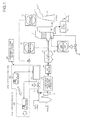
- Fig. 1 is a schematic diagram of an air pollution control system according to a first embodiment.
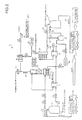
- Fig. 2 is a schematic diagram of a hydrogen chloride supply system that is a relevant portion shown in Fig. 1 .
- an air pollution control system 10 includes: a denigration apparatus 13 that reduces nitrogen oxide in flue gas 12 discharged from a coal combustion boiler 11, and that sprays hydrogen chloride 23 into the gas to oxidize and reduce mercury; an air heater 14 that recovers heat in gas from which the nitrogen oxide has been reduced; a dust extractor 15 that reduces dust in gas from which the heat has been recovered; a desulfurization apparatus 16 that reduces sulfur oxide in gas from which the dust has been reduced; a stack 17 from which desulfurized gas is discharged to the outside; and a hydrogen chloride supply system 20 that produces the hydrogen chloride 23.
- Fig. 1 indicated by reference numerals 41 and 42 are mercury monitors, 43 is a redox potential measurement controller (oxidation-reduction potential (ORP)), and 45 is dilute sulfuric acid containing mercury discharged from the desulfurization apparatus, 46 is a belt filter, and 47 is gypsum.
- ORP oxidation-reduction potential
- the hydrogen chloride supply system 20 includes: a carry-in tank truck 22A that carries in a feedstock, i.e., concentrated hydrochloric acid (35% hydrochloric acid) 21; a hydrogen chloride vaporizer 24 that vaporizes the concentrated hydrochloric acid (35% hydrochloric acid) to obtain the hydrogen chloride 23; a liquid level regulator 27 that separates residual hydrogen chloride from extracted dilute hydrochloric acid 25A discharged from the hydrogen chloride vaporizer 24, and that regulates the liquid level of the hydrogen chloride vaporizer 24; a concentration regulating tank 28 that regulates the hydrochloric acid concentration of extracted dilute hydrochloric acid 25B from which residual hydrogen chloride 26 has been separated to a predetermined concentration (e.g., 22%); a by-product tank 30 that stores therein dilute hydrochloric acid 29 regulated to have a predetermined concentration; and a carry-out tank truck 22B that carries out the dilute hydrochloric acid 29 with a predetermined concentration
- dilute hydrochloric acid discharged as a by-product resulting from treatment of its flue gas, is not disposed but discharged as reusable dilute hydrochloric acid having a predetermined concentration. In this way, the dilute hydrochloric acid can be reutilized.
- an agent for transporting a feedstock i.e., concentrated hydrochloric acid
- transport means e.g., a tank such as a trailer or a tank truck
- the agent loads the discharged dilute hydrochloric acid with a predetermined concentration and brings it back. In this way, a distribution cycle is established.
- the present embodiment describes a tank truck as means for carrying in and out hydrogen chloride.
- the present invention is not limited to this, and any know means for transporting hydrochloric acid may be used, such as a tank truck, a trailer, or a freight car.
- the dilute hydrochloric acid is made to have a predetermine concentration, and therefore can be recycled as a sale product to be reutilized.
- the hydrogen chloride vaporizer 24 produces the hydrogen chloride 23 at about 60°C.
- the hydrogen chloride 23 having a hydrogen chloride concentration of 88% (temperature: 140°C), which is suitable for air pollution control, is sprayed into a duct. In this way, the mercury is reduced.
- the extracted dilute hydrochloric acid 25A is then cooled at a third heat exchanger 37, and subjected to gas-liquid separation at the liquid level regulator 27. In this way, the residual hydrogen chloride 26 is reduced, and the extracted dilute hydrochloric acid 25B is obtained.
- the extracted dilute hydrochloric acid 25B is introduced to the concentration regulating tank 28 when its concentration is equal to or more than a predetermined concentration.
- the extracted dilute hydrochloric acid 25B is then diluted with water 40 to have a predetermined concentration (e.g., 22%), and introduced as the dilute hydrochloric acid 29 with a regulated concentration to the by-product tank 30, loaded on the carry-out tank truck 22B, and transported to a hydrochloric acid supplier etc.
- a predetermined concentration e.g., 22%)
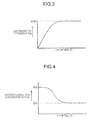
- the concentration is regulated because the relationship between the vaporization efficiency (%) and time (T) at the hydrogen chloride vaporizer 24 is such that when the vaporization efficiency is low, the hydrochloric acid concentration of the extracted dilute hydrochloric acid 25A is maintained high, as shown in Figs. 3 and 4 . This phenomenon also occurs when the vaporization is stopped. Until the vaporization efficiency teaches a predetermined stable state, the extracted dilute hydrochloric acid is diluted with the water 40 by opening a valve V 1 so as to be introduced to the concentration regulating tank 28. After the vaporization efficiency becomes steady, the concentration of the extracted hydrochloric acid is about 22%. Thus, by closing the value V 1 and opening a valve V 2 , the dilute hydrochloric acid is directly introduced to the by-product tank 30.
- the concentration of the extracted dilute hydrochloric acid 25A is high.
- the dilute hydrochloric acid is made to have a predetermined concentration.
- the hydrochloric acid concentration may be measured by using known concentration measurement methods.
- known concentration measurement methods include a method specified in Japanese industrial standards (JIS) K 1310, neutralization titration in JIS K1310-1-1, potentiometric titration in JIS K1310-1-1, a density measurement method in JIS1310-2, a concentration estimation method using a pH meter, and a concentration estimation method with ion electrodes, which can be used as appropriate.
- the amount of contained chlorine varies depending on the type of coal used as a fuel for combustion in the boiler. Accordingly, the amounts of hydrogen chloride to be supplied varies depending on the coal type. Because the consumption of hydrochloric acid varies depending on the coal type, the fuel needs to be ordered in advance based on prediction.
- the dilute hydrochloric acid which is an extracted by-product, may be reutilized as highly concentrated hydrochloric acid by spraying hydrogen chloride again.
- the dilute hydrochloric acid may be used as cleaner hydrochloric acid, hydrochloric acid for treating wastewater, or the like.
- hydrochloric acid produced as a by-product can be made to have a predetermined concentration and sent to a hydrochloric acid supplier. Further, dilute hydrochloric acid can be immediately taken away from the power generating facility by loading it in the empty tank truck that has carried in the highly concentrated hydrochloric acid. In this way, unnecessary stock of hydrochloric acid is reduced from the power generating facility.
- a small power plant uses 35 tons of concentrated hydrochloric acid per day.
- the dilute hydrochloric acid can be carried out immediately.
- a mercury removal system is realized that requires low operating costs for treating flue gas.
- the variation occurs ranging from 30 tons per day (when a hydrochloric acid concentration is about 300 ppm) to 120 tons per day (a hydrochloric acid concentration is about 100 ppm), i.e., about a fourfold variation.
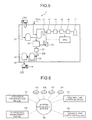
- Fig. 5 is a schematic of an air pollution control system according to the second embodiment.
- the air pollution control system 10 according to the present embodiment includes: the coal combustion boiler 11 that uses coal as a fuel F; the denitration apparatus 13 that reduces nitrogen oxide in flue gas discharged from the boiler, and that sprays hydrogen chloride into the gas to oxidizes and reduce mercury; the air heater 14 that recovers heat in gas from which the nitrogen oxide has been reduced; the dust extractor 15 that reduces dust in gas from which the heat has been recovered; the desulfurization apparatus 16 that reduces sulfur oxide in gas from which the dust has been reduced; the stack 17 from which desulfurized gas is discharged to the outside; the carry-in tank truck 22A that carries in the feedstock, i.e., concentrated hydrochloric acid (35% hydrochloric acid) 21; the hydrogen chloride vaporizer 24 that vaporizes the concentrated hydrochloric acid (35% hydrochlor)
- Information including the amounts of a feedstock to be supplied to and used in these devices, the production amount of a by-product, the production amount of hydrogen chloride, and the mercury amount is obtained, and each piece of information is computed in an arithmetic unit (central processing unit (CPU)). Further, feedstock feed sections and a hydrogen chloride production section are coupled via a network (not shown).
- CPU central processing unit
- Each feedstock feed section includes: an inventory management section that determines the used amount of hydrochloric acid according to a fuel type, orders a feedstock, and manages an inventory; and a distribution section that determines a purchase amount of a feedstock, predicts a production amount of a by-product, and sells a produced by-product.
- the hydrochloric acid production section includes a production management terminal that notifies the amount of produced hydrogen chloride to the air pollution control system.
- the inventory management section includes an inventory management terminal that notifies data on an inventory amount of a stored feedstock to a feedstock supply section.
- the distribution section includes a management terminal that monitors the used amount of a feedstock, and a management terminal that monitors the production amount of a produced by-product.
- Fig. 6 is a conceptual diagram of elements of a feed system.
- the feed system includes a terminal for carry-in means 100, a terminal for carry-out means 101, hydrogen chloride feed means 102; and by-product management means 103. These elements are networked via a system management server 104.
- Each of the terminal includes a central processing unit (CPU), a work memory, and a communication control interface for transmission to and deception from the system management server 104.
- the terminal for carry-in means 100 stores therein programs for extracting information necessary for busing a feedstock from order entry information received via the system management server 104, cheeking the inventory, and instructing purchase.
- the terminal for carry-out means 101 stores therein: programs for computing an amount of sales to each sale destination, i.e., customer, based on the information of the production amount sent from the by-product management means 103; and forums for sending auction information to a sale destination, i.e., customer.
- the system management server 104 includes a feedstock inventory database 105 that stores therein data on the inventory amount of a feedstock, which is sent from the inventory amount management terminal.
- the system management server 104 also includes: a by-product database 106 that stores therein data on the concentration and the amount of a produced by-product; a customer information database 107 that accumulates information on a customer having bought a feedstock, and delivery history for each customer; and a by-product cost database 108 to which the price of a by-product per unit weight is recorded.
- the hydrogen chloride feed means 102 includes a terminal for computing a production amount of the hydrogen chloride 23 based on a feedstock, displaying it as analysis information, and sending it to the system management server 104.
- the by-product management means 103 includes: a concentration regulating tank that measures a concentration of a by-product from which hydrogen chloride has been produced, regulates the concentration depending on its concentration value; and the by-product tank 30 that stores therein a non-regulated by-product having a predetermines concentration.
- the by-product management means 103 further includes a terminal for feeding two the by-product tank 30 a by-product with a concentration regulated depending on its concentration value, displaying it as by-product information, and sending it to the system management serve 104.
- an air pollution control section measures the used amount of hydrogen chloride when treating flue gas discharged from the boiler, and monitors whether the amount of mercury in the flue gas is equal to or less than a predetermined amount.
- the used amount of hydrogen chloride, and the mercury concentration in the flue gas are constantly recorded by a management server at the air pollution control section.
- the following describes a process flow of air pollution control performed by the air pollution control system 10.
- prediction is made for an amount of a feedstock to be used in a predetermined number of days.
- a management server at the production section sends an order for the feedstock (35% hydrochloric acid) including predetermined order information via an electronic mail or the like.
- This order information includes the amount of the feedstock (35% hydrochloric acid), a desired delivery date, and a delivery location.
- a hydrochloride acid supplier Upon receiving the order, a hydrochloride acid supplier delivers the concentrated hydrochloric acid by the carry-in tank truck 22A, based on the order information.
- the terminal for carry-in means 100 checks the information delivered by the carry-in tank truck 22A. The information is stored in the system management server 104 and then registered.
- a predetermined amount of the hydrogen chloride 23 is produced from a feedstock at the hydrogen chloride vaporizer 24, and a by-product is extracted at the liquid level regulator 27. If the extracted by-product has a high concentration (e.g., 22% or more), the by-product is sent to the concentration regulating tank 28, regulated with the water 40 to have a predetermined concentration (22%), and then stored in the by-product tank 30. The amount of the stored by-product is accumulated and recorded in the system management server 104.
- a carry-in tank truck 22A with the empty tank is moved, and the dilute hydrochloric acid (22%) discharged from the by-product tank 30 is loaded thereon. Accordingly, by a carry-out tank truck 22B with the dilute hydrochloric acid fully loaded, the dilute hydrochloric acid (22%) is delivered to a hydrochloric acid supplier.
- a sale destination is predetermined by auction.
- Purchase information of the auction is sent to the system management server 104, and recorded to the customer information database 107.
- an invoice is created using a predetermined invoice format based on the information stored in the customer information database 107, via the system management server 104.
- the processes are carried out that include carrying in a feedstock and shipping, for reutilization, a by-product produced according to the usage of the hydrogen chloride.
- the processes vary depending on the coal type etc. Because the used amount of hydrogen chloride in the air pollution control system largely varies depending on the amount of chlorine contained in coal, the used amount of hydrogen chloride is predicted based on the database of coal as a fuel. Accordingly, the variation in production amount of a by-product can be predicted. Because the production amount of a by-product increases as the used amount increases, auction is used to sell the by-product immediately. In this way, unnecessary stock of the by-product is reduced from the facility.
- Step 0 A plan for supplying hydrochloric acid is developed based on a plan for supplying coal to be used in a power station, as specified in the following Steps 1 to 3.
- Step 1 A hydrogen chloride concentration in flue gas resulting from coal combustion is extracted from property data of coal types.
- Step 2 Based on the hydrogen chloride concentration necessary for a denigration catalyst (e.g., hydrogen chloride concentration of 300 ppm), an amount of hydrogen chloride to be added is calculated. The concentration of the addition is changed appropriately depending on the operating performance.
- Step 3 From the amount of hydrogen chloride calculated at Step 2, an amount (a) of concentrated hydrochloric acid (35%) to be supplied is calculated.
- Step 4 Based on the amount (a) of the 35% concentrated hydrochloric acid to be supplied and the amount (b) of the 22% dilute hydrochloric acid to be discharged, a revers auction is carried out using a set of a purchase price of the 35% concentrated hydrochloric acid, a buying price of the 22% hydrochloric acid, and a fee for carrying in and out such hydrochloric acid.
- a bidding system on the Internet is employed.
- the purchase price of the 35% hydrochloric acid is set lower than its market price.
- the sale price of the 22% hydrochloric acid is set higher than its market price. This is because the 22% dilute hydrochloric acid needs to be sold out constantly without being stored within the power station.
- the extracted dilute hydrochloric acid can be regulated with supplied water to dilute hydrochloric acid with a predetermined concentration, ranging from 20% to 30%. This enables shipping of hydrochloric acid with a concentration desired by a customer.
- a hydrogen chloride supply system of the present invention can return dilute hydrochloric acid discharged as a waste product to a supplier as a valuable product with a predetermined concentration, and is suitable for a processing of hydrochloric acid of flue gas treatment in a power plant.
Landscapes
- Engineering & Computer Science (AREA)
- Chemical & Material Sciences (AREA)
- Business, Economics & Management (AREA)
- Environmental & Geological Engineering (AREA)
- Biomedical Technology (AREA)
- Analytical Chemistry (AREA)
- General Chemical & Material Sciences (AREA)
- Oil, Petroleum & Natural Gas (AREA)
- Chemical Kinetics & Catalysis (AREA)
- Organic Chemistry (AREA)
- Health & Medical Sciences (AREA)
- Economics (AREA)
- Accounting & Taxation (AREA)
- Finance (AREA)
- General Business, Economics & Management (AREA)
- Physics & Mathematics (AREA)
- Theoretical Computer Science (AREA)
- General Physics & Mathematics (AREA)
- Marketing (AREA)
- Development Economics (AREA)
- Inorganic Chemistry (AREA)
- Strategic Management (AREA)
- Operations Research (AREA)
- Tourism & Hospitality (AREA)
- Quality & Reliability (AREA)
- Human Resources & Organizations (AREA)
- Entrepreneurship & Innovation (AREA)
- Technology Law (AREA)
- Treating Waste Gases (AREA)
- Management, Administration, Business Operations System, And Electronic Commerce (AREA)
- Feeding, Discharge, Calcimining, Fusing, And Gas-Generation Devices (AREA)
- Organic Low-Molecular-Weight Compounds And Preparation Thereof (AREA)
- Filling Or Discharging Of Gas Storage Vessels (AREA)
Abstract
Description
- The present invention relates to a hydrogen chloride supply system, an air pollution control system, and a hydrogen chloride supply control system.
- Conventionally, various system for removing mercury in flue gas have been considered because boilers serving as combustion apparatuses in power stations and other facilities discharge flue gas containing highly toxic mercury.
- A boiler generally includes a wet desulfurization apparatus for removing sulfur content in flue gas. In flue gas treatment facilities including such a boiler provided with a desulfurization apparatus that serves an exhaust gas treatment apparatus, as chlorine (Cl) content increases in flue gas, the ratio of water-soluble divalent metallic mercury increases. This facilitates collection of the mercury with the desulfurization apparatus, as is well known.
- In recent years, various proposals have been made on denitration apparatuses that reduce NOx, and on methods and apparatuses for treating the metallic mercury in combination with a wet desulfurization apparatus that uses an alkali absorbing solution as absorbent.
- As treatment of metallic mercury in flue gas, removal methods using an absorbent such as activated carbon or a selenium filter have been known. These methods, however, require special means for absorption removal, and are not suitable for treatment of a large volume of flue gas, such as flue gas in power stations.
- As a method for treating metallic mercury in a large volume of flue gas, methods have been proposed that include: gas-atomizing a chlorinating agent in a flue at an upstream process in a high-temperature denitration apparatus, oxidizing (chlorinating) the mercury on a denigration catalyst to be aqueous hydrogen chloride, and then absorbing it in a downstream wet desulfurization apparatus (for example, see Patent Document 1). Apparatuses and techniques for spraying gas in a flue have been commercialized as NH3 spray devices of denitration apparatuses, and the same means can be used for gas atomization of a chlorinating agent.
- Patent Document 1: Japanese Patent Application Laid-open No.
10-230137 - When employing the mercury removal system that sprays hydrogen chloride or the like as proposed above, 35% hydrochloric acid is evaporated in a vaporizer. Accordingly, the resulting by-product, i.e., dilute hydrochloric acid, is discharged by an amount equivalent to about 80% of the feedstock (35% hydrochloric acid). This poses a problem that the dilute hydrochloric acid results in a waste product for the power station.
- The chlorine concentration varies depending on the type of coal used in the power station (i.e., coal type). Even when a coal type with high chloride concentration is used, 29 tons of 35% concentrated hydrochloric acid is necessary per day, and dilute hydrochloric acid is discharged by an amount equivalent to that of the 35% concentrated hydrochloric acid. Thus, to establish recycling plants as ancillary facilities to treat the dilute hydrochloric acid as a waste product, a set of plants needs to be established. This increases costs for establishing and maintaining the plants.
- It is also considered to establish recycling plants within power generating facilities. This requires, however, substantial addition in treatment processes because non volatile materials are circulated and concentrated in the treatment of the dilute hydrochloric acid.
- Thus, there is a demand to make dilute hydrochloric acid, discharged as a by-product, available for reutilization and recycle it, without disposing it.
- The present invention is made in view of the above problems, and has an object to provide a hydrogen chloride supply system, an air pollution control system, and a hydrogen chloride supply control system that require low operating costs.
- According to an aspect of the present invention, a hydrogen chloride supply system comprises: carry-in means that carries in concentrated hydrochloric acid as a feedstock; a hydrogen chloride vaporizer that vaporizes the concentrated hydrochloric acid to obtain hydrogen chloride; a liquid level regulator that separates residual hydrogen chloride from extracted dilute hydrochloric acid discharged from the hydrogen chloride vaporizer, and that regulates a liquid level of the hydrogen chloride vaporizer; a concentration regulating tank that regulates a hydrochloric acid concentration of extracted dilute hydrochloric acid; a by-product tank that stores therein dilute hydrochloric acid regulated to have a predetermined concentration; and carry-out that carries out the dilute hydrochloric acid with a predetermined concentration discharged from the by-product tank.
- According to another aspect of the present invention, an air pollution control system comprises: a spray device, that sprays hydrogen chloride into flue gas discharged from a coal combustion boiler; a denigration apparatus that reduces nitrogen oxide in flue gas into which the hydrogen chloride has been sprayed, and that oxidizes mercury; an air heater that recovers heat in gas from which the nitrogen oxide has been reduced; a dust extractor that reduces dust in gas from which the heat has been recovered; a desulfurization apparatus that reduces sulfur oxide in gas from which the dust has been reduced; a stack from which gas thus desulfurized is discharged outside; carry-in means that carries in concentrated hydrochloric acid as a feedstock; a hydrogen chloride vaporizer that vaporizes the concentrated hydrochloric acid to obtain hydrogen chloride; a liquid level regulator that separates residual hydrogen chloride from extracted dilute hydrochloric acid discharged from the hydrogen chloride vaporizer, and that regulates a liquid level of the hydrogen chloride vaporizer; a gas-liquid separator that separates the residual hydrogen chloride from extracted dilute hydrochloric acid; a concentration regulating tank that regulates a hydrochloric acid concentration of extracted dilute hydrochloric acid from which the residual hydrogen chloride has been reduced; a by-product tank that stores therein dilute hydrochloric acid regulated to haze a predetermined concentration; and carry-out means that carries out the dilute hydrochloric acid with a predetermined concentration discharged from the bey-product tank.
- According to still another aspect of the present invention, a hydrogen chloride supply control system comprises: a hydrogen chloride supply system that feeds hydrogen chloride to an air pollution control system; an arithmetic device that obtains information on amounts of a feedstock to be supplied to and used in the devices, a production amount of a by-product, a production amount of hydrogen chloride, and a mercury amount, and that processes the information; and a network that connects a hydrogen chloride production section, a feedstock feed section that feeds a feedstock or the like to the hydrogen chloride feed section, an inventory management section that manages an inventory, and an arithmetic processing device, via communication. The feedstock feed section includes: the inventory management section that determines an amount of hydrochloric acid to be used according to a fuel type, orders a feedstock, and manages an inventory; and a distribution section that determined a purchase amount of a feedstock, predicts a production amount of a by-product, and sells the by-product thus produced, the hydrogen chloride production section includes a production management terminal that notifies an amount of produced hydrogen chloride to the air pollution control system, the inventory management section includes an inventory management terminal that notifies data on an inventory amount of a stored feedstock to a feed system, and the distribution section includes a management terminal that monitors a use amount of a feedstock, and a management terminal that monitors a production amount of dilute hydrochloric acid being a produced by-product.
- The hydrogen chloride supply control system may predetermine by auction a destination to which the dilute hydrochloric acid is transported.
- According to the present invention, dilute hydrochloric acid discharged as a waste product is returned to a supplier as a valuable product with a predetermined concentration.
Deceiving dilute hydrochloric acid with a predetermined concentration, a hydrochloric acid supplier can treat it to concentrated hydrochloric acid by injecting hydrogen chloride as required, so as to reutilize it.
The dilute hydrochloric acid with a predetermined concentration can be used for a cleaning agent, a wastewater neutralizer, a scale remover, and other applications, without being treated.
Further, the by-product, i.e., dilute hydrochloric acid with a regulated concentration (e.g., 22% hydrochloric acid), can be loaded in and transported by a tank used for transporting a feedstock, i.e., concentrated hydrochloric acid (e.g., 35% hydrochloric acid). This improves transport efficiency. -
-
Fig. 1 is a schematic diagram of an air pollution control system, according to a first embodiment; -
Fig. 2 is a schematic diagram of a hydrogen chloride supply system being a relevant portion shown inFig. 1 ; -
Fig. 3 is a graph depicting a relationship between time and vaporization efficiency for vaporizing hydrochloric acid; -
Fig. 4 is a graph depicting a relationship between a hydrochloric concentration and time, corresponding to the vaporization efficiency; -
Fig. 5 is a schematic of an air pollution control system according to a second embodiment; and -
Fig. 6 is a conceptual diagram of elements of a feed system. -
- 11
- coal combustion boiler
- 12
- flue gas
- 13
- denigration apparatus
- 14
- air heater
- 15
- dust extractor
- 16
- desulfurization apparatus
- 17
- stack
- 20
- hydrogen chloride supply system
- 21
- concentrated hydrochloric acid (35% hydrochloric acid)
- 23
- hydrogen chloride
- 24
- hydrogen chloride vaporizer
- Exemplary embodiments of the present invention will be described in detail with reference to the accompanying drawings. The present invention is not limited by the embodiments. Constituting elements in the embodiments include elements that can be easily achieve by a person spilled in the art, or elements being substantially the same as those elements.
-
Fig. 1 is a schematic diagram of an air pollution control system according to a first embodiment.Fig. 2 is a schematic diagram of a hydrogen chloride supply system that is a relevant portion shown inFig. 1 . As shown inFig. 1 , an airpollution control system 10 according to the present embodiment includes: adenigration apparatus 13 that reduces nitrogen oxide influe gas 12 discharged from acoal combustion boiler 11, and thatsprays hydrogen chloride 23 into the gas to oxidize and reduce mercury; anair heater 14 that recovers heat in gas from which the nitrogen oxide has been reduced; adust extractor 15 that reduces dust in gas from which the heat has been recovered; adesulfurization apparatus 16 that reduces sulfur oxide in gas from which the dust has been reduced; astack 17 from which desulfurized gas is discharged to the outside; and a hydrogenchloride supply system 20 that produces thehydrogen chloride 23. InFig. 1 , indicated byreference numerals - As shown in
Fig. 2 , the hydrogenchloride supply system 20 includes: a carry-intank truck 22A that carries in a feedstock, i.e., concentrated hydrochloric acid (35% hydrochloric acid) 21; ahydrogen chloride vaporizer 24 that vaporizes the concentrated hydrochloric acid (35% hydrochloric acid) to obtain thehydrogen chloride 23; aliquid level regulator 27 that separates residual hydrogen chloride from extracted dilutehydrochloric acid 25A discharged from thehydrogen chloride vaporizer 24, and that regulates the liquid level of thehydrogen chloride vaporizer 24; aconcentration regulating tank 28 that regulates the hydrochloric acid concentration of extracted dilutehydrochloric acid 25B from whichresidual hydrogen chloride 26 has been separated to a predetermined concentration (e.g., 22%); a by-product tank 30 that stores therein dilutehydrochloric acid 29 regulated to have a predetermined concentration; and a carry-outtank truck 22B that carries out the dilutehydrochloric acid 29 with a predetermined concentration discharged from the by-product tank 30. InFIG. 2 , areference numeral 31 indicates a concentrated hydrochloric acid tank. - According to the present invention, for example, in a power station including an air pollution control facility, dilute hydrochloric acid, discharged as a by-product resulting from treatment of its flue gas, is not disposed but discharged as reusable dilute hydrochloric acid having a predetermined concentration. In this way, the dilute hydrochloric acid can be reutilized.
- Further, an agent for transporting a feedstock, i.e., concentrated hydrochloric acid, does not leave with an empty tank after supplying the feedstock by transport means (e.g., a tank such as a trailer or a tank truck) for supplying about 35% hydrochloric acid as the feedstock. The agent loads the discharged dilute hydrochloric acid with a predetermined concentration and brings it back. In this way, a distribution cycle is established.
- The present embodiment describes a tank truck as means for carrying in and out hydrogen chloride. The present invention is not limited to this, and any know means for transporting hydrochloric acid may be used, such as a tank truck, a trailer, or a freight car.
- The dilute hydrochloric acid is made to have a predetermine concentration, and therefore can be recycled as a sale product to be reutilized.
- In the hydrogen
chloride supply system 20, thehydrogen chloride vaporizer 24 produces thehydrogen chloride 23 at about 60°C. By increasing the temperature at a second heatexchanger using steam 33, thehydrogen chloride 23 having a hydrogen chloride concentration of 88% (temperature: 140°C), which is suitable for air pollution control, is sprayed into a duct. In this way, the mercury is reduced. - On the other hand, hydrochloric acid remained after hydrogen chloride is vaporized in the hydrogen chloride vaporizer, 24 is heat exchanged as the extracted dilute
hydrochloric acid 25A at afirst heat exchanger 32. The extracted dilutehydrochloric acid 25A is then cooled at athird heat exchanger 37, and subjected to gas-liquid separation at theliquid level regulator 27. In this way, theresidual hydrogen chloride 26 is reduced, and the extracted dilutehydrochloric acid 25B is obtained.
The extracted dilutehydrochloric acid 25B is introduced to theconcentration regulating tank 28 when its concentration is equal to or more than a predetermined concentration. The extracted dilutehydrochloric acid 25B is then diluted withwater 40 to have a predetermined concentration (e.g., 22%), and introduced as the dilutehydrochloric acid 29 with a regulated concentration to the by-product tank 30, loaded on the carry-outtank truck 22B, and transported to a hydrochloric acid supplier etc. - The concentration is regulated because the relationship between the vaporization efficiency (%) and time (T) at the
hydrogen chloride vaporizer 24 is such that when the vaporization efficiency is low, the hydrochloric acid concentration of the extracted dilutehydrochloric acid 25A is maintained high, as shown inFigs. 3 and 4 . This phenomenon also occurs when the vaporization is stopped. Until the vaporization efficiency teaches a predetermined stable state, the extracted dilute hydrochloric acid is diluted with thewater 40 by opening a valve V1 so as to be introduced to theconcentration regulating tank 28. After the vaporization efficiency becomes steady, the concentration of the extracted hydrochloric acid is about 22%. Thus, by closing the value V1 and opening a valve V2, the dilute hydrochloric acid is directly introduced to the by-product tank 30. - As such, until the vaporization efficiency of the
hydrogen chloride 23 becomes stable at thehydrogen chloride vaporizer 24, the concentration of the extracted dilutehydrochloric acid 25A is high. Thus, by regulating the concentration and then introducing the dilute hydrochloric acid to the by-product tank 30, the dilute hydrochloric acid is made to have a predetermined concentration. - The hydrochloric acid concentration may be measured by using known concentration measurement methods. Examples of known concentration measurement methods include a method specified in Japanese industrial standards (JIS) K 1310, neutralization titration in JIS K1310-1-1, potentiometric titration in JIS K1310-1-1, a density measurement method in JIS1310-2, a concentration estimation method using a pH meter, and a concentration estimation method with ion electrodes, which can be used as appropriate.
- The amount of contained chlorine varies depending on the type of coal used as a fuel for combustion in the boiler. Accordingly, the amounts of hydrogen chloride to be supplied varies depending on the coal type. Because the consumption of hydrochloric acid varies depending on the coal type, the fuel needs to be ordered in advance based on prediction.
- The dilute hydrochloric acid, which is an extracted by-product, may be reutilized as highly concentrated hydrochloric acid by spraying hydrogen chloride again. Alternatively, the dilute hydrochloric acid may be used as cleaner hydrochloric acid, hydrochloric acid for treating wastewater, or the like.
- According to the present invention, hydrochloric acid produced as a by-product can be made to have a predetermined concentration and sent to a hydrochloric acid supplier. Further, dilute hydrochloric acid can be immediately taken away from the power generating facility by loading it in the empty tank truck that has carried in the highly concentrated hydrochloric acid. In this way, unnecessary stock of hydrochloric acid is reduced from the power generating facility.
- For example, a small power plant uses 35 tons of concentrated hydrochloric acid per day. In this case, although about 29 tons of dilute hydrochloric acid is produced per day, the dilute hydrochloric acid can be carried out immediately. Thus, a mercury removal system is realized that requires low operating costs for treating flue gas. Depending on the coal type, the variation occurs ranging from 30 tons per day (when a hydrochloric acid concentration is about 300 ppm) to 120 tons per day (a hydrochloric acid concentration is about 100 ppm), i.e., about a fourfold variation.
- The following describes an air pollution control system according to a second embodiment of the present invention.
Fig. 5 is a schematic of an air pollution control system according to the second embodiment. As shown inFig. 5 , the air pollution control system 10 according to the present embodiment includes: the coal combustion boiler 11 that uses coal as a fuel F; the denitration apparatus 13 that reduces nitrogen oxide in flue gas discharged from the boiler, and that sprays hydrogen chloride into the gas to oxidizes and reduce mercury; the air heater 14 that recovers heat in gas from which the nitrogen oxide has been reduced; the dust extractor 15 that reduces dust in gas from which the heat has been recovered; the desulfurization apparatus 16 that reduces sulfur oxide in gas from which the dust has been reduced; the stack 17 from which desulfurized gas is discharged to the outside; the carry-in tank truck 22A that carries in the feedstock, i.e., concentrated hydrochloric acid (35% hydrochloric acid) 21; the hydrogen chloride vaporizer 24 that vaporizes the concentrated hydrochloric acid (35% hydrochloric acid) to obtain the hydrogen chloride 23; the liquid level regulator 27 that separates the residual hydrogen chloride 26 from the extracted dilute hydrochloric acid 25A discharged as a by-product from the hydrogen chloride vaporizer 24, and that regulates the liquid level of the hydrogen chloride vaporizer 24; the concentration regulating tank 28 that regulates the hydrochloric acid concentration of the extracted dilute hydrochloric acid 25B from which the residual hydrogen chloride 26 has been separated; the by-product tank 30 that stores therein the dilute hydrochloric acid 29 regulated to have a predetermined concentration; and the carry-out tank truck 22B that carries out the dilute hydrochloric acid 29 with a regulated predetermined concentration discharged from by-product tank 30. - Information including the amounts of a feedstock to be supplied to and used in these devices, the production amount of a by-product, the production amount of hydrogen chloride, and the mercury amount is obtained, and each piece of information is computed in an arithmetic unit (central processing unit (CPU)). Further, feedstock feed sections and a hydrogen chloride production section are coupled via a network (not shown).
- Each feedstock feed section includes: an inventory management section that determines the used amount of hydrochloric acid according to a fuel type, orders a feedstock, and manages an inventory; and a distribution section that determines a purchase amount of a feedstock, predicts a production amount of a by-product, and sells a produced by-product.
- The hydrochloric acid production section includes a production management terminal that notifies the amount of produced hydrogen chloride to the air pollution control system. The inventory management section includes an inventory management terminal that notifies data on an inventory amount of a stored feedstock to a feedstock supply section.
- The distribution section includes a management terminal that monitors the used amount of a feedstock, and a management terminal that monitors the production amount of a produced by-product.
-
Fig. 6 is a conceptual diagram of elements of a feed system. The feed system includes a terminal for carry-inmeans 100, a terminal for carry-out means 101, hydrogen chloride feed means 102; and by-product management means 103. These elements are networked via asystem management server 104. - Each of the terminal includes a central processing unit (CPU), a work memory, and a communication control interface for transmission to and deception from the
system management server 104. The terminal for carry-in means 100 stores therein programs for extracting information necessary for busing a feedstock from order entry information received via thesystem management server 104, cheeking the inventory, and instructing purchase. - The terminal for carry-out means 101 stores therein: programs for computing an amount of sales to each sale destination, i.e., customer, based on the information of the production amount sent from the by-product management means 103; and forums for sending auction information to a sale destination, i.e., customer.
- The
system management server 104 includes afeedstock inventory database 105 that stores therein data on the inventory amount of a feedstock, which is sent from the inventory amount management terminal. Thesystem management server 104 also includes: a by-product database 106 that stores therein data on the concentration and the amount of a produced by-product; acustomer information database 107 that accumulates information on a customer having bought a feedstock, and delivery history for each customer; and a by-product cost database 108 to which the price of a by-product per unit weight is recorded. - The hydrogen chloride feed means 102 includes a terminal for computing a production amount of the
hydrogen chloride 23 based on a feedstock, displaying it as analysis information, and sending it to thesystem management server 104. - The by-product management means 103 includes: a concentration regulating tank that measures a concentration of a by-product from which hydrogen chloride has been produced, regulates the concentration depending on its concentration value; and the by-
product tank 30 that stores therein a non-regulated by-product having a predetermines concentration. The by-product management means 103 further includes a terminal for feeding two the by-product tank 30 a by-product with a concentration regulated depending on its concentration value, displaying it as by-product information, and sending it to the system management serve 104. - On the other hand, an air pollution control section measures the used amount of hydrogen chloride when treating flue gas discharged from the boiler, and monitors whether the amount of mercury in the flue gas is equal to or less than a predetermined amount. The used amount of hydrogen chloride, and the mercury concentration in the flue gas are constantly recorded by a management server at the air pollution control section.
- The following describes a process flow of air pollution control performed by the air
pollution control system 10. Considering the operation plan of the boiler, prediction is made for an amount of a feedstock to be used in a predetermined number of days. Then, a management server at the production section sends an order for the feedstock (35% hydrochloric acid) including predetermined order information via an electronic mail or the like. This order information includes the amount of the feedstock (35% hydrochloric acid), a desired delivery date, and a delivery location. - Upon receiving the order, a hydrochloride acid supplier delivers the concentrated hydrochloric acid by the carry-in
tank truck 22A, based on the order information. The terminal for carry-in means 100 checks the information delivered by the carry-intank truck 22A. The information is stored in thesystem management server 104 and then registered. - In the air pollution control, a predetermined amount of the
hydrogen chloride 23 is produced from a feedstock at thehydrogen chloride vaporizer 24, and a by-product is extracted at theliquid level regulator 27. If the extracted by-product has a high concentration (e.g., 22% or more), the by-product is sent to theconcentration regulating tank 28, regulated with thewater 40 to have a predetermined concentration (22%), and then stored in the by-product tank 30. The amount of the stored by-product is accumulated and recorded in thesystem management server 104. - A carry-in
tank truck 22A with the empty tank is moved, and the dilute hydrochloric acid (22%) discharged from the by-product tank 30 is loaded thereon. Accordingly, by a carry-outtank truck 22B with the dilute hydrochloric acid fully loaded, the dilute hydrochloric acid (22%) is delivered to a hydrochloric acid supplier. - For this delivery, a sale destination is predetermined by auction. Purchase information of the auction is sent to the
system management server 104, and recorded to thecustomer information database 107. - After the above processes, an invoice is created using a predetermined invoice format based on the information stored in the
customer information database 107, via thesystem management server 104. - As such, the processes are carried out that include carrying in a feedstock and shipping, for reutilization, a by-product produced according to the usage of the hydrogen chloride. The processes vary depending on the coal type etc. Because the used amount of hydrogen chloride in the air pollution control system largely varies depending on the amount of chlorine contained in coal, the used amount of hydrogen chloride is predicted based on the database of coal as a fuel. Accordingly, the variation in production amount of a by-product can be predicted. Because the production amount of a by-product increases as the used amount increases, auction is used to sell the by-product immediately. In this way, unnecessary stock of the by-product is reduced from the facility.
- The following describes an example of selling dilute hydrochloric acid by auction on the Internet.
(Step 0) A plan for supplying hydrochloric acid is developed based on a plan for supplying coal to be used in a power station, as specified in the following Steps 1 to 3.
(Step 1) A hydrogen chloride concentration in flue gas resulting from coal combustion is extracted from property data of coal types.
(Step 2) Based on the hydrogen chloride concentration necessary for a denigration catalyst (e.g., hydrogen chloride concentration of 300 ppm), an amount of hydrogen chloride to be added is calculated. The concentration of the addition is changed appropriately depending on the operating performance.
(Step 3) From the amount of hydrogen chloride calculated at Step 2, an amount (a) of concentrated hydrochloric acid (35%) to be supplied is calculated. In this case, about half the amount of hydrogen chloride contained in the concentrated hydrochloric acid to be supplied is discharged as dilute hydrochloric acid (22%). An amount (b) of hydrochloric acid (22%) to be discharged is calculated.
(Step 4) Based on the amount (a) of the 35% concentrated hydrochloric acid to be supplied and the amount (b) of the 22% dilute hydrochloric acid to be discharged, a revers auction is carried out using a set of a purchase price of the 35% concentrated hydrochloric acid, a buying price of the 22% hydrochloric acid, and a fee for carrying in and out such hydrochloric acid.
For the reverse auction, for example, a bidding system on the Internet is employed. - As a rough idea for the prices, for example, the purchase price of the 35% hydrochloric acid is set lower than its market price. On the contrary, the sale price of the 22% hydrochloric acid is set higher than its market price. This is because the 22% dilute hydrochloric acid needs to be sold out constantly without being stored within the power station.
- This enables appropriate trade constantly. Further, the extracted dilute hydrochloric acid can be regulated with supplied water to dilute hydrochloric acid with a predetermined concentration, ranging from 20% to 30%. This enables shipping of hydrochloric acid with a concentration desired by a customer.
- As described above, a hydrogen chloride supply system of the present invention can return dilute hydrochloric acid discharged as a waste product to a supplier as a valuable product with a predetermined concentration, and is suitable for a processing of hydrochloric acid of flue gas treatment in a power plant.
Claims (4)
- hydrogen chloride supply system comprising:carry-in that carries in concentrated hydrochloric acid as a feedstock;a hydrogen chloride vaporizer that vaporizes the concentrated hydrochloric acid to obtain hydrogen chloride;a liquid level regulator that separates residual hydrogen chloride from extracted dilute hydrochloric acid discharged from the hydrogen chloride vaporizer, and that regulates a liquid level of the hydrogen chloride vaporizer;a concentration regulating tank that regulates a hydrochloric acid concentration of extracted dilute hydrochloric acid;a by-product tank that stores therein dilute hydrochloric acid regulated to have a predetermined concentration; andcarry-out means that carries out the dilute hydrochloric acid with a predetermined concentration discharged from the by-product tank.
- An air pollution control system comprising:a spray device that sprays hydrogen chloride into flue gas discharged from a coal combustion boiler;a denigration apparatus that reduces nitrogen oxide in flue into which the hydrogen chloride been sprayed, and that oxidizes mercury;an air heater that recovers heat in from which the nitrogen oxide has been reduced;a extractor that reduces dust in gas from which the heat has been recovered;a desulfurization apparatus that reduces sulfur oxide in gas from which the dust has been reduced;a stack from which gas thus desufurized is discharged outside;carry-in means that carries in concentrated hydrochloric acid as a feedstock;a hydrogen chloride vaporizer that vaporizes the concentrated hydrochloric acid to obtain hydrogen chloride;a liquid level regulator that separates residual hydrogen chloride from extracted dilute hydrochloric acid discharged from the hydrogen chloride vaporizer, and that regulates a liquid level of the hydrogen chloride vaporizer;a gas-liquid separator that separates the residual hydrogen chloride from extracted dilute hydrochloric acid;a concentration regulating tank that regulates a hydrochloric acid concentration of extracted dilute hydrochloric acid from which the residual hydrogen chloride has been reduced;a by-product tank that stores therein dilute hydrochloric acid regulated to have a predetermined concentration; andcarry-out means that carries out the dilute hydrochloric acid with a predetermined concentration discharged from the by-product tank.
- A hydrogen chloride supply control system comprising:a hydrogen chloride supply system that feeds hydrogen chloride to an air pollution control system;an arithmetic device that obtains information on amounts of a feedstock to be supplied to and used in the devices, a production amount of a by-product, a production amount of hydrogen chloride, and a mercury amount, and that processes the information; anda network that connects a hydrogen chloride production section, a feedstock feed section that feeds a feedstock or the like to the hydrogen chloride feed section, an inventory management section that manages an inventory, and an arithmetic processing device, via communication, whereinthe feedstock feed section includes: the inventory management section that determines an amount of hydrochloric acid to be used according to a fuel type, orders a feedstock, and manages an inventory; and a distribution section that determines a purchase amount of a feedstock, predicts a production amount of a by-product, and sells the by-product thus produced,the hydrogen chloride production section includes a production management terminal that notifies an amount of produced hydrogen chloride to the air pollution control system,the inventory management section includes an inventory management terminal that notifies data on an inventory amount of a stored feedstock to a feed system, and
the distribution section includes a management terminal that monitors a used amount of a feedstock, and a management terminal that monitors a production amount of dilute hydrochloric acid being a produced by-product. - The hydrogen chloride supply control system according to claim 3, which predetermines by auction a destination to which the dilute hydrochloric acid is transported.
Applications Claiming Priority (2)
| Application Number | Priority Date | Filing Date | Title |
|---|---|---|---|
| JP2008004938A JP5215673B2 (en) | 2008-01-11 | 2008-01-11 | Hydrogen chloride supply device, exhaust gas treatment system, and hydrogen chloride supply management system |
| PCT/JP2008/071051 WO2009087822A1 (en) | 2008-01-11 | 2008-11-19 | Hydrogen chloride supply apparatus, exhaust gas treatment system, and hydrogen chloride supply management system |
Publications (2)
| Publication Number | Publication Date |
|---|---|
| EP2236458A1 true EP2236458A1 (en) | 2010-10-06 |
| EP2236458A4 EP2236458A4 (en) | 2013-01-16 |
Family
ID=40851498
Family Applications (1)
| Application Number | Title | Priority Date | Filing Date |
|---|---|---|---|
| EP20080869638 Withdrawn EP2236458A4 (en) | 2008-01-11 | 2008-11-19 | Hydrogen chloride supply apparatus, exhaust gas treatment system, and hydrogen chloride supply management system |
Country Status (10)
| Country | Link |
|---|---|
| US (1) | US8003068B2 (en) |
| EP (1) | EP2236458A4 (en) |
| JP (1) | JP5215673B2 (en) |
| KR (1) | KR101168187B1 (en) |
| CN (1) | CN101910053B (en) |
| BR (1) | BRPI0822130A2 (en) |
| CA (1) | CA2711277C (en) |
| CL (1) | CL2009000024A1 (en) |
| SA (1) | SA109300015B1 (en) |
| WO (1) | WO2009087822A1 (en) |
Families Citing this family (4)
| Publication number | Priority date | Publication date | Assignee | Title |
|---|---|---|---|---|
| WO2017022135A1 (en) * | 2015-08-06 | 2017-02-09 | 株式会社 東芝 | Hydrogen supply management device and hydrogen supply management method |
| CN110320838A (en) * | 2019-07-10 | 2019-10-11 | 营口理工学院 | A kind of denitration automatic control system |
| CN111298603B (en) * | 2020-03-12 | 2022-02-15 | 江苏维尤纳特精细化工有限公司 | Hydrogen chloride detection processing equipment for chlorothalonil production line and processing technology thereof |
| CN113151842B (en) * | 2021-01-29 | 2023-07-11 | 河北建投新能源有限公司 | Method and device for determining the conversion efficiency of hydrogen production by wind-solar hybrid electrolysis of water |
Family Cites Families (17)
| Publication number | Priority date | Publication date | Assignee | Title |
|---|---|---|---|---|
| US2475752A (en) * | 1945-06-01 | 1949-07-12 | Hercules Powder Co Ltd | Hydrogen chloride manufacture |
| DE1035626B (en) * | 1957-03-22 | 1958-08-07 | Basf Ag | Device for the production of hydrogen chloride and for the absorption of the same into hydrochloric acid or for the immediate production of hydrogen chloride in the cooled state |
| US3498761A (en) * | 1967-03-10 | 1970-03-03 | Geigy Chem Corp | Method and apparatus for producing cyanogen chloride by spray reaction means |
| FR2036388A5 (en) * | 1969-03-12 | 1970-12-24 | Raffinage Cie Francaise | Recovery of anhydrous hydrochloric acid - from dil aqueous solns |
| DE3612888A1 (en) * | 1986-04-17 | 1987-10-29 | Metallgesellschaft Ag | COMBINED GAS / STEAM TURBINE PROCESS |
| US5321946A (en) * | 1991-01-25 | 1994-06-21 | Abdelmalek Fawzy T | Method and system for a condensing boiler and flue gas cleaning by cooling and liquefaction |
| DE4106373C2 (en) * | 1991-02-28 | 1995-08-31 | Steinmueller Gmbh L & C | Process for the preparation of a highly concentrated hydrochloric acid from a starting hydrochloric acid having a concentration below the azeotropic concentration |
| JP3935547B2 (en) | 1997-02-19 | 2007-06-27 | 三菱重工業株式会社 | Exhaust gas treatment method and exhaust gas treatment apparatus |
| JP2001198434A (en) * | 2000-01-18 | 2001-07-24 | Mitsubishi Heavy Ind Ltd | Method for treating mercury in exhaust gas and treatment system of exhaust gas |
| JP3507445B2 (en) * | 2001-01-22 | 2004-03-15 | 田中貴金属工業株式会社 | Compound supply system for chemical vapor deposition and thin film manufacturing system provided with the compound supply system |
| JP2002251414A (en) * | 2001-02-21 | 2002-09-06 | Mitsubishi Heavy Ind Ltd | Denitration device increase design image support method, denitration device increase design image support device, program, recording medium |
| JP2002259536A (en) * | 2001-02-26 | 2002-09-13 | Mitsubishi Heavy Ind Ltd | Method of catalyst distribution control, apparatus thereof, program and recording medium |
| JP4395315B2 (en) * | 2003-04-11 | 2010-01-06 | 三菱重工業株式会社 | Method and system for removing mercury from exhaust gas |
| JP4838579B2 (en) * | 2005-12-21 | 2011-12-14 | 三菱重工業株式会社 | Mercury removal system and mercury removal method |
| DE102006024518A1 (en) * | 2006-05-23 | 2007-11-29 | Bayer Materialscience Ag | Process for the production of chlorine from hydrogen chloride and oxygen |
| JP4388542B2 (en) * | 2006-12-07 | 2009-12-24 | 三菱重工業株式会社 | Mercury removal method and mercury removal system |
| US8178059B2 (en) * | 2007-12-05 | 2012-05-15 | Ch2M Hill Engineers, Inc. | Systems and methods for supplying chlorine to and recovering chlorine from a polysilicon plant |
-
2008
- 2008-01-11 JP JP2008004938A patent/JP5215673B2/en not_active Expired - Fee Related
- 2008-11-19 BR BRPI0822130-8A patent/BRPI0822130A2/en not_active IP Right Cessation
- 2008-11-19 CN CN2008801244947A patent/CN101910053B/en not_active Expired - Fee Related
- 2008-11-19 KR KR1020107015047A patent/KR101168187B1/en not_active Expired - Fee Related
- 2008-11-19 WO PCT/JP2008/071051 patent/WO2009087822A1/en not_active Ceased
- 2008-11-19 CA CA2711277A patent/CA2711277C/en not_active Expired - Fee Related
- 2008-11-19 EP EP20080869638 patent/EP2236458A4/en not_active Withdrawn
-
2009
- 2009-01-06 SA SA109300015A patent/SA109300015B1/en unknown
- 2009-01-07 US US12/349,804 patent/US8003068B2/en not_active Expired - Fee Related
- 2009-01-08 CL CL2009000024A patent/CL2009000024A1/en unknown
Also Published As
| Publication number | Publication date |
|---|---|
| US20090182650A1 (en) | 2009-07-16 |
| US8003068B2 (en) | 2011-08-23 |
| EP2236458A4 (en) | 2013-01-16 |
| SA109300015B1 (en) | 2012-11-19 |
| CA2711277A1 (en) | 2009-07-16 |
| JP2009167034A (en) | 2009-07-30 |
| HK1146264A1 (en) | 2011-05-20 |
| WO2009087822A1 (en) | 2009-07-16 |
| BRPI0822130A2 (en) | 2015-06-23 |
| CN101910053A (en) | 2010-12-08 |
| KR20100102639A (en) | 2010-09-24 |
| CA2711277C (en) | 2014-01-21 |
| CL2009000024A1 (en) | 2009-10-09 |
| JP5215673B2 (en) | 2013-06-19 |
| CN101910053B (en) | 2012-12-26 |
| KR101168187B1 (en) | 2012-07-25 |
Similar Documents
| Publication | Publication Date | Title |
|---|---|---|
| JP5484689B2 (en) | Exhaust gas treatment system and method for removing mercury in exhaust gas | |
| Savelski et al. | Algorithmic procedure to design water utilization systems featuring a single contaminant in process plants | |
| CA2711277C (en) | Hydrogen chloride supply system, air pollution control system, and hydrogen chloride supply control system | |
| US20040143467A1 (en) | Method and system for optimization of environmental compliance | |
| Kong et al. | Case study on environmental safety and sustainability of pharmaceutical production based on life cycle assessment of enrofloxacin | |
| Ng et al. | Simultaneous synthesis of property‐based water reuse/recycle and interception networks for batch processes | |
| JP5219379B2 (en) | Coal evaluation transaction system and coal evaluation transaction program | |
| EP2444144B1 (en) | System for removing mercury and method of removing mercury from mercury-containing high-temperature discharge gas | |
| US7360550B2 (en) | System for recycling spent sulfuric acid, method for recycling spent sulfuric waste liquid, and recycled sulfuric acid | |
| Long et al. | Removal of sulfur dioxide and nitric oxide using cobalt ethylenediamine solution | |
| Sahu et al. | Optimization for the Production of Ammonia from Urea in a Semi‐batch Reactor for Safe Feedstock in Power Plants: Experimental and Statistical Studies | |
| HK1146264B (en) | Hydrogen chloride supply apparatus, exhaust gas treatment system, and hydrogen chloride supply management system | |
| Zhang et al. | Global optimization of mathematical programs with complementarity constraints and application to clean energy deployment | |
| Chen et al. | NOx removal and copper recovery from the leaching process for waste printed circuit boards: performance evaluation and potential environmental impact assessment | |
| Nie et al. | Catalytic oxidation removal of sulfur dioxide by ozone in the presence of metallic ions | |
| Swift | Barriers to environmental technology innovation and use | |
| JP2004067469A (en) | Sulfuric acid waste liquid recycling method and recycled sulfuric acid | |
| JP4711865B2 (en) | Elution inhibitor purchasing system | |
| Kessel | Hypergolic Propellant Destruction Evaluation Cost Benefit Analysis | |
| Parrish et al. | Control of emissions | |
| CN101309740A (en) | Emission Control Systems Utilizing Chlorine Dioxide and Hydrogen Peroxide | |
| Olsen | Pilot test of Pickliq {reg_sign} process to determine energy and environmental benefits & economic feasibility | |
| Martinez et al. | WILLIAM & MARY ENVIRONMENTAL LAW AND POLICY REVIEW | |
| Folkers et al. | Influence of organic aerosol components on the reactivity of aqueous aerosols | |
| JP2003300709A (en) | Used sulfuric acid recycling system and recycled sulfuric acid |
Legal Events
| Date | Code | Title | Description |
|---|---|---|---|
| PUAI | Public reference made under article 153(3) epc to a published international application that has entered the european phase |
Free format text: ORIGINAL CODE: 0009012 |
|
| 17P | Request for examination filed |
Effective date: 20100702 |
|
| AK | Designated contracting states |
Kind code of ref document: A1 Designated state(s): AT BE BG CH CY CZ DE DK EE ES FI FR GB GR HR HU IE IS IT LI LT LU LV MC MT NL NO PL PT RO SE SI SK TR |
|
| AX | Request for extension of the european patent |
Extension state: AL BA MK RS |
|
| DAX | Request for extension of the european patent (deleted) | ||
| A4 | Supplementary search report drawn up and despatched |
Effective date: 20121217 |
|
| RIC1 | Information provided on ipc code assigned before grant |
Ipc: B01D 53/64 20060101ALI20121211BHEP Ipc: B01D 53/50 20060101ALI20121211BHEP Ipc: C01B 7/01 20060101AFI20121211BHEP Ipc: B01D 53/56 20060101ALI20121211BHEP |
|
| 17Q | First examination report despatched |
Effective date: 20140514 |
|
| STAA | Information on the status of an ep patent application or granted ep patent |
Free format text: STATUS: THE APPLICATION IS DEEMED TO BE WITHDRAWN |
|
| 18D | Application deemed to be withdrawn |
Effective date: 20180602 |