EP2234418A2 - Verfahren zur Kontrolle des Kanalzugriffs und zugehörige tragbare Vorrichtung - Google Patents
Verfahren zur Kontrolle des Kanalzugriffs und zugehörige tragbare Vorrichtung Download PDFInfo
- Publication number
- EP2234418A2 EP2234418A2 EP10002301A EP10002301A EP2234418A2 EP 2234418 A2 EP2234418 A2 EP 2234418A2 EP 10002301 A EP10002301 A EP 10002301A EP 10002301 A EP10002301 A EP 10002301A EP 2234418 A2 EP2234418 A2 EP 2234418A2
- Authority
- EP
- European Patent Office
- Prior art keywords
- persistence
- mobile device
- value
- channel
- random number
- Prior art date
- Legal status (The legal status is an assumption and is not a legal conclusion. Google has not performed a legal analysis and makes no representation as to the accuracy of the status listed.)
- Granted
Links
Images


Classifications
-
- H—ELECTRICITY
- H04—ELECTRIC COMMUNICATION TECHNIQUE
- H04W—WIRELESS COMMUNICATION NETWORKS
- H04W74/00—Wireless channel access
- H04W74/08—Non-scheduled access, e.g. ALOHA
- H04W74/0833—Random access procedures, e.g. with 4-step access
- H04W74/0841—Random access procedures, e.g. with 4-step access with collision treatment
-
- H—ELECTRICITY
- H04—ELECTRIC COMMUNICATION TECHNIQUE
- H04W—WIRELESS COMMUNICATION NETWORKS
- H04W74/00—Wireless channel access
- H04W74/002—Transmission of channel access control information
- H04W74/006—Transmission of channel access control information in the downlink, i.e. towards the terminal
-
- H—ELECTRICITY
- H04—ELECTRIC COMMUNICATION TECHNIQUE
- H04W—WIRELESS COMMUNICATION NETWORKS
- H04W74/00—Wireless channel access
- H04W74/08—Non-scheduled access, e.g. ALOHA
- H04W74/0833—Random access procedures, e.g. with 4-step access
Definitions
- the present disclosure relates to a method of controlling channel access for a mobile device in a wireless communication system and related mobile device using the method.
- Cellular networks provide the infrastructure to support mobile phone devices.
- the network is organized in a series of cells to provide coverage to different areas.
- a base station At the centre of each cell is a base station, which provides connections from the mobile devices back into the fixed telecommunications backhaul network to route traffic to its end destination.
- the base station is unaware of a mobile device within its cell coverage until the mobile device makes contact with the base station.
- the mobile device also known as user equipment (UE)
- UE user equipment
- RACH Random Access Channel
- the mobile device first needs to know the characteristics of the RACH for the cell that it is currently operating in.
- RACH characteristics are provided by the base station via a Broadcast Channel (BCH) which is transmitted to all mobile devices across the cell.
- BCH Broadcast Channel
- the UE can access the base station via more than one random access channels.
- random access there can be a number of UEs attempting to make simultaneous access attempts using the channel.
- a consequence of these simultaneous access attempts is collision, resulting in a reduction in the capacity of the channels.
- UMTS uses Access Service Classes (ASC) shown below to define how and how often a specific UE can use these RACHs.
- ASC is defined by an identifier i that defines a certain partition of the PRACH resources and may be numbered in the range 0 ⁇ i ⁇ NumASC ⁇ 7 (i.e. the maximum number of ASCs is 8).
- ASC is associated with persistence value Pi.
- ASC#0 is assigned the highest priority and ASC#7 is assigned the lowest priority.
- ASC#0 shall be used to make emergency calls which has got more priority and more PRACH resources.
- the persistence value for P0 is always set to 1 and is associated with ASC#0.
- the persistence values for others are calculated from broadcasted signaling. These persistence values controls the RACH transmissions.
- the RACH can become overloaded to the extent that messages cannot get through to the base station. This causes low probability of successful RACH transmission for a mobile device.
- the present disclosure aims at providing a method and related mobile device for controlling channel access to improve a transmission success rate, and moreover also to achieve fast transmission and multi-system support.
- the claimed method of controlling channel access for a mobile device in a wireless communication system includes receiving a dynamic persistence level from a base station, determining a persistence value according to the dynamic persistence level and at least one persistence coefficient stored in the mobile device, comparing the persistence value with a random number; and according to a comparison result of the persistence value with the random number, determining whether a channel is permitted to be accessed for sending a message from the mobile device to the base station.
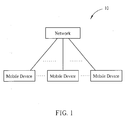
- the wireless communication system 10 can be an UMTS (Universal Mobile Telecommunications System) system or other mobile communication system, and is briefly composed of a network and a plurality of mobile devices.
- a UTRAN Universal Mobile Telecommunications System
- a UTRAN UMTS Terrestrial radio access network
- One or more Node-Bs can serve a cell covering a limited land area to provide radio coverage.
- the mobile devices are aslo referred by user equipments (UEs)and can be devices such as a mobile phone, a personal digital assistant (PDA), a laptop computer or any other devices with a processor, capable of wireless communications.
- PDA personal digital assistant
- One communications link is a downlink where the network and the UE act as a transmitter and a receiver respectively.
- the other communications link is an uplink where the UE and the network act as a transmitter and a receiver respectively.
- the mobile device can be served by a cell with a variety of services which are divided into different priority groupings by ASCs (Access Service Classes). Before being served with the services, the mobile device has to perform a random procedure for initial access to the cell and thereby needs to access a random access channel (RACH) with a transmission control procedure.
- RACH random access channel
- RACH random access channel
- Each mobile device includes at least a persistence coefficient used for the ASC associated with the highest prioritized service (e.g. an emergency call service).
- the persistence coefficient(s) can be set during manufacture or be stored in subscriber identity module (SIM), given by a service provider. The manufacturer can arrange distribution of the persistence coefficient values for all the mobile devices beforehand, depended on the number and type of the supported systems.
- SIM subscriber identity module
- the mobile device To perform any of the transmission control procedures, the mobile device requires a dynamic persistence level that is calculated by the network based on analysis of channel access requests from the served mobile devices. To perform the transmission control procedure associated with some of the ASCs, other than the ASC of the highest prioritized service, the mobile device further requires scaling factors obtained from the network. Detailed operation of transmission timing determinations are described later.
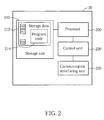
- the mobile device 20 can be the UE (mobile device) shown in Fig. 1 and includes a processor 200, a storage unit 210, a communication interfacing unit 220 and a control unit 230.
- the storage unit 210 is any data storage device that stores storage data 212 thereafter read and processed by the processor 200. Examples of the storage unit 210 include a SIM card, non-volatile memory (NVM), random-access memory (RAM), CD-ROMs, magnetic tapes, hard disks, and optical data storage devices.
- the control unit 230 controls the communication interfacing unit 220 and related operations and states of the mobile device 20 according to processing results of the processor 200.
- the communication interfacing unit 220 is preferably a radio transceiver for wirelessly communicating with other communication devices, such as a base station.
- the storage data 212 includes persistence coefficients A0-An corresponding to a ASC of the highest prioritized service and program code 214 corresponding to a process for controlling the RACH based on the ASC of the mobile device 20.
- the persistence coefficients A0-An can be set by the manufacturer if being stored in the NVM, such as ROM (Read only memory). Or, the persistence coefficients A0-An can be set by the service provider if being stored in the SIM card.
- the program code 214 includes program code of multiple communication protocol layers, which from top to bottom are a radio resource control (RRC) layer 300, a radio link control (RLC) layer 310, a medium access control (MAC) layer 320 and a a physical (PHY) layer 330.
- RRC radio resource control
- RLC radio link control
- MAC medium access control
- PHY physical
- the RRC layer 300 can retrieve information allocated to related ASCs from system information blocks (SIBs) broadcasted by the base station. Taking the UMTS system for example, the RRC layer 300 can retrieve the dynamic persistence level from a SIB type 7 and the persistence scaling factors from a SIB type 5 or type 5bis and possibly also from a SIB type 6. Furthermore, the RRC layer 300 can also receive resource information associated with the PHY layer 330 from the network.
- SIBs system information blocks
- the MAC layer 320 plays a main role in performing the abovementioned transmission control procedures, for determining whether or not to transmit a RACH message (i.e. to access the RACH) when a link to the network is required.
- the MAC layer 320 sends requests to the PHY layer 330.
- the MAC layer 320 performs a transmission control procedure based on the dynamic persistence level and the stored persistence coefficients A0-An.
- the MAC layer 320 performs a transmission control procedure based on the dynamic persistence level and the persistence scaling factors obtained from the network.
- the PHY layer 330 controls transmission and reception of signals over the air interface. With respect to the access to the RACH, the PHY layer 330 can transmit the RACH messages on a PRACH (Physical Random Access Channel) according to a slotted ALOHA scheme when being requested by the MAC layer 320.
- PRACH Physical Random Access Channel
- the slotted ALOHA scheme is an OSI (Open System Interconnection) layer 2 protocol scheme where the mobile device can attempt to perform RACH transmission at one of predetermined time intervals or access slots. Groups of these access slots, called sub-channels, can be assigned so that only a particular ASC can use this group of access slots. For example, all traffic to emergency services is set to high priority and thereby a high number of sub-channels are assigned so that the PHY layer 330 has a high number of access slots to choose and is more likely to be able to access the RACH. Information on the number of sub-channels allocated to each ASC is passed to the PHY layer 330 from the RRC layer 300.
- OSI Open System Interconnection
- the PHY layer 330 does not attempt to perform a PRACH transmission for the RACH message until requests from the MAC layer are received. In this way if the RACH transmission is unsuccessful and is negatively acknowledged by the base station, the PHY layer 330 does not retransmit the RACH message until requests for retransmission are received from the MAC layer 320. That is, the MAC layer 320 controls a random back-off time in the slotted ALOHA scheme. The random back-off time is also controlled by the transmission control procedure. If the channel access remains not permitted for many times of the transmission control procedure, the random back-off time is longer, else the random back-off time is shorter.
- Fig. 4 illustrates a flowchart of a transmission control procedure 40 according to an example of the present disclosure.
- the transmission control procedure 40 is utilized for controlling channel access associated with the highest prioritized service for a mobile device of a wireless communication system and can be compiled into the program code 214 of the storage data 212.
- the transmission control procedure 40 includes the following steps:
- the mobile device receives the dynamic persistence level from the base station and has to determine whether the channel is permitted to be accessed or not.
- the mobible device sends the message to the base station, and the message may be applied for the highest prioritized service, such as the emergency call service.
- the mobile device determines whether the channel access is permitted or not. For example, the channel access is determined to be permitted when the comparison result indicates that the persistence value is smaller than the random number.
- the value ranges of the persistence value and the random number may be the same.
- the mobile device may need retransmission when the transmission of the message to the base station in the transmission control procedure 40 is failed. In this situation, the mobile device may perform the transmission control procedure 40 again to control the random back-off time.
- the UMTS system has eight ASCs, from high to low priority, represented by ASC#0-ASC#7. That is, ASC#0 corresponds to the highest prioritized service.
- a Node-B broadcasts a dynamic persistence level N via the SIB type 7 and persistence scaling factors s2-s7 via the SIB type 5.
- Fig. 5 illustrates a flowchart of a transmission control procedure 50 based on the concept of Fig. 4 .
- the transmission control procedure 50 is applied for a mobile device that is configured to use ASC#0 for RACH access and stores persistence coefficients A0, A1.
- the transmission control procedure 50 includes the following steps:
- the mobile device uses the polynomial of [A0 + A1*P(N)] whose result is always between 0 to 1 for complying with the vlaue range of the random number Ri.
- the persistence value P0 is always between 0 to 1.
- the persistence value P0 is smaller than or equal to the random number Ri, this means that the RACH is permitted to be accessed, and thus the mobile device starts the PRACH transmission.
- the manufacturer can set different A0 and A1 values for mobile devices.
- the mobile devices with different A0 and A1 values have different priorities of starting the PRACH transmission even if they are the devices belong to ASC#0.
- the manufacturer may set the same A0 and A1 values for all of the mobile devices.
- the persistence coefficients of the transmission control procedures 40 and 50 are set beforehand by the manufacturer or the service provider.
- too many mobile devices whose channel accesses are permitted in the same short period can cause the channel to be overloaded.
- the persistence value scheme can properly distribute different values to stagger access permission timings of the mobile devices which all request for high priority services, e.g. making a emergency call, in the same short period. As a result, the probability of successful channel transmission for a mobile device requesting a high priority service can be increased.
- Fig. 7 illustrates a flowchart of a transmission control procedure 70 applied for a mobile device that is configured to use one of ASC#1-ASC#7 for RACH access.
- the transmission control procedure 70 includes the following steps:
- any of the determined P1-P7 is always between 0 to 1 for complying with the vlaue range of the random number Ri.
- the mobile device determines the persistence value P1 by P(N) when the access service class ASC#j is ASC#1 and determines the persistence value P2 by s2*P(N) when the access service class ASC#j is ASC#2, and so on. Then, the mobile device starts the PRACH transmission for the RACH access when the determined persistence value is smaller than or equal to the random number Ri.
- a drwaing value range of the random number Ri is not limited to between 0 and 1, and can be modified depended on system requirement or operating cost consideration.
- Fig. 8 illustrates a schematic diagram of a mobile device 80 according to another example of the present disclosure.
- the mobile device 80 can be used for implementing the transmission control procedures 40-50 and includes a wireless unit 800, a value drawing unit 810, a storage unit 820, a value determining unit 830, a comparing unit 840, and an access determining unit 850.
- the wireless unit 800 is responsible for transmitting and receiving wirless signals and thereby can receive a dynamic persistence level N from a base station.
- the storage unit 820 stores persistence coefficients A0-An and a polynomial of [A0+A1*P(N)+...+An*P(N)], where P(N) is 2-(N-1).
- the value drawing unit 810 can draws a random number RN.
- the comparing unit 840 compares the persistence value PV with the random number RN to generate a comparison result CMP_RES.
- the access determining unit 850 determines whether access to a channel is permitted according to the comparison result CMP_RES. The access determining unit 850 can determine that the access to the channel is permitted, when the comparison result CMP_RES indicates that the persistence value PV is not larger than the random number RN.
- the wireless unit 800 can know that the access to the channel is permitted via the access determining unit 850 and then accesses the channel and transmits a message CH_MSG. Since the mobile device 80 can be used for implementing the transmission control procedures 40-50, detailed operation is omitted herein and can be referred by the abovementioned paragraphs.
- the mobile device can have more than one persistence value parameter for a specific ASC (e.g. persistence value for ASC#0).
- the mobile device is setup with variable and constant modes and has persistence value parameters POC and P0V.
- the value of the persistence value parameters P0V is determined according to the transmission control procedure 40 and any transmission control procedure using the same concept.
- the mobile device determines a constant value as the persistence value P0C with which corresponding access determining result always shows that access to a channel is permitted.
- the access determining result may be a comparison result generated by comparing the persistence value P0C with a random number that may be dedicated to the constant mode or shared with the variable mode (e.g. the random number Ri as mentioned above).
- the persistence value parameter POC can be set to 1, always larger than the random number Ri, so that the mobile device ensures that RACH is permitted to be accessed. In other words, the PRACH transmission is always able to be started under the constant mode.
- the mobile device switches to use the variable mode when transmission caused by the constant mode meets at least one of the following situations:
- the mobile device may also determine a constant value as the persistence value POC when the comparison result of the variable mode indicates that the channel is not permitted to be accessed. Then the mobile device determines whether the channel is permitted to be accessed according to a comparison result of the constant mode generated by comparing the persistence value parameter POC with the random number that is dedicated to the constant mode or shared with the variable mode. Similarly, the mobile device may switch from the variable mode to constant mode when transmission caused by the variable mode meets at least one of the (A1), (A2), (A3) and (B4) when the comparison result of the variable mode indicates that the channel is permitted to be accessed and a transmission associated with the persistence value parameter P0V is not acknowledged by the base station.
- the constant/variable mode scheme can be employed in consideration of fast transmission and higher probabiltiy of successful channel transmission.
- the constant mode associated with the persistence value parameter POC is preferred for fast transmission in that the channel accesses of all the mobile devices are definitely permitted after the transmission control procedure is performed.
- the constant mode implies that the mobile devices have the same priorities of starting their transmissions even if belonging to the same ASC.
- the variable mode associated with the persistence value parameter P0V is perferred for higher probabiltiy of successful channel transmission in that not all the mobile devices permit the channel accesses in the same short period. Thereby, the channel does not run into overload, or for an overlaoded channel, the overload does not become severer.
- the constant mode or the variable mode can be a default mode.
- the constant and variable modes can be re-used alternately for predtermined times when either of the modes is failed.
- multiple sets of persistence coefficients for the variable mode can be stored in a mobile device supporting multiple RATs (Radio Access Technologies), such as GSM, UMTS, LTE (Long term Evolution), WiMax and WiFi. Each set may correspond to a RAT.
- RATs Radio Access Technologies
- An example of sets of persistence coefficients for the persistence value parameter P0Vs of multiple RATs is shown in Fig. 9 . If the constant/variable mode schemes used in one of the RATs are both failed in permission of channel access or are both performed followed by transmission failure (e.g. transmission failure of an emergency call service), the mobile device can switch or hand over to another RAT and uses corresponding persistence coefficient set with the variable mode.
- the mobile device may determine if it has failed to make an emergency call for a predetermined period or after a predetermined number of attempts. If yes, the mobile device may switch to the variable mode and thereby determines the persistence value parameter P0V for ASC#0 based on the the transmission control procedure 40. After this, the mobile device may determine if it still has failed to make an emergency call for the predetermined period or after the predetermined number of attempts. If also yes, the mobile device may attempt to send an emergency message using at least one of the following RAT network: GSM, LTE, WiMax and WiFi.
- the channels accessed under different RATs may be different.
- Fig. 10 illustrates a schematic diagram of a mobile device 1200 according to another example of the present disclosure.
- the mobile device 1200 can be used for implementing functions of the transmission control procedures 40-50, the constant/variable mode scheme and persistence coefficient scheme for support of multiple RATs.
- the mobile device 1200 includes a wireless unit 1000, a value drawing unit 1010, a storage unit 1020, a first value determining unit 1030, a comparing unit 1040, an access determining unit 1050, a second value determining unit 1060 and a coefficient selecting unit 1070.
- the mobile device 1200 can also implement the transmission control procedures 40-50, the wireless unit 1000, the value drawing unit 1010,the first value determining unit 1030, the comparing unit 1040, the access determining unit 1050 are capable of the abovementioned functions of the wireless unit 800, the value drawing unit 810, the storage unit 820, the value determining unit 830, the comparing unit 840, and the access determining unit 850, respectively. Thus, similar operation description is omitted herein.
- the storage unit 1020 includes persistence coefficient sets PCS(1)-PCS(k) corresponding to RAT(1)-RAT(k) respectively.
- the mobile device 1200 operates in a specific RAT, taking RAT(k) for example herein, constant (CNT) and variable (VAR) modes making use of the first value determining unit 1030 and the second value determining unit 1060 respectively are provided.
- VAR mode the mobile device 1200 utilizes the first value determining unit 1030 to determine the value of the persistence value parameter P0V according to the dynamic persistence level N and the persistence coefficient set PCS(k).
- the mobile device 1200 deactivates the first value determining unit 1030, and the second value determining unit 1060 sets the persistence value parameter POC to a constant value L.
- the second value determining unit 1060 can work before the CNT mode or after the mobile device 1200 determines that the channel is not permitted to be accessed in the CNT mode.
- the access determining unit 1050 can determine that the channel is permitted to be accessed, according to the comparison result CMP_RES of the persistence value PV set to the constant value L and the random number RN.
- the VAR mode can be performed when a transmission caused by the CNT mode (e.g.
- the VAR and CNT modes of the RAT(k) may be both failed or meet any of the aboementioned situations (A1)-(A3).
- the mobile device 1200 can handover to another RAT, taking RAT(1) for example herein.
- the coefficient selecting unit 1070 selects the persistence coefficient set PCS(1) for use of the VAR mode in the RAT(1).
- the aovemention examples provides a channel access method based on the coefficients stored in the mobile device to allow the manufacturer or the service provider to realize an preferred channel access strategy beforehand to improve a transmission success rate (for avoiding channel overload), a two mode method to look after both sides of fast transmission and the higher transmission success rate, and a persistence coefficient scheme for support of multiple RATs.
Landscapes
- Engineering & Computer Science (AREA)
- Computer Networks & Wireless Communication (AREA)
- Signal Processing (AREA)
- Mobile Radio Communication Systems (AREA)
Applications Claiming Priority (1)
| Application Number | Priority Date | Filing Date | Title |
|---|---|---|---|
| US16303609P | 2009-03-24 | 2009-03-24 |
Publications (3)
| Publication Number | Publication Date |
|---|---|
| EP2234418A2 true EP2234418A2 (de) | 2010-09-29 |
| EP2234418A3 EP2234418A3 (de) | 2010-11-03 |
| EP2234418B1 EP2234418B1 (de) | 2012-09-05 |
Family
ID=42314278
Family Applications (1)
| Application Number | Title | Priority Date | Filing Date |
|---|---|---|---|
| EP10002301A Not-in-force EP2234418B1 (de) | 2009-03-24 | 2010-03-05 | Verfahren zur Kontrolle des Kanalzugriffs und zugehörige tragbare Vorrichtung |
Country Status (4)
| Country | Link |
|---|---|
| US (1) | US8351951B2 (de) |
| EP (1) | EP2234418B1 (de) |
| CN (1) | CN101848552B (de) |
| TW (1) | TWI393472B (de) |
Cited By (2)
| Publication number | Priority date | Publication date | Assignee | Title |
|---|---|---|---|---|
| GB2504338A (en) * | 2012-07-26 | 2014-01-29 | Thales Holdings Uk Plc | Channel contention for a shared medium |
| EP2717616A4 (de) * | 2011-08-29 | 2014-05-21 | Huawei Tech Co Ltd | Direktzugriffsverfahren, mobiles endgerät und mobiles kommunikationssystem |
Families Citing this family (7)
| Publication number | Priority date | Publication date | Assignee | Title |
|---|---|---|---|---|
| US9706581B2 (en) * | 2010-05-31 | 2017-07-11 | Blackberry Limited | Method and apparatus for back-off algorithm having different retry time classes |
| US8861348B2 (en) | 2011-05-04 | 2014-10-14 | Nokia Corporation | Random access improvement |
| US9338717B2 (en) | 2012-07-19 | 2016-05-10 | Qualcomm Incorporated | Methods and apparatus for increasing emergency call success rate by reducing retries in the same domain |
| US20150341853A1 (en) * | 2013-01-09 | 2015-11-26 | Lg Electronics Inc. | Method and apparatus for controlling beacon transmission in wireless communication system |
| CN104662964B (zh) * | 2013-02-06 | 2019-04-23 | 华为技术有限公司 | 一种网络接入控制方法、装置及系统 |
| US20160278128A1 (en) * | 2015-03-19 | 2016-09-22 | Qualcomm Incorporated | Enhanced rach algorithm for multi-sim devices |
| US9843913B2 (en) | 2015-06-12 | 2017-12-12 | At&T Intellectual Property I, L.P. | e911 call continuity for WiFi offload |
Citations (3)
| Publication number | Priority date | Publication date | Assignee | Title |
|---|---|---|---|---|
| US20040032877A1 (en) | 2002-08-19 | 2004-02-19 | Chuah Mooi Choo | Dynamic access priority scheme |
| WO2007052900A1 (en) | 2005-10-31 | 2007-05-10 | Lg Electronics Inc. | Method of transmitting on a random access channel |
| WO2010102082A1 (en) | 2009-03-05 | 2010-09-10 | Qualcomm Incorporated | Changes to access procedure for asc 0 for umts |
Family Cites Families (7)
| Publication number | Priority date | Publication date | Assignee | Title |
|---|---|---|---|---|
| EP1212853B1 (de) * | 2000-06-02 | 2005-08-31 | Samsung Electronics Co., Ltd. | Verfahren zur auswahl eines zufalls-zugriffskanals in einem mobilen cdma-kommunikationssystem |
| US6771632B2 (en) * | 2000-12-19 | 2004-08-03 | Interdigital Technology Corporation | Sub-channels for the random access channel in time division duplex |
| US20070064665A1 (en) * | 2005-08-23 | 2007-03-22 | Interdigital Technology Corporation | Method and apparatus for accessing an uplink random access channel in a single carrier frequency division multiple access system |
| WO2007029977A1 (en) * | 2005-09-08 | 2007-03-15 | Lg Electronics Inc. | Method and protocol for handling access attempts for communications systems |
| KR101090205B1 (ko) * | 2006-10-26 | 2011-12-06 | 노키아 코포레이션 | 랜덤 액세스 채널에 대한 즉각적 액세스 방법 |
| US20080159160A1 (en) * | 2006-12-29 | 2008-07-03 | Deepak Das | Method of dynamic persistance control in wireless communication |
| TW200840379A (en) * | 2007-03-21 | 2008-10-01 | Innovative Sonic Ltd | Method and apparatus for handling random access procedure in a wireless communications system |
-
2010
- 2010-03-03 US US12/716,286 patent/US8351951B2/en not_active Expired - Fee Related
- 2010-03-05 EP EP10002301A patent/EP2234418B1/de not_active Not-in-force
- 2010-03-24 CN CN2010101495323A patent/CN101848552B/zh not_active Expired - Fee Related
- 2010-03-24 TW TW099108709A patent/TWI393472B/zh not_active IP Right Cessation
Patent Citations (3)
| Publication number | Priority date | Publication date | Assignee | Title |
|---|---|---|---|---|
| US20040032877A1 (en) | 2002-08-19 | 2004-02-19 | Chuah Mooi Choo | Dynamic access priority scheme |
| WO2007052900A1 (en) | 2005-10-31 | 2007-05-10 | Lg Electronics Inc. | Method of transmitting on a random access channel |
| WO2010102082A1 (en) | 2009-03-05 | 2010-09-10 | Qualcomm Incorporated | Changes to access procedure for asc 0 for umts |
Non-Patent Citations (1)
| Title |
|---|
| "3rd Generation Partnership Project; Technical Specification Group Radio Access Network; Radio Resource Control (RRC); Protocol Specification (Release 8", 3GPP STANDARD; 3GPP TS 25.331, 3RD GENERATION PARTNERSHIP PROJECT (3GPP), MOBILE COMPETENCE CENTRE, 650, ROUTE DES LUCIOLES, F-06921 SOPHIA-ANTIPOLIS CEDEX, vol. 8.6.0, 1 March 2009 (2009-03-01), pages 1 - 1673 |
Cited By (4)
| Publication number | Priority date | Publication date | Assignee | Title |
|---|---|---|---|---|
| EP2717616A4 (de) * | 2011-08-29 | 2014-05-21 | Huawei Tech Co Ltd | Direktzugriffsverfahren, mobiles endgerät und mobiles kommunikationssystem |
| US9307531B2 (en) | 2011-08-29 | 2016-04-05 | Huawei Technologies Co., Ltd. | Random access method, mobile terminal, and mobile communications system |
| GB2504338A (en) * | 2012-07-26 | 2014-01-29 | Thales Holdings Uk Plc | Channel contention for a shared medium |
| GB2504338B (en) * | 2012-07-26 | 2014-08-06 | Thales Holdings Uk Plc | Methods of channel contention in communications networks, and apparatus thereof |
Also Published As
| Publication number | Publication date |
|---|---|
| CN101848552A (zh) | 2010-09-29 |
| US20100248731A1 (en) | 2010-09-30 |
| TWI393472B (zh) | 2013-04-11 |
| US8351951B2 (en) | 2013-01-08 |
| EP2234418B1 (de) | 2012-09-05 |
| EP2234418A3 (de) | 2010-11-03 |
| CN101848552B (zh) | 2012-11-07 |
| TW201036476A (en) | 2010-10-01 |
Similar Documents
| Publication | Publication Date | Title |
|---|---|---|
| EP2234418B1 (de) | Verfahren zur Kontrolle des Kanalzugriffs und zugehörige tragbare Vorrichtung | |
| EP3876656B1 (de) | Informationsübertragungsverfahren sowie elektronische vorrichtung | |
| EP3756417B1 (de) | Priorisierung von zugriff und diensten in netzwerken der nächsten generation | |
| EP1623518B1 (de) | Verfahren zur bereitstellung von mehrebenenzugangsdiensten in einem gemeinsamen zugangskanal | |
| US8451804B2 (en) | Method and protocol for handling access attempts for communications systems | |
| EP2053872B1 (de) | Verfahren zur implementierung von zufallszugriff eines neuen zugangsknotens und entsprechendes kommunikationssystem | |
| WO2018171795A1 (en) | On-demand system information request message | |
| CN112219439A (zh) | 用于随机接入的方法及设备 | |
| EP2200374B1 (de) | Verfahren zur Handhabung der Zellenauswahl für ein drahtloses Kommunikationssystem und zugehöriges Mobilgerät | |
| JP7301949B2 (ja) | ランダムアクセス方法、端末装置、ネットワーク装置及び記憶媒体 | |
| JP2023018083A (ja) | 信号伝送方法及びその装置、端末装置並びにネットワーク装置 | |
| EP3852439B1 (de) | Betrieb eines endgeräts und einer basisstation in einem drahtlosen kommunikationssystem mit unlizenziertem frequenzband, in dem ein listen-before-talk, lbt, fehler stattfindet | |
| US20250071818A1 (en) | Congestion reducing method performed by a user equipment in communication systems | |
| US20190349984A1 (en) | Method for transmitting downlink in unlicensed band | |
| US20140169240A1 (en) | Access Control Method, User Equipment, Access Network, and Communications System | |
| US9814020B2 (en) | Method of transmitting RRC messages in RRC-idle mode | |
| EP3366054A1 (de) | Verfahren, netzwerkknoten und drahtlosvorrichtung zur handhabung von zugangsinformationen | |
| US12245297B2 (en) | Control method for slice network, terminal, and network device | |
| CN113938901A (zh) | 一种信息传输方法、通信装置及计算机可读存储介质 | |
| CN107432035B (zh) | 电信网络中的随机接入资源 | |
| CN117957907A (zh) | 无线移动通信系统中由性能缩减的终端利用多条pucch公共配置信息执行随机接入的方法及装置 | |
| EP4179739B1 (de) | Drahtlose mehrträgerkonfiguration und auswahl | |
| EP4287747B1 (de) | Direktzugriffsauswahlverfahren und -vorrichtung, vorrichtung und speichermedium | |
| CN117941453A (zh) | 在无线移动通信系统中性能缩减的用户设备利用多个搜索空间和多个控制资源集执行随机接入的方法及装置 | |
| CN110583060B (zh) | 响应于随机接入响应进行消息传输的通信设备及其方法 |
Legal Events
| Date | Code | Title | Description |
|---|---|---|---|
| PUAI | Public reference made under article 153(3) epc to a published international application that has entered the european phase |
Free format text: ORIGINAL CODE: 0009012 |
|
| 17P | Request for examination filed |
Effective date: 20100305 |
|
| AK | Designated contracting states |
Kind code of ref document: A2 Designated state(s): AT BE BG CH CY CZ DE DK EE ES FI FR GB GR HR HU IE IS IT LI LT LU LV MC MK MT NL NO PL PT RO SE SI SK SM TR |
|
| AX | Request for extension of the european patent |
Extension state: AL BA ME RS |
|
| PUAL | Search report despatched |
Free format text: ORIGINAL CODE: 0009013 |
|
| AK | Designated contracting states |
Kind code of ref document: A3 Designated state(s): AT BE BG CH CY CZ DE DK EE ES FI FR GB GR HR HU IE IS IT LI LT LU LV MC MK MT NL NO PL PT RO SE SI SK SM TR |
|
| AX | Request for extension of the european patent |
Extension state: AL BA ME RS |
|
| RIC1 | Information provided on ipc code assigned before grant |
Ipc: H04W 74/08 20090101AFI20100928BHEP |
|
| 17Q | First examination report despatched |
Effective date: 20110117 |
|
| GRAP | Despatch of communication of intention to grant a patent |
Free format text: ORIGINAL CODE: EPIDOSNIGR1 |
|
| GRAS | Grant fee paid |
Free format text: ORIGINAL CODE: EPIDOSNIGR3 |
|
| GRAA | (expected) grant |
Free format text: ORIGINAL CODE: 0009210 |
|
| AK | Designated contracting states |
Kind code of ref document: B1 Designated state(s): AT BE BG CH CY CZ DE DK EE ES FI FR GB GR HR HU IE IS IT LI LT LU LV MC MK MT NL NO PL PT RO SE SI SK SM TR |
|
| REG | Reference to a national code |
Ref country code: GB Ref legal event code: FG4D |
|
| REG | Reference to a national code |
Ref country code: CH Ref legal event code: EP |
|
| REG | Reference to a national code |
Ref country code: AT Ref legal event code: REF Ref document number: 574586 Country of ref document: AT Kind code of ref document: T Effective date: 20120915 |
|
| REG | Reference to a national code |
Ref country code: IE Ref legal event code: FG4D |
|
| REG | Reference to a national code |
Ref country code: DE Ref legal event code: R096 Ref document number: 602010002646 Country of ref document: DE Effective date: 20121031 |
|
| REG | Reference to a national code |
Ref country code: NL Ref legal event code: T3 |
|
| REG | Reference to a national code |
Ref country code: AT Ref legal event code: MK05 Ref document number: 574586 Country of ref document: AT Kind code of ref document: T Effective date: 20120905 |
|
| PG25 | Lapsed in a contracting state [announced via postgrant information from national office to epo] |
Ref country code: NO Free format text: LAPSE BECAUSE OF FAILURE TO SUBMIT A TRANSLATION OF THE DESCRIPTION OR TO PAY THE FEE WITHIN THE PRESCRIBED TIME-LIMIT Effective date: 20121205 Ref country code: FI Free format text: LAPSE BECAUSE OF FAILURE TO SUBMIT A TRANSLATION OF THE DESCRIPTION OR TO PAY THE FEE WITHIN THE PRESCRIBED TIME-LIMIT Effective date: 20120905 Ref country code: LT Free format text: LAPSE BECAUSE OF FAILURE TO SUBMIT A TRANSLATION OF THE DESCRIPTION OR TO PAY THE FEE WITHIN THE PRESCRIBED TIME-LIMIT Effective date: 20120905 Ref country code: AT Free format text: LAPSE BECAUSE OF FAILURE TO SUBMIT A TRANSLATION OF THE DESCRIPTION OR TO PAY THE FEE WITHIN THE PRESCRIBED TIME-LIMIT Effective date: 20120905 Ref country code: HR Free format text: LAPSE BECAUSE OF FAILURE TO SUBMIT A TRANSLATION OF THE DESCRIPTION OR TO PAY THE FEE WITHIN THE PRESCRIBED TIME-LIMIT Effective date: 20120905 |
|
| REG | Reference to a national code |
Ref country code: LT Ref legal event code: MG4D Effective date: 20120905 |
|
| PG25 | Lapsed in a contracting state [announced via postgrant information from national office to epo] |
Ref country code: SI Free format text: LAPSE BECAUSE OF FAILURE TO SUBMIT A TRANSLATION OF THE DESCRIPTION OR TO PAY THE FEE WITHIN THE PRESCRIBED TIME-LIMIT Effective date: 20120905 Ref country code: LV Free format text: LAPSE BECAUSE OF FAILURE TO SUBMIT A TRANSLATION OF THE DESCRIPTION OR TO PAY THE FEE WITHIN THE PRESCRIBED TIME-LIMIT Effective date: 20120905 Ref country code: SE Free format text: LAPSE BECAUSE OF FAILURE TO SUBMIT A TRANSLATION OF THE DESCRIPTION OR TO PAY THE FEE WITHIN THE PRESCRIBED TIME-LIMIT Effective date: 20120905 Ref country code: GR Free format text: LAPSE BECAUSE OF FAILURE TO SUBMIT A TRANSLATION OF THE DESCRIPTION OR TO PAY THE FEE WITHIN THE PRESCRIBED TIME-LIMIT Effective date: 20121206 |
|
| PG25 | Lapsed in a contracting state [announced via postgrant information from national office to epo] |
Ref country code: IS Free format text: LAPSE BECAUSE OF FAILURE TO SUBMIT A TRANSLATION OF THE DESCRIPTION OR TO PAY THE FEE WITHIN THE PRESCRIBED TIME-LIMIT Effective date: 20130105 Ref country code: EE Free format text: LAPSE BECAUSE OF FAILURE TO SUBMIT A TRANSLATION OF THE DESCRIPTION OR TO PAY THE FEE WITHIN THE PRESCRIBED TIME-LIMIT Effective date: 20120905 Ref country code: CZ Free format text: LAPSE BECAUSE OF FAILURE TO SUBMIT A TRANSLATION OF THE DESCRIPTION OR TO PAY THE FEE WITHIN THE PRESCRIBED TIME-LIMIT Effective date: 20120905 Ref country code: ES Free format text: LAPSE BECAUSE OF FAILURE TO SUBMIT A TRANSLATION OF THE DESCRIPTION OR TO PAY THE FEE WITHIN THE PRESCRIBED TIME-LIMIT Effective date: 20121216 Ref country code: BE Free format text: LAPSE BECAUSE OF FAILURE TO SUBMIT A TRANSLATION OF THE DESCRIPTION OR TO PAY THE FEE WITHIN THE PRESCRIBED TIME-LIMIT Effective date: 20120905 Ref country code: RO Free format text: LAPSE BECAUSE OF FAILURE TO SUBMIT A TRANSLATION OF THE DESCRIPTION OR TO PAY THE FEE WITHIN THE PRESCRIBED TIME-LIMIT Effective date: 20120905 |
|
| PG25 | Lapsed in a contracting state [announced via postgrant information from national office to epo] |
Ref country code: PL Free format text: LAPSE BECAUSE OF FAILURE TO SUBMIT A TRANSLATION OF THE DESCRIPTION OR TO PAY THE FEE WITHIN THE PRESCRIBED TIME-LIMIT Effective date: 20120905 Ref country code: PT Free format text: LAPSE BECAUSE OF FAILURE TO SUBMIT A TRANSLATION OF THE DESCRIPTION OR TO PAY THE FEE WITHIN THE PRESCRIBED TIME-LIMIT Effective date: 20130107 Ref country code: SK Free format text: LAPSE BECAUSE OF FAILURE TO SUBMIT A TRANSLATION OF THE DESCRIPTION OR TO PAY THE FEE WITHIN THE PRESCRIBED TIME-LIMIT Effective date: 20120905 |
|
| PLBE | No opposition filed within time limit |
Free format text: ORIGINAL CODE: 0009261 |
|
| STAA | Information on the status of an ep patent application or granted ep patent |
Free format text: STATUS: NO OPPOSITION FILED WITHIN TIME LIMIT |
|
| PG25 | Lapsed in a contracting state [announced via postgrant information from national office to epo] |
Ref country code: DK Free format text: LAPSE BECAUSE OF FAILURE TO SUBMIT A TRANSLATION OF THE DESCRIPTION OR TO PAY THE FEE WITHIN THE PRESCRIBED TIME-LIMIT Effective date: 20120905 Ref country code: BG Free format text: LAPSE BECAUSE OF FAILURE TO SUBMIT A TRANSLATION OF THE DESCRIPTION OR TO PAY THE FEE WITHIN THE PRESCRIBED TIME-LIMIT Effective date: 20121205 |
|
| 26N | No opposition filed |
Effective date: 20130606 |
|
| PG25 | Lapsed in a contracting state [announced via postgrant information from national office to epo] |
Ref country code: IT Free format text: LAPSE BECAUSE OF FAILURE TO SUBMIT A TRANSLATION OF THE DESCRIPTION OR TO PAY THE FEE WITHIN THE PRESCRIBED TIME-LIMIT Effective date: 20120905 |
|
| REG | Reference to a national code |
Ref country code: DE Ref legal event code: R097 Ref document number: 602010002646 Country of ref document: DE Effective date: 20130606 |
|
| PG25 | Lapsed in a contracting state [announced via postgrant information from national office to epo] |
Ref country code: MC Free format text: LAPSE BECAUSE OF NON-PAYMENT OF DUE FEES Effective date: 20130331 |
|
| PG25 | Lapsed in a contracting state [announced via postgrant information from national office to epo] |
Ref country code: CY Free format text: LAPSE BECAUSE OF FAILURE TO SUBMIT A TRANSLATION OF THE DESCRIPTION OR TO PAY THE FEE WITHIN THE PRESCRIBED TIME-LIMIT Effective date: 20120905 |
|
| REG | Reference to a national code |
Ref country code: IE Ref legal event code: MM4A |
|
| PG25 | Lapsed in a contracting state [announced via postgrant information from national office to epo] |
Ref country code: IE Free format text: LAPSE BECAUSE OF NON-PAYMENT OF DUE FEES Effective date: 20130305 |
|
| PG25 | Lapsed in a contracting state [announced via postgrant information from national office to epo] |
Ref country code: MT Free format text: LAPSE BECAUSE OF FAILURE TO SUBMIT A TRANSLATION OF THE DESCRIPTION OR TO PAY THE FEE WITHIN THE PRESCRIBED TIME-LIMIT Effective date: 20120905 |
|
| REG | Reference to a national code |
Ref country code: CH Ref legal event code: PL |
|
| PG25 | Lapsed in a contracting state [announced via postgrant information from national office to epo] |
Ref country code: LI Free format text: LAPSE BECAUSE OF NON-PAYMENT OF DUE FEES Effective date: 20140331 Ref country code: CH Free format text: LAPSE BECAUSE OF NON-PAYMENT OF DUE FEES Effective date: 20140331 |
|
| PG25 | Lapsed in a contracting state [announced via postgrant information from national office to epo] |
Ref country code: SM Free format text: LAPSE BECAUSE OF FAILURE TO SUBMIT A TRANSLATION OF THE DESCRIPTION OR TO PAY THE FEE WITHIN THE PRESCRIBED TIME-LIMIT Effective date: 20120905 |
|
| PG25 | Lapsed in a contracting state [announced via postgrant information from national office to epo] |
Ref country code: TR Free format text: LAPSE BECAUSE OF FAILURE TO SUBMIT A TRANSLATION OF THE DESCRIPTION OR TO PAY THE FEE WITHIN THE PRESCRIBED TIME-LIMIT Effective date: 20120905 |
|
| PG25 | Lapsed in a contracting state [announced via postgrant information from national office to epo] |
Ref country code: MK Free format text: LAPSE BECAUSE OF FAILURE TO SUBMIT A TRANSLATION OF THE DESCRIPTION OR TO PAY THE FEE WITHIN THE PRESCRIBED TIME-LIMIT Effective date: 20120905 Ref country code: HU Free format text: LAPSE BECAUSE OF FAILURE TO SUBMIT A TRANSLATION OF THE DESCRIPTION OR TO PAY THE FEE WITHIN THE PRESCRIBED TIME-LIMIT; INVALID AB INITIO Effective date: 20100305 Ref country code: LU Free format text: LAPSE BECAUSE OF NON-PAYMENT OF DUE FEES Effective date: 20130305 |
|
| REG | Reference to a national code |
Ref country code: FR Ref legal event code: PLFP Year of fee payment: 7 |
|
| REG | Reference to a national code |
Ref country code: FR Ref legal event code: PLFP Year of fee payment: 8 |
|
| REG | Reference to a national code |
Ref country code: FR Ref legal event code: PLFP Year of fee payment: 9 |
|
| PGFP | Annual fee paid to national office [announced via postgrant information from national office to epo] |
Ref country code: DE Payment date: 20190219 Year of fee payment: 10 Ref country code: GB Payment date: 20190227 Year of fee payment: 10 |
|
| PGFP | Annual fee paid to national office [announced via postgrant information from national office to epo] |
Ref country code: NL Payment date: 20190313 Year of fee payment: 10 Ref country code: FR Payment date: 20190213 Year of fee payment: 10 |
|
| REG | Reference to a national code |
Ref country code: DE Ref legal event code: R119 Ref document number: 602010002646 Country of ref document: DE |
|
| REG | Reference to a national code |
Ref country code: NL Ref legal event code: MM Effective date: 20200401 |
|
| PG25 | Lapsed in a contracting state [announced via postgrant information from national office to epo] |
Ref country code: NL Free format text: LAPSE BECAUSE OF NON-PAYMENT OF DUE FEES Effective date: 20200401 |
|
| PG25 | Lapsed in a contracting state [announced via postgrant information from national office to epo] |
Ref country code: DE Free format text: LAPSE BECAUSE OF NON-PAYMENT OF DUE FEES Effective date: 20201001 Ref country code: FR Free format text: LAPSE BECAUSE OF NON-PAYMENT OF DUE FEES Effective date: 20200331 |
|
| GBPC | Gb: european patent ceased through non-payment of renewal fee |
Effective date: 20200305 |
|
| PG25 | Lapsed in a contracting state [announced via postgrant information from national office to epo] |
Ref country code: GB Free format text: LAPSE BECAUSE OF NON-PAYMENT OF DUE FEES Effective date: 20200305 |