EP2222326B2 - Inhibitors of malt1 proteolytic activity and uses thereof - Google Patents
Inhibitors of malt1 proteolytic activity and uses thereof Download PDFInfo
- Publication number
- EP2222326B2 EP2222326B2 EP08852880.7A EP08852880A EP2222326B2 EP 2222326 B2 EP2222326 B2 EP 2222326B2 EP 08852880 A EP08852880 A EP 08852880A EP 2222326 B2 EP2222326 B2 EP 2222326B2
- Authority
- EP
- European Patent Office
- Prior art keywords
- malt1
- cells
- nfκb
- bcl10
- proteolytic
- Prior art date
- Legal status (The legal status is an assumption and is not a legal conclusion. Google has not performed a legal analysis and makes no representation as to the accuracy of the status listed.)
- Not-in-force
Links
- 230000002797 proteolythic effect Effects 0.000 title claims abstract description 40
- 239000003112 inhibitor Substances 0.000 title claims abstract description 30
- 102000057613 Mucosa-Associated Lymphoid Tissue Lymphoma Translocation 1 Human genes 0.000 claims abstract description 235
- 108700026676 Mucosa-Associated Lymphoid Tissue Lymphoma Translocation 1 Proteins 0.000 claims abstract description 221
- 230000000468 autoproteolytic effect Effects 0.000 claims abstract description 22
- 150000001875 compounds Chemical class 0.000 claims abstract description 15
- QCCYLNQBCHYTAE-UHFFFAOYSA-N 5-[[5-(3-chloro-4-methylphenyl)furan-2-yl]methylidene]-2-sulfanylidene-1,3-diazinane-4,6-dione Chemical compound C1=C(Cl)C(C)=CC=C1C(O1)=CC=C1C=C1C(=O)NC(=S)NC1=O QCCYLNQBCHYTAE-UHFFFAOYSA-N 0.000 claims abstract description 9
- 239000003814 drug Substances 0.000 claims abstract description 9
- 238000000034 method Methods 0.000 claims abstract description 8
- 238000002360 preparation method Methods 0.000 claims abstract description 8
- 108091008874 T cell receptors Proteins 0.000 claims description 28
- 102000016266 T-Cell Antigen Receptors Human genes 0.000 claims description 23
- 239000000758 substrate Substances 0.000 claims description 22
- 201000010099 disease Diseases 0.000 claims description 12
- 208000037265 diseases, disorders, signs and symptoms Diseases 0.000 claims description 12
- 230000004073 interleukin-2 production Effects 0.000 claims description 7
- 108091008875 B cell receptors Proteins 0.000 claims description 6
- 239000000203 mixture Substances 0.000 claims description 5
- 229910052736 halogen Inorganic materials 0.000 claims description 4
- 150000002367 halogens Chemical class 0.000 claims description 4
- 239000000872 buffer Substances 0.000 claims description 3
- 230000001575 pathological effect Effects 0.000 claims description 3
- 208000009329 Graft vs Host Disease Diseases 0.000 claims description 2
- 206010028980 Neoplasm Diseases 0.000 claims description 2
- 208000006673 asthma Diseases 0.000 claims description 2
- 201000011510 cancer Diseases 0.000 claims description 2
- 230000029087 digestion Effects 0.000 claims description 2
- 208000024908 graft versus host disease Diseases 0.000 claims description 2
- 125000005843 halogen group Chemical group 0.000 claims description 2
- 230000006058 immune tolerance Effects 0.000 claims description 2
- 201000007924 marginal zone B-cell lymphoma Diseases 0.000 claims description 2
- 208000021937 marginal zone lymphoma Diseases 0.000 claims description 2
- 201000006417 multiple sclerosis Diseases 0.000 claims description 2
- 206010039073 rheumatoid arthritis Diseases 0.000 claims description 2
- 150000003839 salts Chemical class 0.000 claims description 2
- 238000012360 testing method Methods 0.000 claims description 2
- 125000003944 tolyl group Chemical group 0.000 claims description 2
- 101150113681 MALT1 gene Proteins 0.000 abstract description 209
- 108090000765 processed proteins & peptides Proteins 0.000 abstract description 7
- 210000004027 cell Anatomy 0.000 description 101
- 102000046016 B-Cell CLL-Lymphoma 10 Human genes 0.000 description 64
- 108700024832 B-Cell CLL-Lymphoma 10 Proteins 0.000 description 62
- 101150074953 BCL10 gene Proteins 0.000 description 61
- 102100023050 Nuclear factor NF-kappa-B p105 subunit Human genes 0.000 description 55
- 101000979342 Homo sapiens Nuclear factor NF-kappa-B p105 subunit Proteins 0.000 description 53
- 238000003776 cleavage reaction Methods 0.000 description 53
- 230000007017 scission Effects 0.000 description 53
- 239000012634 fragment Substances 0.000 description 39
- 230000034190 positive regulation of NF-kappaB transcription factor activity Effects 0.000 description 39
- 108020004459 Small interfering RNA Proteins 0.000 description 29
- 101800000031 A20p37 Proteins 0.000 description 28
- 102400000407 A20p37 Human genes 0.000 description 28
- 230000014509 gene expression Effects 0.000 description 27
- 230000000638 stimulation Effects 0.000 description 24
- PGHMRUGBZOYCAA-UHFFFAOYSA-N ionomycin Natural products O1C(CC(O)C(C)C(O)C(C)C=CCC(C)CC(C)C(O)=CC(=O)C(C)CC(C)CC(CCC(O)=O)C)CCC1(C)C1OC(C)(C(C)O)CC1 PGHMRUGBZOYCAA-UHFFFAOYSA-N 0.000 description 22
- PGHMRUGBZOYCAA-ADZNBVRBSA-N ionomycin Chemical compound O1[C@H](C[C@H](O)[C@H](C)[C@H](O)[C@H](C)/C=C/C[C@@H](C)C[C@@H](C)C(/O)=C/C(=O)[C@@H](C)C[C@@H](C)C[C@@H](CCC(O)=O)C)CC[C@@]1(C)[C@@H]1O[C@](C)([C@@H](C)O)CC1 PGHMRUGBZOYCAA-ADZNBVRBSA-N 0.000 description 22
- 230000001404 mediated effect Effects 0.000 description 22
- 230000002018 overexpression Effects 0.000 description 21
- 230000011664 signaling Effects 0.000 description 21
- 230000004913 activation Effects 0.000 description 20
- 230000000694 effects Effects 0.000 description 20
- 230000002401 inhibitory effect Effects 0.000 description 18
- 230000001419 dependent effect Effects 0.000 description 17
- 238000000338 in vitro Methods 0.000 description 17
- 210000001744 T-lymphocyte Anatomy 0.000 description 16
- 238000003119 immunoblot Methods 0.000 description 16
- 108090000623 proteins and genes Proteins 0.000 description 16
- 102000003714 TNF receptor-associated factor 6 Human genes 0.000 description 15
- 108090000009 TNF receptor-associated factor 6 Proteins 0.000 description 15
- 101710120145 Paracaspase Proteins 0.000 description 14
- 102000004169 proteins and genes Human genes 0.000 description 14
- 210000004899 c-terminal region Anatomy 0.000 description 12
- 235000018102 proteins Nutrition 0.000 description 12
- 230000004044 response Effects 0.000 description 12
- 238000001262 western blot Methods 0.000 description 12
- 102000011727 Caspases Human genes 0.000 description 11
- 108010076667 Caspases Proteins 0.000 description 11
- 238000003556 assay Methods 0.000 description 11
- 238000002474 experimental method Methods 0.000 description 11
- 230000006870 function Effects 0.000 description 10
- 230000035772 mutation Effects 0.000 description 10
- 230000004186 co-expression Effects 0.000 description 9
- 238000012545 processing Methods 0.000 description 9
- 108020004414 DNA Proteins 0.000 description 8
- 102000018745 NF-KappaB Inhibitor alpha Human genes 0.000 description 8
- 108010052419 NF-KappaB Inhibitor alpha Proteins 0.000 description 8
- 108050000761 Serpin Proteins 0.000 description 8
- 102000008847 Serpin Human genes 0.000 description 8
- FAPWRFPIFSIZLT-UHFFFAOYSA-M Sodium chloride Chemical compound [Na+].[Cl-] FAPWRFPIFSIZLT-UHFFFAOYSA-M 0.000 description 8
- 230000003197 catalytic effect Effects 0.000 description 8
- 230000026731 phosphorylation Effects 0.000 description 8
- 238000006366 phosphorylation reaction Methods 0.000 description 8
- 239000003001 serine protease inhibitor Substances 0.000 description 8
- 239000013598 vector Substances 0.000 description 8
- 102100024965 Caspase recruitment domain-containing protein 11 Human genes 0.000 description 7
- 101000761179 Homo sapiens Caspase recruitment domain-containing protein 11 Proteins 0.000 description 7
- 108010002350 Interleukin-2 Proteins 0.000 description 7
- 108060001084 Luciferase Proteins 0.000 description 7
- 239000005089 Luciferase Substances 0.000 description 7
- 235000009697 arginine Nutrition 0.000 description 7
- 238000006384 oligomerization reaction Methods 0.000 description 7
- 230000037361 pathway Effects 0.000 description 7
- 239000004475 Arginine Substances 0.000 description 6
- 102000000588 Interleukin-2 Human genes 0.000 description 6
- ODKSFYDXXFIFQN-UHFFFAOYSA-N arginine Natural products OC(=O)C(N)CCCNC(N)=N ODKSFYDXXFIFQN-UHFFFAOYSA-N 0.000 description 6
- 238000003197 gene knockdown Methods 0.000 description 6
- 230000003993 interaction Effects 0.000 description 6
- 150000002632 lipids Chemical class 0.000 description 6
- 239000012139 lysis buffer Substances 0.000 description 6
- 238000004519 manufacturing process Methods 0.000 description 6
- 101800000008 A20p50 Proteins 0.000 description 5
- 102400000406 A20p50 Human genes 0.000 description 5
- 108010085238 Actins Proteins 0.000 description 5
- 102000010170 Death domains Human genes 0.000 description 5
- 108050001718 Death domains Proteins 0.000 description 5
- GXCLVBGFBYZDAG-UHFFFAOYSA-N N-[2-(1H-indol-3-yl)ethyl]-N-methylprop-2-en-1-amine Chemical compound CN(CCC1=CNC2=C1C=CC=C2)CC=C GXCLVBGFBYZDAG-UHFFFAOYSA-N 0.000 description 5
- 108010057466 NF-kappa B Proteins 0.000 description 5
- 102000003945 NF-kappa B Human genes 0.000 description 5
- HCHKCACWOHOZIP-UHFFFAOYSA-N Zinc Chemical group [Zn] HCHKCACWOHOZIP-UHFFFAOYSA-N 0.000 description 5
- 238000004458 analytical method Methods 0.000 description 5
- 210000003719 b-lymphocyte Anatomy 0.000 description 5
- 238000004520 electroporation Methods 0.000 description 5
- 230000001965 increasing effect Effects 0.000 description 5
- 230000005764 inhibitory process Effects 0.000 description 5
- 210000004898 n-terminal fragment Anatomy 0.000 description 5
- 230000002829 reductive effect Effects 0.000 description 5
- 238000012216 screening Methods 0.000 description 5
- 239000011701 zinc Substances 0.000 description 5
- 229910052725 zinc Inorganic materials 0.000 description 5
- 102100022900 Actin, cytoplasmic 1 Human genes 0.000 description 4
- 102100024966 Caspase recruitment domain-containing protein 10 Human genes 0.000 description 4
- 241000196324 Embryophyta Species 0.000 description 4
- 102000003688 G-Protein-Coupled Receptors Human genes 0.000 description 4
- 108090000045 G-Protein-Coupled Receptors Proteins 0.000 description 4
- 101000761182 Homo sapiens Caspase recruitment domain-containing protein 10 Proteins 0.000 description 4
- 108700008625 Reporter Genes Proteins 0.000 description 4
- 108010090804 Streptavidin Proteins 0.000 description 4
- 239000011324 bead Substances 0.000 description 4
- 210000004900 c-terminal fragment Anatomy 0.000 description 4
- 230000015556 catabolic process Effects 0.000 description 4
- 238000006731 degradation reaction Methods 0.000 description 4
- 238000001514 detection method Methods 0.000 description 4
- 230000005014 ectopic expression Effects 0.000 description 4
- 230000006698 induction Effects 0.000 description 4
- 102000005962 receptors Human genes 0.000 description 4
- 108020003175 receptors Proteins 0.000 description 4
- 239000011780 sodium chloride Substances 0.000 description 4
- 238000001890 transfection Methods 0.000 description 4
- 108010089941 Apoptosomes Proteins 0.000 description 3
- 208000036170 B-Cell Marginal Zone Lymphoma Diseases 0.000 description 3
- PEDCQBHIVMGVHV-UHFFFAOYSA-N Glycerine Chemical compound OCC(O)CO PEDCQBHIVMGVHV-UHFFFAOYSA-N 0.000 description 3
- 101000957807 Homo sapiens Mucosa-associated lymphoid tissue lymphoma translocation protein 1 Proteins 0.000 description 3
- 101000914514 Homo sapiens T-cell-specific surface glycoprotein CD28 Proteins 0.000 description 3
- 101000830570 Homo sapiens Tumor necrosis factor alpha-induced protein 3 Proteins 0.000 description 3
- 102000001483 Initiator Caspases Human genes 0.000 description 3
- 108010054031 Initiator Caspases Proteins 0.000 description 3
- CKLJMWTZIZZHCS-REOHCLBHSA-N L-aspartic acid Chemical compound OC(=O)[C@@H](N)CC(O)=O CKLJMWTZIZZHCS-REOHCLBHSA-N 0.000 description 3
- FFEARJCKVFRZRR-BYPYZUCNSA-N L-methionine Chemical compound CSCC[C@H](N)C(O)=O FFEARJCKVFRZRR-BYPYZUCNSA-N 0.000 description 3
- 101100273674 Mus musculus Ccrl2 gene Proteins 0.000 description 3
- 108091034117 Oligonucleotide Proteins 0.000 description 3
- 102000035195 Peptidases Human genes 0.000 description 3
- 108091005804 Peptidases Proteins 0.000 description 3
- 239000004365 Protease Substances 0.000 description 3
- 102000004245 Proteasome Endopeptidase Complex Human genes 0.000 description 3
- 108090000708 Proteasome Endopeptidase Complex Proteins 0.000 description 3
- 102100027213 T-cell-specific surface glycoprotein CD28 Human genes 0.000 description 3
- 230000003213 activating effect Effects 0.000 description 3
- 230000015572 biosynthetic process Effects 0.000 description 3
- XUJNEKJLAYXESH-UHFFFAOYSA-N cysteine Natural products SCC(N)C(O)=O XUJNEKJLAYXESH-UHFFFAOYSA-N 0.000 description 3
- 238000006471 dimerization reaction Methods 0.000 description 3
- 230000004927 fusion Effects 0.000 description 3
- 102000052696 human MALT1 Human genes 0.000 description 3
- 238000011534 incubation Methods 0.000 description 3
- 238000011068 loading method Methods 0.000 description 3
- 239000006166 lysate Substances 0.000 description 3
- 230000007246 mechanism Effects 0.000 description 3
- 239000002609 medium Substances 0.000 description 3
- 239000012528 membrane Substances 0.000 description 3
- 239000013612 plasmid Substances 0.000 description 3
- 230000000770 proinflammatory effect Effects 0.000 description 3
- 230000017854 proteolysis Effects 0.000 description 3
- 230000006337 proteolytic cleavage Effects 0.000 description 3
- 230000007115 recruitment Effects 0.000 description 3
- 230000019491 signal transduction Effects 0.000 description 3
- 238000002415 sodium dodecyl sulfate polyacrylamide gel electrophoresis Methods 0.000 description 3
- 230000008685 targeting Effects 0.000 description 3
- 230000014616 translation Effects 0.000 description 3
- WRGQSWVCFNIUNZ-GDCKJWNLSA-N 1-oleoyl-sn-glycerol 3-phosphate Chemical compound CCCCCCCC\C=C/CCCCCCCC(=O)OC[C@@H](O)COP(O)(O)=O WRGQSWVCFNIUNZ-GDCKJWNLSA-N 0.000 description 2
- FAWLNURBQMTKEB-URDPEVQOSA-N 213546-53-3 Chemical compound N([C@@H](C)C(=O)N[C@H](C(=O)N[C@@H](CC(C)C)C(=O)N[C@@H](CC(C)C)C(=O)N[C@@H](C)C(=O)N[C@@H](CC(C)C)C(=O)N[C@@H](CC(C)C)C(=O)N[C@@H](C)C(=O)N1CCC[C@H]1C(=O)N[C@H](C(=O)N[C@@H](CCC(N)=O)C(=O)N[C@@H](CCCNC(N)=N)C(=O)N[C@@H](CCCCN)C(=O)N[C@@H](CCCNC(N)=N)C(=O)N[C@@H](CCC(N)=O)C(=O)N[C@@H](CCCCN)C(=O)N[C@@H](CC(C)C)C(=O)N[C@@H](CCSC)C(=O)N1[C@@H](CCC1)C(O)=O)C(C)C)C(C)C)C(=O)[C@@H]1CCCN1C(=O)[C@H](CC(C)C)NC(=O)[C@H](CC(C)C)NC(=O)[C@H](C)NC(=O)[C@@H](NC(=O)[C@H](C)NC(=O)[C@H](C)N)C(C)C FAWLNURBQMTKEB-URDPEVQOSA-N 0.000 description 2
- UMCMPZBLKLEWAF-BCTGSCMUSA-N 3-[(3-cholamidopropyl)dimethylammonio]propane-1-sulfonate Chemical compound C([C@H]1C[C@H]2O)[C@H](O)CC[C@]1(C)[C@@H]1[C@@H]2[C@@H]2CC[C@H]([C@@H](CCC(=O)NCCC[N+](C)(C)CCCS([O-])(=O)=O)C)[C@@]2(C)[C@@H](O)C1 UMCMPZBLKLEWAF-BCTGSCMUSA-N 0.000 description 2
- 102000006306 Antigen Receptors Human genes 0.000 description 2
- 108010083359 Antigen Receptors Proteins 0.000 description 2
- 241000219195 Arabidopsis thaliana Species 0.000 description 2
- 208000003950 B-cell lymphoma Diseases 0.000 description 2
- 101710109862 B-cell lymphoma/leukemia 10 Proteins 0.000 description 2
- 102100021662 Baculoviral IAP repeat-containing protein 3 Human genes 0.000 description 2
- 108091003079 Bovine Serum Albumin Proteins 0.000 description 2
- 102100026008 Breakpoint cluster region protein Human genes 0.000 description 2
- 206010061850 Extranodal marginal zone B-cell lymphoma (MALT type) Diseases 0.000 description 2
- 206010017533 Fungal infection Diseases 0.000 description 2
- 101000896224 Homo sapiens Baculoviral IAP repeat-containing protein 3 Proteins 0.000 description 2
- QNAYBMKLOCPYGJ-REOHCLBHSA-N L-alanine Chemical compound C[C@H](N)C(O)=O QNAYBMKLOCPYGJ-REOHCLBHSA-N 0.000 description 2
- 201000003791 MALT lymphoma Diseases 0.000 description 2
- TWRXJAOTZQYOKJ-UHFFFAOYSA-L Magnesium chloride Chemical compound [Mg+2].[Cl-].[Cl-] TWRXJAOTZQYOKJ-UHFFFAOYSA-L 0.000 description 2
- 102100026888 Mitogen-activated protein kinase kinase kinase 7 Human genes 0.000 description 2
- 241000699670 Mus sp. Species 0.000 description 2
- 208000031888 Mycoses Diseases 0.000 description 2
- 102000004160 Phosphoric Monoester Hydrolases Human genes 0.000 description 2
- 108090000608 Phosphoric Monoester Hydrolases Proteins 0.000 description 2
- 108010001859 Proto-Oncogene Proteins c-rel Proteins 0.000 description 2
- 102000000850 Proto-Oncogene Proteins c-rel Human genes 0.000 description 2
- 108091007411 Signalosomes Proteins 0.000 description 2
- 102000036646 Signalosomes Human genes 0.000 description 2
- 229930006000 Sucrose Natural products 0.000 description 2
- CZMRCDWAGMRECN-UGDNZRGBSA-N Sucrose Chemical compound O[C@H]1[C@H](O)[C@@H](CO)O[C@@]1(CO)O[C@@H]1[C@H](O)[C@@H](O)[C@H](O)[C@@H](CO)O1 CZMRCDWAGMRECN-UGDNZRGBSA-N 0.000 description 2
- 108010047933 Tumor Necrosis Factor alpha-Induced Protein 3 Proteins 0.000 description 2
- 102000007150 Tumor Necrosis Factor alpha-Induced Protein 3 Human genes 0.000 description 2
- 102000044159 Ubiquitin Human genes 0.000 description 2
- 108090000848 Ubiquitin Proteins 0.000 description 2
- JLCPHMBAVCMARE-UHFFFAOYSA-N [3-[[3-[[3-[[3-[[3-[[3-[[3-[[3-[[3-[[3-[[3-[[5-(2-amino-6-oxo-1H-purin-9-yl)-3-[[3-[[3-[[3-[[3-[[3-[[5-(2-amino-6-oxo-1H-purin-9-yl)-3-[[5-(2-amino-6-oxo-1H-purin-9-yl)-3-hydroxyoxolan-2-yl]methoxy-hydroxyphosphoryl]oxyoxolan-2-yl]methoxy-hydroxyphosphoryl]oxy-5-(5-methyl-2,4-dioxopyrimidin-1-yl)oxolan-2-yl]methoxy-hydroxyphosphoryl]oxy-5-(6-aminopurin-9-yl)oxolan-2-yl]methoxy-hydroxyphosphoryl]oxy-5-(6-aminopurin-9-yl)oxolan-2-yl]methoxy-hydroxyphosphoryl]oxy-5-(6-aminopurin-9-yl)oxolan-2-yl]methoxy-hydroxyphosphoryl]oxy-5-(6-aminopurin-9-yl)oxolan-2-yl]methoxy-hydroxyphosphoryl]oxyoxolan-2-yl]methoxy-hydroxyphosphoryl]oxy-5-(5-methyl-2,4-dioxopyrimidin-1-yl)oxolan-2-yl]methoxy-hydroxyphosphoryl]oxy-5-(4-amino-2-oxopyrimidin-1-yl)oxolan-2-yl]methoxy-hydroxyphosphoryl]oxy-5-(5-methyl-2,4-dioxopyrimidin-1-yl)oxolan-2-yl]methoxy-hydroxyphosphoryl]oxy-5-(5-methyl-2,4-dioxopyrimidin-1-yl)oxolan-2-yl]methoxy-hydroxyphosphoryl]oxy-5-(6-aminopurin-9-yl)oxolan-2-yl]methoxy-hydroxyphosphoryl]oxy-5-(6-aminopurin-9-yl)oxolan-2-yl]methoxy-hydroxyphosphoryl]oxy-5-(4-amino-2-oxopyrimidin-1-yl)oxolan-2-yl]methoxy-hydroxyphosphoryl]oxy-5-(4-amino-2-oxopyrimidin-1-yl)oxolan-2-yl]methoxy-hydroxyphosphoryl]oxy-5-(4-amino-2-oxopyrimidin-1-yl)oxolan-2-yl]methoxy-hydroxyphosphoryl]oxy-5-(6-aminopurin-9-yl)oxolan-2-yl]methoxy-hydroxyphosphoryl]oxy-5-(4-amino-2-oxopyrimidin-1-yl)oxolan-2-yl]methyl [5-(6-aminopurin-9-yl)-2-(hydroxymethyl)oxolan-3-yl] hydrogen phosphate Polymers Cc1cn(C2CC(OP(O)(=O)OCC3OC(CC3OP(O)(=O)OCC3OC(CC3O)n3cnc4c3nc(N)[nH]c4=O)n3cnc4c3nc(N)[nH]c4=O)C(COP(O)(=O)OC3CC(OC3COP(O)(=O)OC3CC(OC3COP(O)(=O)OC3CC(OC3COP(O)(=O)OC3CC(OC3COP(O)(=O)OC3CC(OC3COP(O)(=O)OC3CC(OC3COP(O)(=O)OC3CC(OC3COP(O)(=O)OC3CC(OC3COP(O)(=O)OC3CC(OC3COP(O)(=O)OC3CC(OC3COP(O)(=O)OC3CC(OC3COP(O)(=O)OC3CC(OC3COP(O)(=O)OC3CC(OC3COP(O)(=O)OC3CC(OC3COP(O)(=O)OC3CC(OC3COP(O)(=O)OC3CC(OC3COP(O)(=O)OC3CC(OC3CO)n3cnc4c(N)ncnc34)n3ccc(N)nc3=O)n3cnc4c(N)ncnc34)n3ccc(N)nc3=O)n3ccc(N)nc3=O)n3ccc(N)nc3=O)n3cnc4c(N)ncnc34)n3cnc4c(N)ncnc34)n3cc(C)c(=O)[nH]c3=O)n3cc(C)c(=O)[nH]c3=O)n3ccc(N)nc3=O)n3cc(C)c(=O)[nH]c3=O)n3cnc4c3nc(N)[nH]c4=O)n3cnc4c(N)ncnc34)n3cnc4c(N)ncnc34)n3cnc4c(N)ncnc34)n3cnc4c(N)ncnc34)O2)c(=O)[nH]c1=O JLCPHMBAVCMARE-UHFFFAOYSA-N 0.000 description 2
- 235000004279 alanine Nutrition 0.000 description 2
- AWUCVROLDVIAJX-UHFFFAOYSA-N alpha-glycerophosphate Natural products OCC(O)COP(O)(O)=O AWUCVROLDVIAJX-UHFFFAOYSA-N 0.000 description 2
- 208000003455 anaphylaxis Diseases 0.000 description 2
- 239000003242 anti bacterial agent Substances 0.000 description 2
- 229940088710 antibiotic agent Drugs 0.000 description 2
- 125000000637 arginyl group Chemical group N[C@@H](CCCNC(N)=N)C(=O)* 0.000 description 2
- 235000003704 aspartic acid Nutrition 0.000 description 2
- 238000000376 autoradiography Methods 0.000 description 2
- OQFSQFPPLPISGP-UHFFFAOYSA-N beta-carboxyaspartic acid Natural products OC(=O)C(N)C(C(O)=O)C(O)=O OQFSQFPPLPISGP-UHFFFAOYSA-N 0.000 description 2
- 108091006004 biotinylated proteins Proteins 0.000 description 2
- 210000004369 blood Anatomy 0.000 description 2
- 239000008280 blood Substances 0.000 description 2
- 230000008859 change Effects 0.000 description 2
- HVYWMOMLDIMFJA-DPAQBDIFSA-N cholesterol Chemical compound C1C=C2C[C@@H](O)CC[C@]2(C)[C@@H]2[C@@H]1[C@@H]1CC[C@H]([C@H](C)CCCC(C)C)[C@@]1(C)CC2 HVYWMOMLDIMFJA-DPAQBDIFSA-N 0.000 description 2
- 238000000749 co-immunoprecipitation Methods 0.000 description 2
- YPHMISFOHDHNIV-FSZOTQKASA-N cycloheximide Chemical compound C1[C@@H](C)C[C@H](C)C(=O)[C@@H]1[C@H](O)CC1CC(=O)NC(=O)C1 YPHMISFOHDHNIV-FSZOTQKASA-N 0.000 description 2
- 235000018417 cysteine Nutrition 0.000 description 2
- 230000007423 decrease Effects 0.000 description 2
- 230000002950 deficient Effects 0.000 description 2
- 102000037865 fusion proteins Human genes 0.000 description 2
- 108020001507 fusion proteins Proteins 0.000 description 2
- 239000000499 gel Substances 0.000 description 2
- ZDXPYRJPNDTMRX-UHFFFAOYSA-N glutamine Natural products OC(=O)C(N)CCC(N)=O ZDXPYRJPNDTMRX-UHFFFAOYSA-N 0.000 description 2
- 125000000404 glutamine group Chemical group N[C@@H](CCC(N)=O)C(=O)* 0.000 description 2
- 238000003306 harvesting Methods 0.000 description 2
- 102000045235 human TNFAIP3 Human genes 0.000 description 2
- 238000000099 in vitro assay Methods 0.000 description 2
- 230000002779 inactivation Effects 0.000 description 2
- 239000012160 loading buffer Substances 0.000 description 2
- 210000004698 lymphocyte Anatomy 0.000 description 2
- 239000000463 material Substances 0.000 description 2
- 108020004999 messenger RNA Proteins 0.000 description 2
- 238000002703 mutagenesis Methods 0.000 description 2
- 231100000350 mutagenesis Toxicity 0.000 description 2
- 230000007498 myristoylation Effects 0.000 description 2
- 230000017128 negative regulation of NF-kappaB transcription factor activity Effects 0.000 description 2
- 230000026792 palmitoylation Effects 0.000 description 2
- 239000000137 peptide hydrolase inhibitor Substances 0.000 description 2
- -1 plκBα Proteins 0.000 description 2
- 230000001323 posttranslational effect Effects 0.000 description 2
- 238000000746 purification Methods 0.000 description 2
- DAEPDZWVDSPTHF-UHFFFAOYSA-M sodium pyruvate Chemical compound [Na+].CC(=O)C([O-])=O DAEPDZWVDSPTHF-UHFFFAOYSA-M 0.000 description 2
- 230000010473 stable expression Effects 0.000 description 2
- 239000005720 sucrose Substances 0.000 description 2
- 230000002195 synergetic effect Effects 0.000 description 2
- 108091008743 testicular receptors 4 Proteins 0.000 description 2
- 238000013519 translation Methods 0.000 description 2
- DGVVWUTYPXICAM-UHFFFAOYSA-N β‐Mercaptoethanol Chemical compound OCCS DGVVWUTYPXICAM-UHFFFAOYSA-N 0.000 description 2
- CUKWUWBLQQDQAC-VEQWQPCFSA-N (3s)-3-amino-4-[[(2s)-1-[[(2s)-1-[[(2s)-1-[[(2s,3s)-1-[[(2s)-1-[(2s)-2-[[(1s)-1-carboxyethyl]carbamoyl]pyrrolidin-1-yl]-3-(1h-imidazol-5-yl)-1-oxopropan-2-yl]amino]-3-methyl-1-oxopentan-2-yl]amino]-3-(4-hydroxyphenyl)-1-oxopropan-2-yl]amino]-3-methyl-1-ox Chemical compound C([C@@H](C(=O)N[C@@H]([C@@H](C)CC)C(=O)N[C@@H](CC=1NC=NC=1)C(=O)N1[C@@H](CCC1)C(=O)N[C@@H](C)C(O)=O)NC(=O)[C@@H](NC(=O)[C@H](CCCN=C(N)N)NC(=O)[C@@H](N)CC(O)=O)C(C)C)C1=CC=C(O)C=C1 CUKWUWBLQQDQAC-VEQWQPCFSA-N 0.000 description 1
- QZKSQHSCHCHIIC-UVTDQMKNSA-N (5z)-3-cyclohexyl-5-[(2-hydroxyphenyl)methylidene]-2-sulfanylidene-1,3-thiazolidin-4-one Chemical compound OC1=CC=CC=C1\C=C/1C(=O)N(C2CCCCC2)C(=S)S\1 QZKSQHSCHCHIIC-UVTDQMKNSA-N 0.000 description 1
- NDTYSWPXHYFXRQ-BAQGIRSFSA-N (5z)-5-[(5-chloro-2-hydroxy-3-methoxyphenyl)methylidene]-2-sulfanylidene-1,3-thiazolidin-4-one Chemical compound COC1=CC(Cl)=CC(\C=C/2C(NC(=S)S\2)=O)=C1O NDTYSWPXHYFXRQ-BAQGIRSFSA-N 0.000 description 1
- VDOUDBQCXNTQDF-UHFFFAOYSA-N 1-(3,4-dichlorophenyl)-5-[(4-pyrrolidin-1-ylphenyl)methylidene]-2-sulfanylidene-1,3-diazinane-4,6-dione Chemical compound C1=C(Cl)C(Cl)=CC=C1N(C(=S)NC1=O)C(=O)C1=CC1=CC=C(N2CCCC2)C=C1 VDOUDBQCXNTQDF-UHFFFAOYSA-N 0.000 description 1
- AMNORKIBJRZXNL-UHFFFAOYSA-N 1-(3,5-dimethylphenyl)-5-(furan-2-ylmethylidene)-1,3-diazinane-2,4,6-trione Chemical compound CC1=CC(C)=CC(N2C(C(=CC=3OC=CC=3)C(=O)NC2=O)=O)=C1 AMNORKIBJRZXNL-UHFFFAOYSA-N 0.000 description 1
- UZLQMTQEYWGCCO-UHFFFAOYSA-N 1-(4-chlorophenyl)-5-[(5-iodofuran-2-yl)methylidene]-2-sulfanylidene-1,3-diazinane-4,6-dione Chemical compound C1=CC(Cl)=CC=C1N(C(=S)NC1=O)C(=O)C1=CC1=CC=C(I)O1 UZLQMTQEYWGCCO-UHFFFAOYSA-N 0.000 description 1
- UAEZDTRIDJSTKA-UHFFFAOYSA-N 1-[3-[(4-hydroxyphenyl)methylidene]cyclohexa-1,5-dien-1-yl]-2-sulfanylidene-1,3-diazinane-4,6-dione Chemical compound OC1=CC=C(C=C2CC=CC(=C2)N2C(NC(CC2=O)=O)=S)C=C1 UAEZDTRIDJSTKA-UHFFFAOYSA-N 0.000 description 1
- DDTYZCRSUWTPDY-UHFFFAOYSA-N 2-amino-6-ethyl-4,5,6,7-tetrahydro-1-benzothiophene-3-carboxamide Chemical compound C1C(CC)CCC2=C1SC(N)=C2C(N)=O DDTYZCRSUWTPDY-UHFFFAOYSA-N 0.000 description 1
- WETBJOIOAYPEBW-LFIBNONCSA-N 2-chloro-4-[5-[(e)-(4,6-dioxo-1-phenyl-2-sulfanylidene-1,3-diazinan-5-ylidene)methyl]furan-2-yl]benzoic acid Chemical compound C1=C(Cl)C(C(=O)O)=CC=C1C(O1)=CC=C1\C=C/1C(=O)N(C=2C=CC=CC=2)C(=S)NC\1=O WETBJOIOAYPEBW-LFIBNONCSA-N 0.000 description 1
- 108020005345 3' Untranslated Regions Proteins 0.000 description 1
- BNQLKYDIKIDOTN-UHFFFAOYSA-N 4-[(2-hydroxy-5-nitroanilino)methylidene]-5-methyl-2-phenylpyrazole-3-thione Chemical compound CC1=NN(C=2C=CC=CC=2)C(=S)C1=CNC1=CC([N+]([O-])=O)=CC=C1O BNQLKYDIKIDOTN-UHFFFAOYSA-N 0.000 description 1
- JCFOGBCLUANKGT-UHFFFAOYSA-N 4-[2-[(4-bromophenyl)hydrazinylidene]-2-cyclopropylethyl]-6-methoxy-1,3,5-triazin-2-amine Chemical compound COC1=NC(N)=NC(CC(=NNC=2C=CC(Br)=CC=2)C2CC2)=N1 JCFOGBCLUANKGT-UHFFFAOYSA-N 0.000 description 1
- QPNUKAIDUWHRER-UHFFFAOYSA-N 4-[3-(furan-2-yl)prop-2-enylideneamino]-3-(4-methoxyphenyl)-1h-1,2,4-triazole-5-thione Chemical compound C1=CC(OC)=CC=C1C1=NNC(=S)N1N=CC=CC1=CC=CO1 QPNUKAIDUWHRER-UHFFFAOYSA-N 0.000 description 1
- MXONMXJEHNDQPJ-UHFFFAOYSA-N 4-amino-3-(4-methylphenyl)-1h-1,2,4-triazole-5-thione Chemical compound C1=CC(C)=CC=C1C1=NNC(=S)N1N MXONMXJEHNDQPJ-UHFFFAOYSA-N 0.000 description 1
- LOTNDRFNWSEHND-UHFFFAOYSA-N 5-(1,3-benzodioxol-5-ylmethylidene)-1-(3-chlorophenyl)-2-sulfanylidene-1,3-diazinane-4,6-dione Chemical compound ClC1=CC=CC(N2C(C(=CC=3C=C4OCOC4=CC=3)C(=O)NC2=S)=O)=C1 LOTNDRFNWSEHND-UHFFFAOYSA-N 0.000 description 1
- IOJOIOYNUDYUPU-UHFFFAOYSA-N 5-(4-tert-butylphenyl)-1,2-dihydro-1,2,4-triazole-3-thione Chemical compound C1=CC(C(C)(C)C)=CC=C1C1=NC(=S)NN1 IOJOIOYNUDYUPU-UHFFFAOYSA-N 0.000 description 1
- IOEDDJLAOIXGKJ-UHFFFAOYSA-N 5-[(2-bromo-4,5-dimethoxyphenyl)methylidene]-1-(4-chlorophenyl)-2-sulfanylidene-1,3-diazinane-4,6-dione Chemical compound C1=C(OC)C(OC)=CC(Br)=C1C=C1C(=O)N(C=2C=CC(Cl)=CC=2)C(=S)NC1=O IOEDDJLAOIXGKJ-UHFFFAOYSA-N 0.000 description 1
- MMMDOHGFEITLLY-UHFFFAOYSA-N 5-[(3-bromo-4-hydroxy-5-methoxyphenyl)methylidene]-1-(3-chlorophenyl)-2-sulfanylidene-1,3-diazinane-4,6-dione Chemical compound BrC1=C(O)C(OC)=CC(C=C2C(N(C(=S)NC2=O)C=2C=C(Cl)C=CC=2)=O)=C1 MMMDOHGFEITLLY-UHFFFAOYSA-N 0.000 description 1
- HSSQXZIYEPIOAX-UHFFFAOYSA-N 5-[2-[2-[1-(3,4-dichlorophenyl)ethylidene]hydrazinyl]-1,3-thiazol-4-yl]-4-methyl-1,3-thiazol-2-amine Chemical compound C=1C=C(Cl)C(Cl)=CC=1C(C)=NNC(SC=1)=NC=1C=1SC(N)=NC=1C HSSQXZIYEPIOAX-UHFFFAOYSA-N 0.000 description 1
- FZPZMDRQJKKBQQ-UHFFFAOYSA-N 5-[3-(furan-2-yl)prop-2-enylidene]-2-sulfanylidene-1,3-diazinane-4,6-dione Chemical compound O=C1NC(=S)NC(=O)C1=CC=CC1=CC=CO1 FZPZMDRQJKKBQQ-UHFFFAOYSA-N 0.000 description 1
- PPVXGCCIFUTVJL-UHFFFAOYSA-N 6-ethyl-2-[(4-methoxybenzoyl)amino]-4,5,6,7-tetrahydro-1-benzothiophene-3-carboxamide Chemical compound C1C(CC)CCC(C=2C(N)=O)=C1SC=2NC(=O)C1=CC=C(OC)C=C1 PPVXGCCIFUTVJL-UHFFFAOYSA-N 0.000 description 1
- WAQGGKJKDGJEEA-UHFFFAOYSA-N 6-phenyl-3-sulfanylidene-2h-1,2,4-triazin-5-one Chemical compound O=C1NC(=S)NN=C1C1=CC=CC=C1 WAQGGKJKDGJEEA-UHFFFAOYSA-N 0.000 description 1
- MCLDLXLZBMYXOG-UHFFFAOYSA-N 8-ethoxycarbonyl-3a,4,5,9b-tetrahydro-3h-cyclopenta[c]quinoline-4-carboxylic acid Chemical compound N1C(C(O)=O)C2CC=CC2C2=CC(C(=O)OCC)=CC=C21 MCLDLXLZBMYXOG-UHFFFAOYSA-N 0.000 description 1
- 102000007469 Actins Human genes 0.000 description 1
- 206010002198 Anaphylactic reaction Diseases 0.000 description 1
- 102400000345 Angiotensin-2 Human genes 0.000 description 1
- 101800000733 Angiotensin-2 Proteins 0.000 description 1
- 102100026189 Beta-galactosidase Human genes 0.000 description 1
- 108050003866 Bifunctional ligase/repressor BirA Proteins 0.000 description 1
- 102100033743 Biotin-[acetyl-CoA-carboxylase] ligase Human genes 0.000 description 1
- 102100040840 C-type lectin domain family 7 member A Human genes 0.000 description 1
- 206010007559 Cardiac failure congestive Diseases 0.000 description 1
- 102000021350 Caspase recruitment domains Human genes 0.000 description 1
- 108091011189 Caspase recruitment domains Proteins 0.000 description 1
- 101710190006 Caspase-like protein Proteins 0.000 description 1
- 206010010144 Completed suicide Diseases 0.000 description 1
- 102000005927 Cysteine Proteases Human genes 0.000 description 1
- 108010005843 Cysteine Proteases Proteins 0.000 description 1
- 208000007342 Diabetic Nephropathies Diseases 0.000 description 1
- 101100508533 Drosophila melanogaster IKKbeta gene Proteins 0.000 description 1
- KCXVZYZYPLLWCC-UHFFFAOYSA-N EDTA Chemical compound OC(=O)CN(CC(O)=O)CCN(CC(O)=O)CC(O)=O KCXVZYZYPLLWCC-UHFFFAOYSA-N 0.000 description 1
- 238000002965 ELISA Methods 0.000 description 1
- 102000007989 Effector Caspases Human genes 0.000 description 1
- 108010089510 Effector Caspases Proteins 0.000 description 1
- 101710108485 Envelope phospholipase F13 Proteins 0.000 description 1
- 241000588724 Escherichia coli Species 0.000 description 1
- 208000034951 Genetic Translocation Diseases 0.000 description 1
- 206010019280 Heart failures Diseases 0.000 description 1
- 206010020772 Hypertension Diseases 0.000 description 1
- 102000001284 I-kappa-B kinase Human genes 0.000 description 1
- 108060006678 I-kappa-B kinase Proteins 0.000 description 1
- 102000009438 IgE Receptors Human genes 0.000 description 1
- 108010073816 IgE Receptors Proteins 0.000 description 1
- 102000016844 Immunoglobulin-like domains Human genes 0.000 description 1
- 108050006430 Immunoglobulin-like domains Proteins 0.000 description 1
- ODKSFYDXXFIFQN-BYPYZUCNSA-P L-argininium(2+) Chemical compound NC(=[NH2+])NCCC[C@H]([NH3+])C(O)=O ODKSFYDXXFIFQN-BYPYZUCNSA-P 0.000 description 1
- OUYCCCASQSFEME-QMMMGPOBSA-N L-tyrosine Chemical compound OC(=O)[C@@H](N)CC1=CC=C(O)C=C1 OUYCCCASQSFEME-QMMMGPOBSA-N 0.000 description 1
- 206010025323 Lymphomas Diseases 0.000 description 1
- KDXKERNSBIXSRK-UHFFFAOYSA-N Lysine Natural products NCCCCC(N)C(O)=O KDXKERNSBIXSRK-UHFFFAOYSA-N 0.000 description 1
- 239000004472 Lysine Substances 0.000 description 1
- 102100038732 Mucosa-associated lymphoid tissue lymphoma translocation protein 1 Human genes 0.000 description 1
- 102000008300 Mutant Proteins Human genes 0.000 description 1
- 108010021466 Mutant Proteins Proteins 0.000 description 1
- 229910004619 Na2MoO4 Inorganic materials 0.000 description 1
- 229910020700 Na3VO4 Inorganic materials 0.000 description 1
- 239000004677 Nylon Substances 0.000 description 1
- 241000283973 Oryctolagus cuniculus Species 0.000 description 1
- 108010068086 Polyubiquitin Proteins 0.000 description 1
- 102100037935 Polyubiquitin-C Human genes 0.000 description 1
- 229940124158 Protease/peptidase inhibitor Drugs 0.000 description 1
- 229940079156 Proteasome inhibitor Drugs 0.000 description 1
- 108010076504 Protein Sorting Signals Proteins 0.000 description 1
- 239000012980 RPMI-1640 medium Substances 0.000 description 1
- 102000007056 Recombinant Fusion Proteins Human genes 0.000 description 1
- 108010008281 Recombinant Fusion Proteins Proteins 0.000 description 1
- 229920002684 Sepharose Polymers 0.000 description 1
- 206010040047 Sepsis Diseases 0.000 description 1
- 101710181917 Serine proteinase inhibitor 1 Proteins 0.000 description 1
- 101710120037 Toxin CcdB Proteins 0.000 description 1
- 239000007983 Tris buffer Substances 0.000 description 1
- 102100040247 Tumor necrosis factor Human genes 0.000 description 1
- 238000009825 accumulation Methods 0.000 description 1
- 230000033289 adaptive immune response Effects 0.000 description 1
- 230000001270 agonistic effect Effects 0.000 description 1
- 150000001412 amines Chemical class 0.000 description 1
- 235000001014 amino acid Nutrition 0.000 description 1
- 229940024606 amino acid Drugs 0.000 description 1
- 150000001413 amino acids Chemical class 0.000 description 1
- 230000036783 anaphylactic response Effects 0.000 description 1
- 229950006323 angiotensin ii Drugs 0.000 description 1
- 150000001484 arginines Chemical class 0.000 description 1
- 229940009098 aspartate Drugs 0.000 description 1
- CKLJMWTZIZZHCS-REOHCLBHSA-L aspartate group Chemical group N[C@@H](CC(=O)[O-])C(=O)[O-] CKLJMWTZIZZHCS-REOHCLBHSA-L 0.000 description 1
- 239000012131 assay buffer Substances 0.000 description 1
- 230000001580 bacterial effect Effects 0.000 description 1
- 108010005774 beta-Galactosidase Proteins 0.000 description 1
- 230000033228 biological regulation Effects 0.000 description 1
- 238000007413 biotinylation Methods 0.000 description 1
- 230000006287 biotinylation Effects 0.000 description 1
- 101150031021 birA gene Proteins 0.000 description 1
- 239000001506 calcium phosphate Substances 0.000 description 1
- 229910000389 calcium phosphate Inorganic materials 0.000 description 1
- 235000011010 calcium phosphates Nutrition 0.000 description 1
- 238000000423 cell based assay Methods 0.000 description 1
- 238000004113 cell culture Methods 0.000 description 1
- 239000013592 cell lysate Substances 0.000 description 1
- 230000006037 cell lysis Effects 0.000 description 1
- 210000000170 cell membrane Anatomy 0.000 description 1
- 230000005754 cellular signaling Effects 0.000 description 1
- 238000005119 centrifugation Methods 0.000 description 1
- 238000006243 chemical reaction Methods 0.000 description 1
- 239000003153 chemical reaction reagent Substances 0.000 description 1
- 239000003795 chemical substances by application Substances 0.000 description 1
- 235000012000 cholesterol Nutrition 0.000 description 1
- KRKNYBCHXYNGOX-UHFFFAOYSA-N citric acid Chemical compound OC(=O)CC(O)(C(O)=O)CC(O)=O KRKNYBCHXYNGOX-UHFFFAOYSA-N 0.000 description 1
- 238000010367 cloning Methods 0.000 description 1
- 238000000975 co-precipitation Methods 0.000 description 1
- 230000006552 constitutive activation Effects 0.000 description 1
- 125000000151 cysteine group Chemical group N[C@@H](CS)C(=O)* 0.000 description 1
- 230000016396 cytokine production Effects 0.000 description 1
- 230000001086 cytosolic effect Effects 0.000 description 1
- 230000003247 decreasing effect Effects 0.000 description 1
- 108010025838 dectin 1 Proteins 0.000 description 1
- 210000004443 dendritic cell Anatomy 0.000 description 1
- 239000003599 detergent Substances 0.000 description 1
- 208000033679 diabetic kidney disease Diseases 0.000 description 1
- 238000010790 dilution Methods 0.000 description 1
- 239000012895 dilution Substances 0.000 description 1
- 229940042399 direct acting antivirals protease inhibitors Drugs 0.000 description 1
- 238000009826 distribution Methods 0.000 description 1
- VHJLVAABSRFDPM-QWWZWVQMSA-N dithiothreitol Chemical compound SC[C@@H](O)[C@H](O)CS VHJLVAABSRFDPM-QWWZWVQMSA-N 0.000 description 1
- 230000002222 downregulating effect Effects 0.000 description 1
- PJKVVNANRYYHGX-UHFFFAOYSA-N ethyl 2-benzyl-3-[(3-sulfanylidene-4h-quinoxalin-2-yl)hydrazinylidene]butanoate Chemical compound N=1C2=CC=CC=C2NC(=S)C=1NN=C(C)C(C(=O)OCC)CC1=CC=CC=C1 PJKVVNANRYYHGX-UHFFFAOYSA-N 0.000 description 1
- 210000003527 eukaryotic cell Anatomy 0.000 description 1
- 239000013613 expression plasmid Substances 0.000 description 1
- 239000013604 expression vector Substances 0.000 description 1
- 239000012091 fetal bovine serum Substances 0.000 description 1
- 239000012894 fetal calf serum Substances 0.000 description 1
- 239000000835 fiber Substances 0.000 description 1
- 230000030279 gene silencing Effects 0.000 description 1
- 238000012226 gene silencing method Methods 0.000 description 1
- 238000013537 high throughput screening Methods 0.000 description 1
- 210000003630 histaminocyte Anatomy 0.000 description 1
- 230000007062 hydrolysis Effects 0.000 description 1
- 238000006460 hydrolysis reaction Methods 0.000 description 1
- 239000012133 immunoprecipitate Substances 0.000 description 1
- 238000001114 immunoprecipitation Methods 0.000 description 1
- 230000001771 impaired effect Effects 0.000 description 1
- 238000001727 in vivo Methods 0.000 description 1
- 230000001939 inductive effect Effects 0.000 description 1
- 208000015181 infectious disease Diseases 0.000 description 1
- 230000002757 inflammatory effect Effects 0.000 description 1
- 230000015788 innate immune response Effects 0.000 description 1
- 238000000021 kinase assay Methods 0.000 description 1
- 210000005210 lymphoid organ Anatomy 0.000 description 1
- 229910001629 magnesium chloride Inorganic materials 0.000 description 1
- 210000003519 mature b lymphocyte Anatomy 0.000 description 1
- 125000001360 methionine group Chemical group N[C@@H](CCSC)C(=O)* 0.000 description 1
- DRRLCHDCKRUBPL-UHFFFAOYSA-N methyl [5-(4-bromophenyl)-1,3,4-oxadiazol-2-yl]sulfanylformate Chemical compound O1C(SC(=O)OC)=NN=C1C1=CC=C(Br)C=C1 DRRLCHDCKRUBPL-UHFFFAOYSA-N 0.000 description 1
- 230000003278 mimic effect Effects 0.000 description 1
- 210000005087 mononuclear cell Anatomy 0.000 description 1
- 229940126619 mouse monoclonal antibody Drugs 0.000 description 1
- WIQJTWDSJXFKQL-UHFFFAOYSA-N n-[(2-phenyl-6,7-dihydro-5h-benzotriazol-4-ylidene)amino]aniline Chemical compound C1CCC2=NN(C=3C=CC=CC=3)N=C2C1=NNC1=CC=CC=C1 WIQJTWDSJXFKQL-UHFFFAOYSA-N 0.000 description 1
- PPHMPCRULIYQPF-WOJGMQOQSA-N n-[(e)-(4-methylphenyl)methylideneamino]-4-phenyl-1,3-thiazol-2-amine Chemical compound C1=CC(C)=CC=C1\C=N\NC1=NC(C=2C=CC=CC=2)=CS1 PPHMPCRULIYQPF-WOJGMQOQSA-N 0.000 description 1
- IXHOQJGYGYXBLA-UHFFFAOYSA-N n-[1-(1,3-benzothiazol-2-ylsulfanyl)-2,2,2-trichloroethyl]-2-phenylacetamide Chemical compound N=1C2=CC=CC=C2SC=1SC(C(Cl)(Cl)Cl)NC(=O)CC1=CC=CC=C1 IXHOQJGYGYXBLA-UHFFFAOYSA-N 0.000 description 1
- 230000009125 negative feedback regulation Effects 0.000 description 1
- 229920001778 nylon Polymers 0.000 description 1
- 230000005298 paramagnetic effect Effects 0.000 description 1
- 230000008506 pathogenesis Effects 0.000 description 1
- 229920002401 polyacrylamide Polymers 0.000 description 1
- 229920002981 polyvinylidene fluoride Polymers 0.000 description 1
- 238000011533 pre-incubation Methods 0.000 description 1
- 239000002244 precipitate Substances 0.000 description 1
- 238000001556 precipitation Methods 0.000 description 1
- 239000000047 product Substances 0.000 description 1
- 239000003207 proteasome inhibitor Substances 0.000 description 1
- 238000001243 protein synthesis Methods 0.000 description 1
- 229950010131 puromycin Drugs 0.000 description 1
- 230000009467 reduction Effects 0.000 description 1
- 210000001995 reticulocyte Anatomy 0.000 description 1
- 102220222928 rs754763517 Human genes 0.000 description 1
- 230000035945 sensitivity Effects 0.000 description 1
- 239000012679 serum free medium Substances 0.000 description 1
- 239000004017 serum-free culture medium Substances 0.000 description 1
- FQENQNTWSFEDLI-UHFFFAOYSA-J sodium diphosphate Chemical compound [Na+].[Na+].[Na+].[Na+].[O-]P([O-])(=O)OP([O-])([O-])=O FQENQNTWSFEDLI-UHFFFAOYSA-J 0.000 description 1
- 239000011684 sodium molybdate Substances 0.000 description 1
- TVXXNOYZHKPKGW-UHFFFAOYSA-N sodium molybdate (anhydrous) Chemical compound [Na+].[Na+].[O-][Mo]([O-])(=O)=O TVXXNOYZHKPKGW-UHFFFAOYSA-N 0.000 description 1
- 229940054269 sodium pyruvate Drugs 0.000 description 1
- 239000007787 solid Substances 0.000 description 1
- 239000006228 supernatant Substances 0.000 description 1
- 238000003786 synthesis reaction Methods 0.000 description 1
- 230000036962 time dependent Effects 0.000 description 1
- 210000001519 tissue Anatomy 0.000 description 1
- 230000010474 transient expression Effects 0.000 description 1
- 238000003146 transient transfection Methods 0.000 description 1
- YWYZEGXAUVWDED-UHFFFAOYSA-N triammonium citrate Chemical compound [NH4+].[NH4+].[NH4+].[O-]C(=O)CC(O)(CC([O-])=O)C([O-])=O YWYZEGXAUVWDED-UHFFFAOYSA-N 0.000 description 1
- QORWJWZARLRLPR-UHFFFAOYSA-H tricalcium bis(phosphate) Chemical compound [Ca+2].[Ca+2].[Ca+2].[O-]P([O-])([O-])=O.[O-]P([O-])([O-])=O QORWJWZARLRLPR-UHFFFAOYSA-H 0.000 description 1
- LENZDBCJOHFCAS-UHFFFAOYSA-N tris Chemical compound OCC(N)(CO)CO LENZDBCJOHFCAS-UHFFFAOYSA-N 0.000 description 1
- IHIXIJGXTJIKRB-UHFFFAOYSA-N trisodium vanadate Chemical compound [Na+].[Na+].[Na+].[O-][V]([O-])([O-])=O IHIXIJGXTJIKRB-UHFFFAOYSA-N 0.000 description 1
- OUYCCCASQSFEME-UHFFFAOYSA-N tyrosine Natural products OC(=O)C(N)CC1=CC=C(O)C=C1 OUYCCCASQSFEME-UHFFFAOYSA-N 0.000 description 1
- 238000005406 washing Methods 0.000 description 1
Images






Classifications
-
- A—HUMAN NECESSITIES
- A61—MEDICAL OR VETERINARY SCIENCE; HYGIENE
- A61K—PREPARATIONS FOR MEDICAL, DENTAL OR TOILETRY PURPOSES
- A61K38/00—Medicinal preparations containing peptides
- A61K38/04—Peptides having up to 20 amino acids in a fully defined sequence; Derivatives thereof
- A61K38/07—Tetrapeptides
-
- A—HUMAN NECESSITIES
- A61—MEDICAL OR VETERINARY SCIENCE; HYGIENE
- A61K—PREPARATIONS FOR MEDICAL, DENTAL OR TOILETRY PURPOSES
- A61K31/00—Medicinal preparations containing organic active ingredients
-
- A—HUMAN NECESSITIES
- A61—MEDICAL OR VETERINARY SCIENCE; HYGIENE
- A61K—PREPARATIONS FOR MEDICAL, DENTAL OR TOILETRY PURPOSES
- A61K31/00—Medicinal preparations containing organic active ingredients
- A61K31/33—Heterocyclic compounds
- A61K31/395—Heterocyclic compounds having nitrogen as a ring hetero atom, e.g. guanethidine or rifamycins
- A61K31/495—Heterocyclic compounds having nitrogen as a ring hetero atom, e.g. guanethidine or rifamycins having six-membered rings with two or more nitrogen atoms as the only ring heteroatoms, e.g. piperazine or tetrazines
- A61K31/505—Pyrimidines; Hydrogenated pyrimidines, e.g. trimethoprim
- A61K31/513—Pyrimidines; Hydrogenated pyrimidines, e.g. trimethoprim having oxo groups directly attached to the heterocyclic ring, e.g. cytosine
-
- A—HUMAN NECESSITIES
- A61—MEDICAL OR VETERINARY SCIENCE; HYGIENE
- A61P—SPECIFIC THERAPEUTIC ACTIVITY OF CHEMICAL COMPOUNDS OR MEDICINAL PREPARATIONS
- A61P11/00—Drugs for disorders of the respiratory system
- A61P11/06—Antiasthmatics
-
- A—HUMAN NECESSITIES
- A61—MEDICAL OR VETERINARY SCIENCE; HYGIENE
- A61P—SPECIFIC THERAPEUTIC ACTIVITY OF CHEMICAL COMPOUNDS OR MEDICINAL PREPARATIONS
- A61P29/00—Non-central analgesic, antipyretic or antiinflammatory agents, e.g. antirheumatic agents; Non-steroidal antiinflammatory drugs [NSAID]
-
- A—HUMAN NECESSITIES
- A61—MEDICAL OR VETERINARY SCIENCE; HYGIENE
- A61P—SPECIFIC THERAPEUTIC ACTIVITY OF CHEMICAL COMPOUNDS OR MEDICINAL PREPARATIONS
- A61P35/00—Antineoplastic agents
-
- A—HUMAN NECESSITIES
- A61—MEDICAL OR VETERINARY SCIENCE; HYGIENE
- A61P—SPECIFIC THERAPEUTIC ACTIVITY OF CHEMICAL COMPOUNDS OR MEDICINAL PREPARATIONS
- A61P37/00—Drugs for immunological or allergic disorders
-
- A—HUMAN NECESSITIES
- A61—MEDICAL OR VETERINARY SCIENCE; HYGIENE
- A61P—SPECIFIC THERAPEUTIC ACTIVITY OF CHEMICAL COMPOUNDS OR MEDICINAL PREPARATIONS
- A61P37/00—Drugs for immunological or allergic disorders
- A61P37/02—Immunomodulators
- A61P37/06—Immunosuppressants, e.g. drugs for graft rejection
-
- Y—GENERAL TAGGING OF NEW TECHNOLOGICAL DEVELOPMENTS; GENERAL TAGGING OF CROSS-SECTIONAL TECHNOLOGIES SPANNING OVER SEVERAL SECTIONS OF THE IPC; TECHNICAL SUBJECTS COVERED BY FORMER USPC CROSS-REFERENCE ART COLLECTIONS [XRACs] AND DIGESTS
- Y10—TECHNICAL SUBJECTS COVERED BY FORMER USPC
- Y10T—TECHNICAL SUBJECTS COVERED BY FORMER US CLASSIFICATION
- Y10T436/00—Chemistry: analytical and immunological testing
- Y10T436/14—Heterocyclic carbon compound [i.e., O, S, N, Se, Te, as only ring hetero atom]
- Y10T436/142222—Hetero-O [e.g., ascorbic acid, etc.]
- Y10T436/143333—Saccharide [e.g., DNA, etc.]
Definitions
- the present invention relates to inhibitors of MALT1 proteolytic and/or autoproteolytic activity. More specifically, it relates to the peptide derivates Z-LSSR-CHO, Z-LSSR-CMK, Z-GASR-CHO, and Z-GASR-CMK, and the compound 5- ⁇ [5-(3-chloro-4-methylphenyl)-2-furyl]methylene ⁇ -2-thioxodihydro-4,6(1H,5H)-pyrimidinedione, and the use of those compounds for the preparation of a medicament.
- the invention relates further to a method to screen for inhibitors of the MALT1 proteolytic and/or autoproteolytic activity.
- mice revealed their essential role in the signalling cascade from the antigen receptors to the transcription factor NF ⁇ B. Moreover, chromosomal translocations leading to overexpression of Bcl10 or MALT1, or creating the constitutively active fusion protein AP12-MALT1, all result in uncontrolled and stimulus-independent activation of NF ⁇ B (Zhang et al., 1999, Willis et al.; 1999, Dierlamm et al., 1999, Sanchez-lzquierdo et al., 2003).
- the human MALT1 protein contains a caspase p20-like domain, preceded by a large pro-domain, consisting of a Death Domain (DD) and two Ig-like domains, and is therefore also referred to as the human paracaspase (Uren et al., 2000).
- DD Death Domain
- MALT1 is most similar to initiator caspases that possess longer pro-domains than effector caspases, whose pro-domain is very small.
- Proteolytic activation of the initiator caspases in the apoptosome most likely occurs via a conformational change of the active site attained through direct interaction with the apoptosome or via proximity-driven oligomerization facilitated by the apoptosome (Boatright et al., 2003; Bao and Shi, 2007).
- Uren et al (2000) suggested that in AP12-MALT1 fusions paracaspase activity may play a role, they could not prove proteolytic activity.
- mutation of the catalytic activity did not abolish all NF ⁇ B activity. Indeed, the proteolytic activity of MALT1 paracaspase is not generally accepted and so far, no proteolytic activity has been reported for MALT1/paracaspase.
- T-cell receptor (TCR) engagement results in the formation of a highly ordered, membrane-associated complex called supra-molecular activation cluster (SMAC).
- SMAC supra-molecular activation cluster
- Lipid rafts which are sphingolipid- and cholesterol-rich microdomains in the cell membrane, are suspected to play an important role herein, as they migrate to the centre of the SMAC (cSMAC) to form larger clusters that function as signalling platforms.
- TCR stimulation and CD28 co-stimulation both activate a cascade of tyrosine phosphorylation that converges at lipid raft association and activation of PKC ⁇ .
- Activated PKC ⁇ serves different functions.
- CARMA1 This evokes a conformational change of CARMA1, allowing the recruitment of additional CARMA1 molecules (Sommer et al., 2005), BCL10 (Wang et al., 2002; Hara et al., 2004) and MALT1 (Che et al., 2004) to the lipid rafts in the cSMAC. Oligomerization of CARMA1 (Rawlings et al., 2006) triggers oligomerization of the BCL10-MALT1 complex, which in turn induces the oligomerization and activation of TRAF6 proteins via Lys63-linked auto-polyubiquitination (Sun et al., 2004).
- polyubiquitin chains might assist CARMA1-dependent recruitment of the IKK complex in the cSMAC (Hara et al., 2004; Stilo et al., 2004) via the ubiquitin binding domains of IKK ⁇ (Wu et al., 2006), which then culminates in full IKK activation via Lys63-linked polyubiquitination of IKK ⁇ (Zhou et al., 2004).
- Activated IKK phosphorylates the NF ⁇ B inhibitory protein I ⁇ B (Sun et al., 2004), which marks it for Lys48-linked polyubiquitination and degradation by the proteasome (Chen, 2005), thereby releasing and activating NF ⁇ B.
- the BCL10 protein appears to be a point of divergence in the NF ⁇ B pathway in T- and B-lymphocytes (Ruland et al., 2003). Whereas mature T-cells depend entirely on MALT1 to send information from BCL10 to NF ⁇ B, mature B-cells require MALT1 only for a BCL10-subprogram by specifically inducing c-Rel upon B-cell receptor stimulation, while BCL10 regulates both RelA and c-Rel activation (Ferch et al., 2007).
- BCL10 and MALT1 are central regulators of a specific signaling pathway that controls NF ⁇ B activation and proinflammatory cytokine production upon Fc epsilon RI ligation on mast cells.
- GPCR G protein-coupled receptor
- CARMA3/Bcl10/MALT1 dependent NF-kB activation mediates angiotensin II-responsive inflammatory signalling in nonimmune cells (Allister-Lucas et al., 2007).
- the pathway is similar to the pathway described in lymphocytes, but CARMA1, which is found chiefly in lymphocytes is replaced by a family member with a wider tissue distribution profile, CARMA3.
- BCL10 and MALT1 are critically required for NF ⁇ B induction in response to GPCR stimulation by lysophosphatidic acid (LPA) (Klemm et al., 2007).
- Dectin-1 receptor-induced NF ⁇ B activation in dendritic cells depends on CARD9-BCL10-MALT1, indicating a role in responses to fungal infection.
- MALT1 shows proteolytic activity in vitro, with cystein protease activity and that this activity can be detected using a tetrapeptide substrate.
- Co-expression of MALT1 and BCL10 or raft association of MALT1 induce its auto-proteolytic cleavage generating a 76 kDa C-terminal fragment that can activate NF ⁇ B signalling.
- MALT1 auto-proteolysis is involved in NF ⁇ B signalling.
- MALT1 proteolytic activity is activated upon TCR stimulation. More specifically, we demonstrated that MALT1 mediates the rapid proteolytic cleavage and inactivation of the NF ⁇ B inhibitor A20 (also known as TNFAIP3) upon TCR stimulation, resulting in increased TCR dependent IL-2 production.
- NF ⁇ B inhibitor A20 also known as TNFAIP3
- a first aspect of the invention is the use of an inhibitor of the MALT1 proteolytic and/or autoproteolytic activity, selected from the group consisting of Z-LSSR-CHO, Z-LSSR-CMK, Z-GASR-CHO, Z-GASR-CMK, and 5- ⁇ [5-(3-chloro-4-methylphenyl)-2-furyl]methylene ⁇ -2-thioxodihydro-4,6(1H,5H)-pyrimidinedione as a medicament.
- Other inhibitors can be identified with the screening method according to the invention, as described below.
- said inhibitor is 5- ⁇ [5-(3-chloro-4-methylphenyl)-2-furyl]methylene ⁇ -2-thioxodihydro-4,6(1H,5H)-pyrimidinedione or a variant thereof in which the Cl group has been replaced by another halogen atom, or where said halogen is placed in the 2, 5 or 6 position of the methylphenyl ring, possibly in combination with another halogen on said ring.
- the inhibitor is 5- ⁇ [5-(3-chloro-4-methylphenyl)-2-furyl]methylene ⁇ -2-thioxodihydro-4,6(1H,5H)-pyrimidinedione.
- said inhibitor is selected from the group consisting of Z-LSSR-CHO, Z-LSSR-CMK, Z-GASR-CHO and Z-GASR-CMK.
- Another aspect of the invention is the use of an inhibitor as defined above for the preparation of a medicament to treat diseases selected from the group consisting of hypertension, diabetic nephropathy, congestive heart failure, sepsis due to infection, preferably fungal infection, IgE mediated diseases such as anaphylaxis and T-cell and/or B-cell receptor linked diseases.
- the inhibitor according to the invention is used for the preparation of a medicament to treat T-cell and/or B-cell receptor linked diseases.
- a T-cell or B-cell receptor linked disease is a disease caused by a pathological activation of the receptor, and includes, but is not limited to constitutive activation of the receptor.
- said disease is a disease caused by pathological T-cell receptor induced IL-2 production.
- T-cell and B-cell receptor linked diseases are known to the person skilled in the art and include, but are not limited to cancer, lymphoma (preferably marginal zone lymphoma) graft versus host disease, rheumatoid arthritis, multiple sclerosis and asthma.
- Another aspect of the invention is the use of an inhibitor according to the invention for the preparation of a medicament to induce immunotolerance.
- Still another aspect of the invention is a method to screen for inhibitors of MALT1 proteolytic and/or autoproteolytic activity, comprising (a) contacting purified MALT1 with its substrate (b) bringing the MALT1 / substrate mixture in contact with a test compound (c) comparing the digestion of the substrate in presence and absence of the compound.
- said substrate comprises a tetrapeptide, even more preferably it comprises a tetrapeptide selected from the group consisting of LSSR and LCCR.
- One preferred substrate is selected from the group consisting of Ac-LSSR-AMC and Ac-LCCR-AMC.
- Another preferred substrate is an immobilized substrate, comprising a tetrapeptide as disclosed above, whereby a fluorescent group is released upon hydrolysis of the peptide.
- Antibodies Antibodies, plasmids and other reagents.
- Antibodies used for immunodetection of the Flag epitope (M2) were from Sigma-Aldrich, for BCL10 (sc-5273), TRAF6 (sc-7221) and Lyn (44) from Santa Cruz Biotechnology, for anti-CD3 (clone UCHT-1) and anti-CD28 (clone 28.2) from Pharmingen and for phosphorylated I ⁇ B- ⁇ (Ser32/36, 5A5) and phosphorylated ERK (Thr202/Tyr204, #9101S) from Cell Signalling.
- Anti- ⁇ -actin (clone AC-15) was purchased from Sigma, anti-MALT1-C is a rabbit polyclonal antiserum raised against AA 731-824 of MALT1 (Baens et al., 2006).
- Anti-A20 (clone 59A624) was from eBioscience, anti-E-tag from Amersham Biosciences, anti-MALT1 (H-300) and anti-I ⁇ B ⁇ from Santa Cruz Biotechnology), anti- ⁇ actin from MP Biomedicals.
- pCAGGS-E-hA20-R/A and pCAGGS-E-A20-RR/AA were constructed by PCR mutagenesis. Constructs encoding FLAG-Bcl10, Myc-MALT1 or Myc-MALT1-C/A and Myc-AP12-MALT1 or Myc-AP12-MALT1-C/A (fusion of exon 7 of API2 to exon 8 of MLT ), were described previously (Noels et al., 2007). All other constructs for expressing proteins in eukaryotic cells were made in pcDNA3.1 encoding an N-terminal Flag-epitope (pcD-F-x, with x the gene of interest).
- inserts were cloned in pcD-mp-F-x with the code for a myristoylation/palmytoylation (mp) motif of Lck (MGCVCSSNPEDD) in front of the Flag epitope.
- mp myristoylation/palmytoylation motif of Lck
- a vector enabling expression of biotinylated proteins was constructed by introducing oligonucleotides encoding the Avi-tag sequence (GLNDIFEAQKIEWHE) (Beckett et al., 1999) downstream of the sequences for N-terminal Flag epitope in the plasmid pcDNA3.1 (pcD-F-bio-x).
- siGENOME SMARTpool siRNA oligonucleotides against A20 and MALT1 as well as non-targeting siRNA were purchased from Dharmacon. Expression and purification of MALT1 C-gyraseB has been described (Sun et al., 2004).
- HEK-293T and Jurkat T-cells were cultured in DMEM-F12 (Invitrogen) supplemented with 10% fetal calf serum at 37°C in 5% CO 2 .
- SSK41 MALT lymphoma B-cells and - for the A20 experiments (example 6-9) - Jurkat T-cells were cultured in RPMI1640 (Invitrogen) supplemented with 10% fetal bovine serum, 2 mM glutamine, 0.4 mM sodiumpyruvate, 4 ⁇ M ⁇ -mercaptoethanol and antibiotics.
- Monoclonal stable cell lines were generated by electroporating 5 10 6 cells with 20 ug of linearized plasmid DNA (250 V, 960 ⁇ F, Genepulser BioRad), followed by single cell dilution and selection with the appropriate antibiotics.
- Monoclonal Jurkat cell lines were generated stably expressing BirA from a pMSCV-Flag-puromycin vector, alone or in combination with a bio-tagged version of MALT1, MALT1-R149A and MALT1-C464A and clones with equal expression levels were chosen for further experiments.
- Jurkat T-cells were stimulated with 10 ⁇ g/ml anti-CD3 / 2.5 ⁇ g/ml anti-CD28 or 50 ng/ml PMA (Sigma-Aldrich) and 100 ng/ml ionomycin (Sigma-Aldrich) for the indicated time.
- T-cells Primary human T-cells were purified from the blood of healthy volunteers (obtained from the Belgian Red Cross Blood Bank). Briefly, T-cells, B-cells and mononuclear cells were purifed by Ficoll-Hypaque gradient centrifugation of buffy coat. T-cells were further purified by a nylon wool fiber column (Polysciences).
- HEK293T cells were transiently transfected by calcium phosphate DNA coprecipitation.
- Jurkat cells were transiently transfected with expression plasmids with the Amaxa Nucleofector kit according to the manufacturer's protocol (Amaxa AG).
- siRNA transfection of Jurkat cells was done by electroporation of 5 ⁇ 106 cells in 0.5 ml serum-free culture medium containing 400 nM siRNA oligos at 300 V and 1050uF using a BioRad electroporator. After electroporation, cells were returned to 10 ml complete medium. Electroporation was repeated 24 h later and cells were maintained for 2 more days before stimulation and harvesting.
- siRNAs were used for gene knock-down experiments in HEK-293T cells: a mix of AAGGTACTGGAGCCTGAAGGA and AAGGTTGCACAGTCACAGAAT for MALT1, a mix of AAGGGCTGGAAAATTGTTAGA and AAGGACTAAAATGTAGCAGTT for BCL10 and a control siRNA for GFP (Ambion).
- HEK-293T cells in 12-well plates were transfected with siRNA duplexes (50 nM) using Oligofectamine (Invitrogen). After 4 hours the medium was replaced and cells were transfected as described previously (Baens et al., 2006).
- NF ⁇ B reporter assays were performed as described (Baens et al., 2006; Heyninck et al., 1999). NF ⁇ B dependent luciferase expression and constitutive ⁇ -galactosidase expression are expressed as luc/bgal to normalize for potential differences in transfection efficiency.
- siRNA transfection of Jurkat cells was performed by electroporation of 5 10 6 cells in 0.5ml serum free medium containing 400 nM siRNAs (mix of 5'-CCTGTGAAATAGTACTGCACTTACA and 5'-CACTCTGAAGTAAGAGCAATGGGAA, Invitrogen) using a BioRad electroporator at 300V and 1050 ⁇ F. Electroporation was repeated 24 h later and cells were cultured for 2 more days before harvesting. IL-2 in the supernatant of Jurkat cells, unstimulated or stimulated for 6 hrs with 50 ng/ml PMA - 100 ng/ml ionomcyin, was measured by ELISA according to the manufacturer's protocol (Pharmingen).
- bio-IP method is described by de Boer et al. (26). Briefly a protein of interest containing the biotinylation tag becomes biotinylated in vivo via co-expression of the E . coli BirA biotin protein ligase. After cell lysis in NDLB lysis buffer for 30 min on ice, the biotinylated protein complex is precipitated using paramagnetic streptavidin beads (Dynabeads M-280, Invitrogen) for 2 hours at 4°C, or IKK ⁇ is precipitated with anti-Flag using protein-G sepharose beads (Ge Healthcare).
- Protein precipitates were washed four times in lysis buffer and boiled for 10 min at 95°C in 1X SDS gel loading buffer (final concentration of 4% SDS and 300 mM ⁇ -mercaptoethanol). All samples were fractionated on 4-12% SDS-polyacrylamide gels (NuPage, Invitrogen) and transferred to polyvinylidene difluoride membranes (GE Healthcare-Life Sciences) for detection.
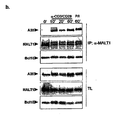
- Example 6-9 For the A20 experiments (example 6-9), for co-immunoprecipitation 1.5x10 7 Jurkat cells were lysed in 1 ml lysis buffer (20 mM Tris pH 7.5, 137 mM NaCl, 1.5 mM MgCl2, 1 % Tx-100 and phosphatase and protease inhibitors). Immunoprecipation of MALT1 was done by adding 8 ⁇ g anti-MALT1 and overnight incubation at 4°, followed by the addition of Protein A Trisacryl beads (Pierce) for 2 h. Beads were washed 4 times with lysis buffer and eluted by adding Laemmli loading buffer.
- 1 ml lysis buffer 20 mM Tris pH 7.5, 137 mM NaCl, 1.5 mM MgCl2, 1 % Tx-100 and phosphatase and protease inhibitors.
- Immunoprecipation of MALT1 was done by adding 8 ⁇ g anti-
- Coprecipitating proteins were separated by SDS-PAGE and analysed by Western blotting using ECL detection (PerkinElmer Life Sciences).
- ECL detection PerkinElmer Life Sciences
- Assays were performed in 50 ⁇ l with 100 ⁇ M substrate in a buffer consisting of 50 mM MES (pH 5.5), 150 mM NaCl, 10% (w/v) sucrose, 0.1% (w/v) CHAPS, 10 mM dithiothreitol and 1M (NH 4 ) 3 citrate, supplemented with bio-IP purified MALT1 or mutants, isolated from 3 10 6 transiently transfected HEK-293T cells, or with 1 ⁇ g recombinant MALT1 or MALT1-C464A (Sun et al., 2004).
- the expression vector pLT10T3A20 containing the human A20 gene under the control of a T7 promoter was used for in vitro coupled transcription-translation of [35S]methionine labeled human A20 in an in vitro reticulocyte lysate system (Promega Biotec) according to the manufacturers protocol.
- Translation reactions (2 ⁇ l) were incubated with 500, 1000 or 1500 nM of recombinant MALT1C-gyraseB (Sun et al., 2004) in a total volume of 50 ⁇ l paracaspase assay buffer (50 mM MES pH 5.5, 150 mM NaCl, 10% sucrose w/v, 0.1% w/v CHAPS, 10 mM DTT, 1 M ammonium citrate) for 1.5 h at 37°C. The resulting cleavage products were analyzed by SDS-PAGE and autoradiography.
- Example 1 The MALT1 p20 domain has auto-proteolytic activity.
- the MALT1 protein synergistically activates NF ⁇ B with BCL10 when co-expressed in 293T cells.
- Human MALT1 contains a caspase p20-like domain.
- mutation of the putative catalytic cysteine (C464A) in this domain reduced the synergism with BCL10 (Lucas et al., 2001 and Fig 1A ), hypothesizing that BCL10-mediated dimerization of MALT1 might initiate NF ⁇ B signalling via activation of its caspase p20-like domain.
- Metacaspases have specificity towards R/K residues in the substrate P1 position (Vercammen et al., 2004). Based on the apparent molecular weight of the N-terminal fragment, R/K residues in the first Ig-like domain of MALT1 were mutated to evaluate their possible involvement in the cleavage site leading to the generation of p19.
- Introduction of an R149A mutation in MALT1 prevented both p19 production upon BCL10 co-expression ( Fig 1 B) and loss of synergism with BCL10 for NF ⁇ B activation, whereas MALT1-R191A behaved like wild-type MALT1 ( Fig. 1C ).
- Caspases efficiently cleave synthetic substrates consisting of a four amino acid recognition sequence linked, via the carboxy-terminal aspartate, to a fluorogenic amine. Based on the presumed cleavage site of MALT1, Ac-LCCR-AMC would be a suitable substrate for demonstrating MALT1 paracaspase activity in vitro. As the synthesis of a LCCR peptide is difficult, we first demonstrated that mutating both C147 and C148 in MALT1 to S, resulted in a LSSR MALT1 mutant that could still be cleaved in cellular assays ( Fig. 3A ).
- Example 5 The p76 fragment of MALT1 activates NF ⁇ B signalling
- NF ⁇ B activation by MALT1 requires TRAF6 binding via two distinct sites (19), which are both present in the p76 cleavage fragment. Mutation of one TRAF6 binding site, either E313A/E316A (T61g-m) or E806A (T6C-m), abolished the potential of p76 to activate NF ⁇ B signalling in 293T cells ( Fig. 5B ).
- Example 6 T cell receptor stimulation results in A20 cleavage
- the zinc finger protein A20 negatively regulates proinflammatory gene expression by downregulating NF ⁇ B activation in response to different stimuli (Beyaert et al., 2000; Lee et al, 2000). Most cell types do not constitutively express A20 but rapidly upregulate A20 mRNA expression upon stimulation of NF ⁇ B, implicating A20 in the negative feedback regulation of NF ⁇ B activation (Beyaert et al., 2000). In contrast, lymphoid organs and especially Tlymphocytes have been reported to constitutively express A20 mRNA (Lee et al., 2000; Tewari et al., 1995). In accordance with these data, we observed constitutive protein expression of A20 in Jurkat T-cells ( Fig.
- A20p37 was already detectable 15 minutes after TCR stimulation and its production could not be blocked by pre-treating the cells with the protein translation inhibitor cycloheximide, a posttranslational proteolytic event rather than de novo protein synthesis seems to generate A20p37.
- A20p37 was also generated upon stimulation of SSK41 cells with anti-IgM, which triggers the BCR itself ( Fig. 6e ).
- the latter cells are derived from a MALT-type B-cell lymphoma and overexpress MALT1 because of nine copies of the MLT gene in their genome (Sanchez-lzquidero et al., 2003).
- Example 7 A20 cleavage is mediated by MALT1
- MALT1 contains a C-terminal domain that shows strong homology to the catalytic domain of caspases (Uren et al., 2000; Snipas et al., 2004), no proteolytic activity of MALT1 could be demonstrated so far. Based on sequence homology with caspases, MALT1 cysteine residue 464 was predicted as part of the catalytic site. To analyze the potential of MALT1 to generate the p37 fragment of A20, we tested the ability of MALT1 or its catalytically inactive C464A mutant to induce the cleavage of N-terminally E-tagged A20 upon overexpression in HEK293T cells. Bcl10 was cotransfected in order to activate MALT113.
- A20 has a molecular weight of approximately 85 kDa
- these findings indicate that A20 is cleaved at a single site, resulting in an N-terminal fragment of 50 kDa (A20p50) and a C-terminal part of 37 kDa (A20p37).
- Bcl10/MALT1-C464A did not generate any of these A20 fragments, indicating that the observed cleavage of A20 depends on the proteolytic activity of MALT1 ( Fig. 7c ).
- the A20p37 C-terminal fragment was relatively less prominent than the N-terminal A20p50 fragment ( Fig. 7c ), which is in line with the rapid degradation of A20p37 observed in T-cells and B-cells.
- MALT1 on A20 The proteolytic activity of MALT1 on A20 was subsequently confirmed in an in vitro assay with recombinant MALT1 and [ 35 S]methionine-labeled A20.
- the recombinant MALT1 we used represents the C-terminal caspase-like domain containing part of MALT1 (residues 334-824) fused to a fragment of bacterial gyrase B (MALT1C-gyraseB), which enables MALT1-C oligomerization.
- MALT1C-gyraseB fragment of bacterial gyrase B
- MALT1 is a functional cysteine protease that is able to cleave A20.
- P1 specificity directed to aspartic acid is dictated by arginine and glutamine residues located in the p20 and p10 caspase subunits, respectively, which help to position the substrate aspartic acid in the catalytic site (Earnshaw et al., 1999).
- paracaspases such as MALT1 are caspase-like proteins
- alignment of paracaspases, mammalian caspases and plant metacaspases shows that the above mentioned glutamine is replaced by an aspartic acid residue in case of paracaspases and metacaspases (Uren et al., 2000).
- A20 consists of an N-terminal OTU domain and a C-terminal domain containing 7 zinc finger structures (Wertz et al. 2004). Based on the molecular weights of the N-terminal p50 and Cterminal p37 proteolytic fragments of A20 that were generated by MALT1, A20 cleavage was predicted to take place between its first and second zinc finger ( Fig.
- Example 9 MALT1 inhibits the NF ⁇ B inhibitory function of A20
- Example 10 inhibiton of the MALT1 proteolytic activity by A. thaliana serpin.
- Example 11 screening of small compound inhibitors using the malt paracaspase assay.
- the malt paracaspase assay as described in this invention can easily be used for high throughput screening of malt paracaspase inhibitors.
- a set of 27 compounds, selected from the ChemBridge library (Table 1) was used in a first screening.
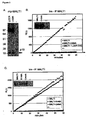
- One compound showed significant concentration dependent inhibition of the malt paracaspase activity ( Figure 12 ).
- Table 1 Chemical compounds used in the screening for inhibitors of the malt paracaspase activity.
Landscapes
- Health & Medical Sciences (AREA)
- Life Sciences & Earth Sciences (AREA)
- Animal Behavior & Ethology (AREA)
- Medicinal Chemistry (AREA)
- Pharmacology & Pharmacy (AREA)
- Chemical & Material Sciences (AREA)
- General Health & Medical Sciences (AREA)
- Public Health (AREA)
- Veterinary Medicine (AREA)
- Immunology (AREA)
- Bioinformatics & Cheminformatics (AREA)
- Epidemiology (AREA)
- Engineering & Computer Science (AREA)
- Organic Chemistry (AREA)
- General Chemical & Material Sciences (AREA)
- Nuclear Medicine, Radiotherapy & Molecular Imaging (AREA)
- Chemical Kinetics & Catalysis (AREA)
- Gastroenterology & Hepatology (AREA)
- Pulmonology (AREA)
- Proteomics, Peptides & Aminoacids (AREA)
- Pain & Pain Management (AREA)
- Rheumatology (AREA)
- Transplantation (AREA)
- Pharmaceuticals Containing Other Organic And Inorganic Compounds (AREA)
- Medicines That Contain Protein Lipid Enzymes And Other Medicines (AREA)
- Pyridine Compounds (AREA)
- Heterocyclic Carbon Compounds Containing A Hetero Ring Having Nitrogen And Oxygen As The Only Ring Hetero Atoms (AREA)
Abstract
Description
- The present invention relates to inhibitors of MALT1 proteolytic and/or autoproteolytic activity. More specifically, it relates to the peptide derivates Z-LSSR-CHO, Z-LSSR-CMK, Z-GASR-CHO, and Z-GASR-CMK, and the compound 5-{[5-(3-chloro-4-methylphenyl)-2-furyl]methylene}-2-thioxodihydro-4,6(1H,5H)-pyrimidinedione, and the use of those compounds for the preparation of a medicament. The invention relates further to a method to screen for inhibitors of the MALT1 proteolytic and/or autoproteolytic activity.
- Studies in Bcl10-(Ruland et al., 2001) and Malt1-deficient (Ruland et al., 2003; Ruefli-Brasse et al., 2003) mice revealed their essential role in the signalling cascade from the antigen receptors to the transcription factor NFκB. Moreover, chromosomal translocations leading to overexpression of Bcl10 or MALT1, or creating the constitutively active fusion protein AP12-MALT1, all result in uncontrolled and stimulus-independent activation of NFκB (Zhang et al., 1999, Willis et al.; 1999, Dierlamm et al., 1999, Sanchez-lzquierdo et al., 2003). Furthermore, this constant activation of NFκB is thought to play a role in the pathogenesis of certain MALT-lymphomas. The human MALT1 protein contains a caspase p20-like domain, preceded by a large pro-domain, consisting of a Death Domain (DD) and two Ig-like domains, and is therefore also referred to as the human paracaspase (Uren et al., 2000). As such, MALT1 is most similar to initiator caspases that possess longer pro-domains than effector caspases, whose pro-domain is very small. Proteolytic activation of the initiator caspases in the apoptosome most likely occurs via a conformational change of the active site attained through direct interaction with the apoptosome or via proximity-driven oligomerization facilitated by the apoptosome (Boatright et al., 2003; Bao and Shi, 2007). Although Uren et al (2000) suggested that in AP12-MALT1 fusions paracaspase activity may play a role, they could not prove proteolytic activity. Moreover, mutation of the catalytic activity did not abolish all NFκB activity. Indeed, the proteolytic activity of MALT1 paracaspase is not generally accepted and so far, no proteolytic activity has been reported for MALT1/paracaspase.
- T-cell receptor (TCR) engagement results in the formation of a highly ordered, membrane-associated complex called supra-molecular activation cluster (SMAC). Lipid rafts, which are sphingolipid- and cholesterol-rich microdomains in the cell membrane, are suspected to play an important role herein, as they migrate to the centre of the SMAC (cSMAC) to form larger clusters that function as signalling platforms. TCR stimulation and CD28 co-stimulation both activate a cascade of tyrosine phosphorylation that converges at lipid raft association and activation of PKCθ. Activated PKCθ serves different functions. On the one hand, it recruits TAK1 and the IKK complex to the periphery of the SMAC, resulting in TAK1-mediated phosphorylation of IKKβ (Shambharkar et al., 2007; Lee et al., 2005). On the other hand, PKCθ phosphorylates CARMA1 residing in the lipid rafts (Sommer et al., 2005; Matsumoto et al., 2005). This evokes a conformational change of CARMA1, allowing the recruitment of additional CARMA1 molecules (Sommer et al., 2005), BCL10 (Wang et al., 2002; Hara et al., 2004) and MALT1 (Che et al., 2004) to the lipid rafts in the cSMAC. Oligomerization of CARMA1 (Rawlings et al., 2006) triggers oligomerization of the BCL10-MALT1 complex, which in turn induces the oligomerization and activation of TRAF6 proteins via Lys63-linked auto-polyubiquitination (Sun et al., 2004). These polyubiquitin chains might assist CARMA1-dependent recruitment of the IKK complex in the cSMAC (Hara et al., 2004; Stilo et al., 2004) via the ubiquitin binding domains of IKKγ (Wu et al., 2006), which then culminates in full IKK activation via Lys63-linked polyubiquitination of IKKγ (Zhou et al., 2004). Activated IKK phosphorylates the NFκB inhibitory protein IκB (Sun et al., 2004), which marks it for Lys48-linked polyubiquitination and degradation by the proteasome (Chen, 2005), thereby releasing and activating NFκB. Important, the BCL10 protein appears to be a point of divergence in the NFκB pathway in T- and B-lymphocytes (Ruland et al., 2003). Whereas mature T-cells depend entirely on MALT1 to send information from BCL10 to NFκB, mature B-cells require MALT1 only for a BCL10-subprogram by specifically inducing c-Rel upon B-cell receptor stimulation, while BCL10 regulates both RelA and c-Rel activation (Ferch et al., 2007).
- Recent work also identified BCL10 and MALT1 as central regulators of a specific signaling pathway that controls NFκB activation and proinflammatory cytokine production upon Fc epsilon RI ligation on mast cells. Mice deficient for either protein display severely impaired IgE-dependent late phase anaphylactic reactions (Klemm et al., 2006). Strong evidence suggesting that conserved BCL10-MALT1 complexes interact with different CARD scaffolds to connect various receptors in different cell types to NF-kB signaling has emerged more recently. The CARD10 (CARMA3)-Bcl10-Malt1 signalosome functions as a link between G protein-coupled receptor (GPCR) signaling and proinflammatory NF-kB activation. For example, CARMA3/Bcl10/MALT1 dependent NF-kB activation mediates angiotensin II-responsive inflammatory signalling in nonimmune cells (Allister-Lucas et al., 2007). The pathway is similar to the pathway described in lymphocytes, but CARMA1, which is found chiefly in lymphocytes is replaced by a family member with a wider tissue distribution profile, CARMA3. Similarly, BCL10 and MALT1 are critically required for NFκB induction in response to GPCR stimulation by lysophosphatidic acid (LPA) (Klemm et al., 2007). Further, Dectin-1 receptor-induced NFκB activation in dendritic cells depends on CARD9-BCL10-MALT1, indicating a role in responses to fungal infection. These results identify CARD-BCL10-MALT1 signalosomes as pivotal regulators that link not only innate and adaptive immune responses, but also GPCR signaling, to the canonical NF-kB pathway (reviewed by Wegener and Krappmann, 2007).
- Studies in cell lines show that overexpressed MALT1 by itself does not activate NFκB, whereas co-expression with BCL10 results in a synergistic effect on BCL10-mediated NFκB activation. (Lucas et al., 2001). Current hypothesis is that BCL10 facilitates MALT1 oligomerization and activation of associated TRAF6 proteins (Sun et al., 2004). However, it was also shown that mutation of the predicted catalytic cysteine (C464A) reduced the synergism with BCL10 (Lucas et al., 2001), though proteolytic activity has not been demonstrated so far, and the mechanism by which the reduced activity is caused was unknown till now.
- Surprisingly we found that MALT1 shows proteolytic activity in vitro, with cystein protease activity and that this activity can be detected using a tetrapeptide substrate. Co-expression of MALT1 and BCL10 or raft association of MALT1 induce its auto-proteolytic cleavage generating a 76 kDa C-terminal fragment that can activate NFκB signalling. Furthermore we demonstrate that MALT1 auto-proteolysis is involved in NFκB signalling. Moreover we found that MALT1 proteolytic activity is activated upon TCR stimulation. More specifically, we demonstrated that MALT1 mediates the rapid proteolytic cleavage and inactivation of the NFκB inhibitor A20 (also known as TNFAIP3) upon TCR stimulation, resulting in increased TCR dependent IL-2 production.
- A first aspect of the invention is the use of an inhibitor of the MALT1 proteolytic and/or autoproteolytic activity, selected from the group consisting of Z-LSSR-CHO, Z-LSSR-CMK, Z-GASR-CHO, Z-GASR-CMK, and 5-{[5-(3-chloro-4-methylphenyl)-2-furyl]methylene}-2-thioxodihydro-4,6(1H,5H)-pyrimidinedione as a medicament. Other inhibitors can be identified with the screening method according to the invention, as described below. In one preferred embodiment, said inhibitor is 5-{[5-(3-chloro-4-methylphenyl)-2-furyl]methylene}-2-thioxodihydro-4,6(1H,5H)-pyrimidinedione or a variant thereof in which the Cl group has been replaced by another halogen atom, or where said halogen is placed in the 2, 5 or 6 position of the methylphenyl ring, possibly in combination with another halogen on said ring. Specially preferred is the embodiment where the inhibitor is 5-{[5-(3-chloro-4-methylphenyl)-2-furyl]methylene}-2-thioxodihydro-4,6(1H,5H)-pyrimidinedione. In another preferred embodiment, said inhibitor is selected from the group consisting of Z-LSSR-CHO, Z-LSSR-CMK, Z-GASR-CHO and Z-GASR-CMK.
- Another aspect of the invention is the use of an inhibitor as defined above for the preparation of a medicament to treat diseases selected from the group consisting of hypertension, diabetic nephropathy, congestive heart failure, sepsis due to infection, preferably fungal infection, IgE mediated diseases such as anaphylaxis and T-cell and/or B-cell receptor linked diseases. Preferably the inhibitor according to the invention is used for the preparation of a medicament to treat T-cell and/or B-cell receptor linked diseases. A T-cell or B-cell receptor linked disease is a disease caused by a pathological activation of the receptor, and includes, but is not limited to constitutive activation of the receptor. Preferably, said disease is a disease caused by pathological T-cell receptor induced IL-2 production. T-cell and B-cell receptor linked diseases are known to the person skilled in the art and include, but are not limited to cancer, lymphoma (preferably marginal zone lymphoma) graft versus host disease, rheumatoid arthritis, multiple sclerosis and asthma.
- Another aspect of the invention is the use of an inhibitor according to the invention for the preparation of a medicament to induce immunotolerance.
- Still another aspect of the invention is a method to screen for inhibitors of MALT1 proteolytic and/or autoproteolytic activity, comprising (a) contacting purified MALT1 with its substrate (b) bringing the MALT1 / substrate mixture in contact with a test compound (c) comparing the digestion of the substrate in presence and absence of the compound. Preferably, said substrate comprises a tetrapeptide, even more preferably it comprises a tetrapeptide selected from the group consisting of LSSR and LCCR. One preferred substrate is selected from the group consisting of Ac-LSSR-AMC and Ac-LCCR-AMC. Another preferred substrate is an immobilized substrate, comprising a tetrapeptide as disclosed above, whereby a fluorescent group is released upon hydrolysis of the peptide.
-
-
Figure 1 : BCL10 mediates intermolecular auto-proteolytic cleavage of MALT1 at R149.
A) MALT1 proteolytic activity and C) MALT1 proteolysis at R149 are required to synergistically activate NFκB with BCL10 in HEK293T cells. NFκB-reporter assays of HEK293T cells transiently expressing BCL10, MALT1 and indicated mutants. NFκB-dependent luciferase activity is shown as fold induction of vector-transfected cells and represents the mean +/- S.D. of at least three independent experiments. Immunoblot with anti-Flag and anti-MALT1-C confirms equal level of expression. *endogenous MALT1. B) immunoblot analysis of streptavidin pull-downs (Bio-IP) of MALT1 and its mutants co-expressed with BCL10 in HEK293T cells. Arrow indicates the N-terminal cleavage fragment of 19 kDa (p19). All molecular mass standards are in kDa. D) The R149A and the C464A mutation do not disrupt the interaction of MALT1 with BCL10 and TRAF6, assessed via immunoblots of bio-IPs from Jurkat cells with stable expression of MALT1 or the R149A and C464A mutants. E) Mechanism of BCL10-mediated intermolecular auto-proteolytic cleavage of MALT1. Flag: Flag epitope, Ig: immunoglobulin-like domain, p20: caspase p20-like domain, T6-Ig/T6-C: TRAF6 binding site in the second Ig domain and the C-terminus, Avi: Avi-tag for streptavidin-mediated pull-down or bio-IP, CARD: caspase recruitment domain. -
Figure 2 : Raft association of MALT1 induces auto-proteolytic cleavage at R149.
A) Mechanism of auto-proteolytic interchain cleavage of mp-MALT1. mp: myristoylation-palmitoylation sequence. B) NFκB-reporter assays of HEK293T cells transiently expressing MALT1, mp-MALT1 or empty vector. NFκB -dependent luciferase activity is shown as fold induction of vector-transfected cells and represents the mean +/- S.D. of at least three independent experiments. C) immunoblot analysis of mp-MALT1 and mutants expressed transiently in HEK293T cells. D) immunoblot analysis of mp-MALT1 bio-IPs from HEK293T cells. The N- and C-terminal cleavage fragments of 19 and 76 kDa respectively are indicated. All molecular mass standards are in kDa. -
Figure 3 : Ac-LSSR-AMC cleavage by precipitated and recombinant MALT1.
A) Functional replacement of the LCCR cleavage site of MALT1 by LSSR. Arrow indicates the generated p19 fragment. B) Fluorescence release (RLU) due to Ac-LSSR-AMC cleavage (100uM) in vitro by bio-IP purified MALT1 (◇) and the C464A (□) mutant. Addition of Z-LSSR-CHO (100µM) inhibits MALT1 proteolytic activity (Δ). (x) activity of bio-IPs from cells transfected with BirA only. Insert: immunoblot showing equal amounts of bio-IP purified MALT1 and the C464A mutant. C) Fluorescence increase (RLU) due to Ac-LSSR-AMC cleavage (100µM) in vitro by bio-IP purified MALT1 (◊) and the R149A (□) or C464A (Δ) mutants Insert: immunoblot showing equal purification (X) birA only bio-IP. E) Recombinant MALT1, but not the C464A mutant (Sun et al., 2004), cleaves Ac-LSSR-AMC (100µM) in vitro and its proteolytic activity is completely blocked by Z-LSSR-CHO (100 µM). Insert: Coomassie stain showing recombinant protein concentrations. -
Figure 4 : MALT1 auto-proteolysis is involved in NFκB activation.
Jurkat cells stably expressing MALT1, MALT1-R149A or MALT1-C464A were stimulated with A) PMA/ionomycin or B) Anti-CD3/-CD28 and phosphorylation of IκBα (activation of NFκB pathway) and ERK (activation is MALT1-independent) were analyzed by immunoblotting. β-actin expression levels show equal loading. (*): endogenous MALT1. C) Phosphorylation of IκBα and ERK after PMA/ionomycin stimulation (15') of Jurkat cells stably expressing MALT1, MALT1-R149A or MALT1-C464A and pre-treated (48hrs) with siRNAs against the 3' UTR of MALT1. D) IL-2 production of PMA/ionomycin treated Jurkat cells (6 hours) stably expressing MALT1, MALT1-R149A or MALT1-C464A. Data shown as mean +/- S.D. (n=3). -
Figure 5 : p76 activates NFκB via TRAF6.
A) The structural domains of MALT1 plus the domain content (solid bars) of the p76 cleavage fragment and MALT1-C (Sun et al., 2004). B) TRAF6 mediates NFκB signalling by p76. Top: NFκB-reporter assays of HEK293T cells transiently expressing MALT1, p76 and mutants or MALT1-C. Bottom: MALT1, p76 or MALT1-C, transiently expressed in HEK293T cells, were purified via bio-IPs and immunoblotted with anti-MALT1 (to show equal expression), anti-TRAF6 and anti-BCL10. C) p76 induces polyubiquitination of IKKγ. Immunoblot analysis of bio-IP and IKKγ-IP of 293T cells transfected with pcD-F-IKKγ and pcd-HA-Ub in combination with indicated Avi-tagged MALT1 constructs. D) BCL10 is not involved in NFκB signalling by p76. NFκB reporter assays of HEK-293T cells transfected with siRNA duplexes against MALT1, BCL10 or GFP (as control) followed by transient transfection with p76. The expression levels were determined by Immunoblot with anti-MALT1 and anti-BCL10. NFκB-dependent luciferase activity (B/C) is shown as fold induction of vector-transfected cells and represents the mean +/-S.D. of three independent experiments. -
Figure 6 : Generation of a 37 kDa protein fragment of A20 upon activation of T and B-cells.
Jurkat cells (a-c), primary human T-cells (d), or SSK41 and Raji cells (e) were stimulated for different times with respectively anti-CD3/anti-CD28, PMA/ionomycin, or anti-IgM. Where indicated, stimulation was done in the presence of 25µM MG132 (30 min preincubation). A20, IκBα, plκBα, MALT1 and β-actin expression were analysed by western blotting. IκBα phosphorylation and degradation is indicative for the activation of the NFκB pathway. β-actin expression is included as a loading control. (* = heavy and light chains of the anti-CD3 or anti-CD28 antibodies used for stimulation; ** non-specific band) -
Figure 7 : MALT1 interacts with A20 and mediates its proteolytic cleavage.
a, Knockdown of MALT1 abrogates the anti-CD3/anti-CD28 induced cleavage of A20. Jurkat cells were mock electroporated (/) or electroporated with MALT1 siRNA (siMALT1) or control siRNA (siControl). Two days later, cells were stimulated for 20 min with anti-CD3/antiCD28 with or without pretreatment with MG132. A20 cleavage was analysed by immunoblotting (**= chains of the anti-CD3/anti-CD28 antibodies; overlapping with a non-specific band). Efficiency of MALT1 knockdown was analysed by western blotting and immunodetection for MALT1 expression (middle panel). Western blotting for β-actin was performed as a loading control (bottom panel) b, A20 interacts with MALT1 upon TCR-triggering. Jurkat cells were stimulated with anti-CD3/anti-CD28 or PMA/ionomycin for the indicate times. MALT1 was immunoprecipitated and co-immunoprecipitation of Bcl10 and A20 was analysed by immunoblotting. (IP = immunoprecipitation; TL = total lysate) c, MALT1-mediated cleavage of A20 depends on the catalytic site Cys464 of MALT1. HEK293T cells were transfected with E-A20 together with either wild type or catalytically inactive C/A mutants of AP12-MALT1 or MALT1 + Flag-Bcl10. N20 terminal and C-terminal fragments of A20 were detected by immunoblotting with anti-E-tag and anti-A20, respectively. d, A20 is cleaved by recombinant MALT1 in vitro. Increasing concentrations (500, 1000 or 1500 nM) recombinant wild type (WT) MALT1 C-gyraseB or the catalytically inactive mutant MALT1 C-gyraseB-C464A (C/A) were in vitro incubated with [35S]methionine-labeled A20 for 1.5 h at 37°C. protein in a cosmotropic salt buffer. A20 and A20 cleavage was revealed by SDS-PAGE and autoradiography (lower panel). MALT1 C-gyraseB levels were verified by Western blotting (upper panel). -
Figure 8 : A20 is processed by MALT1 at R439.
a, Schematic overview of the domain structure of human A20. The potential cleavage site arginines are represented in bold. b-c, Mutation of R439 in A20 abrogates its cleavage by MALT1 (b) or AP12-MALT1 (c). E-A20 or the E-A20-R410/411 A and E-A20-R439A mutants were overexpressed in HEK293T cells together with Flag-Bcl10/MALT1 or AP12-MALT1. Cleavage of A20 was analysed by immunoblotting with anti-E-tag. -
Figure 9 : A20 cleavage by MALT1 disrupts its inhibitory effect on TCR-induced NFκB activation.
a, A20 overexpression inhibits Bcl10- or PMA/ionomycininduced NFκB activation. HEK293T cells were transfected with Bcl10 (left panel) or AP12-MALT1 (right panel), and increasing concentrations of A20. 24 h later, NFκB activation was measured. b, Knockdown of A20 in Jurkat cells potentiates TCRinduced IL-2 production. Jurkat cells that were mock-electroporated or electroporated with control siRNA (Ci) or A20 siRNA (A20i) were stimulated with PMA/ionomycin (left panel) or anti-CD3/anti-CD28 (right panel) for 10 h, after which the levels of IL-2 in the medium were analysed. c, Cleavage of A20 abolishes its NFκB-inhibiting potential. HEK293T cells were transfected with Bcl10 (upper panel) or AP12-MALT1 (middle panel), and two different concentrations of A20-WT, A20-R439A, A20-p50, A20-p37 or the combination of A20-p50 and A20-p37. 24 h later, NFκB activation was measured. Data are shown as mean ± s.d. (n=3). -
Figure 10 : Inhibition of the proteolytic activity of (AP12-)MALT1 decreases MALT1-mediated NFκB activation and IL-2 production.
a, NFκB activation in HEK293T cells transfected with AP12-MALT1-WT or AP12-MALT1-C464A. b, IL-2 production (after 10 h) and A20 cleavage (after 15, 30, or 60 min; 30 min MG132 pretreatment) in PMA/ionomycin treated Jurkat cells stably expressing MALT1-WT or MALT1-C464A. Data are shown as mean ± s.d. (n=3). -
Figure 11 : Inhibition of the proteolytic activity of MALT1 by mutant and wild type A. thaliana serpin. Arabidopsis thaliana serpin (AT1g47710) is indicated as serpin-wt. In the mutant serpin (serpin-mt) the reactive center loop has been replaced by the sequence IKLA (Vercammen et al., 2006). -
Figure 12 : Inhibition of the proteolytic activity of MALT1 by 5-{[5-(3-chloro-4-methylphenyl)-2-furyl]methylene}-2-thioxodihydro-4,6(1H,5H)-pyrimidinedione.
Inhibitory effect of 5-{[5-(3-chloro-4-methylphenyl)-2-furyl]methylene}-2-thioxodihydro-4,6(1 H,5H)-pyrimidinedione ("Inhibitor 3"; inh3 in Table 1) at different concentrations. - Antibodies used for immunodetection of the Flag epitope (M2) were from Sigma-Aldrich, for BCL10 (sc-5273), TRAF6 (sc-7221) and Lyn (44) from Santa Cruz Biotechnology, for anti-CD3 (clone UCHT-1) and anti-CD28 (clone 28.2) from Pharmingen and for phosphorylated IκB-α (Ser32/36, 5A5) and phosphorylated ERK (Thr202/Tyr204, #9101S) from Cell Signalling. Anti-β-actin (clone AC-15) was purchased from Sigma, anti-MALT1-C is a rabbit polyclonal antiserum raised against AA 731-824 of MALT1 (Baens et al., 2006). Anti-A20 (clone 59A624) was from eBioscience, anti-E-tag from Amersham Biosciences, anti-MALT1 (H-300) and anti-IκBα from Santa Cruz Biotechnology), anti-β actin from MP Biomedicals.
- pCAGGS-E-hA20-R/A and pCAGGS-E-A20-RR/AA were constructed by PCR mutagenesis. Constructs encoding FLAG-Bcl10, Myc-MALT1 or Myc-MALT1-C/A and Myc-AP12-MALT1 or Myc-AP12-MALT1-C/A (fusion of
exon 7 of API2 toexon 8 of MLT), were described previously (Noels et al., 2007). All other constructs for expressing proteins in eukaryotic cells were made in pcDNA3.1 encoding an N-terminal Flag-epitope (pcD-F-x, with x the gene of interest). To direct raft association of proteins, inserts were cloned in pcD-mp-F-x with the code for a myristoylation/palmytoylation (mp) motif of Lck (MGCVCSSNPEDD) in front of the Flag epitope. A vector enabling expression of biotinylated proteins was constructed by introducing oligonucleotides encoding the Avi-tag sequence (GLNDIFEAQKIEWHE) (Beckett et al., 1999) downstream of the sequences for N-terminal Flag epitope in the plasmid pcDNA3.1 (pcD-F-bio-x). Two other vectors were generated encoding the bio-tag, preceded by a flexible linker (SGSSGSSG), C-terminal of the multiple cloning site (pcD-F-x-bioC and pcD-mp-F-x-bioC). These vectors were used to generate the different bio-constructs for MALT1 and mutants. MALT1 fragments with the LSSR mutation, at residues 146 - 149 generated by PCR-based mutagenesis, was subcloned in the (mp-)MALT1 construct. All other MALT1 mutants, pcD-F-IKKγ and pcD-HA-Ub (Ubiquitin) were constructed and described previously (Noels et al., 2007; Baens et al., 2006). - PMA was from Sigma, ionomycin and MG132 were from Calbiochem. siGENOME SMARTpool siRNA oligonucleotides against A20 and MALT1 as well as non-targeting siRNA were purchased from Dharmacon. Expression and purification of MALT1 C-gyraseB has been described (Sun et al., 2004).
- HEK-293T and Jurkat T-cells were cultured in DMEM-F12 (Invitrogen) supplemented with 10% fetal calf serum at 37°C in 5% CO2. SSK41 MALT lymphoma B-cells) and - for the A20 experiments (example 6-9) - Jurkat T-cells were cultured in RPMI1640 (Invitrogen) supplemented with 10% fetal bovine serum, 2 mM glutamine, 0.4 mM sodiumpyruvate, 4 µM β-mercaptoethanol and antibiotics. Monoclonal stable cell lines were generated by electroporating 5 106 cells with 20 ug of linearized plasmid DNA (250 V, 960 µF, Genepulser BioRad), followed by single cell dilution and selection with the appropriate antibiotics. Monoclonal Jurkat cell lines were generated stably expressing BirA from a pMSCV-Flag-puromycin vector, alone or in combination with a bio-tagged version of MALT1, MALT1-R149A and MALT1-C464A and clones with equal expression levels were chosen for further experiments. To mimic antigen receptor stimulation, Jurkat T-cells were stimulated with 10µg/ml anti-CD3 / 2.5µg/ml anti-CD28 or 50 ng/ml PMA (Sigma-Aldrich) and 100 ng/ml ionomycin (Sigma-Aldrich) for the indicated time. After washing with PBS, cells were lysed for 30 min on ice in NDLB lysis buffer (0,3% NP-40, 20 mM Tris-
Cl pH - Primary human T-cells were purified from the blood of healthy volunteers (obtained from the Belgian Red Cross Blood Bank). Briefly, T-cells, B-cells and mononuclear cells were purifed by Ficoll-Hypaque gradient centrifugation of buffy coat. T-cells were further purified by a nylon wool fiber column (Polysciences).
- HEK293T cells were transiently transfected by calcium phosphate DNA coprecipitation. Jurkat cells were transiently transfected with expression plasmids with the Amaxa Nucleofector kit according to the manufacturer's protocol (Amaxa AG). siRNA transfection of Jurkat cells was done by electroporation of 5×10⁶ cells in 0.5 ml serum-free culture medium containing 400 nM siRNA oligos at 300 V and 1050uF using a BioRad electroporator. After electroporation, cells were returned to 10 ml complete medium. Electroporation was repeated 24 h later and cells were maintained for 2 more days before stimulation and harvesting.
- The following predesigned siRNAs were used for gene knock-down experiments in HEK-293T cells: a mix of AAGGTACTGGAGCCTGAAGGA and AAGGTTGCACAGTCACAGAAT for MALT1, a mix of AAGGGCTGGAAAATTGTTAGA and AAGGACTAAAATGTAGCAGTT for BCL10 and a control siRNA for GFP (Ambion). HEK-293T cells in 12-well plates were transfected with siRNA duplexes (50 nM) using Oligofectamine (Invitrogen). After 4 hours the medium was replaced and cells were transfected as described previously (Baens et al., 2006). NFκB reporter assays were performed as described (Baens et al., 2006; Heyninck et al., 1999). NFκB dependent luciferase expression and constitutive β-galactosidase expression are expressed as luc/bgal to normalize for potential differences in transfection efficiency.
- siRNA transfection of Jurkat cells was performed by electroporation of 5 106 cells in 0.5ml serum free medium containing 400 nM siRNAs (mix of 5'-CCTGTGAAATAGTACTGCACTTACA and 5'-CACTCTGAAGTAAGAGCAATGGGAA, Invitrogen) using a BioRad electroporator at 300V and 1050µF. Electroporation was repeated 24 h later and cells were cultured for 2 more days before harvesting. IL-2 in the supernatant of Jurkat cells, unstimulated or stimulated for 6 hrs with 50 ng/ml PMA - 100 ng/ml ionomcyin, was measured by ELISA according to the manufacturer's protocol (Pharmingen).
- The bio-IP method is described by de Boer et al. (26). Briefly a protein of interest containing the biotinylation tag becomes biotinylated in vivo via co-expression of the E. coli BirA biotin protein ligase. After cell lysis in NDLB lysis buffer for 30 min on ice, the biotinylated protein complex is precipitated using paramagnetic streptavidin beads (Dynabeads M-280, Invitrogen) for 2 hours at 4°C, or IKKγ is precipitated with anti-Flag using protein-G sepharose beads (Ge Healthcare). Protein precipitates were washed four times in lysis buffer and boiled for 10 min at 95°C in 1X SDS gel loading buffer (final concentration of 4% SDS and 300 mM β-mercaptoethanol). All samples were fractionated on 4-12% SDS-polyacrylamide gels (NuPage, Invitrogen) and transferred to polyvinylidene difluoride membranes (GE Healthcare-Life Sciences) for detection.
- For the A20 experiments (example 6-9), for co-immunoprecipitation 1.5x10⁷ Jurkat cells were lysed in 1 ml lysis buffer (20 mM Tris pH 7.5, 137 mM NaCl, 1.5 mM MgCl2, 1 % Tx-100 and phosphatase and protease inhibitors). Immunoprecipation of MALT1 was done by adding 8 µg anti-MALT1 and overnight incubation at 4°, followed by the addition of Protein A Trisacryl beads (Pierce) for 2 h. Beads were washed 4 times with lysis buffer and eluted by adding Laemmli loading buffer.
- Coprecipitating proteins were separated by SDS-PAGE and analysed by Western blotting using ECL detection (PerkinElmer Life Sciences). For detection of A20 cleavage, Jurkat cells were stimulated with 10 µg/ml anti-CD3 / 10 µg/ml anti-CD28 or with 200 ng/ml PMA / 1µM ionomycin for the indicated times. Cells were lysed in 100 µl lysis buffer and 60 µg lysate was analysed by Western blotting with anti-A20 antibody.
- Assays were performed in 50 µl with 100 µM substrate in a buffer consisting of 50 mM MES (pH 5.5), 150 mM NaCl, 10% (w/v) sucrose, 0.1% (w/v) CHAPS, 10 mM dithiothreitol and 1M (NH4)3citrate, supplemented with bio-IP purified MALT1 or mutants, isolated from 3 106 transiently transfected HEK-293T cells, or with 1 µg recombinant MALT1 or MALT1-C464A (Sun et al., 2004). Time-dependent release of free amido-4-methylcoumarin (AMC) was measured on a FLUOstar Galaxy reader (BMG Labtechnologies, Offenburg, Germany), and activity was expressed as the increase of RLU per minute per well. Ac-LSSR-AMC, Z-LSSR-CHO and Ac-GASR-CHO were purchased from Anaspec. Compounds used in the screening were obtained from ChemBridge.
- The expression vector pLT10T3A20 containing the human A20 gene under the control of a T7 promoter was used for in vitro coupled transcription-translation of [35S]methionine labeled human A20 in an in vitro reticulocyte lysate system (Promega Biotec) according to the manufacturers protocol. Translation reactions (2 µl) were incubated with 500, 1000 or 1500 nM of recombinant MALT1C-gyraseB (Sun et al., 2004) in a total volume of 50 µl paracaspase assay buffer (50 mM MES pH 5.5, 150 mM NaCl, 10% sucrose w/v, 0.1% w/v CHAPS, 10 mM DTT, 1 M ammonium citrate) for 1.5 h at 37°C. The resulting cleavage products were analyzed by SDS-PAGE and autoradiography.
- The MALT1 protein synergistically activates NFκB with BCL10 when co-expressed in 293T cells. Human MALT1 contains a caspase p20-like domain. Interestingly, mutation of the putative catalytic cysteine (C464A) in this domain reduced the synergism with BCL10 (Lucas et al., 2001 and
Fig 1A ), hypothesizing that BCL10-mediated dimerization of MALT1 might initiate NFκB signalling via activation of its caspase p20-like domain. - To investigate whether BCL10-mediated dimerization of MALT1 induces its auto-proteolysis, we performed streptavidin-mediated pull-downs of MALT1 with an N-terminal tag. Western blot analysis indeed showed the presence of an N-terminal fragment of 19 kDa (p19), which was absent without BCL10 co-expression or when BCL10 was co-expressed with the C464A MALT1 mutant (
Fig. 1 B) . - Metacaspases have specificity towards R/K residues in the substrate P1 position (Vercammen et al., 2004). Based on the apparent molecular weight of the N-terminal fragment, R/K residues in the first Ig-like domain of MALT1 were mutated to evaluate their possible involvement in the cleavage site leading to the generation of p19. Introduction of an R149A mutation in MALT1 prevented both p19 production upon BCL10 co-expression (
Fig 1 B) and loss of synergism with BCL10 for NFκB activation, whereas MALT1-R191A behaved like wild-type MALT1 (Fig. 1C ). Co-IP experiments showed that both the C464A and R149A mutants are still able to interact with BCL10 (Fig. 1 D) . These data suggest the hypothesis that the synergism of MALT1 for BCL10-induced NFκB activation requires its auto-proteolysis at R149. - Auto-proteolytic cleavage of initiator caspases upon proximity-driven dimerization occurs via interchain cleavage. To investigate whether MALT1 processing might result from an intermolecular, auto-proteolytic cleavage event we co-expressed BCL10 together with the R149A and the C464A mutants of MALT1.
Figure 1B shows the reappearance of the p19 fragment, absent when each of the MALT1 mutants was co-expressed with BCL10 separately. Taken together the data suggest that MALT1 has interchain auto-proteolytic activity, with C464 involved in the catalytic site and R149 in the cleavage site (Fig. 1 E) - Previously we demonstrated that BCL10 co-expression induced the redistribution of MALT1 to the lipid rafts in 293T cells (Noels et al., 2007). We induced raft association of MALT1 in 293T cells by adding a myristoylation-palmitoylation signal sequence (mp-MALT1). This was sufficient to activate an NFκB luciferase reporter gene and to generate the p19 fragment, whereas ectopic expression of MALT1 was not able to do so (
Fig. 2B ). Western blot analysis of detergent resistant membrane fractions confirmed the association of mp-MALT1 with the lipid rafts, in contrast to MALT1 shown previously to reside exclusively in cytosolic fractions (Noels et al., 2007; Baens et al., 2006), and the p19 fragment was detected in raft fractions) as well as in total cell lysates (Fig. 2C ). Again no p19 was detected upon expression of either R149A-or C464A-mp-MALT1, whereas their co-expression restored p19 formation (Fig. 2C ). - To identify C-terminal fragments resulting from MALT1 proteolysis, we performed bio-IPs with mp-MALT1 constructs carrying a C-terminal Avi-tag. A 76 kDa fragment (p76) could be visualized which was absent in pull-downs from the C464A mutant of mp-MALT1 (
Fig. 2D ). Since MALT1 has a molecular weight of approximately 96 kDa, this is consistent with the cleavage of MALT1 in p19 and p76 fragments. - Caspases efficiently cleave synthetic substrates consisting of a four amino acid recognition sequence linked, via the carboxy-terminal aspartate, to a fluorogenic amine. Based on the presumed cleavage site of MALT1, Ac-LCCR-AMC would be a suitable substrate for demonstrating MALT1 paracaspase activity in vitro. As the synthesis of a LCCR peptide is difficult, we first demonstrated that mutating both C147 and C148 in MALT1 to S, resulted in a LSSR MALT1 mutant that could still be cleaved in cellular assays (
Fig. 3A ). Next we showed that bio-IP purified MALT1 was indeed able to cleave Ac-LSSR-AMC in vitro whereas bio-IP purified C464 mutant was not (Fig. 3B ). Bio-IP of mock-transfected cells also showed no activity, which together with the results for bio-IP-purified C464A MALT1 excludes precipitation of a contaminating protease. Interestingly the proteolytic activity was dependent on the addition of the cosmotropic salt ammonium citrate, as previously shown for caspases (Boatright et al., 2003). Substrate cleavage by MALT1 was efficiently blocked by a Z-LSSR-CHO and a Z-GASR-CHO inhibitor at equimolar concentrations (Fig. 3B ). Furthermore, the R149A mutant was as efficient in substrate processing as MALT1 (Fig. 3C ). Finally, the recombinant MALT1 p20 fragment (Sun et al., 2004) efficiently cleaved the Ac-LSSR-AMC substrate, whereas the recombinant C464A mutant failed to do so, although its higher concentration (Fig. 1 D) . Again, adding Z-LSSR-CHO or Z-GASR-CHO completely blocked the proteolytic activity of recombinant MALT1. Taken together the data indicate that MALT1 has proteolytic activity in vitro and that this activity is dependent on the presence of C464 but independent of R149. - To further assess the possible role of MALT1 auto-proteolysis for NFκB signalling, we generated Jurkat cell lines with stable expression of MALT1 and its R149A and C464A mutants respectively. Ectopic expression of MALT1 in Jurkat cells increased phosphorylation of IκBα in response to PMA/ionomycin or CD3/CD28 stimulation compared to equal levels of the R149A- or C464A-MALT1 mutant (
Fig. 4A,B ). Activation and phosphorylation of ERK in response to PMA/ionomycin or CD3/CD28 stimulation is MALT1-independent (Ruland et al., 2003) and was unaffected (Fig. 4A,B ). Likewise, Jurkat cells pre-treated with siRNAs against MALT1 showed reduced phosphorylation of IκBα after PMA/ionomycin treatment. This reduction could be reversed by ectopic expression of MALT1 (insensitive to the siRNA) but not by the R149A or C464A mutants (Fig. 4C ). Finally, overexpression of MALT1 enhanced NFκB-dependent production of IL2 after stimulation with PMA/ionomycin more potently than either the R149A or the C464A mutant (Fig. 4D ), consistent with the higher NFκB activation by wild-type MALT1. Taken together, these data indicate that intermolecular auto-proteolytic cleavage of MALT1 is involved in its NFκB activating potential. - Thus far, our data indicate that auto-proteolytic cleavage of MALT1 at R149 is involved in its NFκB signalling potential. To study the properties of the MALT1 cleavage fragments, we generated expression constructs for p19, p76 and MALT1-C (
Fig. 5A ). The latter fragment activated the BCL10-IKK pathway in vitro via oligomerization and activation of TRAF6 (Sun et al., 2004). Similar to ectopic expression of MALT1, transient expression of MALT1-C did not activate an NFκB reporter gene in 293T cells (Fig. 5B ), nor did the p19 construct (data not shown). Expression of the p76 fragment however potently induced NFκB activity, suggesting that removal of the N-terminal DD releases NFκB signalling potential of MALT1 (Fig. 5B ). NFκB activation by MALT1 requires TRAF6 binding via two distinct sites (19), which are both present in the p76 cleavage fragment. Mutation of one TRAF6 binding site, either E313A/E316A (T61g-m) or E806A (T6C-m), abolished the potential of p76 to activate NFκB signalling in 293T cells (Fig. 5B ). Bio-IP experiments showed that p76, like MALT1 interacted with TRAF6, whereas both the T6lg-m and the T6C-m mutation potently reduced this interaction, though a complete block of TRAF6 binding required mutation of both sites (T6lg/C-m) (Fig. 5B ). In contrast, the MALT1-C fragment still bound TRAF6 via the T6C binding site, however did not activate NFκB signalling by its own. Furthermore, NFκB activation by p76 in 293T cells was associated with increased polyubiquitination of IKKγ (Fig. 5C ). Taken together, these data suggest that MALT1 p76, which can be formed by auto-proteolysis, activates NFκB in a TRAF6-dependent manner. - The interaction of MALT1 with BCL10 requires both the DD and the Ig-like domains of MALT1 (Noels et al., 2007), suggesting that BCL10 no longer interacts with or is required for NFκB activation by p76. Bio-IPs for p76 indeed failed to demonstrate an interaction with BCL10 (
Fig. 5B ), conform our previous results with a MALT1 construct lacking the DD domain (Noels et al., 2007). Moreover, siRNA-mediated knock-down of BCL10 expression did not affect NFκB activation by p76 (Fig. 5D ). In contrast, reducing the levels of endogenous MALT1 enhanced p76-mediated NFκB activation (Fig. 5D ), most likely because of an increase of free TRAF6 otherwise bound to MALT1. Taken together, these data suggest that NFκB activation by the p76 cleavage fragment of MALT1 no longer requires BCL10. - The zinc finger protein A20 negatively regulates proinflammatory gene expression by downregulating NFκB activation in response to different stimuli (Beyaert et al., 2000; Lee et al, 2000). Most cell types do not constitutively express A20 but rapidly upregulate A20 mRNA expression upon stimulation of NFκB, implicating A20 in the negative feedback regulation of NFκB activation (Beyaert et al., 2000). In contrast, lymphoid organs and especially Tlymphocytes have been reported to constitutively express A20 mRNA (Lee et al., 2000; Tewari et al., 1995). In accordance with these data, we observed constitutive protein expression of A20 in Jurkat T-cells (
Fig. 6a ), suggesting a potential role for posttranslational regulation of A20 in these cells. Interestingly, triggering the TCR complex of these cells with agonistic anti-CD3/anti-CD28 antibodies led to a rapid decline in A20 expression upon stimulation for 15 to 30 minutes (Fig. 6a , upper panel). Expression levels of A20 returned tobaseline levels 60 minutes after stimulation. This is similar to the rapid degradation and resynthesis of IκBα that is indicative of NFκB activation. - Interestingly, longer exposure of the same immunoblot revealed the rapid appearance of a faint protein band of approximately 37 kDa that was specifically recognized by the anti-A20 antibody (
Fig. 6a ). The latter is a mouse monoclonal antibody that recognizes the C-terminal zinc finger containing part of A20, indicating that the 37 kDa band represents a C-terminal protein fragment of A20 (which we will further refer to as A20p37). Similar results were obtained after administration of PMA/ionomycin, which mimics TCR signalling by activating PKCθ (Fig. 6b ). Since A20p37 was already detectable 15 minutes after TCR stimulation and its production could not be blocked by pre-treating the cells with the protein translation inhibitor cycloheximide, a posttranslational proteolytic event rather than de novo protein synthesis seems to generate A20p37. - Because the A20p37 levels were rather low, we speculated that this fragment of A20 was unstable and rapidly degraded. Indeed, treatment of Jurkat cells with either anti-CD3/anti-CD28 or PMA/ionomycin together with the proteasome inhibitor MG132 resulted in the accumulation of A20p37 (
Fig. 6c ), indicating that the A20p37 fragment is rapidly degraded by the proteasome. Importantly, TCR stimulation not only stimulated the production of A20p37 in Jurkat cells but also in primary human T-cells (Fig. 6d ). As both TCR- and PMA/ionomycin-induced signalling pathways converge on PKCθ activation (Sun et al., 2000), resulting in the assembly of the CBM complex1, (Ruland et al., 2001, 2003; Ruefli-Brasse et al., 2003; Wang et al., 2002; Su et al., 2002) our observations suggest that, the CBM complex may be involved in the generation of A20p37. Gene disruption studies have shown that the CBM complex is not only indispensable for TCR-induced NFκB activation but also mediates BCR-induced signaling (Sommer et al., 2005; Ruland et al., 2001; Ruefli-Brasse et al., 2003;,Su et al., 2002; Egawa et al., 2003). Therefore, we investigated whether A20p37 was also generated upon activation of the B-cell lymphoma cell lines Raji and SSK41. In both cell lines PMA/ionomycin stimulation resulted in production of A20p37, which accumulated upon proteasome inhibition with MG132 (Fig. 6e ). Moreover, A20p37 was also generated upon stimulation of SSK41 cells with anti-IgM, which triggers the BCR itself (Fig. 6e ). The latter cells are derived from a MALT-type B-cell lymphoma and overexpress MALT1 because of nine copies of the MLT gene in their genome (Sanchez-lzquidero et al., 2003). - Interestingly, in SSK41 cells but not Raji cells, treatment with MG132 as such was sufficient for generating A20p37, suggesting that overexpression of MALT1 in SSK41 cells not only spontaneously induces NFκB activation but also the specific proteolytic cleavage of A20 (Sanchez-lzquidero et al., 2003 and
Fig. 6e ). Finally, it should be noted that stimulation of Jurkat cells with TNF, which does not lead to activation of the CBM complex, did not induce the generation of A20p37. - Altogether, the above data suggest a role for the CBM complex, and for MALT1 in particular, in the generation of A20p37 after BCR- and TCR-stimulation. In order to further analyse the role of MALT1 in TCR-induced A20p37 production, we transfected Jurkat cells with an siRNA specifically directed against MALT1 (siMALT1) and stimulated the cells with anti-CD3/anti-CD28 in the absence or presence of MG132. As shown by Western blotting, siMALT1 efficiently downregulated MALT1 expression. Interestingly, in contrast to non-transfected or control siRNA transfected cells, siMALT1 treated cells did not show detectable levels of A20p37 after TCR-triggering, even in the presence of MG132 (
Fig. 7a ). Comparable results were obtained with a different set of MALT1 targeting siRNA molecules. As this siRNA experiment further points to a role of MALT1 in the proteolytic generation of A20p37 upon TCR-triggering, we next wanted to investigate whether MALT1 and A20 reside within one complex in TCR stimulated cells. For this purpose, Jurkat cells were stimulated for different time periods with anti-CD3/anti-CD28 and MALT1 immunoprecipitates were analyzed for the presence of Bcl10 and A20 by immunoblotting. Whereas Bcl10 already coimmunoprecipitated with MALT1 in unstimulated cells, A20 did not (Fig. 7b ). However, 10 minutes TCR-stimulation allowed A20 to enter the Bcl10/MALT1 complex, and this interaction lasted for at least 60 minutes (Fig. 7b ). Similarly, also PMA/ionomycin treatment led to the recruitment of A20 into the Bcl10/MALT1 complex (Fig. 2b , last lane). Our observation that MALT1 and A20 reside in a single complex upon TCR stimulation suggests that MALT1 might be responsible for the TCR-induced proteolytic generation of A20p37. Although MALT1 contains a C-terminal domain that shows strong homology to the catalytic domain of caspases (Uren et al., 2000; Snipas et al., 2004), no proteolytic activity of MALT1 could be demonstrated so far. Based on sequence homology with caspases, MALT1 cysteine residue 464 was predicted as part of the catalytic site. To analyze the potential of MALT1 to generate the p37 fragment of A20, we tested the ability of MALT1 or its catalytically inactive C464A mutant to induce the cleavage of N-terminally E-tagged A20 upon overexpression in HEK293T cells. Bcl10 was cotransfected in order to activate MALT113. Western blotting and immunodetection with the anti-A20 antibody revealed that overexpression of Bcl10/MALT1 induces a 37 kDa fragment of A20 that corresponds in size to A20p37 that was observed in Jurkat cells stimulated with PMA/ionomycin (Fig. 7c , left panel). In addition, immunodetection of the same western blot with an anti-E-tag antibody revealed a protein fragment of approximately 50 kDa upon overexpression of Bcl10/MALT1 (referred to as A20p50,Fig. 7c , right panel). Since A20 has a molecular weight of approximately 85 kDa, these findings indicate that A20 is cleaved at a single site, resulting in an N-terminal fragment of 50 kDa (A20p50) and a C-terminal part of 37 kDa (A20p37). Strikingly, co-expression of Bcl10/MALT1-C464A did not generate any of these A20 fragments, indicating that the observed cleavage of A20 depends on the proteolytic activity of MALT1 (Fig. 7c ). Consistent with the above results obtained upon overexpression of Bcl-10/MALT1, also overexpression of the MALT lymphoma associated fusion protein API2-MALT1 resulted in the proteolysis of A20 into a p50 and a p37 fragment. Moreover, the catalytically inactive API2-MALT1-C464A mutant failed to cleave A20 (Fig. 7c ). - Both in case of API2-MALT1 as well as Bcl10/MALT1 overexpression, the A20p37 C-terminal fragment was relatively less prominent than the N-terminal A20p50 fragment (
Fig. 7c ), which is in line with the rapid degradation of A20p37 observed in T-cells and B-cells. - The proteolytic activity of MALT1 on A20 was subsequently confirmed in an in vitro assay with recombinant MALT1 and [35S]methionine-labeled A20. The recombinant MALT1 we used represents the C-terminal caspase-like domain containing part of MALT1 (residues 334-824) fused to a fragment of bacterial gyrase B (MALT1C-gyraseB), which enables MALT1-C oligomerization. This MALT1 fusion has previously already been shown to activate the IKK-complex in an in vitro kinase assay (Sun et al., 2004). In vitro incubation of radiolabeled A20 with recombinant MALT1C-gyraseB resulted in the generation of an A20 fragment of approximately 50 kDa (
Fig. 7d ), which corresponds in size to the N-terminal fragment of A20 that was detected in Bcl-10/MALT1 and API2-MALT1 transfected HEK293T cells (Fig. 7c ). In contrast, incubation of A20 with the catalytically inactive MALT1 C-gyraseB-C464A mutant protein did not result in A20 cleavage. We were unable to detect the C-terminal A20p37 fragment in the in vitro assay. The latter most likely reflects the lower stability of this fragment as already mentioned above, as well as the fact that the A20p37 fragment contains 3 times less radiolabeled methionine residues than the N-terminal A20 fragment, decreasing the sensitivity of detection. Altogether these data indicate that MALT1 is a functional cysteine protease that is able to cleave A20. - In caspases, P1 specificity directed to aspartic acid is dictated by arginine and glutamine residues located in the p20 and p10 caspase subunits, respectively, which help to position the substrate aspartic acid in the catalytic site (Earnshaw et al., 1999). Although paracaspases such as MALT1 are caspase-like proteins, alignment of paracaspases, mammalian caspases and plant metacaspases (another family-member of the CD clan of proteases with a caspase-like domain) shows that the above mentioned glutamine is replaced by an aspartic acid residue in case of paracaspases and metacaspases (Uren et al., 2000). This predicts a basic substrate-specificity for paracaspases and metacaspases. Indeed, a P1 arginine-specific substrate cleavage has recently been demonstrated for several plant metacaspases (Vercammen et al., 2004). This led us to evaluate the role of specific arginine residues in the MALT1-mediated cleavage of A20. A20 consists of an N-terminal OTU domain and a C-terminal domain containing 7 zinc finger structures (Wertz et al. 2004). Based on the molecular weights of the N-terminal p50 and Cterminal p37 proteolytic fragments of A20 that were generated by MALT1, A20 cleavage was predicted to take place between its first and second zinc finger (
Fig. 8a ). Within this linker region, three arginine residues can be found. In order to evaluate the potential cleavage of A20 at these sites, we generated a first A20 mutant in which both arginine 410 and 411 were mutated to alanine (A20-R410/411A), as well as a second A20 mutant in whicharginine 439 was mutated to alanine (A20-R439A) (Fig 8a ). We next investigated if these A20 mutants could still be processed by MALT1 upon co-expression with MALT1/Bcl10 in HEK293T cells. Bcl10/MALT1-mediated processing of wild-type A20 or A20-R410/411A was similar (Fig. 8b ). In contrast, we could not detect any Bcl10/MALT1-mediated processing of the A20-R439A mutant. Similar data were obtained when the A20 mutants were co-expressed with API2-MALT1 (Fig. 8c ). These results indicate that MALT1-mediated processing of A20 occurs at R439 in the linker region between the first and the second zinc finger, thereby physically separating its N-terminal OTU domain and C-terminal zinc finger domain. - We next wanted to investigate the functional consequences of MALT1-mediated processing of the NFκB inhibitor A20. Knockout as well as overexpression studies have shown that A20 functions as a negative regulator of NFκB activation in response to multiple stimuli (Beyaert et al., 2000; Lee et al., 2000; Boone et al., 2004) but an inhibitory function in TCR-induced signalling has to our knowledge not yet been described. Therefore, we first investigated whether A20 overexpression inhibits the NFκB dependent expression of a luciferase reporter gene in response to Bcl10 or API2-MALT1 overexpression in HEK293T cells. Indeed, overexpression of A20 dose-dependently inhibited NFκB activation induced by overexpression of Bcl10 or API2-MALT1 (
Fig. 9a ). The inhibitory function of A20 on MALT1 signalling was further confirmed by siRNAmediated knockdown of A20 expression in Jurkat cells, after which the effect on TCR-induced expression of the NFκB-dependent IL-2 gene was investigated. Compared to control-siRNA (Ci) transfected cells, cells transfected with A20-siRNA (Ai) produced significantly higher amounts of IL-2 in response to stimulation with anti-CD3/anti-CD28 or PMA/ionomycin (Fig. 9b ). Identical results were obtained with another set of siRNA molecules targeting A20. As these results establish A20 as a negative regulator of NFκB activation in response to TCR signaling, we went on to evaluate the effect of MALT1-mediated cleavage of A20 on its NFκB inhibitory function. We first compared the effect of overexpression of respectively wild type A20 and the non-cleavable A20-R439A mutant on Bcl10, API2-MALT1 and PMA induced NFκB activation in HEK293T cells. A20-R439A still inhibited NFκB activation in response to all these stimuli, and was even slightly more effective than wild-type A20 (Fig. 9c ). These results indicate that A20 cleavage is not required for its NFκB inhibitory function but rather could lead to its inactivation. To further investigate the latter assumption, we also analyzed the NFκB inhibiting potential of the individual A20p50 and A20p37 fragments that result from MALT1-mediated processing of A20. In contrast to full length A20, overexpression of the N-terminal A20p50 fragment had no inhibitory effect on Bcl10, API2-MALT1 and PMA induced NFκB activation (Fig. 9c ). The C-terminal A20p37 fragment still inhibited NFκB activation, although much less efficient than full length A20. Although this suggests that MALT1-mediated processing of A20 diminishes its NFκB inhibitory function, we wanted to evaluate a possible synergistic NFκB inhibitory effect of the p50 and p37 fragments of A20. When we co-expressed both fragments and analyzed their joined NFκB inhibitory potential, we could not detect any contribution of the N-terminal fragment to the NFκB inhibiting effect of A20p37 (Fig. 9c ). These results, as well as our observation that the endogenous A20p37 fragment is rapidly degraded after its generation, let us to conclude that MALT1-mediated processing of A20 considerably compromises its NFκB inhibitory function. Previous data have shown that a proteolytically inactive MALT1-C464A mutant can still activate IκB kinases in an in vitro reconstitution experiment (Sun et al., 2004), indicating that the proteolytic activity of MALT1 is not essential for MALT1-induced NFκB activation. However, taking into account our finding that MALT1 proteolytically inactivates an NFκB inhibitory protein, one would expect a more quantitative difference between wild type MALT1 and MALT1-C464A induced NFκB activation. Indeed, less efficient NFκB activation by the catalytically inactive MALT1 mutant was previously already reported by others (Uren et al., 2000; Lucas et al., 2001). To confirm these data, we first compared the potential of API2-MALT1 or API2-MALT1-C464A overexpression to activate the expression of an NFκB dependent luciferase reporter gene in Jurkat cells. Whereas both API2-MALT1 and API2-MALT1-C464A were able to activate NFκB, the response was much lower upon overexpression of the proteolytically inactive API2/MALT1 mutant (Fig. 10a ), which is consistent with the absence of A20 cleavage in the latter case. Similarly, stable overexpression of wild type MALT1 enhanced the NFκB dependent expression of IL-2 in response to PMA/ionomycin much more potently than overexpression of MALT1-C464A, consistent with the specific cleavage of A20 and the higher NFκB activation by wild type MALT1 (Fig. 10b ). - Based on the similarity of the MALT1 proteolytic action and that of plant metacaspases (Vercammen et al., 2004) the possible inhibitory action of A. thaliana serpin (AT1g47710) and its IKLA-mutant form (Vercammen et al. 2006) was evaluated in the paracaspase assay, as described in materials and methods to the examples. The results are summarized in
Figure 11 . Inhibiton of the MALT1 paracaspase activity is possible, but only at relatively high concentrations of serpin. Surprisingly, the IKLA-mutant, which is inactive versus plant metacaspase (Vercammen et al., 2006) is performing better than wild type serpin at higher concentrations. - The malt paracaspase assay as described in this invention can easily be used for high throughput screening of malt paracaspase inhibitors. A set of 27 compounds, selected from the ChemBridge library (Table 1) was used in a first screening. One compound showed significant concentration dependent inhibition of the malt paracaspase activity (
Figure 12 ).Table 1: Chemical compounds used in the screening for inhibitors of the malt paracaspase activity. Structure Chem Bridge ID PSB ID Properties MolName C21 H22 N4 O2 S 51086 68 Inh01 Mol Weight: 394 cLog P: 2.94 LogSW: -4.59 RB: 6 tPSA: 79.4 hDon: 2 hAcc: 4 ethyl 2-benzyl-3-[(3-thioxo-3,4-dihydro-2- quinoxalinyl)hydrazono]butanoate 
C17 H13 C13 N2 O S2 51577 32 Inh02 Mol Weight: 432 cLogP: 5.38 LogSW: -6.94 RB: 5 tPSA: 42.0 hDon: 1 hAcc: 2 N-[1-(1,3-benzothiazol-2-ylthio)-2,2,2-trichloroethyl]-2-phenylacetamide 
C18 H11 Cl N2 O3 S 53763 46 Inh03 5-{[5-(3-chloro-4-methylphenyl)-2-furyl]methylene}-2-thioxodihydro-4,6(1H,5H)-pyrimidinedione 
Mol Weight: 347 cLogP: 4.58 LogSW: -5.64 RB: 2 tPSA: 71.3 hDon: 2 hAcc: 3 Compound of the invention C17 H15 N3 S 54064 26 Inh04 4-methylbenzaldehyde (4-phenyl-1,3-thiazol-2-yl)hydrazone 
Mol Weight: 293 cLogP: 5.28 LogSW: -5.85 RB: 4 tPSA: 37.3 hDon: 1 hAcc: 2 C17 H12 N2 O3 S 55268 26 Inh05 5-(4-hydroxybenzylidene)-phenyl-2-thioxodihydro-4,6(1H,5H)-pyrimidinedione 
Mol Weight: 324 cLogP: 3.35 LogSW: -3.85 RB: 2 tPSA: 69.6 hDon: 2 hAcc: 3 C18H17N5 56259 54 Inh06 2-phenyl-2,5,6,7-tetrahydro-4H-1,2,3-benzotriazol-4-one phenylhydrazone 
Mol Weight: 303 cLogP: 4.19 LogSW: -4.99 RB: 3 tPSA: 55.1 hDon: 1 hAcc: 4 C18 H12 Br Cl N2 O4 S 56674 69 Inh07 5-(3-bromo-4-hydroxy-5-methoxybenzylidene)-1-(3-chlorophenyl)-2-thioxodihydro-4,6(1H,5H)-pyrimidinedione 
Mol Weight: 468 cLog P: 4.70 LogSW: -6.62 RB: 2 tPSA: 78.9 hDon: 2 hAcc: 4 C16 H17 N O4 56675 69 Inh08 8-(ethoxycarbonyl)-3a,4,5,9b-tetrahydro-3H-cyclopenta[c]quinoline-4-carboxylic acid 
Mol Weight: 468 cLogP: 4.70 LogSW: -6.62 RB: 2 tPSA: 78.9 hDon: 2 hAcc: 4 C16H17NO2S2 56684 53 Inh09 3-cyclohexyl-5-(2-hydroxybenzylidene)-2-thioxo-1,3-thiazolidin-4-one 
Mol Weight: 319 cLogP: 3.41 LogSW: -3.86 RB: 2 tPSA: 40.5 hDon: 1 hAcc: 2 C19H14 Br Cl N2 O4 S 56703 79 Inh10 5-(2-bromo-4,5-dimethoxybenzylidene)-1-(4-chlorophenyl)-2-thioxodihydro-4,6(1H,5H)pyrimidinedione 
Mol Weight: 482 cLogP: 5.31 LogSW: -7.25 RB: 2 tPSA: 67.9 hDon: 1 hAcc: 4 C11H8 N2 O3 S 56774 76 Inh11 5-[3-(2-furyl)-2-propen-1-ylidene]-2-thioxodihydro-4,6(1H,5H)-pyrimidinedione 
Mol Weight: 248 cLogP: 1.88 LogSW: -2.62 RB: 2 tPSA: 71.3 hDon: 2 hAcc: 3 C18H11Cl N2 O4 S 56777 28 Inh12 5-(1,3-benzodioxol-5-ylmethylene)-1-(3-chlorophenyl)-2-thioxodihydro-4,6(1H,5H)-pyrimidinedione 
Mol Weight: 387 cLogP: 4.29 LogSW: -5.68 RB: 2 tPSA: 67.9 hDon: 1 hAcc: 4 C9 H10 N4 S 56780 19 Inh13 4-amino-5-(4-methylphenyl)-4H-1,2,4-triazole-3-thiol 
Mol Weight: 206 cLogP: 2.19 LogSW: -2.58 RB: 1 tPSA: 56.7 hDon: 1 hAcc: 3 C15 H8 Cl I N2 O3 S 56825 72 Inh14 1-(4-chlorophenyl)-5-[(5-iodo-2-furyl)methylene]-2-thioxodihydro-4,6(1H,5H)-pyrimidinedione 
Mol Weight: 459 cLogP: 5.02 LogSW: -6.83 RB: 2 tPSA: 62.6 hDon: 1 hAcc: 3 C11 H16 N2 O S 56850 44 Inh15 2-amino-6-ethyl-4,5,6,7-tetrahydro-1-benzothiophene-3-carboxamide 
Mol Weight: 224 cLogP: 2.80 LogSW: -3.23 RB: 1 tPSA: 69.1 hDon: 2 hAcc: 1 C19 H22 N2 O3 S 57037 36 Inh16 6-ethyl-2-[(4-methoxybenzoyl)amino]-4,5,6,7-tetrahydro-1-benzothiophene-3-carboxamide 
Mol Weight: 358 cLogP: 4.30 LogSW: -5.49 RB: 3 tPSA: 81.4 hDon: 2 hAcc: 3 C17 H14 N4 O3 S 57059 21 Inh17 4-{[(2-hydroxy-5-nitrophenyl)amino]methylene}-5-methyl-2-phenyl-2,4-dihydro-3H-pyrazole-3-thione 
Mol Weight: 354 cLogP: 4.09 LogSW: -5.28 RB: 3 tPSA: 91.0 hDon: 2 hAcc: 4 C15 H17 Br N6 O 57338 66 Inh18 2-(4-amino-6-methoxy-1,3,5-triazin-2-yl)-1-cyclopropylethanone (4-bromophenyl)hydrazone 
Mol Weight: 377 cLogP: 2.52 LogSW: -4.10 RB: 5 tPSA: 98.3 hDon: 2 hAcc: 5 C12 H15 N3 S 57385 56 Inh19 5-(4-tert-butylphenyl)-4H-1,2,4-triazole-3-thiol 
Mol Weight: 233 cLogP: 3.88 LogSW: -4.22 RB: 2 tPSA: 41.6 hDon: 1 hAcc: 2 C15 H13 Cl2 N5 S2 57453 98 Inh20 1-(3,4-dichlorophenyl)ethanone (2'-amino-4'-methyl-4,5'-bi-1,3-thiazol-2-yl)hydrazone 
Mol Weight: 398 cLogP: 4.94 LogSW: -6.32 RB: 4 tPSA: 76.2 hDon: 2 hAcc: 3 C16 H14 N4 O2 S 57489 42 Inh21 4-{[3-(2-furyl)-2-propen-1-ylidene]amino}-5-(4-methoxyphenyl)-4H-1,2,4-triazole-3-thiol 
Mol Weight: 326 cLogP: 3.44 LogSW: -4.52 RB: 4 tPSA: 65.4 hDon: 0 hAcc: 6 C11 H8 Cl N O3 S2 57617 42 Inh22 5-(5-chloro-2-hydroxy-3-methoxybenzylidene)-2-thioxo-1,3-thiazolidin-4-one 
Mol Weight: 302 cLogP: 1.91 LogSW: -3.03 RB: 1 tPSA: 58.6 hDon: 2 hAcc: 3 C10 H7 Br N2 O3 S 58086 44 Inh23 S-[5-(4-bromophenyl)-1,3,4-oxadiazol-2-yl] O-methyl thiocarbonate 
Mol Weight: 315 cLogP: 1.96 LogSW: -3.17 RB: 3 tPSA: 65.2 hDon: 0 hAcc: 5 C22 H13 Cl N2 O5 S 58086 44 Inh24 2-chloro-4-{5-[(4,6-dioxo-1-phenyl-2-thioxotetrahydro-5(2H)-pyrimidinylidene)methyl]-2-furyl}benzoic acid 
Mol Weight: 453 cLogP: 5.24 LogSW: -6.98 RB: 4 tPSA: 99.8 hDon: 2 hAcc: 5 C17 H14 N2 O4 60129 54 Inh25 1-(3,5-dimethylphenyl)-5-(2-furylmethylene)-2,4,6(1H,3H,5H)-pyrimidinetrione 
Mol Weight: 310 cLogP: 4.19 LogSW: -5.04 RB: 2 tPSA: 79.6 hDon: 1 hAcc: 4 C9 H7 N3 O S 60472 34 Inh26 6-phenyl-3-thioxo-3,4-dihydro-1,2,4-triazin-5(2H)-one 
Mol Weight: 205 cLogP: 2.45 LogSW: -2.79 RB: 1 tPSA: 61.5 hDon: 2 hAcc: 2 C21 H17 Cl2 N3 O2 S 64692 27 Inh27 1-(3,4-dichlorophenyl)-5-[4-(1-pyrrolidinyl)benzylidene]-2-thioxodihydro-4,6(1H,5H)-pyrimidinedione 
Mol Weight: 446 cLogP: 6.12 LogSW: -7.68 RB: 3 tPSA: 52.6 hDon: 1 hAcc: 2 -
- Baens, M., Fevery, S., Sagaert, X., Noels, H., Hagens, S., Broeckx, V., Billiau, A.D., De Wolf-Peeters, C., and Marynen, P. (2006). Selective Expansion of Marginal Zone B-Cells in Eµ-API2-MALT1 Mice is Linked to Enhanced IkB kinase g Polyubiquitination. Cancer Res. 66, 5270-5277.
- Bao, Q. and Shi, Y. (2007). Apoptosome: a platform for the activation of initiator caspases. Cell Death. Differ. 14, 56-65.
- Beckett, D., Kovaleva, E., and Schatz, P.J. (1999). A minimal peptide substrate in biotin holoenzyme synthetase-catalyzed biotinylation. Protein Sci. 8, 921-929.
- Beyaert, R., Heyninck, K. & Van Huffel, S. (2000) A20 and A20-binding proteins as cellular inhibitors of nuclear factor-kappa B-dependent gene expression and apoptosis. Biochem. Pharmacol. 60, 1143-1151.
- Boatright, K.M., Renatus, M., Scott, F.L., Sperandio, S., Shin, H., Pedersen, I.M., Ricci, J.E., Edris, W.A., Sutherlin, D.P., Green, D.R., and Salvesen, G.S. (2003). A unified model for apical caspase activation. Mol. Cell 11, 529-541.
- Boatright, K.M. and Salvesen, G.S. (2003). Mechanisms of caspase activation. Curr. Opin. Cell Biol. 15, 725-731.
- Boone, D. L. et al. (2004) The ubiquitin-modifying enzyme A20 is required for termination of Toll-like receptor responses. Nat. Immunol. 5, 1052-1060.
- Che, T.J., You, Y., Wang, D.H., Tanner, M.J., Dixit, V.M., and Lin, X. (2004). MALT1/paracaspase is a signaling component downstream of CARMA1 and mediates T cell receptor-induced NF-kappa B activation. J. Biol. Chem. 279, 15870-15876.
- Chen, Z.J. (2005). Ubiquitin signalling in the NF-kappaB pathway. Nat. Cell Biol. 7, 758-765.
- de Boer, E, Rodriguez, P, Bonte, E, Krijgsveld, J, Katsantoni, E, Heck, A, Grosveld, F, Strouboulis, J. (2003) Efficient biotinylation and single-step purification of tagged transcription factors in mammalian cells and transgenic mice. Proc Natl Acad Sci U S A. 2003 100, 7480-7485.
- Dierlamm, J. et al. (1999). The apoptosis inhibitor gene API2 and a novel 18q gene, MLT, are recurrently rearranged in the t(11;18)(q21;q21) associated with mucosa-associated lymphoid tissue lymphomas. Blood 93, 3601-3609.
- Earnshaw, W. C., Martins, L. M. & Kaufmann, S. H. (1999) Mammalian caspases: structure, activation, substrates, and functions during apoptosis. Annu. Rev. Biochem. 68, 383-424.
- Egawa, T. et al. (2003) Requirement for CARMA1 in antigen receptor-induced NFkappa B activation and lymphocyte proliferation. Curr. Biol. 13, 1252-1258
- Ferch, U., Buschenfelde, C.M., Gewies, A., Wegener, E., Rauser, S., Peschel, C., Krappmann, D., and Ruland, J. (2007). MALT1 directs B cell receptor-induced canonical nuclear factor-kappaB signaling selectively to the c-Rel subunit. Nat. Immunol. 8, 984-991.
- Hara, H., Bakal, C., Wada, T., Bouchard, D., Rottapel, R., Saito, T., and Penninger, J.M. (2004). The molecular adapter Carma1 controls entry of IkappaB kinase into the central immune synapse. J. Exp. Med. 200, 1167-1177.
- Heyninck, K. et al. (1999) The zinc finger protein A20 inhibits TNF-induced NFkappaB-dependent gene expression by interfering with an RIP- or TRAF2-mediated transactivation signal and directly binds to a novel NF-kappaBinhibiting protein ABIN. J. Cell Biol. 145, 1471-1482.
- Klemm S, Gutermuth J, Hültner L, Sparwasser T, Behrendt H, Peschel C, Mak TW, Jakob T, Ruland J. (2006). The Bcl10-Malt1 complex segregates Fc epsilon RI-mediated nuclear factor kappa B activation and cytokine production from mast cell degranulation. J Exp Med. 203, 337-347.
- Klemm S, Zimmermann S, Peschel C, Mak TW, Ruland J. (2007). Bcl10 and Malt1 control lysophosphatidic acid-induced NF-kappaB activation and cytokine production. Proc Natl Acad Sci U S A. 104, 134-138.
- Lee, E. G. et al. (2000) Failure to regulate TNF-induced NF-kappaB and cell death responses in A20-deficient mice. Science 289, 2350-2354.
- Lee, K.Y., D'Acquisto, F., Hayden, M.S., Shim, J.H., and Ghosh, S. (2005). PDK1 nucleates T cell receptor-induced signaling complex for NF-kappaB activation. Science 308, 114-118.
- Lucas, P.C., Yonezumi, M., Inohara, N., McAllister-Lucas, L.M., Abazeed, M.E., Chen, F.F., Yamaoka, S., Seto, M., and Nunez, G. (2001). Bcl10 and MALT1, independent targets of chromosomal translocation in MALT lymphoma,cooperate in a novel NF-kappaB signaling pathway. J. Biol. Chem. 276, 19012-19019.
- Matsumoto, R., Wang, D., Blonska, M., Li,H., Kobayashi, M., Pappu, B., Chen, Y., Wang, D., and Lin, X. (2005). Phosphorylation of CARMA1 plays a critical role in T Cell receptor-mediated NF-kappaB activation. Immunity. 23, 575-585.
- Noels, H., van Loo, G., Hagens, S., Broeckx, V., Beyaert, R., Marynen, P., and Baens, M. (2007). A novel TRAF6 binding site in MALT1 defines distinct mechanisms of NF-kappa B activation by API2-MALT1 fusions. J. Biol. Chem. 282, 10180-10189.
- Rawlings, D.J., Sommer, K., and Moreno-Garcia, M.E. (2006). The CARMA1 signalosome links the signalling machinery of adaptive and innate immunity in lymphocytes. Nat. Rev. Immunol. 6, 799-812.
- Ruefli-Brasse, A.A., French, D.M., and Dixit, V.M. (2003). Regulation of NF-kappa B-dependent lymphocyte activation and development by paracaspase. Science 302, 1581-1584.
- Ruland, J., Duncan, G.S., Elia, A., del Barco Barrantes, I., Nguyen, L., Plyte, S., Millar, D.G., Bouchard, D., Wakeham, A., Ohashi, P.S., and Mak, T.W. (2001). Bcl10 is a positive regulator of antigen receptor-induced activation of NF-kappaB and neural tube closure. Cell 104, 33-42.
- Ruland, J., Duncan, G.S., Wakeham, A., and Mak, T.W. (2003). Differential Requirement for Malt1 in T and B Cell Antigen Receptor Signaling. .
- Sanchez-Izquierdo, D. et al. (2003) MALT1 is deregulated by both chromosomal translocation and amplification in B-cell non-Hodgkin lymphoma. Blood 101, 4539-4546.
- Shambharkar, P.B., Blonska, M., Pappu, B.P., Li, H., You, Y., Sakurai, H., Darnay, B.G., Hara, H., Penninger, J., and Lin, X. (2007). Phosphorylation and ubiquitination of the IkappaB kinase complex by two distinct signaling pathways. EMBO J. 26, 1794-1805.
- Snipas, S. J. et al. (2004) Characteristics of the caspase-like catalytic domain of human paracaspase. Biol. Chem. 385, 1093-1098.
- Sommer, K., Guo, B., Pomerantz, J.L., Bandaranayake, A.D., Moreno-Garcia, M.E., Ovechkina, Y.L., and Rawlings, D.J. (2005). Phosphorylation of the CARMA1 linker controls NF-kappaB activation. Immunity. 23, 561-574.
- Stilo, R., Liguoro, D., Di, J.B., Formisano, S., Consiglio, E., Leonardi, A., and Vito, P. (2004). Physical and functional interaction of CARMA1 and CARMA3 with Ikappa kinase gamma-NFkappaB essential modulator. J. Biol. Chem. 279, 34323-34331.
- Su, T. T. et al. (2002) PKC-beta controls I kappa B kinase lipid raft recruitment and activation in response to BCR signaling. Nat. Immunol. 3, 780-786.
- Sun, Z. et al. (2000) PKC-theta is required for TCR-induced NF-kappaB activation in mature but not immature T lymphocytes. Nature 404, 402-407.
- Sun, L.J., Deng, L., Ea, C.K., Xia, Z.P., and Chen, Z.J.J. (2004). The TRAF6 ubiquitin ligase and TAK1 kinase mediate IKK activation by BCL10 and MALT1 in T lymphocytes. Mol. .
- Tewari, M. et al. (1995) Lymphoid expression and regulation of A20, an inhibitor of programmed cell death. J. Immunol. 154, 1699-1706.
- Uren, G.A., O'Rourke, K., Aravind, L., Pisabarro, T.M., Seshagiri, S., Koonin, V.E., and Dixit, M.V. (2000). Identification of paracaspases and metacaspases: two ancient families of caspase-like proteins, one of which plays a key role in MALT lymphoma. Mol. .
- Vercammen, D., Van de Cotte, B., De Jaeger, G., Eeckhout, D., Casteels, P., Vandepoele, K., Vandenberghe, I., Van Beeumen, J., Inze, D., and Van Breusegem, F. (2004). Type II metacaspases Atmc4 and Atmc9 of Arabidopsis thaliana cleave substrates after arginine and lysine. J. Biol. Chem. 279, 45329-45336.
- Vercammen, D., Belenghi, B., van de Cotte, B., Beunens, T., Gavigan, J.A., De Rycke, R., Brakenier, A., Inzé, D., Harris, J.L. and Van Breusegem., F. (2006). .
- Wang, D., You, Y., Case, S.M., McAllister-Lucas, L.M., Wang, L., DiStefano, P.S., Nunez, G., Bertin, J., and Lin, X. (2002). A requirement for CARMA1 in TCR-induced NF-kappa B activation. Nat. Immunol. 3, 830-835.
- Wang, D., Matsumoto, R., You, Y., Che, T., Lin, X.Y., Gaffen, S.L., and Lin, X. (2004). CD3/CD28 Costimulation-Induced NF-kappaB Activation Is Mediated by Recruitment of Protein Kinase C-theta, Bcl10, and I-kappaB Kinase beta to the Immunological Synapse through CARMA1. Mol. Cell. Biol. 24, 164-171.
- Wegener E, Krappmann D. (2007). CARD-Bcl10-Malt1 signalosomes: missing link to NF-kappaB. Sci STKE. 384:pe21.
- Wertz, I. E. et al. (2004) De-ubiquitination and ubiquitin ligase domains of A20 downregulate NF-kappaB signalling. Nature 430, 694-699.
- Willis, T. G. et al. (1999). Bcl10 is involved in t(1;14)(p22;q32) of MALT B cell lymphoma and mutated in multiple tumor types. Cell 96, 35-45.
- Wu, C.J., Conze, D.B., Li, T., Srinivasula, S.M., and Ashwell, J.D. (2006). NEMO is a sensor of Lys 63-linked polyubiquitination and functions in NF-kappaB activation. Nat. Cell Biol. 8, 398-406.
- Zhang, Q. et al. (1999). Inactivating mutations and overexpression of BCL10, a caspase recruitment domain-containing gene, in MALT lymphoma with t(1;14)(p22;q32). Nat. Genet. 22, 63-68.
- Zhou, H.L., Wertz, I., O'Rourke, K., Ultsch, M., Seshagiri, S., Eby, M., Xiao, W., and Dixit, V.M. (2004). Bcl10 activates the NF-kappa B pathway through ubiquitination of NEMO. Nature 427, 167-171.
-
- <110> VIB vzw
Universiteit Gent
Katholieke universiteit Leuven, K.U.Leuven R&D - <120> INHIBITORS OF MALT1 PROTEOLYTIC ACTIVITY AND USES THEREOF
- <130> RBE/MAL/V272
- <150>
EP 07121200.5
<151> 2007-11-21 - <150>
US 61/004,097
<151> 2007-11-21 - <160> 16
- <170> PatentIn version 3.5
- <210> 1
<211> 4
<212> PRT
<213> Artificial Sequence - <220>
<223> Peptide derivative - <400> 1

- <210> 2
<211> 4
<212> PRT
<213> Artificial Sequence - <220>
<223> Peptide derivative - <400> 2

- <210> 3
<211> 12
<212> PRT
<213> Artificial Sequence - <220>
<223> Myristoylation/palmytoylation (mp) motif of Lck - <400> 3

- <210> 4
<211> 15
<212> PRT
<213> Artificial Sequence - <220>
<223> Avi-tag sequence - <400> 4

- <210> 5
<211> 8
<212> PRT
<213> Artificial Sequence - <220>
<223> Flexible linker - <400> 5

- <210> 6
<211> 69
<212> PRT
<213> Artificial - <220>
<223>Figure 8 : A20 - <400> 6

- <210> 7
<211> 69
<212> PRT
<213> Artificial - <220>
<223>Figure 8 : A20-R410/411A - <400> 7


- <210> 8
<211> 69
<212> PRT
<213> Artificial - <220>
<223>Figure 8 : A20-R439A - <400> 8

- <210> 9
<211> 21
<212> DNA
<213> Artificial - <220>
<223> siRNA for MALT1 - <400> 9
aaggtactgg agcctgaagg a 21 - <210> 10
<211> 21
<212> DNA
<213> Artificial - <220>
<223> siRNA for MALT1 - <400> 10
aaggttgcac agtcacagaa t 21 - <210> 11
<211> 21
<212> DNA
<213> Artificial - <220>
<223> siRNA for BCL10 - <400> 11
aagggctgga aaattgttag a 21 - <210> 12
<211> 21
<212> DNA
<213> Artificial - <220>
<223> siRNA for BCL10 - <400> 12
aaggactaaa atgtagcagt t 21 - <210> 13
<211> 25
<212> DNA
<213> Artificial - <220>
<223> siRNA for Jurkat cells - <400> 13
cctgtgaaat agtactgcac ttaca 25 - <210> 14
<211> 25
<212> DNA
<213> Artificial - <220>
<223> siRNA for Jurkat cells - <400> 14
cactctgaag taagagcaat gggaa 25 - <210> 15
<211> 4
<212> PRT
<213> Artificial Sequence - <220>
<223> Peptide derivative - <400> 15

- <210> 16
<211> 4
<212> PRT
<213> Artificial sequence - <220>
<223> Mutant serpin - <400> 16

Claims (5)
- The use of an inhibitor of the proteolytic and/or autoproteolytic activity of the MALT1 protein wherein said inhibitor is selected from the group consisting of Z-LSSR-CHO, Z-LSSR-CMK, Z-GASR-CHO, Z-GASR-CMK and 5-{[5-(3-chloro-4-methylphenyl)-2-furyl]methylene}-2-thioxodihydro-4,6(1H,5H)-pyrimidinedione, or a variant thereof in which the Cl group has been replaced by another halogen atom, or where said halogen is placed in the 2, 5 or 6 position of the methylphenyl ring, possibly in combination with another halogen on said ring for the preparation of a medicament to treat T and/or B cell receptor linked diseases.
- The use of an inhibitor of the proteolytic and/or autoproteolytic activity of the MALT1 protein according to claim 1 for the preparation of a medicament to treat diseases caused by pathological T-cell receptor induced IL-2 production.
- The use of an inhibitor of the proteolytic and/or autoproteolytic activity of the MALT1 protein according to claim 2 or 3, whereby said disease is selected from the group consisting of cancer, marginal zone lymphoma, graft versus host disease, rheumatoid arthritis, multiple sclerosis and asthma.
- The use of an inhibitor of the proteolytic and/or autoproteolytic activity of the MALT1 protein according to claim 1 for the preparation of a medicament to induce immunotolerance.
- A method to screen for inhibitors of MALT1 protein proteolytic and/or autoproteolytic activity, comprising (a) contacting purified MALT1 protein with its substrate in a cosmotropic salt buffer (b) bringing the MALT1 protein / substrate mixture in contact with a test compound (c) comparing the digestion of the substrate in presence and absence of the compound.
Priority Applications (1)
| Application Number | Priority Date | Filing Date | Title |
|---|---|---|---|
| EP08852880.7A EP2222326B2 (en) | 2007-11-21 | 2008-11-20 | Inhibitors of malt1 proteolytic activity and uses thereof |
Applications Claiming Priority (4)
| Application Number | Priority Date | Filing Date | Title |
|---|---|---|---|
| US409707P | 2007-11-21 | 2007-11-21 | |
| EP07121200 | 2007-11-21 | ||
| EP08852880.7A EP2222326B2 (en) | 2007-11-21 | 2008-11-20 | Inhibitors of malt1 proteolytic activity and uses thereof |
| PCT/EP2008/065925 WO2009065897A2 (en) | 2007-11-21 | 2008-11-20 | Inhibitors of malt1 proteolytic activity and uses thereof |
Publications (3)
| Publication Number | Publication Date |
|---|---|
| EP2222326A2 EP2222326A2 (en) | 2010-09-01 |
| EP2222326B1 EP2222326B1 (en) | 2012-04-18 |
| EP2222326B2 true EP2222326B2 (en) | 2015-02-25 |
Family
ID=39186759
Family Applications (1)
| Application Number | Title | Priority Date | Filing Date |
|---|---|---|---|
| EP08852880.7A Not-in-force EP2222326B2 (en) | 2007-11-21 | 2008-11-20 | Inhibitors of malt1 proteolytic activity and uses thereof |
Country Status (6)
| Country | Link |
|---|---|
| US (1) | US8309523B2 (en) |
| EP (1) | EP2222326B2 (en) |
| AT (1) | ATE553769T1 (en) |
| AU (1) | AU2008327884B2 (en) |
| CA (1) | CA2705694C (en) |
| WO (1) | WO2009065897A2 (en) |
Families Citing this family (20)
| Publication number | Priority date | Publication date | Assignee | Title |
|---|---|---|---|---|
| JP2013541493A (en) * | 2010-06-17 | 2013-11-14 | フュジアンス バイオメディカルズ インコーポレイテッド | Compounds useful as antiviral agents, compositions, and methods of use |
| EP2465928A1 (en) | 2010-12-16 | 2012-06-20 | Academisch Medisch Centrum bij de Universiteit van Amsterdam | Treatment of Th17-mediated diseases |
| US9878998B2 (en) | 2011-08-18 | 2018-01-30 | Nuhope Llc | Barbiturate and thiobarbiturate compounds for use in cancer therapy |
| WO2013053765A1 (en) | 2011-10-11 | 2013-04-18 | Proyecto De Biomedicina Cima, S.L. | A non-human animal model of mucosa-associated lymphoid tissue (malt) lymphoma |
| EP2879670A4 (en) * | 2012-08-01 | 2016-03-02 | Musc Found For Res Dev | ANTIBACTERIAL COMPOSITIONS AND ANTIBACTERIAL METHODS |
| US9651513B2 (en) * | 2012-10-14 | 2017-05-16 | Synaptics Incorporated | Fingerprint sensor and button combinations and methods of making same |
| EP2916656B1 (en) | 2012-11-09 | 2017-10-25 | Cornell University | Small molecule inhibitors of malt1 |
| KR20170007311A (en) | 2014-05-28 | 2017-01-18 | 노파르티스 아게 | Novel pyrazolo pyrimidine derivatives and their use as malt1 inhibitors |
| MX2018005390A (en) * | 2015-11-13 | 2018-08-16 | Novartis Ag | Novel pyrazolo pyrimidine derivatives. |
| CN105541806A (en) * | 2015-12-25 | 2016-05-04 | 中国药科大学 | Barbiturate compound, preparing method and application thereof |
| CN109476599A (en) * | 2016-07-29 | 2019-03-15 | 东丽株式会社 | Guanidine derivatives and their medicinal uses |
| KR20190033607A (en) * | 2016-07-29 | 2019-03-29 | 루핀 리미티드 | Substituted thiazolo-pyridine compounds as MALT1 inhibitors |
| BR112019001824A2 (en) | 2016-07-29 | 2019-05-07 | Lupin Limited | substituted thiazole pyridine compounds as malt1 inhibitors |
| TWI795381B (en) | 2016-12-21 | 2023-03-11 | 比利時商健生藥品公司 | Pyrazole derivatives as malt1 inhibitors |
| CN111770759A (en) | 2017-12-28 | 2020-10-13 | 通用医疗公司 | Targeting the CBM semaphore complex induces regulatory T cells to inflame the tumor microenvironment |
| EP3953345B1 (en) | 2019-04-11 | 2023-04-05 | Janssen Pharmaceutica NV | Pyridine rings containing derivatives as malt1 inhibitors |
| AU2020293522B2 (en) * | 2019-06-13 | 2024-01-25 | Shanghai Kechow Pharma, Inc. | Use of aminothiol compounds as cerebral nerve or heart protective agent |
| MX2022007171A (en) * | 2019-12-27 | 2022-08-22 | Schroedinger Inc | CYCLIC COMPOUNDS AND METHODS OF USE OF THESE. |
| CN116554123A (en) * | 2023-04-27 | 2023-08-08 | 山东大学 | Application of six kinds of thiazolylhydrazone compounds in antineoplastic drugs |
| WO2024238824A1 (en) * | 2023-05-17 | 2024-11-21 | Legend Biotech Usa Inc. | Fusion proteins and methods of use thereof |
Citations (1)
| Publication number | Priority date | Publication date | Assignee | Title |
|---|---|---|---|---|
| WO2008146259A2 (en) † | 2007-06-01 | 2008-12-04 | University Of Lausanne | Malt1 specific cleavage in assay and screening method |
Family Cites Families (5)
| Publication number | Priority date | Publication date | Assignee | Title |
|---|---|---|---|---|
| WO2001055390A1 (en) * | 2000-01-28 | 2001-08-02 | Human Genome Sciences, Inc. | Human serpin polynucleotides, polypeptides, and antibodies |
| GB0013655D0 (en) * | 2000-06-05 | 2000-07-26 | Prolifix Ltd | Therapeutic compounds |
| WO2003074497A1 (en) * | 2002-03-01 | 2003-09-12 | Pintex Pharmaceutical, Inc. | Pin1-modulating compounds and methods of use thereof |
| US20040110145A1 (en) * | 2002-12-09 | 2004-06-10 | Isis Pharmaceuticals Inc. | Modulation of MALT1 expression |
| US20070203236A1 (en) * | 2006-01-11 | 2007-08-30 | Smith Jeffrey W | Novel antagonists of the human fatty acid synthase thioesterase |
-
2008
- 2008-11-20 US US12/734,651 patent/US8309523B2/en not_active Expired - Fee Related
- 2008-11-20 AU AU2008327884A patent/AU2008327884B2/en not_active Ceased
- 2008-11-20 CA CA2705694A patent/CA2705694C/en not_active Expired - Fee Related
- 2008-11-20 AT AT08852880T patent/ATE553769T1/en active
- 2008-11-20 EP EP08852880.7A patent/EP2222326B2/en not_active Not-in-force
- 2008-11-20 WO PCT/EP2008/065925 patent/WO2009065897A2/en not_active Ceased
Patent Citations (1)
| Publication number | Priority date | Publication date | Assignee | Title |
|---|---|---|---|---|
| WO2008146259A2 (en) † | 2007-06-01 | 2008-12-04 | University Of Lausanne | Malt1 specific cleavage in assay and screening method |
Non-Patent Citations (2)
| Title |
|---|
| BOATRIGHT ET AL: "A Unified Model for Apical Caspase Activation", MOLECULAR CELL, vol. 11, February 2003 (2003-02-01), pages 529 - 541, XP002365111, DOI: doi:10.1016/S1097-2765(03)00051-0 † |
| SNIPAS S.J.ET AL: "Characteristics of the caspase-like catalyc domain of human paracaspase", BIOL.CHEM., vol. 385, November 2004 (2004-11-01), pages 1093 - 1098, XP008098658, DOI: doi:10.1515/BC.2004.142 † |
Also Published As
| Publication number | Publication date |
|---|---|
| EP2222326A2 (en) | 2010-09-01 |
| AU2008327884A1 (en) | 2009-05-28 |
| WO2009065897A2 (en) | 2009-05-28 |
| CA2705694A1 (en) | 2009-05-28 |
| WO2009065897A3 (en) | 2010-09-23 |
| CA2705694C (en) | 2015-02-24 |
| US20110021548A1 (en) | 2011-01-27 |
| ATE553769T1 (en) | 2012-05-15 |
| AU2008327884B2 (en) | 2013-01-24 |
| EP2222326B1 (en) | 2012-04-18 |
| US8309523B2 (en) | 2012-11-13 |
Similar Documents
| Publication | Publication Date | Title |
|---|---|---|
| EP2222326B2 (en) | Inhibitors of malt1 proteolytic activity and uses thereof | |
| Coornaert et al. | T cell antigen receptor stimulation induces MALT1 paracaspase–mediated cleavage of the NF-κB inhibitor A20 | |
| Kunz et al. | Base excision by thymine DNA glycosylase mediates DNA-directed cytotoxicity of 5-fluorouracil | |
| Wang et al. | TRIM37, a novel E3 ligase for PEX5-mediated peroxisomal matrix protein import | |
| Kumar et al. | Phosphorylation and specific ubiquitin acceptor sites are required for ubiquitination and degradation of the IFNAR1 subunit of type I interferon receptor | |
| US20100267626A1 (en) | Methods and compositions for measuring wnt activation and for treating wnt-related cancers | |
| Kishi et al. | A critical role for Pin2/TRF1 in ATM-dependent regulation: Inhibition of Pin2/TRF1 function complements telomere shortening, radiosensitivity, and the G2/M checkpoint defect of ataxia-telangiectasia cells | |
| Yan et al. | TopBP1 and DNA polymerase alpha-mediated recruitment of the 9-1-1 complex to stalled replication forks: implications for a replication restart-based mechanism for ATR checkpoint activation | |
| Lee et al. | Nuclear factor-κB-inducing kinase (NIK) contains an amino-terminal inhibitor of apoptosis (IAP)-binding motif (IBM) that potentiates NIK degradation by cellular IAP1 (c-IAP1) | |
| Hook et al. | Cysteine protease inhibitors effectively reduce in vivo levels of brain β-amyloid related to Alzheimer's disease. | |
| KR101292961B1 (en) | Agents and methods related to reducing resistance to apoptosis-inducing death receptor agonists | |
| Wang et al. | BCL3 regulates RANKL-induced osteoclastogenesis by interacting with TRAF6 in bone marrow-derived macrophages | |
| Chiantore et al. | Senescence and cell death pathways and their role in cancer therapeutic outcome | |
| EP2153231A2 (en) | Malt1 specific cleavage in assay and screening method | |
| WO2016049280A1 (en) | mTORC1 MODULATION | |
| Nayar et al. | Identification of a nucleoside analog active against adenosine kinase–expressing plasma cell malignancies | |
| Sun et al. | XIAP associates with GSK3 and inhibits the promotion of intrinsic apoptotic signaling by GSK3 | |
| US8236488B2 (en) | Method of screening for therapeutic compounds for vascular disorders and hypertension based on URAT1 activity modulation | |
| AU2002320325A2 (en) | SIR2 activity | |
| Fanzani et al. | Phenotypic behavior of C2C12 myoblasts upon expression of the dystrophy-related caveolin-3 P104L and TFT mutants | |
| N’cho et al. | Evidence that Fas-induced apoptosis leads to S phase arrest | |
| JP2019052125A (en) | Medicament for treating Parkinson's disease and screening method for medicament for treating Parkinson's disease | |
| Kruse | DBC1 and MSL2, two novel members of the p53 signaling network | |
| Martini | Role of PKCepsilon in cell division and differentiation: implication for genomic instability and autoimmunity | |
| Selfridge et al. | Base excision by thymine DNA glycosylase mediates DNA-directed cytotoxicity of 5-fluorouracil |
Legal Events
| Date | Code | Title | Description |
|---|---|---|---|
| PUAI | Public reference made under article 153(3) epc to a published international application that has entered the european phase |
Free format text: ORIGINAL CODE: 0009012 |
|
| 17P | Request for examination filed |
Effective date: 20100617 |
|
| AK | Designated contracting states |
Kind code of ref document: A2 Designated state(s): AT BE BG CH CY CZ DE DK EE ES FI FR GB GR HR HU IE IS IT LI LT LU LV MC MT NL NO PL PT RO SE SI SK TR |
|
| AX | Request for extension of the european patent |
Extension state: AL BA MK RS |
|
| R17D | Deferred search report published (corrected) |
Effective date: 20100923 |
|
| 17Q | First examination report despatched |
Effective date: 20110111 |
|
| DAX | Request for extension of the european patent (deleted) | ||
| GRAP | Despatch of communication of intention to grant a patent |
Free format text: ORIGINAL CODE: EPIDOSNIGR1 |
|
| RIC1 | Information provided on ipc code assigned before grant |
Ipc: A61K 31/506 20060101ALI20111026BHEP Ipc: A61K 38/07 20060101AFI20111026BHEP |
|
| RTI1 | Title (correction) |
Free format text: INHIBITORS OF MALT1-PROTEOLYTIC ACTIVITY AND USES THEREOF |
|
| GRAS | Grant fee paid |
Free format text: ORIGINAL CODE: EPIDOSNIGR3 |
|
| GRAA | (expected) grant |
Free format text: ORIGINAL CODE: 0009210 |
|
| AK | Designated contracting states |
Kind code of ref document: B1 Designated state(s): AT BE BG CH CY CZ DE DK EE ES FI FR GB GR HR HU IE IS IT LI LT LU LV MC MT NL NO PL PT RO SE SI SK TR |
|
| REG | Reference to a national code |
Ref country code: GB Ref legal event code: FG4D |
|
| REG | Reference to a national code |
Ref country code: CH Ref legal event code: EP |
|
| REG | Reference to a national code |
Ref country code: IE Ref legal event code: FG4D |
|
| REG | Reference to a national code |
Ref country code: AT Ref legal event code: REF Ref document number: 553769 Country of ref document: AT Kind code of ref document: T Effective date: 20120515 |
|
| REG | Reference to a national code |
Ref country code: DE Ref legal event code: R096 Ref document number: 602008015066 Country of ref document: DE Effective date: 20120614 |
|
| REG | Reference to a national code |
Ref country code: NL Ref legal event code: T3 |
|
| REG | Reference to a national code |
Ref country code: AT Ref legal event code: MK05 Ref document number: 553769 Country of ref document: AT Kind code of ref document: T Effective date: 20120418 |
|
| LTIE | Lt: invalidation of european patent or patent extension |
Effective date: 20120418 |
|
| PG25 | Lapsed in a contracting state [announced via postgrant information from national office to epo] |
Ref country code: PL Free format text: LAPSE BECAUSE OF FAILURE TO SUBMIT A TRANSLATION OF THE DESCRIPTION OR TO PAY THE FEE WITHIN THE PRESCRIBED TIME-LIMIT Effective date: 20120418 Ref country code: IS Free format text: LAPSE BECAUSE OF FAILURE TO SUBMIT A TRANSLATION OF THE DESCRIPTION OR TO PAY THE FEE WITHIN THE PRESCRIBED TIME-LIMIT Effective date: 20120818 Ref country code: SE Free format text: LAPSE BECAUSE OF FAILURE TO SUBMIT A TRANSLATION OF THE DESCRIPTION OR TO PAY THE FEE WITHIN THE PRESCRIBED TIME-LIMIT Effective date: 20120418 Ref country code: LT Free format text: LAPSE BECAUSE OF FAILURE TO SUBMIT A TRANSLATION OF THE DESCRIPTION OR TO PAY THE FEE WITHIN THE PRESCRIBED TIME-LIMIT Effective date: 20120418 Ref country code: FI Free format text: LAPSE BECAUSE OF FAILURE TO SUBMIT A TRANSLATION OF THE DESCRIPTION OR TO PAY THE FEE WITHIN THE PRESCRIBED TIME-LIMIT Effective date: 20120418 Ref country code: CY Free format text: LAPSE BECAUSE OF FAILURE TO SUBMIT A TRANSLATION OF THE DESCRIPTION OR TO PAY THE FEE WITHIN THE PRESCRIBED TIME-LIMIT Effective date: 20120418 Ref country code: NO Free format text: LAPSE BECAUSE OF FAILURE TO SUBMIT A TRANSLATION OF THE DESCRIPTION OR TO PAY THE FEE WITHIN THE PRESCRIBED TIME-LIMIT Effective date: 20120718 |
|
| PG25 | Lapsed in a contracting state [announced via postgrant information from national office to epo] |
Ref country code: HR Free format text: LAPSE BECAUSE OF FAILURE TO SUBMIT A TRANSLATION OF THE DESCRIPTION OR TO PAY THE FEE WITHIN THE PRESCRIBED TIME-LIMIT Effective date: 20120418 Ref country code: GR Free format text: LAPSE BECAUSE OF FAILURE TO SUBMIT A TRANSLATION OF THE DESCRIPTION OR TO PAY THE FEE WITHIN THE PRESCRIBED TIME-LIMIT Effective date: 20120719 Ref country code: SI Free format text: LAPSE BECAUSE OF FAILURE TO SUBMIT A TRANSLATION OF THE DESCRIPTION OR TO PAY THE FEE WITHIN THE PRESCRIBED TIME-LIMIT Effective date: 20120418 Ref country code: PT Free format text: LAPSE BECAUSE OF FAILURE TO SUBMIT A TRANSLATION OF THE DESCRIPTION OR TO PAY THE FEE WITHIN THE PRESCRIBED TIME-LIMIT Effective date: 20120820 Ref country code: LV Free format text: LAPSE BECAUSE OF FAILURE TO SUBMIT A TRANSLATION OF THE DESCRIPTION OR TO PAY THE FEE WITHIN THE PRESCRIBED TIME-LIMIT Effective date: 20120418 |
|
| PLBI | Opposition filed |
Free format text: ORIGINAL CODE: 0009260 |
|
| PG25 | Lapsed in a contracting state [announced via postgrant information from national office to epo] |
Ref country code: AT Free format text: LAPSE BECAUSE OF FAILURE TO SUBMIT A TRANSLATION OF THE DESCRIPTION OR TO PAY THE FEE WITHIN THE PRESCRIBED TIME-LIMIT Effective date: 20120418 Ref country code: RO Free format text: LAPSE BECAUSE OF FAILURE TO SUBMIT A TRANSLATION OF THE DESCRIPTION OR TO PAY THE FEE WITHIN THE PRESCRIBED TIME-LIMIT Effective date: 20120418 Ref country code: SK Free format text: LAPSE BECAUSE OF FAILURE TO SUBMIT A TRANSLATION OF THE DESCRIPTION OR TO PAY THE FEE WITHIN THE PRESCRIBED TIME-LIMIT Effective date: 20120418 Ref country code: DK Free format text: LAPSE BECAUSE OF FAILURE TO SUBMIT A TRANSLATION OF THE DESCRIPTION OR TO PAY THE FEE WITHIN THE PRESCRIBED TIME-LIMIT Effective date: 20120418 Ref country code: CZ Free format text: LAPSE BECAUSE OF FAILURE TO SUBMIT A TRANSLATION OF THE DESCRIPTION OR TO PAY THE FEE WITHIN THE PRESCRIBED TIME-LIMIT Effective date: 20120418 Ref country code: EE Free format text: LAPSE BECAUSE OF FAILURE TO SUBMIT A TRANSLATION OF THE DESCRIPTION OR TO PAY THE FEE WITHIN THE PRESCRIBED TIME-LIMIT Effective date: 20120418 |
|
| PLAX | Notice of opposition and request to file observation + time limit sent |
Free format text: ORIGINAL CODE: EPIDOSNOBS2 |
|
| 26 | Opposition filed |
Opponent name: UNIVERSITY OF LAUSANNE Effective date: 20130117 |
|
| PG25 | Lapsed in a contracting state [announced via postgrant information from national office to epo] |
Ref country code: IT Free format text: LAPSE BECAUSE OF FAILURE TO SUBMIT A TRANSLATION OF THE DESCRIPTION OR TO PAY THE FEE WITHIN THE PRESCRIBED TIME-LIMIT Effective date: 20120418 |
|
| REG | Reference to a national code |
Ref country code: DE Ref legal event code: R026 Ref document number: 602008015066 Country of ref document: DE Effective date: 20130117 |
|
| PG25 | Lapsed in a contracting state [announced via postgrant information from national office to epo] |
Ref country code: ES Free format text: LAPSE BECAUSE OF FAILURE TO SUBMIT A TRANSLATION OF THE DESCRIPTION OR TO PAY THE FEE WITHIN THE PRESCRIBED TIME-LIMIT Effective date: 20120729 |
|
| PLBB | Reply of patent proprietor to notice(s) of opposition received |
Free format text: ORIGINAL CODE: EPIDOSNOBS3 |
|
| PG25 | Lapsed in a contracting state [announced via postgrant information from national office to epo] |
Ref country code: BG Free format text: LAPSE BECAUSE OF FAILURE TO SUBMIT A TRANSLATION OF THE DESCRIPTION OR TO PAY THE FEE WITHIN THE PRESCRIBED TIME-LIMIT Effective date: 20120718 |
|
| REG | Reference to a national code |
Ref country code: IE Ref legal event code: MM4A |
|
| PG25 | Lapsed in a contracting state [announced via postgrant information from national office to epo] |
Ref country code: IE Free format text: LAPSE BECAUSE OF NON-PAYMENT OF DUE FEES Effective date: 20121120 |
|
| PG25 | Lapsed in a contracting state [announced via postgrant information from national office to epo] |
Ref country code: MT Free format text: LAPSE BECAUSE OF FAILURE TO SUBMIT A TRANSLATION OF THE DESCRIPTION OR TO PAY THE FEE WITHIN THE PRESCRIBED TIME-LIMIT Effective date: 20120418 |
|
| PG25 | Lapsed in a contracting state [announced via postgrant information from national office to epo] |
Ref country code: MC Free format text: LAPSE BECAUSE OF NON-PAYMENT OF DUE FEES Effective date: 20121130 Ref country code: TR Free format text: LAPSE BECAUSE OF FAILURE TO SUBMIT A TRANSLATION OF THE DESCRIPTION OR TO PAY THE FEE WITHIN THE PRESCRIBED TIME-LIMIT Effective date: 20120418 |
|
| PLBP | Opposition withdrawn |
Free format text: ORIGINAL CODE: 0009264 |
|
| PG25 | Lapsed in a contracting state [announced via postgrant information from national office to epo] |
Ref country code: HU Free format text: LAPSE BECAUSE OF FAILURE TO SUBMIT A TRANSLATION OF THE DESCRIPTION OR TO PAY THE FEE WITHIN THE PRESCRIBED TIME-LIMIT Effective date: 20081120 |
|
| RIC2 | Information provided on ipc code assigned after grant |
Ipc: A61K 38/07 20060101AFI20141007BHEP Ipc: A61P 37/00 20060101ALI20141007BHEP Ipc: A61K 31/506 20060101ALI20141007BHEP |
|
| PUAH | Patent maintained in amended form |
Free format text: ORIGINAL CODE: 0009272 |
|
| STAA | Information on the status of an ep patent application or granted ep patent |
Free format text: STATUS: PATENT MAINTAINED AS AMENDED |
|
| 27A | Patent maintained in amended form |
Effective date: 20150225 |
|
| AK | Designated contracting states |
Kind code of ref document: B2 Designated state(s): AT BE BG CH CY CZ DE DK EE ES FI FR GB GR HR HU IE IS IT LI LT LU LV MC MT NL NO PL PT RO SE SI SK TR |
|
| REG | Reference to a national code |
Ref country code: DE Ref legal event code: R102 Ref document number: 602008015066 Country of ref document: DE |
|
| REG | Reference to a national code |
Ref country code: CH Ref legal event code: AELC |
|
| REG | Reference to a national code |
Ref country code: DE Ref legal event code: R102 Ref document number: 602008015066 Country of ref document: DE Effective date: 20150225 |
|
| REG | Reference to a national code |
Ref country code: NL Ref legal event code: T3 |
|
| PG25 | Lapsed in a contracting state [announced via postgrant information from national office to epo] |
Ref country code: LV Free format text: LAPSE BECAUSE OF FAILURE TO SUBMIT A TRANSLATION OF THE DESCRIPTION OR TO PAY THE FEE WITHIN THE PRESCRIBED TIME-LIMIT Effective date: 20150225 |
|
| REG | Reference to a national code |
Ref country code: FR Ref legal event code: PLFP Year of fee payment: 8 |
|
| REG | Reference to a national code |
Ref country code: FR Ref legal event code: PLFP Year of fee payment: 9 |
|
| REG | Reference to a national code |
Ref country code: FR Ref legal event code: PLFP Year of fee payment: 10 |
|
| PGFP | Annual fee paid to national office [announced via postgrant information from national office to epo] |
Ref country code: LU Payment date: 20191120 Year of fee payment: 12 |
|
| PGFP | Annual fee paid to national office [announced via postgrant information from national office to epo] |
Ref country code: NL Payment date: 20191120 Year of fee payment: 12 Ref country code: DE Payment date: 20191121 Year of fee payment: 12 |
|
| PGFP | Annual fee paid to national office [announced via postgrant information from national office to epo] |
Ref country code: FR Payment date: 20191120 Year of fee payment: 12 Ref country code: BE Payment date: 20191120 Year of fee payment: 12 |
|
| PGFP | Annual fee paid to national office [announced via postgrant information from national office to epo] |
Ref country code: CH Payment date: 20191121 Year of fee payment: 12 |
|
| PGFP | Annual fee paid to national office [announced via postgrant information from national office to epo] |
Ref country code: GB Payment date: 20191120 Year of fee payment: 12 |
|
| REG | Reference to a national code |
Ref country code: DE Ref legal event code: R119 Ref document number: 602008015066 Country of ref document: DE |
|
| REG | Reference to a national code |
Ref country code: CH Ref legal event code: PL |
|
| REG | Reference to a national code |
Ref country code: NL Ref legal event code: MM Effective date: 20201201 |
|
| GBPC | Gb: european patent ceased through non-payment of renewal fee |
Effective date: 20201120 |
|
| PG25 | Lapsed in a contracting state [announced via postgrant information from national office to epo] |
Ref country code: LU Free format text: LAPSE BECAUSE OF NON-PAYMENT OF DUE FEES Effective date: 20201120 |
|
| REG | Reference to a national code |
Ref country code: BE Ref legal event code: MM Effective date: 20201130 |
|
| PG25 | Lapsed in a contracting state [announced via postgrant information from national office to epo] |
Ref country code: NL Free format text: LAPSE BECAUSE OF NON-PAYMENT OF DUE FEES Effective date: 20201201 Ref country code: CH Free format text: LAPSE BECAUSE OF NON-PAYMENT OF DUE FEES Effective date: 20201130 Ref country code: LI Free format text: LAPSE BECAUSE OF NON-PAYMENT OF DUE FEES Effective date: 20201130 |
|
| PG25 | Lapsed in a contracting state [announced via postgrant information from national office to epo] |
Ref country code: FR Free format text: LAPSE BECAUSE OF NON-PAYMENT OF DUE FEES Effective date: 20201130 |
|
| PG25 | Lapsed in a contracting state [announced via postgrant information from national office to epo] |
Ref country code: GB Free format text: LAPSE BECAUSE OF NON-PAYMENT OF DUE FEES Effective date: 20201120 Ref country code: DE Free format text: LAPSE BECAUSE OF NON-PAYMENT OF DUE FEES Effective date: 20210601 |
|
| PG25 | Lapsed in a contracting state [announced via postgrant information from national office to epo] |
Ref country code: BE Free format text: LAPSE BECAUSE OF NON-PAYMENT OF DUE FEES Effective date: 20201130 |