EP2213617A1 - Hydrogen gas generating member and hydrogen gas producing method therefor - Google Patents
Hydrogen gas generating member and hydrogen gas producing method therefor Download PDFInfo
- Publication number
- EP2213617A1 EP2213617A1 EP08790439A EP08790439A EP2213617A1 EP 2213617 A1 EP2213617 A1 EP 2213617A1 EP 08790439 A EP08790439 A EP 08790439A EP 08790439 A EP08790439 A EP 08790439A EP 2213617 A1 EP2213617 A1 EP 2213617A1
- Authority
- EP
- European Patent Office
- Prior art keywords
- hydrogen gas
- generating member
- gas generating
- hydrogen
- water
- Prior art date
- Legal status (The legal status is an assumption and is not a legal conclusion. Google has not performed a legal analysis and makes no representation as to the accuracy of the status listed.)
- Granted
Links
Images


Classifications
-
- C—CHEMISTRY; METALLURGY
- C22—METALLURGY; FERROUS OR NON-FERROUS ALLOYS; TREATMENT OF ALLOYS OR NON-FERROUS METALS
- C22C—ALLOYS
- C22C12/00—Alloys based on antimony or bismuth
-
- B—PERFORMING OPERATIONS; TRANSPORTING
- B22—CASTING; POWDER METALLURGY
- B22F—WORKING METALLIC POWDER; MANUFACTURE OF ARTICLES FROM METALLIC POWDER; MAKING METALLIC POWDER; APPARATUS OR DEVICES SPECIALLY ADAPTED FOR METALLIC POWDER
- B22F9/00—Making metallic powder or suspensions thereof
- B22F9/02—Making metallic powder or suspensions thereof using physical processes
- B22F9/04—Making metallic powder or suspensions thereof using physical processes starting from solid material, e.g. by crushing, grinding or milling
-
- C—CHEMISTRY; METALLURGY
- C01—INORGANIC CHEMISTRY
- C01B—NON-METALLIC ELEMENTS; COMPOUNDS THEREOF; METALLOIDS OR COMPOUNDS THEREOF NOT COVERED BY SUBCLASS C01C
- C01B3/00—Hydrogen; Gaseous mixtures containing hydrogen; Separation of hydrogen from mixtures containing it; Purification of hydrogen; Reversible storage of hydrogen
- C01B3/02—Production of hydrogen; Production of gaseous mixtures containing hydrogen
- C01B3/06—Production of hydrogen; Production of gaseous mixtures containing hydrogen by reaction of inorganic compounds containing electro-positively bound hydrogen with inorganic reducing agents
- C01B3/08—Production of hydrogen; Production of gaseous mixtures containing hydrogen by reaction of inorganic compounds containing electro-positively bound hydrogen with inorganic reducing agents by reaction of inorganic compounds with metals
-
- C—CHEMISTRY; METALLURGY
- C22—METALLURGY; FERROUS OR NON-FERROUS ALLOYS; TREATMENT OF ALLOYS OR NON-FERROUS METALS
- C22C—ALLOYS
- C22C13/00—Alloys based on tin
-
- C—CHEMISTRY; METALLURGY
- C22—METALLURGY; FERROUS OR NON-FERROUS ALLOYS; TREATMENT OF ALLOYS OR NON-FERROUS METALS
- C22C—ALLOYS
- C22C21/00—Alloys based on aluminium
-
- C—CHEMISTRY; METALLURGY
- C22—METALLURGY; FERROUS OR NON-FERROUS ALLOYS; TREATMENT OF ALLOYS OR NON-FERROUS METALS
- C22C—ALLOYS
- C22C30/00—Alloys containing less than 50% by weight of each constituent
- C22C30/04—Alloys containing less than 50% by weight of each constituent containing tin or lead
-
- Y—GENERAL TAGGING OF NEW TECHNOLOGICAL DEVELOPMENTS; GENERAL TAGGING OF CROSS-SECTIONAL TECHNOLOGIES SPANNING OVER SEVERAL SECTIONS OF THE IPC; TECHNICAL SUBJECTS COVERED BY FORMER USPC CROSS-REFERENCE ART COLLECTIONS [XRACs] AND DIGESTS
- Y02—TECHNOLOGIES OR APPLICATIONS FOR MITIGATION OR ADAPTATION AGAINST CLIMATE CHANGE
- Y02E—REDUCTION OF GREENHOUSE GAS [GHG] EMISSIONS, RELATED TO ENERGY GENERATION, TRANSMISSION OR DISTRIBUTION
- Y02E60/00—Enabling technologies; Technologies with a potential or indirect contribution to GHG emissions mitigation
- Y02E60/30—Hydrogen technology
- Y02E60/36—Hydrogen production from non-carbon containing sources, e.g. by water electrolysis
Definitions
- the present invention relates to a hydrogen gas generating member which produces hydrogen gas to be used as a fuel for motors and fuel cells or a raw material for chemical industries using the reaction of a hydroxide forming metal typified by Al with water and its process for producing hydrogen gas.
- Hydrogen gas has been conventionally produced by electrolysis of water (H 2 O ⁇ H 2 +1/2O 2 ) or steam reforming of hydrocarbon (CH 4 +H 2 O ⁇ 3H 2 +CO).
- electrolysis method When the electrolysis method is used, the energy efficiency is low.
- steam reforming process When the steam reforming process is used, there are problems such as a large burden on the facility and disposal of by-products.
- Typical examples of the metal to be used for hydrogen production include Al and an Al alloy.
- Patent documents 1, 2, and 4 hydrogen gas is generated and trapped by the steps of immersing Al in Ga with a melting point of 30°C or less or a Ga-In alloy melt, removing a surface oxide film, exposing an active surface, and contact-reacting Al with water (Al+3H 2 O ⁇ Al(OH) 3 +1.5H 2 ). Further, a method including the steps of cutting and processing an Al alloy immersed in water and exposing a fresh active surface (Patent document 3), friction and dynamic fracture associated with friction (Patent document 5), thermal shock by rapid heating and quenching (Patent document 6) are known.
- the hydrogen gas yield is influenced by the size of the active surface. It is said that the bulk of the Al alloy does not contribute to a hydrogen gas generation reaction. Since the size of the bulk is overwhelmingly larger than that of the active surface, the hydrogen gas yield is significantly lower than the consumption of the Al alloy. It may remain within several percent of a theoretical value of 1.31/g ⁇ Al which is calculated from a reaction formula of Al+3H 2 O ⁇ Al(OH) 3 +1.5H 2 . Further, it is reported that hydrogen gas is generated by contact-reacting metals having a low melting point, such as Ga, In, Sn, or Zn and the alloyed Al with water (Nonpatent document 1).
- the process is advantageous as compared to a method depending on the reaction of an active surface which is newly formed by cutting and frictioning the surface of the Al alloy with water.
- the alloyed Al alloy contains expensive metals such as Ga and In and thus it is not suitable from a cost standpoint.
- the hydrogen gas generation reaction is induced by bringing alloy powder produced by adding 0 to 30% by weight of Bi to Al by the mechanical alloying process using a ball mill into contact with water (Nonpatent document 2).
- an objective of the present invention is to provide a hydrogen gas generating member which safely promotes the hydrogen gas generation reaction by performing the rolling treatment or the powdering treatment and bringing into contact with water based on the finding. Further, the objective of the present invention is to provide a process for producing hydrogen gas which includes a step of performing the hydrogen gas generation reaction by bringing into contact with water using the hydrogen gas generating member.
- a hydrogen gas generating member including a texture in which Al is finely dispersed in a metal matrix, where hydrogen gas is generated by bringing the hydrogen gas generating member into contact with water.
- the hydrogen gas generating member is separated into two-liquid phases having mutually different compositions in a liquid phase state and it is separated into two-liquid phases in a solid phase state.
- the hydrogen gas generating member is an Al-X alloy and X is at least one selected from Sn, Bi, and In.
- the hydrogen gas generating member is an Al-X alloy and X is selected from Sn: 10.1 to 99.5% (mass percent: hereinafter on the basis of mass percent), Bi: 30.1 to 99.5%, In: 10.1 to 99.5%, Sn+Bi: 20.1 to 99.5%, Sn+In: 10 to 99.5%, Bi+In: 20.1 to 99.5%, and Sn+Bi+In: 20 to 99.5%.
- the Al-X alloy further includes Y and Y is at least one selected from Pb: 0.01 to 20%, Zn: 0.01 to 30%, Si: 0.01 to 20%, Cd: 0.01 to 20%, Cu: 0.01 to 20%, Fe: 0.01 to 5%, Ga: 0.01 to 30%, Ge: 0.01 to 30%, Hg: 0.01 to 20%, Mg: 0.01 to 20%, Ni: 0.01 to 5%, S: 0.01 to 5%, and Mn: 0.01 to 5%, the content is within the range of 60% even when a plurality of elements are contained, and the relation of X and Y is defined by 2X>Y.
- the hydrogen gas generating member is rolled and processed.
- the hydrogen gas generating member is powdered.
- a process for producing hydrogen gas includes a step of bringing the hydrogen gas generating member according to any one described above into contact with water to generate hydrogen gas.
- the hydrogen gas generation reaction may be produced with inexpensive components.
- the hydrogen gas generation reaction may be safely produced by bringing into contact with water.
- the process for producing hydrogen gas of the present invention has a simple structure and may allow the hydrogen gas generation reaction to produce safely.
- the hydrogen gas generating member of the present invention includes the texture in which Al is finely dispersed in the metal matrix, where hydrogen gas is generated by bringing the hydrogen gas generating member into contact with water.
- Al in which a clean surface is exposed, it is known that hydrogen is generated while Al is reacted with water to be converted to Al(OH) 3 .
- the hydrogen gas generating member of the present invention generates hydrogen using a successive hydrogen generation mechanism in which hydrogen is generated while Al which is finely dispersed in the metal matrix is reacted with water to be converted to Al(OH) 3 , water permeates into a part where Al disappeared, and Al in the metal matrix is reacts with water.
- Al is dispersed in the metal matrix, the hydrogen generating capability is not significantly reduced even if the Al surface is oxidized by oxygen. Al is formed into a fine particle size and dispersed in the metal matrix.
- a crystal grain of the metal matrix and the Al crystal grain are separated into two phases in the metal matrix.
- the number average domain diameter of the Al crystal grain is in the range of 0.01 to 500 ⁇ m.
- Hydrogen generating efficiency is influenced by the presence of the Al crystal grain in the metal matrix.
- the number average domain diameter of the Al crystal grain is less than 0.01 ⁇ m, the hydrogen generating efficiency is low. Thus, this is not industrially practical.
- the number average domain diameter of the Al crystal grain exceeds 500 ⁇ m, oxidation becomes significant and the capability to generate hydrogen is reduced.
- the hydrogen gas generating member of the present invention is formed of Al containing unavoidable impurities and a metal X.
- the metal X is at least one selected from Sn, Bi, and In.
- the hydrogen gas generating member of the present invention has a composition having a temperature range where the hydrogen gas generating member is separated into Al having a mutually different composition in a liquid phase state and another liquid phase and the two-liquid phase separation is present.
- the hydrogen gas generating member of the present invention has a metallic texture which is separated into two-liquid phases of the metal X and Al as the metal matrix.
- X is in the range of Sn: 10.1 to 99.5%, Bi: 30.1 to 99.5%, and In: 10.1 to 99.5% based on the hydrogen gas generating member.
- Sn is less than 10.1%
- Bi is less than 30.1%
- In is less than 10.1% as to the content
- the amount of Al is increased. This provides demerits such that the dispersed region of Al is significantly decreased.
- the content exceeds 99.5%
- the amount of Al is reduced. This provides demerits such that the generation of hydrogen gas is decreased.
- X is preferably in the range of Sn: 20 to 95%, Bi: 35 to 90%, and In: 25 to 95%. This provides merits such that hydrogen gas is efficiently generated.
- the total of two or three metals selected from Sn, Bi, and In as the metal X may be in the range of Sn+Bi: 20.1 to 99. 5%, Sn+In: 10 to 99.5%, Bi+In: 20.1 to 99.5%, and Sn+Bi+In: 20 to 99.5%.
- the two-phase separation into the metal X having a mutually different composition in a liquid phase state and Al is facilitated by containing two or more metals, which makes the production of the alloy easy.
- Sn+Bi and Bi+In are less than 20.1%, Sn+In is less than 10%, and Sn+Bi+In is less than 20% as for the content, the amount of Al is increased.
- the content is preferably in the range of Sn+Bi: 25 to 95%, Sn+In: 25 to 95%, Bi+In: 25 to 95%, and Sn+Bi+In: 25 to 95%. This provides merits such that hydrogen gas is efficiently generated.
- the Al-X alloy is made to contain Y.
- Y is at least one selected from Pb: 0.01 to 20%, Zn: 0.01 to 30%, Si: 0.01 to 20%, Cd: 0.01 to 20%, Cu: 0.01 to 20%, Fe: 0.01 to 5%, Ga: 0.01 to 30%, Ge: 0.01 to 30%, Hg: 0.01 to 20%, Mg: 0.01 to 20%, Ni: 0.01 to 5%, S: 0.01 to 5%, and Mn: 0.01 to 5%.
- Y is an element which has a high tendency to form a liquid two-phase separation system by containing Al.
- the content of Y is within the range of 60% even when a plurality of elements are contained.
- the content of Y is less than 0.01%, there are demerits such that the two-liquid phase separation is unstable.
- the content of Y exceeds 60%, the amount of Al is reduced. This provides demerits such that the generation of hydrogen gas is decreased.
- it is preferably in the range of 0.1 to 30%.
- Mn, Zn, Mg, and Ga are particularly preferable as Y.
- Mn, Zn, and Mg are additive elements of mass-produced aluminum cans. Even if the aluminum cans are melted, hydrogen may be generated. Since the two-liquid phase separation temperature is rapidly decreased by adding Ga, the dissolution of the alloy becomes easier and the hydrogen gas yield becomes larger.
- the relation of X and Y is defined by 2X>Y. When the alloy is produced so that the total of X and Y is in the range of 10.1 to 99.5%, an effect such that a fine crystal grain of Al is dispersed in an X-Y matrix is exerted. Further, when the hydrogen gas generating member contains X, Y, unavoidable impurities, and the balance being Al, the total mass percentage is 100%.
- a rolling apparatus may be any one of a two-high rolling mill, a Sendzimir rolling mill, a planetary rolling mill, and a universal rolling mill.
- the rolling ratio is preferably in the range of 30 to 99.99%.
- the Al crystal grain which is originally fine and has a very high purity in the metal matrix is stretched into a fiber shape through the rolling process. Further, when a large number of fine cracks are formed in the crystal grain, an area coming in contact with water is increased and the reactivity with water may be improved. Further, when the fiber-shaped Al grain is reacted with water, voids are formed in a plate material.
- the hydrogen gas generating member of the present invention is powdered.
- the powdering may be performed by mechanical grinding processes such as the ball mill grinding process or the attritor grinding process, or, alternatively, the process for powdering from a melted state using, for example, an atomizer.
- the hydrogen gas generating member is prepared to have a small particle diameter and further the Al crystal grain is made to be present on the surface, the contact surface with water may be increased and the hydrogen generating efficiency may be increased.
- the weight average particle diameter of the hydrogen gas generating member is in the range of 5 to 400 ⁇ m.
- the weight average particle diameter When the weight average particle diameter is less than 5 ⁇ m, the surface oxide film of Al is increased. This provides demerits such that the generation of hydrogen is inhibited.
- the weight average particle diameter exceeds 400 ⁇ m the dispersed particle diameter of Al becomes larger, which is disadvantageous. Particularly, it is preferably in the range of 20 to 100 ⁇ m. This provides merits such that a balance between the dispersed particle diameter of Al and hydrogen generating efficiency is good.
- FIG. 1 is a schematic diagram showing a structure of a hydrogen gas generating apparatus which generates hydrogen gas.
- a water supply pipe 13 that supplies water and a hydrogen gas collecting pipe 12 that takes the generated hydrogen gas outside to store it are formed in a hydrogen generating apparatus 10.
- a fixing member 14 for mounting a hydrogen gas generating member 20 is provided in the hydrogen generating apparatus 10 and is brought into contact with a water 15 that is stored inside. Water is supplied from the water supply pipe 13 to the hydrogen generating apparatus 10 and is brought into contact with the hydrogen gas generating member 20.
- the hydrogen gas generated from the surface is supplied outside through the hydrogen gas collecting pipe 12 and stored in a storage tank (not shown).
- the fixing member 14 not only fixes the hydrogen gas generating member 20 but also may control the hydrogen gas yield when the fixing member 14 is made to be movable up and down and the contact area of the hydrogen gas generating member 20 with water is adjusted. Further, a plurality of the fixed members 14 may be provided and the details will not be described here.
- the use of the hydrogen generating apparatus 10 having the hydrogen gas generating member 20 allow for easy production of hydrogen gas.
- a process of the rolling treatment of an Al-X-Y alloy of the hydrogen gas generating member will be described.
- An alloying treatment is performed by first putting Al and Sn as a dopant metal X into the same crucible, melting in a high-frequency melting furnace, and casting to a template.
- any of known techniques such as a heating technique using an electric furnace may be used.
- the casted Al alloy is subjected to the rolling treatment by rolling.
- Known materials such as kerosene may be used as lubricants.
- hot-rolling or cold-rolling techniques may be used. From a cost viewpoint, the rolling treatment by cold-rolling is preferable.
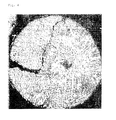
- FIG. 2 is an SEM photograph showing the cross section of the hydrogen gas generating member containing Al and Sn.
- Al and Sn were cast into a cylindrical template with a diameter of 20 mm after the high-frequency melting.
- a white base matrix is Sn and a black point is Al.
- the whole composition analysis was carried out by EPMA. As the result, Al was 30% and Sn was 70%.
- the specimen was cut out and rolled with a cold rolling mill. The rolling could be easily performed and a hydrogen gas generating member having a rolling ratio of 99.99% could be obtained.
- the rolled surface of the obtained sample was analyzed XPS (X-ray photoelectron spectroscopy).
- Al-X-Y alloys of Examples 2 to 19 were subjected to rolling treatment in the same manner as described in Example 1 except that the type and amount of the dopant metal as to X and Y were changed.
- the composition at this time as well as the situation of the generation of hydrogen gas are additionally shown in Table 1.
- a pure Al was cast into the cylindrical template with a diameter of 20 mm after the high-frequency melting.
- the specimen was cut out and rolled with the cold rolling mill.
- a specimen with a rolling ratio of 99.99% was prepared.
- the specimen was analyzed by XPS. As the result, an oxide of Al was confirmed on the very outermost surface of the sample. Further, the same specimen was brought into contact with water at ordinary temperature. None was generated from the plate material. The results are shown in Table 1.
- the Al-X-Y alloy is put into the same crucible and is melted in the high-frequency melting furnace, and then it is formed into powder using powder forming techniques such as the gas atomizing method.
- powder forming techniques such as the gas atomizing method.
- any of known techniques such as a heating technique using an electric furnace may be used.
- the Al-X-Y alloy was formed into powder by the gas atomizing method after the high-frequency melting.
- the composition of the produced powder is shown in Table 2.
- Fig. 3 is an SEM photograph showing the cross section of the hydrogen gas generating member containing Al, Sn, and In. A white base matrix is Sn-In and a black point is Al.
- Al-X-Y alloys of Examples 36 to 53 were subjected to powdering treatment in the same manner as described in Example 35 except that the type and amount of the dopant metal as to X and Y were changed.
- the composition at this time as well as the situation of the generation of hydrogen gas are additionally shown in Table 2.
- Al-X-Y alloys of Comparative examples 12 to 18 were subj ected to powdering treatment in the same manner as described in Example 35 except that the type and amount of the dopant metal as to X and Y were changed.
- the composition at this time as well as the situation of the generation of hydrogen gas are additionally shown in Table 2. 5 g of the powder was taken out, followed by bringing into contact with warm water. No change occurred after the immersion and the generation of hydrogen was not observed.
Landscapes
- Chemical & Material Sciences (AREA)
- Organic Chemistry (AREA)
- Engineering & Computer Science (AREA)
- Metallurgy (AREA)
- Mechanical Engineering (AREA)
- Materials Engineering (AREA)
- General Health & Medical Sciences (AREA)
- Inorganic Chemistry (AREA)
- Combustion & Propulsion (AREA)
- Health & Medical Sciences (AREA)
- Chemical Kinetics & Catalysis (AREA)
- Fuel Cell (AREA)
- Manufacture Of Metal Powder And Suspensions Thereof (AREA)
Abstract
Description
- The present invention relates to a hydrogen gas generating member which produces hydrogen gas to be used as a fuel for motors and fuel cells or a raw material for chemical industries using the reaction of a hydroxide forming metal typified by Al with water and its process for producing hydrogen gas.
- Hydrogen gas has been conventionally produced by electrolysis of water (H2O→H2+1/2O2) or steam reforming of hydrocarbon (CH4+H2O→3H2+CO). However, when the electrolysis method is used, the energy efficiency is low. When the steam reforming process is used, there are problems such as a large burden on the facility and disposal of by-products. Thus, a process for producing hydrogen by reaction of metal and water has been examined.
Typical examples of the metal to be used for hydrogen production include Al and an Al alloy. For example, in Patent documents 1, 2, and 4, hydrogen gas is generated and trapped by the steps of immersing Al in Ga with a melting point of 30°C or less or a Ga-In alloy melt, removing a surface oxide film, exposing an active surface, and contact-reacting Al with water (Al+3H2O→Al(OH)3+1.5H2). Further, a method including the steps of cutting and processing an Al alloy immersed in water and exposing a fresh active surface (Patent document 3), friction and dynamic fracture associated with friction (Patent document 5), thermal shock by rapid heating and quenching (Patent document 6) are known. - When the generation of hydrogen gas is dependant on the reaction of the active surface of the Al alloy and water, the hydrogen gas yield is influenced by the size of the active surface. It is said that the bulk of the Al alloy does not contribute to a hydrogen gas generation reaction. Since the size of the bulk is overwhelmingly larger than that of the active surface, the hydrogen gas yield is significantly lower than the consumption of the Al alloy. It may remain within several percent of a theoretical value of 1.31/g·Al which is calculated from a reaction formula of Al+3H2O→Al(OH)3+1.5H2.
Further, it is reported that hydrogen gas is generated by contact-reacting metals having a low melting point, such as Ga, In, Sn, or Zn and the alloyed Al with water (Nonpatent document 1). From the viewpoint that the hydrogen gas generation reaction is occurred by bringing dopants such as Ga, In, Sn, or Zn and the alloyed Al into contact with water, the process is advantageous as compared to a method depending on the reaction of an active surface which is newly formed by cutting and frictioning the surface of the Al alloy with water. However, the alloyed Al alloy contains expensive metals such as Ga and In and thus it is not suitable from a cost standpoint.
Further, it is reported that the hydrogen gas generation reaction is induced by bringing alloy powder produced by adding 0 to 30% by weight of Bi to Al by the mechanical alloying process using a ball mill into contact with water (Nonpatent document 2). -
- Patent document 1:
U.S. Patent No. 4358291 - Patent document 2:
U.S. Patent No. 4745204 - Patent document 3: Japanese Patent Application Laid-Open (JP-A) No.
2001-31401 - Patent document 4:
JP-A No. 2003-12301 - Patent document 5:
JP-A No. 2004-123517 - Patent document 6:
JP-A No. 2006-45004 - Nonpatent document 1: O.V Kravchenko et al., Journal of Alloys and Compounds 397(2005). pp.58-62
- Nonpatent document2: M-Q.Fan et al., International Journal of Hydrogen Energy, Corrected Proof, Available online 12 February 2007
- The fact that the hydrogen gas yield is changed by the water temperature in this case is described in Patent document 6 and Nonpatent document 1. From an economical point of view, it goes without saying that it is desirable to obtain a stable hydrogen yield when the water temperature is room temperature (from 5 to 40°C).
- The present inventors have investigated and examined various effects caused by alloying of dopant. As the result, they have found that, surprisingly, when the alloyed Al alloy is subjected to a rolling treatment or a powdering treatment, the hydrogen gas generation reaction is proceeded safely and efficiently without expensive Ga.
Thus, an objective of the present invention is to provide a hydrogen gas generating member which safely promotes the hydrogen gas generation reaction by performing the rolling treatment or the powdering treatment and bringing into contact with water based on the finding.
Further, the objective of the present invention is to provide a process for producing hydrogen gas which includes a step of performing the hydrogen gas generation reaction by bringing into contact with water using the hydrogen gas generating member. - In order to solve the above-described problems, according to the present invention, there is provided a hydrogen gas generating member including a texture in which Al is finely dispersed in a metal matrix, where hydrogen gas is generated by bringing the hydrogen gas generating member into contact with water.
According to the present invention, the hydrogen gas generating member is separated into two-liquid phases having mutually different compositions in a liquid phase state and it is separated into two-liquid phases in a solid phase state.
According to the present invention, the hydrogen gas generating member is an Al-X alloy and X is at least one selected from Sn, Bi, and In.
According to the present invention, the hydrogen gas generating member is an Al-X alloy and X is selected from Sn: 10.1 to 99.5% (mass percent: hereinafter on the basis of mass percent), Bi: 30.1 to 99.5%, In: 10.1 to 99.5%, Sn+Bi: 20.1 to 99.5%, Sn+In: 10 to 99.5%, Bi+In: 20.1 to 99.5%, and Sn+Bi+In: 20 to 99.5%.
According to the hydrogen gas generating member of the present invention, the Al-X alloy further includes Y and Y is at least one selected from Pb: 0.01 to 20%, Zn: 0.01 to 30%, Si: 0.01 to 20%, Cd: 0.01 to 20%, Cu: 0.01 to 20%, Fe: 0.01 to 5%, Ga: 0.01 to 30%, Ge: 0.01 to 30%, Hg: 0.01 to 20%, Mg: 0.01 to 20%, Ni: 0.01 to 5%, S: 0.01 to 5%, and Mn: 0.01 to 5%, the content is within the range of 60% even when a plurality of elements are contained, and the relation of X and Y is defined by 2X>Y.
According to the present invention, the hydrogen gas generating member is rolled and processed.
According to the present invention, the hydrogen gas generating member is powdered. - A process for producing hydrogen gas includes a step of bringing the hydrogen gas generating member according to any one described above into contact with water to generate hydrogen gas.
- According to the means to solve the problems, when the hydrogen gas generating member of the present invention is used, the hydrogen gas generation reaction may be produced with inexpensive components. In addition, the hydrogen gas generation reaction may be safely produced by bringing into contact with water.
Further, the process for producing hydrogen gas of the present invention has a simple structure and may allow the hydrogen gas generation reaction to produce safely. -
-
Fig. 1 is a schematic diagram showing a structure of a hydrogen gas generating apparatus which generates hydrogen gas. -
Fig. 2 is an SEM photograph showing the cross section of the hydrogen gas generating member containing Al and Sn. -
Fig. 3 is an SEM photograph showing the cross section of the hydrogen gas generating member containing Al, Sn, and In. -
Fig. 4 is an SEM photograph of the cross-sectional texture of the hydrogen gas generating member containing Al, Sn, and In when hydrogen is generated. -
- 10
- Hydrogen generating apparatus
- 11
- Apparatus container
- 12
- Hydrogen gas collecting pipe
- 13
- Water supply pipe
- 14
- Fixed member
- 15
- Water
- 16
- Water drain pipe
- 20
- Hydrogen gas generating Member
- Hereinafter, the best mode for carrying out the invention will be described based on the drawings. In this regard, it is easy for a so-called person skilled in the art to make other embodiments by using variations and modifications of the present invention in the claims. These modifications and variations are intended to fall within the scope of the claims, but do not constitute a limitation of the claims.
The hydrogen gas generating member of the present invention includes the texture in which Al is finely dispersed in the metal matrix, where hydrogen gas is generated by bringing the hydrogen gas generating member into contact with water.
In Al in which a clean surface is exposed, it is known that hydrogen is generated while Al is reacted with water to be converted to Al(OH)3. Similarly, it is known that when a high energy light having a short wavelength such as sunlight is given in the action, water is decomposed to generate hydrogen. The hydrogen gas generating member of the present invention generates hydrogen using a successive hydrogen generation mechanism in which hydrogen is generated while Al which is finely dispersed in the metal matrix is reacted with water to be converted to Al(OH)3, water permeates into a part where Al disappeared, and Al in the metal matrix is reacts with water. When among them, Al is dispersed in the metal matrix, the hydrogen generating capability is not significantly reduced even if the Al surface is oxidized by oxygen.
Al is formed into a fine particle size and dispersed in the metal matrix. With reference to the fine texture of Al (hereinafter simply referred to as an Al crystal grain), a crystal grain of the metal matrix and the Al crystal grain are separated into two phases in the metal matrix. The number average domain diameter of the Al crystal grain is in the range of 0.01 to 500 µm. Hydrogen generating efficiency is influenced by the presence of the Al crystal grain in the metal matrix. When the number average domain diameter of the Al crystal grain is less than 0.01 µm, the hydrogen generating efficiency is low. Thus, this is not industrially practical. When the number average domain diameter of the Al crystal grain exceeds 500 µm, oxidation becomes significant and the capability to generate hydrogen is reduced. - Further, the hydrogen gas generating member of the present invention is formed of Al containing unavoidable impurities and a metal X. The metal X is at least one selected from Sn, Bi, and In. Further, the hydrogen gas generating member of the present invention has a composition having a temperature range where the hydrogen gas generating member is separated into Al having a mutually different composition in a liquid phase state and another liquid phase and the two-liquid phase separation is present. Thus, the hydrogen gas generating member of the present invention has a metallic texture which is separated into two-liquid phases of the metal X and Al as the metal matrix.
Further, as for the content of X, X is in the range of Sn: 10.1 to 99.5%, Bi: 30.1 to 99.5%, and In: 10.1 to 99.5% based on the hydrogen gas generating member. When Sn is less than 10.1%, Bi is less than 30.1%, and In is less than 10.1% as to the content, the amount of Al is increased. This provides demerits such that the dispersed region of Al is significantly decreased. When the content exceeds 99.5%, the amount of Al is reduced. This provides demerits such that the generation of hydrogen gas is decreased. Particularly, X is preferably in the range of Sn: 20 to 95%, Bi: 35 to 90%, and In: 25 to 95%.
This provides merits such that hydrogen gas is efficiently generated.
Further, the total of two or three metals selected from Sn, Bi, and In as the metal X may be in the range of Sn+Bi: 20.1 to 99. 5%, Sn+In: 10 to 99.5%, Bi+In: 20.1 to 99.5%, and Sn+Bi+In: 20 to 99.5%. The two-phase separation into the metal X having a mutually different composition in a liquid phase state and Al is facilitated by containing two or more metals, which makes the production of the alloy easy. When Sn+Bi and Bi+In are less than 20.1%, Sn+In is less than 10%, and Sn+Bi+In is less than 20% as for the content, the amount of Al is increased. This provides demerits such that the dispersed region of Al is significantly decreased. On the other hand, when the content exceeds 99.5%, the amount of Al is reduced. This provides demerits such that the generation of hydrogen gas is decreased. Particularly, the content is preferably in the range of Sn+Bi: 25 to 95%, Sn+In: 25 to 95%, Bi+In: 25 to 95%, and Sn+Bi+In: 25 to 95%. This provides merits such that hydrogen gas is efficiently generated. - Further, in the hydrogen gas generating member of the present invention, the Al-X alloy is made to contain Y. Y is at least one selected from Pb: 0.01 to 20%, Zn: 0.01 to 30%, Si: 0.01 to 20%, Cd: 0.01 to 20%, Cu: 0.01 to 20%, Fe: 0.01 to 5%, Ga: 0.01 to 30%, Ge: 0.01 to 30%, Hg: 0.01 to 20%, Mg: 0.01 to 20%, Ni: 0.01 to 5%, S: 0.01 to 5%, and Mn: 0.01 to 5%.
Y is an element which has a high tendency to form a liquid two-phase separation system by containing Al. Particularly, when a liquid two-phase separation system Al alloy which contains Sn, Bi, and In is used as a more stable liquid two-phase separation system, it is easier to melt the alloy.
When Y is contained, two-liquid phase separation becomes stable and the melting temperature for the alloy production is reduced. This makes a fine dispersion of the Al crystal grain in the metal matrix easy.
Further, the content of Y is within the range of 60% even when a plurality of elements are contained. When the content of Y is less than 0.01%, there are demerits such that the two-liquid phase separation is unstable. When the content of Y exceeds 60%, the amount of Al is reduced. This provides demerits such that the generation of hydrogen gas is decreased. Particularly, it is preferably in the range of 0.1 to 30%. This provides merits such that the production of the alloy becomes easier. Further, Mn, Zn, Mg, and Ga are particularly preferable as Y. Mn, Zn, and Mg are additive elements of mass-produced aluminum cans. Even if the aluminum cans are melted, hydrogen may be generated. Since the two-liquid phase separation temperature is rapidly decreased by adding Ga, the dissolution of the alloy becomes easier and the hydrogen gas yield becomes larger.
Further, the relation of X and Y is defined by 2X>Y. When the alloy is produced so that the total of X and Y is in the range of 10.1 to 99.5%, an effect such that a fine crystal grain of Al is dispersed in an X-Y matrix is exerted. Further, when the hydrogen gas generating member contains X, Y, unavoidable impurities, and the balance being Al, the total mass percentage is 100%. - Further, the hydrogen gas generating member of the present invention is rolled and processed. A rolling apparatus may be any one of a two-high rolling mill, a Sendzimir rolling mill, a planetary rolling mill, and a universal rolling mill. The rolling ratio is preferably in the range of 30 to 99.99%.
The Al crystal grain which is originally fine and has a very high purity in the metal matrix is stretched into a fiber shape through the rolling process. Further, when a large number of fine cracks are formed in the crystal grain, an area coming in contact with water is increased and the reactivity with water may be improved. Further, when the fiber-shaped Al grain is reacted with water, voids are formed in a plate material. When water further permeates into the voids, the whole Al in the metal matrix is reacted with water and thus the hydrogen generating efficiency may be increased.
Further, the hydrogen gas generating member of the present invention is powdered. The powdering may be performed by mechanical grinding processes such as the ball mill grinding process or the attritor grinding process, or, alternatively, the process for powdering from a melted state using, for example, an atomizer. When the hydrogen gas generating member is prepared to have a small particle diameter and further the Al crystal grain is made to be present on the surface, the contact surface with water may be increased and the hydrogen generating efficiency may be increased. At this time, the weight average particle diameter of the hydrogen gas generating member is in the range of 5 to 400 µm. When the weight average particle diameter is less than 5 µm, the surface oxide film of Al is increased. This provides demerits such that the generation of hydrogen is inhibited. When the weight average particle diameter exceeds 400µm, the dispersed particle diameter of Al becomes larger, which is disadvantageous. Particularly, it is preferably in the range of 20 to 100 µm. This provides merits such that a balance between the dispersed particle diameter of Al and hydrogen generating efficiency is good. - Further, the process for producing hydrogen gas of the present invention will be described.
Fig. 1 is a schematic diagram showing a structure of a hydrogen gas generating apparatus which generates hydrogen gas.
As shown inFig. 1 , awater supply pipe 13 that supplies water and a hydrogengas collecting pipe 12 that takes the generated hydrogen gas outside to store it are formed in ahydrogen generating apparatus 10. Further, a fixingmember 14 for mounting a hydrogengas generating member 20 is provided in thehydrogen generating apparatus 10 and is brought into contact with awater 15 that is stored inside. Water is supplied from thewater supply pipe 13 to thehydrogen generating apparatus 10 and is brought into contact with the hydrogengas generating member 20. The hydrogen gas generated from the surface is supplied outside through the hydrogengas collecting pipe 12 and stored in a storage tank (not shown). As shown inFig. 1 , the fixingmember 14 not only fixes the hydrogengas generating member 20 but also may control the hydrogen gas yield when the fixingmember 14 is made to be movable up and down and the contact area of the hydrogengas generating member 20 with water is adjusted. Further, a plurality of the fixedmembers 14 may be provided and the details will not be described here. The use of thehydrogen generating apparatus 10 having the hydrogengas generating member 20 allow for easy production of hydrogen gas. - Subsequently, the hydrogen gas generating member of the present invention will be more specifically described.
- A process of the rolling treatment of an Al-X-Y alloy of the hydrogen gas generating member will be described.
An alloying treatment is performed by first putting Al and Sn as a dopant metal X into the same crucible, melting in a high-frequency melting furnace, and casting to a template. As for the melting method, any of known techniques such as a heating technique using an electric furnace may be used.
The casted Al alloy is subjected to the rolling treatment by rolling. Known materials such as kerosene may be used as lubricants. Further, either hot-rolling or cold-rolling techniques may be used. From a cost viewpoint, the rolling treatment by cold-rolling is preferable.
Fig. 2 is an SEM photograph showing the cross section of the hydrogen gas generating member containing Al and Sn. Al and Sn were cast into a cylindrical template with a diameter of 20 mm after the high-frequency melting. In the SEM photograph, a white base matrix is Sn and a black point is Al. The whole composition analysis was carried out by EPMA. As the result, Al was 30% and Sn was 70%. The specimen was cut out and rolled with a cold rolling mill. The rolling could be easily performed and a hydrogen gas generating member having a rolling ratio of 99.99% could be obtained.
The rolled surface of the obtained sample was analyzed XPS (X-ray photoelectron spectroscopy). As the result, it was found that an oxide of Al and an oxide of Sn were present together on the very outermost surface of the rolled sample.
0.0515 g of hydrogen gas generating member (a thin film) was immersed in water at 15°C. When about 60 seconds passed after the immersion, hydrogen was vigorously generated.
With the expansion of the specimen, a situation where the generation of hydrogen was proceeding from the inside of the specimen was observed. When the generation of hydrogen was finally finished, the shape at the time of rolling of the specimen was not kept. At this time, the hydrogen gas yield was about 6 mL. When the hydrogen gas yield was theoretically, considered, the efficiency was about 90%.
The composition at this time as well as the situation of the generation of hydrogen gas are shown in Table 1. The generation of hydrogen gas was visually evaluated. The case where hydrogen was vigorously generated was defined as "Very good", the case where hydrogen was sufficiently generated in a state in which there was no problem practically was defined as "Good", and the case where hydrogen was not generated or the hydrogen generation level was not enough even if it was generated was defined as "Bad". - Al-X-Y alloys of Examples 2 to 19 were subjected to rolling treatment in the same manner as described in Example 1 except that the type and amount of the dopant metal as to X and Y were changed. The composition at this time as well as the situation of the generation of hydrogen gas are additionally shown in Table 1.
- A pure Al was cast into the cylindrical template with a diameter of 20 mm after the high-frequency melting. The specimen was cut out and rolled with the cold rolling mill. A specimen with a rolling ratio of 99.99% was prepared. The specimen was analyzed by XPS. As the result, an oxide of Al was confirmed on the very outermost surface of the sample. Further, the same specimen was brought into contact with water at ordinary temperature. Nothing was generated from the plate material. The results are shown in Table 1.
- Alloys of Comparative examples 2 to 4 to which Sn, Bi, and In were added and alloys of Comparative examples 5 to 11 to which Fe, Zn, Ga, Ge, Hg, Pb, and Si were added were subjected to rolling treatment in the same manner as described in Example 1 except that the type and amount of the dopant metal as to X and Y were changed. The composition at this time as well as the situation of the generation of hydrogen gas are shown in Table 1. Nothing was generated from plate materials of Sn, Bi, and In and other alloys. The results are shown in Table 1.
- The results of XPS of Example 1 and Comparative example 1, it was found that the presence of an oxide of an additive element on the very outermost surface of the sample was important as an initial stage of hydrogen generation. When water penetrates into an interface between the oxide of Al and the oxide of the additive element, hydrogen is generated by reaction with the pure Al therein.
- At this time, the additive element for alloying to Al, the rolling ratio, and the generation of hydrogen were examined. The result is shown in Table 1 including the results of Examples 1 to 34 and Comparative examples 1 to 11.
[Table 1] Dopant materials to Al-alloy, the rolling ratio, and the generation of hydrogen Example Comparative Example X (mass percent) Y (mass percent) Rolling ratio (percent) Water temperature (°C) Generation of hydrogen Example 1 Sn:70 - 99.99 15 Very good Example 2 Sn:50 Pb:0.01 80 50 Very good Example 3 Sn:95 - 85 20 Very good Example 4 Sn:90 - 50 50 Very good Example 5 Sn:80 - 80 20 Very good Example 6 Sn:70 - 95 30 Very good Example 7 Sn:60 - 97 15 Very good Example 8 Sn:40 - 98 50 Very good Example 9 Sn:30 - 98 90 Very good Example 10 Sn:20 - 99 70 Very good Example 11 Sn:5 - 99 50 Good Example 12 Sn:20 Si:20 15 90 Good Example 13 Bi:90 - 10 50 Very good Example 15 Bi:50 - 10 20 Very good Example 16 Bi:20 - 50 90 Good Example 17 Bi:50 Cd:10 30 30 Very good Example 18 Bi:30.1 Cu:0.2 30 90 Good Example 19 In:90 - 90 15 Very good Example 20 In:30 - 90 15 Very good Example 21 Sn:48, Bi:20 - 95 35 Very good Example 22 Sn:48, Bi:20 Fe:3 85 15 Very good Example 23 Sn:57, Bi:5 Zn:0.3 95 70 Very good Example 24 Sn:48, Bi:20 Ga:1 80 90 Very good Example 25 Sn:16, Bi:20 Ge:25 40 30 Good Example 26 Sn:19, Bi:5 Hg:0.2 90 90 Good Example 27 Sn:47.5, Bi:5 Mg:10 99 60 Good Example 28 Sn:40, In:40 - 90 15 Very good Example 29 Sn:40, In:40 Ni:0.1 90 15 Very good Example 30 Sn:50, In:5 S:0.01 99 60 Very good Example 31 Sn:3, Bi:7, In:10 Mn:1 50 50 Very good Example 32 Sn:6, Bi:14, In:20 - 15 90 Very good Example 33 Sn:4, In:5, Bi:11 - 80 15 Very good Example 34 Sn:7, In:10, Bi:22 - 30 90 Very good Comparative Example 1 - - 99.99 90 Bad Comparative Example 2 Sn:0.01 - 99.99 80 Bad Comparative Example 3 Bi:0.01 - 99.99 90 Bad Comparative Example 4 In:0.01 - 99.99 70 Bad Comparative Example 5 - Fe:4 70 80 Bad Comparative Example 6 - Zn:3 99 80 Bad Comparative Example 7 - Ga:15 70 80 Bad Comparative Example 8 - Ge:10 95 80 Bad Comparative Example 9 - Hg:5 50 80 Bad Comparative Example 10 - Pb:10 95 90 Bad Comparative Example 11 - Si:10 40 80 Bad - As is apparent from Table 1, it was found that hydrogen gas could be generated by adding Sn, Bi, and In as additive elements to Al. Further, the hydrogen generating efficiency was higher as the rolling ratio was higher.
- A process of powdering the Al-X-Y alloy of the hydrogen gas generating member of the present invention will be described.
First, the Al-X-Y alloy is put into the same crucible and is melted in the high-frequency melting furnace, and then it is formed into powder using powder forming techniques such as the gas atomizing method. As for the melting method, any of known techniques such as a heating technique using an electric furnace may be used.
The Al-X-Y alloy was formed into powder by the gas atomizing method after the high-frequency melting. The composition of the produced powder is shown in Table 2.
Fig. 3 is an SEM photograph showing the cross section of the hydrogen gas generating member containing Al, Sn, and In. A white base matrix is Sn-In and a black point is Al. The whole composition analysis was carried out by EPMA. As the result, Al was 60% and Sn-In alloy was 40%.
5 g of the powder was taken out and stored in a stainless steel mesh, followed by bringing into contact with warm water at 60°C. The water discolored while hydrogen was vigorously generated immediately after the immersion. An SEM photograph the cross-sectional texture of the test powder at the time is shown inFig. 4 . A crack entered from the surface and extended to the inside of Al. In this case, the active surface of Al was exposed. It is considered that hydrogen was generated by the hydration reaction of hydroxide formation with water. The composition at this time as well as the situation of the generation of hydrogen gas are shown in Table 2. - Al-X-Y alloys of Examples 36 to 53 were subjected to powdering treatment in the same manner as described in Example 35 except that the type and amount of the dopant metal as to X and Y were changed. The composition at this time as well as the situation of the generation of hydrogen gas are additionally shown in Table 2.
- Al-X-Y alloys of Comparative examples 12 to 18 were subj ected to powdering treatment in the same manner as described in Example 35 except that the type and amount of the dopant metal as to X and Y were changed. The composition at this time as well as the situation of the generation of hydrogen gas are additionally shown in Table 2. 5 g of the powder was taken out, followed by bringing into contact with warm water. No change occurred after the immersion and the generation of hydrogen was not observed.
- At this time, the additive element for alloying to Al, the particle diameter, and the generation of hydrogen were examined. The result is shown in Table 2 including the results of Examples 35 to 53 and Comparative examples 12 to 18.
[Table 2] Dopant materials to Al-alloy, the particle diameter, and the generation of hydrogen Example Comparative Example X(mass percent) Y(mass percent) Particle diameter of powder (µm) Water temperature (°C) Generation of hydrogen Example 35 Sn:30, In:10 - 200-250 60 Very good Example 36 Sn:90 - 10-50 90 Very good Example 37 Sn:40 Pb:0.01 50-200 70 Very good Example 38 Sn:20 Si:20 10-250 90 Good Example 39 Bi:99.9 - 5-100 50 Good Example 40 Bi:50 Cd:10 100-300 30 Very good Example 41 Bi:30.1 Cu:0.2 200-250 90 Good Example 42 In:90 - 10-100 15 Very good Example 43 Sn:30, Bi:5 Fe:3 10-150 50 Very good Example 44 Sn:40, Bi:5 Zn:3 50-150 70 Very good Example 45 Sn:48, Bi:20 Ga:1 10-250 90 Very good Example 46 Sn:36, Bi:20 Ge:25 50-200 30 Good Example 47 Sn:19, Bi:5 Hg:0.2 10-250 90 Good Example 48 Sn:47.5, Bi:5 Mg:10 5-100 60 Good Example 49 Sn:15, In:5 Ni:0.1 100-300 90 Very good Example 50 Sn:13, Bi:7, In:30 S:0.01 10-100 50 Very good Example 51 Sn:22, Bi:4, In:35 Mn:0.2 10-150 90 Very good Example 52 Sn:37, In:5, Bi:30 - 200-250 15 Very good Example 53 Sn:7, In:10, Bi:22 - 10-100 90 Very good Comparative Example 12 - Cu:50 30-400 90 Bad Comparative Example 13 Sn:0.01 - 10-100 80 Bad Comparative Example 14 Bn:0.01 - 50-300 90 Bad Comparative Example 15 In:0.01 - 30-400 70 Bad Comparative Example 16 - Fe:4 200-250 80 Bad Comparative Example 17 - Pb:20 5-100 80 Bad Comparative Example 18 - Ga:15 50-100 80 Bad - As is apparent from Table 2, Sn, In, and Bi were good as additive elements for alloying to Al. Further, the hydrogen generating efficiency was higher as the particle diameter was smaller.
- A lot of applications such as portable batteries and emergency electrical generators are considered using the hydrogen gas generating member and the process for producing hydrogen gas to be obtained by the present invention. Further, it is a safe material as science teaching material to understand the mechanism of water.
Claims (8)
- A hydrogen gas generating member comprising: a texture in which Al is finely dispersed in a metal matrix, wherein hydrogen gas is generated by bringing the hydrogen gas generating member into contact with water.
- The hydrogen gas generating member according to claim 1, wherein the hydrogen gas generating member is separated into Al having a mutually different composition in a liquid phase state and another liquid phase and the two-liquid phase separation is present.
- The hydrogen gas generating member according to claim 1 or 2, wherein the hydrogen gas generating member is an Al-X alloy and X is at least one selected from Sn, Bi, and In.
- The hydrogen gas generating member according to claim 3, wherein the hydrogen gas generating member is an Al-X alloy and X is selected from Sn: 10.1 to 99.5% (mass percent: hereinafter on the basis of mass percent), Bi: 30.1 to 99.5%, In: 10.1 to 99.5%, Sn+Bi: 20.1 to 99.5%, Sn+In: 10 to 99.5%, Bi+In: 20.1 to 99.5%, and Sn+Bi+In: 20 to 99.5%.
- The hydrogen gas generating member according to claim 3 or 4, wherein the Al-X alloy further includes Y and Y is at least one selected from Pb: 0.01 to 20%, Zn: 0.01 to 30%, Si: 0.01 to 20%, Cd: 0.01 to 20%, Cu: 0.01 to 20%, Fe: 0.01 to 5%, Ga: 0.01 to 30%, Ge: 0.01 to 30%, Hg: 0.01 to 20%, Mg: 0.01 to 20%, Ni: 0.01 to 5%, S: 0.01 to 5%, and Mn: 0.01 to 5%, the content is within the range of 60% even when a plurality of elements are contained, and the relation of X and Y is defined by 2X>Y.
- The hydrogen gas generating member according to any one of claims 1 to 5, wherein the hydrogen gas generating member is rolled and processed.
- The hydrogen gas generating member according to any one of claims 1 to 5, wherein the hydrogen gas generating member is powdered.
- A process for producing hydrogen gas comprising a step of: bringing the hydrogen gas generating member according to any one of claims 1 to 7 into contact with water to generate hydrogen gas.
Applications Claiming Priority (2)
| Application Number | Priority Date | Filing Date | Title |
|---|---|---|---|
| JP2007222477A JP5383989B2 (en) | 2007-08-29 | 2007-08-29 | Hydrogen gas generating member and method for producing hydrogen gas |
| PCT/JP2008/002191 WO2009028143A1 (en) | 2007-08-29 | 2008-08-11 | Hydrogen gas generating member and hydrogen gas producing method therefor |
Publications (3)
| Publication Number | Publication Date |
|---|---|
| EP2213617A1 true EP2213617A1 (en) | 2010-08-04 |
| EP2213617A4 EP2213617A4 (en) | 2013-05-01 |
| EP2213617B1 EP2213617B1 (en) | 2017-10-11 |
Family
ID=40386886
Family Applications (1)
| Application Number | Title | Priority Date | Filing Date |
|---|---|---|---|
| EP08790439.7A Not-in-force EP2213617B1 (en) | 2007-08-29 | 2008-08-11 | Hydrogen gas generating member and hydrogen gas producing method therefor |
Country Status (4)
| Country | Link |
|---|---|
| US (1) | US9617622B2 (en) |
| EP (1) | EP2213617B1 (en) |
| JP (1) | JP5383989B2 (en) |
| WO (1) | WO2009028143A1 (en) |
Cited By (3)
| Publication number | Priority date | Publication date | Assignee | Title |
|---|---|---|---|---|
| EP2406174A4 (en) * | 2009-03-11 | 2013-12-25 | Advanced Hydrogen Technologies Corp | CARTRIDGE FOR GENERATING HYDROGEN |
| CN109133000A (en) * | 2018-08-23 | 2019-01-04 | 杭州氢源素生物科技有限公司 | A kind of micro-nano composite hydrolysis hydrogen manufacturing material of aluminium base |
| CN110724857A (en) * | 2019-12-04 | 2020-01-24 | 河南科技大学 | A kind of rich aluminum alloy for fracturing ball and preparation method thereof, and method for controlling hydrogen production rate of rich aluminum alloy for fracturing ball |
Families Citing this family (26)
| Publication number | Priority date | Publication date | Assignee | Title |
|---|---|---|---|---|
| JP5753987B1 (en) * | 2014-06-06 | 2015-07-22 | 合同会社エネオン総合研究所 | Hydrogen generating alloy, method for producing hydrogen generating alloy, hydrogen generating cartridge, hydrogen producing apparatus, hydrogen producing method, and fuel cell system |
| CN107847909A (en) | 2015-06-02 | 2018-03-27 | 麻省理工学院 | Activated aluminum fuel |
| EP3386606B1 (en) | 2015-12-09 | 2024-08-21 | Corning Incorporated | Particulate filter |
| CN105800553B (en) * | 2016-03-16 | 2018-04-17 | 桂林电子科技大学 | A kind of Al BiOCl aluminum-based composite hydrogen manufacturing materials and preparation method thereof |
| JP6890477B2 (en) * | 2017-06-14 | 2021-06-18 | 株式会社アルバック | Hydrogen generating material manufacturing method, fuel cell, hydrogen generating method |
| CN109852847B (en) * | 2017-11-30 | 2020-10-30 | 吉林大学 | Al-Ga-In-Sn-Cu alloy for hydrogen production, preparation method thereof, and application in fuel cell |
| CN109988943A (en) * | 2017-12-29 | 2019-07-09 | 吉林大学 | Al-Ga-In-Sn-Mg alloy of hydrogen manufacturing and preparation method thereof |
| CN112111675B (en) * | 2019-06-19 | 2023-04-25 | 吉林大学 | Al-Ga-In-Sn-Si alloy for hydrogen production and preparation process thereof |
| US11111141B1 (en) | 2019-12-08 | 2021-09-07 | Ltag Systems Llc | Storing activated aluminum |
| US11986877B1 (en) | 2019-12-10 | 2024-05-21 | Ltag Systems Llc | Activated aluminum formation |
| WO2021119628A1 (en) | 2019-12-12 | 2021-06-17 | Ltag Systems Llc | Systems, modules, and submersible vehicles for collecting material from a seafloor |
| JP2021139000A (en) * | 2020-03-05 | 2021-09-16 | 株式会社コベルコ科研 | Metal mixture for hydrogen generation, method for producing the same, and method for producing hydrogen using metal mixture for hydrogen generation |
| US11318437B1 (en) | 2020-04-28 | 2022-05-03 | Ltag Systems Llc | Controlling contamination in hydrogen production from water-reactive aluminum |
| US11148840B1 (en) | 2020-05-07 | 2021-10-19 | Ltag Systems Llc | Method of packaging water-reactive aluminum |
| CN111705241A (en) * | 2020-07-03 | 2020-09-25 | 兰州理工大学 | A kind of Al alloy for preparing hydrogen and its preparation method and application |
| AU2021326397A1 (en) | 2020-08-09 | 2023-03-09 | Ltag Systems Llc | Controlling reactability of water-reactive aluminum |
| US11312466B1 (en) | 2020-09-14 | 2022-04-26 | Ltag Systems Llc | Inflatable structure deployment |
| US11958585B1 (en) | 2020-11-25 | 2024-04-16 | Ltag Systems Llc | Midair deployment of aerostats |
| US11964748B1 (en) | 2021-01-27 | 2024-04-23 | Ltag Systems Llc | Remote generation of lifting gas |
| US12296940B2 (en) * | 2021-10-17 | 2025-05-13 | Ltag Systems Llc | Lifting gas generation |
| US12134456B1 (en) | 2022-02-15 | 2024-11-05 | Ltag Systems Llc | Inflatable structure launching |
| US12145142B1 (en) | 2022-11-02 | 2024-11-19 | Ltag Systems Inc | Containerized processing of activated aluminum |
| US12589853B1 (en) | 2022-12-12 | 2026-03-31 | Ltag Systems Llc | Actively actuatable valves for aerostat buoyancy control |
| US12269571B1 (en) | 2022-12-14 | 2025-04-08 | Ltag Systems Llc | Aerostat launching system with replaceable liner |
| US12429311B1 (en) | 2023-02-07 | 2025-09-30 | Ltag Systems Llc | Aerostats for aerial platform acquisition |
| US12275516B1 (en) | 2023-02-21 | 2025-04-15 | Ltag Systems Llc | Stabilization and reinforcement of balloons during rapid filling |
Family Cites Families (14)
| Publication number | Priority date | Publication date | Assignee | Title |
|---|---|---|---|---|
| JPS5089296A (en) * | 1973-12-12 | 1975-07-17 | ||
| US4358291A (en) | 1980-12-31 | 1982-11-09 | International Business Machines Corporation | Solid state renewable energy supply |
| JPH0762198B2 (en) * | 1986-05-12 | 1995-07-05 | 三菱アルミニウム株式会社 | Aluminum alloy for hydrogen generation and method for producing the same |
| JPS62287032A (en) * | 1986-06-03 | 1987-12-12 | Ofic Co | Aluminum alloy for producing hydrogen |
| EP0248960A1 (en) | 1986-06-03 | 1987-12-16 | Osaka Fuji Kogyo Kabushiki Kaisha | Hydrogen producing material |
| US4745204A (en) | 1986-06-05 | 1988-05-17 | International Business Machines Corporation | Process for producing aluminum alkoxide or aluminum aryloxide |
| JP2001031401A (en) | 1999-07-21 | 2001-02-06 | Kiriu Mach Mfg Co Ltd | Method for producing hydrogen gas |
| US20010046113A1 (en) * | 2000-02-09 | 2001-11-29 | Schmidt David G. | Alloy Compositions for use as electrode materials and for hydrogen production |
| WO2002000950A2 (en) * | 2000-06-23 | 2002-01-03 | Millenium Energy, Llc | Compositions for use as electrode materials and for hydrogen production |
| JP2002161325A (en) * | 2000-11-20 | 2002-06-04 | Ulvac Japan Ltd | Aluminum alloy, hydrogen gas generation method, hydrogen gas generator and generator |
| JP4838952B2 (en) | 2001-06-28 | 2011-12-14 | 株式会社アルバック | Hydrogen gas generator and generator |
| JP4169197B2 (en) | 2002-09-11 | 2008-10-22 | 株式会社 ハイドロデバイス | Hydrogen gas production method using friction corrosion reaction |
| JP4674746B2 (en) | 2004-08-05 | 2011-04-20 | 国立大学法人室蘭工業大学 | Hydrogen gas generation method using activated aluminum fine particles |
| US20090208404A1 (en) * | 2006-07-05 | 2009-08-20 | Isao Itoh | Hydrogen generating method, hydrogen generating alloy and method for producing hydrogen generating alloy |
-
2007
- 2007-08-29 JP JP2007222477A patent/JP5383989B2/en not_active Expired - Fee Related
-
2008
- 2008-08-11 EP EP08790439.7A patent/EP2213617B1/en not_active Not-in-force
- 2008-08-11 US US12/674,323 patent/US9617622B2/en not_active Expired - Fee Related
- 2008-08-11 WO PCT/JP2008/002191 patent/WO2009028143A1/en not_active Ceased
Cited By (3)
| Publication number | Priority date | Publication date | Assignee | Title |
|---|---|---|---|---|
| EP2406174A4 (en) * | 2009-03-11 | 2013-12-25 | Advanced Hydrogen Technologies Corp | CARTRIDGE FOR GENERATING HYDROGEN |
| CN109133000A (en) * | 2018-08-23 | 2019-01-04 | 杭州氢源素生物科技有限公司 | A kind of micro-nano composite hydrolysis hydrogen manufacturing material of aluminium base |
| CN110724857A (en) * | 2019-12-04 | 2020-01-24 | 河南科技大学 | A kind of rich aluminum alloy for fracturing ball and preparation method thereof, and method for controlling hydrogen production rate of rich aluminum alloy for fracturing ball |
Also Published As
| Publication number | Publication date |
|---|---|
| EP2213617B1 (en) | 2017-10-11 |
| JP5383989B2 (en) | 2014-01-08 |
| US20120107228A1 (en) | 2012-05-03 |
| EP2213617A4 (en) | 2013-05-01 |
| WO2009028143A1 (en) | 2009-03-05 |
| US9617622B2 (en) | 2017-04-11 |
| JP2009051714A (en) | 2009-03-12 |
Similar Documents
| Publication | Publication Date | Title |
|---|---|---|
| EP2213617B1 (en) | Hydrogen gas generating member and hydrogen gas producing method therefor | |
| Liu et al. | Hydrogen generation from hydrolysis of activated Al-Bi, Al-Sn powders prepared by gas atomization method | |
| JP5080704B2 (en) | Removal of oxygen from metal oxides and solid solutions by electrolysis in molten salt | |
| US20090208404A1 (en) | Hydrogen generating method, hydrogen generating alloy and method for producing hydrogen generating alloy | |
| Yang et al. | Effect of heat treatment on AlMgGaInSn alloy for hydrogen generation through hydrolysis reaction | |
| Kanazawa et al. | Microstructures and defect structures in ZrCr2 Laves phase based intermetallic compounds | |
| EP2835436B1 (en) | Aluminum alloy sheet for electric cell case, having excellent moldability, heat dissipation, and weldability | |
| Bo et al. | Corrosion and discharge behavior of Mg− Zn− Mn− Nd alloys as primary Mg− air batteries anode | |
| KR101435481B1 (en) | Preparation method of ternary titanium alloy powder using Ti-Mo alloy scrap | |
| JP2024167289A (en) | Manufacturing method for recycled aluminum metal blocks | |
| Nan | Electrochemical corrosion behaviour of Zn-Sn-Cu-xNi lead-free solder alloys | |
| Ohashi et al. | Mechanical properties of Ti/Mg bicontinuous composite by liquid metal replacement | |
| JP7362164B2 (en) | Mg-based alloy negative electrode material, manufacturing method thereof, and Mg secondary battery using the same | |
| Wei et al. | Mg-xNd-Zn-Zr alloys prepared by in-situ reduction: Study of microstructure, corrosion behavior, and mechanical properties | |
| JP4061211B2 (en) | Titanium alloy used for cathode electrode for producing electrolytic copper foil and method for producing the same | |
| CN111676394B (en) | Aluminum foil and preparation method thereof | |
| Marković et al. | Influence of thermo-mechanical treatment on the electrochemical behavior of cast and sintered dilute Cu–Au alloy | |
| Bowyer et al. | The effects of impurities on the properties of OFP copper specified for the copper Iron Canister | |
| Appleby et al. | Irradiation damage and powder quality impact on the strength of hot isostatically pressed ODS ferritic steel | |
| EP4692387A1 (en) | Copper alloy sheet material, method for producing same, and current-carrying component | |
| Takahashi et al. | Nickel aluminide containing refractory-metal dispersoids: 1: Synthesis by reactive mechanical alloying | |
| US20250305098A1 (en) | Method of manufacturing metal member and metal member therefrom | |
| Sipatov et al. | Influence of Processing Techniques on the Surface Microstructure of V85Ni15 Membrane Alloy | |
| JP2006176802A (en) | Method for producing high-strength magnesium alloy using solid-state reaction by hydrogenation and dehydrogenation | |
| Gao et al. | Mechanochemical Reaction Pathway of WO3 in High-Energy Ball Milling of Oxide Dispersion Strengthened Cu powders |
Legal Events
| Date | Code | Title | Description |
|---|---|---|---|
| PUAI | Public reference made under article 153(3) epc to a published international application that has entered the european phase |
Free format text: ORIGINAL CODE: 0009012 |
|
| 17P | Request for examination filed |
Effective date: 20100208 |
|
| AK | Designated contracting states |
Kind code of ref document: A1 Designated state(s): AT BE BG CH CY CZ DE DK EE ES FI FR GB GR HR HU IE IS IT LI LT LU LV MC MT NL NO PL PT RO SE SI SK TR |
|
| AX | Request for extension of the european patent |
Extension state: AL BA MK RS |
|
| RIN1 | Information on inventor provided before grant (corrected) |
Inventor name: ISHIDA, KIYOGITO Inventor name: HAGISAWA, TAKEHITO Inventor name: OMORI, TOSHIHIRO Inventor name: OHNUMA, IKUO Inventor name: TAKAKU, YOSHIKAZU Inventor name: KAINUMA, RYOSUKE |
|
| RIN1 | Information on inventor provided before grant (corrected) |
Inventor name: TAKAKU, YOSHIKAZU Inventor name: HAGISAWA, TAKEHITO Inventor name: ISHIDA, KIYOGITO Inventor name: KAINUMA, RYOSUKE Inventor name: OHNUMA, IKUO Inventor name: OMORI, TOSHIHIRO |
|
| DAX | Request for extension of the european patent (deleted) | ||
| A4 | Supplementary search report drawn up and despatched |
Effective date: 20130404 |
|
| RIC1 | Information provided on ipc code assigned before grant |
Ipc: C22C 12/00 20060101ALI20130327BHEP Ipc: B22F 1/00 20060101ALI20130327BHEP Ipc: C22C 21/00 20060101ALI20130327BHEP Ipc: C01B 3/08 20060101AFI20130327BHEP Ipc: C22C 30/04 20060101ALI20130327BHEP Ipc: C22C 13/00 20060101ALI20130327BHEP |
|
| 17Q | First examination report despatched |
Effective date: 20140117 |
|
| STAA | Information on the status of an ep patent application or granted ep patent |
Free format text: STATUS: EXAMINATION IS IN PROGRESS |
|
| GRAP | Despatch of communication of intention to grant a patent |
Free format text: ORIGINAL CODE: EPIDOSNIGR1 |
|
| STAA | Information on the status of an ep patent application or granted ep patent |
Free format text: STATUS: GRANT OF PATENT IS INTENDED |
|
| GRAJ | Information related to disapproval of communication of intention to grant by the applicant or resumption of examination proceedings by the epo deleted |
Free format text: ORIGINAL CODE: EPIDOSDIGR1 |
|
| INTG | Intention to grant announced |
Effective date: 20170623 |
|
| GRAP | Despatch of communication of intention to grant a patent |
Free format text: ORIGINAL CODE: EPIDOSNIGR1 |
|
| GRAS | Grant fee paid |
Free format text: ORIGINAL CODE: EPIDOSNIGR3 |
|
| INTG | Intention to grant announced |
Effective date: 20170725 |
|
| GRAA | (expected) grant |
Free format text: ORIGINAL CODE: 0009210 |
|
| STAA | Information on the status of an ep patent application or granted ep patent |
Free format text: STATUS: THE PATENT HAS BEEN GRANTED |
|
| AK | Designated contracting states |
Kind code of ref document: B1 Designated state(s): AT BE BG CH CY CZ DE DK EE ES FI FR GB GR HR HU IE IS IT LI LT LU LV MC MT NL NO PL PT RO SE SI SK TR |
|
| REG | Reference to a national code |
Ref country code: GB Ref legal event code: FG4D |
|
| REG | Reference to a national code |
Ref country code: CH Ref legal event code: EP |
|
| REG | Reference to a national code |
Ref country code: IE Ref legal event code: FG4D |
|
| REG | Reference to a national code |
Ref country code: AT Ref legal event code: REF Ref document number: 935829 Country of ref document: AT Kind code of ref document: T Effective date: 20171115 |
|
| REG | Reference to a national code |
Ref country code: DE Ref legal event code: R096 Ref document number: 602008052476 Country of ref document: DE |
|
| REG | Reference to a national code |
Ref country code: NL Ref legal event code: MP Effective date: 20171011 |
|
| REG | Reference to a national code |
Ref country code: LT Ref legal event code: MG4D |
|
| REG | Reference to a national code |
Ref country code: AT Ref legal event code: MK05 Ref document number: 935829 Country of ref document: AT Kind code of ref document: T Effective date: 20171011 |
|
| PG25 | Lapsed in a contracting state [announced via postgrant information from national office to epo] |
Ref country code: NL Free format text: LAPSE BECAUSE OF FAILURE TO SUBMIT A TRANSLATION OF THE DESCRIPTION OR TO PAY THE FEE WITHIN THE PRESCRIBED TIME-LIMIT Effective date: 20171011 |
|
| PG25 | Lapsed in a contracting state [announced via postgrant information from national office to epo] |
Ref country code: LT Free format text: LAPSE BECAUSE OF FAILURE TO SUBMIT A TRANSLATION OF THE DESCRIPTION OR TO PAY THE FEE WITHIN THE PRESCRIBED TIME-LIMIT Effective date: 20171011 Ref country code: ES Free format text: LAPSE BECAUSE OF FAILURE TO SUBMIT A TRANSLATION OF THE DESCRIPTION OR TO PAY THE FEE WITHIN THE PRESCRIBED TIME-LIMIT Effective date: 20171011 Ref country code: FI Free format text: LAPSE BECAUSE OF FAILURE TO SUBMIT A TRANSLATION OF THE DESCRIPTION OR TO PAY THE FEE WITHIN THE PRESCRIBED TIME-LIMIT Effective date: 20171011 Ref country code: SE Free format text: LAPSE BECAUSE OF FAILURE TO SUBMIT A TRANSLATION OF THE DESCRIPTION OR TO PAY THE FEE WITHIN THE PRESCRIBED TIME-LIMIT Effective date: 20171011 Ref country code: NO Free format text: LAPSE BECAUSE OF FAILURE TO SUBMIT A TRANSLATION OF THE DESCRIPTION OR TO PAY THE FEE WITHIN THE PRESCRIBED TIME-LIMIT Effective date: 20180111 |
|
| PG25 | Lapsed in a contracting state [announced via postgrant information from national office to epo] |
Ref country code: HR Free format text: LAPSE BECAUSE OF FAILURE TO SUBMIT A TRANSLATION OF THE DESCRIPTION OR TO PAY THE FEE WITHIN THE PRESCRIBED TIME-LIMIT Effective date: 20171011 Ref country code: AT Free format text: LAPSE BECAUSE OF FAILURE TO SUBMIT A TRANSLATION OF THE DESCRIPTION OR TO PAY THE FEE WITHIN THE PRESCRIBED TIME-LIMIT Effective date: 20171011 Ref country code: IS Free format text: LAPSE BECAUSE OF FAILURE TO SUBMIT A TRANSLATION OF THE DESCRIPTION OR TO PAY THE FEE WITHIN THE PRESCRIBED TIME-LIMIT Effective date: 20180211 Ref country code: LV Free format text: LAPSE BECAUSE OF FAILURE TO SUBMIT A TRANSLATION OF THE DESCRIPTION OR TO PAY THE FEE WITHIN THE PRESCRIBED TIME-LIMIT Effective date: 20171011 Ref country code: BG Free format text: LAPSE BECAUSE OF FAILURE TO SUBMIT A TRANSLATION OF THE DESCRIPTION OR TO PAY THE FEE WITHIN THE PRESCRIBED TIME-LIMIT Effective date: 20180111 Ref country code: GR Free format text: LAPSE BECAUSE OF FAILURE TO SUBMIT A TRANSLATION OF THE DESCRIPTION OR TO PAY THE FEE WITHIN THE PRESCRIBED TIME-LIMIT Effective date: 20180112 |
|
| REG | Reference to a national code |
Ref country code: DE Ref legal event code: R097 Ref document number: 602008052476 Country of ref document: DE |
|
| PG25 | Lapsed in a contracting state [announced via postgrant information from national office to epo] |
Ref country code: EE Free format text: LAPSE BECAUSE OF FAILURE TO SUBMIT A TRANSLATION OF THE DESCRIPTION OR TO PAY THE FEE WITHIN THE PRESCRIBED TIME-LIMIT Effective date: 20171011 Ref country code: CZ Free format text: LAPSE BECAUSE OF FAILURE TO SUBMIT A TRANSLATION OF THE DESCRIPTION OR TO PAY THE FEE WITHIN THE PRESCRIBED TIME-LIMIT Effective date: 20171011 Ref country code: DK Free format text: LAPSE BECAUSE OF FAILURE TO SUBMIT A TRANSLATION OF THE DESCRIPTION OR TO PAY THE FEE WITHIN THE PRESCRIBED TIME-LIMIT Effective date: 20171011 Ref country code: SK Free format text: LAPSE BECAUSE OF FAILURE TO SUBMIT A TRANSLATION OF THE DESCRIPTION OR TO PAY THE FEE WITHIN THE PRESCRIBED TIME-LIMIT Effective date: 20171011 |
|
| PLBE | No opposition filed within time limit |
Free format text: ORIGINAL CODE: 0009261 |
|
| STAA | Information on the status of an ep patent application or granted ep patent |
Free format text: STATUS: NO OPPOSITION FILED WITHIN TIME LIMIT |
|
| PG25 | Lapsed in a contracting state [announced via postgrant information from national office to epo] |
Ref country code: PL Free format text: LAPSE BECAUSE OF FAILURE TO SUBMIT A TRANSLATION OF THE DESCRIPTION OR TO PAY THE FEE WITHIN THE PRESCRIBED TIME-LIMIT Effective date: 20171011 Ref country code: RO Free format text: LAPSE BECAUSE OF FAILURE TO SUBMIT A TRANSLATION OF THE DESCRIPTION OR TO PAY THE FEE WITHIN THE PRESCRIBED TIME-LIMIT Effective date: 20171011 Ref country code: IT Free format text: LAPSE BECAUSE OF FAILURE TO SUBMIT A TRANSLATION OF THE DESCRIPTION OR TO PAY THE FEE WITHIN THE PRESCRIBED TIME-LIMIT Effective date: 20171011 |
|
| 26N | No opposition filed |
Effective date: 20180712 |
|
| PG25 | Lapsed in a contracting state [announced via postgrant information from national office to epo] |
Ref country code: SI Free format text: LAPSE BECAUSE OF FAILURE TO SUBMIT A TRANSLATION OF THE DESCRIPTION OR TO PAY THE FEE WITHIN THE PRESCRIBED TIME-LIMIT Effective date: 20171011 |
|
| PG25 | Lapsed in a contracting state [announced via postgrant information from national office to epo] |
Ref country code: MC Free format text: LAPSE BECAUSE OF FAILURE TO SUBMIT A TRANSLATION OF THE DESCRIPTION OR TO PAY THE FEE WITHIN THE PRESCRIBED TIME-LIMIT Effective date: 20171011 |
|
| REG | Reference to a national code |
Ref country code: CH Ref legal event code: PL |
|
| GBPC | Gb: european patent ceased through non-payment of renewal fee |
Effective date: 20180811 |
|
| PG25 | Lapsed in a contracting state [announced via postgrant information from national office to epo] |
Ref country code: LI Free format text: LAPSE BECAUSE OF NON-PAYMENT OF DUE FEES Effective date: 20180831 Ref country code: LU Free format text: LAPSE BECAUSE OF NON-PAYMENT OF DUE FEES Effective date: 20180811 Ref country code: CH Free format text: LAPSE BECAUSE OF NON-PAYMENT OF DUE FEES Effective date: 20180831 |
|
| REG | Reference to a national code |
Ref country code: BE Ref legal event code: MM Effective date: 20180831 |
|
| REG | Reference to a national code |
Ref country code: IE Ref legal event code: MM4A |
|
| PG25 | Lapsed in a contracting state [announced via postgrant information from national office to epo] |
Ref country code: IE Free format text: LAPSE BECAUSE OF NON-PAYMENT OF DUE FEES Effective date: 20180811 |
|
| PG25 | Lapsed in a contracting state [announced via postgrant information from national office to epo] |
Ref country code: FR Free format text: LAPSE BECAUSE OF NON-PAYMENT OF DUE FEES Effective date: 20180831 Ref country code: BE Free format text: LAPSE BECAUSE OF NON-PAYMENT OF DUE FEES Effective date: 20180831 |
|
| PG25 | Lapsed in a contracting state [announced via postgrant information from national office to epo] |
Ref country code: GB Free format text: LAPSE BECAUSE OF NON-PAYMENT OF DUE FEES Effective date: 20180811 |
|
| PGFP | Annual fee paid to national office [announced via postgrant information from national office to epo] |
Ref country code: DE Payment date: 20190705 Year of fee payment: 12 |
|
| PG25 | Lapsed in a contracting state [announced via postgrant information from national office to epo] |
Ref country code: MT Free format text: LAPSE BECAUSE OF NON-PAYMENT OF DUE FEES Effective date: 20180811 |
|
| PG25 | Lapsed in a contracting state [announced via postgrant information from national office to epo] |
Ref country code: TR Free format text: LAPSE BECAUSE OF FAILURE TO SUBMIT A TRANSLATION OF THE DESCRIPTION OR TO PAY THE FEE WITHIN THE PRESCRIBED TIME-LIMIT Effective date: 20171011 |
|
| PG25 | Lapsed in a contracting state [announced via postgrant information from national office to epo] |
Ref country code: PT Free format text: LAPSE BECAUSE OF FAILURE TO SUBMIT A TRANSLATION OF THE DESCRIPTION OR TO PAY THE FEE WITHIN THE PRESCRIBED TIME-LIMIT Effective date: 20171011 Ref country code: HU Free format text: LAPSE BECAUSE OF FAILURE TO SUBMIT A TRANSLATION OF THE DESCRIPTION OR TO PAY THE FEE WITHIN THE PRESCRIBED TIME-LIMIT; INVALID AB INITIO Effective date: 20080811 |
|
| PG25 | Lapsed in a contracting state [announced via postgrant information from national office to epo] |
Ref country code: CY Free format text: LAPSE BECAUSE OF FAILURE TO SUBMIT A TRANSLATION OF THE DESCRIPTION OR TO PAY THE FEE WITHIN THE PRESCRIBED TIME-LIMIT Effective date: 20171011 |
|
| REG | Reference to a national code |
Ref country code: DE Ref legal event code: R082 Ref document number: 602008052476 Country of ref document: DE Representative=s name: HL KEMPNER PATENTANWALT, RECHTSANWALT, SOLICIT, DE |
|
| REG | Reference to a national code |
Ref country code: DE Ref legal event code: R119 Ref document number: 602008052476 Country of ref document: DE |
|
| PG25 | Lapsed in a contracting state [announced via postgrant information from national office to epo] |
Ref country code: DE Free format text: LAPSE BECAUSE OF NON-PAYMENT OF DUE FEES Effective date: 20210302 |