EP2211604B1 - Transformation und regeneration von allium-pflanzen - Google Patents
Transformation und regeneration von allium-pflanzen Download PDFInfo
- Publication number
- EP2211604B1 EP2211604B1 EP08840950A EP08840950A EP2211604B1 EP 2211604 B1 EP2211604 B1 EP 2211604B1 EP 08840950 A EP08840950 A EP 08840950A EP 08840950 A EP08840950 A EP 08840950A EP 2211604 B1 EP2211604 B1 EP 2211604B1
- Authority
- EP
- European Patent Office
- Prior art keywords
- allium
- polynucleotide
- leaf
- plant
- interest
- Prior art date
- Legal status (The legal status is an assumption and is not a legal conclusion. Google has not performed a legal analysis and makes no representation as to the accuracy of the status listed.)
- Not-in-force
Links
Images






Classifications
-
- C—CHEMISTRY; METALLURGY
- C12—BIOCHEMISTRY; BEER; SPIRITS; WINE; VINEGAR; MICROBIOLOGY; ENZYMOLOGY; MUTATION OR GENETIC ENGINEERING
- C12N—MICROORGANISMS OR ENZYMES; COMPOSITIONS THEREOF; PROPAGATING, PRESERVING, OR MAINTAINING MICROORGANISMS; MUTATION OR GENETIC ENGINEERING; CULTURE MEDIA
- C12N15/00—Mutation or genetic engineering; DNA or RNA concerning genetic engineering, vectors, e.g. plasmids, or their isolation, preparation or purification; Use of hosts therefor
- C12N15/09—Recombinant DNA-technology
- C12N15/63—Introduction of foreign genetic material using vectors; Vectors; Use of hosts therefor; Regulation of expression
- C12N15/79—Vectors or expression systems specially adapted for eukaryotic hosts
- C12N15/82—Vectors or expression systems specially adapted for eukaryotic hosts for plant cells, e.g. plant artificial chromosomes (PACs)
- C12N15/8201—Methods for introducing genetic material into plant cells, e.g. DNA, RNA, stable or transient incorporation, tissue culture methods adapted for transformation
- C12N15/8202—Methods for introducing genetic material into plant cells, e.g. DNA, RNA, stable or transient incorporation, tissue culture methods adapted for transformation by biological means, e.g. cell mediated or natural vector
- C12N15/8205—Agrobacterium mediated transformation
-
- C—CHEMISTRY; METALLURGY
- C12—BIOCHEMISTRY; BEER; SPIRITS; WINE; VINEGAR; MICROBIOLOGY; ENZYMOLOGY; MUTATION OR GENETIC ENGINEERING
- C12N—MICROORGANISMS OR ENZYMES; COMPOSITIONS THEREOF; PROPAGATING, PRESERVING, OR MAINTAINING MICROORGANISMS; MUTATION OR GENETIC ENGINEERING; CULTURE MEDIA
- C12N15/00—Mutation or genetic engineering; DNA or RNA concerning genetic engineering, vectors, e.g. plasmids, or their isolation, preparation or purification; Use of hosts therefor
- C12N15/09—Recombinant DNA-technology
- C12N15/63—Introduction of foreign genetic material using vectors; Vectors; Use of hosts therefor; Regulation of expression
- C12N15/79—Vectors or expression systems specially adapted for eukaryotic hosts
- C12N15/82—Vectors or expression systems specially adapted for eukaryotic hosts for plant cells, e.g. plant artificial chromosomes (PACs)
- C12N15/8241—Phenotypically and genetically modified plants via recombinant DNA technology
- C12N15/8242—Phenotypically and genetically modified plants via recombinant DNA technology with non-agronomic quality (output) traits, e.g. for industrial processing; Value added, non-agronomic traits
- C12N15/8243—Phenotypically and genetically modified plants via recombinant DNA technology with non-agronomic quality (output) traits, e.g. for industrial processing; Value added, non-agronomic traits involving biosynthetic or metabolic pathways, i.e. metabolic engineering, e.g. nicotine, caffeine
-
- C—CHEMISTRY; METALLURGY
- C12—BIOCHEMISTRY; BEER; SPIRITS; WINE; VINEGAR; MICROBIOLOGY; ENZYMOLOGY; MUTATION OR GENETIC ENGINEERING
- C12N—MICROORGANISMS OR ENZYMES; COMPOSITIONS THEREOF; PROPAGATING, PRESERVING, OR MAINTAINING MICROORGANISMS; MUTATION OR GENETIC ENGINEERING; CULTURE MEDIA
- C12N15/00—Mutation or genetic engineering; DNA or RNA concerning genetic engineering, vectors, e.g. plasmids, or their isolation, preparation or purification; Use of hosts therefor
- C12N15/09—Recombinant DNA-technology
- C12N15/63—Introduction of foreign genetic material using vectors; Vectors; Use of hosts therefor; Regulation of expression
- C12N15/79—Vectors or expression systems specially adapted for eukaryotic hosts
- C12N15/82—Vectors or expression systems specially adapted for eukaryotic hosts for plant cells, e.g. plant artificial chromosomes (PACs)
- C12N15/8241—Phenotypically and genetically modified plants via recombinant DNA technology
- C12N15/8242—Phenotypically and genetically modified plants via recombinant DNA technology with non-agronomic quality (output) traits, e.g. for industrial processing; Value added, non-agronomic traits
- C12N15/8243—Phenotypically and genetically modified plants via recombinant DNA technology with non-agronomic quality (output) traits, e.g. for industrial processing; Value added, non-agronomic traits involving biosynthetic or metabolic pathways, i.e. metabolic engineering, e.g. nicotine, caffeine
- C12N15/8245—Phenotypically and genetically modified plants via recombinant DNA technology with non-agronomic quality (output) traits, e.g. for industrial processing; Value added, non-agronomic traits involving biosynthetic or metabolic pathways, i.e. metabolic engineering, e.g. nicotine, caffeine involving modified carbohydrate or sugar alcohol metabolism, e.g. starch biosynthesis
Definitions
- the invention relates to a method of transforming plants of the Allium family and to the transformed plants.
- GFP Green fluorescent protein
- leaf tissue has not been used as, or considered a viable, source of tissue for Allium transformation.
- Leaf tissue has not been investigated or considered a useful starting material due to difficulties in getting good transformation of leaf tissue.
- leaf cells from monocotyledons are notoriously recalcitrant to regeneration, unlike dicotyledonous leaf tissue which is often very easily regenerated.
- There has been one recent report of regeneration from garlic leaf via callus and somatic embryogenesis (Fereol et al. 2002).
- the identification in this work of 'plastic' immature leaf cell types from the leaf base of allium species and their use for transformation and regeneration is an unexpected and novel finding that can greatly enhance the application of biotechnology to crop gallium species.
- the invention provides a method of transforming plants of the Allium genus comprising inoculating a leaf tissue of an Allium species with an Agrobacterium tumefaciens strain containing a suitable vector or plasmid and then selectively regenerating the allium cells that have integrated the DNA sequence.
- the present invention provides for a method of transforming cells from an Allium plant species with a polynucleotide of interest comprising the steps of:
- the leaf pieces are preferably transformed with a binary vector. More preferably the leaf pieces of an Allium species are inoculated prior to their differentiation into tissue cultures. However, the leaf pieces of an Allium species may be inoculated immediately following their isolation. Preferably immature leaf pieces are used. Further, the selection medium includes an agent to selectively kill the Agrobacterium.
- the method according to the present invention suitable for use with any Allium plant, more specifically the Alluum plant is any one of Allium cepa , Allium fistulosum or Allium ampeloprasum, Allium ascalonicum, Allium schoenoprasum or Allium sativum.
- the transformed Allium cells may also be used to generate whole plant. Therefore, the method of the present invention can also comprising the step of regenerating a plant from the transformed cells.
- the invention provides an Allium plant transformed by the method according the method of the present invention.
- the Allium plant can be transformed with a polynucleotide of interest that confers an agronomic advantage.
- a polynucleotide of interest For example; resistance to herbicides, such as glyphosate and or phosphinothricin; resistance to fungal disease, such as Allium white rot; resistance to virus diseases, such as Iris Yellow Spot Virus or the viruses responsible for garlic mosaic disease; resistance to bacterial diseases; resistance to insect pests such as onion maggot and or thrips.
- the Allium plant can be transformed with a polynucleotide of interest that confers a modification of the bolting and flowering pathway. For example florigen level, recognition or activity .
- the Allium plant can be transformed with a polynucleotide of interest that confers a quality trait advantage.
- a polynucleotide of interest confers overexpression or silencing of sulphur pathway genes or their regulators, for example the silencing of the Ifs gene through the use of Ifs RNAi sequences; or the overexpression or silencing of Carbohydrate pathway genes or their regulators for example the sst1 gene or sst1 RNAi sequences.
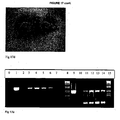
- Figure 18 shows the transformation of Garlic with viral resistance genes.
- Figure 18a shows the T-DNA construct transformed into garlic using the immature leaf transformation system to confer reporter gene expression, antibiotic resistance and resistance to the potyviruses OYDV and LYSV in order to confer tolerance to Garlic Mosaic Disease.
- Figure 18b shows transgenic garlic plants from immature leaf transformation using the T-DNA construct in Figure 18a growing in a PC2 glasshouse after selection on the antibiotic hygromycin.
- Figure 18c shows PCR analysis of 6 lines (0714 #2B, #2C, #2A, #3A, #10B and 0713 #21C) regenerated from immature leaf transformation using the T-DNA construct outlined in Figure 18a .
- Top gel shows amplification products for a 833bp gfp gene fragment
- second gel shows amplification products for a 1100bp hygromycin gene fragment.
- the third gel shows amplification products for a 993bp sense fragment of the RNAi construct and the fourth gel show amplification products for a 1268bp intron and antisense fragment of the RNAi construct.
- Three lines 0714 #2C, #3A and #10B were recovered and shown to contain all components of the T-DNA construct.
- expression includes production of polynucleotides and polypeptides, in particular, the production of RNA (e.g., mRNA) from a gene or portion of a gene, and includes the production of a protein encoded by an RNA or gene or portion of a gene, and the appearance of a detectable material associated with expression.
- RNA e.g., mRNA
- the formation of a complex for example, from a protein-protein interaction, protein-nucleotide interaction, or the like, is included within the scope of the term "expression”.
- Another example is the binding of a binding ligand, such as a hybridization probe or antibody, to a gene or other oligonucleotide, a protein or a protein fragment and the visualization of the binding ligand.
- a spot on a microarray on a hybridization blot such as a Northern blot, or on an immunoblot such as a Western blot, or on a bead array, or by PCR analysis, is included within the term "expression" of the underlying biological molecule.
- isolated refers to something that has been separated from it's natural environment.
- oligonucleotide refers to a polynucleotide, typically a probe or primer, including, without limitation, single-stranded deoxyribonucleotides, single- or double-stranded ribonucleotides, RNA:DNA hybrids, and double-stranded DNAs. Oligonucleotides, such as single-stranded DNA probe oligonucleotides, are often synthesized by chemical methods, for example using automated oligonucleotide synthesizers that are commercially available, or by a variety of other methods, including in vitro expression systems, recombinant techniques, and expression in cells and organisms.
- plant referes to any whole plant, or any part thereof, including plant cells, seeds and any organ, such as roots leaves, stems and the like, or any progeny thereof. It also includes both monocotyledons and dicotyledons, and in particular includes any plant from the genus Allium.
- polynucleotide when used in the singular or plural, generally refers to any polyribonucleotide or polydeoxribonucleotide, which may be unmodfied RNA or DNA -or modified RNA or DNA.
- triple-stranded regions comprising RNA or DNA or both RNA and DNA.
- mRNAs RNAs, cDNAs, and genomic DNAs.
- the term includes DNAs and RNAs that contain one or more modified bases, such as tritiated bases, or unusual bases, such as inosine.
- modified bases such as tritiated bases, or unusual bases, such as inosine.
- the polynucleotides of the invention can encompass coding or non-coding sequences, or sense or antisense sequences.
- Polypeptide refers to an oligopeptide, peptide, or protein sequence, or fragment thereof, and to naturally occurring, recombinant, synthetic, or semisynthetic molecules. Where “polypeptide” is recited herein to refer to an amino acid sequence of a naturally occurring protein molecule, “polypeptide” and like terms, are not meant to limit the amino acid sequence to the complete, native amino acid sequence for the full-length molecule. It will be understood that each reference to a “polypeptide” or like term, herein, will include the full-length sequence, as well as any fragments, derivatives, or variants thereof.
- transformation refers to the technique of transferring foreign polynucleotide material into cell
- the polynucleotide generally is incorporated into the host genome resulting in stable genetic inheritance of the foreign polynucleotide.
- Cells or organisms containing the foreign polynucleotide are referred to as transformed” or “transgenic” or “recombinant”.
- vector refers to a nucleic acid molecule capable of transporting another nucleic acid to which it has been linked, particularily from one cell to another.
- One type of vector is an episome, i.e., a nucleic acid capable of extra- chromosomal replication.
- Another type of vector is an integrative vector that is designed to recombine with the genetic material of a host cell.
- Vectors may be both autonomously replicating and integrative, and the properties of a vector may differ depending on the cellular context (i.e., a vector may be autonomously replicating in one host cell type and purely integrative in another host cell type).
- Vectors capable of directing the expression of expressible nucleic acids to which they are operatively linked are referred to herein as "expression vectors.”
- Blackwell eds., Blackwell Science Inc.; 1987 ; Gene Transfer Vectors for Mammalian Cells, J.M. Miller & M.P. Calos, eds., 1987 ; Current Protocols in Molecular Biology, F.M.
- the invention provides for a method of stably transforming plants of the genus Allium. More specifically the invention provides for a method of directly transforming leaf material of plants from the genus Allium. Allium plants have typically been difficult to transform and to date no one has been able to successfully directly transform leaf material from Allium plants. It has been surprisingly found that Allium plant tissue can be directly transformed using Agrobactrium mediated transformation, and the transformed cells can in turn be used to regenerate transformed Allium plants.
- the first step of the method according to the present invention is to prepare a section of leaf from an Allium plant.
- Any section, of leaf material could be used, however, preferably the leaf material is obtained from immature leaf sections and further preferably from the innermost leaves closest to the basal plate (approximately a 1.5cm 3 . of the central base leaf tissue) of immature leaf section obtained from an Allium plant preferably following the dormant stage of the lifecycle.
- the leaf sections are them prepared for transformation. Preferably this involves sterlilizing the tissue and sectioning the leaf into thin slices, for example less than 2mm thickness, or even more preferably less than 1mm thickness. This can be achieved using a sterile scalpel or any appropriate sectioning device.
- Agrobacterium Transfer of a foreign polynucletide sequence into the genome of the leaf cells is achieved via transformation with Agrobacterium.
- the technique of Agrobacterium mediated transformation is a well known and established technique.
- the system was developed from the natural from of plant transformation that results in crown gall disease. Briefly, in crown gall disease Agrobacterium tumefaciens uses a naturally occurring tumor inducing (Ti) plasmid to transfer a piece of DNA replicated from the plasmid called the T-DNA.
- Ti tumor inducing
- the genes in the naturally occurring T-DNA result in the formation of galls on the plant at the site of infection.
- the T-DNA sequence also typically codes for proteins that result in the production of specific amino acids that are metabolized by the Agrobacterium, but not the plant.
- Ti plasmids have been engineered specfically for transformation purposes.
- Ti plasmids have been engineered to remove the oncogenes from the T-DNA sequence that result in the tumor formation and these have been replaced by cloning cassettes for the introduction of the polynucleotide of interest, promoters to drive the expression of the polynucleotide of interest, and also to include selection markers.
- Replication genes are also often added to allow for the replication of the plasmid in non-Argobacterium hosts.
- Vir The virulence (Vir) genes required for the ability of the Agrobacterium to be able to transform a plant cell have also been separated onto a separate plasmid distinct from the plasmid containing the polynucleotide of interest, which is commonly termed a binary vector.
- the method of the present invention is suitable for use in the transformation of Alluim plants cells with any polynucleotide of interest.
- the polynucleotide of interest could confer an agronomic advantage e.g. resistance to herbicides such as glyphosate and or phosphinothricin as demonstrated in onion previously using a immature embryo based transformation system (Eady et al 2003).
- Resistance to fungal disease such as Allium white rot.
- Resistance to virus diseases such as Iris Yellow Spot Virus or the viruses responsible for garlic mosaic disease. Resistance to bacterial diseases.
- polynucleotide of interest could confer a quality trait advantage e.g. the overexpression or silencing of colour pathway genes or their regulators.
- the overexpression or silencing of sulphur pathway genes or their regulators for-example the silencing of the Ifs gene through the use of Ifs RNAi sequences.
- the overexpression or silencing of Carbohydrate pathway genes or their regulators for example the overexpression of the sst1 gene the silencing through the use of sst1 RNAi sequences.
- the polynucleotide of interest is inserted into a suitable vector and the Argobacterium prepared using techniques well known in the art. Preferably this includes the use of acetosyringone in the final proliferation media to enhance vir gene activity.
- the Agrobacterium is then inoculated onto the leaf pieces, by preferably rinsing and resuspending the agrobacteria in liquid plant media containing no antibiotics and acetosyringone (e.g. Eady et al 2000) at a optical density of between 0.1 and 0.9 at 520nm and then immersing the leaf pieces in this liquid.
- agrobacteria agrobacteria
- Inoculation is preferably enhanced by a brief vortex of the tissue and agrobacteria followed by vacuum infiltration for 30 minutes. After this inoculation period excess agrobacteria is removed and preferably the tissue is blotted dry on filter paper until all excess liquid is removed.
- leaf pieces are co-cultivated using techniques well known in the art with prepared sections of leaf for a length of time sufficient to achieve transfer of the polynucleotide sequence of interest into one or more plant leaf cells.
- leaf pieces are placed onto P5 media (Eady et al 2000) and co-cultivated for 3 to 7 days in the dark at 28°C.
- the method of the present invention is suitable for use of any plant of the Allium genus. It will therefore be appreciated that the T-DNA, vector, agrobacteria, inoculation, cocultivation and media conditions required to achieve satisfactory transfer may vary due to factors such as the specific Allium plant used selectable agent used and specific strain of Agrobacterium and vector combination used. Therefore, some optimisation may be required to realise the optimal conditions, and in particular the length of time required to achieve transfer of the polynucleotide sequence, for a particular transformation. However, this could easily be achieved by a skilled person.
- selectable marker gene that is co-transformed into the cell with the polynucleotide of interest.
- the selectable marker gene general encodes a protein that confers resistance of some form to the transformed cell, for example resistance to an antibiotic or an herbicide.
- Common selectable markers can include, but are not limited to antibiotics e.g., kanamycin with resistance encoded by the nptII resistance gene, for selection in kanamycin-containing media, or hygromycin with resistance encoded by the hygromycin phosphotransferase gene, for selection in media containing hygromycin B; herbicides e.g.
- glyphosate with resistance encoded by for example the cp4 gene or phosphonothricin with resistance encoded by for example the bar gene.
- Many selection markers are known in the art and any form of a selection system could be used without departing from the scope of the present invention A general review of potential selection markers can be found in Wilmink and Dons (1993) and more specifically for alliums Eady and Hunger 2008.
- the leaf sections are then incubated in the presence of the particular selection medium in accordance with the selection marker being used.
- the total length of time required for incubation with the selection medium can vary also, but should be sufficient to obtain a population of transformed Allium leaf cells.
- the selection medium may also include an agent, for example an antibiotic such as timentin, to kill any remaining Agrobacterium.
- the transformed Allium leaf cells can then be used to generate a transformed Allium plant if so desired.
- the regeneration of full plants from leaf tissue is known. Briefly, the transformed cells are cultured on a regeneration medium (for example Eady et al 2000) containing a cytokinin preferably kinetin or 4FPA, or Zeatin, or combination of cytokinins and auxin, which stimulates the generation of multiple shoot buds.
- the shoot buds are then transferred to a medium without growth regulator (e.g.
- MS medium 1 ⁇ 2 level of sugar or a medium with low concentration of auxin for further elongation of shoot and the induction and growth of roots to obtain plantlets
- auxin for further elongation of shoot and the induction and growth of roots to obtain plantlets
- the present invention also provides for an Allium plant transformed according to the method of the present invention.
- the Allium is Allium cepa , Allium fistulosum or Allium ampeloprasum, Allium ascalonicum, Allium schoenoprasum Allium sativum.
- the method can be used to produce any desired transformed plant depending on the particular polypeptide of interest.
- the polynucleotide of interest could confer an agronomic advantage e.g. resistance to herbicides such as glyphosate and or phosphinothricin (Eady et al 2003).
- Resistance to fungal disease such as Allium white rot.
- Resistance to virus diseases such as Iris Yellow Spot Virus or the viruses responsible for garlic mosaic disease.
- Resistance to bacterial diseases Resistance to insect pests such as onion maggot and or thrips.
- the polynucleotide of interest could confer a quality trait advantage e.g. the overexpression or silencing of colour pathway genes or their regulators.
- the overexpression or silencing of sulphur pathway genes or their regulators for example the silencing of the Ifs gene through the use of Ifs RNAi sequences (Eady et al 2008).
- the overexpression or silencing of Carbohydrate pathway genes or their regulators for example the sst1 gene or sst1 RNAi sequences.
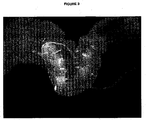
- Leaf sections that had been infected with PART27H-mgfp5ER (has hptII and myfp5-ER genes in t-DNA) were screened under a blue light microscope for GFP expression ( Figure 15 ) before being subbed onto new media. Any material not expressing GFP was discarded. Some leaf explants were cut into smaller sections during this period to enable more complete contact with the selection media.
- Garlic leaf tissue is transformed by the method as described in Example 1.
- a T-DNA sequence containing a hygromycin resistant selectable marker gene, the gfp reporter gene and a oxalate oxidase (oxoxo) gene construct ( Figure 17a ) was utilised
- Enzymes such as oxalate oxidase or oxalate decarboxylase are potent antifungal agents against oxalate producing fungi such as Sclerotium species (Bidney et al (1999) (e.g. S . cepivorum the casual agent of allium white rot). The transfer of this gene and its activity is a demonstration of the applicability of the method of the present invention to produce fungal resistant allium plants.
- Garlic leaf tissue is transformed by the method as described in Example 1.
- a T-DNA construct containing a hygromycin resistant selectable marker gene, a gfp reporter gene and a RNAi silencing sequence directed against a consensus part of the coat protein sequence of the onion yellow dwarf virus (OYDV) and leek yellow streak virus (LYSV) respectively to confer resistance to garlic mosaic disease ( Figure 18a ) was utilised.
- the invention describes a repeatable transformation system for allium.
- the regenerating primary transformants appear to be phenotypically normal.
- the GFP expression as a visual selectable marker, enabled post transformation selection conditions to be optimised.
- the GFP marker has also proved useful in the selection of transgenic plants from other species that are difficult to transform (Vain et al. 1998). Selection conditions have now been established, which enable the identification of transformants solely on their ability to root in selective media.
- This method of producing transgenic alliums is repeatable and efficient. It takes a short time to produce transgenic plants and utilizes techniques that can work at high frequencies (34 transgenic plants from tissue from 8 cloves equals 350% transformation frequency) compared to previous methods which at best produced events at low frequency (12 independent events from 440 immature embryos equals 2.7%, Eady et al 2000).
- the invention provides a novel method of transforming plants of the genus Gallium and in particular garlic and onion plants. Also provided are plants transformed by the method. This allows Allium crop species which are an economically important vegetable species to be transformed by a variety of genes for improvement of Allium crop varieties.
Landscapes
- Health & Medical Sciences (AREA)
- Life Sciences & Earth Sciences (AREA)
- Genetics & Genomics (AREA)
- Engineering & Computer Science (AREA)
- Biotechnology (AREA)
- Biomedical Technology (AREA)
- Molecular Biology (AREA)
- General Engineering & Computer Science (AREA)
- Wood Science & Technology (AREA)
- Organic Chemistry (AREA)
- Chemical & Material Sciences (AREA)
- Zoology (AREA)
- Bioinformatics & Cheminformatics (AREA)
- Plant Pathology (AREA)
- Microbiology (AREA)
- Physics & Mathematics (AREA)
- Cell Biology (AREA)
- Biochemistry (AREA)
- General Health & Medical Sciences (AREA)
- Biophysics (AREA)
- Nutrition Science (AREA)
- Breeding Of Plants And Reproduction By Means Of Culturing (AREA)
- Micro-Organisms Or Cultivation Processes Thereof (AREA)
Claims (12)
- Verfahren zum Transformieren von Zellen aus einer Allium-Pflanzenspezies mit einem Polynucleotid von Interesse, umfassend die folgenden Schritte:(i) das Isolieren eines Schnitts eines unreifen Blatts aus der zu transformierenden Allium-Pflanze;(ii) das gemeinsame Kultivieren des Blattschnitts mit Agrobacterium, das einen oder mehrere geeignete Vektoren enthält, die das Polynucleotid von Interesse umfassen, über einen Zeitraum, der ausreicht, damit ein Transfer der Polynucleotidsequenz von Interesse in eine oder mehrere Pflanzenblattzellen stattfindet; und(iii) das Transferieren des Blattschnitts in ein Selektionsmedium, das die Selektion transformierter Allium-Pflanzenzellen ermöglicht.
- Verfahren nach Anspruch 1, worin der eine oder die mehreren Vektoren (ein) binäre(r) Vektor(en) ist/sind.
- Verfahren nach Anspruch 1 oder 2, worin das Selektionsmedium ein Mittel zum selektiven Abtöten des Agrobacteriums umfasst.
- Verfahren nach einem der Ansprüche 1 bis 3, worin die Allium-Pflanze eine beliebige von Allium capa, Allium fistolosum oder Allium ampeloprasum, Allium asca-Ionicum, Allium schoenoprasum oder Allium sativum ist.
- Verfahren nach einem der Ansprüche 1 bis 4, worin das Polynucleotid von Interesse einen agronomischen Vorteil verleiht.
- Verfahren nach einem der Ansprüche 1 bis 5, worin das Polynucleotid von Interesse Resistenz gegenüber Folgendem verleiht:(a) Herbiziden, einschließlich Glyphosat und Phosphinothricin, ohne darauf beschränkt zu sein;(b) Pilzkrankheiten, einschließlich Allium-Weißfäule, ohne darauf beschränkt zu sein;(c) Viren, einschließlich des Yellow-Spot-Virus und der für die Knoblauchmosaikkrankheit verantwortlichen Viren, ohne darauf beschränkt zu sein;(d) Bakterienerkrankungen; oder(e) Insektenplagen, einschließlich von Zwiebelfliege (Delia antiqua) und Thripse, ohne darauf beschränkt zu sein.
- Verfahren nach einem der Ansprüche 1 bis 5, worin das Polynucleotid von Interesse eine Modifikation des Schosser- und Blütenbildungsstoffwechselweges verleiht.
- Verfahren nach einem der Ansprüche 1 bis 5, worin das Polynucleotid von Interesse die Florigenmenge, -erkennung oder -aktivität beeinflusst.
- Verfahren nach einem der Ansprüche 1 bis 4, worin das Polynucleotid von Interesse einen Vorteil bei einer Qualitätseigenschaft verleiht.
- Verfahren nach einem der Ansprüche 1 bis 4 und 9, worin das Polynucleotid von Interesse die Überexpression oder das Verstummen von Farb-Stoffwechselweg-Genen oder ihren Regulatoren verleiht.
- Verfahren nach einem der Ansprüche 1 bis 4 und 9, worin das Polynucleotid von Interesse Folgendes verleiht:(a) die Überexpression oder das Verstummen von Schwefel-Stoffwechselweg-Genen oder ihren Regulatoren;(b) das Verstummen des Ifs-Gens durch die Verwendung von Ifs-RNAi-Sequenzen; oder(c) die Überexpression oder das Verstummen von Kohlenhydrat-Stoffwechselweg-Genen oder ihren Regulatoren, darunter sst1 oder sst2, ohne darauf beschränkt zu sein.
- Verfahren nach einem der Ansprüche 1 bis 11, weiters umfassend des Schritt der Wiederherstellung einer Pflanze aus den transformierten Zellen.
Applications Claiming Priority (2)
| Application Number | Priority Date | Filing Date | Title |
|---|---|---|---|
| NZ562781A NZ562781A (en) | 2007-10-24 | 2007-10-24 | Allium transformation |
| PCT/NZ2008/000276 WO2009054734A1 (en) | 2007-10-24 | 2008-10-24 | Transformation and regeneration allium plants |
Publications (3)
| Publication Number | Publication Date |
|---|---|
| EP2211604A1 EP2211604A1 (de) | 2010-08-04 |
| EP2211604A4 EP2211604A4 (de) | 2010-11-24 |
| EP2211604B1 true EP2211604B1 (de) | 2012-08-22 |
Family
ID=40579733
Family Applications (1)
| Application Number | Title | Priority Date | Filing Date |
|---|---|---|---|
| EP08840950A Not-in-force EP2211604B1 (de) | 2007-10-24 | 2008-10-24 | Transformation und regeneration von allium-pflanzen |
Country Status (8)
| Country | Link |
|---|---|
| US (1) | US8481813B2 (de) |
| EP (1) | EP2211604B1 (de) |
| CN (1) | CN102215670A (de) |
| AU (1) | AU2008317575B2 (de) |
| CA (1) | CA2703126A1 (de) |
| ES (1) | ES2392907T3 (de) |
| NZ (1) | NZ562781A (de) |
| WO (1) | WO2009054734A1 (de) |
Families Citing this family (1)
| Publication number | Priority date | Publication date | Assignee | Title |
|---|---|---|---|---|
| EP2606480A1 (de) | 2010-08-16 | 2013-06-26 | Stuart Graham Edwards | Gebäude mit notfallsinformationseinrichtung |
Family Cites Families (9)
| Publication number | Priority date | Publication date | Assignee | Title |
|---|---|---|---|---|
| NZ239977A (en) * | 1990-11-14 | 1993-08-26 | Pioneer Hi Bred Int | Transforming plants by the use of agrobacterium |
| US6166291A (en) | 1997-07-18 | 2000-12-26 | Pioneer Hi-Bred International, Inc. | Production of pathogen resistant plants |
| US6365800B1 (en) | 1998-03-12 | 2002-04-02 | E. I. Du Pont Nemours & Company | Transgenic crops accumulating fructose polymers and methods for their production |
| AU763531C (en) | 1999-01-29 | 2004-02-26 | The New Zealand Institute For Plant And Food Research Limited | Transformation and regeneration of allium plants |
| AU780954B2 (en) * | 1999-05-05 | 2005-04-28 | Seminis Vegetable Seeds, Inc. | Transformation of (allium sp.) with (agrobacterium) using embryogenic callus cultures |
| AU2002241502A1 (en) | 2000-11-28 | 2002-06-11 | E.I. Du Pont De Nemours And Company | Floral development genes |
| WO2003074707A1 (fr) * | 2002-03-01 | 2003-09-12 | House Foods Corporation | Adn et vecteur de regulation de l'expression du gene de synthase du facteur lacrymogene, procede de regulation de l'expression du gene de synthase du facteur lacrymogene au moyen de cet adn et de ce vecteur, et plante avec expression regulee du gene de synthase du facteur lacrymogene |
| NL1032650C2 (nl) * | 2006-10-10 | 2008-04-14 | Mark Johannes Hubertus Verdoes | Samenstel voorzien van ten minste een aan een implantaat te bevestigen bevestigingsinrichting. |
| CN101113458B (zh) * | 2007-06-28 | 2010-05-19 | 广东省农业科学院作物研究所 | 一种农杆菌介导的洋葱表皮细胞转化方法 |
-
2007
- 2007-10-24 NZ NZ562781A patent/NZ562781A/en unknown
-
2008
- 2008-10-24 EP EP08840950A patent/EP2211604B1/de not_active Not-in-force
- 2008-10-24 ES ES08840950T patent/ES2392907T3/es active Active
- 2008-10-24 WO PCT/NZ2008/000276 patent/WO2009054734A1/en not_active Ceased
- 2008-10-24 US US12/739,700 patent/US8481813B2/en not_active Expired - Fee Related
- 2008-10-24 CN CN200880117207XA patent/CN102215670A/zh active Pending
- 2008-10-24 AU AU2008317575A patent/AU2008317575B2/en not_active Ceased
- 2008-10-24 CA CA2703126A patent/CA2703126A1/en not_active Abandoned
Also Published As
| Publication number | Publication date |
|---|---|
| CA2703126A1 (en) | 2009-04-30 |
| EP2211604A1 (de) | 2010-08-04 |
| AU2008317575A1 (en) | 2009-04-30 |
| US20100281581A1 (en) | 2010-11-04 |
| WO2009054734A1 (en) | 2009-04-30 |
| CN102215670A (zh) | 2011-10-12 |
| AU2008317575B2 (en) | 2013-12-19 |
| NZ562781A (en) | 2010-02-26 |
| EP2211604A4 (de) | 2010-11-24 |
| US8481813B2 (en) | 2013-07-09 |
| ES2392907T3 (es) | 2012-12-14 |
Similar Documents
| Publication | Publication Date | Title |
|---|---|---|
| JP6990653B2 (ja) | 迅速な植物形質転換のための方法および組成物 | |
| JP5350246B2 (ja) | トランスジェニック植物を作製する方法 | |
| US20100221720A1 (en) | Plant artificial chromosomes, uses thereof and methods of preparing plant artificial chromosomes | |
| JP2023544016A (ja) | 単子葉外植片の迅速な形質転換 | |
| EP1119631A2 (de) | Nachweismethode für transgene unter verwendung von stabiler transformation mittels agrobakterium tumefaciens | |
| EP2211604B1 (de) | Transformation und regeneration von allium-pflanzen | |
| AU763531B2 (en) | Transformation and regeneration of allium plants | |
| US20250134021A1 (en) | Monocot leaf explant preparation | |
| CN114727584A (zh) | 双子叶植物细胞的转化方法 | |
| KR100363122B1 (ko) | 유전자 조작을 통한 마늘 식물체의 형질전환 방법 및 형질전환 마늘 | |
| KR101040579B1 (ko) | 스트레스 유도성 자가-절단형 식물형질전환 벡터 및 이를이용한 선발 마커 프리 식물체의 제조방법 | |
| Mondal et al. | An efficient regeneration system for the genetic transformation of Nicotiana tabacum L. cv. Petit Havana SR 1 without Auxine and optimization of Hygromycin concentration for selection | |
| JP4472344B2 (ja) | 微生物組換酵素を利用した色素体の形質転換方法 | |
| Hensel et al. | Research Article Agrobacterium-Mediated Gene Transfer to Cereal Crop Plants: Current Protocols for Barley, Wheat, Triticale, and Maize | |
| JP2005514070A6 (ja) | 微生物組換酵素を利用した色素体の形質転換方法 | |
| Krishnan et al. | Devising suitable parameters for achieving successful transformation in cassava (Manihot esculenta Crantz.) cv. H226 | |
| Wu et al. | Gene Transfer and Expression in Plants | |
| Sheela et al. | Development of transgenic cassava: optimization of protocol for Agrobacterium mediated gene transfer. | |
| HK1164885A (en) | Plant artificial chromosomes, uses thereof and methods of preparing plant artificial chromosomes |
Legal Events
| Date | Code | Title | Description |
|---|---|---|---|
| PUAI | Public reference made under article 153(3) epc to a published international application that has entered the european phase |
Free format text: ORIGINAL CODE: 0009012 |
|
| 17P | Request for examination filed |
Effective date: 20100514 |
|
| AK | Designated contracting states |
Kind code of ref document: A1 Designated state(s): AT BE BG CH CY CZ DE DK EE ES FI FR GB GR HR HU IE IS IT LI LT LU LV MC MT NL NO PL PT RO SE SI SK TR |
|
| AX | Request for extension of the european patent |
Extension state: AL BA MK RS |
|
| RIN1 | Information on inventor provided before grant (corrected) |
Inventor name: EADY, COLIN, CHARLES Inventor name: BRINCH, SHEREE, ALMA Inventor name: KENEL, FERNAND, OTHMAR |
|
| A4 | Supplementary search report drawn up and despatched |
Effective date: 20101025 |
|
| DAX | Request for extension of the european patent (deleted) | ||
| GRAP | Despatch of communication of intention to grant a patent |
Free format text: ORIGINAL CODE: EPIDOSNIGR1 |
|
| GRAS | Grant fee paid |
Free format text: ORIGINAL CODE: EPIDOSNIGR3 |
|
| GRAA | (expected) grant |
Free format text: ORIGINAL CODE: 0009210 |
|
| AK | Designated contracting states |
Kind code of ref document: B1 Designated state(s): AT BE BG CH CY CZ DE DK EE ES FI FR GB GR HR HU IE IS IT LI LT LU LV MC MT NL NO PL PT RO SE SI SK TR |
|
| REG | Reference to a national code |
Ref country code: GB Ref legal event code: FG4D |
|
| REG | Reference to a national code |
Ref country code: CH Ref legal event code: EP |
|
| REG | Reference to a national code |
Ref country code: IE Ref legal event code: FG4D |
|
| REG | Reference to a national code |
Ref country code: AT Ref legal event code: REF Ref document number: 571388 Country of ref document: AT Kind code of ref document: T Effective date: 20120915 |
|
| REG | Reference to a national code |
Ref country code: DE Ref legal event code: R096 Ref document number: 602008018263 Country of ref document: DE Effective date: 20121018 |
|
| REG | Reference to a national code |
Ref country code: NL Ref legal event code: T3 |
|
| REG | Reference to a national code |
Ref country code: ES Ref legal event code: FG2A Ref document number: 2392907 Country of ref document: ES Kind code of ref document: T3 Effective date: 20121214 |
|
| REG | Reference to a national code |
Ref country code: AT Ref legal event code: MK05 Ref document number: 571388 Country of ref document: AT Kind code of ref document: T Effective date: 20120822 |
|
| REG | Reference to a national code |
Ref country code: LT Ref legal event code: MG4D Effective date: 20120822 |
|
| PG25 | Lapsed in a contracting state [announced via postgrant information from national office to epo] |
Ref country code: AT Free format text: LAPSE BECAUSE OF FAILURE TO SUBMIT A TRANSLATION OF THE DESCRIPTION OR TO PAY THE FEE WITHIN THE PRESCRIBED TIME-LIMIT Effective date: 20120822 Ref country code: LT Free format text: LAPSE BECAUSE OF FAILURE TO SUBMIT A TRANSLATION OF THE DESCRIPTION OR TO PAY THE FEE WITHIN THE PRESCRIBED TIME-LIMIT Effective date: 20120822 Ref country code: FI Free format text: LAPSE BECAUSE OF FAILURE TO SUBMIT A TRANSLATION OF THE DESCRIPTION OR TO PAY THE FEE WITHIN THE PRESCRIBED TIME-LIMIT Effective date: 20120822 Ref country code: IS Free format text: LAPSE BECAUSE OF FAILURE TO SUBMIT A TRANSLATION OF THE DESCRIPTION OR TO PAY THE FEE WITHIN THE PRESCRIBED TIME-LIMIT Effective date: 20121222 Ref country code: CY Free format text: LAPSE BECAUSE OF FAILURE TO SUBMIT A TRANSLATION OF THE DESCRIPTION OR TO PAY THE FEE WITHIN THE PRESCRIBED TIME-LIMIT Effective date: 20120822 Ref country code: NO Free format text: LAPSE BECAUSE OF FAILURE TO SUBMIT A TRANSLATION OF THE DESCRIPTION OR TO PAY THE FEE WITHIN THE PRESCRIBED TIME-LIMIT Effective date: 20121122 Ref country code: HR Free format text: LAPSE BECAUSE OF FAILURE TO SUBMIT A TRANSLATION OF THE DESCRIPTION OR TO PAY THE FEE WITHIN THE PRESCRIBED TIME-LIMIT Effective date: 20120822 |
|
| PG25 | Lapsed in a contracting state [announced via postgrant information from national office to epo] |
Ref country code: PT Free format text: LAPSE BECAUSE OF FAILURE TO SUBMIT A TRANSLATION OF THE DESCRIPTION OR TO PAY THE FEE WITHIN THE PRESCRIBED TIME-LIMIT Effective date: 20121224 Ref country code: GR Free format text: LAPSE BECAUSE OF FAILURE TO SUBMIT A TRANSLATION OF THE DESCRIPTION OR TO PAY THE FEE WITHIN THE PRESCRIBED TIME-LIMIT Effective date: 20121123 Ref country code: BE Free format text: LAPSE BECAUSE OF FAILURE TO SUBMIT A TRANSLATION OF THE DESCRIPTION OR TO PAY THE FEE WITHIN THE PRESCRIBED TIME-LIMIT Effective date: 20120822 Ref country code: SE Free format text: LAPSE BECAUSE OF FAILURE TO SUBMIT A TRANSLATION OF THE DESCRIPTION OR TO PAY THE FEE WITHIN THE PRESCRIBED TIME-LIMIT Effective date: 20120822 Ref country code: LV Free format text: LAPSE BECAUSE OF FAILURE TO SUBMIT A TRANSLATION OF THE DESCRIPTION OR TO PAY THE FEE WITHIN THE PRESCRIBED TIME-LIMIT Effective date: 20120822 Ref country code: SI Free format text: LAPSE BECAUSE OF FAILURE TO SUBMIT A TRANSLATION OF THE DESCRIPTION OR TO PAY THE FEE WITHIN THE PRESCRIBED TIME-LIMIT Effective date: 20120822 |
|
| PG25 | Lapsed in a contracting state [announced via postgrant information from national office to epo] |
Ref country code: RO Free format text: LAPSE BECAUSE OF FAILURE TO SUBMIT A TRANSLATION OF THE DESCRIPTION OR TO PAY THE FEE WITHIN THE PRESCRIBED TIME-LIMIT Effective date: 20120822 Ref country code: CZ Free format text: LAPSE BECAUSE OF FAILURE TO SUBMIT A TRANSLATION OF THE DESCRIPTION OR TO PAY THE FEE WITHIN THE PRESCRIBED TIME-LIMIT Effective date: 20120822 Ref country code: EE Free format text: LAPSE BECAUSE OF FAILURE TO SUBMIT A TRANSLATION OF THE DESCRIPTION OR TO PAY THE FEE WITHIN THE PRESCRIBED TIME-LIMIT Effective date: 20120822 Ref country code: DK Free format text: LAPSE BECAUSE OF FAILURE TO SUBMIT A TRANSLATION OF THE DESCRIPTION OR TO PAY THE FEE WITHIN THE PRESCRIBED TIME-LIMIT Effective date: 20120822 |
|
| PG25 | Lapsed in a contracting state [announced via postgrant information from national office to epo] |
Ref country code: SK Free format text: LAPSE BECAUSE OF FAILURE TO SUBMIT A TRANSLATION OF THE DESCRIPTION OR TO PAY THE FEE WITHIN THE PRESCRIBED TIME-LIMIT Effective date: 20120822 Ref country code: MC Free format text: LAPSE BECAUSE OF NON-PAYMENT OF DUE FEES Effective date: 20121031 Ref country code: PL Free format text: LAPSE BECAUSE OF FAILURE TO SUBMIT A TRANSLATION OF THE DESCRIPTION OR TO PAY THE FEE WITHIN THE PRESCRIBED TIME-LIMIT Effective date: 20120822 Ref country code: IT Free format text: LAPSE BECAUSE OF FAILURE TO SUBMIT A TRANSLATION OF THE DESCRIPTION OR TO PAY THE FEE WITHIN THE PRESCRIBED TIME-LIMIT Effective date: 20120822 |
|
| REG | Reference to a national code |
Ref country code: CH Ref legal event code: PL |
|
| PLBE | No opposition filed within time limit |
Free format text: ORIGINAL CODE: 0009261 |
|
| STAA | Information on the status of an ep patent application or granted ep patent |
Free format text: STATUS: NO OPPOSITION FILED WITHIN TIME LIMIT |
|
| REG | Reference to a national code |
Ref country code: IE Ref legal event code: MM4A |
|
| 26N | No opposition filed |
Effective date: 20130523 |
|
| PG25 | Lapsed in a contracting state [announced via postgrant information from national office to epo] |
Ref country code: CH Free format text: LAPSE BECAUSE OF NON-PAYMENT OF DUE FEES Effective date: 20121031 Ref country code: BG Free format text: LAPSE BECAUSE OF FAILURE TO SUBMIT A TRANSLATION OF THE DESCRIPTION OR TO PAY THE FEE WITHIN THE PRESCRIBED TIME-LIMIT Effective date: 20121122 Ref country code: IE Free format text: LAPSE BECAUSE OF NON-PAYMENT OF DUE FEES Effective date: 20121024 Ref country code: LI Free format text: LAPSE BECAUSE OF NON-PAYMENT OF DUE FEES Effective date: 20121031 |
|
| REG | Reference to a national code |
Ref country code: DE Ref legal event code: R097 Ref document number: 602008018263 Country of ref document: DE Effective date: 20130523 |
|
| PG25 | Lapsed in a contracting state [announced via postgrant information from national office to epo] |
Ref country code: MT Free format text: LAPSE BECAUSE OF FAILURE TO SUBMIT A TRANSLATION OF THE DESCRIPTION OR TO PAY THE FEE WITHIN THE PRESCRIBED TIME-LIMIT Effective date: 20120822 |
|
| PG25 | Lapsed in a contracting state [announced via postgrant information from national office to epo] |
Ref country code: TR Free format text: LAPSE BECAUSE OF FAILURE TO SUBMIT A TRANSLATION OF THE DESCRIPTION OR TO PAY THE FEE WITHIN THE PRESCRIBED TIME-LIMIT Effective date: 20120822 |
|
| PG25 | Lapsed in a contracting state [announced via postgrant information from national office to epo] |
Ref country code: LU Free format text: LAPSE BECAUSE OF NON-PAYMENT OF DUE FEES Effective date: 20121024 |
|
| PG25 | Lapsed in a contracting state [announced via postgrant information from national office to epo] |
Ref country code: HU Free format text: LAPSE BECAUSE OF FAILURE TO SUBMIT A TRANSLATION OF THE DESCRIPTION OR TO PAY THE FEE WITHIN THE PRESCRIBED TIME-LIMIT Effective date: 20081024 |
|
| PGFP | Annual fee paid to national office [announced via postgrant information from national office to epo] |
Ref country code: GB Payment date: 20141007 Year of fee payment: 7 Ref country code: FR Payment date: 20141008 Year of fee payment: 7 Ref country code: DE Payment date: 20141029 Year of fee payment: 7 Ref country code: ES Payment date: 20141010 Year of fee payment: 7 |
|
| PGFP | Annual fee paid to national office [announced via postgrant information from national office to epo] |
Ref country code: NL Payment date: 20141014 Year of fee payment: 7 |
|
| REG | Reference to a national code |
Ref country code: DE Ref legal event code: R119 Ref document number: 602008018263 Country of ref document: DE |
|
| GBPC | Gb: european patent ceased through non-payment of renewal fee |
Effective date: 20151024 |
|
| REG | Reference to a national code |
Ref country code: NL Ref legal event code: MM Effective date: 20151101 |
|
| PG25 | Lapsed in a contracting state [announced via postgrant information from national office to epo] |
Ref country code: GB Free format text: LAPSE BECAUSE OF NON-PAYMENT OF DUE FEES Effective date: 20151024 Ref country code: DE Free format text: LAPSE BECAUSE OF NON-PAYMENT OF DUE FEES Effective date: 20160503 |
|
| REG | Reference to a national code |
Ref country code: FR Ref legal event code: ST Effective date: 20160630 |
|
| PG25 | Lapsed in a contracting state [announced via postgrant information from national office to epo] |
Ref country code: NL Free format text: LAPSE BECAUSE OF NON-PAYMENT OF DUE FEES Effective date: 20151101 Ref country code: FR Free format text: LAPSE BECAUSE OF NON-PAYMENT OF DUE FEES Effective date: 20151102 |
|
| PG25 | Lapsed in a contracting state [announced via postgrant information from national office to epo] |
Ref country code: ES Free format text: LAPSE BECAUSE OF NON-PAYMENT OF DUE FEES Effective date: 20151025 |