EP2210498A1 - Adsorption of volatile organic compounds derived from organic matter - Google Patents
Adsorption of volatile organic compounds derived from organic matter Download PDFInfo
- Publication number
- EP2210498A1 EP2210498A1 EP10003439A EP10003439A EP2210498A1 EP 2210498 A1 EP2210498 A1 EP 2210498A1 EP 10003439 A EP10003439 A EP 10003439A EP 10003439 A EP10003439 A EP 10003439A EP 2210498 A1 EP2210498 A1 EP 2210498A1
- Authority
- EP
- European Patent Office
- Prior art keywords
- zsm
- use according
- palladium
- doped
- vocs
- Prior art date
- Legal status (The legal status is an assumption and is not a legal conclusion. Google has not performed a legal analysis and makes no representation as to the accuracy of the status listed.)
- Granted
Links
Images



Classifications
-
- B—PERFORMING OPERATIONS; TRANSPORTING
- B01—PHYSICAL OR CHEMICAL PROCESSES OR APPARATUS IN GENERAL
- B01J—CHEMICAL OR PHYSICAL PROCESSES, e.g. CATALYSIS OR COLLOID CHEMISTRY; THEIR RELEVANT APPARATUS
- B01J20/00—Solid sorbent compositions or filter aid compositions; Sorbents for chromatography; Processes for preparing, regenerating or reactivating thereof
- B01J20/02—Solid sorbent compositions or filter aid compositions; Sorbents for chromatography; Processes for preparing, regenerating or reactivating thereof comprising inorganic material
- B01J20/10—Solid sorbent compositions or filter aid compositions; Sorbents for chromatography; Processes for preparing, regenerating or reactivating thereof comprising inorganic material comprising silica or silicate
- B01J20/16—Alumino-silicates
- B01J20/18—Synthetic zeolitic molecular sieves
-
- A—HUMAN NECESSITIES
- A23—FOODS OR FOODSTUFFS; TREATMENT THEREOF, NOT COVERED BY OTHER CLASSES
- A23B—PRESERVATION OF FOODS, FOODSTUFFS OR NON-ALCOHOLIC BEVERAGES; CHEMICAL RIPENING OF FRUIT OR VEGETABLES
- A23B2/00—Preservation of foods or foodstuffs, in general
- A23B2/70—Preservation of foods or foodstuffs, in general by treatment with chemicals
- A23B2/704—Preservation of foods or foodstuffs, in general by treatment with chemicals in the form of gases, e.g. fumigation; Compositions or apparatus therefor
-
- A—HUMAN NECESSITIES
- A23—FOODS OR FOODSTUFFS; TREATMENT THEREOF, NOT COVERED BY OTHER CLASSES
- A23B—PRESERVATION OF FOODS, FOODSTUFFS OR NON-ALCOHOLIC BEVERAGES; CHEMICAL RIPENING OF FRUIT OR VEGETABLES
- A23B2/00—Preservation of foods or foodstuffs, in general
- A23B2/70—Preservation of foods or foodstuffs, in general by treatment with chemicals
- A23B2/704—Preservation of foods or foodstuffs, in general by treatment with chemicals in the form of gases, e.g. fumigation; Compositions or apparatus therefor
- A23B2/708—Preservation of foods or foodstuffs, in general by treatment with chemicals in the form of gases, e.g. fumigation; Compositions or apparatus therefor in a controlled atmosphere, e.g. partial vacuum, comprising only CO2, N2, O2 or H2O
- A23B2/712—Preservation of foods or foodstuffs, in general by treatment with chemicals in the form of gases, e.g. fumigation; Compositions or apparatus therefor in a controlled atmosphere, e.g. partial vacuum, comprising only CO2, N2, O2 or H2O in which an absorbent is placed or used
-
- A—HUMAN NECESSITIES
- A23—FOODS OR FOODSTUFFS; TREATMENT THEREOF, NOT COVERED BY OTHER CLASSES
- A23B—PRESERVATION OF FOODS, FOODSTUFFS OR NON-ALCOHOLIC BEVERAGES; CHEMICAL RIPENING OF FRUIT OR VEGETABLES
- A23B2/00—Preservation of foods or foodstuffs, in general
- A23B2/70—Preservation of foods or foodstuffs, in general by treatment with chemicals
- A23B2/704—Preservation of foods or foodstuffs, in general by treatment with chemicals in the form of gases, e.g. fumigation; Compositions or apparatus therefor
- A23B2/721—Preservation of foods or foodstuffs, in general by treatment with chemicals in the form of gases, e.g. fumigation; Compositions or apparatus therefor in a controlled atmosphere comprising other gases in addition to CO2, N2, O2 or H2O
-
- A—HUMAN NECESSITIES
- A23—FOODS OR FOODSTUFFS; TREATMENT THEREOF, NOT COVERED BY OTHER CLASSES
- A23B—PRESERVATION OF FOODS, FOODSTUFFS OR NON-ALCOHOLIC BEVERAGES; CHEMICAL RIPENING OF FRUIT OR VEGETABLES
- A23B7/00—Preservation of fruit or vegetables; Chemical ripening of fruit or vegetables
-
- A—HUMAN NECESSITIES
- A23—FOODS OR FOODSTUFFS; TREATMENT THEREOF, NOT COVERED BY OTHER CLASSES
- A23B—PRESERVATION OF FOODS, FOODSTUFFS OR NON-ALCOHOLIC BEVERAGES; CHEMICAL RIPENING OF FRUIT OR VEGETABLES
- A23B7/00—Preservation of fruit or vegetables; Chemical ripening of fruit or vegetables
- A23B7/14—Preserving or ripening with chemicals not covered by group A23B7/08 or A23B7/10
-
- A—HUMAN NECESSITIES
- A23—FOODS OR FOODSTUFFS; TREATMENT THEREOF, NOT COVERED BY OTHER CLASSES
- A23B—PRESERVATION OF FOODS, FOODSTUFFS OR NON-ALCOHOLIC BEVERAGES; CHEMICAL RIPENING OF FRUIT OR VEGETABLES
- A23B7/00—Preservation of fruit or vegetables; Chemical ripening of fruit or vegetables
- A23B7/14—Preserving or ripening with chemicals not covered by group A23B7/08 or A23B7/10
- A23B7/144—Preserving or ripening with chemicals not covered by group A23B7/08 or A23B7/10 in the form of gases, e.g. fumigation; Compositions or apparatus therefor
-
- A—HUMAN NECESSITIES
- A23—FOODS OR FOODSTUFFS; TREATMENT THEREOF, NOT COVERED BY OTHER CLASSES
- A23B—PRESERVATION OF FOODS, FOODSTUFFS OR NON-ALCOHOLIC BEVERAGES; CHEMICAL RIPENING OF FRUIT OR VEGETABLES
- A23B7/00—Preservation of fruit or vegetables; Chemical ripening of fruit or vegetables
- A23B7/14—Preserving or ripening with chemicals not covered by group A23B7/08 or A23B7/10
- A23B7/144—Preserving or ripening with chemicals not covered by group A23B7/08 or A23B7/10 in the form of gases, e.g. fumigation; Compositions or apparatus therefor
- A23B7/152—Preserving or ripening with chemicals not covered by group A23B7/08 or A23B7/10 in the form of gases, e.g. fumigation; Compositions or apparatus therefor in a controlled atmosphere comprising other gases in addition to CO2, N2, O2 or H2O ; Elimination of such other gases
-
- B—PERFORMING OPERATIONS; TRANSPORTING
- B01—PHYSICAL OR CHEMICAL PROCESSES OR APPARATUS IN GENERAL
- B01J—CHEMICAL OR PHYSICAL PROCESSES, e.g. CATALYSIS OR COLLOID CHEMISTRY; THEIR RELEVANT APPARATUS
- B01J20/00—Solid sorbent compositions or filter aid compositions; Sorbents for chromatography; Processes for preparing, regenerating or reactivating thereof
- B01J20/02—Solid sorbent compositions or filter aid compositions; Sorbents for chromatography; Processes for preparing, regenerating or reactivating thereof comprising inorganic material
-
- B—PERFORMING OPERATIONS; TRANSPORTING
- B01—PHYSICAL OR CHEMICAL PROCESSES OR APPARATUS IN GENERAL
- B01J—CHEMICAL OR PHYSICAL PROCESSES, e.g. CATALYSIS OR COLLOID CHEMISTRY; THEIR RELEVANT APPARATUS
- B01J20/00—Solid sorbent compositions or filter aid compositions; Sorbents for chromatography; Processes for preparing, regenerating or reactivating thereof
- B01J20/02—Solid sorbent compositions or filter aid compositions; Sorbents for chromatography; Processes for preparing, regenerating or reactivating thereof comprising inorganic material
- B01J20/0203—Solid sorbent compositions or filter aid compositions; Sorbents for chromatography; Processes for preparing, regenerating or reactivating thereof comprising inorganic material comprising compounds of metals not provided for in B01J20/04
- B01J20/0225—Compounds of Fe, Ru, Os, Co, Rh, Ir, Ni, Pd, Pt
-
- B—PERFORMING OPERATIONS; TRANSPORTING
- B01—PHYSICAL OR CHEMICAL PROCESSES OR APPARATUS IN GENERAL
- B01J—CHEMICAL OR PHYSICAL PROCESSES, e.g. CATALYSIS OR COLLOID CHEMISTRY; THEIR RELEVANT APPARATUS
- B01J20/00—Solid sorbent compositions or filter aid compositions; Sorbents for chromatography; Processes for preparing, regenerating or reactivating thereof
- B01J20/02—Solid sorbent compositions or filter aid compositions; Sorbents for chromatography; Processes for preparing, regenerating or reactivating thereof comprising inorganic material
- B01J20/10—Solid sorbent compositions or filter aid compositions; Sorbents for chromatography; Processes for preparing, regenerating or reactivating thereof comprising inorganic material comprising silica or silicate
- B01J20/16—Alumino-silicates
- B01J20/18—Synthetic zeolitic molecular sieves
- B01J20/186—Chemical treatments in view of modifying the properties of the sieve, e.g. increasing the stability or the activity, also decreasing the activity
-
- B—PERFORMING OPERATIONS; TRANSPORTING
- B01—PHYSICAL OR CHEMICAL PROCESSES OR APPARATUS IN GENERAL
- B01J—CHEMICAL OR PHYSICAL PROCESSES, e.g. CATALYSIS OR COLLOID CHEMISTRY; THEIR RELEVANT APPARATUS
- B01J20/00—Solid sorbent compositions or filter aid compositions; Sorbents for chromatography; Processes for preparing, regenerating or reactivating thereof
- B01J20/22—Solid sorbent compositions or filter aid compositions; Sorbents for chromatography; Processes for preparing, regenerating or reactivating thereof comprising organic material
- B01J20/26—Synthetic macromolecular compounds
- B01J20/261—Synthetic macromolecular compounds obtained by reactions only involving carbon to carbon unsaturated bonds
-
- B—PERFORMING OPERATIONS; TRANSPORTING
- B01—PHYSICAL OR CHEMICAL PROCESSES OR APPARATUS IN GENERAL
- B01J—CHEMICAL OR PHYSICAL PROCESSES, e.g. CATALYSIS OR COLLOID CHEMISTRY; THEIR RELEVANT APPARATUS
- B01J20/00—Solid sorbent compositions or filter aid compositions; Sorbents for chromatography; Processes for preparing, regenerating or reactivating thereof
- B01J20/28—Solid sorbent compositions or filter aid compositions; Sorbents for chromatography; Processes for preparing, regenerating or reactivating thereof characterised by their form or physical properties
- B01J20/28014—Solid sorbent compositions or filter aid compositions; Sorbents for chromatography; Processes for preparing, regenerating or reactivating thereof characterised by their form or physical properties characterised by their form
- B01J20/2803—Sorbents comprising a binder, e.g. for forming aggregated, agglomerated or granulated products
-
- B—PERFORMING OPERATIONS; TRANSPORTING
- B01—PHYSICAL OR CHEMICAL PROCESSES OR APPARATUS IN GENERAL
- B01J—CHEMICAL OR PHYSICAL PROCESSES, e.g. CATALYSIS OR COLLOID CHEMISTRY; THEIR RELEVANT APPARATUS
- B01J20/00—Solid sorbent compositions or filter aid compositions; Sorbents for chromatography; Processes for preparing, regenerating or reactivating thereof
- B01J20/28—Solid sorbent compositions or filter aid compositions; Sorbents for chromatography; Processes for preparing, regenerating or reactivating thereof characterised by their form or physical properties
- B01J20/28014—Solid sorbent compositions or filter aid compositions; Sorbents for chromatography; Processes for preparing, regenerating or reactivating thereof characterised by their form or physical properties characterised by their form
- B01J20/28033—Membrane, sheet, cloth, pad, lamellar or mat
- B01J20/28035—Membrane, sheet, cloth, pad, lamellar or mat with more than one layer, e.g. laminates, separated sheets
-
- B—PERFORMING OPERATIONS; TRANSPORTING
- B01—PHYSICAL OR CHEMICAL PROCESSES OR APPARATUS IN GENERAL
- B01J—CHEMICAL OR PHYSICAL PROCESSES, e.g. CATALYSIS OR COLLOID CHEMISTRY; THEIR RELEVANT APPARATUS
- B01J20/00—Solid sorbent compositions or filter aid compositions; Sorbents for chromatography; Processes for preparing, regenerating or reactivating thereof
- B01J20/30—Processes for preparing, regenerating, or reactivating
- B01J20/3021—Milling, crushing or grinding
-
- B—PERFORMING OPERATIONS; TRANSPORTING
- B01—PHYSICAL OR CHEMICAL PROCESSES OR APPARATUS IN GENERAL
- B01J—CHEMICAL OR PHYSICAL PROCESSES, e.g. CATALYSIS OR COLLOID CHEMISTRY; THEIR RELEVANT APPARATUS
- B01J20/00—Solid sorbent compositions or filter aid compositions; Sorbents for chromatography; Processes for preparing, regenerating or reactivating thereof
- B01J20/30—Processes for preparing, regenerating, or reactivating
- B01J20/32—Impregnating or coating ; Solid sorbent compositions obtained from processes involving impregnating or coating
- B01J20/3231—Impregnating or coating ; Solid sorbent compositions obtained from processes involving impregnating or coating characterised by the coating or impregnating layer
- B01J20/3234—Inorganic material layers
- B01J20/3236—Inorganic material layers containing metal, other than zeolites, e.g. oxides, hydroxides, sulphides or salts
-
- Y—GENERAL TAGGING OF NEW TECHNOLOGICAL DEVELOPMENTS; GENERAL TAGGING OF CROSS-SECTIONAL TECHNOLOGIES SPANNING OVER SEVERAL SECTIONS OF THE IPC; TECHNICAL SUBJECTS COVERED BY FORMER USPC CROSS-REFERENCE ART COLLECTIONS [XRACs] AND DIGESTS
- Y02—TECHNOLOGIES OR APPLICATIONS FOR MITIGATION OR ADAPTATION AGAINST CLIMATE CHANGE
- Y02A—TECHNOLOGIES FOR ADAPTATION TO CLIMATE CHANGE
- Y02A50/00—TECHNOLOGIES FOR ADAPTATION TO CLIMATE CHANGE in human health protection, e.g. against extreme weather
- Y02A50/20—Air quality improvement or preservation, e.g. vehicle emission control or emission reduction by using catalytic converters
Definitions
- This invention relates to the adsorption of volatile organic compounds (VOCs) derived from organic matter. More particularly, the organic matter can be perishable organic goods, such as food.
- VOCs volatile organic compounds
- VOCs are a wide ranging class of compounds including environmental pollutants such as certain components of car exhaust gases, solvents and aerosol gases, but also including a range of compounds that are derived from organic matter.
- environmental pollutants such as certain components of car exhaust gases, solvents and aerosol gases
- VOC derived from organic matter is ethylene, a plant hormone that causes ripening, whilst another example is trimethylamine, a gas commonly given off by fish as it decomposes.
- VOCs derived from organic matter is of interest for a variety of applications.
- the adsorption of ethylene can prevent undesired ripening and softening, loss of colour, loss of leaves and sprouting to occur in fruit and vegetables, it is also known to prevent other food and horticultural products from perishing prematurely, and can help eliminate unpleasant smells.
- VOCs are suited for use at lower temperatures; these include the use of high surface area supports, usually in conjunction with a promoter, for the adsorption of VOCs.
- JP 2-261341 discloses the adsorption of ethylene from refrigerated storage compartments
- JP 2-233381 discloses an ethylene adsorption film
- JP 2000-004783 discloses a combined ethylene adsorber, deodoriser and anti-bacterial product for use in a refrigerator.
- Specific support materials are not disclosed in any of these publications, instead activated carbon and metal oxides are stated as being generally suitable for use as supports.
- GB 2 252 968 A relates to an adsorber comprising a sepiolite in combination with a zeolite, and optionally a metal selected from the platinum group metals, the iron group metals, group I metals, group VII metals and the rare earth metals.
- the most preferred zeolites for use in the invention described in GB '968, are silicalites because their alumina content is almost zero.
- the use of palladium doped ZSM-5 to adsorb VOCs derived from organic matter wherein the Si;Al ratio of the ZSM-5 is less than or equal to 100:1, Optionally the Si:Al ratio of the ZSM-5 is from 22:1 to 28:1.
- At least a proportion of the adsorbed VOCs may be converted into secondary compounds after adsorption onto the doped ZSM-5.
- the organic matter consists of perishable organic goods, such as items of food and horticultural produce.
- the items of food may comprise fruit and/or vegetables.
- the horticultural produce may comprise plants and/or cut flowers.
- the organic matter comprises refuse.
- refuse may include kitchen refuse such as waste food, which produces unpleasant odours whilst decomposing.
- the organic matter from which the VOCs are derived may be contained within a storage container or package, such that the doped ZSM-5 has a closed or semi-enclosed environment within which to adsorb the VOCs.
- the storage container or package is likely to be the container or package within which the goods are contained, e.g. crates used to store the goods when in transit or the packaging within which the goods are kept when on display prior to purchase.
- the doped ZSM-5 is incorporated into, or into part of, the storage container or package itself.
- the doped ZSM-5 is incorporated into a label comprising a substrate for insertion and retention within a storage container or package.
- the doped ZSM-5 may be packaged in a way to prevent direct contact with the food, e.g. behind a gas permeable barrier layer.
- the gas permeable barrier layer might form part of a sachet or label enclosing powdered doped ZSM-5 or the gas permeable layer could be affixed on top of a layer of ink comprising doped ZSM-5.
- the ink could be fixed to an internal surface of the storage container or package by printing, casting, roller application, brushing, spraying or like techniques.
- the doped ZSM-5 may be packaged with a water adsorbing material, such as silica gel.
- the storage container or package may be a refuse receptacle.
- the doped ZSM-5 will be particulate and may be loosely packaged, such as within a sachet (see above). Alternatively, the particulate may be associated with another object, such as by being incorporated into a storage container, incorporated into an ink (see above) or simply coated onto another object, e.g. a ceramic or metal monolith, such as those used as catalyst carriers. Other forms of low pressure-drop substrates, such as those commonly used as catalyst canters, may also be used.
- the doped ZSM-5 is in the form of extrudates, pellets, tablets, grains or granules. The ZSM-5 may be doped before or after being formed into such extrudates, pellets, tablets, grains or granules.
- VOCs can be adsorbed at relatively low temperatures, such as in the range of from -14 °C to 50 °C, more commonly from 0 °C to 30 °C.
- This enables the doped ZSM-5 to be used in the environment within which the organic matter is commonly found, e.g. refrigerators or at ambient temperature, without requiring complex heating and air recirculation equipment to be used. Nonetheless, where a particular application allows for heating and air recirculation equipment to be used (e.g. an air conditioning system) the doped ZSM-5 may also be operated at an elevated temperature, e.g. above 60 °C.
- the VOCs comprise ethylene.
- Ethylene is a gaseous hormone released by plants that can cause plants to wilt and fruits to ripen.
- the removal of VOCs produced by plants can delay these processes enabling food and horticultural produce to be kept in transit and/or in storage for longer without accelerating perishing. Therefore, a particular application of this invention is to industries that produce, ship, export and buy food and horticultural produce.
- Initial tests have suggested that, unlike prior art methods, the use of an adsorber according to this invention could enable the shelf life of post-climacteric fruit to be extended (Terry L, Ilkenhans T, Poulston S, Rowsell E and Smith AWJ, Postharvest Biol. and Tech. - submitted). That is, even after the climacteric respiratory rise has been initiated, fruit may be prevented from ripening further (or at least the rate of ripening slowed) using palladium doped ZSM-5 to adsorb ethylene.
- the VOCs comprise formaldehyde and/or acetic acid.
- Formaldehyde and acetic acid are malodorous chemicals that are often found in the home.
- Formaldehyde may be released from pressed bonded wood products, such as plywood, but is also found in dyes, textiles, plastics, paper products, fertilizer, and cosmetics.
- Acetic acid may be released from kitchen waste and animal waste. Therefore, one potential application of this invention is to the removal of malodours from the domestic environment.
- Methods of manufacturing palladium doped ZSM-5 are known to the skilled chemist, and include the use of a variety of palladium salts, such as Pd(NO 3 ) 2 , Pd(OCH 3 CO 2 ) 2 and PdCl 2 . Commonly the ZSM-5 will be calcined after impregnation with at least one palladium salt, however, for some applications this may not be necessary. Samples of palladium doped ZSM-5 that are calcined will comprise at least partially oxidised palladium.
- the palladium itself can comprise from 0.1 wt% to 10.0 wt% based on the total weight of the ZSM-5, optionally from 0.5 wt% to 5.0 wt% based on the total weight of the ZSM-5.
- the doped ZSM-5 is effective to adsorb the VOCs to a level of less than or equal to 0.10 ppm, optionally to a level ofless than or equal to 0.05 ppm.
- the doped ZSM-5 may be used continuously for VOC removal for an extended period of time, e.g. several days, (the actual time depending upon the environment within which it is used). Furthermore, after use the ZSM-5 may be heated to 250 °C for 30 minutes in air to release the VOCs adsorbed on the ZSM-5 and any secondary compounds present, thus regenerating the palladium doped ZSM-5 for further use. This enables the palladium doped ZSM-5 to be used for extended periods of time, then removed from the source of VOCs, regenerated and re-used. As the regeneration process is neither lengthy nor costly, this means the doped ZSM-5 is a cost effective product for VOC removal. It is worth noting that, by contrast, regeneration of KMnO 4 is not possible as the material decomposes on heating to K 2 O and manganese oxide(s).
- a VOC indicator may be included for use with the doped ZSM-5.
- Suitable indicators include the palladium based ethylene indicator disclosed in patent application JP 60-202252 .
- palladium doped ZSM-5 wherein the Si:Al ratio of the ZSM-5 is less than or equal to 100:1 and the palladium comprises from 0.1 wt% to 10.0 wt% based on the total weight of the doped ZSM-5.
- the Si:Al ratio of the ZSM-5 is from 22:1 to 28:1 and/or the palladium comprises from 0.5 wt% to 5.0 wt% based on the total weight of the doped ZSM-5.
- Doped supports also known as adsorbers, were prepared using the incipient wetness impregnation method. Typically 20 g of the support (e.g. the hydrogen form of the zeolite) was impregnated with the nitrate salt or chloride salt of the appropriate metal (e.g. palladium), and then dried at 110 °C before being calcined in air at 500 °C for 2 hrs.
- the support e.g. the hydrogen form of the zeolite
- the nitrate salt or chloride salt of the appropriate metal e.g. palladium
- Measurements were carried out in a plug flow reactor at 21 °C with 0.1 g doped support of particle size 250-355 ⁇ m with a flow rate of 50 ml/min of gas comprising 10% O 2 , 200 ppm C 2 H 4 , ⁇ 1% water (where present) and balance He/Ar.
- Samples of 2.5 wt% Pd/ZSM-5(23), made according to Example 1, and samples of 5 wt% KMnO 4 on Al 2 O 3 (Condea, 140 m 2 /g) were tested for their ethylene adsorption capacity, in accordance with Example 2.
- the materials were tested when dry and after having been exposed to water by being placed in a dessicator containing water at ambient temperature for a set period of time.
- the ethylene adsorption capacities measured were less than 60 ⁇ l g -1 catalyst for all of the samples.
- a banana (weighing approximately 150 g) was placed in an airtight vessel of volume 1.15 litres and left for approximately 1 day. Increase in CO 2 and ethylene concentration was measured as a function of time using Gas Chromatography. The experiment was then repeated with 0.2 g adsorber (2.5 wt% Pd/ZSM-5) present in the vessel.
- the slurry was prepared using finely milled doped ZSM-5 suspended in water (the doped ZSM-5 was prepared according to the method described in Example 1).
- the washcoat load was 0.28g/cm 2 .
- the monolith was tested for its ethylene adsorption capacity in an ITK rig at a flow rate of 10 ml/min using gas comprising 10% O 2 , 20 ppm C 2 H 4 and balance Ar. The results of the test may be seen in Figure 5
- An ethylene indicator was prepared following patent application JP 60-202252 (essentially an acidified solution of ammonium molybdate and palladium sulphate impregnated onto a porous support). When exposed to ethylene this material changed colour from light yellow to dark blue/black.
- ethylene from the apple without scavenger has darkened the indicator after 72 hours to almost the same extent as the sample of the ethylene indicator exposed to 1000 ppm ethylene for 24 hours.
- the colour of the sensor powders in beakers containing the fruit with the adsorber have not darkened as much, showing that the ethylene adsorber is removing ethylene. Samples of ethylene sensor sealed in empty beakers did not change colour significantly over the 72 hours.
- Measurements were carried out using a saturator at 21 °C with 0.1 g doped ZSM-5(23) of particle size 250-355 ⁇ m with a flow rate of 50 ml/min of gas comprising 10% O 2 , 300 ppm CH 2 O or CH 3 COOH and balance He/Ar.
- the formaldehyde adsorption capacity of 2.5 wt% Pd/ZSM-5(23) was found to be 9750 ⁇ l/g adsorber.
- the acetic acid adsorption capacity of 2.5 wt% Pd/ZSM-5(23) was found to be 29241 ⁇ l/g adsorber.
Landscapes
- Chemical & Material Sciences (AREA)
- Life Sciences & Earth Sciences (AREA)
- Engineering & Computer Science (AREA)
- Chemical Kinetics & Catalysis (AREA)
- Organic Chemistry (AREA)
- Analytical Chemistry (AREA)
- Polymers & Plastics (AREA)
- Food Science & Technology (AREA)
- Zoology (AREA)
- Wood Science & Technology (AREA)
- Inorganic Chemistry (AREA)
- General Chemical & Material Sciences (AREA)
- Solid-Sorbent Or Filter-Aiding Compositions (AREA)
- Catalysts (AREA)
- Storage Of Fruits Or Vegetables (AREA)
- Separation Of Gases By Adsorption (AREA)
- Food Preservation Except Freezing, Refrigeration, And Drying (AREA)
- Disinfection, Sterilisation Or Deodorisation Of Air (AREA)
Abstract
Description
- This invention relates to the adsorption of volatile organic compounds (VOCs) derived from organic matter. More particularly, the organic matter can be perishable organic goods, such as food.
- VOCs are a wide ranging class of compounds including environmental pollutants such as certain components of car exhaust gases, solvents and aerosol gases, but also including a range of compounds that are derived from organic matter. One example of a VOC derived from organic matter is ethylene, a plant hormone that causes ripening, whilst another example is trimethylamine, a gas commonly given off by fish as it decomposes.
- The removal of VOCs derived from organic matter is of interest for a variety of applications. The adsorption of ethylene can prevent undesired ripening and softening, loss of colour, loss of leaves and sprouting to occur in fruit and vegetables, it is also known to prevent other food and horticultural products from perishing prematurely, and can help eliminate unpleasant smells.
- Various methods have been used to oxidise or combust VOCs using Pt on Al2O3 or KMnO4. However, although these systems are efficient for the removal of VOCs, they have disadvantages associated with their use. Pt on Al2O3 works by catalytically combusting the ethylene at elevated temperatures, therefore Pt on Al2O3 needs to be used in a heated unit separate from the source of the VOCs (see for
example GB 2 163 637 A US 4,331,693 ). KMnO4 cannot remove VOCs efficiently from humid environments (see Example 4). Since organic matter, such as food, cannot be heated without being altered and inherently exudes moisture such systems are unsuitable for use in removing VOCs derived from organic matter. - Other methods used to remove VOCs are suited for use at lower temperatures; these include the use of high surface area supports, usually in conjunction with a promoter, for the adsorption of VOCs. For Example,
JP 2-261341 JP 2-233381 JP 2000-004783 GB 2 252 968 A - We have now developed a catalyst system capable of removing VOCs derived from organic matter at ambient temperatures, or temperatures at which organic goods such as food are chilled or refrigerated to prolong shelf life, by adsorbing said gases more efficiently than by those systems disclosed in the prior art.
- In accordance with a first aspect of the present invention, there is provided the use of palladium doped ZSM-5 to adsorb VOCs derived from organic matter, wherein the Si;Al ratio of the ZSM-5 is less than or equal to 100:1, Optionally the Si:Al ratio of the ZSM-5 is from 22:1 to 28:1.
- At least a proportion of the adsorbed VOCs may be converted into secondary compounds after adsorption onto the doped ZSM-5.
- In one embodiment the organic matter consists of perishable organic goods, such as items of food and horticultural produce. The items of food may comprise fruit and/or vegetables. The horticultural produce may comprise plants and/or cut flowers.
- In another embodiment the organic matter comprises refuse. Such refuse may include kitchen refuse such as waste food, which produces unpleasant odours whilst decomposing.
- The organic matter from which the VOCs are derived may be contained within a storage container or package, such that the doped ZSM-5 has a closed or semi-enclosed environment within which to adsorb the VOCs. In the case of perishable organic goods the storage container or package is likely to be the container or package within which the goods are contained, e.g. crates used to store the goods when in transit or the packaging within which the goods are kept when on display prior to purchase. In another embodiment, the doped ZSM-5 is incorporated into, or into part of, the storage container or package itself. In a further embodiment, the doped ZSM-5 is incorporated into a label comprising a substrate for insertion and retention within a storage container or package.
- If the perishable organic goods comprise items of food, the doped ZSM-5 may be packaged in a way to prevent direct contact with the food, e.g. behind a gas permeable barrier layer. The gas permeable barrier layer might form part of a sachet or label enclosing powdered doped ZSM-5 or the gas permeable layer could be affixed on top of a layer of ink comprising doped ZSM-5. The ink could be fixed to an internal surface of the storage container or package by printing, casting, roller application, brushing, spraying or like techniques. Additionally as the adsorption capacity of doped ZSM-5 is moderately sensitive to the presence of water (see Example 4), the doped ZSM-5 may be packaged with a water adsorbing material, such as silica gel.
- If, however, the source of VOCs is refuse, the storage container or package may be a refuse receptacle.
- Commonly the doped ZSM-5 will be particulate and may be loosely packaged, such as within a sachet (see above). Alternatively, the particulate may be associated with another object, such as by being incorporated into a storage container, incorporated into an ink (see above) or simply coated onto another object, e.g. a ceramic or metal monolith, such as those used as catalyst carriers. Other forms of low pressure-drop substrates, such as those commonly used as catalyst canters, may also be used. In another embodiment the doped ZSM-5 is in the form of extrudates, pellets, tablets, grains or granules. The ZSM-5 may be doped before or after being formed into such extrudates, pellets, tablets, grains or granules.
- Other methods of using the present invention may be used in appropriate circumstances.
- One advantage associated with this invention is that the VOCs can be adsorbed at relatively low temperatures, such as in the range of from -14 °C to 50 °C, more commonly from 0 °C to 30 °C. This enables the doped ZSM-5 to be used in the environment within which the organic matter is commonly found, e.g. refrigerators or at ambient temperature, without requiring complex heating and air recirculation equipment to be used. Nonetheless, where a particular application allows for heating and air recirculation equipment to be used (e.g. an air conditioning system) the doped ZSM-5 may also be operated at an elevated temperature, e.g. above 60 °C.
- In one embodiment the VOCs comprise ethylene. Ethylene is a gaseous hormone released by plants that can cause plants to wilt and fruits to ripen. The removal of VOCs produced by plants can delay these processes enabling food and horticultural produce to be kept in transit and/or in storage for longer without accelerating perishing. Therefore, a particular application of this invention is to industries that produce, ship, export and buy food and horticultural produce. Initial tests have suggested that, unlike prior art methods, the use of an adsorber according to this invention could enable the shelf life of post-climacteric fruit to be extended (Terry L, Ilkenhans T, Poulston S, Rowsell E and Smith AWJ, Postharvest Biol. and Tech. - submitted). That is, even after the climacteric respiratory rise has been initiated, fruit may be prevented from ripening further (or at least the rate of ripening slowed) using palladium doped ZSM-5 to adsorb ethylene.
- In another embodiment the VOCs comprise formaldehyde and/or acetic acid. Formaldehyde and acetic acid are malodorous chemicals that are often found in the home. Formaldehyde may be released from pressed bonded wood products, such as plywood, but is also found in dyes, textiles, plastics, paper products, fertilizer, and cosmetics. Acetic acid may be released from kitchen waste and animal waste. Therefore, one potential application of this invention is to the removal of malodours from the domestic environment.
- Another point of interest is that, although there is some loss of activity in the palladium doped ZSM-5 once they have been exposed to water, they are still able to function efficiently when "wet". As food and horticultural produce are usually stored in humid environments, this feature is also advantageous to the relevant industries.
- Methods of manufacturing palladium doped ZSM-5 are known to the skilled chemist, and include the use of a variety of palladium salts, such as Pd(NO3)2, Pd(OCH3CO2)2 and PdCl2. Commonly the ZSM-5 will be calcined after impregnation with at least one palladium salt, however, for some applications this may not be necessary. Samples of palladium doped ZSM-5 that are calcined will comprise at least partially oxidised palladium.
- The palladium itself can comprise from 0.1 wt% to 10.0 wt% based on the total weight of the ZSM-5, optionally from 0.5 wt% to 5.0 wt% based on the total weight of the ZSM-5.
- In one embodiment, the doped ZSM-5 is effective to adsorb the VOCs to a level of less than or equal to 0.10 ppm, optionally to a level ofless than or equal to 0.05 ppm.
- Another advantage of this invention is that the doped ZSM-5 may be used continuously for VOC removal for an extended period of time, e.g. several days, (the actual time depending upon the environment within which it is used). Furthermore, after use the ZSM-5 may be heated to 250 °C for 30 minutes in air to release the VOCs adsorbed on the ZSM-5 and any secondary compounds present, thus regenerating the palladium doped ZSM-5 for further use. This enables the palladium doped ZSM-5 to be used for extended periods of time, then removed from the source of VOCs, regenerated and re-used. As the regeneration process is neither lengthy nor costly, this means the doped ZSM-5 is a cost effective product for VOC removal. It is worth noting that, by contrast, regeneration of KMnO4 is not possible as the material decomposes on heating to K2O and manganese oxide(s).
- In order to identify the time when the doped ZSM-5 has reached its VOC adsorption capacity and therefore needs regenerating, a VOC indicator may be included for use with the doped ZSM-5. Suitable indicators include the palladium based ethylene indicator disclosed in patent application
JP 60-202252 - In accordance with a second aspect of the present invention, there is provided palladium doped ZSM-5, wherein the Si:Al ratio of the ZSM-5 is less than or equal to 100:1 and the palladium comprises from 0.1 wt% to 10.0 wt% based on the total weight of the doped ZSM-5. Optionally the Si:Al ratio of the ZSM-5 is from 22:1 to 28:1 and/or the palladium comprises from 0.5 wt% to 5.0 wt% based on the total weight of the doped ZSM-5.
- In order that the invention may be more fully understood the following nonlimiting Examples are provided by way of illustration only and with reference to the accompanying drawings in which:
-
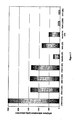
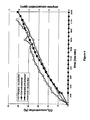
Figure 1 is a graph showing ethylene adsorption over time by ZSM-5 doped with palladium (with and without water present in the gas feed, wet or dry) and un-doped ZSM-5, said graph demonstrating that it is the presence of palladium doping that enables ethylene adsorption; -
Figure 2 is a graph showing ethylene adsorption by ZSM-5 with a SiO2:Al2O3 ratio of 23 with different levels of palladium doping, varying from 0.5 wt% to 5 wt%, and for comparison silver doping at 2.5 wt%, said graph demonstrating the effectiveness of palladium doping over that of another metal and the variation in ethylene adsorption capacity with a change in level of doping; -
Figure 3 is a graph showing ethylene adsorption by different palladium doped zeolites (SiO2:Al2O3 ratios given in brackets), the Pd loading in all cases if 2.5 wt%, said graph showing that ethylene adsorption by palladium doped zeolites is greatest for ZSM-5 samples with a relatively low SiO2:Al2O3 ratio; -
Figure 4 is a graph showing the CO2 and ethylene concentrations measured in an example using a banana as the organic matter from which the ethylene is derived (see Example 5 for further discussion); and -
Figure 5 is a graph showing ethylene adsorption by a monolith coated with 2.5 wt% Pd/ZSM-5; and -
Figure 6 is a graph showing the lightness of an ethylene indicator after exposure to an apple, an apple and adsorber, and the indicator on its own (with a reference measurement of the indicator on its own after exposure to ethylene). - Doped supports, also known as adsorbers, were prepared using the incipient wetness impregnation method. Typically 20 g of the support (e.g. the hydrogen form of the zeolite) was impregnated with the nitrate salt or chloride salt of the appropriate metal (e.g. palladium), and then dried at 110 °C before being calcined in air at 500 °C for 2 hrs.
- Measurements were carried out in a plug flow reactor at 21 °C with 0.1 g doped support of particle size 250-355 µm with a flow rate of 50 ml/min of gas comprising 10% O2, 200 ppm C2H4, ∼1% water (where present) and balance He/Ar.
- Samples 4.0 wt% Pd doped activated carbon and 2.5 wt% Pd/ZSM-5(23) were made according to Example 1 (using palladium chloride salt and palladium nitrate respectively) and various activated carbons. The samples were tested for their ethylene adsorption capacity, in accordance with Example 2. The results are set out below:
Adsorber Ethylene adsorption/µl g-1 Pd/ZSM-5 32228 PdCl/C (black pearl) 372 PdCVC (denka) 80 PdCVC (vulcite) 132 PdCl/C (ketjen) 292 PdCl/C (xc-72R) 205 - This experiment shows that Pd/ZSM-5 has a far higher adsorption capacity than Pd doped activated carbon.
- Samples of 2.5 wt% Pd/ZSM-5(23), made according to Example 1, and samples of 5 wt% KMnO4 on Al2O3 (Condea, 140 m2/g) were tested for their ethylene adsorption capacity, in accordance with Example 2. The materials were tested when dry and after having been exposed to water by being placed in a dessicator containing water at ambient temperature for a set period of time. The results of this experiment are set out in the table below:
Adsorber Pre-treatment Ethylene adsorption/µl g-1 Pd/ZSM-5 Calcined in air at 500 °C 4162 Pd/ZSM-5 Calcined in air at 500 °C, exposed to water vapour for 100 hrs at 21 °C 3753 KMnO4/Al2O3 Dried 110 °C 750 KMnO4/Al2O3 Dried 110 °C, exposed to water vapour for 72 hrs at 21 ° C 0 - Additionally, samples of 2.5 wt% M/ZSM-5, M = Pt, Co, Ni, Rh, Ru, Ir, Mo, Cu, W, V, and Au, (all with a SiO2:Al2O3 ratio of 23) were made according to Example 1 and tested for their ethylene adsorption capacity after having been exposed to water as above. The ethylene adsorption capacities measured were less than 60 µl g-1 catalyst for all of the samples.
- This experiment shows that the palladium doped zeolite only loses approximately 10% of its dry ethylene adsorption capacity when wet. All the other metals tested show negligible ethylene adsorption when wet, whilst KMnO4 on Al2O3 loses all of its ethylene adsorption function when wet.
- A banana (weighing approximately 150 g) was placed in an airtight vessel of volume 1.15 litres and left for approximately 1 day. Increase in CO2 and ethylene concentration was measured as a function of time using Gas Chromatography. The experiment was then repeated with 0.2 g adsorber (2.5 wt% Pd/ZSM-5) present in the vessel.
- As can be seen with reference to
Figure 4 , the banana alone led to an approximately linear increase in both CO2 and ethylene concentrations, whereas when the adsorber was present there was no detectable increase in ethylene concentration whilst the concentration of CO2 increased at approximately the same rate as before indicating a similar respiration rate. - Further experiments were carried out with a variety of fruit being placed in the same airtight vessel and left for approximately 20 hours to yield the following results:
Fruit Fruit weight/g Adsorber Ethylene Concentration/ppm Banana 140 none 5.5 Banana 140 un-doped ZSM-5 (23) 3.9 Banana 156 1 wt% Pd/ZSM-5 (23) 0.0 Banana 137 2.5 wt % Pd/ZSM-5 (23) 0.0 Peach 114 none 35.0 Peach 114 2.5 wt % Pd/ZSM-5 (23) 1.5 Apple 148 none 316.4 Apple 148 1 wt% Pd/ZSM-5 (23) 17.2 Tomato 208 none 1.4 Tomato 207 2.5 wt% Pd/ZSM-5 (23) 0.0 Pear 156 none 42.9 Pear 156 1 wt% Pd/ZSM-5 (23) 1.7 Passion Fmit 60.9 none 109.9 Passion Fruit 60.6 2.5 wt % Pd/ZSM5 (23) 13.7 - A 900 cpsi (cells per square inch) cordierite catalyst monolith, of the type commonly used in vehicle exhaust catalysts, weighing 3 g with dimensions of 2.2 cm diameter and 2.5 cm length, was coated with a 2.5 wt% Pd/ZSM-5 slurry. The slurry was prepared using finely milled doped ZSM-5 suspended in water (the doped ZSM-5 was prepared according to the method described in Example 1). The washcoat load was 0.28g/cm2. The monolith was tested for its ethylene adsorption capacity in an ITK rig at a flow rate of 10 ml/min using gas comprising 10% O2, 20 ppm C2H4 and balance Ar. The results of the test may be seen in
Figure 5 - This experiment shows that the adsorber coated monolith is able to remove almost all the ethylene present over the course of several days. (Additional experiments showed that the ethylene adsorption rate speeded up when the temperature at which the experiment was carried out was increased).
- An ethylene indicator was prepared following patent application
JP 60-202252 - 0.5 g of indicator was placed in a 1 litre glass beaker on its own, with only an apple, and with an apple and 0.2 g of ethylene adsorber being present (i.e. beaker 1 = sensor only,
beaker 2 = fruit + indicator and beaker 3 = fruit + adsorber + indicator). Each beaker was sealed with cling film and left for 72 hours. At 24 hour intervals, each ethylene sensor powder was removed and the colour measured on aSpectroflash 500 series colorimeter. The CIELAB Lightness scale (L) was used to monitor the change in lightness of the sensor powder, where a value of 100 is white and a value of 0 is black. - A sample of the ethylene indicator was also exposed to 1000 ppm ethylene for 24 hours. The colour measurements of this sample and a fresh sample were also recorded for reference.
- As can be seen with reference to
Figure 6 , ethylene from the apple without scavenger has darkened the indicator after 72 hours to almost the same extent as the sample of the ethylene indicator exposed to 1000 ppm ethylene for 24 hours. The colour of the sensor powders in beakers containing the fruit with the adsorber have not darkened as much, showing that the ethylene adsorber is removing ethylene. Samples of ethylene sensor sealed in empty beakers did not change colour significantly over the 72 hours. - Measurements were carried out using a saturator at 21 °C with 0.1 g doped ZSM-5(23) of particle size 250-355 µm with a flow rate of 50 ml/min of gas comprising 10% O2, 300 ppm CH2O or CH3COOH and balance He/Ar.
- The formaldehyde adsorption capacity of 2.5 wt% Pd/ZSM-5(23) was found to be 9750 µl/g adsorber. The acetic acid adsorption capacity of 2.5 wt% Pd/ZSM-5(23) was found to be 29241 µl/g adsorber.
Claims (26)
- The use of palladium doped ZSM-5 to adsorb volatile organic compounds (VOCs) derived from organic matter, wherein the Si:Al ratio of the ZSM-5 is less than or equal to 100:1.
- The use according to claim 1, wherein the Si:Al ratio of the ZSM-5 is from 22:1 to 28:1.
- The use according to claim 1 or 2, wherein the organic matter consists of perishable organic goods.
- The use according to claim 3, wherein the perishable organic goods comprise items of food.
- The use according to claim 4, wherein the items of food comprise fruit and/or vegetables.
- The use according to claim 1 or 2, wherein the perishable organic goods comprise horticultural produce.
- The use according to claim 6, wherein the horticultural produce comprises plants and/or cut flowers.
- The use according to claim 1 or 2, wherein the organic matter comprises refuse.
- The use according to any preceding claim, wherein the organic matter is contained in a storage container or package.
- The use according to claim 9, wherein the doped ZSM-5 is incorporated into, or into part of, the storage container or package.
- The use according to claim 9, wherein the doped ZSM-5 is incorporated into a label comprising a substrate for insertion and retention within a storage container or package.
- The use according to claim 9, 10 or 11, wherein the storage container or package is a refuse receptacle.
- The use according to any preceding claim, wherein the VOCs are adsorbed at a temperature of from -10 °C to 50 °C.
- The use according to claim 13, wherein the VOCs are adsorbed at a temperature of from 0 °C to 30 °C.
- The use according to any preceding claim, wherein the VOCs comprise ethylene.
- The use according to any preceding claim, wherein the VOCs comprise formaldehyde and/or acetic acid.
- The use according to any preceding claim, wherein the palladium comprises from 0.1 wt% to 10.0 wt% based on the total weight of the doped ZSM-5.
- The use according to claim 17, wherein, the palladium comprises from 0.5 wt% to 5.0 wt% based on the total weight of the doped ZSM-5.
- The use according to any preceding claim, wherein the VOCs are adsorbed to a level of less than or equal to 0.10 ppm.
- The use according to claim 19, wherein the VOCs are adsorbed to a level of less than or equal to 0.05 ppm.
- The use according to any preceding claim, wherein the ZSM-5 is heated to 250 °C for 30 minutes in air to release the VOCs adsorbed on the ZSM-5 and any secondary compounds present, thus regenerating the doped ZSM-5 for further use.
- The use according to any preceding claim, wherein the doped ZSM-5 is used with a VOC indicator.
- Palladium doped ZSM-5, wherein the Si:Al ratio of the ZSM-5 is less than or equal to 100:1 and the palladium comprises from 0.1 wt% to 10.0 wt% based on the total weight of the doped ZSM-5.
- Palladium doped ZSM-5 according to claim 23, wherein the Si:Al ratio of the ZSM-5 is from 23:1 to 28:1.
- Palladium doped ZSM-5 according to claim 23 or 24, wherein the palladium comprises from 0.5 wt% to 5.0 wt% based on the total weight of the doped ZSM-5.
- A palladium doped ZSM-5 according to any one of claims 23 to 25, in the form of a label, sachet or ink, or coated on a catalyst carrier, or in the form of extrudates, pellets, tablets, grains or granules.
Priority Applications (1)
| Application Number | Priority Date | Filing Date | Title |
|---|---|---|---|
| PL10003439T PL2210498T3 (en) | 2005-11-01 | 2006-10-26 | Adsorption of volatile organic compounds derived from organic matter |
Applications Claiming Priority (3)
| Application Number | Priority Date | Filing Date | Title |
|---|---|---|---|
| GBGB0522229.4A GB0522229D0 (en) | 2005-11-01 | 2005-11-01 | Adsorption of volatile organic compounds derived from organic matter |
| PCT/GB2006/050354 WO2007052074A2 (en) | 2005-11-01 | 2006-10-26 | Adsorption of volatile organic compounds derived from organic matter |
| EP06795011.3A EP1942744B3 (en) | 2005-11-01 | 2006-10-26 | Adsorption of volatile organic compounds derived from organic matter |
Related Parent Applications (3)
| Application Number | Title | Priority Date | Filing Date |
|---|---|---|---|
| EP06795011.3A Division-Into EP1942744B3 (en) | 2005-11-01 | 2006-10-26 | Adsorption of volatile organic compounds derived from organic matter |
| EP06795011.3A Division EP1942744B3 (en) | 2005-11-01 | 2006-10-26 | Adsorption of volatile organic compounds derived from organic matter |
| EP06795011.3 Division | 2006-10-26 |
Publications (2)
| Publication Number | Publication Date |
|---|---|
| EP2210498A1 true EP2210498A1 (en) | 2010-07-28 |
| EP2210498B1 EP2210498B1 (en) | 2019-04-24 |
Family
ID=35516090
Family Applications (2)
| Application Number | Title | Priority Date | Filing Date |
|---|---|---|---|
| EP10003439.6A Active EP2210498B1 (en) | 2005-11-01 | 2006-10-26 | Adsorption of volatile organic compounds derived from organic matter |
| EP06795011.3A Active EP1942744B3 (en) | 2005-11-01 | 2006-10-26 | Adsorption of volatile organic compounds derived from organic matter |
Family Applications After (1)
| Application Number | Title | Priority Date | Filing Date |
|---|---|---|---|
| EP06795011.3A Active EP1942744B3 (en) | 2005-11-01 | 2006-10-26 | Adsorption of volatile organic compounds derived from organic matter |
Country Status (17)
| Country | Link |
|---|---|
| US (4) | USRE44125E1 (en) |
| EP (2) | EP2210498B1 (en) |
| JP (3) | JP2009513344A (en) |
| AT (1) | ATE490687T1 (en) |
| CA (1) | CA2628050C (en) |
| CY (1) | CY1111270T1 (en) |
| DE (1) | DE602006018769D1 (en) |
| DK (1) | DK1942744T3 (en) |
| ES (2) | ES2356928T7 (en) |
| GB (1) | GB0522229D0 (en) |
| IL (2) | IL191132A (en) |
| NZ (1) | NZ567819A (en) |
| PL (2) | PL2210498T3 (en) |
| PT (2) | PT1942744E (en) |
| TR (1) | TR201910197T4 (en) |
| WO (1) | WO2007052074A2 (en) |
| ZA (1) | ZA200803931B (en) |
Families Citing this family (24)
| Publication number | Priority date | Publication date | Assignee | Title |
|---|---|---|---|---|
| GB0522229D0 (en) | 2005-11-01 | 2005-12-07 | Johnson Matthey Plc | Adsorption of volatile organic compounds derived from organic matter |
| JP2009040998A (en) * | 2007-07-18 | 2009-02-26 | Sumitomo Chemical Co Ltd | Polypropylene resin composition and molded body comprising the same |
| GB0911478D0 (en) | 2009-07-02 | 2009-08-12 | Johnson Matthey Plc | Adsorption of volatile organic compounds derived from organic matter |
| FR2953153B1 (en) * | 2009-11-27 | 2013-12-06 | Irma | HYDROPHOBIC ZEOLITHE EXCHANGED WITH A TRANSITION METAL AS ALDEHYDESE ADSORBENT |
| JP2013244421A (en) * | 2012-05-23 | 2013-12-09 | Toyo Ink Sc Holdings Co Ltd | Organic solvent regenerating method |
| GB201311594D0 (en) * | 2013-06-28 | 2013-08-14 | Johnson Matthey Plc | Water-resistant composition |
| JP6580685B2 (en) * | 2015-02-02 | 2019-09-25 | サエス・ゲッターズ・エッセ・ピ・ア | Active package |
| GB2538255B (en) * | 2015-05-12 | 2020-02-26 | Innovia Films Ltd | Film for packaging |
| JP6617384B2 (en) * | 2015-07-15 | 2019-12-11 | 太陽化学株式会社 | Ethylene decomposing agent |
| GB2559096B (en) * | 2016-07-04 | 2020-11-11 | Innovia Films Ltd | Label |
| SE540667C2 (en) * | 2016-07-11 | 2018-10-09 | Stora Enso Oyj | Ethylene scavenging material suitable for use in packages and process for manufacturing thereof |
| GB201705797D0 (en) * | 2017-04-11 | 2017-05-24 | Johnson Matthey Plc | Packaging films |
| GB201705796D0 (en) | 2017-04-11 | 2017-05-24 | Johnson Matthey Plc | Packaging materials |
| WO2020203441A1 (en) * | 2019-03-29 | 2020-10-08 | 株式会社Nbcメッシュテック | Method for preventing physiological disorder and method for inhibiting mold growth |
| CN110681346A (en) * | 2019-09-10 | 2020-01-14 | 咏铨洁能科技有限公司 | Adsorbent with low boiling point VCOS, filter material set, filter material box and method for producing adsorbent |
| CN116209520A (en) * | 2020-10-02 | 2023-06-02 | 三井化学株式会社 | Odor removal catalyst and use thereof |
| GB202105224D0 (en) | 2021-04-13 | 2021-05-26 | Johnson Matthey Plc | UV-curable ethylene scavenging compositions |
| IT202100010754A1 (en) | 2021-04-28 | 2022-10-28 | Consorzio Interuniversitario Per Lo Sviluppo Dei Sistemi A Grande Interfase Csgi | ORGANIC-INORGANIC COMPOSITE MATERIAL BASED ON CASTOR OIL FOR THE REMOVAL OF VOCs |
| GB202107524D0 (en) | 2021-05-27 | 2021-07-14 | Johnson Matthey Plc | Adsorbent materials |
| CN114313864B (en) * | 2022-03-09 | 2022-06-21 | 常州天虹纺织有限公司 | Digital air pressure cotton box conveying line for spinning |
| CN114950351A (en) * | 2022-07-06 | 2022-08-30 | 四川大学 | A method and application of doped modified ZSM-5 molecular sieve to enhance the adsorption of VOCs |
| CN115614762B (en) * | 2022-11-14 | 2023-04-04 | 湖南天闻新华印务有限公司 | Printing oven tail gas processing apparatus |
| GB2640094A (en) | 2022-12-20 | 2025-10-08 | Its Fresh Ltd | Adsorbent coating |
| GB202415967D0 (en) | 2024-10-30 | 2024-12-11 | Its Fresh Ltd | Botrytis control |
Citations (13)
| Publication number | Priority date | Publication date | Assignee | Title |
|---|---|---|---|---|
| US4331693A (en) | 1979-09-12 | 1982-05-25 | Polska Akademia Nauk, Instytut Katalizy I Fizykochemii Powierzchni | Method for storage of horticultural products in freshness |
| JPS60202252A (en) | 1984-03-26 | 1985-10-12 | Matsushita Electric Ind Co Ltd | Device for storing two-temperature hot water |
| GB2163637A (en) | 1984-08-31 | 1986-03-05 | Johnson Matthey Plc | Removal of ethylene from fruit and vegetables stores by catalytic combustion |
| JPH02233381A (en) | 1989-03-01 | 1990-09-14 | Rengo Co Ltd | Vegetable and fruit packing case |
| JPH02261341A (en) | 1989-04-01 | 1990-10-24 | Nippon Shokubai Kagaku Kogyo Co Ltd | Method for eliminating ethylene in vegetable storing chamber |
| GB2252968A (en) | 1990-12-28 | 1992-08-26 | Nikki Universal Co Ltd | Adsorbent comprising sepiolite and zeolite |
| DE4433120A1 (en) * | 1993-09-16 | 1995-03-23 | Honda Motor Co Ltd | Heat-resistant hydrocarbon adsorber to restrict exhaust gas emissions |
| EP0755714A2 (en) * | 1995-07-27 | 1997-01-29 | General Motors Corporation | Wide range hydrocarbon adsorber and quick lightoff catalyst |
| EP0818238A1 (en) * | 1996-01-25 | 1998-01-14 | China Petrochemical Corporation | A catalyst for producing alkyl-benzene and method of producing alkyl-benzene using the catalyst |
| EP0947236A1 (en) * | 1998-03-20 | 1999-10-06 | Engelhard Corporation | Catalyzed hydrocarbon trap material and method of making the same |
| JP2000004783A (en) | 1998-06-25 | 2000-01-11 | Toshiba Corp | Refrigerator freshness retention structure |
| US20020086793A1 (en) * | 2000-12-29 | 2002-07-04 | Labarge William J. | Mixed zeolite NOx catalyst |
| EP1525802A1 (en) * | 2003-10-22 | 2005-04-27 | Perlen Converting AG | Ethylene adsorption for the control of ripening of fruit and vegetables |
Family Cites Families (27)
| Publication number | Priority date | Publication date | Assignee | Title |
|---|---|---|---|---|
| JPS60201252A (en) | 1984-03-26 | 1985-10-11 | Toppan Printing Co Ltd | Method for deciding quality of vegetable and fruit |
| JPS60221031A (en) | 1984-04-16 | 1985-11-05 | Mitsubishi Gas Chem Co Inc | Method for preserving raw meat |
| EP0261422B1 (en) | 1986-08-26 | 1993-11-10 | Nippon Kayaku Kabushiki Kaisha | Method for adsorbing and decomposing ethylene and/or other odorous substances present in air or other odor-generating sources |
| JPS63159385A (en) | 1986-08-29 | 1988-07-02 | Nippon Nohyaku Co Ltd | Malonic acid derivative, production and use thereof |
| JPH03280827A (en) | 1990-03-09 | 1991-12-11 | Toray Ind Inc | Ethylene-removing agent and its usage |
| DE69115582T2 (en) | 1990-07-19 | 1996-08-22 | Boc Group Plc | Storage and transport of goods in a controlled atmosphere |
| JP3414808B2 (en) | 1992-11-30 | 2003-06-09 | 株式会社日本触媒 | Hydrocarbon adsorbent in exhaust gas |
| JPH0780291A (en) | 1993-09-16 | 1995-03-28 | Honda Motor Co Ltd | Exhaust gas purifying heat-resistant hc adsorbing member |
| JPH08173512A (en) * | 1994-12-27 | 1996-07-09 | Sharp Corp | Deodorizing element |
| JP3280827B2 (en) | 1995-04-20 | 2002-05-13 | 暢彦 桂 | Spiral structure |
| JPH08308917A (en) * | 1995-05-24 | 1996-11-26 | Matsushita Electric Ind Co Ltd | Deodorizing device |
| JPH0924272A (en) | 1995-07-11 | 1997-01-28 | Kuraray Chem Corp | Self-regeneration type adsorbent |
| JP3227373B2 (en) * | 1996-03-18 | 2001-11-12 | シャープ株式会社 | Air purification paint using photocatalyst |
| JPH09313935A (en) | 1996-05-31 | 1997-12-09 | Matsushita Electric Ind Co Ltd | Lower aldehyde compound removal catalyst and removal method |
| JP3689751B2 (en) | 1997-03-12 | 2005-08-31 | シャープ株式会社 | Photocatalyst and air conditioner using the same |
| EP0938925B1 (en) | 1998-02-25 | 2005-08-31 | Rengo Co., Ltd. | Composition containing a zeolite-cellulose composite and product made therefrom |
| US6319484B1 (en) * | 1999-12-14 | 2001-11-20 | Engelhard Corporation | Compositions for abatement of volatile organic compounds and apparatus and methods using the same |
| JP3829600B2 (en) * | 2000-01-31 | 2006-10-04 | マツダ株式会社 | Adsorbent, adsorption apparatus using the same, other articles, and adsorption method |
| EP1134022A1 (en) | 2000-03-15 | 2001-09-19 | Degussa AG | Adsorbent |
| CN1234288C (en) | 2001-03-05 | 2006-01-04 | 科学与工业研究委员会 | Process for preparation of protein hydrolysate from soy flour |
| ITMI20020678A1 (en) | 2002-03-29 | 2003-09-29 | Sirap Gema Spa | PACKAGING FOR THE VACUUM STORAGE OR IN A PROTECTIVE ATMOSPHERE OF FOOD LIKELY TO RELEASE LIQUIDS AND / OR AIRBRUSHES |
| US6837917B2 (en) * | 2003-05-22 | 2005-01-04 | Guild Associates, Inc. | Process for the removal of ethylene oxide from air |
| JP2005054086A (en) | 2003-08-05 | 2005-03-03 | Rengo Co Ltd | Catalyst substance-containing functional material and method for producing the same |
| GB0522229D0 (en) * | 2005-11-01 | 2005-12-07 | Johnson Matthey Plc | Adsorption of volatile organic compounds derived from organic matter |
| CN100496678C (en) | 2006-04-25 | 2009-06-10 | 中国石油化工股份有限公司 | Combined purification method for effluvial exhaust air |
| RU2391446C2 (en) | 2007-11-02 | 2010-06-10 | Закрытое акционерное общество "Научно-техническое объединение ПРИБОРСЕРВИС" | Method of protection against air corrosion for temporary storage and transportation of metalware |
| GB0911478D0 (en) * | 2009-07-02 | 2009-08-12 | Johnson Matthey Plc | Adsorption of volatile organic compounds derived from organic matter |
-
2005
- 2005-11-01 GB GBGB0522229.4A patent/GB0522229D0/en not_active Ceased
-
2006
- 2006-10-26 AT AT06795011T patent/ATE490687T1/en active
- 2006-10-26 EP EP10003439.6A patent/EP2210498B1/en active Active
- 2006-10-26 CA CA2628050A patent/CA2628050C/en active Active
- 2006-10-26 PT PT06795011T patent/PT1942744E/en unknown
- 2006-10-26 US US13/446,903 patent/USRE44125E1/en active Active
- 2006-10-26 EP EP06795011.3A patent/EP1942744B3/en active Active
- 2006-10-26 ES ES06795011.3T patent/ES2356928T7/en active Active
- 2006-10-26 DE DE602006018769T patent/DE602006018769D1/en active Active
- 2006-10-26 ES ES10003439T patent/ES2735511T3/en active Active
- 2006-10-26 PL PL10003439T patent/PL2210498T3/en unknown
- 2006-10-26 ZA ZA200803931A patent/ZA200803931B/en unknown
- 2006-10-26 US US12/092,382 patent/US7910773B2/en not_active Ceased
- 2006-10-26 DK DK06795011.3T patent/DK1942744T3/en active
- 2006-10-26 PL PL06795011T patent/PL1942744T6/en unknown
- 2006-10-26 JP JP2008538426A patent/JP2009513344A/en active Pending
- 2006-10-26 WO PCT/GB2006/050354 patent/WO2007052074A2/en not_active Ceased
- 2006-10-26 TR TR2019/10197T patent/TR201910197T4/en unknown
- 2006-10-26 NZ NZ567819A patent/NZ567819A/en unknown
- 2006-10-26 PT PT10003439T patent/PT2210498T/en unknown
-
2008
- 2008-04-29 IL IL191132A patent/IL191132A/en active IP Right Grant
-
2011
- 2011-02-21 US US13/031,429 patent/US8480794B2/en active Active
- 2011-02-25 CY CY20111100230T patent/CY1111270T1/en unknown
- 2011-07-01 JP JP2011147617A patent/JP6104499B2/en active Active
-
2013
- 2013-06-05 US US13/910,509 patent/US9186649B2/en active Active
-
2015
- 2015-05-22 JP JP2015104843A patent/JP2015213908A/en active Pending
- 2015-08-26 IL IL240834A patent/IL240834A/en active IP Right Grant
Patent Citations (13)
| Publication number | Priority date | Publication date | Assignee | Title |
|---|---|---|---|---|
| US4331693A (en) | 1979-09-12 | 1982-05-25 | Polska Akademia Nauk, Instytut Katalizy I Fizykochemii Powierzchni | Method for storage of horticultural products in freshness |
| JPS60202252A (en) | 1984-03-26 | 1985-10-12 | Matsushita Electric Ind Co Ltd | Device for storing two-temperature hot water |
| GB2163637A (en) | 1984-08-31 | 1986-03-05 | Johnson Matthey Plc | Removal of ethylene from fruit and vegetables stores by catalytic combustion |
| JPH02233381A (en) | 1989-03-01 | 1990-09-14 | Rengo Co Ltd | Vegetable and fruit packing case |
| JPH02261341A (en) | 1989-04-01 | 1990-10-24 | Nippon Shokubai Kagaku Kogyo Co Ltd | Method for eliminating ethylene in vegetable storing chamber |
| GB2252968A (en) | 1990-12-28 | 1992-08-26 | Nikki Universal Co Ltd | Adsorbent comprising sepiolite and zeolite |
| DE4433120A1 (en) * | 1993-09-16 | 1995-03-23 | Honda Motor Co Ltd | Heat-resistant hydrocarbon adsorber to restrict exhaust gas emissions |
| EP0755714A2 (en) * | 1995-07-27 | 1997-01-29 | General Motors Corporation | Wide range hydrocarbon adsorber and quick lightoff catalyst |
| EP0818238A1 (en) * | 1996-01-25 | 1998-01-14 | China Petrochemical Corporation | A catalyst for producing alkyl-benzene and method of producing alkyl-benzene using the catalyst |
| EP0947236A1 (en) * | 1998-03-20 | 1999-10-06 | Engelhard Corporation | Catalyzed hydrocarbon trap material and method of making the same |
| JP2000004783A (en) | 1998-06-25 | 2000-01-11 | Toshiba Corp | Refrigerator freshness retention structure |
| US20020086793A1 (en) * | 2000-12-29 | 2002-07-04 | Labarge William J. | Mixed zeolite NOx catalyst |
| EP1525802A1 (en) * | 2003-10-22 | 2005-04-27 | Perlen Converting AG | Ethylene adsorption for the control of ripening of fruit and vegetables |
Also Published As
Similar Documents
| Publication | Publication Date | Title |
|---|---|---|
| US9186649B2 (en) | Adsorption of volatile organic compounds derived from organic matter | |
| EP2448666B1 (en) | Adsorption of volatile organic compounds derived from organic matter | |
| Zagory | Ethylene-removing packaging | |
| EP1374688A1 (en) | Ethylene gas adsorbent, method of controlling ethylene gas concentration and ethylene gas sensor | |
| EP0255461B1 (en) | Improved reactive adsorbent for the conservation of harvested vegetable products | |
| CA2916502A1 (en) | Water-resistant composition | |
| JPS63273434A (en) | Method for keeping freshness of green vegetables and flowers | |
| JPH0276538A (en) | Freshness preserver for fruits and vegetables |
Legal Events
| Date | Code | Title | Description |
|---|---|---|---|
| PUAI | Public reference made under article 153(3) epc to a published international application that has entered the european phase |
Free format text: ORIGINAL CODE: 0009012 |
|
| AC | Divisional application: reference to earlier application |
Ref document number: 1942744 Country of ref document: EP Kind code of ref document: P |
|
| AK | Designated contracting states |
Kind code of ref document: A1 Designated state(s): AT BE BG CH CY CZ DE DK EE ES FI FR GB GR HU IE IS IT LI LT LU LV MC NL PL PT RO SE SI SK TR |
|
| 17P | Request for examination filed |
Effective date: 20110128 |
|
| RAP1 | Party data changed (applicant data changed or rights of an application transferred) |
Owner name: JOHNSON MATTHEY PUBLIC LIMITED COMPANY |
|
| RAP1 | Party data changed (applicant data changed or rights of an application transferred) |
Owner name: ANGLO PLATINUM MARKETING LIMITED |
|
| 17Q | First examination report despatched |
Effective date: 20160329 |
|
| GRAP | Despatch of communication of intention to grant a patent |
Free format text: ORIGINAL CODE: EPIDOSNIGR1 |
|
| STAA | Information on the status of an ep patent application or granted ep patent |
Free format text: STATUS: GRANT OF PATENT IS INTENDED |
|
| INTG | Intention to grant announced |
Effective date: 20190104 |
|
| GRAS | Grant fee paid |
Free format text: ORIGINAL CODE: EPIDOSNIGR3 |
|
| GRAA | (expected) grant |
Free format text: ORIGINAL CODE: 0009210 |
|
| STAA | Information on the status of an ep patent application or granted ep patent |
Free format text: STATUS: THE PATENT HAS BEEN GRANTED |
|
| AC | Divisional application: reference to earlier application |
Ref document number: 1942744 Country of ref document: EP Kind code of ref document: P |
|
| AK | Designated contracting states |
Kind code of ref document: B1 Designated state(s): AT BE BG CH CY CZ DE DK EE ES FI FR GB GR HU IE IS IT LI LT LU LV MC NL PL PT RO SE SI SK TR |
|
| REG | Reference to a national code |
Ref country code: GB Ref legal event code: FG4D |
|
| REG | Reference to a national code |
Ref country code: CH Ref legal event code: EP Ref country code: CH Ref legal event code: NV Representative=s name: ISLER AND PEDRAZZINI AG, CH |
|
| REG | Reference to a national code |
Ref country code: AT Ref legal event code: REF Ref document number: 1123025 Country of ref document: AT Kind code of ref document: T Effective date: 20190515 Ref country code: IE Ref legal event code: FG4D |
|
| REG | Reference to a national code |
Ref country code: DE Ref legal event code: R096 Ref document number: 602006057845 Country of ref document: DE |
|
| REG | Reference to a national code |
Ref country code: PT Ref legal event code: SC4A Ref document number: 2210498 Country of ref document: PT Date of ref document: 20190627 Kind code of ref document: T Free format text: AVAILABILITY OF NATIONAL TRANSLATION Effective date: 20190617 |
|
| REG | Reference to a national code |
Ref country code: NL Ref legal event code: FP |
|
| REG | Reference to a national code |
Ref country code: LT Ref legal event code: MG4D |
|
| REG | Reference to a national code |
Ref country code: GR Ref legal event code: EP Ref document number: 20190402115 Country of ref document: GR Effective date: 20191016 |
|
| PG25 | Lapsed in a contracting state [announced via postgrant information from national office to epo] |
Ref country code: FI Free format text: LAPSE BECAUSE OF FAILURE TO SUBMIT A TRANSLATION OF THE DESCRIPTION OR TO PAY THE FEE WITHIN THE PRESCRIBED TIME-LIMIT Effective date: 20190424 Ref country code: SE Free format text: LAPSE BECAUSE OF FAILURE TO SUBMIT A TRANSLATION OF THE DESCRIPTION OR TO PAY THE FEE WITHIN THE PRESCRIBED TIME-LIMIT Effective date: 20190424 Ref country code: LT Free format text: LAPSE BECAUSE OF FAILURE TO SUBMIT A TRANSLATION OF THE DESCRIPTION OR TO PAY THE FEE WITHIN THE PRESCRIBED TIME-LIMIT Effective date: 20190424 |
|
| PG25 | Lapsed in a contracting state [announced via postgrant information from national office to epo] |
Ref country code: LV Free format text: LAPSE BECAUSE OF FAILURE TO SUBMIT A TRANSLATION OF THE DESCRIPTION OR TO PAY THE FEE WITHIN THE PRESCRIBED TIME-LIMIT Effective date: 20190424 Ref country code: BG Free format text: LAPSE BECAUSE OF FAILURE TO SUBMIT A TRANSLATION OF THE DESCRIPTION OR TO PAY THE FEE WITHIN THE PRESCRIBED TIME-LIMIT Effective date: 20190724 |
|
| REG | Reference to a national code |
Ref country code: ES Ref legal event code: FG2A Ref document number: 2735511 Country of ref document: ES Kind code of ref document: T3 Effective date: 20191219 |
|
| PG25 | Lapsed in a contracting state [announced via postgrant information from national office to epo] |
Ref country code: IS Free format text: LAPSE BECAUSE OF FAILURE TO SUBMIT A TRANSLATION OF THE DESCRIPTION OR TO PAY THE FEE WITHIN THE PRESCRIBED TIME-LIMIT Effective date: 20190824 |
|
| REG | Reference to a national code |
Ref country code: DE Ref legal event code: R097 Ref document number: 602006057845 Country of ref document: DE |
|
| PG25 | Lapsed in a contracting state [announced via postgrant information from national office to epo] |
Ref country code: RO Free format text: LAPSE BECAUSE OF FAILURE TO SUBMIT A TRANSLATION OF THE DESCRIPTION OR TO PAY THE FEE WITHIN THE PRESCRIBED TIME-LIMIT Effective date: 20190424 Ref country code: CZ Free format text: LAPSE BECAUSE OF FAILURE TO SUBMIT A TRANSLATION OF THE DESCRIPTION OR TO PAY THE FEE WITHIN THE PRESCRIBED TIME-LIMIT Effective date: 20190424 Ref country code: DK Free format text: LAPSE BECAUSE OF FAILURE TO SUBMIT A TRANSLATION OF THE DESCRIPTION OR TO PAY THE FEE WITHIN THE PRESCRIBED TIME-LIMIT Effective date: 20190424 Ref country code: EE Free format text: LAPSE BECAUSE OF FAILURE TO SUBMIT A TRANSLATION OF THE DESCRIPTION OR TO PAY THE FEE WITHIN THE PRESCRIBED TIME-LIMIT Effective date: 20190424 Ref country code: SK Free format text: LAPSE BECAUSE OF FAILURE TO SUBMIT A TRANSLATION OF THE DESCRIPTION OR TO PAY THE FEE WITHIN THE PRESCRIBED TIME-LIMIT Effective date: 20190424 |
|
| PLBE | No opposition filed within time limit |
Free format text: ORIGINAL CODE: 0009261 |
|
| STAA | Information on the status of an ep patent application or granted ep patent |
Free format text: STATUS: NO OPPOSITION FILED WITHIN TIME LIMIT |
|
| 26N | No opposition filed |
Effective date: 20200127 |
|
| PG25 | Lapsed in a contracting state [announced via postgrant information from national office to epo] |
Ref country code: SI Free format text: LAPSE BECAUSE OF FAILURE TO SUBMIT A TRANSLATION OF THE DESCRIPTION OR TO PAY THE FEE WITHIN THE PRESCRIBED TIME-LIMIT Effective date: 20190424 Ref country code: MC Free format text: LAPSE BECAUSE OF FAILURE TO SUBMIT A TRANSLATION OF THE DESCRIPTION OR TO PAY THE FEE WITHIN THE PRESCRIBED TIME-LIMIT Effective date: 20190424 |
|
| PG25 | Lapsed in a contracting state [announced via postgrant information from national office to epo] |
Ref country code: LU Free format text: LAPSE BECAUSE OF NON-PAYMENT OF DUE FEES Effective date: 20191026 |
|
| REG | Reference to a national code |
Ref country code: AT Ref legal event code: UEP Ref document number: 1123025 Country of ref document: AT Kind code of ref document: T Effective date: 20190424 |
|
| PG25 | Lapsed in a contracting state [announced via postgrant information from national office to epo] |
Ref country code: CY Free format text: LAPSE BECAUSE OF FAILURE TO SUBMIT A TRANSLATION OF THE DESCRIPTION OR TO PAY THE FEE WITHIN THE PRESCRIBED TIME-LIMIT Effective date: 20190424 |
|
| PG25 | Lapsed in a contracting state [announced via postgrant information from national office to epo] |
Ref country code: HU Free format text: LAPSE BECAUSE OF FAILURE TO SUBMIT A TRANSLATION OF THE DESCRIPTION OR TO PAY THE FEE WITHIN THE PRESCRIBED TIME-LIMIT; INVALID AB INITIO Effective date: 20061026 |
|
| P01 | Opt-out of the competence of the unified patent court (upc) registered |
Effective date: 20230522 |
|
| PGFP | Annual fee paid to national office [announced via postgrant information from national office to epo] |
Ref country code: PL Payment date: 20250918 Year of fee payment: 20 |
|
| REG | Reference to a national code |
Ref country code: CH Ref legal event code: U11 Free format text: ST27 STATUS EVENT CODE: U-0-0-U10-U11 (AS PROVIDED BY THE NATIONAL OFFICE) Effective date: 20251101 |
|
| PGFP | Annual fee paid to national office [announced via postgrant information from national office to epo] |
Ref country code: NL Payment date: 20251021 Year of fee payment: 20 |
|
| PGFP | Annual fee paid to national office [announced via postgrant information from national office to epo] |
Ref country code: PT Payment date: 20251016 Year of fee payment: 20 |
|
| PGFP | Annual fee paid to national office [announced via postgrant information from national office to epo] |
Ref country code: DE Payment date: 20251021 Year of fee payment: 20 |
|
| PGFP | Annual fee paid to national office [announced via postgrant information from national office to epo] |
Ref country code: GB Payment date: 20251022 Year of fee payment: 20 |
|
| PGFP | Annual fee paid to national office [announced via postgrant information from national office to epo] |
Ref country code: AT Payment date: 20251022 Year of fee payment: 20 |
|
| PGFP | Annual fee paid to national office [announced via postgrant information from national office to epo] |
Ref country code: IT Payment date: 20251024 Year of fee payment: 20 |
|
| PGFP | Annual fee paid to national office [announced via postgrant information from national office to epo] |
Ref country code: FR Payment date: 20251029 Year of fee payment: 20 |
|
| PGFP | Annual fee paid to national office [announced via postgrant information from national office to epo] |
Ref country code: BE Payment date: 20251021 Year of fee payment: 20 Ref country code: GR Payment date: 20251022 Year of fee payment: 20 Ref country code: TR Payment date: 20251020 Year of fee payment: 20 |
|
| PGFP | Annual fee paid to national office [announced via postgrant information from national office to epo] |
Ref country code: CH Payment date: 20251101 Year of fee payment: 20 |
|
| PGFP | Annual fee paid to national office [announced via postgrant information from national office to epo] |
Ref country code: IE Payment date: 20251024 Year of fee payment: 20 |
|
| PGFP | Annual fee paid to national office [announced via postgrant information from national office to epo] |
Ref country code: ES Payment date: 20251210 Year of fee payment: 20 |