EP2210428B1 - Verfahren zur erkennung von zellidentitätskollisionen - Google Patents
Verfahren zur erkennung von zellidentitätskollisionen Download PDFInfo
- Publication number
- EP2210428B1 EP2210428B1 EP07817028A EP07817028A EP2210428B1 EP 2210428 B1 EP2210428 B1 EP 2210428B1 EP 07817028 A EP07817028 A EP 07817028A EP 07817028 A EP07817028 A EP 07817028A EP 2210428 B1 EP2210428 B1 EP 2210428B1
- Authority
- EP
- European Patent Office
- Prior art keywords
- cells
- identity
- cell
- user entity
- global
- Prior art date
- Legal status (The legal status is an assumption and is not a legal conclusion. Google has not performed a legal analysis and makes no representation as to the accuracy of the status listed.)
- Not-in-force
Links
Images

Classifications
-
- H—ELECTRICITY
- H04—ELECTRIC COMMUNICATION TECHNIQUE
- H04W—WIRELESS COMMUNICATION NETWORKS
- H04W48/00—Access restriction; Network selection; Access point selection
- H04W48/08—Access restriction or access information delivery, e.g. discovery data delivery
- H04W48/12—Access restriction or access information delivery, e.g. discovery data delivery using downlink control channel
-
- H—ELECTRICITY
- H04—ELECTRIC COMMUNICATION TECHNIQUE
- H04J—MULTIPLEX COMMUNICATION
- H04J11/00—Orthogonal multiplex systems, e.g. using WALSH codes
- H04J11/0069—Cell search, i.e. determining cell identity [cell-ID]
-
- H—ELECTRICITY
- H04—ELECTRIC COMMUNICATION TECHNIQUE
- H04W—WIRELESS COMMUNICATION NETWORKS
- H04W24/00—Supervisory, monitoring or testing arrangements
- H04W24/08—Testing, supervising or monitoring using real traffic
Definitions
- the present invention relates to a method of detecting cell identity collision in a cellular communication system.
- the present invention further relates to a communication system, a user entity and a network entity.
- Wireless mobile communication systems are usually cellular, i.e., the total coverage area of such systems is divided into smaller areas, cells, wherein each of these cells is associated with a radio base station having one or more antennas for providing communication resources via a radio interface for communication with user entities (UEs) in the radio coverage area of the radio base station.
- UEs user entities
- the base station often transmits an identity to enable the UE to identify the cell, so that the UE can report to the system which neighbour cell or cells it has detected.
- the cells can be located adjacent to each other to jointly provide coverage in the geographical area that the communication system is intended to cover, and also, as in more complex systems, be arranged in different cell layers, wherein cells in different layers can be at least partially overlapping, and also be of different cell size.
- E-UTRA Evolved Universal Terrestrial Radio Access
- LTE Long Term Evolution
- each cell should be identified with one local identity (LI) (a.k.a. physical layer cell identity (PCI)), which is not unique within the system, i.e., the identity can be reused for more than one cell, and one global cell identity (GCI) which is unique in the system.
- LI local identity
- PCI physical layer cell identity
- GCI global cell identity
- the use of both kinds of identities for a cell has the advantage that the LI can be made shorter, and thereby requires a smaller number of bits in a transmission than a global identity, for example when a UE is signalling the identity of a cell that has been detected by the UE.
- the GCI requires more bits in a transmission, but the use of the LI has the advantage that the GCI can be broadcasted more seldom, and also be used more seldom in reports from the UE.
- the UE is using the LI when reporting detected cells, but the system can also be using the LI when broadcasting which cells that should be barred (black listed and thereby not to be used by the UE) and if some cell specific parameters, for example a signal strength offset, should be applied to the measurements performed by the UE. Consequently, it is important that the LI uniquely identifies only one cell within the area where the UE is looking for neighbours.
- a base station of a serving cell must be able to translate a LI that a UE detects from a neighbour (or other) cell into a corresponding unique identity (GCI).
- the base station needs to translate the LI into the corresponding GCI when initiating a communication with the base station of this neighbour cell, e.g., in order to initiate a handover process.
- LI can be carefully planned so that no ambiguities arise with respect to which GCI a particular LI belongs. There are, however, situations where such planning is not always possible, for example in scenarios where a system operator is no longer in direct control of the location of the base station, e.g., personal home base stations, which are sold to an end-user with the purpose of creating one or more small cells in the home of the end-user.
- a system operator is no longer in direct control of the location of the base station, e.g., personal home base stations, which are sold to an end-user with the purpose of creating one or more small cells in the home of the end-user.
- each base station should request the UE to report the GCI, also if the base station already has a mapping from this LI to a GCI.
- the reason for this is to detect potential collisions of the above kind, where cells located close to each other are using the same LI (but different GCI). This solution detects any cases where neighbours to one cell use the same LI.
- a coverage area of said communication system is made up of a plurality of cells.
- At least one radio transmitter provides communication with at least one user entity in the coverage area of a said cell.
- the cell corresponds to one local identity, which is reusable within the communication system, and one corresponding global identity, which is unique in the system.
- the method is characterized in the step of, when two different cells using the same local identity are detected by the user entity, communicating the detection of two different cells using the same local identity to a network entity, wherein the detection is transmitted when a criterion is fulfilled; the detection is carried out by reading the global identity of a newly detected cell having the same local identity as a known cell and determining that the global identities of the known cell and the newly detected cell are different.
- the radio transmitter that is providing radio coverage in a cell e.g., a radio base station, periodically requests user entities to transmit the corresponding global identity of the local identity of a detected cell in order to ensure that the radio transmitter at all times has an accurate global identity for a local identity in order to detect collisions.
- the radio transmitter can rely on its information regarding the corresponding global identity of a local identity, since a user entity that detects the presence of two or more radio transmitters (cells) having the same local identity will notify the radio transmitter regarding this detection, immediately or after a period of time, and for as long as no further cell having a same local identity as a previously detected cell has been identified, the radio transmitter need not request the excessive transmissions of global identities as in the prior art.
- the invention also relates to a user entity according to claim 10 and a network entity according to claim 13.
- 3GPP 3rd Generation Partnership Program
- E-UTRA Evolved Universal Terrestrial Radio Access
- LTE Long Term Evolution
- network entity is to be interpreted as a radio access node, such as a radio base station, or a backbone network node. Also smaller home base stations are to be included in the term network entity.
- Mobile user entities such as mobile phones, smart phones or handheld computers having communication capabilities, are not included in the term network entity as used in this description and the following claims.
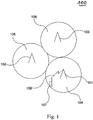
- An example of a simplified architecture of an E-UTRA system 100 is shown in fig. 1 , and discloses radio base stations 101-103 (stationary radio transceivers for duplex communication or, as the case may be, radio transmitters for downlink only mode communication.
- the base stations are provided with radio transceivers).
- the base stations are called eNBs (enhanced Node B) 101-103.
- a user entity (UE) 107 connects to the network by means of a radio interface, Uu interface, 108.
- the eNB 101-103 handles communication over the radio interface in a certain coverage area, i.e., cell 104-106, which is the area wherein the radio signal is strong enough to allow a satisfactory communication with UEs within the said area.
- the UE 107 When the UE 107 moves around in the coverage area provided by the communication system, the UE 107 will move from one cell to another, and thereby an ongoing communication will be transferred (handed over) from the eNB to which the UE presently belongs, i.e., the source cell, cell 104 in fig. 1 , to the cell into which the UE is entering, i.e., the target cell, e.g., cell 105 in fig. 1 . This is accomplished by establishing a communication channel on the Uu interface of the target cell, and terminating the communication channel on the Uu interface of the source cell.
- the base stations 104-106 transmitting identities by means of which the base stations can be identified.
- the transmitted identities can be transmitted explicitly, or as signals from which the identities can be derived.
- signals from which the identities can be derived are to be considered as if the identities are explicitly transmitted.
- the base stations can be provided with both a global cell identity GCI, which is unique within the system, and a local cell identity, LI, which can be reused for more than one base station within the system.
- GCI global cell identity
- LI local cell identity
- the cells are assigned local identities in a manner that ensures that two cells having the same LI are located at a sufficient distance from each other.
- communication systems are becoming more and more complex, it is becoming more and more difficult to plan the usage of LI in a system in a manner so that no ambiguities arise with respect to which GCI a particular LI belongs.
- the base stations transmit their associated local identities and global identities so that the identities can be derived by a user entity from signals received from the said radio transmitters.
- a method 200 according to a first exemplary embodiment of the present invention which solves or at least mitigates the problem of such ambiguities, is disclosed in fig. 2 .
- the UE is utilised to detect and report potential LI collisions.
- the UE collect the LI and GCI of detected cells, and if it is detected that different cells are using the same LI, the UE can report this to the serving cell, which may then forward it to a central network entity if needed.
- the base stations in the system usually contain lists of local identities LI and their corresponding global identities GCI of surrounding base stations.
- a base station can, for example, create these lists from measurement data received from user entities when present in the coverage area of by the base station.
- the user entities consequently include lists of local identities LI and their corresponding global identities GCI instead of, or in addition to, the base stations.
- the base stations transmit their associated local identities and global identities so that the identities can be derived by a user entity from signals received from the said base stations, thereby enabling the user entity to build lists, or other kinds of representations, of LI and GCI.
- the process remains in step 201. If however, the UE detects a LI already present in the list, and determines, by the corresponding GCI, that a new cell having the same LI as a cell already present in the list, the process continues to step 202.
- the measurements can be performed in both idle and/or active mode.
- the UE makes a determination whether the detected LI is to be classified as a collision. It is important to have a criterion for when two cells having the same LI should be considered a collision. For example, the system can indicate to the UE a criterion for when to report potential collisions. Different criteria that can be used are exemplified of, but not limited to, the following.
- the criteria can, for example, be pre-defined (in the specifications) or signalled to the UE in a dedicated or broadcasted manner.
- the criteria are transmitted to selected active mode UEs to thereby enable this measurement and reporting for only these UEs.
- Another possibility is to broadcast the criteria on a common channel and thereby enable the measurement and reporting for all or only idle mode UEs.
- step 201 If the detection of two cells using the same LI is not considered to constitute a collision according to the above, the process returns to step 201. If, on the other hand, the detection is determined to be a collision, the process continues to step 203, where the UE report the collision to the system. This can be done immediately, especially if the UE is in active mode. It may also be possible wait and report this together with other signalling, for example together with tracking area updates or when the UE transits from idle to active mode.
- the collision report can be sent to the base station or any other suitable network entity. If the collision report is transmitted to another network entity, e.g., a central network entity that is responsible for handling and resolving local cell identity collisions in the system, the data can be transmitted transparent to the serving cell base station, e.g. as user plane data in a user plane data transmission.
- another network entity e.g., a central network entity that is responsible for handling and resolving local cell identity collisions in the system
- the data can be transmitted transparent to the serving cell base station, e.g. as user plane data in a user plane data transmission.
- the message from the UE preferably includes the two GCI that was detected and possibly the LI used by both detected cells.
- the UE may also include measurements related to the defined criteria, for example what the distance was between the detection of the two GCI using the same LI, or the time between the detections.
- the UE may also add information about the serving cell, such as LI and/or GCI.
- the present invention provides a solution that in a simple manner is capable of detecting cell identity collisions without unnecessary loading of radio resources, since the UE will be able to read the GCI from detected cells with a minimal, or no, additional overhead.
- the reported collision can then be handled in any suitable way, e.g., by the serving base station or another network entity.
- the base station/network entity can decide to, based on the collision report alone or in connection with other collision reports, modify the local cell identity for at least one of the cell having a same local network parameter.
- other criteria can be taken into consideration, such as distance between the cells, number of intermediate cells between the two cells having the same local identity, and/or known geographical obstacles, such as tall buildings, mountains and the like.
- the UE can distinguish between cells with different time synchronisation.
- the UE can also detect the LI of this cell.
- a UE searching for neighbouring cells, and detecting two cells using the same LI at the same time, has to decide if this is two cells, and not just a delayed copy of the same cell caused by multi path propagation.
- the network could control how the UE behaves in such a scenario.
- This threshold time could be set in different ways, e.g.:
- the time can be set based on an explicit value multiplied with the implicitly transmitted guard time.
- the UE collision shall be reported to the system. This could be done immediately, especially if the UE is in active mode. It may also be possible wait and report this together with other signalling as described above.
- the measurement could be sent to the base station for forwarding to a network entity responsible for resolving collision situations.
- the report can be transmitted as data transparent to the base station, as described above.
- the message from the UE should include the detected LI and possibly the two GCI if the UE is able decode these.
- the UE may also include the detected time difference.
- the UE may also add information about the serving cell, such as LI or GCI.
- the invention can also be used for detecting collisions of other cell specific network parameters, which are important to be unique.
- network parameters include, but are not limited to, RACH signatures and UL reference signals.
- the present invention has been described in connection with an E-UTRAN system, the principles of the invention applies to cellular access systems in general, and are therefore applicable in any cellular system, as long as a local network parameter and a global network parameter is used by the cells.
Landscapes
- Engineering & Computer Science (AREA)
- Computer Networks & Wireless Communication (AREA)
- Signal Processing (AREA)
- Computer Security & Cryptography (AREA)
- Databases & Information Systems (AREA)
- Mobile Radio Communication Systems (AREA)
Claims (13)
- Verfahren zum Erfassen einer Zellenidentitätskollision in einem Zellenkommunikationssystem, wobei ein Versorgungsbereich des Kommunikationssystems aus mehreren Zellen (104-106) besteht, wobei in jeder der Zellen wenigstens ein Funksender (101-103) eine Kommunikation mit wenigstens einer Nutzerentität (107) bereitstellt, wobei jede der Zellen einer lokalen Identität, die innerhalb des Kommunikationssystems wiederverwendbar ist, und einer entsprechenden globalen Identität, die in dem System eindeutig ist, entspricht, wobei Zellen, die einer selben lokalen Identität entsprechen, durch unterschiedliche globale Identitäten unterscheidbar sind, dadurch gekennzeichnet, dass das Verfahren, wenn durch die Nutzerentität zwei unterschiedliche Zellen erfasst werden, die dieselbe lokale Identität verwenden, Folgendes umfasst (Schritt 201):Übermitteln der Erfassung der zwei unterschiedlichen Zellen, die dieselbe lokale Identität verwenden, an eine Netzentität (Schritt 203), wobei die Erfassung gesendet wird, wenn ein Kriterium erfüllt ist (Schritt 202); wobei die Erfassung durch Lesen der globalen Identität einer neu erfassten Zelle mit derselben lokalen Identität wie eine bekannte Zelle und durch Bestimmen, dass die globalen Identitäten der bekannten Zelle und der neu erfassten Zelle unterschiedlich sind, ausgeführt wird.
- Verfahren nach Anspruch 1, wobei das Verfahren umfasst, dass die Nutzerentität ferner die lokale und/oder die globale Identität wenigstens einer der zwei unterschiedlichen Zellen übermittelt.
- Verfahren nach Anspruch 1 oder 2, wobei das Verfahren in der Nutzerentität Folgendes umfasst:Speichern einer Darstellung erfasster lokaler Identitäten und entsprechender globaler Identitäten.
- Verfahren nach Anspruch 3, wobei das Verfahren in der Nutzerentität Folgendes umfasst:Erfassen einer neuen Zelle, die derselben lokalen Identität wie eine in der Darstellung bereits vorhandene Zelle entspricht.
- Verfahren nach Anspruch 1, wobei das Kriterium an die Nutzerentität signalisiert wird.
- Verfahren nach Anspruch 1 oder 5, wobei das Kriterium eines oder mehrere aus der folgenden Gruppe von Kriterien ist:- während die Nutzerentität durch denselben Funksender bedient wird, werden zwei oder mehr Zellen erfasst, die derselben lokalen Identität entsprechen,- zwischen den Erfassungen von Zellen, die derselben lokalen Identität entsprechen, ist die Nutzerentität in einer vorgegebenen Maximalzahl von Zellen vorhanden gewesen,- die Zeit zwischen zwei der Erfassungen ist kleiner als ein bestimmter Wert,- die Nutzerentität hat sich weniger als eine vorgegebene Entfernung bewegt,- die zwei unterschiedlichen Zellen werden gleichzeitig oder im Wesentlichen gleichzeitig erfasst, und/oder- die Entfernung zwischen den unterschiedlichen Zellen ist kleiner als ein Schwellenwert.
- Verfahren nach einem der Ansprüche 1 bis 6, wobei das Verfahren Folgendes umfasst: Berichten der Erfassung an die Netzentität sofort, wenn eine Sollzeitdauer nach der Erfassung verstrichen ist, und/oder zusammen mit dem Signalisieren anderer Daten.
- Zellenkommunikationssystem zum Erfassen einer Zellenidentitätskollision, wobei ein Versorgungsbereich des Kommunikationssystems aus mehreren Zellen (104-106) besteht, wobei in jeder der Zellen wenigstens ein Funksender (101-103) eine Kommunikation mit wenigstens einer Nutzerentität (107) bereitstellt, wobei jede der Zellen einer lokalen Identität, die innerhalb des Kommunikationssystems wiederverwendbar ist, und einer entsprechenden globalen Identität, die in dem System eindeutig ist, entspricht, wobei Zellen, die einer selben lokalen Identität entsprechen, durch unterschiedliche globale Identitäten unterscheidbar angeordnet sind, dadurch gekennzeichnet, dass das Kommunikationssystem Mittel für Folgendes umfasst, wenn durch die Nutzerentität zwei unterschiedliche Zellen erfasst werden, die dieselbe lokale Identität verwenden:- Empfangen der Erfassung der zwei unterschiedlichen Zellen, die dieselbe lokale Identität verwenden, von der Nutzerentität, wobei die Erfassung von der Nutzerentität gesendet wird, wenn ein Kriterium erfüllt ist; wobei die Erfassung durch Lesen der globalen Identität einer neu erfassten Zelle mit derselben lokalen Identität wie eine bekannte Zelle und durch Bestimmen, dass die globalen Identitäten der bekannten Zelle und der neu erfassten Zelle unterschiedlich sind, ausgeführt wird.
- Zellenkommunikationssystem nach Anspruch 8, wobei das System Mittel zum Signalisieren des Kriteriums an die Nutzerentität umfasst.
- Nutzerentität zum Erfassen einer Zellenidentitätskollision in einem Zellenkommunikationssystem, wobei ein Versorgungsbereich des Kommunikationssystems aus mehreren Zellen (104-106) besteht, wobei in jeder der Zellen wenigstens ein Funksender (101-103) eine Kommunikation mit wenigstens einer Nutzerentität (107) bereitstellt, wobei jede der Zellen einer lokalen Identität, die innerhalb des Kommunikationssystems wiederverwendbar ist, und einer entsprechenden globalen Identität, die in dem System eindeutig ist, entspricht, wobei Zellen, die einer selben lokalen Identität entsprechen, durch unterschiedliche globale Identitäten unterscheidbar angeordnet sind, dadurch gekennzeichnet, dass die Nutzerentität Mittel für Folgendes umfasst:- Erfassen, dass zwei unterschiedliche Zellen dieselbe lokale Identität verwenden, und- Übermitteln der Erfassung zweier unterschiedlicher Zellen, die dieselbe lokale Identität verwenden, an eine Netzentität, wobei die Erfassung gesendet wird, wenn ein Kriterium erfüllt ist; wobei die Erfassung durch Lesen der globalen Identität einer neu erfassten Zelle mit derselben lokalen Identität wie eine bekannte Zelle und durch Bestimmen, dass die globalen Identitäten der bekannten Zelle und der neu erfassten Zelle unterschiedlich sind, ausgeführt wird.
- Nutzerentität nach Anspruch 10, wobei die Nutzerentität Mittel umfasst, um die lokale und/oder die globale Identität wenigstens einer der zwei unterschiedlichen Zellen zu übermitteln.
- Nutzerentität nach Anspruch 10 oder 11, wobei die Nutzerentität Mittel für Folgendes umfasst:- Speichern einer Darstellung erfasster lokaler Identitäten und entsprechender globaler Identitäten.
- Netzentität zum Erfassen einer Zellenidentitätskollision in einem Zellenkommunikationssystem, wobei ein Versorgungsbereich des Kommunikationssystems aus mehreren Zellen (104-106) besteht, wobei in jeder der Zellen wenigstens ein Funksender (101-103) eine Kommunikation mit wenigstens einer Nutzerentität (107) bereitstellt, wobei jede der Zellen einer lokalen Identität, die innerhalb des Kommunikationssystems wiederverwendbar ist, und einer entsprechenden globalen Identität, die in dem System eindeutig ist, entspricht, wobei Zellen, die einer selben lokalen Identität entsprechen, durch unterschiedliche globale Identitäten unterscheidbar sind, dadurch gekennzeichnet, dass die Netzentität Mittel für Folgendes umfasst, wenn durch die Nutzerentität zwei unterschiedliche Zellen erfasst werden, die dieselbe lokale Identität verwenden:Empfangen der Erfassung der zwei unterschiedlichen Zellen, die dieselbe lokale Identität verwenden, von der Nutzerentität, wobei die Erfassung gesendet wird, wenn ein Kriterium erfüllt ist; wobei die Erfassung durch Lesen der globalen Identität einer neu erfassten Zelle mit derselben lokalen Identität wie eine bekannte Zelle und durch Bestimmen, dass die globalen Identitäten der bekannten Zelle und der neu erfassten Zelle unterschiedlich sind, ausgeführt wird.
Applications Claiming Priority (1)
| Application Number | Priority Date | Filing Date | Title |
|---|---|---|---|
| PCT/CN2007/070837 WO2009043216A1 (en) | 2007-09-29 | 2007-09-29 | Method for detecting cell identity collisions |
Publications (3)
| Publication Number | Publication Date |
|---|---|
| EP2210428A1 EP2210428A1 (de) | 2010-07-28 |
| EP2210428A4 EP2210428A4 (de) | 2011-01-26 |
| EP2210428B1 true EP2210428B1 (de) | 2012-04-11 |
Family
ID=40525828
Family Applications (1)
| Application Number | Title | Priority Date | Filing Date |
|---|---|---|---|
| EP07817028A Not-in-force EP2210428B1 (de) | 2007-09-29 | 2007-09-29 | Verfahren zur erkennung von zellidentitätskollisionen |
Country Status (5)
| Country | Link |
|---|---|
| EP (1) | EP2210428B1 (de) |
| CN (1) | CN101496428B (de) |
| AT (1) | ATE553605T1 (de) |
| ES (1) | ES2383708T3 (de) |
| WO (1) | WO2009043216A1 (de) |
Families Citing this family (6)
| Publication number | Priority date | Publication date | Assignee | Title |
|---|---|---|---|---|
| US20100311407A1 (en) * | 2009-06-08 | 2010-12-09 | Motorola, Inc. | Resolving conflicting physical cell identification in a wireless communication system |
| JP2011193375A (ja) * | 2010-03-16 | 2011-09-29 | Sony Corp | 中継局及び通信制御方法 |
| US9143955B2 (en) * | 2010-05-07 | 2015-09-22 | Qualcomm Incorporated | Detecting and reporting physical-layer cell identifier collisions in wireless networks |
| CN102395152A (zh) * | 2011-11-14 | 2012-03-28 | 中兴通讯股份有限公司 | 检测网络中小区物理标识冲突或混淆的方法及系统及基站 |
| WO2014165604A1 (en) * | 2013-04-03 | 2014-10-09 | Motorola Mobility Llc | Methods for cell discovery |
| US9497654B2 (en) | 2013-09-04 | 2016-11-15 | Qualcomm Incorporated | Methods and apparatus for network entity collision detection |
Family Cites Families (5)
| Publication number | Priority date | Publication date | Assignee | Title |
|---|---|---|---|---|
| CN1180557C (zh) * | 2001-12-03 | 2004-12-15 | 华为技术有限公司 | 找出wcdma系统中时钟不准确的基站的方法 |
| CN1219380C (zh) * | 2002-01-24 | 2005-09-14 | 华为技术有限公司 | 一种cdma系统中自动维护邻区列表的方法 |
| CN100502558C (zh) * | 2006-04-14 | 2009-06-17 | 华为技术有限公司 | 一种识别漏配邻区的切换方法 |
| US20100008235A1 (en) * | 2008-07-11 | 2010-01-14 | Qualcomm Incorporated | Reporting and resolving conflicting use of a node identifier |
| US8838090B2 (en) * | 2009-01-15 | 2014-09-16 | Telefonaktiebolaget Lm Ericsson (Publ) | Automatic detection and correction of physical cell identity conflicts |
-
2007
- 2007-09-29 AT AT07817028T patent/ATE553605T1/de active
- 2007-09-29 EP EP07817028A patent/EP2210428B1/de not_active Not-in-force
- 2007-09-29 CN CN2007800016421A patent/CN101496428B/zh not_active Expired - Fee Related
- 2007-09-29 WO PCT/CN2007/070837 patent/WO2009043216A1/en not_active Ceased
- 2007-09-29 ES ES07817028T patent/ES2383708T3/es active Active
Also Published As
| Publication number | Publication date |
|---|---|
| EP2210428A4 (de) | 2011-01-26 |
| ATE553605T1 (de) | 2012-04-15 |
| ES2383708T3 (es) | 2012-06-25 |
| CN101496428B (zh) | 2011-01-05 |
| EP2210428A1 (de) | 2010-07-28 |
| WO2009043216A1 (en) | 2009-04-09 |
| CN101496428A (zh) | 2009-07-29 |
Similar Documents
| Publication | Publication Date | Title |
|---|---|---|
| US8831608B2 (en) | Apparatuses, systems, and methods for inbound handover enhancement | |
| JP6472878B2 (ja) | モビリティ同期測定 | |
| CN109302720B (zh) | 一种选择波束的方法及设备 | |
| EP2767119B1 (de) | Benutzergerät und funknetzwerkknoten sowie verfahren darin für kommunikation von gerät zu gerät | |
| JP6644810B2 (ja) | 共通ランダムアクセスチャネルリソースに基づく協調ランダムアクセス | |
| US20110105109A1 (en) | Mobile station apparatus, base station apparatus, and mobile communication system | |
| CN102017718A (zh) | 移动通信系统、移动台装置、基站装置及移动通信方法 | |
| KR20120039605A (ko) | 측정 보고 방법 및 관련된 통신 기기 | |
| EP2210428B1 (de) | Verfahren zur erkennung von zellidentitätskollisionen | |
| KR20100078997A (ko) | 무선 통신 상향 링크 통신 방법 | |
| US20100278144A1 (en) | Method and system for generating a set of target cells suitable for handover from a source cell in a cellular communication system | |
| EP2993826B1 (de) | Verfahren zur bestimmung der netzwerkparameter | |
| US10993212B2 (en) | Method for indicating number of transmitting ports of UE, UE and network device | |
| EP2316235B1 (de) | Verfahren zur übertragung von zellidentitätsinformationen | |
| EP3533257B1 (de) | Nachbarbeziehungsaufbau in drahtloskommunikationsnetzwerken | |
| WO2008113211A1 (en) | Method and system for determining a set of target cells suitable for handover form a source cell in a cellular communication system | |
| CN101917746B (zh) | 确定网络参数的方法 | |
| HK1235198A1 (en) | Method, equipment, network nodes and storage medium for synchronous measurement of mobility | |
| HK1235198B (zh) | 移动性同步测量的方法、设备、网络节点和存储介质 |
Legal Events
| Date | Code | Title | Description |
|---|---|---|---|
| PUAI | Public reference made under article 153(3) epc to a published international application that has entered the european phase |
Free format text: ORIGINAL CODE: 0009012 |
|
| 17P | Request for examination filed |
Effective date: 20100407 |
|
| AK | Designated contracting states |
Kind code of ref document: A1 Designated state(s): AT BE BG CH CY CZ DE DK EE ES FI FR GB GR HU IE IS IT LI LT LU LV MC MT NL PL PT RO SE SI SK TR |
|
| AX | Request for extension of the european patent |
Extension state: AL BA HR MK RS |
|
| DAX | Request for extension of the european patent (deleted) | ||
| A4 | Supplementary search report drawn up and despatched |
Effective date: 20101227 |
|
| RIC1 | Information provided on ipc code assigned before grant |
Ipc: H04W 84/04 20090101ALN20101220BHEP Ipc: H04W 48/16 20090101ALI20101220BHEP Ipc: H04W 4/00 20090101AFI20090429BHEP |
|
| RIC1 | Information provided on ipc code assigned before grant |
Ipc: H04W 48/16 20090101ALI20111102BHEP Ipc: H04W 4/00 20090101AFI20111102BHEP Ipc: H04W 48/12 20090101ALI20111102BHEP Ipc: H04W 84/04 20090101ALN20111102BHEP |
|
| GRAP | Despatch of communication of intention to grant a patent |
Free format text: ORIGINAL CODE: EPIDOSNIGR1 |
|
| RIC1 | Information provided on ipc code assigned before grant |
Ipc: H04W 84/04 20090101ALN20111202BHEP Ipc: H04W 48/12 20090101ALI20111202BHEP Ipc: H04W 4/00 20090101AFI20111202BHEP Ipc: H04W 48/16 20090101ALI20111202BHEP |
|
| GRAS | Grant fee paid |
Free format text: ORIGINAL CODE: EPIDOSNIGR3 |
|
| GRAA | (expected) grant |
Free format text: ORIGINAL CODE: 0009210 |
|
| AK | Designated contracting states |
Kind code of ref document: B1 Designated state(s): AT BE BG CH CY CZ DE DK EE ES FI FR GB GR HU IE IS IT LI LT LU LV MC MT NL PL PT RO SE SI SK TR |
|
| REG | Reference to a national code |
Ref country code: GB Ref legal event code: FG4D |
|
| REG | Reference to a national code |
Ref country code: CH Ref legal event code: EP |
|
| REG | Reference to a national code |
Ref country code: AT Ref legal event code: REF Ref document number: 553605 Country of ref document: AT Kind code of ref document: T Effective date: 20120415 |
|
| REG | Reference to a national code |
Ref country code: IE Ref legal event code: FG4D |
|
| REG | Reference to a national code |
Ref country code: DE Ref legal event code: R096 Ref document number: 602007021980 Country of ref document: DE Effective date: 20120606 |
|
| REG | Reference to a national code |
Ref country code: ES Ref legal event code: FG2A Ref document number: 2383708 Country of ref document: ES Kind code of ref document: T3 Effective date: 20120625 |
|
| REG | Reference to a national code |
Ref country code: NL Ref legal event code: VDEP Effective date: 20120411 |
|
| LTIE | Lt: invalidation of european patent or patent extension |
Effective date: 20120411 |
|
| PG25 | Lapsed in a contracting state [announced via postgrant information from national office to epo] |
Ref country code: PL Free format text: LAPSE BECAUSE OF FAILURE TO SUBMIT A TRANSLATION OF THE DESCRIPTION OR TO PAY THE FEE WITHIN THE PRESCRIBED TIME-LIMIT Effective date: 20120411 Ref country code: CY Free format text: LAPSE BECAUSE OF FAILURE TO SUBMIT A TRANSLATION OF THE DESCRIPTION OR TO PAY THE FEE WITHIN THE PRESCRIBED TIME-LIMIT Effective date: 20120411 Ref country code: SE Free format text: LAPSE BECAUSE OF FAILURE TO SUBMIT A TRANSLATION OF THE DESCRIPTION OR TO PAY THE FEE WITHIN THE PRESCRIBED TIME-LIMIT Effective date: 20120411 Ref country code: LT Free format text: LAPSE BECAUSE OF FAILURE TO SUBMIT A TRANSLATION OF THE DESCRIPTION OR TO PAY THE FEE WITHIN THE PRESCRIBED TIME-LIMIT Effective date: 20120411 Ref country code: FI Free format text: LAPSE BECAUSE OF FAILURE TO SUBMIT A TRANSLATION OF THE DESCRIPTION OR TO PAY THE FEE WITHIN THE PRESCRIBED TIME-LIMIT Effective date: 20120411 Ref country code: IS Free format text: LAPSE BECAUSE OF FAILURE TO SUBMIT A TRANSLATION OF THE DESCRIPTION OR TO PAY THE FEE WITHIN THE PRESCRIBED TIME-LIMIT Effective date: 20120811 |
|
| PG25 | Lapsed in a contracting state [announced via postgrant information from national office to epo] |
Ref country code: SI Free format text: LAPSE BECAUSE OF FAILURE TO SUBMIT A TRANSLATION OF THE DESCRIPTION OR TO PAY THE FEE WITHIN THE PRESCRIBED TIME-LIMIT Effective date: 20120411 Ref country code: PT Free format text: LAPSE BECAUSE OF FAILURE TO SUBMIT A TRANSLATION OF THE DESCRIPTION OR TO PAY THE FEE WITHIN THE PRESCRIBED TIME-LIMIT Effective date: 20120813 Ref country code: LV Free format text: LAPSE BECAUSE OF FAILURE TO SUBMIT A TRANSLATION OF THE DESCRIPTION OR TO PAY THE FEE WITHIN THE PRESCRIBED TIME-LIMIT Effective date: 20120411 Ref country code: GR Free format text: LAPSE BECAUSE OF FAILURE TO SUBMIT A TRANSLATION OF THE DESCRIPTION OR TO PAY THE FEE WITHIN THE PRESCRIBED TIME-LIMIT Effective date: 20120712 |
|
| PG25 | Lapsed in a contracting state [announced via postgrant information from national office to epo] |
Ref country code: BE Free format text: LAPSE BECAUSE OF FAILURE TO SUBMIT A TRANSLATION OF THE DESCRIPTION OR TO PAY THE FEE WITHIN THE PRESCRIBED TIME-LIMIT Effective date: 20120411 |
|
| PG25 | Lapsed in a contracting state [announced via postgrant information from national office to epo] |
Ref country code: EE Free format text: LAPSE BECAUSE OF FAILURE TO SUBMIT A TRANSLATION OF THE DESCRIPTION OR TO PAY THE FEE WITHIN THE PRESCRIBED TIME-LIMIT Effective date: 20120411 Ref country code: RO Free format text: LAPSE BECAUSE OF FAILURE TO SUBMIT A TRANSLATION OF THE DESCRIPTION OR TO PAY THE FEE WITHIN THE PRESCRIBED TIME-LIMIT Effective date: 20120411 Ref country code: NL Free format text: LAPSE BECAUSE OF FAILURE TO SUBMIT A TRANSLATION OF THE DESCRIPTION OR TO PAY THE FEE WITHIN THE PRESCRIBED TIME-LIMIT Effective date: 20120411 Ref country code: SK Free format text: LAPSE BECAUSE OF FAILURE TO SUBMIT A TRANSLATION OF THE DESCRIPTION OR TO PAY THE FEE WITHIN THE PRESCRIBED TIME-LIMIT Effective date: 20120411 Ref country code: CZ Free format text: LAPSE BECAUSE OF FAILURE TO SUBMIT A TRANSLATION OF THE DESCRIPTION OR TO PAY THE FEE WITHIN THE PRESCRIBED TIME-LIMIT Effective date: 20120411 Ref country code: DK Free format text: LAPSE BECAUSE OF FAILURE TO SUBMIT A TRANSLATION OF THE DESCRIPTION OR TO PAY THE FEE WITHIN THE PRESCRIBED TIME-LIMIT Effective date: 20120411 |
|
| PLBE | No opposition filed within time limit |
Free format text: ORIGINAL CODE: 0009261 |
|
| STAA | Information on the status of an ep patent application or granted ep patent |
Free format text: STATUS: NO OPPOSITION FILED WITHIN TIME LIMIT |
|
| PG25 | Lapsed in a contracting state [announced via postgrant information from national office to epo] |
Ref country code: IT Free format text: LAPSE BECAUSE OF FAILURE TO SUBMIT A TRANSLATION OF THE DESCRIPTION OR TO PAY THE FEE WITHIN THE PRESCRIBED TIME-LIMIT Effective date: 20120411 |
|
| 26N | No opposition filed |
Effective date: 20130114 |
|
| PG25 | Lapsed in a contracting state [announced via postgrant information from national office to epo] |
Ref country code: MC Free format text: LAPSE BECAUSE OF NON-PAYMENT OF DUE FEES Effective date: 20120930 |
|
| REG | Reference to a national code |
Ref country code: CH Ref legal event code: PL |
|
| REG | Reference to a national code |
Ref country code: DE Ref legal event code: R097 Ref document number: 602007021980 Country of ref document: DE Effective date: 20130114 |
|
| REG | Reference to a national code |
Ref country code: IE Ref legal event code: MM4A |
|
| PG25 | Lapsed in a contracting state [announced via postgrant information from national office to epo] |
Ref country code: BG Free format text: LAPSE BECAUSE OF FAILURE TO SUBMIT A TRANSLATION OF THE DESCRIPTION OR TO PAY THE FEE WITHIN THE PRESCRIBED TIME-LIMIT Effective date: 20120711 Ref country code: IE Free format text: LAPSE BECAUSE OF NON-PAYMENT OF DUE FEES Effective date: 20120929 Ref country code: CH Free format text: LAPSE BECAUSE OF NON-PAYMENT OF DUE FEES Effective date: 20120930 Ref country code: LI Free format text: LAPSE BECAUSE OF NON-PAYMENT OF DUE FEES Effective date: 20120930 |
|
| PG25 | Lapsed in a contracting state [announced via postgrant information from national office to epo] |
Ref country code: MT Free format text: LAPSE BECAUSE OF FAILURE TO SUBMIT A TRANSLATION OF THE DESCRIPTION OR TO PAY THE FEE WITHIN THE PRESCRIBED TIME-LIMIT Effective date: 20120411 |
|
| PG25 | Lapsed in a contracting state [announced via postgrant information from national office to epo] |
Ref country code: TR Free format text: LAPSE BECAUSE OF FAILURE TO SUBMIT A TRANSLATION OF THE DESCRIPTION OR TO PAY THE FEE WITHIN THE PRESCRIBED TIME-LIMIT Effective date: 20120411 |
|
| PG25 | Lapsed in a contracting state [announced via postgrant information from national office to epo] |
Ref country code: LU Free format text: LAPSE BECAUSE OF NON-PAYMENT OF DUE FEES Effective date: 20120929 |
|
| PG25 | Lapsed in a contracting state [announced via postgrant information from national office to epo] |
Ref country code: HU Free format text: LAPSE BECAUSE OF FAILURE TO SUBMIT A TRANSLATION OF THE DESCRIPTION OR TO PAY THE FEE WITHIN THE PRESCRIBED TIME-LIMIT Effective date: 20070929 |
|
| REG | Reference to a national code |
Ref country code: FR Ref legal event code: PLFP Year of fee payment: 10 |
|
| REG | Reference to a national code |
Ref country code: FR Ref legal event code: PLFP Year of fee payment: 11 |
|
| REG | Reference to a national code |
Ref country code: FR Ref legal event code: PLFP Year of fee payment: 12 |
|
| PGFP | Annual fee paid to national office [announced via postgrant information from national office to epo] |
Ref country code: GB Payment date: 20230810 Year of fee payment: 17 Ref country code: AT Payment date: 20230825 Year of fee payment: 17 |
|
| PGFP | Annual fee paid to national office [announced via postgrant information from national office to epo] |
Ref country code: FR Payment date: 20230808 Year of fee payment: 17 Ref country code: DE Payment date: 20230802 Year of fee payment: 17 |
|
| PGFP | Annual fee paid to national office [announced via postgrant information from national office to epo] |
Ref country code: ES Payment date: 20231010 Year of fee payment: 17 |
|
| REG | Reference to a national code |
Ref country code: DE Ref legal event code: R119 Ref document number: 602007021980 Country of ref document: DE |
|
| REG | Reference to a national code |
Ref country code: AT Ref legal event code: MM01 Ref document number: 553605 Country of ref document: AT Kind code of ref document: T Effective date: 20240929 |
|
| GBPC | Gb: european patent ceased through non-payment of renewal fee |
Effective date: 20240929 |
|
| PG25 | Lapsed in a contracting state [announced via postgrant information from national office to epo] |
Ref country code: DE Free format text: LAPSE BECAUSE OF NON-PAYMENT OF DUE FEES Effective date: 20250401 |
|
| PG25 | Lapsed in a contracting state [announced via postgrant information from national office to epo] |
Ref country code: GB Free format text: LAPSE BECAUSE OF NON-PAYMENT OF DUE FEES Effective date: 20240929 |
|
| PG25 | Lapsed in a contracting state [announced via postgrant information from national office to epo] |
Ref country code: FR Free format text: LAPSE BECAUSE OF NON-PAYMENT OF DUE FEES Effective date: 20240930 |
|
| PG25 | Lapsed in a contracting state [announced via postgrant information from national office to epo] |
Ref country code: AT Free format text: LAPSE BECAUSE OF NON-PAYMENT OF DUE FEES Effective date: 20240929 |
|
| REG | Reference to a national code |
Ref country code: ES Ref legal event code: FD2A Effective date: 20251103 |
|
| PG25 | Lapsed in a contracting state [announced via postgrant information from national office to epo] |
Ref country code: ES Free format text: LAPSE BECAUSE OF NON-PAYMENT OF DUE FEES Effective date: 20240930 |