EP2206800A1 - Slide member - Google Patents
Slide member Download PDFInfo
- Publication number
- EP2206800A1 EP2206800A1 EP09180326A EP09180326A EP2206800A1 EP 2206800 A1 EP2206800 A1 EP 2206800A1 EP 09180326 A EP09180326 A EP 09180326A EP 09180326 A EP09180326 A EP 09180326A EP 2206800 A1 EP2206800 A1 EP 2206800A1
- Authority
- EP
- European Patent Office
- Prior art keywords
- layer
- substrate
- slide member
- metal
- carbon
- Prior art date
- Legal status (The legal status is an assumption and is not a legal conclusion. Google has not performed a legal analysis and makes no representation as to the accuracy of the status listed.)
- Withdrawn
Links
- OKTJSMMVPCPJKN-UHFFFAOYSA-N Carbon Chemical compound [C] OKTJSMMVPCPJKN-UHFFFAOYSA-N 0.000 claims abstract description 95
- 229910052799 carbon Inorganic materials 0.000 claims abstract description 95
- 239000000758 substrate Substances 0.000 claims abstract description 90
- 229910000838 Al alloy Inorganic materials 0.000 claims abstract description 24
- PNEYBMLMFCGWSK-UHFFFAOYSA-N aluminium oxide Inorganic materials [O-2].[O-2].[O-2].[Al+3].[Al+3] PNEYBMLMFCGWSK-UHFFFAOYSA-N 0.000 claims abstract description 8
- 239000011651 chromium Substances 0.000 claims description 36
- 229910052751 metal Inorganic materials 0.000 claims description 33
- 239000002184 metal Substances 0.000 claims description 33
- 238000000034 method Methods 0.000 claims description 19
- 229910052782 aluminium Inorganic materials 0.000 claims description 18
- XAGFODPZIPBFFR-UHFFFAOYSA-N aluminium Chemical compound [Al] XAGFODPZIPBFFR-UHFFFAOYSA-N 0.000 claims description 17
- 229910052804 chromium Inorganic materials 0.000 claims description 16
- 239000010936 titanium Substances 0.000 claims description 14
- VYZAMTAEIAYCRO-UHFFFAOYSA-N Chromium Chemical compound [Cr] VYZAMTAEIAYCRO-UHFFFAOYSA-N 0.000 claims description 13
- CXOWYMLTGOFURZ-UHFFFAOYSA-N azanylidynechromium Chemical compound [Cr]#N CXOWYMLTGOFURZ-UHFFFAOYSA-N 0.000 claims description 11
- 230000007423 decrease Effects 0.000 claims description 11
- 229910052719 titanium Inorganic materials 0.000 claims description 11
- RTAQQCXQSZGOHL-UHFFFAOYSA-N Titanium Chemical compound [Ti] RTAQQCXQSZGOHL-UHFFFAOYSA-N 0.000 claims description 8
- XLYOFNOQVPJJNP-UHFFFAOYSA-M hydroxide Chemical compound [OH-] XLYOFNOQVPJJNP-UHFFFAOYSA-M 0.000 claims description 8
- 239000000203 mixture Substances 0.000 claims description 7
- 238000004544 sputter deposition Methods 0.000 claims description 6
- 229910003470 tongbaite Inorganic materials 0.000 claims description 6
- 238000007733 ion plating Methods 0.000 claims description 5
- 150000004767 nitrides Chemical class 0.000 claims description 5
- UFGZSIPAQKLCGR-UHFFFAOYSA-N chromium carbide Chemical compound [Cr]#C[Cr]C#[Cr] UFGZSIPAQKLCGR-UHFFFAOYSA-N 0.000 claims description 4
- NRTOMJZYCJJWKI-UHFFFAOYSA-N Titanium nitride Chemical compound [Ti]#N NRTOMJZYCJJWKI-UHFFFAOYSA-N 0.000 claims description 3
- MTPVUVINMAGMJL-UHFFFAOYSA-N trimethyl(1,1,2,2,2-pentafluoroethyl)silane Chemical compound C[Si](C)(C)C(F)(F)C(F)(F)F MTPVUVINMAGMJL-UHFFFAOYSA-N 0.000 claims description 3
- 238000004519 manufacturing process Methods 0.000 claims description 2
- 239000011248 coating agent Substances 0.000 abstract description 75
- 238000000576 coating method Methods 0.000 abstract description 75
- 230000007797 corrosion Effects 0.000 abstract description 15
- 238000005260 corrosion Methods 0.000 abstract description 15
- 229910021385 hard carbon Inorganic materials 0.000 abstract description 14
- 239000011261 inert gas Substances 0.000 description 19
- 239000004215 Carbon black (E152) Substances 0.000 description 12
- 230000015572 biosynthetic process Effects 0.000 description 12
- 229930195733 hydrocarbon Natural products 0.000 description 12
- 239000007789 gas Substances 0.000 description 11
- 150000002430 hydrocarbons Chemical class 0.000 description 11
- ATJFFYVFTNAWJD-UHFFFAOYSA-N Tin Chemical compound [Sn] ATJFFYVFTNAWJD-UHFFFAOYSA-N 0.000 description 8
- 239000010687 lubricating oil Substances 0.000 description 8
- 239000003921 oil Substances 0.000 description 8
- 230000008569 process Effects 0.000 description 8
- 229910052718 tin Inorganic materials 0.000 description 8
- 239000013585 weight reducing agent Substances 0.000 description 7
- XLYOFNOQVPJJNP-UHFFFAOYSA-N water Substances O XLYOFNOQVPJJNP-UHFFFAOYSA-N 0.000 description 6
- IJGRMHOSHXDMSA-UHFFFAOYSA-N Atomic nitrogen Chemical compound N#N IJGRMHOSHXDMSA-UHFFFAOYSA-N 0.000 description 5
- 229910000831 Steel Inorganic materials 0.000 description 5
- 229910045601 alloy Inorganic materials 0.000 description 5
- 239000000956 alloy Substances 0.000 description 5
- 230000000052 comparative effect Effects 0.000 description 5
- 230000001603 reducing effect Effects 0.000 description 5
- 239000010959 steel Substances 0.000 description 5
- 238000000151 deposition Methods 0.000 description 4
- 238000007747 plating Methods 0.000 description 4
- 229910018464 Al—Mg—Si Inorganic materials 0.000 description 3
- 230000008859 change Effects 0.000 description 3
- 230000008021 deposition Effects 0.000 description 3
- 229910001873 dinitrogen Inorganic materials 0.000 description 3
- 230000000694 effects Effects 0.000 description 3
- 230000007613 environmental effect Effects 0.000 description 3
- 239000000446 fuel Substances 0.000 description 3
- 239000000463 material Substances 0.000 description 3
- 150000001247 metal acetylides Chemical class 0.000 description 3
- 239000003960 organic solvent Substances 0.000 description 3
- 238000004833 X-ray photoelectron spectroscopy Methods 0.000 description 2
- 230000032683 aging Effects 0.000 description 2
- 229910003481 amorphous carbon Inorganic materials 0.000 description 2
- -1 chromium carbides Chemical class 0.000 description 2
- 239000000470 constituent Substances 0.000 description 2
- 229910002804 graphite Inorganic materials 0.000 description 2
- 239000010439 graphite Substances 0.000 description 2
- 125000002887 hydroxy group Chemical group [H]O* 0.000 description 2
- 239000007788 liquid Substances 0.000 description 2
- 230000001050 lubricating effect Effects 0.000 description 2
- 229910001092 metal group alloy Inorganic materials 0.000 description 2
- 229910052750 molybdenum Inorganic materials 0.000 description 2
- 239000007787 solid Substances 0.000 description 2
- 239000013589 supplement Substances 0.000 description 2
- 230000001502 supplementing effect Effects 0.000 description 2
- 229910019064 Mg-Si Inorganic materials 0.000 description 1
- 229910019406 Mg—Si Inorganic materials 0.000 description 1
- ZOKXTWBITQBERF-UHFFFAOYSA-N Molybdenum Chemical compound [Mo] ZOKXTWBITQBERF-UHFFFAOYSA-N 0.000 description 1
- 229910018104 Ni-P Inorganic materials 0.000 description 1
- 229910018536 Ni—P Inorganic materials 0.000 description 1
- 239000000654 additive Substances 0.000 description 1
- 150000001298 alcohols Chemical class 0.000 description 1
- QVGXLLKOCUKJST-UHFFFAOYSA-N atomic oxygen Chemical compound [O] QVGXLLKOCUKJST-UHFFFAOYSA-N 0.000 description 1
- 150000001721 carbon Chemical class 0.000 description 1
- 239000011203 carbon fibre reinforced carbon Substances 0.000 description 1
- 238000002485 combustion reaction Methods 0.000 description 1
- 150000001875 compounds Chemical class 0.000 description 1
- 238000005336 cracking Methods 0.000 description 1
- 238000005520 cutting process Methods 0.000 description 1
- 238000000354 decomposition reaction Methods 0.000 description 1
- 230000003247 decreasing effect Effects 0.000 description 1
- 229910003460 diamond Inorganic materials 0.000 description 1
- 239000010432 diamond Substances 0.000 description 1
- 238000010891 electric arc Methods 0.000 description 1
- 238000005265 energy consumption Methods 0.000 description 1
- 238000001704 evaporation Methods 0.000 description 1
- 238000000227 grinding Methods 0.000 description 1
- 230000006872 improvement Effects 0.000 description 1
- 238000007737 ion beam deposition Methods 0.000 description 1
- 150000002500 ions Chemical class 0.000 description 1
- 229910052742 iron Inorganic materials 0.000 description 1
- 238000001755 magnetron sputter deposition Methods 0.000 description 1
- 230000007246 mechanism Effects 0.000 description 1
- 230000004048 modification Effects 0.000 description 1
- 238000012986 modification Methods 0.000 description 1
- 239000011733 molybdenum Substances 0.000 description 1
- 229910052757 nitrogen Inorganic materials 0.000 description 1
- 229910052760 oxygen Inorganic materials 0.000 description 1
- 239000001301 oxygen Substances 0.000 description 1
- OFNHPGDEEMZPFG-UHFFFAOYSA-N phosphanylidynenickel Chemical compound [P].[Ni] OFNHPGDEEMZPFG-UHFFFAOYSA-N 0.000 description 1
- 238000005268 plasma chemical vapour deposition Methods 0.000 description 1
- 230000001681 protective effect Effects 0.000 description 1
- 230000009467 reduction Effects 0.000 description 1
- 238000009877 rendering Methods 0.000 description 1
- 230000035882 stress Effects 0.000 description 1
- 239000000126 substance Substances 0.000 description 1
- 238000004381 surface treatment Methods 0.000 description 1
- 238000001308 synthesis method Methods 0.000 description 1
- 229910052723 transition metal Inorganic materials 0.000 description 1
- 150000003624 transition metals Chemical class 0.000 description 1
Images


Classifications
-
- C—CHEMISTRY; METALLURGY
- C23—COATING METALLIC MATERIAL; COATING MATERIAL WITH METALLIC MATERIAL; CHEMICAL SURFACE TREATMENT; DIFFUSION TREATMENT OF METALLIC MATERIAL; COATING BY VACUUM EVAPORATION, BY SPUTTERING, BY ION IMPLANTATION OR BY CHEMICAL VAPOUR DEPOSITION, IN GENERAL; INHIBITING CORROSION OF METALLIC MATERIAL OR INCRUSTATION IN GENERAL
- C23C—COATING METALLIC MATERIAL; COATING MATERIAL WITH METALLIC MATERIAL; SURFACE TREATMENT OF METALLIC MATERIAL BY DIFFUSION INTO THE SURFACE, BY CHEMICAL CONVERSION OR SUBSTITUTION; COATING BY VACUUM EVAPORATION, BY SPUTTERING, BY ION IMPLANTATION OR BY CHEMICAL VAPOUR DEPOSITION, IN GENERAL
- C23C14/00—Coating by vacuum evaporation, by sputtering or by ion implantation of the coating forming material
- C23C14/02—Pretreatment of the material to be coated
- C23C14/027—Graded interfaces
-
- C—CHEMISTRY; METALLURGY
- C23—COATING METALLIC MATERIAL; COATING MATERIAL WITH METALLIC MATERIAL; CHEMICAL SURFACE TREATMENT; DIFFUSION TREATMENT OF METALLIC MATERIAL; COATING BY VACUUM EVAPORATION, BY SPUTTERING, BY ION IMPLANTATION OR BY CHEMICAL VAPOUR DEPOSITION, IN GENERAL; INHIBITING CORROSION OF METALLIC MATERIAL OR INCRUSTATION IN GENERAL
- C23C—COATING METALLIC MATERIAL; COATING MATERIAL WITH METALLIC MATERIAL; SURFACE TREATMENT OF METALLIC MATERIAL BY DIFFUSION INTO THE SURFACE, BY CHEMICAL CONVERSION OR SUBSTITUTION; COATING BY VACUUM EVAPORATION, BY SPUTTERING, BY ION IMPLANTATION OR BY CHEMICAL VAPOUR DEPOSITION, IN GENERAL
- C23C14/00—Coating by vacuum evaporation, by sputtering or by ion implantation of the coating forming material
- C23C14/02—Pretreatment of the material to be coated
- C23C14/024—Deposition of sublayers, e.g. to promote adhesion of the coating
-
- C—CHEMISTRY; METALLURGY
- C23—COATING METALLIC MATERIAL; COATING MATERIAL WITH METALLIC MATERIAL; CHEMICAL SURFACE TREATMENT; DIFFUSION TREATMENT OF METALLIC MATERIAL; COATING BY VACUUM EVAPORATION, BY SPUTTERING, BY ION IMPLANTATION OR BY CHEMICAL VAPOUR DEPOSITION, IN GENERAL; INHIBITING CORROSION OF METALLIC MATERIAL OR INCRUSTATION IN GENERAL
- C23C—COATING METALLIC MATERIAL; COATING MATERIAL WITH METALLIC MATERIAL; SURFACE TREATMENT OF METALLIC MATERIAL BY DIFFUSION INTO THE SURFACE, BY CHEMICAL CONVERSION OR SUBSTITUTION; COATING BY VACUUM EVAPORATION, BY SPUTTERING, BY ION IMPLANTATION OR BY CHEMICAL VAPOUR DEPOSITION, IN GENERAL
- C23C14/00—Coating by vacuum evaporation, by sputtering or by ion implantation of the coating forming material
- C23C14/06—Coating by vacuum evaporation, by sputtering or by ion implantation of the coating forming material characterised by the coating material
- C23C14/0605—Carbon
-
- F—MECHANICAL ENGINEERING; LIGHTING; HEATING; WEAPONS; BLASTING
- F16—ENGINEERING ELEMENTS AND UNITS; GENERAL MEASURES FOR PRODUCING AND MAINTAINING EFFECTIVE FUNCTIONING OF MACHINES OR INSTALLATIONS; THERMAL INSULATION IN GENERAL
- F16D—COUPLINGS FOR TRANSMITTING ROTATION; CLUTCHES; BRAKES
- F16D69/00—Friction linings; Attachment thereof; Selection of coacting friction substances or surfaces
- F16D69/02—Composition of linings ; Methods of manufacturing
- F16D69/027—Compositions based on metals or inorganic oxides
-
- F—MECHANICAL ENGINEERING; LIGHTING; HEATING; WEAPONS; BLASTING
- F16—ENGINEERING ELEMENTS AND UNITS; GENERAL MEASURES FOR PRODUCING AND MAINTAINING EFFECTIVE FUNCTIONING OF MACHINES OR INSTALLATIONS; THERMAL INSULATION IN GENERAL
- F16C—SHAFTS; FLEXIBLE SHAFTS; ELEMENTS OR CRANKSHAFT MECHANISMS; ROTARY BODIES OTHER THAN GEARING ELEMENTS; BEARINGS
- F16C2206/00—Materials with ceramics, cermets, hard carbon or similar non-metallic hard materials as main constituents
-
- F—MECHANICAL ENGINEERING; LIGHTING; HEATING; WEAPONS; BLASTING
- F16—ENGINEERING ELEMENTS AND UNITS; GENERAL MEASURES FOR PRODUCING AND MAINTAINING EFFECTIVE FUNCTIONING OF MACHINES OR INSTALLATIONS; THERMAL INSULATION IN GENERAL
- F16C—SHAFTS; FLEXIBLE SHAFTS; ELEMENTS OR CRANKSHAFT MECHANISMS; ROTARY BODIES OTHER THAN GEARING ELEMENTS; BEARINGS
- F16C2206/00—Materials with ceramics, cermets, hard carbon or similar non-metallic hard materials as main constituents
- F16C2206/02—Carbon based material
- F16C2206/04—Diamond like carbon [DLC]
-
- F—MECHANICAL ENGINEERING; LIGHTING; HEATING; WEAPONS; BLASTING
- F16—ENGINEERING ELEMENTS AND UNITS; GENERAL MEASURES FOR PRODUCING AND MAINTAINING EFFECTIVE FUNCTIONING OF MACHINES OR INSTALLATIONS; THERMAL INSULATION IN GENERAL
- F16C—SHAFTS; FLEXIBLE SHAFTS; ELEMENTS OR CRANKSHAFT MECHANISMS; ROTARY BODIES OTHER THAN GEARING ELEMENTS; BEARINGS
- F16C2206/00—Materials with ceramics, cermets, hard carbon or similar non-metallic hard materials as main constituents
- F16C2206/40—Ceramics, e.g. carbides, nitrides, oxides, borides of a metal
- F16C2206/42—Ceramics, e.g. carbides, nitrides, oxides, borides of a metal based on ceramic oxides
Definitions
- the present invention relates to a slide member.
- Diamondlike carbon films generally have features of a high hardness, a smooth surface, and excellent rub resistance. And the DLC films have a low coefficient of friction and excellent low friction properties attributed to their solid lubricating properties. Under unlubricated condition, a surface friction coefficient is 0.5 or higher for a smooth surface of typical steel and approximately 0.4 for conventional surface treatment materials such as a nickel-phosphorus plating (Ni-P plating), chromium plating (Cr plating), titanium nitride coating (TiN coating) and chromium nitride coating (CrN coating); while DLC films have a surface friction coefficient of approximately 0.1.
- Ni-P plating nickel-phosphorus plating
- Cr plating chromium plating
- TiN coating titanium nitride coating
- CrN coating chromium nitride coating
- DLC films are applied to a lot of slide members used under unlubricated condition such as cutting instruments including a drill blade, jigs for grinding tools, dies for deforming process, valve cocks or capstan rollers by utilizing these excellent characteristics.
- oil lubricated sliding members are now dominant in machine components such as those used in an internal combustion engine, which is required to reduce mechanical loss as much as possible in the viewpoint of energy consumption and environmental considerations.
- Document 1 Japanese Patent Laid-open No. 2005-108355 discloses a magnetic head using a DLC film as a protective film.
- Document 2 Japanese Patent Laid-open No. 2001-107860 discloses a slide member in which a diamondlike carbon coating film is formed on a substrate of aluminum alloy with an undercoating layer interposed therebetween; the undercoating layer comprises a plurality of compound layers containing carbon, nitrogen and a transition metal and having different composition, and the plurality of layers are laminated so that the hardness gradually decreases from the topmost layer comprising the diamondlike carbon coating film towards the substrate.
- Document 3 Japanese Patent Laid-open No. 2006-300294 discloses a retainer for ball bearing having a DLC coating formed on its outermost layer.
- An object of the present invention is to provide a slide member using an Al alloy substrate having a hard carbon coating with low friction property, high wear resistance and corrosion resistance in the field of industrial instruments such as automobiles of which a weight reduction is required from the perspective of environmental considerations.
- the slide member of the present invention comprises a substrate formed of an aluminum alloy covered with an alumina layer; an electric conductive layer; a buffer layer; and/or a diamondlike carbon layer, wherein the electric conductive layer, the buffer layer and the diamondlike carbon layer are formed on the substrate in the above-listed order from the substrate side.
- the buffer layer can improve the adhesion to the substrate and supplement hardness of the substrate.
- the present invention can provide a slide member using an aluminum alloy as a substrate and having a hard carbon coating with low friction property and excellent wear resistance and corrosion resistance.
- the present invention relates to a slide member having a hard carbon coating with low friction and excellent wear resistance and corrosion resistance.
- the hard carbon coating shown in this embodiment can be applied to slide members (Al alloy substrates) such as machine components used under unlubricated condition.
- the hard carbon coating (hereinafter referred to as "coating") can be formed by performing the unbalanced magnetron sputtering method (UBM method) on the substrate.
- a balance of magnetic poles arranged at a back surface of a target is intentionally shifted between a center of the target and a fringing part thereof and it is made to be in a non-equilibrium state, thereby a part of magnetic lines from a magnetic pole at the fringing part of the target can be extended to the substrate. It is therefore more likely for plasma centralized in the vicinity of the target to diffuse to the neighborhood of the substrate along the magnetic lines. Therefore, an ion content irradiated to the substrate during the formation of the coating can be increased. As a result, it is possible to form a dense coating over the substrate.
- the UBM method is a deposition method comprising the above processes.
- the diamondlike carbon layer contains aluminum, and the amount contained is preferably 0.5 to 4.5 at.% though its details will be described with reference to Examples.
- at.% is an atomic percent, and is the percentage thereof relative to the number of atoms of constituent elements in the material (in this case, in the diamondlike carbon layer).
- the state of aluminum contained in the diamondlike carbon layer is any one of metal, boride, carbide, nitride, oxide or hydroxide. It is preferable that sp 2 bonding carbon and sp 3 bonding carbon coexist in the diamondlike carbon layer.
- the electric conductive layer preferably contains an element selected from aluminum (Al), chromium (Cr) and titanium (Ti).
- the buffer layer preferably contains a nitride selected from chromium nitride and titanium nitride.
- a gradient layer may be provided between the buffer layer and the diamondlike carbon layer.
- the gradient layer is a carbon-metal composition (a mixture of a carbon and a metal) or a metal carbide; the amount of metal contained in the gradient layer decreases from the substrate side towards the outermost layer side; and the amount of carbon contained in the gradient layer increases from the substrate side towards the outermost layer side.
- the metal is preferably one element selected from aluminum, chromium and titanium.
- the gradient layer is a carbon-metal composition or a metal carbide; the amount of the first metal contained in the gradient layer decreases from the substrate side towards the outside; and the amount of the second metal and carbon contained in the gradient layer increases from the substrate side towards the outside.
- the first metal is preferably a metal selected from the group consisting of aluminum, chromium and titanium.
- the second metal is preferably a selected from the group consisting of aluminum, chromium and titanium, and is preferably a metal different from the first metal.
- the slide member mentioned above is preferably used as, for example, a brake piston for automobile.
- Fig. 1 is a cross-sectional view of a slide member showing an embodiment of the present invention.
- the slide member is formed of a substrate 2 constituted by an aluminum alloy 101 and anodized coating 3 covering a surface of the aluminum alloy 101, and a coating 1 comprising an electric conductive layer 4, a buffer layer 5, a gradient layer 6 and a diamondlike carbon layer 7 in order from the substrate 2 side towards the outside.
- the aluminum alloy 101 is an AI-Mg-Si-based alloy, JIS A6061-T6.
- the coating 1 is formed by the UBM method.
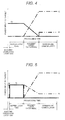
- the coating 1 is formed under the conditions (process time vs. power input to target) shown in Fig. 4 .
- the electric conductive layer 4 containing chromium (Cr) as a main component is formed while introducing an inert gas without applying a bias voltage.
- the buffer layer 5 containing chromium nitride (CrN) as a main component is formed while introducing an inert gas and nitrogen gas and applying a bias voltage.
- the gradient layer 6 is formed while introducing an inert gas and hydrocarbon gas and applying a bias voltage.
- a chromium carbide layer is formed first, and then a chromium target power is controlled to gradually decrease, and a carbon target power is controlled to gradually increase.
- chromium carbides which constitute the chromium carbide layer, such as Cr 3 C 2 , Cr 7 C 3 and Cr 23 C 6 , but they are not limited to these types.
- the diamondlike carbon layer 7 is formed while introducing an inert gas and hydrocarbon gas and applying a bias voltage so that the amount of aluminum (Al) contained is 1.88 at.%.
- forming the electric conductive layer 4 on the surface of the substrate 2 can change the surface of the substrate 2 having an electrically isolative property into a conductive surface, and allows formation of the buffer layer 5, gradient layer 6 and diamondlike carbon layer 7.
- the coating 1 denotes a stacked film comprising the electric conductive layer 4, buffer layer 5, gradient layer 6, and diamondlike carbon layer 7.
- the buffer layer 5 denotes a layer for improving the adhesion between the diamondlike carbon layer 7 and the substrate 2 and supplementing the hardness of the substrate 2 in forming the coating 1 on the substrate 2 formed of a soft Al alloy as in this Example.
- the buffer layer 5 preferably has hardness higher than the substrate 2, and hardness lower than or as high as the diamondlike carbon layer 7.
- the buffer layer 5 containing CrN can supplement the hardness of the substrate 2 comprising a soft Al alloy, the adhesion of the diamondlike carbon layer 7 becomes high.
- the adhesion of the diamondlike carbon layer 7 can be further improved.
- An appropriate amount of Al element contained in the diamondlike carbon layer 7 can lower frictional coefficient under unlubricated condition. Furthermore, since pinholes in the anodized coating 3 on the surface of the substrate 2 can be sealed with the coating 1, corrosion resistance can be improved compared with the substrate 2 exposed.
- a slide member having low friction property and excellent wear resistance and corrosion resistance can be provided.
- the slide member of the present invention is applied to automobiles, a weight reduction of the automobile as a whole can be realized since an Al alloy substrate is used as the substrate 2. As a result, highly efficient automobiles can be provided.
- the electric conductive layer 4, buffer layer 5 and gradient layer 6 comprise Cr, CrN and Cr carbide, respectively, but they are not limited to these examples, and similar effects can be obtained by using Ti or Al, TiN, and titanium carbide in the electric conductive layer 4, buffer layer 5 and gradient layer 6, respectively.
- the buffer layer 5 may be formed of titanium carbide or chromium carbide (Cr 3 C 2 , Cr 7 C 3 , Cr 23 C 6 , etc.).
- sp 2 combined carbon which is a carbon bonding represented by graphite coexists with sp 3 combined carbon which is a carbon bonding represented by diamond.
- the coating 1 having low friction property, wear resistance and corrosion resistance can be provided.
- a DLC film contains a carbon of an amorphous state or a hydrogenated carbon, and it is called an amorphous carbon or hydrogenated amorphous carbon (a-C: H).
- the plasma CVD method for deposition by a plasma decomposition of a hydrocarbon gas, a gas-phase synthesis method such as an ion beam deposition using carbon and hydrocarbon ions, the ion plating method for deposition by evaporating graphite or the like using arc-discharge, and the sputtering method for deposition by sputtering a target in an inert gas atmosphere are used for the formation of the DLC film.
- the coating 1 formed in this Example has low friction properties, high wear resistance and corrosion resistance, and can be applied to a slide member. Accordingly, this can provide a slide member capable of reducing load under unlubricated condition as well as under water, organic solvent, fuel and oil lubricated condition. In addition, a machine component normally sliding in a lubricating oil can maintain its reliability even when the lubricating oil runs short, thus reducing the amount of lubricating oil.
- JIS A6061-T6 is used as the substrate 2. Since its aging temperature is about 160 to 180°C, it is necessary to set temperature conditions so that the temperature of the coating 1 during its formation is not higher than the aging temperature to suppress the softening of the substrate 2.
- the buffer layer 5 containing CrN and the anodized coating 3 on the surface of the substrate 2 are formed.
- the electric conductive layer 4 is preferably formed between the substrate 2 (anodized coating 3) and the buffer layer 5.
- a Cr carbide layer is formed first, and the concentration of Cr continuously decreases, and, the concentration of C continuously increases from the buffer layer 5 side towards the diamondlike carbon layer 7 side.
- Cr carbide which is a material constituting the gradient layer 6 is represented by Cr x C y
- its chemical composition is changed gradually from the buffer layer 5 side towards the diamondlike carbon layer 7 side by changing the ratio of x to y gradually.
- the coating 1 having good adhesion can be provided by designing the structure from the substrate 2 to the diamondlike carbon layer 7 as described above.
- the coating 1 is formed by the sputtering or ion plating method.
- this coating 1 contains Al element in the diamondlike carbon layer 7. Its amount contained is 0.5 to 4.5 at.%, and preferably 0.6 to 1.9 at.%. While the state of aluminum contained in the diamondlike carbon layer is selected from the group consisting of metal, boride, carbide, nitride, oxide and hydroxide, it is preferable that aluminum is contained in the form of oxide and/or hydroxide. Accordingly, the coating 1 having both wear resistance and low friction property can be provided.
- the coating 1 formed by this Example has high adhesion, wear resistance and low friction property, and can be thus imparted to slide members.
- this can provide a slide member capable of reducing load under unlubricated condition as well as under water, organic solvent, fuel and oil lubricated condition.
- a machine component normally sliding in a lubricating oil can maintain its reliability even when the lubricating oil runs short, thus reducing the amount of lubricating oil.
- Al exposed on the surface of the coating 1 reacts with oxygen, water or the like in the atmosphere to form an Al oxide or Al hydroxide, thereby also providing a dielectric coating with stable electrical properties although it contains metal.
- Al contained in such a coating 1 is present on the surface of the coating 1 in the form of Al oxide and/or Al hydroxide. That is, the surface of the coating 1 (in particular, the surface of the diamondlike carbon layer 7) has hydrophilicity, thereby enabling realization of low friction properties in a water lubricated sliding. This also permits realization of low friction properties in a sliding under the presence of liquid or steam having the same OH-group as water (e.g., alcohols or additives in oil).
- This Example is extremely desirable in terms that the presence of Al in the coating 1 reduces its internal stress, thereby improving the adhesion between the diamondlike carbon layer 7 and gradient layer 6, and rendering the coating 1 less likely to be peeled away from the substrate 2.
- the diamondlike carbon layer 7 contains less amount of Al oxide and/or Al hydroxide from which the hydrophilicity is derived, and thus cannot be expected to produce a friction reducing effect.
- the layer can give the slide member low friction properties.
- the coating 1 is formed by the sputtering or ion plating method, Al can be added to the diamondlike carbon layer 7 by using an Al target.
- the target application of this Example is parts for automobiles for which weight reduction is required, for instance, components like brake piston mechanisms which require low friction properties, high wear resistance and corrosion resistance. Because a bias voltage can be applied in forming the buffer layer 5, gradient layer 6 and diamondlike carbon layer 7 by forming the electric conductive layer 4 on the substrate 2 formed of an Al alloy whose surface is covered with the anodized coating 3, all of the coating 1 can be given a good adhesion to the substrate 2.
- the buffer layer 5 contains CrN, and it functions as a layer for supplementing the hardness of the substrate 2 in case the diamondlike carbon layer 7 is formed on the soft substrate 2 formed of an Al alloy, the adhesion of the diamondlike carbon layer 7 to the substrate 2 can be improved.
- the concentration of chromium (the concentration of Cr) is decreased and the concentration of carbon (the concentration of C) is increased from the buffer layer 5 side towards the diamondlike carbon layer 7 side, and Al element is caused to contain the diamondlike carbon layer 7, thereby high adhesion of the entire coating 1 to the substrate 2 can be realized.
- the coating 1 shown in Fig. 1 is formed by the UBM method on the substrate 2 made of JIS A6061-T6, i.e. an Al-Mg-Si-based alloy, covered with the anodized coating 3.
- the coating 1 is formed under the conditions (process time vs. power input to target) shown in Fig. 5 .
- the electric conductive layer 4 containing Al is formed while introducing an inert gas without applying a bias voltage.
- the buffer layer 5 containing TiN is formed while introducing the inert gas and nitrogen gas and applying the bias voltage.
- the gradient layer 6 is formed while introducing the inert gas and hydrocarbon gas and applying the bias voltage.
- the Al carbide layer is formed, and the Al target power is then controlled to gradually decrease to the Al target power in the diamondlike carbon layer 7, and a carbon target power is controlled to gradually increase.
- the diamondlike carbon layer 7 is formed while introducing the inert gas and hydrocarbon gas and applying the bias voltage so that the amount of Al element contained is 1.88 at.%.
- the buffer layer 5, gradient layer 6 and the diamondlike carbon layer 7 can be formed.
- the buffer layer 5 preferably has hardness higher than the substrate 2, and hardness lower than or as high as the diamondlike carbon layer 7.
- the hardness of the substrate 2 formed of the soft Al alloy can be supplemented by the buffer layer 5 containing TiN, the adhesion of the diamondlike carbon layer 7 becomes high.
- the presence of the gradient layer 6 between the buffer layer 5 and diamondlike carbon layer 7 can further improve the adhesion of the diamondlike carbon layer 7.
- an appropriate amount of Al element contained in the diamondlike carbon layer 7 can lower frictional coefficient under unlubricated condition.
- pinholes in the anodized coating 3 on the surface of the substrate 2 can be sealed with the coating 1, corrosion resistance is improved compared with the substrate 2 exposed.
- the present invention can provide a slide member having low friction property and excellent wear resistance and corrosion resistance. Moreover, in case the slide member of the present invention is applied to automobiles, the weight reduction of the automobile as a whole is realized since Al alloy is used in the substrate 2, and as a result, highly efficient automobiles can be provided.
- the electric conductive layer 4 comprises Al and the buffer layer 5 comprises TiN, they are not limited to these examples, and similar effects can be obtained by using Cr or Ti and CrN in the electric conductive layer 4 and buffer layer 5, respectively.
- the coating 1 shown in Fig. 1 is formed on the substrate 2 comprising JIS A6061-T6 of an Al-Mg-Si-based alloy and the anodized coating 3 covering the surface thereof using the UBM method.
- the coating 1 is formed under the conditions (process time vs. power input to target) shown in Fig. 6 .
- the electric conductive layer 4 containing Al is formed while introducing an inert gas, without applying a bias voltage.
- the buffer layer 5 containing TiN is formed while introducing the inert gas and nitrogen gas and applying the bias voltage.
- the gradient layer 6 is formed while introducing the inert gas and hydrocarbon gas and applying the bias voltage.
- the Ti carbide layer is formed, and then Ti target power is controlled to gradually decrease, and carbon target power and Al target power are controlled to gradually increase. Finally, the diamondlike carbon layer 7 is formed while introducing the inert gas and hydrocarbon gas and applying the bias voltage so that the amount of Al element contained is 1.88 at.%.
- Forming the electric conductive layer 4 on the surface of the substrate 2 can change the surface of the substrate 2 having an electrically isolative property into a conductive surface, and allows formation of the buffer layer 5, gradient layer 6 and the diamondlike carbon layer 7.
- the buffer layer 5 preferably has hardness higher than the substrate 2, hardness lower than or as high as the diamondlike carbon layer 7.
- the hardness of the substrate 2 containing soft Al alloy can be supplemented by the buffer layer 5 containing TiN, and the adhesion of the diamondlike carbon layer 7 therefore becomes good.
- the presence of the gradient layer 6 between the buffer layer 5 and diamondlike carbon layer 7 can further improve the adhesion of the diamondlike carbon layer 7.
- an appropriate amount of Al element contained in the diamondlike carbon layer 7 can lower frictional coefficient under unlubricated condition.
- pinholes in the anodized coating 3 on the surface of the substrate 2 can be sealed with the coating 1, corrosion resistance is improved compared with the substrate 2 exposed.
- Fig. 8 is a cross-sectional view of a brake piston for an automobile showing an example of the present invention.
- the brake piston in Fig. 8 is for a two-wheeled vehicle.
- a brake operates and stops the rotation of a wheel by nipping a disk rotor 22 rotating coaxially with the wheel between inner brake pads 26 out of two sets of brake pads 24, 26 from both side.
- This figure is a longitudinal sectional view seen from a direction parallel to a rotational direction of the wheel and disk rotor 22, and the rotational direction of the disk rotor 22 is perpendicular to the paper describing this figure.
- pistons 23, brake pads 24, 26 and a seal 25 are accommodated inside of a cylinder bore 21.
- the seal 25 is arranged between the cylinder bore 21 and pistons 23, so that oil 202 sealed within the cylinder bore 21 does not leak out.
- the pressure of the oil 202 applied to the right and left pistons 23 moves the right and left pistons 23 inwardly, which brings the brake pads 26 and disk rotor 22 into contact.
- the slide member of the present invention is the piston 23, and a coating 201 of the present invention is provided on a surface that the piston 23 and the seal 25 come into contact.
- This coating 201 can lower the friction between the piston 23 and the seal 25, suppress wearing and improve corrosion resistance.
- any coating of the slide members of Examples 1 to 3 mentioned above can be applied to the coating 201.
- a coating applied to a brake piston for automobile is not limited to Examples 1 to 3, and any coating can be applied as long as it meets the constituent features of the slide member of the present invention.
- a slide member having low friction property, excellent wear resistance and corrosion resistance can be provided. Moreover, when this is applied to a slide member for automobiles (piston for break of automobile), the weight reduction of the automobile is realized as a whole since an Al alloy is used as the substrate 2, and as a result, automobiles with even higher efficiencies can be provided.
- the electric conductive layer 4 and the buffer layer 5 comprise TiN and Al respectively, they are not limited to these examples, and similar effects can be obtained by using Cr or Ti and CrN in the electric conductive layer 4 and buffer layer 5 respectively.
- the coating 11 shown in Fig. 2 is formed on the substrate 12 made of an alloy (chrome molybdenum steel) containing Fe, Cr and Mo by the UBM method.
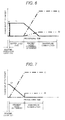
- the coating 11 is formed under the conditions (process time vs. power input to target) shown in Fig. 7 .
- a bonding layer 18 containing Cr is formed, while introducing an inert gas and then applying a bias voltage. Thereafter, the gradient layer 6 is formed while introducing the inert gas and hydrocarbon gas and applying the bias voltage.
- the Cr carbide layer is formed, and then Cr target power is controlled to gradually decrease, and a carbon target power is controlled to gradually increase.
- the diamondlike carbon layer 7 is formed while introducing an inert gas and hydrocarbon gas and applying a bias voltage so that the amount of Al element contained is 1.88 at.%.
- the bonding layer 18 is a layer introduced for improving adhesion mainly between the substrate 12 and the gradient layer 6.
- the bonding layer 18 and gradient layer 6 can improve the adhesion of the diamondlike carbon layer 7.
- an appropriate amount of Al element contained in the diamondlike carbon layer 7 can lower frictional coefficient under unlubricated condition.
- a slide member having low friction property and excellent wear resistance can be provided.
- the weight reduction of the automobile as a whole cannot be realized since a steel substrate is used as the substrate 12, and as a result, a highly efficient automobile cannot be provided.
- the coating 11 shown in Fig. 3 is formed on the substrate 2 comprising an aluminum alloy 101 (Al-Mg-Si-based alloy), JIS A6061-T6, and the anodized coating 3 covering the surface thereof by the UBM method.
- Al-Mg-Si-based alloy Al-Mg-Si-based alloy
- JIS A6061-T6 JIS A6061-T6
- the coating 11 is formed under the conditions (process time vs. power input to target) shown in Fig. 7 .
- the bonding layer 18 containing Cr is formed while introducing an inert gas and applying a bias voltage.
- the gradient layer 6 is formed while introducing the inert gas and a hydrocarbon gas and applying the bias voltage.
- the gradient layer 6 a Cr carbide layer is formed first, and then Cr target power is controlled to gradually decrease, and a carbon target power is controlled to gradually increase. Finally, the diamondlike carbon layer 7 is formed while introducing an inert gas and hydrocarbon gas and applying a bias voltage so that the amount of Al element contained is 1.88 at.%.
- the bonding layer 18 is not appropriately formed, resulting in lowered adhesion of the gradient layer 6 and the diamondlike carbon layer 7. Therefore, frictional coefficient cannot be lowered under unlubricated condition, and a low friction property and excellent wear resistance cannot be obtained even if this is applied to the slide member.
- low friction properties can be achieved in machine components by using DLC films having excellent solid lubricating properties under unlubricated condition, the load of the oil lubricated machine components can reduce even when the lubricating oil on the sliding member runs short.
- applying the present invention also is preferable in the viewpoint of environmental considerations because consumption of the lubricating oil can be reduced.
- light-metal alloys such as aluminum alloys can be effectively used for slide members for automobiles, and performance of the slide members made of the light-metal alloys can be improved.
- the present invention relates to a slide member with a hard carbon coating having low friction, excellent wear resistance and corrosion resistance, and is applicable in particular to pistons for brakes used to be slid against rubber under unlubricated condition, and parts for automobiles such as engine components used under lubricated condition.
Landscapes
- Chemical & Material Sciences (AREA)
- Engineering & Computer Science (AREA)
- Mechanical Engineering (AREA)
- Chemical Kinetics & Catalysis (AREA)
- Materials Engineering (AREA)
- Metallurgy (AREA)
- Organic Chemistry (AREA)
- General Engineering & Computer Science (AREA)
- Inorganic Chemistry (AREA)
- Physical Vapour Deposition (AREA)
- Braking Arrangements (AREA)
- Other Surface Treatments For Metallic Materials (AREA)
Abstract
An object of the present invention is to provide a slide member with a hard carbon coating having excellent wear resistance, low friction performance and excellent corrosion resistance.
An aluminum alloy 101 covered with an alumina layer is used as a substrate 2, and an electric conductive layer 4, a buffer layer 5 and a diamondlike carbon layer 7 are formed on the substrate 2 in the above-listed order from the substrate side.
Description
- The present invention relates to a slide member.
- Diamondlike carbon films (DLC films) generally have features of a high hardness, a smooth surface, and excellent rub resistance. And the DLC films have a low coefficient of friction and excellent low friction properties attributed to their solid lubricating properties. Under unlubricated condition, a surface friction coefficient is 0.5 or higher for a smooth surface of typical steel and approximately 0.4 for conventional surface treatment materials such as a nickel-phosphorus plating (Ni-P plating), chromium plating (Cr plating), titanium nitride coating (TiN coating) and chromium nitride coating (CrN coating); while DLC films have a surface friction coefficient of approximately 0.1.
- Currently, DLC films are applied to a lot of slide members used under unlubricated condition such as cutting instruments including a drill blade, jigs for grinding tools, dies for deforming process, valve cocks or capstan rollers by utilizing these excellent characteristics. Meanwhile, oil lubricated sliding members are now dominant in machine components such as those used in an internal combustion engine, which is required to reduce mechanical loss as much as possible in the viewpoint of energy consumption and environmental considerations.
- Document 1 (Japanese Patent Laid-open No.
2005-108355 - Document 2 (Japanese Patent Laid-open No.
2001-107860 - Document 3 (Japanese Patent Laid-open No.
2006-300294 - In conventional cases, however, using a steel substrate as, for example, a slide member for automobile increases the weight of the automobile. Therefore, there has been possibility for improvement in a point that an attempt to reduce the load on a slide portion by forming a hard carbon coating on the slide member could hardly increase the efficiency of the entire automobile. When the hard carbon coating for the steel substrate is formed on an aluminum alloy substrate whose surface is covered with an alumina layer (a bonding layer and a diamondlike carbon layer are formed directly on the alumina layer), a bias voltage cannot be applied to the substrate in forming the hard carbon coating since the alumina layer is an electrical insulating layer. Accordingly, adhesion of the hard carbon coating to the substrate cannot be obtained, resulting in failure of load reduction of the slide portion.
- An object of the present invention is to provide a slide member using an Al alloy substrate having a hard carbon coating with low friction property, high wear resistance and corrosion resistance in the field of industrial instruments such as automobiles of which a weight reduction is required from the perspective of environmental considerations.
- The slide member of the present invention comprises a substrate formed of an aluminum alloy covered with an alumina layer; an electric conductive layer; a buffer layer; and/or a diamondlike carbon layer, wherein the electric conductive layer, the buffer layer and the diamondlike carbon layer are formed on the substrate in the above-listed order from the substrate side. The buffer layer can improve the adhesion to the substrate and supplement hardness of the substrate.
- Furthermore, a method for producing a slide member comprising a substrate formed of an aluminum alloy covered with an alumina layer comprises a step of forming an electric conductive layer on the surface of the substrate by the sputtering method or the ion plating method; and/or a step of forming a buffer layer on the electric conductive layer, forming a gradient layer on the buffer layer, and forming a diamondlike carbon layer on the gradient layer in a state that a bias voltage is applied to the substrate.
- The present invention can provide a slide member using an aluminum alloy as a substrate and having a hard carbon coating with low friction property and excellent wear resistance and corrosion resistance.
-
-
Fig. 1 is a schematic cross-section view illustrating a slide member of an embodiment of the present invention. -
Fig. 2 is a schematic cross-sectional view illustrating a substrate and a hard carbon coating of Comparative Example 1. -
Fig. 3 is a schematic cross-sectional view illustrating a substrate and a hard carbon coating of Comparative Example 2. -
Fig. 4 is a graph showing the film formation conditions in Example 1 according to the present invention. -
Fig. 5 is a graph showing the film formation conditions in Example 2 according to the present invention. -
Fig. 6 is a graph showing the film formation conditions in Example 3 according to the present invention. -
Fig. 7 is a graph showing the film formation conditions in Comparative Examples. -
Fig. 8 is a cross-sectional view illustrating a brake piston for automobile of an embodiment of the present invention. - The present invention relates to a slide member having a hard carbon coating with low friction and excellent wear resistance and corrosion resistance.
- Embodiments of the present invention will be described below, but the present invention is not limited to the embodiments shown below. The hard carbon coating shown in this embodiment can be applied to slide members (Al alloy substrates) such as machine components used under unlubricated condition. The hard carbon coating (hereinafter referred to as "coating") can be formed by performing the unbalanced magnetron sputtering method (UBM method) on the substrate.
- In the UBM method, a balance of magnetic poles arranged at a back surface of a target is intentionally shifted between a center of the target and a fringing part thereof and it is made to be in a non-equilibrium state, thereby a part of magnetic lines from a magnetic pole at the fringing part of the target can be extended to the substrate. It is therefore more likely for plasma centralized in the vicinity of the target to diffuse to the neighborhood of the substrate along the magnetic lines. Therefore, an ion content irradiated to the substrate during the formation of the coating can be increased. As a result, it is possible to form a dense coating over the substrate. The UBM method is a deposition method comprising the above processes.
- The diamondlike carbon layer contains aluminum, and the amount contained is preferably 0.5 to 4.5 at.% though its details will be described with reference to Examples. Herein, at.% is an atomic percent, and is the percentage thereof relative to the number of atoms of constituent elements in the material (in this case, in the diamondlike carbon layer).
- It is preferable that the state of aluminum contained in the diamondlike carbon layer is any one of metal, boride, carbide, nitride, oxide or hydroxide. It is preferable that sp2 bonding carbon and sp3 bonding carbon coexist in the diamondlike carbon layer.
- The electric conductive layer preferably contains an element selected from aluminum (Al), chromium (Cr) and titanium (Ti).
- The buffer layer preferably contains a nitride selected from chromium nitride and titanium nitride. A gradient layer may be provided between the buffer layer and the diamondlike carbon layer.
- When the gradient layer is provided, it is preferable that the gradient layer is a carbon-metal composition (a mixture of a carbon and a metal) or a metal carbide; the amount of metal contained in the gradient layer decreases from the substrate side towards the outermost layer side; and the amount of carbon contained in the gradient layer increases from the substrate side towards the outermost layer side. The metal is preferably one element selected from aluminum, chromium and titanium.
- When another gradient layer is provided, it is preferable that the gradient layer is a carbon-metal composition or a metal carbide; the amount of the first metal contained in the gradient layer decreases from the substrate side towards the outside; and the amount of the second metal and carbon contained in the gradient layer increases from the substrate side towards the outside. The first metal is preferably a metal selected from the group consisting of aluminum, chromium and titanium. The second metal is preferably a selected from the group consisting of aluminum, chromium and titanium, and is preferably a metal different from the first metal.
- The slide member mentioned above is preferably used as, for example, a brake piston for automobile.
- The present invention will be described below with reference to Examples.
-
Fig. 1 is a cross-sectional view of a slide member showing an embodiment of the present invention. - In
Fig. 1 , the slide member is formed of asubstrate 2 constituted by analuminum alloy 101 and anodizedcoating 3 covering a surface of thealuminum alloy 101, and a coating 1 comprising an electric conductive layer 4, a buffer layer 5, a gradient layer 6 and a diamondlike carbon layer 7 in order from thesubstrate 2 side towards the outside. - Herein, the
aluminum alloy 101 is an AI-Mg-Si-based alloy, JIS A6061-T6. The coating 1 is formed by the UBM method. - Specifically, the coating 1 is formed under the conditions (process time vs. power input to target) shown in
Fig. 4 . - First, the electric conductive layer 4 containing chromium (Cr) as a main component is formed while introducing an inert gas without applying a bias voltage.
- Second, the buffer layer 5 containing chromium nitride (CrN) as a main component is formed while introducing an inert gas and nitrogen gas and applying a bias voltage.
- Furthermore, the gradient layer 6 is formed while introducing an inert gas and hydrocarbon gas and applying a bias voltage.
- In forming the gradient layer 6, a chromium carbide layer is formed first, and then a chromium target power is controlled to gradually decrease, and a carbon target power is controlled to gradually increase. There are several types of chromium carbides which constitute the chromium carbide layer, such as Cr3C2, Cr7C3 and Cr23C6, but they are not limited to these types.
- Finally, the diamondlike carbon layer 7 is formed while introducing an inert gas and hydrocarbon gas and applying a bias voltage so that the amount of aluminum (Al) contained is 1.88 at.%.
- In the above process, forming the electric conductive layer 4 on the surface of the
substrate 2 can change the surface of thesubstrate 2 having an electrically isolative property into a conductive surface, and allows formation of the buffer layer 5, gradient layer 6 and diamondlike carbon layer 7. - In general, the harder a base such as the
substrate 2 is, the better an adhesion of the hard carbon coating. Herein, the coating 1 denotes a stacked film comprising the electric conductive layer 4, buffer layer 5, gradient layer 6, and diamondlike carbon layer 7. - The buffer layer 5 denotes a layer for improving the adhesion between the diamondlike carbon layer 7 and the
substrate 2 and supplementing the hardness of thesubstrate 2 in forming the coating 1 on thesubstrate 2 formed of a soft Al alloy as in this Example. The buffer layer 5 preferably has hardness higher than thesubstrate 2, and hardness lower than or as high as the diamondlike carbon layer 7. In this Example, since the buffer layer 5 containing CrN can supplement the hardness of thesubstrate 2 comprising a soft Al alloy, the adhesion of the diamondlike carbon layer 7 becomes high. - Since the gradient layer 6 exists between the buffer layer 5 and diamondlike carbon layer 7, the adhesion of the diamondlike carbon layer 7 can be further improved.
- An appropriate amount of Al element contained in the diamondlike carbon layer 7 can lower frictional coefficient under unlubricated condition. Furthermore, since pinholes in the
anodized coating 3 on the surface of thesubstrate 2 can be sealed with the coating 1, corrosion resistance can be improved compared with thesubstrate 2 exposed. - As already mentioned, according to the present invention, a slide member having low friction property and excellent wear resistance and corrosion resistance can be provided. When the slide member of the present invention is applied to automobiles, a weight reduction of the automobile as a whole can be realized since an Al alloy substrate is used as the
substrate 2. As a result, highly efficient automobiles can be provided. - In this Example, the electric conductive layer 4, buffer layer 5 and gradient layer 6 comprise Cr, CrN and Cr carbide, respectively, but they are not limited to these examples, and similar effects can be obtained by using Ti or Al, TiN, and titanium carbide in the electric conductive layer 4, buffer layer 5 and gradient layer 6, respectively. Furthermore, the buffer layer 5 may be formed of titanium carbide or chromium carbide (Cr3C2, Cr7C3, Cr23C6, etc.).
- In the diamondlike carbon layer 7 in this Example, sp2 combined carbon which is a carbon bonding represented by graphite coexists with sp3 combined carbon which is a carbon bonding represented by diamond. As a result, the coating 1 having low friction property, wear resistance and corrosion resistance can be provided. Generally, a DLC film contains a carbon of an amorphous state or a hydrogenated carbon, and it is called an amorphous carbon or hydrogenated amorphous carbon (a-C: H). The plasma CVD method for deposition by a plasma decomposition of a hydrocarbon gas, a gas-phase synthesis method such as an ion beam deposition using carbon and hydrocarbon ions, the ion plating method for deposition by evaporating graphite or the like using arc-discharge, and the sputtering method for deposition by sputtering a target in an inert gas atmosphere are used for the formation of the DLC film.
- The coating 1 formed in this Example has low friction properties, high wear resistance and corrosion resistance, and can be applied to a slide member. Accordingly, this can provide a slide member capable of reducing load under unlubricated condition as well as under water, organic solvent, fuel and oil lubricated condition. In addition, a machine component normally sliding in a lubricating oil can maintain its reliability even when the lubricating oil runs short, thus reducing the amount of lubricating oil.
- In this Example, JIS A6061-T6 is used as the
substrate 2. Since its aging temperature is about 160 to 180°C, it is necessary to set temperature conditions so that the temperature of the coating 1 during its formation is not higher than the aging temperature to suppress the softening of thesubstrate 2. - In the formation of the coating 1 of the present invention, the buffer layer 5 containing CrN and the
anodized coating 3 on the surface of thesubstrate 2 are formed. In order to increase the adhesion between thesubstrate 2 and the buffer layer 5, the electric conductive layer 4 is preferably formed between the substrate 2 (anodized coating 3) and the buffer layer 5. - In the gradient layer 6 formed between the buffer layer 5 and diamondlike carbon layer 7, it is preferable that a Cr carbide layer is formed first, and the concentration of Cr continuously decreases, and, the concentration of C continuously increases from the buffer layer 5 side towards the diamondlike carbon layer 7 side. In addition, when Cr carbide which is a material constituting the gradient layer 6 is represented by CrxCy, it is preferable that its chemical composition is changed gradually from the buffer layer 5 side towards the diamondlike carbon layer 7 side by changing the ratio of x to y gradually.
- The coating 1 having good adhesion can be provided by designing the structure from the
substrate 2 to the diamondlike carbon layer 7 as described above. - It is preferable that the coating 1 is formed by the sputtering or ion plating method. In addition, this coating 1 contains Al element in the diamondlike carbon layer 7. Its amount contained is 0.5 to 4.5 at.%, and preferably 0.6 to 1.9 at.%. While the state of aluminum contained in the diamondlike carbon layer is selected from the group consisting of metal, boride, carbide, nitride, oxide and hydroxide, it is preferable that aluminum is contained in the form of oxide and/or hydroxide. Accordingly, the coating 1 having both wear resistance and low friction property can be provided. The coating 1 formed by this Example has high adhesion, wear resistance and low friction property, and can be thus imparted to slide members. Accordingly, this can provide a slide member capable of reducing load under unlubricated condition as well as under water, organic solvent, fuel and oil lubricated condition. In addition, a machine component normally sliding in a lubricating oil can maintain its reliability even when the lubricating oil runs short, thus reducing the amount of lubricating oil.
- Al exposed on the surface of the coating 1 reacts with oxygen, water or the like in the atmosphere to form an Al oxide or Al hydroxide, thereby also providing a dielectric coating with stable electrical properties although it contains metal. As a result, Al contained in such a coating 1 is present on the surface of the coating 1 in the form of Al oxide and/or Al hydroxide. That is, the surface of the coating 1 (in particular, the surface of the diamondlike carbon layer 7) has hydrophilicity, thereby enabling realization of low friction properties in a water lubricated sliding. This also permits realization of low friction properties in a sliding under the presence of liquid or steam having the same OH-group as water (e.g., alcohols or additives in oil).
- This Example is extremely desirable in terms that the presence of Al in the coating 1 reduces its internal stress, thereby improving the adhesion between the diamondlike carbon layer 7 and gradient layer 6, and rendering the coating 1 less likely to be peeled away from the
substrate 2. - However, when the amount of Al element contained in the diamondlike carbon layer 7 is lower than 0.5 at.%, the diamondlike carbon layer 7 contains less amount of Al oxide and/or Al hydroxide from which the hydrophilicity is derived, and thus cannot be expected to produce a friction reducing effect.
- It was found from the result of X-ray photoelectron spectroscopy (XPS) that there was possibility of progress of Al carbides formation in case Al content on the surface and inside of the diamondlike carbon layer 7 is more than 5 at.%. That is, since the diamondlike carbon layer 7 having an Al content more than 5 at.% produces more Al carbides, it is undesirable to make the diamondlike carbon layer 7 more prone to cracking due to the embrittlement of the Al carbides.
- In case Al element used in the diamondlike carbon layer 7 is present in the form of Al oxide and/or Al hydroxide, since the layer has high affinity to liquid or steam with OH-groups, the layer can give the slide member low friction properties.
- In this Example, since the coating 1 is formed by the sputtering or ion plating method, Al can be added to the diamondlike carbon layer 7 by using an Al target. The target application of this Example is parts for automobiles for which weight reduction is required, for instance, components like brake piston mechanisms which require low friction properties, high wear resistance and corrosion resistance. Because a bias voltage can be applied in forming the buffer layer 5, gradient layer 6 and diamondlike carbon layer 7 by forming the electric conductive layer 4 on the
substrate 2 formed of an Al alloy whose surface is covered with theanodized coating 3, all of the coating 1 can be given a good adhesion to thesubstrate 2. Since the buffer layer 5 contains CrN, and it functions as a layer for supplementing the hardness of thesubstrate 2 in case the diamondlike carbon layer 7 is formed on thesoft substrate 2 formed of an Al alloy, the adhesion of the diamondlike carbon layer 7 to thesubstrate 2 can be improved. - The concentration of chromium (the concentration of Cr) is decreased and the concentration of carbon (the concentration of C) is increased from the buffer layer 5 side towards the diamondlike carbon layer 7 side, and Al element is caused to contain the diamondlike carbon layer 7, thereby high adhesion of the entire coating 1 to the
substrate 2 can be realized. This allows the slide member to be used under unlubricated condition as well as under water, organic solvent, fuel and oil lubricated condition. - The coating 1 shown in
Fig. 1 is formed by the UBM method on thesubstrate 2 made of JIS A6061-T6, i.e. an Al-Mg-Si-based alloy, covered with theanodized coating 3. - Specifically, the coating 1 is formed under the conditions (process time vs. power input to target) shown in
Fig. 5 . - First, the electric conductive layer 4 containing Al is formed while introducing an inert gas without applying a bias voltage. Second, the buffer layer 5 containing TiN is formed while introducing the inert gas and nitrogen gas and applying the bias voltage. Furthermore, the gradient layer 6 is formed while introducing the inert gas and hydrocarbon gas and applying the bias voltage.
- In forming the gradient layer 6, first, the Al carbide layer is formed, and the Al target power is then controlled to gradually decrease to the Al target power in the diamondlike carbon layer 7, and a carbon target power is controlled to gradually increase. Finally, the diamondlike carbon layer 7 is formed while introducing the inert gas and hydrocarbon gas and applying the bias voltage so that the amount of Al element contained is 1.88 at.%.
- Since forming the electric conductive layer 4 on the surface of the
substrate 2 can change the surface of thesubstrate 2 having an electrically isolative property into a conductive surface thereby, the buffer layer 5, gradient layer 6 and the diamondlike carbon layer 7 can be formed. - The buffer layer 5 preferably has hardness higher than the
substrate 2, and hardness lower than or as high as the diamondlike carbon layer 7. In this Example, since the hardness of thesubstrate 2 formed of the soft Al alloy can be supplemented by the buffer layer 5 containing TiN, the adhesion of the diamondlike carbon layer 7 becomes high. The presence of the gradient layer 6 between the buffer layer 5 and diamondlike carbon layer 7 can further improve the adhesion of the diamondlike carbon layer 7. Furthermore, an appropriate amount of Al element contained in the diamondlike carbon layer 7 can lower frictional coefficient under unlubricated condition. Furthermore, since pinholes in theanodized coating 3 on the surface of thesubstrate 2 can be sealed with the coating 1, corrosion resistance is improved compared with thesubstrate 2 exposed. - As mentioned above, the present invention can provide a slide member having low friction property and excellent wear resistance and corrosion resistance. Moreover, in case the slide member of the present invention is applied to automobiles, the weight reduction of the automobile as a whole is realized since Al alloy is used in the
substrate 2, and as a result, highly efficient automobiles can be provided. - In this Example, although the electric conductive layer 4 comprises Al and the buffer layer 5 comprises TiN, they are not limited to these examples, and similar effects can be obtained by using Cr or Ti and CrN in the electric conductive layer 4 and buffer layer 5, respectively.
- The coating 1 shown in
Fig. 1 is formed on thesubstrate 2 comprising JIS A6061-T6 of an Al-Mg-Si-based alloy and theanodized coating 3 covering the surface thereof using the UBM method. - Specifically, the coating 1 is formed under the conditions (process time vs. power input to target) shown in
Fig. 6 . - First, the electric conductive layer 4 containing Al is formed while introducing an inert gas, without applying a bias voltage. Second, the buffer layer 5 containing TiN is formed while introducing the inert gas and nitrogen gas and applying the bias voltage. Furthermore, the gradient layer 6 is formed while introducing the inert gas and hydrocarbon gas and applying the bias voltage.
- In forming the gradient layer 6, first, the Ti carbide layer is formed, and then Ti target power is controlled to gradually decrease, and carbon target power and Al target power are controlled to gradually increase. Finally, the diamondlike carbon layer 7 is formed while introducing the inert gas and hydrocarbon gas and applying the bias voltage so that the amount of Al element contained is 1.88 at.%.
- Forming the electric conductive layer 4 on the surface of the
substrate 2 can change the surface of thesubstrate 2 having an electrically isolative property into a conductive surface, and allows formation of the buffer layer 5, gradient layer 6 and the diamondlike carbon layer 7. - The buffer layer 5 preferably has hardness higher than the
substrate 2, hardness lower than or as high as the diamondlike carbon layer 7. In this Example, the hardness of thesubstrate 2 containing soft Al alloy can be supplemented by the buffer layer 5 containing TiN, and the adhesion of the diamondlike carbon layer 7 therefore becomes good. The presence of the gradient layer 6 between the buffer layer 5 and diamondlike carbon layer 7 can further improve the adhesion of the diamondlike carbon layer 7. Furthermore, an appropriate amount of Al element contained in the diamondlike carbon layer 7 can lower frictional coefficient under unlubricated condition. In addition, since pinholes in theanodized coating 3 on the surface of thesubstrate 2 can be sealed with the coating 1, corrosion resistance is improved compared with thesubstrate 2 exposed. -
Fig. 8 is a cross-sectional view of a brake piston for an automobile showing an example of the present invention. - The brake piston in
Fig. 8 is for a two-wheeled vehicle. A brake operates and stops the rotation of a wheel by nipping adisk rotor 22 rotating coaxially with the wheel betweeninner brake pads 26 out of two sets ofbrake pads 24, 26 from both side. This figure is a longitudinal sectional view seen from a direction parallel to a rotational direction of the wheel anddisk rotor 22, and the rotational direction of thedisk rotor 22 is perpendicular to the paper describing this figure. - In this figure,
pistons 23,brake pads 24, 26 and aseal 25 are accommodated inside of acylinder bore 21. Theseal 25 is arranged between the cylinder bore 21 andpistons 23, so thatoil 202 sealed within the cylinder bore 21 does not leak out. The pressure of theoil 202 applied to the right and leftpistons 23 moves the right and leftpistons 23 inwardly, which brings thebrake pads 26 anddisk rotor 22 into contact. - The slide member of the present invention is the
piston 23, and acoating 201 of the present invention is provided on a surface that thepiston 23 and theseal 25 come into contact. Thiscoating 201 can lower the friction between thepiston 23 and theseal 25, suppress wearing and improve corrosion resistance. - Herein, any coating of the slide members of Examples 1 to 3 mentioned above can be applied to the
coating 201. Furthermore, a coating applied to a brake piston for automobile is not limited to Examples 1 to 3, and any coating can be applied as long as it meets the constituent features of the slide member of the present invention. - As mentioned above, according to the present invention, a slide member having low friction property, excellent wear resistance and corrosion resistance can be provided. Moreover, when this is applied to a slide member for automobiles (piston for break of automobile), the weight reduction of the automobile is realized as a whole since an Al alloy is used as the
substrate 2, and as a result, automobiles with even higher efficiencies can be provided. - In this Example, although the electric conductive layer 4 and the buffer layer 5 comprise TiN and Al respectively, they are not limited to these examples, and similar effects can be obtained by using Cr or Ti and CrN in the electric conductive layer 4 and buffer layer 5 respectively.
- The
coating 11 shown inFig. 2 is formed on thesubstrate 12 made of an alloy (chrome molybdenum steel) containing Fe, Cr and Mo by the UBM method. - Specifically, the
coating 11 is formed under the conditions (process time vs. power input to target) shown inFig. 7 . - A
bonding layer 18 containing Cr is formed, while introducing an inert gas and then applying a bias voltage. Thereafter, the gradient layer 6 is formed while introducing the inert gas and hydrocarbon gas and applying the bias voltage. - In forming the gradient layer 6, first, the Cr carbide layer is formed, and then Cr target power is controlled to gradually decrease, and a carbon target power is controlled to gradually increase. Finally, the diamondlike carbon layer 7 is formed while introducing an inert gas and hydrocarbon gas and applying a bias voltage so that the amount of Al element contained is 1.88 at.%.
- Herein, the
bonding layer 18 is a layer introduced for improving adhesion mainly between thesubstrate 12 and the gradient layer 6. Thebonding layer 18 and gradient layer 6 can improve the adhesion of the diamondlike carbon layer 7. Furthermore, an appropriate amount of Al element contained in the diamondlike carbon layer 7 can lower frictional coefficient under unlubricated condition. When this is applied to the slide member, a slide member having low friction property and excellent wear resistance can be provided. However, when this is used for a slide member for automobiles, the weight reduction of the automobile as a whole cannot be realized since a steel substrate is used as thesubstrate 12, and as a result, a highly efficient automobile cannot be provided. - The
coating 11 shown inFig. 3 is formed on thesubstrate 2 comprising an aluminum alloy 101 (Al-Mg-Si-based alloy), JIS A6061-T6, and theanodized coating 3 covering the surface thereof by the UBM method. - Specifically, the
coating 11 is formed under the conditions (process time vs. power input to target) shown inFig. 7 . - First, the
bonding layer 18 containing Cr is formed while introducing an inert gas and applying a bias voltage. Second, the gradient layer 6 is formed while introducing the inert gas and a hydrocarbon gas and applying the bias voltage. - In forming the gradient layer 6, a Cr carbide layer is formed first, and then Cr target power is controlled to gradually decrease, and a carbon target power is controlled to gradually increase. Finally, the diamondlike carbon layer 7 is formed while introducing an inert gas and hydrocarbon gas and applying a bias voltage so that the amount of Al element contained is 1.88 at.%. However, since the bias voltage is not appropriately applied during formation of the
bonding layer 18, thebonding layer 18 is not appropriately formed, resulting in lowered adhesion of the gradient layer 6 and the diamondlike carbon layer 7. Therefore, frictional coefficient cannot be lowered under unlubricated condition, and a low friction property and excellent wear resistance cannot be obtained even if this is applied to the slide member. - According to the present invention, low friction properties can be achieved in machine components by using DLC films having excellent solid lubricating properties under unlubricated condition, the load of the oil lubricated machine components can reduce even when the lubricating oil on the sliding member runs short. In addition, applying the present invention also is preferable in the viewpoint of environmental considerations because consumption of the lubricating oil can be reduced.
- According to the present invention, light-metal alloys such as aluminum alloys can be effectively used for slide members for automobiles, and performance of the slide members made of the light-metal alloys can be improved.
- Further, according to the present invention, a weight reduction of components for automobiles and a higher efficiency of automobiles can be achieved.
- The present invention relates to a slide member with a hard carbon coating having low friction, excellent wear resistance and corrosion resistance, and is applicable in particular to pistons for brakes used to be slid against rubber under unlubricated condition, and parts for automobiles such as engine components used under lubricated condition.
- Features, components and specific details of the structures of the above-described embodiments may be exchanged or combined to form further embodiments optimized for the respective application. As far as those modifications are apparent for an expert skilled in the art they shall be disclosed implicitly by the above description without specifying explicitly every possible combination.
Claims (14)
- A slide member comprising:a substrate (2) formed of an aluminum alloy (101) covered with an alumina layer;an electric conductive layer (4);a buffer layer (5); anda diamondlike carbon layer (7),wherein the electric conductive layer (4), the buffer layer (5) and the diamondlike carbon layer (7) are formed on the substrate (2) in the above-listed order from the substrate side.
- The slide member according to claim 1, wherein the diamondlike carbon layer (7) contains aluminum.
- The slide member according to claim 1 or 2, wherein the electric conductive layer (4) contains a metal selected from the group consisting of aluminum, chromium and titanium.
- The slide member according to at least one of claims 1 to 3, wherein the buffer layer (5) contains a nitride selected from the group consisting of chromium nitride and titanium nitride.
- The slide member according to at least one of claims 1 to 3, wherein the buffer layer (5) contains a carbide selected from the group consisting of chromium carbide and titanium carbide.
- The slide member according to at least one of claims 1 to 5, wherein a gradient layer (6) is provided between the buffer layer (5) and the diamondlike carbon layer (7).
- The slide member according to claim 6, wherein the gradient layer (6) is a carbon-metal composition or a metal carbide; an amount of metal contained in the gradient layer (6) decreases from the substrate side towards the outside; an amount of carbon contained in the gradient layer (6) increases from the substrate side towards the outside; and the metal is a metal selected from the group consisting of aluminum, chromium and titanium.
- The slide member according to claim 6, wherein the gradient layer (6) is a carbon-metal composition or a metal carbide; an amount of a first metal contained in the gradient layer (6) decreases from the substrate side towards the outside; an amount of a second metal and carbon contained in the gradient layer (6) increases from the substrate side towards the outside; the first metal is a metal selected from the group consisting of aluminum, chromium and titanium; and the second metal is a metal selected from the group consisting of aluminum, chromium and titanium, and is different from the first metal.
- The slide member according to at least one of claims 2 to 8, wherein an amount of aluminum contained in the diamondlike carbon layer (7) is 0.5 to 4.5 at.%.
- The slide member according to at least one of claims 2 to 9, wherein a state of aluminum contained in the diamondlike carbon layer (7) is a state selected from the group consisting of metal, boride, carbide, nitride, oxide and hydroxide.
- The slide member according to at least one of claims 1 to 10, wherein both of sp2 bonding carbon and sp3 bonding carbon are contained in the diamondlike carbon layer (7).
- A brake piston for automobile constituted by the slide member according to at least one of claims 1 to 11.
- A method for producing a slide member comprising a substrate (2) formed of an aluminum alloy (101) covered with an alumina layer, the method comprising the steps of:forming an electric conductive layer (4) on a surface of the substrate (2) by the sputtering method or the ion plating method; andforming a buffer layer (5) on the electric conductive layer (4), forming a gradient layer (6) on the buffer layer (5), and forming a diamondlike carbon layer (7) on the gradient layer (6) in a state that a bias voltage is applied to the substrate (2).
- The method according to claim 13, wherein the diamondlike carbon layer (7) contains aluminum.
Applications Claiming Priority (1)
| Application Number | Priority Date | Filing Date | Title |
|---|---|---|---|
| JP2008333078A JP5227782B2 (en) | 2008-12-26 | 2008-12-26 | Sliding member |
Publications (1)
| Publication Number | Publication Date |
|---|---|
| EP2206800A1 true EP2206800A1 (en) | 2010-07-14 |
Family
ID=41682874
Family Applications (1)
| Application Number | Title | Priority Date | Filing Date |
|---|---|---|---|
| EP09180326A Withdrawn EP2206800A1 (en) | 2008-12-26 | 2009-12-22 | Slide member |
Country Status (2)
| Country | Link |
|---|---|
| EP (1) | EP2206800A1 (en) |
| JP (1) | JP5227782B2 (en) |
Cited By (6)
| Publication number | Priority date | Publication date | Assignee | Title |
|---|---|---|---|---|
| RU2617189C1 (en) * | 2016-03-28 | 2017-04-21 | Общество с ограниченной ответственностью "Завод электрических исполнительных механизмов и приводов "ПРИМЕХ" | Method of application of wear-resistant coating |
| CN106812842A (en) * | 2017-01-18 | 2017-06-09 | 山东正凯机械科技有限公司 | A kind of preparation method of the wear-resistant ceramic brake disc based on discharge plasma sintering electric-force gradient treatment coupling technique |
| RU2638874C1 (en) * | 2017-03-10 | 2017-12-18 | федеральное государственное бюджетное образовательное учреждение высшего образования "Ульяновский государственный технический университет" | Method of producing multi-layer coating for cutting tool |
| CN108547887A (en) * | 2018-04-12 | 2018-09-18 | 北京天宜上佳新材料股份有限公司 | A kind of inorganic salts enhancing Al alloy composite and self cooling brake disc prepared therefrom and preparation method |
| CN114293134A (en) * | 2021-12-31 | 2022-04-08 | 江苏徐工工程机械研究院有限公司 | Wear-resistant pin shaft and preparation method thereof |
| CN115976469A (en) * | 2022-12-30 | 2023-04-18 | 清华大学 | Diamond-like carbon-based coating, composite coating and preparation method thereof |
Families Citing this family (11)
| Publication number | Priority date | Publication date | Assignee | Title |
|---|---|---|---|---|
| JP5287395B2 (en) * | 2009-03-18 | 2013-09-11 | 三菱マテリアル株式会社 | Wear-resistant tool material with excellent heat resistance and durability |
| JP2014152373A (en) * | 2013-02-12 | 2014-08-25 | Kayaba Ind Co Ltd | Slide member |
| JP2016056435A (en) * | 2014-09-12 | 2016-04-21 | 株式会社神戸製鋼所 | Manufacturing method of hard sliding member and hard sliding member |
| US11867205B2 (en) * | 2016-07-29 | 2024-01-09 | Industries Malhot Inc. | Cylinder piston rod and method of fabrication thereof |
| JP6834389B2 (en) * | 2016-11-16 | 2021-02-24 | 株式会社富士通ゼネラル | Rotary compressor |
| JP6834388B2 (en) * | 2016-11-16 | 2021-02-24 | 株式会社富士通ゼネラル | Rotary compressor |
| CN110684954B (en) * | 2018-07-04 | 2021-09-03 | 比亚迪股份有限公司 | Metal product, preparation method thereof and mobile phone rear shell |
| CN110805633B (en) * | 2019-10-29 | 2021-01-22 | 中车长春轨道客车股份有限公司 | Friction-resistant brake block of high-speed train and preparation method thereof |
| CN110792707B (en) * | 2019-10-29 | 2021-01-22 | 中车长春轨道客车股份有限公司 | Friction-resistant brake block for high-speed train |
| DE102021123832A1 (en) * | 2020-10-07 | 2022-04-07 | Schaeffler Technologies AG & Co. KG | Multi-layer system, component and method for producing such a multi-layer system or component |
| US12448870B2 (en) * | 2022-03-07 | 2025-10-21 | Schlumberger Technology Corporation | Carbon rich layer for scale control |
Citations (8)
| Publication number | Priority date | Publication date | Assignee | Title |
|---|---|---|---|---|
| JP2001107860A (en) | 1999-10-07 | 2001-04-17 | Matsushita Refrig Co Ltd | Sliding member |
| US20010031346A1 (en) | 2000-03-23 | 2001-10-18 | Kabushiki Kaisha Kobe Seiko Sho | Diamond-like carbon hard multilayer film and component excellent in wear resistance and sliding performance |
| JP2005108355A (en) | 2003-09-30 | 2005-04-21 | Tdk Corp | Magnetic head, manufacturing method of the same, head suspension assembly, and magnetic disk unit |
| JP2006300294A (en) | 2005-04-25 | 2006-11-02 | Nsk Ltd | Roller bearing cage |
| US20070114886A1 (en) * | 2005-05-31 | 2007-05-24 | D Almeida Oscar | Mechanical actuator comprising an active linear piston |
| JP2007155071A (en) * | 2005-12-07 | 2007-06-21 | Toyota Motor Corp | Piston for automatic transmission for vehicle |
| EP1900844A2 (en) | 2006-09-12 | 2008-03-19 | Hitachi, Ltd. | Article with high-hardness carbon coating |
| EP1905863A2 (en) | 2006-09-26 | 2008-04-02 | Hitachi, Ltd. | Slide member |
Family Cites Families (3)
| Publication number | Priority date | Publication date | Assignee | Title |
|---|---|---|---|---|
| JPH02133584A (en) * | 1988-11-11 | 1990-05-22 | Citizen Watch Co Ltd | Aluminum alloy member coated with hard film |
| JP2002194565A (en) * | 2000-12-27 | 2002-07-10 | Matsushita Electric Ind Co Ltd | Low friction coefficient sliding film and mechanical parts having sliding parts coated with this film |
| JP2007270276A (en) * | 2006-03-31 | 2007-10-18 | Shimano Inc | Parts for outdoor use |
-
2008
- 2008-12-26 JP JP2008333078A patent/JP5227782B2/en not_active Expired - Fee Related
-
2009
- 2009-12-22 EP EP09180326A patent/EP2206800A1/en not_active Withdrawn
Patent Citations (8)
| Publication number | Priority date | Publication date | Assignee | Title |
|---|---|---|---|---|
| JP2001107860A (en) | 1999-10-07 | 2001-04-17 | Matsushita Refrig Co Ltd | Sliding member |
| US20010031346A1 (en) | 2000-03-23 | 2001-10-18 | Kabushiki Kaisha Kobe Seiko Sho | Diamond-like carbon hard multilayer film and component excellent in wear resistance and sliding performance |
| JP2005108355A (en) | 2003-09-30 | 2005-04-21 | Tdk Corp | Magnetic head, manufacturing method of the same, head suspension assembly, and magnetic disk unit |
| JP2006300294A (en) | 2005-04-25 | 2006-11-02 | Nsk Ltd | Roller bearing cage |
| US20070114886A1 (en) * | 2005-05-31 | 2007-05-24 | D Almeida Oscar | Mechanical actuator comprising an active linear piston |
| JP2007155071A (en) * | 2005-12-07 | 2007-06-21 | Toyota Motor Corp | Piston for automatic transmission for vehicle |
| EP1900844A2 (en) | 2006-09-12 | 2008-03-19 | Hitachi, Ltd. | Article with high-hardness carbon coating |
| EP1905863A2 (en) | 2006-09-26 | 2008-04-02 | Hitachi, Ltd. | Slide member |
Cited By (6)
| Publication number | Priority date | Publication date | Assignee | Title |
|---|---|---|---|---|
| RU2617189C1 (en) * | 2016-03-28 | 2017-04-21 | Общество с ограниченной ответственностью "Завод электрических исполнительных механизмов и приводов "ПРИМЕХ" | Method of application of wear-resistant coating |
| CN106812842A (en) * | 2017-01-18 | 2017-06-09 | 山东正凯机械科技有限公司 | A kind of preparation method of the wear-resistant ceramic brake disc based on discharge plasma sintering electric-force gradient treatment coupling technique |
| RU2638874C1 (en) * | 2017-03-10 | 2017-12-18 | федеральное государственное бюджетное образовательное учреждение высшего образования "Ульяновский государственный технический университет" | Method of producing multi-layer coating for cutting tool |
| CN108547887A (en) * | 2018-04-12 | 2018-09-18 | 北京天宜上佳新材料股份有限公司 | A kind of inorganic salts enhancing Al alloy composite and self cooling brake disc prepared therefrom and preparation method |
| CN114293134A (en) * | 2021-12-31 | 2022-04-08 | 江苏徐工工程机械研究院有限公司 | Wear-resistant pin shaft and preparation method thereof |
| CN115976469A (en) * | 2022-12-30 | 2023-04-18 | 清华大学 | Diamond-like carbon-based coating, composite coating and preparation method thereof |
Also Published As
| Publication number | Publication date |
|---|---|
| JP2010150641A (en) | 2010-07-08 |
| JP5227782B2 (en) | 2013-07-03 |
Similar Documents
| Publication | Publication Date | Title |
|---|---|---|
| EP2206800A1 (en) | Slide member | |
| CN1103878C (en) | Coated rolling element bearing | |
| EP1905863A2 (en) | Slide member | |
| RU2520245C2 (en) | Sliding element, particularly, coated piston ring, and method of its fabrication | |
| US10458361B2 (en) | Coating for metal components, method for coating a metal component, piston for internal combustion engines and motor vehicle | |
| EP1154035B1 (en) | Amorphous carbon film containing oxide | |
| KR100705728B1 (en) | Surface aluminum alloys subjected to tribological loads | |
| JP5669390B2 (en) | Abrasion resistant coating and manufacturing method therefor | |
| KR101699774B1 (en) | Diamond-like carbon film-formed material and method for producing the same | |
| EP1883717A1 (en) | Piston ring having hard multi-layer coating | |
| WO2010021285A1 (en) | Nitrogen-containing amorphous carbon film, amorphous carbon layered film, and sliding member | |
| EP1772532A1 (en) | Metal composite diamond-like carbon (DLC) film. Method and apparatus for forming the same and slide member making use of it. | |
| EP2297373B1 (en) | Piston ring for internal combustion engine | |
| WO2015082538A1 (en) | Piston ring | |
| CN109477575B (en) | Sliding elements for internal combustion engines | |
| JP2007119907A (en) | Abrasion resistant coating and method for producing the same | |
| JP2013151707A (en) | Sliding member | |
| EP1837418B1 (en) | Slide member having a high-hardness carbon coating | |
| CN104975261A (en) | Coating layer of zirconium composite material and method of forming coating layer | |
| Vetter et al. | High performance hard carbon coatings (diamond‐like coatings) The family of coating types from Sulzer Metco Thin Film | |
| KR20050052999A (en) | Bearing material | |
| JP4203971B2 (en) | Low friction carbon thin film | |
| CN114196913A (en) | Ultralow-friction solid-liquid composite lubricating coating and preparation method thereof | |
| JP2006207691A (en) | Hard film coated sliding member | |
| CN121161245A (en) | Diamond-like carbon-based composite coating and preparation method thereof |
Legal Events
| Date | Code | Title | Description |
|---|---|---|---|
| PUAI | Public reference made under article 153(3) epc to a published international application that has entered the european phase |
Free format text: ORIGINAL CODE: 0009012 |
|
| 17P | Request for examination filed |
Effective date: 20100226 |
|
| AK | Designated contracting states |
Kind code of ref document: A1 Designated state(s): AT BE BG CH CY CZ DE DK EE ES FI FR GB GR HR HU IE IS IT LI LT LU LV MC MK MT NL NO PL PT RO SE SI SK SM TR |
|
| AX | Request for extension of the european patent |
Extension state: AL BA RS |
|
| STAA | Information on the status of an ep patent application or granted ep patent |
Free format text: STATUS: THE APPLICATION IS DEEMED TO BE WITHDRAWN |
|
| 18D | Application deemed to be withdrawn |
Effective date: 20160701 |