EP2206788A1 - Recombinant microorganism - Google Patents
Recombinant microorganism Download PDFInfo
- Publication number
- EP2206788A1 EP2206788A1 EP10158504A EP10158504A EP2206788A1 EP 2206788 A1 EP2206788 A1 EP 2206788A1 EP 10158504 A EP10158504 A EP 10158504A EP 10158504 A EP10158504 A EP 10158504A EP 2206788 A1 EP2206788 A1 EP 2206788A1
- Authority
- EP
- European Patent Office
- Prior art keywords
- gene
- genes
- microorganism
- polypeptide
- protein
- Prior art date
- Legal status (The legal status is an assumption and is not a legal conclusion. Google has not performed a legal analysis and makes no representation as to the accuracy of the status listed.)
- Granted
Links
Images

Classifications
-
- C—CHEMISTRY; METALLURGY
- C12—BIOCHEMISTRY; BEER; SPIRITS; WINE; VINEGAR; MICROBIOLOGY; ENZYMOLOGY; MUTATION OR GENETIC ENGINEERING
- C12N—MICROORGANISMS OR ENZYMES; COMPOSITIONS THEREOF; PROPAGATING, PRESERVING, OR MAINTAINING MICROORGANISMS; MUTATION OR GENETIC ENGINEERING; CULTURE MEDIA
- C12N15/00—Mutation or genetic engineering; DNA or RNA concerning genetic engineering, vectors, e.g. plasmids, or their isolation, preparation or purification; Use of hosts therefor
- C12N15/09—Recombinant DNA-technology
- C12N15/63—Introduction of foreign genetic material using vectors; Vectors; Use of hosts therefor; Regulation of expression
- C12N15/74—Vectors or expression systems specially adapted for prokaryotic hosts other than E. coli, e.g. Lactobacillus, Micromonospora
- C12N15/75—Vectors or expression systems specially adapted for prokaryotic hosts other than E. coli, e.g. Lactobacillus, Micromonospora for Bacillus
-
- C—CHEMISTRY; METALLURGY
- C12—BIOCHEMISTRY; BEER; SPIRITS; WINE; VINEGAR; MICROBIOLOGY; ENZYMOLOGY; MUTATION OR GENETIC ENGINEERING
- C12P—FERMENTATION OR ENZYME-USING PROCESSES TO SYNTHESISE A DESIRED CHEMICAL COMPOUND OR COMPOSITION OR TO SEPARATE OPTICAL ISOMERS FROM A RACEMIC MIXTURE
- C12P21/00—Preparation of peptides or proteins
Definitions
- the present invention relates to a recombinant microorganism which may be used to produce useful proteins or polypeptides, as well as to such proteins and polypeptides.
- Microorganisms are widely used for industrially producing a broad range of useful substances, including alcoholic beverages, certain types of foods such as miso and shoyu, amino acids, organic acids, nucleic-acid-related substances, antibiotics, sugars, lipids, and proteins. These substances also find diversified uses, including foods, pharmaceuticals, detergents, products for daily use such as cosmetics, and a variety of chemical raw materials.
- microorganisms inherently possess diversified genes so that they can cope with environmental changes in the natural world, and thus, they do not necessarily exhibit high production efficiency of proteins or similar substances in industrial production, where only limited production media are employed.
- the present invention provides a recombinant microorganism prepared by transferring, to a mutant strain of microorganism from which any of Bacillus subtilis genes comA, yopO, treR, yvbA, cspB, yvaN, yttP, yurK, yozA, licR, sigL, mntR, glcT, yvdE, ykvE, slr, rocR, ccpA, yaaT, yyaA, yycH, yacP, hprK, rsiX, yhdK, and ylbO, or one or more genes functionally equivalent to any of these genes have been deleted or knocked out, a gene encoding a heterologous protein or polypeptide.
- the present invention is directed to a recombinant microorganism obtained by transferring, into a host microorganism capable of producing protein or polypeptide with increased productivity, a gene encoding a protein or polypeptide, and to a method for producing a protein or polypeptide by use of the recombinant microorganism.
- the present inventors have conducted extensive studies on, among many different genes encoded on the genome of a microorganism, genes which are not needed in or which are detrimental to the production of useful proteins or polypeptides, and have found that, when a gene encoding a target protein or polypeptide is transferred to a microorganism such as Bacillus subtilis after a specific gene is deleted or knocked out from the genome of the microorganism, productivity of the target protein or polypeptide is enhanced as compared with the case before the deletion or knocking out.
- homology between amino acid sequences and that between nucleic acid sequences are both determined by use of the Lipman-Pearson method ( Science, 227, 1435 (1985 )). Specifically, calculation is performed by use of a homology analysis program (Search Homology) developed by genetic information processing software, Genetyx-Win (Software Development Co., Ltd.), with ktup (the unit size to be compared) being set 2.
- a parent microorganism for constructing the microorganism of the present invention so long as it has a gene which is not necessary for producing a target protein or polypeptide; specifically, any of the Bacillus subtilis genes or genes functionally equivalent thereto as shown in Table 1, wherein the gene may be of wild-type or a mutant.
- Specific examples include Bacillus subtilis and similar microorganisms belonging to the genus Bacillus, microorganisms belonging to the genus Clostridium, and yeast.
- microorganisms belonging to the genus Bacillus are preferred.
- Bacillus subtilis is preferred, from the viewpoint that complete genomic information of this microorganism has already been obtained, and thus genetic engineering techniques and genomic engineering techniques have been established, and that the microorganism has ability to secrete the produced protein extracellularly.
- target protein or polypeptide to be produced by use of the microorganism of the present invention include enzymes, physiologically active substances, and other proteins and polypeptides which find utility in foods, pharmaceuticals, cosmetics, detergents, fiber-treating agents, clinical assay agents, etc.
- Bacillus subtilis which is known to have 4,106 genes on the genome
- one or more genes which are to be deleted or knocked out are any of the Bacillus subtilis genes shown in Table 1, or are selected from among the genes functionally equivalent thereto.
- the present inventors have found that such genes do not directly participate in production of the target protein or polypeptide and are unnecessary for the growth of microorganism in ordinary industrial production media.
- Table 1 Name of the gene Gene ID Functions or other information of the gene comA BG10381 two-component response regulator yopO BG13648 deduced transcriptional regulator, sp ⁇ prophage protein treR BG11011 trehalose operon transcriptional repressor (GntR family) yvbA BG14078 deduced transcriptional regulator (ArsR family) cspB BG10824 cold shock-related major factor yvaN BG14069 deduced transcriptional regulator yttP BG13927 deduced transcriptional regulator (TetR family) yurK BG13997 deduced transcriptional regulator (GntR family) yozA BG13748 deduced transcriptional regulator (ArsR family) licR BG11346 transcriptional regulator (antiterminator), lichenan operon ( licBCAH ) regulation sigL BG10748 RNA polymerase ⁇ factor (o54) mntR BG11702 manganese
- Genes derived from other microorganisms preferably from bacteria belonging to the genus Bacillus , which have the same functions as any of the Bacillus subtilis genes shown in Table 1, or have 70% or more homology with the nucleotide sequence of any of the genes shown in Table 1, preferably 80% or more homology, more preferably 90% or more, further preferably 95% or more, yet more preferably 98% or more, should be interpreted to be functionally equivalent to the genes shown in Table 1, and thus to constitute the genes which are to be deleted or knocked out according to the present invention.
- homology of nucleotides is computed by use of the Lipman-Pearson method ( Science, 227, 1435, 1985 ).
- the rocR gene participating in activation of arginine assimilation, and competence-related comA gene and slr gene which are also regulatory genes, may be deleted or knocked out, to thereby improve productivity of protein or polypeptide.
- the genes shown in Table 1 include the yhdK gene, and the rsiX gene encoding the anti-EC F sigma factor which suppresses expression of an ECF sigma factor, sigma x.
- the yhdK gene has been reported to participate in suppression of sigma M ( Mol. Microbiol., 32, 41, 1999 ).
- the sigL gene which encodes sigma L, is also included in the genes of Table 1. This suggests that expression of a gene under regulation by sigma X or sigma M is favorable for production of protein, and conversely, some gene expression under regulation by sigma L is unfavorable.
- the number of gene(s) to be deleted or knocked out is one or more, preferably two or more, more preferably three or more, even more preferably 5 or more.
- deletion or inactivation of a gene or genes other than those mentioned above is possible. In such a case, a more improved effect is expected.
- An alternative method for achieving the present invention is inactivation, or knocking out, of a target gene by inserting thereto a DNA fragment of another origin or introducing a mutation to the transcription/translation-initiation region of the gene.
- the target genes are physically deleted.
- any of the target genes shown in Table 1 is deleted or knocked out according to a plan which has been set up in advance.
- randomized deletion of genes or mutation by way of knocking out is performed, followed by evaluation on protein productivity and gene analysis.
- the target gene may be deleted or knocked out through homologous recombination. That is, a DNA fragment containing a portion of the target gene is cloned with an appropriate plasmid vector to thereby obtain a ring-shaped recombinant plasmid, and the resultant plasmid is transferred into cells of a parent microorganism. Thereafter, through homologous recombination effected in a partial region of the target gene, the target gene on the genome of the parent microorganism is cleaved, thereby completing inactivation of the target gene.
- the target gene is knocked out by substitution or insertion of a base, or a linear DNA fragment containing a region outside the target gene sequence but not containing the target gene may be constituted through PCR or a similar method, and the thus-engineered gene or fragment is transferred into a cell of a parent microorganism.
- double crossing-over homologous recombination is caused to occur, to thereby attain substitution with a gene fragment in which the target gene on the genome is deleted or knocked out.
- the parent microorganism used to construct the microorganism of the present invention is Bacillus subtilis
- the parent microorganism used to construct the microorganism of the present invention is Bacillus subtilis
- repetition of any of such methods may be followed, to thereby produce a host microorganism of the present invention.
- Randomized gene deletion or inactivation may be performed through use of a method similar to the above-described method for inducing homologous recombination by use of a randomly cloned DNA fragment, or by way of irradiation of a parent microorganism with gamma rays or similar rays.
- deletion method employing double crossing over by use of a DNA fragment designed for the deletion purpose, the DNA fragment being prepared through SOE-PCR ( Gene, 77, 61, 1989 ).
- the method for deleting genes is not limited to only the below-described method.
- the DNA fragment use for the deletion purpose is a fragment constructed such that a drug resistant marker gene is inserted between a ca. 0.5 to 3 kb upstream sequence which flanks and is upstream of the gene to be deleted, and a ca. 0.5 to 3 kb downstream sequence which flanks and is downstream of the same gene.
- the upstream and the downstream fragments which are to be deleted, and the drug resistant marker gene.
- the primers to be used in this step may, for example, be those specifically designed so that an upstream 10-30 base pair sequence of a drug resistance gene is added to the lower end of the upstream fragment, and a downstream 10-30 base pair sequence of the drug resistance marker gene is added to the upper end of the downstream fragment ( Fig. 1 ).
- the second cycle of PCR is performed by use of an upper primer of the upstream fragment and a lower primer of the downstream fragment.
- This step causes annealing with the drug resistance marker gene fragment in the sequence of the above-engineered drug resistance marker gene, and through PCR amplification, there can be obtained a DNA fragment with the drug resistance marker gene inserted between the upstream fragment and the downstream fragment ( Fig. 1 ).
- a DNA fragment for deleting a gene can be obtained through SOE-PCR under typical conditions described in literature (see, for example, PCR Protocols. Current Methods and Applications, Edited by B. A. White, Humana Press, pp. 251 (1993 ), Gene, 77, 61, 1989 ), by use of a primer set such as that shown in Table 2 and a conventional enzyme kit for PCR (e.g., Pyrobest DNA Polymerase (product of Takara Shuzo)).
- the microorganism of the present invention can be obtained.
- the gene encoding the target protein or polypeptide includes physiologically-active peptides and enzymes for industrial purposes such as detergents, foods, fibers, feeds, chemicals, medicine, and diagnostic agents.
- Industrial enzymes may be functionally grouped into oxidoreductases, transferases, hydrolases, lyases, isomerases, and ligases/synthetases.
- hydrolases such as cellulase, ⁇ -amylase, and protease may be used.
- Specific examples include cellulase belonging to family 5 in the classification of hydrolase (Bioche M.
- cellulase derived from a microorganism more particularly cellulase derived from the genus Bacillus.
- Other specific examples of the types of industrial enzymes include alkaline cellulase which is derived from the genus Bacillus and has an amino-acid of SEQ ID NOs: 2 or 4, and cellulase which has an another amino-acid sequence having 70% homology with said amino-acid sequence, preferably 80% homology, more preferably 90%, further preferably 95%, still further preferably 98% or more.
- ⁇ -amylase examples include ⁇ -amylase derived from a microorganism, preferably liquefied amylase derived from the genus Bacillus. More specific examples include alkaline amylase which is derived from the genus Bacillus and has an amino-acid sequence of SEQ ID NO: 6, and amylase which has another amino-acid sequence having 70% homology with said amino-acid sequence, preferably 80% homology, more preferably 90%, further preferably 95%, particularly preferably 98% or more. The homology of the amino-acid sequence is calculated by the Lipman-Pearson method ( Science, 227, 1435 (1985 )). Specific examples of protease include serine protease and metallo-protease which are derived from microorganisms, particularly those belonging to the genus Bacillus.
- a gene coding for a target protein or polypeptide has, on its upstream region thereof, one or more regulatory regions relating to transcription, translation, or secretion of the gene (specially, one or more regions selected from among a transcription initiation regulatory region including a promoter and a transcription initiation site; a translation initiation region including a ribosome-binding site and a start codon; and a secretion signal peptide region) properly ligated thereto.
- the secretion signal peptide region is one that originates from the cellulase gene of a microorganism belonging to the genus Bacillus
- the transcription initiation region and the translation initiation region is a 0.6 to 1 kb region upstream of the cellulase gene.
- a transcription initiation regulatory region, a translation initiation region, and a secretion signal peptide region of a cellulase gene derived from a microorganism belonging to the genus Bacillus disclosed in, for example, Japanese Patent Application Laid-Open ( kokai ) Nos.
- a cellulase gene derived from KSM-S237 strain (FERM BP-7875) or KSM-64 strain (FERM BP-2886), is properly ligated to a structural gene of the target protein or polypeptide.
- preferred DNA fragments to be ligated include a nucleotide sequence of base numbers 1 to 659 of SEQ ID NO: 1; a nucleotide sequence of base numbers 1 to 696 of a cellulase gene of SEQ ID NO: 3; a DNA fragment having a nucleotide sequence having 70% homology with any one of said nucleotide sequences, preferably 80% homology, more preferably 90%, further preferably 95%, even more preferably 98% or more; or a DNA fragment having a nucleotide sequence lacking a portion of any one of said nucleotide sequences.
- one of these DNA fragments is properly ligated to a structural gene of the target protein or polypeptide.
- a DNA fragment having a nucleotide sequence lacking a portion of any one of the above-mentioned nucleotide sequences is intended to mean a DNA fragment which has functions relating to transcription, translation, and secretion of the gene, without having a portion of any one of the above-mentioned nucleotide sequences.
- the recombinant microorganism of the present invention can be obtained by a conventional transformation technique in which a recombinant plasmid containing a DNA fragment which includes a gene encoding the target protein or polypeptide, and is ligated to a proper plasmid vector is transferred into a host microorganism cell.
- the recombinant microorganism may be obtained making use of a DNA fragment prepared by ligating the above DNA fragment to a proper region which is homologous with a certain portion of the host microorganism genome, and inserted directly into a host microorganism genome.
- the target protein or polypeptide obtained by use of the recombinant microorganism of the present invention may be produced in such a manner that a corresponding cell strain is inoculated onto a culture medium containing assimilable carbon sources and nitrogen sources, and other essential components; the cell strain is cultured through a conventional microorganism culturing method; and subsequently, protein or polypeptide is collected and purified.
- a host mutant microorganism strain in which any of the Bacillus subtilis genes shown in Table 1 or one or more genes selected from genes functionally equivalent thereto have been deleted or knocked out can be engineered.
- a mutant strain by use of such a mutant strain, a recombinant microorganism can be produced.
- a useful protein or polypeptide can be effectively produced through employment of the mutant strain or the recombinant microorganism.
- a genome DNA sample, serving as a template, extracted from Bacillus subtilis 168 strain and two primer sets (ccpA-AF and ccpA-A/CmR; and ccpA-B/CmF and ccpA-BR) shown in Table 2 were used to prepare a 0.6 kb fragment (A) flanking the upstream side of the ccpA gene on the genome and a 0.6 kb fragment (B) flanking the downstream side of the ccpA gene.
- a chloramphenicol-resistant gene of plasmid pC194 J. Bacteriol.
- plasmid pCBB 31 The recombinant plasmid pCBB and a primer set consisting of CmF and CmR shown in Table 2 were used to prepare a 1, kb fragment (C) containing the chloramphenicol-resistant gene.
- sporulation gene-deleted strains into which a chloramphenicol-resistant gene had been introduced by way of substitution in place of the below-described deleted genes were separated through use of a DNA fragment for effecting deletion prepared from an adequate primer set selected from among various primer sets shown in Table 2; i.e., gene-AF, gene-A/CmR, gene-B/CmF, gene-BR, CmF, and CmR.
- the gene deleted from the genome was comA , yopO, treR, yvbA, yvaN, yttP, yurK, yozA, licR, sigL, mntR, glcT, ykvE, slr, rocR, yyaA, or rsiX.
- a DNA fragment for deletion was prepared by use of an adequate primer set selected from among the gene-AF, gene-A/Cm2R, gene-B/Cm2F, gene-BR, Cm2F, and Cm2R, which are shown in Table 2.
- an adequate primer set selected from among the gene-AF, gene-A/Cm2R, gene-B/Cm2F, gene-BR, Cm2F, and Cm2R, which are shown in Table 2.
- a DNA fragment for effecting deletion was prepared from an adequate primer set selected from among the gene-AF, gene-A/Cm4R, gene-B/Cm4F, gene-BR, Cm4F, and Cm4R, which are shown in Table 2.
- a recombinant plasmid pHY-S237 was introduced through the protoplast transformation method.
- the recombinant plasmid pHY-S237 was prepared by inserting a DNA fragment (3.1 kb) encoding an alkaline cellulase derived from Bacillus sp. KSM-S237 strain (Japanese Patent Application Laid-Open ( kokai ) No. 2000-210081 ) into the restriction enzyme Bam HI cleavage site of a shuttle vector pHY300 PLK.
- Each of the thus-obtained cell strains was shake-cultured in an LB medium (5 mL) overnight at 30°C.
- the culture broth (0.03 mL) was inoculated to a 2 x L-maltose medium (2% tryptone, 1% yeast extract, 1% NaCl, 7.5% maltose, 7.5 ppm manganese sulfate 4-5 hydrate, and 15 ppm tetracycline), followed by shake culturing at 30°C for three days.
- alkaline cellulase activity of the supernatant obtained from the culture was determined, thereby calculating the amount of the alkaline cellulase secreted from the cells during culturing; i.e., the amount of the extracellularly produced alkaline cellulase.
- Table 3 more effective production, or secretion, of alkaline cellulase has been confirmed in the case where a gene-deleted strain was employed as a host, as compared with the control 168 strain (wild type strain).
- recombinant plasmid pHSP-K38 was introduced through the protoplast transformation method.
- the recombinant plasmid pHSP-K38 was prepared by inserting, into the restriction enzyme Bag II- Xba I cleavage site of a shuttle vector pHY300 PLK, a 2.1 kb fragment (SEQ ID No: 5) prepared by ligating an upstream 0.6 kb fragment (SEQ ID NO: 3) including portions of a promoter region and a signal sequence region of an alkaline cellulase gene with an upstream side of a DNA fragment (1.5 kb) encoding a mature enzyme region (Asp1-Gln480) of an alkaline amylase gene derived from Bacillus sp.
- KSM-K38 strain Japanese Patent Application Laid-Open ( kokai ) No. 2000-1884882 , Eur. J. Biochem., 268, 2974 (2001 )
- Each of the thus-obtained cell strains was shake-cultured in an LB medium (5 mL) overnight at 30°C.
- the culture broth (0.03 mL) was inoculated to a 2 x L-maltose medium (2% tryptone, 1% yeast extract, 1% NaCl, 7.5% maltose, 7.5 ppm manganese sulfate 4-5 hydrate, and 15 ppm tetracycline), followed by shake culturing at 30°C for three to six days.
- alkaline amylase activity of the supernatant obtained from the culture was determined, thereby calculating the amount of the alkaline amylase secreted from the cells during culturing; i.e., the amount of the extracellularly produced alkaline amylase.
- Table 3 more effective production, or secretion, of alkaline amylase has been confirmed in the case where a gene-deleted strain was employed as a host, as compared with the control 168 strain (wild type strain).
Landscapes
- Health & Medical Sciences (AREA)
- Life Sciences & Earth Sciences (AREA)
- Genetics & Genomics (AREA)
- Engineering & Computer Science (AREA)
- Organic Chemistry (AREA)
- Chemical & Material Sciences (AREA)
- Zoology (AREA)
- Wood Science & Technology (AREA)
- Biotechnology (AREA)
- General Engineering & Computer Science (AREA)
- Bioinformatics & Cheminformatics (AREA)
- Biomedical Technology (AREA)
- Microbiology (AREA)
- Molecular Biology (AREA)
- Biochemistry (AREA)
- General Health & Medical Sciences (AREA)
- Plant Pathology (AREA)
- Biophysics (AREA)
- Physics & Mathematics (AREA)
- Chemical Kinetics & Catalysis (AREA)
- General Chemical & Material Sciences (AREA)
- Micro-Organisms Or Cultivation Processes Thereof (AREA)
- Preparation Of Compounds By Using Micro-Organisms (AREA)
- Enzymes And Modification Thereof (AREA)
Abstract
Description
- The present invention relates to a recombinant microorganism which may be used to produce useful proteins or polypeptides, as well as to such proteins and polypeptides.
- Microorganisms are widely used for industrially producing a broad range of useful substances, including alcoholic beverages, certain types of foods such as miso and shoyu, amino acids, organic acids, nucleic-acid-related substances, antibiotics, sugars, lipids, and proteins. These substances also find diversified uses, including foods, pharmaceuticals, detergents, products for daily use such as cosmetics, and a variety of chemical raw materials.
- In industrial production of useful substances by use of microorganisms, improvement of productivity is one major topic of interest, and one approach therefor is breeding of microorganisms through mutagenesis or other genetic means. Recently, in particular, with advancement of microbial genetics and biotechnology, more efficient breeding of useful microorganisms is performed through gene recombination techniques, and in association therewith, host microorganisms for obtaining recombinant genes are under development. For example, Bacillus subtilis Marburg No. 168, which has already been confirmed to be safe and have excellent characteristics as a host microorganism, has been further improved.
- However, microorganisms inherently possess diversified genes so that they can cope with environmental changes in the natural world, and thus, they do not necessarily exhibit high production efficiency of proteins or similar substances in industrial production, where only limited production media are employed.
- The present invention provides a recombinant microorganism prepared by transferring, to a mutant strain of microorganism from which any of Bacillus subtilis genes comA, yopO, treR, yvbA, cspB, yvaN, yttP, yurK, yozA, licR, sigL, mntR, glcT, yvdE, ykvE, slr, rocR, ccpA, yaaT, yyaA, yycH, yacP, hprK, rsiX, yhdK, and ylbO, or one or more genes functionally equivalent to any of these genes have been deleted or knocked out, a gene encoding a heterologous protein or polypeptide.
-
-
Fig. 1 schematically shows a method for preparing a DNA fragment for deleting a gene through SOE-PCR (SOE: splicing by overlap extension) (see Gene, 77, 61 (1989), and a method for deleting a target gene (replacing the target gene with a drug resistance gene) through use of the DNA. - The present invention is directed to a recombinant microorganism obtained by transferring, into a host microorganism capable of producing protein or polypeptide with increased productivity, a gene encoding a protein or polypeptide, and to a method for producing a protein or polypeptide by use of the recombinant microorganism.
- The present inventors have conducted extensive studies on, among many different genes encoded on the genome of a microorganism, genes which are not needed in or which are detrimental to the production of useful proteins or polypeptides, and have found that, when a gene encoding a target protein or polypeptide is transferred to a microorganism such as Bacillus subtilis after a specific gene is deleted or knocked out from the genome of the microorganism, productivity of the target protein or polypeptide is enhanced as compared with the case before the deletion or knocking out.
- In the microorganism of the present invention, since genes which are unnecessary in or detrimental to the production or a target protein or polypeptide are deleted or knocked out, waste of culture media, including energy loss, production of byproducts, and reduced specific production rate, is significantly reduced, and in addition, protein and polypeptide can be produced over a prolonged period, whereby a target product can be produced with high efficiency.
- In the present invention, homology between amino acid sequences and that between nucleic acid sequences are both determined by use of the Lipman-Pearson method (Science, 227, 1435 (1985)). Specifically, calculation is performed by use of a homology analysis program (Search Homology) developed by genetic information processing software, Genetyx-Win (Software Development Co., Ltd.), with ktup (the unit size to be compared) being set 2.
- No particular limitation is imposed on a parent microorganism for constructing the microorganism of the present invention, so long as it has a gene which is not necessary for producing a target protein or polypeptide; specifically, any of the Bacillus subtilis genes or genes functionally equivalent thereto as shown in Table 1, wherein the gene may be of wild-type or a mutant. Specific examples include Bacillus subtilis and similar microorganisms belonging to the genus Bacillus, microorganisms belonging to the genus Clostridium, and yeast. Inter alia, microorganisms belonging to the genus Bacillus are preferred. In particular, Bacillus subtilis is preferred, from the viewpoint that complete genomic information of this microorganism has already been obtained, and thus genetic engineering techniques and genomic engineering techniques have been established, and that the microorganism has ability to secrete the produced protein extracellularly.
- Examples of the target protein or polypeptide to be produced by use of the microorganism of the present invention include enzymes, physiologically active substances, and other proteins and polypeptides which find utility in foods, pharmaceuticals, cosmetics, detergents, fiber-treating agents, clinical assay agents, etc.
- Taking Bacillus subtilis, which is known to have 4,106 genes on the genome, as an example, one or more genes which are to be deleted or knocked out are any of the Bacillus subtilis genes shown in Table 1, or are selected from among the genes functionally equivalent thereto. The present inventors have found that such genes do not directly participate in production of the target protein or polypeptide and are unnecessary for the growth of microorganism in ordinary industrial production media.
- The names, numbers, and functions of respective genes in the Tables contained herein conform with the Bacillus subtilis genome data reported in Nature, 390, 249-256 (1997) and made public by JAFAN (Japan Functional Analysis Network for Bacillus subtilis; BSORF DB) on the Internet (http://bacillus.genome.ad.jp/, renewed June 17, 2003).
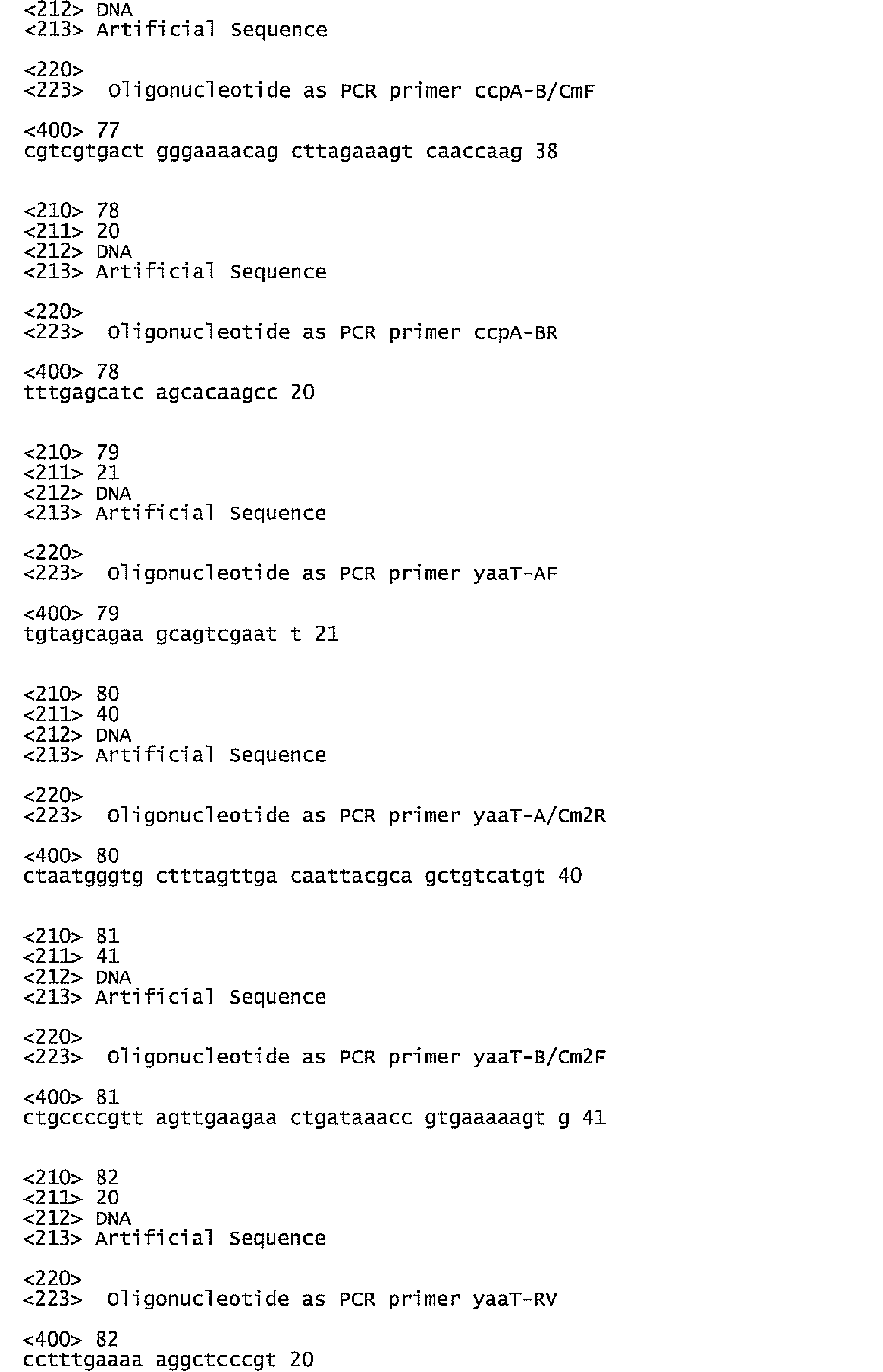
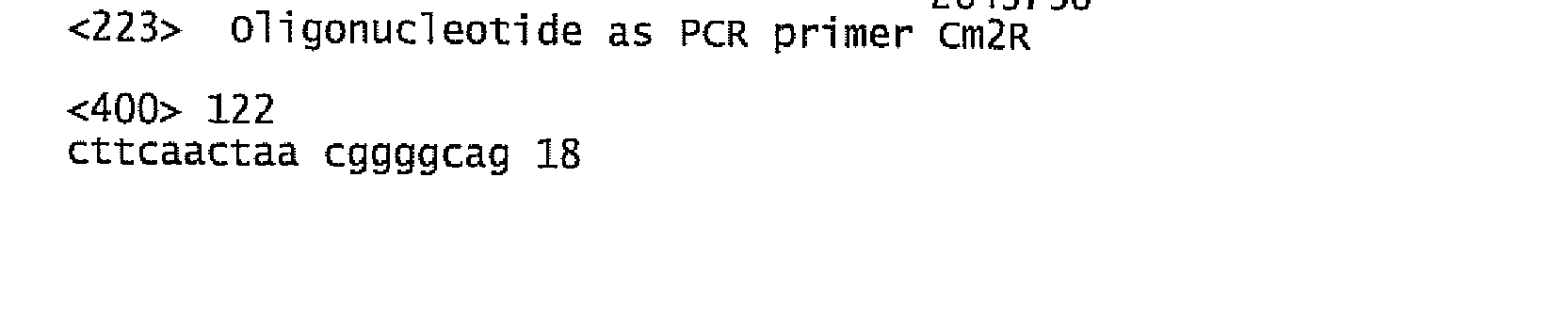
Table 1 Name of the gene Gene ID Functions or other information of the gene comA BG10381 two-component response regulator yopO BG13648 deduced transcriptional regulator, spβ prophage protein treR BG11011 trehalose operon transcriptional repressor (GntR family) yvbA BG14078 deduced transcriptional regulator (ArsR family) cspB BG10824 cold shock-related major factor yvaN BG14069 deduced transcriptional regulator yttP BG13927 deduced transcriptional regulator (TetR family) yurK BG13997 deduced transcriptional regulator (GntR family) yozA BG13748 deduced transcriptional regulator (ArsR family) licR BG11346 transcriptional regulator (antiterminator), lichenan operon (licBCAH) regulation sigL BG10748 RNA polymerase σ factor (o54) mntR BG11702 manganese transport regulator glcT BG12593 transcriptional regulator essential to expression of ptsGHI operon (BglG family, antiterminator) yvdE BG12414 deduced transcriptional regulator (LacI family) ykvE BG13310 deduced transcriptional regulator (MarR family) slr BG11858 transcriptional activator for competence- or sporulation-related genes rocR BG10723 transcriptional activator for arginine-assimilating operon (NtrC family) ccpA BG10376 carbon source catabolism reppression-related transcriptional regulator (Lacl family) yaaT BG10096 type-II signal peptidase-like protein yyaA BG10057 DNA-binding protein SpoOJ-like protein yycH BG11462 Function unknown (homologous gene has been found in other organisms) yacP BG10158 Function unknown (homologous gene has been found in other organisms) hprK BG14125 Hpr protein Ser residue phosphoenzyme/dephosphoenzyme rsiX BG10537 anti σX factor yhdK BG13017 Function unknown, related to repression of σM factor expression ylbO BG13367 expression regulator for gene in σE-related metrocytein - Genes derived from other microorganisms, preferably from bacteria belonging to the genus Bacillus, which have the same functions as any of the Bacillus subtilis genes shown in Table 1, or have 70% or more homology with the nucleotide sequence of any of the genes shown in Table 1, preferably 80% or more homology, more preferably 90% or more, further preferably 95% or more, yet more preferably 98% or more, should be interpreted to be functionally equivalent to the genes shown in Table 1, and thus to constitute the genes which are to be deleted or knocked out according to the present invention. In this connection, homology of nucleotides is computed by use of the Lipman-Pearson method (Science, 227, 1435, 1985).
- Many of the genes shown in Table 1 which encode Bacillus subtilis are regulatory genes participating in activation or suppression of expression of a variety of genes, or genes deduced to be such regulatory genes. The present invention has been attained on the basis of this finding; i.e., the presence of regulatory genes unnecessary in or detrimental to production of protein or polypeptide has now been unveiled in the present invention.
- Notably, attention is drawn to the fact that many of the listed "unnecessary" or "detrimental" genes are regulatory genes participating in sugar intake or metabolism, as exemplified by the glcT gene, which acts as an anti-terminator for a glucose PTS intake operon; the licT gene, which acts as an anti-terminator for a lichenan hydrolysis operon; the treR gene, which acts as a repressor of trehalose intake and metabolism; and the hprK gene and ccpA gene, which relate to glucose catabolite repression.
- Also, in addition to the regulatory genes involved in sugar intake and metabolism, the rocR gene participating in activation of arginine assimilation, and competence-related comA gene and slr gene, which are also regulatory genes, may be deleted or knocked out, to thereby improve productivity of protein or polypeptide.
- The genes shown in Table 1 include the yhdK gene, and the rsiX gene encoding the anti-EC F sigma factor which suppresses expression of an ECF sigma factor, sigma x. The yhdK gene has been reported to participate in suppression of sigma M (Mol. Microbiol., 32, 41, 1999). The sigL gene, which encodes sigma L, is also included in the genes of Table 1. This suggests that expression of a gene under regulation by sigma X or sigma M is favorable for production of protein, and conversely, some gene expression under regulation by sigma L is unfavorable.
- By deleting or knocking out one or more genes selected from the above-mentioned genes, expression which is unnecessary in or harmful to the production of protein or polypeptide can be prevented, leading to enhanced productivity in such production of protein or polypeptide.
- The number of gene(s) to be deleted or knocked out is one or more, preferably two or more, more preferably three or more, even more preferably 5 or more. When a microorganism of the present invention is constructed, deletion or inactivation of a gene or genes other than those mentioned above is possible. In such a case, a more improved effect is expected. An alternative method for achieving the present invention is inactivation, or knocking out, of a target gene by inserting thereto a DNA fragment of another origin or introducing a mutation to the transcription/translation-initiation region of the gene. Preferably, however, the target genes are physically deleted.
- In an example procedure for deleting or knocking out the genes, any of the target genes shown in Table 1 is deleted or knocked out according to a plan which has been set up in advance. Alternatively, randomized deletion of genes or mutation by way of knocking out is performed, followed by evaluation on protein productivity and gene analysis.
- The target gene may be deleted or knocked out through homologous recombination. That is, a DNA fragment containing a portion of the target gene is cloned with an appropriate plasmid vector to thereby obtain a ring-shaped recombinant plasmid, and the resultant plasmid is transferred into cells of a parent microorganism. Thereafter, through homologous recombination effected in a partial region of the target gene, the target gene on the genome of the parent microorganism is cleaved, thereby completing inactivation of the target gene. Alternatively, the target gene is knocked out by substitution or insertion of a base, or a linear DNA fragment containing a region outside the target gene sequence but not containing the target gene may be constituted through PCR or a similar method, and the thus-engineered gene or fragment is transferred into a cell of a parent microorganism. At two sites outside the mutation within the target gene in the genome of the parent microorganism genome, or at two regions outside the target gene sequence, double crossing-over homologous recombination is caused to occur, to thereby attain substitution with a gene fragment in which the target gene on the genome is deleted or knocked out.
- Particularly when the parent microorganism used to construct the microorganism of the present invention is Bacillus subtilis, since several reports have already described methods for deleting or knocking out the target gene (see, for example, Mol. Gen. Genet., 223, 268 1990), repetition of any of such methods may be followed, to thereby produce a host microorganism of the present invention.
- Randomized gene deletion or inactivation may be performed through use of a method similar to the above-described method for inducing homologous recombination by use of a randomly cloned DNA fragment, or by way of irradiation of a parent microorganism with gamma rays or similar rays.
- Next will be described in more detail a deletion method employing double crossing over by use of a DNA fragment designed for the deletion purpose, the DNA fragment being prepared through SOE-PCR (Gene, 77, 61, 1989). However, in the present invention, the method for deleting genes is not limited to only the below-described method.
- The DNA fragment use for the deletion purpose is a fragment constructed such that a drug resistant marker gene is inserted between a ca. 0.5 to 3 kb upstream sequence which flanks and is upstream of the gene to be deleted, and a ca. 0.5 to 3 kb downstream sequence which flanks and is downstream of the same gene. In the first cycle of PCR, the following three fragments are prepared: the upstream and the downstream fragments, which are to be deleted, and the drug resistant marker gene. The primers to be used in this step may, for example, be those specifically designed so that an upstream 10-30 base pair sequence of a drug resistance gene is added to the lower end of the upstream fragment, and a downstream 10-30 base pair sequence of the drug resistance marker gene is added to the upper end of the downstream fragment (
Fig. 1 ). - Next, using three PCR fragments prepared in the first cycle as templates, the second cycle of PCR is performed by use of an upper primer of the upstream fragment and a lower primer of the downstream fragment. This step causes annealing with the drug resistance marker gene fragment in the sequence of the above-engineered drug resistance marker gene, and through PCR amplification, there can be obtained a DNA fragment with the drug resistance marker gene inserted between the upstream fragment and the downstream fragment (
Fig. 1 ). - When a chloramphenicol-resistant gene is employed as a drug resistance marker gene, a DNA fragment for deleting a gene can be obtained through SOE-PCR under typical conditions described in literature (see, for example, PCR Protocols. Current Methods and Applications, Edited by B. A. White, Humana Press, pp. 251 (1993), Gene, 77, 61, 1989), by use of a primer set such as that shown in Table 2 and a conventional enzyme kit for PCR (e.g., Pyrobest DNA Polymerase (product of Takara Shuzo)).
- When the thus-obtained DNA fragment for effecting gene deletion is introduced into cells through the competent method or a similar method, intracellular genetic recombination occurs in homologous regions which are present upstream and downstream of the gene to be deleted. Thus, cells in which the target gene has been substituted by a drug resistance gene can be selectively separated through employment of a drug resistance marker (
Fig. 1 ). Specifically, when a DNA fragment for gene deletion prepared by use of a primer set shown in Table 2 is introduced into cells, colonies which have grown on an agar culture medium containing chloramphenicol are separated, and deletion of the target gene by way of substitution by the chloramphenicol-resistant gene is confirmed through an appropriate method such as PCR employing a genome as a template. - Subsequently, when a gene encoding a target protein or polypeptide is transferred to a host mutant microorganism strain from which any of the Bacillus subtilis genes shown in Table 1, or one or more genes selected from among the genes corresponding thereto has been deleted or knocked out, the microorganism of the present invention can be obtained.
- No particular limitation is imposed on the gene encoding the target protein or polypeptide. Examples of the protein and polypeptide include physiologically-active peptides and enzymes for industrial purposes such as detergents, foods, fibers, feeds, chemicals, medicine, and diagnostic agents. Industrial enzymes may be functionally grouped into oxidoreductases, transferases, hydrolases, lyases, isomerases, and ligases/synthetases. Preferably, hydrolases such as cellulase, α-amylase, and protease may be used. Specific examples include cellulase belonging to family 5 in the classification of hydrolase (Bioche M. J., 280, 309, 1991); in particular, cellulase derived from a microorganism, more particularly cellulase derived from the genus Bacillus. Other specific examples of the types of industrial enzymes include alkaline cellulase which is derived from the genus Bacillus and has an amino-acid of SEQ ID NOs: 2 or 4, and cellulase which has an another amino-acid sequence having 70% homology with said amino-acid sequence, preferably 80% homology, more preferably 90%, further preferably 95%, still further preferably 98% or more.
- Specific examples of α-amylase include α-amylase derived from a microorganism, preferably liquefied amylase derived from the genus Bacillus. More specific examples include alkaline amylase which is derived from the genus Bacillus and has an amino-acid sequence of SEQ ID NO: 6, and amylase which has another amino-acid sequence having 70% homology with said amino-acid sequence, preferably 80% homology, more preferably 90%, further preferably 95%, particularly preferably 98% or more. The homology of the amino-acid sequence is calculated by the Lipman-Pearson method (Science, 227, 1435 (1985)). Specific examples of protease include serine protease and metallo-protease which are derived from microorganisms, particularly those belonging to the genus Bacillus.
- Preferably, a gene coding for a target protein or polypeptide has, on its upstream region thereof, one or more regulatory regions relating to transcription, translation, or secretion of the gene (specially, one or more regions selected from among a transcription initiation regulatory region including a promoter and a transcription initiation site; a translation initiation region including a ribosome-binding site and a start codon; and a secretion signal peptide region) properly ligated thereto. Preferably, it is preferred that three regions consisting of the transcription initiation regulatory region, the translation initiation regulatory region, and the secretion signal region be ligated to the target gene. Further preferably, the secretion signal peptide region is one that originates from the cellulase gene of a microorganism belonging to the genus Bacillus, and the transcription initiation region and the translation initiation region is a 0.6 to 1 kb region upstream of the cellulase gene. In one preferred example, a transcription initiation regulatory region, a translation initiation region, and a secretion signal peptide region of a cellulase gene derived from a microorganism belonging to the genus Bacillus disclosed in, for example, Japanese Patent Application Laid-Open (kokai) Nos.
2000-210081 190793/1990 - The recombinant microorganism of the present invention can be obtained by a conventional transformation technique in which a recombinant plasmid containing a DNA fragment which includes a gene encoding the target protein or polypeptide, and is ligated to a proper plasmid vector is transferred into a host microorganism cell. Alternatively, the recombinant microorganism may be obtained making use of a DNA fragment prepared by ligating the above DNA fragment to a proper region which is homologous with a certain portion of the host microorganism genome, and inserted directly into a host microorganism genome.
- The target protein or polypeptide obtained by use of the recombinant microorganism of the present invention may be produced in such a manner that a corresponding cell strain is inoculated onto a culture medium containing assimilable carbon sources and nitrogen sources, and other essential components; the cell strain is cultured through a conventional microorganism culturing method; and subsequently, protein or polypeptide is collected and purified.
- Through the aforementioned procedure, a host mutant microorganism strain in which any of the Bacillus subtilis genes shown in Table 1 or one or more genes selected from genes functionally equivalent thereto have been deleted or knocked out can be engineered. In addition, by use of such a mutant strain, a recombinant microorganism can be produced. Thus, a useful protein or polypeptide can be effectively produced through employment of the mutant strain or the recombinant microorganism.
- The method for constructing a recombinant microorganism according to the present invention, and the method for producing cellurase and α-amylase by use of the recombinant microorganism will next be described in detail, centering on working examples for constructing recombinant strain belonging to Bacillus subtilis from which the ccpA gene (BG10376) of Bacillus subtilis has been deleted.
- A genome DNA sample, serving as a template, extracted from Bacillus subtilis 168 strain and two primer sets (ccpA-AF and ccpA-A/CmR; and ccpA-B/CmF and ccpA-BR) shown in Table 2 were used to prepare a 0.6 kb fragment (A) flanking the upstream side of the ccpA gene on the genome and a 0.6 kb fragment (B) flanking the downstream side of the ccpA gene. A chloramphenicol-resistant gene of plasmid pC194 (J. Bacteriol. 150 (2), 815 (1982))) was inserted into the XbaI-BamHI cleavages site of plasmid pUC18, to thereby prepare a recombinant plasmid pCBB 31. The recombinant plasmid pCBB and a primer set consisting of CmF and CmR shown in Table 2 were used to prepare a 1, kb fragment (C) containing the chloramphenicol-resistant gene. Subsequently, SOE-PCR was performed by use of the primers ccpA-AF and ccpA-BR shown in Table 2, and by use of the thus-prepared three fragments (A), (B), and (C) in combination as templates, a 2.2 kb DNA fragment in which the fragments (A), (B), and (C) were ligated in this sequence was prepared (see
Fig. 1 ). By use of the thus-prepared DNA fragment, Bacillus subtilis 168 strain was transformed through the competent method. Colonies grown in an LB agar medium containing chloramphenicol were collected as transformants. The genome of the above-obtained transformant was extracted, and PCR performed thereon confirmed that the ccpA gene had been deleted and substituted by a chloramphenicol-resistant gene.Table 2-1 Primer Nucleotide sequence SEQ ID NO: comA-AF AAGGATGATAATCCGTCCCGTG 7 comA-A/CmR GTTATCCGCTCACAATTCGGATGGTCATCAATCACTAG 8 comA-B/CmF CGTCGTGACTGGGAAAACTGCGAAATCAGACGGTGTAC 9 comA-BR CGTCGCCTATCGGCGGGCAC 10 yop0-AF ATGTATATAGGAGGTTGGTGGTATG 11 yop0-A/CmR GTTATCCGCTCACAATTCGCTCTGACATGTCAACCTCC 12 yop0-B/CmF CGTCGTGACTGGGAAAACAGATGAGAAAGGAGGAGAAG 13 yop0-BR ATAACTGTTACTATATAATGGCC 14 treR-AF GCTGGGGATGACGAATCCGA 15 treR-A/CmR GTTATCCGCTCACAATTCTCACCTTCATTATGGACCAC 16 treR-B/CmF CGTCGTGACTGGGAAAACCACCGTCTCGACAAATTCCG 17 treR-BR GTTGCCAAGCGCGATATAGG 18 yvbA-AF TATACAGGGATTATCAGTATTGAGC 19 yvbA-A/CmR GTTATCCGCTCACAATTCTTTTCTCCTTGTTGGATCTG 20 yvbA-B/CmF CGTCGTGACTGGGAAAACGGGGATAACGATTTATGAAG 21 yvbA-BR TTTTGTAATAATGATATGAAGCTAGTGTTG 22 cspB-AF ATATCCAGCCCTGCCTCTTC 23 cspB-A/CmR CTGTGTGAAATTGTTATCCGCTCACAATTCGAAATTTCCTCCTAA AGCGATCATAACG 24 cspB-B/CmF GTCGTTTTACAACGTCGTTGACTGGGAAAACCCACAAGCTGCTAA CGTTAC 25 cspB-BR TCCTGTTTGGGCTCCTGTTG 26 yvaN-AF TGTTTATGTATGGCGGCCTGCGGGAC 27 yvaN-A/CmR GTTATCCGCTCACAATTCAGCTTTCCATATATCTCACC 28 yvaN-B/CmF CGTCGTGACTGGGAAAACACGGTCTGCTGATGACTGAC 29 yvaN-BR GCGTTTACTTAAGATGTCGA 30 yttP-AF TTTCTAGCGTTTCGGCAAATTGAGTTAAG 31 yttP-A/CmR GTTATCCGCTCACAATTCCTTACTTTCATACGGCTCAC 32 yttP-B/CmF CGTCGTGACTGGGAAAACGAGACGTGGCGCTCACCAAC 33 yttP-BR CGGATTAAAAAAAGAATATCGCGGACAGC 34 yurK-AF TGCCGCTGCCCGCCGGAGAG 35 Table 2-2 yurK-A/CmR GTTATCCGCTCACAATTCAAGGTGTAGAACTTCCGTTG 36 yurK-B/CmF CGTCGTGACTGGGAAAACACCATCAACAGCCCCTACAC 37 yurK-BR TCAAATAAAGGCGGCATTCAGTCC 38 yozA-AF ATAATGGTATCCAAATCCACGC 39 yozA-A/CmR GTTATCCGCTCACAATTCATTCAGTCATATGTATCACC 40 yozA-B/CmF CGTCGTGACTGGGAAAACGATCCATCATACACAGCATG 41 yozA-BR CACTTCTCAACGGAGGGGATTTCACATC 42 licR-AF TAATGGAGGAGAGAAGGCCG 43 licR-A/CmR GTTATCCGCTCACAATTCAGTCGCCCATGAAGCATGAG 44 licR-B/CmF CGTCGTGACTGGGAAAACACCAAAAAATGCTGAGCTGACAGC 45 licR-BR TTGCCAATGATGAGGAAAAAGGAACC 46 sigL-AF CTGAACGTCTTGAATAAAAAAGCAGG 47 sigL-A/CmR GTTATCCGCTCACAATTCGCTGAAGTTTCATATCCATC 48 sigL-B/CmF CGTCGTGACTGGGAAAACATTCCGTCATCGGCAGCGAG 49 sigL-BR AGCGGTTTAGAAGTTGGAGG 50 mntR-AF ATTTCAGAAGGCATACTTCAAG 51 mntR-A/CmR GTTATCCGCTCACAATTCCATACTTGGTGTTGTCATCG 52 mntR-B/CmF CGTCGTGACTGGGAAAACCATAATCAGTAAAAAGGCGGTC 53 mntR-BR TTCTGACCGCTCTGGCAACC 54 glcT-AF ATAATGCCCGCTTCCCAACC 55 glcT-A/CmR GTTATCCGCTCACAATTCCGATCCTCAGCTCCTTTGTC 56 glcT-B/CmF CGTCGTGACTGGGAAAACTCATCTGATACCGATTAACC 57 glcT-BR CAACTGARTCCGAAGGAATG 58 yvdE-AF TCGGGGTCATGCCGAGCGGT 59 yvdE-A/CmR GTTATCCGCTCACAATTCCAATGTTGCCATTTTCATCC 60 yvdE-B/CmF CGTCGTGACTGGGAAAACTTGTACGAGAATCAACGCTG 61 yvdE-BR CACGGCAATGCATTCTTCGG 62 ykvE-AF AGATCTGTCGGCCAGGTTTAC 63 ykvE-A/CmR GTTATCCGCTCACAATTCTGATTTTTCTGTCATGTCTC 64 ykvE-B/CmF CGTCGTGACTGGGAAAACGGTAGAGATGTGCACCGAAA 65 ykvE-BR GAGTCAGACGGCATCGATGA 66 slr-AF TTCTGATTCATTTTCACTGCTGG 67 slr-A/CmR GTTATCCGCTCACAATTCAACGGATAATTCTTCCAATC 68 slr-B/CmF CGTCGTGACTGGGAAAACTGTCCATGAAGTCAAATCC 69 slr-BR CGCTGAAATATTCTCTCGCA 70 rocR-AF CGCCGCTTTCACCGCGGATTC 71 rocR-A/CmR GTTATCCGCTCACAATTCCTTTGACCACTGTATGAACC 72 Table 2-3 rocR-B/CmF CGTCGTGACTGGGAAAACACTCGTCTAACGAATAATCC 73 rocR-BR TGTCATCACGGAATTTGACG 74 ccpA-AF CCAAATTATCCTTTGTGAGCGCGGAATCAG 75 ccpA-A/CmR GTTATCCGCTCACAATTCCGTAGATCGTAATATTGCTC 76 ccpA-B/CmF GGTCGTGACTGGGAAAACAGCTTAGAAAGTCAACCAAG 77 ccpA-BR TTTGAGCATCAGCACAAGCC 78 yaaT-AF TGTAGCAGAAGCAGTCGAATT 79 yaaT-A/Cm2R CTAATGGGTGCTTTAGTTGACAATTACGCAGCTGTCATGT 80 yaaT-B/Cm2F CTGCCCCGTTAGTTGAAGAACTGATAAACCGTGAAAAAGTG 81 yaaT-RV CCTTTGAAAAAGGCTCCCGT 82 yyaA-AF GTTTTCCAAGTCTGCCGATAAAAATATGC 83 yyaA-A/CmR GTTATCCGCTCACAATTCATGCTTCATGTACCTACACC 84 yyaA-B/CmF CGTCGTGACTGGGAAAACCAATTAACGATTCGCATACC 85 yyaA-BR AAAAAGAAGAAGTCACAGTACAGAACGTGG 86 yycH-AF ATTTTTCGCCATCTTGAATTTTC 87 yycH-A/CmZR CTAATGGGTGCTTTAGTTGGATGATCCTCTCGTTGAACTG 88 yycH-B/Cm2F CTGCCCCGTTAGTTGAAGGGATGAGCCTTCAGAAAAGTT 89 yycH-BR GCCGGACAGAGATCTGTATG 90 yacP-B/Cm4F GAAGAACGTTTTTATGTTGACGCTTTTTTGCCCAATACTGTATAA 91 yacP-B/Cm4R CAAAAAAGCGTCAACATAAAAACCTTCTTGAACTAACGGGGCAGG 92 yacP-BR AAGACGAGTACTTTTCTCTCTAAATCACTT 93 yacP-AF AACTCGATCAAATGGTGACAGGACAGCATC 94 yacP-A/Cm4F GGAGAATAAAGACCCTCTTCAACTAAAGCACCCATTAGTTCAACA 95 yacP-A/Cm4R TGCTTTAGTTGAAGAGGGTCTTTATTCTCCCACAGGGTTTCGTTT 96 hprK-B/Cm4F TTTTTATATTACAGCGAGTTGGCGTTAAATGAATGAAGCGATAGA 97 hprK-B/Cm4R ATTTAACGCCAACTCGCTGTAATATAAAAACCTTCTTCAACTAAC 98 hprK-BR TTGATTGATGATAAATTCAGGCAGGTGCAG 99 hprK-AF CRAAGGTTGAGAAATGTTGCCRTGCTCTTG 100 hprK-A/Cm4F CAGGAGGAACATATCTCTTCAACTAAAGCACCCATTAGTTCAACA 101 hprK-A/Cm4R TGCTTTAGTTGAAGAGATATGTTCCTCCTGTTCCGGGCTGCCCCG 102 rsiX-AF ATTCCAGTTACTCGTAATATAGTTG 103 rsiX-A/CmR GTTATCCGGTCACAATTCAGTTCATCATCCATTAGCTC 104 rsiX-B/CmF CGTCGTGACTGGGAAAACCTGCTCCAAATCCGATTTCC 105 rsiX-BR GTCCTGCATTTTTCGAAGTCTGG 106 yhdK-AF TACACATCCTTGAAACAAGTCTGAACAAAC 107 Table 2-4 yhdK-A/Cm4R TGCTTTAGTTGAAGATTACCAGTTCCATAATTCCACCTCGCCGAC 108 yhdK-B/Cm4F TTTTTATATTACAGCGTGTGTATACCATTGTATCTGTAGATACGA 109 yhdK-BR GCTATGATCATTGTAACGAAAGGAAAGGGG 110 yhdK-A/Cm4F TTATGGAACTGGTAATCTTCAAGTAAAGCACCCATTAGTTCAACA 111 yhdK-B/Cm4R CAATGGTATACACACGCTGTAATATAAAAACCTTCTTCAACTAAC 112 ylb0-AF AATCTGAACAAGAAAAAGGAGCTGCTCCTC 113 ylb0-A/Cm4R TGCTTTAGTTGAAGAATTCAATCTCCCTCCATGTCAGCTTATTTA 114 ylb0-B/Cm4F TTTTTATATTACAGCAGAAACGCCTGAAATGAACCGGCCCTATAG 115 ylb0-BR TGTTTGACAAAGGTAGAACGTCTGCTTATC 116 ylb0-A/Cm4F GGAGGGAGATTGAATTCTTCAACTAAAGCACCCATTAGTTCAACA 117 ylb0-B/Cm4R ATTTCAGGCGTTTCTGCTGTAATATAAAAACCTTCTTCAACTAAC 118 CmF GAATTGTGAGCGGATAAC 119 CmR GTTTTCCCAGTCACGACG 120 Cm2F CAACTAAAGCACCCATTAG 121 Cm2R CTTCAACTAACGGGGCAG 122 - In a manner similar to that described in Example 1, sporulation gene-deleted strains into which a chloramphenicol-resistant gene had been introduced by way of substitution in place of the below-described deleted genes were separated through use of a DNA fragment for effecting deletion prepared from an adequate primer set selected from among various primer sets shown in Table 2; i.e., gene-AF, gene-A/CmR, gene-B/CmF, gene-BR, CmF, and CmR. The gene deleted from the genome was comA, yopO, treR, yvbA, yvaN, yttP, yurK, yozA, licR, sigL, mntR, glcT, ykvE, slr, rocR, yyaA, or rsiX.
- In a manner similar to that described in Example 2, a DNA fragment for deletion was prepared by use of an adequate primer set selected from among the gene-AF, gene-A/Cm2R, gene-B/Cm2F, gene-BR, Cm2F, and Cm2R, which are shown in Table 2. By use of the thus-prepared DNA fragment, sporulation gene-deleted strains into which a chloramphenicol-resistant gene had been introduced by way of substitution in place of the below-described deleted genes were separated. The gene deleted from the genome was cspB, yvdE, yaaT, yycH, or ylbO.
- In a manner similar to that described in Example 2, a DNA fragment for effecting deletion was prepared from an adequate primer set selected from among the gene-AF, gene-A/Cm4R, gene-B/Cm4F, gene-BR, Cm4F, and Cm4R, which are shown in Table 2. By use of the thus-prepared DNA fragment, sporulation gene-deleted strains into which a chloramphenicol-resistant gene had been introduced by way of substitution in place of deleted genes; yacP, hprK, and yhdK, were separated.
- To each of the gene-deleted strains obtained in Examples 1 to 4 and to Bacillus subtilis 168 strain serving as a control, a recombinant plasmid pHY-S237 was introduced through the protoplast transformation method. The recombinant plasmid pHY-S237 was prepared by inserting a DNA fragment (3.1 kb) encoding an alkaline cellulase derived from Bacillus sp. KSM-S237 strain (Japanese Patent Application Laid-Open (kokai) No.
2000-210081 Table 3 Name of deleted gene Gene ID Gene size (bp) Size of deleted fragment (bp) Amount of produced (secreted) alkaline cellulase (relative value) comA BG10381 645 588 160 yopO BG13648 213 169 154 treR BG11011 717 656 139 yvbA BG14078 273 210 137 cspB BG10824 204 171 132 yvaN BG14069 408 379 124 yttP BG13927 624 590 121 yurK BG13997 729 677 118 yozA BG13748 324 289 117 licR BG11346 1926 1889 116 sigL BG10748 1311 1256 114 mntR BG11702 429 399 114 glcT BG12593 858 811 110 yvdE BG12414 951 916 109 ykvE BG13310 438 356 108 slr BG11858 459 394 105 rocR BG10723 1386 1359 128 ccpA BG10376 1005 957 205 yaaT BG10096 828 828 127 yyaA BG10057 852 816 113 yycH BG11462 1368 1368 146 yacP BG10158 513 513 156 hprK BG14125 933 933 196 rsiX BG10537 1107 1068 125 yhdK BG13017 291 228 114 ylbO BG13367 582 582 136 None (Wild type) - - - 100 - To each of the gene-deleted strains obtained in Examples 1 to 4 and to Bacillus subtilis 168 strain serving as a control, recombinant plasmid pHSP-K38 was introduced through the protoplast transformation method. The recombinant plasmid pHSP-K38 was prepared by inserting, into the restriction enzyme BagII-XbaI cleavage site of a shuttle vector pHY300 PLK, a 2.1 kb fragment (SEQ ID No: 5) prepared by ligating an upstream 0.6 kb fragment (SEQ ID NO: 3) including portions of a promoter region and a signal sequence region of an alkaline cellulase gene with an upstream side of a DNA fragment (1.5 kb) encoding a mature enzyme region (Asp1-Gln480) of an alkaline amylase gene derived from Bacillus sp. KSM-K38 strain (Japanese Patent Application Laid-Open (kokai) No.
2000-1884882 Table 4 Name of deleted gene Gene ID Gene size (bp) Size of deleted fragment (bp) Amount of produced (secreted) alkaline amylase (relative value) Cultured for 3 days slr BG11858 459 394 178 treR BG11011 717 656 124 yopO BG13648 213 169 364 yvaN BG14069 408 379 148 yvbA BG14078 273 210 171 None (Wild type) - - - 100 Culture for 5 days (Wild type) cspB BG10824 204 171 195 rocR BG10723 1386 1359 215 sigL BG10748 1311 1256 204 glcT BG12593 858 811 132 yvdE BG12414 951 916 127 yacP BG10158 513 513 110 None (Wild type) - - - 100 Cultured for 6days yycH BG11462 1368 1368 120 licR BG11346 1926 1889 122 None (Wild type) - - - 100 




Claims (5)
- A recombinant microorganism prepared by transferring, to a mutant strain of microorganism from which any of Bacillus subtilis genes cspB, sigL, glcT, rocR and ccpA, or one or more genes functionally equivalent to any of these genes have been deleted or knocked out, a gene encoding a heterologous protein or polypeptide, wherein the microorganism is Bacillus subtilis or another bacterium belonging to the genus Bacillus and having ability to secrete the produced protein extracellularly.
- The recombinant microorganism as claimed in claim 1, wherein three regions constituted by a transcription initiation regulatory region, a translation initiation regulatory region, and a secretion signal region are ligated to an upstream region of the gene encoding a heterologous protein or polypeptide.
- The recombinant microorganism as claimed in claim 1 or 2, wherein the transcription initiation regulatory region and the translation initiation regulatory region are each derived from a 0.6 to 1 kb region upstream of the cellulase gene of a bacterium belonging to the genus Bacillus.
- The recombinant microorganism as claimed in any one of claims 1 through 3, wherein the three regions constituted by the transcription initiation regulatory region, the translation initiation regulatory region, and the secretion signal region are(a) a nucleotide sequence of base numbers 1 to 659 of a cellulase gene of SEQ ID NO: 1;(b) a nucleotide sequence of base numbers 1 to 696 of a cellulase gene of SEQ ID NO: 3;(c) a DNA fragment having a nucleotide sequence having 70% homology with either of the nucleotide sequences of (a) or (b); or(d) a DNA fragment having a nucleotide sequence lacking a portion of any one of the nucleotide sequences of (a) to (c), but said fragment having functions relating to transcription, translation, and secretion of the genes to be expressed.
- A method for producing a protein or polypeptide by use of a recombinant microorganism as defined in any one of claims 1 through 4.
Applications Claiming Priority (2)
| Application Number | Priority Date | Filing Date | Title |
|---|---|---|---|
| JP2003379167A JP4336184B2 (en) | 2003-11-07 | 2003-11-07 | Recombinant microorganism |
| EP04799676.4A EP1689869B2 (en) | 2003-11-07 | 2004-11-05 | Recombinant microorganism |
Related Parent Applications (2)
| Application Number | Title | Priority Date | Filing Date |
|---|---|---|---|
| EP04799676.4A Division EP1689869B2 (en) | 2003-11-07 | 2004-11-05 | Recombinant microorganism |
| EP04799676.4 Division | 2004-11-05 |
Publications (2)
| Publication Number | Publication Date |
|---|---|
| EP2206788A1 true EP2206788A1 (en) | 2010-07-14 |
| EP2206788B1 EP2206788B1 (en) | 2014-12-31 |
Family
ID=34567203
Family Applications (2)
| Application Number | Title | Priority Date | Filing Date |
|---|---|---|---|
| EP04799676.4A Expired - Lifetime EP1689869B2 (en) | 2003-11-07 | 2004-11-05 | Recombinant microorganism |
| EP10158504.0A Expired - Lifetime EP2206788B1 (en) | 2003-11-07 | 2004-11-05 | Recombinant microorganism |
Family Applications Before (1)
| Application Number | Title | Priority Date | Filing Date |
|---|---|---|---|
| EP04799676.4A Expired - Lifetime EP1689869B2 (en) | 2003-11-07 | 2004-11-05 | Recombinant microorganism |
Country Status (7)
| Country | Link |
|---|---|
| US (2) | US20080009039A1 (en) |
| EP (2) | EP1689869B2 (en) |
| JP (1) | JP4336184B2 (en) |
| CN (1) | CN100519753C (en) |
| DE (1) | DE602004030942D1 (en) |
| DK (2) | DK2206788T3 (en) |
| WO (1) | WO2005045013A2 (en) |
Families Citing this family (17)
| Publication number | Priority date | Publication date | Assignee | Title |
|---|---|---|---|---|
| JP4485341B2 (en) * | 2004-12-20 | 2010-06-23 | 花王株式会社 | Recombinant microorganism |
| JP2006345860A (en) * | 2005-05-20 | 2006-12-28 | Shinshu Univ | Recombinant Bacillus bacteria |
| JP4839143B2 (en) * | 2005-07-21 | 2011-12-21 | 花王株式会社 | Recombinant microorganism |
| JP4839144B2 (en) * | 2005-07-22 | 2011-12-21 | 花王株式会社 | Host microorganism |
| JP4676848B2 (en) * | 2005-09-12 | 2011-04-27 | 花王株式会社 | Recombinant microorganism |
| JP4676847B2 (en) * | 2005-09-12 | 2011-04-27 | 花王株式会社 | Recombinant microorganism |
| JP5140285B2 (en) * | 2006-02-16 | 2013-02-06 | 花王株式会社 | Recombinant microorganism |
| JP4850011B2 (en) * | 2006-04-19 | 2012-01-11 | 花王株式会社 | Recombinant microorganism |
| JP4842751B2 (en) * | 2006-04-20 | 2011-12-21 | 花王株式会社 | Recombinant microorganism |
| JP4842750B2 (en) * | 2006-04-20 | 2011-12-21 | 花王株式会社 | Recombinant microorganism |
| JP5140313B2 (en) * | 2006-05-16 | 2013-02-06 | 花王株式会社 | Recombinant microorganism |
| JP4839169B2 (en) * | 2006-09-22 | 2011-12-21 | 花王株式会社 | Recombinant microorganism |
| JP5226958B2 (en) * | 2007-02-22 | 2013-07-03 | 花王株式会社 | Recombinant microorganism |
| JP2009034067A (en) * | 2007-08-03 | 2009-02-19 | Kao Corp | Recombinant microorganism |
| JP5551349B2 (en) * | 2007-09-20 | 2014-07-16 | 花王株式会社 | Recombinant microorganism and method for producing poly-gamma-glutamic acid |
| JP2010136689A (en) * | 2008-12-12 | 2010-06-24 | Kao Corp | Recombinant microorganism |
| JP5828634B2 (en) * | 2010-12-24 | 2015-12-09 | 花王株式会社 | Protein production method using recombinant microorganism |
Citations (4)
| Publication number | Priority date | Publication date | Assignee | Title |
|---|---|---|---|---|
| JPH02190793A (en) | 1989-01-19 | 1990-07-26 | Olympus Optical Co Ltd | Fine moving mount stage |
| JP2000184882A (en) | 1998-12-21 | 2000-07-04 | Kao Corp | New amylase |
| JP2000210081A (en) | 1999-01-21 | 2000-08-02 | Kao Corp | Thermostable alkaline cellulase gene |
| DE19951765A1 (en) * | 1999-10-27 | 2001-05-03 | Thomas Schweder | Host-vector systems for the overproduction of thermolabile enzymes in psychrophilic organisms |
Family Cites Families (3)
| Publication number | Priority date | Publication date | Assignee | Title |
|---|---|---|---|---|
| KR20020021397A (en) * | 1999-07-22 | 2002-03-20 | 데이비드 엠 모이어 | Subtilisin protease variants having amino acid deletions and substitutions in defined epitope regions |
| US20040147719A1 (en) * | 2001-03-26 | 2004-07-29 | Guy Cornelis | Type III bacterial strains for use in medicine |
| EP1495128B1 (en) * | 2002-03-29 | 2014-05-07 | Genencor International, Inc. | Ehanced protein expression in bacillus |
-
2003
- 2003-11-07 JP JP2003379167A patent/JP4336184B2/en not_active Expired - Lifetime
-
2004
- 2004-11-05 DK DK10158504.0T patent/DK2206788T3/en active
- 2004-11-05 CN CN 200480031689 patent/CN100519753C/en not_active Expired - Lifetime
- 2004-11-05 EP EP04799676.4A patent/EP1689869B2/en not_active Expired - Lifetime
- 2004-11-05 EP EP10158504.0A patent/EP2206788B1/en not_active Expired - Lifetime
- 2004-11-05 DK DK04799676.4T patent/DK1689869T4/en active
- 2004-11-05 US US10/578,613 patent/US20080009039A1/en not_active Abandoned
- 2004-11-05 WO PCT/JP2004/016891 patent/WO2005045013A2/en not_active Ceased
- 2004-11-05 DE DE602004030942T patent/DE602004030942D1/en not_active Expired - Lifetime
-
2013
- 2013-11-25 US US14/089,575 patent/US20140170703A1/en not_active Abandoned
Patent Citations (4)
| Publication number | Priority date | Publication date | Assignee | Title |
|---|---|---|---|---|
| JPH02190793A (en) | 1989-01-19 | 1990-07-26 | Olympus Optical Co Ltd | Fine moving mount stage |
| JP2000184882A (en) | 1998-12-21 | 2000-07-04 | Kao Corp | New amylase |
| JP2000210081A (en) | 1999-01-21 | 2000-08-02 | Kao Corp | Thermostable alkaline cellulase gene |
| DE19951765A1 (en) * | 1999-10-27 | 2001-05-03 | Thomas Schweder | Host-vector systems for the overproduction of thermolabile enzymes in psychrophilic organisms |
Non-Patent Citations (17)
| Title |
|---|
| ALI NAIMA OULD ET AL: "Regulation of the acetoin catabolic pathway is controlled by sigma L in Bacillus subtilis", JOURNAL OF BACTERIOLOGY, vol. 183, no. 8, April 2001 (2001-04-01), pages 2497 - 2504, XP002346327, ISSN: 0021-9193 * |
| B. A. WHITE,: "PCR Protocols. Current Methods and Applications", 1993, HUMANA PRESS, pages: 251 |
| BIOCHE M. J., vol. 280, 1991, pages 309 |
| DATABASE EMBL [online] 21 May 1993 (1993-05-21), "Bacillus sp. KSM-64 endo-1,4-beta-glucanase gene, complete cds; and unknown gene.", XP002346335, retrieved from EBI accession no. EM_PRO:BSENDOGLU Database accession no. M84963 * |
| DATABASE Geneseq [online] 29 January 2001 (2001-01-29), "Bacillus sp. KSM-S237 heat resistant alkaline cellulase DNA.", XP002346334, retrieved from EBI accession no. GSN:AAA97493 Database accession no. AAA97493 * |
| EGETER O ET AL: "CATABOLITE REPRESSION MEDIATED BY THE CATABOLITE CONTROL PROTEIN CCPA IN STAPHYLOCOCCUS XYLOSUS", MOLECULAR MICROBIOLOGY, BLACKWELL SCIENTIFIC, OXFORD, GB, vol. 21, no. 4, 1996, pages 739 - 749, XP002916663, ISSN: 0950-382X * |
| EUR. J. BIOCHEM., vol. 268, 2001, pages 2974 |
| GENE, vol. 77, 1989, pages 61 |
| J. BACTERIOL., vol. 150, no. 2, 1982, pages 815 |
| LANGBEIN INES ET AL: "Specific interaction of the RNA-binding domain of the Bacillus subtilis transcriptional antiterminator GlcT with its RNA target, RAT", JOURNAL OF MOLECULAR BIOLOGY, vol. 293, no. 4, 5 November 1999 (1999-11-05), pages 795 - 805, XP004461874, ISSN: 0022-2836 * |
| LEBOEUF CELINE ET AL: "Characterization of the ccpA gene of Enterococcus faecalis: Identification of starvation-inducible proteins regulated by CcpA", JOURNAL OF BACTERIOLOGY, vol. 182, no. 20, October 2000 (2000-10-01), pages 5799 - 5806, XP002346330, ISSN: 0021-9193 * |
| MOL. GEN. GENET., vol. 223, 1990, pages 268 |
| MOL. MICROBIOL., vol. 32, 1999, pages 41 |
| NATURE, vol. 390, 1997, pages 249 - 256 |
| SCIENCE, vol. 227, 1985, pages 1435 |
| WACKER INGRID ET AL: "The regulatory link between carbon and nitrogen metabolism in Bacillus subtilis: Regulation of the gltAB operon by the catabolite control protein CcpA.", MICROBIOLOGY (READING), vol. 149, no. 10, October 2003 (2003-10-01), pages 3001 - 3009, XP002346328, ISSN: 1350-0872 * |
| WARNER JESSICA B ET AL: "CcpA-independent regulation of expression of the Mg2+-citrate transporter gene citM by arginine metabolism in Bacillus subtilis.", JOURNAL OF BACTERIOLOGY, vol. 185, no. 3, February 2003 (2003-02-01), pages 854 - 859, XP002346326, ISSN: 0021-9193 * |
Also Published As
| Publication number | Publication date |
|---|---|
| DK1689869T4 (en) | 2013-11-04 |
| DK2206788T3 (en) | 2015-02-02 |
| DE602004030942D1 (en) | 2011-02-17 |
| WO2005045013A3 (en) | 2005-12-22 |
| CN100519753C (en) | 2009-07-29 |
| EP1689869A2 (en) | 2006-08-16 |
| EP1689869B2 (en) | 2013-08-14 |
| JP2005137309A (en) | 2005-06-02 |
| EP2206788B1 (en) | 2014-12-31 |
| EP1689869B1 (en) | 2011-01-05 |
| DK1689869T3 (en) | 2011-02-07 |
| US20140170703A1 (en) | 2014-06-19 |
| CN1875106A (en) | 2006-12-06 |
| WO2005045013A2 (en) | 2005-05-19 |
| US20080009039A1 (en) | 2008-01-10 |
| JP4336184B2 (en) | 2009-09-30 |
Similar Documents
| Publication | Publication Date | Title |
|---|---|---|
| US20140170703A1 (en) | Recombinant microorganism | |
| US7585674B2 (en) | Host microorganisms | |
| JP4336082B2 (en) | Host microorganism | |
| US8293516B2 (en) | Recombinant microorganism | |
| JP2005137308A (en) | Recombinant microorganism | |
| JP4388272B2 (en) | Host microorganism | |
| EP1680502B1 (en) | Recombinant microorganism | |
| JP4509743B2 (en) | Recombinant microorganism | |
| JP4839144B2 (en) | Host microorganism | |
| JP4496000B2 (en) | Host microorganism | |
| EP1721973B1 (en) | Mutant bacterium belonging to the genus bacillus | |
| EP1721976B1 (en) | Modified promoter | |
| JP2005348641A (en) | Host microorganism | |
| JP4648038B2 (en) | Modified promoter | |
| JP4463871B2 (en) | Recombinant microorganism | |
| JP2017079640A (en) | Recombinant microorganism and use thereof | |
| JP5847458B2 (en) | Recombinant microorganism having a modified rRNA operon | |
| JP4685521B2 (en) | Recombinant microorganism | |
| JP4842750B2 (en) | Recombinant microorganism |
Legal Events
| Date | Code | Title | Description |
|---|---|---|---|
| PUAI | Public reference made under article 153(3) epc to a published international application that has entered the european phase |
Free format text: ORIGINAL CODE: 0009012 |
|
| AC | Divisional application: reference to earlier application |
Ref document number: 1689869 Country of ref document: EP Kind code of ref document: P |
|
| AK | Designated contracting states |
Kind code of ref document: A1 Designated state(s): BE DE DK FI NL |
|
| 17P | Request for examination filed |
Effective date: 20101119 |
|
| 17Q | First examination report despatched |
Effective date: 20110408 |
|
| GRAP | Despatch of communication of intention to grant a patent |
Free format text: ORIGINAL CODE: EPIDOSNIGR1 |
|
| INTG | Intention to grant announced |
Effective date: 20140709 |
|
| GRAS | Grant fee paid |
Free format text: ORIGINAL CODE: EPIDOSNIGR3 |
|
| GRAA | (expected) grant |
Free format text: ORIGINAL CODE: 0009210 |
|
| AC | Divisional application: reference to earlier application |
Ref document number: 1689869 Country of ref document: EP Kind code of ref document: P |
|
| AK | Designated contracting states |
Kind code of ref document: B1 Designated state(s): BE DE DK FI NL |
|
| REG | Reference to a national code |
Ref country code: DK Ref legal event code: T3 Effective date: 20150130 |
|
| REG | Reference to a national code |
Ref country code: NL Ref legal event code: T3 |
|
| REG | Reference to a national code |
Ref country code: DE Ref legal event code: R096 Ref document number: 602004046448 Country of ref document: DE Effective date: 20150212 |
|
| REG | Reference to a national code |
Ref country code: DE Ref legal event code: R097 Ref document number: 602004046448 Country of ref document: DE |
|
| PLBE | No opposition filed within time limit |
Free format text: ORIGINAL CODE: 0009261 |
|
| STAA | Information on the status of an ep patent application or granted ep patent |
Free format text: STATUS: NO OPPOSITION FILED WITHIN TIME LIMIT |
|
| 26N | No opposition filed |
Effective date: 20151001 |
|
| P01 | Opt-out of the competence of the unified patent court (upc) registered |
Effective date: 20230522 |
|
| PGFP | Annual fee paid to national office [announced via postgrant information from national office to epo] |
Ref country code: NL Payment date: 20231013 Year of fee payment: 20 |
|
| PGFP | Annual fee paid to national office [announced via postgrant information from national office to epo] |
Ref country code: FI Payment date: 20231116 Year of fee payment: 20 Ref country code: DE Payment date: 20230929 Year of fee payment: 20 |
|
| PGFP | Annual fee paid to national office [announced via postgrant information from national office to epo] |
Ref country code: BE Payment date: 20231016 Year of fee payment: 20 |
|
| PGFP | Annual fee paid to national office [announced via postgrant information from national office to epo] |
Ref country code: DK Payment date: 20240109 Year of fee payment: 20 |
|
| REG | Reference to a national code |
Ref country code: DE Ref legal event code: R071 Ref document number: 602004046448 Country of ref document: DE |
|
| REG | Reference to a national code |
Ref country code: NL Ref legal event code: MK Effective date: 20241104 |
|
| REG | Reference to a national code |
Ref country code: DK Ref legal event code: EUP Expiry date: 20241105 |
|
| REG | Reference to a national code |
Ref country code: BE Ref legal event code: MK Effective date: 20241105 |