EP2206707A1 - Azolecarboxamide compound or salt thereof - Google Patents
Azolecarboxamide compound or salt thereof Download PDFInfo
- Publication number
- EP2206707A1 EP2206707A1 EP08842145A EP08842145A EP2206707A1 EP 2206707 A1 EP2206707 A1 EP 2206707A1 EP 08842145 A EP08842145 A EP 08842145A EP 08842145 A EP08842145 A EP 08842145A EP 2206707 A1 EP2206707 A1 EP 2206707A1
- Authority
- EP
- European Patent Office
- Prior art keywords
- lower alkyl
- group
- alk
- substituted
- hetero ring
- Prior art date
- Legal status (The legal status is an assumption and is not a legal conclusion. Google has not performed a legal analysis and makes no representation as to the accuracy of the status listed.)
- Granted
Links
- 0 *C1=NC(C(N*2=CC=CC=CC=CC=C2*)=O)=C*1 Chemical compound *C1=NC(C(N*2=CC=CC=CC=CC=C2*)=O)=C*1 0.000 description 49
- RMXRCDWPOLCHAO-VIFPVBQESA-N C([C@@H]1CNCCC1)Oc1ncccn1 Chemical compound C([C@@H]1CNCCC1)Oc1ncccn1 RMXRCDWPOLCHAO-VIFPVBQESA-N 0.000 description 1
- KDLXTYCEHRMSPS-NSHDSACASA-N CC(C)(C)OC(N(CCC1)C[C@H]1[IH]Oc1ncccn1)=O Chemical compound CC(C)(C)OC(N(CCC1)C[C@H]1[IH]Oc1ncccn1)=O KDLXTYCEHRMSPS-NSHDSACASA-N 0.000 description 1
- FSKRFKKPQMMVGZ-UHFFFAOYSA-N CC(C)(C)OC(Nc(cc(C)c(CN(C(c1c2cccc1)=O)C2=O)c1)c1C(OC)=O)=O Chemical compound CC(C)(C)OC(Nc(cc(C)c(CN(C(c1c2cccc1)=O)C2=O)c1)c1C(OC)=O)=O FSKRFKKPQMMVGZ-UHFFFAOYSA-N 0.000 description 1
- IZWJRWOHPXZDEM-UHFFFAOYSA-N CC(C)(C)OC(Nc1nccc(-c2nc(C(O)=O)c[o]2)c1)=O Chemical compound CC(C)(C)OC(Nc1nccc(-c2nc(C(O)=O)c[o]2)c1)=O IZWJRWOHPXZDEM-UHFFFAOYSA-N 0.000 description 1
- UQBKMTFHQDYPRT-UHFFFAOYSA-N CC(C)OCc1nc(C(OC)=O)c[o]1 Chemical compound CC(C)OCc1nc(C(OC)=O)c[o]1 UQBKMTFHQDYPRT-UHFFFAOYSA-N 0.000 description 1
- OVDGBMPUMCCBTL-UHFFFAOYSA-N CC(c(cc1)cc(C(OC)=O)c1N)N(C)CCOC Chemical compound CC(c(cc1)cc(C(OC)=O)c1N)N(C)CCOC OVDGBMPUMCCBTL-UHFFFAOYSA-N 0.000 description 1
- VYQHNMWJMAQUSM-UHFFFAOYSA-N CC(c(cc1)cc(C(OC)=O)c1NC(OC(C)(C)C)=O)N1CCOCC1 Chemical compound CC(c(cc1)cc(C(OC)=O)c1NC(OC(C)(C)C)=O)N1CCOCC1 VYQHNMWJMAQUSM-UHFFFAOYSA-N 0.000 description 1
- HNQBOANODZEXQE-IBGZPJMESA-N CC1(C)N(Cc(cc2C(NCCCF)=O)ccc2NC(c2c[s]c(N(CC3)C[C@H]3OC)n2)=O)CCOC1 Chemical compound CC1(C)N(Cc(cc2C(NCCCF)=O)ccc2NC(c2c[s]c(N(CC3)C[C@H]3OC)n2)=O)CCOC1 HNQBOANODZEXQE-IBGZPJMESA-N 0.000 description 1
- SRZCPOIWSZCVSX-FQEVSTJZSA-N CC1(C)N(Cc(cc2C(NCCCOC)=O)ccc2NC(c2c[s]c(N(CC3)C[C@H]3OC)n2)=O)CCOC1 Chemical compound CC1(C)N(Cc(cc2C(NCCCOC)=O)ccc2NC(c2c[s]c(N(CC3)C[C@H]3OC)n2)=O)CCOC1 SRZCPOIWSZCVSX-FQEVSTJZSA-N 0.000 description 1
- KCVRICOVCXXOOS-UHFFFAOYSA-N CCC(C)NC(C(C=C(CC)CC=C1)=C1NC(c1c[o]c(N(CC2)CCC2Oc2nccc(C)n2)n1)=O)=O Chemical compound CCC(C)NC(C(C=C(CC)CC=C1)=C1NC(c1c[o]c(N(CC2)CCC2Oc2nccc(C)n2)n1)=O)=O KCVRICOVCXXOOS-UHFFFAOYSA-N 0.000 description 1
- OXABFUDYNUDAIE-UHFFFAOYSA-N CCOC(c1c[o]c(N(CC2)CCC2Oc(cc2)ncc2C#N)n1)=O Chemical compound CCOC(c1c[o]c(N(CC2)CCC2Oc(cc2)ncc2C#N)n1)=O OXABFUDYNUDAIE-UHFFFAOYSA-N 0.000 description 1
- JMEXYDPEQNZCGV-UHFFFAOYSA-N CCc(cccn1)c1OC(CC1)CCN1c1nc(C(Nc(cccc2)c2C(NC(C)C2CCC2)=O)=O)c[o]1 Chemical compound CCc(cccn1)c1OC(CC1)CCN1c1nc(C(Nc(cccc2)c2C(NC(C)C2CCC2)=O)=O)c[o]1 JMEXYDPEQNZCGV-UHFFFAOYSA-N 0.000 description 1
- ZLDZEXWLVQEENZ-UHFFFAOYSA-N CN(C(c(cccc1)c1[N+]([O-])=O)=O)c1cccnc1 Chemical compound CN(C(c(cccc1)c1[N+]([O-])=O)=O)c1cccnc1 ZLDZEXWLVQEENZ-UHFFFAOYSA-N 0.000 description 1
- KRWILAMJLZOQTJ-UHFFFAOYSA-N CN(CC1CCOCC1)c1nc(C(O)=O)c[o]1 Chemical compound CN(CC1CCOCC1)c1nc(C(O)=O)c[o]1 KRWILAMJLZOQTJ-UHFFFAOYSA-N 0.000 description 1
- IUTMUUHRMFYGJY-UHFFFAOYSA-N CN(CC1CCOCC1)c1nc(C(O2)=Nc3ccccc3C2=O)c[s]1 Chemical compound CN(CC1CCOCC1)c1nc(C(O2)=Nc3ccccc3C2=O)c[s]1 IUTMUUHRMFYGJY-UHFFFAOYSA-N 0.000 description 1
- NVMSLWPUDKQMAU-UHFFFAOYSA-N CN(CCOC)c1nc(C(Nc(c(C(NCCOC)=O)c2)ccc2N(CCC2)C2(C2)C2OC)=O)c[s]1 Chemical compound CN(CCOC)c1nc(C(Nc(c(C(NCCOC)=O)c2)ccc2N(CCC2)C2(C2)C2OC)=O)c[s]1 NVMSLWPUDKQMAU-UHFFFAOYSA-N 0.000 description 1
- APFIPKVVEURQOI-UHFFFAOYSA-N CN(CCOC)c1nc(C(Nc(ccc(C(OC)=O)c2)c2OC)=O)c[s]1 Chemical compound CN(CCOC)c1nc(C(Nc(ccc(C(OC)=O)c2)c2OC)=O)c[s]1 APFIPKVVEURQOI-UHFFFAOYSA-N 0.000 description 1
- VRVGGVVRPIIJCW-VSRNOXKVSA-N CN(Cc(cc1C(NCCCF)=O)ccc1NC(c1c[s]c(N(CC2)C[C@H]2OC)n1)=O)C(C1)C11COCC1 Chemical compound CN(Cc(cc1C(NCCCF)=O)ccc1NC(c1c[s]c(N(CC2)C[C@H]2OC)n1)=O)C(C1)C11COCC1 VRVGGVVRPIIJCW-VSRNOXKVSA-N 0.000 description 1
- JKPUHTQGUWGGBF-UHFFFAOYSA-N CN(c1cnccc1)S(c1ccccc1N)(=O)=O Chemical compound CN(c1cnccc1)S(c1ccccc1N)(=O)=O JKPUHTQGUWGGBF-UHFFFAOYSA-N 0.000 description 1
- OZMITGNSSGONAN-AATRIKPKSA-N CO/C=C/c(cc1C(OC)=O)ccc1[N+]([O-])=O Chemical compound CO/C=C/c(cc1C(OC)=O)ccc1[N+]([O-])=O OZMITGNSSGONAN-AATRIKPKSA-N 0.000 description 1
- XCXVHUCCLYBVMI-MRCUWXFGSA-N COC(C1)CN1c1nc(/C(/Nc2ccc(CN3CCOCC3)cc2C(O)=O)=C2/OCC2)c[s]1 Chemical compound COC(C1)CN1c1nc(/C(/Nc2ccc(CN3CCOCC3)cc2C(O)=O)=C2/OCC2)c[s]1 XCXVHUCCLYBVMI-MRCUWXFGSA-N 0.000 description 1
- VLJVBFDYKYHRIE-UHFFFAOYSA-N COC(c1cc(CN2CCOCCC2)ccc1[N+]([O-])=O)=O Chemical compound COC(c1cc(CN2CCOCCC2)ccc1[N+]([O-])=O)=O VLJVBFDYKYHRIE-UHFFFAOYSA-N 0.000 description 1
- MONXNAQRMPNCLD-UHFFFAOYSA-N COCCCOc(cc1C(OC)=O)ccc1N Chemical compound COCCCOc(cc1C(OC)=O)ccc1N MONXNAQRMPNCLD-UHFFFAOYSA-N 0.000 description 1
- XTTKEWLZHHVZFU-HNNXBMFYSA-N COCCNC(c(cc(CCO)cc1)c1NC(c1c[s]c(N(CC2)C[C@H]2OC)n1)=O)=O Chemical compound COCCNC(c(cc(CCO)cc1)c1NC(c1c[s]c(N(CC2)C[C@H]2OC)n1)=O)=O XTTKEWLZHHVZFU-HNNXBMFYSA-N 0.000 description 1
- OUSYPTYRVKLGDV-WDJPJFJCSA-N COCCNC(c1cc(CN2[C@@H](CCC3)[C@@H]3OCC2)ccc1NC(c1c[s]c(N(CC2)C[C@H]2OC)n1)=O)=O Chemical compound COCCNC(c1cc(CN2[C@@H](CCC3)[C@@H]3OCC2)ccc1NC(c1c[s]c(N(CC2)C[C@H]2OC)n1)=O)=O OUSYPTYRVKLGDV-WDJPJFJCSA-N 0.000 description 1
- SBOKAUPPSRLFBP-UHFFFAOYSA-N COCCOC(CC1)CCN1C(N)=S Chemical compound COCCOC(CC1)CCN1C(N)=S SBOKAUPPSRLFBP-UHFFFAOYSA-N 0.000 description 1
- FCHPCOIHURTOAK-SFHVURJKSA-N CO[C@@H](CC1)CN1c1nc(C(Nc(ccc(CN2CCOCC2)c2)c2C(NCCCF)=O)=O)c[s]1 Chemical compound CO[C@@H](CC1)CN1c1nc(C(Nc(ccc(CN2CCOCC2)c2)c2C(NCCCF)=O)=O)c[s]1 FCHPCOIHURTOAK-SFHVURJKSA-N 0.000 description 1
- AGPOHFKVSXDJHB-WMZOPIPTSA-N C[C@@H]1OCCN(Cc(cc2C(NCCF)=O)ccc2NC(c2c[s]c(N(CC3)C[C@H]3OC)n2)=O)C1 Chemical compound C[C@@H]1OCCN(Cc(cc2C(NCCF)=O)ccc2NC(c2c[s]c(N(CC3)C[C@H]3OC)n2)=O)C1 AGPOHFKVSXDJHB-WMZOPIPTSA-N 0.000 description 1
- NLXRKSPOEYNBMB-GDLZYMKVSA-N C[C@@](CC1)(CN1c1nc(C(Nc2ccc(CN3c4ccccc4OCC3)cc2C(NCCCF)=O)=O)c[s]1)OC Chemical compound C[C@@](CC1)(CN1c1nc(C(Nc2ccc(CN3c4ccccc4OCC3)cc2C(NCCCF)=O)=O)c[s]1)OC NLXRKSPOEYNBMB-GDLZYMKVSA-N 0.000 description 1
- VSMOYRKRVCWIPX-LLVKDONJSA-N C[C@@](CCC1)(CN1c1nc(C(O)=O)c[s]1)OC Chemical compound C[C@@](CCC1)(CN1c1nc(C(O)=O)c[s]1)OC VSMOYRKRVCWIPX-LLVKDONJSA-N 0.000 description 1
- OAQDXXYGSGJMGR-RITPCOANSA-N C[C@H](CNCC1)[C@H]1O Chemical compound C[C@H](CNCC1)[C@H]1O OAQDXXYGSGJMGR-RITPCOANSA-N 0.000 description 1
- ZJFFZVALUJXWRD-UHFFFAOYSA-N Cc(cc1)cc(N)c1C(Nc1cccnc1)=O Chemical compound Cc(cc1)cc(N)c1C(Nc1cccnc1)=O ZJFFZVALUJXWRD-UHFFFAOYSA-N 0.000 description 1
- NVTTZMVXNSLBRV-UHFFFAOYSA-N Cc(ccc(CC#N)c1)c1C(OC)=O Chemical compound Cc(ccc(CC#N)c1)c1C(OC)=O NVTTZMVXNSLBRV-UHFFFAOYSA-N 0.000 description 1
- BJGOOWITVASQAL-UHFFFAOYSA-N NN1CCCCCCCCC1 Chemical compound NN1CCCCCCCCC1 BJGOOWITVASQAL-UHFFFAOYSA-N 0.000 description 1
- PWRRZDBDCWRCOF-UHFFFAOYSA-N Nc(cccc1)c1C(NC1CCOCC1)=O Chemical compound Nc(cccc1)c1C(NC1CCOCC1)=O PWRRZDBDCWRCOF-UHFFFAOYSA-N 0.000 description 1
- RHVKSZMZCJPJGM-UHFFFAOYSA-N Nc1cccc(F)c1C(Nc1cnccc1)=O Chemical compound Nc1cccc(F)c1C(Nc1cnccc1)=O RHVKSZMZCJPJGM-UHFFFAOYSA-N 0.000 description 1
- VRPTWRNDKCCMHW-UHFFFAOYSA-N Nc1cnc(CN2CCOCC2)cc1 Chemical compound Nc1cnc(CN2CCOCC2)cc1 VRPTWRNDKCCMHW-UHFFFAOYSA-N 0.000 description 1
- JLCWTUYHNGOMHP-UHFFFAOYSA-N O=C(c1c[o]c(N(CC2)CCC2Oc2ncccn2)n1)Nc(ccc(CN1CCOCC1)c1)c1C(NCCCF)=O Chemical compound O=C(c1c[o]c(N(CC2)CCC2Oc2ncccn2)n1)Nc(ccc(CN1CCOCC1)c1)c1C(NCCCF)=O JLCWTUYHNGOMHP-UHFFFAOYSA-N 0.000 description 1
- FYAGXCRCMXATCB-PIXUMFFVSA-N O=C(c1c[s]c(N2CCC(CO/C3=N/C=C\C=C/CCC3)CC2)n1)Nc(cccc1)c1C(NC1CCOCC1)=O Chemical compound O=C(c1c[s]c(N2CCC(CO/C3=N/C=C\C=C/CCC3)CC2)n1)Nc(cccc1)c1C(NC1CCOCC1)=O FYAGXCRCMXATCB-PIXUMFFVSA-N 0.000 description 1
- JDLVHBIGDBFPEI-UHFFFAOYSA-N OC(c(cc(cc1)N2CCOCC2)c1NC(c1c[s]c(N(CC2)CCC2Oc2ncccn2)n1)=C1CC1)=O Chemical compound OC(c(cc(cc1)N2CCOCC2)c1NC(c1c[s]c(N(CC2)CCC2Oc2ncccn2)n1)=C1CC1)=O JDLVHBIGDBFPEI-UHFFFAOYSA-N 0.000 description 1
- BFZHWYOTFGOIQX-UHFFFAOYSA-N OC(c1c[s]c(N(CC2)CCC2Oc2ncccc2)n1)=O Chemical compound OC(c1c[s]c(N(CC2)CCC2Oc2ncccc2)n1)=O BFZHWYOTFGOIQX-UHFFFAOYSA-N 0.000 description 1
- AWKFIZMLAVFGQT-UHFFFAOYSA-N OC(c1c[s]c(N2CC3(CC3)CC2)n1)=O Chemical compound OC(c1c[s]c(N2CC3(CC3)CC2)n1)=O AWKFIZMLAVFGQT-UHFFFAOYSA-N 0.000 description 1
- INMRMYGXDCFWTE-UHFFFAOYSA-N OCC(CCCCC1)N1C(NC(c1ccccc1)=O)=S Chemical compound OCC(CCCCC1)N1C(NC(c1ccccc1)=O)=S INMRMYGXDCFWTE-UHFFFAOYSA-N 0.000 description 1
- LVMVCCCNWFWNGO-UHFFFAOYSA-N OCC(CCCCC1)N1c1nc(C(O)=O)c[s]1 Chemical compound OCC(CCCCC1)N1c1nc(C(O)=O)c[s]1 LVMVCCCNWFWNGO-UHFFFAOYSA-N 0.000 description 1
- YAVNDUNLIADGSM-UHFFFAOYSA-N [O-][N+](c(ccc(CN1CCCC1)c1)c1C(NC1CCOCC1)=O)=O Chemical compound [O-][N+](c(ccc(CN1CCCC1)c1)c1C(NC1CCOCC1)=O)=O YAVNDUNLIADGSM-UHFFFAOYSA-N 0.000 description 1
Classifications
-
- C—CHEMISTRY; METALLURGY
- C07—ORGANIC CHEMISTRY
- C07D—HETEROCYCLIC COMPOUNDS
- C07D263/00—Heterocyclic compounds containing 1,3-oxazole or hydrogenated 1,3-oxazole rings
- C07D263/02—Heterocyclic compounds containing 1,3-oxazole or hydrogenated 1,3-oxazole rings not condensed with other rings
- C07D263/30—Heterocyclic compounds containing 1,3-oxazole or hydrogenated 1,3-oxazole rings not condensed with other rings having two or three double bonds between ring members or between ring members and non-ring members
- C07D263/34—Heterocyclic compounds containing 1,3-oxazole or hydrogenated 1,3-oxazole rings not condensed with other rings having two or three double bonds between ring members or between ring members and non-ring members with hetero atoms or with carbon atoms having three bonds to hetero atoms with at the most one bond to halogen, e.g. ester or nitrile radicals, directly attached to ring carbon atoms
-
- A—HUMAN NECESSITIES
- A61—MEDICAL OR VETERINARY SCIENCE; HYGIENE
- A61P—SPECIFIC THERAPEUTIC ACTIVITY OF CHEMICAL COMPOUNDS OR MEDICINAL PREPARATIONS
- A61P13/00—Drugs for disorders of the urinary system
-
- A—HUMAN NECESSITIES
- A61—MEDICAL OR VETERINARY SCIENCE; HYGIENE
- A61P—SPECIFIC THERAPEUTIC ACTIVITY OF CHEMICAL COMPOUNDS OR MEDICINAL PREPARATIONS
- A61P13/00—Drugs for disorders of the urinary system
- A61P13/02—Drugs for disorders of the urinary system of urine or of the urinary tract, e.g. urine acidifiers
-
- A—HUMAN NECESSITIES
- A61—MEDICAL OR VETERINARY SCIENCE; HYGIENE
- A61P—SPECIFIC THERAPEUTIC ACTIVITY OF CHEMICAL COMPOUNDS OR MEDICINAL PREPARATIONS
- A61P13/00—Drugs for disorders of the urinary system
- A61P13/08—Drugs for disorders of the urinary system of the prostate
-
- A—HUMAN NECESSITIES
- A61—MEDICAL OR VETERINARY SCIENCE; HYGIENE
- A61P—SPECIFIC THERAPEUTIC ACTIVITY OF CHEMICAL COMPOUNDS OR MEDICINAL PREPARATIONS
- A61P13/00—Drugs for disorders of the urinary system
- A61P13/10—Drugs for disorders of the urinary system of the bladder
-
- A—HUMAN NECESSITIES
- A61—MEDICAL OR VETERINARY SCIENCE; HYGIENE
- A61P—SPECIFIC THERAPEUTIC ACTIVITY OF CHEMICAL COMPOUNDS OR MEDICINAL PREPARATIONS
- A61P43/00—Drugs for specific purposes, not provided for in groups A61P1/00-A61P41/00
-
- C—CHEMISTRY; METALLURGY
- C07—ORGANIC CHEMISTRY
- C07D—HETEROCYCLIC COMPOUNDS
- C07D263/00—Heterocyclic compounds containing 1,3-oxazole or hydrogenated 1,3-oxazole rings
- C07D263/02—Heterocyclic compounds containing 1,3-oxazole or hydrogenated 1,3-oxazole rings not condensed with other rings
- C07D263/30—Heterocyclic compounds containing 1,3-oxazole or hydrogenated 1,3-oxazole rings not condensed with other rings having two or three double bonds between ring members or between ring members and non-ring members
- C07D263/34—Heterocyclic compounds containing 1,3-oxazole or hydrogenated 1,3-oxazole rings not condensed with other rings having two or three double bonds between ring members or between ring members and non-ring members with hetero atoms or with carbon atoms having three bonds to hetero atoms with at the most one bond to halogen, e.g. ester or nitrile radicals, directly attached to ring carbon atoms
- C07D263/48—Nitrogen atoms not forming part of a nitro radical
-
- C—CHEMISTRY; METALLURGY
- C07—ORGANIC CHEMISTRY
- C07D—HETEROCYCLIC COMPOUNDS
- C07D277/00—Heterocyclic compounds containing 1,3-thiazole or hydrogenated 1,3-thiazole rings
- C07D277/02—Heterocyclic compounds containing 1,3-thiazole or hydrogenated 1,3-thiazole rings not condensed with other rings
- C07D277/20—Heterocyclic compounds containing 1,3-thiazole or hydrogenated 1,3-thiazole rings not condensed with other rings having two or three double bonds between ring members or between ring members and non-ring members
-
- C—CHEMISTRY; METALLURGY
- C07—ORGANIC CHEMISTRY
- C07D—HETEROCYCLIC COMPOUNDS
- C07D277/00—Heterocyclic compounds containing 1,3-thiazole or hydrogenated 1,3-thiazole rings
- C07D277/02—Heterocyclic compounds containing 1,3-thiazole or hydrogenated 1,3-thiazole rings not condensed with other rings
- C07D277/20—Heterocyclic compounds containing 1,3-thiazole or hydrogenated 1,3-thiazole rings not condensed with other rings having two or three double bonds between ring members or between ring members and non-ring members
- C07D277/32—Heterocyclic compounds containing 1,3-thiazole or hydrogenated 1,3-thiazole rings not condensed with other rings having two or three double bonds between ring members or between ring members and non-ring members with hetero atoms or with carbon atoms having three bonds to hetero atoms with at the most one bond to halogen, e.g. ester or nitrile radicals, directly attached to ring carbon atoms
- C07D277/56—Carbon atoms having three bonds to hetero atoms with at the most one bond to halogen
-
- C—CHEMISTRY; METALLURGY
- C07—ORGANIC CHEMISTRY
- C07D—HETEROCYCLIC COMPOUNDS
- C07D401/00—Heterocyclic compounds containing two or more hetero rings, having nitrogen atoms as the only ring hetero atoms, at least one ring being a six-membered ring with only one nitrogen atom
- C07D401/14—Heterocyclic compounds containing two or more hetero rings, having nitrogen atoms as the only ring hetero atoms, at least one ring being a six-membered ring with only one nitrogen atom containing three or more hetero rings
-
- C—CHEMISTRY; METALLURGY
- C07—ORGANIC CHEMISTRY
- C07D—HETEROCYCLIC COMPOUNDS
- C07D403/00—Heterocyclic compounds containing two or more hetero rings, having nitrogen atoms as the only ring hetero atoms, not provided for by group C07D401/00
- C07D403/02—Heterocyclic compounds containing two or more hetero rings, having nitrogen atoms as the only ring hetero atoms, not provided for by group C07D401/00 containing two hetero rings
- C07D403/12—Heterocyclic compounds containing two or more hetero rings, having nitrogen atoms as the only ring hetero atoms, not provided for by group C07D401/00 containing two hetero rings linked by a chain containing hetero atoms as chain links
-
- C—CHEMISTRY; METALLURGY
- C07—ORGANIC CHEMISTRY
- C07D—HETEROCYCLIC COMPOUNDS
- C07D407/00—Heterocyclic compounds containing two or more hetero rings, at least one ring having oxygen atoms as the only ring hetero atoms, not provided for by group C07D405/00
- C07D407/02—Heterocyclic compounds containing two or more hetero rings, at least one ring having oxygen atoms as the only ring hetero atoms, not provided for by group C07D405/00 containing two hetero rings
- C07D407/12—Heterocyclic compounds containing two or more hetero rings, at least one ring having oxygen atoms as the only ring hetero atoms, not provided for by group C07D405/00 containing two hetero rings linked by a chain containing hetero atoms as chain links
-
- C—CHEMISTRY; METALLURGY
- C07—ORGANIC CHEMISTRY
- C07D—HETEROCYCLIC COMPOUNDS
- C07D413/00—Heterocyclic compounds containing two or more hetero rings, at least one ring having nitrogen and oxygen atoms as the only ring hetero atoms
- C07D413/02—Heterocyclic compounds containing two or more hetero rings, at least one ring having nitrogen and oxygen atoms as the only ring hetero atoms containing two hetero rings
- C07D413/04—Heterocyclic compounds containing two or more hetero rings, at least one ring having nitrogen and oxygen atoms as the only ring hetero atoms containing two hetero rings directly linked by a ring-member-to-ring-member bond
-
- C—CHEMISTRY; METALLURGY
- C07—ORGANIC CHEMISTRY
- C07D—HETEROCYCLIC COMPOUNDS
- C07D413/00—Heterocyclic compounds containing two or more hetero rings, at least one ring having nitrogen and oxygen atoms as the only ring hetero atoms
- C07D413/02—Heterocyclic compounds containing two or more hetero rings, at least one ring having nitrogen and oxygen atoms as the only ring hetero atoms containing two hetero rings
- C07D413/12—Heterocyclic compounds containing two or more hetero rings, at least one ring having nitrogen and oxygen atoms as the only ring hetero atoms containing two hetero rings linked by a chain containing hetero atoms as chain links
-
- C—CHEMISTRY; METALLURGY
- C07—ORGANIC CHEMISTRY
- C07D—HETEROCYCLIC COMPOUNDS
- C07D413/00—Heterocyclic compounds containing two or more hetero rings, at least one ring having nitrogen and oxygen atoms as the only ring hetero atoms
- C07D413/14—Heterocyclic compounds containing two or more hetero rings, at least one ring having nitrogen and oxygen atoms as the only ring hetero atoms containing three or more hetero rings
-
- C—CHEMISTRY; METALLURGY
- C07—ORGANIC CHEMISTRY
- C07D—HETEROCYCLIC COMPOUNDS
- C07D417/00—Heterocyclic compounds containing two or more hetero rings, at least one ring having nitrogen and sulfur atoms as the only ring hetero atoms, not provided for by group C07D415/00
- C07D417/02—Heterocyclic compounds containing two or more hetero rings, at least one ring having nitrogen and sulfur atoms as the only ring hetero atoms, not provided for by group C07D415/00 containing two hetero rings
- C07D417/04—Heterocyclic compounds containing two or more hetero rings, at least one ring having nitrogen and sulfur atoms as the only ring hetero atoms, not provided for by group C07D415/00 containing two hetero rings directly linked by a ring-member-to-ring-member bond
-
- C—CHEMISTRY; METALLURGY
- C07—ORGANIC CHEMISTRY
- C07D—HETEROCYCLIC COMPOUNDS
- C07D417/00—Heterocyclic compounds containing two or more hetero rings, at least one ring having nitrogen and sulfur atoms as the only ring hetero atoms, not provided for by group C07D415/00
- C07D417/02—Heterocyclic compounds containing two or more hetero rings, at least one ring having nitrogen and sulfur atoms as the only ring hetero atoms, not provided for by group C07D415/00 containing two hetero rings
- C07D417/12—Heterocyclic compounds containing two or more hetero rings, at least one ring having nitrogen and sulfur atoms as the only ring hetero atoms, not provided for by group C07D415/00 containing two hetero rings linked by a chain containing hetero atoms as chain links
-
- C—CHEMISTRY; METALLURGY
- C07—ORGANIC CHEMISTRY
- C07D—HETEROCYCLIC COMPOUNDS
- C07D417/00—Heterocyclic compounds containing two or more hetero rings, at least one ring having nitrogen and sulfur atoms as the only ring hetero atoms, not provided for by group C07D415/00
- C07D417/14—Heterocyclic compounds containing two or more hetero rings, at least one ring having nitrogen and sulfur atoms as the only ring hetero atoms, not provided for by group C07D415/00 containing three or more hetero rings
-
- C—CHEMISTRY; METALLURGY
- C07—ORGANIC CHEMISTRY
- C07D—HETEROCYCLIC COMPOUNDS
- C07D491/00—Heterocyclic compounds containing in the condensed ring system both one or more rings having oxygen atoms as the only ring hetero atoms and one or more rings having nitrogen atoms as the only ring hetero atoms, not provided for by groups C07D451/00 - C07D459/00, C07D463/00, C07D477/00 or C07D489/00
- C07D491/02—Heterocyclic compounds containing in the condensed ring system both one or more rings having oxygen atoms as the only ring hetero atoms and one or more rings having nitrogen atoms as the only ring hetero atoms, not provided for by groups C07D451/00 - C07D459/00, C07D463/00, C07D477/00 or C07D489/00 in which the condensed system contains two hetero rings
- C07D491/08—Bridged systems
-
- C—CHEMISTRY; METALLURGY
- C07—ORGANIC CHEMISTRY
- C07D—HETEROCYCLIC COMPOUNDS
- C07D491/00—Heterocyclic compounds containing in the condensed ring system both one or more rings having oxygen atoms as the only ring hetero atoms and one or more rings having nitrogen atoms as the only ring hetero atoms, not provided for by groups C07D451/00 - C07D459/00, C07D463/00, C07D477/00 or C07D489/00
- C07D491/02—Heterocyclic compounds containing in the condensed ring system both one or more rings having oxygen atoms as the only ring hetero atoms and one or more rings having nitrogen atoms as the only ring hetero atoms, not provided for by groups C07D451/00 - C07D459/00, C07D463/00, C07D477/00 or C07D489/00 in which the condensed system contains two hetero rings
- C07D491/10—Spiro-condensed systems
- C07D491/107—Spiro-condensed systems with only one oxygen atom as ring hetero atom in the oxygen-containing ring
-
- C—CHEMISTRY; METALLURGY
- C07—ORGANIC CHEMISTRY
- C07D—HETEROCYCLIC COMPOUNDS
- C07D491/00—Heterocyclic compounds containing in the condensed ring system both one or more rings having oxygen atoms as the only ring hetero atoms and one or more rings having nitrogen atoms as the only ring hetero atoms, not provided for by groups C07D451/00 - C07D459/00, C07D463/00, C07D477/00 or C07D489/00
- C07D491/02—Heterocyclic compounds containing in the condensed ring system both one or more rings having oxygen atoms as the only ring hetero atoms and one or more rings having nitrogen atoms as the only ring hetero atoms, not provided for by groups C07D451/00 - C07D459/00, C07D463/00, C07D477/00 or C07D489/00 in which the condensed system contains two hetero rings
- C07D491/10—Spiro-condensed systems
- C07D491/113—Spiro-condensed systems with two or more oxygen atoms as ring hetero atoms in the oxygen-containing ring
-
- C—CHEMISTRY; METALLURGY
- C07—ORGANIC CHEMISTRY
- C07D—HETEROCYCLIC COMPOUNDS
- C07D491/00—Heterocyclic compounds containing in the condensed ring system both one or more rings having oxygen atoms as the only ring hetero atoms and one or more rings having nitrogen atoms as the only ring hetero atoms, not provided for by groups C07D451/00 - C07D459/00, C07D463/00, C07D477/00 or C07D489/00
- C07D491/12—Heterocyclic compounds containing in the condensed ring system both one or more rings having oxygen atoms as the only ring hetero atoms and one or more rings having nitrogen atoms as the only ring hetero atoms, not provided for by groups C07D451/00 - C07D459/00, C07D463/00, C07D477/00 or C07D489/00 in which the condensed system contains three hetero rings
- C07D491/20—Spiro-condensed systems
-
- C—CHEMISTRY; METALLURGY
- C07—ORGANIC CHEMISTRY
- C07D—HETEROCYCLIC COMPOUNDS
- C07D495/00—Heterocyclic compounds containing in the condensed system at least one hetero ring having sulfur atoms as the only ring hetero atoms
- C07D495/02—Heterocyclic compounds containing in the condensed system at least one hetero ring having sulfur atoms as the only ring hetero atoms in which the condensed system contains two hetero rings
- C07D495/04—Ortho-condensed systems
-
- C—CHEMISTRY; METALLURGY
- C07—ORGANIC CHEMISTRY
- C07D—HETEROCYCLIC COMPOUNDS
- C07D498/00—Heterocyclic compounds containing in the condensed system at least one hetero ring having nitrogen and oxygen atoms as the only ring hetero atoms
- C07D498/02—Heterocyclic compounds containing in the condensed system at least one hetero ring having nitrogen and oxygen atoms as the only ring hetero atoms in which the condensed system contains two hetero rings
- C07D498/10—Spiro-condensed systems
Definitions
- the present invention relates to an azolecarboxamide compound which is useful as a pharmaceutical, in particular, a therapeutic agent for urinary frequency, urinary urgency, urinary incontinence, and lower urinary tract pain associated with various lower urinary tract diseases including overactive bladder, and various diseases accompanied by pain.
- An overactive bladder is a clinical condition showing urinary urgency regardless of incontinence, which is usually accompanied by urinary frequency and nocturia (Non-Patent Document 1).
- an anticholinergic agent is mainly used for a treatment thereof, and constant treatment results are given.
- the use thereof is difficult with patients with prostatic hypertrophy or elderly patients because it is known to cause side-effects such as dry mouth, constipation and blurred vision, as well as a risk of urinary retention.
- there are patients who show no improvement with the anticholinergic-treatment there is great expectation of a drug with a new mechanism of action for overactive bladder.
- a nerve growth factor is one of the humoral factors named generically as a neurotrophic factor, which plays an important role in the development, differentiation and functional maintenance of neurons in the living body.
- NGF nerve growth factor
- a high-affinity trkA receptor tyrosine kinase receptor
- p75 binds to all neurotrophic factors, and is involved in apoptosis in the process of neuron development, but the role has not yet been fully understood.
- Non-Patent Document 1 Non-Patent Document 1
- Non-Patent Document 2 It has been known that the NGF level in bladder is increased in a patient with overactive bladder or interstitial cystitis (Non-Patent Document 2), and there have been reports that an intravesical instillation of NGF reduces the bladder capacity of a rat and that the inhibition of NGF improves urination function in the urinary frequency-model rat (Non-Patent Document 3). In addition, it has been reported that the inhibition of NGF improved urinary frequency or urinary incontinence in a patient with interstitial cystitis (Non-Patent Document 4), and it is thus believed that a trkA receptor inhibitor is useful as a therapeutic agent for lower urinary tract diseases such as overactive bladder, interstitial cystitis, prostatitis, and the like.
- a trkA receptor inhibitor has different mechanisms of action, and thus the side effects specific to the anticholinergic agent are expected to be avoided as well as an effect on patients who showed no improvement with the anticholinergic treatment is expected.
- this agent is expected to have potent effects of improving the subjective symptoms by acting on sensory nerves.
- this agent has been reported to exhibit an effect of improving the clinical condition without lowering urinary pressure in the urinary frequency-model rat (Non-Patent Document 5), and thus is expected to be administered safely to a patient with prostatic hypertrophy or an elderly patient. It has been known that when NGF is administered to a human or a rat, pain is induced, and that pain sensation in the trkA receptor-knockout mice is lost.
- NGF neurotrophic factor
- An NGF inhibition shows efficacy in model animals with neuropathic pain or inflammatory pain, such as a model with pain induced by damage to the ischiadic nerves (Non-Patent Document 6) and a model with pain induced by damage to the knee joint (Non-Patent Document 7), and a trkA receptor inhibitor is believed to be useful as a therapeutic agent for various pains such as lower urinary tract disease accompanied by lower urinary tract pain, osteoarthritis, or the like.
- Non-Patent Document 8 a pyrrolocarbazole derivative (Patent Document 1), a pyrazolone derivative (Patent Document 2), an oxyindole derivative (Patent Documents 3 and 4), an azaoxyindole derivative (Patent Document 5), a pyrazoryl condensed ring compound (Patent Document 6), a pyrazole derivative (Patent Documents 7 and 8), a tricyclic derivative (Patent Document 9), ALE-0540 (Patent Document 10), a benzo[de]isoquinoline derivative (Patent Document 11), a benzo[lmn]phenanthroline derivative (Patent Document 12), and a pyrrolotriazine derivative (Patent Document 13).
- a trkA receptor inhibitor can be expected to be a safe therapeutic agent for lower urinary tract disease, with few side effects such as dry mouth, urinary retention, and the like.
- the present inventors thoroughly investigated a compound having trkA receptor inhibitory activity for the purpose of providing a novel compound useful for treating lower urinary tract disease and so forth.
- an azolecarboxamide compound represented by the following formula (I) exhibits potent trkA receptor inhibitory action, thereby completing the present invention. That is, the present invention relates to an azolecarboxamide compound represented by the following formula (I) or a salt thereof.
- the compound of the present invention has potent trkA receptor inhibitory activity and excellent action for improving the condition of urinary frequency, and is expected to have effects of improving pain, and thus, it is useful as a therapeutic and/or prophylactic agent for urinary frequency, urinary urgency and urinary incontinence associated with various lower urinary tract diseases including overactive bladder, and various lower urinary tract diseases accompanied by lower urinary tract pain, such as interstitial cystitis, chronic prostatitis, and the like as well as various diseases accompanied by pain.
- the "azolecarboxamide compound represented by the formula (I) or a salt thereof' may be simply referred to as "the compound (I) of the present invention", “the compound of the formula (I)”, or the like.
- the term “lower” means a linear or branched carbon chain having 1 to 6 carbon atoms (hereinafter simply referred to as C 1-6 ), unless otherwise specifically mentioned.
- the "lower alkyl” is C 1-6 alkyl, and preferably linear alkyl such as methyl, ethyl, n-propyl, n-butyl, and the like, and branched alkyl such as isopropyl, isobutyl, tert-butyl, neopentyl, and the like. More preferred is C 1-4 alkyl, and particularly preferred is methyl, ethyl, n-propyl, isopropyl, or tert-butyl.
- the "lower alkylene” preferably refers to a divalent group formed by the removal of any hydrogen atoms of the C 1-6 alkylene, and preferably C 1-5 alkylene such as methylene, ethylene, methylmethylene, ethylmethylene, methylethylene, trimethylene, tetramethylene, dimethylethylene, pentamethylene, or 2,2-dimethyltrimethylene.
- the "lower alkenyl” means C 2-6 alkenyl, preferably vinyl, allyl, or 2-butenyl, and more preferably 2-butenyl.
- halogen means F, Cl, Br, and I.
- halogeno-lower alkyl means C 1-6 alkyl substituted with one or more halogens, preferred is C 1-6 alkyl substituted with one or more F or Cl, and more preferred is fluoroethyl, fluoropropyl, difluoromethyl, difluoroethyl, or trifluoromethyl.
- cycloalkyl is a C 3-10 saturated hydrocarbon ring group, which may have a bridge. Preferred is C 3-8 cycloalkyl, and more preferred is cyclopropyl, cyclobutyl, cyclopentyl, or cyclohexyl.
- the cycloalkyl having a bridge is preferably a bicyclo[2.2.1]heptyl or adamantyl.
- the "cycloalkane” means a ring constituting the “cycloalkyl", for example, a cyclohexane ring corresponding to cyclohexyl.
- the "cycloalkenyl” is a C 3-10 unsaturated hydrocarbon ring group, which may have a bridge. Preferred is C 3-8 cycloalkenyl, and more preferred is cyclopentenyl or cyclohexenyl.
- the "aryl” is a C 6-14 mono- to tricyclic aromatic hydrocarbon ring group, preferred is a phenyl or naphthyl group, and more preferred is phenyl.
- the aryl may be condensed with a monocyclic saturated hetero ring or monocyclic cycloalkane.
- the "arene” means a ring constituting the “aryl”, for example, a benzene ring corresponding to phenyl.
- heteroaryl is a generic term referring to i) a 5- to 6-membered monocyclic aromatic ring group (monocyclic heteroaryl) containing 1 to 4 hetero atoms selected from O, S, and N, and ii) a bicyclic or tricyclic heteroaryl, formed by condensation between monocyclic heteroaryls, between a benzene ring and monocyclic heteroaryl, or between saturated hetero ring as described later and monocyclic heteroaryl.
- the monocyclic heteroaryl is preferably pyridyl, pyridazinyl, pyrimidinyl, pyrazinyl, triazinyl, furyl, thienyl, pyrrolyl, imidazolyl, pyrazolyl, triazolyl, tetrazolyl, thiazolyl, isothiazolyl, oxazolyl, isoxazolyl, oxadiazolyl, or thiadiazolyl, and more preferably pyridyl, pyridazinyl, pyrimidinyl, pyrazinyl, pyrrolyl, imidazolyl, pyrazolyl, furyl, thienyl, thiazolyl, oxadiazolyl, or tetrazolyl.
- the bicyclic or tricyclic heteroaryl formed by condensation between a benzene ring and monocyclic heteroaryl is preferably benzofuranyl, benzothienyl, indolyl, benzimidazolyl, indazolyl, benzothiazolyl, benzoisothiazolyl, benzoxazolyl, benzoisoxazolyl, quinolyl, isoquinolyl, quinazolyl, or quinoxalinyl, and more preferably indolyl, benzimidazolyl, or quinolyl.
- bicyclic or tricyclic heteroaryl formed by condensation between saturated hetero ring and monocyclic heteroaryl include 6,7,8,9-tetrahydro-5H-[1,2,4]triazolo[4,3-a]azepin-3-yl and the like.
- the ring atom S may be oxidized to form an oxide or dioxide
- N may be oxidized to form an oxide.
- the "heteroarene” means a ring constituting the "heteroaryl”, and examples thereof include a thiophene ring corresponding to thienyl.
- the "saturated hetero ring group” is a 3- to 10-membered saturated hetero ring group containing 1 to 4 hetero atoms of N, O and/or S, and preferably the following groups.
- the "nitrogen-containing saturated hetero ring group” means, among the “saturated hetero ring group", a 3- to 8-membered saturated hetero ring group containing at least one N atom as in (1) and (2). It is preferably a 4- to 7-membered nitrogen-containing saturated hetero ring group, and specifically azetidinyl, pyrrolidinyl, piperidyl, piperadinyl, morpholinyl, thiomorpholinyl, azepanyl, diazepanyl, oxazepanyl, and the like.
- the "nitrogen-containing saturated hetero ring” means a ring constituting the "nitrogen-containing saturated hetero ring group", for example, a pyrrolidine ring corresponding to pyrrolidinyl.
- the nitrogen-containing saturated hetero ring may have a bridge, and may be formed by condensation with arene, heteroarene, or cycloalkane.
- the nitrogen-containing saturated hetero ring formed by condensation of arene, heteroarene, or cycloalkane is specifically indolinyl, isoindolinyl, tetrahydroquinolyl, tetrahydroisoquinolyl, decahydroisoquinolyl, tetrahydrothieno[3,2-c]pyridyl, tetrahydro[1,3]thiazolo[5,4-c]pyridyl, and the like.
- the "cyclic amino” particularly means a ring group having a binding arm on an N atom among the "nitrogen-containing saturated hetero ring group", the nitrogen-containing heteroaryl, and a partially saturated nitrogen-containing heteroaryl, and specifically 1-azetidinyl, 1-pyrrolidinyl, 1-piperidyl, 1-piperadinyl, 4-morpholinyl, 4-thiomorpholinyl, 1-azepanyl, 1,4-diazepan-1-yl, 1,4-oxazepan-4-yl, 1-imidazolidinyl, 1,3-oxazolidin-3-yl, 1-dihydropyrrolyl, 1-tetrahydropyridyl, 1-azepinyl, 1-pyrrolyl, 1-imidazolyl, and the like.
- cyclic amino it is preferably a nitrogen-containing saturated hetero ring group having a binding arm on an N atom, and more preferably 1-azetidinyl, 1-pyrrolidinyl, 1-piperidyl, 1-piperadinyl, 4-morpholinyl, 4-thiomorpholinyl, 1-azepanyl, or 1,4-diazepan-1-yl.
- the cyclic amino may have a bridge (the cyclic amino in which two substituents on the cyclic amino are combined to form -Alk-), may be condensed with arene, heteroarene, cycloalkane, or saturated hetero ring, or formed by the spiro bonding with the cycloalkane or saturated hetero ring.
- cyclic amino having a bridge examples include 2-oxa-5-azabicyclo[2.2.1]hept-5-yl, 8-azabicyclo[3.2.1]oct-8-yl, 7-azabicyclo[2.2.1]hept-7-yl, and the like.
- cyclic amino formed by condensation with arene, heteroarene, cycloalkane, or saturated hetero ring include 4-benzoxadinyl, 1-indolinyl, 1-tetrahydroquinolyl, 2-tetrahydroisoquinolyl, 1-tetrahydroquinoxalinyl, tetrahydrothieno[3,2-c]pyridin-5-yl, tetrahydro[1,3]thiazolo[5,4-c]pyridin-5-yl, tetrahydropyrrolo[1,2-a]pyradin-2-yl, 1-decahydroquinolyl, 2-decahydroquinolyl, octahydrocyclopenta[b][1,4]oxadin-4-yl, octahydropyrrolo[1,2-a]pyrazin-2-yl, octahydro-2H-pyrido[1,2-a]pyrazin-2-yl, and the like
- cyclic amino formed by the spiro bonding with a cycloalkane or saturated hetero ring examples include 2-azaspiro[4.4]nonan-2-yl, 2-azaspiro[4.5]decan-2-yl, 8-azaspiro[4.5]decan-8-yl, 8-oxa-5-azaspiro[3.5]nonan-5-yl, 2-azaspiro[5.5]undecan-2-yl, 1-oxa-8-azaspiro[4.5]decan-8-yl, 2-oxa-8-azaspiro[4.5]decan-8-yl, 1-oxa-3,8-diazaspiro[4.5]decan-8-yl, 1,4-dioxa-8-azaspiro[4.5]decan-8-yl, 2,8-diazaspiro[4.5]decan-8-yl, and the like.
- which may be substituted represents "which is unsubstituted” or "which is substituted with 1 to 5 substituents and preferably 1 to 3 substituents, which are the same as or different from each other". Further, if it has a plurality of substituents, the substituents may be the same as or different from each other, or the substitutions may be present at the same atom.
- the compound of the formula (I) may have tautomers or geometrical isomers in some cases, depending on the kind of substituents.
- the compound of the formula (I) shall be described in only one form of isomer, yet the present invention includes other isomers, isolated forms of the isomers, or a mixture thereof.
- the tautomers include tautomers between 3-hydroxypyridazine and 2,3-dihydropyridazin-3-one.
- the compound of the formula (I) may have asymmetric carbon atom(s) or axial asymmetry in some cases, and correspondingly, it may exist in the form of optical isomers.
- the present invention includes both an isolated form of these optical isomers of the compound of the formula (I) or a mixture thereof.
- the pharmaceutically acceptable prodrug refers to a compound having a group which can be converted into amino group, hydroxyl group, carboxyl group, or the like, by solvolysis or under a physiological condition.
- Examples of the group for forming a prodrug include those as described in Prog. Med., 5, 2157-2161 (1985 ) or " Iyakuhin no Kaihatsu (Pharmaceutical Research and Development)" (Hirokawa Publishing Company, 1990), vol. 7, Bunshi Sekkei (Drug Design), 163-198 .
- the compound of the formula (I) may form an acid addition salt or a salt with a base, depending on the kind of substituents, and these salts are included in the present invention as long as they are pharmaceutically acceptable salts.
- examples thereof include acid addition salts with inorganic acids such as hydrochloric acid, hydrobromic acid, hydroiodic acid, sulfuric acid, nitric acid, phosphoric acid, and the like, and salts with organic acids such as formic acid, acetic acid, propionic acid, oxalic acid, malonic acid, succinic acid, fumaric acid, maleic acid, lactic acid, malic acid, mandelic acid, tartaric acid, dibenzoyl tartaric acid, ditolyl tartaric acid, citric acid, methanesulfonic acid, ethanesulfonic acid, benzenesulfonic acid, p-toluenesulfonic acid, aspartic acid, glutamic acid, and the like, and salt
- the present invention also includes various hydrates or solvates, and any of crystalline polymorphs of the compound of the formula (I) and a pharmaceutically acceptable salt thereof. Also, the present invention includes compounds labeled with various radioactive or non-radioactive isotopes.
- the compound of the formula (I) and a pharmaceutically acceptable salt thereof can be prepared by applying various known synthetic methods, using the characteristics based on their basic skeletons or the kind of substituents. At this time, depending on the type of the functional groups, it is in some cases effective, from the viewpoint of the preparation techniques, to substitute the functional group with an appropriate protective group (a group which is capable of being easily converted into the functional group), during the stage of starting material or intermediate.
- an appropriate protective group include the protecitve groups described in " Protective Groups in Organic Synthesis (3rd edition, 1999)", written by Greene and Wuts , and the like, which may be appropriately selected and used depending on reaction conditions.
- a desired compound can be obtained by introducing the protective group to carry out the reaction, and then, if desired, removing the protective group.
- the prodrug of the compound of formula (I) can be prepared by introducing a specific group during the stage of starting material or intermediate, in the same manner as for the aforementioned protective groups, or by carrying out the reaction using the obtained compound of formula (I).
- the reaction can be carried out by applying a method known to a person skilled in the art, such as common esterification, amidation, dehydration, and the like.
- a method known to a person skilled in the art such as common esterification, amidation, dehydration, and the like.
- This step is a step for preparing the compound (I) of the present invention by subjecting a compound (2) or a reactive derivative thereof, and a compound (1) or a salt thereof to amidation by a conventional method, and then if desired, removing the protective group.
- the reactive derivative of the compound (2) include a common ester such as methyl ester, ethyl ester, tert-butyl ester, and the like; an acid halide such as acid chloride, acid bromide, and the like; an acid azide; an active ester with 1-hydroxybenzotriazole, p-nitrophenol, N-hydroxysuccinimide, or the like; a symmetric acid anhydride; a mixed acid anhydride with a halocarboxylic acid alkyl ester such as an alkyl halocarbonate, a pivaloyl halide, a p-toluenesulfonic acid chloride, and the like; a mixed acid anhydride such as a phospho
- amidation usually used by a person skilled in the art can be used, but a method in which a condensing agent such as 1-ethyl-3-(3-dimethylaminopropyl)carbodiimide hydrochloride (WSC-HCl), or dicyclohexylcarbodiimide (DCC), carbonyldiimidazole (CDI), diphenylphosphoryl azide (DPPA), diethylphosphorylcyanide (DEPC), O-(7-azabenzotriazol-1-yl)-N,N,N',N'-tetramethyluronium hexafluorophosphate (HATU), N,N,N',N'-tetramethylfluoroformamidinium hexafluorophosphate (TFFH), and the like are allowed to undergo the reaction in the presence of 1-hydroxybenzotriazole (WSC-HCl), or dicyclohexylcarbodiimide (DCC), carbonyldiimid
- an isocyanate-supported polystyrene resin for example, PS-Isocyanate (Argonaut Technologies, Inc., USA) and the like in order to remove an excess amount of amine after completion of the reaction.
- a quaternary ammonium salt-supported polystyrene resin such as MP-Carbonate (Argonaut Technologies, Inc., USA) and the like in order to remove an excess amount of carboxylic acid, and the aforementioned additive such as HOBt and the like after completion of the reaction.
- a primary ammine-supported polystyrene resin such as PS-Trisamine (Argonaut Technologies, Inc., USA) and the like in order to remove an excess amount of electrophilic reagents (acid chlorides and the like) after completion of the reaction.
- a primary ammine-supported polystyrene resin such as PS-Trisamine (Argonaut Technologies, Inc., USA) and the like in order to remove an excess amount of electrophilic reagents (acid chlorides and the like) after completion of the reaction.
- an acid chloride method, and a method for performing a reaction in the coexistence of an active esterifying agent and a condensing agent are convenient.
- the reaction varies according to the reactive derivatives, condensing agents, or the like used, but usually, is carried out under cooling, from under cooling to at room temperature, or from at room temperature to under heating, in a organic solvent inert to the reaction, for example, halogenated hydrocarbons such as methylenechloride, dichloroethane, chloroform, and the like; aromatic hydrocarbons such as benzene, toluene, xylene, and the like; ethers such as ether, tetrahydrofuran (THF), and the like; esters such as ethyl acetate (EtOAc) and the like; acetronitrile, N,N-dimethylformamide (DMF), N,N-dimethylacetamide (DMA), dimethyl sulfoxide (DMSO), and the like.
- halogenated hydrocarbons such as methylenechloride, dichloroethane, chloroform, and the like
- aromatic hydrocarbons such as
- a base such as N-methylmorpholine, trimethylamine, triethylamine, diisopropylethylamine, N,N-dimethylaniline, pyridine, 4-(N,N-dimethylamino)pyridine, picoline, lutidine, and the like.
- a salt formed from a weak base and a strong acid such as pyridine hydrochloride, pyridine p-toluenesulfonate, N,N-dimethylaniline hydrochloride, and the like, may be used.
- Pyridine may be used as a solvent.
- This step is a step for preparing a compound (I-a) in which R 1 is a group represented by the formula (II) or a compound (I-b) in which R 1 is a group represented by the formula (III) in the compound (I) of the present invention, by reacting a compound (3) having a leaving group at the 2-position on the azole and a compound (4) or (5).
- the compound (3) can be prepared in accordance with the first production process, and in the case where Lv 1 is halogen, it is included in the compound (I) of the present invention.
- the nucleophilic substitution reaction of this step can be carried out in a organic solvent inert to the reaction, such as halogenated hydrocarbons, aromatic hydrocarbons, ethers, esters, alcohols such as methanol, ethanol, isopropanol, and the like, acetonitrile, DMF, DMA, DMSO, and others in the presence of an organic base such as triethylamine, diisopropylethylamine, and the like and/or an inorganic base such as potassium carbonate, sodium carbonate, cesium carbonate, sodium hydrogen carbonate, sodium hydride, and the like.
- a organic solvent inert such as halogenated hydrocarbons, aromatic hydrocarbons, ethers, esters, alcohols such as methanol, ethanol, isopropanol, and the like,
- a catalyst such as 4-(N,N-dimethylamino)pyridine and the like may be added.
- the compound (4) or (5) may be used in an excess amount.
- the reaction is carried out in a manner varying according to the base to be used, but it can be carried out from under cooling to at room temperature, from at room temperature to under heating, or from at room temperature to under reflux. Also, depending on the case, it is preferable in some cases to use an isocyanate-supported polystyrene resin, for example, PS-Isocyanate (Argonaut Technologies, Inc., USA) or the like in order to remove an excess amount of amine after completion of the reaction.
- This step is a step for preparing a compound (I-d) in which R 2 is a carboxylic group by hydrolyzing a compound (I-c) in which R 2 is an ester with respect to the compound (I) of the present invention.
- the hydrolysis reaction of this step can be carried out in accordance with, for example, the deprotection reaction as described in the "Protective Groups in Organic Synthesis (third edition)" above. Further, the compound (I-c) can be prepared in accordance with the first production process.
- This step is a step for preparing a compound (I-e) by subjecting a compound (I-d) and a compound (6) to an amidation reaction.
- the amidation reaction of this step can be carried out in accordance with the first production process.
- This step is a step for preparing a compound (7) by subjecting the compound (I-d) synthesized according to the third production process or a reactive derivative thereof to an intramolecular cyclization reaction.
- the cyclization reaction of this step can be carried out by subjecting a condensing agent to react with a carboxylic acid, or by using the reactive derivative of carboxylic acid in accordance with the first production process.
- a catalyst such as 4-(N,N-dimethylamino)pyridine and the like may be added.
- the reaction can be carried out in an organic solvent inert to the reaction such as halogenated hydrocarbons, aromatic hydrocarbons, ethers, esters, acetonitrile, DMF, DMA, DMSO, and the like, from under cooling to room temperature, from at room temperature to under heating, or from at room temperature to under reflux.
- organic solvent inert such as halogenated hydrocarbons, aromatic hydrocarbons, ethers, esters, acetonitrile, DMF, DMA, DMSO, and the like
- This step is a step for preparing a compound (I-e) by allowing a compound (7) to undergo a reaction with a compound (6).
- the ring-opening reaction can be carried out in an organic solvent inert to the reaction, such as halogenated hydrocarbons, aromatic hydrocarbons, ethers, esters, alcohols, acetonitrile, acetic acid, DMF, DMA, DMSO, and the like.
- a catalyst such as p-toluenesulfonic acid and the like may be added.
- the reaction can be carried out from under cooling to room temperature, from at room temperature to under heating, or from at room temperature to under reflux.
- This step is a step for preparing a compound (I-g) by oxidizing a compound (If).
- the oxidation reaction of this step can employ a sulfide oxidation reaction, which is usually employed by a person skilled in the art.
- a sulfide oxidation reaction which is usually employed by a person skilled in the art.
- an oxidation reaction using peracids such as hydrogen peroxide, m-chloroperbenzoic acid, and the like may be mentioned.
- the reaction can be carried out, for example, with reference to a method as described in " Jikken Kagaku Koza (Courses in Experimental Chemistry) (4th edition)", edited by The Chemical Society of Japan, vol. 23 (1992) (Maruzen ).
- the compounds of the present invention represented by formula (I) having various functional groups can be prepared from the compound of the present invention obtained by the first production process, the second production process, the third production process, the fourth production process, or the fifth production process, by any combination of the steps that can usually be employed by a person skilled in the art, such as alkylation, acylation, a substitution reaction, oxidation, reduction, hydrolysis, and the like. This step is not limited to a one-step reaction, but it may consist of a multi-step reaction. Further, the processes that can usually be employed by a person skilled in the art are not limited to the application for the compound of the present invention, but they may be used in the application for the preparation of synthetic intermediates.
- a compound having an amide group among the compounds (I) of the present invention can be prepared by reacting a compound having an amino group as a starting material with carboxylic acid and a reactive derivative thereof, or by reacting a compound having carboxylic acid as a starting material with an amine.
- the reaction can be carried out in accordance with Step 1 of First Production Process, for example, with reference to a method as described in " Jikken Kagaku Koza (Courses in Experimental Chemistry) (4th edition)", vol. 22 (1992) (Maruzen ), or “ Compendium of Organic Synthetic Methods", vols. 1 to 3 , or the like.
- a compound having a sulfonamide group, sulfonic ester among the compounds (I) of the present invention can be prepared by reacting a corresponding compound having an amino group, hydroxyl group as a starting material with sulfonic acid and a reactive derivative thereof.
- the reaction can be carried out, for example, with reference to a method as described in " Jikken Kagaku Koza (Courses in Experimental Chemistry) (4th edition)", edited by The Chemical Society of Japan, vol. 24 (1992) (Maruz en).
- a compound having a carbamate group among the compounds (I) of the present invention can be prepared by reacting a compound having an amino group as a starting material with a carbonate derivative.
- the reaction can be carried out, for example, with reference to a method as described in " Jikken Kagaku Koza (Courses in Experimental Chemistry) (4th edition)", edited by The Chemical Society of Japan, vol. 20 (1992) (Maruzen ).
- a compound having an ester group among the compounds (I) of the present invention can be prepared by reacting a compound having an hydroxyl group as a starting material with a carboxylic derivative.
- the reaction can be carried out, for example, with reference to a method as described in " Jikken Kagaku Koza (Courses in Experimental Chemistry) (4th edition)", edited by The Chemical Society of Japan, vol. 22 (1992) (Maruzen ).
- a compound having an ether skelton among the compounds (I) of the present invention can be prepared by reacting a compound having a hydroxyl group as a starting material with another alkylating agent.
- alkylating agents an alkyl halide, an organic sulfonic ester of an alcohol, and the like are preferred. The reaction can be carried out, for example, with reference to a method as described in " Jikken Kagaku Koza (Courses in Experimental Chemistry) (4th edition)", edited by The Chemical Society of Japan, vol. 20 (1992) (Maruzen ).
- a compound having a secondary amine or a tertiary amine among the compounds (I) of the present invention can be prepared by reacting a compound having an alkyl halide, an organic sulfonic ester of an alcohol, and the like as a starting material with another compound having a primary amine or a secondary amine.
- the reaction can be carried out, for example, with reference to a method as described in " Jikken Kagaku Koza (Courses in Experimental Chemistry) (4th edition)", edited by The Chemical Society of Japan, vol. 20 (1992) (Maruzen ).
- a compound having a secondary amine or a tertiary amine among the compounds (I) of the present invention can be prepared by reacting a compound having a primary amino group or a secondary amino group as a starting material with another alkylating agent.
- alkylating agent alkyl halide, an organic sulfonic ester of alcohol, and the like are preferred.
- the reaction can be carried out, for example, with reference to a method as described in " Jikken Kagaku Koza (Courses in Experimental Chemistry) (4th edition)", edited by The Chemical Society of Japan, vol. 20 (1992) (Maruzen ).
- a compound having a secondary amine or a tertiary amine among the compounds (I) of the present invention can have an alkyl group introduced thereinto by reacting a compound having a primary amine or a secondary amine as a starting material with an aldehyde and a ketone for performing reductive alkylation, in the presence of a reducing agent such as sodium borohydride, sodium triacetoxyborohydride, and the like, or under a catalytic reduction condition by palladium-carbon, under a hydrogen atmosphere.
- a method as described in " Jikken Kagaku Koza (Courses in Experimental Chemistry) (4th edition)", edited by The Chemical Society of Japan, vol. 20 (1992) (Maruzen ), or the like can be exemplified.
- a compound having a sulfonyl group among the compounds (I) of the present invention can be prepared by subjecting a compound having a sulfide group to an oxidation reaction.
- the reaction can be carried out, for example, with reference to a method as described in " Jikken Kagaku Koza (Courses in Experimental Chemistry) (4th edition)", edited by The Chemical Society of Japan, vol. 23 (1992) (Maruzen ).
- a compound having a primary alcohol among the compounds (I) of the present invention can be prepared by subjecting a corresponding compound having a carboxyl group or ester group to a reduction reaction.
- the reaction can be carried out, for example, with reference to a method as described in " Jikken Kagaku Koza (Courses in Experimental Chemistry) (4th edition)", edited by The Chemical Society of Japan, vol. 26 (1992) (Maruzen ).
- a compound having an alkoxypyridine or alkoxypyrimidine skelton among the compounds (I) of the present invention can be prepared by subjecting a corresponding compound having an alcohol as a starting material to an ipso substitution for chloropyridine, chloropyrimidine, or the like.
- This reaction can be carried out in an organic solvent inert to the reaction, such as halogenated hydrocarbons, aromatic hydrocarbons, ethers, esters, acetonitrile, DMF, DMA, DMSO, and the like, in the presence of an inorganic base such as cesium carbonate, sodium hydride, and the like, from under cooling to room temperature, from at room temperature to under heating, or from at room temperature to under reflux.
- a compound having a carboxylic group or an amide group among the compounds (I) of the present invention can be prepared by hydrolyzing a corresponding compound having an ester group, an amide group, or a cyano group.
- the reaction can be carried out, for example, with reference to a method as described in "Protective Groups in Organic Synthesis (third edition)” or " Jikken Kagaku Koza (Courses in Experimental Chemistry) (4th edition)", edited by The Chemical Society of Japan, vol. 22 (1992) (Maruzen ).
- a compound having a cyano group among the compounds (I) of the present invention can be prepared by subjecting a corresponding compound having a carboxamide group to a dehydration reaction.
- the reaction can be carried out, for example, with reference to a method as described in " Jikken Kagaku Koza (Courses in Experimental Chemistry) (4th edition)", edited by The Chemical Society of Japan, vol. 20 (1992) (Maruzen ).
- the starting compounds used in the preparation of the compounds (I) of the present invention can be prepared, for example, by using the following methods, methods described in Preparative Examples as described below, well-known methods, or methods apparent to a person skilled in the art, or variations thereof.
- This step is a step for preparing a compound (9) by esterification of a carboxylic acid group of a compound (8).
- the reaction can use a conventional esterification condition, and can use a method described, for example, in the protection reaction of a carboxylic group in "Protective Groups in Organic Synthesis (third edition)" above, or the like.
- This step is a step for preparing a compound (1a) by subjecting the nitro compound (9) to reduction.
- the reduction reaction of a nitro group of this step can be carried out by using a reduction reaction of a nitro group, which can be usually employed by a person skilled in the art.
- a reduction reaction using a reducing agent such as reduced iron, tin chloride, and the like and a hydrogenation reaction using palladium-carbon, rhodium-carbon, or the like as a catalyst.
- the reaction can be carried out, for example, with reference to a method as described in " Jikken Kagaku Koza (Courses in Experimental Chemistry) (4th edition)", edited by The Chemical Society of Japan, vol. 26 (1992) (Maruzen ).
- R 5 represents -H or lower alkyl, and Y represents halogen. Further, R T represents -NR 4b R 4c or cyclic amino above.
- This step is a step for preparing a compound (11) by halogenating a compound (10).
- the halogenation reaction of this step can be carried out by using a reaction which can usually be employed by a person skilled in the art, for example, a halogenation reaction using N-bromosuccinimide, N-chlorosuccinimide, or the like.
- the reaction can be carried out, for example, with reference to a method as described in " Jikken Kagaku Koza (Courses in Experimental Chemistry) (4th edition)", edited by The Chemical Society of Japan, vol. 19 (1992) (Maruzen ).
- This step is a step for preparing a compound (12) by allowing a compound (11) to undergo a reaction with an amine.
- the amination reaction of this step can be carried out, for example, with reference to a method as described in " Jikken Kagaku Koza (Courses in Experimental Chemistry) (4th edition)", edited by The Chemical Society of Japan, vol. 20 (1992) (Maruzen ).
- This step is a step for preparing a compound (1b) by reducing a nitro compound (12).
- the reduction reaction of a nitro group of this step can be carried out by the same method as in the step 2 in the starting material synthesis 1.
- R U represents -Alk-R 4a or saturated hetero ring group above
- This step is a step for preparing a compound (14) by alkylating a compound (13).
- the alkylation reaction of this step can use a reaction which can usually be employed by a person skilled in the art.
- a reaction which can usually be employed by a person skilled in the art.
- an alkylation reaction using an alkyl halide under basic condition and Mitsunobu reaction are exemplified.
- the reaction can be carried out, for example, with reference to a method as described in " Jikken Kagaku Koza (Courses in Experimental Chemistry) (4th edition)", edited by The Chemical Society of Japan, vol. 20 (1992) (Maruzen ).
- This step is a step for preparing a compound (1c) by reducing a nitro compound (14).
- the reduction reaction of a nitro group of this step can be carried out by the same method as in the step 2 in the starting material synthesis 1.
- This step is a step for carrying out an amidation reaction from the compound (8) and the compound (6).
- the reaction can be carried out in accordance with step 1 in the first production process.
- This step is a step for preparing a compound (1d) by reducing a nitro compound (15).
- the reduction reaction of a nitro group of this step can be carried out by the same method as in step 2 in the starting material synthesis 1.
- This synthesis method is a reaction in which a reaction with carbon monoxide or a coupling reaction is carried out in the presence of transition metal catalyst such as palladium and the like and suitable additives, and an ester or a ketone is introduced, to the compound (16).
- transition metal catalyst such as palladium and the like and suitable additives
- an ester or a ketone is introduced, to the compound (16).
- Examples of the representative methods include a method as described in " Jikken Kagaku Koza (Courses in Experimental Chemistry) (4th edition)", edited by The Chemical Society of Japan, vol. 25 (1992) (Maruzen ).
- This synthesis method is a reaction for preparing a compound (1d) by allowing a compound (17) to undergo a reaction with the compound (6).
- This ring-opening reaction can be carried out in accordance with step 2 of the fourth production process.
- This step is a method for constructing a thiazole ring by allowing a thioamide or thiourea (18) to undergo the reaction with an ⁇ -haloketone, representatively such as bromopyruvic ester and the like.
- a method described in " Comprehensive Organic Chemistry", vol. 4 , or an equivalent method thereof can be employed.
- an acid such as anhydrous trifluoroacetic acid and the like in order to promote a cyclization reaction.
- This step is a step for preparing carboxylic acid (2a) by hydrolyzing carboxylic ester (19).
- hydrolysis condition of a conventional method can be used, and for example, a method as described in the deprotection reaction of a carboxyl group in "Protective Groups in Organic Synthesis (third edition)" as described above, or the like can be applied.
- This step is a method for constructing an oxazole ring by allowing an amide or urea (20) to undergo the reaction with an ⁇ -haloketone, representatively such as bromopyruvic ester and the like.
- a method as described in " Heterocyclic Compounds” edited by Turchi, vol. 45 , or “ Heterocyclic Compounds” edited by Palmer, vol. 60, Part A , or an equivalent method thereof can be employed.
- This step is a step for preparing a compound (2b) by hydrolyzing a carboxylic ester (21).
- the hydrolysis reaction of this reaction can be carried out by the same method as in step 2 in the starting material synthesis 7.
- This step is a step for carrying out an amidation reaction from a compound (22) and a compound (23).
- the reaction can be carried out in accordance with step 1 in the first production process.
- This step is a method for constructing an oxazoline ring by carrying out a dehydration-cyclization reaction from a compound (24).
- the cyclization reaction of this step can be carried out, for example, with reference to a method as described in Phillips, A. J.; Wipf, P.; Williams, D. R.; et al., Org Lett, 2000, 2(8), 1165-1168 , or " Heterocyclic Compounds" as described above, vol. 60, Part A, Part B , or the like.
- This step is a method for constructing an oxazole ring by carrying out an oxidation reaction from a compound (25).
- the oxidation reaction of this step can be carried out, for example, with reference to a method as described in Phillips, A. J.; Wipf, P.; Williams, D. R.; et al., Org Lett, 2000, 2(8), 1165-1168 , or " Heterocyclic Compounds", vol. 60, Part A , etc. as described above, or the like.
- This step is a step for preparing a compound (2b) by hydrolyzing the carboxylic ester (21).
- the hydrolysis reaction of this step can be carried out by the same method as in step 2 in the starting material synthesis 7.
- This step is a step for preparing compounds (27) and (28) by carrying out a substitution reaction at the 2-position on the thiazole ring of a compound (26).
- the substitution reaction of this step can be carried out by the same method as the second production process.
- This step is a step for preparing compounds (2c) and (2d) by hydrolyzing the carboxylic esters (27) and (28).
- the hydrolysis reaction of this step can be carried out by the same method as in step 2 in the starting material synthesis 7.
- the substituents which bonds to the compound (I) of the present invention can be converted in a suitable period of time in the above-described steps for proceeding in the next step.
- Examples of the method for conversion include a method in which in Starting Material Synthesis 2, an ester group is hydrolyzed at a suitable period of time, before Step 1, before Step 2, or before Step 3, and an amidation reaction is then carried out, for conversion into a partial structure R 2 of the compound according to the present invention, and the like.
- the compounds of formula (I) can be isolated and purified as their free compounds, pharmaceutically acceptable salts, hydrates, solvates, or crystalline polymorphorous substances thereof.
- the pharmaceutically acceptable salts of the compound of formula (I) can be prepared by subjecting the compound to a conventional salt formation reaction. Isolation and purification can be carried out by employing general chemical operations such as extraction, fractional crystallization, various types of fractional chromatography, and the like.
- Various isomers can be prepared by selecting an appropriate starting compound or separated by making use of the difference in the physicochemical properties among the isomers.
- the optical isomers can be obtained by means of general optical resolution methods of racemic products (for example, by fractional crystallization converting the compound into diastereomer salts with optically active bases or acids, by chromatography using a chiral column or the like, and others), or can also be prepared from an appropriate optically active starting compound.
- Test Example 1 Experiment to measure trkA receptor inhibitory activity using a cell expressing a nerve growth factor receptor (trkA receptor) The trkA receptor inhibitory activity was measured by using the increase in a ligand-dependent calcium concentration in cells as an index.
- HEK293 cells (American Type Culture Collection) that stably expressed a human trkA receptor were dispensed onto a 96-well poly-D-lysine-coated plate (Product Name: Biocoat, PDL96W black/clear, by Nippon Becton Dickinson) to a 2 ⁇ 10 4 cells/well on the day before the experiment, and incubated overnight at 37°C under 5% carbon dioxide (CO 2 ) in a culture medium containing 10% fetal bovine serum (FBS) (Product Name: DMEM, Invitrogen Corporation). The culture medium was replaced by a loading buffer (a washing solution containing a 1.5 ⁇ M fluorescent-labelled indicator (Product Name: Fluo4-AM, Tong Ren Tang Technologies Co.
- FBS fetal bovine serum
- HBSS Hank's balanced salt solution
- HEPES 2-[4-(2-hydroxyethyl)-1-piperazinyl]ethanesulfonic acid
- NaOH sodium hydroxide
- BSA bovine serum albumin
- the compound that had been preliminarily dissolved and diluted in a washing solution was added thereto, and set up in a system for measuring a calcium (Ca) concentration in a cell (Product Name: FLIPR, Molecular Devices Corporation).
- a nerve growth factor NGF, mouse derived 2.5S, Alomone
- a nerve growth factor corresponding to 80% stimulation of a maximum response was added (to a final concentration of about 100 to 150 ng/ml) to measure the change in Ca concentrations in cells.
- the difference between a maximum value and a minimum value in the change of Ca concentrations in cells was determined, and kept as measurement data.
- Example Compound No. As below (the same applies hereinafter). From the results of this test, it was confirmed that the representative compounds of the present invention as below have a trkA receptor inhibitory action.
- Test Example 2 Evaluation of the inhibitory activity of the compound on enhanced vascular permeability caused by Rat NGF The in vivo NGF inhibitory activity of the compound was examined.
- a Wistar female rat (Japan SLC) was forced to be orally administered with the compound (0.5% methylcellulose solution) 10 mg/3 ml/kg or a solvent (0.5% methylcellulose solution) 3 ml/kg.
- physiological saline or 1 ⁇ g/ml NGF NGF, mouse derived 2.5 S, Alomone
- Test Example 3 Action of the compound on a rat having urinary frequency caused by cyclophosphamide (CPA) CPA (150 mg/5 ml/kg) was intraperitoneally administered to a Wistar female rat (Charles River Laboratories), and after 2 days, the experiment was carried out. It was forced to be orally administered with distilled water (30 ml/kg), and then confined in a metabolic cage, and urine weight and urination frequency were continuously measured for 1 hour. 3 or 10 mg/5 ml/kg of the compound (0.5% methylcellulose solution), or 5 ml/kg of a solvent (0.5% methylcellulose solution) was orally administered, and after 5 to 30 minutes, urination functions were measured after water-loading in the same manner as described above.
- CPA cyclophosphamide
- a total urine weight was divided by the total urination frequency to determine an effective bladder capacity.
- a rate of change in the effective bladder capacity caused by administration of the compound was determined.
- the results are shown in Table 3 below.
- the effective bladder capacity had decreased (about 0.5 ml), indicating urinary frequency.
- the representative compounds as below of the present invention improved the urinary frequency condition.
- Test Example 4 Action of the compound on a model having pain caused by acetic acid in a rat
- Acetic acid 99% distilled water
- the compound (10 mg/5 ml/kg) or a solvent (0.5% methylcellulose solution) is orally administered 5 minutes before the administration of 1 % acetic acid.
- the writhing frequency of the group administered with the solvent being set at 100%, the inhibition rate of the writhing frequency by the compound administration is determined. In this test, the pain-improving action of the compound of the present invention can be confirmed.
- the compound of formula (I) has a potent in vitro trkA receptor inhibitory activity and a potent in vivo NGF inhibitory activity, and thus it is expected that the compound of the formula (I) has urinary frequency condition-ameliorating actions and pain-improving actions. Accordingly, it is clear that it is useful as a therapeutic and/or prophylactic agent for urinary frequency, urinary urgency, and urinary incontinence associated with lower urinary tract diseases including overactive bladder, various lower urinary tract diseases accompanied by lower urinary tract pain, such as interstitial cystitis, chronic prostatitis, and the like, and various diseases accompanied by pain, such as arthrosis osteoarthritis and the like.
- a pharmaceutical composition containing one or two or more kinds of the compound of formula (I) or a pharmaceutically acceptable salt thereof as an active ingredient can be prepared in accordance with a generally used method, using an a pharmaceutical excipient, a pharmaceutical carrier, or the like, that is usually used in the art.
- the administration can be carried out through any mode of oral administration via tablets, pills, capsules, granules, powders, liquid preparations, or the like, or parenteral administration via injections such as intraarticular, intravenous, intramuscular, or others, suppositories, eye drops, eye ointments, percutaneous liquid preparations, ointments, percutaneous patches, transmucosal liquid preparations, transmucosal patches, inhalations, and the like.
- solid composition for oral administration, tablets, powders, granules, or the like are used.
- one or two or more active ingredients are mixed with at least one inactive excipient such as lactose, mannitol, glucose, hydroxypropylcellulose, microcrystalline cellulose, starch, polyvinyl pyrrolidone, magnesium aluminometasilicate, and/or the like.
- the composition may contain inactive additives such as lubricants such as magnesium stearate and the like, disintegrators such as sodium carboxymethyl starch and the like, stabilizers, and solubilizing agents.
- Tablets or pills may be coated with sugar coating, or with a film of gastric or enteric substance if necessary.
- the liquid composition for oral administration includes pharmaceutically acceptable emulsions, solutions, suspensions, syrups, elixirs, or the like, and contains a generally used inert diluent, such as purified water or ethanol.
- the liquid composition may contain adjuvants such as solubilizing agents, moistening agents, and suspending agents, sweeteners, flavors, aromatics, and antiseptics.
- Injections for parenteral administration include sterile, aqueous or nonaqueous solutions, suspensions, or emulsions.
- aqueous solvent for example, distilled water for injection or physiological saline is included.
- nonaqueous solvent include propylene glycol, polyethylene glycol, vegetable oils such as olive oil and the like, alcohols such as ethanol and the like, Polysorbate 80 (Pharmacopeia), etc.
- Such a composition may further contain tonicity agents, antiseptics, moistening agents, emulsifying agents, dispersing agents, stabilizers, or solubilizing agents.
- These are sterilized, for example, by filtration through a bacteria-retaining filter, blending with bactericides, or irradiation.
- these can also be used by producing sterile solid compositions, and dissolving or suspending it in sterile water or a sterile solvent for injection prior to their use.
- transmucosal agents such as inhalations, transnasal agents, and the like
- in solid, liquid or semi-solid state are used, and can be prepared in accordance with conventionally known methods.
- known excipients as well as pH adjusting agents, antiseptics, surfactants, lubricants, stabilizers, thickeners, or the like may be appropriately added thereto.
- appropriate devices for inhalation or insufflation may be used.
- a compound may be administered alone or as powders of formulated mixture, or as solution or suspension by combining it with pharmaceutically acceptable carriers, using conventionally known devices or sprayers, such as a measured administration inhalation device and the like.
- the dry powder inhalers or the like may be for single or multiple administration use, and dry powders or powder-containing capsules may be used. Alternatively, this may be in a form of a pressurized aerosol spray which uses an appropriate propellant such as chlorofluoroalkane or hydrofluoroalkane, or a suitable gas such as carbon dioxide, or the like.
- an appropriate propellant such as chlorofluoroalkane or hydrofluoroalkane
- a suitable gas such as carbon dioxide, or the like.
- the daily dose may be usually from about 0.001 to 100 mg/kg, preferably from 0.1 to 30 mg/kg, and more preferably 0.1 to 10 mg/kg per body weight, and this is administered in a single portion or divided into 2 to 4 portions.
- the daily dose is from about 0.0001 to 10 mg/kg per body weight, and administration is made once a day or two or more times a day.
- a transmucosal agent is administered at a dose from about 0.001 to 100 mg/kg per body weight, once a day or two or more times a day. The dose is appropriately determined in response to an individual case by taking the symptoms, age, and sex, and the like into consideration.
- the compound of formula (I) can be used in combination with various therapeutic or prophylactic agents for the diseases, in which the compound of the formula (I) is considered effective, as described above.
- the combined preparation may be administered simultaneously or separately and continuously, or at a desired time interval.
- the preparations to be co-administered may be a blend, or prepared individually.
- the production processes for the compound (I) of the present invention will be described in more detail with reference to the following Examples. Further, the present invention is not limited to the compounds described in the Examples as described below. Furthermore, the production processes for the starting compounds will be described in Preparative Examples. Further, the production processes for the compound of formula (I) are not limited to the production processes of the specific Examples as below, but the compound of formula (I) can be prepared by any combination of the production processes or the methods that are apparent to a person skilled in the art.
- Methyl 5-(bromomethyl)-2-nitrobenzoate was allowed to undergo a reaction with morpholine in DMF to prepare methyl 5-(morpholin-4-ylmethyl)-2-nitrobenzoate.
- Methyl 2-[4-(pyrimidin-2-yloxy)piperidin-1-yl]-1,3-thiazole-4-carboxylate was allowed to undergo a reaction with a 1 M aqueous sodium hydroxide solution in a methanol-THF mixed solution to prepare 2-[4-(pyrimidin-2-yloxy)piperidin-1-yl]-1,3-thiazole-4-carboxylic acid.
- Methyl 2-amino-5-ethylbenzoate was allowed to undergo a reaction with di-tert-butyldicarbonate in tert-butanol to prepare methyl 2-[(tert-butoxycarbonyl)amino]-5-ethylbenzoate.
- 3-Fluoropiperidine hydrochloride was allowed to undergo a reaction with benzoylthioisocyanate in methylenechloride in the presence of triethylamine to prepare N-[(3-fluoropiperidin-1-yl)carbonothioyl]benzamide.
- N-(cis-4-Carbamoylcyclohexyl)-2-nitrobenzamide was allowed to undergo a reaction with anhydrous trifluoroacetic acid in THF in the presence of triethylamine to prepare N-(cis-4-cyanocyclohexyl)-2-nitrobenzamide.
- 1-(4-Amino-3-iodophenyl)cyclopropanecarbonitrile was allowed to undergo a reaction with a 1,1'-bis(diphenylphosphino)ferrocene palladium dichloride dichloromethane complex in an acetonitrile-methanol mixed solution in the presence of potassium carbonate and triethylamine under a carbon monoxide atmosphere to prepare methyl 2-amino-5-(1-cyanocyclopropyl)benzoate.
- tert-butyl 4-(vinyloxy)piperidine-1-carboxylate was allowed to undergo a reaction with diethyl zinc and diiodomethane to prepare tert-butyl 4-(cyclopropyloxy)piperidine-1-carboxylate.
- ethyl 2-bromo-1,3-thiazole-4-carboxylate was allowed to undergo a reaction with copper iodide (I), N,N-dimethylethane-1,2-diamine, and pyrrolidin-2-one in 1,4-dioxane in the presence of potassium carbonate to prepare ethyl 2-(2-oxopyrrolidin-1-yl)-1,3-thiazole-4-carboxylate.
- Ethyl 2-[(3S)-3-hydroxypyrrolidin-1-yl]-1,3-oxazole-4-carboxylate was allowed to undergo a reaction with 2-methoxy-N-(2-methoxyethyl)-N-(trifluorosulfanyl)ethanamine in methylenechloride to prepare ethyl 2-[(3R)-3-fluoropyrrolidin-1-yl]-1,3-oxazole-4-carboxylate.
- 2-Amino-4,6-difluorobenzoic acid was subjected to an esterification reaction in ethanol in the presence of sulfuric acid to prepare ethyl 2-amino-4,6-difluorobenzate.
- Methyl 4-(chloromethyl)-2-nitrobenzoate was allowed to undergo a reaction with sodium methoxide in methanol to prepare methyl 4-(methoxymethyl)-2-nitrobenzoate.
- Methyl 5-(morpholin-4-ylmethyl)-2-nitrobenzoate was allowed to undergo a reaction with iron and ammonium chloride in an ethanol-water mixed solvent to obtain methyl 2-amino5-(morpholin-4-ylmethyl)benzoate.
- Isatoic anhydride was allowed to undergo a reaction with 4-aminotetrahydropyrane hydrochloride in DMF in the presence of triethylamine and 4-(N,N-dimethylamino)pyridine to prepare 2-amino-N-(tetrahydro-2H-pyran-4-yl)benzamide.
- tert-Butyl 4-(ethylsulfanyl)piperidine-1-carboxylate was allowed to undergo a reaction with m-chloroperbenzoic acid in chloroform to prepare tert-butyl 4-(ethylsulfonyl)piperidine-1-carboxylate.
- tert-Butyl [(1R)-2-hydroxy-1-methylethyl]carbamate was allowed to undergo a reaction with methyl iodide in acetonitrile in the presence of silver oxide (I) to prepare tert-butyl [(1R)-2-methoxy-1-methylethyl]carbamate.
- Methyl 2-nitro-5-pyridin-2-yl benzoate was allowed to undergo a reaction with methyl iodide in acetonitrile. Subsequently, this was allowed to undergo a reaction with platinum oxide in acetic acid under a hydrogen atmosphere to prepare methyl 2-amino-5-(1-methylpiperidin-2-yl)benzoate.
- Ethyl 2-piperidin-4-yl-1,3-thiazole-4-carboxylate was allowed to undergo a reaction with propanoyl chloride in methylenechloride in the presence of pyridine to prepare ethyl 2-(1-propionylpiperidin-4-yl)-1,3-thiazole-4-carboxylate.
- 3-Methyl-4-nitrobenzonitrile was allowed to undergo a reaction with a mixed aqueous solution of nickel (II) chloride hexahydrate and 2,2'-bipyridyl, and a sodium hydrochlorite solution in acetonitrile to prepare 5-cyano-2-nitrobenzoic acid.
- Methyl 3-hydroxycyclopentanecarboxylate was allowed to undergo a reaction with benzyl bromide in THF in the presence of sodium hydride to prepare benzyl 3-(benzyloxy)cyclopentanecarboxylate.
- Benzyl 4-hydroxypiperidine-1-carboxylate was allowed to undergo a reaction with difluoro(fluorosulfonyl)acetic acid and sodium sulfate in acetonitrile to prepare benzyl 4-(difluoromethoxy)piperidine-1-carboxylate.
- 2-Fluoropyridine was allowed to undergo a reaction with a mixture of 2,2,6,6-tetramethylpiperidine and n-butyl lithium, and tert-butyl 1-oxa-6-azaspiro[2.5]octane-6-carboxylate in THF to prepare tert-butyl 4-[(2-fluoropyridin-3-yl)methyl]-4-hydroxypiperidine-1-carboxylate.
- tert-Butyl ⁇ [1-(hydroxymethyl)cyclobutyl]methyl ⁇ carbamate was allowed to undergo a reaction with phthalimide, triphenyl phosphine, and diethyl azodicarboxylate in THF to prepare tert-butyl ( ⁇ 1-[(1,3-dioxo-1,3-dihydro-2H-isoindol-2-yl)methyl]cyclobutyl ⁇ methyl)carbamate.
- tert-Butyl 4-hydroxypiperidine-1-carboxylate was allowed to undergo a reaction with tert-butyl vinyl ether in the presence of palladium acetate and 4,7-diphenyl-1,10-phenanthroline to prepare tert-butyl 4-(vinyloxy)piperidine-1-carboxylate.
- 2-Fluoro-6-nitro-N-pyridin-3-yl benzamide was allowed to undergo a reaction with palladium-carbon in a methanol-DMF mixed solution under a hydrogen atmosphere to prepare 2-amino-6-fluoro-N-pyridin-3-yl benzamide.
- Methyl 4-nitro-1H-pyrazole-3-carboxylate was allowed to undergo a reaction with 4-(2-chloroethyl)morpholine hydrochloride in DMF in the presence of potassium carbonate and potassium iodide to prepare methyl 1-(2 morpholin-4ylethyl)-4-nitro-1H-pyrazole-5-carboxylate and methyl 1-(2 morpholin-4ylethyl)-4-nitro-1H-pyrazole-3-carboxylate.
- Ethyl 2-piperidin-4-yl-1,3-thiazole-4-carboxylate was allowed to undergo a reaction with formaldehyde, and sodium triacetoxyborohydride in methylenechloride in the presence of acetic acid to prepare ethyl 2-(1-methylpiperidin-4-yl)-1,3-thiazole-4-carboxylate.
- Benzyl cis-3-fluoro-4-hydroxypiperidine-1-carboxylate was allowed to undergo a reaction with 2-chloropyrimidine in THF-DMSO in the presence of sodium hydride to prepare benzyl cis-3-fluoro-4-(pyrimidin-2-yloxy)piperidine-1-carboxylate.
- tert-Butyl (3R)-3-(hydroxymethyl)pyrrolidine-1-carboxylate was allowed to undergo a reaction with methyl iodide in THF in the presence of sodium hydride to prepare tert-butyl (3R)-3-(methoxymethyl)pyrrolidine-1-carboxylate.
- Ethyl 2-(chloromethyl)-1,3-thiazole-4-carboxylate was allowed to undergo a reaction with 2-bromophenol in DMF in the presence of potassium carbonate to prepare ethyl 2-[(2-bromophenoxy)methyl]-1,3-thiazole-4-carboxylate.
- tert-Butyl 4-[(methylsulfonyl)oxy]piperidine-1-carboxylate was allowed to undergo a reaction with sodium ethanethiolate in a THF-DMF mixed solution to prepare tert-butyl 4-(ethylsulfanyl)piperidine-1-carboxylate.
- 2-Aminobenzenethiol was allowed to undergo a reaction with 5- ⁇ [tert-butyl(dimethyl)silyl]oxy ⁇ -n-pentylmethanesulfonate in DMF in the presence of sodium hydride. This was allowed to undergo a reaction with tetrabutyl ammonium fluoride in THF to prepare 5-[(2-aminophenyl)sulfanyl]pentan-1-ol.
- Methyl (2S)-2-( ⁇ 2-[(tert-butoxycarbonyl)amino]isonicotinoyl ⁇ amino)-3-hydroxypropionate was allowed to undergo a reaction with 2-methoxy-N-(2-methoxyethyl)-N-(trifluorosulfanyl)ethanamine in methylenechloride. Subsequently, this was allowed to undergo a reaction with bromotrichloromethan in the presence of 1,8-diazabicyclo[5.4.0]-7-undecene to prepare methyl 2- ⁇ 2-[(tert-butoxycarbonyl)amino]pyridin-4-yl ⁇ -1,3-oxazole-4-carboxylate.
- Tetrahydro-2H-pyran-4-amine hydrochloride was allowed to undergo a reaction with 2-nitrobenzenesulfonyl chloride in methylenechloride in the presence of triethylamine to prepare 2-nitro-N-(tetrahydro-2H-pyran-4-yl)benzenesulfonamide.
- Methyl 2-nitro-5- ⁇ [(trifluoromethyl)sulfonyl]oxy ⁇ benzoate was allowed to undergo a reaction with 4,4,4',4',5,5,5',5'-octamethyl-2,2'-bi-1,3,2-dioxaboronate, and 1,1'-bis(diphenylphosphino)ferrocene palladium in 1,4-dioxane in the presence of potassium carbonate to prepare methyl 2-nitro-5-(4,4,5,5-tetramethyl-1,3,2-dioxaborolan-2-yl)benzoate.
- Methyl 2-nitro-5-(4,4,5,5-tetramethyl-1,3,2-dioxaborolan-2-yl)benzoate was allowed to undergo a reaction with 2-chloropyridine in dimethoxyethane in the presence of tetrakis(triphenylphosphine)palladium and cesium fluoride to prepare methyl 2-nitro-5-pyridin-2-yl benzoate.
- Methyl 1-(2-morpholin-4-ylethyl)-4-nitro-1H-pyrazole-5-carboxylate was allowed to undergo a reaction with an aqueous sodium hydroxide solution in methanol to prepare 1-(2-morpholin-4-ylethyl)-4-nitro-1H-pyrazole-5-carboxylic acid.
- Methyl 5-hydroxy-2-nitrobenzoate was allowed to undergo a reaction with trifluoromethanesulfonic anhydride in pyridine to prepare methyl 2-nitro-5- ⁇ [(trifluoromethyl)sulfonyl]oxy ⁇ benzoate.
- 3-Fluoropiperidine-1-carbothioamide was allowed to undergo a reaction with ethyl 3-bromo-2-oxopropanoate in ethanol to prepare ethyl 2-(3-fluoropiperidin-1-yl)-1,3-thiazole-4-carboxylate.
- Methyl 2-bromo-1,3-thiazole-4-carboxylate was allowed to undergo a reaction with 2-(piperidin-4-yloxy)pyrimidine in DMA in the presence of triethylamine to prepare methyl 2-[4-(pyrimidin-2-yloxy)piperidin-1-yl]-1,3-thiazole-4-carboxylate.
- N-[(3-Fluoropiperidin-1-yl)carbothioyl]benzamide was allowed to undergo a reaction with methylamine in methanol to prepare 3-fluoropiperidine-1-carbothioamide.
- 3-Methoxyazetidine hydrochloride was allowed to undergo a reaction with trimethylsilyl isocyanate in DMF in the presence of triethylamine to prepare 3-methoxyazetidine-1-carboxamide.
- N-(2-Methoxyethyl)-N-methylurea was allowed to undergo a reaction with ethyl 3-bromo-2-oxopropanoate in ethanol to prepare ethyl 2-[(2-methoxyethyl)(methyl)amino]-1,3-oxazole-4-carboxylate.
- Methyl 5-formyl-2-nitrobenzoate was allowed to undergo a reaction with (methoxymethyl)(triphenyl)phosphonium chloride in THF in the presence of lithium bis(trimethylsilyl)amide to prepare methyl 5-[(E)-2-methoxy vinyl]-2-nitrobenzoate.
- 1-(4-Aminophenyl)cyclopropanecarbonitrile was allowed to undergo a reaction with 2-bromo-1,3-thiazole-4-carboxylic acid, WSC-HCl, and HOBt in DMF to prepare 2-bromo-N-[4-(1-cyanocyclopropyl)phenyl]-1,3-thiazole-4-carboxamide.
- 2-Fluoro-6-nitrobenzoic acid was allowed to undergo a reaction with oxalyl chloride and a catalytic amount of DMF in dichloroethane to prepare an acid chloride. This was allowed to undergo a reaction with 3-aminopyridine in pyridine to prepare 2-fluoro-6-nitro-N-pyridin-3-yl benzamide.
- 2-Nitrobenzoic acid was allowed to undergo a reaction with 1-(3-methyloxetan-3-yl)methanamine, WSC-HCl, and HOBt in DMF to prepare N-[(3-methyloxetan-3-yl)methyl]-2-nitrobenzamide.
- Methyl 2-amino-5-hydroxybenzoate was allowed to undergo a reaction with tert-butyl(3-hydroxy propyl)carbamate, triphenyl phosphine, and diethyl azodicarboxylate in THF to prepare methyl 2-amino-5- ⁇ 3-[(tert-butoxycarbonyl)amino]propoxy ⁇ benzoate.
- Methyl 5-[(E)-2-methoxyvinyl]-2-nitrobenzoate was allowed to undergo a reaction with p-toluene sulfonic acid monohydrate and silica gel in methylenechloride. Subsequently, it was allowed to undergo a reaction with pyrrolidine and sodium triacetoxyborohydride in methylenechloride in the presence of acetic acid to prepare methyl 2-nitro-5-(2-pyrrolidin-1-ylethyl)benzoate.
- tert-Butyl ( ⁇ 1-[(1,3-dioxo-1,3-dihydro-2H-isoindol-2-yl)methyl]cyclobutyl ⁇ methyl)carbamate was allowed to undergo a reaction with hydrazine monohydrate in ethanol to prepare tert-butyl ⁇ [1-(aminomethyl)cyclobutyl]methyl ⁇ carbamate.
- tert-Butyl ⁇ 4-(aminomethyl)-2-[(2-methoxyethyl)carbamoyl]-5-methylphenyl ⁇ carbamate was allowed to undergo a reaction with bis(2-chloroethyl)ether in a THF-DMF mixed solution in the presence of diisopropylethylamine to prepare tert-butyl ⁇ 2-[(2-methoxyethyl)carbamoyl]-5-methyl-4-(morpholin-4-ylmethyl)phenyl ⁇ carbamate.
- Methyl 2-[(tert-butoxycarbonyl)amino]-5-[(1,3-dioxo-1,3-dihydro-2H-isoindol-2-yl)methyl]-4-methylbenzoate was allowed to undergo a reaction with 2-methoxyethylamine in ethanol to prepare tert-butyl ⁇ 4-(aminomethyl)-2-[(2-methoxyethyl)carbamoyl]-5-methylphenyl ⁇ carbamate.
- Methyl 2-amino-4-methylbenzoate was allowed to undergo a reaction with N-(hydroxymethyl)phthalimide in sulfuric acid solution to prepare methyl 2-amino-5-[(1,3-dioxo-1,3-dihydro-2H-isoindol-2-yl)methyl]-4-methylbenzoate.
- Methyl 5-(bromomethyl)-2-nitrobenzoate was allowed to undergo a reaction with sodium hydride and pyrrolidin-2-one in THF to prepare methyl 2-nitro-5-[(2-oxopyrrolidin-1-yl)methyl]benzoate.
- Methyl 5- ⁇ [(2-hydroxyethyl)amino]methyl ⁇ -2-nitrobenzoate was allowed to undergo a reaction with CDI and triethylamine in THF to prepare methyl 2-nitro-5-[(2-oxo-1,3-oxazolidin-3-yl)methyl]benzoate.
- Benzyl cis-3-fluoro-4-hydroxypiperidine-1-carboxylate was allowed to undergo a reaction with (2R)-3,3,3-trifluoro-2-methoxy-2-phenyl propanoic acid, dicyclohexylcarbodiimide, and 4-(N,N-dimethylamino)pyridine in methylenechloride to prepare benzyl (3S, 4R)-3-fluoro-4- ⁇ [(2R)-3,3,3-trifluoro-2-methoxy-2-phenylpropanoyl]oxy ⁇ piperidine-1-carboxylate.
- Methyl 5-chloro-2-nitrobenzoate was allowed to undergo a reaction with (2R)-2-(methoxymethyl)pyrrolidine in DMA in the presence of potassium carbonate to prepare methyl 5-[(2R)-2-(methoxymethyl)pyrrolidin-1-yl]-2-nitrobenzoate.
- Methyl 2-nitro-5-vinylbenzoate was allowed to undergo a reaction with N-benzyl-1-methoxy-N-[(trimethylsilyl)methyl]methanamine and trifluoroacetic acid in toluene to prepare methyl 5-(1-benzylpyrrolidin-3-yl)-2-nitrobenzoate.
- Methyl 5-[(tert-butoxycarbonyl)amino]-2-chloroisonicotinate was allowed to undergo a reaction with trimethylboroxin, triphenyl phosphine palladium, and cesium fluoride in dimethoxyethane to prepare methyl 5-[(tert-butoxycarbonyl)amino]-2-methyl isonicotinate.
- (2R,3S)-1-(Diphenylmethyl)-3-methoxy-2-methylazetidine was allowed to undergo a reaction with palladium hydroxide in ethanol under a hydrogen atmosphere and then with a 4 M hydrogen chloride/1,4-dioxane solution to prepare (2R,3S)-3-methoxy-2-methylazetidine hydrochloride.
- Methyl 5-(bromomethyl)-2-nitrobenzoate was allowed to undergo a reaction with ethanol and silver oxide (I) in 1,2-dichloroethane to prepare methyl 5-(ethoxymethyl)-2-nitrobenzoate.
- Methyl 2-nitro-5-oxylan-2-yl benzoate was allowed to undergo a reaction with 2-(methylamino)ethanol in methanol to prepare methyl 5- ⁇ 1-hydroxy-2-[(2-hydroxyethyl)(methyl)amino]ethyl ⁇ -2-nitrobenzoate.
- Methyl 5- ⁇ 1-hydroxy-2-[(2-hydroxyethyl)(methyl)amino]ethyl ⁇ -2-nitrobenzoate was allowed to undergo a reaction with triphenyl phosphine and diethyl azodicarboxylate in THF to prepare methyl 5-(4-methylmorpholin-2-yl)-2-nitrobenzoate.
- MS (ESI) m/z:406 [M+H]+) is described, which means MS(ESI) m/z:406 ([M+H] + ).
- MS(ESI) m/z:214 [M-H]-
- MS(ESI) m/z:214 [M-H] -
- the precipitate was collected by filtration to prepare 102 mg of 2-(3-fluoropiperidin-1-yl)-N-[2-(pyridin-3-ylcarbamoyl)phenyl]-1,3-thiazole-4-carboxamide.
- the precipitate was collected by filtration to prepare 126 mg of N- ⁇ 2-[(cis-4-hydroxy cyclohexyl)carbamoyl]phenyl ⁇ -2-(3-methoxyazetidin-1-yl)-1,3-thiazole-4-carboxamide.
- reaction mixture was cooled to room temperature and filtrated, and the filtrate was then purified by preparative high performance liquid chromatography (methanol-aqueous 0.1 % formic acid solution) to prepare 4.7 mg of 2-[benzyl(methyl)amino]-N-[2-(pyridin-3-ylcarbamoyl)phenyl]-1,3-thiazole-4-carboxamide.
- reaction mixture was concentrated under reduced pressure, and then 130 mg of di-tert-butyl dicarbonate in 3 ml of methylenechloride and 166 ⁇ l of triethylamine, followed by stirring at room temperature for 16 hours.
- a saturated aqueous sodium hydrogen carbonate solution was added to the reaction liquid, followed by extraction with chloroform.
- the organic layer was washed with saturated brine and then dried over anhydrous sodium sulfate, and the solvent was evaporated under reduced pressure.
- the obtained residue was purified by preparative high performance liquid chromatography (methanol-aqueous 0.1% formic acid solution) to prepare 3.5 mg ofN- ⁇ 2-[(2-methoxyethyl)carbamoyl]-4-(pyrrolidin-1-ylmethyl)phenyl ⁇ -2-[(3S)-3-methoxypyrrolidin-1-yl]-1,3-thiazole-4-carboxamide.
- NMR data of several Example compounds are shown in Tables 212 to 215.
- the data represents ⁇ (ppm) of peaks in 1 H-NMR where tetramethylsilane is used as internal standard, unless particularly described, DMSO-d6 is used as a solvent for measuring. Further, (CDCl 3 ) represents ⁇ (ppm) of peaks in 1 H-NMR in CDCl 3 .
- the compound of the present invention has potent trkA receptor inhibitory action, and therefore, it is useful as a pharmaceutical, particularly as a therapeutic agent for urinary frequency, urinary urgency, urinary incontinence, and lower urinary tract pain associated with various lower urinary tract diseases including overactive bladder, and various diseases accompanied by pain.
Landscapes
- Chemical & Material Sciences (AREA)
- Organic Chemistry (AREA)
- Health & Medical Sciences (AREA)
- Life Sciences & Earth Sciences (AREA)
- General Health & Medical Sciences (AREA)
- General Chemical & Material Sciences (AREA)
- Medicinal Chemistry (AREA)
- Nuclear Medicine, Radiotherapy & Molecular Imaging (AREA)
- Bioinformatics & Cheminformatics (AREA)
- Pharmacology & Pharmacy (AREA)
- Engineering & Computer Science (AREA)
- Animal Behavior & Ethology (AREA)
- Chemical Kinetics & Catalysis (AREA)
- Public Health (AREA)
- Veterinary Medicine (AREA)
- Urology & Nephrology (AREA)
- Pharmaceuticals Containing Other Organic And Inorganic Compounds (AREA)
- Plural Heterocyclic Compounds (AREA)
- Thiazole And Isothizaole Compounds (AREA)
- Heterocyclic Carbon Compounds Containing A Hetero Ring Having Nitrogen And Oxygen As The Only Ring Hetero Atoms (AREA)
- Agricultural Chemicals And Associated Chemicals (AREA)
Abstract
Description
- The present invention relates to an azolecarboxamide compound which is useful as a pharmaceutical, in particular, a therapeutic agent for urinary frequency, urinary urgency, urinary incontinence, and lower urinary tract pain associated with various lower urinary tract diseases including overactive bladder, and various diseases accompanied by pain.
- An overactive bladder is a clinical condition showing urinary urgency regardless of incontinence, which is usually accompanied by urinary frequency and nocturia (Non-Patent Document 1). At present, for a treatment thereof, an anticholinergic agent is mainly used for a treatment thereof, and constant treatment results are given. However, it has been reported that the use thereof is difficult with patients with prostatic hypertrophy or elderly patients because it is known to cause side-effects such as dry mouth, constipation and blurred vision, as well as a risk of urinary retention. In addition, there are patients who show no improvement with the anticholinergic-treatment. From the above, there is great expectation of a drug with a new mechanism of action for overactive bladder.
A nerve growth factor (NGF) is one of the humoral factors named generically as a neurotrophic factor, which plays an important role in the development, differentiation and functional maintenance of neurons in the living body. As a receptor of NGF, a high-affinity trkA receptor (tyrosine kinase receptor) and a low-affinity p75 receptor have been known. It has been reported that p75 binds to all neurotrophic factors, and is involved in apoptosis in the process of neuron development, but the role has not yet been fully understood. It has been known that NGF and trkA receptor-knockout mice show the similar phenotype (Non-Patent Document 1), and it is believed that the physiological action of NGF is exhibited mainly through the trkA receptor. - It has been known that the NGF level in bladder is increased in a patient with overactive bladder or interstitial cystitis (Non-Patent Document 2), and there have been reports that an intravesical instillation of NGF reduces the bladder capacity of a rat and that the inhibition of NGF improves urination function in the urinary frequency-model rat (Non-Patent Document 3). In addition, it has been reported that the inhibition of NGF improved urinary frequency or urinary incontinence in a patient with interstitial cystitis (Non-Patent Document 4), and it is thus believed that a trkA receptor inhibitor is useful as a therapeutic agent for lower urinary tract diseases such as overactive bladder, interstitial cystitis, prostatitis, and the like.
- Moreover, a trkA receptor inhibitor has different mechanisms of action, and thus the side effects specific to the anticholinergic agent are expected to be avoided as well as an effect on patients who showed no improvement with the anticholinergic treatment is expected. In addition, this agent is expected to have potent effects of improving the subjective symptoms by acting on sensory nerves. Furthermore, this agent has been reported to exhibit an effect of improving the clinical condition without lowering urinary pressure in the urinary frequency-model rat (Non-Patent Document 5), and thus is expected to be administered safely to a patient with prostatic hypertrophy or an elderly patient.
It has been known that when NGF is administered to a human or a rat, pain is induced, and that pain sensation in the trkA receptor-knockout mice is lost. Consequently, NGF is believed to be strongly related to expression of pain. An NGF inhibition shows efficacy in model animals with neuropathic pain or inflammatory pain, such as a model with pain induced by damage to the ischiadic nerves (Non-Patent Document 6) and a model with pain induced by damage to the knee joint (Non-Patent Document 7), and a trkA receptor inhibitor is believed to be useful as a therapeutic agent for various pains such as lower urinary tract disease accompanied by lower urinary tract pain, osteoarthritis, or the like. - As the compound mentioned above, there have been known an indolocarbazole derivative (Non-Patent Document 8), a pyrrolocarbazole derivative (Patent Document 1), a pyrazolone derivative (Patent Document 2), an oxyindole derivative (Patent Documents 3 and 4), an azaoxyindole derivative (Patent Document 5), a pyrazoryl condensed ring compound (Patent Document 6), a pyrazole derivative (Patent Documents 7 and 8), a tricyclic derivative (Patent Document 9), ALE-0540 (Patent Document 10), a benzo[de]isoquinoline derivative (Patent Document 11), a benzo[lmn]phenanthroline derivative (Patent Document 12), and a pyrrolotriazine derivative (Patent Document 13).
-
- Patent Document 1: Pamphlet of International Publication
WO01/14380 - Patent Document 2: Pamphlet of International Publication
WO01/32653 - Patent Document 3: Pamphlet of International Publication
WO02/20479 - Patent Document 4: Pamphlet of International Publication
WO02/20513 - Patent Document 5: Pamphlet of International Publication
WO03/027111 - Patent Document 6:
JP-A-2003-231687 - Patent Document 7: Pamphlet of International Publication
WO2005/049033 - Patent Document 8: Pamphlet of International Publication
WO2005/103010 - Patent Document 9: Pamphlet of International Publication
WO2005/076695 - Patent Document 10: Pamphlet of International Publication
WO01/78698 - Patent Document 11: Pamphlet of International Publication
W02007/03 093 9 - Patent Document 12: Pamphlet of International Publication
WO2007/030934 - Patent Document 13: Pamphlet of International Publication
WO2007/061882 - Non-Patent Document 1: 'Reviews in the Neurosciences', (UK), 1997, vol 8, pp. 13 to 27
- Non-Patent Document 2: 'British Journal of Urology', (UK), 1997, vol 79, pp. 572 to 7
- Non-Patent Document 3: 'Neuroscience', (USA), 1997, vol 78, 2th Issue, pp. 449 to 59
- Non-Patent Document 4: 'General Outline preliminarily described for the 99th American Urology Association', San Francisco, 2004, #363
- Non-Patent Document 5: 'The Journal of Urology', (USA), 2005, vol 173, pp. 1016 to 21
- Non-Patent Document 6: 'Pain', (USA), 1999, vol 81, pp. 245 to 55
- Non-Patent Document 7: 'Pain', (USA), 2005, vol 116, pp. 8 to 16
- Non-Patent Document 8: 'Cancer Research', 1999, vol 59, pp. 2395 to 2401
- As described above, existing therapeutic agents for urinary frequency, urinary urgency, and urinary incontinence associated with overactive bladder, and various lower urinary tract diseases accompanied by lower urinary tract pain, such as interstitial cystitis, chronic prostatitis, and the like are not satisfactory from the viewpoint of efficacy, safety, or the like. Thus, there has been a strong demand for a therapeutic agent for lower urinary tract disease which is excellent in efficacy and safety.
- As described above, a trkA receptor inhibitor can be expected to be a safe therapeutic agent for lower urinary tract disease, with few side effects such as dry mouth, urinary retention, and the like. The present inventors thoroughly investigated a compound having trkA receptor inhibitory activity for the purpose of providing a novel compound useful for treating lower urinary tract disease and so forth. As a result, the inventors found that an azolecarboxamide compound represented by the following formula (I) exhibits potent trkA receptor inhibitory action, thereby completing the present invention.
That is, the present invention relates to an azolecarboxamide compound represented by the following formula (I) or a salt thereof. - [1] An azolecarboxamide compound represented by the following formula (I) or a salt thereof:

- X: S or O,
- R1: halogen, aryl, heteroaryl, cycloalkyl, 4-piperidyl, 4-tetrahydropyranyl, -Alk-aryl, -Alk-O-aryl, -Alk-O-lower alkyl, -Alk-NH-CO-lower alkyl, -Alk-NH-CO-O-lower alkyl, -NH-aryl, -NH-(4-piperidyl), a group represented by the formula (II), or a group represented by the formula (III):

- Alk: the same as or different from each other, each representing lower alkylene,
- R1a: lower alkyl substituted with one or two -OH, -Alk-O-lower alkyl, -Alk-SO2-lower alkyl, -Alk-O-SO2-lower alkyl, -Alk-aryl, -Alk-O-aryl, -Alk-heteroaryl, -Alk-O-heteroaryl, -Alk-CO-saturated hetero ring group, -Alk-NRARB, -Alk-CO-NRARB, saturated hetero ring group, wherein the saturated hetero ring group may be substituted with lower alkyl, lower alkenyl, -Alk-O-lower alkyl or -Alk-aryl, or -Alk-saturated hetero ring group, wherein the saturated hetero ring group in the -Alk-saturated hetero ring group may be substituted with lower alkyl or -OH,
- RA and RB: the same as or different from each other, each representing -H or lower alkyl,
- R1b: lower alkyl or -Alk-aryl,
- Q: cyclic amino which may be substituted with group(s) selected from Group G1 below:
- Group G1: halogen, -OH, -CN, lower alkyl, halogeno-lower alkyl, -Alk-OH, -O-lower alkyl, -O-halogeno-lower alkyl, -Alk-O-lower alkyl, -O-Alk-O-lower alkyl, -O-cycloalkyl, -O-Alk-cycloalkyl, -CO2H, -CO-O-lower alkyl, -CO-lower alkyl, -CO-NRARB, -CO-NH-Alk-OH, -Alk-CO-NRARB, -SO2-lower alkyl, -SO2-NRARB, aryl, -O-aryl, heteroaryl which may be substituted with (-O-lower alkyl), -Alk-heteroaryl, -O-(heteroaryl which may be substituted with group(s) selected from the group consisting of halogen, lower alkyl, -O-lower alkyl, -CN and -OH), -Alk-O-heteroaryl, -SO2-heteroaryl, -S-(heteroaryl which may be substituted with lower alkyl), oxo, -NRCRD, and -Alk-aryl,
- wherein, in -Alk-aryl of Group G1, the Alk may be substituted with -OH, and the aryl may be substituted with -CO2H or -CO-O-lower alkyl,
- and two substituents on the ring group Q may be combined to form -Alk-,
- saturated hetero ring which may be substituted with group(s) selected from the group consisting of lower alkyl and oxo, or cycloalkane, may be spiro bonded on the ring group Q,
- heteroarene which may be substituted with lower alkyl, arene, or cycloalkane, may be condensed with the ring group Q,
- RC: -H or lower alkyl,
- RD: lower alkyl, -CO-lower alkyl, -CO-O-lower alkyl, -Alk-CO-NRARB, or heteroaryl,
- R2: a group selected from (i) or (ii) below,
- (i) a group represented by the formula (IV) or (V),

- (i) a group represented by the formula (IV) or (V),
- R2a: -O-RE, -CH2-RF, -NRGRH, or heteroaryl,
- RE: -H or lower alkyl,
- RF: -H, heteroaryl, or saturated hetero ring group,
- RG: -H or lower alkyl,
- RH: (1) -H, (2) -O-lower alkyl, (3) cycloalkyl which may be substituted with group(s) selected from the group consisting of -OH, -NRARB, -NH-CO-O-lower alkyl, -CN, -CO2H, -CO-O-lower alkyl and -CONH2, (4) cycloalkenyl which may be substituted with -Alk-OH or -CONH2, (5) saturated hetero ring group which may be substituted with group(s) selected from the group consisting of -OH, lower alkyl, -Alk-cycloalkyl, -CO-lower alkyl and oxo, (6) aryl which may be substituted with group(s) selected from the group consisting of -OH, -CN and halogen, (7) heteroaryl, or (8) lower alkyl which may be substituted with group(s) selected from Group G2 below:
- Group G2: halogen, halogeno-lower alkyl, -OH, cycloalkyl, -O-lower alkyl, -O-cycloalkyl, -O-Alk-OH, -CN, -S-lower alkyl, -SO2-lower alkyl, -CONH2, -CONH-lower alkyl, -NHCO-lower alkyl, -CO2H, -CO-O-lower alkyl, -NRARB, saturated hetero ring group, -CO-saturated hetero ring group, aryl, and heteroaryl,
- wherein, in Group G2, the cycloalkyl may be substituted with -OH, -CO-O-lower alkyl, -Alk-OH or -Alk-NRARB, the saturated hetero ring group may be substituted with -OH, lower alkyl, -Alk-OH, -Alk-O-lower alkyl, -Alk-aryl, -NRARB, -CO-O-lower alkyl or oxo, and the heteroaryl may be substituted with -OH, lower alkyl, -CO2H or -CO-O-lower alkyl,
- and RG and RH may be combined with the N atom to which they are bonded to form nitrogen-containing saturated hetero ring which may be substituted with group(s) selected from the group consisting of -OH, lower alkyl, -CO-O-lower alkyl, -Alk-aryl and -CO-saturated hetero ring group,
- R2b: lower alkyl, halogeno-lower alkyl, -Alk-RK, -NRLRM, aryl or saturated hetero ring group, wherein the saturated hetero ring group may be substituted with -CO-O-Alk-aryl,
- RK: -CN, -OH, -N3, -CONH2, -O-CO-lower alkyl, -NRARB, -NH-CO-lower alkyl, -O-SO2-lower alkyl, heteroaryl or saturated hetero ring group,
- RL: -H or lower alkyl,
- RM: heteroaryl or saturated hetero ring group,
- (ii) -H, halogen, -OH, lower alkyl, halogeno-lower alkyl, -CN, -O-lower alkyl,
- O-halogeno-lower alkyl, heteroaryl which may be substituted with lower alkyl, -Alk-OH, -Alk-CONH2, -Alk-saturated hetero ring group or -S-RN,
- (ii) -H, halogen, -OH, lower alkyl, halogeno-lower alkyl, -CN, -O-lower alkyl,
- RN: (1) -Alk-OH, (2) -Alk-CONH2, (3) -Alk-heteroaryl, (4) -Alk-saturated hetero ring group, or (5) saturated hetero ring group which may be substituted with (-CO-O-Alk-aryl),
- A:

- R3: -H, halogen, lower alkyl, -O-lower alkyl or -CN,
- R4: -H, halogen, -OH, -O-Alk-R4a, cycloalkyl which may be substituted with -CN, -CN, -CO2H, -CO-O-lower alkyl, -CO-NH-heteroaryl, -CO-NH-SO2-lower alkyl, -CO-NH-SO2-NRARB, saturated hetero ring group, -O-saturated hetero ring group, -CO-saturated hetero ring group, -SO2-saturated hetero ring group, -CO-NR4bR4c, or lower alkyl which may be substituted with group(s) selected from Group G3 below,
- R4a: -H, -OH, -O-lower alkyl, -O-Alk-aryl, -S-lower alkyl, -SO2-lower alkyl or -NH-RO,
- RO: -H, -CO-O-lower alkyl, -CO-lower alkyl or -SO2-lower alkyl,
- R4b: the same as or different from each other, each representing -H or lower alkyl,
- R4c: the same as or different from each other, each representing -H, lower alkyl, -Alk-O-lower alkyl, -Alk-NRARB, -Alk-aryl, -Alk-saturated hetero ring group, cycloalkyl, aryl or saturated hetero ring group,
- Group G3: halogen, -OH, -O-lower alkyl, -O-CO-lower alkyl, -O-Alk-O-lower alkyl, -CN, -CO2H, -CO-O-lower alkyl, -NR4bR4c, cyclic amino and -CO-saturated hetero ring group,
- wherein each saturated hetero ring group in R4, the saturated hetero ring group in the -CO-saturated hetero ring group of Group G3, and the cyclic amino in Group G3 may be substituted with group(s) selected from Group G4 below,
- and two substituents on the cyclic amino in Group G3 may be combined to form -Alk-,
- saturated hetero ring which may be substituted with group(s) selected from the group consisting of lower alkyl and oxo, or cycloalkane, may be spiro bonded on the cyclic amino,
- and arene which may be substituted with group(s) selected from the group consisting of halogen, lower alkyl, and -O-lower alkyl, heteroarene, cycloalkane or saturated hetero ring, may be condensed with the cyclic amino,
- Group G4: halogen, lower alkyl, halogeno-lower alkyl, -OH, -O-lower alkyl, -O-aryl, -O-CO-lower alkyl, -CO-O-lower alkyl, -NRARB, -NH-CO-lower alkyl, -Alk-OH, -Alk-O-lower alkyl, -CO-lower alkyl, -CO-NRARB, -Alk-aryl, -Alk-heteroaryl, -Alk-NRARB, -Alk-CO-NRARB, -Alk-cyclic amino, -Alk-NH-aryl, -Alk-S-lower alkyl, -Alk-halogeno-lower alkyl, cycloalkyl, aryl, heteroaryl, cyclic amino, -SO2-lower alkyl, -SO2-NRARB, oxo and -CN,
- wherein each aryl and each heteroaryl in Group G4 may be substituted with group(s) selected from Group G5 below,
- Group G5: halogen, lower alkyl, halogeno-lower alkyl, -O-lower alkyl, -NRARB and -Alk-O-lower alkyl,
- R5: -H, halogen, lower alkyl, -OH, -O-lower alkyl, -CN, halogeno-lower alkyl, -Alk-OH, -Alk-O-lower alkyl, -Alk-CN, -O-Alk-NH2, -O-Alk-NH-CO-O-lower alkyl, -O-Alk-aryl or -CONH2,
- wherein R4 and R5 may be combined with the carbon atom on the benzene ring to which they are bonded to form (1) pyrazole ring, (2) 2,3-dihydro-1,4-dioxine ring, or (3) cyclopentene ring which may be substituted with -OH or oxo,
- R6: -H, halogen, lower alkyl, or -O-lower alkyl,
- R7: -H, lower alkyl, -CO2H, -CO-O-lower alkyl, -CO-saturated hetero ring group or -Alk-saturated hetero ring group,
- R8: -H or lower alkyl, and
- R9: -H, lower alkyl or -Alk-saturated hetero ring group,
- provided that 1) in the case where R2 is a group selected from (ii), R1 is a group represented by the formula (II) or (III), 2) in the case where R2 is -H, any one group of R3 to R6 and R7 are a group other than -H, and 3) in the case where R1 is heteroaryl, A is phenylene which may be substituted.
The same applies hereinafter.)
- [2] The compound or a salt thereof of [1], wherein R1 is a group represented by the formula (II) or the formula (III), and R2 is a group represented by the formula (IV) or the formula (V).
- [3] The compound or a salt thereof of [2], wherein R2 is a group represented by the formula (IV).
- [4] The compound or a salt thereof of [3], wherein A is a ring group represented by the following formula:
- A:

- A:
- [5] The compound or a salt thereof of [4], wherein R3 and R5 are the same as or different from each other, and each represents -H, halogen, lower alkyl or -O-lower alkyl, R4 is (1) -H, (2) halogen, (3) -O-lower alkyl, (4) cycloalkyl which may be substituted with -CN, (5) saturated hetero ring group which may be substituted with group(s) selected from the group consisting of lower alkyl and -Alk-O-lower alkyl, (6) -O-saturated hetero ring group, or (7) lower alkyl which may be substituted with group(s) selected from Group G3A, R6 is -H or -O-lower alkyl, and R7 and R8 are the same as or different from each other, and each represents -H or -lower alkyl;
wherein
Group G3A: -O-lower alkyl, -O-Alk-O-lower alkyl, -NR4dR4e and cyclic amino,
R4d: lower alkyl,
R4e: lower alkyl, -Alk-O-lower alkyl, or -Alk-saturated hetero ring group,
and the cyclic amino in Group G3A may be substituted with group(s) selected from the group consisting of F, lower alkyl, -O-lower alkyl and -Alk-O-lower alkyl,
two substituents on the cyclic amino in Group G3A may be combined to form -Alk-,
saturated hetero ring which may be substituted with group(s) selected from the group consisting of lower alkyl and oxo, or cycloalkane, may be spiro bonded on the cyclic amino,
and arene which may be substituted with group(s) selected from the group consisting of halogen, lower alkyl and -O-lower alkyl, heteroarene, cycloalkane or saturated hetero ring, may be condensed with the cyclic amino. - [6] The compound or a salt thereof of [5], wherein in R1, R1a of the group represented by the formula (II) is (1) -Alk-O-lower alkyl, (2) saturated hetero ring group which may be substituted with group(s) selected from the group consisting of lower alkyl, lower alkenyl, -Alk-O-lower alkyl and -Alk-aryl, or (3) -Alk-(saturated hetero ring group which may be substituted with lower alkyl or -OH), R1b is lower alkyl, and the cyclic amino represented by the formula (III) is cyclic amino which may be substituted with group(s) selected from Group G1A below;
Group G1A: F, -OH, lower alkyl, -O-lower alkyl, -Alk-O-lower alkyl and -O-(heteroaryl which may be substituted with group(s) selected from the group consisting of halogen, lower alkyl, -O-lower alkyl, -CN and -OH). - [7] The compound or a salt thereof of [6], wherein in R2, R2a of the group represented by the formula (IV) is -O-RE, -CH2-RF or -NRGRH, wherein RE is lower alkyl, RF is -H, heteroaryl or saturated hetero ring group, RG is -H, and RH is (1) -H, (2) cycloalkyl, (3) saturated hetero ring group which may be substituted with lower alkyl, (4) heteroaryl which may be substituted with lower alkyl, or (5) lower alkyl which may be substituted with group(s) selected from the group consisting of F, -OH, cycloalkyl, -O-lower alkyl, saturated hetero ring group, and heteroaryl.
- [8] The compound or a salt thereof of [7], wherein R3, R6, R7, and R8 are -H.
- [9] An azolecarboxamide compound represented by the following formula (I-A) or a salt thereof:

- X: S or O,
- R1A: a group represented by the formula (II-A) or a group represented by the
formula (III-A),
- Alk: the same as or different from each other, each representing lower alkylene,
- R1c: -Alk-O-lower alkyl, saturated hetero ring group which may be substituted with lower alkyl, or -Alk-saturated hetero ring group,
- R1d: lower alkyl,
- Q1: cyclic amino which may be substituted with group(s) selected from Group G1B below,
- Group G1B: F, -OH, -O-lower alkyl, or -O-(heteroaryl which may be substituted with group(s) selected from the group consisting of halogen, lower alkyl, -O-lower alkyl, -CN, and -OH),
- R2A:


- R2C: -O-lower alkyl, -CH2-RW or -NH-RX,
- RW: -H, heteroaryl or saturated hetero ring group,
- RX: (1) -H, (2) cycloalkyl, (3) saturated hetero ring group, (4) heteroaryl, or (5) lower alkyl which may be substituted with group(s) selected from the group consisting of F, cycloalkyl, -O-lower alkyl and saturated hetero ring group,
- A1:

- R4A: (1) -H, (2) cycloalkyl substituted with one -CN, (3) saturated hetero ring group which may be substituted with group(s) selected from the group consisting of lower alkyl and -Alk-O-lower alkyl, (4) -O-lower alkyl, (5) -O-saturated hetero ring group, or (6) lower alkyl which may be substituted with one group selected from Group G3B below,
- Group G3B: -O-lower alkyl, -NR4fR4g and cyclic amino,
- R4f: lower alkyl,
- R4g: lower alkyl which is the same as or different from R4f, which may be substituted with one group selected from the group consisting of -O-lower alkyl and saturated hetero ring group,
- wherein the cyclic amino in Group G3B may be substituted with group(s) selected from the group consisting of F, lower alkyl, -O-lower alkyl and -Alk-O-lower alkyl,
- and cycloalkane may be spiro bonded on the cyclic amino in Group G3B, and arene or cycloalkane may be condensed with the cyclic amino in Group G3B, and
- R5A: -H, lower alkyl or -O-lower alkyl.
The same applies hereinafter.)
- [10] The compound or a salt thereof of [9], wherein R2C is -NH-RX.
- [11] The compound of [1], which is selected from the group consisting of:
- 2-morpholin-4-yl-N-[2-(pyridin-3-ylcarbamoyl)phenyl]-1,3-oxazole-4-carboxamide,
- 2-(4-ethoxypiperidin-1-yl)-N-[2-(tetrahydro-2H-pyran-4-ylcarbamoyl)phenyl]-1,3-thiazole-4-carboxamide,
- 2-[(2-methoxyethyl)(methyl)amino]-N-[2-(pyridin-3-ylcarbamoyl)phenyl]-1,3-thiazole-4-carboxamide,
- 2-[(35)-3-methoxypyrrolidin-1-yl]-N-[2-(pyridin-3-ylcarbamoyl)phenyl]-1,3-oxazole-4-carboxamide,
- 2-[(2-methoxyethyl)(methyl)amino]-N-[2-(tetrahydro-2H-pyran-4-ylcarbamoyl)phenyl]-1,3-oxazole-4-carboxamide,
- N-{2-[(2-methoxyethyl)carbamoyl]-4-(morpholin-4-ylmethyl)phenyl}-2-[4-(pyrimidin-2-yloxy)piperidin-1-yl]-1,3-thiazole-4-carboxamide,
- 4-[({2-[4-(pyrimidin-2-yloxy)piperidin-1-yl]-1,3-thiazol-4-yl}carbonyl)amino]-N-(tetrahydro-2H-pyran-4-yl) nicotinamide,
- 2-[(2-methoxyethyl)(methyl)amino]-N-[4-methoxy-2-(pyridin-3-ylcarbamoyl)phenyl]-1,3-thiazole-4-carboxamide,
- 2-[methyl(tetrahydro-2H-pyran-4-ylmethyl)amino]-N-[4-(morpholin-4-ylmethyl)-2-(tetrahydro-2H-pyran-4-ylcarbamoyl)phenyl]-1,3-thiazole-4-carboxamide,
- N-(2-[(2-methoxyethyl)carbamoyl]-4-{[(2S)-2-methylmorpholin-4-yl]methyl}phenyl)-2-[(3S)-3-methoxypyrrolidin-1-yl]-1,3-thiazole-4-carboxamide,
- N-{4-[(3,3-dimethylmorpholin-4-yl)methyl]-2-[(2-methoxyethyl)carbamoyl]phenyl}-2-[(3S)-3-methoxypyrrolidin-1-yl]-1,3-thiazole-4-carboxamide,
- 2-(3-methoxyazetidin-1-yl)-N-{2-[(2-methoxyethyl)carbamoyl]-4-(morpholin-4-ylmethyl)phenyl} -1,3-thiazole-4-carboxamide,
- 2-(3-methoxyazetidin-1-yl)-N-[2-{[(1R)-2-methoxy-1-methylethyl]carbamoyl}-4-(morpholin-4-ylmethyl)phenyl}-1,3-thiazole-4-carboxamide,
- N-{4-(ethoxymethyl)-2-[(2-methoxyethyl)carbamoyl]phenyl}-2-[(3S)-3-methoxypyrrolidin-1-yl]-1,3-thiazole-4-carboxamide,
- N-{2-[(2-methoxyethyl)carbamoyl]-4-(morpholin-4-ylmethyl)phenyl}-2-[(2-methoxyethyl)(methyl)amino]-1,3-thiazole-4-carboxamide, and
- 2-[(3S)-3-fluoropyrrolidin-1-yl]-N-{2-[(2-methoxyethyl)carbamoyl]-4-(morpholin-4-ylmethyl)phenyl}-1,3-thiazole-4-carboxamide, or a salt thereof.
- [12] A pharmaceutical composition comprising the compound or a salt thereof of [1], and a pharmaceutically acceptable excipient.
- [13] The pharmaceutical composition of [12], which is a trkA receptor inhibitor.
- [14] The pharmaceutical composition of [12], which is a prophylactic and/or therapeutic agent for urinary frequency, urinary urgency, urinary incontinence and lower urinary tract pain associated with various lower urinary tract diseases, and various diseases accompanied by pain.
- [15] The pharmaceutical composition of [14], wherein the lower urinary tract disease is overactive bladder, interstitial cystitis, or chronic prostatitis.
- [16] Use of the compound or a salt thereof of [1] for the manufacture of a prophylactic and/or therapeutic agent for urinary frequency, urinary urgency, urinary incontinence and lower urinary tract pain associated with various lower urinary tract diseases, and various diseases accompanied by pain.
- [17] The use of [16], wherein the lower urinary tract disease is overactive bladder, interstitial cystitis, or chronic prostatitis.
- [18] A method for preventing and/or treating urinary frequency, urinary urgency, urinary incontinence and lower urinary tract pain associated with various lower urinary tract diseases, and various diseases accompanied by pain, which comprises administering to a patient an effective amount of the compound or a salt thereof of [1].
- [19] The method for preventing and/or treating of [18], wherein the lower urinary tract disease is overactive bladder, interstitial cystitis, or chronic prostatitis.
- The compound of the present invention has potent trkA receptor inhibitory activity and excellent action for improving the condition of urinary frequency, and is expected to have effects of improving pain, and thus, it is useful as a therapeutic and/or prophylactic agent for urinary frequency, urinary urgency and urinary incontinence associated with various lower urinary tract diseases including overactive bladder, and various lower urinary tract diseases accompanied by lower urinary tract pain, such as interstitial cystitis, chronic prostatitis, and the like as well as various diseases accompanied by pain.
- Hereinafter, the present invention will be described in more detail. Furthermore, in the present specification, the "azolecarboxamide compound represented by the formula (I) or a salt thereof' may be simply referred to as "the compound (I) of the present invention", "the compound of the formula (I)", or the like.
In the present specification, the term "lower" means a linear or branched carbon chain having 1 to 6 carbon atoms (hereinafter simply referred to as C1-6), unless otherwise specifically mentioned.
The "lower alkyl" is C1-6 alkyl, and preferably linear alkyl such as methyl, ethyl, n-propyl, n-butyl, and the like, and branched alkyl such as isopropyl, isobutyl, tert-butyl, neopentyl, and the like. More preferred is C1-4 alkyl, and particularly preferred is methyl, ethyl, n-propyl, isopropyl, or tert-butyl. The "lower alkylene" preferably refers to a divalent group formed by the removal of any hydrogen atoms of the C1-6 alkylene, and preferably C1-5 alkylene such as methylene, ethylene, methylmethylene, ethylmethylene, methylethylene, trimethylene, tetramethylene, dimethylethylene, pentamethylene, or 2,2-dimethyltrimethylene.
The "lower alkenyl" means C2-6 alkenyl, preferably vinyl, allyl, or 2-butenyl, and more preferably 2-butenyl. - The "halogen" means F, Cl, Br, and I.
The "halogeno-lower alkyl" means C1-6 alkyl substituted with one or more halogens, preferred is C1-6 alkyl substituted with one or more F or Cl, and more preferred is fluoroethyl, fluoropropyl, difluoromethyl, difluoroethyl, or trifluoromethyl.
The "cycloalkyl" is a C3-10 saturated hydrocarbon ring group, which may have a bridge. Preferred is C3-8 cycloalkyl, and more preferred is cyclopropyl, cyclobutyl, cyclopentyl, or cyclohexyl. The cycloalkyl having a bridge is preferably a bicyclo[2.2.1]heptyl or adamantyl. In addition, the "cycloalkane" means a ring constituting the "cycloalkyl", for example, a cyclohexane ring corresponding to cyclohexyl.
The "cycloalkenyl" is a C3-10 unsaturated hydrocarbon ring group, which may have a bridge. Preferred is C3-8 cycloalkenyl, and more preferred is cyclopentenyl or cyclohexenyl.
The "aryl" is a C6-14 mono- to tricyclic aromatic hydrocarbon ring group, preferred is a phenyl or naphthyl group, and more preferred is phenyl. The aryl may be condensed with a monocyclic saturated hetero ring or monocyclic cycloalkane. Further, the "arene" means a ring constituting the "aryl", for example, a benzene ring corresponding to phenyl. - The "heteroaryl" is a generic term referring to i) a 5- to 6-membered monocyclic aromatic ring group (monocyclic heteroaryl) containing 1 to 4 hetero atoms selected from O, S, and N, and ii) a bicyclic or tricyclic heteroaryl, formed by condensation between monocyclic heteroaryls, between a benzene ring and monocyclic heteroaryl, or between saturated hetero ring as described later and monocyclic heteroaryl. The monocyclic heteroaryl is preferably pyridyl, pyridazinyl, pyrimidinyl, pyrazinyl, triazinyl, furyl, thienyl, pyrrolyl, imidazolyl, pyrazolyl, triazolyl, tetrazolyl, thiazolyl, isothiazolyl, oxazolyl, isoxazolyl, oxadiazolyl, or thiadiazolyl, and more preferably pyridyl, pyridazinyl, pyrimidinyl, pyrazinyl, pyrrolyl, imidazolyl, pyrazolyl, furyl, thienyl, thiazolyl, oxadiazolyl, or tetrazolyl. The bicyclic or tricyclic heteroaryl formed by condensation between a benzene ring and monocyclic heteroaryl is preferably benzofuranyl, benzothienyl, indolyl, benzimidazolyl, indazolyl, benzothiazolyl, benzoisothiazolyl, benzoxazolyl, benzoisoxazolyl, quinolyl, isoquinolyl, quinazolyl, or quinoxalinyl, and more preferably indolyl, benzimidazolyl, or quinolyl.
Further, specific examples of the bicyclic or tricyclic heteroaryl formed by condensation between saturated hetero ring and monocyclic heteroaryl include 6,7,8,9-tetrahydro-5H-[1,2,4]triazolo[4,3-a]azepin-3-yl and the like.
In the "heteroaryl", the ring atom S may be oxidized to form an oxide or dioxide, and N may be oxidized to form an oxide.
The "heteroarene" means a ring constituting the "heteroaryl", and examples thereof include a thiophene ring corresponding to thienyl.
The "saturated hetero ring group" is a 3- to 10-membered saturated hetero ring group containing 1 to 4 hetero atoms of N, O and/or S, and preferably the following groups. - (1) the groups containing 1 to 2 N atoms, specifically azetidinyl, pyrrolidinyl, imidazolidinyl, pyrazolidinyl, piperidyl, piperadinyl, azepanyl, diazepanyl, and the like, and more preferably azetidinyl, pyrrolidinyl, piperidyl, piperadinyl, azepanyl, or diazepanyl;
- (2) the groups containing one N atom, and one S atom and/or one O atom, specifically thiazolidinyl, isothiazolidinyl, oxazolidinyl, thiomorpholinyl, morpholinyl, oxazepanyl, and the like, and more preferably oxazolidinyl, morpholinyl, thiomorpholinyl, or oxazepanyl;
- (3) the groups containing 1 to 2 S atoms, and specifically tetrahydrothienyl and the like;
- (4) the groups containing one S atom and one O atom, and specifically oxathiolanyl and the like; and
- (5) the groups containing 1 to 2 O atoms, specifically oxetanyl, tetrahydrofuryl, dioxolanyl, tetrahydropyranyl, 1,4-dioxanyl, and the like, and more preferably oxetanyl, tetrahydrofuryl, tetrahydropyranyl, or 1,4-dioxanyl.
- The "nitrogen-containing saturated hetero ring group" means, among the "saturated hetero ring group", a 3- to 8-membered saturated hetero ring group containing at least one N atom as in (1) and (2). It is preferably a 4- to 7-membered nitrogen-containing saturated hetero ring group, and specifically azetidinyl, pyrrolidinyl, piperidyl, piperadinyl, morpholinyl, thiomorpholinyl, azepanyl, diazepanyl, oxazepanyl, and the like.
The "nitrogen-containing saturated hetero ring" means a ring constituting the "nitrogen-containing saturated hetero ring group", for example, a pyrrolidine ring corresponding to pyrrolidinyl.
The nitrogen-containing saturated hetero ring may have a bridge, and may be formed by condensation with arene, heteroarene, or cycloalkane.
The nitrogen-containing saturated hetero ring formed by condensation of arene, heteroarene, or cycloalkane is specifically indolinyl, isoindolinyl, tetrahydroquinolyl, tetrahydroisoquinolyl, decahydroisoquinolyl, tetrahydrothieno[3,2-c]pyridyl, tetrahydro[1,3]thiazolo[5,4-c]pyridyl, and the like. - The "cyclic amino" particularly means a ring group having a binding arm on an N atom among the "nitrogen-containing saturated hetero ring group", the nitrogen-containing heteroaryl, and a partially saturated nitrogen-containing heteroaryl, and specifically 1-azetidinyl, 1-pyrrolidinyl, 1-piperidyl, 1-piperadinyl, 4-morpholinyl, 4-thiomorpholinyl, 1-azepanyl, 1,4-diazepan-1-yl, 1,4-oxazepan-4-yl, 1-imidazolidinyl, 1,3-oxazolidin-3-yl, 1-dihydropyrrolyl, 1-tetrahydropyridyl, 1-azepinyl, 1-pyrrolyl, 1-imidazolyl, and the like. It is preferably a nitrogen-containing saturated hetero ring group having a binding arm on an N atom, and more preferably 1-azetidinyl, 1-pyrrolidinyl, 1-piperidyl, 1-piperadinyl, 4-morpholinyl, 4-thiomorpholinyl, 1-azepanyl, or 1,4-diazepan-1-yl.
In the "cyclic amino", the cyclic amino may have a bridge (the cyclic amino in which two substituents on the cyclic amino are combined to form -Alk-), may be condensed with arene, heteroarene, cycloalkane, or saturated hetero ring, or formed by the spiro bonding with the cycloalkane or saturated hetero ring.
Specific examples of the cyclic amino having a bridge include 2-oxa-5-azabicyclo[2.2.1]hept-5-yl, 8-azabicyclo[3.2.1]oct-8-yl, 7-azabicyclo[2.2.1]hept-7-yl, and the like.
Specific examples of the cyclic amino formed by condensation with arene, heteroarene, cycloalkane, or saturated hetero ring include 4-benzoxadinyl, 1-indolinyl, 1-tetrahydroquinolyl, 2-tetrahydroisoquinolyl, 1-tetrahydroquinoxalinyl, tetrahydrothieno[3,2-c]pyridin-5-yl, tetrahydro[1,3]thiazolo[5,4-c]pyridin-5-yl, tetrahydropyrrolo[1,2-a]pyradin-2-yl, 1-decahydroquinolyl, 2-decahydroquinolyl, octahydrocyclopenta[b][1,4]oxadin-4-yl, octahydropyrrolo[1,2-a]pyrazin-2-yl, octahydro-2H-pyrido[1,2-a]pyrazin-2-yl, and the like.
Specific examples of the cyclic amino formed by the spiro bonding with a cycloalkane or saturated hetero ring include 2-azaspiro[4.4]nonan-2-yl, 2-azaspiro[4.5]decan-2-yl, 8-azaspiro[4.5]decan-8-yl, 8-oxa-5-azaspiro[3.5]nonan-5-yl, 2-azaspiro[5.5]undecan-2-yl, 1-oxa-8-azaspiro[4.5]decan-8-yl, 2-oxa-8-azaspiro[4.5]decan-8-yl, 1-oxa-3,8-diazaspiro[4.5]decan-8-yl, 1,4-dioxa-8-azaspiro[4.5]decan-8-yl, 2,8-diazaspiro[4.5]decan-8-yl, and the like. - The expression "which may be substituted" represents "which is unsubstituted" or "which is substituted with 1 to 5 substituents and preferably 1 to 3 substituents, which are the same as or different from each other". Further, if it has a plurality of substituents, the substituents may be the same as or different from each other, or the substitutions may be present at the same atom.
- Preferred embodiments of the compound (I) of the present invention are presented below.
- (1) X is preferably S. In other preferred embodiments, X is O.
- (2) R1 is preferably a group represented by the formula (II) or the formula (III).
In this connection,
R1a in the formula (II) is preferably (a) -Alk-O-lower alkyl, (b) saturated hetero ring group which may be substituted with group(s) selected from the group consisting of lower alkyl, lower alkenyl, -Alk-O-lower alkyl, and -Alk-aryl, or (c) -Alk- (saturated hetero ring group which may be substituted with lower alkyl or -OH), more preferably -Alk-O-lower alkyl, saturated hetero ring group which may be substituted with lower alkyl, or an -Alk-saturated hetero ring group.
The saturated hetero ring group in the saturated hetero ring group and the -Alk-saturated hetero ring group of R1a is preferably azetidinyl, pyrrolidinyl, piperidyl, oxetanyl, tetrahydrofuryl or tetrahydropyranyl, each of which has a binding arm on a carbon atom of the ring.
R1b in the formula (II) is preferably lower alkyl, and more preferably methyl.
The ring group Q represented by the formula (III) is preferably cyclic amino which may be substituted with group(s) selected from the Group G1A, more preferably cyclic amino which may be substituted with group(s) selected from the Group G1B, still more preferably 1-azetidinyl, 1-pyrrolidinyl, 1-piperidyl or 4-morpholinyl, each of which may each be substituted with group(s) selected from the Group G1B, and yet still more preferably 1-pyrrolidinyl, 1-piperidyl or 4-morpholinyl, each of which may each be substituted with group(s) selected from the Group G1B. - (3) R2 is preferably a group represented by the formula (IV) or the formula (V), and more preferably a group represented by the formula (IV).
In this connection,
the compound wherein R2a in the formula (IV) is -O-RE, -CH2-RF or -NRGRH, in which RE is lower alkyl, RF is -H, heteroaryl or saturated hetero ring group, RG is -H, and RH is (1) -H, (2) cycloalkyl, (3) saturated hetero ring group which may be substituted with lower alkyl, (4) heteroaryl which may be substituted with lower alkyl, or (5) lower alkyl which may be substituted with group(s) selected from the group consisting of F, -OH, cycloalkyl, -O-lower alkyl, saturated hetero ring group and heteroaryl is preferable, the compound wherein R2a is -O-lower alkyl, methyl, -CH2-heteroaryl, -CH2-saturated hetero ring group, or -NH-RX, in which RX is (1) -H, (2) cycloalkyl, (3) saturated hetero ring group, (4) heteroaryl, or (5) lower alkyl which may be substituted with group(s) selected from the group consisting of F, cycloalkyl, -O-lower alkyl, and saturated hetero ring group is more preferable, and the compound wherein R2a is -NH-RX is still more preferable. - (4) A is preferably


R3 is preferably -H, halogen, lower alkyl, or -O-lower alkyl, and more preferably -H.
R4 is preferably (a) -H, (b) halogen, (c) -O-lower alkyl, (d) cycloalkyl which may be substituted with -CN, (e) saturated hetero ring group which may be substituted with group(s) selected from the group consisting of lower alkyl and -Alk-O-lower alkyl, (f) -O-saturated hetero ring group, or (g) lower alkyl which may be substituted with group(s) selected from the Group G3A, more preferably (a) -H, (b) cycloalkyl substituted with one -CN, (c) saturated hetero ring group which may be substituted with group(s) selected from the group consisting of lower alkyl and -Alk-O-lower alkyl, (d) -O-lower alkyl, (e) -O-saturated hetero ring group, or (f) lower alkyl substituted with one group selected from the Group G3B, and still more preferably -H, cycloalkyl substituted with one -CN, -O-lower alkyl, or lower alkyl substituted with one group selected from the Group G3B.
R5 is preferably -H, halogen, lower alkyl, or -O-lower alkyl, more preferably -H, lower alkyl, or -O-lower alkyl, and still more preferably -H.
R6 is preferably -H or -O-lower alkyl, and more preferably -H.
R7 is preferably -H or lower alkyl, and more preferably -H.
R8 is preferably -H or lower alkyl, and more preferably -H. - The compound of the formula (I) may have tautomers or geometrical isomers in some cases, depending on the kind of substituents. In the present specification, the compound of the formula (I) shall be described in only one form of isomer, yet the present invention includes other isomers, isolated forms of the isomers, or a mixture thereof. Examples of the tautomers include tautomers between 3-hydroxypyridazine and 2,3-dihydropyridazin-3-one.
In addition, the compound of the formula (I) may have asymmetric carbon atom(s) or axial asymmetry in some cases, and correspondingly, it may exist in the form of optical isomers. The present invention includes both an isolated form of these optical isomers of the compound of the formula (I) or a mixture thereof. - In addition, the pharmaceutically acceptable prodrugs of the compound represented by the formula (I) are also included in the present invention. The pharmaceutically acceptable prodrug refers to a compound having a group which can be converted into amino group, hydroxyl group, carboxyl group, or the like, by solvolysis or under a physiological condition. Examples of the group for forming a prodrug include those as described in Prog. Med., 5, 2157-2161 (1985) or "Iyakuhin no Kaihatsu (Pharmaceutical Research and Development)" (Hirokawa Publishing Company, 1990), vol. 7, Bunshi Sekkei (Drug Design), 163-198.
- Furthermore, the compound of the formula (I) may form an acid addition salt or a salt with a base, depending on the kind of substituents, and these salts are included in the present invention as long as they are pharmaceutically acceptable salts. Specifically, examples thereof include acid addition salts with inorganic acids such as hydrochloric acid, hydrobromic acid, hydroiodic acid, sulfuric acid, nitric acid, phosphoric acid, and the like, and salts with organic acids such as formic acid, acetic acid, propionic acid, oxalic acid, malonic acid, succinic acid, fumaric acid, maleic acid, lactic acid, malic acid, mandelic acid, tartaric acid, dibenzoyl tartaric acid, ditolyl tartaric acid, citric acid, methanesulfonic acid, ethanesulfonic acid, benzenesulfonic acid, p-toluenesulfonic acid, aspartic acid, glutamic acid, and the like, and salts with inorganic bases such as sodium, potassium, magnesium, calcium, aluminum, and the like or salts with organic bases such as methylamine, ethylamine, ethanolamine, lysine, ornithine, and the like, salts with various amino acids or amino acid derivatives such as acetylleucine and the like, ammonium salts, and others.
- In addition, the present invention also includes various hydrates or solvates, and any of crystalline polymorphs of the compound of the formula (I) and a pharmaceutically acceptable salt thereof. Also, the present invention includes compounds labeled with various radioactive or non-radioactive isotopes.
- The compound of the formula (I) and a pharmaceutically acceptable salt thereof can be prepared by applying various known synthetic methods, using the characteristics based on their basic skeletons or the kind of substituents. At this time, depending on the type of the functional groups, it is in some cases effective, from the viewpoint of the preparation techniques, to substitute the functional group with an appropriate protective group (a group which is capable of being easily converted into the functional group), during the stage of starting material or intermediate. Examples of the protective group include the protecitve groups described in "Protective Groups in Organic Synthesis (3rd edition, 1999)", written by Greene and Wuts, and the like, which may be appropriately selected and used depending on reaction conditions. In these methods, a desired compound can be obtained by introducing the protective group to carry out the reaction, and then, if desired, removing the protective group.
In addition, the prodrug of the compound of formula (I) can be prepared by introducing a specific group during the stage of starting material or intermediate, in the same manner as for the aforementioned protective groups, or by carrying out the reaction using the obtained compound of formula (I). The reaction can be carried out by applying a method known to a person skilled in the art, such as common esterification, amidation, dehydration, and the like.
Hereinbelow, the representative production processes for the compound of formula (I) will be described. Each of the production processes may also be carried out with reference to the References appended in the explanation. Further, the production processes of the present invention are not limited to the examples as shown below. -

Examples of the reactive derivative of the compound (2) include a common ester such as methyl ester, ethyl ester, tert-butyl ester, and the like; an acid halide such as acid chloride, acid bromide, and the like; an acid azide; an active ester with 1-hydroxybenzotriazole, p-nitrophenol, N-hydroxysuccinimide, or the like; a symmetric acid anhydride; a mixed acid anhydride with a halocarboxylic acid alkyl ester such as an alkyl halocarbonate, a pivaloyl halide, a p-toluenesulfonic acid chloride, and the like; a mixed acid anhydride such as a phosphoric mixed acid anhydride obtained by the reaction of diphenylphosphoryl chloride, N-methylmorpholine, and the like; etc.
If the compound (2) is reacted as a free acid, or is reacted without isolation of an active ester, or the like, amidation usually used by a person skilled in the art can be used, but a method in which a condensing agent such as 1-ethyl-3-(3-dimethylaminopropyl)carbodiimide hydrochloride (WSC-HCl), or dicyclohexylcarbodiimide (DCC), carbonyldiimidazole (CDI), diphenylphosphoryl azide (DPPA), diethylphosphorylcyanide (DEPC), O-(7-azabenzotriazol-1-yl)-N,N,N',N'-tetramethyluronium hexafluorophosphate (HATU), N,N,N',N'-tetramethylfluoroformamidinium hexafluorophosphate (TFFH), and the like are allowed to undergo the reaction in the presence of 1-hydroxybenzotriazole (HOBt), a method in which phosphorus oxychloride is allowed to undergo the reaction in a pyridine solvent, or a condensing agent-supported polystyrene resin, for example, PS-carbodiimide (Argonaut Technologies, Inc., USA) or PL-DCC resin (Polymer Laboratories, UK) is preferably used. - Also, in some cases, it is preferable to use an isocyanate-supported polystyrene resin, for example, PS-Isocyanate (Argonaut Technologies, Inc., USA) and the like in order to remove an excess amount of amine after completion of the reaction. Further, it is preferable in some cases to use a quaternary ammonium salt-supported polystyrene resin such as MP-Carbonate (Argonaut Technologies, Inc., USA) and the like in order to remove an excess amount of carboxylic acid, and the aforementioned additive such as HOBt and the like after completion of the reaction. In addition, it is preferable in some cases to use a primary ammine-supported polystyrene resin such as PS-Trisamine (Argonaut Technologies, Inc., USA) and the like in order to remove an excess amount of electrophilic reagents (acid chlorides and the like) after completion of the reaction.
Particularly, in the present invention, an acid chloride method, and a method for performing a reaction in the coexistence of an active esterifying agent and a condensing agent are convenient.
The reaction varies according to the reactive derivatives, condensing agents, or the like used, but usually, is carried out under cooling, from under cooling to at room temperature, or from at room temperature to under heating, in a organic solvent inert to the reaction, for example, halogenated hydrocarbons such as methylenechloride, dichloroethane, chloroform, and the like; aromatic hydrocarbons such as benzene, toluene, xylene, and the like; ethers such as ether, tetrahydrofuran (THF), and the like; esters such as ethyl acetate (EtOAc) and the like; acetronitrile, N,N-dimethylformamide (DMF), N,N-dimethylacetamide (DMA), dimethyl sulfoxide (DMSO), and the like. Furthermore, in the reaction, it is in some cases advantageous in advancing the reaction smoothly to carry out the reaction with an excess amount of the compound (1) or in the presence of a base such as N-methylmorpholine, trimethylamine, triethylamine, diisopropylethylamine, N,N-dimethylaniline, pyridine, 4-(N,N-dimethylamino)pyridine, picoline, lutidine, and the like. Also, a salt formed from a weak base and a strong acid, such as pyridine hydrochloride, pyridine p-toluenesulfonate, N,N-dimethylaniline hydrochloride, and the like, may be used. Pyridine may be used as a solvent.
Particularly, it is preferable to carry out the reaction in the presence of a base such as triethylamine and the like in a solvent such as THF, DMF, and the like. -

This step is a step for preparing a compound (I-a) in which R1 is a group represented by the formula (II) or a compound (I-b) in which R1 is a group represented by the formula (III) in the compound (I) of the present invention, by reacting a compound (3) having a leaving group at the 2-position on the azole and a compound (4) or (5). Furthermore, the compound (3) can be prepared in accordance with the first production process, and in the case where Lv1 is halogen, it is included in the compound (I) of the present invention.
The nucleophilic substitution reaction of this step can be carried out in a organic solvent inert to the reaction, such as halogenated hydrocarbons, aromatic hydrocarbons, ethers, esters, alcohols such as methanol, ethanol, isopropanol, and the like, acetonitrile, DMF, DMA, DMSO, and others in the presence of an organic base such as triethylamine, diisopropylethylamine, and the like and/or an inorganic base such as potassium carbonate, sodium carbonate, cesium carbonate, sodium hydrogen carbonate, sodium hydride, and the like. Further, in order to accelerate the reaction, a catalyst such as 4-(N,N-dimethylamino)pyridine and the like may be added. Also, instead of the organic base and/or the inorganic base, the compound (4) or (5) may be used in an excess amount. The reaction is carried out in a manner varying according to the base to be used, but it can be carried out from under cooling to at room temperature, from at room temperature to under heating, or from at room temperature to under reflux.
Also, depending on the case, it is preferable in some cases to use an isocyanate-supported polystyrene resin, for example, PS-Isocyanate (Argonaut Technologies, Inc., USA) or the like in order to remove an excess amount of amine after completion of the reaction. -

- This step is a step for preparing a compound (I-d) in which R2 is a carboxylic group by hydrolyzing a compound (I-c) in which R2 is an ester with respect to the compound (I) of the present invention. The hydrolysis reaction of this step can be carried out in accordance with, for example, the deprotection reaction as described in the "Protective Groups in Organic Synthesis (third edition)" above. Further, the compound (I-c) can be prepared in accordance with the first production process.
- This step is a step for preparing a compound (I-e) by subjecting a compound (I-d) and a compound (6) to an amidation reaction. The amidation reaction of this step can be carried out in accordance with the first production process.
-

- This step is a step for preparing a compound (I-e) by allowing a compound (7) to undergo a reaction with a compound (6). The ring-opening reaction can be carried out in an organic solvent inert to the reaction, such as halogenated hydrocarbons, aromatic hydrocarbons, ethers, esters, alcohols, acetonitrile, acetic acid, DMF, DMA, DMSO, and the like. Furthermore, in order to accelerate the reaction, a catalyst such as p-toluenesulfonic acid and the like may be added. The reaction can be carried out from under cooling to room temperature, from at room temperature to under heating, or from at room temperature to under reflux.
-

- Moreover, the compounds of the present invention represented by formula (I) having various functional groups can be prepared from the compound of the present invention obtained by the first production process, the second production process, the third production process, the fourth production process, or the fifth production process, by any combination of the steps that can usually be employed by a person skilled in the art, such as alkylation, acylation, a substitution reaction, oxidation, reduction, hydrolysis, and the like. This step is not limited to a one-step reaction, but it may consist of a multi-step reaction. Further, the processes that can usually be employed by a person skilled in the art are not limited to the application for the compound of the present invention, but they may be used in the application for the preparation of synthetic intermediates.
- A compound having an amide group among the compounds (I) of the present invention can be prepared by reacting a compound having an amino group as a starting material with carboxylic acid and a reactive derivative thereof, or by reacting a compound having carboxylic acid as a starting material with an amine. The reaction can be carried out in accordance with Step 1 of First Production Process, for example, with reference to a method as described in "Jikken Kagaku Koza (Courses in Experimental Chemistry) (4th edition)", vol. 22 (1992) (Maruzen), or "Compendium of Organic Synthetic Methods", vols. 1 to 3, or the like.
- A compound having a sulfonamide group, sulfonic ester among the compounds (I) of the present invention can be prepared by reacting a corresponding compound having an amino group, hydroxyl group as a starting material with sulfonic acid and a reactive derivative thereof. The reaction can be carried out, for example, with reference to a method as described in "Jikken Kagaku Koza (Courses in Experimental Chemistry) (4th edition)", edited by The Chemical Society of Japan, vol. 24 (1992) (Maruzen).
- A compound having a carbamate group among the compounds (I) of the present invention can be prepared by reacting a compound having an amino group as a starting material with a carbonate derivative. The reaction can be carried out, for example, with reference to a method as described in "Jikken Kagaku Koza (Courses in Experimental Chemistry) (4th edition)", edited by The Chemical Society of Japan, vol. 20 (1992) (Maruzen).
- A compound having an ester group among the compounds (I) of the present invention can be prepared by reacting a compound having an hydroxyl group as a starting material with a carboxylic derivative. The reaction can be carried out, for example, with reference to a method as described in "Jikken Kagaku Koza (Courses in Experimental Chemistry) (4th edition)", edited by The Chemical Society of Japan, vol. 22 (1992) (Maruzen).
- A compound having an ether skelton among the compounds (I) of the present invention can be prepared by reacting a compound having a hydroxyl group as a starting material with another alkylating agent. As the alkylating agents, an alkyl halide, an organic sulfonic ester of an alcohol, and the like are preferred. The reaction can be carried out, for example, with reference to a method as described in "Jikken Kagaku Koza (Courses in Experimental Chemistry) (4th edition)", edited by The Chemical Society of Japan, vol. 20 (1992) (Maruzen).
- A compound having a secondary amine or a tertiary amine among the compounds (I) of the present invention can be prepared by reacting a compound having an alkyl halide, an organic sulfonic ester of an alcohol, and the like as a starting material with another compound having a primary amine or a secondary amine. The reaction can be carried out, for example, with reference to a method as described in "Jikken Kagaku Koza (Courses in Experimental Chemistry) (4th edition)", edited by The Chemical Society of Japan, vol. 20 (1992) (Maruzen).
- A compound having a secondary amine or a tertiary amine among the compounds (I) of the present invention can be prepared by reacting a compound having a primary amino group or a secondary amino group as a starting material with another alkylating agent. As the alkylating agent, alkyl halide, an organic sulfonic ester of alcohol, and the like are preferred. The reaction can be carried out, for example, with reference to a method as described in "Jikken Kagaku Koza (Courses in Experimental Chemistry) (4th edition)", edited by The Chemical Society of Japan, vol. 20 (1992) (Maruzen).
- A compound having a secondary amine or a tertiary amine among the compounds (I) of the present invention can have an alkyl group introduced thereinto by reacting a compound having a primary amine or a secondary amine as a starting material with an aldehyde and a ketone for performing reductive alkylation, in the presence of a reducing agent such as sodium borohydride, sodium triacetoxyborohydride, and the like, or under a catalytic reduction condition by palladium-carbon, under a hydrogen atmosphere. For example, a method as described in "Jikken Kagaku Koza (Courses in Experimental Chemistry) (4th edition)", edited by The Chemical Society of Japan, vol. 20 (1992) (Maruzen), or the like, can be exemplified.
- A compound having a sulfonyl group among the compounds (I) of the present invention can be prepared by subjecting a compound having a sulfide group to an oxidation reaction. The reaction can be carried out, for example, with reference to a method as described in "Jikken Kagaku Koza (Courses in Experimental Chemistry) (4th edition)", edited by The Chemical Society of Japan, vol. 23 (1992) (Maruzen).
- A compound having a primary alcohol among the compounds (I) of the present invention can be prepared by subjecting a corresponding compound having a carboxyl group or ester group to a reduction reaction. The reaction can be carried out, for example, with reference to a method as described in "Jikken Kagaku Koza (Courses in Experimental Chemistry) (4th edition)", edited by The Chemical Society of Japan, vol. 26 (1992) (Maruzen).
- A compound having an alkoxypyridine or alkoxypyrimidine skelton among the compounds (I) of the present invention can be prepared by subjecting a corresponding compound having an alcohol as a starting material to an ipso substitution for chloropyridine, chloropyrimidine, or the like. This reaction can be carried out in an organic solvent inert to the reaction, such as halogenated hydrocarbons, aromatic hydrocarbons, ethers, esters, acetonitrile, DMF, DMA, DMSO, and the like, in the presence of an inorganic base such as cesium carbonate, sodium hydride, and the like, from under cooling to room temperature, from at room temperature to under heating, or from at room temperature to under reflux.
- A compound having a carboxylic group or an amide group among the compounds (I) of the present invention can be prepared by hydrolyzing a corresponding compound having an ester group, an amide group, or a cyano group. The reaction can be carried out, for example, with reference to a method as described in "Protective Groups in Organic Synthesis (third edition)" or "Jikken Kagaku Koza (Courses in Experimental Chemistry) (4th edition)", edited by The Chemical Society of Japan, vol. 22 (1992) (Maruzen).
- A compound having a cyano group among the compounds (I) of the present invention can be prepared by subjecting a corresponding compound having a carboxamide group to a dehydration reaction. The reaction can be carried out, for example, with reference to a method as described in "Jikken Kagaku Koza (Courses in Experimental Chemistry) (4th edition)", edited by The Chemical Society of Japan, vol. 20 (1992) (Maruzen).
- The starting compounds used in the preparation of the compounds (I) of the present invention can be prepared, for example, by using the following methods, methods described in Preparative Examples as described below, well-known methods, or methods apparent to a person skilled in the art, or variations thereof.
-


- This step is a step for preparing a compound (1a) by subjecting the nitro compound (9) to reduction. The reduction reaction of a nitro group of this step can be carried out by using a reduction reaction of a nitro group, which can be usually employed by a person skilled in the art. For example, it can be exemplified by a reduction reaction using a reducing agent such as reduced iron, tin chloride, and the like and a hydrogenation reaction using palladium-carbon, rhodium-carbon, or the like as a catalyst. The reaction can be carried out, for example, with reference to a method as described in "Jikken Kagaku Koza (Courses in Experimental Chemistry) (4th edition)", edited by The Chemical Society of Japan, vol. 26 (1992) (Maruzen).
-

- This step is a step for preparing a compound (11) by halogenating a compound (10). The halogenation reaction of this step can be carried out by using a reaction which can usually be employed by a person skilled in the art, for example, a halogenation reaction using N-bromosuccinimide, N-chlorosuccinimide, or the like. The reaction can be carried out, for example, with reference to a method as described in "Jikken Kagaku Koza (Courses in Experimental Chemistry) (4th edition)", edited by The Chemical Society of Japan, vol. 19 (1992) (Maruzen).
- This step is a step for preparing a compound (12) by allowing a compound (11) to undergo a reaction with an amine. The amination reaction of this step can be carried out, for example, with reference to a method as described in "Jikken Kagaku Koza (Courses in Experimental Chemistry) (4th edition)", edited by The Chemical Society of Japan, vol. 20 (1992) (Maruzen).
- This step is a step for preparing a compound (1b) by reducing a nitro compound (12). The reduction reaction of a nitro group of this step can be carried out by the same method as in the step 2 in the starting material synthesis 1.
-

- This step is a step for preparing a compound (14) by alkylating a compound (13). The alkylation reaction of this step can use a reaction which can usually be employed by a person skilled in the art. For example, an alkylation reaction using an alkyl halide under basic condition and Mitsunobu reaction are exemplified. The reaction can be carried out, for example, with reference to a method as described in "Jikken Kagaku Koza (Courses in Experimental Chemistry) (4th edition)", edited by The Chemical Society of Japan, vol. 20 (1992) (Maruzen).
- This step is a step for preparing a compound (1c) by reducing a nitro compound (14). The reduction reaction of a nitro group of this step can be carried out by the same method as in the step 2 in the starting material synthesis 1.
-

- This step is a step for carrying out an amidation reaction from the compound (8) and the compound (6). The reaction can be carried out in accordance with step 1 in the first production process.
- This step is a step for preparing a compound (1d) by reducing a nitro compound (15). The reduction reaction of a nitro group of this step can be carried out by the same method as in step 2 in the starting material synthesis 1.
-

This synthesis method is a reaction in which a reaction with carbon monoxide or a coupling reaction is carried out in the presence of transition metal catalyst such as palladium and the like and suitable additives, and an ester or a ketone is introduced, to the compound (16). Examples of the representative methods include a method as described in "Jikken Kagaku Koza (Courses in Experimental Chemistry) (4th edition)", edited by The Chemical Society of Japan, vol. 25 (1992) (Maruzen). -

- This synthesis method is a reaction for preparing a compound (1d) by allowing a compound (17) to undergo a reaction with the compound (6). This ring-opening reaction can be carried out in accordance with step 2 of the fourth production process.
-

- This step is a method for constructing a thiazole ring by allowing a thioamide or thiourea (18) to undergo the reaction with an α-haloketone, representatively such as bromopyruvic ester and the like. A method described in "Comprehensive Organic Chemistry", vol. 4, or an equivalent method thereof can be employed. In addition, it is preferable in some cases to add an acid such as anhydrous trifluoroacetic acid and the like in order to promote a cyclization reaction.
- This step is a step for preparing carboxylic acid (2a) by hydrolyzing carboxylic ester (19). For the reaction, hydrolysis condition of a conventional method can be used, and for example, a method as described in the deprotection reaction of a carboxyl group in "Protective Groups in Organic Synthesis (third edition)" as described above, or the like can be applied.
-

- This step is a method for constructing an oxazole ring by allowing an amide or urea (20) to undergo the reaction with an α-haloketone, representatively such as bromopyruvic ester and the like. A method as described in "Heterocyclic Compounds" edited by Turchi, vol. 45, or "Heterocyclic Compounds" edited by Palmer, vol. 60, Part A, or an equivalent method thereof can be employed.
- This step is a step for preparing a compound (2b) by hydrolyzing a carboxylic ester (21). The hydrolysis reaction of this reaction can be carried out by the same method as in step 2 in the starting material synthesis 7.
-

- This step is a step for carrying out an amidation reaction from a compound (22) and a compound (23). The reaction can be carried out in accordance with step 1 in the first production process.
- This step is a method for constructing an oxazoline ring by carrying out a dehydration-cyclization reaction from a compound (24). The cyclization reaction of this step can be carried out, for example, with reference to a method as described in Phillips, A. J.; Wipf, P.; Williams, D. R.; et al., Org Lett, 2000, 2(8), 1165-1168, or "Heterocyclic Compounds" as described above, vol. 60, Part A, Part B, or the like.
- This step is a method for constructing an oxazole ring by carrying out an oxidation reaction from a compound (25). The oxidation reaction of this step can be carried out, for example, with reference to a method as described in Phillips, A. J.; Wipf, P.; Williams, D. R.; et al., Org Lett, 2000, 2(8), 1165-1168, or "Heterocyclic Compounds", vol. 60, Part A, etc. as described above, or the like.
- This step is a step for preparing a compound (2b) by hydrolyzing the carboxylic ester (21). The hydrolysis reaction of this step can be carried out by the same method as in step 2 in the starting material synthesis 7.
-

- This step is a step for preparing compounds (27) and (28) by carrying out a substitution reaction at the 2-position on the thiazole ring of a compound (26). The substitution reaction of this step can be carried out by the same method as the second production process.
- This step is a step for preparing compounds (2c) and (2d) by hydrolyzing the carboxylic esters (27) and (28). The hydrolysis reaction of this step can be carried out by the same method as in step 2 in the starting material synthesis 7.
Further, in Starting Material Syntheses 1 to 10, the substituents which bonds to the compound (I) of the present invention can be converted in a suitable period of time in the above-described steps for proceeding in the next step. Examples of the method for conversion include a method in which in Starting Material Synthesis 2, an ester group is hydrolyzed at a suitable period of time, before Step 1, before Step 2, or before Step 3, and an amidation reaction is then carried out, for conversion into a partial structure R2 of the compound according to the present invention, and the like. - The compounds of formula (I) can be isolated and purified as their free compounds, pharmaceutically acceptable salts, hydrates, solvates, or crystalline polymorphorous substances thereof. The pharmaceutically acceptable salts of the compound of formula (I) can be prepared by subjecting the compound to a conventional salt formation reaction.
Isolation and purification can be carried out by employing general chemical operations such as extraction, fractional crystallization, various types of fractional chromatography, and the like.
Various isomers can be prepared by selecting an appropriate starting compound or separated by making use of the difference in the physicochemical properties among the isomers. For example, the optical isomers can be obtained by means of general optical resolution methods of racemic products (for example, by fractional crystallization converting the compound into diastereomer salts with optically active bases or acids, by chromatography using a chiral column or the like, and others), or can also be prepared from an appropriate optically active starting compound. - The pharmacological activity of the compound (I) of the present invention was confirmed by the following tests.
Test Example 1. Experiment to measure trkA receptor inhibitory activity using a cell expressing a nerve growth factor receptor (trkA receptor)
The trkA receptor inhibitory activity was measured by using the increase in a ligand-dependent calcium concentration in cells as an index. HEK293 cells (American Type Culture Collection) that stably expressed a human trkA receptor were dispensed onto a 96-well poly-D-lysine-coated plate (Product Name: Biocoat, PDL96W black/clear, by Nippon Becton Dickinson) to a 2×10⁴ cells/well on the day before the experiment, and incubated overnight at 37°C under 5% carbon dioxide (CO2) in a culture medium containing 10% fetal bovine serum (FBS) (Product Name: DMEM, Invitrogen Corporation). The culture medium was replaced by a loading buffer (a washing solution containing a 1.5 µM fluorescent-labelled indicator (Product Name: Fluo4-AM, Tong Ren Tang Technologies Co. Ltd.): a Hank's balanced salt solution (HBSS), 20 mM 2-[4-(2-hydroxyethyl)-1-piperazinyl]ethanesulfonic acid (HEPES)-sodium hydroxide (NaOH), 2.5 mM Probenecid, and 0.1% bovine serum albumin (BSA)), and left to stand at room temperature for 3 hours, and the cells were washed using a plate washer (Product Name: ELx405, BIO-TEK instrument Corporation) in which a washing solution had been set up. The compound that had been preliminarily dissolved and diluted in a washing solution was added thereto, and set up in a system for measuring a calcium (Ca) concentration in a cell (Product Name: FLIPR, Molecular Devices Corporation). After 5 minutes, a nerve growth factor (NGF, mouse derived 2.5S, Alomone) corresponding to 80% stimulation of a maximum response was added (to a final concentration of about 100 to 150 ng/ml) to measure the change in Ca concentrations in cells. The difference between a maximum value and a minimum value in the change of Ca concentrations in cells was determined, and kept as measurement data. With a response upon addition of NGF being set at 0%, and a response upon addition of a buffer being set at 100%, the concentration causing 50% inhibition was determined as an IC50 value. The results of several Example compounds are shown in Table 1 as below. In the table, Ex represents Example Compound No. as below (the same applies hereinafter). From the results of this test, it was confirmed that the representative compounds of the present invention as below have a trkA receptor inhibitory action.[Table 1] Ex IC50 (nM) Ex IC50 (nM) 3 5.4 628 1.7 11 6.9 842 3.1 28 27 853 4.9 30 0.57 930 6.8 103 2.9 1181 12 206 6.8 1343 9.9 220 4.2 1435 36 361 35 1439 25 564 3.1 1449 8.8 602 1.1 1469 9.8 611 2.1 1470 18 - Test Example 2. Evaluation of the inhibitory activity of the compound on enhanced vascular permeability caused by Rat NGF
The in vivo NGF inhibitory activity of the compound was examined. A Wistar female rat (Japan SLC) was forced to be orally administered with the compound (0.5% methylcellulose solution) 10 mg/3 ml/kg or a solvent (0.5% methylcellulose solution) 3 ml/kg. Under ether anesthesia performed at 60 minutes after administration, physiological saline or 1 µg/ml NGF (NGF, mouse derived 2.5 S, Alomone) was intracutaneously administered to the back at 50 µl/site, and then immediately a 1% Evans blue solution (dissolved in physiological saline) was administered through the caudal vein at 3 ml/kg. At a time point of 10 minutes after administration, the skin on the back was taken, and shaken in formamide for 16 hours. After shaking, an absorbance of Evans blue extracted in formamide was measured by an absorbance meter (wavelength: 620 nm), and the concentration was determined by a calibration curve method. A value obtained by subtracting the concentration of Evans blue at a site administered with physiological saline from the concentration of Evans blue at a site administered with NGF was determined as an NGF-dependent action, and an inhibitory rate of the compound group was determined with a group administered with a solvent being set at 100%. The results are shown in Table 2 below. In this test, it was confirmed that the representative compounds as below of the present invention have an excellent inhibitory action on enhanced vascular permeability caused by Rat NGF.[Table 2] Ex Inhibitory rate (%) Ex Inhibitory rate (%) 11 69 1181 81 28 92 1343 87 30 90 1435 71 103 98 1439 76 361 78 1449 76 564 90 1469 90 930 86 1470 76 - Test Example 3. Action of the compound on a rat having urinary frequency caused by cyclophosphamide (CPA)
CPA (150 mg/5 ml/kg) was intraperitoneally administered to a Wistar female rat (Charles River Laboratories), and after 2 days, the experiment was carried out. It was forced to be orally administered with distilled water (30 ml/kg), and then confined in a metabolic cage, and urine weight and urination frequency were continuously measured for 1 hour. 3 or 10 mg/5 ml/kg of the compound (0.5% methylcellulose solution), or 5 ml/kg of a solvent (0.5% methylcellulose solution) was orally administered, and after 5 to 30 minutes, urination functions were measured after water-loading in the same manner as described above. A total urine weight was divided by the total urination frequency to determine an effective bladder capacity. With the value before administration of the compound being set at 100%, a rate of change in the effective bladder capacity caused by administration of the compound was determined. The results are shown in Table 3 below.
In this test, at 2 days after CPA treatment, the effective bladder capacity had decreased (about 0.5 ml), indicating urinary frequency. On the other hand, the representative compounds as below of the present invention improved the urinary frequency condition.[Table 3] Ex Dose (mg/kg) Evaluation period after administration (minutes) Rate in cange of effective bladder capacity (%) 11 3 5-65 136 28 10 5-65 152 103 3 5-65 145 206 10 5-65 159 361 10 5-65 144 564 10 15-75 146 602 10 15-75 152 842 3 5-65 149 930 10 15-75 170 - 1% Acetic acid (99% distilled water) is intraperitoneally administered to a Wistar male rat (Charles River Laboratories), and the frequency of pain behavior (writhing) between 10 minutes and 20 minutes after administration is measured. The compound (10 mg/5 ml/kg) or a solvent (0.5% methylcellulose solution) is orally administered 5 minutes before the administration of 1 % acetic acid. With the writhing frequency of the group administered with the solvent being set at 100%, the inhibition rate of the writhing frequency by the compound administration is determined. In this test, the pain-improving action of the compound of the present invention can be confirmed.
- From the results the above-described tests, the compound of formula (I) has a potent in vitro trkA receptor inhibitory activity and a potent in vivo NGF inhibitory activity, and thus it is expected that the compound of the formula (I) has urinary frequency condition-ameliorating actions and pain-improving actions. Accordingly, it is clear that it is useful as a therapeutic and/or prophylactic agent for urinary frequency, urinary urgency, and urinary incontinence associated with lower urinary tract diseases including overactive bladder, various lower urinary tract diseases accompanied by lower urinary tract pain, such as interstitial cystitis, chronic prostatitis, and the like, and various diseases accompanied by pain, such as arthrosis osteoarthritis and the like.
- A pharmaceutical composition containing one or two or more kinds of the compound of formula (I) or a pharmaceutically acceptable salt thereof as an active ingredient can be prepared in accordance with a generally used method, using an a pharmaceutical excipient, a pharmaceutical carrier, or the like, that is usually used in the art.
The administration can be carried out through any mode of oral administration via tablets, pills, capsules, granules, powders, liquid preparations, or the like, or parenteral administration via injections such as intraarticular, intravenous, intramuscular, or others, suppositories, eye drops, eye ointments, percutaneous liquid preparations, ointments, percutaneous patches, transmucosal liquid preparations, transmucosal patches, inhalations, and the like. - Regarding solid composition for oral administration, tablets, powders, granules, or the like are used. In such a solid composition, one or two or more active ingredients are mixed with at least one inactive excipient such as lactose, mannitol, glucose, hydroxypropylcellulose, microcrystalline cellulose, starch, polyvinyl pyrrolidone, magnesium aluminometasilicate, and/or the like. According to a conventional method, the composition may contain inactive additives such as lubricants such as magnesium stearate and the like, disintegrators such as sodium carboxymethyl starch and the like, stabilizers, and solubilizing agents. Tablets or pills may be coated with sugar coating, or with a film of gastric or enteric substance if necessary.
The liquid composition for oral administration includes pharmaceutically acceptable emulsions, solutions, suspensions, syrups, elixirs, or the like, and contains a generally used inert diluent, such as purified water or ethanol. In addition to the inert diluent, the liquid composition may contain adjuvants such as solubilizing agents, moistening agents, and suspending agents, sweeteners, flavors, aromatics, and antiseptics. - Injections for parenteral administration include sterile, aqueous or nonaqueous solutions, suspensions, or emulsions. As the aqueous solvent, for example, distilled water for injection or physiological saline is included. Examples of the nonaqueous solvent include propylene glycol, polyethylene glycol, vegetable oils such as olive oil and the like, alcohols such as ethanol and the like, Polysorbate 80 (Pharmacopeia), etc. Such a composition may further contain tonicity agents, antiseptics, moistening agents, emulsifying agents, dispersing agents, stabilizers, or solubilizing agents. These are sterilized, for example, by filtration through a bacteria-retaining filter, blending with bactericides, or irradiation. In addition, these can also be used by producing sterile solid compositions, and dissolving or suspending it in sterile water or a sterile solvent for injection prior to their use.
- Regarding transmucosal agents such as inhalations, transnasal agents, and the like, in solid, liquid or semi-solid state are used, and can be prepared in accordance with conventionally known methods. For example, known excipients, as well as pH adjusting agents, antiseptics, surfactants, lubricants, stabilizers, thickeners, or the like may be appropriately added thereto. For their administration, appropriate devices for inhalation or insufflation may be used. For example, a compound may be administered alone or as powders of formulated mixture, or as solution or suspension by combining it with pharmaceutically acceptable carriers, using conventionally known devices or sprayers, such as a measured administration inhalation device and the like. The dry powder inhalers or the like may be for single or multiple administration use, and dry powders or powder-containing capsules may be used. Alternatively, this may be in a form of a pressurized aerosol spray which uses an appropriate propellant such as chlorofluoroalkane or hydrofluoroalkane, or a suitable gas such as carbon dioxide, or the like.
- In the case of oral administration, it is appropriate that the daily dose may be usually from about 0.001 to 100 mg/kg, preferably from 0.1 to 30 mg/kg, and more preferably 0.1 to 10 mg/kg per body weight, and this is administered in a single portion or divided into 2 to 4 portions. Also, in the case of intravenous administration, the daily dose is from about 0.0001 to 10 mg/kg per body weight, and administration is made once a day or two or more times a day. In addition, a transmucosal agent is administered at a dose from about 0.001 to 100 mg/kg per body weight, once a day or two or more times a day. The dose is appropriately determined in response to an individual case by taking the symptoms, age, and sex, and the like into consideration.
- The compound of formula (I) can be used in combination with various therapeutic or prophylactic agents for the diseases, in which the compound of the formula (I) is considered effective, as described above. The combined preparation may be administered simultaneously or separately and continuously, or at a desired time interval. The preparations to be co-administered may be a blend, or prepared individually.
- Hereinbelow, the production processes for the compound (I) of the present invention will be described in more detail with reference to the following Examples. Further, the present invention is not limited to the compounds described in the Examples as described below. Furthermore, the production processes for the starting compounds will be described in Preparative Examples. Further, the production processes for the compound of formula (I) are not limited to the production processes of the specific Examples as below, but the compound of formula (I) can be prepared by any combination of the production processes or the methods that are apparent to a person skilled in the art.
- The following abbreviations may be used in some cases in the Examples, Preparative Examples, and Tables below.
Me: methyl, Et: ethyl, Ac: acetyl, Ms: mesyl, Ph: phenyl, Bn: benzyl, Cbz: benzyloxycarbonyl, Boc: tert-butoxycarbonyl, TBS: tert-butyldimethylsilyl, Tf: trifluoromethanesulfonyl, CF3: trifluoromethyl. - 5-[(4-Hydroxypiperidin-1-yl)methyl]-2-nitro-N-(tetrahydro-2H-pyran-4-yl)benzamide was allowed to undergo a reaction with acetyl chloride in pyridine to prepare 1-[4-nitro-3-(tetrahydro-2H-pyran-4-ylcarbamoyl)benzyl]piperidin-4-yl acetate.
- Methyl 5-(bromomethyl)-2-nitrobenzoate was allowed to undergo a reaction with morpholine in DMF to prepare methyl 5-(morpholin-4-ylmethyl)-2-nitrobenzoate.
- Methyl 2-[4-(pyrimidin-2-yloxy)piperidin-1-yl]-1,3-thiazole-4-carboxylate was allowed to undergo a reaction with a 1 M aqueous sodium hydroxide solution in a methanol-THF mixed solution to prepare 2-[4-(pyrimidin-2-yloxy)piperidin-1-yl]-1,3-thiazole-4-carboxylic acid.
- Methyl 2-amino-5-ethylbenzoate was allowed to undergo a reaction with di-tert-butyldicarbonate in tert-butanol to prepare methyl 2-[(tert-butoxycarbonyl)amino]-5-ethylbenzoate.
- 3-Fluoropiperidine hydrochloride was allowed to undergo a reaction with benzoylthioisocyanate in methylenechloride in the presence of triethylamine to prepare N-[(3-fluoropiperidin-1-yl)carbonothioyl]benzamide.
- N-(cis-4-Carbamoylcyclohexyl)-2-nitrobenzamide was allowed to undergo a reaction with anhydrous trifluoroacetic acid in THF in the presence of triethylamine to prepare N-(cis-4-cyanocyclohexyl)-2-nitrobenzamide.
- 1-(4-Amino-3-iodophenyl)cyclopropanecarbonitrile was allowed to undergo a reaction with a 1,1'-bis(diphenylphosphino)ferrocene palladium dichloride dichloromethane complex in an acetonitrile-methanol mixed solution in the presence of potassium carbonate and triethylamine under a carbon monoxide atmosphere to prepare methyl 2-amino-5-(1-cyanocyclopropyl)benzoate.
- Under an argon atmosphere, tert-butyl 4-(vinyloxy)piperidine-1-carboxylate was allowed to undergo a reaction with diethyl zinc and diiodomethane to prepare tert-butyl 4-(cyclopropyloxy)piperidine-1-carboxylate.
- Under an argon atmosphere, ethyl 2-bromo-1,3-thiazole-4-carboxylate was allowed to undergo a reaction with copper iodide (I), N,N-dimethylethane-1,2-diamine, and pyrrolidin-2-one in 1,4-dioxane in the presence of potassium carbonate to prepare ethyl 2-(2-oxopyrrolidin-1-yl)-1,3-thiazole-4-carboxylate.
- Ethyl 2-[(3S)-3-hydroxypyrrolidin-1-yl]-1,3-oxazole-4-carboxylate was allowed to undergo a reaction with 2-methoxy-N-(2-methoxyethyl)-N-(trifluorosulfanyl)ethanamine in methylenechloride to prepare ethyl 2-[(3R)-3-fluoropyrrolidin-1-yl]-1,3-oxazole-4-carboxylate.
- 2-Amino-4,6-difluorobenzoic acid was subjected to an esterification reaction in ethanol in the presence of sulfuric acid to prepare ethyl 2-amino-4,6-difluorobenzate.
- Methyl 4-(chloromethyl)-2-nitrobenzoate was allowed to undergo a reaction with sodium methoxide in methanol to prepare methyl 4-(methoxymethyl)-2-nitrobenzoate.
- Methyl 5-(morpholin-4-ylmethyl)-2-nitrobenzoate was allowed to undergo a reaction with iron and ammonium chloride in an ethanol-water mixed solvent to obtain methyl 2-amino5-(morpholin-4-ylmethyl)benzoate.
- 1-(4-Aminophenyl)cyclopropanecarbonitrile was allowed to undergo a reaction with bis(pyridine)iodonium tetrafluoroboric acid in methylenechloride to prepare 1-(4-amino-3-iodophenyl)cyclopropanecarbonitrile.
- Isatoic anhydride was allowed to undergo a reaction with 4-aminotetrahydropyrane hydrochloride in DMF in the presence of triethylamine and 4-(N,N-dimethylamino)pyridine to prepare 2-amino-N-(tetrahydro-2H-pyran-4-yl)benzamide.
- tert-Butyl [(1R)-2-methoxy-1-methylethyl]carbamate was allowed to undergo a reaction with lithium aluminum hydride in THF to prepare (2R)-1-methoxy-N-methylpropane-2-amine hydrochloride.
- 3-(Benzyloxy)cyclopentanecarboxamide was allowed to undergo a reaction with 2,4-bis(4-methoxyphenyl)-1,3,2,4-dithiadiphosphetane2,4-sulfide in THF to prepare 3-(benzyloxy)cyclopentane carbothioamide.
- 1-tert-Butyl 2-methyl (2R,4S)-4-methoxypyrrolidine-1,2-dicarboxylate was allowed to undergo a reaction with lithium borohydride in THF to prepare tert-butyl (2R,4S)-2-(hydroxymethyl)-4-methoxypyrrolidine-1-carboxylate.
- tert-Butyl 4-(ethylsulfanyl)piperidine-1-carboxylate was allowed to undergo a reaction with m-chloroperbenzoic acid in chloroform to prepare tert-butyl 4-(ethylsulfonyl)piperidine-1-carboxylate.
- tert-Butyl [(1R)-2-hydroxy-1-methylethyl]carbamate was allowed to undergo a reaction with methyl iodide in acetonitrile in the presence of silver oxide (I) to prepare tert-butyl [(1R)-2-methoxy-1-methylethyl]carbamate.
- Methyl 2-nitro-5-pyridin-2-yl benzoate was allowed to undergo a reaction with methyl iodide in acetonitrile. Subsequently, this was allowed to undergo a reaction with platinum oxide in acetic acid under a hydrogen atmosphere to prepare methyl 2-amino-5-(1-methylpiperidin-2-yl)benzoate.
- Ethyl 2-piperidin-4-yl-1,3-thiazole-4-carboxylate was allowed to undergo a reaction with propanoyl chloride in methylenechloride in the presence of pyridine to prepare ethyl 2-(1-propionylpiperidin-4-yl)-1,3-thiazole-4-carboxylate.
- 3-Methyl-4-nitrobenzonitrile was allowed to undergo a reaction with a mixed aqueous solution of nickel (II) chloride hexahydrate and 2,2'-bipyridyl, and a sodium hydrochlorite solution in acetonitrile to prepare 5-cyano-2-nitrobenzoic acid.
- 5-Methyl-2-nitro-N-(tetrahydro-2H-pyran-4-yl)benzamide was allowed to undergo a reaction with benzoyl peroxide and N-bromosuccinimide in chloroform to prepare 5-(bromomethyl)-2-nitro-N-(tetrahydro-2H-pyran-4-yl)benzamide.
- (S)-1-Methoxy-2-propylamine was allowed to undergo a reaction with ethyl chloroformate in THF in the presence of triethylamine to prepare ethyl [(1S)-2-methoxy-1-methylethyl]carbamate.
- 1-(4-Aminophenyl)cyclopropanecarbonitrile was allowed to undergo a reaction with N-chlorosuccinimide in 2-propanol to prepare 1-(4-amino-3-chlorophenyl)cyclopropanecarbonitrile.
- Methyl 3-hydroxycyclopentanecarboxylate was allowed to undergo a reaction with benzyl bromide in THF in the presence of sodium hydride to prepare benzyl 3-(benzyloxy)cyclopentanecarboxylate.
- Benzyl 4-hydroxypiperidine-1-carboxylate was allowed to undergo a reaction with difluoro(fluorosulfonyl)acetic acid and sodium sulfate in acetonitrile to prepare benzyl 4-(difluoromethoxy)piperidine-1-carboxylate.
- 2-Fluoropyridine was allowed to undergo a reaction with a mixture of 2,2,6,6-tetramethylpiperidine and n-butyl lithium, and tert-butyl 1-oxa-6-azaspiro[2.5]octane-6-carboxylate in THF to prepare tert-butyl 4-[(2-fluoropyridin-3-yl)methyl]-4-hydroxypiperidine-1-carboxylate.
- tert-Butyl {[1-(hydroxymethyl)cyclobutyl]methyl}carbamate was allowed to undergo a reaction with phthalimide, triphenyl phosphine, and diethyl azodicarboxylate in THF to prepare tert-butyl ({1-[(1,3-dioxo-1,3-dihydro-2H-isoindol-2-yl)methyl]cyclobutyl}methyl)carbamate.
- tert-Butyl 4-hydroxypiperidine-1-carboxylate was allowed to undergo a reaction with tert-butyl vinyl ether in the presence of palladium acetate and 4,7-diphenyl-1,10-phenanthroline to prepare tert-butyl 4-(vinyloxy)piperidine-1-carboxylate.
- 2-Fluoro-6-nitro-N-pyridin-3-yl benzamide was allowed to undergo a reaction with palladium-carbon in a methanol-DMF mixed solution under a hydrogen atmosphere to prepare 2-amino-6-fluoro-N-pyridin-3-yl benzamide.
- Benzyl 4-(difluoromethoxy)piperidine-1-carboxylate was allowed to undergo a reaction with palladium-carbon in methanol under a hydrogen atmosphere to prepare 4-(difluoromethoxy)piperidine.
- 4-[(5-Bromopyridin-2-yl)methyl]morpholine was allowed to undergo a reaction with benzophenoneimine in toluene in the presence of sodium tert-butoxide, 2,2'-bis(diphenylphosphino)-1,1'-binaphthyl, and tris(dibenzylideneacetone)dipalladium to prepare N-(diphenylmethylene)-6-(morpholin-4-ylmethyl)pyridin-3-amine. Then, this was allowed to undergo a reaction with an aqueous hydrochloric acid solution in THF to prepare 6-(morpholin-4-ylmethyl)pyridin-3-amine dihydrochloride.
- Methyl 4-nitro-1H-pyrazole-3-carboxylate was allowed to undergo a reaction with 4-(2-chloroethyl)morpholine hydrochloride in DMF in the presence of potassium carbonate and potassium iodide to prepare methyl 1-(2 morpholin-4ylethyl)-4-nitro-1H-pyrazole-5-carboxylate and methyl 1-(2 morpholin-4ylethyl)-4-nitro-1H-pyrazole-3-carboxylate.
- Ethyl 2-piperidin-4-yl-1,3-thiazole-4-carboxylate was allowed to undergo a reaction with formaldehyde, and sodium triacetoxyborohydride in methylenechloride in the presence of acetic acid to prepare ethyl 2-(1-methylpiperidin-4-yl)-1,3-thiazole-4-carboxylate.
- 1-(Morpholin-4-ylmethyl)-1H-benzotriazole was allowed to undergo a reaction with zinc and methyl 5-(bromomethyl)-2-nitrobenzoate in DMF to prepare methyl 5-(2-morpholin-4-ylethyl)-2-nitrobenzoate.
- Benzyl cis-3-fluoro-4-hydroxypiperidine-1-carboxylate was allowed to undergo a reaction with 2-chloropyrimidine in THF-DMSO in the presence of sodium hydride to prepare benzyl cis-3-fluoro-4-(pyrimidin-2-yloxy)piperidine-1-carboxylate.
- 1-Fluoro-2-nitrobenzene was allowed to undergo a reaction with 2-mercaptoacetamide in methanol in the presence of ammonia to prepare 2-[(2-nitrophenyl)sulfanyl]acetamide.
- tert-Butyl (3R)-3-(hydroxymethyl)pyrrolidine-1-carboxylate was allowed to undergo a reaction with methyl iodide in THF in the presence of sodium hydride to prepare tert-butyl (3R)-3-(methoxymethyl)pyrrolidine-1-carboxylate.
- Ethyl 2-(chloromethyl)-1,3-thiazole-4-carboxylate was allowed to undergo a reaction with 2-bromophenol in DMF in the presence of potassium carbonate to prepare ethyl 2-[(2-bromophenoxy)methyl]-1,3-thiazole-4-carboxylate.
- tert-Butyl 4-[(methylsulfonyl)oxy]piperidine-1-carboxylate was allowed to undergo a reaction with sodium ethanethiolate in a THF-DMF mixed solution to prepare tert-butyl 4-(ethylsulfanyl)piperidine-1-carboxylate.
- 2-Aminobenzenethiol was allowed to undergo a reaction with 5-{[tert-butyl(dimethyl)silyl]oxy}-n-pentylmethanesulfonate in DMF in the presence of sodium hydride. This was allowed to undergo a reaction with tetrabutyl ammonium fluoride in THF to prepare 5-[(2-aminophenyl)sulfanyl]pentan-1-ol.
- Methyl (2S)-2-({2-[(tert-butoxycarbonyl)amino]isonicotinoyl}amino)-3-hydroxypropionate was allowed to undergo a reaction with 2-methoxy-N-(2-methoxyethyl)-N-(trifluorosulfanyl)ethanamine in methylenechloride. Subsequently, this was allowed to undergo a reaction with bromotrichloromethan in the presence of 1,8-diazabicyclo[5.4.0]-7-undecene to prepare methyl 2-{2-[(tert-butoxycarbonyl)amino]pyridin-4-yl}-1,3-oxazole-4-carboxylate.
- 2-[(tert-Butoxycarbonyl)amino]isonicotinic acid was allowed to undergo a reaction with L-serine methyl ester hydrochloride, WSC-HCl, and HOBt in DMF in the presence of triethylamine to prepare methyl (2S)-2-({2-[(tert-butoxycarbonyl)amino]isonicotinoyl}amino)-3-hydroxypropionate.
- Tetrahydro-2H-pyran-4-amine hydrochloride was allowed to undergo a reaction with 2-nitrobenzenesulfonyl chloride in methylenechloride in the presence of triethylamine to prepare 2-nitro-N-(tetrahydro-2H-pyran-4-yl)benzenesulfonamide.
- 1-(4-Amino-3-iodophenyl)cyclopropanecarbonitrile was allowed to undergo a reaction with tributyl(1-ethoxy vinyl) tin, tetrakistriphenyl phosphine palladium in toluene, and the reaction liquid was concentrated. This was allowed to undergo a reaction with an aqueous hydrochloric acid solution in ethanol to prepare 1-(3-acetyl-4-aminophenyl)cyclopropanecarbonitrile.
- Preparative Example 49
- Methyl 2-nitro-5-{[(trifluoromethyl)sulfonyl]oxy}benzoate was allowed to undergo a reaction with 4,4,4',4',5,5,5',5'-octamethyl-2,2'-bi-1,3,2-dioxaboronate, and 1,1'-bis(diphenylphosphino)ferrocene palladium in 1,4-dioxane in the presence of potassium carbonate to prepare methyl 2-nitro-5-(4,4,5,5-tetramethyl-1,3,2-dioxaborolan-2-yl)benzoate.
- Methyl 2-nitro-5-(4,4,5,5-tetramethyl-1,3,2-dioxaborolan-2-yl)benzoate was allowed to undergo a reaction with 2-chloropyridine in dimethoxyethane in the presence of tetrakis(triphenylphosphine)palladium and cesium fluoride to prepare methyl 2-nitro-5-pyridin-2-yl benzoate.
- Methyl 1-(2-morpholin-4-ylethyl)-4-nitro-1H-pyrazole-5-carboxylate was allowed to undergo a reaction with an aqueous sodium hydroxide solution in methanol to prepare 1-(2-morpholin-4-ylethyl)-4-nitro-1H-pyrazole-5-carboxylic acid.
- Methyl 5-hydroxy-2-nitrobenzoate was allowed to undergo a reaction with trifluoromethanesulfonic anhydride in pyridine to prepare methyl 2-nitro-5-{[(trifluoromethyl)sulfonyl]oxy}benzoate.
- 3-Fluoropiperidine-1-carbothioamide was allowed to undergo a reaction with ethyl 3-bromo-2-oxopropanoate in ethanol to prepare ethyl 2-(3-fluoropiperidin-1-yl)-1,3-thiazole-4-carboxylate.
- Methyl 2-bromo-1,3-thiazole-4-carboxylate was allowed to undergo a reaction with 2-(piperidin-4-yloxy)pyrimidine in DMA in the presence of triethylamine to prepare methyl 2-[4-(pyrimidin-2-yloxy)piperidin-1-yl]-1,3-thiazole-4-carboxylate.
- N-[(3-Fluoropiperidin-1-yl)carbothioyl]benzamide was allowed to undergo a reaction with methylamine in methanol to prepare 3-fluoropiperidine-1-carbothioamide.
- 3-Methoxyazetidine hydrochloride was allowed to undergo a reaction with trimethylsilyl isocyanate in DMF in the presence of triethylamine to prepare 3-methoxyazetidine-1-carboxamide.
- 4-[(6-Methoxypyridazin-3-yl)oxy]piperidine-1-carboxamide was allowed to undergo a reaction with ethyl 3-bromo-2-oxopropanoate in ethanol to prepare ethyl 2-{4-[(6-oxo-1,6-dihydropyridazin-3-yl)oxy]piperidin-1-yl}-1,3-oxazole-4-carboxylate.
- N-(2-Methoxyethyl)-N-methylurea was allowed to undergo a reaction with ethyl 3-bromo-2-oxopropanoate in ethanol to prepare ethyl 2-[(2-methoxyethyl)(methyl)amino]-1,3-oxazole-4-carboxylate.
- Methyl 5-formyl-2-nitrobenzoate was allowed to undergo a reaction with (methoxymethyl)(triphenyl)phosphonium chloride in THF in the presence of lithium bis(trimethylsilyl)amide to prepare methyl 5-[(E)-2-methoxy vinyl]-2-nitrobenzoate.
- 1-(4-Aminophenyl)cyclopropanecarbonitrile was allowed to undergo a reaction with 2-bromo-1,3-thiazole-4-carboxylic acid, WSC-HCl, and HOBt in DMF to prepare 2-bromo-N-[4-(1-cyanocyclopropyl)phenyl]-1,3-thiazole-4-carboxamide.
- 2-Fluoro-6-nitrobenzoic acid was allowed to undergo a reaction with oxalyl chloride and a catalytic amount of DMF in dichloroethane to prepare an acid chloride. This was allowed to undergo a reaction with 3-aminopyridine in pyridine to prepare 2-fluoro-6-nitro-N-pyridin-3-yl benzamide.
- 2-Nitrobenzoic acid was allowed to undergo a reaction with 1-(3-methyloxetan-3-yl)methanamine, WSC-HCl, and HOBt in DMF to prepare N-[(3-methyloxetan-3-yl)methyl]-2-nitrobenzamide.
- Methyl 2-amino-5-hydroxybenzoate was allowed to undergo a reaction with tert-butyl(3-hydroxy propyl)carbamate, triphenyl phosphine, and diethyl azodicarboxylate in THF to prepare methyl 2-amino-5-{3-[(tert-butoxycarbonyl)amino]propoxy}benzoate.
- Methyl 5-[(E)-2-methoxyvinyl]-2-nitrobenzoate was allowed to undergo a reaction with p-toluene sulfonic acid monohydrate and silica gel in methylenechloride. Subsequently, it was allowed to undergo a reaction with pyrrolidine and sodium triacetoxyborohydride in methylenechloride in the presence of acetic acid to prepare methyl 2-nitro-5-(2-pyrrolidin-1-ylethyl)benzoate.
- tert-Butyl 4-(ethylsulfonyl)piperidine-1-carboxylate was allowed to undergo a reaction with hydrogen chloride in 1,4-dioxane to prepare 4-(ethylsulfonyl)piperidine hydrochloride.
- tert-Butyl ({1-[(1,3-dioxo-1,3-dihydro-2H-isoindol-2-yl)methyl]cyclobutyl}methyl)carbamate was allowed to undergo a reaction with hydrazine monohydrate in ethanol to prepare tert-butyl {[1-(aminomethyl)cyclobutyl]methyl} carbamate.
- 2-[({2-[Methyl(tetrahydro-2H-pyran-4-ylmethyl)amino]-1,3-thiazol-4-yl}carbonyl)amino]-5-(morpholin-4-ylmethyl)benzoic acid hydrochloride was allowed to undergo a reaction with WSC-HCl and HOBt in DMF in the presence of triethylamine to prepare 2-{2-[methyl(tetrahydro-2H-pyran-4-ylmethyl)amino]-1,3-thiazol-4-yl}-6-(morpholin-4-ylmethyl)-4H-3,1-benzoxazin-4-one.
- tert-Butyl {4-(aminomethyl)-2-[(2-methoxyethyl)carbamoyl]-5-methylphenyl}carbamate was allowed to undergo a reaction with bis(2-chloroethyl)ether in a THF-DMF mixed solution in the presence of diisopropylethylamine to prepare tert-butyl {2-[(2-methoxyethyl)carbamoyl]-5-methyl-4-(morpholin-4-ylmethyl)phenyl}carbamate.
- Methyl 2-[(tert-butoxycarbonyl)amino]-5-[(1,3-dioxo-1,3-dihydro-2H-isoindol-2-yl)methyl]-4-methylbenzoate was allowed to undergo a reaction with 2-methoxyethylamine in ethanol to prepare tert-butyl {4-(aminomethyl)-2-[(2-methoxyethyl)carbamoyl]-5-methylphenyl}carbamate.
- Methyl 2-amino-4-methylbenzoate was allowed to undergo a reaction with N-(hydroxymethyl)phthalimide in sulfuric acid solution to prepare methyl 2-amino-5-[(1,3-dioxo-1,3-dihydro-2H-isoindol-2-yl)methyl]-4-methylbenzoate.
- Methyl 5-(bromomethyl)-2-nitrobenzoate was allowed to undergo a reaction with sodium hydride and pyrrolidin-2-one in THF to prepare methyl 2-nitro-5-[(2-oxopyrrolidin-1-yl)methyl]benzoate.
- Methyl 5-{[(2-hydroxyethyl)amino]methyl}-2-nitrobenzoate was allowed to undergo a reaction with CDI and triethylamine in THF to prepare methyl 2-nitro-5-[(2-oxo-1,3-oxazolidin-3-yl)methyl]benzoate.
- Benzyl cis-3-fluoro-4-hydroxypiperidine-1-carboxylate was allowed to undergo a reaction with (2R)-3,3,3-trifluoro-2-methoxy-2-phenyl propanoic acid, dicyclohexylcarbodiimide, and 4-(N,N-dimethylamino)pyridine in methylenechloride to prepare benzyl (3S, 4R)-3-fluoro-4-{[(2R)-3,3,3-trifluoro-2-methoxy-2-phenylpropanoyl]oxy}piperidine-1-carboxylate.
- Methyl 5-chloro-2-nitrobenzoate was allowed to undergo a reaction with (2R)-2-(methoxymethyl)pyrrolidine in DMA in the presence of potassium carbonate to prepare methyl 5-[(2R)-2-(methoxymethyl)pyrrolidin-1-yl]-2-nitrobenzoate.
- Methyl 2-nitro-5-vinylbenzoate was allowed to undergo a reaction with N-benzyl-1-methoxy-N-[(trimethylsilyl)methyl]methanamine and trifluoroacetic acid in toluene to prepare methyl 5-(1-benzylpyrrolidin-3-yl)-2-nitrobenzoate.
- (2-Chloroethoxy)cyclopropane was allowed to undergo a reaction with a phthalimide potassium salt in DMF, and then with hydrazine monohydrate in EtOH. This was allowed to undergo a reaction with a 4 M hydrogen chloride/EtOAc solution to prepare 2-(cyclopropyloxy)ethanamine hydrochloride.
- Methyl 5-[(tert-butoxycarbonyl)amino]-2-chloroisonicotinate was allowed to undergo a reaction with trimethylboroxin, triphenyl phosphine palladium, and cesium fluoride in dimethoxyethane to prepare methyl 5-[(tert-butoxycarbonyl)amino]-2-methyl isonicotinate.
- 5-Benzyl-8-oxa-5-azaspiro[3,5]nonane was allowed to undergo a reaction with 10% palladium-carbon in methanol under 4 atm a hydrogen atmosphere. This was allowed to undergo a reaction with a 4 M hydrogen chloride/EtOAc solution to prepare 8-oxa-5-azaspiro[3,5]nonane hydrochloride.
- (3-Endo)-8-methyl-3-(pyrimidin-2-yloxy)-8-azabicyclo[3.2.1]octane was allowed to undergo a reaction with M-chloroperbenzoic acid and a 1 M aqueous iron dichloride solution in methylenechloride to prepare (3-endo)-3-(pyrimidin-2-yloxy)-8-azabicyclo[3.2.1]octane.
- (2R,3S)-1-(Diphenylmethyl)-3-methoxy-2-methylazetidine was allowed to undergo a reaction with palladium hydroxide in ethanol under a hydrogen atmosphere and then with a 4 M hydrogen chloride/1,4-dioxane solution to prepare (2R,3S)-3-methoxy-2-methylazetidine hydrochloride.
- Methyl 5-(bromomethyl)-2-nitrobenzoate was allowed to undergo a reaction with ethanol and silver oxide (I) in 1,2-dichloroethane to prepare methyl 5-(ethoxymethyl)-2-nitrobenzoate.
- Methyl 2-nitro-5-oxylan-2-yl benzoate was allowed to undergo a reaction with 2-(methylamino)ethanol in methanol to prepare methyl 5-{1-hydroxy-2-[(2-hydroxyethyl)(methyl)amino]ethyl}-2-nitrobenzoate.
- Methyl 5-{1-hydroxy-2-[(2-hydroxyethyl)(methyl)amino]ethyl}-2-nitrobenzoate was allowed to undergo a reaction with triphenyl phosphine and diethyl azodicarboxylate in THF to prepare methyl 5-(4-methylmorpholin-2-yl)-2-nitrobenzoate.
- A mixture of methyl dichloroacetate, morpholine, and methyl 2-nitrobenzoate was allowed to undergo a reaction with potassium tert-butoxide in DMF, and then treated with a 1 M aqueous HCl solution to prepare methyl 5-(1-chloro-2-morpholin-4-yl-2-oxoethyl)-2-nitrobenzoate.
- In the same manner as the methods of Preparative Examples 1 to 70 and 435 to 448, the compounds of Preparative Examples 71 to 434 and 449 to 534 shown in Tables 4 to 61 below were prepared, respectively, using a corresponding starting materials. For Tables 4 to 61, Pre denotes Preparative Example numbers and Str denotes the structural formulae. The structural formulae marked with * in the tables indicate that the compounds are optically active. The head in each cell of the right columns of Tables 4 to 61 shows the Preparative Example numbers which were reffered to for the production processes as Syn, with numbers marked by P in front. For example, in the production process including "P30→P66" as described therein means that the same Production Process as Preparative Example 30 is performed, and then the same Production Process as in Preparative Example 66 is performed. The materials horizontally described in the right hand of Syn (Sal) represent salts, and the materials without such a description represent free compounds. (HCl) represents hydrochloride, (2HCl) represents dihydrochloride, and (Na) represents sodium salt. The bottom in the right hand columns show values by mass spectrum (MS) as Dat (physicochemical data).
Furthermore, as for the description of MS data, for example, in the columns of the compound of Preparative Example 1, MS (ESI) m/z:406 ([M+H]+) is described, which means MS(ESI) m/z:406 ([M+H]+). Similarly, in the case of Preparative Example 71, MS(ESI) m/z:214 ([M-H]-) is described, which means MS(ESI) m/z:214 ([M-H]-) (the description of the MS data applies in similarly in Tables 62 to 211 below having the description of Examples 1 to 1767). - To 128 mg of 2-{methyl[(3R)-pyrrolidin-3-yl]amino}-N-[2-(pyridin-3-ylcarbamoyl)phenyl]-1,3-thiazole-4-carboxamide were added 1 ml of DMA, 88 mg of 2-chloroethylmethyl ether, 50 mg of potassium iodide, and 158 µl of diisopropylethylamine, followed by stirring at 100°C for 8 hours. To the reaction mixture was added water, followed by extraction with chloroform. The organic layer was washed with water and saturated brine, and then dried over anhydrous magnesium sulfate, and the solvent was evaporated under reduced pressure. The residue was purified by preparative thin layer chromatography (chloroform:methanol=9:1). This was dissolved in chloroform, and a 4 M hydrogen chloride/EtOAc solution and hexane was added thereto, followed by stirring at room temperature. The precipitate was collected by filtration to prepare 92 mg of 2-{[(3R)-1-(2-methoxyethyl)pyrrolidin-3-yl](methyl)amino}-N-[2-(pyridin-3-ylcarbamoyl)phenyl]-1,3-thiazole-4-carboxamide dihydrochloride.
- To 110 mg of methyl 5-(morpholin-4-ylmethyl)-2-[({2-[4-(pyrimidin-2-yloxy)piperidin-1-yl]-1,3-thiazol-4-yl}carbonyl)amino]benzoate was added 2.1 ml of a 9.8 M methylamine/methanol solution, followed by leaving to stand at room temperature for 14 days. The reaction mixture was concentrated under reduced pressure, and the obtained residue was then purified by preparative thin layer chromatography (chloroform:methanol=9:1). A 4 M hydrogen chloride/EtOAc solution was added thereto, followed by stirring, and the solid in the system was collected by filtration to prepare 76.5 mg of N-[2-(methylcarbamoyl)-4-(morpholin-4-ylmethyl)phenyl]-2-[4-(pyrimidin-2-yloxy)piperidin-1-yl]-1,3-thiazole-4-carboxamide hydrochloride.
- To 500 mg of 3-chloro-4-[({2-[4-(pyrimidin-2-yloxy)piperidin-1-yl]-1,3-thiazol-4-yl}carbonyl)amino]benzoic acid were added 5 ml of THF and 1.0 g of CDI, followed by heating under reflux for 2 hours. The reaction liquid was ice-cooled, and a solution of 200 mg of sodium borohydride in 1 ml of water was added thereto, followed by stirring at room temperature for 12 hours. The reaction mixture was concentrated under reduced pressure, and then water was added to the residue, followed by extraction with chloroform. The organic layer was dried over anhydrous magnesium sulfate, and the solvent was evaporated under reduced pressure. The residue was purified by silica gel column chromatography (chloroform:methanol=20:1) to prepare 226 mg ofN-[2-chloro-4-(hydroxymethyl)phenyl]-2-[4-(pyrimidin-2-yloxy)piperidin-1-yl]-1,3-thiazole-4-carboxamide.
- To a reaction mixture of 200 mg ofN-[5-(hydroxymethyl)-2-(tetrahydro-2H-pyran-4-ylcarbamoyl)phenyl]-2-[(2-methoxyethyl)(methyl)amino]-1,3-thiazole-4-carboxamide, 0.1 ml of triethylamine, and 4 ml of methylenechloride was added 0.05 ml of methanesulfonylchloride under ice-cooling, followed by stirring at room temperature for 3 hours. To the reaction liquid was added water, followed by extraction with chloroform. The organic layer was dried over anhydrous magnesium sulfate, and the solvent was evaporated under reduced pressure. The residue was dissolved in 5 ml of acetonitrile, and 180 mg of tetrabutylammonium cyanide was added thereto, followed by stirring at room temperature for 6 hours. The insoluble materials generated in the reaction liquid were collected by filtration and washed with water and ethanol to prepare 142 mg of N-[5-(cyanomethyl)-2-(tetrahydro-2H-pyran-4-ylcarbamoyl)phenyl]-2-[(2-methoxyethyl)(methyl)amino]-1,3-thiazole-4-carboxamide.
- To a solution of 200 mg of rel-N-(2-{[(1R, 3S)-3-carbamoylcyclohexyl]carbamoyl}phenyl)-2-morpholin-4-yl-1,3-thiazole-4-carboxamide in 2 ml of DMF was added 105 mg of 2,4,6-trichloro-1,3,5-triazine under ice-cooling, followed by stirring at 0°C for 1 hour and at room temperature for 1 hour. To the reaction liquid was added a saturated aqueous sodium hydrogen carbonate solution, followed by extraction with chloroform. The organic layer was washed with saturated brine and then dried over anhydrous magnesium sulfate, and the solvent was evaporated under reduced pressure. The residue was purified by silica gel column chromatography (chloroform:methanol=100:1). This was heated and dissolved in 2-propanol, and then cooled to room temperature. The precipitate was collected by filtration to prepare 122 mg of rel-N-(2-{[(1R, 3S)-3-cyanocyclohexyl]carbamoyl}phenyl)-2-morpholin-4-yl-1,3-thiazole-4-carboxamide.
- To a suspension of 598 mg of 2-[4-(pyrimidin-2-yloxy)piperidin-1-yl]-1,3-thiazole-4-carboxylic acid in 6 ml of methylenechloride were added 0.51 ml of oxalyl chloride and 7.5 µl of DMF, followed by stirring at room temperature for 2 hours. The reaction mixture was concentrated under reduced pressure, and then to the residue were added 6 ml of THF, 631 mg of methyl 2-amino-5-(morpholin-4-ylmethyl)benzoate dihydrochloride, and 1 ml of diisopropylethylamine, followed by stirring at room temperature overnight. To the reaction liquid was added a saturated aqueous sodium hydrogen carbonate solution, followed by extraction with EtOAc. The organic layer was washed with saturated brine and then dried over anhydrous magnesium sulfate, and the solvent was evaporated under reduced pressure. To the residue were added ethanol and diisopropyl ether, followed by stirring at 100°C, and then cooled to room temperature. The solid in the system was collected by filtration to prepare 700 mg of methyl 5-(morpholin-4-ylmethyl)-2-[({2-[4-(pyrimidin-2-yloxy)piperidin-1-yl]-1,3-thiazol-4-yl}carbonyl)amino]benzoate.
- To a solution of 202 mg of methyl 5-(morpholin-4-ylmethyl)-2-[({2-[4-(pyrimidin-2-yloxy)piperidin-1-yl]-1,3-thiazol-4-yl}carbonyl)amino]benzoate in 8.1 ml of THF was added 6.7 mg of lithium hydride, followed by stirring for 1 hour while heating under reflux. To the reaction mixture was added 0.56 ml of a 1 M methyl magnesium bromide/THF solution at 0°C, followed by stirring at 45°C for 3 hours. Further, 1.69 ml of a 1 M methyl magnesium bromide/THF solution was added thereto at 0°C, followed by stirring at 45°C for 2 hours. To the reaction liquid was added a saturated aqueous ammonium chloride solution, followed by extraction with EtOAc. The organic layer was washed with saturated brine and then dried over anhydrous magnesium sulfate, and the solvent was evaporated under reduced pressure. The residue was purified by preparative thin layer chromatography (chloroform:methanol=9:1 and chloroform:acetone=7:3). To this was added a 4 M hydrogen chloride/EtOAc solution, and ethanol and diisopropyl ether were then added thereto, followed by stirring. The solid in the system was collected by filtration to prepare 15.5 mg of N-[2-(1-hydroxy-1-methylethyl)-4-(morpholin-4-ylmethyl)phenyl]-2-[4-(pyrimidin-2-yloxy)piperidin-1-yl]-1,3-thiazole-4-carboxamide hydrochloride.
- Under an argon atmosphere, to 1.3 g of trimethylsulfoxonium chloride were added 20 ml of THF and 1.2 g of potassium tert-butoxide, followed by stirring at 50°C for 4 hours. The reaction mixture was cooled to room temperature, and 700 mg of methyl 2-[({2-[(2-methoxyethyl)(methyl)amino]-1,3-thiazol-4-yl}carbonyl)amino]benzoate was then added thereto, followed by stirring at room temperature for 3 days. To the reaction mixture was added water, followed by extraction with EtOAc. The organic layer was washed with saturated brine and then dried over anhydrous sodium sulfate, and the solvent was evaporated under reduced pressure to obtain 451 mg ofN-(2-{[dimethyl(oxide)-λ4-sulfanylidene]acetyl}phenyl)-2-[(2-methoxyethyl)(methyl)amino]-1,3-thiazole-4-carboxamide.
To this were added 5 ml of THF, 700 µl of a 4 M hydrogen chloride/1,4-dioxane solution, and 1.5 ml of DMSO, followed by stirring at 70°C for 2 hours, and 800 µl of morpholine was added thereto, followed by stirring at room temperature for 3 days. To the reaction mixture was added EtOAc, the organic layer was washed with a saturated aqueous sodium hydrogen carbonate solution and saturated brine, and then dried over anhydrous sodium sulfate, and the solvent was evaporated under reduced pressure. The residue was purified by silica gel column chromatography (chloroform:methanol=1000:1, 500:1). This was dissolved in EtOAc, a 0.4 M hydrogen chloride/EtOAc solution was added thereto, and the solvent was evaporated. The residue was heated and dissolved in EtOH, and then cooled to room temperature. The precipitate was collected by filtration to prepare 43 mg of 2-[(2-methoxyethyl)(methyl)amino]-N-[2-(morpholin-4-ylacetyl)phenyl]-1,3-thiazole-4-carboxamide hydrochloride. - To a solution of 115 mg of 2-(3-fluoropiperidin-1-yl)-1,3-thiazole-4-carboxylic acid in 3 ml of DMF was added 110 mg of 2-amino-N-pyridin-3-yl benzamide, and 228 mg of HATU, followed by stirring at room temperature for 7 days. To the reaction liquid was added water, and the precipitate was collected by filtration. This was purified by silica gel column chromatography (chloroform:methanol=99:1-30:1). This was heated and dissolved in 2-propanol, and then cooled to room temperature. The precipitate was collected by filtration to prepare 102 mg of 2-(3-fluoropiperidin-1-yl)-N-[2-(pyridin-3-ylcarbamoyl)phenyl]-1,3-thiazole-4-carboxamide.
- To a solution of 193 µl of diisopropylamine in 8 ml of THF was added 790 µl of a 1.6 M n-butyl lithium/hexane solution under ice-cooling, followed by stirring for 15 minutes, and 123 µl of 3-methyl pyridine was added thereto, followed by stirring at 0°C for 15 minutes. Subsequently, a solution of 400 mg of methyl 2-[({2-[(2-methoxyethyl)(methyl)amino]-1,3-thiazol-4-yl}carbonyl)amino]benzoate in 4 ml of THF was added thereto, followed by stirring at 0°C for 20 minutes. To the reaction mixture was added a saturated aqueous sodium hydrogen carbonate solution, followed by extraction with EtOAc. The organic layer was washed with saturated brine and then dried over anhydrous sodium sulfate, and the solvent was evaporated under reduced pressure. The residue was purified by silica gel column chromatography (hexane:EtOAc=2:1 and chloroform:methanol=100:1-50:1). This was washed with 1 ml of EtOAc to prepare 46 mg of 2-[(2-methoxyethyl)(methyl)amino]-N-[2-(pyridin-3-ylacetyl)phenyl]-1,3-thiazole-4-carboxamide.
- To a solution of 397 mg of 2-morpholin-4-yl-1,3-oxazole-4-carboxylic acid and 450 µl of 4-methylmorpholine in 10 ml of THF was added 260 µl of isobutyl chloroformate under ice-cooling, followed by stirring at room temperature for 30 minutes. Under ice-cooling, a solution of 426 mg of 2-amino-N-pyridin-3-yl benzamide in 8 ml of THF was added thereto, followed by stirring at room temperature for 1 hour and at 60°C overnight. The reaction mixture was concentrated under reduced pressure, water was then added thereto, and the precipitated solid was collected by filtration. This was suspended in ethanol, and 1.5 ml of a 4 M hydrogen chloride/EtOAc solution was added thereto, followed by stirring for 2 hours. The solid in the system was collected by filtration to prepare 250 mg of 2-morpholin-4-yl-N-[2-(pyridin-3-ylcarbamoyl)phenyl]-1,3-oxazole-4-carboxamide hydrochloride.
- To a solution of 578 mg of N-{2-[(5-hydroxypentyl)sulfanyl]phenyl}-2-morpholin-4-yl-1,3-thiazole-4-carboxamide in 5.78 ml of chloroform was added 734 mg of m-chloroperbenzoic acid, followed by stirring at room temperature for 6 hours. To the reaction mixture was added a saturated aqueous sodium hydrogen carbonate solution, and an aqueous sodium thiosulfate solution, followed by extraction with chloroform. The organic layer was washed with a saturated aqueous sodium hydrogen carbonate solution and saturated brine, and then dried over anhydrous magnesium sulfate, and the solvent was evaporated under reduced pressure. The residue was purified by silica gel column chromatography (chloroform:methanol=92:8), and then by preparative thin layer chromatography (chloroform:methanol=95:5) to prepare 560 mg of N-{2-[(5-hydroxypentyl)sulfonyl]phenyl}-2-morpholin-4-yl-1,3-thiazole-4-carboxamide.
- To 168 mg of 2-[methyl(4-{[2-(pyridin-3-ylcarbamoyl)phenyl]carbamoyl}-1,3-thiazol-2-yl)amino]ethylmethanesulfonate were added 0.84 ml of DMA, 0.58 ml of pyrrolidine and 58 mg of potassium iodide, followed by stirring at 70°C for 6 hours. The reaction mixture was concentrated under reduced pressure, and the residue was then purified by preparative thin layer chromatography (chloroform:methanol=80:20). To this were added chloroform and diisopropyl ether, followed by stirring. The solid in the system was collected by filtration to prepare 122 mg of 2-[methyl(2-pyrrolidin-1-ylethyl)amino]-N-[2-(pyridin-3-ylcarbamoyl)phenyl]-1,3-thiazole-4-carboxamide.
- To a solution of 114 mg of 2-(cis-3-fluoro-4-hydroxypiperidin-1-yl)-N-[2-(tetrahydro-2H-pyran-4-ylcarbamoyl)phenyl]-1,3-thiazole-4-carboxamide in 5 ml of methylenechloride were added 180 mg of (2R)-3,3,3-trifluoro-2-methoxy-2-phenylpropionic acid, 160 mg of WSC-HCl, and 60 mg of 4-(N,N-dimethylamino)pyridine, followed by stirring at room temperature for 15 hours. The reaction liquid was purified by silica gel column chromatography (hexane:ether=1:3) as it is to prepare 10 mg of (2R)-3,3,3-trifluoro-2-methoxy-2-phenylpropionic acid (3S, 4R)-3-fluoro-1-(4-{[2-(tetrahydro-2H-pyran-4-ylcarbamoyl)phenyl]carbamoyl}-1,3-thiazol-2-yl)piperidin-4-yl ester and 10 mg of (2R)-3,3,3-trifluoro-2-methoxy-2-phenylpropionic acid (3R,4S)-3-fluoro-1-(4-{[2-(tetrahydro-2H-pyran-4-ylcarbamoyl)phenyl]carbamoyl}-1,3-thiazol-2-yl)piperidin-4-yl ester.
Among these, to a solution of 10 mg of (2R)-3,3,3-trifluoro-2-methoxy-2-phenylpropionic acid (3S, 4R)-3-fluoro-1-(4-{[2-(tetrahydro-2H-pyran-4-ylcarbamoyl)phenyl]carbamoyl}-1,3-thiazol-2-yl)piperidin-4-yl ester in 1 ml of methanol was added 0.06 ml of a 1 M aqueous sodium hydroxide solution, followed by leaving to stand for 1 day. The reaction liquid was concentrated under reduced pressure, and then to the residue was added 0.06 ml of a 1 M aqueous hydrochloric acid solution. The insoluble materials were collected by filtration to prepare 3.8 mg of 2-[(3S, 4R)-3-fluoro-4-hydroxypiperidin-1-yl]-N-[2-(tetrahydro-2H-pyran-4-ylcarbamoyl)phenyl]-1,3-thiazole-4-caxboxamide.
Similarly, 5.5 mg of 2-[(3R,4S)-3-fluoro-4-hydroxypiperidin-1-yl]-N-[2-(tetrahydro-2H-pyran-4-ylcarbamoyl)phenyl]-1,3-thiazole-4-carboxamide was prepared from 10 mg of (2R)-3,3,3-trifluoro-2-methoxy-2-phenylpropionic acid (3R,4S)-3-fluoro-1-(4-{[2-(tetrahydro-2H-pyran-4-ylcarbamoyl)phenyl]carbamoyl}-1,3-thiazol-2-yl)piperidin-4-yl ester. - To a solution of 315 mg of 5-[(2-{[(2-morpholin-4-yl-1,3-thiazol-4-yl)carbonyl]amino}phenyl)sulfonyl]pentylmethanesulfonate in 1.9 ml of DMF was added 119 mg of sodium azide, followed by stirring at 60°C for 6 hours. To the reaction mixture was added a saturated aqueous sodium hydrogen carbonate solution, followed by extraction with EtOAc. The organic layer was washed with a saturated aqueous sodium hydrogen carbonate solution and saturated brine, and then dried over anhydrous magnesium sulfate, and the solvent was evaporated under reduced pressure. The residue was purified by preparative thin layer chromatography (EtOAc) to prepare 261 mg ofN-{2-[(5-azidepentyl)sulfonyl]phenyl}-2-morpholin-4-yl-1,3-thiazole-4-carboxamide.
- To a solution of 261 mg of N-{2-[(5-azidepentyl)sulfonyl]phenyl}-2-morpholin-4-yl-1,3-thiazole-4-carboxamide in 2.61 ml of ethanol and 1.305 ml of THF was added palladium-carbon, followed by stirring at room temperature for 6 hours under a hydrogen atmosphere. After filtering the catalyst, the filtrate was concentrated. This was purified by preparative thin layer chromatography (chloroform:methanol:aqueous ammonia=4:1:0.1) to prepare 133 mg of N-{2-[(5-aminopentyl)sulfonyl]phenyl}-2-morpholin-4-yl-1,3-thiazole-4-carboxamide.
- To a mixture of 115 mg of N-[4-(3-aminopropoxy)-2-(tetrahydro-2H-pyran-4-ylcarbamoyl)phenyl]-2-[(2-methoxyethyl)(methyl)amino]-1,3-thiazole-4-carboxamide hydrochloride in 2 ml of THF were added 17 µl of acetyl chloride and 64 µl of triethylamine, followed by stirring at room temperature for 2 hours. To the reaction mixture was added a saturated aqueous sodium hydrogen carbonate solution, followed by extraction with chloroform. The organic layer was washed with saturated brine, and the solvent was then evaporated under reduced pressure. The residue was purified by silica gel chromatography (chloroform:methanol=20:1) to prepare 81 mg of N-[4-(3-acetamidepropoxy)-2-(tetrahydro-2H-pyran-4-ylcarbamoyl)phenyl]-2-[(2-methoxyethyl)(methyl)amino]-1,3-thiazole-4-carboxamide.
- To a mixture of 220 mg of N-(3-carbonyl-1-methyl-1H-pyrazol-4-yl)-2-phenyl-1,3-thiazole-4-carboxamide in 10 ml of acetic acid were added 10 ml of concentrated sulfuric acid and 3 ml of an aqueous solution of 116 mg of sodium nitrite under ice-cooling, followed by stirring at room temperature for 5 hours. To the reaction mixture was added water, and the resulting insoluble materials were collected by filtration to prepare 220 mg of 1-methyl-4-{[(2-phenyl-1,3-thiazol-4-yl)carbonyl]amino}-1H-pyrazole-3-carboxylic acid.
- To a mixture of 115 mg of N-[4-(3-aminopropoxy)-2-(tetrahydro-2H-pyran-4-ylcarbamoyl)phenyl]-2-[(2-methoxyethyl)(methyl)amino]-1,3-thiazole-4-carboxamide hydrochloride in 2 ml of THF were added 19 µl of methanesulfonylchloride and 64 µl of triethylamine, followed by stirring at room temperature for 2 hours. To the reaction mixture was added a saturated aqueous sodium hydrogen carbonate solution, followed by extraction with chloroform. The organic layer was washed with saturated brine, and the solvent was then evaporated under reduced pressure. The residue was purified by silica gel chromatography (chloroform:methanol=20:1) to prepare 96 mg of 2-[(2-methoxyethyl)(methyl)amino]-N-[4-{3-[(methylsulfonyl)amino]propoxy}-2-(tetrahydro-2H-pyran-4-ylcarbamoyl)phenyl]-1,3-thiazole-4-carboxamide.
- To a solution of 90 mg of N-{2-[(5-hydroxypentyl)sulfonyl]phenyl}-2-morpholin-4-yl-1,3-thiazole-4-carboxamide in 1.8 ml of methylenechloride were added 58 µl of acetic anhydride, 0.33 ml of pyridine, and 25 mg of 4-(N,N-dimethylamino)pyridine, followed by stirring at room temperature for 3 days. The reaction liquid was concentrated under reduced pressure, and the residue was then purified by preparative thin layer chromatography (EtOAc). To this were added EtOAc and hexane, followed by stirring at room temperature. The solid in the system was collected by filtration to prepare 72 mg of 5-[(2-{[(2-morpholin-4-yl-1,3-thiazol-4-yl)carbonyl]amino}phenyl)sulfonyl]pentyl acetate.
- To a solution of 508 mg of2-[(2-hydroxyethyl)(methyl)amino]-N-[2-(pyridin-3-ylcarbamoyl)phenyl]-1,3-thiazole-4-carboxamide in 5.08 ml of methylenechloride were added 0.36 ml of triethylamine and 0.2 ml of methanesulfonylchloride under ice-cooling, followed by stirring for 1 hour. To the reaction mixture was added water, followed by extraction with methylenechloride. The organic layer was washed with water and saturated brine, and then dried over anhydrous magnesium sulfate, and the solvent was evaporated under reduced pressure to prepare 608 mg of 2-[methyl(4-{[2-(pyridin-3-ylcarbamoyl)phenyl]carbamoyl}-1,3-thiazol-2-yl)amino] ethylmethanesulfonate.
- Under an argon atmosphere, a mixture of 380 mg of 2-[(2-methoxyethyl)(methyl)amino]-1,3-oxazole-4-carboxylic acid and 476 mg of methyl 2-amino-5-(morpholin-4-ylmethyl)benzoate in 11 ml of pyridine was cooled to -15°C, and 195 µl of phosphorous oxychloride was added slowly thereto, followed by stirring for 2 hours. To the reaction mixture was added a saturated aqueous sodium hydrogen carbonate solution, followed by extraction with chloroform. The organic layer was washed with saturated brine and the solvent was evaporated under reduced pressure. The residue was purified by silica gel chromatography (chloroform:methanol=20:1) to prepare 288 mg of methyl 2-[({2-[(2-methoxyethyl)(methyl)amino]-1,3-oxazol-4-yl}carbonyl)amino]-5-(morpholin-4-ylmethyl)benzoate.
- To a mixture of 95 mg of 2-(methyl[(3R)-pyrrolidin-3-yl]amino}-N-[2-(pyridin-3-ylcarbamoyl)phenyl]-1,3-thiazole-4-carboxamide in 3.8 ml of methylenechloride and 1.9 ml of acetonitrile were added 375 µl of a 36% aqueous formaldehyde solution and 143 mg of sodium triacetoxyborohydride, followed by stirring at room temperature overnight. To the reaction mixture was added a saturated aqueous sodium hydrogen carbonate solution, followed by filtration with granular Presep diatomaceous earth (Wako Pure Chemical Industries, Ltd.), and the filtrate was concentrated. The residue was purified by preparative thin layer chromatography (chloroform:methanol=80:20). To a solution thereof in chloroform was added a 4 M hydrogen chloride/EtOAc solution, and hexane was added thereto, followed by stirring. The precipitate was collected by filtration to prepare 78 mg of 2-(methyl[(3R)-1-methylpyrrolidin-3-yl]amino}-N-[2-(pyridin-3-ylcarbamoyl)phenyl]-1,3-thiazole-4-carboxamide dihydrochloride.
- Under an argon atmosphere, to a suspension of 172 mg of 2-cyano-6-{[(2-morpholin-4-yl-1,3-thiazol-4-yl)carbonyl]amino}benzoic acid in 3 ml of THF were added 53 µl of 4-methylmorpholine and 62 µl of isobutyl chloroformate, followed by stirring at room temperature for 10 minutes. Subsequently, 45 mg of pyridin-3-amine was added thereto, followed by stirring at 50°C for 15 hours. To the reaction mixture was added a saturated aqueous sodium hydrogen carbonate solution, followed by extraction with chloroform. The organic layer was washed with saturated brine and the solvent was evaporated under reduced pressure. The residue was purified by silica gel column chromatography (chloroform:methanol=50:1). This was suspended in 1 ml of ethanol, and 37 µl of 4 M hydrogen chloride/EtOAc was added thereto, followed by stirring for 1 hour. The precipitated solid was collected by filtration and washed with EtOAc to prepare 13 mg of N-[3-cyano-2-(pyridin-3-ylcarbamoyl)phenyl]-2-morpholin-4-yl-1,3-thiazole-4-carboxamide hydrochloride.
- To a solution of 80 mg of 5-(morpholin-4-ylmethyl)-2-[({2-[4-(pyrimidin-2-yloxy)piperidin-1-yl]-1,3-thiazol-4-yl}carbonyl)amino]benzoic acid in 1.1 ml of DMF were added 40 mg of WSC-HCl, 30 mg of HOBt, 16 mg of ethylamine hydrochloride, and 0.04 ml of diisopropylethylamine, followed by stirring at room temperature for 2 days. To the reaction mixture was added a saturated aqueous sodium hydrogen carbonate solution, followed by extraction with EtOAc. The organic layer was dried over anhydrous magnesium sulfate and the solvent was evaporated under reduced pressure. The residue was purified by silica gel column chromatography (chloroform:methanol=20:1) to prepare 74 mg of N-[2-(ethylcarbamoyl)-4-(morpholin-4-ylmethyl)phenyl]-2-[4-(pyrimidin-2-yloxy)piperidin-1-yl]-1,3-thiazole-4-carboxamide.
- To a suspension of 200 mg of 2-(3-methoxyazetidin-1-yl)-1,3-thiazole-4-carboxylic acid in 9 ml of DMF were added 250 mg of fluoro-N,N,N',N'-tetramethylformamidinium hexafluorophosphate, 219 mg of 2-amino-N-(cis-4-hydroxy cyclohexyl)benzamide, and 260 µl of triethylamine under ice-cooling, followed by stirring at 0°C for 30 minutes and at room temperature for 3 hours. Further, 250 mg of fluoro-N,N,N',N'-tetramethylformamidinium hexafluorophosphate was added thereto, followed by stirring under ice-cooling for 45 minutes and at room temperature overnight. The reaction mixture was concentrated under reduced pressure, and then water and an aqueous hydrochloric acid solution were added thereto, followed by extraction with chloroform. The organic layer was washed with saturated brine and then dried over anhydrous magnesium sulfate, and the solvent was evaporated under reduced pressure. The residue was purified by silica gel column chromatography (chloroform:methanol=100:0-90:10). This was heated and dissolved in 2-propanol, and then cooled to room temperature. The precipitate was collected by filtration to prepare 126 mg of N-{2-[(cis-4-hydroxy cyclohexyl)carbamoyl]phenyl}-2-(3-methoxyazetidin-1-yl)-1,3-thiazole-4-carboxamide.
- To a solution of 148 mg of 4-ethoxypiperidine hydrochloride in 2 ml of DMA were added 339 µl of triethylamine and 200 mg of 2-bromo-N-[2-(tetrahydro-2H-pyran-4-ylcarbamoyl)phenyl]-1,3-thiazole-4-carboxamide, followed by stirring at 100°C for 8 hours. After air-cooling, water was added thereto and the precipitate was collected by filtration. This was purified by silica gel column chromatography (hexane:EtOAc= 1:1). This was heated and dissolved in methanol, and then cooled to room temperature. The precipitate was collected by filtration to prepare 127 mg of 2-(4-ethoxypiperidin-1-yl)-N-[2-(tetrahydro-2H-pyran-4-ylcarbamoyl)phenyl]-1,3-thiazole-4-carboxamide.
- A solution of 800 mg of 2-bromo-N-[2-(pyridin-3-ylcarbamoyl)phenyl]-1,3-thiazole-4-carboxamide, 1.38 g of (3R)-N-methyl-1-(trifluoroacetyl)pyrrolidin-3-amine hydrochloride, and 1.73 ml of diisopropylamine in 6 ml of 1-methyl-2-pyrrolidinone was radiated with microwave (Biotage, Infinity Sixty) at 200°C for 45 minutes. To the reaction mixture was added water, followed by extraction with EtOAc. The organic layer was washed with water and saturated brine, and then dried over anhydrous magnesium sulfate, and the solvent was evaporated under reduced pressure. The residue was purified by silica gel column chromatography (chloroform:methanol=90:10).
To a solution thereof in 10 ml of methanol was added 4 ml of a 1 M aqueous sodium hydroxide solution, followed by stirring at room temperature overnight. To a reaction mixture was added water and brine, followed by extraction with chloroform. The organic layer was dried over anhydrous sodium sulfate, and the solvent was evaporated under reduced pressure. The residue was purified by preparative thin layer chromatography (chloroform:methanol:aqueous ammonia=4:1:0.1) to prepare 445 mg of 2-(methyl[(3R)-pyrrolidin-3-yl]amino}-N-[2-(pyridin-3-ylcarbamoyl)phenyl]-1,3-thiazole-4-carboxamide. - To a solution of 180 mg of 2-[methyl(tetrahydro-2H-pyran-4-ylmethyl)amino]-1,3-thiazole-4-carboxylic acid in 1.2 ml of DMF were added 117 mg of 2-amino-N-pyridin-3-yl benzamide, 110 mg of WSC-HCl, and 100 mg of HOBt, followed by stirring at 60°C for 3 days. To the reaction liquid was added an aqueous sodium hydrogen carbonate solution, and the resulting insoluble materials were collected by filtration. This was washed with acetonitrile to prepare 195 mg of 2-[methyl(tetrahydro-2H-pyran-4-ylmethyl)amino]-N-[2-(pyridin-3-ylcarbamoyl)phenyl]-1,3-thiazole-4-carboxamide.
- To a solution of 35 mg of 2-{2-[methyl(tetrahydro-2H-pyran-4-ylmethyl)amino]-1,3-thiazol-4-yl}-6-(morpholin-4-ylmethyl)-4H-3,1-benzoxazin-4-one in 5 ml of acetonitrile was added 41 mg of 1-pyridin-3-yl methanamine, followed by heating under reflux for 6 hours. The reaction mixture was concentrated under reduced pressure, and then to the residue was added water, followed by extraction with EtOAc. The organic layer was dried over anhydrous magnesium sulfate and the solvent was evaporated under reduced pressure. The residue was heated and dissolved in EtOAc and then cooled to room temperature. The precipitate was collected by filtration to prepare 31 mg of 2-[methyl(tetrahydro-2H-pyran-4-ylmethyl)amino]-N- {4-(morpholin-4-ylmethyl)-2-[(pyridin-3-ylmethyl)carbamoyl]phenyl}-1,3-thiazole-4-carboxamide.
- To a solution of 174 mg of 2-{2-[methyl(tetrahydro-2H-pyran-4-ylmethyl)amino]-1,3-thiazol-4-yl}-4H-3,1-benzoxadin-4-one in 2.6 ml of THF was added 1.41 ml of a 0.96 M methyl magnesium bromide/THF solution at 0°C, followed by stirring at room temperature overnight. To the reaction mixture was added a saturated aqueous ammonium chloride solution, followed by extraction with EtOAc. The organic layer was washed with saturated brine and then dried over anhydrous magnesium sulfate, and the solvent was evaporated under reduced pressure. The residue was purified by preparative thin layer chromatography (chloroform:methanol=95:5 and chloroform) to prepare 5.3 mg of N-(2-acetylphenyl)-2-[methyl(tetrahydro-2H-pyran-4-ylmethyl)amino]-1,3-thiazole-4-carboxamide.
- To a suspension of 464 mg of methyl 5-(morpholin-4-ylmethyl)-2-[({2-[4-(pyrimidin-2-yloxy)piperidin-1-yl]-1,3-thiazol-4-yl}carbonyl)amino]benzoate in 5 ml of THF was added 1.03 ml of a 1 M aqueous sodium hydroxide solution, followed by stirring at room temperature for 13 hours and at 50°C for 4 hours with heating. To the reaction mixture were added 1.03 ml of a 1 M aqueous hydrochloric acid solution and 5 ml of water, and the precipitated solid was collected by filtration to prepare 325 mg of 5-(morpholin-4-ylmethyl)-2-[({2-[4-(pyrimidin-2-yloxy)piperidin-1-yl]-1,3-thiazol-4-yl}carbonyl)amino]benzoic acid.
- To a solution of 141 mg of 1-{4-[({2-[4-(pyrimidin-2-yloxy)piperidin-1-yl]-1,3-thiazol-4-yl}carbonyl)amino]-3-tetrahydro-2H-pyran-4-ylcarbamoyl)benzyl}piperidin-4-yl acetate hydrochloride in 3 ml of methanol was added 56 mg of potassium carbonate, followed by stirring for 2 hours. To the reaction mixture was added water, followed by extraction with chloroform. The organic layer was washed with saturated brine, and the solvent was then evaporated under reduced pressure. The residue was purified by silica gel column chromatography (chloroform:methanol=30:1). This was dissolved in ethanol, and 4 M hydrogen chloride/EtOAc was added thereto, followed by stirring for 1 hour. The precipitate was collected by filtration to prepare 95 mg of N-{4-[(4-hydroxypiperidin-1-yl)methyl]-2-(tetrahydro-2H-pyran-4-ylcarbamoyl)phenyl}-2-[4-(pyrimidin-2-yloxy)piperidin-1-yl]-1,3-thiazole-4-carboxamide hydrochloride.
- To 302 mg of tert-butyl (3-{4-[({2-[(2-methoxyethyl)(methyl)amino]-1,3-thiazol-4-yl}carbonyl)amino]-3-(tetrahydro-2H-pyran-4-ylcarbamoyl)phenoxy}propyl)carbamate was added 3 ml of 4 M hydrogen chloride/EtOAc, followed by stirring at room temperature for 40 minutes.
To the reaction liquid was added 3 ml of ethanol, and the solvent was evaporated under reduced pressure. The residue was washed with EtOAc to prepare 259 mg of N-[4-(3-aminopropoxy)-2-(tetrahydro-2H-pyran-4-ylcarbamoyl)phenyl]-2-[(2-methoxyethyl)(methyl)amino]-1,3-thiazole-4-carboxamide hydrochloride. - To 179 mg of N-[5-(benzyloxy)-2-(tetrahydro-2H-pyran-4-ylcarbamoyl)phenyl]-2-morpholin-4-yl-1,3-thiazole-4-carboxamide were added 253 mg of 1,2,3,4,5-pentamethylbenzene and 5 ml of trifluoroacetic acid, followed by stirring at room temperature for 24 hours. The reaction mixture was concentrated under reduced pressure, and then a 1 M aqueous hydrochloric acid solution was added thereto, followed by extraction with chloroform. The organic layer was washed with saturated brine, and the solvent was then evaporated under reduced pressure. The residue was purified by silica gel column chromatography (chloroform:methanol=80:20) to prepare 93 mg of N-[5-hydroxy-2-(tetrahydro-2H-pyran-4-ylcarbamoyl)phenyl]-2-morpholin-4-yl-1,3-thiazole-4-carboxamide.
- Under an argon atmosphere, to a solution of 91 mg of N-{4-[3-(benzyloxy) propoxy]-2-(tetrahydro-2H-pyran-4-ylcarbamoyl)phenyl}-2-[(2-methoxyethyl)(methyl)amino]-1,3-thiazole-4-carboxamide and 116 mg of 1,2,3,4,5-pentamethylbenzene in 4 ml of methylenechloride was added slowly 780 µl of a 1.0 M trichloroborane/heptane solution at -78°, followed by warming to room temperature and stirring for 2 hours. To the reaction mixture were added MeOH and water, followed by extraction with chloroform. The organic layer was washed with saturated brine, and the solvent was then evaporated under reduced pressure. The residue was purified by silica gel column chromatography (chloroform:methanol=30:1). This was washed with hexane to prepare 41 mg of N-[4-(3-hydroxypropoxy)-2-(tetrahydro-2H-pyran-4-ylcarbamoyl)phenyl]-2-[(2-methoxyethyl)(methyl)amino]-1,3-thiazole-4-carboxamide.
- To a solution of 400 mg of benzyl 4-[(2-{[(2-morpholin-4-yl-1,3-thiazol-4-yl)carbonyl]amino}phenyl)sulfonyl]piperidine-1-carboxylate in 10 ml of acetonitrile and 10 ml of methylenechloride was added 700 mg of trimethylsilyl iodide, followed by stirring at room temperature for 2 hours. To the reaction liquid was added a saturated aqueous sodium hydrogen carbonate solution, followed by extraction with chloroform. The organic layer was washed with an aqueous sodium thiosulfate solution and then dried over anhydrous magnesium sulfate, and the solvent was evaporated under reduced pressure. The residue was purified by washed with acetonitrile to prepare 35 mg of 2-morpholin-4-yl-N-[2-(piperidin-4-ylsulfonyl)phenyl]-1,3-thiazole-4-carboxamide.
- To a solution of 160 mg of 2,5-difluoro-4-[({2-[4-(pyrimidin-2-yloxy)piperidin-1-yl]-1,3-thiazol-4-yl}carbonyl)amino]benzoic acid in 5 ml of methanol was added 0.05 ml of thionyl chloride under ice-cooling, followed by stirring at room temperature for 2 days. The reaction mixture was concentrated under reduced pressure, and the residue was then purified by silica gel column chromatography (chloroform:methanol=20:1). This was heated and dissolved in a mixed solvent of EtOAc and acetonitrile, and then cooled to room temperature. The precipitate was collected by filtration to prepare 52 mg of methyl 2,5-difluoro-4-[({2-[4-(pyrimidin-2-yloxy)piperidin-1-yl]-1,3-thiazol-4-ylcarbonyl)amino]benzoate.
- A solution of 7.3 mg of N-methyl-1-phenyl methanamine, 12.1 mg of 2-bromo-N-[2-(pyridin-3-ylcarbamoyl)phenyl]-1,3-thiazole-4-carboxamide, and 20.9 µl of triethylamine in 0.2 ml of DMA was stirred at 100°C for 5 days. The reaction mixture was cooled to room temperature and filtrated, and the filtrate was then purified by preparative high performance liquid chromatography (methanol-aqueous 0.1 % formic acid solution) to prepare 4.7 mg of 2-[benzyl(methyl)amino]-N-[2-(pyridin-3-ylcarbamoyl)phenyl]-1,3-thiazole-4-carboxamide.
- To a solution of 2.6 mg of N,N-dimethylethane-1,2-diamine in 60 µl of 1-methyl-2-pyrrolidinone were added 8.1 mg of 2-{[(2-phenyl-1,3-thiazol-4-yl)carbonyl]amino}benzoic acid, 3.5 µl of triethylamine, a solution of 3.4 mg of HOBt in 1 ml of DMF, and 75 mg of PL-DCC Resin (Polymer Laboratories Ltd.), followed by stirring at room temperature overnight. To the reaction mixture was added 50 mg of MP-Carbonate (Argonaut Technologies, Inc.) and 50 mg of PS-Isocyanate (Argonaut Technologies, Inc.), followed by stirring at room temperature for 4 hours, and the insoluble materials were filtered. The filtrate was concentrated under reduced pressure, and the obtained residue was purified by preparative high performance liquid chromatography (methanol-aqueous 0.1 % formic acid solution) to prepare 2.1 mg of N-(2-{[2-(dimethylamino)ethyl]carbamoyl}phenyl)-2-phenyl-1,3-thiazole-4-carboxamide.
- To a solution of 4.1 mg of 2-aminobenzamide, 5.3 mg of 2-(2-thienyl)-1,3-thiazole-4-carboxylic acid, and 3.4 mg of HOBt in 1 ml of DMF was added 100 mg of PS-carbodiimide (Argonaut Technologies, Inc.), followed by stirring at room temperature overnight. To the reaction liquid were added 50 mg of MP-carbonate (Argonaut Technologies, Inc.) and 50 mg of PS-Isocyanate (Argonaut Technologies, Inc.), followed by stirring at room temperature for 4 hours, and the insoluble materials were filtered. The filtrate was concentrated under reduced pressure to prepare 7.5 mg of N-(2-carbamoylphenyl)-2-(2-thienyl)-1,3-thiazole-4-carboxamide.
- To a solution of 821 mg of 2-phenyl-1,3-thiazole-4-carboxylic acid in 30 ml of methylenechloride were added dropwise 520 µl of oxalyl chloride and 15 µl of DMF at 0°C, followed by stirring at room temperature for 3 hours. From this reaction liquid, 300 µl portion was collected, a solution of 8.3 mg of 2-(methylsulfonyl) aniline hydrochloride and 11 µl of triethylamine in 200 µl of methylenechloride was added thereto at room temperature, followed by stirring overnight. To the reaction liquid were added 100 mg of PS-Isocyanate (Argonaut Technologies, Inc.), 75 mg of PS-Trisamine (Argonaut Technologies, Inc.), and 1 ml of DMF, followed by stirring at room temperature overnight, and the insoluble materials were filtered. The filtrate was concentrated under reduced pressure and the obtained residue was purified by preparative high performance liquid chromatography (methanol-aqueous 0.1% formic acid solution) to prepare 8.4 mg of N-[2-(methylsulfonyl)phenyl]-2-phenyl-1,3-thiazole-4-carboxamide.
- To 100 mg of N-{4-(chloromethyl)-2-[(2-methoxyethyl)carbamoyl]phenyl}-2-[(3S)-3-methoxypyrrolidin-1-yl]-1,3-thiazole-4-carboxamide were added 2 mL of DMF, 61 mg of (2S)-2-methylmorpholine hydrochloride, and 92 µl of triethylamine, followed by stirring at room temperature for 4 days. To the reaction mixture was added a saturated aqueous sodium hydrogen carbonate solution, followed by extraction with chloroform. The organic layer was washed with saturated brine and then dried over anhydrous sodium sulfate, and the solvent was evaporated under reduced pressure. The residue was purified by silica gel column chromatography (chloroform:methanol=100:0-30:1). This was dissolved in ethanol, and 26 mg of fumaric acid was then added thereto, followed by concentration. Acetonitrile was added thereto, followed by stirring, and then the solid was collected by filtration to prepare 88 mg of N-(2-[(2-methoxyethyl)carbamoyl]-4-{[(2S)-2-methylmorpholin-4-yl]methyl}phenyl)-2-[(3S)-3-methoxypyrrolidin-1-yl]-1,3-thiazole-4-carboxamide fumarate.
- Under an argon atmosphere, to 388 mg of N-{2-[(2-methoxyethyl)carbamoyl-4-(morpholin-4-ylmethyl)phenyl}-2-[(3S)-3-methoxypyrrolidin-1-yl]-1,3-thiazole-4-carboxamide were added 10 mL of 1,2-dichloroethane, 0.11 mL of ethyl chloroformate, and 0.18 mL of isopropanol, followed by heating under reflux at 100°C for 3 hours. After air-cooling, to the reaction mixture was added water, followed by extraction with chloroform. The organic layer was washed with saturated brine and then dried over anhydrous sodium sulfate, and the solvent was evaporated under reduced pressure. The residue was purified by silica gel column chromatography (chloroform:methanol=99:1-10:1) to prepare 11 mg of N-{4-(isopropoxymethyl)-2-[(2-methoxyethyl)carbamoyl]phenyl}-2-[(3S)-3-methoxypyrrolidin-1-yl]-1,3-thiazole-4-carboxamide.
- To a suspension of 120 mg of N-(1-oxo-2,3-dihydro-1H-inden-5-yl)-2-[4-(pyrimidin-2-yloxy)piperidin-1-yl]-1,3-thiazole-4-carboxamide in 2 ml of methanol-3 ml of THF was added 21 mg of sodium borohydride, followed by stirring at room temperature for 15 hours. The reaction mixture was concentrated, and a saturated aqueous sodium hydrogen carbonate solution was then added thereto, followed by extraction with chloroform. The organic layer was washed with saturated brine and then dried over anhydrous sodium sulfate, and the solvent was evaporated under reduced pressure. The residue was purified by silica gel column chromatography (chloroform/methanol=100/1-50/1) to prepare 89 mg of N-(1-hydroxy-2,3-dihydro-1H-inden-5-yl)-2-[4-(pyrimidin-2-yloxy)piperidin-1-yl]-1,3-thiazole-4-carboxamide.
- To 131 mg of 5-(morpholin-4-ylmethyl)-2-[({2-[4-(pyrimidin-2-yloxy)piperidin-1-yl]-1,3-thiazol-4-yl}carbonyl)amino]benzoic acid were added 25 ml of methylenechloride and 75 mg of (isocyanoimino)triphenylphosphorane, followed by stirring at room temperature for 18 hours. The reaction mixture was purified by preparative thin layer chromatography (chloroform:methanol=94:6) to prepare 16 mg of N-[4-(morpholin-4-ylmethyl)-2-(1,3,4-oxadiazol-2-yl)phenyl]-2-[4-(pyrimidin-2-yloxy)piperidin-1-yl]-1,3-thiazole-4-carboxamide.
- To 100 mg of 5-[(3,3-dimethylmorpholin-4-yl)methyl]-2-[({2-[(3S)-3-methoxypyrrolidin-1-yl]-1,3-thiazol-4-yl}carbonyl)amino]benzoic acid were added 2 mL of methylenechloride and 51 mg of CDI, followed by stirring at room temperature for 3 hours. The reaction mixture was concentrated, and then to the residue were added toluene (2 mL) and 31 mg of N-hydroxyacetamidine, followed by stirring at room temperature for 3 hours and then heating under reflux for 3 days. After air-cooling, the reaction mixture was concentrated. The residue was purified by silica gel column chromatography (chloroform:methanol=99:1) to prepare 35 mg of N-{4-[(3,3-dimethylmorpholin-4-yl)methyl]-2-(3-methyl-1,2,4-oxadiazol-5-yl)phenyl}-2-[(3S)-3-methoxypyrrolidin-1-yl]-1,3-thiazole-4-carboxamide.
- To 100 mg of 4-[({2-[4-(pyrimidin-2-yloxy)piperidin-1-yl]-1,3-thiazol-4-yl}carbonyl)amino]-3-(trifluoromethoxy)benzoic acid were added 1 ml of DMF, 61 mg of 1,8-diazabicydo[5.4.0]-7-undecene, 100 mg of CDI, and 100 mg of methanesulfonamide, followed by stirring at 60°C for 1 hour. The reaction mixture was concentrated, and then to the resulting residue were added water and a 1 M aqueous hydrochloric acid solution. The resulting insoluble materials were collected by filtration. This was washed with acetonitrile to prepare 110 mg of N-{4-[(methanesulfonyl)carbamoyl]-2-(trifluoromethoxy)phenyl}-2-[4-pyrimidin-2-yloxy)piperidin-1-yl]-1,3-thiazole-4-carboxamide.
- To 110 mg of 5-[(3,3-dimethylmorpholin-4-yl)methyl]-2-[({2-[(3S)-3-methoxypyrrolidin-1-yl]-1,3-thiazol-4-yl}carbonyl)amino]benzoic acid were added 2 mL of DMF, 106 mg of HATU, 162 µL of triethylamine, and 79 mg of 3-fluoropropylamine hydrochloride, followed by stirring at room temperature for 24 hours. To the reaction mixture was added a saturated aqueous sodium hydrogen carbonate solution, followed by extraction with chloroform. The organic layer was washed with saturated brine and then dried over anhydrous sodium sulfate, and the solvent was evaporated under reduced pressure. The residue was purified by silica gel column chromatography (chloroform). This was dissolved in 2 mL of ethanol, and 22 mg of fumaric acid was added thereto, followed by stirring, heating, and dissolving, and then cooling by leaving to stand. After addition of diisopropyl ether, the precipitated solid was collected by filtration to prepare 41 mg of N-{4-[(3,3-dimethylmorpholin-4-yl)methyl]-2-[(3-fluoropropyl)carbamoyl]phenyl}-2-[(3S)-3-methoxypyrrolidin-1-yl]-1,3-thiazole-4-carboxamide fumarate.
- To 2.0 g of N-{2-[(2-methoxyethyl)carbamoyl-4-(morpholin-4-ylmethyl)phenyl}-2-[(3S)-3-methoxypyrrolidin-1-yl]-1,3-thiazole-4-carboxamide was added 0.57 ml of ethyl chloroformate in 50 ml of 1,2-dichloroethane, followed by heating under reflux for 1.5 hours. To the reaction liquid was added a saturated aqueous sodium hydrogen carbonate solution, followed by extraction with chloroform. The organic layer was washed with saturated brine and then dried over anhydrous sodium sulfate, and the solvent was evaporated under reduced pressure. The residue was purified by silica gel column chromatography (chloroform/methanol=100/0-40/1) to prepare 740 mg of N-{4-(chloromethyl)-2-[(2-methoxyethyl)carbamoyl]phenyl}-2-[(3S)-3-methoxypyrrolidin-1-yl]-1,3-thiazole-4-carboxamide.
- To 292 mg of N-{4-(1-benzylpyrrolidin-3-yl)-2-[(2-methoxyethyl)carbamoyl]phenyl-2-[(3S)-3-methoxypyrrolidin-1-yl]-1,3-thiazole-4-carboxamide was added 84 µl of 1-chloroethyl chlorocarbonate in 6 ml of 1,2-dichloroethane, followed by heating under reflux for 2 hours. The reaction mixture was concentrated under reduced pressure, and then 6 ml of methanol was added thereto, followed by heating under reflux for 1 hour. The reaction mixture was concentrated under reduced pressure, and then 130 mg of di-tert-butyl dicarbonate in 3 ml of methylenechloride and 166 µl of triethylamine, followed by stirring at room temperature for 16 hours. To the reaction liquid was added a saturated aqueous sodium hydrogen carbonate solution, followed by extraction with chloroform. The organic layer was washed with saturated brine and then dried over anhydrous sodium sulfate, and the solvent was evaporated under reduced pressure. The residue was purified by silica gel column chromatography (chloroform/methanol=100/0-20/1) to prepare 68 mg of tert-butyl 3-{3-[(2-methoxyethyl)carbamoyl]-4-[({2-[(3S)-3-methoxypyrrolidin-1-yl]-1,3-thiazol-4-yl}carbonyl)amino]phenyl}pyrrolidine-1-carboxylate.
- To 172 mg of N-{4-(2-chloroethyl)-2-[(2-methoxyethyl)carbamoyl]phenyl}-2-[(3S)-3-methoxypyrrolidin-1-yl]-1,3-thiazole-4-carboxamide were added 87 mg of potassium acetate and 6 mg of potassium iodide in DMF, followed by stirring at 70°C for 6 days. To the reaction mixture was added a saturated aqueous sodium hydrogen carbonate solution, followed by extraction with chloroform. The organic layer was washed with saturated brine and then dried over anhydrous sodium sulfate, and the solvent was evaporated under reduced pressure. The residue was purified by silica gel column chromatography (chloroform/methanol=100/0-40/1) to prepare 120 mg of 2-{3-[(2-methoxyethyl)carbamoyl]-4-[({2-[(3S)-3-methoxypyrrolidin-1-yl]-1,3-thiazol-4-yl}carbonyl)amino]phenyl} ethyl acetate.
- To 64 mg of N-{4-(2-hydroxyethyl)-2-[(2-methoxyethyl)carbamoyl]phenyl}-2-[(3S)-3-methoxypyrrolidin-1-yl]-1,3-thiazole-4-carboxamide were added 10 µl of methyl iodide in acetonitrile and 36 mg of silver carbonate, followed by stirring at room temperature with light-shielding for 10 days. The reaction mixture was filtered through Celite, and then the solvent was evaporated from the filtrate under reduced pressure. The residue was purified by silica gel column chromatography (chloroform/methanol=100/0-30/1) to prepare 5 mg of N-{4-(2-methoxyethyl)-2-[(2-methoxyethyl)carbamoyl]phenyl}-2-[(3S)-3-methoxypyrrolidin-1-yl]-1,3-thiazole-4-carboxamide.
- A solution of 11.3 mg of N-{4-(chloromethyl)-2-[(2-methoxyethyl)carbamoyl]phenyl}-2-[(3S)-3-methoxypyrrolidin-1-yl]-1,3-thiazole-4-carboxamide, 3.6 mg of pyrrolidine, and 10.5 µl of triethylamine in 0.25 ml of DMF was stirred at room temperature for 3 days. To the reaction mixture was added an aqueous sodium hydrogen carbonate solution, followed by extraction with chloroform, and the organic layer was concentrated under reduced pressure. The obtained residue was purified by preparative high performance liquid chromatography (methanol-aqueous 0.1% formic acid solution) to prepare 3.5 mg ofN-{2-[(2-methoxyethyl)carbamoyl]-4-(pyrrolidin-1-ylmethyl)phenyl}-2-[(3S)-3-methoxypyrrolidin-1-yl]-1,3-thiazole-4-carboxamide.
- To a solution of 11.3 mg of N-{4-(chloromethyl)-2-[(2-methoxyethyl)carbamoyl]phenyl}-2-[(3S)-3-methoxypyrrolidin-1-yl]-1,3-thiazole-4-carboxamide and 5.4 mg of N-methyl aniline in 0.25 ml of DMF was added 24.4 mg of cesium carbonate, followed by stirring at room temperature for 3 days and then stirring at 50°C for 1 hour. To the reaction mixture was added water, followed by extraction with chloroform, and the organic layer was concentrated under reduced pressure. The obtained residue was purified by preparative high performance liquid chromatography (methanol-aqueous 0.1% formic acid solution) to prepare 3.5 mg of N-(2-[(2-methoxyethyl)carbamoyl]-4-{[methyl(phenyl)amino]methyl}phenyl)-2-[(3S)-3-methoxypyrrolidin-1-yl]-1,3-thiazole-4-carboxamide.
- To a solution of 11.3 mg of N-{4-(chloromethyl)-2-[(2-methoxyethyl)carbamoyl]phenyl}-2-[(3S)-3-methoxypyrrolidin-1-yl]-1,3-thiazole-4-carboxamide and 4.1 mg of 2-methyl imidazole in 0.25 ml of DMF was added 2.0 mg of 60% sodium hydride, followed by stirring at room temperature for 3 days and then stirring at 50°C for 1 hour. To the reaction mixture was added water, followed by extraction with chloroform, and the organic layer was concentrated under reduced pressure. The obtained residue was purified by preparative high performance liquid chromatography (methanol-aqueous 0.1 % formic acid solution) to prepare 1.6 mg of N-{2-[(2-methoxyethyl)carbamoyl]-4-[(2-methyl-1H-imidazol-1-yl)methyl]phenyl-2-[(3S)-3-methoxypyrrolidin-1-yl]-1,3-thiazole-4-carboxamide.
- To a solution of 11.3 mg of N-{4-(chloromethyl)-2-[(2-methoxyethyl)carbamoyl]phenyl}-2-[(3S)-3-methoxypyrrolidin-1-yl]-1,3-thiazole-4-carboxamide and 13.1 mg of tert-butyl 3-phenyl-piperazine-1-carboxylate in 0.25 ml of DMF was added 24.4 mg of cesium carbonate, followed by stirring at room temperature for 3 days and then stirring at 50°C for 1 hour. To the reaction mixture was added water, followed by extraction with chloroform, and the organic layer was concentrated under reduced pressure. This was dissolved in 0.5 ml of 1,4-dioxane, and then 0.5 ml of a 4 M hydrogen chloride/1,4-dioxane solution was added thereto, followed by stirring at room temperature for 2 hours. The reaction solvent was evaporated under reduced pressure, and to the resulting residue was added a saturated aqueous sodium hydrogen carbonate solution, followed by extraction with chloroform. The organic layer was concentrated under reduced pressure, and the residue was purified by preparative high performance liquid chromatography (methanol-aqueous 0.1% formic acid solution) to prepare 2.5 mg of N-{2-[(2-methoxyethyl)carbamoyl]-4-[(2-phenyl piperazin-1-yl)methyl]phenyl}-2-[(3S)-3-methoxypyrrolidin-1-yl]-1,3-thiazole-4-carboxamide.
- In the same manner as the methods of Examples 1 to 43 and 1181 to 1195 above, the compounds of Examples 44 to 1180 and 1196 to 1767 shown in Tables 62 to 211 below were prepared, respectively, using a corresponding starting materials. For Tables 62 to 211, Str denotes the structural formulae. The structural formulae marked with * in the tables indicate that the compounds are optically active. Further, in Examples 1234 and 1269, the substituents on carbon adjacent on piperidine ring are in cis configuration, giving a mixture of two diastereomers. The head in each cell of in the right columns of Tables 62 to 211 shows the Example numbers which were reffered to for the production processes as Syn, with numbers marked by E in front. For example, in the production process including "E33→E26" as described therein means that the same Production Process as in Example 33 is performed, and then the same Production Process as in Example 26 is performed. The materials horizontally described in the right hand of Syn (Sal) represent salts, and the materials without such a description represent free compounds. (HCl) represents hydrochloride, (2HCl) represents dihydrochloride, (3HCl) represents trihydrochloride, (Fum) represents fumarate, (1.5Fum) represents 1.5 fumarate, (2Fum) represents 2 fumarate, (3Fum) represents 3 fumarate, (0.5L-Tart) represents 0.5 L-tartrate, (L-Tart) represents L-tartrate, and (Na) represents sodium salt. The bottom in the right hand columns show values by mass spectrum as Dat (physicochemical data).
-
[Table 4] Pre Str Syn (Sal) Dat 71 
P16
MS(ESI) m/z:
214([M-H]-)30 
P30
MS(ESI) m/z:
345([M+H]+)72 
P30
MS(ESI) m/z:
331([M+H]+)73 
P66
MS(ESI) m/z:
201 ([M+H]+)66 
P66
MS(ESI) m/z:
215([M+H]+)74 
P30→P66 (2HCIl)
MS(ESI) m/z:
167([M+H]+)75 
P14
MS(EI) m/z:
258([M]+)14 
P14
MS(ESI) m/z:
285([M+H]+)26 
P26
MS(ESI) m/z:
193[M+N]+)48 
P48
MS(ESI) m/z:
201 ([M+H]+) -
[Table 5] 34 
P34 (2HCl)
MS(ESI) m/z:
194([M+H]+)76 
P48
MS(ESI) m/z:
235([M+H]+)51 
P51
MS(ESI) m/z:
271 ([M+H]+)77 
P51
MS(EI) m/z:
270([M]+)23 
P23
MS(ESI) m/z:
191 ([M-H]-)59 
P59
MS(ESI) m/z:
238([M+H]+)64 
P64
MS(FAB) m/z:
279([M+H]+)49 
P49
MS(CI) m/z:
308([M+H]+)50 
P50
MS(ESI) m/z:
259([M+H]+) -
[Table 6] 12 
P12
MS(FAB) m/z:
226([M+H]+)52 
P52
MS(ESI) m/z:
330([M+H]+)35 
P35
MS(ESI) m/z:
285([M+H]+)36 
P36
MS(ESI) m/z:
285([M+H]+)61 
P61
MS(API) m/z:
262([M+H]+)78 
P61
MS(ESI) m/z:
260([M-H]-)79 
P61
MS(ESI) m/z:
260([M-H]-)80 
P61
MS(ESI) m/z:
280([M+H]+) -
[Table 7] 81 
P61
MS(API) m/z:
274([M+H]+)82 
P61
MS(API) m/z:
274([M+H]+)83 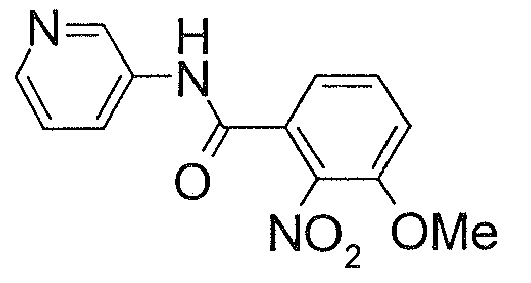
P61
MS(ESI) m/z:
272([M-H]-)84 
P61
MS(ESI) m/z:
267([M-H]-)85 
P61
MS(FAB) m/z:
256([M-H]-)86 
P61
MS(ESI) m/z:
258([M+H]+)87 
P61
MS(ESI) m/z:
221 ([M+H]+)88 
P61
MS(ESI) m/z: 251
([M-H]-) -
[Table 8] 62 
P62
MS(ESI) m/z:
249([M-H]-)89 
P61
MS(ESI) m/z:
280([M+H]+)90 
P61
MS(FAB) m/z:
307([M+H]+)91 
P51
MS(ESI) m/z:
291 ([M-H]-)92 
P62
MS(API) m/z:
290([M-H]-)6 
P6
MS(ESI) m/z:
274([M+H]+)93 
P62
MS(ESI) m/z:
265([M+H]+)94 
P62
MS(FAB) m/z:
269([M+H]+)95 
P62
MS(ESI) m/z:
269([M+H]+) -
[Table 9] 96 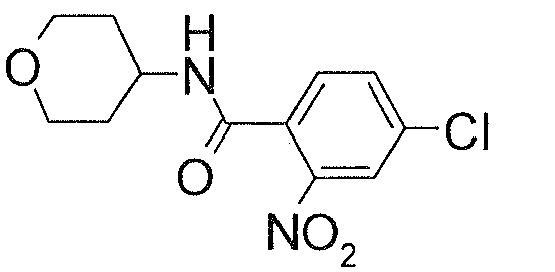
P61
MS(ESI) m/z:
283([M-H]-)97 
P62
MS(FAB) m/z:
281([M+H]+)98 
P62
MS(FAB) m/z:
281 ([M+H]+)99 
P61
MS(ESI) m/z:
265([M+H]+)24 
P24
MS(FAB) m/z:
343([M+H]+)100 
P61
MS(FAB) m/z:
265([M+H]+)101 
P62
MS(ESI) m/z:
354([M+H]+)102 
P62
MS(ESI) m/z:
354([M+H]+) -
[Table 10] 103 
P2
MS(FAB) m/z:
265([M+H]+)104 
P2
MS(FAB) m/z:
295([M+H]+)105 
P2
MS(ESI) m/z:
309([M+H]+)106 
P2
MS(ESI) m/z:
309([M+H]+)107 
P2
MS(ESI) m/z:
295([M+H]+)2 
P2
MS(FAB) m/z:
281([M+H]+)108 
P2
MS(ESI) m/z:
309([M+H]+)109 
P2
MS(FAB) m/z:
294([M+H]+)110 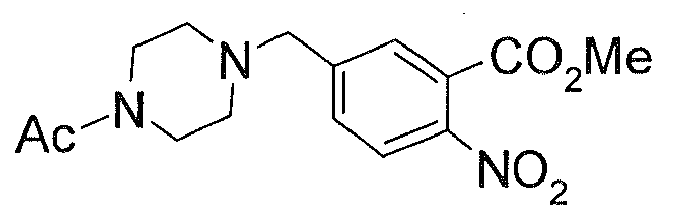
P2
MS(ESI) m/z:
322([M+H]+)111 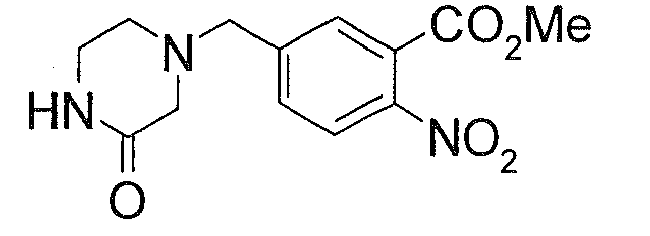
P2
MS(FAB) m/z:
294([M+H]+) -
[Table 11] 112 
P2
MS(ESI) m/z:
283([M+H]+)113 
P62
MS(FAB) m/z:
295([M+H]+)114 
P62
MS(ESI) m/z:
308([M+H]+)115 
P2
MS(FAB) m/z:
295([M+H]+)116 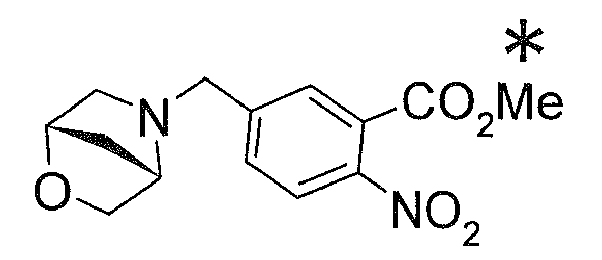
P2
MS(ESI) m/z:
293([M+H]+)117 
P2
MS(ESI) m/z:
297([M+H]+)38 
P38
MS(FAB) m/z:
295([M+H]+)118 
P51
MS(ESI) m/z:
251 ([M+H]+)119 
P62
MS(ESI) m/z:
327([M+H]+) -
[Table 12] 120 
P51→P62
MS(ESI) m/z:
343([M+H]+)121 
P62
MS(ESI) m/z:
345([M+H]+)122 
P62
MS(ESI) m/z:
334([M+H]+)123 
P51→P62
MS(ESI) m/z:
364([M+H]+)1 
P1
MS(ESI) m/z:
406([M+H]+)124 
P51→P62
MS(ESI) m/z:
363([M+H]+)125 
P51→P62
MS(ESI) m/z:
391 ([M+H]+) -
[Table 13] 126 
P51→P62
MS(FAB) m/z:
363([M+H]+)127 
P51→P62
MS(ESI) m/z:
352([M+H]+)128 
P51→P62
MS(FAB) m/z:
364([M+H]+)129 
P51→P62
MS(ESI) m/z:
377([M+H]+)4 
P4
MS(FAB) m/z:
278([M-H]-)130 
P24→P2
MS(ESI) m/z:
365([M+H]+)131 
P24→P2
MS(FAB) m/z:
367([M+H]+)132 
P7
MS(ESI) m/z:
191 ([M+H]+) -
[Table 14] 7 
P7
MS(ESI) m/z:
217([M+H]+)133 
P13
MS(EI) m/z:
176([M]+)11 
P11
MS(EI) m/z:
201([M]+)63 
P63
MS(ESI) m/z:
325([M+H]+)134 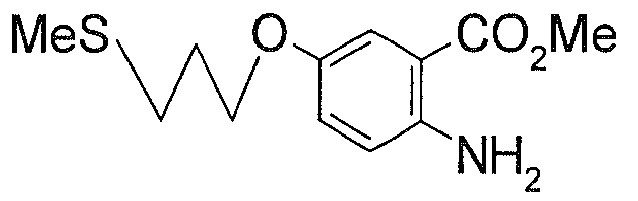
P63
MS(FAB) m/z:
256([M+H]+)135 
P63
MS(FAB) m/z:
252([M+H]+)136 
P13
MS(FAB) m/z:
265([M+H]+)137 
P63→P13
MS(ESI) m/z:
311 ([M+H]+)138 
P13
MS(EI) m/z:
195([M]+)139 
P13
MS(ESI) m/z:
235([M+H]+) -
[Table 15] 140 
P63
MS(FAB) m/z:
238([M+H]+)141 
P63
MS(FAB) m/z:
316([M+H]+)142 
P63
MS(FAB) m/z:
240([M+H]+)143 
P11
MS(ESI) m/z:
154([M+H]+)144 
P13
MS(EI) m/z:
264([M]+)145 
P13
MS(ESI) m/z:
279([M+H]+)146 
P13
MS(ESI) m/z:
279([M+H]+)13 
P13
MS(FAB) m/z:
251 ([M+H]+)147 
P13
MS(ESI) m/z:
279([M+H]+)148 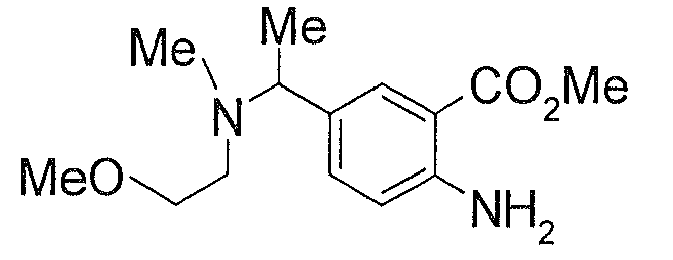
P65
MS(FAB) m/z:
267([M+H]+) -
[Table 16] 21 
P21
MS(ESI) m/z:
249([M+H]+)149 
P65
MS(FAB) m/z:
265([M+H]+)150 
P13
MS(EI) m/z:
264([M]+)151 
P13
MS(FAB) m/z:
263([M+H]+)152 
P13
MS(FAB) m/z:
267([M+H]+)153 
P32
MS(ESI) m/z:
236([M-H]-)32 
P32
MS(API) m/z:
230([M-H]-)154 
P32
MS(ESI) m/z:
230([M-H]-)155 
P32
MS(ESI) m/z:
230([M-H]-) -
[Table 17] 156 
P32
MS(ESI) m/z:
250([M+H]+)157 
P13
MS(FAB) m/z:
228([M+H]+)158 
P32
MS(API) m/z:
244([M+H]+)159 
P32
MS(ESI) m/z:
242([M-H]-)160 
P32
MS(ESI) m/z:
242([M-H]-)161 
P32
MS(ESI) m/z:
239([M+H]+)162 
P32
MS(ESI) m/z:
228([M+H]+)15 
P15
MS(EI) m/z:
220([M]+) -
[Table 18] 163 
P13
MS(ESI) m/z:
240([M+2H]+)164 
P13
MS(ESI) m/z:
240([M+2H]+)165 
P13
MS(FAB) m/z:
255([M+H]+)166 
P13
MS(ESI) m/z:
252([M+2H]+)167 
P13
MS(ESI) m/z:
252([M+2H]+)168 
P51→P62→P13
MS(FAB) m/z:
318([M+H]+)169 
P13
MS(ESI) m/z:
191([M+H]+)170 
P32
MS(ESI) m/z:
219([M-H]-)171 
P32
MS(ESI) m/z:
223([M+H]+) -
[Table 19] 172 
P32
MS(ESI) m/z:
250([M+H]+)173 
P13
MS(ESI) m/z:
277([M+H]+)174 
P32
(HCI) MS(ESI) m/z:
262([M+H]+)175 
P32
MS(ESI) m/z:
244([M+H]+)176 
P32
MS(ESI) m/z:
233([M-H]-)177 
P32
MS(ESI) m/z:
324([M+H]+)178 
P32
MS(ESI) m/z:
324([M+H]+)179 
P13
MS(ESI) m/z:
297([M+H]+) -
[Table 20] 180 
P13
MS(ESI) m/z:
313([M+H]+)181 
P13
MS(ESI) m/z:
315([M+H]+)182 
P13
MS(ESI) m/z:
304([M+H]+)183 
P13
MS(FAB) m/z:
376([M+H]+)184 
P13
MS(ESI) m/z:
333([M+H]+)185 
P13
MS(ESI) m/z:
361 ([M+H]+)186 
P13
MS(FAB) m/z:
333([M+H]+) -
[Table 21] 187 
P13
MS(ESI) m/z:
322([M+H]+)188 
P13
MS(ESI) m/z:
334([M+H]+)189 
P13
MS(ESI) m/z:
347([M+H]+)40 
P40
MS(FAB) m/z:
213([M+H]+)190 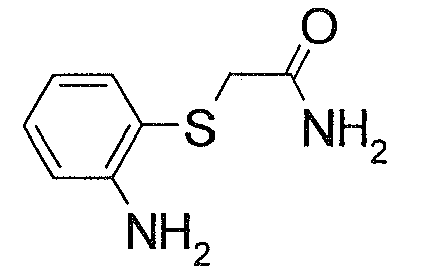
P32
MS(FAB) m/z:
183([M+H]+)44 
P44
MS(EI) m/z:
211 ([M]+)191 
P43
MS(ESI) m/z:
224([M+H]+)192 
P43
MS(FAB) m/z:
343([M+H]+) -
[Table 22] 193 
P47
MS(ESI) m/z:
294([M+H]+)47 
P47
MS(ESI) m/z:
285([M-H]-)194 
P32
MS(ESI) m/z:
264([M+H]+)195 
P32
MS(ESI) m/z:
257([M+H]+)41 
P41
MS(ESI) m/z:
216([M+H]+)196 
P20
MS(FAB) m/z:
260([M+H]+)18 
P18
MS(FAB) m/z:
232([M+H]+)197 
P20
MS(FAB) m/z:
346([M+H]+)198 
P65
(HCI) MS(ESI) m/z:
116([M+H]+) -
[Table 23] 199 
P65
(HCI) MS(ESI) m/z:
132([M+H]+)200 
P65
(HCI) MS(ESI) m/z:
132([M+H]+)201 
P65
(HCI) MS(ESI) m/z:
120([M+H]+)202 
P41→P65 (HCI)
MS(FAB) m/z:
197([M+H]+)203 
P41-P65 (HCI)
MS(EI) m/z:
196([M]+)31 
P31
MS(EI) m/z:
227([M]+)8 
P8
MS(FAB) m/z:
242([M+H]+)28 
P28
MS(ESI) m/z:
286([M+H]+)204 
P41
MS(ESI) m/z:
244([M+H]+)205 
P41
MS(EI) m/z:
243([M]+)43 
P43 MS(EI) m/z: 245([M]+) -
[Table 24] 19 
P19
MS(FAB) m/z:
278([M+H]+)206 
P2
MS(ESI) m/z:
300([M+H]+)33 
P33
MS(ESI) m/z:
152([M+H]+)207 
P65
(HCI) MS(ESI) m/z:
142([M+H]+)208 
P65
(HCI) MS(ESI) m/z:
144([M+H]+)209 
P65
(HCI) MS(ESI) m/z:
144([M+H]+)65 
P65
(HCI) MS(ESI) m/z:
178([M+H]+)210 
P65 (2HCI)
MS(ESI) m/z:
200([M+H]+)211 
P41
MS(ESI) m/z:
290([M+Na]+)212 
P41
MS(ESI) m/z:
290([M+Na]+)213 
P41
MS(ESI) m/z:
304([M+Na]+) -
[Table 25] 214 
P41
MS(ESI) m/z:
304([M+Na]+)215 
P33 (HCI)
MS(ESI) m/z:
134([M+H]+)216 
P33 (HCI)
MS(ESI) m/z:
134([M+H]+)217 
P33 (HCI)
MS(ESI) m/z:
148([M+H]+)218 
P33 (HCI)
MS(ESI) m/z:
148([M+H]+)39 
P39
MS(ESI) m/z:
332([M+H]+)219 
P33
MS(ESI) m/z:
198([M+H]+)29 
P29
MS(ESI) m/z:
254([M+H-C4H9]+)220 
P39
MS(ESI) m/z:
291 ([M+H]+)221 
P65 (2HCI)
MS(ESI) m/z:
191 ([M+H]+)222 
P39
MS(CI) m/z:
294([M+H]+) -
[Table 26] 223 
P65 (HCI)
MS(ESI) m/z:
194([M+H]+)224 
P33
MS(ESI) m/z:
120([M+H]+)20 
P20
MS(CI) m/z:
190([M+H]+)25 
P25
MS(CI) m/z:
162([M+H]+)225 
P20
MS(FAB) m/z:
232([M+H]+)226 
P65 (HCI)
MS(ESI) m/z:
132([M+H]+)16 
P16 (HCI)
MS(FAB) m/z:
104([M+H]+)227 
P16 (HCI)
MS(FAB) m/z:
104([M+H]+)27 
P27
MS(ESI) m/z:
311 ([M+H]+)228 
P51
MS(ESI) m/z:
219([M-H]-)229 
P61
MS(ESI) m/z:
220([M+H]+) -
[Table 27] 230 
P5
MS(ESI) m/z:
265([M+H]+)231 
P5
MS(ESI) m/z:
281 ([M-H]-)232 
P5
MS(ESI) m/z:
295([M+H]+)5 
P5
MS(ESI) m/z:
265([M-H]-)233 
P5
MS(ESI) m/z:
285([M+H]+)234 
P5
MS(ESI) m/z:
323([M+H]+)235 
P5
MS(ESI) m/z:
293([M+H]+)236 
P5
MS(FAB) m/z:
265([M+H]+)237 
P5
MS(ESI) m/z:
293([M-H]-) -
[Table 28] 238 
P5
MS(FAB) m/z:
295([M+H]+)239 
P5
MS(FAB) m/z:
267([M+H]+)240 
P5
MS(FAB) m/z:
267([M+H]+)241 
P5
MS(ESI) m/z:
267([M+H]+)242 
P5
MS(ESI) m/z:
281 ([M+H]+)243 
P5
MS(ESI) m/z:
295([M+H]+)244 
P55
MS(ESI) m/z:
161([M+H]+)245 
P55
MS(ESI) m/z:
191 ([M+H]+)246 
P55
MS(ESI) m/z:
177([M-H]-)55 
P55
MS(ESI) m/z:
163([M+H]+) -
[Table 29] 247 
P55
MS(ESI) m/z:
181 ([M+H]+)248 
P55
MS(ESI) m/z:
219([M+H]+)249 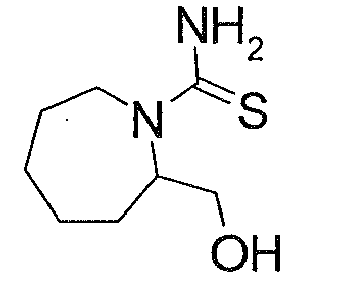
P55
MS(ESI) m/z:
189([M+H]+)250 
P55
MS(FAB) m/z:
161([M+H]+)251 
P55
MS(API) m/z:
191([M+H]+)252 
P55
MS(EI) m/z:
1 90([M]+)253 
P55
MS(FAB) m/z:
163([M+H]+)254 
P55
MS(FAB) m/z:
163([M+H]+)255 
P55
MS(API) m/z:
161 ([M-H]-)256 
P55
MS(ESI) m/z:
177([M+H]+) -
[Table 30] 257 
P55
MS(ESI) m/z:
191 ([M+H]+)258 
P17
MS(FAB) m/z:
220([M+H]+)17 
P17
MS(ESI) m/z:
236([M+H]+)259 
P5→P55
MS(ESI) m/z:
149([M+H]+)260 
P54
MS(ESI) m/z:
243([M+H]+)261 
P54
MS(ESI) m/z:
249([M+H]+)262 
P54
MS(ESI) m/z:
245([M+H]+)263 
P54
MS(ESI) m/z:
241 ([M+H]+)264 
P54
MS(ESI) m/z:
243([M+H]+)265 
P53
MS(API) m/z:
257([M+H]+)266 
P53
MS(ESI) m/z:
275([M+H]+) -
[Table 31] 267 
P53
MS(ESI) m/z:
287([M+H]+)268 
P54
MS(ESI) m/z:
273([M+H]+)9 
P9
MS(ESI) m/z:
241 ([M+H]+)269 
P53
MS(API) m/z:
277([M+H]+)53 
P53
MS(API) m/z:
259([M+H]+)270 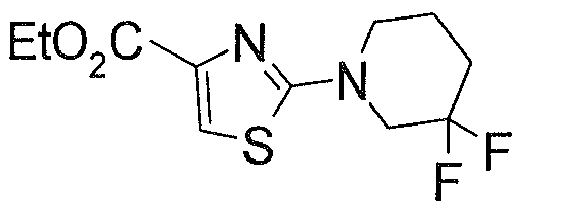
P53
MS(API) m/z:
277([M+H]+)271 
P54
MS(API) m/z:
271 ([M+H]+)272 
P54
MS(API) m/z:
271 ([M+H]+)273 
P53
MS(ESI) m/z:
315([M+H]+)274 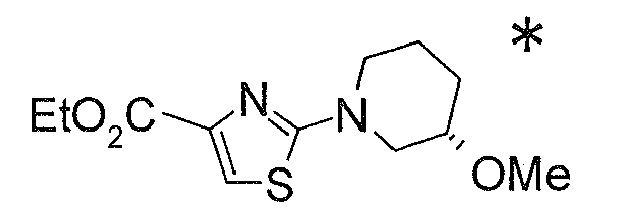
P54
MS(EI) m/z:
270([M]+)275 
P54
MS(API) m/z:
285([M+H]+) -
[Table 32] 276 
P54
MS(ESI) m/z:
283([M+H]+)277 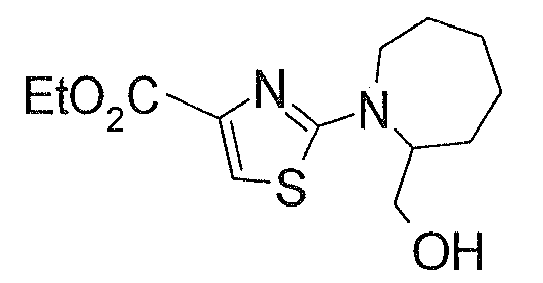
P53
MS(ESI) m/z:
285([M+H]+)278 
P53
MS(FAB) m/z:
257([M+H]+)279 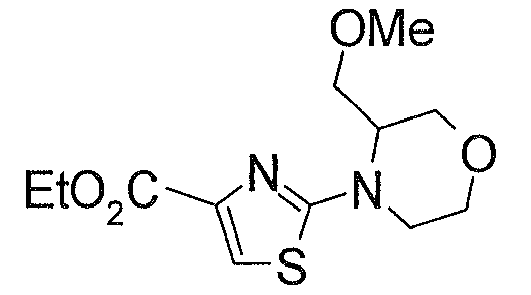
P53
MS(ESI) m/z:
287([M+H]+)280 
P53
MS(FAB) m/z:
287([M+H]+)281 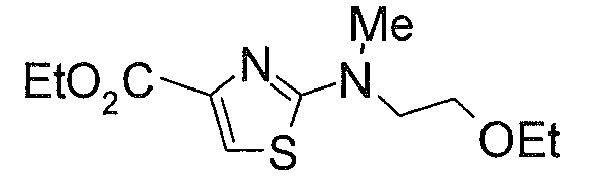
P53
MS(API) m/z:
259([M+H]+)282 
P53
MS(API) m/z:
273([M+H]+)283 
P53
MS(ESI) m/z:
287([M+H]+)284 
P54
MS(ESI) m/z:
271 ([M+H]+)285 
P53
MS(FAB) m/z:
259([M+H]+) -
[Table 33] 286 
P53
MS(EI) m/z:
258([M]+)287 
P54
MS(FAB) m/z:
230([M+H]+)288 
P54
MS(FAB) m/z:
258([M+H]+)289 
P54
MS(CI) m/z:
244([M+H]+)290 
P25
MS(EI) m/z:
244([M]+)37 
P37
MS(API) m/z:
255([M+H]+)291 
P37
MS(ESI) m/z:
283([M+H]+)22 
P22
MS(ESI) m/z:
297([M+H]+)42 
P42
MS(FAB) m/z:
342([M+H]+)292 
P53
MS(FAB) m/z:
316([M+H]+)293 
P54
MS(API) m/z:
320([M+H]+) -
[Table 34] 54 
P54
MS(ESI) m/z:
321 ([M+H]+)294 
P53
MS(ESI) m/z:
332([M+H]+)295 
P53
MS(ESI) m/z:
332([M+H]+)296 
P54
MS(ESI) m/z:
257([M+H]+)297 
P5→P55→P53
MS(API) m/z:
261 ([M+H]+)298 
P19
MS(API) m/z:
293([M+H]+)299 
P5→P55→P53
MS(API) m/z:
273([M+H]+)300 
P3
MS(ESI) m/z:
215([M+H]+)301 
P3
MS(ESI) m/z:
221([M+H]+)302 
P3
MS(ESI) m/z:
213([M+H]+) -
[Table 35] 303 
P3
MS(ESI) m/z:
229([M+H]+)304 
P3
MS(ESI) m/z:
229([M+H]+)305 
P3
MS(ESI) m/z:
247([M+H]+)306 
P3
MS(ESI) m/z:
259([M+H]+)307 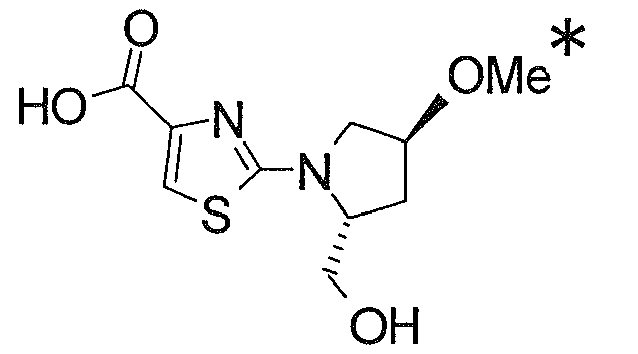
P3
MS(ESI) m/z:
259([M+H]+)308 
P3
MS(ESI) m/z:
213([M+H]+)309 
P3
MS(ESI) m/z:
249([M+H]+)310 
P3
MS(ESI) m/z:
231 ([M+H]+)311 
P3
MS(ESI) m/z:
249([M+H]+) -
[Table 36] 312 
P3
MS(ESI) m/z:
229([M+H]+)313 
P3
MS(ESI) m/z:
243([M+H]+)314 
P3
MS(ESI) m/z:
255([M-H]-)315 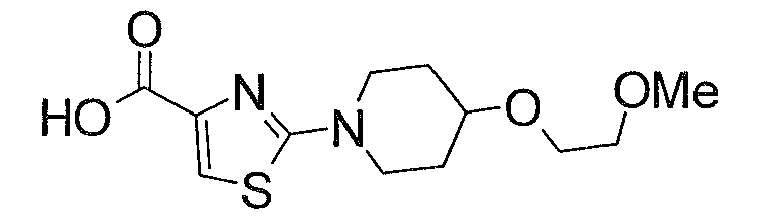
P3
MS(ESI) m/z:
287([M+H]+)316 
P3
MS(ESI) m/z:
257([M+H]+)317 
P3
MS(FAB) m/z:
243([M+H]+)318 
P3
(Na) MS(ESI) m/z:
269([M+H]+)319 
P3
MS(ESI) m/z:
257([M+H]+)320 
P3
MS(ESI) m/z:
215([M+H]+)321 
P3
MS(ESI) m/z:
229([M+H]+) -
[Table 37] 322 
P3
MS(ESI) m/z:
259([M+H]+)323 
P3
MS(FAB) m/z:
259([M+H]+)324 
P3
MS(API) m/z:
231 ([M+H]+)325 
P3
MS(ESI) m/z:
245([M+H]+)326 
P3
MS(ESI) m/z:
259([M+H]+)327 
P3
MS(ESI) m/z:
257([M+H]+)328 
P3
MS(FAB) m/z:
231((M+H]+)329 
P3
MS(EI) m/z:
230([M]+)330 
P3
MS(FAB) m/z:
216([M+H]+) -
[Table 38] 331 
P3
MS(FAB) m/z:
242([M-H]-)332 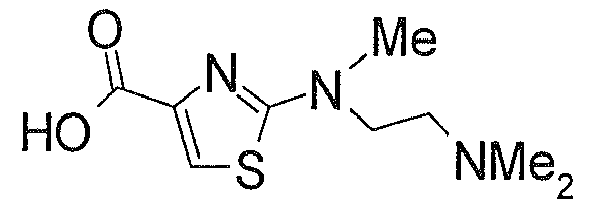
P3
MS(ESI) m/z:
230([M+H]+)333 
P3
MS(FAB) m/z:
217([M+H]+)334 
P3
MS(FAB) m/z:
199([M-H]-)335 
P3
MS(ESI) m/z:
227([M+H]+)336 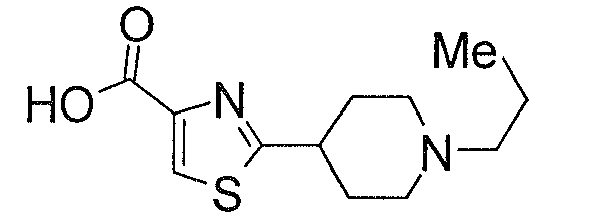
P3
MS(ESI) m/z:
255([M+H]+)337 
P3
MS(ESI) m/z:
269([M+H]+)338 
P3
MS(FAB) m/z:
314([M+H]+)339 
P3
MS(FAB) m/z:
288([M+H]+)340 
P3
MS(ESI) m/z:
217([M+H]+) -
[Table 39] 341 
P3
MS(ESI) m/z:
306([M+H]+)3 
P3
MS(ESI) m/z:
307([M+H]+)342 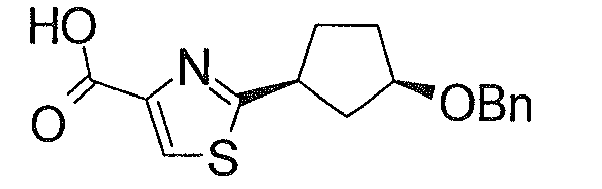
P3
MS(ESI) m/z:
304([M+H]+)343 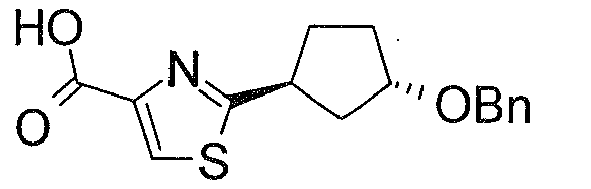
P3
MS(ESI) m/z:
304([M+H]+)344 
P3
MS(EI) m/z:
228([M]+)345 
P3
MS(ESI) m/z:
263([M-H]-)346 
P53→P3
MS(ESI) m/z:
217([M+H]+)347 
P3
MS(API) m/z:
245([M+H]+)56 
P56
MS(FAB) m/z:
131 ([M+H]+)348 
P56
MS(ESI) m/z:
165([M+H]+) -
[Table 40] 349 
P56
MS(ESI) m/z:
199([M+H]+)350 
P56
MS(FAB) m/z:
175([M+H]+)351 
P56
MS(FAB) m/z:
147([M+H]+)352 
P56
MS(ESI) m/z:
147([M+H]+)353 
P56
MS(ESI) m/z:
161 ([M+H]+)354 
P56
MS(EI) m/z:
159([M]+)355 
P56
MS(ESI) m/z:
173([M+H]+)356 
P46
MS(ESI) m/z:
232([M+H]+)46 
P46
MS(FAB) m/z:
340([M+H]+) -
[Table 41] 357 
P46
MS(FAB) m/z:
332([M+H]+)358 
P46
MS(FAB) m/z:
192([M+H]+)359 
P46
MS(FAB) m/z:
220([M+H]+)360 
P61
MS(EI) m/z:
203([M]+)361 
P56→P58
MS(ESI) m/z:
213([M+H]+)362 
P58
MS(EI) m/z:
226([M]+)363 
P39
MS(ESI) m/z:
291 ([M+H]+)10 
P10
MS(ESI) m/z:
229([M+H]+)364 
P56→P58
MS(ESI) m/z:
227([M+H]+)365 
P56→P58
MS(FAB) m/z:
241 ([M+H]+) -
[Table 42] 366 
P41
MS(ESI) m/z:
225([M+H]+)367 
P41
MS(ESI) m/z:
285([M+H]+)368 
P39
MS(ESI) m/z:
304([M+H]+)369 
P39
MS(ESI) m/z:
305([M+H]+)370 
P10
MS(ESI) m/z:
243([M+H]+)371 
P58
MS(ESI) m/z:
261([M+H]+)372 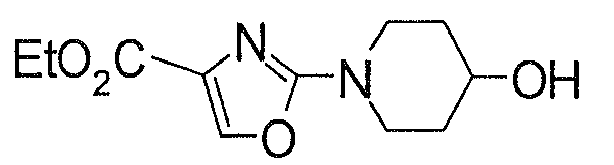
P58
MS(ESI) m/z:
241 ([M+H]+)373 
P58
MS(API) m/z:
295([M+H]+)374 
P39
MS(ESI) m/z:
318([M+H]+)375 
P39
MS(ESI) m/z:
343([M+H]+) -
[Table 43] 376 
P39
MS(ESI) m/z:
319([M+H)+)377 
P39
MS(ESI) m/z:
319([M+H]+)57 
P57
MS(ESI) m/z:
335([M+H]+)378 
P→58
MS(ESI) m/z:
227([M+H]+)379 
P58
MS(FAB) m/z:
271 ([M+H]+)380 
P58
MS(API) m/z: 243([M+H]+)381 
P58 MS(ESI) m/z:
257([M+H]+)382 
P56→>P58
MS(ESI) m/z:
269([M+H]+)383 
P58
MS(EI) m/z:
242([M]+) -
[Table 44] 384 
P58
MS(FAB) m/z:
256([M+H]+)385 
P45
MS(ESI) m/z:
212([M+H]+)386 
P45
MS(FAB) m/z:
172([M+H]+)387 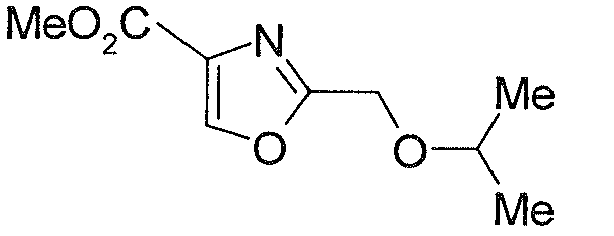
P45
MS(CI) m/z:
200([M+H]+)388 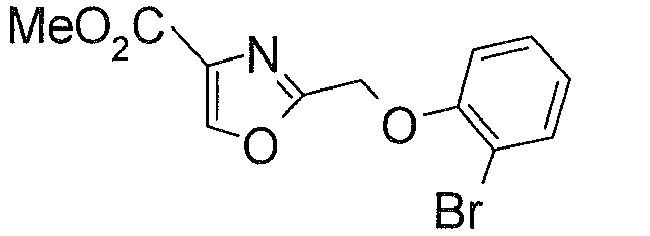
P45
MS(EI) m/z:
311([M]+)45 
P45
MS(FAB) m/z:
320([M+H]+)389 
P56→P58
MS(ESI) m/z:
259([M+H]+)390 
P56→P58
MS(ESI) m/z:
337([M+H]+)58 
P58
MS(ESI) m/z:
229([M+H]+)391 
P3 (Na)
MS(FAB) m/z:
199([M+H]+) -
[Table 45] 392 
P3 (Na)
MS(ESI) m/z:
263([M+H]+)393 
P3 (Na)
MS(ESI) m/z:
201 ([M+H]+)394 
P3
MS(FAB) m/z:
213([M+H]+)395 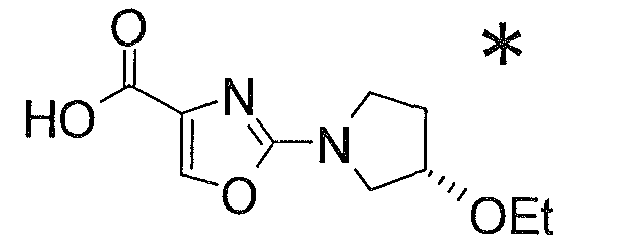
P3 (Na)
MS(ESI) m/z:
227([M+H]+)396 
P3 (Na)
MS(ESI) m/z:
277([M+H]+)397 
P3 (Na)
MS(ESI) m/z:
215([M+H]+)398 
P3 (Na)
MS(ESI) m/z:
231 ([M-H]-)399 
P3 (Na)
MS(ESI) m/z:
213([M+H]+)400 
P3 (Na)
MS(ESI) m/z:
231 ([M+H]+)401 
P3 (Na)
MS(ESI) m/z:
241 ([M+H]+) -
[Table 46] 402 
P3 (Na)
MS(ESI) m/z:
265([M-H]-)403 
P3 (Na)
MS(ESI) m/z:
290([M+H]+)404 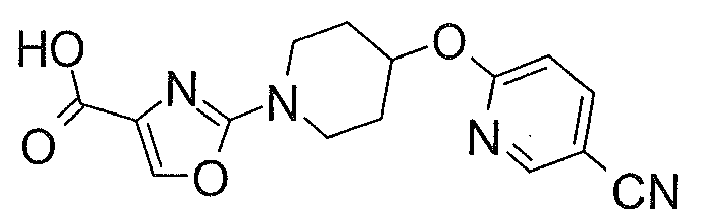
P3 (Na)
MS(ESI) m/z:
315([M+H]+)405 
P3 (Na)
MS(ESI) m/z:
291 ([M+H]+)406 
P3 (Na)
MS(ESI) m/z:
309([M+H]+)407 
P3 (Na)
MS(ESI) m/z:
291 ([M+H]+)408 
P3 (Na)
MS(ESI) m/z:
307([M+H]+)409 
P3
MS(ESI) m/z:
199([M+H]+)410 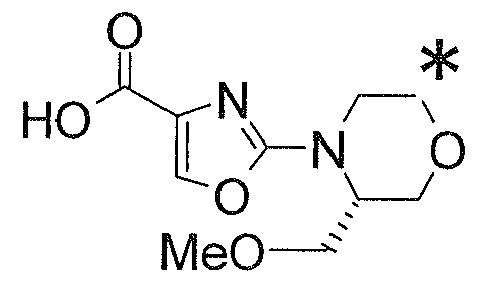
P3 (Na)
MS(ESI) m/z:
243([M+H]+)411 
P3 (Na)
MS(ESI) m/z:
215([M+H]+) -
[Table 47] 412 
P3 (Na)
MS(ESI) m/z:
227([M-H]-)413 
P3 (Na)
MS(ESI) m/z:
241([M+H]+)414 
P3 (Na)
MS(FAB) m/z:
213([M-H]-)415 
P3 (Na)
MS(FAB) m/z:
228([M+H]+)416 
P3
MS(ESI) m/z:
198([M+H]+)417 
P3
MS(FAB) m/z:
158([M+H]+)418 
P3
MS(FAB) m/z:
186([M+H]+)419 
P3
MS(FAB) m/z:
298([M+H]+)420 
P3
MS(FAB) m/z:
306([M+H]+) -
[Table 48] 421 
P3 (Na)
MS(ESI) m/z:
276([M+H]+)422 
P3 (Na)
MS(ESI) m/z:
257([M+H]+)423 
P3
MS(ESI) m/z:
201([M+H]+)67 
P67
MS(ESI) m/z:
457([M+H]+)424 
P67
MS(ESI) m/z:
358([M+H]+)60 
P60
MS(API) m/z: 3
48([M+H]+)70 
P70
MS(FAB) m/z:
324([M]+)425 
P4
MS(FAB) m/z:
424([M]+) -
[Table 49] 426 
P3
MS(ESI) m/z:
269([M+H]+)427 
P39
MS(FAB) m/z:
294([M+H]+)428 
P65 (HCI)
MS(ESI) m/z:
194([M+H]+)429 
P54
MS(API) m/z:
283([M+H]+)69 
P69
MS(FAB) m/z:
338([M+H]+)430 
P62
MS(ESI) m/z:
353([M+H]+)68 
P68
MS(ESI) m/z:
408([M+H]+)431 
P65
MS(EI) m/z:
307([M]+) -
[Table 50] 432 
P65
MS(ESI) m/z:
253([M+H]+)433 
P13
MS(ESI) m/z:
279([M+H]+)434 
P2
MS(ESI) m/z:
309([M+H]+)440 
P440 (HCI)
MS(ESI) m/z:
102([M+H]+)449 
P20
MS(EI) m/z:
233([M]+)438 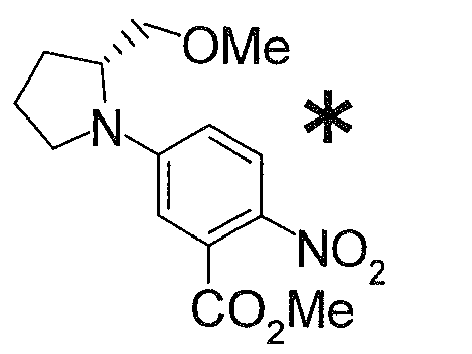
P438
MS(EI) m/z:
294([M]+)450 
P438
MS(ESI) m/z:
311 ([M+H]+)451 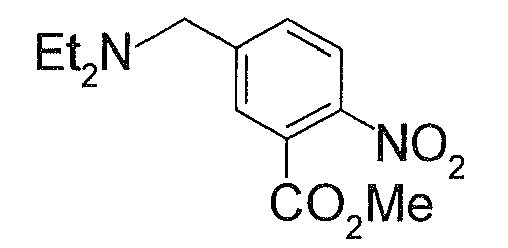
P2
MS(EI) m/z:
266([M]+)452 
P2
MS(ESI) m/z:
255([M+H]+) -
[Table 51] 453 
P2
MS(FAB) m/z:
293([M+H]+)454 
P2
MS(FAB) m/z:
291 ([M+H]+)435 
P435
MS(EI) m/z:
278([M]+)455 
P435
MS(ESI) m/z:
293([M+H]+)436 
P436
MS(FAB) m/z:
281 ([M+H]+)456 
P2
MS(ESI) m/z:
325([M+H]+)439 
P439
MS(ESI) m/z:
341 ([M+H]+)457 
P48
MS(ESI) m/z:
208([M+H]+)458 
P51
MS(ESI) m/z:
295([M+H]+) -
[Table 52] 459 
P51
MS(ESI) m/z:
281 ([M+H]+)460 
P62
MS(ESI) m/z:
324([M+H]+)461 
P62
MS(ESI) m/z:
352([M+H]+)462 
P62
MS(ESI) m/z:
338([M+H]+)463 
P62
MS(ESI) m/z:
340([M+H]+)464 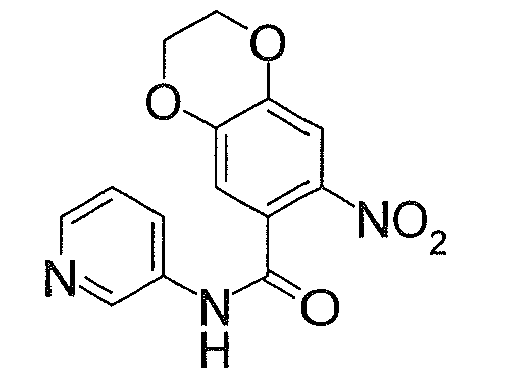
P62
MS(ESI) m/z:
300([M-H]-)465 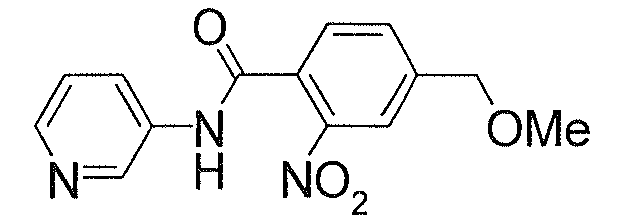
P61
MS(ESI) m/z:
286([M-H]-) -
[Table 53] 466 
P62
MS(ESI) m/z:
371 ([M+H]+)467 
P32
MS(EI) m/z:
264([M]+)468 
P32
MS(EI) m/z:
280([M]+)469 
P13
MS(EI) m/z:
236([M]+)470 
P13
MS(ESI) m/z:
263([M+H]+)471 
P13
MS(ESI) m/z:
261([M+H]+)472 
P13
MS(EI) m/z:
294([M]+)473 
P13
MS(ESI) m/z:
249([M+H]+) -
[Table 54] 474 
P13
MS(ESI) m/z:
263([M+H]+)475 
P13
MS(ESI) m/z:
251 ([M+H]+)476 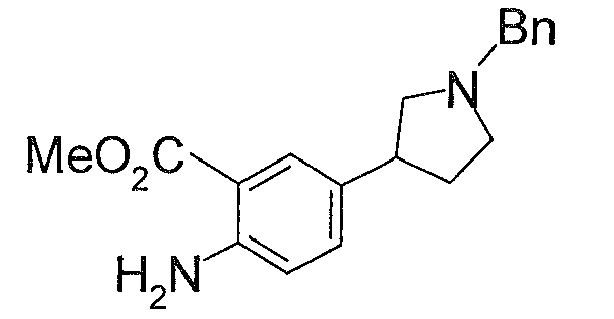
P13
MS(ESI) m/z:
311 ([M+H]+)477 
P13
MS(EI) m/z:
250([M]+)441 
P441
MS(ESI) m/z:
267([M+H]+)478 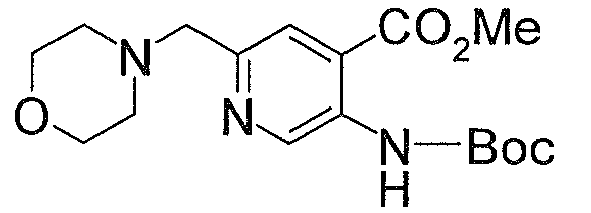
P24→P2
MS(FAB) m/z: 352([M+H]+)479 
P65 MS(FAB) m/z:
252([M+H]+)480 
P13
MS(ESI) m/z:
294([M+H]+)481 
P13
MS(EI) m/z:
321 ([M]+) -
[Table 55] 482 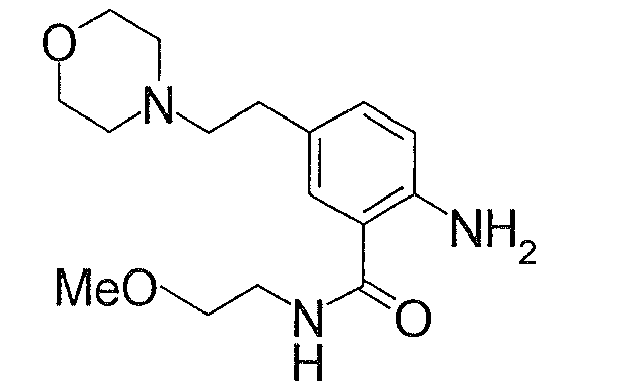
P13
MS(ESI) m/z:
308([M+H]+)483 
P13
MS(ESI) m/z:
310([M+H]+)484 
P51→P62
MS(ESI) m/z:
348([M+H]+)485 
P13
MS(ESI) m/z:
272([M+H]+)486 
P13
MS(API) m/z:
258([M+H]+)487 
P13
MS(ESI) m/z:
341 ([M+H]+)488 
P41
MS(ESI) m/z:
268([M+H]+) -
[Table 56] 444 
P444 (HCI)
MS(ESI) m/z:
102([M+H]+)489 
P39
MS(ESI) m/z:
332([M+H]+)490 
P33
MS(FAB) m/z:
166([M+H]+)491 
P10
MS(EI) m/z:
247([M]+)492 
P65 (HCI)
MS(ESI) m/z:
134([M+H]+)493 
P41→P65 (HCI)
MS(ESI) m/z:
116([M+H]+)437 
P437
MS(ESI) m/z:
470([M+H]+)494 
P437
MS(ESI) m/z:
470([M+H]+)495 
P51
MS(ESI) m/z:
254([M+H]+)496 
P51
MS(ESI) m/z:
254([M+H]+) -
[Table 57] 497 
P39
MS(ESI) m/z:
332([M+H]+)498 
P39
MS(ESI) m/z:
332([M+H]+)499 
P33
MS(ESI) m/z:
120([M+H]+)500 
P33
MS(ESI) m/z:
198([M+H]+)501 
P33
MS(ESI) m/z:
198([M+H]+)502 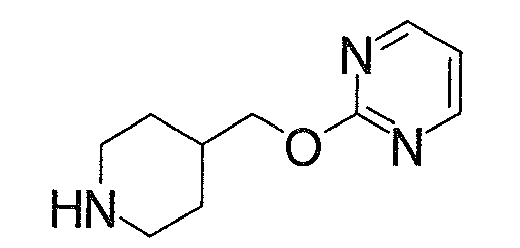
P65 (2HCI)
MS(ESI) m/z:
194([M+H]+)443 
P443
MS(ESI) m/z:
206([M+H]+)503 
P37
MS(API) m/z:
192([M+H]+)504 
P37
MS(API) m/z:
192([M+H]+) -
[Table 58] 505 
P12
MS(EI) m/z:
231([M]+)506 
P12
MS(EI) m/z:
231 ([M]+)507 
P16
MS(EI) m/z:
217([M]+)508 
P16
MS(EI) m/z:
217([M]+)442 
P442 (HCI)
MS(ESI) m/z:
128([M+H]+)509 
P442 (HCI)
MS(ESI) m/z:
128([M+H]+)510 
P39
MS(ESI) m/z:
313([M+H]+)511 
P442
MS(ESI) m/z:
223([M+H]+)512 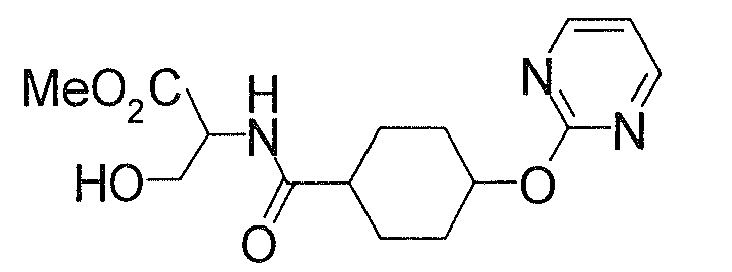
P46
MS(ESI) m/z:
324([M+H]+)513 
P54
MS(ESI) m/z:
229([M+H]+) -
[Table 59] 514 
P41
MS(EI) m/z:
256([M]+)515 
P54
MS(ESI) m/z:
243([M+H]+)516 
P54
MS(EI) m/z:
230([M]+)517 
P39
MS(ESI) m/z:
309([M+H]+)518 
P39
MS(ESI) m/z:
333([M+H]+)519 
P56→P58
MS(ESI) m/z:
345([M+H]+)520 
P56→P58
MS(ESI) m/z: 337([M+H]+)521 
P56→P58 MS(ESI)
m/z: 337([M+H]+)522 
P45
MS(ESI) m/z:
304([M+H]+)523 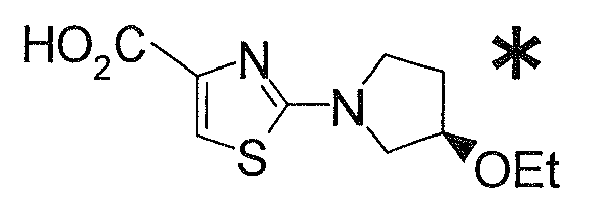
P3
MS(ESI) m/z:
243([M+H]+)524 
P3
MS(ESI) m/z:
229([M+H]+) -
[Table 60] 525 
P3
MS(ESI) m/z:
295([M+H]+)526 
P3
MS(ESI) m/z:
309([M+H]+)527 
P3
MS(ESI) m/z:
309([M+H]+)528 
P3 (Na)
MS(ESI) m/z:
303([M-H]-)529 
P3 (Na)
MS(ESI) m/z:
317([M+H]+)445 
P445
MS(ESI) m/z:
240([M+H]+)530 
P2
MS(ESI) m/z:
295([M+H]+)446 
P446
MS(ESI) m/z:
299([M+H]+)447 
P447
MS(ESI) m/z:
281 ([M+H]+) -
[Table 61] 448 
P448
MS(ESI) m/z:
343([M+H]+)531 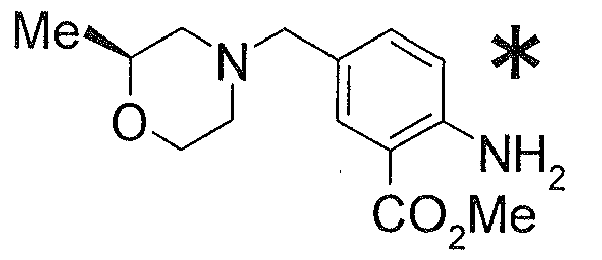
P13
MS(ESI) m/z:
265([M+H]+)532 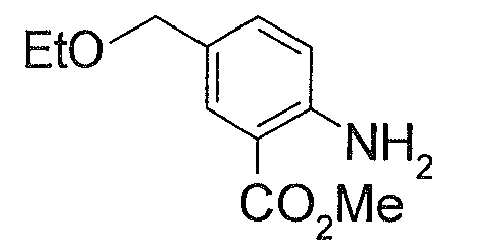
P13
MS(EI) m/z:
209([M]+)533 
P13
MS(ESI) m/z:
251 ([M+H]+)534 
P32
MS(ESI) m/z:
279([M+H]+) -

-

-

-

-

-

-

-

-

-

-

-

-

-

-

-

-

-

-

-

-

-

-

-

-

-

-

-

-

-

-

-

-

-

-

-

-

-

-
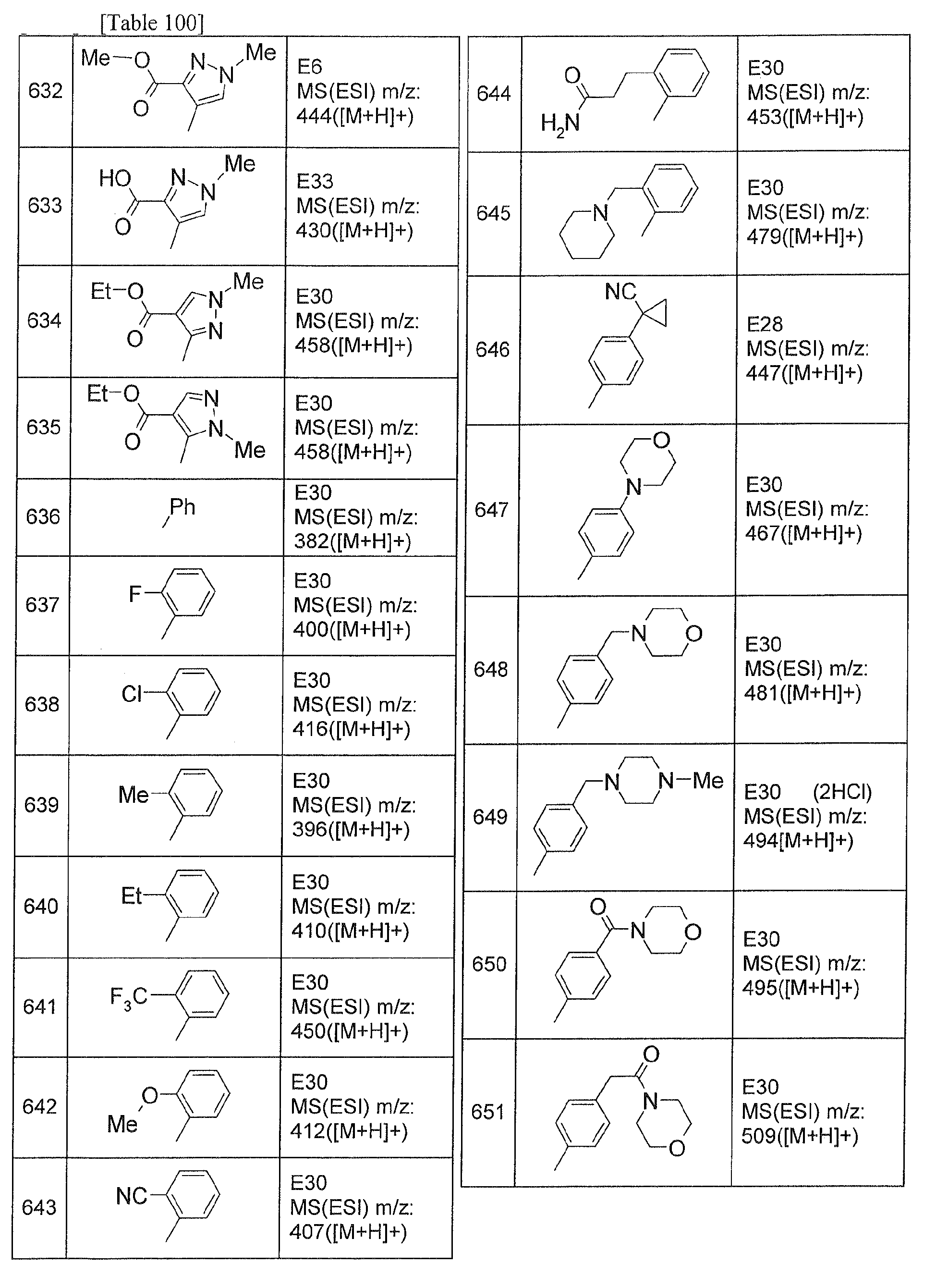
-
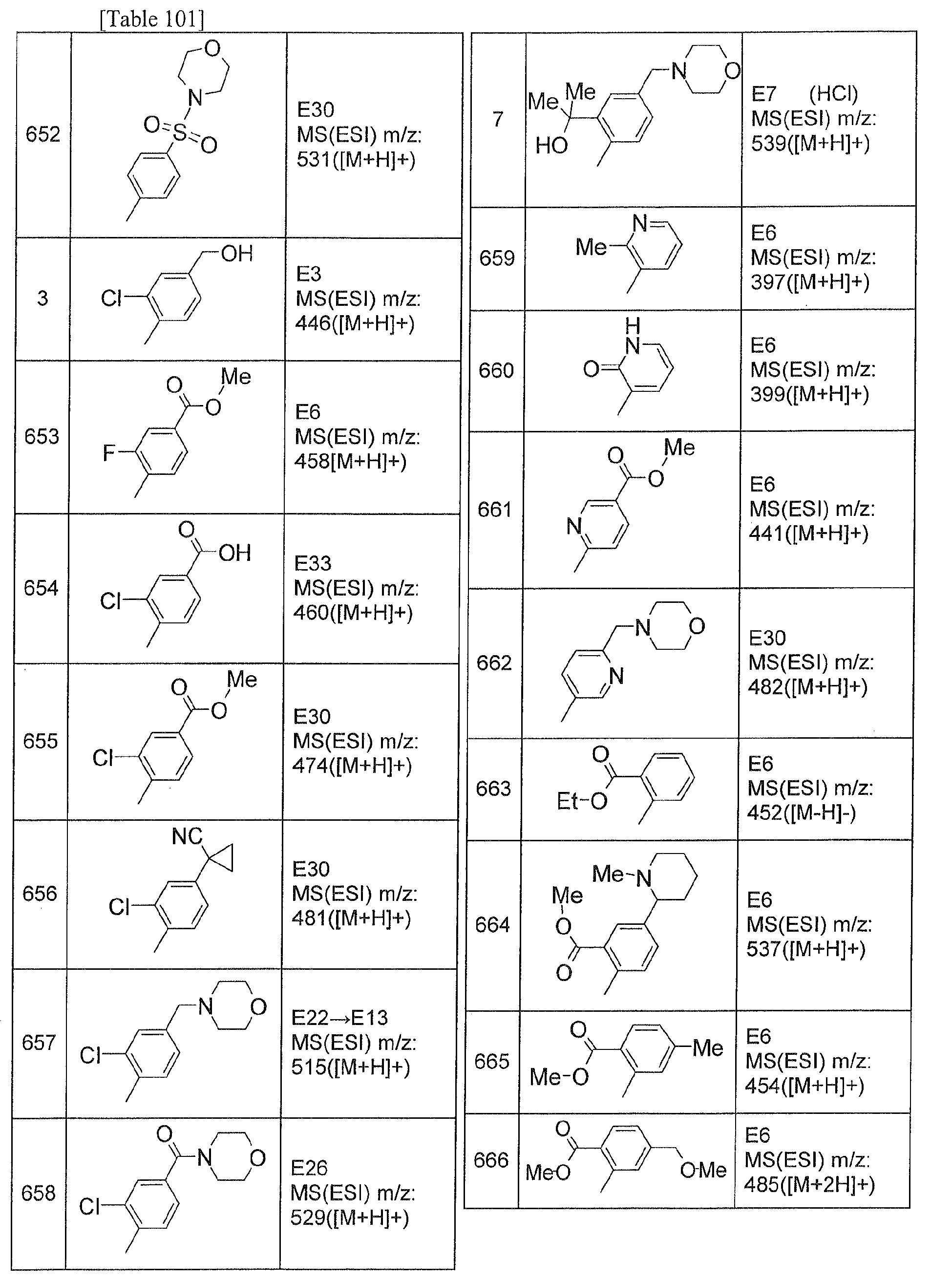
-
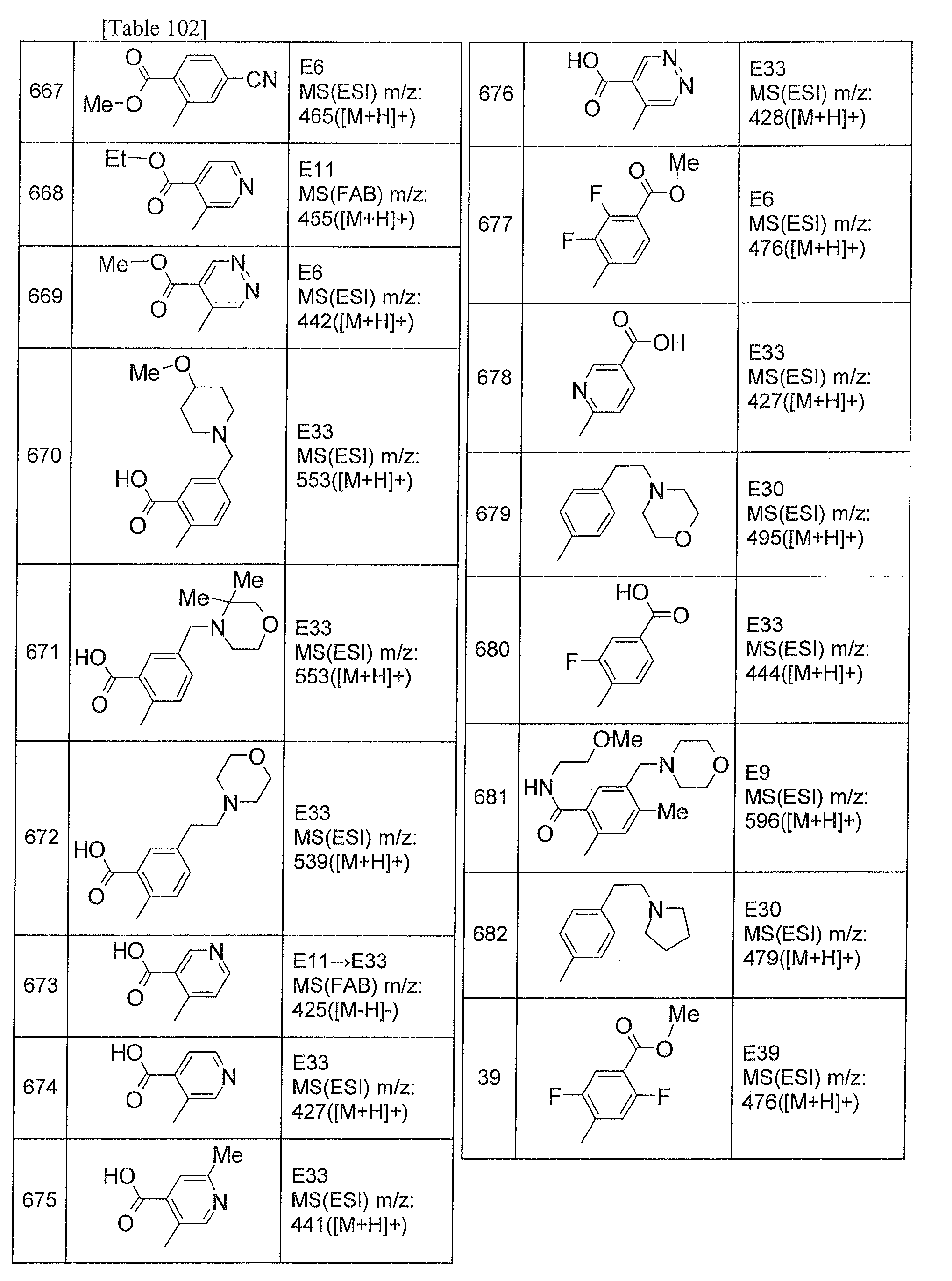
-

-

-

-

-
[Table 107] 
Ex 
Syn (Sal)
Dat724 
E30
MS(ESI) m/z:
443([M-H]-)725 
E28
MS(FAB) m/z:
438([M+H]+)726 
E28 (HCI)
MS(FAB) m/z:
452([M+H]+) -


-
[Table 111] 
Ex 
Syn (Sal)
Dat27 
E27
MS(ESI) m/z:
431 ([M+H]+)754 
E11
MS(FAB) m/z:
444([M+H]+)755 
E30
MS(ESI) m/z:
387([M+H]+)756 
E26
MS(ESI) m/z:
456([M+H]+)757 
E11
MS(FAB) m/z:
424([M+H]+)758 
E33
MS(ESI) m/z:
371 ([M-H]-) -

-

-

-

-

-

-

-

-

-
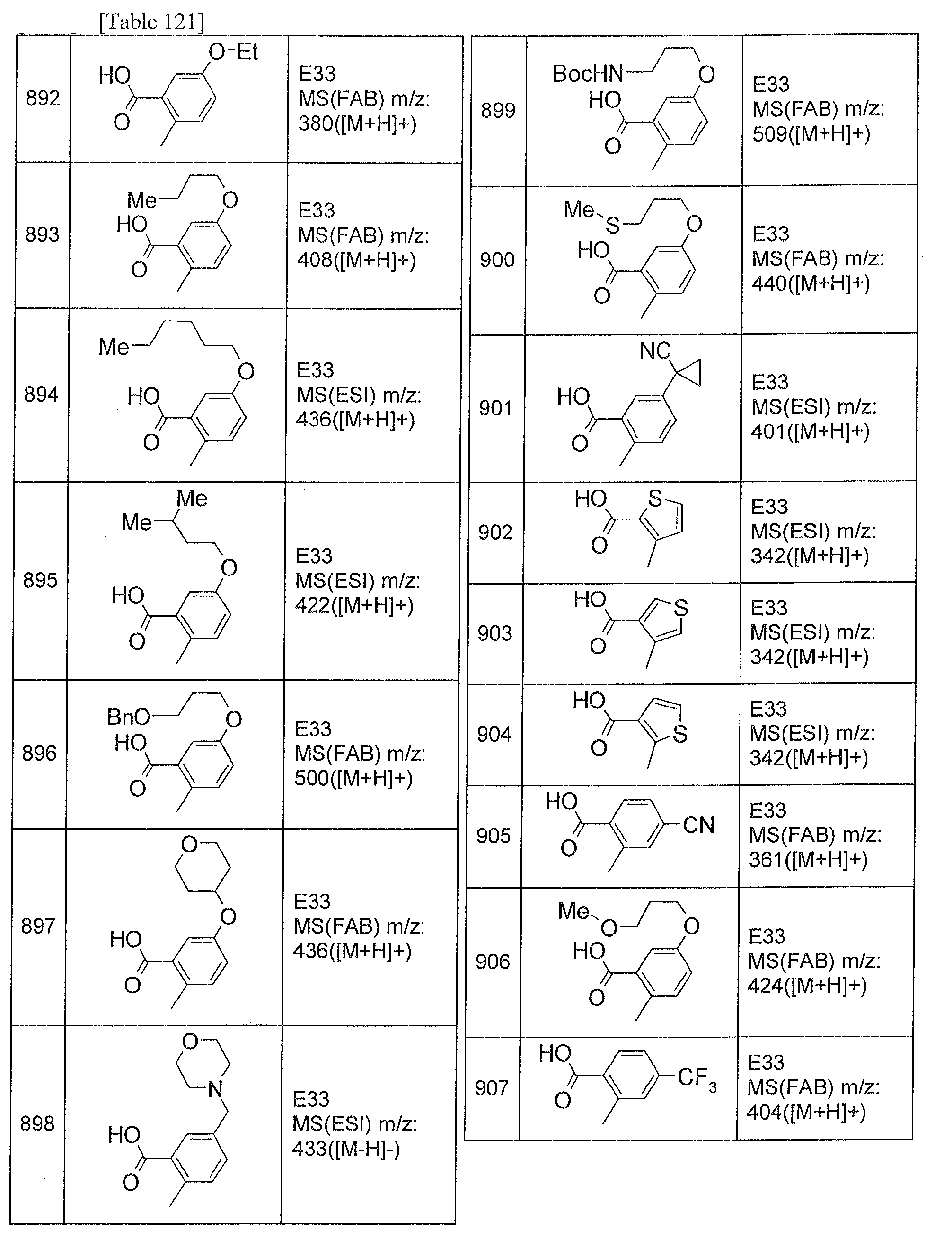
-

-
[Table 123] 
Ex 
Syn (Sal)
Dat911 
E11
MS(ESI) m/z:
435([M+H]+)912 
E11 (Fum)
MS(ESI) m/z:
462([M+H]+) -

-

-

-

-

-

-

-
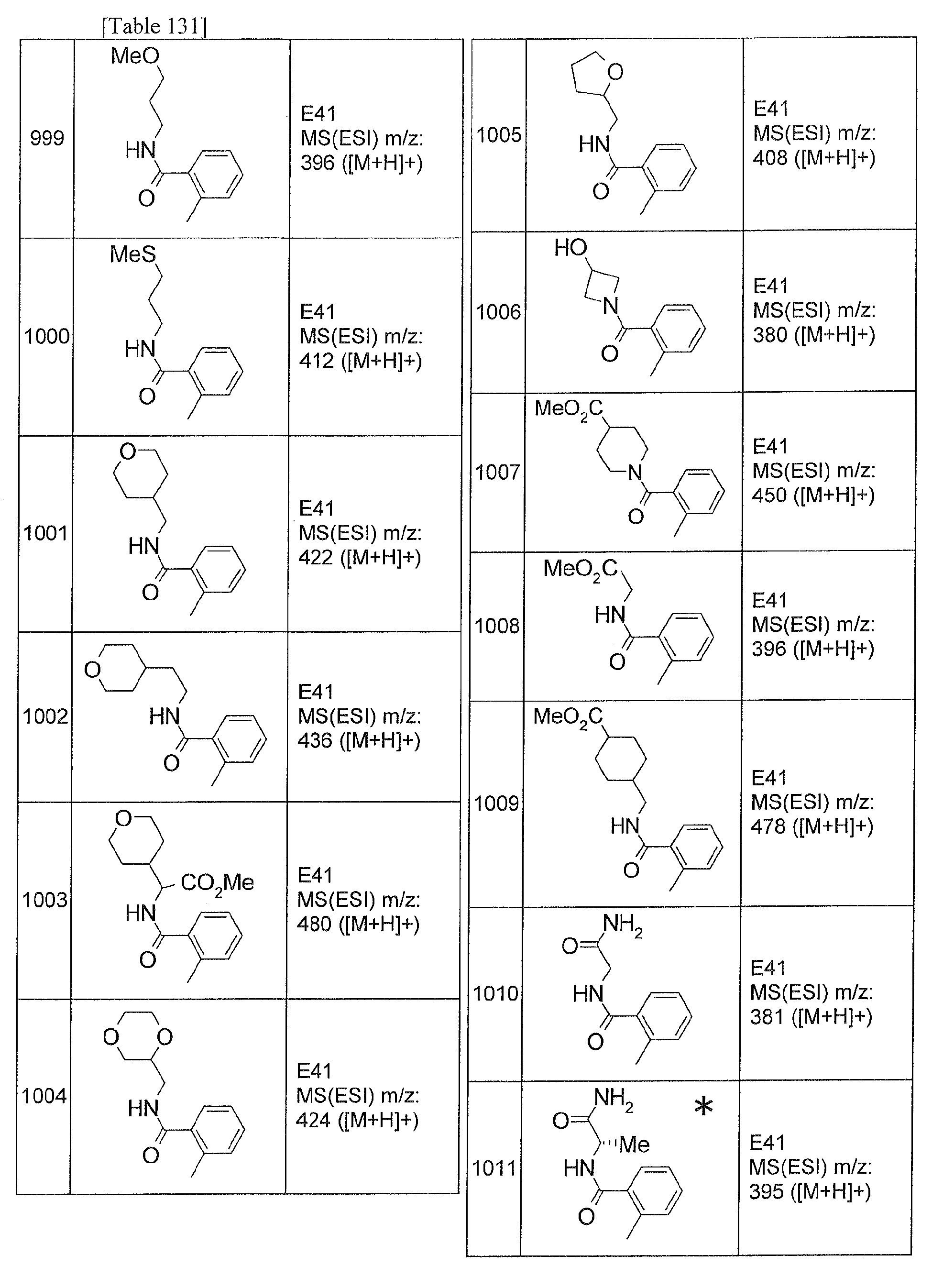
-

-

-

-

-

-
[Table 137] 1075 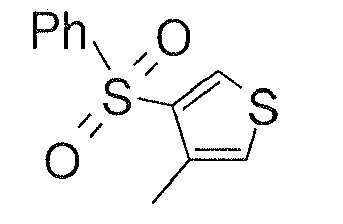
E43
MS(ESI) m/z:
427 ([M+H]+) -

-

-

-

-

-

-

-
[Table 145] 
Ex 
Syn (Sal) Dat 1155 
E23
MS(ESI) m/z:
449([M+H]+)1154 
E23 MS(ESI) m/z: 547([M+H]+) -

-

-

-

-
[Table 150] Ex Str Syn (Sal) Dat 1174 
E9
MS(ESI) m/z:
348([M+H]+)1175 
E9
MS(ESI) m/z:
445([M+H]+)1176 
E33→E26 (HCI)
MS(ESI) m/z:
448([M-H]-)1177 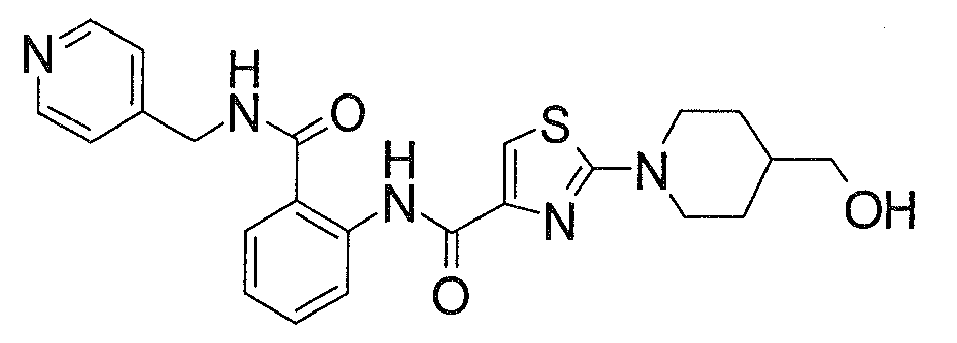
E28 (HCI)
MS(FAB) m/z:
452([M+H]+)1178 
E6
MS(ESI)
m/z: 501 ([M+H]+)1179 
E28 (HCI)
MS(ESI) m/z:
540([M+H]+)42 
E42
MS(ESI) m/z:
330 ([M+H]+) -
[Table 151] 1180 
E42
MS(ESI) m/z:
325 ([M+H]+)198 
E6
MS(ESI) m/z:
340([M+H]+) -
[Table 152] Ex Str Syn (Sal) Dat 1196 
E26
MS(ESI) m/z: 520([M-N]-)1197 
E26
MS(ESI) m/z: 534([M-H]-)1198 
E26
MS(ESI) m/z: 552([M-H]-)1199 
E26
MS(ESI) m/z: 568([M+H]+)1200 
E26
MS(ESI) m/z: 578([M+H]+)1201 
E26
MS(ESI) m/z: 590([M-H]-)1202 
E26
MS(ESI) m/z: 560([M+H]+)1203 
E26
MS(ESI) m/z: 578([M+H]+) -
[Table 153] 1204 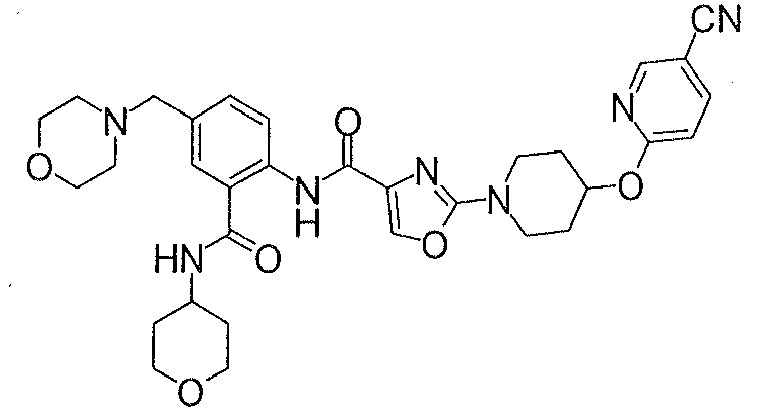
E26
MS(ESI) m/z: 616([M+H]+)1205 
E26
MS(ESI) m/z: 602([M+H]+)1206 
E33-E26
MS(ESI) m/z: 494([M+H]+)1207 
E33→E26
MS(ESI) m/z: 504([M+H]+)1208 
E33→E26
MS(ESI) m/z: 537([M+H]+)1209 
E33→E26
MS(ESI) m/z: 537([M+H]+)1210 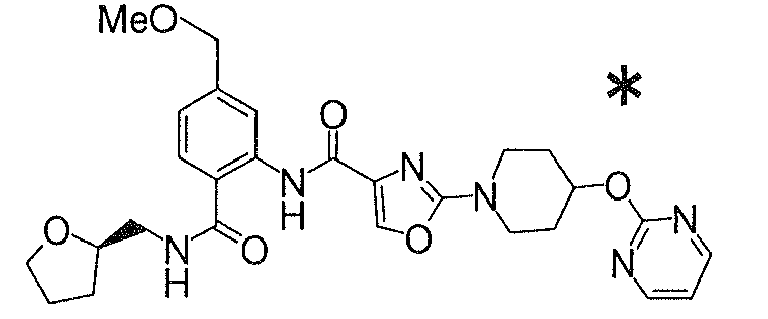
E33→E26
MS(ESI) m/z: 537([M+H]+) -
[Table 154] 1211 
E33→E26
MS(ESI) m/z: 606([M+H]+)1212 
E33→E26
MS(ESI) m/z:568([M+H]+)1213 
E33→E26
MS(ESI) m/z: 544([M+H]+)1214 
E26
MS(ESI) m/z: 608([M+H]+)1215 
E26
MS(ESI) m/z: 630([M+H]+)1216 
E26
MS(ESI) m/z: 480([M+H]+)1217 
E26
MS(ESI) m/z: 452([M+H]+)1218 
E26
MS(ESI) m/z: 468([M+H]+)1219 
E26
MS(ESI) m/z: 470([M+H]+) -
[Table 155] 1220 
E33→E26
MS(ESI) m/z: 504([M+H]+)1221 
E33→E26
MS(ESI) m/z: 518([M+H]+)1222 
E26
MS(ESI) m/z: 480([M+H]+)1223 
E26
MS(ESI) m/z: 494([M+H]+)1224 
E33→E26
MS(ESI) m/z: 470([M+H]+)1225 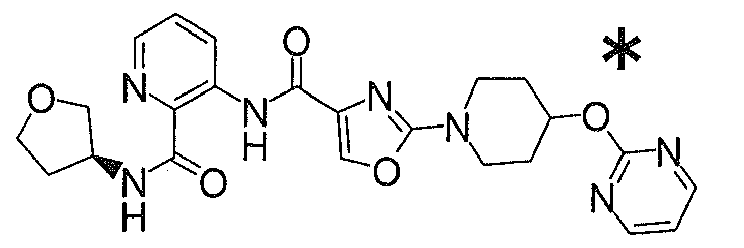
E33→E26
MS(ESI) m/z: 480([M+H]+)1226 
E33→E26
MS(ESI) m/z: 480([M+H]+)1227 
E13
MS(ESI) m/z: 28, 530([M+H]+)1228 
E30
MS(ESI) m/z: 443([M+H]+) -
[Table 156] 1229 
E26
MS(ESI) m/z: 470([M+H]+)1230 
E26
MS(ESI) m/z: 470([M+H]+)1231 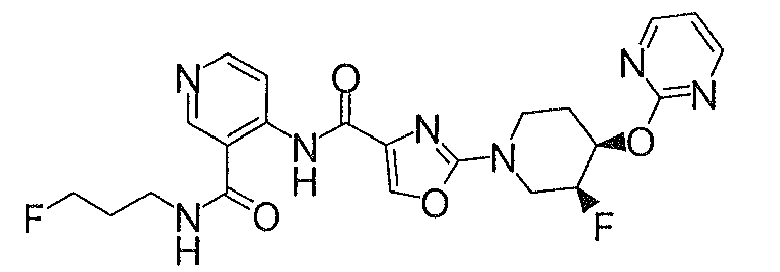
E26
MS(ESI) m/z: 488([M+H]+)1232 
E26
MS(ESI) m/z: 523([M+H]+)1233 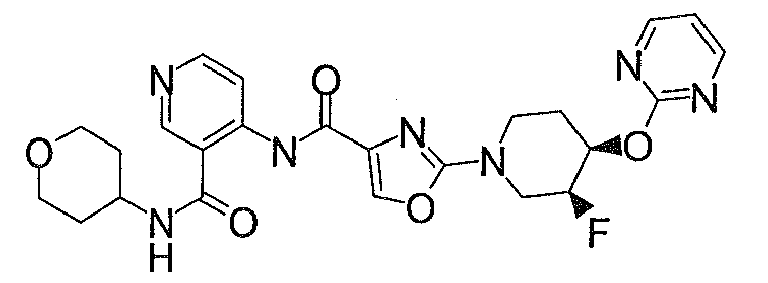
E26
MS(ESI) m/z: 512([M+H]+)1234 
E26
MS(ESI) m/z: 498([M+H]+)1235 
E26
MS(ESI) m/z: 466([M+H]+)1236 
E26
MS(ESI) m/z: 508([M+H]+) -
[Table 157] 1237 
E26
MS(ESI) m/z: 508([M+H]+)1238 
E26
MS(ESI) m/z: 506([M+H]+)1239 
E30
MS(FAB) m/z: 520([M+H]+)1240 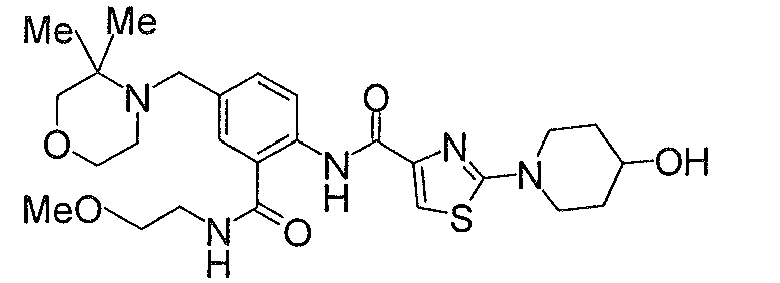
E30
MS(FAB) m/z: 532([M+H]+)1241 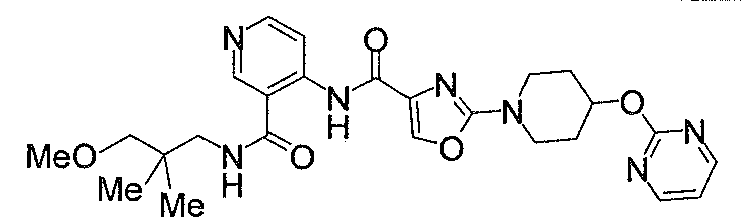
E26
MS(ESI) m/z: 510([M+H]+)1242 
E26
MS(ESI) m/z: 478([M+H]+)1243 
E26
MS(ESI) m/z: 466([M+H]+)1244 
E26
MS(ESI) m/z: 466([M+H]+)1245 
E26
MS(ESI) m/z: 508([M+H]+) -
[Table 158] 1246 
E26
MS(ESI) m/z: 496([M+H]+)1247 
E26
MS(ESI) m/z: 506([M+H]+)1248 
E26
MS(ESI) m/z: 480([M+H]+)1249 
E26
MS(ESI) m/z: 482([M+H]+)1250 
E30
MS(FAB) m/z: 422([M+H]+)1251 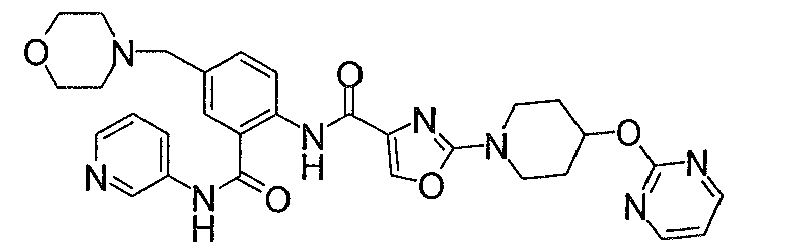
E6
MS(FAB) m/z: 585([M+H]+)1252 
E30
MS(ESI) m/z: 436([M+H]+)1253 
E26
MS(ESI) m/z: 493([M+H]+) -
[Table 159] 1254 
E26
MS(FAB) m/z: 594([M+H]+)1255 
E26
MS(FAB) m/z: 592([M+H]+)1256 
E1181
MS(FAB) m/z: 580([M+H]+)1257 
E30
MS(FAB) m/z: 470([M+H]+)1258 
E33
MS(ESI) m/z: 456([M+H]+)1259 
E26 (HCI)
MS(ESI) m/z: 538([M+H]+)1183 
E1183
MS(FAB) m/z: 438([M+H]+)1260 
E26 (HCI)
MS(FAB) m/z: 520([M+H]+) -
[Table 160] 1261 
E6
MS(ESI) m/z: 525([M+H]+)1262 
E26
MS(ESI) m/z: 568([M+H]+)1263 
E28
MS(ESI) m/z: 508([M+H]+)1264 
E6
MS(ESI) m/z: 553([M+H]+)1265 
E26
MS(ESI) m/z: 466([M+H]+)1266 
E26
MS(ESI) m/z: 466([M+H]+)1267 
E26
MS(ESI) m/z: 478([M+H]+)1268 
E26
MS(ESI) m/z: 509([M+H]+) -
[Table 161] 1269 
E26
MS(ESI) m/z: 512([M+H]+)1270 
E26
MS(ESI) m/z: 502([M+H]+)1271 
E26
MS(ESI) m/z: 514([M+H]+)1272 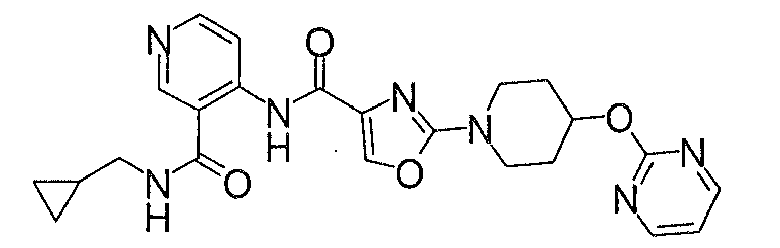
E26
MS(ESI) m/z: 464([M+H]+)1273 
E6
MS(ESI) m/z: 454([M+H]+)1274 
E6
MS(ESI) m/z: 518, 520([M+H]+)1275 
E6
MS(ESI) m/z: 508([M+H]+)1276 
E33→E26 (Fum)
MS(FAB) m/z: 610([M+H]+)1277 
E26
MS(ESI) m/z: 596([M+H]+) -
[Table 162] 1278 
E26
MS(ESI) m/z: 553([M+H]+)1279 
E30
MS(ESI) m/z: 380([M+H]+)1280 
E33
MS(FAB) m/z: 366([M+H]+)1281 
E1181 (Fum)
MS(FAB) m/z: 540([M+H]+)1282 
E1181
MS(FAB) m/z: 595([M+H]+)1283 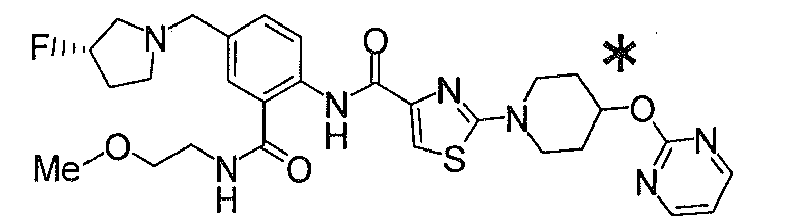
E1181
MS(FAB) m/z: 584([M+H]+)1284 
E1181
MS(FAB) m/z: 594([M+H]+)1285 
E26
MS(ESI) m/z: 483,485([M+H]+)1286 
E26
MS(ESI) m/z: 520([M+H]+) -
[Table 163] 1287 
E26
(HCl) MS(ESI) m/z: 448([M+H]+)1288 
E6
MS(ESI) m/z: 569([M+H]+)1289 
E26
MS(ESI) m/z: 518([M+H]+)1290 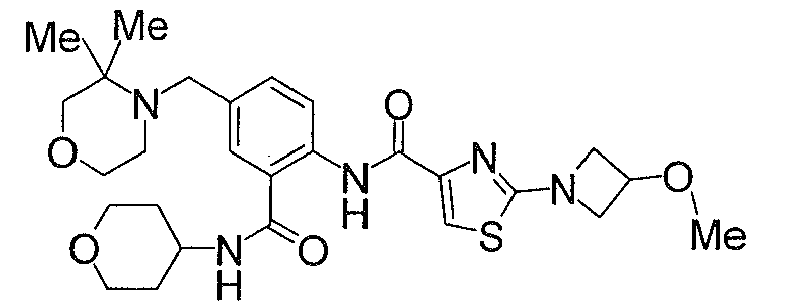
E26
MS(ESI) m/z: 544([M+H]+)1291 
E26
MS(ESI) m/z: 527([M+H]+)1292 
E6
MS(ESI) m/z: 463([M+H]+)1293 
E23
MS(ESI) m/z: 524([M+H]+)1294 
E33
MS(ESI) m/z: 440([M+H]+) -
[Table 164] 1295 
E33
MS(ESI) m/z: 504, 506([M+H]+)1296 
E33
MS(ESI) m/z: 494([M+H]+)1297 
E28
MS(ESI) m/z: 511, 513([M+H]+)1298 
E33
MS(ESI) m/z: 510([M+H]+)1299 
E26
MS(FAB) m/z: 610([M-H]-)1300 
E1181
MS(ESI) m/z: 610([M+H]+)1301 
E26 (HCl)
MS(FAB) m/z: 504([M-H]-) -
[Table 165] 1302 
E1181 (Fum)
MS(ESI) m/z: 582([M+H]+)1303 
E1181
MS(ESI) m/z: 568([M+H]+)1304 
E28
MS(ESI) m/z: 523([M+H]+)1305 
E28
MS(ESI) m/z: 497([M+H]+)1306 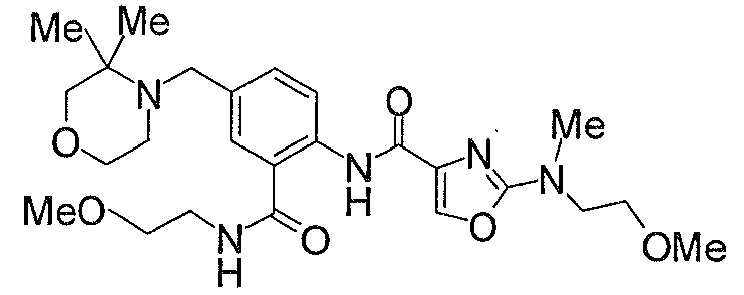
E26
MS(ESI) m/z: 504([M+H]+)1307 
E26
MS(ESI) m/z: 530([M+H]+)1308 
E1181 (Fum)
MS(FAB) m/z: 584([M+H]+)1309 
E1181 (Fum)
MS(FAB) m/z: 580([M+H]+) -
[Table 166] 1310 
E1181 (Fum) MS(FAB) m/z: 580([M+H]+) 1311 
E1181 MS(FAB) m/z: 580([M+H]+) 1312 
E1181 MS(FAB) m/z: 580([M+H]+) 1313 
E28 MS(ESI) m/z: 550([M+H]+) 1314 
E1181 MS(ESI) m/z: 636([M+H]+) 1315 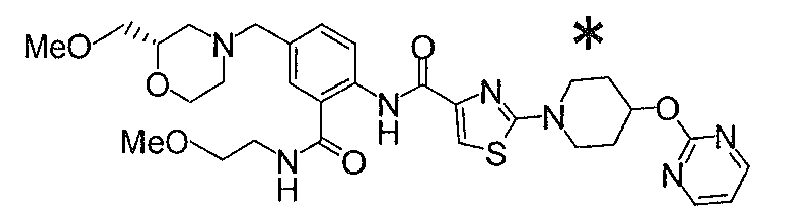
E1181 (Fum) MS(ESI) m/z: 626([M+H]+) 1316 
E1181 MS(ESI) m/z: 610([M+H]+) 1317 
E23 MS(ESI) m/z: 465([M+H]+) -
[Table 167] 1318 
E23
MS(ESI) m/z: 518([M+H]+)1319 
E26 (HClk)
MS(ESI) m/z: 522([M+H]+)1320 
E26 (HCl)
MS(ESI) m/z: 586, 588([M+H]+)1321 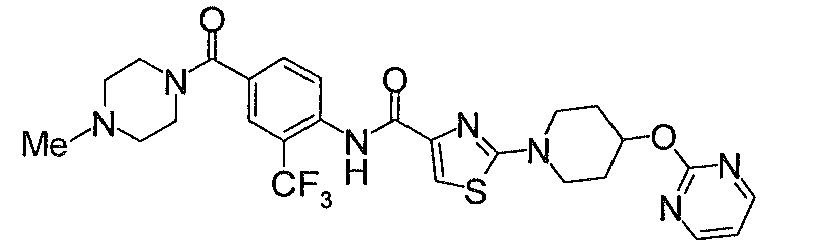
E26 (HCl)
MS(ESI) m/z: 576([M+H]+)1322 
E26 (HCl)
MS(ESI) m/z: 592([M+H]+)1323 
E1181 (L-Tart)
MS(ESI) m/z: 596([M+H]+)1324 
E1181 (L-Tart)
MS(ESI) m/z: 570([M+H]+)1325 
E1181 (0.5L-Tart)
MS(ESI) m/z: 598([M+H]+)1326 
E1181 (L-Tart)
MS(ESI) m/z: 610([M+H]+) -
[Table 168] 1327 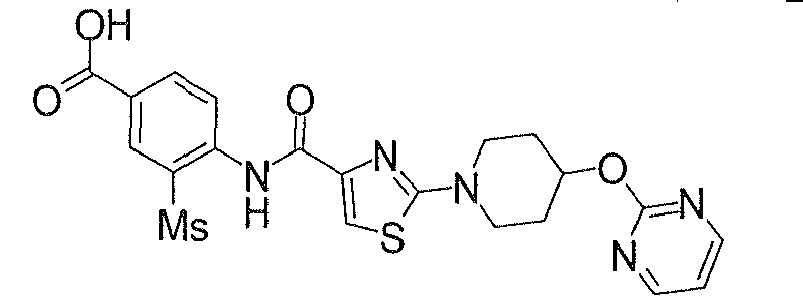
E33
MS(ESI) m/z: 504([M+H]+)1186 
E1186
MS(ESI) m/z: 587([M+H]+)1328 
E1186
MS(ESI) m/z: 588([M+H]+)1329 
E25
MS(FAB) m/z: 583([M+H]+)1330 
E23
MS(ESI) m/z: 442([M+H]+)1331 
E23
MS(ESI) m/z: 442([M+H]+)1332 
E28
MS(ESI) m/z: 532([M+H]+)1333 
E23
MS(ESI) m/z: 482([M+H]+) -
[Table 169] 1334 
E23
MS(ESI) m/z: 468, 470([M+H]+)1335 
E33
MS(ESI) m/z: 454, 456([M+H]+)1336 
E23
MS(ESI) m/z: 451 ([M+H]+)1337 
E1181 (Fum)
MS(ESI) m/z: 626([M+H]+)1338 
E23
MS(ESI) m/z: 518([M+H]+)1339 
E23
MS(ESI) m/z: 502([M+H]+)1340 
E23
MS(ESI) m/z: 562([M+H]+)1341 
E23
MS(ESI) m/z: 534([M+H]+) -
[Table 170] 1342 
E23
MS(ESI) m/z: 518([M+H]+)1343 
E23
MS(ESI) m/z: 532([M+H]+)1344 
E23
MS(ESI) m/z: 520([M+H]+)1345 
E23
MS(ESI) m/z: 547([M+H]+)1346 
E23
MS(ESI) m/z: 534([M+H]+)1347 
E23
MS(ESI) m/z: 532, 534([M+H]+)1348 
E33
MS(ESI) m/z: 518, 520([M+H]+)1349 
E35 (2HCl)
MS(FAB) m/z: 509([M+H]+) -
[Table 171] 1350 
E26 (0.5L-Tart)
MS(API) m/z: 544([M+H]+)1351 
E26
MS(ESI) m/z: 502([M+H]+)1352 
E23
MS(API) m/z: 521([M+H]+)1353 
E6
MS(API) m/z: 537([M+H]+)1354 
E1181
MS(ESI) m/z: 626([M+H]+)1355 
E28
MS(ESI) m/z: 568([M+H]+)1356 
E6
MS(ESI) m/z: 539([M+H]+) -
[Table 172] 1184 
E1184
MS(ESI) m/z: 549([M+H]+)1357 
E28
MS(ESI) m/z: 587([M+H]+)1358 
E23 (L-Tart)
MS(ESI) m/z: 598([M+H]+)1359 
E28
MS(ESI) m/z: 560([M+H]+)1360 
E26
MS(ESI) m/z: 511 ([M+H]+)1361 
E26
MS(ESI) m/z: 511 ([M+H]+)1362 
E26
MS(ESI) m/z: 531, 533([M+H]+)1363 
E26
MS(ESI) m/z: 614, 616([M+H]+) -
[Table 173] 1364 
E26
MS(ESI) m/z: 614,616([M+H]+)1365 
E26
MS(ESI) m/z: 621, 623([M+H]+)1366 
E26
MS(ESI) m/z: 580, 582([M+H]+)1367 
E26
MS(ESI) m/z: 629, 631 ([M+H]+)1368 
E26
MS(ESI) m/z: 586([M+H]+)1369 
E28
MS(ESI) m/z: 504([M+H]+)1370 
E23
MS(ESI) m/z: 518([M+H]+)1371 
E26
MS(ESI) m/z: 528([M+H]+) -
[Table 174] 1372 
E26
MS(ESI) m/z: 486([M+H]+)1373 
E26
MS(API) m/z: 460([M+H]+)1374 
E26
MS(ESI) m/z: 518([M+H]+)1375 
E26
MS(ESI) m/z: 544([M+H]+)1376 
E28 (HCl)
MS(ESI) m/z: 560([M+H]+)1377 
E26
MS(ESI) m/z: 558([M+H]+)1378 
E28
MS(ESI) m/z: 546([M+H]+)1379 
E1181
MS(ESI) m/z: 520([M+H]+) -
[Table 175] 1380 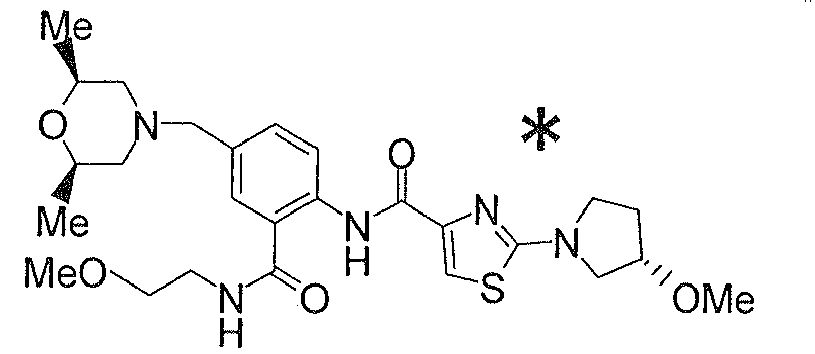
E1181
MS(ESI) m/z: 532([M+H]+)1381 
E26
MS(ESI) m/z: 487([M+H]+)1382 
E26
MS(ESI) m/z: 487([M+H]+)1383 
E26
MS(ESI) m/z: 497([M+H]+)1384 
E26
MS(ESI) m/z: 497([M+H]+)1385 
E1181 (Fum)
MS(ESI) m/z: 532([M+H]+)1386 
E1181 (Fum)
MS(ESI) m/z: 548([M+H]+)1387 
E1181 (Fum)
MS(ESI) m/z: 548([M+H]+) -
[Table 176] 1388 
E28 (Fum)
MS(ESI) m/z: 546([M+H]+)1389 
E26
MS(ESI) m/z: 469([M+H]+)1390 
E26
MS(ESI) m/z: 467([M-H]-)1391 
E28 (Fum)
MS(ESI) m/z: 518([M+H]+)1392 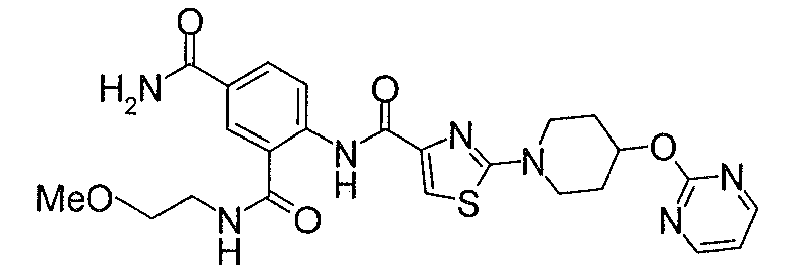
E26
MS(ESI) m/z: 526([M+H]+)1393 
E28 (L-Tart)
MS(ESI) m/z: 560([M+H]+)1394 
E1187 (1.5Fum)
MS(ESI) m/z: 528([M+H]+)1187 
E1187 (Fum)
MS(ESI) m/z: 534([M+H]+) -
[Table 177] 1395 
E1181 (Fum)
MS(ESI) m/z: 518([M+H]+)1396 
E1181 (Fum)
MS(ESI) m/z: 532([M+H]+)1397 
E1187
MS(ESI) m/z: 488([M+H]+)1398 
E1187 (Fum)
MS(ESI) m/z: 516([M+H]+)1399 
E1187 (Fum)
MS(ESI) m/z: 544([M+H]+)1400 
E1187 (Fum)
MS(ESI) m/z: 544([M+H]+)1401 
E1187 (Fum)
MS(ESI) m/z: 520([M+H]+)1402 
E28 (Fum)
MS(ESI) m/z: 546([M+H]+) -
[Table 178] 1403 
E26 (Fum)
MS(ESI) m/z: 506([M+H]+)1404 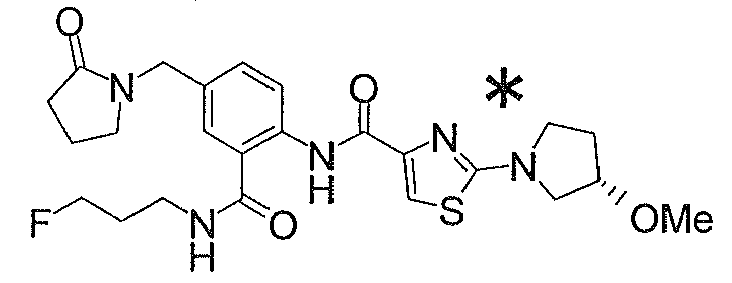
E33→E26
MS(FAB) m/z: 504([M+H]+)1405 
E30
MS(FAB) m/z: 452([M+H]+)1406 
E1181
MS(ESI) m/z: 504([M+H]+)1407 
E1181
MS(ESI) m/z: 550([M+H]+)1408 
E1181 (1.5Fum)
MS(ESI) m/z: 520([M+H]+)1409 
E1181 (Fum)
MS(ESI) m/z: 534([M+H]+)1410 
E30
MS(FAB) m/z: 516([M+H]+) -
[Table 179] 1411 
E1181 (1.5Fum)
MS(ESI) m/z: 504([M+H]+)1412 
E1181 (1.5Fum)
MS(ESI) m/z: 520([M+H]+)1413 
E1181 (1.5Fum)
MS(ESI) m/z: 534([M+H]+)1414 
E1181 (Fum)
MS(ESI) m/z: 534([M+H]+)1415 
E1181 (Fum)
MS(ESI) m/z: 534([M+H]+)1416 
E26 (Fum)
MS(ESI) m/z: 502([M+H]+)1417 
E1181 (HCl)
MS(ESI) m/z: 552([M+H]+)1418 
E26 (Fum)
MS(ESI) m/z: 516([M+H]+) -
[Table 180] 1419 
E26 (Fum)
MS(ESI) m/z: 514([M+H]+)1420 
E26 (1.5Fum)
MS(ESI) m/z: 546([M+H]+)1421 
E26 (1.5Fum)
MS(ESI) m/z: 558([M+H]+)1422 
E26
MS(ESI) m/z: 558([M+H]+)1423 
E35 (3HCl)
MS(ESI) m/z: 519([M+H]+)1424 
E1181 (Fum)
MS(ESI) m/z: 534([M+H]+)1425 
E26
MS(ESI) m/z: 516([M+H]+)1426 
E26
MS(ESI) m/z: 492([M+H]+) -
[Table 181] 1427 
E26 (1.5Fum)
MS(ESI) m/z: 546([M+H]+)1428 
E24 (Fum)
MS(ESI) m/z: 520([M+H]+)1429 
E24 (Fum)
MS(ESI) m/z: 520([M+H]+)1430 
E26
MS(ESI) m/z: 504([M+H]+)1431 
E26
MS(ESI) m/z: 474([M+H]+)1432 
E28
MS(ESI) m/z: 558([M+H]+)1433 
E28
MS(ESI) m/z: 586([M+H]+)1434 
E1181 (0.5L-Tart)
MS(ESI) m/z: 520([M+H]+) -
[Table 182] 1435 
E26 (Fum)
MS(ESI) m/z: 490([M+H]+)1436 
E26 (Fum)
MS(ESI) m/z: 546([M+H]+)1185 
E1185
MS(ESI) m/z: 513([M+H]+)1437 
E1181
MS(ESI) m/z: 554([M+H]+)1438 
E26
MS(ESI) m/z: 478([M+H]+)1439 
E26
MS(ESI) m/z: 504([M+H]+)1440 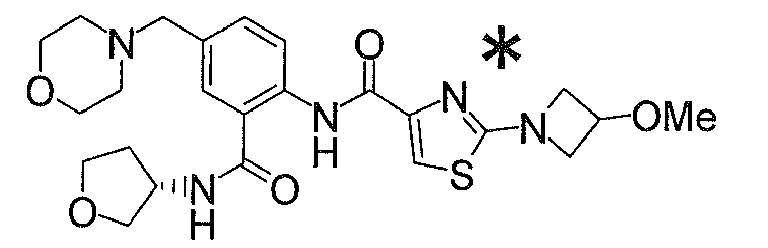
E26
MS(ESI) m/z: 502([M+H]+)1441 
E6
MS(ESI) m/z: 520([M+H]+) -
[Table 183] 1442 
E6 (Fum)
MS(ESI) m/z: 518([M+H]+)1443 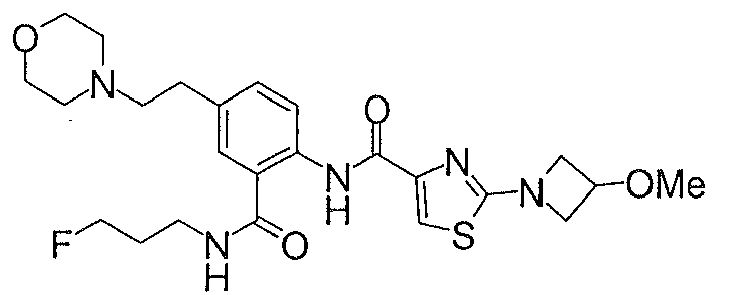
E6
MS(ESI) m/z: 506([M+H]+)1444 
E26 (Fum)
MS(ESI) m/z: 504([M+H]+)1445 
E26
MS(ESI) m/z: 530([M+H]+)1446 
E1181 (Fum)
MS(ESI) m/z: 544([M+H]+)1447 
E9
MS(ESI) m/z: 452([M+H]+) -
[Table 184] 1448 
E9
MS(ESI) m/z: 466([M+H]+)1449 
E1182
MS(ESI) m/z: 463([M+H]+)1450 
E1181 (1.5Fum)
MS(ESI) m/z: 544([M+H]+)1451 
E1181 (Fum)
MS(ESI) m/z: 518([M+H]+)1181 
E1181 (Fum)
MS(ESI) m/z: 518([M+H]+)1452 
E1181 (1.5Fum)
MS(ESI) m/z: 544([M+H]+)1453 
E1181
MS(ESI) m/z: 550([M+H]+)1454 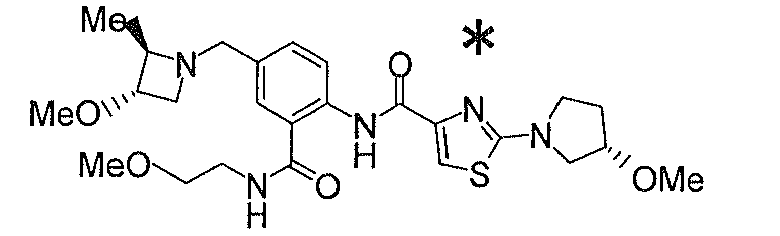
E1181 (Fum)
MS(ESI) m/z: 518([M+H]+) -
[Table 185] 1455 
E1181 (1.5Fum)
MS(ESI) m/z: 518([M+H]+)1456 
E24 (3Fum)
MS(ESI) m/z: 533([M+H]+)1457 
E26
MS(ESI) m/z: 516([M+H]+)1458 
E26
MS(ESI) m/z: 504([M+H]+)1459 
E1184
MS(ESI) m/z: 499([M+H]+)1460 
E1181 (1.5Fum)
MS(ESI) m/z: 532([M+H]+)1461 
E1181
MS(ESI) m/z: 556([M+H]+)1462 
E6
MS(ESI) m/z: 546([M+H]+) -
[Table 186] 1463 
E1181 (Fum)
MS(ESI) m/z: 532([M+H]+)1464 
E24 (Fum)
MS(ESI) m/z: 518([M+H]+)1465 
E26
MS(ESI) m/z: 518([M+H]+)1466 
E26 (Fum)
MS(ESI) m/z: 564([M+H]+)1467 
E24 (Fum)
MS(ESI) m/z: 488([M+H]+)1468 
E1181
MS(ESI) m/z: 548([M+H]+)1469 
E6
MS(ESI) m/z: 492([M+H]+)1470 
E6
MS(ESI) m/z: 492([M+H]+)1471 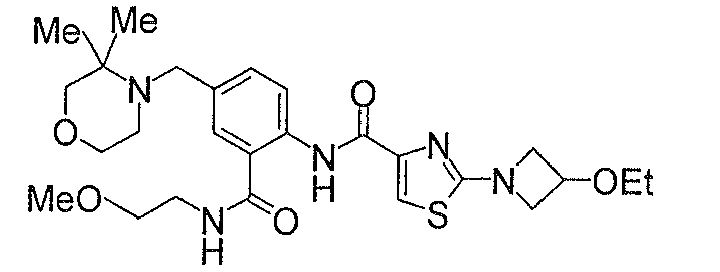
E6 (1.5Fum)
MS(ESI) m/z: 532([M+H]+) -
[Table 187] 1472 
E9
MS(ESI) m/z: 480([M+H]+)1473 
E1181 (Fum)
MS(ESI) m/z: 544([M+H]+)1474 
E6
MS(ESI) m/z: 488([M-H]-)1475 
E6
MS(ESI) m/z: 502([M+H]+)1476 
E9
MS(ESI) m/z: 482([M+H]+)1477 
E26 (HCl)
MS(ESI) m/z: 490([M+H]+)1478 
E6
MS(ESI) m/z: 518([M+H]+)1182 
E1182
MS(ESI) m/z: 477([M+H]+) -
[Table 188] 1479 
E1182
MS(ESI) m/z: 449([M+H]+)1480 
E6
MS(ESI) m/z: 348([M+H]+)1481 
E6
MS(ESI) m/z: 475([M+H]+)1482 
E33→E26
MS(ESI) m/z: 532([M+H]+)1483 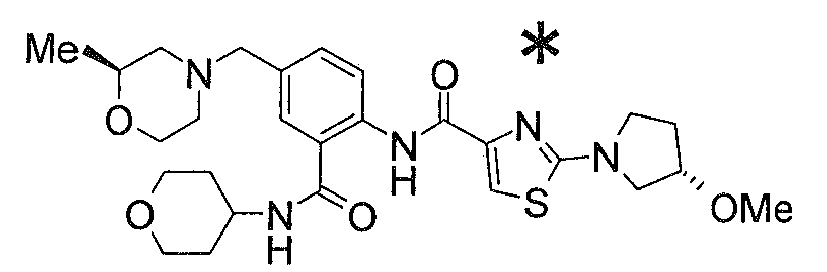
E33→E26
MS(ESI) m/z: 544([M+H]+)1484 
E33→E26
MS(ESI) m/z: 405([M+H]+)1485 
E33→E26
MS(ESI) m/z: 379([M+H]+)1486 
E35 (3HCl)
MS(ESI) m/z: 517([M+H]+)1487 
E1181
MS(ESI) m/z: 617([M+H]+) -
[Table 189] 1488 
E24 (2Fum)
MS(ESI) m/z: 531 ([M+H]+)1489 
E1181 (1.5Fum)
MS(ESI) m/z: 545([M+H]+)1490 
E6
MS(ESI) m/z: 461([M+H]+)1491 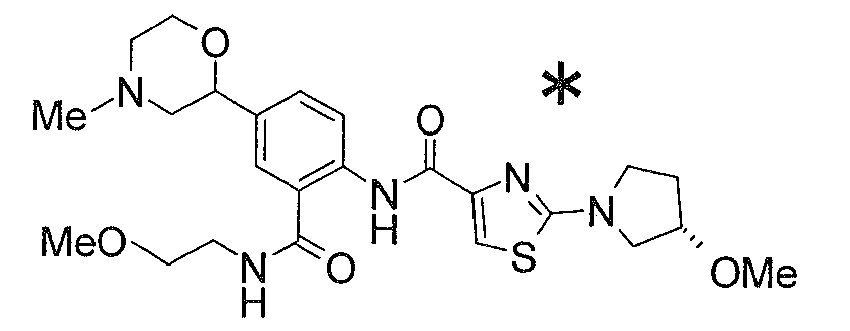
E33→E26 (Fum)
MS(ESI) m/z: 504([M+H]+)1492 
E26 (Fum)
MS(ESI) m/z: 460([M+H]+)1493 
E33→E26 (Fum)
MS(ESI) m/z: 506([M+H]+)1494 
E1188
MS(ESI) m/z: 467([M+H]+)1190 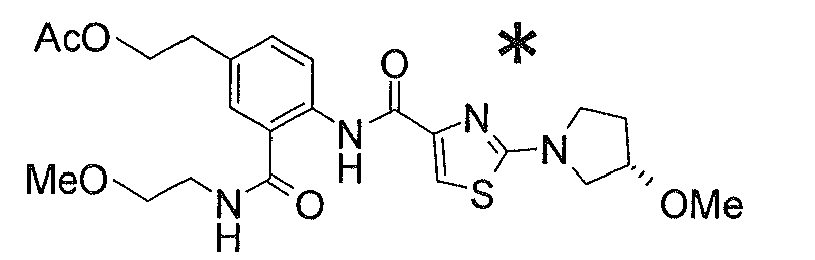
E1190
MS(ESI) m/z: 491 ([M+H]+) -
[Table 190] 1495 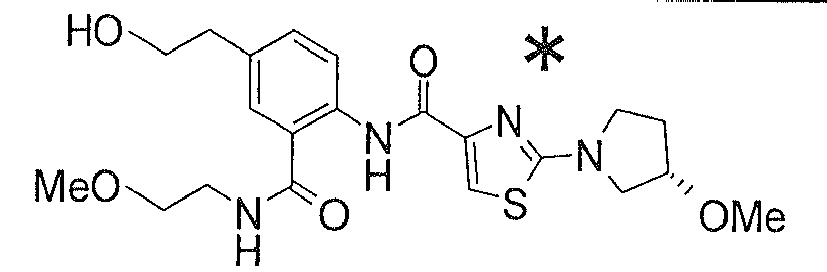
E33
MS(ESI) m/z: 449([M+H]+)1496 
E33→E26 (1.5Fum)
MS(ESI) m/z: 530([M+H]+)1497 
E1182
MS(ESI) m/z: 477([M+H]+)1498 
E1182
MS(ESI) m/z: 493([M+H]+)1499 
E6
MS(ESI) m/z: 408([M+H]+)1500 
E33→E26
MS(ESI) m/z: 451 ([M+H]+)1501 
E6
MS(ESI) m/z: 463([M+H]+)1502 
E33→E26
MS(ESI) m/z: 506([M+H]+)1503 
E6
MS(ESI) m/z: 489([M+H]+) -
[Table 191] 1504 
E33→E26
MS(ESI) m/z: 532([M+H]+)1505 
E6
MS(ESI) m/z: 476([M+H]+)1506 
E35 (3HCl)
MS(ESI) m/z: 517([M+H]+)1507 
E1181
MS(ESI) m/z: 617([M+H]+)1508 
E24 (2Fum)
MS(ESI) m/z: 531 ([M+H]+)1191 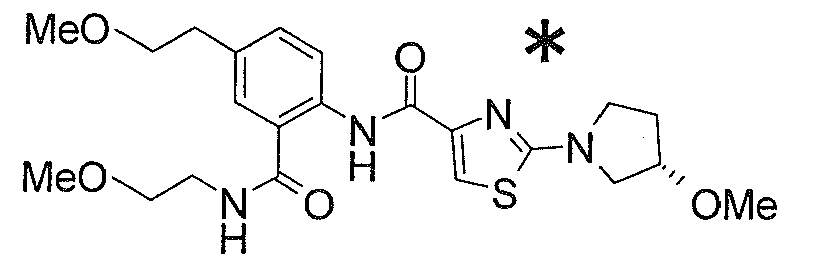
E1191
MS(ESI) m/z: 463([M+H]+)1509 
E6→E33
MS(FAB) m/z: 526([M+H]+)1510 
E33
MS(ESI) m/z: 410([M+H]+) -
[Table 192] 1511 
E33
MS(ESI) m/z: 437([M+H]+)1512 
E33
MS(ESI) m/z: 425([M+H]+)1513 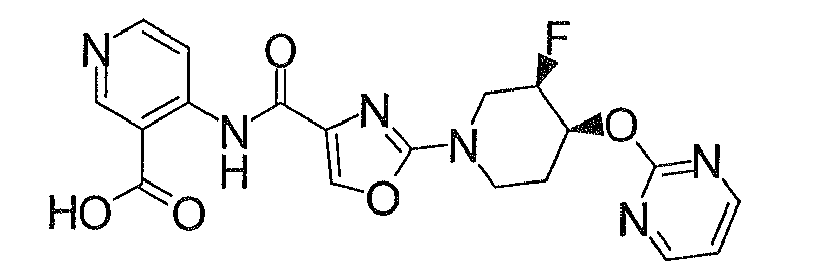
E33
MS(ESI) m/z: 429([M+H]+)1514 
E30
MS(ESI) m/z: 437([M-H]-)1515 
P3→E23
MS(ESI) m/z: 424([M+H]+)1516 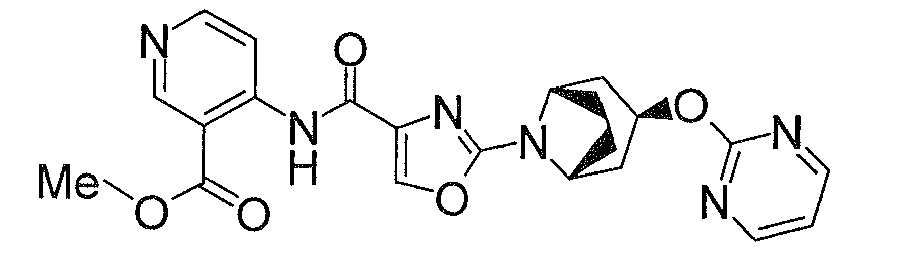
E23
MS(ESI) m/z: 451 ([M+H]+)1517 
E1188
MS(FAB) m/z: 432,434([M+H]+)1188 
E1188
MS(ESI) m/z: 453, 455([M+H]+)1518 
E1188
MS(ESI) m/z: 455([M+H]+) -
[Table 193] 1519 
E1188
MS(ESI) m/z: 479([M+H]+)1520 
E1188
MS(FAB) m/z: 531 ([M+H]+)1521 
E1181
MS(ESI) m/z: 471([M+H]+)1522 
E1181
MS(ESI) m/z: 513([M+H]+)1523 
E6
MS(ESI) m/z: 537([M+H]+)1524 
E1181
MS(ESI) m/z: 504([M+H]+)1525 
E1181
MS(ESI) m/z: 506([M+H]+) -
[Table 194] 1526 
E1181
MS(ESI) m/z: 506([M+H]+)1527 
E1181
MS(FAB) m/z: 568([M+H]+)1528 
E1188
MS(ESI) m/z: 469([M+H]+)1529 
E35
MS(ESI) m/z: 474([M+H]+)1189 
E1189
MS(ESI) m/z: 574([M+H]+)1530 
E30
MS(ESI) m/z: 609([M+H]+)1531 
E1181
MS(ESI) m/z: 619([M+H]+)1532 
E33
MS(ESI) m/z: 426,428([M+H]+)1533 
E33
MS(ESI) m/z: 433([M+H]+) -
[Table 195] 1534 
E33
MS(ESI) m/z: 447([M+H]+)1535 
E33
MS(ESI) m/z: 447([M+H]+)1536 
E33
MS(ESI) m/z: 449([M+H]+)1537 
E33
MS(ESI) m/z: 459([M+H]+)1538 
E33
MS(ESI) m/z: 461([M+H]+)1539 
E33
MS(ESI) m/z: 461([M+H]+)1540 
E33
MS(ESI) m/z: 463([M+H]+)1541 
E33
MS(API) m/z: 463([M+H]+)1542 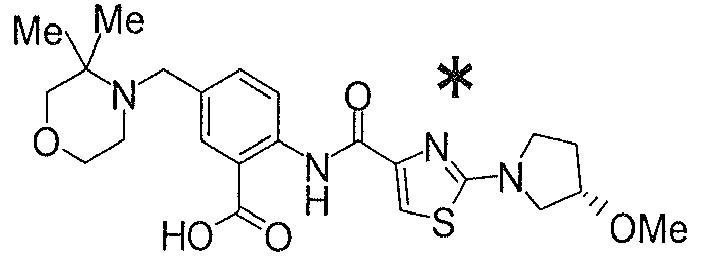
E33
MS(ESI) m/z: 475([M+H]+) -
[Table 196] 1543 
E33
MS(ESI) m/z: 507([M+H]+)1544 
E33
MS(FAB) m/z: 535([M+H]+)1545 
E33
MS(ESI) m/z: 537([M+H]+)1546 
E33
MS(FAB) m/z: 539([M+H]+)1547 
E33
MS(ESI) m/z: 555([M+H]+)1548 
E33
MS(API) m/z: 401 ([M-H]-)1549 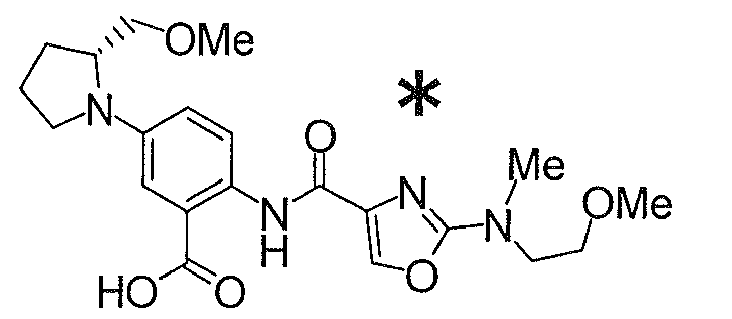
E33
MS(ESI) m/z: 433([M+H]+)1550 
E33
MS(ESI) m/z: 443([M-H]-) -
[Table 197] 1551 
E33
MS(ESI) m/z: 447([M+H]+)1552 
E33
MS(ESI) m/z: 459([M-H]-)1553 
E33
MS(ESI) m/z: 428([M+H]+)1554 
E33
MS(ESI) m/z: 428([M+H]+)1555 
E33
MS(ESI) m/z: 533([M+H]+)1556 
E33
MS(FAB) m/z: 511 ([M+H]+)1557 
E30
MS(FAB) m/z: 440,442([M+H]+)1558 
E6
MS(ESI) m/z: 447([M+H]+) -
[Table 198] 1559 
E6
MS(ESI) m/z: 459([M+H]+)1560 
E6
MS(ESI) m/z: 461 ([M+H]+)1561 
E6
MS(ESI) m/z: 461([M+H]+)1562 
E6
MS(ESI) m/z: 473([M+H]+)1563 
E6
MS(ESI) m/z: 475([M+H]+)1564 
E6
MS(ESI) m/z: 475([M+H]+)1565 
E30
MS(ESI) m/z: 477([M+H]+)1566 
E6
MS(ESI) m/z: 477([M+H]+)1567 
E1188
MS(FAB) m/z: 488([M+H]+) -
[Table 199] 1568 
E6
MS(ESI) m/z: 489([M+H]+)1569 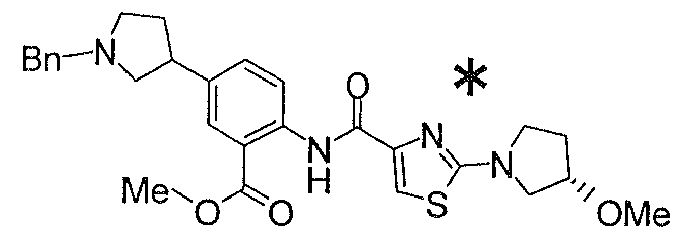
E6
MS(ESI) m/z: 521([M+H]+)1570 
E6
MS(FAB) m/z: 549([M+H]+)1571 
E6
MS(FAB) m/z: 551 ([M+H]+)1572 
E1181
MS(ESI) m/z: 567([M+H]+)1573 
E6
MS(ESI) m/z: 417([M+H]+)1574 
E23
MS(ESI) m/z: 461([M+H]+)1575 
E23
MS(ESI) m/z: 459([M+H]+)1576 
E6
MS(API) m/z: 475([M+H]+) -
[Table 200] 1577 
E9
MS(ESI) m/z: 447([M+H]+) -

-

-

-

-

-

-

-

-

-


- Hereinafter, the NMR data of several Example compounds are shown in Tables 212 to 215. The data represents δ(ppm) of peaks in 1H-NMR where tetramethylsilane is used as internal standard, unless particularly described, DMSO-d6 is used as a solvent for measuring.
Further, (CDCl3) represents δ(ppm) of peaks in 1H-NMR in CDCl3. -
[Table 212] Ex Dat (NMR) 2 1.75-2.25 (4H, m), 2.73-2.87 (3H, m), 2.98-4.17 (12H, m), 4.31 (2H, s), 5.17-5.32 (1H, m), 7.10-7.23 (1H, m), 7.53-7.78 (2H, m), 7.90-8.06 (1H, m), 8.54-8.83 (3H, m), 10.61-10.97 (1H, m), 12.10-12.35 (1H, m) 8 3.18 (3H, s), 3.29 (3H, s), 3.20-3.56 (4H, m), 3.68 (2H, t, J = 5.2 Hz), 3.80 (2H, t, J = 5.2 Hz), 3.76-4.12 (4H, m), 5.18 (2H, brs), 7.32 (1H, t, J = 7.9 Hz), 7.59 (1H, s), 7.77 (1H, t, J = 7.9 Hz), 7.99 (1H, d, J = 7.9 Hz), 8.78 (1H, d, J = 7.9 Hz), 10.67 (1H, brs), 12.49 (1H, brs) 9 1.57-1.67 (1H, m), 1.76-1.98 (3H, m), 3.32-3.36 (1H, m), 3.61-3.79 (2H, m), 3.83-3.95 (1H, m), 4.79-4.96 (1H, m), 7.24-7.30 (1H, m), 7.41 (1H, dd, J = 8.0, 4.6 Hz), 7.56-7.65 (2H, m), 7.90 (1H, d, J = 7.7 Hz), 8.25 (1H, d, J = 8.0 Hz), 8.34 (1H, d, J = 3.6 Hz), 8.63 (1H, d, J = 8.0 Hz), 8.97 (1H, s), 10.74 (1H, s), 11.99 (1H, s) 10 (CDCl3) 3.15 (3H, s), 3.29 (3H, s), 3.57 (2H, t, J = 5.1 Hz), 3.73 (2H, t, J = 5.1 Hz), 4.37 (2H, s), 7.12-7.20 (1H, m), 7.24-7.31 (1H, m), 7.38 (1H, s), 7.56-7.64 (2H, m), 8.02 (1H, dd, J = 8.0, 1.4 Hz), 8.54 (2H, brs), 8.96 (1H, dd, J = 8.6, 1.0 Hz), 12.90 (1H, brs) 11 3.44-3.47 (4H, m), 3.71-3.74 (4H, m), 7.31 (1H, dd, J = 7.9, 7.8 Hz), 7.65 (1H, dd, J = 8.7, 7.9 Hz), 7.95-8.02 (2H, m), 8.3 (1H, s), 8.54 (1H, d, J = 7.8 Hz), 8.64-8.68 (2H, m), 9.34 (1H, d, J = 2.0 Hz), 11.39 (1H, brs), 11.40 (1H, brs) 24 2.05-2.61 (2H, m), 2.71-3.19 (6H, m), 3.19-4.00 (4H, m), 4.18-5.34 (1H, m), 7.31 (1H, t, J = 7.6 Hz), 7.56-8.09 (4H, m), 8.30-8.73 (3H, m), 9.08-9.43 (1H, m), 10.67-12.14 (2H, m) 26 1.13 (3H, t, J = 7.3 Hz), 1.77-1.91 (2H, m), 2.09-2.20 (2H, m), 2.29-2.41 (4H, m), 3.22-3.62 (10H, m), 3.83-3.94 (2H, m), 5.21-5.30 (1H, m), 7.15 (1H, t, J = 4.8 Hz), 7.44 (1H, dd, J = 8.5, 1.7 Hz), 7.58 (1H, s), 7.58 (1H, d, J = 1.7 Hz), 8.55 (1H, d, J = 8.5 Hz), 8.63 (2H, d, J = 4.8 Hz), 8.67 (1H, t, J = 5.4 Hz), 12.25 (1H, s) 28 1.17 (3H, t, J = 6.8 Hz), 1.49-1.64 (4H, m), 1.76-1.84 (2H, m), 1.89-1.98 (2H, m), 3.28-3.60 (7H, m), 3.76-3.83 (2H, m), 3.85-3.92 (2H, m), 3.95-4.05 (1H, m), 7.13-7.19 (1H, m), 7.48-7.54 (1H, m), 7.55-7.57 (1H, m), 7.67 (1H, d, J = 7.6 Hz), 8.56-8.63 (2H, m), 12.09 (1H, s) 30 1.18-1.34 (2H, m), 1.45-1.58 (2H, m), 1.95-2.1 (1H, m), 3.06 (3H, s), 3.15-3.24 (2H, m), 3.48 (2H, d, J = 7.3 Hz), 3.74-3.82 (2H, m), 7.23-7.32 (1H, m), 7.41 (1H, dd, J = 8.3, 4.6 Hz), 7.50 (1H, s), 7.58-7.65 (1H, m), 7.91 (1H, d, J = 7.8 Hz), 8.15-8.22 (1H, m), 8.33-8.37 (1H, m), 8.68 -
[Table 213] 44 1.43-1.55 (2H, m), 1.83-1.92 (2H, m), 3.27-3.36 (2H, m), 3.73-3.87 (3H, m), 7.25-7.31 (1H, m), 7.58 (1H, s), 7.62-7.68 (1H, m), 8.00 (1H, dd, J = 8.6, 5.4 Hz), 8.08 (1H, dd, J = 7.8, 5.4 Hz), 8.62-8.69 (2H, m), 8.80 (1H, d, J = 9 Hz), 9.36 (1H, d, J = 2.4 Hz), 11.58 (1H, s), 11.99 (1H, s) 103 3.12 (3H, s), 3.23 (3H, s), 3.63 (2H, t, J = 5.2 Hz), 3.72 (2H, t, J = 5.2 Hz), 7.26-7.33 (1H, m), 7.53 (1H, s), 7.62-7.69 (1H, m), 7.93-8.01 (2H, m), 8.62-8.69 (3H, m), 9.30 (1H, d, J = 2.2 Hz), 11.34 (1H, s), 11.90 (1H, s) 112 2.75 (3H, s), 2.92 (3H, s), 3.05 (3H, s), 4.51 (2H, s), 7.22-7.31 (1H, m), 7.43 (1H, dd, J = 11.0, 6.3 Hz), 7.54 (1H, s), 7.57-7.66 (1H, m), 7.87-7.93 (1H, m), 8.03-8.10 (1H, m), 8.36 (1H, dd, J = 6.3, 1.9 Hz), 8.65 (1H, d, J = 11.0 Hz), 8.95 (1H, d, J = 3.2 Hz), 10.71 (1H, s), 11.82 (1H, s) 206 1.96-2.13 (2H, m), 3.25 (3H, s), 3.32-3.59 (4H, m), 4.02-4.10 (1H, m), 7.28 (1H, t, J = 7.9 Hz), 7.42 (1H, dd, J = 8.3, 4.7 Hz), 7.61 (1H, t, J = 7.9 Hz), 7.87 (1H, d, J = 7.9 Hz), 8.12-8.20 (1H, m), 8.22 (1H, s), 8.34 (1H, d, J = 4.7 Hz), 8.52 (1H, d, J = 7.9 Hz), 8.94 (1H, d, J = 2.5 Hz), 10.72 (1H, s), 11.26 (1H, s) 210 2.07-2.35 (2H, m), 3.45-3.57 (1H, m), 3.58-3.77 (3H, m), 5.34-5.53 (1H, m), 7.26-7.03 (1H, m), 7.43 (1H, dd, J = 8.3, 4.9 Hz), 7.58-7.63 (1H, m), 7.88 (1H, dd, J = 7.9, 1.5 Hz), 8.56 (1H, ddd, J = 8.3, 2.4, 1.5 Hz), 8.25 (1H, s), 8.35 (1H, dd, J = 4.6, 1.5 Hz), 8.50-8.54 (1H, m), 8.64 (1H, d, J = 2.4 Hz), 10.71 (1H, s), 11.27 (1H, brs) 343 1.50-1.64 (2H, m), 1.73-1.85 (4H, m), 2.06-2.19 (2H, m), 3.28-3.49 (4H, m), 3.78-3.83 (4H, m), 3.95-4.07 (1H, m), 5.17-5.29 (1H, m), 7.15 (1H, d, J = 4.7 Hz), 7.18 (1H, td, J = 7.7, 1.0 Hz), 7.48-7.54 (1H, m), 7.71 (1H, dd, J = 7.9, 1.5Hz), 8.23 (1H, s), 8.51 (1H, dd, J = 8.3, 1.0 Hz), 8.57 (1H, d, J = 7.7 Hz), 8.62 (2H, d, J = 4.7 Hz), 11.62 (1H, brs) 361 (CDCl3) 1.46-1.67 (2H, m), 1.86-2.11 (2H, m), 3.21 (3H, s), 3.38 (3H, s), 3.45-3.59 (2H, m), 3.66 (4H, s), 3.94-4.05 (2H, m), 4.12-4.30 (1H, m), 5.99-6.09 (1H, m), 7.06-7.16 (1H, m), 7.42-7.53 (2H, m), 7.79 (1H, s), 8.54-8.63 (1H, m), 11.59 (1H, s) 387 0.84 (6H, s), 3.13-3.20 (4H, m), 3.48-3.54 (4H, m), 3.71-3.78 (4H, m), 4.56 (1H, t, J = 5.8 Hz), 7.18 (1H, ddd, J = 7.8, 7.4, 1.2 Hz), 7.52 (1H, ddd, J = 8.3, 7.4, 1.4 Hz), 7.62 (1H, s), 7.72 (1H, dd, J = 7.8, 1.4 Hz), 8.47-8.63 (2H, m), 12.16 (1H, s) 512 1.13 (3H, t, J = 7.1 Hz), 1.45-1.70 (4H, m), 1.76-2.00 (4H, m), 3.10-4.11 (12H, m), 7.78 (1H, s), 8.70-8.78 (1H, m), 8.79-8.85 (1H, m), 9.00-9.10 (2H, m), 12.85 (1H, brs) -
[Table 214] 564 1.78-1.91 (2H, m), 1.78-1.91 (2H, m), 2.09-2.22 (2H, m), 2.30-2.42 (4H, m), 3.24 (3H, s), 3.38-3.63 (10H, m), 3.83-3.95 (2H, m), 5.21-5.30 (1H, m), 7.15 (1H, t, J=4.8 Hz), 7.45 (1H, dd, J = 8.6, 1.8 Hz), 7.58 (1H, s), 7.61 (1H, d, J = 1.8 Hz), 8.57 (1H, d, J = 8.6 Hz), 8.63 (2H, d, J = 4.8 Hz), 8.74 (1H, t, J = 5.4 Hz), 12.28 (1H, s) 573 1.79-1.88 (2H, m), 2.11-2.19 (2H, m), 2.33-2.40 (4H, m), 3.43-3.62 (10H, m), 3.84-3.92 (2H, m), 4.56 (2H, dt, J = 47.4, 5.0 Hz), 5.21-5.29 (1 H, m), 7.15 (1H, t, J = 4.8 Hz), 7.47 (1H, dd, J = 8.5, 1.7 Hz), 7.59 (1H, s), 7.63 (1H, d, J = 1.6 Hz), 8.57 (1H, d, J = 8.5 Hz), 8.63 (2H, d, J = 4.8 Hz), 8.90 (1H, t, J = 5.5 Hz), 12.23 (1H, s) 602 1.52-1.64 (2H, m), 1.78-1.88 (4H, m), 2.12-2.18 (2H, m), 3.29-3.36 (2H, m), 3.49-3.55 (2H, m), 3.82-4.04 (5H, m), 5.22-5.30 (1H, m), 7.14-7.17 (1H, m), 7.05 (1H, s), 8.51-8.52 (1H, m), 8.58-8.59 (1H, m), 8.62-8.64 (2H, m), 8.78-8.83 (2H, m), 12.43 (1H, brs) 603 1.50-1.64 (2H, m), 1.77-1.88 (4H, m), 2.12-2.20 (2H, m), 3.29-3.36 (2H, m), 3.48-3.54 (2H, m), 3.81-4.00 (5H, m), 5.20-5.30 (1H, m), 7.14-7.17 (1H, m), 7.62-7.66 (2H, m), 8.43-8.44 (1H, m), 8.62-8.63 (2H, m), 8.85-8.88 (1H, m), 9.74 (1H, s), 11.80 (1H, brs) 819 1.58-1.70 (2H, m), 1.79-1.83 (2H, m), 3.11-4.01 (21H, m), 4.35-4.36 (2H, m), 7.51 (1H, s), 7.63-7.66 (1H, m), 8.08 (1H, brs), 8.62-8.65 (1H, m), 8.68-8.71 (1H, m), 10.97 (1H, brs), 12.16 (1H, brs) 821 1.51-1.66 (4H, m), 1.72-1.77 (2H, m), 1.78-1.86 (2H, m), 3.11 (3H, m), 3.29 (3H, m), 3.34-3.43 (2H, m), 3.65 (2H, t, J = 5.3 Hz), 3.73 (2H, t, J = 5.3 Hz), 3.85-3.94 (2H, m), 3.95-4.06 (1H, m), 7.49 (1H, s), 7.51-7.55 (2H, m), 8.59 (1H, d, J = 9.3 Hz), 8.66 (1H, d, J = 7.5 Hz), 12.1 (1H, s) 842 3.12 (3H, s), 3.23 (3H, s), 3.62-3.65 (2H, m), 3.71-3.74 (2H, m), 3.89 (3H, s), 7.26 (1H, dd, J = 9.2, 3.0 Hz), 7.48 (1H, s), 7.61 (1H, d, J = 3.0 Hz), 8.10 (1H, dd, J = 8.6, 5.4 Hz), 8.53 (1H, d, J = 9.2 Hz), 8.72 (1H, d, J = 5.4 Hz), 8.88 (1H, d, J = 8.6 Hz), 9.42 (1H, d, J = 2 Hz), 11.65 (1H, s), 11.71 (1H, s) 930 1.29-1.45 (2H, m), 1.50-1.68 (4H, m), 1.73-1.87 (2H, m), 2.03-2.18 (1H, m), 2.28-2.42 (4H, m), 3.06 (3H, s), 3.25-3.41 (4H, m), 3.46 (2H, s), 3.51-3.64 (6H, m), 3.81-3.94 (4H, m), 3.99-4.11 (1H, m), 7.45 (1H, s), 7.45 (1H, dd, J = 8.5, 1.7 Hz), 7.62 (1H, d, J = 1. 7 Hz), 8.54 (1H, d, J = 7.6 Hz), 8.59 (1H, d, J = 8.5 Hz), 12.3 (1H, s) 1114 1.57-1.64 (2H, m), 1.78-1.83 (4H, m), 2.10-2.16 (2H, m), 3.33-3.48 (4H, m), 3.81-3.87 (4H, m), 4.00-4.06 (1H, m), 5.18-5.24 (1H, m), 7.13-7.16 (1H, m), 8.33 (1H, s), 8.49-8.51 (1H, m), 8.58-8.63 (3H, m), 8.76-8.79 (1H, m), 8.86 (1H, brs), 11.97 (1H, brs) -
[Table 215] 1169 1.53-1.65 (2H, m), 1.76-1.84 (2H, m), 2.36 (3H, s), 3.06 (2H, s), 3.24-3.65 (17H, m), 3.85-3.92 (2H, m), 3.95-4.05 (1H, m), 7.42-7.47 (1H, m), 7.56-7.59 (1H, m), 8.14 (1H, s), 8.44-8.49 (1H, m), 8.53-8.58 (1H, m), 11.58 (1H, s) 1170 2.39 (3H, s), 3.05 (3H, s), 3.23 (3H, s), 3.55-3.59 (4H, m), 7.08-7.11 (1H, m), 7.40-7.44 (1H, m), 7.80-7.83 (1H, m), 8.15-8.20 (2H, m), 8.33-8.35 (1H, m), 8.43 (1H, brs), 8.93-8.94 (1H, m), 10.62 (1H, brs), 11.56 (1H, brs) 1181 1.03 (3H, d, J = 6.2 Hz), 1.70-1.78 (1H, m), 2.00-2.08 (1H, m), 2.11-2.17 (2H, m), 2.66 (2H, dd, J = 11.0, 25.2 Hz), 3.27 (3H, s), 3.28 (3H, s), 3.40-3.55 (10H, m), 3.57-3.60 (2H, m), 3.73 (1H, d, J = 9.7 Hz), 4.11-4.15 (1H, m), 6.62 (2H, s), 7.44 (1H, dd, J = 1.9, 8.4 Hz), 7.47 (1H, s), 7.59 (1H, d, J = 1.9 Hz), 8.54 (1H, d, J = 8.5 Hz), 8.68-8.74 (1H, m), 12.10 (1H, s) 1343 1.08 (6H, s), 2.08-2.22 (2H, m), 2.26-2.38 (2H, m), 3.27 (3H, s), 3.28-3.30 (5H, m), 3.38-3.63 (12H, m), 4.10-4.16 (1H, m), 7.44 (1H, d, J = 1.8 Hz), 7.47 (1H, s), 7.58 (1H, d, J = 1.8 Hz), 8.52 (1H, d, J = 8.5 Hz), 8.70 (1H,m), 12.06 (1H, s) 1435 2.34-2.40 (4H, m), 3.26 (3H, s), 3.28 (3H, s), 3.42-3.47 (4H, m), 3.49-3.53 (2H, m), 3.56-3.61 (4H, m), 3.90-3.95 (2H, m), 4.29 (2H, dd, J = 6.4, 9.0 Hz), 4.38-4.55 (1H, m), 6.62 (2H, s), 7.45 (1H, d, J = 1.9 Hz), 7.59-7.61 (2H, m), 8.52 (1H, d, J = 8.5 Hz), 8.70-8.75 (1H, m), 12.01 (1H, s) 1439 1.17 (3H, d, J = 6.8 Hz), 2.33-2.40 (4H, m), 3.26 (3H, s), 3.28 (3H, s), 3.29-3.34 (1H, m), 3.43-3.46 (3H, m), 3.56-3.60 (4H, m), 3.92 (2H, dd, J = 3.9, 9.7 Hz), 4.20-4.31 (3H, m), 4.39-4.44 (1H, m), 7.43-7.47 (1H, m), 7.58 (1H, d, J = 1.8 Hz), 7.60 (1H, s), 8.46 (1H, d, J = 8.0 Hz), 8.51 (1H, d, J = 8.5 Hz), 11.90 (1H, s) 1449 (CDCl3) 1.26 (3H, t, J=7.0 Hz), 2.11-2.25 (2H, m), 3.385 (3H, s), 3.390 (3H, s), 3.53-3.59 (4H, m), 3.61-3.70 (6H, m), 4.11-4.16 (1H, m), 4.48 (2H, s), 6.52-6.60 (1H, m), 7.38 (1H, s), 7.44 (1H, dd, J = 1.8, 8.6 Hz), 7.50 (1H, d, J = 1.8 Hz), 8.71 (1H, d, J = 8.5 Hz), 12.10 (1H, s) 1469 2.35-2.39 (4H, m), 3.12 (3H, s), 3..27 (3H, s), 3.29 (3H, s), 3.40-3.54 (6H, m), 3.56-3.61 (4H, m), 3.62-3.66 (2H, m), 3.70-3.75 (2H, m), 7.43-7.46 (1H, m), 7.47 (1H, s), 7.61 (1H, d, J = 1.8 Hz), 8.57 (1H, d, J = 8.5 Hz), 8.71-8.75 (1H, m), 12.28 (1H, s) 1470 2.33-2.40 (4H, m), 3.27 (3H, s), 3.40-3.85 (16H, m), 5.50 (1H, d, J = 53 Hz), 7.42-7,48 (1H, m), 7.52 (1H, s), 7.60 (1H, d, J = 1.7 Hz), 8.55 (1H, d, J = 8.5 Hz), 8.69-8.76 (1H, m), 12.12 (1H, s) - The compound of the present invention has potent trkA receptor inhibitory action, and therefore, it is useful as a pharmaceutical, particularly as a therapeutic agent for urinary frequency, urinary urgency, urinary incontinence, and lower urinary tract pain associated with various lower urinary tract diseases including overactive bladder, and various diseases accompanied by pain.
In the "saturated hetero ring", the saturated hetero ring may have a bridge, and may be condensed with arene, heteroarene, or cycloalkane. Further, the ring atom S may be oxidized to form an oxide or dioxide, and N may be oxidized to form an oxide.
The saturated hetero ring group having a bridge is specifically quinuclidinyl, 8-azabicyclo[3.2.1]octyl, 2-oxa-5-azabicyclo[2.2.1]heptyl, 7-azabicyclo[2.2.1]heptyl, or the like.
The saturated hetero ring group formed by condensation with arene, heteroarene, or cycloalkane is specifically indolinyl, isoindolinyl, tetrahydroquinolyl, tetrahydroisoquinolyl, decahydroisoquinolyl, tetrahydrothienopyridyl, tetrahydrothiazolopyridyl, chromanyl, isochromanyl, 2,3-dihydrobenzofuranyl, 2,3-dihydrofuro[2,3-b]pyridyl, or the like, and more preferably 2,3-dihydrobenzofuranyl or 2,3-dihydropyridofuranyl.
Another preferred embodiment of the compound (I) of the present invention is a compound represented by the formula (I-A).
Further, a particularly preferred embodiment of the compound represented by the formula (I-A) is the compound in which R2C is -NH-RX.
Claims (19)
- An azolecarboxamide compound represented by the following formula (I) or a salt thereof:
 X: S or O,R1: halogen, aryl, heteroaryl, cycloalkyl, 4-piperidyl, 4-tetrahydropyranyl, -Alk-aryl, -Alk-O-aryl, -Alk-O-lower alkyl, -Alk-NH-CO-lower alkyl, -Alk-NH-CO-O-lower alkyl, -NH-aryl, -NH-(4-piperidyl), a group represented by the formula (II), or a group represented by the formula (III):
 wherein in R1, each aryl may be substituted with group(s) selected from the group consisting of halogen and halogeno-lower alkyl, the heteroaryl may be substituted with amino or -NH-CO-O-lower alkyl, the cycloalkyl may be substituted with -O-Alk-aryl or -O-heteroaryl, and the N atom of each 4-piperidyl may be substituted with lower alkyl, heteroaryl, -CO-lower alkyl, or -CO-O-lower alkyl,Alk: the same as or different from each other, each representing lower alkylene,R1a: lower alkyl substituted with one or two -OH, -Alk-O-lower alkyl, -Alk-SO2-lower alkyl, -Alk-O-SO2-lower alkyl, -Alk-aryl, -Alk-O-aryl, -Alk-heteroaryl, -Alk-O-heteroaryl, -Alk-CO-saturated hetero ring group, -Alk-NRARB, -Alk-CO-NRARB, saturated hetero ring group, wherein the saturated hetero ring group may be substituted with lower alkyl, lower alkenyl, -Alk-O-lower alkyl or -Alk-aryl, or -Alk-saturated hetero ring group, wherein the saturated hetero ring group in the -Alk-saturated hetero ring group may be substituted with lower alkyl or -OH,RA and RB: the same as or different from each other, each representing -H or lower alkyl,R1b: lower alkyl or -Alk-aryl,Q: cyclic amino which may be substituted with group(s) selected from Group G1 below:Group G1: halogen, -OH, -CN, lower alkyl, halogeno-lower alkyl, -Alk-OH, -O-lower alkyl, -O-halogeno-lower alkyl, -Alk-O-lower alkyl, -O-Alk-O-lower alkyl, -O-cycloalkyl, -O-Alk-cycloalkyl, -CO2H -CO-O-lower alkyl, -CO-lower alkyl, -CO-NRARB, -CO-NH-Alk-OH, -Alk-CO-NRARB, -SO2-lowe alkyl, -SO2-NRARB, aryl, -O-aryl, heteroaryl which may be substituted with (-O-lower alkyl), -Alk-heteroaryl, -O-(heteroaryl which may be substituted with group(s) selected from the group consisting of halogen, lower alkyl, -O-lower alkyl, -CN and -OH), -Alk-O-heteroaryl, -SO2-heteroaryl -S-(heteroaryl which may be substituted with lower alkyl), oxo, -NRCRD, and -Alk-aryl,wherein, in -Alk-aryl of Group G1, the Alk may be substituted with -OH, and the aryl may be substituted with -CO2H or -CO-O-lower alkyl,and two substituents on the ring group Q may be combined to form -Alk-,saturated hetero ring which may be substituted with group(s) selected from the group consisting of lower alkyl and oxo, or cycloalkane, may be spiro bonded on the ring group Q,heteroarene which may be substituted with lower alkyl, arene, or cycloalkane, may be condensed with the ring group Q,RC: -H or lower alkyl,RD: lower alkyl, -CO-lower alkyl, -CO-O-lower alkyl, -Alk-CO-NRARB, or heteroaryl,R2: a group selected from (i) or (ii) below,(i) a group represented by the formula (IV) or (V),
 R2a: -O-RE, -CH2-RF, -NRGRH, or heteroaryl,RE: -H or lower alkyl,RF: -H, heteroaryl, or saturated hetero ring group,RG : -H or lower alkyl,RH: (1) -H, (2) -O-lower alkyl, (3) cycloalkyl which may be substituted with group(s) selected from the group consisting of -OH, -NRARB, -NH-CO-O-lower alkyl, -CN, -CO2H -CO-O-lower alkyl and -CONH2, (4) cycloalkenyl which may be substituted with -Allc-OH or -CONH2, (5) saturated hetero ring group which may be substituted with group(s) selected from the group consisting of -OH, lower alkyl, -Alk-cycloalkyl, -CO-lower alkyl and oxo, (6) aryl which may be substituted with group(s) selected from the group consisting of -OH, -CN and halogen, (7) heteroaryl, or (8) lower alkyl which may be substituted with group(s) selected from Group G2 below:Group G2: halogen, halogeno-lower alkyl, -OH, cycloalkyl, -O-lower alkyl, -O-cycloalkyl, -O-Alk-OH, -CN, -S-lower alkyl, -SO2-lower alkyl, -CONH2, -CONH-lower alkyl, -NHCO-lower alkyl, -CO2H, -CO-O-lower alkyl, -NRARB, saturated hetero ring group, -CO-saturated hetero ring group, aryl, and heteroaryl,wherein, in Group G2, the cycloalkyl may be substituted with -OH, -CO-O-lower alkyl, -Alk-OH or -Alk-NRARB, the saturated hetero ring group may be substituted with -OH, lower alkyl, -Alk-OH, -Alk-O-lower alkyl, -Alk-aryl, -NRARB, -CO-O-lower alkyl or oxo, and the heteroaryl may be substituted with -OH, lower alkyl, -CO2H or -CO-O-lower alkyl,and RG and RH may be combined with the N atom to which they are bonded to form nitrogen-containing saturated hetero ring which may be substituted with group(s) selected from the group consisting of -OH, lower alkyl, -CO-O-lower alkyl, -Alk-aryl and -CO-saturated hetero ring group,R2b: lower alkyl, halogeno-lower alkyl, -Alk-RK, -NRLRM, aryl or saturated hetero ring group, wherein the saturated hetero ring group may be substituted with -COO-Alk-aryl,RK: -CN, -OH, -N3, -CONH2, -O-CO-lower alkyl, -NRARB, -NH-CO-lower alkyl, -O-SO2-lowe alkyl, heteroaryl or saturated hetero ring group,RL: -H or lower alkyl,RM: heteroaryl or saturated hetero ring group,(ii) -H, halogen, -OH, lower alkyl, halogeno-lower alkyl, -CN, -O-lower alkyl, -O-halogeno-lower alkyl, heteroaryl which may be substituted with lower alkyl, -Alk-OH, -Alk-CONH2, -Alk-saturated hetero ring group or -S-RN,RN: (1) -Alk-OH, (2) -Alk-CONH2, (3) -Alk-heteroaryl, (4) -Alk-saturated hetero ring group, or (5) saturated hetero ring group which may be substituted with (-CO-O-Alk-aryl),A:
 R3: -H, halogen, lower alkyl, -O-lower alkyl or -CN,R4: -H, halogen, -OH, -O-Alk-R4a, cycloalkyl which may be substituted with -CN, -CN, -CO2H, -CO-O-lower alkyl, -CO-NH-heteroaryl, -CO-NH-SO2-lower alkyl, -CO-NH-SO2-NRARB, saturated hetero ring group, -O-saturated hetero ring group, -CO-saturated hetero ring group, -SO2-saturated hetero ring group, -CO-NR4bR4c, or lower alkyl which may be substituted with group(s) selected from Group G3 below,R4a: -H, -OH, -O-lower alkyl, -O-Alk-aryl, -S-lower alkyl, -SO2-lowe alkyl or -NH-RO,RO: -H, -CO-O-lower alkyl, -CO-lower alkyl or -SO2-lower alkyl,R4b: the same as or different from each other, each representing -H or lower alkyl,R4c: the same as or different from each other, each representing -H, lower alkyl, -Alk-O-lower alkyl, -Alk-NRARB, -Alk-aryl, -Alk-saturated hetero ring group, cycloalkyl, aryl or saturated hetero ring group,Group G3: halogen, -OH, -O-lower alkyl, -O-CO-lower alkyl, -O-Alk-O-lower alkyl, -CN, -CO2H -CO-O-lower alkyl, -NR4bR4c, cyclic amino and -CO-saturated hetero ring group,wherein each saturated hetero ring group in R4, the saturated hetero ring group in the -CO-saturated hetero ring group of Group G3, and the cyclic amino in Group G3 may be substituted with group(s) selected from Group G4 below,and two substituents on the cyclic amino in Group G3 may be combined to form -Alk-,saturated hetero ring which may be substituted with group(s) selected from the group consisting of lower alkyl and oxo, or cycloalkane, may be spiro bonded on the cyclic amino,and arene which may be substituted with group(s) selected from the group consisting of halogen, lower alkyl, and -O-lower alkyl, heteroarene, cycloalkane or saturated hetero ring, may be condensed with the cyclic amino,Group G4: halogen, lower alkyl, halogeno-lower alkyl, -OH, -O-lower alkyl, -O-aryl, -O-CO-lower alkyl, -CO-O-lower alkyl, -NRARB, -NH-CO-lower alkyl, -Alk-OH, -Alk-O-lower alkyl, -CO-lower alkyl, -CO-NRARB, -Alk-aryl, -Alk-heteroaryl, -Alk-NRAR B, -Alk-CO-NRARB, -Alk-cyclic amino, -Alk-NH-aryl, -Alk-S-lower alkyl, -Alk-halogeno-lower alkyl, cycloalkyl, aryl, heteroaryl, cyclic amino, -SO2-lower alkyl, -SO2-NRARB, oxo and -CN,wherein each aryl and each heteroaryl in Group G4 may be substituted with group(s) selected from Group G5 below,Group G5: halogen, lower alkyl, halogeno-lower alkyl, -O-lower alkyl, -NRARB and -Alk-O-lower alkyl,R5: -H, halogen, lower alkyl, -OH, -O-lower alkyl, -CN, halogeno-lower alkyl, -Alk-OH, -Alk-O-lower alkyl, -Alk-CN, -O-Alk-NH2, -O-Alk-NH-CO-O-lower alkyl, -O-Alk-aryl or -CONH2,wherein R4 and R5 may be combined with the carbon atom on the benzene ring to which they are bonded to form (1) pyrazole ring, (2) 2,3-dihydro-1,4-dioxine ring, or (3) cyclopentene ring which may be substituted with -OH or oxo,R6: -H, halogen, lower alkyl, or -O-lower alkyl,R7: -H, lower alkyl, -CO2H -CO-O-lower alkyl, -CO-saturated hetero ring group or -Alk-saturated hetero ring group,R8: -H or lower alkyl, andR9: -H, lower alkyl or -Alk-saturated hetero ring group,provided that 1) in the case where R2 is a group selected from (ii), R1 is a group represented by the formula (II) or (III), 2) in the case where R2 is -H, any one group of R3 to R6 and R7 are a group other than -H, and 3) in the case where R1 is heteroaryl, A is phenylene which may be substituted.)
 - The compound or a salt thereof according to claim 1, wherein R1 is a group represented by the formula (II) or the formula (III), and R2 is a group represented by the formula (IV) or the formula (V).
- The compound or a salt thereof according to claim 2, wherein R2 is a group represented by the formula (IV).
- The compound or a salt thereof according to claim 3, wherein A is a ring group represented by the following formula:A:

- The compound or a salt thereof according to claim 4, wherein R3 and R5 are the same as or different from each other, and each represents -H, halogen, lower alkyl or -O-lower alkyl, R4 is (1) -H, (2) halogen, (3) -O-lower alkyl, (4) cycloalkyl which may be substituted with -CN, (5) saturated hetero ring group which may be substituted with group(s) selected from the group consisting of lower alkyl and -Alk-O-lower alkyl, (6) -O-saturated hetero ring group, or (7) lower alkyl which may be substituted with group(s) selected from Group G3A, R6 is -H or -O-lower alkyl, and R7 and R8 are the same as or different from each other, and each represents -H or -lower alkyl;
wherein
Group G3A: -O-lower alkyl, -O-Alk-O-lower alkyl, -NR4dR4e and cyclic amino, R4d : lower alkyl,
R4e: lower alkyl, -Alk-O-lower alkyl, or -Alk-saturated hetero ring group,
and the cyclic amino in Group G3A may be substituted with group(s) selected from the group consisting of F, lower alkyl, -O-lower alkyl and -Alk-O-lower alkyl,
two substituents on the cyclic amino in Group G3A may be combined to form -Alk-,
saturated hetero ring which may be substituted with group(s) selected from the group consisting of lower alkyl and oxo, or cycloalkane, may be spiro bonded on the cyclic amino,
and arene which may be substituted with group(s) selected from the group consisting of halogen, lower alkyl and -O-lower alkyl, heteroarene, cycloalkane or saturated hetero ring, may be condensed with the cyclic amino. - The compound or a salt thereof according to claim 5, wherein in R1, R1a of the group represented by the formula (II) is (1) -Alk-O-lower alkyl, (2) saturated hetero ring group which may be substituted with group(s) selected from the group consisting of lower alkyl, lower alkenyl, -Alk-O-lower alkyl and -Alk-aryl, or (3) -Alk-(saturated hetero ring group which may be substituted with lower alkyl or -OH), R1b is lower alkyl, and the cyclic amino represented by the formula (III) is cyclic amino which may be substituted with group(s) selected from Group G1A below;
Group G1A: F, -OH, lower alkyl, -O-lower alkyl, -Alk-O-lower alkyl and -O-(heteroaryl which may be substituted with group(s) selected from the group consisting of halogen, lower alkyl, -O-lower alkyl, -CN and -OH). - The compound or a salt thereof according to in claim 6, wherein in R2, R2a of the group represented by the formula (IV) is -O-RE, -CH2-RF or -NRGRH, wherein RE is lower alkyl, RF is -H, heteroaryl or saturated hetero ring group, RG is -H, and RH is (1) -H, (2) cycloalkyl, (3) saturated hetero ring group which may be substituted with lower alkyl, (4) heteroaryl which may be substituted with lower alkyl, or (5) lower alkyl which may be substituted with group(s) selected from the group consisting of F, -OH, cycloalkyl, -O-lower alkyl, saturated hetero ring group, and heteroaryl.
- The compound or a salt thereof according to claim 7, wherein R3, R6, R7, and R8 are -H.
- An azolecarboxamide compound represented by the following formula (I-A) or a salt thereof:
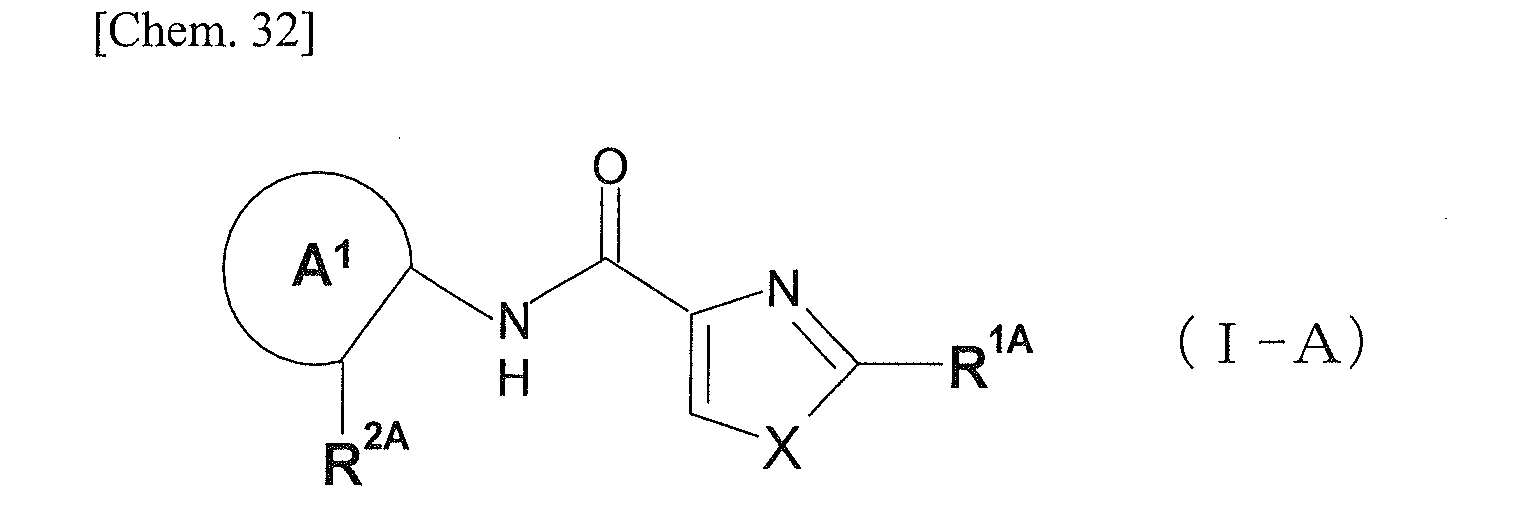 X: S or O,R1A : a group represented by the formula (II-A) or a group represented by the
formula (III-A), Alk: the same as or different from each other, each representing lower alkylene,R1c: -Alk-O-lower alkyl, saturated hetero ring group which may be substituted with lower alkyl, or -Alk-saturated hetero ring group,R1d: lower alkyl,Q1: cyclic amino which may be substituted with group(s) selected from Group G1B below,Group G1B: F, -OH, -O-lower alkyl, or -O-(heteroaryl which may be substituted with group(s) selected from the group consisting of halogen, lower alkyl, -O-lower alkyl, -CN, and -OH),R2A :
 R2C: -O-lower alkyl, -CH2-RW or -NH-RX,RW: -H, heteroaryl or saturated hetero ring group,RX: (1) -H, (2) cycloalkyl, (3) saturated hetero ring group, (4) heteroaryl, or (5) lower alkyl which may be substituted with group(s) selected from the group consisting of F, cycloalkyl, -O-lower alkyl and saturated hetero ring group,A1:
 R4A: (1) -H, (2) cycloalkyl substituted with one -CN, (3) saturated hetero ring group which may be substituted with group(s) selected from the group consisting of lower alkyl and -Alk-O-lower alkyl, (4) -O-lower alkyl, (5) -O-saturated hetero ring group, or (6) lower alkyl which may be substituted with one group selected from Group 63B below,Group G3B: -O-lower alkyl, -NR4fR4g and cyclic amino,R4f: lower alkyl,R4g: lower alkyl which is the same as or different from R4f, which may be substituted with one group selected from the group consisting of -O-lower alkyl and saturated hetero ring group,wherein the cyclic amino in Group G3B may be substituted with group(s) selected from the group consisting of F, lower alkyl, -O-lower alkyl and -Alk-O-lower alkyl,and cycloalkane may be spiro bonded on the cyclic amino in Group G3B, and arene or cycloalkane may be condensed with the cyclic amino in Group G3B, andR5A: -H, lower alkyl or -O-lower alkyl.)
 - The compound or a salt thereof according to claim 9, wherein R2C is -NH-RX.
- The compound according to claim 1, which is selected from the group consisting of:2-morpholin-4-yl-N-[2-(pyridin-3-ylcarbamoyl)phenyl]-1,3-oxazole-4-carboxamide,2-(4-ethoxypiperidin-1-yl)-N-[2-(tetrahydro-2H-pyran-4-ylcarbamoyl)phenyl]-1,3-thiazole-4-carboxamide,2-[(2-methoxyethyl)(methyl)amino]-N-[2-(pyridin-3-ylcarbamoyl)phenyl]-1,3-thiazole-4-carboxamide,2-[(3S)-3-methoxypyrrolidin-1-yl]-N-[2-(pyridin-3-ylcarbamoyl)phenyl]-1,3-oxazole-4-carboxamide,2-[(2-methoxyethyl)(methyl)amino]-N-[2-(tetrahydro-2H-pyran-4-ylcarbamoyl)phenyl]-1,3-oxazole-4-carboxamide,N-{2-[(2-methoxyethyl)carbamoyl]-4-(morpholin-4-ylmethyl)phenyl}-2-[4-(pyrimidin-2-yloxy)piperidin-1-yl]-1,3-thiazole-4-carboxamide,4-[({2-[4-(pyrimidin-2-yloxy)piperidin-1-yl]-1,3-thiazol-4-yl}carbonyl)amino]-N-(tetrahydro-2H-pyran-4-yl) nicotinamide,2-[(2-methoxyethyl)(methyl)amino]-N-[4-methoxy-2-(pyridin-3-ylcarbamoyl)phenyl]-1,3-thiazole-4-carboxamide,2-[methyl(tetrahydro-2H-pyran-4-ylmethyl)amino]-N-[4-(morpholin-4-ylmethyl)-2-(tetrahydro-2H-pyran-4-ylcarbamoyl)phenyl]-1,3-thiazole-4-carboxamide,N-(2-[(2-methoxyethyl)carbamoyl]-4-{[(2S)-2-methylmorpholin-4-yl]methyl}phenyl)-2-[(3S)-3-methoxypyrrolidin-1-yl]-1,3-thiazole-4-carboxamide,N-{4-[(3,3-dimethylmorpholin-4-yl)methyl]-2-[(2-methoxyethyl)carbamoyl]phenyl}-2-[(3S)-3-methoxypyrrolidin-1-yl]-1,3-thiazole-4-carboxamide,2-(3-methoxyazetidin-1-yl)-N-{2-[(2-methoxyethyl)carbamoyl]-4-(morpholin-4-ylmethyl)phenyl}-1,3-thiazole-4-carboxamide,2-(3-methoxyazetidin-1-yl)-N-[2-{[(1R)-2-methoxy-1-methylethyl]carbamoyl}-4-(morpholin-4-ylmethyl)phenyl}-1,3-thiazole-4-carboxamide,N-{4-(ethoxymethyl)-2-[(2-methoxyethyl)carbamoyl]phenyl}-2-[(3S)-3-methoxypyrrolidin-1-yl]-1,3-thiazole-4-carboxamide,N-{2-[(2-methoxyethyl)carbamoyl]-4-(morpholin-4-ylmethyl)phenyl}-2-[(2-methoxyethyl)(methyl)amino]-1,3-thiazole-4-carboxamide, and2-[(3 S)-3-fluoropyrrolidin-1-yl]-N-{2-[(2-methoxyethyl)carbamoyl]-4-(morpholin-4-ylmethyl)phenyl}-1,3-thiazole-4-carboxamide, or a salt thereof.
- A pharmaceutical composition comprising the compound or a salt thereof according to claim 1, and a pharmaceutically acceptable excipient.
- The pharmaceutical composition according to claim 12, which is a trkA receptor inhibitor.
- The pharmaceutical composition according to claim 12, which is a prophylactic and/or therapeutic agent for urinary frequency, urinary urgency, urinary incontinence and lower urinary tract pain associated with various lower urinary tract diseases, and various diseases accompanied by pain.
- The pharmaceutical composition according to claim 14, wherein the lower urinary tract disease is overactive bladder, interstitial cystitis, or chronic prostatitis.
- Use of the compound or a salt thereof according to claim 1 for the manufacture of a prophylactic and/or therapeutic agent for urinary frequency, urinary urgency, urinary incontinence and lower urinary tract pain associated with various lower urinary tract diseases, and various diseases accompanied by pain.
- The use according to claim 16, wherein the lower urinary tract disease is overactive bladder, interstitial cystitis, or chronic prostatitis.
- A method for preventing and/or treating urinary frequency, urinary urgency, urinary incontinence and lower urinary tract pain associated with various lower urinary tract diseases, and various diseases accompanied by pain, which comprises administering to a patient an effective amount of the compound or a salt thereof according to in claim 1.
- The method for preventing and/or treating according to claim 18, wherein the lower urinary tract disease is overactive bladder, interstitial cystitis, or chronic prostatitis.
Priority Applications (4)
| Application Number | Priority Date | Filing Date | Title |
|---|---|---|---|
| SI200831299T SI2206707T1 (en) | 2007-10-24 | 2008-10-23 | Azolecarboxamide compound or salt thereof |
| PL08842145T PL2206707T3 (en) | 2007-10-24 | 2008-10-23 | Azolecarboxamide compound or salt thereof |
| HRP20140970AT HRP20140970T1 (en) | 2007-10-24 | 2008-10-23 | Azolecarboxamide compound or salt thereof |
| CY20141100725T CY1115547T1 (en) | 2007-10-24 | 2014-09-10 | AZOLOCAROXAMIDE OR SALT COMPOSITION |
Applications Claiming Priority (2)
| Application Number | Priority Date | Filing Date | Title |
|---|---|---|---|
| JP2007276894 | 2007-10-24 | ||
| PCT/JP2008/069263 WO2009054468A1 (en) | 2007-10-24 | 2008-10-23 | Azolecarboxamide compound or salt thereof |
Publications (3)
| Publication Number | Publication Date |
|---|---|
| EP2206707A1 true EP2206707A1 (en) | 2010-07-14 |
| EP2206707A4 EP2206707A4 (en) | 2011-08-17 |
| EP2206707B1 EP2206707B1 (en) | 2014-07-23 |
Family
ID=40579570
Family Applications (1)
| Application Number | Title | Priority Date | Filing Date |
|---|---|---|---|
| EP08842145.8A Active EP2206707B1 (en) | 2007-10-24 | 2008-10-23 | Azolecarboxamide compound or salt thereof |
Country Status (21)
| Country | Link |
|---|---|
| US (1) | US8304547B2 (en) |
| EP (1) | EP2206707B1 (en) |
| JP (1) | JP5321467B2 (en) |
| KR (1) | KR101504787B1 (en) |
| CN (1) | CN101835764B (en) |
| AU (1) | AU2008314922B2 (en) |
| BR (1) | BRPI0818201B8 (en) |
| CA (1) | CA2703106C (en) |
| CY (1) | CY1115547T1 (en) |
| DK (1) | DK2206707T3 (en) |
| ES (1) | ES2498065T3 (en) |
| HR (1) | HRP20140970T1 (en) |
| IL (1) | IL205071A (en) |
| MX (1) | MX2010004499A (en) |
| PL (1) | PL2206707T3 (en) |
| PT (1) | PT2206707E (en) |
| RU (1) | RU2461551C2 (en) |
| SI (1) | SI2206707T1 (en) |
| TW (1) | TWI418557B (en) |
| WO (1) | WO2009054468A1 (en) |
| ZA (1) | ZA201002608B (en) |
Cited By (7)
| Publication number | Priority date | Publication date | Assignee | Title |
|---|---|---|---|---|
| WO2012059442A3 (en) * | 2010-11-01 | 2012-09-27 | Neurotune Ag | Neurotrypsin inhibitors |
| WO2013102826A1 (en) * | 2012-01-04 | 2013-07-11 | Pfizer Limited | N-aminosulfonyl benzamides |
| EP2842955A4 (en) * | 2012-04-26 | 2015-09-16 | Ono Pharmaceutical Co | COMPOUND INHIBITOR OF Trk |
| EP3153511A4 (en) * | 2014-06-06 | 2017-12-06 | Astellas Pharma Inc. | 2-acylaminothiazole derivative or salt thereof |
| EP3778577A4 (en) * | 2018-05-09 | 2021-03-31 | Lg Chem, Ltd. | NEW COMPOUND PRESENTING AN ENTEROPEPTIDASE INHIBITORING ACTIVITY |
| EP4159743A1 (en) * | 2021-09-30 | 2023-04-05 | ETH Zurich | Methods for preparing pyridazine compounds |
| EP4551571A4 (en) * | 2022-07-07 | 2026-05-13 | Libra Therapeutics Inc | OXAZOL-TRPML1 AGONISTS AND USES THEREOF |
Families Citing this family (42)
| Publication number | Priority date | Publication date | Assignee | Title |
|---|---|---|---|---|
| AU2009322346B2 (en) * | 2008-12-03 | 2015-07-02 | The Scripps Research Institute | Stem cell cultures |
| WO2010118055A1 (en) * | 2009-04-09 | 2010-10-14 | Cognition Therapeutics, Inc. | Inhibitors of cognitive decline |
| RU2012107457A (en) | 2009-07-31 | 2013-09-10 | Когнишн Терапьютикс, Инк. | COGNITIVE IMPAIRMENT INHIBITORS |
| KR20120081119A (en) * | 2009-09-04 | 2012-07-18 | 잘리커스 파마슈티컬즈 리미티드 | Substituted heterocyclic derivatives for the treatment of pain and epilepsy |
| WO2011029802A1 (en) * | 2009-09-08 | 2011-03-17 | F. Hoffmann-La Roche Ag | 4-substituted pyridin-3-yl-carboxamide compounds and methods of use |
| JP2012254939A (en) * | 2009-10-07 | 2012-12-27 | Astellas Pharma Inc | Oxazole compound |
| US9018227B2 (en) | 2010-03-19 | 2015-04-28 | Indiana State University | Nicotinic acetylcholine receptor agonists |
| CA2794801C (en) | 2010-04-07 | 2019-01-15 | F. Hoffmann-La Roche Ag | Pyrazol-4-yl-heterocyclyl-carboxamide compounds and methods of use |
| WO2012061926A1 (en) * | 2010-11-08 | 2012-05-18 | Zalicus Pharmaceuticals Ltd. | Bisarylsulfone and dialkylarylsulfone compounds as calcium channel blockers |
| SG192596A1 (en) | 2011-02-02 | 2013-09-30 | Cognition Therapeutics Inc | Isolated compounds from turmeric oil and methods of use |
| BR112013021638A2 (en) * | 2011-02-25 | 2016-08-02 | Irm Llc | "trk inhibiting compounds, their use and compositions comprising them" |
| RS56876B1 (en) | 2011-08-11 | 2018-04-30 | Astellas Pharma Inc | Novel anti-human ngf antibody |
| EP2760857A1 (en) | 2011-09-27 | 2014-08-06 | F.Hoffmann-La Roche Ag | Pyrazol-4-yl-heterocyclyl-carboxamide compounds and methods of use |
| EP3181564B1 (en) | 2012-11-20 | 2019-09-18 | H. Hoffnabb-La Roche Ag | Aminopyrimidine compounds as inhibitors of t790m containing egfr mutants |
| WO2014134306A1 (en) | 2013-03-01 | 2014-09-04 | Zalicus Pharmaceuticals, Ltd. | Heterocyclic inhibitors of the sodium channel |
| GB201313664D0 (en) * | 2013-07-31 | 2013-09-11 | Univ Cardiff | Bcl-3 inhibitors |
| EP3097095A1 (en) * | 2014-01-24 | 2016-11-30 | AbbVie Inc. | Furo-3-carboxamide derivatives and methods of use |
| WO2015116923A1 (en) | 2014-01-31 | 2015-08-06 | Cognition Therapeutics, Inc. | Isoindoline compositions and methods for treating neurodegenerative disease |
| JP6569678B2 (en) * | 2014-08-26 | 2019-09-04 | アステラス製薬株式会社 | 2-aminothiazole derivative or salt thereof |
| ES2912276T3 (en) | 2015-04-07 | 2022-05-25 | Ela Pharma Ltd | Compositions for treating and/or preventing cell or tissue necrosis that specifically target cathepsin C and/or CELA1 and/or CELA3A and/or enzymes structurally related thereto |
| DK3286181T3 (en) | 2015-04-22 | 2021-04-06 | Rigel Pharmaceuticals Inc | PYRAZOLE COMPOUNDS AND PROCEDURE FOR PREPARATION AND USE OF THE COMPOUNDS |
| CN105601585B (en) * | 2015-12-17 | 2018-01-05 | 浙江工业大学 | A kind of carboxamides and its preparation and application containing thiazole ring |
| US10774055B2 (en) | 2016-01-01 | 2020-09-15 | Adam Agan Ltd. | Process for preparing 1,1,3-trioxo-1,2-benzothiazole-6-carboxamide |
| BR102018007822A2 (en) | 2017-04-20 | 2018-11-06 | Gilead Sciences, Inc. | compound, methods for inhibiting pd-1, pd-11 and / or interaction of pd-1 / pd-11 and for cancer treatment, pharmaceutical composition, and kit for treating or preventing cancer or a disease or condition |
| ES3063712T3 (en) | 2017-05-15 | 2026-04-20 | Cognition Therapeutics Inc | Compositions for treating neurodegenerative diseases |
| WO2019160882A1 (en) | 2018-02-13 | 2019-08-22 | Gilead Sciences, Inc. | Pd-1/pd-l1 inhibitors |
| KR102591947B1 (en) | 2018-04-19 | 2023-10-25 | 길리애드 사이언시즈, 인코포레이티드 | PD-1/PD-L1 inhibitors |
| PE20210642A1 (en) | 2018-07-13 | 2021-03-23 | Gilead Sciences Inc | PD-1 / PD-L1 INHIBITORS |
| US11236085B2 (en) | 2018-10-24 | 2022-02-01 | Gilead Sciences, Inc. | PD-1/PD-L1 inhibitors |
| CN109627207A (en) * | 2018-12-17 | 2019-04-16 | 天津药明康德新药开发有限公司 | A kind of preparation method of 3- (difluoro-methoxy) piperidine hydrochlorate |
| CA3129665A1 (en) | 2019-03-21 | 2020-09-24 | Onxeo | A dbait molecule in combination with kinase inhibitor for the treatment of cancer |
| JP2022545542A (en) | 2019-08-30 | 2022-10-27 | ライジェル ファーマシューティカルズ, インコーポレイテッド | Pyrazole compounds, formulations thereof and methods of using the compounds and/or formulations |
| JP2022552655A (en) | 2019-10-07 | 2022-12-19 | キャリーオペ,インク. | GPR119 agonist |
| KR20220098759A (en) | 2019-11-08 | 2022-07-12 | 인쎄름 (엥스띠뛰 나씨오날 드 라 쌍떼 에 드 라 흐쉐르슈 메디깔) | A method of treating cancer that has acquired resistance to a kinase inhibitor |
| WO2021148581A1 (en) | 2020-01-22 | 2021-07-29 | Onxeo | Novel dbait molecule and its use |
| MX2022010548A (en) | 2020-02-28 | 2022-09-23 | Kallyope Inc | Gpr40 agonists. |
| MX2022014505A (en) | 2020-05-19 | 2022-12-13 | Kallyope Inc | Ampk activators. |
| CA3183575A1 (en) | 2020-06-26 | 2021-12-30 | Iyassu Sebhat | Ampk activators |
| WO2022187303A1 (en) | 2021-03-03 | 2022-09-09 | Rigel Pharmaceuticals, Inc. | A method for treating a disease or condition using a pyrazole compound or formulation thereof |
| TW202315628A (en) * | 2021-06-24 | 2023-04-16 | 南韓商Lg化學股份有限公司 | Novel pyridine derivative compound as ron inhibitor |
| ES3075943T3 (en) | 2022-03-23 | 2026-08-10 | Rigel Pharmaceuticals Inc | Pyrimid-2-yl-pyrazole compounds as irak inhibitors |
| WO2025151402A1 (en) * | 2024-01-08 | 2025-07-17 | Libra Therapeutics, Inc. | Thiazole trpml1 agonists and uses thereof |
Family Cites Families (61)
| Publication number | Priority date | Publication date | Assignee | Title |
|---|---|---|---|---|
| US5395932A (en) | 1993-04-30 | 1995-03-07 | G. D. Searle & Co. | 2,3-,4-,5-,6-,7-,8-,9- and/or 10-substituted dibenzoxazepine compounds, pharmaceutical compositions and methods of use |
| GB9424379D0 (en) * | 1994-12-02 | 1995-01-18 | Agrevo Uk Ltd | Fungicides |
| EP1014962A4 (en) | 1997-06-26 | 2007-06-27 | Lilly Co Eli | Antithrombotic agents |
| DE69926148D1 (en) | 1998-11-09 | 2005-08-18 | Black James Foundation | Gastrin und cholecystokinin rezeptor ligande |
| CA2366932C (en) * | 1999-04-15 | 2009-08-25 | Bristol-Myers Squibb Company | Cyclic protein tyrosine kinase inhibitors |
| US6399780B1 (en) | 1999-08-20 | 2002-06-04 | Cephalon, Inc. | Isomeric fused pyrrolocarbazoles and isoindolones |
| US6455525B1 (en) | 1999-11-04 | 2002-09-24 | Cephalon, Inc. | Heterocyclic substituted pyrazolones |
| JP2001278872A (en) * | 2000-03-27 | 2001-10-10 | Banyu Pharmaceut Co Ltd | New aminothiazole derivatives |
| FR2807660A1 (en) | 2000-04-13 | 2001-10-19 | Warner Lambert Co | Use of a nerve growth factor antagonist for the manufacture of a medicament for the prevention or treatment of chronic visceral pain |
| US7071217B2 (en) | 2000-09-01 | 2006-07-04 | Smithkline Beecham Corporation | Substituted oxindole derivatives as tyrosine kinase inhibitors |
| WO2002020513A1 (en) | 2000-09-01 | 2002-03-14 | Glaxo Group Limited | Oxindole derivatives |
| DK1340757T3 (en) | 2000-11-16 | 2007-02-12 | Sankyo Co | 1-methylcarbapenem derivatives |
| WO2002064558A2 (en) | 2001-02-14 | 2002-08-22 | Sankyo Company, Limited | Oxazole derivatives, their preparation and their use as cytokine inhibitors |
| JP2002338537A (en) | 2001-05-16 | 2002-11-27 | Mitsubishi Pharma Corp | Amide compounds and their pharmaceutical uses |
| AR034897A1 (en) | 2001-08-07 | 2004-03-24 | Hoffmann La Roche | N-MONOACILATED DERIVATIVES OF O-PHENYLENDIAMINS, THEIR HETEROCICLICAL ANALOGS OF SIX MEMBERS AND THEIR USE AS PHARMACEUTICAL AGENTS |
| US7015231B2 (en) | 2001-09-27 | 2006-03-21 | Smithkline Beecham Corporation | Chemical compounds |
| JP2003231687A (en) | 2002-02-04 | 2003-08-19 | Japan Tobacco Inc | Pyrazolyl fused ring compounds and their pharmaceutical uses |
| US20040110802A1 (en) | 2002-08-23 | 2004-06-10 | Atli Thorarensen | Antibacterial benzoic acid derivatives |
| EP1594854B1 (en) | 2003-02-06 | 2010-09-01 | Bristol-Myers Squibb Company | Thiazolyl-based compounds useful as kinase inhibitors |
| WO2004072068A1 (en) | 2003-02-10 | 2004-08-26 | Amgen Inc. | Vanilloid receptor ligands and their use in treatments |
| US7223788B2 (en) | 2003-02-14 | 2007-05-29 | Sanofi-Aventis Deutschland Gmbh | Substituted N-aryl heterocycles, process for their preparation and their use as medicaments |
| DE10306250A1 (en) | 2003-02-14 | 2004-09-09 | Aventis Pharma Deutschland Gmbh | Substituted N-aryl heterocycles, processes for their preparation and their use as pharmaceuticals |
| MXPA05011503A (en) | 2003-04-25 | 2006-05-31 | Johnson & Johnson | C-fms kinase inhibitors. |
| US7427683B2 (en) | 2003-04-25 | 2008-09-23 | Ortho-Mcneil Pharmaceutical, Inc. | c-fms kinase inhibitors |
| US20050113566A1 (en) | 2003-04-25 | 2005-05-26 | Player Mark R. | Inhibitors of C-FMS kinase |
| FR2856685B1 (en) | 2003-06-25 | 2005-09-23 | Merck Sante Sas | THIAZOLYLPIPERIDINE DERIVATIVES, PROCESSES FOR PREPARING THEM AND PHARMACEUTICAL COMPOSITIONS CONTAINING THEM |
| AU2004276337B2 (en) | 2003-09-24 | 2009-11-12 | Methylgene Inc. | Inhibitors of histone deacetylase |
| TW200523252A (en) | 2003-10-31 | 2005-07-16 | Takeda Pharmaceutical | Pyridine compounds |
| CN101675928A (en) | 2003-11-14 | 2010-03-24 | 沃泰克斯药物股份有限公司 | Thiazoles and oxazoles useful as modulators of ATP-binding cassette transporters |
| MY141220A (en) | 2003-11-17 | 2010-03-31 | Astrazeneca Ab | Pyrazole derivatives as inhibitors of receptor tyrosine kinases |
| EP1718308A4 (en) | 2004-02-11 | 2007-07-18 | Painceptor Pharma Corp | METHOD OF MODULATING THE ACTIVITY CAUSED VIA NEUROTROPHIN |
| EP1742921A2 (en) | 2004-04-21 | 2007-01-17 | AstraZeneca AB | Pyrazole derivatives useful for the treatment of cancer |
| BRPI0515012A (en) | 2004-08-13 | 2008-07-01 | Genentech Inc | chemical substance, pharmaceutical composition and formulation, method of treatment, method of inhibiting at least one enzyme using atp and use |
| DE102004039789A1 (en) | 2004-08-16 | 2006-03-02 | Sanofi-Aventis Deutschland Gmbh | Aryl-substituted polycyclic amines, process for their preparation and their use as pharmaceuticals |
| EP1637529A1 (en) | 2004-09-20 | 2006-03-22 | 4Sc Ag | Novel piperidin-4-yl-thiazole-carboxamide analogues as inhibitors of T-cell proliferation and uses thereof |
| US7601745B2 (en) | 2004-09-27 | 2009-10-13 | 4Sc Ag | Heterocyclic NF-kB inhibitors |
| EP1812439B2 (en) | 2004-10-15 | 2017-12-06 | Takeda Pharmaceutical Company Limited | Kinase inhibitors |
| AU2005295752A1 (en) | 2004-10-15 | 2006-04-27 | Amgen Inc. | Imidazole derivatives as vanilloid receptor ligands |
| CN101084208A (en) | 2004-10-22 | 2007-12-05 | 詹森药业有限公司 | Aromatic amides as inhibitors of c-fms kinase |
| US20060252807A1 (en) | 2005-04-22 | 2006-11-09 | Kalypsys, Inc. | Novel ortho-terphenyl inhibitors of p38 kinase and methods of treating inflammatory disorders |
| AU2006244203B2 (en) | 2005-05-09 | 2012-05-03 | Achillion Pharmaceuticals, Inc. | Thiazole compounds and methods of use |
| WO2007000582A1 (en) | 2005-06-28 | 2007-01-04 | Takeda Cambridge Limited | Heterocyclic non-peptide gnrh antagonists |
| PE20070211A1 (en) * | 2005-07-29 | 2007-05-12 | Medivir Ab | MACROCYCLIC COMPOUNDS AS INHIBITORS OF HEPATITIS C VIRUS |
| EP1910347A2 (en) * | 2005-07-29 | 2008-04-16 | Medivir Ab | Macrocylic inhibitors of hepatitis c virus |
| TWI329641B (en) | 2005-08-31 | 2010-09-01 | Otsuka Pharma Co Ltd | (benzo[b]thiophen-4-yl)piperazine compounds, pharmaceutical compositions comprising the same, uses of the same and processes for preparing the same |
| AU2006290814B2 (en) | 2005-09-13 | 2012-06-07 | Janssen Pharmaceutica N.V. | 2-aniline-4-aryl substituted thiazole derivatives |
| US20070099900A1 (en) | 2005-09-15 | 2007-05-03 | Painceptor Pharma Corporation | Methods of modulating neurotrophin-mediated activity |
| JP2009508952A (en) * | 2005-09-20 | 2009-03-05 | メルク エンド カムパニー インコーポレーテッド | Niacin receptor agonists, compositions containing such compounds, and methods of treatment |
| ES2537898T3 (en) | 2005-10-25 | 2015-06-15 | Shionogi & Co., Ltd. | Aminothiazolidine and aminotetrahydrotiazepine derivatives as BACE 1 inhibitors |
| US7514435B2 (en) | 2005-11-18 | 2009-04-07 | Bristol-Myers Squibb Company | Pyrrolotriazine kinase inhibitors |
| BRPI0619052A2 (en) | 2005-11-28 | 2011-09-20 | Hoffmann La Roche | compounds, process for their preparation, pharmaceutical compositions comprising them, method for the therapeutic and / or prophylactic treatment of diseases that are modulated by diacylglycerol acyltransferase inhibitors, and their use |
| NZ570835A (en) | 2006-03-08 | 2011-11-25 | Achillion Pharmaceuticals Inc | Substituted aminothiazole derivatives with anti-HCV activity |
| EP1994017A2 (en) | 2006-03-15 | 2008-11-26 | 4Sc Ag | Novel heterocyclic nf-kb inhibitors |
| JP5182088B2 (en) * | 2006-04-19 | 2013-04-10 | アステラス製薬株式会社 | Azole carboxamide derivatives |
| ES2498043T3 (en) | 2006-06-06 | 2014-09-24 | Cornerstone Therapeutics Inc. | Novel piperazines, pharmaceutical compositions and methods of use thereof |
| GB0614070D0 (en) | 2006-07-14 | 2006-08-23 | Glaxo Group Ltd | Compounds |
| EP1881001A1 (en) | 2006-07-20 | 2008-01-23 | Tibotec Pharmaceuticals Ltd. | HCV NS-3 serine protease inhibitors |
| KR20090082440A (en) | 2006-10-31 | 2009-07-30 | 쉐링 코포레이션 | 2-amin0thiaz0le-4-carb0xylic amides as protein kinase inhibitors |
| EP2078003B1 (en) | 2006-10-31 | 2017-03-08 | Merck Sharp & Dohme Corp. | Anilinopiperazine derivatives and methods of use thereof |
| US8227605B2 (en) | 2006-10-31 | 2012-07-24 | Schering Corporation | 2-aminothiazole-4-carboxylic amides as protein kinase inhibitors |
| WO2008059214A1 (en) | 2006-11-13 | 2008-05-22 | Astrazeneca Ab | Bisamlde derivatives and use thereof as fatty acid synthase inhibitors |
-
2008
- 2008-10-23 SI SI200831299T patent/SI2206707T1/en unknown
- 2008-10-23 HR HRP20140970AT patent/HRP20140970T1/en unknown
- 2008-10-23 ES ES08842145.8T patent/ES2498065T3/en active Active
- 2008-10-23 EP EP08842145.8A patent/EP2206707B1/en active Active
- 2008-10-23 PT PT88421458T patent/PT2206707E/en unknown
- 2008-10-23 BR BRPI0818201A patent/BRPI0818201B8/en not_active IP Right Cessation
- 2008-10-23 CA CA2703106A patent/CA2703106C/en active Active
- 2008-10-23 RU RU2010120676/04A patent/RU2461551C2/en active
- 2008-10-23 AU AU2008314922A patent/AU2008314922B2/en not_active Ceased
- 2008-10-23 PL PL08842145T patent/PL2206707T3/en unknown
- 2008-10-23 CN CN2008801138204A patent/CN101835764B/en not_active Expired - Fee Related
- 2008-10-23 KR KR1020107006536A patent/KR101504787B1/en not_active Expired - Fee Related
- 2008-10-23 JP JP2009538260A patent/JP5321467B2/en not_active Expired - Fee Related
- 2008-10-23 DK DK08842145.8T patent/DK2206707T3/en active
- 2008-10-23 US US12/739,433 patent/US8304547B2/en not_active Expired - Fee Related
- 2008-10-23 WO PCT/JP2008/069263 patent/WO2009054468A1/en not_active Ceased
- 2008-10-23 MX MX2010004499A patent/MX2010004499A/en active IP Right Grant
- 2008-10-24 TW TW097140903A patent/TWI418557B/en not_active IP Right Cessation
-
2010
- 2010-04-14 IL IL205071A patent/IL205071A/en active IP Right Grant
- 2010-04-14 ZA ZA2010/02608A patent/ZA201002608B/en unknown
-
2014
- 2014-09-10 CY CY20141100725T patent/CY1115547T1/en unknown
Cited By (16)
| Publication number | Priority date | Publication date | Assignee | Title |
|---|---|---|---|---|
| WO2012059442A3 (en) * | 2010-11-01 | 2012-09-27 | Neurotune Ag | Neurotrypsin inhibitors |
| WO2013102826A1 (en) * | 2012-01-04 | 2013-07-11 | Pfizer Limited | N-aminosulfonyl benzamides |
| EP2842955A4 (en) * | 2012-04-26 | 2015-09-16 | Ono Pharmaceutical Co | COMPOUND INHIBITOR OF Trk |
| US9242977B2 (en) | 2012-04-26 | 2016-01-26 | Ono Pharmaceutical Co., Ltd. | Trk-inhibiting compound |
| USRE49111E1 (en) | 2014-06-06 | 2022-06-21 | Astellas Pharma Inc. | 2-acylaminothiazole derivative or salt thereof |
| EP3153511A4 (en) * | 2014-06-06 | 2017-12-06 | Astellas Pharma Inc. | 2-acylaminothiazole derivative or salt thereof |
| EP3778577A4 (en) * | 2018-05-09 | 2021-03-31 | Lg Chem, Ltd. | NEW COMPOUND PRESENTING AN ENTEROPEPTIDASE INHIBITORING ACTIVITY |
| RU2768755C1 (en) * | 2018-05-09 | 2022-03-24 | ЭлДжи КЕМ, ЛТД. | Novel compound exhibiting enteropeptidase inhibiting activity |
| AU2019265268B2 (en) * | 2018-05-09 | 2022-04-28 | Lg Chem, Ltd. | Novel compound exhibiting enteropeptidase inhibitory activity |
| AU2019265268C1 (en) * | 2018-05-09 | 2022-08-04 | Lg Chem, Ltd. | Novel compound exhibiting enteropeptidase inhibitory activity |
| US11447480B2 (en) | 2018-05-09 | 2022-09-20 | Lg Chem, Ltd. | Compound exhibiting enteropeptidase inhibitory activity |
| IL278435B1 (en) * | 2018-05-09 | 2024-02-01 | Lg Chemical Ltd | Novel compound exhibiting enteropeptidase inhibitory activity |
| IL278435B2 (en) * | 2018-05-09 | 2024-06-01 | Lg Chemical Ltd | A new compound showing enteropeptidase inhibitory activity |
| EP4159743A1 (en) * | 2021-09-30 | 2023-04-05 | ETH Zurich | Methods for preparing pyridazine compounds |
| WO2023052526A1 (en) * | 2021-09-30 | 2023-04-06 | Eth Zurich | Methods for preparing pyridazine compounds |
| EP4551571A4 (en) * | 2022-07-07 | 2026-05-13 | Libra Therapeutics Inc | OXAZOL-TRPML1 AGONISTS AND USES THEREOF |
Also Published As
| Publication number | Publication date |
|---|---|
| BRPI0818201B1 (en) | 2019-01-29 |
| JPWO2009054468A1 (en) | 2011-03-10 |
| ZA201002608B (en) | 2011-07-27 |
| PL2206707T3 (en) | 2015-01-30 |
| JP5321467B2 (en) | 2013-10-23 |
| PT2206707E (en) | 2014-09-25 |
| SI2206707T1 (en) | 2014-11-28 |
| RU2010120676A (en) | 2011-11-27 |
| AU2008314922B2 (en) | 2013-08-29 |
| AU2008314922A1 (en) | 2009-04-30 |
| IL205071A (en) | 2015-08-31 |
| US20100249088A1 (en) | 2010-09-30 |
| EP2206707A4 (en) | 2011-08-17 |
| CA2703106C (en) | 2015-12-01 |
| KR20100071047A (en) | 2010-06-28 |
| WO2009054468A1 (en) | 2009-04-30 |
| TW200932743A (en) | 2009-08-01 |
| CA2703106A1 (en) | 2009-04-30 |
| MX2010004499A (en) | 2010-05-20 |
| RU2461551C2 (en) | 2012-09-20 |
| BRPI0818201B8 (en) | 2021-05-25 |
| IL205071A0 (en) | 2010-11-30 |
| BRPI0818201A2 (en) | 2015-04-22 |
| EP2206707B1 (en) | 2014-07-23 |
| CN101835764B (en) | 2012-09-19 |
| DK2206707T3 (en) | 2014-08-11 |
| CY1115547T1 (en) | 2017-01-04 |
| HRP20140970T1 (en) | 2015-01-30 |
| CN101835764A (en) | 2010-09-15 |
| KR101504787B1 (en) | 2015-03-20 |
| US8304547B2 (en) | 2012-11-06 |
| TWI418557B (en) | 2013-12-11 |
| ES2498065T3 (en) | 2014-09-24 |
Similar Documents
| Publication | Publication Date | Title |
|---|---|---|
| EP2206707B1 (en) | Azolecarboxamide compound or salt thereof | |
| US8163746B2 (en) | Azolecarboxamide derivative | |
| KR101949624B1 (en) | Aminotriazine derivatives useful as tank-binding kinase inhibitor compounds | |
| EP3710443A1 (en) | Compounds and methods for the targeted degradation of interleukin-1 receptor-associated kinase 4 polypeptides | |
| AU2018229449A1 (en) | Substituted piperidine compounds and their use as orexin receptor modulators | |
| CA3189908A1 (en) | Bicycloheptane pyrrolidine orexin receptor agonists | |
| US20220079928A1 (en) | Lysophosphatidic acid receptor antagonist and preparation method therefor | |
| JP2023529884A (en) | COLLAGEN 1 TRANSLATION INHIBITOR AND METHOD OF USE THEREOF | |
| CA2743723A1 (en) | Inhibitors of diacylglycerol acyltransferase | |
| US20240279215A1 (en) | Nampt modulators | |
| AU2017276837B2 (en) | Compounds containing benzo[d][1,3]oxathiole, benzo[d][1,3]oxathiole 3-oxide or benzo[d][1,3]oxathiole 3,3-dioxide and methods/uses thereof as agonists of G protein-coupled receptor 119 | |
| US20070232601A1 (en) | Vla-4 Inhibitor | |
| AU2009316795A1 (en) | Inhibitors of diacylglycerol acyltransferase | |
| WO2026011019A1 (en) | Pyrrolidinyl compounds as inhibitors of cgas | |
| EP4551218A2 (en) | Potent and selective irreversible inhibitors of irak1 |
Legal Events
| Date | Code | Title | Description |
|---|---|---|---|
| PUAI | Public reference made under article 153(3) epc to a published international application that has entered the european phase |
Free format text: ORIGINAL CODE: 0009012 |
|
| 17P | Request for examination filed |
Effective date: 20100416 |
|
| AK | Designated contracting states |
Kind code of ref document: A1 Designated state(s): AT BE BG CH CY CZ DE DK EE ES FI FR GB GR HR HU IE IS IT LI LT LU LV MC MT NL NO PL PT RO SE SI SK TR |
|
| AX | Request for extension of the european patent |
Extension state: AL BA MK RS |
|
| RAX | Requested extension states of the european patent have changed |
Extension state: RS Payment date: 20100416 |
|
| A4 | Supplementary search report drawn up and despatched |
Effective date: 20110718 |
|
| 17Q | First examination report despatched |
Effective date: 20130424 |
|
| RIC1 | Information provided on ipc code assigned before grant |
Ipc: C07D 263/34 20060101ALI20131218BHEP Ipc: A61K 31/422 20060101ALI20131218BHEP Ipc: C07D 413/04 20060101ALI20131218BHEP Ipc: C07D 277/20 20060101AFI20131218BHEP Ipc: A61P 13/02 20060101ALI20131218BHEP Ipc: C07D 263/48 20060101ALI20131218BHEP Ipc: A61K 31/454 20060101ALI20131218BHEP Ipc: A61K 31/444 20060101ALI20131218BHEP Ipc: C07D 417/12 20060101ALI20131218BHEP Ipc: C07D 417/04 20060101ALI20131218BHEP Ipc: A61P 43/00 20060101ALI20131218BHEP Ipc: C07D 401/14 20060101ALI20131218BHEP Ipc: A61K 31/427 20060101ALI20131218BHEP Ipc: C07D 277/56 20060101ALI20131218BHEP Ipc: A61K 31/4545 20060101ALI20131218BHEP Ipc: A61K 31/5377 20060101ALI20131218BHEP Ipc: A61K 31/421 20060101ALI20131218BHEP Ipc: A61K 31/4439 20060101ALI20131218BHEP Ipc: A61K 31/426 20060101ALI20131218BHEP Ipc: C07D 417/14 20060101ALI20131218BHEP Ipc: C07D 413/12 20060101ALI20131218BHEP |
|
| GRAP | Despatch of communication of intention to grant a patent |
Free format text: ORIGINAL CODE: EPIDOSNIGR1 |
|
| INTG | Intention to grant announced |
Effective date: 20140127 |
|
| GRAS | Grant fee paid |
Free format text: ORIGINAL CODE: EPIDOSNIGR3 |
|
| GRAA | (expected) grant |
Free format text: ORIGINAL CODE: 0009210 |
|
| AK | Designated contracting states |
Kind code of ref document: B1 Designated state(s): AT BE BG CH CY CZ DE DK EE ES FI FR GB GR HR HU IE IS IT LI LT LU LV MC MT NL NO PL PT RO SE SI SK TR |
|
| AX | Request for extension of the european patent |
Extension state: RS |
|
| REG | Reference to a national code |
Ref country code: GB Ref legal event code: FG4D |
|
| REG | Reference to a national code |
Ref country code: CH Ref legal event code: EP |
|
| REG | Reference to a national code |
Ref country code: DK Ref legal event code: T3 Effective date: 20140804 |
|
| REG | Reference to a national code |
Ref country code: IE Ref legal event code: FG4D |
|
| REG | Reference to a national code |
Ref country code: CH Ref legal event code: NV Representative=s name: BOVARD AG, CH Ref country code: AT Ref legal event code: REF Ref document number: 678798 Country of ref document: AT Kind code of ref document: T Effective date: 20140815 |
|
| REG | Reference to a national code |
Ref country code: DE Ref legal event code: R096 Ref document number: 602008033488 Country of ref document: DE Effective date: 20140904 |
|
| REG | Reference to a national code |
Ref country code: ES Ref legal event code: FG2A Ref document number: 2498065 Country of ref document: ES Kind code of ref document: T3 Effective date: 20140924 |
|
| REG | Reference to a national code |
Ref country code: PT Ref legal event code: SC4A Free format text: AVAILABILITY OF NATIONAL TRANSLATION Effective date: 20140919 |
|
| REG | Reference to a national code |
Ref country code: SE Ref legal event code: TRGR |
|
| REG | Reference to a national code |
Ref country code: HR Ref legal event code: TUEP Ref document number: P20140970 Country of ref document: HR |
|
| REG | Reference to a national code |
Ref country code: RO Ref legal event code: EPE |
|
| REG | Reference to a national code |
Ref country code: NL Ref legal event code: T3 |
|
| REG | Reference to a national code |
Ref country code: GR Ref legal event code: EP Ref document number: 20140401670 Country of ref document: GR Effective date: 20140930 |
|
| REG | Reference to a national code |
Ref country code: EE Ref legal event code: FG4A Ref document number: E009756 Country of ref document: EE Effective date: 20141003 |
|
| REG | Reference to a national code |
Ref country code: NO Ref legal event code: T2 Effective date: 20140723 |
|
| REG | Reference to a national code |
Ref country code: HR Ref legal event code: T1PR Ref document number: P20140970 Country of ref document: HR Ref country code: PL Ref legal event code: T3 |
|
| REG | Reference to a national code |
Ref country code: SK Ref legal event code: T3 Ref document number: E 17634 Country of ref document: SK |
|
| REG | Reference to a national code |
Ref country code: DE Ref legal event code: R097 Ref document number: 602008033488 Country of ref document: DE |
|
| PLBE | No opposition filed within time limit |
Free format text: ORIGINAL CODE: 0009261 |
|
| STAA | Information on the status of an ep patent application or granted ep patent |
Free format text: STATUS: NO OPPOSITION FILED WITHIN TIME LIMIT |
|
| REG | Reference to a national code |
Ref country code: HU Ref legal event code: AG4A Ref document number: E022873 Country of ref document: HU |
|
| 26N | No opposition filed |
Effective date: 20150424 |
|
| REG | Reference to a national code |
Ref country code: FR Ref legal event code: PLFP Year of fee payment: 9 |
|
| REG | Reference to a national code |
Ref country code: SE Ref legal event code: RPOT |
|
| REG | Reference to a national code |
Ref country code: FR Ref legal event code: PLFP Year of fee payment: 10 |
|
| REG | Reference to a national code |
Ref country code: FR Ref legal event code: PLFP Year of fee payment: 11 |
|
| PGFP | Annual fee paid to national office [announced via postgrant information from national office to epo] |
Ref country code: MT Payment date: 20171017 Year of fee payment: 10 |
|
| PGFP | Annual fee paid to national office [announced via postgrant information from national office to epo] |
Ref country code: EE Payment date: 20180925 Year of fee payment: 11 Ref country code: MC Payment date: 20180926 Year of fee payment: 11 Ref country code: LT Payment date: 20180925 Year of fee payment: 11 |
|
| REG | Reference to a national code |
Ref country code: HR Ref legal event code: ODRP Ref document number: P20140970 Country of ref document: HR Payment date: 20180927 Year of fee payment: 11 |
|
| PGFP | Annual fee paid to national office [announced via postgrant information from national office to epo] |
Ref country code: BG Payment date: 20180926 Year of fee payment: 11 Ref country code: LU Payment date: 20181009 Year of fee payment: 11 |
|
| PGFP | Annual fee paid to national office [announced via postgrant information from national office to epo] |
Ref country code: RO Payment date: 20181004 Year of fee payment: 11 Ref country code: HU Payment date: 20180919 Year of fee payment: 11 Ref country code: NO Payment date: 20181009 Year of fee payment: 11 |
|
| PGFP | Annual fee paid to national office [announced via postgrant information from national office to epo] |
Ref country code: LV Payment date: 20181001 Year of fee payment: 11 |
|
| PGFP | Annual fee paid to national office [announced via postgrant information from national office to epo] |
Ref country code: CY Payment date: 20180912 Year of fee payment: 11 |
|
| REG | Reference to a national code |
Ref country code: FI Ref legal event code: MAE |
|
| REG | Reference to a national code |
Ref country code: EE Ref legal event code: MM4A Ref document number: E009756 Country of ref document: EE Effective date: 20191031 |
|
| REG | Reference to a national code |
Ref country code: HR Ref legal event code: PBON Ref document number: P20140970 Country of ref document: HR Effective date: 20191023 |
|
| REG | Reference to a national code |
Ref country code: DK Ref legal event code: EBP Effective date: 20191031 Ref country code: NO Ref legal event code: MMEP |
|
| PG25 | Lapsed in a contracting state [announced via postgrant information from national office to epo] |
Ref country code: MC Free format text: LAPSE BECAUSE OF NON-PAYMENT OF DUE FEES Effective date: 20191031 |
|
| REG | Reference to a national code |
Ref country code: SK Ref legal event code: MM4A Ref document number: E 17634 Country of ref document: SK Effective date: 20191023 |
|
| REG | Reference to a national code |
Ref country code: LT Ref legal event code: MM4D Effective date: 20191023 |
|
| PG25 | Lapsed in a contracting state [announced via postgrant information from national office to epo] |
Ref country code: RO Free format text: LAPSE BECAUSE OF NON-PAYMENT OF DUE FEES Effective date: 20191023 Ref country code: CZ Free format text: LAPSE BECAUSE OF NON-PAYMENT OF DUE FEES Effective date: 20191023 Ref country code: LU Free format text: LAPSE BECAUSE OF NON-PAYMENT OF DUE FEES Effective date: 20191023 Ref country code: FI Free format text: LAPSE BECAUSE OF NON-PAYMENT OF DUE FEES Effective date: 20191023 Ref country code: NO Free format text: LAPSE BECAUSE OF NON-PAYMENT OF DUE FEES Effective date: 20191031 Ref country code: CY Free format text: LAPSE BECAUSE OF NON-PAYMENT OF DUE FEES Effective date: 20191023 Ref country code: EE Free format text: LAPSE BECAUSE OF NON-PAYMENT OF DUE FEES Effective date: 20191031 |
|
| PG25 | Lapsed in a contracting state [announced via postgrant information from national office to epo] |
Ref country code: MT Free format text: LAPSE BECAUSE OF NON-PAYMENT OF DUE FEES Effective date: 20181023 Ref country code: HU Free format text: LAPSE BECAUSE OF NON-PAYMENT OF DUE FEES Effective date: 20191024 Ref country code: SK Free format text: LAPSE BECAUSE OF NON-PAYMENT OF DUE FEES Effective date: 20191023 Ref country code: HR Free format text: LAPSE BECAUSE OF NON-PAYMENT OF DUE FEES Effective date: 20191023 Ref country code: BG Free format text: LAPSE BECAUSE OF NON-PAYMENT OF DUE FEES Effective date: 20200531 Ref country code: LV Free format text: LAPSE BECAUSE OF NON-PAYMENT OF DUE FEES Effective date: 20191023 |
|
| PG25 | Lapsed in a contracting state [announced via postgrant information from national office to epo] |
Ref country code: LT Free format text: LAPSE BECAUSE OF NON-PAYMENT OF DUE FEES Effective date: 20191023 Ref country code: DK Free format text: LAPSE BECAUSE OF NON-PAYMENT OF DUE FEES Effective date: 20191031 |
|
| PG25 | Lapsed in a contracting state [announced via postgrant information from national office to epo] |
Ref country code: SI Free format text: LAPSE BECAUSE OF NON-PAYMENT OF DUE FEES Effective date: 20191024 |
|
| REG | Reference to a national code |
Ref country code: SI Ref legal event code: KO00 Effective date: 20201030 |
|
| PG25 | Lapsed in a contracting state [announced via postgrant information from national office to epo] |
Ref country code: IS Free format text: LAPSE BECAUSE OF NON-PAYMENT OF DUE FEES Effective date: 20191101 |
|
| PGFP | Annual fee paid to national office [announced via postgrant information from national office to epo] |
Ref country code: SE Payment date: 20220912 Year of fee payment: 15 Ref country code: NL Payment date: 20220916 Year of fee payment: 15 Ref country code: IE Payment date: 20220912 Year of fee payment: 15 Ref country code: GB Payment date: 20220901 Year of fee payment: 15 |
|
| PGFP | Annual fee paid to national office [announced via postgrant information from national office to epo] |
Ref country code: PL Payment date: 20220914 Year of fee payment: 15 Ref country code: GR Payment date: 20220914 Year of fee payment: 15 Ref country code: FR Payment date: 20220908 Year of fee payment: 15 Ref country code: BE Payment date: 20220916 Year of fee payment: 15 |
|
| PGFP | Annual fee paid to national office [announced via postgrant information from national office to epo] |
Ref country code: TR Payment date: 20221020 Year of fee payment: 15 Ref country code: PT Payment date: 20221024 Year of fee payment: 15 Ref country code: IT Payment date: 20220913 Year of fee payment: 15 Ref country code: ES Payment date: 20221102 Year of fee payment: 15 Ref country code: DE Payment date: 20220621 Year of fee payment: 15 Ref country code: AT Payment date: 20220926 Year of fee payment: 15 |
|
| PGFP | Annual fee paid to national office [announced via postgrant information from national office to epo] |
Ref country code: CH Payment date: 20221010 Year of fee payment: 15 |
|
| REG | Reference to a national code |
Ref country code: DE Ref legal event code: R119 Ref document number: 602008033488 Country of ref document: DE |
|
| REG | Reference to a national code |
Ref country code: SE Ref legal event code: EUG |
|
| REG | Reference to a national code |
Ref country code: CH Ref legal event code: PL |
|
| REG | Reference to a national code |
Ref country code: NL Ref legal event code: MM Effective date: 20231101 |
|
| REG | Reference to a national code |
Ref country code: AT Ref legal event code: MM01 Ref document number: 678798 Country of ref document: AT Kind code of ref document: T Effective date: 20231023 |
|
| REG | Reference to a national code |
Ref country code: BE Ref legal event code: MM Effective date: 20231031 |
|
| GBPC | Gb: european patent ceased through non-payment of renewal fee |
Effective date: 20231023 |
|
| PG25 | Lapsed in a contracting state [announced via postgrant information from national office to epo] |
Ref country code: GB Free format text: LAPSE BECAUSE OF NON-PAYMENT OF DUE FEES Effective date: 20231023 |
|
| PG25 | Lapsed in a contracting state [announced via postgrant information from national office to epo] |
Ref country code: GR Free format text: LAPSE BECAUSE OF NON-PAYMENT OF DUE FEES Effective date: 20240515 |
|
| PG25 | Lapsed in a contracting state [announced via postgrant information from national office to epo] |
Ref country code: CH Free format text: LAPSE BECAUSE OF NON-PAYMENT OF DUE FEES Effective date: 20231031 Ref country code: NL Free format text: LAPSE BECAUSE OF NON-PAYMENT OF DUE FEES Effective date: 20231101 |
|
| PG25 | Lapsed in a contracting state [announced via postgrant information from national office to epo] |
Ref country code: AT Free format text: LAPSE BECAUSE OF NON-PAYMENT OF DUE FEES Effective date: 20231023 |
|
| PG25 | Lapsed in a contracting state [announced via postgrant information from national office to epo] |
Ref country code: NL Free format text: LAPSE BECAUSE OF NON-PAYMENT OF DUE FEES Effective date: 20231101 Ref country code: GR Free format text: LAPSE BECAUSE OF NON-PAYMENT OF DUE FEES Effective date: 20240515 Ref country code: GB Free format text: LAPSE BECAUSE OF NON-PAYMENT OF DUE FEES Effective date: 20231023 Ref country code: FR Free format text: LAPSE BECAUSE OF NON-PAYMENT OF DUE FEES Effective date: 20231031 Ref country code: DE Free format text: LAPSE BECAUSE OF NON-PAYMENT OF DUE FEES Effective date: 20240501 Ref country code: CH Free format text: LAPSE BECAUSE OF NON-PAYMENT OF DUE FEES Effective date: 20231031 Ref country code: AT Free format text: LAPSE BECAUSE OF NON-PAYMENT OF DUE FEES Effective date: 20231023 |
|
| PG25 | Lapsed in a contracting state [announced via postgrant information from national office to epo] |
Ref country code: PT Free format text: LAPSE BECAUSE OF NON-PAYMENT OF DUE FEES Effective date: 20240423 |
|
| PG25 | Lapsed in a contracting state [announced via postgrant information from national office to epo] |
Ref country code: SE Free format text: LAPSE BECAUSE OF NON-PAYMENT OF DUE FEES Effective date: 20231024 Ref country code: PT Free format text: LAPSE BECAUSE OF NON-PAYMENT OF DUE FEES Effective date: 20240423 Ref country code: BE Free format text: LAPSE BECAUSE OF NON-PAYMENT OF DUE FEES Effective date: 20231031 |
|
| PG25 | Lapsed in a contracting state [announced via postgrant information from national office to epo] |
Ref country code: IE Free format text: LAPSE BECAUSE OF NON-PAYMENT OF DUE FEES Effective date: 20231023 |
|
| PG25 | Lapsed in a contracting state [announced via postgrant information from national office to epo] |
Ref country code: IE Free format text: LAPSE BECAUSE OF NON-PAYMENT OF DUE FEES Effective date: 20231023 |
|
| PG25 | Lapsed in a contracting state [announced via postgrant information from national office to epo] |
Ref country code: IT Free format text: LAPSE BECAUSE OF NON-PAYMENT OF DUE FEES Effective date: 20231023 |
|
| REG | Reference to a national code |
Ref country code: ES Ref legal event code: FD2A Effective date: 20241209 |
|
| PG25 | Lapsed in a contracting state [announced via postgrant information from national office to epo] |
Ref country code: IT Free format text: LAPSE BECAUSE OF NON-PAYMENT OF DUE FEES Effective date: 20231023 |
|
| PG25 | Lapsed in a contracting state [announced via postgrant information from national office to epo] |
Ref country code: ES Free format text: LAPSE BECAUSE OF NON-PAYMENT OF DUE FEES Effective date: 20231024 |
|
| PG25 | Lapsed in a contracting state [announced via postgrant information from national office to epo] |
Ref country code: ES Free format text: LAPSE BECAUSE OF NON-PAYMENT OF DUE FEES Effective date: 20231024 |
|
| PG25 | Lapsed in a contracting state [announced via postgrant information from national office to epo] |
Ref country code: PL Free format text: LAPSE BECAUSE OF NON-PAYMENT OF DUE FEES Effective date: 20231023 |
|
| PG25 | Lapsed in a contracting state [announced via postgrant information from national office to epo] |
Ref country code: TR Free format text: LAPSE BECAUSE OF NON-PAYMENT OF DUE FEES Effective date: 20231023 |