EP2204015B1 - Verfahren, basisstation und relay-knoten zur datenkommunikation - Google Patents
Verfahren, basisstation und relay-knoten zur datenkommunikation Download PDFInfo
- Publication number
- EP2204015B1 EP2204015B1 EP08839301.2A EP08839301A EP2204015B1 EP 2204015 B1 EP2204015 B1 EP 2204015B1 EP 08839301 A EP08839301 A EP 08839301A EP 2204015 B1 EP2204015 B1 EP 2204015B1
- Authority
- EP
- European Patent Office
- Prior art keywords
- base station
- relay node
- status report
- user terminal
- status
- Prior art date
- Legal status (The legal status is an assumption and is not a legal conclusion. Google has not performed a legal analysis and makes no representation as to the accuracy of the status listed.)
- Active
Links
Images



Classifications
-
- H—ELECTRICITY
- H04—ELECTRIC COMMUNICATION TECHNIQUE
- H04W—WIRELESS COMMUNICATION NETWORKS
- H04W36/00—Hand-off or reselection arrangements
- H04W36/02—Buffering or recovering information during reselection ; Modification of the traffic flow during hand-off
-
- H—ELECTRICITY
- H04—ELECTRIC COMMUNICATION TECHNIQUE
- H04L—TRANSMISSION OF DIGITAL INFORMATION, e.g. TELEGRAPHIC COMMUNICATION
- H04L1/00—Arrangements for detecting or preventing errors in the information received
- H04L1/12—Arrangements for detecting or preventing errors in the information received by using return channel
- H04L1/16—Arrangements for detecting or preventing errors in the information received by using return channel in which the return channel carries supervisory signals, e.g. repetition request signals
- H04L1/1607—Details of the supervisory signal
- H04L1/1685—Details of the supervisory signal the supervisory signal being transmitted in response to a specific request, e.g. to a polling signal
-
- H—ELECTRICITY
- H04—ELECTRIC COMMUNICATION TECHNIQUE
- H04L—TRANSMISSION OF DIGITAL INFORMATION, e.g. TELEGRAPHIC COMMUNICATION
- H04L1/00—Arrangements for detecting or preventing errors in the information received
- H04L1/12—Arrangements for detecting or preventing errors in the information received by using return channel
- H04L1/16—Arrangements for detecting or preventing errors in the information received by using return channel in which the return channel carries supervisory signals, e.g. repetition request signals
- H04L1/18—Automatic repetition systems, e.g. Van Duuren systems
- H04L1/1812—Hybrid protocols; Hybrid automatic repeat request [HARQ]
-
- H—ELECTRICITY
- H04—ELECTRIC COMMUNICATION TECHNIQUE
- H04L—TRANSMISSION OF DIGITAL INFORMATION, e.g. TELEGRAPHIC COMMUNICATION
- H04L1/00—Arrangements for detecting or preventing errors in the information received
- H04L2001/0092—Error control systems characterised by the topology of the transmission link
- H04L2001/0097—Relays
Definitions
- relay nodes may be deployed in addition to regular base stations (BS) in order to provide seamless mobility with homogeneous data rate.
- BS base stations
- US 2003/0189909 relates to data recovery of nodeB buffered data following a high speed cell change.
- a user equipment performs a series of actions in order to reduce the latency and prevent loss of packet data unit transmission during the cell change procedure.
- a user equipment will generate a status report of the radio link control packet data unit as soon as possible following notification of the cell change to more efficiently recover source nodeB buffered data.
- WO 2005/055363 relates to the transmission of packet data units between base stations for unacknowledged mode services.
- a retransmission parameter is set to a desired value in order to prevent retransmission of data units during a handover. Once the number of retransmissions of a data unit equals the value of the parameter further retransmissions of the data unit will not be performed.
- EP 1361707 relates to wireless communications and looks at ways to reduce occurrences of radio link control reset or hyper frame number synchronisation during data block transmission between a sender and a receiver. Accordingly, a receiver will determine the status of status related fields in a received data block and in the event that one particular status field matches one of a plurality of abnormal conditions discarding the received data block.
- a user-plane protocol architecture as proposed between the base station and the user terminal in 3GPP LTE has a structure according to Fig.1 .
- the protocol stacks at the base station and the user terminal each comprise a Packet Data Convergence Protocol (PDCP) layer, a Radio Link Control (RLC) layer, a Media Access Control (MAC) layer and a physical (PHY) layer providing the functions for the user-plane traffic, e.g., header compression, ciphering, scheduling, Automatic Repeat-Request (ARQ) and/or Hybrid Automatic Repeat-Request (HARQ).
- PDCP Packet Data Convergence Protocol
- RLC Radio Link Control
- MAC Media Access Control
- PHY physical
- one cell may comprise one base station and several relay nodes.
- the relay nodes could be wirelessly connected to the base station of the same cell.
- the user terminal within the cell may connect either via the relay node to the base station or it may connect to the base station directly.
- the RLC layer could have three modes of operation, i.e. a transparent mode, an unacknowledged mode (UM) and an acknowledged mode (AM). Only the acknowledged mode comprises an automatic retransmission request (ARQ) operation.
- UM unacknowledged mode
- AM acknowledged mode
- ARQ automatic retransmission request
- the RLC operation is provided between the base station and the user terminal only.
- RLC layer ARQ operations e.g., transmission of polling, status report, and data retransmission all have to traverse the two hops, making the error recovery rather slow.
- per-hop RLC per-hop RLC
- the RLC layer provided with the relay node is not able to support fast local error recovery without the risk of losing data during handover operation from the relay node to the base station.
- a method for data communication between a first instance and a second instance comprising the following step:
- the third instance may be a serving base station and the second instance may be a target base station or vice versa.
- the user terminal may be a mobile terminal of various kind, it may further be a device comprising a functionality of a mobile terminal.
- the mobile terminal may also be a user equipment UE.
- the approach provided herewith is applicable in any kind of communication environment, in particular in a 3GPP or WiMAX scenario.
- an RLC protocol may be amended to better suit various needs of a relay-enhanced-cell (REC).
- REC relay-enhanced-cell
- the second instance is a primary sender of data.
- the first instance directly issues the first status report if it was connected to the third instance before.
- the third instance is a relay node.
- the third instance is a network element with a reduced protocol stack.
- the third instance comprises a physical layer, a MAC layer and an RLC layer.
- the third instance comprises a physical layer and a MAC layer.
- the first status report comprises information about data that has been received at the first instance.
- the first status report comprises an RLC status report.
- the first status report is utilized for handover purposes.
- a first instance's connection to the third instance is handed over to the second instance.
- the third instance polls the status of the first instance and forwards it to the second instance.
- the third instance relays a polling conducted by the second instance to the first instance.
- the first instance sends the first status report to the second instance after completion of the handover.
- first status report is utilized for flow control purposes.
- the third instance issues a second status report to the second instance.
- the first status report and the second status report are available at the second instance.
- the second status report comprises an RLC status report.
- a buffering status of the third instance is determined, in particular calculated, by the second instance by utilizing the first status report issued by the first instance and the second status report issued by the third instance. Based on such information, the second instance may adjust the buffering status of the third instance by increasing or decreasing the sending rate in particular towards the first instance. This is in particular referred to as flow control.
- the second instance does the flow control by adjusting its RLC sending window and/or by instructing its MAC layer to schedule more/less data to the first instance.
- a device for comprising a processor unit that is equipped and/or arranged such that the method as described herein is executable on said processor unit.
- the device is a communication device, in particular a network element.
- the device is or is associated with a user terminal, a base station and/or a relay node.
- downlink RLC data transmission in the acknowledged mode is described.
- the scenario described is also applicable with regard to uplink data transmission.
- the base station RLC entity may advantageously be informed of the receiving status of the RLC at the user terminal.
- Fig.4 shows a relay node status report forwarding mechanism. It depicts a base station BS, a relay node RN and a user terminal UT, each of which comprising a protocol stack in particular with a MAC layer and an RLC layer.
- the base station BS receives a status report 401 issued by the user terminal UT that is forwarded 402 to the base station BS by the relay node RN. In addition, the base station BS receives a status report 403 issued by the relay node RN itself.
- the user terminal's RLC status report 401 may be triggered by a polling request issued by the relay node RN.
- the RLC layer at the base station BS may (only) poll the relay node's RLC status report (both polling requests are indicated by the dashed lines 404 and 405 in Fig.4 ).
- the status report 403 issued by the relay node RN and the status report 402 issued by the user terminal UT have to be distinguished. This may in particular be achieved by providing a one-bit indicator in the RLC header of the status reports 402, 403. Advantageously, this would result in a minor modification of the existing protocol only.
- the RLC Acknowledged Mode (AM) operation at the base station BS still takes place according to the status report of the relay node RN (local error recovery).
- the RLC layer of the base station BS does advantageously not delete Protocol Data Units (PDUs) that have been acknowledged by the relay node RN, but not yet by the user terminal UT.
- PDUs Protocol Data Units
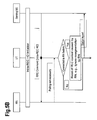
- Fig.5B shows a scenario of intra-cell RN-BS handover.
- the user terminal UT tears down its connection with the relay node RN and it establishes a direct connection with the base station BS.
- the relay node RN may clear its buffer for that user terminal UT, thereby deleting the buffered data on its RLC layer no matter whether or not said data has been acknowledged by the user terminal UT. It may happen that before intra-cell handover (HO), the RN re-segments the RLC PDU from the serving BS to the UT. The RLC context caused by RN may not remain after handover (see Fig.5B ).
- the base station BS may clear its RLC context (timer, sending window, etc.) regarding the previous connection with the relay node RN. Since the base station BS is aware of the user terminal's receiving status pursuant by the UT status report forwarded from the RN, the base station BS may re-start RLC transmission to the user terminal UT beginning with the first unacknowledged PDU.
- RLC context timer, sending window, etc.
- the relay node RN may poll the user terminal UT frequently enough and thereupon the relay node may without significant delay forward the status report from the user terminal UT back to the base station BS.
- the relay node RN may also relay the polling from the base station BS to the user terminal UT, hence, the relay node may initiate a polling request towards the user terminal UT when the relay node itself is being polled by the base station BS.
- the status report that is received from the UT as a result to the polling request could be separately forwarded or piggybacked by the relay node RN to the base station BS via data PDUs.
- the relay node RN may advantageously without significant delay poll the user terminal UT again in order to obtain the latest status report. This latest status report is forwarded to the base station BS.
- the user terminal UT may send a status report back to the base station BS (advantageously without significant delay) immediately after the handover is completed.
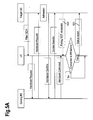
- This can be also referred to as a "handover-triggered status report" and is depicted in Fig.5A .
- Fig.5A visualizes message flows between a Serving BS (e.g., the relay node RN), the user terminal UT and a Target BS (e.g., the base station BS).
- a Serving BS e.g., the relay node RN
- the user terminal UT e.g., the user terminal UT
- a Target BS e.g., the base station BS
- the Target BS indicates it availability by a Pilot sequence conveyed via a broadcast channel.
- the user terminal UT sends a Handover Request to the Serving BS, which in return sends a Handover request to the Target BS.
- the Handover request After the Handover request has been admitted by the Target BS, it sends an Admission Confirm message back to the Serving BS.
- the Serving BS sends a Handover Command to the user terminal UT.
- the user terminal UT checks whether it has been connected to the relay node (i.e., the Serving BS) before. In the affirmative, the user terminal sends a RLC Status Report 501 to the Serving BS, otherwise, it does not send such an RLC Status Report to the Serving BS.
- the relay node i.e., the Serving BS
- Fig.5A shows in particular the example of an inter-cell handover.
- Such self-imitiated status report 501 conveyed by the user terminal UT saves the time for the Target BS to transmit the polling command 502.
- the Target BS is immediately informed of the status of the user terminal UT after handover has been completed. Therefore, any chance of duplicated data packets, in particular due to an outdated user terminal status knowledge at the Target BS, as well as packet loss is significantly reduced.
- the base station BS knows about the status of the user terminal UT and it can be advantageously avoided that the base station deletes any PDUs that are acknowledged by the relay node RN, but not by the user terminal UT. Therefore, data loss can be reduced or avoided in case of handover.
- the per-hop RLC scheme successfully maintains the efficiency of error recovery in the Relay Enhancement Cell (REC). It has to be noted that in the per-hop RLC scheme, the same RLC SN (sequence number) may be maintained for the same PDU transmitted on the first and the second RLC connection.
- the RLC link on either one of the two hops may not be reset independent of the respective other hop, since this could result in inconsistency of the RLC status on the two hops.
- the RLC operation may be only reset for the complete BS-RN-UT path.
- the RLC layer operation includes flow-control functionality via an RLC sending/receiving window operation.
- the normal RLC sending window controls only one single hop from the sender RLC layer to its receiver RLC layer.
- Overflow or underflow on the relay node RN may happen in case the channel condition is quite different on the two hops.
- the first hop depicted is between the base station BS and the relay node RN
- the second hop is between the relay node RN and the user terminal UT.
- the base station BS may convey too many data packets per time to the relay node RN via said first hop, whereas the relay node RN is not able to forward the data packets at this rate via the second hop.
- the second hop may be a bottleneck in this example causing an overflow of the relay node RN buffer.
- the opposite may apply regarding an underflow example.
- the principle of flow control is to let the RLC layer on the relay node RN have a suitable size of buffered data PDUs in order to avoid underflow as well as overflow situations.
- the relay node RN buffering size depends on the arriving rate of the data sent by the base station BS, as well as on the sending rate of this relay node's MAC layer towards the user terminal UT.
- a possibility to control the buffering size of the relay node RN is to control the sending rate at the base station BS.
- the base station BS Since the base station BS receives both, the status report 403 of the relay node RN and the forwarded status report 402 of the user terminal UT, the base station BS is able to determine the buffering status at the relay node RN based on the difference of both status reports 402 and 403.
- the base station BS gets aware of this and could refrain from sending more data at a high rate to the relay node RN until such overflow situation is alleviated.
- the base station BS is also able to determine an underflow situation at the relay node RN and hence it may increase its sending data rate for this particular user terminal UT, either by increasing an RLC sending window size, or by instructing the MAC layer to schedule more data for this user terminal UT.
- Another benefit to keep the RLC buffering size at a suitable level is to avoid excessive retransmission in case of an RN-BS handover. In such scenario, less data may in particular be deleted from the relay node RN buffer.
- the relay node RN forwarding the status report issued by the user terminal UT back to the base station BS may have many benefits, in particular:
- the relay node RN forwards the status report from the base station BS back to the user terminal UT.
- RLC header extension Only one bit of RLC header extension may be utilized to realize such functionality. Such a single bit may not have to be added to the existing RLC header structure. Instead, existing reserved bits of the RLC header may be utilized for this purpose.
- Fig.6 shows a 3GPP release 7 RLC status PDU structure comprising a 3-bit PDU type field (see also 3GPP TS 25.322). Possible values for this PDU type field are shown in Fig.7 .
Landscapes
- Engineering & Computer Science (AREA)
- Computer Networks & Wireless Communication (AREA)
- Signal Processing (AREA)
- Mobile Radio Communication Systems (AREA)
Claims (19)
- Verfahren zur Datenkommunikation zwischen einem Benutzerendgerät und einer Basisstation über einen Relay-Knoten, umfassend die folgenden Schritte:- das Benutzerendgerät gibt einen ersten Zustandsbericht (401) aus und- der Relay-Knoten leitet den ersten Zustandsbericht (401) an die Basisstation weiter, wobei der erste Zustandsbericht (401) für Handover-Zwecke benutzt wird, und gibt einen zweiten Zustandsbericht an die Basisstation aus, wobei durch die Basisstation ein Pufferungszustand des Relay-Knotens durch Benutzen des durch das Benutzerendgerät ausgegebenen ersten Zustandsberichts (401) und des durch den Relay-Knoten ausgegebenen zweiten Zustandsberichts (403) bestimmt wird.
- Verfahren nach Anspruch 1, wobei das Benutzerendgerät den ersten Zustandsbericht direkt ausgibt, wenn es zuvor mit dem Relay-Knoten verbunden war.
- Verfahren nach einem beliebigen der vorhergehenden Ansprüche, wobei der Relay-Knoten ein Netzelement mit einem verringerten Protokoll-Stapel ist.
- Verfahren nach Anspruch 3, wobei der Relay-Knoten eine physikalische Schicht, eine MAC-Schicht und eine RLC-Schicht umfasst.
- Verfahren nach Anspruch 3, wobei der Relay-Knoten eine physikalische Schicht und eine MAC-Schicht umfasst.
- Verfahren nach einem beliebigen der vorhergehenden Ansprüche, wobei der erste Zustandsbericht Informationen über Daten umfasst, die am Benutzerendgerät empfangen worden sind.
- Verfahren nach einem beliebigen der vorhergehenden Ansprüche, wobei der erste Zustandsbericht einen RLC-Zustandsbericht umfasst.
- Verfahren nach einem beliebigen der vorhergehenden Ansprüche, wobei die Verbindung eines Benutzerendgeräts mit dem Relay-Knoten an die Basisstation übergeben wird.
- Verfahren nach einem beliebigen der vorhergehenden Ansprüche, wobei der Relay-Knoten den Zustand des Benutzerendgeräts abfragt und ihn an die Basisstation weiterleitet.
- Verfahren nach einem beliebigen der vorhergehenden Ansprüche, wobei der Relay-Knoten eine durch die Basisstation durchgeführte Abfrage zum Benutzerendgerät übermittelt.
- Verfahren nach einem beliebigen der vorhergehenden Ansprüche, wobei das Benutzerendgerät den ersten Zustandsbericht nach Abschluss des Handovers zur Basisstation sendet.
- Verfahren nach einem beliebigen der vorhergehenden Ansprüche, wobei der erste Zustandsbericht für Flusssteuerungszwecke benutzt wird.
- Verfahren nach Anspruch 1, wobei der zweite Zustandsbericht einen RLC-Zustandsbericht umfasst.
- Verfahren nach Anspruch 1, wobei die Basisstation den Pufferungszustand durch Erhöhen oder Verringern der Sendegeschwindigkeit einstellt.
- Verfahren nach einem beliebigen der Ansprüche 1 oder 14, wobei die Basisstation den Pufferungszustand durch Einstellen eines RLC-Sendefensters und/oder durch Anweisen der MAC-Schicht zum Planen von mehr/weniger Daten für das Benutzerendgerät einstellt.
- Basisstation, angeordnet zur Datenkommunikation, wobei die Basisstation Folgendes umfasst:- Empfangsmittel, angeordnet zum Empfangen eines durch ein Benutzerendgerät ausgegebenen ersten Zustandsberichts (401), der durch einen Relay-Knoten weitergeleitet wird, und weiterhin angeordnet zum Empfangen eines durch den Relay-Knoten ausgegebenen zweiten Zustandsberichts (403), und- Bestimmungsmittel, angeordnet zum Bestimmen eines Pufferungszustands des Relay-Knotens basierend auf dem ersten Zustandsbericht (401) und dem zweiten Zustandsbericht (403),
wobei der erste Zustandsbericht für Handover-Zwecke benutzt wird. - Basisstation nach Anspruch 16, wobei die Basisstation weiterhin Flusssteuerungsmittel, angeordnet zum Steuern des Flusses von zu dem Relay-Knoten übertragenen Daten, umfasst.
- Relay-Knoten mit Mitteln, angeordnet zur Datenkommunikation zwischen einem Benutzerendgerät und der Basisstation nach Ansprüchen 16 bis 17, wobei der Relay-Knoten weiterhin Folgendes umfasst:Empfangsmittel, angeordnet zum Empfangen eines durch das Benutzerendgerät ausgegebenen ersten Zustandsberichts (401);Weiterleitungsmittel, angeordnet zum Weiterleiten des ersten Zustandsberichts (401) zur Basisstation, wobei der erste Zustandsbericht (401) für Handover-Zwecke benutzt wird, und Ausgabemittel, angeordnet zum Ausgeben eines zweiten Zustandsberichts (403) an die Basisstation.
- Kommunikationssystem, umfassend wenigstens eine Basisstation nach Ansprüchen 16 bis 17, wenigstens einen Relay-Knoten nach Anspruch 18 und wenigstens ein Benutzerendgerät.
Priority Applications (1)
| Application Number | Priority Date | Filing Date | Title |
|---|---|---|---|
| EP08839301.2A EP2204015B1 (de) | 2007-10-17 | 2008-10-15 | Verfahren, basisstation und relay-knoten zur datenkommunikation |
Applications Claiming Priority (3)
| Application Number | Priority Date | Filing Date | Title |
|---|---|---|---|
| EP07020318A EP2051454A1 (de) | 2007-10-17 | 2007-10-17 | Verfahren und Vorrichtung zur Datenkommunikation und Kommunikationssystem mit einer derartigen Vorrichtung |
| PCT/EP2008/063886 WO2009050205A1 (en) | 2007-10-17 | 2008-10-15 | Method and device for data communication and communication system comprising such device |
| EP08839301.2A EP2204015B1 (de) | 2007-10-17 | 2008-10-15 | Verfahren, basisstation und relay-knoten zur datenkommunikation |
Publications (2)
| Publication Number | Publication Date |
|---|---|
| EP2204015A1 EP2204015A1 (de) | 2010-07-07 |
| EP2204015B1 true EP2204015B1 (de) | 2014-06-18 |
Family
ID=39204708
Family Applications (2)
| Application Number | Title | Priority Date | Filing Date |
|---|---|---|---|
| EP07020318A Withdrawn EP2051454A1 (de) | 2007-10-17 | 2007-10-17 | Verfahren und Vorrichtung zur Datenkommunikation und Kommunikationssystem mit einer derartigen Vorrichtung |
| EP08839301.2A Active EP2204015B1 (de) | 2007-10-17 | 2008-10-15 | Verfahren, basisstation und relay-knoten zur datenkommunikation |
Family Applications Before (1)
| Application Number | Title | Priority Date | Filing Date |
|---|---|---|---|
| EP07020318A Withdrawn EP2051454A1 (de) | 2007-10-17 | 2007-10-17 | Verfahren und Vorrichtung zur Datenkommunikation und Kommunikationssystem mit einer derartigen Vorrichtung |
Country Status (4)
| Country | Link |
|---|---|
| US (1) | US8331291B2 (de) |
| EP (2) | EP2051454A1 (de) |
| CN (1) | CN101828364B (de) |
| WO (1) | WO2009050205A1 (de) |
Families Citing this family (22)
| Publication number | Priority date | Publication date | Assignee | Title |
|---|---|---|---|---|
| EP2168292A4 (de) * | 2007-06-22 | 2013-12-04 | Nokia Corp | Statusberichtmeldungen für mehrschichtiges arq-protokoll |
| WO2009116917A1 (en) * | 2008-03-18 | 2009-09-24 | Telefonaktiebolaget L M Ericsson (Publ) | A method and a transceiver for harq failure detection |
| US8031600B2 (en) * | 2008-05-20 | 2011-10-04 | Htc Corporation | Method and related apparatus for performing status report procedure in a wireless communication system |
| KR101566038B1 (ko) * | 2009-03-19 | 2015-11-05 | 엘지전자 주식회사 | 다중 셀 협력통신 방법 및 장치 |
| WO2010146661A1 (ja) * | 2009-06-16 | 2010-12-23 | 富士通株式会社 | 無線通信システム |
| CN105356926A (zh) | 2009-06-17 | 2016-02-24 | 交互数字专利控股公司 | 中继节点及实施切换的方法 |
| US8817745B2 (en) * | 2009-06-19 | 2014-08-26 | Blackberry Limited | Mechanisms for data handling during a relay handover with S1 termination at relay |
| CN101998700B (zh) * | 2009-08-13 | 2015-04-01 | 中兴通讯股份有限公司 | 中继网络中参与中继的基站获取状态信息的方法及系统 |
| BR112012003636A2 (pt) * | 2009-08-17 | 2016-03-22 | Alcetel Lucent | método e aparelho para controlar transmissão de dados para downlink em um sistema de comunicação de retransmissão com múltiplos saltos |
| US8897223B2 (en) | 2009-10-30 | 2014-11-25 | Motorola Mobility Llc | Method and apparatus for communicating deliver of data packets to a user equipment in a wireless communication system |
| EP2502440B1 (de) | 2009-11-18 | 2016-04-20 | BlackBerry Limited | Optimierte ressourcenzuweisung für mobile endgeräte im paketübertragungsmodus |
| CN102098725B (zh) * | 2009-12-15 | 2015-07-22 | 中兴通讯股份有限公司 | 一种服务网关与中继终端间传输数据的系统及方法 |
| WO2011072447A1 (en) * | 2009-12-17 | 2011-06-23 | Nokia Siemens Networks Oy | Reporting buffering information |
| CN102104913B (zh) * | 2009-12-22 | 2013-11-20 | 上海无线通信研究中心 | 一种中继网络流量控制方法 |
| CN102045788B (zh) * | 2010-01-25 | 2014-07-30 | 新邮通信设备有限公司 | 一种下行调度方法、一种中继节点和一种施主基站 |
| CN102404770B (zh) * | 2010-09-08 | 2015-04-01 | 电信科学技术研究院 | 无线中继系统层二测量的方法及设备 |
| EP3192985A1 (de) | 2016-01-18 | 2017-07-19 | General Electric Technology GmbH | Verfahren zum betrieb eines kraftwerks und kraftwerk |
| CN107733577B (zh) | 2016-08-11 | 2020-06-02 | 华为技术有限公司 | 进行重传处理的方法和装置 |
| CN110506404A (zh) | 2017-05-05 | 2019-11-26 | 华为技术有限公司 | 一种数据接收状态报告方法及装置 |
| KR20210021058A (ko) | 2018-06-20 | 2021-02-24 | 콘비다 와이어리스, 엘엘씨 | 멀티-홉 데이터 전달에서의 효율적인 버퍼 관리 |
| EP3629505A1 (de) * | 2018-09-25 | 2020-04-01 | Panasonic Intellectual Property Corporation of America | Benutzergerät und basisstation mit beteiligung an der übertragung von daten |
| EP4002737B1 (de) * | 2019-08-16 | 2024-07-31 | Samsung Electronics Co., Ltd. | Elektronische vorrichtung zur übertragung von datenpaketen in einer bluetooth-netzwerkumgebung und verfahren dafür |
Citations (1)
| Publication number | Priority date | Publication date | Assignee | Title |
|---|---|---|---|---|
| WO2006024320A1 (en) * | 2004-08-31 | 2006-03-09 | Telefonaktiebolaget Lm Ericsson (Publ) | Data unit sender and data unit relay device |
Family Cites Families (11)
| Publication number | Priority date | Publication date | Assignee | Title |
|---|---|---|---|---|
| SE0101846D0 (sv) * | 2001-05-22 | 2001-05-22 | Ericsson Telefon Ab L M | Method and system of retransmission |
| US6717927B2 (en) * | 2002-04-05 | 2004-04-06 | Interdigital Technology Corporation | System for efficient recovery of node B buffered data following serving high speed downlink shared channel cell change |
| TWI220815B (en) * | 2002-05-06 | 2004-09-01 | Asustek Comp Inc | Method and apparatus for handling abnormal transmission status in acknowledged mode and non-acknowledged mode |
| FI20031779A0 (fi) * | 2003-12-05 | 2003-12-05 | Nokia Corp | Menetelmä, järjestelmä ja lähetettävän puolen yhteyskäytäntöyksikkö datapakettien lähettämiseksi kuittaamattoman toimintamuodon palveluissa |
| US7950134B2 (en) | 2003-12-08 | 2011-05-31 | Cochlear Limited | Implantable antenna |
| CN100353681C (zh) * | 2004-08-12 | 2007-12-05 | 华为技术有限公司 | 内环功率频率控制方法 |
| US8660035B2 (en) * | 2005-11-10 | 2014-02-25 | Apple, Inc. | Wireless relay network media access control layer control plane system and method |
| US8155016B2 (en) * | 2005-11-12 | 2012-04-10 | Rockstar Bidco, LP | System and method for unbalanced relay-based wireless communications |
| WO2008010063A2 (en) * | 2006-07-18 | 2008-01-24 | Nokia Corporation | Method, device, computer program, and apparatus providing embedded status information in handover control signaling |
| EP2168292A4 (de) * | 2007-06-22 | 2013-12-04 | Nokia Corp | Statusberichtmeldungen für mehrschichtiges arq-protokoll |
| US8280375B2 (en) * | 2008-01-25 | 2012-10-02 | Texas Instruments Incorporated | System and method for managing radio link failures |
-
2007
- 2007-10-17 EP EP07020318A patent/EP2051454A1/de not_active Withdrawn
-
2008
- 2008-10-15 CN CN2008801121025A patent/CN101828364B/zh active Active
- 2008-10-15 US US12/682,925 patent/US8331291B2/en active Active
- 2008-10-15 WO PCT/EP2008/063886 patent/WO2009050205A1/en not_active Ceased
- 2008-10-15 EP EP08839301.2A patent/EP2204015B1/de active Active
Patent Citations (1)
| Publication number | Priority date | Publication date | Assignee | Title |
|---|---|---|---|---|
| WO2006024320A1 (en) * | 2004-08-31 | 2006-03-09 | Telefonaktiebolaget Lm Ericsson (Publ) | Data unit sender and data unit relay device |
Also Published As
| Publication number | Publication date |
|---|---|
| US8331291B2 (en) | 2012-12-11 |
| WO2009050205A1 (en) | 2009-04-23 |
| EP2051454A1 (de) | 2009-04-22 |
| CN101828364A (zh) | 2010-09-08 |
| CN101828364B (zh) | 2013-04-24 |
| US20110090793A1 (en) | 2011-04-21 |
| EP2204015A1 (de) | 2010-07-07 |
Similar Documents
| Publication | Publication Date | Title |
|---|---|---|
| US8331291B2 (en) | Method and device for data communication and communication system comprising such device | |
| CA2644202C (en) | System for efficient recovery of node b buffered data following serving high speed downlink shared channel cell change | |
| EP2765804B1 (de) | Verfahren zur Durchführung eines Leitungsübergabevorgangs und zur Erstellung von Daten | |
| KR101387475B1 (ko) | 복수의 네트워크 엔터티를 포함하는 이동 통신시스템에서의 데이터 처리 방법 | |
| US20120051349A1 (en) | Base Station Caching for an Efficient Handover in a Mobile Telecommunication Network with Relays | |
| US20180255485A1 (en) | Method and system for base station change of packet switched communications in a mobile communications system | |
| JP4539231B2 (ja) | マルチホップ通信での自動再送制御を用いた通信方法及び基地局 | |
| US9191870B2 (en) | Handover method for reducing the amount of data forwarded to a target node | |
| US11240703B2 (en) | Communications devices, method and mobile communications system | |
| US10819416B2 (en) | Apparatuses and methods for using ARQ processes in a relay device | |
| KR20120104305A (ko) | 중계 핸드오버 제어 | |
| US8023449B2 (en) | Method of data preservation and minimizing reduction in data throughput in the event of a cell change | |
| US20230188300A1 (en) | Communication control method |
Legal Events
| Date | Code | Title | Description |
|---|---|---|---|
| PUAI | Public reference made under article 153(3) epc to a published international application that has entered the european phase |
Free format text: ORIGINAL CODE: 0009012 |
|
| 17P | Request for examination filed |
Effective date: 20100517 |
|
| AK | Designated contracting states |
Kind code of ref document: A1 Designated state(s): AT BE BG CH CY CZ DE DK EE ES FI FR GB GR HR HU IE IS IT LI LT LU LV MC MT NL NO PL PT RO SE SI SK TR |
|
| AX | Request for extension of the european patent |
Extension state: AL BA MK RS |
|
| 17Q | First examination report despatched |
Effective date: 20101104 |
|
| DAX | Request for extension of the european patent (deleted) | ||
| RAP1 | Party data changed (applicant data changed or rights of an application transferred) |
Owner name: NOKIA SOLUTIONS AND NETWORKS OY |
|
| REG | Reference to a national code |
Ref country code: DE Ref legal event code: R079 Ref document number: 602008032884 Country of ref document: DE Free format text: PREVIOUS MAIN CLASS: H04L0012560000 Ipc: H04L0001160000 |
|
| RIC1 | Information provided on ipc code assigned before grant |
Ipc: H04W 36/02 20090101ALI20140106BHEP Ipc: H04L 1/16 20060101AFI20140106BHEP |
|
| GRAP | Despatch of communication of intention to grant a patent |
Free format text: ORIGINAL CODE: EPIDOSNIGR1 |
|
| INTG | Intention to grant announced |
Effective date: 20140226 |
|
| GRAS | Grant fee paid |
Free format text: ORIGINAL CODE: EPIDOSNIGR3 |
|
| GRAA | (expected) grant |
Free format text: ORIGINAL CODE: 0009210 |
|
| AK | Designated contracting states |
Kind code of ref document: B1 Designated state(s): AT BE BG CH CY CZ DE DK EE ES FI FR GB GR HR HU IE IS IT LI LT LU LV MC MT NL NO PL PT RO SE SI SK TR |
|
| REG | Reference to a national code |
Ref country code: GB Ref legal event code: FG4D |
|
| REG | Reference to a national code |
Ref country code: CH Ref legal event code: EP |
|
| REG | Reference to a national code |
Ref country code: AT Ref legal event code: REF Ref document number: 673883 Country of ref document: AT Kind code of ref document: T Effective date: 20140715 |
|
| REG | Reference to a national code |
Ref country code: IE Ref legal event code: FG4D |
|
| REG | Reference to a national code |
Ref country code: DE Ref legal event code: R096 Ref document number: 602008032884 Country of ref document: DE Effective date: 20140807 |
|
| PG25 | Lapsed in a contracting state [announced via postgrant information from national office to epo] |
Ref country code: NO Free format text: LAPSE BECAUSE OF FAILURE TO SUBMIT A TRANSLATION OF THE DESCRIPTION OR TO PAY THE FEE WITHIN THE PRESCRIBED TIME-LIMIT Effective date: 20140918 Ref country code: GR Free format text: LAPSE BECAUSE OF FAILURE TO SUBMIT A TRANSLATION OF THE DESCRIPTION OR TO PAY THE FEE WITHIN THE PRESCRIBED TIME-LIMIT Effective date: 20140919 Ref country code: CY Free format text: LAPSE BECAUSE OF FAILURE TO SUBMIT A TRANSLATION OF THE DESCRIPTION OR TO PAY THE FEE WITHIN THE PRESCRIBED TIME-LIMIT Effective date: 20140618 Ref country code: FI Free format text: LAPSE BECAUSE OF FAILURE TO SUBMIT A TRANSLATION OF THE DESCRIPTION OR TO PAY THE FEE WITHIN THE PRESCRIBED TIME-LIMIT Effective date: 20140618 Ref country code: LT Free format text: LAPSE BECAUSE OF FAILURE TO SUBMIT A TRANSLATION OF THE DESCRIPTION OR TO PAY THE FEE WITHIN THE PRESCRIBED TIME-LIMIT Effective date: 20140618 |
|
| REG | Reference to a national code |
Ref country code: NL Ref legal event code: VDEP Effective date: 20140618 |
|
| REG | Reference to a national code |
Ref country code: AT Ref legal event code: MK05 Ref document number: 673883 Country of ref document: AT Kind code of ref document: T Effective date: 20140618 |
|
| REG | Reference to a national code |
Ref country code: LT Ref legal event code: MG4D |
|
| PG25 | Lapsed in a contracting state [announced via postgrant information from national office to epo] |
Ref country code: HR Free format text: LAPSE BECAUSE OF FAILURE TO SUBMIT A TRANSLATION OF THE DESCRIPTION OR TO PAY THE FEE WITHIN THE PRESCRIBED TIME-LIMIT Effective date: 20140618 Ref country code: SE Free format text: LAPSE BECAUSE OF FAILURE TO SUBMIT A TRANSLATION OF THE DESCRIPTION OR TO PAY THE FEE WITHIN THE PRESCRIBED TIME-LIMIT Effective date: 20140618 Ref country code: LV Free format text: LAPSE BECAUSE OF FAILURE TO SUBMIT A TRANSLATION OF THE DESCRIPTION OR TO PAY THE FEE WITHIN THE PRESCRIBED TIME-LIMIT Effective date: 20140618 |
|
| PG25 | Lapsed in a contracting state [announced via postgrant information from national office to epo] |
Ref country code: EE Free format text: LAPSE BECAUSE OF FAILURE TO SUBMIT A TRANSLATION OF THE DESCRIPTION OR TO PAY THE FEE WITHIN THE PRESCRIBED TIME-LIMIT Effective date: 20140618 Ref country code: PT Free format text: LAPSE BECAUSE OF FAILURE TO SUBMIT A TRANSLATION OF THE DESCRIPTION OR TO PAY THE FEE WITHIN THE PRESCRIBED TIME-LIMIT Effective date: 20141020 Ref country code: ES Free format text: LAPSE BECAUSE OF FAILURE TO SUBMIT A TRANSLATION OF THE DESCRIPTION OR TO PAY THE FEE WITHIN THE PRESCRIBED TIME-LIMIT Effective date: 20140618 Ref country code: SK Free format text: LAPSE BECAUSE OF FAILURE TO SUBMIT A TRANSLATION OF THE DESCRIPTION OR TO PAY THE FEE WITHIN THE PRESCRIBED TIME-LIMIT Effective date: 20140618 Ref country code: CZ Free format text: LAPSE BECAUSE OF FAILURE TO SUBMIT A TRANSLATION OF THE DESCRIPTION OR TO PAY THE FEE WITHIN THE PRESCRIBED TIME-LIMIT Effective date: 20140618 Ref country code: RO Free format text: LAPSE BECAUSE OF FAILURE TO SUBMIT A TRANSLATION OF THE DESCRIPTION OR TO PAY THE FEE WITHIN THE PRESCRIBED TIME-LIMIT Effective date: 20140618 |
|
| PG25 | Lapsed in a contracting state [announced via postgrant information from national office to epo] |
Ref country code: NL Free format text: LAPSE BECAUSE OF FAILURE TO SUBMIT A TRANSLATION OF THE DESCRIPTION OR TO PAY THE FEE WITHIN THE PRESCRIBED TIME-LIMIT Effective date: 20140618 Ref country code: IS Free format text: LAPSE BECAUSE OF FAILURE TO SUBMIT A TRANSLATION OF THE DESCRIPTION OR TO PAY THE FEE WITHIN THE PRESCRIBED TIME-LIMIT Effective date: 20141018 Ref country code: PL Free format text: LAPSE BECAUSE OF FAILURE TO SUBMIT A TRANSLATION OF THE DESCRIPTION OR TO PAY THE FEE WITHIN THE PRESCRIBED TIME-LIMIT Effective date: 20140618 Ref country code: AT Free format text: LAPSE BECAUSE OF FAILURE TO SUBMIT A TRANSLATION OF THE DESCRIPTION OR TO PAY THE FEE WITHIN THE PRESCRIBED TIME-LIMIT Effective date: 20140618 |
|
| REG | Reference to a national code |
Ref country code: DE Ref legal event code: R097 Ref document number: 602008032884 Country of ref document: DE |
|
| PLBE | No opposition filed within time limit |
Free format text: ORIGINAL CODE: 0009261 |
|
| STAA | Information on the status of an ep patent application or granted ep patent |
Free format text: STATUS: NO OPPOSITION FILED WITHIN TIME LIMIT |
|
| PG25 | Lapsed in a contracting state [announced via postgrant information from national office to epo] |
Ref country code: IT Free format text: LAPSE BECAUSE OF FAILURE TO SUBMIT A TRANSLATION OF THE DESCRIPTION OR TO PAY THE FEE WITHIN THE PRESCRIBED TIME-LIMIT Effective date: 20140618 Ref country code: DK Free format text: LAPSE BECAUSE OF FAILURE TO SUBMIT A TRANSLATION OF THE DESCRIPTION OR TO PAY THE FEE WITHIN THE PRESCRIBED TIME-LIMIT Effective date: 20140618 |
|
| 26N | No opposition filed |
Effective date: 20150319 |
|
| PG25 | Lapsed in a contracting state [announced via postgrant information from national office to epo] |
Ref country code: LU Free format text: LAPSE BECAUSE OF FAILURE TO SUBMIT A TRANSLATION OF THE DESCRIPTION OR TO PAY THE FEE WITHIN THE PRESCRIBED TIME-LIMIT Effective date: 20141015 Ref country code: MC Free format text: LAPSE BECAUSE OF FAILURE TO SUBMIT A TRANSLATION OF THE DESCRIPTION OR TO PAY THE FEE WITHIN THE PRESCRIBED TIME-LIMIT Effective date: 20140618 |
|
| REG | Reference to a national code |
Ref country code: CH Ref legal event code: PL |
|
| REG | Reference to a national code |
Ref country code: IE Ref legal event code: MM4A |
|
| PG25 | Lapsed in a contracting state [announced via postgrant information from national office to epo] |
Ref country code: SI Free format text: LAPSE BECAUSE OF FAILURE TO SUBMIT A TRANSLATION OF THE DESCRIPTION OR TO PAY THE FEE WITHIN THE PRESCRIBED TIME-LIMIT Effective date: 20140618 Ref country code: CH Free format text: LAPSE BECAUSE OF NON-PAYMENT OF DUE FEES Effective date: 20141031 Ref country code: LI Free format text: LAPSE BECAUSE OF NON-PAYMENT OF DUE FEES Effective date: 20141031 |
|
| REG | Reference to a national code |
Ref country code: FR Ref legal event code: ST Effective date: 20150630 |
|
| PG25 | Lapsed in a contracting state [announced via postgrant information from national office to epo] |
Ref country code: FR Free format text: LAPSE BECAUSE OF NON-PAYMENT OF DUE FEES Effective date: 20141031 |
|
| PG25 | Lapsed in a contracting state [announced via postgrant information from national office to epo] |
Ref country code: IE Free format text: LAPSE BECAUSE OF NON-PAYMENT OF DUE FEES Effective date: 20141015 |
|
| PG25 | Lapsed in a contracting state [announced via postgrant information from national office to epo] |
Ref country code: BG Free format text: LAPSE BECAUSE OF FAILURE TO SUBMIT A TRANSLATION OF THE DESCRIPTION OR TO PAY THE FEE WITHIN THE PRESCRIBED TIME-LIMIT Effective date: 20140618 |
|
| PG25 | Lapsed in a contracting state [announced via postgrant information from national office to epo] |
Ref country code: TR Free format text: LAPSE BECAUSE OF FAILURE TO SUBMIT A TRANSLATION OF THE DESCRIPTION OR TO PAY THE FEE WITHIN THE PRESCRIBED TIME-LIMIT Effective date: 20140618 Ref country code: MT Free format text: LAPSE BECAUSE OF FAILURE TO SUBMIT A TRANSLATION OF THE DESCRIPTION OR TO PAY THE FEE WITHIN THE PRESCRIBED TIME-LIMIT Effective date: 20140618 Ref country code: BE Free format text: LAPSE BECAUSE OF FAILURE TO SUBMIT A TRANSLATION OF THE DESCRIPTION OR TO PAY THE FEE WITHIN THE PRESCRIBED TIME-LIMIT Effective date: 20140618 Ref country code: HU Free format text: LAPSE BECAUSE OF FAILURE TO SUBMIT A TRANSLATION OF THE DESCRIPTION OR TO PAY THE FEE WITHIN THE PRESCRIBED TIME-LIMIT; INVALID AB INITIO Effective date: 20081015 |
|
| REG | Reference to a national code |
Ref country code: DE Ref legal event code: R081 Ref document number: 602008032884 Country of ref document: DE Owner name: WSOU INVESTMENTS, LLC, LOS ANGELES, US Free format text: FORMER OWNER: NOKIA SOLUTIONS AND NETWORKS OY, ESPOO, FI |
|
| REG | Reference to a national code |
Ref country code: DE Ref legal event code: R082 Ref document number: 602008032884 Country of ref document: DE Representative=s name: METACOM LEGAL RECHTSANWAELTE, DE Ref country code: DE Ref legal event code: R082 Ref document number: 602008032884 Country of ref document: DE Representative=s name: METACOM LEGAL, DE Ref country code: DE Ref legal event code: R082 Ref document number: 602008032884 Country of ref document: DE Representative=s name: METACOM LEGAL NAGEL MARKOWSKY VOSSIUS RECHTSAN, DE |
|
| P01 | Opt-out of the competence of the unified patent court (upc) registered |
Effective date: 20230606 |
|
| PGFP | Annual fee paid to national office [announced via postgrant information from national office to epo] |
Ref country code: GB Payment date: 20260227 Year of fee payment: 18 |
|
| PGFP | Annual fee paid to national office [announced via postgrant information from national office to epo] |
Ref country code: DE Payment date: 20260327 Year of fee payment: 18 |