EP2201143B2 - Werkzeuge und verfahren für genetische tests unter verwendung von sequenzierung der nächsten generation - Google Patents
Werkzeuge und verfahren für genetische tests unter verwendung von sequenzierung der nächsten generation Download PDFInfo
- Publication number
- EP2201143B2 EP2201143B2 EP08800182.1A EP08800182A EP2201143B2 EP 2201143 B2 EP2201143 B2 EP 2201143B2 EP 08800182 A EP08800182 A EP 08800182A EP 2201143 B2 EP2201143 B2 EP 2201143B2
- Authority
- EP
- European Patent Office
- Prior art keywords
- dna
- nucleic acid
- tag
- nucleic acids
- primers
- Prior art date
- Legal status (The legal status is an assumption and is not a legal conclusion. Google has not performed a legal analysis and makes no representation as to the accuracy of the status listed.)
- Active
Links
Images




Classifications
-
- C—CHEMISTRY; METALLURGY
- C12—BIOCHEMISTRY; BEER; SPIRITS; WINE; VINEGAR; MICROBIOLOGY; ENZYMOLOGY; MUTATION OR GENETIC ENGINEERING
- C12Q—MEASURING OR TESTING PROCESSES INVOLVING ENZYMES, NUCLEIC ACIDS OR MICROORGANISMS; COMPOSITIONS OR TEST PAPERS THEREFOR; PROCESSES OF PREPARING SUCH COMPOSITIONS; CONDITION-RESPONSIVE CONTROL IN MICROBIOLOGICAL OR ENZYMOLOGICAL PROCESSES
- C12Q1/00—Measuring or testing processes involving enzymes, nucleic acids or microorganisms; Compositions therefor; Processes of preparing such compositions
- C12Q1/68—Measuring or testing processes involving enzymes, nucleic acids or microorganisms; Compositions therefor; Processes of preparing such compositions involving nucleic acids
- C12Q1/6844—Nucleic acid amplification reactions
- C12Q1/686—Polymerase chain reaction [PCR]
-
- C—CHEMISTRY; METALLURGY
- C12—BIOCHEMISTRY; BEER; SPIRITS; WINE; VINEGAR; MICROBIOLOGY; ENZYMOLOGY; MUTATION OR GENETIC ENGINEERING
- C12Q—MEASURING OR TESTING PROCESSES INVOLVING ENZYMES, NUCLEIC ACIDS OR MICROORGANISMS; COMPOSITIONS OR TEST PAPERS THEREFOR; PROCESSES OF PREPARING SUCH COMPOSITIONS; CONDITION-RESPONSIVE CONTROL IN MICROBIOLOGICAL OR ENZYMOLOGICAL PROCESSES
- C12Q1/00—Measuring or testing processes involving enzymes, nucleic acids or microorganisms; Compositions therefor; Processes of preparing such compositions
- C12Q1/68—Measuring or testing processes involving enzymes, nucleic acids or microorganisms; Compositions therefor; Processes of preparing such compositions involving nucleic acids
- C12Q1/6869—Methods for sequencing
- C12Q1/6874—Methods for sequencing involving nucleic acid arrays, e.g. sequencing by hybridisation
Definitions
- the present invention relates to methods for use in genetic tests involving high performant sequencing techniques. More particularly, the invention relates to a robust robust multiplex PCR method wherein the respective primers for amplifying the different amplicons are physically isolated from one another. The invention further relates to quality control methods allowing a stringent quality control of genetic tests carried out according to the present invention.
- Mutations/variations in the human genome are involved in most diseases, going from monogenetic to multifactorial diseases, and acquired diseases such as cancer. Even the susceptibility to infectious diseases, and the response to pharmaceutical drugs, is affected by the composition of an individual's genome. Most genetic tests, which screen for such mutations/variations, require amplification of the DNA region under investigation.
- the size of the genomic DNA that can be amplified is rather limited. For example, the upper size limit of an amplified DNA fragment in a standard PCR reaction is about 2kb. This contrasts sharply with the total size of 3 billion nucleotides of which the human genome is build up.
- PCR is the method of amplification of DNA that is mainly described, any amplification technique known to the art may be used, such as isothermal amplification (rolling circle amplification), ligase chain reaction, nucleic acid sequence-based amplification (NASBA), padlock probes, single strand displacement amplification, and whole genome amplification.
- WO2007052206 and WO20050427559 disclose methods for introducing a same DNA tag in more than one DNA fragment derived from a sample comprising genetic material. These methods comprise (i) the amplification of a first set of DNA fragments in a multiplex PCR - reaction using a first set of amplicon specific primers, wherein each forward primers of said set of amplicon specific primers comprises a same adaptor, and wherein each reverse primer of said set of amplicon specific primers comprises a different same adaptor and (ii) subsequently amplifying said first DNA fragment in a PCR reaction using a second set of primers directed against the said adaptor sequences, wherein either or both of said second set of primers comprises a DNA- tag.
- the present invention relates to a method for introducing a same DNA tag in more than one DNA fragment derived from a plurality of samples comprising genetic material, said method comprising, for each of said samples, the steps of:
- the amplification is performed by PCR.
- the different primers used in steps (i) and (ii) are added together in one reaction mixture.
- the different primers are used in each step of said method have specific different melting temperatures and are added together in one reagent mixture and wherein said different primers can specifically be called in the method by their annealing temperature.
- the respective amplified nucleic acids are pooled prior to simultaneously determining the nucleic acid sequence thereof and of said DNA tag.
- said fragments derived from the marker nucleic acids become attached to said DNA tag and further comprising the step of verifying whether the correct combination of said one or more marker nucleic acids and said DNA tag are found.
- the added marker nucleic acids are designed so that they can be processed together or in parallel in the same strategy as the nucleic acid sequences of the biological sample under investigation.
- the sample is collected in a collector tube in which said one or more marker nucleic acids are already present.
- either or both the detection of the introduced DNA tag and that of the known nucleic acid sequences are used in the automatic reporting on the results of the analysis of the DNA fragments derived from the biological samples.
- a second aspect of the present invention relates to a method for carrying out multiplex parallel sequencing genetic tests, said method comprising:
- a 'core'-molecules and 'functional'-molecules a 'core'-molecul in a KNEX-DNA-crystal is a molecule arm which essentially forms the frame of the KNEX-DNA-crystal, a 'functional'-molecule in a KNEX-DNA-crystal is a molecule which will be used in a particular process and that is attached to the frame of the KN-EX-DNA-crystal. It is possible that a 'core'-molecule and 'functional'-molecule may be attached at a same junction. It is possible that the 'functional'-molecule has also 'core'-molecule properties, and vice versa.
- the new generation sequencing technology such as parallel pyrosequencing in high-density picotiter reactors, allows the simultaneous sequencing of extreme high numbers of 25-500bp fragments and is currently mainly used for total genomic sequencing.
- the present invention is based on the finding thatwhen using adapted sample preparation methods and protocols these sequencing technologies can also be used in other sequencing applications such as the resequencing of specific nucleic acid fragments in biological samples, as used in clinical diagnostics.
- a successful use of the said sequencing technologies preferably requires the availability of robust multiplex PCR reactions of a large number of amplicons. Therefore, tools and methods are provided for carrying out robust multiplex PCR reactions wherein the respective primers for amplifying the different amplicons are physically isolated from one another.
- molecular complexes comprising two or more linked nucleic acids or analogues thereof wherein said molecular complexes comprises at least one forward primer and at least one reverse primer suitable for the PCR amplification of a given nucleic acid fragment.
- said molecular complexes are soluble in an aqueous solution.
- a molecular complex as described herein comprises one or more core molecules, which com prise a nucleic acid or a plurality of linked nucleic acids or analogues, for instance via avidin-streptavidin/biotin interactions.
- Said core molecules further com prise at least two binding sites linking said core molecule to other core molecules and/or to functional molecules, which are nucleic acids or analogues thereof comprising either of the said PCR primers.
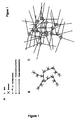
- binding sites in said core molecule are two or more biotin molecules, while the functional molecules comprise at least one biotin molecule ( Figure 1 ). This allows to firmly link the respective core and functional molecules using avidin or streptavidin as a linker molecule.
- molecular complexes can also be used after immobilisation on a support, for instance on a support coated with avidin or streptavidin, which allows for binding the molecular complex through interaction with free biotin molecules in the molecular complex.
- a support is the wall of a reaction vessel, such as a test tube.
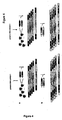
- a method for carying out PCR amplification of a DNA fragment comprising the use of molecular complexes wherein each of said complexes comprise one or more forward primers and one or more reverse primers allowing the amplification of said DNA fragment ( Figure 2 ).
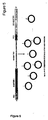
- said PCR method is a multiplex PCR for the simultaneous amplification of different DNA fragments wherein multiple sets of molecular complexes are used ( Figure 3 ).
- the respective sets of molecular complexes each comprise complexes comprising one or more forward primers and one or more reverse primers specific for the amplification of one of the multiple DNA fragments to be amplified.
- the claimed PCR method is of particular interest for the amplification of a genomic DNA fragment or set of fragments for the purpose of sequencing a section of said genomic DNA.
- New sequencing techniques allow a very large throughput and the generation of large amounts of data. They may even generate much more sequence data than needed for the analysis of one sample.
- different samples need to be pooled in one single sequencing run. This requires that the origin of the DNA fragments derived from the respective samples can be traced. This can for instance be achieved by incorporating a same DNA tag in all DNA fragments derived from a given sample.
- the sequencing of these DNA fragments, including the incoporated tags subsequently allows to analyze the parts of the fragments to be investigated as well as to determine the origin of the respective fragments. Therefore a method is provided for introducing a DNA tag into a DNA fragment ( Figure 4 ), including cDNA fragments, derived from a sample comprising genetic material said method comprising the steps of:
- a same tag is introduced in more than one DNA fragment derived from a sample, said method comprising the steps of:
- the first set of amplicon specific primers of step (i) are particularly comprised in a molecular complex.
- Preferably either or both of the second set of primers used in step (ii) comprises an additional adaptor for further processing purposes.
- the introduced DNA tag is a known nucleic acid sequence, more preferably the DNA tag comprises one or more primary tags wherein each primary tag comprises a known sequence. Most preferably the DNA tag comprises a repitition of a same primary tag.
- the relation between each of the introduced DNA tags and the samples from which the DNA fragments are derived is documented, it becomes possible to identify from which sample a DNA fragment is derived based on its sequence in as far a unique same DNA tag was introduced in all DNA fragments derived from a same sample. More preferrably the information on the relation between each of the introduced DNA tags and the samples from which the DNA fragments are derived together with the determination of the sequences of said fragments allows to automatically report the results of the sequence analysis for each of said samples.
- the presence in the biological sample of said known nucleic acid sequences is detected by PCR amplification of said sequences and subsequently sequencing the amplification products.
- the method disclosed herein is particularly usefull in the quality control of the sequencing of nucleic acid fragments comprised in a biological sample.
- the known sequences comprised in the marker nucleic acids are processed in the same way as the DNA fragments of the sample. This implies particularly that in the DNA fragments obtained by PCR amplification of the known nucleic sequences of the added marker nucleic acids and in the DNA fragments obtained by PCR amplification of the nucleic acid sequences to be characterized by sequencing a same DNA tag is simultaneously incorporated ( Figure 6 ).
- the anticipated presence of the DNA tag in the DNA fragments derived from the sample and in the DNA fragments comprising the known sequences derived from the marker nucleic acids allows for a very stringent quality control of both the origin and the processing of the samples. More preferably the detection of the introduced DNA tag and that of the known nucleic acid sequences are used in the automatic reporting on the results of the analysis of the DNA fragments derived from the biological samples.
- Robust multiplex PCR reactions of a large numberof amplicons may be achieved when the different primers are physically restricted.
- different methods to trap molecular components allowing a physically restricted amplification with minimal interference of other molecular components.
- a first method for each DNA fragment that one wants to analyze, two primers that bind to this fragment and that allow amplification of that DNA fragment, are bound to beads, e.g. two biotinylated primers bound to streptavidin coated beads.
- beads are made for each DNA fragment that one wants to amplify, using specific primers to the respective DNA fragment.
- an aliquot of all these different beads mixtures is pooled.
- DNA molecule includes linear oligomers of natural or modified monomers or linkages, e.g., deoxyribonucleosides, ribonucleosides, anomeric forms thereof, peptide nucleic acids (PNAs), and the like, the monomers are linked by phosphodiester bonds, or analogs thereof.
- PNAs peptide nucleic acids
- DNA molecules can include non-natural nucleotide analogs.
- other polymer forming molecules may be eventually used.
- a KNEX-DNA-crystal used for PCR amplification of a given amplicon is called an amplicon-specific KNEX-DNA-crystal.
- the 2 amplicon-specific primers for amplification of a given amplicon in a PCR reaction are physically restricted and in close proximity, so that amplicons are amplified in/at their own crystal containing its own 2 amplicon-specific primers, with no, or minimal, interference of other primers in the solution.
- isolated PCR reactors will be generated containing the 2 amplicon-specific primers in a tube, so that different amplicon-specific KNEX-DNA-crystals, which were prepared separately in a bulk solution, can be combined in a single multiplex PCR reaction.
- These amplicon-specific primers may potentially contain an adaptor sequence, which is shared by all, or part of all, amplicon-specific primers, for cleavage and/or binding to universal primers in potential later steps of a process.
- a cleavable site might also be introduced by other means, such as a site in the oligonucleotide that can be cleaved by photons (UV-light).
- Another cleavable linker could be a disulfide, in which the cleavage occurs by a reducing agent, for example dithiothreitol (DTT), beta-mercaptoethanol, etc.
- each amplicon is amplified isolated at its own crystal-reactor, once that the amplification conditions for an individual amplicon have been optimized, there will be no, or minimal, need for empirical multiplex PCR optimization and design. Moreover, the number of amplicons that can be multiplexed may exceed 10-100 amplicons, so that this step can be easily transferred to any other gene, and even large or multiple genes.
- the crosslinking of the components in the KNEX-DNA-crystal may be achieved by any manner known in the art. It can be either a covalent or non-covalent interaction. Covalent chemical crosslinking can be accomplished using standard coupling agents.
- water-soluble carbodiimide can be used to link the 5'-phosphate of a DNA sequence to an amine-moiety through a phosphoamidate bond.
- Other linkage chemistries to join an oligonucleotide include the use of N-hydroxysuccinamide (NHS) and its derivatives, for example.
- interactions which can form the basis for crosslinking include interactions between biotin/streptavidin, biotin/avidin, biotin/biotin-binding-molecule (e.g. NEUTRAVIDINT modified avidin (Pierce Chemicals Rockford, IL), glutathione S-transferase (GST)/glutathione, antibody/antigen, antibody/antibody-binding-molecule, dioxigenin/anti-dioxigenin, DNP(2,4-dinitrophenyl)/anti-DNP antibodies, maltose-binding-protein/maltose, chelation (e.g. (Co2+, Ni2+)/hexahistidine, pluronic coupling technologies, and so on.
- biotin/streptavidin e.g. NEUTRAVIDINT modified avidin (Pierce Chemicals Rockford, IL), glutathione S-transferase (GST)/glutathione
- antibody/antigen
- a crystal might be even formed without the use of true separate junctional molecules, such as the use of oligonucleotides containing psoralen moieties, or even by Watson-Crick base pairing between oligonucleotides themselves.
- the latter may nevertheless even contain binding moieties, e.g. biotin, not for the purpose of forming the crystal but for adding functional groups to the crystal needed for later processing of a crystal.
- binding moieties e.g. biotin
- some structures will be more stable and therefore more useful in certain applications.
- complexes that are made through Watson-Crick basepairing between oligonucleotides, and that are used for amplification may decompose during a denaturation step at 94°C.
- KN-EX-DNA-crystals where the crosslinking is realized by biotin and streptavidin ( Figures 1 and 2 ).
- the DNA-core molecule of a KNEX-DNA-crystal can be 1 'core'-oligonucleotide that carries at least two biotin groups, at its 5' end, its 3' end, and/or internal sites.
- streptavidin is added, as well as the two amplicon-specific primers are added.
- Sub-solutions may first be prepared of some of these components, but a some stage they end up complexing in the same solution. Indeed, the order and amount by which the different components are added might affect the composition. Certain compositions may be better suited for certain amplifcations.
- addition of the 'core'-oligonucleotide and streptavidin may form molecular type of beads, and subsequent addition of the amplicon specific primers may cover the surface of the molecular beads.
- Each streptavidin molecule is able to bind four biotin groups, and therefore a three-dimensional network or KNEX-DNA-crystal is formed between the three oligonucleotides.
- the density of each type of oligonucleotide In the KNEX-DNA-crystals can be controlled by the ratio of 'core'-oligonucleotide to the 2 amplicon-specific primers, as well as by the concentration of streptavidin. Even the ratio of the 2 amplicon-specific primers may be controlled.
- KNEX-DNA-crystals After crystallization, free biotin might be added to saturate the still free binding sites on streptavidin molecules, so that different amplicon-specific KNEX-DNA-crystals will not aggregate when mixed. If certain amplicons remain difficult to be amplified in the multiplex PCR, different KNEX-DNA-crystals may be evaluated. For example, KNEX-DNA-crystals in which the 'core'-oligonucleotide contains varying numbers of internal biotin groups, so that the local concentration of particular amplicon-specific primers is further increased. By keeping incubation times during an amplification step limited, diffusion of products may be even more restricted. Possibly one or both primers should be still freely available to some extent in the PCR reaction in order to obtain the most efficient amplification process.
- Example 1 shows a proof of principle experiment.
- DNA molecules can be used as core-DNA molecules in KNEX-DNA crystals.
- plasmid DNA either linearized or not, can be biotinylated by nick translation to varying extents depending on the relative concentration of biotinylated nucleotide building blocks.
- Each core of the KNEX-DNA-crystal might be 1 DNA molecule, such as an oligonucleotide with at least 2 biotin groups; or an aggregate of different DNA molecules, such as oligonucleotides with at least2 biotin group that are polymerized, linked by streptavidin molecules or base-pairing.
- Each of these latter DNA molecules preferentially contains at least two different biotin groups and different types of such oligonucleotides might be used (i.e. oligonucleotides having different sequence and/or modifications). This is a more economical and easierway to synthesize large core-molecules, and allows the synthesis of a KNEX-DNA-crystal were amplicon-specific primers are more physically spread over the crystal.
- the preparation of such structures may not be 100% efficient, so that all components are not incorporated in the KNEX-DNA-crystals and may be present as individual components in a solution. It is also possible that during later processing of the crystals, partofthe crystals will degrade partly or complete, possibly only temporally, to their individual components of which the crystals were built up. During processing of a solution containing these crystals, as well as the free components, these free components may interfere in later processing. Their contribution may improve or worsen the actual processing of the crystal, or have no effect at all. In a multiplex PCR amplification of amplicon-specific KNEX-DNA-crystals, different amplicon-specific KNEX-DNA-crystals will be mixed.
- amplicon-specific KNEX-DNA-crystal For each amplicon-specific KNEX-DNA-crystal, two amplicon-specific primers will be used, so that all these different amplicon-specific KNEX-DNA-crystals have to be synthesized separately, and should be mixed afterwards ( Figure 3 ). This should be, once optimized, be done only once, and therefore in bulk and with minimal effort.
- a biotin at the 3' end of the core-DNA molecule e.g. oligonucleotide
- the sequence in this 'core'-oligonucleotide can be also used for specific functions, such as binding to other oligonucleotides (e.g. for capturing).
- the KNEX-DNA-crystal may contain recognition sites for restriction enzymes, so that after binding to a complementary oligonucleotide, the KNEX-DNA-crystal can be cleaved after the amplification step (e.g. for disruption of the KNEX-DNA-crystal, so that amplified material becomes more accessible in later steps of a protocol).
- the latter might be also achieved by a cleavable linker (e.g. by UV) in the 'core'-oligonucleotide, which would be a more universal means of cleavage than the use of restriction enzymes, since a particular recognition site for a restriction enzyme might be present in the amplified amplicon.
- the 2 amplicon-specific primers are possibly positioned in a 3-dimensional structure. This may affect the efficiency of amplification.
- the 2 amplicon-specific primers are bound to beads they are only positioned on a 2 dimensional surface. Since KNEX-DNA-crystals have a relatively low molecular weight, they remain homogenously solubilized in the reaction mixture and are readily accessible to reagents. By reducing the specific incubation times and/or temperatures to a strict minimum, one will limit the extent of diffusion of products that are generated in a process, and in this way promote local processing of products.
- KNEX-DNA-crystals may be even build up by 2 to 4, or even more, biotinylated 'core'-oligonucleotides in a more programmed manner.
- the formation of the crystals i.e. the binding of the 'core'-oligonucleotides through biotin-streptavidin bounds, may be preceded by self-mediated DNA assembly of these 'core'-oligonucleotides.
- This self-mediated DNA assembly may allow the formation of rather specifically well-designed KNEX-DNA-crystals.
- One could overcome the preparation of amplicon-specific structures amplicon-specific beads, amplicon-specific KNEX-DNA crystals) if adaptors are added to the amplicon specific primers.
- the forward amplicon-specific primers contain a specific type of adaptor
- the reverse amplicon-specific primers contain another specific type of adaptor
- a standard multiplex amplification might be developed in a more robust way using solely amplicon specific primers that also contain an adaptor, preferentially a different adaptor for the forward primer than the reverse primers.
- all forward amplicon-specific primers carry the same adaptor, while all reverse amplicon-specific primer carry the same other adaptor.
- all amplicon-specific primers (with their adaptors) are added together and a classical PCR reaction is performed for a few cycles. In classical multiplex PCR reactions, the a specific amplifications and the inefficient amplification of specific fragments increases with the numberof cycles.
- the specific fragments are still present in a relative high proportion, and if they proceed in a second more specific PCR step, with only 2 primers directed against the adaptor sequences of the first primers, they are more favorably amplified. Moreover, since all fragments then have a common priming site, there will be less primer-dependent preferential amplification that is observed in a classical multiplex PCR reactions. Moreover, if amplicons are designed in such a way that they have a similar length, there will be also no amplicon-length dependent specific amplification. One could also further enrich the specific amplification fragments from the a specific fragments, through binding of the PCR products obtained after the first or second round of PCR to a molecule, or molecules, that recognize the desired fragments.
- This DNA fragment used for capturing cannot be a template in the subsequent PCR reaction, since all primers are located to intronic regions.
- the plasmid itself could be biotinylated by nick translation, which than can be bound to streptavidin-coated tubes, or streptavidin-coated beads (e.g. streptavidin-coated magnetic beads), and in this way would be an easy means in further separation steps.
- streptavidin-coated beads e.g. streptavidin-coated magnetic beads
- a strategy could be to enrich the complete gene through hybridization of total DNA (genomic DNA, mitochondrial DNA,...), either fragmented or not (e.g. by a (rare-cutter) restriction enzyme) to (a) DNA fragment(s) that contain sequences of this gene itself.
- total DNA genomic DNA, mitochondrial DNA, etc.
- this could be again a plasmid containing a cDNA derived from a transcript from thisgene.
- the plasmid itself could be biotinylated by nick translation, which than can be bound to streptavidin-coated tubes, or streptavidin-coated beads (e.g. streptavldin-coated magnetic beads), and in this way would bean easy means for isolation of the relevant fragments.
- the isolated fragments could then be amplified by PCR using random primers. Preferentially the random primers contain adaptor sequences for further processing in sequencing protocols, either after size-fractionation or not.
- the enriched DNA fragments can feed in standard sequencing protocols, such as the generation of a DNA-library.
- This enrichment step could be also performed after the generation of a DNA-library in a standard sequencing protocol, rather then before the generation of the DNA library.
- the latter protocol would have the added advantage that only sequences of the DNA sam pie under investigation will be sequenced, and not the plasmid that was used for isolating/enriching the target DNA. Indeed, these plasmids could in the end possibly 'contaminate' the sample under investigation. Since the adaptorsequences that are added to the different DNA molecules of a DNA library only allow further processing in the sequencing protocol, plasmids used for enrichment will not contain these adaptorsequences so that they cannot be processed or sequenced furher. This strategy could be even applied for more than 1 gene, i.e.
- plasmids directed two the different genes under investigation that are combined (e.g. all genes involved in a given pathway or disease, all genes belonging to a certain class of proteins). Analogously, one could even enrich complete genomic regions, e.g. through the use of BAC-clones that recognise the region to be sequenced and therefore provide a means for enrichment of a subgenomic region. An analogous strategy could be also used for enrichment of RNA (either converted to cDNA or not), than DNA.
- New techniques allow the generation of large amounts of data, e.g. sequence data. They may even generate much more sequence than needed for the analysis of one sample.
- different samples need to be mixed in one single experiment, in which each sample is tagged differently.
- the characterization of the tag in the final analysis allows the identification of the sample of which the fragment was derived, while the characterization of the attached fragment will allow analysis of the fragment under investigation of that sample.
- Additional of a DNA-tag to a DNA fragment of a sample that one wants to analyze can be obtained in an amplification process in which at least one amplicon-specific primer contains the tag as an adaptor. However, this will be still very costly.
- the adaptor tag primers can be used for any amplicon, irrespective of the genomic region, or gene, from which it was derived, if all.
- first step PCR reactions are performed with adaptor-amplicon specific primers that contain the same 'universal' forward and reverse adaptors. Through careful design of the oligo's one could mix all primers in one reaction, so that only certain primers participate in a process at a given moment. E.g.
- oligonucleotides that are used for priming in the first amplification step have a higher meltingtemperature than the oligonucleotides that are needed in the second PCR process
- the first primer pairs are still able to prime reactions, however if they were initially added at a much lower concentration, the second set of oligonucleotides will be kinetically favored.
- tags composed of 5 nucleotides will allow 1024 unique different tags.
- nucleotide incorporation errors can be introduced in an oligosynthesis reaction. Especially in assays in which single molecules are analyzed, such synthesis errors may not be tolerated. Indeed, a synthesis error will change the identity of the tag, and the attached fragment will be incorrectly correlated with the wrong sample. This may be overcome by repeating the tag one or several times In the tag-oligonucleotide.
- a tag-oligonucleotides in which the 5-nucleotide tag is repeated 4 times it will be unlikel that the same synthesis/processing error occurs in each of the 4 tags. Identification of the sample will then be done on the basis of the tag that is most observed in a 4 5-tag sequence (e.g. 3 out of 4 tags are identical, while the fourth tag has one nucleotide difference).
- the repetition of a tag will provide a means to detect, and possibly correct, the misincorporation erros of oligo's through synthesis. This repetition strategy might me combined by other strategies aiming to correct for incorporations, such as error-correcting barcodes (1).
- each amplicon i.e. the DNA of the individual from which the PCR fragment was generated, can thus be determined through characterization of the tag region, either found at the 5'-end and/or 3'-end, e.g. by sequencing.
- the remainder sequence of the amplicon will allow the analysis of the sample.
- a 3'-tag sequence may be difficult to determine. Indeed, lower resolutions of sequencing signals are obtained the more one progresses in the sequencing reaction, or because of the increase in background signal the more one progresses in the sequencing reaction. Loss of synchronization during the sequencing reaction results in an increasing background so that the actual sequence cannot be further read-out the more the sequencing reaction progresses. E.g., each step in a sequencing reaction will not be 100% efficient, so that a small fraction of an 'amplicon-clone' is not elongated, but will be elongated in the next step of the sequencing reaction, and will thus result In back-ground signal. These background signals will accumulate as the sequencing reaction progresses. Therefore, a 3'-tag might be difficult to determine.
- each letter of the code is not one nucleotide, but a stretch of 2 or more identical nucleotides.
- the sequence of the tag will therefore generate more intense signals, e.g. in a pyrosequencing reaction, so that it can be more easy discriminated from the background, and therefore allow that most sequence of the amplicon is used for characterization of the fragment under investigation.Any process is prone to errors, especially at moments when contents of tubes are transferred to other tubes.
- molecular bar coding of the sample itself i.e. in the sample, as is illustrated here.
- the whole process is quality assured from the moment the molecular barcode is added.
- molecular bar code is added to the sample as early as possible. The earliest possible moment would be when the specimen for analysis is collected, e.g. the molecular bar code is already present in the collector tube (e.g. collecting tube for a blood sample).
- the molecular bar code should be found at the end of the complete process, and this guarantees quality assurance.
- molecular bar code is feasible in assays that analyze individual molecules and that analyze a large numberof molecules so that a small proportion of all tested single molecules can be used for identification of the molecular bar code and therefore monitor the sample.
- a molecular bar code could be a unique DNA fragment, for each sample under investigation one unique DNA fragment. This unique DNA fragment is flanked with adaptors, so that it can processed together in the same strategy as all other fragments under investigation, so that the unique DNA barcode fragment proceeds through the whole process in an analogous strategy as the actual fragments of the sample under investigation.
- the molecular bar code therefore needs the same features as the molecules under investigation, so that they can be processed simultaneously.
- a 5 nucleotide molecular bar code allows 1024 different unique molecular bar code molecules.
- a 10 nucleotide molecular bar code allows about 1000000 unique different molecular bar code molecules, and so on. The synthesis of such a high number molecular bar code molecules is, however, quiet costly.A more economic favorable way would be the use of more than 1 molecular bar code molecule to mark a sample, e.g.
- molecular bar code molecules allows more than 10 9 (1024 3 ) different combinations of unique molecular bar codes, and allows many strategies of tagging (e.g. sample specific, sample-specific and lab-specific, ).
- the molecular bar coding format can be used for different types of parallel sequencing techniques.
- Such molecular bar code molecules can be easily generated by mutagenesis using olignucleotides that contain randon nucleotide stretches.
- the repertoire of molecular bar code molecules could be even expanded if random sequences are inserted at two positions, rather than at one position in a vector library.Apart from the qualilty-assucrance, such molecular bar codes allow automation of the laboratory and reporting protocols.
- these molecular bar codes be used in a DNA assay, in which the molecular bar code and sample are characterized in the same assay.
- Molecular DNA bar codes may be also used for any assay, in which the molecular DNA bar code typing and actual assay or two different assays (e.g. determination of protein in doping tests, and so on). In this way any sample, especially solution samples, can be labeled. Moreover, the labeling can be completely anonymous, so that willing incorrect manipulation can be hardily done.
- a molecular complex comprising two or more linked nucleic acids or analogues thereof wherein said molecular complex comprises at least one forward primer and at least one reverse primer suitable for the PCR amplification of a given nucleic acid fragment. Additional properties of such complex can be one or more of the following.
- the molecular complex can be soluble in an aqueous solution.
- the complex can comprise one or more core molecules, which comprises a nucleic acid or a plurality of linked nucleicacids, or analogues thereof, and wherein said core molecule further comprises at least two binding sites linking said core molecule to other core molecules and/or to functional molecules comprising a nucleic acid or analogues thereof comprising either of the said PCR primers.
- one or more core molecules can each comprise a linearised plasmid or oligonucleotide or analogue thereof carrying two or more biotin molecules as binding sites.
- the functional molecules are oligonucleotides comprising at least one biotin molecule.
- the core molecules and functional molecules can be linked using avidin or streptavidin as linker molecule.
- the core molecule can comprise a plurality of oligonucleotides wherein said oligonucleotides are linked by avidin-streptavidin/biotin interaction.
- the molecular complex can be immobilised to a support.
- the support can be coated with avidin or streptavidin allowing the immobilisation of the molecular complex through interaction with any free biotin molecule in the molecular complex.
- the support can a reaction vessel such as a test tube.
- a method for carrying out a PCR reaction for the amplification of a DNA fragment comprises the use of molecular complexes as described above wherein the molecular complexes each comprise one or more forward primers and one or more reverse primers allowing the amplification of said DNA fragment.
- Additional steps of such method can be one or more of the following.
- the method comprises the use of sets of the above molecular complexes wherein the respective sets of molecular complexes each comprise molecular complexes comprising one or more forward primers and one or more reverse primers specific for the amplification of one of the multiple DNA fragments to be amplified.
- the forward and reverse primers can comprise one or more adaptors.
- the DNA fragment to be amplified can be a genomic DNA fragment.
- a method for the sequencing of a nucleic acid wherein fragments of said nucleic acid are amplified using the above described method
- a method for introducing a DNA tag into a DNA fragment derived from a sample comprising genetic material comprising (i) the amplification of a first DNA fragment in a.PCR-reaction using a first set of amplicon specific primers, each of said primers comprising an adaptor, preferably one adaptor for the forward primer and another adaptor for the reverse primer and (ii) subsequently amplifying said first DNA fragment in a PCR reaction using a second set of primers directed against the said adaptor sequences, wherein either or both of said second set of primers comprises a DNA-tag.
- a same tag can be introduced in more than one DNA fragment derived from a sample, said method comprising (i) the amplification of a first set of DNA fragments in a multiplex PCR-reaction using a first set of amplicon specific primers, wherein each forward primer of said set of amplicon specific primers comprises a same adaptor and wherein each reverse primer of said set of amplicon specific primers comprises a differentsame adaptor and (ii) subsequently amplifying said first set of DNA fragments in a PCR reaction using a second set of primers directed against the said adaptor sequences, wherein either or both of said second set of primers comprises a DNA-tag. Additional steps of such method can be one or more of the following.
- the first set of amplicon specific primers can be comprised in a molecular structure as described above wherein the amplification of the said first set of DNA fragments comprises the use of the above described methods.
- Either or both of said second set of primers can comprise an additional different adaptor for further processing purposes.
- the DNA tag can comprise a known nucleic acid sequence.
- the DNA tag can comprise one or more primary tags wherein each primary tag comprises a known sequence.
- the DNA tag can comprise a repitition of a same primary tag.
- the presence in the biological sample of said known nucleic acid sequences can be detected by PCR amplification of said sequences and subsequently sequencing the amplification products.
- a DNA tag can be introduced into the DNA fragments obtained after PCR amplification of said known sequences using any of the methods described above.
- the use of the method for marking and subsequently verifying the origin and/or identity of a biological sample in a process comprising the sequencing of nucleic acid fragments comprised in a biological sample and wherein said added marker nucleic acids are designed in order to allow a similar processing of the known nucleic acid sequences in said marker nucleic acids as that of the sequenced nucleic acid sequences of the biological sample.
- the use of the method for marking and subsequently verifying the origin and/or identity of a biological sample in a process comprising the sequencing of nucleic acid fragments comprised in a biological sample and wherein simultaneously a same DNA tag is introduced in the DNA fragments obtained by PCR amplification of the known nucleic sequences of the added marker nucleic acids and in the DNA fragments obtained by PCR amplification of the nucleic acid sequences to be characterized by sequencing of the biological sample, wherein said DNA tag is introduced using the above described method of method for introducing a DNA tag into a DNA fragment.
- Example 1 Amplicon-speciflc KNEX-DNA-crystal multiplex amplification of fragments that cannot be co-amplified in a multiplex PCR reaction.
- KNEX-DNA-crystals facilitate amplification in a multiplex amplification through keeping the amplicon-specific primers physically restricted, one would expect that amplicons which cannot be co-amplified in a standard multiplex PCR reaction should be co-amplified in amplicon-specific KNEX-DNA-crystal multiplex PCR reactions. If so, this could indicate a proof-of-principle of an amplicon-specific KNEX-DNA-crystal multiplex PCR assay.
- amplicon-specific KNEX-DNA-crystal multiplex PCR in which amplicon-specific KNEX-DNA-crystals were build using 5 pmol of a double-biotinylated, 34 nucleotide long oligonucleotide (5'- B- CCGTTAAC-CCGATATCGGCCCGGGCCTTTAAACC- B -3' (biotin groups are underlined); in the presence of 2.5 pmol (lanes 1 and 4), 5 pmol (lanes 2 and 5), and 7.5 pmol (lanes 3 and 6) amplicon-specific primers; either in the presence of 1.25 pmol (lanes 1-3) or 2.5 pmol (lanes 4-6) streptavidin, the 341-bp-amplicon is amplified to variable degrees, of which the best result is obtained in lane 4.
- Lane D contains a 100bp DNA ladder.
- Example 3 Determination of large genomic deletions, insertions or duplications
- mutations might result in complete loss, duplication or insertion of larger DNA fragments. Such fragments may encompass 1 or more complete exons of a gene. Such mutations are missed in mutation scanning assays (e.g. sequencing) of the complete coding region, and the exon/intron junctions, of a gene. Indeed, such assays make use of PCR products obtained In the plateau phase of a PCR reaction. In case of an individual, having a recessive disease and who is heterozygous for a complete deletion of 1 exon, the corresponding region in the other gene will still be amplified, and in case that the mutation in that other gene is located outside that exon, a normal sequence will be read.
- mutation scanning assays e.g. sequencing
- Amplicon-specific KN-EX-DNA-crystal multiplex PCR amplifications may thus result in more robust quantitative multiplex amplification, MLPA, or QMPSF assays.
- amplicon-specific KNEX-DNA-crystal multiplex PCR amplification is quantitative, such deletions or insertions may be even detected in sequencing technologies that perform parallel sequencing starting from single template molecules. Indeed, in these sequencing technologies each amplicon is sequenced at a certain coverage or redundancy. If a higher or lower amount of sequenced amplicons are detected in a multiplex of amplicons, the deletion or duplication of that amplicon may then be concluded.
- CNVs complex copy number variations
Landscapes
- Chemical & Material Sciences (AREA)
- Life Sciences & Earth Sciences (AREA)
- Organic Chemistry (AREA)
- Proteomics, Peptides & Aminoacids (AREA)
- Engineering & Computer Science (AREA)
- Zoology (AREA)
- Wood Science & Technology (AREA)
- Health & Medical Sciences (AREA)
- Biophysics (AREA)
- Chemical Kinetics & Catalysis (AREA)
- Immunology (AREA)
- Microbiology (AREA)
- Molecular Biology (AREA)
- Analytical Chemistry (AREA)
- Physics & Mathematics (AREA)
- Biotechnology (AREA)
- Biochemistry (AREA)
- Bioinformatics & Cheminformatics (AREA)
- General Engineering & Computer Science (AREA)
- General Health & Medical Sciences (AREA)
- Genetics & Genomics (AREA)
- Measuring Or Testing Involving Enzymes Or Micro-Organisms (AREA)
Claims (13)
- Verfahre zum Einführen eines selben DNA-Tags in mehr als ein DNA-Fragment, das von mehreren Proben erlangt wird, die genetisches Material umfassen, wobei das Verfahren für jede der Proben die folgenden Schritte umfasst:(i) Amplifizieren eines ersten Satzes von DNA-Fragmenten unter Verwendung eines ersten Satzes von Amplikon-spezifischen Primern, wobei jeder Vorwärtsprimer des Satzes von Amplikon-spezifischen Primern einen selben Adapter umfasst und wobei jeder Rückwärtsprimer des Satzes von Amplikon-spezifischen Primern einen anderen selben Adapter umfasst, und(ii) anschließendes Amplifizieren des ersten Satzes amplifizierter Nukleinsäuren unter Verwendung eines zweiten Satzes von Primern, die gegen die Adaptersequenzen gerichtet sind, wobei einer oder beide des zweiten Satzes von Primern ein probenspezifisches DNA-Tag umfasst bzw. umfassen, wobei das Tag eine bekannte Nukleinsäuresequenz umfasst, und wobei der zweite Satz von Primern am 5'-Ende zusätzliche unterschiedliche Adapter für die weitere Sequenzierung und Amplifizierung Zwecke umfasst.
- Verfahren nach Anspruch 1, wobei die Amplifikation durch PCR ausgeführt wird.
- Verfahren nach Anspruch 1 oder 2, wobei die verschiedenen Primer, die in Schritten (i) und (ii) verwendet werden, in einem Reaktionsgemisch zusammengefügt werden.
- Verfahren nach Anspruch 3, wobei die verschiedenen Primer, die in jedem Schritt des Verfahrens verwendet werden, spezifische unterschiedliche Schmelztemperaturen aufweisen und in einem Reaktionsgemisch zusammengefügt werden und wobei die verschiedenen Primer in dem Verfahren durch ihre Hybridisierungstemperatur spezifisch abgerufen werden können.
- Verfahren nach einem der Ansprüche 1 bis 4, des Weiteren umfassend die folgenden Schritte:(iii) Dokumentieren der Beziehung zwischen dem eingeführten DNA-Tag und der Probe, von der das DNA-Fragment erlangt wird;(iv) Bestimmen der Nukleinsäuresequenz der amplifizierten Nukleinsäuren und des DNA-Tags zur Charakterisierung des Teils des Fragment, der von der Probe abgeleitet ist, und zur Bestimmung des Ursprungs des DNA-Fragments unter Verwendung der in Schritt (iii) gewonnenen Informationen.
- Verfahren nach Anspruch 5, wobei die jeweiligen amplifizierten Nukleinsäuren gepoolt werden, bevor ihre Nukleinsäuresequenz und jene des DNA-Tags gleichzeitig bestimmt werden.
- Verfahren nach Anspruch 5 oder 6, des Weiteren umfassend die folgenden Schritte:(v) zuerst Bereitstellen einer isolierten biologischen Probe;(vi) anschließendes Zugeben einer oder mehrerer Markernukleinsäure(n) zu der Probe, wobei jede derartige Markernukleinsäure eine bekannte Nukleinsäuresequenz aufweist, wobei die bekannte Sequenz für jede zugegebene Markernukleinsäure oder Sätze davon einzigartig ist;(vii) Verifizieren, ob die in Schritt (iv) bestimmten Sequenzen, einschließlich sowohl jener des eingeführten DNA-Tags wie auch jener der bekannten Nukleinsäuresequenzen, mit der Dokumentation übereinstimmen, die in Schritt (iii) erhalten wurde, um die Identität oder den Ursprung der biologischen Probe zu verifizieren.
- Verfahren nach Anspruch 7, wobei nach der Amplifikation der einen oder der mehreren Markernukleinsäure(n) gemäß Schritt (i) und Schritt (ii) die Fragmente, die von den Markernukleinsäuren erlangt werden, an dem DNA-Tag anhaften und des Weiteren umfassend den Schritt des Verifizierens, ob die korrekte Kombination der einen oder mehreren Markernukleinsäure(n) mit dem DNA-Tag vorgefunden wird.
- Verfahren nach Anspruch 7 oder 8, wobei die zugegebenen Markernukleinsäuren so gestaltet sind, dass sie gemeinsam oder parallel nach derselben Strategie wie die Nukleinsäuresequenzen der untersuchten biologischen Probe verarbeitet werden können.
- Verfahren nach einem der Ansprüche 7 bis 9, wobei die Probe in einem Sammelröhrchen gesammelt wird, in dem bereits eine oder mehrere Markernukleinsäuren vorhanden sind.
- Verfahren nach einem der Ansprüche 7 bis 10, wobei entweder der Nachweis des eingeführten DNA-Tags oder jener der bekannten Nukleinsäuresequenzen oder beide in der automatischen Berichterstattung der Ergebnisse der Analyse der DNA-Fragmente verwendet werden, die von den biologischen Proben erlangt werden.
- Verfahren zur Ausführung mehrfacher paralleler genetischer Sequenzierungstests, wobei das Verfahren umfasst:- a) Bereitstellen mehrerer isolierter biologischer Proben;- b) Zugeben einer oder mehrerer Markernukleinsäure(n) zu den Proben, wobei jede solche Markernukleinsäure eine bekannte Nukleinsäuresequenz umfasst, und Dokumentieren der Beziehung zwischen der Identität oder dem Ursprung der biologischen Proben und der Zugabe der einen oder mehreren Markernukleinsäure(n) zu den Proben;- c) Extrahieren von DNA, einschließlich der Markernukleinsäuren;- d) Amplifizieren durch PCR der bekannten Nukleinsequenzen der zugegebenen Markernukleinsäuren und der zu charakterisierenden Nukleinsäuresequenzen, die in den biologischen Proben vorhanden sind, unter Verwendung verschiedener Amplikon-spezifischer, wässeriger, löslicher Molekularkomplexe eines Kernmoleküls oder mehrerer Kernmoleküle, wobei das Kernmolekül eine Nukleinsäure oder mehrere gebundene Nukleinsäuren umfasst, oder Analogen davon, und wobei das Kernmolekül des Weiteren mindestens zwei Bindungsstellen umfasst, die das Kernmolekül mit anderen Kernmolekülen verbindet und/oder das Kernmolekül mit mindestens einem Vorwärtsprimer und mindestens einem Rückwärtsprimer verbindet, der für die PCR-Amplifikation der bekannten Nukleinsequenzen der zugegebenen Markernukleinsäuren und der zu charakterisierenden Nukleinsäuresequenzen, die in biologischen Proben vorhanden sind, geeignet ist, gleichzeitig Einführen eines selben DNA-Tags in die amplifizierten DNA-Fragmente unter Verwendung des Verfahrens nach einem der Ansprüche 1 bis 5 und Dokumentieren der Beziehung zwischen dem Tag und der biologischen Probe,- e) Sequenzieren der Amplifikationsprodukte von (d),- f) Nachweisen des Vorhandenseins der bekannten Nukleinsäuresequenzen, die in den Markernukleinsäuren enthalten sind, und der Sequenz des DNA-Tags in den biologischen Proben und Analysieren der amplifizierten Nukleinsäuresequenzen, die in der biologischen Probe vorhanden sind.- g) Verifizieren, ob die in Schritt (f) nachgewiesenen Sequenzen mit der in Schritt (b) und Schritt (d) erhaltenen Dokumentation übereinstimmen, um die Identität oder den Ursprung der biologischen Proben zu verifizieren,- h) Verifizieren, ob die korrekte Kombination der Markernukleinsäuren und des DNA-Tags vorgefunden wird.
- Verfahren nach Anspruch 12, wobei entweder der Nachweis des eingeführten DNA-Tags oder jener der bekannten Nukleinsäuresequenzen der zugegebenen Markernukleinsäuren oder beide in der automatischen Berichterstattung der Ergebnisse der Analyse der DNA-Fragmente verwendet werden, die von den biologischen Proben erlangt werden.
Applications Claiming Priority (3)
| Application Number | Priority Date | Filing Date | Title |
|---|---|---|---|
| GB0718456A GB0718456D0 (en) | 2007-09-21 | 2007-09-21 | Molecular knex-structures |
| GB0724985A GB0724985D0 (en) | 2007-12-21 | 2007-12-21 | Molecular KNEX-structures |
| PCT/BE2008/000073 WO2009036525A2 (en) | 2007-09-21 | 2008-09-22 | Tools and methods for genetic tests using next generation sequencing |
Publications (3)
| Publication Number | Publication Date |
|---|---|
| EP2201143A2 EP2201143A2 (de) | 2010-06-30 |
| EP2201143B1 EP2201143B1 (de) | 2012-11-28 |
| EP2201143B2 true EP2201143B2 (de) | 2016-08-24 |
Family
ID=40383914
Family Applications (1)
| Application Number | Title | Priority Date | Filing Date |
|---|---|---|---|
| EP08800182.1A Active EP2201143B2 (de) | 2007-09-21 | 2008-09-22 | Werkzeuge und verfahren für genetische tests unter verwendung von sequenzierung der nächsten generation |
Country Status (4)
| Country | Link |
|---|---|
| US (1) | US8318434B2 (de) |
| EP (1) | EP2201143B2 (de) |
| CA (1) | CA2697640C (de) |
| WO (1) | WO2009036525A2 (de) |
Families Citing this family (181)
| Publication number | Priority date | Publication date | Assignee | Title |
|---|---|---|---|---|
| US7968287B2 (en) | 2004-10-08 | 2011-06-28 | Medical Research Council Harvard University | In vitro evolution in microfluidic systems |
| US9424392B2 (en) | 2005-11-26 | 2016-08-23 | Natera, Inc. | System and method for cleaning noisy genetic data from target individuals using genetic data from genetically related individuals |
| US11111544B2 (en) | 2005-07-29 | 2021-09-07 | Natera, Inc. | System and method for cleaning noisy genetic data and determining chromosome copy number |
| US11111543B2 (en) | 2005-07-29 | 2021-09-07 | Natera, Inc. | System and method for cleaning noisy genetic data and determining chromosome copy number |
| US10081839B2 (en) | 2005-07-29 | 2018-09-25 | Natera, Inc | System and method for cleaning noisy genetic data and determining chromosome copy number |
| US10083273B2 (en) | 2005-07-29 | 2018-09-25 | Natera, Inc. | System and method for cleaning noisy genetic data and determining chromosome copy number |
| EP2363205A3 (de) | 2006-01-11 | 2014-06-04 | Raindance Technologies, Inc. | Mikrofluidische Vorrichtungen Und Verfahren Zur Verwendung Bei Der Bildung Und Kontrolle Von Nanoreaktoren |
| US9562837B2 (en) | 2006-05-11 | 2017-02-07 | Raindance Technologies, Inc. | Systems for handling microfludic droplets |
| EP2530168B1 (de) | 2006-05-11 | 2015-09-16 | Raindance Technologies, Inc. | Mikrofluidische Vorrichtungen |
| US8772046B2 (en) | 2007-02-06 | 2014-07-08 | Brandeis University | Manipulation of fluids and reactions in microfluidic systems |
| WO2008130623A1 (en) | 2007-04-19 | 2008-10-30 | Brandeis University | Manipulation of fluids, fluid components and reactions in microfluidic systems |
| EP2201143B2 (de) | 2007-09-21 | 2016-08-24 | Katholieke Universiteit Leuven | Werkzeuge und verfahren für genetische tests unter verwendung von sequenzierung der nächsten generation |
| US12038438B2 (en) | 2008-07-18 | 2024-07-16 | Bio-Rad Laboratories, Inc. | Enzyme quantification |
| WO2010009365A1 (en) | 2008-07-18 | 2010-01-21 | Raindance Technologies, Inc. | Droplet libraries |
| EP2326732A4 (de) | 2008-08-26 | 2012-11-14 | Fluidigm Corp | Testverfahren für erhöhten durchsatz von proben und/oder targets |
| US8528589B2 (en) | 2009-03-23 | 2013-09-10 | Raindance Technologies, Inc. | Manipulation of microfluidic droplets |
| DK2414547T3 (da) | 2009-04-02 | 2014-06-16 | Fluidigm Corp | Multiprimer-amplifikationsmetode til stregkodning af målnukleinsyrer |
| EP2425240A4 (de) | 2009-04-30 | 2012-12-12 | Good Start Genetics Inc | Verfahren und zusammensetzung zur bewertung genetischer marker |
| US12129514B2 (en) | 2009-04-30 | 2024-10-29 | Molecular Loop Biosolutions, Llc | Methods and compositions for evaluating genetic markers |
| WO2010127186A1 (en) | 2009-04-30 | 2010-11-04 | Prognosys Biosciences, Inc. | Nucleic acid constructs and methods of use |
| EP2473638B1 (de) | 2009-09-30 | 2017-08-09 | Natera, Inc. | Verfahren zur nichtinvasiven pränatalen ploidiezuordnung |
| JP5934657B2 (ja) | 2010-02-12 | 2016-06-15 | レインダンス テクノロジーズ, インコーポレイテッド | デジタル検体分析 |
| US10351905B2 (en) | 2010-02-12 | 2019-07-16 | Bio-Rad Laboratories, Inc. | Digital analyte analysis |
| US9399797B2 (en) | 2010-02-12 | 2016-07-26 | Raindance Technologies, Inc. | Digital analyte analysis |
| US9366632B2 (en) | 2010-02-12 | 2016-06-14 | Raindance Technologies, Inc. | Digital analyte analysis |
| AU2011237729B2 (en) | 2010-04-05 | 2014-04-03 | Prognosys Biosciences, Inc. | Spatially encoded biological assays |
| US10787701B2 (en) | 2010-04-05 | 2020-09-29 | Prognosys Biosciences, Inc. | Spatially encoded biological assays |
| US20190300945A1 (en) | 2010-04-05 | 2019-10-03 | Prognosys Biosciences, Inc. | Spatially Encoded Biological Assays |
| US12221653B2 (en) | 2010-05-18 | 2025-02-11 | Natera, Inc. | Methods for simultaneous amplification of target loci |
| US8825412B2 (en) | 2010-05-18 | 2014-09-02 | Natera, Inc. | Methods for non-invasive prenatal ploidy calling |
| US11332785B2 (en) | 2010-05-18 | 2022-05-17 | Natera, Inc. | Methods for non-invasive prenatal ploidy calling |
| US12152275B2 (en) | 2010-05-18 | 2024-11-26 | Natera, Inc. | Methods for non-invasive prenatal ploidy calling |
| US20190010543A1 (en) | 2010-05-18 | 2019-01-10 | Natera, Inc. | Methods for simultaneous amplification of target loci |
| US9677118B2 (en) | 2014-04-21 | 2017-06-13 | Natera, Inc. | Methods for simultaneous amplification of target loci |
| US11326208B2 (en) | 2010-05-18 | 2022-05-10 | Natera, Inc. | Methods for nested PCR amplification of cell-free DNA |
| US11939634B2 (en) | 2010-05-18 | 2024-03-26 | Natera, Inc. | Methods for simultaneous amplification of target loci |
| US10316362B2 (en) | 2010-05-18 | 2019-06-11 | Natera, Inc. | Methods for simultaneous amplification of target loci |
| US12545960B2 (en) | 2010-05-18 | 2026-02-10 | Natera, Inc. | Methods for simultaneous amplification of target loci |
| US11322224B2 (en) | 2010-05-18 | 2022-05-03 | Natera, Inc. | Methods for non-invasive prenatal ploidy calling |
| US11339429B2 (en) | 2010-05-18 | 2022-05-24 | Natera, Inc. | Methods for non-invasive prenatal ploidy calling |
| US11332793B2 (en) | 2010-05-18 | 2022-05-17 | Natera, Inc. | Methods for simultaneous amplification of target loci |
| US11408031B2 (en) | 2010-05-18 | 2022-08-09 | Natera, Inc. | Methods for non-invasive prenatal paternity testing |
| ES2960184T3 (es) | 2010-06-09 | 2024-03-01 | Keygene Nv | Códigos de barras de secuencias combinatorias para el cribado de alto rendimiento |
| US20120034603A1 (en) | 2010-08-06 | 2012-02-09 | Tandem Diagnostics, Inc. | Ligation-based detection of genetic variants |
| US20130040375A1 (en) | 2011-08-08 | 2013-02-14 | Tandem Diagnotics, Inc. | Assay systems for genetic analysis |
| US10533223B2 (en) | 2010-08-06 | 2020-01-14 | Ariosa Diagnostics, Inc. | Detection of target nucleic acids using hybridization |
| US20130261003A1 (en) | 2010-08-06 | 2013-10-03 | Ariosa Diagnostics, In. | Ligation-based detection of genetic variants |
| US11203786B2 (en) | 2010-08-06 | 2021-12-21 | Ariosa Diagnostics, Inc. | Detection of target nucleic acids using hybridization |
| US20140342940A1 (en) | 2011-01-25 | 2014-11-20 | Ariosa Diagnostics, Inc. | Detection of Target Nucleic Acids using Hybridization |
| US11031095B2 (en) | 2010-08-06 | 2021-06-08 | Ariosa Diagnostics, Inc. | Assay systems for determination of fetal copy number variation |
| US8700338B2 (en) | 2011-01-25 | 2014-04-15 | Ariosa Diagnosis, Inc. | Risk calculation for evaluation of fetal aneuploidy |
| WO2012045012A2 (en) | 2010-09-30 | 2012-04-05 | Raindance Technologies, Inc. | Sandwich assays in droplets |
| EP2656263B1 (de) | 2010-12-22 | 2019-11-06 | Natera, Inc. | Verfahren für nichtinvasiven pränatalen vaterschaftstest |
| US9163281B2 (en) | 2010-12-23 | 2015-10-20 | Good Start Genetics, Inc. | Methods for maintaining the integrity and identification of a nucleic acid template in a multiplex sequencing reaction |
| US10131947B2 (en) | 2011-01-25 | 2018-11-20 | Ariosa Diagnostics, Inc. | Noninvasive detection of fetal aneuploidy in egg donor pregnancies |
| US9994897B2 (en) | 2013-03-08 | 2018-06-12 | Ariosa Diagnostics, Inc. | Non-invasive fetal sex determination |
| US11270781B2 (en) | 2011-01-25 | 2022-03-08 | Ariosa Diagnostics, Inc. | Statistical analysis for non-invasive sex chromosome aneuploidy determination |
| JP6153874B2 (ja) | 2011-02-09 | 2017-06-28 | ナテラ, インコーポレイテッド | 非侵襲的出生前倍数性呼び出しのための方法 |
| EP3859011A1 (de) | 2011-02-11 | 2021-08-04 | Bio-Rad Laboratories, Inc. | Verfahren zur bildung gemischter tröpfchen |
| EP2675819B1 (de) | 2011-02-18 | 2020-04-08 | Bio-Rad Laboratories, Inc. | Zusammensetzungen und verfahren für molekulare etikettierung |
| US20120252686A1 (en) * | 2011-03-31 | 2012-10-04 | Good Start Genetics | Methods for maintaining the integrity and identification of a nucleic acid template in a multiplex sequencing reaction |
| GB201106254D0 (en) | 2011-04-13 | 2011-05-25 | Frisen Jonas | Method and product |
| US9074204B2 (en) | 2011-05-20 | 2015-07-07 | Fluidigm Corporation | Nucleic acid encoding reactions |
| DE202012013668U1 (de) | 2011-06-02 | 2019-04-18 | Raindance Technologies, Inc. | Enzymquantifizierung |
| US8658430B2 (en) | 2011-07-20 | 2014-02-25 | Raindance Technologies, Inc. | Manipulating droplet size |
| US8712697B2 (en) | 2011-09-07 | 2014-04-29 | Ariosa Diagnostics, Inc. | Determination of copy number variations using binomial probability calculations |
| EP2768983A4 (de) | 2011-10-17 | 2015-06-03 | Good Start Genetics Inc | Analyseverfahren |
| HUE053360T2 (hu) | 2012-02-17 | 2021-06-28 | Hutchinson Fred Cancer Res | Kompozíciók és eljárások mutációk pontos azonosítására |
| EP2825675B1 (de) * | 2012-03-13 | 2017-12-27 | Patel, Abhijit Ajit | Messung von nucleinsäurevarianten mit hochmultiplex-tiefensequenzierung mit fehlerunterdrückung |
| ES2828661T3 (es) | 2012-03-20 | 2021-05-27 | Univ Washington Through Its Center For Commercialization | Métodos para reducir la tasa de error de la secuenciación de ADN masiva en paralelo mediante el uso de la secuenciación de secuencia consenso bicatenaria |
| US8209130B1 (en) | 2012-04-04 | 2012-06-26 | Good Start Genetics, Inc. | Sequence assembly |
| US8812422B2 (en) | 2012-04-09 | 2014-08-19 | Good Start Genetics, Inc. | Variant database |
| US10227635B2 (en) | 2012-04-16 | 2019-03-12 | Molecular Loop Biosolutions, Llc | Capture reactions |
| US10289800B2 (en) | 2012-05-21 | 2019-05-14 | Ariosa Diagnostics, Inc. | Processes for calculating phased fetal genomic sequences |
| US20130310262A1 (en) * | 2012-05-21 | 2013-11-21 | Ariosa Diagnostics, Inc. | Noninvasive detection of robertsonian translocations |
| US9840732B2 (en) | 2012-05-21 | 2017-12-12 | Fluidigm Corporation | Single-particle analysis of particle populations |
| AU2013292287A1 (en) | 2012-07-19 | 2015-02-19 | Ariosa Diagnostics, Inc. | Multiplexed sequential ligation-based detection of genetic variants |
| AU2012385961B9 (en) * | 2012-07-24 | 2017-05-18 | Natera, Inc. | Highly multiplex PCR methods and compositions |
| US20140100126A1 (en) | 2012-08-17 | 2014-04-10 | Natera, Inc. | Method for Non-Invasive Prenatal Testing Using Parental Mosaicism Data |
| US9593365B2 (en) | 2012-10-17 | 2017-03-14 | Spatial Transcriptions Ab | Methods and product for optimising localised or spatial detection of gene expression in a tissue sample |
| CN104903466B (zh) | 2012-11-05 | 2016-11-23 | 鲁比康基因组学公司 | 条形编码核酸 |
| EP2749653A1 (de) * | 2012-12-28 | 2014-07-02 | Max-Planck-Gesellschaft zur Förderung der Wissenschaften e.V. | Molekularcodierung für die Analyse eine Zusammensetzung aus Makromolekülen und Molekularkomplexe |
| BR112015015500B1 (pt) | 2012-12-28 | 2021-10-19 | Fleury S.A. | Método para o rastreamento completo de um conjunto de amostras biológicas contendo dna ou rna através da identificação do código de barras molecular durante o fluxo de trabalho de laboratório e kit para coleta de amostras biológicas de dna ou rna |
| US8778609B1 (en) | 2013-03-14 | 2014-07-15 | Good Start Genetics, Inc. | Methods for analyzing nucleic acids |
| US20140274741A1 (en) * | 2013-03-15 | 2014-09-18 | The Translational Genomics Research Institute | Methods to capture and sequence large fragments of dna and diagnostic methods for neuromuscular disease |
| SG11201508193TA (en) | 2013-04-17 | 2015-11-27 | Agency Science Tech & Res | Method for generating extended sequence reads |
| EP3005200A2 (de) | 2013-06-03 | 2016-04-13 | Good Start Genetics, Inc. | Verfahren und systeme zur speicherung von sequenzlesedaten |
| DK3013983T3 (da) | 2013-06-25 | 2023-03-06 | Prognosys Biosciences Inc | Spatialt kodede biologiske assays ved brug af en mikrofluidisk anordning |
| US10262755B2 (en) | 2014-04-21 | 2019-04-16 | Natera, Inc. | Detecting cancer mutations and aneuploidy in chromosomal segments |
| US10577655B2 (en) | 2013-09-27 | 2020-03-03 | Natera, Inc. | Cell free DNA diagnostic testing standards |
| US11901041B2 (en) | 2013-10-04 | 2024-02-13 | Bio-Rad Laboratories, Inc. | Digital analysis of nucleic acid modification |
| US10851414B2 (en) | 2013-10-18 | 2020-12-01 | Good Start Genetics, Inc. | Methods for determining carrier status |
| WO2015057565A1 (en) | 2013-10-18 | 2015-04-23 | Good Start Genetics, Inc. | Methods for assessing a genomic region of a subject |
| US9944977B2 (en) | 2013-12-12 | 2018-04-17 | Raindance Technologies, Inc. | Distinguishing rare variations in a nucleic acid sequence from a sample |
| US12492429B2 (en) | 2014-04-21 | 2025-12-09 | Natera, Inc. | Detecting mutations and ploidy in chromosomal segments |
| CN113774132A (zh) | 2014-04-21 | 2021-12-10 | 纳特拉公司 | 检测染色体片段中的突变和倍性 |
| WO2015175530A1 (en) | 2014-05-12 | 2015-11-19 | Gore Athurva | Methods for detecting aneuploidy |
| US20180173846A1 (en) | 2014-06-05 | 2018-06-21 | Natera, Inc. | Systems and Methods for Detection of Aneuploidy |
| WO2016025818A1 (en) | 2014-08-15 | 2016-02-18 | Good Start Genetics, Inc. | Systems and methods for genetic analysis |
| US11408024B2 (en) | 2014-09-10 | 2022-08-09 | Molecular Loop Biosciences, Inc. | Methods for selectively suppressing non-target sequences |
| JP2017536087A (ja) | 2014-09-24 | 2017-12-07 | グッド スタート ジェネティクス, インコーポレイテッド | 遺伝子アッセイのロバストネスを増大させるためのプロセス制御 |
| US10066259B2 (en) | 2015-01-06 | 2018-09-04 | Good Start Genetics, Inc. | Screening for structural variants |
| EP3247804B1 (de) | 2015-01-23 | 2020-08-05 | Qiagen Sciences, LLC | Hochmultiplex-pcr mit molekularer strichcodierung |
| CA2978709C (en) * | 2015-03-06 | 2024-06-04 | Pillar Biosciences Inc. | Selective amplification of overlapping amplicons |
| US10221448B2 (en) | 2015-03-06 | 2019-03-05 | Pillar Biosciences Inc. | Selective amplification of overlapping amplicons |
| CN120425026A (zh) | 2015-04-10 | 2025-08-05 | 十程基因技术瑞典公司 | 生物样本的空间区别、多重核酸分析 |
| AU2016250281A1 (en) * | 2015-04-15 | 2017-10-26 | The General Hospital Corporation | LNA-based mutant enrichment next-generation sequencing assays |
| DK3294906T3 (en) | 2015-05-11 | 2024-08-05 | Natera Inc | Methods for determining ploidy |
| CA2986036C (en) | 2015-05-18 | 2022-07-26 | Karius, Inc. | Compositions and methods for enriching populations of nucleic acids |
| JP6310099B2 (ja) | 2015-07-07 | 2018-04-11 | ピラー バイオサイエンシズ インコーポレイティド | プライマーダイマーの増幅を低減する方法 |
| US10647981B1 (en) | 2015-09-08 | 2020-05-12 | Bio-Rad Laboratories, Inc. | Nucleic acid library generation methods and compositions |
| PL3387152T3 (pl) | 2015-12-08 | 2022-05-09 | Twinstrand Biosciences, Inc. | Ulepszone adaptory, sposoby i kompozycje do sekwencjonowania dupleksowego |
| CN108603224B (zh) | 2015-12-16 | 2022-06-28 | 富鲁达公司 | 高水平多路复用扩增 |
| DK3443119T3 (da) | 2016-04-15 | 2022-05-23 | Natera Inc | Fremgangsmåde til bestemmelse af lunge cancer |
| EP3246412A1 (de) | 2016-05-17 | 2017-11-22 | DName-iT NV | Verfahren zur identifizierung von proben |
| WO2017198742A1 (en) | 2016-05-17 | 2017-11-23 | Dname-It Nv | Methods for identification of samples |
| WO2018067517A1 (en) | 2016-10-04 | 2018-04-12 | Natera, Inc. | Methods for characterizing copy number variation using proximity-litigation sequencing |
| GB201618485D0 (en) | 2016-11-02 | 2016-12-14 | Ucl Business Plc | Method of detecting tumour recurrence |
| US10011870B2 (en) | 2016-12-07 | 2018-07-03 | Natera, Inc. | Compositions and methods for identifying nucleic acid molecules |
| WO2018156418A1 (en) | 2017-02-21 | 2018-08-30 | Natera, Inc. | Compositions, methods, and kits for isolating nucleic acids |
| US11584958B2 (en) | 2017-03-31 | 2023-02-21 | Grail, Llc | Library preparation and use thereof for sequencing based error correction and/or variant identification |
| US20200123539A1 (en) * | 2017-06-20 | 2020-04-23 | uBiome, Inc. | Method and system for library preparation with unique molecular identifiers |
| US10633651B2 (en) * | 2017-07-10 | 2020-04-28 | Agilent Technologies, Inc. | Assay methods and compositions for detecting contamination of nucleic acid identifiers |
| US11505826B2 (en) | 2017-07-12 | 2022-11-22 | Agilent Technologies, Inc. | Sequencing method for genomic rearrangement detection |
| ES2977793T3 (es) | 2017-11-08 | 2024-08-30 | Twinstrand Biosciences Inc | Reactivos y adaptadores para la secuenciación de ácidos nucleicos y métodos para fabricar dichos reactivos y adaptadores |
| WO2019118926A1 (en) | 2017-12-14 | 2019-06-20 | Tai Diagnostics, Inc. | Assessing graft suitability for transplantation |
| WO2019161244A1 (en) | 2018-02-15 | 2019-08-22 | Natera, Inc. | Methods for isolating nucleic acids with size selection |
| DK3781714T3 (da) | 2018-04-14 | 2026-03-30 | Natera Inc | Fremgangsmåder til cancerpåvisning og -overvågning ved personlig påvisning af cirkulerende tumor-dna |
| WO2019226648A1 (en) | 2018-05-21 | 2019-11-28 | Battelle Memorial Institute | Methods and control compositions for sequencing and chemical analyses |
| US12234509B2 (en) | 2018-07-03 | 2025-02-25 | Natera, Inc. | Methods for detection of donor-derived cell-free DNA |
| WO2020014693A1 (en) | 2018-07-12 | 2020-01-16 | Twinstrand Biosciences, Inc. | Methods and reagents for characterizing genomic editing, clonal expansion, and associated applications |
| US11519033B2 (en) | 2018-08-28 | 2022-12-06 | 10X Genomics, Inc. | Method for transposase-mediated spatial tagging and analyzing genomic DNA in a biological sample |
| US20220290217A1 (en) | 2018-12-10 | 2022-09-15 | 10X Genomics, Inc. | Resolving spatial arrays using deconvolution |
| US12529094B2 (en) | 2018-12-10 | 2026-01-20 | 10X Genomics, Inc. | Imaging system hardware |
| US11441176B2 (en) | 2018-12-13 | 2022-09-13 | Battelle Memorial Institute | Methods and control compositions for a quantitative polymerase chain reaction |
| US11649485B2 (en) | 2019-01-06 | 2023-05-16 | 10X Genomics, Inc. | Generating capture probes for spatial analysis |
| US11926867B2 (en) | 2019-01-06 | 2024-03-12 | 10X Genomics, Inc. | Generating capture probes for spatial analysis |
| EP3976820A1 (de) | 2019-05-30 | 2022-04-06 | 10X Genomics, Inc. | Verfahren zum nachweis der räumlichen heterogenität einer biologischen probe |
| EP3980559A1 (de) | 2019-06-06 | 2022-04-13 | Natera, Inc. | Verfahren zur detektion von immunzellen-dna und zur überwachung des immunsystems |
| WO2021092433A2 (en) | 2019-11-08 | 2021-05-14 | 10X Genomics, Inc. | Enhancing specificity of analyte binding |
| EP4069731A4 (de) * | 2019-12-03 | 2024-05-29 | Alamar Biosciences, Inc. | Nukleinsäure-gekoppelter immun-sandwich-assay (nulisa) |
| CN121022991A (zh) | 2019-12-23 | 2025-11-28 | 10X基因组学有限公司 | 使用rna模板化连接进行空间分析的方法 |
| EP4081656A1 (de) | 2019-12-23 | 2022-11-02 | 10X Genomics, Inc. | Zusammensetzungen und verfahren zur verwendung von fixierten biologischen proben bei partitionsbasierten tests |
| EP4081777B1 (de) | 2019-12-23 | 2026-02-18 | 10X Genomics, Inc. | Reversible fixierreagenzien und verfahren zu deren verwendung |
| US12365942B2 (en) | 2020-01-13 | 2025-07-22 | 10X Genomics, Inc. | Methods of decreasing background on a spatial array |
| US12405264B2 (en) | 2020-01-17 | 2025-09-02 | 10X Genomics, Inc. | Electrophoretic system and method for analyte capture |
| CN113140256A (zh) * | 2020-01-20 | 2021-07-20 | 深圳华大智造科技有限公司 | 一种物质dna溯源的方法 |
| US11732299B2 (en) | 2020-01-21 | 2023-08-22 | 10X Genomics, Inc. | Spatial assays with perturbed cells |
| US11702693B2 (en) | 2020-01-21 | 2023-07-18 | 10X Genomics, Inc. | Methods for printing cells and generating arrays of barcoded cells |
| US20210230681A1 (en) | 2020-01-24 | 2021-07-29 | 10X Genomics, Inc. | Methods for spatial analysis using proximity ligation |
| US12076701B2 (en) | 2020-01-31 | 2024-09-03 | 10X Genomics, Inc. | Capturing oligonucleotides in spatial transcriptomics |
| US12110541B2 (en) | 2020-02-03 | 2024-10-08 | 10X Genomics, Inc. | Methods for preparing high-resolution spatial arrays |
| US11898205B2 (en) | 2020-02-03 | 2024-02-13 | 10X Genomics, Inc. | Increasing capture efficiency of spatial assays |
| US11732300B2 (en) | 2020-02-05 | 2023-08-22 | 10X Genomics, Inc. | Increasing efficiency of spatial analysis in a biological sample |
| WO2021158925A1 (en) | 2020-02-07 | 2021-08-12 | 10X Genomics, Inc. | Quantitative and automated permeabilization performance evaluation for spatial transcriptomics |
| EP4103580A4 (de) | 2020-02-13 | 2024-03-06 | Zymergen Inc. | Metagenom-bibliothek und plattform zur entdeckung natürlicher produkte |
| US12281357B1 (en) | 2020-02-14 | 2025-04-22 | 10X Genomics, Inc. | In situ spatial barcoding |
| US11891654B2 (en) | 2020-02-24 | 2024-02-06 | 10X Genomics, Inc. | Methods of making gene expression libraries |
| WO2021216708A1 (en) | 2020-04-22 | 2021-10-28 | 10X Genomics, Inc. | Methods for spatial analysis using targeted rna depletion |
| WO2021237087A1 (en) | 2020-05-22 | 2021-11-25 | 10X Genomics, Inc. | Spatial analysis to detect sequence variants |
| EP4414459B1 (de) | 2020-05-22 | 2025-09-03 | 10X Genomics, Inc. | Simultane räumlich-zeitliche messung der genexpression und der zellaktivität |
| WO2021242834A1 (en) | 2020-05-26 | 2021-12-02 | 10X Genomics, Inc. | Method for resetting an array |
| US12031177B1 (en) | 2020-06-04 | 2024-07-09 | 10X Genomics, Inc. | Methods of enhancing spatial resolution of transcripts |
| WO2021252499A1 (en) | 2020-06-08 | 2021-12-16 | 10X Genomics, Inc. | Methods of determining a surgical margin and methods of use thereof |
| EP4446430A3 (de) | 2020-06-10 | 2024-12-18 | 10X Genomics, Inc. | Verfahren zur bestimmung einer position eines analyten in einer biologischen probe |
| US12435363B1 (en) | 2020-06-10 | 2025-10-07 | 10X Genomics, Inc. | Materials and methods for spatial transcriptomics |
| WO2021263111A1 (en) | 2020-06-25 | 2021-12-30 | 10X Genomics, Inc. | Spatial analysis of dna methylation |
| US11761038B1 (en) | 2020-07-06 | 2023-09-19 | 10X Genomics, Inc. | Methods for identifying a location of an RNA in a biological sample |
| US12209280B1 (en) | 2020-07-06 | 2025-01-28 | 10X Genomics, Inc. | Methods of identifying abundance and location of an analyte in a biological sample using second strand synthesis |
| US11981960B1 (en) | 2020-07-06 | 2024-05-14 | 10X Genomics, Inc. | Spatial analysis utilizing degradable hydrogels |
| US11981958B1 (en) | 2020-08-20 | 2024-05-14 | 10X Genomics, Inc. | Methods for spatial analysis using DNA capture |
| US11926822B1 (en) | 2020-09-23 | 2024-03-12 | 10X Genomics, Inc. | Three-dimensional spatial analysis |
| US11827935B1 (en) | 2020-11-19 | 2023-11-28 | 10X Genomics, Inc. | Methods for spatial analysis using rolling circle amplification and detection probes |
| EP4121555B1 (de) | 2020-12-21 | 2026-02-25 | 10X Genomics, Inc. | Verfahren zur erfassung von sonden und/oder barcodes |
| EP4428246B1 (de) | 2021-04-14 | 2025-12-24 | 10X Genomics, Inc. | Verfahren zur messung der fehllokalisierung eines analyten |
| EP4320271B1 (de) | 2021-05-06 | 2025-03-19 | 10X Genomics, Inc. | Verfahren zur erhöhung der auflösung von räumlicher analyse |
| WO2022256503A1 (en) | 2021-06-03 | 2022-12-08 | 10X Genomics, Inc. | Methods, compositions, kits, and systems for enhancing analyte capture for spatial analysis |
| EP4196605B1 (de) | 2021-09-01 | 2024-12-04 | 10X Genomics, Inc. | Verfahren zur blockierung einer erfassungssonde auf einer räumlichen anordnung |
| WO2023086880A1 (en) | 2021-11-10 | 2023-05-19 | 10X Genomics, Inc. | Methods, compositions, and kits for determining the location of an analyte in a biological sample |
| WO2023102118A2 (en) | 2021-12-01 | 2023-06-08 | 10X Genomics, Inc. | Methods, compositions, and systems for improved in situ detection of analytes and spatial analysis |
| WO2024102809A1 (en) | 2022-11-09 | 2024-05-16 | 10X Genomics, Inc. | Methods, compositions, and kits for determining the location of multiple analytes in a biological sample |
Citations (1)
| Publication number | Priority date | Publication date | Assignee | Title |
|---|---|---|---|---|
| WO2007052006A1 (en) † | 2005-11-01 | 2007-05-10 | Solexa Limited | Method of preparing libraries of template polynucleotides |
Family Cites Families (13)
| Publication number | Priority date | Publication date | Assignee | Title |
|---|---|---|---|---|
| CA2255774C (en) * | 1996-05-29 | 2008-03-18 | Cornell Research Foundation, Inc. | Detection of nucleic acid sequence differences using coupled ligase detection and polymerase chain reactions |
| WO1998015644A2 (en) * | 1996-09-27 | 1998-04-16 | The Chinese University Of Hong Kong | Parallel polynucleotide sequencing method |
| US6309833B1 (en) | 1999-04-12 | 2001-10-30 | Nanogen/Becton Dickinson Partnership | Multiplex amplification and separation of nucleic acid sequences on a bioelectronic microchip using asymmetric structures |
| WO2002064835A2 (en) * | 2001-01-31 | 2002-08-22 | Ambion, Inc. | Methods for nucleic acid fingerprint analysis |
| GB0114854D0 (en) * | 2001-06-18 | 2001-08-08 | Medical Res Council | Selective gene amplification |
| AU2002360272A1 (en) | 2001-10-10 | 2003-04-22 | Superarray Bioscience Corporation | Detecting targets by unique identifier nucleotide tags |
| ATE461292T1 (de) | 2003-09-10 | 2010-04-15 | Althea Technologies Inc | Erstellung von expressionsprofilen unter verwendung von mikroarrays |
| GB0400584D0 (en) * | 2004-01-12 | 2004-02-11 | Solexa Ltd | Nucleic acid chacterisation |
| US7432055B2 (en) * | 2004-03-05 | 2008-10-07 | Uchicago Argonne Llc | Dual phase multiplex polymerase chain reaction |
| GB0514909D0 (en) | 2005-07-20 | 2005-08-24 | Solexa Ltd | Methods of nucleic acid amplification and sequencing |
| GB0524069D0 (en) * | 2005-11-25 | 2006-01-04 | Solexa Ltd | Preparation of templates for solid phase amplification |
| EP2363205A3 (de) | 2006-01-11 | 2014-06-04 | Raindance Technologies, Inc. | Mikrofluidische Vorrichtungen Und Verfahren Zur Verwendung Bei Der Bildung Und Kontrolle Von Nanoreaktoren |
| EP2201143B2 (de) | 2007-09-21 | 2016-08-24 | Katholieke Universiteit Leuven | Werkzeuge und verfahren für genetische tests unter verwendung von sequenzierung der nächsten generation |
-
2008
- 2008-09-22 EP EP08800182.1A patent/EP2201143B2/de active Active
- 2008-09-22 CA CA2697640A patent/CA2697640C/en active Active
- 2008-09-22 WO PCT/BE2008/000073 patent/WO2009036525A2/en not_active Ceased
-
2010
- 2010-03-19 US US12/728,071 patent/US8318434B2/en active Active
Patent Citations (1)
| Publication number | Priority date | Publication date | Assignee | Title |
|---|---|---|---|---|
| WO2007052006A1 (en) † | 2005-11-01 | 2007-05-10 | Solexa Limited | Method of preparing libraries of template polynucleotides |
Non-Patent Citations (4)
| Title |
|---|
| BINLADEN J. ET AL: "The Use of Coded PCR Primers Enables High-Throughput", PLOS ONE, 2007, pages 1 - 9 † |
| HAYDEN M.J. ET AL: "Multiplex-Ready PCR: A new method for multiplexed SSR and SNP genotyping", BMC GENOMICS, vol. 9, no. 80, 2008, pages 1 - 12 † |
| SAMBROOK J. ET AL: "Molecular Cloning A Laboratory Manual", vol. 3, 2001, COLD SPRING HARBOR LABORATORY PRESS, NEW YORK, pages: 8.113 - 8.117 † |
| TSANG S. ET AL: "Development of multiplex DNA electronic miroarrays using a universal adaptor system for detection of single nucleotide polymorphisms", BIOTECHNIQUES, vol. 36, no. 4, 2004, pages 682 † |
Also Published As
| Publication number | Publication date |
|---|---|
| CA2697640A1 (en) | 2009-03-26 |
| WO2009036525A2 (en) | 2009-03-26 |
| WO2009036525A3 (en) | 2009-08-27 |
| CA2697640C (en) | 2016-06-21 |
| US20100227329A1 (en) | 2010-09-09 |
| EP2201143B1 (de) | 2012-11-28 |
| US8318434B2 (en) | 2012-11-27 |
| EP2201143A2 (de) | 2010-06-30 |
Similar Documents
| Publication | Publication Date | Title |
|---|---|---|
| EP2201143B1 (de) | Werkzeuge und verfahren für genetische tests unter verwendung von sequenzierung der nächsten generation | |
| CN110036117B (zh) | 通过多联短dna片段增加单分子测序的处理量的方法 | |
| CN104372093B (zh) | 一种基于高通量测序的snp检测方法 | |
| JP7332733B2 (ja) | 次世代シークエンシングのための高分子量dnaサンプル追跡タグ | |
| US20220364169A1 (en) | Sequencing method for genomic rearrangement detection | |
| US20080051294A1 (en) | Nucleic Acid Characterisation | |
| US20180171329A1 (en) | Reagents, kits and methods for molecular barcoding | |
| JP7761619B2 (ja) | 核酸の正確な並行検出及び定量のための方法 | |
| EP4060049B1 (de) | Verfahren zur genauen parallelen quantifizierung von nukleinsäuren in verdünnten oder nicht gereinigten proben | |
| KR20220130592A (ko) | 핵산의 정확한 병렬 정량분석을 위한 고감도 방법 | |
| CN106834428B (zh) | 高通量多位点人类短片段串联重复序列检测试剂盒及其制备和应用 | |
| KR20170133270A (ko) | 분자 바코딩을 이용한 초병렬 시퀀싱을 위한 라이브러리 제조방법 및 그의 용도 | |
| JP7762690B2 (ja) | 変異核酸の正確な並行定量するための高感度方法 | |
| EP4259826A1 (de) | Verfahren zur sequenzierung von polynukleotidfragmenten aus beiden enden | |
| JP4580104B2 (ja) | リポータ遺伝子及びそのinvitroでの発現に必要な配列による標的物質の標識づけを含む、標本中の標的物質のinvitro検出方法 | |
| US20250146063A1 (en) | Method for high-throughput detection of target nucleotide sequences | |
| US20080311562A1 (en) | Nucleic Acid Sequencing | |
| KR20250006393A (ko) | RhD 변이형 검출을 위한 RHD 엑솜 염기서열분석용 프라이머 및 그 용도 | |
| CN118600567A (zh) | 一种dna文库及其构建方法及其应用 | |
| KR20250011954A (ko) | 종양학 검정을 위한 조성물 및 방법 | |
| HK40099490A (zh) | 准确地平行定量变体核酸的高灵敏度方法 | |
| WO2005038026A1 (ja) | 変異のタイピング方法 |
Legal Events
| Date | Code | Title | Description |
|---|---|---|---|
| PUAI | Public reference made under article 153(3) epc to a published international application that has entered the european phase |
Free format text: ORIGINAL CODE: 0009012 |
|
| 17P | Request for examination filed |
Effective date: 20100412 |
|
| AK | Designated contracting states |
Kind code of ref document: A2 Designated state(s): AT BE BG CH CY CZ DE DK EE ES FI FR GB GR HR HU IE IS IT LI LT LU LV MC MT NL NO PL PT RO SE SI SK TR |
|
| AX | Request for extension of the european patent |
Extension state: AL BA MK RS |
|
| 17Q | First examination report despatched |
Effective date: 20101130 |
|
| DAX | Request for extension of the european patent (deleted) | ||
| GRAP | Despatch of communication of intention to grant a patent |
Free format text: ORIGINAL CODE: EPIDOSNIGR1 |
|
| GRAS | Grant fee paid |
Free format text: ORIGINAL CODE: EPIDOSNIGR3 |
|
| GRAA | (expected) grant |
Free format text: ORIGINAL CODE: 0009210 |
|
| AK | Designated contracting states |
Kind code of ref document: B1 Designated state(s): AT BE BG CH CY CZ DE DK EE ES FI FR GB GR HR HU IE IS IT LI LT LU LV MC MT NL NO PL PT RO SE SI SK TR |
|
| REG | Reference to a national code |
Ref country code: GB Ref legal event code: FG4D |
|
| REG | Reference to a national code |
Ref country code: CH Ref legal event code: EP |
|
| REG | Reference to a national code |
Ref country code: AT Ref legal event code: REF Ref document number: 586224 Country of ref document: AT Kind code of ref document: T Effective date: 20121215 |
|
| REG | Reference to a national code |
Ref country code: IE Ref legal event code: FG4D |
|
| REG | Reference to a national code |
Ref country code: DE Ref legal event code: R096 Ref document number: 602008020475 Country of ref document: DE Effective date: 20130124 |
|
| REG | Reference to a national code |
Ref country code: NL Ref legal event code: T3 |
|
| REG | Reference to a national code |
Ref country code: AT Ref legal event code: MK05 Ref document number: 586224 Country of ref document: AT Kind code of ref document: T Effective date: 20121128 |
|
| REG | Reference to a national code |
Ref country code: LT Ref legal event code: MG4D |
|
| PG25 | Lapsed in a contracting state [announced via postgrant information from national office to epo] |
Ref country code: ES Free format text: LAPSE BECAUSE OF FAILURE TO SUBMIT A TRANSLATION OF THE DESCRIPTION OR TO PAY THE FEE WITHIN THE PRESCRIBED TIME-LIMIT Effective date: 20130311 Ref country code: FI Free format text: LAPSE BECAUSE OF FAILURE TO SUBMIT A TRANSLATION OF THE DESCRIPTION OR TO PAY THE FEE WITHIN THE PRESCRIBED TIME-LIMIT Effective date: 20121128 Ref country code: LT Free format text: LAPSE BECAUSE OF FAILURE TO SUBMIT A TRANSLATION OF THE DESCRIPTION OR TO PAY THE FEE WITHIN THE PRESCRIBED TIME-LIMIT Effective date: 20121128 Ref country code: SE Free format text: LAPSE BECAUSE OF FAILURE TO SUBMIT A TRANSLATION OF THE DESCRIPTION OR TO PAY THE FEE WITHIN THE PRESCRIBED TIME-LIMIT Effective date: 20121128 Ref country code: NO Free format text: LAPSE BECAUSE OF FAILURE TO SUBMIT A TRANSLATION OF THE DESCRIPTION OR TO PAY THE FEE WITHIN THE PRESCRIBED TIME-LIMIT Effective date: 20130228 |
|
| PG25 | Lapsed in a contracting state [announced via postgrant information from national office to epo] |
Ref country code: PT Free format text: LAPSE BECAUSE OF FAILURE TO SUBMIT A TRANSLATION OF THE DESCRIPTION OR TO PAY THE FEE WITHIN THE PRESCRIBED TIME-LIMIT Effective date: 20130328 Ref country code: SI Free format text: LAPSE BECAUSE OF FAILURE TO SUBMIT A TRANSLATION OF THE DESCRIPTION OR TO PAY THE FEE WITHIN THE PRESCRIBED TIME-LIMIT Effective date: 20121128 Ref country code: GR Free format text: LAPSE BECAUSE OF FAILURE TO SUBMIT A TRANSLATION OF THE DESCRIPTION OR TO PAY THE FEE WITHIN THE PRESCRIBED TIME-LIMIT Effective date: 20130301 Ref country code: LV Free format text: LAPSE BECAUSE OF FAILURE TO SUBMIT A TRANSLATION OF THE DESCRIPTION OR TO PAY THE FEE WITHIN THE PRESCRIBED TIME-LIMIT Effective date: 20121128 Ref country code: PL Free format text: LAPSE BECAUSE OF FAILURE TO SUBMIT A TRANSLATION OF THE DESCRIPTION OR TO PAY THE FEE WITHIN THE PRESCRIBED TIME-LIMIT Effective date: 20121128 |
|
| PG25 | Lapsed in a contracting state [announced via postgrant information from national office to epo] |
Ref country code: AT Free format text: LAPSE BECAUSE OF FAILURE TO SUBMIT A TRANSLATION OF THE DESCRIPTION OR TO PAY THE FEE WITHIN THE PRESCRIBED TIME-LIMIT Effective date: 20121128 |
|
| PG25 | Lapsed in a contracting state [announced via postgrant information from national office to epo] |
Ref country code: EE Free format text: LAPSE BECAUSE OF FAILURE TO SUBMIT A TRANSLATION OF THE DESCRIPTION OR TO PAY THE FEE WITHIN THE PRESCRIBED TIME-LIMIT Effective date: 20121128 Ref country code: DK Free format text: LAPSE BECAUSE OF FAILURE TO SUBMIT A TRANSLATION OF THE DESCRIPTION OR TO PAY THE FEE WITHIN THE PRESCRIBED TIME-LIMIT Effective date: 20121128 Ref country code: CZ Free format text: LAPSE BECAUSE OF FAILURE TO SUBMIT A TRANSLATION OF THE DESCRIPTION OR TO PAY THE FEE WITHIN THE PRESCRIBED TIME-LIMIT Effective date: 20121128 Ref country code: BG Free format text: LAPSE BECAUSE OF FAILURE TO SUBMIT A TRANSLATION OF THE DESCRIPTION OR TO PAY THE FEE WITHIN THE PRESCRIBED TIME-LIMIT Effective date: 20130228 Ref country code: SK Free format text: LAPSE BECAUSE OF FAILURE TO SUBMIT A TRANSLATION OF THE DESCRIPTION OR TO PAY THE FEE WITHIN THE PRESCRIBED TIME-LIMIT Effective date: 20121128 |
|
| PG25 | Lapsed in a contracting state [announced via postgrant information from national office to epo] |
Ref country code: RO Free format text: LAPSE BECAUSE OF FAILURE TO SUBMIT A TRANSLATION OF THE DESCRIPTION OR TO PAY THE FEE WITHIN THE PRESCRIBED TIME-LIMIT Effective date: 20121128 Ref country code: IT Free format text: LAPSE BECAUSE OF FAILURE TO SUBMIT A TRANSLATION OF THE DESCRIPTION OR TO PAY THE FEE WITHIN THE PRESCRIBED TIME-LIMIT Effective date: 20121128 |
|
| PLBI | Opposition filed |
Free format text: ORIGINAL CODE: 0009260 |
|
| 26 | Opposition filed |
Opponent name: BRUNNER, JOHN MICHAEL OWEN Effective date: 20130828 |
|
| PLAX | Notice of opposition and request to file observation + time limit sent |
Free format text: ORIGINAL CODE: EPIDOSNOBS2 |
|
| REG | Reference to a national code |
Ref country code: DE Ref legal event code: R026 Ref document number: 602008020475 Country of ref document: DE Effective date: 20130828 |
|
| PG25 | Lapsed in a contracting state [announced via postgrant information from national office to epo] |
Ref country code: CY Free format text: LAPSE BECAUSE OF FAILURE TO SUBMIT A TRANSLATION OF THE DESCRIPTION OR TO PAY THE FEE WITHIN THE PRESCRIBED TIME-LIMIT Effective date: 20121128 |
|
| PG25 | Lapsed in a contracting state [announced via postgrant information from national office to epo] |
Ref country code: HR Free format text: LAPSE BECAUSE OF FAILURE TO SUBMIT A TRANSLATION OF THE DESCRIPTION OR TO PAY THE FEE WITHIN THE PRESCRIBED TIME-LIMIT Effective date: 20130731 |
|
| PLAF | Information modified related to communication of a notice of opposition and request to file observations + time limit |
Free format text: ORIGINAL CODE: EPIDOSCOBS2 |
|
| PG25 | Lapsed in a contracting state [announced via postgrant information from national office to epo] |
Ref country code: MC Free format text: LAPSE BECAUSE OF FAILURE TO SUBMIT A TRANSLATION OF THE DESCRIPTION OR TO PAY THE FEE WITHIN THE PRESCRIBED TIME-LIMIT Effective date: 20121128 |
|
| PLBB | Reply of patent proprietor to notice(s) of opposition received |
Free format text: ORIGINAL CODE: EPIDOSNOBS3 |
|
| REG | Reference to a national code |
Ref country code: IE Ref legal event code: MM4A |
|
| PG25 | Lapsed in a contracting state [announced via postgrant information from national office to epo] |
Ref country code: IE Free format text: LAPSE BECAUSE OF NON-PAYMENT OF DUE FEES Effective date: 20130922 |
|
| PG25 | Lapsed in a contracting state [announced via postgrant information from national office to epo] |
Ref country code: MT Free format text: LAPSE BECAUSE OF FAILURE TO SUBMIT A TRANSLATION OF THE DESCRIPTION OR TO PAY THE FEE WITHIN THE PRESCRIBED TIME-LIMIT Effective date: 20121128 Ref country code: TR Free format text: LAPSE BECAUSE OF FAILURE TO SUBMIT A TRANSLATION OF THE DESCRIPTION OR TO PAY THE FEE WITHIN THE PRESCRIBED TIME-LIMIT Effective date: 20121128 |
|
| PG25 | Lapsed in a contracting state [announced via postgrant information from national office to epo] |
Ref country code: LU Free format text: LAPSE BECAUSE OF NON-PAYMENT OF DUE FEES Effective date: 20130922 Ref country code: HU Free format text: LAPSE BECAUSE OF FAILURE TO SUBMIT A TRANSLATION OF THE DESCRIPTION OR TO PAY THE FEE WITHIN THE PRESCRIBED TIME-LIMIT; INVALID AB INITIO Effective date: 20080922 |
|
| REG | Reference to a national code |
Ref country code: FR Ref legal event code: PLFP Year of fee payment: 8 |
|
| APBM | Appeal reference recorded |
Free format text: ORIGINAL CODE: EPIDOSNREFNO |
|
| APBP | Date of receipt of notice of appeal recorded |
Free format text: ORIGINAL CODE: EPIDOSNNOA2O |
|
| APAH | Appeal reference modified |
Free format text: ORIGINAL CODE: EPIDOSCREFNO |
|
| APBU | Appeal procedure closed |
Free format text: ORIGINAL CODE: EPIDOSNNOA9O |
|
| PUAH | Patent maintained in amended form |
Free format text: ORIGINAL CODE: 0009272 |
|
| STAA | Information on the status of an ep patent application or granted ep patent |
Free format text: STATUS: PATENT MAINTAINED AS AMENDED |
|
| PG25 | Lapsed in a contracting state [announced via postgrant information from national office to epo] |
Ref country code: IS Free format text: LAPSE BECAUSE OF FAILURE TO SUBMIT A TRANSLATION OF THE DESCRIPTION OR TO PAY THE FEE WITHIN THE PRESCRIBED TIME-LIMIT Effective date: 20121128 |
|
| 27A | Patent maintained in amended form |
Effective date: 20160824 |
|
| AK | Designated contracting states |
Kind code of ref document: B2 Designated state(s): AT BE BG CH CY CZ DE DK EE ES FI FR GB GR HR HU IE IS IT LI LT LU LV MC MT NL NO PL PT RO SE SI SK TR |
|
| REG | Reference to a national code |
Ref country code: DE Ref legal event code: R102 Ref document number: 602008020475 Country of ref document: DE |
|
| REG | Reference to a national code |
Ref country code: CH Ref legal event code: AELC |
|
| REG | Reference to a national code |
Ref country code: FR Ref legal event code: PLFP Year of fee payment: 9 |
|
| REG | Reference to a national code |
Ref country code: NL Ref legal event code: FP |
|
| REG | Reference to a national code |
Ref country code: CH Ref legal event code: PUE Owner name: DNAME-IT, BE Free format text: FORMER OWNER: KATHOLIEKE UNIVERSITEIT LEUVEN, BE |
|
| REG | Reference to a national code |
Ref country code: DE Ref legal event code: R081 Ref document number: 602008020475 Country of ref document: DE Owner name: DNAME-IT, BE Free format text: FORMER OWNER: KATHOLIEKE UNIVERSITEIT LEUVEN, LEUVEN, BE Ref country code: DE Ref legal event code: R082 Ref document number: 602008020475 Country of ref document: DE Representative=s name: DENNEMEYER & ASSOCIATES S.A., DE |
|
| REG | Reference to a national code |
Ref country code: NL Ref legal event code: PD Owner name: DNAME-IT; BE Free format text: DETAILS ASSIGNMENT: CHANGE OF OWNER(S), ASSIGNMENT; FORMER OWNER NAME: KATHOLIEKE UNIVERSITEIT LEUVEN Effective date: 20170322 |
|
| REG | Reference to a national code |
Ref country code: GB Ref legal event code: 732E Free format text: REGISTERED BETWEEN 20170427 AND 20170503 |
|
| REG | Reference to a national code |
Ref country code: FR Ref legal event code: TP Owner name: DNAME-IT, BE Effective date: 20170822 |
|
| REG | Reference to a national code |
Ref country code: FR Ref legal event code: PLFP Year of fee payment: 10 |
|
| REG | Reference to a national code |
Ref country code: FR Ref legal event code: PLFP Year of fee payment: 11 |
|
| P01 | Opt-out of the competence of the unified patent court (upc) registered |
Effective date: 20231031 |
|
| REG | Reference to a national code |
Ref country code: DE Ref legal event code: R082 Ref document number: 602008020475 Country of ref document: DE Representative=s name: DENNEMEYER & ASSOCIATES RECHTSANWALTSGESELLSCH, DE |
|
| PGFP | Annual fee paid to national office [announced via postgrant information from national office to epo] |
Ref country code: NL Payment date: 20250827 Year of fee payment: 18 |
|
| REG | Reference to a national code |
Ref country code: CH Ref legal event code: U11 Free format text: ST27 STATUS EVENT CODE: U-0-0-U10-U11 (AS PROVIDED BY THE NATIONAL OFFICE) Effective date: 20251001 |
|
| PGFP | Annual fee paid to national office [announced via postgrant information from national office to epo] |
Ref country code: DE Payment date: 20250919 Year of fee payment: 18 |
|
| PGFP | Annual fee paid to national office [announced via postgrant information from national office to epo] |
Ref country code: BE Payment date: 20250910 Year of fee payment: 18 Ref country code: GB Payment date: 20250918 Year of fee payment: 18 |
|
| PGFP | Annual fee paid to national office [announced via postgrant information from national office to epo] |
Ref country code: FR Payment date: 20250919 Year of fee payment: 18 |
|
| PGFP | Annual fee paid to national office [announced via postgrant information from national office to epo] |
Ref country code: CH Payment date: 20251001 Year of fee payment: 18 |