EP2193793A1 - Nerve cell death inhibitor - Google Patents
Nerve cell death inhibitor Download PDFInfo
- Publication number
- EP2193793A1 EP2193793A1 EP08836702A EP08836702A EP2193793A1 EP 2193793 A1 EP2193793 A1 EP 2193793A1 EP 08836702 A EP08836702 A EP 08836702A EP 08836702 A EP08836702 A EP 08836702A EP 2193793 A1 EP2193793 A1 EP 2193793A1
- Authority
- EP
- European Patent Office
- Prior art keywords
- cell death
- nerve cell
- salt
- death inhibitor
- pitavastatin
- Prior art date
- Legal status (The legal status is an assumption and is not a legal conclusion. Google has not performed a legal analysis and makes no representation as to the accuracy of the status listed.)
- Granted
Links
Images
Classifications
-
- A—HUMAN NECESSITIES
- A61—MEDICAL OR VETERINARY SCIENCE; HYGIENE
- A61K—PREPARATIONS FOR MEDICAL, DENTAL OR TOILETRY PURPOSES
- A61K31/00—Medicinal preparations containing organic active ingredients
- A61K31/33—Heterocyclic compounds
- A61K31/395—Heterocyclic compounds having nitrogen as a ring hetero atom, e.g. guanethidine or rifamycins
- A61K31/435—Heterocyclic compounds having nitrogen as a ring hetero atom, e.g. guanethidine or rifamycins having six-membered rings with one nitrogen as the only ring hetero atom
- A61K31/47—Quinolines; Isoquinolines
-
- A—HUMAN NECESSITIES
- A61—MEDICAL OR VETERINARY SCIENCE; HYGIENE
- A61K—PREPARATIONS FOR MEDICAL, DENTAL OR TOILETRY PURPOSES
- A61K31/00—Medicinal preparations containing organic active ingredients
- A61K31/33—Heterocyclic compounds
- A61K31/395—Heterocyclic compounds having nitrogen as a ring hetero atom, e.g. guanethidine or rifamycins
- A61K31/435—Heterocyclic compounds having nitrogen as a ring hetero atom, e.g. guanethidine or rifamycins having six-membered rings with one nitrogen as the only ring hetero atom
- A61K31/44—Non condensed pyridines; Hydrogenated derivatives thereof
- A61K31/445—Non condensed piperidines, e.g. piperocaine
-
- A—HUMAN NECESSITIES
- A61—MEDICAL OR VETERINARY SCIENCE; HYGIENE
- A61P—SPECIFIC THERAPEUTIC ACTIVITY OF CHEMICAL COMPOUNDS OR MEDICINAL PREPARATIONS
- A61P25/00—Drugs for disorders of the nervous system
-
- A—HUMAN NECESSITIES
- A61—MEDICAL OR VETERINARY SCIENCE; HYGIENE
- A61P—SPECIFIC THERAPEUTIC ACTIVITY OF CHEMICAL COMPOUNDS OR MEDICINAL PREPARATIONS
- A61P25/00—Drugs for disorders of the nervous system
- A61P25/14—Drugs for disorders of the nervous system for treating abnormal movements, e.g. chorea, dyskinesia
-
- A—HUMAN NECESSITIES
- A61—MEDICAL OR VETERINARY SCIENCE; HYGIENE
- A61P—SPECIFIC THERAPEUTIC ACTIVITY OF CHEMICAL COMPOUNDS OR MEDICINAL PREPARATIONS
- A61P25/00—Drugs for disorders of the nervous system
- A61P25/14—Drugs for disorders of the nervous system for treating abnormal movements, e.g. chorea, dyskinesia
- A61P25/16—Anti-Parkinson drugs
-
- A—HUMAN NECESSITIES
- A61—MEDICAL OR VETERINARY SCIENCE; HYGIENE
- A61P—SPECIFIC THERAPEUTIC ACTIVITY OF CHEMICAL COMPOUNDS OR MEDICINAL PREPARATIONS
- A61P25/00—Drugs for disorders of the nervous system
- A61P25/28—Drugs for disorders of the nervous system for treating neurodegenerative disorders of the central nervous system, e.g. nootropic agents, cognition enhancers, drugs for treating Alzheimer's disease or other forms of dementia
-
- A—HUMAN NECESSITIES
- A61—MEDICAL OR VETERINARY SCIENCE; HYGIENE
- A61P—SPECIFIC THERAPEUTIC ACTIVITY OF CHEMICAL COMPOUNDS OR MEDICINAL PREPARATIONS
- A61P43/00—Drugs for specific purposes, not provided for in groups A61P1/00-A61P41/00
-
- A—HUMAN NECESSITIES
- A61—MEDICAL OR VETERINARY SCIENCE; HYGIENE
- A61P—SPECIFIC THERAPEUTIC ACTIVITY OF CHEMICAL COMPOUNDS OR MEDICINAL PREPARATIONS
- A61P9/00—Drugs for disorders of the cardiovascular system
- A61P9/10—Drugs for disorders of the cardiovascular system for treating ischaemic or atherosclerotic diseases, e.g. antianginal drugs, coronary vasodilators, drugs for myocardial infarction, retinopathy, cerebrovascula insufficiency, renal arteriosclerosis
Definitions
- the present invention relates to a nerve cell death inhibitor, and particularly, to a cerebral nerve protective agent having a nerve cell death inhibitory action. More particularly, the present invention relates to a progression inhibitor for a demential disease such as degenerative dementia, which is represented by vascular dementia or Alzheimer type dementia; a prophylactic and/or therapeutic agent for demential diseases such as degenerative dementia, which is represented by vascular dementia or Alzheimer type dementia; aprophylacticagentagainst the recurrence of cerebral infarction; or a prophylactic and/or therapeutic agent for cerebral infarction, the agent having a nerve cell death inhibitory action.
- a demential disease such as degenerative dementia, which is represented by vascular dementia or Alzheimer type dementia
- a prophylactic and/or therapeutic agent for demential diseases such as degenerative dementia, which is represented by vascular dementia or Alzheimer type dementia
- aprophylacticagentagainst the recurrence of cerebral infarction or a prophylactic and/or therapeutic agent for cerebral infarction, the agent
- the demential disease is defined as "a state in which memory function and other cognitive functions have been deteriorated to the extent that the everyday life is interfered with, by the organic changes occurring in the brain as a result of cerebrovascular diseases, Alzheimer's disease and other factors.” Dementia is largely classified into vascular dementia and degenerative dementia based on the cause, but all of them result in falling off of nerve cells. Under the current situation where no effective methods for recovery therefrom are known, the inhibition of disease progression will be the primary goal.
- Alzheimer type dementia is estimated to affect approximately 18 million patients over the world, the number being anticipated to further increase in the future, and the development of a method for prevention or a method for treatment is expected.
- pathological features of Alzheimer type dementia cerebral tissue atrophy and emergence of senile plaque in the cerebral cortex may be mentioned, and it is found that senile plaque is associated with deposition of ⁇ -amyloid.
- the pitavastatins used in the present invention include pitavastatin and a salt thereof, and a lactone derivative of the compound or the salt, and also a solvate of these with a solvent which is acceptable as a pharmaceutical product, such as a hydrate of the compound, the salt or the lactone derivative.
- Pitavastatins have a cholesterol synthesis inhibitory activity based on the HMG-CoA reductase inhibitory action, and are known as a therapeutic agent for hyperlipidemia.
- Examples of the salt of pitavastatin include alkali metal salts such as sodium salt and potassium salt; alkaline earth metal salts such as calcium salt and magnesium salt; organic amine salts such as phenethylamine salt or ammonium salts and the like.
Landscapes
- Health & Medical Sciences (AREA)
- Life Sciences & Earth Sciences (AREA)
- Animal Behavior & Ethology (AREA)
- Pharmacology & Pharmacy (AREA)
- Veterinary Medicine (AREA)
- Public Health (AREA)
- Chemical & Material Sciences (AREA)
- General Health & Medical Sciences (AREA)
- Medicinal Chemistry (AREA)
- Engineering & Computer Science (AREA)
- Bioinformatics & Cheminformatics (AREA)
- Biomedical Technology (AREA)
- Nuclear Medicine, Radiotherapy & Molecular Imaging (AREA)
- General Chemical & Material Sciences (AREA)
- Organic Chemistry (AREA)
- Chemical Kinetics & Catalysis (AREA)
- Neurosurgery (AREA)
- Neurology (AREA)
- Epidemiology (AREA)
- Psychology (AREA)
- Vascular Medicine (AREA)
- Cardiology (AREA)
- Heart & Thoracic Surgery (AREA)
- Hospice & Palliative Care (AREA)
- Psychiatry (AREA)
- Urology & Nephrology (AREA)
- Pharmaceuticals Containing Other Organic And Inorganic Compounds (AREA)
- Medicines That Contain Protein Lipid Enzymes And Other Medicines (AREA)
Abstract
Description
- The present invention relates to a nerve cell death inhibitor, and particularly, to a cerebral nerve protective agent having a nerve cell death inhibitory action. More particularly, the present invention relates to a progression inhibitor for a demential disease such as degenerative dementia, which is represented by vascular dementia or Alzheimer type dementia; a prophylactic and/or therapeutic agent for demential diseases such as degenerative dementia, which is represented by vascular dementia or Alzheimer type dementia; aprophylacticagentagainst the recurrence of cerebral infarction; or a prophylactic and/or therapeutic agent for cerebral infarction, the agent having a nerve cell death inhibitory action.
- Along with the dynamics of population aging, an increase in the number of patients in a state of loweredcognitive function, that is, patients having a demential disease, poses a social problem. The demential disease is defined as "a state in which memory function and other cognitive functions have been deteriorated to the extent that the everyday life is interfered with, by the organic changes occurring in the brain as a result of cerebrovascular diseases, Alzheimer's disease and other factors."
Dementia is largely classified into vascular dementia and degenerative dementia based on the cause, but all of them result in falling off of nerve cells. Under the current situation where no effective methods for recovery therefrom are known, the inhibition of disease progression will be the primary goal. - Known as one type of degenerative dementia, Alzheimer type dementia is estimated to affect approximately 18 million patients over the world, the number being anticipated to further increase in the future, and the development of a method for prevention or a method for treatment is expected. As pathological features of Alzheimer type dementia, cerebral tissue atrophy and emergence of senile plaque in the cerebral cortex may be mentioned, and it is found that senile plaque is associated with deposition of β-amyloid.
- As a method for treating Alzheimer type dementia, there is known development of a new drug based on the cholinergic hypothesis (Non-Patent Document 1), or a new drug based on the amyloid cascade hypothesis (Non-Patent Document 2).
Among them, the cholinergic hypothesis is based on the fact that the acetylcholine synthetase activity is specifically reduced in the cerebral cortex of Alzheimer type dementia patients, and the hypothesis is associated with a perspective that supplementation of the amount of acetylcholine by any means will lead to the treatment. As a therapeutic agent based on thishypothesis,donepezil hydrochloride which has an inhibitory action against acetylcholinesterase, an acetylcholine degrading enzyme, has been created, and is producing certain effects. However, since the drug based on the cholinergic hypothesis is targeted to the reinforcement of neural circuitry, there are limits on the effectiveness of the drug in regard to the fact that nerve cells keep on falling off, along with the progress of the disease condition.
On the other hand, the amyloid cascade hypothesis is associated with a perspective that aggregation and deposition of β-amyloid bring about changes in neurofibrils, eventually causing nerve cell death, and prevention of the β-amyloid deposition will lead to the treatment. As a therapeutic drug based on this hypothesis, development of an inhibitor against γ-secretase, a vaccine and the like is being anticipated, but due to the problems of adverse side effects, marketing thereof has not yet been achieved (Non-Patent Document 3). - As another approach, basedon the report of epidemiological data showing that patients taking a HMG-CoA reductase inhibitor (hereinafter, may also be referred to as a statin), which is a therapeutic agent for hyperlipidemia, exhibit a low morbidity rate for Alzheimer type dementia (Non-Patent Document 4), or the finding that statins decrease the production of β-amyloid, a possibility of utilizing statins as a therapeutic agent for Alzheimer type dementia has been reported (Patent Documents 1 to 8). It has been also reported that statins have an inhibitory action against the formation of active γ-secretase complexes (Patent Document 9).
- The following reports are found in regard to the action of the above-mentioned drugs on nerve cell death. Specifically, donepezil hydrochloride is known to have a protective action against the neurotoxicity of β-amyloid or glutamic acid (Non-Patent Documents 5 and 6), or a nerve cell protective action in an ischemic model (Non-Patent Document 7). However, all of these represent results obtained in vitro, and since the concentration exhibiting a nerve protective action requires a higher dose than the concentration exhibiting an acetylcholinesterase inhibitory action, it is not certain as to whether the nerve cell protective action is manifested in patients administered with the drug, or not.
Furthermore, in the case of statins, a statin suppresses an increase in the size of cerebral infarction in an animal model of transient cerebral ischemia is reported (Non-Patent Document 8), and a statin exhibits a nerve cell protective action through a suppressive action on superoxide dismutase reduction is known (Non-Patent Document 9). - Also known is a report that an acetylcholinesterase inhibitor such as donepezil hydrochloride and a statin are combined and applied to Alzheimer type dementia (Patent Document 10). However, this document does not present any specific data, and it is not certain of specifically what combination of drugs would be optimal. In addition to that, there are known clinical results obtained by using galantamine which is an acetylcholinesterase inhibitor, and a statin in combination, and it is pointed out that in the case of combined treatment, the risk of adverse side effects is increased in comparison to the case of single drug treatment (Patent Document 11) . However, it is not reported that donepezil hydrochloride has a nerve protective action against transient cerebral ischemia.
As discussed so far, a drug satisfactorily having an effective nerve cell death inhibitory action against demential diseases including Alzheimer type dementia, does not yet exist, and it is desired to provide such a drug. Furthermore, a drug having an effective nerve cell death inhibitory action is also useful as a prophylactic agent against the recurrence of cerebral infarction, and therefore a prophylactic and/or therapeutic agent for cerebral infarction, in addition to demential diseases. -
- [Patent Document 1]
WO 02/062824 - [Patent Document 2]
WO 01/096311 - [Patent Document 3]
WO 01/032161 - [Patent Document 4]
WO 00/028981 - [Patent Document 5]
WO 99/048488 - [Patent Document 6]
USP No. 6472421 - [Patent Document 7]
USP No. 6440387 - [Patent Document 8]
USP No. 6080778 - [Patent Document 9]
WO 2005/063294 - [Patent Document 10]
WO 2005/099823 - [Patent Document 11]
WO 03/082298 - [Non-Patent Document 1] Science, 219:1184-1190, 1983
- [Non-Patent Document 2] Science, 256:184-185, 1992
- [Non-Patent Document 3] Proc. Natl. Acad. Sci. USA, 98:9312-9317, 2001
- [Non-Patent Document 4] Arch. Neurol., 57:1439-1443, 2000
- [Non-Patent Document 5] Neuroreport, 9:1519-1522, 1998
- [Non-Patent Document 6] J. Pharmacol. Exp. Ther., 306:772-777, 2003
- [Non-Patent Document 7] Eur. J. Pharmacol., 472:57-63, 2003
- [Non-Patent Document 8] Brain Research, 1037:52-58, 2005
- [Non-Patent Document 9] Therapeutic Research, 26:1277-1286, 2005
- The present invention is to provide a drug exhibiting an excellent nerve cell death inhibitory action.
- Under such circumstances, the inventors of the present invention devotedly carried out investigations, and as a result, they surprisingly found that when a pitavastatin such as pitavastatin calcium, and donepezil or a salt thereof are used in combination, a conspicuous nerve cell death inhibitory action specific to this combination is obtainable, thus completing the present invention. To the present, there has been no report on to what degree the nerve cell death inhibitory action would be manifested in an example of combining a pitavastatin and donepezil or a salt thereof.
- Specifically, the present invention provides the following:
- (1) A nerve cell death inhibitor comprising a pitavastatin and donepezil or a salt thereof in combination;
- (2) The nerve cell death inhibitor according to (1),
wherein the pitavastatin is pitavastatin calcium; - (3) The nerve cell death inhibitor according to (1) or (2), wherein the salt of donepezil is donepezil hydrochloride;
- (4) The nerve cell death inhibitor according to any one of (1) to (3), wherein a preparation containing a pitavastatin and a preparation containing donepezil or a salt thereof are administered in combination;
- (5) The nerve cell death inhibitor according to any one of (1) to (4), wherein the nerve cell death inhibitor is a cerebral nerve protective agent;
- (6) The nerve cell death inhibitor according to any one of (1) to (4), wherein the nerve cell death inhibitor is a prophylactic and/or therapeutic agent for a demential disease;
- (7) The nerve cell death inhibitor according to (6),
wherein the prophylactic and/or therapeutic agent for a demential disease is a progression inhibitor for a demential disease; - (8) The nerve cell death inhibitor according to (6) or (7), wherein the demential disease is vascular dementia or degenerative dementia;
- (9) The nerve cell death inhibitor according to (8),
wherein the degenerative dementia is Alzheimer type dementia; - (10) The nerve cell death inhibitor according to any one of (1) to (4), wherein the nerve cell death inhibitor is a prophylactic and/or therapeutic agent for cerebral infarction;
- (11) The nerve cell death inhibitor according to (10),
-
- (12) A pharmaceutical composition containing a pitavastatin, donepezil or a salt thereof, andapharmaceutically acceptable carrier;
- (13) The pharmaceutical composition according to (12) above, wherein the pitavastatin is pitavastatin calcium;
- (14) The pharmaceutical composition according to (12) or (13) above, wherein the salt of donepezil is donepezil hydrochloride;
- (15) The pharmaceutical composition according to any one of (12) to (14) above, wherein a preparation containing a pitavastatin and a preparation containing donepezil or a salt thereof are administered in combination;
- (16) The pharmaceutical composition according to any one of (12) to (15) above, wherein the pharmaceutical composition is intended for the inhibition of nerve cell death;
- (17) The pharmaceutical composition according to any one of (12) to (16) above, wherein the pharmaceutical composition is intended for the protection of cerebral nerves;
- (18) The pharmaceutical composition according to any one of (12) to (17) above, wherein the pharmaceutical composition is intended for the prevention and/or treatment of a demential disease;
- (19) The pharmaceutical composition according to (18) above, wherein the prevention and/or treatment of a demential disease is to inhibit the progression of a demential disease;
- (20) The pharmaceutical composition according to (18) or (19) above, wherein the demential disease is vascular dementia or degenerative dementia;
- (21) The pharmaceutical composition according to (20) above, wherein the degenerative dementia is Alzheimer type dementia;
- (22) The pharmaceutical composition according to any one of (12) to (15) above, wherein the pharmaceutical composition is intended for the prevention and/or treatment of cerebral infarction;
- (23) The pharmaceutical composition according to (22) above, wherein the prevention and/or treatment of cerebral infarction is intended for the prevention of recurrence of cerebral infarction;
-
- (24) A method for inhibiting nerve cell death in a patient, the method including administering to the patient an effective amount of a pharmaceutical composition containing a pitavastatin, donepezil or a salt thereof, and a pharmaceutically acceptable carrier, the amount being sufficient to inhibit nerve cell death;
- (25) A method for protecting cerebral nerves in a patient, the method including administering to the patient an effective amount of a pharmaceutical composition containing a pitavastatin, donepezil or a salt thereof, and a pharmaceutically acceptable carrier, the amount being sufficient to protect cerebral nerves;
- (26) The method according to (24) or (25) above, wherein the pitavastatin is pitavastatin calcium;
- (27) The method according to any one of (24) to (26) above, wherein the salt of donepezil is donepezil hydrochloride;
- (28) The method according to any one of (24) to (27) above, wherein a preparation containing a pitavastatin and a preparation containing donepezil or a salt thereof are administered in combination;
- (29) The method according to any one of (24) to (28) above,
wherein the inhibition of nerve cell death or the protection of cerebral nerves is intended for the prevention and/or treatment of a demential disease; - (30) The method according to (29) above, wherein the prevention and/or treatment of a demential disease is to inhibit the progression of a demential disease;
- (31) The method according to (29) or (30) above, wherein the demential disease is vascular dementia or degenerative dementia;
- (32) The method according to (31) above, wherein the degenerative dementia is Alzheimer type dementia;
- (33) A method for preventing and/or treating cerebral infarction in a patient, the method including administering to the patient an effective amount of a pharmaceutical composition containing a pitavastatin, donepezil or a salt thereof, and a pharmaceutically acceptable carrier, the amount being sufficient for prevention and/or treatment of cerebral infarction;
- (34) The method according to (33) above, wherein the prevention and/or treatment of cerebral infarction is prevention of recurrence of cerebral infarction;
-
- (35) Use of a combination of a pitavastatin and donepezil or a salt thereof, for the manufacture of a nerve cell death inhibitor;
- (36) Use of a combination of a pitavastatin and donepezil or a salt thereof, for the manufacture of a cerebral nerve protective agent;
- (37) The use according to (35) or (36) above, wherein the pitavastatin is pitavastatin calcium;
- (38) The use according to any one of (35) to (37) above,
wherein the salt of donepezil is donepezil hydrochloride; - (39) The use according to any one of (35) to (38) above,
wherein the use of a combination of a pitavastatin and donepezil or a salt thereof is to use a preparation containing apitavastatin and a preparation containing donepezil or a salt thereof in combination; - (40) The use according to any one of (35) to (39) above,
wherein the nerve cell death inhibitor or cerebral nerve protective agent is intended for the prevention and/or treatment of a demential disease; - (41) The use according to (40) above, wherein the prevention and/or treatment of a demential disease is to inhibit the progression of a demential disease;
- (42) The use according to (40) or (41) above, wherein the demential disease is vascular dementia or degenerative dementia;
- (43) The use according to (42) above, wherein the degenerative dementia is Alzheimer type dementia;
- (44) A use of a combination of a pitavas tatin and donepezil or a salt thereof, for the manufacture of a prophylactic agent and/or therapeutic agent for cerebral infarction; and
- (45) The use according to (44) above, wherein the preventive agent and/or therapeutic agent for cerebral infarction is intended for the prevention of recurrence of cerebral infarction.
- According to the present invention, a nerve cell death inhibitor exhibiting an excellent nerve cell death inhibitory action can be provided, and a cerebral nerve protective agent, a progression inhibitor for a demential disease, a prophylactic and/or therapeutic agent for a demential disease, a prophylactic agent against the recurrence of cerebral infarction, and a prophylactic and/or therapeutic agent for cerebral infarction can be provided.
-
-
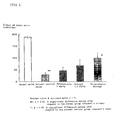
Fig. 1 is a graph showing the effects of individual administrations or combined administration of pitavastatin and Aricept (donepezil hydrochloride) on nerve cell death. -
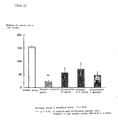
Fig. 2 is a graph showing the effects of individual administrations or combined administration of simvastatin and Aricept (donepezil hydrochloride) on nerve cell death. - The pitavastatins used in the present invention include pitavastatin and a salt thereof, and a lactone derivative of the compound or the salt, and also a solvate of these with a solvent which is acceptable as a pharmaceutical product, such as a hydrate of the compound, the salt or the lactone derivative. Pitavastatins have a cholesterol synthesis inhibitory activity based on the HMG-CoA reductase inhibitory action, and are known as a therapeutic agent for hyperlipidemia. Examples of the salt of pitavastatin include alkali metal salts such as sodium salt and potassium salt; alkaline earth metal salts such as calcium salt and magnesium salt; organic amine salts such as phenethylamine salt or ammonium salts and the like. Among these, as for the pitavastatin, a salt of pitavastatin is preferred, and a calcium salt and a sodium salt are particularly preferred.
A pitavastatin can be produced by the methods described inUS Patent No. 5856336 andJP-A No. 1-279866 - The donepezil or a salt thereof used in the present invention are known as a therapeutic agent for Alzheimer type dementia based on the acetylcholinesterase inhibitory action, and donepezil hydrochloride can be easily produced by a known method, for example, a method disclosed in
JP-A No. 1-79151 JP-A No. 07-252216 JP-A No. 11-263774 JP-A No. 11-171861 - The present invention involves administering a pitavastatin and donepezil or a salt thereof in combination. As shown in the Examples that will be described later, in a rat model for revascularization of vertebral-carotid artery occlusion (4-point ischemia), when a pitavastatin and donepezil or a salt thereof were used in combination, nerve cell death in the hippocampus CA1 region was significantly inhibited, and a marked nerve cell death inhibitory action was exhibited, in comparison to the case where the two drugs were each individually administered. Therefore, the medicament of the present invention is useful as a nerve cell death inhibitor. The nerve cell death inhibitor of the present invention is further useful as a cerebral nerve protective agent, a progression inhibitor for a demential disease, a prophylactic and/or therapeutic agent for a demential disease, a prophylactic agent against the recurrence of cerebral infarction, andaprophylactic and/or therapeutic agent for cerebral infarction. Examples of the demential disease include vascular dementias such as multi-infarct dementia extended ischemia type (including Binswanger type leukoencephalopathy), multiple cerebral infarction type, focal cerebral infarction type and hereditary vascular dementia (CADASIL, or the like); and degenerative dementias such as Alzheimer type dementia (Alzheimer's disease (AD) or senile dementia Alzheimer's type (SDAT)), frontotemporal lobar degeneration (frontotemporal dementia; FTD, Pick's disease, or the like), Lewy body type dementia (diffuse Lewy body disease (DLBD) or the like), Parkinson's disease (PD) with dementia, neurofibril variation type senile dementia, argentaffin granular dementia, Huntington's disease, progressive supranuclear palsy, and corticobasal ganglionic degeneration; as well as Creutzfeldt-Jakob disease, HIV-associated dementia, and the like. Among these demential diseases, themedicamentof the present invention is particularly useful as a progression inhibitor for Alzheimer type dementia, or a prophylactic and/or therapeutic agent for Alzheimer type dementia.
- The dosage form of the medicament or pharmaceutical composition used in the present invention is not particularly limited, and can be appropriately selected in accordance with the therapeutic purpose. Examples of the dosage form include oral administration by means of tablets, capsules, granules, film-coated tablets, powders, syrups or the like, and parenteral administration by means of injectable preparations, suppositories, inhalants, transdermal absorption patches, eye drops, nose drops or the like. However, usually, oral administration is preferred.
- In the case of preparing an oral solidpreparation, tablets, granules, powders, capsules or the like can be produced by a standard method, after adding an excipient, and if necessary, a binding agent, a disintegrant, a gliding agent, a colorant, a flavoring agent, a fragrance and the like. As such additives, those generally used in the pertinent art maybe used, and examples thereof include, as the excipient, lactose, sodium chloride, glucose, starch, microcrystalline cellulose, silicic acid, and the like; as the binding agent, water, ethanol, propanol, simple syrup, gelatin solution, hydroxypropylcellulose, methylcellulose, ethylcellulose, shellac, calcium phosphate, polyvinylpyrrolidone, and the like; as the disintegrant, powderedagar, sodiumhydrogencarbonate, sodiumlaurylsulfate, stearic acid monoglyceride, and the like; as the gliding agent, purified talc, stearic acid salts, borax, polyethylene glycol, and the like; as the colorant, β-carotin, yellow iron sesquioxide, caramel, and the like; and as the flavoring agent, sucrose, orange peel, and the like.
- In the case of preparing an oral liquid preparation, an internal liquid preparation, a syrup, an elixir or the like can be prepared by a standard method, adding a flavoring agent, a buffering agent, a stabilizer, a preservative and the like. As such additives, those generally used in the pertinent art may be used, and examples thereof include, as the flavoring agent, sucrose and the like; as the buffering agent, sodium citrate and the like; as the stabilizer, tragacanth and the like; and as the preservative, paraoxybenzoic acid ester and the like.
In the case of preparing an injectable preparation, a transdermal, intramuscular or intravenous injectable preparation can be produced by a standard method, adding a pH adjusting agent, a stabilizer, an isotonic agent, and the like. As such additives, those generally used in the pertinent art may be used, and examples thereof include, as the pH adjusting agent, sodium phosphate and the like; as the stabilizer, sodium pyrosulfite and the like; and as the isotonic agent, sodium chloride and the like. - In regard to the form of use, the medicament or pharmaceutical composition of the present invention utilizes a pitavastatin and donepezil or a salt thereof in combination, andcanbeusedas a nerve cell death inhibitor which is synergistic as a result of administration of the two drugs, and in the form capable of obtaining the effects of protecting cerebral nerves, inhibiting the progression of Alzheimer type dementia, preventing and/or treating Alzheimer type dementia, preventing the recurrence of cerebral infarction, and preventing and/or treating cerebral infarction, without being limited to these forms of use. The pitavastatin and donepezil or a salt thereof may be administered simultaneously, or may also be administered separately at an interval. That is, as for the pitavastatin and donepezil or a salt thereof, the two drugs may be formulated into a single preparation, or the two drugs may be formulated into separate preparations and used as a set (kit).
According to the present invention, in the case of administering the two drugs in a single preparation, the mixing ratio of a pitavastatin and donepezil or a salt thereof is preferably in the range of 1:0.005 to 1: 500, and more preferably in the range of 1:0.1 to 1:10, from the viewpoint of obtaining a particularly excellent synergistic effect. - Furthermore, according to the present invention, in the case of formulating the two drugs into separate preparations, the preparation containing a pitavastatin is provided as a nerve cell death inhibitor which is administered in combination with donepezil or a salt thereof, and can also be used as a cerebral nerve protective agent, a progression inhibitor for a demential disease, a prophylactic and/or therapeutic agent for a demential disease, a prophylactic agent against the recurrence of cerebral infarction, or a prophylactic and/or therapeutic agent for cerebral infarction, which is administered in combination with donepezil or a salt thereof. On the other hand, the preparation containing donepezil or a salt thereof is provided as a nerve cell death inhibitor which is administered in combination with apitavastatin, and can also be used as a cerebral nerve protective agent, a progression inhibitor for a demential disease, a prophylactic and/or therapeutic agent for a demential disease, a prophylactic agent against the recurrence of cerebral infarction, or a prophylactic and/or therapeutic agent for cerebral infarction, which is administered in combination with a pitavastatin. The dosage forms of the two drugs may be identical or may be different. The number of administrations of the respective components may also be different.
- According to the present invention, the dosage of pitavastatin may be appropriately selected in accordance with the body weight, age, gender, symptoms and the like of the patient, and usually in the case of an adult, 0.01 to 50 mg, preferably 0.1 to 20 mg, and more preferably 1 to 10 mg, may be administered per day. Furthermore, the dosage of donepezil or a salt thereof may be increased or decreased depending upon the symptoms, and in the case of an adult, 0.01 to 100 mg, preferably 0.1 to 50 mg, and more preferably 1 to 10 mg, may be administered per day. The administration may be performed once, or twice or more in divided portions in one day.
- The entire description in the specification of Japanese Patent Application No.
2007-259682
Hereinafter, the present invention will be further described by way of Examples, but the present invention is not intended to be limited to these Examples. - The effects of combined administration of pitavastatin calcium (hereinafter, described as pitavastatin) and donepezil hydrochloride (hereinafter, described under the trade name Aricept) on nerve cell death in the hippocampus CA1 region in a rat model for revascularization of vertebral-carotid artery occlusion (4-point ischemia), were evaluated according to the following testing methods.
- Seven-week old Crlj:WI male rats (Charles River Laboratories Japan Inc.) were obtained, and they were provided to the experiment after being subjected to quarantine (for 5 days) and acclimatization (for 7 days or more). Throughout the experimentation period, the rats were bred in a breeding chamber maintained under a light-dark cycle (light period under room light: 6:00 AM to 6:00 PM), at a temperature of 23 ± 3°C and a humidity of 55 ± 15%, and were allowed to freely take in solid feedstuff (CRF-1; Oriental Yeast Co., Ltd.) and drinking water (tap water).
- Pitavastatin and Aricept were each suspended in a 0.5% (w/v) aqueous solution of carboxymethylcellulose sodium (hereinafter, CMC-Na, SIGMA), and prepared just before use such that the amount of administration would be 5 mL/kg.
- The rats were divided into 5 groups (6 samples in each group) so that the average body weights were nearly uniform, and were grouped into (1) normal group (untreated group), (2) solvent control group, (3) pitavastatin (3 mg/kg) single administration group, (4) Aricept (0.5 mg/kg) single administrationgroup, and (5) pitavastatin (3 mg/kg) andAricept (0.5 mg/kg) combined administration group.
The day of grouping was counted as the first day of administration, and the test drug was orally administered once a day for 6 days, thus 6 times in total. The normal group and the solvent control group were administered with a 0.5% (w/v) aqueous solution of CMC-Na.
On the fifth day of administration, 35 mg/kg of pentobarbital sodium (Nembutal (registered trademark) injectable solution, Dainippon Pharmaceutical Co., Ltd.) was intraperitoneally administered to the rats excluding those in the normal group. The right and left alar foramens were exposed from the first cervical spine part under anesthesia, and the vertebral arteries were thermally solidified using a soldering iron, so as to permanently occlude the vertebral arteries on both sides. Subsequently, the common carotid arteries on both sides were exposed and peeled off, and a silicone tube was indwelling in a circular shape and sutured.
On the sixth day of administration, while the rats excluding those in the normal group were anesthetized with diethyl ether, the common carotid arteries on both sides were exposed through the indwelled silicone tube, and temporarily occluded for 10 minutes using a Sugita clip (Mizuho Ikakogyo Co., Ltd.), and the skin was sutured.
On the fifth day after the occlusion and revascularization of the common carotid arteries on both sides (for the normal group, fifth day after the final administration), the rats which had been anesthetized by a standard method were subjected to perfusion fixation using 4% paraformaldehyde (pH 7.4) and then with Bouin's fluid (pH 3.5 to 4.0), and the brains were extracted. The fixated brains were dehydrated, infiltrated and embedded in paraffin, and a section having a thickness 10 µm was produced from the vicinity of Bregma -3.3 mm. Subsequently, the section was Nissle-stained, and the right-hand side hippocampus CA1 region was photographed under an optical microscope. The number of nerve cells was counted using an image analyzer (Win ROOF V5.6, Mitani Corporation), and the length of CA1 was measured. - According to the following formula, the number of nerve cells per unit length was determined, and the average value and standard deviation were calculated for each group.

As for the significant difference test, a Student's t-test was performed between group (1) and group (2), and Dunnett's multiple comparison test was performed between group (2) and (3), (4) or (5). As for the significance level, a hazard rate of less than 5% was considered significant in all of the tests, and the significance level was expressed separately for the case of less than 5% (p < 0.05) and the case of less than 1% (p < 0.01). - The results are presented in
Fig. 1 . The vertical axis inFig. 1 represents the number of nerve cells (cells/mm). InFig. 1 , the symbol ## indicates that a significant difference existed at p < 0.01, while the symbol * indicates that a significant difference existed at p < 0.05. As shown inFig. 1 , the number of nerve cells in the hippocampus CA1 region in the solvent control group was recognized to have significantly decreased as compared to the normal group.
A tendency of increase in the number of nerve cells was shown in the 3 mg/kg pitavastatin single administration group and the 0.5 mg/kg Aricept single administration group with respect to the solvent control group, but the result was not significant. In the 3 mg/kg pitavastatin single administration group, although there was a report of the presence of significant difference (see Non-Patent Document 9), asignificantdifference could not be verified in such a harsh method as in the experimental method of the present invention as described above.
On the contrary, in the combined administration group of 3 mg/kg of pitavastatin and 0.5 mg/kg of Aricept, a significant increase was recognized in the number of nerve cells in the hippocampus CA1 region as compared to the solvent control group, and the remarkable action and effects of the present invention in which the two drugs are used in combination, were confirmed. - Under the purpose of verifying the action of a statin other than pitavastatin, the test was performed in the same manner using simvastatin. That is, the test animal and breeding environment, preparation of solution, testing method, data processing and statistical analysis were all carried out under the same conditions as in Example 1, except that simvastatin (15 mg/kg) was used in place of pitavastatin. Therefore, five groups of (1) normal group (untreated group), (2) solvent control group, (3) simvastatin (15 mg/kg) single administration group, (4) Aricept (0.5 mg/kg) single administration group, and (5) simvastatin (15 mg/kg) and Aricept (0.5 mg/kg) combined administration group (6 to 9 samples in each group) were used.
Simvastatin was purchased from Zhejiang Kangyu Pharmaceutical Co., Ltd. (China) and provided for the experiment. - The results are presented in
Fig. 2 . The vertical axis inFig. 2 represents the number of nerve cells (cells/mm). InFig. 2 , the symbol ** indicates that a significant difference existed at p < 0.01. As shown inFig. 2 , the number of nerve cells in the hippocampus CA1 region in the solvent control group was recognized to have significantly decreased as compared to the normal group.
A tendency of increase in the number of nerve cells was shown in the 15 mg/kg simvastatin single administration group and the 0.5 mg/kg Aricept single administration group with respect to the solvent control group, but the result was not significant. Furthermore, in the combined administration group of 15 mg/kg simvastatin and 0.5 mg/kg Aricept, although a tendency of increase in the number of nerve cells in the hippocampus CA1 region was also recognized in comparison to the solvent control group, the extent of increase was smaller than the respective cases of single administration, and the action and effects of using the two drugs in combination could not be confirmed. - The present invention is to provide a nerve cell death inhibitorwhich exhibits an excellent nerve cell death inhibitory action even under extremely harsh conditions such as those in a rat model for revascularization of vertebral-carotid artery occlusion (four-point ischemia), and the invention can provide a medicament useful as a cerebral nerve protective agent, a progression inhibitor of a demential disease, a prophylactic and/or therapeutic agent for a demential disease, a prophylactic agent against the recurrence of cerebral infarction, and a prophylactic and/or therapeutic agent for cerebral infarction. Thus, the present invention has industrial applicability in the pharmaceutical industry.
Claims (11)
- A nerve cell death inhibitor comprising apitavastatin and donepezil or a salt thereof in combination.
- The nerve cell death inhibitor according to claim 1, wherein the pitavastatin is pitavastatin calcium.
- The nerve cell death inhibitor according to claim 1 or 2, wherein the salt of donepezil is donepezil hydrochloride.
- The nerve cell death inhibitor according to any one of claims 1 to 3, wherein a preparation containing apitavastatin and a preparation containing donepezil or a salt thereof are administered in combination.
- The nerve cell death inhibitor according to any one of claims 1 to 4, wherein the nerve cell death inhibitor is a cerebral nerve protective agent.
- The nerve cell death inhibitor according to any one of claims 1 to 4, wherein the nerve cell death inhibitor is a prophylactic and/or therapeutic agent for a demential disease.
- The nerve cell death inhibitor according to claim 6, wherein the prophylactic and/or therapeutic agent for a demential disease is a progression inhibitor for a demential disease.
- The nerve cell death inhibitor according to claim 6 or 7, wherein the demential disease is vascular dementia or degenerative dementia.
- The nerve cell death inhibitor according to claim 8, wherein the degenerative dementia is Alzheimer type dementia.
- The nerve cell death inhibitor according to any one of claims 1 to 4, wherein the nerve cell death inhibitor is a prophylactic and/or therapeutic agent for cerebral infarction.
- The nerve cell death inhibitor according to claim 10, wherein the prophylactic and/or therapeutic agent for cerebral infarction is a prophylactic agent against the recurrence of cerebral infarction.
Priority Applications (2)
| Application Number | Priority Date | Filing Date | Title |
|---|---|---|---|
| PL08836702T PL2193793T3 (en) | 2007-10-03 | 2008-10-02 | Nerve cell death inhibitor |
| CY20121101047T CY1113364T1 (en) | 2007-10-03 | 2012-10-31 | ANASTOLEAS DEATH CELL NERVES |
Applications Claiming Priority (2)
| Application Number | Priority Date | Filing Date | Title |
|---|---|---|---|
| JP2007259682 | 2007-10-03 | ||
| PCT/JP2008/002768 WO2009044547A1 (en) | 2007-10-03 | 2008-10-02 | Nerve cell death inhibitor |
Publications (3)
| Publication Number | Publication Date |
|---|---|
| EP2193793A1 true EP2193793A1 (en) | 2010-06-09 |
| EP2193793A4 EP2193793A4 (en) | 2011-02-09 |
| EP2193793B1 EP2193793B1 (en) | 2012-08-01 |
Family
ID=40525979
Family Applications (1)
| Application Number | Title | Priority Date | Filing Date |
|---|---|---|---|
| EP08836702A Not-in-force EP2193793B1 (en) | 2007-10-03 | 2008-10-02 | Nerve cell death inhibitor |
Country Status (13)
| Country | Link |
|---|---|
| US (1) | US7973053B2 (en) |
| EP (1) | EP2193793B1 (en) |
| JP (1) | JP5399909B2 (en) |
| KR (1) | KR101503782B1 (en) |
| CN (1) | CN101815517A (en) |
| CA (1) | CA2701397C (en) |
| CY (1) | CY1113364T1 (en) |
| DK (1) | DK2193793T3 (en) |
| ES (1) | ES2389392T3 (en) |
| PL (1) | PL2193793T3 (en) |
| PT (1) | PT2193793E (en) |
| TW (1) | TWI432195B (en) |
| WO (1) | WO2009044547A1 (en) |
Families Citing this family (1)
| Publication number | Priority date | Publication date | Assignee | Title |
|---|---|---|---|---|
| WO2018000228A1 (en) | 2016-06-29 | 2018-01-04 | 北京小米移动软件有限公司 | Data transmission method and device, and terminal |
Family Cites Families (14)
| Publication number | Priority date | Publication date | Assignee | Title |
|---|---|---|---|---|
| FI95572C (en) | 1987-06-22 | 1996-02-26 | Eisai Co Ltd | Process for the preparation of a medicament useful as a piperidine derivative or its pharmaceutical salt |
| JP2569746B2 (en) | 1987-08-20 | 1997-01-08 | 日産化学工業株式会社 | Quinoline mevalonolactones |
| JP3992806B2 (en) | 1997-12-12 | 2007-10-17 | エーザイ・アール・アンド・ディー・マネジメント株式会社 | Method for producing donepezil intermediate |
| JP4022332B2 (en) | 1998-01-16 | 2007-12-19 | エーザイ・アール・アンド・ディー・マネジメント株式会社 | Method for producing donepezil derivative and its intermediate |
| US6080778A (en) * | 1998-03-23 | 2000-06-27 | Children's Medical Center Corporation | Methods for decreasing beta amyloid protein |
| US6472421B1 (en) | 1998-11-13 | 2002-10-29 | Nymox Corporation | Methods for treating, preventing, and reducing the risk of the onset of alzheimer's disease using an HMG CoA reductase inhibitor |
| JP2003523948A (en) | 1999-11-04 | 2003-08-12 | アンドルクス コーポレーション | Treatment of amyloid β precursor disorder |
| US20020028826A1 (en) | 2000-06-15 | 2002-03-07 | Robl Jeffrey A. | HMG-CoA reductase inhibitors and method |
| CA2437480A1 (en) | 2001-02-05 | 2002-08-15 | Andrx Corporation | Method of treating amyloid .beta. precursor disorder |
| MXPA04009535A (en) | 2002-04-02 | 2005-01-25 | Janssen Pharmaceutica Nv | Statin therapy for enhancing cognitive maintenance. |
| AU2004222529A1 (en) * | 2003-03-19 | 2004-09-30 | Ares Trading S.A. | INF-beta alone or in combination with other medicaments for treating Alzheimer's disease and demens disorders |
| ATE535614T1 (en) | 2003-12-30 | 2011-12-15 | Kowa Co | SCREENING METHOD FOR GAMMA SECRETASE INHIBITORS |
| CN1960781A (en) * | 2004-04-14 | 2007-05-09 | 沃尼尔·朗伯有限责任公司 | Therapeutic combination for treatment of alzheimers disease |
| KR101436644B1 (en) | 2006-01-31 | 2014-09-01 | 코와 가부시키가이샤 | Diabetes treatment |
-
2008
- 2008-09-30 TW TW097137428A patent/TWI432195B/en not_active IP Right Cessation
- 2008-10-02 PT PT08836702T patent/PT2193793E/en unknown
- 2008-10-02 US US12/676,265 patent/US7973053B2/en not_active Expired - Fee Related
- 2008-10-02 WO PCT/JP2008/002768 patent/WO2009044547A1/en not_active Ceased
- 2008-10-02 ES ES08836702T patent/ES2389392T3/en active Active
- 2008-10-02 CA CA2701397A patent/CA2701397C/en not_active Expired - Fee Related
- 2008-10-02 JP JP2009535978A patent/JP5399909B2/en not_active Expired - Fee Related
- 2008-10-02 KR KR1020107006970A patent/KR101503782B1/en not_active Expired - Fee Related
- 2008-10-02 DK DK08836702.4T patent/DK2193793T3/en active
- 2008-10-02 CN CN200880109935A patent/CN101815517A/en active Pending
- 2008-10-02 EP EP08836702A patent/EP2193793B1/en not_active Not-in-force
- 2008-10-02 PL PL08836702T patent/PL2193793T3/en unknown
-
2012
- 2012-10-31 CY CY20121101047T patent/CY1113364T1/en unknown
Also Published As
| Publication number | Publication date |
|---|---|
| KR20100072227A (en) | 2010-06-30 |
| EP2193793A4 (en) | 2011-02-09 |
| KR101503782B1 (en) | 2015-03-18 |
| JPWO2009044547A1 (en) | 2011-02-03 |
| CY1113364T1 (en) | 2016-06-22 |
| CN101815517A (en) | 2010-08-25 |
| DK2193793T3 (en) | 2012-08-20 |
| TWI432195B (en) | 2014-04-01 |
| PT2193793E (en) | 2012-09-28 |
| PL2193793T3 (en) | 2012-12-31 |
| ES2389392T3 (en) | 2012-10-25 |
| CA2701397A1 (en) | 2009-04-09 |
| JP5399909B2 (en) | 2014-01-29 |
| WO2009044547A1 (en) | 2009-04-09 |
| TW200918059A (en) | 2009-05-01 |
| US20100173938A1 (en) | 2010-07-08 |
| US7973053B2 (en) | 2011-07-05 |
| EP2193793B1 (en) | 2012-08-01 |
| CA2701397C (en) | 2015-11-03 |
Similar Documents
| Publication | Publication Date | Title |
|---|---|---|
| CN109890391A (en) | Dementia Treatment | |
| JP7686581B2 (en) | Methylthioninium as a cognitive enhancer | |
| EP4142764A1 (en) | Methods of use of t-type calcium channel modulators | |
| CN104013638B (en) | Swertisin and the purposes of derivant thereof | |
| JP7116792B2 (en) | Compositions and methods for alleviating pain | |
| CA3023073C (en) | Phenol compound and combination of same with a benzodiazepine fused to 1,4-dihydropyridine for treating diseases of the central nervous and vascular systems | |
| TW200831479A (en) | Pharmaceutical compositions and methods for treating diseases | |
| KR20200026884A (en) | Lithium Salts of N-Substituted Glycine Compounds and Their Uses | |
| US7973053B2 (en) | Nerve cell death inhibitor | |
| JP2015224194A (en) | Pharmaceuticals, foods, and compositions for prevention and treatment of dementia | |
| JP5101306B2 (en) | Diabetes treatment | |
| AU2014283319B2 (en) | Therapeutic agents for use in the prophylaxis and/or treatment of hyperkinetic movement disorders | |
| KR20170115764A (en) | Combination therapy for treating neurodegenerative diseases using combination of isoliquiritigenin and flupirtine or mirtazapine | |
| Unni | Beyond tacrine: recently developed cholinesterase inhibitors for the treatment of Alzheimer’s disease | |
| JP2021105048A (en) | Panobinostat dosages for multiple myeloma | |
| JP5441052B2 (en) | Alzheimer's disease treatment | |
| US20090281186A1 (en) | Composition and Method for Reducing Stress | |
| TW201601722A (en) | Laquinimod combination therapy for treatment of multiple sclerosis | |
| KR20220110518A (en) | Treatment of behavioral and psychological symptoms in dementia patients | |
| EP3087984B1 (en) | Prophylactic and therapeutic agent for attention-deficit/hyperactivity disorder | |
| JP2000229854A (en) | Intraventricular agent for treatment / prevention of ischemic nerve cell death, intraventricular agent for treatment / prevention of vascular dementia, and agent for intracerebral surgery | |
| Kraineva et al. | Neuroprotective properties of afobazole in repeated hemorrhagic stroke modeling in aged rats | |
| CN105934245A (en) | Therapeutic or prophylactic agent for multiple sclerosis | |
| KR20110025191A (en) | Combination therapy for neuroprotection | |
| JPWO2008050754A1 (en) | Brain oxidation inhibitor and use thereof |
Legal Events
| Date | Code | Title | Description |
|---|---|---|---|
| PUAI | Public reference made under article 153(3) epc to a published international application that has entered the european phase |
Free format text: ORIGINAL CODE: 0009012 |
|
| 17P | Request for examination filed |
Effective date: 20100304 |
|
| AK | Designated contracting states |
Kind code of ref document: A1 Designated state(s): AT BE BG CH CY CZ DE DK EE ES FI FR GB GR HR HU IE IS IT LI LT LU LV MC MT NL NO PL PT RO SE SI SK TR |
|
| AX | Request for extension of the european patent |
Extension state: AL BA MK RS |
|
| DAX | Request for extension of the european patent (deleted) | ||
| A4 | Supplementary search report drawn up and despatched |
Effective date: 20110111 |
|
| GRAP | Despatch of communication of intention to grant a patent |
Free format text: ORIGINAL CODE: EPIDOSNIGR1 |
|
| GRAS | Grant fee paid |
Free format text: ORIGINAL CODE: EPIDOSNIGR3 |
|
| GRAA | (expected) grant |
Free format text: ORIGINAL CODE: 0009210 |
|
| AK | Designated contracting states |
Kind code of ref document: B1 Designated state(s): AT BE BG CH CY CZ DE DK EE ES FI FR GB GR HR HU IE IS IT LI LT LU LV MC MT NL NO PL PT RO SE SI SK TR |
|
| REG | Reference to a national code |
Ref country code: GB Ref legal event code: FG4D |
|
| REG | Reference to a national code |
Ref country code: CH Ref legal event code: EP Ref country code: AT Ref legal event code: REF Ref document number: 568271 Country of ref document: AT Kind code of ref document: T Effective date: 20120815 Ref country code: CH Ref legal event code: NV Representative=s name: RENTSCH PARTNER AG |
|
| REG | Reference to a national code |
Ref country code: DK Ref legal event code: T3 |
|
| REG | Reference to a national code |
Ref country code: IE Ref legal event code: FG4D |
|
| REG | Reference to a national code |
Ref country code: NL Ref legal event code: T3 |
|
| REG | Reference to a national code |
Ref country code: DE Ref legal event code: R096 Ref document number: 602008017674 Country of ref document: DE Effective date: 20120927 |
|
| REG | Reference to a national code |
Ref country code: PT Ref legal event code: SC4A Free format text: AVAILABILITY OF NATIONAL TRANSLATION Effective date: 20120924 |
|
| REG | Reference to a national code |
Ref country code: RO Ref legal event code: EPE |
|
| REG | Reference to a national code |
Ref country code: ES Ref legal event code: FG2A Ref document number: 2389392 Country of ref document: ES Kind code of ref document: T3 Effective date: 20121025 |
|
| REG | Reference to a national code |
Ref country code: SE Ref legal event code: TRGR |
|
| REG | Reference to a national code |
Ref country code: NO Ref legal event code: T2 Effective date: 20120801 |
|
| REG | Reference to a national code |
Ref country code: PL Ref legal event code: T3 |
|
| REG | Reference to a national code |
Ref country code: GR Ref legal event code: EP Ref document number: 20120402458 Country of ref document: GR Effective date: 20121122 |
|
| REG | Reference to a national code |
Ref country code: LT Ref legal event code: MG4D Effective date: 20120801 |
|
| PG25 | Lapsed in a contracting state [announced via postgrant information from national office to epo] |
Ref country code: IS Free format text: LAPSE BECAUSE OF FAILURE TO SUBMIT A TRANSLATION OF THE DESCRIPTION OR TO PAY THE FEE WITHIN THE PRESCRIBED TIME-LIMIT Effective date: 20121201 Ref country code: HR Free format text: LAPSE BECAUSE OF FAILURE TO SUBMIT A TRANSLATION OF THE DESCRIPTION OR TO PAY THE FEE WITHIN THE PRESCRIBED TIME-LIMIT Effective date: 20120801 Ref country code: LT Free format text: LAPSE BECAUSE OF FAILURE TO SUBMIT A TRANSLATION OF THE DESCRIPTION OR TO PAY THE FEE WITHIN THE PRESCRIBED TIME-LIMIT Effective date: 20120801 |
|
| PG25 | Lapsed in a contracting state [announced via postgrant information from national office to epo] |
Ref country code: LV Free format text: LAPSE BECAUSE OF FAILURE TO SUBMIT A TRANSLATION OF THE DESCRIPTION OR TO PAY THE FEE WITHIN THE PRESCRIBED TIME-LIMIT Effective date: 20120801 Ref country code: SI Free format text: LAPSE BECAUSE OF FAILURE TO SUBMIT A TRANSLATION OF THE DESCRIPTION OR TO PAY THE FEE WITHIN THE PRESCRIBED TIME-LIMIT Effective date: 20120801 |
|
| PG25 | Lapsed in a contracting state [announced via postgrant information from national office to epo] |
Ref country code: EE Free format text: LAPSE BECAUSE OF FAILURE TO SUBMIT A TRANSLATION OF THE DESCRIPTION OR TO PAY THE FEE WITHIN THE PRESCRIBED TIME-LIMIT Effective date: 20120801 Ref country code: CZ Free format text: LAPSE BECAUSE OF FAILURE TO SUBMIT A TRANSLATION OF THE DESCRIPTION OR TO PAY THE FEE WITHIN THE PRESCRIBED TIME-LIMIT Effective date: 20120801 |
|
| PG25 | Lapsed in a contracting state [announced via postgrant information from national office to epo] |
Ref country code: SK Free format text: LAPSE BECAUSE OF FAILURE TO SUBMIT A TRANSLATION OF THE DESCRIPTION OR TO PAY THE FEE WITHIN THE PRESCRIBED TIME-LIMIT Effective date: 20120801 Ref country code: MC Free format text: LAPSE BECAUSE OF NON-PAYMENT OF DUE FEES Effective date: 20121031 |
|
| PLBE | No opposition filed within time limit |
Free format text: ORIGINAL CODE: 0009261 |
|
| STAA | Information on the status of an ep patent application or granted ep patent |
Free format text: STATUS: NO OPPOSITION FILED WITHIN TIME LIMIT |
|
| 26N | No opposition filed |
Effective date: 20130503 |
|
| PG25 | Lapsed in a contracting state [announced via postgrant information from national office to epo] |
Ref country code: BG Free format text: LAPSE BECAUSE OF FAILURE TO SUBMIT A TRANSLATION OF THE DESCRIPTION OR TO PAY THE FEE WITHIN THE PRESCRIBED TIME-LIMIT Effective date: 20121101 |
|
| REG | Reference to a national code |
Ref country code: DE Ref legal event code: R097 Ref document number: 602008017674 Country of ref document: DE Effective date: 20130503 |
|
| PG25 | Lapsed in a contracting state [announced via postgrant information from national office to epo] |
Ref country code: MT Free format text: LAPSE BECAUSE OF FAILURE TO SUBMIT A TRANSLATION OF THE DESCRIPTION OR TO PAY THE FEE WITHIN THE PRESCRIBED TIME-LIMIT Effective date: 20120801 |
|
| PG25 | Lapsed in a contracting state [announced via postgrant information from national office to epo] |
Ref country code: HU Free format text: LAPSE BECAUSE OF FAILURE TO SUBMIT A TRANSLATION OF THE DESCRIPTION OR TO PAY THE FEE WITHIN THE PRESCRIBED TIME-LIMIT Effective date: 20081002 |
|
| REG | Reference to a national code |
Ref country code: FR Ref legal event code: PLFP Year of fee payment: 8 |
|
| REG | Reference to a national code |
Ref country code: FR Ref legal event code: PLFP Year of fee payment: 9 |
|
| PGFP | Annual fee paid to national office [announced via postgrant information from national office to epo] |
Ref country code: RO Payment date: 20160914 Year of fee payment: 9 |
|
| PGFP | Annual fee paid to national office [announced via postgrant information from national office to epo] |
Ref country code: LU Payment date: 20161005 Year of fee payment: 9 Ref country code: BE Payment date: 20160913 Year of fee payment: 9 Ref country code: TR Payment date: 20160922 Year of fee payment: 9 |
|
| PGFP | Annual fee paid to national office [announced via postgrant information from national office to epo] |
Ref country code: DK Payment date: 20161012 Year of fee payment: 9 |
|
| REG | Reference to a national code |
Ref country code: FR Ref legal event code: PLFP Year of fee payment: 10 |
|
| REG | Reference to a national code |
Ref country code: CH Ref legal event code: PCAR Free format text: NEW ADDRESS: BELLERIVESTRASSE 203 POSTFACH, 8034 ZUERICH (CH) |
|
| PGFP | Annual fee paid to national office [announced via postgrant information from national office to epo] |
Ref country code: FR Payment date: 20170918 Year of fee payment: 10 Ref country code: GR Payment date: 20170926 Year of fee payment: 10 Ref country code: GB Payment date: 20170927 Year of fee payment: 10 |
|
| PGFP | Annual fee paid to national office [announced via postgrant information from national office to epo] |
Ref country code: NL Payment date: 20170911 Year of fee payment: 10 Ref country code: PL Payment date: 20170908 Year of fee payment: 10 |
|
| PGFP | Annual fee paid to national office [announced via postgrant information from national office to epo] |
Ref country code: DE Payment date: 20170927 Year of fee payment: 10 Ref country code: FI Payment date: 20171011 Year of fee payment: 10 Ref country code: NO Payment date: 20171010 Year of fee payment: 10 |
|
| PGFP | Annual fee paid to national office [announced via postgrant information from national office to epo] |
Ref country code: IT Payment date: 20171024 Year of fee payment: 10 Ref country code: AT Payment date: 20170926 Year of fee payment: 10 Ref country code: ES Payment date: 20171106 Year of fee payment: 10 Ref country code: CY Payment date: 20170926 Year of fee payment: 10 Ref country code: SE Payment date: 20171011 Year of fee payment: 10 Ref country code: CH Payment date: 20171013 Year of fee payment: 10 Ref country code: IE Payment date: 20171010 Year of fee payment: 10 Ref country code: PT Payment date: 20171002 Year of fee payment: 10 |
|
| REG | Reference to a national code |
Ref country code: DK Ref legal event code: EBP Effective date: 20171031 |
|
| PG25 | Lapsed in a contracting state [announced via postgrant information from national office to epo] |
Ref country code: LU Free format text: LAPSE BECAUSE OF NON-PAYMENT OF DUE FEES Effective date: 20171002 |
|
| REG | Reference to a national code |
Ref country code: BE Ref legal event code: MM Effective date: 20171031 |
|
| PG25 | Lapsed in a contracting state [announced via postgrant information from national office to epo] |
Ref country code: RO Free format text: LAPSE BECAUSE OF NON-PAYMENT OF DUE FEES Effective date: 20171002 Ref country code: BE Free format text: LAPSE BECAUSE OF NON-PAYMENT OF DUE FEES Effective date: 20171031 |
|
| PG25 | Lapsed in a contracting state [announced via postgrant information from national office to epo] |
Ref country code: DK Free format text: LAPSE BECAUSE OF NON-PAYMENT OF DUE FEES Effective date: 20171031 |
|
| REG | Reference to a national code |
Ref country code: DE Ref legal event code: R119 Ref document number: 602008017674 Country of ref document: DE |
|
| REG | Reference to a national code |
Ref country code: NO Ref legal event code: MMEP |
|
| REG | Reference to a national code |
Ref country code: SE Ref legal event code: EUG |
|
| REG | Reference to a national code |
Ref country code: CH Ref legal event code: PL |
|
| REG | Reference to a national code |
Ref country code: NL Ref legal event code: MM Effective date: 20181101 |
|
| REG | Reference to a national code |
Ref country code: AT Ref legal event code: MM01 Ref document number: 568271 Country of ref document: AT Kind code of ref document: T Effective date: 20181002 |
|
| GBPC | Gb: european patent ceased through non-payment of renewal fee |
Effective date: 20181002 |
|
| REG | Reference to a national code |
Ref country code: IE Ref legal event code: MM4A |
|
| PG25 | Lapsed in a contracting state [announced via postgrant information from national office to epo] |
Ref country code: DE Free format text: LAPSE BECAUSE OF NON-PAYMENT OF DUE FEES Effective date: 20190501 Ref country code: PT Free format text: LAPSE BECAUSE OF NON-PAYMENT OF DUE FEES Effective date: 20190402 Ref country code: FI Free format text: LAPSE BECAUSE OF NON-PAYMENT OF DUE FEES Effective date: 20181002 Ref country code: SE Free format text: LAPSE BECAUSE OF NON-PAYMENT OF DUE FEES Effective date: 20181003 Ref country code: NL Free format text: LAPSE BECAUSE OF NON-PAYMENT OF DUE FEES Effective date: 20181101 Ref country code: NO Free format text: LAPSE BECAUSE OF NON-PAYMENT OF DUE FEES Effective date: 20181031 Ref country code: CY Free format text: LAPSE BECAUSE OF NON-PAYMENT OF DUE FEES Effective date: 20181002 |
|
| PG25 | Lapsed in a contracting state [announced via postgrant information from national office to epo] |
Ref country code: GR Free format text: LAPSE BECAUSE OF NON-PAYMENT OF DUE FEES Effective date: 20190506 Ref country code: FR Free format text: LAPSE BECAUSE OF NON-PAYMENT OF DUE FEES Effective date: 20181031 Ref country code: LI Free format text: LAPSE BECAUSE OF NON-PAYMENT OF DUE FEES Effective date: 20181031 Ref country code: CH Free format text: LAPSE BECAUSE OF NON-PAYMENT OF DUE FEES Effective date: 20181031 |
|
| PG25 | Lapsed in a contracting state [announced via postgrant information from national office to epo] |
Ref country code: GB Free format text: LAPSE BECAUSE OF NON-PAYMENT OF DUE FEES Effective date: 20181002 Ref country code: IT Free format text: LAPSE BECAUSE OF NON-PAYMENT OF DUE FEES Effective date: 20181002 Ref country code: IE Free format text: LAPSE BECAUSE OF NON-PAYMENT OF DUE FEES Effective date: 20181002 Ref country code: AT Free format text: LAPSE BECAUSE OF NON-PAYMENT OF DUE FEES Effective date: 20181002 |
|
| REG | Reference to a national code |
Ref country code: ES Ref legal event code: FD2A Effective date: 20191129 |
|
| PG25 | Lapsed in a contracting state [announced via postgrant information from national office to epo] |
Ref country code: ES Free format text: LAPSE BECAUSE OF NON-PAYMENT OF DUE FEES Effective date: 20181003 |
|
| PG25 | Lapsed in a contracting state [announced via postgrant information from national office to epo] |
Ref country code: PL Free format text: LAPSE BECAUSE OF NON-PAYMENT OF DUE FEES Effective date: 20181002 |
|
| PG25 | Lapsed in a contracting state [announced via postgrant information from national office to epo] |
Ref country code: TR Free format text: LAPSE BECAUSE OF NON-PAYMENT OF DUE FEES Effective date: 20181002 |