EP2190239A2 - Testvorrichtung und Verfahren zum Testen der Interoparabilität von drahtlosen Kommunikationsvorrichtungen - Google Patents
Testvorrichtung und Verfahren zum Testen der Interoparabilität von drahtlosen Kommunikationsvorrichtungen Download PDFInfo
- Publication number
- EP2190239A2 EP2190239A2 EP09175250A EP09175250A EP2190239A2 EP 2190239 A2 EP2190239 A2 EP 2190239A2 EP 09175250 A EP09175250 A EP 09175250A EP 09175250 A EP09175250 A EP 09175250A EP 2190239 A2 EP2190239 A2 EP 2190239A2
- Authority
- EP
- European Patent Office
- Prior art keywords
- test apparatus
- phone
- call
- hfp
- interface
- Prior art date
- Legal status (The legal status is an assumption and is not a legal conclusion. Google has not performed a legal analysis and makes no representation as to the accuracy of the status listed.)
- Granted
Links
- 238000012360 testing method Methods 0.000 title claims abstract description 133
- 238000004891 communication Methods 0.000 title claims abstract description 31
- 238000000034 method Methods 0.000 title claims abstract description 19
- 230000009471 action Effects 0.000 claims abstract description 34
- 230000006399 behavior Effects 0.000 claims abstract description 28
- 230000004044 response Effects 0.000 claims description 9
- 238000012544 monitoring process Methods 0.000 claims description 3
- 230000005540 biological transmission Effects 0.000 claims description 2
- 238000010998 test method Methods 0.000 description 27
- 238000012546 transfer Methods 0.000 description 18
- 230000010076 replication Effects 0.000 description 13
- 238000012512 characterization method Methods 0.000 description 5
- 230000008569 process Effects 0.000 description 5
- 238000010586 diagram Methods 0.000 description 4
- 230000006870 function Effects 0.000 description 4
- 230000003362 replicative effect Effects 0.000 description 3
- 238000012163 sequencing technique Methods 0.000 description 2
- 238000013459 approach Methods 0.000 description 1
- 230000003542 behavioural effect Effects 0.000 description 1
- 238000011161 development Methods 0.000 description 1
- 230000008030 elimination Effects 0.000 description 1
- 238000003379 elimination reaction Methods 0.000 description 1
- 238000005516 engineering process Methods 0.000 description 1
- 230000002452 interceptive effect Effects 0.000 description 1
- 238000012986 modification Methods 0.000 description 1
- 230000004048 modification Effects 0.000 description 1
- 230000006855 networking Effects 0.000 description 1
- 230000000007 visual effect Effects 0.000 description 1
Images

Classifications
-
- H—ELECTRICITY
- H04—ELECTRIC COMMUNICATION TECHNIQUE
- H04W—WIRELESS COMMUNICATION NETWORKS
- H04W24/00—Supervisory, monitoring or testing arrangements
- H04W24/06—Testing, supervising or monitoring using simulated traffic
-
- H—ELECTRICITY
- H04—ELECTRIC COMMUNICATION TECHNIQUE
- H04W—WIRELESS COMMUNICATION NETWORKS
- H04W8/00—Network data management
- H04W8/005—Discovery of network devices, e.g. terminals
-
- H—ELECTRICITY
- H04—ELECTRIC COMMUNICATION TECHNIQUE
- H04W—WIRELESS COMMUNICATION NETWORKS
- H04W84/00—Network topologies
- H04W84/18—Self-organising networks, e.g. ad-hoc networks or sensor networks
Definitions
- the present invention generally relates to wireless communications, and more particularly relates to testing the interoperability of devices that communicate wirelessly, such as with Bluetooth® enabled devices.
- Short range wireless communication is available on many electronic devices, such as cell phones, microphone and earpiece headsets, laptop computers, desktop computers and is also widely available on many vehicles. Many of these wireless devices are configured with a popular wireless communication package, commonly referred to as Bluetooth® devices. Bluetooth® enabled devices are developed and sold by many companies. As a result, the internal implementation of technology employed in the various Bluetooth® enabled products may vary from one product to another. This often results in problems in trying to ensure the operability of one device wirelessly communicating with another device. In order for developers of devices to ensure proper wireless operation, a large scale interoperability test is generally required.
- interoperability testing is conducted manually by operating individual devices communicating wirelessly with a newly-developed product, such as an entertainment system in a vehicle. This requires purchasing a vast number of devices that may communicate with the entertainment system in the marketplace. As a consequence, the conventional interoperability testing approach requires substantial money and time.
- a test apparatus for testing interoperability of a first device to communicate with a second device via wireless communication.
- the test apparatus includes a wireless interface configured to interface via wireless communication with at least first and second devices.
- the test apparatus also includes a processor, memory and logic stored in memory and executed by the processor. The logic causes the test apparatus to sequence through a plurality of wireless communication actions to communicate with a first device, monitor behavior of the first device during the actions, and store characteristics of the monitored behavior in memory so that the test apparatus may be used to emulate the first device when wirelessly communicating with a second device.
- a method for testing interoperability of a first device to communicate with a second device via wireless communication includes the steps of providing a test apparatus having a wireless interface configured to interface via wireless transmission with at least first and second devices and communicating the test apparatus with at least a first device.
- the method also includes the steps of causing the test apparatus to sequence through a plurality of wireless communication actions to communicate with the first device, monitoring behavior of the first device during the actions, and storing characteristics of the monitored behavior in memory.
- the method further includes the steps of emulating the first device with the test apparatus when wirelessly communicating with a second device.
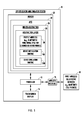
- FIG. 1 is a block diagram of a test apparatus shown replicating a first device, e.g., a cell phone, according to one embodiment
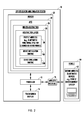
- FIG. 2 is a block diagram illustrating the test apparatus configured to emulate the first device (e.g., cell phone) for communication with a second device in a vehicle;
- the first device e.g., cell phone
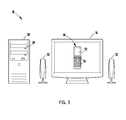
- FIG. 3 is a schematic diagram of the user display of the test apparatus showing a cell phone interface for use in simulating the cell phone;
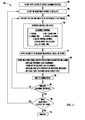
- FIG. 4 is a flow diagram illustrating a routine for replicating a first device with the test apparatus, according to one embodiment.
- FIG. 5 is a routine for emulating the first device when communicating with a second device, according to one embodiment.
- an interoperability (IOP) replicator and emulator test apparatus (also referred to as test apparatus) 10 is illustrated for replicating a first wireless device 32 as shown in FIG. 1 and further emulating the first wireless device 32 when communicating wirelessly with a second device 42 as shown in FIG. 2 .
- the test apparatus 10 is configured to test interoperability of the first device 32 to communicate with the second device 42 via wireless communication.
- the test apparatus 10 aids in development of future products, such as device 42, without requiring a developer to test each and every first device 32 with the second device 42 that is being developed.
- the first device 32 may include one or more wireless devices, such as Bluetooth® enabled cell phones, microphone and earpiece headsets, laptop computers, desktop computers and other wireless communicating devices.
- the second device 42 may include any wireless device capable of communicating wirelessly with one or more of the first devices 32. Examples of a second wireless device 42 may include a Bluetooth® enabled vehicle entertainment system, radio, or other device.
- the interoperability replicator and emulator test apparatus 10 is shown having a processor 12, a touch screen display 14, a wireless interface 16 and memory 20.
- the processor 12 may include a microprocessor, according to one embodiment.
- the processor 12 may include other analog and/or digital circuitry including an application specific integrated circuit (ASIC) or other known circuitry according to other embodiments.
- ASIC application specific integrated circuit
- the processor 12 processes input data, executes routines as described herein to replicate a first device and to emulate the first device, and provides output signals indicative of the interoperability of the devices.
- Memory 20 may include any known storage medium, such as random access memory (RAM), read-only memory (ROM), electrically erasable programmable read-only memory (EEPROM), flash memory and other memory devices.
- Memory 20 is shown including an application programming interface (API) portion 22 having a higher abstraction layer 24 and an abstraction layer 26 within the higher abstraction layer 24.
- API application programming interface
- Stored within the abstraction layer 26 is a profile wireless functional specification for learned behavior models 30.
- the learned behavior models are learned during the replication of a first device 32 and are stored in memory 20 and provide information relevant to the interoperability of the wireless (e.g., Bluetooth®) communication of the first device 32. It should be appreciated that a plurality of learned behavior models 30 may be stored in memory 20 to accommodate the learned replication of a plurality of first devices 32.
- Routines 100 and 200 are stored as logic executable by the processor 12.
- the test apparatus 10 is also shown including a wireless interface 16 adapted to interface via wireless communication with a plurality of devices.
- the wireless interface 16 may allow wireless communication via short range wireless communication such as Bluetooth®, according to one embodiment.
- the wireless interface 16 may allow short range wireless communication via IEEE spec 802.11. It should be appreciated that the wireless interface 16 may allow other wireless communication including medium range and long range wireless communication such as may be experienced with a local area network (LAN) wireless communication.
- LAN local area network
- the test apparatus 10 further includes a touch screen display 14 which may display output visual information to a user and may allow for a user to interface and input information to the test apparatus 10.
- the touch screen display 14 is illustrated displaying the user interface of a first wireless device, shown as a cell phone 50.
- the cell phone 50 is displayed on display 14 showing the phone display 52 and user input keypads 54 that may be actuated by a user to input information such as alphanumeric characters for commands.
- the test apparatus 10 may be configured such that the touch screen display 14 allows the user to simulate the entry of keypad inputs by touching the display 14 on the displayed cell phone device 50 such that the test apparatus 10 may simulate the user interface with a cell phone device.
- the intuitive user interface display 14 abstracts the sophisticated behavioral model and appears to the user as a cell phone in this example with input buttons for providing user inputs. Also shown in FIG. 3 is the memory 20 provided within a computer housing 50 and speakers 52 that allow for audio output to a user. It should be appreciated that the test apparatus 10 may be configured by employing logic programmed onto a computer as shown in FIG. 3 , or may otherwise be configured. In the computer embodiment, the computer-based tool may be a personal computer or a computing platform with the learned behavior models 30, device replication routine 100 and device emulation routine 200 stored in memory.
- the replicator and emulator test apparatus 10 serves both as a replicator to learn wireless interoperability of one or a plurality of first devices 32 and as an emulator to emulate the one or plurality of first devices 32 when communicating with a second device 42.
- the test apparatus 10 is shown communicating with a first wireless device, such as a Bluetooth® enabled cell phone 32 in FIG. 1 . In doing so, the test apparatus 10 communicates wirelessly via wireless interface 16 with the first wireless device(s) 32 during execution of the device replication routine 100 and learns the behavior of the first wireless device(s) 32 such that a behavior model having characterization parameters is stored in memory for each first device 32.
- the test apparatus 10 may be employed to test interoperability of the first wireless devices 32 with one or more second wireless devices 42 as shown in FIG. 2 .
- the test apparatus 10 communicates wirelessly via the wireless interface 16 with a second wireless device 42 shown located on board a vehicle 40, according to one embodiment.
- the vehicle 40 may be a wheeled automotive vehicle as is generally known in the art.
- the second wireless device 42 may include any of a number of wireless devices that communicate wirelessly.
- the second wireless device 42 is a vehicle entertainment system shown having a display and user inputs available on board the vehicle 40.
- the vehicle entertainment system 42 may incorporate any of a number of functions including radio, navigation, and entertainment as should be evident to those skilled in the art.
- the test apparatus 10 allows a developer of a vehicle or the vehicle's entertainment system to test the interoperability of a plurality of first devices 32, such as cell phones, with the second wireless device 42 to see if the second wireless device 42 properly operates to communicate wireless data with each of the plurality of first devices 32. In doing so, the test apparatus 10 executes the device emulation routine 200 to communicate with the second wireless device 42 to see if the first devices 30 work correctly with the second device 42. This enables a developer of the vehicle entertainment system 42 or the vehicle 40 to test interoperability of the second wireless device 42 with the first wireless device 32 without requiring purchase and use of all potential first devices 32.
- the replication routine 100 begins at step 102 to start the application to begin the learning process, and then proceeds to step 104 to start up the Bluetooth® enabled first device to emulate.
- the Bluetooth® enabled device to emulate may include any of a number of devices including cell phones, wireless computers, audio headsets and other Bluetooth® enabled devices or other wireless devices.
- routine 100 proceeds to step 106 to prepare the test apparatus and the first Bluetooth® enabled device for pairing.
- the pairing operation may include a conventional pairing in which the devices are configured to communicate with each other, such as entering a matching code (e.g., 0000), as should be evident to those skilled in the art.
- the replication routine 100 proceeds to step 108 to exercise defined use cases.
- the use cases may include sequencing through a number of actions involving communication of the test apparatus with each Bluetooth® enabled first device.
- the sequence of events may include a pairing action, a connection action, a reconnection action, a profile action and multiple profile actions.
- the use cases typically may be a use that is generally required to exercise use of the device through its full range of behavior.
- the use cases may include a device pairing, a device service connection, a device disconnection and reconnection, and profile actions.
- the profile actions may be functional steps defined in the present and future Bluetooth® functional profile specifications for profiles including, but not limited to, hands-free phone profile, headset profile, advanced audio distribution profile, audio/video remote control profile, phonebook access profile, object push profile, dial-up networking profile, and other profiles as updated and/or adopted. These actions may be performed multiple times each, in every different valid sequence and by every different valid optional way possible to capture variation by user input.
- Use cases may also include multiple profile actions which are user actions (or use cases) which require simultaneous use of more than one Bluetooth® profile.
- Multiple profile actions may include a cell phone streaming music and receiving a call at the same time.
- routine 100 may apply the results to develop a behavior model of the first device in step 110.
- the behavior model may then be stored in memory in step 112.
- the characterization parameters of the behavior model may include message response and sequencing, timing between event and responses, message and data formats of response messages, and optional specification features in the Bluetooth® specification.
- the stored behavior model characterization parameters are indicative of the operability of the first wireless device such that the test apparatus is able to emulate the first device.
- the replication routine 100 deletes the connection at step 114.
- routine 100 proceeds to decision step 116 to determine if the test apparatus is finished learning this first device and, if not, turns to step 106.
- replication routine 100 proceeds to decision step 118 to determine if more Bluetooth® enabled devices are to be learned and, if so, returns to step 104 to emulate therein the next first device. If no more Bluetooth® enabled devices are to be learned as the first device, then replication routine 10 is finished with the replication process at step 120.
- the emulation routine 200 is illustrated for the test apparatus emulating the first devices to communicate with a second wireless device, according to one embodiment.
- the emulation routine 200 begins at step 202 to start the application to begin the emulator process, and then proceeds to step 204 to start up the second device under test.
- the second device under test may include an entertainment system in a vehicle, according to one embodiment.
- Emulation routine 200 proceeds to step 206 to select a first Bluetooth® enabled device from a menu on the display of the emulator test apparatus at step 206. This may include a user actuating the touch screen display button on the test apparatus to select a desired first Bluetooth® enabled device to test with the second device.
- routine 200 proceeds to step 208 to perform pairing and connection actions.
- emulation routine 200 proceeds to step 210 to execute a product test plan using the emulator in place of the first Bluetooth® enabled device.
- the product test plan may include the user interacting with the touch screen display of the test apparatus to enter certain inputs so that the test apparatus may check the interoperability of the first device with the second device.
- emulation routine 200 proceeds to step 212 to delete the connections.
- emulation routine 200 determines whether the test apparatus is finished testing the second device under test against the emulated first device and, if not, returns to step 208.
- routine 200 proceeds to decision step 216 to determine if more emulated Bluetooth® enabled devices are to be emulated to test with the second device under test and, if so, returns to step 206 to emulate the next first device. If no more emulated first devices are to be emulated, emulation routine 200 is complete at step 218.
- the emulation routine 200 executes the product test plan by interacting with a user, according to one embodiment.
- the test procedure for executing the product text plan may include any of a number of actions that are performed to test interoperability of one or a plurality of first devices with a second device.
- One example of a test procedure for testing each of the plurality of first devices with the second device is described in the following table which provides the Bluetooth® profile, the requirement, the test procedures implemented and the expected results, which are recorded for each device that is emulated: Bluetooth® Profile Requirement Test Step Test Procedures Expected Results Registration HFP Pair 1 Press Talk button. After beep, say "setup" Setup message is played HFP Pair 2 Press Talk button.
- Bluetooth Icon is highlighted.
- Bluetooth Icon is NOT highlighted HFP Reconnect in Range 6 Move Bluetooth phone back in range of TSA TSA reconnects to BT phone.
- Bluetooth Icon is highlighted HFP Disconnect from BT Phone 7 Disconnect the TSA from the BT phone BT phone is disconnected from TSA.
- Bluetooth Icon is NOT highlighted HFP Reconnect from BT Phone 8 Reconnect to TSA from the BT Phone TSA reconnects to BT phone.
- Bluetooth Icon is highlighted.
- HFP Disconnect Switch BT Phone 9 Another phone is paired with TSA.
- HFP Hangup far-end 12 Hangup the phone on the far-end Call is terminated and audio system returns to previous state HFP Callback 13 Place a call to the BT phone.
- Answer phone on far-end. Call is on the VAS HFP Hangup far-end 14
- Hangup the phone on the far-end Call is terminated and audio system returns to previous state HFP Dial by BT phone 15 Enter a phone number using the BT phone handset. Press Send button on phone.
- HFP Auto Answer 1 Turn BT phone Auto Answer on. Place a call to the BT phone. Ringing is heard through the VAS. Incoming call is answered and call is on the VAS. HFP Hangup far-end 2 Hangup the phone on the far-end Call is terminated and audio system returns to previous state HFP Auto Answer Flip phones 3 Turn BT phone Auto answer off. Turn on answer call when phone is opened. Place a call to the BT phone. Flip open the BT phone.
- HFP Answer Off-Hook SWC 5 Turn BT phone Auto Answer off. Place a call to the BT phone. Ringing is heard through the VAS. Call is not automatically answered. HFP Answer Off-Hook SWC 6 Press the off-hook SWC button. Incoming call is answered and call is on the VAS HFP Terminate Call On-Hook SWC 7 Press the on-hook SWC button. Call is terminated and audio system returns to previous state HFP Answer BT Phone Send 8 Place a call to the BT phone. Ringing is heard through the VAS HFP Answer BT Phone Send 9 Press the Send button on BT phone handset.
- Incoming call is answered and call is on the VAS HFP Terminate Call BT Phone End 10 Press the End button on BT phone handset. Call is terminated and audio system returns to previous state.
- HFP Reject On-Hook SWC 11 Place a call to the BT phone. Ringing is heard through the VAS HFP Reject On-Hook SWC 12 Press the on-hook SWC button. Incoming call is dropped and call is not on the VAS. Audio system returns to previous state.
- HFP Reject BT Phone End 13 Place a call to the BT phone. Ringing is heard through the VAS.
- HFP BT Icon 1 Paired phone is connected Bluetooth Icon is highlighted.
- HFP Antenna Signal Strength 2 Paired phone is connected.
- Antenna Signal Strength is displayed
- HFP Battery level 3 Paired phone is connected Battery Level is displayed
- HFP Roaming Indicator 4 Paired phone is connected and roaming Roaming Indicator is displayed Third Call/Call Waiting Bluetooth® Profile Requirement Test Step Test Procedures Expected Results
- HFP Answer Off-Hook SWC 1 Place a call to the BT phone. Press the off-hook SWC button when it rings Incoming call is answered and call is on the VAS.
- HFP Reject Second Incoming Call 2 Place a second call to the BT phone.
- HFP Switch Back to First Call 7 If auto switch does not occur, press the off-hook SWC button. A ring back tone may be played. First call becomes the active call and is on the VAS. HFP Answer Second Incoming Call 8 If auto switch does not occur, place a second call to the BT phone. Press the off-hook SWC button when it rings. Second call is answered and on the VAS. First call is placed on hold. HFP Terminate Second Call 9 If auto switch does not occur, press on-hook SWC button. Second call is terminated. HFP Terminate call on hold (first call) 10 If auto switch does not occur, press the on-hook SWC button. A ring back tone may be played. First call is terminated and audio system returns to previous state.
- A2DP Registration Bluetooth® Profile Requirement Test Step Test Procedures Expected Results A2DP Pair 1 Press Talk button. After beep, say "Setup.” Setup message is played. A2DP Pair 2 Press Talk button. After beep, say “Bluetooth Audio Setup.” Phone Setup message is played A2DP Pair 3 Press Talk button. After Beep, say Pair Audio.” Pair Phone message is played.
- A2DP Pair 6 Begin device search on BT Audio Device. After search, select "???" and enter Passkey (PIN), if available. **Not all audio players will have display or way to enter PIN** Paired Device message is played. "Paired” is displayed on radio and Bluetooth Icon will be highlighted. Music Note is highlighted.
- A2DP Connection Bluetooth® Profile Requirement Test Step Test Procedures Expected Results A2DP Disconnect 1 Turn ACC off. BT audio device is disconnected from TSA. Bluetooth Icon is NOT highlighted. Music Note is NOT highlighted. A2DP Reconnect 2 Turn ACC on. TSA reconnects to BT audio device. Bluetooth Icon is highlighted. Music Note is highlighted. A2DP Disconnecte d Power/BT Off 3 Turn Bluetooth or Power off on the Audio device. BT audio device is disconnected from TSA. Bluetooth Icon is NOT highlighted. Music Note is NOT highlighted. A2DP Reconnect Power/BT On 4 Turn Bluetooth or Power back on. TSA reconnects to BT audio device. Bluetooth Icon is highlighted. Music Note is highlighted.
- A2DP Disconnect Out of Range 5 Move Bluetooth audio device out of range from TSA BT audio device is disconnected from TSA. Bluetooth Icon is NOT highlighted. Music Note is NOT highlighted.
- A2DP Reconnect in Range 6 Move Bluetooth audio device back in range of TSA TSA reconnects to BT audio device. Bluetooth Icon is highlighted. Music Note is highlighted.
- A2DP Disconnect TSA Switch to another device 7 Another Audio Device is paired to TSA. Press Talk button and say “Setup.” Press Talk button and say “Bluetooth Audio Setup.” Press Talk button and say “Select Audio Player.” Press Talk button and state the name of the other audio device. Press Talk button and say “Confirm.” Press Talk button and say “From Car.” Press Talk button and say “Confirm.” TSA begins searching for other audio device.
- TSA disconnects from the current BT audio device and connects with the other BT audio device.
- A2DP Reconnect TSA Switch to original device 8 Repeat previous Test Procedure to reconnect to previous BT Audio Device (Audio Device under test) TSA disconnects from the current BT audio device and connects with the original BT audio device.
- A2DP Disconnect Second Audio device connects to TSA 9 Another Audio Device is paired to TSA. Press Talk button and say “Setup.” Press Talk button and say “Bluetooth Audio Setup.” Press Talk button and say “Select Audio Player.” Press Talk button and state the name of the other audio device. Press Talk button and say “Confirm.” Press Talk button and say “From Audio.” Press Talk button and say “Confirm.” TSA waits for audio device.
- TSA disconnects from the current BT audio device and connects with the other BT audio device.
- A2DP Reconnect Original Audio Device connects to TSA 10 Repeat previous Test Procedure to reconnect to previous BT Audio Device (Audio Device under test)
- TSA disconnects from the current BT audio device and connects with the original BT audio device.
- A2DP Disconnect Delete Paired Phone 11 Turn power off of all paired BT Audio, except phone under test. Press Talk button and say “Setup.” Press Talk button and say “Bluetooth Audio Setup.” Press Talk button and say "Delete Phone.” Press Talk button and state the name of the test BT Audio Device. Press Talk button and say "Confirm.”
- TSA disconnects from the current BT Audio Device. Bluetooth Icon is NOT highlighted.
- AVRCP Bluetooth® Profile Requirement Test Step Test Procedures Expected Results AVRCP Play 1 Press Play button on TSA Audio from the BT Audio Device is playing on the VAS.
- AVRCP Stop 2 Press Stop button on TSA Audio from the BT Audio Device is not playing on the VAS. Device may continue playing from the spot of the stop, or start at the beginning of the song.
- AVRCP Play 3 Press Play button on TSA Audio from the BT audio device is playing on the VAS. VAS.
- AVRCP Pause 4 Press Pause button on TSA Audio from the BT audio device is not playing on the VAS.
- AVRCP Play 5 Press Play button on TSA Audio from the BT audio device is playing on the VAS. Device should continue playing from the spot of the Pause.
- the test procedure may be interactive in which a user interfaces with the touch screen display to input actions pursuant to the test procedure. It should be appreciated that some of the test procedure actions may be automated and that the expected results may be automatically stored in memory and may be processed to determine whether the interoperability of each first device with the second device performs satisfactory.
- One example of a test procedure is given which includes actions for registration, connectivity, placing a phone call, receiving or ending a call, muting a call, providing tones, transfer function, indicator displays, third call/call waiting, phonebook transfers, handsfree on/off actions, registrations, and other actions. It should be appreciated that these and other actions may be applied for any given test procedure, depending upon the functionality of the devices and the expected interoperability of the devices.
- test procedure shown and described herein is one example of testing a first device with a second device by emulating the first device. It should be appreciated that the same or similar test procedure may be employed during the replication process to learn the characteristics of each of a plurality of first devices by performing similar actions and storing these characteristics in the test apparatus.
- the test apparatus 10 advantageously learns the behavior characteristics of a plurality of wireless first devices and emulates the plurality of wireless first devices when communicating with a second device so as to allow for enhanced interoperability testing.
- the test apparatus 10 advantageously allows for the elimination of physical first devices when testing a second device so that a developer, such as a manufacturer of a vehicle or a device employed based on an automotive vehicle, may easily and cost effectively check the interoperability of their devices.
Landscapes
- Engineering & Computer Science (AREA)
- Computer Networks & Wireless Communication (AREA)
- Signal Processing (AREA)
- Databases & Information Systems (AREA)
- Telephone Function (AREA)
- Mobile Radio Communication Systems (AREA)
Applications Claiming Priority (1)
| Application Number | Priority Date | Filing Date | Title |
|---|---|---|---|
| US12/276,439 US8213928B2 (en) | 2008-11-24 | 2008-11-24 | Test apparatus and method for testing interoperability of wireless communication devices |
Publications (3)
| Publication Number | Publication Date |
|---|---|
| EP2190239A2 true EP2190239A2 (de) | 2010-05-26 |
| EP2190239A3 EP2190239A3 (de) | 2014-03-12 |
| EP2190239B1 EP2190239B1 (de) | 2017-01-18 |
Family
ID=41796560
Family Applications (1)
| Application Number | Title | Priority Date | Filing Date |
|---|---|---|---|
| EP09175250.1A Active EP2190239B1 (de) | 2008-11-24 | 2009-11-06 | Testvorrichtung und Verfahren zum Testen der Interoparabilität von drahtlosen Kommunikationsvorrichtungen |
Country Status (2)
| Country | Link |
|---|---|
| US (1) | US8213928B2 (de) |
| EP (1) | EP2190239B1 (de) |
Cited By (3)
| Publication number | Priority date | Publication date | Assignee | Title |
|---|---|---|---|---|
| CN103323767A (zh) * | 2013-06-25 | 2013-09-25 | 福州瑞芯微电子有限公司 | 一种测试嵌入式pcba上蓝牙模块的方法及其系统 |
| US20140278439A1 (en) * | 2013-03-14 | 2014-09-18 | Accenture Global Services Limited | Voice based automation testing for hands free module |
| US9772919B2 (en) | 2013-03-14 | 2017-09-26 | Accenture Global Services Limited | Automation of D-bus communication testing for bluetooth profiles |
Families Citing this family (13)
| Publication number | Priority date | Publication date | Assignee | Title |
|---|---|---|---|---|
| US8064900B2 (en) * | 2009-06-17 | 2011-11-22 | Metrico Wireless, Inc. | System, method and device for testing mobile telephone call performance |
| EP2532148B8 (de) * | 2010-02-05 | 2020-06-17 | Cerence Operating Company | Messung und abstimmung von freisprechanlagen |
| US8712327B2 (en) * | 2010-07-16 | 2014-04-29 | Blackberry Limited | Remote device pairing setup |
| US10557889B2 (en) | 2012-05-07 | 2020-02-11 | Flextronics Ap, Llc | Universal device multi-function test apparatus |
| US10616827B2 (en) | 2012-07-10 | 2020-04-07 | Huawei Technologies Co., Ltd. | System and method for dynamically configurable air interfaces |
| US9191794B2 (en) * | 2012-07-31 | 2015-11-17 | Blackberry Limited | Method and apparatus pertaining to Bluetooth#-conveyed voice-based user input |
| US9179341B2 (en) * | 2013-03-15 | 2015-11-03 | Sony Computer Entertainment Inc. | Method and system for simplifying WiFi setup for best performance |
| CN103401984A (zh) * | 2013-07-30 | 2013-11-20 | 无锡中星微电子有限公司 | 蓝牙耳机及通讯装置 |
| US9697522B2 (en) * | 2013-11-01 | 2017-07-04 | Plantronics, Inc. | Interactive device registration, setup and use |
| ITTO20130974A1 (it) * | 2013-11-29 | 2015-05-30 | Magneti Marelli Spa | Sistema per sottoporre a test l'interazione wireless fra un sistema di riproduzione di segnali audio e un telefono mobile, relativo procedimento e prodotto informatico |
| CN110024362B (zh) * | 2017-11-07 | 2021-12-10 | 深圳市汇顶科技股份有限公司 | 蓝牙测试系统及方法 |
| EP3525508B1 (de) * | 2018-02-07 | 2020-11-11 | Rohde & Schwarz GmbH & Co. KG | Verfahren und testsystem zur mobilnetzwerkprüfung |
| CN110248347B (zh) * | 2019-06-28 | 2022-03-15 | Oppo广东移动通信有限公司 | 通话异常检测方法、装置、设备及存储介质 |
Family Cites Families (8)
| Publication number | Priority date | Publication date | Assignee | Title |
|---|---|---|---|---|
| US20010033243A1 (en) * | 2000-03-15 | 2001-10-25 | Harris Glen Mclean | Online remote control configuration system |
| US6847916B1 (en) * | 2000-06-12 | 2005-01-25 | I/O Controls Corporation | Method and system for monitoring, controlling, and locating portable devices performing remote diagnostic analysis of control network |
| ITTO20010924A1 (it) * | 2001-09-28 | 2003-03-28 | Telecom Italia Lab Spa | Sistema per emulare reti mobili e dispositivo relativo |
| US7339891B2 (en) * | 2002-01-09 | 2008-03-04 | Mverify Corporation | Method and system for evaluating wireless applications |
| WO2003081428A2 (en) * | 2002-03-22 | 2003-10-02 | Rococo Software Limited | 'A local area wireless network simulator' |
| US8019333B2 (en) * | 2005-03-14 | 2011-09-13 | Qualcomm Incorporated | Apparatus and methods for product acceptance testing on a wireless device |
| US7747249B2 (en) * | 2005-03-29 | 2010-06-29 | Microsoft Corporation | GSM/UMTS emulator |
| US20070178843A1 (en) * | 2006-02-01 | 2007-08-02 | Fmr Corp. | Automated testing of a handheld device over a network |
-
2008
- 2008-11-24 US US12/276,439 patent/US8213928B2/en active Active
-
2009
- 2009-11-06 EP EP09175250.1A patent/EP2190239B1/de active Active
Cited By (5)
| Publication number | Priority date | Publication date | Assignee | Title |
|---|---|---|---|---|
| US20140278439A1 (en) * | 2013-03-14 | 2014-09-18 | Accenture Global Services Limited | Voice based automation testing for hands free module |
| US9349365B2 (en) * | 2013-03-14 | 2016-05-24 | Accenture Global Services Limited | Voice based automation testing for hands free module |
| US9772919B2 (en) | 2013-03-14 | 2017-09-26 | Accenture Global Services Limited | Automation of D-bus communication testing for bluetooth profiles |
| CN103323767A (zh) * | 2013-06-25 | 2013-09-25 | 福州瑞芯微电子有限公司 | 一种测试嵌入式pcba上蓝牙模块的方法及其系统 |
| CN103323767B (zh) * | 2013-06-25 | 2015-11-18 | 福州瑞芯微电子股份有限公司 | 一种测试嵌入式pcba上蓝牙模块的方法及其系统 |
Also Published As
| Publication number | Publication date |
|---|---|
| EP2190239A3 (de) | 2014-03-12 |
| EP2190239B1 (de) | 2017-01-18 |
| US8213928B2 (en) | 2012-07-03 |
| US20100130195A1 (en) | 2010-05-27 |
Similar Documents
| Publication | Publication Date | Title |
|---|---|---|
| EP2190239B1 (de) | Testvorrichtung und Verfahren zum Testen der Interoparabilität von drahtlosen Kommunikationsvorrichtungen | |
| KR100351255B1 (ko) | 셀룰러무선전화기프로그래밍방법및시스템 | |
| CN110430562B (zh) | 蓝牙通信方法及相关装置 | |
| US20170192883A1 (en) | Testing method for sdk and an electronic device, a testing system thereof | |
| CN107465841B (zh) | 一种故障信息上报方法及终端 | |
| CN108989940A (zh) | 蓝牙耳机功能兼容实现方法、装置、蓝牙耳机及存储介质 | |
| CN114501286B (zh) | 蓝牙连接测试方法及装置 | |
| US8036149B2 (en) | Multi-casting communication system, server used for the system, and method of making multi-casting communication | |
| CN106911840A (zh) | 移动终端及其语音服务方法和装置 | |
| CN109788423A (zh) | 语音接收方法、装置及计算机可读存储介质 | |
| JPH08186876A (ja) | デジタルコードレス電話機及びその接続方式 | |
| CN108039169A (zh) | 组呼的语音信号处理方法、通讯终端以及计算机存储介质 | |
| JPH09181798A (ja) | 電話機 | |
| JP3263551B2 (ja) | 無線装置 | |
| US20100183137A1 (en) | Phone With Child Mode | |
| CN110213749A (zh) | 通信处理方法、通信设备及存储介质 | |
| CN114374768B (zh) | 语音对话的测试方法、装置以及存储介质 | |
| CN104902107B (zh) | 将来电伪装成去电的方法及装置 | |
| KR101973457B1 (ko) | 전자 장치에서 출력 모드를 제어하기 위한 방법 및 그 전자 장치 | |
| CN110177176B (zh) | 提升通话音质的方法、装置及移动终端 | |
| CN107528956A (zh) | 语音质量测试的方法及装置 | |
| CN115499950B (zh) | 一种蜂窝通信方法及装置 | |
| CN111274547A (zh) | Sn条码编辑方法及系统 | |
| JP2008288755A (ja) | 通信システム、携帯情報端末、通信プログラム及び通信方法 | |
| KR20030018950A (ko) | 이동전화 단말기를 녹음기로 사용하는 방법 |
Legal Events
| Date | Code | Title | Description |
|---|---|---|---|
| PUAI | Public reference made under article 153(3) epc to a published international application that has entered the european phase |
Free format text: ORIGINAL CODE: 0009012 |
|
| AK | Designated contracting states |
Kind code of ref document: A2 Designated state(s): AT BE BG CH CY CZ DE DK EE ES FI FR GB GR HR HU IE IS IT LI LT LU LV MC MK MT NL NO PL PT RO SE SI SK SM TR |
|
| AX | Request for extension of the european patent |
Extension state: AL BA RS |
|
| PUAL | Search report despatched |
Free format text: ORIGINAL CODE: 0009013 |
|
| AK | Designated contracting states |
Kind code of ref document: A3 Designated state(s): AT BE BG CH CY CZ DE DK EE ES FI FR GB GR HR HU IE IS IT LI LT LU LV MC MK MT NL NO PL PT RO SE SI SK SM TR |
|
| AX | Request for extension of the european patent |
Extension state: AL BA RS |
|
| RIC1 | Information provided on ipc code assigned before grant |
Ipc: H04W 24/06 20090101AFI20140203BHEP Ipc: H04W 84/18 20090101ALN20140203BHEP |
|
| 17P | Request for examination filed |
Effective date: 20140912 |
|
| RBV | Designated contracting states (corrected) |
Designated state(s): AT BE BG CH CY CZ DE DK EE ES FI FR GB GR HR HU IE IS IT LI LT LU LV MC MK MT NL NO PL PT RO SE SI SK SM TR |
|
| GRAP | Despatch of communication of intention to grant a patent |
Free format text: ORIGINAL CODE: EPIDOSNIGR1 |
|
| RIC1 | Information provided on ipc code assigned before grant |
Ipc: H04W 84/18 20090101ALN20160712BHEP Ipc: H04W 24/06 20090101AFI20160712BHEP Ipc: H04W 8/00 20090101ALI20160712BHEP |
|
| INTG | Intention to grant announced |
Effective date: 20160812 |
|
| GRAS | Grant fee paid |
Free format text: ORIGINAL CODE: EPIDOSNIGR3 |
|
| GRAA | (expected) grant |
Free format text: ORIGINAL CODE: 0009210 |
|
| AK | Designated contracting states |
Kind code of ref document: B1 Designated state(s): AT BE BG CH CY CZ DE DK EE ES FI FR GB GR HR HU IE IS IT LI LT LU LV MC MK MT NL NO PL PT RO SE SI SK SM TR |
|
| REG | Reference to a national code |
Ref country code: GB Ref legal event code: FG4D |
|
| REG | Reference to a national code |
Ref country code: CH Ref legal event code: EP |
|
| REG | Reference to a national code |
Ref country code: AT Ref legal event code: REF Ref document number: 863520 Country of ref document: AT Kind code of ref document: T Effective date: 20170215 |
|
| REG | Reference to a national code |
Ref country code: IE Ref legal event code: FG4D |
|
| REG | Reference to a national code |
Ref country code: DE Ref legal event code: R096 Ref document number: 602009043809 Country of ref document: DE |
|
| REG | Reference to a national code |
Ref country code: NL Ref legal event code: MP Effective date: 20170118 |
|
| REG | Reference to a national code |
Ref country code: LT Ref legal event code: MG4D |
|
| REG | Reference to a national code |
Ref country code: AT Ref legal event code: MK05 Ref document number: 863520 Country of ref document: AT Kind code of ref document: T Effective date: 20170118 |
|
| PG25 | Lapsed in a contracting state [announced via postgrant information from national office to epo] |
Ref country code: NL Free format text: LAPSE BECAUSE OF FAILURE TO SUBMIT A TRANSLATION OF THE DESCRIPTION OR TO PAY THE FEE WITHIN THE PRESCRIBED TIME-LIMIT Effective date: 20170118 |
|
| PG25 | Lapsed in a contracting state [announced via postgrant information from national office to epo] |
Ref country code: FI Free format text: LAPSE BECAUSE OF FAILURE TO SUBMIT A TRANSLATION OF THE DESCRIPTION OR TO PAY THE FEE WITHIN THE PRESCRIBED TIME-LIMIT Effective date: 20170118 Ref country code: IS Free format text: LAPSE BECAUSE OF FAILURE TO SUBMIT A TRANSLATION OF THE DESCRIPTION OR TO PAY THE FEE WITHIN THE PRESCRIBED TIME-LIMIT Effective date: 20170518 Ref country code: LT Free format text: LAPSE BECAUSE OF FAILURE TO SUBMIT A TRANSLATION OF THE DESCRIPTION OR TO PAY THE FEE WITHIN THE PRESCRIBED TIME-LIMIT Effective date: 20170118 Ref country code: NO Free format text: LAPSE BECAUSE OF FAILURE TO SUBMIT A TRANSLATION OF THE DESCRIPTION OR TO PAY THE FEE WITHIN THE PRESCRIBED TIME-LIMIT Effective date: 20170418 Ref country code: HR Free format text: LAPSE BECAUSE OF FAILURE TO SUBMIT A TRANSLATION OF THE DESCRIPTION OR TO PAY THE FEE WITHIN THE PRESCRIBED TIME-LIMIT Effective date: 20170118 Ref country code: GR Free format text: LAPSE BECAUSE OF FAILURE TO SUBMIT A TRANSLATION OF THE DESCRIPTION OR TO PAY THE FEE WITHIN THE PRESCRIBED TIME-LIMIT Effective date: 20170419 |
|
| PG25 | Lapsed in a contracting state [announced via postgrant information from national office to epo] |
Ref country code: ES Free format text: LAPSE BECAUSE OF FAILURE TO SUBMIT A TRANSLATION OF THE DESCRIPTION OR TO PAY THE FEE WITHIN THE PRESCRIBED TIME-LIMIT Effective date: 20170118 Ref country code: LV Free format text: LAPSE BECAUSE OF FAILURE TO SUBMIT A TRANSLATION OF THE DESCRIPTION OR TO PAY THE FEE WITHIN THE PRESCRIBED TIME-LIMIT Effective date: 20170118 Ref country code: PT Free format text: LAPSE BECAUSE OF FAILURE TO SUBMIT A TRANSLATION OF THE DESCRIPTION OR TO PAY THE FEE WITHIN THE PRESCRIBED TIME-LIMIT Effective date: 20170518 Ref country code: PL Free format text: LAPSE BECAUSE OF FAILURE TO SUBMIT A TRANSLATION OF THE DESCRIPTION OR TO PAY THE FEE WITHIN THE PRESCRIBED TIME-LIMIT Effective date: 20170118 Ref country code: BG Free format text: LAPSE BECAUSE OF FAILURE TO SUBMIT A TRANSLATION OF THE DESCRIPTION OR TO PAY THE FEE WITHIN THE PRESCRIBED TIME-LIMIT Effective date: 20170418 Ref country code: AT Free format text: LAPSE BECAUSE OF FAILURE TO SUBMIT A TRANSLATION OF THE DESCRIPTION OR TO PAY THE FEE WITHIN THE PRESCRIBED TIME-LIMIT Effective date: 20170118 Ref country code: SE Free format text: LAPSE BECAUSE OF FAILURE TO SUBMIT A TRANSLATION OF THE DESCRIPTION OR TO PAY THE FEE WITHIN THE PRESCRIBED TIME-LIMIT Effective date: 20170118 |
|
| REG | Reference to a national code |
Ref country code: DE Ref legal event code: R097 Ref document number: 602009043809 Country of ref document: DE |
|
| PG25 | Lapsed in a contracting state [announced via postgrant information from national office to epo] |
Ref country code: SK Free format text: LAPSE BECAUSE OF FAILURE TO SUBMIT A TRANSLATION OF THE DESCRIPTION OR TO PAY THE FEE WITHIN THE PRESCRIBED TIME-LIMIT Effective date: 20170118 Ref country code: EE Free format text: LAPSE BECAUSE OF FAILURE TO SUBMIT A TRANSLATION OF THE DESCRIPTION OR TO PAY THE FEE WITHIN THE PRESCRIBED TIME-LIMIT Effective date: 20170118 Ref country code: RO Free format text: LAPSE BECAUSE OF FAILURE TO SUBMIT A TRANSLATION OF THE DESCRIPTION OR TO PAY THE FEE WITHIN THE PRESCRIBED TIME-LIMIT Effective date: 20170118 Ref country code: IT Free format text: LAPSE BECAUSE OF FAILURE TO SUBMIT A TRANSLATION OF THE DESCRIPTION OR TO PAY THE FEE WITHIN THE PRESCRIBED TIME-LIMIT Effective date: 20170118 Ref country code: CZ Free format text: LAPSE BECAUSE OF FAILURE TO SUBMIT A TRANSLATION OF THE DESCRIPTION OR TO PAY THE FEE WITHIN THE PRESCRIBED TIME-LIMIT Effective date: 20170118 |
|
| PLBE | No opposition filed within time limit |
Free format text: ORIGINAL CODE: 0009261 |
|
| STAA | Information on the status of an ep patent application or granted ep patent |
Free format text: STATUS: NO OPPOSITION FILED WITHIN TIME LIMIT |
|
| REG | Reference to a national code |
Ref country code: FR Ref legal event code: PLFP Year of fee payment: 9 |
|
| PG25 | Lapsed in a contracting state [announced via postgrant information from national office to epo] |
Ref country code: DK Free format text: LAPSE BECAUSE OF FAILURE TO SUBMIT A TRANSLATION OF THE DESCRIPTION OR TO PAY THE FEE WITHIN THE PRESCRIBED TIME-LIMIT Effective date: 20170118 Ref country code: SM Free format text: LAPSE BECAUSE OF FAILURE TO SUBMIT A TRANSLATION OF THE DESCRIPTION OR TO PAY THE FEE WITHIN THE PRESCRIBED TIME-LIMIT Effective date: 20170118 |
|
| 26N | No opposition filed |
Effective date: 20171019 |
|
| PG25 | Lapsed in a contracting state [announced via postgrant information from national office to epo] |
Ref country code: SI Free format text: LAPSE BECAUSE OF FAILURE TO SUBMIT A TRANSLATION OF THE DESCRIPTION OR TO PAY THE FEE WITHIN THE PRESCRIBED TIME-LIMIT Effective date: 20170118 |
|
| PG25 | Lapsed in a contracting state [announced via postgrant information from national office to epo] |
Ref country code: MC Free format text: LAPSE BECAUSE OF FAILURE TO SUBMIT A TRANSLATION OF THE DESCRIPTION OR TO PAY THE FEE WITHIN THE PRESCRIBED TIME-LIMIT Effective date: 20170118 |
|
| PG25 | Lapsed in a contracting state [announced via postgrant information from national office to epo] |
Ref country code: CH Free format text: LAPSE BECAUSE OF NON-PAYMENT OF DUE FEES Effective date: 20171130 Ref country code: LI Free format text: LAPSE BECAUSE OF NON-PAYMENT OF DUE FEES Effective date: 20171130 |
|
| PG25 | Lapsed in a contracting state [announced via postgrant information from national office to epo] |
Ref country code: LU Free format text: LAPSE BECAUSE OF NON-PAYMENT OF DUE FEES Effective date: 20171106 |
|
| REG | Reference to a national code |
Ref country code: BE Ref legal event code: MM Effective date: 20171130 |
|
| REG | Reference to a national code |
Ref country code: IE Ref legal event code: MM4A |
|
| PG25 | Lapsed in a contracting state [announced via postgrant information from national office to epo] |
Ref country code: MT Free format text: LAPSE BECAUSE OF NON-PAYMENT OF DUE FEES Effective date: 20171106 |
|
| PG25 | Lapsed in a contracting state [announced via postgrant information from national office to epo] |
Ref country code: IE Free format text: LAPSE BECAUSE OF NON-PAYMENT OF DUE FEES Effective date: 20171106 |
|
| PG25 | Lapsed in a contracting state [announced via postgrant information from national office to epo] |
Ref country code: BE Free format text: LAPSE BECAUSE OF NON-PAYMENT OF DUE FEES Effective date: 20171130 |
|
| REG | Reference to a national code |
Ref country code: DE Ref legal event code: R081 Ref document number: 602009043809 Country of ref document: DE Owner name: APTIV TECHNOLOGIES LIMITED, BB Free format text: FORMER OWNER: DELPHI TECHNOLOGIES, INC., TROY, MICH., US |
|
| REG | Reference to a national code |
Ref country code: GB Ref legal event code: 732E Free format text: REGISTERED BETWEEN 20190117 AND 20190123 |
|
| REG | Reference to a national code |
Ref country code: GB Ref legal event code: 732E Free format text: REGISTERED BETWEEN 20190124 AND 20190130 |
|
| PG25 | Lapsed in a contracting state [announced via postgrant information from national office to epo] |
Ref country code: HU Free format text: LAPSE BECAUSE OF FAILURE TO SUBMIT A TRANSLATION OF THE DESCRIPTION OR TO PAY THE FEE WITHIN THE PRESCRIBED TIME-LIMIT; INVALID AB INITIO Effective date: 20091106 |
|
| PG25 | Lapsed in a contracting state [announced via postgrant information from national office to epo] |
Ref country code: CY Free format text: LAPSE BECAUSE OF NON-PAYMENT OF DUE FEES Effective date: 20170118 |
|
| PG25 | Lapsed in a contracting state [announced via postgrant information from national office to epo] |
Ref country code: MK Free format text: LAPSE BECAUSE OF FAILURE TO SUBMIT A TRANSLATION OF THE DESCRIPTION OR TO PAY THE FEE WITHIN THE PRESCRIBED TIME-LIMIT Effective date: 20170118 |
|
| PG25 | Lapsed in a contracting state [announced via postgrant information from national office to epo] |
Ref country code: TR Free format text: LAPSE BECAUSE OF FAILURE TO SUBMIT A TRANSLATION OF THE DESCRIPTION OR TO PAY THE FEE WITHIN THE PRESCRIBED TIME-LIMIT Effective date: 20170118 |
|
| P01 | Opt-out of the competence of the unified patent court (upc) registered |
Effective date: 20230425 |
|
| PGFP | Annual fee paid to national office [announced via postgrant information from national office to epo] |
Ref country code: DE Payment date: 20241016 Year of fee payment: 16 |
|
| PGFP | Annual fee paid to national office [announced via postgrant information from national office to epo] |
Ref country code: GB Payment date: 20241009 Year of fee payment: 16 |
|
| PGFP | Annual fee paid to national office [announced via postgrant information from national office to epo] |
Ref country code: FR Payment date: 20241025 Year of fee payment: 16 |
|
| REG | Reference to a national code |
Ref country code: DE Ref legal event code: R081 Ref document number: 602009043809 Country of ref document: DE Owner name: APTIV TECHNOLOGIES AG, CH Free format text: FORMER OWNER: APTIV TECHNOLOGIES LIMITED, ST. MICHAEL, BB |