EP2182357A1 - Cell monitoring and molecular analysis - Google Patents
Cell monitoring and molecular analysis Download PDFInfo
- Publication number
- EP2182357A1 EP2182357A1 EP09012973A EP09012973A EP2182357A1 EP 2182357 A1 EP2182357 A1 EP 2182357A1 EP 09012973 A EP09012973 A EP 09012973A EP 09012973 A EP09012973 A EP 09012973A EP 2182357 A1 EP2182357 A1 EP 2182357A1
- Authority
- EP
- European Patent Office
- Prior art keywords
- cells
- phenotypical
- analysis
- signature
- cell
- Prior art date
- Legal status (The legal status is an assumption and is not a legal conclusion. Google has not performed a legal analysis and makes no representation as to the accuracy of the status listed.)
- Ceased
Links
- 238000012544 monitoring process Methods 0.000 title claims description 31
- 238000007479 molecular analysis Methods 0.000 title description 3
- 238000000034 method Methods 0.000 claims abstract description 103
- 238000004458 analytical method Methods 0.000 claims abstract description 77
- 230000014509 gene expression Effects 0.000 claims description 63
- 230000036962 time dependent Effects 0.000 claims description 56
- 238000011282 treatment Methods 0.000 claims description 53
- 108090000623 proteins and genes Proteins 0.000 claims description 51
- 150000001875 compounds Chemical class 0.000 claims description 35
- 238000010195 expression analysis Methods 0.000 claims description 30
- 230000008859 change Effects 0.000 claims description 26
- 239000003153 chemical reaction reagent Substances 0.000 claims description 24
- 108020004707 nucleic acids Proteins 0.000 claims description 13
- 102000039446 nucleic acids Human genes 0.000 claims description 13
- 150000007523 nucleic acids Chemical class 0.000 claims description 13
- 238000004590 computer program Methods 0.000 claims description 10
- 102000004169 proteins and genes Human genes 0.000 claims description 9
- 238000003753 real-time PCR Methods 0.000 claims description 8
- 238000000926 separation method Methods 0.000 claims description 8
- 238000000605 extraction Methods 0.000 claims description 7
- 239000003795 chemical substances by application Substances 0.000 claims description 4
- 239000012139 lysis buffer Substances 0.000 claims description 4
- 230000003196 chaotropic effect Effects 0.000 claims description 3
- FGUUSXIOTUKUDN-IBGZPJMESA-N C1(=CC=CC=C1)N1C2=C(NC([C@H](C1)NC=1OC(=NN=1)C1=CC=CC=C1)=O)C=CC=C2 Chemical compound C1(=CC=CC=C1)N1C2=C(NC([C@H](C1)NC=1OC(=NN=1)C1=CC=CC=C1)=O)C=CC=C2 FGUUSXIOTUKUDN-IBGZPJMESA-N 0.000 claims 1
- 230000001413 cellular effect Effects 0.000 abstract description 28
- 238000006243 chemical reaction Methods 0.000 abstract description 20
- 238000004113 cell culture Methods 0.000 abstract description 10
- 238000010223 real-time analysis Methods 0.000 abstract description 2
- 210000004027 cell Anatomy 0.000 description 266
- 229930012538 Paclitaxel Natural products 0.000 description 56
- 229960001592 paclitaxel Drugs 0.000 description 56
- RCINICONZNJXQF-MZXODVADSA-N taxol Chemical compound O([C@@H]1[C@@]2(C[C@@H](C(C)=C(C2(C)C)[C@H](C([C@]2(C)[C@@H](O)C[C@H]3OC[C@]3([C@H]21)OC(C)=O)=O)OC(=O)C)OC(=O)[C@H](O)[C@@H](NC(=O)C=1C=CC=CC=1)C=1C=CC=CC=1)O)C(=O)C1=CC=CC=C1 RCINICONZNJXQF-MZXODVADSA-N 0.000 description 56
- 239000000523 sample Substances 0.000 description 43
- IAZDPXIOMUYVGZ-UHFFFAOYSA-N Dimethylsulphoxide Chemical compound CS(C)=O IAZDPXIOMUYVGZ-UHFFFAOYSA-N 0.000 description 36
- 239000003814 drug Substances 0.000 description 27
- 229940079593 drug Drugs 0.000 description 27
- 238000011529 RT qPCR Methods 0.000 description 24
- 238000003556 assay Methods 0.000 description 24
- 238000002474 experimental method Methods 0.000 description 23
- 238000009396 hybridization Methods 0.000 description 21
- 230000006907 apoptotic process Effects 0.000 description 16
- 230000000875 corresponding effect Effects 0.000 description 15
- 239000002299 complementary DNA Substances 0.000 description 14
- 108091032973 (ribonucleotides)n+m Proteins 0.000 description 13
- 230000009089 cytolysis Effects 0.000 description 12
- 108020004999 messenger RNA Proteins 0.000 description 12
- 230000004044 response Effects 0.000 description 12
- 230000022131 cell cycle Effects 0.000 description 11
- 238000002866 fluorescence resonance energy transfer Methods 0.000 description 10
- JUJBNYBVVQSIOU-UHFFFAOYSA-M sodium;4-[2-(4-iodophenyl)-3-(4-nitrophenyl)tetrazol-2-ium-5-yl]benzene-1,3-disulfonate Chemical compound [Na+].C1=CC([N+](=O)[O-])=CC=C1N1[N+](C=2C=CC(I)=CC=2)=NC(C=2C(=CC(=CC=2)S([O-])(=O)=O)S([O-])(=O)=O)=N1 JUJBNYBVVQSIOU-UHFFFAOYSA-M 0.000 description 10
- 238000002123 RNA extraction Methods 0.000 description 9
- 230000001464 adherent effect Effects 0.000 description 9
- 238000001514 detection method Methods 0.000 description 9
- 230000002068 genetic effect Effects 0.000 description 9
- 230000012010 growth Effects 0.000 description 9
- 238000002847 impedance measurement Methods 0.000 description 9
- 238000005259 measurement Methods 0.000 description 9
- 238000011002 quantification Methods 0.000 description 9
- 230000007423 decrease Effects 0.000 description 8
- 230000000694 effects Effects 0.000 description 8
- 230000000394 mitotic effect Effects 0.000 description 8
- 108700039887 Essential Genes Proteins 0.000 description 7
- 102100025751 Mothers against decapentaplegic homolog 2 Human genes 0.000 description 7
- 102000004243 Tubulin Human genes 0.000 description 7
- 108090000704 Tubulin Proteins 0.000 description 7
- 230000003321 amplification Effects 0.000 description 7
- 230000010261 cell growth Effects 0.000 description 7
- 238000003199 nucleic acid amplification method Methods 0.000 description 7
- 230000003287 optical effect Effects 0.000 description 7
- 108020004414 DNA Proteins 0.000 description 6
- 238000000018 DNA microarray Methods 0.000 description 6
- 238000010804 cDNA synthesis Methods 0.000 description 6
- 239000012830 cancer therapeutic Substances 0.000 description 6
- PCHJSUWPFVWCPO-UHFFFAOYSA-N gold Chemical compound [Au] PCHJSUWPFVWCPO-UHFFFAOYSA-N 0.000 description 6
- 102100022900 Actin, cytoplasmic 1 Human genes 0.000 description 5
- 108010085238 Actins Proteins 0.000 description 5
- 102100031181 Glyceraldehyde-3-phosphate dehydrogenase Human genes 0.000 description 5
- 102100021519 Hemoglobin subunit beta Human genes 0.000 description 5
- 108091005904 Hemoglobin subunit beta Proteins 0.000 description 5
- 108010092799 RNA-directed DNA polymerase Proteins 0.000 description 5
- 108020004445 glyceraldehyde-3-phosphate dehydrogenase Proteins 0.000 description 5
- 239000010931 gold Substances 0.000 description 5
- 229910052737 gold Inorganic materials 0.000 description 5
- 210000005260 human cell Anatomy 0.000 description 5
- 239000000463 material Substances 0.000 description 5
- 230000002441 reversible effect Effects 0.000 description 5
- 239000007787 solid Substances 0.000 description 5
- 239000000126 substance Substances 0.000 description 5
- 108010016281 ADP-Ribosylation Factor 1 Proteins 0.000 description 4
- 102100035656 BCL2/adenovirus E1B 19 kDa protein-interacting protein 3 Human genes 0.000 description 4
- 108010016788 Cyclin-Dependent Kinase Inhibitor p21 Proteins 0.000 description 4
- 102100033270 Cyclin-dependent kinase inhibitor 1 Human genes 0.000 description 4
- 102100024829 DNA polymerase delta catalytic subunit Human genes 0.000 description 4
- 102100033587 DNA topoisomerase 2-alpha Human genes 0.000 description 4
- 102100027270 Etoposide-induced protein 2.4 homolog Human genes 0.000 description 4
- 102100040896 Growth/differentiation factor 15 Human genes 0.000 description 4
- 101000803294 Homo sapiens BCL2/adenovirus E1B 19 kDa protein-interacting protein 3 Proteins 0.000 description 4
- 101000868333 Homo sapiens Cyclin-dependent kinase 1 Proteins 0.000 description 4
- 101000909198 Homo sapiens DNA polymerase delta catalytic subunit Proteins 0.000 description 4
- 101001057564 Homo sapiens Etoposide-induced protein 2.4 homolog Proteins 0.000 description 4
- 101000893549 Homo sapiens Growth/differentiation factor 15 Proteins 0.000 description 4
- 101001081533 Homo sapiens Isopentenyl-diphosphate Delta-isomerase 1 Proteins 0.000 description 4
- 101000835877 Homo sapiens Mothers against decapentaplegic homolog 2 Proteins 0.000 description 4
- 101000861454 Homo sapiens Protein c-Fos Proteins 0.000 description 4
- 101001057508 Homo sapiens Ubiquitin-like protein ISG15 Proteins 0.000 description 4
- 101000633054 Homo sapiens Zinc finger protein SNAI2 Proteins 0.000 description 4
- 102100034343 Integrase Human genes 0.000 description 4
- 102100027665 Isopentenyl-diphosphate Delta-isomerase 1 Human genes 0.000 description 4
- 208000035199 Tetraploidy Diseases 0.000 description 4
- 108010046308 Type II DNA Topoisomerases Proteins 0.000 description 4
- 102100027266 Ubiquitin-like protein ISG15 Human genes 0.000 description 4
- 102100029570 Zinc finger protein SNAI2 Human genes 0.000 description 4
- 230000003698 anagen phase Effects 0.000 description 4
- 230000008901 benefit Effects 0.000 description 4
- 239000000872 buffer Substances 0.000 description 4
- 230000006037 cell lysis Effects 0.000 description 4
- 230000004663 cell proliferation Effects 0.000 description 4
- 238000011223 gene expression profiling Methods 0.000 description 4
- 230000001965 increasing effect Effects 0.000 description 4
- 230000016507 interphase Effects 0.000 description 4
- 239000007788 liquid Substances 0.000 description 4
- 238000002493 microarray Methods 0.000 description 4
- 230000011278 mitosis Effects 0.000 description 4
- 230000036456 mitotic arrest Effects 0.000 description 4
- 230000004048 modification Effects 0.000 description 4
- 238000012986 modification Methods 0.000 description 4
- 230000035755 proliferation Effects 0.000 description 4
- 238000011160 research Methods 0.000 description 4
- 239000000243 solution Substances 0.000 description 4
- 238000002198 surface plasmon resonance spectroscopy Methods 0.000 description 4
- 102100023033 Cyclic AMP-dependent transcription factor ATF-2 Human genes 0.000 description 3
- 206010059866 Drug resistance Diseases 0.000 description 3
- 102100035111 Farnesyl pyrophosphate synthase Human genes 0.000 description 3
- 230000010190 G1 phase Effects 0.000 description 3
- 102100021455 Histone deacetylase 3 Human genes 0.000 description 3
- 101000974934 Homo sapiens Cyclic AMP-dependent transcription factor ATF-2 Proteins 0.000 description 3
- 101001023007 Homo sapiens Farnesyl pyrophosphate synthase Proteins 0.000 description 3
- 101000997829 Homo sapiens Glial cell line-derived neurotrophic factor Proteins 0.000 description 3
- 101000899282 Homo sapiens Histone deacetylase 3 Proteins 0.000 description 3
- 101000840566 Homo sapiens Insulin-like growth factor-binding protein 5 Proteins 0.000 description 3
- 101001034844 Homo sapiens Interferon-induced transmembrane protein 1 Proteins 0.000 description 3
- 101000629617 Homo sapiens Protein sprouty homolog 4 Proteins 0.000 description 3
- 101000699762 Homo sapiens RNA 3'-terminal phosphate cyclase Proteins 0.000 description 3
- 102100029225 Insulin-like growth factor-binding protein 5 Human genes 0.000 description 3
- 102100040021 Interferon-induced transmembrane protein 1 Human genes 0.000 description 3
- 102000029749 Microtubule Human genes 0.000 description 3
- 108091022875 Microtubule Proteins 0.000 description 3
- 101710143123 Mothers against decapentaplegic homolog 2 Proteins 0.000 description 3
- 206010033128 Ovarian cancer Diseases 0.000 description 3
- 102100026845 Protein sprouty homolog 4 Human genes 0.000 description 3
- 102100029143 RNA 3'-terminal phosphate cyclase Human genes 0.000 description 3
- 238000010802 RNA extraction kit Methods 0.000 description 3
- IWUCXVSUMQZMFG-AFCXAGJDSA-N Ribavirin Chemical compound N1=C(C(=O)N)N=CN1[C@H]1[C@H](O)[C@H](O)[C@@H](CO)O1 IWUCXVSUMQZMFG-AFCXAGJDSA-N 0.000 description 3
- 238000010521 absorption reaction Methods 0.000 description 3
- 230000006978 adaptation Effects 0.000 description 3
- 239000000654 additive Substances 0.000 description 3
- 230000004075 alteration Effects 0.000 description 3
- 208000036878 aneuploidy Diseases 0.000 description 3
- 238000013459 approach Methods 0.000 description 3
- 230000021164 cell adhesion Effects 0.000 description 3
- 230000032823 cell division Effects 0.000 description 3
- 210000004748 cultured cell Anatomy 0.000 description 3
- 238000010586 diagram Methods 0.000 description 3
- 239000000975 dye Substances 0.000 description 3
- 238000010348 incorporation Methods 0.000 description 3
- 230000033001 locomotion Effects 0.000 description 3
- 238000010841 mRNA extraction Methods 0.000 description 3
- 210000004688 microtubule Anatomy 0.000 description 3
- 230000024350 mitotic cell cycle spindle checkpoint Effects 0.000 description 3
- 239000000203 mixture Substances 0.000 description 3
- 238000010899 nucleation Methods 0.000 description 3
- 238000002360 preparation method Methods 0.000 description 3
- 230000001105 regulatory effect Effects 0.000 description 3
- 238000012216 screening Methods 0.000 description 3
- 230000035899 viability Effects 0.000 description 3
- IAKHMKGGTNLKSZ-INIZCTEOSA-N (S)-colchicine Chemical compound C1([C@@H](NC(C)=O)CC2)=CC(=O)C(OC)=CC=C1C1=C2C=C(OC)C(OC)=C1OC IAKHMKGGTNLKSZ-INIZCTEOSA-N 0.000 description 2
- 102000036801 ADP-Ribosylation Factor 1 Human genes 0.000 description 2
- 102100034341 ADP-ribosylation factor 1 Human genes 0.000 description 2
- 206010006187 Breast cancer Diseases 0.000 description 2
- 208000026310 Breast neoplasm Diseases 0.000 description 2
- 108020004635 Complementary DNA Proteins 0.000 description 2
- 108091034117 Oligonucleotide Proteins 0.000 description 2
- 229940123237 Taxane Drugs 0.000 description 2
- -1 Taxol Chemical class 0.000 description 2
- 241000202349 Taxus brevifolia Species 0.000 description 2
- JLCPHMBAVCMARE-UHFFFAOYSA-N [3-[[3-[[3-[[3-[[3-[[3-[[3-[[3-[[3-[[3-[[3-[[5-(2-amino-6-oxo-1H-purin-9-yl)-3-[[3-[[3-[[3-[[3-[[3-[[5-(2-amino-6-oxo-1H-purin-9-yl)-3-[[5-(2-amino-6-oxo-1H-purin-9-yl)-3-hydroxyoxolan-2-yl]methoxy-hydroxyphosphoryl]oxyoxolan-2-yl]methoxy-hydroxyphosphoryl]oxy-5-(5-methyl-2,4-dioxopyrimidin-1-yl)oxolan-2-yl]methoxy-hydroxyphosphoryl]oxy-5-(6-aminopurin-9-yl)oxolan-2-yl]methoxy-hydroxyphosphoryl]oxy-5-(6-aminopurin-9-yl)oxolan-2-yl]methoxy-hydroxyphosphoryl]oxy-5-(6-aminopurin-9-yl)oxolan-2-yl]methoxy-hydroxyphosphoryl]oxy-5-(6-aminopurin-9-yl)oxolan-2-yl]methoxy-hydroxyphosphoryl]oxyoxolan-2-yl]methoxy-hydroxyphosphoryl]oxy-5-(5-methyl-2,4-dioxopyrimidin-1-yl)oxolan-2-yl]methoxy-hydroxyphosphoryl]oxy-5-(4-amino-2-oxopyrimidin-1-yl)oxolan-2-yl]methoxy-hydroxyphosphoryl]oxy-5-(5-methyl-2,4-dioxopyrimidin-1-yl)oxolan-2-yl]methoxy-hydroxyphosphoryl]oxy-5-(5-methyl-2,4-dioxopyrimidin-1-yl)oxolan-2-yl]methoxy-hydroxyphosphoryl]oxy-5-(6-aminopurin-9-yl)oxolan-2-yl]methoxy-hydroxyphosphoryl]oxy-5-(6-aminopurin-9-yl)oxolan-2-yl]methoxy-hydroxyphosphoryl]oxy-5-(4-amino-2-oxopyrimidin-1-yl)oxolan-2-yl]methoxy-hydroxyphosphoryl]oxy-5-(4-amino-2-oxopyrimidin-1-yl)oxolan-2-yl]methoxy-hydroxyphosphoryl]oxy-5-(4-amino-2-oxopyrimidin-1-yl)oxolan-2-yl]methoxy-hydroxyphosphoryl]oxy-5-(6-aminopurin-9-yl)oxolan-2-yl]methoxy-hydroxyphosphoryl]oxy-5-(4-amino-2-oxopyrimidin-1-yl)oxolan-2-yl]methyl [5-(6-aminopurin-9-yl)-2-(hydroxymethyl)oxolan-3-yl] hydrogen phosphate Polymers Cc1cn(C2CC(OP(O)(=O)OCC3OC(CC3OP(O)(=O)OCC3OC(CC3O)n3cnc4c3nc(N)[nH]c4=O)n3cnc4c3nc(N)[nH]c4=O)C(COP(O)(=O)OC3CC(OC3COP(O)(=O)OC3CC(OC3COP(O)(=O)OC3CC(OC3COP(O)(=O)OC3CC(OC3COP(O)(=O)OC3CC(OC3COP(O)(=O)OC3CC(OC3COP(O)(=O)OC3CC(OC3COP(O)(=O)OC3CC(OC3COP(O)(=O)OC3CC(OC3COP(O)(=O)OC3CC(OC3COP(O)(=O)OC3CC(OC3COP(O)(=O)OC3CC(OC3COP(O)(=O)OC3CC(OC3COP(O)(=O)OC3CC(OC3COP(O)(=O)OC3CC(OC3COP(O)(=O)OC3CC(OC3COP(O)(=O)OC3CC(OC3CO)n3cnc4c(N)ncnc34)n3ccc(N)nc3=O)n3cnc4c(N)ncnc34)n3ccc(N)nc3=O)n3ccc(N)nc3=O)n3ccc(N)nc3=O)n3cnc4c(N)ncnc34)n3cnc4c(N)ncnc34)n3cc(C)c(=O)[nH]c3=O)n3cc(C)c(=O)[nH]c3=O)n3ccc(N)nc3=O)n3cc(C)c(=O)[nH]c3=O)n3cnc4c3nc(N)[nH]c4=O)n3cnc4c(N)ncnc34)n3cnc4c(N)ncnc34)n3cnc4c(N)ncnc34)n3cnc4c(N)ncnc34)O2)c(=O)[nH]c1=O JLCPHMBAVCMARE-UHFFFAOYSA-N 0.000 description 2
- 231100001075 aneuploidy Toxicity 0.000 description 2
- 230000001640 apoptogenic effect Effects 0.000 description 2
- 238000003491 array Methods 0.000 description 2
- 230000027455 binding Effects 0.000 description 2
- 239000011230 binding agent Substances 0.000 description 2
- 230000015572 biosynthetic process Effects 0.000 description 2
- 239000007853 buffer solution Substances 0.000 description 2
- 230000030833 cell death Effects 0.000 description 2
- 238000003570 cell viability assay Methods 0.000 description 2
- 238000012512 characterization method Methods 0.000 description 2
- 238000001647 drug administration Methods 0.000 description 2
- 239000003792 electrolyte Substances 0.000 description 2
- 239000012149 elution buffer Substances 0.000 description 2
- 238000003366 endpoint assay Methods 0.000 description 2
- 238000005516 engineering process Methods 0.000 description 2
- 230000002255 enzymatic effect Effects 0.000 description 2
- 230000005284 excitation Effects 0.000 description 2
- 238000003306 harvesting Methods 0.000 description 2
- 238000001001 laser micro-dissection Methods 0.000 description 2
- 239000010410 layer Substances 0.000 description 2
- 239000006166 lysate Substances 0.000 description 2
- 238000004949 mass spectrometry Methods 0.000 description 2
- 230000007246 mechanism Effects 0.000 description 2
- 230000031864 metaphase Effects 0.000 description 2
- 230000026731 phosphorylation Effects 0.000 description 2
- 238000006366 phosphorylation reaction Methods 0.000 description 2
- 230000002035 prolonged effect Effects 0.000 description 2
- 230000009145 protein modification Effects 0.000 description 2
- 238000003757 reverse transcription PCR Methods 0.000 description 2
- 230000035945 sensitivity Effects 0.000 description 2
- 230000011664 signaling Effects 0.000 description 2
- 239000000758 substrate Substances 0.000 description 2
- 238000003786 synthesis reaction Methods 0.000 description 2
- 238000012546 transfer Methods 0.000 description 2
- 210000004881 tumor cell Anatomy 0.000 description 2
- 239000011534 wash buffer Substances 0.000 description 2
- XLYOFNOQVPJJNP-UHFFFAOYSA-N water Substances O XLYOFNOQVPJJNP-UHFFFAOYSA-N 0.000 description 2
- 238000001262 western blot Methods 0.000 description 2
- AADVCYNFEREWOS-UHFFFAOYSA-N (+)-DDM Natural products C=CC=CC(C)C(OC(N)=O)C(C)C(O)C(C)CC(C)=CC(C)C(O)C(C)C=CC(O)CC1OC(=O)C(C)C(O)C1C AADVCYNFEREWOS-UHFFFAOYSA-N 0.000 description 1
- 102100027211 Albumin Human genes 0.000 description 1
- 108010088751 Albumins Proteins 0.000 description 1
- 201000004384 Alopecia Diseases 0.000 description 1
- 206010065553 Bone marrow failure Diseases 0.000 description 1
- 206010055113 Breast cancer metastatic Diseases 0.000 description 1
- 108010078791 Carrier Proteins Proteins 0.000 description 1
- 108091060290 Chromatid Proteins 0.000 description 1
- 102000008186 Collagen Human genes 0.000 description 1
- 108010035532 Collagen Proteins 0.000 description 1
- 230000004568 DNA-binding Effects 0.000 description 1
- 102000007260 Deoxyribonuclease I Human genes 0.000 description 1
- 108010008532 Deoxyribonuclease I Proteins 0.000 description 1
- AADVCYNFEREWOS-OBRABYBLSA-N Discodermolide Chemical compound C=C\C=C/[C@H](C)[C@H](OC(N)=O)[C@@H](C)[C@H](O)[C@@H](C)C\C(C)=C/[C@H](C)[C@@H](O)[C@@H](C)\C=C/[C@@H](O)C[C@@H]1OC(=O)[C@H](C)[C@@H](O)[C@H]1C AADVCYNFEREWOS-OBRABYBLSA-N 0.000 description 1
- 102000004190 Enzymes Human genes 0.000 description 1
- 108090000790 Enzymes Proteins 0.000 description 1
- 108060002716 Exonuclease Proteins 0.000 description 1
- 208000002633 Febrile Neutropenia Diseases 0.000 description 1
- 102000016359 Fibronectins Human genes 0.000 description 1
- 108010067306 Fibronectins Proteins 0.000 description 1
- 230000037059 G2/M phase arrest Effects 0.000 description 1
- 108010010803 Gelatin Proteins 0.000 description 1
- 206010020751 Hypersensitivity Diseases 0.000 description 1
- 102000004882 Lipase Human genes 0.000 description 1
- 108090001060 Lipase Proteins 0.000 description 1
- 239000004367 Lipase Substances 0.000 description 1
- 241000699666 Mus <mouse, genus> Species 0.000 description 1
- 241000699670 Mus sp. Species 0.000 description 1
- KYRVNWMVYQXFEU-UHFFFAOYSA-N Nocodazole Chemical compound C1=C2NC(NC(=O)OC)=NC2=CC=C1C(=O)C1=CC=CS1 KYRVNWMVYQXFEU-UHFFFAOYSA-N 0.000 description 1
- 108091005461 Nucleic proteins Proteins 0.000 description 1
- 108020005187 Oligonucleotide Probes Proteins 0.000 description 1
- 238000012408 PCR amplification Methods 0.000 description 1
- OAICVXFJPJFONN-UHFFFAOYSA-N Phosphorus Chemical compound [P] OAICVXFJPJFONN-UHFFFAOYSA-N 0.000 description 1
- OAICVXFJPJFONN-OUBTZVSYSA-N Phosphorus-32 Chemical compound [32P] OAICVXFJPJFONN-OUBTZVSYSA-N 0.000 description 1
- 102100027584 Protein c-Fos Human genes 0.000 description 1
- 239000013614 RNA sample Substances 0.000 description 1
- 229930182558 Sterol Natural products 0.000 description 1
- 108010090804 Streptavidin Proteins 0.000 description 1
- 108010006785 Taq Polymerase Proteins 0.000 description 1
- 102000004142 Trypsin Human genes 0.000 description 1
- 108090000631 Trypsin Proteins 0.000 description 1
- 229940122803 Vinca alkaloid Drugs 0.000 description 1
- 230000009471 action Effects 0.000 description 1
- 230000000996 additive effect Effects 0.000 description 1
- 208000009956 adenocarcinoma Diseases 0.000 description 1
- 208000026935 allergic disease Diseases 0.000 description 1
- 231100000360 alopecia Toxicity 0.000 description 1
- 150000001413 amino acids Chemical class 0.000 description 1
- 230000003322 aneuploid effect Effects 0.000 description 1
- 238000000137 annealing Methods 0.000 description 1
- 230000002927 anti-mitotic effect Effects 0.000 description 1
- 230000000118 anti-neoplastic effect Effects 0.000 description 1
- 239000003080 antimitotic agent Substances 0.000 description 1
- 239000002246 antineoplastic agent Substances 0.000 description 1
- 229940041181 antineoplastic drug Drugs 0.000 description 1
- 230000001174 ascending effect Effects 0.000 description 1
- 208000036815 beta tubulin Diseases 0.000 description 1
- 210000000941 bile Anatomy 0.000 description 1
- 230000008827 biological function Effects 0.000 description 1
- 230000033228 biological regulation Effects 0.000 description 1
- 239000012472 biological sample Substances 0.000 description 1
- 238000010805 cDNA synthesis kit Methods 0.000 description 1
- 238000011072 cell harvest Methods 0.000 description 1
- 230000022534 cell killing Effects 0.000 description 1
- 239000013592 cell lysate Substances 0.000 description 1
- 210000000170 cell membrane Anatomy 0.000 description 1
- 239000013553 cell monolayer Substances 0.000 description 1
- 238000001516 cell proliferation assay Methods 0.000 description 1
- 239000006285 cell suspension Substances 0.000 description 1
- 230000019522 cellular metabolic process Effects 0.000 description 1
- 230000004640 cellular pathway Effects 0.000 description 1
- 238000005119 centrifugation Methods 0.000 description 1
- 238000002512 chemotherapy Methods 0.000 description 1
- 210000004756 chromatid Anatomy 0.000 description 1
- 238000004587 chromatography analysis Methods 0.000 description 1
- 230000001684 chronic effect Effects 0.000 description 1
- 229960001338 colchicine Drugs 0.000 description 1
- 229920001436 collagen Polymers 0.000 description 1
- 230000000295 complement effect Effects 0.000 description 1
- 238000001816 cooling Methods 0.000 description 1
- 230000002596 correlated effect Effects 0.000 description 1
- 238000012258 culturing Methods 0.000 description 1
- 230000021953 cytokinesis Effects 0.000 description 1
- 210000004292 cytoskeleton Anatomy 0.000 description 1
- 238000007418 data mining Methods 0.000 description 1
- 238000013500 data storage Methods 0.000 description 1
- 230000003247 decreasing effect Effects 0.000 description 1
- 230000001419 dependent effect Effects 0.000 description 1
- 238000013461 design Methods 0.000 description 1
- 239000003599 detergent Substances 0.000 description 1
- 239000010432 diamond Substances 0.000 description 1
- 235000014113 dietary fatty acids Nutrition 0.000 description 1
- 238000009792 diffusion process Methods 0.000 description 1
- 238000010790 dilution Methods 0.000 description 1
- 239000012895 dilution Substances 0.000 description 1
- 210000001840 diploid cell Anatomy 0.000 description 1
- 231100000673 dose–response relationship Toxicity 0.000 description 1
- 239000003596 drug target Substances 0.000 description 1
- 230000002275 effect on microtubule Effects 0.000 description 1
- 239000007772 electrode material Substances 0.000 description 1
- XOPYFXBZMVTEJF-PDACKIITSA-N eleutherobin Chemical compound C(/[C@H]1[C@H](C(=CC[C@@H]1C(C)C)C)C[C@@H]([C@@]1(C)O[C@@]2(C=C1)OC)OC(=O)\C=C\C=1N=CN(C)C=1)=C2\CO[C@@H]1OC[C@@H](O)[C@@H](O)[C@@H]1OC(C)=O XOPYFXBZMVTEJF-PDACKIITSA-N 0.000 description 1
- XOPYFXBZMVTEJF-UHFFFAOYSA-N eleutherobin Natural products C1=CC2(OC)OC1(C)C(OC(=O)C=CC=1N=CN(C)C=1)CC(C(=CCC1C(C)C)C)C1C=C2COC1OCC(O)C(O)C1OC(C)=O XOPYFXBZMVTEJF-UHFFFAOYSA-N 0.000 description 1
- 230000002708 enhancing effect Effects 0.000 description 1
- YJGVMLPVUAXIQN-UHFFFAOYSA-N epipodophyllotoxin Natural products COC1=C(OC)C(OC)=CC(C2C3=CC=4OCOC=4C=C3C(O)C3C2C(OC3)=O)=C1 YJGVMLPVUAXIQN-UHFFFAOYSA-N 0.000 description 1
- 229930013356 epothilone Natural products 0.000 description 1
- HESCAJZNRMSMJG-KKQRBIROSA-N epothilone A Chemical class C/C([C@@H]1C[C@@H]2O[C@@H]2CCC[C@@H]([C@@H]([C@@H](C)C(=O)C(C)(C)[C@@H](O)CC(=O)O1)O)C)=C\C1=CSC(C)=N1 HESCAJZNRMSMJG-KKQRBIROSA-N 0.000 description 1
- 238000012869 ethanol precipitation Methods 0.000 description 1
- 210000003527 eukaryotic cell Anatomy 0.000 description 1
- 238000011156 evaluation Methods 0.000 description 1
- 102000013165 exonuclease Human genes 0.000 description 1
- 238000013401 experimental design Methods 0.000 description 1
- 238000004880 explosion Methods 0.000 description 1
- 239000000194 fatty acid Substances 0.000 description 1
- 229930195729 fatty acid Natural products 0.000 description 1
- 150000004665 fatty acids Chemical class 0.000 description 1
- 238000001914 filtration Methods 0.000 description 1
- 238000001943 fluorescence-activated cell sorting Methods 0.000 description 1
- 239000011888 foil Substances 0.000 description 1
- 230000002496 gastric effect Effects 0.000 description 1
- 229920000159 gelatin Polymers 0.000 description 1
- 239000008273 gelatin Substances 0.000 description 1
- 235000019322 gelatine Nutrition 0.000 description 1
- 235000011852 gelatine desserts Nutrition 0.000 description 1
- 239000011521 glass Substances 0.000 description 1
- 230000003394 haemopoietic effect Effects 0.000 description 1
- 230000007062 hydrolysis Effects 0.000 description 1
- 238000006460 hydrolysis reaction Methods 0.000 description 1
- 230000009610 hypersensitivity Effects 0.000 description 1
- 238000003384 imaging method Methods 0.000 description 1
- 238000011065 in-situ storage Methods 0.000 description 1
- 238000011534 incubation Methods 0.000 description 1
- 238000001802 infusion Methods 0.000 description 1
- 230000002401 inhibitory effect Effects 0.000 description 1
- 230000003993 interaction Effects 0.000 description 1
- 238000009830 intercalation Methods 0.000 description 1
- 238000001990 intravenous administration Methods 0.000 description 1
- 210000004153 islets of langerhan Anatomy 0.000 description 1
- 238000002955 isolation Methods 0.000 description 1
- 238000002372 labelling Methods 0.000 description 1
- 230000000670 limiting effect Effects 0.000 description 1
- 235000019421 lipase Nutrition 0.000 description 1
- 210000004185 liver Anatomy 0.000 description 1
- 230000005923 long-lasting effect Effects 0.000 description 1
- 239000006249 magnetic particle Substances 0.000 description 1
- 230000001404 mediated effect Effects 0.000 description 1
- 238000011880 melting curve analysis Methods 0.000 description 1
- 230000004060 metabolic process Effects 0.000 description 1
- 238000010208 microarray analysis Methods 0.000 description 1
- 238000012775 microarray technology Methods 0.000 description 1
- 230000008880 microtubule cytoskeleton organization Effects 0.000 description 1
- 239000003068 molecular probe Substances 0.000 description 1
- 230000004660 morphological change Effects 0.000 description 1
- 230000036457 multidrug resistance Effects 0.000 description 1
- 210000005088 multinucleated cell Anatomy 0.000 description 1
- 230000017308 neuron projection morphogenesis Effects 0.000 description 1
- 229950006344 nocodazole Drugs 0.000 description 1
- 231100000252 nontoxic Toxicity 0.000 description 1
- 230000003000 nontoxic effect Effects 0.000 description 1
- 239000002773 nucleotide Substances 0.000 description 1
- 125000003729 nucleotide group Chemical group 0.000 description 1
- 239000002751 oligonucleotide probe Substances 0.000 description 1
- 238000011275 oncology therapy Methods 0.000 description 1
- 230000037361 pathway Effects 0.000 description 1
- 230000002974 pharmacogenomic effect Effects 0.000 description 1
- 238000005191 phase separation Methods 0.000 description 1
- 229940097886 phosphorus 32 Drugs 0.000 description 1
- YJGVMLPVUAXIQN-XVVDYKMHSA-N podophyllotoxin Chemical compound COC1=C(OC)C(OC)=CC([C@@H]2C3=CC=4OCOC=4C=C3[C@H](O)[C@@H]3[C@@H]2C(OC3)=O)=C1 YJGVMLPVUAXIQN-XVVDYKMHSA-N 0.000 description 1
- 229960001237 podophyllotoxin Drugs 0.000 description 1
- YVCVYCSAAZQOJI-UHFFFAOYSA-N podophyllotoxin Natural products COC1=C(O)C(OC)=CC(C2C3=CC=4OCOC=4C=C3C(O)C3C2C(OC3)=O)=C1 YVCVYCSAAZQOJI-UHFFFAOYSA-N 0.000 description 1
- 229920000729 poly(L-lysine) polymer Polymers 0.000 description 1
- 229920000642 polymer Polymers 0.000 description 1
- 238000006116 polymerization reaction Methods 0.000 description 1
- 230000008569 process Effects 0.000 description 1
- 238000003762 quantitative reverse transcription PCR Methods 0.000 description 1
- 239000011535 reaction buffer Substances 0.000 description 1
- 230000022983 regulation of cell cycle Effects 0.000 description 1
- 230000022532 regulation of transcription, DNA-dependent Effects 0.000 description 1
- 238000010839 reverse transcription Methods 0.000 description 1
- 238000012552 review Methods 0.000 description 1
- 239000003161 ribonuclease inhibitor Substances 0.000 description 1
- 238000005204 segregation Methods 0.000 description 1
- 230000019491 signal transduction Effects 0.000 description 1
- 239000002356 single layer Substances 0.000 description 1
- 241000894007 species Species 0.000 description 1
- 239000003381 stabilizer Substances 0.000 description 1
- 230000000087 stabilizing effect Effects 0.000 description 1
- 210000000130 stem cell Anatomy 0.000 description 1
- 150000003432 sterols Chemical class 0.000 description 1
- 235000003702 sterols Nutrition 0.000 description 1
- 239000011550 stock solution Substances 0.000 description 1
- 238000003860 storage Methods 0.000 description 1
- 230000002459 sustained effect Effects 0.000 description 1
- 230000008961 swelling Effects 0.000 description 1
- 208000024891 symptom Diseases 0.000 description 1
- 238000012360 testing method Methods 0.000 description 1
- 208000027223 tetraploidy syndrome Diseases 0.000 description 1
- 238000004448 titration Methods 0.000 description 1
- 231100000331 toxic Toxicity 0.000 description 1
- 230000002588 toxic effect Effects 0.000 description 1
- 230000002103 transcriptional effect Effects 0.000 description 1
- 230000001960 triggered effect Effects 0.000 description 1
- 239000012588 trypsin Substances 0.000 description 1
- 231100000747 viability assay Toxicity 0.000 description 1
- 238000003026 viability measurement method Methods 0.000 description 1
- 238000004832 voltammetry Methods 0.000 description 1
Images





Classifications
-
- G—PHYSICS
- G01—MEASURING; TESTING
- G01N—INVESTIGATING OR ANALYSING MATERIALS BY DETERMINING THEIR CHEMICAL OR PHYSICAL PROPERTIES
- G01N33/00—Investigating or analysing materials by specific methods not covered by groups G01N1/00 - G01N31/00
- G01N33/48—Biological material, e.g. blood, urine; Haemocytometers
- G01N33/50—Chemical analysis of biological material, e.g. blood, urine; Testing involving biospecific ligand binding methods; Immunological testing
- G01N33/53—Immunoassay; Biospecific binding assay; Materials therefor
- G01N33/543—Immunoassay; Biospecific binding assay; Materials therefor with an insoluble carrier for immobilising immunochemicals
Definitions
- Changes in expression patterns of genes can be detected through genome-wide expression profiling using commercially available gene chip microarray technology (e.g. from Affymetrix, Illumina or NimbleGen). Measuring the relative amount of mRNA expressed under, ideally, two experimental conditions (non-treated versus compound-treated) at different time points upon compound administration creates a global picture of cellular changes in response to the compound.
- a modem low-throughput approach for measuring mRNA abundance is provided by the quantitative Real-time Polymerase chain reaction (q-RT-PCR), e.g. applying the LightCycler® Systems of Roche Diagnostics GmbH.
- q-RT-PCR is the gold standard for validating data generated from microarrays or for the quantification of specific and pre-defined transcript levels, whenever quantitative data, reproducibility and comparability between several projects are required.
- this method can be used either to repeat and validate data generated from microarray experiments or for hypothesis-driven large or small scale expression screens (e.g. specific panel of functionally related genes) based solely on q-RT-PCR as expression profiling technique.
- DNA microarrays lack the quantitative accuracy of the q-RT-PCR, it takes about the same time to measure the gene expression of a few dozen genes via q-RT-PCR or to measure an entire genome using DNA microarrays. So it often makes sense to perform semi-quantitative DNA microarray analysis experiments to identify candidate genes and then perform a q-RT-PCR on some of the most interesting candidate genes to validate the microarray results.
- the ability to generate sensitive and specific gene expression profiles are fundamental, especially in the identification of drug targets and revealing the mechanisms of drug resistance.
- RNA level is monitored on routine basis by a multi-step procedure.
- the respective cellular sample is removed from the culture vessel.
- trypsination treatment with a Trypsin-EDTA solution
- the collected cells are pelleted and subjected to cell lysis.
- a first strand cDNA synthesis step is performed with an RNA dependent DNA polymerase such as AMV or MMuLV Reverse Transcriptase (Roche Applied Science).
- the amount of generated cDNA is quantified either by means of quantitative PCR ( Sagner, G., and Goldstein, C., BIOCHEMICA No: 3 (2001) 15-17 ) or alternatively by means of amplification and subsequent hybridization onto a DNA microarray ( Kawasaki, E.S., Ann. N.Y. Acad. Sci. 1020 (2004) 92-100 ).
- PCR a one step RT-PCR may be performed, characterized in that the first strand cDNA synthesis and subsequent amplification are catalyzed by the same Polymerase such as T.th Polymerase (Roche Applied Science Cat. No. 11 480 014).
- RNA is first isolated from cells with procedures that can lead to a loss of material.
- the cells are lysed and the cDNA is generated from the lysate in a single tube with minimal handling and no sample loss.
- DNase I is added to eliminate genomic DNA prior to first-strand synthesis.
- the first-strand cDNA can be transferred directly to the qPCR reaction without intermediate organic extraction or ethanol precipitation.
- This kit has been optimized for small cell samples, ranging from 10,000 cells down to a single cell.
- optical techniques are endpoint assays requiring a tedious labeling procedure and fixation of the cells. These fixation steps usually prevent a further downstream analysis.
- screening applications e.g. screening of different chemical stimuli for a certain cell type or screening of different cell types for a certain chemical stimuli
- the amount of cellular information obtainable from optical techniques is limited and consequently, the time points after a certain cell stimulus for a certain downstream analysis is in general defined by empirical values and not by real time monitoring of the living cells.
- This experimental strategy bares the risk that said downstream analysis is performed to early, namely before the expected reaction based on the stimulus takes place, or too late, namely after the expected reaction based on the stimulus already subsided. Moreover, this end-point strategy may miss certain intermediate reactions of the living cells.
- the continuous monitoring of cellular features, such as adhesion, morphology, locomotion, growth and viability would allow the determination of the appropriate time point(s) by correlating drug-induced changes of cellular behavior of whatever quality and extent with preceding or concomitant changes in expression of genes potentially involved in the observed cellular effect. In this way it would also be possible to discriminate between very rapid and often short-lasting cellular effects that are usually based on changes in adhesion, locomotion and morphology from later and rather long-lasting effects due to changes in viability and/or growth that are primarily based on alterations in expression of genes involved in cell proliferation, apoptosis and metabolism.
- a non-optical technique providing a much higher analytical content known to someone skilled in the art of cellular analysis is impedance measurement.
- the cells are cultured on electrode arrays and the properties of the cells can be analyzed using electrical stimuli in real time.
- a commercial system for cell analysis based on impedance measurements is for example the xCELLigence® system of Roche Diagnostics GmbH.
- the present invention provides a method for real time analysis of cultured cells and their molecular content. More precisely, the present invention provides a method to monitor the cellular reaction of cells to certain stimuli in real time in order to figure out a reasonable time point to perform an analysis of the molecular content of said cells.
- One aspect of the present invention concerns a method for the time resolved analysis of cells comprising
- any kind of cells may be used throughout the present invention provided that said cells are at least partially adherent to the sensoric surface and have the tendency to form a confluent cell monolayer.
- the sensoric surface may be coated with certain materials, if this is necessary depending on the cells that should be analyzed with the method of the present invention.
- the method of the present invention has only limited applicability for non-adherent cells. If non- or weakly adherent cells should be analyzed the sensoric surface has to be coated with materials enhancing the binding to the surface. These materials are known in the art and include positively charged substances like poly-L-lysine, collagens, gelatin, or fibronectin.
- time dependent phenotypical signature is used throughout the present invention to emphasize that the sensoric surface is used to monitor the behavior of the cells in response to a treatment with a certain compound on a phenotypical level. But the person skilled in the art will appreciate that certain monitored phenotypical changes of the cells may have their basis on a genetic level.
- the time dependent phenotypical signature of cells is used to evaluate a suitable time point for further analysis of the cells by searching for similarities.
- the suitable time point for further analysis of the cells is identified by monitoring the phenotypical signature in real time, looking for a characteristic feature. Consequently, it is necessary to know said characteristic features prior to the actual experiment.
- Said known characteristic features are part of the so called predetermined phenotypical signature of the present invention and the predetermined phenotypical signatures represent the control measurements of the present invention.
- the present invention is based on scanning the phenotypical signature of cells for characteristic features that provide an indication for respective changes e.g. on the genetic level of said cells.
- the person skilled in the art will of course recognize that not all phenotypical changes will have a genetic reason and that for certain situations there might be a certain time gap between the genetic change and the phenotypical change.
- Another aspect of the present invention is a kit for the time resolved gene expression analysis of cells according to the present invention comprising
- kit comprises all components that are necessary to perform a time resolved gene expression analysis of cells, namely the reagents for cell lysis as well as for gene expression analysis based on PCR amplification and a database comprising predetermined phenotypical signatures linked to the corresponding time dependent predetermined gene expression profiles.
- the person skilled in the art having the necessary hardware equipment such as a cell analyzer (e.g. the xCELLigence® system of Roche Diagnostics, Cat.No. 05228972001), a sample preparation device (e.g. the MagNA pure® systems of Roche Diagnostics, e.g. Cat. No. 03731146001 or Cat. No. 05197686001) and a PCR device (e.g. the LightCycler® systems of Roche Diagnostics, e.g. Cat. No. 04484495001 or Cat. No. 05015278001) can perform the method for the time resolved analysis of cells according to the present invention.
- a cell analyzer e.g. the xCELLigence® system of Roche Diagnostics, Cat.No. 05228972001
- a sample preparation device e.g. the MagNA pure® systems of Roche Diagnostics, e.g. Cat. No. 03731146001 or Cat. No. 05197686001
- a PCR device e
- Yet another aspect of the present invention is a system to perform the method according to the present invention comprising
- a standard cell analyzer such as the xCELLigence® system of Roche Diagnostics GmbH can be transformed to a system according to the present invention by combining the cell analyzer with a database comprising a plurality of predetermined phenotypical signatures and a suitable computer program that performs the comparison of the actual experiment with the database signatures.
- One aspect of the present invention concerns a method for the time resolved analysis of cells comprising
- a preferred method according to the present invention is a method, wherein upon occurrence of said characteristic feature in step e) at least a fraction of cells is removed from said sensoric surface in order to perform said analysis of the molecular content.
- analysis procedures may be performed directly on the sensoric surface.
- Such analysis procedures comprise e.g. optical or electrical techniques.
- Providing more than one assay is preferably done by arranging the plurality of assays in separate wells of multiwell plates, said multiwell plates may be used in 6-well, 24-well, 96-well, 384-well, or 1536-well format.
- a sensoric surface may be provided that has a region without sensoric activity and therefore, the removal of cells for the subsequent analysis may be performed with cells from this region of the sensoric surface without effecting the real time monitoring of cells on the sensoric part of the surface.
- said removed fraction of cells is a single cell, a certain number of cells or the entire population of cells.
- the number of cells that need to be removed from the sensoric surface for subsequent analysis depends on the subsequent analysis technique.
- PCR is possible using nucleic acids from only a single cell.
- Bengtsson, M., et al., Genome Research 15 (2005) 1388-1392 have studied the expression of multiple genes in individual mouse pancreatic islet cells by reverse transcriptase quantitative real-time PCR (q-RT-PCR). This technique affords superior sensitivity, accuracy, and dynamic range compared with that of alternative methods for gene expression analysis.
- Sch Kunststoffen, S., et al., Bio-Nobile Oy, Technical Note Molecular Biology TN41000-003 (2004 ) have previously described methods for the mRNA isolation from individual limited cell samples and single cells.
- said removed fraction of cells is lysed prior to analyzing at least a fraction of the molecular content.
- the person skilled in the art may apply different techniques including but not limited to filtration, centrifugation, phase separation, electrophoretic, absorption or chromatographic techniques.
- Cells may also be disrupted by enzymatic or physical treatment, e.g. by sonification or other mechanical treatment to liberate molecular content to be analyzed from the remainder of the cell.
- Another method to disrupt cells is to add a hypoosmolaric solution that leads to swelling and final explosion of the cells.
- Enzymatic or physical treatment e.g. by sonification or other mechanical treatment can also be applied to first remove the cells from the sensoric surface before the molecular content to be analyzed is liberated from the remainder of the cells. In certain cases it may even be possible to analyze intact cells e.g. when the molecular content to be analyzed is present at the cell surface.
- said extraction of cell is performed after adding a lysis reagent to the sensoric surface.
- said lysis reagent is used to liberate and dissolve the cells in order to analyze the fraction of the molecular content of said cells.
- This lysis reagent may be a chemical e.g. a detergent or an enzyme e.g. a Lipase that is able to disintigrate the cell membrane.
- the steps of adding the lysis reagent to the sensoric surface and to extract the cell lysis from the sensoric surface can be performed by manual or automated pipetting.
- Preferred methods according to the present invention are those that can be performed in an automated fashion based on simple automated pipetting steps.
- a pipetting robot will automatically add a lysis reagent to the sensoric surface upon occurrence of said characteristic feature in said time dependent phenotypical signature and afterwards a pipetting robot will automatically extract the lysed cells from said sensoric surface.
- Another preferred method according to the present invention comprises after step
- the determined molecular content is compared with predetermined molecular content, said predetermined molecular content is linked to the characteristic feature of the predetermined phenotypical signature. If a predetermined phenotypical signature has more than one characteristic feature, a predetermined molecular content can be linked to each of said characteristic features.
- the molecular content obtained upon occurrence of a characteristic feature is used for the characterization of the cells and/or the compound, it is preferred to perform the experiments such that also for the time prior to occurrence of the characteristic feature molecular content is obtained. This can be done e.g. by performing a certain amount of assays in parallel, wherein each assay is started at a different time. If a characteristic feature occurs in the assay started first, the molecular content is not only obtained for this assay, but also for the other assays that started later in time. With this experimental design it is possible to obtain the molecular course prior to the occurrence of certain phenotypical signature, wherein a certain time resolution can be provided by the number of assays and time interval between said assays.
- the characteristic feature of the predetermined phenotypical signature with the corresponding predetermined molecular content obtained at the characteristic time point, as well as with additional predetermined molecular contents corresponding to other time points prior to the occurrence of the signature.
- the occurrence of a phenotypical signature and the accordance of the obtained molecular content provide also the information about the molecular course history based on the predetermined molecular contents.
- said cells are cultured on said sensoric surface in step a).
- said time dependent phenotypical signature of said cells is monitored in real time for a certain time prior to the treatment of said cells with a compound.
- Monitoring the time dependent phenotypical signature in real time prior to the treatment with the compound offers the opportunity to verify the initial status of the cells and to obtain a reference value to monitor relative changes of the phenotypical signature.
- monitoring the time dependent phenotypical signature in real time prior to the treatment with the compound offers the additional opportunity to verify a suitable time point for said treatment. Consequently, in this embodiment of the invention the monitored time dependent phenotypical signature of said cells is compared in real time with predetermined phenotypical signatures comprising at least a first characteristic feature indicating the time point for the treatment of said cells with certain compound.
- the time dependent phenotypical signature in real time prior to the treatment with the compound, it is possible to determine a suitable time point for a treatment of the cells with a compound, if e.g. it is explicitly required to apply said compound in the growth phase or in the plateau phase of cells.
- any surface sensitive technique providing the opportunity to detect changes in the cellular layer covering the surface may be used.
- Such surface sensitive techniques are e.g. surface plasmon resonance (SPR) using gold substrates, evanescent field techniques using optical transparent substrates or electric techniques such as voltametry or impedance measurements.
- homogeneous surfaces can be used as sensoric surface.
- SPR e.g. a glass slide coated with a homogeneous gold layer on one side may be used.
- said time dependent phenotypical signature is measured using an electric technique.
- yet another preferred method according to the present invention is a method, wherein said sensoric surface is a surface comprising an electrode.
- said sensoric surface is a surface comprising an array of electrodes, preferably said sensoric surface is a surface comprising an array of interdigitated gold electrodes.
- Interdigitated electrodes may provide a large sensoric area on a given surface, whereas such an interdigitated electrode structure consists of two electrodes, each electrode has a connection pad with a certain number of elongated structures and said elongated structures interleave each other to form the interdigitated structure.
- Different geometries of interdigitated electrodes are possible, e.g. a comb-like geometry, whereas each elongated structure is simply rectangular or comprises additional features along the elongated structure such as circles, bars or diamonds (see figure 15 of WO 2004/010102 ).
- the elongated structure can be provided in a wave-like structure (see figure 11 or 13 of WO 2007/085353 ).
- a concentric electrode structure is possible, too (see figure 15F of WO 2004/010102 ).
- gold is a preferred material, because it is inert, non-toxic for cells and allows adherence as well as growth of cells.
- said electric technique is impedance measurement.
- the two surface phenomena introduced above will change the measured impedance between two extreme values, namely the value of a bare electrode surface on the one side and an electrode surface completely covered with cells on the other.
- a preferred method according to the present invention is a method, wherein said time dependent phenotypical signature is a measure for the cell coverage of said electrodes.
- Said cell coverage of the sensoric surface can be altered by a plurality of effects, e.g. a change in cell number (increasing by cell division or decrease by cell death), a change in cell size (due to uptake or release of electrolyte), a change in cell morphology (switch from a platelet to a round configuration) and/or a change of cell adhesion to the sensoric surface.
- a change in cell number incrementasing by cell division or decrease by cell death
- a change in cell size due to uptake or release of electrolyte
- a change in cell morphology switch from a platelet to a round configuration
- a change of cell adhesion to the sensoric surface e.g. a change in cell number (increasing by cell division or decrease by cell death), a change in cell size (due to uptake or release of electrolyte), a change in cell morphology (switch from a platelet to a round configuration) and/or
- Such phenotypical signatures are characteristic for a respective cell/stimulus pair and with each experiment a phenotypical signature is obtained that can be stored to be used for the successive experiments as a predetermined phenotypical signature.
- said predetermined phenotypical signature is obtained from a data base.
- said predetermined phenotypical signature is obtained by performing the following steps
- the monitored phenotypical signature is compared either to a certain predetermined phenotypical signature or to a certain number of predetermined phenotypical signatures in real time to observe the occurrence of certain characteristic features.
- Said characteristic features are an indication of the cellular background effects that provide the observed phenotypical response and trigger the subsequent analysis of the molecular content of the cells.
- a plurality of characteristic features is suitable as a trigger for the subsequent analysis of the molecular content of the cells, whereas the necessary correlation between the predetermined and the monitored phenotypical signature to identify a match may be defined by the user of the method.
- said characteristic feature of said predetermined phenotypical signature is a discontinuous change of said time dependent course.
- said discontinuous change is a change of the absolute value of said time dependent course.
- said discontinuous change is a change of the slope of said time dependent course.
- said characteristic feature of said predetermined phenotypical signature is reaching a threshold value of said time dependent course.
- Such a threshold value may be defined e.g. as the doubling or the bisection of an initial reference value.
- said characteristic feature of said predetermined phenotypical signature is a plateau phase of said time dependent course.
- Such a plateau phase of said time dependent course may be defined e.g. by a certain time interval without changes of the time dependent course.
- the plateau criterion is preferably defined via a certain percentage that the time dependent course is allowed to change during the respective time interval.
- said characteristic feature of said predetermined phenotypical signature is an increase after a plateau phase of said time dependent course.
- said characteristic feature of said predetermined phenotypical signature is a decrease after a plateau phase of said time dependent course.
- the time dependent course must be constant (within defined boarders) for a certain amount of time and afterwards, an increase/decrease of the time dependent course must occur, whereas said increase/decrease is preferably defined as a percental increase/decrease.
- said analysis in step e) is a gene expression analysis.
- the lysis protocols as used in the art require an additional trypsination step, which means that in order to detach the adherent cells from the solid support the cell culture is incubated with an appropriate buffer solution containing Trypsin-EDTA which is commercially available (e. g. Invitrogen Cat. No: 25200 056, Genaxxon Cat. No: 4260.0500).
- an appropriate buffer solution containing Trypsin-EDTA which is commercially available (e. g. Invitrogen Cat. No: 25200 056, Genaxxon Cat. No: 4260.0500).
- the biological sample preferably consists of adherent eukaryotic cells, i.e. the cells are cultivated and grow by being attached to a solid support that is part of a cultivation vessel.
- any type of cultivation vessel can be used provided that said cultivation vessel can be equipped with a sensoric surface.
- the scope of the present invention are Petri dishes or cultivation bottles having an inner surface that is suited to be a solid support for the sensoric surface and for the growth of cells.
- Other examples for cultivation vessels are microtiter plates in the 6-well, 24-well, 96-well, 384-well, or 1536-well format as they are commonly used in the art.
- the method according to present invention is performed in such microtiter plates, it is possible to cultivate, lyse and reverse transcribe multiple samples in parallel. More precisely, cell cultivation, cell lysis, dilution, any addition of additives and the reverse transcriptase reaction are carried out in the same reaction vessel. Therefore, this embodiment of the method according to the present invention is particularly useful for high throughput analyses of multiple samples of adherent cells within an automated process. If the reaction vessels are arranged together in the form of a 24, 96, 384 or 1536 well microtiter plate according to standards that are established in the art, the lysis reagent, the various additives and the reagents necessary for performing a Reverse Transcriptase reaction can be added to the samples by liquid handling robotic instruments.
- nucleic acids are extracted from the cells, there are mainly two different analysis techniques available to perform the gene expression analysis.
- said gene expression analysis is based on PCR.
- PCR reaction The principals of PCR reaction are familiar to the person skilled in the art, namely that a polymerase and a specific pair of amplification primers, which is designed to allow for the detection of a specific nucleic acid species, are necessary.
- said gene expression analysis is based on real time PCR.
- Such a monitoring in real time is characterized in that the progress of said PCR reaction is monitored in real time.
- Different detection formats are known in the art. The below mentioned detection formats have been proven to be useful for PCR and thus provide an easy and straight forward possibility for gene expression analysis:
- a single-stranded Hybridization Probe is labeled with two components.
- the first component is excited with light of a suitable wavelength, the absorbed energy is transferred to the second component, the so-called quencher, according to the principle of fluorescence resonance energy transfer.
- the hybridization probe binds to the target DNA and is degraded by the 5'-3' exonuclease activity of the Taq Polymerase during the subsequent elongation phase.
- the excited fluorescent component and the quencher are spatially separated from one another and thus a fluorescence emission of the first component can be measured.
- TaqMan probe assays are disclosed in detail in US 5,210,015 , US 5,538,848 , and US 5,487,972 .
- TaqMan hybridization probes and reagent mixtures are disclosed in US 5,804,375 .
- hybridization probes are also labeled with a first component and with a quencher, the labels preferably being located at both ends of the probe.
- both components are in spatial vicinity in solution.
- After hybridization to the target nucleic acids both components are separated from one another such that after excitation with light of a suitable wavelength the fluorescence emission of the first component can be measured ( US 5,118,801 ).
- the FRET Hybridization Probe test format is especially useful for all kinds of homogenous hybridization assays ( Matthews, J.A., and Kricka, L.J., Analytical Biochemistry 169 (1988) 1-25 ). It is characterized by two single-stranded hybridization probes which are used simultaneously and are complementary to adjacent sites of the same strand of the amplified target nucleic acid. Both probes are labeled with different fluorescent components. When excited with light of a suitable wavelength, a first component transfers the absorbed energy to the second component according to the principle of fluorescence resonance energy transfer such that a fluorescence emission of the second component can be measured when both hybridization probes bind to adjacent positions of the target molecule to be detected. Alternatively to monitoring the increase in fluorescence of the FRET acceptor component, it is also possible to monitor fluorescence decrease of the FRET donor component as a quantitative measurement of hybridization event.
- the FRET Hybridization Probe format may be used in real time PCR, in order to detect the amplified target DNA.
- the FRET-Hybridization Probe format has been proven to be highly sensitive, exact and reliable ( WO 97/46707 ; WO 97/46712 ; WO 97/46714 ).
- it is also possible to use a fluorescent-labeled primer and only one labeled oligonucleotide probe Bernard, P.S., et al., Analytical Biochemistry 255 (1998) 101-107 . In this regard, it may be chosen arbitrarily, whether the primer is labeled with the FRET donor or the FRET acceptor compound.
- the respective amplification product can also be detected according to the invention by a fluorescent DNA binding dye which emits a corresponding fluorescence signal upon interaction with the double-stranded nucleic acid after excitation with light of a suitable wavelength.
- the dyes SybrGreenI and SybrGold have proven to be particularly suitable for this application. Intercalating dyes can alternatively be used.
- a respective melting curve analysis US 6,174,670 .
- said gene expression analysis is based on the read-out of DNA hybridization arrays.
- a hybridization array comprises a surface with a certain number of different sites, to each of said sites a plurality of oligonucleotides having a certain sequence are coupled. Said coupled oligonucleotides are suitable to hybridize to complimentary nucleotides of a liquid sample, if the hybridization array is in contact with said liquid sample under hybridization conditions.
- the read out of the hybridization array in terms of hybridization sites can be performed e.g. by detection of a label that is attached to the nucleic acids of the sample. Consequently, the fluorescence signal of a certain array site indicates that the complementary nucleotide is present in the liquid sample.
- said analysis in step e) is a protein analysis, preferably a protein expression analysis or a protein modification analysis.
- said protein expression analysis is based on Western blotting or large scale proteomics analysis.
- a suitable analytical technique for the large scale proteomics embodiment of the present invention is e.g. mass spectrometry.
- said protein modification analysis is based on a phosphorylation analysis.
- the above mentioned protein analysis is based on either, uptake of radioactively labeled molecules into living cells, e.g. phosphorus-32, and quantification of their incorporation into protein(s) of interest by special imaging techniques, such as a phosphor imager, by Western Blotting applying modification-specific antibodies (e.g. phosphorylation-specific antibodies) or on particular mass spectrometry techniques that are able to quantify the extent of modification as well as to identify the specific site of modification within a protein.
- modification-specific antibodies e.g. phosphorylation-specific antibodies
- mass spectrometry techniques that are able to quantify the extent of modification as well as to identify the specific site of modification within a protein.
- Another aspect of the present invention is a kit for the time resolved gene expression analysis of cells according to the present invention comprising
- kits to perform a gene expression analysis comprise reagents for the separation of nucleic acids from the cell debris.
- kits to perform a gene expression analysis comprise a set of primers and probes for the PCR based analysis of the expression of a certain set of genes.
- kit wherein said database is a database on a portable data storage medium.
- the predetermined phenotypical signatures together with a corresponding time dependent predetermined gene expression profile are provided as part of the kit according to the present invention, said signatures and profiles are structured in database.
- the database can be provided on several kinds of storage media, e.g. CDs, memory sticks or hard discs.
- kits wherein said database is a database on a server and the kit comprises a link to said server.
- the database as such is not provided as part of the kit, but only information about where and how the database can be accessed.
- the access to the database on a server can be realized in at least two different ways, namely the link is provided to download the entire database to the computer of the kit user via the internet or the link is provided to perform the comparison of the monitored time dependent phenotypical signature with the predetermined phenotypical signature within the database on the server computer.
- the database information is not transferred to the kit user, but the monitored signals are transferred to the server via the internet and the results of the comparison are subsequently transferred back to the kit user.
- Yet another aspect of the present invention is a system to perform the method according to the present invention comprising
- a suitable cell analyzer is the xCELLigence® system of Roche Diagnostics GmbH. Because in most of the cell analysis applications it is necessary to have reference assays as well as additional assays to monitor the time dependent phenotypical signature for more than one characteristic feature, it is preferred to provide a cell analyzer that is suitable to perform a plurality of assays in parallel.
- Such a parallelization is preferably realized based on multiwell plates.
- the xCELLigence® system of Roche Diagnostics GmbH is manufactured to work with 96 well plates enabling the user to perform 96 assays in parallel or even of 6 separate 96 well plates in parallel.
- a preferred system according to the present invention further comprises an extraction device, said extraction device is arranged such that a fraction of said cells monitored in real time is extracted upon the corresponding indication from said computer program.
- Another preferred system according to the present invention further comprises a separation device, said separation device is arranged such that the molecular content from said cells monitored in real time is separated from the cell debris upon the corresponding indication from said computer program.
- suitable separation device are commercially available.
- suitable separation device e.g. the MagNA Pure Compact system (Cat. Nr. 03731146001) or the MagNA Pure LC 2.0 system (Cat. Nr. 05197686001) of Roche Diagnostics GmbH can be used.
- Yet another preferred system according to the present invention further comprises an analysis device, said analysis device is arranged such that a molecular profile of said cells monitored in real time is measured upon the corresponding indication from said computer program.
- said analysis device is a PCR device, preferably a real-time PCR device.
- suitable analysis devices for the nucleic acid content of samples are commercially available such as the LightCycler® 1.5 (Prod. Nr. 04484495001), the LightCycler® 2.0 (Prod. Nr. 03531414001) or the LightCycler® 480 (Prod. Nr. 05015278001 for the 96-well version and Prod. Nr. 05015243001 for the 384-well version).
- Paclitaxel is a compound with anti-neoplastic activity, originally extracted from the Pacific yew tree Taxus brevifolia. It belongs to the group of tubulin-binding agents, which can be distinguished into microtubule-destabilizing agents, like vinca alkaloids, colchicine, podophyllotoxin and nocodazole, as well as microtubule-stabilizing agents, including taxanes, epothilones, discodermolide and eleutherobin. Taxanes bind to a special side on ⁇ -tubulin that is accessible for the drug only in assembled tubulin polymers.
- microtubule dynamics are an essential prerequisite for the disassembly of the interphase microtubule network and the subsequent build-up of the mitotic spindle.
- Paclitaxel is produced chemically and has become a standard in oncologic therapy of advanced ovarian carcinoma and metastatic breast cancer. Incorporation occurs via intravenous infusion. The uptake is followed by non-linear pharmacokinetics - the drug gets metabolized in the liver and excreted predominantly by the bile. Because of its lipophilic character, Paclitaxel is easily absorbed into cells. The absorption and the mitotic block are not restricted to tumor cells, but affect also the cell cycle of frequently dividing healthy cells. Due to its various side effects, including alopecia, myelosuppression, gastrointestinal symptoms and febrile neutropenia, new forms of Paclitaxel, e.g. connected to Albumin, have been developed to avoid these sorts of hypersensitivity.
- the mitotic arrest persists for varying lengths of time, depending on cell type and drug dose.
- the concomitant cellular effects in response to treatment with an anti-mitotic agent may vary.
- cells can undergo sustained or chronic mitotic arrest until the drug is cleared by diffusion and/or removal from cells through active pump-out via so-called multi-drug resistance transporters. This enables cells to survive and continue dividing as diploid cells.
- cells can die via apoptosis directly during the time of the mitotic arrest. Most cells override the mitotic spindle checkpoint signaling, pass through mitosis and divide with unequal segregation of sister chromatids - generating cells with different content of genomic DNA.
- the LightCycler® software 1.5 allowed the relative quantification of the selected mRNA abundance under Paclitaxel-treated conditions with respect to the corresponding non-treated situation (reference). Results are corrected by the values determined for internal standard genes (stably expressed house keeping genes), like ⁇ -Actin, ⁇ -Globin and GAPDH.
- the Paclitaxel concentration we applied in this experiment represents twice the IC50-value of this drug for MCF-7 cells and had been determined in an dose-response experiment (Paclitaxel titration) with the xCELLigence® system and an appropriate tool of the xCELLigence® software SP1.0.0.0807 (data not shown).
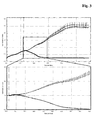
- the proliferation curve of Paclitaxel-treated cells clearly drifts off from the control curve which correlates with the measurement of lower impedance or cell index values, respectively.
- the very immediate change in the course of the curve is based on morphological changes of the drug-treated cells.
- the influence of Paclitaxel on the tubulin cytoskeleton is known to lead to a rapid cell rounding and de-attachment of the cells from the culture dish which leads to a significant decrease in covered surface of the gold electrodes on the bottom of the E-plate wells.
- the cellular index values start to increase and the proliferation curve suddenly switches from descending to an ascending course, likely representing the phenomenon of adaptation or mitotic slippage, in which cells override the mitotic spindle checkpoint, escape the mitotic block and re-enter the G1-phase of the interphase either as aneuploid, diploid or tetraploid cells ( McGrogan, B., T., et al., Biochimica et Biophysica Acta 1785 (2008) 96-132 ; Jordan, M., A., and Wilson, L., Curr Opin Cell Biol 10 (1998) 123-130 ; Dumontet, C., and Sikic, B., I., J. Clin. Oncol. 17(3)(1999) 1061-1070 ).
- the examples shows that the combination of continuous on-line and label-free monitoring of cells through impedance-based real time cell analysis with gene expression profiling through DNA-microarray technique or q-RT-PCR allows the precise determination of the time point(s) gene expression analysis should be conducted.
- the observed cellular changes may not be able to be defined in their quality and extent by only real time cell analysis, but will be easier revealed by applying data sets of gene expression profiling that parallel or precede the particular cellular event together with additional methods and techniques, such as proteomics approaches or optical systems.
- HT29 cells were treated either with paclitaxel or - as a control - with DMSO.
- the growth behavior of paclitaxel treated and control cells were monitored during the whole experiment using the xCELLigence technology. Based on the CI (cell index) profile, recorded with the xCELLigence system, time points were selected for the collection of the sample material. Subsequently, high quality RNA was purified and cDNA was synthesized.
- the expression level of 84 apoptosis related genes and 84 cell cycle related genes was compared for all cDNA populations with the LightCycler®480 Instrument together with the RealTime ready Human Apoptosis Panel, 96 and the RealTime ready Human Cell Cycle Panel, 96.
- Continuous monitoring of the growth behavior of a cell line after treatment with the anti-cancer drug paclitaxel provides a means for defining the optimal time points for the collection of sample material for subsequent analysis by RT-qPCR.
- HT29 cells were cultivated in parallel in McCoy's medium in either T75 cell culture bottles (for RNA isolation) or an E-Plate 96 (for cell growth monitoring) and in three regular microtiter plates (for WST-1 assay).
- the surface of the bottom of a single well of the E-Plate 96 is given with approx. 0.2 cm 2 .
- T75 cell culture bottles have 75 cm 2 .
- 4.000 cells/well were seeded in the E-Plate 96 and the regular microtiter plates and 7.5 x 10 5 cells were seeded into each T75 cell culture bottle.
- paclitaxel After 24 hours incubation at 37°C paclitaxel was added to a final concentration of 50 nM. As the 2 mM paclitaxel stock was dissolved in DMSO, control cells were treated with DMSO to a final concentration of 0.0025 %. In addition cells treated with medium only were monitored in parallel.
- Cells grown in the regular microtiter plates were subjected to a cell viability assay using the Cell Proliferation Reagent WST-1.
- One hour, two hours and four hours after paclitaxel treatment 10 ⁇ l WST-1 reagent were added to each well and incubated for one hour before absorption readout at 450 nm with a reference wavelength of 600 nm was carried out.
- RNA isolation was harvested for RNA isolation after one, two, four and 24 hours. Cell number was determined and portions of 10 6 cells were used for RNA isolation applying the High Pure RNA Isolation Kit following the manufacturer's instruction.
- RNA samples The quality of the RNA samples was confirmed by analysis using the NanoDrop Instrument and the Agilent Bioanalyzer.
- RNA population 1 ⁇ g total RNA was used for cDNA synthesis with the Transcriptor First Strand cDNA Synthesis Kit.
- the total yield of one cDNA synthesis reaction starting from 1 ⁇ g RNA was used as template for each RealTime ready Human Apoptosis Panel, 96 or RealTime ready Human Cell Cycle Panel, 96 .
- Total PCR reaction volume per well was 20 ⁇ l with Light Cycler®480 Probes Master.
- the easy-to-use macro for the panel containing PCR protocol, sample setup and analysis was applied on LightCycler®480 software 1.5.
- the cell growth of the HT29 cell line was monitored with the xCELLigence RTCA-SP system.
- the E-Plate 96 was loaded with 4000 cells/well in quadruplicates. As it is visible from the collected growth curve HT-29 untreated cells reach the confluent state at this cell density approx. after 70 hours ( Figure 3 ).
- RNA is a crucial requirement.
- High quality total RNA was isolated using the High Pure RNA Isolation Kit. The integrity of the RNA preparation was confirmed by analysis on the Agilent Bioanalyzer. All samples showed high RIN values between 9.5 and 10 indicating the best prerequisite for subsequent qPCR analysis.
- the xCELLigence System records cellular events in real time without the incorporation of labels.
- the impedance measurement provides quantitative information about the biological status of the cells, including cell number, viability, and morphology. With xCELLigence the "body language" of the cells after a specific treatment is monitored in an online mode.
- the RealTime Ready Panel is an excellent tool for extended gene expression analysis based on the Roche's Universal Probe Library.
- the content of each panel is especially designed for the analysis of a certain cellular pathway.
- a web-based tool provides background information about pathways, genes and assays to support target and assay design and contains links to public databases. Combining both new technologies provides a powerful tool for biological research.
- Paclitaxel first mediates G 2 /M-arrest and then induces apoptosis.
- a typical cell viability assay like WST-1 does not reflect the significant changes in cell morphology and adhesion at early stage after drug treatment. Therefore, most probably samples for subsequent qPCR assays would not have been taken at this early time based on WST-1 data. The most important changes in gene expression would have been missed.
Landscapes
- Health & Medical Sciences (AREA)
- Immunology (AREA)
- Life Sciences & Earth Sciences (AREA)
- Engineering & Computer Science (AREA)
- Molecular Biology (AREA)
- Biomedical Technology (AREA)
- Chemical & Material Sciences (AREA)
- Hematology (AREA)
- Urology & Nephrology (AREA)
- Biotechnology (AREA)
- Biochemistry (AREA)
- Cell Biology (AREA)
- Food Science & Technology (AREA)
- Medicinal Chemistry (AREA)
- Physics & Mathematics (AREA)
- Analytical Chemistry (AREA)
- Microbiology (AREA)
- General Health & Medical Sciences (AREA)
- General Physics & Mathematics (AREA)
- Pathology (AREA)
- Measuring Or Testing Involving Enzymes Or Micro-Organisms (AREA)
- Investigating Or Analysing Biological Materials (AREA)
- Apparatus Associated With Microorganisms And Enzymes (AREA)
Priority Applications (1)
| Application Number | Priority Date | Filing Date | Title |
|---|---|---|---|
| EP09012973A EP2182357A1 (en) | 2008-10-17 | 2009-10-14 | Cell monitoring and molecular analysis |
Applications Claiming Priority (3)
| Application Number | Priority Date | Filing Date | Title |
|---|---|---|---|
| EP08018195 | 2008-10-17 | ||
| EP09005565 | 2009-04-21 | ||
| EP09012973A EP2182357A1 (en) | 2008-10-17 | 2009-10-14 | Cell monitoring and molecular analysis |
Publications (1)
| Publication Number | Publication Date |
|---|---|
| EP2182357A1 true EP2182357A1 (en) | 2010-05-05 |
Family
ID=42062037
Family Applications (1)
| Application Number | Title | Priority Date | Filing Date |
|---|---|---|---|
| EP09012973A Ceased EP2182357A1 (en) | 2008-10-17 | 2009-10-14 | Cell monitoring and molecular analysis |
Country Status (4)
| Country | Link |
|---|---|
| US (1) | US20100255469A1 (enExample) |
| EP (1) | EP2182357A1 (enExample) |
| JP (1) | JP2010099068A (enExample) |
| CA (1) | CA2682439A1 (enExample) |
Families Citing this family (6)
| Publication number | Priority date | Publication date | Assignee | Title |
|---|---|---|---|---|
| KR20140093347A (ko) * | 2013-01-15 | 2014-07-28 | 삼성전자주식회사 | 항 c-Met 항체 처리에 의해 부작용을 유발하는 유전자 및 이를 이용한 약물 스크리닝 방법 |
| EP2944958A1 (en) * | 2014-04-04 | 2015-11-18 | Techno-Path (Distribution) | A method of predicting phenotypic instability in a cell |
| JP6756502B2 (ja) * | 2016-03-29 | 2020-09-16 | テルモ株式会社 | 細胞培養物およびその製造方法 |
| CN110088265B (zh) * | 2016-12-30 | 2022-06-10 | 分子机械和工业公开股份有限公司 | 用于分离和处理颗粒靶标的方法和装置 |
| US20230234056A1 (en) * | 2020-06-18 | 2023-07-27 | Nanocellect Biomedical, Inc. | Microfluidic systems and methods for sorting particles |
| CN115322958B (zh) * | 2022-08-09 | 2023-08-01 | 广州明迅生物科技有限责任公司 | 胚胎干细胞培养用的培养基添加剂及其应用 |
Citations (13)
| Publication number | Priority date | Publication date | Assignee | Title |
|---|---|---|---|---|
| EP0389063A2 (en) | 1989-03-23 | 1990-09-26 | Akzo Nobel N.V. | Process for isolating nucleic acid |
| US5118801A (en) | 1988-09-30 | 1992-06-02 | The Public Health Research Institute | Nucleic acid process containing improved molecular switch |
| US5210015A (en) | 1990-08-06 | 1993-05-11 | Hoffman-La Roche Inc. | Homogeneous assay system using the nuclease activity of a nucleic acid polymerase |
| US5538848A (en) | 1994-11-16 | 1996-07-23 | Applied Biosystems Division, Perkin-Elmer Corp. | Method for detecting nucleic acid amplification using self-quenching fluorescence probe |
| WO1997046712A2 (en) | 1996-06-04 | 1997-12-11 | University Of Utah Research Foundation | System and method for carrying out and monitoring biological processes |
| WO1997046714A1 (en) | 1996-06-04 | 1997-12-11 | University Of Utah Research Foundation | Monitoring hybridization during pcr |
| US6171785B1 (en) * | 1991-05-02 | 2001-01-09 | Roche Molecular Systems, Inc. | Methods and devices for hemogeneous nucleic acid amplification and detector |
| WO2004010102A2 (en) | 2002-07-20 | 2004-01-29 | Acea Biosciences, Inc. | Impedance based apparatuses and methods for analyzing cells and particles |
| US20050112544A1 (en) * | 2002-12-20 | 2005-05-26 | Xiao Xu | Impedance based devices and methods for use in assays |
| US20060023559A1 (en) * | 2002-12-20 | 2006-02-02 | Xiao Xu | Method for assaying for natural killer, cytotoxic T-lymphocyte and neutrophil-mediated killing of target cells using real-time microelectronic cell sensing technology |
| US7192752B2 (en) | 2002-12-20 | 2007-03-20 | Acea Biosciences | Real time electronic cell sensing systems and applications for cell-based assays |
| WO2007085353A1 (de) | 2006-01-25 | 2007-08-02 | Roche Diagnostics Gmbh | Elektrochemisches biosensor-analysesystem |
| WO2007140015A2 (en) * | 2006-05-26 | 2007-12-06 | Althea Technologies, Inc | Biochemical analysis of partitioned cells |
Family Cites Families (1)
| Publication number | Priority date | Publication date | Assignee | Title |
|---|---|---|---|---|
| DE3689398T2 (de) * | 1985-01-18 | 1994-07-14 | Applied Biosystems | Verfahren zum Extrahieren von Nukleinsäuren aus Zellen. |
-
2009
- 2009-10-13 CA CA2682439A patent/CA2682439A1/en not_active Abandoned
- 2009-10-14 EP EP09012973A patent/EP2182357A1/en not_active Ceased
- 2009-10-15 US US12/579,746 patent/US20100255469A1/en not_active Abandoned
- 2009-10-16 JP JP2009239639A patent/JP2010099068A/ja active Pending
Patent Citations (17)
| Publication number | Priority date | Publication date | Assignee | Title |
|---|---|---|---|---|
| US5118801A (en) | 1988-09-30 | 1992-06-02 | The Public Health Research Institute | Nucleic acid process containing improved molecular switch |
| EP0389063A2 (en) | 1989-03-23 | 1990-09-26 | Akzo Nobel N.V. | Process for isolating nucleic acid |
| US5804375A (en) | 1990-08-06 | 1998-09-08 | Roche Molecular Systems, Inc. | Reaction mixtures for detection of target nucleic acids |
| US5210015A (en) | 1990-08-06 | 1993-05-11 | Hoffman-La Roche Inc. | Homogeneous assay system using the nuclease activity of a nucleic acid polymerase |
| US5487972A (en) | 1990-08-06 | 1996-01-30 | Hoffmann-La Roche Inc. | Nucleic acid detection by the 5'-3'exonuclease activity of polymerases acting on adjacently hybridized oligonucleotides |
| US6171785B1 (en) * | 1991-05-02 | 2001-01-09 | Roche Molecular Systems, Inc. | Methods and devices for hemogeneous nucleic acid amplification and detector |
| US5538848A (en) | 1994-11-16 | 1996-07-23 | Applied Biosystems Division, Perkin-Elmer Corp. | Method for detecting nucleic acid amplification using self-quenching fluorescence probe |
| WO1997046714A1 (en) | 1996-06-04 | 1997-12-11 | University Of Utah Research Foundation | Monitoring hybridization during pcr |
| WO1997046707A2 (en) | 1996-06-04 | 1997-12-11 | University Of Utah Research Foundation | System and method for monitoring for dna amplification by fluorescence |
| WO1997046712A2 (en) | 1996-06-04 | 1997-12-11 | University Of Utah Research Foundation | System and method for carrying out and monitoring biological processes |
| US6174670B1 (en) | 1996-06-04 | 2001-01-16 | University Of Utah Research Foundation | Monitoring amplification of DNA during PCR |
| WO2004010102A2 (en) | 2002-07-20 | 2004-01-29 | Acea Biosciences, Inc. | Impedance based apparatuses and methods for analyzing cells and particles |
| US20050112544A1 (en) * | 2002-12-20 | 2005-05-26 | Xiao Xu | Impedance based devices and methods for use in assays |
| US20060023559A1 (en) * | 2002-12-20 | 2006-02-02 | Xiao Xu | Method for assaying for natural killer, cytotoxic T-lymphocyte and neutrophil-mediated killing of target cells using real-time microelectronic cell sensing technology |
| US7192752B2 (en) | 2002-12-20 | 2007-03-20 | Acea Biosciences | Real time electronic cell sensing systems and applications for cell-based assays |
| WO2007085353A1 (de) | 2006-01-25 | 2007-08-02 | Roche Diagnostics Gmbh | Elektrochemisches biosensor-analysesystem |
| WO2007140015A2 (en) * | 2006-05-26 | 2007-12-06 | Althea Technologies, Inc | Biochemical analysis of partitioned cells |
Non-Patent Citations (22)
| Title |
|---|
| ANONYMOUS: "MagNA Pure Compact System", 1 January 2006, XP002513798 * |
| BAECH, J.; JOHNSEN, HE: "Technical aspects and clinical impact of hematopoietic progenitor subset quantification", STEM CELLS, vol. 18, 2000, pages 76 - 86 |
| BANI, M., R. ET AL., MOLECULAR CANCER THERAPEUTICS, vol. 3, no. 2, 2004, pages 111 - 121 |
| BANI, MR ET AL., MOLECULAR CANCER THERAPEUTICS, vol. 3, no. 2, 2004, pages 111 - 121 |
| BENGTSSON, M. ET AL., GENOME RESEARCH, vol. 15, 2005, pages 1388 - 1392 |
| BERNARD, P.S. ET AL., ANALYTICAL BIOCHEMISTRY, vol. 255, 1998, pages 101 - 107 |
| BOSCHKE, C., B. ET AL., UNI TUBINGEN, 2008 |
| BURGEMEISTER, R.: "New aspects of laser microdissection in research and routine", J HISTOCHEM CYTOCHEM., vol. 53, no. 3, 2005, pages 409 - 12 |
| DUMONTET, C.; SIKIC, B., I, J. CLIN. ONCOL., vol. 17, no. 3, 1999, pages 1061 - 1070 |
| DUMONTET, C.; SIKIC, B., I., J. CLIN. ONCOL., vol. 17, no. 3, 1999, pages 1061 - 1070 |
| DUMONTET, C.; SIKIC, B., L, J. CLIN. ONCOL., vol. 17, no. 3, 1999, pages 1061 - 1070 |
| JORDAN, M., A.; WILSON, L., CURR OPIN CELL BIOL, vol. 10, 1998, pages 123 - 130 |
| JORDAN, M., A; WILSON, L., CURR OPIN CELL BIOL, vol. 10, 1998, pages 123 - 130 |
| JORDAN, M., A; WILSON, L., CURR. OPIN. CELL. BIOL., vol. 10, 1998, pages 123 - 130 |
| JORDAN, M.,A.; WILSON, L., CURR OPIN CELL BIOL, vol. 10, 1998, pages 123 - 130 |
| KAWASAKI, E.S., ANN. N.Y. ACAD. SCI., vol. 1020, 2004, pages 92 - 100 |
| MATTHEWS, J.A.; KRICKA, L.J., ANALYTICAL BIOCHEMISTRY, vol. 169, 1988, pages 1 - 25 |
| MCGROGAN, B., T ET AL., BIOCHIMICA ET BIOPHYSICA ACTA, vol. 1785, 2008, pages 96 - 132 |
| MCGROGAN, B., T. ET AL., BIOCHIMICA ET BIOPHYSICA ACTA, vol. 1785, 2008, pages 96 - 132 |
| MCGROGAN, BT ET AL., BIOCHIMICA ET BIOPHYSICA ACTA, vol. 1785, 2008, pages 96 - 132 |
| SAGNER, G.; GOLDSTEIN, C., BIOCHEMICA, vol. 3, 2001, pages 15 - 17 |
| SCHLIEBEN, S. ET AL., BIO-NOBILE OY, TECHNICAL NOTE MOLECULAR BIOLOGY TN41000-003, 2004 |
Also Published As
| Publication number | Publication date |
|---|---|
| CA2682439A1 (en) | 2010-04-17 |
| JP2010099068A (ja) | 2010-05-06 |
| US20100255469A1 (en) | 2010-10-07 |
Similar Documents
| Publication | Publication Date | Title |
|---|---|---|
| AU2021229232B2 (en) | Transposition into native chromatin for personal epigenomics | |
| JP2014509868A (ja) | 癌の予後のための遺伝子発現予測因子 | |
| EP2182357A1 (en) | Cell monitoring and molecular analysis | |
| Ericson et al. | Exploring gene function and drug action using chemogenomic dosage assays | |
| US20170058346A1 (en) | Methods Employing Non-Coding RNA Expression Assays | |
| US20030165916A1 (en) | Use of intrinsic reporters of cell signaling for high content drug profiling and toxicity screening | |
| JP7032723B2 (ja) | 薬剤の心毒性評価方法及びそのための試薬又はキット | |
| Capaldi | Analysis of gene function using DNA microarrays | |
| US6479241B1 (en) | High throughput screening of the effects of anti-cancer agents on expression of cancer related genes in various cell lines | |
| Singh et al. | Real-time reverse transcriptase polymerase chain reaction: an improvement in detecting mRNA levels in mouse cranial tissue | |
| WO2004088274A2 (en) | Psychoactive compound associated markers and method of use thereof | |
| Ilyin et al. | Emerging paradigms in applied bioinformatics | |
| JP2007267650A (ja) | 神経毒性を検出するための方法およびキット | |
| Thorn et al. | A workflow combining high-accuracy cell sorting with digital PCR for analysis of miRNAs in defined cell pools and single cells | |
| Al-Otaibi et al. | Transcriptomics analysis in molecular diagnostics |
Legal Events
| Date | Code | Title | Description |
|---|---|---|---|
| PUAI | Public reference made under article 153(3) epc to a published international application that has entered the european phase |
Free format text: ORIGINAL CODE: 0009012 |
|
| AK | Designated contracting states |
Kind code of ref document: A1 Designated state(s): AT BE BG CH CY CZ DE DK EE ES FI FR GB GR HR HU IE IS IT LI LT LU LV MC MK MT NL NO PL PT RO SE SI SK SM TR |
|
| AX | Request for extension of the european patent |
Extension state: AL BA RS |
|
| 17P | Request for examination filed |
Effective date: 20101105 |
|
| 17Q | First examination report despatched |
Effective date: 20101130 |
|
| STAA | Information on the status of an ep patent application or granted ep patent |
Free format text: STATUS: THE APPLICATION HAS BEEN REFUSED |
|
| 18R | Application refused |
Effective date: 20130503 |