EP2180752B1 - Verfahren und System für ein Trennungsverfahren - Google Patents
Verfahren und System für ein Trennungsverfahren Download PDFInfo
- Publication number
- EP2180752B1 EP2180752B1 EP08291005A EP08291005A EP2180752B1 EP 2180752 B1 EP2180752 B1 EP 2180752B1 EP 08291005 A EP08291005 A EP 08291005A EP 08291005 A EP08291005 A EP 08291005A EP 2180752 B1 EP2180752 B1 EP 2180752B1
- Authority
- EP
- European Patent Office
- Prior art keywords
- mobile unit
- base station
- disconnect message
- disconnect
- layer
- Prior art date
- Legal status (The legal status is an assumption and is not a legal conclusion. Google has not performed a legal analysis and makes no representation as to the accuracy of the status listed.)
- Active
Links
Images
Classifications
-
- H—ELECTRICITY
- H04—ELECTRIC COMMUNICATION TECHNIQUE
- H04W—WIRELESS COMMUNICATION NETWORKS
- H04W76/00—Connection management
- H04W76/30—Connection release
Definitions
- the claimed subject matter concerns disconnect procedures, and more particularly, methods for improving such procedures.
- both downlink (DL) and uplink (UL) channels exist.
- the DL channel involves transmissions from a base station to a mobile unit, while the UL channel refers to transmissions from the mobile unit to the base station.
- the DL transmission may fail during a GSM voice call, although the UL transmission may continue to operate during the call.
- a timeout procedure has been implemented in GSM mobile units such that the mobile unit will discontinue transmitting over the UL channel after the mobile unit positively determines that the DL channel has failed.
- the base station which has its own timeout procedure, will subsequently determine that the transmission over the UL channel has ceased.
- the overall time it takes for the base station to detect the failure includes the amount of time spent for the timeout procedure at the mobile unit in addition to the duration of the timeout at the base station.
- US patent application publication no. US 2008/0232303 describes an IP mobile communication system and base station which includes a mobile communication that is capable of rapidly disconnection a session if one of two terminal in communication with each other moves out of a communication area.
- the system includes a bases station connected to an exchange apparatus and connectable to a client terminal.
- the base station comprises a detector configured to detect that the client terminal cannot make radio connection with the base station and a notifying unit configured to transmit a disconnection request to the exchange apparatus if the detector detects that the client terminal cannot make radio connection with the base station.
- the mobile communication exchange generates a BYE message, sends the generated BYE message to the SIP client and ends a session.
- the method can include the step of - during a call at a mobile unit operating in accordance with the GSM standard - detecting a DL channel failure between the mobile unit and a base station.
- the method can also include the step of - in response to the DL channel failure detection - signaling the base station from the mobile unit with a disconnect message.
- the disconnect message can be configured to prevent the base station from unnecessarily undergoing a base station timeout procedure.
- the method can also include the steps of - at the mobile unit - monitoring one or more bursts of a slow associated control channel (SACCH) block in the DL channel, and based on this monitoring, predicting whether the SACCH block will be successfully decoded at the mobile unit. If the prediction shows that the SACCH block will not be successfully decoded, the base station can be signaled with a prediction disconnect message in addition to the disconnect message.
- the disconnect message can be a Layer 2 disconnect message that the mobile unit sends to the base station after the final burst of the SACCH block
- the prediction disconnect message can be a Layer 3 disconnect message that the mobile unit sends to the base station prior to the final burst of the SACCH block.
- the SACCH block can be the last SACCH block of a sequence of SACCH blocks that have failed to decode successfully.
- the mobile unit may not send the prediction disconnect message. If, however, the SACCH block is unsuccessfully decoded following the prediction that the SACCH block was to be successfully decoded, the mobile unit can send the disconnect message to the base station.
- This disconnect message can be a Layer 2 disconnect message.
- the base station can be signaled with multiple disconnect messages in which the disconnect messages can be Layer 2 disconnect messages or Layer 3 disconnect messages.
- the disconnect messages can be Layer 2 disconnect messages or Layer 3 disconnect messages.
- a first Layer 2 disconnect message or a first Layer 3 disconnect message can be transmitted by the mobile unit prior to the last burst in the SACCH block
- a second Layer 2 disconnect message or a second Layer 3 disconnect message can be transmitted by the mobile unit after the last burst in the SACCH block.
- the method can include the step of - at a base station communicating with a mobile unit operating in accordance with the GSM standard and wherein a failure in a DL channel between the mobile unit and the base station is detected - receiving a disconnect message from the mobile unit.
- the method can also include the steps of - in response to the receipt of the disconnect message - bypassing a timeout procedure that is normally initiated when the mobile unit ceases transmission over the downlink channel and tearing down the communication between the mobile unit and the base station for reallocation.
- the disconnect message can be a Layer 2 disconnect message.
- the base station can receiver a Layer 3 disconnect message in addition to the Layer 2 disconnect message.
- the mobile unit can include a counter that can be configured to determine that a DL channel failure has occurred during a call between the mobile unit and a base station.
- the mobile unit can also include a processor that is coupled to the counter, and the processor is operable to - in response to the DL channel failure detection by the counter - generate a disconnect message to be transmitted to the base station that may inform the base station of the downlink channel failure such that the base station may avoid undergoing a timeout procedure.
- the mobile unit may also contain a prediction engine that is coupled to the processor and is operable to monitor one or more bursts of a SACCH block in the DL channel. Based on the monitoring, the prediction engine can predict whether the SACCH block may be successfully decoded by the mobile unit.
- the processor can be further operable to generate a prediction disconnect message in addition to the disconnect message if the prediction engine predicts that the SACCH block may not be successfully decoded.
- the mobile unit may also include a transceiver that can be coupled to the processor.
- the disconnect message can be a Layer 2 disconnect message that the transceiver transmits to the base station following the last burst in the SACCH block.
- the prediction disconnect message can be a Layer 3 disconnect message that the transceiver transmits to the base station prior to the last burst in the SACCH block.
- the SACCH block may be the last SACCH block of a number of SACCH blocks that have not been successfully decoded by the mobile unit.
- the processor may not generate the prediction disconnect message. If, however, the SACCH block is unsuccessfully decoded and the prediction engine makes an incorrect prediction, the processor may generate the disconnect message for transmission to the base station.
- the prediction engine can signal the processor to generate multiple disconnect messages for transmission to the base station.
- the disconnect messages can be Layer 2 disconnect messages or Layer 3 disconnect messages.
- the transceiver may transmit to the base station a first Layer 2 disconnect message or a first Layer 3 disconnect message before the last burst in the SACCH block and a second Layer 2 disconnect message or a second Layer 3 disconnect message after the last burst in the SACCH block.
- a mobile unit that communicates with a base station is also described herein.
- the mobile unit can include a transceiver that can transmit signals to and receive signals from a base station and a counter that can detect a pending channel failure between the mobile unit and the base station.
- the mobile unit can also include a prediction engine that can monitor bursts between the mobile unit and the base station and can predict whether a multi-frame containing the bursts will be successfully decoded.
- the mobile unit can also include a processor that can be coupled to the transceiver, the counter and the prediction engine.
- the processor can be operable to receive a pending channel failure detection signal from the counter and based on the prediction engine predicting an unsuccessful decoding of the multi-frame, generate a prediction disconnect message to be sent to the base station through the transceiver.
- the prediction disconnect message may enable the base station to bypass a timeout procedure, thereby reducing the amount of time before a connection between the base station and the mobile unit is torn down.
- the prediction disconnect message is a Layer 3 disconnect message.
- the processor can also be operable to generate a second disconnect message to be transmitted to the base station after the transmission of the prediction disconnect message.
- the second disconnect message can be a Layer 2 disconnect message.
- the mobile unit may operate in accordance with the GSM standard.
- the terms “a” or “an,” as used herein, are defined as one or more than one.
- the term “plurality,” as used herein, is defined as two or more than two.
- the term “another,” as used herein, is defined as at least a second or more.
- the terms “including” and/or “having,” as used herein, are defined as comprising (i.e., open language).
- the term “coupled” as used herein, is defined as connected, although not necessarily directly or physically, and not necessarily mechanically.
- transceiver can be defined as any component or group of components that is capable of transmitting and/or receiving wireless or wired communications signals.
- processor can mean any component or group of components, including any suitable combination of hardware and software, that is capable of carrying out any of the processes described herein.
- a “base station” can be defined as any component or group of components that make up at least part of the infrastructure of a network, whether wireless or wired.
- a “mobile unit” can mean any portable device that can communicate with a base station.
- a “downlink channel” can mean a channel over which signals are sent from a base station to a mobile unit.
- a “downlink channel failure" can refer to any interruption or disruption of a communication on a downlink channel that may lead to the discontinuation of the communication on the downlink channel.
- the method can include the step of - during a call at a mobile unit operating in accordance with the GSM standard - detecting a DL channel failure between the mobile unit and a base station.
- the method can also include the step of - in response to the DL channel failure detection - signaling the base station from the mobile unit with a disconnect message.
- the disconnect message can be configured to prevent the base station from unnecessarily undergoing a base station timeout procedure.
- the method can also include the steps of - at the mobile unit - monitoring one or more bursts of a SACCH block in the DL channel and based on this monitoring, predicting whether the SACCH block will be successfully decoded at the mobile unit.
- the method can further include the step of signaling the base station with a prediction disconnect message in addition to the disconnect message. This process can reduce the amount of time that a caller may learn of the failure and the amount of time before network resources can be reallocated.
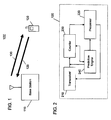
- a communication network 100 is shown in which a base station 110 is communicating with a mobile unit 120.
- signals transmitted from the mobile unit 120 to the base station 110 can be ferried over an uplink (UL) channel 125, while signals from the base station 110 to the mobile unit 120 can be sent over a DL channel 130.
- the base station 110 and the mobile unit 120 can be operated in accordance with the GSM standard, although it must be stressed that the network 100 is not so limited.
- the network 100 is not limited to being a wireless communications network, as the principles explained here may also apply to a wired network. Any suitable type of information can be exchanged between the base station 110 and the mobile unit 120, including voice and data. To explain the claimed subject matter, an example will be presented here in which the mobile unit 120 is conducting a voice call with another mobile unit (not shown) via the base station 110.
- the mobile unit 120 can include a transceiver 210 for transmitting signals to and receiving signals from the base station 110 and a processor 220 coupled to the transceiver 210. Some of the operations or functions that the processor 220 may execute will be explained below.
- the mobile unit 120 may also include a counter 230 and a prediction engine 240, both of which may be coupled to the processor 220. Although shown as discrete components, one or both of the counter 230 and the prediction engine 240 may also be considered part of the processor 220.
- the term "counter" can be described as any component or combination of components made up of any suitable combination of hardware and/or software that is capable of detecting any type of channel failures.
- the counter 230 may monitor signals received at the transceiver 210 from the base station 110 and can detect a DL channel failure, which may include a pending DL channel failure. Once an actual or pending failure is detected, the counter can signal the processor 220 and, optionally, signal the prediction engine 240. In response, the processor 220 can generate a disconnect message, and the transceiver 210 can transmit the disconnect message to the base station 110. As an alternative, the prediction engine 240 can predict whether a failure may occur and can signal the processor 220 to generate a prediction disconnect message. The transceiver 210 can then signal the base station 110 with the prediction disconnect message. As an example, this prediction disconnect message can be sent in addition to the disconnect message.
- the base station 110 can terminate the communication between it and the mobile unit 120 and can reallocate the channel. As such, if a problem with the DL channel exists, the base station 110 does not have to wait for the mobile unit 120 to cease transmission and wait for its timeout procedure to be completed before it can carry out the reallocation.
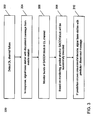
- FIG. 3 a method 300 for a disconnect procedure is shown.
- FIGS. 1 and 2 Although it is understood that the method 300 can be practiced in any other suitable system using any other suitable components.
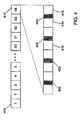
- FIG. 4 shows a sequence of SACCH blocks and a single SACCH block.
- the method 300 is not necessarily limited to these particular elements, as the method 300 may apply to other suitable arrangements.
- the steps of the method 300 are not limited to the particular order in which they are presented in the figure. Also, the method 300 can have a greater number of steps or a fewer number of steps than those shown in the figure.
- a DL channel failure can be detected between a mobile unit and a base station, and at step 304, in response to the failure detection, the mobile unit can signal the base station with a disconnect message.
- the mobile unit 120 can be conducting a voice call with the base station 110, and the DL channel may experience some trouble.
- propagation conditions may be poor or high interference levels may be present, which affect the quality of the connection.
- the GSM protocol describes multi-frames that carry traffic and control signals to be exchanged between a mobile unit and a base station. These multi-frames may be referred to as SACCH blocks.
- the counter 230 will begin decrementing a value each time a SACCH block is not correctly received by the mobile unit 120. When this value reaches a minimum threshold, the counter 230 can signal the processor 220, and this signal is an indication that the counter 230 has detected a DL channel failure, which triggers a radio link timeout. In response, the processor 220 can generate, for example, a Layer 2 disconnect message or a Layer 3 disconnect message, which can be forwarded to the base station 110.
- the base station 110 may bypass its timeout procedure that is normally initiated when the mobile unit 120 ceases transmission over the DL channel (The mobile unit 120 typically stops transmitting when the value reaches the minimum threshold.). As such, in view of the received disconnect message, the base station 110 can tear down the communication between the base station 110 and the mobile unit 120 and reallocate the resources.
- SACCH blocks 410 are shown.
- the failure of sixty-three of the SACCH blocks 410 to successfully decode may cause the counter 230 to decrement the value to the minimum threshold, which can trigger the generation of the disconnect message by the processor 220.
- An expansion of a single SACCH block 410 is also shown in FIG. 4 .
- the SACCH block 410 may include several traffic channel blocks 415, in between which are dispersed a number of SACCH bursts 420. In this example, there are four SACCH bursts 420 in each SACCH block 410.
- the disconnect message when the disconnect message is generated, it can be interleaved over several traffic channel blocks 415 for transmission to the base station 110.
- the disconnect message can be interleaved over traffic channel blocks 415 that follow the last SACCH burst 420 in the last SACCH block 410 of the sequence of unsuccessfully decoded SACCH blocks 410.
- this disconnect message may be a Layer 2 disconnect message or even a Layer 3 disconnect message. Either disconnect message can be used by the base station 110 to discontinue the communication between the base station 110 and the mobile unit 120.
- one or more bursts of a SACCH block in the DL channel may be monitored at the mobile unit.
- step 308 based on this monitoring, whether the SACCH block will be successfully decoded at the mobile unit can be predicted. If this prediction shows that the SACCH block will not be successfully decoded, then the base station can be signaled with a prediction disconnect message in addition to the disconnect message, as shown at step 310.
- the counter 230 can determine that the value used for detecting a channel failure is getting close to the minimum threshold described above. In response, the counter 230 can signal the prediction engine 240 to begin monitoring the SACCH bursts 420 of a SACCH block 410. In one particular example, the prediction engine 240 can monitor the first three SACCH bursts 420 of the last SACCH block 410 of the sequence of unsuccessfully decoded SACCH blocks 410. If the last SACCH block 410 of this sequence were to not be successfully decoded, then this condition would indicate a DL channel failure.
- the prediction engine 240 can determine whether this last SACCH block 410 will be successfully decoded at the mobile unit 120. If it appears that it will not be successfully decoded, then the prediction engine 240 can signal the processor 220 (directly or through the counter 230), and the processor 220 can generate a prediction disconnect message to be forwarded to the base station 110. If the prediction shows that the last SACCH block 410 will be successfully decoded, then the prediction disconnect message does not have to be generated.
- the prediction disconnect message may be a Layer 3 disconnect message that can be transmitted prior to the final SACCH burst 420.
- the Layer 3 disconnect message may also be interleaved in traffic channel blocks that precede the last SACCH burst 420.
- the Layer 3 disconnect message may be sent to the base station 110 first, followed by the Layer 2 disconnect message.
- the Layer 3 disconnect message may provide additional information to the base station 110 as to the cause of the DL channel failure, as opposed to a Layer 2 disconnect message.
- the term "detecting a downlink channel failure” may refer to both an actual detection that the last SACCH block will not be successfully decoded as well as a prediction that the last SACCH block will or may not be successfully decoded.
- the term “successfully decoded” can refer to any suitable threshold for determining whether a relevant portion of data (e.g., a SACCH block) can be processed to provide useful information.
- a Layer 3 disconnect message can serve as a prediction disconnect message, which may be generated and transmitted prior to the last SACCH burst 420, and a Layer 2 disconnect message can be the disconnect message, which may be produced and sent following the final burst 420.
- the mobile unit 120 may simply transmit multiple disconnect messages of the same type, like two Layer 2 disconnect messages or two Layer 3 disconnect messages.
- one of the disconnect messages may be transmitted prior to the last SACCH burst 420, while the other can be sent after the last SACCH burst 420.
- a Layer 2 disconnect message may be sent that contains Layer 3 information, such that it appears that a Layer 2 and a Layer 3 disconnect message are sent simultaneously.
- This hybrid Layer 2/Layer 3 message may also serve as a prediction disconnect message, if so desired.
- the counter 230 may signal the processor 220, which can still generate a disconnect message to be sent to the base station 110.
- This disconnect message may be either a Layer 2 or a Layer 3 disconnect message.
- any signaling failure detection mechanism in Layer 2 can be employed for such purpose.
- the T200/N200 timer/counter common in many GSM systems can be used to cause the mobile station 120 to signal the base station 110 with a disconnect message.
- the disconnect message can be a Layer 2 disconnect message.
Landscapes
- Engineering & Computer Science (AREA)
- Computer Networks & Wireless Communication (AREA)
- Signal Processing (AREA)
- Mobile Radio Communication Systems (AREA)
Claims (15)
- Verfahren für einen Trennvorgang, das folgendes aufweist:während eines Anrufs bei einer mobilen Einheit (120), Erfassen (302) durch die mobile Einheit (120) eines Downlink-Kanal-Versagens zwischen der mobilen Einheit (120) und einer Basisstation (110);ansprechend auf die Erfassung des Downlink-Kanal-Versagens, Senden einer Trennnachricht von der mobilen Einheit (120) an die Basisstation (110), wobei die Trennnachricht so ausgestaltet ist, dass sie die Basisstation (110) über das Downlink-Kanal-Versagen informiert, so dass die Basisstation (110) das Downlink-Kanal-Versagen erfasst, während sie vermeidet, sich einem Basisstations-Zeitüberschreitungsvorgang zu unterziehen.
- Verfahren nach Anspruch 1, das des Weiteren folgendes aufweist:an der mobilen Einheit (120), Überwachen (306) von einem oder mehreren Bursts (420) eines langsamen zugehörigen Steuerkanal-(SACCH)Blocks (410) in dem Downlink-Kanal;basierend auf dieser Überwachung, Vorausberechnen (308), ob der SACCH-Block erfolgreich an der mobilen Einheit (120) dekodiert werden wird; undwenn die Vorausberechnung zeigt, dass der SACCH-Block nicht erfolgreich dekodiert werden wird, Senden (310) einer Vorausberechnungs-Trennnachricht an die Basisstation (110) zusätzlich zu der Trennnachricht.
- Verfahren nach Anspruch 2, wobei die Trennnachricht eine Layer 2-Trennnachricht ist, die die mobile Einheit (120) an die Basisstation (110) nach dem letzten Burst (420) des SACCH-Blocks (410) sendet, und wobei die Vorausberechnungs-Trennnachricht eine Layer 3-Trennnachricht ist, die die mobile Einheit (120) an die Basisstation (110) vor dem letzten Burst (420) des SACCH-Blocks (410) sendet, und wobei die mobile Einheit (120) gemäß dem Global System for Mobile Communications(GSM)-Standard operiert.
- Verfahren nach Anspruch 3, wobei der SACCH-Block der letzte SACCH-Block einer Sequenz an SACCH-Blöcken ist, deren erfolgreiche Dekodierung fehlgeschlagen ist.
- Verfahren nach Anspruch 2, wobei, wenn die Vorausberechnung zeigt, dass der SACCH-Block erfolgreich dekodiert wird, die mobile Einheit (120) dann die Vorausberechnungs-Trennnachricht nicht senden wird, wobei, wenn der SACCH-Block in der Tat im Anschluss an die Vorausberechnung, dass der SACCH-Block erfolgreich dekodiert werden wird, erfolglos dekodiert wird, die mobile Einheit (120) die Trennnachricht an die Basisstation (110) sendet.
- Verfahren nach Anspruch 5, wobei die Trennnachricht eine Layer 2-Trennnachricht ist.
- Verfahren nach Anspruch 1, das des Weiteren folgendes aufweist:an der mobilen Einheit (120), Überwachen (306) von einem oder mehreren Bursts (420) in einem SACCH-Block (410) in dem Downlink-Kanal;basierend auf dieser Überwachung, Vorausberechnen (308), ob der SACCH-Block erfolgreich an der mobilen Einheit (120) dekodiert werden wird; undwenn die Vorausberechnung zeigt, dass der SACCH-Block nicht erfolgreich dekodiert werden wird, Senden von mehreren Trennnachrichten an die Basisstation (110), wobei die Trennnachrichten Layer 2-Trennnachrichten oder Layer 3-Trennnachrichten sind.
- Verfahren nach Anspruch 7, wobei eine erste Layer 2-Trennnachricht oder eine erste Layer 3-Trennnachricht von der mobilen Einheit (120) übertragen wird, vor dem letzten Burst in dem SACCH-Block, und eine zweite Layer 2-Trennnachricht oder eine zweite Layer 3-Trennachricht von der mobilen Einheit (120) übertragen wird, nach dem letzten Burst in dem SACCH-Block.
- Mobile Einheit (120), die folgendes aufweist:einen Zähler (230), der so ausgestaltet ist, dass er ermittelt, dass ein Downlink-Kanal-Versagen während eines Anrufs zwischen der mobilen Einheit (120) und einer Basisstation (110) aufgetreten ist; undeinen Prozessor (220), wobei der Prozessor (220) an den Zähler (230) gekoppelt ist, und wobei der Prozessor (220) - ansprechend auf die Erfassung des Downlink-Kanal-Versagens durch den Zähler (230) - zur Erzeugung einer Trennnachricht zur Übertragung an die Basisstation (110) operierbar ist, die die Basisstation (110) über das Downlink-Kanal-Versagen informieren wird, so dass die Basisstation (110) das Versagen erfassen kann, während sie vermeidet, sich einem Basisstations-Zeitüberschreitungsvorgang zu unterziehen.
- Mobile Einheit nach Anspruch 9, die des Weiteren eine Vorausberechnungsmaschine (240) aufweist, die an den Prozessor (220) gekoppelt ist und die operiert werden kann zum:Überwachen von einem oder mehreren Bursts eines SACCH-Blocks in dem Downlink-Kanal; undbasierend auf der Überwachung, Vorausberechnen, ob der SACCH-Block erfolgreich von der mobilen Einheit (120) dekodiert werden wird, wobei der Prozessor (220) des Weiteren zur Erzeugung einer Vorausberechnungs-Trennnachricht operiert werden kann, zusätzlich zu der Trennnachricht, wenn die Vorausberechnungsmaschine vorausberechnet, dass der SACCH-Block nicht erfolgreich dekodiert werden wird.
- Mobile Einheit nach Anspruch 10, die des Weiteren einen Sendeempfänger (210) aufweist, der an den Prozessor (220) gekoppelt ist, wobei die Trennnachricht eine Layer 2-Trennnachricht ist, die der dementsprechend ausgestaltete Sendeempfänger (210) an die Basisstation (110) überträgt, im Anschluss an den letzten Burst in dem SACCH-Block und wobei die Vorausberechnungs-Trennnachricht eine Layer 3-Trennnachricht ist, die der dementsprechend ausgestaltete Sendeempfänger (210) an die Basisstation (110) überträgt, vor dem letzten Burst in dem SACCH-Block, und wobei die mobile Einheit (120) gemäß dem GSM-Standard operiert.
- Mobile Einheit nach Anspruch 11, wobei der SACCH-Block der letzte SACCH-Block einer Anzahl an SACCH-Blöcken ist, die nicht erfolgreich von der mobilen Einheit (120) dekodiert wurden.
- Mobile Einheit nach Anspruch 10, wobei, wenn die Vorausberechnungsmaschine (240) vorausberechnet, dass der SACCH-Block erfolgreich dekodiert werden wird, der Prozessor (220) keine Vorausberechnungs-Trennnachricht erzeugen wird, wobei, wenn der SACCH-Block erfolglos dekodiert wird und die Vorausberechnungsmaschine (240) eine inkorrekte Vorausberechnung macht, der Prozessor (220) die Trennnachricht für die Übertragung an die Basisstation (110) erzeugen wird.
- Mobile Einheit nach Anspruch 9, die des Weiteren eine Vorausberechnungsmaschine (240) aufweist, die operiert werden kann zum:Überwachen von einem oder mehreren Bursts in einem SACCH-Blocks in dem Downlink-Kanal; undbasierend auf der Überwachung der Bursts, Vorausberechnen, ob der SACCH-Block erfolgreich von der mobilen Einheit (120) dekodiert werden wird;wenn die Vorausberechnung zeigt, dass der SACCH nicht erfolgreich dekodiert werden wird, Senden eines Signals an den Prozessor (220) zur Erzeugung von mehreren Trennnachrichten für die Übertragung an die Basisstation (110), wobei die Trennnachrichten Layer 2-Trennnachrichten oder Layer 3-Trennnachrichten sind.
- Mobile Einheit nach Anspruch 14, die des Weiteren einen Sendeempfänger (210) aufweist, wobei der Sendeempfänger (210) so ausgestaltet ist, dass er an die Basisstation (110) eine erste Layer 2-Trennnachricht oder eine erste Layer 3-Trennnachricht überträgt, vor dem letzten Burst in dem SACCH-Block, und eine zweite Layer 2-Trennnachricht oder eine zweite Layer 3-Trennnachricht nach dem letzten Burst in dem SACCH-Block.
Priority Applications (1)
| Application Number | Priority Date | Filing Date | Title |
|---|---|---|---|
| EP08291005A EP2180752B1 (de) | 2008-10-24 | 2008-10-24 | Verfahren und System für ein Trennungsverfahren |
Applications Claiming Priority (1)
| Application Number | Priority Date | Filing Date | Title |
|---|---|---|---|
| EP08291005A EP2180752B1 (de) | 2008-10-24 | 2008-10-24 | Verfahren und System für ein Trennungsverfahren |
Publications (2)
| Publication Number | Publication Date |
|---|---|
| EP2180752A1 EP2180752A1 (de) | 2010-04-28 |
| EP2180752B1 true EP2180752B1 (de) | 2012-08-08 |
Family
ID=40549500
Family Applications (1)
| Application Number | Title | Priority Date | Filing Date |
|---|---|---|---|
| EP08291005A Active EP2180752B1 (de) | 2008-10-24 | 2008-10-24 | Verfahren und System für ein Trennungsverfahren |
Country Status (1)
| Country | Link |
|---|---|
| EP (1) | EP2180752B1 (de) |
Families Citing this family (1)
| Publication number | Priority date | Publication date | Assignee | Title |
|---|---|---|---|---|
| CN106341906A (zh) * | 2015-07-08 | 2017-01-18 | 中兴通讯股份有限公司 | 网络连接处理方法及装置 |
Family Cites Families (2)
| Publication number | Priority date | Publication date | Assignee | Title |
|---|---|---|---|---|
| US20040185855A1 (en) * | 2002-12-31 | 2004-09-23 | Storm Brian D. | Method and apparatus for continuing a call |
| US20080232303A1 (en) | 2007-03-20 | 2008-09-25 | Kabushiki Kaisha Toshiba | IP mobile communication system and base station |
-
2008
- 2008-10-24 EP EP08291005A patent/EP2180752B1/de active Active
Also Published As
| Publication number | Publication date |
|---|---|
| EP2180752A1 (de) | 2010-04-28 |
Similar Documents
| Publication | Publication Date | Title |
|---|---|---|
| CN102036284B (zh) | 载波聚合场景下无线链路失败的处理方法和装置 | |
| EP3618488B1 (de) | Verfahren und endgerät zur verarbeitung einer strahlwiederherstellung | |
| RU2446578C1 (ru) | Система и способ для передачи и приема сигнала с использованием множества частотных диапазонов в системе беспроводной связи | |
| KR101339048B1 (ko) | 무선 링크 장애 처리 방법, 장치 및 시스템 | |
| CN110022611B (zh) | 实现波束失败恢复的方法、装置及用户设备 | |
| WO2012139464A1 (zh) | 一种无线链路失败的处理方法和设备 | |
| EP2234450A2 (de) | Verfahren zur Behandlung von Funkverbindungsfehlern in einem drahtlosen Kommunikationssystem und entsprechende Kommunikationsvorrichtung | |
| KR101150680B1 (ko) | 호 핸드오프 동안 오디오 스위치를 제어하는 방법 및 장치 | |
| EP2468031B1 (de) | Verbindungswiederherstellung in einem kommunikationssystem | |
| WO2023130315A1 (en) | Methods and apparatuses for mro for pscell change or cpac in nr-u | |
| JP5609990B2 (ja) | 無線通信装置 | |
| CN103765946B (zh) | 一种无线链路监测的方法和装置 | |
| CN114175726A (zh) | 用于移动性控制的无线通信方法 | |
| EP3761694B1 (de) | Datenübertragungsverfahren und -vorrichtung | |
| TW202037139A (zh) | 鏈路故障的處理方法及裝置 | |
| JP2025179088A (ja) | Trp関連のビーム障害検出手順およびモビリティシナリオのための方法および装置 | |
| US20100097939A1 (en) | Fault Detection Method And Apparatus Of Wireless Resource | |
| EP2180752B1 (de) | Verfahren und System für ein Trennungsverfahren | |
| WO2018028675A1 (zh) | 随机接入信号配置方法、装置、设备、系统和存储介质 | |
| US8305976B1 (en) | Efficient wireless communication network entry for wireless communication devices | |
| CN111629442A (zh) | Bwp误切换的处理方法及装置、存储介质、终端 | |
| EP2048897A1 (de) | Verfahren zur Verringerung des Risikos von Anrufunterbrechungen in einem mobilen Kommunikationsnetz | |
| CN102265669B (zh) | 小区无线链路失败处理方法和用户设备 | |
| CN111867071B (zh) | 一种基于数据调度的波束失败指示和恢复的方法和设备 | |
| CN114830725B (zh) | 一种通信方法及设备 |
Legal Events
| Date | Code | Title | Description |
|---|---|---|---|
| PUAI | Public reference made under article 153(3) epc to a published international application that has entered the european phase |
Free format text: ORIGINAL CODE: 0009012 |
|
| AK | Designated contracting states |
Kind code of ref document: A1 Designated state(s): AT BE BG CH CY CZ DE DK EE ES FI FR GB GR HR HU IE IS IT LI LT LU LV MC MT NL NO PL PT RO SE SI SK TR |
|
| AX | Request for extension of the european patent |
Extension state: AL BA MK RS |
|
| 17P | Request for examination filed |
Effective date: 20101027 |
|
| AKX | Designation fees paid |
Designated state(s): AT BE BG CH CY CZ DE DK EE ES FI FR GB GR HR HU IE IS IT LI LT LU LV MC MT NL NO PL PT RO SE SI SK TR |
|
| 17Q | First examination report despatched |
Effective date: 20110120 |
|
| RAP1 | Party data changed (applicant data changed or rights of an application transferred) |
Owner name: MOTOROLA MOBILITY, INC. |
|
| REG | Reference to a national code |
Ref country code: DE Ref legal event code: R079 Ref document number: 602008017780 Country of ref document: DE Free format text: PREVIOUS MAIN CLASS: H04W0076000000 Ipc: H04W0076060000 |
|
| GRAP | Despatch of communication of intention to grant a patent |
Free format text: ORIGINAL CODE: EPIDOSNIGR1 |
|
| RIC1 | Information provided on ipc code assigned before grant |
Ipc: H04W 76/06 20090101AFI20120118BHEP |
|
| GRAS | Grant fee paid |
Free format text: ORIGINAL CODE: EPIDOSNIGR3 |
|
| GRAA | (expected) grant |
Free format text: ORIGINAL CODE: 0009210 |
|
| AK | Designated contracting states |
Kind code of ref document: B1 Designated state(s): AT BE BG CH CY CZ DE DK EE ES FI FR GB GR HR HU IE IS IT LI LT LU LV MC MT NL NO PL PT RO SE SI SK TR |
|
| REG | Reference to a national code |
Ref country code: GB Ref legal event code: FG4D |
|
| REG | Reference to a national code |
Ref country code: CH Ref legal event code: EP Ref country code: AT Ref legal event code: REF Ref document number: 570293 Country of ref document: AT Kind code of ref document: T Effective date: 20120815 |
|
| RAP2 | Party data changed (patent owner data changed or rights of a patent transferred) |
Owner name: MOTOROLA MOBILITY LLC |
|
| REG | Reference to a national code |
Ref country code: IE Ref legal event code: FG4D |
|
| REG | Reference to a national code |
Ref country code: DE Ref legal event code: R096 Ref document number: 602008017780 Country of ref document: DE Effective date: 20121004 |
|
| REG | Reference to a national code |
Ref country code: DE Ref legal event code: R081 Ref document number: 602008017780 Country of ref document: DE Owner name: GOOGLE TECHNOLOGY HOLDINGS LLC, MOUNTAIN VIEW, US Free format text: FORMER OWNER: MOTOROLA MOBILITY, INC., LIBERTYVILLE, ILL., US |
|
| REG | Reference to a national code |
Ref country code: NL Ref legal event code: T3 |
|
| REG | Reference to a national code |
Ref country code: AT Ref legal event code: MK05 Ref document number: 570293 Country of ref document: AT Kind code of ref document: T Effective date: 20120808 |
|
| REG | Reference to a national code |
Ref country code: LT Ref legal event code: MG4D Effective date: 20120808 |
|
| PG25 | Lapsed in a contracting state [announced via postgrant information from national office to epo] |
Ref country code: NO Free format text: LAPSE BECAUSE OF FAILURE TO SUBMIT A TRANSLATION OF THE DESCRIPTION OR TO PAY THE FEE WITHIN THE PRESCRIBED TIME-LIMIT Effective date: 20121108 Ref country code: FI Free format text: LAPSE BECAUSE OF FAILURE TO SUBMIT A TRANSLATION OF THE DESCRIPTION OR TO PAY THE FEE WITHIN THE PRESCRIBED TIME-LIMIT Effective date: 20120808 Ref country code: IS Free format text: LAPSE BECAUSE OF FAILURE TO SUBMIT A TRANSLATION OF THE DESCRIPTION OR TO PAY THE FEE WITHIN THE PRESCRIBED TIME-LIMIT Effective date: 20121208 Ref country code: LT Free format text: LAPSE BECAUSE OF FAILURE TO SUBMIT A TRANSLATION OF THE DESCRIPTION OR TO PAY THE FEE WITHIN THE PRESCRIBED TIME-LIMIT Effective date: 20120808 Ref country code: CY Free format text: LAPSE BECAUSE OF FAILURE TO SUBMIT A TRANSLATION OF THE DESCRIPTION OR TO PAY THE FEE WITHIN THE PRESCRIBED TIME-LIMIT Effective date: 20120808 Ref country code: HR Free format text: LAPSE BECAUSE OF FAILURE TO SUBMIT A TRANSLATION OF THE DESCRIPTION OR TO PAY THE FEE WITHIN THE PRESCRIBED TIME-LIMIT Effective date: 20120808 Ref country code: AT Free format text: LAPSE BECAUSE OF FAILURE TO SUBMIT A TRANSLATION OF THE DESCRIPTION OR TO PAY THE FEE WITHIN THE PRESCRIBED TIME-LIMIT Effective date: 20120808 |
|
| PG25 | Lapsed in a contracting state [announced via postgrant information from national office to epo] |
Ref country code: GR Free format text: LAPSE BECAUSE OF FAILURE TO SUBMIT A TRANSLATION OF THE DESCRIPTION OR TO PAY THE FEE WITHIN THE PRESCRIBED TIME-LIMIT Effective date: 20121109 Ref country code: SI Free format text: LAPSE BECAUSE OF FAILURE TO SUBMIT A TRANSLATION OF THE DESCRIPTION OR TO PAY THE FEE WITHIN THE PRESCRIBED TIME-LIMIT Effective date: 20120808 Ref country code: PT Free format text: LAPSE BECAUSE OF FAILURE TO SUBMIT A TRANSLATION OF THE DESCRIPTION OR TO PAY THE FEE WITHIN THE PRESCRIBED TIME-LIMIT Effective date: 20121210 Ref country code: LV Free format text: LAPSE BECAUSE OF FAILURE TO SUBMIT A TRANSLATION OF THE DESCRIPTION OR TO PAY THE FEE WITHIN THE PRESCRIBED TIME-LIMIT Effective date: 20120808 Ref country code: PL Free format text: LAPSE BECAUSE OF FAILURE TO SUBMIT A TRANSLATION OF THE DESCRIPTION OR TO PAY THE FEE WITHIN THE PRESCRIBED TIME-LIMIT Effective date: 20120808 Ref country code: SE Free format text: LAPSE BECAUSE OF FAILURE TO SUBMIT A TRANSLATION OF THE DESCRIPTION OR TO PAY THE FEE WITHIN THE PRESCRIBED TIME-LIMIT Effective date: 20120808 Ref country code: BE Free format text: LAPSE BECAUSE OF FAILURE TO SUBMIT A TRANSLATION OF THE DESCRIPTION OR TO PAY THE FEE WITHIN THE PRESCRIBED TIME-LIMIT Effective date: 20120808 |
|
| PG25 | Lapsed in a contracting state [announced via postgrant information from national office to epo] |
Ref country code: DK Free format text: LAPSE BECAUSE OF FAILURE TO SUBMIT A TRANSLATION OF THE DESCRIPTION OR TO PAY THE FEE WITHIN THE PRESCRIBED TIME-LIMIT Effective date: 20120808 Ref country code: CZ Free format text: LAPSE BECAUSE OF FAILURE TO SUBMIT A TRANSLATION OF THE DESCRIPTION OR TO PAY THE FEE WITHIN THE PRESCRIBED TIME-LIMIT Effective date: 20120808 Ref country code: EE Free format text: LAPSE BECAUSE OF FAILURE TO SUBMIT A TRANSLATION OF THE DESCRIPTION OR TO PAY THE FEE WITHIN THE PRESCRIBED TIME-LIMIT Effective date: 20120808 Ref country code: RO Free format text: LAPSE BECAUSE OF FAILURE TO SUBMIT A TRANSLATION OF THE DESCRIPTION OR TO PAY THE FEE WITHIN THE PRESCRIBED TIME-LIMIT Effective date: 20120808 Ref country code: ES Free format text: LAPSE BECAUSE OF FAILURE TO SUBMIT A TRANSLATION OF THE DESCRIPTION OR TO PAY THE FEE WITHIN THE PRESCRIBED TIME-LIMIT Effective date: 20121119 |
|
| PG25 | Lapsed in a contracting state [announced via postgrant information from national office to epo] |
Ref country code: MC Free format text: LAPSE BECAUSE OF NON-PAYMENT OF DUE FEES Effective date: 20121031 Ref country code: SK Free format text: LAPSE BECAUSE OF FAILURE TO SUBMIT A TRANSLATION OF THE DESCRIPTION OR TO PAY THE FEE WITHIN THE PRESCRIBED TIME-LIMIT Effective date: 20120808 |
|
| REG | Reference to a national code |
Ref country code: CH Ref legal event code: PL |
|
| PLBE | No opposition filed within time limit |
Free format text: ORIGINAL CODE: 0009261 |
|
| STAA | Information on the status of an ep patent application or granted ep patent |
Free format text: STATUS: NO OPPOSITION FILED WITHIN TIME LIMIT |
|
| 26N | No opposition filed |
Effective date: 20130510 |
|
| REG | Reference to a national code |
Ref country code: IE Ref legal event code: MM4A |
|
| PG25 | Lapsed in a contracting state [announced via postgrant information from national office to epo] |
Ref country code: IE Free format text: LAPSE BECAUSE OF NON-PAYMENT OF DUE FEES Effective date: 20121024 Ref country code: BG Free format text: LAPSE BECAUSE OF FAILURE TO SUBMIT A TRANSLATION OF THE DESCRIPTION OR TO PAY THE FEE WITHIN THE PRESCRIBED TIME-LIMIT Effective date: 20121108 Ref country code: CH Free format text: LAPSE BECAUSE OF NON-PAYMENT OF DUE FEES Effective date: 20121031 Ref country code: LI Free format text: LAPSE BECAUSE OF NON-PAYMENT OF DUE FEES Effective date: 20121031 |
|
| REG | Reference to a national code |
Ref country code: DE Ref legal event code: R097 Ref document number: 602008017780 Country of ref document: DE Effective date: 20130510 |
|
| PG25 | Lapsed in a contracting state [announced via postgrant information from national office to epo] |
Ref country code: MT Free format text: LAPSE BECAUSE OF FAILURE TO SUBMIT A TRANSLATION OF THE DESCRIPTION OR TO PAY THE FEE WITHIN THE PRESCRIBED TIME-LIMIT Effective date: 20120808 |
|
| PG25 | Lapsed in a contracting state [announced via postgrant information from national office to epo] |
Ref country code: TR Free format text: LAPSE BECAUSE OF FAILURE TO SUBMIT A TRANSLATION OF THE DESCRIPTION OR TO PAY THE FEE WITHIN THE PRESCRIBED TIME-LIMIT Effective date: 20120808 |
|
| PG25 | Lapsed in a contracting state [announced via postgrant information from national office to epo] |
Ref country code: LU Free format text: LAPSE BECAUSE OF NON-PAYMENT OF DUE FEES Effective date: 20121024 |
|
| PG25 | Lapsed in a contracting state [announced via postgrant information from national office to epo] |
Ref country code: HU Free format text: LAPSE BECAUSE OF FAILURE TO SUBMIT A TRANSLATION OF THE DESCRIPTION OR TO PAY THE FEE WITHIN THE PRESCRIBED TIME-LIMIT Effective date: 20081024 |
|
| REG | Reference to a national code |
Ref country code: FR Ref legal event code: PLFP Year of fee payment: 8 |
|
| REG | Reference to a national code |
Ref country code: FR Ref legal event code: PLFP Year of fee payment: 9 |
|
| REG | Reference to a national code |
Ref country code: NL Ref legal event code: PD Owner name: GOOGLE TECHNOLOGY HOLDINGS LLC; US Free format text: DETAILS ASSIGNMENT: CHANGE OF OWNER(S), ASSIGNMENT; FORMER OWNER NAME: MOTOROLA MOBILITY LLC Effective date: 20170626 |
|
| REG | Reference to a national code |
Ref country code: GB Ref legal event code: 732E Free format text: REGISTERED BETWEEN 20170914 AND 20170920 |
|
| REG | Reference to a national code |
Ref country code: FR Ref legal event code: PLFP Year of fee payment: 10 |
|
| REG | Reference to a national code |
Ref country code: DE Ref legal event code: R079 Ref document number: 602008017780 Country of ref document: DE Free format text: PREVIOUS MAIN CLASS: H04W0076060000 Ipc: H04W0076300000 |
|
| REG | Reference to a national code |
Ref country code: FR Ref legal event code: TP Owner name: GOOGLE TECHNOLOGY HOLDINGS LLC, US Effective date: 20171214 |
|
| REG | Reference to a national code |
Ref country code: DE Ref legal event code: R082 Ref document number: 602008017780 Country of ref document: DE Representative=s name: BETTEN & RESCH PATENT- UND RECHTSANWAELTE PART, DE Ref country code: DE Ref legal event code: R081 Ref document number: 602008017780 Country of ref document: DE Owner name: GOOGLE TECHNOLOGY HOLDINGS LLC, MOUNTAIN VIEW, US Free format text: FORMER OWNER: MOTOROLA MOBILITY LLC, LIBERTYVILLE, ILL., US |
|
| REG | Reference to a national code |
Ref country code: FR Ref legal event code: PLFP Year of fee payment: 11 |
|
| P01 | Opt-out of the competence of the unified patent court (upc) registered |
Effective date: 20230512 |
|
| PGFP | Annual fee paid to national office [announced via postgrant information from national office to epo] |
Ref country code: NL Payment date: 20241026 Year of fee payment: 17 |
|
| PGFP | Annual fee paid to national office [announced via postgrant information from national office to epo] |
Ref country code: FR Payment date: 20241025 Year of fee payment: 17 |
|
| PGFP | Annual fee paid to national office [announced via postgrant information from national office to epo] |
Ref country code: IT Payment date: 20241021 Year of fee payment: 17 |
|
| PGFP | Annual fee paid to national office [announced via postgrant information from national office to epo] |
Ref country code: DE Payment date: 20251029 Year of fee payment: 18 |
|
| PGFP | Annual fee paid to national office [announced via postgrant information from national office to epo] |
Ref country code: GB Payment date: 20251027 Year of fee payment: 18 |