EP2180659B1 - Überlastungsdetektion und -steuerung für SIP-Server - Google Patents
Überlastungsdetektion und -steuerung für SIP-Server Download PDFInfo
- Publication number
- EP2180659B1 EP2180659B1 EP09174140.5A EP09174140A EP2180659B1 EP 2180659 B1 EP2180659 B1 EP 2180659B1 EP 09174140 A EP09174140 A EP 09174140A EP 2180659 B1 EP2180659 B1 EP 2180659B1
- Authority
- EP
- European Patent Office
- Prior art keywords
- sip
- callp
- overload
- sip server
- queue
- Prior art date
- Legal status (The legal status is an assumption and is not a legal conclusion. Google has not performed a legal analysis and makes no representation as to the accuracy of the status listed.)
- Not-in-force
Links
- 238000001514 detection method Methods 0.000 title description 4
- 238000000034 method Methods 0.000 claims description 70
- 230000008569 process Effects 0.000 claims description 53
- 230000015654 memory Effects 0.000 claims description 45
- 230000009471 action Effects 0.000 claims description 40
- 238000012545 processing Methods 0.000 claims description 40
- 238000004891 communication Methods 0.000 claims description 26
- 230000004044 response Effects 0.000 claims description 15
- 230000007704 transition Effects 0.000 claims description 14
- 230000000977 initiatory effect Effects 0.000 claims description 4
- 230000006870 function Effects 0.000 claims description 3
- 238000012423 maintenance Methods 0.000 claims description 3
- 238000005096 rolling process Methods 0.000 description 12
- 230000005540 biological transmission Effects 0.000 description 8
- 230000037361 pathway Effects 0.000 description 8
- 238000004590 computer program Methods 0.000 description 7
- 239000003795 chemical substances by application Substances 0.000 description 3
- 238000010586 diagram Methods 0.000 description 3
- 238000013459 approach Methods 0.000 description 2
- 239000000203 mixture Substances 0.000 description 2
- 230000003287 optical effect Effects 0.000 description 2
- 230000011664 signaling Effects 0.000 description 2
- 241001025261 Neoraja caerulea Species 0.000 description 1
- 230000000903 blocking effect Effects 0.000 description 1
- 239000000969 carrier Substances 0.000 description 1
- 230000015556 catabolic process Effects 0.000 description 1
- 230000001413 cellular effect Effects 0.000 description 1
- 239000012141 concentrate Substances 0.000 description 1
- 238000006731 degradation reaction Methods 0.000 description 1
- 230000001934 delay Effects 0.000 description 1
- 230000001419 dependent effect Effects 0.000 description 1
- 238000011161 development Methods 0.000 description 1
- 238000005516 engineering process Methods 0.000 description 1
- 230000003116 impacting effect Effects 0.000 description 1
- 230000010354 integration Effects 0.000 description 1
- 230000000116 mitigating effect Effects 0.000 description 1
- 238000012986 modification Methods 0.000 description 1
- 230000004048 modification Effects 0.000 description 1
- 230000002265 prevention Effects 0.000 description 1
- 230000000007 visual effect Effects 0.000 description 1
Images




Classifications
-
- H—ELECTRICITY
- H04—ELECTRIC COMMUNICATION TECHNIQUE
- H04L—TRANSMISSION OF DIGITAL INFORMATION, e.g. TELEGRAPHIC COMMUNICATION
- H04L65/00—Network arrangements, protocols or services for supporting real-time applications in data packet communication
- H04L65/80—Responding to QoS
-
- H—ELECTRICITY
- H04—ELECTRIC COMMUNICATION TECHNIQUE
- H04L—TRANSMISSION OF DIGITAL INFORMATION, e.g. TELEGRAPHIC COMMUNICATION
- H04L65/00—Network arrangements, protocols or services for supporting real-time applications in data packet communication
- H04L65/1066—Session management
- H04L65/1101—Session protocols
- H04L65/1104—Session initiation protocol [SIP]
-
- H—ELECTRICITY
- H04—ELECTRIC COMMUNICATION TECHNIQUE
- H04L—TRANSMISSION OF DIGITAL INFORMATION, e.g. TELEGRAPHIC COMMUNICATION
- H04L67/00—Network arrangements or protocols for supporting network services or applications
- H04L67/14—Session management
-
- H—ELECTRICITY
- H04—ELECTRIC COMMUNICATION TECHNIQUE
- H04L—TRANSMISSION OF DIGITAL INFORMATION, e.g. TELEGRAPHIC COMMUNICATION
- H04L69/00—Network arrangements, protocols or services independent of the application payload and not provided for in the other groups of this subclass
- H04L69/40—Network arrangements, protocols or services independent of the application payload and not provided for in the other groups of this subclass for recovering from a failure of a protocol instance or entity, e.g. service redundancy protocols, protocol state redundancy or protocol service redirection
Definitions
- the current invention relates to the field of communication networks.
- PSTN public switched telephone network
- IP Internet protocol
- the PSTN and the IP-based systems rely on different architectures and protocols.
- the PSTN generally refers to a collection of interconnected systems operated by the various telephone companies and post telephone and telegraph administrations (PTTs) around the world.
- PSTN systems use dedicated circuits. That is, when a phone number is dialed, switches in the network lock-up a dedicated circuit that can only be used by that phone call and exist until that phone call is terminated. Thus, even when there is no information to carry as part of the transmission (e.g., the callers are silent) the circuit is still in use by the call.
- IP-based systems packetize the transmissions with self-contained addresses that are then uploaded through a gateway into the network where they are relayed between routers until they reach their final destination. This packetization of transmissions allows for much more efficient transport of transmissions since empty space in a transmission (where no information is present) can be filled by additional transmissions.
- VOIP voice over IP
- One aspect for a telephony network may be call control, including call setup and teardown.
- call control may be used to avoid service outage, quality of service (QoS) degradation, and loss of revenue.
- Call control may be achieved via Session Initiation Protocol (SIP).
- SIP Session Initiation Protocol
- SIP is a signaling protocol using text messages.
- SIP user agents UAs
- SIP servers may further be grouped into proxy servers for session routing and registration servers for UA registration.
- SIP is an application level protocol that may run on top of a transport layer, such as the transmission control protocol (TCP) or user diagram protocol (UDP).
- TCP transmission control protocol
- UDP user diagram protocol
- SIP is widely used for setting up and tearing down multimedia communication sessions such as voice and video calls over the Internet.
- Other SIP application examples include video conferencing, streaming multimedia distribution, instant messaging, presence information and online games.
- using SIP for instant messaging and presence implies an additional load on the SIP based call control infrastructure.
- the invention may include a method to detect and mitigate SIP server overload.
- the method may proceed by receiving SIP messages at the SIP server from a communications network, processing the received SIP messages, detecting an overload based on a trigger condition as a result of receiving and processing SIP messages, and transitioning the SIP server to an overload state and applying appropriate control actions to mitigate the detected overload.
- the invention may include a computer-readable or machine-readable medium for implementing the method for SIP server overload detection and mitigation.
- a "computer-readable medium” or “machine-readable medium” may refer to any storage device used for storing data accessible by a computer.
- Exemplary computer-readable medium may include: a hard disk drive; a floppy disk; a magneto-optical disk; an optical disk; a magnetic tape; a flash removable memory; and a memory chip.
- the invention may provide a system for multimedia communication over a network.
- the system may include a network connection to receive and transmit SIP messages between a SIP server and the network, a processing module in the SIP server to process and service received SIP messages, and an overload detection module to perform overload control for the SIP server.
- Figure 1 illustrates the internal queues and process threads associated with a SIP server in an exemplary embodiment of the invention.
- Figure 2 illustrates the components of an overload control module in an exemplary embodiment of the invention.
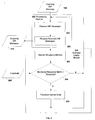
- Figure 3 further illustrates the SIP server composition and work-flow in an exemplary embodiment of the invention.
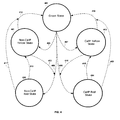
- Figure 4 illustrates the overload states and state transition diagram for a SIP server in an exemplary embodiment of the invention.
- Figure 5A illustrates an exemplary server computer in relation to a communications network in an exemplary embodiment of the invention.
- Figure 5B illustrates an exemplary server computer system comprising multiple server computers in an exemplary embodiment of the invention.
- Figure 5C illustrates an exemplary server computer system in an exemplary embodiment of the invention.
- a overload control module is used to detect SIP server overload and to apply control actions thereto.
- the module compares at least one resource metric against a threshold.
- the module transitions the SIP server to a different state after an overload is detected and then applies a set of control actions associated with the state.
- FIG. 1 illustrates the internal queues and process threads associated with SIP server 150 in an exemplary embodiment of the invention.
- the SIP server 150 may include, for example, a quick SIP decoder queue 101, a quick SIP decoder 102, a CallP SIP decoder queue 103, a non-CallP SIP decoder queue 104, a plurality of CallP decoders 105, a plurality of non-CallP SIP decoders 106, a plurality of CallP adapter queues 107, a plurality of non-CallP adapter queues 108, a plurality of CallP adapter threads 109, a plurality of non-CallP adapter threads 110, a SIP encoder queue 111, a SIP encoder 112, and a overload control module 114.
- Incoming SIP message 100 may be time stamped with the most current time and placed into the quick SIP decoder queue 101.
- the quick SIP decoder 102 may perform a quick parsing of the incoming SIP message 100 to determine if the message is a call processing (CallP) request or response (e.g., INVITE) or a non-call processing (non-CallP) related request or response (e.g., REGISTER).
- CallP related messages may be routed to the CallP SIP decoder queue 103 while non-CallP related messages may be routed to the non-CallP SIP decoder queue 104.
- the messages may be time stamped with the most current time again as they are placed into the respective decoder queues 103 and 104 to indicate the precise entry time.
- the CallP SIP decoder 105 may parse a message in the CallP SIP decoder queue 103 to determine if the message is a request or response associated with an existing session or if the message is a new request. Depending on the outcome, the parsed message contents may be placed into CallP adapter queue 107 where the messages may again be time stamped with the most current time to indicate precise time of entry into CallP adapter queue 107. During this process, messages belonging to existing sessions may be assigned to the CallP adapter queue 107 associated to the CallP adapter thread 109 managing that already existing session.
- CallP adapter thread 109 may pull messages off CallP adapter queue 107, process the messages, and apply services when appropriate.
- the adapter thread 109 may pass the required information in a message to the SIP encoder queue 111, where the message may again be time stamped with the most current time to indicate precise time of entry into SIP encoder queue 111.
- the non-CallP SIP decoder 106 may parse a message in the non-CallP SIP decoder queue 104 to determine if the message is a request or response associated with an existing session or if the message is a new request. Depending on the outcome, the parsed message contents may be placed into non-CallP adapter queue 108 where the messages may again be time stamped with the most current time to indicate precise time of entry into non-CallP adapter queue 108. During this process, messages belonging to existing sessions may be assigned to the non-CallP adapter queue 108 associated to the non-CallP adapter thread 110 managing that already existing session.
- Non-CallP adapter thread 110 may pull messages off non-CallP adapter queue 108, process them, and apply services when appropriate. When an outbound SIP message is required in reference to a session, the non-CallP adapter thread 110 may pass the required information in a message to the SIP encoder queue 111, where the message may again be time stamped with the most current time to indicate precise time of entry into SIP encoder queue 111.
- the SIP encoder 112 may pull messages off the SIP encoder queue 111, build an outgoing SIP message and then send the outgoing SIP message 113.
- the overload control module 114 may be used to detect overload of the SIP server 150 and to apply control actions to the SIP server 150 when overload is detected.
- FIG. 2 illustrates the components of the overload control module 114 in an exemplary embodiment of the invention.
- the SIP server may be viewed as including, for example, a processing module 200 and the overload control module 114.
- the overload control module 114 may include, for example, a monitor 205, a comparator 206, and a software interface 203.
- the processing module 200 may include, for example, the quick SIP decoder queue 101, a quick SIP decoder, a CallP SIP decoder queue 103, a non-CallP SIP decoder queue 104, a plurality of CallP decoders 105, a plurality of non-CallP SIP decoders 106, a plurality of CallP adapter queues 107, a plurality of non-CallP adapter queues 108, a plurality of CallP adapter threads 109, a plurality of non-CallP adapter threads 110, a SIP encoder queue 111, and a SIP encoder 112.
- the processing module 200 is depicted in Figure 2 with only the CallP decoder 105 and the non-CallP SIP decoder 106.
- the overload controls module 114 may continually track resource metrics as a result of the execution of processing module 200. This tracking may be accomplished by the monitor 205 which may read resource metrics from the processing module 200 via path 208.
- the comparator 206 may compare a tracked resource metric with one instance of thresholds 209.
- the software interface 207 may receive the comparison result and send signals to the processing module 200 via paths 115 and 116.
- the tracked resource metrics may include, such as, for example, CallP queue delay 201, non-CallP queue delay 202, CPU utilization 203, process memory usage 204, as well as others.
- CallP queue delay 201 may refer to the time that a message spends in queue 107. CallP queue delay 201 may be monitored by comparing the current time when the message is pulled out of the queue with the queue entry time of the message. For example, if the current CallP queue delay 201 surpasses a queue delay threshold, the overload controls module 114 may transition the SIP server 150 to an appropriate CallP overload state where control actions may be applied to mitigate the overload.
- non-CallP queue delay 202 may refer to the time that a message spends in queue 108.
- Non-CallP queue delay 202 may be monitored by comparing the current time when the message is pulled out of the queue with the queue entry time of the message. For example, if the current non-CallP queue delay 202 surpasses a queue delay threshold, the overload controls module 114 may transition the SIP server 150 to an appropriate non-CallP overload state where control actions may be applied to mitigate the overload.
- a rolling average queue delay may be calculated for both CallP queue delay 201 and non-CallP queue delay 202.
- the rolling average queue delay may be calculated from a moving window covering a number of queue delays.
- the rolling average queue delay may be used to smooth unusual spiky queue delay.
- the overload controls module 114 may compare a rolling average queue delay against a queue delay threshold.
- the SIP server 150 may be transitioned to a CallP overload state.
- the overload controls module 114 via software interface 207 and pathway 116, may inform the SIP CallP decoder 105 to, for example, block 50% of new calls.
- the SIP CallP decoder 105 may, for example, reject 50% of incoming new call requests by generating a "503 Service Unavailable" response and sending the response directly, via pathway 118, to the SIP encoder queue 111, thus bypassing the CallP adapter thread 109.
- non-CallP rolling average queue delay if the threshold to enter an overload state is 500 msec and if the current non-CallP rolling average queue delay for the non-CallP adapter queue 108 is 550 msec, the SIP server 150 may be transitioned to a non-CallP overload state.
- the overload controls module 114 may inform the SIP non-CallP decoder 106, by software interface 207 via pathway 115, to, for example, block 50% of new SIP non-callP requests.
- the SIP non-CallP decoder 106 may, for example, reject 50% of incoming new requests by generating a "503 Service Unavailable" response and sending the response directly, via pathway 117, to the SIP encoder queue 111, thus bypassing the non-CallP adapter thread 110.
- CPU utilization 203 may refer to the percentage of CPU time occupied by running components of the server 150 application program on a computer or computer system. For example, if the current CPU utilization 203 surpasses a CPU utilization threshold, overload controls 114 may transition the SIP server 150 to the appropriate CallP or non-CallP overload state where control actions may be applied to mitigate the overload. In the case of CallP CPU utilization overload, the overload controls module 114 may inform both the SIP CallP decoder 105 and the SIP non-CallP decoder 106, by software interface 207 via pathways 115 and 116 respectively, to, for example, block 100% of new requests.
- both decoders may, for example, reject 100% of incoming new requests by generating a "503 Service Unavailable" response and sending the response directly, via pathway 118, to the SIP encoder queue 111, thus bypassing both the CallP adapter thread 109 and the non-CallP adapter thread 110.
- process memory usage 204 may refer to the amount of computer hardware memory consumed by running components of the server 150 application program on a computer or computer system. For example, if the current process memory usage 204 surpasses a memory usage threshold, the overload controls module 114 may transition the SIP server 150 to an appropriate overload state where control actions may be applied to mitigate the overload. In the case of process memory utilization overload, the overload controls module 114 may inform both the SIP CallP decoder 105 and SIP non-CallP decoder 106, by software interface 207 via pathways 115 and 116 respectively to, for example, block 100% of new requests.
- both decoders may, for example, reject 100% of incoming new requests by generating a "503 Service Unavailable" response and sending the response directly, via pathway 118, to the SIP encoder queue 111, thus bypassing both the CallP adapter thread 109 and non-CallP adapter thread 110.
- the overload control module 114 may be part of the SIP server 150. In another exemplary embodiment, the overload control module 114 may be a stand-alone module outside of the SIP server 150 and may perform overload control for multiple SIP servers.
- the threshold 209 is illustrated in Figure 2 as being exterior to the SIP server 150.
- the threshold may reside in a configuration file which may be read by the SIP server 150 during initiation.
- the threshold 209 may also reside inside the SIP server 150.
- the threshold 209 may be defined by the software code implementing the SIP server 150.
- the threshold 209 may provide more thresholds used by comparator 206 for the various resource metrics of monitor 205.
- FIG. 3 further illustrates the SIP server 150 composition and work-flow in an exemplary embodiment of the invention.
- the processing module 200 may receive incoming SIP messages 100.
- the processing module 200 may process the received messages to generate outgoing messages 113.
- the overload controls module 114 may monitor resources metrics resulting from running the processing module 200 on a computer or computer system.
- the overload controls module 114 may compare a monitored resource metric against a threshold in thresholds 209 to determine if there is an overload.
- the overload control module 114 may transition the SIP server 150 to an overload state if an overload is detected.
- Figure 4 illustrates the overload states and state transition diagrams for a SIP server in an exemplary embodiment of the invention.
- the exemplary states of the SIP server 150 may include green state 400, non-CallP yellow state 401, non-CallP red state 402, CallP yellow state 403, and CallP red state 404. More or less states may be included for the SIP server 150 as may be desired. For example, less states may be used to concentrate control actions and more states may be used to diffuse control actions.
- the server 150 may start in green state 400, which may be a non-overload (or normal) state. There may be four overload states available, namely, non-CallP yellow state 401, non-CallP red state 402, CallP yellow state 403, and CallP red state 404. Each state 401-404 may have a set of associated control actions that may be applied to mitigate the overload once the SIP server 150 enters that specific overload state.
- the control actions in each of the states 401-404 may include both internal control actions and external control actions.
- Internal control actions may represent actions performed on the SIP server 150 internally, such as, for example, automatically increasing the SIP retry timers to stem the retry traffic and avoid message flooding, discarding messages pulled off the queue that are older that a predefined maximum message age, doubling all route advance timers, disabling automatically scheduled maintenance tasks, turning off all logging functions, etc.
- External control actions may represent control actions relayed to neighbors of the SIP server 150, such as, for example, blocking 50% of new requests by returning a "503 Service Unavailable" with or without a Retry-After header, a "302 Temporarily Moved” redirecting the call to another SIP server 150, returning no response to traffic neighbor's SIP request to stimulate a route advancement, etc.
- control action associated with non-CallP yellow state 401 may include: reject 50% of non-CallP SIP messages and/or discard messages older than a maximum message age from queues 101 and/or 111.
- control action associated with non-CallP red state 402 may include: reject 100% of non-CallP SIP messages and/or discard messages older than a maximum message age from queues 101 and/or 111.
- control action associated with CallP yellow state 403 may include: reject 50% of new calls; double SIP retry timers and route advance timers; disable automatically scheduled maintenance tasks; turn off all logging functions; and/or apply all non-CallP red state control actions.
- control action associated with CallP red state 404 may include: reject 100% of new calls; quadruple SIP retry timers and route advance timers; and apply all non-CallP yellow state control actions.
- the control actions associated with any of the CallP overload states 403-404 may include all control actions for non-CallP red state 402.
- a SIP server 150 may escalate to any of the existing overload states 401-404 based on trigger conditions associated with system resource metrics (e.g., CallP queue delay 201, non-CallP queue delay 202, process memory usage 204, CPU utilization 203, etc).
- Non-CallP trigger conditions may drive the non-CallP overload states 401 and 402 and CallP trigger conditions may drive the CallP overload states 403 and 404.
- the SIP server 150 may be able to deal with a non-CallP driven overload (e.g., REGISTER storm) without impacting normal call processing.
- the trigger conditions for escalating the SIP server 150 from green state 400 to non-CallP yellow state 401 via path 405 may include non-CallP queue delay 202 being above a queue delay threshold for entering non-CallP yellow state 401.
- the trigger conditions for escalating the SIP server 150 from green state 400 to non-CallP red state 402 via path 406 may include non-CallP queue delay 202 being above a delay threshold for entering non-CallP red state 402, the threshold for entering non-CallP red state 402 being higher than the threshold for entering non-CallP yellow state 401.
- the trigger conditions for escalating the SIP server 150 from green state 400 to CallP yellow state 403 via path 407 may include CallP queue delay 201 being above a queue delay threshold for entering CallP yellow state 403.
- the trigger conditions for escalating the SIP server 150 from green state 400 to CallP red state 404 via path 408 may include CallP queue delay 201 being above a queue delay threshold for entering CallP red state 404, the CallP queue delay 201 threshold for entering CallP red state 404 being higher than the CallP queue delay 201 threshold for entering CallP yellow state 403.
- the trigger conditions for escalating the SIP server 150 from green state 400 to CallP yellow state 403 via path 407 may include process memory usage 204 being above a memory usage threshold for entering CallP yellow state 403.
- the trigger conditions for escalating the SIP server 150 from green state 400 to CallP red state 404 via path 408 may include process memory usage 204 being above a memory usage threshold for entering CallP red state 404, the process memory usage 204 threshold for entering CallP red state 404 being higher than the process memory usage 204 threshold for entering CallP yellow state 403.
- the trigger conditions for escalating the SIP server 150 from green state 400 to CallP yellow state 403 via path 407 may include CPU utilization 203 being above a CPU utilization threshold for entering CallP yellow state 403.
- the trigger conditions for escalating the SIP server 150 from green state 400 to CallP red state 404 via path 408 may include CPU utilization 203 being above a CPU utilization threshold for entering CallP red state 404, the CPU utilization 203 threshold for entering CallP red state 404 being higher than the CPU utilization 203 threshold for entering CallP yellow state 403.
- the SIP server 150 may remain in that state for a minimum holding period. During the holding period, if the set of trigger conditions for the state escalation (e.g., queue delay or process memory usage) worsens, then the SIP server 150 may be immediately escalated to a new overload state with a higher threshold corresponding to a heavier load. Once the holding period expires, if the set of trigger conditions for the state escalation (e.g., queue delay or process memory usage) remains, the SIP server 150 may reset the holding period timer and remain in that overload state.
- the set of trigger conditions for the state escalation e.g., queue delay or process memory usage
- the SIP server 150 may transition to a state with a lower level of threshold or the green state 400.
- the trigger conditions for escalating the SIP server 150 from non-CallP yellow state 401 to non-CallP red state 402 via path 413 may include: non-CallP queue delay 202 being above a queue delay threshold for entering non-CallP red state 402.
- the trigger conditions for escalating the SIP server 150 from CallP yellow state 403 to CallP red state 404 via path 414 may include: CallP queue delay 201 being above a queue delay threshold for entering CallP red state 404.
- the trigger conditions for escalating the SIP server 150 from CallP yellow state 403 to CallP red state 404 via path 414 may include: process memory usage 204 being above a memory usage threshold for entering CallP red state 404.
- the trigger conditions for escalating the SIP server 150 from CallP yellow state 403 to CallP red state 404 via path 414 may include CPU utilization 203 being above a CPU utilization threshold for entering CallP red state 404.
- the SIP server 150 may remain in that overload state for a minimum holding period. Once the holding period expires, if the set of trigger conditions for the state escalation (i.e., queue delay, process memory usage, and/or CPU utilization) no longer exists, then the control actions associated with that state may be removed and the SIP server 150 may return to the green state 400 or a state whose associated trigger conditions comprise lower thresholds.
- the set of trigger conditions for the state escalation i.e., queue delay, process memory usage, and/or CPU utilization
- the trigger conditions for returning the SIP server 150 from non-CallP yellow state 401 to green state 400 via path 412 may include: non-CallP queue delay 202 being less than a queue delay threshold for entering non-CallP yellow state 401 and the SIP server 150 having dwelled in non-CallP yellow state 401 for a minimum holding period.
- the trigger conditions for returning the SIP server 150 from non-CallP red state 402 to green state 400 via path 411 may include: non-CallP queue delay 202 being less than the queue delay threshold for entering non-CallP yellow state 401 and the SIP server 150 having dwelled in non-CallP red state 402 for a minimum holding period.
- the trigger conditions for transitioning SIP server 150 from non-CallP red state 402 to non-CallP yellow state 401 via path 415 may include: non-CallP queue delay 202 being less than a queue delay threshold for entering non-CallP red state 402 and no less than the queue delay threshold for entering non-CallP yellow state 401 and the SIP server 150 having dwelled in non-CallP red state 402 for a minimum holding period, the non-CallP queue delay 202 threshold for entering non-CallP red state 402 being higher than the non-CallP queue delay 202 threshold for entering non CallP yellow state 401.
- the trigger conditions for returning SIP server 150 from CallP yellow state 403 to green state 400 via path 410 may include: CallP queue delay 201 being less than a queue delay threshold for entering CallP yellow state 403 and the SIP server 150 having dwelled in CallP yellow state 403 for a minimum holding period.
- the trigger conditions for returning SIP server 150 from CallP red state 404 to green state 400 via path 409 may include: CallP queue delay 201 being less than the queue delay threshold for entering CallP yellow state 403 and the SIP server 150 having dwelled in CallP red state 404 for a minimum holding period.
- the trigger conditions for transitioning SIP server 150 from CallP red state 404 to CallP yellow state 403 via path 416 may include: CallP queue delay 201 being less than a queue delay threshold for entering CallP red state 404 and no less than the queue delay threshold for entering CallP yellow state 403, and the SIP server 150 having dwelled in CallP red state 404 for a minimum holding period, the CallP queue delay 201 threshold for entering CallP red state 404 being higher than the CallP queue delay 201 threshold for entering CallP yellow state 403.
- the trigger conditions for returning SIP server 150 from CallP yellow state 403 to green state 400 via path 410 may include: process memory usage 204 being less than a memory usage threshold for entering CallP yellow state 403 and the SIP server 150 having dwelled in CallP yellow state 403 for a minimum holding period.
- the trigger conditions for returning SIP server 150 from CallP red state 404 to green state 400 via path 409 may include: process memory usage 204 being less than the memory usage threshold for entering CallP yellow state 403 and the SIP server 150 having dwelled in CallP red state 404 for a minimum holding period.
- the trigger conditions for transitioning SIP server 150 from CallP red state 404 to CallP yellow state 403 via path 416 may include: process memory usage 204 being less than a memory usage threshold for entering CallP red state 404 and no less than the memory usage threshold for entering CallP yellow state 403, and the SIP server 150 having dwelled in CallP red state 404 for a minimum holding period, the process memory usage 204 threshold for entering CallP red state 404 being higher than the process memory usage 204 threshold for entering CallP yellow state 403.
- the trigger conditions for returning SIP server 150 from CallP yellow state 403 to green state 400 via path 410 may include: CPU utilization 203 being less than a CPU utilization threshold for entering CallP yellow state 404 and the SIP server 150 having dwelled in CallP yellow state 403 for a minimum holding period.
- the trigger conditions for returning SIP server 150 from CallP red state 404 to green state 400 via path 409 may include: CPU utilization 203 being less than the CPU utilization threshold for entering non-CallP yellow state 403 and the SIP server 150 having dwelled in CallP red state 404 for a minimum holding period.
- the trigger conditions for transitioning SIP server 150 from CallP red state 404 to CallP yellow state 403 via path 416 may include: CPU utilization 203 being less than a CPU utilization threshold for entering CallP red state 404 and no less than the CPU utilization threshold for entering CallP yellow state 403, and the SIP server 150 having dwelled in CallP red state 404 for a minimum holding period, the CPU utilization 203 threshold for entering CallP red state 404 being higher than the CPU utilization 203 threshold for entering CallP yellow state 403.
- a SIP server 150 may start in green state 400 during normal busy hour traffic.
- the rolling average CallP queue delay 201 for the CallP adapter queue may reach 1000 msec which is greater than a threshold of 980 msec to enter CallP yellow state 403.
- the SIP server 150 may transition, via path 407, to CallP yellow state 403 and may apply control actions associated with CallP yellow state 403.
- the rolling average CallP queue delay 201 for the CallP adapter queue 107 may now increase to 2000 msec which is greater than a threshold of 1580 msec to enter CallP red state 404.
- the SIP server 150 may transition, via path 414, to CallP red state 404 and may apply control actions associated with CallP red state 404.
- the rolling average CallP queue delay 201 for the CallP adapter queue may now reduce to 1000 msec.
- the delay time value may be enough to return the SIP server 150 to CallP yellow state 403. If the SIP server 150 has not completed the minimum holding period in CallP red state 404, the SIP server 150 may remain in the CallP red state 404. After the minimum holding period for CallP red state 404 expires, the rolling average CallP queue delay 201 for the CallP adapter queue 107 may be reduced to 200 msec, which is below the 980 msec delay threshold to enter CallP yellow state 403, and the SIP server 150 may return to green state 400. The SIP server 150 may enter the green state 400 via path 209 and remove all previously applied control actions.
- the SIP server 150 may only be in one overload state at a time. Although the available states may be mutually exclusive in existence, since the control actions associated with the CallP overload states 403 and 404 may include all control actions associated with the non-CallP red state 402, the CallP overload states 403 and 404 may be super states that encompass the non-CallP overload states 401 and 402. Thus, as soon as the SIP server 150 enters a CallP overload state 403 or 404, non-CallP overload states 401 and 402 may cease to apply.
- the server 150 may enter the non-CallP overload state by returning to the green state 400 and immediately transitioning to the overload non-CallP overload state.
- a proxy SIP server refers to a server that routes SIP sessions.
- a registration SIP server refers to a SIP server that handles the registration of user agents.
- the SIP server 150 may be both a proxy server and a registration server by differentiating two types of messages and states. For example, the CallP type of messages is for session routing. For example, the non-CallP type of overload states is for handling an overload of registration of user agents.
- the SIP server 150 provided by the invention may be both a proxy server and a registration server.
- the SIP server 150 may be implemented as a computer or a computer system.
- a SIP server may also be a SIP server application on a computer or computer system.
- a SIP server application may be a computer program that accepts SIP messages from a network, processes the messages, and applies service when appropriate.
- a computer or computer system may have at least the following hardware: one processor (e.g. CPU); a plurality of memories; a network-connection; and a computer-readable medium containing software to be executed by the computer or computer system.
- Exemplary hardware network connection may include a network interface card (NIC).
- Exemplary computer-readable medium may include: a hard disk drive; a floppy disk; a magneto-optical disk; an optical disk; such as a CD-ROM or a DVD or a Blue-ray disk; a magnetic tape; a flash removable memory; a memory chip; and/or other types of media that can store computer-readable instructions thereon.
- FIG. 5A illustrates an exemplary server computer in relation to a communications network in an exemplary embodiment of the invention.
- the communications network 500 may include both PSTN and IP-based systems.
- the server computer 501 may receive incoming SIP messages 100 from the communications network 500 via path 502 and deliver outgoing SIP messages 113 via path 503 to the communications network 500.
- FIG. 5B illustrates an exemplary server computer system comprising multiple server computers in an exemplary embodiment of the invention.
- a caller 504 may place a call on a communications network 500 with caller 534 as recipient.
- Link 506 between caller 504 and the communications network 500 may be bi-directional.
- a SIP server computer 508 may receive incoming SIP messages 100 from the communications network 500 via link 507 and may process the incoming SIP messages 100.
- Link 507 between the server computer 508 and the communications network 500 may be bi-directional.
- the server computer may send some of the outgoing SIP messages 113 to at least one of the neighbor SIP server computers in the server computer system, namely, 510, 512, and 514, for further processing before the outgoing SIP messages 113 may be routed to the communications network 500.
- a SIP message may thus travel through multiple SIP server computers en-route to the caller 534.
- the links 509, 511, 513, 516, 517, and 518 between SIP server computers 508, 510, 512, and 514 may be bi-directional and may carry IP packets.
- a neighbor SIP server computer 510, or 512, or 514 may also forward some of the outgoing SIP messages 113 to another neighbor SIP server computer.
- the SIP messages associated with the same session may travel through different SIP server computers en-route to caller 534.
- Link 505 between caller 534 and the communications network 500 may be bi-directional.
- FIG. 5C illustrates an exemplary configuration of calling from different networks in an exemplary embodiment of the invention.
- a caller 521 may place a call on a communications network 519 with caller 522 as recipient.
- Link 532 between caller 521 and the communications network 519 may be bi-directional.
- the incoming SIP messages 100 may be filtered at a border computer 523.
- Link 527 between the border computer 523 and the communications network 519 may be bi-directional.
- the SIP messages may be serviced by a SIP server on the border computer 523 or a SIP server computer 524, 525, or 526 on the LAN 520.
- outgoing SIP messages 113 may be generated en-route to caller 522.
- Links 528-513, and 533 between LAN 520 and a SIP server computer on LAN 520 may be bi-directional.
- the SIP server 150 may be generally applicable towards multimedia communications over the internet that may utilize a combination of different content forms including, for example, text, audio/voice, still images, animation, video, and/or interactivity content forms.
- the invention When implemented as a SIP server application computer program, the invention may be embodied as a computer readable medium containing software code to be executed on a computer.
- the software may encode processing module 200 and/or overload control module 114.
- processing module 200 may be implemented as software, executable on a computer, to receive SIP messages and process SIP messages.
- the instructions may encode the components illustrated in the SIP server 150 of Figure 1 .
- the queues 101, 103, 104, 107, 108, and 111 may be implemented as first-in-first-out data structures.
- quick SIP decoder 102 may be implemented as instructions to type-cast received SIP messages into CallP related or non-CallP related.
- decoders 105 and 106 may be implemented as instructions to place parsed message contents into the queue associated with an existing session to which the message belongs or into a new queue corresponding to a new session.
- adapter threads 109 and 110 may be implemented as instructions to process queued messages and apply services when appropriate.
- encoder 112 may be implemented as instructions to construct outgoing SIP messages and send the outgoing SIP messages.
- the medium embodiment of the SIP server application may also encode the overload control module 114 as illustrated in Figures 2 and 3 .
- overload controls module 114 may be implemented as instructions to monitor resource metrics (e.g., CallP queue delay 201, non-CallP queue delay 202, CPU utilization 203, process memory usage 204), to compare a monitored resource metric against a threshold, and to transition the state of the SIP server when appropriate.
- the instructions may also include a software interface 207 for communications with processing module 200 so that overload and control module 114 may send signals to decoders 115 and 116 in processing module 200.
- the software interface may be implemented as sockets, message passing interface (MPI), and/or shared memory.
- the server state information may be encoded in the stack or the data segment associated with the SIP server application program being run as a process on a computer or computer system.
- the computer program may include instructions defining control actions associated with each state that may be activated via a rule-based software interrupt or exception handler.
- Various programming languages for example, JAVA, C, and C++, have support for software interrupt and exception handler.
- the queue entry time may be recorded as a tag on the SIP message to be inserted into a queue.
- the tag When implemented as software, the tag may be a field in the SIP message data structure.
- the queue entry time may also be recorded elsewhere, for example, a look-up table data structure in the stack or data segment associated with the server application program that the overload control module 114 may access.
- the queue entry time may be read from the hardware of the computer running the SIP server application program, for example, the system clock on the main board of the computer.
- the queue entry time may also be read from a remote device, for example, a network time server running the network time protocol (NTP) or the simple network time protocol (SNTP).
- NTP network time protocol
- SNTP simple network time protocol
- the encoded queue entry time In addition to a floating-point format, the encoded queue entry time may also be rounded into a fixed-point format or ASCII format to save time in computing the queue delay time.
- CPU utilization 203 and process memory usage 204 may be obtained by querying the operating system on the computer running the SIP server application through, for example, application program interfaces (APIs).
- APIs application program interfaces
- Various programming languages and tools may implement APIs for accessing the information of CPU utilization 203 and process memory usage 204 associated with a computer program being run as a process on a computer.
- Microsoft Visual Studio has an API of GetProcessMemoryInfo for a user program to obtain information of the amount of memory used by a process.
- Overload control module 114 may even directly obtain CPU utilization 203 and/or process memory usage 204 of a process by listing the /proc tree under the process identification number of that process on a computer running the LINUX operating system.
- the thresholds 209 used for comparison against monitored resource metrics 201-204 may be configurable.
- the thresholds may be encoded in a configuration file or stored in a database to be read by a SIP server application embodying the invention.
- the thresholds may also be entered or modified by a human user or another computer program when the server application embodying the invention is being run as a process on a computer.
- a graphic user interface GUI
- a software interface in the form of sockets, message passing interface, and/or shared memory, may be used by another computer program to send the thresholds for monitored resource metrics to the server application embodying the invention being run as a process.
- the minimum holding periods that stipulate the shortest time a SIP server 150 may dwell in an overload state may be configurable in the same manner.
- the maximal age of SIP messages, beyond which the SIP messages on an overload SIP server can be discarded, may be configurable in the same manner.
- the server application may be implemented as one monolithic SIP server 150 as illustrated in Figure 1 comprising both a processing module 200 and an overload control module 114.
- the communication and data sharing may be straightforward which may allow for a tight integration.
- the server application may also be implemented as separate processing module 200 and overload control module 114.
- This modular approach may allow one overload control module 114 to perform overload control for several SIP servers 150, each may be designated for different purposes that may lead to different levels of thresholds for resource metrics. For example, premium users paying more fees may be designated to a SIP server 150 with lower levels thresholds. For example, one SIP server 150 may be dedicated to 911 calls with lowest levels of thresholds.
- overload control module 114 may perform overload control for SIP servers 150 residing on different computers.
- a modular approach may improve flexibility and granularity in quality of service.
Landscapes
- Engineering & Computer Science (AREA)
- Computer Networks & Wireless Communication (AREA)
- Signal Processing (AREA)
- Multimedia (AREA)
- Business, Economics & Management (AREA)
- General Business, Economics & Management (AREA)
- Computer Security & Cryptography (AREA)
- Telephonic Communication Services (AREA)
- Monitoring And Testing Of Exchanges (AREA)
Claims (21)
- Verfahren zur Überlastverwaltung für einen Server des Session Initiation Protocol SIP, umfassend:Empfangen von SIP-Nachrichten im SIP-Server von einem Kommunikationsnetz;Verarbeiten der empfangenen SIP-Nachrichten im SIP-Server, um verarbeitete SIP-Nachrichten zu erhalten, wobei der Verarbeitungsschritt ferner Folgendes umfasst:(a) Parsen empfangener ankommender SIP-Nachrichten, um die Nachrichten als Nichtanrufsverarbeitung bzw. Nicht-CallP betreffend oder Anrufverarbeitung bzw. CallP betreffend zu klassifizieren, und Platzieren der klassifizierten SIP-Nachrichten in einer Non-CallP-Decoderwarteschlange oder einer CallP-Decoderwarteschlange auf der Basis der Klassifikation;(b) Parsen einer in eine Warteschlange eingereihten SIP-Nachricht aus der Non-CallP-Decoderwarteschlange und/oder der CallP-Decoderwarteschlange, um zu bestimmen, ob die in die Warteschlange eingereihte SIP-Nachricht eine nicht mit existierenden Sitzungen assoziierte neue Anforderung, eine mit einer existierenden Sitzung assoziierte Anforderung oder eine mit der existierenden Sitzung assoziierte Antwort ist, und Platzieren der in die Warteschlange eingereihten SIP-Nachricht in eine mit einer neuen Sitzung assoziierte neue Adapterwarteschlange oder eine mit einer existierenden Sitzung assoziierte existierende Adapterwarteschlange auf der Basis der Bestimmung;(c) Entnehmen einer Nachricht aus einer Adapterwarteschlange, Verarbeiten der Nachricht und Anwenden von Diensten entsprechend der Nachricht;(d) Leiten von erforderlichen Informationen in Bezug auf eine existierende Sitzung zu einer Codiererwarteschlange; und(e) Entnehmen von Informationen aus der Codiererwarteschlange, Aufbauen einer abgehenden SIP-Nachricht und Senden der abgehenden SIP-Nachricht; Detektieren einer Überlast auf der Basis einer mit mindestens einem systemweiten Betriebsmittel des SIP-Servers assoziierten Triggerbedingung, wobei das Detektieren als Ergebnis des Empfangens von SIP-Nachrichten von dem Kommunikationsnetz im SIP-Server und Verarbeiten der empfangenen SIP-Nachrichten im SIP-Server durchgeführt wird;Überführen des SIP-Servers in einen Überlastzustand und Anwenden von zugeordneten Steueraktionen darauf, wenn die Überlast detektiert wird, um die Überlast zu mindern.
- Verfahren nach Anspruch 1, wobei das systemweite Betriebsmittel des SIP-Servers Prozessspeicherauslastung und/oder Auslastung der Zentralverarbeitungseinheit CPU umfasst.
- Verfahren nach Anspruch 1 oder Anspruch 2, wobei die Triggerbedingung Folgendes umfasst:Vergleichen der Prozessspeicherauslastung mit einer Speicherauslastungsschwelle; und/oderVergleichen der CPU-Auslastung mit einer CPU-Auslastungsschwelle.
- Verfahren nach Anspruch 1, ferner umfassend:Verwerfen einer oder mehrerer der existierenden Adapterwarteschlange entnommener Nachrichten, wobei die eine oder mehreren verworfenen Nachrichten älter als ein vordefiniertes maximales Nachrichtenalter sind;Verdoppeln einer oder mehrerer Routenvorrückzeiten;Sperren einer oder mehrerer automatisch eingeteilter Wartungsaufgaben; oderAusschalten einer oder mehrerer Protokollierungsfunktionen.
- Verfahren nach einem der vorhergehenden Ansprüche, wobei der Überlastzustand ein erster Überlastzustand oder ein zweiter Überlastzustand ist, wobei der erste Überlastzustand eine erste Menge von zugeordneten Triggerbedingungen aufweist und der zweite Überlastzustand eine zweite Menge von zugeordneten Triggerbedingungen aufweist, wobei die Schwellen in der ersten Menge von Triggerbedingungen nicht höher als die Schwellen in der zweiten Menge von Triggerbedingungen sind.
- Verfahren nach Anspruch 5, das ferner mindestens einen der folgenden Schritte umfasst:Überführen des SIP-Servers in einem Normalzustand in den ersten Überlastzustand, wenn die dem ersten Überlastzustand zugeordnete erste Menge von Triggerbedingungen erfüllt ist aber die dem zweiten Überlastzustand zugeordnete zweite Menge von Triggerbedindungen nicht erfüllt ist;Überführen des SIP-Servers im Normalzustand in den zweiten Überlastzustand, wenn die dem zweiten Überlastzustand zugeordnete zweite Menge von Triggerbedindungen erfüllt ist;Überführen des SIP-Servers in dem ersten Überlastzustand in den zweiten Überlastzustand, wenn die dem zweiten Überlastzustand zugeordnete zweite Menge von Triggerbedingungen erfüllt ist;Überführen des SIP-Servers in dem ersten oder zweiten Überlastzustand zurück in den Normalzustand, wenn die Mengen von Überlast-Triggerbedingungen ungültig werden und der SIP-Server für einen minimalen Haltezeitraum in dem ersten oder zweiten Überlastzustand verweilt hat; undÜberführen des SIP-Servers in dem zweiten Überlastzustand in den ersten Überlastzustand, wenn der SIP-Server für einen minimalen Haltezeitraum in dem zweiten Überlastzustand verweilt hat und die dem zweiten Überlastzustand zugeordnete zweite Menge von Triggerbedingungen ungültig wird, aber die dem ersten Überlastzustand zugeordnete erste Menge von Triggerbedingungen noch gültig ist.
- Verfahren nach einem der vorhergehenden Ansprüche, wobei ein Überlastzustand eine Menge von zugeordneten Steueraktionen zur Minderung der Überlast aufweist, wobei die Steueraktionen intern und/oder extern zu dem SIP-Server geleitet werden.
- Verfahren nach Anspruch 1, wobei ein Zeitstempel aufgezeichnet wird, um zu verfolgen, wann eine SIP-Nachricht in eine Warteschlange eingereiht wird.
- Computerlesbares Medium, das Software umfasst, die, wenn sie durch einen Computer ausgeführt wird, bewirkt, dass der Computer Operationen zur Überlastverwaltung für einen Server des Session Initiation Protocol SIP in einem Netzwerk ausführt, wobei das computerlesbare Medium Folgendes umfasst:Anweisungen zum Empfangen von SIP-Nachrichten in dem SIP-Server von einem Kommunikationsnetz;Anweisungen zum Abwickeln der empfangenen SIP-Nachrichten in dem SIP-Server, umfassend:(a) Anweisungen zum Parsen ankommender SIP-Nachrichten, um die Nachrichten als Nichtanrufsverarbeitung bzw. Nicht-CallP betreffend oder Anrufverarbeitung bzw. CallP betreffend zu klassifizieren, und Platzieren der Nachrichten in eine Non-CallP-Decoderwarteschlange oder eine CallP-Decoderwarteschlange auf der Basis der Klassifikation;(b) Anweisungen zum Parsen einer in eine Warteschlange eingereihten Nachricht aus der Non-CallP-Decoderwarteschlange und/oder der CallP-Decoderwarteschlange, um zu bestimmen, ob die Nachricht eine nicht mit existierenden Sitzungen assoziierte neue Anforderung, eine mit einer existierenden Sitzung assoziierte Anforderung oder eine mit der existierenden Sitzung assoziierte Antwort ist, und Platzieren der Nachricht in eine mit einer neuen Sitzung assoziierte neue Adapterwarteschlange oder eine mit einer existierenden Sitzung assoziierte existierende Adapterwarteschlange auf der Basis der Bestimmung;(c) Anweisungen zum Entnehmen einer Nachricht aus einer Adapterwarteschlange, Verarbeiten der Nachricht und Anwenden von Diensten entsprechend der Nachricht;(d) Anweisungen zum Leiten von erforderlichen Informationen in Bezug auf eine existierende Sitzung zu einer Codiererwarteschlange; und(e) Anweisungen zum Entnehmen von Informationen aus der Codiererwarteschlange, Aufbauen einer abgehenden SIP-Nachricht und Senden der abgehenden SIP-Nachricht; undAnweisungen zum Überführen des SIP-Servers in einen Überlastzustand, Anwenden von zugeordneten Steueraktionen darauf und Definieren einer zu erfüllenden Triggerbedingung, wobei die Triggerbedingung mindestens einem systemweiten Betriebsmittel des SIP-Servers zugeordnet ist.
- Medium nach Anspruch 9, ferner umfassend:Anweisungen zum Definieren des systemweiten Betriebsmittels des SIP-Servers, umfassend Prozessspeicherauslastung; und/oder CPU-Auslastung; undAnweisungen zum Definieren der Triggerbedingung, umfassend:Vergleichen der Prozessspeicherauslastung mit einer Speicherauslastungsschwelle; und/oderVergleichen der CPU-Auslastung mit einer CPU-Auslastungsschwelle.
- Medium nach Anspruch 9 oder 10, ferner umfassend:Anweisungen zum Definieren einer einem ersten Überlastzustand zugeordneten ersten Menge von Triggerbedingungen und einer einem zweiten Überlastzustand zugeordneten zweiten Menge von Triggerbedingungen; wobei die Schwellen in der ersten Menge von Triggerbedingungen nicht höher als die Schwellen in der zweiten Menge von Triggerbedingungen sind.
- Medium nach Anspruch 11, ferner umfassend:Anweisungen zum Überführen des SIP-Servers in einem Normalzustand in den ersten Überlastzustand, nachdem bestimmt wurde, dass die der ersten Menge zugeordnete erste Menge von überführenden Triggerbedingungen erfüllt ist, während die dem zweiten Überlastzustand zugeordnete zweite Menge von Triggerbedindungen nicht erfüllt ist;Anweisungen zum Überführen des SIP-Servers im Normalzustand in den zweiten Überlastzustand, nachdem bestimmt wurde, dass die dem zweiten Überlastzustand zugeordnete zweite Menge von Triggerbedingungen erfüllt ist;Anweisungen zum Überführen des SIP-Servers in dem ersten Überlastzustand in den zweiten Überlastzustand, nachdem bestimmt wurde, dass die dem zweiten Überlastzustand zugeordnete zweite Menge von Triggerbedingungen erfüllt ist;Anweisungen zum Überführen des SIP-Servers in dem ersten oder zweiten Überlastzustand zurück in einen Normalzustand, nachdem bestimmt wurde, dass der SIP-Server für einen minimalen Haltezeitraum in dem ersten oder zweiten Überlastzustand verweilt hat und die Mengen von Triggerbedingungen ungültig werden; und/oderAnweisungen zum Überführen des SIP-Servers in dem zweiten Überlastzustand in den ersten Überlastzustand, nachdem bestimmt wurde, dass der SIP-Server für einen minimalen Haltezeitraum in dem zweiten Überlastzustand verweilt hat und die dem zweiten Überlastzustand zugeordnete zweite Menge von Triggerbedingungen ungültig wird, aber die dem ersten Überlastzustand zugeordnete erste Menge von Triggerbedingungen noch gültig ist.
- Medium nach einem der Ansprüche 9 bis 12, ferner umfassend:Anweisungen zum Definieren einer einem Überlastzustand zur Minderung von Überlast zugeordneten Menge von Steueraktionen, wobei die Menge von Steueraktionen Steueraktionen umfasst, die intern und/oder extern zu dem SIP-Server geleitet werden.
- Medium nach Anspruch 9, ferner umfassend:Anweisungen zum Erhalten eines Zeitstempels aus dem Computer und/oder dem Netzwerk; undAnweisungen zum Aufzeichnen des Zeitstempels zum Aufzeichnen der Zeit des Einreihens einer SIP-Nachricht in eine Warteschlange.
- System zur Multimedia-Kommunikation über ein Netzwerk, umfassend:eine Netzwerkverbindung zum Empfangen und Senden mehrerer SIP-Nachrichten zwischen einem SIP-Server und dem Netzwerk;ein Verarbeitungsmodul im SIP-Server zum Verarbeiten und Abwickeln empfangener SIP-Nachrichten, umfassend:eine erste Warteschlange zum Halten empfangener SIP-Nachrichten;einen ersten Decoder zum Klassifizieren der empfangenen SIP-Nachrichten in mindestens zwei Nachrichtentypen;eine Decoderwarteschlange für jeden Nachrichtentyp zum Halten der klassifizierten SIP-Nachrichten;mehrere SIP-Decoder zum Gruppieren von SIP-Nachrichten aus der Decoderwarteschlange zu existierenden Sitzungen oder neuen Sitzungen;mehrere existierenden Sitzungen und neuen Sitzungen zugeordnete Adapterwarteschlangen zum Halten von SIP-Nachrichten;mehrere Adapter, die jeweils einer Adapterwarteschlange zugeordnet sind, zum Verarbeiten und Abwickeln von Sitzungen;eine Codiererwarteschlange zum Halten von Informationen, die abgehende SIP-Nachrichten codieren; undeinen Codierer zum Aufbauen und Senden von abgehenden SIP-Nachrichten; undein Überlaststeuermodul zum Durchführen von Überlaststeuerung für den SIP-Server, umfassend:eine Überwachungsvorrichtung zum Verfolgen mindestens eines systemweiten Betriebsmittels des SIP-Servers als Ergebnis des Laufenlassens des Verarbeitungsmoduls zum Verarbeiten und Abwickeln empfangener SIP-Nachrichten; undeinen Komparator zum Bestimmen, dass Überlast vorliegt, wenn mindestens eine Metrik des verfolgten Betriebsmittels als Ergebnis des Laufenlassens des Verarbeitungsmoduls über einer Schwelle liegt,wobei das Überlaststeuermodul den SIP-Server in einen neuen Zustand überführt, wenn Überlast vorliegt.
- System nach Anspruch 15, wobei das Überlaststeuermodul ferner eine Softwareschnittstelle zum Senden von Signalen zum Verarbeitungsmodul umfasst, wobei die Signale zum Überführen des Zustands des SIP-Servers dienen.
- System nach Anspruch 15 oder Anspruch 16, wobei das systemweite Betriebsmittel des SIP-Servers Prozessspeicherauslastung und/oder Auslastung der Zentralverarbeitungseinheit CPU umfasst.
- System nach einem der Ansprüche 15 bis 17, wobei der SIP-Server das Überlaststeuermodul und das Verarbeitungsmodul umfasst.
- System nach einem der Ansprüche 15 bis 18, wobei der SIP-Server das Verarbeitungsmodul, aber nicht das Überlaststeuermodul umfasst.
- System nach Anspruch 15, wobei die SIP-Decoder ferner dafür ausgelegt sind, Signale von dem Überlaststeuermodul zu empfangen und, nachdem ein Signal vom Überlaststeuermodul empfangen wird, mindestens einen der folgenden Schritte auszuführen:Weiterleiten mindestens einer SIP-Nachricht in den Adapterwarteschlangen zu der Codiererwarteschlange;Zurückweisen mindestens einer SIP-Nachricht in den Decoderwarteschlangen;Vergrößern mindestens eines SIP-Servertimers;Verwerfen mindestens einer SIP-Nachricht in der ersten Warteschlange und/oder der Codiererwarteschlange; oderErzeugen mindestens einer Fehlernachricht über den Codierer.
- System nach Anspruch 20, wobei der SIP-Servertimer ein Neuversuchstimer oder ein Routenvorrücktimer ist und die Fehlernachricht Dienst nicht verfügbar oder Dienst vorübergehend verlagert betrifft.
Applications Claiming Priority (1)
| Application Number | Priority Date | Filing Date | Title |
|---|---|---|---|
| US12/259,011 US7869364B2 (en) | 2008-10-27 | 2008-10-27 | SIP server overload detection and control |
Publications (3)
| Publication Number | Publication Date |
|---|---|
| EP2180659A2 EP2180659A2 (de) | 2010-04-28 |
| EP2180659A3 EP2180659A3 (de) | 2012-07-18 |
| EP2180659B1 true EP2180659B1 (de) | 2014-10-01 |
Family
ID=41667573
Family Applications (1)
| Application Number | Title | Priority Date | Filing Date |
|---|---|---|---|
| EP09174140.5A Not-in-force EP2180659B1 (de) | 2008-10-27 | 2009-10-27 | Überlastungsdetektion und -steuerung für SIP-Server |
Country Status (3)
| Country | Link |
|---|---|
| US (1) | US7869364B2 (de) |
| EP (1) | EP2180659B1 (de) |
| ES (1) | ES2524881T3 (de) |
Families Citing this family (18)
| Publication number | Priority date | Publication date | Assignee | Title |
|---|---|---|---|---|
| CN101483613B (zh) * | 2008-01-09 | 2012-02-15 | 国际商业机器公司 | 为呈现服务器提供QoS控制能力的方法和设备及其系统 |
| US20100172241A1 (en) * | 2009-01-06 | 2010-07-08 | Patel Dipak V | Method for IP network traffic management |
| US8352603B2 (en) * | 2010-08-10 | 2013-01-08 | Telefonaktiebolaget L M Ericsson (Publ) | Limiting resources consumed by rejected subscriber end stations |
| US8762499B2 (en) * | 2010-12-20 | 2014-06-24 | Sonus Networks, Inc. | Systems and methods for handling a registration storm |
| US8380850B1 (en) * | 2011-03-22 | 2013-02-19 | Amazon Technologies, Inc. | System and method for damping overload state oscillations |
| GB2493129B (en) | 2011-07-11 | 2018-07-04 | Metaswitch Networks Ltd | Method and system for managing a sip server |
| GB2493130B (en) | 2011-07-11 | 2018-08-01 | Metaswitch Networks Ltd | SIP server overload control |
| US8880581B2 (en) * | 2012-09-28 | 2014-11-04 | Avaya Inc. | System and method for classification of media in VoIP sessions with RTP source profiling/tagging |
| WO2014182724A1 (en) | 2013-05-06 | 2014-11-13 | Green Revolution Cooling, Inc. | System and method of packaging computing resources for space and fire-resistance |
| US9800673B2 (en) | 2014-08-20 | 2017-10-24 | At&T Intellectual Property I, L.P. | Service compiler component and service controller for open systems interconnection layer 4 through layer 7 services in a cloud computing system |
| US9473567B2 (en) | 2014-08-20 | 2016-10-18 | At&T Intellectual Property I, L.P. | Virtual zones for open systems interconnection layer 4 through layer 7 services in a cloud computing system |
| US10291689B2 (en) | 2014-08-20 | 2019-05-14 | At&T Intellectual Property I, L.P. | Service centric virtual network function architecture for development and deployment of open systems interconnection communication model layer 4 through layer 7 services in a cloud computing system |
| US9742690B2 (en) | 2014-08-20 | 2017-08-22 | At&T Intellectual Property I, L.P. | Load adaptation architecture framework for orchestrating and managing services in a cloud computing system |
| US9749242B2 (en) | 2014-08-20 | 2017-08-29 | At&T Intellectual Property I, L.P. | Network platform as a service layer for open systems interconnection communication model layer 4 through layer 7 services |
| US20160294991A1 (en) * | 2015-03-30 | 2016-10-06 | Alcatel-Lucent Usa Inc. | Method And Apparatus For Providing Signaling Protocol Overload Control |
| US10819562B2 (en) * | 2018-07-24 | 2020-10-27 | Zscaler, Inc. | Cloud services management systems utilizing in-band communication conveying situational awareness |
| CN111475387A (zh) * | 2019-01-24 | 2020-07-31 | 阿里巴巴集团控股有限公司 | 一种服务器过载判断方法及服务器 |
| US12360666B2 (en) * | 2022-01-27 | 2025-07-15 | Dell Products L.P. | Microservices server and storage resource controller |
Citations (1)
| Publication number | Priority date | Publication date | Assignee | Title |
|---|---|---|---|---|
| US20050105464A1 (en) * | 2003-11-17 | 2005-05-19 | International Business Machines Corporation | Differentiated handling of SIP messages for VoIP call control |
Family Cites Families (9)
| Publication number | Priority date | Publication date | Assignee | Title |
|---|---|---|---|---|
| GB9712307D0 (en) | 1997-06-12 | 1997-08-13 | British Telecomm | Communications network |
| US7239629B1 (en) | 1999-12-01 | 2007-07-03 | Verizon Corporate Services Group Inc. | Multiservice network |
| US7478429B2 (en) | 2004-10-01 | 2009-01-13 | Prolexic Technologies, Inc. | Network overload detection and mitigation system and method |
| US7453804B1 (en) * | 2005-02-08 | 2008-11-18 | Packeteer, Inc. | Aggregate network resource utilization control scheme |
| US8315245B2 (en) | 2005-09-21 | 2012-11-20 | At&T Intellectual Property I, L.P. | Overload call control in a VoIP network |
| US9219686B2 (en) | 2006-03-31 | 2015-12-22 | Alcatel Lucent | Network load balancing and overload control |
| JP2008131393A (ja) * | 2006-11-21 | 2008-06-05 | Fujitsu Ltd | 呼制御装置の呼制御方法及び呼制御装置 |
| US7808894B2 (en) * | 2007-11-09 | 2010-10-05 | International Business Machines Corporation | Managing bursts of traffic in such a manner as to improve the effective utilization of session servers |
| WO2009129487A2 (en) * | 2008-04-17 | 2009-10-22 | Tekelec | Methods, systems, and computer readable media for session initiation protocol (sip) overload control |
-
2008
- 2008-10-27 US US12/259,011 patent/US7869364B2/en not_active Expired - Fee Related
-
2009
- 2009-10-27 EP EP09174140.5A patent/EP2180659B1/de not_active Not-in-force
- 2009-10-27 ES ES09174140.5T patent/ES2524881T3/es active Active
Patent Citations (1)
| Publication number | Priority date | Publication date | Assignee | Title |
|---|---|---|---|---|
| US20050105464A1 (en) * | 2003-11-17 | 2005-05-19 | International Business Machines Corporation | Differentiated handling of SIP messages for VoIP call control |
Also Published As
| Publication number | Publication date |
|---|---|
| US20100103818A1 (en) | 2010-04-29 |
| EP2180659A3 (de) | 2012-07-18 |
| US7869364B2 (en) | 2011-01-11 |
| EP2180659A2 (de) | 2010-04-28 |
| ES2524881T3 (es) | 2014-12-15 |
Similar Documents
| Publication | Publication Date | Title |
|---|---|---|
| EP2180659B1 (de) | Überlastungsdetektion und -steuerung für SIP-Server | |
| US7701854B2 (en) | Differentiated handling of SIP messages for VoIP call control | |
| US9468016B2 (en) | Method and apparatus for prioritizing voice over internet protocol signaling messages | |
| US8072881B2 (en) | Method and apparatus for controlling call volume in a packet network | |
| US7050424B2 (en) | Method and system for automatic proxy server workload shifting for load balancing | |
| US7809002B2 (en) | Method and apparatus for priority services management | |
| US9432292B2 (en) | Overload call control in a VoIP network | |
| US8605581B2 (en) | Method and apparatus for assigning transcoding resources in a session boarder controller | |
| US20090125631A1 (en) | System And Method For Processing Quality-Of-Service Parameters In A Communication Network | |
| US20050047342A1 (en) | Technique for admission control of packet flows | |
| US8353030B2 (en) | Maintaining communication between network nodes that are subjected to a packet attack | |
| WO2000056023A1 (en) | Methods and arrangements for policing and forwarding data in a data communications system | |
| TWI403152B (zh) | 通信系統及通信方法 | |
| US7746771B1 (en) | Method and apparatus for controlling logging in a communication network | |
| US9430279B2 (en) | System and method for dynamic influencing of sequence vector by sequenced applications | |
| US7907594B2 (en) | Marking keyframes for a communication session | |
| KR100907612B1 (ko) | 아이피 멀티미디어 서브시스템에서 세션 종료 후의 과금처리 방법 및 시스템 | |
| Christensen | Voice over IP solutions | |
| US8625770B1 (en) | Method and apparatus for monitoring a network element | |
| US20070189467A1 (en) | Method and apparatus for bypassing overload control for emergency calls | |
| La Corte et al. | Security and qos analysis for next generation networks | |
| Mohammed | Quality of service issues in voice over Internet protocol | |
| Carli et al. | Multimedia proxy adaptive scheduler driven by perceptual quality for multi-user environment | |
| Šarić et al. | Voice Transmission Over JP Networks | |
| Peart et al. | Quality of Service challenges for Voice over Internet Protocol (VoIP) within the wireless environment |
Legal Events
| Date | Code | Title | Description |
|---|---|---|---|
| PUAI | Public reference made under article 153(3) epc to a published international application that has entered the european phase |
Free format text: ORIGINAL CODE: 0009012 |
|
| 17P | Request for examination filed |
Effective date: 20091027 |
|
| AK | Designated contracting states |
Kind code of ref document: A2 Designated state(s): AT BE BG CH CY CZ DE DK EE ES FI FR GB GR HR HU IE IS IT LI LT LU LV MC MK MT NL NO PL PT RO SE SI SK SM TR |
|
| AX | Request for extension of the european patent |
Extension state: AL BA RS |
|
| REG | Reference to a national code |
Ref country code: DE Ref legal event code: R079 Ref document number: 602009026917 Country of ref document: DE Free format text: PREVIOUS MAIN CLASS: H04L0029060000 Ipc: H04L0029080000 |
|
| PUAL | Search report despatched |
Free format text: ORIGINAL CODE: 0009013 |
|
| AK | Designated contracting states |
Kind code of ref document: A3 Designated state(s): AT BE BG CH CY CZ DE DK EE ES FI FR GB GR HR HU IE IS IT LI LT LU LV MC MK MT NL NO PL PT RO SE SI SK SM TR |
|
| AX | Request for extension of the european patent |
Extension state: AL BA RS |
|
| RIC1 | Information provided on ipc code assigned before grant |
Ipc: H04L 29/06 20060101ALI20120611BHEP Ipc: H04L 29/14 20060101ALI20120611BHEP Ipc: H04L 29/08 20060101AFI20120611BHEP |
|
| 17Q | First examination report despatched |
Effective date: 20120709 |
|
| GRAP | Despatch of communication of intention to grant a patent |
Free format text: ORIGINAL CODE: EPIDOSNIGR1 |
|
| INTG | Intention to grant announced |
Effective date: 20140425 |
|
| GRAS | Grant fee paid |
Free format text: ORIGINAL CODE: EPIDOSNIGR3 |
|
| GRAA | (expected) grant |
Free format text: ORIGINAL CODE: 0009210 |
|
| AK | Designated contracting states |
Kind code of ref document: B1 Designated state(s): AT BE BG CH CY CZ DE DK EE ES FI FR GB GR HR HU IE IS IT LI LT LU LV MC MK MT NL NO PL PT RO SE SI SK SM TR |
|
| RAP1 | Party data changed (applicant data changed or rights of an application transferred) |
Owner name: BROADSOFT, INC. |
|
| REG | Reference to a national code |
Ref country code: GB Ref legal event code: FG4D |
|
| REG | Reference to a national code |
Ref country code: AT Ref legal event code: REF Ref document number: 689997 Country of ref document: AT Kind code of ref document: T Effective date: 20141015 Ref country code: CH Ref legal event code: EP |
|
| REG | Reference to a national code |
Ref country code: IE Ref legal event code: FG4D |
|
| REG | Reference to a national code |
Ref country code: DE Ref legal event code: R096 Ref document number: 602009026917 Country of ref document: DE Effective date: 20141113 |
|
| REG | Reference to a national code |
Ref country code: ES Ref legal event code: FG2A Ref document number: 2524881 Country of ref document: ES Kind code of ref document: T3 Effective date: 20141215 |
|
| REG | Reference to a national code |
Ref country code: NL Ref legal event code: T3 |
|
| REG | Reference to a national code |
Ref country code: AT Ref legal event code: MK05 Ref document number: 689997 Country of ref document: AT Kind code of ref document: T Effective date: 20141001 |
|
| REG | Reference to a national code |
Ref country code: LT Ref legal event code: MG4D |
|
| REG | Reference to a national code |
Ref country code: DE Ref legal event code: R081 Ref document number: 602009026917 Country of ref document: DE Owner name: BROADSOFT, INC., GAITHERSBURG, US Free format text: FORMER OWNER: BROADSOFT, INC., GAITHERSBURG, MD., US Effective date: 20150312 |
|
| PG25 | Lapsed in a contracting state [announced via postgrant information from national office to epo] |
Ref country code: LT Free format text: LAPSE BECAUSE OF FAILURE TO SUBMIT A TRANSLATION OF THE DESCRIPTION OR TO PAY THE FEE WITHIN THE PRESCRIBED TIME-LIMIT Effective date: 20141001 Ref country code: PT Free format text: LAPSE BECAUSE OF FAILURE TO SUBMIT A TRANSLATION OF THE DESCRIPTION OR TO PAY THE FEE WITHIN THE PRESCRIBED TIME-LIMIT Effective date: 20150202 Ref country code: IS Free format text: LAPSE BECAUSE OF FAILURE TO SUBMIT A TRANSLATION OF THE DESCRIPTION OR TO PAY THE FEE WITHIN THE PRESCRIBED TIME-LIMIT Effective date: 20150201 Ref country code: FI Free format text: LAPSE BECAUSE OF FAILURE TO SUBMIT A TRANSLATION OF THE DESCRIPTION OR TO PAY THE FEE WITHIN THE PRESCRIBED TIME-LIMIT Effective date: 20141001 Ref country code: CZ Free format text: LAPSE BECAUSE OF FAILURE TO SUBMIT A TRANSLATION OF THE DESCRIPTION OR TO PAY THE FEE WITHIN THE PRESCRIBED TIME-LIMIT Effective date: 20141001 Ref country code: NO Free format text: LAPSE BECAUSE OF FAILURE TO SUBMIT A TRANSLATION OF THE DESCRIPTION OR TO PAY THE FEE WITHIN THE PRESCRIBED TIME-LIMIT Effective date: 20150101 |
|
| PG25 | Lapsed in a contracting state [announced via postgrant information from national office to epo] |
Ref country code: AT Free format text: LAPSE BECAUSE OF FAILURE TO SUBMIT A TRANSLATION OF THE DESCRIPTION OR TO PAY THE FEE WITHIN THE PRESCRIBED TIME-LIMIT Effective date: 20141001 Ref country code: SE Free format text: LAPSE BECAUSE OF FAILURE TO SUBMIT A TRANSLATION OF THE DESCRIPTION OR TO PAY THE FEE WITHIN THE PRESCRIBED TIME-LIMIT Effective date: 20141001 Ref country code: GR Free format text: LAPSE BECAUSE OF FAILURE TO SUBMIT A TRANSLATION OF THE DESCRIPTION OR TO PAY THE FEE WITHIN THE PRESCRIBED TIME-LIMIT Effective date: 20150102 Ref country code: CY Free format text: LAPSE BECAUSE OF FAILURE TO SUBMIT A TRANSLATION OF THE DESCRIPTION OR TO PAY THE FEE WITHIN THE PRESCRIBED TIME-LIMIT Effective date: 20141001 Ref country code: PL Free format text: LAPSE BECAUSE OF FAILURE TO SUBMIT A TRANSLATION OF THE DESCRIPTION OR TO PAY THE FEE WITHIN THE PRESCRIBED TIME-LIMIT Effective date: 20141001 Ref country code: HR Free format text: LAPSE BECAUSE OF FAILURE TO SUBMIT A TRANSLATION OF THE DESCRIPTION OR TO PAY THE FEE WITHIN THE PRESCRIBED TIME-LIMIT Effective date: 20141001 Ref country code: LV Free format text: LAPSE BECAUSE OF FAILURE TO SUBMIT A TRANSLATION OF THE DESCRIPTION OR TO PAY THE FEE WITHIN THE PRESCRIBED TIME-LIMIT Effective date: 20141001 |
|
| REG | Reference to a national code |
Ref country code: CH Ref legal event code: PL |
|
| PG25 | Lapsed in a contracting state [announced via postgrant information from national office to epo] |
Ref country code: BE Free format text: LAPSE BECAUSE OF NON-PAYMENT OF DUE FEES Effective date: 20141031 Ref country code: MC Free format text: LAPSE BECAUSE OF FAILURE TO SUBMIT A TRANSLATION OF THE DESCRIPTION OR TO PAY THE FEE WITHIN THE PRESCRIBED TIME-LIMIT Effective date: 20141001 |
|
| REG | Reference to a national code |
Ref country code: DE Ref legal event code: R097 Ref document number: 602009026917 Country of ref document: DE |
|
| REG | Reference to a national code |
Ref country code: IE Ref legal event code: MM4A |
|
| PG25 | Lapsed in a contracting state [announced via postgrant information from national office to epo] |
Ref country code: RO Free format text: LAPSE BECAUSE OF FAILURE TO SUBMIT A TRANSLATION OF THE DESCRIPTION OR TO PAY THE FEE WITHIN THE PRESCRIBED TIME-LIMIT Effective date: 20141001 Ref country code: DK Free format text: LAPSE BECAUSE OF FAILURE TO SUBMIT A TRANSLATION OF THE DESCRIPTION OR TO PAY THE FEE WITHIN THE PRESCRIBED TIME-LIMIT Effective date: 20141001 Ref country code: LI Free format text: LAPSE BECAUSE OF NON-PAYMENT OF DUE FEES Effective date: 20141031 Ref country code: CH Free format text: LAPSE BECAUSE OF NON-PAYMENT OF DUE FEES Effective date: 20141031 Ref country code: EE Free format text: LAPSE BECAUSE OF FAILURE TO SUBMIT A TRANSLATION OF THE DESCRIPTION OR TO PAY THE FEE WITHIN THE PRESCRIBED TIME-LIMIT Effective date: 20141001 Ref country code: SK Free format text: LAPSE BECAUSE OF FAILURE TO SUBMIT A TRANSLATION OF THE DESCRIPTION OR TO PAY THE FEE WITHIN THE PRESCRIBED TIME-LIMIT Effective date: 20141001 |
|
| PLBE | No opposition filed within time limit |
Free format text: ORIGINAL CODE: 0009261 |
|
| STAA | Information on the status of an ep patent application or granted ep patent |
Free format text: STATUS: NO OPPOSITION FILED WITHIN TIME LIMIT |
|
| REG | Reference to a national code |
Ref country code: FR Ref legal event code: PLFP Year of fee payment: 7 |
|
| 26N | No opposition filed |
Effective date: 20150702 |
|
| PG25 | Lapsed in a contracting state [announced via postgrant information from national office to epo] |
Ref country code: IE Free format text: LAPSE BECAUSE OF NON-PAYMENT OF DUE FEES Effective date: 20141027 |
|
| PG25 | Lapsed in a contracting state [announced via postgrant information from national office to epo] |
Ref country code: SI Free format text: LAPSE BECAUSE OF FAILURE TO SUBMIT A TRANSLATION OF THE DESCRIPTION OR TO PAY THE FEE WITHIN THE PRESCRIBED TIME-LIMIT Effective date: 20141001 |
|
| PG25 | Lapsed in a contracting state [announced via postgrant information from national office to epo] |
Ref country code: SM Free format text: LAPSE BECAUSE OF FAILURE TO SUBMIT A TRANSLATION OF THE DESCRIPTION OR TO PAY THE FEE WITHIN THE PRESCRIBED TIME-LIMIT Effective date: 20141001 |
|
| PG25 | Lapsed in a contracting state [announced via postgrant information from national office to epo] |
Ref country code: BG Free format text: LAPSE BECAUSE OF FAILURE TO SUBMIT A TRANSLATION OF THE DESCRIPTION OR TO PAY THE FEE WITHIN THE PRESCRIBED TIME-LIMIT Effective date: 20141001 |
|
| PG25 | Lapsed in a contracting state [announced via postgrant information from national office to epo] |
Ref country code: HU Free format text: LAPSE BECAUSE OF FAILURE TO SUBMIT A TRANSLATION OF THE DESCRIPTION OR TO PAY THE FEE WITHIN THE PRESCRIBED TIME-LIMIT; INVALID AB INITIO Effective date: 20091027 Ref country code: TR Free format text: LAPSE BECAUSE OF FAILURE TO SUBMIT A TRANSLATION OF THE DESCRIPTION OR TO PAY THE FEE WITHIN THE PRESCRIBED TIME-LIMIT Effective date: 20141001 Ref country code: MT Free format text: LAPSE BECAUSE OF FAILURE TO SUBMIT A TRANSLATION OF THE DESCRIPTION OR TO PAY THE FEE WITHIN THE PRESCRIBED TIME-LIMIT Effective date: 20141001 Ref country code: LU Free format text: LAPSE BECAUSE OF NON-PAYMENT OF DUE FEES Effective date: 20141027 |
|
| REG | Reference to a national code |
Ref country code: FR Ref legal event code: PLFP Year of fee payment: 8 |
|
| REG | Reference to a national code |
Ref country code: FR Ref legal event code: PLFP Year of fee payment: 9 |
|
| PG25 | Lapsed in a contracting state [announced via postgrant information from national office to epo] |
Ref country code: MK Free format text: LAPSE BECAUSE OF FAILURE TO SUBMIT A TRANSLATION OF THE DESCRIPTION OR TO PAY THE FEE WITHIN THE PRESCRIBED TIME-LIMIT Effective date: 20141001 |
|
| REG | Reference to a national code |
Ref country code: FR Ref legal event code: PLFP Year of fee payment: 10 |
|
| PGFP | Annual fee paid to national office [announced via postgrant information from national office to epo] |
Ref country code: NL Payment date: 20201026 Year of fee payment: 12 |
|
| PGFP | Annual fee paid to national office [announced via postgrant information from national office to epo] |
Ref country code: IT Payment date: 20201023 Year of fee payment: 12 Ref country code: ES Payment date: 20201103 Year of fee payment: 12 Ref country code: FR Payment date: 20201026 Year of fee payment: 12 Ref country code: GB Payment date: 20201027 Year of fee payment: 12 Ref country code: DE Payment date: 20201028 Year of fee payment: 12 |
|
| REG | Reference to a national code |
Ref country code: DE Ref legal event code: R079 Ref document number: 602009026917 Country of ref document: DE Free format text: PREVIOUS MAIN CLASS: H04L0029080000 Ipc: H04L0065000000 |
|
| REG | Reference to a national code |
Ref country code: DE Ref legal event code: R119 Ref document number: 602009026917 Country of ref document: DE |
|
| REG | Reference to a national code |
Ref country code: NL Ref legal event code: MM Effective date: 20211101 |
|
| GBPC | Gb: european patent ceased through non-payment of renewal fee |
Effective date: 20211027 |
|
| PG25 | Lapsed in a contracting state [announced via postgrant information from national office to epo] |
Ref country code: NL Free format text: LAPSE BECAUSE OF NON-PAYMENT OF DUE FEES Effective date: 20211101 Ref country code: GB Free format text: LAPSE BECAUSE OF NON-PAYMENT OF DUE FEES Effective date: 20211027 Ref country code: DE Free format text: LAPSE BECAUSE OF NON-PAYMENT OF DUE FEES Effective date: 20220503 |
|
| PG25 | Lapsed in a contracting state [announced via postgrant information from national office to epo] |
Ref country code: FR Free format text: LAPSE BECAUSE OF NON-PAYMENT OF DUE FEES Effective date: 20211031 |
|
| PG25 | Lapsed in a contracting state [announced via postgrant information from national office to epo] |
Ref country code: IT Free format text: LAPSE BECAUSE OF NON-PAYMENT OF DUE FEES Effective date: 20211027 |
|
| REG | Reference to a national code |
Ref country code: ES Ref legal event code: FD2A Effective date: 20230220 |
|
| PG25 | Lapsed in a contracting state [announced via postgrant information from national office to epo] |
Ref country code: ES Free format text: LAPSE BECAUSE OF NON-PAYMENT OF DUE FEES Effective date: 20211028 |
|
| P01 | Opt-out of the competence of the unified patent court (upc) registered |
Effective date: 20230525 |