EP2179890A1 - Module d'identification pour véhicule automobile - Google Patents
Module d'identification pour véhicule automobile Download PDFInfo
- Publication number
- EP2179890A1 EP2179890A1 EP09173720A EP09173720A EP2179890A1 EP 2179890 A1 EP2179890 A1 EP 2179890A1 EP 09173720 A EP09173720 A EP 09173720A EP 09173720 A EP09173720 A EP 09173720A EP 2179890 A1 EP2179890 A1 EP 2179890A1
- Authority
- EP
- European Patent Office
- Prior art keywords
- light
- axis
- emitting diode
- lever
- opening
- Prior art date
- Legal status (The legal status is an assumption and is not a legal conclusion. Google has not performed a legal analysis and makes no representation as to the accuracy of the status listed.)
- Granted
Links
Images


Classifications
-
- B—PERFORMING OPERATIONS; TRANSPORTING
- B60—VEHICLES IN GENERAL
- B60Q—ARRANGEMENT OF SIGNALLING OR LIGHTING DEVICES, THE MOUNTING OR SUPPORTING THEREOF OR CIRCUITS THEREFOR, FOR VEHICLES IN GENERAL
- B60Q1/00—Arrangement of optical signalling or lighting devices, the mounting or supporting thereof or circuits therefor
- B60Q1/26—Arrangement of optical signalling or lighting devices, the mounting or supporting thereof or circuits therefor the devices being primarily intended to indicate the vehicle, or parts thereof, or to give signals, to other traffic
- B60Q1/2661—Arrangement of optical signalling or lighting devices, the mounting or supporting thereof or circuits therefor the devices being primarily intended to indicate the vehicle, or parts thereof, or to give signals, to other traffic mounted on parts having other functions
- B60Q1/2669—Arrangement of optical signalling or lighting devices, the mounting or supporting thereof or circuits therefor the devices being primarily intended to indicate the vehicle, or parts thereof, or to give signals, to other traffic mounted on parts having other functions on door or boot handles
-
- B—PERFORMING OPERATIONS; TRANSPORTING
- B60—VEHICLES IN GENERAL
- B60Q—ARRANGEMENT OF SIGNALLING OR LIGHTING DEVICES, THE MOUNTING OR SUPPORTING THEREOF OR CIRCUITS THEREFOR, FOR VEHICLES IN GENERAL
- B60Q1/00—Arrangement of optical signalling or lighting devices, the mounting or supporting thereof or circuits therefor
- B60Q1/02—Arrangement of optical signalling or lighting devices, the mounting or supporting thereof or circuits therefor the devices being primarily intended to illuminate the way ahead or to illuminate other areas of way or environments
- B60Q1/24—Arrangement of optical signalling or lighting devices, the mounting or supporting thereof or circuits therefor the devices being primarily intended to illuminate the way ahead or to illuminate other areas of way or environments for lighting other areas than only the way ahead
- B60Q1/247—Arrangement of optical signalling or lighting devices, the mounting or supporting thereof or circuits therefor the devices being primarily intended to illuminate the way ahead or to illuminate other areas of way or environments for lighting other areas than only the way ahead for illuminating the close surroundings of the vehicle, e.g. to facilitate entry or exit
Definitions
- the present invention relates to a lighting module intended to belong to a lever for gripping an opening, in particular for a motor vehicle.
- the light source is not sized to illuminate the portion of the opening closer to the light source than the illuminated area of the ground, so that the portion of the opening near the light lever
- the grip may be excessively illuminated during operation of the light source.
- the reflection of light can form one or more irregular light spots on the opening. This can give an overall unsightly appearance to the vehicle.
- the invention proposes an improved lighting module illuminating an area of the ground close to the vehicle and an area between the lever and the opening and which makes it possible to overcome at least partially the aforementioned drawbacks.
- a first object of the invention relates to a lighting module of a lever for gripping a motor vehicle door, the module comprising a first light source formed by at least a first light emitting diode emitting a first oriented light beam. essentially along the axis of said first diode, able to illuminate an area of the ground located near said vehicle, said module further comprising a second light source formed by at least a second light-emitting diode emitting a second light beam oriented substantially along the the axis of said second diode transversely to the axis of the first light-emitting diode, able to illuminate an area between the handle lever and the opening, the second light source having a lower light output than the first light source.
- the lighting module therefore uses two independent light sources having beam directions adapted to illuminate respectively the area of the ground near the vehicle and the area between the handle lever and the opening of the vehicle.
- the respective beam directions of the two sources are substantially transverse or orthogonal to each other, the beam of light relative to the first source is thus oriented so that the lighting of the ground near the vehicle does not disturb the lighting of the area located between the handle and the opening of the vehicle.
- the dimensioning of each light source is a function of the characteristics of the respective zone to be illuminated (for example as a function of the distance of the light source from of the area to be illuminated).
- the lighting of the ground area near the handle and the lighting of the area between the lever and the opening are controlled which improves the aesthetics of the vehicle during operation of the module lighting.
- the first light source comprises two first electroluminescent diodes identical to the second light emitting diode.
- the lighting module further comprises a protective housing and a printed circuit board on which are fixed the first light-emitting diode and the second light-emitting diode, said card being arranged in said protective housing.
- the lighting module then forms a monobloc member.
- the printed circuit board is covered by a filler material of the protective housing.
- the lighting module then forms a compact member and the printed circuit board is protected from any infiltration of water or dust.
- the protection housing comprises a channel whose axis is substantially coaxial with the axis of the second light-emitting diode, for guiding the light beam emitted by said second diode towards the area between the gripping lever and opening.
- the protective housing comprises a collimator comprising a convergent lens arranged transversely to the axis of the first light-emitting diode so that the first diode Electroluminescent is located in the focal plane of the converging lens.
- the lighting of the ground is improved by guiding the light beam emitted by the first light-emitting diode in a direction substantially parallel to the axis of said first diode. It also avoids any direct illumination of the opening below the gripping lever by the first light emitting diode.
- the printed circuit board is electrically powered by power supply means extending into the gripping lever and connected to a connector, said connector being able to supply at least one sensor integrated in the gripping lever.
- a second object of the invention relates to a lever for gripping an opening leaf of a motor vehicle comprising a housing adapted to receive a lighting module according to the first object of the invention, a first opening capable of passing the first beam of light emitted by the first light emitting diode, and a second aperture adapted to receive a channel belonging to the illumination module, the axis of the second aperture and the axis of the channel being substantially coaxial with the axis of the second light emitting diode.
- the gripping lever further comprises receiving means complementary to clipping means of the lighting module in the gripping lever.
- the gripping lever is rotatable about an axis parallel to the axis of the first light-emitting diode and the receiving housing of the lighting module is in a portion of the gripping lever located near the axis of rotation of said lever. This improves the protection of the lighting module against external aggression, particularly when the vehicle is moving.
- An orthonormal marker X, Y, Z is defined, in which the X axis corresponds to the direction of movement of a vehicle (for a better understanding of the description, it is specified that when the vehicle moves in motion before, the direction of movement of this vehicle is opposite the direction of the arrow associated with the axis X of the figure 1 ), the Y axis is an axis passing through the vehicle from one side and the Z axis is a vertical axis.
- the figure 1 is a partial perspective view of an opening 1 equipped with a handle 2.
- the opening 1 belongs to a vehicle, for example, a car or a truck.
- the opening term includes not only the doors allowing access to the livable vehicle but also the trunk lid associated with said vehicle.
- the handle 2 comprises a lighting module (not shown in this figure).
- the lighting module emits a first light beam 3a able to illuminate an area of the ground 4 located near the vehicle.
- the lighting module also emits a second light beam 3b capable of illuminating an area 5 situated between the gripping lever 2b and a part of the opening commonly called the bowl 6 which forms a hollow and in which the hand of a user wishing to open the opening 1 can engage.
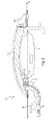
- the figure 2 schematically represents a cross-sectional view of the handle 2.
- the handle 2 is here a handle type "fridge" comprising a fixed portion forming a cap 2a and a movable portion forming a lever 2b gripping.
- the gripping lever 2b comprises at the front (in reference to the direction of the X axis) a foot-shaped element 7 extending transversely with respect to the axis X and which is adapted to cooperate with a linkage (no shown) opening / closing of the opening 1.
- the gripping lever 2b also comprises at the rear an element in the form of a crowbar 8 comprising a cavity 9 adapted to review an axis (not shown) extending substantially transversely to the formed plane comprising the X and Y axes.
- the gripping element 2b also comprises a housing 10 adapted to receive a lighting module 11 according to the invention.
- the housing 10 is here located in a portion of the gripping lever 2b located near the axis of rotation of said lever 2b. This particular arrangement allows better protection of the lighting module 11 against the weather and dust when the vehicle moves.
- the lighting module 11 is located in a portion of the gripping lever 2b near the foot-shaped element 7.
- the gripping element 2b also comprises a first opening (not visible) capable of passing the first light beam 3a emitted towards the ground and a second opening 12 capable of passing the second light beam 3b to illuminate the zone located between the gripping element 2b and the bowl 6.
- the second opening allows communication between the housing 10 on the one hand and on the other hand the space between an inner surface of the gripping element 2b and the bowl 6 .
- Power supply means 13 of the lighting module 11 open into the housing 10. Upstream of the housing 10, these supply means 13 extend into the gripping lever 2b and are connected to a connector 14. This connector 14 is also able to feed at least one sensor integrated in the gripping lever 2b, for example a proximity sensor. The connector 14 is connected to control means (not shown) for the control of the lighting module 11.
- the handle shown in figure 2 is a handle type "Fridge", of course the invention may relate to any kind of handle adapted to house a lighting module according to the invention, such as a handle type "pallet”.
- the lighting module 11 comprises a first light source S1 formed by at least a first light emitting diode.
- a light source S1 comprising two first electroluminescent diodes 15a, 15b axially offset.
- the first light source S1 emits two first beams of light substantially along the respective optical axes of the first light emitting diodes 15a, 15b towards the ground.
- Each light beam forms a cone of light whose axis of revolution is substantially coincident with the optical axis of the respective first light emitting diode.
- the use of two light emitting diodes allows the first light source to illuminate more broadly the area of the ground 4 near the vehicle.
- the lighting module 11 also comprises a second light source S2 here comprising a single second light-emitting diode 16.
- the second light source S2 emits the second light beam 3b essentially along the optical axis of the second light-emitting diode 16 to illuminate the zone 5 located between the handle lever 2b and the opening 1 of the vehicle.
- the second light source S2 thus emits the second light beam transversely to the orientation of the first light beam emitted by the first light source S1.
- each zone is illuminated by a well-defined source of light.
- the light-emitting diodes of the different sources are of the same electric power, for example five lumens.
- the bowl 6 is illuminated by a first light source of five lumens power and the floor is illuminated by a second ten lumens power light source. This ensures that the bowl 6 is not illuminated excessively while illuminating the ground sufficiently.
- the use of identical light-emitting diodes makes it possible to standardize and rationalize the manufacture of the lighting module 11.
- the number of light-emitting diodes present for each light source and their respective power are chosen according to the desired illumination of the zone 5 located between the gripping lever 2b and the bowl 6 and the zone 4 of the ground close to the vehicle.
- the first light-emitting diodes 15a, 15b and the second light-emitting diode 16 are shown mechanically and electrically connected to a printed circuit board 17 which is able to be connected to the power supply means 13 of the gripping lever 2b. More particularly, the light-emitting diodes 15a, 15b, 16 are respectively connected to the printed circuit board 17 by means of plates 18, 19. Each plate 18, 19 is of rectangular shape and is fixed to the printed circuit board 17 by gluing or clipping. Sealing means 20, 21 are provided around the plates 18, 19 to protect the light emitting diodes 15a, 15b, 16 respective water infiltration.
- the printed circuit board 17 is here arranged in a protective case 22.
- This protective case 22 delimits an internal hollow space surrounding the printed circuit board 17.
- the protective case 22 comprises coding pins 23, 24 to facilitate the mounting the printed circuit board 17 in said housing 22.
- the printed circuit board 17 is covered by a filling material 25 (called "potting" in English).
- This material The filling 25 is here in the form of a bi-component polyurethane resin which is semi-liquid when filling the housing 22 and which then hardens by chemical reaction between the components to form a compact lighting module.
- This resin is electrically insulating and also contributes to the dissipation of the heat generated by the printed circuit board 17 and the light-emitting diodes 15a, 15b, 16.
- the filling material 25 protects the printed circuit board 17 from any infiltration of light. water or dust.
- the protective case 22 as shown in Figures 3 and 4 comprises at the front on its outer wall a channel 26 of cylindrical shape whose axis is substantially coaxial with the axis of the second light-emitting diode 16.
- the channel 26 is able to penetrate into the second opening 12 of the gripping lever 2b when the lighting module is housed in said lever, for guiding the light beam emitted by the second light-emitting diode16 to the area between the handle lever 2b and the bowl 6.
- the channel 26 is made of transparent plastic and is fixed by gluing or clipping on the protective housing 22. It will be noted, with reference to the figure 4 , the particular shape of the end of the channel 26 complementary to the concave shape of the inner surface of the gripping lever 2b.
- the channel 26 has no projecting portion in the area between the handle lever 2b and the bowl 6 which avoids any inconvenience to the user when it acts on the handle lever 2b.
- the channel 26 further comprises a transparent window intended to prevent any rise of water or dust through the channel 26.
- the protective housing 22 also comprises at the rear on its outer wall clipping means 27a, 27b for fixing the lighting module 11 in the gripping lever 2b of the opening 1.
- These clipping means 27a, 27b appear on the figure 3 , in the form of two legs elastic.
- Each tab is attached to the lower level of the protective housing 22 and comprises at its end a protuberance adapted to be housed in complementary receiving means (not shown) belonging to the handle lever 2b.
- the clipping means 27a, 27b are, for example, molded integrally with the protective housing 22.
- the figure 5 represents the lighting module 11 according to the invention with a collimator 28.
- the collimator 28 guides the light rays of the beam emitted by the first electroluminescent diodes 15a, 15b.
- the collimator 28 is here formed by a body in which two conical openings have been machined. The axes of revolution of the machined cones are respectively coaxial with the axes of the first diodes 15a, 15b. In a variant of revolution, the openings of the collimator 28 have a parabolic shape.
- the openings of the collimator 28 guide the light rays emitted by the first light-emitting diodes 15a, 15b associated to two convergent lenses (not shown) belonging to the collimator 28.
- the convergent lenses are arranged transversely to the axis of the first light-emitting diodes 15a, 15b respective ones so that each first light emitting diode 15a, 15b is located in the focal plane of the associated converging lens.
- the beams of light associated with the first light-emitting diodes 15a, 15b are emitted in a direction substantially parallel to the axis of said first diodes.
- the collimator 28 is clipped to the plate 18 relative to the first light-emitting diodes 15a, 15b.
- the collimator 28 is integral with the protective housing 22 of the lighting module 11.
Landscapes
- Engineering & Computer Science (AREA)
- Mechanical Engineering (AREA)
- Arrangements Of Lighting Devices For Vehicle Interiors, Mounting And Supporting Thereof, Circuits Therefore (AREA)
- Lighting Device Outwards From Vehicle And Optical Signal (AREA)
Abstract
Description
- La présente invention est relative à un module d'éclairage destiné à appartenir à un levier de préhension d'un ouvrant, en particulier pour véhicule automobile.
- Il est connu d'éclairer le sol à proximité d'un véhicule automobile grâce à une source de lumière intégrée dans un levier de préhension d'un ouvrant de ce véhicule. Cet éclairage permet d'avertir un utilisateur de l'état de la surface sur laquelle il est susceptible de marcher lors de sa montée ou de sa descente du véhicule, par exemple en cas de présence de boue ou d'une flaque d'eau. Le document
DE 198 22 733 divulgue l'intégration d'une telle source de lumière dans le levier de préhension. Pour remplir la fonction d'éclairage du sol de manière efficace, il est nécessaire de dimensionner la source de lumière en tenant compte de la distance du sol par rapport à cette source. Or la source de lumière peut émettre des faisceaux de lumière selon plusieurs directions et éclaire alors, outre la zone du sol, une zone située entre le levier de préhension et l'ouvrant du véhicule. La source de lumière n'est pas dimensionnée pour éclairer la partie de l'ouvrant plus proche vis-à-vis de la source de lumière que la zone éclairée du sol, de sorte que la partie de l'ouvrant à proximité du levier de préhension peut être éclairée de manière excessive lors du fonctionnement de la source de lumière. En outre, la réflexion de la lumière peut former une ou plusieurs tâches de lumière irrégulières sur l'ouvrant. Ceci peut donner un aspect globalement peu esthétique au véhicule. - L'invention propose un module d'éclairage perfectionné éclairant une zone du sol à proximité du véhicule et une zone située entre le levier de préhension et l'ouvrant et qui permet de s'affranchir au moins partiellement des inconvénients précités.
- Un premier objet de l'invention concerne un module d'éclairage d'un levier de préhension d'un ouvrant de véhicule automobile, le module comprenant une première source de lumière formée par au moins une première diode électroluminescente émettant un premier faisceau de lumière orienté essentiellement suivant l'axe de ladite première diode, apte à éclairer une zone du sol située à proximité dudit véhicule ledit module comprenant en outre une seconde source de lumière formée par au moins une seconde diode électroluminescente émettant un second faisceau de lumière orienté essentiellement suivant l'axe de ladite seconde diode transversalement à l'axe de la première diode électroluminescente, apte à éclairer une zone située entre le levier de préhension et l'ouvrant, la seconde source de lumière ayant une puissance lumineuse inférieure à la première source de lumière.
- Le module d'éclairage utilise donc deux sources de lumière indépendantes ayant des directions de faisceaux adaptées à éclairer respectivement la zone du sol à proximité du véhicule et la zone située entre le levier de préhension et l'ouvrant du véhicule. Les directions des faisceaux respectifs des deux sources sont sensiblement transversales ou orthogonales entre elles, le faisceau de lumière relatif à la première source est ainsi orienté de sorte que l'éclairage du sol à proximité du véhicule ne vient pas perturber l'éclairage de la zone située entre le levier de préhension et l'ouvrant du véhicule. En outre, comme chaque zone est éclairée par une source de lumière indépendante, le dimensionnement de chaque source de lumière est fonction des caractéristiques de la zone respective à éclairer (par exemple en fonction de la distance de la source de lumière vis-à-vis de la zone à éclairer). Ainsi, l'éclairage de la zone du sol à proximité de la poignée et l'éclairage de la zone située entre le levier de préhension et l'ouvrant sont maîtrisés ce qui permet d'améliorer l'esthétique du véhicule lors du fonctionnement du module d'éclairage.
- Dans une variante de l'invention, la première source de lumière comprend deux premières diodes électroluminescentes identiques à la seconde diode électroluminescente.
- L'utilisation de diodes électroluminescentes identiques permet de standardiser et de rationaliser la fabrication du module d'éclairage.
- Dans une autre variante, le module d'éclairage comprend en outre un boîtier de protection et une carte de circuit imprimé sur laquelle sont fixées la première diode électroluminescente et la seconde diode électroluminescente, ladite carte étant agencée dans ledit boîtier de protection.
Le module d'éclairage forme alors un organe monobloc. - Dans une autre variante, la carte de circuit imprimé est recouverte par un matériau de remplissage du boîtier de protection.
Le module d'éclairage forme alors un organe compact et la carte de circuit imprimé est protégée de toute infiltration d'eau ou de poussière. - Dans une autre variante, le boîtier de protection comprend un canal dont l'axe est sensiblement coaxial à l'axe de la seconde diode électroluminescente, pour guider le faisceau de lumière émis par ladite seconde diode vers la zone située entre le levier de préhension et l'ouvrant.
- On améliore ainsi l'éclairage de la zone située entre le levier de préhension et l'ouvrant en guidant le faisceau de lumière émis par la seconde diode électroluminescente.
- Dans une autre variante, le boîtier de protection comprend un collimateur comportant une lentille convergente agencée transversalement à l'axe de la première diode électroluminescente de sorte que la première diode électroluminescente est située dans le plan focal de la lentille convergente.
- Ainsi, on améliore l'éclairage du sol en guidant le faisceau de lumière émis par la première diode électroluminescente dans une direction essentiellement parallèle à l'axe de ladite première diode. On évite également tout éclairage direct de l'ouvrant en dessous du levier de préhension par la première diode électroluminescente.
- Dans une autre variante, la carte de circuit imprimé est alimentée électriquement par des moyens d'alimentation s'étendant dans le levier de préhension et reliés à un connecteur, ledit connecteur étant apte à alimenter au moins un capteur intégré dans le levier de préhension.
- Ainsi, il est possible d'alimenter plusieurs modules électriques dans le levier de préhension à partir de moyens d'alimentation utilisant un cheminement commun dans le levier.
- Un second objet de l'invention concerne un levier de préhension d'un ouvrant de véhicule automobile comprenant un logement apte à recevoir un module d'éclairage selon le premier objet de l'invention, une première ouverture apte à laisser passer le premier faisceau de lumière émis par la première diode électroluminescente, et une seconde ouverture adaptée pour recevoir un canal appartenant au module d'éclairage, l'axe de la seconde ouverture et l'axe du canal étant sensiblement coaxiales à l'axe de la seconde diode électroluminescente.
- En variante, le levier de préhension comprend en outre des moyens de réception complémentaires à des moyens de clipsage du module d'éclairage dans le levier de préhension.
- En variante, le levier de préhension est mobile en rotation autour d'un axe parallèle à l'axe de la première diode électroluminescente et le logement de réception du module d'éclairage est dans une partie du levier de préhension située à proximité de l'axe de rotation dudit levier.
On améliore ainsi la protection du module d'éclairage contre toute agression externe, particulièrement lorsque le véhicule est en mouvement. - D'autres caractéristiques et avantages de l'invention ressortiront de la description suivante, donnée à titre d'exemple, sans caractère limitatif, en regard des dessins annexés sur lesquels :
- la
figure 1 représente une vue partielle en perspective d'une porte d'un véhicule automobile équipée d'une poignée comportant un module d'éclairage conforme à l'invention; - la
figure 2 représente schématiquement une vue de dessous en coupe transversale de la poignée de lafigure 1 comportant un module d'éclairage conforme à l'invention; - la
figure 3 représente schématiquement une vue supérieure d'un module d'éclairage conforme à l'invention; - la
figure 4 est une section du module d'éclairage par un plan vertical suivant une ligne A-A de lafigure 3 ; - la
figure 5 représente schématiquement un module d'éclairage conforme à l'invention et comportant un collimateur au niveau d'une première source de lumière. - Dans la description qui va suivre, des éléments sensiblement identiques ou similaires seront désignés par des références identiques.
- Un repère orthonormal X, Y, Z est défini, dans lequel l'axe X correspond à la direction de déplacement d'un véhicule (pour une meilleure compréhension de la description, on précise que lorsque le véhicule se déplace en marche avant, le sens de déplacement de ce véhicule est opposé au sens de la flèche associée à l'axe X de la
figure 1 ), l'axe Y est un axe traversant le véhicule de part en part et l'axe Z est un axe vertical. - La
figure 1 représente une vue partielle en perspective d'un ouvrant 1 équipé d'une poignée 2. L'ouvrant 1 appartient à un véhicule, par exemple, une automobile ou un camion. Le terme ouvrant englobe non seulement les portes permettant l'accès à l'habitable du véhicule mais également le couvercle du coffre associé audit véhicule. La poignée 2 comprend un module d'éclairage (non représenté sur cette figure). Le module d'éclairage émet un premier faisceau de lumière 3a apte à éclairer une zone du sol 4 située à proximité du véhicule. Le module d'éclairage émet également un second faisceau de lumière 3b apte à éclairer une zone 5 située entre le levier de préhension 2b et une partie de l'ouvrant communément appelée le bol 6 qui forme un creux et dans lequel la main d'un utilisateur désirant ouvrir l'ouvrant 1 peut s'engager. - La
figure 2 représente schématiquement une vue en coupe transversale de la poignée 2. La poignée 2 est ici une poignée de type « frigo » comprenant une partie fixe formant un capuchon 2a et une partie mobile formant un levier de préhension 2b. - Le levier de préhension 2b comprend à l'avant (en référence au sens de l'axe X) un élément en forme de pied 7 s'étendant transversalement par rapport à l'axe X et qui est apte à coopérer avec une tringlerie (non représentée) d'ouverture/fermeture de l'ouvrant 1. Le levier de préhension 2b comprend également à l'arrière un élément en forme de patte d'oie 8 comprenant une cavité 9 apte à revoir un axe (non représenté) s'étendant sensiblement transversalement au plan formé comprenant les axes X et Y. Lorsque l'utilisateur agit sur le levier de préhension 2b pour ouvrir l'ouvrant, celui-ci devient mobile en rotation autour de l'axe reçu par la cavité 9. L'élément en forme de pied 7 se déplace vers l'utilisateur et déclenche l'ouverture de l'ouvrant 1.
- L'élément de préhension 2b comporte également un logement 10 apte à recevoir un module d'éclairage 11 conforme à l'invention. Le logement 10 est ici situé dans une partie du levier de préhension 2b située à proximité de l'axe de rotation dudit levier 2b. Cette disposition particulière permet une meilleure protection du module d'éclairage 11 contre les intempéries et la poussière lorsque le véhicule se déplace. En variante, le module d'éclairage 11 est situé dans une partie du levier de préhension 2b à proximité de l'élément en forme de pied 7.
- L'élément de préhension 2b comprend également une première ouverture (non visible) apte à laisser passer le premier faisceau de lumière 3a émis en direction du sol et une seconde ouverture 12 apte à laisser passer le second faisceau de lumière 3b pour éclairer la zone située entre l'élément de préhension 2b et le bol 6. La seconde ouverture permet une communication entre le logement 10 d'une part et d'autre part l'espace situé entre une surface interne de l'élément de préhension 2b et le bol 6.
- Des moyens 13 d'alimentation électrique du module d'éclairage 11 débouchent dans le logement 10. En amont du logement 10, ces moyens d'alimentation 13 s'étendent dans le levier de préhension 2b et sont connectés à un connecteur 14. Ce connecteur 14 est apte à alimenter également au moins un capteur intégré dans le levier de préhension 2b, par exemple un capteur de proximité. Le connecteur 14 est relié à des moyens de commande (non représentés) pour le contrôle du module d'éclairage 11.
- La poignée représentée à la
figure 2 est une poignée de type « Frigo », bien entendu l'invention peut concerner toute sorte de poignée apte à loger un module d'éclairage conforme à l'invention, comme par exemple une poignée de type « palette ». - On va décrire maintenant un module d'éclairage conforme à l'invention à partir des
figures 3 et 4 . - Le module d'éclairage 11 comporte une première source de lumière S1 formée par au moins une première diode électroluminescente. Sur la
figure 3 , on a représenté une source de lumière S1 comportant deux premières diodes électroluminescentes 15a, 15b décalées axialement. La première source de lumière S1 émet deux premiers faisceaux de lumière essentiellement suivant les axes optiques respectifs des premières diodes électroluminescentes 15a, 15b en direction du sol. Chaque faisceau de lumière forme un cône de lumière dont l'axe de révolution est sensiblement confondu avec l'axe optique de la première diode électroluminescente respective. L'utilisation de deux diodes électroluminescentes permet à la première source de lumière d'éclairer plus largement la zone du sol 4 à proximité du véhicule. - Le module d'éclairage 11 comporte également une seconde source de lumière S2 comprenant ici une seule seconde diode électroluminescente 16. La seconde source de lumière S2 émet le second faisceau de lumière 3b essentiellement suivant l'axe optique de la seconde diode électroluminescente 16 pour éclairer la zone 5 située entre le levier de préhension 2b et l'ouvrant 1 du véhicule. La seconde source de lumière S2 émet donc le second faisceau de lumière transversalement à l'orientation du premier faisceau de lumière émis par la première source de lumière S1. Ainsi, chaque zone est éclairée par une source de lumière bien déterminée.
- Les diodes électroluminescentes des différentes sources sont de même puissance électrique, par exemple cinq lumens. Dans ce cas, le bol 6 est éclairé par une première source de lumière de puissance cinq lumens et le sol est éclairé par une seconde source de lumière de puissance dix lumens. On s'assure ainsi que le bol 6 n'est pas éclairé de manière excessive tout en éclairant suffisamment le sol. De plus, l'utilisation de diodes électroluminescentes identiques permet de standardiser et de rationaliser la fabrication du module d'éclairage 11. Bien entendu, le nombre de diodes électroluminescentes présent pour chaque source de lumière ainsi que leur puissance respective sont choisis en fonction de l'éclairage désiré de la zone 5 située entre le levier de préhension 2b et le bol 6 et de la zone 4 du sol à proximité du véhicule.
- Sur la
figure 3 , on a représenté les premières diodes électroluminescentes 15a, 15b et la seconde diode électroluminescente 16 raccordées mécaniquement et électriquement à une carte de circuit imprimé 17 qui est apte à être reliée aux moyens d'alimentation 13 du levier de préhension 2b. Plus particulièrement, les diodes électroluminescentes 15a, 15b, 16 sont raccordées respectivement à la carte de circuit imprimé 17 par l'intermédiaire de platines 18, 19. Chaque platine 18, 19 est de forme rectangulaire et est fixée à la carte de circuit imprimé 17 par collage ou clipsage. Des moyens d'étanchéités 20, 21 sont prévus autour des platines 18, 19 afin de protéger les diodes électroluminescentes 15a, 15b, 16 respectives des infiltrations d'eau. - La carte de circuit imprimé 17 est ici agencée dans un boîtier de protection 22. Ce boîtier de protection 22 délimite un espace creux interne entourant la carte de circuit imprimé 17. Le boîtier de protection 22 comprend des pions de détrompage 23, 24 pour faciliter le montage de la carte de circuit imprimé 17 dans ledit boîtier 22.
- Sur la
figure 4 , on voit que la carte de circuit imprimé 17 est recouverte par un matériau de remplissage 25 (appelé « potting » en anglais). Ce matériau de remplissage 25 se présente ici sous la forme d'une résine polyuréthane bi-composants qui est semi liquide lors du remplissage du boîtier 22 et qui se durcit ensuite par réaction chimique entre les composants, pour constituer un module d'éclairage compact. Cette résine est isolante électriquement et participe également à la dissipation de la chaleur générée par la carte de circuit imprimé 17 et par les diodes électroluminescentes 15a, 15b, 16. En outre, le matériau de remplissage 25 protège le circuit imprimé 17 de toute infiltration d'eau ou de poussière. - Le boîtier de protection 22 tel que représenté aux
figures 3 et 4 comprend à l'avant sur sa paroi externe un canal 26 de forme cylindrique dont l'axe est sensiblement coaxial à l'axe de la seconde diode électroluminescente 16. Le canal 26 est apte à pénétrer dans la seconde ouverture 12 du levier de préhension 2b lorsque le module d'éclairage est logé dans ledit levier, afin de guider le faisceau de lumière émis par la seconde diode électroluminescente16 vers la zone située entre le levier de préhension 2b et le bol 6. Le canal 26 est en matière plastique transparente et est fixé par collage ou clipsage sur le boîtier de protection 22. On notera, en référence à lafigure 4 , la forme particulière de l'extrémité du canal 26 complémentaire à la forme concave de la surface interne du levier de préhension 2b. Grâce à cet agencement, le canal 26 ne comporte pas de partie en saillie dans la zone située entre le levier de préhension 2b et le bol 6 ce qui évite toute gêne pour l'utilisateur lorsque celui-ci agit sur le levier de préhension 2b. Dans un mode particulier de réalisation, le canal 26 comporte en plus une fenêtre transparente destinée à empêcher toute remontée d'eau ou de poussière à travers le canal 26. - Le boîtier de protection 22 comprend également à l'arrière sur sa paroi externe des moyens de clipsage 27a, 27b destinés à la fixation du module d'éclairage 11 dans le levier de préhension 2b de l'ouvrant 1. Ces moyens de clipsage 27a, 27b se présentent, sur la
figure 3 , sous la forme de deux pattes élastiques. Chaque patte est rattachée au niveau inférieur du boîtier de protection 22 et comprend à son extrémité une protubérance apte à venir se loger dans des moyens de réception complémentaires (non représentés) appartenant au levier de préhension 2b. Les moyens de clipsage 27a, 27b sont par exemple venus de matière par moulage avec le boîtier de protection 22. - La
figure 5 représente le module d'éclairage 11 conforme à l'invention avec un collimateur 28. Le collimateur 28 guide les rayons de lumière du faisceau émis par les premières diodes électroluminescentes 15a, 15b. Le collimateur 28 est ici formé par un corps dans lequel ont été usinées deux ouvertures de forme conique. Les axes de révolution des cônes usinés sont respectivement coaxiaux aux axes des premières diodes 15a, 15b. Dans une variante de révolution, les ouvertures du collimateur 28 ont une forme parabolique. - Les ouvertures du collimateur 28 guident les rayons de lumière émis par les premières diodes électroluminescentes 15a, 15b associées vers deux lentilles convergentes (non représentées) appartenant au collimateur 28. Les lentilles convergentes sont agencées transversalement à l'axe des premières diodes électroluminescentes 15a, 15b respectives de sorte que chaque première diode électroluminescente 15a, 15b est située dans le plan focal de la lentille convergente associée. Ainsi, les rayons de lumière des faisceaux associés aux premières diodes électroluminescentes 15a, 15b sont émis dans une direction essentiellement parallèle à l'axe desdites premières diodes.
- Le collimateur 28 est clipsé à la platine 18 relative aux premières diodes électroluminescentes 15a, 15b.
- Dans une variante de réalisation, le collimateur 28 est venu de matière avec le boîtier de protection 22 du module d'éclairage 11.
Claims (10)
- Module d'éclairage d'un levier de préhension (2b) d'un ouvrant (1) de véhicule automobile, ledit module (11) comprenant :- une première source de lumière (S1) formée par au moins une première diode électroluminescente (15a, 15b) émettant un premier faisceau de lumière (3a) orienté essentiellement suivant l'axe de ladite première diode (15a, 15b), apte à éclairer une zone du sol (4) située à proximité dudit véhicule,caractérisé en ce que ledit module (11) comprend en outre :- une seconde source de lumière (S2) formée par au moins une seconde diode électroluminescente (16) émettant un second faisceau de lumière (3b) orienté essentiellement suivant l'axe de ladite seconde diode (16) transversalement à l'axe de la première diode électroluminescente (15a, 15b), apte à éclairer une zone (5) située entre le levier de préhension (2b) et l'ouvrant (1), la seconde source de lumière (S2) ayant une puissance lumineuse inférieure à la première source de lumière (S1).
- Module d'éclairage selon la revendication 1 dans lequel la première source de lumière (S1) comprend deux premières diodes électroluminescentes (15a, 15b) identiques à la seconde diode électroluminescente (16).
- Module d'éclairage selon la revendication 1 comprenant en outre un boîtier de protection (22) et une carte de circuit imprimé (17) sur laquelle sont fixées la première diode électroluminescente (15a, 15b) et la seconde diode électroluminescente (16), ladite carte (17) étant agencée dans ledit boîtier de protection (22).
- Module d'éclairage selon la revendication 3 dans lequel la carte de circuit imprimé (17) est recouverte par un matériau de remplissage (25) du boîtier de protection (22).
- Module d'éclairage selon la revendication 3 dans lequel le boîtier de protection (22) comprend un canal (26) dont l'axe est sensiblement coaxial à l'axe de la seconde diode électroluminescente (16), pour guider le faisceau de lumière émis par ladite seconde diode (16) vers la zone (5) située entre le levier de préhension (2b) et l'ouvrant (1).
- Module d'éclairage selon la revendication 3 dans lequel le boîtier de protection (22) comprend un collimateur (28) comportant une lentille convergente agencée transversalement à l'axe de la première diode électroluminescente (16) de sorte que la première diode électroluminescente (16) est située dans le plan focal de la lentille convergente.
- Module d'éclairage selon l'une des revendications 3 ou 4 dans lequel la carte de circuit imprimé (17) est alimentée électriquement par des moyens d'alimentation (13) s'étendant dans le levier de préhension (2b) et reliés à un connecteur (14), ledit connecteur (14) étant apte à alimenter au moins un capteur intégré dans le levier de préhension (2b).
- Levier de préhension d'un ouvrant (1) de véhicule automobile comprenant :- un logement (10) apte à recevoir un module d'éclairage (11) selon la revendication 1,- une première ouverture apte à laisser passer le premier faisceau de lumière émis par la première diode électroluminescente (16),- une seconde ouverture (12) adaptée pour recevoir un canal (26) appartenant au module d'éclairage (11), l'axe de la seconde ouverture (12) et l'axe du canal (26) étant sensiblement coaxiales à l'axe de la seconde diode électroluminescente (16).
- Levier de préhension selon la revendication précédente comprenant en outre des moyens de réception complémentaires à des moyens de clipsage (27a, 27b) du module d'éclairage (11) dans le levier de préhension.
- Levier de préhension selon la revendication 8, ledit levier (2b) étant mobile en rotation autour d'un axe parallèle à l'axe de la première diode électroluminescente (15a, 15b), le logement (10) de réception du module d'éclairage (11) étant dans une partie du levier de préhension (2b) située à proximité de l'axe de rotation dudit levier (2b).
Applications Claiming Priority (1)
| Application Number | Priority Date | Filing Date | Title |
|---|---|---|---|
| FR0805883A FR2937597B1 (fr) | 2008-10-23 | 2008-10-23 | Module d'eclairage destine a appartenir a un levier de prehension d'un ouvrant de vehicule automobile |
Publications (2)
| Publication Number | Publication Date |
|---|---|
| EP2179890A1 true EP2179890A1 (fr) | 2010-04-28 |
| EP2179890B1 EP2179890B1 (fr) | 2015-10-07 |
Family
ID=40672175
Family Applications (1)
| Application Number | Title | Priority Date | Filing Date |
|---|---|---|---|
| EP09173720.5A Active EP2179890B1 (fr) | 2008-10-23 | 2009-10-22 | Module d'identification pour véhicule automobile |
Country Status (3)
| Country | Link |
|---|---|
| EP (1) | EP2179890B1 (fr) |
| ES (1) | ES2556952T3 (fr) |
| FR (1) | FR2937597B1 (fr) |
Cited By (8)
| Publication number | Priority date | Publication date | Assignee | Title |
|---|---|---|---|---|
| EP2471688A1 (fr) * | 2010-12-30 | 2012-07-04 | Huf Hülsbeck & Fürst GmbH & Co. KG | Composant de montage extérieur pour un véhicule doté d'un module d'éclairage |
| WO2015075528A1 (fr) * | 2013-11-19 | 2015-05-28 | Koito Manufacturing Co., Ltd. | Poignée de porte éclairé |
| WO2015075531A1 (fr) * | 2013-11-19 | 2015-05-28 | Koito Manufacturing Co., Ltd. | Poignée de porte |
| WO2015150157A1 (fr) * | 2014-03-31 | 2015-10-08 | Huf Hülsbeck & Fürst Gmbh & Co. Kg | Module électronique comprenant des moyens d'éclairage pour un élément de commande |
| CN107130866A (zh) * | 2016-02-26 | 2017-09-05 | 株式会社小糸制作所 | 门把手 |
| ITUA20164029A1 (it) * | 2016-06-01 | 2017-12-01 | Comelec S R L | Complesso di illuminazione per veicoli atto a illuminare aree distinte del corpo esterno del veicolo e in prossimità di esso, e corrispondente procedimento di illuminazione attuabile da detto complesso. |
| WO2020074739A1 (fr) * | 2018-10-12 | 2020-04-16 | Compagnie Plastic Omnium | Dispositif lumineux pour pièce de carrosserie de véhicule |
| EP4726150A1 (fr) * | 2024-10-11 | 2026-04-15 | HUF Hülsbeck & Fürst GmbH & Co. KG | Poignée de porte de véhicule |
Citations (5)
| Publication number | Priority date | Publication date | Assignee | Title |
|---|---|---|---|---|
| DE19822733A1 (de) | 1998-05-20 | 1999-11-25 | Bayerische Motoren Werke Ag | Vorrichtung zur Beleuchtung des Vorfelds seitlich von einem Fahrzeug |
| US20040104815A1 (en) * | 2002-11-28 | 2004-06-03 | Kabushiki Kaisha Tokai Rika Denki Seisakusho | Vehicle light controller |
| EP1609674A1 (fr) * | 2004-06-24 | 2005-12-28 | Aisin Seiki Kabushiki Kaisha | Dispositif de fermeture/ouverture pour les portes d'un véhicule |
| DE102007016351A1 (de) * | 2007-04-03 | 2008-10-09 | Huf Hülsbeck & Fürst Gmbh & Co. Kg | Außenbetätigung für Schlösser an Türen, Klappen und dergleichen |
| WO2008120067A2 (fr) * | 2007-03-29 | 2008-10-09 | Valeo S.P.A. | Poignée de véhicule avec dispositif d'éclairage |
-
2008
- 2008-10-23 FR FR0805883A patent/FR2937597B1/fr not_active Expired - Fee Related
-
2009
- 2009-10-22 EP EP09173720.5A patent/EP2179890B1/fr active Active
- 2009-10-22 ES ES09173720.5T patent/ES2556952T3/es active Active
Patent Citations (5)
| Publication number | Priority date | Publication date | Assignee | Title |
|---|---|---|---|---|
| DE19822733A1 (de) | 1998-05-20 | 1999-11-25 | Bayerische Motoren Werke Ag | Vorrichtung zur Beleuchtung des Vorfelds seitlich von einem Fahrzeug |
| US20040104815A1 (en) * | 2002-11-28 | 2004-06-03 | Kabushiki Kaisha Tokai Rika Denki Seisakusho | Vehicle light controller |
| EP1609674A1 (fr) * | 2004-06-24 | 2005-12-28 | Aisin Seiki Kabushiki Kaisha | Dispositif de fermeture/ouverture pour les portes d'un véhicule |
| WO2008120067A2 (fr) * | 2007-03-29 | 2008-10-09 | Valeo S.P.A. | Poignée de véhicule avec dispositif d'éclairage |
| DE102007016351A1 (de) * | 2007-04-03 | 2008-10-09 | Huf Hülsbeck & Fürst Gmbh & Co. Kg | Außenbetätigung für Schlösser an Türen, Klappen und dergleichen |
Cited By (18)
| Publication number | Priority date | Publication date | Assignee | Title |
|---|---|---|---|---|
| US9809148B2 (en) * | 2010-12-30 | 2017-11-07 | Huf Hulsbeck & Furst Gmbh & Co. Kg | External light module for a vehicle |
| US20120170298A1 (en) * | 2010-12-30 | 2012-07-05 | Huf Hulsbeck & Furst Gmbh & Co. Kg | External assembly component for a vehicle having a light module |
| CN102555893A (zh) * | 2010-12-30 | 2012-07-11 | 霍弗·霍斯贝克及弗斯特两合公司 | 具有发光模块的用于车辆的外置安装部件 |
| CN108189748B (zh) * | 2010-12-30 | 2021-09-24 | 霍弗·霍斯贝克及弗斯特两合公司 | 具有发光模块的用于车辆的外置安装部件 |
| EP2471688A1 (fr) * | 2010-12-30 | 2012-07-04 | Huf Hülsbeck & Fürst GmbH & Co. KG | Composant de montage extérieur pour un véhicule doté d'un module d'éclairage |
| CN108189748A (zh) * | 2010-12-30 | 2018-06-22 | 霍弗·霍斯贝克及弗斯特两合公司 | 具有发光模块的用于车辆的外置安装部件 |
| CN107963010A (zh) * | 2010-12-30 | 2018-04-27 | 霍弗·霍斯贝克及弗斯特两合公司 | 具有发光模块的用于车辆的外置安装部件 |
| WO2015075531A1 (fr) * | 2013-11-19 | 2015-05-28 | Koito Manufacturing Co., Ltd. | Poignée de porte |
| US9764684B2 (en) | 2013-11-19 | 2017-09-19 | Koito Manufacturing Co., Ltd. | Door handle with light unit |
| CN105765146B (zh) * | 2013-11-19 | 2017-12-22 | 株式会社小糸制作所 | 门把手 |
| CN105765146A (zh) * | 2013-11-19 | 2016-07-13 | 株式会社小糸制作所 | 门把手 |
| WO2015075528A1 (fr) * | 2013-11-19 | 2015-05-28 | Koito Manufacturing Co., Ltd. | Poignée de porte éclairé |
| WO2015150157A1 (fr) * | 2014-03-31 | 2015-10-08 | Huf Hülsbeck & Fürst Gmbh & Co. Kg | Module électronique comprenant des moyens d'éclairage pour un élément de commande |
| CN107130866A (zh) * | 2016-02-26 | 2017-09-05 | 株式会社小糸制作所 | 门把手 |
| ITUA20164029A1 (it) * | 2016-06-01 | 2017-12-01 | Comelec S R L | Complesso di illuminazione per veicoli atto a illuminare aree distinte del corpo esterno del veicolo e in prossimità di esso, e corrispondente procedimento di illuminazione attuabile da detto complesso. |
| WO2020074739A1 (fr) * | 2018-10-12 | 2020-04-16 | Compagnie Plastic Omnium | Dispositif lumineux pour pièce de carrosserie de véhicule |
| FR3087247A1 (fr) * | 2018-10-12 | 2020-04-17 | Compagnie Plastic Omnium | Dispositif lumineux pour piece de carrosserie de vehicule |
| EP4726150A1 (fr) * | 2024-10-11 | 2026-04-15 | HUF Hülsbeck & Fürst GmbH & Co. KG | Poignée de porte de véhicule |
Also Published As
| Publication number | Publication date |
|---|---|
| ES2556952T3 (es) | 2016-01-21 |
| FR2937597B1 (fr) | 2011-07-15 |
| EP2179890B1 (fr) | 2015-10-07 |
| FR2937597A1 (fr) | 2010-04-30 |
Similar Documents
| Publication | Publication Date | Title |
|---|---|---|
| EP2179890B1 (fr) | Module d'identification pour véhicule automobile | |
| EP1234752B1 (fr) | Encadrement de vitre d'habitacle de véhicule automobile et ouvrant comportant un tel encadrement | |
| EP4065882B1 (fr) | Module lumineux d'un véhicule automobile équipé d'un élément optique | |
| EP2775197B1 (fr) | Dispositif d'éclairage et/ou de signalisation pour véhicule automobile, comportant un guide de lumière | |
| WO1998048370A1 (fr) | Dispositif optoelectronique d'acquisition d'images, notamment de codes a barres | |
| EP3436741B1 (fr) | Dispositif d'eclairage comportant un boitier dote d'un fut de reception pour un tronçon cylindrique d'un guide de lumiere | |
| EP2940375A1 (fr) | Dispositif d'atténuation de perturbations électromagnétiques, et module lumineux de véhicule automobile équipé d'un tel dispositif | |
| FR3025866A1 (fr) | Support de source lumineuse avec connecteur integre | |
| FR3106651A1 (fr) | Guide de lumière plat pour module lumineux de signalisation de véhicule automobile | |
| FR2994548A1 (fr) | Structure de feux pour vehicule automobile | |
| EP1975348A1 (fr) | Poignée éclairante pour véhicule automobile | |
| EP1839946A1 (fr) | Dispositif d'éclairage pour allume-cigare ou prise électrique multi-fonction | |
| EP4250322A1 (fr) | Voyant lumineux pour appareillage électrique et appareillage de commutation associé | |
| WO2001056831A1 (fr) | Agencement de signalisation pour circuit d'immobilisation de vehicule, notamment automobile | |
| EP1727170A1 (fr) | Appareillage électrique comprenant une plaque enjoliveur à fonction lumineuse | |
| FR3043608A1 (fr) | Dispositif de signalisation et d’eclairage lumineux pour un vehicule | |
| EP3254017B1 (fr) | Dispositif réflecteur d'un module lumineux avec blindage électromagnétique | |
| FR2933167A1 (fr) | Dispositif d'eclairement de l'environnement d'un vehicule automobile | |
| FR2966971A1 (fr) | Appareillage electrique a fonction lumineuse. | |
| FR3087169A1 (fr) | Ensemble pour vehicule automobile comprenant un tissu eclairant | |
| FR3088869A1 (fr) | Dispositif de pré-positionnement et de maintien d’un élément sur un boitier | |
| FR2764852A1 (fr) | Agencement pour feu de signalisation supplementaire de vehicule automobile | |
| FR3103777A3 (fr) | Dispositif d’éclairage avec source de lumière | |
| FR2929197A1 (fr) | Dispositif d'eclairage d'un element dispose sur la face arriere d'un vehicule automobile | |
| FR3076780A1 (fr) | Seuil de coffre lumineux |
Legal Events
| Date | Code | Title | Description |
|---|---|---|---|
| PUAI | Public reference made under article 153(3) epc to a published international application that has entered the european phase |
Free format text: ORIGINAL CODE: 0009012 |
|
| AK | Designated contracting states |
Kind code of ref document: A1 Designated state(s): AT BE BG CH CY CZ DE DK EE ES FI FR GB GR HR HU IE IS IT LI LT LU LV MC MK MT NL NO PL PT RO SE SI SK SM TR |
|
| 17P | Request for examination filed |
Effective date: 20101028 |
|
| 17Q | First examination report despatched |
Effective date: 20101124 |
|
| RAP1 | Party data changed (applicant data changed or rights of an application transferred) |
Owner name: VALEO S.P.A. Owner name: VALEO SECURITE HABITACLE |
|
| GRAP | Despatch of communication of intention to grant a patent |
Free format text: ORIGINAL CODE: EPIDOSNIGR1 |
|
| INTG | Intention to grant announced |
Effective date: 20150219 |
|
| GRAP | Despatch of communication of intention to grant a patent |
Free format text: ORIGINAL CODE: EPIDOSNIGR1 |
|
| INTG | Intention to grant announced |
Effective date: 20150629 |
|
| RIN1 | Information on inventor provided before grant (corrected) |
Inventor name: AUBRY, ANTHONY Inventor name: SAVANT, MARCO Inventor name: SAVANT, FIORENZO |
|
| GRAS | Grant fee paid |
Free format text: ORIGINAL CODE: EPIDOSNIGR3 |
|
| GRAA | (expected) grant |
Free format text: ORIGINAL CODE: 0009210 |
|
| AK | Designated contracting states |
Kind code of ref document: B1 Designated state(s): AT BE BG CH CY CZ DE DK EE ES FI FR GB GR HR HU IE IS IT LI LT LU LV MC MK MT NL NO PL PT RO SE SI SK SM TR |
|
| REG | Reference to a national code |
Ref country code: GB Ref legal event code: FG4D Free format text: NOT ENGLISH |
|
| REG | Reference to a national code |
Ref country code: AT Ref legal event code: REF Ref document number: 753532 Country of ref document: AT Kind code of ref document: T Effective date: 20151015 Ref country code: CH Ref legal event code: EP |
|
| REG | Reference to a national code |
Ref country code: FR Ref legal event code: PLFP Year of fee payment: 7 |
|
| REG | Reference to a national code |
Ref country code: IE Ref legal event code: FG4D Free format text: LANGUAGE OF EP DOCUMENT: FRENCH |
|
| RIN2 | Information on inventor provided after grant (corrected) |
Inventor name: SAVANT, FIORENZO Inventor name: FORNENGO, DANIELE Inventor name: AUBRY, ANTHONY Inventor name: SAVANT, MARCO |
|
| REG | Reference to a national code |
Ref country code: DE Ref legal event code: R096 Ref document number: 602009034006 Country of ref document: DE |
|
| REG | Reference to a national code |
Ref country code: ES Ref legal event code: FG2A Ref document number: 2556952 Country of ref document: ES Kind code of ref document: T3 Effective date: 20160121 |
|
| REG | Reference to a national code |
Ref country code: NL Ref legal event code: MP Effective date: 20151007 |
|
| REG | Reference to a national code |
Ref country code: AT Ref legal event code: MK05 Ref document number: 753532 Country of ref document: AT Kind code of ref document: T Effective date: 20151007 |
|
| REG | Reference to a national code |
Ref country code: LT Ref legal event code: MG4D |
|
| PG25 | Lapsed in a contracting state [announced via postgrant information from national office to epo] |
Ref country code: NL Free format text: LAPSE BECAUSE OF FAILURE TO SUBMIT A TRANSLATION OF THE DESCRIPTION OR TO PAY THE FEE WITHIN THE PRESCRIBED TIME-LIMIT Effective date: 20151007 Ref country code: HR Free format text: LAPSE BECAUSE OF FAILURE TO SUBMIT A TRANSLATION OF THE DESCRIPTION OR TO PAY THE FEE WITHIN THE PRESCRIBED TIME-LIMIT Effective date: 20151007 Ref country code: LT Free format text: LAPSE BECAUSE OF FAILURE TO SUBMIT A TRANSLATION OF THE DESCRIPTION OR TO PAY THE FEE WITHIN THE PRESCRIBED TIME-LIMIT Effective date: 20151007 Ref country code: IS Free format text: LAPSE BECAUSE OF FAILURE TO SUBMIT A TRANSLATION OF THE DESCRIPTION OR TO PAY THE FEE WITHIN THE PRESCRIBED TIME-LIMIT Effective date: 20160207 Ref country code: NO Free format text: LAPSE BECAUSE OF FAILURE TO SUBMIT A TRANSLATION OF THE DESCRIPTION OR TO PAY THE FEE WITHIN THE PRESCRIBED TIME-LIMIT Effective date: 20160107 |
|
| PG25 | Lapsed in a contracting state [announced via postgrant information from national office to epo] |
Ref country code: FI Free format text: LAPSE BECAUSE OF FAILURE TO SUBMIT A TRANSLATION OF THE DESCRIPTION OR TO PAY THE FEE WITHIN THE PRESCRIBED TIME-LIMIT Effective date: 20151007 Ref country code: PT Free format text: LAPSE BECAUSE OF FAILURE TO SUBMIT A TRANSLATION OF THE DESCRIPTION OR TO PAY THE FEE WITHIN THE PRESCRIBED TIME-LIMIT Effective date: 20160208 Ref country code: PL Free format text: LAPSE BECAUSE OF FAILURE TO SUBMIT A TRANSLATION OF THE DESCRIPTION OR TO PAY THE FEE WITHIN THE PRESCRIBED TIME-LIMIT Effective date: 20151007 Ref country code: SE Free format text: LAPSE BECAUSE OF FAILURE TO SUBMIT A TRANSLATION OF THE DESCRIPTION OR TO PAY THE FEE WITHIN THE PRESCRIBED TIME-LIMIT Effective date: 20151007 Ref country code: AT Free format text: LAPSE BECAUSE OF FAILURE TO SUBMIT A TRANSLATION OF THE DESCRIPTION OR TO PAY THE FEE WITHIN THE PRESCRIBED TIME-LIMIT Effective date: 20151007 Ref country code: GR Free format text: LAPSE BECAUSE OF FAILURE TO SUBMIT A TRANSLATION OF THE DESCRIPTION OR TO PAY THE FEE WITHIN THE PRESCRIBED TIME-LIMIT Effective date: 20160108 Ref country code: LV Free format text: LAPSE BECAUSE OF FAILURE TO SUBMIT A TRANSLATION OF THE DESCRIPTION OR TO PAY THE FEE WITHIN THE PRESCRIBED TIME-LIMIT Effective date: 20151007 |
|
| REG | Reference to a national code |
Ref country code: CH Ref legal event code: PL |
|
| REG | Reference to a national code |
Ref country code: DE Ref legal event code: R097 Ref document number: 602009034006 Country of ref document: DE |
|
| REG | Reference to a national code |
Ref country code: IE Ref legal event code: MM4A |
|
| PG25 | Lapsed in a contracting state [announced via postgrant information from national office to epo] |
Ref country code: LI Free format text: LAPSE BECAUSE OF NON-PAYMENT OF DUE FEES Effective date: 20151031 Ref country code: CZ Free format text: LAPSE BECAUSE OF FAILURE TO SUBMIT A TRANSLATION OF THE DESCRIPTION OR TO PAY THE FEE WITHIN THE PRESCRIBED TIME-LIMIT Effective date: 20151007 Ref country code: MC Free format text: LAPSE BECAUSE OF FAILURE TO SUBMIT A TRANSLATION OF THE DESCRIPTION OR TO PAY THE FEE WITHIN THE PRESCRIBED TIME-LIMIT Effective date: 20151007 Ref country code: CH Free format text: LAPSE BECAUSE OF NON-PAYMENT OF DUE FEES Effective date: 20151031 |
|
| PLBE | No opposition filed within time limit |
Free format text: ORIGINAL CODE: 0009261 |
|
| STAA | Information on the status of an ep patent application or granted ep patent |
Free format text: STATUS: NO OPPOSITION FILED WITHIN TIME LIMIT |
|
| PG25 | Lapsed in a contracting state [announced via postgrant information from national office to epo] |
Ref country code: SM Free format text: LAPSE BECAUSE OF FAILURE TO SUBMIT A TRANSLATION OF THE DESCRIPTION OR TO PAY THE FEE WITHIN THE PRESCRIBED TIME-LIMIT Effective date: 20151007 Ref country code: EE Free format text: LAPSE BECAUSE OF FAILURE TO SUBMIT A TRANSLATION OF THE DESCRIPTION OR TO PAY THE FEE WITHIN THE PRESCRIBED TIME-LIMIT Effective date: 20151007 Ref country code: RO Free format text: LAPSE BECAUSE OF FAILURE TO SUBMIT A TRANSLATION OF THE DESCRIPTION OR TO PAY THE FEE WITHIN THE PRESCRIBED TIME-LIMIT Effective date: 20151007 Ref country code: DK Free format text: LAPSE BECAUSE OF FAILURE TO SUBMIT A TRANSLATION OF THE DESCRIPTION OR TO PAY THE FEE WITHIN THE PRESCRIBED TIME-LIMIT Effective date: 20151007 Ref country code: SK Free format text: LAPSE BECAUSE OF FAILURE TO SUBMIT A TRANSLATION OF THE DESCRIPTION OR TO PAY THE FEE WITHIN THE PRESCRIBED TIME-LIMIT Effective date: 20151007 |
|
| 26N | No opposition filed |
Effective date: 20160708 |
|
| REG | Reference to a national code |
Ref country code: FR Ref legal event code: PLFP Year of fee payment: 8 |
|
| PG25 | Lapsed in a contracting state [announced via postgrant information from national office to epo] |
Ref country code: IE Free format text: LAPSE BECAUSE OF NON-PAYMENT OF DUE FEES Effective date: 20151022 |
|
| PG25 | Lapsed in a contracting state [announced via postgrant information from national office to epo] |
Ref country code: SI Free format text: LAPSE BECAUSE OF FAILURE TO SUBMIT A TRANSLATION OF THE DESCRIPTION OR TO PAY THE FEE WITHIN THE PRESCRIBED TIME-LIMIT Effective date: 20151007 |
|
| PG25 | Lapsed in a contracting state [announced via postgrant information from national office to epo] |
Ref country code: BG Free format text: LAPSE BECAUSE OF FAILURE TO SUBMIT A TRANSLATION OF THE DESCRIPTION OR TO PAY THE FEE WITHIN THE PRESCRIBED TIME-LIMIT Effective date: 20151007 Ref country code: HU Free format text: LAPSE BECAUSE OF FAILURE TO SUBMIT A TRANSLATION OF THE DESCRIPTION OR TO PAY THE FEE WITHIN THE PRESCRIBED TIME-LIMIT; INVALID AB INITIO Effective date: 20091022 |
|
| PG25 | Lapsed in a contracting state [announced via postgrant information from national office to epo] |
Ref country code: CY Free format text: LAPSE BECAUSE OF FAILURE TO SUBMIT A TRANSLATION OF THE DESCRIPTION OR TO PAY THE FEE WITHIN THE PRESCRIBED TIME-LIMIT Effective date: 20151007 |
|
| PG25 | Lapsed in a contracting state [announced via postgrant information from national office to epo] |
Ref country code: BE Free format text: LAPSE BECAUSE OF NON-PAYMENT OF DUE FEES Effective date: 20151031 |
|
| PG25 | Lapsed in a contracting state [announced via postgrant information from national office to epo] |
Ref country code: MT Free format text: LAPSE BECAUSE OF FAILURE TO SUBMIT A TRANSLATION OF THE DESCRIPTION OR TO PAY THE FEE WITHIN THE PRESCRIBED TIME-LIMIT Effective date: 20151007 Ref country code: TR Free format text: LAPSE BECAUSE OF FAILURE TO SUBMIT A TRANSLATION OF THE DESCRIPTION OR TO PAY THE FEE WITHIN THE PRESCRIBED TIME-LIMIT Effective date: 20151007 |
|
| REG | Reference to a national code |
Ref country code: FR Ref legal event code: PLFP Year of fee payment: 9 |
|
| PG25 | Lapsed in a contracting state [announced via postgrant information from national office to epo] |
Ref country code: LU Free format text: LAPSE BECAUSE OF NON-PAYMENT OF DUE FEES Effective date: 20151022 |
|
| PG25 | Lapsed in a contracting state [announced via postgrant information from national office to epo] |
Ref country code: MK Free format text: LAPSE BECAUSE OF FAILURE TO SUBMIT A TRANSLATION OF THE DESCRIPTION OR TO PAY THE FEE WITHIN THE PRESCRIBED TIME-LIMIT Effective date: 20151007 |
|
| REG | Reference to a national code |
Ref country code: FR Ref legal event code: PLFP Year of fee payment: 10 |
|
| REG | Reference to a national code |
Ref country code: ES Ref legal event code: PC2A Owner name: U-SHIN ITALIA S.P.A. Effective date: 20190508 |
|
| REG | Reference to a national code |
Ref country code: GB Ref legal event code: 732E Free format text: REGISTERED BETWEEN 20190516 AND 20190522 |
|
| REG | Reference to a national code |
Ref country code: DE Ref legal event code: R081 Ref document number: 602009034006 Country of ref document: DE Owner name: VALEO S.P.A., SANTENA, IT Free format text: FORMER OWNERS: VALEO S.P.A., SANTENA, TORINO, IT; VALEO SECURITE HABITACLE, CRETEIL, FR Ref country code: DE Ref legal event code: R081 Ref document number: 602009034006 Country of ref document: DE Owner name: U-SHIN FRANCE SAS, FR Free format text: FORMER OWNERS: VALEO S.P.A., SANTENA, TORINO, IT; VALEO SECURITE HABITACLE, CRETEIL, FR |
|
| PGFP | Annual fee paid to national office [announced via postgrant information from national office to epo] |
Ref country code: GB Payment date: 20241028 Year of fee payment: 16 |
|
| REG | Reference to a national code |
Ref country code: DE Ref legal event code: R082 Ref document number: 602009034006 Country of ref document: DE Representative=s name: DENNEMEYER & ASSOCIATES RECHTSANWALTSGESELLSCH, DE |
|
| PGFP | Annual fee paid to national office [announced via postgrant information from national office to epo] |
Ref country code: DE Payment date: 20251015 Year of fee payment: 17 |
|
| PGFP | Annual fee paid to national office [announced via postgrant information from national office to epo] |
Ref country code: IT Payment date: 20251008 Year of fee payment: 17 |
|
| PGFP | Annual fee paid to national office [announced via postgrant information from national office to epo] |
Ref country code: FR Payment date: 20251027 Year of fee payment: 17 |
|
| PGFP | Annual fee paid to national office [announced via postgrant information from national office to epo] |
Ref country code: ES Payment date: 20251110 Year of fee payment: 17 |