EP2173895B1 - Increasing grain yield through targeted reduction in ethylene signaling - Google Patents
Increasing grain yield through targeted reduction in ethylene signaling Download PDFInfo
- Publication number
- EP2173895B1 EP2173895B1 EP08796303A EP08796303A EP2173895B1 EP 2173895 B1 EP2173895 B1 EP 2173895B1 EP 08796303 A EP08796303 A EP 08796303A EP 08796303 A EP08796303 A EP 08796303A EP 2173895 B1 EP2173895 B1 EP 2173895B1
- Authority
- EP
- European Patent Office
- Prior art keywords
- plant
- ethylene
- sequence
- promoter
- seq
- Prior art date
- Legal status (The legal status is an assumption and is not a legal conclusion. Google has not performed a legal analysis and makes no representation as to the accuracy of the status listed.)
- Active
Links
Images
Classifications
-
- C—CHEMISTRY; METALLURGY
- C12—BIOCHEMISTRY; BEER; SPIRITS; WINE; VINEGAR; MICROBIOLOGY; ENZYMOLOGY; MUTATION OR GENETIC ENGINEERING
- C12N—MICROORGANISMS OR ENZYMES; COMPOSITIONS THEREOF; PROPAGATING, PRESERVING, OR MAINTAINING MICROORGANISMS; MUTATION OR GENETIC ENGINEERING; CULTURE MEDIA
- C12N15/00—Mutation or genetic engineering; DNA or RNA concerning genetic engineering, vectors, e.g. plasmids, or their isolation, preparation or purification; Use of hosts therefor
- C12N15/09—Recombinant DNA-technology
- C12N15/63—Introduction of foreign genetic material using vectors; Vectors; Use of hosts therefor; Regulation of expression
- C12N15/79—Vectors or expression systems specially adapted for eukaryotic hosts
- C12N15/82—Vectors or expression systems specially adapted for eukaryotic hosts for plant cells, e.g. plant artificial chromosomes (PACs)
- C12N15/8241—Phenotypically and genetically modified plants via recombinant DNA technology
- C12N15/8242—Phenotypically and genetically modified plants via recombinant DNA technology with non-agronomic quality (output) traits, e.g. for industrial processing; Value added, non-agronomic traits
- C12N15/8243—Phenotypically and genetically modified plants via recombinant DNA technology with non-agronomic quality (output) traits, e.g. for industrial processing; Value added, non-agronomic traits involving biosynthetic or metabolic pathways, i.e. metabolic engineering, e.g. nicotine, caffeine
- C12N15/8249—Phenotypically and genetically modified plants via recombinant DNA technology with non-agronomic quality (output) traits, e.g. for industrial processing; Value added, non-agronomic traits involving biosynthetic or metabolic pathways, i.e. metabolic engineering, e.g. nicotine, caffeine involving ethylene biosynthesis, senescence or fruit development, e.g. modified tomato ripening, cut flower shelf-life
-
- C—CHEMISTRY; METALLURGY
- C07—ORGANIC CHEMISTRY
- C07K—PEPTIDES
- C07K14/00—Peptides having more than 20 amino acids; Gastrins; Somatostatins; Melanotropins; Derivatives thereof
- C07K14/415—Peptides having more than 20 amino acids; Gastrins; Somatostatins; Melanotropins; Derivatives thereof from plants
-
- C—CHEMISTRY; METALLURGY
- C12—BIOCHEMISTRY; BEER; SPIRITS; WINE; VINEGAR; MICROBIOLOGY; ENZYMOLOGY; MUTATION OR GENETIC ENGINEERING
- C12N—MICROORGANISMS OR ENZYMES; COMPOSITIONS THEREOF; PROPAGATING, PRESERVING, OR MAINTAINING MICROORGANISMS; MUTATION OR GENETIC ENGINEERING; CULTURE MEDIA
- C12N15/00—Mutation or genetic engineering; DNA or RNA concerning genetic engineering, vectors, e.g. plasmids, or their isolation, preparation or purification; Use of hosts therefor
- C12N15/09—Recombinant DNA-technology
- C12N15/63—Introduction of foreign genetic material using vectors; Vectors; Use of hosts therefor; Regulation of expression
- C12N15/79—Vectors or expression systems specially adapted for eukaryotic hosts
- C12N15/82—Vectors or expression systems specially adapted for eukaryotic hosts for plant cells, e.g. plant artificial chromosomes (PACs)
- C12N15/8241—Phenotypically and genetically modified plants via recombinant DNA technology
- C12N15/8261—Phenotypically and genetically modified plants via recombinant DNA technology with agronomic (input) traits, e.g. crop yield
-
- Y—GENERAL TAGGING OF NEW TECHNOLOGICAL DEVELOPMENTS; GENERAL TAGGING OF CROSS-SECTIONAL TECHNOLOGIES SPANNING OVER SEVERAL SECTIONS OF THE IPC; TECHNICAL SUBJECTS COVERED BY FORMER USPC CROSS-REFERENCE ART COLLECTIONS [XRACs] AND DIGESTS
- Y02—TECHNOLOGIES OR APPLICATIONS FOR MITIGATION OR ADAPTATION AGAINST CLIMATE CHANGE
- Y02A—TECHNOLOGIES FOR ADAPTATION TO CLIMATE CHANGE
- Y02A40/00—Adaptation technologies in agriculture, forestry, livestock or agroalimentary production
- Y02A40/10—Adaptation technologies in agriculture, forestry, livestock or agroalimentary production in agriculture
- Y02A40/146—Genetically Modified [GMO] plants, e.g. transgenic plants
Definitions
- Ethylene is known to be a regulator of programmed cell death (PCD) during plant development ( Campbell and Drew, Planta 157:350-357 (1983 ); Drew et al., Planta 147:83-88 (1979 ); He et al., Plant Physiol. 112:1679-1685 (1996 )) and plays a role in orchestrating PCD in developing cereal endosperm: exogenous ethylene can accelerate the onset of the cell death program in developing endosperm whereas inhibitors of ethylene biosynthesis or perception delay the program ( Young et al., Plant Physiol. 119:737-751 (1997 ); Young and Gallie, Plant Mol. Biol. 39:915-926 (1999 ); Young and Gallie, Plant Mol. Biol. 42:397-414 (2000 )). Ethylene controls many aspects of plant growth and development such as fruit development, root and leaf growth and seed germination.
- PCD programmed cell death
- Ethylene perception involves membrane-localized receptors that, in Arabidopsis, include ETR1, ERS1, ETR2, ERS2 and EIN4 ( Chang et al., Science 262:539-544 (1993 ); Hua et al., Science 269:1712-1714 (1995 ), Hua et al., Plant Cell 10:1321-1332 (1998 ), Sakai et al., Proc. Natl. Acad Sci. USA 95:5812-5817 (1998 )).
- EBI Accession No. UNIPROT: Q6JN51 discloses the amino acid sequence of ERS25 from Zea Mays (Maize).
- ETR1, ETR2 and EIN4 are composed of three domains, an N-terminal transmembrane ethylene binding domain ( Schaller and Bleeker, Science 270:1809-1811 (1995 )), a histidine protein kinase domain, and a C-terminal receiver domain.
- ERS1 and ERS2 lack the receiver domain. These genes have been grouped into two subfamilies based on homology, where ETR1 and ERS1 comprise one subfamily and ETR2, ERS2, and EIN4 comprise the other ( Hua et al., Plant Cell 10:1321-1332 (1998 )).
- ETR1 N terminus Receptor signal output mediated by the ETR1 N terminus is primarily subfamily I receptor dependent ( Xie et al., Plant Physiology, 2006; 492-508 ).
- ETR1 and ERS1 both contain a functional histidine kinase domain and autophosphorylate histidine residues, whereas other family members lack particular residues required for histidine kinase activity.
- ETR2, ERS2, and EIN4 are capable of autophosphorylation on serine and threonine residues ( Moussatche and Klee (2004), J. Biol Chem., 279:48734 ).
- ZmETR2 Only two ethylene receptor genes have been identified in maize (i.e ., ZmETR2 and ZmERS1) in contrast to the five types identified in Arabidopsis ( Gallie and Young (2004) Mol Genet Genomics 271: 267-281 ).
- ZmETR2 has two variants, named ZmETR9 and ZmETR40.
- Members of both ethylene receptor families are expressed to substantially higher levels in the developing embryo relative to the endosperm. This explains why, despite the fact that the endosperm and embryo each contribute to the synthesis of ethylene, the developing endosperm exhibits a low threshold to ethylene-induced cell death while the embryo is protected.
- the endosperm of cereals serves as the major storage organ for grain but undergoes cell death during mid to late seed development. Ethylene regulates the timing of the onset of cell death in the developing endosperm. Because ethylene is a gas that can pass freely through membranes, all organs of the developing kernel might be expected to be exposed to ethylene generated by a specific organ and diluted only by their distance from the generating source. The ability to limit cell death to specific organs within the developing kernel suggests tight control of the expression of the ethylene biosynthetic and perception machinery.
- the present invention provides compositions and methods to affect the ethylene signal transduction pathway in plants.
- the invention provides an isolated polynucleotide encoding a non-ethylene binding ethylene receptor polypeptide, wherein (a) the non-ethylene binding ethylene receptor polypeptide comprises a sequence at least 95% identical to the sequence of SEQ ID NO: 6, wherein the amino acid at position 102 is not a cysteine; and (b) expression of the non-ethylene binding ethylene receptor polypeptide results in a staygreen phenotype in a plant.
- the invention includes a polynucleotide sequence of the invention wherein the polynucleotide comprises SEQ ID NO:5.
- the polynucleotides of the invention include sequences having at least 95%, and more typically at least 99%, or 100% identity to SEQ ID NO:5.
- the isolated nucleic acid encodes a polypeptide with at least 95%, more typically 99%, or 100% identity to SEQ ID NO:6, wherein amino acid 102 is not a cysteine.
- amino acid 102 of SEQ ID NO:6 is a tyrosine.
- an isolated nucleic acid which can encode a dominant negative ethylene receptor polypeptide, for example, a dominant negative ZmERS1, ZmETR9, or ZmETR40 (represented by SEQ ID NOs:2, 4 and 6, respectively).
- amino acid 65 of SEQ ID NO:2 is a tyrosine.
- amino acid 102 of SEQ ID NO:4 is a tyrosine.
- nucleic acids which encode truncation mutants of ZmERS1 and ZmETR2 (for example, comprising amino acids 1-110 of SEQ ID NO:2 or amino acids 1-147 SEQ ID NOs:4 and 6).
- the truncation mutant may be slightly longer, e.g., 1-150, 1-200, 1-250, 1-300, I-325, or 1-350 of SEQ ID NO:2 or amino acids 1-200, 1-250, 1-300, 1-350, or 1-375 of SEQ ID NO:4 or 6.
- the invention provides a recombinant expression cassette comprising a promoter sequence operably linked to a polynucleotide of the invention.
- the recombinant expression cassette of the invention includes nucleic acid sequences having at least 95%, and more typically at least 99%, or 100% identity to SEQ ID NO:5.
- the invention provides for a transgenic plant comprising the expression cassette of the invention, wherein the plant has a staygreen phenotype.
- the nucleic acid sequence is at least 95%, and more typically at least 99%, or 100% identical to SEQ ID NO:5.
- the transgenic plant is a cereal plant, such as wheat, rice, barley, rye, millet, sorghum, or oat. In some embodiments, the transgenic plant is maize.
- the invention provides a method of reducing ethylene sensitivity in a plant comprising the steps of (a) introducing an expression cassette comprising the isolated polynucleotide of the invention operably linked to a promoter and (b) selecting a plant with reduced ethylene sensitivity.
- the nucleic acid sequences are at least 95%, and more typically at least 99%, or 100% identical to SEQ ID NO:5.
- the invention provides a method of producing a staygreen phenotype in a plant.
- the method comprises the steps of (a) introducing an expression cassette comprising the isolated polynucleotide of the invention operably linked to a promoter and (b) selecting a plant with staygreen characteristics.
- the nucleic acid sequence is at least 95%, and more typically at least 99%, or 100% identical to SEQ ID NO:5.
- the plant is selected for delayed senescence, increased photosynthetic capacity or for multiple embryos in a single seed.
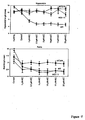
- Figure 1 Quantitation of the ethylene insensitivity conferred by the expression of mutant ZmERS1 or ZmETR2 in Arabidopsis over a range of ACC concentrations. Seeds expressing mutant ZmERS1 (MS1-11) or ZmETR2 (MT2-9) were germinated on ACC at the concentrations indicated and grown in the dark for 5 days. Wild type seeds (WT) were included as a control.
- the present invention provides new methods of delaying senescence in a maize plant by inhibiting ethylene responses in the plant.
- the delay in senescence can be achieved by mutation of ethylene receptor proteins, as well as overexpression of wild-type or mutant ethylene receptor proteins.
- the present invention also provides methods for selecting for a cereal plant with a delayed senescence pattern or characteristic.
- a delayed senescence pattern will result in a cereal plant with an altered phenotype as compared to a wild type plant.
- An altered phenotype includes, but is not limited to, staygreen traits, e.g., leaves that remain green late in the growing season, increased photosynthetic capacity, improved drought tolerance, improved silage, increased grain yield, and increased tolerance to planting at higher densities, and kernels with multiple embryos. Accordingly, a plant with increased biomass and/or yield can be identified by inhibiting ethylene response, through the production of mutated ethylene receptor proteins alone or in combination with other methods.
- nucleic acid or “polynucleotide sequence” refers to a single or doublestranded polymer of deoxyribonucleotide or ribonucleotide bases read from the 5' to the 3' end. Nucleic acids may also include modified nucleotides that permit correct read through by a polymerase and do not alter the expression of a polypeptide encoded by that nucleic acid.
- nucleic acid sequence encoding refers to a nucleic acid which directs the expression of a specific protein or peptide.
- the nucleic acid sequences include both the DNA strand sequence that is transcribed into RNA and the RNA sequence that is translated into protein.
- the nucleic acid sequences include both the full length nucleic acid sequences as well as non-full length sequences derived from the full length sequences. It should be further understood that the sequence includes the degenerate codons of the native sequence or sequences which may be introduced to provide codon preference in a specific host cell.
- promoter refers to a region or sequence determinants located upstream or downstream from the start of transcription and which are involved in recognition and binding of RNA polymerase and other proteins to initiate transcription.
- a "plant promoter” is a promoter capable of initiating transcription in plant cells. Such promoters need not be of plant origin, for example, promoters derived from plant viruses, such as the CaMV35S promoter, can be used in the present invention.
- plant includes whole plants, shoot vegetative organs/structures (e.g. leaves, stems and tubers), roots, flowers and floral organs/structures ( e.g . bracts, sepals, petals, stamens, carpels, anthers and ovules), seeds (including embryo, endosperm, and seed coat) and fruit (the mature ovary), plant tissue (e.g . vascular tissue, ground tissue, and the like) and cells (e.g. guard cells, egg cells, trichomes and the like), and progeny of same.
- shoot vegetative organs/structures e.g. leaves, stems and tubers
- roots e.g . bracts, sepals, petals, stamens, carpels, anthers and ovules
- seeds including embryo, endosperm, and seed coat
- fruit the mature ovary
- plant tissue e.g vascular tissue, ground tissue, and the like
- cells e.g. guard cells, egg cells,
- the class of plants that can be used in the method of the invention is generally as broad as the class of higher and lower plants amenable to transformation techniques, including angiosperms (monocotyledonous and dicotyledonous plants), gymnosperms, ferns, bryophytes, and multicellular algae. It includes plants of a variety of ploidy levels, including aneuploid, polyploid, diploid, haploid and hemizygous.
- host cell refers to a cell from any organism.
- Preferred host cells are derived from plants, bacteria, yeast, fungi, insects or other animals. Methods for introducing polynucleotide sequences into various types of host cells are well known in the art.
- a polynucleotide sequence is "heterologous to" a second polynucleotide sequence if it originates from a foreign species, or, if from the same species, is modified by human action from its original form.
- a promoter operably linked to a heterologous coding sequence refers to a coding sequence from a species different from that from which the promoter was derived, or, if from the same species, a coding sequence which is different from any naturally occurring allelic variants.
- a polynucleotide "exogenous to" an individual plant is a polynucleotide which is introduced into the plant, or a predecessor generation of the plant, by any means other than by a sexual cross. Examples of means by which this can be accomplished are described below, and include Agrobacterium-mediated transformation, biolistic methods, electroporation, in planta techniques, and the like.
- “Increased or enhanced expression or activity "of a particular polypeptide or nucleic acid of the invention refers to an augmented change in activity of the polypeptide.
- increased activity or expression include the following: Activity of the polypeptide or expression of the gene encoding the polypeptide is increased above the level (or is present for a longer period of time) of that in wild-type, non-transgenic control plants. Activity of a polypeptide or expression of a gene is present in an organ, tissue or cell where it is not normally detected in wild-type, non-transgenic control plants ( i.e . spatial distribution of a polypeptide or expression of the gene encoding the polypeptide is altered).
- Decreased expression or activity of a polypeptide or nucleic acid of the invention refers to a decrease in activity of the polypeptide. Examples of such decreased activity or expression include the following: Activity of the polypeptide or expression of the gene is decreased below the level of that in a wild-type, non-transgenic control plant.
- reproductive structures or “reproductive tissues” as used herein includes fruit, ovules, seeds, pollen, flowers, or flower parts such as pistils, stamens, anthers, sepals, petals, carpels, or any embryonic tissue.
- vegetative structures or “vegetative tissues” as used herein includes leaves, stems, tubers, roots, vascular tissue, or root and shoot meristem.
- an "expression cassette” refers to a nucleic acid construct, which when introduced into a host cell, results in transcription and/or translation of a RNA or polypeptide, respectively. Antisense or sense constructs that are not or cannot be translated are expressly included by this definition.
- polynucleotide sequence from a gene of the invention specifically includes sequences (e.g., full length sequences) substantially identical (determined as described below) with a gene sequence encoding a polypeptide described herein encode proteins that retain the function of a polypeptide described herein.
- the introduced sequence need not be perfectly identical to a sequence of the target endogenous gene.
- the introduced polynucleotide sequence will typically be at least substantially identical (as determined below) to the target endogenous sequence.
- nucleic acid sequences or polypeptides are said to be “identical” if the sequence of nucleotides or amino acid residues, respectively, in the two sequences is the same when aligned for maximum correspondence as described below.
- complementary to is used herein to mean that the sequence is complementary to all or a portion of a reference polynucleotide sequence.
- Optimal alignment of sequences for comparison may be conducted by the local homology algorithm of Smith and Waterman, Add. APL. Math. 2:482 (1981 ), by the homology alignment algorithm of Needleman and Wunsch, J. Mol. Biol. 48:443 (1970 ), by the search for similarity method of Pearson and Lipman, Proc. Natl. Acad. Sci. U.S.A. 85: 2444 (1988 ), by computerized implementations of these algorithms (GAP, BESTFIT, BLAST, FASTA, and TFASTA in the Wisconsin Genetics Software Package, Genetics Computer Group (GCG), 575 Science Dr., Madison, WI), or by inspection.
- Percentage of sequence identity is determined by comparing two optimally aligned sequences over a comparison window, wherein the portion of the polynucleotide sequence in the comparison window may comprise additions or deletions ( i.e., gaps) as compared to the reference sequence (which does not comprise additions or deletions) for optimal alignment of the two sequences. The percentage is calculated by determining the number of positions at which the identical nucleic acid base or amino acid residue occurs in both sequences to yield the number of matched positions, dividing the number of matched positions by the total number of positions in the window of comparison and multiplying the result by 100 to yield the percentage of sequence identity.
- polynucleotide sequences means that a polynucleotide comprises a sequence that has at least 85% sequence identity to a dominant negative ethylene receptor polynucleotide (e.g ., SEQ ID NO:1, 3, or 5). Alternatively, percent identity can be any integer from 85% to 100%. Most embodiments include at least: 95%, or 99% compared to a reference sequence using the programs described herein; preferably BLAST using standard parameters, as described below. Accordingly, sequences encoding a polypeptide used in the methods of the present invention include nucleic acid sequences that have substantial identity to the sequences disclosed here. One of skill will recognize that these values can be appropriately adjusted to determine corresponding identity of proteins encoded by two nucleotide sequences by taking into account codon degeneracy, amino acid similarity, reading frame positioning and the like.
- Substantial identity of amino acid sequences for these purposes normally means sequence identity of at least 95% to a dominant negative ethylene receptor polypeptide (e.g ., SEQ ID NO:2, 4, or 6). Percent identity of polypeptides can be any integer from 95% to 100%, for example, 99%. Polypeptides that are "substantially similar" share sequences as noted above except that residue positions which are not identical may differ by conservative amino acid changes. Conservative amino acid substitutions refer to the interchangeability of residues having similar side chains.
- a group of amino acids having aliphatic side chains is glycine, alanine, valine, leucine, and isoleucine; a group of amino acids having aliphatic-hydroxyl side chains is serine and threonine; a group of amino acids having amide-containing side chains is asparagine and glutamine; a group of amino acids having aromatic side chains is phenylalanine, tyrosine, and tryptophan; a group of amino acids having basic side chains is lysine, arginine, and histidine; and a group of amino acids having sulfur-containing side chains is cysteine and methionine.
- Conservative amino acids substitution groups include: valine-leucine-isoleucine, phenylalanine-tyrosine, lysine-arginine, alanine-valine, aspartic acid-glutamic acid, and asparagine-glutamine.
- nucleotide sequences are substantially identical if two molecules hybridize to each other, or a third nucleic acid, under stringent conditions.
- Stringent conditions are sequence dependent and will be different in different circumstances.
- stringent conditions are selected to be about 5°C lower than the thermal melting point (Tm) for the specific sequence at a defined ionic strength and pH.
- Tm is the temperature (under defined ionic strength and pH) at which 50% of the target sequence hybridizes to a perfectly matched probe.
- stringent conditions will be those in which the salt concentration is about 0.02 molar at pH 7 and the temperature is at least about 60°C or 65°C.
- stringent conditions for hybridizations are those which include at least one wash in 0.2X SSC at 63°C for 20 minutes, or equivalent conditions.
- Moderately stringent conditions include at least one wash (usually 2) in 0.2X SSC at a temperature of at least about 50°C, usually about 55°C, for 20 minutes, or equivalent conditions.
- phenotype associated with an ethylene-related process refers to a phenotype that is modulated by ethylene.
- exemplary phenotypes include, but are not limited to, staygreen traits, such as improved drought tolerance, improved silage, leaves that stay green later in the season, and increased tolerance to planting at higher densities. Modulation of ethylene-related processes can result from, e.g., overproduction of ethylene, underproduction of ethylene, increased sensitivity to ethylene in a cell or decreased sensitivity to ethylene in a cell.
- ethylene receptor or "ethylene receptor protein,” refers to ethylene receptors from any of the ethylene receptor families present in a plant.
- ethylene receptor proteins include ETR1, ERS1, ETR2, ERS2, and EIN4.
- Zea mays ethylene receptor proteins include ZmERS1 and ZmETR2 (including the ZmETR2 variants ZmETR9 and ZmETR40).
- ETR2 ethylene receptor protein
- ZmETR2 ZmETR2
- ZmETR9 ZmETR9
- ZmETR40 can be used synonymously.
- ERS1" and “ZmERS1” can be used synonymously.
- Ethylene receptors may be isolated from any species of plant, and include species homologs of the exemplary ethylene receptors. Ethylene receptors also include proteins with naturally-occurring and induced mutations, including insertion, deletion, and point mutations.
- Dominant negative refers to a gene product that adversely affects the function of the normal, wild-type gene product within the same cell even when the cell is heterozygous (wild-type and dominant negative). Expression of the dominant negative mutant generally results in a decrease in the normal function.
- a "dominant negative ethylene receptor” may be formed by preserving the dimerization domain, but disrupting or truncating other functional domains of the protein. For example, an ethylene receptor mutant that does not bind ethylene (called a "non-ethylene binding ethylene receptor” herein) acts in a dominant negative fashion.
- the non-ethylene binding ethylene receptor of the invention include the polypeptides of SEQ ID NOs:2, 4, and 6, and substantially identical variants thereof, so long as residue 65 of SEQ ID NO:2 or residue 102 of SEQ ID NOs:4 or 6 is not a cysteine.
- Ethylene receptor polypeptides dimerize via a disulfide link at the N terminus of the polypeptides (see, e.g., Schaller et al. (1995) J. Biol. Chem. 270:12526-30 ).
- the "dimerization domain” refers to at least one of the N terminal cysteine residues that mediate this dimerization.
- the cysteines involved in dimerization are distinct from the cysteine residue(s) that mediate ethylene binding.
- the dimerization domain in ZmERS1 is found at amino acids 4 and 6 of SEQ ID NO:2.
- the dimerization domains of ZmETR9 and ZmETR40 are located at residues 37 and 40 of SEQ ID NO:4, and amino acids 38 and 40 of SEQ ID NO:6, respectively.
- ethylene binding domain roughly corresponds to the transmembrane domain, found at the N terminus of the ethylene receptor polypeptides.
- the residues involved in ethylene binding in ZmERS1 span amino acids 20-119 of SEQ ID NO:2.
- the residues involved in ethylene binding in ZmETR2 span amino acids 53-156 of SEQ ID NOs:4 and 6.
- the ethylene binding ability of the receptor can be tested using the methods described herein.
- transmembrane domain or "intermembrane region” of an ethylene receptor refers to region spanning the three or four membrane-spanning helices of the ethylene receptor polypeptide. Like most transmembrane domains, the ethylene receptor transmembrane domain is largely hydrophobic. In most ethylene receptor polypeptides, the transmembrane domain roughly corresponds to the "ethylene binding domain.”
- the ZmERS1 transmembrane domain spans approximately amino acids 20-107 of SEQ ID NO:2.
- the transmembrane domain of ZmETR2 spans approximately 5-144 of SEQ ID NOs:4 and 6.
- kinase domain or "kinase domain” of an ethylene receptor refers to a region that is involved in signal transduction pathways. ETR1 and ERS1 receptors autophosphorylate at a conserved histidine residue in the region in response to ethylene.
- the other ethylene receptor family proteins (ETR2, ERS2, and EIN4) lack residues that are required for histidine kinase activity. However, these proteins are still capable of conferring ethylene responsiveness on a plant cell.
- the "C terminal receiver domain” is found only in the ETR1, ETR2 and EIN4 ethylene receptors.
- the receiver domain plays a role in regulating responses in combination with the kinase domain.
- the kinase domain and receiver domains interact with CTR1 to modulate ethylene responsiveness.
- the C terminal receiver domain in ETR2 spans approximately amino acids 612-767 of SEQ ID NOs:4 and 6.
- staygreen refers to the ability of a hybrid plant to maintain plant health later into the growing season as compared to a wild type plant. Staygreen traits have been associated with increased grain yield, increased photosynthetic capacity, improved drought tolerance, improved silage and an increase in tolerance to planting at higher densities.
- the staygreen phenotype can be conveniently assayed using standard assays. For example, dark-induced senescence assays can be used. Such assays typically involve sheathing leaves while still attached to the plant for one week. The lack of light induces leaf senescence, which can be delayed, as compared to controls, in plants of the invention.
- photosynthetic capacity refers to the ability of a plant to convert light energy into chemical energy. Photosynthetic capacity may be determined, for example, by measuring the amount of chlorophyll in a plant structure or the amount of CO 2 assimilation. Such techniques are known in the art.
- a “biomarker” is any detectable marker that indicates the presence of a trait or gene of interest.
- a biomarker is a readily detectable phenotype that is linked to or cosegregates with the trait or gene of interest. For example, some biomarkers confer resistance to chemical or nutrient stress.
- the biomarker is a readily detectable protein, e.g ., a fluorophore or similar reporter construct.
- the biomarker is a nucleotide sequence, such as a unique restriction site or a readily amplified sequence. Biomarkers can be used to indicate the presence of a transgene or an endogenous gene, e.g. , a particular allele. Use of biomarkers is known in the art, and the technique can be modified to suit the particular situation.
- the invention concerns modulating ethylene-related processes by inhibiting the activity of an ethylene receptor protein in a plant.
- the invention provides a method of inhibiting ethylene receptor activity in a plant, the method comprising introducing an expression cassette as defined above.
- non-functional or dominant negative mutations of polypeptides can be prepared by expressing a transgene that encodes a mutated dominant negative polypeptide.
- dominant negative mutant polypeptides adversely affect the function of the normal, wild-type gene product within the same cell even when the cell is heterozygous (wild-type and dominant negative).
- the dominant negative gene product is thought to function and interact with at least some of the same elements as the wild-type gene product, but blocks some aspect of the wild-type function.
- a dominant negative mutation is a protein that is functional as a dimer.
- a mutation that removes the functional domain but retains the dimerization domain causes a dominant negative phenotype because some fraction of the wild-type protein is bound by non-functional protein, resulting in a non-functional dimer.
- Ethylene receptor proteins are amenable to this model, because they function as homodimers in the cell membrane.
- a dominant negative ethylene receptor may be formed by preserving the dimerization domain but disrupting or truncating other functional domains of the protein.
- Non-ethylene binding ethylene receptors act in a dominant negative fashion.
- disruption of at least one residue in the ethylene binding domain of ZmERS1 or ZmETR2 can result in ethylene insensitivity.
- disruption of Cys65 in ZmERS1, and Cys102 in ZmETR2 results in ethylene insensitivity in plants.
- Disruption of other residues in the ethylene binding domain can also interfere with ethylene binding, e.g., any of residues 20-119, 25-36, or 61-91 of ZmERS1, or residues 53-156, 58-67, or 90-120 of ZmETR2.
- Another strategy is to inhibit the ability of a polypeptide to interact with itself or with other molecules. This can be achieved, for instance, using specific antibodies. For example, cell-specific expression of antibodies can be used to inactivate functional domains through antibody:antigen recognition (see, Hupp et al., Cell 83:237-245 (1995 )).
- the invention includes an ethylene receptor with reduced ethylene responsiveness.
- ethylene receptors negatively regulate ethylene response pathways.
- Signaling downstream of ethylene receptor proteins is mediated by CTR1, a negative regulator of ethylene responses that is related to mammalian RAF-type serine/threonine kinases ( Kieber et al., Cell, 72:427-441 (1993 )).
- Ethylene binding results in decreased activity of CTR-1, and consequently, an increase in EIN2 activity (which acts downstream of CTR-1) that ultimately leads to an increase in ethylene responsiveness ( Bleeker and Schaller, Plant Physiol., 111:653-660 (1996 ); Hua and Meyerowitz, Cell, 72:427-441 (1998 )).
- EIN2 activity which acts downstream of CTR-1
- ethylene binding inhibits negative receptor signaling.
- dominant negative ethylene insensitivity may be conferred by a mutation that prevents ethylene binding to the receptor or one that causes constitutive signaling through CTR-1.
- a particular example of a dominant negative ethylene insensitive mutant is the etr1-1 mutant of the Arabadopsis ETR1 gene. It has a Cys to Tyr mutation in the second transmembrane region that prevents ethylene from binding to the receptor. Additional ethylene receptor mutants that interfere with ethylene binding or that allow CTR-1 signaling even in the presence of ethylene are known in the art (see, e.g., Wang et al. (2006), Plant Cell, 18:3429-3442 ).
- a truncation mutant of the ethylene receptor protein is used to confer ethylene insensitivity.
- the truncation may be on the N-terminal or C-terminal end of the ethylene receptor, or both.
- An example is an ethylene receptor that lacks the histidine protein kinase and C-terminal receiver domains.
- Another example is a truncation mutant that lacks the intracellular domain after the transmembrane region, for example, after approximately residue 110 of SEQ ID NO.2 or residue 147 of SEQ ID NO:4 or 6. These truncation mutants can be used alone or in combination with other mutations to reduce ethylene responsiveness.
- the truncation mutant can be slightly longer, e.g., 1-150, 1-200, 1-250, 1-300, 1-325, or 1-350 of SEQ ID NO:2 or amino acids 1-200, 1-250, 1-300, 1-350, or 1-375 of SEQ ID NO:4 or 6.
- Site directed mutagenesis techniques may be employed with the nucleotide sequences of the invention. For example, restriction endonuclease digestion of DNA followed by ligation may be used to generate deletion variants of ethylene receptors, as described in section 15.3 of Sambrook et al. (Molecular Cloning: A Laboratory Manual, 2nd Ed., 1989 Cold Spring Harbor Laboratory Press, New York, N.Y .). A similar strategy may be used to construct insertion variants, as described in section 15.3 of Sambrook et al., supra. More recently Zhu et al. (1999), Proc. Natl. Acad Sci. USA 96:8768-73 , have devised a method of targeting mutations to plant genes in vivo using chimeric RNA/DNA oligonucleotides.
- Oligonucleotide-directed mutagenesis may also be employed for preparing substitution variants of this invention. It may also be used to conveniently prepare the deletion and insertion variants of this invention.
- This technique is well known in the art as described by Adelman et al. (1983) DNA 2:183 ; Sambrook et al., supra; " Current Protocols in Molecular Biology", 1991, Wiley (NY), F. T. Ausubel, R. Brent, R. E. Scientific, D. D. Moore, J. D. Seidman, J. A. Smith and K. Struhl, eds .
- PCR techniques may also be used to introduce mutations into the target nucleotide sequence.
- PCR primers may be designed to introduce an insertion, deletion, or point mutation into the targeted sequence. Such methods are well understood in the art.
- ethylene responsiveness may be combined with other methods to reduce ethylene responsiveness in a plant.
- an exogenous ethylene receptor e.g., ERS1, ERS2, ETR1, ETR2, or EIN4
- ethylene sensitivity is reduced using methods to increase expression of a functional ethylene receptor.
- ethylene sensitivity is reduced using methods to decrease expression of endogenous ethylene receptors.
- the invention provides for an isolated polynucleotide encoding a non-ethylene binding ethylene receptor polypeptide, wherein (a) the non-ethylene binding ethylene receptor polypeptide comprises a sequence at least 95% identical to the sequence of SEQ ID NO: 6, wherein the amino acid at position 102 is not a cysteine; and (b) expression of the non-ethylene binding ethylene receptor polypeptide results in a staygreen phenotype in a plant.
- the polynucleotide sequence is at least 95%, and more typically 99%, or 100% identical to SEQ ID NO:5.
- an isolated nucleic acid which comprises a sequence derived from a Zea mays ethylene receptor.
- truncation mutants comprising less than the full length ethylene receptor proteins can be used.
- the truncation mutant comprises the N terminal transmembrane domain.
- the truncation mutant comprises approximately nucleotides 1-330 of SEQ ID NO:1 (encoding amino acids 1-110 of SEQ ID NO:2).
- the truncation mutant comprises 1-441 of SEQ ID NO:3 or 5 (encoding amino acids 1-147 of SEQ ID NOs:4 and 6, respectively).
- nucleic acids used in the present invention may be accomplished by a number of techniques. For instance, oligonucleotide probes based on the known sequences for ethylene receptor genes in another plant species can be used to identify the desired gene in a cDNA or genomic DNA library from a desired plant species.
- genomic libraries large segments of genomic DNA are generated by random fragmentation, e.g. using restriction endonucleases, and are ligated with vector DNA to form concatemers that can be packaged into the appropriate vector.
- To prepare a library of embryo-specific cDNAs mRNA is isolated from embryos and a cDNA library that contains the gene transcripts is prepared from the mRNA.
- the cDNA or genomic library can then be screened using a probe based upon the sequence of a cloned ethylene receptor gene. Probes may be used to hybridize with genomic DNA or cDNA sequences to isolate homologous genes in the same or different plant species.
- the nucleic acids of interest can be amplified from nucleic acid samples using amplification techniques.
- amplification technique for instance, polymerase chain reaction (PCR) technology can be used to amplify the sequences of the genes directly from mRNA, from cDNA, from genomic libraries or cDNA libraries.
- PCR and other in vitro amplification methods may also be useful, for example, to clone nucleic acid sequences that code for proteins to be expressed, to make nucleic acids to use as probes for detecting the presence of the desired mRNA in samples, for nucleic acid sequencing, or for other purposes.
- PCR Protocols A Guide to Methods and Applications. (Innis, M., Gelfand, D., Sninsky, J. and White, T., eds.), Academic Press, San Diego (1990 ).
- the amplification conditions depend on many factors, including the length of the primers, the degree of identity between the primer and target sequences and the length of the target sequence to be amplified. Typical reaction conditions are as follows.
- Reaction components 10 mM Tris HCl, pH 8.3, 50 mM potassium chloride, 1.5 mM magnesium chloride, 0.001 % gelatin, 200 ⁇ M dATP, 200 ⁇ M dCTP, 200 ⁇ M dGTP, 200 ⁇ M dTTP, 0.4 ⁇ M primers, and 100 units per mL Taq polymerase.
- Polynucleotides may also be synthesized by well-known techniques as described in the technical literature. See, e.g ., Carruthers et al., Cold Spring Harbor Symp. Quant. Biol. 47:411-418 (1982 ), and Adams et al., J. Am. Chem. Soc. 105:661 (1983 ). Double stranded DNA fragments may then be obtained either by synthesizing the complementary strand and annealing the strands together under appropriate conditions, or by adding the complementary strand using DNA polymerase with an appropriate primer sequence.
- Described herein are genes and gene products identified and characterized by analysis using the nucleic acid sequences, including SEQ ID NOs:1, 3, and 5, and protein sequences, including SEQ ID NOs:2, 4, and 6. Sequences encoding the polypeptides described herein include nucleic acid sequences having substantial identity to SEQ ID NOs: 1, 3, and 5. Sequences encoding the polypeptides described herein include those encoding polypeptide sequences having substantial identity to SEQ ID NOs:2, 4, and 6.
- a polynucleotide of the invention can be used to create a transgenic plant having staygreen traits.
- a transgenic plant having enhanced or increased expression of, for example, an ethylene receptor polypeptide identical or substantially identical to SEQ ID NOs: 2, 4, or 6, or a truncation mutant thereof will display a phenotype associated with an altered ethylene process within the plant, e.g ., delayed senescence.
- an isolated polynucleotide of the invention can be used in the methods of the present invention.
- the invention provides a recombinant expression cassette comprising a promoter sequence operably linked to the polynucleotide of the invention.
- DNA sequence coding for the desired polypeptide for example a cDNA sequence encoding a full length protein, will preferably be combined with transcriptional and translational initiation regulatory sequences which will direct the transcription of the sequence from the gene in the intended tissues of the transformed plant.
- a plant promoter fragment may be employed which will direct expression of the gene in all tissues of a regenerated plant.
- Such promoters are referred to herein as “constitutive” promoters and are active under most environmental conditions and states of development or cell differentiation.
- the plant promoter may direct expression of the polynucleotide of the invention in a specific tissue (tissue-specific promoters, organ-specific promoters) or specific environmental condition (inducible promoters).
- polyadenylation region at the 3'-end of the coding region should be included.
- the polyadenylation region can be derived from the natural gene, from a variety of other plant genes, or from T-DNA.
- the vector comprising the sequences (e.g., promoters or coding regions) from genes of the invention will typically comprise a marker gene that confers a selectable phenotype on plant cells.
- the marker may encode biocide resistance, particularly antibiotic resistance, such as resistance to kanamycin, G418, bleomycin, hygromycin, or herbicide resistance, such as resistance to glyphosate, chlorosulfuron or glufosinate.
- Nucleic acid sequences of the invention are expressed recombinantly in plant cells to enhance and increase levels of endogenous plant transcription factors.
- ethylene receptor nucleic acid sequences of the invention are expressed recombinantly in plant cells to enhance and increase levels of endogenous ethylene receptor polypeptides.
- a variety of different expression constructs, such as expression cassettes and vectors suitable for transformation of plant cells can be prepared. Techniques for transforming a wide variety of higher plant species are well known and described in the technical and scientific literature, e.g ., Weising et a/., Ann. Rev. Genet. 22:421-477 (1988 ).
- a DNA sequence coding for a polypeptide described in the present invention e.g ., a cDNA sequence encoding a full length ethylene receptor protein
- cis-acting (promoter and enhancer) transcriptional regulatory sequences can be combined with cis-acting (promoter and enhancer) transcriptional regulatory sequences to direct the timing, tissue type and levels of transcription in the intended tissues of the transformed plant.
- Translational control elements can also be used.
- the invention provides a nucleic acid encoding an ethylene receptor polypeptide operably linked to a promoter which, in some embodiments, is capable of driving the transcription of the coding sequence in plants.
- the promoter can be, e.g., derived from plant or viral sources.
- the promoter can be, e.g ., constitutively active, inducible, or tissue specific.
- different promoters can be chosen and employed to differentially direct gene expression, e.g., in some or all tissues of a plant or animal.
- desired promoters are identified by analyzing the 5' sequences of a genomic clone corresponding to the embryo-specific genes described here.
- a promoter fragment can be employed which will direct expression of a nucleic acid encoding an ethylene receptor protein in all transformed cells or tissues, e.g . as those of a regenerated plant.
- Such promoters are referred to herein as "constitutive" promoters and are active under most environmental conditions and states of development or cell differentiation.
- constitutive promoters include those from viruses which infect plants, such as the cauliflower mosaic virus (CaMV) 35S transcription initiation region (see, e.g ., Dagless, Arch. Virol.
- the 1'- or 2'- promoter derived from T-DNA of Agrobacterium trimefaciens see, e.g., Mengiste (1997) supra; O'Grady, Plant Mol. Biol. 29:99-108 (1995 ); the promoter of the tobacco mosaic virus; the promoter of Figwort mosaic virus (see, e.g., Maiti, Transgenic Res. 6:143-156 (1997 )); actin promoters, such as the Arabidopsis actin gene promoter (see, e.g., Huang, Plant Mol. Biol.
- a plant promoter may direct expression of the nucleic acids described in the present invention, e.g ., nucleic acids encoding an ethylene receptor protein, under the influence of changing environmental conditions or developmental conditions.
- environmental conditions that may effect transcription by inducible promoters include anaerobic conditions, elevated temperature, drought, or the presence of light.
- developmental conditions that may effect transcription by inducible promoters include senescence.
- inducible promoters.
- the invention incorporates the drought-inducible promoter of maize (Busk (1997) supra ); the cold, drought, and high salt inducible promoter from potato ( Kirch et al., Plant Mol. Biol.
- the invention incorporates the senescence inducible promoter ofArabidopsis, SAG 12, ( Gan and Amasino, Science 270:1986-1988 (1995 )) and the embryogenesis related promoters of LEC1 ( Lotan et al., Cell, 93:1195-1205 (1998 )), LEC2 ( Stone et al., Proc. Natl. Acad. Sci. USA 98:11806-11811 (2001 )), FUS3 ( Luerssen, Plant J.
- AtSERK1 Hecht et al., Plant Physiol 127:803-816 (2001 )
- AGL15 Heck et al., Plant Cell 7:1271-1282 (1995 )
- plant promoters which are inducible upon exposure to plant hormones, such as auxins or cytokinins, are used to express the nucleic acids of the invention.
- the invention can use the auxin response elements E1 promoter fragment (AuxREs) in the soybean (Glycine max L.) ( Liu, Plant Physiol. 115:397-407 (1997 )); the auxin-responsive Arabidopsis GST6 promoter (also responsive to salicylic acid and hydrogen peroxide) ( Chen, Plant J. 10: 955-966 (1996 )); the auxin-inducible parC promoter from tobacco ( Sakai, Plant Cell Physiol.
- the invention can also use the cytokinin inducible promoters of ARR5 ( Brandstatter and Kieber, Plant Cell 10:1009-1019 (1998 )), ARR6 ( Brandstatter and Kieber, Plant Cell 10:1009-1019 (1998 )), ARR2 ( Hwang and Sheen, Nature 413:383-389 (2001 )), the ethylene responsive promoter of ERF1 ( Solano et al., Genes Dev. 12:3703-3714 (1998 )), and the ⁇ -estradiol inducible promoter of XVE ( Zuo et al., Plant J 24:265-273 (2000 )).
- Plant promoters which are inducible upon exposure to chemicals reagents which can be applied to the plant, such as herbicides or antibiotics, are also used to express the nucleic acids of the invention.
- the maize In2 2 promoter activated by benzenesulfonamide herbicide safeners, can be used ( De Veylder, Plant Cell Physiol. 38:568-577 (1997 )) as well as the promoter of the glucocorticoid receptor protein fusion inducible by dexamethasone application ( Aoyama, Plant J.
- the coding sequence of the described nucleic acids can also be under the control of, e.g., a tetracycline inducible promoter, e.g., as described with transgenic tobacco plants containing the Avena sativa L. (oat) arginine decarboxylase gene ( Masgrau, Plant J. 11:465-473 (1997 )); or, a salicylic acid responsive element ( Stange, Plant J. 11: 1315-1324 (1997 )).
- a tetracycline inducible promoter e.g., as described with transgenic tobacco plants containing the Avena sativa L. (oat) arginine decarboxylase gene ( Masgrau, Plant J. 11:465-473 (1997 )
- a salicylic acid responsive element Stange, Plant J. 11: 1315-1324 (1997 )
- the plant promoter may direct expression of the polynucleotide of the invention in a specific tissue (tissue-specific promoters).
- tissue specific promoters are transcriptional control elements that are only active in particular cells or tissues at specific times during plant development, such as in vegetative tissues or reproductive tissues.
- tissue-specific promoters under developmental control include promoters that initiate transcription only (or primarily only) in certain tissues, such as vegetative tissues, e.g., roots, leaves or stems, or reproductive tissues, such as fruit, ovules, seeds, pollen, pistils, flowers, anthers, or any embryonic tissue.
- Reproductive tissue-specific promoters may be, e.g., ovule-specific, embryo-specific, endosperm-specific, integument-specific, seed and seed coat-specific, pollen-specific, petal-specific, sepal-specific, anther-specific or some combination thereof.
- Suitable seed-specific promoters are derived from the following genes: MAC1 from maize ( Sheridan, Genetics 142:1009-1020 (1996 )); Cat3 from maize (GenBank No. L05934, Abler Plant Mol. Biol. 22:10131-10138 (1993 )); vivparous-1 from Arabidopsis (Genbank No. U93215); atmyc1 from Arabidopsis ( Urao, Plant Mol. Biol. 32:571-576 (1996 ); Conceicao Plant 5:493-505 (1994 )); napA and BnCysP1 from Brassica napus (GenBank No.
- the egg and central cell specific FIEI promoter is also a useful reproductive tissue-specific promoter.
- Sepal and petal specific promoters are also used to express nucleic acids of the invention in a reproductive tissue-specific manner.
- the Arabidopsis floral homeotic gene APETALA1 encodes a putative transcription factor that is expressed in young flower primordia, and later becomes localized to sepals and petals (see, e.g., Gustafson Brown, Cell 76:131-143 (1994 ); Mandel, Nature 360:273-277(1992 )).
- a related promoter, for AP2 a floral homeotic gene that is necessary for the normal development of sepals and petals in floral whorls, is also useful (see, e.g.
- Another useful promoter is that controlling the expression of the unusual floral organs (ufo) gene of Arabidopsis, whose expression is restricted to the junction between sepal and petal primordia ( Bossinger, Development 122:1093-1102 (1996 )).
- a pollen specific promoter has been identified in maize ( Guerrero, Mol. Gen. Genet. 224:161-168 (1990 )).
- Other genes specifically expressed in pollen are described, e.g., by Wakeley, Plant Mol. Biol. 37:187-192 (1998 ); Ficker, Mol. Gen. Genet. 257:132-142 (1998 ); Kulikauskas, Plant Mol. Biol. 34:809-814 (1997 ); Treacy, Plant Mol. Biol. 34:603-611 (1997 ).
- Promoters specific for pistil and silique valves, inflorescence meristems, cauline leaves, and the vasculature of stem and floral pedicels include promoters from the FUL gene Mandel and Yanofsky, Plant Cell, 7:1763-1771 (1995 ). Promoters specific for developing carpels, placenta, septum, and ovules are also used to express LEC2 nucleic acids in a tissue-specific manner. They include promoters from the SHP1 and SHP2 genes ( Flanagan et al. Plant J 10:343-353 (1996 ), Savidge et al., Plant Cell 7(6):721-733 (1995 )). Promoters specific for the anther tapetum may be derived from the TA29 gene ( Goldberg et al., Philos Trans. R. Soc. Lond B. Biol. Sci. 350:5-17 (1995 )).
- promoters include those from genes encoding embryonic storage proteins.
- tissue specific E8 promoter from tomato is particularly useful for directing gene expression so that a desired gene product is located in fruits.
- Suitable promoters may also include those from genes expressed in vascular tissue, such as the ATHB-8, AtPIN1, AtP5K1 or TED3 genes ( Baima et al., Plant Physiol. 126:643-655 (2001 ), Galaweiler et al., Science 282:2226-2230 (1998 ), Elge et al., Plant J. 26:561-571 (2001 ), Igarashi et al., Plant Mol. Biol. 36:917-927 (1998 )).
- a tomato promoter active during fruit ripening, senescence and abscission of leaves and, to a lesser extent, of flowers can be used ( Blume, Plant J. 12:731-746 (1997 )).
- Other exemplary promoters include the pistil specific promoter in the potato ( Solanum tuberosum L. ) SK2 gene, encoding a pistil specific basic endochitinase ( Ficker, Plant Mol. Biol. 35:425-431 (1997 )); the Blec4 gene from pea (Pisum sativum cv. Alaska), active in epidermal tissue of vegetative and floral shoot apices of transgenic alfalfa. This makes it a useful tool to target the expression of foreign genes to the epidermal layer of actively growing shoots.
- promoters specifically active in vegetative tissues can also be used to express the nucleic acids used in the methods of the invention.
- promoters controlling patatin the major storage protein of the potato tuber
- the ORF13 promoter from Agrobacterium rhizogenes which exhibits high activity in roots can also be used ( Hansen, Mol. Gen. Genet. 254:337-343 (1997 )).
- vegetative tissue-specific promoters include: the tarin promoter of the gene encoding a globulin from a major taro ( Colocasia esculenta L. Schott) corm protein family, tarin ( Bezerra, Plant Mol. Biol. 28:137-144 (1995 )); the curculin promoter active during taro corm development ( de Castro, Plant Cell 4:1549-1559 (1992 )) and the promoter for the tobacco root specific gene TobPB7, whose expression is localized to root meristem and immature central cylinder regions ( Yamamoto, Plant Cell 3:371-382 (1991 )).
- Leaf-specific promoters such as the ribulose biphosphate carboxylase (RBCS) promoters can be used.
- RBCS ribulose biphosphate carboxylase
- the tomato RBCS1, RBCS2 and RBCS3A genes are expressed in leaves and light grown seedlings, only RBCS1 and RBCS2 are expressed in developing tomato fruits ( Meier, FEBS Lett. 415:91-95 (1997 )).
- a ribulose bisphosphate carboxylase promoters expressed almost exclusively in mesophyll cells in leaf blades and leaf sheaths at high levels, described by Matsuoka, Plant J. 6:311-319 (1994 ), can be used.
- Another leaf-specific promoter is the light harvesting chlorophyll a/b binding protein gene promoter, see, e.g., Shiina, Plant Physiol. 115:477-483 (1997 ); Casal, Plant Physiol. 116:1533-1538 (1998 ).
- the Arabidopsis thaliana myb-related gene promoter (Atmyb5) described by Li, FEBS Lett. 379:117-121 (1996 ), is leaf-specific.
- the Atmyb5 promoter is expressed in developing leaf trichomes, stipules, and epidermal cells on the margins of young rosette and cauline leaves, and in immature seeds. Atmyb5 mRNA appears between fertilization and the 16-cell stage of embryo development and persists beyond the heart stage.
- a leaf promoter identified in maize by Busk, Plant J. 11:1285-1295 (1997 ), can also be used.
- Another class of useful vegetative tissue-specific promoters are meristematic (root tip and shoot apex) promoters.
- meristematic (root tip and shoot apex) promoters For example, the "SHOOTMERISTEMLESS” and “SCARECROW” promoters, which are active in the developing shoot or root apical meristems, described by Di Laurenzio, Cell 86:423-433 (1996 ); and, Long, Nature 379:66-69 (1996 ); can be used.
- Another useful promoter is that which controls the expression of 3 hydroxy 3 methylglutaryl coenzyme A reductase HMG2 gene, whose expression is restricted to meristematic and floral (secretory zone of the stigma, mature pollen grains, gynoecium vascular tissue, and fertilized ovules) tissues (see, e.g., Enjuto, Plant Cell. 7:517-527 (1995 )).
- kn1 related genes from maize and other species which show meristem specific expression, see, e.g., Granger, Plant Mol. Biol. 31:373-378 (1996 ); Kerstetter, Plant Cell 6:1877-1887 (1994 ); Hake, Philos. Trans. R.
- KNAT1 the Arabidopsis thaliana KNAT1 or KNAT2 promoters.
- KNAT1 transcript is localized primarily to the shoot apical meristem; the expression of KNAT1 in the shoot meristem decreases during the floral transition and is restricted to the cortex of the inflorescence stem (see, e.g., Lincoln, Plant Cell 6:1859-1876 (1994 )).
- tissue-specific promoter may drive expression of operably linked sequences in tissues other than the target tissue.
- a tissue-specific promoter is one that drives expression preferentially in the target tissue, but may also lead to some expression in other tissues as well.
- a nucleic acid described in the present invention is expressed through a transposable element.
- This allows for constitutive, yet periodic and infrequent expression of the constitutively active polypeptide.
- tissue-specific promoters derived from viruses which can include, e.g., the tobamovirus subgenomic promoter ( Kumagai, Proc. Natl. Acad Sci.
- RTBV rice tungro bacilliform virus
- CVMV cassava vein mosaic virus
- the invention provides a transgenic plant comprising the recombinant expression cassette of the invention, wherein the plant has a staygreen phenotype.
- DNA constructs of the invention may be introduced into the genome of the desired plant host by a variety of conventional techniques.
- the DNA construct may be introduced directly into the genomic DNA of the plant cell using techniques such as electroporation and microinjection of plant cell protoplasts, or the DNA constructs can be introduced directly to plant tissue using biolistics, e.g., DNA particle bombardment.
- Microinjection techniques are known in the art and well described in the scientific and patent literature.
- the introduction of DNA constructs using polyethylene glycol precipitation is described in Paszkowski et al. Embo J. 3:2717-2722 (1984 ).
- Electroporation techniques are described in Fromm et al. Proc. Natl. Acad Sci. USA 82:5824 (1985 ).
- Biolistic transformation techniques are described in Klein et al. Nature 327:70-73 (1987 ).
- the DNA constructs may be combined with suitable T-DNA flanking regions and introduced into a conventional Agrobacterium tumefaciens host vector.
- the virulence functions of the Agrobacterium tumefaciens host will direct the insertion of the construct and adjacent marker into the plant cell DNA when the cell is infected by the bacteria.
- Agrobacterium tumefaciens- mediated transformation techniques including disarming and use of binary vectors, are well described in the scientific literature. See, for example Horsch et al. Science 233:496-498 (1984 ), and Fraley et al. Proc. Natl. Acad. Sci. USA 80:4803 (1983 ) and Gene Transfer to Plants, Potrykus, ed. (Springer-Verlag, Berlin 1995 ).
- Transformed plant cells which are derived by any of the above transformation techniques can be cultured to regenerate a whole plant which possesses the transformed genotype and thus the desired phenotype such as decreased farnesyltransferase activity.
- Such regeneration techniques rely on manipulation of certain phytohormones in a tissue culture growth medium, typically relying on a biocide and/or herbicide marker that has been introduced together with the desired nucleotide sequences. Plant regeneration from cultured protoplasts is described in Evans et al., Protoplasts Isolation and Culture. Handbook of Plant Cell Culture, pp. 124-176, MacMillilan Publishing Company, New York, 1983 ; and Binding, Regeneration of Plants, Plant Protoplasts, pp.
- Regeneration can also be obtained from plant callus, explants, organs, or parts thereof. Such regeneration techniques are described generally in Klee el al., Ann. Rev, of Plant Phys. 38:467-486 (1987 ).
- the nucleic acids of the invention can be used to confer desired traits on essentially any plant, including maize.
- the invention has use over a broad range of plants, including species from the genera Anacardium, Arachis. Asparagus, Atropa. Avena, Brassica, Chlamydomonas, Chlorella, Citrus, Citrullus, Capsicum, Carthamus, Cocos. Coffea, Cucumis, Cucurbita, Cyrtomium, Daucus, Elaeis, Fragaria, Glycine, Gossypium, Helianthus, Heterocallis, Hordeum, Hyoscyamus, Lactuca, Laminaria, Linum.
- the invention provides a method of modulating ethylene receptor activity in a plant.
- the method further comprises selecting a plant with a phenotype of delayed senescence in its reproductive plant structure.
- the reproductive structure is a seed.
- the phenotype is multiple embryos in a single seed.
- the construct is introduced by a sexual cross.
- screening further comprises detecting a plant having a desirable phenotype.
- leaf color can be examined to determine if the photosynthetic life-span of the plant has been affected. Plants with extended photosynthetic life cycles are characterized by leaves that stay green for a longer duration of time as compared to wild type plants.
- chlorophyll levels and CO 2 assimilation can be measured using well known techniques. The size of plant vegetative and reproductive structures can be examined to determine if they are larger or smaller than those of a wild type plants.
- Transgenic plants of the present invention may possess larger fruit, ovules, seeds, pollen, embryonic tissue, flowers, flower parts such as pistils, stamens, sepals, petals, carpels, leaves, stems, tubers, roots, vascular tissue, provascular tissue or root or stem meristems.
- the resultant transgenic plants can be assayed for increased drought tolerance.
- Methods for assaying for increased drought tolerance include measuring transpiration rate of transgenic plants, stomatal conductance, rate of water loss in a detached leaf assay or examining leaf turgor.
- Plants with reduced ethylene sensitivity can also be selected by testing the ability of the plant to grow at higher density. Plants with this ethylene resistant phenotype are advantageously planted at high density, regardless of selection process. Similarly, plants with an ethylene resistant phenotype are advantageously planted in drought conditions, regardless of the selection process.
- Plants with reduced ethylene sensitivity can also be selected by detecting the presence of a biomarker, e.g. , a marker gene.
- a marker gene generally gives rise to a readily detectable phenotype that cosegregates with a staygreen phenotype, which may not be as immediately detectable.
- Ethylene sensitivity can also be observed by the 'triple response" phenotype, which involves radial expansion of the hypocotyl, inhibition of root and hypocotyl elongation, and exaggeration of the apical hook ( Neljubow (1901), De Beih. Bot. Monbl., 10: 128-139 ).
- Mutants that cause constitutive ethylene signaling are characterized by a reduced stature compared to wild type plants ( Guzman and Ecker (1990), Plant Cell, 2:513-523 ; Kieber et al. (1993) Cell 72:427-441 ).
- ethylene insensitivity may be observed by delayed dark-induced loss of chlorophyll and/ or an increase in plant size.
- Ethylene insensitive plants may be larger, even when compared to wild type plants grown under optimal conditions, i.e. , in the absence of trace levels of ethylene that may accumulate in enclosed growth facilities.
- the staygreen phenotype can be conveniently assayed using standard assays. For example, dark-induced senescence assays can be used. Such assays typically involve sheathing leaves while still attached to the plant for one week. The lack of light induces leaf senescence, which can be delayed, as compared to controls, in plants of the invention.
- Biochemical means for detecting transgenic plants are also well known, e.g., detecting expression of a biomarker such as a reporter gene inserted on the transgenic construct, or the transgenic nucleic acid or protein sequences in the plant.
- Means for detecting and quantifying mRNA and proteins are well known in the art, e.g., Northern Blots, PCR, Western Blots, and activity assays. For example, after introduction of the expression cassette into a plant, the plants are screened for the presence of the transgene and crossed to an inbred or hybrid line. Progeny plants are then screened for the presence of the transgene and self-pollinated. Progeny from the self-pollinated plants are grown.
- the resultant transgenic plants can be examined for any of the phenotypic characteristics associated with altered ethylene-related processes, e.g. , characteristics associated with staygreen traits or delayed senescence.
- phenotypic characteristics associated with altered ethylene-related processes e.g. , characteristics associated with staygreen traits or delayed senescence.
- inhibition of the nucleic acids or proteins described in the present invention may delay senescence in cells of a vegetative or reproductive plant structure.
- Example 1 Expression of Arabidopsis etr1-1 in Zea mays results in a delayed ethylene response
- the Arabidopsis etr1-1 mutant has been described previously. It is a dominant negative mutant ethylene receptor that results in ethylene insensitivity.
- Transgenic maize containing the wheat Arabidopsis etr1-1 under the control of the maize ubiquitin (Ub) promoter in pACH18 ( Christensen and Quail (1996), Transgenic Res., 5: 213-218 ) were generated by particle bombardment of embryogenic A 188 X B73 (Hill) callus as described ( Gordon-Kamm et al. (1990), Plant Cell, 2: 603-618 ). Co-transformation with the bar gene provided bialaphos selection for the transformed callus ( De Block et al. (1987) EMBO J. 6: 2513-2518 ). Regenerants containing the Ub- etr1-1 constructs were identified using PCR.
- the transgenic maize lines expressing Arabidopsis etr1-1 under the control of the maize ubiquitin (Ub) promoter were grown under greenhouse conditions. Leaves of To progeny confirmed by PCR to harbor the etr1-1 transgene exhibited altered growth phenotypes.
- leaf 6 and leaf 7 from adult To generation plants were sheathed while still attached to the plant to prevent light from reaching the leaves for one week. The lack of light normally induces leaf senescence, referred to as dark-induced senescence, and is often used as a measure of staygreen potential.
- Example 2 Expression of dominant negative ZmERS1 and ZmETR2 in Arabidopsis results in ethylene insensitivity
- Arabidopsis were transformed with a pBl121 construct, according to the method described in Example 1.
- the constructs comprised a 35S promoter operably linked to one of the following coding sequences: ein2-5 (an ethylene insensitive Arabidopsis mutation described in Alonso et. al. (1999) Science 284:2148-52 ); mutant ZmERS1; or mutant ZmETR2 (ZmETR40).
- the ZmERS1 and ZmETR2 mutants are dominant negative ethylene receptors (non-ethylene binding), and the sequences are described herein. Wild type plants were used as an ethylene-sensitive control (designated WT). Germination on ACC, the precursor to ethylene, inhibits seedling growth.
- Ethylene insensitive transformants were screened by germinating the transformants in the dark on medium containing 20 ⁇ M ACC. Three independent lines of ZmERS1 transformants (designated MS1-11, MS2-12, and MS1-15) and three independent lines of ZmETR2 transformants (designated MT2-4, MT2-5, or MT2-9) were selected for further study.
- mutant ZmETR2 and ZmERS1 ethylene receptors confer a state of ethylene insensitivity
- the mutant lines were germinated on medium containing 20 ⁇ M ACC or on medium containing 20 ⁇ M Ag, which chemically confers a state of ethylene insensitivity in Arabidopsis.
- the data show that seed expressing either mutant ZmERS I or ZmETR2 are ethylene insensitive in that they do not exhibit the classic "triple response" to ethylene but rather exhibit long, thin hypocotyls with no apical hook. Similar results were observed for the ethylene insensitive mutant, ein2-5. In contrast, wild type seedlings exhibit the classic response to ethylene. In the presence of Ag, WT seedlings are also ethylene insensitive.
- Ethylene insensitivity could also be show when seedlings were germinated on 20 ⁇ M ACC in the light.
- WT seedlings exhibited non-expanded cotyledons whereas lines expressing either mutant ZmERS1 or ZmETR2 were similar to the ethylene insensitive mutant ein2-5.
- Subsequent growth on 10 ⁇ M ACC in the light showed that WT seedlings were substantially smaller than those grown on Ag, whereas lines expressing either mutant ZmERS1 or ZmETR2 were similar to WT seedlings grown on Ag or to the ein2-5 ethylene insensitive mutant.
- Plants expressing either mutant ZmERS1 or ZmETR2 also had a larger leaf size, similar to the ein2-5 and etr1-1 ethylene insensitive mutants. At 7 weeks of age, plants expressing either mutant ZmERS 1 or ZmETR2 showed delayed leaf senescence and a staygreen phenotype, similar to that observed for ein2-5. When assayed at 4 weeks, little difference in chlorophyll content was observed (Table 2). However, plants expressing either mutant ZmERS1 or ZmETR2 showed some delay in flowering and consequently, an increase in leaf number.
- Table 2 Phenotypes of Arabidopsis expressing mutant Zea mays ethylene receptors Flowering time (days)
- Chlorophyll b (ng/mg FW) a/b
- ZmERS1 mutants are dominant following their hemizygous expression in Arabidopysis Hypocotyl length (mm) Root length (mm) WT 8.52 ⁇ 0.65 2.78 ⁇ 0.83 Hemizygous MS1-11 16.5 ⁇ 4.78 4.78 ⁇ 1.60 Homozygous MS1-11 17.3 ⁇ 4.77 4.77 ⁇ 0.92
Landscapes
- Health & Medical Sciences (AREA)
- Genetics & Genomics (AREA)
- Life Sciences & Earth Sciences (AREA)
- Chemical & Material Sciences (AREA)
- Engineering & Computer Science (AREA)
- Organic Chemistry (AREA)
- Molecular Biology (AREA)
- Biotechnology (AREA)
- Biomedical Technology (AREA)
- Wood Science & Technology (AREA)
- Bioinformatics & Cheminformatics (AREA)
- General Engineering & Computer Science (AREA)
- Zoology (AREA)
- Biochemistry (AREA)
- Biophysics (AREA)
- General Health & Medical Sciences (AREA)
- Physics & Mathematics (AREA)
- Microbiology (AREA)
- Cell Biology (AREA)
- Plant Pathology (AREA)
- Botany (AREA)
- Medicinal Chemistry (AREA)
- Gastroenterology & Hepatology (AREA)
- Proteomics, Peptides & Aminoacids (AREA)
- Nutrition Science (AREA)
- Breeding Of Plants And Reproduction By Means Of Culturing (AREA)
- Peptides Or Proteins (AREA)
- Agricultural Chemicals And Associated Chemicals (AREA)
- Organic Low-Molecular-Weight Compounds And Preparation Thereof (AREA)
- Pretreatment Of Seeds And Plants (AREA)
- Micro-Organisms Or Cultivation Processes Thereof (AREA)
Applications Claiming Priority (2)
| Application Number | Priority Date | Filing Date | Title |
|---|---|---|---|
| US95085307P | 2007-07-19 | 2007-07-19 | |
| PCT/US2008/070507 WO2009012467A2 (en) | 2007-07-19 | 2008-07-18 | Increasing grain yield through targeted reduction in ethylene signaling |
Publications (3)
| Publication Number | Publication Date |
|---|---|
| EP2173895A2 EP2173895A2 (en) | 2010-04-14 |
| EP2173895A4 EP2173895A4 (en) | 2010-10-27 |
| EP2173895B1 true EP2173895B1 (en) | 2013-03-27 |
Family
ID=40260400
Family Applications (1)
| Application Number | Title | Priority Date | Filing Date |
|---|---|---|---|
| EP08796303A Active EP2173895B1 (en) | 2007-07-19 | 2008-07-18 | Increasing grain yield through targeted reduction in ethylene signaling |
Country Status (14)
| Country | Link |
|---|---|
| US (1) | US7951993B2 (enExample) |
| EP (1) | EP2173895B1 (enExample) |
| JP (1) | JP5337800B2 (enExample) |
| KR (1) | KR20100046203A (enExample) |
| CN (2) | CN102604964B (enExample) |
| AU (1) | AU2008275876B2 (enExample) |
| BR (1) | BRPI0814515A2 (enExample) |
| CA (1) | CA2690923A1 (enExample) |
| CO (1) | CO6331369A2 (enExample) |
| CR (1) | CR11175A (enExample) |
| EC (1) | ECSP109976A (enExample) |
| NZ (1) | NZ582011A (enExample) |
| WO (1) | WO2009012467A2 (enExample) |
| ZA (1) | ZA200908956B (enExample) |
Families Citing this family (3)
| Publication number | Priority date | Publication date | Assignee | Title |
|---|---|---|---|---|
| CN102811617A (zh) | 2010-01-22 | 2012-12-05 | 拜耳知识产权有限责任公司 | 杀螨和/或杀虫活性物质结合物 |
| US9265252B2 (en) | 2011-08-10 | 2016-02-23 | Bayer Intellectual Property Gmbh | Active compound combinations comprising specific tetramic acid derivatives |
| CN112188862A (zh) | 2018-05-22 | 2021-01-05 | 斯特雷拉生物技术股份有限公司 | 乙烯受体生物传感器 |
Family Cites Families (6)
| Publication number | Priority date | Publication date | Assignee | Title |
|---|---|---|---|---|
| WO1992012249A1 (en) * | 1990-12-26 | 1992-07-23 | Monsanto Company | Control of fruit ripening and senescence in plants |
| BR9406988A (pt) * | 1993-07-01 | 1996-03-12 | California Inst Of Techn | Acido nucleico isolado e recombinante célula de planta,planta,fruta e processo para produzir uma planta |
| US6677502B1 (en) * | 1999-07-12 | 2004-01-13 | E.I. Du Pont De Nemours And Company | Plant metabolism genes |
| US7504557B2 (en) * | 2003-06-23 | 2009-03-17 | The Regents Of The University Of California | Genes which produce staygreen characteristics in maize and their uses |
| CN100410374C (zh) * | 2004-12-02 | 2008-08-13 | 中国科学院遗传与发育生物学研究所 | 一种表达人骨形态发生蛋白的方法及其专用表达载体 |
| WO2007056276A1 (en) * | 2005-11-02 | 2007-05-18 | Monsanto Technology Llc | Methods for determining the feeding habits of an animal |
-
2008
- 2008-07-18 EP EP08796303A patent/EP2173895B1/en active Active
- 2008-07-18 JP JP2010517191A patent/JP5337800B2/ja not_active Expired - Fee Related
- 2008-07-18 NZ NZ582011A patent/NZ582011A/en not_active IP Right Cessation
- 2008-07-18 BR BRPI0814515A patent/BRPI0814515A2/pt not_active Application Discontinuation
- 2008-07-18 CA CA2690923A patent/CA2690923A1/en not_active Abandoned
- 2008-07-18 WO PCT/US2008/070507 patent/WO2009012467A2/en not_active Ceased
- 2008-07-18 CN CN201210057248.2A patent/CN102604964B/zh not_active Expired - Fee Related
- 2008-07-18 KR KR1020107003544A patent/KR20100046203A/ko not_active Withdrawn
- 2008-07-18 CN CN200880023173A patent/CN101688249A/zh active Pending
- 2008-07-18 US US12/175,698 patent/US7951993B2/en active Active
- 2008-07-18 AU AU2008275876A patent/AU2008275876B2/en not_active Ceased
-
2009
- 2009-12-15 ZA ZA2009/08956A patent/ZA200908956B/en unknown
- 2009-12-17 CR CR11175A patent/CR11175A/es not_active Application Discontinuation
-
2010
- 2010-02-15 CO CO10016571A patent/CO6331369A2/es not_active Application Discontinuation
- 2010-02-19 EC EC2010009976A patent/ECSP109976A/es unknown
Also Published As
| Publication number | Publication date |
|---|---|
| CN102604964A (zh) | 2012-07-25 |
| ECSP109976A (es) | 2010-03-31 |
| WO2009012467A2 (en) | 2009-01-22 |
| KR20100046203A (ko) | 2010-05-06 |
| CO6331369A2 (es) | 2011-10-20 |
| ZA200908956B (en) | 2011-02-23 |
| EP2173895A4 (en) | 2010-10-27 |
| US20090055965A1 (en) | 2009-02-26 |
| AU2008275876A1 (en) | 2009-01-22 |
| WO2009012467A3 (en) | 2009-04-02 |
| AU2008275876B2 (en) | 2013-10-24 |
| JP5337800B2 (ja) | 2013-11-06 |
| JP2010533502A (ja) | 2010-10-28 |
| CR11175A (es) | 2010-03-23 |
| EP2173895A2 (en) | 2010-04-14 |
| CA2690923A1 (en) | 2009-01-22 |
| US7951993B2 (en) | 2011-05-31 |
| CN101688249A (zh) | 2010-03-31 |
| CN102604964B (zh) | 2015-08-19 |
| NZ582011A (en) | 2011-04-29 |
| BRPI0814515A2 (pt) | 2017-05-23 |
Similar Documents
| Publication | Publication Date | Title |
|---|---|---|
| US8704044B2 (en) | Nucleic acids that encode ERS1 from maize and their uses | |
| US6235975B1 (en) | Leafy cotyledon1 genes and methods of modulating embryo development in transgenic plants | |
| US6320102B1 (en) | Leafy cotyledon1 genes and their uses | |
| AU2007200683A1 (en) | Control of fruit dehiscence in arabidopsis by indehiscent1 genes | |
| EP1263782B1 (en) | Leafy cotyledon2 genes and their uses | |
| AU2001245729A1 (en) | Leafy cotyledon2 genes and their uses | |
| AU2001241600B2 (en) | Leafy cotyledon1 genes and their uses | |
| EP2173895B1 (en) | Increasing grain yield through targeted reduction in ethylene signaling | |
| AU2001241600A1 (en) | Leafy cotyledon1 genes and their uses | |
| EP1558742B1 (en) | Methods of modulating cytokinin related processes in a plant using b3 domain proteins | |
| US20100281580A1 (en) | Use of a gene encoding a histidine protein kinase to create drought resistant plants | |
| US20090044291A1 (en) | Drought-resistant plants and method for producing the plants | |
| US20020170093A1 (en) | Nucleic acid molecules associated with plant cell proliferation and growth and uses thereof |
Legal Events
| Date | Code | Title | Description |
|---|---|---|---|
| PUAI | Public reference made under article 153(3) epc to a published international application that has entered the european phase |
Free format text: ORIGINAL CODE: 0009012 |
|
| 17P | Request for examination filed |
Effective date: 20100204 |
|
| AK | Designated contracting states |
Kind code of ref document: A2 Designated state(s): AT BE BG CH CY CZ DE DK EE ES FI FR GB GR HR HU IE IS IT LI LT LU LV MC MT NL NO PL PT RO SE SI SK TR |
|
| AX | Request for extension of the european patent |
Extension state: AL BA MK RS |
|
| A4 | Supplementary search report drawn up and despatched |
Effective date: 20100928 |
|
| 17Q | First examination report despatched |
Effective date: 20111206 |
|
| GRAP | Despatch of communication of intention to grant a patent |
Free format text: ORIGINAL CODE: EPIDOSNIGR1 |
|
| GRAC | Information related to communication of intention to grant a patent modified |
Free format text: ORIGINAL CODE: EPIDOSCIGR1 |
|
| DAX | Request for extension of the european patent (deleted) | ||
| GRAJ | Information related to disapproval of communication of intention to grant by the applicant or resumption of examination proceedings by the epo deleted |
Free format text: ORIGINAL CODE: EPIDOSDIGR1 |
|
| GRAP | Despatch of communication of intention to grant a patent |
Free format text: ORIGINAL CODE: EPIDOSNIGR1 |
|
| GRAC | Information related to communication of intention to grant a patent modified |
Free format text: ORIGINAL CODE: EPIDOSCIGR1 |
|
| GRAS | Grant fee paid |
Free format text: ORIGINAL CODE: EPIDOSNIGR3 |
|
| GRAA | (expected) grant |
Free format text: ORIGINAL CODE: 0009210 |
|
| AK | Designated contracting states |
Kind code of ref document: B1 Designated state(s): AT BE BG CH CY CZ DE DK EE ES FI FR GB GR HR HU IE IS IT LI LT LU LV MC MT NL NO PL PT RO SE SI SK TR |
|
| REG | Reference to a national code |
Ref country code: GB Ref legal event code: FG4D |
|
| REG | Reference to a national code |
Ref country code: CH Ref legal event code: EP |
|
| REG | Reference to a national code |
Ref country code: AT Ref legal event code: REF Ref document number: 603462 Country of ref document: AT Kind code of ref document: T Effective date: 20130415 |
|
| REG | Reference to a national code |
Ref country code: IE Ref legal event code: FG4D |
|
| REG | Reference to a national code |
Ref country code: DE Ref legal event code: R096 Ref document number: 602008023297 Country of ref document: DE Effective date: 20130523 |
|
| PG25 | Lapsed in a contracting state [announced via postgrant information from national office to epo] |
Ref country code: NO Free format text: LAPSE BECAUSE OF FAILURE TO SUBMIT A TRANSLATION OF THE DESCRIPTION OR TO PAY THE FEE WITHIN THE PRESCRIBED TIME-LIMIT Effective date: 20130627 Ref country code: LT Free format text: LAPSE BECAUSE OF FAILURE TO SUBMIT A TRANSLATION OF THE DESCRIPTION OR TO PAY THE FEE WITHIN THE PRESCRIBED TIME-LIMIT Effective date: 20130327 Ref country code: SE Free format text: LAPSE BECAUSE OF FAILURE TO SUBMIT A TRANSLATION OF THE DESCRIPTION OR TO PAY THE FEE WITHIN THE PRESCRIBED TIME-LIMIT Effective date: 20130327 Ref country code: BG Free format text: LAPSE BECAUSE OF FAILURE TO SUBMIT A TRANSLATION OF THE DESCRIPTION OR TO PAY THE FEE WITHIN THE PRESCRIBED TIME-LIMIT Effective date: 20130627 |
|
| REG | Reference to a national code |
Ref country code: AT Ref legal event code: MK05 Ref document number: 603462 Country of ref document: AT Kind code of ref document: T Effective date: 20130327 |
|
| REG | Reference to a national code |
Ref country code: LT Ref legal event code: MG4D |
|
| PG25 | Lapsed in a contracting state [announced via postgrant information from national office to epo] |
Ref country code: FI Free format text: LAPSE BECAUSE OF FAILURE TO SUBMIT A TRANSLATION OF THE DESCRIPTION OR TO PAY THE FEE WITHIN THE PRESCRIBED TIME-LIMIT Effective date: 20130327 Ref country code: GR Free format text: LAPSE BECAUSE OF FAILURE TO SUBMIT A TRANSLATION OF THE DESCRIPTION OR TO PAY THE FEE WITHIN THE PRESCRIBED TIME-LIMIT Effective date: 20130628 Ref country code: SI Free format text: LAPSE BECAUSE OF FAILURE TO SUBMIT A TRANSLATION OF THE DESCRIPTION OR TO PAY THE FEE WITHIN THE PRESCRIBED TIME-LIMIT Effective date: 20130327 Ref country code: LV Free format text: LAPSE BECAUSE OF FAILURE TO SUBMIT A TRANSLATION OF THE DESCRIPTION OR TO PAY THE FEE WITHIN THE PRESCRIBED TIME-LIMIT Effective date: 20130327 |
|
| REG | Reference to a national code |
Ref country code: CH Ref legal event code: NV Representative=s name: R. A. EGLI AND CO. PATENTANWAELTE, CH |
|
| REG | Reference to a national code |
Ref country code: NL Ref legal event code: VDEP Effective date: 20130327 |
|
| PG25 | Lapsed in a contracting state [announced via postgrant information from national office to epo] |
Ref country code: HR Free format text: LAPSE BECAUSE OF FAILURE TO SUBMIT A TRANSLATION OF THE DESCRIPTION OR TO PAY THE FEE WITHIN THE PRESCRIBED TIME-LIMIT Effective date: 20130327 Ref country code: BE Free format text: LAPSE BECAUSE OF FAILURE TO SUBMIT A TRANSLATION OF THE DESCRIPTION OR TO PAY THE FEE WITHIN THE PRESCRIBED TIME-LIMIT Effective date: 20130327 |
|
| PG25 | Lapsed in a contracting state [announced via postgrant information from national office to epo] |
Ref country code: RO Free format text: LAPSE BECAUSE OF FAILURE TO SUBMIT A TRANSLATION OF THE DESCRIPTION OR TO PAY THE FEE WITHIN THE PRESCRIBED TIME-LIMIT Effective date: 20130327 Ref country code: IS Free format text: LAPSE BECAUSE OF FAILURE TO SUBMIT A TRANSLATION OF THE DESCRIPTION OR TO PAY THE FEE WITHIN THE PRESCRIBED TIME-LIMIT Effective date: 20130727 Ref country code: ES Free format text: LAPSE BECAUSE OF FAILURE TO SUBMIT A TRANSLATION OF THE DESCRIPTION OR TO PAY THE FEE WITHIN THE PRESCRIBED TIME-LIMIT Effective date: 20130708 Ref country code: PT Free format text: LAPSE BECAUSE OF FAILURE TO SUBMIT A TRANSLATION OF THE DESCRIPTION OR TO PAY THE FEE WITHIN THE PRESCRIBED TIME-LIMIT Effective date: 20130729 Ref country code: EE Free format text: LAPSE BECAUSE OF FAILURE TO SUBMIT A TRANSLATION OF THE DESCRIPTION OR TO PAY THE FEE WITHIN THE PRESCRIBED TIME-LIMIT Effective date: 20130327 Ref country code: CZ Free format text: LAPSE BECAUSE OF FAILURE TO SUBMIT A TRANSLATION OF THE DESCRIPTION OR TO PAY THE FEE WITHIN THE PRESCRIBED TIME-LIMIT Effective date: 20130327 Ref country code: AT Free format text: LAPSE BECAUSE OF FAILURE TO SUBMIT A TRANSLATION OF THE DESCRIPTION OR TO PAY THE FEE WITHIN THE PRESCRIBED TIME-LIMIT Effective date: 20130327 Ref country code: NL Free format text: LAPSE BECAUSE OF FAILURE TO SUBMIT A TRANSLATION OF THE DESCRIPTION OR TO PAY THE FEE WITHIN THE PRESCRIBED TIME-LIMIT Effective date: 20130327 Ref country code: SK Free format text: LAPSE BECAUSE OF FAILURE TO SUBMIT A TRANSLATION OF THE DESCRIPTION OR TO PAY THE FEE WITHIN THE PRESCRIBED TIME-LIMIT Effective date: 20130327 |
|
| PG25 | Lapsed in a contracting state [announced via postgrant information from national office to epo] |
Ref country code: PL Free format text: LAPSE BECAUSE OF FAILURE TO SUBMIT A TRANSLATION OF THE DESCRIPTION OR TO PAY THE FEE WITHIN THE PRESCRIBED TIME-LIMIT Effective date: 20130327 Ref country code: CY Free format text: LAPSE BECAUSE OF FAILURE TO SUBMIT A TRANSLATION OF THE DESCRIPTION OR TO PAY THE FEE WITHIN THE PRESCRIBED TIME-LIMIT Effective date: 20130327 |
|
| PG25 | Lapsed in a contracting state [announced via postgrant information from national office to epo] |
Ref country code: DK Free format text: LAPSE BECAUSE OF FAILURE TO SUBMIT A TRANSLATION OF THE DESCRIPTION OR TO PAY THE FEE WITHIN THE PRESCRIBED TIME-LIMIT Effective date: 20130327 |
|
| PLBE | No opposition filed within time limit |
Free format text: ORIGINAL CODE: 0009261 |
|
| STAA | Information on the status of an ep patent application or granted ep patent |
Free format text: STATUS: NO OPPOSITION FILED WITHIN TIME LIMIT |
|
| PG25 | Lapsed in a contracting state [announced via postgrant information from national office to epo] |
Ref country code: MC Free format text: LAPSE BECAUSE OF FAILURE TO SUBMIT A TRANSLATION OF THE DESCRIPTION OR TO PAY THE FEE WITHIN THE PRESCRIBED TIME-LIMIT Effective date: 20130327 Ref country code: IT Free format text: LAPSE BECAUSE OF FAILURE TO SUBMIT A TRANSLATION OF THE DESCRIPTION OR TO PAY THE FEE WITHIN THE PRESCRIBED TIME-LIMIT Effective date: 20130327 |
|
| 26N | No opposition filed |
Effective date: 20140103 |
|
| REG | Reference to a national code |
Ref country code: DE Ref legal event code: R097 Ref document number: 602008023297 Country of ref document: DE Effective date: 20140103 |
|
| PG25 | Lapsed in a contracting state [announced via postgrant information from national office to epo] |
Ref country code: MT Free format text: LAPSE BECAUSE OF FAILURE TO SUBMIT A TRANSLATION OF THE DESCRIPTION OR TO PAY THE FEE WITHIN THE PRESCRIBED TIME-LIMIT Effective date: 20130327 Ref country code: TR Free format text: LAPSE BECAUSE OF FAILURE TO SUBMIT A TRANSLATION OF THE DESCRIPTION OR TO PAY THE FEE WITHIN THE PRESCRIBED TIME-LIMIT Effective date: 20130327 |
|
| PG25 | Lapsed in a contracting state [announced via postgrant information from national office to epo] |
Ref country code: HU Free format text: LAPSE BECAUSE OF FAILURE TO SUBMIT A TRANSLATION OF THE DESCRIPTION OR TO PAY THE FEE WITHIN THE PRESCRIBED TIME-LIMIT; INVALID AB INITIO Effective date: 20080718 Ref country code: LU Free format text: LAPSE BECAUSE OF NON-PAYMENT OF DUE FEES Effective date: 20130718 |
|
| REG | Reference to a national code |
Ref country code: FR Ref legal event code: PLFP Year of fee payment: 9 |
|
| REG | Reference to a national code |
Ref country code: FR Ref legal event code: PLFP Year of fee payment: 10 |
|
| REG | Reference to a national code |
Ref country code: FR Ref legal event code: PLFP Year of fee payment: 11 |
|
| P01 | Opt-out of the competence of the unified patent court (upc) registered |
Effective date: 20230519 |
|
| PGFP | Annual fee paid to national office [announced via postgrant information from national office to epo] |
Ref country code: IE Payment date: 20230727 Year of fee payment: 16 Ref country code: GB Payment date: 20230727 Year of fee payment: 16 Ref country code: CH Payment date: 20230802 Year of fee payment: 16 |
|
| PGFP | Annual fee paid to national office [announced via postgrant information from national office to epo] |
Ref country code: FR Payment date: 20230725 Year of fee payment: 16 Ref country code: DE Payment date: 20230727 Year of fee payment: 16 |
|
| REG | Reference to a national code |
Ref country code: DE Ref legal event code: R119 Ref document number: 602008023297 Country of ref document: DE |
|
| REG | Reference to a national code |
Ref country code: CH Ref legal event code: PL |
|
| GBPC | Gb: european patent ceased through non-payment of renewal fee |
Effective date: 20240718 |
|
| PG25 | Lapsed in a contracting state [announced via postgrant information from national office to epo] |
Ref country code: DE Free format text: LAPSE BECAUSE OF NON-PAYMENT OF DUE FEES Effective date: 20250201 |
|
| PG25 | Lapsed in a contracting state [announced via postgrant information from national office to epo] |
Ref country code: CH Free format text: LAPSE BECAUSE OF NON-PAYMENT OF DUE FEES Effective date: 20240731 |
|
| PG25 | Lapsed in a contracting state [announced via postgrant information from national office to epo] |
Ref country code: FR Free format text: LAPSE BECAUSE OF NON-PAYMENT OF DUE FEES Effective date: 20240731 |
|
| PG25 | Lapsed in a contracting state [announced via postgrant information from national office to epo] |
Ref country code: GB Free format text: LAPSE BECAUSE OF NON-PAYMENT OF DUE FEES Effective date: 20240718 |
|
| PG25 | Lapsed in a contracting state [announced via postgrant information from national office to epo] |
Ref country code: IE Free format text: LAPSE BECAUSE OF NON-PAYMENT OF DUE FEES Effective date: 20240718 |