EP2172767A1 - A sensor for thiol analytes - Google Patents
A sensor for thiol analytes Download PDFInfo
- Publication number
- EP2172767A1 EP2172767A1 EP08017510A EP08017510A EP2172767A1 EP 2172767 A1 EP2172767 A1 EP 2172767A1 EP 08017510 A EP08017510 A EP 08017510A EP 08017510 A EP08017510 A EP 08017510A EP 2172767 A1 EP2172767 A1 EP 2172767A1
- Authority
- EP
- European Patent Office
- Prior art keywords
- thiol
- sensor
- protein
- redox active
- sensor according
- Prior art date
- Legal status (The legal status is an assumption and is not a legal conclusion. Google has not performed a legal analysis and makes no representation as to the accuracy of the status listed.)
- Withdrawn
Links
Images




Classifications
-
- G—PHYSICS
- G01—MEASURING; TESTING
- G01N—INVESTIGATING OR ANALYSING MATERIALS BY DETERMINING THEIR CHEMICAL OR PHYSICAL PROPERTIES
- G01N21/00—Investigating or analysing materials by the use of optical means, i.e. using sub-millimetre waves, infrared, visible or ultraviolet light
- G01N21/75—Systems in which material is subjected to a chemical reaction, the progress or the result of the reaction being investigated
- G01N21/77—Systems in which material is subjected to a chemical reaction, the progress or the result of the reaction being investigated by observing the effect on a chemical indicator
-
- C—CHEMISTRY; METALLURGY
- C12—BIOCHEMISTRY; BEER; SPIRITS; WINE; VINEGAR; MICROBIOLOGY; ENZYMOLOGY; MUTATION OR GENETIC ENGINEERING
- C12Q—MEASURING OR TESTING PROCESSES INVOLVING ENZYMES, NUCLEIC ACIDS OR MICROORGANISMS; COMPOSITIONS OR TEST PAPERS THEREFOR; PROCESSES OF PREPARING SUCH COMPOSITIONS; CONDITION-RESPONSIVE CONTROL IN MICROBIOLOGICAL OR ENZYMOLOGICAL PROCESSES
- C12Q1/00—Measuring or testing processes involving enzymes, nucleic acids or microorganisms; Compositions therefor; Processes of preparing such compositions
- C12Q1/001—Enzyme electrodes
- C12Q1/005—Enzyme electrodes involving specific analytes or enzymes
-
- G—PHYSICS
- G01—MEASURING; TESTING
- G01N—INVESTIGATING OR ANALYSING MATERIALS BY DETERMINING THEIR CHEMICAL OR PHYSICAL PROPERTIES
- G01N21/00—Investigating or analysing materials by the use of optical means, i.e. using sub-millimetre waves, infrared, visible or ultraviolet light
- G01N21/75—Systems in which material is subjected to a chemical reaction, the progress or the result of the reaction being investigated
- G01N21/77—Systems in which material is subjected to a chemical reaction, the progress or the result of the reaction being investigated by observing the effect on a chemical indicator
- G01N2021/7769—Measurement method of reaction-produced change in sensor
- G01N2021/7773—Reflection
-
- G—PHYSICS
- G01—MEASURING; TESTING
- G01N—INVESTIGATING OR ANALYSING MATERIALS BY DETERMINING THEIR CHEMICAL OR PHYSICAL PROPERTIES
- G01N21/00—Investigating or analysing materials by the use of optical means, i.e. using sub-millimetre waves, infrared, visible or ultraviolet light
- G01N21/75—Systems in which material is subjected to a chemical reaction, the progress or the result of the reaction being investigated
- G01N21/77—Systems in which material is subjected to a chemical reaction, the progress or the result of the reaction being investigated by observing the effect on a chemical indicator
- G01N2021/7769—Measurement method of reaction-produced change in sensor
- G01N2021/7776—Index
-
- G—PHYSICS
- G01—MEASURING; TESTING
- G01N—INVESTIGATING OR ANALYSING MATERIALS BY DETERMINING THEIR CHEMICAL OR PHYSICAL PROPERTIES
- G01N21/00—Investigating or analysing materials by the use of optical means, i.e. using sub-millimetre waves, infrared, visible or ultraviolet light
- G01N21/75—Systems in which material is subjected to a chemical reaction, the progress or the result of the reaction being investigated
- G01N21/77—Systems in which material is subjected to a chemical reaction, the progress or the result of the reaction being investigated by observing the effect on a chemical indicator
- G01N2021/7769—Measurement method of reaction-produced change in sensor
- G01N2021/7783—Transmission, loss
-
- G—PHYSICS
- G01—MEASURING; TESTING
- G01N—INVESTIGATING OR ANALYSING MATERIALS BY DETERMINING THEIR CHEMICAL OR PHYSICAL PROPERTIES
- G01N21/00—Investigating or analysing materials by the use of optical means, i.e. using sub-millimetre waves, infrared, visible or ultraviolet light
- G01N21/75—Systems in which material is subjected to a chemical reaction, the progress or the result of the reaction being investigated
- G01N21/77—Systems in which material is subjected to a chemical reaction, the progress or the result of the reaction being investigated by observing the effect on a chemical indicator
- G01N2021/7769—Measurement method of reaction-produced change in sensor
- G01N2021/7786—Fluorescence
-
- G—PHYSICS
- G01—MEASURING; TESTING
- G01N—INVESTIGATING OR ANALYSING MATERIALS BY DETERMINING THEIR CHEMICAL OR PHYSICAL PROPERTIES
- G01N21/00—Investigating or analysing materials by the use of optical means, i.e. using sub-millimetre waves, infrared, visible or ultraviolet light
- G01N21/75—Systems in which material is subjected to a chemical reaction, the progress or the result of the reaction being investigated
- G01N21/77—Systems in which material is subjected to a chemical reaction, the progress or the result of the reaction being investigated by observing the effect on a chemical indicator
- G01N21/78—Systems in which material is subjected to a chemical reaction, the progress or the result of the reaction being investigated by observing the effect on a chemical indicator producing a change of colour
- G01N21/783—Systems in which material is subjected to a chemical reaction, the progress or the result of the reaction being investigated by observing the effect on a chemical indicator producing a change of colour for analysing gases
Definitions
- the present invention relates to a sensor for thiol analytes, to a sensor array and to a method of detecting thiol analytes using said sensor.
- thiol detection is used in different fields, such as: medical applications to examine physical conditions or disorders related to thiol compounds.
- Sources of indicative thiol compounds can be breath, saliva, blood, urine, plasma, cerebrospinal fluids or pus.
- breath analysis can be used to detect halitosis, in the food industry for analysis of food freshness or process analysis, and for stationary and mobile environmental monitoring (waters, waste water, air).
- Biosensors typically used in liquid phase
- Biosensors made for other analytes than thiols with similar detection principle typically in liquid phase:
- sensors For advanced thiol sensors in applications, sensors have to operate reliably in complex environments and detect thiol compounds even in the presence of other chemicals like amines, alcohols or water. Many chemical sensors respond to thiol as well as to other compounds due to cross-reactivity. Such cross-reactivity can for example be reduced or avoided by previous separation steps that require additional hardware, other than the sensor itself. Another possibility is to measure the cross-reactivity itself by sensor arrays and pattern-recognition algorithms. Yet another approach in the prior art was to use enzymes which provide a specific recognition for thiol analyte detection of complex mixtures. Enzymatic thiol detection approaches are based on thiol conversion reactions and a catalytic use of an enzyme. The generation of products or the consumption of educts is indicative of the presence and/or amount of thiols in a sample. In any case, however, this approach demands the controlled presence of certain co-reactants within the device and specific reaction conditions.
- a sensor for detecting thiol analytes which is capable of detecting thiols even in the presence of other compounds. It was also an object of the present invention to provide for a sensor for thiol analytes which shows no or very little cross-reactivity. Moreover, it was an object of the present invention to provide for a sensor for thiol analytes which operates in complex environments. It was also an object of the present invention to provide for a sensor which can be used for analytes in the gas and the liquid phase. It was also an object of the present invention to provide for a sensor which allows a real-time analysis. It was also an object of the present invention to provide for a sensor which omits the need for any co-reactants to be measured.
- a sensor for thiol analytes comprising:
- said physical property is selected from the group of redox state, electrical conductivity/resistivity, current, potential, capacity, light absorbance, light transmittance, reflectivity, refractive index, fluorescence, phosphorescence, luminescence, mass as determined by gravimetry or mass-sensitive resonance techniques, heat as determined by calorimetry, conformation and physiological activity of said protein.
- said redox active protein is a protein that is capable of reversibly transferring electrons.
- said redox active protein is selected from the group comprising proteins in which a disulfide bond between two cystein residues can be reversibly formed, such as thioredoxin, proteins having prosthetic groups such as flavin adenine dinucleotide (FAD) as in monoamine oxidase, nicotinamide adenine dinucleotide (NAD), nicotinamide adenine dinucleotidephosphate (NADP), and flavin mononucleotide (FMN), metalloproteins comprising copper, such as superoxide dismutase, metalloproteins containing a non-heme-iron, such as ferredoxin, metalloproteins containing heme-bound iron, such as cytochrome c, horseradish peroxidase, myoglobin, hemoglobin, catalase, membrane proteins comprising redox active groups such as cytochrome c oxidase.
- FAD flavin a
- said physical property is light absorbance
- said transducer converts said change in light absorbance into an electrical signal
- said transducer is a photometer or spectrophotometer or other device to measure light intensity
- said physical property is the redox state of said protein, and wherein said transducer converts said change in said redox state into an electrical signal, wherein said transducer is an electrode upon which said redox active protein has been immobilized, wherein said immobilization preferably occurs via chemisorption or physisorption.
- said electrode is made of a material selected from metals such as gold, alloys, metal oxides such as tin oxide, carbon such as graphite or carbon nanotubes, electrically conducting polymers such as polyaniline, or composite materials such as organically interlinked metal nanoparticle films.
- metals such as gold, alloys, metal oxides such as tin oxide, carbon such as graphite or carbon nanotubes, electrically conducting polymers such as polyaniline, or composite materials such as organically interlinked metal nanoparticle films.
- said redox active protein is present within said sensor in a layer or in a spot or a plurality of spots.
- said thiol analyte is selected from the group comprising C 1 -C 20 aliphatic thiols, aromatic thiols, side chains of amino acids such as cysteine, sidechains of polypeptides having a thiolgroup, such as gluthatione, thiol compounds dissolved in a solvent, and volatile thiols in the gas phase.
- a sensor array comprising a plurality of sensors as defined above.
- the objects of the present invention are also solved by a method of detecting a thiol analyte, comprising exposing a sensor according to the present invention or a sensor array according to the present invention to a sample suspected of containing a thiol analyte, measuring the presence or absence of an electrical signal generated by the transducer upon changes of said physical properties, wherein the presence and magnitude of the electrical signal is indicative of the presence and amount of a thiol analyte in said sample.
- said sample contains, in addition to one or several thiol analytes, also other chemicals, such as amines, alcohols, aldehydes, ketones, carboxylic acids, hydrocarbons, halogenated hydrocarbons, or water, or mixtures of said other chemicals.
- other chemicals such as amines, alcohols, aldehydes, ketones, carboxylic acids, hydrocarbons, halogenated hydrocarbons, or water, or mixtures of said other chemicals.
- said sample is gaseous, liquid or solid.
- the objects of the present invention are also solved by the use of the method according to the present invention for medical diagnosis, healthcare diagnosis, food quality testing, agricultural testing, security testing for explosives, toxins or harmful chemical substances, and/or for environmental monitoring.
- redox active protein is meant to refer to a protein which is capable of reversibly transferring electrons.
- Redox active proteins are capable of being reversibly reduced and oxidized.
- a "transducer”, as used herein, is meant to refer to any means which allow the conversion of a change of a physical property of the redox active protein into an electrical signal which may be detected. Examples of a transducer are an electrode, a photometer, spectrophotometer, photomultiplier, photodiode, fluorescence microscope, fluorescence spectrophotometer, SPR spectrometer, and other spectroscopic devices, calorimeter, quartz crystal microbalance, and gravimetric devices.
- the term "reversibly transferring electrons” as used herein is meant to denote a process in which a redox active protein accepts one or several electrons and subsequently donates it/them elsewhere, e.g. to a reaction partner.
- the redox active protein upon interaction of the redox active protein with a thiol analyte, the redox active protein undergoes a change in one or several physical properties. For example, it may change its absorption characteristics, or it may change its molecular weight, or it may change its redox state. Likewise, the redox active protein may also undergo a change in several physical properties at the same time, upon interaction with a thiol analyte, such as the absorption characteristics and the redox state. The transducer converts any change of physical property into an electrical signal.
- the transducer may take on various forms, and examples of a transducer are listed above. It should therefore be noted that, in one embodiment, there may be changes in the redox state of the protein, i.e. in a sense electrical changes, which themselves are converted into an electrical signal by the transducer.
- the present invention describes a thiol detection device that is based on a specific reaction between the thiol and a protein.
- the protein interacts directly with the thiol compounds by electron transfer.
- the altered redox state of the protein is detected as being qualitatively and quantitatively indicative for the presence of thiols.
- Either the polypeptide chain of the protein or a tightly bound cofactor of the protein is changed.
- this invention uses redox active proteins for thiol recognition.
- this invention uses the direct readout of changes of the redox state of the protein in spite of employing the protein as reaction catalyst. Thereby the need for controlled use of co-reactants is circumvented. ( Figure 1 ). Simplicity of the readout principle is particularly interesting for gas phase analysis.
- the redox active protein is not catalytically used as an enzyme in thiol conversion reactions; in one embodiment, the redox active protein does not have the in vivo physiological function in an organism to convert thiols or to catalyze such thiol conversion.
- the presence of co-reactants, other than the redox active protein itself or a cofactor or prosthetic group associated with said redox active protein, participating in such thiol conversion reactions is not necessary, in view of the fact that the redox active protein does not have the in vivo physiological function of participating in a thiol conversion reaction.
- proteins that do not convert thiols as their in vivo physiological function can be used in the device.
- cytochrome c is known as protein that shuffles electrons between two transmembrane protein complexes.
- An enzymatic function, in terms of converting metabolites, e.g. thiols is not known for cytochrome c.
- a protein can simply be regarded as one partner of a redox reaction comprising protein and thiol. Then one would have to assume other redox pairs being relevant as well, e.g. between protein and oxygen. Oxidation of the protein by oxygen should extinguish the signal generated by the reduction by thiols. Surprisingly, signal extinction by oxygen has not been observed by the present inventors.
- the senor in accordance with the present invention also enables the selective detection of thiol analytes in complex mixtures, i.e. mixtures which, in addition to thiols, also contain other chemicals, such as amines, alcohols or water.
- redox active proteins are:
- redox active protein also includes derivatives of the afore-mentioned proteins.
- Such derivatives may be chemically modified proteins in which other compounds, such as for example sugars, lipids etc., or specific chemical functionalities have been added to the protein. Examples of such chemical modifications are outlined in "proteins” by Thomas E. Creighton, Freeman, 1993 and are well-known to someone skilled in the art.
- the derivatives of the afore-mentioned proteins may include mutations, wherein amino acid residues of the amino acid sequence of the proteins have been deleted, changed or additional amino acids have been inserted or attached, respectively.
- mutations are at least 70 %, preferably at least 80 %, more preferably at least 90 %, even more preferably at least 95 % and most preferably at least 99 % identical to the original sequence of the redox active protein.
- the protein can be part of a receptor material containing the enzyme.
- This receptor material can be made of:
- the redox active protein is present in or as a layer within the sensor according to the present invention. Likewise, it may also be present as a spot or a plurality of spots within the sensor. Such layer and spots are applied on a surface on or in the sensor, preferably on a surface of the transducer.
- the thiol analytes can be:
- the selectivity between thiols and non-thiols is based on a favorable electron-transfer between the protein and the thiol compound.
- the selectivity between different thiols is based on a different thiol reactivity due to
- the changes of the redox-state of the protein can be followed by any suitable technique and transduction principle:
- the sensor geometry can be of:
- Figure 1 shows a sensor principle in accordance with the present invention, wherein the thiol analyte interacts directly with the redox active protein by electron transfer. Changes in the redox state are probed directly either by optical detection or by means of an electrode on which said redox active protein is immobilized and finally transduced to an electrical signal.
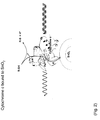
- Figure 2 shows cytochrome c immobilized on mesoporous SnO 2 by electrostatic interactions.
- SnO 2 functions as electrode. The intimate contact between the protein and the electrode allows electron transfer to occur.
- Thiols react with oxidized cytochrome c by transferring an electron and reducing cytochrome c thereby.
- Light is characteristically absorbed by the protein.
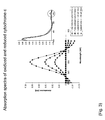
- Figure 3 shows the absorption spectrum of Fe(III) state and Fe(II) state cytochrome c which show characteristic differences.
- the transition between fully oxidized and reduced cytochrome c can be observed.
- the reduction can be induced by thiols or electrochemically.
- the inset in the upper right shows UV-Vis spectra of reduced and oxidized cytochrome c over a broader wavelength range than in the main part of the figure.
- the axes in the inset are the same as in the main figure.
- the main figure showns the part of the spectrum in more detail that is indicated in the inset by a circle.
- FIG 4 shows the relationship between DTT concentration and the intensity of spectral changes of cytochrome c.
- DTT is the abbreviation for Dithiothreitol (C 4 H 10 O 2 S 2 ).
- the signal is derived from spectral changes at 550 nm caused by the DTT-induced transition from cytochrome c Fe(III) state to the Fe(II) state and plotted versus the applied DTT concentration.
- a linear relation can be fitted to the data.
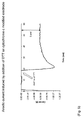
- Figure 5 shows the time dependent current of cytochrome c modified electrode before and after addition of DTT.
- a constant potential of +80 mV vs. Ag/AgCl was applied to the electrode.
- Addition of DTT leads to reduction of cytochrome c.
- the electrons are subsequently transferred to the electrode and can be measured by increased currents.
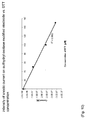
- Figure 6 shows intensity of anodic current versus DTT concentration measured with a cytochrome c modified electrode.
- the intensity of the steady state current caused by the reduction of cytochrome c by DTT and its subsequent reoxidation by the electrode is taken as signal and plotted versus the applied DTT concentration.
- a linear relation can be fitted to the data.
- Figure 7 shows the absorption spectrum of Fe(III) state and Fe(II) state myoglobin which show characteristic differences. The transition between oxidized and reduced myoglobin can be observed. The reduction can be induced by DTT.
- FIG 8 shows the relationship between DTT concentration and the intensity of spectral changes of myoglobin.
- DTT is the abbreviation for Dithiothreitol (C4H10O2S2).
- the signal is derived from spectral changes at 500 nm caused by the DTT-induced transition from myoglobin Fe(III) state to the Fe(II) state and plotted versus the applied DTT concentration.
- a linear relation can be fitted to the data.
- Figure 9 shows intensity of anodic current versus DTT concentration measured with a myoglobin modified electrode.
- the intensity of the steady state current caused by the reduction of myoglobin by DTT and its subsequent reoxidation by the electrode is taken as signal and plotted versus the applied DTT concentration.
- a linear relation can be fitted to the data.
- Figure 10 shows intensity of anodic current versus DTT concentration measured with a sulfhydryl oxidase modified electrode.
- the intensity of the steady state current caused by the reduction of sulfhydryl oxidase by DTT and its subsequent reoxidation by the electrode is taken as signal and plotted versus the applied DTT concentration.
- a linear relation can be fitted to the data.
- Example 1 Optical sensor with cytochrome c on SnO 2 for the detection of dithiothreitol
- Cytochrome c was immobilized on mesoporous SnO 2 as transparent electrode ( Figure 2 ).
- cytochrome c By applying a certain potential (e.g. +200 mV vs. Ag/AgCl) cytochrome c can be set to the oxidized state (heme Fe(III)).
- the cytochrome c Fe(III) state shows a characteristic absorption spectrum that differs characteristically from the absorption spectrum of the Fe(II) state ( Figure 3 ). Bringing cytochrome c in contact with DTT (thiols) will lead to reduction of cytochrome c from Fe(III) to Fe(II) that can be observed by changes in the absorption spectrum.
- the intensity of spectral changes is proportional to the applied DTT concentration ( Figure 4 ). After calibration, the DTT concentration can be determined from the intensity of signal changes. Amines, alcohols and water do not show any influence on the redox state of cytochrome c. The sensor works reversibly and can be reset to its original state by applying potential for cytochrome c oxidation.
- Example 2 Electrochemical sensor with cytochrome c on SnO 2 for the detection of dithiothreitol
- Cytochrome c was immobilized on mesoporous SnO 2 as transparent electrode ( Figure 2 ).
- a defined proportion of oxidized (Fe(III)) and reduced (Fe(II)) cytochrome c can be set by applying a defined potential, e.g. +80 mV vs. Ag/AgCl. Bringing cytochrome c in contact with DTT (thiols) will lead to reduction of cytochrome c from Fe(III) to Fe(II). Since the potential dictates the ratio between Fe(III) and Fe(II), electrons transferred from DTT to Fe(III) can be observed in an increased anodic current ( Figure 5 ).
- the intensity of the anodic current is proportional to the applied DTT concentration ( Figure 6 ). After calibration, the DTT concentration can be determined from the intensity of anodic current. Amines, alcohols and water don't show any influence on the redox state of cytochrome c. The sensor works reversibly.
- Example 3 Electrochemical sensor with myoglobin on SnO 2 for the detection of dithiothreitol
- Myoglobin was immobilized on mesoporous SnO 2 as transparent electrode (analogous to Figure 2 ).
- a defined proportion of oxidized (Fe(III)) and reduced (Fe(II)) cytochrome c can be set by applying a defined potential, e.g. +80 mV vs. Ag/AgCl. Bringing myoglobin in contact with DTT (thiols) will lead to reduction of myoglobin from Fe(III) to Fe(II). This process can also be observed by spectroscopic techniques with dissolved myoglobin ( Figure 7 and 8 ).
- Example 4 Electrochemical sensor with sulfhydryl oxidase on Sn02 for the detection of dithiothreitol
- Sulfhydryl oxidase was immobilized on mesoporous SnO 2 as transparent electrode (analogous to Figure 2 ). Bringing the protein in contact with DTT (thiols) will lead to reduction of a disulfide bridge and the electrons are subsequently relayed to the FAD cofactor and further to the electrode.
- the electrode is the final electron acceptor due to its applied potential and its electrical contact to the protein. This process leads to an anodic current and the intensity of the anodic current is proportional to the applied DTT concentration. After calibration, the DTT concentration can be determined from the intensity of anodic current ( Figure 10 ). The sensor works reversibly.
- the sensor according to the present invention provides an improved specificity and thiol sensing by using a protein as a recognition element for thiol analytes.
- the sensor in accordance with the present invention is capable of operating in complex sensor environments, for example in the presence of oxygen or water, since, surprisingly the presence of oxygen has no effect on the magnitude of the signal measured. Signal extinction by oxygen has not been observed in accordance with the present invention.
- the sensor in accordance with the present invention can be used for analytes in the gas and the liquid phase, and the simplicity of the readout (direct readout omitting the need to control the parameters of other co-reactants) is particularly interesting for a sensor device. Simplicity of the sensing allows for minaturization and reversible operation of the sensor.
- the sensor in accordance with the present invention provides an improved sensitivity by detecting direct changes of the protein in terms of its redox state. Moreover, the sensor in accordance with the present invention needs less reactants than devices published so far. Most published sensors rely on at least one more reaction compound such as oxygen. Many sensors are based on fluidic systems that are difficult to integrate into devices that are miniaturized, mobile, have long life-time, or are intended for multi-use applications. Moreover, the sensor in accordance with the present invention allows for a real-time analysis and can be operated without special expertise or additional hardware.
Landscapes
- Chemical & Material Sciences (AREA)
- Life Sciences & Earth Sciences (AREA)
- Engineering & Computer Science (AREA)
- Organic Chemistry (AREA)
- Physics & Mathematics (AREA)
- Health & Medical Sciences (AREA)
- Proteomics, Peptides & Aminoacids (AREA)
- Analytical Chemistry (AREA)
- Biochemistry (AREA)
- General Health & Medical Sciences (AREA)
- Zoology (AREA)
- Immunology (AREA)
- Wood Science & Technology (AREA)
- Molecular Biology (AREA)
- General Physics & Mathematics (AREA)
- Biotechnology (AREA)
- Microbiology (AREA)
- Biophysics (AREA)
- Chemical Kinetics & Catalysis (AREA)
- Pathology (AREA)
- Plasma & Fusion (AREA)
- Bioinformatics & Cheminformatics (AREA)
- General Engineering & Computer Science (AREA)
- Genetics & Genomics (AREA)
- Measuring Or Testing Involving Enzymes Or Micro-Organisms (AREA)
- Apparatus Associated With Microorganisms And Enzymes (AREA)
- Investigating Or Analysing Biological Materials (AREA)
- Investigating, Analyzing Materials By Fluorescence Or Luminescence (AREA)
- Investigating Or Analysing Materials By Optical Means (AREA)
Abstract
Description
- The present invention relates to a sensor for thiol analytes, to a sensor array and to a method of detecting thiol analytes using said sensor.
- Nowadays, thiol detection is used in different fields, such as: medical applications to examine physical conditions or disorders related to thiol compounds. Sources of indicative thiol compounds can be breath, saliva, blood, urine, plasma, cerebrospinal fluids or pus. For instance, breath analysis can be used to detect halitosis, in the food industry for analysis of food freshness or process analysis, and for stationary and mobile environmental monitoring (waters, waste water, air).
- Analytical methods
- Gas-chromatography combined with mass spectrometry. Complex mixtures of volatile compounds can be analyzed. Different substances are separated by chromatography and subsequently identified by mass spectrometry. These instruments are usually very expensive and require a high degree of expertise to operate them.
- Chemical sensors
- • Gas-chromatography combined with gas sensors
- • Various electronic nose (eNose) devices that comprise chemical sensors or sensor-arrays. There are several laboratory-based devices and prototypes.
- • Metal oxide sensors
- • Electrochemical devices based on amperometry
- • Conductive polymers
- • QCM devices based on mass-sensitive piezosensors coated with polymers
- • Organic dyes and optical detection
- Biosensors (typically used in liquid phase)
- • Enzyme catalyzed reactions and detection of the appearance of products or consumption of educts thereof; e.g. with flavin-containing monooxygenase or with monoamine oxidase or with sulfhydryl oxidase.
- • Enzyme, like horseradish peroxidase, that catalyse a measurebale reaction which is interfered by thiols. Thereby thiols react with an intermediate state of the enzyme and reduce its apparent activity.
- Biosensors made for other analytes than thiols with similar detection principle (typically in liquid phase) :
- E.g. Glucose oxidase which is used for sensing its physiological substrate glucose. Detection is realized by counting electrons transferred from glucose to the cofactor FAD
- For advanced thiol sensors in applications, sensors have to operate reliably in complex environments and detect thiol compounds even in the presence of other chemicals like amines, alcohols or water. Many chemical sensors respond to thiol as well as to other compounds due to cross-reactivity. Such cross-reactivity can for example be reduced or avoided by previous separation steps that require additional hardware, other than the sensor itself. Another possibility is to measure the cross-reactivity itself by sensor arrays and pattern-recognition algorithms. Yet another approach in the prior art was to use enzymes which provide a specific recognition for thiol analyte detection of complex mixtures. Enzymatic thiol detection approaches are based on thiol conversion reactions and a catalytic use of an enzyme. The generation of products or the consumption of educts is indicative of the presence and/or amount of thiols in a sample. In any case, however, this approach demands the controlled presence of certain co-reactants within the device and specific reaction conditions.
- Accordingly, it was an object of the present invention to provide for a sensor for detecting thiol analytes which is capable of detecting thiols even in the presence of other compounds. It was also an object of the present invention to provide for a sensor for thiol analytes which shows no or very little cross-reactivity. Moreover, it was an object of the present invention to provide for a sensor for thiol analytes which operates in complex environments. It was also an object of the present invention to provide for a sensor which can be used for analytes in the gas and the liquid phase. It was also an object of the present invention to provide for a sensor which allows a real-time analysis. It was also an object of the present invention to provide for a sensor which omits the need for any co-reactants to be measured.
- All these objects are solved by a sensor for thiol analytes, comprising:
- a redox active protein, which, upon interaction with a thiol analyte, undergoes a change in a physical property,
- a transducer, which, upon said change in said physical property of said redox active protein, converts said change in said physical property into an electrical signal.
- In one embodiment said physical property is selected from the group of redox state, electrical conductivity/resistivity, current, potential, capacity, light absorbance, light transmittance, reflectivity, refractive index, fluorescence, phosphorescence, luminescence, mass as determined by gravimetry or mass-sensitive resonance techniques, heat as determined by calorimetry, conformation and physiological activity of said protein.
- In one embodiment said redox active protein is a protein that is capable of reversibly transferring electrons.
- In one embodiment said redox active protein is selected from the group comprising proteins in which a disulfide bond between two cystein residues can be reversibly formed, such as thioredoxin, proteins having prosthetic groups such as flavin adenine dinucleotide (FAD) as in monoamine oxidase, nicotinamide adenine dinucleotide (NAD), nicotinamide adenine dinucleotidephosphate (NADP), and flavin mononucleotide (FMN), metalloproteins comprising copper, such as superoxide dismutase, metalloproteins containing a non-heme-iron, such as ferredoxin,
metalloproteins containing heme-bound iron, such as cytochrome c, horseradish peroxidase, myoglobin, hemoglobin, catalase, membrane proteins comprising redox active groups such as cytochrome c oxidase. - In one embodiment said physical property is light absorbance, and where said transducer converts said change in light absorbance into an electrical signal, wherein said transducer is a photometer or spectrophotometer or other device to measure light intensity.
- In one embodiment said physical property is the redox state of said protein, and wherein said transducer converts said change in said redox state into an electrical signal, wherein said transducer is an electrode upon which said redox active protein has been immobilized, wherein said immobilization preferably occurs via chemisorption or physisorption.
- In one embodiment said electrode is made of a material selected from metals such as gold, alloys, metal oxides such as tin oxide, carbon such as graphite or carbon nanotubes, electrically conducting polymers such as polyaniline, or composite materials such as organically interlinked metal nanoparticle films.
- In one embodiment said redox active protein is present within said sensor in a layer or in a spot or a plurality of spots.
- In one embodiment said thiol analyte is selected from the group comprising C1-C20 aliphatic thiols, aromatic thiols, side chains of amino acids such as cysteine, sidechains of polypeptides having a thiolgroup, such as gluthatione, thiol compounds dissolved in a solvent, and volatile thiols in the gas phase.
- The objects of the present invention are also solved by a sensor array, comprising a plurality of sensors as defined above.
- The objects of the present invention are also solved by a method of detecting a thiol analyte, comprising exposing a sensor according to the present invention or a sensor array according to the present invention to a sample suspected of containing a thiol analyte, measuring the presence or absence of an electrical signal generated by the transducer upon changes of said physical properties, wherein the presence and magnitude of the electrical signal is indicative of the presence and amount of a thiol analyte in said sample.
- In one embodiment said sample contains, in addition to one or several thiol analytes, also other chemicals, such as amines, alcohols, aldehydes, ketones, carboxylic acids, hydrocarbons, halogenated hydrocarbons, or water, or mixtures of said other chemicals.
- In one embodiment said sample is gaseous, liquid or solid.
- The objects of the present invention are also solved by the use of the method according to the present invention for medical diagnosis, healthcare diagnosis, food quality testing, agricultural testing, security testing for explosives, toxins or harmful chemical substances, and/or for environmental monitoring.
- As used herein, the term "redox active protein" is meant to refer to a protein which is capable of reversibly transferring electrons. "Redox active proteins" are capable of being reversibly reduced and oxidized. A "transducer", as used herein, is meant to refer to any means which allow the conversion of a change of a physical property of the redox active protein into an electrical signal which may be detected. Examples of a transducer are an electrode, a photometer, spectrophotometer, photomultiplier, photodiode, fluorescence microscope, fluorescence spectrophotometer, SPR spectrometer, and other spectroscopic devices, calorimeter, quartz crystal microbalance, and gravimetric devices. The term "reversibly transferring electrons" as used herein is meant to denote a process in which a redox active protein accepts one or several electrons and subsequently donates it/them elsewhere, e.g. to a reaction partner.
- It should be noted that upon interaction of the redox active protein with a thiol analyte, the redox active protein undergoes a change in one or several physical properties. For example, it may change its absorption characteristics, or it may change its molecular weight, or it may change its redox state. Likewise, the redox active protein may also undergo a change in several physical properties at the same time, upon interaction with a thiol analyte, such as the absorption characteristics and the redox state. The transducer converts any change of physical property into an electrical signal. Depending on the type of physical property that is changed upon interaction of the redox active protein with the thiol analyte, the transducer may take on various forms, and examples of a transducer are listed above. It should therefore be noted that, in one embodiment, there may be changes in the redox state of the protein, i.e. in a sense electrical changes, which themselves are converted into an electrical signal by the transducer.
- The present invention describes a thiol detection device that is based on a specific reaction between the thiol and a protein. Thereby, the protein interacts directly with the thiol compounds by electron transfer. The altered redox state of the protein is detected as being qualitatively and quantitatively indicative for the presence of thiols. Either the polypeptide chain of the protein or a tightly bound cofactor of the protein is changed. Compared to chemical receptor materials, this invention uses redox active proteins for thiol recognition. In contrast to other protein-mediated approaches, this invention uses the direct readout of changes of the redox state of the protein in spite of employing the protein as reaction catalyst. Thereby the need for controlled use of co-reactants is circumvented. (
Figure 1 ). Simplicity of the readout principle is particularly interesting for gas phase analysis. - It should be noted that in accordance with the present invention, the redox active protein is not catalytically used as an enzyme in thiol conversion reactions; in one embodiment, the redox active protein does not have the in vivo physiological function in an organism to convert thiols or to catalyze such thiol conversion. In the present invention, the presence of co-reactants, other than the redox active protein itself or a cofactor or prosthetic group associated with said redox active protein, participating in such thiol conversion reactions is not necessary, in view of the fact that the redox active protein does not have the in vivo physiological function of participating in a thiol conversion reaction.
- Surprisingly, proteins that do not convert thiols as their in vivo physiological function can be used in the device. E.g. cytochrome c is known as protein that shuffles electrons between two transmembrane protein complexes. An enzymatic function, in terms of converting metabolites, e.g. thiols is not known for cytochrome c.
However, in the approach according to the present invention, a protein can simply be regarded as one partner of a redox reaction comprising protein and thiol. Then one would have to assume other redox pairs being relevant as well, e.g. between protein and oxygen. Oxidation of the protein by oxygen should extinguish the signal generated by the reduction by thiols. Surprisingly, signal extinction by oxygen has not been observed by the present inventors. - It should be noted that the sensor in accordance with the present invention also enables the selective detection of thiol analytes in complex mixtures, i.e. mixtures which, in addition to thiols, also contain other chemicals, such as amines, alcohols or water.
- Examples for redox active proteins are:
- Metalloproteins containing heme-bound iron, like cytochrome c, horseradish peroxidase, myoglobin, hemoglobin, catalase, microperoxidase
- Metalloproteins containing non-heme iron, like ferredoxin
- Metalloproteins containing copper, like superoxide dismutase
- Proteins containing organic cofactor like FAD (flavin adenine dinucleotide), e.g. sulfhydryl oxidase, monoamine oxidase, or FMN (flavin mononucleotide), e.g. flavin-containing monooxygenase, or NAD(P) (nicotinamide adenine dinucleotide (phosphate))
- Redox active proteins that are naturally found in a lipid bilayer (membrane proteins) such as cytochrome c oxidase
- All kind of derivatives of these proteins, such as chemcial modifications or mutations
- It should be noted that the term "redox active protein" also includes derivatives of the afore-mentioned proteins. Such derivatives may be chemically modified proteins in which other compounds, such as for example sugars, lipids etc., or specific chemical functionalities have been added to the protein. Examples of such chemical modifications are outlined in "proteins" by Thomas E. Creighton, Freeman, 1993 and are well-known to someone skilled in the art. Likewise, the derivatives of the afore-mentioned proteins may include mutations, wherein amino acid residues of the amino acid sequence of the proteins have been deleted, changed or additional amino acids have been inserted or attached, respectively. Preferably, such mutations are at least 70 %, preferably at least 80 %, more preferably at least 90 %, even more preferably at least 95 % and most preferably at least 99 % identical to the original sequence of the redox active protein.
- In accordance with one embodiment of the present invention, the protein can be part of a receptor material containing the enzyme.
This receptor material can be made of: - Conducting materials like metals such as gold or alloys
- Semi-conducting materials like metal oxides such as tin oxide
- Materials made of carbon such as graphite or carbon nanotubes
- Conducting polymers
- Composite materials like organically interlinked metal nanoparticles
- Layer-by-layer assembly (dipping, flow-cell, coating)
- Coating (e.g. spin-, dip-, drop- or spray coating)
- Chemical or physical vapor deposition
- Sintering
- Self-assembly
- Printing (e.g. ink-jet printing)
- Stamping
- Immersing
- In one embodiment, the redox active protein is present in or as a layer within the sensor according to the present invention. Likewise, it may also be present as a spot or a plurality of spots within the sensor. Such layer and spots are applied on a surface on or in the sensor, preferably on a surface of the transducer.
- In one embodiment, the thiol analytes can be:
- short- or long chain aliphatic thiols, e.g. C1-C20 thiols,
- aromatic thiols
- sidechains of polypeptides, like glutathione
- sidechains of amino acids like cysteine
- thiols dissolved in a solvent
- volatile thiols in the gas phase
- The selectivity between thiols and non-thiols is based on a favorable electron-transfer between the protein and the thiol compound.
The selectivity between different thiols is based on a different thiol reactivity due to - • steric hindrance
- • pK-value of the thiol group
- • electronic properties of non-thiol functionalities of the thiol compound.
- In one embodiment, the changes of the redox-state of the protein can be followed by any suitable technique and transduction principle:
- Conductivity / Resistivity
- Current (amperometric by direct electron transfer)
- Potential (potentiometric)
- Capacity
- Color changes, light absorbance or transmittance
- Reflectivity
- Refractive index changes
- Fluorescence or phosphorescence
- Luminescence
- Heat (calorimetric)
- Conformational changes
- Changes of physiological activity
- Gravimetry.
- It should be noted that, usually, a further specification of the geometry of the sensing material is not necessary. In one embodiment, the sensor geometry can be of:
- Flat surface of any shape
- Rough surface
- Porous material, like assembly of rods, spheres, or a sponge-like structure
- A single layer of sensing material
- Multiple layers containing protective or electrolyte layers besides the sensing material.
- Embodiments of the sensor in accordance with the present invention can be used for applications like:
- Medical applications to examine physical conditions or disorders. Sources of indicative volatile compounds can be breath, saliva, blood, urine, plasma, cerebrospinal fluids or pus. For instance, breath analysis or headspace analysis of physiological samples to detect halitosis, cancer or bacterial infections. Presence or absence of specific marker compounds can point to certain physiological conditions, chemical exposures or disorders like halitosis. Medical applications for monitoring of drug metabolism. Stationary and mobile applications.
- In food-related applications to analyze food freshness
- In agricultural testing applications
- In security-related applications to detect thiol containing explosives, toxins or other harmful thiols
- Environmental monitoring (e.g. waters, waste water, air)
- In occupational medicine applications to monitor exposition to thiols
- In the following, reference is made to the figures wherein
Figure 1 shows a sensor principle in accordance with the present invention, wherein the thiol analyte interacts directly with the redox active protein by electron transfer. Changes in the redox state are probed directly either by optical detection or by means of an electrode on which said redox active protein is immobilized and finally transduced to an electrical signal. -
Figure 2 shows cytochrome c immobilized on mesoporous SnO2 by electrostatic interactions. SnO2 functions as electrode. The intimate contact between the protein and the electrode allows electron transfer to occur. Thiols react with oxidized cytochrome c by transferring an electron and reducing cytochrome c thereby. Light is characteristically absorbed by the protein. -
Figure 3 shows the absorption spectrum of Fe(III) state and Fe(II) state cytochrome c which show characteristic differences. The transition between fully oxidized and reduced cytochrome c can be observed. The reduction can be induced by thiols or electrochemically. The inset in the upper right shows UV-Vis spectra of reduced and oxidized cytochrome c over a broader wavelength range than in the main part of the figure. The axes in the inset are the same as in the main figure. The main figure showns the part of the spectrum in more detail that is indicated in the inset by a circle. -
Figure 4 shows the relationship between DTT concentration and the intensity of spectral changes of cytochrome c. DTT is the abbreviation for Dithiothreitol (C4H10O2S2). The signal is derived from spectral changes at 550 nm caused by the DTT-induced transition from cytochrome c Fe(III) state to the Fe(II) state and plotted versus the applied DTT concentration. A linear relation can be fitted to the data. -
Figure 5 shows the time dependent current of cytochrome c modified electrode before and after addition of DTT. A constant potential of +80 mV vs. Ag/AgCl was applied to the electrode. Addition of DTT leads to reduction of cytochrome c. The electrons are subsequently transferred to the electrode and can be measured by increased currents. -
Figure 6 shows intensity of anodic current versus DTT concentration measured with a cytochrome c modified electrode. The intensity of the steady state current caused by the reduction of cytochrome c by DTT and its subsequent reoxidation by the electrode is taken as signal and plotted versus the applied DTT concentration. A linear relation can be fitted to the data. -
Figure 7 shows the absorption spectrum of Fe(III) state and Fe(II) state myoglobin which show characteristic differences. The transition between oxidized and reduced myoglobin can be observed. The reduction can be induced by DTT. -
Figure 8 shows the relationship between DTT concentration and the intensity of spectral changes of myoglobin. DTT is the abbreviation for Dithiothreitol (C4H10O2S2). The signal is derived from spectral changes at 500 nm caused by the DTT-induced transition from myoglobin Fe(III) state to the Fe(II) state and plotted versus the applied DTT concentration. A linear relation can be fitted to the data. -
Figure 9 shows intensity of anodic current versus DTT concentration measured with a myoglobin modified electrode. The intensity of the steady state current caused by the reduction of myoglobin by DTT and its subsequent reoxidation by the electrode is taken as signal and plotted versus the applied DTT concentration. A linear relation can be fitted to the data. -
Figure 10 shows intensity of anodic current versus DTT concentration measured with a sulfhydryl oxidase modified electrode. The intensity of the steady state current caused by the reduction of sulfhydryl oxidase by DTT and its subsequent reoxidation by the electrode is taken as signal and plotted versus the applied DTT concentration. A linear relation can be fitted to the data. - Moreover, reference is made to the following examples which are given to illustrate but not to limit the present invention.
- Cytochrome c was immobilized on mesoporous SnO2 as transparent electrode (
Figure 2 ). By applying a certain potential (e.g. +200 mV vs. Ag/AgCl) cytochrome c can be set to the oxidized state (heme Fe(III)). The cytochrome c Fe(III) state shows a characteristic absorption spectrum that differs characteristically from the absorption spectrum of the Fe(II) state (Figure 3 ). Bringing cytochrome c in contact with DTT (thiols) will lead to reduction of cytochrome c from Fe(III) to Fe(II) that can be observed by changes in the absorption spectrum. The intensity of spectral changes is proportional to the applied DTT concentration (Figure 4 ). After calibration, the DTT concentration can be determined from the intensity of signal changes. Amines, alcohols and water do not show any influence on the redox state of cytochrome c. The sensor works reversibly and can be reset to its original state by applying potential for cytochrome c oxidation. - Cytochrome c was immobilized on mesoporous SnO2 as transparent electrode (
Figure 2 ). A defined proportion of oxidized (Fe(III)) and reduced (Fe(II)) cytochrome c can be set by applying a defined potential, e.g. +80 mV vs. Ag/AgCl. Bringing cytochrome c in contact with DTT (thiols) will lead to reduction of cytochrome c from Fe(III) to Fe(II). Since the potential dictates the ratio between Fe(III) and Fe(II), electrons transferred from DTT to Fe(III) can be observed in an increased anodic current (Figure 5 ). The intensity of the anodic current is proportional to the applied DTT concentration (Figure 6 ). After calibration, the DTT concentration can be determined from the intensity of anodic current. Amines, alcohols and water don't show any influence on the redox state of cytochrome c. The sensor works reversibly. - Myoglobin was immobilized on mesoporous SnO2 as transparent electrode (analogous to
Figure 2 ). A defined proportion of oxidized (Fe(III)) and reduced (Fe(II)) cytochrome c can be set by applying a defined potential, e.g. +80 mV vs. Ag/AgCl. Bringing myoglobin in contact with DTT (thiols) will lead to reduction of myoglobin from Fe(III) to Fe(II). This process can also be observed by spectroscopic techniques with dissolved myoglobin (Figure 7 and8 ). Since the potential dictates the ratio between Fe(III) and Fe(II), electrons transferred from DTT to Fe(III) can be observed in an increased anodic current. The intensity of the anodic current is proportional to the applied DTT concentration (Figure 9 ). After calibration, the DTT concentration can be determined from the intensity of anodic current. The sensor works reversibly. - Sulfhydryl oxidase was immobilized on mesoporous SnO2 as transparent electrode (analogous to
Figure 2 ). Bringing the protein in contact with DTT (thiols) will lead to reduction of a disulfide bridge and the electrons are subsequently relayed to the FAD cofactor and further to the electrode. The electrode is the final electron acceptor due to its applied potential and its electrical contact to the protein. This process leads to an anodic current and the intensity of the anodic current is proportional to the applied DTT concentration. After calibration, the DTT concentration can be determined from the intensity of anodic current (Figure 10 ). The sensor works reversibly. - The sensor according to the present invention provides an improved specificity and thiol sensing by using a protein as a recognition element for thiol analytes. Moreover, the sensor in accordance with the present invention is capable of operating in complex sensor environments, for example in the presence of oxygen or water, since, surprisingly the presence of oxygen has no effect on the magnitude of the signal measured. Signal extinction by oxygen has not been observed in accordance with the present invention. The sensor in accordance with the present invention can be used for analytes in the gas and the liquid phase, and the simplicity of the readout (direct readout omitting the need to control the parameters of other co-reactants) is particularly interesting for a sensor device. Simplicity of the sensing allows for minaturization and reversible operation of the sensor. The sensor in accordance with the present invention provides an improved sensitivity by detecting direct changes of the protein in terms of its redox state. Moreover, the sensor in accordance with the present invention needs less reactants than devices published so far. Most published sensors rely on at least one more reaction compound such as oxygen. Many sensors are based on fluidic systems that are difficult to integrate into devices that are miniaturized, mobile, have long life-time, or are intended for multi-use applications. Moreover, the sensor in accordance with the present invention allows for a real-time analysis and can be operated without special expertise or additional hardware.
- The features of the present invention disclosed in the specification, the claims and/or in the accompanying drawings, may, both separately, and in any combination thereof, be material for realizing the invention in various forms thereof.
Claims (14)
- A sensor for thiol analytes, comprising:a redox active protein, which, upon interaction with a thiol analyte, undergoes a change in a physical property,a transducer, which, upon said change in said physical property of said redox active protein, converts said change in said physical property into an electrical signal.
- The sensor according to claim 1, wherein said physical property is selected from the group of redox state, electrical conductivity/resistivity, current, potential, capacity, light absorbance, light transmittance, reflectivity, refractive index, fluorescence, phosphorescence, luminescence, mass as determined by gravimetry or mass-sensitive resonance techniques, heat as determined by calorimetry, conformation and physiological activity of said protein.
- The sensor according to any of the foregoing claims, wherein said redox active protein is a protein that is capable of reversibly transferring electrons.
- The sensor according to claim 3, wherein said redox active protein is selected from the group comprising proteins in which a disulfide bond between two cystein residues can be reversibly formed, such as thioredoxin, proteins having prosthetic groups such as flavin adenine dinucleotide (FAD) as in monoamine oxidase, nicotinamide adenine dinucleotide (NAD), nicotinamide adenine dinucleotidephosphate (NADP), and flavin mononucleotide (FMN), metalloproteins comprising copper, such as superoxide dismutase, metalloproteins containing a non-heme-iron, such as ferredoxin, metalloproteins containing heme-bound iron, such as cytochrome c, horseradish peroxidase, myoglobin, hemoglobin, catalase, membrane proteins comprising redox active groups such as cytochrome c oxidase.
- The sensor according to any of the foregoing claims, wherein said physical property is light absorbance, and where said transducer converts said change in light absorbance into an electrical signal, wherein said transducer is a photometer or spectrophotometer or other device to measure light intensity.
- The sensor according to any of claims 1-5, wherein said physical property is the redox state of said protein, and wherein said transducer converts said change in said redox state into an electrical signal, wherein said transducer is an electrode upon which said redox active protein has been immobilized, wherein said immobilization preferably occurs via chemisorption or physisorption.
- The sensor according to claim 6, wherein said electrode is made of a material selected from metals such as gold, alloys, metal oxides such as tin oxide, carbon such as graphite or carbon nanotubes, electrically conducting polymers such as polyaniline, or composite materials such as organically interlinked metal nanoparticle films.
- The sensor according to any of the foregoing claims, wherein said redox active protein is present within said sensor in a layer or in a spot or a plurality of spots.
- The sensor according to any of the foregoing claims, wherein said thiol analyte is selected from the group comprising C1-C20 aliphatic thiols, aromatic thiols, side chains of amino acids such as cysteine, sidechains of polypeptides having a thiolgroup, such as gluthatione, thiol compounds dissolved in a solvent, and volatile thiols in the gas phase.
- A sensor array, comprising a plurality of sensors as defined in any of claims 1-9.
- A method of detecting a thiol analyte, comprising exposing a sensor according to any of claims 1-9 or a sensor array according to claim 10 to a sample suspected of containing a thiol analyte, measuring the presence or absence of an electrical signal generated by the transducer upon changes of said physical properties, wherein the presence and magnitude of the electrical signal is indicative of the presence and amount of a thiol analyte in said sample.
- The method according to claim 11, wherein said sample contains, in addition to one or several thiol analytes, also other chemicals, such as amines, alcohols, aldehydes, ketones, carboxylic acids, hydrocarbons, halogenated hydrocarbons, or water, or mixtures of said other chemicals.
- The method according to any of claims 11-12, wherein said sample is gaseous, liquid or solid.
- Use of the method according to any of claims 11-13 for medical diagnosis, healthcare diagnosis, food quality testing, agricultural testing, security testing for explosives, toxins or harmful chemical substances, and/or for environmental monitoring.
Priority Applications (5)
| Application Number | Priority Date | Filing Date | Title |
|---|---|---|---|
| EP08017510A EP2172767A1 (en) | 2008-10-06 | 2008-10-06 | A sensor for thiol analytes |
| EP09004766A EP2172769A1 (en) | 2008-10-06 | 2009-03-31 | A sensor for thiol analytes |
| CN2009102214080A CN101713770B (en) | 2008-10-06 | 2009-09-30 | A sensor for thiol analytes |
| US12/574,511 US8252606B2 (en) | 2008-10-06 | 2009-10-06 | Sensor for thiol analytes |
| JP2009232385A JP2010088429A (en) | 2008-10-06 | 2009-10-06 | Sensor for thiol analyte, sensor array and detection method of thiol analyte |
Applications Claiming Priority (1)
| Application Number | Priority Date | Filing Date | Title |
|---|---|---|---|
| EP08017510A EP2172767A1 (en) | 2008-10-06 | 2008-10-06 | A sensor for thiol analytes |
Publications (1)
| Publication Number | Publication Date |
|---|---|
| EP2172767A1 true EP2172767A1 (en) | 2010-04-07 |
Family
ID=40289320
Family Applications (2)
| Application Number | Title | Priority Date | Filing Date |
|---|---|---|---|
| EP08017510A Withdrawn EP2172767A1 (en) | 2008-10-06 | 2008-10-06 | A sensor for thiol analytes |
| EP09004766A Withdrawn EP2172769A1 (en) | 2008-10-06 | 2009-03-31 | A sensor for thiol analytes |
Family Applications After (1)
| Application Number | Title | Priority Date | Filing Date |
|---|---|---|---|
| EP09004766A Withdrawn EP2172769A1 (en) | 2008-10-06 | 2009-03-31 | A sensor for thiol analytes |
Country Status (4)
| Country | Link |
|---|---|
| US (1) | US8252606B2 (en) |
| EP (2) | EP2172767A1 (en) |
| JP (1) | JP2010088429A (en) |
| CN (1) | CN101713770B (en) |
Cited By (8)
| Publication number | Priority date | Publication date | Assignee | Title |
|---|---|---|---|---|
| CN102585802A (en) * | 2012-01-31 | 2012-07-18 | 天津理工大学 | Novel water-soluble sulfydryl fluorescent probe, and preparation method and application thereof |
| CN104813614A (en) * | 2012-12-03 | 2015-07-29 | 惠普发展公司,有限责任合伙企业 | An asynchronous framework for the management of IAAS |
| CN109557131A (en) * | 2018-12-28 | 2019-04-02 | 暨南大学 | The in-situ monitoring sensing device of gold nano structure light thermal change structure and production, measurement method |
| EP3668650A4 (en) * | 2017-10-03 | 2021-06-02 | Avails Medical, Inc. | APPARATUS, SYSTEMS AND METHODS FOR DETERMINING THE CONCENTRATION OF MICRO-ORGANISMS AND THE SUSCEPTIBILITY OF MICRO-ORGANISMS TO ANTI-INFECTIOUS, BASED ON OXIDOREDUCTION REACTIONS |
| US11385200B2 (en) | 2017-06-27 | 2022-07-12 | Avails Medical, Inc. | Apparatus, systems, and methods for determining susceptibility of microorganisms to anti-infectives |
| US11591635B2 (en) | 2018-01-15 | 2023-02-28 | Mars, Incorporated | Screening method |
| US12379373B2 (en) | 2018-12-03 | 2025-08-05 | Avails Medical, Inc. | Apparatus, systems, and methods for quantifying infectious agents |
| US12422343B2 (en) | 2017-12-05 | 2025-09-23 | Avails Medical, Inc. | Apparatus, systems, and methods for preparing an output sample comprising a defined concentration of an infectious agent for downstream testing |
Families Citing this family (14)
| Publication number | Priority date | Publication date | Assignee | Title |
|---|---|---|---|---|
| KR101187648B1 (en) | 2011-08-18 | 2012-10-09 | 한국원자력연구원 | Biosensor detecting thiol group and the method for preparing biosensor detecting thiol group |
| EP2795296B1 (en) * | 2011-12-20 | 2017-05-03 | Ecole Polytechnique Fédérale de Lausanne (EPFL) | Optical method and device for identifying and quantifying analytes |
| CN105765075A (en) * | 2013-11-21 | 2016-07-13 | 国立大学法人东京大学 | Method for detecting fluorescence or absorbance, method for suppressing background, method for measuring ADP, method for measuring activity of ADP-synthesizing enzyme, and method for measuring activity of glucosyltransferase |
| US10379093B2 (en) * | 2013-12-06 | 2019-08-13 | Battelle Memorial Institute | Method and device for detecting odorants in hydrocarbon gases |
| WO2016044132A1 (en) * | 2014-09-15 | 2016-03-24 | Rapid Diagnostek, Inc. | Mass detection through redox coupling |
| WO2017002754A1 (en) * | 2015-06-29 | 2017-01-05 | 国立大学法人徳島大学 | Simple test for periodontal disease using fluorescent dye |
| KR102451039B1 (en) * | 2016-11-04 | 2022-10-07 | 한양대학교 산학협력단 | Composition for detection of biothiols comprising redox-regulating proteins |
| JP6978744B2 (en) * | 2017-01-05 | 2021-12-08 | 国立研究開発法人理化学研究所 | Environmental homeostasis measuring device using environmental potential as an index, environmental homeostasis evaluation method, and automatic feeding system using environmental potential |
| GB2566516A (en) | 2017-09-15 | 2019-03-20 | Univ Oxford Innovation Ltd | Electrochemical recognition and quantification of cytochrome c oxidase expression in bacteria |
| CN108226074B (en) * | 2017-12-26 | 2020-12-25 | 河南师范大学 | Colorimetric fluorescence dual-channel-based nano mimic enzyme and application thereof in analysis and detection |
| CN108896521B (en) * | 2018-06-20 | 2020-11-06 | 湖南城市学院 | A fluorescence analysis method for antioxidant activity of black tea |
| CN112345657B (en) * | 2019-08-08 | 2023-03-31 | 宝武碳业科技股份有限公司 | Array sensing gas chromatograph and method for detecting multiple VOCs gases |
| CN115768865A (en) * | 2020-06-23 | 2023-03-07 | 松下知识产权经营株式会社 | Allergen inactivation method and allergen inactivation device |
| WO2025179392A1 (en) * | 2024-03-01 | 2025-09-04 | Stratuscent Inc. | A sensing system to detect the presence of nox in an environment |
Family Cites Families (11)
| Publication number | Priority date | Publication date | Assignee | Title |
|---|---|---|---|---|
| JPS5836400A (en) * | 1981-08-24 | 1983-03-03 | Yamasa Shoyu Co Ltd | Determining method of l-cysteine |
| EP0860695B1 (en) | 1995-10-30 | 2006-01-04 | Arkray, Inc. | Method for measuring an analyte and corresponding device |
| CN1069409C (en) * | 1996-12-26 | 2001-08-08 | 中国科学院长春应用化学研究所 | Preparation of metal ion sensor |
| CN1349562A (en) | 1999-04-26 | 2002-05-15 | 宝洁公司 | blood test composition |
| WO2002073181A1 (en) * | 2001-03-13 | 2002-09-19 | Koji Sode | Enzyme electrode |
| WO2004019432A2 (en) * | 2002-08-22 | 2004-03-04 | The Johns Hopkins University | Methods of producing electrodes and methods of using such electrodes to accumulate and detect analytes |
| CN1186625C (en) * | 2002-10-28 | 2005-01-26 | 中国科学院长春应用化学研究所 | Method for preparing capacitor biological sensor |
| AU2003289373A1 (en) * | 2002-12-20 | 2004-07-29 | Arkray, Inc. | Thin analyzing device |
| JP4588649B2 (en) * | 2006-02-23 | 2010-12-01 | 株式会社デンソー | Enzyme functional electrode and biosensor and fuel cell |
| KR101195612B1 (en) * | 2006-04-10 | 2012-10-29 | 삼성전자주식회사 | A field effect transistor comprising a gold layer, a microfluidic device comprising the field effect transistor and a method of detecting an analyte having a thiol group using the field effect transistor and microfluidic device |
| JP4751302B2 (en) * | 2006-11-21 | 2011-08-17 | 株式会社日立製作所 | Potential difference sensor and analytical element |
-
2008
- 2008-10-06 EP EP08017510A patent/EP2172767A1/en not_active Withdrawn
-
2009
- 2009-03-31 EP EP09004766A patent/EP2172769A1/en not_active Withdrawn
- 2009-09-30 CN CN2009102214080A patent/CN101713770B/en not_active Expired - Fee Related
- 2009-10-06 JP JP2009232385A patent/JP2010088429A/en active Pending
- 2009-10-06 US US12/574,511 patent/US8252606B2/en not_active Expired - Fee Related
Non-Patent Citations (2)
| Title |
|---|
| LIU ET AL: "A highly sensitive biosensor with (Con A/HRP)n multilayer films based on layer-by-layer technique for the detection of reduced thiols", BIOSENSORS & BIOELECTRONICS, ELSEVIER SCIENCE PUBLISHERS, BARKING, GB, vol. 22, no. 12, 16 May 2007 (2007-05-16), pages 3210 - 3216, XP022080465, ISSN: 0956-5663 * |
| YU ET AL: "Development of amperometric horseradish peroxidase based biosensors for clozapine and for the screening of thiol compounds", BIOSENSORS & BIOELECTRONICS, ELSEVIER SCIENCE PUBLISHERS, BARKING, GB, vol. 22, no. 11, 30 March 2007 (2007-03-30), pages 2707 - 2711, XP022006477, ISSN: 0956-5663 * |
Cited By (15)
| Publication number | Priority date | Publication date | Assignee | Title |
|---|---|---|---|---|
| CN102585802A (en) * | 2012-01-31 | 2012-07-18 | 天津理工大学 | Novel water-soluble sulfydryl fluorescent probe, and preparation method and application thereof |
| CN104813614A (en) * | 2012-12-03 | 2015-07-29 | 惠普发展公司,有限责任合伙企业 | An asynchronous framework for the management of IAAS |
| US9843531B2 (en) | 2012-12-03 | 2017-12-12 | Hewlett Packard Enterprise Development Lp | Asynchronous framework for management of IaaS |
| CN104813614B (en) * | 2012-12-03 | 2018-02-09 | 慧与发展有限责任合伙企业 | Asynchronous framework for IAAS management |
| US11385200B2 (en) | 2017-06-27 | 2022-07-12 | Avails Medical, Inc. | Apparatus, systems, and methods for determining susceptibility of microorganisms to anti-infectives |
| US12276634B2 (en) | 2017-06-27 | 2025-04-15 | Avails Medical, Inc. | Apparatus, systems, and methods for determining susceptibility of microorganisms to anti-infectives |
| US11655494B2 (en) | 2017-10-03 | 2023-05-23 | Avails Medical, Inc. | Apparatus, systems, and methods for determining the concentration of microorganisms and the susceptibility of microorganisms to anti-infectives based on redox reactions |
| EP3668650A4 (en) * | 2017-10-03 | 2021-06-02 | Avails Medical, Inc. | APPARATUS, SYSTEMS AND METHODS FOR DETERMINING THE CONCENTRATION OF MICRO-ORGANISMS AND THE SUSCEPTIBILITY OF MICRO-ORGANISMS TO ANTI-INFECTIOUS, BASED ON OXIDOREDUCTION REACTIONS |
| US12275981B2 (en) | 2017-10-03 | 2025-04-15 | Avails Medical, Inc. | Apparatus, systems, and methods for determining the concentration of microorganisms and the susceptibility of microorganisms to anti-infectives based on redox reactions |
| US12422343B2 (en) | 2017-12-05 | 2025-09-23 | Avails Medical, Inc. | Apparatus, systems, and methods for preparing an output sample comprising a defined concentration of an infectious agent for downstream testing |
| US11591635B2 (en) | 2018-01-15 | 2023-02-28 | Mars, Incorporated | Screening method |
| US12084709B2 (en) | 2018-01-15 | 2024-09-10 | Mars, Incorporated | Screening method |
| US12379373B2 (en) | 2018-12-03 | 2025-08-05 | Avails Medical, Inc. | Apparatus, systems, and methods for quantifying infectious agents |
| CN109557131B (en) * | 2018-12-28 | 2021-12-17 | 暨南大学 | Gold nanostructure photo-thermal allosteric in-situ monitoring sensing device and manufacturing and measuring methods |
| CN109557131A (en) * | 2018-12-28 | 2019-04-02 | 暨南大学 | The in-situ monitoring sensing device of gold nano structure light thermal change structure and production, measurement method |
Also Published As
| Publication number | Publication date |
|---|---|
| US8252606B2 (en) | 2012-08-28 |
| JP2010088429A (en) | 2010-04-22 |
| US20100231899A1 (en) | 2010-09-16 |
| CN101713770A (en) | 2010-05-26 |
| EP2172769A1 (en) | 2010-04-07 |
| CN101713770B (en) | 2013-03-20 |
Similar Documents
| Publication | Publication Date | Title |
|---|---|---|
| EP2172767A1 (en) | A sensor for thiol analytes | |
| Demir et al. | Phthalocyanine modified electrodes in electrochemical analysis | |
| Pan et al. | Preparation of electrochemical sensor based on zinc oxide nanoparticles for simultaneous determination of AA, DA, and UA | |
| Liu et al. | An AgNP-deposited commercial electrochemistry test strip as a platform for urea detection | |
| Lin et al. | Preoxidation for colorimetric sensor array detection of VOCs | |
| Balamurugan et al. | Recent trends in electrochemical biosensors of superoxide dismutases | |
| Hetrick et al. | Analytical chemistry of nitric oxide | |
| Pundir et al. | Quantitative analysis of hydrogen peroxide with special emphasis on biosensors | |
| Narwal et al. | Bilirubin detection by different methods with special emphasis on biosensing: A review | |
| Sharma et al. | Analytical techniques for the detection of glycated haemoglobin underlining the sensors | |
| Ciszewski et al. | Electrochemical detection of nitric oxide using polymer modified electrodes | |
| Ngeontae et al. | Novel potentiometric approach in glucose biosensor using silver nanoparticles as redox marker | |
| Zhang et al. | A novel microchip nitric oxide sensor with sub‐nM detection limit | |
| Cinti et al. | Novel bio-lab-on-a-tip for electrochemical glucose sensing in commercial beverages | |
| Nishan et al. | Investigation of silver-doped iron oxide nanostructures functionalized with ionic liquid for colorimetric sensing of hydrogen peroxide | |
| Jain et al. | Glycated hemoglobin biosensing integration formed on Au nanoparticle-dotted tubular TiO2 nanoarray | |
| Xu et al. | Smartphone-based portable electrochemical-colorimetric dual-mode biosensor for glucose detection in a co-reaction system | |
| US6808618B2 (en) | Chemical sensing apparatus and methods | |
| Monteiro et al. | A quasi-reagentless point-of-care test for nitrite and unaffected by oxygen and cyanide | |
| Chen et al. | Electrochemical determination of reduced glutathione (GSH) by applying the powder microelectrode technique | |
| Bounegru et al. | Acrylamide in food products and the role of electrochemical biosensors in its detection: a comprehensive review | |
| Anuthum et al. | Dual-mode electrochemical biosensor based on gold nanoparticles/two-dimensional MoWS2/graphene oxide composite for detection of glycated albumin and glucose toward advancing diabetes diagnosis | |
| Mahobiya et al. | Tungsten disulfide decorated screen-printed electrodes for sensing of glycated hemoglobin | |
| Mangala Gowri et al. | Electrochemical monitoring of vitamins B9 and C in environmental matrices with an oligo diaminotriazole electrode | |
| Golestanifar et al. | Simultaneous determination of dopamine and uric acid using electrochemical sensor based on ZIF-8/CNTs/glassy carbon electrode |
Legal Events
| Date | Code | Title | Description |
|---|---|---|---|
| PUAI | Public reference made under article 153(3) epc to a published international application that has entered the european phase |
Free format text: ORIGINAL CODE: 0009012 |
|
| AK | Designated contracting states |
Kind code of ref document: A1 Designated state(s): AT BE BG CH CY CZ DE DK EE ES FI FR GB GR HR HU IE IS IT LI LT LU LV MC MT NL NO PL PT RO SE SI SK TR |
|
| AX | Request for extension of the european patent |
Extension state: AL BA MK RS |
|
| AKY | No designation fees paid | ||
| STAA | Information on the status of an ep patent application or granted ep patent |
Free format text: STATUS: THE APPLICATION IS DEEMED TO BE WITHDRAWN |
|
| 18D | Application deemed to be withdrawn |
Effective date: 20101008 |
|
| REG | Reference to a national code |
Ref country code: DE Ref legal event code: R108 Effective date: 20110315 Ref country code: DE Ref legal event code: 8566 |