EP2170302B1 - Bionano-komposite mit verzögerter freisetzung, verfahren zu ihrer herstellung und ihre verwendung - Google Patents
Bionano-komposite mit verzögerter freisetzung, verfahren zu ihrer herstellung und ihre verwendung Download PDFInfo
- Publication number
- EP2170302B1 EP2170302B1 EP08719112A EP08719112A EP2170302B1 EP 2170302 B1 EP2170302 B1 EP 2170302B1 EP 08719112 A EP08719112 A EP 08719112A EP 08719112 A EP08719112 A EP 08719112A EP 2170302 B1 EP2170302 B1 EP 2170302B1
- Authority
- EP
- European Patent Office
- Prior art keywords
- protein
- polyelectrolyte
- core
- nanocomposite
- solution
- Prior art date
- Legal status (The legal status is an assumption and is not a legal conclusion. Google has not performed a legal analysis and makes no representation as to the accuracy of the status listed.)
- Not-in-force
Links
Images


Classifications
-
- A—HUMAN NECESSITIES
- A61—MEDICAL OR VETERINARY SCIENCE; HYGIENE
- A61K—PREPARATIONS FOR MEDICAL, DENTAL OR TOILETRY PURPOSES
- A61K9/00—Medicinal preparations characterised by special physical form
- A61K9/48—Preparations in capsules, e.g. of gelatin, of chocolate
- A61K9/50—Microcapsules having a gas, liquid or semi-solid filling; Solid microparticles or pellets surrounded by a distinct coating layer, e.g. coated microspheres, coated drug crystals
- A61K9/51—Nanocapsules; Nanoparticles
- A61K9/5107—Excipients; Inactive ingredients
- A61K9/513—Organic macromolecular compounds; Dendrimers
- A61K9/5146—Organic macromolecular compounds; Dendrimers obtained otherwise than by reactions only involving carbon-to-carbon unsaturated bonds, e.g. polyethylene glycol, polyamines, polyanhydrides
-
- A—HUMAN NECESSITIES
- A61—MEDICAL OR VETERINARY SCIENCE; HYGIENE
- A61K—PREPARATIONS FOR MEDICAL, DENTAL OR TOILETRY PURPOSES
- A61K38/00—Medicinal preparations containing peptides
- A61K38/16—Peptides having more than 20 amino acids; Gastrins; Somatostatins; Melanotropins; Derivatives thereof
- A61K38/17—Peptides having more than 20 amino acids; Gastrins; Somatostatins; Melanotropins; Derivatives thereof from animals; from humans
- A61K38/19—Cytokines; Lymphokines; Interferons
-
- A—HUMAN NECESSITIES
- A61—MEDICAL OR VETERINARY SCIENCE; HYGIENE
- A61K—PREPARATIONS FOR MEDICAL, DENTAL OR TOILETRY PURPOSES
- A61K47/00—Medicinal preparations characterised by the non-active ingredients used, e.g. carriers or inert additives; Targeting or modifying agents chemically bound to the active ingredient
- A61K47/50—Medicinal preparations characterised by the non-active ingredients used, e.g. carriers or inert additives; Targeting or modifying agents chemically bound to the active ingredient the non-active ingredient being chemically bound to the active ingredient, e.g. polymer-drug conjugates
- A61K47/69—Medicinal preparations characterised by the non-active ingredients used, e.g. carriers or inert additives; Targeting or modifying agents chemically bound to the active ingredient the non-active ingredient being chemically bound to the active ingredient, e.g. polymer-drug conjugates the conjugate being characterised by physical or galenical forms, e.g. emulsion, particle, inclusion complex, stent or kit
- A61K47/6921—Medicinal preparations characterised by the non-active ingredients used, e.g. carriers or inert additives; Targeting or modifying agents chemically bound to the active ingredient the non-active ingredient being chemically bound to the active ingredient, e.g. polymer-drug conjugates the conjugate being characterised by physical or galenical forms, e.g. emulsion, particle, inclusion complex, stent or kit the form being a particulate, a powder, an adsorbate, a bead or a sphere
- A61K47/6927—Medicinal preparations characterised by the non-active ingredients used, e.g. carriers or inert additives; Targeting or modifying agents chemically bound to the active ingredient the non-active ingredient being chemically bound to the active ingredient, e.g. polymer-drug conjugates the conjugate being characterised by physical or galenical forms, e.g. emulsion, particle, inclusion complex, stent or kit the form being a particulate, a powder, an adsorbate, a bead or a sphere the form being a solid microparticle having no hollow or gas-filled cores
- A61K47/6929—Medicinal preparations characterised by the non-active ingredients used, e.g. carriers or inert additives; Targeting or modifying agents chemically bound to the active ingredient the non-active ingredient being chemically bound to the active ingredient, e.g. polymer-drug conjugates the conjugate being characterised by physical or galenical forms, e.g. emulsion, particle, inclusion complex, stent or kit the form being a particulate, a powder, an adsorbate, a bead or a sphere the form being a solid microparticle having no hollow or gas-filled cores the form being a nanoparticle, e.g. an immuno-nanoparticle
- A61K47/6931—Medicinal preparations characterised by the non-active ingredients used, e.g. carriers or inert additives; Targeting or modifying agents chemically bound to the active ingredient the non-active ingredient being chemically bound to the active ingredient, e.g. polymer-drug conjugates the conjugate being characterised by physical or galenical forms, e.g. emulsion, particle, inclusion complex, stent or kit the form being a particulate, a powder, an adsorbate, a bead or a sphere the form being a solid microparticle having no hollow or gas-filled cores the form being a nanoparticle, e.g. an immuno-nanoparticle the material constituting the nanoparticle being a polymer
- A61K47/6933—Medicinal preparations characterised by the non-active ingredients used, e.g. carriers or inert additives; Targeting or modifying agents chemically bound to the active ingredient the non-active ingredient being chemically bound to the active ingredient, e.g. polymer-drug conjugates the conjugate being characterised by physical or galenical forms, e.g. emulsion, particle, inclusion complex, stent or kit the form being a particulate, a powder, an adsorbate, a bead or a sphere the form being a solid microparticle having no hollow or gas-filled cores the form being a nanoparticle, e.g. an immuno-nanoparticle the material constituting the nanoparticle being a polymer the polymer being obtained by reactions only involving carbon to carbon, e.g. poly(meth)acrylate, polystyrene, polyvinylpyrrolidone or polyvinylalcohol
-
- A—HUMAN NECESSITIES
- A61—MEDICAL OR VETERINARY SCIENCE; HYGIENE
- A61K—PREPARATIONS FOR MEDICAL, DENTAL OR TOILETRY PURPOSES
- A61K47/00—Medicinal preparations characterised by the non-active ingredients used, e.g. carriers or inert additives; Targeting or modifying agents chemically bound to the active ingredient
- A61K47/50—Medicinal preparations characterised by the non-active ingredients used, e.g. carriers or inert additives; Targeting or modifying agents chemically bound to the active ingredient the non-active ingredient being chemically bound to the active ingredient, e.g. polymer-drug conjugates
- A61K47/69—Medicinal preparations characterised by the non-active ingredients used, e.g. carriers or inert additives; Targeting or modifying agents chemically bound to the active ingredient the non-active ingredient being chemically bound to the active ingredient, e.g. polymer-drug conjugates the conjugate being characterised by physical or galenical forms, e.g. emulsion, particle, inclusion complex, stent or kit
- A61K47/6921—Medicinal preparations characterised by the non-active ingredients used, e.g. carriers or inert additives; Targeting or modifying agents chemically bound to the active ingredient the non-active ingredient being chemically bound to the active ingredient, e.g. polymer-drug conjugates the conjugate being characterised by physical or galenical forms, e.g. emulsion, particle, inclusion complex, stent or kit the form being a particulate, a powder, an adsorbate, a bead or a sphere
- A61K47/6927—Medicinal preparations characterised by the non-active ingredients used, e.g. carriers or inert additives; Targeting or modifying agents chemically bound to the active ingredient the non-active ingredient being chemically bound to the active ingredient, e.g. polymer-drug conjugates the conjugate being characterised by physical or galenical forms, e.g. emulsion, particle, inclusion complex, stent or kit the form being a particulate, a powder, an adsorbate, a bead or a sphere the form being a solid microparticle having no hollow or gas-filled cores
- A61K47/6929—Medicinal preparations characterised by the non-active ingredients used, e.g. carriers or inert additives; Targeting or modifying agents chemically bound to the active ingredient the non-active ingredient being chemically bound to the active ingredient, e.g. polymer-drug conjugates the conjugate being characterised by physical or galenical forms, e.g. emulsion, particle, inclusion complex, stent or kit the form being a particulate, a powder, an adsorbate, a bead or a sphere the form being a solid microparticle having no hollow or gas-filled cores the form being a nanoparticle, e.g. an immuno-nanoparticle
- A61K47/6931—Medicinal preparations characterised by the non-active ingredients used, e.g. carriers or inert additives; Targeting or modifying agents chemically bound to the active ingredient the non-active ingredient being chemically bound to the active ingredient, e.g. polymer-drug conjugates the conjugate being characterised by physical or galenical forms, e.g. emulsion, particle, inclusion complex, stent or kit the form being a particulate, a powder, an adsorbate, a bead or a sphere the form being a solid microparticle having no hollow or gas-filled cores the form being a nanoparticle, e.g. an immuno-nanoparticle the material constituting the nanoparticle being a polymer
- A61K47/6939—Medicinal preparations characterised by the non-active ingredients used, e.g. carriers or inert additives; Targeting or modifying agents chemically bound to the active ingredient the non-active ingredient being chemically bound to the active ingredient, e.g. polymer-drug conjugates the conjugate being characterised by physical or galenical forms, e.g. emulsion, particle, inclusion complex, stent or kit the form being a particulate, a powder, an adsorbate, a bead or a sphere the form being a solid microparticle having no hollow or gas-filled cores the form being a nanoparticle, e.g. an immuno-nanoparticle the material constituting the nanoparticle being a polymer the polymer being a polysaccharide, e.g. starch, chitosan, chitin, cellulose or pectin
-
- A—HUMAN NECESSITIES
- A61—MEDICAL OR VETERINARY SCIENCE; HYGIENE
- A61K—PREPARATIONS FOR MEDICAL, DENTAL OR TOILETRY PURPOSES
- A61K9/00—Medicinal preparations characterised by special physical form
- A61K9/48—Preparations in capsules, e.g. of gelatin, of chocolate
- A61K9/50—Microcapsules having a gas, liquid or semi-solid filling; Solid microparticles or pellets surrounded by a distinct coating layer, e.g. coated microspheres, coated drug crystals
- A61K9/51—Nanocapsules; Nanoparticles
- A61K9/5107—Excipients; Inactive ingredients
- A61K9/513—Organic macromolecular compounds; Dendrimers
- A61K9/5161—Polysaccharides, e.g. alginate, chitosan, cellulose derivatives; Cyclodextrin
-
- A—HUMAN NECESSITIES
- A61—MEDICAL OR VETERINARY SCIENCE; HYGIENE
- A61K—PREPARATIONS FOR MEDICAL, DENTAL OR TOILETRY PURPOSES
- A61K9/00—Medicinal preparations characterised by special physical form
- A61K9/48—Preparations in capsules, e.g. of gelatin, of chocolate
- A61K9/50—Microcapsules having a gas, liquid or semi-solid filling; Solid microparticles or pellets surrounded by a distinct coating layer, e.g. coated microspheres, coated drug crystals
- A61K9/51—Nanocapsules; Nanoparticles
- A61K9/5192—Processes
-
- B—PERFORMING OPERATIONS; TRANSPORTING
- B82—NANOTECHNOLOGY
- B82Y—SPECIFIC USES OR APPLICATIONS OF NANOSTRUCTURES; MEASUREMENT OR ANALYSIS OF NANOSTRUCTURES; MANUFACTURE OR TREATMENT OF NANOSTRUCTURES
- B82Y5/00—Nanobiotechnology or nanomedicine, e.g. protein engineering or drug delivery
Definitions
- the present invention relates to a sustained release, core-shell structure, cytokine-containing bionanocomposite, a process for preparation thereof and use of said core-shell bionanocomposite in the preparation of a sustained release pharmaceutical composition.
- biologically active proteins e.g., enzymes, hormones, cytokines
- drugs poses a number of specific problems related to the preservation of biological activity through conservation of higher order protein structures. Secondary, tertiary and quaternary structure of the proteins are prerequisites of biological function, in addition to their primary structure. The decrease in biological activity due to conformational changes is more probable for proteins isolated from natural sources, than for recombinant proteins. Thus, sufficiently mild conditions are needed to ensure the stability of not only the primary but the higher structure against irreversible conformational changes.
- Appropriate dosing and correct targeting are equally important in effective curing, in addition to the use of the possibly most effective drugs.
- the role of controlled release systems is to enhance drug efficiency and to distribute the drugs in time and space in the body according to the actual demand.
- the design of sustained drug release systems is one of the most current fields of drug formulation. Sustained release property of formulations is very important in two main aspects. On the hand, it allows to limit the number of dosing, which improves life quality of patients using injection or suppository formulations. At the same time it helps sustaining a relatively stable drug level in the organism, improving thereby the medical effect.
- the dissolution of the drug is retarded by means of some physical processes.
- dissolution of a drug from crystalline formulations is retarded by the large particle size of the crystals.
- grinding affects release kinetics.
- Another way is to apply chemical and colloid methods to achieve sustained release.
- polymer or other multilayered coatings ensure sustained therapic effect due to slow diffusion of the drug through the pores of the coatings, or due to pH- and/or temperature-dependent swelling of the coating polymer.
- Parenteral preparations contain drug particles of various size depending on the locus of administration. The appropriate drug particle size in case of suppositories or transdermal preparations depends mainly on the mechanism of absorption.
- the drug in these kinds of preparations is in the form of nano or microparticles, which protects the drug from premature decomposition and instant dissolution.
- the mechanisms of release vary from simple hindered diffusion through adsorption-equilibrium controlled dissolution to controlled disintegration of nano and microparticles or drug release via biodegradation of the matrix of the formulation.
- Research in pharmaceutical industry today is oriented to explore even more complex and innovative methods to satisfy increasing demands on specific release mechanisms. Sustained effect can last from a few hours to several days, but there are also commercially available drug formulations that are able to sustain the required drug level in an organism during months with no significant change.
- Sustained release offers additional benefits as well. It protects the organism from the instant appearance of the drug in much too large concentrations (burst). Instant, large amounts of drugs may be deleterious, but at least they are unnecessary and clear out from the organism without any appreciable use. Sustanied release this way is an economic question in addition to medical effects.
- the most widespread method is the so-called encapsulation method, i.e., coating with polymers/polyelectrolytes.
- the structure of the prepared capsules can be either of a core-shell type with multilayered polymer layers around the protein microparticle, or homogeneous sphere type with the protein evenly distributed in the pores of the polymer sphere.
- the immobilized protein agent is released gradually from these structures: either dissolves from the complex or liberates due to decomposition of the polymer matrix.
- microcapsulation methods as follows.
- Nano- and microparticles that preserve the physico-chemical properties of the incorporated proteins can be prepared in an economic way from supercritical fluids, so that the bioavailability and the activity of the proteins remains maximal as well [ N. Jovanovic, A. Bouchard, G. W. Hofland, G.-J. Witkamp, D. J. A. Crommelin, W. Jiskoot, Stabilization of Proteins in Dry Powder Formulations Using Supercritical Fluid Technology, Review, Pharmaceutical Research, 21, 1955-1969 (2004 )].
- protection of the formed primary particles is not solved.
- For sustained release use encapsulation procedures must be applied, mostly with PLGA matrices.
- Protein nanoparticles of 100 - 500 nm diameter can be prepared by using the SAS-EM (supercritical anti-solvent with enhanced mass transfer) technology.
- the drawback of the method is that the proteins are dissolved in non-aqueous solvents (i.e., lysozyme in dimethyl sulfoxide) and in addition, the supercritical method demands large energy and apparatus expenses.
- the SAS apparatus operates at high pressure.
- the injected protein solution is dispersed to form nanodroplets by the use of a vibrating surface where vibration is generated at ultrasound frequency [ P. Chattopadhyay, R. B. Gupta, Protein Nanoparticles Formation by Supercritical Antisolvent with Enhanced Mass Transfer, AIChE Journal, 48, 235-244 (2002 )].
- Coacervate particles are stabilized by chemical bonding using carbodiimide or glutaraldehyde crosslinkers.
- the drawback of the method is that the proteolytic degradation of the protein nanoparticles in vivo does not allow for long term (one week) sustained release applications.
- object of the preparation of the core-shell micro- or nanoparticles has been the preparation of capsules into which drug molecules can be filled in a separate infiltration step.
- the basis of the preparation method is the layer-by-layer (L-b-L) or electrostatic self-assembly (ESA) method worked out originally for the case of preparation of multilayered nanostructures on flat macroscopic surfaces.
- H. Möhwald and co-workers prepared micrometer-sized (10 ⁇ m diameter) enzyme crystals and adsorbed anionic (PSS, polystyrene sulfonate) and cationic (PAH, polyallylamine hydrochloride) polyelectrolytes alternately on the surface of the particles [ N. G. Balabushevitch, G. B. Sukhorukov, N. A. Moroz, D. V. Volodkin, N. I. Larionova, E. Donath, H.
- PSS polystyrene sulfonate
- PAH polyallylamine hydrochloride
- Porous CaCO 3 particles were used to adsorb a protein agent onto the outer surface by Volodkin and co-workers [ D. V. Volodkin, N. I. Larionova, G. B. Sukhorukov, Protein Encapsulation via Porous CaCO3 Microparticles Templating, Biomacromolecules, 5, 1962-1972 (2004 )]. Electrostatic adsorption of polyelectrolytes was used to coat the composite particles and the inorganic template was extracted by the help of a chelate-forming agent resulting in core-shell structured microparticles.
- H. Ai and co-workers prepared melamine formaldehyde microparticles to obtain polyelectrolyte microcapsules into which drug agents were infiltrated [ H. Ai, J. J. Pink, X. Shuai, D. A. Boothman, J. Gao, Interactions between self assembled polyelectrolyte shells and tumor cells, ⁇ 2005 Wiley Periodicals, Inc., www.interscience.wiley.com, DOI: 10.1002/jbrm.a.30289 ].
- the type of the polyelectrolytes they investigated the interaction between cells and the outer surface of the shell.
- nanocomposite and microcomposite preparation contain the step of the dissolution of the template, which carry in itself the danger of protein denaturation or, if the protein is not included during the formation, it must be loaded into the particles posterior, in a separate procedure. The latter, infiltration procedure limits the protein loading efficiency.
- the size of the core-shell structures formed on the surface of NaCl-precipitated proteins [Möhwald and co-workers, supra] is in the micrometer range, because the layer structure preparation could be conducted on sufficiently stable aggregates only. Micrometer sized particle suspensions, however, can not be administered intravenously, thus, their use is restricted.
- L. Jorgensen and co-workers analyze the methods of protein formulations (microspheres, nanoparticles, liposomes, emulsions, hydrogel based macroparticles) [ L. Jorgensen, E. H. Moeller, M. van de Weert, H. M. Nielsen, S. Frokjaer, Preparing and evaluating delivery systems for proteins, European Journal of Pharmaceutical Sciences , doi:10.1016/j.ejps.2006.05.00811] and state that many of important questions such as formulation stability, complete drug release, shelf stability, are not yet resolved.
- a method for protein encapsulation is disclosed by Balabushevitch N.G. et al., where protein aggregates are covered with polyelectrolyte layers. Particularly, ⁇ -Chymotrypsin is encapsulated with two polyelectrolyte layers of poly(styrene sulfonate) or poly(allylamine hydrochloride) respectively [ Balabushevitch N.G. et al., "Encapsulation of proteins by layer-by-layer adsorption of polyelectrolytes onto protein aggregates: factors regulating the protein release". Biotechnology and Bioengineering, 76, 207-213 (2001 )].
- WO2006/106520 discloses a method for encapsulation of active compounds like cytokines by complexation with an amphiphilic polymer like chitosan or alginate.
- US2005/239167 discloses the fusion of interferon with albumin in order to increase the plasma stability of interferon.
- Our aim was to formulate biologically active proteins, mainly cytokines, in non-aggregated primary particles of 10 - 1000 nm diameter of relatively monodisperse distribution from which the proteins are released in their biologically active form according to linear kinetics in a prolonged interval of several days to one week.
- biologically active proteins mainly cytokines
- the present invention is directed to a nanocomposite providing sustained release of bioactive proteins which comprises
- the present invention is directed to a procedure for the preparation of said nanocomposite wherein
- the present invention is directed to a sustained release drug formulation which comprises a nanocomposite according to the invention and optionally other bioactive agent(s) and pharmaceutically acceptable inert carrier(s) and/or other excipient(s).
- the present invention is directed to the use of said nanocomposite in the preparation of a sustained release drug formulation.
- the present invention thus provides a nanocomposite ensuring sustained release of bioactive proteins, which consists of
- the protein core preferably contains one or more cytokines as bioactive protein.
- cytokines are glycoproteins that are produced in immune cells (leukocytes, macrophages, monocytes, etc.) in response to some stimuli such as virus infection.
- the primary core may contain cytokines originating preferably from leukocyte and even more preferably from human blood leukocyte, for example interferons (IFN), interleukins (IL), macrophage inflammation proteins (MIP), tumor necrosis factors (TNF), or may consist thereof.
- the protein core may contain biologically inactive carrier (vector) proteins as well, besides the bioactive proteins.
- the dosage of the nanocomposite can be adjusted by varying the ratio of bioactive to inactive proteins of the core.
- the core forming protein is precipitated by an electrolyte, at least one of the ions of which is two- or three-valent. More specifically, it is precipitated by an electrolyte which contains two- or three-valent anion at a pH below the isoelectric point (iep) of the protein, or two- or three-valent non-hydrolyzing cation at a pH above the iep.
- an electrolyte which contains two- or three-valent anion at a pH below the isoelectric point (iep) of the protein, or two- or three-valent non-hydrolyzing cation at a pH above the iep.
- the oppositely charged polyelectrolytes are situated alternately around the protein core, forming the so called “core-shell" nanostructure, which is formed by adsorption mechanism, according to the self assembly principle.
- Each polyelectrolyte layer is bound to the core or to the preceding polyelectrolyte layer via electrostatic interaction forces and reverses the surface charge.
- bionanocomposites of positive or negative surface charge we can prepare bionanocomposites of positive or negative surface charge.
- Any cationic-anionic polyelectrolyte pairs are appropriate to form the polyelectrolyte layers if one of the polyelectrolyte is a strong electrolyte (fully dissociated independent of the pH of the medium) and the other is weak (degree of dissociation depends on pH), and in addition, the pharmaceutical use of which is permitted.
- Ion-complexes formed by two strong polyelectrolytes are not permeable for macromolecules, because of the high charge density of the polyelectrolytes, unless the charges are screened by electrolytes. In the latter case, change in the ionic strength will alter the charge density.
- Two weak polyelectrolytes on the other hand do not form oppositely charged pairs at any given pH, thus they do not form strong enough complexes.
- the weak polyelectrolyte can be either cationic or anionic.
- the weak polyelectrolyte is a polysaccharide (glucosaminoglucan), the molecular weight of which is not larger than 100 000 Da.
- Non-biological weak polyanions are for example polyacrylic acid (PAA) or polycarboxylic acid (PCA).
- Non-biological weak polycations are for example polyethylene imine (PEI) or polyallyl amine hydrochloride (PAH).
- the used strong polyelectrolyte can also be either a polyanion or a polycation.
- Strong polyanions are for example polystyrene sulfonate (PSS), or the natural polyelectrolytes chondroitin sulfate (KS) and heparan sulfate (HS).
- PSS polystyrene sulfonate
- KS chondroitin sulfate
- HS heparan sulfate
- strong polycations such as poly-diallyl dimethyl ammonium hydrochloride (PDDA) or poly-L-lysine (PLL).
- a strong cationic polyelectrolyte of biological origin is for example, a modification of chitosan obtained by grafting some cationic functional group such as trimethyl ammonium cation or pyridinium cation. Chitosan functionalization is relatively simple to perform, the esterification reaction does not require peculiar conditions and diverse functional groups can be added.
- Appropriate polyelectrolyte pairs are, for example, chitosan and PSS, chitosan and low molecular weight (5000 Da) KS, PEI and KS, PDDA and PAA, PAA and alginate or PLL and HA pairs.
- KS-chitosan pair such side effects as encysting of the polyelectrolytes after subcutan administration can be avoided.
- Blood clothing prevention effect of heparin, another sulfated glucosamino glucan, analogous to chondroitin sulfate, can be exploited in a joint mechanism
- Possible favourable effect of the use of PSS can be the curing effect of PSS itself, since it is generally applied to decrease the potassium level in blood.
- linear polyelectrolytes that are biocompatible, biodegradable or bioactive/bioreactive.
- one of the layer forming polyelectrolytes is polystyrene sulfonate (PSS) and the other is chitosan.
- PSS polystyrene sulfonate
- the nanocomposite of the invention consists of a cytokine containing human serum albumin (cHSA) core, that is stabilized by three polyelectrolyte layers, PSS, chitosan and PSS. Schematic representation of the structure of such formulation is shown in part (A) of Figure 1 .
- cHSA human serum albumin
- the present invention is directed to a process for the preparation of the above described nanocomposite in such a way that
- Precipitation is conducted in a buffer medium to prevent protein denaturation.
- Macromolecules can be coagulated with multivalent anions at a pH below, or with multivalent cations at a pH above the isoelectric point (iep).
- the two kinds of precipitation proceeds via different mechanisms.
- the multivalent anions cause protein aggregation due to charge screening effect, through decreasing the thickness of electric double layer around the protein.
- the multivalent cations hydrolyze and the precipitated polyoxo-hydroxo-complexes are flocculated by the oppositely charged protein molecules in the bridging flocculation mechanism, forming low density, voluminous flocs.
- primary protein particles of 10 to 100 nm diameter can be prepared with a high yield (>90 %), while cationic precipitation yields very low (10 to 30 %) protein load in the forming large (micrometer sized) protein-salt hydroxocomplex flocs.
- the optimum value of pH is preferably in between 2.6 and 3.2, and the optimal molar ratio of Na 2 SO 4 to LE-IFN is preferably in between 800 : 1 and 1200 : 1.
- mechanic stirring is applied preferably in all of the separate phases of the preparation process.
- the speed of rotation during the stirring is 50 to 4000 rotations/min (rpm), preferably 80 to 100 rpm
- Use of ultrasonic agitation decreases the efficiency of precipitation.
- the concentration of the polyelectrolyte solutions can be varied in a wide range, in general between 1 x 10 -6 and 1 % m/v.
- the value of the appropriate concentration in given specific cases is defined by various factors, such as the strength of the adsorption interaction between the surface to be coated and the polyelectrolyte, the molecular weight of the polyelectrolyte, the pH and the applied ionic strength.
- concentration of the polyelectrolyte necessary to form the first polyelectrolyte layer on the surface of the protein nanoparticles may be larger possibly by several orders of magnitude, than that of the subsequent polyelectrolyte layers.
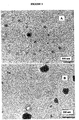
- TEM pictures of the nanoparticles composed of cHSA core and PSS/chitosan/PSS three-layered shell, prepared according to the procedure of the present invention are presented in Figure 3 .
- the size of the particles is smaller than 500 nm, and the size distribution is polydisperse.
- the DLS sizes are larger than the TEM-derived sizes. The reason of this is, that DLS gives hydrodynamic diameters of the protein together with its hydration shell (the coating polyelectrolytes are strongly hydrated as well), while TEM gives the own size of the particles (at high vacuum in the TEM chamber).
- the present invention directed to a sustained release drug formulation containing the pharmaceutically effective level of the nanocomposite of the invention, in combination with at least one pharmaceutically acceptable carrier and/or other excipient and optionally with other known pharmaceutically active drugs.
- the carrier and other excipient are "acceptable" in the sense, that they are compatible with the other ingredients of the formulation, and are not harmful to the recipient
- a sustained release drug formulation of the present invention can be in any usual forms of administration which suits therapy.
- Administration can be oral, in the form of tablets, capsules, pills, powders or liquids, parenteral, in the various forms of injections (cutaneous, subcutaneous, intravenous or intramuscular), or via inhalation.
- the nanoparticles of the present invention are especially suitable for the preparation of intravenous or inhalation formulations because of their size.
- the drug formulations are prepared by using generally accepted methods, that are well known for a person skilled in the art.
- the starting material is freeze-dryed interferon (Human Leukocyte Interferon (LE-IFN) of PBL Biomedical Laboratories, product number 11350-1), produced by blood leukocytes induced by Sendai virus, from which a solution is prepared at 4% with ion-free water filtered through 0.45 ⁇ m filter (ultrapure water). 10 mL of said LE-IFN solution is brought to pH 3.5 with hydrochloric acid and 3 mL of Na 2 SO 4 solution (1.6 M) is added to the solution while stirring with a magnetic stirrer. Stirring is continued for 30 minutes, during which time more than 90 % of the protein precipitates. The formed protein nanoparticles are centrifuged at 5000 rpm for 15 minutes.
- L-IFN Human Leukocyte Interferon
- PSS, M 200000 Da (Aldrich)] solution of 0.2 % concentration the pH of which is set to 3.5 using HCl.
- the dispersion is stirred vigorously for 20 minutes (using magnetic stirrer) and then centrifuged at 5000 rpm for 15 minutes to separate the LE-EFN/PSS particles.
- the supernatant is removed from the sediment of LE-IFN/PSS particles and the sediment is dispersed in chitosan (medium molecular weight, Aldrich) solution of 0.2 % concentration, the pH of which is set to 3.5 with HCl. After vigorous stirring for 20 minutes with a magnetic stirrer the LE-IFN/PSS/chitosan particles are centrifuged at 5000 rpm for 15 minutes.
- chitosan medium molecular weight, Aldrich
- PSS polystyrene sulfonate
- the supernatant of the sediment of LE-IFN/PSS/chitosan/PSS particles is removed and the sediment is dispersed in 1 mL HCl solution at pH 3.5.
- the final product is obtained form the dispersion by freeze-drying.
- the starting material is freeze-dried interferon (Human Leukocyte Interferon (LE-IFN) of PBL Biomedical Laboratories, product number 11350-1), produced by blood leukocytes induced by Sendai virus, from which a solution is prepared at 4% with ion-free water filtered through 0.45 ⁇ m filter (ultrapure water).
- 10 mL of said LE-IFN solution is set to pH 3.5 with hydrochloric acid and 3 mL of Na 2 SO 4 solution of 1.6 M concentration is added to the solution while stirring with a magnetic stirrer. Stirring is continued for 30 minutes, during which time more than 90 % of the protein precipitates.
- the formed protein nanoparticles are centrifuged at 5000 rpm for 15 minutes.
- PSS polystyrene sulfonate
- the supernatant of the sediment of LE-IFN/PSS/chitosan/PSS particles is removed and the sediment is dispersed in 1 mL HCl solution the pH of which is 3.5.
- the final product is obtained form the dispersion by freeze-drying.
- Example 1.a The procedure described in Example 1.a is repeated, with the exception that the centrifuged LE-IFN/PSS/chitosan/PSS nanoparticles are further dispersed in 10 mL of chitosan solution of 0.2 % concentration, the pH of which is set to 3.5 using HCl. The dispersion is stirred vigorously for 20 minutes (using magnetic stirrer) and the LE-IFN/PSS/chitosan/PSS/chitosan nanoparticles are cenrifuged at 5000 rpm for 15 minutes.
- a mixture of recombinant human interleukine-2 (rHuIL2, CytoShop) and human serum albumin is prepared in a ratio of 1:50, respectively, both proteins dissolved in PBS solution, and the mixture is freeze-dried.
- the freeze-dried protein mixture (protein) is dissolved at 4 % concentration in ion-free water filtered through 0.45 ⁇ m filter (ultrapure water).
- 10 mL of IL2 solution is set to pH 2.5 using acetic acid, and 2.5 mL of Na 3 PO 4 solution of 0.2 M concentration is added to the solution while stirring with magnetic stirrer. The stirring is continued for 20 minutes. During stirring more than 90 % of the protein precipitates.
- the so-formed protein nanoparticles are centrifuged at 5000 rpm for 15 minutes.
- chondroitin sulfate [KS, (Sigma)] solution of 0.05 % concentration set to pH 2.5 using acetic acid.
- the dispersion is stirred vigorously for 20 minutes (using magnetic stirrer) and then centrifuged at 5000 rpm for 15 minutes to separate the IL2/KS particles.
- the supernatant is removed from the sediment of IL2/KS/PEI particles and the sediment is dispersed in 10 mL of KS solution of 0.05 % concentration the pH of which is set to 2.5 using HCl. After vigorously stirring for 20 minutes (using magnetic stirrer) the IL2/KS/PEI/KS particles are centrifuged at 5000 rpm for 15 minutes.
- the supernatant of the sediment is removed and the protein nanoparticles of the sediment are dispersed in 10 mL of HS [Sigma, fast moving fraction] solution of 0.15 % concentration set to pH 3 using acetic acid.
- the dispersion is stirred vigorously for 20 minutes (using magnetic stirrer) and then centrifuged at 5000 rpm for 15 minutes to separate the TFN/HS particles.
- the supernatant is removed from the sediment of TNF/HS/PAH particles and the sediment is dispersed in 10 mL of HS solution of 0.15 % concentration set to pH 3.4 using HCl. After vigorous stirring for 20 minutes (using magnetic stirrer) the TNF/HS/PAH/HS particles are centrifuged at 5000 rpm for 15 minutes.
- the supernatant of the sediment of TNF/HS/PAH/HS particles is removed and the sediment is dispersed in 1 mL of acetic acid solution the pH of which is 3.4.
- the final product is obtained form the dispersion by freeze-drying.
- a solution of 4% concentration is prepared from the freeze-dried active agent LE-IFN with ion-free water filtered through 0.45 ⁇ m filter (ultrapure water). 10 mL of the LE-IFN solution is set to pH 8 with NaOH solution and 3 mL of LaCl 3 (Aldrich) solution of 0.014 M concentration is added to the protein solution during stirring with magnetic stirrer. Stirring is continued for 30 minutes, during which time more than 90 % of the protein precipitates. The formed protein nanoparticles are centrifuged at rotation speed of 5000 rpm for 15 minutes.
- the supernatant of the sediment is removed and the protein nanoparticles of the sediment are dispersed in 10 mL of PDDA [Aldrich, medium molecular weight] solution of 0.2 % concentration set to pH 8 using NaOH.
- the dispersion is stirred vigorously for 20 minutes (using magnetic stirrer) and then centrifuged at 5000 rpm for 15 minutes to separate the LE-IFN/PDDA particles.
- the supernatant is removed from the sediment of LE-IFN/PDDA particles and the sediment is dispersed in alginate (sodium alginate, Aldrich, viscosity 200000 - 400000 cP) solution of 0.2 % concentration, set to pH 8 with NaOH. After vigorous stirring for 20 minutes with magnetic stirrer the LE-IFN/PDDA/Alg particles are centrifuged at 3000 rpm for 15 minutes.
- alginate sodium alginate, Aldrich, viscosity 200000 - 400000 cP
- the LE-IFN/PSS/chitosan/PSS or LE-IFN/PSS/chitosan/PSS/chitosan bionanocomposites were dispersed at known concentrations in PBS buffer pH 6.8 and kept in a thermostate box at 37 °C.
- the suspensions were centrifuged after 24 hours. After centrifugation, the supernatants were analyzed by UV-VIS spectrometry for LE-IFN concentrations. Characteristic protein absorption maximum at wavelength ( ⁇ ) of 278 nm was used for analysis.
- the sediments were redispersed in fresh buffer solutions and the suspension put back to 37 °C into the thermostate box again for 24 hours. The release experiments were continued for 7 days.
- concentration of LE-IFN under the above condition have to be calculated by deconvolution of the envelop (LE-IFN + PSS) curve.
- Abs 261 and Abs 278 are the extinction of the (LE-INF + PSS) envelop curve at the given wavelengths.
- x and y are the unknown concentrations of LE-IFN and PSS, respectively.
- ⁇ LE-IFN and ⁇ PSS are the extinction coefficients of LE-IFN and PSS at the given wavelengths (278 or 261 nm). Solving the equations for x gives the concentration of the released protein drug in the LE-IFN and PSS mixture. PSS dissolves to some extent during the experiments.
- UV-VIS spectra of LE-IFN solution, PSS solution and of (LE-IFN + PSS) mixture are shown in Figure 4 .
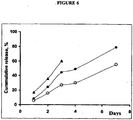
- the release kinetic curves were calculated on the basis of the dissolved LE-IFN concentrations, normalized for the mass of the whole nanocomposite.
- Figures 5 and 6 represent the release kinetic curves of four and three polyelectrolyte layer coated nanocomposites, respectively.
- the samples were prepared according to the above general procedure, with small variations in the protocol as for example seen in Table 1.
- the release kinetics correlated with the number of polyelectrolyte layers, but it did not correlate with the small variations in the other experimental conditions.
- Tablets having an average mass of 123 mg were pressed in a flat stamp of 8 mm diameter by applying 25 kN force.
- the protein drugs are formulated generally as loads on carrier surfaces.
- Protein drugs, according to the present invention can be formulated without carrier matrix as well, which has the benefit that in the primary particles the protein drug concentrations exceed that in the usual carrier-matrix formulations.
Landscapes
- Health & Medical Sciences (AREA)
- Chemical & Material Sciences (AREA)
- Engineering & Computer Science (AREA)
- Bioinformatics & Cheminformatics (AREA)
- Life Sciences & Earth Sciences (AREA)
- Nanotechnology (AREA)
- Medicinal Chemistry (AREA)
- Pharmacology & Pharmacy (AREA)
- General Health & Medical Sciences (AREA)
- Public Health (AREA)
- Animal Behavior & Ethology (AREA)
- Epidemiology (AREA)
- Veterinary Medicine (AREA)
- Physics & Mathematics (AREA)
- Immunology (AREA)
- Optics & Photonics (AREA)
- Biomedical Technology (AREA)
- Zoology (AREA)
- Proteomics, Peptides & Aminoacids (AREA)
- Gastroenterology & Hepatology (AREA)
- Biophysics (AREA)
- Biotechnology (AREA)
- General Engineering & Computer Science (AREA)
- Medical Informatics (AREA)
- Molecular Biology (AREA)
- Crystallography & Structural Chemistry (AREA)
- Medicinal Preparation (AREA)
- Medicines That Contain Protein Lipid Enzymes And Other Medicines (AREA)
- Pharmaceuticals Containing Other Organic And Inorganic Compounds (AREA)
Claims (11)
- Nanokomposit mit verzögerter Freisetzung, welchesa) mindestens einen Cytokin-Wirkstoff, welcher ionisch reversibel ausgefällt und als ein geladener, primärer Nanopartikel-Kern geformt ist, undb) um den erwähnten Kern eine 3 bis 5-schichtige Polyelektrolyt-Beschichtung, welche durch wechselnde Adsorption von gegensätzlich geladenen Polyelektrolyten geformt ist, wobei eine davon eine pH-abhängige und die andere eine vollkommen pH-unabhängige Dissoziation zeigt, enthält.
- Nanokomposit nach Anspruch 1, welches als Cytokin Interferon, Interleukin, Makrophagenentzündungsprotein, Tumornekrosefaktor oder eine Mischung dieser enthält.
- Nanokomposit nach Anspruch 1 oder Anspruch 2, wobei der Kern auch ein Trägerprotein enthält.
- Nanokomposit nach einem der Ansprüche 1 bis 3, welches natürliches humanes Interferon als Cytokin und humanes Serumalbumin als Trägerprotein enthält.
- Nanokomposit nach einem der Ansprüche 1 bis 4, wobei der Proteinkern durch Verwendung eines Elektrolytes, das bei einem pH-Wert unter dem isoelektrischen Punkt des Proteins ein zwei- oder dreiwertiges Anion oder bei einem pH-Wert über dem isoelektrischen Punkt des Proteins ein mehrwertiges Kation enthält, ausgefällt ist.
- Nanokomposit nach Anspruch 5, wobei der Proteinkern durch Verwendung einer Natriumsulfat-Lösung bei einem pH-Wert unter dem isoelektrischen Punkt des Proteins ausgefällt ist.
- Nanokomposit nach einem der Ansprüche 1 bis 6, wobei die Polyelektrolyt-Beschichtung mit negativ geladenem Polystyrensulfonat und positiv geladenem Chitosan geformt ist.
- Nanokomposit nach Anspruch 7, wobei der positiv geladene Kern mit einer dreifachigen Beschichtung aus negativ geladenem Polystyrensulfonat/positiv geladenem Chitosan/negativ geladenem Polystyrensulfonat bezogen ist.
- Pharmazeutische Zubereitung mit verzögerter Freisetzung, welche eine wirksame Menge an einem Nanokomposit nach einem der Ansprüche 1 bis 8 zusammen mit mindestens einem pharmazeutisch anwendbaren inerten Trägerstoff und/oder anderen Hilfsstoffen und gegebenenfalls einem oder mehreren weiteren pharmazeutischen Wirkstoffen enthält.
- Verwendung eines Nanokomposits nach einem der Ansprüche 1 bis 8 zur Herstellung einer pharmazeutischen Zubereitung mit verzögerter Freisetzung.
- Verfahren zur Herstellung eines Nanokomposits nach einem der Ansprüche 1 bis 8, dadurch gekennzeichnet, dass mani) einer gepufferten wässrigen Lösung von Cytokin-Wirkstoff oder einer Mischung von diesem mit einem Trägerprotein unter Rührena) bei einem pH-Wert unter dem isoelektrischen Punkt des Proteins oder der Proteine einen, ein zwei- oder drei-wertiges Anion enthaltenden Elektrolyten oderb) bei einem pH-Wert über dem isoelektrischen Punkt des Proteins oder der Proteine einen, ein mehrwertiges, nicht-hydrolisierendes Kation enthaltenden Elektrolyten
zusetzt;ii) die nach Punkt (a) gewonnenen positiv geladenen Partikel oder die nach Punkt (b) gewonnenen negativ geladenen Partikel durch Zentrifugieren isoliert;iii) dem im vorhergehenden Schritt gewonnenen Sediment unter Rühren eine, auf einen gleichen pH-Wert gepufferte Lösung eines ersten Polyelektrolyten mit entgegengesetzter Ladung wie die der ausgefällten Nanopartikel zusetzt;iv) die mit dem eine entgegengesetze Ladung wie das ausgefällte Protein aufweisenden ersten Polyelektrolyten bezogenen Nanokomposit-Partikel durch Zentrifugieren isoliert und gegebenenfalls mit Puffer wäscht;v) dem im vorhergehenden Schritt gewonnenen Sediment unter Rühren eine, auf einen gleichen pH-Wert gepufferte Lösung eines zweiten Polyelektrolyten mit entgegengesetzter Ladung wie die des ersten Polyelektrolyten zusetzt;vi) die mit zwei Polyelektrolyt-Schichten bezogenen Nanokomposit-Partikel mit der gleichen Ladung wie der Kern durch Zentrifugieren isoliert und gegebenenfalls mit Puffer wäscht;vii) die Schritte iii) bis vi) wiederholt, bis die gewünschte Anzahl Schichten von ersten und zweiten Polyelektrolyten erreicht ist, wobei eine davon eine pH-abhängige und die andere eine vollkommen pH-unabhängige Dissoziation zeigt; und schließlichviii) das die gewünschten 3 bis 5 Schichten enthaltende Nanokomposit-Sediment mit Kern-Hülle-Struktur, gefriertrocknet.
Applications Claiming Priority (2)
| Application Number | Priority Date | Filing Date | Title |
|---|---|---|---|
| HU0700203A HUP0700203A2 (en) | 2007-03-08 | 2007-03-08 | Sustained release, core-shell structure precipitated citokine bionanocomposit, a process for producing the same and use thereof |
| PCT/HU2008/000028 WO2008107729A1 (en) | 2007-03-08 | 2008-03-07 | Sustained release bionanocomposites, a process for producing the same and use thereof |
Publications (2)
| Publication Number | Publication Date |
|---|---|
| EP2170302A1 EP2170302A1 (de) | 2010-04-07 |
| EP2170302B1 true EP2170302B1 (de) | 2012-04-11 |
Family
ID=89987384
Family Applications (1)
| Application Number | Title | Priority Date | Filing Date |
|---|---|---|---|
| EP08719112A Not-in-force EP2170302B1 (de) | 2007-03-08 | 2008-03-07 | Bionano-komposite mit verzögerter freisetzung, verfahren zu ihrer herstellung und ihre verwendung |
Country Status (4)
| Country | Link |
|---|---|
| EP (1) | EP2170302B1 (de) |
| AT (1) | ATE552831T1 (de) |
| HU (1) | HUP0700203A2 (de) |
| WO (1) | WO2008107729A1 (de) |
Families Citing this family (6)
| Publication number | Priority date | Publication date | Assignee | Title |
|---|---|---|---|---|
| GB0921525D0 (en) * | 2009-12-08 | 2010-01-27 | Isis Innovation | Product and method |
| US7985733B1 (en) | 2010-01-06 | 2011-07-26 | The Medicines Company | Buffer-based method for preparing bivalirudin drug product |
| EP2417968A1 (de) | 2010-07-29 | 2012-02-15 | Consorzio per il Centro di Biomedicina Molecolare Scrl | Partikel mit Cytokinen, Antikörpern und Polymeren und deren Verwendung als Arzneimittel zur Behandlung von Krebs |
| EP2604288A1 (de) * | 2011-12-16 | 2013-06-19 | Biocant - Associação De Transferência De Tecnologia | Nanoteilchen und ihre Verwendungen |
| HU231076B1 (hu) * | 2015-07-31 | 2020-06-29 | Szegedi Tudományegyetem | Hatóanyagoknak a központi idegrendszerben történő szabályozott leadására alkalmas nanokompozit, eljárás annak előállítására és alkalmazása |
| CN113397032B (zh) * | 2021-05-24 | 2023-03-10 | 江苏省农业科学院 | 基于牛蒡糖蛋白的营养素递送体系及其制备方法和应用 |
Family Cites Families (2)
| Publication number | Priority date | Publication date | Assignee | Title |
|---|---|---|---|---|
| FR2686899B1 (fr) * | 1992-01-31 | 1995-09-01 | Rhone Poulenc Rorer Sa | Nouveaux polypeptides biologiquement actifs, leur preparation et compositions pharmaceutiques les contenant. |
| US20060228419A1 (en) * | 2005-04-07 | 2006-10-12 | Solubest Ltd. | Solvent-free process for preparation of hydrophilic dispersions of nanoparticles of inclusion complexes |
-
2007
- 2007-03-08 HU HU0700203A patent/HUP0700203A2/hu unknown
-
2008
- 2008-03-07 EP EP08719112A patent/EP2170302B1/de not_active Not-in-force
- 2008-03-07 WO PCT/HU2008/000028 patent/WO2008107729A1/en not_active Ceased
- 2008-03-07 AT AT08719112T patent/ATE552831T1/de active
Also Published As
| Publication number | Publication date |
|---|---|
| HU0700203D0 (en) | 2007-05-02 |
| ATE552831T1 (de) | 2012-04-15 |
| EP2170302A1 (de) | 2010-04-07 |
| WO2008107729A1 (en) | 2008-09-12 |
| HUP0700203A2 (en) | 2008-12-29 |
Similar Documents
| Publication | Publication Date | Title |
|---|---|---|
| Severino et al. | Alginate nanoparticles for drug delivery and targeting | |
| Fan et al. | Preparation of insulin nanoparticles and their encapsulation with biodegradable polyelectrolytes via the layer-by-layer adsorption | |
| Hu et al. | Synthesis and characterization of chitosan–poly (acrylic acid) nanoparticles | |
| Mohanraj et al. | Silica nanoparticle coated liposomes: a new type of hybrid nanocapsule for proteins | |
| EP1255534B1 (de) | Herstellungsverfahren von kolloidale systeme enthaltenden mikrokugeln | |
| Jana et al. | Alginate based nanocarriers for drug delivery applications | |
| Qi et al. | Nanoparticles with dextran/chitosan shell and BSA/chitosan core—doxorubicin loading and delivery | |
| Chen et al. | Surface modification of mitoxantrone-loaded PLGA nanospheres with chitosan | |
| EP2170302B1 (de) | Bionano-komposite mit verzögerter freisetzung, verfahren zu ihrer herstellung und ihre verwendung | |
| EP3417934B1 (de) | Vesikel mit eingekapselter substanz und verfahren zur herstellung davon | |
| US20090004278A1 (en) | Enzymatically Crosslinked Protein Nanoparticles | |
| EP1691791A2 (de) | Kapseln aus mehrschichtigen neutralen polymerfilmen, die durch hydrogenverbindung verbunden sind | |
| Obeidat et al. | Chitosan nanoparticles: approaches to preparation, key properties, drug delivery systems, and developments in therapeutic efficacy | |
| Rathor et al. | A comprehensive review on role of nanoparticles in therapeutic delivery of medicine | |
| KR100792557B1 (ko) | 나노 캡슐화를 이용하여 제조된 지질 핵 및 고분자 쉘구조를 갖는 단백질 약물 전달용 나노 미립구 | |
| CN111904945B (zh) | 一种纳米混悬液的口服给药体系和构建方法及其应用 | |
| EP3509644A1 (de) | Verfahren zur stabilisierung und isolierung von nanopartikeln | |
| EP1561460A1 (de) | Nanoteilchen zur verabreichung von wirkstoffen, verfahren zur herstellung dieser teilchen und diese enthaltende zusammensetzung | |
| WO2009079688A1 (en) | Porous silica shell-mediated assembly of macromolecular capsules | |
| CN114081956A (zh) | 聚电解质多层膜-碳酸钙纳米药物载体及其制备方法与应用 | |
| Shao et al. | Novel chitosan microsphere-templated microcapsules suitable for spontaneous loading of heparin | |
| Hanafy et al. | Optimizing CaCO3 matrix might allow to raise their potential use in biomedical application | |
| Çetin et al. | Preparation and characterization of BSA-loaded alginate microspheres | |
| Abdul-Jabbar et al. | Polyelectrolyte Multi-Layered Griseofulvin Nanoparticles: Conventional versus Continuous In-Situ Layer-by-Layer Fabrication | |
| JP4974533B2 (ja) | ジスルフィド架橋したタンパク質ナノ粒子 |
Legal Events
| Date | Code | Title | Description |
|---|---|---|---|
| PUAI | Public reference made under article 153(3) epc to a published international application that has entered the european phase |
Free format text: ORIGINAL CODE: 0009012 |
|
| 17P | Request for examination filed |
Effective date: 20091008 |
|
| AK | Designated contracting states |
Kind code of ref document: A1 Designated state(s): AT BE BG CH CY CZ DE DK EE ES FI FR GB GR HR HU IE IS IT LI LT LU LV MC MT NL NO PL PT RO SE SI SK TR |
|
| AX | Request for extension of the european patent |
Extension state: AL BA MK RS |
|
| DAX | Request for extension of the european patent (deleted) | ||
| GRAP | Despatch of communication of intention to grant a patent |
Free format text: ORIGINAL CODE: EPIDOSNIGR1 |
|
| GRAS | Grant fee paid |
Free format text: ORIGINAL CODE: EPIDOSNIGR3 |
|
| GRAA | (expected) grant |
Free format text: ORIGINAL CODE: 0009210 |
|
| AK | Designated contracting states |
Kind code of ref document: B1 Designated state(s): AT BE BG CH CY CZ DE DK EE ES FI FR GB GR HR HU IE IS IT LI LT LU LV MC MT NL NO PL PT RO SE SI SK TR |
|
| REG | Reference to a national code |
Ref country code: GB Ref legal event code: FG4D |
|
| REG | Reference to a national code |
Ref country code: CH Ref legal event code: EP |
|
| REG | Reference to a national code |
Ref country code: AT Ref legal event code: REF Ref document number: 552831 Country of ref document: AT Kind code of ref document: T Effective date: 20120415 |
|
| REG | Reference to a national code |
Ref country code: IE Ref legal event code: FG4D |
|
| REG | Reference to a national code |
Ref country code: DE Ref legal event code: R096 Ref document number: 602008014809 Country of ref document: DE Effective date: 20120606 |
|
| REG | Reference to a national code |
Ref country code: NL Ref legal event code: T3 |
|
| REG | Reference to a national code |
Ref country code: SE Ref legal event code: TRGR |
|
| REG | Reference to a national code |
Ref country code: AT Ref legal event code: MK05 Ref document number: 552831 Country of ref document: AT Kind code of ref document: T Effective date: 20120411 |
|
| LTIE | Lt: invalidation of european patent or patent extension |
Effective date: 20120411 |
|
| PG25 | Lapsed in a contracting state [announced via postgrant information from national office to epo] |
Ref country code: LT Free format text: LAPSE BECAUSE OF FAILURE TO SUBMIT A TRANSLATION OF THE DESCRIPTION OR TO PAY THE FEE WITHIN THE PRESCRIBED TIME-LIMIT Effective date: 20120411 Ref country code: PL Free format text: LAPSE BECAUSE OF FAILURE TO SUBMIT A TRANSLATION OF THE DESCRIPTION OR TO PAY THE FEE WITHIN THE PRESCRIBED TIME-LIMIT Effective date: 20120411 Ref country code: NO Free format text: LAPSE BECAUSE OF FAILURE TO SUBMIT A TRANSLATION OF THE DESCRIPTION OR TO PAY THE FEE WITHIN THE PRESCRIBED TIME-LIMIT Effective date: 20120711 Ref country code: FI Free format text: LAPSE BECAUSE OF FAILURE TO SUBMIT A TRANSLATION OF THE DESCRIPTION OR TO PAY THE FEE WITHIN THE PRESCRIBED TIME-LIMIT Effective date: 20120411 Ref country code: IS Free format text: LAPSE BECAUSE OF FAILURE TO SUBMIT A TRANSLATION OF THE DESCRIPTION OR TO PAY THE FEE WITHIN THE PRESCRIBED TIME-LIMIT Effective date: 20120811 Ref country code: CY Free format text: LAPSE BECAUSE OF FAILURE TO SUBMIT A TRANSLATION OF THE DESCRIPTION OR TO PAY THE FEE WITHIN THE PRESCRIBED TIME-LIMIT Effective date: 20120411 |
|
| PG25 | Lapsed in a contracting state [announced via postgrant information from national office to epo] |
Ref country code: HR Free format text: LAPSE BECAUSE OF FAILURE TO SUBMIT A TRANSLATION OF THE DESCRIPTION OR TO PAY THE FEE WITHIN THE PRESCRIBED TIME-LIMIT Effective date: 20120411 Ref country code: GR Free format text: LAPSE BECAUSE OF FAILURE TO SUBMIT A TRANSLATION OF THE DESCRIPTION OR TO PAY THE FEE WITHIN THE PRESCRIBED TIME-LIMIT Effective date: 20120712 Ref country code: SI Free format text: LAPSE BECAUSE OF FAILURE TO SUBMIT A TRANSLATION OF THE DESCRIPTION OR TO PAY THE FEE WITHIN THE PRESCRIBED TIME-LIMIT Effective date: 20120411 Ref country code: PT Free format text: LAPSE BECAUSE OF FAILURE TO SUBMIT A TRANSLATION OF THE DESCRIPTION OR TO PAY THE FEE WITHIN THE PRESCRIBED TIME-LIMIT Effective date: 20120813 Ref country code: LV Free format text: LAPSE BECAUSE OF FAILURE TO SUBMIT A TRANSLATION OF THE DESCRIPTION OR TO PAY THE FEE WITHIN THE PRESCRIBED TIME-LIMIT Effective date: 20120411 |
|
| PG25 | Lapsed in a contracting state [announced via postgrant information from national office to epo] |
Ref country code: BE Free format text: LAPSE BECAUSE OF FAILURE TO SUBMIT A TRANSLATION OF THE DESCRIPTION OR TO PAY THE FEE WITHIN THE PRESCRIBED TIME-LIMIT Effective date: 20120411 |
|
| PG25 | Lapsed in a contracting state [announced via postgrant information from national office to epo] |
Ref country code: EE Free format text: LAPSE BECAUSE OF FAILURE TO SUBMIT A TRANSLATION OF THE DESCRIPTION OR TO PAY THE FEE WITHIN THE PRESCRIBED TIME-LIMIT Effective date: 20120411 Ref country code: DK Free format text: LAPSE BECAUSE OF FAILURE TO SUBMIT A TRANSLATION OF THE DESCRIPTION OR TO PAY THE FEE WITHIN THE PRESCRIBED TIME-LIMIT Effective date: 20120411 Ref country code: SK Free format text: LAPSE BECAUSE OF FAILURE TO SUBMIT A TRANSLATION OF THE DESCRIPTION OR TO PAY THE FEE WITHIN THE PRESCRIBED TIME-LIMIT Effective date: 20120411 Ref country code: CZ Free format text: LAPSE BECAUSE OF FAILURE TO SUBMIT A TRANSLATION OF THE DESCRIPTION OR TO PAY THE FEE WITHIN THE PRESCRIBED TIME-LIMIT Effective date: 20120411 Ref country code: AT Free format text: LAPSE BECAUSE OF FAILURE TO SUBMIT A TRANSLATION OF THE DESCRIPTION OR TO PAY THE FEE WITHIN THE PRESCRIBED TIME-LIMIT Effective date: 20120411 Ref country code: RO Free format text: LAPSE BECAUSE OF FAILURE TO SUBMIT A TRANSLATION OF THE DESCRIPTION OR TO PAY THE FEE WITHIN THE PRESCRIBED TIME-LIMIT Effective date: 20120411 |
|
| PLBE | No opposition filed within time limit |
Free format text: ORIGINAL CODE: 0009261 |
|
| STAA | Information on the status of an ep patent application or granted ep patent |
Free format text: STATUS: NO OPPOSITION FILED WITHIN TIME LIMIT |
|
| PG25 | Lapsed in a contracting state [announced via postgrant information from national office to epo] |
Ref country code: IT Free format text: LAPSE BECAUSE OF FAILURE TO SUBMIT A TRANSLATION OF THE DESCRIPTION OR TO PAY THE FEE WITHIN THE PRESCRIBED TIME-LIMIT Effective date: 20120411 |
|
| 26N | No opposition filed |
Effective date: 20130114 |
|
| PG25 | Lapsed in a contracting state [announced via postgrant information from national office to epo] |
Ref country code: ES Free format text: LAPSE BECAUSE OF FAILURE TO SUBMIT A TRANSLATION OF THE DESCRIPTION OR TO PAY THE FEE WITHIN THE PRESCRIBED TIME-LIMIT Effective date: 20120722 |
|
| REG | Reference to a national code |
Ref country code: DE Ref legal event code: R097 Ref document number: 602008014809 Country of ref document: DE Effective date: 20130114 |
|
| REG | Reference to a national code |
Ref country code: HU Ref legal event code: AG4A Ref document number: E015573 Country of ref document: HU |
|
| PG25 | Lapsed in a contracting state [announced via postgrant information from national office to epo] |
Ref country code: BG Free format text: LAPSE BECAUSE OF FAILURE TO SUBMIT A TRANSLATION OF THE DESCRIPTION OR TO PAY THE FEE WITHIN THE PRESCRIBED TIME-LIMIT Effective date: 20120711 |
|
| PG25 | Lapsed in a contracting state [announced via postgrant information from national office to epo] |
Ref country code: MC Free format text: LAPSE BECAUSE OF NON-PAYMENT OF DUE FEES Effective date: 20130331 |
|
| REG | Reference to a national code |
Ref country code: IE Ref legal event code: MM4A |
|
| PG25 | Lapsed in a contracting state [announced via postgrant information from national office to epo] |
Ref country code: IE Free format text: LAPSE BECAUSE OF NON-PAYMENT OF DUE FEES Effective date: 20130307 |
|
| PG25 | Lapsed in a contracting state [announced via postgrant information from national office to epo] |
Ref country code: MT Free format text: LAPSE BECAUSE OF FAILURE TO SUBMIT A TRANSLATION OF THE DESCRIPTION OR TO PAY THE FEE WITHIN THE PRESCRIBED TIME-LIMIT Effective date: 20120411 |
|
| PG25 | Lapsed in a contracting state [announced via postgrant information from national office to epo] |
Ref country code: TR Free format text: LAPSE BECAUSE OF FAILURE TO SUBMIT A TRANSLATION OF THE DESCRIPTION OR TO PAY THE FEE WITHIN THE PRESCRIBED TIME-LIMIT Effective date: 20120411 |
|
| PG25 | Lapsed in a contracting state [announced via postgrant information from national office to epo] |
Ref country code: LU Free format text: LAPSE BECAUSE OF NON-PAYMENT OF DUE FEES Effective date: 20130307 |
|
| REG | Reference to a national code |
Ref country code: FR Ref legal event code: PLFP Year of fee payment: 9 |
|
| PGFP | Annual fee paid to national office [announced via postgrant information from national office to epo] |
Ref country code: CH Payment date: 20160311 Year of fee payment: 9 Ref country code: DE Payment date: 20160302 Year of fee payment: 9 Ref country code: NL Payment date: 20160310 Year of fee payment: 9 |
|
| PGFP | Annual fee paid to national office [announced via postgrant information from national office to epo] |
Ref country code: SE Payment date: 20160311 Year of fee payment: 9 Ref country code: GB Payment date: 20160302 Year of fee payment: 9 Ref country code: FR Payment date: 20160223 Year of fee payment: 9 |
|
| REG | Reference to a national code |
Ref country code: DE Ref legal event code: R119 Ref document number: 602008014809 Country of ref document: DE |
|
| REG | Reference to a national code |
Ref country code: SE Ref legal event code: EUG Ref country code: CH Ref legal event code: PL |
|
| REG | Reference to a national code |
Ref country code: NL Ref legal event code: MM Effective date: 20170401 |
|
| GBPC | Gb: european patent ceased through non-payment of renewal fee |
Effective date: 20170307 |
|
| PG25 | Lapsed in a contracting state [announced via postgrant information from national office to epo] |
Ref country code: SE Free format text: LAPSE BECAUSE OF NON-PAYMENT OF DUE FEES Effective date: 20170308 |
|
| REG | Reference to a national code |
Ref country code: FR Ref legal event code: ST Effective date: 20171130 |
|
| PG25 | Lapsed in a contracting state [announced via postgrant information from national office to epo] |
Ref country code: FR Free format text: LAPSE BECAUSE OF NON-PAYMENT OF DUE FEES Effective date: 20170331 Ref country code: NL Free format text: LAPSE BECAUSE OF NON-PAYMENT OF DUE FEES Effective date: 20170401 Ref country code: DE Free format text: LAPSE BECAUSE OF NON-PAYMENT OF DUE FEES Effective date: 20171003 |
|
| PG25 | Lapsed in a contracting state [announced via postgrant information from national office to epo] |
Ref country code: LI Free format text: LAPSE BECAUSE OF NON-PAYMENT OF DUE FEES Effective date: 20170331 Ref country code: GB Free format text: LAPSE BECAUSE OF NON-PAYMENT OF DUE FEES Effective date: 20170307 Ref country code: CH Free format text: LAPSE BECAUSE OF NON-PAYMENT OF DUE FEES Effective date: 20170331 |
|
| PGFP | Annual fee paid to national office [announced via postgrant information from national office to epo] |
Ref country code: HU Payment date: 20180605 Year of fee payment: 11 |
|
| PG25 | Lapsed in a contracting state [announced via postgrant information from national office to epo] |
Ref country code: HU Free format text: LAPSE BECAUSE OF NON-PAYMENT OF DUE FEES Effective date: 20190308 |