EP2163741A1 - No<sb>x</sb>purification system, and method for control of no<sb>x</sb>purification system - Google Patents
No<sb>x</sb>purification system, and method for control of no<sb>x</sb>purification system Download PDFInfo
- Publication number
- EP2163741A1 EP2163741A1 EP20080752601 EP08752601A EP2163741A1 EP 2163741 A1 EP2163741 A1 EP 2163741A1 EP 20080752601 EP20080752601 EP 20080752601 EP 08752601 A EP08752601 A EP 08752601A EP 2163741 A1 EP2163741 A1 EP 2163741A1
- Authority
- EP
- European Patent Office
- Prior art keywords
- exhaust gas
- oxidation catalyst
- nox
- catalyst
- upstream
- Prior art date
- Legal status (The legal status is an assumption and is not a legal conclusion. Google has not performed a legal analysis and makes no representation as to the accuracy of the status listed.)
- Withdrawn
Links
Images


Classifications
-
- F—MECHANICAL ENGINEERING; LIGHTING; HEATING; WEAPONS; BLASTING
- F01—MACHINES OR ENGINES IN GENERAL; ENGINE PLANTS IN GENERAL; STEAM ENGINES
- F01N—GAS-FLOW SILENCERS OR EXHAUST APPARATUS FOR MACHINES OR ENGINES IN GENERAL; GAS-FLOW SILENCERS OR EXHAUST APPARATUS FOR INTERNAL-COMBUSTION ENGINES
- F01N3/00—Exhaust or silencing apparatus having means for purifying, rendering innocuous, or otherwise treating exhaust
- F01N3/08—Exhaust or silencing apparatus having means for purifying, rendering innocuous, or otherwise treating exhaust for rendering innocuous
- F01N3/10—Exhaust or silencing apparatus having means for purifying, rendering innocuous, or otherwise treating exhaust for rendering innocuous by thermal or catalytic conversion of noxious components of exhaust
- F01N3/18—Exhaust or silencing apparatus having means for purifying, rendering innocuous, or otherwise treating exhaust for rendering innocuous by thermal or catalytic conversion of noxious components of exhaust characterised by methods of operation; Control
- F01N3/20—Exhaust or silencing apparatus having means for purifying, rendering innocuous, or otherwise treating exhaust for rendering innocuous by thermal or catalytic conversion of noxious components of exhaust characterised by methods of operation; Control specially adapted for catalytic conversion
- F01N3/206—Adding periodically or continuously substances to exhaust gases for promoting purification, e.g. catalytic material in liquid form, NOx reducing agents
- F01N3/2066—Selective catalytic reduction [SCR]
-
- B—PERFORMING OPERATIONS; TRANSPORTING
- B01—PHYSICAL OR CHEMICAL PROCESSES OR APPARATUS IN GENERAL
- B01D—SEPARATION
- B01D53/00—Separation of gases or vapours; Recovering vapours of volatile solvents from gases; Chemical or biological purification of waste gases, e.g. engine exhaust gases, smoke, fumes, flue gases, aerosols
- B01D53/34—Chemical or biological purification of waste gases
- B01D53/92—Chemical or biological purification of waste gases of engine exhaust gases
- B01D53/94—Chemical or biological purification of waste gases of engine exhaust gases by catalytic processes
- B01D53/944—Simultaneously removing carbon monoxide, hydrocarbons or carbon making use of oxidation catalysts
-
- B—PERFORMING OPERATIONS; TRANSPORTING
- B01—PHYSICAL OR CHEMICAL PROCESSES OR APPARATUS IN GENERAL
- B01D—SEPARATION
- B01D53/00—Separation of gases or vapours; Recovering vapours of volatile solvents from gases; Chemical or biological purification of waste gases, e.g. engine exhaust gases, smoke, fumes, flue gases, aerosols
- B01D53/34—Chemical or biological purification of waste gases
- B01D53/92—Chemical or biological purification of waste gases of engine exhaust gases
- B01D53/94—Chemical or biological purification of waste gases of engine exhaust gases by catalytic processes
- B01D53/9459—Removing one or more of nitrogen oxides, carbon monoxide, or hydrocarbons by multiple successive catalytic functions; systems with more than one different function, e.g. zone coated catalysts
- B01D53/9477—Removing one or more of nitrogen oxides, carbon monoxide, or hydrocarbons by multiple successive catalytic functions; systems with more than one different function, e.g. zone coated catalysts with catalysts positioned on separate bricks, e.g. exhaust systems
-
- B—PERFORMING OPERATIONS; TRANSPORTING
- B01—PHYSICAL OR CHEMICAL PROCESSES OR APPARATUS IN GENERAL
- B01D—SEPARATION
- B01D53/00—Separation of gases or vapours; Recovering vapours of volatile solvents from gases; Chemical or biological purification of waste gases, e.g. engine exhaust gases, smoke, fumes, flue gases, aerosols
- B01D53/34—Chemical or biological purification of waste gases
- B01D53/92—Chemical or biological purification of waste gases of engine exhaust gases
- B01D53/94—Chemical or biological purification of waste gases of engine exhaust gases by catalytic processes
- B01D53/9495—Controlling the catalytic process
-
- F—MECHANICAL ENGINEERING; LIGHTING; HEATING; WEAPONS; BLASTING
- F01—MACHINES OR ENGINES IN GENERAL; ENGINE PLANTS IN GENERAL; STEAM ENGINES
- F01N—GAS-FLOW SILENCERS OR EXHAUST APPARATUS FOR MACHINES OR ENGINES IN GENERAL; GAS-FLOW SILENCERS OR EXHAUST APPARATUS FOR INTERNAL-COMBUSTION ENGINES
- F01N13/00—Exhaust or silencing apparatus characterised by constructional features
- F01N13/009—Exhaust or silencing apparatus characterised by constructional features having two or more separate purifying devices arranged in series
-
- F—MECHANICAL ENGINEERING; LIGHTING; HEATING; WEAPONS; BLASTING
- F01—MACHINES OR ENGINES IN GENERAL; ENGINE PLANTS IN GENERAL; STEAM ENGINES
- F01N—GAS-FLOW SILENCERS OR EXHAUST APPARATUS FOR MACHINES OR ENGINES IN GENERAL; GAS-FLOW SILENCERS OR EXHAUST APPARATUS FOR INTERNAL-COMBUSTION ENGINES
- F01N13/00—Exhaust or silencing apparatus characterised by constructional features
- F01N13/009—Exhaust or silencing apparatus characterised by constructional features having two or more separate purifying devices arranged in series
- F01N13/0093—Exhaust or silencing apparatus characterised by constructional features having two or more separate purifying devices arranged in series the purifying devices are of the same type
-
- F—MECHANICAL ENGINEERING; LIGHTING; HEATING; WEAPONS; BLASTING
- F02—COMBUSTION ENGINES; HOT-GAS OR COMBUSTION-PRODUCT ENGINE PLANTS
- F02D—CONTROLLING COMBUSTION ENGINES
- F02D41/00—Electrical control of supply of combustible mixture or its constituents
- F02D41/02—Circuit arrangements for generating control signals
- F02D41/021—Introducing corrections for particular conditions exterior to the engine
- F02D41/0235—Introducing corrections for particular conditions exterior to the engine in relation with the state of the exhaust gas treating apparatus
- F02D41/024—Introducing corrections for particular conditions exterior to the engine in relation with the state of the exhaust gas treating apparatus to increase temperature of the exhaust gas treating apparatus
- F02D41/025—Introducing corrections for particular conditions exterior to the engine in relation with the state of the exhaust gas treating apparatus to increase temperature of the exhaust gas treating apparatus by changing the composition of the exhaust gas, e.g. for exothermic reaction on exhaust gas treating apparatus
-
- F—MECHANICAL ENGINEERING; LIGHTING; HEATING; WEAPONS; BLASTING
- F02—COMBUSTION ENGINES; HOT-GAS OR COMBUSTION-PRODUCT ENGINE PLANTS
- F02D—CONTROLLING COMBUSTION ENGINES
- F02D41/00—Electrical control of supply of combustible mixture or its constituents
- F02D41/02—Circuit arrangements for generating control signals
- F02D41/14—Introducing closed-loop corrections
- F02D41/1438—Introducing closed-loop corrections using means for determining characteristics of the combustion gases; Sensors therefor
- F02D41/1444—Introducing closed-loop corrections using means for determining characteristics of the combustion gases; Sensors therefor characterised by the characteristics of the combustion gases
- F02D41/1446—Introducing closed-loop corrections using means for determining characteristics of the combustion gases; Sensors therefor characterised by the characteristics of the combustion gases the characteristics being exhaust temperatures
-
- B—PERFORMING OPERATIONS; TRANSPORTING
- B01—PHYSICAL OR CHEMICAL PROCESSES OR APPARATUS IN GENERAL
- B01D—SEPARATION
- B01D2251/00—Reactants
- B01D2251/20—Reductants
- B01D2251/206—Ammonium compounds
- B01D2251/2062—Ammonia
-
- B—PERFORMING OPERATIONS; TRANSPORTING
- B01—PHYSICAL OR CHEMICAL PROCESSES OR APPARATUS IN GENERAL
- B01D—SEPARATION
- B01D53/00—Separation of gases or vapours; Recovering vapours of volatile solvents from gases; Chemical or biological purification of waste gases, e.g. engine exhaust gases, smoke, fumes, flue gases, aerosols
- B01D53/34—Chemical or biological purification of waste gases
- B01D53/92—Chemical or biological purification of waste gases of engine exhaust gases
- B01D53/94—Chemical or biological purification of waste gases of engine exhaust gases by catalytic processes
- B01D53/9404—Removing only nitrogen compounds
- B01D53/9409—Nitrogen oxides
- B01D53/9413—Processes characterised by a specific catalyst
- B01D53/9418—Processes characterised by a specific catalyst for removing nitrogen oxides by selective catalytic reduction [SCR] using a reducing agent in a lean exhaust gas
-
- F—MECHANICAL ENGINEERING; LIGHTING; HEATING; WEAPONS; BLASTING
- F01—MACHINES OR ENGINES IN GENERAL; ENGINE PLANTS IN GENERAL; STEAM ENGINES
- F01N—GAS-FLOW SILENCERS OR EXHAUST APPARATUS FOR MACHINES OR ENGINES IN GENERAL; GAS-FLOW SILENCERS OR EXHAUST APPARATUS FOR INTERNAL-COMBUSTION ENGINES
- F01N2570/00—Exhaust treating apparatus eliminating, absorbing or adsorbing specific elements or compounds
- F01N2570/14—Nitrogen oxides
-
- F—MECHANICAL ENGINEERING; LIGHTING; HEATING; WEAPONS; BLASTING
- F01—MACHINES OR ENGINES IN GENERAL; ENGINE PLANTS IN GENERAL; STEAM ENGINES
- F01N—GAS-FLOW SILENCERS OR EXHAUST APPARATUS FOR MACHINES OR ENGINES IN GENERAL; GAS-FLOW SILENCERS OR EXHAUST APPARATUS FOR INTERNAL-COMBUSTION ENGINES
- F01N2610/00—Adding substances to exhaust gases
- F01N2610/02—Adding substances to exhaust gases the substance being ammonia or urea
-
- F—MECHANICAL ENGINEERING; LIGHTING; HEATING; WEAPONS; BLASTING
- F01—MACHINES OR ENGINES IN GENERAL; ENGINE PLANTS IN GENERAL; STEAM ENGINES
- F01N—GAS-FLOW SILENCERS OR EXHAUST APPARATUS FOR MACHINES OR ENGINES IN GENERAL; GAS-FLOW SILENCERS OR EXHAUST APPARATUS FOR INTERNAL-COMBUSTION ENGINES
- F01N2610/00—Adding substances to exhaust gases
- F01N2610/03—Adding substances to exhaust gases the substance being hydrocarbons, e.g. engine fuel
-
- F—MECHANICAL ENGINEERING; LIGHTING; HEATING; WEAPONS; BLASTING
- F02—COMBUSTION ENGINES; HOT-GAS OR COMBUSTION-PRODUCT ENGINE PLANTS
- F02D—CONTROLLING COMBUSTION ENGINES
- F02D2250/00—Engine control related to specific problems or objectives
- F02D2250/36—Control for minimising NOx emissions
-
- F—MECHANICAL ENGINEERING; LIGHTING; HEATING; WEAPONS; BLASTING
- F02—COMBUSTION ENGINES; HOT-GAS OR COMBUSTION-PRODUCT ENGINE PLANTS
- F02D—CONTROLLING COMBUSTION ENGINES
- F02D41/00—Electrical control of supply of combustible mixture or its constituents
- F02D41/02—Circuit arrangements for generating control signals
- F02D41/14—Introducing closed-loop corrections
- F02D41/1438—Introducing closed-loop corrections using means for determining characteristics of the combustion gases; Sensors therefor
- F02D41/1444—Introducing closed-loop corrections using means for determining characteristics of the combustion gases; Sensors therefor characterised by the characteristics of the combustion gases
- F02D41/1454—Introducing closed-loop corrections using means for determining characteristics of the combustion gases; Sensors therefor characterised by the characteristics of the combustion gases the characteristics being an oxygen content or concentration or the air-fuel ratio
-
- F—MECHANICAL ENGINEERING; LIGHTING; HEATING; WEAPONS; BLASTING
- F02—COMBUSTION ENGINES; HOT-GAS OR COMBUSTION-PRODUCT ENGINE PLANTS
- F02D—CONTROLLING COMBUSTION ENGINES
- F02D41/00—Electrical control of supply of combustible mixture or its constituents
- F02D41/30—Controlling fuel injection
- F02D41/38—Controlling fuel injection of the high pressure type
- F02D41/40—Controlling fuel injection of the high pressure type with means for controlling injection timing or duration
- F02D41/402—Multiple injections
- F02D41/405—Multiple injections with post injections
-
- Y—GENERAL TAGGING OF NEW TECHNOLOGICAL DEVELOPMENTS; GENERAL TAGGING OF CROSS-SECTIONAL TECHNOLOGIES SPANNING OVER SEVERAL SECTIONS OF THE IPC; TECHNICAL SUBJECTS COVERED BY FORMER USPC CROSS-REFERENCE ART COLLECTIONS [XRACs] AND DIGESTS
- Y02—TECHNOLOGIES OR APPLICATIONS FOR MITIGATION OR ADAPTATION AGAINST CLIMATE CHANGE
- Y02A—TECHNOLOGIES FOR ADAPTATION TO CLIMATE CHANGE
- Y02A50/00—TECHNOLOGIES FOR ADAPTATION TO CLIMATE CHANGE in human health protection, e.g. against extreme weather
- Y02A50/20—Air quality improvement or preservation, e.g. vehicle emission control or emission reduction by using catalytic converters
-
- Y—GENERAL TAGGING OF NEW TECHNOLOGICAL DEVELOPMENTS; GENERAL TAGGING OF CROSS-SECTIONAL TECHNOLOGIES SPANNING OVER SEVERAL SECTIONS OF THE IPC; TECHNICAL SUBJECTS COVERED BY FORMER USPC CROSS-REFERENCE ART COLLECTIONS [XRACs] AND DIGESTS
- Y02—TECHNOLOGIES OR APPLICATIONS FOR MITIGATION OR ADAPTATION AGAINST CLIMATE CHANGE
- Y02T—CLIMATE CHANGE MITIGATION TECHNOLOGIES RELATED TO TRANSPORTATION
- Y02T10/00—Road transport of goods or passengers
- Y02T10/10—Internal combustion engine [ICE] based vehicles
- Y02T10/12—Improving ICE efficiencies
Definitions
- the present invention relates to a NOx purification system including oxidation catalysts on the upstream side of an exhaust gas passage and a selective reduction NOx catalyst (SCR catalyst) on the downstream side of the passage, and also relates to a method for control of the NOx purification system.
- SCR catalyst selective reduction NOx catalyst
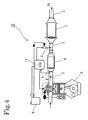
- a conventional NOx purification system 1X including a selective reduction NOx catalyst (SCR catalyst) 7 for reducing NOx is provided with the selective reduction NOx catalyst 7 and an ammonia solution supply unit 6 upstream thereof.
- the ammonia solution supply unit 6 is a device for feeding ammonia (NH 3 ) to the selective reduction NOx catalyst 7 and supplies an ammonia solution, such as aqueous urea, that becomes an ammonia source, into the exhaust gas G in an exhaust gas passage 3.
- the urea fed into the exhaust gas passage 3 produces ammonia by being hydrolyzed by heat of the exhaust gas G, or hydrolyzed through the hydrolyzing function, given to the ammonia selective reduction NOx catalyst 7, using heat and steam in the exhaust gas G.
- urea is converted into ammonia by a hydrolysis catalyst provided between the ammonia solution supply unit 6 and the ammonia selective reduction NOx catalyst 7.
- This hydrolysis reaction is represented by "(NH 2 ) 2 CO+H 2 O ⁇ 2NH 3 +CO 2 ".
- a selective catalytic NOx reduction is performed on the selective reduction NOx catalyst to purify NOx.
- Such reactions progress even if oxygen coexists, and 1 mole of ammonia (NH 3 ) reacts per mole of nitric oxide (NO).
- NH 3 ammonia
- NO+NO 2 +2NH 3 ⁇ 2N 2 +3H 2 O has the fastest reaction rate
- 4NO+4NH 3 +O 2 ⁇ 4N 2 +6H 2 O has the second fastest.
- the NOx purification performance is greatly influenced by the ratio between nitric oxide (NO) and nitrogen dioxide (NO 2 ) that are coexisting gas in the exhaust gas supplied to the selective reduction NOx catalyst.
- Fig. 3 shows the NOx purification performances obtained as the result of simulated gas tests performed with different ratios between NO and NO 2 coexisting in the supplied exhaust gas in a urea-SCR catalyst system.
- the NO:NO 2 ratio is 50:50.
- the ratio of NO 2 is extremely small in the NO:NO 2 ratio in the exhaust gas emitted from diesel engines. This is one of the factors for degradation in the NOx purification performance in the low temperature range. Accordingly, in most of the NOx purification systems using a selective reduction NOx catalyst, the NO 2 ratio is increased to improve NOx purification performance in the low temperature range.
- the NO 2 ratio is increased by oxidizing NO in exhaust gas, using an oxidation catalyst provided upstream of an ammonia solution supply unit such as a urea delivery valve.
- hydrocarbon (HC) being part of fuel
- HC hydrocarbon
- the upstream (prior) oxidation catalyst are supplied to the upstream (prior) oxidation catalyst from the engine through control of the in-cylinder fuel injection, and are oxidized by the oxidation catalyst.
- This allows the oxidation reaction heat to increase the temperature of the exhaust gas.
- the NOx purification performance in a lower temperature range is further improved.
- the device includes a strong oxidation catalyst, an aqueous urea injection nozzle, and a SCR catalyst, starting from the upstream side of an exhaust system of the internal combustion engine.
- the purification device is provided with a switching valve for switching between an oxidation catalytic bypass for bypassing the strong oxidation catalyst and an exhaust gas passage.
- the switching valve causes the exhaust gas to flow into the oxidation catalytic bypass when the exhaust gas has a temperature at which the NO 2 conversion rate of the strong oxidation catalyst is not less than 50%.
- the device prevents generation of excessive NO 2 , which would cause the decrease in the NOx purification efficiency in the SCR catalyst. Furthermore, it has been proposed to provide the oxidation catalytic bypass passage with a weak oxidation catalyst that has a NO conversion rate of no more than 50%.
- the present invention has been made to solve the above problems, and has an object to provide a NOx purification system including oxidation catalysts and a selective reduction NOx catalyst and a method for control of the NOx purification system.
- a NOx purification system including oxidation catalysts and a selective reduction NOx catalyst and a method for control of the NOx purification system.
- the NOx is purified efficiently by the selective reduction NOx catalyst by adjusting the concentrations of HC, NO, and NO 2 in the exhaust gas flowing into the selective reduction NOx catalyst to proper values.
- the NOx purification performance in a lower temperature range can be improved.
- a NOx purification system for reducing NOx in exhaust gas includes, an oxidation catalyst, an ammonia solution supply unit for feeding an ammonia solution to the exhaust gas passage and a selective reduction NOx catalyst in an exhaust passage from the upstream side thereof, and includes a control unit for controlling in-cylinder fuel injection.
- the oxidation catalyst includes two oxidation catalyst, and the control unit controls the in-cylinder fuel injection so that hydrocarbon in the exhaust gas is mainly oxidized by an upstream oxidation catalyst and nitric oxide in the exhaust gas is mainly oxidized by a downstream oxidation catalyst.
- the upstream oxidation catalyst oxidizes hydrocarbon (HC) constantly emitted from an engine and hydrocarbon (HC) emitted by the exhaust gas temperature rise control. This prevents the temperature rise of the exhaust gas and flow of the hydrocarbon into the downstream oxidation catalyst, improving NO oxidation activity in the downstream oxidation catalyst for oxidizing nitric oxide (NO).
- control unit is configured to control the in-cylinder fuel injection, based on a value detected by an oxygen concentration sensor disposed upstream of the upstream oxidation catalyst, so that an oxygen concentration of the exhaust gas flowing into the upstream oxidation catalyst equals an oxygen concentration of the exhaust gas at which most of the hydrocarbon in the exhaust gas is oxidized by the upstream oxidation catalyst.
- This configuration can prevent the hydrocarbon in the exhaust gas from flowing into the downstream oxidation catalyst without being oxidized.
- control unit is configured to control the in-cylinder fuel injection, based on a value detected by an exhaust gas temperature sensor disposed upstream of the downstream oxidation catalyst, so that a ratio between nitric oxide and nitrogen dioxide in the exhaust gas flowing into the selective reduction NOx catalyst equals 50:50.
- the reaction rate from nitric oxide to nitrogen dioxide is associated with the catalyst temperature. Accordingly, by controlling the exhaust gas temperature directly associated with the catalyst temperature, the reaction from nitric oxide to nitrogen dioxide can be adjusted so that the ratio between nitric oxide and nitrogen dioxide may equal 50:50. This can promote the reduction reaction of NOx in the selective reduction NOx catalyst, and thus improve the NOx purification performance.
- the above NOx purification system is configured to give at least one of the upstream oxidation catalyst and the downstream oxidation catalyst a function of collecting particulate matters in the exhaust gas.
- This configuration allows collection and removal of the PM in the exhaust gas, and also allows combustion of the collected PM when the oxidation catalyst is warmed. Accordingly, the heat generated by the oxidation of the PM can be utilized to warm the exhaust gas.
- a method for control of a NOx purification system for reducing NOx in exhaust gas includes, in an exhaust gas passage from the upstream side thereof, an upstream oxidation catalyst, a downstream oxidation catalyst, an ammonia solution supply unit for feeding an ammonia solution to the exhaust gas passage, and a selective reduction NOx catalyst, and includes a control unit for controlling in-cylinder fuel injection.
- the in-cylinder fuel injection is so controlled that hydrocarbon in the exhaust gas is mainly oxidized by the upstream oxidation catalyst and nitric oxide in the exhaust gas is mainly oxidized by the downstream oxidation catalyst.
- This control method can improve the NOx purification performance in the NOx purification system, especially the NOx purification performance in a lower temperature range.
- the in-cylinder fuel injection is controlled, based on a value detected by an oxygen concentration sensor disposed upstream of the upstream oxidation catalyst, so that an oxygen concentration of the exhaust gas flowing into the upstream oxidation catalyst equals an oxygen concentration of the exhaust gas at which most of the hydrocarbon in the exhaust gas is oxidized by the upstream oxidation catalyst.
- This control method can prevent the hydrocarbon in the exhaust gas from flowing into the downstream oxidation catalyst without being oxidized.
- the in-cylinder fuel injection is controlled, based on a value detected by an exhaust gas temperature sensor disposed upstream of the downstream oxidation catalyst, so that a ratio between nitric oxide and nitrogen dioxide in the exhaust gas flowing into the selective reduction NOx catalyst equals 50:50.
- This control method can promote the reduction reaction of NOx in the selective reduction NOx catalyst, and thus improve the NOx purification performance.
- the upstream oxidation catalyst can improve the NO oxidation activity in the downstream oxidation catalyst for oxidizing nitric oxide (NO), by oxidizing hydrocarbon (HC) to warm the exhaust gas and prevent the hydrocarbon from inflowing into the downstream oxidation catalyst.
- NO nitric oxide
- HC hydrocarbon
- SCR catalyst selective reduction NOx catalyst
- a NOx purification system and a method for control of the NOx purification system according to an embodiment of the present invention will now be described by way of example of a NOx purification system for purifying NOx in the exhaust gas passing through the exhaust passage of a diesel engine.
- Fig. 1 shows a NOx purification system 1 of the embodiment of the present invention.
- an upstream oxidation catalyst 4 a downstream oxidation catalyst 5, an ammonia solution supply unit (urea delivery valve) 6, and a selective reduction NOx catalyst (SCR catalyst) 7 are provided in an exhaust gas passage 3 of a diesel engine 2, starting from the upstream side of the passage.
- a selective reduction NOx catalyst SCR catalyst
- the upstream oxidation catalyst 4 and the downstream oxidation catalyst 5 are formed by causing palladium, cerium oxide, platinum, aluminum oxide, etc. to be supported on a support of a porous ceramic, such as a cordierite honeycomb, having a honeycomb structure or the like.
- the upstream oxidation catalyst 4 oxidizes unburned fuel (hydrocarbon: HC), carbon monoxide (CO), etc. if they exist in the exhaust gas.
- the heat generated by this oxidation warms the exhaust gas, and the warmed exhaust gas can warm the downstream oxidation catalyst 5 and the selective reduction NOx catalyst 7.
- the ammonia solution supply unit 6 is a device for supplying the selective reduction NOx catalyst with ammonia (NH 3 ) which serves as a reducing agent for reducing NOx.
- the ammonia solution supply unit 6 is formed by an injection valve and the like. With the injection valve, an ammonia solution, such as an aqueous urea solution or an aqueous ammonia solution, is injected from an ammonia solution tank 8 to the exhaust gas passage 3.
- the selective reduction NOx catalyst 7 is formed by causing titania-vanadium, zeolite, chromic oxide, manganese oxide, molybdenum oxide, titanium oxide, tungsten oxide, etc. to be supported on a support of cordierite, aluminum oxide, titanium oxide, etc. having a honeycomb structure or the like. With this structure, the selective reduction NOx catalyst 7 has the function of reducing and purifying NOx by ammonia.
- an oxygen concentration sensor ( ⁇ sensor) 9 for determining the oxygen concentration in the exhaust gas is disposed upstream of the upstream oxidation catalyst 4, and an exhaust gas temperature sensor 10 for determining the temperature in the exhaust gas is disposed between the upstream oxidation catalyst 4 and the downstream oxidation catalyst 5.
- a control unit 11 called ECU (engine control unit) for controlling the overall operations of the engine 2 is provided.
- the followings are inputted to the control unit 11: the operational status of the engine 2 (such as, for example, engine speed Ne and load (fuel injection volume) Q), the oxygen concentration detected by the oxygen concentration sensor 9, the temperature detected by the exhaust gas temperature sensor 10, etc.
- the control unit 11 controls an electronic common-rail injection unit fuel injection system, an EGR valve, an intake air throttle valve, etc. disposed in the engine 2. Thereby, the amount of hydrocarbon (HC) in the exhaust gas emitted from the engine 2 and the exhaust gas temperature are controlled.
- HC hydrocarbon
- hydrocarbon (HC) in the exhaust gas G emitted from the engine 2 is oxidized by the upstream oxidation catalyst 4. Then, after the gas G passes through the upstream oxidation catalyst 4, nitric oxide (NO) is oxidized to nitrogen dioxide (NO 2 ) by the downstream oxidation catalyst 5. Then the exhaust gas G is supplied with an ammonia solution by the ammonia solution supply unit 6 (the ammonia solution is added to the exhaust gas G). Utilizing the ammonia generated from the ammonia solution as a reducing agent, NOx in the exhaust gas G is reduced and purified by the selective reduction NOx catalyst 7. Purified exhaust gas Gc is released in the atmosphere through the exhaust gas passage 3.
- control unit 11 performs control functions in the NOx purification system 1 as follows in accordance with the control flow illustrated in Fig. 2 .
- the control flow of Fig. 2 is repeatedly invoked by the control flow for controlling the operation of the engine 2 and is performed when NOx purification is necessary.
- the control flow terminates in conjunction with the control flow for controlling the operation of the engine 2.
- step S11 the control unit 11 receives input of the value detected by the exhaust gas temperature sensor 10.
- step S12 an exhaust gas temperature Tg is checked. If the exhaust gas temperature Tg is not higher than a determination temperature Tc at which the oxidation catalyst reaches the activation temperature range (NO), in step S13 control is performed for exhaust gas temperature rise. On the other hand, if the exhaust gas temperature Tg is higher than the determination temperature Tc (YES), the process proceeds to step S14.
- the control of the exhaust gas temperature rise performed in step S13 is, for example, multiple injection (multi-stage retarded injection) in in-cylinder fuel injection, performed for a given period of time (the time associated with the interval of the check on the exhaust gas temperature).
- the control of the exhaust gas temperature rise is continued until the exhaust gas temperature Tg becomes higher than the determination temperature Tc in the check on the exhaust gas temperature in step S12.
- steps S11 to S13 if the exhaust gas temperature Tg is low due to a low load range, etc., the NOx purification activity of the selective reduction NOx catalyst 6 is low and the NOx purification performance is low, as well as the HC oxidation activity of the upstream oxidation catalyst 4 and the NO oxidation activity of the downstream oxidation catalyst 5 are also low. Therefore, the overall NOx purification performance is extremely degraded.
- the exhaust gas temperature Tg is increased by such techniques as multiple injection (multi-stage retarded injection) in the engine until the upstream oxidation catalyst 4 reaches the activation temperature range.
- the temperature is checked by the exhaust gas temperature sensor 10 located downstream of the upstream oxidation catalyst 4. Although the determination temperature Tc varies depending on the type of the oxidation catalysts, etc., it is about 200°C.
- step S14 hydrocarbon, etc. is supplied into the exhaust gas by adding post injection to the in-cylinder fuel injection, etc.
- a feedback control is performed in the in-cylinder fuel injection in the engine 2 so that the oxygen concentration can reach the concentration at which most of the hydrocarbon is oxidized in the upstream oxidation catalyst 4, i.e., the target oxygen concentration.
- the target oxygen concentration is predetermined by experiment, etc., and is stored in the control unit 11. As the target oxygen concentration is influenced by the catalyst temperature of the upstream oxidation catalyst 4, the concentration is determined using the value detected by the exhaust gas temperature sensor 10.
- hydrocarbon is supplied to the upstream oxidation catalyst 4 by post injection, etc. depending on the injection conditions in the engine.
- the hydrocarbon is oxidized by the upstream oxidation catalyst 4, and the oxidation reaction heat further increases the temperature of the exhaust gas.
- the oxygen concentration in the exhaust gas is low, the hydrocarbon cannot be sufficiently oxidized, and the unoxidized hydrocarbon flows into the downstream oxidation catalyst 5. In this case, the production of the NO 2 extremely decreases, so that the NOx purification performance in the selective reduction NOx catalyst 7 is degraded.
- the post injection in the in-cylinder fuel injection is controlled to adjust the amount of the hydrocarbon, and the intake air volume and the multiple injection are controlled to adjust the oxygen concentration.
- This allows oxidation of hydrocarbon in an amount sufficient to warm the exhaust gas in the upstream oxidation catalyst 4.
- the intake air volume is adjusted by intake air throttle control, EGR control, exhaust throttle control, etc.
- step S14 causes the exhaust gas temperature on the downstream side of the upstream oxidation catalyst 4 to increase and the hydrocarbon in the exhaust gas to be almost eliminated. Accordingly, the NO oxidation activity of the downstream oxidation catalyst 5 improves. As a result, the nitrogen dioxide increases in the exhaust gas having passed through the downstream oxidation catalyst 5.
- the in-cylinder fuel injection is further controlled so that the ratio between nitric oxide and nitrogen dioxide, NO:NO 2 , in the exhaust gas having passed through the downstream oxidation catalyst 5 may equal 50:50.
- the exhaust gas temperature at which the NO:NO 2 predetermined by pre-experiment, etc. equals 50:50 is determined at the position of the exhaust gas temperature sensor 10 in accordance with the operation status of the engine, and this data is stored in the control unit 11 in advance as the control target temperature. Then, in the actual operation, the control target temperature is determined according to the detected operation status of the engine, and a feedback control is performed so that the value detected by the exhaust gas temperature sensor 10 may equal the control target temperature.
- the in-cylinder fuel injection allows hydrocarbon in an amount sufficient to warm the exhaust gas to be supplied to the upstream oxidation catalyst 4 and also allows most of the hydrocarbon to be oxidized by the upstream oxidation catalyst 4.
- the in-cylinder fuel injection is so controlled that the temperature at the downstream of the upstream oxidation catalyst 4 may equal the control target temperature.
- the oxygen concentration depends on the ratio between the intake air volume and the multiple injection volume; the exhaust gas temperature depends on the magnitude of the intake air volume and the multiple injection volume; and the amount of the hydrocarbon supplied into the exhaust gas depends on post injection. Therefore, the control can be easily accomplished by creating a control map data by pre-experiment, etc. for such intake air volume, multiple injection volume, post injection volume, multiple injection timing, post injection timing, etc, and storing the data in the control unit 9.
- the higher the multiple injection volume with respect to the intake air volume i.e., the "multiple injection volume/ intake air volume” is, the lower the oxygen concentration is, while the lower it is, the higher the oxygen concentration is.
- the larger the intake air volume and the multiple injection volume are the higher the exhaust gas temperature is, while the smaller they are, the lower the gas temperature is.
- the larger the post injection volume is, the larger the amount of the hydrocarbon is, and the higher the exhaust gas temperature is. The lower the post injection volume is, the lower the amount of hydrocarbon and the exhaust gas temperature are.
- the oxygen concentration can be adjusted with the ratio between the intake air volume and the multiple injection volume
- the exhaust gas temperature can be adjusted with the magnitude of the intake air volume and the multiple injection volume.
- the in-cylinder fuel injection control of step S14 is performed for a given period of time (the time associated with the interval in which the control flow of Fig. 2 is invoked). Then the control returns to the advanced control flow that has invoked the control flow of Fig. 2 . The control flow of Fig. 2 is invoked again by the advanced control flow and is thus repeatedly executed. Accordingly, at low temperature, the in-cylinder fuel injection control of step S14 is performed after the control of the temperature rise of the exhaust gas of step S13. Except at low temperature, only the in-cylinder fuel injection control of step S14 is performed. Such control allows the selective reduction NOx catalyst 6 to favorably maintain its NOx purification performance.
- control of the amount of the ammonia solution supplied to the selective reduction NOx catalyst 7 is performed by a different control flow (not shown) than the control flow of Fig. 2 .
- the amount control of the ammonia solution can be performed by a well-known control method that supplies the solution in an amount corresponding to the NOx amount in the exhaust gas.
- the in-cylinder fuel injection is so controlled that the hydrocarbon in the exhaust gas may be oxidized mainly by the upstream oxidation catalyst 4, and nitric oxide in the exhaust gas may be oxidized mainly by the downstream oxidation catalyst 5. Moreover, the in-cylinder fuel injection is controlled, based on the value detected by the oxygen concentration sensor 9 disposed upstream of the upstream oxidation catalyst 4, so that the oxygen concentration of the exhaust gas flowing into the upstream oxidation catalyst 4 may equal the oxygen concentration of the exhaust gas at which most of the hydrocarbon in the exhaust gas is oxidized by the upstream oxidation catalyst 4.
- the in-cylinder fuel injection is controlled, based on the value detected by the exhaust gas temperature sensor 10 disposed upstream of the downstream oxidation catalyst 5, so that the ratio between nitric oxide and nitrogen dioxide in the exhaust gas flowing into the selective reduction NOx catalyst 6 may equal 1:1.
- the upstream oxidation catalyst 4 oxidizes hydrocarbon (HC) to warm the exhaust gas and to prevent the hydrocarbon from flowing into the downstream oxidation catalyst 5. Accordingly, the NO oxidation activity in the downstream oxidation catalyst 5 for oxidizing nitric oxide (NO) can be improved.
- SCR catalyst selective reduction NOx catalyst
- the above NOx purification system 1 is configured to give at least one of the upstream oxidation catalyst 4 and the downstream oxidation catalyst 5 the function of collect particulate matter (PM) in the exhaust gas.
- at least one of the upstream oxidation catalyst 4 and the downstream oxidation catalyst 5 is formed with a diesel particulate filter including an oxidation catalyst supported-catalyst.
- This configuration allows collection and removal of the PM in the exhaust gas, and also allows combustion of the PM collected during warming of the oxidation catalyst. Accordingly, the heat generated by the PM oxidation can be utilized to warm the exhaust gas. Consequently, fuel can be saved.
- the NOx purification system and the method for control of the NOx purification system of the present invention which have the above beneficial effects, can be provided in a vehicle-mounted internal combustion engine, etc., to be very effectively used for a NOx gas purification system with a selective reduction NOx catalyst.
Landscapes
- Engineering & Computer Science (AREA)
- Chemical & Material Sciences (AREA)
- Combustion & Propulsion (AREA)
- Chemical Kinetics & Catalysis (AREA)
- General Engineering & Computer Science (AREA)
- Mechanical Engineering (AREA)
- Health & Medical Sciences (AREA)
- Biomedical Technology (AREA)
- Oil, Petroleum & Natural Gas (AREA)
- General Chemical & Material Sciences (AREA)
- Analytical Chemistry (AREA)
- Environmental & Geological Engineering (AREA)
- Toxicology (AREA)
- Exhaust Gas After Treatment (AREA)
- Electrical Control Of Air Or Fuel Supplied To Internal-Combustion Engine (AREA)
- Exhaust Gas Treatment By Means Of Catalyst (AREA)
Abstract
Description
- The present invention relates to a NOx purification system including oxidation catalysts on the upstream side of an exhaust gas passage and a selective reduction NOx catalyst (SCR catalyst) on the downstream side of the passage, and also relates to a method for control of the NOx purification system.
- The regulations on particulate matters (PM), nitrogen oxides (NOx), carbon monoxide (CO), hydrocarbon (HC), etc. emitted from diesel engines have been strengthened year after year. With the strengthening of the regulations, improving engines is no longer enough to address the regulations. Accordingly, techniques have been developed and employed for reducing these materials emitted from an engine. In the techniques, an exhaust gas passage is provided with an exhaust gas post-treatment device using catalysts.
- As shown in
Fig. 4 , a conventionalNOx purification system 1X including a selective reduction NOx catalyst (SCR catalyst) 7 for reducing NOx is provided with the selectivereduction NOx catalyst 7 and an ammoniasolution supply unit 6 upstream thereof. The ammoniasolution supply unit 6 is a device for feeding ammonia (NH3) to the selectivereduction NOx catalyst 7 and supplies an ammonia solution, such as aqueous urea, that becomes an ammonia source, into the exhaust gas G in anexhaust gas passage 3. The urea fed into theexhaust gas passage 3 produces ammonia by being hydrolyzed by heat of the exhaust gas G, or hydrolyzed through the hydrolyzing function, given to the ammonia selectivereduction NOx catalyst 7, using heat and steam in the exhaust gas G. In some cases, alternatively, urea is converted into ammonia by a hydrolysis catalyst provided between the ammoniasolution supply unit 6 and the ammonia selectivereduction NOx catalyst 7. This hydrolysis reaction is represented by "(NH2)2CO+H2O→2NH3+CO2". - Using the produced ammonia as a reducing agent, a selective catalytic NOx reduction is performed on the selective reduction NOx catalyst to purify NOx. Such reactions progress even if oxygen coexists, and 1 mole of ammonia (NH3) reacts per mole of nitric oxide (NO). Among such reactions, "NO+NO2+2NH3→2N2+3H2O" has the fastest reaction rate, and "4NO+4NH3+O2→4N2+6H2O" has the second fastest. There are other reactions such as "6NO+4NH3→5N2+6H2O", "2NO2+4NH3+O2→3N2+6H2O", and "6NO2+8NH3→7N2+12H2O", but these reactions are relatively slow.
- Due to the difference in the reaction rate of these chemical reactions, in the NOx purification system using the selective reduction NOx catalyst, the NOx purification performance is greatly influenced by the ratio between nitric oxide (NO) and nitrogen dioxide (NO2) that are coexisting gas in the exhaust gas supplied to the selective reduction NOx catalyst.
Fig. 3 shows the NOx purification performances obtained as the result of simulated gas tests performed with different ratios between NO and NO2 coexisting in the supplied exhaust gas in a urea-SCR catalyst system. It can be seen that in the case of NO:NO2=50:50 (=1:1), in which NO2 coexists (dotted line A), the NOx purification performance is improved over the whole catalyst temperature range, as compared to the case of NO:NO2=100:0 (=1:0), in which NO2 does not coexist (solid line B). Especially, the improvement in the NOx purification performance is significant in the lower temperature range. - It is considered best that the NO:NO2 ratio is 50:50. However, the ratio of NO2 is extremely small in the NO:NO2 ratio in the exhaust gas emitted from diesel engines. This is one of the factors for degradation in the NOx purification performance in the low temperature range. Accordingly, in most of the NOx purification systems using a selective reduction NOx catalyst, the NO2 ratio is increased to improve NOx purification performance in the low temperature range. The NO2 ratio is increased by oxidizing NO in exhaust gas, using an oxidation catalyst provided upstream of an ammonia solution supply unit such as a urea delivery valve.
- Moreover, hydrocarbon (HC), being part of fuel, are supplied to the upstream (prior) oxidation catalyst from the engine through control of the in-cylinder fuel injection, and are oxidized by the oxidation catalyst. This allows the oxidation reaction heat to increase the temperature of the exhaust gas. Moreover, in conjunction with control of the temperature rise of the exhaust gas at lower temperature, the NOx purification performance in a lower temperature range is further improved.
- However, if HC coexist in the exhaust gas in the oxidation reaction from NO to NO2 in the upstream oxidation catalyst, the reduction reaction of NO2 proceeds preferentially over that of the HC, reducing the generated NO2 back to NO. Accordingly, the increase of NO2 cannot be expected from the conventional NOx purification systems. This leads to a problem that the NOx purification performance does not improve. Additionally, in some cases, in a lower temperature range, HC are supplied from an engine to an oxidation catalyst to allow the oxidation reaction heat to increase the temperature of the exhaust gas. In such cases, HC that are not oxidized serve as a reducing agent, leading to a decrease of NO2. Thus, there is also a problem that the NOx purification performance in a lower temperature range is prevented from improving.
- There has been proposed an internal combustion engine's exhaust purification device considering the NO:NO2=50:50, as described in, for example, Japanese patent application Kokai publication No.
2005-2968 - However, such exhaust purification device of an internal combustion engine needs to be provided with a parallel passage including the oxidation catalytic bypass and/or the weak oxidation catalyst, and with the valve for switching the passages. This may lead to a problem of an increase in size of the NOx purification system. Moreover, at the temperature less than a given temperature at which the exhaust gas does not pass through the oxidation catalytic bypass, the oxidation reaction heat in the oxidation catalyst cannot increase the exhaust gas temperature.
- Patent document 1: Japanese patent application Kokai publication No.
2005-2968 - The present invention has been made to solve the above problems, and has an object to provide a NOx purification system including oxidation catalysts and a selective reduction NOx catalyst and a method for control of the NOx purification system. In the purification of a NOx in the exhaust gas by feeding an ammonia solution for NOx reduction to the selective reduction NOx catalyst, the NOx is purified efficiently by the selective reduction NOx catalyst by adjusting the concentrations of HC, NO, and NO2 in the exhaust gas flowing into the selective reduction NOx catalyst to proper values. Thereby, the NOx purification performance in a lower temperature range can be improved.
- To achieve the above object, a NOx purification system for reducing NOx in exhaust gas includes, an oxidation catalyst, an ammonia solution supply unit for feeding an ammonia solution to the exhaust gas passage and a selective reduction NOx catalyst in an exhaust passage from the upstream side thereof, and includes a control unit for controlling in-cylinder fuel injection. In the NOx purification system, the oxidation catalyst includes two oxidation catalyst, and the control unit controls the in-cylinder fuel injection so that hydrocarbon in the exhaust gas is mainly oxidized by an upstream oxidation catalyst and nitric oxide in the exhaust gas is mainly oxidized by a downstream oxidation catalyst.
- With this configuration, the upstream oxidation catalyst oxidizes hydrocarbon (HC) constantly emitted from an engine and hydrocarbon (HC) emitted by the exhaust gas temperature rise control. This prevents the temperature rise of the exhaust gas and flow of the hydrocarbon into the downstream oxidation catalyst, improving NO oxidation activity in the downstream oxidation catalyst for oxidizing nitric oxide (NO). The downstream oxidation catalyst efficiently oxidizes nitric oxide to nitrogen dioxide (NO2), allowing the NO:NO2 ratio in the exhaust gas flowing into the selective reduction NOx catalyst (SCR catalyst) to approach 50:50 (=1:1). This improves the efficiency of the NOx reduction reaction in the selective reduction NOx catalyst. Consequently, the NOx purification performance in the NOx purification system, especially the NOx purification performance in a lower temperature range can be improved.
- In addition, in the above NOx purification system, the control unit is configured to control the in-cylinder fuel injection, based on a value detected by an oxygen concentration sensor disposed upstream of the upstream oxidation catalyst, so that an oxygen concentration of the exhaust gas flowing into the upstream oxidation catalyst equals an oxygen concentration of the exhaust gas at which most of the hydrocarbon in the exhaust gas is oxidized by the upstream oxidation catalyst. This configuration can prevent the hydrocarbon in the exhaust gas from flowing into the downstream oxidation catalyst without being oxidized.
- In addition, in the above NOx purification system, the control unit is configured to control the in-cylinder fuel injection, based on a value detected by an exhaust gas temperature sensor disposed upstream of the downstream oxidation catalyst, so that a ratio between nitric oxide and nitrogen dioxide in the exhaust gas flowing into the selective reduction NOx catalyst equals 50:50. The reaction rate from nitric oxide to nitrogen dioxide is associated with the catalyst temperature. Accordingly, by controlling the exhaust gas temperature directly associated with the catalyst temperature, the reaction from nitric oxide to nitrogen dioxide can be adjusted so that the ratio between nitric oxide and nitrogen dioxide may equal 50:50. This can promote the reduction reaction of NOx in the selective reduction NOx catalyst, and thus improve the NOx purification performance.
- Moreover, the above NOx purification system is configured to give at least one of the upstream oxidation catalyst and the downstream oxidation catalyst a function of collecting particulate matters in the exhaust gas. This configuration allows collection and removal of the PM in the exhaust gas, and also allows combustion of the collected PM when the oxidation catalyst is warmed. Accordingly, the heat generated by the oxidation of the PM can be utilized to warm the exhaust gas.
- Moreover, to achieve the above object, a method for control of a NOx purification system for reducing NOx in exhaust gas is characterized as follows. The NOx purification system includes, in an exhaust gas passage from the upstream side thereof, an upstream oxidation catalyst, a downstream oxidation catalyst, an ammonia solution supply unit for feeding an ammonia solution to the exhaust gas passage, and a selective reduction NOx catalyst, and includes a control unit for controlling in-cylinder fuel injection. The in-cylinder fuel injection is so controlled that hydrocarbon in the exhaust gas is mainly oxidized by the upstream oxidation catalyst and nitric oxide in the exhaust gas is mainly oxidized by the downstream oxidation catalyst. This control method can improve the NOx purification performance in the NOx purification system, especially the NOx purification performance in a lower temperature range.
- In addition, in the above method for control of a NOx purification system, the in-cylinder fuel injection is controlled, based on a value detected by an oxygen concentration sensor disposed upstream of the upstream oxidation catalyst, so that an oxygen concentration of the exhaust gas flowing into the upstream oxidation catalyst equals an oxygen concentration of the exhaust gas at which most of the hydrocarbon in the exhaust gas is oxidized by the upstream oxidation catalyst. This control method can prevent the hydrocarbon in the exhaust gas from flowing into the downstream oxidation catalyst without being oxidized.
- In addition, in the above method for control of a NOx purification system, the in-cylinder fuel injection is controlled, based on a value detected by an exhaust gas temperature sensor disposed upstream of the downstream oxidation catalyst, so that a ratio between nitric oxide and nitrogen dioxide in the exhaust gas flowing into the selective reduction NOx catalyst equals 50:50. This control method can promote the reduction reaction of NOx in the selective reduction NOx catalyst, and thus improve the NOx purification performance.
- In accordance with the NOx purification system and the method for control of a NOx purification system according to the present invention, the upstream oxidation catalyst can improve the NO oxidation activity in the downstream oxidation catalyst for oxidizing nitric oxide (NO), by oxidizing hydrocarbon (HC) to warm the exhaust gas and prevent the hydrocarbon from inflowing into the downstream oxidation catalyst. This allows: the downstream oxidation catalyst to efficiently oxidize nitric oxide to nitrogen dioxide (NO2); the NO:NO2 ratio in the exhaust gas flowing into the selective reduction NOx catalyst (SCR catalyst) to approach 50:50 (=1:1); and the efficiency of the NOx reduction reaction in the selective reduction NOx catalyst to be improved. Thus, especially the NOx purification performance in a lower temperature range can be improved, and the NOx purification performance of the selective reduction NOx catalyst can be enhanced over the whole temperature range.
-
- [
Fig. 1] Fig. 1 is a diagram schematically illustrating a NOx purification system according to an embodiment of the present invention. - [
Fig. 2] Fig. 2 is a diagram of a control flow illustrating a method for control of the NOx purification system according to the present invention. - [
Fig. 3] Fig. 3 is a graph illustrating the NO:NO2 ratio versus the NOx purification rate for a selective reduction NOx catalyst. - [
Fig. 4] Fig. 4 is a diagram schematically illustrating the configuration of a conventional NOx purification system. -
- 1
- NOx purification system
- 2
- Diesel engine (internal combustion engine)
- 3
- Exhaust gas passage
- 4
- Upstream oxidation catalyst
- 5
- Downstream oxidation catalyst
- 6
- Ammonia solution supply unit
- 7
- Selective reduction NOx catalyst (SCR catalyst)
- 9
- Oxygen concentration detection sensor
- 10
- Exhaust gas temperature sensor
- 11
- Control unit
- With reference to the drawings, a NOx purification system and a method for control of the NOx purification system according to an embodiment of the present invention will now be described by way of example of a NOx purification system for purifying NOx in the exhaust gas passing through the exhaust passage of a diesel engine.
Fig. 1 shows aNOx purification system 1 of the embodiment of the present invention. - In the
NOx purification system 1, anupstream oxidation catalyst 4, adownstream oxidation catalyst 5, an ammonia solution supply unit (urea delivery valve) 6, and a selective reduction NOx catalyst (SCR catalyst) 7 are provided in anexhaust gas passage 3 of adiesel engine 2, starting from the upstream side of the passage. - The
upstream oxidation catalyst 4 and thedownstream oxidation catalyst 5 are formed by causing palladium, cerium oxide, platinum, aluminum oxide, etc. to be supported on a support of a porous ceramic, such as a cordierite honeycomb, having a honeycomb structure or the like. Theupstream oxidation catalyst 4 oxidizes unburned fuel (hydrocarbon: HC), carbon monoxide (CO), etc. if they exist in the exhaust gas. The heat generated by this oxidation warms the exhaust gas, and the warmed exhaust gas can warm thedownstream oxidation catalyst 5 and the selectivereduction NOx catalyst 7. Thedownstream oxidation catalyst 5 oxidizes nitric oxide (NO) to nitrogen dioxide (NO2) so that the NO:NO2 ratio may equal 50:50 (=1:1). This improves the NOx purification performance in the selectivereduction NOx catalyst 7 on the downstream side. - The ammonia
solution supply unit 6 is a device for supplying the selective reduction NOx catalyst with ammonia (NH3) which serves as a reducing agent for reducing NOx. The ammoniasolution supply unit 6 is formed by an injection valve and the like. With the injection valve, an ammonia solution, such as an aqueous urea solution or an aqueous ammonia solution, is injected from anammonia solution tank 8 to theexhaust gas passage 3. - The selective
reduction NOx catalyst 7 is formed by causing titania-vanadium, zeolite, chromic oxide, manganese oxide, molybdenum oxide, titanium oxide, tungsten oxide, etc. to be supported on a support of cordierite, aluminum oxide, titanium oxide, etc. having a honeycomb structure or the like. With this structure, the selectivereduction NOx catalyst 7 has the function of reducing and purifying NOx by ammonia. - Moreover, an oxygen concentration sensor (λ sensor) 9 for determining the oxygen concentration in the exhaust gas is disposed upstream of the
upstream oxidation catalyst 4, and an exhaustgas temperature sensor 10 for determining the temperature in the exhaust gas is disposed between theupstream oxidation catalyst 4 and thedownstream oxidation catalyst 5. - Additionally, a
control unit 11 called ECU (engine control unit) for controlling the overall operations of theengine 2 is provided. The followings are inputted to the control unit 11: the operational status of the engine 2 (such as, for example, engine speed Ne and load (fuel injection volume) Q), the oxygen concentration detected by the oxygen concentration sensor 9, the temperature detected by the exhaustgas temperature sensor 10, etc. Based on these input data, thecontrol unit 11 controls an electronic common-rail injection unit fuel injection system, an EGR valve, an intake air throttle valve, etc. disposed in theengine 2. Thereby, the amount of hydrocarbon (HC) in the exhaust gas emitted from theengine 2 and the exhaust gas temperature are controlled. - In the
NOx purification system 1, hydrocarbon (HC) in the exhaust gas G emitted from theengine 2 is oxidized by theupstream oxidation catalyst 4. Then, after the gas G passes through theupstream oxidation catalyst 4, nitric oxide (NO) is oxidized to nitrogen dioxide (NO2) by thedownstream oxidation catalyst 5. Then the exhaust gas G is supplied with an ammonia solution by the ammonia solution supply unit 6 (the ammonia solution is added to the exhaust gas G). Utilizing the ammonia generated from the ammonia solution as a reducing agent, NOx in the exhaust gas G is reduced and purified by the selectivereduction NOx catalyst 7. Purified exhaust gas Gc is released in the atmosphere through theexhaust gas passage 3. - In the present invention, the
control unit 11 performs control functions in theNOx purification system 1 as follows in accordance with the control flow illustrated inFig. 2 . When the operation of theengine 2 starts, the control flow ofFig. 2 is repeatedly invoked by the control flow for controlling the operation of theengine 2 and is performed when NOx purification is necessary. When the operation of theengine 2 stops, the control flow terminates in conjunction with the control flow for controlling the operation of theengine 2. - When the control flow of the
Fig. 2 is invoked, the process starts. In step S11, thecontrol unit 11 receives input of the value detected by the exhaustgas temperature sensor 10. In step S12, an exhaust gas temperature Tg is checked. If the exhaust gas temperature Tg is not higher than a determination temperature Tc at which the oxidation catalyst reaches the activation temperature range (NO), in step S13 control is performed for exhaust gas temperature rise. On the other hand, if the exhaust gas temperature Tg is higher than the determination temperature Tc (YES), the process proceeds to step S14. The control of the exhaust gas temperature rise performed in step S13 is, for example, multiple injection (multi-stage retarded injection) in in-cylinder fuel injection, performed for a given period of time (the time associated with the interval of the check on the exhaust gas temperature). The control of the exhaust gas temperature rise is continued until the exhaust gas temperature Tg becomes higher than the determination temperature Tc in the check on the exhaust gas temperature in step S12. - In steps S11 to S13, if the exhaust gas temperature Tg is low due to a low load range, etc., the NOx purification activity of the selective
reduction NOx catalyst 6 is low and the NOx purification performance is low, as well as the HC oxidation activity of theupstream oxidation catalyst 4 and the NO oxidation activity of thedownstream oxidation catalyst 5 are also low. Therefore, the overall NOx purification performance is extremely degraded. To avoid such degradation, the exhaust gas temperature Tg is increased by such techniques as multiple injection (multi-stage retarded injection) in the engine until theupstream oxidation catalyst 4 reaches the activation temperature range. The temperature is checked by the exhaustgas temperature sensor 10 located downstream of theupstream oxidation catalyst 4. Although the determination temperature Tc varies depending on the type of the oxidation catalysts, etc., it is about 200°C. - In step S14, hydrocarbon, etc. is supplied into the exhaust gas by adding post injection to the in-cylinder fuel injection, etc. In the supply of hydrocarbon, while monitoring the oxygen concentration in the exhaust gas using the value detected by the oxygen concentration sensor 9, a feedback control is performed in the in-cylinder fuel injection in the
engine 2 so that the oxygen concentration can reach the concentration at which most of the hydrocarbon is oxidized in theupstream oxidation catalyst 4, i.e., the target oxygen concentration. The target oxygen concentration is predetermined by experiment, etc., and is stored in thecontrol unit 11. As the target oxygen concentration is influenced by the catalyst temperature of theupstream oxidation catalyst 4, the concentration is determined using the value detected by the exhaustgas temperature sensor 10. - In other words, after the exhaust gas is warmed to put the
upstream oxidation catalyst 4 in the activation temperature range, hydrocarbon is supplied to theupstream oxidation catalyst 4 by post injection, etc. depending on the injection conditions in the engine. The hydrocarbon is oxidized by theupstream oxidation catalyst 4, and the oxidation reaction heat further increases the temperature of the exhaust gas. Here, when the oxygen concentration in the exhaust gas is low, the hydrocarbon cannot be sufficiently oxidized, and the unoxidized hydrocarbon flows into thedownstream oxidation catalyst 5. In this case, the production of the NO2 extremely decreases, so that the NOx purification performance in the selectivereduction NOx catalyst 7 is degraded. For this reason, the post injection in the in-cylinder fuel injection is controlled to adjust the amount of the hydrocarbon, and the intake air volume and the multiple injection are controlled to adjust the oxygen concentration. This allows oxidation of hydrocarbon in an amount sufficient to warm the exhaust gas in theupstream oxidation catalyst 4. The intake air volume is adjusted by intake air throttle control, EGR control, exhaust throttle control, etc. - The control in step S14 causes the exhaust gas temperature on the downstream side of the
upstream oxidation catalyst 4 to increase and the hydrocarbon in the exhaust gas to be almost eliminated. Accordingly, the NO oxidation activity of thedownstream oxidation catalyst 5 improves. As a result, the nitrogen dioxide increases in the exhaust gas having passed through thedownstream oxidation catalyst 5. - The higher the temperature of the
downstream oxidation catalyst 5 is, the more the nitrogen dioxide is produced, while the lower the temperature is, the less it is produced. Accordingly, while monitoring the value detected by the exhaustgas temperature sensor 10, the in-cylinder fuel injection is further controlled so that the ratio between nitric oxide and nitrogen dioxide, NO:NO2, in the exhaust gas having passed through thedownstream oxidation catalyst 5 may equal 50:50. - In the control in step S14, the exhaust gas temperature at which the NO:NO2 predetermined by pre-experiment, etc. equals 50:50 is determined at the position of the exhaust
gas temperature sensor 10 in accordance with the operation status of the engine, and this data is stored in thecontrol unit 11 in advance as the control target temperature. Then, in the actual operation, the control target temperature is determined according to the detected operation status of the engine, and a feedback control is performed so that the value detected by the exhaustgas temperature sensor 10 may equal the control target temperature. - In other words, the in-cylinder fuel injection allows hydrocarbon in an amount sufficient to warm the exhaust gas to be supplied to the
upstream oxidation catalyst 4 and also allows most of the hydrocarbon to be oxidized by theupstream oxidation catalyst 4. In addition, based on the values detected by the oxygen concentration sensor 9 and the exhaustgas temperature sensor 10, the in-cylinder fuel injection is so controlled that the temperature at the downstream of theupstream oxidation catalyst 4 may equal the control target temperature. - In such control, the oxygen concentration depends on the ratio between the intake air volume and the multiple injection volume; the exhaust gas temperature depends on the magnitude of the intake air volume and the multiple injection volume; and the amount of the hydrocarbon supplied into the exhaust gas depends on post injection. Therefore, the control can be easily accomplished by creating a control map data by pre-experiment, etc. for such intake air volume, multiple injection volume, post injection volume, multiple injection timing, post injection timing, etc, and storing the data in the control unit 9.
- More particularly, the higher the multiple injection volume with respect to the intake air volume, i.e., the "multiple injection volume/ intake air volume" is, the lower the oxygen concentration is, while the lower it is, the higher the oxygen concentration is. Moreover, the larger the intake air volume and the multiple injection volume are, the higher the exhaust gas temperature is, while the smaller they are, the lower the gas temperature is. Further, the larger the post injection volume is, the larger the amount of the hydrocarbon is, and the higher the exhaust gas temperature is. The lower the post injection volume is, the lower the amount of hydrocarbon and the exhaust gas temperature are.
- Now considering the case where the post injection volume is fixed for simplification, the oxygen concentration can be adjusted with the ratio between the intake air volume and the multiple injection volume, and the exhaust gas temperature can be adjusted with the magnitude of the intake air volume and the multiple injection volume. Although in practice, radiation, etc. are involved, the control data containing many elements such as radiation can be obtained by experiment, etc.
- Note that in a lower temperature range of the exhaust gas, such control is required. On the other hand, in a middle temperature range and a high temperature range during normal operation, the
upstream oxidation catalyst 4 is activated so sufficiently that the hydrocarbon in the exhaust gas emitted from theengine 2 are almost completely removed by oxidation, and that the NO oxidation activity of thedownstream oxidation catalyst 5 is high. Consequently, NO:NO2 fully becomes 50:50. - The in-cylinder fuel injection control of step S14 is performed for a given period of time (the time associated with the interval in which the control flow of
Fig. 2 is invoked). Then the control returns to the advanced control flow that has invoked the control flow ofFig. 2 . The control flow ofFig. 2 is invoked again by the advanced control flow and is thus repeatedly executed. Accordingly, at low temperature, the in-cylinder fuel injection control of step S14 is performed after the control of the temperature rise of the exhaust gas of step S13. Except at low temperature, only the in-cylinder fuel injection control of step S14 is performed. Such control allows the selectivereduction NOx catalyst 6 to favorably maintain its NOx purification performance. - Note that the control of the amount of the ammonia solution supplied to the selective
reduction NOx catalyst 7 is performed by a different control flow (not shown) than the control flow ofFig. 2 . The amount control of the ammonia solution can be performed by a well-known control method that supplies the solution in an amount corresponding to the NOx amount in the exhaust gas. - As described above, in the
NOx purification system 1 and the method for control of a NOx purification system, the in-cylinder fuel injection is so controlled that the hydrocarbon in the exhaust gas may be oxidized mainly by theupstream oxidation catalyst 4, and nitric oxide in the exhaust gas may be oxidized mainly by thedownstream oxidation catalyst 5. Moreover, the in-cylinder fuel injection is controlled, based on the value detected by the oxygen concentration sensor 9 disposed upstream of theupstream oxidation catalyst 4, so that the oxygen concentration of the exhaust gas flowing into theupstream oxidation catalyst 4 may equal the oxygen concentration of the exhaust gas at which most of the hydrocarbon in the exhaust gas is oxidized by theupstream oxidation catalyst 4. Furthermore, the in-cylinder fuel injection is controlled, based on the value detected by the exhaustgas temperature sensor 10 disposed upstream of thedownstream oxidation catalyst 5, so that the ratio between nitric oxide and nitrogen dioxide in the exhaust gas flowing into the selectivereduction NOx catalyst 6 may equal 1:1. - In accordance with the
NOx purification system 1 and the method for control of the NOx purification system, theupstream oxidation catalyst 4 oxidizes hydrocarbon (HC) to warm the exhaust gas and to prevent the hydrocarbon from flowing into thedownstream oxidation catalyst 5. Accordingly, the NO oxidation activity in thedownstream oxidation catalyst 5 for oxidizing nitric oxide (NO) can be improved. The improved NO oxidation activity allows thedownstream oxidation catalyst 5 to efficiently oxidize nitric oxide to nitrogen dioxide (NO2), allowing the NO:NO2 ratio in the exhaust gas flowing into the selective reduction NOx catalyst (SCR catalyst) 7 to approach 1:1 (=50:50), and thereby improving the efficiency of the NOx reduction reaction in the selectivereduction NOx catalyst 7. In consequence, as shown inFig. 4 , especially the NOx purification performance in a lower temperature range can be improved, and the NOx purification performance of the selectivereduction NOx catalyst 7 can be enhanced over the whole temperature range. - Moreover, the above
NOx purification system 1 is configured to give at least one of theupstream oxidation catalyst 4 and thedownstream oxidation catalyst 5 the function of collect particulate matter (PM) in the exhaust gas. In other words, at least one of theupstream oxidation catalyst 4 and thedownstream oxidation catalyst 5 is formed with a diesel particulate filter including an oxidation catalyst supported-catalyst. This configuration allows collection and removal of the PM in the exhaust gas, and also allows combustion of the PM collected during warming of the oxidation catalyst. Accordingly, the heat generated by the PM oxidation can be utilized to warm the exhaust gas. Consequently, fuel can be saved. - The NOx purification system and the method for control of the NOx purification system of the present invention, which have the above beneficial effects, can be provided in a vehicle-mounted internal combustion engine, etc., to be very effectively used for a NOx gas purification system with a selective reduction NOx catalyst.
Claims (7)
- A NOx purification system for reducing NOx in exhaust gas, the NOx purification system including, in an exhaust gas passage from the upstream side thereof, an oxidation catalyst, an ammonia solution supply unit for feeding an ammonia solution to the exhaust gas passage, and a selective reduction NOx catalyst, and including a control unit for controlling in-cylinder fuel injection,
the NOx purification system characterized in that
the oxidation catalyst includes two oxidation catalysts, and
the control unit controls the in-cylinder fuel injection so that hydrocarbon in the exhaust gas is mainly oxidized by the oxidation catalyst on the upstream side and nitric oxide in the exhaust gas is mainly oxidized by the oxidation catalyst on the downstream side. - The NOx purification system according to claim 1, characterized in that
the control unit controls the in-cylinder fuel injection, based on a value detected by an oxygen concentration sensor disposed upstream of the upstream oxidation catalyst, so that an oxygen concentration of the exhaust gas flowing into the upstream oxidation catalyst equals an oxygen concentration of the exhaust gas at which most of the hydrocarbon in the exhaust gas is oxidized by the upstream oxidation catalyst. - The NOx purification system according to any one of claims 1 and 2, characterized in that
the control unit controls the in-cylinder fuel injection, based on a value detected by an exhaust gas temperature sensor disposed upstream of the downstream oxidation catalyst, so that a ratio between nitric oxide and nitrogen dioxide in the exhaust gas flowing into the selective reduction NOx catalyst equals 50:50. - The NOx purification system according to any one of claims 1, 2, and 3, characterized in that
at least one of the upstream oxidation catalyst and the downstream oxidation catalyst is given a function of collecting particulate matter in the exhaust gas. - A method for control of a NOx purification system for reducing NOx in exhaust gas, the NOx purification system including, in an exhaust passage from the upstream side thereof, an upstream oxidation catalyst, a downstream oxidation catalyst, an ammonia solution supply unit for feeding an ammonia solution to the exhaust gas passage, and a selective reduction NOx catalyst, and including a control unit for controlling in-cylinder fuel injection,
the method characterized in that
the in-cylinder fuel injection is controlled so that hydrocarbon in the exhaust gas is mainly oxidized by the upstream oxidation catalyst and nitric oxide in the exhaust gas is mainly oxidized by the downstream oxidation catalyst. - The method for control of a NOx purification system according to claim 5, characterized in that
the in-cylinder fuel injection is controlled, based on the value detected by an oxygen concentration sensor disposed upstream of the upstream oxidation catalyst, so that an oxygen concentration of the exhaust gas flowing into the upstream oxidation catalyst equals an oxygen concentration of the exhaust gas at which most of the hydrocarbon in the exhaust gas is oxidized by the upstream oxidation catalyst. - The method for control of a NOx purification system according to any one of claims 5 and 6, characterized in that
the in-cylinder fuel injection is controlled, based on a value detected by an exhaust gas temperature sensor disposed upstream of the downstream oxidation catalyst, so that a ratio between nitric oxide and nitrogen dioxide in the exhaust gas flowing into the selective reduction NOx catalyst equals 50:50.
Applications Claiming Priority (2)
| Application Number | Priority Date | Filing Date | Title |
|---|---|---|---|
| JP2007167570A JP4274270B2 (en) | 2007-06-26 | 2007-06-26 | NOx purification system and control method of NOx purification system |
| PCT/JP2008/058721 WO2009001623A1 (en) | 2007-06-26 | 2008-05-12 | Nox purification system, and method for control of nox purification system |
Publications (2)
| Publication Number | Publication Date |
|---|---|
| EP2163741A1 true EP2163741A1 (en) | 2010-03-17 |
| EP2163741A4 EP2163741A4 (en) | 2015-06-03 |
Family
ID=40185446
Family Applications (1)
| Application Number | Title | Priority Date | Filing Date |
|---|---|---|---|
| EP08752601.8A Withdrawn EP2163741A4 (en) | 2007-06-26 | 2008-05-12 | No<sb>x</sb>purification system, and method for control of no<sb>x</sb>purification system |
Country Status (6)
| Country | Link |
|---|---|
| US (1) | US8713916B2 (en) |
| EP (1) | EP2163741A4 (en) |
| JP (1) | JP4274270B2 (en) |
| CN (1) | CN101680332B (en) |
| AU (1) | AU2008268742B2 (en) |
| WO (1) | WO2009001623A1 (en) |
Cited By (6)
| Publication number | Priority date | Publication date | Assignee | Title |
|---|---|---|---|---|
| US8991161B2 (en) | 2007-12-15 | 2015-03-31 | Umicore Ag & Co. Kg | DeNOx of diesel engine exhaust gases using a temperature-controlled precatalyst for providing NO2 in accordance with the requirements |
| GB2521425A (en) * | 2013-12-19 | 2015-06-24 | Gm Global Tech Operations Inc | Exhaust system for a diesel engine |
| WO2015197093A1 (en) * | 2014-06-27 | 2015-12-30 | Volvo Truck Corporation | A heat exchanger system for treatment of a flow of exhaust gases in an exhaust gas aftertreatment system |
| EP2907994A4 (en) * | 2012-10-09 | 2016-06-29 | Isuzu Motors Ltd | Exhaust gas purification system and exhaust gas purification method |
| EP3063394A1 (en) * | 2013-07-29 | 2016-09-07 | MAN Diesel & Turbo SE | Method for operating an internal combustion engine |
| GB2538132A (en) * | 2015-02-20 | 2016-11-09 | Johnson Matthey Plc | Exhaust system for power generating apparatus |
Families Citing this family (17)
| Publication number | Priority date | Publication date | Assignee | Title |
|---|---|---|---|---|
| US9863297B2 (en) * | 2007-12-12 | 2018-01-09 | Basf Corporation | Emission treatment system |
| US9993771B2 (en) | 2007-12-12 | 2018-06-12 | Basf Corporation | Emission treatment catalysts, systems and methods |
| DE102009010517A1 (en) * | 2009-02-25 | 2010-08-26 | Emitec Gesellschaft Für Emissionstechnologie Mbh | Method for operating an exhaust system |
| JP5293811B2 (en) * | 2009-04-28 | 2013-09-18 | トヨタ自動車株式会社 | Engine exhaust purification system |
| JP2010265862A (en) * | 2009-05-18 | 2010-11-25 | Toyota Industries Corp | Exhaust emission control device |
| CN103703221B (en) * | 2011-04-12 | 2016-03-16 | 丰田自动车株式会社 | Deterioration detection device for selective reduction NOX catalyst |
| US8769932B2 (en) * | 2011-10-13 | 2014-07-08 | GM Global Technology Operations LLC | Cold start NO2 generation system |
| JP5672328B2 (en) * | 2013-03-22 | 2015-02-18 | トヨタ自動車株式会社 | Exhaust gas purification device for internal combustion engine |
| US9228460B2 (en) | 2013-10-24 | 2016-01-05 | Cummins Inc. | Systems and methods for thermal management of aftertreatment system components |
| CN103623682A (en) * | 2013-12-16 | 2014-03-12 | 张继惟 | HC-LSCR/O-AS engineering system for fume cleaning |
| JP6248807B2 (en) * | 2014-05-22 | 2017-12-20 | いすゞ自動車株式会社 | Function recovery method of exhaust gas aftertreatment device, exhaust gas aftertreatment device, and internal combustion engine |
| US9897025B2 (en) * | 2015-03-31 | 2018-02-20 | GM Global Technology Operations LLC | Method for controlling an internal combustion engine |
| KR101855769B1 (en) * | 2016-09-20 | 2018-05-09 | 현대자동차 주식회사 | Exhaust system and control method of nitrogent oxide desorption |
| US11359531B2 (en) * | 2019-07-26 | 2022-06-14 | GM Global Technology Operations LLC | Method for control of exhaust aftertreatment for diesel engine |
| CN112682134B (en) * | 2020-12-25 | 2022-04-26 | 潍柴动力股份有限公司 | Parking regeneration system and parking regeneration method of aftertreatment system |
| JP7488995B2 (en) | 2021-06-14 | 2024-05-23 | 株式会社豊田自動織機 | Catalyst heating system control device |
| CN119412209B (en) * | 2025-01-07 | 2025-03-18 | 山东大学 | Composite double-stage SCR system, control method, post-processing system and vehicle |
Family Cites Families (22)
| Publication number | Priority date | Publication date | Assignee | Title |
|---|---|---|---|---|
| JPH09303216A (en) * | 1996-05-15 | 1997-11-25 | Toyota Motor Corp | Evaporative fuel processing control device for internal combustion engine |
| JP4381610B2 (en) * | 1998-12-05 | 2009-12-09 | ジョンソン、マッセイ、パブリック、リミテッド、カンパニー | Improvements in particulate control |
| GB9913331D0 (en) * | 1999-06-09 | 1999-08-11 | Johnson Matthey Plc | Treatment of exhaust gas |
| JP2001280184A (en) * | 2000-03-30 | 2001-10-10 | Hitachi Ltd | In-cylinder internal combustion engine and combustion control method at start-up in in-cylinder internal combustion engine |
| DE60212079T2 (en) * | 2001-02-20 | 2006-12-07 | Isuzu Motors Ltd. | Method for controlling fuel injection for diesel engines and regeneration control method for exhaust aftertreatment device |
| US7137246B2 (en) * | 2002-04-24 | 2006-11-21 | Ford Global Technologies, Llc | Control for diesel engine with particulate filter |
| JP4092464B2 (en) * | 2002-06-28 | 2008-05-28 | 日産自動車株式会社 | Exhaust purification device |
| JP4114425B2 (en) * | 2002-07-29 | 2008-07-09 | 三菱ふそうトラック・バス株式会社 | Engine control device |
| US6701707B1 (en) * | 2002-09-04 | 2004-03-09 | Ford Global Technologies, Llc | Exhaust emission diagnostics |
| US6834498B2 (en) * | 2002-11-21 | 2004-12-28 | Ford Global Technologies, Llc | Diesel aftertreatment systems |
| JP4135495B2 (en) * | 2002-12-20 | 2008-08-20 | いすゞ自動車株式会社 | Fuel injection control device |
| DE10300298A1 (en) * | 2003-01-02 | 2004-07-15 | Daimlerchrysler Ag | Exhaust gas aftertreatment device and method |
| JP2005002968A (en) | 2003-06-16 | 2005-01-06 | Mitsubishi Fuso Truck & Bus Corp | Exhaust emission control device of internal combustion engine |
| US6988361B2 (en) * | 2003-10-27 | 2006-01-24 | Ford Global Technologies, Llc | Method and system for controlling simultaneous diesel particulate filter regeneration and lean NOx trap desulfation |
| JP2005155374A (en) * | 2003-11-21 | 2005-06-16 | Isuzu Motors Ltd | Exhaust purification method and exhaust purification system |
| JP4349119B2 (en) * | 2003-12-19 | 2009-10-21 | いすゞ自動車株式会社 | Exhaust gas purification method and exhaust gas purification system |
| JP4301070B2 (en) * | 2004-04-30 | 2009-07-22 | 株式会社デンソー | Exhaust gas purification device for internal combustion engine |
| JP2006070771A (en) * | 2004-09-01 | 2006-03-16 | Hino Motors Ltd | Exhaust purification device |
| US7765800B2 (en) * | 2004-08-23 | 2010-08-03 | Hino Motors, Ltd. | Exhaust gas purification apparatus |
| JP2007032472A (en) * | 2005-07-28 | 2007-02-08 | Hitachi Ltd | Exhaust treatment equipment using urea water |
| JP4698359B2 (en) * | 2005-09-22 | 2011-06-08 | Udトラックス株式会社 | Exhaust purification device |
| JP2007132202A (en) * | 2005-11-08 | 2007-05-31 | Hino Motors Ltd | Exhaust temperature raising device |
-
2007
- 2007-06-26 JP JP2007167570A patent/JP4274270B2/en not_active Expired - Fee Related
-
2008
- 2008-05-12 EP EP08752601.8A patent/EP2163741A4/en not_active Withdrawn
- 2008-05-12 AU AU2008268742A patent/AU2008268742B2/en not_active Ceased
- 2008-05-12 WO PCT/JP2008/058721 patent/WO2009001623A1/en not_active Ceased
- 2008-05-12 CN CN2008800198458A patent/CN101680332B/en not_active Expired - Fee Related
- 2008-05-12 US US12/452,138 patent/US8713916B2/en not_active Expired - Fee Related
Cited By (9)
| Publication number | Priority date | Publication date | Assignee | Title |
|---|---|---|---|---|
| US8991161B2 (en) | 2007-12-15 | 2015-03-31 | Umicore Ag & Co. Kg | DeNOx of diesel engine exhaust gases using a temperature-controlled precatalyst for providing NO2 in accordance with the requirements |
| EP2222388B1 (en) * | 2007-12-15 | 2017-08-23 | Umicore AG & Co. KG | Denox of diesel engine exhaust gases using a temperature-controlled precatalyst for providing no2 in accordance with the requirements |
| EP2907994A4 (en) * | 2012-10-09 | 2016-06-29 | Isuzu Motors Ltd | Exhaust gas purification system and exhaust gas purification method |
| EP3063394A1 (en) * | 2013-07-29 | 2016-09-07 | MAN Diesel & Turbo SE | Method for operating an internal combustion engine |
| GB2521425A (en) * | 2013-12-19 | 2015-06-24 | Gm Global Tech Operations Inc | Exhaust system for a diesel engine |
| WO2015197093A1 (en) * | 2014-06-27 | 2015-12-30 | Volvo Truck Corporation | A heat exchanger system for treatment of a flow of exhaust gases in an exhaust gas aftertreatment system |
| US10301998B2 (en) | 2014-06-27 | 2019-05-28 | Volvo Truck Corporation | Heat exchanger system for treatment of a flow of exhaust gases in an exhaust gas aftertreatment system |
| GB2538132A (en) * | 2015-02-20 | 2016-11-09 | Johnson Matthey Plc | Exhaust system for power generating apparatus |
| GB2538132B (en) * | 2015-02-20 | 2018-11-28 | Johnson Matthey Plc | Exhaust system for gas turbine |
Also Published As
| Publication number | Publication date |
|---|---|
| WO2009001623A1 (en) | 2008-12-31 |
| CN101680332B (en) | 2012-05-23 |
| AU2008268742A1 (en) | 2008-12-31 |
| AU2008268742B2 (en) | 2011-08-18 |
| JP2009007948A (en) | 2009-01-15 |
| EP2163741A4 (en) | 2015-06-03 |
| JP4274270B2 (en) | 2009-06-03 |
| CN101680332A (en) | 2010-03-24 |
| US8713916B2 (en) | 2014-05-06 |
| US20100101218A1 (en) | 2010-04-29 |
Similar Documents
| Publication | Publication Date | Title |
|---|---|---|
| AU2008268742B2 (en) | NOx purification system, and method for control of NOx purification system | |
| CN101617109B (en) | Exhaust gas after treatment system (EATS) | |
| EP2149684B1 (en) | Method of controlling nox purification system and nox purification system | |
| EP2261477B1 (en) | Method of controlling nox purification system, and nox purification system | |
| US9061245B2 (en) | Method for reducing nitrogen oxides in diesel-engine exhaust gases and exhaust gas aftertreatment system for carrying out the method | |
| EP2019190A1 (en) | Exhaust gas after treatment system for internal combustion engine | |
| EP2230001A1 (en) | Exhaust gas treatment | |
| EP2683468B1 (en) | Exhaust system having ammonia slip catalyst in egr circuit | |
| US9702286B2 (en) | Exhaust gas purification system and exhaust gas purification method | |
| CN102834596A (en) | Method of depleting nitrous oxide in exhaust gas after-treatment for lean-burn engines | |
| US8327624B2 (en) | System for purifying exhaust gas | |
| CN101809255A (en) | Method for reducing nitrogen dioxide emissions in a motor vehicle having a lean-burn internal combustion engine | |
| EP2460994B1 (en) | Method for predicting regeneration of DeNOx catalyst and exhaust system using the same | |
| CN107002534A (en) | The after-treatment device of the discharge gas of burning type engine | |
| US8763373B2 (en) | System for purifying exhaust gas and method for controlling the same | |
| EP3075975B1 (en) | Exhaust gas purification device for internal combustion engine | |
| EP2977578B1 (en) | Exhaust purification device for internal combustion engine | |
| EP3607178B1 (en) | Method and system for the removal of noxious compounds from engine exhaust gas | |
| CN106471230B (en) | Exhaust gas aftertreatment devices for combustion engines | |
| CN110630358B (en) | Passive nitrogen oxide storage catalyst management | |
| JP2006266192A (en) | Engine exhaust gas purification device | |
| WO2014112311A1 (en) | Exhaust purification device for internal combustion engine | |
| WO2008072013A1 (en) | System and method for exhaust gas after-treatment | |
| JP5476770B2 (en) | Exhaust gas purification system and control method of exhaust gas purification system | |
| JP2018009581A (en) | Exhaust gas purification system and exhaust gas purification method |
Legal Events
| Date | Code | Title | Description |
|---|---|---|---|
| PUAI | Public reference made under article 153(3) epc to a published international application that has entered the european phase |
Free format text: ORIGINAL CODE: 0009012 |
|
| 17P | Request for examination filed |
Effective date: 20091229 |
|
| AK | Designated contracting states |
Kind code of ref document: A1 Designated state(s): AT BE BG CH CY CZ DE DK EE ES FI FR GB GR HR HU IE IS IT LI LT LU LV MC MT NL NO PL PT RO SE SI SK TR |
|
| AX | Request for extension of the european patent |
Extension state: AL BA MK RS |
|
| DAX | Request for extension of the european patent (deleted) | ||
| RA4 | Supplementary search report drawn up and despatched (corrected) |
Effective date: 20150506 |
|
| RIC1 | Information provided on ipc code assigned before grant |
Ipc: F02D 41/38 20060101ALI20150428BHEP Ipc: F01N 3/04 20060101ALI20150428BHEP Ipc: B01D 53/94 20060101ALI20150428BHEP Ipc: B01D 53/86 20060101ALI20150428BHEP Ipc: F02D 41/14 20060101ALI20150428BHEP Ipc: F01N 3/08 20060101AFI20150428BHEP Ipc: F02D 41/02 20060101ALI20150428BHEP Ipc: F01N 3/20 20060101ALI20150428BHEP Ipc: F01N 3/24 20060101ALI20150428BHEP Ipc: F01N 3/10 20060101ALI20150428BHEP Ipc: F02D 41/04 20060101ALI20150428BHEP Ipc: F02D 41/40 20060101ALI20150428BHEP Ipc: F01N 13/00 20100101ALI20150428BHEP |
|
| 17Q | First examination report despatched |
Effective date: 20170816 |
|
| STAA | Information on the status of an ep patent application or granted ep patent |
Free format text: STATUS: THE APPLICATION HAS BEEN WITHDRAWN |
|
| 18W | Application withdrawn |
Effective date: 20171023 |