EP2161900A2 - Mobilität für IMS-Benutzer - Google Patents
Mobilität für IMS-Benutzer Download PDFInfo
- Publication number
- EP2161900A2 EP2161900A2 EP09179857A EP09179857A EP2161900A2 EP 2161900 A2 EP2161900 A2 EP 2161900A2 EP 09179857 A EP09179857 A EP 09179857A EP 09179857 A EP09179857 A EP 09179857A EP 2161900 A2 EP2161900 A2 EP 2161900A2
- Authority
- EP
- European Patent Office
- Prior art keywords
- access
- ims
- network
- services
- domain
- Prior art date
- Legal status (The legal status is an assumption and is not a legal conclusion. Google has not performed a legal analysis and makes no representation as to the accuracy of the status listed.)
- Withdrawn
Links
- 238000000034 method Methods 0.000 claims abstract description 28
- 230000011664 signaling Effects 0.000 description 19
- 238000005516 engineering process Methods 0.000 description 12
- 102000018059 CS domains Human genes 0.000 description 11
- 108050007176 CS domains Proteins 0.000 description 11
- 230000004044 response Effects 0.000 description 9
- 238000010586 diagram Methods 0.000 description 8
- 238000004891 communication Methods 0.000 description 6
- 230000008569 process Effects 0.000 description 5
- 230000007246 mechanism Effects 0.000 description 4
- 230000000977 initiatory effect Effects 0.000 description 3
- 238000010295 mobile communication Methods 0.000 description 2
- 238000013518 transcription Methods 0.000 description 2
- 230000035897 transcription Effects 0.000 description 2
- 238000012546 transfer Methods 0.000 description 2
- 230000008901 benefit Effects 0.000 description 1
- 230000005540 biological transmission Effects 0.000 description 1
- 230000003111 delayed effect Effects 0.000 description 1
- 230000009977 dual effect Effects 0.000 description 1
- 230000010354 integration Effects 0.000 description 1
- 230000007774 longterm Effects 0.000 description 1
- 238000013507 mapping Methods 0.000 description 1
- 239000012092 media component Substances 0.000 description 1
- 238000012986 modification Methods 0.000 description 1
- 230000004048 modification Effects 0.000 description 1
- 230000007704 transition Effects 0.000 description 1
Images


Classifications
-
- H—ELECTRICITY
- H04—ELECTRIC COMMUNICATION TECHNIQUE
- H04L—TRANSMISSION OF DIGITAL INFORMATION, e.g. TELEGRAPHIC COMMUNICATION
- H04L65/00—Network arrangements, protocols or services for supporting real-time applications in data packet communication
- H04L65/10—Architectures or entities
- H04L65/1016—IP multimedia subsystem [IMS]
-
- H—ELECTRICITY
- H04—ELECTRIC COMMUNICATION TECHNIQUE
- H04L—TRANSMISSION OF DIGITAL INFORMATION, e.g. TELEGRAPHIC COMMUNICATION
- H04L65/00—Network arrangements, protocols or services for supporting real-time applications in data packet communication
- H04L65/10—Architectures or entities
- H04L65/102—Gateways
- H04L65/1043—Gateway controllers, e.g. media gateway control protocol [MGCP] controllers
-
- H—ELECTRICITY
- H04—ELECTRIC COMMUNICATION TECHNIQUE
- H04L—TRANSMISSION OF DIGITAL INFORMATION, e.g. TELEGRAPHIC COMMUNICATION
- H04L65/00—Network arrangements, protocols or services for supporting real-time applications in data packet communication
- H04L65/1066—Session management
- H04L65/1069—Session establishment or de-establishment
-
- H—ELECTRICITY
- H04—ELECTRIC COMMUNICATION TECHNIQUE
- H04L—TRANSMISSION OF DIGITAL INFORMATION, e.g. TELEGRAPHIC COMMUNICATION
- H04L65/00—Network arrangements, protocols or services for supporting real-time applications in data packet communication
- H04L65/1066—Session management
- H04L65/1083—In-session procedures
- H04L65/1095—Inter-network session transfer or sharing
-
- H—ELECTRICITY
- H04—ELECTRIC COMMUNICATION TECHNIQUE
- H04W—WIRELESS COMMUNICATION NETWORKS
- H04W48/00—Access restriction; Network selection; Access point selection
- H04W48/18—Selecting a network or a communication service
Definitions
- the invention relates to mobility for IP Multimedia Subsystem (IMS) users.
- IMS IP Multimedia Subsystem
- the invention relates to providing information relating to handover capabilities to user terminals to enable the terminals or users to make an informed decision regarding registering with a particular access domain.
- IP Multimedia is an example of a service that provides a dynamic combination of voice, video, messaging, data, etc, within the same session.
- IPMM IP Multimedia
- the number of services offered to the end users will grow, and the interpersonal communication experience will be enriched. This will lead to a new generation of personalised, rich multimedia communication services, e.g. peer-to-peer multimedia communication, IPTV etc.
- IP Multimedia Subsystem IMS
- 3GPP Third Generation Partnership Project
- the IMS makes use of the Session Initiation Protocol (SIP) to set up and control calls or sessions between user terminals (or user terminals and application servers).
- SIP Session Initiation Protocol
- SDP Session Description Protocol
- Other multimedia applications which can be used for media transmission and control include Real-time Transport Protocol and Real-time Transport Control Protocol (RTP/RTCP), Message Session Relay Protocol (MSRP), and Hyper Text Transfer Protocol (HTTP).
- RTP/RTCP Real-time Transport Protocol and Real-time Transport Control Protocol
- MSRP Message Session Relay Protocol
- HTTP Hyper Text Transfer Protocol
- Figure 1 illustrates schematically how the IMS fits into the mobile network architecture in the case of a 3GPP PS access domain.
- CSCFs Call Session Control Functions
- P-CSCF Proxy CSCF
- S-CSCF Serving CSCF
- I-CSCF Interrogating CSCF
- a fundamental requirement for real-time service provision is the seamless handover of services for subscribers moving across cell boundaries of the radio access network (RAN) or subscribers moving across RAN or radio access technology (RAT) boundaries (e.g. moving between 2G, 3G and/or LTE networks).
- RAN radio access network
- RAT radio access technology
- Traditional circuit switched (CS) based call services have been designed to meet this requirement.
- PS packet switched
- HO real time handover
- Real time PS handover is standardized in 3GPP for 3G networks, but the feature has not yet been deployed. It is expected that when High-Speed Downlink Packet Access (HSDPA) is deployed, or shortly thereafter, the mechanisms needed for fast PS handover will also be deployed.
- HSDPA High-Speed Downlink Packet Access
- VoIP Voice-over-IP
- VoIP calls will be particularly sensitive to even relatively minor service interruptions caused by inter-cell handovers.
- the interruption can be kept short enough to avoid any noticeable drop in perceived quality.
- the source cell the current cell
- the target cell do not support PS handover
- a noticeable interruption is likely to occur as packets will be lost or delayed during the transition period. Consequently, until all network technologies and all RAN cells support PS handover, the provision of IMS services such as voice and video calls utilising the PS domain is likely to result in users receiving a reduced quality of service when crossing cell boundaries.
- PCT/EP04/053333 describes a process for allowing the IMS to automatically establish a call over a CS network when a user requests the IMS call using signalling sent to the IMS over a PS network.
- the IMS ensures that the appropriate Quality of Service (QoS) is applied to the call.
- QoS Quality of Service
- the IMS call using CS network will benefit from the seamless handovers afforded by the CS domain, if and when the user is handed over to a neighbouring cell.
- the procedure involves the establishment of a first CS leg between the terminal and the CS core network (terminating at a responsible Mobile Switching Centre (MSC)), and a second CS leg between the IMS and the MSC in order to link the CS access domain leg to the IMS.
- MSC Mobile Switching Centre
- a potential disadvantage associated with the above proposal is that a VoIP call is automatically carried over the CS network even if the PS network is able to provide roaming and a satisfactory QoS for the call.
- the process of transferring the call to the CS network will consume significant resources within the network and, where the PS network can support the call, this will be wasted effort.
- a possible solution to this problem is to include in system information messages, sent on a broadcast channel of the radio network, an indication of the level of support within the network for PS handover. This indication can be used by a wireless terminal to decide how to attach to a currently visited access network.
- all networks must support the broadcasting of the appropriate system information.
- One of said real time services may be voice calling, the method comprising, when it is determined that the received request relates to a voice call, determining whether or not a suitable packet switched access is available and, if not, selecting a circuit switched access to complete the call.
- a roaming number may be obtained for the user terminal to which the request relates, from a Home Subscriber Server.
- a possible mechanism for providing information to a wireless terminal relating to support for packet switched (PS) handover in the available access domain is to broadcast that information in system information messages.
- PS packet switched
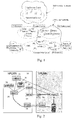
- a wireless (user) terminal or mobile station (MS) 10 that is roaming into a visited public land mobile network (VPLMN) 12, shown on the right hand side, the VPLMN 12 being in communication with a home public land mobile network (HPLMN) 14 of the MS 10, shown on the left hand side.
- the VPLMN 12 will offer a Circuit Switched (CS) access technology, as well as possibly both 2G and 3G PS access technologies. Future network architectures may provide a still further PS access technology (e.g. SAE/LTE and even WLAN).
- the MS 10 may be within range of one or more other PLMNs which offer competing CS and PS access services.
- PS services are facilitated by a Serving GPRS Support Node (SGSN) 16 in the VPLMN 12 and a Gateway GPRS Support Node (GGSN) 18 in the HPLMN 14.
- SGSN Serving GPRS Support Node
- GGSN Gateway GPRS Support Node
- the current standard's view is that the PS service will be facilitated by a so-called aGW (access GateWay)].
- the GGSN 18 is coupled to the IMS core network.
- the HPLMN core network includes the CSCFs 20, the Home Subscriber Server (HSS) 22 and IMS control components such as the IMS Media Gateway Function (MGw) 24 and Media Gateway Control Function (MGCF) 26.
- IMS Application Servers
- SIP Session Initiation Protocol
- an application server 28 known as the MMTelAS Multimedia Telephony Application Server
- MMTelAS Multimedia Telephony Application Server
- the IMS gateway control functions link to a visited mobile switching centre (VMSC) 32 of the visited access network 12 which is responsible for CS calls in the currently visited network.
- VMSC visited mobile switching centre
- a new AS 30 referred to here as the roam AS is also incorporated into the IMS.
- the purpose of the roam AS is to maintain a record of the PS handover capabilities of all visited PLMNs 12 (known to the HPLMN 14). To this end, it maintains a database 36 holding this information.
- the roam AS also maintains the simultaneous CS and PS session capabilities of these networks 12. This may be enabled with DTM (Dual Transfer Mode) which is a mechanism provided in some 2G networks to enable simultaneous PS and CS sessions. In 3G networks simultaneous PS and CS sessions can be supported with combinational radio access bearers.
- DTM Direct Transfer Mode
- DTM is used in the accompanying Figures to indicate "support of simultaneous CS and PS sessions" and is as such not limited to 2G networks only.
- the database may also contain other relevant information about the visited network, such as Radio Access Technology, e.g. 2G, 3G, LTE or combinations, coverage across a geographical area, roaming costs etc.
- the database 36 is shown as part of the roam AS 30, the database may be a separate entity, or may be part of the HSS 22, S-CSCF or another AS.
- the MS 10 In order to access services facilitated by the IMS whilst roaming, the MS 10 must register with the IMS by sending a Session Initiation Protocol (SIP) REGISTER request to the IMS (routed via a P-CSCF and I-CSCF to an allocated S-CSCF).
- SIP Session Initiation Protocol
- FIG. 3a is a flow diagram illustrating a process carried out by the MS 10 prior to first registration with an access domain and potentially thereafter.
- the MS 10 scans the radio interfaces to see which access domains 12, 14 are available. If the HPLMN 14 is available, then the MS 10 functions as normal. If the HPLMN 14 is not available, the MS 10 checks whether any of the detected PS access domain support PS handover in the whole of the operator's network, using information that is contained within any broadcast system information messages. [The MS may also look for PS access domain that support handover across only a part of the network, if that is sufficient for the MS 10.] If such a network is found, the MS 10 firstly starts to register to the PS domain of that network and then secondly to the IMS using the PS domain of that network. If no network is found that supports PS handover in the whole of the operator's network, or the broadcast system information messages are not implemented by all or some of the operators' networks, the MS 10 will roam into the access domain with best radio signal strength and initiate SIP registration to the IMS.
- the MS 10 performs IMS registration based upon no or only partial information on the PS handover capabilities of the available PS networks/technologies, the MS 10 sends a SIP OPTIONS message to the IMS to find out the capabilities of the visited PLMN 12 that it is currently using.
- This message contains the network identity of the used access domain (and possibly the current cell identifier).
- the MS 10 may also include in the message information about other/all detected networks (and possibly also identifiers of detected cells), as well as an indication about its own simultaneous CS and PS session capabilities.
- the SIP OPTIONS message When the SIP OPTIONS message is received by the S-CSCF, it forwards the message to the roam AS 30.
- the roam AS consults the database 36 which has all relevant capabilities (PS handover capabilities, simultaneous CS and PS session capabilities, etc.) of the available PS networks, and returns these capabilities to the MS 10 via the S-CSCF in the 200 OK response.
- the MS 10 can then decide whether or not to remain with the current PS domain 12 or switch to another PS access domain and/or to decide whether it should also perform CS registration (i.e. perform a Location Updating procedure towards the MSC in the currently used access domain or another access domain).
- PS access domain identities Simultaneous CS and PS session capabilities, cell location, etc
- the 200 OK response returned by the roam AS contains the required information as discussed above.
- the present invention also provides for the handling of terminating calls (i.e. incoming calls destined for the MS 10) in the IMS domain depending on a) which domains (i.e. CS and/or PS) the MS is currently registered at, b) the PS handover and simultaneous CS and PS session capabilities of the current network, c) simultaneous CS and PS session capabilities of the MS 10, and d) the type of the terminating call (for example, if it contains a voice component requiring real-time capabilities).
- terminating calls i.e. incoming calls destined for the MS 10
- the IMS domain i.e. CS and/or PS
- the call request will enter the I-CSCF of the HPLMN 14, which will interrogate the HSS 22 to identify the location of the MS 10. If an S-CSCF is currently allocated to the MS 10, the HSS 22 will indicate this to the I-CSCF. Otherwise (i.e. if there is no currently allocated S-CSCF), the I-CSCF will select a default S-CSCF, and forward the call request to that S-CSCF.
- the S-CSCF receives all necessary data (including initial filter criteria) for the MS 10 by interrogating the HSS 22. This will lead to an MMTelAS instance being linked into the SIP path. If an S-CSCF and an MMTelAS 28 are already allocated, the I-CSCF routes the call to the S-CSCF and on to the MMTelAS. This represents standard IMS procedures for terminating a call.
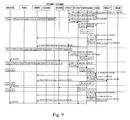
- the HSS 22 returns to the I-CSCF that the MS 10 is not registered in the PS domain (step 3) and a default S-CSCF is therefore allocated for the MS 10 (step 4).
- the S-CSCF requests subscriber information at the HSS 22 (step 5).
- This results in a new MMTelAS 28 instance being linked into the call (step 6).
- the MMTelAS 28 then checks the type of the terminating call and finds out that this is a voice call. Then the MMTelAS 28 requests a roaming number from the HSS 22 (step 7) and forwards the call to the MGC which connects to the CS network.
- the call will eventually be routed to the VMSC 32 in the VPLMN 12.
- the MMTelAS will not request a roaming number. Instead it derives or fetches the MSISDN of the called subscriber and forwards the call to the MGC. The MGC then forwards the call to a GMSC in the HPLMN 14 after which standard mobile call procedure apply.
- the HSS 22 returns that the MS 10 is registered in IMS/PS domain (step 3) and the terminating call request is forwarded to the indicated S-CSCF.
- the S-CSCF then forwards the terminating call request to the existing MMTelAS 28 instance (step 4).
- the MMTelAS 28 knows that the MS 10 is currently in a visited access domain that supports PS real-time services and the terminating call request is forwarded to the MS 10 in the PS domain.
- the HSS 22 returns to the I-CSCF that the MS 10 is registered with a S-CSCF (step 3) and the terminating call request is forwarded to the indicated S-CSCF which then links in a new MMTelAS 28 instance (step 4) as described above (because the MS/UE was not previously registered with the MMTelAS).
- the MMTelAS 28 will then know about the CS domain registration or may check the HSS 22 to find out about this.
- the next step is that the MMTelAS 28 checks the type of the terminating call and there are three different options and these are described as sub-cases 3a, 3b and 3c.
- the terminating call is only a voice call. Then the MMTelAS 28 requests for a roaming number from the HSS 22 (step 5) and continues the call set-up towards the MGCF using the roaming number. Note also that the other possibility about identity mapping and forwarding the call to a GMSC via a MGC is not shown in this example.
- the terminating call is not a voice call and can be forwarded to the MS in the PS domain (nb. All terminating calls in the IMS are delivered to the MMTelAS).
- the terminating call comprises both a voice call and other elements.
- the voice call part is forwarded to the MS as in case 3a and the other additional elements are forwarded to the MS in the PS domain as in case 3b above.
Landscapes
- Engineering & Computer Science (AREA)
- Multimedia (AREA)
- Computer Networks & Wireless Communication (AREA)
- Signal Processing (AREA)
- Business, Economics & Management (AREA)
- General Business, Economics & Management (AREA)
- Computer Security & Cryptography (AREA)
- Mobile Radio Communication Systems (AREA)
- Data Exchanges In Wide-Area Networks (AREA)
- Nitrogen Condensed Heterocyclic Rings (AREA)
- Transition And Organic Metals Composition Catalysts For Addition Polymerization (AREA)
Applications Claiming Priority (2)
| Application Number | Priority Date | Filing Date | Title |
|---|---|---|---|
| EP06807321A EP2074795B1 (de) | 2006-10-16 | 2006-10-16 | Mobilität für ims-benutzer |
| PCT/EP2006/067468 WO2008046445A1 (en) | 2006-10-16 | 2006-10-16 | Mobility for ims users |
Related Parent Applications (1)
| Application Number | Title | Priority Date | Filing Date |
|---|---|---|---|
| EP06807321.2 Division | 2006-10-16 |
Publications (2)
| Publication Number | Publication Date |
|---|---|
| EP2161900A2 true EP2161900A2 (de) | 2010-03-10 |
| EP2161900A3 EP2161900A3 (de) | 2010-03-24 |
Family
ID=38121985
Family Applications (2)
| Application Number | Title | Priority Date | Filing Date |
|---|---|---|---|
| EP06807321A Not-in-force EP2074795B1 (de) | 2006-10-16 | 2006-10-16 | Mobilität für ims-benutzer |
| EP09179857A Withdrawn EP2161900A3 (de) | 2006-10-16 | 2006-10-16 | Mobilität für IMS-Benutzer |
Family Applications Before (1)
| Application Number | Title | Priority Date | Filing Date |
|---|---|---|---|
| EP06807321A Not-in-force EP2074795B1 (de) | 2006-10-16 | 2006-10-16 | Mobilität für ims-benutzer |
Country Status (6)
| Country | Link |
|---|---|
| US (1) | US8477720B2 (de) |
| EP (2) | EP2074795B1 (de) |
| CN (1) | CN101523844B (de) |
| AT (1) | ATE466443T1 (de) |
| DE (1) | DE602006014032D1 (de) |
| WO (1) | WO2008046445A1 (de) |
Families Citing this family (24)
| Publication number | Priority date | Publication date | Assignee | Title |
|---|---|---|---|---|
| CN100488170C (zh) * | 2006-01-26 | 2009-05-13 | 中兴通讯股份有限公司 | 一种在分组无线系统中触发路由区更新的方法 |
| US8681737B2 (en) * | 2007-09-21 | 2014-03-25 | Motorola Mobility Llc | Method and apparatus for inter-technology handoff between a packet data network and a circuit switched network |
| US8483175B2 (en) * | 2007-09-14 | 2013-07-09 | Motorola Mobility Llc | Method and apparatus for inter-technology handoff of a user equipment |
| EP2263412A1 (de) * | 2008-04-14 | 2010-12-22 | Research In Motion Limited | Vorrichtung und dazugehöriges verfahren zur ermöglichung eines funksteuerungssystembetriebs mit einem ics-fähigen drahtlosen gerät |
| US9300628B2 (en) * | 2008-10-10 | 2016-03-29 | Nokia Technologies Oy | Correlating communication sessions |
| GB2466677B (en) * | 2009-01-06 | 2012-09-19 | Samsung Electronics Co Ltd | Voice communication between user equipment and network |
| ATE545301T1 (de) * | 2009-02-20 | 2012-02-15 | Research In Motion Ltd | System und verfahren zur auswahl eines drahtlosen netzes auf basis des angebotenen dienstes |
| US8463269B2 (en) | 2009-02-20 | 2013-06-11 | Research In Motion Limited | System and method of wireless network selection based on list prioritized by service offered |
| CN101883342B (zh) * | 2009-05-05 | 2014-12-10 | 华为终端有限公司 | 会话转移方法、装置和系统 |
| KR101586092B1 (ko) * | 2009-11-17 | 2016-01-15 | 삼성전자주식회사 | 무선 통신 시스템에서 로밍 서비스를 제공하는 방법 및 장치 |
| GB2476977B (en) * | 2010-01-18 | 2014-06-11 | Samsung Electronics Co Ltd | Voice transmission technology selection |
| CN101801059B (zh) * | 2010-03-03 | 2018-02-13 | 中兴通讯股份有限公司 | 用于cpe的数据访问方法和cpe |
| US9699718B2 (en) * | 2010-04-12 | 2017-07-04 | Qualcomm Incorporated | System, apparatus, and method to enable domain selection in a multimode device |
| US9258840B2 (en) * | 2010-05-13 | 2016-02-09 | Samsung Electronics Co., Ltd | Method and system of managing voice call and IP media sessions in a wireless network environment |
| US20130191536A1 (en) * | 2010-09-30 | 2013-07-25 | Telefonaktiebolaget L M Ericsson (Publ) | Method and Network Entity for Checking, in an IP Based Communications Network, a Status of a Destination Network |
| KR101266692B1 (ko) * | 2010-12-28 | 2013-05-22 | 주식회사 팬택 | VoIP 서비스 제어 시스템 및 방법 |
| CN103747430B (zh) * | 2013-12-31 | 2018-10-19 | 华为技术有限公司 | 呼叫控制设备和处理用户业务的方法 |
| CN105228206B (zh) * | 2014-05-27 | 2018-11-30 | 中国电信股份有限公司 | 分组交换域和电路交换域语音业务之间的切换方法和系统 |
| US9838948B2 (en) * | 2014-07-29 | 2017-12-05 | Aruba Networks, Inc. | Deep packet inspection (DPI) aware client steering and load balancing in wireless local area network (WLAN) infrastructure |
| EP3032800B1 (de) | 2014-12-08 | 2017-08-16 | Alcatel Lucent | Steuerung und überwachung von verbundenen objekten |
| WO2016101972A1 (en) * | 2014-12-22 | 2016-06-30 | Telefonaktiebolaget L M Ericsson (Publ) | Srvcc handover decision based on statistical data on terminal behavior |
| WO2017034195A1 (ko) * | 2015-08-26 | 2017-03-02 | 엘지전자 주식회사 | 방문 네트워크의 사업자 네트워크 식별번호 획득 방법 |
| US20180337961A1 (en) * | 2017-05-17 | 2018-11-22 | Mediatek Inc. | Synchronization of UE Capability and Registration Status for SIP-Based Application Services |
| CN109995721B (zh) * | 2017-12-29 | 2021-10-22 | 华为技术有限公司 | 业务请求处理方法、装置及通信系统 |
Family Cites Families (19)
| Publication number | Priority date | Publication date | Assignee | Title |
|---|---|---|---|---|
| FI108983B (fi) | 1999-06-07 | 2002-04-30 | Nokia Corp | Liikkuvuusagentin valinta accessverkossa |
| US6965948B1 (en) * | 1999-11-12 | 2005-11-15 | Telefonaktiebolaget Lm Ericsson (Publ) | Method and apparatus for selective network access |
| US7433929B2 (en) | 2000-12-29 | 2008-10-07 | At&T Mobility Ii Llc | Intelligent network selection based on quality of service and applications over different wireless networks |
| GB2398458B (en) | 2003-02-15 | 2005-05-25 | Ericsson Telefon Ab L M | Conversational bearer negotiation |
| KR101080546B1 (ko) | 2003-12-30 | 2011-11-04 | 텔레폰악티에볼라겟엘엠에릭슨(펍) | 멀티미디어 서비스 케이퍼빌리티를 자동으로 발견하는 방법 및 통신 시스템 |
| CN100352295C (zh) * | 2005-01-24 | 2007-11-28 | 华为技术有限公司 | Ip多媒体子系统会话回落到电路交换呼叫的实现方法 |
| EP1806008B1 (de) | 2004-10-06 | 2018-06-20 | Telecom Italia S.p.A. | Methode und kommunikationssystem zur bereitstellung von verknüpften netzwerkdiensten |
| CN101243652B (zh) | 2004-11-29 | 2013-02-13 | 捷讯研究有限公司 | 用于在无线用户设备(ue)装置中支持gan业务请求能力的系统和方法 |
| CN100433738C (zh) | 2005-01-19 | 2008-11-12 | 华为技术有限公司 | 一种在终端之间实现能力交互的方法 |
| GB2424543A (en) * | 2005-03-22 | 2006-09-27 | Orange Personal Comm Serv Ltd | Telecommunication Apparatus and Method |
| EP1705940A1 (de) * | 2005-03-24 | 2006-09-27 | BRITISH TELECOMMUNICATIONS public limited company | Weiterreichen zwischen Mobilnetzwerken |
| EP1864545B1 (de) * | 2005-03-30 | 2013-06-19 | Nokia Corporation | Kombiniertes handover der leitungsvermittelten (cs) und paketvermittelten (ps) ressourcen |
| CN100388685C (zh) * | 2005-08-30 | 2008-05-14 | 华为技术有限公司 | Ip多媒体子系统中ims注册触发实现方法 |
| US7995565B2 (en) * | 2006-10-03 | 2011-08-09 | Research In Motion Limited | System and method for managing call continuity in IMS network environment using SIP messaging |
| CN101094061B (zh) | 2006-06-24 | 2011-08-24 | 华为技术有限公司 | 数字网关系统、设备和网络终端设备的接入签权认证方法 |
| US8620380B2 (en) * | 2006-08-29 | 2013-12-31 | Intel Corporation | Subscriber identity module having a plurality of subscriber identities |
| US7668159B2 (en) * | 2007-04-25 | 2010-02-23 | Research In Motion Limited | Methods and apparatus for obtaining variable call parameters suitable for use in originating a SIP call via a circuit-switched network from a user equipment device |
| WO2008155148A1 (en) * | 2007-06-19 | 2008-12-24 | Nokia Siemens Networks Oy | Methods, apparatuses and computer program product for access domain selection for the media channel and the session control channel |
| US8316457B1 (en) * | 2008-04-29 | 2012-11-20 | Sprint Communications Company L.P. | Partitioned IP multimedia subsystem call session control function |
-
2006
- 2006-10-16 DE DE602006014032T patent/DE602006014032D1/de active Active
- 2006-10-16 EP EP06807321A patent/EP2074795B1/de not_active Not-in-force
- 2006-10-16 WO PCT/EP2006/067468 patent/WO2008046445A1/en not_active Ceased
- 2006-10-16 AT AT06807321T patent/ATE466443T1/de not_active IP Right Cessation
- 2006-10-16 CN CN200680056118.XA patent/CN101523844B/zh not_active Expired - Fee Related
- 2006-10-16 EP EP09179857A patent/EP2161900A3/de not_active Withdrawn
- 2006-10-16 US US12/445,664 patent/US8477720B2/en not_active Expired - Fee Related
Also Published As
| Publication number | Publication date |
|---|---|
| EP2161900A3 (de) | 2010-03-24 |
| US8477720B2 (en) | 2013-07-02 |
| DE602006014032D1 (de) | 2010-06-10 |
| CN101523844B (zh) | 2016-01-20 |
| EP2074795B1 (de) | 2010-04-28 |
| EP2074795A1 (de) | 2009-07-01 |
| CN101523844A (zh) | 2009-09-02 |
| US20100189072A1 (en) | 2010-07-29 |
| WO2008046445A1 (en) | 2008-04-24 |
| ATE466443T1 (de) | 2010-05-15 |
Similar Documents
| Publication | Publication Date | Title |
|---|---|---|
| EP2074795B1 (de) | Mobilität für ims-benutzer | |
| EP2061269B2 (de) | Verfahren zum verfügungstellen einer zugangsmodusauswahl für ein multimode-endgerät, system und einrichtung dafür | |
| US8374173B2 (en) | Packet switched to circuit switched access handovers in an IMS architecture | |
| US9819701B2 (en) | Low latency IMS-based media handoff between a cellular network and a WLAN | |
| US9913235B2 (en) | Apparatus, and associated method, for facilitating radio control system operation with an ICS-capable wireless device | |
| AU2007324233B2 (en) | System, method and apparatus for realizing multimedia call continuity | |
| CN101297531B (zh) | 经由电路交换接入提供ims服务 | |
| EP2036376B1 (de) | Zellenauswahl-/-neuauswahlmechanismus für ein mobilkommunikationssystem | |
| RU2584468C2 (ru) | Способы и устройство для поддержки реализации непрерывности службы ims | |
| US9025553B2 (en) | Capability update in a telecommunications network | |
| RU2576474C2 (ru) | Оптимизация задержки при передаче обслуживания | |
| EP2834955B1 (de) | Präferenzeinstellung für bestmögliche rufleitweglenkung | |
| US8078180B2 (en) | Subscriber server system for a cellular communication system | |
| EP1974519B1 (de) | Verfahren und vorrichtung zur bereitstellung von ims-diensten für leitungsvermittelt angesteuerte endgeräte | |
| KR20080055100A (ko) | 이종망간 핸드오버 시 통화서비스 제공방법 |
Legal Events
| Date | Code | Title | Description |
|---|---|---|---|
| PUAI | Public reference made under article 153(3) epc to a published international application that has entered the european phase |
Free format text: ORIGINAL CODE: 0009012 |
|
| PUAL | Search report despatched |
Free format text: ORIGINAL CODE: 0009013 |
|
| AC | Divisional application: reference to earlier application |
Ref document number: 2074795 Country of ref document: EP Kind code of ref document: P |
|
| AK | Designated contracting states |
Kind code of ref document: A2 Designated state(s): AT BE BG CH CY CZ DE DK EE ES FI FR GB GR HU IE IS IT LI LT LU LV MC NL PL PT RO SE SI SK TR |
|
| AK | Designated contracting states |
Kind code of ref document: A3 Designated state(s): AT BE BG CH CY CZ DE DK EE ES FI FR GB GR HU IE IS IT LI LT LU LV MC NL PL PT RO SE SI SK TR |
|
| STAA | Information on the status of an ep patent application or granted ep patent |
Free format text: STATUS: THE APPLICATION IS DEEMED TO BE WITHDRAWN |
|
| 18D | Application deemed to be withdrawn |
Effective date: 20100925 |